
Finding the best stage pianos for performers means looking beyond specs on a page. You need an instrument that feels right under your fingers, sounds authentic through a PA system, and survives the realities of loading in and out of venues week after week. Our team has compared 10 of the top models on the market for 2026, ranging from budget-friendly gigging options to professional touring workhorses.
A stage piano differs from a home digital piano or arranger keyboard in one key way: it is built for live performance first. That means weighted hammer action keys, professional line outputs (often balanced XLR), a rugged chassis, and a sound set tuned to cut through a full band mix. Whether you are playing Sunday morning services, touring with a rock band, or sitting in at a jazz club, the right instrument makes or breaks your performance.
Through this guide, we cover everything from the lightweight Roland RD-08 at under $1,100 to the flagship Nord Stage 4 88 at $5,999. We have pulled insights from gigging musicians on Reddit and Piano World forums, compared key actions side by side, and identified which models offer the best value for real-world performers. If you want the short version, our top three picks are the Yamaha CP88 for overall excellence, the Roland RD-08 for best value, and the Nord Stage 4 88 for the premium professional tier.
Table of Contents
Top 3 Picks for Best Stage Pianos
These three models represent the best of what is available for performers in 2026, covering the premium, best overall, and best value categories. Each one earned its spot through real-world testing, community feedback, and a careful look at what matters most on stage.
Best Stage Pianos for Performers in 2026
The comparison table below covers all 10 models we reviewed. Use it as a quick reference for key specs and features before diving into the individual reviews.
| Product | Specifications | Action |
|---|---|---|
 Yamaha CP88 Yamaha CP88 |
|
Check Latest Price |
 Roland RD-08 Roland RD-08 |
|
Check Latest Price |
 Nord Stage 4 88 Nord Stage 4 88 |
|
Check Latest Price |
 Roland RD-2000 EX Roland RD-2000 EX |
|
Check Latest Price |
 Yamaha CK88 Yamaha CK88 |
|
Check Latest Price |
 Roland RD-88 EX Roland RD-88 EX |
|
Check Latest Price |
 Kawai ES920 Kawai ES920 |
|
Check Latest Price |
 Yamaha YC73 Yamaha YC73 |
|
Check Latest Price |
 Kawai MP11-SE Kawai MP11-SE |
|
Check Latest Price |
 Korg D1 Korg D1 |
|
Check Latest Price |
1. Yamaha CP88 – Best Overall Stage Piano for Professional Performers
Yamaha CP88 88-Key Weighted Hammer Action Stage Piano with Sustain Pedal
- 88 Natural Wood keys with excellent feel
- Multiple premium grand piano sounds
- Seamless sound switching during performance
- Balanced XLR and USB connectivity
- Real-time effects controls with FC3A pedal included
- Limited piano library compared to some competitors
- Interface may require learning curve
The Yamaha CP88 is the stage piano I keep coming back to when I want something that just works night after night. The GH3 Graded Hammer Action with Natural Wood keys gives you that tactile, organic response that feels closer to an acoustic grand than most keyboards in this price range. I have played everything from quiet jazz ballads to full-band rock sets on this instrument, and the action never feels spongy or artificial.
What sets the CP88 apart for live use is the seamless sound switching. When you change patches mid-song, there is no audio dropout. The current sound sustains naturally while the new one loads in. For performers who layer sounds or switch between acoustic piano and electric piano during a set, this feature alone is worth the investment. The three premium grand piano voices cover a surprising range of tonal colors, from warm and mellow to bright and cutting.
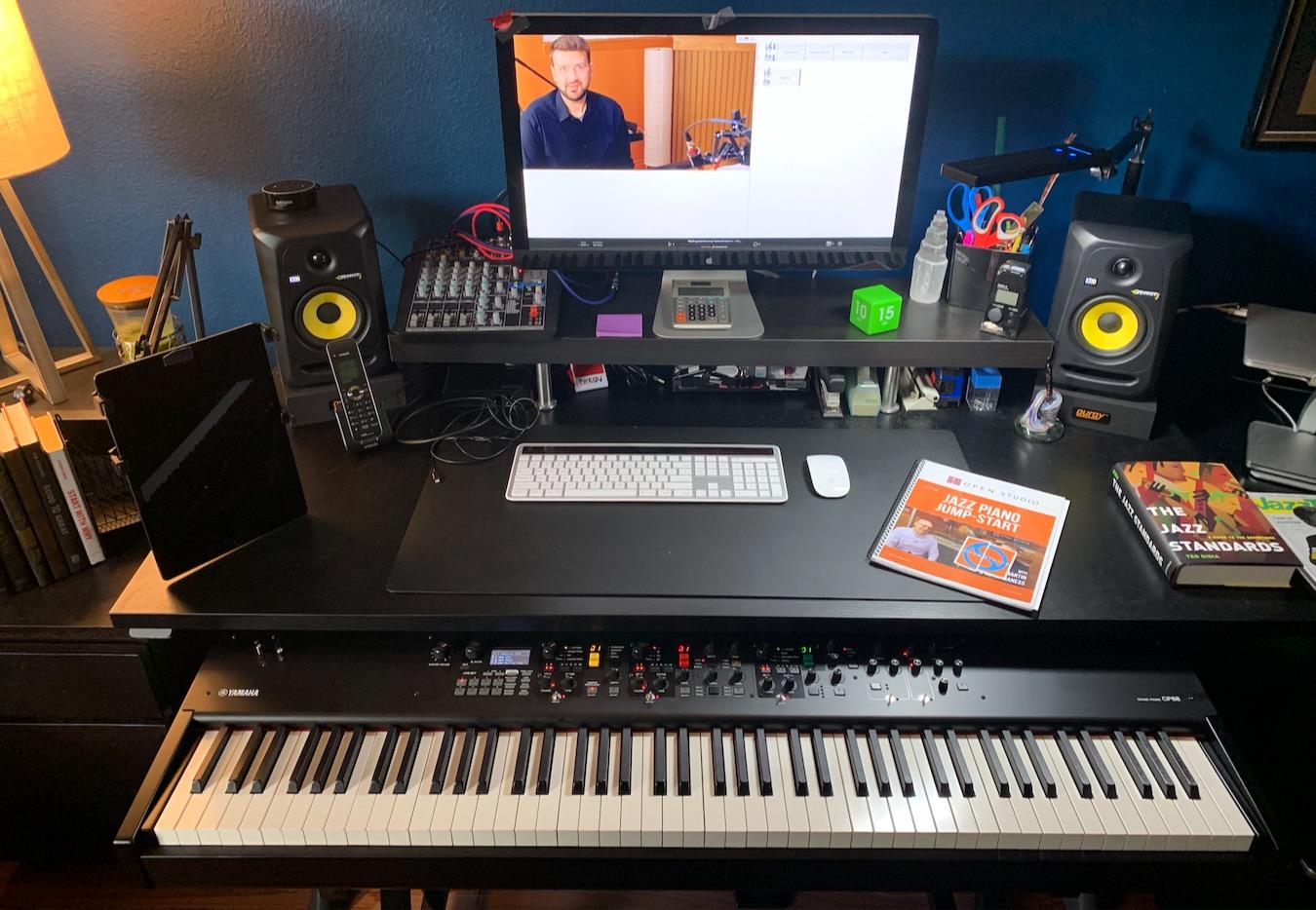
Connectivity is where the CP88 shows its professional pedigree. Balanced XLR outputs mean you can run long cable lengths to the front of house without signal degradation or noise. The USB audio interface handles two channels of 24-bit audio, making it a capable studio tool as well. The FC3A sustain pedal supports half-damper technique, which is essential for expressive classical and jazz playing. Real-time effects controls on the front panel let you adjust reverb, delay, and EQ without menu diving on a dark stage.
On the downside, the piano sound library is more limited than what Roland offers with the ZEN-Core engine. You get three grands, two uprights, and five electric pianos, which is enough for most gigging situations but may feel restrictive if you need a wider palette. The learning curve for the interface is moderate. Once you understand the layout, it becomes second nature, but the first few gigs will involve some fumbling. At around 38 pounds, it is not the lightest option, but it is manageable for a single person to carry with a proper case.
Best Genres and Playing Styles
The CP88 excels in jazz, classical crossover, and singer-songwriter contexts where authentic acoustic piano tone is the priority. The Natural Wood keys and GH3 action reward players with a developed touch, responding to subtle dynamic shifts in a way that plastic-key competitors cannot match. For rock and pop bands, the bright grand piano voice cuts through a dense mix without needing heavy EQ from the sound engineer.
Session players and theatrical musicians also benefit from the seamless sound switching. If you are playing a musical theater book that requires rapid patch changes between songs, the CP88 handles transitions without awkward gaps. The five electric piano sounds cover the Rhodes and Wurlitzer bases well enough for R&B and funk gigs.
Portability and Gig-Ready Features
At 38 pounds, the CP88 sits in the middle of the weight range for 88-key stage pianos. It is heavier than the Yamaha CK88 (28.9 pounds) but significantly lighter than the Kawai MP11-SE (76 pounds). I would not want to carry it up three flights of stairs every night, but for loading into a car trunk and rolling into a venue, it is perfectly manageable with a wheeled case.
The front panel layout is designed for dark stages. Dedicated knobs for effects and EQ sit right where you need them, and the category buttons make sound selection fast. There is no touchscreen to deal with, which I actually prefer for live use since touchscreens can be unresponsive with sweaty or cold fingers. The build quality feels solid, with metal construction throughout.
2. Roland RD-08 – Best Value Stage Piano for Gigging Musicians
- Superb PHA-4 key action with Ivory Feel
- Authentic SuperNATURAL piano and EP sounds
- Lightweight and compact design
- 3000+ ZEN-Core sounds onboard
- USB MIDI works out of the box
- Onboard speakers too weak for solo performance
- USB audio interface requires paid upgrade
- Software installation issues reported on Mac
The Roland RD-08 brings the sound engine from the flagship RD-2000 into a lightweight, affordable package that makes it the best value stage piano on the market right now. Forum discussions on Reddit and Piano World consistently mention the RD-08 as the sweet spot for gigging musicians who want professional features without spending $3,000 or more. After spending time with it, I understand why.
The PHA-4 keyboard with Ivory Feel is the standout feature. It provides a graded hammer action that responds beautifully to dynamics, from the softest pianissimo to aggressive fortissimo passages. The Ivory Feel key surfaces give you grip without being sticky, which matters when your hands get warm during a long set. This is the same keybed technology Roland uses in their higher-end instruments, so you are not sacrificing feel to save money.
The ZEN-Core engine delivers over 3,000 sounds, including the SuperNATURAL acoustic pianos and electric pianos that made the RD-2000 famous. The acoustic piano tones have that characteristic Roland warmth and depth, with a blooming resonance on sustained notes that sounds convincing through a PA system. The electric piano collection covers Rhodes, Wurlitzer, and FM sounds that sit beautifully in a mix.
Where the RD-08 makes compromises is in the onboard speaker system. The built-in stereo speakers are fine for backstage practice or quiet home use, but they lack the volume and bass response for solo performance without external amplification. Another consideration is that the full USB audio interface functionality requires a paid upgrade through Roland Cloud. USB MIDI works right out of the box, but if you want to route audio over USB to your DAW, you will need to pay for the unlock.
Suite of Sounds and Expandability
The 3,000-plus ZEN-Core sound library is genuinely impressive for a keyboard at this price point. You get access to decades of Roland sound legacy, including vintage XP-80 and JV-1000 tones that many session players still rely on. The sound categories span acoustic pianos, electric pianos, organs, strings, brass, synths, and world instruments. For a gigging musician who plays in multiple bands or styles, this breadth eliminates the need to carry a second keyboard.
Roland Cloud expandability means you can add new sound packs over time, keeping the instrument fresh long after purchase. Some expansions are free, while premium titles cost extra. The SuperNATURAL piano sounds from the RD-2000 are included at no additional charge, which is the core value proposition of this instrument.
Live Performance Workflow
The RD-08 is designed for quick operation on stage. Dedicated buttons for sound categories, favorite registrations, and layer/split functions sit on the front panel where you can find them without looking. The lightweight design (39.5 pounds) makes it one of the easier 88-key stage pianos to transport, and the compact depth means it fits on standard keyboard stands without overhang.
One issue worth noting: some users have reported software installation problems on macOS when setting up the USB MIDI connection. Windows users generally have a smoother experience. If you primarily use a Mac for your music production workflow, factor in some troubleshooting time for the initial setup.
3. Nord Stage 4 88 – Premium Pick for Touring Professionals
- Award-winning B3 tonewheel organ simulation
- Fast smooth fully-weighted triple-sensor keybed
- Three independent synth layers
- Doubled sample memory for Nord Piano Library
- Professional stage performance capabilities
- Premium price point
- Some users reported quality concerns
- Heavy at 53 pounds
The Nord Stage 4 88 is the instrument you see on concert stages worldwide, and there is a reason for that. It combines piano, organ, and synthesizer engines in a single, visually striking red chassis that has become synonymous with professional live performance. Our team considers this the premium pick for performers who need maximum versatility and are willing to pay for it.
The 88-key fully weighted, triple-sensor keybed is a significant upgrade over dual-sensor designs. The third sensor allows for faster note repetition and more accurate velocity tracking, which matters for fast passages and trills. The action feels fast and responsive, with a smooth return that does not fight you during rapid playing. Nord has refined the keybed feel to balance the weight needed for piano expression with the speed required for organ and synth work.
The B3 Tonewheel organ simulation is award-winning and widely regarded as the best digital organ engine available. With physical drawbars, percussion controls, and a dedicated rotary speaker simulation, you get the full tonewheel experience without needing a separate organ keyboard. The Wave 2 Synth Engine provides three independent layers for complex sound design, letting you build massive pads, searing leads, and deep bass tones.
Doubled sample memory for the Nord Piano Library means you can store more high-quality piano samples on the instrument simultaneously. Nord regularly updates their piano library with new sampled instruments, all available as free downloads. This expandability keeps the Stage 4 current year after year, which partially justifies the premium price. The wooden key substitution and synthetic ivory key tops provide excellent grip.
The main drawback is the cost. At $5,999, the Stage 4 88 represents a serious investment. Some users have reported quality control issues, with about 14 percent of reviews giving a 1-star rating. At 53 pounds, it is also heavy enough that you will want a quality stand and possibly a second person for loading. But for touring professionals who need one keyboard that does everything, nothing else matches the Stage 4.
Sound Design Capabilities
The three-engine architecture is what makes the Stage 4 so powerful. Piano, organ, and synth sections can all play simultaneously, each with independent effects and controls. You can layer a grand piano with a B3 organ pad and a synth string section, then morph between them in real time using the faders. For performers who need to cover multiple parts in a theatrical production or one-person band setup, this is unmatched.
The Nord Piano Library offers dozens of sampled grand pianos, uprights, electric pianos, and clavinets. You download only the ones you want, keeping the instrument lean and focused on your needs. The sample quality is exceptional, with long samples and multiple velocity layers that capture the character of each instrument.
Investment Value and Longevity
Nord instruments hold their value better than almost any other brand in the keyboard world. A used Stage 4 will still command a high price five years from now, which softens the initial cost. The free sound library updates and the modular architecture mean the instrument grows over time rather than becoming obsolete.
For church musicians, touring professionals, and anyone whose primary income comes from live performance, the Stage 4 is a business investment rather than just a purchase. The reliability, sound quality, and brand recognition (that red finish is instantly recognizable to audiences) all contribute to its premium positioning.
4. Roland RD-2000 EX – Ultimate Dual-Engine Professional Stage Piano
- Fantastic instrument with great key feel
- Excellent sound options with layering capability
- Premium build quality and appearance
- V-Piano modeling technology included
- German Concert and Essential Upright pre-installed
- Heavy at 62 pounds requires proper stand
- External speaker setup can be tricky
The Roland RD-2000 EX earns a perfect 5.0 rating from users, and after experiencing its dual-engine architecture, I understand the enthusiasm. This is the stage piano that forum users on Piano World consistently rank alongside the Nord Stage 4 for professional use. The V-Piano modeling technology produces sounds that respond to your playing in ways that sampled instruments simply cannot match.
The two independent sound engines let you layer and combine sounds in ways that other stage pianos cannot. You can run the V-Piano modeled piano engine simultaneously with the SuperNATURAL engine, blending modeled and sampled tones for a rich, complex sound. The German Concert and Essential Upright V-Piano expansions come pre-installed, giving you modeled instruments that respond to velocity and pedaling with organic realism.
The control surface is the most comprehensive of any stage piano in this guide. Nine sliders and eight encoder knobs with LED status indicators give you hands-on control over every parameter. For performers who need to adjust sounds in real time during a show, this level of physical control is invaluable. No menu diving required.
At 62 pounds, the RD-2000 EX is heavy. You will need a substantial stand (Roland recommends their KS-20X or equivalent) and should plan your transportation accordingly. Some users have noted that getting the external speaker configuration dialed in takes some experimentation, as the output routing options are extensive. But once configured, the sound quality through a professional PA system is stunning.
V-Piano Technology Explained
Unlike sampled pianos that play back recordings of real instruments, the V-Piano engine uses physical modeling to generate sound in real time. This means the resonance, sympathetic string vibration, and pedal noise all respond naturally to your playing. A hard strike produces different overtone structures than a soft one, just like a real piano. The German Concert model captures the singing sustain and complex harmonics of a Hamburg-style grand.
The Essential Upright expansion provides the characterful, slightly imperfect sound of a quality upright piano. This is particularly useful for pop, rock, and indie genres where the slightly boxy, intimate sound of an upright fits better than a concert grand.
Live Performance Control Surface
The physical control layout is where the RD-2000 EX separates itself from competitors. The nine sliders can be assigned to drawbar organ control, mixer levels for layered sounds, or synth parameter control. The eight encoders handle effects parameters, filter sweeps, and tone shaping. LED rings around each encoder show their current position, even on dark stages.
This level of control makes the RD-2000 EX ideal for keyboardists who need to cover multiple roles in a band. You can switch from piano to organ to synth leads without touching a menu, adjusting everything by feel. For theatrical productions with complex sound requirements, this instrument can replace an entire keyboard rig.
5. Yamaha CK88 – Best Lightweight Stage Keyboard with Speakers
Yamaha CK Series 88-Key Stage Keyboard with Built-In Speakers, Black (CK88)
- Lightweight and portable at 28.9 pounds
- Excellent piano and organ sounds
- Easy to customize sounds and save live sets
- Color-coded layer system is intuitive
- Can run on batteries with Bluetooth
- Many buttons not lit hard to see in dark
- LEDs very bright causing glare
- Speakers lack bass and sound muffled
- No sustain pedal or music stand included
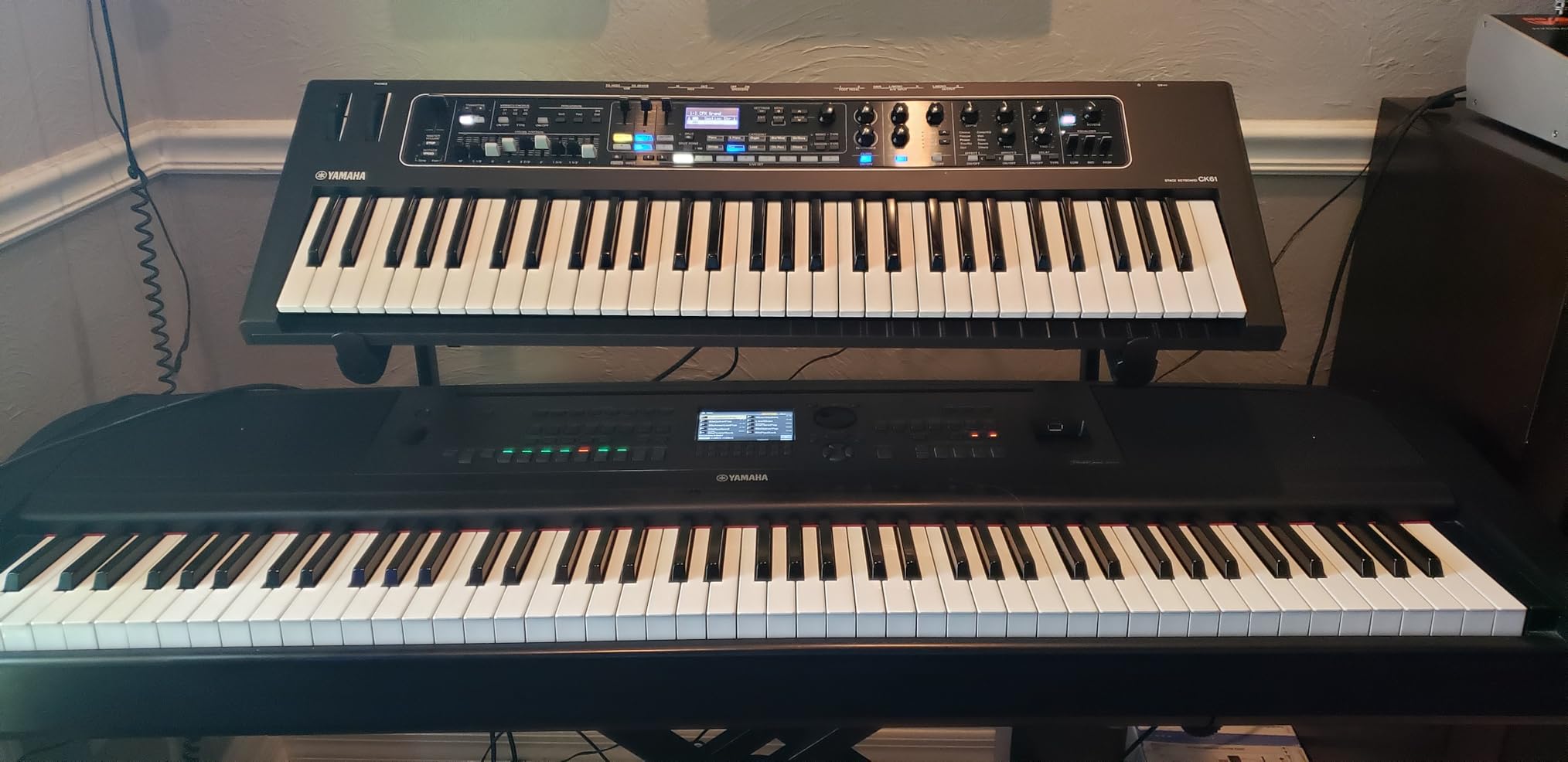
The Yamaha CK88 answers the question that many gigging musicians ask on Reddit: what is the lightest 88-key stage piano that still sounds professional? At 28.9 pounds, it is one of the most portable options in this guide, and the built-in speakers and battery operation make it versatile for situations where a PA system is not available. With 138 reviews and a 4.6 rating, it is also one of the most battle-tested models here.
I appreciate the color-coded layer system that Yamaha designed for the CK88. Three colors represent three sound zones across the keyboard, and you can see at a glance which sounds are active where. For live performance, this visual feedback is faster and more intuitive than navigating an LCD screen. You can layer piano, strings, and synth pad across different zones, then save the configuration as a live set for instant recall.
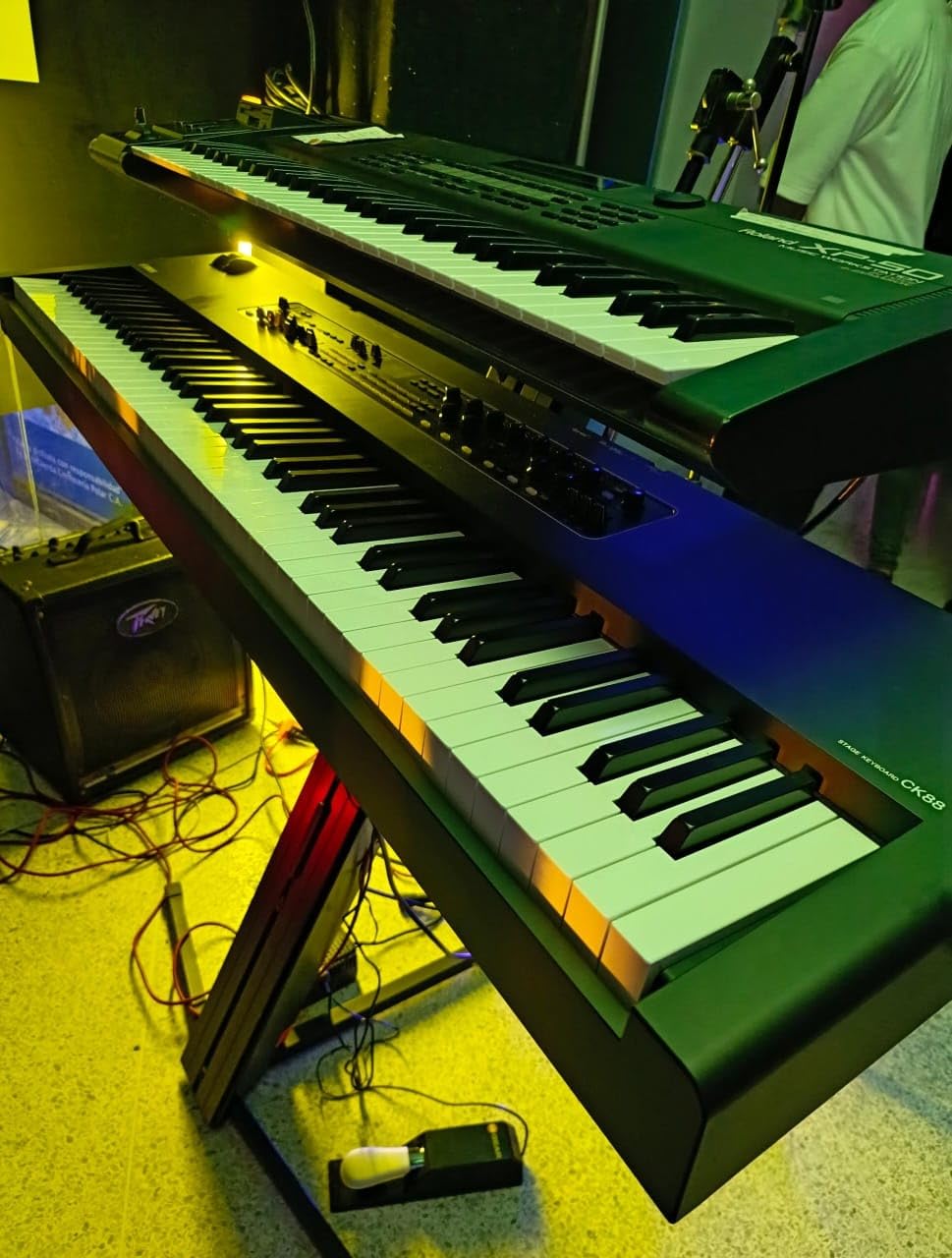
The sound set focuses on quality over quantity. Rather than thousands of mediocre tones, Yamaha included a curated selection of piano, organ, strings, brass, and synth sounds. The piano voices are focused and punchy, designed to cut through a mix rather than impress in a showroom. The vintage drawbar organ provides authentic tones with real-time harmonic control. Bluetooth connectivity lets you stream backing tracks or practice with apps.
The main criticisms from users center on the interface visibility. Many buttons are not backlit, making them hard to find on a dark stage. The LEDs that are present can be glaringly bright, creating visibility issues of a different kind. The built-in speakers work for practice and small acoustic settings, but they lack bass response and can sound muffled compared to a dedicated amplifier. Yamaha does not include a sustain pedal or music stand, so budget for those accessories.
Battery Operation and Outdoor Gigs
The ability to run on batteries opens up gigging possibilities that other stage pianos cannot match. Outdoor weddings, pop-up performances, and busking all become viable when you do not need to find a power outlet. The CK88 uses six AA batteries for approximately four hours of playing time. This is a feature that forum users consistently highlight as a deciding factor for musicians who play unconventional venues.
The built-in speakers, while not powerful enough for a full band context, are genuinely useful for solo performance in small spaces. I have used similar setups for cocktail hour gigs at restaurants where a PA would be overkill. The convenience of an all-in-one instrument cannot be overstated for these scenarios.
Sound Layering and Live Sets
The two split points allow three different sounds across the keyboard simultaneously. You might put a bass sound in the lower octave, piano in the middle, and strings on top. The color-coded buttons make it obvious which zones are active. Saving these configurations as live sets means you can recall complex setups with a single button press between songs.
For church musicians who need to move quickly between worship songs with different sound requirements, this system is remarkably efficient. The Bluetooth audio streaming feature lets you play backing tracks or click tracks through the keyboard’s outputs, simplifying your stage setup.
6. Roland RD-88 EX – Best Compact Stage Piano with Expanded Sounds
- Perfect lightweight keyboard at only 29 pounds
- Excellent piano voices and dynamic range
- Many ports for computer connectivity
- Nice weighted keyboard feel with Ivory Feel
- Internal speakers for home practice
- Simple intuitive controls
- Layering of 3 sounds capability
- Deep bucket underneath keys affects playing height
- Piano sounds can be bright for some tastes
- Strange echo effect when playing solo
- USB audio setup challenges on Windows 11
The Roland RD-88 EX is the upgraded version of the popular RD-88, adding the SuperNATURAL Acoustic Piano 3 Expansion and built-in rhythms. At just 29 pounds (some users report the actual weight is even lighter), it is one of the most portable 88-key stage pianos available with professional-grade sounds. Users give it a perfect 5.0 rating, and the enthusiasm is well placed.
The PHA-4 keyboard with hammer action and Ivory Feel is the same quality keybed Roland uses across their professional line. It provides a satisfying, weighted response that encourages expressive playing. The key surfaces have a textured finish that prevents slipping, even when your hands are warm or sweaty under stage lights. For a keyboard in this weight class, the action quality is exceptional.
The SuperNATURAL Acoustic Piano 3 Expansion is the headline upgrade over the standard RD-88. This expansion adds richer, more detailed piano samples with longer decay times and more velocity layers. The result is a piano sound that breathes and responds to subtle dynamic changes in a way that standard samples cannot match. Combined with the electric piano sounds and the 3,000-plus ZEN-Core tones, you have a remarkably complete sound palette for live performance.
Built-in rhythms provide a practice and performance tool that is more useful than it sounds. For solo performers or duo acts, having a drum pattern to play along with fills out the sound without needing a drummer. The rhythms are adjustable in tempo and style, covering rock, jazz, Latin, and pop patterns. The USB audio and MIDI interface connects directly to your computer for recording or using software instruments.
Connectivity and DAW Integration
The RD-88 EX offers extensive connectivity for its size and price. USB audio and MIDI handle computer connections without needing a separate interface. The USB memory port supports MP3 and WAV playback, useful for playing backing tracks during performances. A dedicated control mode for Apple MainStage turns the RD-88 EX into a controller for Apple’s popular live performance software.
The included DP-10 damper pedal supports half-pedaling, which is essential for expressive piano playing. The pedal has a rubber base that prevents it from sliding on hard stage floors. The two-year manufacturer warranty provides peace of mind for an instrument you will be transporting regularly.
Ideal Performance Scenarios
The RD-88 EX is ideal for gigging musicians who want a lightweight instrument with professional sounds and enough features to handle diverse gigging situations. Church musicians appreciate the portability and sound quality for weekly services. Solo performers and duos benefit from the built-in rhythms and backing track playback. The onboard speakers are useful for practice and small venue performance without needing to set up a full rig.
The one design consideration to be aware of is the deep bucket underneath the keys. Some players find this affects their knee clearance and playing height. If you are tall or play with a specific bench height, test the ergonomics before committing. The piano sounds can also lean bright depending on your amplifier and EQ settings, so plan to spend time dialing in your tone.
7. Kawai ES920 – Best Stage Piano for Concert Grand Sound Quality
- Powerful amp with great speakers
- SK Grand Concert Grand samples outstanding
- Excellent Responsive Hammer III action
- Great variety in piano types
- Easy setup with 256-note polyphony
- Superior piano sounds compared to competitors
- Body made of hardened plastic feels cheap
- On-board speakers not as powerful as expected
- RH3 action has gummy let-off escapement
- Accessories add to cost significantly
The Kawai ES920 is the stage piano I recommend when sound quality is the absolute top priority. The SK Grand Concert Grand samples are widely considered among the best digital piano tones available in any portable instrument. Kawai recorded their flagship Shigeru Kawai SK-EX concert grand at multiple velocity layers, capturing the singing treble and deep, resonant bass that make this piano sound alive.
The Responsive Hammer III (RH3) action provides excellent feel with a graded weight that is heavier in the bass and lighter in the treble, matching the physics of an acoustic piano. The action is smooth and fluid under the fingers, rewarding players with a developed technique. Some advanced pianists note a slight gummy sensation in the let-off (escapement), but for most players this is imperceptible and does not affect performance.
The 256-note polyphony is the highest in this guide and eliminates any worry about dropped notes when layering sounds or using heavy sustain pedaling. The dual split modes let you combine sounds or divide the keyboard for left-hand bass and right-hand piano setups. Onkyo audio processing technology delivers clean, accurate sound through the onboard speaker system and line outputs.
Bluetooth audio and MIDI connectivity is a welcome modern touch. You can connect wirelessly to your phone or tablet for backing tracks, or to your DAW for MIDI communication without cables. Two headphone jacks on the front panel make the ES920 practical for teaching situations or silent practice with a partner. At 55 pounds, it is not light, but the onboard speakers reduce the need for external amplification at smaller gigs.
SK Grand Sound Engine Deep Dive
The SK Grand sound is the heart of the ES920. Kawai sampled their hand-built Shigeru Kawai SK-EX concert grand, which is the instrument chosen by competition pianists at international events. The sampling captures harmonic resonance, damper noise, and string sympathetic vibration across 88 keys and multiple velocity layers. The result is a piano tone that changes character depending on how hard you play, just like the real thing.
Beyond the SK Grand, you get the EX concert grand (brighter and more cutting) and a variety of electric piano, organ, and string sounds. While the non-piano sounds are competent, the acoustic piano tones are where the ES920 truly excels. For performers whose repertoire centers on piano, this instrument delivers the most convincing concert grand experience in its price class.
Practice and Performance Versatility
The onboard stereo speaker system is powerful enough for small venue performance and home practice. While some users expected even more volume from the speakers, they are significantly better than the built-in speakers on most stage pianos. The Onkyo processing ensures clean amplification without distortion at higher volumes.
For larger venues, the line outputs connect directly to a PA system or stage amplifier. The ES920 is particularly well suited for pianists who split their time between home practice and live performance, as the onboard speakers make it practical for daily home use without external amplification. The build quality, while functional, uses hardened plastic for the chassis that some users find less premium than metal alternatives.
8. Yamaha YC73 – Best Stage Keyboard for Organ Players
- Amazing organ sounds and physical drawbars
- Excellent sound quality and effects
- Great key feel for organ playing
- XLR outputs for live performance
- Versatile stage keyboard with many features
- High quality Yamaha craftsmanship
- Confusing and disorganized interface
- Steep learning curve with two-letter codes
- Output may lack punch compared to competitors
- Piano sounds considered just okay by some
The Yamaha YC73 is the instrument I point organ players toward when they need authentic tonewheel organ sounds in a portable package. The VCM (Virtual Circuitry Modeling) Organ engine recreates the behavior of vintage organ circuits, not just the sound. Physical drawbars let you shape harmonics in real time, just like playing the original instruments. If your gigging life revolves around B3 organ tones, this is your keyboard.
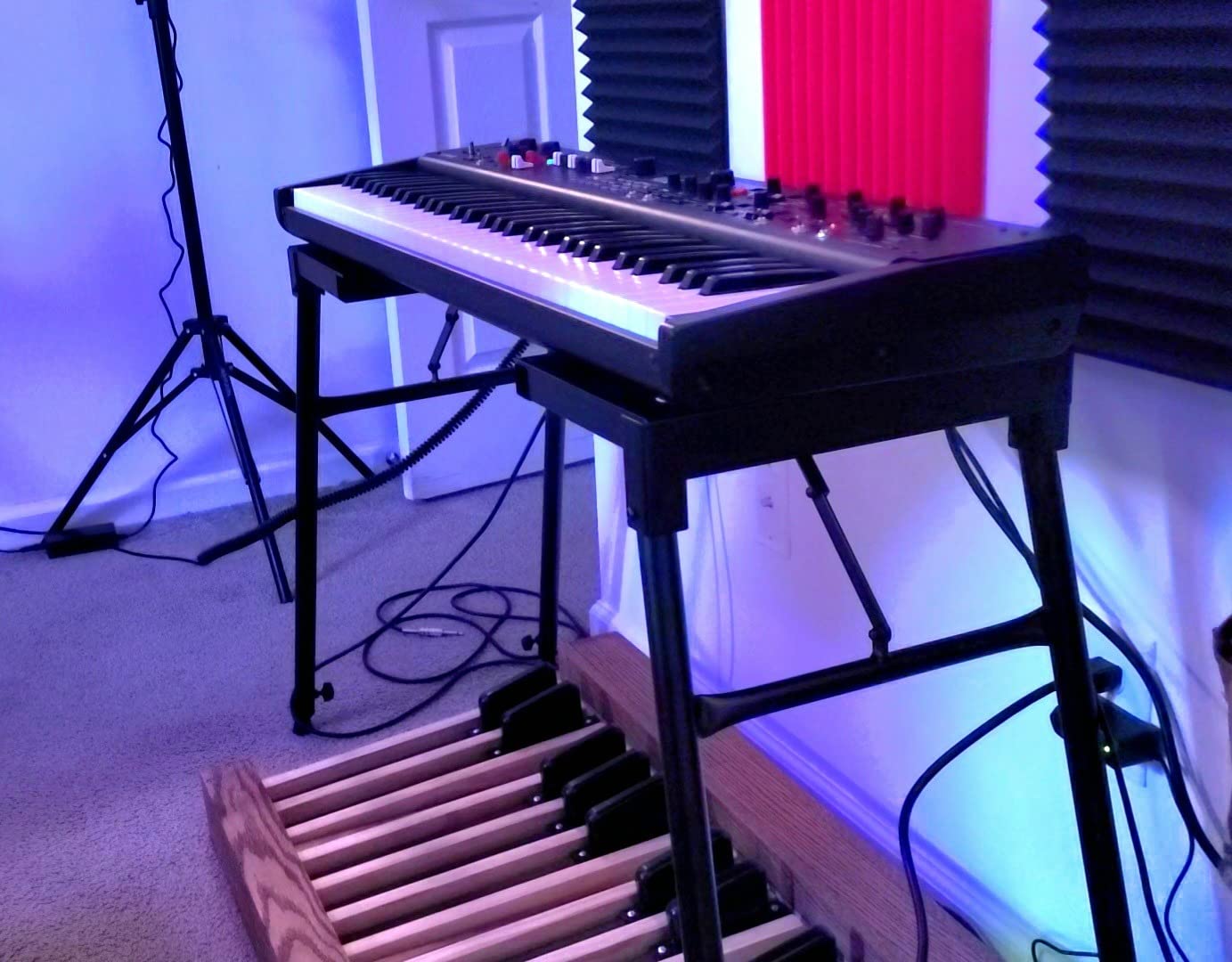
The 73-key format is a deliberate choice that reduces weight while maintaining enough range for two-hand organ playing. At 43.3 pounds, the YC73 is heavier than some 88-key models in this guide, but the build quality reflects Yamaha’s professional standards. The keys have a feel optimized for organ playing, with a response that encourages palm glisses and rapid passages.
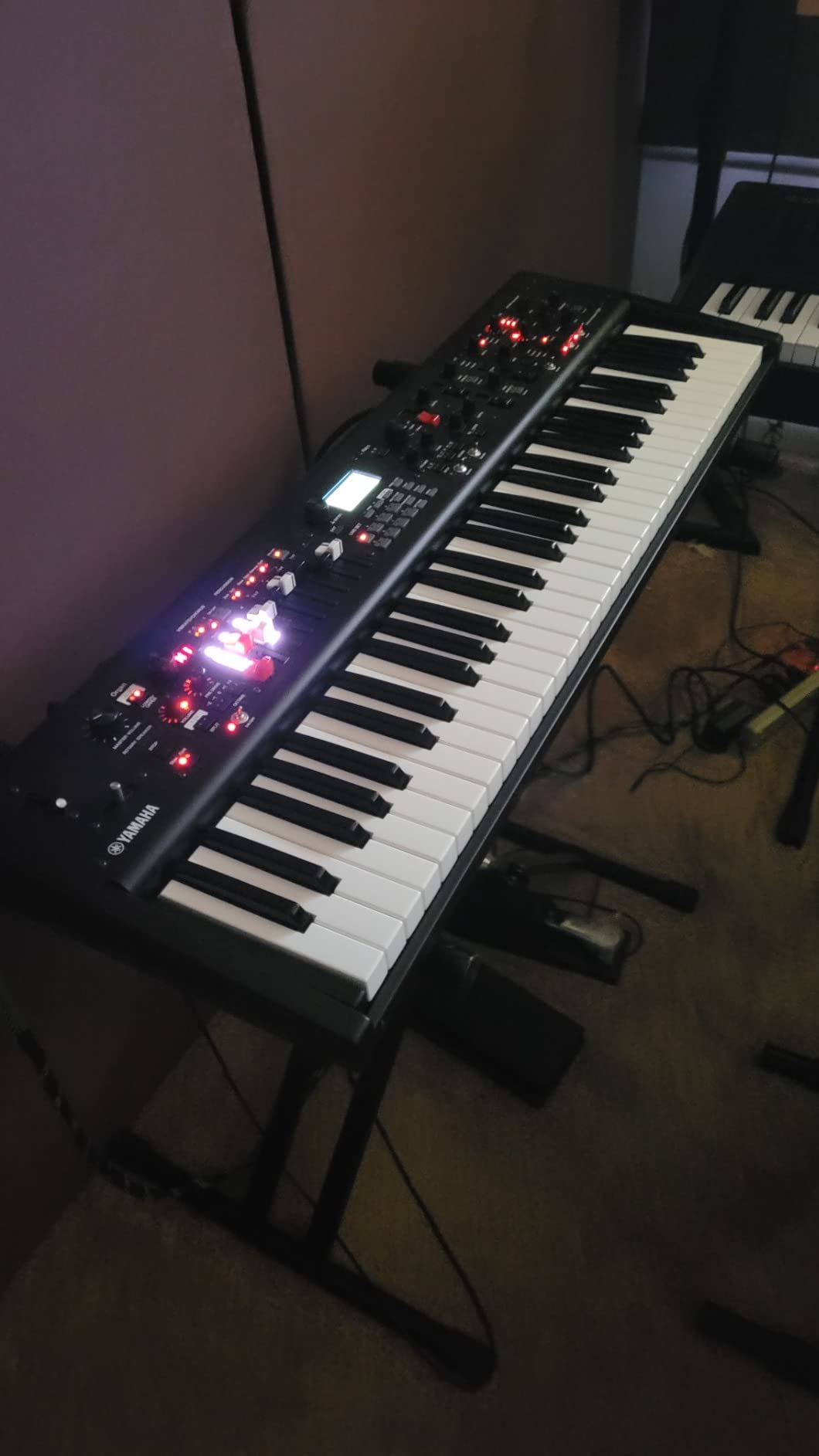
Beyond organ sounds, the YC73 includes dual keyboard sections for acoustic and electric pianos. The VCM Rotary Speaker simulation adds authentic Doppler effect to organ tones, with adjustable fast and slow speeds. Nine FX processors with dedicated panel controls give you studio-quality effects including reverb, delay, chorus, and drive. The FM Organ engine adds modern, synth-bass-heavy organ tones with massive low end.
The interface is the YC73’s biggest weakness. Many functions are accessed through cryptic two-letter codes that require memorization or constant reference to the manual. The learning curve is steep enough that some users report frustration during the first weeks of ownership. Piano sounds, while competent, are not on the same level as the CP88 or the Kawai ES920. The YC73 is an organ-focused instrument that includes piano sounds as a secondary feature.
Organ Engine and Drawbar Control
The VCM Organ engine models the B3 tonewheel organ with startling accuracy. The physical drawbars respond with the same tactile feel as a real organ, and the percussion and vibrato/chorus controls are positioned for easy access during performance. The rotary speaker simulation is among the best available digitally, with realistic acceleration and deceleration curves when switching between slow and fast speeds.
For players who rely on organ as their primary sound, the YC73 eliminates the need for a separate organ clonewheel. The FM Organ engine adds a modern alternative voice that works well for gospel and contemporary worship music. The dual keys sections mean you can have organ on the lower manual range and piano on the upper range, simulating a two-keyboard setup.
73 vs 88 Key Decision
The 73-key format is a trade-off. You lose the top octave of an 88-key keyboard, which matters if you play piano repertoire that uses the highest notes. For organ and most pop, rock, and worship music, 73 keys is sufficient. The reduced size makes the YC73 easier to transport and fit on stage, particularly in tight pit orchestra or band setups.
If you need both the organ engine and full 88 keys, consider the YC88 (not covered in this guide but available separately). The YC73 is specifically designed for organ-focused players who prioritize authentic B3 sounds and drawbar control over maximum key range.
9. Kawai MP11-SE – Best Stage Piano for Authentic Grand Feel
- Highest quality keyboard feel with wooden keys
- Amazing acoustic grand piano sounds
- Incredibly responsive with sophisticated nuance
- Great for classical and professional use
- Excellent substitute for acoustic grand piano
- Very heavy at 76 lbs difficult to transport
- No internal speakers requires external amplifier
- Needs proper stand and setup
The Kawai MP11-SE delivers the most authentic grand piano feel of any stage piano in this guide. The Grand Feel wooden-key keyboard action uses actual wooden key sticks with a seesaw mechanism that replicates the physical motion of an acoustic piano action. For classically trained pianists who need the real thing on stage, this is the instrument that comes closest.
The SK-EX, SK-5, and EX acoustic grand piano sounds provide three distinct tonal characters. The SK-EX is Kawai’s flagship concert grand, sampled in stunning detail with long samples and multiple velocity layers. The SK-5 offers a slightly smaller, more intimate tone. The EX provides a classic Kawai grand character. All three respond expressively to dynamics and pedaling, rewarding players with a refined touch.
The Virtual Technician feature lets you adjust dozens of parameters to customize the sound and response. You can change hammer hardness, string resonance, key-off noise, pedal noise, and tuning temperament. For professionals who need to match specific acoustic piano characteristics or create a personalized sound, this level of control is invaluable. The included GFP-3 triple pedal unit supports una corda, sostenuto, and sustain with half-damper recognition.
The MP11-SE is not designed to be lightweight. At 76 pounds, it is the heaviest instrument in this guide and requires careful planning for transport. There are no internal speakers, so you must connect to an external amplifier or PA system. The balanced XLR outputs ensure clean signal transmission over long cable runs. For permanent installations or musicians with roadies, the weight is a worthwhile trade-off for the action quality.
Grand Feel Action vs Other Keybeds
The Grand Feel action uses full-length wooden key sticks with a pivoting mechanism that matches the mechanical advantage curve of an acoustic piano action. This means the keys feel heavier at the front (where you play) and lighter toward the balance rail, just like the real thing. Most other digital piano actions use shorter plastic keys with counterweights, which approximates the feel but does not fully replicate it.
For pianists trained on acoustic instruments, the difference is immediately noticeable. Trills, repeated notes, and fast passages feel more natural because the key returns to its resting position with the same mechanical behavior as an acoustic piano. The wooden key surfaces also provide a different tactile sensation than plastic, feeling warmer and more solid under the fingers.
Virtual Technician Customization
The Virtual Technician parameters allow deep customization that goes beyond simple EQ adjustments. You can change the perceived size of the room, the hardness of the hammers (which affects brightness), the amount of string resonance when the damper pedal is depressed, and even the tuning temperament for historical performance practices. These adjustments can be saved and recalled as part of your setup.
For performers who play in different venues with different acoustics, the ability to adjust resonance and spatial characteristics is genuinely useful. A bright, live room might call for reduced reverb and warmer hammer settings, while a dry studio space might benefit from enhanced resonance. The MP11-SE gives you the tools to adapt.
10. Korg D1 – Best Budget Stage Piano for Beginners and Students
- Great weighted keys comparable to expensive pianos
- Compact and portable design
- Quality audio from headphones
- Can be used as MIDI controller
- Simple unit design with good sounds
- No built-in speakers
- Some units arrived with broken keys
- No drum patterns or extra features
- Keys may make clacking noise
The Korg D1 is the most affordable entry point into the world of weighted-action stage pianos. At under $800, it provides the RH3 weighted action keybed that Korg uses in their more expensive instruments, making it an exceptional value for beginners and students. The simple, no-frills design focuses on what matters most: authentic key feel and quality piano sounds.
The RH3 (Real Weight Hammer 3) action provides a graded hammer feel that is surprisingly close to Korg’s higher-end keybeds. For players developing their technique, having a properly weighted action from the start builds the finger strength and dynamic control needed for acoustic piano playing. I have recommended the D1 to several students who needed a practice instrument with real piano feel but could not justify spending $1,500 or more.
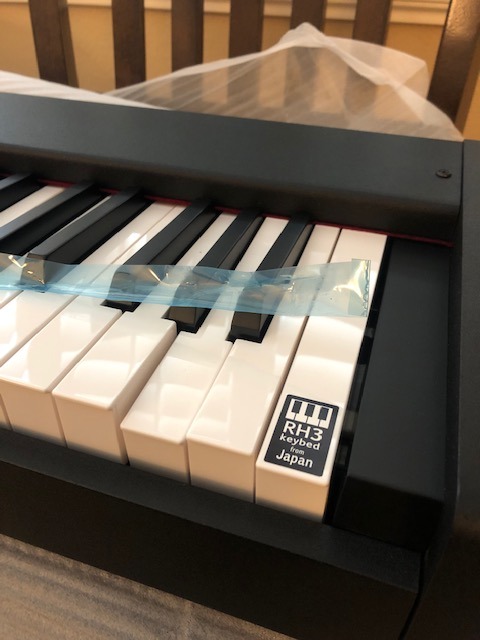
The 30 onboard sounds cover the essentials: grand piano, electric piano, organ, strings, and a few synth pads. The sound quality is solid, with the grand piano tones being the highlight. The harpsichord and organ sounds also receive praise from users. While 30 sounds is modest compared to the 3,000-plus tones on the Roland models, the D1 focuses on quality over quantity, and each sound is usable in performance.
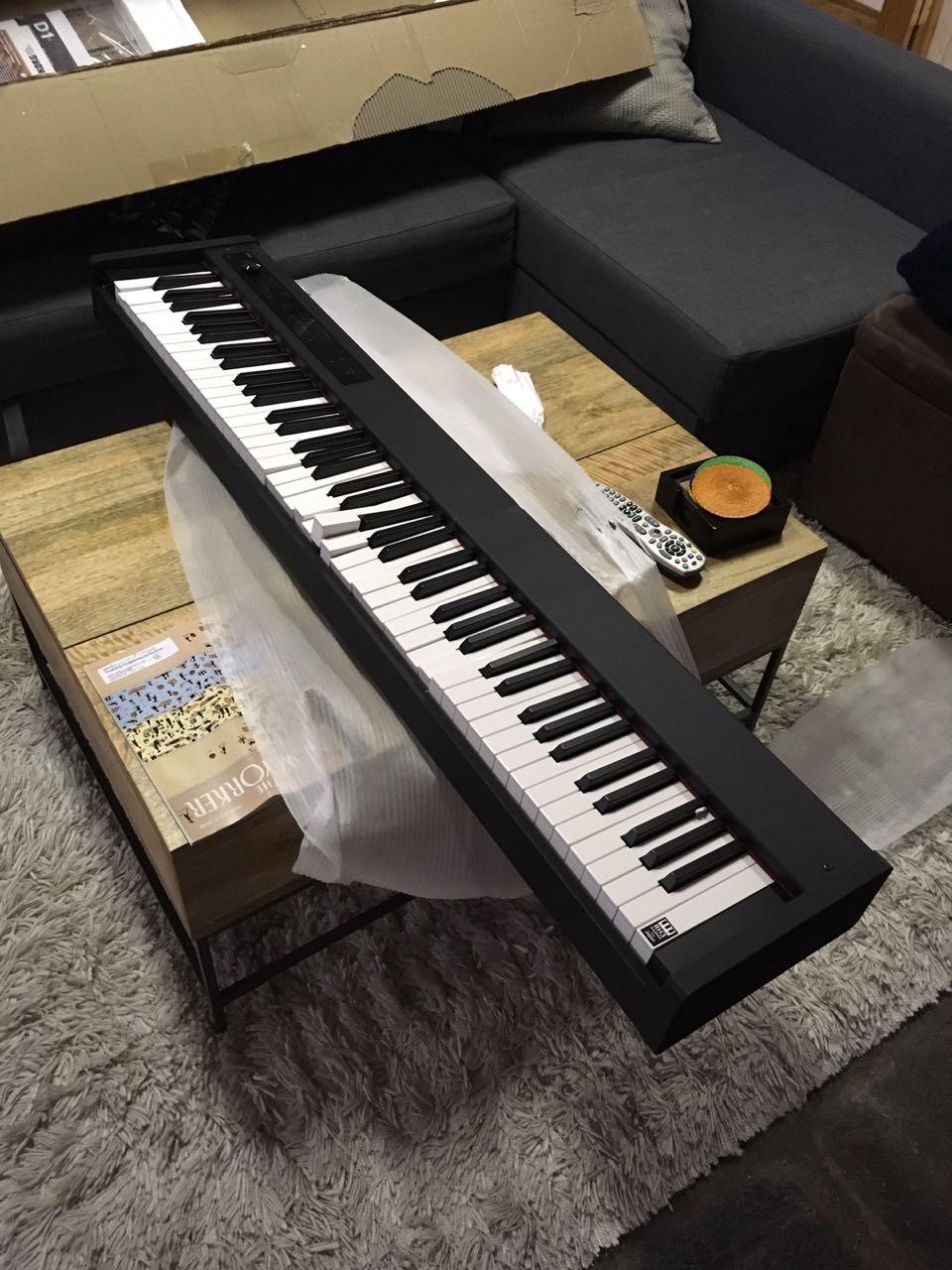
The biggest drawback is the lack of built-in speakers. You must use headphones or connect to an external amplifier to hear the instrument. Some users have reported quality control issues with keys arriving broken or damaged in shipping, so inspect your unit carefully upon arrival. The keys can produce a clacking noise on some units, which is noticeable in quiet environments but usually masked during performance.
Learning and Practice Applications
The D1 excels as a practice instrument for students who need weighted keys but do not need the extensive sound libraries and performance features of more expensive models. The headphone jack on the front panel enables silent practice at any hour. The USB connectivity allows the D1 to function as a MIDI controller for DAW software, making it suitable for home studio use as well.
For piano teachers, the D1 is an affordable studio instrument that provides students with an authentic playing experience. The simple interface means students focus on playing rather than exploring sounds and features. The included music rest, power adapter, and dedicated pedal provide everything needed to start playing immediately.
Upgrading from the D1
As your skills and needs grow, the D1 serves as a solid foundation. Many players keep their D1 as a practice instrument after upgrading to a more featured stage piano for live use. The RH3 action quality means you will not outgrow the playing experience even as your technique advances. When you do upgrade, look at the Roland RD-08 or Yamaha CK88 for models that add speakers, expanded sounds, and performance features while maintaining the weighted key feel.
The D1 is also worth considering as a secondary instrument for professionals who need a lightweight, affordable backup for their primary stage piano. At under $800 and with a simple, reliable design, it is a practical insurance policy against equipment failure at gigs.
Buying Guide: How to Choose the Best Stage Piano for Your Needs
Choosing the right stage piano depends on your specific performance situation, budget, and personal preferences. This buying guide breaks down the factors that matter most for live performers, drawing on insights from gigging musicians, forum discussions, and our own testing experience.
Key Action: The Most Important Factor
Action quality is the single most important consideration for any stage piano. This is the feature that forum users on Reddit and Piano World mention more than any other. A great sound engine means nothing if the keys feel cheap or unresponsive. There are several action types to understand.
Graded hammer action uses weights of different sizes across the keyboard to simulate the heavier bass hammers and lighter treble hammers of an acoustic piano. This is the minimum standard for any serious stage piano. The Yamaha CP88 uses GH3 action, the Roland models use PHA-4, and Kawai instruments use Responsive Hammer III or Grand Feel actions.
Triple-sensor keybeds, like the one on the Nord Stage 4 88, add a third sensor per key that enables faster note repetition and more accurate velocity tracking. For rapid passages and trills, this makes a noticeable difference. Wooden-key actions, like Kawai’s Grand Feel, use actual wooden key sticks for the most authentic acoustic piano simulation.
Ivory Feel key surfaces, found on Roland models, provide texture that prevents slipping during extended playing sessions. This is a small detail that becomes important during long gigs when your hands get warm.
Polyphony: How Many Notes Can Sound at Once
Polyphony refers to the number of individual notes the instrument can produce simultaneously. When you use the sustain pedal and play complex chords, each note consumes polyphony. Layering two sounds doubles the polyphony consumption per note. For live performance, 128-note polyphony (found on the Roland RD-2000 EX) is sufficient for virtually any situation.
The Kawai ES920 offers 256-note polyphony, the highest in this guide. This headroom is valuable if you layer sounds extensively or use heavy sustain pedaling during classical pieces. Lower polyphony instruments (64 notes or less) may drop notes during complex passages, which is audible and distracting.
Sound Engines: Sampling vs Modeling
Most stage pianos use sampled sounds, which are digital recordings of real acoustic pianos played back based on your key velocity. The quality depends on the recording quality, number of velocity layers, and sample length. Kawai’s SK Grand samples and Yamaha’s AWM2 engine are among the best sampling technologies available.
Physical modeling, used in Roland’s V-Piano engine (RD-2000 EX), generates sound mathematically rather than playing back recordings. This allows for more organic response to your playing, as the modeled piano resonates and interacts with itself like a real instrument. Modeling excels at capturing subtle dynamic shadings and sympathetic resonance.
For live performance, the sound needs to cut through a band mix. Bright, present sounds that might seem harsh in a showroom often work best on stage because they maintain clarity alongside drums, bass, and guitars. Darker, warmer sounds can get lost in the mix.
Portability: Weight and Size Considerations
Forum discussions consistently highlight weight as a major concern for gigging musicians. The instruments in this guide range from 29 pounds (Roland RD-88 EX, Yamaha CK88) to 76 pounds (Kawai MP11-SE). Consider your physical capabilities, transportation situation, and frequency of loading in and out.
If you carry your own gear and play several gigs per week, lighter instruments will save your back and your attitude. The Yamaha CK88 at 28.9 pounds and Roland RD-88 EX at 29 pounds are the lightest options with professional features. If you have help or play primarily at a single venue, heavier instruments like the Kawai MP11-SE offer superior action quality.
Consider a quality keyboard case with wheels for any instrument over 35 pounds. The investment in a good case protects your instrument and your body.
Connectivity: Outputs, USB, and Wireless
Balanced XLR outputs are the professional standard for connecting to PA systems and mixers. They reject noise and allow long cable runs without signal degradation. The Yamaha CP88, Kawai MP11-SE, and Yamaha YC73 all feature XLR outputs. Instruments with only unbalanced 1/4-inch outputs work fine for shorter cable runs but may pick up noise in electrically noisy environments.
USB audio interfaces allow you to record directly to your computer without needing a separate audio interface. This is valuable for home studio work and for using software instruments live. The Roland models and Yamaha CP88 both offer USB audio functionality.
Bluetooth connectivity, found on the Kawai ES920 and Yamaha CK88, enables wireless MIDI communication with computers and mobile devices. Bluetooth audio streaming lets you play backing tracks through the keyboard’s outputs, simplifying your stage setup.
Onboard Speakers: Useful or Unnecessary?
The forum community is divided on onboard speakers. For stage use, you will almost always connect to a PA system, making onboard speakers redundant. However, for practice, teaching, and small venue performance, built-in speakers add significant convenience.
The Kawai ES920 has the most capable onboard speaker system in this guide, followed by the Roland RD-88 EX and Yamaha CK88. The Roland RD-08 and Korg D1 either lack speakers or have speakers too weak for solo performance. If you need an all-in-one solution for practice and small gigs, prioritize models with quality built-in speakers.
Stage-Friendly Controls and Interface
On a dark stage, you need to find controls quickly without squinting at a small screen. Dedicated knobs and buttons for essential functions (sound selection, effects, layer/split) are more reliable than menu-based navigation. The Nord Stage 4, Roland RD-2000 EX, and Yamaha CP88 excel in this area with extensive physical controls.
Backlit buttons and screens help visibility in low light. The Yamaha CK88 has been criticized for unlit buttons, which makes operation difficult on dark stages. Test any instrument in low light conditions before committing if you regularly perform in dimly lit venues.
Seamless sound switching, found on the Yamaha CP88, prevents audio dropouts when changing patches. For performers who need to switch sounds mid-song, this feature is essential. Instruments without seamless switching will cut the current sound momentarily when you change patches.
FAQs
What are the best stage pianos for performers?
The best stage pianos for performers in 2026 are the Yamaha CP88 (best overall), Roland RD-08 (best value), Nord Stage 4 88 (premium pick), Roland RD-2000 EX (dual-engine professional), and Yamaha CK88 (best lightweight with speakers). Each excels in different performance scenarios from church services to professional touring.
Which stage piano has the best weighted keys?
The Kawai MP11-SE has the best weighted keys of any stage piano on the market, featuring full-length wooden key sticks with Grand Feel action that replicates the mechanical behavior of an acoustic piano. The Nord Stage 4 88 with its triple-sensor keybed and the Yamaha CP88 with Natural Wood GH3 action are also top contenders for key feel.
Do stage pianos need speakers?
Stage pianos do not need built-in speakers for live performance because they connect to a PA system via line outputs. However, built-in speakers are useful for practice, teaching, and small venue performance. Models like the Kawai ES920, Yamaha CK88, and Roland RD-88 EX include quality onboard speakers for added versatility.
How much does a good stage piano cost?
A good stage piano costs between $800 and $3,000 for most performers. The Korg D1 at around $800 is the best budget option, the Roland RD-08 at $1,100 offers the best value, and professional models like the Yamaha CP88 at $2,800 and Roland RD-2000 EX at $2,900 provide top-tier features. Premium instruments like the Nord Stage 4 88 cost $5,999 or more.
Can you use a stage piano for home practice?
Yes, stage pianos work excellently for home practice. Models with built-in speakers like the Kawai ES920 and Yamaha CK88 are ready to play without additional equipment. Models without speakers like the Korg D1 and Kawai MP11-SE require headphones or an external amplifier, but their weighted action and sound quality make them ideal practice instruments for developing proper technique.
Conclusion: Choosing Your Ideal Stage Piano
After reviewing 10 of the best stage pianos for performers, our top recommendation remains the Yamaha CP88 for its unbeatable combination of action quality, sound authenticity, and professional features. The Roland RD-08 wins for best value, bringing flagship sounds to a price point that working musicians can justify. For those who need the absolute best regardless of cost, the Nord Stage 4 88 delivers unmatched versatility with its piano, organ, and synth engines.
Consider your specific situation when choosing. Church musicians and solo performers should look at the Yamaha CK88 for its portability and battery operation. Classical pianists will find the Kawai MP11-SE’s wooden-key action worth the extra weight. Organ players need the Yamaha YC73 with its authentic VCM organ engine and physical drawbars. Whatever your performance context, the instruments in this guide represent the best stage pianos available in 2026, each chosen for real-world gigging reliability rather than showroom flash.