
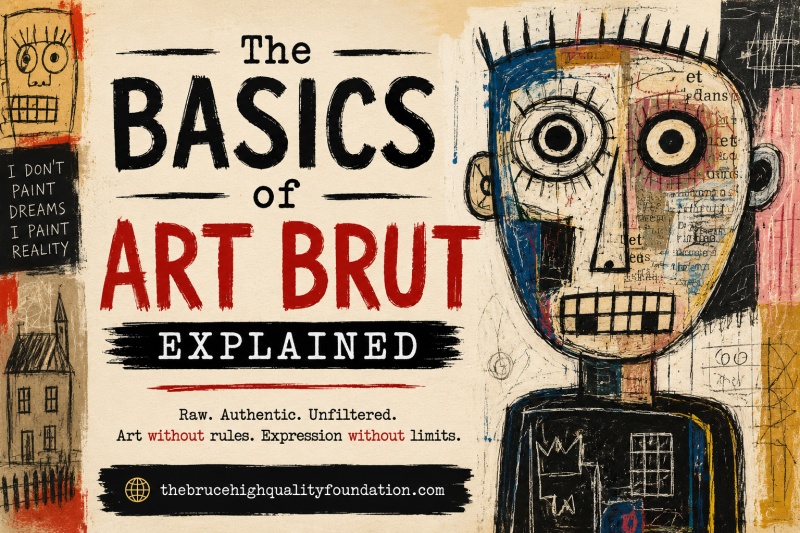
Art brut stands as one of the most fascinating and influential movements in modern art history, yet many people remain unfamiliar with its meaning, origins, and lasting impact. The term, which translates from French as “raw art,” describes a creative approach that prioritizes instinctive expression over academic training or mainstream artistic conventions. Understanding art brut opens a window into the raw, unfiltered creative spirit that has inspired countless artists and challenged traditional notions of what art can be.
In this comprehensive guide, you will learn what art brut truly means, how it originated in the 1940s through the vision of French artist Jean Dubuffet, and what characteristics distinguish authentic art brut from other similar movements. We will explore the key differences between art brut, outsider art, naive art, and folk art, examine notable artists who defined the movement, and provide practical guidance for identifying art brut works. Whether you are an art enthusiast, a student of art history, or simply curious about this remarkable creative phenomenon, this article will give you a solid foundation in the basics of art brut.
Table of Contents
What is Art Brut? (Definition and Etymology)
The term art brut literally translates from French as “raw art” or “rough art,” and it carries profound implications about the nature and origin of certain creative works. Jean Dubuffet first coined the phrase in 1945 to describe art created by individuals who operated entirely outside the established art world, creating works driven purely by personal vision and inner necessity rather than external validation or commercial success.
The concept goes far beyond a simple translation of words. When Dubuffet spoke of “raw” art, he meant art that retained its essential, unprocessed quality, much like raw materials before they undergo refinement. This raw quality manifests in the uninhibited creative expression, the absence of academic influence, and the deeply personal mythology that characterizes these works. Art brut represents creative output in its most unadulterated form, unfiltered by artistic traditions, market demands, or societal expectations.
The definition of art brut as established by Dubuffet himself emphasizes works “executed by people untouched by artistic culture, in which imitation – contrary to what occurs among painters, at a later stage, as a general rule – plays little or no part, so that their participants acquire their artistic provocative force only from their own animated being and the existing circumstances of their condition.” This definition highlights the authentic, self-generated nature of art brut, where the creative impulse comes from within rather than from external sources or artistic training.
History: Jean Dubuffet and the 1940s Origins
Jean Dubuffet, a French painter and sculptor born in 1901, developed the concept of art brut following his experiences during and after World War II. Having spent the war years in Switzerland, Dubuffet returned to France with a renewed interest in art that existed beyond the boundaries of conventional artistic practice. He became increasingly disillusioned with what he perceived as the artificiality and intellectualism of the established art world, seeking instead expressions of genuine, unprocessed creativity.
In 1945, Dubuffet began collecting works by individuals he considered authentic creators outside the art establishment. He focused particularly on art created by people in psychiatric institutions, prisoners, and others whose isolation from mainstream society had allowed them to develop entirely personal artistic languages. This collection became the foundation of what he called the Collection de l’Art Brut, housed in Lausanne, Switzerland, which remains one of the most significant repositories of art brut works in the world.
The historical context of art brut’s emergence is essential to understanding its significance. Post-World War II Europe represented a moment when many intellectuals and artists were questioning established systems and authority. Dubuffet’s art brut movement resonated with this broader cultural shift, offering an alternative to both academic art and the emerging consumer culture that would come to dominate the Western art world. The movement represented a rejection of everything that mainstream art had become, seeking authenticity in the creative expressions of those who had been marginalized or isolated from artistic institutions.
The founding of the Collection de l’Art Brut in 1948 cemented the movement’s institutional presence while remaining fundamentally opposed to traditional art institutions. Dubuffet and his collaborators envisioned the collection not as a museum in the conventional sense, but as a testament to creative possibility that existed beyond the boundaries of the established art world.
Key Characteristics of Art Brut
Several defining characteristics set art brut apart from other forms of creative expression. Understanding these characteristics provides the foundation for identifying, appreciating, and discussing authentic art brut works.
Spontaneous Creation: Art brut works typically emerge from a direct, unmediated creative impulse. The artist does not plan or sketch beforehand; instead, the work develops through an intuitive process where each decision leads naturally to the next. This spontaneity results in works that feel immediate and vital, carrying the energy of their creation within their visual surface.
Psychic Isolation: Dubuffet used the term “psychic isolation” to describe the internal world from which art brut artists create. This isolation does not necessarily refer to physical separation from society, but rather a psychological state in which the artist’s creative vision operates independently from external influences, cultural norms, and artistic conventions. The artist develops a private mythology or visual language that serves their internal creative needs rather than communicating with an external audience.
Individual Mythology: Many art brut artists create complex personal mythologies that infuses their work with deeply personal meaning. These mythologies often incorporate spiritual themes, autobiographical elements, and imaginative narratives that exist only within the artist’s individual consciousness. The work becomes a visual expression of this inner world, inaccessible to those without knowledge of the artist’s specific symbolic system.
Non-Conformity and Technical Originality: Art brut artists typically work with unconventional materials and techniques, developing methods that serve their unique creative vision rather than following established artistic practices. This technical originality means that art brut works often display distinctive formal qualities that cannot be easily categorized or compared to mainstream art movements.
Absence of Academic Influence: Perhaps most importantly, authentic art brut shows no evidence of formal artistic training or influence from established art movements. The artist creates from pure instinct rather than learned technique, resulting in works that feel genuinely fresh and unburdened by artistic tradition.
Art Brut vs Outsider Art: Understanding the Distinction
The relationship between art brut and outsider art creates confusion for many people exploring these concepts for the first time. While the terms are sometimes used interchangeably, understanding their distinct origins and implications enriches one’s appreciation of both.
| Aspect | Art Brut | Outsider Art |
|---|---|---|
| Origin of Term | Coined by Jean Dubuffet in 1945 | Coined by Roger Cardinal in 1972 |
| Primary Region | France and French-speaking contexts | Primarily English-speaking contexts |
| Original Focus | Works by people isolated from mainstream art | Works by amateur or self-taught artists |
| Institutional Status | Collection de l’Art Brut in Lausanne | Various museum and gallery contexts |
| Philosophical Emphasis | Raw, unprocessed creative expression | Art existing outside the established art world |
The term outsider art emerged in 1972 when British art historian Roger Cardinal used it as a translation for art brut in an attempt to make the concept accessible to English-speaking audiences. While the terms overlap significantly, some scholars and collectors maintain subtle distinctions between them. Art brut carries a specific historical connection to Dubuffet’s original vision and collection, while outsider art has evolved to encompass a broader range of contemporary artists working outside institutional contexts.
Folk art and naive art represent additional categories that relate to but remain distinct from art brut. Folk art traditionally refers to works created within community traditions, often carrying cultural or functional purposes beyond pure aesthetic expression. Naive art describes works by artists without formal training who nonetheless work within or reference mainstream artistic traditions. Art brut, by contrast, emphasizes the complete independence from artistic culture and convention that Dubuffet considered essential.
Despite these distinctions, the boundaries between these categories remain fluid, and individual works may display characteristics of multiple classifications. The important thing is understanding that these terms emerged from different historical contexts and carry different philosophical implications, even as they describe related phenomena in outsider creative expression.
Notable Art Brut Artists
The art brut movement encompasses a diverse range of artists whose works demonstrate the movement’s characteristic qualities while expressing entirely individual visions. Understanding these key figures provides concrete examples of what art brut looks like in practice.
Adolf Wolfli (1864-1930) stands as one of the most significant figures in the art brut canon. A Swiss artist who spent most of his life in psychiatric institutions, Wolfli created an enormous body of work including thousands of pages of drawings and manuscripts. His work centers on a complex personal mythology involving Saint Adolf and elaborate narratives of cosmic significance. The systematic complexity of his output, created in isolation from the art world, exemplifies the art brut ideal of individual mythology expressed through uninhibited creative energy.
Heinrich Nuss (1920-1979) created powerful sculptural works using unconventional materials including wood, metal, and found objects. His work reflects a deeply personal vision rooted in his experiences as a farmer and his spiritual relationship with nature. Nuss worked in relative isolation, developing his artistic practice without connection to artistic institutions or movements.
Michel Nedjar represents a more contemporary example of art brut principles. Born in France in 1947, Nedjar’s paintings and drawings draw from themes of memory, loss, and the human condition. His work displays the intuitive, non-academic approach characteristic of art brut while achieving recognition within the broader art world without compromising its essential qualities.
Carlo Menz (1923-1991) developed a distinctive visual language through his sculptural work, creating figures and forms that seem to emerge from some internal necessity. His work demonstrates how art brut can encompass diverse stylistic approaches while maintaining the fundamental characteristics of authentic, non-influenced creative expression.
These artists and many others like them represent the diversity of creative expression that falls under the art brut umbrella. What unites them is not a shared style but a shared approach: the commitment to creating from pure internal necessity without reference to or influence from the established art world.
Contemporary Art Brut Today
The art brut movement continues to evolve and influence contemporary artists, collectors, and institutions around the world. While the original Collection de l’Art Brut in Lausanne remains the most significant repository of historical works, contemporary artists working in the art brut tradition have found new platforms for exhibition and recognition.
La Maison Rouge in Paris represents one of the most important contemporary spaces dedicated to art brut and related outsider art movements. Founded by collector Antoine de Galembert in 2004, the foundation has exhibited works by numerous artists working in the art brut tradition while also engaging in critical examination of the category’s boundaries and implications in the contemporary context.
Contemporary art brut practitioners often face questions about authenticity and institutional recognition that their predecessors did not. When an artist gains significant recognition and commercial success, does that success inherently contradict the anti-institutional ethos that Dubuffet considered essential to art brut? These questions remain debated among scholars, collectors, and artists themselves, reflecting the ongoing tension between the art brut movement’s anti-establishment origins and the art world’s institutional frameworks.
The digital age has also created new possibilities for art brut artists and enthusiasts. Online communities and social media platforms allow artists working in isolation to share their work and connect with others who share similar creative approaches. This democratization of visibility represents both an opportunity and a challenge for the art brut concept, as the movement’s emphasis on isolation from the art world becomes increasingly difficult to maintain in a connected age.
How to Identify Art Brut
For those seeking to distinguish authentic art brut from similar creative expressions, several practical guidelines can help navigate the complexities of this category.
Consider the Artist’s Background: Authentic art brut typically emerges from artists without formal academic training in art. Look for evidence of self-taught creation, isolation from artistic institutions, and work created primarily for personal satisfaction rather than commercial or critical response.
Evaluate Technical Originality: Art brut works often display unusual techniques, materials, or approaches that do not reflect mainstream artistic trends or movements. The artist should demonstrate a personal technical vocabulary developed through intuitive exploration rather than learned technique.
Look for Personal Mythology: Authentic art brut frequently contains complex personal symbolism, spiritual themes, or narrative elements that reflect the artist’s individual inner world rather than external cultural references.
Assess the Absence of Academic Influence: Perhaps most importantly, genuine art brut shows no evidence of conscious reference to or imitation of established art movements or techniques. The work should feel genuinely original and unburdened by artistic tradition.
Consider the Context of Creation: Works created in isolation from the commercial art world, often in non-traditional settings, more likely qualify as authentic art brut. However, context alone does not determine authenticity; the formal qualities of the work itself must also reflect art brut principles.
Remember that these guidelines represent general principles rather than rigid criteria. The art brut category necessarily resists strict definition, as its essence lies in the rejection of conventional categorization itself. Use these guidelines as starting points for developing your own informed judgment rather than as definitive tests.
Frequently Asked Questions
What are art brut’s main characteristics?
Art brut’s main characteristics include spontaneous creation without planning, psychic isolation from mainstream artistic culture, the development of individual mythologies, technical originality using unconventional materials and methods, and complete absence of academic artistic influence. Works typically feel immediate and vital, carrying the energy of their unmediated creation.
What is the concept of art brut?
Art brut, meaning “raw art” in French, is a concept developed by Jean Dubuffet in 1945 to describe art created by individuals working entirely outside the established art world. The concept emphasizes authentic, unprocessed creative expression that emerges from internal necessity rather than external validation, training, or market demands.
Is art brut always self-taught?
While art brut artists are typically self-taught and often have no contact with formal artistic training, the category is defined more by the absence of artistic culture influence than by the presence or absence of formal instruction. Some artists may have had minimal exposure to art education without being meaningfully influenced by it.
Who famously got rejected from art school?
Several notable art brut artists experienced rejection from or had limited engagement with formal art education. Adolf Wolfli, one of the most significant art brut artists, was institutionalized from an early age and had no formal art training. Similarly, many artists associated with the movement found themselves outside artistic institutions due to social, economic, or psychological circumstances rather than by choice.
Conclusion
Art brut explained simply as “raw art” fails to capture the profound significance of this movement for the broader history of creative expression. The concept developed by Jean Dubuffet in the aftermath of World War II represents not merely an art historical category but a fundamental challenge to conventional notions of what art can be and who can create it. By celebrating the creative expressions of those operating entirely outside the establishment art world, art brut expands our understanding of human creativity and the conditions under which authentic artistic innovation can occur.
The key takeaways from this exploration of art brut include the movement’s origins in post-war European cultural questioning, the essential characteristics of spontaneous creation and individual mythology, the nuanced distinctions between art brut and related categories like outsider art and naive art, and the practical guidance for identifying authentic works. The movement’s ongoing influence on contemporary artists and its institutional presence through collections like the Collection de l’Art Brut and La Maison Rouge demonstrate its enduring relevance.
As you continue exploring the world of art brut, consider visiting the collections mentioned in this article, seeking out works by the artists discussed, and developing your own informed appreciation for this remarkable creative phenomenon. The art brut movement reminds us that authentic creative expression can emerge from anywhere and anyone, challenging us to reconsider the boundaries we draw around artistic possibility.