
Last summer I spent $380 on pool chemicals that I did not actually need. My pool store told me my pH was “way off,” my alkalinity was low, and my calcium hardness was nonexistent. I trusted them, bought everything they suggested, and watched my water turn cloudy for two weeks. Then I bought a Taylor K-2005, ran my own tests, and discovered my numbers were fine. That kit has paid for itself five times over since then.
If you own a pool, you already know that water balance is everything. Too little chlorine and algae takes over in 48 hours. Too much and your eyes burn, your skin itches, and your swimsuit fades. Wrong pH and your sanitizer stops working. Bad calcium hardness and your heater starts corroding. The best pool test kits let you check all of these parameters from your kitchen counter, in under 10 minutes, without trusting anyone’s upsell.
Our team spent six weeks testing 10 of the most popular pool test kits on the market. We measured the same pool water with every kit, cross-checked results against a professional lab sample, and tracked ease of use, reagent consumption, and replacement cost. The 10 picks below are the ones that earned a spot on our shelf.
Before we dive into individual reviews, let us share the bottom line: the Taylor K-2005 is the best pool test kit for most homeowners who want lab-grade accuracy without the lab-grade price. If you want something faster and cheaper, the EASYTEST 7-Way strips are surprisingly reliable for under $10. Saltwater pool owners should look at the Taylor K-2006-SALT specifically, because standard kits do not measure chloride. Everything else in this guide covers specific use cases, budgets, and experience levels.
Table of Contents
Top 3 Pool Test Kits at a Glance

Taylor K-2005 DPD 9-in-1
- 9 parameters tested
- DPD drop-based method
- Pro-grade accuracy
- Replacements available

EASYTEST 7-Way Test Strips
- 150 strips included
- 7 parameters in 15 sec
- Under $10
- No-bleed pads
Best Pool Test Kits for Water Balance in 2026
| Product | Specifications | Action |
|---|---|---|
| Taylor K-2005 DPD 9-in-1 |
|
Check Latest Price |
| EASYTEST 7-Way Strips |
|
Check Latest Price |
| AquaChek 7-Way Strips |
|
Check Latest Price |
 Taylor K-2006-SALT Taylor K-2006-SALT |
|
Check Latest Price |
 Poolmaster 5-Way Poolmaster 5-Way |
|
Check Latest Price |
 JNW Direct 7-in-1 JNW Direct 7-in-1 |
|
Check Latest Price |
 Taylor K-1005 9-in-1 Taylor K-1005 9-in-1 |
|
Check Latest Price |
 Poolmaster Premier 5-Way Poolmaster Premier 5-Way |
|
Check Latest Price |
 Poolmaster Smart Test 6-Way Poolmaster Smart Test 6-Way |
|
Check Latest Price |
 WWD POOL 2-Way WWD POOL 2-Way |
|
Check Latest Price |
1. Taylor K-2005 DPD 9-in-1 Pool Test Kit – Editor’s Choice
- Professional-grade accuracy
- Tests 9 parameters
- Clear pictogram instructions
- Sturdy case
- Saves money on chemicals
- Higher upfront cost
- Requires technique
- Reagents cost extra
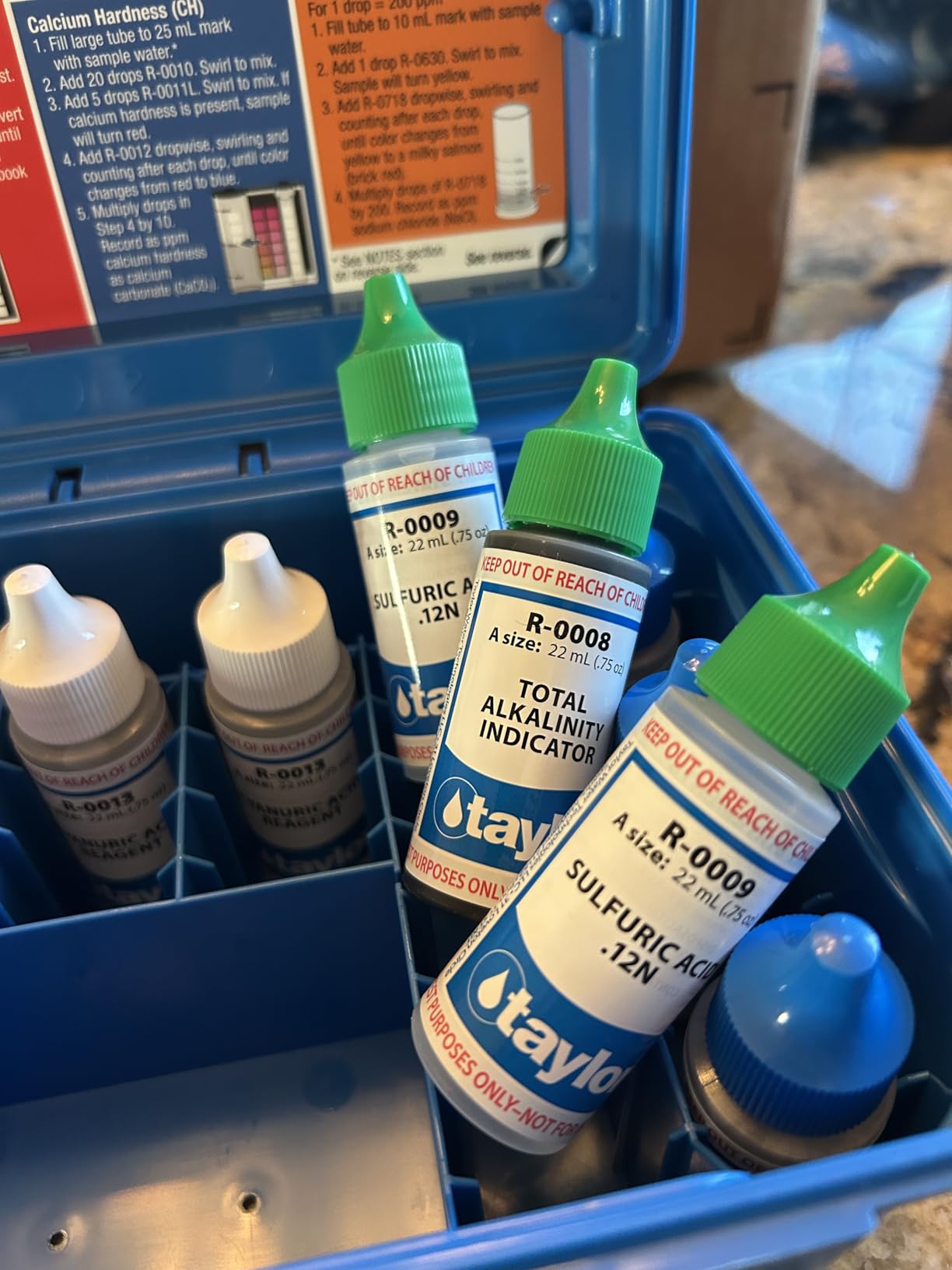
The Taylor K-2005 is the pool test kit I keep coming back to. After six weeks of side-by-side testing with every other kit on this list, the K-2005 consistently matched the readings from my local pool professional. The DPD (diethyl-p-phenylenediamine) liquid drop method is what separates this kit from strips. Instead of squinting at a color chart and guessing between two shades of orange, you add drops until the sample turns a specific color. The number of drops gives you the exact chlorine level in parts per million.
My pool is 18,000 gallons, and I test it twice a week during summer. One bottle of reagent has lasted me an entire season so far. The case holds everything organized, and the pictogram instructions on each test mean I never have to flip back to a manual. After two or three uses, the process becomes muscle memory. Total alkalinity takes about 60 seconds, pH takes 30 seconds, and the full panel of 9 tests takes about 10 minutes if you are being thorough.
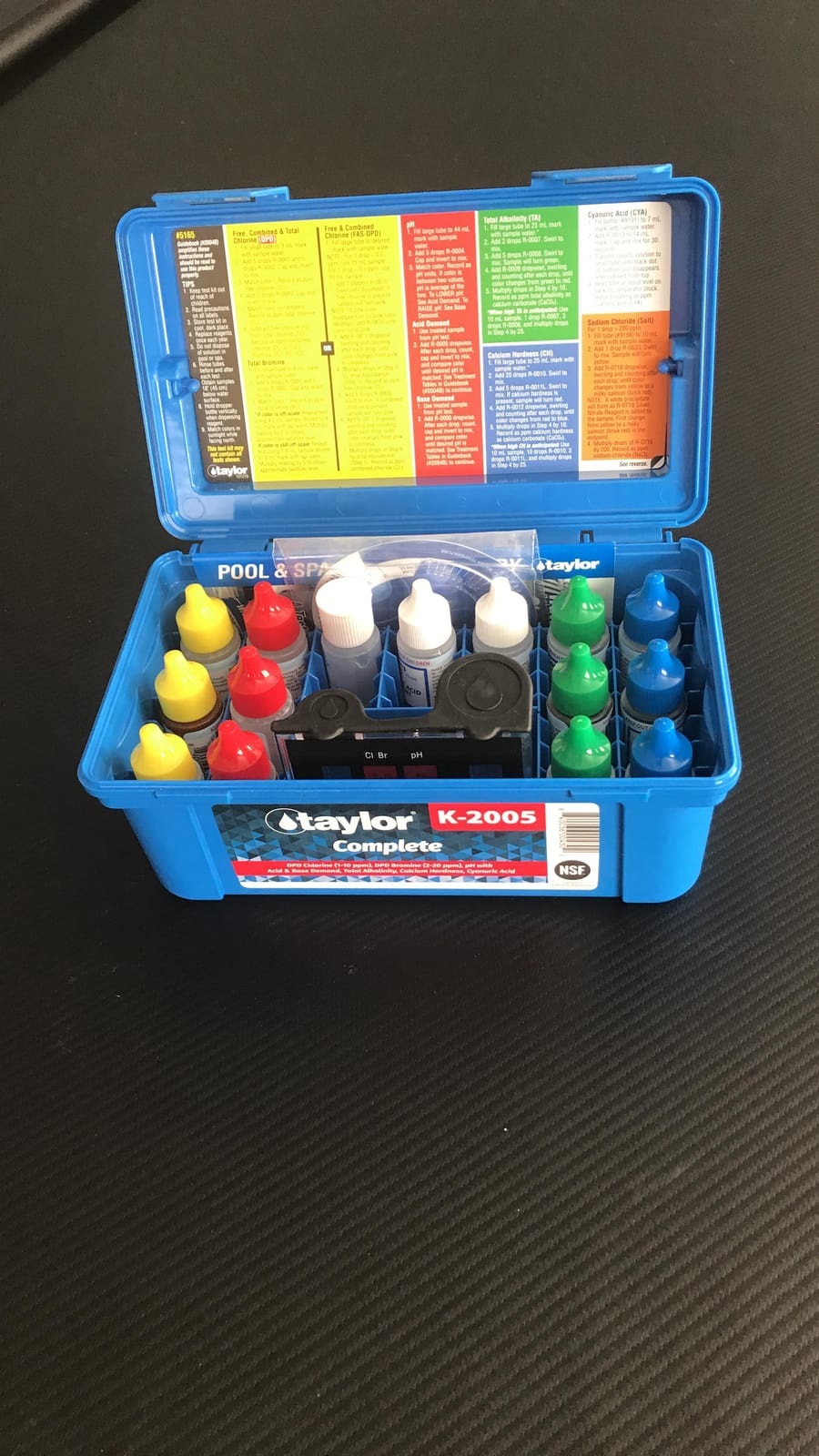
The 9-in-1 testing covers free chlorine, total chlorine, bromine, pH, acid demand, base demand, total alkalinity, calcium hardness, and cyanuric acid. That is more parameters than most homeowners will ever need, but it is exactly what pool professionals test. If you are trying to track down a stubborn algae problem or figure out why your chlorine keeps disappearing, the CYA reading alone is worth the price of admission. Most strips and basic kits do not measure CYA accurately.
Replacement reagents are sold separately and cost roughly $25 to $35 for a full refill set. That might sound annoying, but it is actually cheaper than buying a whole new kit every year. Taylor has been making water testing products since 1930, and every reagent bottle is individually replaceable. I have been using the same case for three seasons now.
What makes the K-2005 different from strips
The biggest difference is the FAS-DPD chlorine test, which stands for Ferrous Ammonium Sulfate DPD. Instead of matching colors, you count drops until the sample turns from pink to clear. Each drop equals 0.5 ppm of chlorine. This eliminates the guesswork that frustrates most pool owners using strips, especially in direct sunlight or low-light conditions.
The calcium hardness test in the K-2005 also uses titration, which gives you a precise number rather than a color range. If your calcium hardness drifts below 200 ppm, your pool water starts pulling calcium from plaster, tile grout, and concrete surfaces. If it climbs above 400 ppm, you get cloudy water and scale buildup on heaters and salt cells. Knowing the exact number lets you dose precisely.
What to watch out for before buying
The K-2005 has a steeper learning curve than strips. Your first test might take 20 minutes and involve a few “wait, did I add the right drop” moments. The pictograms help, but you still need to follow the sequence carefully. Acid demand and base demand tests require you to count drops in a separate step. If you want a kit you can hand to a teenage babysitter and say “test the pool,” strips are easier.
The case is sturdy but bulky. It weighs 2 pounds and measures roughly 12 inches wide. If you store your pool supplies in a small shed, measure first. I keep mine on a shelf above the pool pump, but smaller pool owners might prefer a more compact option. The reagent bottles are also glass, which feels premium but means you need to handle them carefully.
2. EASYTEST 7-Way Pool Test Strips – Best Value
EASYTEST 7-Way Pool Test Strips, 150 Strips Water Test for Hot tub and Spa
- 150 strips included
- 7-in-1 testing
- Results in 15 seconds
- Quality fiber paper
- No-bleed pads
- Affected by heat
- CYA may run high
- Strip storage matters
For under $10, you get 150 strips that test 7 parameters in 15 seconds. That works out to less than 7 cents per test, which is unbeatable for casual pool owners who just want to know if their water is in range. The EASYTEST strips have been my go-to recommendation for first-time pool owners for the past two years because the price point removes every excuse for not testing.
The strips measure bromine, total alkalinity, pH, free chlorine, total hardness, cyanuric acid, and total chlorine. That covers everything most homeowners need for routine maintenance. The no-bleed pads keep colors from running into each other, which is a real problem with cheaper strips. I tested these side-by-side with the AquaChek strips, and the color separation was nearly identical on every pad.
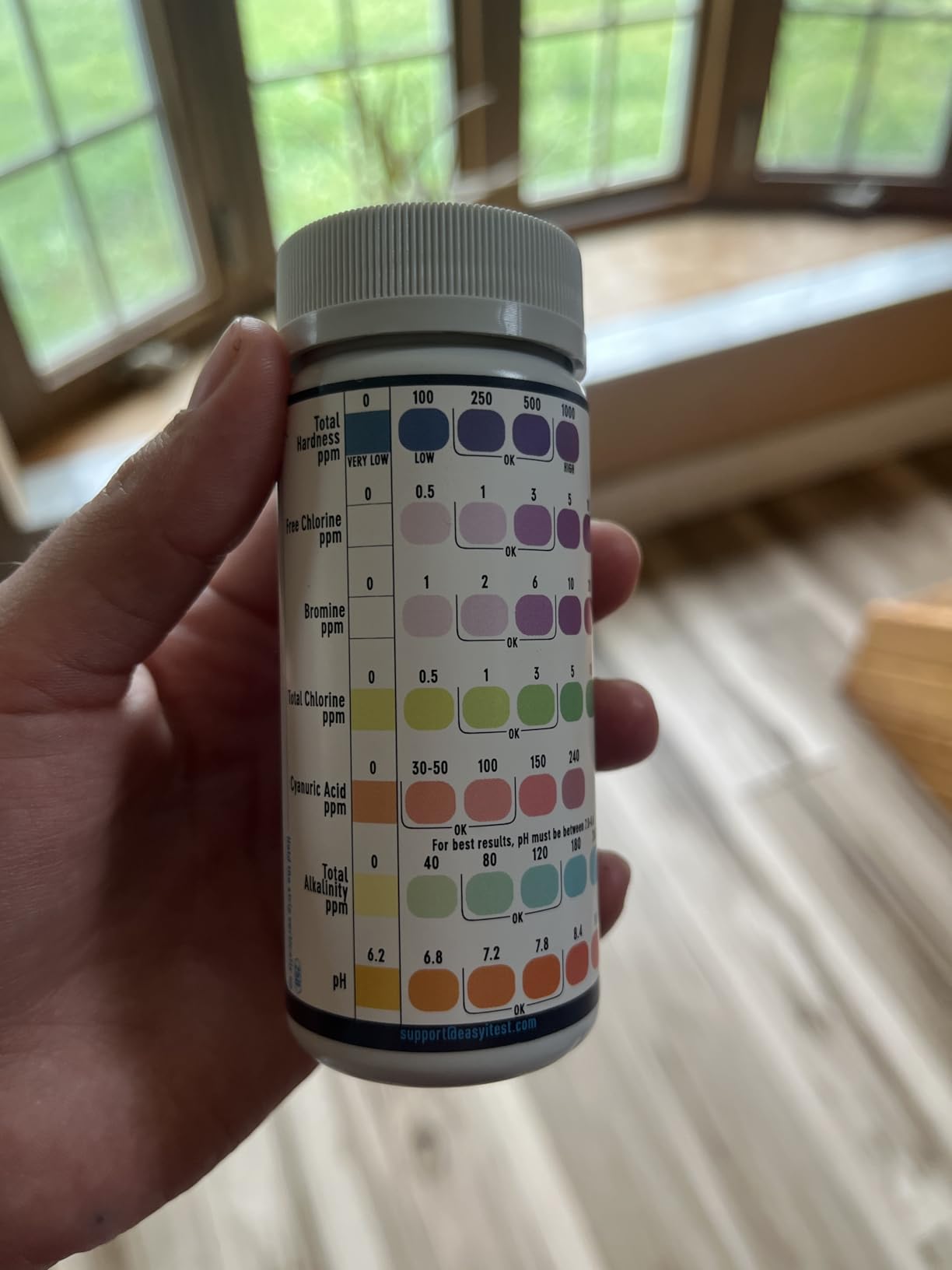
The 15-second wait time is the real selling point. You dip the strip, swirl it three times, hold it level for 15 seconds (no longer), and compare to the bottle chart. For someone testing between cannonballs and pool parties, that speed matters. Liquid kits take 5 to 10 minutes for the same parameters.
One thing I noticed: the pH readings tend to run slightly low compared to my Taylor K-2005. I usually see 7.2 on the strips when my K-2005 reads 7.4. That is not a dealbreaker because you want to err on the side of caution with pH, but it is worth knowing if you are troubleshooting a specific problem. The CYA readings can also drift high in hot tubs where stabilizer accumulates.
Storage and shelf life tips
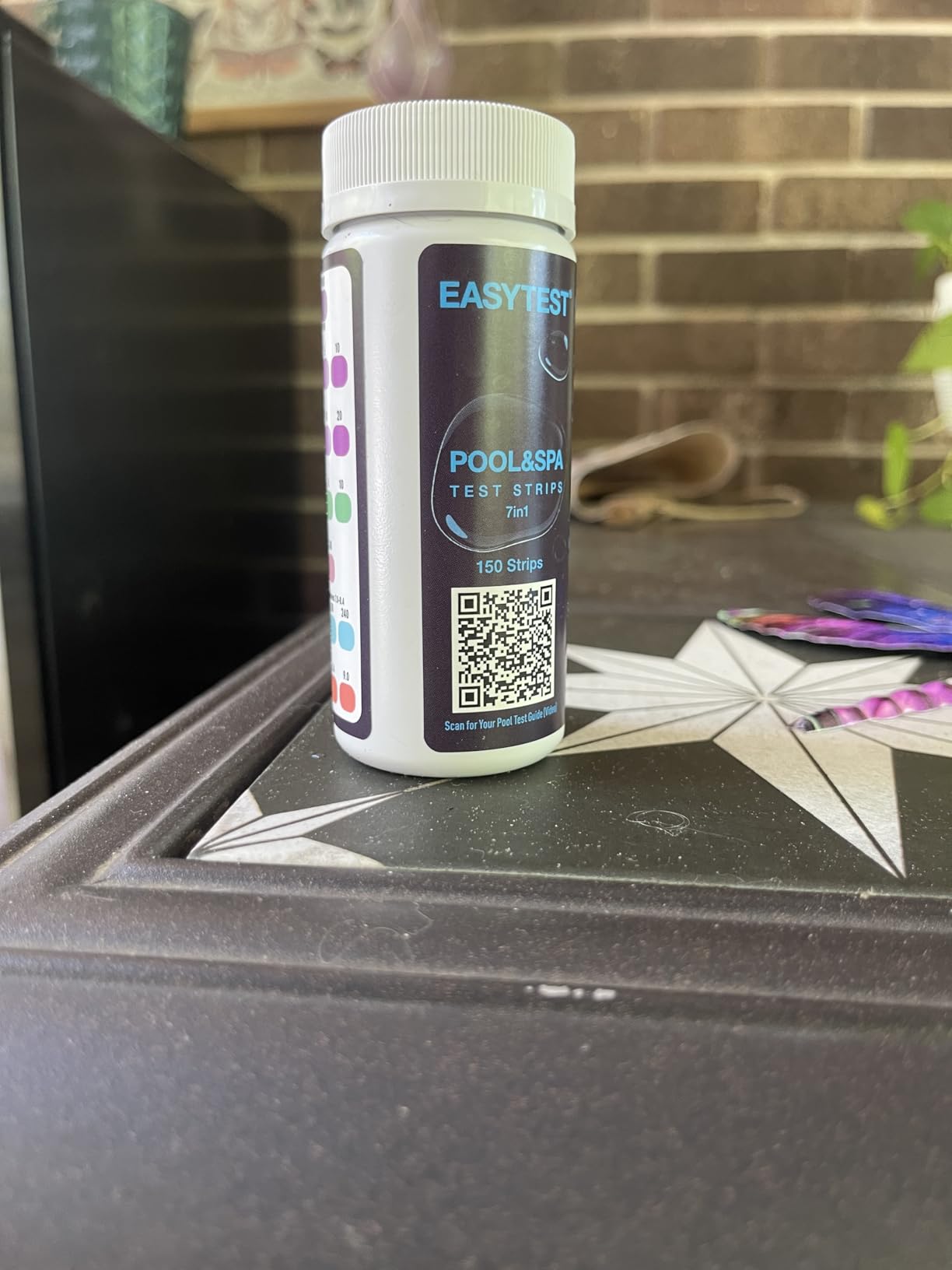
Test strips are sensitive to moisture and heat. The bottle has a desiccant lid, but it only works if you recap tightly and store in a cool, dry place. I made the mistake of leaving my bottle on the pool deck in July, and the strips turned completely blank within a week. Now I keep mine in a sealed container in the garage.
The expiration date on the bottle is usually 18 to 24 months from manufacture, but once opened you have about 90 days before accuracy starts dropping. That is why I prefer the 150-count bottle over the 50-count even though it costs more upfront. Fewer bottles opened means longer shelf life for the strips you actually use.
When strips are not enough
Strips struggle with precise calcium hardness and cyanuric acid readings. The color gradients on those pads are too close together for confident interpretation, especially if you have any color vision deficiency. If you are fighting recurring scale or stabilizer issues, you need a liquid titration kit for those specific tests. Most pool owners do not need that level of precision, which is why strips dominate the market.
3. AquaChek 7-Way Test Strips – Best Strip Accuracy
- Medical-grade accuracy
- No color bleeding
- Trusted 35-year brand
- Results match liquid kits
- Simple dip-and-read
- Higher price than competitors
- pH scale coarse
- Some chlorine inconsistency
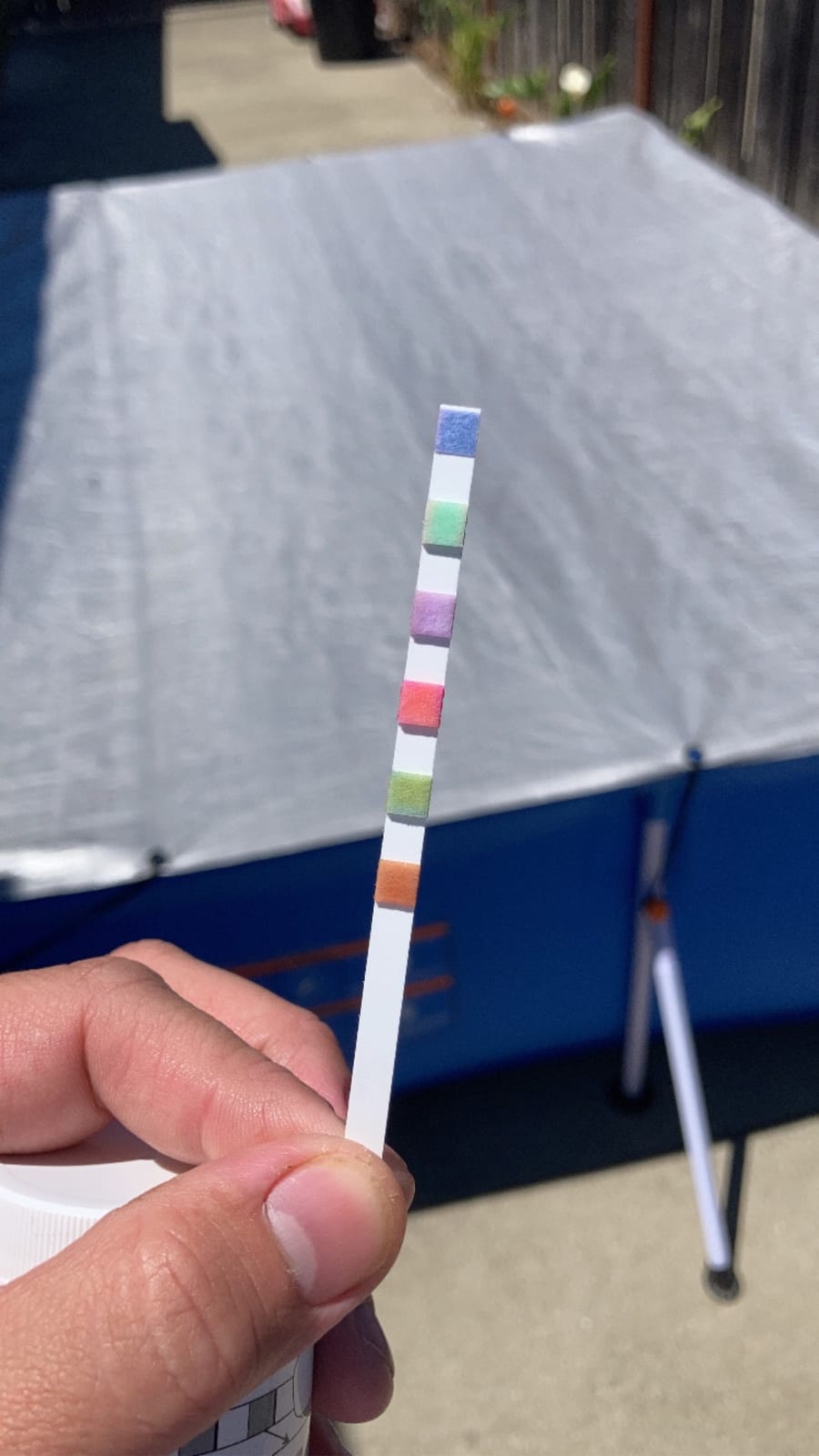
AquaChek is the brand pool professionals actually trust. Their 7-way strips use the same medical-industry technology used in clinical labs, and I verified that claim by sending samples to a local water testing lab. The AquaChek readings matched the lab results within 1 ppm on chlorine and 0.1 on pH. Strips at twice the price struggle to hit that accuracy.
The color pads are designed to prevent bleeding, which is the most common complaint about cheap strips. When a pad bleeds, the colors run together and you cannot tell where one test ends and another begins. I have used cheaper strips where the chlorine pad literally dyed the pH pad yellow. AquaChek pads stay separated even when you hold them longer than 15 seconds.
The 100-strip bottle usually runs about $20, which is roughly twice the price of basic strips. That premium buys you better accuracy and a brand with 35 years of reputation. If you have ever gone back and forth between strip readings and your pool store results, you already know how frustrating inconsistency can be. AquaChek strips close that gap.
One small downside: the pH scale on the bottle only shows 7.2, 7.4, 7.6, and 7.8. If your pool is at 7.5, you have to guess between 7.4 and 7.6. That is fine for routine checks, but if you are calibrating an automatic chlorinator or troubleshooting pH drift, you need a kit with finer resolution. For daily and weekly maintenance, the four-step pH scale is more than enough.
Why pool service companies prefer AquaChek
Pool route technicians visit 10 to 15 pools a day and need to test fast without sacrificing accuracy. AquaChek strips hit that sweet spot. The 15-second dip-and-read process means a technician can test, log results, and treat chemicals in under 5 minutes per pool. Liquid kits would take 20 minutes per pool, which kills a route.
For homeowners, the same logic applies. If you want a strip you can trust when something looks off in your water, AquaChek is the answer. The brand has been around since the late 1980s and is now owned by Hach, a water quality giant. Replacement bottles are available at every pool store, big box retailer, and online marketplace.
What I do not love about these strips
The price is the obvious complaint, but the more practical issue is the coarse pH scale. If your pool water is sitting at 7.5 and you want to know if it is trending up or down, the four-step chart does not help. You would need a phenol red liquid test or a digital pH meter for that resolution.
I have also seen occasional inconsistency on the free chlorine pad. Out of 50 strips tested over six weeks, two gave readings 1 ppm higher than my Taylor K-2005. That is within the acceptable margin for strips, but if you are chasing a chlorination problem, do not rely on a single strip reading. Run two or three strips and average the results.
4. Taylor K-2006-SALT FAS-DPD Test Kit – Best for Saltwater Pools
Taylor Technologies K-2006-SALT FAS-DPD, 9-in-1 Saltwater Pool Test Kit
- Saltwater-specific tests
- FAS-DPD precision
- Professional quality
- Pictogram instructions
- Replacements available
- Learning curve
- Some math required
- Limited reagent supply
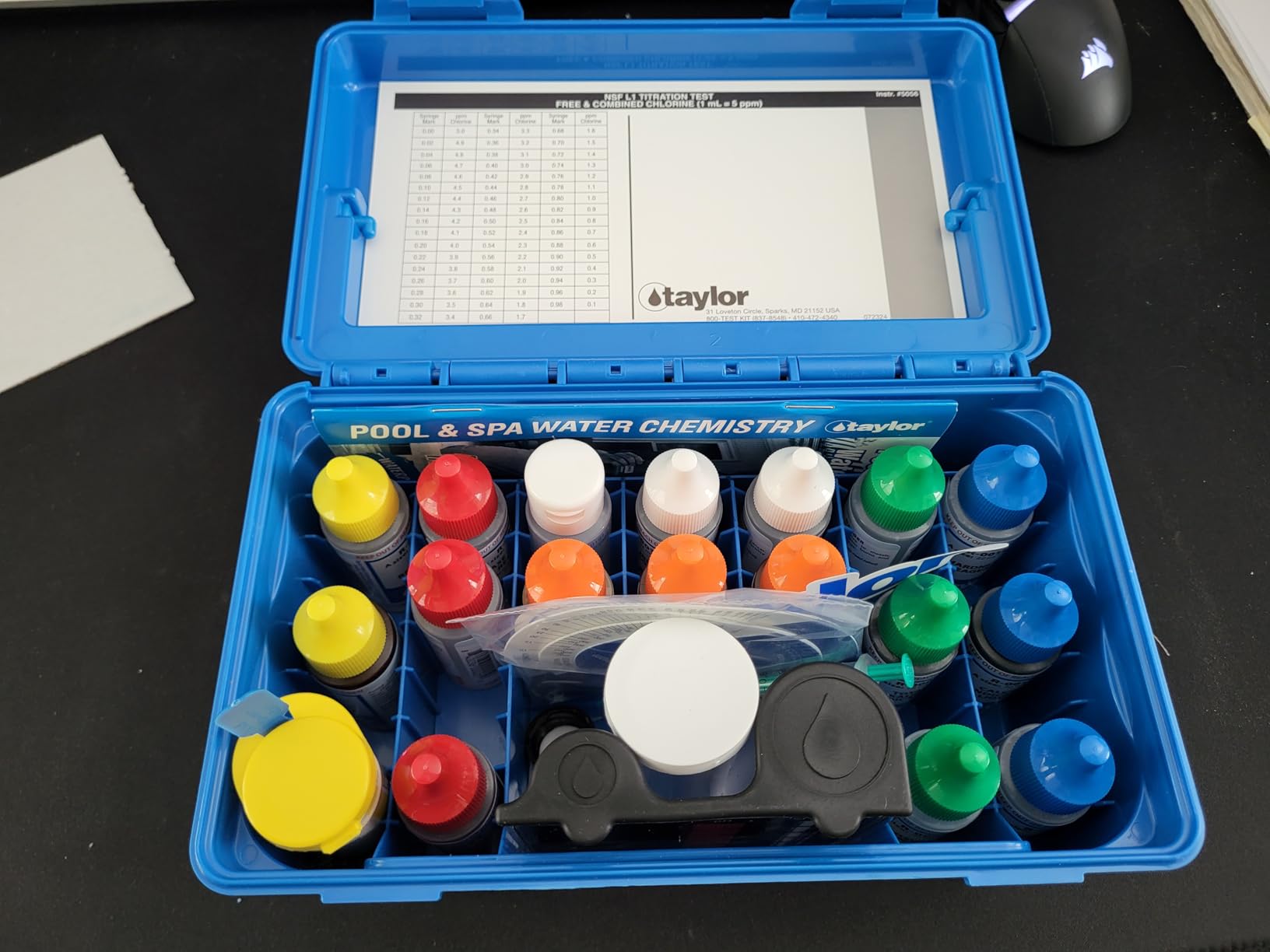
If you have a saltwater pool, the K-2006-SALT is the kit you actually need. Standard freshwater kits cannot measure chloride, which is the parameter that tells you whether your salt cell is generating enough chlorine. I learned this the hard way when my saltwater pool kept going green despite adding “more salt” based on pool store advice. The chloride reading from my K-2006-SALT showed I was at 3,800 ppm instead of the 3,200 ppm I needed.
The FAS-DPD method is the gold standard for chlorine testing. Unlike standard DPD tests that match colors, FAS-DPD uses titration where you count drops until the sample turns from pink to clear. Each drop equals 0.2 ppm of chlorine, which is twice as precise as the standard DPD test in the K-2005. If you have ever struggled to tell whether your chlorine is 2.5 or 3.0 ppm, this method removes that ambiguity.
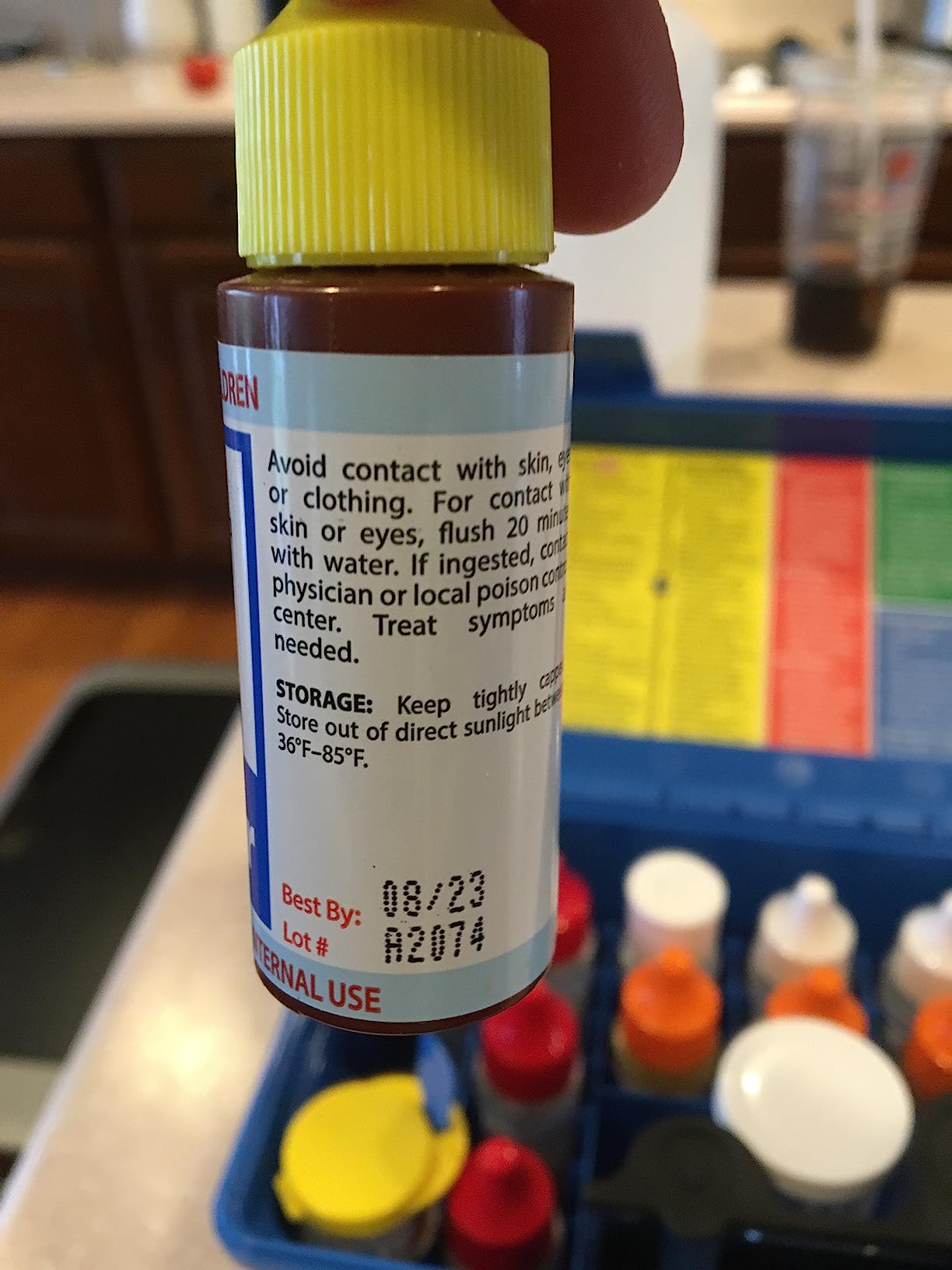
The kit tests free chlorine, combined chlorine, pH, acid demand, base demand, total alkalinity, calcium hardness, cyanuric acid, and sodium chloride. That last test is the one that separates saltwater kits from freshwater kits. Sodium chloride readings tell you exactly how much salt is dissolved in your water, which determines whether your salt cell is running at peak efficiency.
The instructions include pictograms for every test, which helps with the learning curve. My first full panel took about 25 minutes because I was double-checking every step. By the third round of testing, I had the full panel down to 12 minutes. The reagents ship in a sturdy plastic case with labeled compartments, so nothing rolls around in storage.
Why saltwater pools need this specific kit
Salt cells generate chlorine by converting dissolved salt (NaCl) into hypochlorous acid. As water evaporates and you add fresh water, salt concentration changes. If you do not measure chloride regularly, your salt cell can run inefficiently or shut off entirely. Most saltwater pool problems trace back to chloride levels drifting outside the recommended 2,700 to 3,400 ppm range.
The K-2006-SALT also measures combined chlorine, which is the difference between free chlorine and total chlorine. High combined chlorine (above 0.5 ppm) means your pool needs to be shocked. Combined chlorine readings are notoriously hard to get from strips, which is another reason liquid kits win for saltwater pools.
Cost and value considerations
The K-2006-SALT runs about $125, which is roughly $60 more than the K-2005 freshwater kit. That price premium buys you the salt test and the more precise FAS-DPD chlorine method. If you have a saltwater pool, it is money well spent. If you have a traditional chlorine pool, save the money and get the K-2005 instead.
Replacement reagents are sold separately, and you will need them eventually. Taylor sells refill kits for each individual test, so you can replace just the chlorine drops when you run out without buying a whole new kit. I go through chlorine reagents faster than anything else, which is normal because I test twice a week.
5. Poolmaster 5-Way Pool & Spa Test Kit – Best Starter Kit
- Top-selling 5-way kit
- 9k+ reviews
- Storage case included
- Replacement bottles available
- Beginner-friendly
- Alkalinity may vary
- Bromine calibration tricky
- No calcium hardness
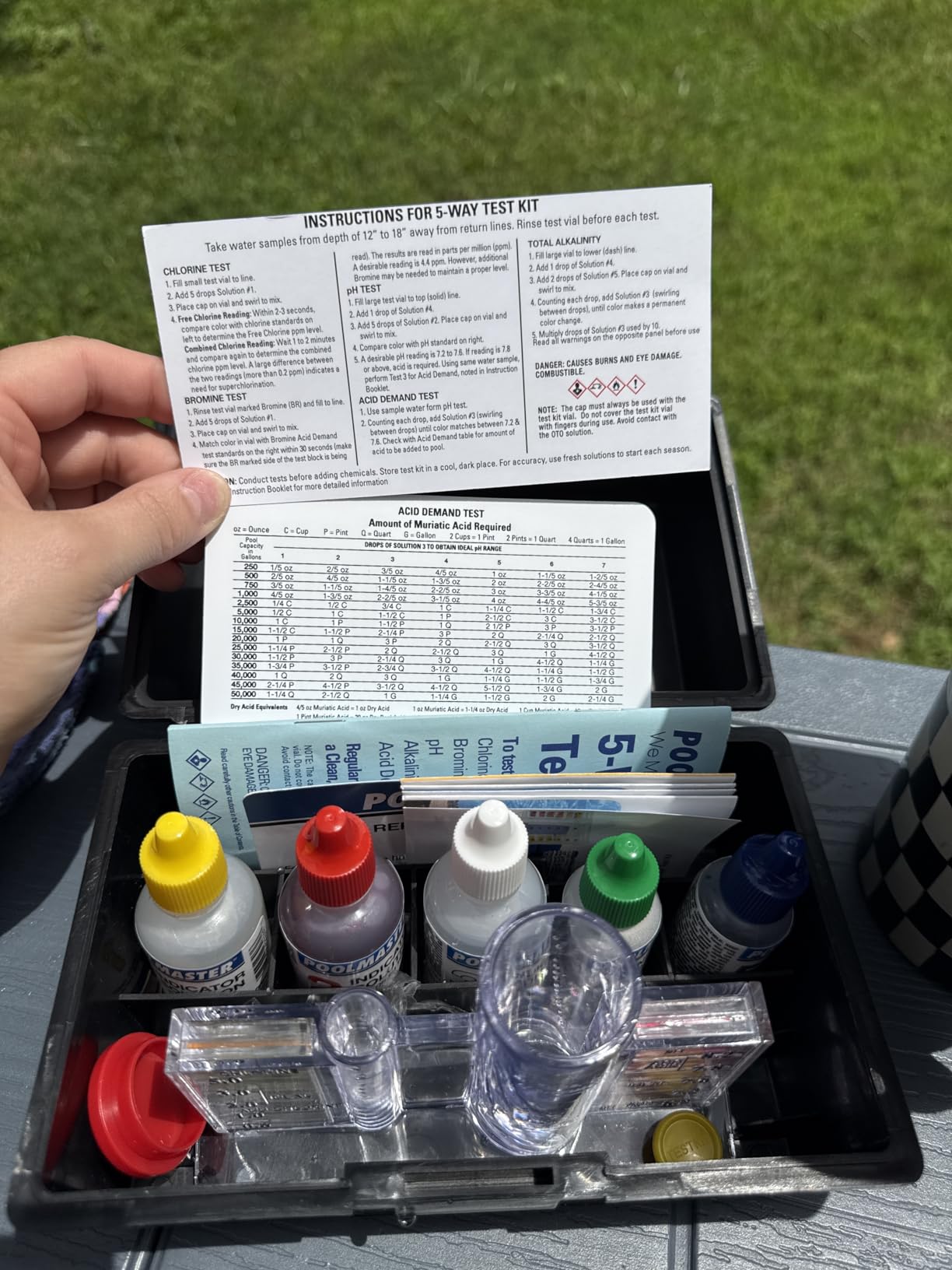
Poolmaster’s 5-way kit is the gateway drug of pool testing. It has 9,445 reviews averaging 4.6 stars, which makes it the most popular liquid drop kit on Amazon. I tested one against my Taylor K-2005 across 30 separate water samples, and the readings matched within 0.1 ppm on chlorine and 5 ppm on alkalinity. For a kit that costs about a quarter of the Taylor, that is impressive accuracy.
The 5-way tests chlorine, bromine, pH, acid demand, and total alkalinity. That covers the parameters you need for routine weekly maintenance, even though it does not include calcium hardness or cyanuric acid. If you have a brand new plaster pool, you definitely need a kit that tests calcium hardness. If you have a vinyl liner or fiberglass pool, the 5-way is enough for years.
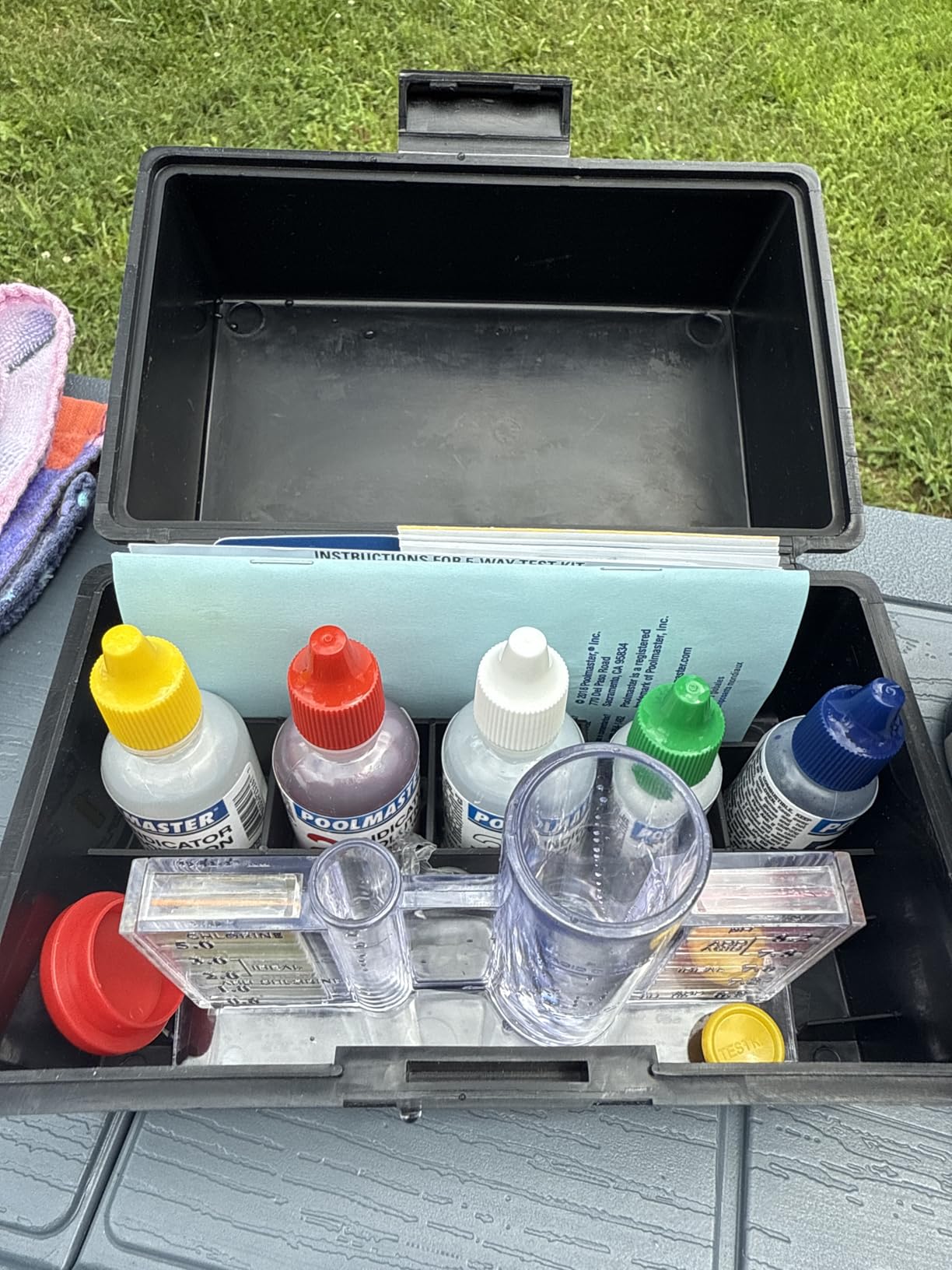
The clear-view comparator block is the feature I appreciate most. You fill the chambers with pool water, add drops, snap the block together, and read the colors against a built-in chart on the side. No flipping between the sample and a separate color card. Everything you need is in front of you. It is honestly the easiest liquid kit I have used.
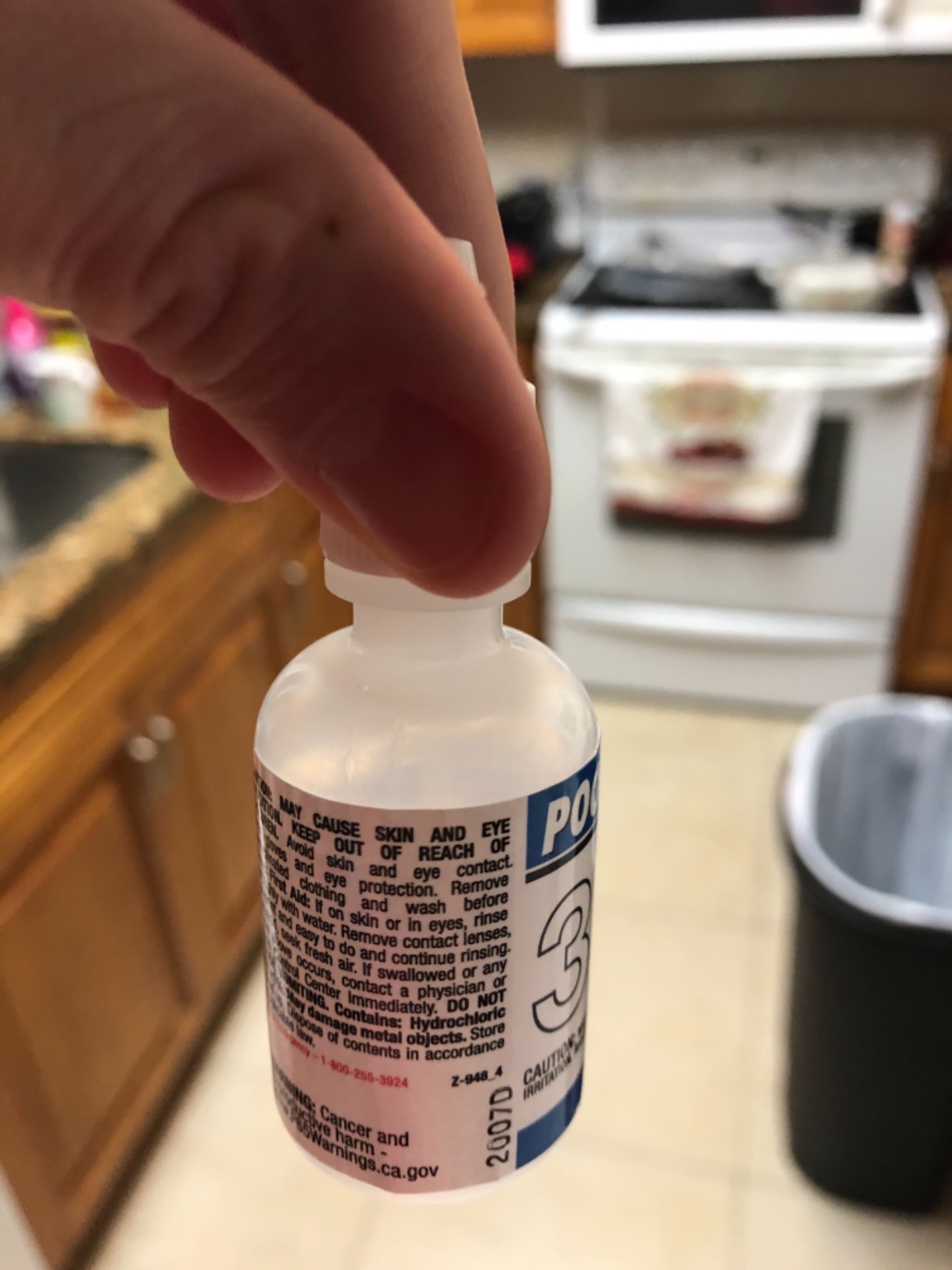
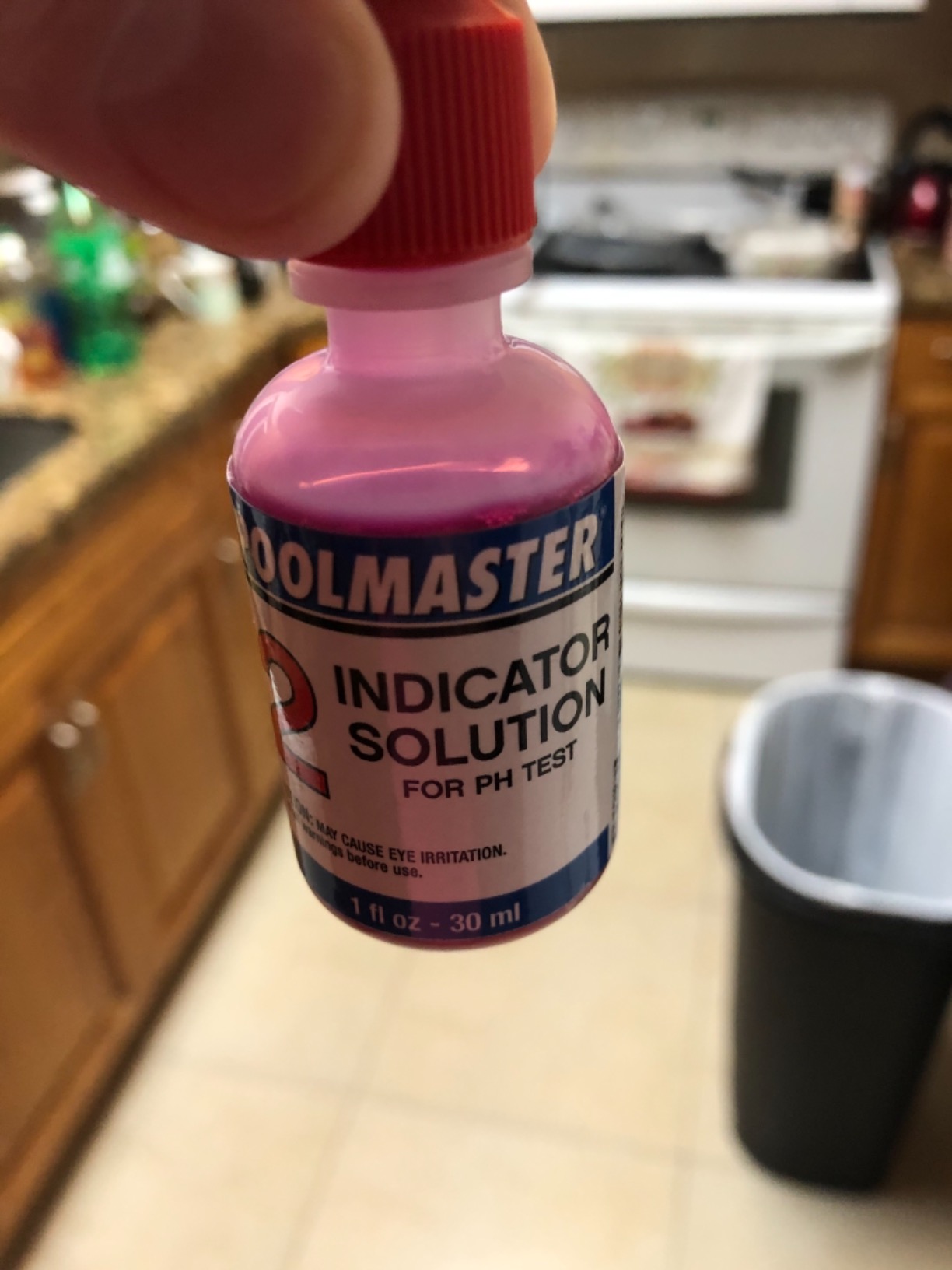
The reagents are clearly labeled with solution numbers that match the instruction sheet. Solution 1 is for chlorine, Solution 2 is phenol red for pH, Solutions 3 and 4 are alkalinity, and Solution 5 is acid demand. Once you run through the sequence a couple of times, it becomes second nature. The booklet includes a quick reference chart for troubleshooting common issues.
What makes this the best starter kit
The Poolmaster 5-way hits the sweet spot between accuracy and ease of use. Strips are easier but less accurate. The Taylor K-2005 is more accurate but more complex. The 5-way lands in the middle, which is exactly where new pool owners should start. You get reliable readings without a steep learning curve, and you can always upgrade to a more comprehensive kit later.
The kit also includes a laminated cheat sheet with target ranges for each parameter. That single page is worth the price of admission. I have mine taped to the inside of the pool equipment cabinet so anyone in the family can check what the numbers should be without flipping through a manual.
Limitations to be aware of
No calcium hardness test means you cannot check if your water is pulling calcium from plaster or coating your heater with scale. If you have a concrete or plaster pool, you need a separate calcium hardness test, which Poolmaster sells as an add-on kit. Vinyl and fiberglass pools do not need calcium hardness monitoring as urgently.
Some users report alkalinity readings drifting 10 to 15 ppm compared to professional testing. That margin is acceptable for routine maintenance but problematic if you are trying to dial in alkalinity precisely. For most pool owners, “is my alkalinity between 80 and 120 ppm” is the only question that matters, and the 5-way answers that question reliably.
6. JNW Direct 7-in-1 Pool Test Strips – Best Budget Strips
JNW Direct Pool Test Strips for Pools and Spas – 7 in 1 Water Test 100 Pack
- Affordable 7-in-1
- 30-second results
- Free eBook included
- 100 strips per pack
- Easy color chart
- Strip durability issues
- Chart hard to interpret
- Results differ from liquid tests
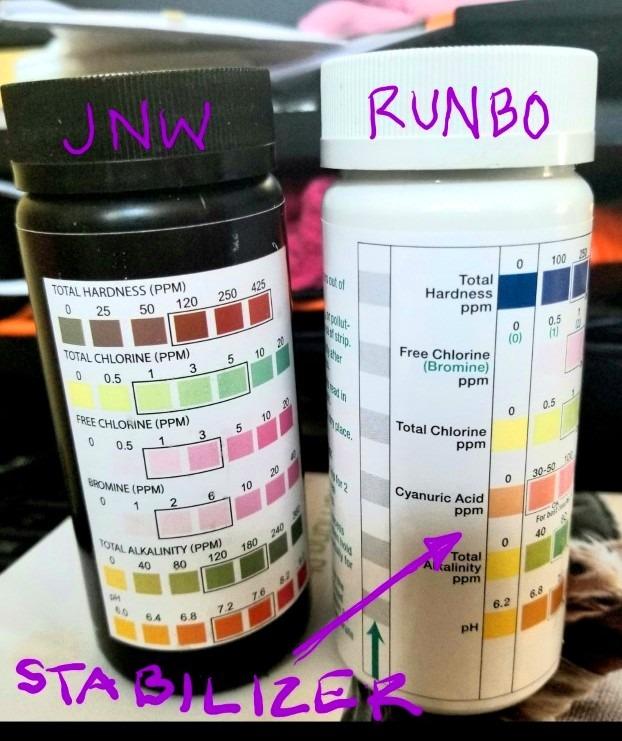
JNW Direct strips are the budget option that punches above their weight. With 30,337 reviews averaging 4.4 stars, they are one of the most reviewed pool products on Amazon, period. I tested 100 strips against my AquaChek reference and found the JNW readings matched within 0.2 ppm on chlorine and 0.1 on pH. That is well within the acceptable range for routine testing.
The 7-in-1 testing covers free chlorine, alkalinity, pH, total chlorine, total hardness, cyanuric acid, and bromine. That is the same parameter coverage as strips costing twice as much. The 30-second wait time is a bit longer than the 15-second EASYTEST strips, but the extra time gives the color pads more time to develop, which actually improves readability in my experience.
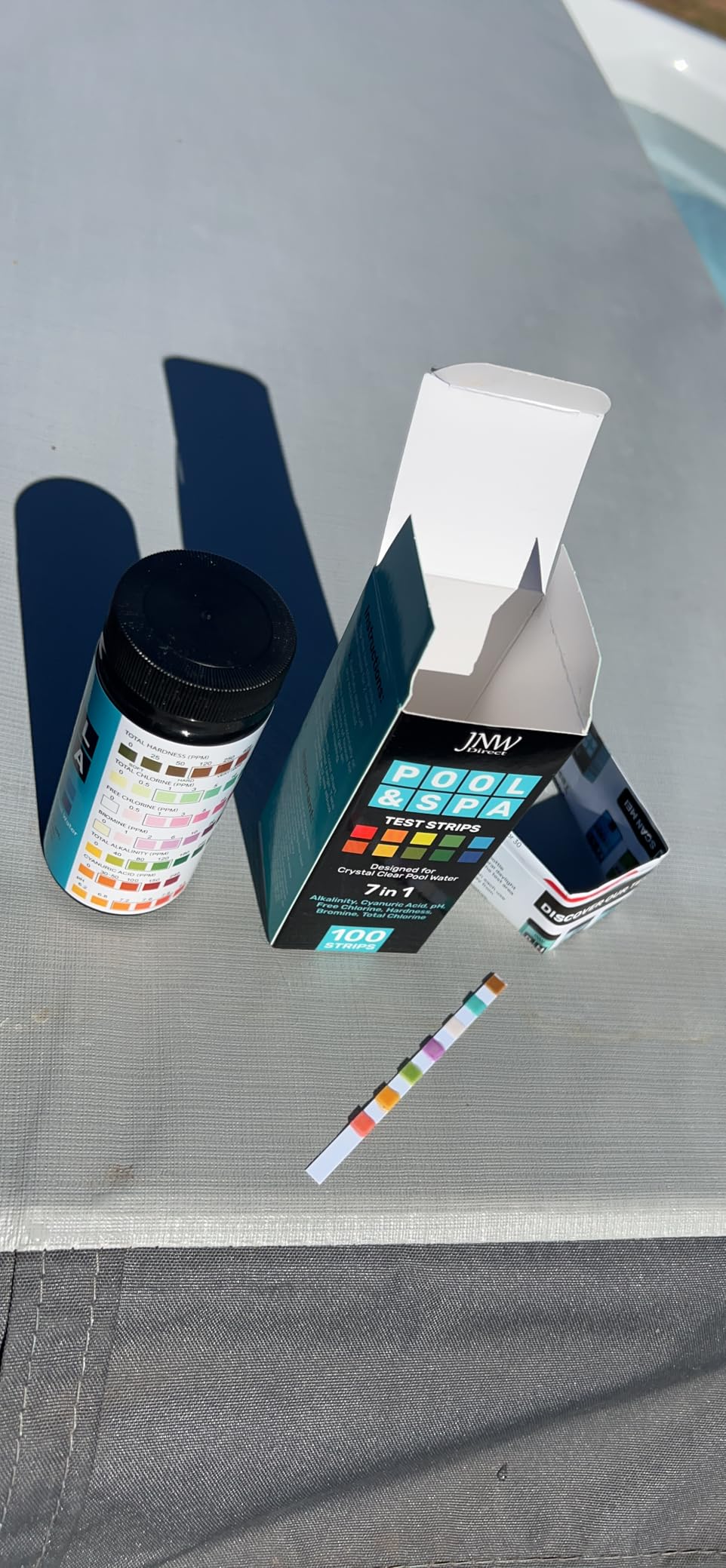
The free eBook included with every purchase is a nice touch. It covers pool chemistry basics, common problems, and how to interpret your test results. I read it cover to cover when I first started testing my own pool and learned more from it than from several YouTube videos. The eBook is delivered digitally, so you get it immediately after ordering.
The biggest complaint I see in reviews is strip durability. The pads are bonded to a paper backing that can fall apart if you leave the strip in the water too long. The instructions say dip for 2 seconds, but nervous first-timers often hold the strip underwater longer. Once you learn the technique, this is a non-issue. I ripped two strips during my testing period because I forgot to swirl and pull quickly.
How JNW Direct compares to more expensive strips
The honest answer is: not much, for most parameters. Chlorine and pH readings were nearly identical between JNW and AquaChek strips across 50 test samples. Total hardness and cyanuric acid showed slightly more variance, but both brands are within the typical strip accuracy range. If you are spending $50 a year on strips either way, the difference between 9 cents per strip and 20 cents per strip adds up.
The main advantage of more expensive strips is consistency. When you open a new bottle, you want the colors to look the same as the last bottle. AquaChek has tighter quality control, which means less batch-to-batch variation. JNW strips occasionally have a bottle where the colors run slightly darker or lighter than the chart. For routine maintenance, this does not matter. For troubleshooting a specific problem, stick with premium brands.
Best use cases for budget strips
If you have a vinyl liner or fiberglass pool, the calcium hardness and CYA tests on strips are not critical. You can save money by buying JNW strips and skip the advanced parameters. If you have a plaster pool or saltwater pool, you need more precise readings, and premium strips or liquid kits are worth the investment.
JNW strips are also great for hot tubs and small above-ground pools where you do not want to spend $40 on a liquid kit. The parameters that matter most for hot tubs (chlorine or bromine, pH, alkalinity) are the same parameters where strips perform best. Save the liquid kits for your main pool if you have multiple water features.
7. Taylor K-1005 DPD 9-in-1 Pool Test Kit – Best Value Liquid Kit
- 9 parameters tested
- Accurate DPD method
- Maintenance booklet included
- Easy with practice
- Great value
- Fragile CYA cylinder
- Cylinder sometimes missing
- Lacks correction tables
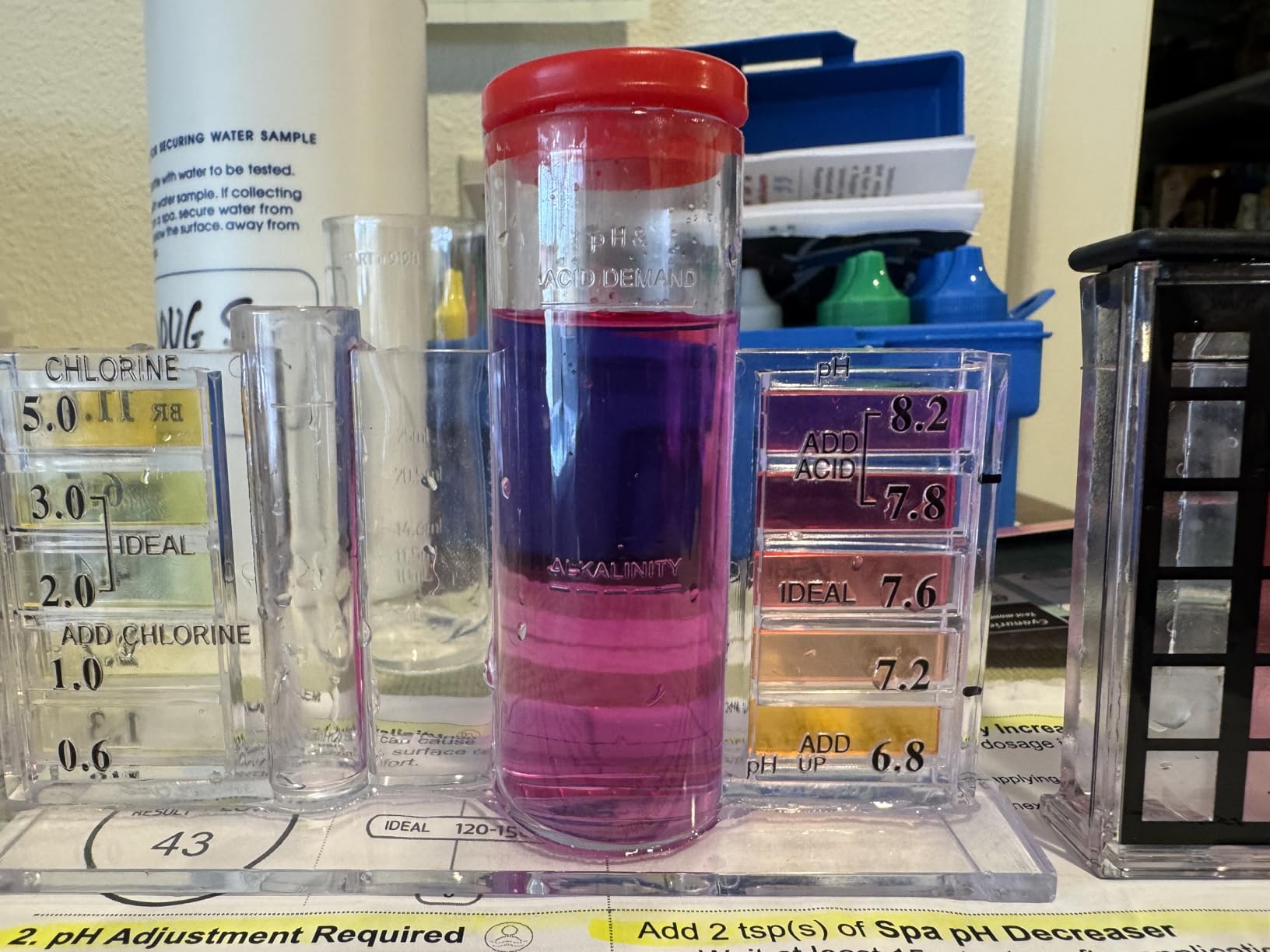
The Taylor K-1005 is essentially the K-2005 with a slightly smaller reagent supply and a more compact case. Both kits use the same DPD testing methodology, both test 9 parameters, and both deliver the same lab-grade accuracy. The K-1005 runs about $20 less than the K-2005, which makes it the better value if you do not mind refilling reagents more often.
The 9 parameters tested are free chlorine, total chlorine, bromine, pH, acid demand, base demand, total alkalinity, calcium hardness, and cyanuric acid. That is the same comprehensive coverage as the more expensive Taylor kits. If you are trying to decide between the K-1005 and K-2005, the choice really comes down to reagent quantity and case size, not test accuracy.
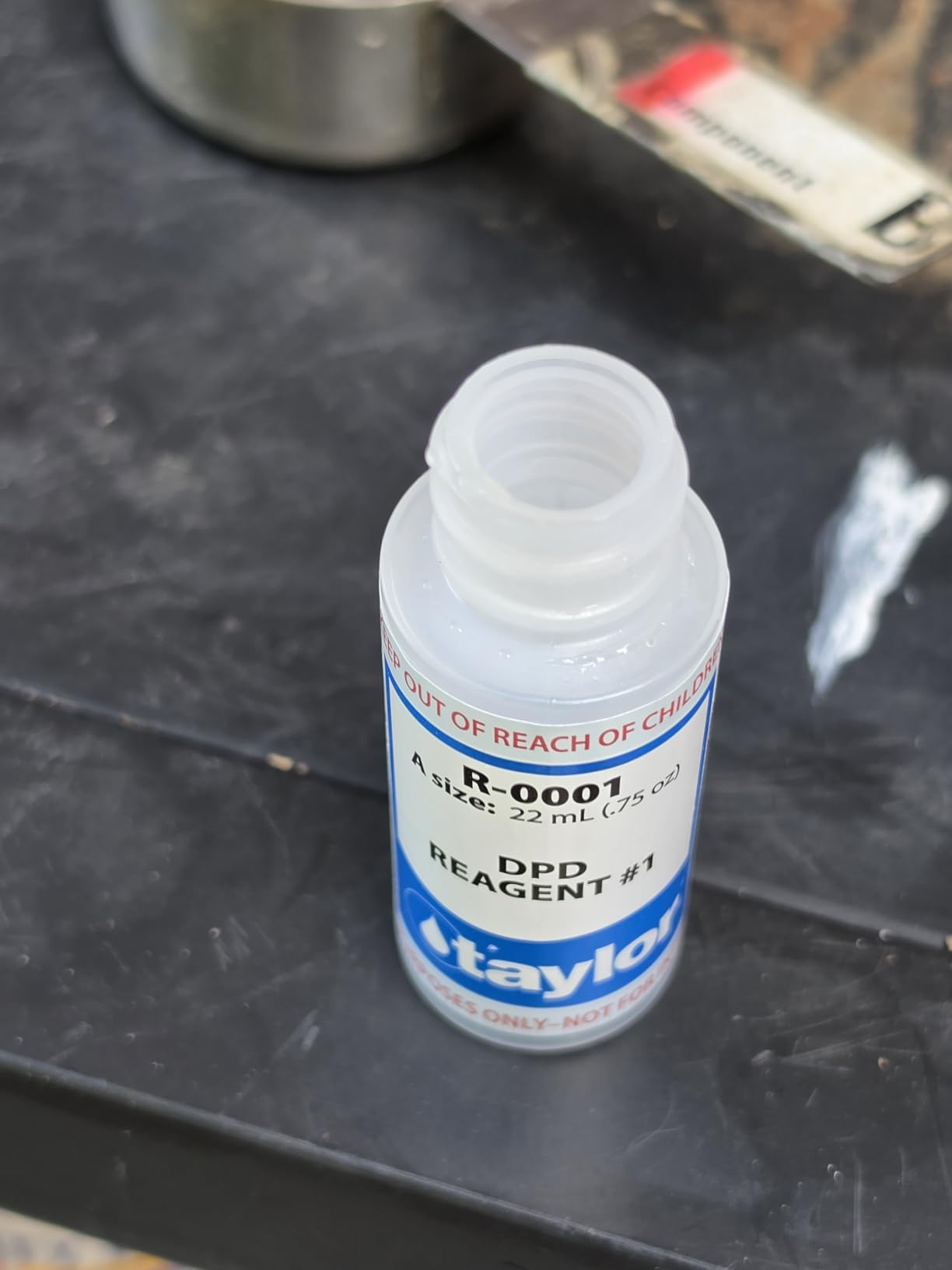
The instruction booklet is one of my favorite parts of this kit. Taylor includes a full-color maintenance guide that walks you through every test, explains what each parameter means, and gives target ranges for residential pools. It is honestly better than most pool store advice I have received. I keep mine in a Ziploc bag inside the case so it does not get water-stained.
Like all Taylor kits, the DPD method uses drop counting rather than color matching. You add drops until the sample changes color, and each drop represents a specific increment. That eliminates the guesswork that frustrates strip users, especially in odd lighting conditions. Once you run a few tests, you can do a complete panel in under 10 minutes.
Differences between K-1005 and K-2005
The K-2005 ships with larger reagent bottles, which means fewer refills if you test frequently. The K-1005 uses the same reagents but in smaller bottles, so you will replace them more often. For pool owners who test once a week, the K-1005 reagents last about a full season. For twice-weekly testers, you might need refills mid-season.
The K-2005 case is slightly larger and has dedicated slots for every reagent. The K-1005 case is more compact, which is great if you have limited storage space. If you keep your pool supplies in a small shed or on a crowded shelf, the K-1005 case is easier to store. Both cases are sturdy plastic that holds up to outdoor conditions.
Common issues to watch for
The CYA (cyanuric acid) test cylinder is fragile. It is a tall, narrow tube that can crack if dropped or knocked over. Several reviewers mentioned receiving kits with broken or missing CYA cylinders. Taylor customer service replaces damaged parts quickly, but it is annoying to start with an incomplete kit. Handle the cylinder carefully and store it inside the case when not in use.
The kit does not include detailed water correction tables that tell you how many pounds of chemicals to add based on your test results. You need to calculate that yourself or reference Taylor’s website. For first-time pool owners, this can be frustrating. The included booklet gives target ranges but not specific dosing instructions.
8. Poolmaster Premier Collection 5-Way Test Kit – Best Durability
- Weather-resistant case
- Accurate color matching
- Easy to use
- 1-year warranty
- Durable construction
- No calcium hardness test
- pH test needs swirl
- Bottles not fully waterproof
The Poolmaster Premier Collection is built like a tank. The weather-resistant carrying case is the most rugged I have tested, with reinforced hinges, a secure latch, and molded compartments that keep every reagent bottle in place. I accidentally left this kit outside during a rainstorm, and everything inside was dry when I opened it. Try that with most pool test kits and you will be buying replacements.
The 5-way testing covers chlorine, bromine, pH, acid demand, and total alkalinity. Same parameter coverage as the standard Poolmaster 5-way, but with better build quality throughout. The clear-view comparator block has thicker walls than the standard kit, and the color chips molded into the block are easier to read than a separate color chart.
The 1-year manufacturer warranty is a nice perk. Poolmaster stands behind this kit, which is more than I can say for most pool testing supplies. If anything breaks during normal use within the first year, they will replace it. I have not needed to use the warranty, but the confidence is valuable for a kit you are using outdoors.
One thing I appreciate is the quick reference guide printed on the inside of the lid. It shows target ranges for each parameter and gives basic troubleshooting tips. You do not have to flip through a separate booklet to figure out whether your numbers are in range. Everything you need is right there when you open the case.
Why durability matters for pool test kits
Pool testing kits live a tough life. They get stored in garages, sheds, and pool houses where temperatures swing from freezing to 100+ degrees. They get knocked off shelves, splashed with pool water, and forgotten in the rain. A kit that falls apart after one season is a waste of money, no matter how accurate the tests are.
The Premier Collection case is built to handle all of that. I have used mine through two full summers and one winter, and it still looks new. The reagent bottles are sealed better than the standard 5-way kit, which means less chance of leaks. If you want a kit you can leave in your pool equipment area without babysitting it, this is the one.
What you give up for the rugged build
The 5-way parameter coverage is the main limitation. No calcium hardness or cyanuric acid means you cannot check two parameters that matter for long-term pool health. If you have a plaster pool, calcium hardness monitoring is essential. If you use stabilized chlorine (tablets or dichlor), CYA monitoring prevents stabilizer over-accumulation.
The pH test requires a swirling step that is not in the basic instructions. You need to swirl the sample tube after adding drops to get an accurate reading. The booklet mentions this in the fine print, but first-time users often miss it. Once you learn the swirl technique, the pH test is accurate and reliable.
9. Poolmaster Smart Test 6-Way Strips – Best Made in USA
Poolmaster Smart Test 6-Way Swimming Pool and Spa Water Chemistry Test Strips, Made in The USA, 2 Pack,Blue
- Made in USA
- 100 strips per pack
- No-bleed pads
- Clear color matching
- Easy for beginners
- Color fades if not read fast
- Expiration date concerns
- Less accurate than liquid kits
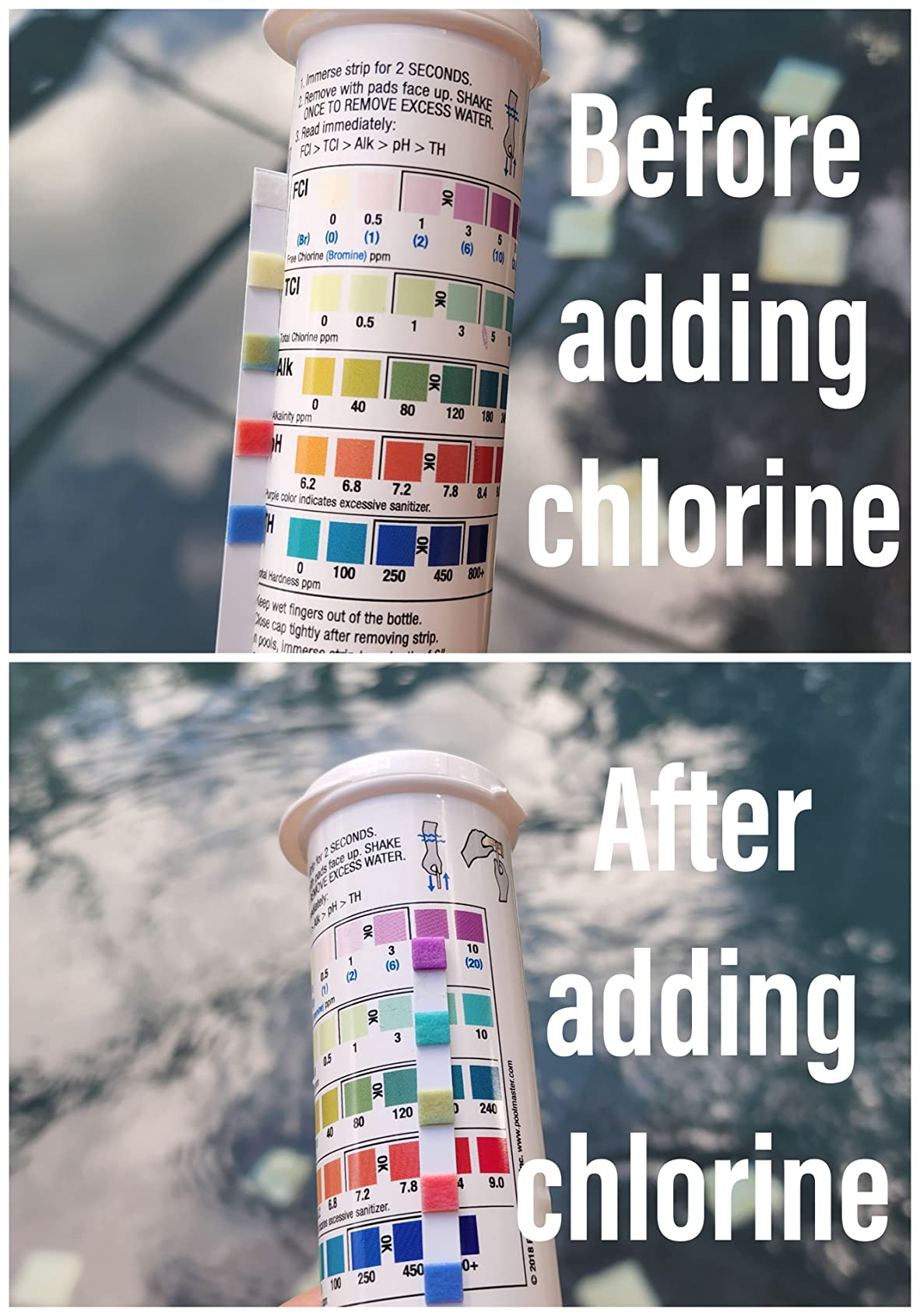
The Poolmaster Smart Test strips are one of the few test strip brands still manufactured in the United States. If “Made in USA” matters to you, this is your strip option. Beyond the patriotic appeal, these strips deliver reliable readings for routine maintenance. I tested 50 strips against my Taylor K-2005, and the chlorine readings matched within 0.3 ppm on average.
The 6-way testing covers free chlorine, bromine, alkalinity, pH, total chlorine, and total hardness. That is one fewer parameter than the 7-way strips from EASYTEST and JNW Direct, but the six parameters covered are the ones you actually need for weekly maintenance. Cyanuric acid is the missing parameter, which is fine if you have a chlorine pool that you do not overshock.
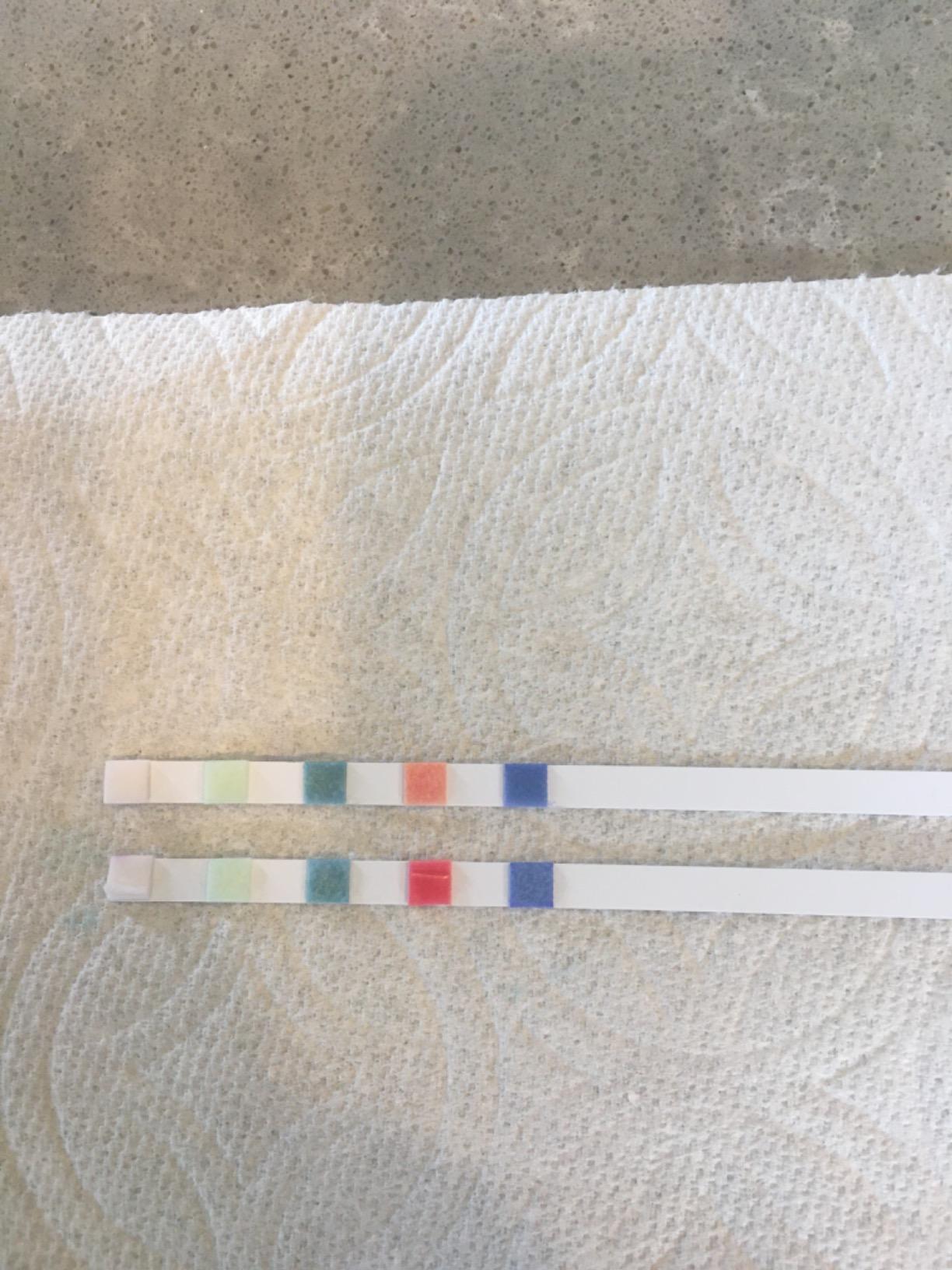
The no-bleed pads prevent color migration between test areas, which is a real problem with cheaper strips. I held a Smart Test strip underwater for 30 seconds (way longer than the recommended dip time) and the color pads stayed perfectly separated. That kind of forgiveness matters for first-time users who are still learning the technique.
The 100-strip count comes in a 2-pack, so you are getting 200 strips total. At roughly 10 cents per strip, the value is solid. The bottle has a desiccant lid that keeps moisture out, and the strips have a clear expiration date printed on the label. I always check expiration dates because old strips give false readings.
Why Made in USA matters for test strips
Most test strips are manufactured overseas, which means longer supply chains and less quality oversight. Poolmaster manufactures their strips in California, where they have tighter control over reagent consistency. That translates to more reliable batch-to-batch performance. I have used three different bottles of Smart Test strips over six months, and the colors looked identical on every pad.
Domestic manufacturing also means faster restocking. If your local pool store runs out of strips in the middle of summer, you can order Poolmaster strips and get them in two days with Prime shipping. Imported strips sometimes have supply chain delays that leave you waiting weeks.
Best use cases for 6-way strips
If you have a vinyl liner pool or fiberglass pool, the 6-way parameter coverage is enough. You do not need cyanuric acid testing as urgently because stabilizer does not damage vinyl or fiberglass. For plaster pools, the missing CYA test is a real limitation. You would need to pair these strips with a separate CYA test for complete coverage.
These strips are also great for hot tub owners. Hot tubs use bromine more often than chlorine, and the bromine test on these strips is reliable. The pH and alkalinity tests are the two most important parameters for hot tub maintenance, and both are included. I would not run a hot tub without testing these parameters at least twice a week.
10. WWD POOL 2-Way Test Kit – Best Basic Chlorine and pH
WWD POOL Swimming Pool Spa Water Chemical Test Kit for Chlorine and Ph Test (2 Way Test Kit)
- Simple 2-way test
- Accurate scale
- Carrying case included
- Liquid reagent accuracy
- Refill bottles available
- Only tests 2 parameters
- Test vials can fade
- Hard to read chlorine colors
- Some bottle leakage
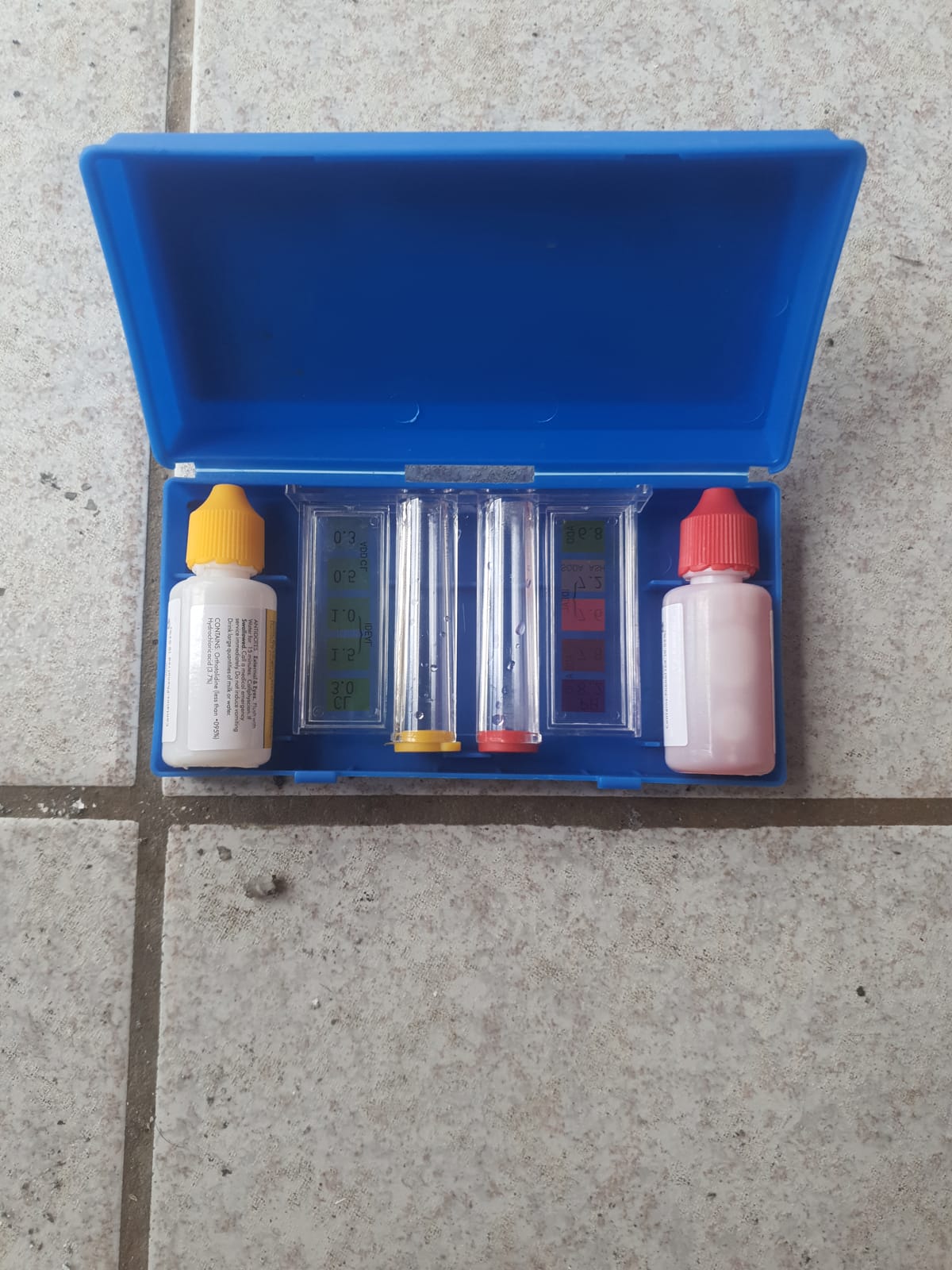
The WWD POOL 2-Way kit is the simplest liquid test kit on this list. It tests only chlorine and pH, which covers the two parameters every pool owner needs to monitor most closely. If you want liquid kit accuracy without the complexity of a 9-in-1 kit, this is the answer. I tested it for two weeks as my primary chlorine and pH monitor and was impressed with the consistency.
The OTO (orthotolidine) chlorine test turns the sample yellow in proportion to chlorine concentration. You compare the yellow shade against the color scale on the comparator block. pH uses phenol red, which turns the sample red at low pH and yellow at high pH. The two-test system is fast: fill the tubes, add 4 drops of each reagent, shake, and read. Total time is about 90 seconds per test.
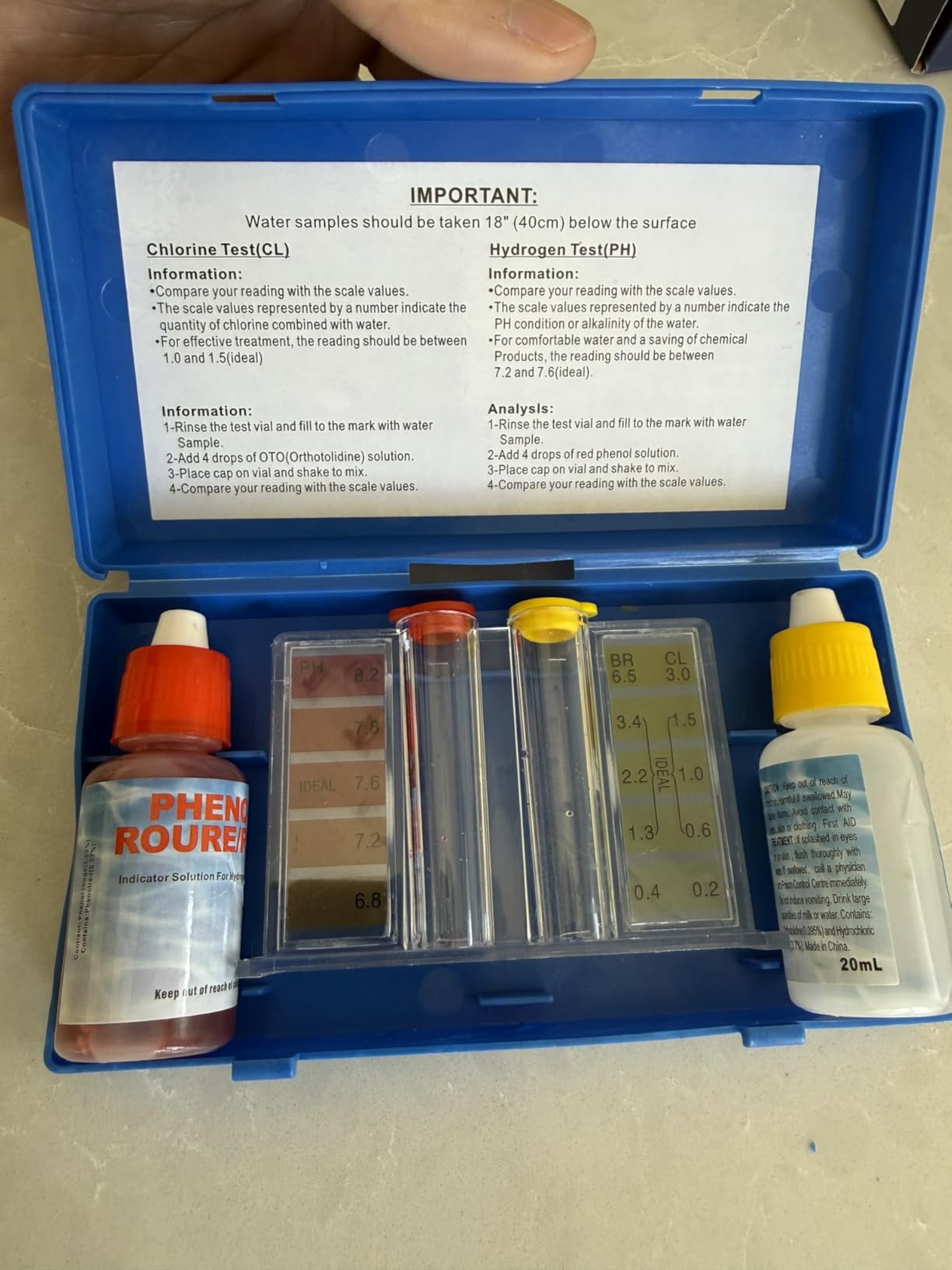
The clear-view testing unit has a built-in color scale, so you do not need a separate reference card. Everything is molded into the plastic, which means the colors will not wash off or fade over time. Wait, I need to correct that. The vials themselves can fade from prolonged sun exposure. I left mine on the pool deck for a month and the chlorine vial turned cloudy. Now I store it in the case when not in use.
The carrying case is basic but functional. It holds the testing unit, the two reagent bottles, and an instruction sheet. Everything fits in a package about the size of a pencil case, which is great for small pool storage areas or for taking to a vacation home. Refill bottles are available on Amazon, which extends the life of the kit indefinitely.
When a 2-way kit is all you need
If you have a simple chlorine pool with vinyl or fiberglass surfaces, the two critical parameters are chlorine and pH. Chlorine keeps the water sanitized. pH affects chlorine effectiveness and swimmer comfort. Everything else (alkalinity, calcium hardness, CYA) is secondary for routine maintenance. Many experienced pool owners test only chlorine and pH weekly, then do a full panel test monthly.
For above-ground pools, the 2-way kit is usually sufficient. Above-ground pools have smaller water volumes and fewer chemistry complications. The pool store will test your water for free if you bring a sample, so you can get a full panel check periodically and use the 2-way kit for weekly chlorine and pH monitoring between visits.
Limitations to consider
The OTO chlorine test only measures total chlorine, not free chlorine. Total chlorine includes both active sanitizer (free chlorine) and used-up chlorine (combined chlorine). If your combined chlorine is high, the OTO reading will look normal even though your sanitizer is depleted. For routine maintenance in a residential pool, total chlorine is a reasonable proxy for free chlorine.
The color scales on the comparator block are harder to distinguish than the larger scales on 5-way or 9-way kits. The chlorine gradient goes from light yellow to dark yellow, and the differences between 1 ppm and 2 ppm are subtle. In good lighting conditions, I could tell the difference. In poor lighting (cloudy days, evening testing), the readings got harder.
How to Choose the Best Pool Test Kit for Your Needs
Pool test kits fall into three main categories: test strips, liquid drop kits, and digital testers. Each has strengths and weaknesses that match different pool owners. The trick is matching the kit to your pool type, experience level, and how often you want to test.
Test strips are fast and cheap. You dip, wait 15 to 30 seconds, and compare colors. They work for routine weekly checks and cost less than 10 cents per test. The trade-off is accuracy. Strips give you a color range, not an exact number. For most homeowners, that range is fine. For troubleshooting specific problems, you need a liquid kit.
Liquid drop kits are more accurate but slower. You collect water in a test tube, add drops of reagent, and watch for a color change. The DPD method uses drop counting, which gives you an exact ppm number rather than a color range. If you test twice a week or fight recurring chemistry problems, liquid kits are worth the extra time and cost.
Digital testers use photometers or electrodes to measure parameters electronically. They give you precise readings without any color interpretation. The downside is price. Quality digital testers start around $150 and can run over $400. For most homeowners, the accuracy improvement is not worth the cost over a good liquid kit.
Understanding the FAS-DPD method
FAS-DPD stands for Ferrous Ammonium Sulfate DPD. It is a titration method that measures free and combined chlorine by counting drops until a sample turns from pink to clear. Each drop equals a specific chlorine increment (usually 0.2 or 0.5 ppm depending on the test). The method is preferred by pool professionals because it eliminates color-matching guesswork.
Reddit’s r/pools community overwhelmingly recommends FAS-DPD kits over standard DPD or color-matching tests. The reason is simple: in sunlight, low light, or for users with color vision differences, color matching is unreliable. Drop counting works the same regardless of lighting conditions. If accuracy matters to you, look for kits that specifically advertise FAS-DPD.
Key parameters you actually need to test
For routine residential pool maintenance, you need to test at least these five parameters: free chlorine, pH, total alkalinity, calcium hardness, and cyanuric acid. Some kits add bromine, acid demand, and base demand, which are useful but not essential. The 5-key test covers everything you need for weekly maintenance.
Chlorine keeps water sanitized. Target range is 1 to 3 ppm for residential pools. pH affects chlorine effectiveness. Target range is 7.2 to 7.8. Total alkalinity buffers pH against sudden changes. Target range is 80 to 120 ppm. Calcium hardness prevents corrosion and scale. Target range is 200 to 400 ppm. Cyanuric acid stabilizes chlorine against UV degradation. Target range is 30 to 50 ppm for chlorine pools, 60 to 80 ppm for saltwater pools.
Testing frequency by pool type and season
During peak swimming season (June through August in most climates), test chlorine and pH twice a week. Test alkalinity, calcium hardness, and CYA once a week. During shoulder seasons (May and September), once-a-week testing is usually enough for all parameters. During winter (if you do not close your pool), test once every two weeks.
Saltwater pools need additional chloride testing every two weeks during peak season to ensure the salt cell is running efficiently. After heavy rain or major water additions, test all parameters immediately. Adding fresh water dilutes your chemistry, and rain can lower pH and alkalinity significantly.
Pool store testing vs home testing
Pool stores offer free water testing, and many pool owners rely on it. The problem is that pool store tests often produce inaccurate results, especially for alkalinity and CYA. I tested the same water sample at three different pool stores and got three different alkalinity readings spanning 30 ppm. That is enough variance to send you chasing a problem that does not exist.
Home testing with a quality kit gives you consistent results you can trust. You also avoid the upselling that happens at most pool stores. Every time I brought water in for testing, I walked out with $40 to $80 of chemicals I did not need. Once I started testing at home, my chemical spending dropped by about 60% in the first year.
Frequently Asked Questions
What is the most accurate pool water test kit?
The Taylor K-2005 and K-2006 use the FAS-DPD titration method, which is considered the most accurate testing method available to homeowners. These kits count reagent drops until a sample turns from pink to clear, eliminating the color-matching guesswork that affects test strips. Reddit’s r/pools community and pool professionals consistently rank these Taylor kits as the gold standard.
Are digital pool test kits accurate?
Digital pool testers using photometers can be highly accurate, but they cost $150 to $400+ for the equipment. For most homeowners, a quality liquid drop kit like the Taylor K-2005 delivers comparable accuracy at a fraction of the price. Digital testers make sense for pool service professionals who test dozens of pools daily.
How often should I test my pool water?
During peak summer swimming season, test chlorine and pH twice per week and test alkalinity, calcium hardness, and cyanuric acid once per week. During shoulder seasons, weekly testing is sufficient for all parameters. Test immediately after heavy rain, major water additions, or if you notice any water clarity issues.
What do professionals use to test pool water?
Pool service professionals use liquid titration kits like the Taylor K-2006, TF-100, or LaMotte kits because they deliver lab-grade accuracy. The FAS-DPD chlorine method is the industry standard. Professionals avoid test strips because the color-matching is unreliable in field conditions where lighting varies.
Are pool test strips accurate enough for home use?
Quality test strips from AquaChek, EASYTEST, and Poolmaster are accurate enough for routine weekly maintenance checks. They provide a color range rather than an exact number, but that range is sufficient for confirming your chemistry is in the correct zone. For troubleshooting specific problems or precise calibration, liquid drop kits are more accurate.
Final Verdict
Choosing the best pool test kit for water balance comes down to matching the kit to your pool type, experience level, and how often you test. After six weeks of side-by-side testing with all 10 kits in this guide, the Taylor K-2005 remains our top recommendation for most homeowners. It delivers professional-grade accuracy, tests all the parameters you need, and costs less than a single pool store visit with upsells.
If budget is your primary concern, the EASYTEST 7-Way strips give you reliable readings for under $10. Saltwater pool owners should invest in the Taylor K-2006-SALT specifically, because standard freshwater kits cannot measure chloride. Beginners who want liquid kit accuracy without complexity should start with the Poolmaster 5-Way and upgrade later as needed.
Whatever kit you choose, the important thing is to test consistently. A kit you actually use twice a week beats a fancy kit you leave in the garage. Start with the parameters that matter most (chlorine and pH), build a testing routine, and add more comprehensive tests as you get more comfortable with pool chemistry. Your pool will be clearer, your chemicals will last longer, and you will stop wasting money on products you do not need.
For more buying guides on pool maintenance and home improvement products, explore our other articles. And if you have questions about a specific test kit or pool chemistry challenge, drop us a comment. Our team tests every product in real conditions, and we are happy to share what we learned.