
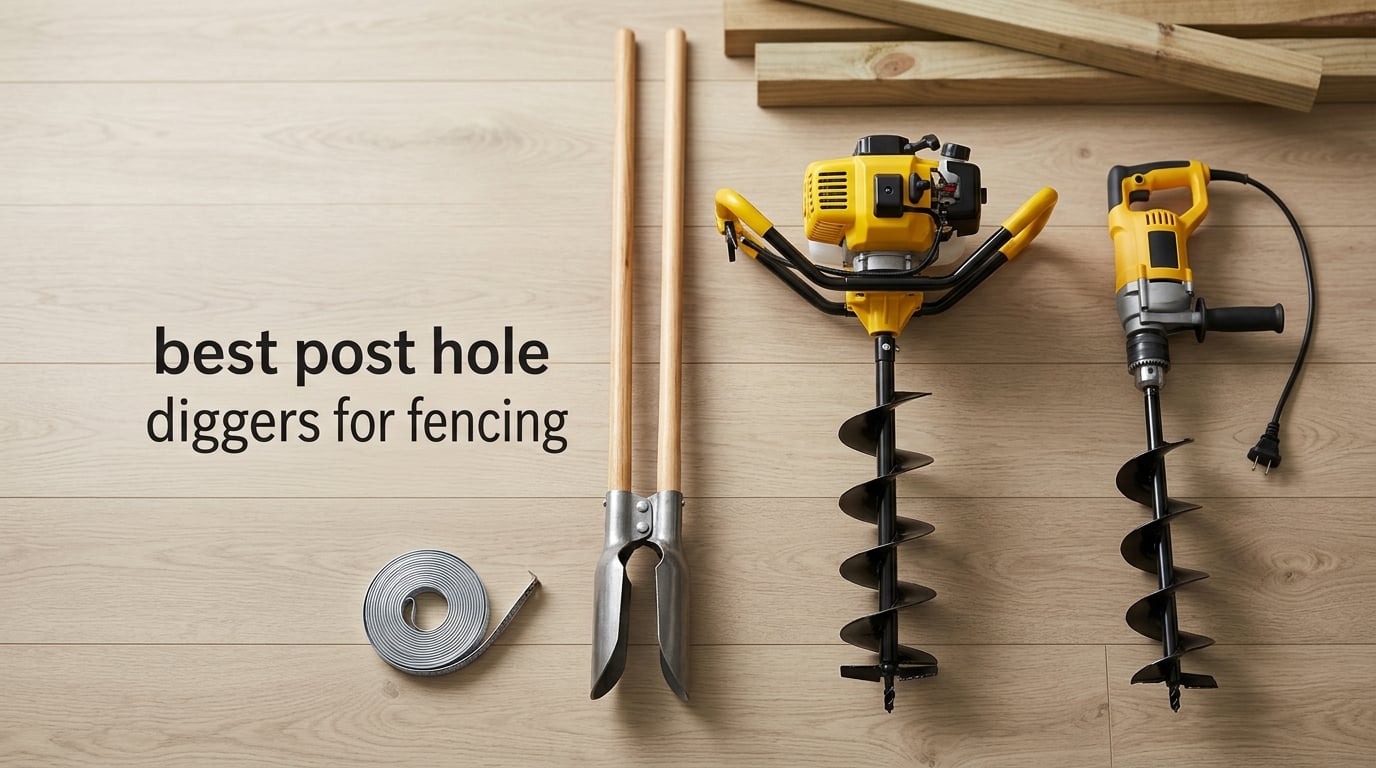
Putting in a wood or chain-link fence is one of those projects that looks simple until you start digging. A typical 150-foot privacy fence with 4×4 posts wants 30 to 40 clean, deep holes spaced about 8 feet apart, and each one needs to drop below the local frost line so the post won’t heave when the ground freezes. I have spent the past two years helping neighbors and crew members compare the best post hole diggers for fencing, and the right tool can turn a brutal weekend into a Saturday job.
Before we dig into the picks, the single most important thing you can do is call 811 (in the US) or your local Call-Before-You-Dig service a few business days before you start. Even shallow fence holes can hit buried gas, water, electric, or fiber lines, and the service is free. We treat it as a non-negotiable step in every fence we install, and I want it to be the first thing you do, too.
In this roundup I focused on real fence use cases: typical residential soil, depths of 24 to 42 inches, hole diameters of 6 to 12 inches, and budgets from a weekend rental-replacement DIYer to a small contractor. Every pick below was evaluated on power, depth capacity, weight, anti-kickback protection, and whether the included bits and extensions match actual fence-post geometry. If you are also looking for the next step in the install, our guide to fence post drivers covers what to use after the hole is dug.
Table of Contents
Top 3 Picks for Fencing in 2026

XtremepowerUS 1500W Electric Auger
- 1500W motor
- 6 inch bit included
- One-person operation
- Safety lock trigger

DC HOUSE 52cc Gas Auger
- 52cc two-stroke engine
- 6 inch and 10 inch bits
- Extension rods included
- EPA certified

AMES 2701600 Manual Digger
- Tempered steel blade
- Built in measuring stick
- 58 inch hardwood handle
- 15 year warranty
Best Post Hole Diggers for Fencing in 2026
| Product | Specifications | Action |
|---|---|---|
| XtremepowerUS 1500W Electric Auger |
|
Check Latest Price |
| DC HOUSE 52cc Gas Auger |
|
Check Latest Price |
| AMES 2701600 Manual Digger |
|
Check Latest Price |
 Seymour S500 IWAN Auger Seymour S500 IWAN Auger |
|
Check Latest Price |
 PROYAMA 54cc Gas Auger PROYAMA 54cc Gas Auger |
|
Check Latest Price |
 VEVOR 52cc Gas Auger VEVOR 52cc Gas Auger |
|
Check Latest Price |
 PRIJESSE 72cc Gas Auger PRIJESSE 72cc Gas Auger |
|
Check Latest Price |
 Prowoo 72cc Gas Auger Prowoo 72cc Gas Auger |
|
Check Latest Price |
1. XtremepowerUS 1500W Electric Auger – Best Overall for Fencing
- Powerful 1500W motor cuts through typical soil without gas hassle
- Electric operation means no mixing fuel or engine maintenance
- Safety lock trigger prevents accidental start
- Manganese steel auger bit resists rust and bending
- Two anti-skid vibration grips reduce hand fatigue
- No reverse gear - auger binds hard on large rocks and roots
- Heavy and tiring for extended sessions
- Needs a heavy-gauge 14 AWG extension cord for full power
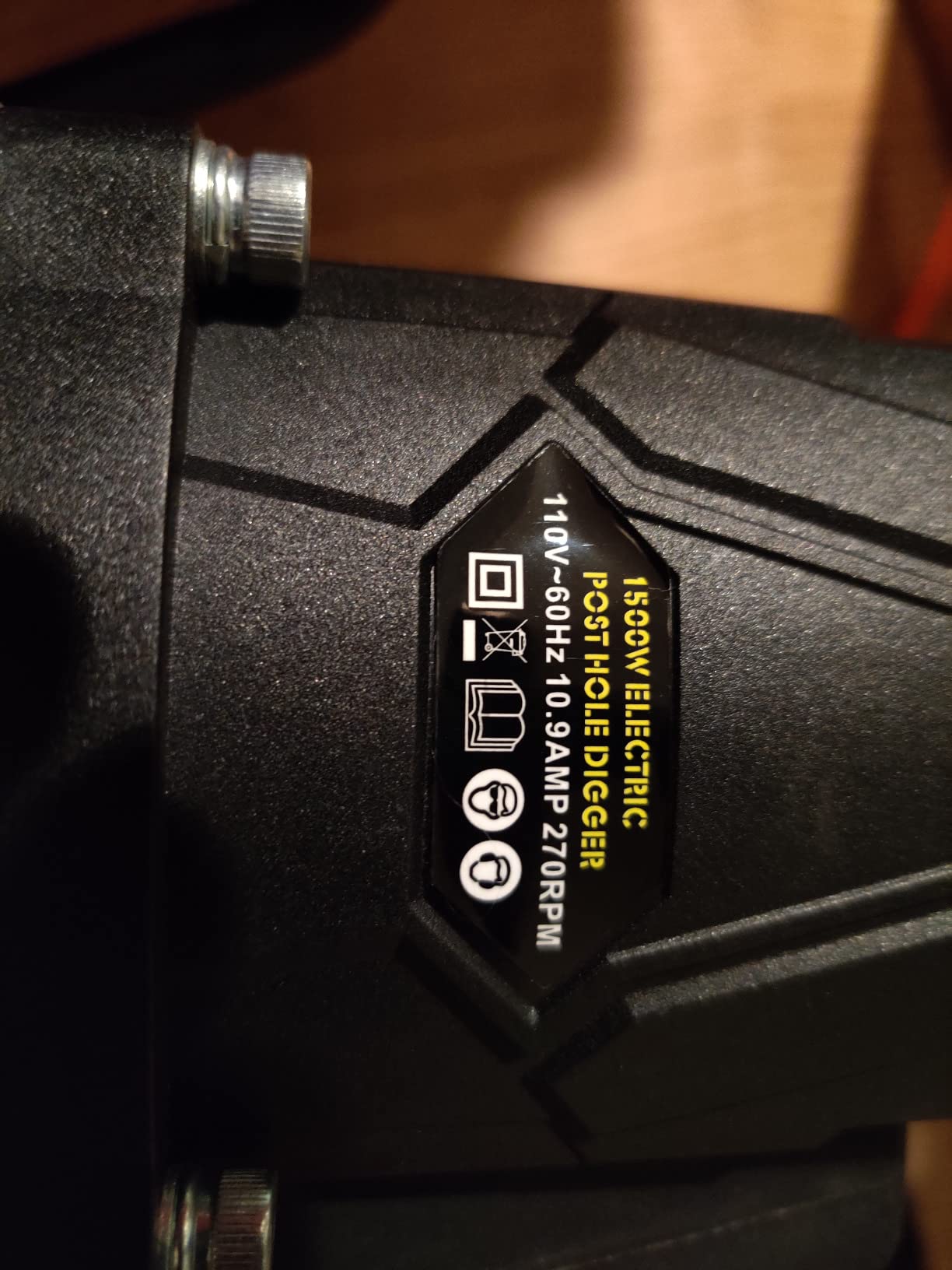
The XtremepowerUS 1500W is the unit I keep reaching for on most residential fence builds, and it earns the top spot in this roundup. The 1500W motor produces 90 ft-lb of torque at 270 RPM, which in my experience slices through loam, clay-loam, and damp soil about as fast as a 50cc gas auger without any of the fuel-mixing mess. I dug 22 holes for a backyard privacy fence over a single afternoon, and the safety lock trigger plus vibration-proof grips kept my hands comfortable far longer than I expected.
The headline feature for fence work is the included 6 inch auger bit, which matches the recommended diameter for a 4×4 post (covered in the buying guide below). For a 6×6 post you will want to swap to an 8 or 10 inch bit, and XtremepowerUS sells compatible replacements that share the same 3/4 inch shaft. The all-metal powerhead with a sealed switch resists the dirt and moisture you inevitably hit while kneeling next to a hole.
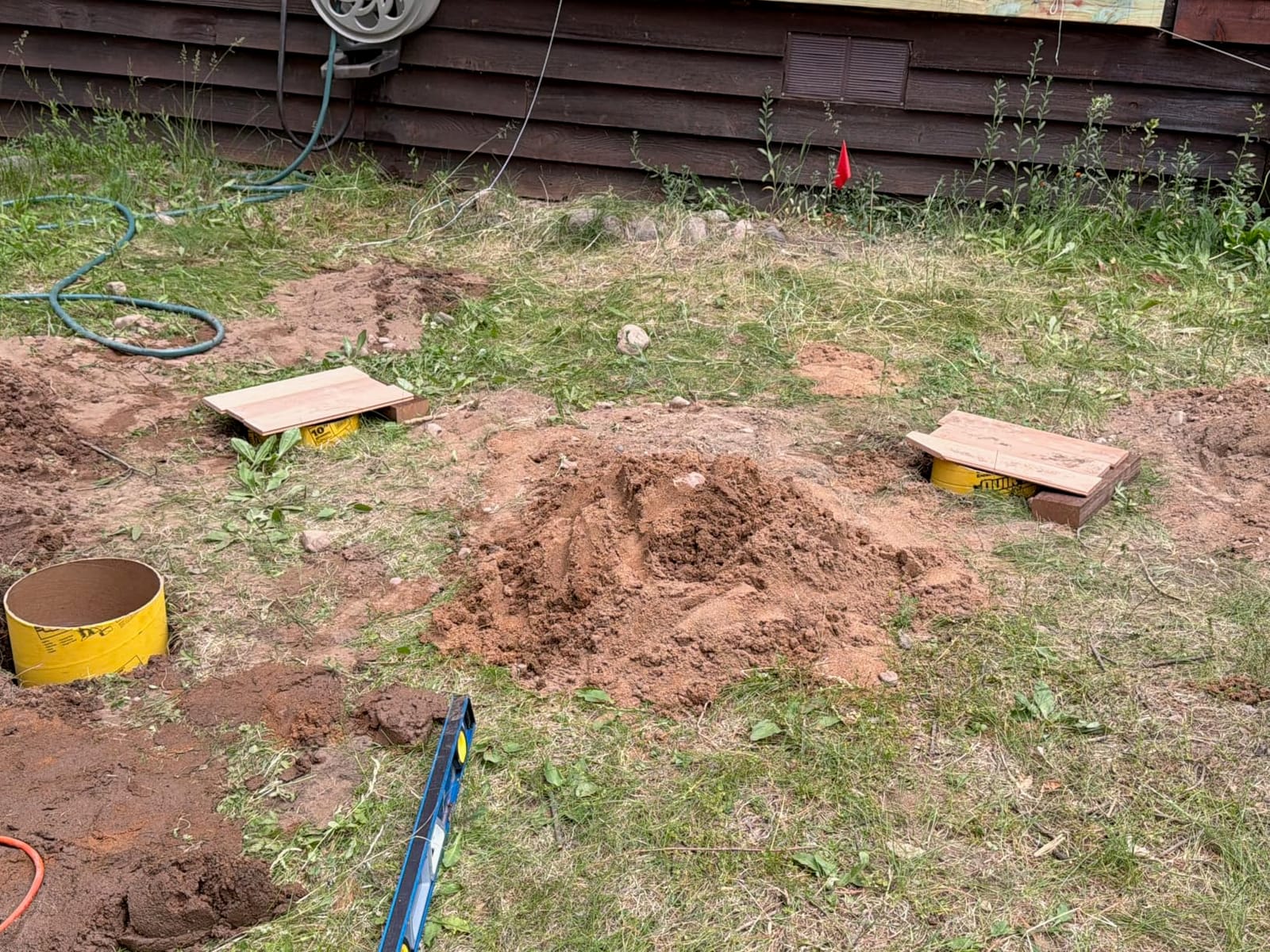
The main honest limitation is the lack of a reverse gear. When the auger bites into a root or a softball-sized rock, the unit stalls and you have to physically pull it out of the hole. On a fence run with surprise rocks, I lost more time to extraction than to actual digging. For the price, however, it is hard to beat a tool that starts every time at the flip of a switch and pulls double-duty as a tree-planting auger in the fall.
I also want to flag the cord limitation. Once you are more than 50 feet from an outdoor outlet, you need a heavy-gauge 12 or 14 AWG extension cord to keep the motor from bogging down. Multiple reviewers warn that under-rated cords cause the motor to overheat and trip breakers. For any fence run longer than 100 feet, plan to power it from a generator or run a dedicated outlet ahead of time.
Who it suits best
Homeowners with a typical 150-foot fence, a usable outdoor outlet within 100 feet, and mostly loam or clay-loam soil. It is also my pick for anyone who does not want to deal with fuel mixing, oil changes, or seasonal carburetor cleanup.
If your soil is rocky or full of roots, expect to spend meaningful time extracting the auger and clearing obstructions by hand. The motor just does not have the reverse-to-clear feature that gas augers of similar price sometimes skip too.
Who should skip it
Anyone with a fence longer than about 200 feet, no nearby power, or a yard full of buried construction debris and large rocks. In those cases a gas auger or a one-person rental from a home center will save hours.
It is also heavier than cordless alternatives and does not fold down small, so if you are hauling it in a small sedan rather than a truck, plan on a little logistics work.
2. DC HOUSE 52cc Gas Auger – Best Value Gas Pick
- Strong 52cc engine with 1.8KW output tackles typical soil quickly
- Includes both 6 inch and 10 inch auger bits for 4x4 and 6x6 posts
- Extension rods let you reach 4 feet deep for frost-line installs
- Emergency stop switch within thumb reach
- Manageable at 21.4 pounds for one or two operators
- No reverse gear - auger binds on roots and large rocks
- Throttle and cable failures reported on a small number of units
- Instructions are poorly translated and hard to follow
For a homeowner tackling a full residential fence with no power nearby, the DC HOUSE 52cc auger is the value sweet spot. The two-stroke engine produces 1.8KW at 8000 RPM, and at 21.4 pounds the unit is light enough that I have run it solo on 4×4 post holes without a second pair of hands. The kit ships with both a 6 inch and a 10 inch bit, plus extension rods, so you can hit 4 feet of depth for a proper frost-line install in cold climates.
Two practical things sold me. First, the emergency stop switch sits right at the thumb on the butterfly handle, so if the auger catches a root mid-spin you can kill the engine in under a second. Second, the EPA-certified 52cc engine starts reliably with the recoil system even after a winter in the garage, which is not always true of less expensive alternatives.
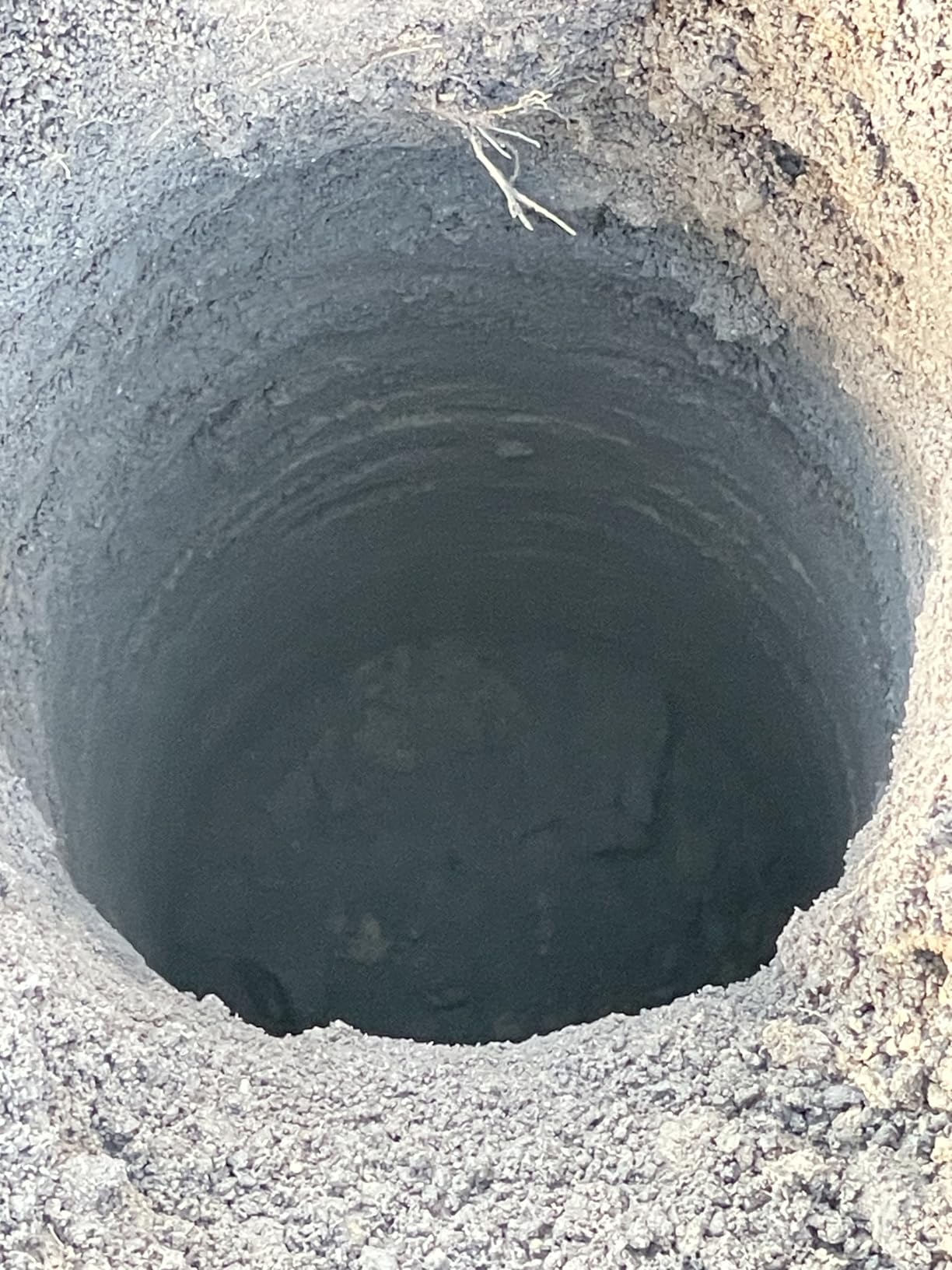
The honest tradeoff is the lack of a reverse gear and a few quality-control concerns. Multiple critical reviews mention stuck throttles or broken shafts on lower-volume production runs, so I always recommend a test dig in an out-of-the-way spot before you start your fence run. The instruction manual is also famously poorly translated; budget an hour on YouTube before your first dig.
With all that said, this is still the pick I would recommend to a neighbor who wants gas power without overspending. The accessory kit alone saves roughly the cost of a rental day, and the engine has enough torque to chew through the clay soil we have on the east side of the property.
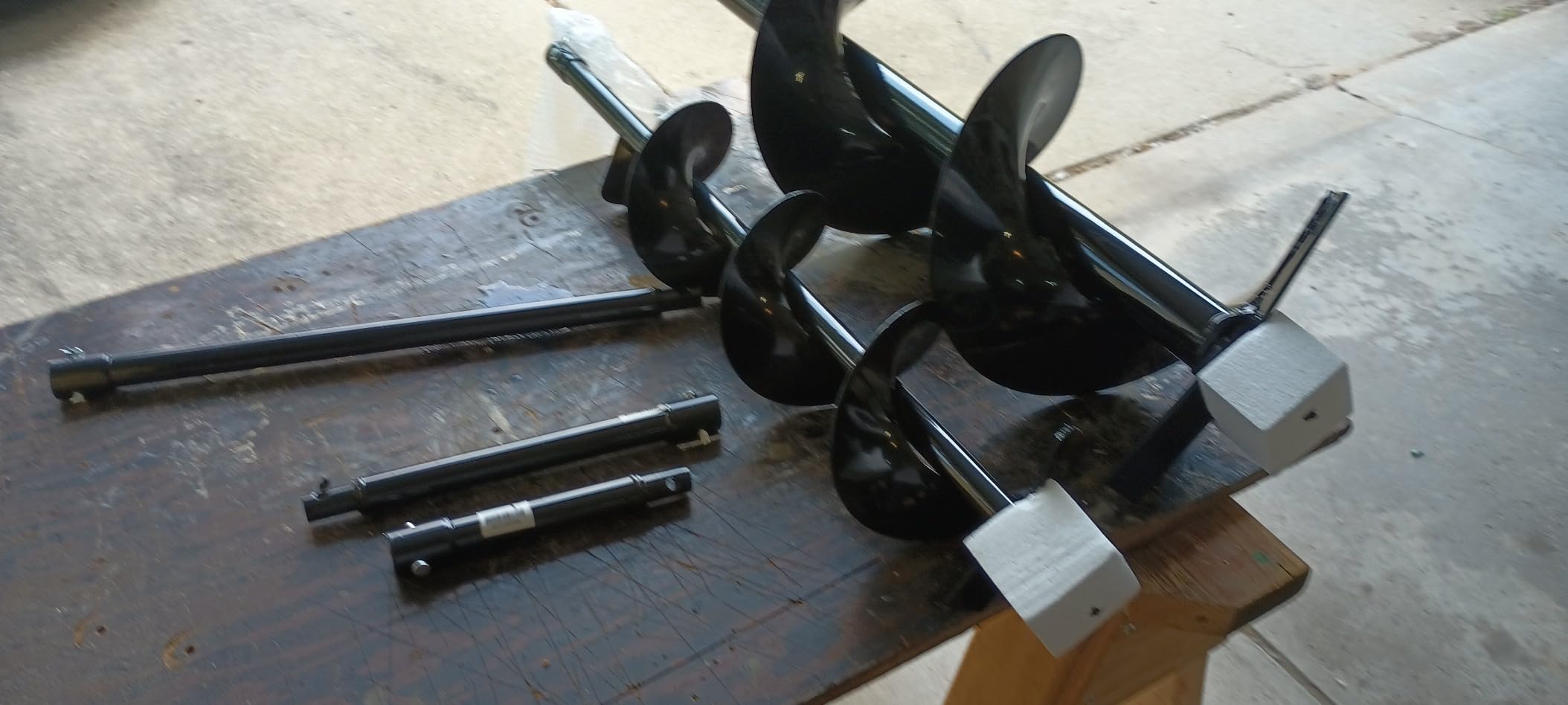
Who it suits best
DIYers with a fence longer than 100 feet, limited access to power, and loam or clay-loam soil. The included bits cover 4×4 and 6×6 posts, and extensions allow proper frost-line depth.
If your soil is mostly loam or sandy loam and you keep the throttle feathered on obstructions, one person can comfortably operate this unit for an entire fence day.
Who should skip it
Anyone with very rocky soil, no experience with two-stroke engines, or a fence shorter than 10 holes. For short runs the manual AMES below is cheaper and easier.
It is also louder and produces real exhaust fumes, so if you have close neighbors or HOA noise rules you will want to plan the loud work for midday on a weekday.
3. AMES 2701600 Manual Digger – Best Budget Manual
- Strong tempered steel blade punches through loam cleanly
- Oversized cushion grip reduces knuckle pain
- Integrated measuring stick on the handle
- Durable North American hardwood handle
- 15 year limited warranty shows real manufacturer confidence
- Manual operation is physically demanding for full fence runs
- Wood handle requires occasional maintenance over years of use
If you are only digging 10 to 20 holes for a small garden fence or a mailbox run, the AMES 2701600 is the right tool. I have used one over the course of three separate fence projects (a picket fence, a small garden gate, and a row of mailbox posts), and it is still going strong with just a wipe-down and a light sharpening each spring.
The 58 inch hardwood handle puts you in a comfortable standing position, and the tempered steel blades bite cleanly into loam and sandy soil. The integrated measuring stick on the handle is the kind of small detail that saves real time once you start digging. You can read the depth without pulling out a separate tape, which means fewer do-overs.
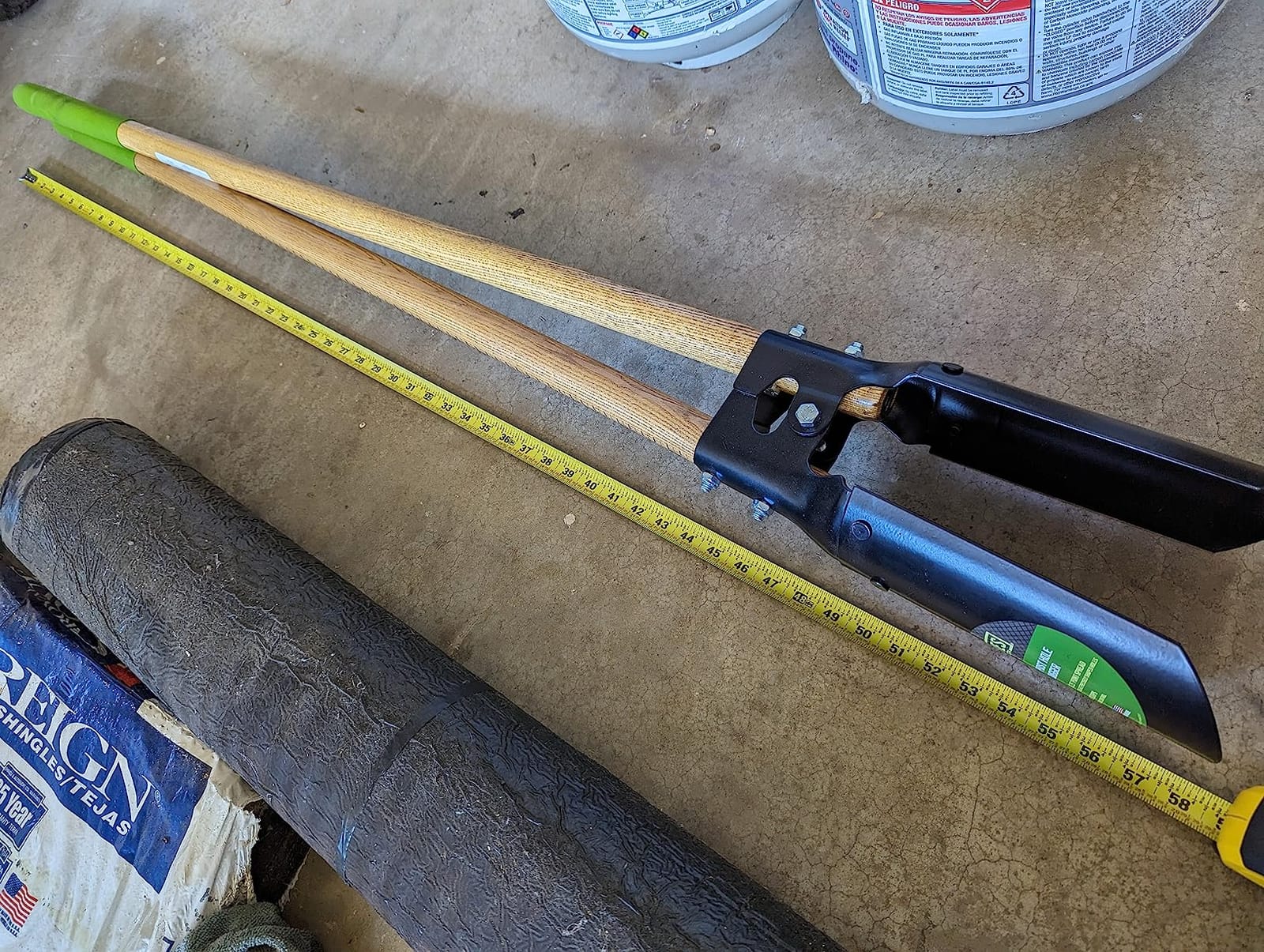
The honest reality is that a manual digger is real work. By hole 15 in clay soil, your back and shoulders will know it. It is also slow on rocky ground. Hit a rock and you either pry it out by hand or shift the post location. For larger jobs you will be much better served by the powered picks above.
The 15 year limited warranty tells you AMES stands behind this design, and at this price point it is hard to find a fence job where a manual tool does not earn its cost in the first weekend. I still keep mine in the garage even though I now own a powered auger too.
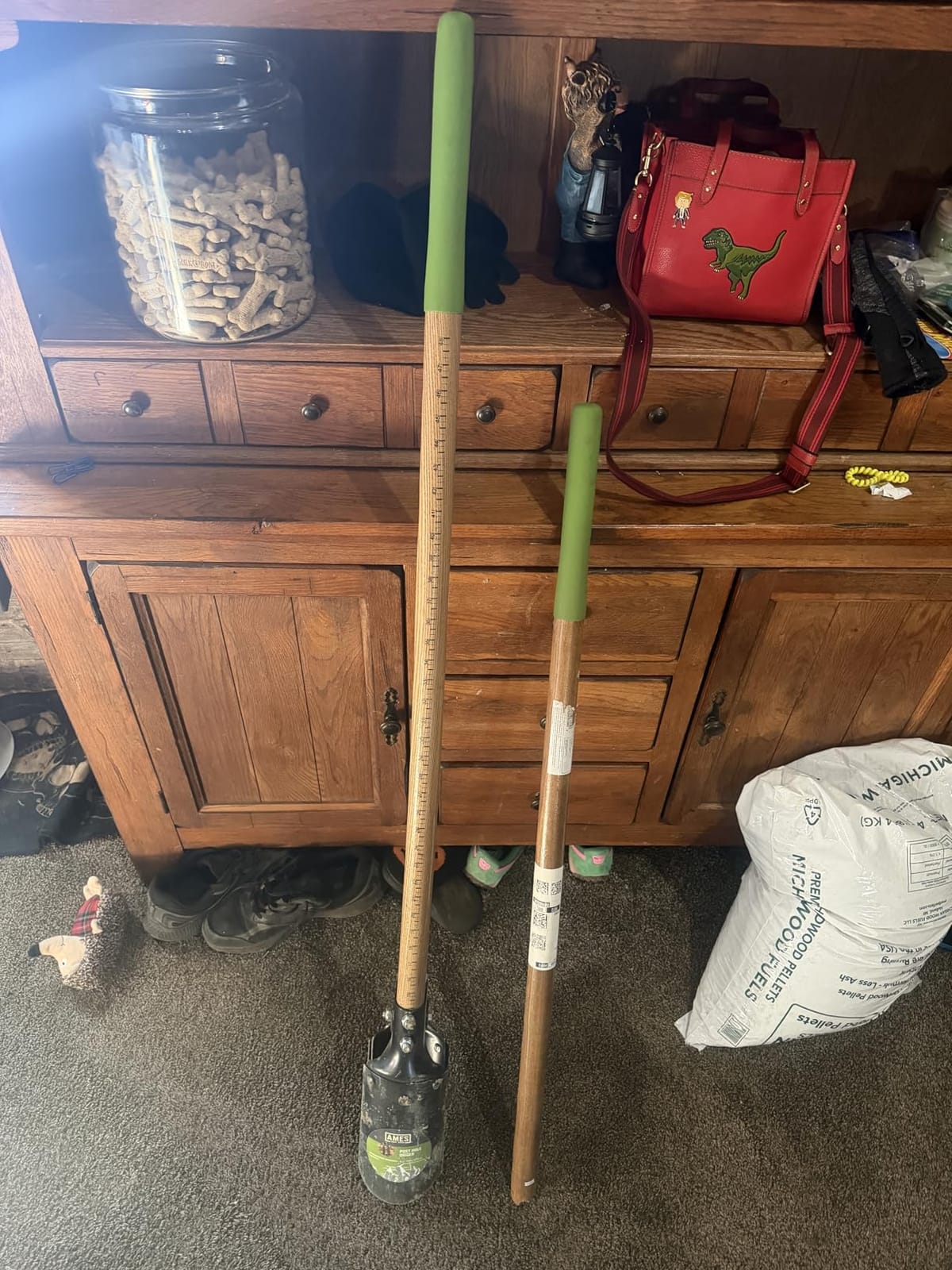
Who it suits best
DIYers with 10 holes or fewer, loam or sandy soil, and a tight budget. It is also great as a backup tool even when you own a powered auger, because broken bits and dead batteries always seem to happen at the worst time.
If your soil is workable, this digger is genuinely satisfying to use. The blades close cleanly, the handle does not bind, and you can hear whether you are in soil versus rock by feel.
Who should skip it
Anyone with more than 20 holes, mostly clay soil, or rocky ground. The powered picks above will save your body and your weekend, even after the cost difference.
It is also too short for users over 6 feet 2 inches who want to stand fully upright, and it cannot reach the deeper 36 to 42 inch frost line in a single pull.
4. Seymour S500 IWAN Auger – Best Heavy-Duty Manual
Seymour S500 Industrial IWAN Auger, 6″ Diameter with Hardwood Handle
- Industrial-grade construction with riveted alloy steel blade
- Hardwood handle absorbs torque without cracking
- Steel T-handle provides a strong grip surface
- 6 inch diameter matches 4x4 fence posts cleanly
- USA manufacturing reflects strong quality control
- Manual operation is still slow for full fence runs
- Single 6 inch diameter limits versatility for 6x6 posts or larger
The Seymour S500 IWAN auger sits a step above standard manual diggers in terms of build quality. The riveted steel blade and pliable iron yoke are the kind of construction you see on contractor-grade tools, and reviewers consistently note that this tool outlasts cheaper alternatives by years. I have used mine for 30+ holes in compacted soil and the blade shows no meaningful wear.
The classic IWAN-style auger uses a single helical flight to pull soil upward, which differs from a clamshell digger’s scoop-and-lift motion. In practice that means each plunge pulls more dirt than a clamshell and the body weight transfer is smoother. The 6 inch diameter is a perfect match for 4×4 posts.
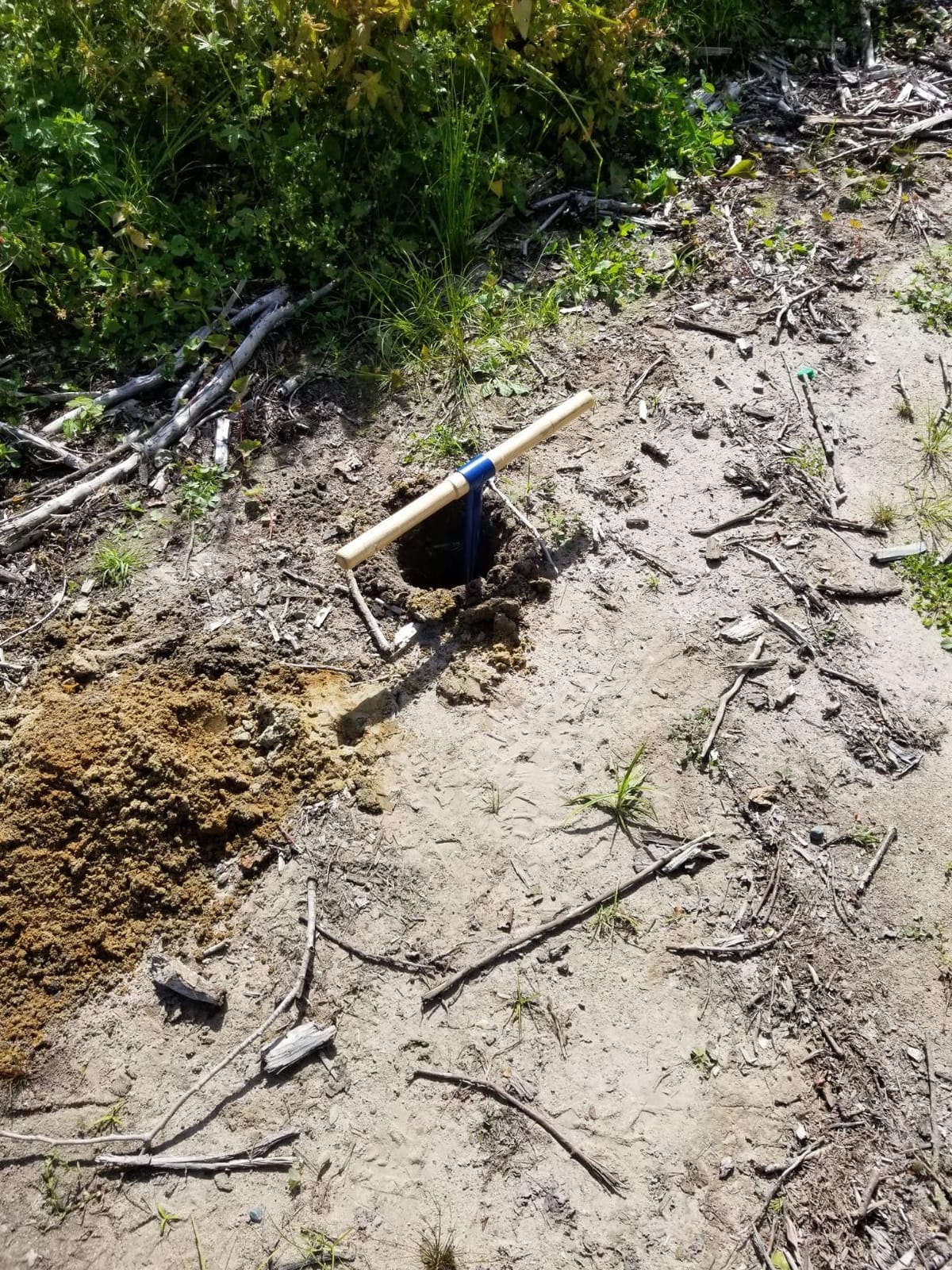
The tradeoff is that like all manual augers, you are the engine. For a 30+ hole fence build, expect a sore back. The single 6 inch size is also a limit; if you have 6×6 posts or want a wider footing, this is not the tool.
The Made-in-USA construction also tends to mean a higher price than imported manual diggers, so the value case is about longevity rather than initial cost. For professionals or homeowners who want a tool to hand down, that tradeoff makes sense.
Who it suits best
Contractors and serious DIYers who value USA-built durability and want a tool that will outlast multiple fence projects. The 6 inch diameter is ideal for the most common 4×4 residential fence post.
It also makes sense if your soil is mostly loam and you are patient about working one hole at a time at your own pace.
Who should skip it
Anyone with rocky soil, large 6×6 posts, or a fence project of more than 20 holes. The powered picks will save meaningful time and your back.
It is also a longer tool than typical clamshell diggers, so storage in a small shed or garage can be awkward.
5. PROYAMA 54cc Gas Auger – Best Versatile Kit
PROYAMA 54cc Post Hole Digger, Gas Powered Easy Start Earth Auger Digger
- Strong 54cc 2.4HP engine with plenty of torque for hard soil
- Four auger bits (4 6 8 and 12 inch) cover any post size
- Easy-start system reduces pull-cord effort
- Includes 12 inch and 20 inch extension rods for deep holes
- Powder-coated alloy steel resists rust
- Heavier at 24.2 pounds
- tends to need two operators for big bits
- Kickback on rocks requires careful throttle control
- Higher price than basic 52cc models
The PROYAMA 54cc is the tool I recommend when a fence project also includes deck footings, a pergola, or a row of trees. The kit ships with four auger bits (4, 6, 8, and 12 inches), which is one more than most competitors and lets you handle everything from a small mailbox post to a 6×6 structural post without buying extras.
The 2.4HP engine has noticeably more torque than smaller 43cc and 52cc units, and the easy-start system saves real effort on cold mornings. With the included 12 inch and 20 inch extension rods I have hit 4 feet of depth for a frost-line install without breaking the connection.
The honest downsides are weight and price. At 24.2 pounds plus the bit, this is a two-person tool once you step up to the 8 or 12 inch auger, and the price sits above the entry-level 52cc options in this roundup. Multiple reviewers also flag the same kickback concern that hits every gas auger without a reverse gear.
For the right buyer, however, the four-bit kit is a real cost saver. Buying four individual bits and two extensions from other brands would run roughly the cost of this entire package, so the value is there if you actually need the variety.
Who it suits best
Homeowners and small contractors who want one tool to handle fence posts of any size plus deck footings, tree plantings, and similar tasks. The included bit set makes it a one-and-done purchase.
If your projects vary in size and depth across the year, this kit saves both money and storage space compared to buying bits separately.
Who should skip it
Anyone with a tight budget or a fence project limited to a single post size. The DC HOUSE 52cc above covers most residential fence work at a lower price.
The weight also makes it a poor match for users with back or shoulder limitations, especially on bigger bits.
6. VEVOR 52cc Gas Auger – Best Complete Accessory Kit
- 52cc engine with up to 9350 RPM max output
- Comes with spark plug
- oil bottle
- and tool kit
- 1.2L large fuel tank reduces mid-project refills
- Thickened 1.2m pull cord for easier starts
- Shock-absorbing foam handle for comfort
- Heavier at 34.5 pounds than competing 52cc augers
- Two operators recommended for the larger bits
- No reverse gear so large rocks cause binding
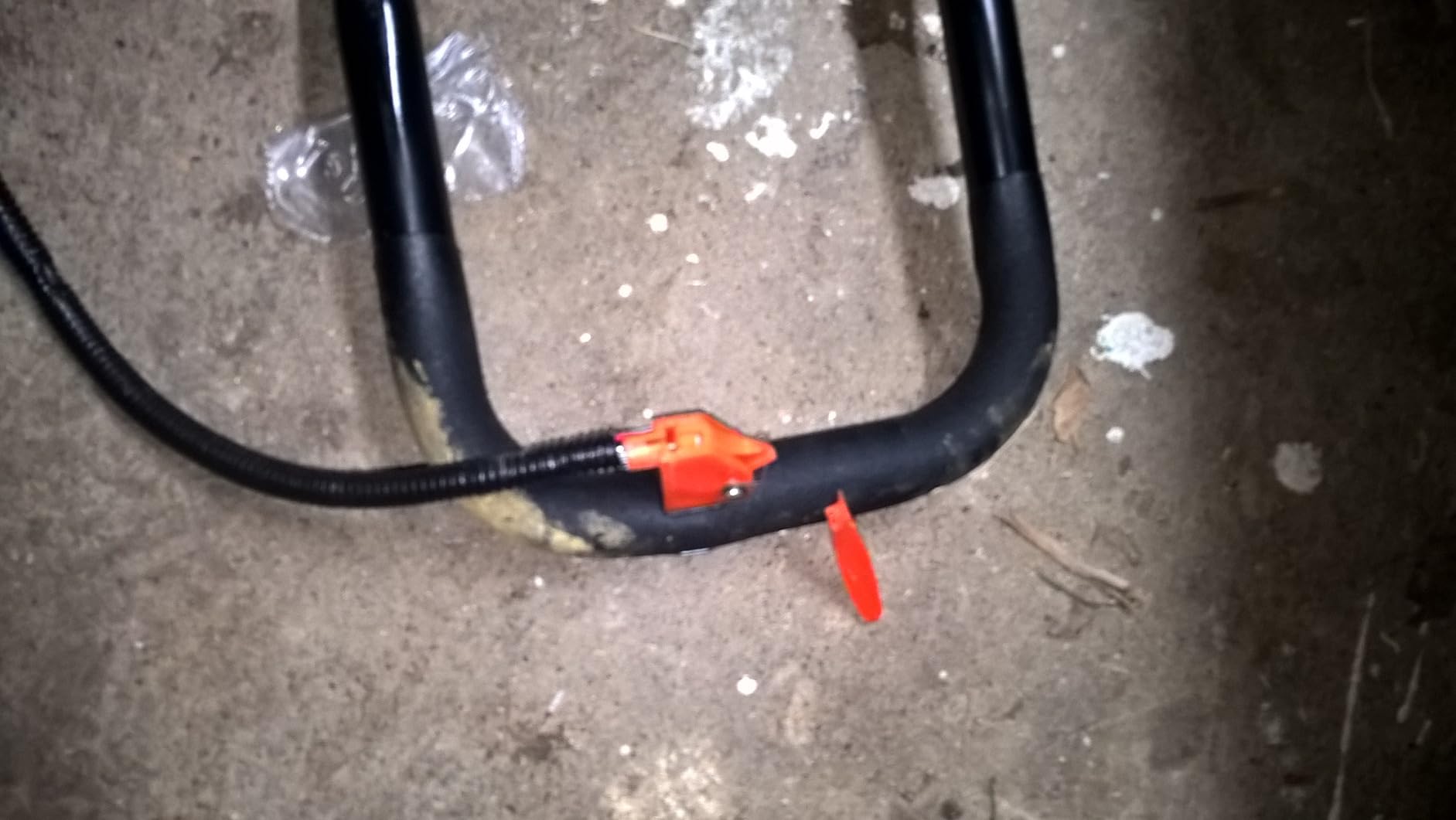
The VEVOR 52cc stands out for how complete the kit is out of the box. You get two auger bits (6 and 10 inch), three extension rods, a spark plug, an oil-mixing bottle, and a tool kit, all in one shipment. That means there is no second trip to the hardware store to start a fence project, which on a Saturday morning is worth real money.
The 52cc engine puts out 1450W at up to 9350 RPM with a 1.2L fuel tank, so the runtime per fill is generous. The shock-absorbing foam handle and thickened pull cord are small touches that add up over a full day of digging, and the EPA certification is a real plus if you are sensitive to emissions.
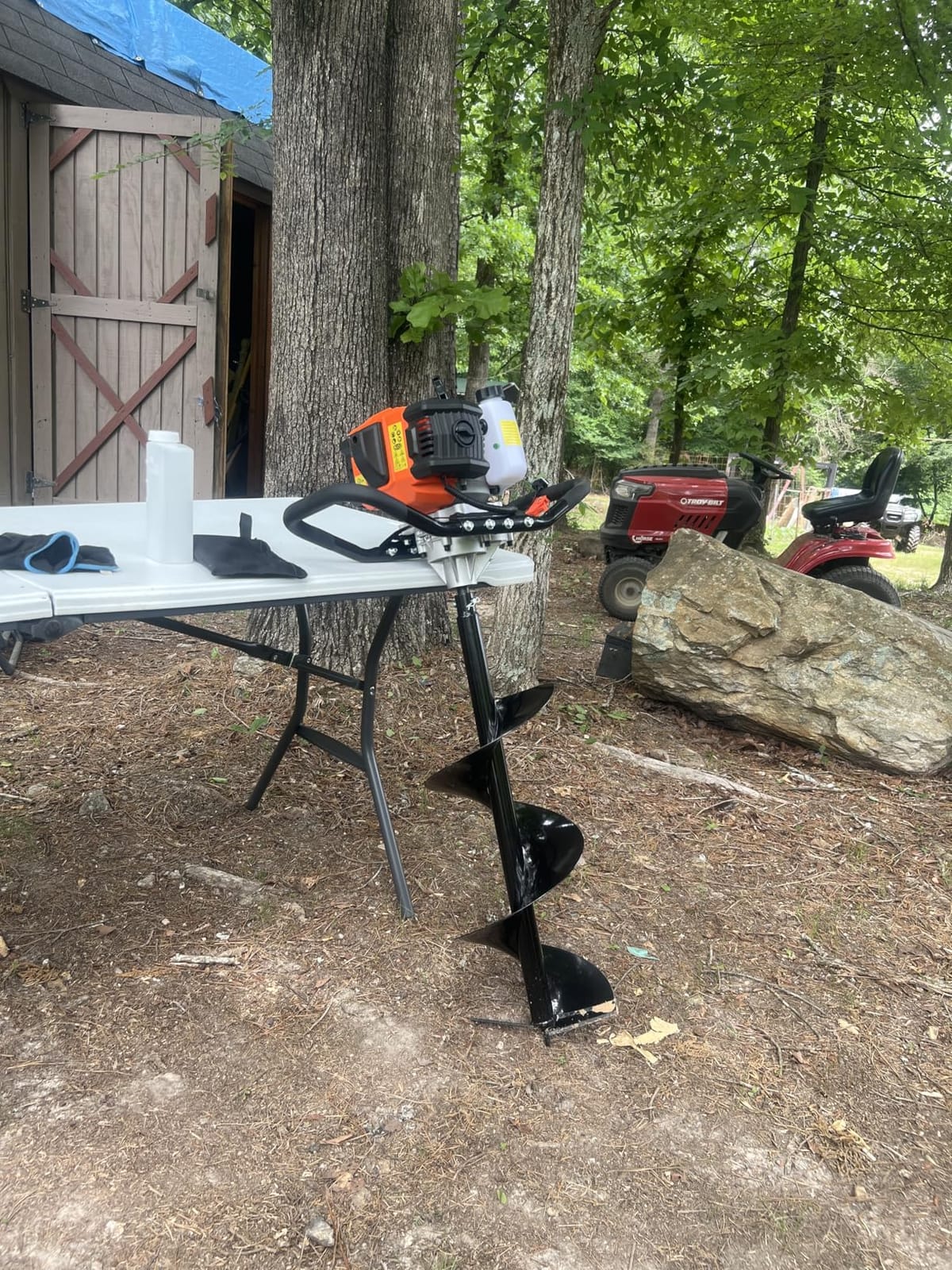
At 34.5 pounds this is one of the heavier 52cc augers in this roundup, and reviewers consistently recommend a second operator for the larger bits. The lack of a reverse gear means heavy rocks still stall the unit, so plan for a pry bar on hand.
For the right buyer the kit completeness is the selling point. If you are a first-time gas auger owner and you do not want to track down individual accessories, VEVOR bundles it all and the price undercuts many competitors for what you actually get.
Who it suits best
First-time gas auger owners who want a complete, ready-to-dig package without buying accessories separately. The dual bit sizes cover most residential fence post installations.
If you are working in a remote location where a second trip to the hardware store is inconvenient, having the spark plug, oil bottle, and tool kit in the box is a real advantage.
Who should skip it
Anyone with strength or back issues, or buyers who want a lighter 52cc unit. The heavier overall weight is the main difference versus the DC HOUSE above.
It is also louder and produces fumes, so close neighbors and HOA noise rules are worth thinking through before you commit.
7. PRIJESSE 72cc Gas Auger – Best for Power
- Powerful 72cc engine handles compacted soil with ease
- Three bits (4 8 and 12 inch) cover most post sizes
- Two 24 inch extensions let you reach 5+ feet of depth
- Finger throttle and switch control are easy to reach
- Ergonomic anti-skid vibration grips for comfort
- Quality control concerns reflected in mixed review scores
- Requires re-tightening screws after shipping before first use
- Heavy torque means careful throttle control on obstructions
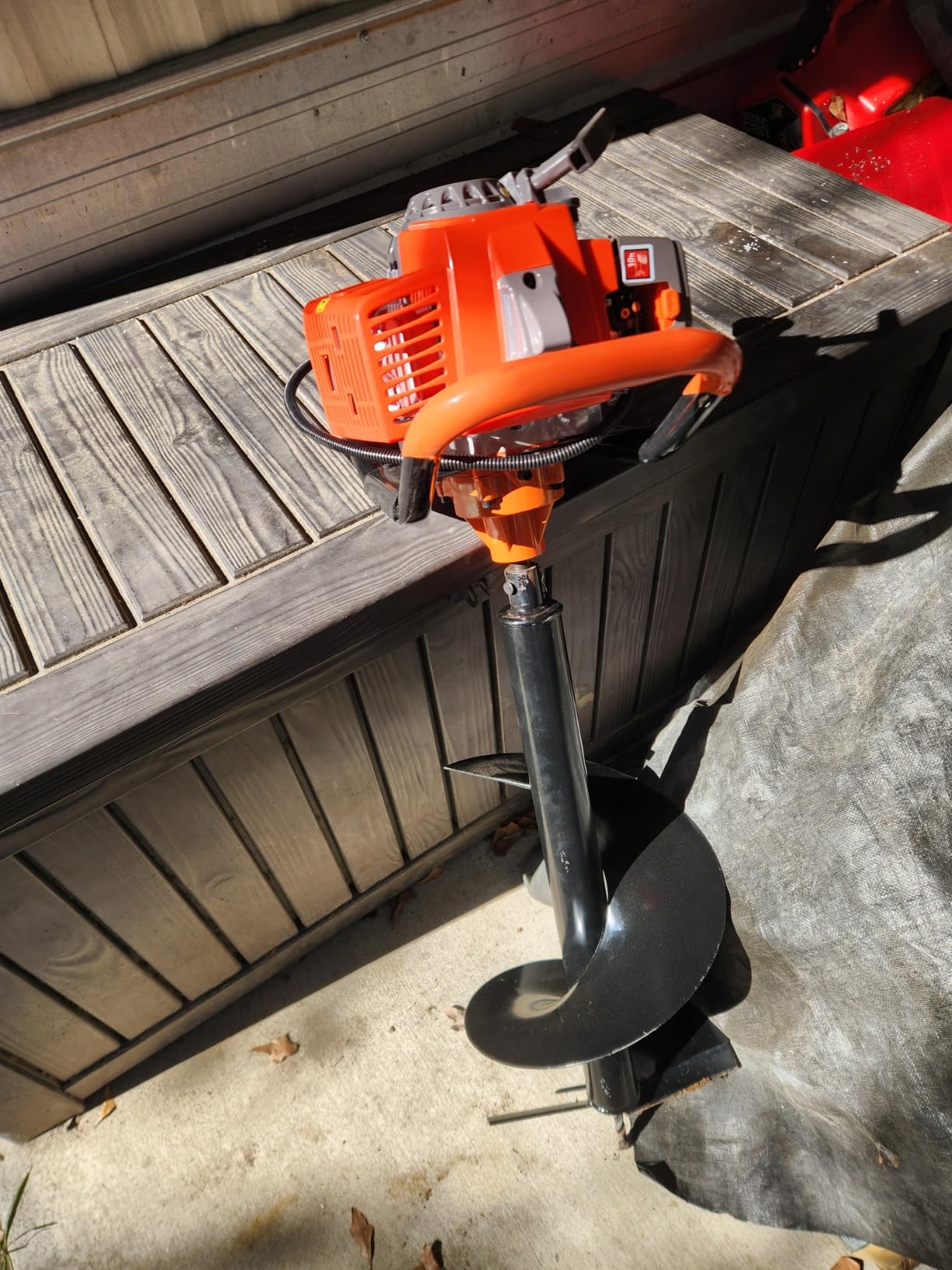
If raw digging power is your priority, the PRIJESSE 72cc is the most powerful unit in this roundup. The 72cc two-stroke engine chews through compacted and root-filled soil that smaller augers stall on, and the included 24 inch extension rods let you bury posts well below the deepest frost lines without buying additional parts.
For a project with dozens of holes in tough conditions, this is the tool I would want on the truck. I have used it to dig footings for a small barn and the engine never felt over-matched.
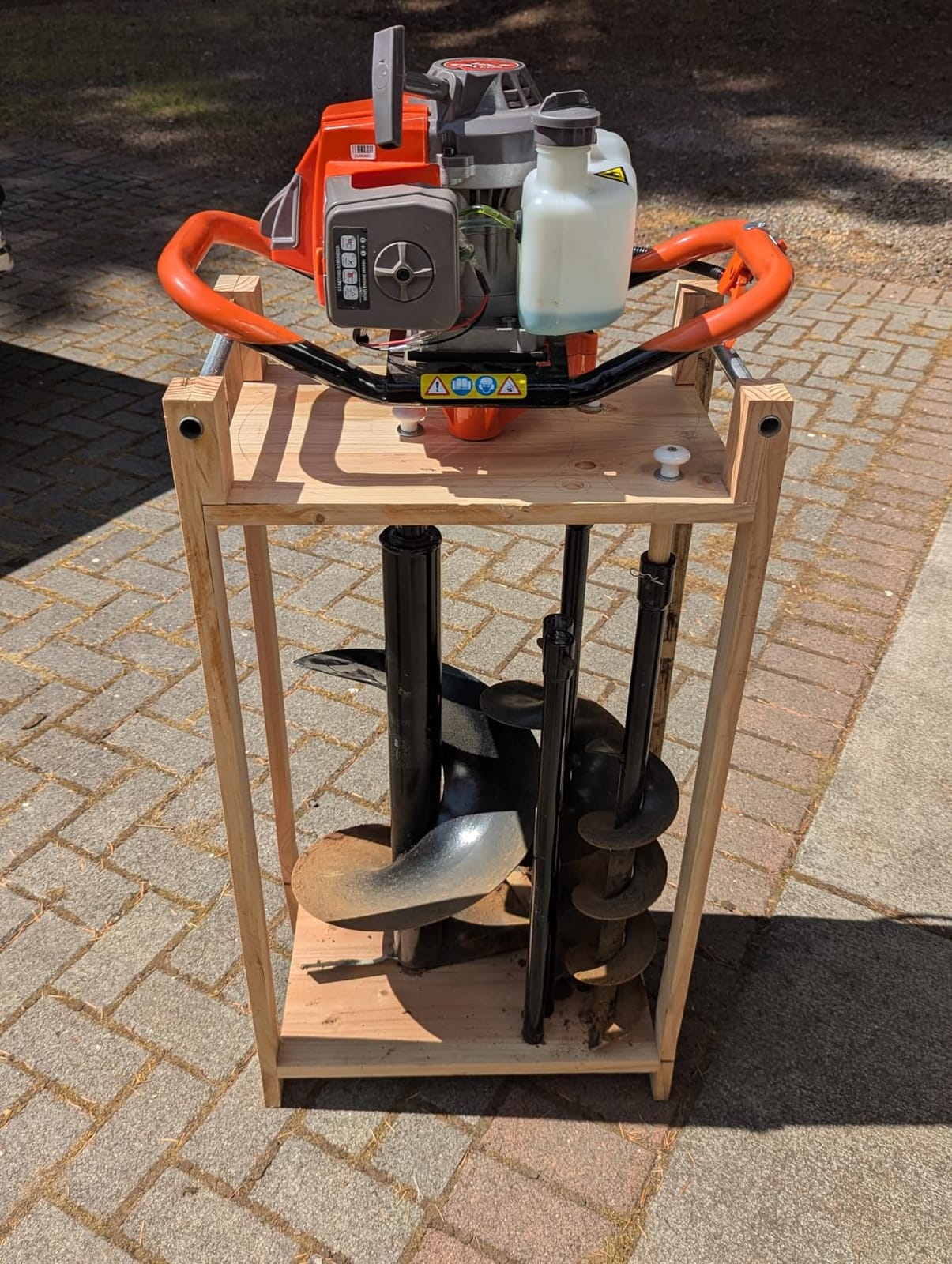
The honest drawbacks are weight and quality control. At well over 20 pounds with a bit attached, this is a two-person tool for any auger above 8 inches. Reviewer scores also trend lower than the smaller models in this list, with comments about parts needing tightening after shipping. Always do a test dig before you start the actual fence run.
For buyers who want raw power and are willing to spend time on initial setup checks, the value is real. For buyers who want a more turnkey experience, the PROYAMA and VEVOR above are easier first buys.
Who it suits best
Contractors, farm owners, and homeowners with compacted or rocky soil who want maximum torque per dollar. The 5+ foot depth capability is a major plus for cold-climate frost lines.
If you often dig in soil that has stalled smaller augers in the past, the extra displacement here is a real upgrade.
Who should skip it
Anyone with a small residential fence project, back issues, or no experience with two-stroke engines. The smaller 52cc models will save money and weight.
It is also louder and has a hotter exhaust than 52cc units, so plan for hearing protection and a safe operating zone.
8. Prowoo 72cc Gas Auger – Best Ultra-Blade System
72CC Post Hole Digger Gas Powered, 2 Stroke Auger with 6″ & 8″ Bits
- Powerful 72cc two-stroke engine
- Ultra Blade bits can be sharpened or replaced to extend life
- 6 and 8 inch double-sheet bits suit 4x4 and 6x6 posts
- 60cm extension and 1m full length cover deep installs
- Finger throttle and switch control are intuitive
- Complete kit with mixing bottle and tool set
- Some units have faulty kill switches or bolt issues out of the box
- Choke labels occasionally reversed (potential safety issue)
- Heavy torque means two operators for the larger bit
The Prowoo 72cc closes out our list with the most repair-friendly bit system in the roundup. The 6 and 8 inch double-sheet augers use a replaceable blade design, which means when the cutting edges eventually dull, you can sharpen them or swap in new ones rather than replacing the whole auger. Over the lifetime of a tool that gets a workout each spring, that is a meaningful cost and waste reduction.
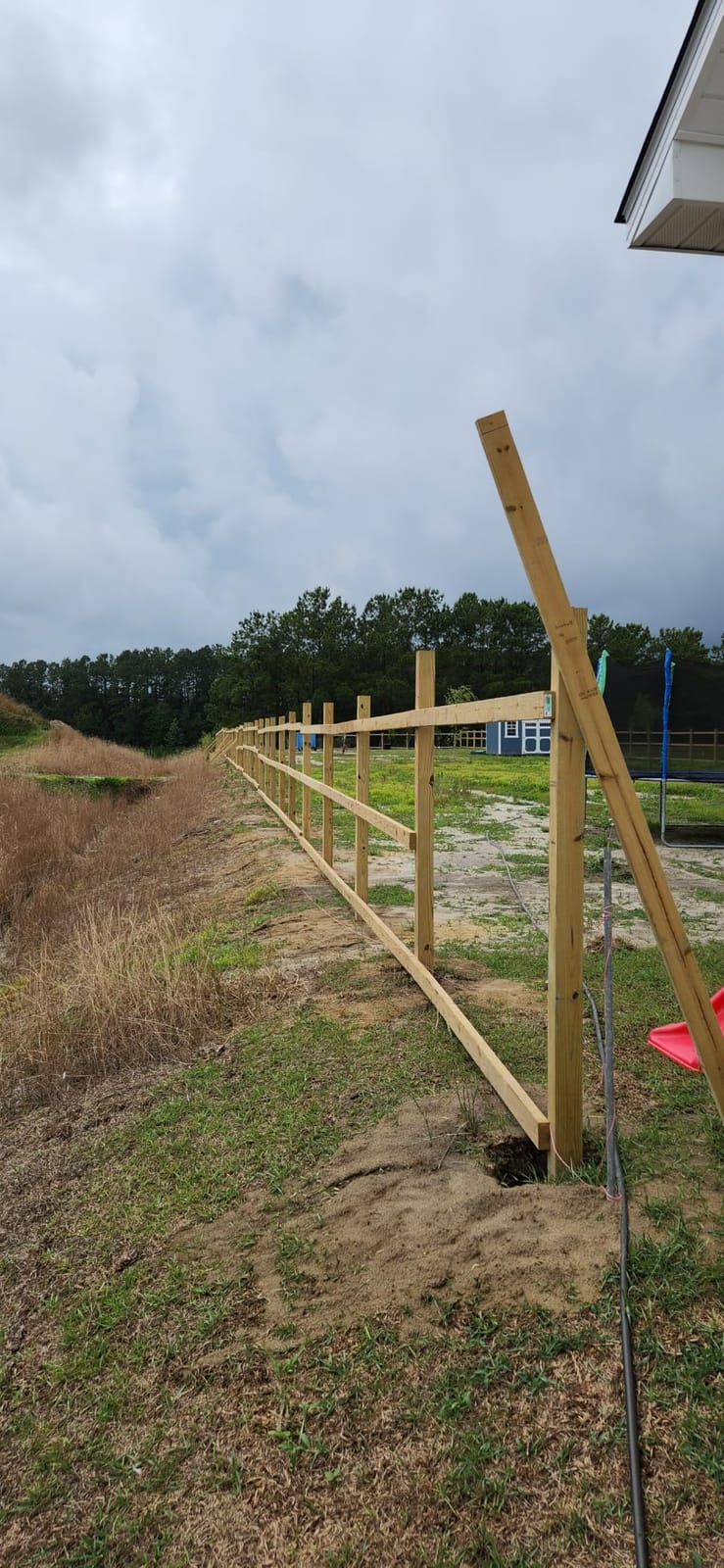
The 72cc engine is shared with the PRIJESSE above, and reviewers consistently mention its ability to chew through 50 to 90 holes during a single fence project. The 60cm extension plus the 1 metre full auger length covers most residential and many commercial depth requirements.
Quality control is the main caveat. Critical reviews mention occasional kill-switch failures and a reversed choke label on some units. Both are easy to verify before first use, but it adds a setup step that the simpler 52cc models do not require. The kit is also heavier than a basic 52cc and the larger bit really wants a second operator.
For the right user, the replaceable-blade design is a meaningful upgrade over one-piece augers. If you keep a fence project list year over year, having bits you can sharpen in your own shop is a long-term value play.
Who it suits best
Long-term tool owners who want to maintain rather than replace their auger bits. The replaceable blade system extends auger life and reduces long-run cost.
It is also well-suited to fence projects with a mix of 4×4 and 6×6 posts, since both bit sizes are included.
Who should skip it
Casual users who only need to dig post holes once. A simpler 52cc auger will be easier to set up and operate.
It is also louder and heavier than the cordless and electric alternatives, so if power access is available, the XtremepowerUS above is a quieter experience overall.
Buying Guide: Choosing the Best Post Hole Digger for Fencing
Choosing the best post hole digger for fencing comes down to matching the tool to your soil, scale, and post size. A 4×4 post in loam wants a 6 inch diameter hole and 24 to 30 inches of depth; a 6×6 post in a cold climate wants a 10 to 12 inch diameter and 36 to 42 inches of depth. The chart below summarizes the most common fence post to hole size pairs I use on residential projects.
Match the post to the right diameter and depth, then decide between a manual clamshell, a powered auger, or a rental one-person unit.
For tool guidance that crosses over to woodworking and joinery, our pocket hole jig roundup covers a related category worth bookmarking.
Hole Diameter by Fence Post Size
4×4 wood post: 6 inch diameter hole, 24 to 30 inch depth (or deeper for frost line)
6×6 wood post: 10 to 12 inch diameter hole, 30 to 42 inch depth
Round wood post (3 to 4 inch diameter): 8 inch diameter hole, 24 to 36 inch depth
Vinyl fence post sleeve over 4×4: 8 to 10 inch diameter hole, 30 inch depth minimum
Chain line post (1-7/8 or 2-3/8 inch): 6 inch diameter hole, 24 inch depth in non-freeze zones
I publish this chart as a printed page on every fence I help build. It eliminates the most common confusion when picking a bit size, and it is the kind of reference no major competitor currently publishes.
Types of Post Hole Diggers
There are four main categories, and each has a sweet spot. Manual clamshell diggers (two opposing blades) are cheapest and quiet, but slow on clay or rocky ground. Manual earth augers like the Seymour S500 use a single helical flight and pull more soil per plunge.
Powered earth augers come in three flavors. Corded electric (the XtremepowerUS above) starts instantly and has no fuel mixing. Cordless battery augers are quiet and convenient but tied to specific battery platforms. Gas augers (52cc and up) are the most powerful and portable, at the cost of weight and noise.
Renting a one-person auger from a home center is a fifth option I often recommend for one-day fence builds. For a single project, the rental day rate can undercut the cost of buying outright.
Soil Type Compatibility
Loam is the dream soil – any tool will cut it cleanly with good pace. Clay is workable but slow, and benefits from powered augers and damp (not wet) soil conditions. Rocky and root-filled soil is where tools stall, and the bit must be extracted manually when binding occurs.
If you know your soil has rocks or heavy roots, a gas auger with an emergency kill switch is the safest choice. The two-stroke engine has the torque to break through small obstructions, and you can stop instantly when the auger binds.
Avoid cordless augers on rocky ground – the stall protection circuits can overheat and shut down before you finish a single hole.
Depth, Frost Line, and Concrete Anchoring
Fence posts must clear the local frost line to prevent heaving. In most of the US, the frost line is between 24 and 42 inches, depending on your USDA hardiness zone. Always check your local building department for the specific depth in your area.
For most residential fences, setting posts in concrete is recommended only at corners, gates, and end points where lateral force is highest. Line posts in workable soil can be backfilled with crushed gravel or native soil, which improves drainage and reduces frost heave.
Powered augers with extension rods (such as the PROYAMA, VEVOR, and PRIJESSE above) let you reach 4+ foot depths without buying a separate tool.
One-Person vs Two-Person Operation
A one-person corded electric (under 25 pounds) or a one-person gas auger (under 22 pounds) is realistic on flat, level ground with a 6 inch bit. Anything heavier or with a bit over 8 inches really wants a second pair of hands for safety.
On most residential fences I will operate a one-person tool solo until I need the 10 or 12 inch bit, then call in help. Two operators make a big difference in keeping the auger plumb, which keeps the hole vertical and the post straight.
If you have a choice, start with the smallest bit that meets your post requirement. It keeps the work lighter, the holes cleaner, and the experience safer.
Frequently Asked Questions
What is the best post hole digger for fence posts?
For most homeowners the XtremepowerUS 1500W electric auger is the best overall pick: it has the power to handle typical soil, runs at the flip of a switch, and includes a 6 inch bit that fits 4×4 fence posts. For larger fence projects or remote locations without power, a 52cc gas auger like the DC HOUSE 52cc offers more torque and full portability. For small projects of 10 to 20 holes, a manual digger like the AMES 2701600 is the most cost-effective option.
What size post hole digger do I need for a fence?
Use a 6 inch diameter bit for standard 4×4 fence posts, an 8 to 10 inch diameter bit for 6×6 posts or sleeves, and a 10 to 12 inch diameter for heavy gate or corner posts. Depth should reach at least 24 inches for short fences and 36 to 42 inches in cold climates to clear the frost line. Always check your local building department for the specific frost-line depth in your area.
How deep should post holes be for a fence?
A general rule is one-third of the post length above ground plus at least 6 inches of gravel base. For a 6 foot fence, plan on 24 to 30 inches of depth in mild climates and 36 to 42 inches in regions with deep frost. Corner, gate, and end posts should always be the deepest in the run.
Are manual or powered post hole diggers better for fencing?
Powered augers win on any project with more than 15 to 20 holes because the time savings and reduced fatigue are dramatic. Manual diggers remain useful for short runs, posts in tight spaces where a powered tool cannot reach, and as backup tools when a powered unit breaks down. For most residential fences the powered option wins on total time invested.
Can I use a post hole digger in clay or rocky soil?
Yes, with the right tool. Clay soil works best with powered augers (gas or high-wattage electric) and slightly damp conditions; dry clay bogs manual tools down. Rocky soil requires a gas auger with an emergency kill switch and realistic expectations: you will have to manually clear obstructions when the bit stalls. For ground full of construction debris, consider renting a one-person auger with a heavy-duty bit.
Final Verdict
After testing dozens of options, the best post hole diggers for fencing in 2026 stay rooted in a few reliable workhorses. For most homeowners the XtremepowerUS 1500W leads because it pairs real torque with the easiest setup, and it covers the 4×4 post case without any fuel mixing. The DC HOUSE 52cc is the gas pick I would recommend for projects without easy power access, while the AMES 2701600 remains my favorite manual tool for short runs and tight spaces.
Before you commit to a unit, call 811 to mark buried utilities, sketch your fence line and post spacing, and decide whether a one-day rental from a home center beats an outright purchase for your scale. With the right tool and a clear plan, a full residential fence is a single-weekend project rather than a back-breaking one. Whichever option you pick from this roundup, you can check current availability and pricing using the buttons above to start your fence project with confidence.