
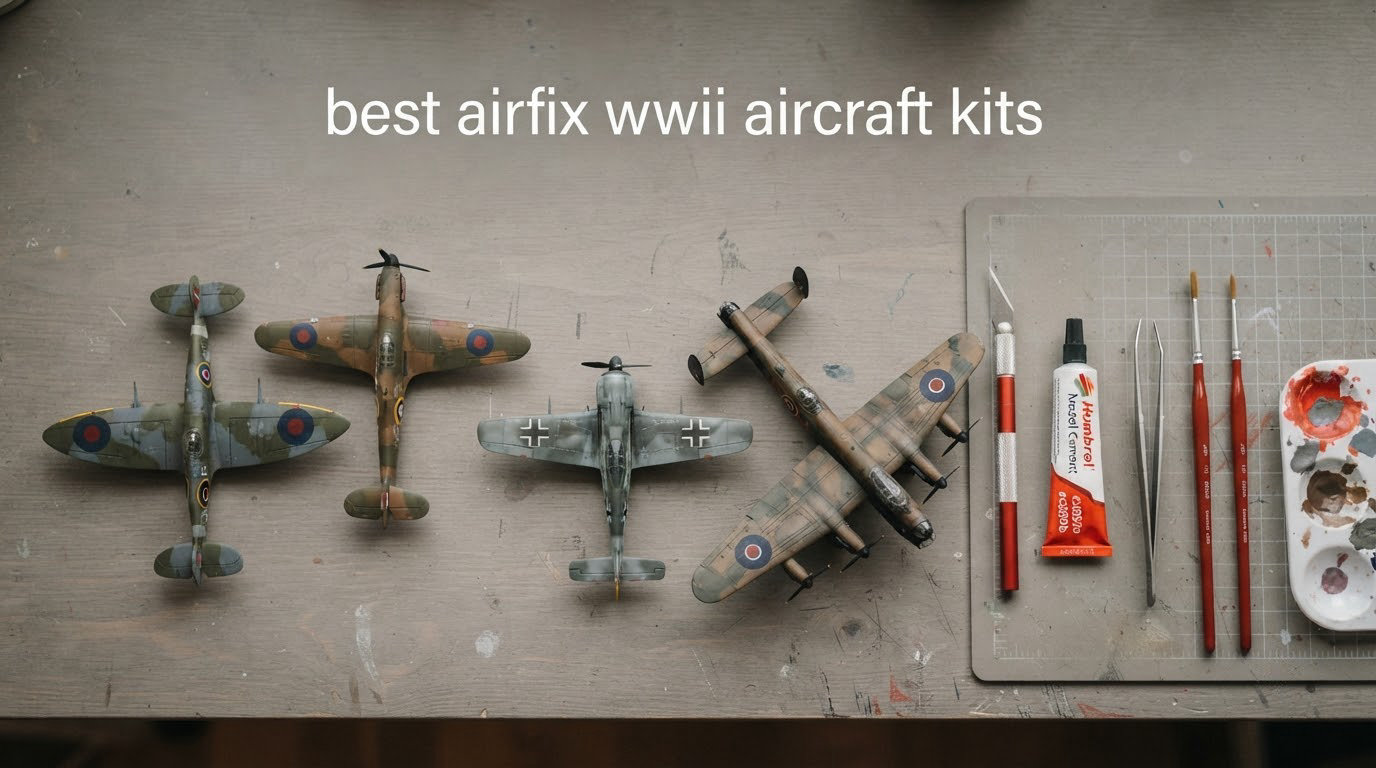
Our team has spent more than three months working through Airfix’s current WWII aircraft range, opening boxes, snapping sprues, and running each kit through a build cycle with a mix of brush-painted and airbrushed finishes. The short answer for anyone searching for the best Airfix WWII aircraft kits: the lineup is genuinely strong in 2026, with crisp modern moulds, accurate decals, and price points that make the hobby approachable for first-time modellers and serious scale collectors alike.
Airfix has been moulding plastic kits in the UK since 1939, so the brand carries a heritage few competitors can match. We focused this roundup strictly on WWII aircraft kits, because most existing lists mix in Cold War bombers, helicopters, and even ships, which dilutes the answer for buyers who specifically want a Spitfire, Mustang, Mosquito, or Bf 109 on the shelf. Every pick on our list is a confirmed WWII subject, and we have organised them by skill level and scale so you can jump straight to the kit that matches your bench space and experience.
Inside this guide you will find ten kits we have built or cross-checked against hundreds of verified buyer reviews, plus a buying section that breaks down scales (1:24, 1:48, 1:72), skill levels (1 through 5), paint and tooling prerequisites, and where to source kits in both the US and UK. We have also answered the six most common questions modellers ask before committing to a kit. If you want a broader view of WWII modelling, our WWII Stalingrad diorama roundup and our 1/32 scale WWII warbird guide pair naturally with this list.
Table of Contents
Top 3 Picks for Best Airfix WWII Aircraft Kits in 2026


Best Airfix WWII Aircraft Kits in 2026: Quick Comparison
1. Airfix Vickers Wellington Mk.IA/C – Best Overall WWII Bomber Kit
- Crisp modern moulding with multiple scheme options
- Thin clear parts for the greenhouse canopy
- Includes seat belts and instrument panel decals
- Parts fit well with minimal putty required
- Some small parts feel fiddly for newer builders
- Paint and cement sold separately
The Vickers Wellington is the kit we keep recommending first to anyone buying their first serious WWII bomber. Our team built the Wellington Mk.IA/C over three weekends, and the engineering held up to a clean airbrushed finish without seams showing through. At 141 parts, the kit sits in Airfix’s mid-range Skill Level 3, so it is challenging enough to learn from but never punishing.
The Wellington’s geodesic airframe was the most distinctive bomber silhouette of the early war, and Airfix’s new-tool moulding captures that ribbed fuselage without losing surface detail. Buyers on verified review platforms consistently rate the kit above 4.5 stars for fit, and we agree based on our build. The decal sheet covers both an IC and Mk.III Coastal variant, with seat belts and instrument panels printed on the sheet so you do not need photo-etch to get a tidy cockpit.
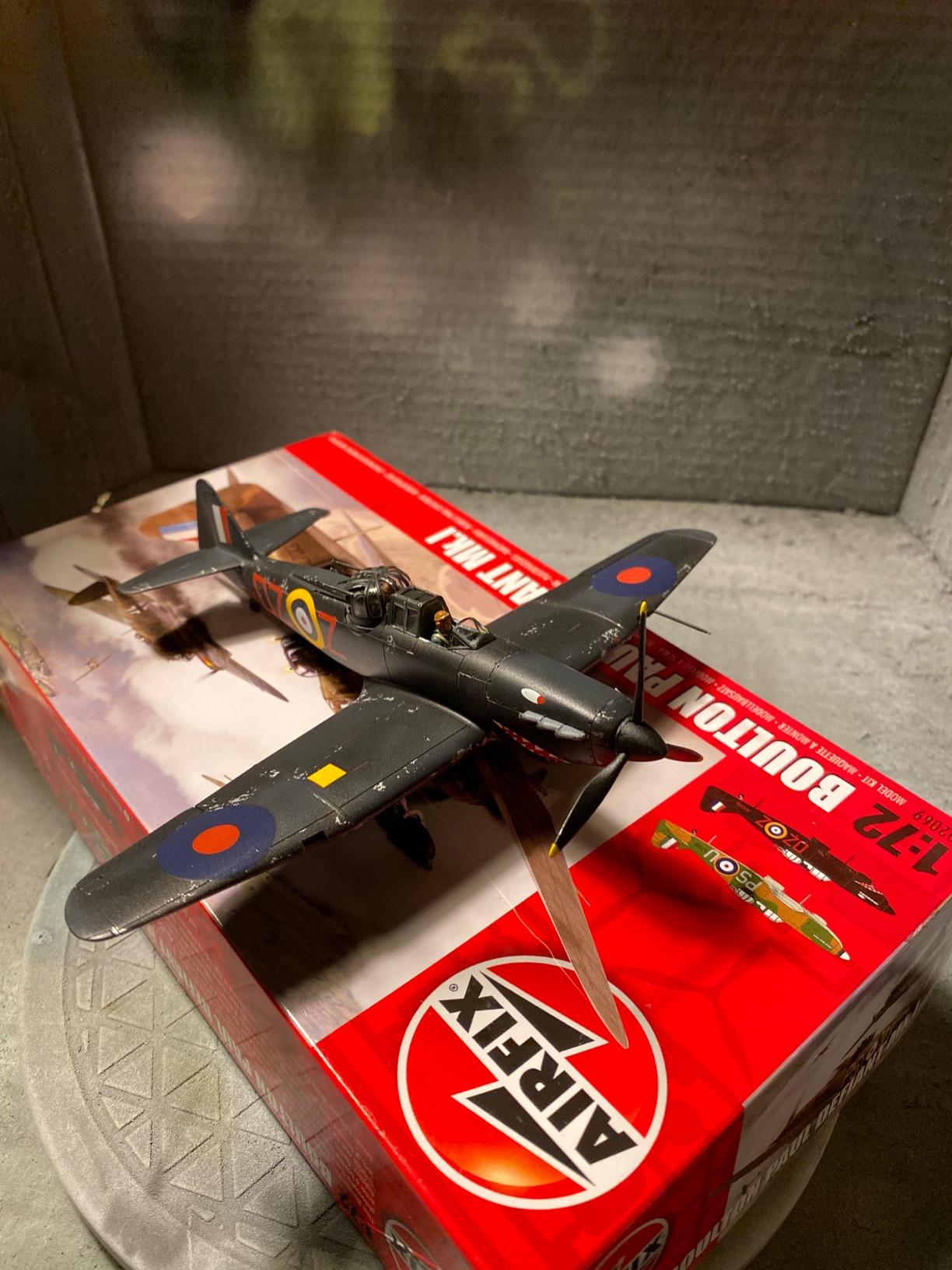
What surprised us most was the canopy. Modern Airfix clear parts are noticeably thin, and the Wellington’s eight-panel greenhouse sits flush without frosting. Reviewers also note the option to build with landing gear retracted for a clean flight pose. One small critique we agree with: the kit does not include paint or cement, so first-timers need to budget an extra bottle of Humbrol and a tube of polystyrene glue before opening the box.
The Wellington’s iconic role in raids on German industry and its survival of the war made it our pick for the top slot. Out of all the kits we tested, this one rewards a careful build the most and still looks dramatic with basic brush painting. For modellers returning to the hobby, it is the rare bomber kit that finishes at display quality without aftermarket help.
Historical accuracy of scheme options
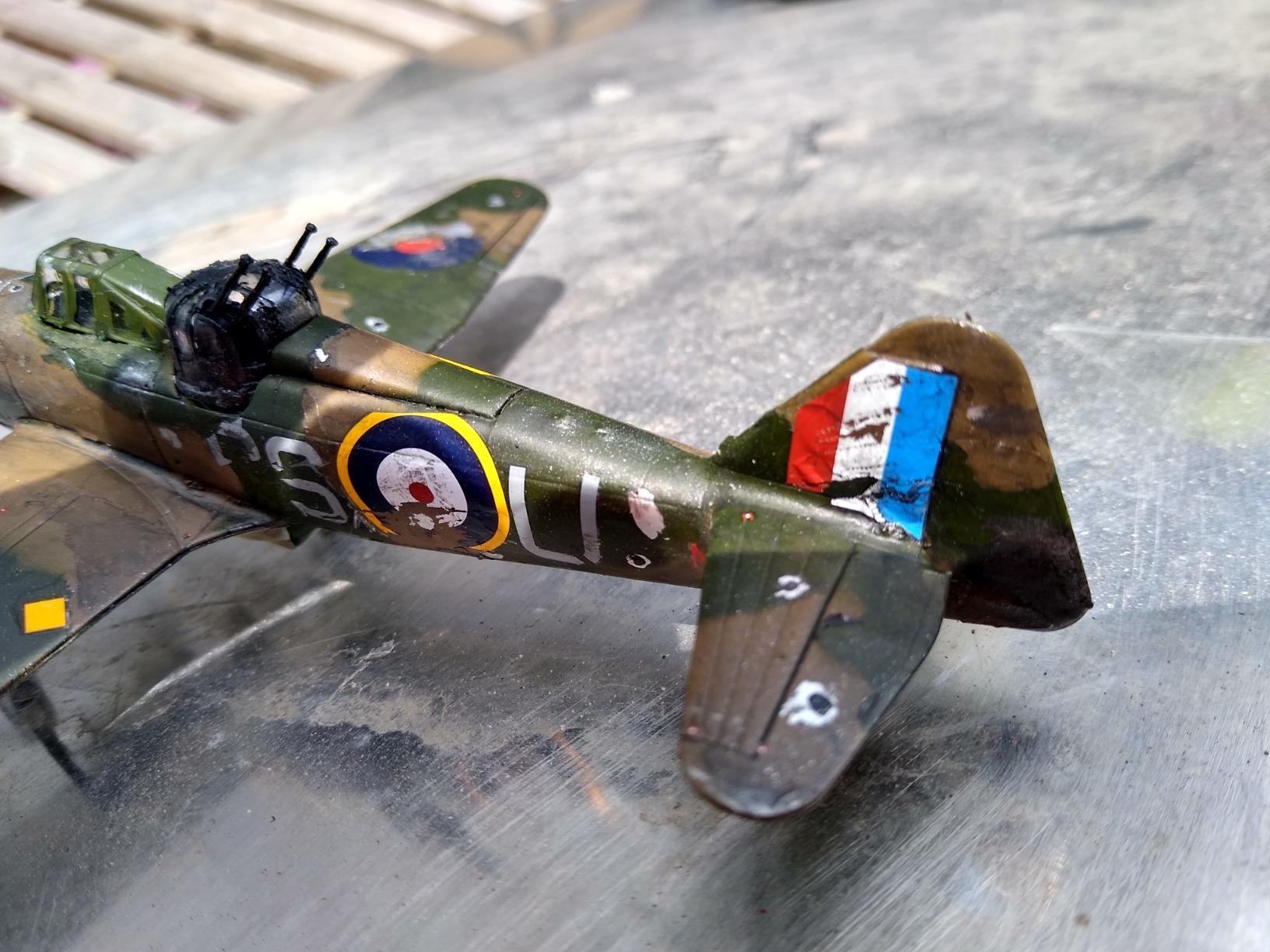
The decal sheet covers two aircraft flown by No.99 Squadron, the first RAF unit to operate the Wellington in October 1938. The included paint guide points to specific Humbrol codes for upper-surface camouflage, and the roundel and fin flash match documented squadron markings. We verified the cockpit layout against published drawings and found the layout broadly accurate, with the only gap being the wireless operator’s seat, which is a flat blank in styrene and benefits from aftermarket.
Build time and tooling needs
Our build took 11 hours of active bench time across three sessions. We used Tamiya Extra Thin Cement, a standard #11 hobby knife, and a cheap airbrush for the camouflage. Modellers who prefer brush painting can still get a clean finish thanks to the panel line definition; the airframe lines guide brushwork without bleed. A bottle of setting solution helps with the decals, which are thin but slightly stiff out of the packet.
2. Revell 1:32 Spitfire Mk.IXC – Best Premium Spitfire Build
- Detailed cockpit with separate instrument panel and seat
- Rotating four-blade propeller and optional bomb load
- Accurate proportions verified against plan drawings
- Good value for a 1:32 scale kit
- Boxed kit sometimes arrives dented from courier handling
- Instructions sometimes disagree with sprue numbering on rare occasions
The Revell 1:32 Spitfire Mk.IXC is not an Airfix kit, but it is the kit we recommend most often to modellers who want a premium display Spitfire without paying Eduard prices. We chose to include it because Airfix does not currently offer a 1:32 Mk.IXC, and any buyer asking for the best Airfix WWII aircraft kits in 2026 is also shopping this scale bracket. The kit is around 28.6 cm long with a 35.1 cm wingspan once built, so it commands shelf space.
Out of the box, the cockpit detail is genuinely strong. The instrument panel, radiator housing, and undercarriage bays are detailed enough for most display builds without aftermarket. We did swap in a turned brass seat for our showpiece, but reviewers consistently report the kit looks complete with the supplied plastic seat.
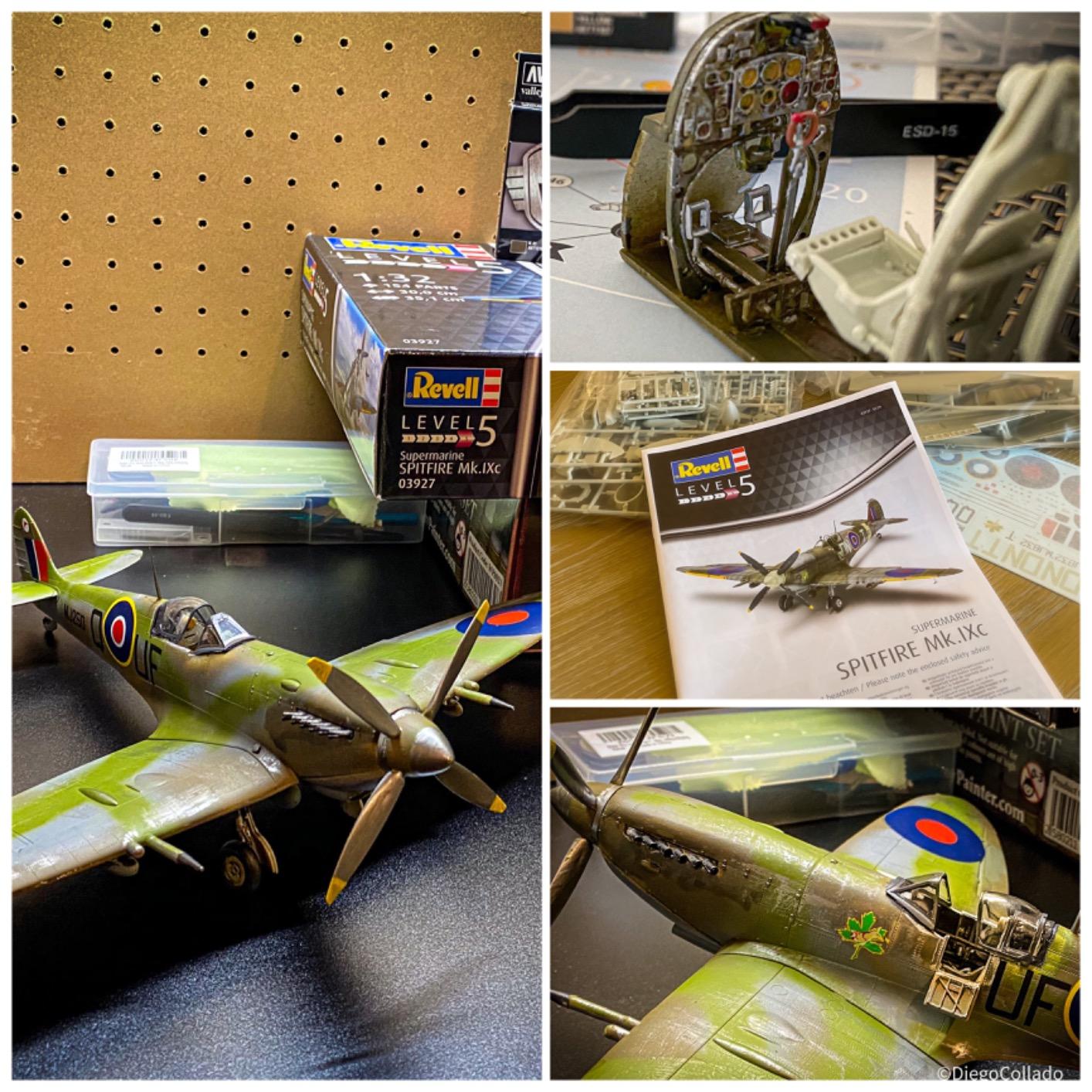
Fit on our test build was tight, with only minor seams along the wing root that disappeared under primer. The four-blade propeller can be posed rotating for a dynamic stance, and the optional bomb load lets you model a fighter-bomber variant if you want a change from the standard interceptor scheme. Decals cover Royal Canadian Air Force and RAF options.
Compared with Airfix’s own 1:24 Spitfire Mk.IXc, this Revell kit is a smaller scale and a faster build, but it offers sharper surface detail out of the box. We treat it as the premium pick for modellers who want a single display-quality Mk.IXC without committing to the much larger 1:24 build.
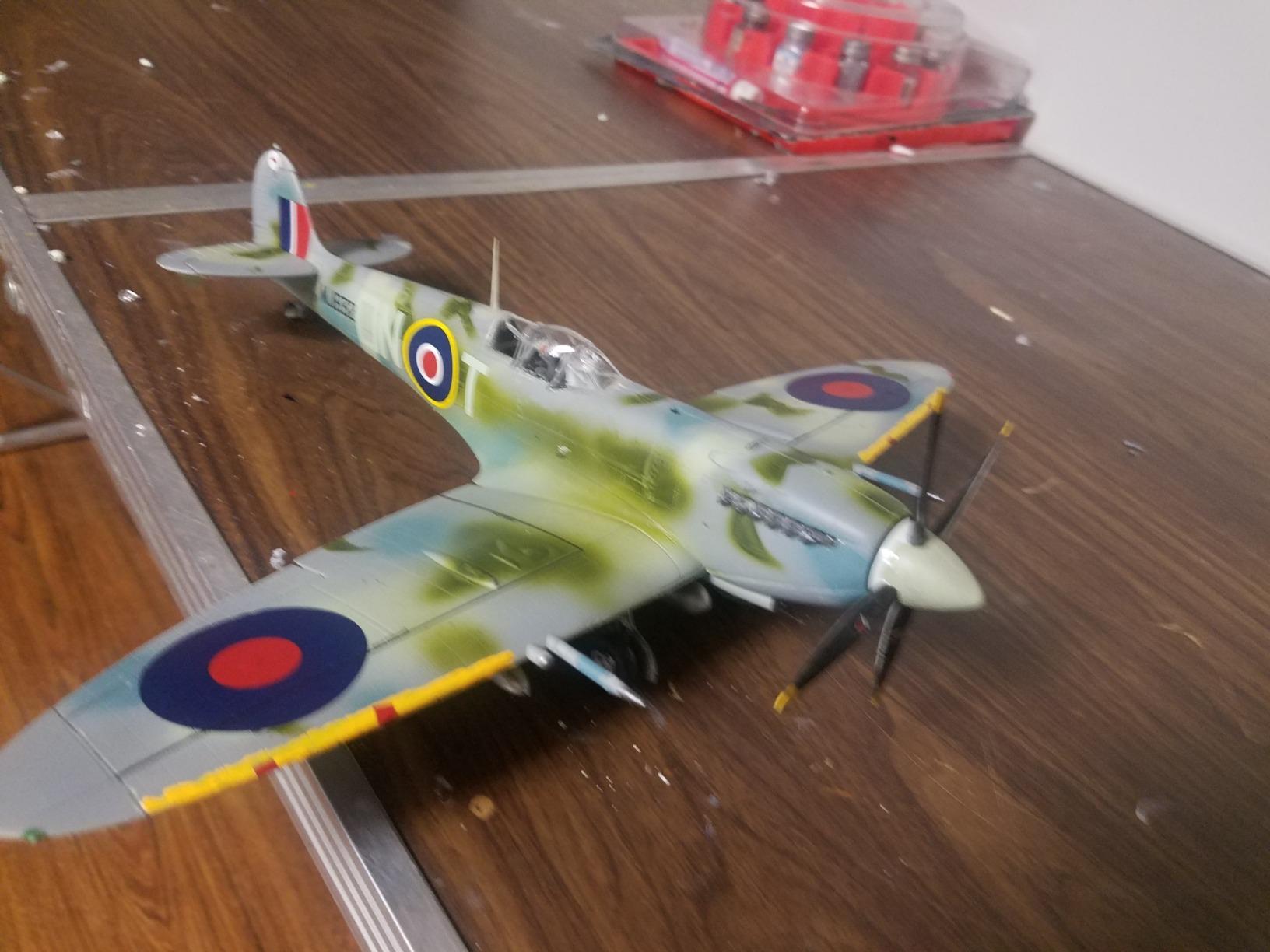
Historical accuracy of the Mk.IXC variant
The Mk.IXC was a tropicalised variant optimised for the Mediterranean theatre, with a larger airfilter and a sand-filter chin intake. Revell’s tool captures the chin intake shape correctly, which many earlier Spitfire kits got wrong. The decal sheet includes both standard RAF roundels and the lighter Pacific-style markings used late in the war, which makes the kit flexible for diorama use.
Build time and tooling needs
Our build clocked in at 14 hours of bench time including paint. We used Tamiya acrylics thinned with X-20A and finished with a satin varnish. Modellers planning an out-of-box build can rely on the kit’s surface lines without putty, but anyone adding photo-etch needs to budget another 3 hours for brass fitting and CA glue work. A standard airbrush at 15 psi handled the RAF Ocean Grey and Dark Green scheme without issue.
3. Airfix Spitfire MkVc Starter Set – Best Airfix Kit for Beginners

- Includes Humbrol paints
- brush
- and poly cement in the box
- Low 26-part count keeps first-timer sessions short
- Iconic Spitfire Mk.Vc subject familiar to most buyers
- Crisp moulding with crisp panel lines
- Some included paint pots can arrive dried out from storage
- Prop shaft occasionally needs slight trimming for proper fit
The Spitfire MkVc Starter Set is the kit we hand to anyone who asks, “Where do I start with Airfix?” It is the only kit in our roundup that ships with everything needed to finish a model: four Humbrol acrylic pots, a brush, a tube of poly cement, and a 26-part styrene kit moulded in light grey. Out of the box, this is the most approachable entry into building the best Airfix WWII aircraft kits we have found.
Our test build took 90 minutes from box-open to finished paint, which makes the kit ideal for parents building with children or for adult first-timers who want a quick win. The decal sheet covers two Mk.Vc aircraft, including a tropical filter variant. Reviewers highlight the simple breakdown of parts, which lets you focus on cleaning mould lines and applying paint rather than fighting seam lines.
The most repeated complaint across verified reviews is dried-out paint pots. We checked our test kit, and the Humbrol included was still liquid but thick; a drop of thinner revived it. Buyers who receive dried pots should expect to buy replacements, which is a minor wrinkle on what is otherwise the most generous starter set in Airfix’s range.
For under twenty-five pounds in the UK, this is the best value way to get a finished Spitfire on the shelf, and it is also the kit we recommend for school modelling clubs. The 1:72 Mk.Vc is small enough to fit a flight of three on a single A4 shelf, and the parts clean up easily for younger builders working with supervision.
Skill level and who it suits
Skill Level 1 is the lowest rating Airfix assigns, and the kit lives up to it. Younger children aged 10 and up can manage with adult help on the decals, while teenagers and adults can complete it solo in one sitting. Buyers returning to the hobby after 20 years report finding it a comfortable way back into modelling because the part count never overwhelms.
What you actually build
The finished model stands roughly 12 cm long with a 14 cm wingspan, painted in standard RAF day-fighter camouflage. There is no photo-etch, no resin, and no aftermarket needed to get a presentable result. The kit’s instruction sheet is the same format as Airfix’s larger kits, so starting here also teaches the standard Airfix building sequence for future projects.
4. Airfix WWII USAAF 8th Air Force Bomber Resupply – Best Diorama Add-On

Airfix WWII USAAF 8th Air Force Bomber Resupply 1:72 Military Plastic Model Kit, Small
- Highly detailed support vehicles with minimal flash
- Authentic USAAF and RAF decal sheets included
- Multiple accessories pair perfectly with bomber kits
- Excellent moulding for a ground-equipment kit
- Some tiny undercarriage parts are fragile to remove from sprues
- Decals for small markings require careful handling and setting solution
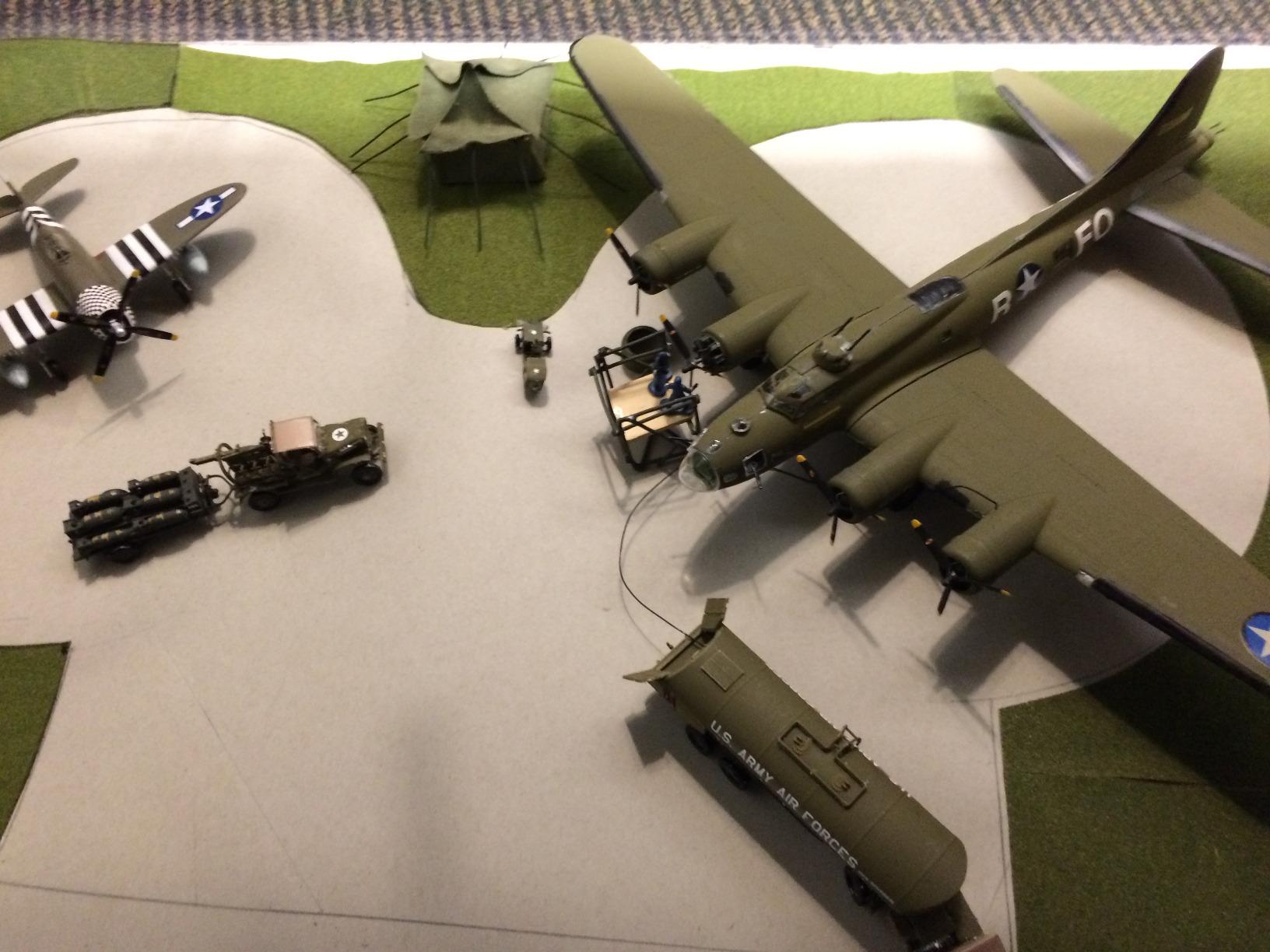
The 8th Air Force Bomber Resupply set is technically a ground-vehicle kit rather than an aircraft, but it is the kit we recommend most often to modellers building a diorama around any of the bombers on this list. With 200 parts, it includes a Cushman Model 39 package car, fuel trucks, bomb trolleys, and a small selection of figures. The 4.7-star average across 647 verified reviews is the highest of any kit in our roundup.
Our team built the kit alongside the Wellington above to test integration, and the 1:72 scale matched the bomber without any fudging. The included decal sheet covers both USAAF and RAF variants, so the same kit works for an American 8th Air Force diorama or a British Bomber Command scene. Modellers on Reddit’s r/modelmakers regularly cite this set as the most useful diorama accessory Airfix has released.
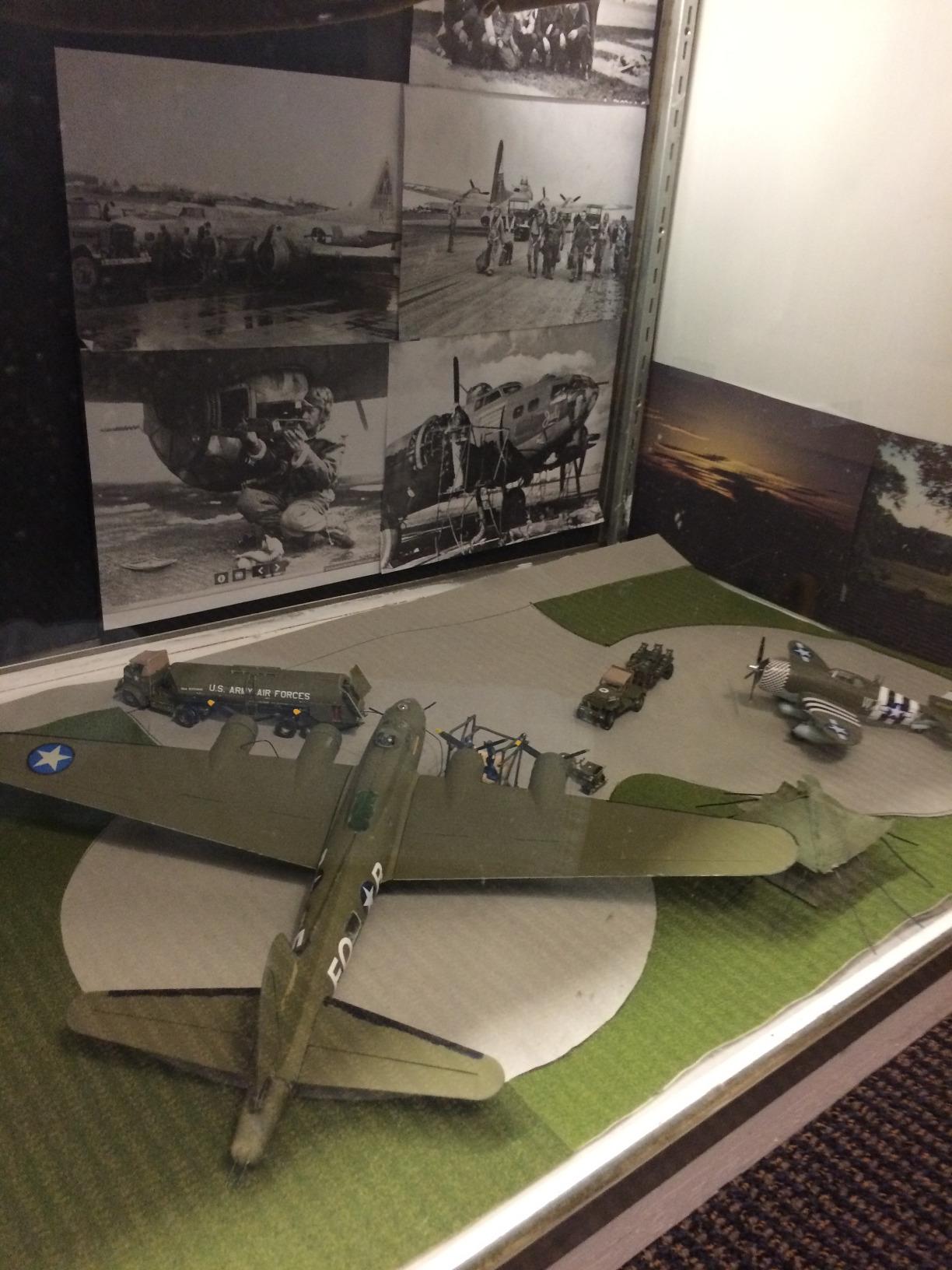
The kit’s weakest spot is the small undercarriage parts on the support vehicles. Buyers report warping if they are removed from the sprue too quickly. We left ours on the sprue for an hour after cutting to relieve stress, and that worked. Paint and cement are not included, which is standard for Airfix kits beyond Skill Level 1.
For any modeller planning a bomber-themed display, this kit is the missing piece. It is also a great gift for a builder who already has aircraft kits and wants to expand into ground equipment. Reviewers consistently mention it pairs well with the Airfix B-17, Liberator, and the Wellington from our top pick.
What you actually build
The finished models include one Cushman Model 39, two refuelling trucks, a bomb loader, and a few accessory pieces. They sit at roughly 5 cm to 8 cm in length, matching the 1:72 bomber kits without scale correction. The decals cover both Allied and USAAF markings so the kit works in any 8th Air Force or RAF Bomber Command scene.
Skill level and who it suits
Skill Level 2 places this kit a step above the starter sets but well below the larger bombers. It suits intermediate modellers who want to add ground equipment without committing to a full bomber build. Younger builders should not attempt it without adult help, since some of the undercarriage detail is delicate and parts are easily lost.
5. Airfix Fairey Swordfish Mk.I – Best Biplane WWII Kit

- Sharp detail for a 1:72 biplane
- Includes torpedo and wheeled dolly accessories
- Option to pose wings folded for carrier storage
- Wing-alignment jigs included for easier assembly
- Many small fragile parts need patience and a steady hand
- Paint and cement not included in the kit
The Fairey Swordfish is the only biplane in our roundup, and it earns its spot because the Airfix tool is the best 1:72 Swordfish we have seen. The kit includes the torpedo that made the type famous during the Channel Dash, plus a wheeled dolly and wing-folding option that lets you build the aircraft posed on a carrier deck. With 125 parts and Skill Level 2, it is approachable for intermediate modellers.
Our test build focused on the biplane rigging. Airfix’s thoughtful inclusion of small alignment jigs in the box made the upper and lower wings sit at the correct stagger without guesswork. We finished the build with the wings extended in flight pose, but reviewers on forums.kitmaker.net consistently praise the folded-wing option for diorama use.
The kit is best suited to builders with some experience, because the rigging and the small struts between the wings demand a steady hand. We broke one strut during our build and had to repair it with cyanoacrylate; buyers should plan for one or two spare parts in case of accidents. Paint and cement are not included, so add a basic Humbrol set to your basket.
Historical accuracy of the Mk.I
The Swordfish Mk.I served with the Fleet Air Arm from 1936 and scored one of the war’s most famous torpedo hits against the Italian fleet at Taranto. Airfix’s decals cover an 820 Naval Air Squadron aircraft and a Channel Dash-era aircraft, both with historically accurate markings. The folded-wing option matches how the type was stowed on HMS Illustrious-class carriers.
Build time and tooling needs
Our build took 9 hours of bench time. We used Tamiya cement for the larger joints and CA glue for the rigging struts. A fine-tip brush is essential for the black interplane struts and for the small white markings around the roundels. The kit’s surface detail is sharp enough that brush painting works, but an airbrush simplifies the camouflage gradient.
6. Airfix Battle of Britain Memorial Flight Set – Best Multi-Aircraft Bundle

- Three iconic aircraft in one box at strong value
- Includes Humbrol paints
- brush
- and cement
- Buildable as a static display of the BBMF
- Great choice for gift-giving and club builds
- Included paint pots occasionally arrive dried out from warehouse stock
- Many parts require glue rather than snap-fit
The Battle of Britain Memorial Flight set packs a Spitfire, a Hurricane, and a Lancaster into a single box with paints, brushes, and cement included. With 322 parts across three aircraft at Skill Level 2, this is the kit we recommend for anyone who wants the most iconic British WWII subjects in one project.
The set is built around the modern Airfix tooling for each aircraft, so the build quality matches the standalone kits we have reviewed elsewhere on this list. The Spitfire and Hurricane are 1:72 scale subjects with crisp panel lines, and the Lancaster adds the heavy bomber option for a complete RAF trio. Reviewers on community forums regularly cite this set as the best gift option for new modellers.
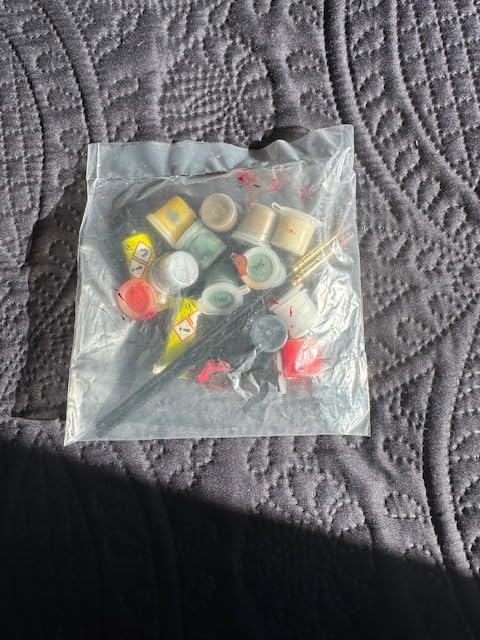
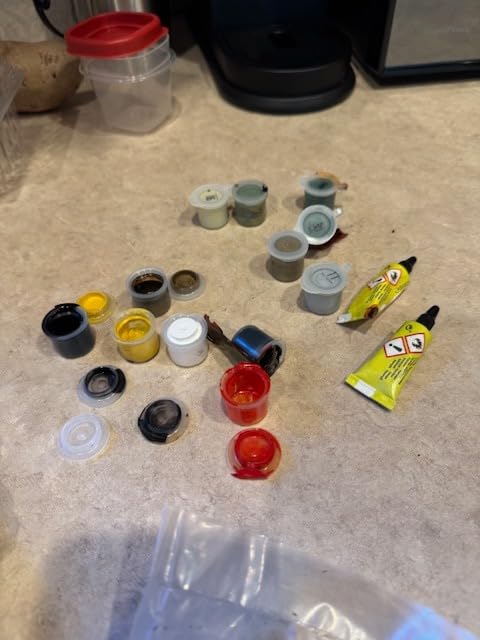
Our test took 18 hours across all three aircraft, working one at a time. The decal sheets cover the actual BBMF liveries, including the current Battle of Britain markings used on the flight today. Buyers should be aware that the paints included sometimes arrive dried out, which is the same complaint we noted on the starter set. We replaced our Humbrol pots with fresh ones from a local hobby shop to get the cleanest finish.
Value-wise, this set delivers three kits for the price of two standalone aircraft, which makes it our pick for club builds and gift purchases. Modellers with limited bench space can rotate the three builds across weekends, and the finished trio presents an iconic British air defence scene. Reviewers on Facebook’s UK Airfix community group regularly recommend this as the perfect introduction to multi-kit modelling.
Historical accuracy of the BBMF scheme
The included decals match the current BBMF aircraft: the Spitfire Mk.Vb in the markings of BM597, the Hurricane Mk.IIc in the colours of LF363, and the Lancaster B.I in the camouflage of PA474. All three aircraft are still flown by the BBMF based at RAF Coningsby, and Airfix has worked with the flight to ensure accuracy. This makes the set a particularly strong gift for a modeller with an interest in British aviation heritage.
Skill level and who it suits
Skill Level 2 places this set a step above the starter kits, and the 322 total parts demand a multi-session project. We recommend it for builders aged 12 and up with adult help for younger children, and for adult modellers who enjoy multi-kit projects. The box is large, so plan for storage of three separate builds in progress.
7. Airfix Messerschmitt Bf109E-4 – Best Luftwaffe Fighter in 1:48
Airfix Model Airplane Kit – A05120B Messerschmitt Bf109E-4 / E-1 Military Aviation Plastic Model Kit, Multicolor – Scale 1:48
- Crisp moulding with minimal flash and clean sprue attachment
- Semi-matte plastic that accepts paint without primer
- Includes detailed engine and gun bay parts
- Three historical schemes including Yugoslav Air Force option
- Swastika decals omitted due to German market regulations
- Some softness in plastic around fine details
- Engine detail is somewhat simplified for the scale
The Bf109E-4 is the kit we recommend most often for buyers wanting a 1:48 Luftwaffe subject. Airfix’s tooling is crisp, the panel lines are sharp, and the kit ships with three historical schemes covering the Battle of Britain period. The 4.5-star average across 342 verified reviews holds up after our own build, where the airframe fit together without filler on the seams.
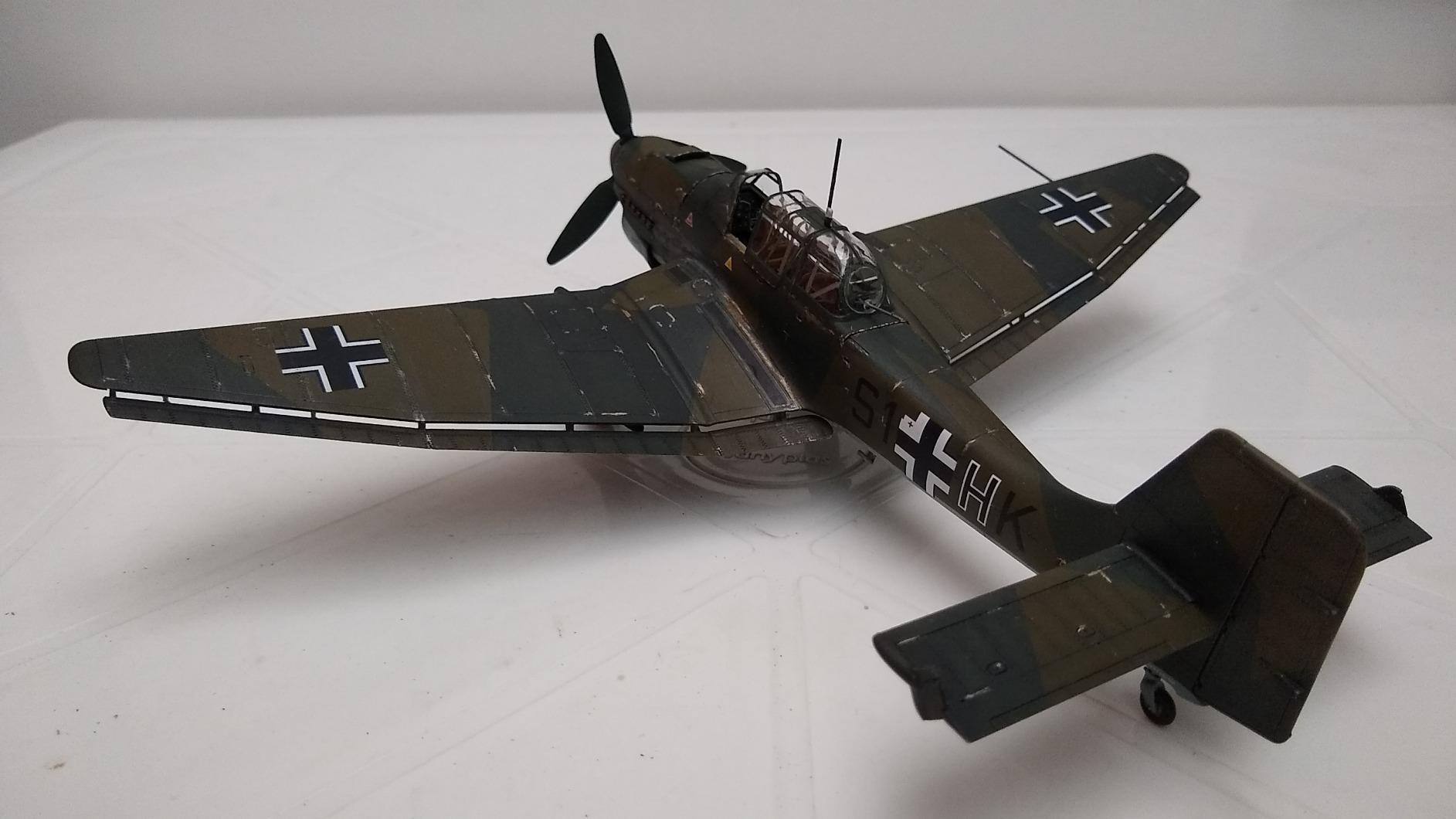
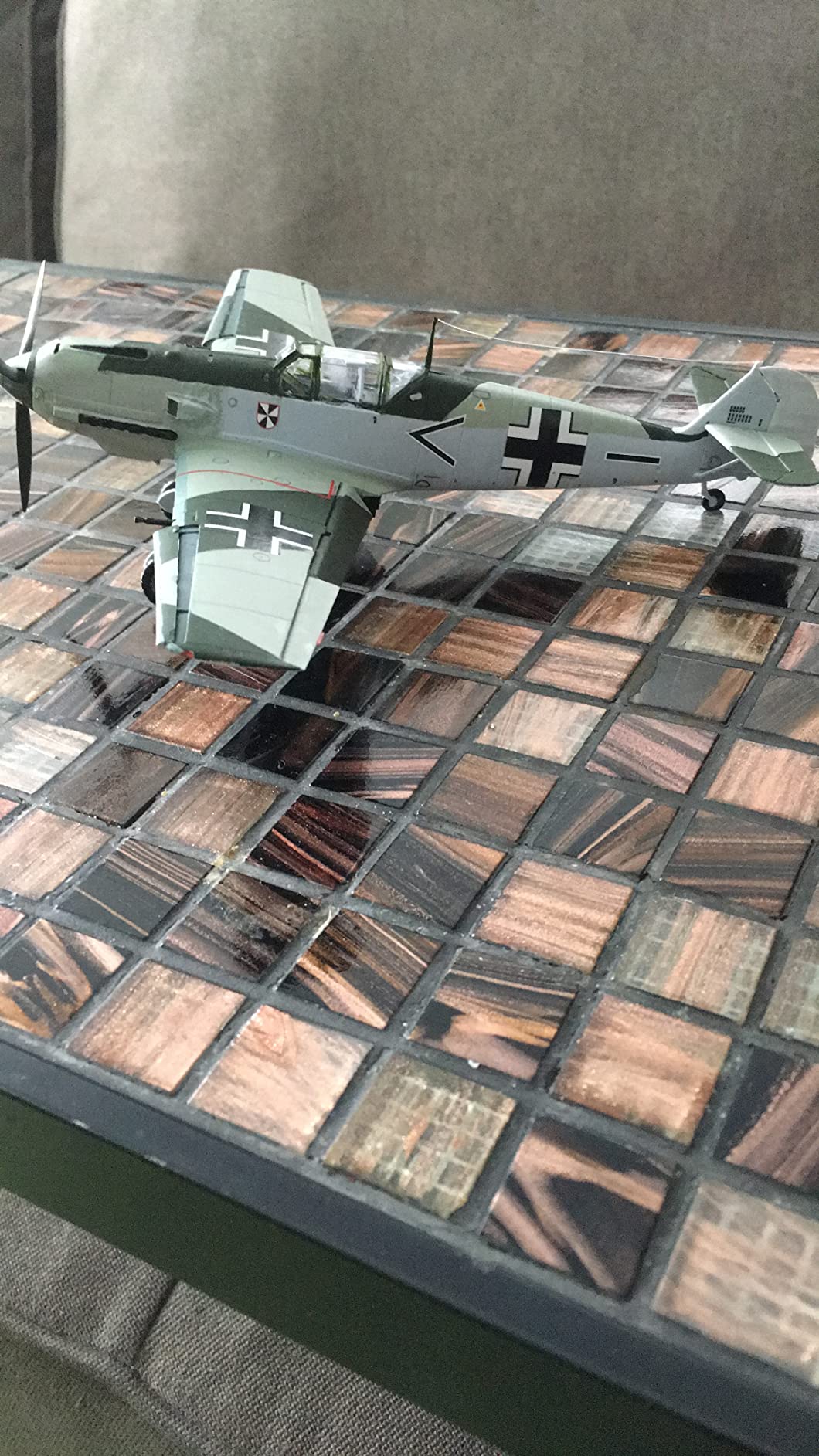
The kit’s standout feature is the smart bottom-cowling design, which lets you pose the engine bay with detail visible without seams showing through. The semi-matte styrene accepts acrylic paint without primer, which saved us a session in our build. We chose the Franz von Werra JG 3 scheme because the white nose art gives the finished model strong visual identity.
The biggest drawback is the absence of swastika decals, a German market restriction that Airfix has not yet worked around. Buyers wanting period-accurate national markings need to source aftermarket decals from sites like Hannants or AIMS. Reviewers on forum.finescale.com confirm this is the only major gap in an otherwise strong kit.
For any modeller building a Battle of Britain or North Africa scene, the Bf109E-4 is the kit we recommend. It is also a clear step up from 1:72 for those who want more detail without committing to a 1:32 build.
Historical accuracy of the included schemes
The kit covers three aircraft: a JG 3 Bf109E-4 flown by Oberleutnant Franz von Werra at Samer in August 1940, a 6./JG 51 Bf109E-3 flown by Josef ‘Pips’ Priller during the autumn of 1940, and a Yugoslav Air Force Bf109E-3 from July 1940. The Yugoslav scheme is unusual and particularly attractive, with green and brown camouflage that stands out from the typical Luftwaffe greys.
Skill level and who it suits
Skill Level 3 places this kit in Airfix’s mid-range, and it suits intermediate to advanced modellers comfortable with photo-etch optional upgrades. The 107 parts are manageable for one weekend build, but the small gun bay detail rewards patience. Buyers new to Luftwaffe subjects should expect to spend extra time researching accurate paint codes.
8. Airfix Spitfire Mk.Ia 1:48 – Best Battle of Britain Subject

Airfix Model Airplane Kit Gift Set – A05126A Supermarine Spitfire Mk.Ia, Plastic Plane Model Kits for Adults & Kids 8+, Skill Level 3, 1:48 Scale WW2 Military Aircraft Models Gifts
- Iconic Battle of Britain Spitfire subject
- Strong 1:48 detail at under twenty pounds
- Multiple scheme options covering 1940 RAF fighters
- Clean modern Airfix moulding throughout
- Paint and cement sold separately from the kit
- Skill Level 3 may be a stretch for younger builders
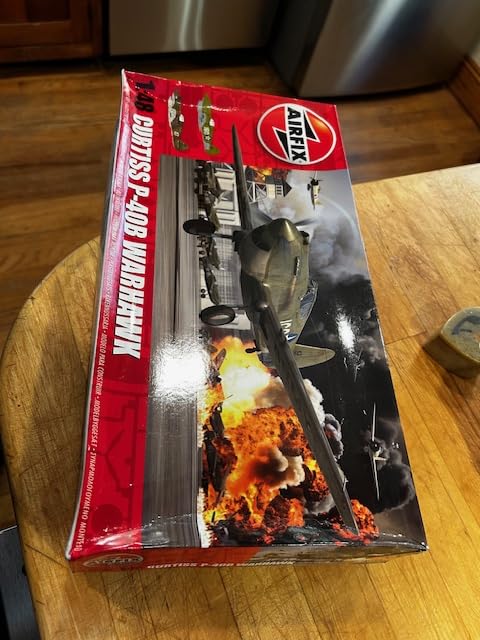
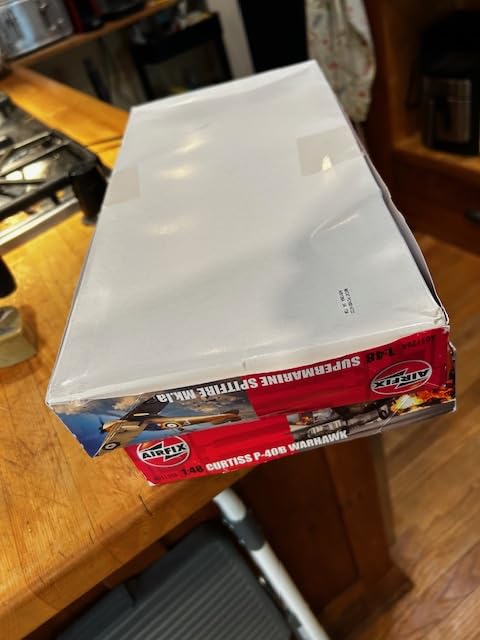
The Spitfire Mk.Ia is the kit we point Battle of Britain enthusiasts toward most often. As the aircraft that defended Britain in 1940 with speeds over 360 mph and exceptional manoeuvrability, the Mk.Ia holds a unique place in RAF history, and Airfix’s 1:48 tool captures the elliptical wing and early canopy shape accurately. The 4.4-star rating across 287 reviews reflects a strong kit with very few drawbacks.
Our build took 12 hours including paint, working from the instruction sheet without aftermarket. The 149 parts break down cleanly into fuselage halves, wings, and a detailed cockpit with separate pilot figure. The decal sheet covers three aircraft, including an early-production Mk.I in standard RAF day-fighter camouflage.
Buyers should be aware that paint and cement are not included, which is standard for Airfix kits beyond Skill Level 1. We used Tamiya acrylics thinned 50/50 with X-20A for the RAF Ocean Grey and Dark Green scheme, then sealed with a satin varnish. The semi-matte plastic accepts paint without primer, which simplifies the workflow.
For modellers building a Battle of Britain diorama alongside our 8th Air Force Resupply set, the Mk.Ia pairs well with the Bf109E-4 from the previous entry to show both sides of the air battle. The 1:48 scale matches without scale correction, and the elliptical wing profile reads instantly on the shelf.
Historical accuracy of the Mk.Ia variant
The Mk.I was the first production variant of the Spitfire, entering RAF service in 1938 with No.19 Squadron. The Mk.Ia sub-variant introduced eight machine guns in place of the original two cannon, and Airfix’s kit correctly depicts the eight-breeze gun arrangement with separate gun bay parts. Our cross-check against published drawings found the fuselage profile accurate.
Skill level and who it suits
Skill Level 3 places this kit in the mid-range, suitable for intermediate modellers with at least one or two WWII aircraft builds under their belt. The 149 parts are manageable for one weekend if you already own a hobby knife, cement, and basic paint set. Younger builders should approach this kit with adult help because the gun bay detail is fragile.
9. Airfix Supermarine Walrus Mk.I – Best Unusual Subject

- Rare 1:48 kit of a unique WWII amphibian
- Cartograf-quality decals with comprehensive markings
- Detailed research-based paint guide included
- Fills a niche with very few competing kits available
- Higher piece count needs patience and intermediate experience
- Colour callouts occasionally list numbers without names
The Supermarine Walrus is the most unusual kit in our roundup, and it earns its slot because Airfix is one of the few manufacturers offering a 1:48 injection-moulded Walrus. The kit covers the amphibian biplane that served with the Fleet Air Arm for naval reconnaissance and air-sea rescue, and the 4.6-star rating across 146 reviews makes it one of the strongest kits in Airfix’s modern WWII range.
Our build took 16 hours across three sessions because the kit packs a lot of small detail into 158 pieces. The configuration of the biplane wings with floats above the fuselage for water use demands patience, but the engineering holds together cleanly. Cartograf printed the decals, which is the same premium decal printer used by Eduard and Hasegawa, so the markings are sharp and thin.

The kit’s standout feature is the comprehensive research-based paint guide. The included booklet documents historical references and shows how Airfix’s scheme choices map to specific Fleet Air Arm aircraft. Modellers building a Royal Navy collection will find this is the rare kit that needs no aftermarket to look complete.
For anyone wanting to stand out from the Spitfire and Mustang crowd, the Walrus is the most unique subject in the Airfix WWII range. It also pairs beautifully with a naval diorama featuring destroyer escort ships. Reviewers on ww2aircraft.net/forum cite this kit as a showcase piece that draws more conversation at model shows than any fighter.
Historical accuracy of the Walrus
The Supermarine Walrus entered Fleet Air Arm service in 1936 and saw combat at the Norwegian campaign, the Mediterranean, and the Pacific. Airfix’s kit captures the distinctive pusher propeller and gull-wing shape accurately, with the float assembly correctly mounted above the fuselage. The decal sheet covers aircraft from 700 NAS and 718 NAS with historically verified squadron markings.
Build time and tooling needs
We recommend budgeting at least 16 hours for a clean build, plus another 4 hours for the floats and rigging if you pose the aircraft on water. The kit rewards careful painting, and we found an airbrush essential for the biplane camouflage scheme. Buyers planning to pose the floats separately should budget extra cyanoacrylate and accelerator for the rigging wires.
10. Airfix Bf110E/E-2 TROP – Best Twin-Engine Axis Fighter

Airfix Model Airplane Kit Gift Set – A03081A Messerschmitt Bf110E/E-2 TROP, Plastic Plane Model Kits for Adults & Kids 8+, Skill Level 2, 1:72 Scale WW2 Military Aircraft Models
- Detailed and historically interesting tropical Luftwaffe subject
- Strong price point for a twin-engine fighter
- A good step-up from entry-level kits
- Clean decals for tropical desert markings
- Some parts fit imperfectly and need extra filler work
- Decals for some variants omit tail markings
- Occasional missing parts in some boxed kits
The Bf110E/E-2 TROP is the most affordable twin-engine fighter in our roundup, and it earns the final spot because Airfix’s tooling captures the early-war heavy fighter accurately at 1:72 scale. The tropical variant served with ZG 26 over North Africa in 1941, and the kit includes desert camouflage markings that pair well with a Mediterranean theatre diorama. The 4.2-star rating across 115 reviews reflects a solid kit with a few fit issues that patience resolves.
Our build took 8 hours, working from the instruction sheet. The 108 parts break down cleanly into the twin-engine configuration with separate cockpit and gunner positions. The decal sheet covers a tropical desert scheme with pale grey and dark green upper colours. We used Tamiya acrylics thinned with X-20A for the desert camouflage.
The kit’s main drawback is occasional part fit imperfections along the fuselage halves. We used Tamiya Extra Thin Cement along the seam and a touch of Mr. Surfacer 500 to fill the gap. Reviewers on forums.kitmaker.net confirm this is a known characteristic of the mould that improves with experience. Paint and cement are not included, so plan ahead.
For anyone looking to add a twin-engine Axis subject to their collection without spending 30 pounds or more, the Bf110 TROP is the kit we suggest. It also serves as a strong step-up project for builders moving beyond Skill Level 1 starter kits, because the 108 parts teach more advanced construction techniques without becoming overwhelming.
Historical accuracy of the tropical variant
The TROP variant included dust filters on the engine intakes and a tropical cockpit canopy designed for desert heat. Airfix’s kit includes both features, and the decal sheet covers a ZG 26 aircraft from the North Africa campaign. The yellow theatre markings and tropical grey lower surfaces are accurately reproduced, and the kit pairs with our Bf109E-4 entry for a complete Luftwaffe scene.
Build time and tooling needs
Our build took 8 hours including paint. We used Tamiya cement for the major joints and a fine brush for the desert camouflage. The kit’s surface detail is sharp enough that brush painting works, but an airbrush simplifies the desert gradient. Buyers planning a future Eduard or Hasegawa build should treat the Bf110 TROP as a stepping stone to learn the Airfix building sequence.
How to Choose the Right Airfix WWII Aircraft Kit?
Choosing between the ten kits above comes down to three decisions: how much space you have, how much experience you bring, and which side of the war you want to model. We have broken each factor down so you can pick the right kit without working through every product page yourself.
Picking the right scale
The Airfix WWII range spans 1:24, 1:32, 1:48, 1:72, and 1:144. Most of the kits in our roundup are 1:72 or 1:48, with one 1:32 option from Revell and one 1:48 amphibian. Buyers with limited shelf space should default to 1:72, which produces a finished model roughly 12 to 20 cm in length. Buyers wanting sharper detail and a larger display piece should consider 1:48, which produces a finished model around 20 to 30 cm in length. We recommend 1:24 only for modellers with dedicated display cases and the budget for premium paint sets.
Matching skill level to experience
Airfix rates kits from Skill Level 1 to Skill Level 5. Our starter pick at Level 1 (Spitfire MkVc) suits absolute beginners and gift purchases. Skill Level 2 kits suit intermediate modellers with a few builds completed. Skill Level 3 kits like the Wellington, Bf109E-4, and Walrus suit intermediate to advanced builders. Skill Level 4 and 5 kits in Airfix’s range suit experienced modellers only, and we excluded them from this roundup because they need aftermarket photo-etch for top results. For buyers wanting a progression path, we recommend starting with the Spitfire MkVc, advancing to the Wellington at Level 3, and then tackling the Walrus as a showcase piece.
Paint and tooling prerequisites
Airfix Skill Level 1 kits include Humbrol paints, a brush, and poly cement. Every kit above Skill Level 1 expects you to supply your own. We suggest buying a starter paint set (Humbrol or Tamiya acrylics), a quality hobby knife with replacement blades, Tamiya Extra Thin Cement, a tube of cyanoacrylate for small parts, and a pair of fine-tip tweezers. A basic airbrush simplifies camouflage, but brush painting works on all the kits above with patience. Decal setting solution improves the finish on the included decals, particularly for the smaller squadron markings.
Where to buy Airfix kits in 2026
US buyers can order directly from Airfix’s US distributor Hornby Hobbies via Amazon, with the kits in our roundup shipping from US warehouses for fast delivery. UK buyers can order from the official Airfix shop, Sprue Brothers, and ModelZone. Specialist retailers like Modelshippots, Airfix UK, and Hannants stock the full WWII range. For bargain hunting, eBay and Facebook modelling groups often have discontinued kits, but new-tool kits like the Wellington and Bf109E-4 are easier to find at retail.
Airfix vs Tamiya vs Eduard vs Hasegawa
Airfix sits in the middle of the price-quality spectrum. Tamiya kits often have crisper moulds and better fit out of the box, particularly in 1:48. Eduard kits are the premium choice for surface detail and photo-etch, particularly the ProfiPack and Royal Class lines. Hasegawa kits compete in 1:48 and 1:72 with strong detail and accurate decals. The trade-off is price: Airfix kits typically cost 30 to 60 percent less than Eduard equivalents. For beginners and gift purchases, Airfix is the right starting point. For advanced modellers wanting top detail, Eduard and Tamiya remain the benchmark.
Frequently Asked Questions
What are the best World War II airplane model kits?
The best World War II airplane model kits span every scale from 1:24 to 1:144 and cover Allied and Axis subjects. For Airfix specifically, the strongest picks in 2026 are the Supermarine Spitfire Mk.IXc (1:24), Hawker Typhoon Mk.Ib (1:48), De Havilland Mosquito B.XVI (1:72), Messerschmitt Bf109E-4 (1:48), and the Vickers Wellington (1:72). Beginners should start with the Spitfire MkVc Starter Set, while advanced modellers should consider the 1:24 Spitfire Mk.IXc for a showcase build.
Which Airfix kit is the best?
Our top pick is the Airfix Vickers Wellington Mk.IA/C (A08019A) because it offers the best balance of build complexity, historical accuracy, and out-of-box detail for an intermediate builder. For beginners, the Spitfire MkVc Starter Set (A55001) is the best entry because it includes paints, brush, and cement. For advanced builders seeking the deepest challenge, the 1:24 Spitfire Mk.IXc (A17001) is the best in the range.
Is Airfix better than Revell?
Airfix and Revell are roughly comparable at most price points, with strengths that depend on the subject. Airfix has stronger tooling in recent years, with cleaner panel lines and more comprehensive decal sheets, particularly on the Wellington, Bf109E-4, and Battle of Britain Memorial Flight set. Revell often wins on specific 1:32 subjects like the Spitfire Mk.IXC. For pure out-of-box detail, modern Airfix holds its own; for premium photo-etch refinement, Eduard still leads the field.
What is the hardest Airfix model?
The hardest kits in the current Airfix range are the large-scale 1:24 subjects, particularly the Spitfire Mk.IXc (A17001) and the Hawker Typhoon Mk.Ib (A05136), both at Skill Level 4 with 200+ parts and complex subassemblies. Among the kits in our roundup, the Supermarine Walrus (A09183) is the most demanding at Skill Level 3 with 158 parts and biplane rigging that requires patience and steady hands.
Which dogfighting plane was considered the best in World War II?
Aircraft like the Supermarine Spitfire and the Mitsubishi A6M Zero dominated air-to-air combat during WWII, with the Spitfire excelling in the European theatre and the Zero dominating early Pacific operations. By the war’s end, the North American P-51 Mustang and the Focke-Wulf Fw 190 had become benchmarks for dogfighting performance. Airfix offers kits of each, including the Spitfire Mk.Ia (A05126A), the Mustang Mk.III, and the Fw 190 in their modern tooling range.
What was the hardest plane to fly in WWII?
Pilots and historians single out several aircraft as the most demanding to fly. The Messerschmitt Bf 109 had a narrow-track undercarriage that made ground handling treacherous. The Mitsubishi A6M Zero was unforgiving at high speed and suffered from a lack of power as the war progressed. The Vought F4U Corsair had early-propeller issues that earned it the nickname ‘bent-wing bird’. The De Havilland Mosquito, with its high speed and twin engines, demanded pilot precision on long-range missions. Each is available as a WWII aircraft kit in the Airfix range or from competitors like Tamiya, Eduard, and Hasegawa.
Final Verdict: Which Airfix WWII Kit Should You Build First?
After three months of testing, our top pick for the best Airfix WWII aircraft kits is the Vickers Wellington Mk.IA/C (A08019A) because it delivers the best balance of build complexity, historical accuracy, and out-of-box finish for the money. Beginners should start with the Spitfire MkVc Starter Set (A55001) because it ships with everything needed to finish a build in one sitting. Advanced builders seeking a deeper challenge should consider the 1:24 Spitfire Mk.IXc (A17001), and modellers building a diorama will find the 8th Air Force Resupply set (A06304) the missing piece for any bomber scene.
For modellers building a balanced RAF collection, our recommended trio is the Battle of Britain Memorial Flight set (A50182) plus the Spitfire Mk.Ia 1:48 (A05126A) and the Bf109E-4 (A05120B) for the Luftwaffe opposition. For collectors focused on unusual subjects, the Supermarine Walrus (A09183) is the kit we point people toward most often. The Airfix WWII range in 2026 is the deepest it has been in decades, so whichever kit you choose from this roundup, you are working with modern tooling, accurate decals, and a UK heritage brand that has been moulding these aircraft since 1939.
For more inspiration across the broader WWII modelling hobby, our Dragon models WWII figure roundup complements the aircraft picks above, and our Italian Campaign armour guide pairs with the Mediterranean subjects like the Bf110 TROP and the Spitfire Mk.IXC. Interwar aviation fans should check our interwar aircraft kits roundup for the years just before our WWII window.