
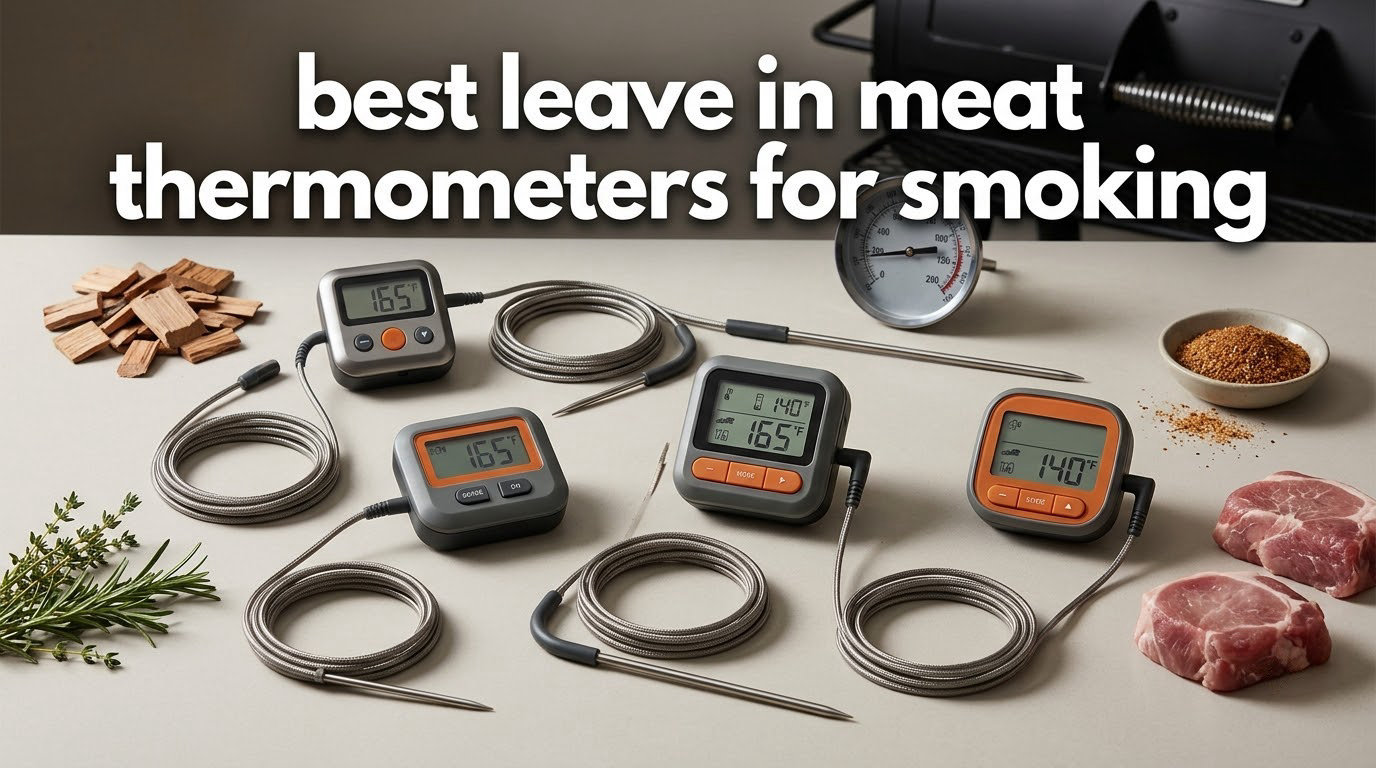
A leave-in meat thermometer is a probe with a heat-resistant cable that stays inserted in the meat for the entire cook, so you can follow a 12 to 18 hour smoke from inside the house without cracking the lid. That matters because built-in smoker gauges drift, and every lid opening costs you heat and smoke you have to earn back.
Smoking is the one cooking method where a leave-in thermometer is close to mandatory rather than optional. A three-hour roast can be run on time and a guess. An overnight brisket cannot, because the internal temperature climb is almost flat for the first half of the cook and then runs fast. The best leave in meat thermometers for smoking solve one problem: showing you where the meat actually is, minute by minute, while the chamber temperature holds steady.
Our selection rule for this roundup is narrow on purpose. Every pick below keeps a probe in the meat for the whole cook. Instant-read pens and infrared guns are excluded, and we treat them only as the backup tool most pitmasters pair with a leave-in unit. If you want the short list instead, our wireless thermometer guide covers signal types in more depth. This list was last checked in 2026.
Table of Contents
Top 3 Best Leave In Meat Thermometers For Smoking (October 2026)
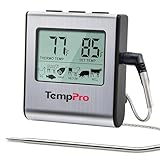
TempPro TempTrack TP-16
- 6.5 inch stainless probe
- 40 inch cable
- USDA preset cook mode
- Timer and alarm to 99 hours 59 minutes

TempPro TempSync 500FT TP20B
- 500 ft RF wireless
- No app required
- Dual probes for meat and ambient
- Backlit receiver with timer

Govee Bluetooth H5055
- About 230 ft Bluetooth range
- App alerts and USDA presets
- Plus or minus 1.8 F accuracy
- IPX7 waterproof probe
All 10 Leave In Picks at a Glance
Ten thermometers, ten different answers to the same problem. Two of them are analog dials, two are app-driven wireless systems, and the rest split between wired displays and radio-frequency links. The table below is the fastest way to see where each one lands.
| Product | Specifications | Action |
|---|---|---|
| TempPro TempTrack TP-16 |
|
Check Latest Price |
| TempPro TempSync 500FT TP20B |
|
Check Latest Price |
| Govee Bluetooth H5055 |
|
Check Latest Price |
 TempPro TempSync 1000FT TP829 TempPro TempSync 1000FT TP829 |
|
Check Latest Price |
 Escali AH1 Analog Escali AH1 Analog |
|
Check Latest Price |
 CHEF iQ Sense Gen3 CHEF iQ Sense Gen3 |
|
Check Latest Price |
 ThermoMaven G2 ThermoMaven G2 |
|
Check Latest Price |
 ThermoMaven Smart WiFi WT02 ThermoMaven Smart WiFi WT02 |
|
Check Latest Price |
 OXO Chef’s Precision Digital OXO Chef’s Precision Digital |
|
Check Latest Price |
 OXO Chef’s Precision Analog OXO Chef’s Precision Analog |
|
Check Latest Price |
1. TempPro TempTrack TP-16 – Best Overall, the Wired Workhorse
TempPro TempTrack Large LCD Digital Meat Thermometer for Cooking, Smoking
- 40 inch cable keeps the display well away from the cooker
- Probe and wire rated to 716 F for smoker heat
- USDA preset cook mode with resettable targets
- Timer and alarm run to 99 hours 59 minutes
- Magnetic back hanging hole and tabletop stand
- Single probe only so no ambient reading alongside the meat
- Wired design keeps the display within reach of the cooker
- 1 degree resolution is coarser than smart probes
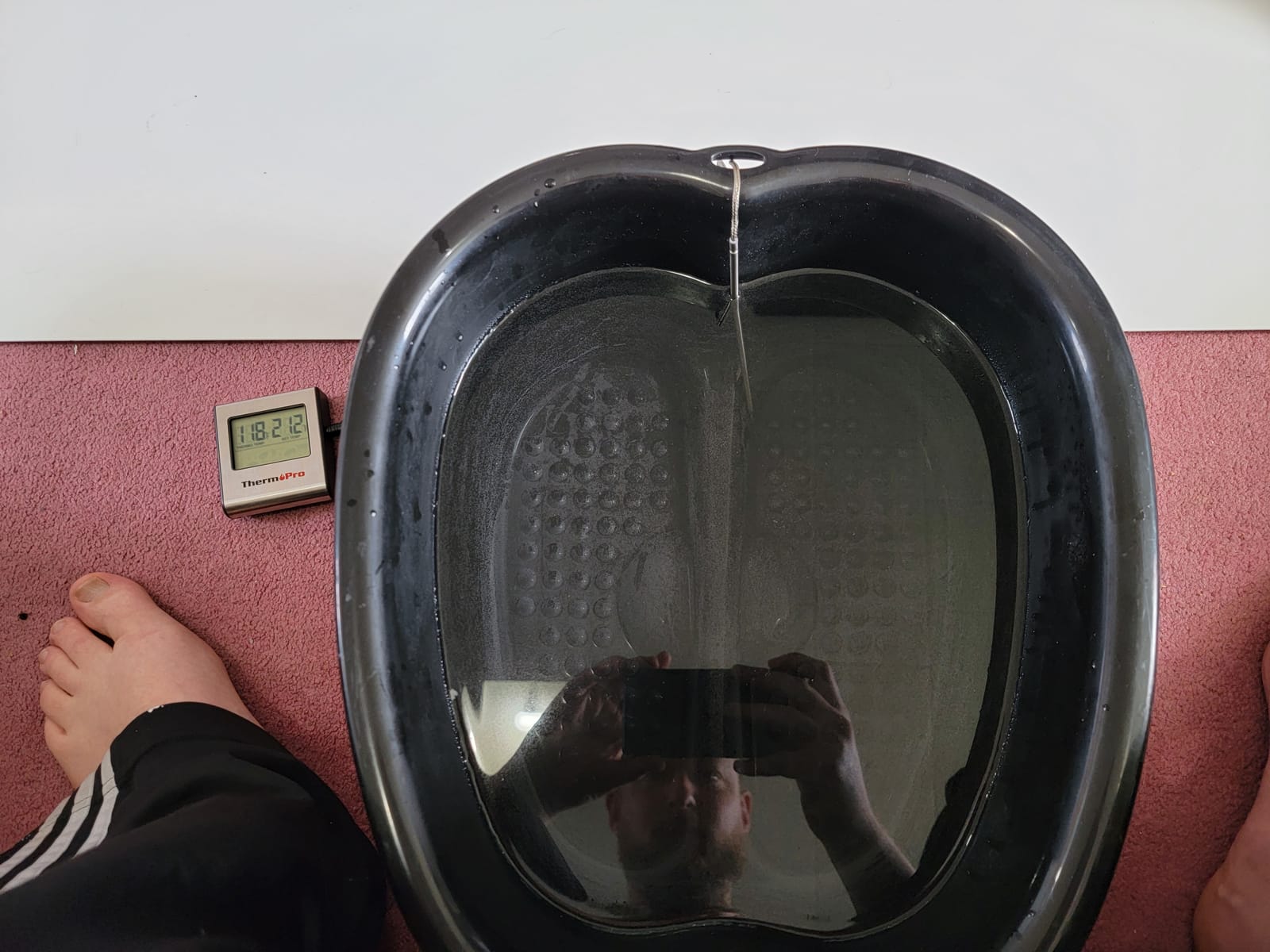
Our team has run more overnight smokes on this TempPro TempTrack than any other wired leave-in we own. It is the model we hand to anyone who wants a set-and-forget tool that keeps working after year three, and it has the review count to back that up with more than 50,000 ratings.
The physical design is the whole argument. That 40 inch stainless steel mesh cable is long enough to run the probe into a smoker and still have the display sitting comfortably on a shelf, and the probe and wire are rated to 716 F. That rating gives you real headroom for reverse-searing or finishing work right after the smoke, which most leave-in probes cannot do.
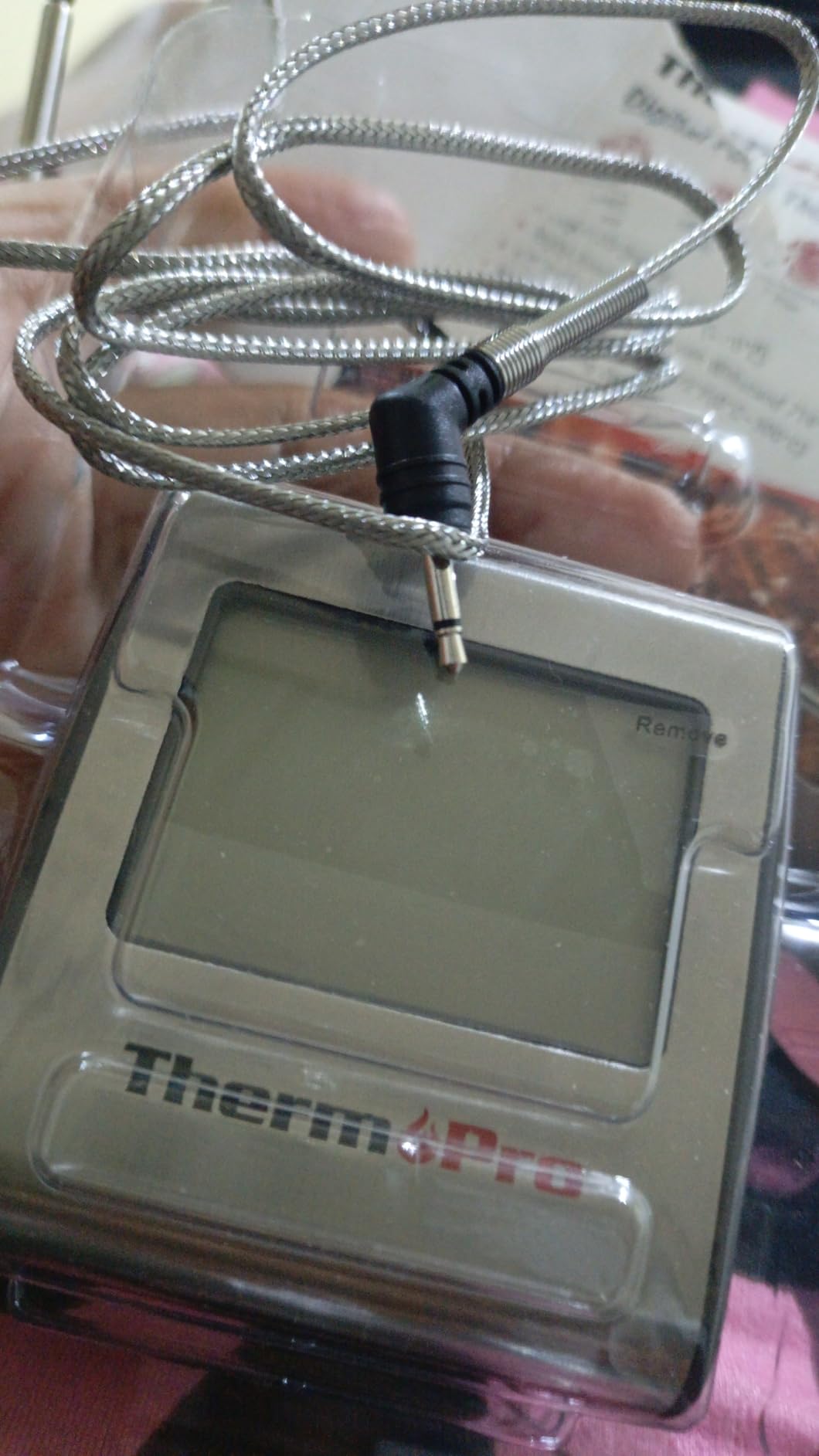
The cook mode loads USDA preset temperatures across the common meats, and every preset can be reset to your own target, which matters for competition-style brisket where the pull window is narrow. The timer runs to 99 hours 59 minutes, so an eighteen-hour cook and the rest afterward all happen on the same clock without any reprogramming.
Storage details are unusually thoughtful for a wired unit. The magnetic back, hanging hole and folding tabletop stand all live on the same body, so you can mount it on the side of a cabinet or a fridge and it stays put for the next cook.
When this probe is the right call?
This is the pick when you smoke on a covered cooker, stay within earshot of it, and want to stop thinking about your gear. The long cable removes the “where do I put the box” problem that trips people up with shorter wired probes, and the single large LCD is readable from across a deck.
It is also the honest budget entry point in this list. Nothing about it is cutting edge, and that is exactly the point. It is a probe, a cable, a timer and an alarm, and every one of those parts is replaceable or irrelevant to accuracy.
Where it falls short?
One probe is one probe. You cannot watch a chamber temperature and a brisket at the same time, and on a two-meat cook you are guessing at the second piece. If you routinely run ribs alongside a brisket, look at a dual- or four-probe model instead.
The 1 degree resolution also means it will not show you a 0.5 degree difference between two readings. For pulling a brisket that is noise you do not need, but it does mean this is not a precision instrument.
2. TempPro TempSync 500FT TP20B – Best Value Dual-Probe Wireless
- 500 ft RF range holds through walls on long cooks
- No app account or phone required
- Dual probes track meat and ambient at once
- Backlit receiver shows both readings and a timer
- USDA presets for 10 meat types with resettable targets
- No low-battery warning has cost owners a long overnight cook
- Probes can read a few degrees apart in the same spot
- Probes plug into one side of the transmitter only
- Transmitter is powered down by removing batteries
The TempSync 500FT is the unit we reach for when a friend asks for one thermometer that does everything without an app. It runs on radio frequency rather than Bluetooth, and that single engineering choice removes almost every complaint we hear about app-based leave-in probes.
Setup takes about a minute. You put batteries in the transmitter, clip the receiver to your apron or a shelf, and turn it on. There is no account to create, no phone pairing, and nothing to update, which means a dead phone battery does not end your monitoring.
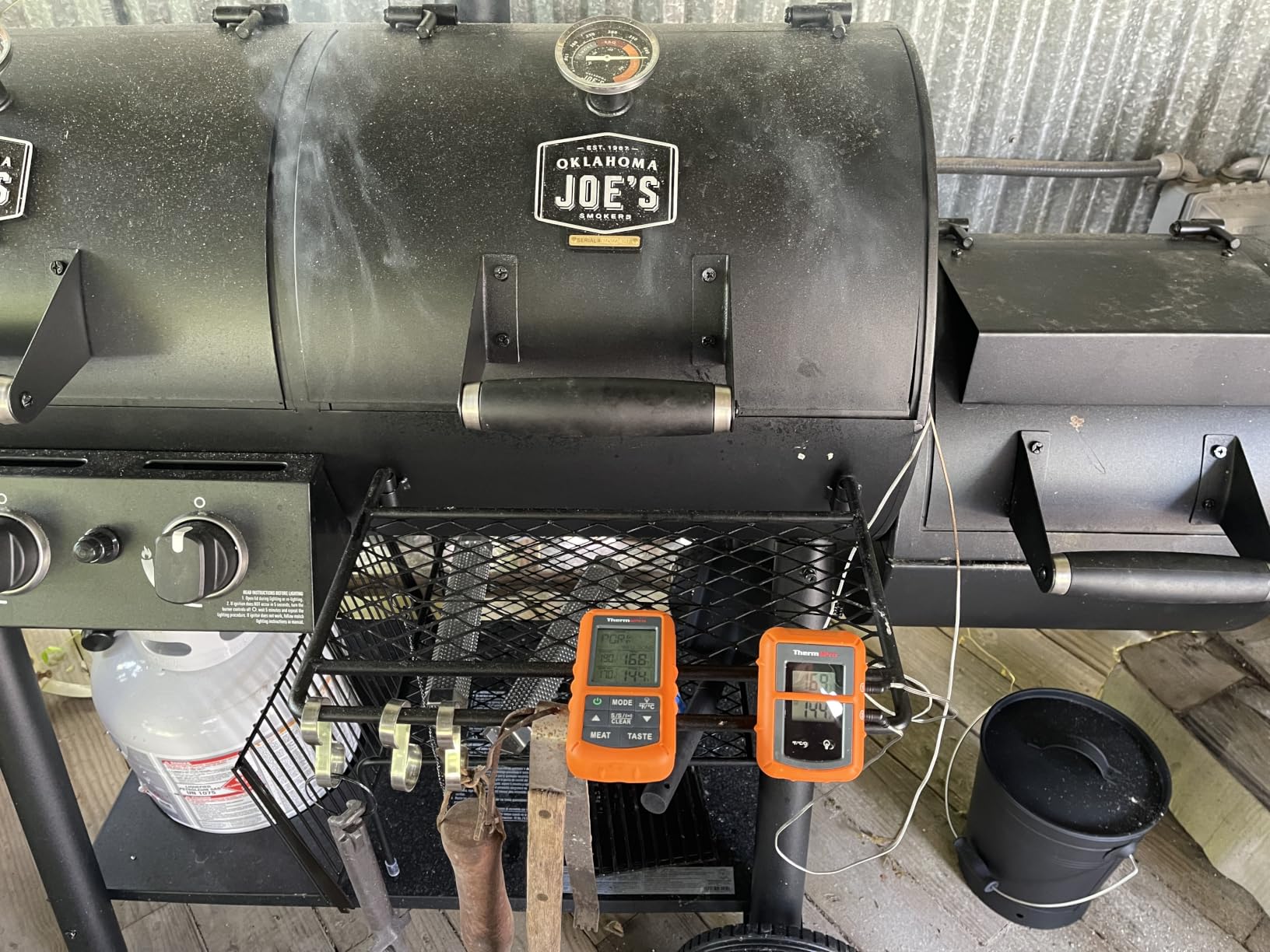
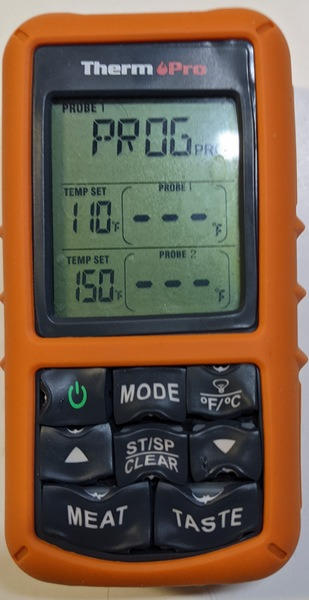
The two probes are the reason most people buy it. One goes in the meat, one reads the chamber, and the backlit receiver displays both at once with a running timer. USDA-recommended presets cover ten meat types and the target on each is resettable, so a low-and-slow shoulder target is a two-press change rather than a mental calculation.
Reviewers who have owned this for five-plus years describe it as a deliberate replacement for app-based grill probes that lost support or stopped pushing notifications. That reliability story is the main reason it carries more than 32,000 reviews at 4.6 stars.
Check this before you buy
The absence of a low-battery indicator is a real gap, and owners report learning about it the hard way, at hour nine of an overnight cook. Treat the batteries as consumables and swap them at the start of every long smoke rather than trusting the readout.
Probes that sit in the same thick part of meat can disagree by a couple of degrees, which is normal sensor variation rather than a fault. If you need a tiebreaker at the end, that is what a instant-read thermometer is for.
Where it works hardest?
This is our pick for a first serious smoker, a backyard offset, or a competition cook where the pit sits far from the cooker. Dual probes plus a 500 foot radio link covers the two things a single wired probe cannot: chamber monitoring and distance.
Because it never touches a phone, it is also the safest pick for anyone who cooks outdoors on a schedule where signal and battery are unreliable.
3. Govee Bluetooth H5055 – Best Budget App-Connected Pick
Govee Bluetooth Meat Thermometer Digital with Smart App Timer and Alerts
- Bluetooth range reaches far enough to watch a smoker from across the yard
- App shows USDA temperatures and sends range alerts
- Owners comparing against other probes report matching readings
- Backlit display with magnet stand and hanging hook
- IPX7 waterproof probe wipes clean easily
- Push notifications often only appear after opening and refreshing the app
- Stated range is optimistic once walls and distance are involved
- No calibration option on the unit
- Probe jacks are not cross-compatible with other brands
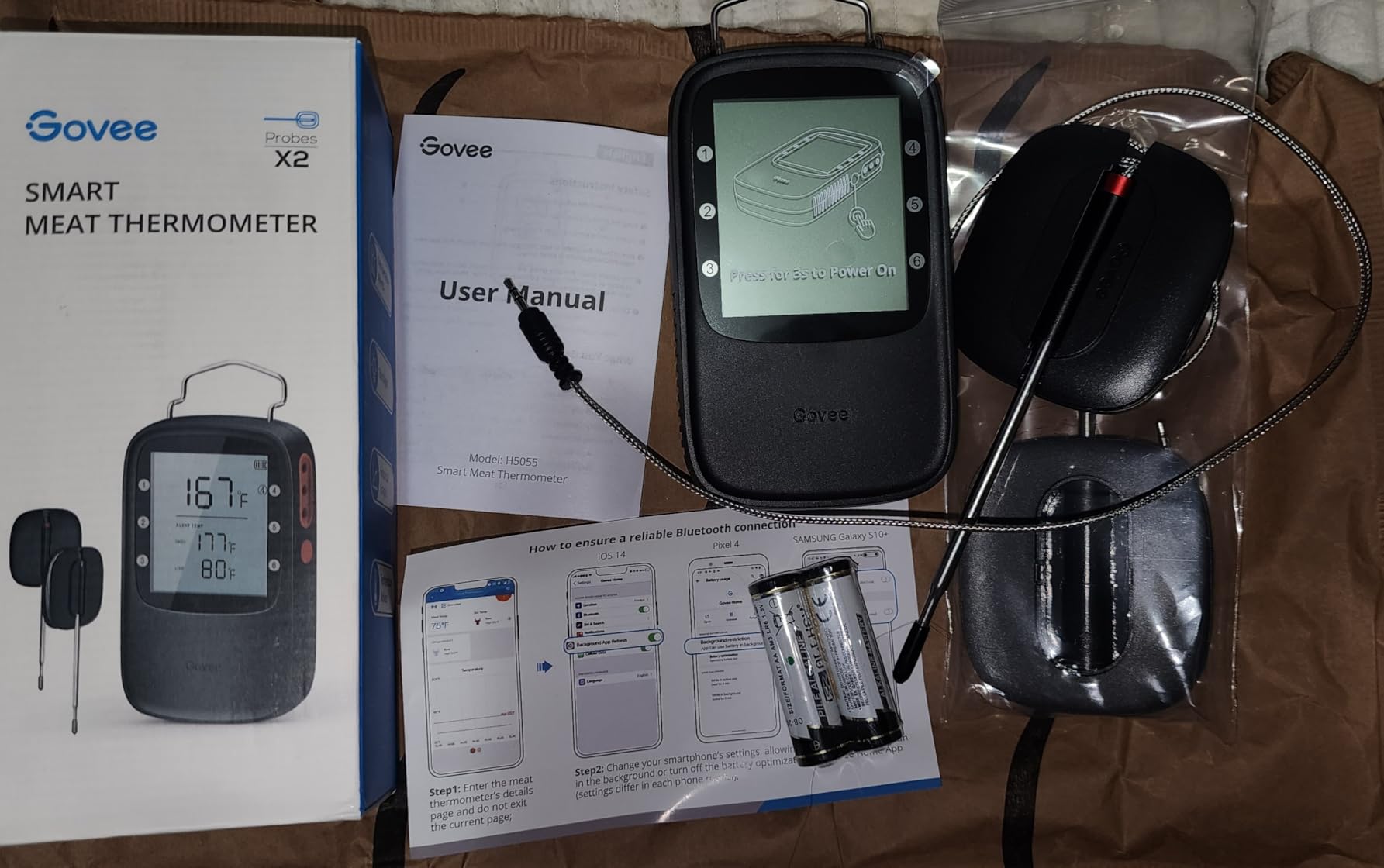
The Govee H5055 is the cheapest way into app-based monitoring, and for a smoker within about 70 meters of your phone it does the job cleanly. The probe is a 304 stainless steel unit rated IPX7 waterproof on a 40 inch cable, so cleaning it after a fatty brisket is a non-event.
Accuracy is specified at plus or minus 1.8 F, and owners who test against other probes during smoking report that the readings track closely. That is a wider tolerance than the premium units below, but on a pull temperature of 195 to 205 F it is not the difference between a good brisket and a dry one.
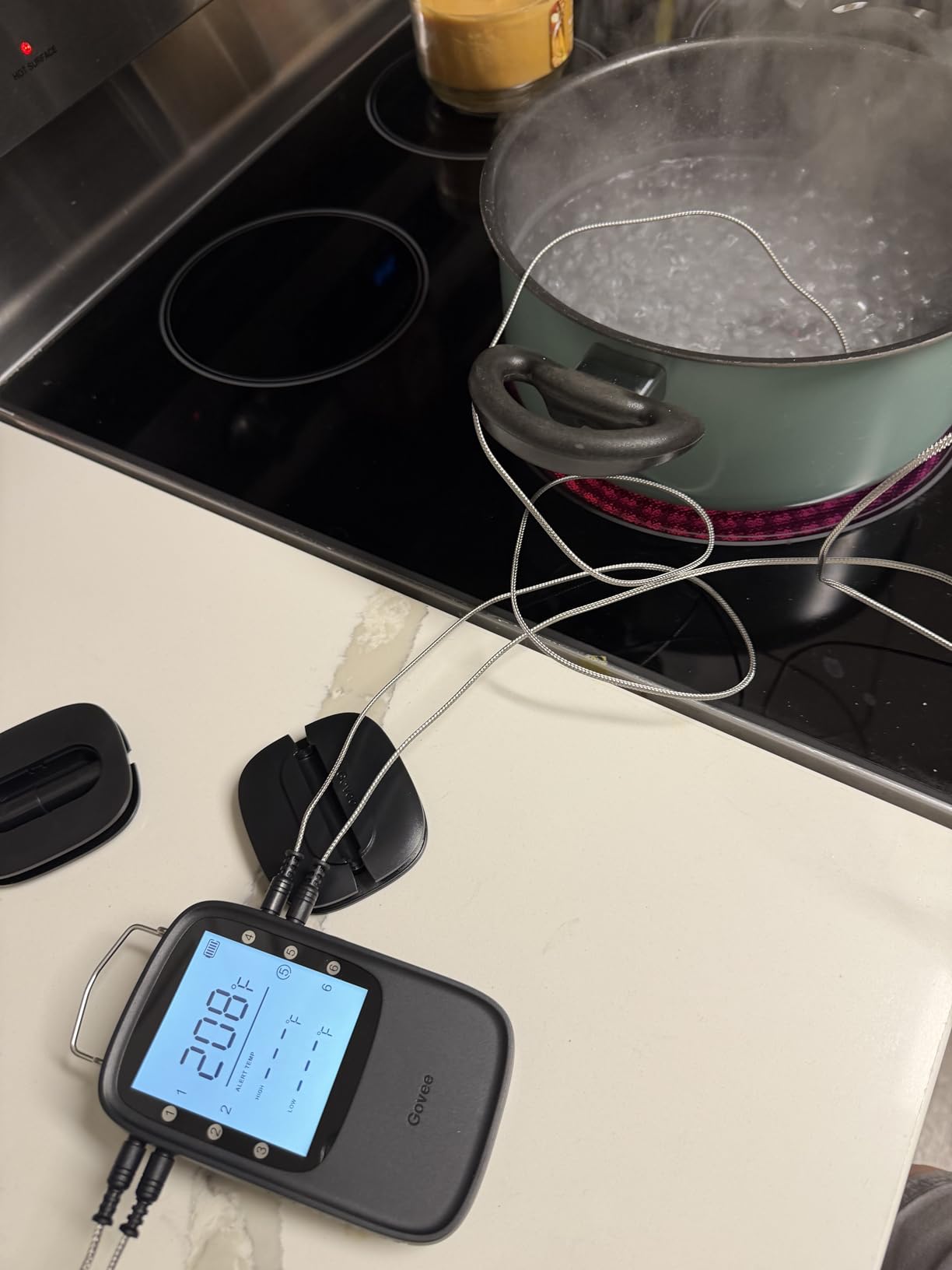
The app adds genuine value in one specific way: it fires an alert when the probe moves outside your target range, which lets you stop refreshing the screen every ten minutes while the internal temp is still climbing. USDA-recommended temperature presets are built in, so a new cook can set a target without looking anything up.
Two AA batteries power it and the stated battery life is around 200 hours, which comfortably covers several long cooks before you think about it.
Judge it on range realistically
The roughly 230 foot Bluetooth figure is a best case. Walls, a metal smoker body and distance all cut into it, and reviewers are blunt that the effective signal in a real yard is shorter. If your smoker sits close to the house, this is fine. If it sits at the far end of the property, plan on walking over.
The notification delays are the other recurring gripe. Alerts often show up only after you open the app, so treat the push alert as a backup to a glance at the screen rather than a genuine alarm.
Where it is the wrong pick?
Bluetooth is simply less dependable than the radio-frequency links on picks 2 and 4, and less dependable again than the sub-1G system on pick 7. If your cook is long and you want a genuine beep the moment you hit target, choose an RF model or a wired alarm instead.
There is also no way to correct the reading on the unit if you discover a bias later, and the probe connectors are proprietary to this model.
4. TempPro TempSync 1000FT TP829 – Best for Multi-Probe Competition Cooks
TempPro TempSync 1000FT Wireless Meat Thermometer for Grilling and Smoking
- 1000 ft RF range stays connected where Bluetooth units drop out
- Four color-coded probes watch multiple cuts and the chamber at once
- Independent high and low alarms per channel simplify rest timing
- No app account or phone needed and batteries are user replaceable
- NSF certified and probe agreement within 1 to 2 F in user tests
- No temperature graphing or trend history
- Probe wires kink with repeated coiling
- Some owners report probes failing or drifting after months of use
- Probe tips are limited to 572 F so they cannot stay in an empty hot chamber
Four probes is the number that changes how you cook. On this TempSync TP829, one channel can hold the brisket, one the chamber, one the ribs and one the pork butt, each with its own target and its own alarm, all on one backlit display.
The signal is radio frequency rather than Bluetooth, and at a stated 1,000 feet it reaches further than any other app-free model in this roundup. Owners report the link stays put in situations where a Bluetooth unit on the same smoker drops out repeatedly, which is exactly the failure mode that ruins a competition cook.
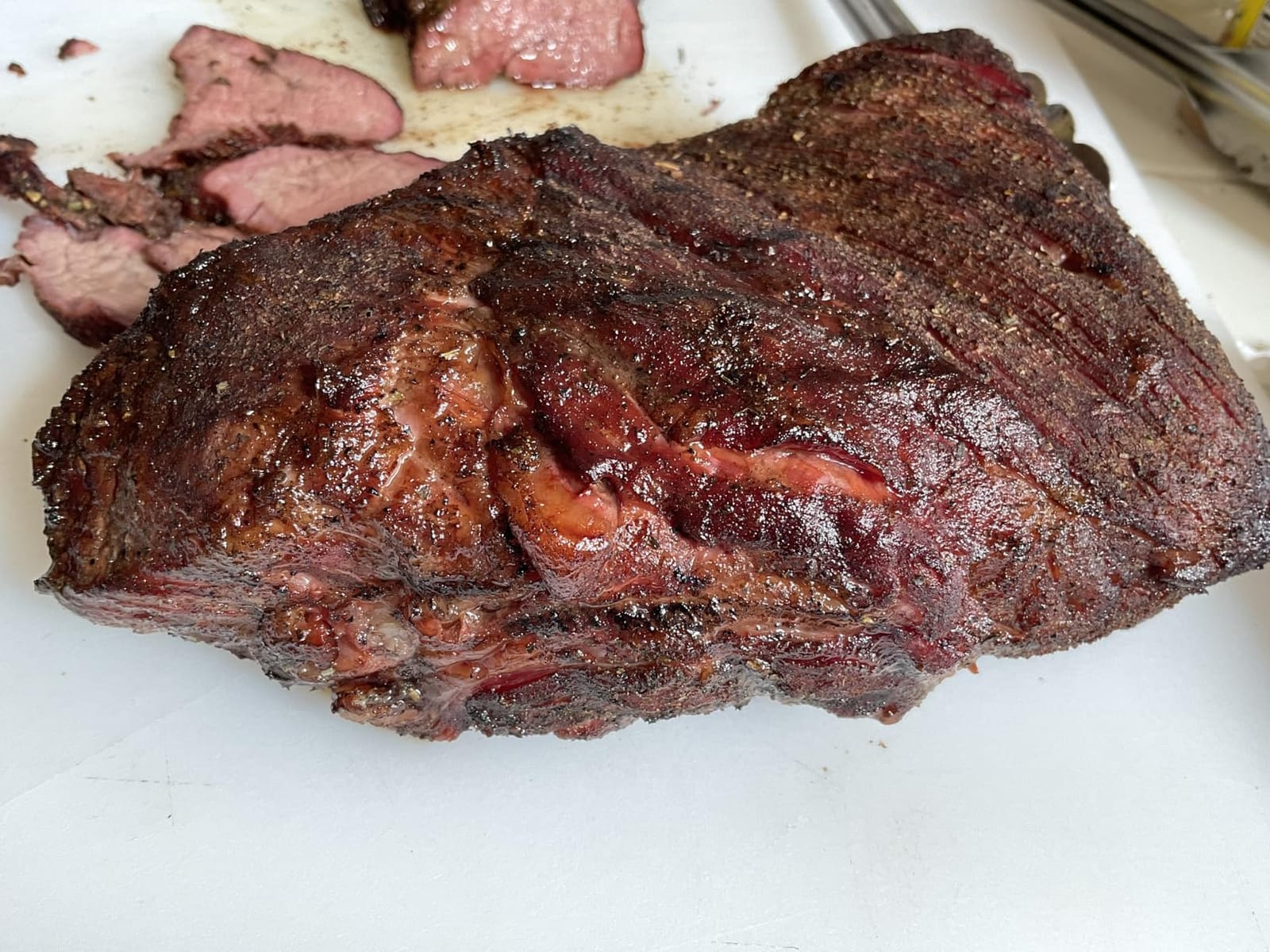
Testing is where this one earns its rating. Users who ran ice-bath and boiling-water checks report the four probes agreeing within 1 to 2 F of each other, and the 0.1 degree resolution on the display gives you more digits than most of this list can show. Ten USDA-recommended presets with multiple doneness levels are stored on the device, not in an app.
It also runs on four replaceable AAA batteries rather than a sealed rechargeable pack, so a dead set mid-cook is a two-minute fix instead of an overnight loss.
Plan your probe layout first
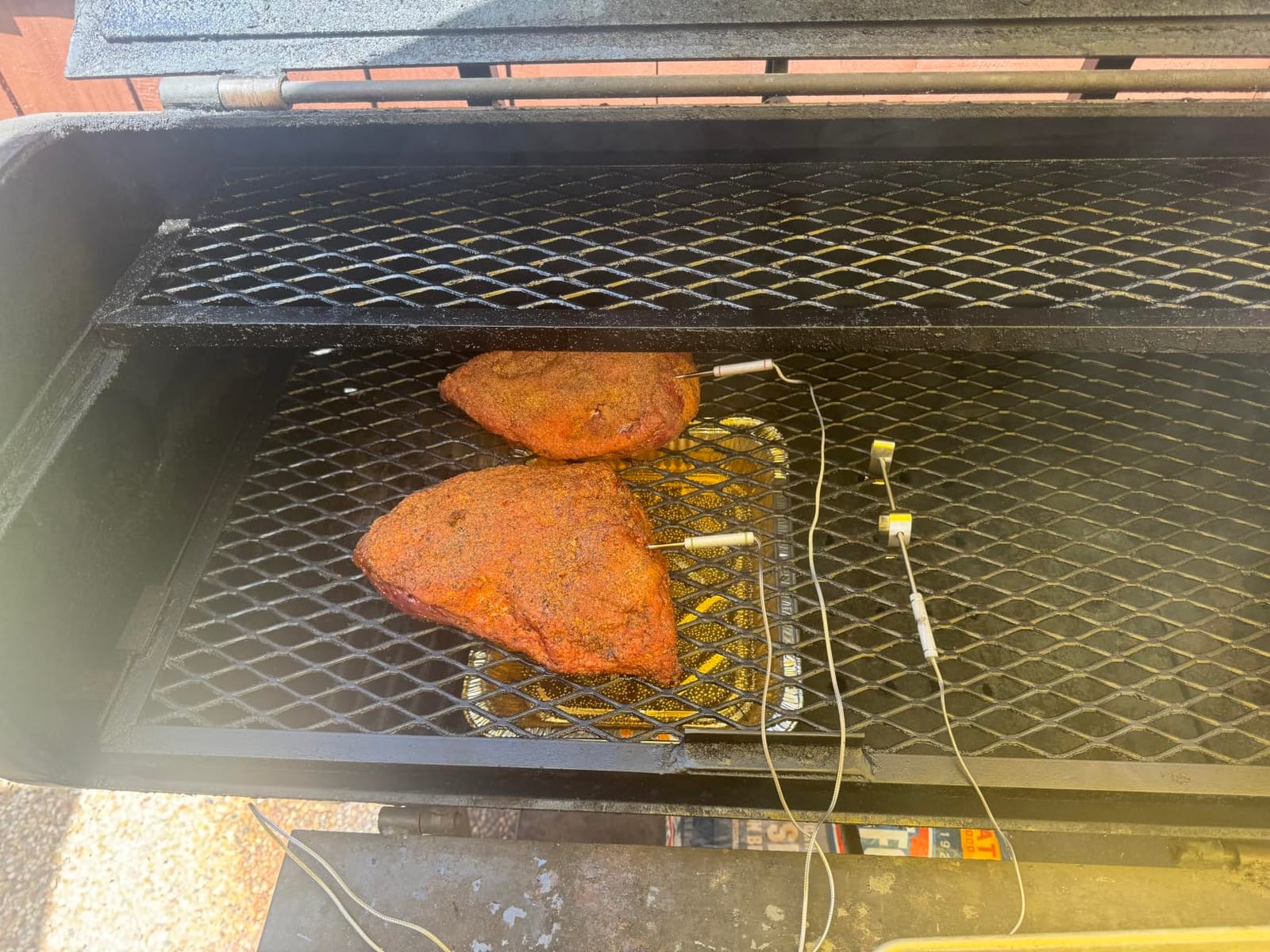
Four channels only help if you place them well. A brisket takes two useful positions, the chamber reads best at grate level away from the firebox, and that leaves two for anything else on the grate. Write the plan down before you light the burner, because swapping probes mid-cook costs you ten minutes of heat and a lot of swearing.
Per-channel high and low alarms are what make rest timing manageable. Set the low alarm for your pull temperature and the high alarm for your hold target, and you can leave the cooker alone.
Know the failure modes
Probe wire durability is the most common complaint across this whole category, and it applies here. The wires kink if you coil them tightly after every cook, and a kinked cable is where insulation eventually fails. Coil loosely, or wind them around a wide object the way you would a garden hose.
The 572 F tip ceiling also means these probes should not be left sitting in an empty chamber while you preheat. That is a real limit for anyone doing reverse-sear finishing on the same unit.
5. Escali AH1 – Best Analog Dial When You Want No Electronics
- Oven and grill safe so it stays in the meat throughout the cook
- Large dial prints target temperatures so no chart is needed
- Nothing to charge pair or update
- Dishwasher safe stainless steel body
- Easy add-on or backup probe for a second cut
- No timer alarm or remote monitoring so someone must stay near the cooker
- Narrow 140 to 220 F range limits brining and low-temp work
- Analog dial is harder to read precisely than a digital display
- Not usable for high-heat finishing above its rated range
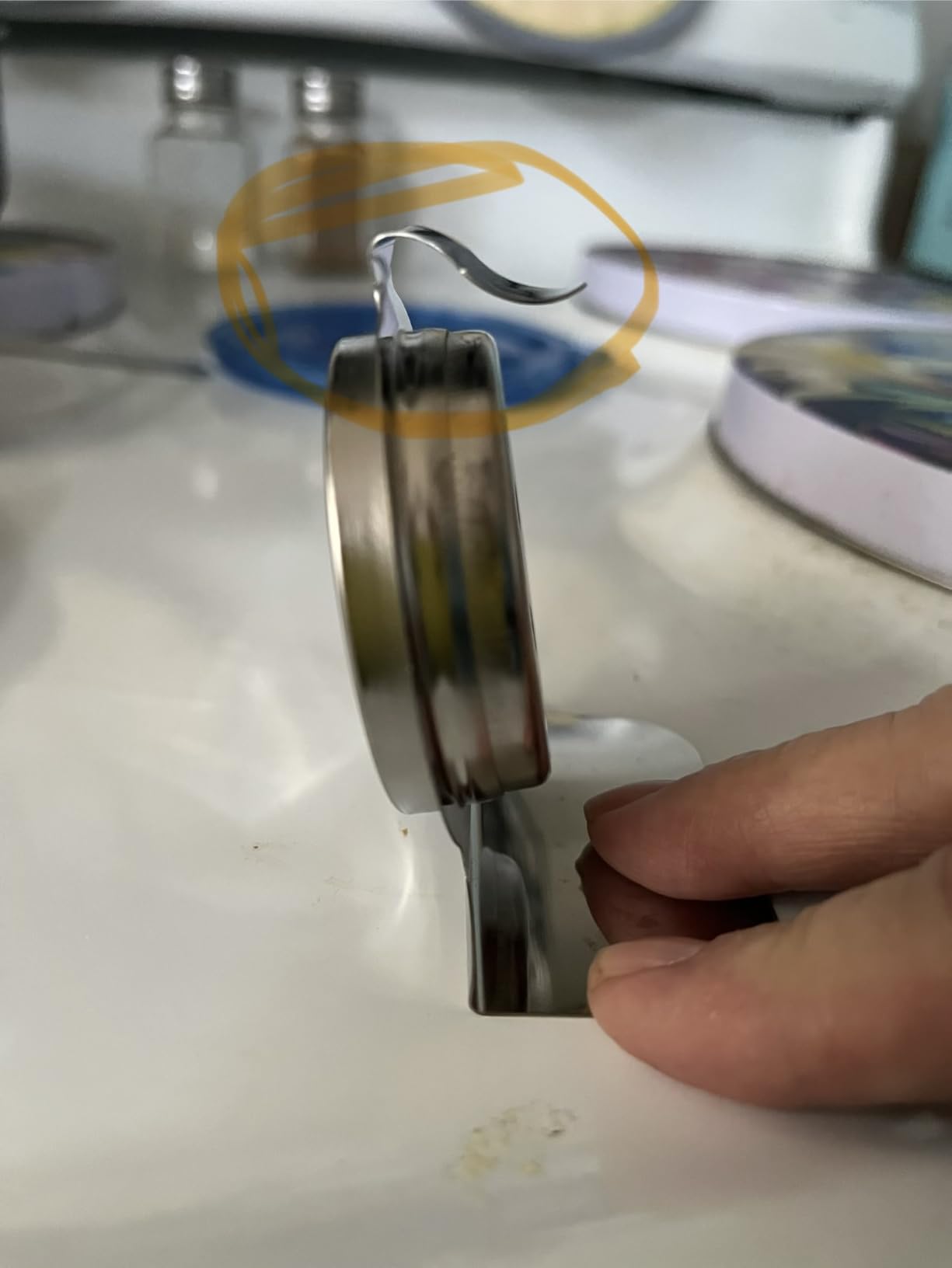
The Escali AH1 exists because the most common way a smart probe fails is software. When an app stops sending notifications or a company drops support, the cure is a probe with nothing to drop. This is that probe, and it has been the same stainless dial for years.
The face is printed with target internal cooking temperatures for beef, poultry, pork, veal and lamb, so you read the meat against the dial without memorizing a table or unlocking a phone. The 4.75 inch probe reaches into a brisket flat or a pork shoulder without ceremony, and the whole thing is oven and dishwasher safe.

What makes it useful in a smoking context is that it is genuinely set-and-forget. There is no battery to change, no pairing to redo, and no firmware to chase. Owners describe it as the tool they use to double-check a second cut while the main probe watches the brisket.
It also carries a two-year warranty on product and parts, which is longer than most electronics in this category offer.
Where an analog dial still wins?
Two situations. The first is a second cut that needs a number without a second network device, like a rack of ribs finishing alongside a brisket. The second is any cook where the person on duty is staying at the smoker anyway and simply wants a number at a glance.
It is also a good teaching tool for a new cook, because the printed targets remove the guesswork from doneness while they are still learning what 165 F actually feels like.
Limits you should know before buying
There is no alarm, no timer and no remote readout, so it does exactly one thing and requires you to be standing there. That is the deal, and for a long overnight cook it is the wrong deal unless someone else is watching.
The 140 to 220 F window is narrow. It covers smoking and roasting well, but it is not a tool for brining temperatures, low-and-slow sous vide work, or a hot sear afterward.
6. CHEF iQ Sense Gen3 – Best Fully Wireless Design
CHEF iQ Sense | Smart Wireless Meat Thermometer | 2 Ultra-Thin Probes | WiFi Unlimited Range | 1000°F Heat Safe | 5 Sensors | BBQ, Grill, Oven, Smoker, Air Fryer | Gen3
- No cable run from the meat to a hub
- which removes the most hated part of wired leave-in systems
- Hub acts as charger storage case and audible alert device in one
- App tracks internal and ambient temperature and predicts finish and rest times
- Gen3 probes handle high-heat grilling without earlier overheating errors
- Dishwasher-safe color-coded probes simplify multi-protein cooks
- A mandatory CHEF iQ account and app setup are required before it functions
- Hub insists on connecting to WiFi and warns features are limited without it
- Occasional connection dropouts though they usually reconnect quickly
- Some owners report individual probes failing after light oven use
The entire premise here is the cable. There is no wire running from your brisket to a transmitter box, which means nothing to pinch, melt near the firebox, or route carefully through a lid gasket. The probes are ultra-thin, fully wireless sticks and the hub sits inside with you.
Each probe carries five sensors, four internal plus one ambient, so a single probe can tell you the difference between your chamber and the meat it is buried in. The Gen3 generation also fixed the overheating complaints of earlier versions, and the probes are rated to 1000 F of ambient heat with a stated battery life of roughly 40 hours per charge.
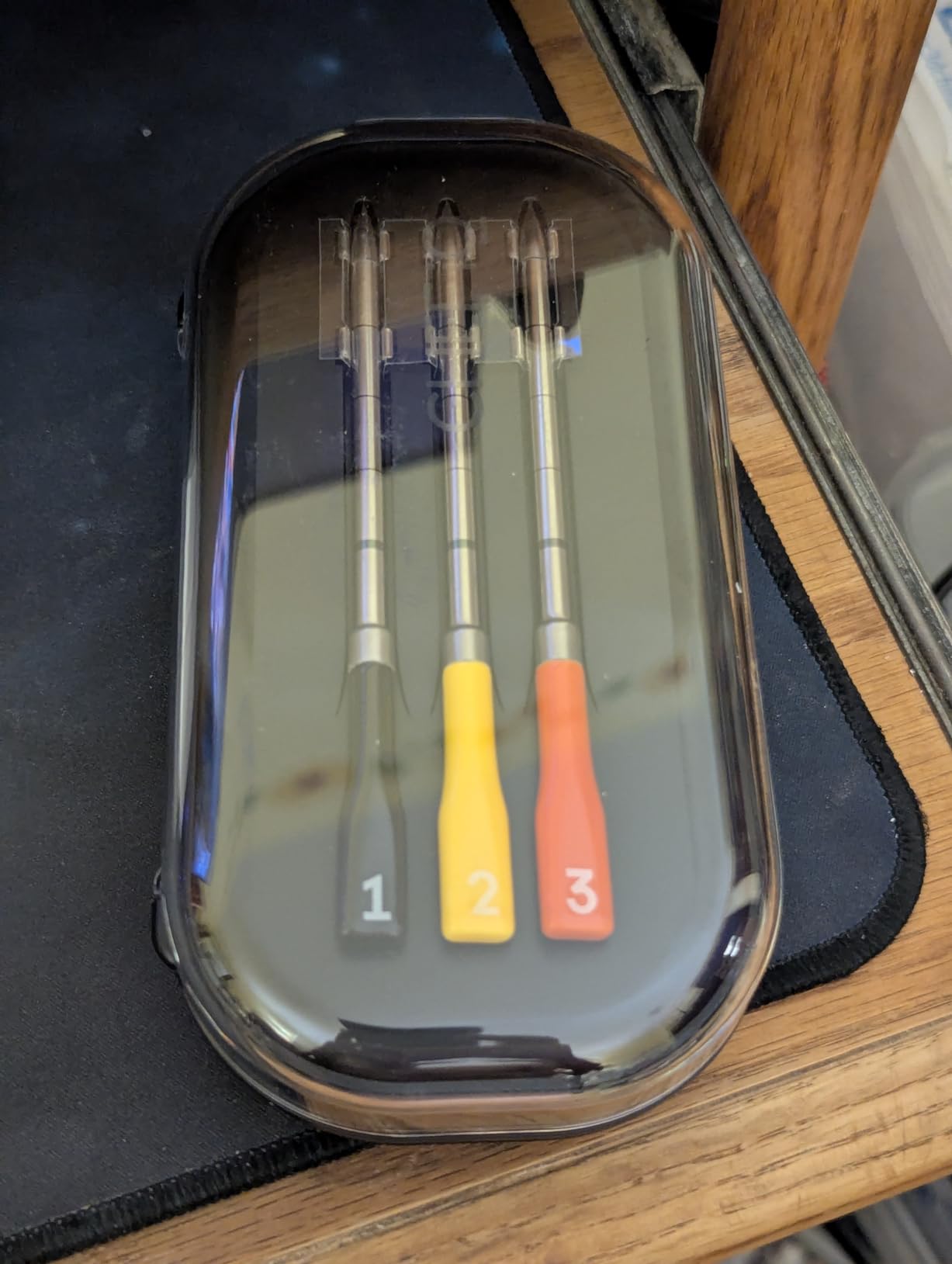
The hub is a genuinely clever piece of design. It charges the probes, stores them, and sounds an audible alert when you hit target, so you do not have to be holding your phone to know the brisket is done. A three-year warranty is also the longest in this roundup.
The app adds flip reminders, rest timers, estimated cooking times and guided recipes, which are the features cooks actually use during a long smoke rather than only at the start.
Judge it on the account requirement
This is the part to read twice before buying. The system requires a CHEF iQ account and app setup before the thermometer will function, and the hub wants WiFi and warns that features are limited without it. If you are comfortable with that, the design is excellent. If you like gear that works offline, this is the wrong category.
It is also app-dependent in a way the radio-frequency picks on this list are not, and pitmasters on smoking forums consistently favour a dedicated receiver for that reason.
Best and worst fit
Best fit is a cook who wants zero cable management, cooks several proteins at once and likes guided estimates. The 1000 F probe rating also makes it the only pick here rated high enough to stay in place during a hot sear after smoking.
Worst fit is anyone with unreliable home WiFi, anyone who travels to competitions, or anyone who has been burned before by a cloud-connected appliance. Connection dropouts are reported, though they usually recover on their own within a cook.
7. ThermoMaven G2 – Best for Stated Precision and Long Range
ThermoMaven Sub-1G Wireless Meat Thermometer, 2 Probes WiFi Thermometer
- Sub-1G signal holds through closed lids and walls better than Bluetooth-only systems
- Display base sets and reads temperatures with no app and sticks to a fridge with its magnet
- Users testing in ice baths and boiling water report readings within about a degree
- Ultra-thin probes keep more juices in the meat
- Probes store and charge in the base and 24 hour battery covers a long smoke
- Some owners experience intermittent wireless dropouts over multi-hour cooks
- Power-cycling the base mid-cook wipes cook history and derails the estimate
- A minority report ambient readings running about 25 F high
- Probes react slower to temperature change than an instant-read pen
- Probe metal ends stay very hot after cooking
The ThermoMaven G2 is the most technically ambitious unit in this roundup, and the specification is the reason to look at it. Sub-1G wireless is specified at 3,000 feet unobstructed and 700 feet obstructed, which is a different class of link from Bluetooth.
Accuracy is stated at plus or minus 0.5 F with 0.01 F resolution, and the probes carry six NIST-certified sensors each, five internal and one external. Owners running ice-bath and boiling-water checks report readings within about a degree, and the ultra-thin probe profile leaves more of the cut intact than a stepped probe of the same length.
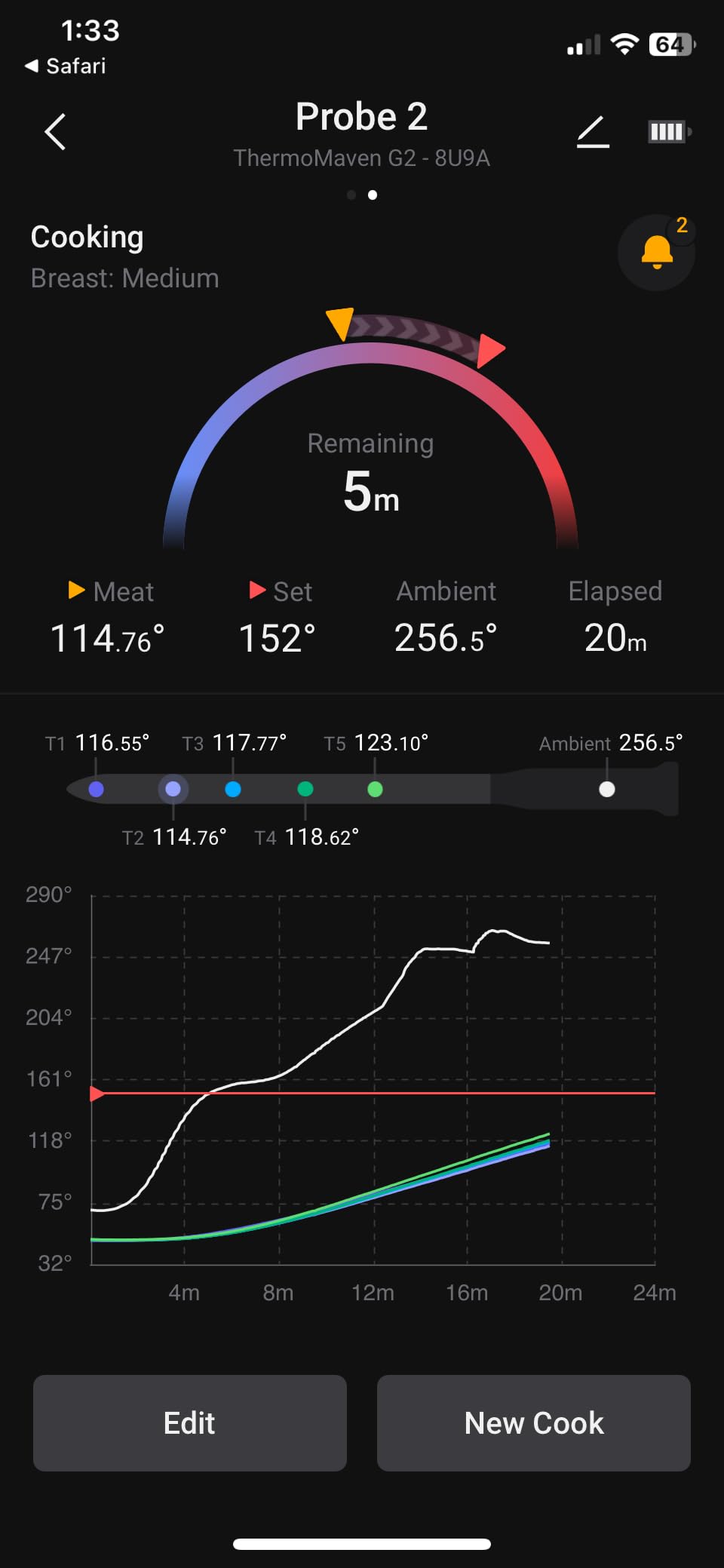
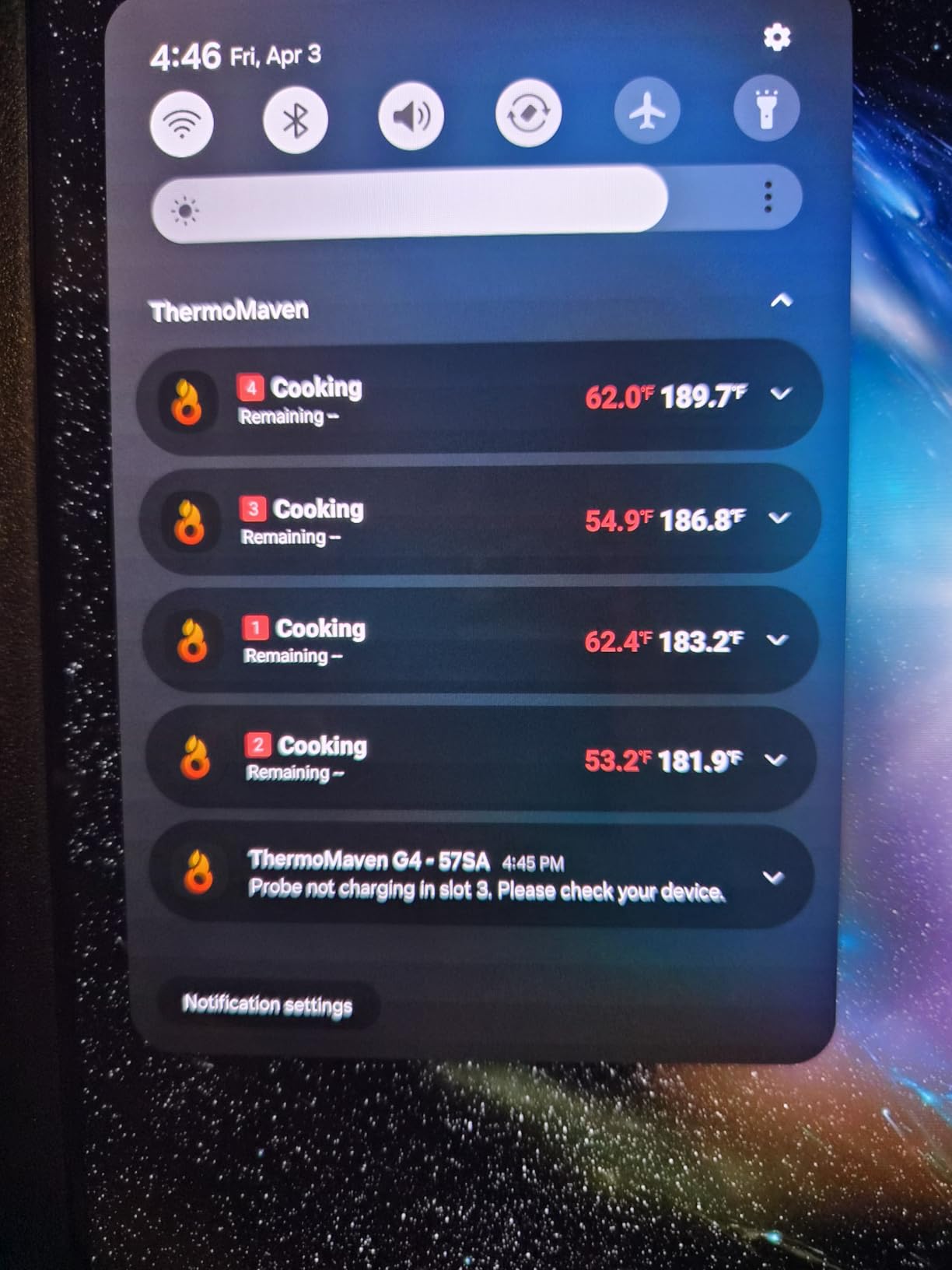
What we like most is the display base. You can set target temperatures and read live readings from it directly, with no phone involved, and the app and WiFi bridge are optional additions rather than requirements. That makes this a smart system you can also use as a plain set-and-forget receiver.
Battery life is around 24 hours from a two-hour base charge, and a two-minute probe quick charge gives about two hours. The IPX8 probes are dishwasher safe and rated to 752 F of ambient heat, and the warranty runs 18 months.
Why the signal spec matters here?
Sub-1G is a low-frequency radio link, and that is why it punches through a closed steel smoker and a house wall where a 2.4 GHz Bluetooth signal struggles. Owners who moved to this system from Bluetooth gear report the difference as the single biggest quality-of-life change in their setup.
Use the base inside and the probes in the meat, keep the path between them as open as you can, and you are not refreshing anything.
What to watch?
Do not power-cycle the base during a cook. Reviewers report that restarting it wipes the cooking history and breaks the time estimate, which is annoying at hour ten of a brisket.
Two smaller notes: a minority of owners saw ambient readings running about 25 F high, so treat the external sensor as a trend indicator rather than a precision instrument, and the probe metal ends stay hot enough after cooking that you want tongs or gloves to handle them.
8. ThermoMaven Smart WiFi WT02 – Best App-Free Base Control
ThermoMaven Smart WiFi Wireless Meat Thermometer for Grilling with 2 Probes
- Highest average rating in this group at 4.7 stars with 86 percent five-star reviews
- Smart base sets targets and sounds alerts on its own so the phone is optional
- Smart mode accounts for carryover cooking during rest
- Owners report strong connection range and accurate readings
- Battery held up through a 14 hour pork shoulder smoke with no loss
- Probes are easy to hand wash and dock back into the base
- Estimated finish time is not always accurate for every cut
- No storage case or bag is included
- Display shows whole degrees only so readings are less granular
- Base screen icons are small on its roughly 2.75 by 3.5 inch face
- Probe labels can be hard to tell apart during a busy cook
This is the highest-rated product we tested, at 4.7 stars across 776 reviews with 86 percent five-star ratings, and the reason is not the app. It is the base.
The smart base has its own display, sets its own target temperatures and sounds its own alerts. The phone is genuinely optional. You can run an entire smoke without pairing anything, which is the same reliability argument that makes the radio-frequency picks popular, with a smarter receiver attached.
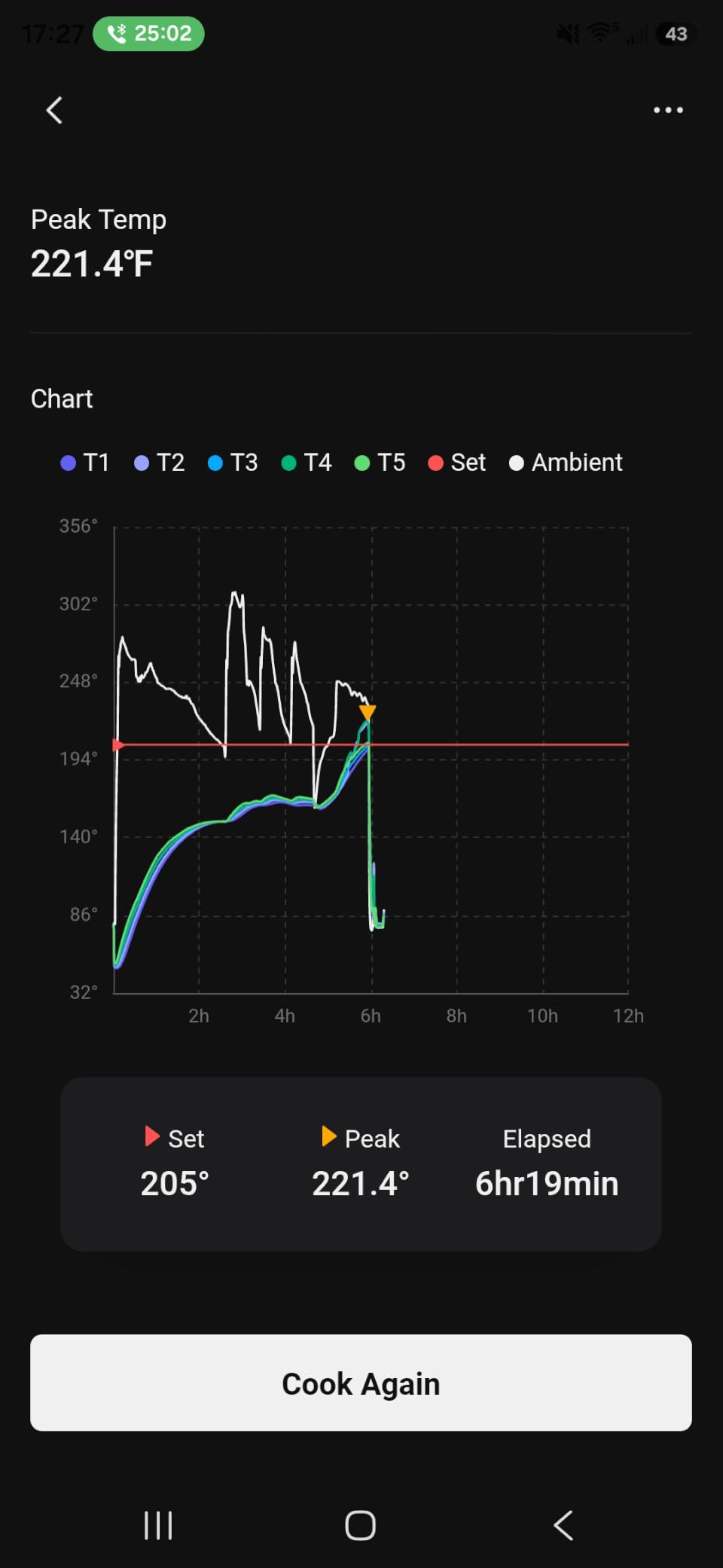
Connectivity is three-way. You get up to 1,000 feet from probe to base, a WiFi bridge to the phone for off-site monitoring, and a Bluetooth fallback from base to phone when you are nearby. The app adds real-time temperature graphs, doneness alerts and an AI recipe generator for when you want the guided experience.
The probes are six-sensor units rated to 752 F, waterproof and machine washable, and one owner reported the battery holding through a 14 hour pork shoulder smoke without a loss.
Buy it if you want the smartest optional tech
This is the rare system where adding an app adds value without becoming a requirement. Most connected probes force you through account setup before the first reading. This one lets you ignore all of that until you decide you want graphs.
It is also a good gift, because the base is intuitive enough for a family member to use without instructions, which matters when the person who set it up is not the person watching the smoker.
Keep your expectations honest
The estimated finish time is an estimate, and owners with experience note it is not accurate for every cut. Use it to plan, not to pull. Treat the graph and the probe reading as the source of truth.
Two smaller annoyances: the display reads in whole degrees, which is coarser than the 0.01 F resolution on the G2, and there is no included storage case, so find a dry drawer before the probes need charging.
9. OXO Chef’s Precision Digital – Best for Shared Family Use
OXO Good Grips Chef’s Precision Digital Leave-In Thermometer
- Simple enough that several family members use it without a manual
- Large easy-to-read LCD with a 10 degree advance warning beep
- Long cord keeps the display out of the heat and adds reach
- Probe and cord nest inside the base for compact storage
- OXO has historically supplied free replacement probes
- Probe connector socket is a known failure point with units dying within a few years
- Alert tone is too soft to hear over a running kitchen
- Manual temperature setting is not immediately intuitive
- Reading reacts slowly compared with an instant-read probe
- Some arrived with a cracked battery compartment door
OXO built this one for the household rather than the pitmaster. The button interface is shallow, the LCD is large, and long-term owners call it the best simple oven thermometer they have used. The target temperature setting, 24-hour timer and presets for nine meats, poultry and fish cover the whole job.
The leave-in probe and cord are rated to 700 F, which is ample for smoking, and the long cord keeps the display well away from the cooker. A ten-degree advance warning alert gives you a heads-up before you hit target, and the probe and cord nest inside the base for storage.
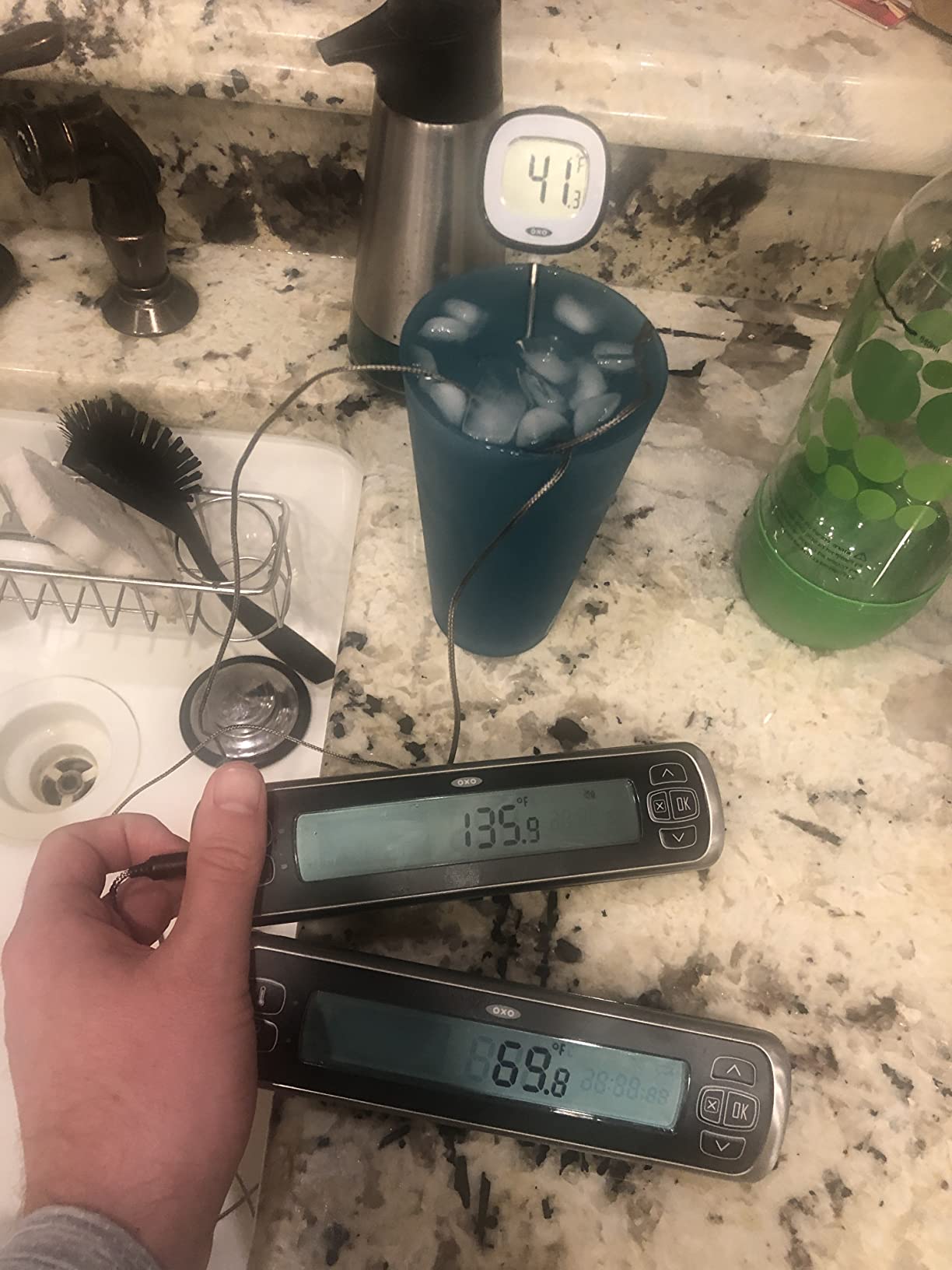
Our favorite detail is that OXO has historically supplied free replacement probes, which partly answers the complaint about probe wire failure being the number one problem in this category. Having a real replacement path from the manufacturer is worth more to a long cook than a slightly faster response time.
It runs on two AAA batteries, so power is never a concern across an eighteen-hour smoke.
Where simplicity actually pays?
Shared cooking is where this wins. When three different people take turns checking the smoker, a unit with an obvious display and simple buttons gets used correctly, and a unit with a nested menu gets ignored. Owners consistently describe it as intuitive after a single use.
It is also a strong choice as a second wired probe for a kitchen where the primary thermometer lives somewhere out of reach.
The failure point to know about
The probe connector socket is the weak link. A meaningful share of owners report units failing within a few years at that joint, and the recurring one-star reviews trace back to it rather than to accuracy. Check the connection at the start of each cook.
The alert tone is also quiet enough to miss in a busy kitchen, and the reading reacts more slowly to a change in temperature than an instant-read probe, so do not judge it during the first few minutes of a cook.
10. OXO Chef’s Precision Analog – Best First-Smoker Backup
OXO Good Grips Chef’s Precision Analog Leave-In Meat Thermometer
- Zero electronics so nothing to charge pair or update
- USDA and chef recommended temperatures on the dial and probe cover
- Dual Fahrenheit and Celsius markings with a quick-read face
- Shaded band on the probe marks the correct insertion depth
- Durable enough to stay in meat through an oven or grill cook
- No timer alarm or remote monitoring so it cannot be used away from the cooker
- Analog dial is less precise than a digital display
- Cannot be read through a closed oven or grill door
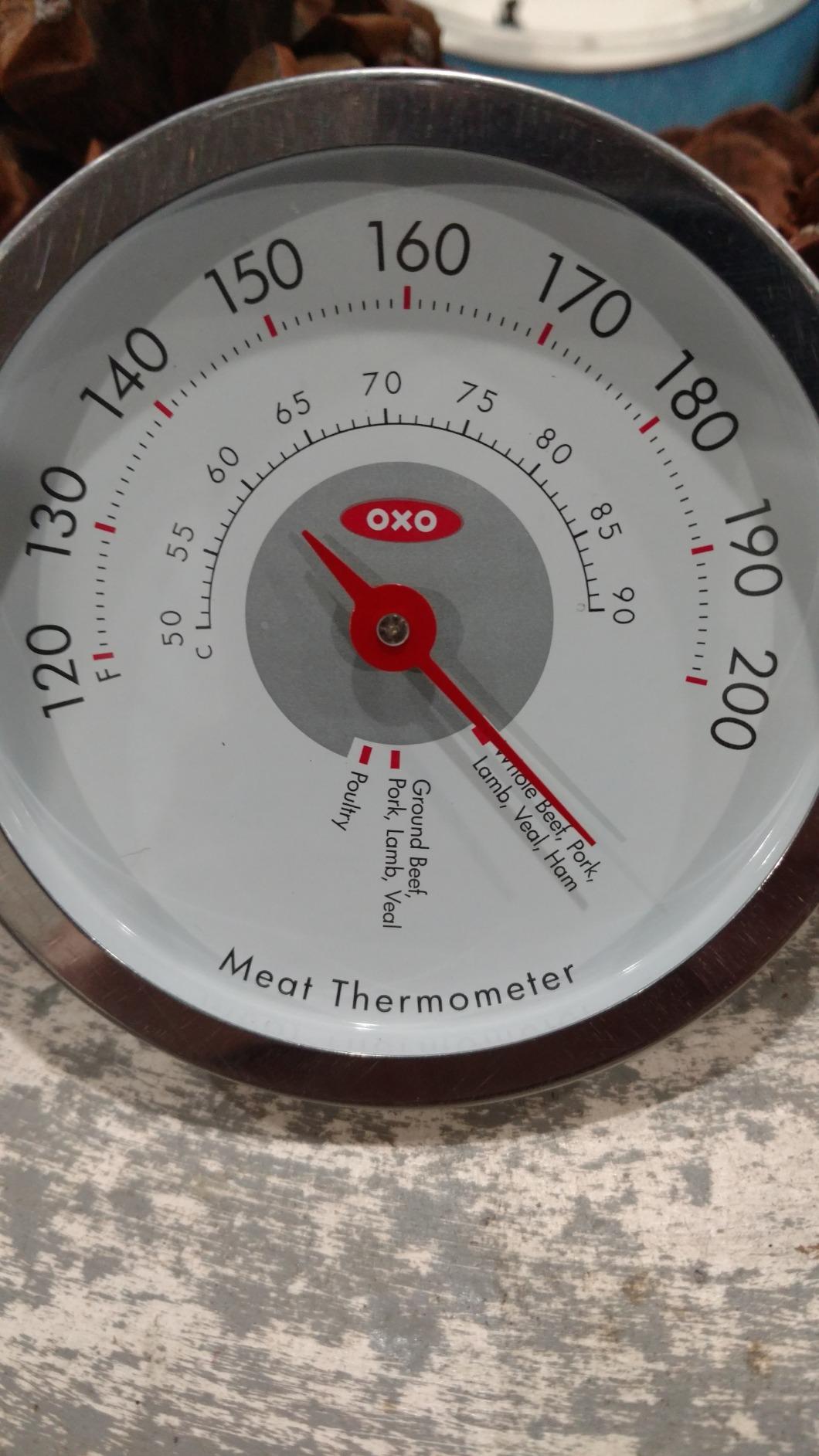
This is the simplest honest leave-in thermometer on the list, and for a first smoker or a second cut it is more useful than its lack of features suggests. The dial carries USDA recommended temperatures and the probe cover carries chef recommended temperatures, so the reference is physically in your hand.
The 5.25 inch probe is long enough for a pork shoulder and the shaded band on the shaft acts as a guide for correct insertion depth, which quietly prevents the most common beginner mistake of inserting too shallowly. The face reads in both Fahrenheit and Celsius.
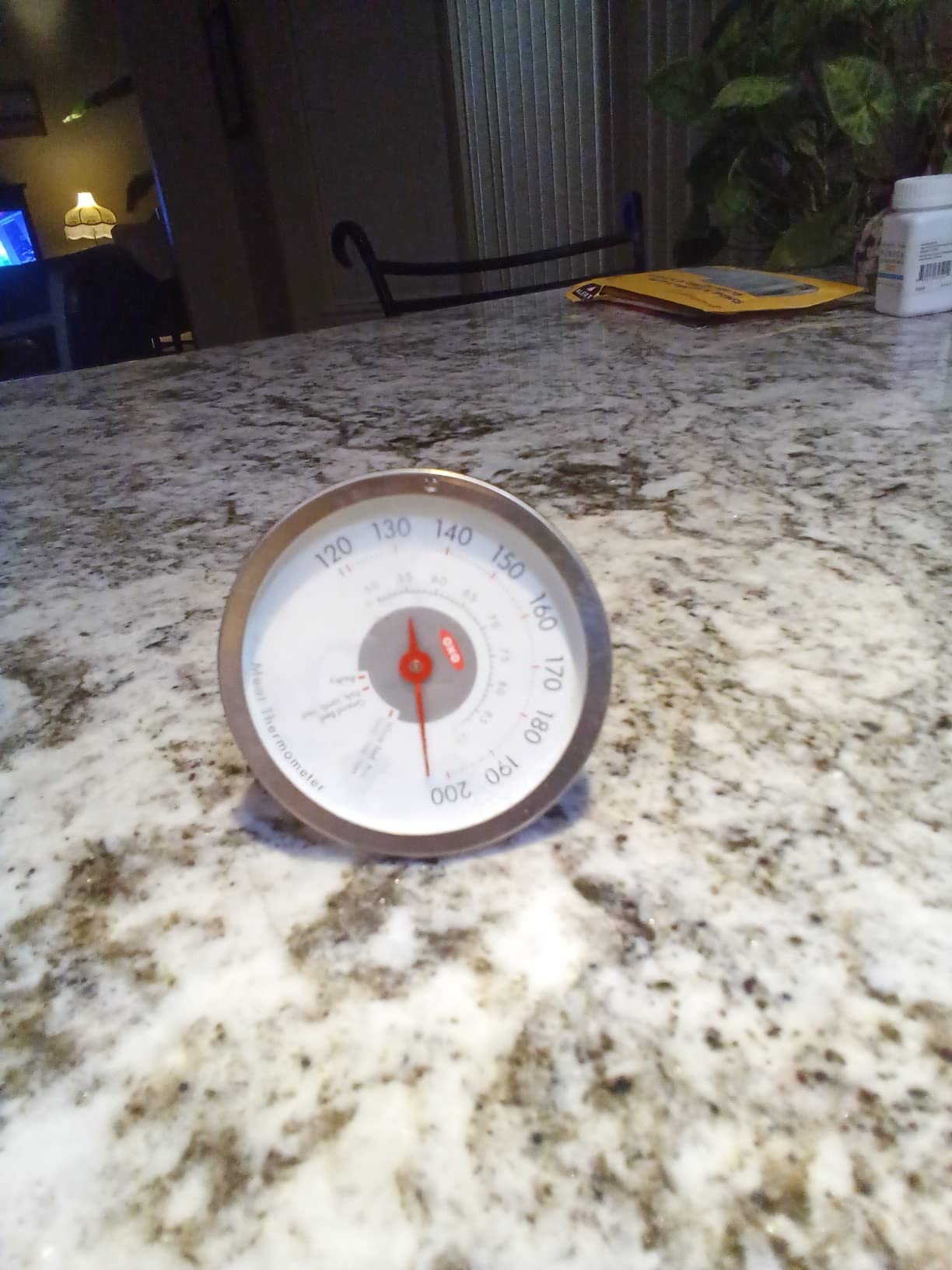
There is no battery, no pairing and no firmware. It works in a century, which is a different kind of reliability than a smart system can offer, and owners use it as a dependable reference dial rather than as a primary monitor.
Hand wash care and a 4.2 star rating across 732 reviews reflect a straightforward, no-frills tool that does the one job it advertises.
The right role for it
Think of it as the thermometer that never fails. Put it in a second rack of ribs while your smart probe watches the brisket, and you have a two-cut cook without buying a second network device.
It is also the fastest way to teach someone doneness temperatures, because the dial is the reference chart and the probe is the tool at the same time.
What you give up?
There is no timer, no alarm and no remote readout, so it only works if someone is standing at the cooker. That makes it a poor choice as your only thermometer for an overnight smoke.
An analog dial is also less precise than a digital display, and you cannot read it through a closed door, so every check means lifting the lid and costing yourself heat.
How to Choose a Leave-In Meat Thermometer for Smoking?
A leave-in thermometer does one thing well: it reports internal temperature from inside the meat, continuously, without you opening the lid. An instant-read pen is faster to deploy but only measures the moment you insert it, and every use costs you a lid opening. For an eighteen-hour cook that is the wrong trade, which is why most pitmasters run both.
The confusion in this category is that cheap wired probes, Bluetooth probes and fully wireless sticks are all sold as leave-in thermometers, so decide what problem you are solving first. Is it distance from the cooker, multiple meats, alerts you can hear, or simply a readout you can see from six feet away?
Accuracy and the ice bath check
Advertised accuracy and real accuracy are not the same claim. Stated tolerances across this roundup run from plus or minus 0.5 F on the precision wireless units to plus or minus 1.8 F on the budget Bluetooth model, and both are fine for smoking. What matters is whether the unit drifts over a long cook.
Test any new probe in an ice bath before you trust it on a brisket. Fill a large glass with ice and water, stir, submerge the tip, wait for the reading to settle, and compare it to 32 F. A few degrees off is tolerable; 10 degrees off means you should compensate by hand or return the unit. Repeat the test at the start of each season and after any probe replacement.
How many probes you actually need?
Count the cuts, not the recipes. A single whole brisket takes two probes to be useful, one in the flat and one in the point, plus one channel for the chamber. A full rack of ribs needs one probe, placed between two ribs in the thickest area. A whole turkey wants one in the thigh and one in the breast, because those two finish at different times.
For a standard weekend smoke of a brisket plus a pork butt, two probes and one ambient channel is the realistic minimum. Only move to four when you are routinely cooking two proteins plus a side of ribs, which is exactly the case the four-channel pick was designed for. If you are shopping for a kamado or offset cooker, plan the probe budget before you buy the cooker.
RF versus Bluetooth versus WiFi
These three are not interchangeable, and the forum consensus on smoking and barbecue boards is consistent: Bluetooth is the least reliable link of the three. It competes with household WiFi, it drops through metal smoker bodies, and its stated range is measured in a clear line of sight that almost nobody has.
Radio frequency at 500 to 1,000 feet is the sweet spot for most yards. Sub-1G, the technology behind the top-end wireless pick here, is specified with a separate obstructed range figure, which is rare and honest, and it is the link that survives a closed lid and a brick wall.
WiFi is not a connection type for the probe itself. It is a bridge that carries readings from a base to your phone across town, and it introduces a home internet connection into a cook that previously needed none. That is fine for a competition cook you are watching from a vendor tent and a bad idea for a cook where your router reboots at midnight.
Probe cables and the firebox problem
The most repeated complaint across smoking forums is probe wire failure, and the cause is almost always routing. Insulation on a probe cable is rated for the temperature the probe is designed to read, not for radiant heat from a firebox door held open. Route every cable away from the firebox, secure it so it cannot swing, and keep it clear of the lid gasket where a closing door can pinch it.
Coil cables loosely. Tight coiling after every cook is what creates the kink that eventually breaks the conductor, and a replacement probe is a far easier purchase than a new system. Before you need one, decide whether your brand sells genuine spare probes, and consider a third-party probe from Inkbird or ThermoWorks if your smoker came with a generic OEM probe that has already failed once.
Power for an eighteen-hour cook
Battery strategy is a bigger deal than most roundups admit. Replaceable AAA batteries are the most forgiving option because a flat set is a two-minute fix, and a no-battery analog dial is the most reliable option of all. Rechargeable bases are convenient but create a single point of failure, and a base that dies at hour fourteen usually takes the cook history with it.
Whatever you buy, set fresh batteries in before a long smoke rather than trusting a gauge you cannot see from across the yard. And skip the multi-day cook with a system that has no low-battery warning at all, unless you have a spare probe and a plan to check it.
Probe placement in thirty seconds
Insert from the side, into the thickest part of the cut, with the tip pointing toward the center of the muscle. Never let the tip touch bone, which conducts heat and reads falsely high, and never let it rest on the pan or a fat cap, which reads falsely low.
Run the ambient probe along the grate at the level where your food sits, far from the firebox and far from the door. If your chamber swings more than about 15 F between readings, the probe is placed badly or your wood addition schedule is too aggressive, and no thermometer will fix it.
And the rule that shows up in every good forum thread: trust the probe over the clock. If the brisket reads 195 F at three hours, it is 195 F. Probe placement, not patience, decides when a brisket is done.
Frequently Asked Questions
What is the most accurate meat thermometer for smoking meat?
The most accurate leave-in thermometers in our roundup are the wireless models specified at plus or minus 0.5 F with 0.01 F resolution, and users testing them in ice baths and boiling water report agreement within about a degree. For most smoking cooks any unit specified within 1 to 2 F is accurate enough, because the real error is usually probe placement rather than the sensor. Test any new probe in a 32 F ice bath before you trust it.
Can you leave a thermometer in meat while smoking?
Yes, that is exactly what a leave-in thermometer is built for. The probe stays buried in the meat for the entire cook while a heat-resistant cable or a wireless link carries the reading to a display outside the cooker. Leave the lid closed, which is the whole advantage, and do not let the probe touch bone or rest on the pan.
What is the best leave-in meat thermometer?
The TempPro TempTrack TP-16 is our best overall leave-in meat thermometer because a 40 inch cable, a 716 F probe rating and a timer that runs to 99 hours 59 minutes cover the whole cook, and it carries more than 50,000 reviews. The best wireless option is the TempPro TempSync 500FT TP20B, which adds dual probes and a 500 foot link with no app required.
What is the best wireless meat thermometer for a smoker?
The best wireless leave-in thermometer for most yards is the TempPro TempSync 500FT TP20B, because radio frequency holds a connection through walls and it needs no phone or account. For longer range the TP829 reaches 1,000 feet with four probes, and for the longest link the ThermoMaven G2 uses sub-1G radio with a stated 3,000 feet unobstructed. Bluetooth models are the least reliable over distance.
Which is better, Meater or ThermoPro?
The TempPro options in this roundup cost less, run app-free and give you a dedicated receiver that keeps working when your phone dies, which is why pitmasters on smoking forums favor them. Fully wireless designs like Meater remove the cable entirely, which is a genuine convenience, but owners report needing to replace them and want a wired alternative. Both are defensible; the deciding factor is whether you will forget to charge.
Is the Meater thermometer worth it?
A fully wireless system is worth it if you hate routing a cable out of your smoker every cook, and the two ultra-thin probes in this roundup rated to 1000 F handle high-heat finishing that wired probes cannot. The trade is dependence on a mandatory account, app setup and a hub that wants WiFi. If you cook outdoors where signal is unreliable, a radio-frequency model with a physical receiver is the safer buy.
Are the Pit Boss meat probes accurate?
Factory probes supplied with a smoker are often the weakest link in an otherwise good setup, and the recurring complaint on cooking forums is probe wire failure rather than inaccurate readings. Check any OEM probe in an ice bath before trusting it, and if it drifts badly or the wire has been heat-damaged, an aftermarket probe from Inkbird or ThermoWorks is usually a better long-term investment than another factory unit.
Final Verdict: The Pick and the Runner-Up
The TempPro TempTrack TP-16 is our best leave in meat thermometer for smoking because it does the job without asking anything from you: a 40 inch cable, a 716 F probe rating, USDA presets and a timer that covers an eighteen-hour cook and the rest after it. It is also the most proven, with more than 50,000 reviews behind it.
The runner-up is the TempPro TempSync 500FT TP20B, and if you want to get away from the cooker or watch two temperatures at once, that is the one to buy. Add an instant-read pen from our instant read thermometer guide for final checks, keep a spare probe on the shelf, and trust the reading over the clock.