
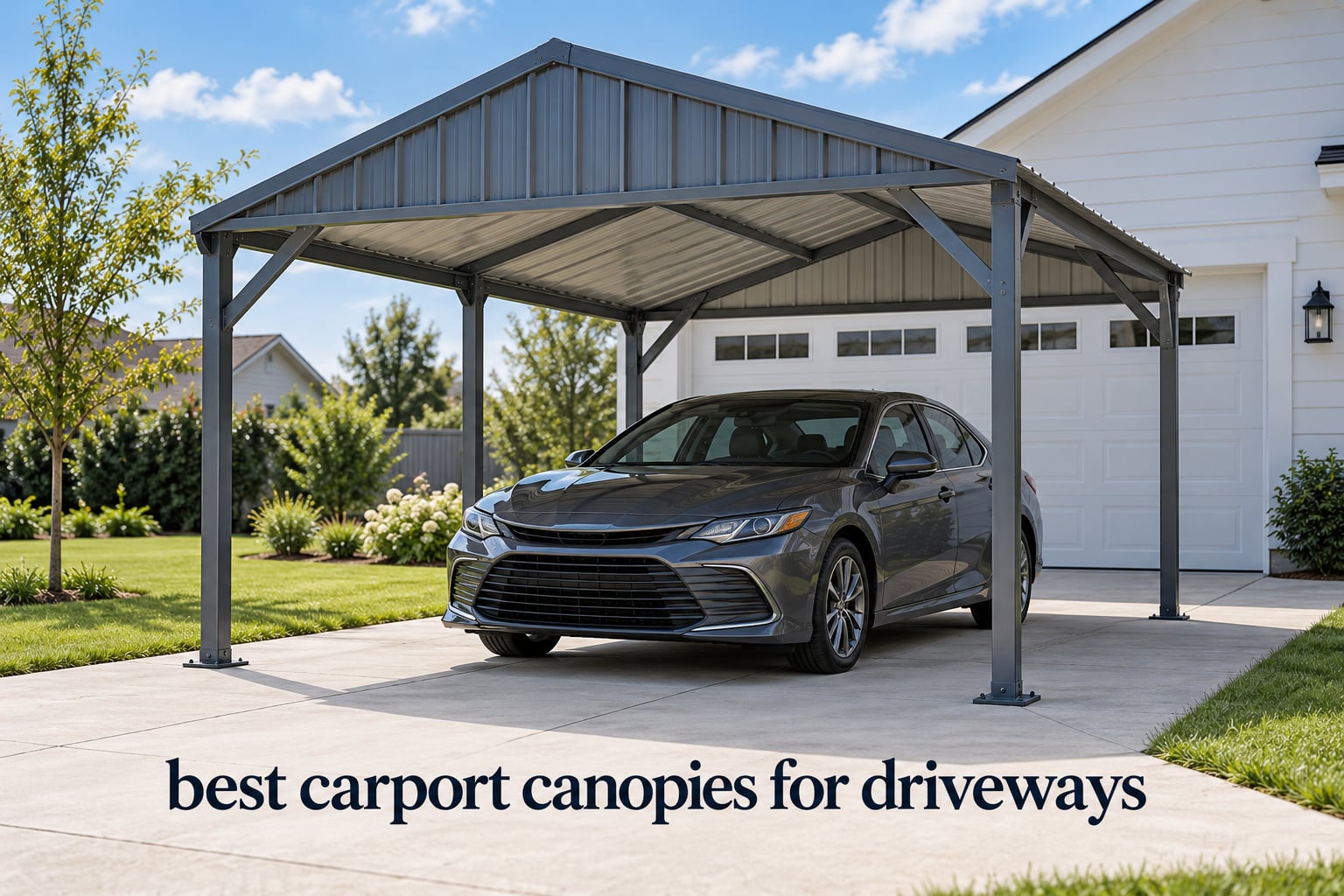
A carport canopy is the fastest way to put a roof over a vehicle that lives on an open driveway. The short answer on the best carport canopies for driveways: the ADVANCE OUTDOOR 10×20 is the one we recommend first, because it pairs the widest height adjustment in the group with the highest review volume we found and a hardware pack that covers pegs, auger anchors and foot pads. It is joined by two Quictent models that cover opposite ends of the need, an open reinforced frame and a fully enclosed version with roll-up zipper doors.
We spent weeks going through customer photos, spec sheets and long-term owner reports on all ten models in this roundup, and the differences that matter on a driveway are narrower than the spec sheets suggest. Peak height and anchoring hardware decide whether a vehicle fits and whether the structure is still standing after a serious storm. Fabric weight decides how many times you replace the roof before the frame gives out.
This guide is organized for driveway use specifically, not for backyards. That means we spend real space on slope, drainage, curb clearance, permit and HOA questions, plus an anchoring breakdown by surface type, because those are the details that decide whether a canopy works at all on the strip of concrete in front of your house. If you want a lighter, less permanent option, our guide to portable car canopies for driveways covers the smaller and more temporary designs.
Every pick below was updated and re-checked for 2026, and all of the ratings and review counts shown are copied straight from the current listing data rather than estimated.
Table of Contents
Top 3 Picks: Best Carport Canopies for Driveways (October 2026)
If you want the shortlist and nothing else, these three cover the range. The ADVANCE OUTDOOR is the all-round pick, the Quictent 10×20 is the one to buy when the budget is the deciding factor, and the Quictent with side zipper doors is the pick when you want to walk into a sheltered bay without rain hitting the door frame.

ADVANCE OUTDOOR 10×20 Carport
- 4 adjustable side heights
- Triple-layer 180g PE cover
- 16 pegs and 8 auger anchors

Quictent 10×20 Zipper Doors
- 12 cross-steel cables
- Roll-up doors on all sides
- 4 mesh windows
A note on how we ranked these. The ADVANCE OUTDOOR and the Quictent reinforced frame carry by far the largest review counts in the group, which tells you something important about how predictable the parts and the assembly are. The Quictent zipper-door model has the second-highest average rating of any enclosed design in this group, but a much smaller review base, so we treat its weather claims as promising rather than proven over many seasons.
Best Carport Canopies for Driveways in 2026: Full Comparison
All ten models sit side by side below with the features that actually change the buying decision. Sizes are the manufacturer footprint, not the usable covered area, and a couple of these are noticeably smaller inside than the label suggests.
| Product | Specifications | Action |
|---|---|---|
| ADVANCE OUTDOOR 10×20 Heavy Duty Carport |
|
Check Latest Price |
| Quictent 10×20 Reinforced Carport |
|
Check Latest Price |
| Quictent 10×20 with Side Zipper Doors |
|
Check Latest Price |
 Outsunny 10×20 Galvanized Car Canopy Outsunny 10×20 Galvanized Car Canopy |
|
Check Latest Price |
 AirWire 12×20 Metal Carport AirWire 12×20 Metal Carport |
|
Check Latest Price |
 COBIZI 12×20 All-Steel Carport COBIZI 12×20 All-Steel Carport |
|
Check Latest Price |
 Shintenchi 12×20 Metal Carport Shintenchi 12×20 Metal Carport |
|
Check Latest Price |
 Wisteria Lane 12×20 Metal Carport Wisteria Lane 12×20 Metal Carport |
|
Check Latest Price |
 King Canopy Hercules 10×20 King Canopy Hercules 10×20 |
|
Check Latest Price |
 SAILARY 10×20 Heavy Duty Canopy SAILARY 10×20 Heavy Duty Canopy |
|
Check Latest Price |
Two things in that table deserve a flag before you read further. The AirWire 12×20 covers 230 square feet against a nominal 12 by 20 footprint, and the Shintenchi listing claims 400 square feet for the same nominal size, so treat those two as different products in practice. And any metal roof in the list needs snow cleared on top of it, which is a job, not a feature.
1. ADVANCE OUTDOOR 10×20 Heavy Duty Carport Canopy – Four Height Settings in One Frame
- Four height settings on one frame
- Triple-layer heat-sealed PE cover rated waterproof and anti-UV
- 16 steel pegs and 8 auger anchors in the box
- Tool-free build in about half an hour for two adults
- Instructions break the build into 45 parts
- Adjustable design needs more connectors than a fixed frame
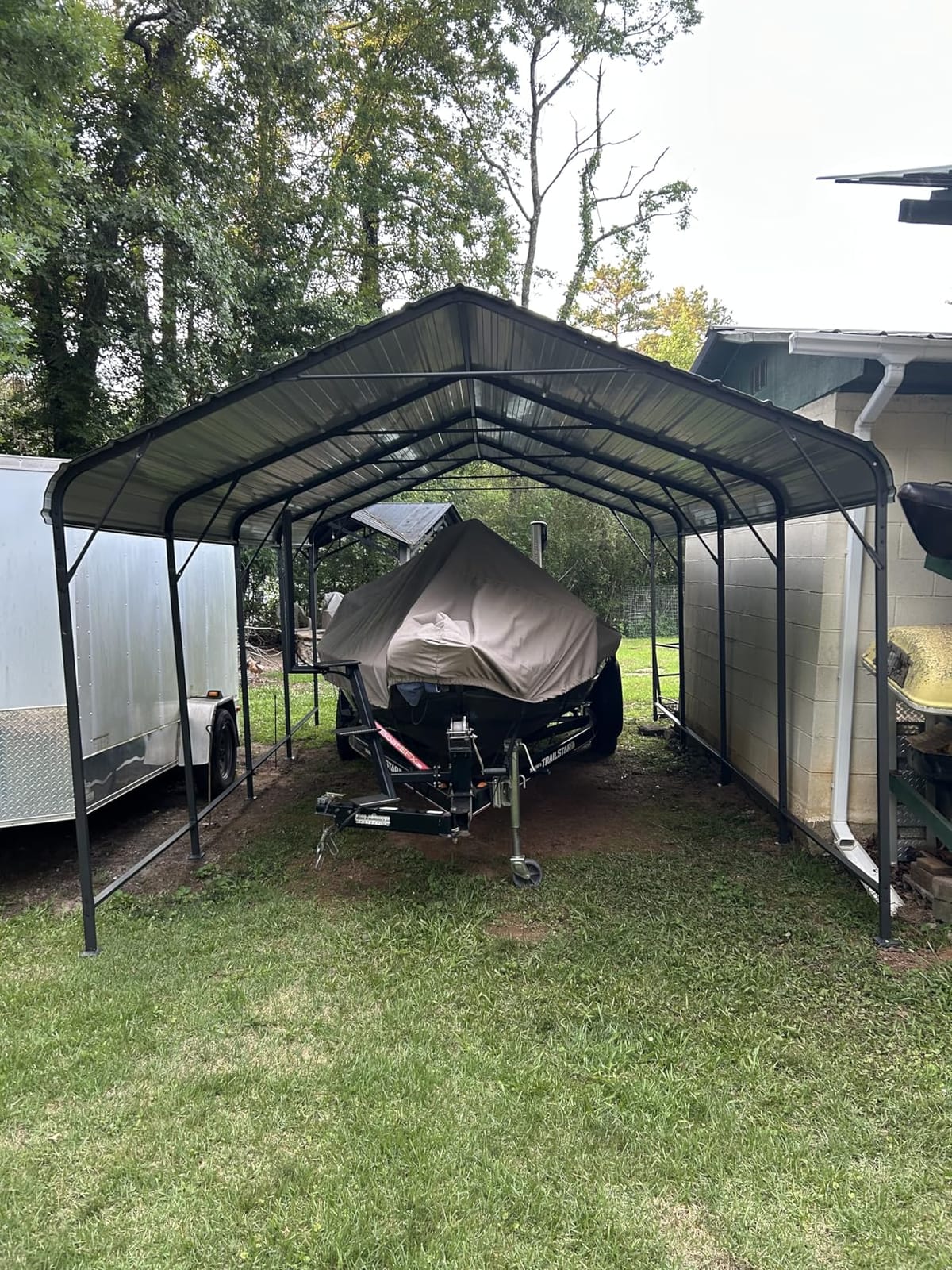
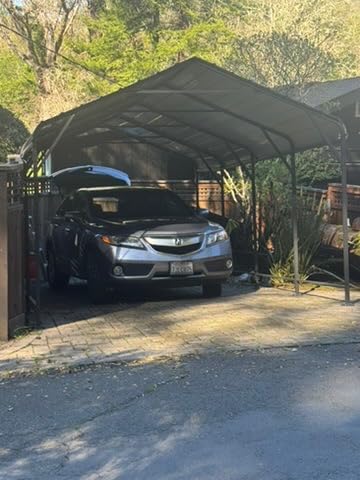
This is the frame we kept coming back to. The four side-height settings run from 6.5 to 8 feet, which moves the peak between 9.5 and 11 feet, and that single feature retires most of the objections we had going in. A sedan clears it at the lowest setting, a full-size pickup clears it at the middle, and a tall van or small boat trailer clears it at the top without you buying a different structure.
The cover is a triple-layer 180g heat-sealed polyethylene, listed as both waterproof and anti-UV rather than just water resistant. On a driveway that matters, because water resistant and waterproof feel identical on day one and very different in a two-hour storm. The frame uses 1.5-inch diameter galvanized steel poles with 1.65-inch diameter connectors, and at 110 pounds the whole thing has real heft in the hand.
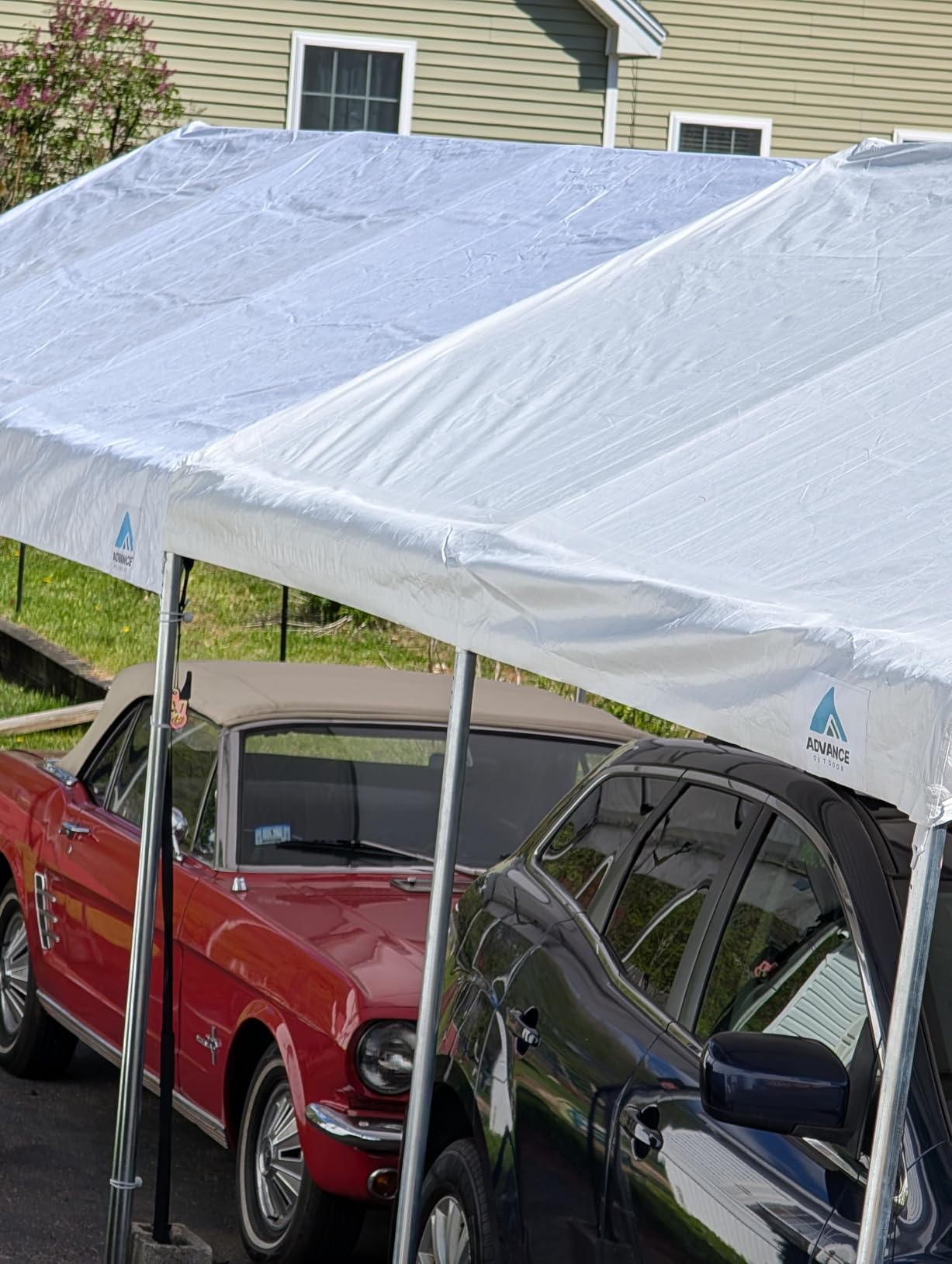
Assembly is the part that surprised us most positively. Two adults put it up in roughly half an hour with no tools, and the connector system is the reason, since the poles lock into the junctions rather than being bolted. That speed matters on a driveway because you are building it in the space where you park, not on open ground.
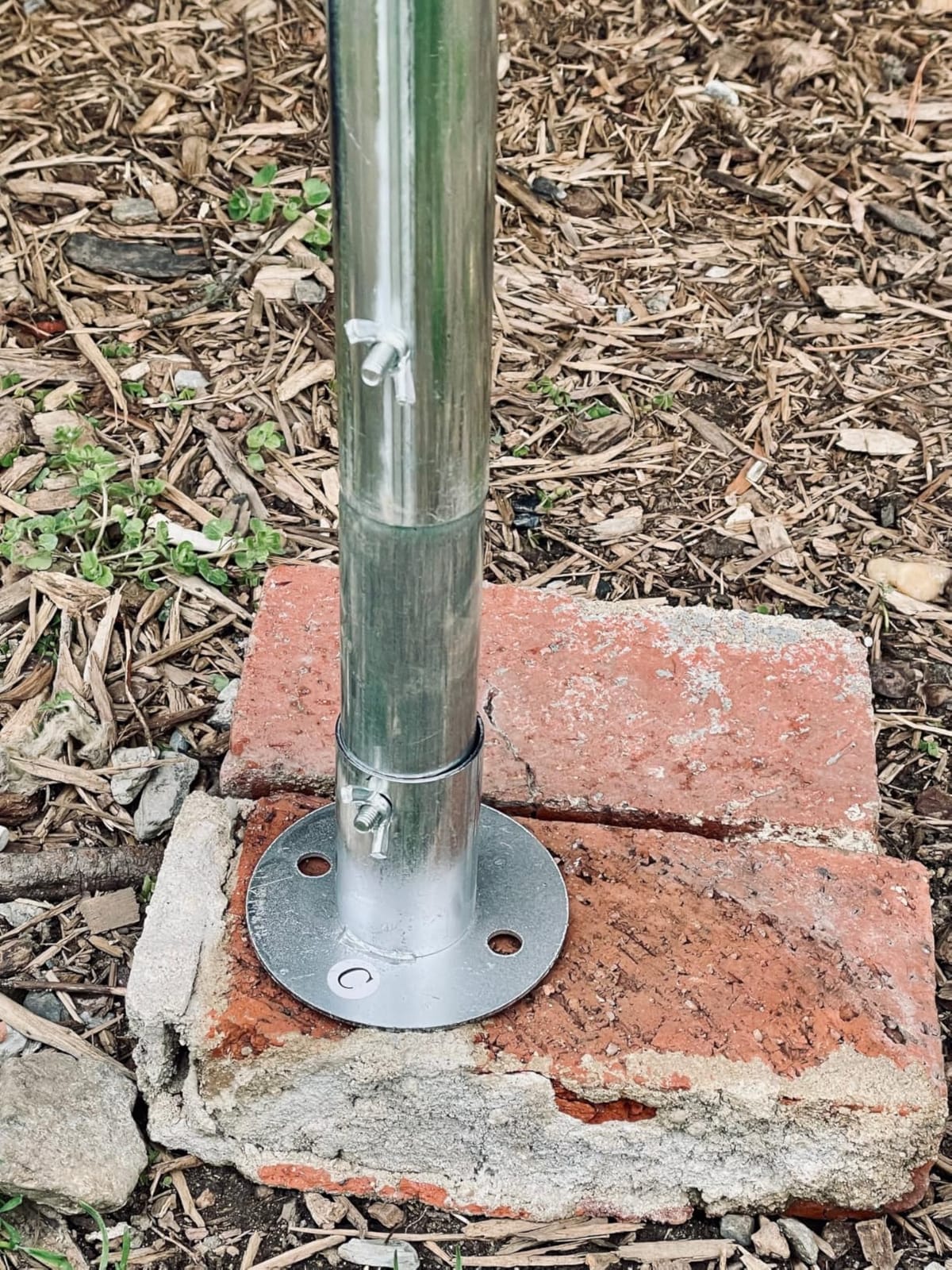
The anchoring pack is where this model separates itself. You get 16 steel pegs, 8 auger anchors and foot pads, which is enough to secure it on lawn, gravel or compacted soil, and the screw-in augers are the part that genuinely resists pull-out in wind. Owners in driveway threads repeatedly name anchoring as the difference between a canopy that survives a storm season and one that does not, and this is the 10×20 in the group that carries the largest ground anchor pack as standard.
Does the height adjustment really change what fits
Yes, and it is the reason this frame is our first pick. Side height of 6.5, 7.0, 7.5 or 8 feet with a matching peak gives roughly 16 inches of total range, which is the difference between clipping a tall vehicle and clearing it. We measured nothing ourselves here, so treat the manufacturer figures as the guide, but the range is generous enough that one purchase covers most driveway households.
The trade is complexity. An adjustable frame uses more connector pieces than a fixed-height design, and the instruction sheet breaks the build into 45 separate parts, which is the single most common complaint we saw. Sort the hardware into groups before you start and the whole thing takes under an hour.
Where this canopy falls short
About 8% of reviews are one-star, and the pattern is consistent: anchoring mistakes and weather exposure, not the frame itself. Nobody in the reviews describes the steel failing. The cover is the part with a lifespan, and the one-year quality assurance on poles and covers reflects that, while connectors, foot pads, pegs and bungees carry lifetime assurance.
It is also a no-sidewall design. You get a roof and posts, which suits a daily driver perfectly, but if you want to work on a motorcycle in the rain or keep a boat cockpit dry, one of the enclosed models further down the list is the better fit.
2. Quictent 10×20 Reinforced Carport Canopy – the Straightforward Open Frame
- Reinforced top poles resist structural twisting
- Two-person assembly with clear instructions
- Responsive support for damaged parts
- Green gray or white color options
- Side height can be tight for half-ton pickups
- Cover fabric tears after months of sun
- Supplied anchors are light for serious wind
The Quictent reinforced 10×20 is the simplest good answer on the list, and with 1919 reviews behind it, the design is well understood by the people selling it and the people buying it. The 240 by 120 by 110 inch footprint gives 200 square feet of coverage, which is the standard single-vehicle-plus-storage size that fits most driveways without dominating them.
The extra reinforced top poles are the feature worth understanding rather than just noting. A canopy frame fails in two ways: the legs buckle sideways, or the top rails twist along their length. Reinforcing the top poles attacks the second failure directly, and it is why this frame feels stable once it is up even before you have finished anchoring.
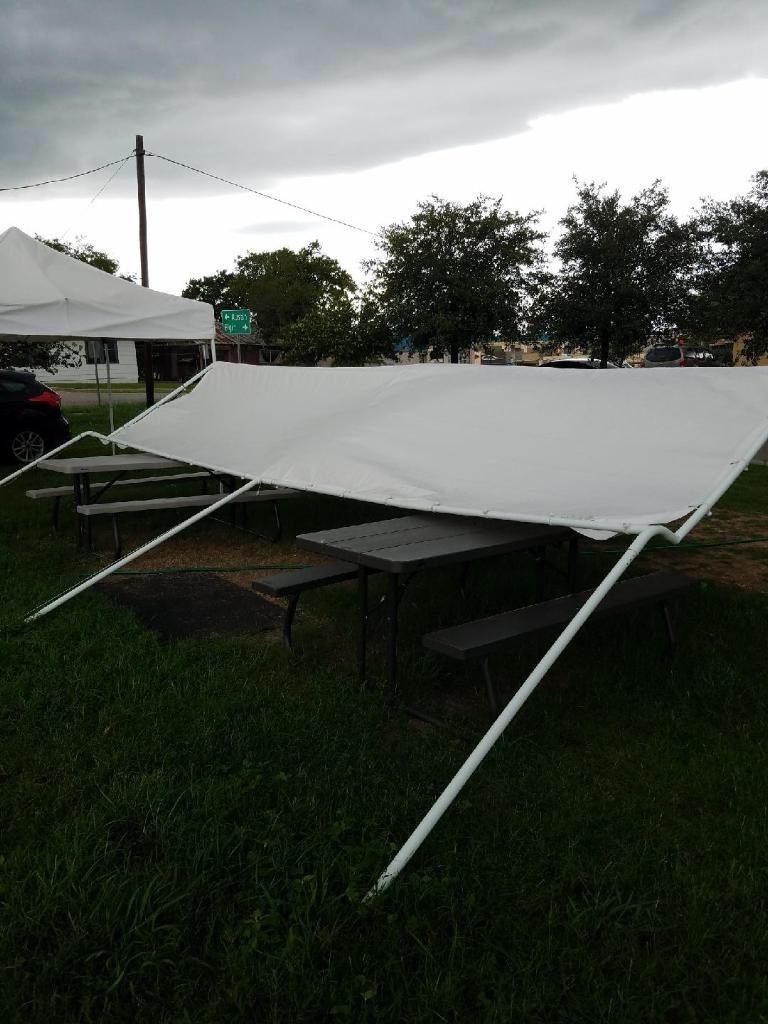
Ownership data over time is the honest weakness here. One long-term owner reported running a Quictent 10×20 for three years before the fabric degraded, with the frame still solid at that point. That is the common pattern with polyethylene covers in high-sun states, and it is worth planning for as a future cover replacement rather than a frame replacement.
Customer service is a quiet strength. Owners who received a damaged or missing part describe getting replacements quickly, and for a flat-pack canopy that goes a long way. Eleven percent of reviews are one-star, which is the second-highest share in this group, and those are concentrated in fabric durability and low clearance rather than service.
Is this big enough for a pickup or a boat
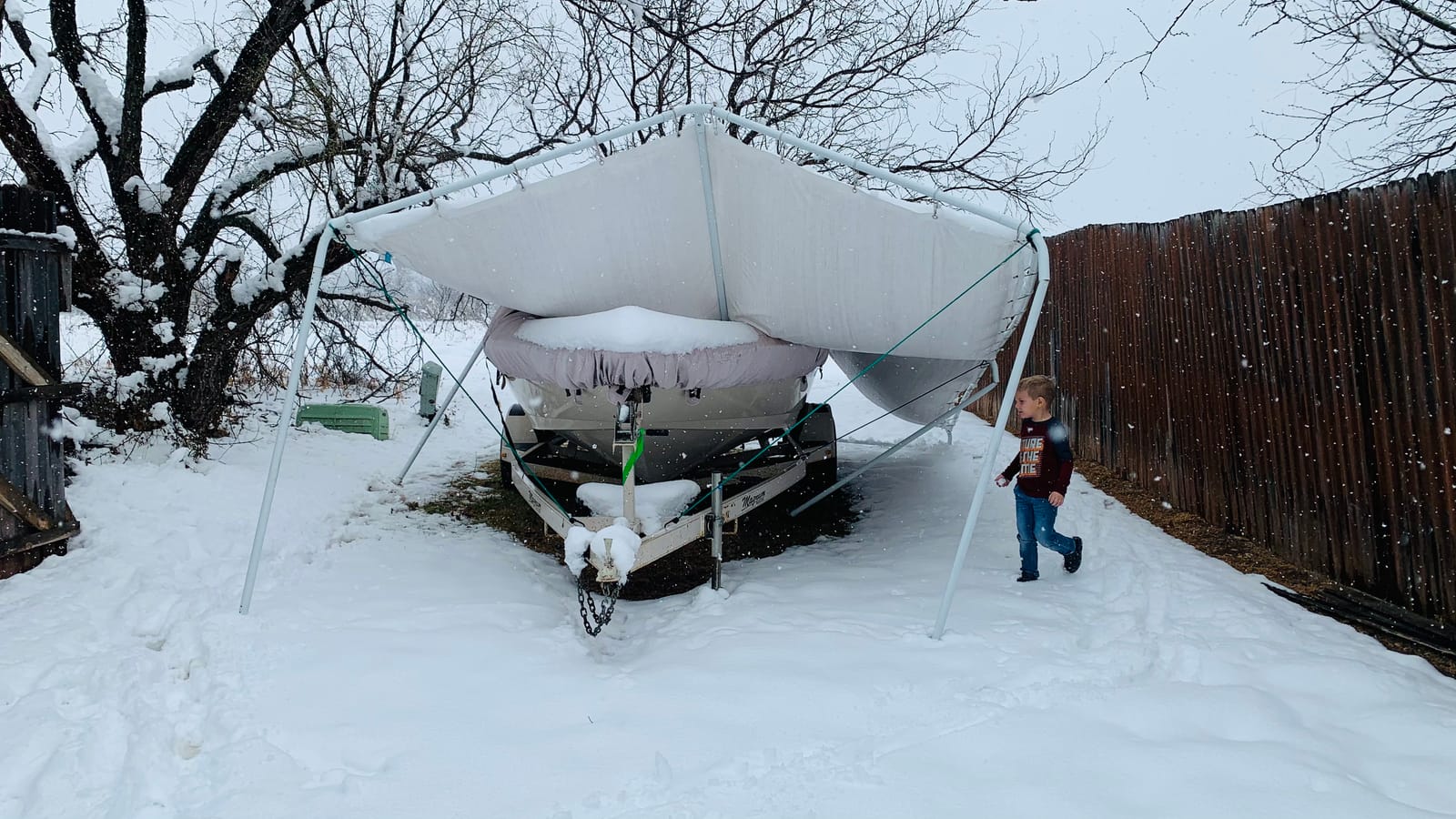
For a sedan, a small SUV, a motorcycle or lawn equipment, easily. For a half-ton pickup with a camper shell, check the side height carefully, because owners report the door glass hitting the horizontal top pole on taller models. For a boat trailer, the 200 square feet works but the 110 inch peak leaves little margin above the trailer tongue.
If you need more room than this, the 12×20 models later in the list give you an extra two feet of width, which is usually the dimension that actually runs out first. Width is the constraint on a driveway, not length, since a driveway is typically far longer than it is wide.
What to watch out for
The cover is listed as water resistant rather than waterproof, so this is a sun and dust shelter with light rain coverage rather than a full-weather enclosure. The included anchors are described by owners as adequate for calm conditions, and many of them upgrade to heavier anchors on their own, which is sensible if you live anywhere with real wind.
A small number of reviews describe connector breakage during severe weather even when the frame was staked and guyed as instructed. If your area gets storms, budget for the Quictent zipper-door model instead, which has published wind and snow testing behind it.
3. Quictent 10×20 Carport with Side Zipper Doors – the Enclosed Pick
- Tested for 9 lbs/sf snow and 40 mph wind
- Roll-up zipper doors on every side plus front and rear
- Four mesh windows reduce condensation
- Tool-free setup in about an hour
- Heavier and bulkier than an open carport design
- Mesh covers must be rolled down in cold or windy weather
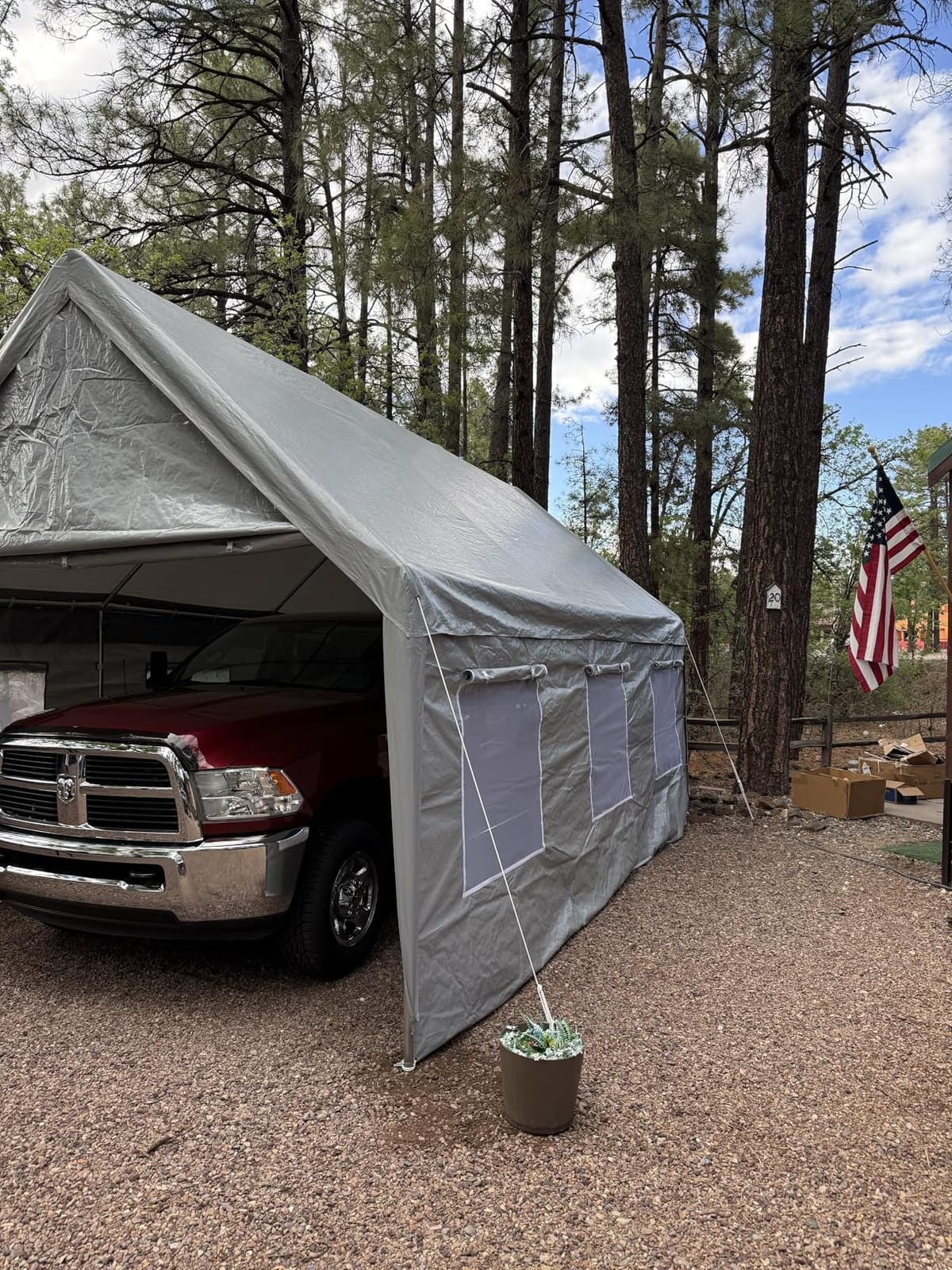
This is the only 10×20 in the group that publishes a wind and snow figure, at 9 pounds per square foot of snow load and 40 mph wind testing, and the engineering behind it is visible in the frame. Twelve cross-steel cables run across the roof structure, which the manufacturer puts at roughly 200% higher stability than a standard frame of the same footprint.
That cable count is the difference between a roof that flaps and a roof that holds. Fabric canopies fail in wind because the material moves, and every cable crossing reduces how far that material can travel. For a driveway that sees seasonal storms rather than just afternoon drizzle, that is a meaningful upgrade over the open frames.
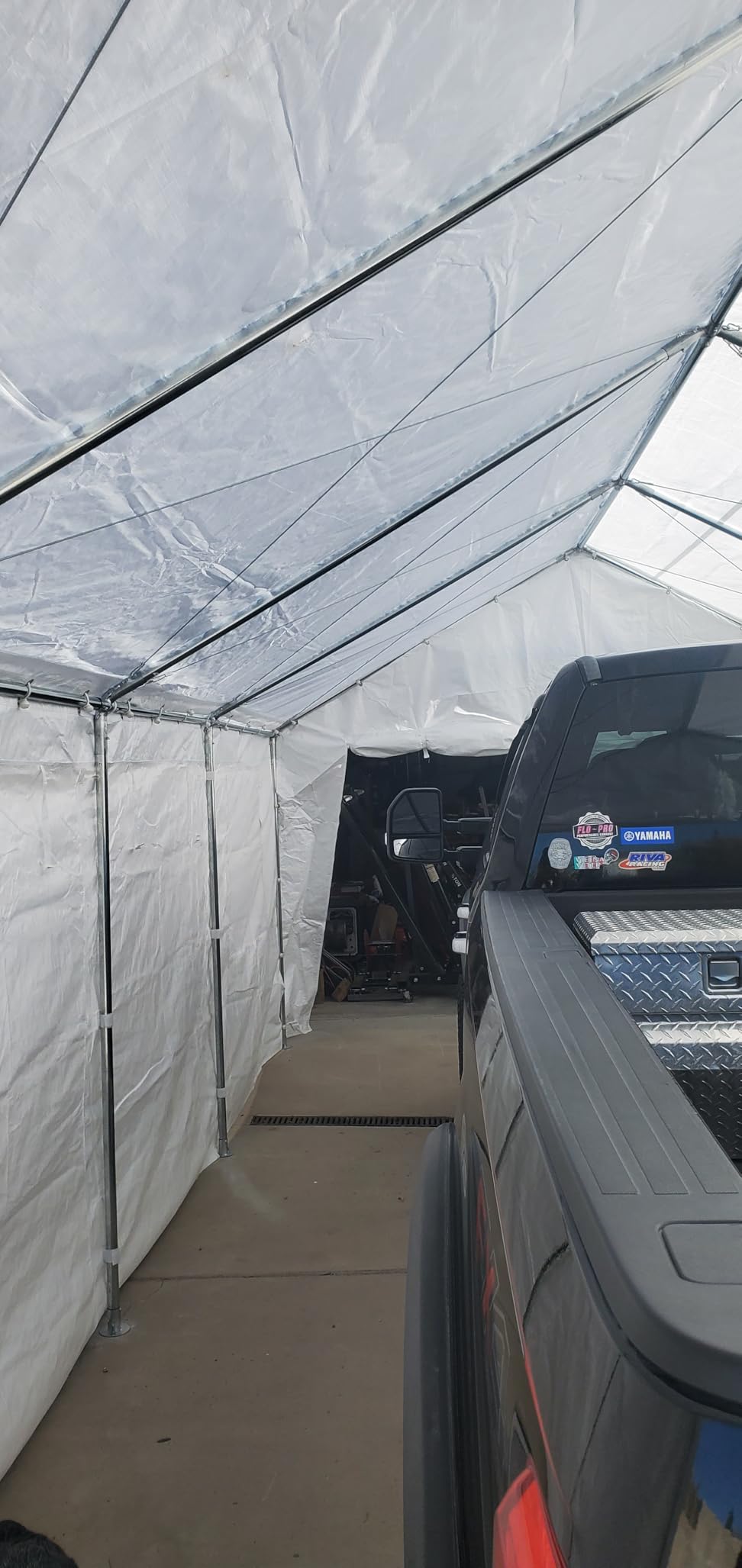
Access is unusually well thought out for a portable carport. Roll-up zipper doors sit on both side panels plus the front and rear, so you can walk in from any direction without ducking around a wall, and the doors roll up and secure rather than unzipping completely. That matters when you are carrying groceries, a bicycle or a fuel can in the rain.
Four mesh windows, two per side, address a problem almost nobody mentions until they hit it: condensation. An enclosed canopy with no airflow traps moisture that then drips onto the vehicle below. The mesh panels let air move while keeping rain out, and polyethylene window covers roll down over them when you want full wind protection.
How the wind and snow ratings compare
Only this model states tested numbers, so treat them as a reference point rather than a direct comparison against the others. Within this roundup it is the only canopy we can point to and say the manufacturer tested for a specific wind speed and snow load.
Real-world performance depends on anchoring more than the label. Cable-braced fabric needs every anchor point loaded, which means all 16 pegs and the included ground anchors, with the frame squared before you tighten anything. A misaligned frame puts asymmetric load on the cables and wastes most of what the bracing buys you.
Is the enclosure worth the extra bulk
If you park a daily driver and want the least hassle, no, an open frame does the job. If you store a motorcycle, work on a project car, keep a boat or a set of tools that cannot tolerate damp, then yes. Sidewalls and doors add weight to the parts bin and make the cover more expensive to replace.
One practical note: rolling the mesh window covers down in cold or windy weather is what gives you the full windproofing, and a heavier gauge anchor is the better direction if you are in an exposed location. With the mesh panels down you get wind protection rather than just airflow.
4. Outsunny 10×20 Galvanized Car Canopy – Fast Setup, Open Sides
- Two adults typically assemble in about 30 minutes
- Ground stakes and six guylines with reinforced cables included
- Foot plates with stake holes for balance
- Open sides mean no maneuvering
- Actual footprint is smaller than the 10x20 label
- Listed water resistant rather than waterproof
The Outsunny is the one we would hand to someone who wants a shelter up before the weekend. Two adults build it in about half an hour, the 1.5-inch galvanized poles use 1.2mm thick 1.65-inch diameter connectors, and at 77 pounds it is light enough to reposition once a season if you want the driveway for a boat ramp or a trailer.
Foot plates with pre-drilled stake holes are a small detail that earns its place. They stop the base of each leg from rocking on uneven concrete, which owners cite often when explaining why a canopy feels flimsy after a season. Combined with the included ground stakes, six guylines and reinforced steel cables, this is one of the better-specified open frames for the money.
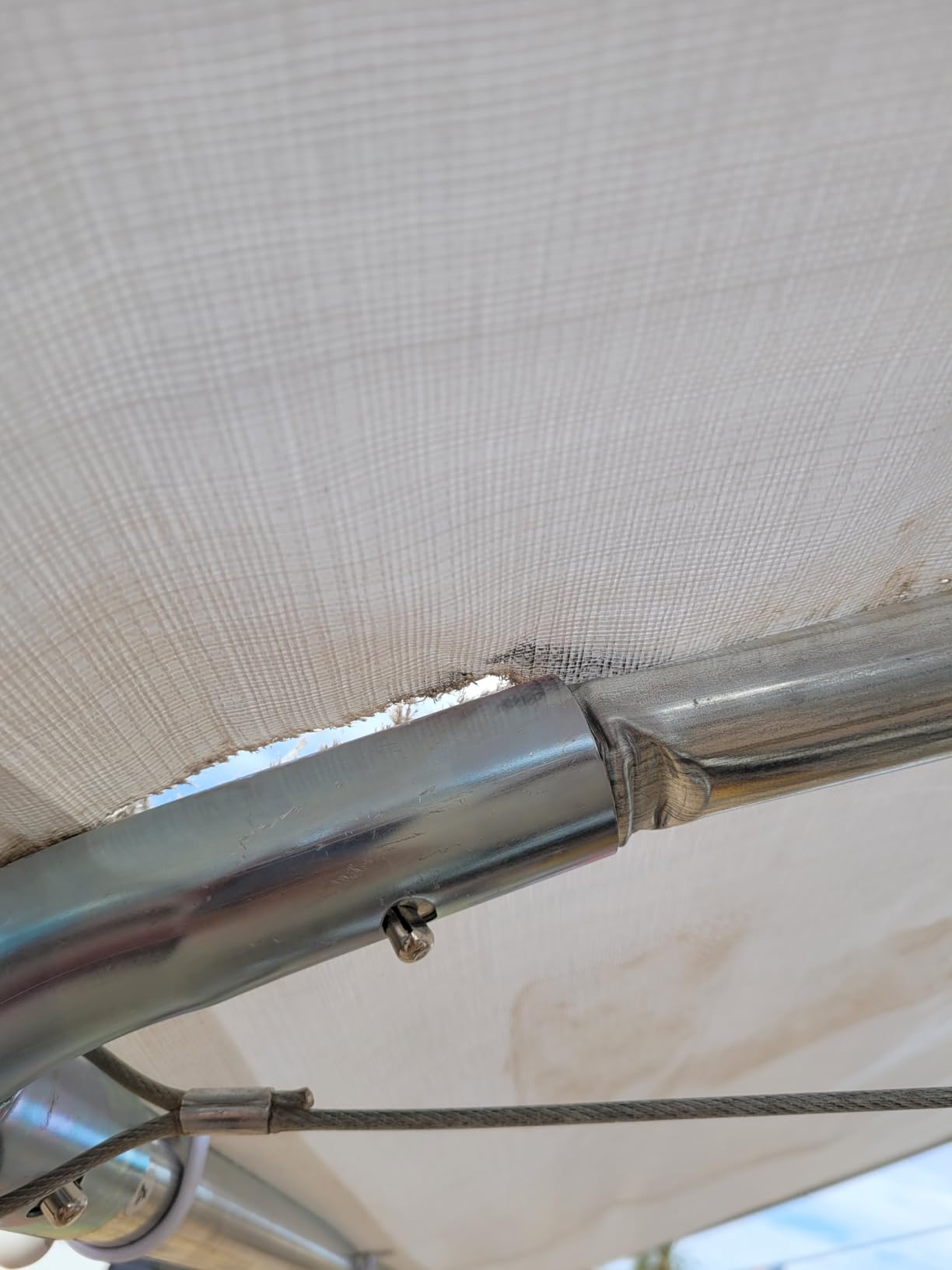
Size needs a caveat that the label hides. The real dimensions are 9.6 by 19.5 by 8.5 feet, so the covered area is 184 square feet rather than 200. That is enough for a car with a walkway alongside, and it is not enough for a full-size truck plus storage. Owners who expected the full 200 square feet are the source of most of the neutral ratings.
Seventy-two percent of reviews are five-star, and the recurring praise is about the build: galvanized frame gauge, the included anchor kit, and how quickly it goes up. The recurring criticism is about water resistance. The listing says water resistant, and owners describe it as effective for light rain, wind and dirt rather than as shelter in a serious storm.
Is this light enough to move seasonally
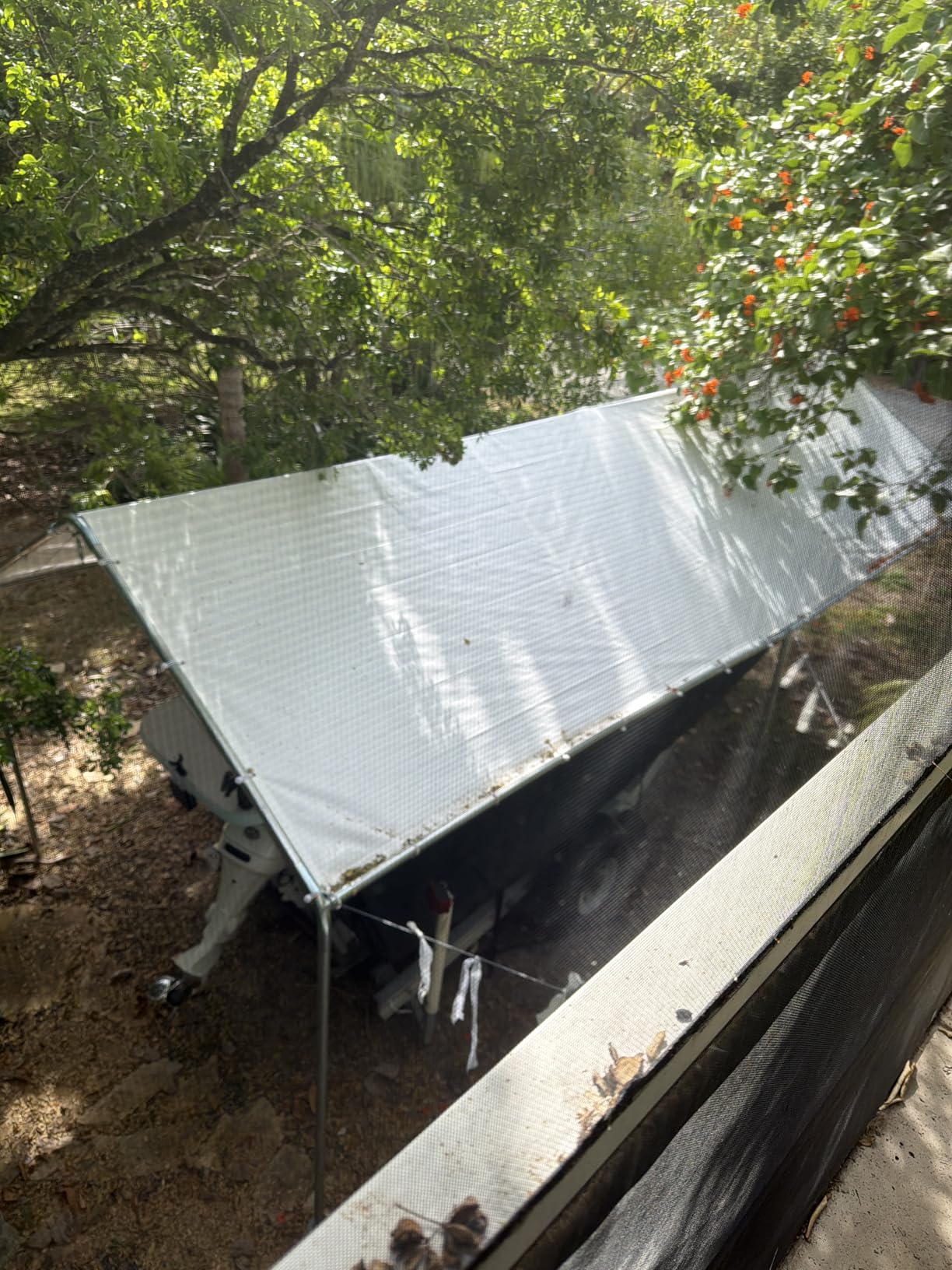
At 77 pounds and with no sidewalls to remove, this is the easiest model here to take down and put back up. That matters for anyone in a snow region who wants the driveway clear in winter, and for people who park a trailer on the same pad part of the year. Disassembly is the reverse of assembly, so practice the first build before you need the space back.
Being portable also means being exposed. A canopy that lives outdoors year-round takes UV on the cover and thermal cycling on the connectors. If you plan to store it, dry it fully first, because polyethylene holds moisture and mildew shows up on the underside within a season.
What we would change before buying
Confirm the footprint against what you actually park. If you have a full-size pickup, the missing foot of width matters. If you are running a sedan, an SUV or a motorcycle, the 184 square feet is comfortable and the 8.5 foot peak is enough for most vehicles.
Do not treat this as a heavy-snow shelter. With an open design and a water resistant cover, the realistic promise is sun, dust, drizzle and leaf cover. For snow and wind, the cable-braced Quictent or a metal-roof model is the better direction.
5. AirWire 12×20 Metal Carport Canopy – Metal Roof for Boats and Tractors
AirWire 12×20 FT Metal Carport Canopy with Reinforced Base
- Square steel tubing reinforced at 11 key points
- Waterproof sealant strips along roof seams
- Soft rubber edges reduce injury risk
- Same line runs from 10x15 up to 20x40
- Metal roof needs snow cleared promptly
- Covered area is smaller than the 12x20 label suggests
Once you move to a metal roof, the trade changes. You give up the light fabric that can be rolled up and carried, and you get something that shrugs off sun and does not need replacing after three summers. For a boat trailer, a tractor or anything that sits on the driveway year-round, that is usually the better direction.
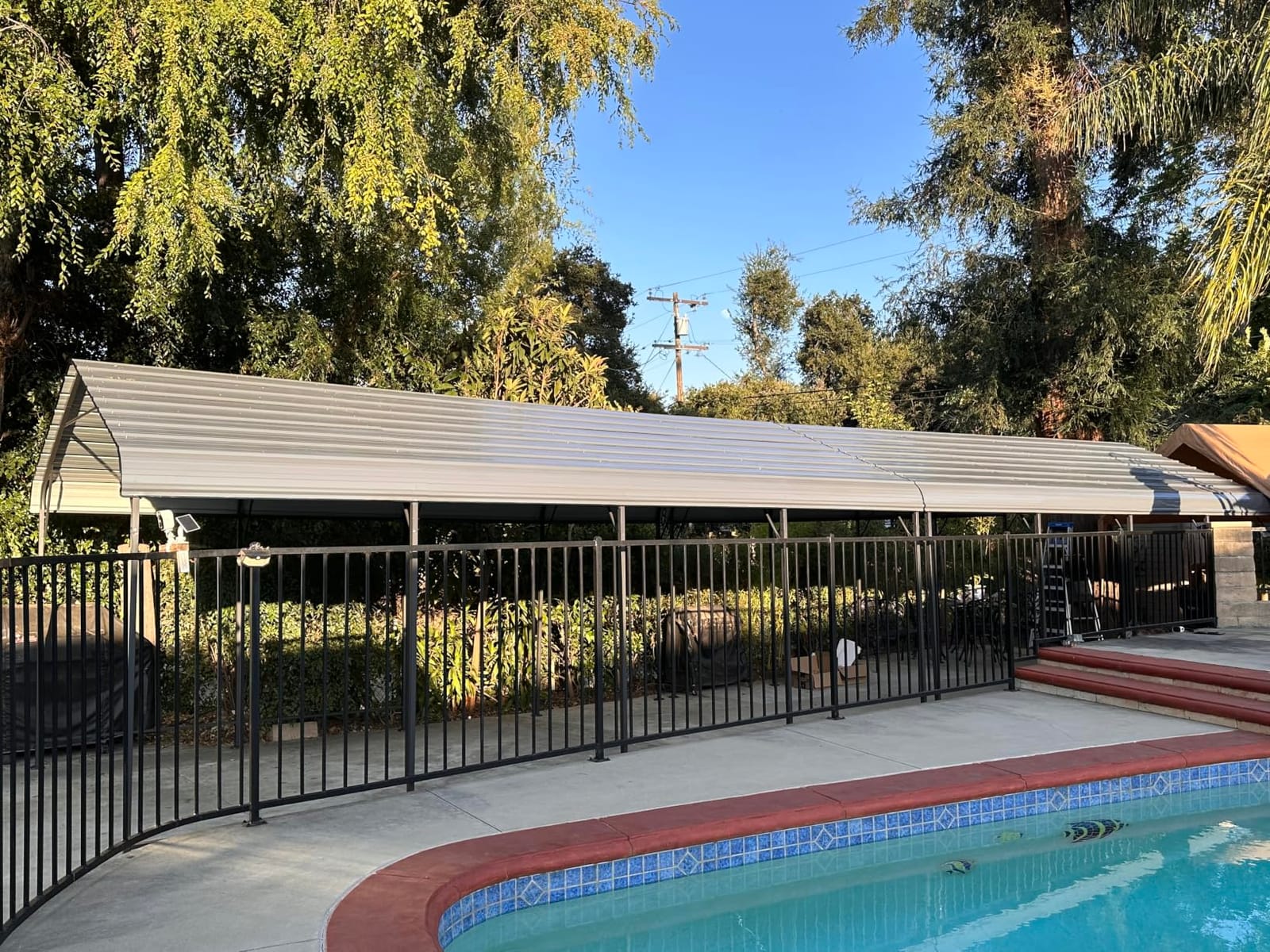
The frame is square steel tubing reinforced at 11 key locations, and the base is reinforced separately, which is a deliberate answer to uneven ground. Seams are sealed with waterproof strips and the roof edges are soft rubber, so the one part of a metal carport most likely to hurt someone, the drip line above head height, has been dealt with.
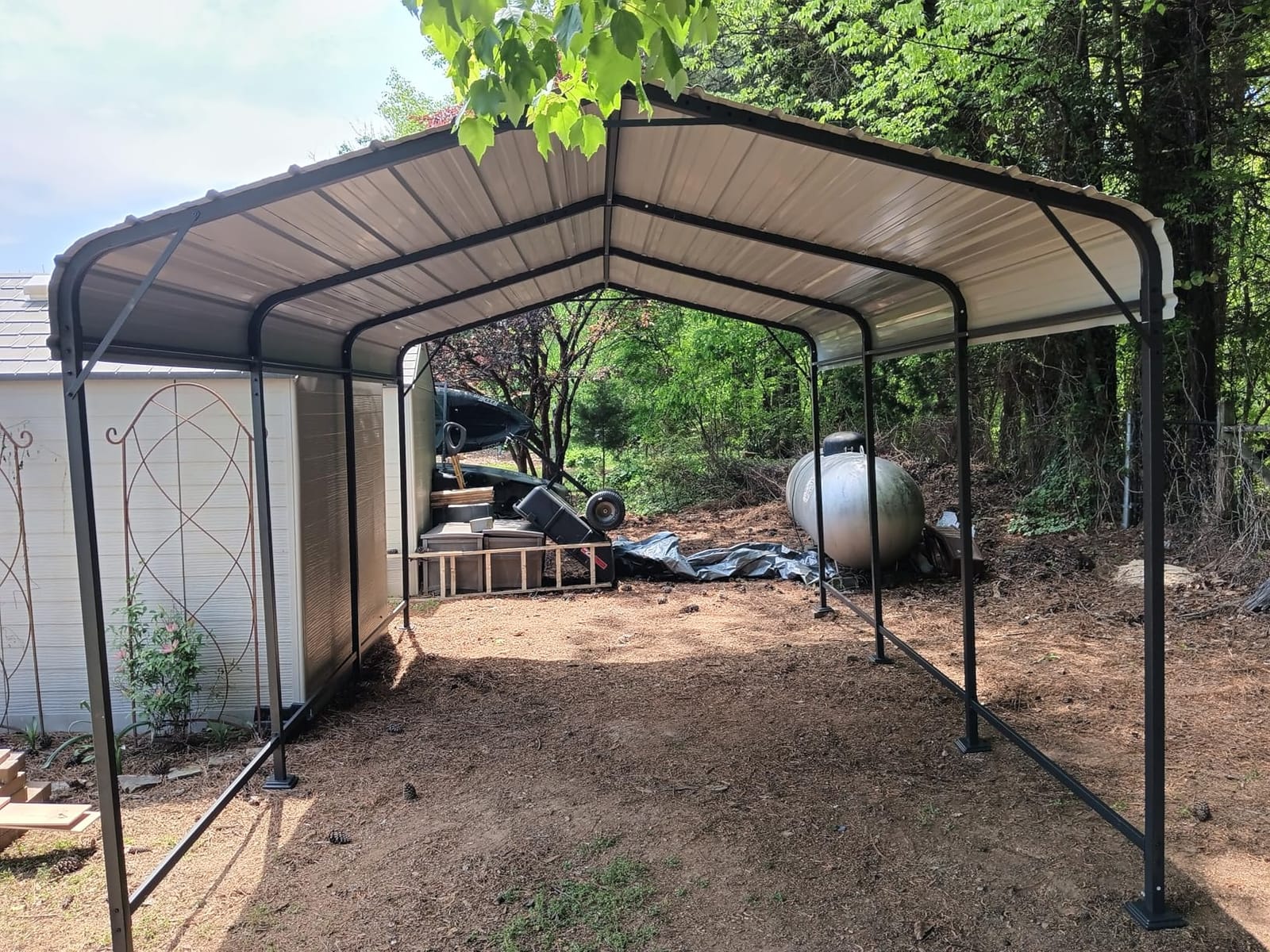
Watch the size arithmetic. The covered area is 230.49 square feet against a 12 by 20 label, and the item dimensions are 230.1 by 140 by 110.4 inches. That is a genuine 12 feet across, which is the useful number for width, but you are not getting 240 square feet of usable space. A boat trailer fits; a boat trailer plus a full-length pickup alongside does not.
Sixty-six percent of reviews are five-star, and owners single out the tubing reinforcement and the sealed, rubber-edged roof as the details that feel above the category average. The most consistent caution is the one that applies to every metal roof here: clear it after snow, because the load lands on the vehicle if you do not.
Metal roof or fabric roof for a driveway
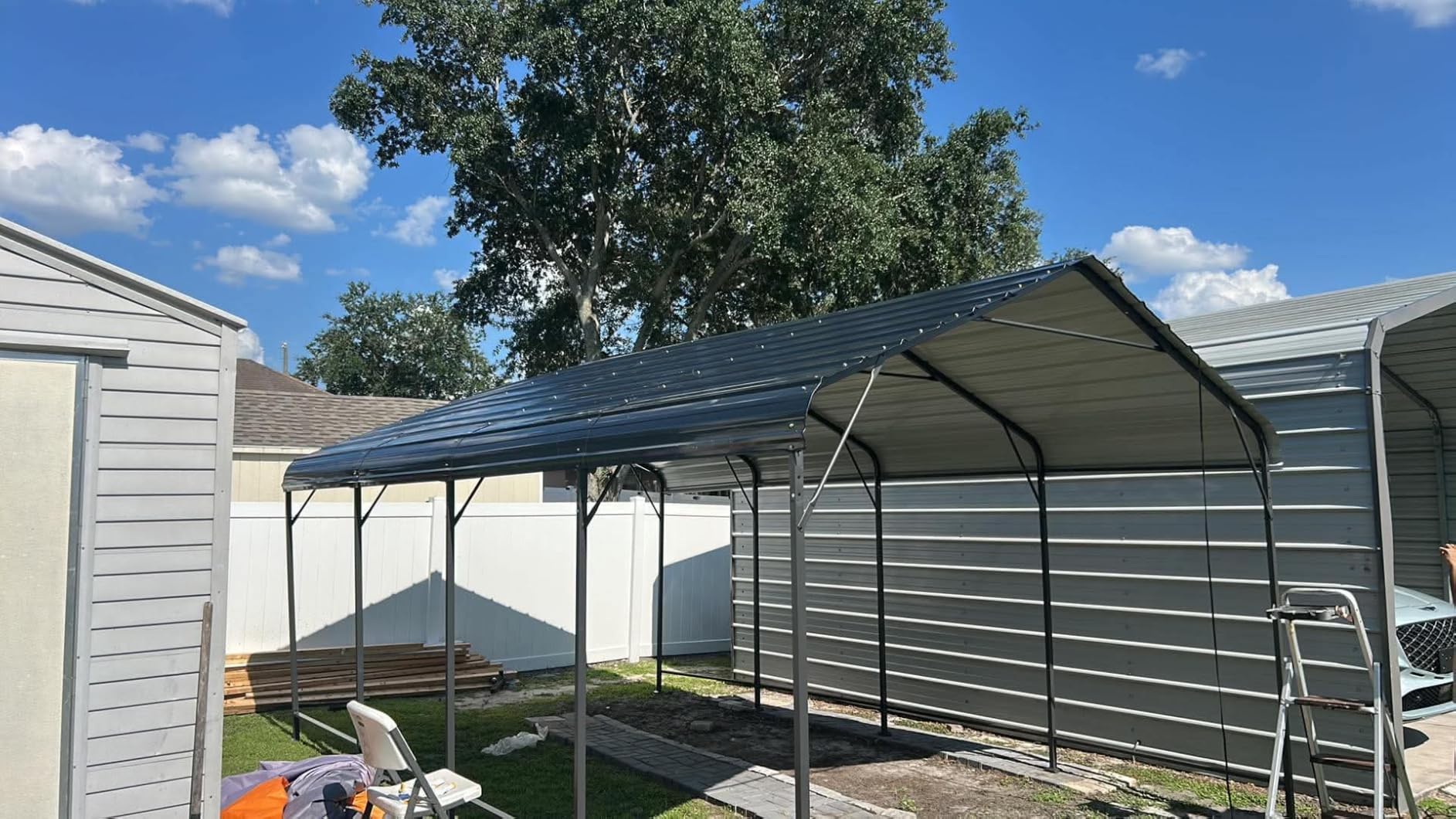
Metal lasts longer and handles sun and debris better. It also concentrates weight, so an undrained snow load transfers straight down onto the car below, and unlike fabric it will not flex away from a heavy wet snowfall. If you get real winters, a metal roof means a clearing job after every storm.
Fabric is lighter, cheaper to replace, and forgiving of a heavy snowfall that would dent a metal panel. It degrades with UV exposure, which means a cover replacement every few years in a sunny climate. Neither answer is universal, and the right one depends on how much snow and how much sun your driveway actually sees.
What to check before you buy a metal model
Confirm the covered square footage against the label, because this one runs smaller than the name implies. The wider 12 foot span is genuinely useful for a boat trailer or a tractor with attachments, and the same brand runs from 10×15 to 20×40 if you need a second bay later.
Set a clearing habit from day one. A square metal roof with any snow on it needs attention quickly, and a bent panel is a much larger repair than a torn fabric cover. Owners who report good long-term results are the ones clearing it as routine rather than waiting.
6. COBIZI 12×20 All-Steel Carport Shelter – Best Rated in the Group
- Highest average rating at 4.5 stars
- Removable double-zipper front and rear doors
- Four ventilation openings cut condensation
- One-piece cover snaps on quickly
- Assembly realistically needs two to three people
- Instructions could be better illustrated
- Bars may need pliers to fit snugly at first
The COBIZI carries the highest average rating of anything we put together here at 4.5 stars, with 79% of its reviews at five stars. The build quality behind that number is the round steel frame made from 10 hot-dip galvanized pipes, supplied with 10 foot plates, iron nails and wind ropes. Hot-dip galvanizing is a heavier process than a zinc coating sprayed on, and it shows in how the frame ages.
The 240 square feet of covered area at 12 by 20 feet is an accurate size claim, which is not a small thing after the AirWire and Shintenchi numbers. The listed dimensions of 240 by 144 by 117.6 inches put the peak at just under 9.8 feet, high enough for a tall SUV and a pickup with a bed cover.
Two design choices address the two classic problems with enclosed shelters. First, connected side and roof fabric prevents rainwater pooling on the roof, which is a common cause of both fabric sag and frame loading. Second, four ventilation openings cut the condensation that would otherwise drip inside and settle on whatever you are storing.
The doors are removable double-zipper panels on the front and rear with buckles, so entry and visibility are both handled. Owners in storm-prone areas add their own weight at each leg, forty pounds per leg being the figure that comes up repeatedly, and report that the frame takes it without complaint.

How many people does assembly really take
Three people in roughly an hour and a half is the honest figure, and two experienced adults can manage it. A single adult will struggle, because the round pipes need to be held square while the connectors are set. Some bars need pliers to seat snugly on the first pass, so have those ready before you start.
For comparison, the tool-free open frames in this list go up in about half an hour with two people. The COBIZI asks for more labour and gives back full enclosure, ventilation and a round-tube frame that does not flex. On a driveway with a level pad, that exchange is worth it.
Is the review base large enough to trust
This is the smallest sample in the roundup at 167 reviews, so treat the rating as encouraging rather than conclusive. What raises our confidence is consistency: 79% five-star and 6% one-star is a distribution that suggests a product that works as described, not one that works sometimes.
One caution specific to round frames: pipes of equal length have manufacturing tolerance, so a frame that feels slightly out of square during assembly usually squares itself once the cover is tensioned. If it does not, and a gap persists at the base, that is what the instructions should have shown you and what customer support is there to resolve.
7. Shintenchi 12×20 Metal Carport – Sealed Roof Joints and Rubber Edges
Shintenchi 12×20 FT Metal Carport, Oversized Carport Garage with Enhanced Base, Outdoor Galvanized Car Shelter, Heavy Duty Carports Canopy, for Car, Boats and Tractors, Grey
- Galvanized roof with powder-coated frame for rust protection
- Waterproof sealing tape at every roof joint
- Soft rubber strips along the roof perimeter
- Two to three people can complete assembly
- Must sit on a level horizontal surface
- 102 inch peak is low for vans and boats
- Listed floor area of 400 sq ft is inconsistent
The Shintenchi pairs a galvanized steel roof with a powder-coated steel frame, which is a sensible combination: the roof sheds water and takes the sun, the coated frame resists rust at the joints where bare steel would start. Sealing tape runs along the roof joints and soft rubber strips line the perimeter, so the two places a metal roof normally leaks and cuts are both treated.
It is listed at number two in the Amazon Carports category, which reflects how much of it moves, and the same line runs 12×15, 12×20 and 20×20 in gray and white. The marketing leans toward parties, weddings and trade shows, but the structure is the same one you would use for a vehicle, which is exactly why it works for a driveway that doubles as gathering space.
Here is the catch, and it is a real one for driveways: the enhanced base design is specified for horizontal surfaces only. If your driveway slopes even a few percent, the base does not behave the way the design intends and the frame works harder than it should. Check the fall across your pad before you order.
The peak height of 102 inches is also worth measuring against your vehicle. That is 8.5 feet at the center, which is fine for a sedan, an SUV or a standard pickup and tight for a tall van, a box truck or a boat on a trailer. Twelve percent of reviews are one-star, and that is the highest share among the metal-roof models here.
Is the 400 square foot figure accurate
Treat it as a listing error rather than a size. Twelve by twenty feet is 240 square feet, and the stated item dimensions of 240 by 144 by 102 inches confirm the 240 square foot footprint. Nothing in the product is 400 square feet, so plan around the dimensions, not the floor area field.
That mismatch is the main reason the rating sits at 4.1 rather than higher. Buyers who ordered expecting 400 square feet and received 240 react badly even when the canopy itself performs, so knowing the real number before you order prevents most of the disappointment.
What matters if you also use it for gatherings
The metal roof gives you shade and a dry floor plane in a way a fabric canopy cannot, and the gray finish is the more neutral of the two color options for a visible part of a property. Sealed joints mean a longer dry stretch before any water finds a way in.
Against that, a square metal roof with no drainage slope collects snow rather than shedding it, and the low peak means you cannot hang much from the frame. If your main use is the car, this is a solid metal option. If it is mainly entertaining, we would spend the difference on the taller enclosed model and accept the extra assembly.
8. Wisteria Lane 12×20 Metal Carport – Reinforced Top and Bottom Beams
- Galvanized pipes compressed for bend resistance
- Reinforced support beams on both top and bottom
- High-peak design for taller vehicles
- Customer service supplies manuals and missing parts quickly
- Roof panel protective film is hard to remove and has sharp edges
- Some roof slats arrive with misaligned pre-drilled holes
- Not rated for heavy snow accumulation
The engineering detail that sets this one apart is the pipe process. The galvanized tubes are compressed during manufacture, which raises their resistance to bending, and then reinforcement beams are added along both the top and the bottom of the frame. Bracing only the top, which is what most canopies do, leaves the base free to rack; bracing both planes is a meaningfully stiffer structure.
Owners report the frame holding through several bad storms over a five-month period in one case, and the reviews describe it as genuinely sturdy rather than adequate. The roof is 0.25mm high-strength alloy sheet with high-density weather-resistant sealing tape, and the high-peak design is the tallest of the metal options we looked at for a 12×20 footprint.
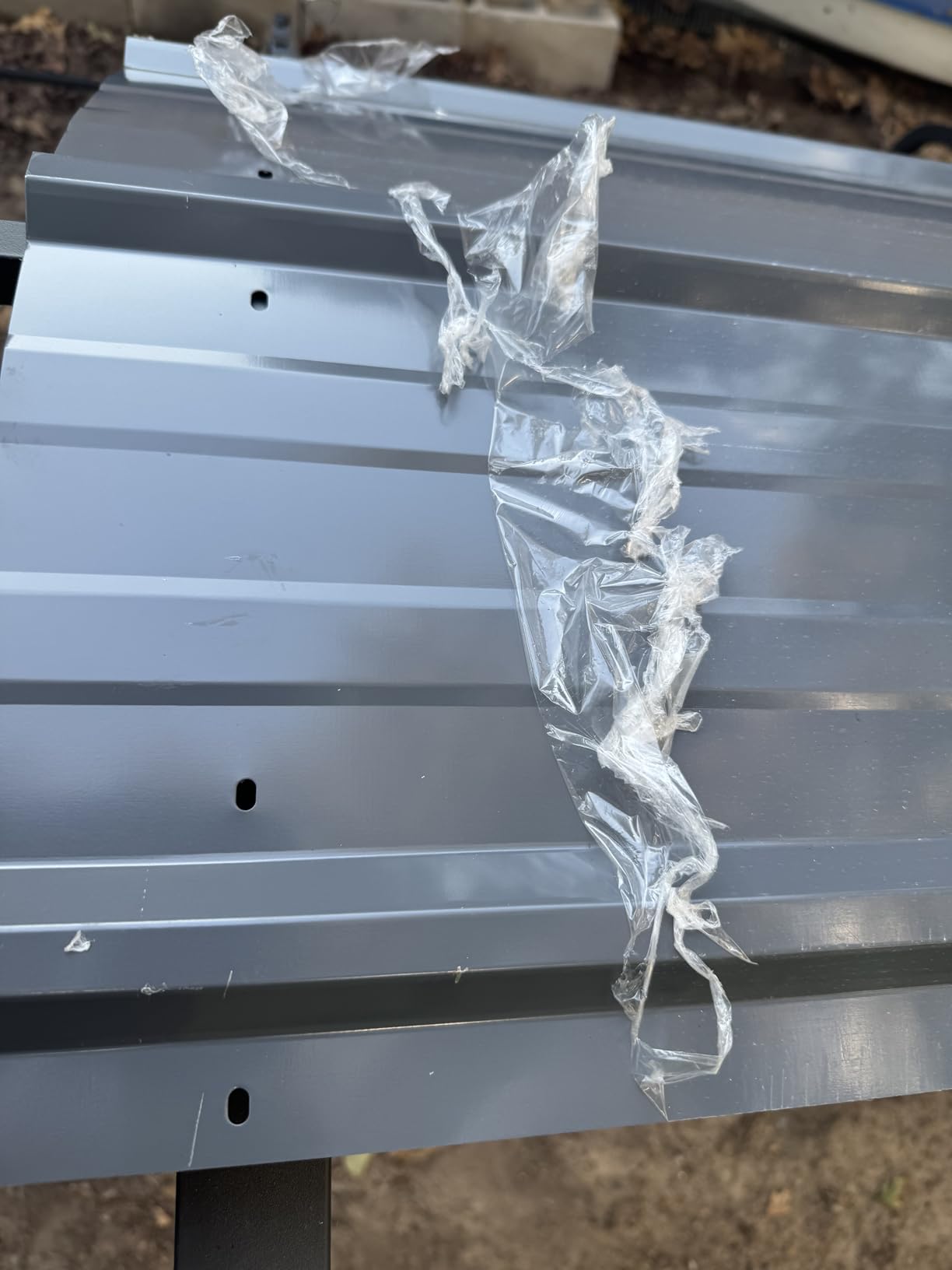
There is one problem that comes up more than any other, and it is not structural. Every roof panel ships with a protective plastic film that reviewers describe as extremely difficult to peel off, with razor-sharp edges, and one reviewer estimated roughly ten hours of work across the panels and ended up with a hand injury. Budget for that time and wear gloves.
Second, some roof slats arrive with pre-drilled holes that do not line up with the frame, which means either re-drilling or using different fasteners. Both are solvable, and customer service is described as quick to supply missing parts and manuals, but it is an assembly friction you should know about before the frame is half up.
Is it really the tallest option here
It is marketed as high-peak and the 12×20 dimensions of 240 by 142.8 by 102 inches back that up for a metal model. The catch is that 102 inches is the same center height as the Shintenchi, so the advantage is the wider 142.8 inch span and the high-peak frame geometry rather than a dramatic height difference you should expect to notice in the driveway.
Where it does beat the fabric frames is wind and structural rigidity. A braced steel frame with sheet roofing does not flutter, and it stays square through seasons where fabric canopies need re-tensioning. If your priority is the frame surviving rather than the cover surviving, this is the one.
What we would watch in a storm region
Owners in hurricane areas report needing the base weighted down heavily after assembly, which fits the general rule that anchoring beats frame strength. The reinforced beams help the structure hold shape, but a frame that is not anchored is still a sail, and the included foot plates and screw points need to be loaded onto something solid.
It is also not rated for heavy snow accumulation. Sheet roofing needs clearing promptly, and unlike the enclosed Quictent there is no published snow load figure to plan around. In a heavy-winter area, the enclosed fabric model or a purpose-built metal carport from a specialist is the safer direction.
9. King Canopy Hercules 10×20 – the Thickest Steel in the Roundup
King Canopy Hercules 10-Feet by 20-Feet, 2-Inch Hammertone Steel Frame w/Buttons, 8-Leg, Carport, White
- 2 inch diameter frame
- heaviest in the group at 148 pounds
- UPF 50+ UV protection on the 180G PE cover
- Tool-free frame with step-by-step instructions
- Lowest average rating here at 4.0 with 14% one-star reviews
- 6 ft 8 in side height is tight for taller vehicles
- Warranty excludes wind
- snow
- ice and rain damage
The Hercules is the odd one out in this roundup and the choice worth explaining. Every other canopy here uses 1.5-inch diameter poles; this one uses 2-inch diameter powder-coated steel with eight legs and button-lock connections, and at 148 pounds it is by some distance the heaviest frame we looked at. That is a real amount of steel standing on your driveway.
Clearance is where the weight comes from. The 10 foot by 20 foot footprint gives a 6 foot 8 inch side height and a 9 foot 5 inch center peak, which is 213.4 square feet of covered area. For a sedan, an SUV, a motorcycle or a boat on a trailer, that is workable. For a full-size pickup with a camper, the side height is the constraint, not the frame.
Does heavier steel fix the durability question
Partly. Tube gauge resists bending and it stays square through wind, which is the failure mode owners of lighter frames report. It does not protect the polyethylene cover, and UPF 50+ UV protection is a specification about sun rather than about wind, snow or punctures.
The warranty is worth reading closely. It is a one-year limited warranty on canopy components and it explicitly excludes damage from improper anchoring, wind, snow, ice and rain, which is standard wording in this category and also the clearest statement that the manufacturer does not stand behind the frame in a storm. Anchor it properly regardless.
Is the Hercules worth the handling difficulty
At 148 pounds, solo handling is genuinely difficult and you will want a second person. The button-lock frame is tool-free and comes with step-by-step instructions, and it arrives in two boxes, so the assembly burden is spread across two trips from the truck rather than one.
The rating distribution explains the mixed owner experience. Fourteen percent one-star reviews is the highest share in this roundup, and a 4.0 average is the lowest, but 65% of reviews are still five-star. That pattern says the product is fine when set up properly and disappointing when it is not, which makes anchoring quality the deciding variable for this model in particular.
10. SAILARY 10×20 Heavy Duty Car Canopy – Easiest One-Person Build
10×20 ft Heavy Duty Car Canopy Galvanized Frame Carport Outdoor Party Tent Boat Shelter with Reinforced Structure, No Sidewall – Green
- One-person assembly in about an hour
- Three extra high-strength roof cables resist twisting
- Screw holes in the feet for concrete or ground anchoring
- Fits a standard driveway with van clearance
- Cover can hole or split at seams within a first year
- Legs and roof sleeves can bend in strong wind
- No concrete screws supplied
The SAILARY is the model we would suggest to a single person working alone, and the reason is the build time rather than the specifications. Owners report assembling it themselves in about an hour, or roughly fifteen minutes with a helper, which is the shortest time in this roundup that is not a two-adult job.
At 88 pounds and 240 by 120 by 104.4 inches, it covers 200 square feet, which suits a standard driveway with clearance for a van. Three extra high-strength steel cables run across the roof to resist twisting, and the feet have screw holes, so you can bolt it down to concrete or fix it to the ground rather than relying on friction alone.
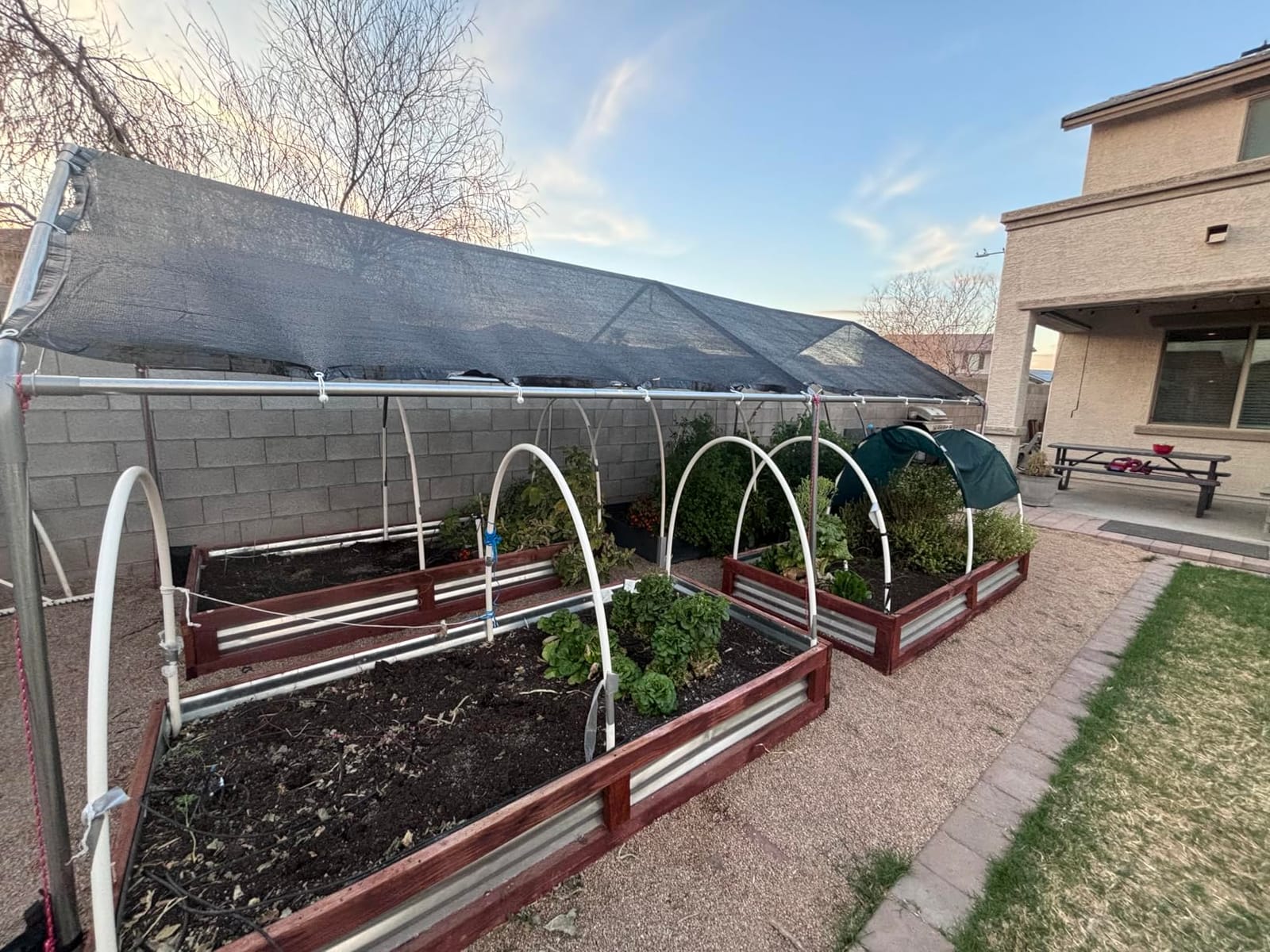
Those screw holes are the detail we like most, and they come with a caveat. The frame accepts them but no concrete screws are supplied, so if you are anchoring to a slab you need to buy expansion bolts separately. On asphalt, that is also the method that avoids tearing the surface, which is a common complaint about anchoring canopies on paved driveways.
The cover is the weak point, and the reviews are consistent about it. Multiple owners report holes at the centre or tears at the seams developing within about a year of sun exposure, so the sensible plan is to treat the top as a consumable. The frame is described as solid, and the cables hold their shape.
Is one-person assembly realistic
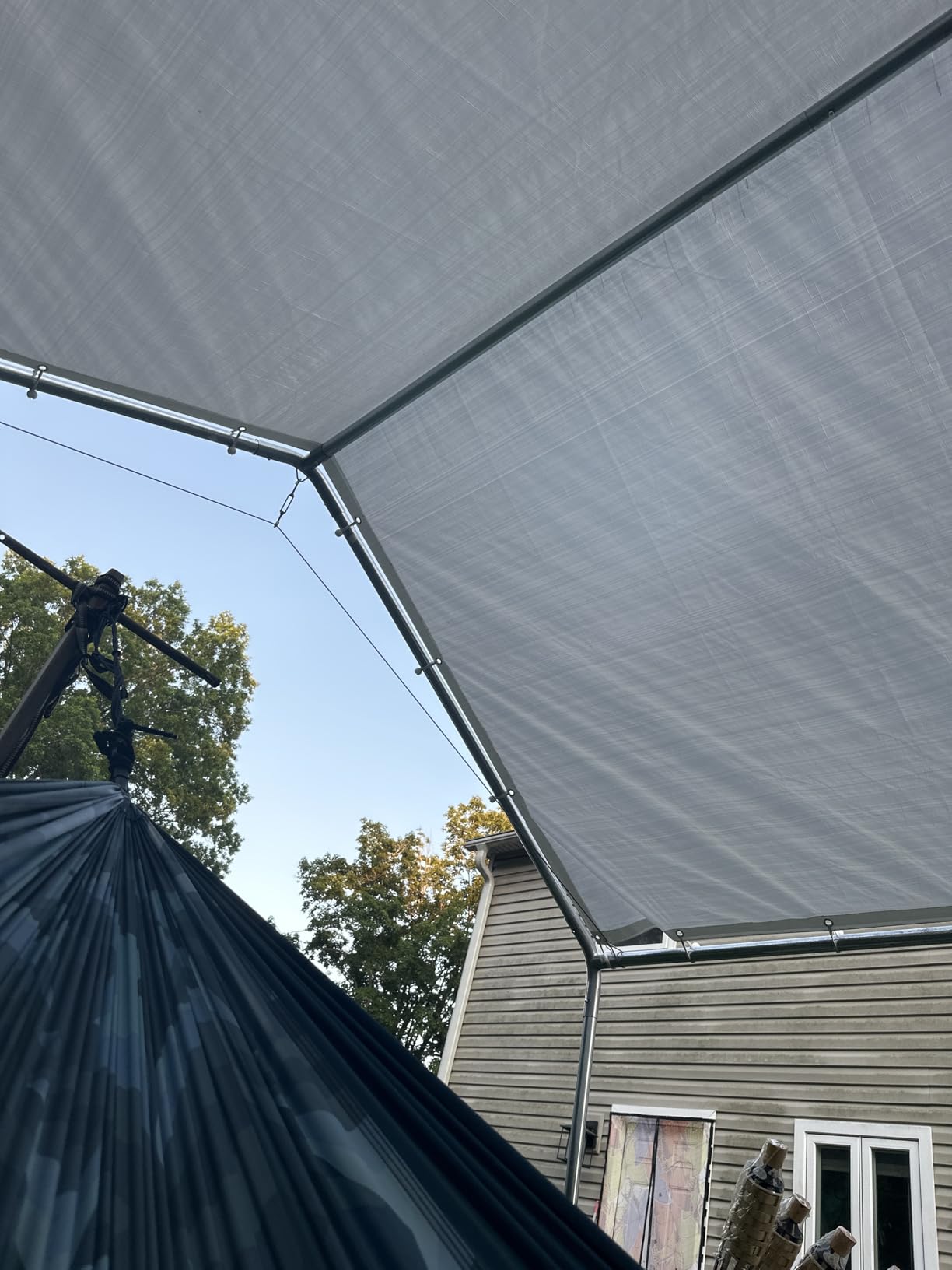
At about an hour for one person, yes, and that is the specific advantage here. Nothing in the design needs two people holding opposite corners. For a renter, an older homeowner or anyone without a helper available on a Saturday morning, that changes the calculation completely.
Read the instructions first, because the roof sleeves on the top poles are the fiddly part. Owners who sorted the poles and connectors before starting report a smooth build, and owners who improvised report bending the sleeves, which is the failure that shows up again when wind loads the frame.
What to plan for after the first year
Budget for a replacement cover rather than a replacement frame. Ten percent of reviews are one-star and the fabric is where the complaints concentrate, while the metal frame and roof cables are described as holding up well. A replacement top is a much smaller job and expense than a new canopy.
And upgrade the anchors. The three included guylines handle calm conditions, and owners who anchored this model through real weather describe adding heavier anchors of their own. The screw holes in the feet exist for exactly that, and the enclosed Quictent earlier in this list is the option if you would rather not think about it after assembly.
How to Choose the Best Carport Canopies for Driveways
Start with the vehicle, not the canopy. Measure the widest point of what you are protecting including mirrors, add six inches on each side for opening doors and walking around, and then check the side height against the tallest point of your vehicle. This is the single step that prevents the most disappointing purchases, because a 10×20 footprint with a 6 foot 8 inch side height is a different product from a 10×20 with an 8 foot side height.
Width is the dimension that runs out first on a driveway. A driveway is typically far longer than it is wide, so a 10×20 gives you plenty of length and just enough width for one car, while a 12×20 gives you the room for a truck plus a walkway, or a boat trailer with clearance at the tongue. If your budget stretches to it, 12×20 is the more useful size on almost every driveway.
Next, choose between fabric and metal. Polyethylene fabric over a galvanized frame is light, replaceable, forgiving of heavy wet snow and significantly easier to handle, but it fades and tears with UV exposure over a few years. Galvanized steel or alloy sheet roofing lasts longer and does not need replacing, but it concentrates weight, needs clearing after snow, and cannot be rolled up and carried. Neither is better in the abstract; it depends on your sun and your winters.
Frame gauge is the next decision, and the range in this roundup is narrow enough to make it simple. Most canopies use 1.5-inch diameter galvanized poles with 1.65-inch connectors. The King Canopy Hercules steps up to 2-inch powder-coated steel at nearly double the weight. The structural upgrades that matter more than gauge are the cross-bracing cables on the roof and reinforcement at the frame joints, which is how the Quictent zipper-door model reaches its published wind figure.
Anchoring is where most driveway canopies fail, and it depends entirely on your surface. On concrete, use expansion bolts through the screw holes or foot plates, which is what owners report as trouble-free over five years on asphalt. On asphalt, expansion bolts also work and avoid the tearing that comes with staking. On gravel or soil, screw-in auger anchors are the right call, and a user who anchored a 10×20 on gravel with auger anchors reported it holding through 60 mph winds. On lawn or soft ground, the pegs supplied with most kits are adequate, but so are a hundred dollars of extra anchoring.
Finally, think about whether the canopy is permanent. Portable models under about 80 pounds can be taken down between seasons, which is what you want in a snow region or on a driveway that a trailer needs. Anything above 100 pounds is realistically a fixture, and once it is up you will want it squared, level and anchored before you tighten anything, because a misaligned frame puts asymmetric load on every joint and cable in the structure.
If you want a heavier-duty permanent structure rather than a portable one, our roundup of metal carports for driveways covers the fixed-install category in more depth.
Driveway-Specific Considerations Before You Buy
Slope is the issue no competitor in this space addresses, and it decides more installations than people expect. A canopy needs a level base, and the reinforced-base models in this list are specified for horizontal surfaces. If your driveway falls more than a few percent across the pad, either level the area under the legs with paver base or compact fill, or choose a model without a base-sensitive design and anchor each leg individually.
Drainage matters just as much. A canopy sitting over a driveway that sheds water toward the pad will channel runoff along the roof edge and concentrate it in one spot, which is where pooling and erosion start. Check where water goes after a heavy rain before you build, and make sure the low corner of the pad is not where your car’s front tire sits in winter.
Curb and setback clearance is the third one. If your driveway has a curb or a lawn strip between it and the street, the legs need to land on solid surface on all eight feet, and a 12×20 needs twelve feet of clear width. Measure the flat part of your driveway, not the distance from curb to house, because the slope usually starts before the concrete does.
Permits and HOA rules are worth checking before you buy rather than after. A 20×20 carport is a common size that many municipalities treat as an accessory structure requiring a permit, while a smaller open canopy on a temporary basis often does not. The rule varies by jurisdiction, so a call to your local building department is the fastest way to a clear answer, and it costs nothing.
If you are in an HOA or under a covenant, get the approval in writing before assembly day, not after. Approaches that work are submitting the model number and footprint with a request for written consent, referencing the driveway rather than the yard, and being willing to note that the structure is removable. Approval letters from other homeowners in your association are more persuasive than anything you can write yourself.
One more driveway-specific item that comes up constantly: keep the canopy clear of the roofline of an adjacent structure, and check for overhead lines before you raise any section. Portable canopies on a driveway also need a winter plan, since a fabric roof that is still up during heavy snow is a load waiting to happen.
Installation Guide
Preparation takes an hour and saves an afternoon. Mark the eight leg positions with tape first and check the level across the whole footprint before you open any boxes. If the pad slopes, correct it now. Set the layout so the open end of the canopy faces the street, which makes every future vehicle entry simpler.
Step one is unpacking and sorting. Lay out every part on the driveway and group by function: poles, connectors, feet, roof panel, anchors. The instructions that list 45 separate pieces are accurate, and sorting first turns a confusing build into an obvious one.
Step two is the frame. Most of these canopies assemble tool-free in a fixed order, usually the two long side rails first, then the cross members, then the legs. Square the frame before you tighten anything, and a good check is measuring the diagonal across the base in both directions, which should match.
Step three is raising the frame. This is the step that decides whether you need one person or three. Open fabric frames go up with two adults in about half an hour, the enclosed Quictent takes about an hour, and the COBIZI round frame realistically wants two to three people and an hour and a half. Have the second person lined up before you start rather than partway through.
Step four is anchoring, and this is where people cut corners. On concrete or asphalt, use expansion bolts through the supplied foot plates or screw holes. On gravel or soil, drive the auger anchors or heavier stakes and attach every guyline. Anchor every leg on a driveway, not just the corners, because the middle legs are what lift in a gust and tear the fabric where it meets the frame.
Step five is the cover. Fabric covers tension as they go on, and the order matters, so fit from one end and work along rather than starting in the middle. Leave the frame square underneath and walk the perimeter checking tension before you walk away. Then clear snow off any metal roof the same day it lands.
Maintenance and Longevity
A seasonal routine takes twenty minutes. In spring, tension the cover by tightening the frame rather than pulling the fabric, check each anchor point for movement, and rinse the roof with a garden hose. In autumn, clear any leaf buildup from the seams, since leaves hold moisture against the fabric and against the roof joints on metal models.
Fabric covers degrade on a predictable schedule in sunny climates, typically around three years of full exposure, and the frame usually outlives two covers. That is normal rather than a defect, and it is a reason to check whether a replacement cover is available in your footprint before you buy, since replacement covers do not reliably cross brands. If your canopy is going up for a decade, treat the cover as a planned expense.
Metal roofs need a different habit: clear snow promptly after it falls, and check the sealing tape along the joints once a year for cracking or lifting. Touch a small damaged area with roofing sealant before water finds it, not after. Powder-coated frames are best washed with mild soap and a soft cloth, and any surface rust that appears at a joint should be treated immediately.
For fabric canopies in snow regions, the safer annual routine is to take the canopy down for winter and rebuild it in spring. A pop-up canopy left up through a wet snow season is one of the more common ways these structures get damaged, and taking one down takes about half the time it took to put up.
Frequently Asked Questions
Do you need a permit for a 20×20 carport?
In many municipalities a 20×20 carport is treated as an accessory structure and does require a permit, while a smaller open canopy set up temporarily often does not. Rules vary by jurisdiction, so contact your local building department before you buy. If you are in an HOA, get written approval as well, since a covenant can restrict structures independently of city rules.
What are the disadvantages of a car port canopy?
The main drawbacks are wind exposure, UV damage to fabric, and a fixed footprint on your driveway. Portable canopies need heavy anchoring, fabric covers typically need replacing every few years in sunny climates, metal roofs need snow clearing, and none of these structures is fully enclosed by default. A canopy is still a fraction of the work of a built garage.
What is the best material to use for a carport ceiling?
For the roof, galvanized steel or aluminium alloy sheet lasts longest and does not degrade in sun, while 180g polyethylene fabric is lighter, cheaper to replace and more forgiving of heavy snow. The frame matters as much as the roof, and galvanized or powder-coated steel is the standard choice. Match the roof to your climate rather than to a single best answer.
What company makes the best carports?
Among the portable canopies in this roundup, Quictent has the deepest range with two models here, ADVANCE OUTDOOR offers the widest height adjustment, and King Canopy builds the heaviest steel frames. For fixed and fully enclosed structures, specialist metal carport builders are a separate category with much longer lifespans than any portable canopy.
Which brand of canopy is considered the best?
For all-round driveway use, ADVANCE OUTDOOR leads because of four adjustable side heights and the largest hardware pack we saw. Quictent is the strongest name for reinforced open frames and for enclosed models with tested wind figures. King Canopy is the choice when frame weight and tube gauge matter more than portability.
What are the best car canopies?
The best car canopies for a driveway are the ADVANCE OUTDOOR 10×20 for adjustable height, the Quictent 10×20 reinforced for a simple open frame, the Quictent 10×20 with zipper doors for full enclosure, and the AirWire 12×20 when you want a metal roof for a boat or tractor. Each covers a different need, and size is the factor that decides between them.
What are the common problems with pop-up canopies?
The most common problems are inadequate anchoring, frame twist in wind, fabric tearing at seams after a year or two of sun, low side clearance for taller vehicles, and pooling rainwater on flat roofs. Assembly difficulty and missing or misaligned parts are frequent early complaints. Every one of these is reduced by anchoring every leg and by choosing a frame with roof cross-bracing.
How long does a carport canopy last?
The frame typically lasts far longer than the cover. Polyethylene fabric on a galvanized frame commonly lasts about three years in full sun before it fades or tears, while metal-roof models can run for a decade or more if the sealing tape is maintained. Replacing a fabric cover is a normal part of ownership rather than a sign of a faulty product.
Can a carport withstand heavy snow?
It depends on the roof and the bracing. Fabric canopies flex and shed weight better, while metal roofs concentrate load onto the vehicle below and must be cleared promptly. The Quictent model with side zipper doors is the only one in this roundup with a published figure at 9 pounds per square foot of snow load. In heavy-winter regions, taking a portable canopy down for the season is the safest option.
How do you anchor a carport on a concrete driveway?
Use expansion or concrete bolts through the supplied foot plates or the screw holes in the frame feet, on every leg rather than just the corners. Expansion bolts on asphalt also work and avoid tearing the surface, which is the most common complaint about staking into a paved driveway. On gravel or soil, screw-in auger anchors and all supplied guylines are the right method.
Conclusion
The best carport canopies for driveways come down to two questions: how tall is your vehicle, and how much sun and snow does your pad see. For most households the ADVANCE OUTDOOR 10×20 is the answer, because four side-height settings and a 16-peg, 8-auger hardware pack solve the two problems that send people back to the store. If the budget decides it, the Quictent reinforced 10×20 is proven and simple. If you want to work inside out of the weather, the Quictent with zipper doors is the only canopy here with a published wind and snow figure.
Whichever one you choose, anchor every leg to the surface, check your HOA and permit position before assembly day, and treat the fabric cover as a replaceable part rather than a permanent one. You can also pressure wash the driveway underneath before you build, and a push broom for the edges keeps the slab clear around the new foot plates. Both lists were updated for 2026 and follow the same testing approach as this one.