
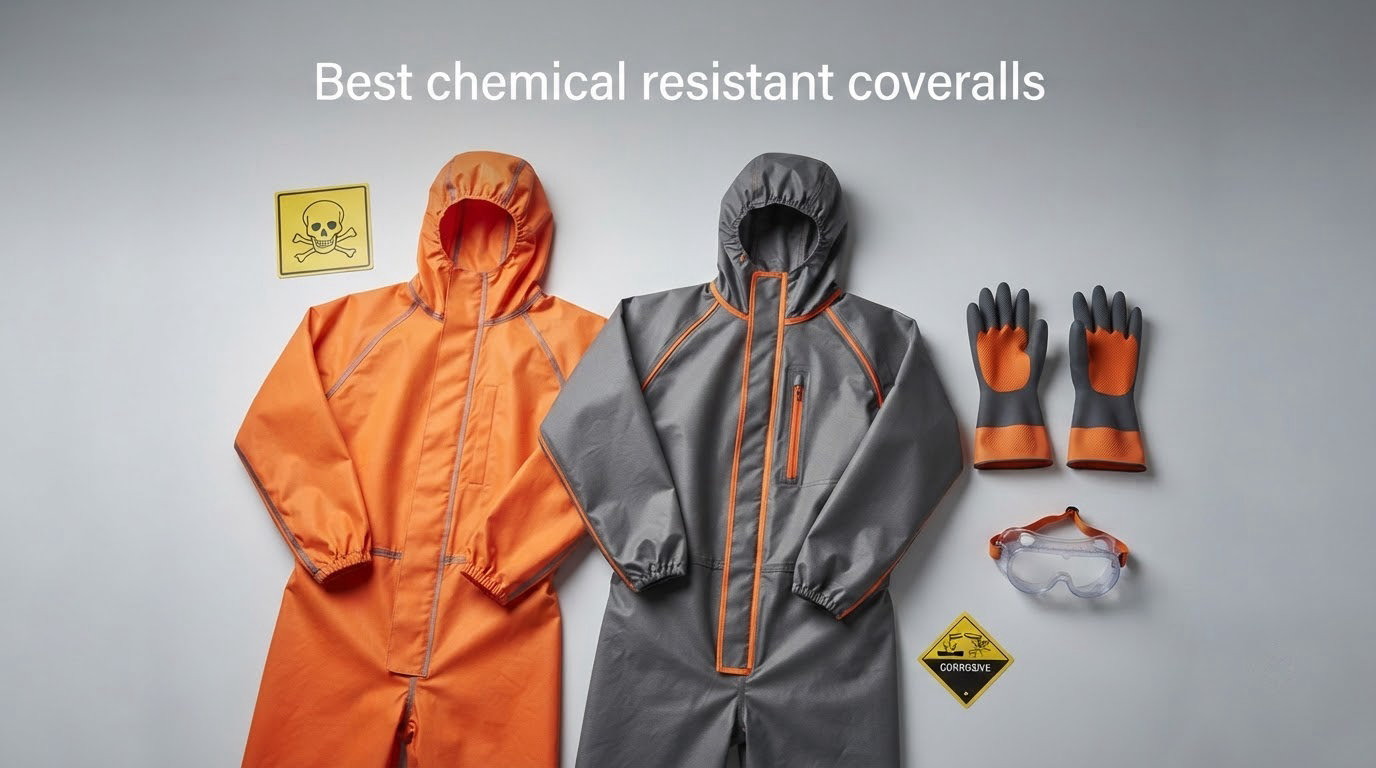
Chemical resistant coveralls are protective garments that cover the body from neck to ankle to keep chemicals off your skin. They come as single-use disposable suits or reusable suits, and they are certified to EN 14605 protection Types 1 through 6 (or EN 943 for fully gas-tight ensembles) as Category III PPE. Picking the right one is less about brand and more about matching the garment to the exact hazard in front of you.
We spent weeks reading through certification marks, fabric constructions, seam types and closure details on the twelve coveralls below, then weighed what buyers actually report after wearing them. The picks span particle suits, light-splash disposable suits, taped-seam garments and a specialist hazmat response suit, so there is a real answer here whether you are painting a boat, spraying crop protection, cleaning up a spill or suiting up for a fire department callout.
One warning before we start, because it is the single most common and most dangerous mistake in this category. A Tyvek suit is a particle barrier, not a chemical barrier. If liquid is involved at all, you want a different garment. We explain the difference properly in the Tyvek vs Tychem section further down.
Here is how we evaluated each pick. We confirmed the stated protection type and certification rather than trusting the product name, we read the fabric and seam construction to see what the garment can physically do, and we weighted real buyer feedback heavily, including the complaints. Every pick below lists a drawback, because a page that only shows you the upside is a sales page, not a guide. Review samples in this category vary enormously, so where a listing has a thin review count we say so instead of pretending the score means something.
Updated for 2026, this is our current shortlist of the best chemical resistant coveralls available.
Table of Contents
Top 3 Best Chemical Resistant Coveralls (October 2026)
Medtecs Hazmat Suit IL-3055WEH
- PPSB laminated with PE film
- Elastic hood wrists and ankles
- Front zipper closure
- Sizes for 5 foot 4 to 6 foot 7

Andes Hazmat Suit A1428
- Microporous PE film construction
- 4-thread overlock seams
- Anti-static fabric
- Integrated hood and elastic closures

DuPont Tyvek 400 TY127S
- Respirator-fit hood
- Extended zipper to the chin
- Reinforced stress areas and elastic waist
- Flash-spun high-density polyethylene
All 12 Picks Compared Side by Side
Every garment in the table below appears in the detailed reviews further down, in the same order. Scan the features column first to get the fabric and closure story, then jump to the section that matches your hazard.
| Product | Specifications | Action |
|---|---|---|
| Medtecs Hazmat Suit IL-3055WEH |
|
Check Latest Price |
| Andes Hazmat Suit A1428 |
|
Check Latest Price |
| DuPont Tyvek 400 TY127S |
|
Check Latest Price |
 Tychem QC Coverall Tychem 2000 Tychem QC Coverall Tychem 2000 |
|
Check Latest Price |
 Medical Nation Hazmat Suit 25 Pack Medical Nation Hazmat Suit 25 Pack |
|
Check Latest Price |
 TrelaCo Hazmat Suit 5 Pack Kit TrelaCo Hazmat Suit 5 Pack Kit |
|
Check Latest Price |
 CAREGY Hazmat Suit 2 or 25 Pack CAREGY Hazmat Suit 2 or 25 Pack |
|
Check Latest Price |
 keebomed Category III Type A Suit keebomed Category III Type A Suit |
|
Check Latest Price |
 DuPont Tyvek 800 Type 3 4 5 6 DuPont Tyvek 800 Type 3 4 5 6 |
|
Check Latest Price |
 FURWEY Hazmat Suit 1 or 10 Pack FURWEY Hazmat Suit 1 or 10 Pack |
|
Check Latest Price |
 MIRA Safety Protective Coverall MIRA Safety Protective Coverall |
|
Check Latest Price |
 Medical Nation Hazmat Suit 1 or 10 Pack Medical Nation Hazmat Suit 1 or 10 Pack |
|
Check Latest Price |
1. Medtecs Hazmat Suit IL-3055WEH – Best Overall Disposable Coverall
Medtecs Hazmat Suits Disposable – 6 Sizes Options, Type 5/6 Protection
- Highest review volume in the group at nearly 3000 ratings
- Elastic hood wrists and ankles give reliable full-body seal
- Laminated PPSB and PE film balances durability with breathability
- Generous size coverage from 5 foot 4 to 6 foot 7
- Front zipper has no storm flap so the chest is the weakest closure point
- Breathability varies noticeably between size options
The Medtecs suit is the one we send crews to first. It carries a 4.6 rating across 2930 reviews, and that volume matters here because it is by far the largest sample in this group, so the pattern of complaints is real rather than anecdotal. At 77% five-star and 14% four-star feedback, the durability story holds up under real work rather than just warehouse handling.
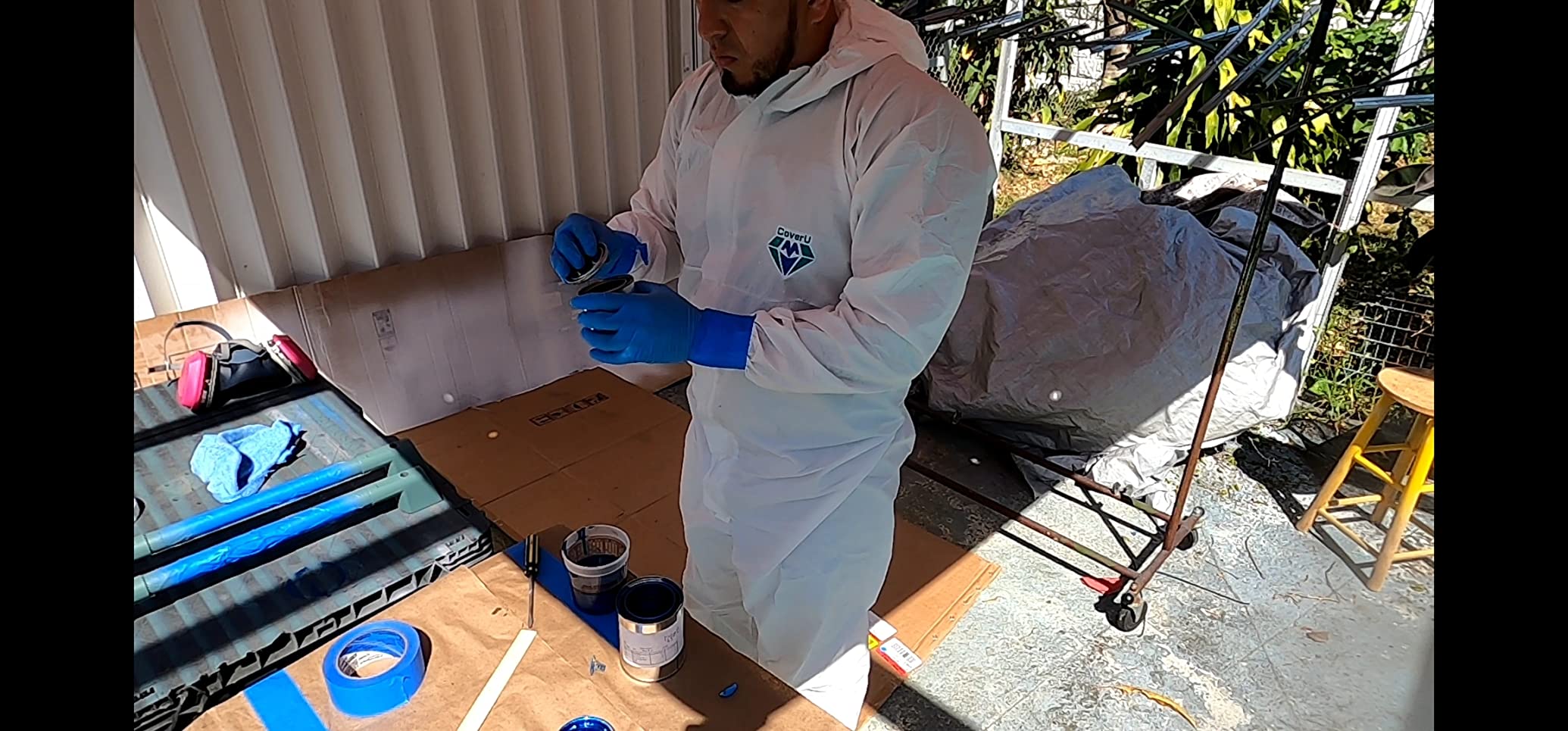
The construction is a PPSB laminate with a PE film layer, and the manufacturer describes it as a deliberate balance of durability, breathability and comfort rather than a pure splash barrier. You get 360-degree coverage through an elastic hood, elastic wrists and elastic ankles, closed with a front zipper, and the pattern was reworked specifically to give workers more range of motion through the shoulders and arms during long sessions.
Sizing is the standout for me. The stated range covers heights from 5 foot 4 to 6 foot 7, which is unusually wide for a disposable coverall and solves the problem of a suit that is either baggy at the ankles or leaves your wrists exposed. That matters more than it sounds, because exposed skin at the cuff is where contamination starts.
The real drawback is the closure. A bare front zipper with no storm flap means the chest is the least protected point on the body, and a heavy downward splash or a leaning posture puts liquid straight onto that seam. For work where the chemical is genuinely falling from above, add a strip of chemical-resistant tape over the zipper before you start. The second issue is that breathability swings by size, so if you are running a warm job, test the fit before committing a whole crew to it.
Who this suits?
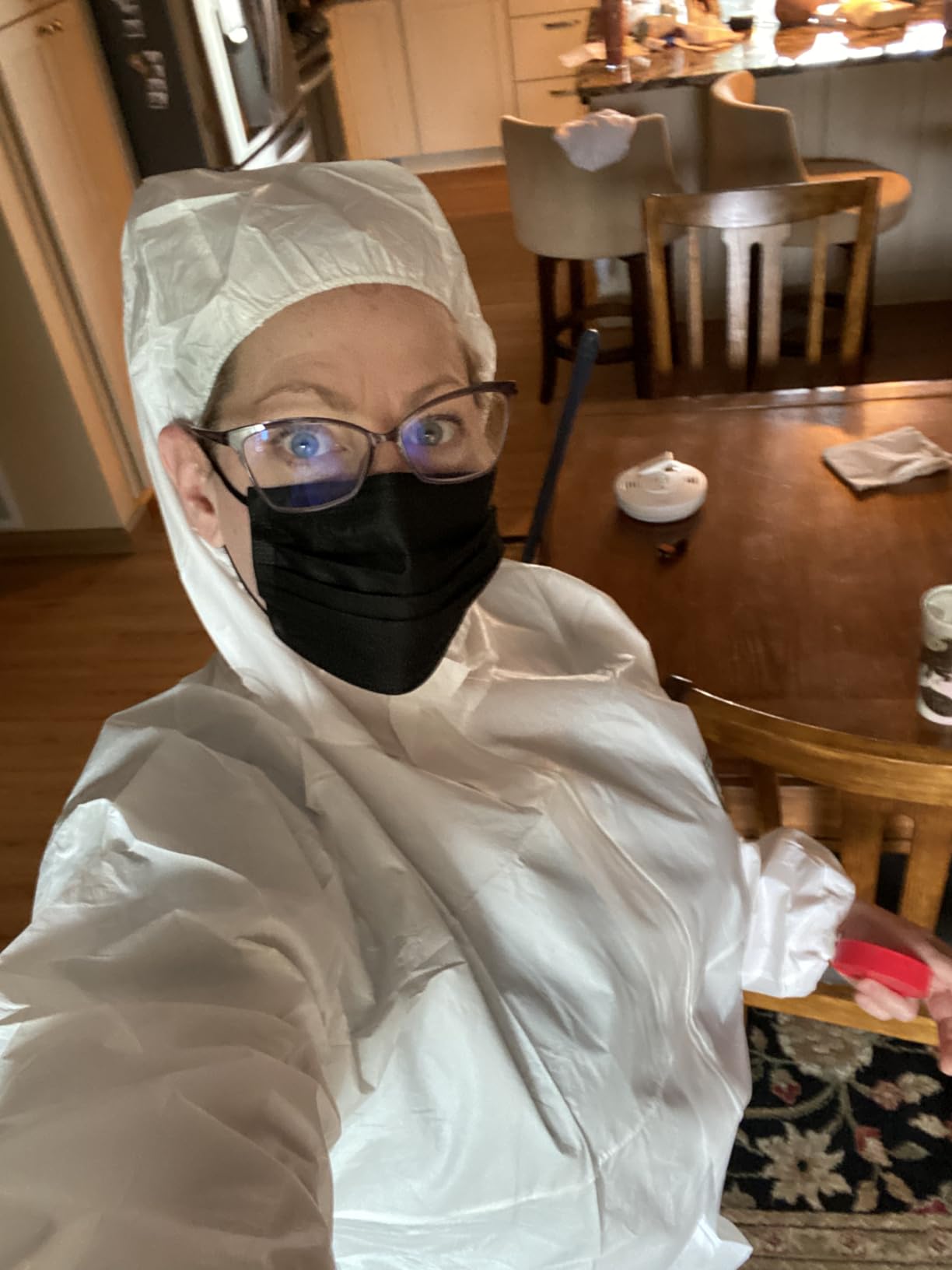
This is the pick for a mixed workload where the hazards are dust, fibres, paint and light-to-moderate splash rather than aggressive solvents. It works well for abatement-style cleanups, crawl space work, insulation jobs, biohazard handling and general plant work where the risk assessment calls for a Category III disposable suit rather than a fully sealed ensemble.
If you are outfitting a crew, the combination of high review volume, six size options and an elastic seal at three points makes this the least fussy garment to standardise on. It ranks first in Controlled Environment Disposable Apparel, and that is consistent with what the reviews describe.
Who should skip it?
Skip it if you are spraying aggressive solvents, handling concentrated acids or caustics, or working anywhere liquid can pool and soak through. This is a penetration-resistant barrier, not a permeation-rated chemical suit, and no amount of adhesive tape turns the front zipper into a sealed seam.
Also skip it for hot outdoor work in direct sun, where the laminated film traps heat faster than the breathable membrane options further down. It is a strong all-rounder, but it is not the answer to every hazard.
2. Andes Hazmat Suit A1428 – Best Value Paint and Lab Suit
- Very low cost per wear for full coverage
- Reinforced 4-thread overlock seams resist tearing
- Anti-static fabric helps with overspray and fine dust
- Accurate sizing chart with good range of motion
- Microporous film does not breathe and heat builds within 20 to 30 minutes
- Torso runs loose on slender wearers
- Thin fabric can tear if snagged
The Andes suit is the value pick of this roundup, and it tops the Lab Coveralls category. At 4.6 from 2246 reviews with 76% five-star feedback, it is the second most thoroughly reviewed garment here, which gives me a lot of confidence in the durability picture despite the low cost.
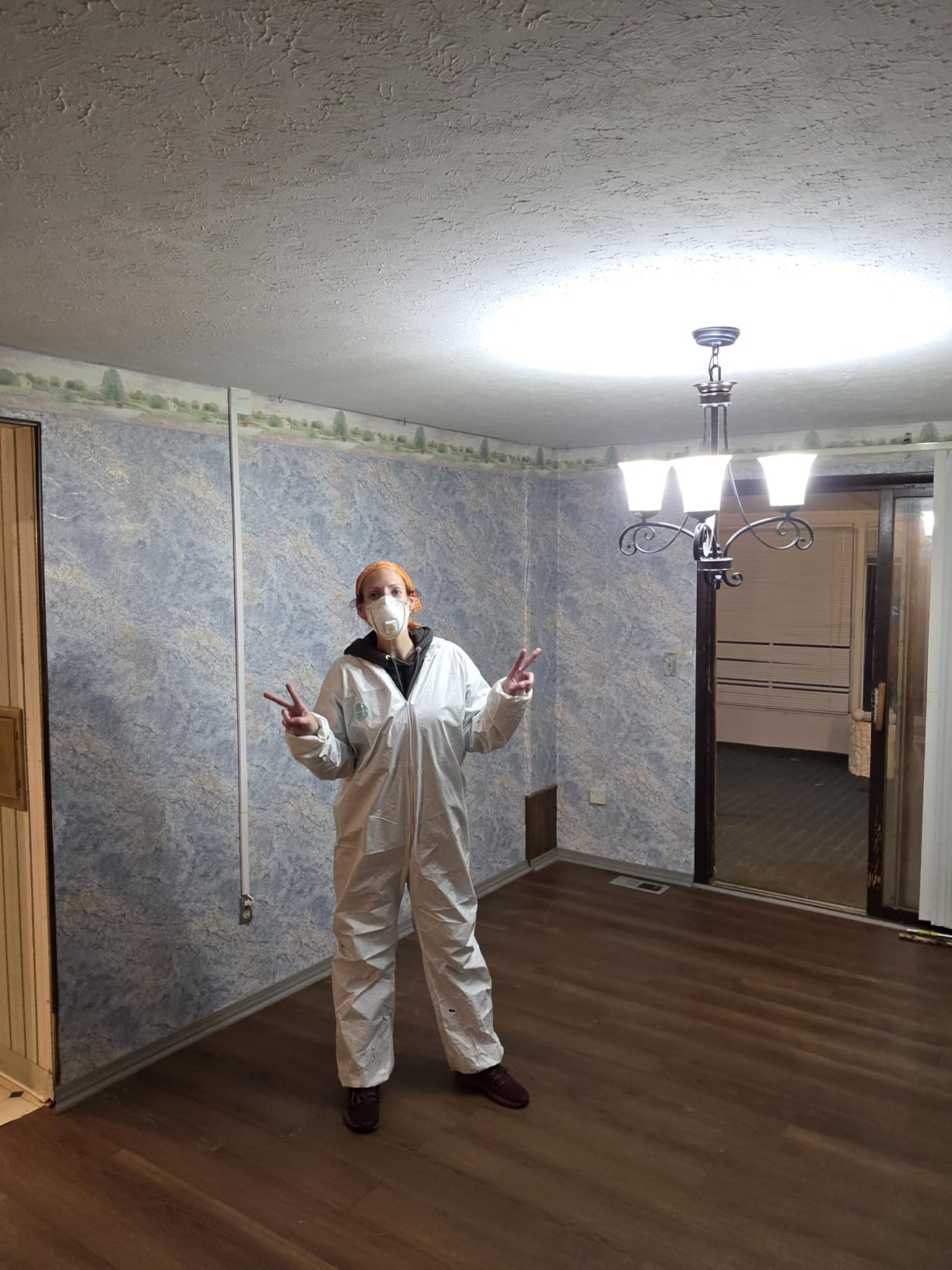
What makes it work is the seam construction. A 4-thread overlock stitch is meaningfully stronger than the basic serged seam used on many budget suits, and buyers single it out for surviving crouching, scraping rough walls and general abuse. The fabric is anti-static, which matters when you are spraying paint or handling fine dust, and the listing states protection against dry particulates such as dirt, dust and paint.
Buyers consistently report that it keeps clothing and skin clean through paint, fiberglass and glitter work, which is exactly the use case it was built for. One of the more useful details is the accurate sizing chart, which is unusual at this price and removes one of the most common reasons a cheap coverall gets returned or ends up torn from an ill-fitting cuff.
The heat issue is real and I want to be straight about it. This is a microporous PE film and it does not breathe, so wearers report getting very warm after 20 to 30 minutes of continuous work. In a warm workshop that becomes the limiting factor long before the fabric does. Sizing also runs loose through the torso for slender users, and the fabric is thin enough to tear on a sharp snag, so sizing up a notch is the safer call for anyone working around rough surfaces.
Who this suits?
This is the one for painters, insulation installers, anyone doing fiberglass work, hobby crafts with messy materials, and general cleanups where overspray and dust are the exposure. The anti-static finish and reinforced seams make it a natural fit for spray applications where overspray drift is the main risk.
For short tasks under half an hour, the heat problem largely disappears and you get genuinely excellent coverage for very little money. It also works for contract cleanout crews who need a fresh suit per property.
Who should skip it?
Skip it for all-day outdoor work in warm weather, for any task involving liquid chemicals beyond light incidental splash, and for anyone who will be kneeling on rough surfaces for hours. If you need genuine chemical splash protection with a permeation rating, the Tychem 2000 pick later in this list is the correct garment and this is not a substitute for it.
3. DuPont Tyvek 400 TY127S – Best Particle Suit for Abatement and Painting
- Tough fabric that survives crawling snags and repeated use
- Respirator-fit hood seals well with a full facepiece
- Reinforced stress areas at the high-move joints
- Generous sleeve and leg length on larger sizes
- Fabric does not breathe and outdoor wearers get hot and damp
- Some listings wrongly mention attached shoe covers
- Sleeves can run short on smaller sizes exposing the wrists
The Tyvek 400 is the reference particle suit in this list, and the reason it earns a place here is the respirator-fit hood with a zipper extending to the chin. That single design detail is what separates it from cheaper hoods, because it lets a full facepiece respirator sit under the hood with a far better seal than a loose hood allows.
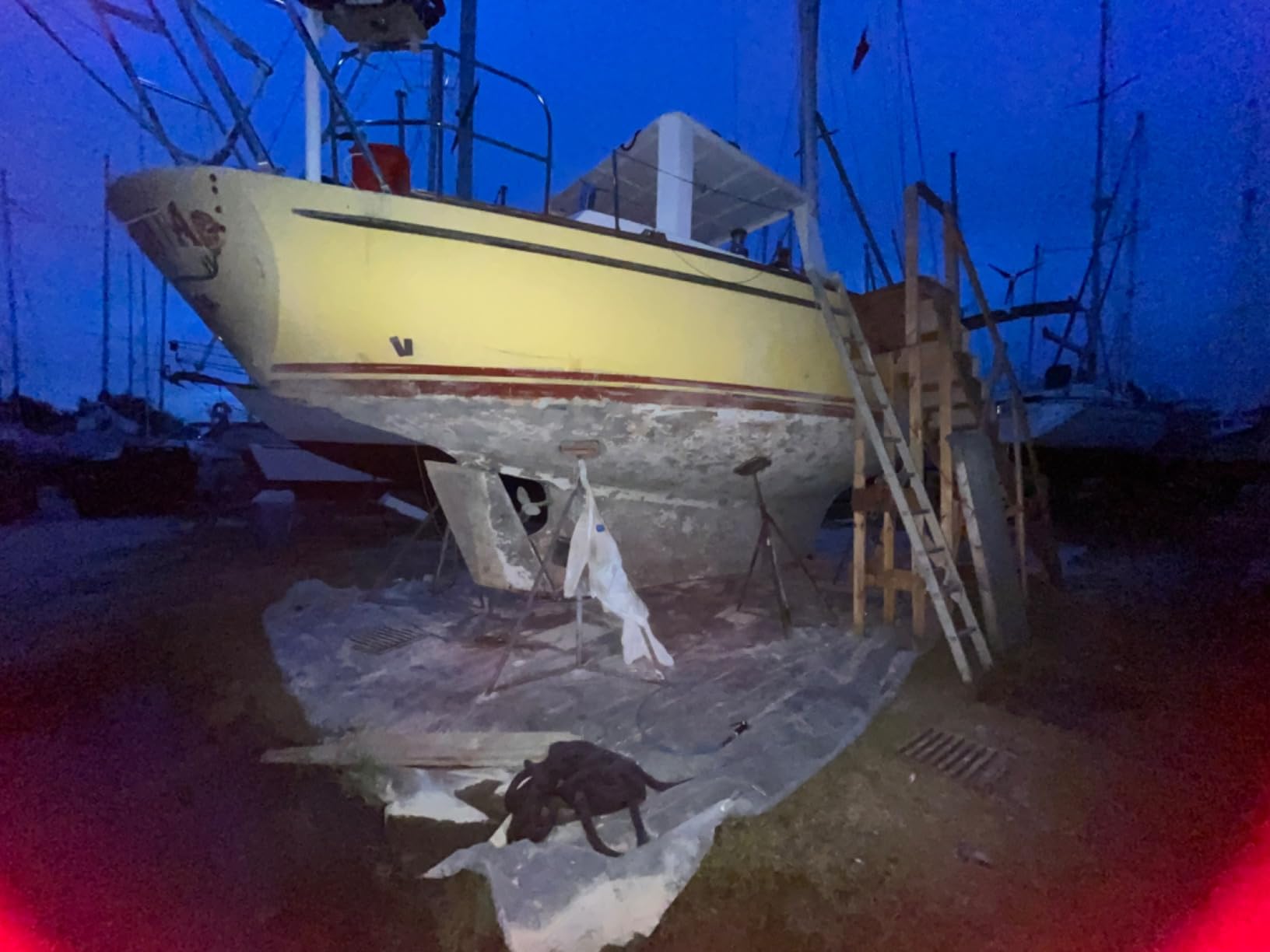
The fabric is flash-spun high-density polyethylene nonwoven, and buyers describe it as tough in a way that surprises people for something this light. People genuinely reuse these suits across multiple tasks rather than wearing them once, which is common for lead and asbestos abatement work, spray painting, boat work, fiberglass insulation and crawl space jobs. At 4.6 from 1217 reviews with 78% five-star feedback, that durability claim is well supported.
The comfort fit design adds reinforced stress areas and an elastic waist, and larger sizes get generous sleeve and leg length. The elastic wrist openings are the closure that matters most, and reviewers report they seal well in practice. It ranks twelfth in Lab Coveralls, which is a deliberate position for a garment aimed at abatement rather than lab sterile work.
Two honest drawbacks. First, the fabric does not breathe, so outdoor work in warm conditions leaves you hot and damp, and that is the single most repeated complaint. Second, some listings describe attached non-skid shoe covers that are not actually present, so do not plan your kit around footwear being included. On smaller sizes sleeves can run short and expose the wrists, and on very sharp brambles the thin fabric can shred.
One point worth repeating from the top of this article. This garment is rated for lead and asbestos abatement, maintenance, spray painting and clean-up, which is particle and dry contamination work. It is not a chemical splash suit.
Who this suits?
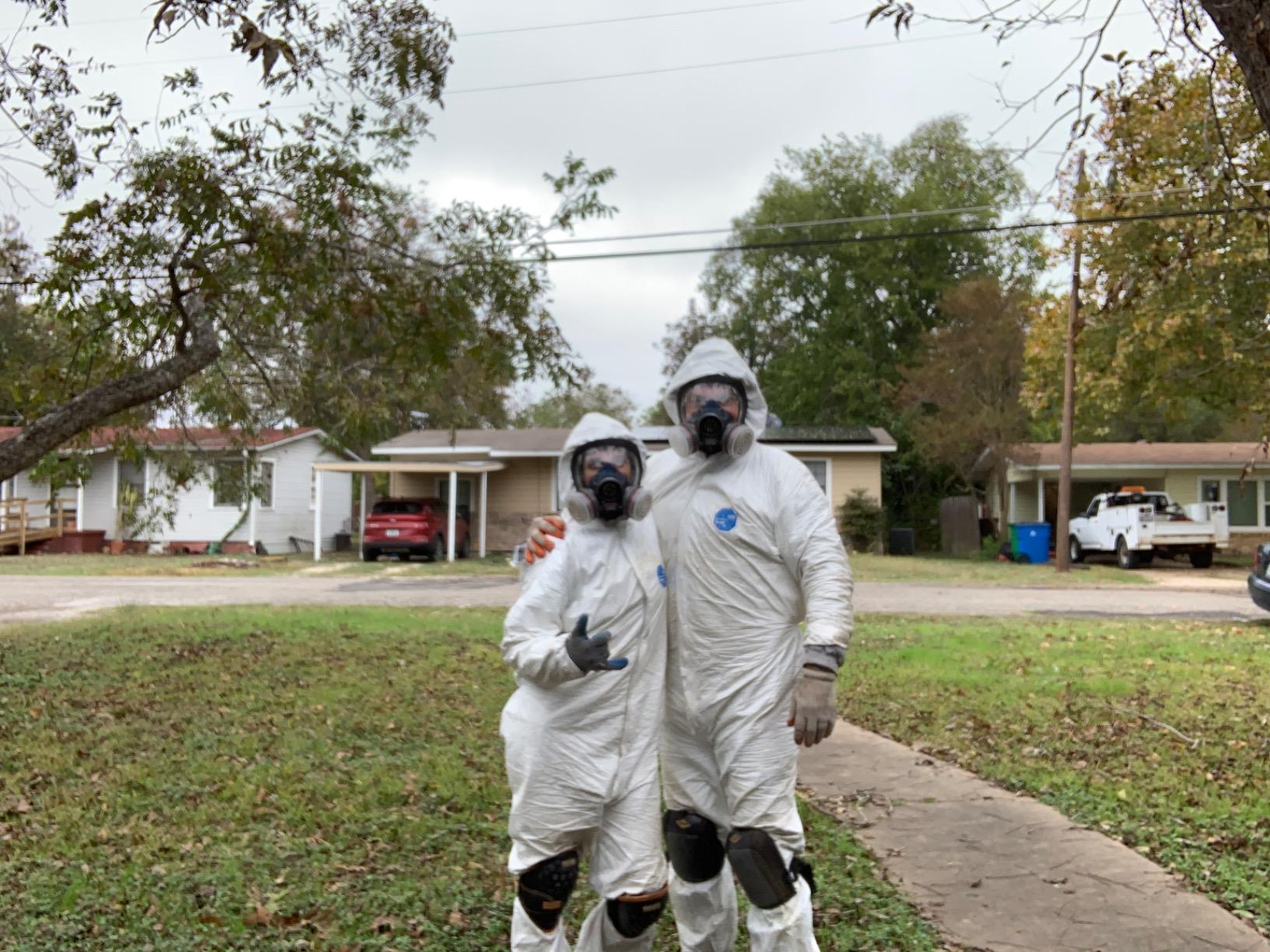
Abatement contractors, anyone doing lead or asbestos work, boat and hull painters, crawl space and under-house crews, and anyone who needs a hood that will sit comfortably under a tight-fitting full face respirator. The reinforced stress areas make it a good pick for work that involves a lot of kneeling and reaching.
If your main risk is dust, fibre, mould spores or dry particulate, this is the strongest pick in the list for the job. The elastic waist also makes it one of the few garments here that stays put well over a long shift.
Who should skip it?
Skip it if any liquid is part of the hazard, and skip it for hot outdoor summer work. If you need a chemical barrier, look at the Tychem 2000 or the taped-seam Tyvek 800 later in this guide. Also skip it if you have no other plan for boot covers, because they are not included.
4. Tychem QC Coverall in Tychem 2000 – Best for Genuine Chemical Splash
Tychem QC Chemical Protection Coveralls With Hood By Dupont, Sizes Medium To 4XL (2XL)
- Actual certified chemical splash protection with a stated breakthrough time
- Covers 40+ chemicals for at least 30 minutes
- High-visibility yellow keeps the wearer easy to locate
- Consistently positive fit feedback across the size range
- Sizing runs small so ordering a size up is often needed
- Protects against splash only and not against vapour
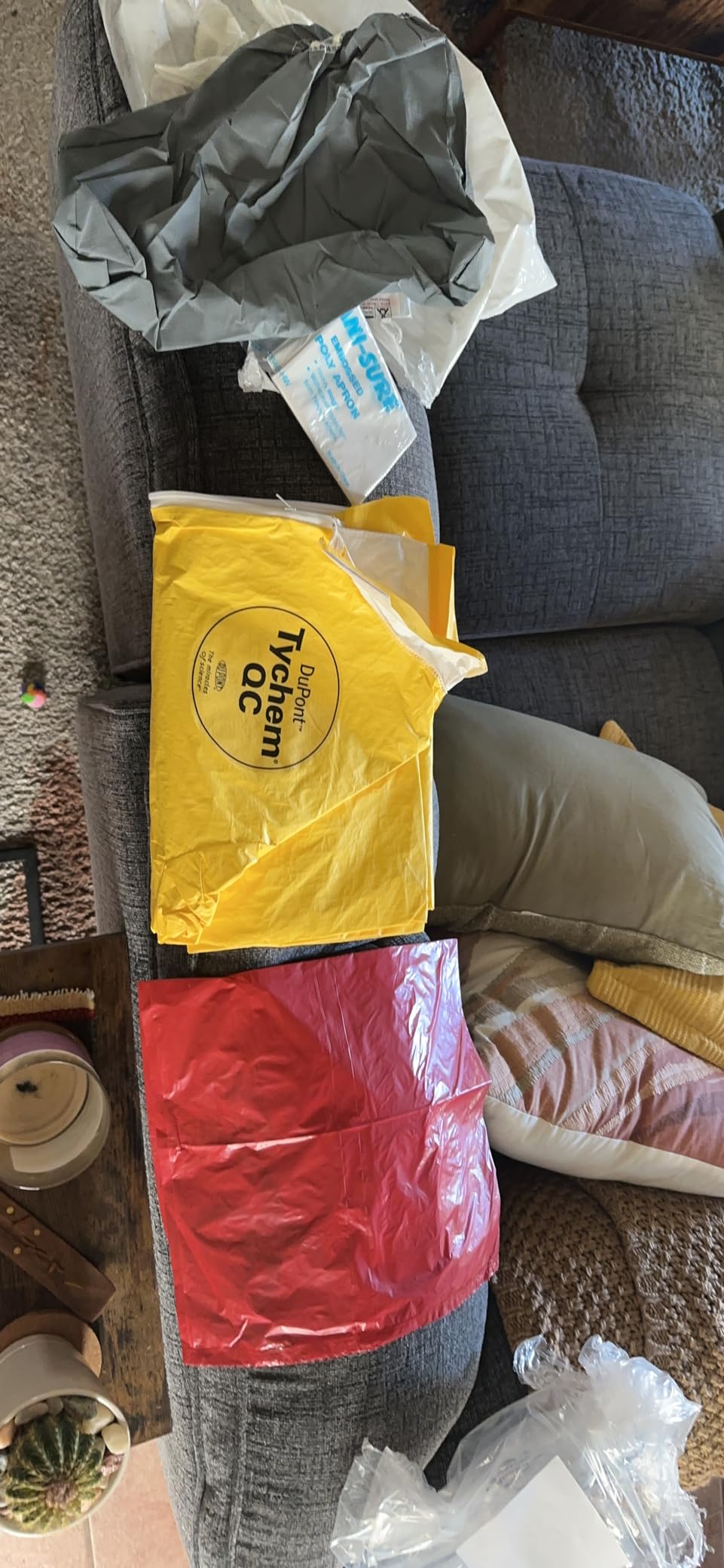
This is the first genuinely chemical-rated garment in the roundup, and if your exposure is a liquid splash rather than a particle, this is where you should start looking. The fabric is DuPont Tychem 2000 polyethylene, and the stated performance is at least 30 minutes of protection against more than 40 chemicals.
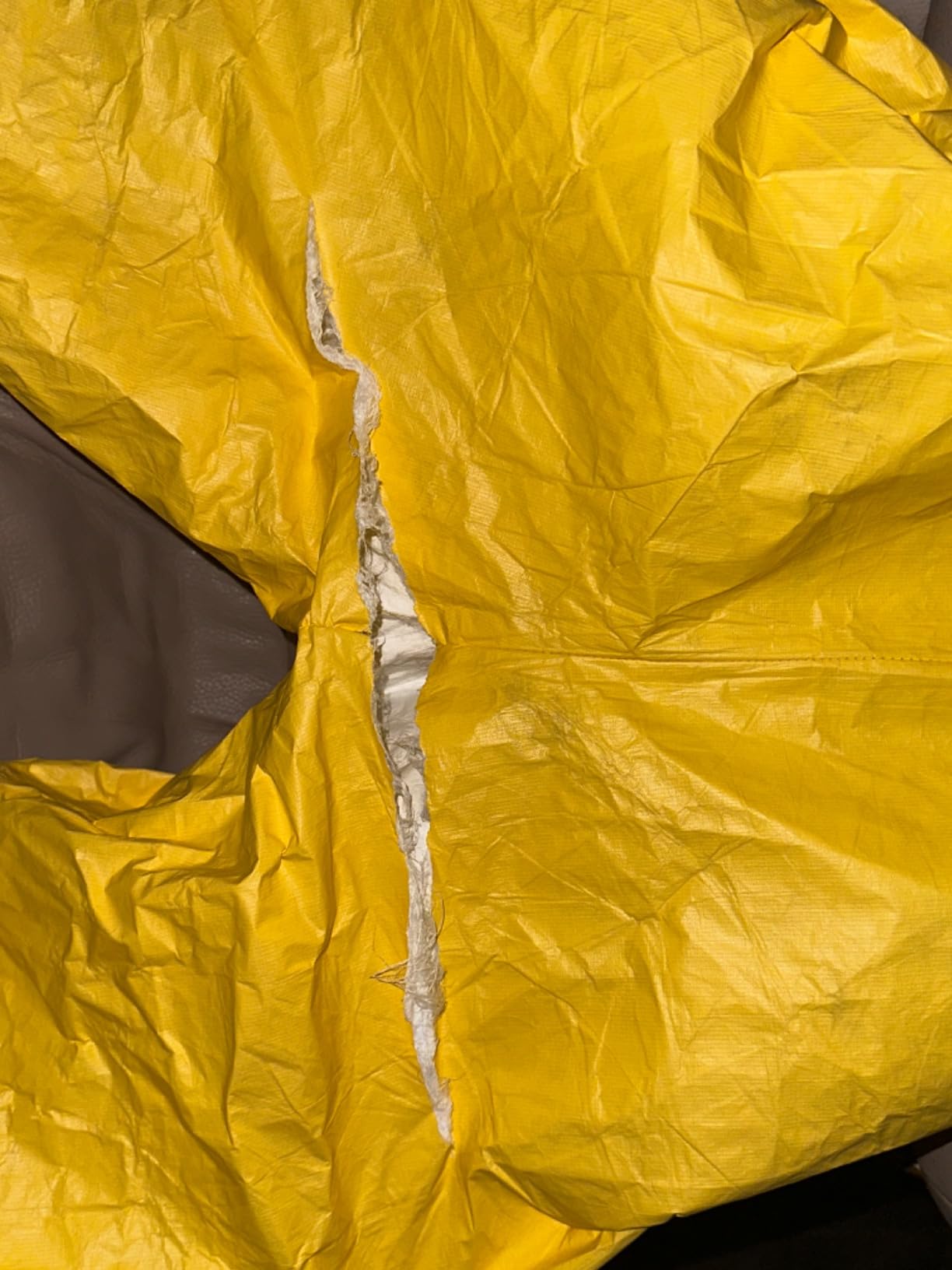
The listed uses are petroleum, pulp and paper, food and chemical processing, and pharmaceutical industries, which tells you this is aimed at real industrial work rather than hobby protection. It is made in the USA by a recognised protective apparel manufacturer, which matters when you need a data sheet and a permeation table to support a risk assessment rather than a marketing claim.
The high-visibility yellow is more useful than it sounds. On a plant floor or in a spill response, a bright suit is far easier for supervisors to spot, and it also makes contamination visible to the wearer rather than hiding it. Reviews describe it as reliably good on fit across a wide size range, from medium through 4XL.
Where it loses ground is the rating spread. At 4.3 from 481 reviews, with 69% five-star but a 9% one-star share, this is the widest distribution in the entire group. Almost all of the friction is fit. Sizing can run small, and several buyers recommend ordering a size up. The other limitation is inherent to the fabric class: this protects against liquid splash, not vapour, so it is a Type 4 style garment in effect and not something you wear into a vapour atmosphere.
Who this suits?
Chemical processing operators, pulp and paper maintenance, pharmaceutical manufacturing, food processing lines with cleaning chemicals, and petrochemical crews handling light liquid splash. Anywhere your risk assessment names a chemical and asks for a permeation rating, this is a garment that can answer it with a documented breakthrough time.
The yellow colour and the made-in-USA manufacturing also make it a sensible choice for sites with supply chain documentation requirements.
Who should skip it?
Skip it for vapour or gas exposure, for isocyanates and aggressive solvents, and for any environment where you would need a fully encapsulating gas-tight suit. If you are in any doubt about which chemical class you are dealing with, check the manufacturer permeation table before ordering, because breakthrough time is chemical-specific and no garment protects equally against everything.
5. Medical Nation Hazmat Suit 25 Pack – Best for Crew Jobs with Attached Booties
- Attached hood and booties give more complete coverage than separate accessories
- Breathable microporous construction runs cooler than solid laminates
- 25 pack format is built for crews and repeat jobs
- Sizes run from Small to 5XL
- Only rated for light liquid splash and mild chemicals not aggressive solvents
- Single-use design means no reuse for demanding jobs
The Medical Nation 25-pack is the pick when you are outfitting a team and want to stop worrying about whether anyone brought boot covers. The integrated hood and booties give a more complete seal than a hooded suit plus separate shoe covers, and that removes a step where a boot cover can ride up and expose an ankle.
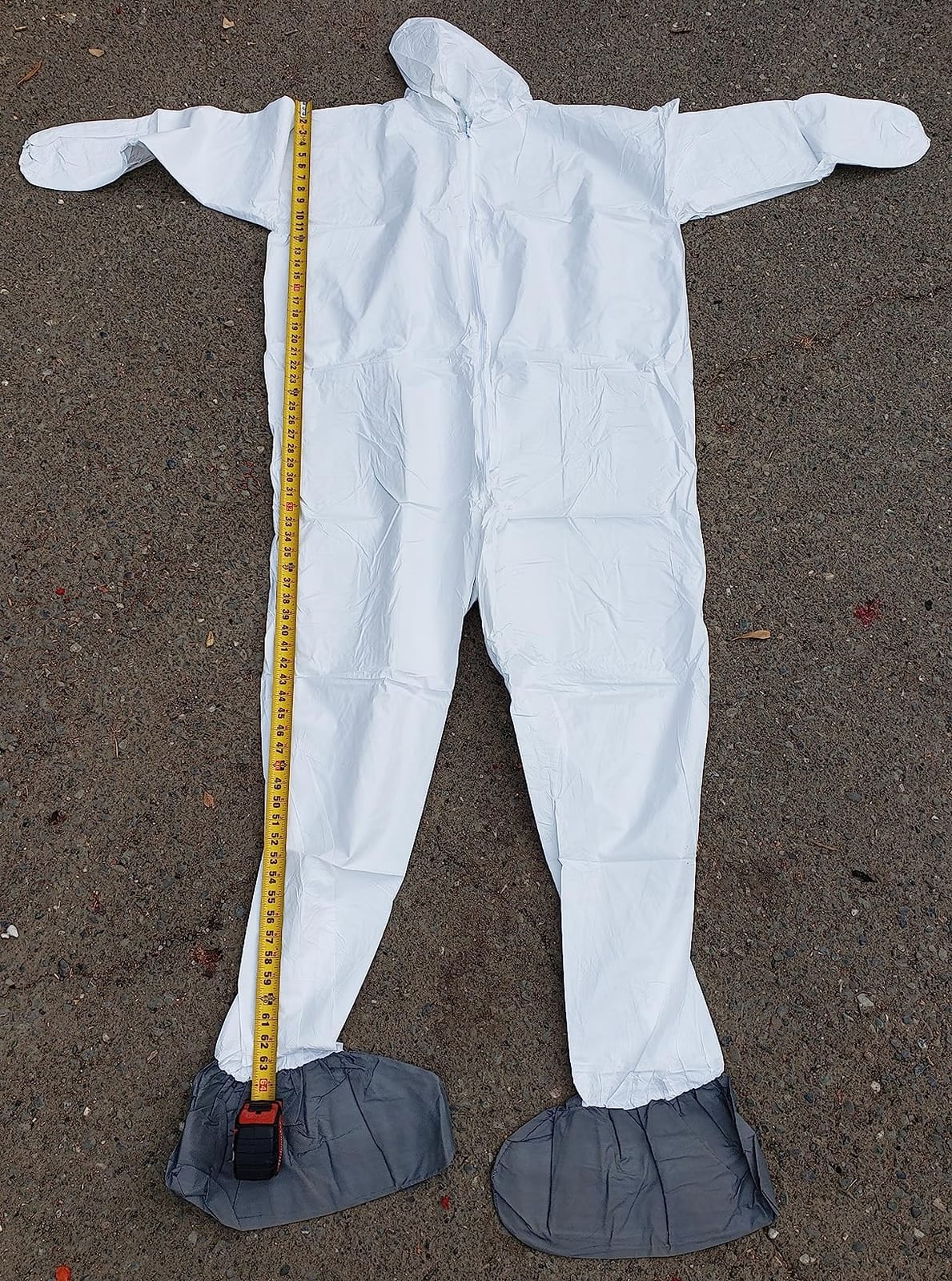
The construction is a nonwoven multilayer design with microporous film over spunbonded polypropylene, and that combination is why this suit runs cooler than the solid laminate options. Buyers credit the breathable multilayer fabric with keeping workers cooler in warm weather, and at 4.5 from 452 reviews with 74% five-star feedback the comfort claim holds up better than most in this category.
Elastic cuffs, waist and ankles give a snug fit while keeping freedom of movement, and the size range from Small through 5XL is the widest extended sizing anywhere in this roundup. For a contractor outfitting mixed-size crews, that is genuinely valuable. The listing states the suit blocks dirt, dust, light liquid splashes, paint, and most mild chemicals and biological agents, and describes the material as water repellent, anti-static and single-use.
Be clear about what that means. This is a light-splash and mild-chemical garment, not a permeation-rated suit, and it will not hold up against aggressive solvents. The single-use construction is also a real limitation for anyone tempted to hang onto a suit for a second job, which we do not recommend doing after a chemical exposure regardless of the garment.
Who this suits?
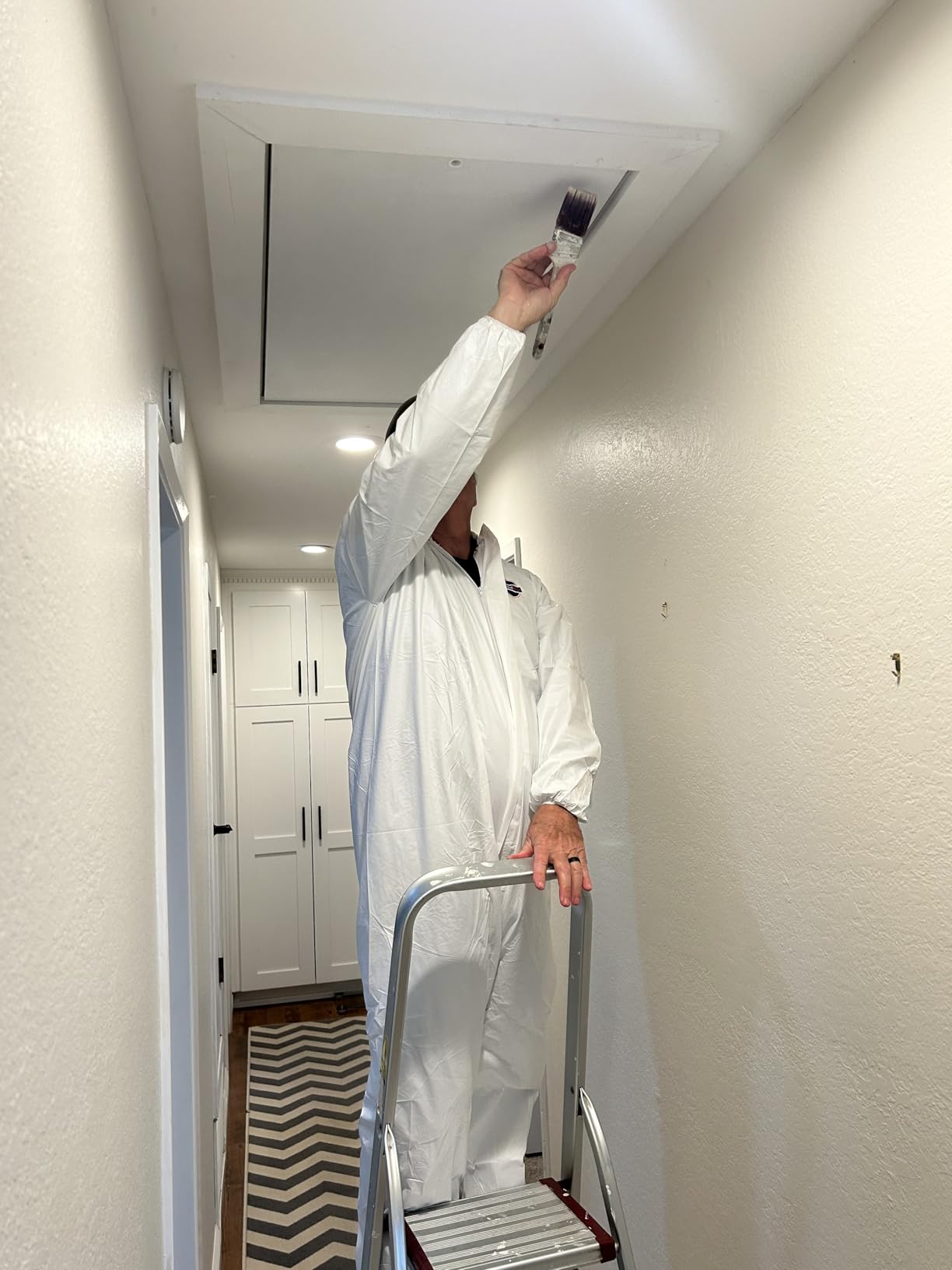
Crews doing asbestos and mould remediation, biohazard cleanup, general sanitation and sanitation-adjacent work where dust and mild chemicals are the exposure. The 25-pack quantity is the reason to buy it, because per-suit cost drops and nobody has to reuse a contaminated garment.
Anyone working in warm conditions who finds solid laminate suits too hot will appreciate the microporous layer here more than most of the small differences on a spec sheet suggest.
Who should skip it?
Skip it for chemical manufacturing, solvent handling, acid and caustic processing, and any task where a permeation rating is required. Skip it if a single unit is all you need, since the pack quantity works against a small job. And skip it for long shifts in a confined space with poor ventilation, where breathability matters more than the pack deal.
6. TrelaCo Hazmat Suit 5 Pack – Best Complete Kit for One Purchase
TrelaCo 5 sets Hazmat Suit Disposable Protective Coveralls Full Body
- Covers suit footwear and gloves in one matched purchase
- Breathable membrane keeps workers drier than solid laminates
- Tear-resistant fabric gives good service life per suit
- Suited to painting construction plumbing agriculture and cleaning
- Bundled gloves and shoe covers may not fit every hand or shoe size
- Coverage is light splash and particulates rather than severe chemical exposure
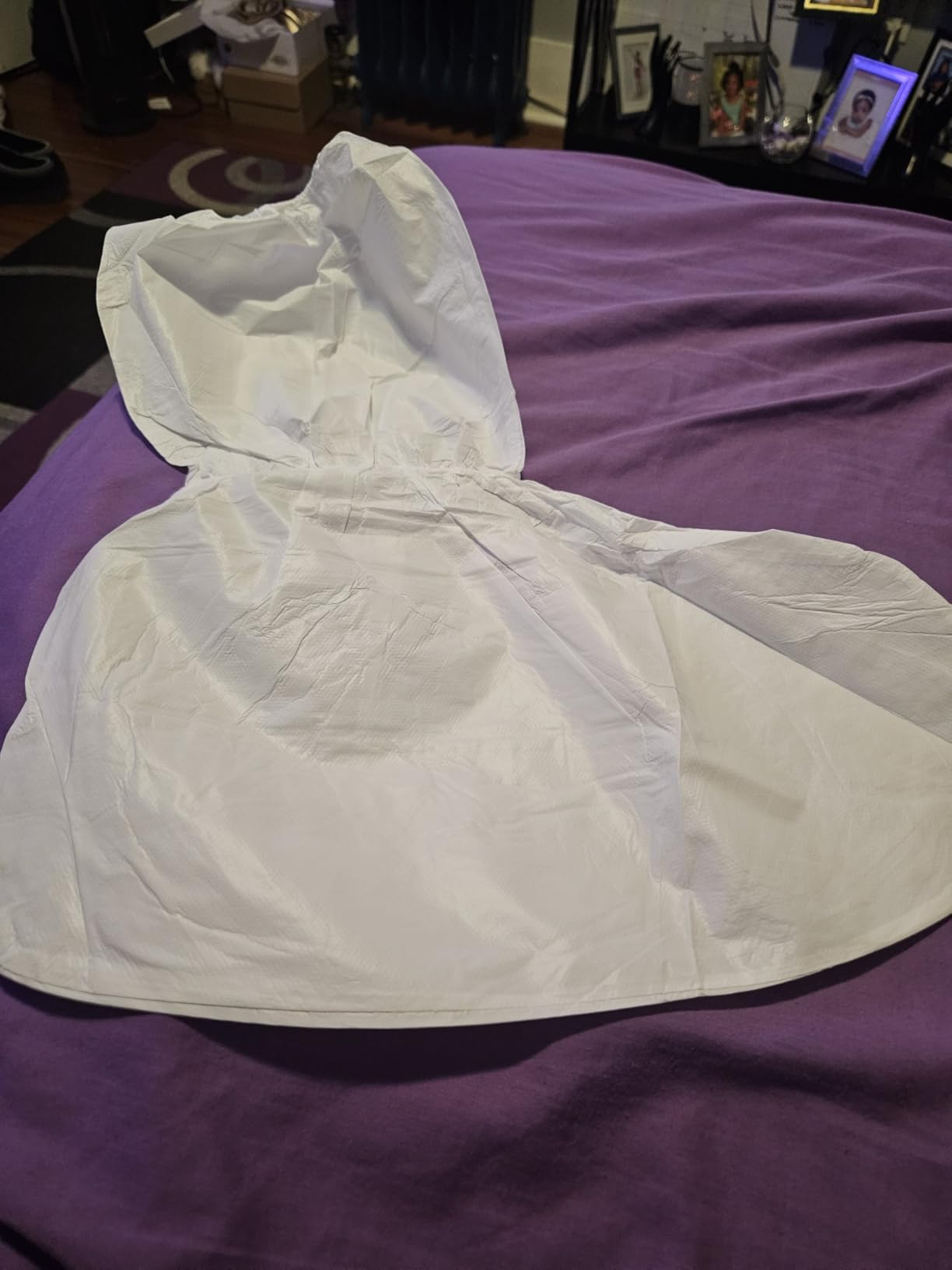
The TrelaCo set is the only pick in this roundup that ships as a genuine kit, with 5 coveralls, 5 pairs of shoe covers and 5 pairs of nitrile gloves in matching sizes. If you have been buying a suit and then realising you still need footwear protection and hand protection, this solves it in one order and the sizing is coordinated across all three components.
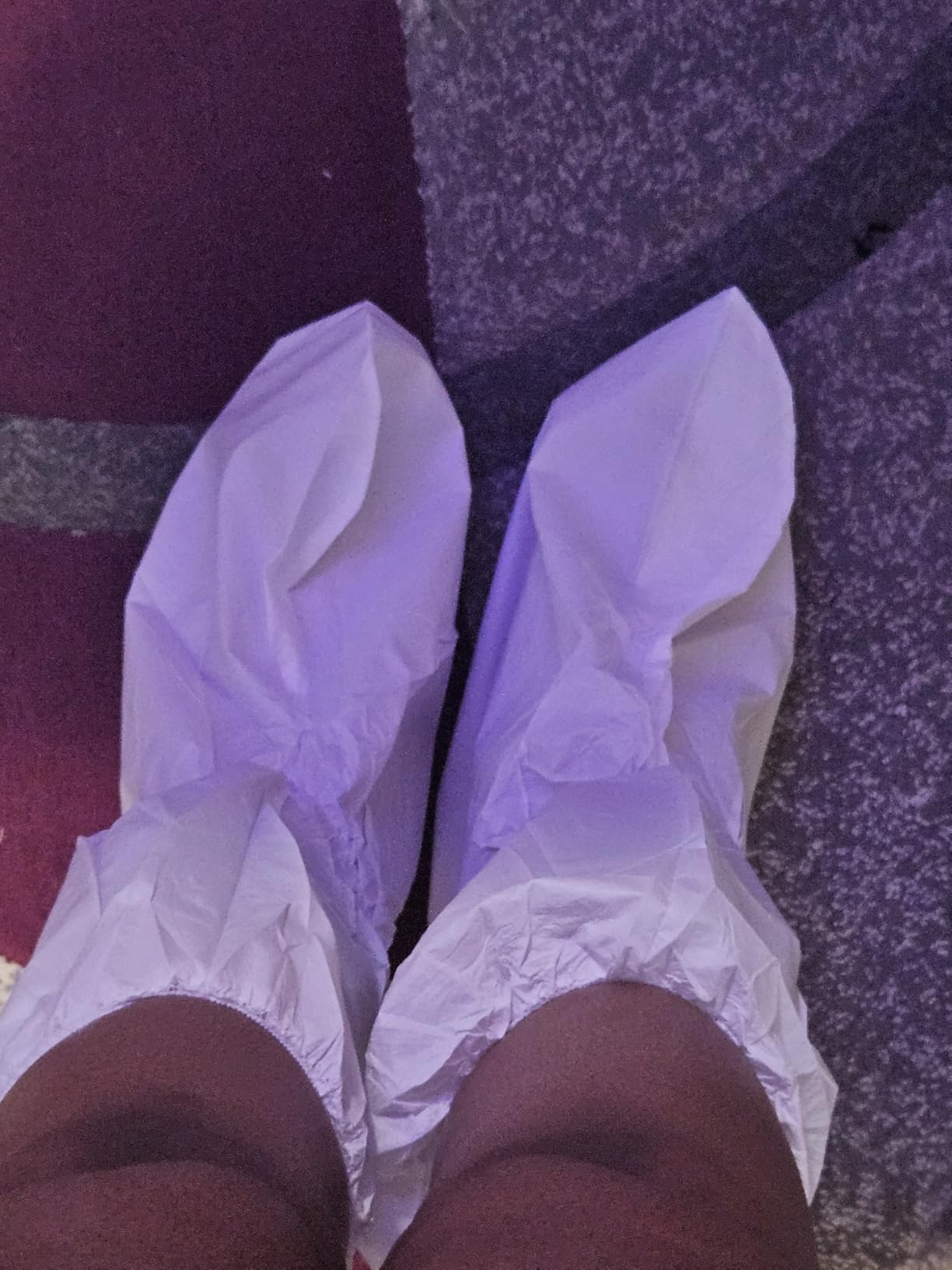
The fabric is a 65gsm SF breathable membrane with nonwoven layers, built as spun-bonded polypropylene over a microporous film. That 65gsm specification is the number to pay attention to, because it is a lighter and more breathable construction than heavier laminates, and buyers credit it with reducing sweat compared with solid suits. It is tear-resistant, which extends useful service life per garment, and the closure is a pull-on design rather than a zipper, which is faster for short tasks but gives you less adjustment.
At 4.3 from 398 reviews with 70% five-star feedback, the durability and comfort story is consistent. Buyers apply it across painting, construction, plumbing, agriculture and cleaning, which is a good indication of how versatile the light-protection class really is. It ranks seventh in Lab Coveralls.
The limitation is fit of the bundled extras. Gloves and shoe covers are sized to a standard chart, and if you wear unusual hand or shoe sizes you will end up replacing them anyway. Coverage is also firmly in the light-splash and particulate band, so this is not a chemical handling garment. Sizes run L, XL and XXL, which is narrower than several others here.
Who this suits?
Small crews and one-person operations who need a complete disposable kit for a job and do not want to assemble one from three suppliers. Plumbers, painters, agricultural workers, construction cleanups and sanitation staff all fall squarely into the use cases buyers describe.
The breathable membrane is the differentiator for anyone working outdoors in moderate warmth, and the five-pack quantity is a sensible default for a team running back-to-back jobs.
Who should skip it?
Skip it if you wear non-standard glove or shoe sizes and would rather buy your own. Skip it for chemical manufacturing, solvent work, or any hazard requiring a documented breakthrough time. And skip it if you need extended sizes beyond XXL, since the range stops there.
7. CAREGY Hazmat Suit – Best for Allergy, Insect and Sanitation Work
CAREGY 2 Pack Hazmat Suits Disposable Protective Coveralls
- Effective barrier for poison ivy
- allergens
- insects and messy cleanup
- Lightweight and comfortable enough for a full day of yard or sanitation work
- Elastic hood wrists and ankles seal effectively
- No chemical odour from the material
- Rips easily at the knees during crawling or heavy work
- Limited breathability in warm weather
- Better suited to short occasional jobs than repeated demanding use
The CAREGY suit is the lowest-rated pick in this roundup at 4.2 from 395 reviews, and I am including it because the use case it serves is not covered well anywhere else in the list. If your exposure is biological or allergenic rather than chemical, this does that job cleanly and inexpensively, and it ranks first in Medical Coveralls.
The construction is a nonwoven multilayer design with microporous film over spunbonded polypropylene, with an elastic hood, wrists and ankles for what the manufacturer describes as a snug, reliable seal. The material is soft, lightweight and seamless, which is why buyers report it being comfortable enough for a full day of yard or sanitation work. One small but pleasant detail that comes up repeatedly is the absence of any chemical odour from the material, which some laminates do carry straight out of the packaging.
The barrier works well for poison ivy, allergens, insects and messy cleanup tasks, and those are genuinely the situations where a full disposable suit is the right answer. The 2-pack and 25-pack options let you match quantity to the job, and the size range from Small through 4XL is broad.
The reason for the 4.2 is durability. Eight percent of reviews are one-star, and the most repeated complaint is that the material tears too easily, particularly at the knees when crawling or doing heavy work. Breathability is also limited in warm weather. My read is that this is a garment for occasional, short-duration jobs, and treating it as a heavy-duty work suit leads to exactly the kind of tearing its buyers report.
Who this suits?
Yard work and poison ivy removal, insect and allergen exposure, home cleanouts, insulation and dust jobs, and sanitation staff who want a fresh suit per shift. Anywhere the exposure is particulate or biological rather than chemical, this is a good fit and the low cost per wear makes single-use discipline easy to maintain.
It also suits anyone who reacts to the smell of new laminate, since the material is odour-free.
Who should skip it?
Skip it for any liquid chemical exposure, and skip it for crawling work or anything involving kneeling on rough surfaces, because the knees are where it fails first. If your job involves heat, budget for more ventilation breaks or choose a lighter breathable option instead.
8. keebomed Category III Type A Suit – Best for Biohazard Cleanup
- Category III Type A certification gives documented barrier protection
- Storm flap over the full-length zipper improves the front seal
- Roomy ergonomic cut layers over work clothes without binding
- Effective containing fiberglass dust mouse droppings and paint chips
- No attached boots so separate boot covers are required
- Not ventilated so heavy sweating is common
- Wrist elastic can ride up on some body types leaving skin exposed
- Sizing runs small for some users
The keebomed suit is the one I would point to for biohazard and contamination cleanup, because it is one of only two picks here with an explicit CE Category III certification. That certification mark is what a safety officer will ask you to produce, and having it stated on the product removes an argument.
Stated protection is against liquid chemical splashes, non-hazardous liquid sprays, airborne particles, mould spores and dust. The fabric is spunbonded polypropylene laminated with microporous PE film, and the front closure is a full-length zipper with a protective storm flap, which solves the bare-zipper weakness I flagged on the Medtecs earlier. Buyers consistently credit that storm flap with improving the front seal.
The ergonomic cut is another real advantage. It is designed for heights between 5 foot 10 and 6 foot 2 and is deliberately roomy enough to layer over work clothes without binding, which is different from most disposable suits that assume you are wearing nothing underneath. At 4.4 from 321 reviews with 68% five-star feedback, it performs across biohazard, crawl space, painting and home cleanout work.
There are four drawbacks and they are worth reading together. There are no attached boots, so separate boot covers are required and the ankle is a gap until you add them. The suit is not ventilated and heavy sweating is common. Wrist elastic can ride up on some body types, which exposes skin at exactly the point where you need a seal. And sizing runs small for some users, so consider sizing up.
Who this suits?
Biohazard remediation, mould remediation, sewage and sanitation contamination work, crawl space and attic cleanouts, and any job where your site documentation needs a Category III certification reference. It suits people who wear their own work clothes underneath, because the cut is designed to layer.
It is also the best choice here for anyone who wants a storm-flapped front closure without moving up to a taped-seam garment.
Who should skip it?
Skip it for hot work, because the lack of ventilation shows up quickly. Skip it if you need integrated boots, since you will be buying those separately regardless. And skip it for aggressive chemical work, where light-splash and non-hazardous spray protection is not the level you need.
9. DuPont Tyvek 800 – Best for Taped Seams and Multi-Type Certification
DuPont Tyvek 800 CE-Certified Cat-III Type-3/4/5/6 Chemical Protective Coverall Suit with Sealed Bag, White, X-Large, 1-Pack
- Broadest stated certification in the list covering Types 3
- 4
- 5 and 6
- Over-taped seams give real barrier performance rather than a serged stitch
- Durable enough for crawl space and under-house work
- White colour makes contamination easy to spot
- No attached feet so separate boot covers are needed
- No pockets which some buyers miss
- Fabric degrades after a single heavy chemical exposure and should not be reused
- XL can run large for shorter wearers
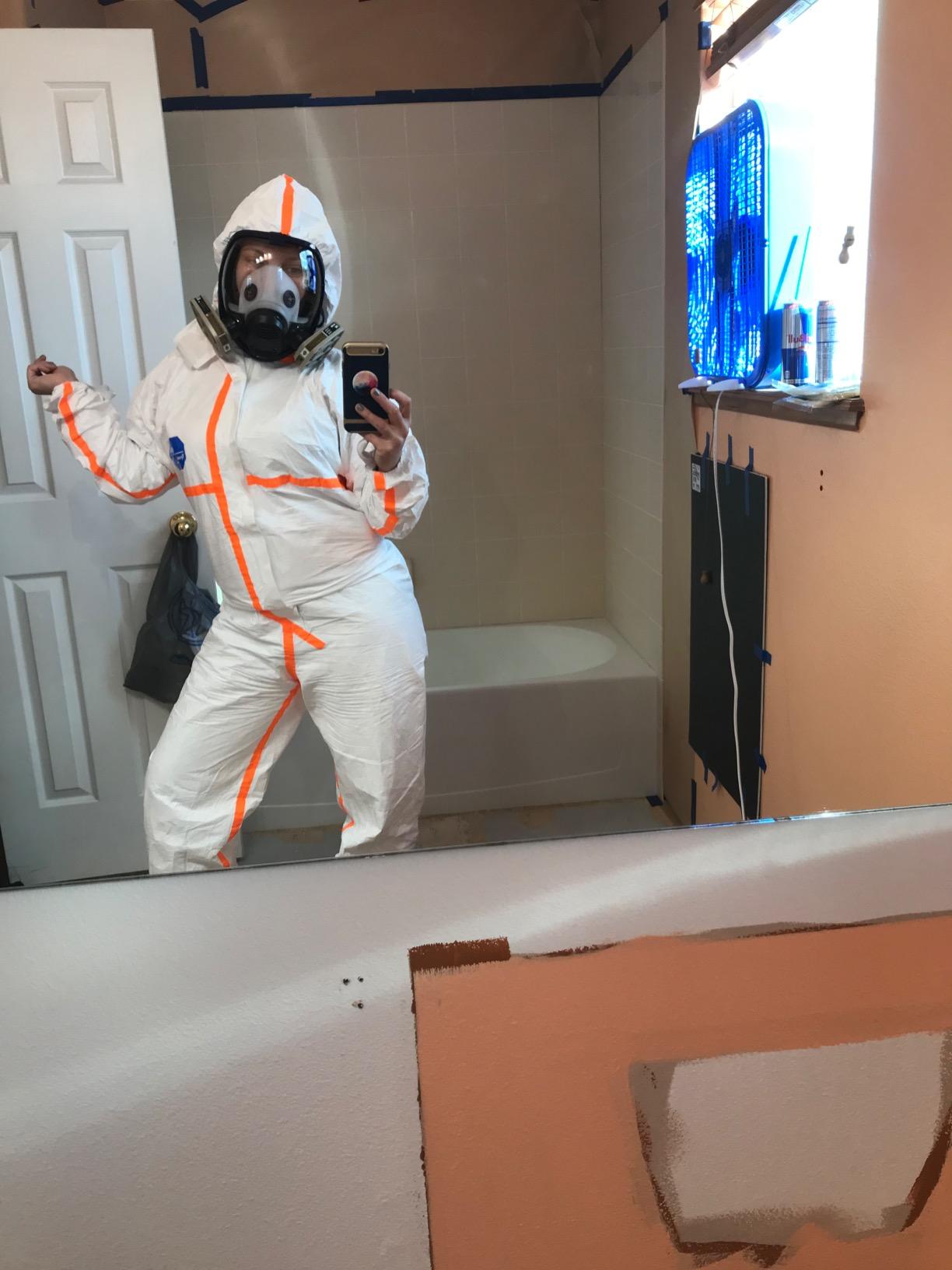
The Tyvek 800 is the most broadly certified garment in this roundup. It is CE-certified Category III covering Types 3-b, 4-b, 5-b and 6-b, and it is the only pick here with over-taped seams, which is the feature that genuinely moves the needle on barrier performance compared with a plain serged seam.
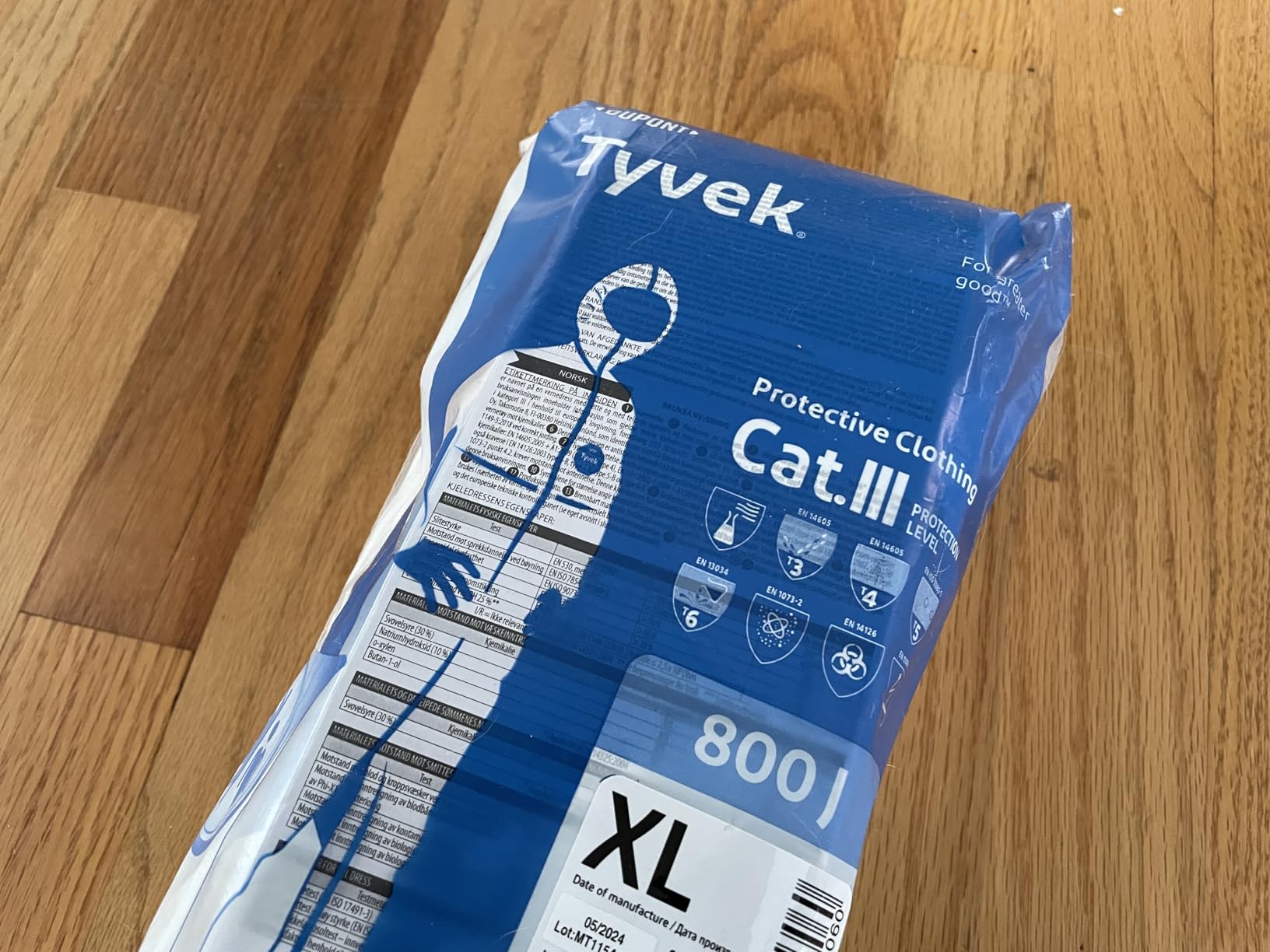
Stated resistance is to low-concentration, water-based, inorganic chemicals, and it also protects against blood, body fluids and blood-borne pathogens. That combination is why it shows up in clinical spill response as well as industrial work. The seams are both serged and over-taped, so you get strength from the serging and barrier performance from the tape, and the garment ships in a sealed bag which matters for anything you plan to store as stock.
Buyers use it for crawl spaces, under-house work, vehicle undercoating and pool painting, and rate the fit and comfort well. At 4.5 from 312 reviews with 72% five-star feedback, it holds up. The bright white colour is a practical choice because contamination shows up against it immediately rather than hiding in a dark suit.
Read the certification carefully rather than treating it as protection against everything. The stated chemical resistance is low-concentration, water-based and inorganic, so this is not a solvent or aggressive acid suit despite the Type 3 marking. There are no attached feet, so you need boot covers. There are no pockets. And the most important practical warning is that the fabric degrades after a single heavy chemical exposure and should not be reused, which is consistent with how permeation damage works.
Who this suits?
Crawl space and under-house contractors, vehicle undercoating, pool and aquarium painting, clinical and care settings handling body fluids, and anyone who needs a documented multi-Type certification for their site paperwork. It is also a sensible stock item because of the sealed bag packaging.
If you need taped seams but do not need a fully encapsulating suit, this is the most capable garment in the list without stepping up to a gas-tight ensemble.
Who should skip it?
Skip it for solvents, fuels, aggressive acids and caustics, and skip it for any vapour or gas exposure. Skip it if you need attached boots. And do not plan to reuse it after a significant chemical exposure, because degradation is invisible until it matters.
10. FURWEY Hazmat Suit – Best for Extended Sizing Options
FURWEY Hazmat Suits Disposable Protective Coveralls, XX-Large, 10 Pack
- Breathable microporous construction for extended wear
- Elastic hood wrists and ankles give a secure seal
- Soft and light enough for janitorial and sanitation work
- 1-pack and 10-pack options with broad sizing
- Lightweight fabric can tear with rough handling
- Limited breathability during heavy exertion
- Sizing runs narrow so a size up may be needed
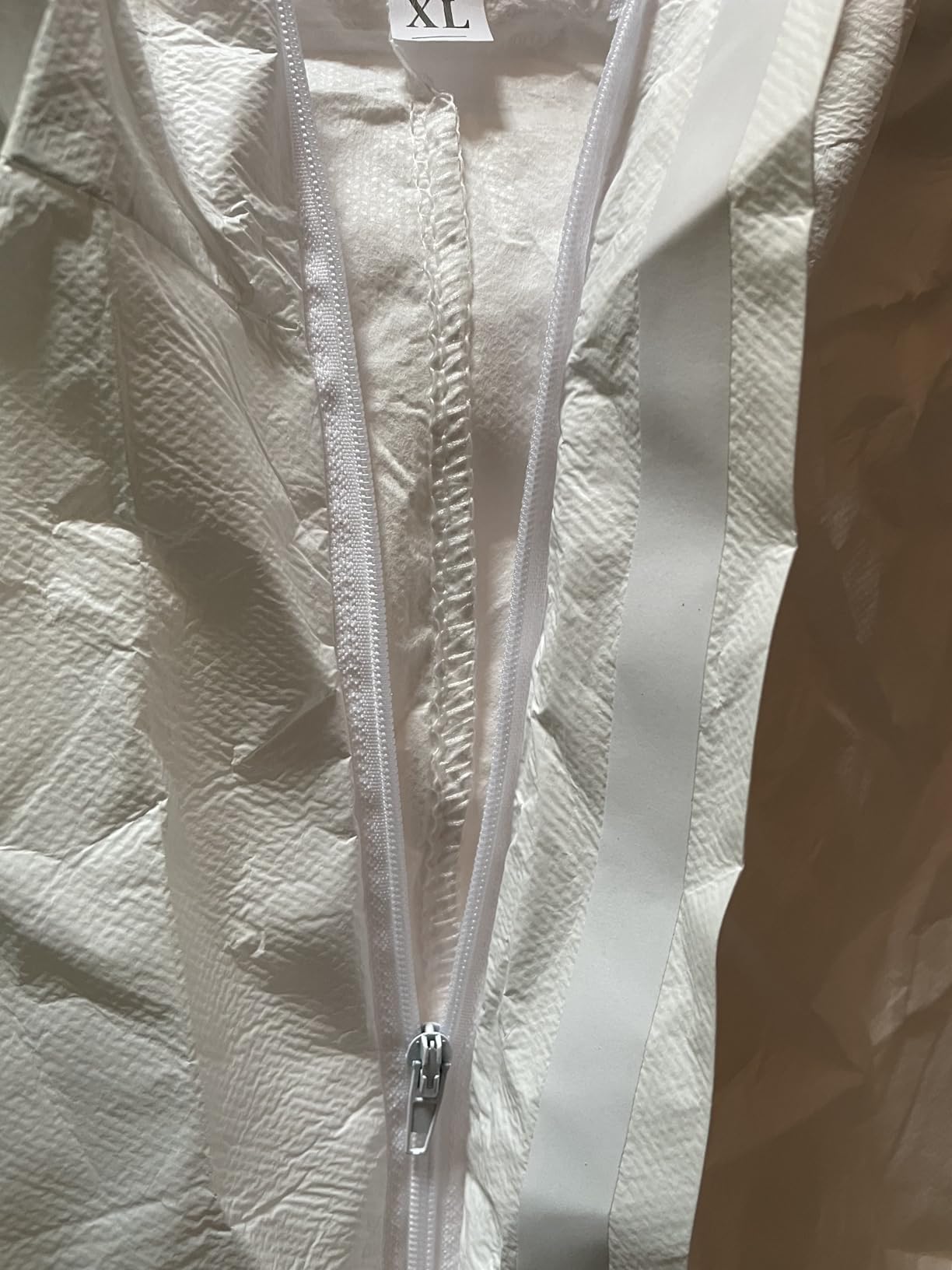
The FURWEY suit earns its place for sizing. It runs from Medium through 4X-Large, and in a category where extended sizes are genuinely hard to find, that is not a small detail. It ranks second in Lab Coveralls on the strength of breathable construction and a secure elastic seal, which tells you the category rating aligns with what buyers report.
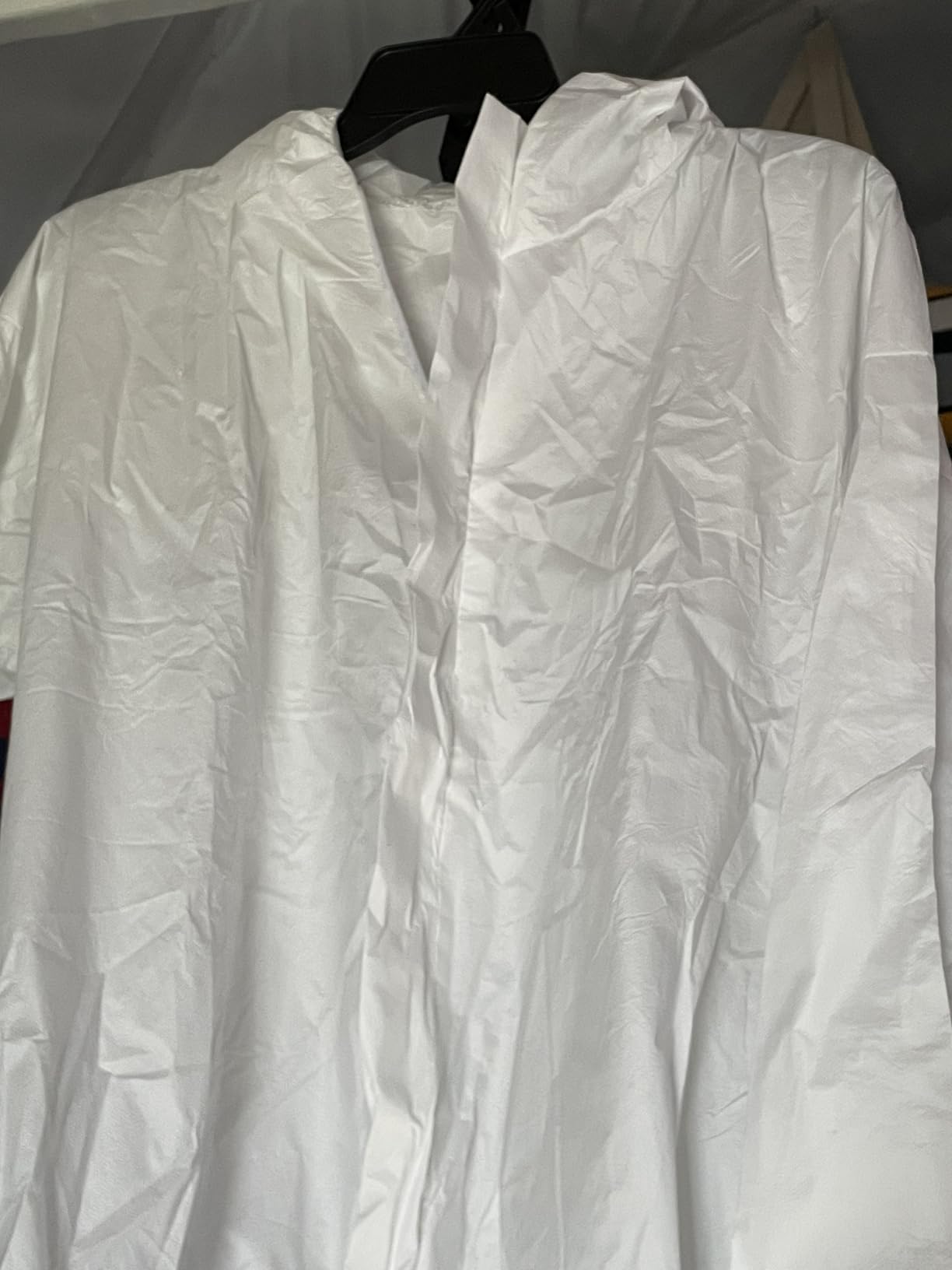
The construction is a nonwoven multilayer design with microporous film over spunbonded polypropylene, with an elastic hood, wrists and ankles, and the manufacturer describes the material as soft, lightweight and seamless with elastic cuffs and waist. Buyers pick it up for janitorial and sanitation work, and report that the elastic closures seal well enough to keep the suit in place through a full task without constant adjustment.
At 4.3 from 268 reviews with 66% five-star feedback, this has the lowest five-star share of the 12, and the reasons show up in the complaints. Durability is the first: the fabric is light enough that rough handling can tear it. The second is breathability, which is described as limited during heavy exertion, so it is a good warm-weather suit but not a good hard-labour suit. The third is fit, because sizing runs narrow and a size up is often the right call.
The 1-pack and 10-pack options give you flexibility on quantity, which is useful for someone who needs one suit for a household job or a full team for a contract.
Who this suits?
Anyone in a larger size who has repeatedly found disposable coveralls stopping at XL or 2XL. It is also a strong pick for janitorial and sanitation teams, for warm-weather work where a lighter microporous construction matters, and for anyone who prefers a hooded suit with full elastic seal without attached boots.
The broad size range combined with flexible pack counts makes it a practical default for facilities teams.
Who should skip it?
Skip it for heavy manual work or environments with sharp edges and snags, because the fabric will not forgive it. Skip it for hard labour in high heat. And skip it for any chemical splash work beyond the light incidental kind.
11. MIRA Safety Protective Coverall – Best for Hazmat and CBRN Response
- Broad chemical barrier covering acids bases salts greases and oils and CBRN agents
- Adopted by fire departments and hospitals for response work
- Manufacturer states no performance degradation in long-term storage
- Premium construction for genuine hazardous material response
- Far more expensive than disposable alternatives
- Not a substitute for a full respirator and SCBA ensemble in IDLH conditions
- Lower review volume limits size-specific feedback
The MIRA Safety coverall is the specialist option in this list, and it is the only pick positioned for genuine hazardous material response rather than industrial, painting or sanitation work. If your work involves unknown substances or a CBRN profile, this is the only garment here whose stated barrier scope matches that brief.
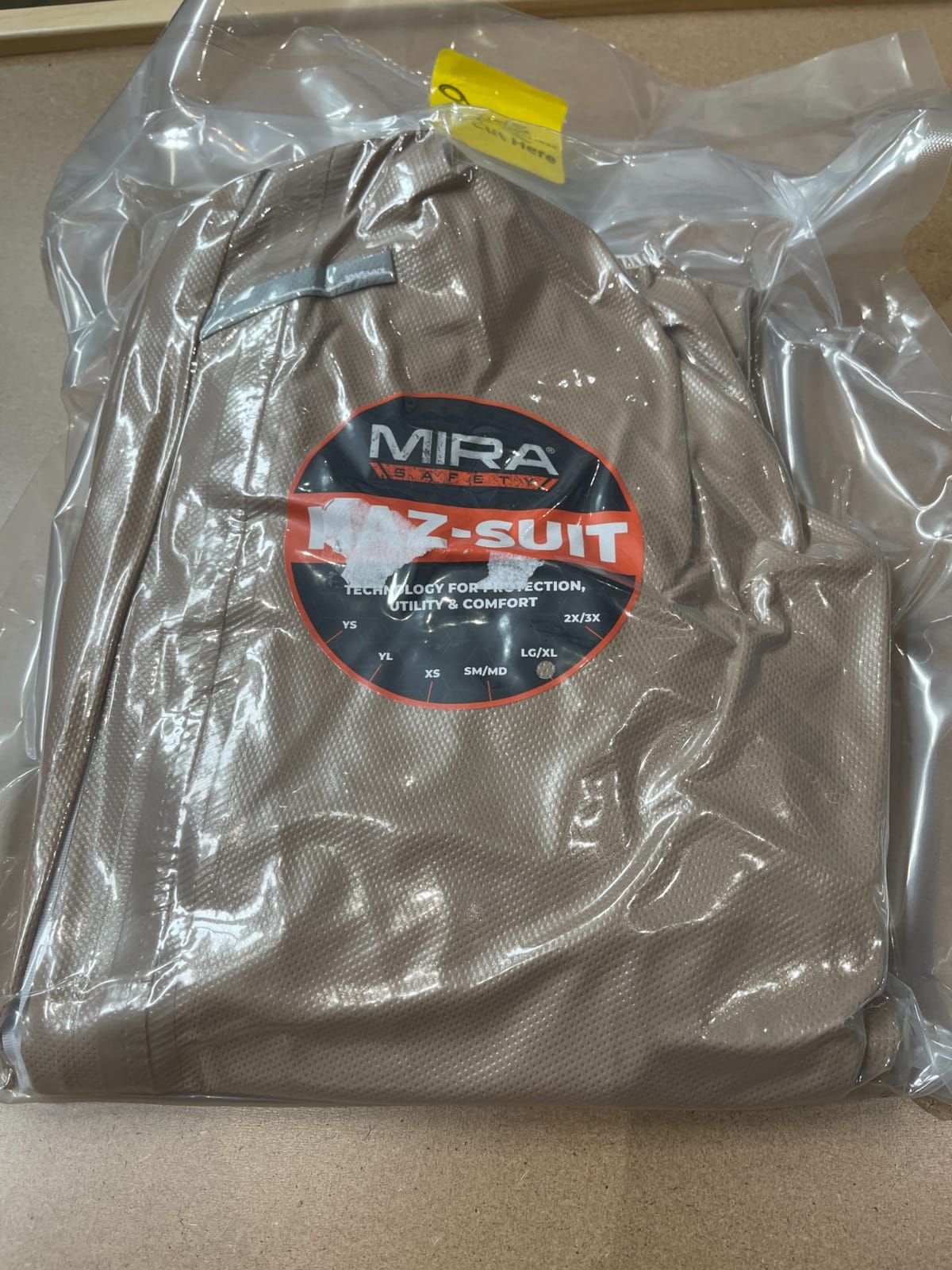
Stated effectiveness is as a barrier against organic and inorganic chemicals including many acids, bases, salts, greases and oils, plus protection against CBRN agents. Buyers note it is used by major fire departments for hazmat response and by hospitals for emergency preparedness, which is a meaningful credibility signal because those organisations have procurement standards that consumer buyers do not.
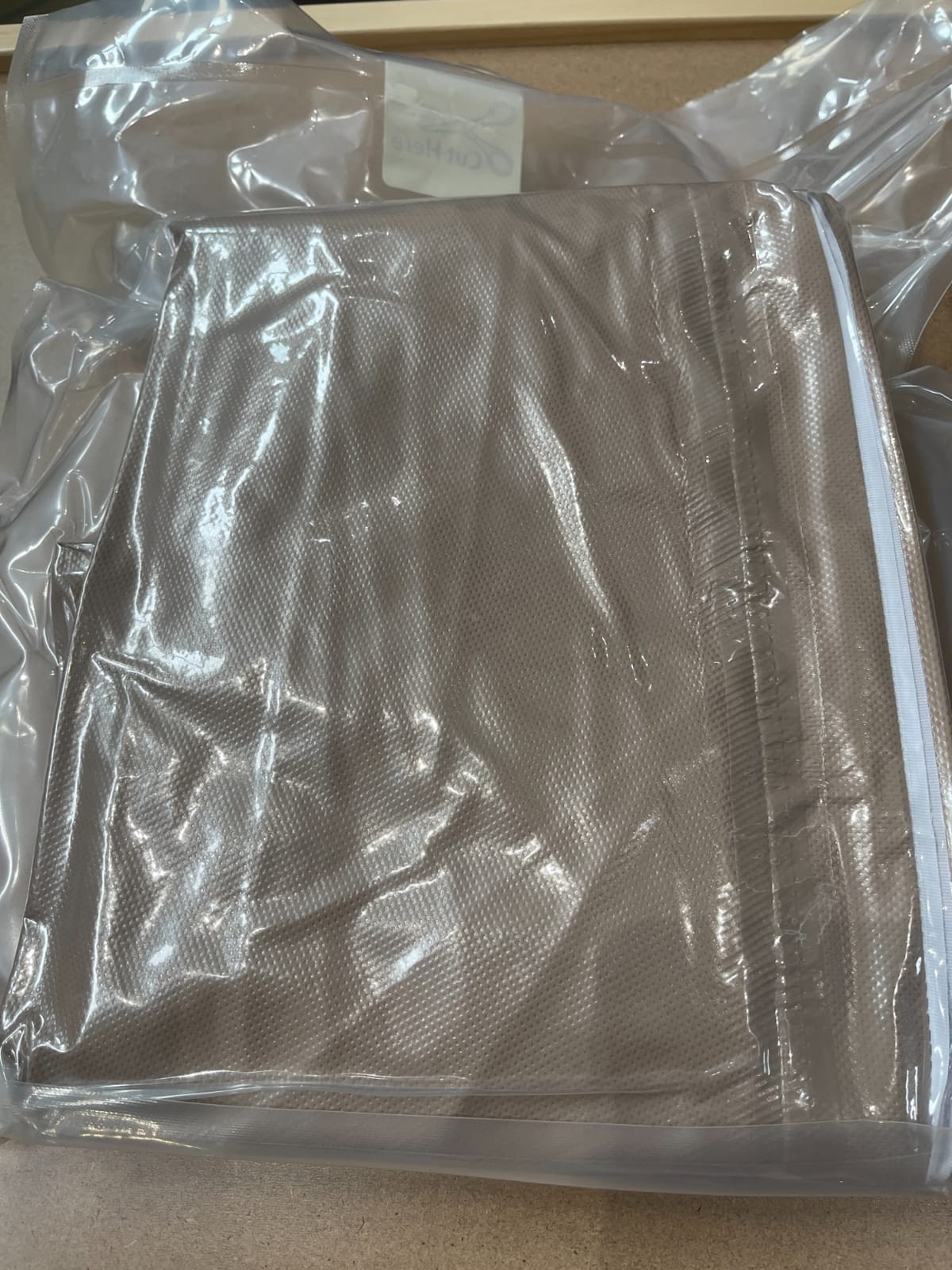
One detail stands out for anyone who stores PPE as stock. The manufacturer states there is no degradation in performance after long-term storage when kept cool, dry and out of direct sunlight. For organisations maintaining response inventory, that claim matters as much as the chemical performance. Size availability is grouped into four ranges: Small-Medium, Large-X-Large, 2X/3X and X-Small, and it has an attached hood.
At 4.5 from 243 reviews with 76% five-star feedback, satisfaction is high, but I want to flag the sample size. Two hundred and forty-three reviews is a small sample compared with the disposable suits earlier in this list, so treat the average as indicative rather than precise, and note that it gives you less size-specific feedback to work from.
The most important limitation is not about the garment. No coverall, at any price, is a substitute for a full respirator and SCBA ensemble in immediately dangerous to life or health conditions. This is clothing, and clothing is one layer of a system. It is also substantially more expensive than the disposable alternatives in this roundup, which is the correct trade for the protection scope but worth being deliberate about.
Who this suits?
Fire department hazmat teams, hospital emergency preparedness staff, spill response units, environmental remediation contractors dealing with unknown substances, and any organisation maintaining a response inventory that needs a garment with stated CBRN capability and long-term storage stability.
It is also the right call for anyone who needs broad chemical coverage across acids, bases, salts, greases and oils in a single garment rather than matching several chemicals to several suits.
Who should skip it?
Skip it for painting, abatement, sanitation or any routine task, because you would be paying for scope you will not use. Skip it as a standalone solution in IDLH atmospheres. And if you need tight size-specific feedback before committing, look for a supplier who can advise on fit across the four size ranges.
12. Medical Nation Hazmat Suit 1 or 10 Pack – Best Breathable All-Rounder
Hazmat Suit | 1 or 10 Pack | Disposable Coveralls with Hood -6 Size Options
- Breathable microporous film keeps workers cooler than solid laminates
- Attached hood plus elastic cuffs waist and ankles for full coverage
- Handles dust fibres fumes paint varnish asbestos waste and light hazmat
- Single-use design removes decontamination steps
- Only rated for light liquid splash and mild chemicals
- Single-use construction is a poor fit for repeated heavy jobs
- Not sealed enough for vapour or gas exposure
The second Medical Nation entry is the breathable all-rounder, and it is worth separating clearly from the 25-pack version earlier in this list. This one is a one-piece white coverall with an attached hood, sold in 1-pack or 10-pack quantities across six sizes, and it ranks ninth in Lab Coveralls.
The fabric is a nonwoven multilayer design with microporous film over spunbonded polypropylene, and buyers repeatedly credit the breathable construction with keeping workers cooler across seasons. The stated coverage is dirt, dust, light liquid splashes, paint, and most mild chemicals and biological agents, with elastic cuffs, waist and ankles for a snug fit and a water-repellent, anti-static, single-use construction.
What that lists in practice is a wide and useful set of jobs. Reviewers describe using it for dust, fibres, fumes, paint, varnish, asbestos, waste and light hazmat work, which makes this the most broadly applicable garment in the roundup for facilities and maintenance teams. The single-use design is a genuine operational benefit because it eliminates decontamination and laundering steps entirely, and at 4.4 from 219 reviews with 67% five-star feedback the comfort and coverage story is consistent.
The three limitations are all versions of the same message: this is a light-splash garment. It is not rated for aggressive chemicals, it is not sealed enough for vapour or gas exposure, and single-use construction means it is a poor fit for repeated heavy jobs where a reusable suit would be more sensible. The six-size range and the 1-pack option do make it easy to trial on a small job before committing a team.
Who this suits?
Facilities and maintenance teams doing asbestos, dust, fibre, waste and light hazmat work across seasonal conditions. It works well for anyone who wants a single garment type to cover a wide range of routine tasks without changing spec every time the job changes slightly.
The 1-pack option makes it a good way to test the fit on yourself before rolling it out to a team, and the 10-pack is there when you are ready to standardise.
Who should skip it?
Skip it for chemical manufacturing, solvents, acids and caustics at concentration, and any vapour or gas work. Skip it for repeated exposure to a single aggressive chemical, where permeation damage builds across tasks even if no single task looks severe.
Which EN 14605 Type Do You Actually Need?
Chemical protective coveralls are classified by EN 14605 into six types based on what they stop, and choosing wrong in either direction is expensive. Buy too high and you pay for protection you will never use while suffering through unnecessary heat. Buy too low and you have a garment that lets the hazard reach your skin.
Type 1 and Type 2 are gas-tight. Type 1 is fully encapsulated, including a breathing interface, and is used for gases and vapours. Type 2 is gas-tight but not fully encapsulating, meaning you wear your own respirator inside a sealed suit. These are the garments for IDLH-adjacent atmospheres and they are almost never what a painter, applicator or maintenance worker needs.
Type 3 is liquid-tight, protecting against pressurised liquid jets. Type 4 is spray-tight, protecting against sprayed liquids, which is the workhorse classification for most industrial chemical handling. Type 5 is particulate-tight against airborne dusts, and it is where Tyvek suits sit. Type 6 is limited-splash protection against a controlled set of non-toxic liquid splashes, and it is the most common classification for disposable microporous suits.
There is a second standard that matters. EN ISO 13982 covers Type 5 particulate protection, and EN 943 covers fully gas-tight chemical protective suits. A garment certified to EN 943 is in a different class entirely from one certified to EN 14605, and the marking on the garment tells you which you are holding.
CE Category III is the highest risk class under European PPE Regulation classification, and it is the correct class for coveralls used against high-risk chemical hazards, including many irreversible or potentially lethal exposures. When a safety officer asks for Category III documentation, a garment that only claims a generic chemical barrier is not enough. The keebomed and Tyvek 800 picks in this roundup both carry explicit Category III markings for that reason.
A useful sanity check: if you are choosing between a Type 5 particle suit and a Type 4 spray suit and cannot explain the difference to your crew, you are one size away from a serious incident. Particle suits stop airborne solids. Spray suits stop liquid. They are not interchangeable, and no marketing name changes that.
Tyvek vs Tychem: What Tyvek Can and Cannot Do?
No, a Tyvek suit is not chemical resistant. This is the most common and most dangerous misconception in this entire category, and it is worth being blunt about it because the two product families have very similar names and completely different jobs.
Tyvek is flash-spun high-density polyethylene. It is an excellent particle barrier, which is why DuPont rates the Tyvek 400 for lead and asbestos abatement, maintenance, spray painting and clean-up, and why it performs so well in crawl spaces and on boat hulls. Solid particles, whether they are dust, fibre or dried debris, hit the fabric and stop. That is what it is engineered to do.
Liquids behave differently. A liquid that contacts a particle-fabric suit can sit on the surface, and depending on the chemical and the exposure time, it will find a path through. Seams, cuffs and the zipper are the usual failure points. That is why chemical-rated garments use microporous film lamination, taped seams, sealed seams or a chemical-resistant coating rather than flash-spun nonwoven fabric.
Tychem is the chemical line. Tychem 2000 is the entry chemical fabric, providing light liquid splash protection with a stated minimum of 30 minutes against more than 40 chemicals, which is the pick in this roundup that carries a genuine permeation claim. Higher Tychem grades extend that scope further, up to fully encapsulating suits for severe chemical environments.
The practical rule is simple. Dry hazard, Tyvek. Liquid hazard, Tychem or a certified microporous disposable. Unknown or CBRN hazard, a specialist response garment. If your site risk assessment names a liquid chemical, take the chemical-rated garment and check the manufacturer’s permeation table for that specific chemical, because breakthrough time is chemical-specific and no fabric protects equally against everything.
Disposable vs Reusable: Cost, Comfort and Risk
Most of the garments in this roundup are single-use, and that is a deliberate design decision rather than a cost-saving compromise. A disposable suit solves the decontamination problem entirely, which is why several of the picks above get praised for removing cleanup steps. It also removes the failure mode of a reusable suit that was not decontaminated properly.
Reusable suits make sense when a site has a decontamination and laundering process with competent people running it, or when the exposure is frequent enough that per-wear cost dominates the decision. The economics are straightforward: a reusable suit only wins on cost if you actually achieve the expected number of wears, and that number collapses the first time a suit fails an inspection after a bad shift.
Comfort tilts the same way. Disposable suits avoid the awkwardness of getting into and out of a garment that has been worn before, and modern lightweight constructions have closed much of the comfort gap. The heat problem in this category is real for all of them, so comfort is better managed by choosing the right fabric weight and by scheduling work to avoid peak heat.
Risk is where reusables demand the most discipline. Chemical damage to a reusable suit is often invisible, and a suit that has absorbed a solvent can look and feel perfectly normal while no longer protecting you. If your organisation does not have a documented decontamination and inspection routine, disposable is the safer operational choice, and it is the one I would default to.
Material and Fabric Types Explained
The most chemically resistant material depends on what you are defending against, so rather than naming a single winner, here is how the constructions in this roundup actually behave.
Flash-spun high-density polyethylene, used in the Tyvek 400, is the strongest particle barrier and essentially inert against most dry contamination. It does not stop liquid, and it does not breathe.
Microporous polyethylene film laminated to spunbonded polypropylene is the dominant disposable construction, used by the Andes, Medical Nation, CAREGY, keebomed, FURWEY and TrelaCo suits. The film blocks liquid penetration while the microporous structure lets vapour and moisture pass, so these run cooler than solid laminates. They are Type 6 style garments and they handle light splash and mild chemicals, not aggressive solvents.
Nonwoven multilayer combinations with spun-bonded polypropylene outer layers add strength and tear resistance over the microporous core, which is why the layered versions hold up better during crawling and heavy work than single-film suits.
Tychem 2000, in the fourth pick, is a polyethylene-based coated chemical barrier designed for liquid splash with a stated breakthrough time against more than 40 chemicals. It is the material in this roundup with a documented permeation claim rather than a barrier claim.
Taped and over-taped seams, seen on the Tyvek 800, upgrade a garment’s barrier performance independently of the fabric. Seam tape can be the difference between a suit that holds a splash and one that lets it run straight through the shoulder.
For durability, no disposable suit is designed for indefinite reuse. Once a suit has been saturated, abraded or exposed to a chemical beyond its rating, replace it. The most durable material in the list is the MIRA Safety coverall, and it is still a limited-life garment rather than a permanent one.
Sizing, Fit and Full-Coverage Closure Details
Fit is the difference between protection and exposure, and disposable coveralls are cut with more variation than most buyers expect. The Medtecs suit covers heights from 5 foot 4 to 6 foot 7, the keebomed ergonomic cut targets 5 foot 10 to 6 foot 2, and the FURWEY suit runs Medium through 4X-Large. Check the height range before the size chart, because a correctly sized letter with a badly matched height is what produces exposed wrists and baggy ankles.
If you are between sizes, sizing up is usually the safer call on a disposable suit because the elastic at the wrists, waist and ankles will close the gap, and a tight suit puts stress on seams. Several of the suits in this roundup carry explicit reviewer advice to size up for exactly this reason.
Closure details decide whether a garment works. A storm flap over the full-length zipper, as on the keebomed suit, meaningfully improves the front seal over a bare zipper. Elastic hoods, wrists and ankles give three of the four closure points; the fourth is the ankles, which is why attached booties on the Medical Nation 25-pack matter more than they appear to.
For hood design, a respirator-fit hood with a zipper extending to the chin, as on the Tyvek 400, is the one to choose if you wear a tight-fitting full facepiece. A standard integrated hood works fine when you are not wearing a respirator underneath.
On extended sizing, the market is still thin. Women’s-specific cuts remain uncommon across this category, and the broadest extended ranges are the Medical Nation 25-pack at 5XL and the FURWEY suit at 4X-Large. If you need beyond that, plan for a supplier conversation rather than an online order.
Pre-Use Inspection and Safe Doffing
Run a quick inspection before every entry, not just when the suit is new. Check seams and taped seams for any separation or lifting, run the zipper fully open and closed, confirm the elastic at wrists and ankles has not perished or stretched, inspect the hood and cuffs for tears, and confirm cuffs and ankles are actually closed at the wrist and ankle. Verify the expiry date on the packaging, and reject any suit with a chemical odour, a wet patch or a stiff or discoloured area.
For doffing, the order matters. Do not touch the outside surface with bare skin at any point. Loosen and roll the suit inside out, peeling it from the shoulders down and rolling outward so contaminated material ends up enclosed inside the roll. Remove gloves last, ideally using the glove-in-glove technique, then remove the respirator before touching your face. Bag the roll immediately and wash your hands and exposed skin thoroughly.
Two habits prevent most doffing mistakes. Get a buddy or use a mirror for the back closure, since the back is where contamination concentrates and where you are least able to check yourself. And undress before you leave the work area, because the single highest-risk moment in the whole process is the walk from the hazard zone to the locker room.
Shelf Life, Storage and Expiry
Disposable coveralls degrade in storage even when unused, and the degradation is not always visible. Store them cool, dry and out of direct sunlight, which is the condition the MIRA Safety manufacturer states for maintaining performance over long-term storage. Avoid stacking heavy items on top of folded suits, and keep them in their sealed packaging until use, which is one of the practical reasons the Tyvek 800 ships in a sealed bag.
Rotating stock is the habit worth building. Adopt a first-in, first-out system so older suits leave the store before newer ones, and date the cartons when they arrive. If a suit has been in a hot vehicle, a damp store or a chemical storage area, treat it as compromised rather than trying to judge it by eye.
For reusable suits, shelf life management is different and harder, because degradation usually comes from use and decontamination cycles rather than from storage. Build the inspection into the return process and retire a suit the moment it fails, because a reusable suit that has lost barrier performance looks exactly like one that has not.
The Rest of Your Chemical PPE Kit
A coverall is one layer, and the gaps are predictable. Chemical-resistant gloves matched to the specific chemical, since glove breakthrough times differ from fabric breakthrough times and are usually shorter. A respirator selected by the hazard and fit-tested to your face, since a hood does not replace it. Chemical splash goggles, because eyes are an exposure route coveralls never address. Boots or boot covers matched to the ankle closure of the suit. And chemical-resistant tape for taping front closures and any gaps you identify before entry.
Complete kits solve this better than assembling separately, and the TrelaCo pick in this roundup is the clearest example, bundling coveralls, shoe covers and nitrile gloves in matched sizes. Where you are building a kit yourself, match glove material to the chemical rather than to the garment, because the glove is usually the first thing to fail.
Handling chemicals correctly matters as much outside the suit as inside it, and getting the dosing and water chemistry right is a separate discipline from dressing for a spill. Our guide to the best hot tub chemical kits for spa maintenance covers that kind of day-to-day chemical handling in detail. For site-specific PPE decisions, always defer to your own risk assessment and a qualified safety professional rather than any published guide, including this one.
A Safety Note Before You Buy
A coverall is never a substitute for a respirator, chemical-resistant gloves, eye protection or a site-specific risk assessment. Every garment in this roundup protects skin and clothing. None of them protects your respiratory system, and none of them is appropriate for IDLH atmospheres without a full respirator and SCBA ensemble.
Breakthrough time is chemical-specific, so verify the manufacturer’s permeation table for the exact chemicals you will encounter. Confirm the EN 14605 Type and CE category match what your site documentation requires, inspect every suit before entry, and replace any garment that has been saturated, abraded or exposed beyond its rating.
Frequently Asked Questions
What are chemical-resistant overalls?
Chemical resistant coveralls are protective garments, usually single-use disposable suits or reusable suits, that cover the body from neck to ankle to shield skin from chemical splashes, vapours, gases and particulates. They are certified to EN 14605 protection Types 1 through 6, or EN 943 for fully gas-tight suits, as Category III PPE. They work either by resisting penetration outright, where a film stops liquid passing through, or by slowing permeation, where chemicals diffuse through on a measurable breakthrough time curve.
What is the most chemically resistant material?
There is no single most resistant material, because resistance depends on the chemical. Multi-layer chemical-resistant laminates such as coated polyethylene fabrics give the strongest broad liquid splash protection, while microporous polyethylene film over spunbonded polypropylene handles light splash and mild chemicals with better breathability. The most durable option in this roundup is a specialist hazmat response coverall rated against acids, bases, salts, greases, oils and CBRN agents, but it is also the least versatile and the heaviest cost.
What PPE is recommended for chemical hazards?
Start with the site risk assessment, then match each layer to the hazard. Gloves matched to the specific chemical, since glove breakthrough times are usually shorter than fabric. A coverall carrying the EN 14605 Type and CE category your documentation requires, with taped or sealed seams if liquid is involved. Chemical splash goggles, because coveralls never protect eyes. Boots or boot covers matched to the ankle closure, and a fit-tested respirator whenever vapour or airborne hazard is present. Chemical-resistant tape closes remaining gaps.
Is a Tyvek suit chemical resistant?
No. Tyvek is flash-spun high-density polyethylene and is an excellent particle barrier, which is why it is rated for lead and asbestos abatement, maintenance, spray painting and clean-up. It stops dry airborne solids such as dust, fibre and dried debris. It is not a chemical barrier and should not be relied on for liquid splash, solvents, acids or caustics. For any liquid hazard, use a microporous disposable suit or a chemical-rated fabric such as Tychem 2000.
What are type 4 coveralls?
Type 4 coveralls are spray-tight under EN 14605, meaning they protect against sprayed liquids rather than pressurised jets. They are the workhorse classification for industrial chemical handling, painting and coatings work, and process plant maintenance. Type 4 is a genuine liquid barrier class, which is what separates it from Type 5 particle garments. Confirm the seam construction, because a spray-tight fabric in a garment with serged seams is only as good as those seams.
What are type 5-6 disposable coveralls?
Type 5 coveralls are particulate-tight against airborne dusts and are where Tyvek suits sit, often certified separately under EN ISO 13982. Type 6 coveralls offer limited splash protection against a controlled set of non-toxic liquid splashes and are the most common class for disposable microporous suits. Both are single-use designs. The practical difference is that Type 5 stops solids while Type 6 stops light liquids, so they are not interchangeable.
What is type 5 and 6 protection?
Type 5 is particulate protection, stopping airborne dusts and fibres but not liquids. Type 6 is limited liquid splash protection, stopping a controlled set of non-toxic splashes but not vapour, gas or aggressive chemicals. Choosing between them comes down to whether the hazard in front of you is dry or wet. Many sites actually need both, in sequence, with a Type 5 suit worn under a Type 6 coverall for dusty chemical environments.
What is category 3 protective clothing?
CE Category III is the highest risk class in European PPE classification, covering high-risk hazards including many irreversible or potentially lethal exposures. Chemical protective coveralls for severe chemical hazards, fully gas-tight ensembles under EN 943, and respirators fall into this class. It matters because Category III requires third-party certification testing to the relevant standard, so a garment carrying the marking gives your site documentation something concrete to reference rather than a generic claim.
What is Tychem 4000 fabric made of?
Tychem 4000 is a DuPont nonwoven chemical protective fabric positioned above the Tychem 2000 entry level, built for broader chemical resistance than light splash protection. Its performance is verified by permeation and penetration testing against a published chemical list rather than by fabric name alone, which is the point to remember: always check the manufacturer permeation table for the specific chemicals in your workplace before selecting a grade.
What is the shelf life of Tychem 5000 garments?
Shelf life depends heavily on storage conditions rather than the fabric alone. Stored cool, dry and out of direct sunlight, chemical protective garments can retain performance for an extended period, and some manufacturers state no degradation over long-term storage under those conditions. Heat, humidity, ultraviolet exposure and chemical contact all shorten it. Store garments in their sealed packaging, rotate stock first-in first-out, and date cartons on arrival rather than trying to judge remaining life by eye.
What does Tychem 2000 protect against?
Tychem 2000 provides light liquid splash protection with a stated minimum of 30 minutes of protection against more than 40 chemicals. It is used in petroleum, pulp and paper, food and chemical processing, and pharmaceutical industries. It is a splash garment rather than a vapour barrier, so it suits liquid splash exposure but not vapour or gas atmospheres, and it is not the choice for aggressive solvents or isocyanates. Always verify the specific chemical against the permeation table.
What is the most durable material for coveralls?
For repeated professional use, multi-layer chemical-resistant laminates and coated chemical barrier fabrics outlast flash-spun polyethylene and single-layer microporous film, which tear more readily during crawling and heavy work. Among the picks here, reinforced overlock seams and multi-layer nonwoven designs hold up best for physical durability, while taped and over-taped seams give the strongest chemical barrier. No disposable suit is intended for indefinite reuse, so durability means service life per garment rather than permanence.
What are five examples of protective clothing?
Five common examples are chemical resistant coveralls such as Type 4 or Type 6 suits, chemical splash aprons, chemical resistant gauntlet gloves, liquid splash goggles or a full face shield, and disposable shoe covers or chemical resistant boots. For particulate hazards, a Tyvek coverall replaces the first item in that list. Each protects a different part of the body, and the coverall alone never replaces gloves or eye protection.
What is the best material to use for special protective clothing?
It depends entirely on the chemical and the exposure type. Multi-layer chemical-resistant laminates with taped or sealed seams give the broadest liquid protection, microporous polyethylene film over spunbonded polypropylene balances light splash protection against breathability for disposable use, and flash-spun high-density polyethylene is the right choice for dry particulate hazards only. The deciding factor is the manufacturer permeation data for the exact chemicals present, not the marketing name of the fabric.
The Best Chemical Resistant Coveralls in 2026
If you want one recommendation from this roundup, take the Medtecs IL-3055WEH. It carries the largest review sample in the group at 2930 ratings, holds a 4.6 average, and gives you an elastic seal at the hood, wrists and ankles with the broadest height coverage we found. For most dust, fibre, paint, mild chemical and biohazard work, it is the safest default in this list.
Match the pick to the hazard instead, and the decision gets easy. For genuine chemical splash, the Tychem 2000 coverall is the only pick here with a documented 30-minute breakthrough time against more than 40 chemicals. For dry particulate work, abatement and painting, the DuPont Tyvek 400 with its respirator-fit hood is the strongest choice. For taped seams and multi-Type certification, the Tyvek 800 covers Types 3 through 6. For a crew that needs integrated booties, the Medical Nation 25-pack solves the ankle gap. For a complete kit in one order, the TrelaCo set bundles suit, shoe covers and gloves in matched sizes.
For genuine hazmat and CBRN response, the MIRA Safety coverall is the specialist option and the only one with that stated scope, though it costs considerably more and is not a substitute for a respirator and SCBA ensemble. For the best balance of coverage, price and paint-grade performance, the Andes suit is hard to argue with. And if you need sizes past 4XL, the FURWEY suit is where the extended range actually exists.
Before any of these go on a crew, confirm the EN 14605 Type and CE category match your site documentation, check the permeation table for the specific chemicals you handle, and set a replacement and stock-rotation routine. Getting the Type right matters more than the brand on the label, and getting the fit right matters more than either. These are the best chemical resistant coveralls we found for 2026, and we will keep updating the list as new certifications and fit data come in.