
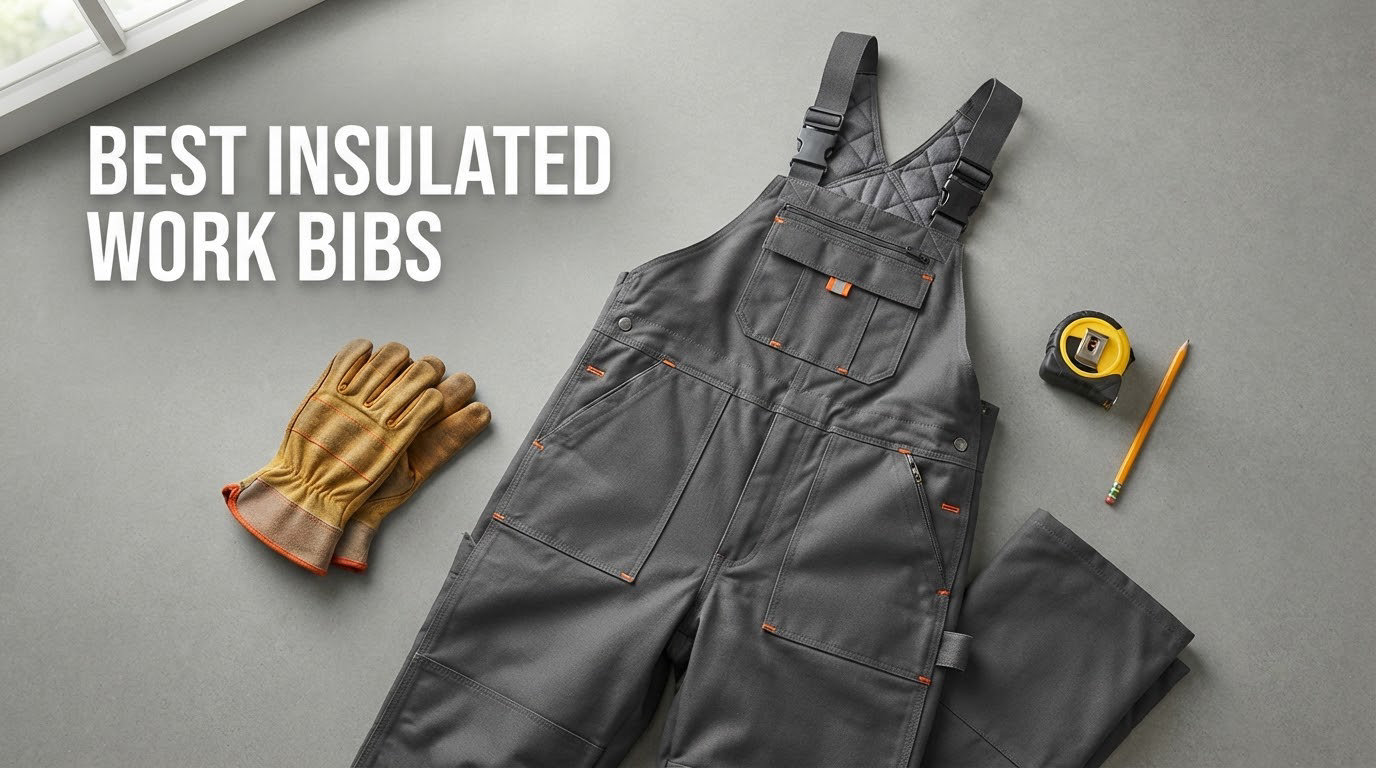
The best insulated work bib for most tradespeople is the Berne Heritage Insulated Duck Bib Overall: a heavy-duty 10 oz cotton duck shell with a water repellent finish, medium-weight insulation quilted to polyester taffeta, an insulated high back, and brass leg zippers that let you climb into it over boots. It carries more owner reviews than anything else we looked at, and it is the pair we would hand a framer, a lineman, or a delivery driver heading into a hard winter.
That is the short version. The reason bibs keep beating insulated pants on cold jobsites is coverage. A bib hangs from the shoulders with adjustable straps instead of a waistband, so there is no gap at the midriff where wind-driven snow and body heat escape. Most experienced tradespeople insist on that chest and shoulder block before they will consider a pair of winter pants.
Choosing badly is easy, though. The wrong fill weight has you either soaked in sweat climbing a ladder or freezing on a scaffolding at 6am, and the wrong shell fabric either dries in twenty minutes or stays damp for the rest of the shift. We compared 12 insulated bibs across duck canvas, ripstop polyester, Cordura nylon, and high-vis shells, and read the owner feedback closely rather than trusting the spec sheet alone.
Everything below is updated for 2026, and every recommendation is tied to a specific job and temperature band. You can also check our picks for the best portable work platforms if you are setting up winter site access, or our insulated coolers guide for keeping lunch and drinks from freezing on a long shift.
Table of Contents
How We Tested and Ranked These Insulated Work Bibs?
We did not lab-test these garments. We built the ranking from published specifications, long-run owner reviews, and the failure patterns that show up again and again once a bib has a few seasons on it. Here is the criteria list we applied, in order of weight.
Shell fabric weight and weave. We noted the fabric weight in ounces per yard (8 oz, 10 oz, 12 oz duck, 300D ripstop, 500-denier Cordura, 600-denier ballistic). Heavier duck resists abrasion; lighter synthetic sheds water and dries faster.
Insulation type and fill weight. Where a manufacturer publishes grams of fill or an insulation weight in ounces, we recorded it. A published temperature rating counted for more than any other single spec.
Reinforcement at high-wear points. Double-layer knees with pad openings, Cordura kick panels, and triple-needle seams on knees and seat separate bibs that last from bibs that do not.
Leg zipper range. This is the feature owners single out most often. A hem-to-knee zipper means you can put the bib on over work boots; an ankle-to-thigh zipper means you can take it off without untying anything.
Review volume and rating consistency. A 4.6 across more than 5,000 reviews tells us something a 4.9 across 300 does not.
Fit complaints. We tracked how often buyers report inseams running long, bibs running oversized, or a need to size up for layering, because that is where returns come from.
Anything without a leg zipper, without a named insulation spec, or with a fit that owners repeatedly fight lost ground regardless of how good the shell looks on paper.
Top 3 Insulated Work Bibs (October 2026)
If you only need three pairs of insulated bib overalls in 2026, these are the ones we would shortlist before anything else. The Berne Heritage takes the overall slot on owner volume and construction detail, Dickies earns the value spot, and the Berne Women’s Softstone is the strongest-rated bib in the whole group at 4.8 stars across more than 3,300 reviews.

Berne Heritage Insulated Duck Bib
- 10 oz cotton duck shell
- Quilted medium-weight insulation
- Brass leg zippers
- Insulated high back

Dickies Premium Insulated Duck Bib
- Waist-to-ankle leg zippers
- Insulated bib and high back
- Two-way front zipper
- Moisture-wicking flex fabric

Berne Women’s Softstone Duck Bib
- 10 oz sanded cotton duck
- Women's-specific cut and sizing
- Brass front and leg zippers
- Two large chest pockets
All 12 Insulated Work Bibs at a Glance
Here is the shortlist in one table, ordered the same way as the reviews below. Read the shell and insulation columns together, because a heavy duck shell with light fill and a light synthetic shell with heavy fill behave very differently in real cold.
| Product | Specifications | Action |
|---|---|---|
| Berne Heritage Insulated Duck Bib |
|
Check Latest Price |
| Dickies Premium Insulated Duck Bib |
|
Check Latest Price |
| Berne Women’s Softstone Duck Bib |
|
Check Latest Price |
 Carhartt Loose Fit Firm Duck Insulated Bib Carhartt Loose Fit Firm Duck Insulated Bib |
|
Check Latest Price |
 Carhartt Washed Duck Insulated Bib Carhartt Washed Duck Insulated Bib |
|
Check Latest Price |
 Ergodyne GloWear 8928 Insulated Thermal Bib Ergodyne GloWear 8928 Insulated Thermal Bib |
|
Check Latest Price |
 Berne Heartland Insulated Washed Duck Bib Berne Heartland Insulated Washed Duck Bib |
|
Check Latest Price |
 Carhartt Yukon Extremes Insulated Biberall Carhartt Yukon Extremes Insulated Biberall |
|
Check Latest Price |
 HISEA Insulated Water Resistant Duck Canvas Bib HISEA Insulated Water Resistant Duck Canvas Bib |
|
Check Latest Price |
 Wrangler Insulated Duck Bib Wrangler Insulated Duck Bib |
|
Check Latest Price |
 RefrigiWear Iron-Tuff High-Bib Overalls RefrigiWear Iron-Tuff High-Bib Overalls |
|
Check Latest Price |
 Arctix Essential Insulated Bib Overalls Arctix Essential Insulated Bib Overalls |
|
Check Latest Price |
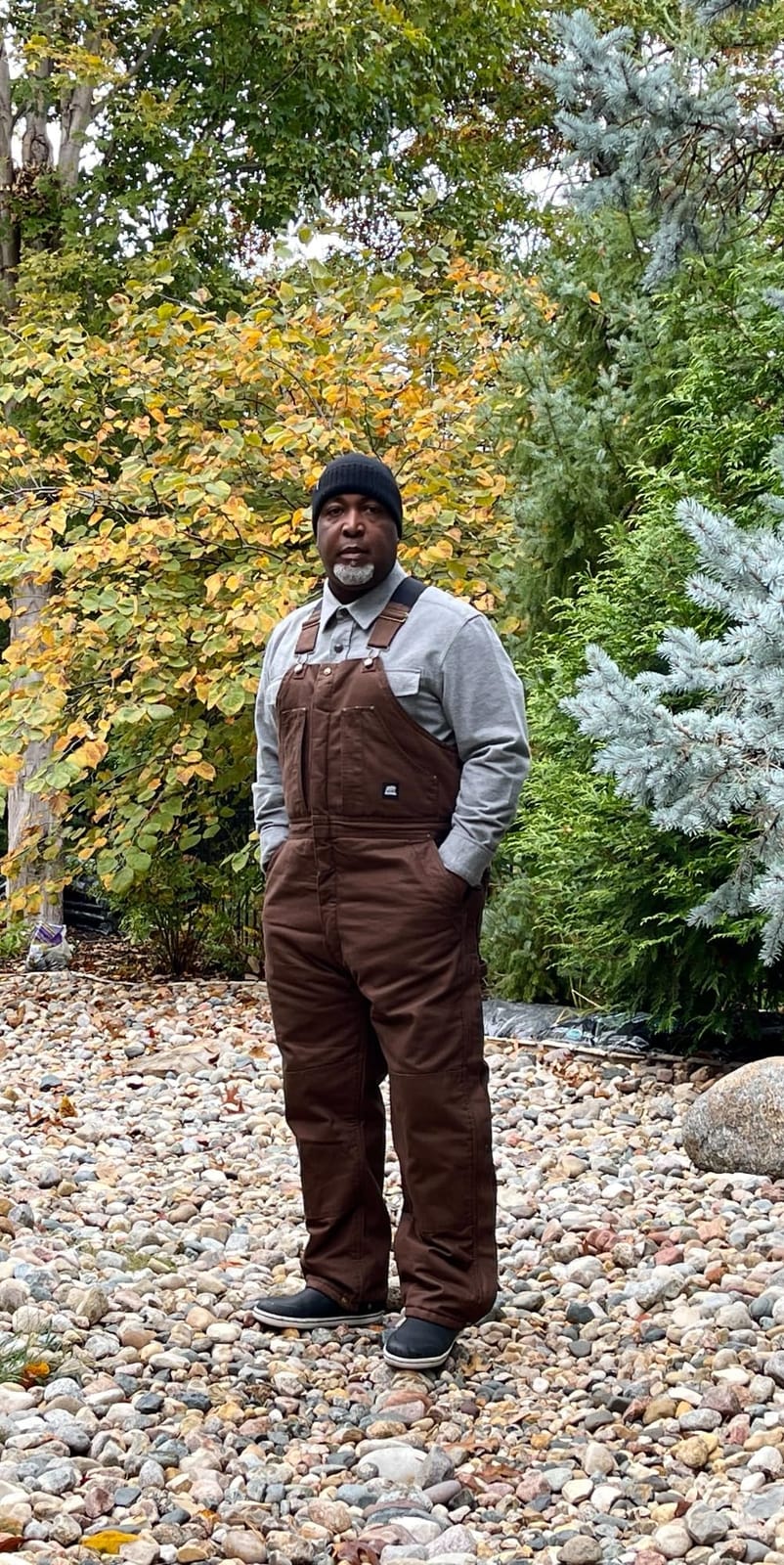
1. Berne Heritage Insulated Duck Bib Overall – Best Overall Insulated Work Bib
Berne Men’s Heritage Insulated Duck Bib Overall, X-Large Regular, Brown Duck
- Water repellent 10 oz duck shell
- Insulated high back adds real warmth
- Brass leg zippers allow on and off over boots
- Large pocket set with hammer loop
- Triple-needle stitched knees
- Bib area runs warm during heavy exertion
- Inseam runs long on some body types
This is the bib we ended up buying for our own winter site work. The shell is 10 oz cotton duck with a water repellent finish, which is the sweet spot between stiffness and weight: it starts a little rigid, softens after a week of wear, and still shrugs off the kind of grit that ruins lighter polyesters. The lining is medium-weight insulation quilted to polyester taffeta, so the warmth is spread evenly instead of pooling in one spot.
What convinced us was the closure layout. The brass two-way front zipper runs all the way down, and the brass leg zippers with snap closures at the hand opening let you step into the bib with your boots already on. That detail gets ignored until the first snowy morning when you are trying to get dressed in a truck bed, and then it becomes the feature you notice every single day.
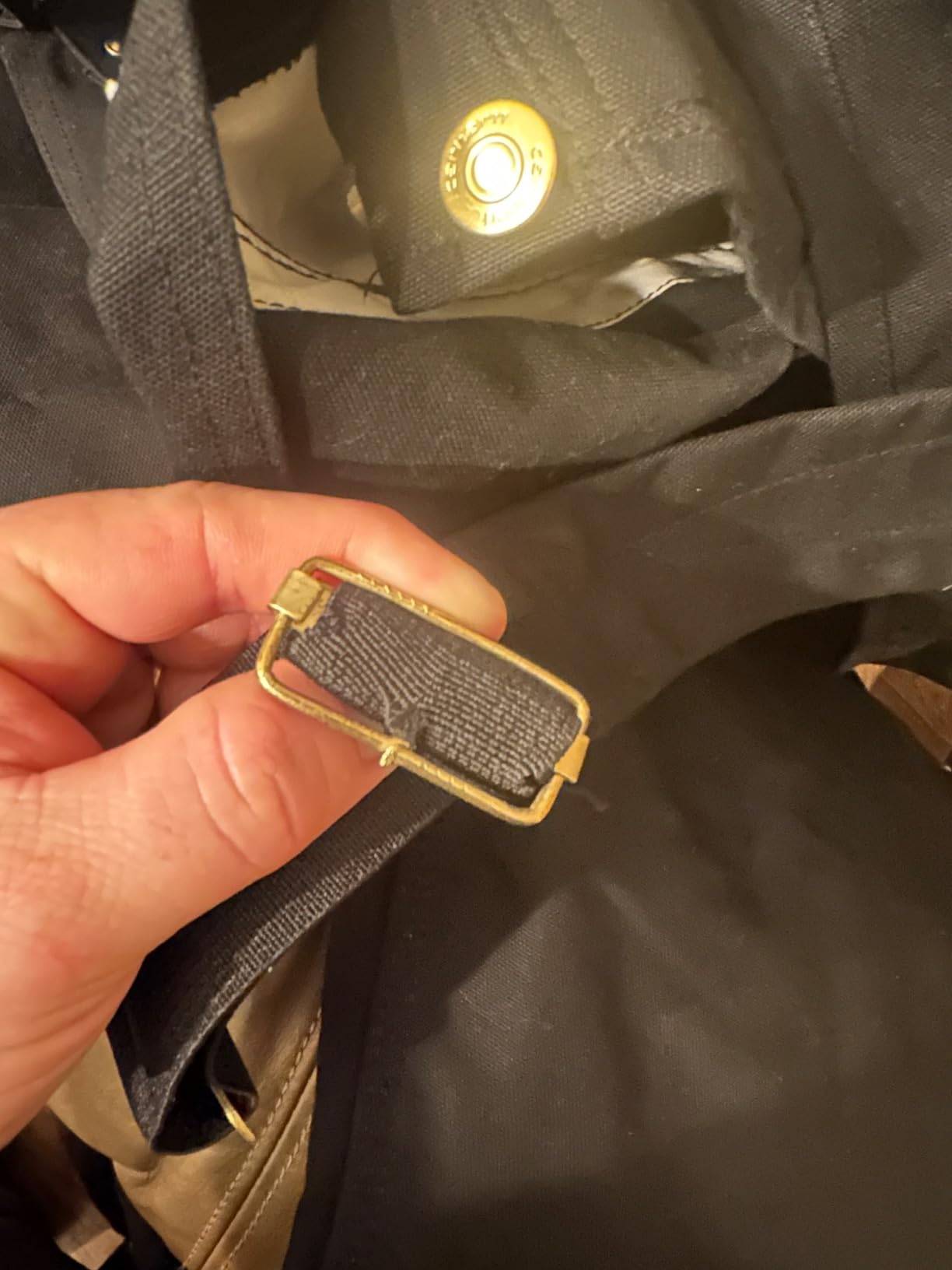
The pocket count is genuinely useful rather than decorative: double inside chest pockets, two swing pockets, two reinforced back pockets with a brass zipper on one, side utility pockets, and a hammer loop. We have carried a speed square, a tape, and a pair of gloves in that layout for a full season without the chest bags sagging.
Construction details are where this bib pulls ahead of cheaper duck options. The main seams and knees are triple-needle stitched, the waistband is four-needle stitched with elastic inserts, and the leg hem is nylon rather than cotton duck, which matters because hems are the first thing to blow out. Carhartt and Duluth Trading are the two names forum regulars name most often as default insulated bib brands, and this is the strongest argument for that bias from the duck side of the aisle.
The trade-offs are real but manageable. Owners do report the insulated bib area feeling warm during sustained heavy exertion, and a fair number mention the inseam running long for their frame. Both are fit and layering problems rather than defects.

How it handles a full winter on a residential site?
Through a typical cold-weather remodel season, this is a set-and-forget pair. The duck does not stretch out at the seat like a lighter poly, and the reinforced back pockets take the abrasion from kneeling on joists and skids. Wearers describe it as a buy-it-for-life candidate, and multi-year ownership reports naming Berne, Dickies, and Carhartt in the same breath are common on the forums.
If you are drywalling or framing and you will be on your knees all day, note the knee construction is triple-needle stitched but not a double-layer pad pocket like the Carhartt Firm Duck. If kneepads matter to you, that model is the better pick.
Who should pass on this bib?
Skip it if you work at a steady high heart rate in temperatures near freezing, because the insulated high back and bib block is exactly the part that traps heat. It is also the wrong choice for anyone who needs a fully waterproof shell; a water repellent duck finish sheds drizzle and snow but will soak through in sustained rain.
Anyone taller than about 6 foot 3 should measure before ordering, since the long-inseam complaint is repeated often enough to plan around it.
2. Dickies Premium Insulated Duck Bib Overall – Best Value Insulated Bib
Dickies mens Insulated Bib overalls and coveralls workwear apparel, Brown Duck, X-Large US
- Leg zippers run from the waist to the ankle
- Insulated through the bib and high back
- Heavy canvas and brass zippers hold up
- True to size with layering room
- Inseams can run long and short sizes are often needed
- Bib runs warm during heavy exertion
- Fewer pockets than some rivals
The reason this bib keeps coming up in owner comparisons is the zipper range. The leg zippers run from the waist all the way down to the ankle, so you can get the overalls off without removing your boots, and the two-way front zipper covers the rest. Among the duck options we compared, that is the most complete closure layout you will find at this tier.
Dickies built it with flex fabric and moisture-wicking materials rather than a plain heavy canvas, and the difference shows up when you are climbing ladders or riding in a truck for hours. Owners also report that the fit runs true to size with genuine room for a thermal base layer underneath, which is not something every insulated bib gets right.
The construction holds up under daily use according to the reviews: heavy canvas and brass zippers that do not bind or bend out of shape. Across more than 5,400 ratings averaging 4.6, this is the second most proven bib in the group, and owners frequently compare it favorably to Carhartt on warmth and value.
Zippers and fit: where the complaints live?
The recurring caveats are sizing related, not durability related. Buyers with shorter legs report inseams running long, so short sizes are often the right call, and a segment of owners find the insulated bib too warm during heavy exertion. Pocket count is the one area where this bib is behind the competition, with fewer pockets than several comparable models.
Treat the inseam as the deciding question. Measure a pair you already own that fits well, compare inseam, and order accordingly rather than buying your usual waist size.
Who should pick this over the Berne Heritage?
Choose this bib if the leg zipper range is your top priority, if you prefer a slightly less stiff shell that moves more freely through the day, or if you want a proven pair without stepping up to the heavier washed duck options. It is also a strong first winter bib for someone building a work wardrobe gradually.
Pass on it if you carry a lot of tools that need dedicated pockets, or if you need a long-center zipper that reaches all the way to the crotch for easier layering changes.
3. Berne Women’s Softstone Duck Insulated Bib Overall – Best for Women
Berne Women’s Softstone Duck Insulated Bib Overall, Medium Regular, Titanium
- Purpose-built women's sizing that fits curvy and petite frames
- Sanded duck is soft without being flimsy
- Full-length zippers and side snaps
- Not as bulky as men's insulated bibs
- Regular lengths can run long for shorter wearers
- Shell is not waterproof and absorbs light moisture
At 4.8 stars across more than 3,300 reviews, this is the highest-rated bib in the group, and the reason is straightforward: it is a women’s cut rather than a shrunk men’s bib. The shoulder straps, chest width, and hip room are proportioned for women’s bodies, and owners repeatedly single that out as the reason the fit finally works. Nearly every insulated bib in this roundup is men’s sizing, so this fills a genuine gap.
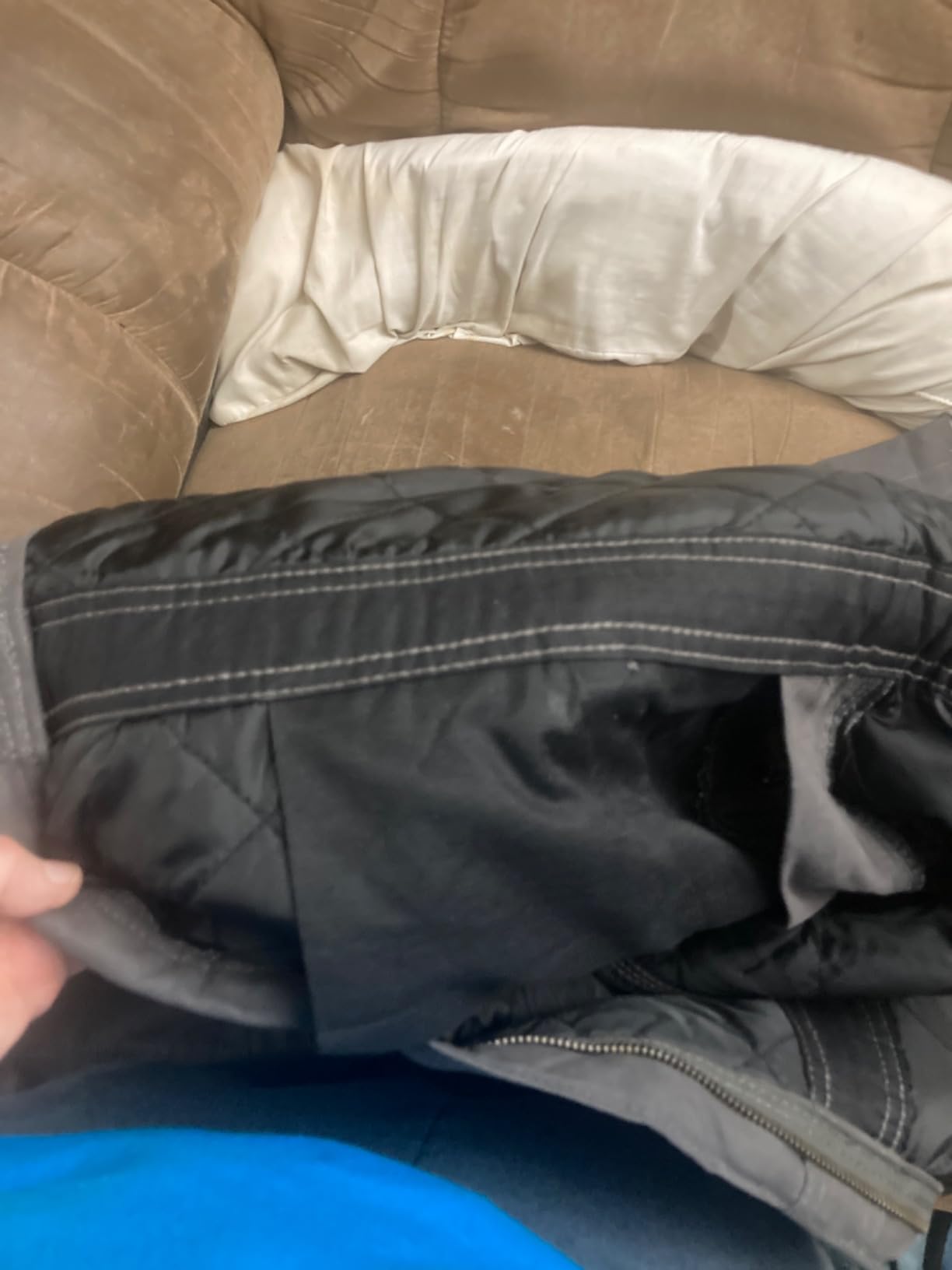
The shell is 10 oz 100 percent cotton sanded duck. Sanded means the surface is brushed, so it feels broken in from the first wear instead of stiff, and owners describe it as warm without being stiff. The lining is medium-weight insulation quilted to polyester taffeta, which is the same thermal approach as the men’s Heritage but proportioned to a smaller frame, and wearers report it is noticeably less bulky than the equivalent men’s bib while staying just as warm.
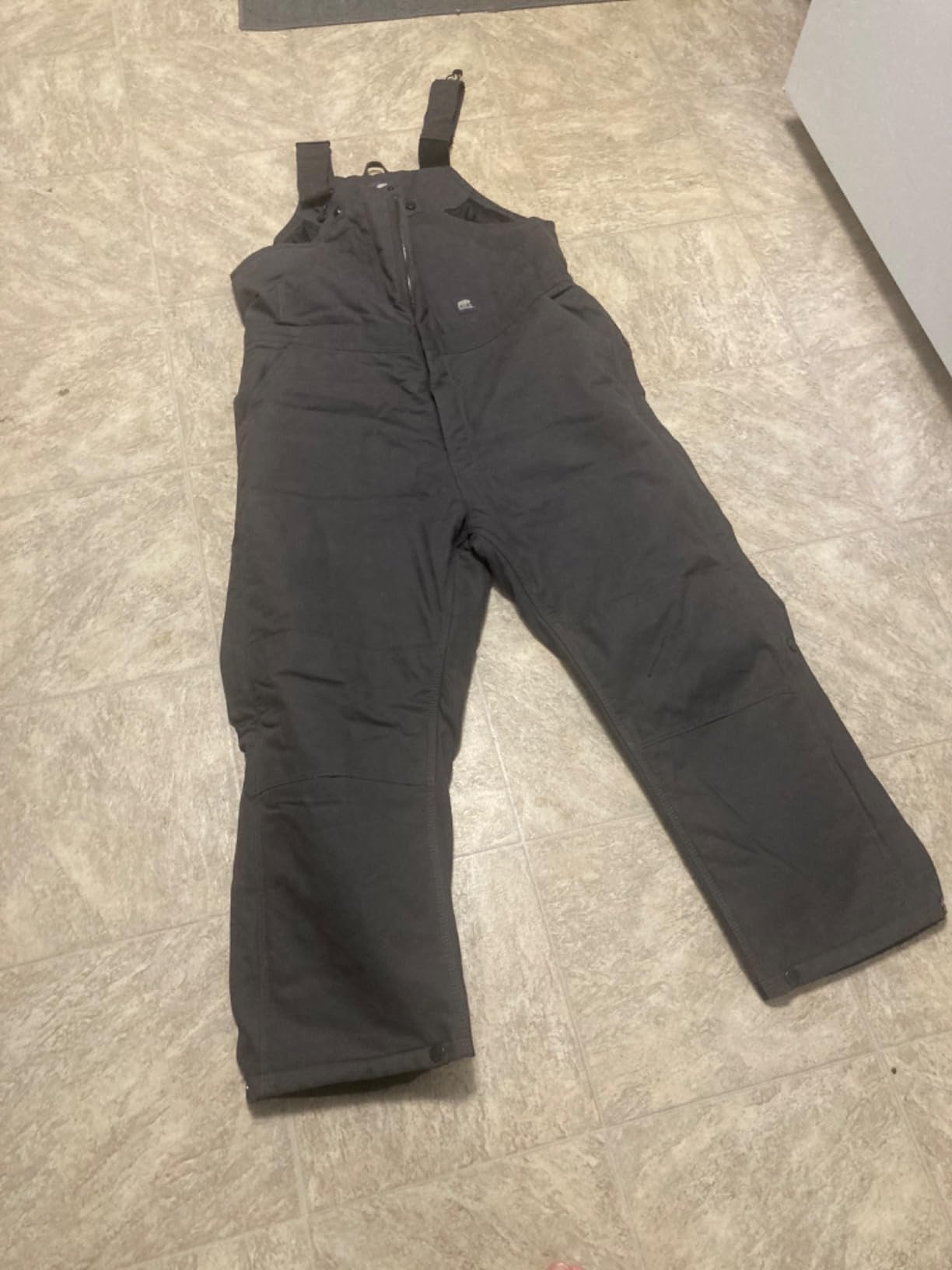
What you get for pocket carry?
The layout is generous for the size: two large chest pockets with hook and loop closure, a double tool pocket, a hammer loop, and a zippered back pocket with a brass zipper. The brass front and leg zippers with snap closure mean the same easy on and off behavior as the men’s Heritage, and the adjustable elasticized bib straps keep the chest from riding up when you reach overhead.
Side leg snaps are a small touch that prevents the hems from dragging when you walk, and the heavy-duty nylon leg hem holds up better than cotton at the point of contact with boots. Berne also backs the garment with a one-year warranty, which is worth noting in a category where many cheaper bibs carry no warranty at all.
Where this fit falls short?
The main complaint across reviews is inseam length. Regular lengths can run long for shorter wearers, which is the single most common return reason for women’s bibs in general. Check the inseam against a pair of pants that already fits before ordering.
The shell is cotton duck with no waterproof membrane, so it absorbs light moisture in drizzle. For rain-heavy work, pair it with a shell jacket or choose a synthetic bib instead.
4. Carhartt Loose Fit Firm Duck Insulated Bib Overall – Best for Kneeling Work
Carhartt Mens Loose Fit Firm Duck Insulated Bib Overall (Big & Tall) Work Utility Outerwear, Carhartt Brown, XX-Large Tall US
- Durable yet flexible 12 oz ringspun duck
- Ankle-to-thigh zippers with storm flaps
- Cordura kick panels at high-wear points
- Double-layer knees accept removable pads
- Suspender elastic can stretch with heavy use
This is the bib for anyone whose job involves being on their knees: framers, floor installers, roofers, and anyone crawling through crawlspaces. The double-layer knees have openings that let you add removable knee pads and, just as usefully, let you clear out debris and gravel that works its way into the knee during a day of crawling. That debris-clearing opening is a small design detail that owners consistently appreciate.
The shell is 12 oz 100 percent ringspun cotton duck, which is heavier and more abrasion resistant than the 10 oz options above, and ringspun yarns give it a bit more flexibility than conventional duck. Cordura kick panels sit at the ankle and lower shin, the two areas that take the most punishment from boot scuffs, dragging, and concrete contact.
The closure layout is the best in the duck category: ankle-to-thigh leg zippers with storm flaps and snap closures, plus adjustable front-elastic suspenders. The storm flaps matter in wind, since they stop snow from blowing straight into the zipper gap on a ridge or a lift shaft.
Knee and cuff durability under real jobsite abuse
Carhartt owners cite the durable duck canvas, the Cordura reinforcement, and the leg zipper layout as the reasons this model earns repeat seasons. The loose fit is deliberate and gives you room for a thick mid layer without the shoulder seams biting, which is exactly what a bib needs for layering over a hoodie.
This model replaces Carhartt’s legacy style R41, and buyers moving up from the older version generally report the same feel with a more modern closure system.
What to know before you buy?
The single reported weakness is the front-elastic suspenders. Owners say the elastic can stretch over time with heavy use, which means the bib will sit lower than it did new even when the adjusters are set tight. If you carry weight on the tool belt all day, check the suspender tension each morning rather than assuming it holds.
Because the duck is 12 oz and not pre-washed, it is stiff out of the box and needs a week of wear before it moves the way you expect.
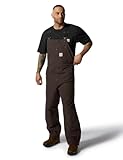
5. Carhartt Washed Duck Insulated Bib Overall – Best for Everyday Jobsite Work
Carhartt Men’s Washed Duck Insulated Bib Overall, Dark Brown, Large
- Washed duck is soft from the first wear
- Thinsulate through the legs gives serious warmth
- Stretch panels improve fit and mobility
- Cordura kick panels and triple-stitched seams
- Leg zippers stop at the knee
- Insulated bib chest runs warm at high exertion
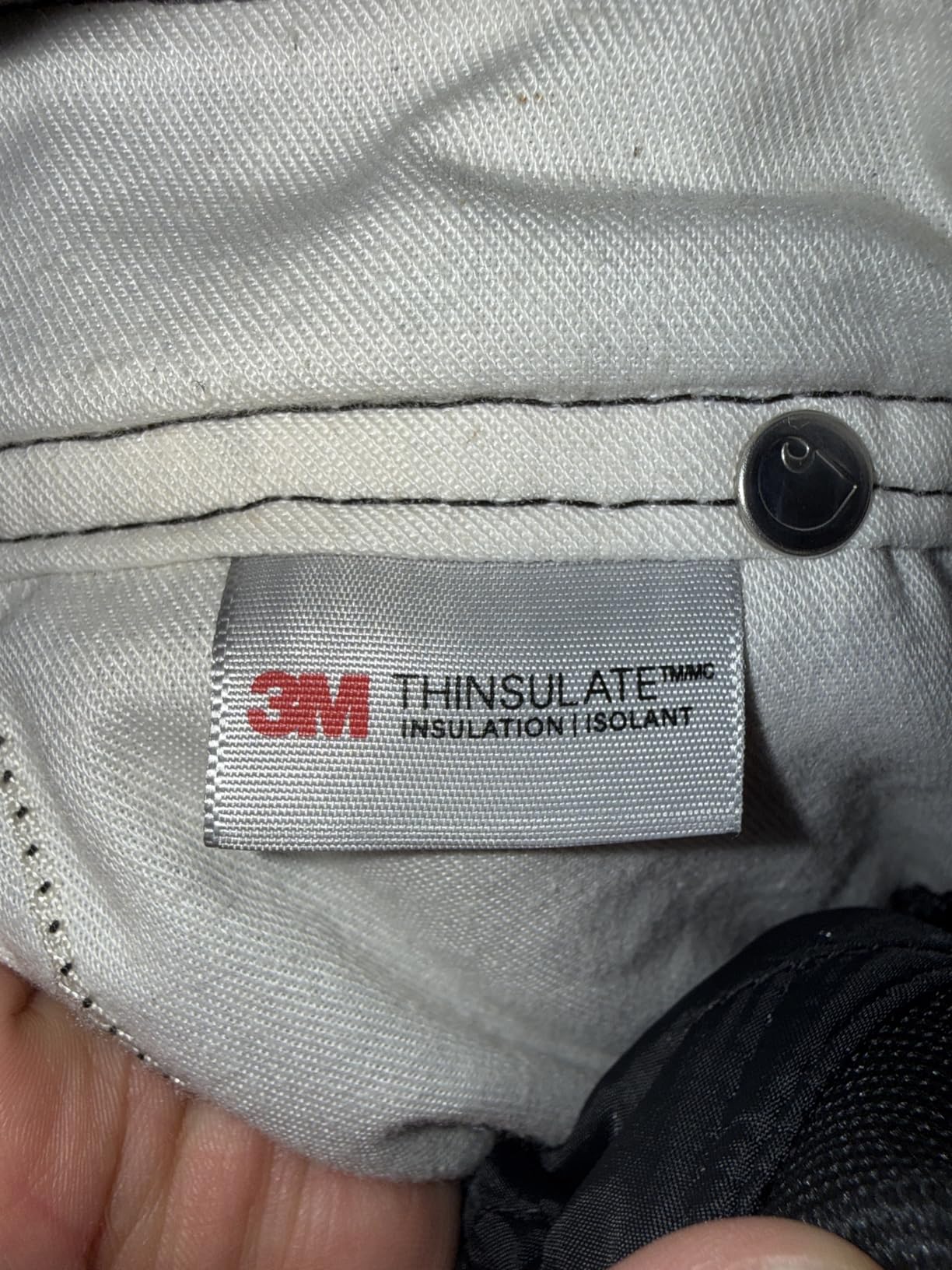
This is the version of the Carhartt duck bib that most people end up owning, and the reason is the combination of washed duck with 3M Thinsulate insulation through the legs. Washed duck is pre-shrunk and softened, so unlike a firm 12 oz bib there is no break-in period. You put it on the first morning and it moves like a garment you have owned for years.
Unlike the quilted synthetic bibs, this one uses 3M Thinsulate, a continuous filament insulation that is denser and warmer for its bulk than a quilted mat of loose fiber. That is why it holds warmth without the puffy look that owners of quilted bibs complain about, and it is why this pair weighs in at 4.34 pounds as shipped. The listed package dimensions are about 19 by 16 by 5 inches.
Fit gets help from the stretch side panels, which let the bib move with you instead of binding across the hips, and the Cordura reinforced kick panels protect the lower legs. Triple-stitched main seams are standard here, which is what you want on a garment that gets washed weekly for years.
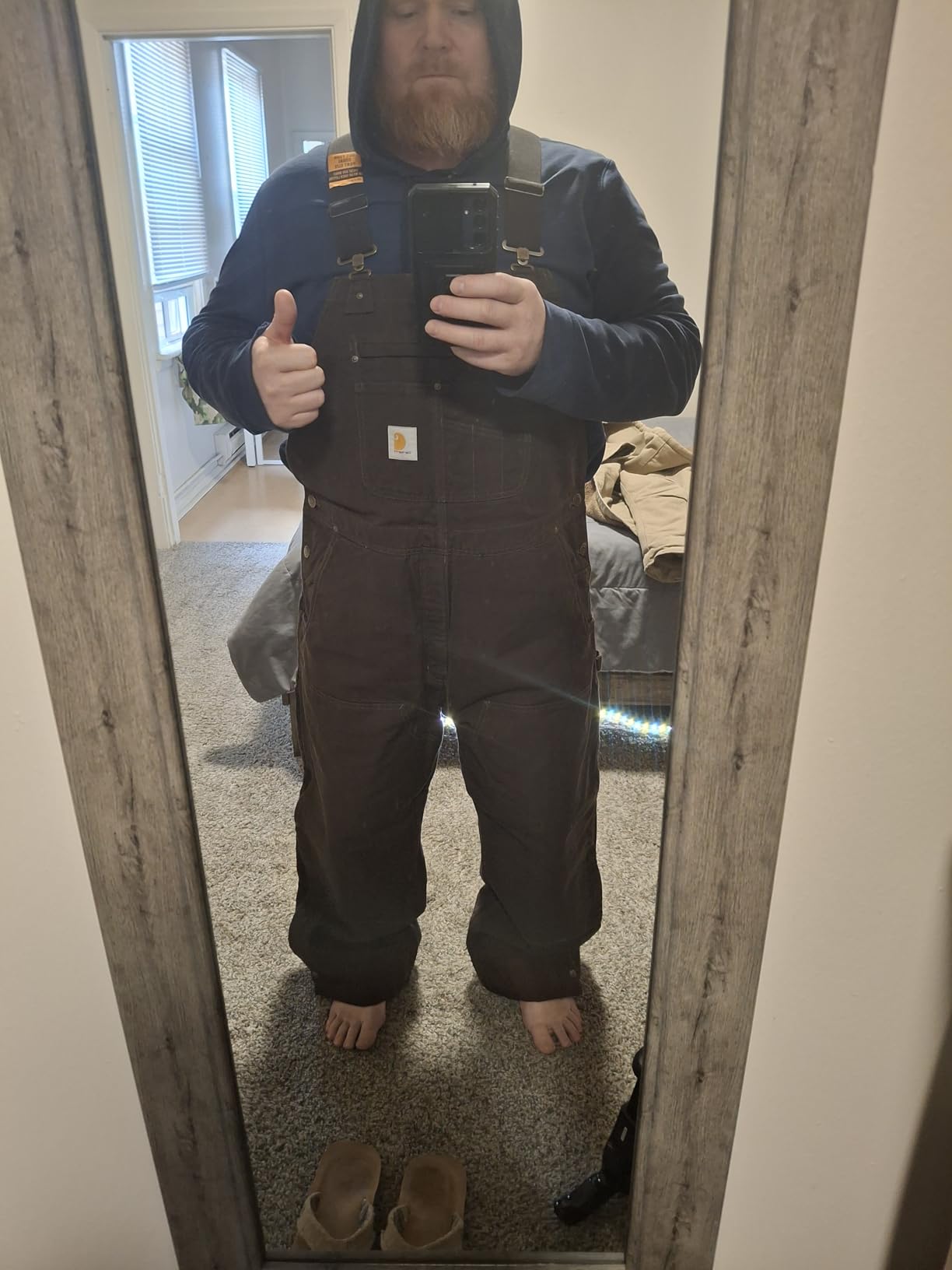
Buyers rate the combination of soft washed shell, Thinsulate leg insulation, and durable Cordura reinforcement highly for cold-weather jobsite use. This is the most-cited Carhartt insulated bib on forums after the Yukon model, and it is the one most tradespeople describe as the sensible winter default rather than the extreme cold option.
Thinsulate versus quilted fill, in practice
The practical difference shows up in two places. First, loft: Thinsulate does not flatten into the quilting channels after a season of washing the way loose synthetic fill can, so the warmth stays where it started. Second, bulk: you can fit a hoodie and a mid layer under this bib without feeling like you are wearing a sleeping bag, which is exactly what the stretch side panels were designed to allow.
The trade is breathability. A Thinsulate-insulated bib is a warmer garment than a quilted one of the same weight, so if you are working hard at temperatures in the forties, this can be too much.
Where the leg zipper falls short?
This is the one detail we would change. The leg zippers run ankle to knee, not ankle to thigh, so you can still put the bib on over boots but cannot open the leg fully for a pass, a restroom stop, or a faster exit at the end of the day. Owners with mud-heavy work report debris working down into the boot when the bib cannot be opened wide.
If full leg access matters to your work, step up to the Carhartt Firm Duck or the Yukon Extremes, both of which run the zipper to the thigh.
Sizing runs standard for Carhartt duck bibs, so take your normal waist and inseam. Plan on layering a base layer underneath rather than sizing up aggressively, since the washed duck already has some give.
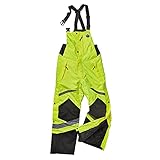
6. Ergodyne GloWear 8928 Insulated Thermal Bib Overalls – Best for Hi-Vis Work Sites
Insulated Thermal Bib Overalls, High Visibility, Weather-Resistant, Large, Ergodyne GloWear 8928,Lime
- Keeps legs warm well below freezing
- ANSI Class E reflective tape for low light
- Shell sheds wind
- snow and slush
- Quick-release buckles and leg zippers
- Calf holes can develop within weeks on some wearers
- Chest zipper can catch between buttons
- XL inseam runs about 32 inches
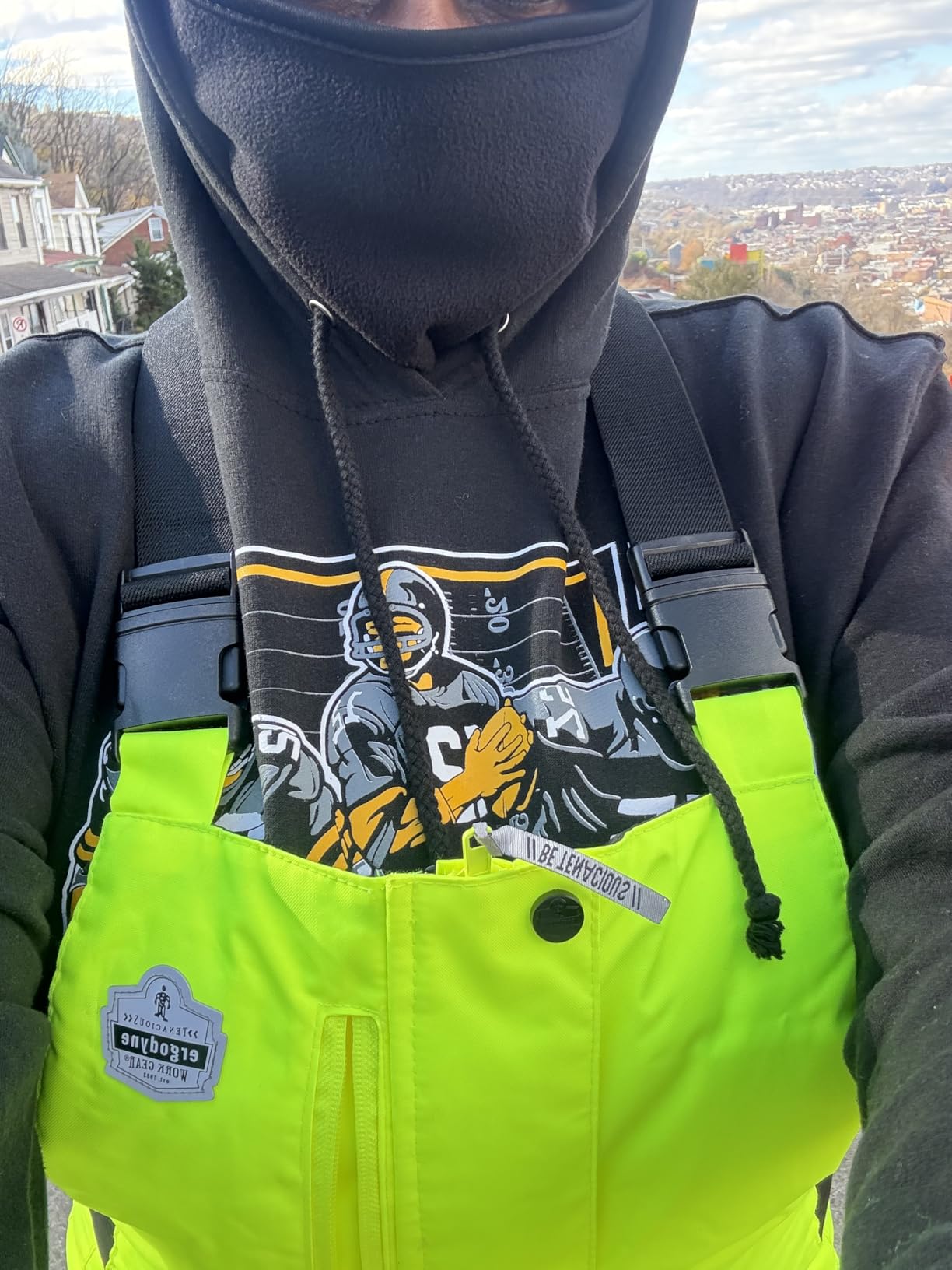
If your site requires hi-vis, this is the only bib in the group that carries a published safety compliance rating. The reflective tape is ANSI/ISEA 107-2020 Class E compliant, and the high-visibility lime and orange colorways are what roadside and snow-removal crews actually need rather than a retro-reflective strip added for looks.
The shell is 300D performance ripstop polyester with a PU coating, which means it is windproof and water resistant without the weight of a rubberized membrane. The 160g thermal insulation is the real story for cold work, and the manufacturer publishes a temperature rating of -15F. That is a genuine number you can plan a shift around, which is rarer than you would think in this category.
On and off is fast thanks to the quick-release suspender buckles, the elastic sides, and the pant leg zippers that let you get dressed over boots. Scuff-resistant knee patches and dirt-hiding black panels keep the high-vis areas looking presentable after a season of work.
This is the bib for snow removal operators, roadside flaggers, utility crews working near traffic, and warehouse teams in unheated docks. Warmth-to-weight is where it wins, and the -15F rating means it covers more temperature range than the duck options in this roundup. For a long shift on an unheated dock, our picks for the best insulated tumblers for coffee keep the break from turning into a cold one.
Durability is the honest weakness
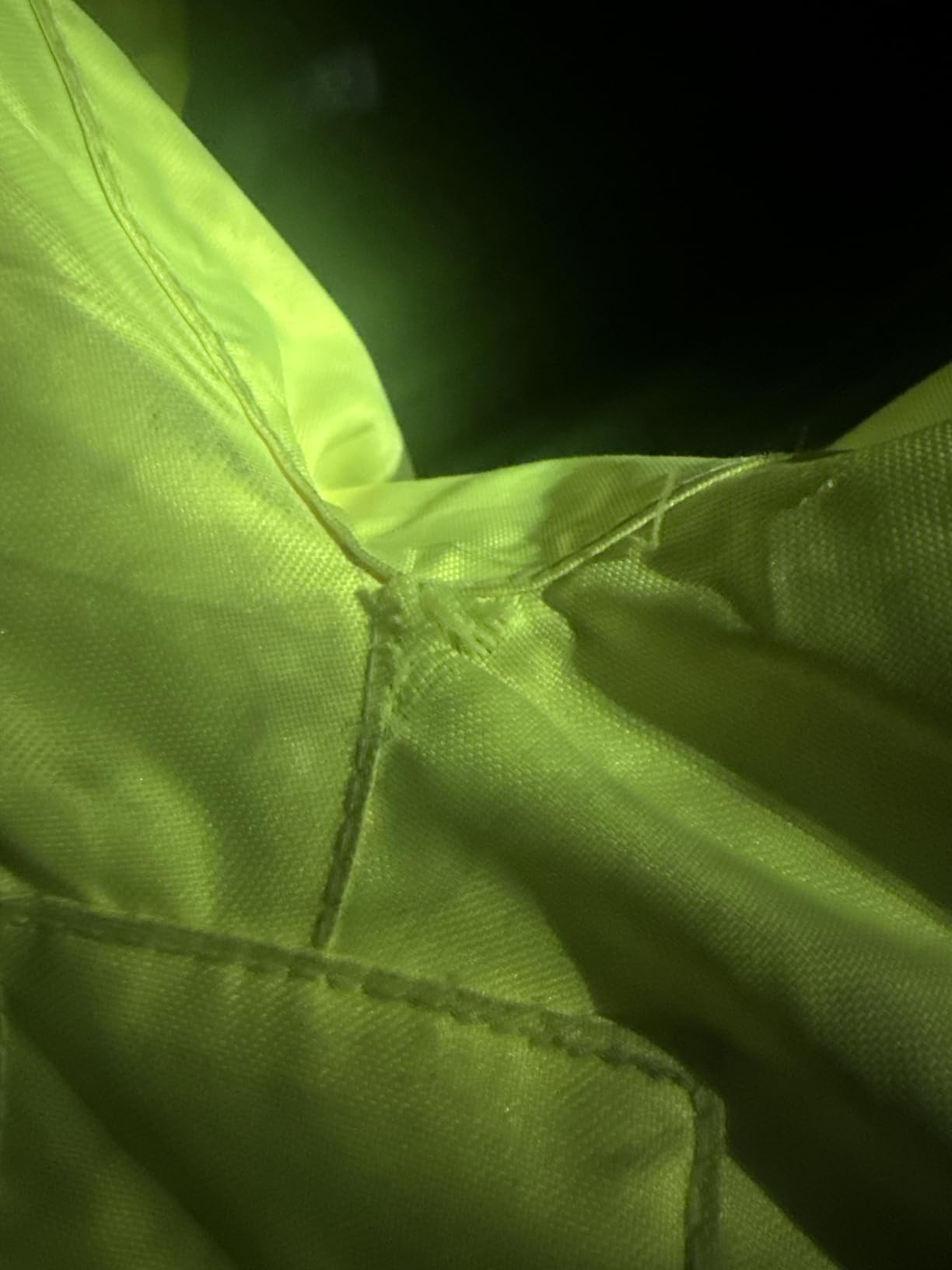
Reviews are clear that the shell is built for weather rather than for abuse. Some wearers develop holes at the calf within weeks, which points at the seam finishing and the ripstop yarn weight rather than anything the wearer did wrong. The lightweight construction also does not hold up to heavy construction work involving kneeling, dragging, or abrasive surfaces.
The inseam runs about 32 inches in the XL, which is short for tall wearers and is a common reason buyers return this model. Check the inseam chart against a pair you own before ordering.
When to choose it and when to walk away?
Choose this bib when visibility compliance and a published temperature rating matter more than long-term abrasion resistance. The ripstop shell dries far faster than cotton duck, which matters if you are out in wet snow all shift.
Walk away if you are framing, roofing, or doing any kneeling-heavy work. The duck and Cordura options will outlast this by a wide margin, and the calf-hole reports should tell you why.
One more operational note: the chest zipper can catch between the buttons, so give it a moment rather than forcing it. Owners who learned the rhythm report no further trouble.
7. Berne Heartland Insulated Washed Duck Bib Overall – Best for Tool Carrying
Berne Men’s Heartland Insulated Washed Bib Overall, Large Regular, Bark
- High-cut insulated bib and back block wind
- Enough room for fleece pants and a hoodie
- Long center front zipper to the crotch
- Nine-pocket layout with hidden zip pocket
- Bib straps are stiff and rub the neck
- Chest pockets are small for a large phone
- Leg zipper stops short of the hip
If you carry a real tool load, pocket layout is a feature, not a detail. This bib has nine pockets: two inside chest pockets, two chest pockets with a pencil slot, a hidden zipper pocket, two deep front pockets, side utility pockets, a hammer loop, and two reinforced back pockets with a brass zipper on one of them. The hidden zipper pocket is the one that changes behavior on a site, because it keeps a phone or wallet from bouncing around with a tape measure.
The shell is 12 oz 100 percent cotton sanded duck with heavyweight insulation quilted to 100 percent polyester taffeta. That is the warmest configuration in the Berne duck range, and owners describe this model as a warmer, softer alternative to the Carhartt insulated bibs rather than merely a cheaper one.
Coverage is the differentiator. The high-cut insulated bib and the insulated high back block wind at the waist and chest, and the outside storm flap keeps drafts out of the main closure. There is enough room underneath to wear fleece-lined work pants and a hoodie without the bib binding, which is what makes it viable for full-time winter work rather than standby cold.

The long center front zipper runs to the crotch, which makes layering changes much faster than a waist-length zip, and the side snaps give you access to the pockets of the pants underneath without removing the bib at all. That is the feature that regular owners mention when they explain why they stopped shopping around.
Pocket depth and what fits in the chest pockets
The two deep front pockets are genuinely deep and reinforced, and the reinforced back pockets take the abrasion of a full tool belt. The limitation is the chest pockets, which owners describe as too small for a large phone. If you run a phone-based job app, plan on the inside chest pocket or the hidden zipper pocket instead of the outer chest pair.
The hammer loop is on the correct side for most right-handed users, which is worth more than it sounds when you are wearing gloves.
Friction points to know about
The bib straps are stiff and can rub the neck during long days, particularly before they soften. Owners who fix this usually switch to a thicker undershirt at the collar rather than returning the bib.
The leg zipper stops short of the hip, so it is shorter than we would like, and the ankle snaps are stiff to close. Both are minor, but they are the reason this bib sits below the Heritage in our ranking rather than beside it.
Sizing runs true, and the four-needle stitched waistband with elastic inserts holds the bib up without riding down. If you are between waist sizes and layering thickly, go up one.
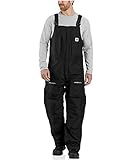
8. Carhartt Yukon Extremes Loose Fit Insulated Biberall – Best for Extreme Cold
Carhartt Men’s Yukon Extremes Loose Fit Insulated Biberall-Black-Medium
- Cordura shell and Thinsulate handle extreme cold and wet
- Reflective taping for low-light visibility
- Ankle-to-thigh zippers with storm flaps
- Loose fit layers over heavy insulation
- Highest price point in the group for comparable warmth
This is the warmest Carhartt bib overall in this roundup, and the warmest bib in the set that still has a published owner rating above 4.7 with meaningful review volume. The shell is 6.5 oz 500-denier Cordura nylon, which is a completely different animal from cotton duck: it blocks wind far better, it does not absorb water, and it dries in a fraction of the time if you get caught in rain or wet snow.
Inside is 3M Thinsulate insulation, so the warmth comes from the same continuous-filament system as the Carhartt Washed Duck but with a more windproof shell around it. The loose fit is intentional, and Carhartt even instructs buyers between sizes to take the larger one, because the design is meant to sit over a heavy mid layer without compression. That instruction is unusual and worth following.
Details that matter outdoors: Wind Fighter technology tames wind through the fabric, Rain Defender durable water repellent handles wet snow and drizzle, and 3M Scotchlite Carbon Black reflective taping runs on the center back and double front for low-light work. Bar tacks at vital stress points, double-layer knees with pad openings, and a two-way center front zipper round out the build.
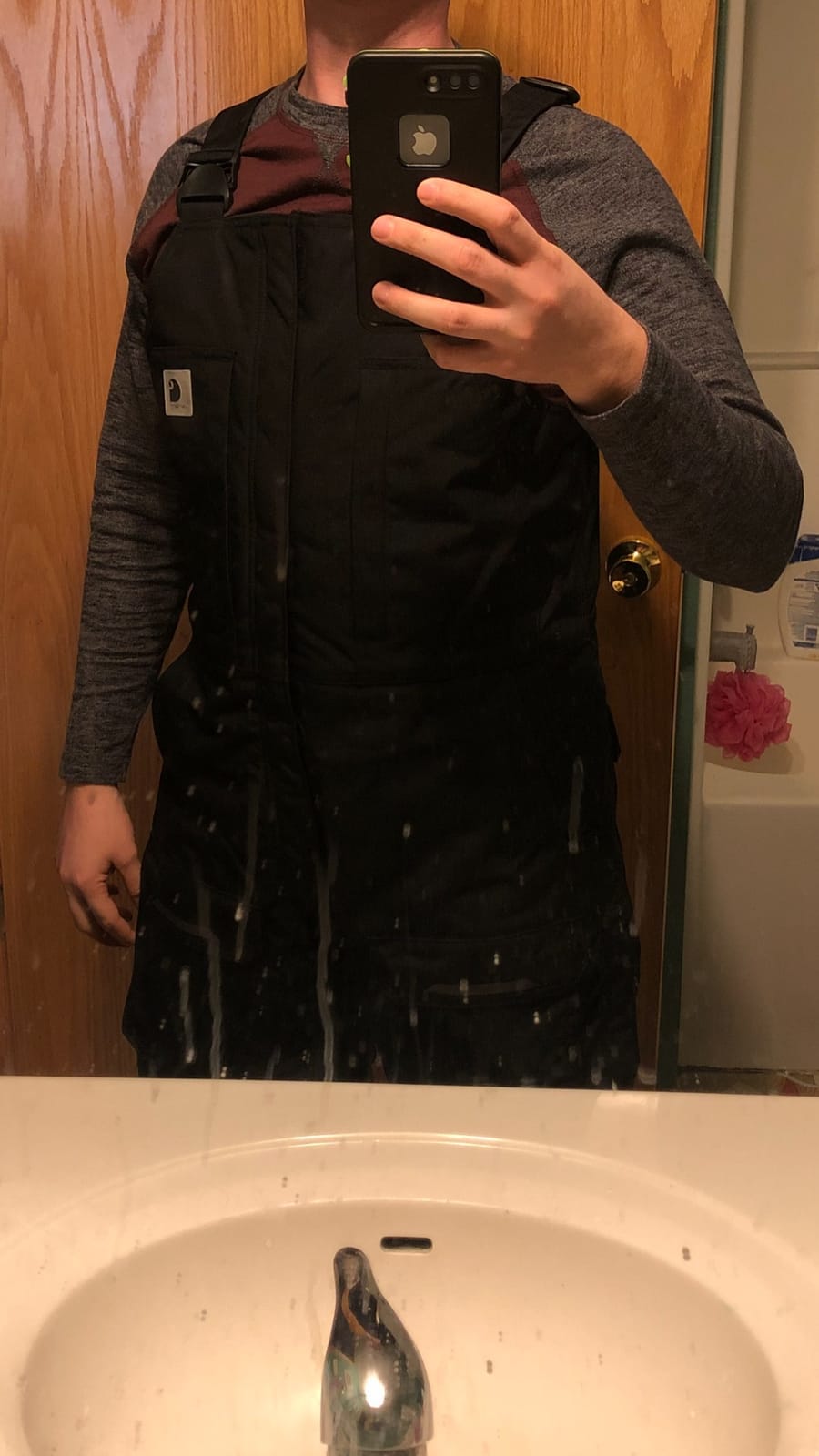
The ankle-to-thigh leg zippers with storm flaps are the best closure in the group, and Carhartt’s own note on sizing between measurements plus the loose fit means most owners can layer what they need underneath without the shoulders fighting the fabric.
When the Cordura shell earns its cost?
The value of this bib shows up when your work involves exposure rather than abrasion. If you are outside in wind and wet cold, a duck shell soaks and then holds that moisture against you for hours, while the Cordura shell keeps shedding it. The DWR finish will eventually need reapplying, but the base fabric underneath does not degrade the way cotton does.
Reflective taping also means this bib works for road and site work at dusk, which is one of the seasons where most of our readers actually work.
Who should not buy this bib?
It is the most expensive option in this roundup, and for many winter jobs the warmth is more than the conditions justify. If your winters bottom out in the low twenties rather than the single digits, a washed duck bib will keep you just as comfortable for a fraction of the outlay.
It is also a poor choice for high-exertion indoor-adjacent work, because a Cordura shell breathes less than duck and the Thinsulate fill adds bulk on top.

Pockets are well laid out for the price tier: a secure chest pocket, ledge hand pockets, front cargo pockets with hook-and-loop closure, and back pockets with hook-and-loop closure.
9. HISEA Insulated Water Resistant Duck Canvas Bib Overalls – Best Lightweight Canvas Bib
HISEA Insulated Bib Overalls for Men Winter Duck Canvas Workwear for Cold
- 120g fill keeps the core warm without bulk
- Water-repellent coating handles snow and light rain
- Eight-pocket layout covers chest
- hand
- back and leg storage
- Loose fit layers easily
- Can shrink noticeably after washing
- Strap adjusters do not hold position well
- Runs large and long
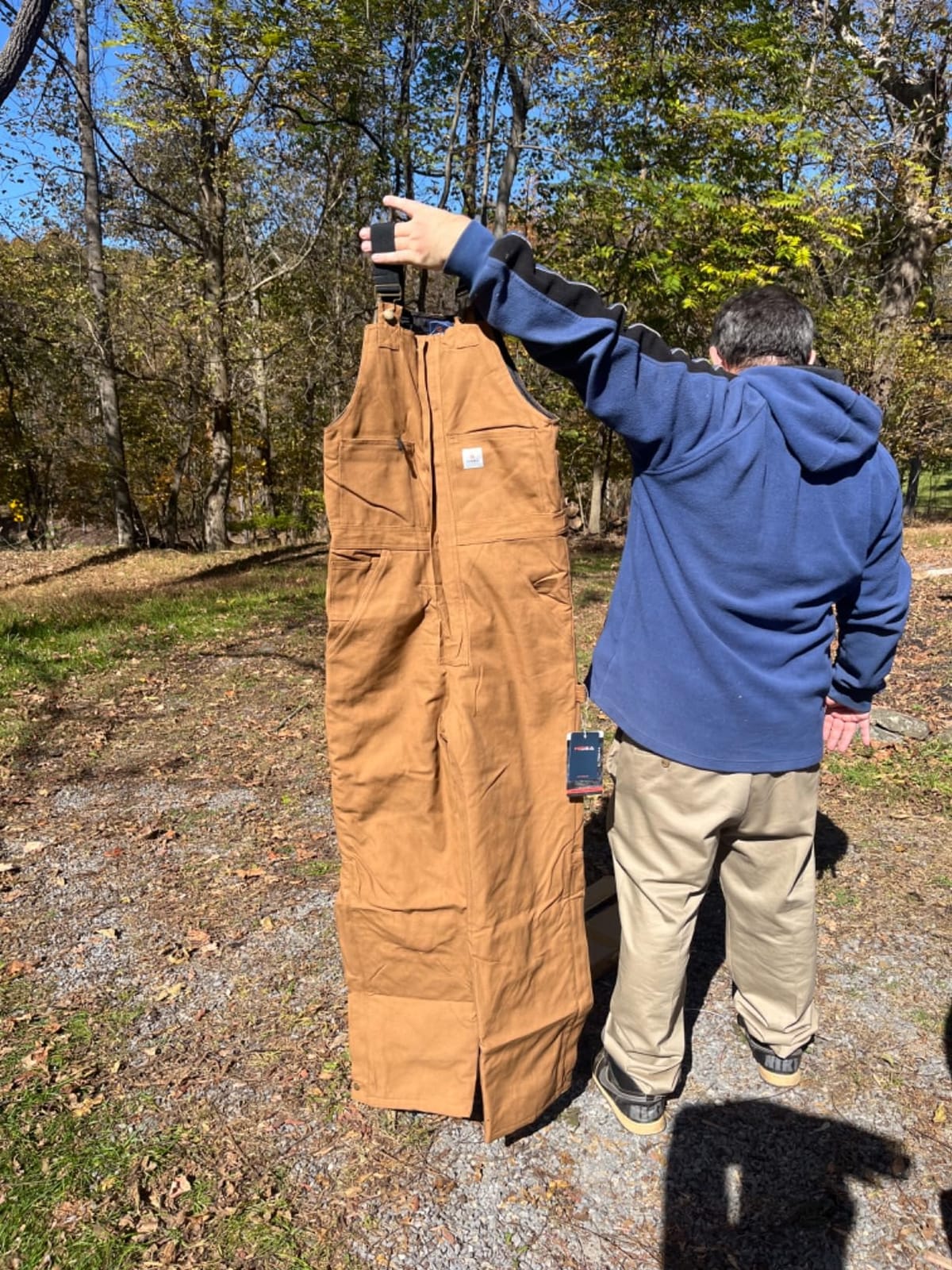
This is a 10.5 oz high-density canvas with a water-repellent coating and 120g of insulation, and the reason it earns a place here is the fill weight. 120g sits in the low-bulk middle of the range, and owners describe the result as warm at the core without feeling bulky, which is the single most common request on the forums: insulated, but not overly puffy.
The adjustable elastic straps and high back add warmth without a stiff collar, and the front zipper has a storm flap and snaps to keep wind out of the closure. The leg zippers run from the ankle to the knee with storm flaps, so you can still get the bib on and off over work boots, just not with the leg fully open.
Storage is the quiet strength. Eight pockets cover two large chest pockets with a zippered one, an inner chest pocket, two deep hand-warmer pockets with a coin pocket, two back patch pockets, a hammer loop on one leg, and a multifunctional tool pocket on the other. Antique brass zippers and multiple stitching at stress points suggest a builder who thought about wear patterns.
Water resistance versus waterproofing
The water-repellent coating on the outer canvas protects against light rain and moisture in winter, and the high-density weave adds tear and abrasion resistance. That is enough for snow and drizzle, not enough for sustained rain, where the fabric will eventually wet through and, being cotton-based, will take a long time to dry in cold air.
If your work involves standing rain, choose a synthetic shell instead. Cold damp cotton is the specific failure mode forum users complain about most with duck bibs.
Caveats worth reading before ordering
Three issues come up repeatedly. The canvas can shrink noticeably after washing, so wash cold and air dry. The shoulder strap adjusters are not very durable and do not hold position well, which means the bib will ride up over a long shift unless you re-tighten it. And it runs large and long, so size down carefully and check the inseam.
With fewer than 400 ratings, the owner feedback pool is thinner than most of the list, and that narrower base is part of why this sits below the established brands.
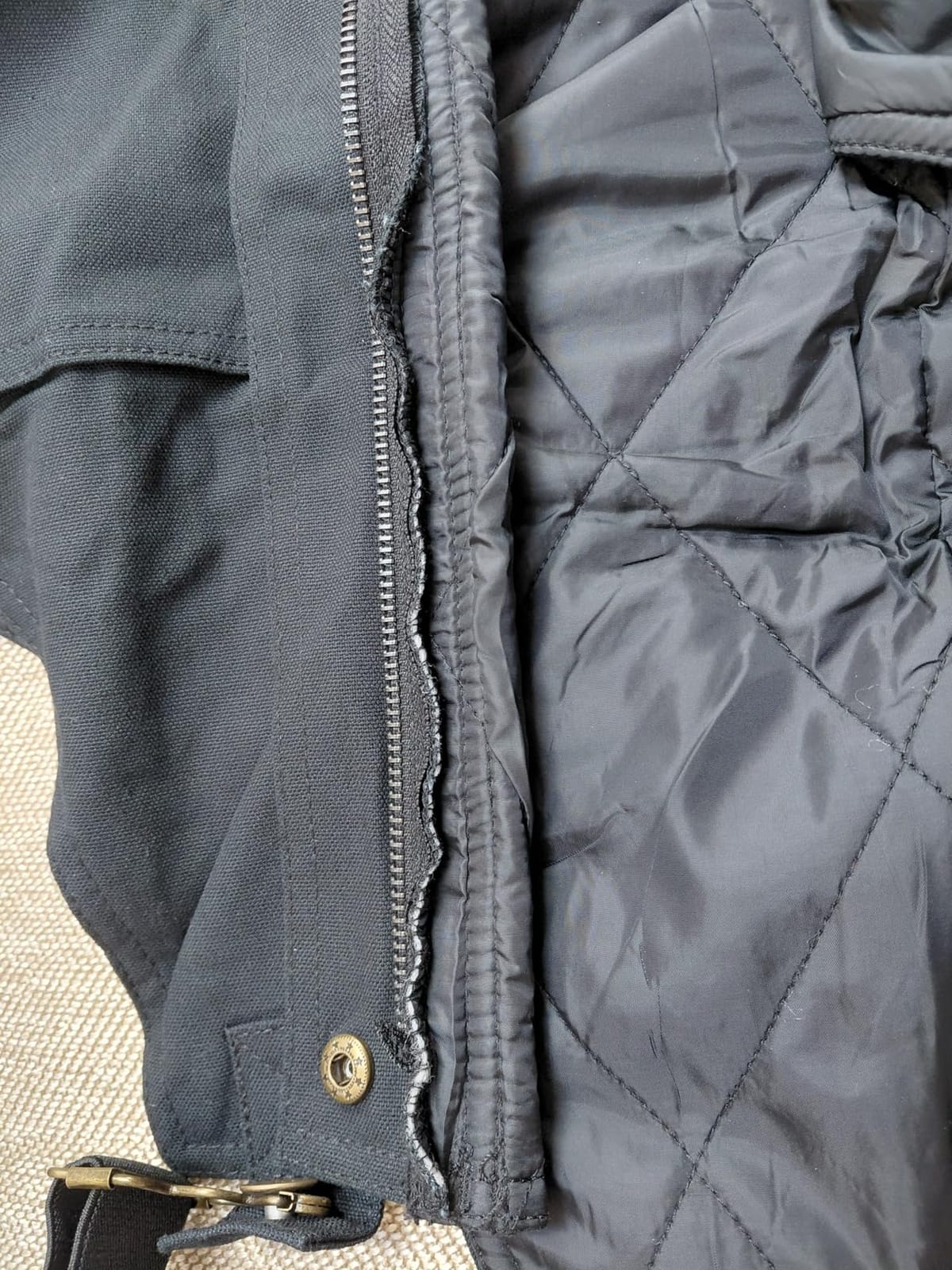
Most buyers find it warm and well built for what it is, aimed at construction sites, farms, and yard work where a lighter, drier bib makes more sense than a heavy 12 oz duck.
10. Wrangler Men’s Insulated Duck Bibs – Best for Slim, Low-Bulk Insulation
Wrangler Riggs Workwear Men’s Insulated Duck Bibs, Duck Brown, Large
- Keeps wearers warm and dry through full winter use
- Insulation is warm without feeling thick
- Duck canvas holds up over a full season
- Hem-to-knee zipper for easy on and off
- Runs slightly snug and most buyers size up
- Side hand pockets are shallower than expected
- Chest pockets have no closures
Wrangler Riggs Workwear took the feedback about puffy insulation seriously. The owners of this bib describe it as warm and durable through full winter rain and snow use while never feeling thick or bulky, and that combination is exactly the profile experienced tradespeople ask for. If a quilted bib that looks like a puffy jacket turns you off, this is the one to look at.
Mobility is handled by articulated knees plus a hidden knee barrier, which let the fabric bend at the joint instead of pulling across the kneecap. That matters far more than it sounds during a shift spent squatting, kneeling, or climbing. The hem-to-knee zipper gives you the over-boot convenience without adding a long zipper seam to weigh the garment down.
Durable duck canvas has held up after a full season of daily wear according to owners, and the heavy-duty metal front zipper is a sensible choice on a garment that takes this much abuse.
Fit: size up, and check the suspenders
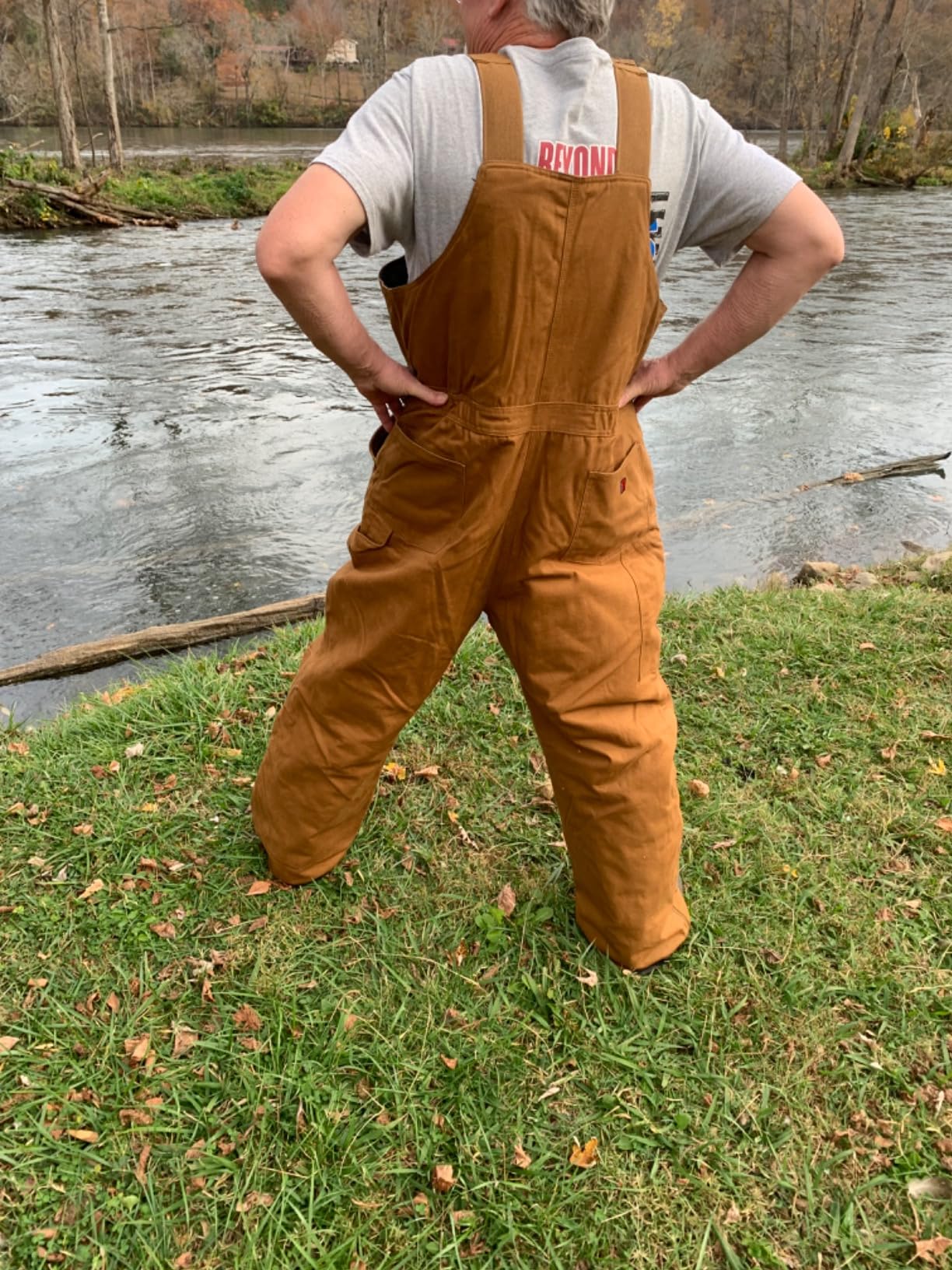
The most common fit note is that these run slightly snug, and most buyers recommend sizing up. That is a sizing issue rather than a cut problem, and it is worth taking seriously because the alternative is a bib that restricts the very movement the articulated knees were designed to free up.
A second fit note: on smaller sizes, some suspender lengths cannot be adjusted short enough. If you have a short torso, measure shoulder to waist before ordering and read the recent reviews on the specific size.
Where the pockets fall short?
The side hand pockets are shallower than buyers expect, which limits what fits in them, and the chest patch pockets have no closures at all. That means anything in the chest pockets is exposed to rain and snow, and you will be digging for a phone in gloves after a wet morning. Deep tool and chest pockets earn praise, so the useful storage is there; it is just not all weatherproof.
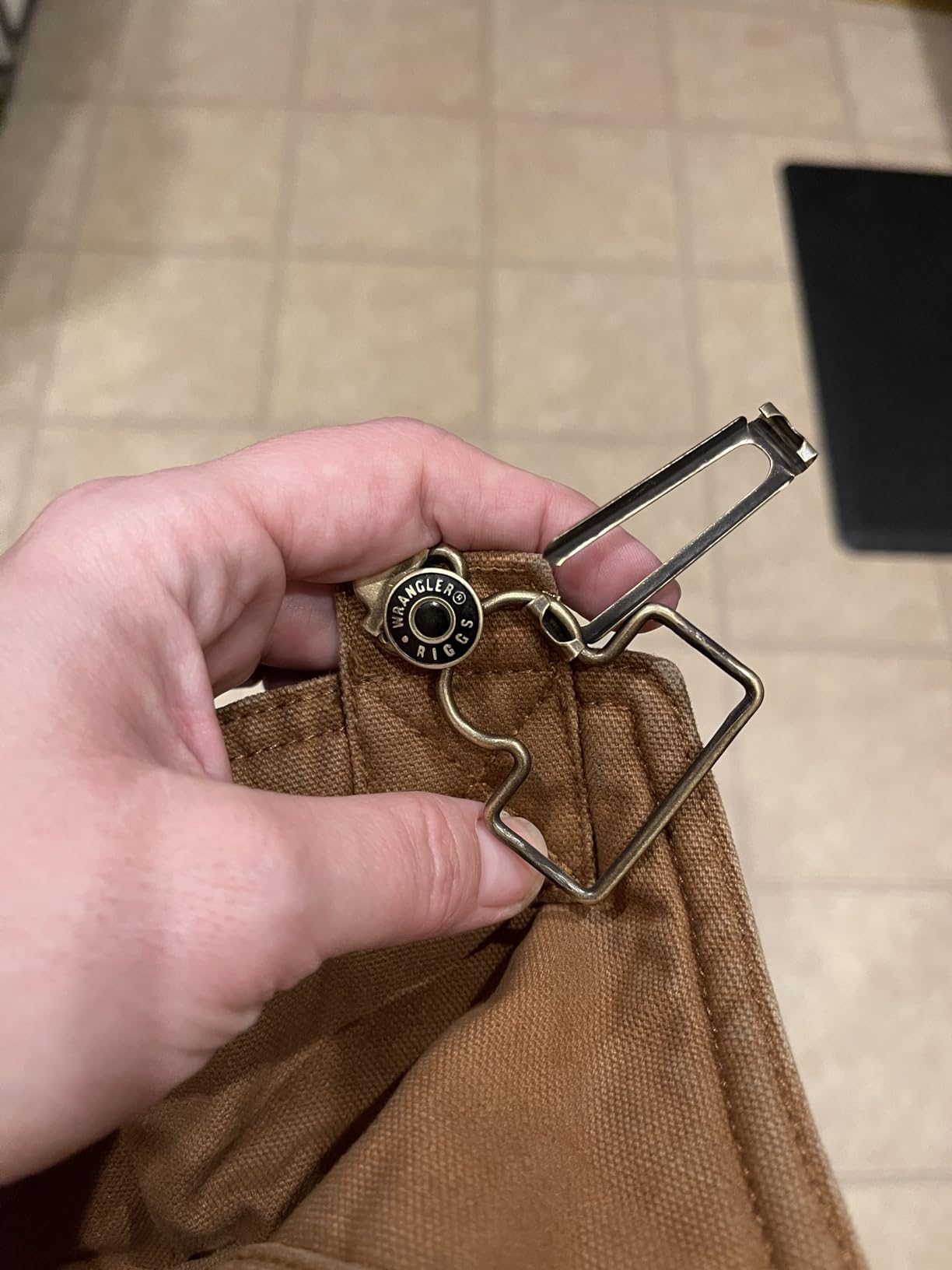
A small number of reviews report clasp hardware breaking after a first wash, so inspect the hardware before the second wash cycle and treat gently until you are sure it holds. The variant ships as model 65145 from Wrangler Riggs Workwear.
11. RefrigiWear Iron-Tuff High-Bib Overalls – Best for Freezer and Cold Storage Work
RefrigiWear Men’s Iron-Tuff High-Bib Overalls – Insulated Bibs for Men -50°F Rating – Water-Resistant & Windtight Finish, Navy – Large
- Built for extreme cold with insulation rated to -50F
- Denier nylon shell with reinforced rivets
- Bound seams seal out drafts
- High front and back bib coverage
- Insulated bulk limits layering room and mobility
- Runs large through the body and legs
- Navy-only colorway
RefrigiWear builds for food processing and cold storage, and this bib carries the only genuinely extreme temperature rating in the group: 11.25 oz of RefrigiFill insulation rated for comfort down to -50 degrees F. If you work a walk-in freezer, a refrigerated warehouse, or an unheated dock in a northern winter, this is the bib that is actually specified for your conditions.
The outershell is a tear- and abrasion-resistant denier nylon, and the details that matter in a freezer environment are the reinforced brass rivets and bound seams, which seal out drafts at the places where a normal bib leaks air. Adjustable heavy-duty 2 inch elastic suspenders hold the bib up without pinching, and the high front and back bib coverage warms the core without restricting the arms.
As shipped it weighs about 4.51 pounds, with package dimensions around 27 by 18 by 3 inches. That is the weight of real high-loft insulation, and it is the honest trade-off of a garment built for minus 50.
What high-loft insulation costs you in mobility?
The dominant feedback is fit and bulk. Owners report that the insulation limits layering room compared with lighter bibs, and that the bib runs large through the body and legs. Both point to the same conclusion: this is not the pair to size up in, it is the pair to size down in and wear as your outermost layer with a thin base underneath.
Because it runs large, size down if you are between sizes. Buying a size up to layer over a fleece in a freezer would leave you swimming in the garment.
Choosing between this and a Carhartt Yukon
Both are extreme-cold options and both are legitimate. The RefrigiWear publishes a temperature rating, has the heavier insulation, and uses a nylon shell that will not absorb moisture at all. The Carhartt Yukon has better mobility features, reflective taping, ankle-to-thigh leg zippers, and a looser fit designed to layer over a mid layer.
Pick RefrigiWear when you are stationary in genuinely frigid air and warmth outranks movement. Pick the Yukon when you are moving, hauling, or working near traffic in the cold.
The single navy colorway is a genuine limitation for crews with a uniform standard, so check that before committing.
12. Arctix Essential Insulated Bib Overalls – Best for Rain, Snow, and Ski Patrol Work
Arctix Men’s Essential Insulated Bib Overalls, Black, X-Large/32″ Inseam
- Warmth without bulk improves mobility
- Sealed seams and water-resistant shell shed snow and wind
- Ballistic oxford at ankles
- hem and scuff guards
- Fleece-lined hand warmer zippers
- Insulation is rated for moderate cold rather than extreme low temperatures
- Size and inseam range requires careful chart checking
- Boot gaiters and O-ring are finicky
Arctix comes out of snowmobile and ski outerwear, and the insulating system reflects that lineage. THERMATECH uses 85g of engineered recycled insulation rated from -20 up to plus 35 degrees depending on activity, and the engineering goal is stated plainly: remove the bulk and weight of insulation for greater mobility. That is why owners describe this bib as warm without bulk, and why it moves well in deep snow where a heavy duck bib would be exhausting.
Weather protection is the headline. THERMALOCK 8000mm water pressure and wrinkle resistance, applied with sealed critical seams, protects against cold, snow, rain, and wind. A 100 percent polyester ballistic 600 denier oxford runs the ankles, hem, and scuff guards, which are the three areas that take the most abrasion in snow and ice work.
Adjustable suspenders and elasticized side gussets give mobility through the hips and chest, and the added features are genuinely winter-specific: fleece-lined hand warmer zip pockets, an O-ring for keys and gloves, and boot gaiters with grippers that keep snow out of your boots.
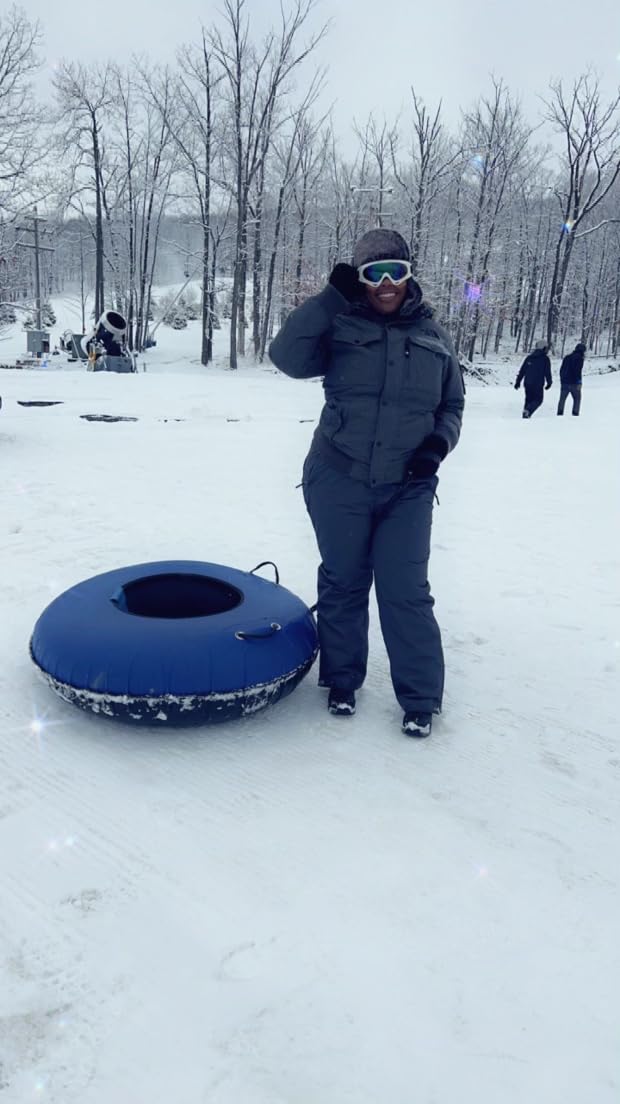
Across more than 4,100 ratings averaging 4.5, this is one of the most proven garments in the group by owner volume, and buyers consistently highlight the combination of warmth, low bulk, and rugged ballistic fabric. Model number is 1350.
Rating limits: -20 is not freezer cold
The published range bottoms out at -20 degrees for moderate activity, and owners are clear that this is adequate for winter work but not for severe cold. If your conditions regularly go below that, step up to a heavier-fill bib rather than layering more under this one, because the shell is tight enough that a second heavy layer will not fit comfortably.
Where it genuinely shines is continuous movement. Deep snow work, ski patrol, and long days outdoors in transitional conditions are where the low bulk pays for itself.
Size chart is the whole ballgame here
This listing spans many sizes, colors, and inseams, and fit is the dominant theme in critical feedback. Buyers stress consulting the size chart before ordering, because the elasticized side gussets change how the garment sits through the waist. Several owners also find the boot gaiters and key O-ring more finicky than useful, so do not treat the extras as deciding features.
If you take one piece of advice from this section, take that one: measure inseam before you click through.
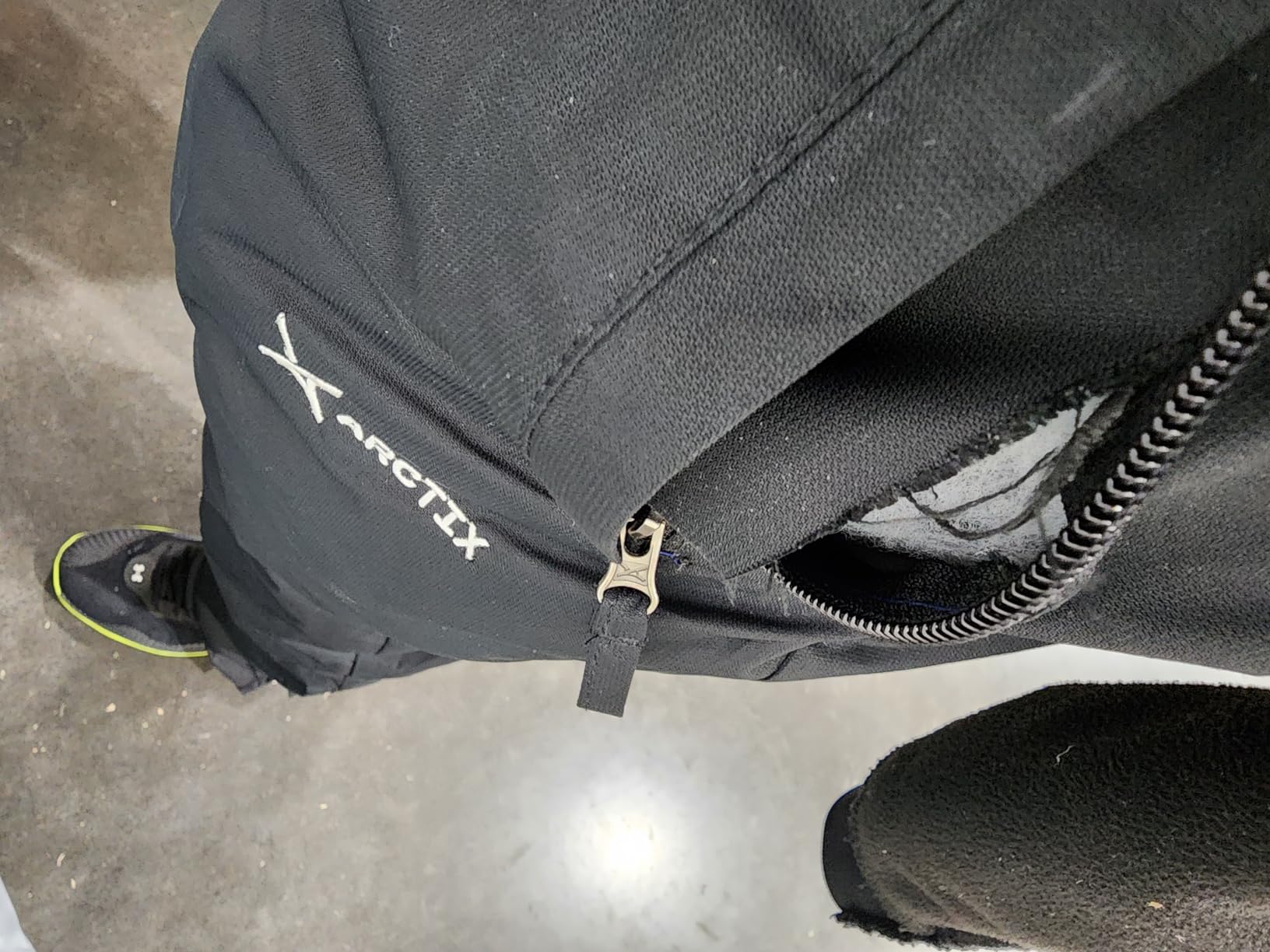
For heavy construction or constant kneeling, choose a duck or Cordura bib instead. Ballistic oxford resists abrasion, but it is not double-knee, and the ankle-to-hem reinforcement is not a replacement for a pad pocket.
How to Choose an Insulated Work Bib?
Once you have narrowed the field, these are the decisions that actually change which bib works for your job. Shell first, then fill weight, then temperature, then the features that determine whether you will still be happy with the pair in month eight.
Duck canvas or synthetic: which shell wins on the job?
Cotton duck is the traditional answer and it wins on abrasion and on heat retention in genuinely dry cold. Heavier duck (12 oz) resists wear better and blocks wind better, but it starts stiff, holds water once soaked, and takes a long time to dry in cold damp air. That slow-drying problem is the single most common complaint about duck bibs on the forums.
Synthetic shells such as ripstop polyester, denier nylon, and Cordura shed water, dry in minutes rather than hours, and are lighter on the body. The costs are breathability, which is lower than cotton, and price, which is higher at the top end. A practical rule: if you are wet most of the day, choose synthetic. If you are dry and kneeling a lot, choose duck.
Merchants and forums both recommend buying insulated bibs in the summer, when selection across sizes is deepest, rather than waiting until the first hard freeze.
Insulation fill weight explained in plain language
Fill weight is simply how much insulation is in the garment, usually stated in grams. Lower numbers such as 85g and 120g give warmth with minimal bulk and suit high-activity work or moderate cold. Mid numbers around 160g suit most full-time winter trades work. Heavy fills such as 11.25 oz of RefrigiFill are built for freezer air and accept a real loss of mobility in exchange.
The second thing to know is the type. Quilted synthetic fill is stitched into channels; continuous filament insulation such as 3M Thinsulate is denser and holds loft better over repeated washing, so it does not flatten into the quilting after a season. If you wash your bibs weekly, that difference matters more than any spec on the label.
Match the bib to the temperature you actually work in
Use the published ratings when a brand provides them, and use the shell and fill combination when it does not. Ergodyne publishes -15F for its 160g hi-vis ripstop bib. Arctix publishes -20 to plus 35 for its 85g system. RefrigiWear publishes -50F for 11.25 oz of RefrigiFill. Those are the three anchored points in this roundup.
For the unrated duck and Cordura options, judge by construction: 12 oz duck with a high insulated back handles typical winter construction weather, while a Cordura shell with Thinsulate is the safer bet for wind, wet cold, and single-digit temperatures. The mistake to avoid is buying the heaviest fill available for every winter, because an over-insulated bib in a forty-degree week is the fastest route to the overheating complaints that dominate owner reviews.
Why the leg zipper range decides the purchase?
Full-length side zippers are considered the single most useful premium feature by experienced users, and they exist for a practical reason: calf-length zippers that stop at the ankle or knee do not let you get a bib on and off while wearing work boots, which lets mud and debris fall inside.
Read the zipper range carefully, because brands describe them inconsistently. Hem-to-knee means the zipper runs from the bottom of the leg up to the knee, which lets you step in over boots. Waist-to-ankle on the Dickies model is unusually generous. Ankle-to-thigh on the Carhartt Firm Duck and Yukon Extremes is the most complete, adding storm flaps that stop wind-driven snow entering the gap.
Fit and sizing when you layer over thermals
Insulated bibs must be sized up to layer over thermals, and users describe this as confusing and inconsistent between brands. The practical approach is to wear the base layers you will actually use when you check the size, because a bib that fits over a tee will not fit over a hoodie and a thermal together.
Loose fits such as the Carhartt Loose Fit Firm Duck and the Yukon Extremes are designed for layering, and Carhartt explicitly tells buyers between sizes to go larger. The RefrigiWear Iron-Tuff runs large, so it is the opposite case: size down. Wrangler runs slightly snug, and most owners recommend sizing up. Inseam is the other half of it, and long inseams are the most common complaint across this whole group.
Women’s cuts are worth seeking out rather than sizing down a men’s bib. The Berne Women’s Softstone is built with women’s proportions and rated highest in the group.
The overheating problem and how to fix it
Bibs trap heat by design, which makes them more prone to overheating during active, high-effort work than a jacket and pants combination you can open up. That is the central trade-off almost nobody names plainly, and it is why the highest-fill bibs are the wrong choice for a lot of winter work.
The fix is layering, not maxing out insulation. Wear a breathable moisture-wicking base layer under a lighter-insulated bib, and open or remove the bib for high-effort segments. The Arctix and Wrangler models are built specifically for low-bulk warmth that avoids the sweat problem, and the Ergodyne’s ripstop shell breathes better than the Cordura options if you run hot.
Bib or insulated coverall
A bib leaves your jacket and arms free, so you can add or shed a shell jacket through the day. A coverall adds a jacket and a pair of pants in one and removes the waist gap entirely, but it costs you the ability to vent heat and it can be frustrating to remove in a restroom or a truck bed. For most tradespeople working at variable intensity, the bib wins. For cold storage workers sitting in one temperature all shift, the coverall is the more efficient garment.
Washing and drying quilted insulation
Wash insulated bibs cold and dry them on low or hang them, which protects both the shell fabric and the fill. Several owners of the HISEA canvas report noticeable shrinkage after washing, and a small number of Wrangler owners report clasp hardware failing after a first wash cycle, so gentle cycles and hardware checks are cheap insurance.
Continuous filament insulation such as Thinsulate holds loft better than quilted mat fill over repeated washing. If your bib goes flat after a season, that is usually the quilting rather than the shell.
Frequently Asked Questions
Who makes the warmest bibs?
Among the bibs we ranked, the RefrigiWear Iron-Tuff is the warmest, carrying 11.25 oz of RefrigiFill insulation rated for comfort down to -50F. For the warmest Carhartt model, the Yukon Extremes Biberall pairs a 500-denier Cordura nylon shell with 3M Thinsulate. Warmest is not the same as best, so a 10 oz duck bib is more comfortable for most winter jobsite work.
Which brand of insulated bibs is better for tough jobs, Berne or Carhartt?
Berne and Carhartt trade places depending on the job. Berne bibs such as the Heritage and Heartland use sanded and firm duck with a high insulated back and carry more owner reviews overall, which makes them the safer proven choice for general winter work. Carhartt leans into reinforcement and cold-weather tech, with Cordura kick panels, double-layer knee pad openings, and Thinsulate insulation in the Yukon Extremes.
What is the best brand for work overalls?
There is no single best brand, only the best fit for a job type. Berne is the most proven by owner review volume, Carhartt is the strongest all-round workwear brand with the widest range of cuts and fabric weights, Dickies is the value pick with excellent zipper layouts, and RefrigiWear and Arctix own the extreme cold and snow end of the market respectively.
What are the warmest bib overalls that Carhartt makes?
The warmest Carhartt insulated bib overall in our ranking is the Yukon Extremes Loose Fit Insulated Biberall, which pairs a 6.5 oz 500-denier Cordura nylon shell with 3M Thinsulate insulation, Wind Fighter technology, and a Rain Defender water repellent finish. It is rated 4.7 across more than 1,100 reviews and includes reflective taping for low-light work.
What are the best bib overalls for extreme cold weather?
For genuine extreme cold, the RefrigiWear Iron-Tuff is rated to -50F, the Ergodyne GloWear 8928 is rated to -15F with 160g of fill, and the Arctix Essential bib is rated from -20 up to 35 degrees. For construction work in the single digits, the Carhartt Yukon Extremes is the most mobile of the heavy options because its loose fit layers over a mid layer.
Who makes the best insulated overalls?
It depends entirely on the temperature band and the work. RefrigiWear makes the coldest-rated insulated overall in this group, Carhartt makes the most complete all-round range, Berne has the highest owner review volume, Ergodyne is the only ANSI Class E rated option for hi-vis sites, and Arctix makes the most mobile low-bulk insulated bib for snow and ski work.
What are the best insulated bib overalls for work?
The best insulated bib overalls for most trades work are the Berne Heritage, the Dickies Premium Insulated Duck, and the Carhartt Washed Duck, because each pairs a proven duck shell with a known insulation system and a full closure layout. If you need hi-vis, a published temperature rating, or extreme cold performance, the Ergodyne, Arctix, and RefrigiWear options cover those cases instead.
What are the most comfortable bib overalls?
Comfort comes from three things: the fit being cut for your body, the insulation not being excessive for the temperature, and the leg zippers opening far enough to get on and off over boots. The Berne Women’s Softstone rates highest in our group and is built on women’s proportions, while the Arctix and Wrangler bibs get the best marks for low-bulk warmth and mobility.
Our Buying Verdict for Insulated Work Bibs in 2026
The best insulated work bibs in 2026 come down to your temperature band and your movement pattern. For most tradespeople, the Berne Heritage Insulated Duck Bib Overall is the pair to buy first: a proven 10 oz duck shell, quilted insulation, an insulated high back, and the most complete closure layout we found among duck bibs.
Buy the Dickies Premium Insulated Duck if the waist-to-ankle leg zipper settles the decision, the Carhartt Washed Duck if you want Thinsulate warmth without a break-in period, and the Carhartt Firm Duck if your work is spent on your knees. The Berne Women’s Softstone is the right answer in a women’s cut, and the Ergodyne, Arctix, and RefrigiWear bibs cover hi-vis, snow, and freezer cold respectively.
Measure your inseam before you order, wear your real base layers when you check the fit, and resist buying the heaviest fill available. A bib that matches your climate will outlast one that was over-bought every time.