
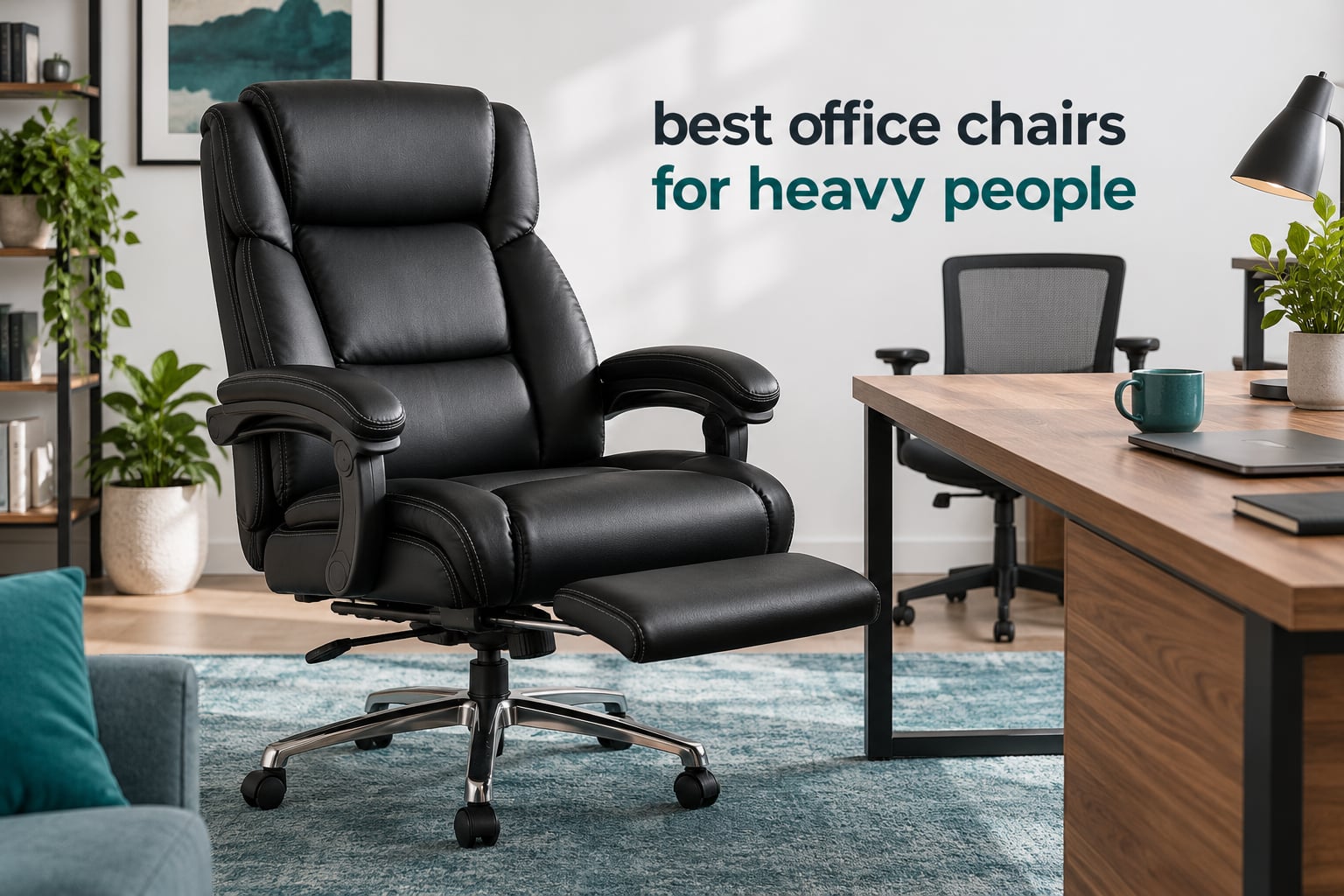
Most office chairs are built for a 250 to 300 pound sitter, and that ceiling is where they start to come apart rather than where they stop working. If you have been sitting in one that lists your exact weight as its maximum, you have probably already met the failure modes described in owner reports: a seat pan that has lost its shape, an armrest that wobbles when you push on it, a back frame that no longer returns you upright. Finding the best office chairs for heavy people in 2026 comes down to one number and one rule, and we will give you both before we get into the picks.
The number is the published load rating. The rule is headroom: choose a chair rated 50 to 100 pounds above your body weight, never exactly at it. A chair sitting at its maximum all day is a chair running at the edge of what its gas cylinder, welds and foam were tested for, and it will age faster than one with breathing room. Our list below covers 350 pound, 400 pound and 650 pound options, plus the seating details that decide whether a chair actually fits a bigger frame once it arrives.
We did not test these chairs ourselves. What we did was read the manufacturer specification for every model, check the published weight rating against the certification named on the spec sheet, and read owner reviews at volume to find the complaints that recur rather than the praise that dominates. Every rating and review count quoted here comes from the listing data. Where owners disagree with the spec sheet, we tell you, because that is the part most roundups leave out.
Table of Contents
How Standard Chairs Fail Heavier Users?
The failure is rarely dramatic. A 300 pound-rated chair rarely collapses on day one. It deforms over two or three years, and by then the damage is spread across parts that were never meant to be replaced separately. Four things give out first, and they always give out in roughly this order.
The seat pan compresses. Low-density foam over a thin plywood pan loses its loft, and once it does, your weight distributes onto the frame edge instead of the cushion. Owner reviews repeatedly mention adding a separate seat pad within a year of purchase, which is a workaround for a cushion that was never dense enough.
Armrest welds crack. Armrests carry a share of your load every time you push up to stand. On lighter chairs the arm post is bolted to a plastic or cast-metal bracket; under repeated loading those joints develop play. A wobbly armrest at a heavy weight rating is an early warning that the frame is not what the listing implies.
The back frame loses its return. Mesh backrests on a narrow frame concentrate pressure across a wider span, and the tensioning frame around them can bow. Buyers on bigger frames report mesh chairs pinching at the sides of the hips, which is a fit problem and a strength problem at the same time.
The gas cylinder sags. This is the failure that ends the chair’s life. A class-3 cylinder in a chair rated near 350 pounds will lose height over time, and cylinders are frequently the one component a manufacturer will not sell you separately. The pattern shows up in multi-year owner accounts on several of the chairs in this roundup.
A rating alone does not prevent any of these. A 400 pound rating with a plastic wheel-mount leg or a cast-metal base is a rating about the cushion, not about the structure, which is why we name the certification and the base material for every pick below.
Top 3 Best Office Chairs For Heavy People (October 2026)

GTPLAYER Big and Tall 400lb
- 400lb capacity
- 31.5 inch wide
- Built-in spring lumbar
- Reclines 90-150 degrees

COMHOMA Big and Tall 400lb
- 400lb capacity
- Integrated footrest
- Pocket spring back
- Reclines to 150 degrees

Efomao Big and Tall 400lb
- 400lb capacity
- 23.2 inch wide seat
- Retractable footrest
- Reclines to 135 degrees
The GTPLAYER takes the top slot on evidence rather than on specification alone. It carries the largest review base in this group by a wide margin and holds a 4.4 average, which gives us the best read on how it performs after a year of daily use. The COMHOMA is the pick if the deciding factor is seat width against price, and the Efomao is the one to choose when you want the widest seat in the roundup with a footrest you can actually use.
All 12 Picks at a Glance in 2026
| Product | Specifications | Action |
|---|---|---|
| GTPLAYER Big and Tall 400lb |
|
Check Latest Price |
| COMHOMA Big and Tall 400lb |
|
Check Latest Price |
 Serta Big and Tall Executive 350lb Serta Big and Tall Executive 350lb |
|
Check Latest Price |
| Efomao Big and Tall 400lb |
|
Check Latest Price |
 EXCEBET Big and Tall 400lb EXCEBET Big and Tall 400lb |
|
Check Latest Price |
 CAPOT Ergonomic Mesh 400lb CAPOT Ergonomic Mesh 400lb |
|
Check Latest Price |
 WAILOR 400lb Executive WAILOR 400lb Executive |
|
Check Latest Price |
 HYLONE 400lb Mesh Back HYLONE 400lb Mesh Back |
|
Check Latest Price |
 YORICK Big and Tall 400lb YORICK Big and Tall 400lb |
|
Check Latest Price |
 HESL Massage 400lb HESL Massage 400lb |
|
Check Latest Price |
 BOSMILLER 650lb Heavy Duty BOSMILLER 650lb Heavy Duty |
|
Check Latest Price |
 HESL Flip-Up Armrest 400lb HESL Flip-Up Armrest 400lb |
|
Check Latest Price |
1. GTPLAYER Big and Tall 400lb: Our Best Overall Pick for Plus-Size Sitters
- Widest seat in the roundup at 31.5 inch
- Built-in spring lumbar holds position
- Reclines to 150 degrees without tipping
- Armrests adjust in and out
- Assembly in about 15-30 minutes
- Seat foam is very firm for lighter users
- Footrest support tubes feel flimsy
- Included casters are of low quality
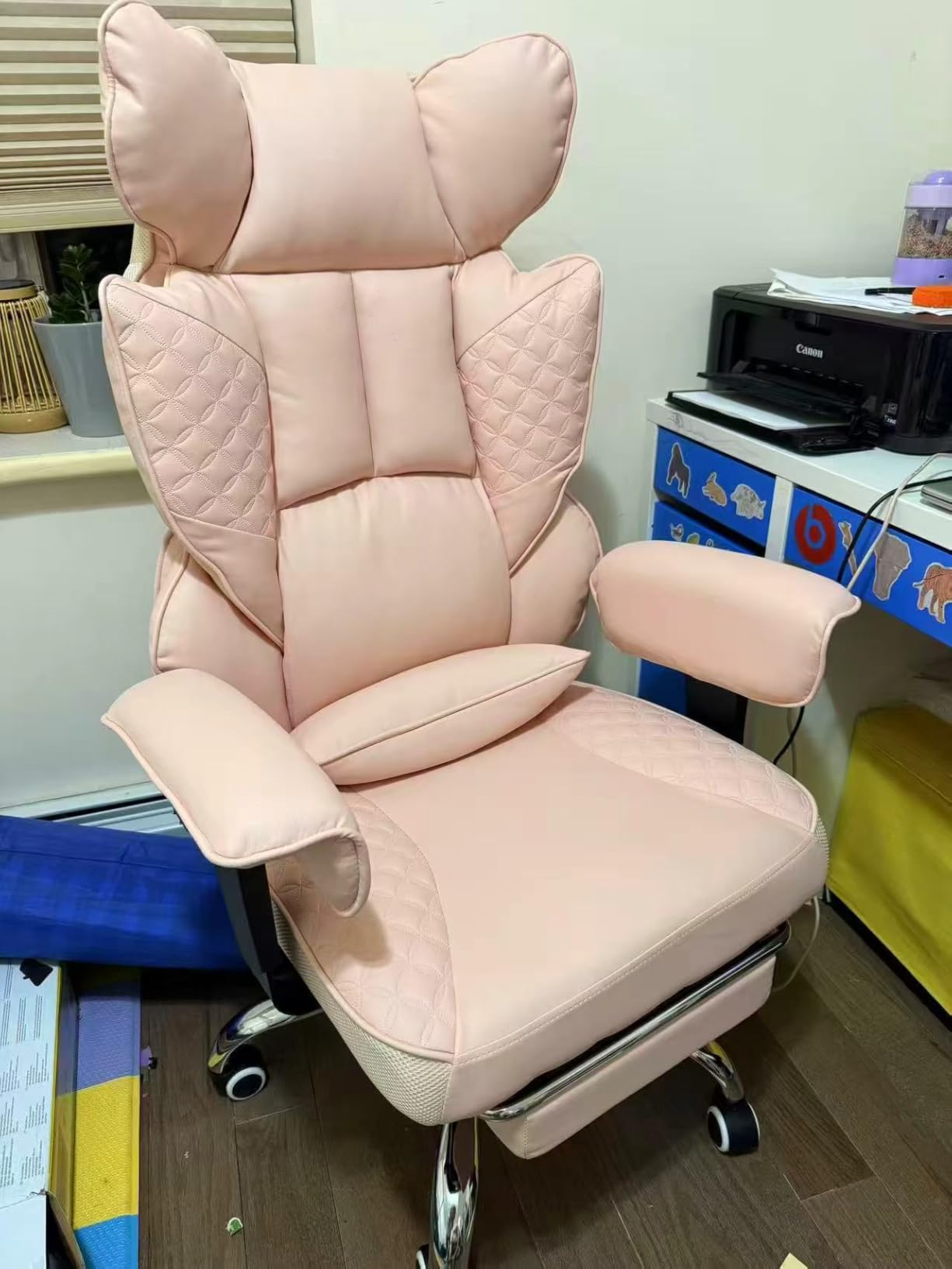
This chair is rated to 400 pounds and measures 31.5 inches wide, which makes it the widest seat in the group we reviewed. That width is the single feature that decides whether a bigger frame can actually sit in it without the armrests pressing into your thighs, and it is the reason this chair sits at the top of our list of the best office chairs for heavy people.
The seat itself is a 3D saddle shape filled with dual-layer high-density sponge, and the backrest carries a built-in spring lumbar cushion that owners say stays where you put it rather than sliding down your spine. The back reclines from 90 to 150 degrees on a three-level gas lift over a metal base, and at 41.5 pounds the whole chair has the kind of mass that stops it feeling flimsy when you lean back.
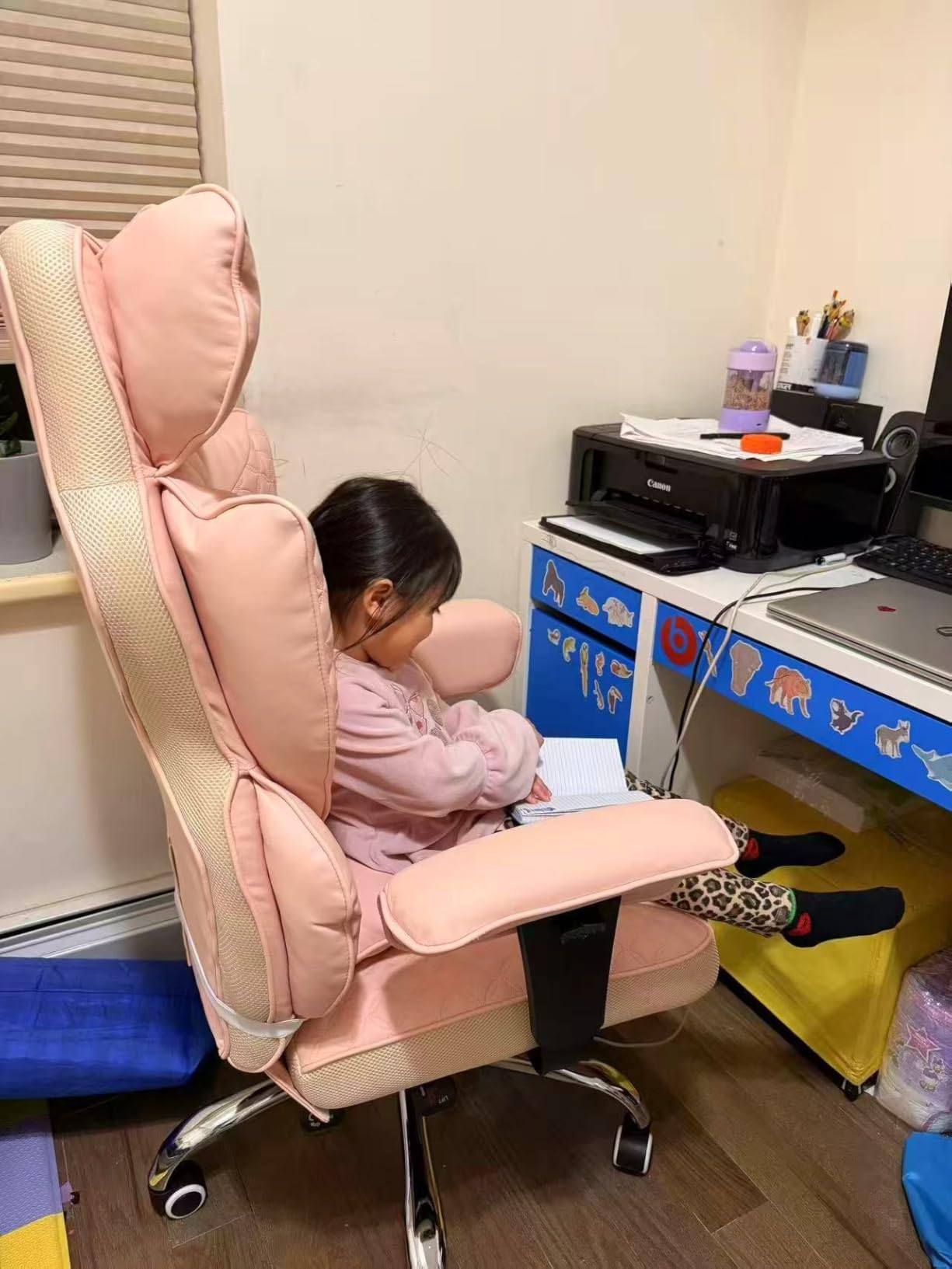
The frame is metal rather than the cast plastic you find on sub-300 pound chairs, and the enclosed wing back and enlarged headrest distribute load across the shoulders rather than concentrating it in the lower back. Armrests adjust in height and can be swung out or removed, which matters if you need to get close to a desk. Assembly takes roughly 15 to 30 minutes with clearly labelled hardware and illustrated instructions.
Owner reviews number over 34,000 with a 4.4 average, the largest evidence base here. The recurring theme is that the chair reads as excellent value for home use rather than as a premium ergonomic replacement, and several long-term owners make that comparison themselves.
How the GTPLAYER holds up at full capacity?
Nothing in the review base suggests structural movement. The complaints cluster around comfort details rather than load-bearing parts: the seat foam is very firm and some lighter owners added a cushion, and the retractable footrest tubes and plastic brackets were described as flimsy by more than one buyer. For someone at or near 400 pounds, the firm foam is a benefit rather than a flaw because it resists compressing.
The lumbar support is the part owners single out most. A spring core inside the backrest holds its position through a recline cycle, which is not true of the fixed foam pillows on several cheaper big-and-tall models that push into the lower back.
Where the GTPLAYER is the wrong choice?
Skip it if you are much under 300 pounds. The saddle seat and dense foam are built for a heavier load, and reviewers at lighter weights describe the seat as too firm and the footrest as intrusive.
Also weigh the one-year warranty against the size of the purchase, and note that a head and lumbar pillow attaches with an elastic band that several owners found awkward to refit. If you want a five-year warranty on the structure, the CAPOT in this roundup carries one, though it trades away cushioning.
2. COMHOMA Big and Tall 400lb: The Best Value Pick at a 400 Pound Rating
- Genuinely wide seat for a larger frame
- Integrated retractable footrest
- Pocket spring back suits back and hip issues
- Height-adjustable arms allow desk tucking
- Firm cushion feels hard for smaller users
- Footrest may not reach full leg extension
- Handmade construction varies slightly
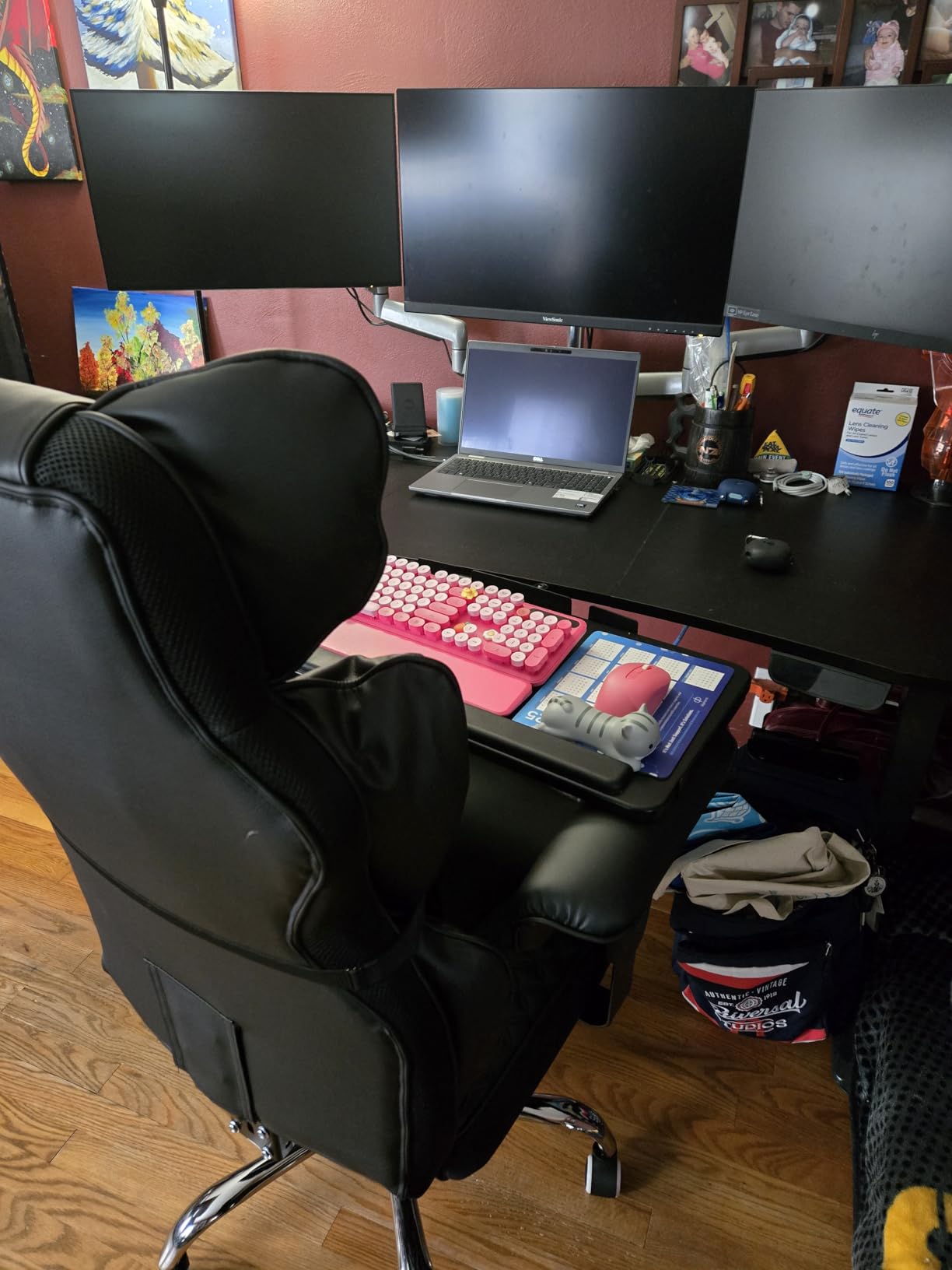
This chair carries a 400 pound rating in a wide ergonomic frame and costs less than most of its direct rivals in this roundup. It is the option we would point someone at who wants genuine seat width and an integrated footrest without paying for an executive-style shell.
The back support is a built-in pocket spring rather than a loose lumbar pillow, and owners with back and hip complaints specifically call that out. The chair reclines to 150 degrees across three positions, and the armrests adjust in height, which is the detail that lets it slide under a standard desk. At 44 pounds it is solidly built and includes a 12-month manufacturer warranty.
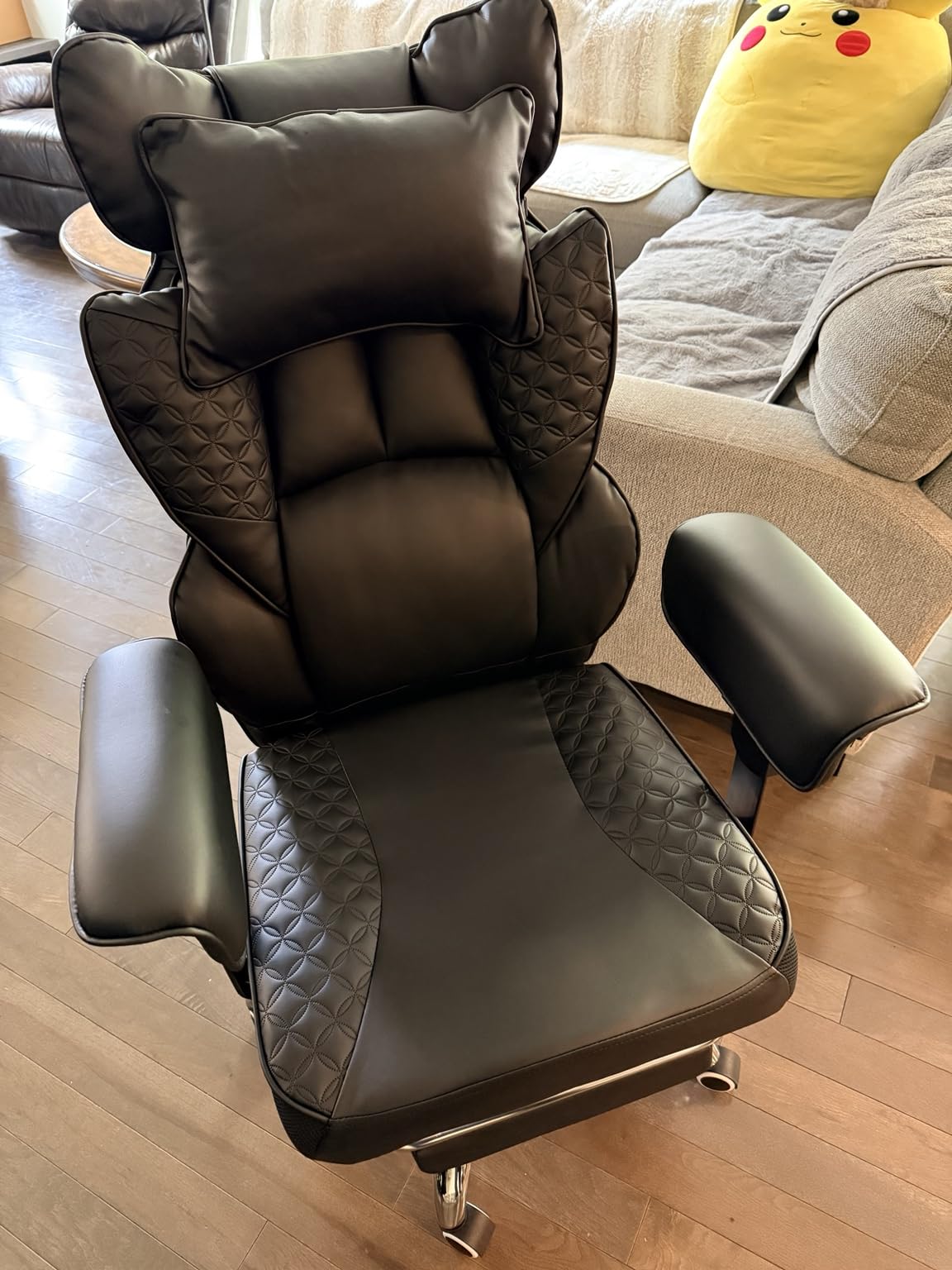
The seat is sofa-like and wide enough to cross a leg or sit off-centre, which is what the design brief for this chair was clearly going for. The 45.1 inch overall height makes it a tall back, so it suits users with longer torsos more than it suits shorter frames sitting at a low desk.
At a 4.3 average over more than 4,200 reviews, the feedback is steady: owners of larger frames point to seat width, footrest durability and back support, and the caveats that recur are cushion firmness and footrest reach.
Why the COMHOMA suits a wider frame?
The honest strength here is that the seat does not crowd you. Several owners describe replacing chairs they had outgrown because the armrests sat too close to the body, and this is one of the few wide seats in the roundup that fixes that. It is a good match for anyone spending long working days at home rather than short sitting sessions.
The pocket spring back is the underrated part. Springs hold their give longer than foam, which matters for a user sitting eight hours a day, and they do not collapse into a flat shape after a year.
Where the COMHOMA falls short?
The firm cushion is the most common complaint and it comes from lighter users. If you are closer to 200 pounds, you will probably want a separate pad, and we have a dedicated guide to seat cushions for office chairs that covers the options that work on a firm pan.
The footrest reaches partway for full leg extension, so it will not replace a dedicated footrest for a tall user, and handmade construction means small variations between units. It also sits at the lower end of the rating scale in this group rather than above it, so it is not the pick if you are over 400 pounds.
3. Serta Big and Tall Executive 350lb: The Best Executive-Style Pick for 300 to 350 Pound Users
Serta Ergonomic Big and Tall Executive Office Chair Lumbar Support, Leather
- True wide seat that clears the armrests
- Deep contoured seat resists sliding forward
- Padded armrests and body pillows
- Base spacers angle the chair slightly back
- Lowest seat height leaves short legs dangling
- Armrests have no height adjustment
- Fixed lumbar pillow can dig into the lower back
This is a 350 pound-rated chair with a 22.5 inch wide seat, and it is the most conventionally executive-looking option in the roundup. Upholstered bonded leather with a cushioned headrest and padded body pillows, it suits a reception desk or a private office where a mesh or gaming-style chair would look out of place.
The seat is deep and contoured so you do not slide forward during the day, and the base spacers angle the chair slightly back, which several owners said stops it feeling like it is ejecting you. Height adjustment and tilt lock run from an easy-reach lever on a metal base with 360 degree swivel and floor-safe casters.
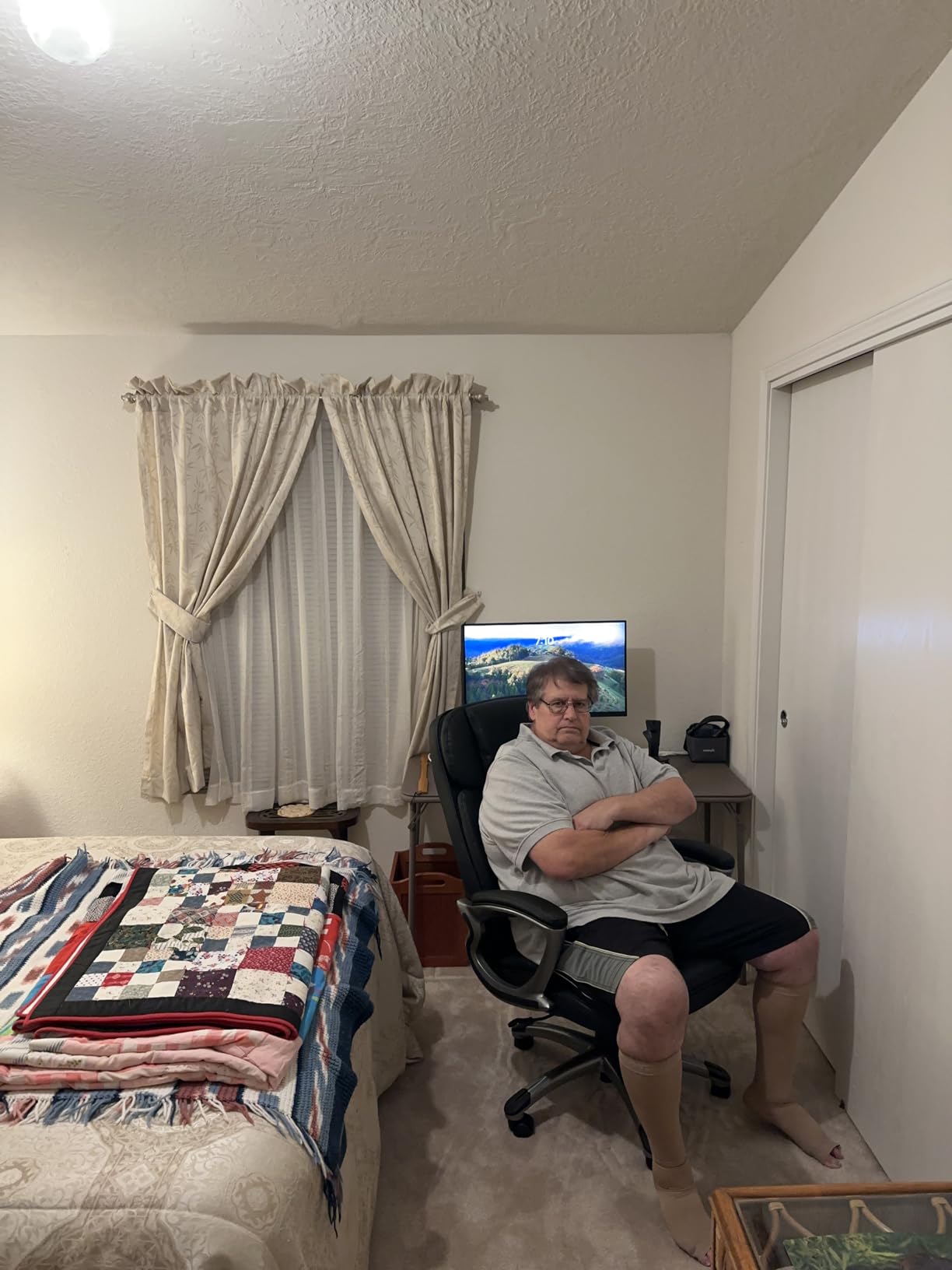
The sizing is the point of this chair. Owners confirm it is a genuine big-and-tall frame rather than a standard task chair with a wider cushion, and the 28.5 inch contoured backrest fills out an upper body that smaller chairs leave unsupported.
At a 4.0 average from nearly 3,900 reviews, it carries the lowest rating and the largest one-star share of any chair here, so read the complaints below before you commit.
What the Serta gets right for a 300 pound sitter?
The seat geometry is genuinely well judged. A 22.5 inch width with a deep pan means the armrests stop being obstacles, and the layered non-toxic foam holds its shape well past the weight a 350 pound rating implies.
For anyone whose body weight sits in the 250 to 320 pound range, this chair answers the question the other chairs on this list rate far above what they need. That spare capacity is itself a form of headroom.
Where the Serta is the wrong pick?
The minimum seat height is the deal-breaker for shorter users. Owners report their feet stay off the floor even at the lowest setting if you are under roughly six feet, which forces a posture the chair is not designed for.
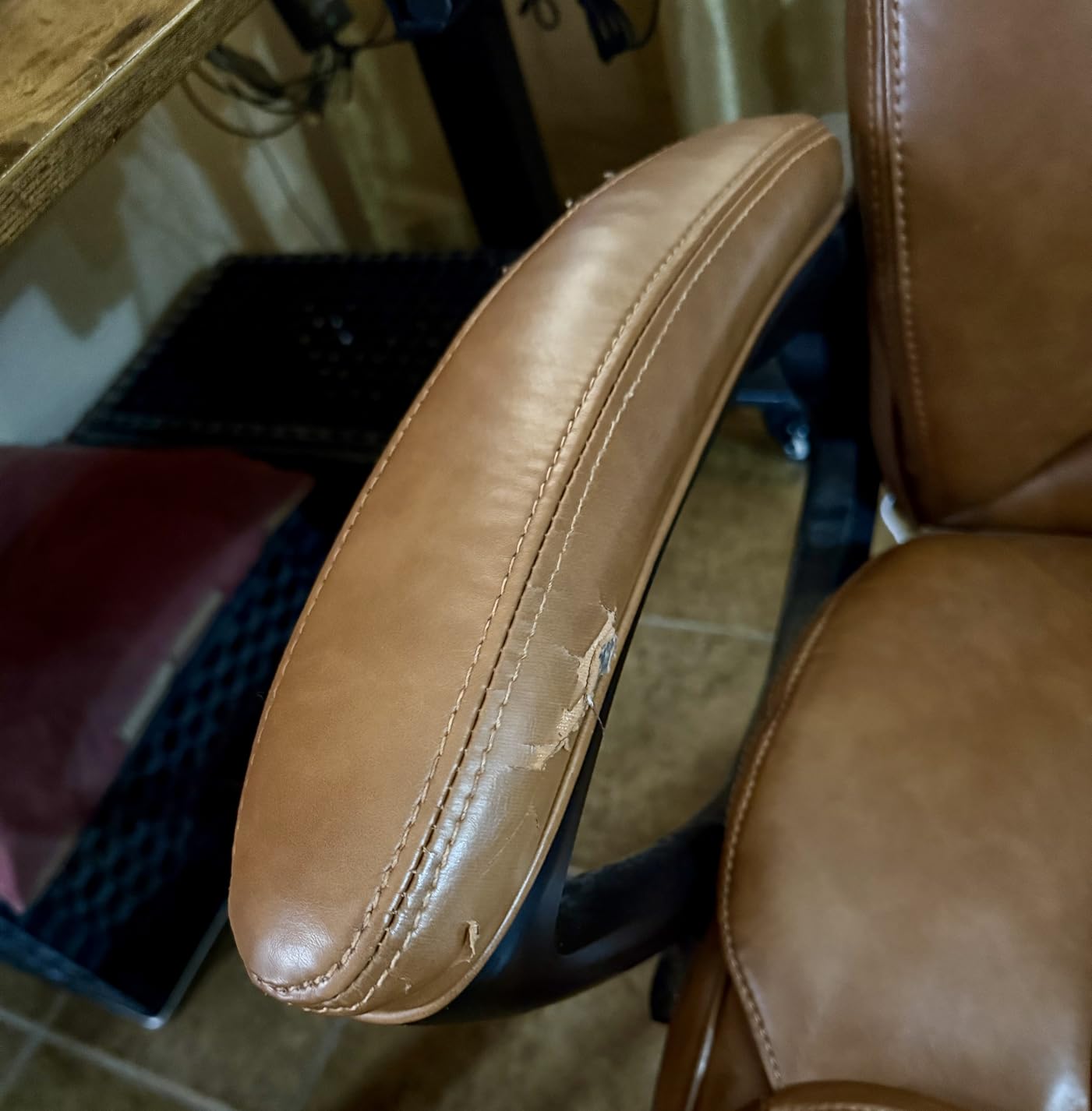
The armrests do not adjust at all, and the fixed lumbar cushion is large enough that some owners say it digs into the lower back. The more serious issue is durability: gas cylinder and mechanism complaints recur across multi-year accounts, and bonded leather can carry a strong odour for a period after delivery. Customer support also routes buyers to a third-party manufacturer rather than answering directly, which is worth knowing before you buy.
4. Efomao Big and Tall 400lb: The Most Versatile with the Widest Seat Cushion
- Widest seat cushion at 23.2 inch across
- Sturdy retractable footrest
- Independent lumbar pillow with tension control
- Arms adjust high enough for taller users
- Seat cushion is much firmer than it looks
- PU leather runs hot over long sessions
- Footrest support tubes feel thin
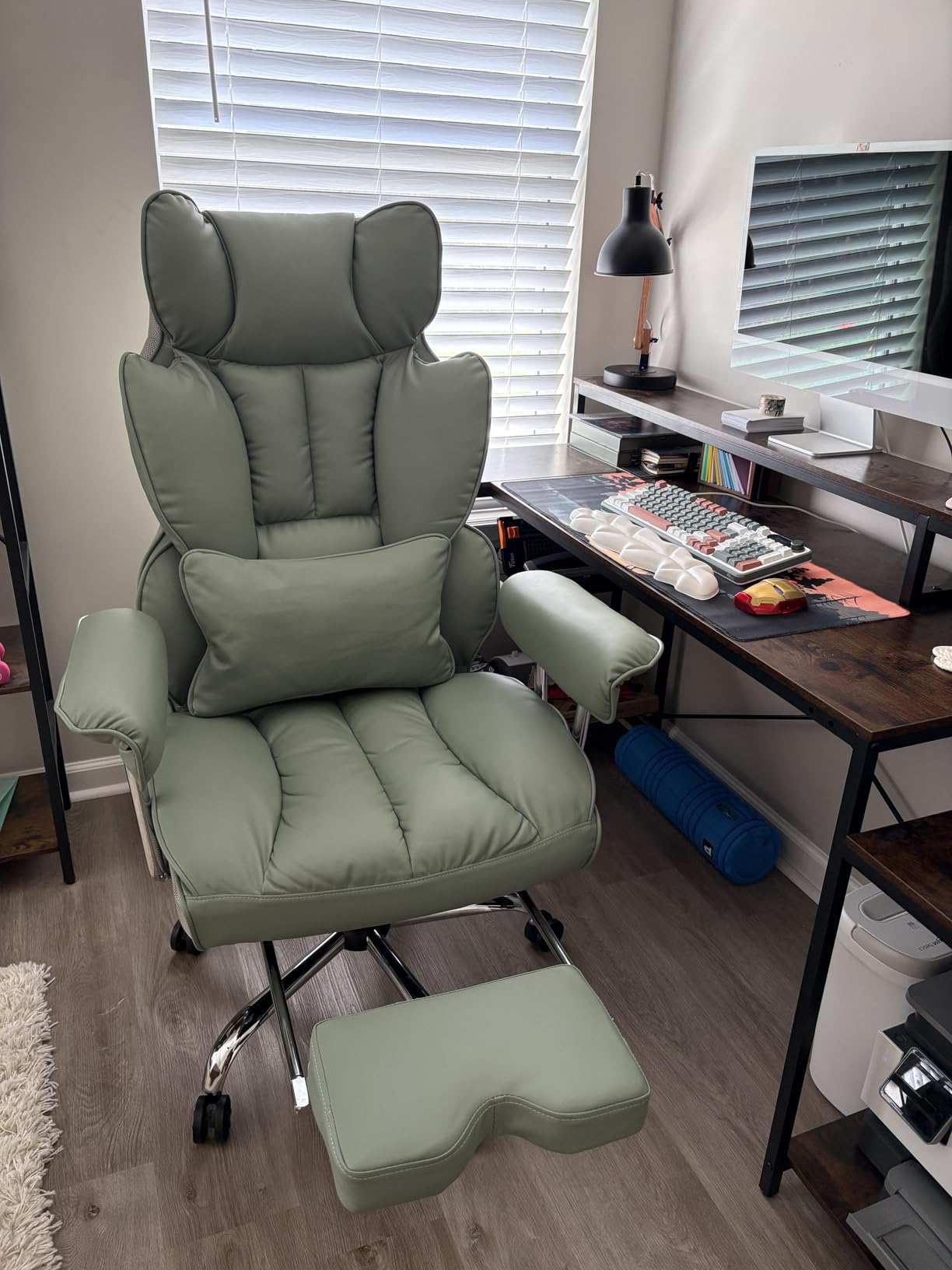
This 400 pound-rated chair has the largest seat cushion in the roundup at 23.2 inches wide and 20 inches deep, with four inches of thickness. If your problem is that standard chairs pinch the sides of your hips, the seat dimensions alone settle the question before anything else is considered.
It also has the most complete certification story of the group: an SGS certified class 3 gas cylinder and a BIFMA certified metal base, both named on the spec sheet rather than implied. A retractable footrest works with a tilt tension knob, and the backrest reclines to 135 degrees with a 360 degree swivel on adjustable height.
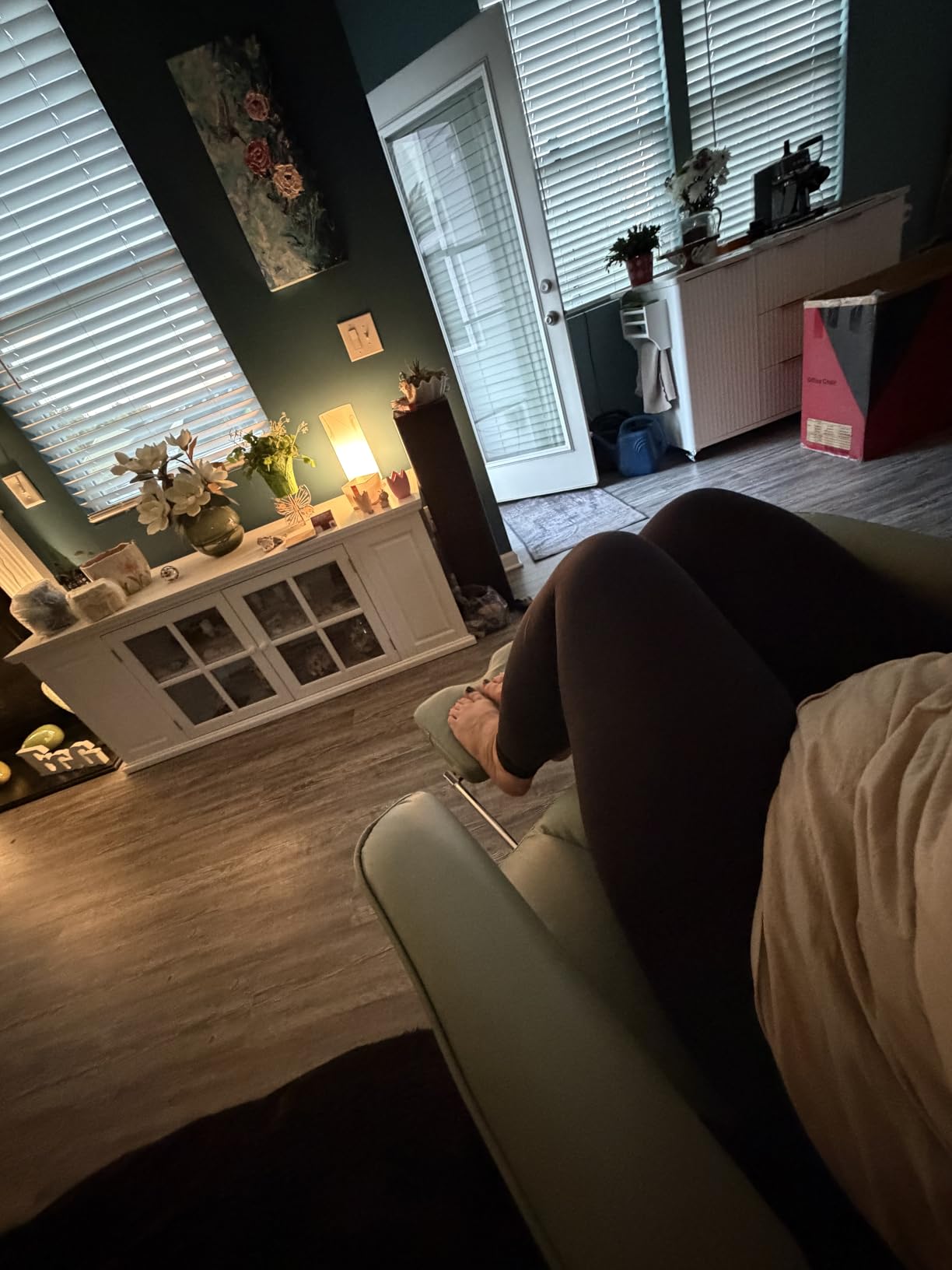
At 52 pounds this is the heaviest chair we reviewed, which is a reasonable proxy for how much steel is in the frame. The independent lumbar pillow sits separately from the dual-layer sponge cushioning, so you can set it where your spine actually is rather than where the factory guessed.
Owners rate it 4.3 across about 3,470 reviews, with praise concentrated on width and the footrest, particularly from people working long hours from home. The seller also shipped a shorter gas cylinder and rubber wheels at no charge when buyers asked, which is a service signal worth noting.
Who the Efomao fits best?
Anyone above 350 pounds who can sit with their legs crossed or off-centre. A 23.2 inch seat is roomy enough that position changes during the day do not become a repositioning exercise, and the wide armrests adjust high enough to support a taller frame.
The footrest is the differentiator for anyone who works reclined. It extends far enough under the seat to be usable, and combined with the 135 degree recline it turns the chair into something closer to a daybed for part of the working day.
Where the Efomao falls short?
The cushion is firmer than the photos suggest, and several owners added a separate seat pad after a few weeks. PU leather also runs hot during extended sitting, and buyers in warm rooms mention it specifically.
The armrests have no height adjustment, so the chair cannot tuck under a standard desk, and the backrest height may be short for users above roughly six foot one. The footrest only reaches mid-calf and its tubes feel thin, so if you want true leg extension, our foot rest roundup covers the dedicated options.
5. EXCEBET Big and Tall 400lb: The Best Welded Frame at 400 Pounds
- Welded steel base resists the flex of cheaper cast bases
- Very thick cushioning for the category
- Arms mount separately and adjust in width
- Footrest travels a long way under the seat
- Fixed lumbar sits too low for upright sitting
- No real headrest
- Recline mechanism creaks
This chair is rated to 400 pounds and its most important feature is structural rather than ergonomic: a welded steel base where most rivals use brittle cast metal. Owners comparing it against cheaper big-and-tall models single out the base as the reason it does not develop the wobble they had before.
The seat is a wide saddle shape with thick elastic sponge in both the seat and backrest, and the arms mount separately so the chair works without them while also adjusting in width and height. A slide-out footrest extends a long distance and stows under the seat, and the SGS class 4 gas cylinder matches the strongest cylinder specification in the roundup.
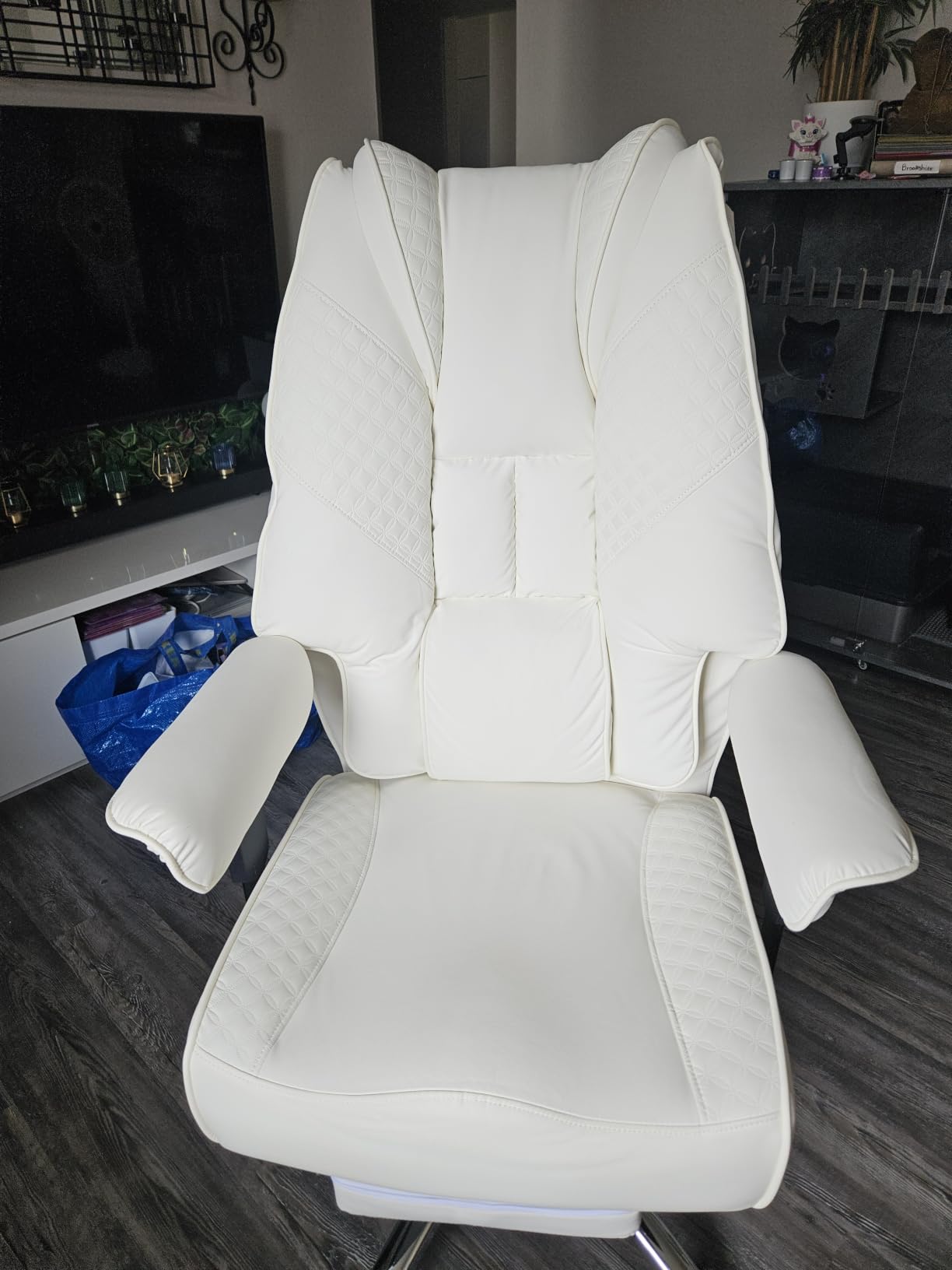
Backrest height suits tall users without needing an adjustable headrest, which is unusual at this capacity, and the backrest holds its set recline angle instead of gradually drifting backward. Cushion frame in FSC-certified wood is a small detail that tells you something about the sourcing.
At 58.4 pounds, this is the second-heaviest chair here and it assembles in about 20 to 30 minutes. Reviews run 1,859 at a 4.2 average with a heavy five-star lean among long-term users of big-and-tall chairs.
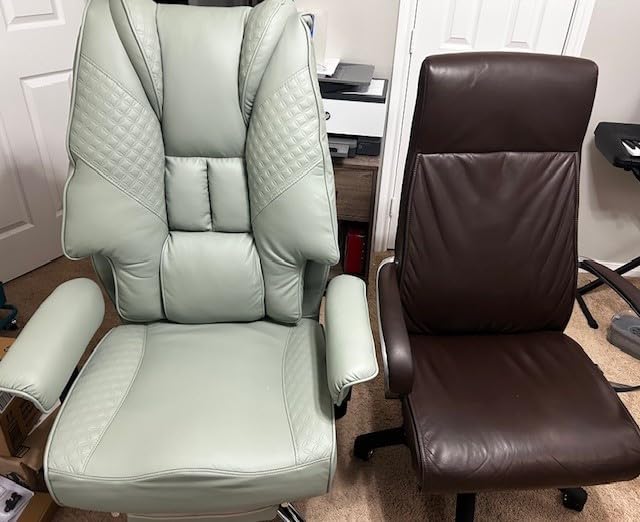
What the welded base buys you?
Frame flex is what produces the wobble complaints that dominate reviews of chairs in this weight class. A welded steel base resists the loading that cracks bolted brackets, and the 4D-style adjustability of the arms lets you set the seat width rather than accepting whatever the factory set.
If you have already owned a heavy-duty chair that failed at the base rather than the cushion, this is the pick that addresses that specific failure.
Where the EXCEBET falls short?
The lumbar support is fixed and sits too low to help with upright sitting, which is a genuine problem if your day is desk work rather than reclined work. There is no real headrest either, and the recline mechanism is reported as loud and creaky.
The most serious owner complaint is that the supplied gas cylinder cannot be removed once the frame is assembled, so when it fails around the one-year mark there is no swap. That single design decision matters more than anything else on this chair, and it is why we rank it fifth rather than higher.
6. CAPOT Ergonomic Mesh 400lb: The Breathable Pick With the Longest Warranty
- Mesh keeps you cool through long sessions
- Tilt locks at three angles
- Flip-up arms slide under a desk
- Thread-locking bolts and spare hardware included
- Mesh seat has little padding and hip pinching at upper weights
- Wheel-mount leg has broken for some users
- Headrest adjustment is awkward
This is a 400 pound-rated mesh chair, and it is the pick if heat is your problem. The Aerovith mesh seat and back move air across you in a way no PU leather or bonded leather chair manages, which is why buyers in warm rooms rate it highly.
The adjustability is the best in the roundup. Lumbar support moves two inches across eight levels, the backrest locks at 90, 110 and 125 degrees, the 3D headrest adjusts in both height and depth, and the 4D flip-up armrests let the chair slide fully under a desk. The gas lift is SGS certified and leak-proof, the structure is BIFMA X5.1 certified, and the warranty runs five years with free parts replacement.
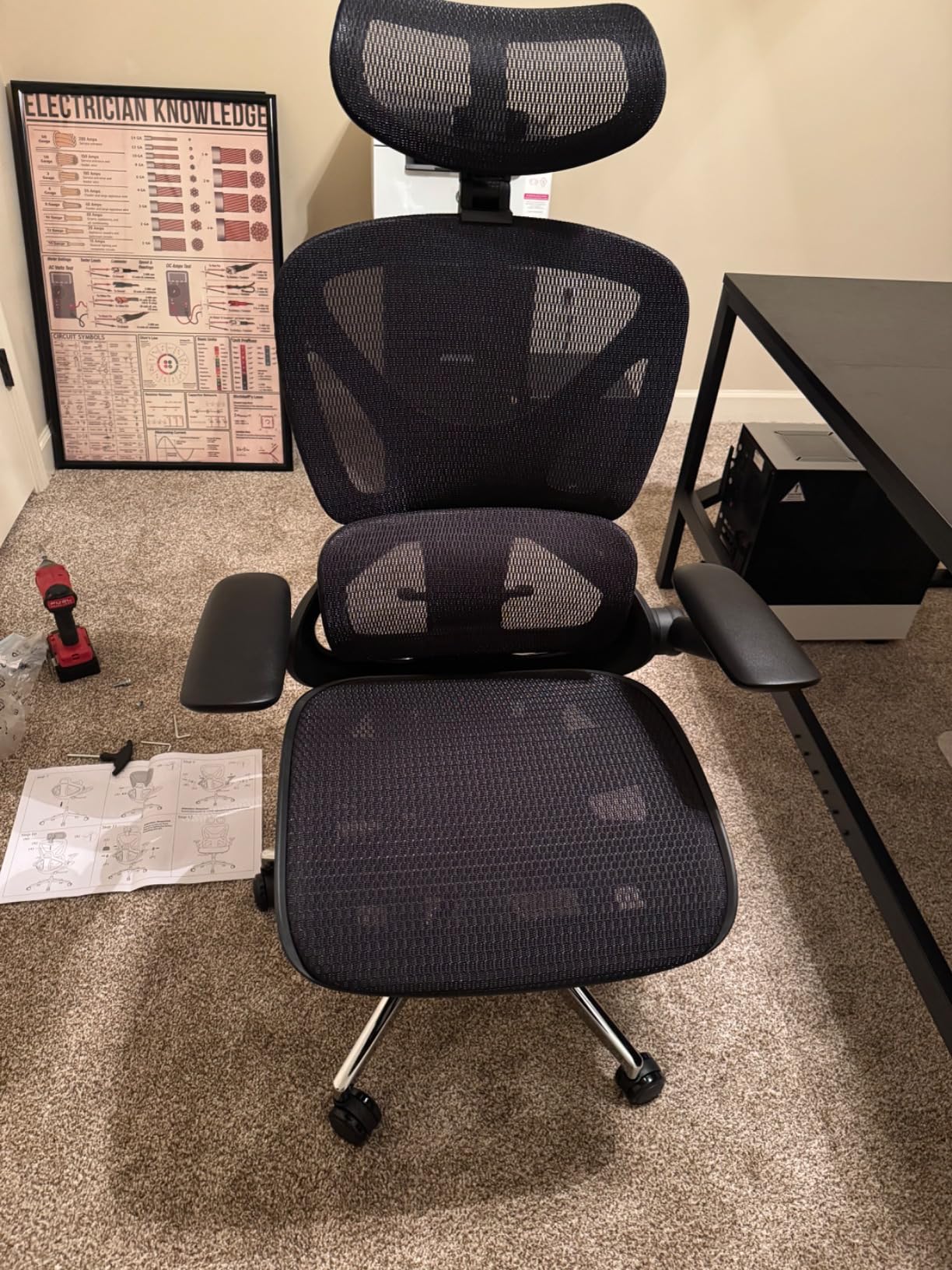
That five-year warranty is the longest coverage in this roundup by a wide margin, and it is the strongest reason to consider this chair over a cheaper mesh alternative. Silent PU casters will not mark flooring, and the packaging includes thread-locking bolts and spare hardware, which is better than most chairs of this capacity provide.
The rating is 4.1 across 1,222 reviews with a 13 percent one-star share, and the reason is fit rather than build quality. Read the next section before deciding.
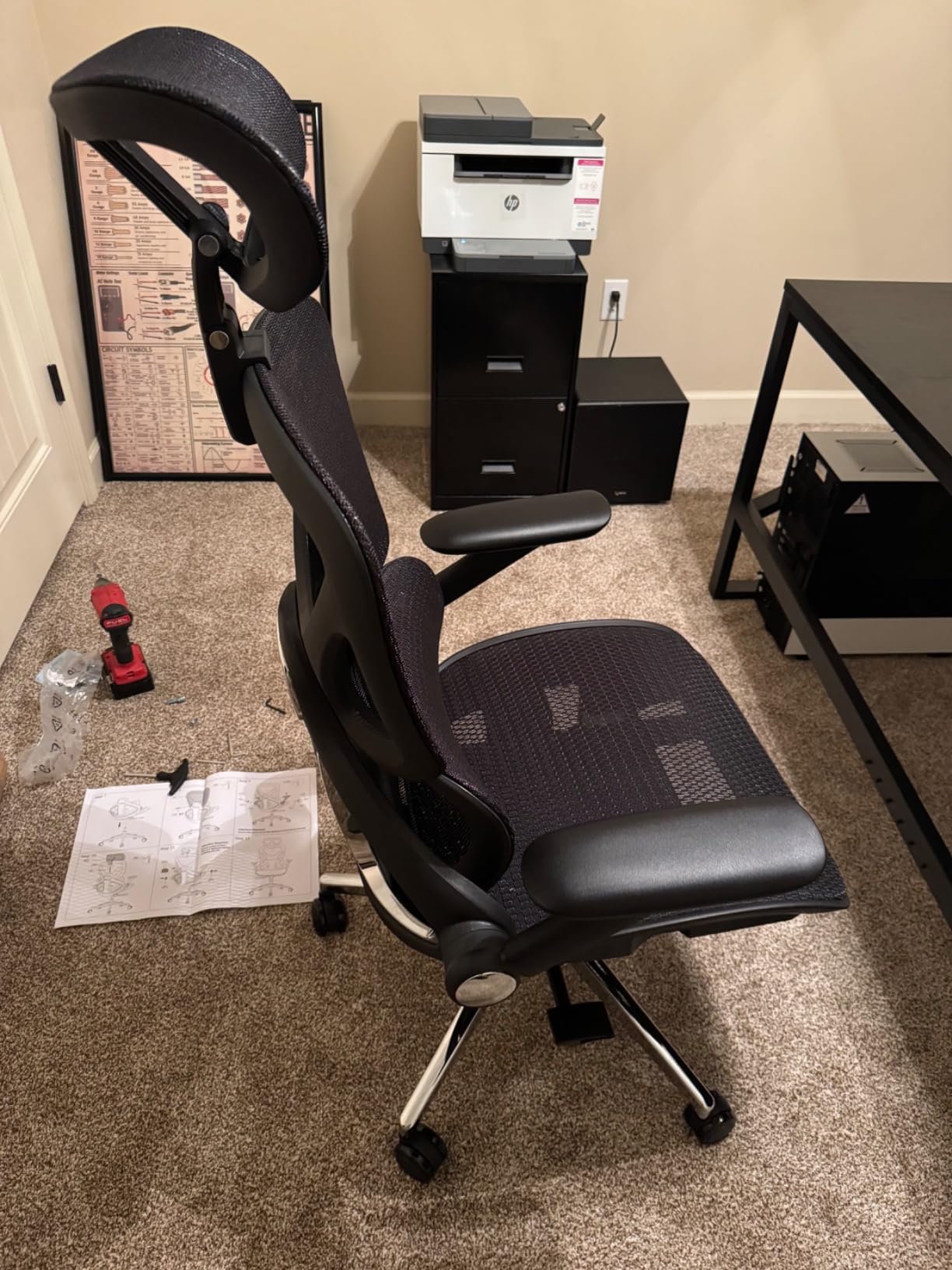
Where the CAPOT works at full rating?
Buyers who sit within the stated size range tend to love it. The tilt lock genuinely holds an angle, the lumbar micro-adjustment gives fine control rather than three fixed positions, and the flip-up arms solve the desk clearance problem that stops many wide chairs being usable at all.
For a 350 to 400 pound sitter who works in a warm room and wants a single adjustable chair rather than a padded recliner, this is the most adjustable option in the roundup.
Why some heavier owners skip it?
The critical mass of reviews is about fit. The mesh seat is 19.3 inches deep by 20 inches wide with very little padding, and several reviewers in the 220 to 275 pound range report the seat pinching at the sides of the hips. Owners above that weight frequently add a separate cushion, which you can read about in our seat cushion guide.
There are also recurring reports of the wheel-mounting leg breaking, in some cases well under the 400 pound limit, and lumbar support that drifts out of position and needs frequent readjusting. A front seat lip means the chair can roll away as you sit down, which is irritating in a way that only shows up in daily use.
7. WAILOR 400lb Executive: The Pick for Long Reclined Work Sessions
- 4-layer foam spreads hip pressure well
- Armrests stay aligned through recline
- Steel-reinforced frame and reinforced baseplate
- Silent casters glide on hard floors
- Fixed lumbar cushion offers limited adjustment
- PU leather can feel warm over long sessions
- Headrest adjustment range is limited
This chair is rated to 400 pounds and is built around a widened PU leather seat with four layers of foam over a steel-reinforced frame. Owners consistently describe the padding as well distributed for heavier users, which is a different complaint from the one most big-and-tall chairs attract.
The distinguishing feature is the patented linkage armrests, which move with the backrest through 90 to 155 degrees of recline instead of staying flat while you lean back. That keeps your forearms supported at every angle, and an enclosed hinge design prevents armrest pinching. An optional retractable foot rest and a curved lumbar cushion complete the package, on an SGS class 4 certified gas lift and an FSC-certified wood base with a reinforced baseplate.
Silent 360 degree casters work on hardwood and tile, and the chrome-plated base keeps the look appropriate for a professional office. At 37.5 pounds it is lighter than several rivals here without feeling flimsy, and pre-sorted hardware plus an assembly video make setup straightforward.
The rating is 4.2 from 726 reviews, a smaller evidence base than the leaders. Coverage includes a one-year warranty with free part replacement and 30-day returns.
Why the linked armrests matter at your weight?
When you recline a chair with fixed armrests, the gap between the arm and your forearm grows and your shoulders take the load. Linkage arms close that gap automatically, and for someone who spends part of the day reclined that is the difference between supported and hunched.
The four-layer foam is the other reason to look here. Distributing hip pressure across that many layers is what keeps the seat from developing the compression pattern we described at the start.
Where the WAILOR is the wrong choice?
The lumbar cushion is fixed with limited adjustment, so if your back pain is position-specific this chair will not tune itself around you. PU leather also feels warm over long sessions, which is the same heat-trapping complaint buyers raise about faux leather in hot climates on durability-first forums.
The headrest adjustment range is limited, and the one-year warranty is short for a purchase this size. If you sit upright and cool rather than reclined and warm, the CAPOT is the better fit.
8. HYLONE 400lb Mesh Back: The Deepest Cushion for the Money
HYLONE 400lb Office Chair Big and Tall,Desk Chair with Lumbar Support,Black
- Exceptionally thick cushion that resists collapse
- Stable base with a rock and recline function
- Both arms flip up to tuck under a desk
- Casters roll easily over carpet
- Backrest is much narrower than the seat width suggests
- Listed measurements do not show the narrowest point
- Occasional reports of stained or dented components
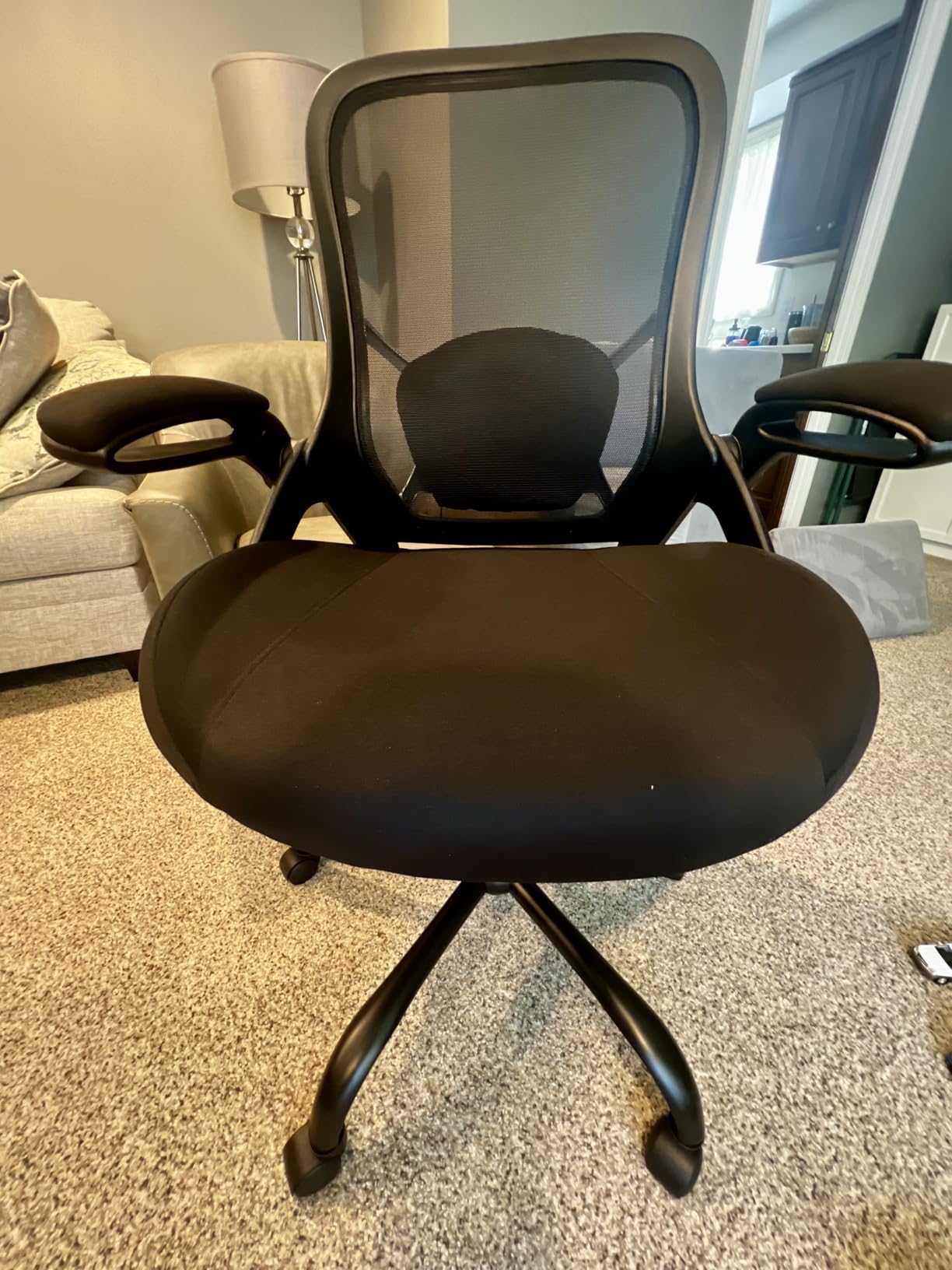
This chair carries a 400 pound rating and a five-inch-thick sponge seat cushion, which is the thickest in the roundup. Multiple buyers describe replacing a series of wobbly, unpadded chairs with this one, and the cushion depth is why.
It is also one of the lighter chairs here at 32 pounds, with a breathable nylon mesh back, flip-up armrests on both sides and a 28-inch five-star base that stays stable at full height range. Seat height and backrest both adjust, and it assembles in about 30 minutes with 24 months of free parts replacement.
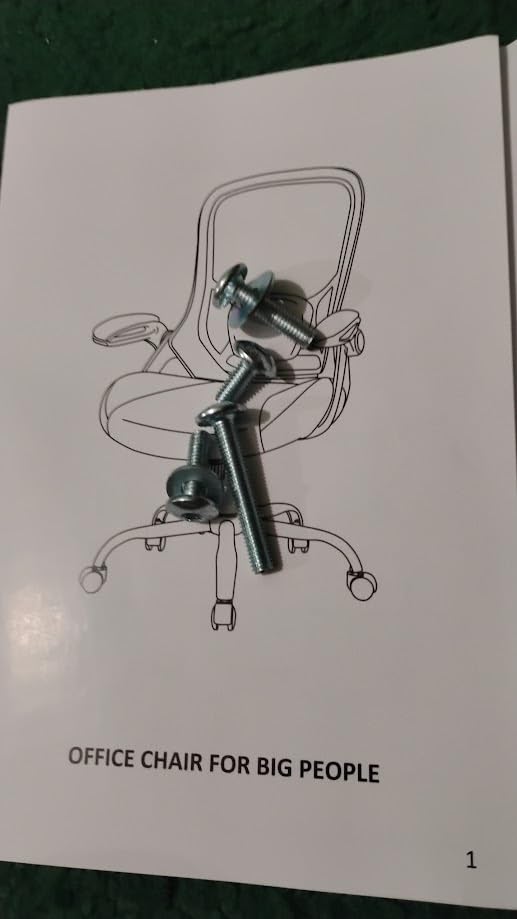
The rating is 4.4 from 710 reviews with a 75 percent five-star share, one of the strongest distributions in the group. Casters roll easily over carpet where cheaper chairs drag, and the mesh back keeps it cool.
Stated suitability runs from roughly five foot five to six foot two, which is worth checking against your own height before you commit.
When the deep cushion is the deciding factor?
Seat pan compression is the first failure mode we described, and a five-inch sponge cushion is the most direct structural answer to it in this roundup. If you have already replaced a chair because the foam bottomed out, cushion thickness should carry more weight in your decision than any other spec.
Flip-up arms on both sides also make this one of the few wide chairs in the roundup that actually tucks under a desk, which matters more in a home office than the seat dimensions suggest.
Why the backrest is the catch?
The single most consistent critical review is that the lower backrest is much narrower than the seat implies, because inward-curving plastic sides narrow the frame below the advertised width. Several owners noted the listed measurements do not reflect the narrowest point, which means a bigger frame may find the seat roomy and the backrest restrictive.
Check the back width against your shoulder span before ordering, and note that some units arrived with stained or dented components. Everything else about this chair is straightforward.
9. YORICK Big and Tall 400lb: The Quiet Pick for Shared or Home Workspaces
- Deep seat with a spring pack that holds shape
- Adjustable lumbar support aligns the spine
- Quiet rubber wheels work on every hard floor
- Padded headrest for long sessions
- Bonded leather rather than genuine leather
- Armrests have limited adjustment
- Smallest review base among the popular picks
This 400 pound-rated chair is the quietest option in the roundup, and that is its whole argument. The nylon-rubber polyurethane wheels glide over hardwood, laminate, tile and vinyl without a mat and without the noise that hard casters make on a shared floor or in a home with people working nearby.
The seat is generously sized with an elastic spring pack rather than foam alone, which is the construction detail that keeps a deep seat from flattening after a year. Built-in lumbar support adjusts, height and rock-back adjust, and a padded headrest supports the neck through long sessions on a heavy duty swivel metal base with a class-4 gas cylinder.
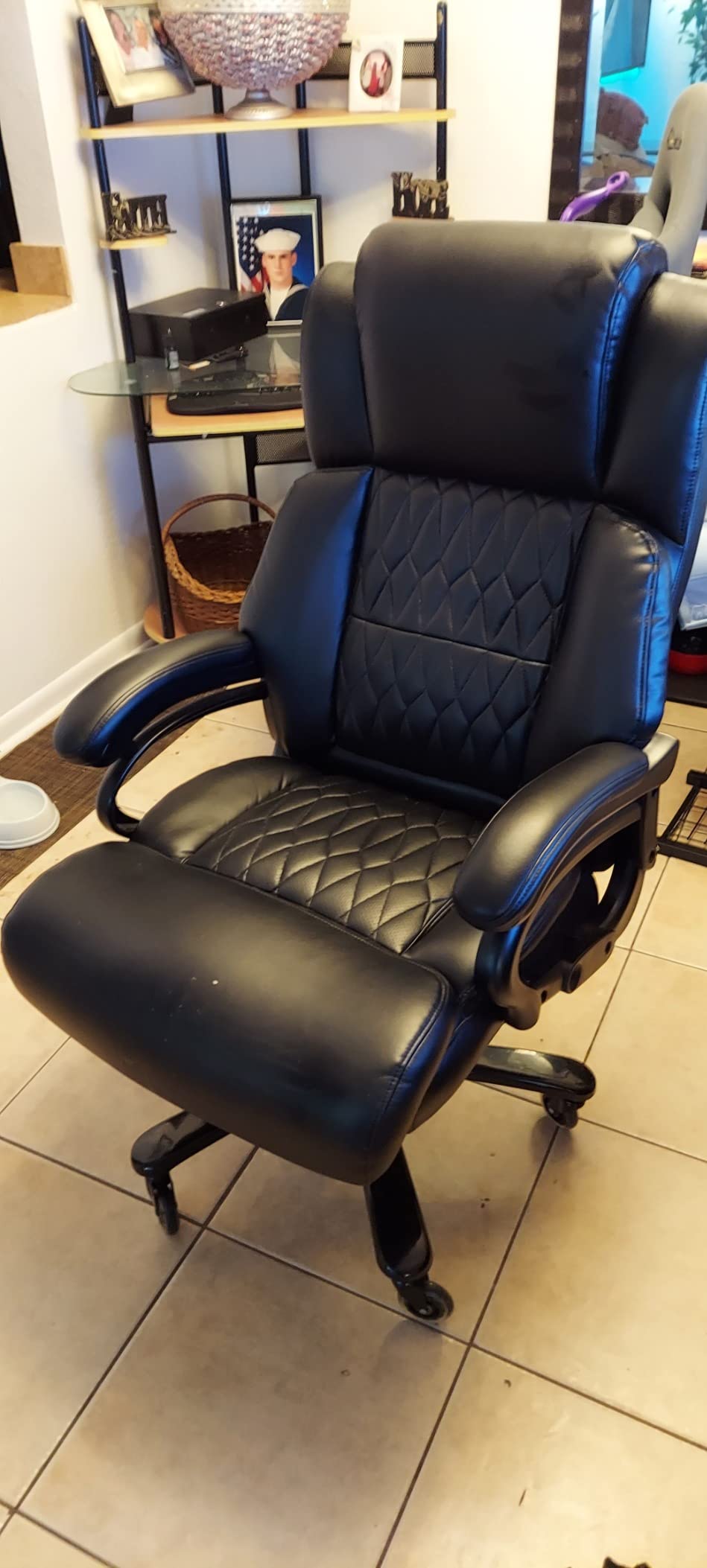
At 46 pounds with a 34 by 27 by 50 inch footprint, it is a large chair in every direction and will not tuck under a compact desk. Buyers credit seat depth, lumbar adjustment and the floor-friendly wheels, and the breathable bonded leather is described as resisting sweat better than PU leather.
The rating is 4.3 across 707 reviews, and this is the least frequently purchased chair in the set, so its review base is smaller than the market leader by a wide margin.
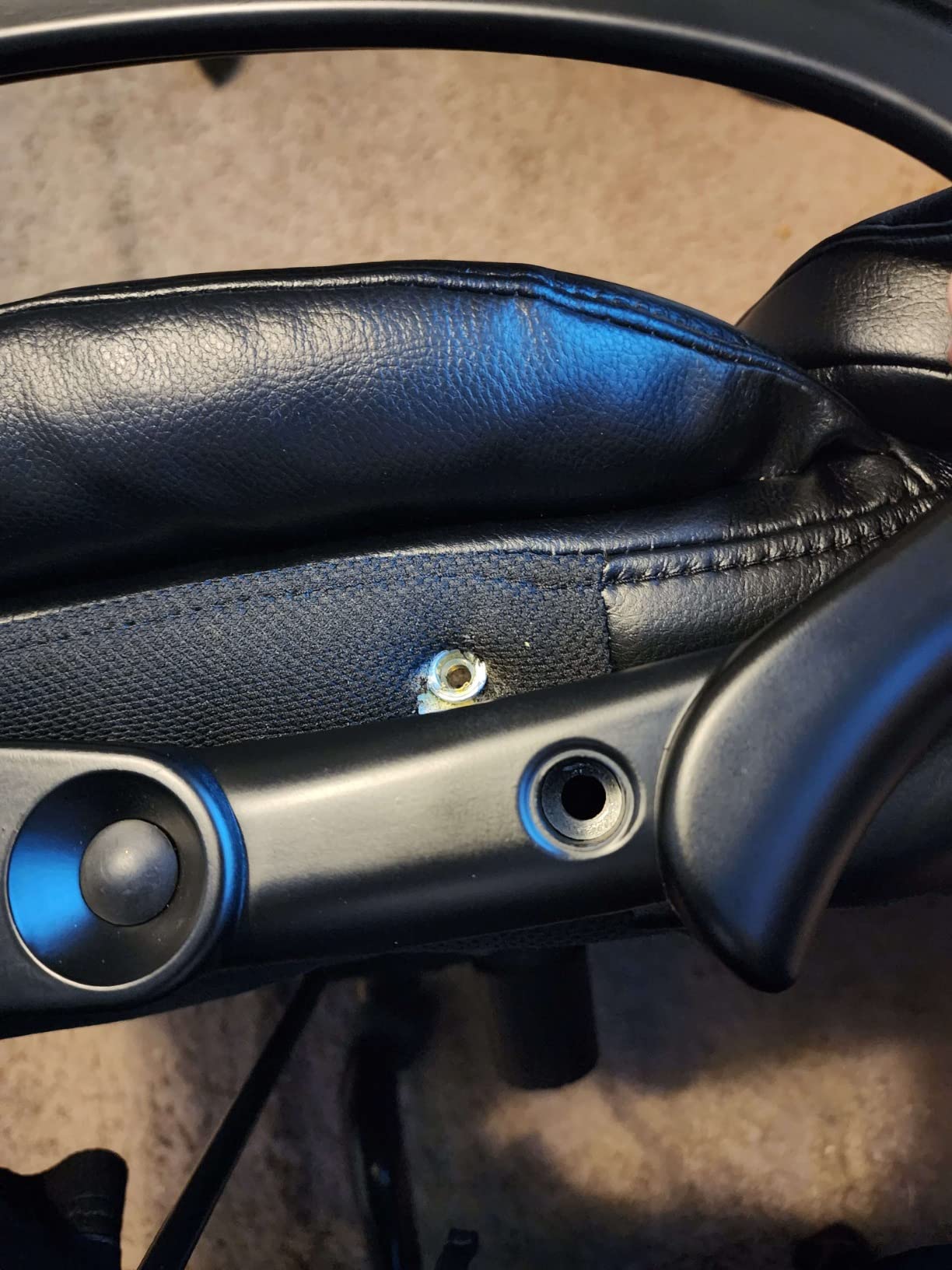
Who benefits most from the wheel and spring combination?
Anyone in a shared workspace, a home with a hard floor, or an apartment where a rolling chair is audible at night. Reviews on durability-first communities regularly favour this kind of quiet rolling hardware, and it is the reason the wheel specification is on the spec sheet at all rather than hidden on a product photo.
The spring pack in the seat is the durability answer. Springs hold their geometry where foam compresses, and this is a chair rated well above the weight of most of its owners.
Where the YORICK is the wrong pick?
The upholstery is bonded leather rather than genuine leather, which is the main quality trade-off at this price, and the armrests have limited adjustment. A large footprint means it will not work at a compact desk, and the smaller review base means less long-term evidence than the picks above it.
If quietness is not your priority and you want genuine adjustability instead, the CAPOT or the EXCEBET both adjust more.
10. HESL Massage 400lb: The Pick When You Want Heat and Vibration Built In
- Massage covers back lumbar and seat across five modes
- Heat adds real relief after long days
- Reclines to 160 degrees for near-lying
- Footrest extends well and stays comfortable
- Assembly instructions are confusing
- Some owners report a torn seat cover
This chair is rated to 400 pounds and carries the only built-in massage and heating system in the roundup. Six-point vibration runs across five modes and two intensity levels covering the back, lumbar and seat, with a heating function that holds around 120F.
The recline range is the widest here at 90 to 160 degrees, which takes it to near-lying, and the retractable footrest is comfortable rather than token. The gas lift is SGS certified with three inches of height adjustment, the armrests adapt automatically as the backrest moves, and the PU leather over high-density foam is described as resisting sagging.
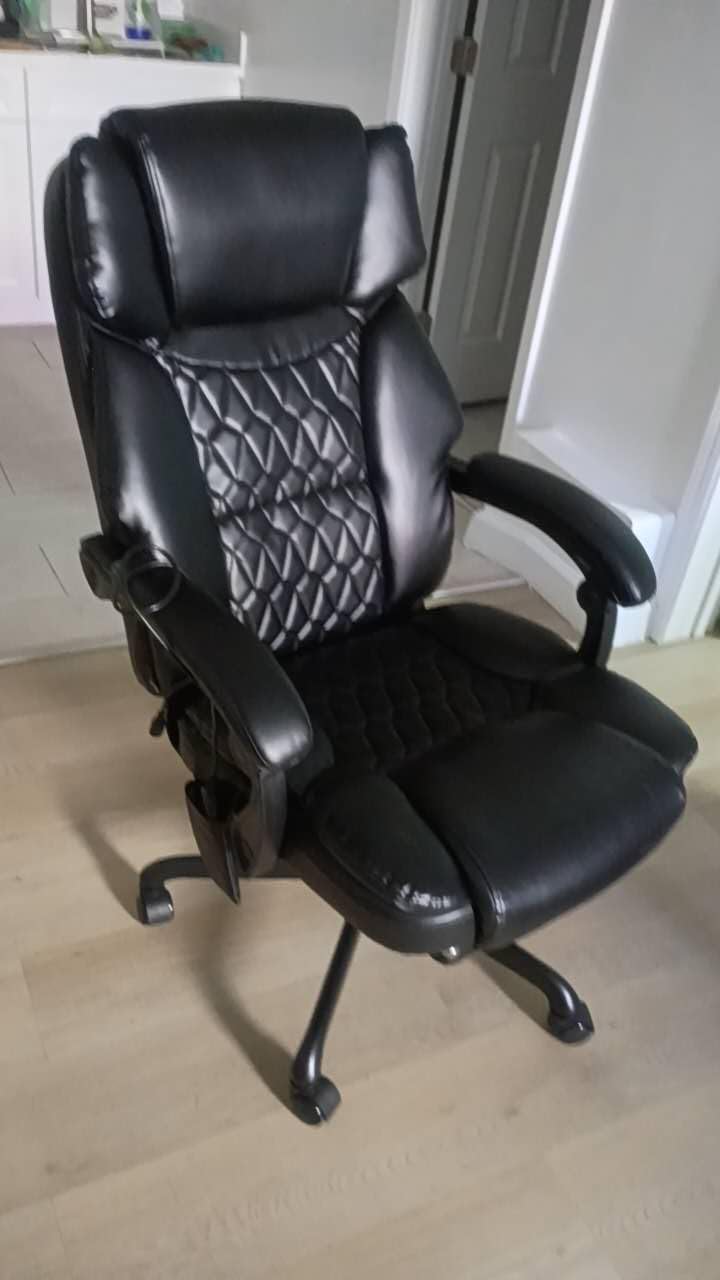
It carries the strongest sales rank of any chair in this set, and at 4.4 across 609 reviews the rating distribution is strong. Assembly takes about 15 to 20 minutes for one person using a QR-linked video, with 30-day returns and 365-day parts replacement after that.
Worth noting for this particular query: buyers of around 200 pounds report the size fits them well, which makes this the one chair here that comfortably serves below the weight band the rest of the list targets.
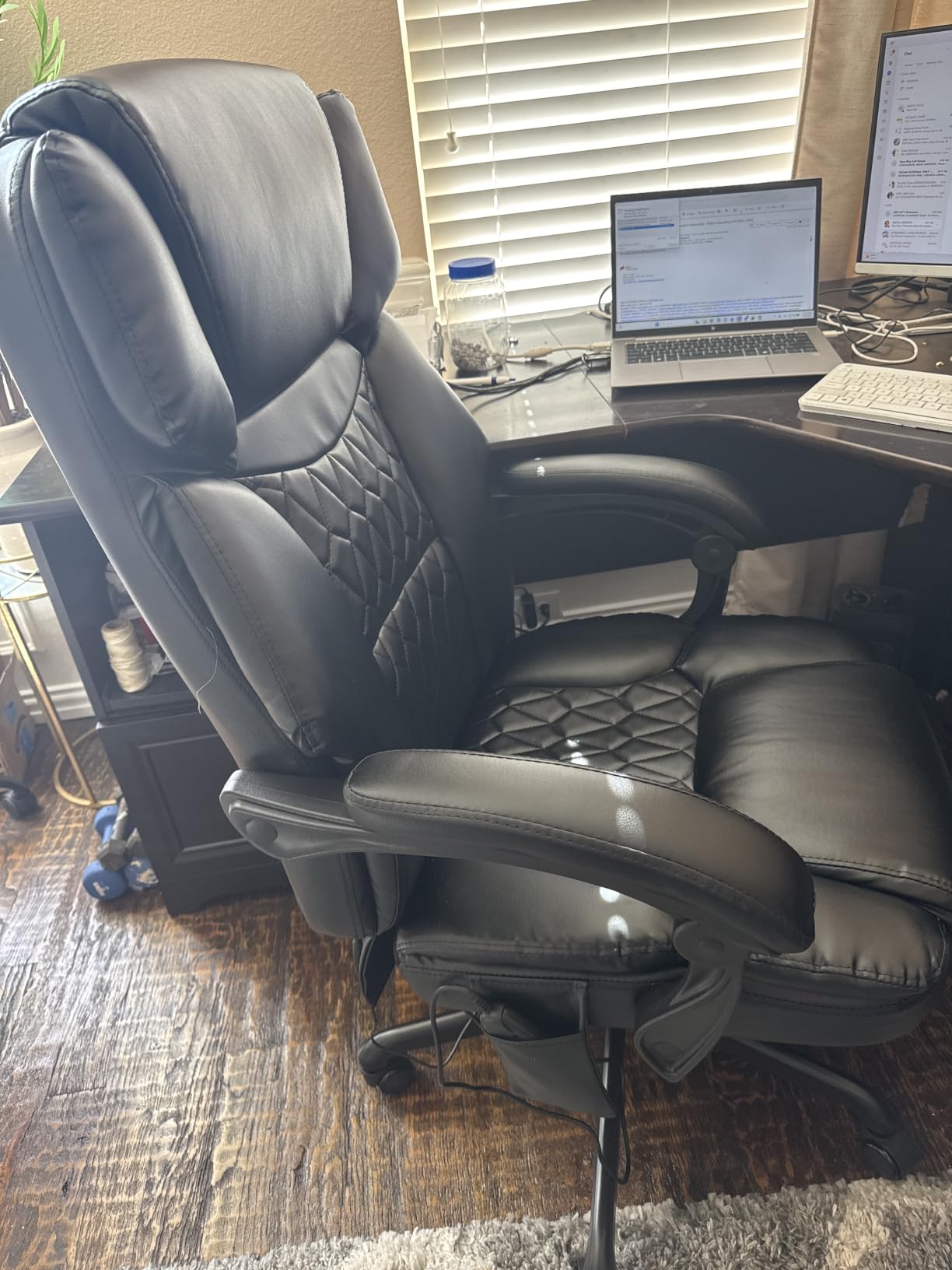
Who actually gets value from the massage and heat?
If you sit for eight hours or more and finish the day with a stiff back, the heating function is the feature that justifies the rest of the design. Buyers consistently credit it for relief after long workdays rather than treating it as a novelty, and the six-point coverage means the lumbar area gets attention rather than just the shoulders.
The 160 degree recline plus footrest also makes this the best chair here for anyone who needs to lie back periodically, including people recovering from hip or lower-back surgery who cannot sit upright for long stretches.
Where the HESL falls short?
The assembly instructions are confusing, particularly the footrest diagram, so allow more time than the stated 15 to 20 minutes. One owner reported a seat cover tearing within weeks of daily use, which is not a pattern but is worth knowing.
The seat itself is 22 inches wide, which is narrower than the GTPLAYER or the Efomao, so if width is your primary constraint this is not the chair. And heat plus PU leather plus a 160 degree recline is a lot of heat-trapping material for a warm room.
11. BOSMILLER 650lbs Big and Tall Chair: The Pick for 500 Pounds and Above
- Highest capacity in the roundup at 650lb
- Reinforced base and upgraded lift at full load
- Deep 23 inch seat with elastic sponge
- Integrated flip-up and linked armrests
- Sponge padding can compress sooner than spring seating
- Leather upholstery needs occasional care
- Smaller review base than the 400lb picks
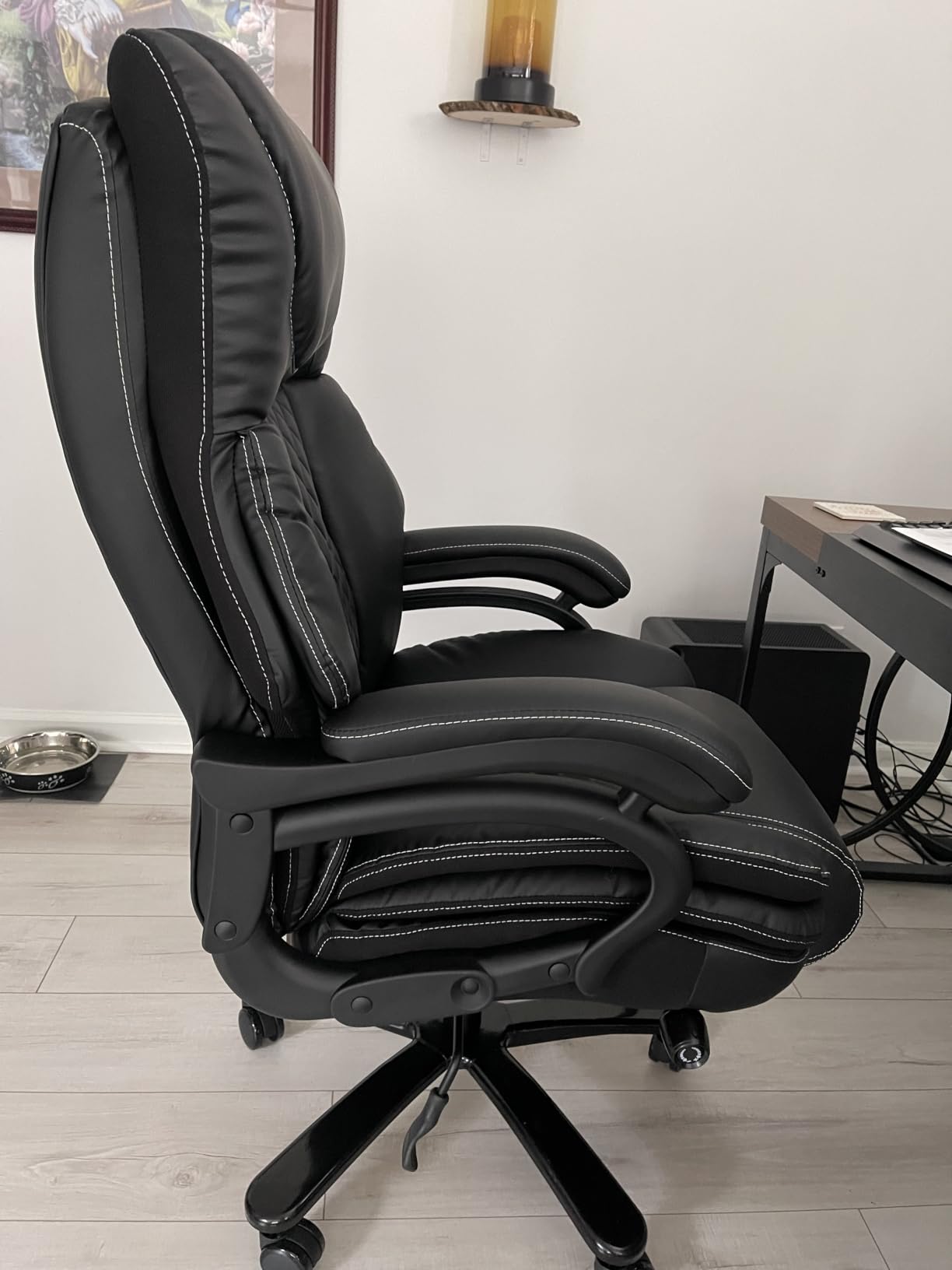
This is the only chair in the roundup rated above 400 pounds, at a published capacity of 650 pounds. If you are in the 450 to 600 pound range, everything else on this list is running you at or past its limit, and this is the only one with genuine headroom left.
The structure matches the number: a reinforced metal base with an upgraded class gas lift, chosen specifically for stability at maximum load. The seat is deep at 23 inches with high-density elastic sponge padding, lumbar support adjusts along the natural curve of the back, and height and tilt adjustment are described as smooth rather than notchy.
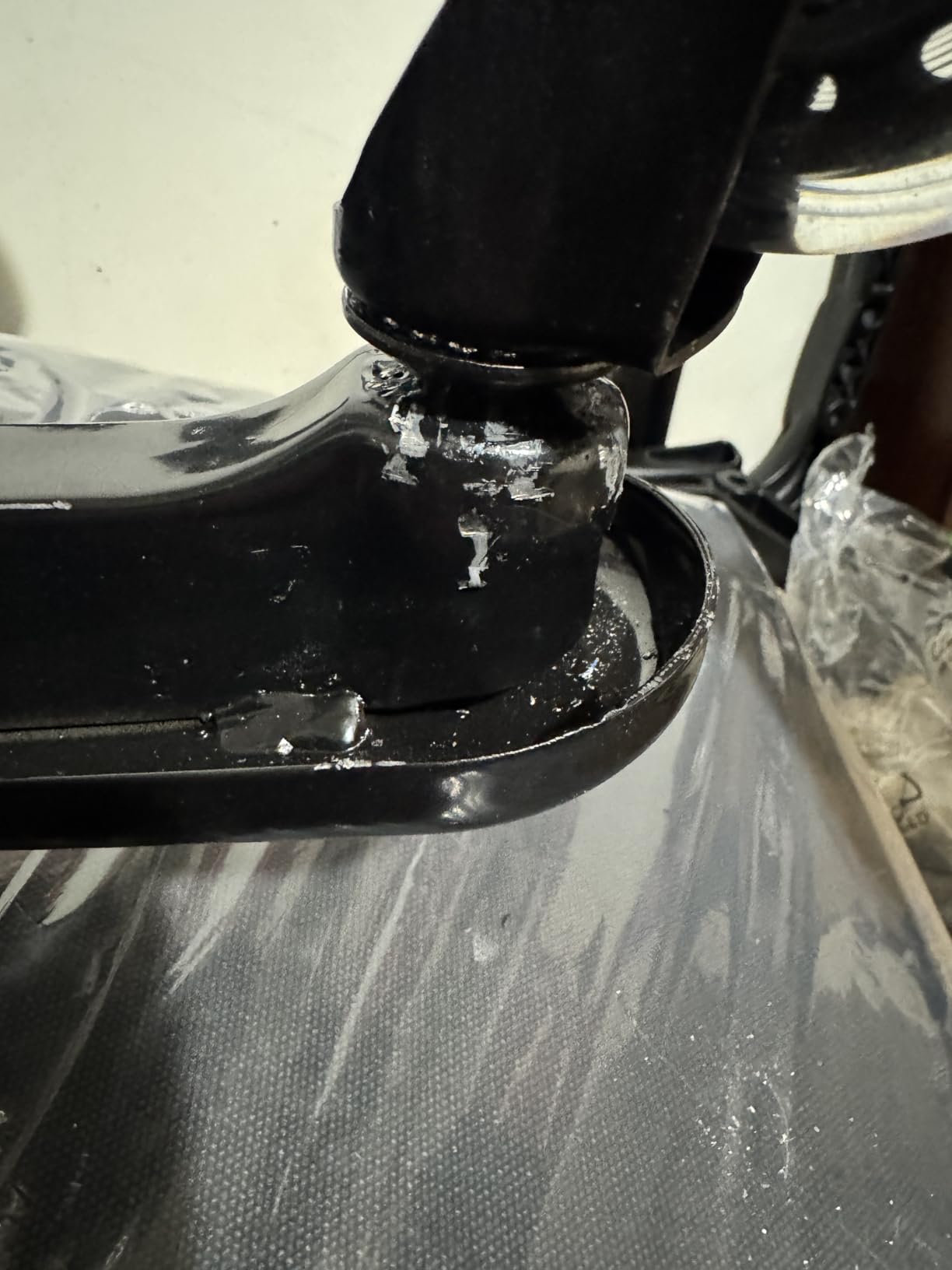
Armrests are integrated, both flip-up and linked, and the rubber casters are quiet on hard floors and carpet. Tools are included and assembly is straightforward, and at 50 pounds the chair has real mass behind the frame.
The rating is 4.4 from 420 reviews with a notably low three percent one-star share. Buyers point to the reinforced base and the deep seat padding as the reasons, and the capacity is what separates it from everything else here.
Why capacity above 400 pounds changes the decision?
A 400 pound rating is not headroom for a 400 pound person, which is the entire argument of this article. At that weight you are permanently at the top of the range, and dynamic loading from standing up and sitting down is exactly what the rating does not model. A 650 pound rating gives a 500 pound sitter the same buffer a 400 pound rating gives a 300 pound sitter.
The 23 inch seat depth also suits a longer frame in a way that shallower wide seats do not, and the linked integrated arms keep support in place as you move.
What you give up at this capacity?
The seat uses high-density sponge rather than a spring pack, and owners note that sponge padding can compress sooner than spring-based seating. If you expect to keep this chair for a decade, that is the trade-off to weigh against the capacity you actually need.
The leather upholstery needs occasional care, and the review base of 420 is smaller than any 400 pound pick in the roundup, so there is less long-term evidence. A Level1Techs contributor describing a large-size Aeron that worked well for colleagues over 300 pounds made the point that sizing rather than brand is the decisive variable, and this chair is the same principle taken further up the weight range.
12. HESL Flip-Up Armrest 400lb: The Compact Pick for Small Desks
- Flip-up arms roll the chair fully under a desk
- Rocking tension adjusts across 90-120 degrees
- Firm cushion engineered to resist sagging
- Quiet wheels that will not mark flooring
- No footrest included
- One reported back failure in the first two weeks
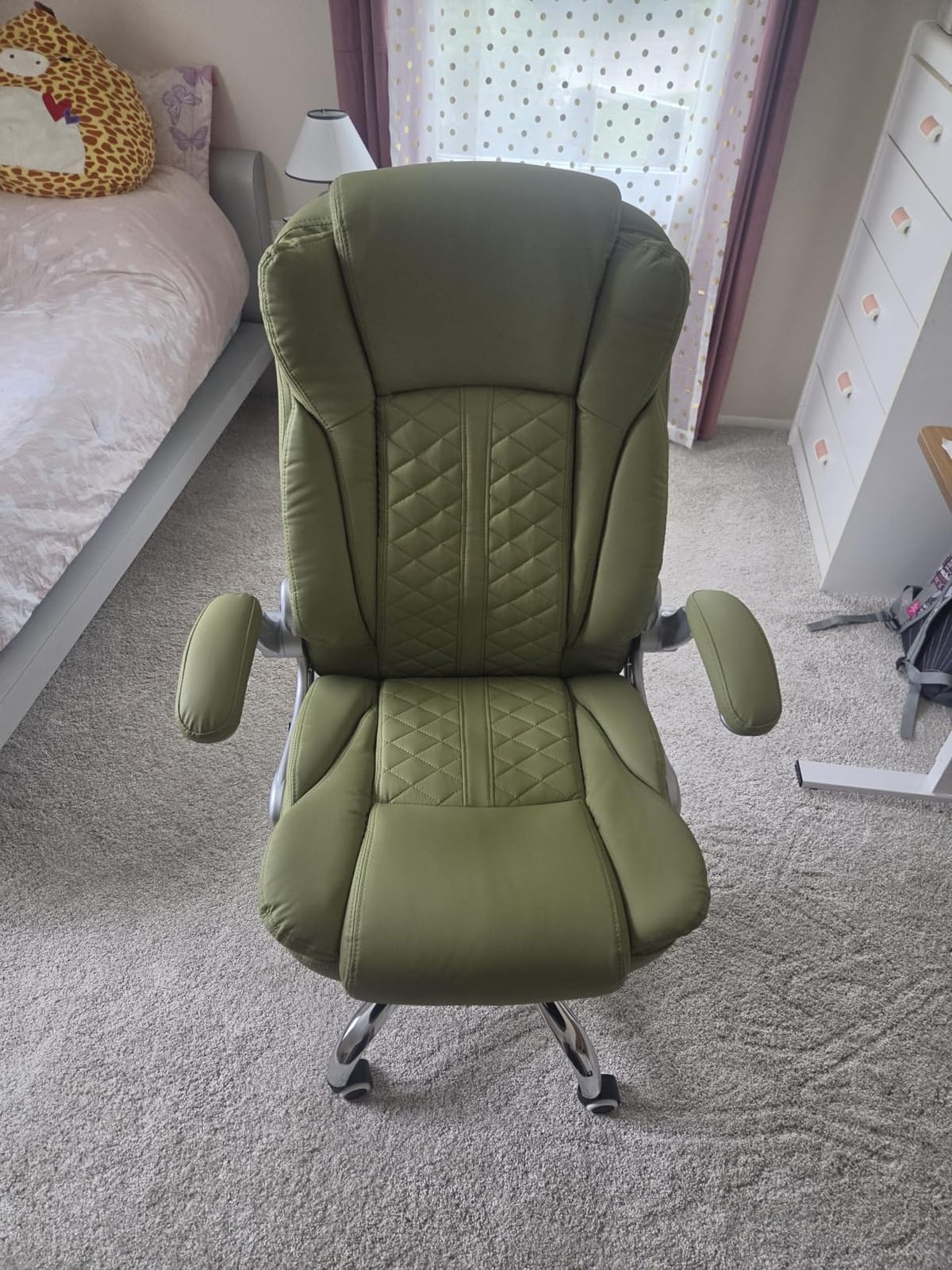
This chair is rated to 400 pounds and solves a problem most big-and-tall chairs ignore: getting close to a desk. Both armrests flip up, so the chair rolls fully under the work surface instead of stopping short of it, which is the single most useful feature if your desk is narrow or you work in a small home office.
The rocking function runs 90 to 120 degrees with adjustable tension rather than a fixed recline, the seat cushion is firm by design so it resists sagging under load, and there is three inches of height adjustment. The back carries support at neck, back, lumbar and thigh on breathable PU leather, and the wheels are silent and will not mark flooring.
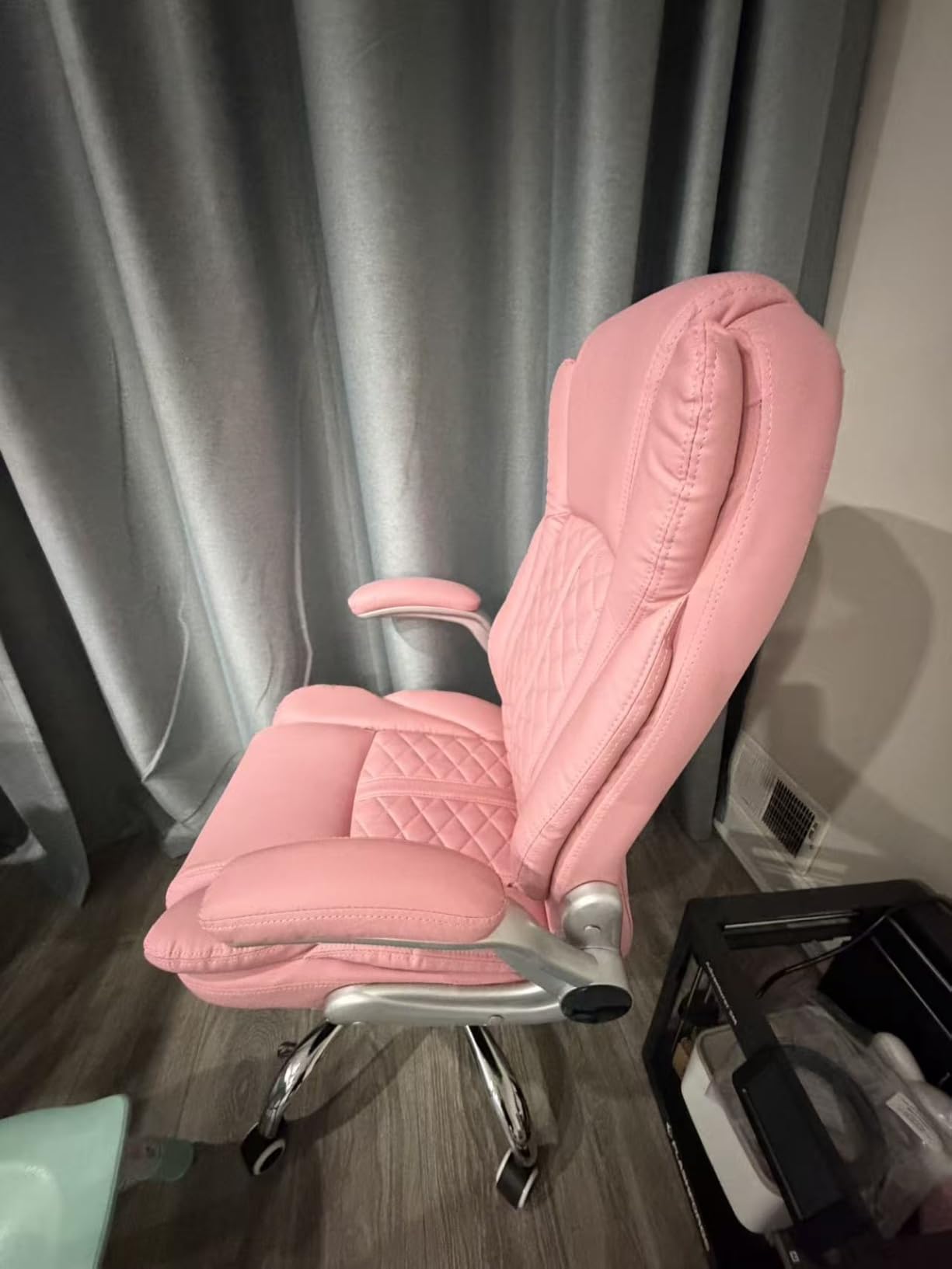
This is the highest-rated chair in the roundup at 4.7, with an 83 percent five-star share, and the rating reflects genuinely enthusiastic owner feedback on padding, flip-up arms and wheel quietness. Buyers also note the executive look and the range of colour options.
Coverage is 30-day returns and 365-day parts replacement. There is one important data point to check on the spec sheet before you order, which we cover below.
What makes this the easiest chair here to desk with?
A 400 pound rating usually comes with armrests that cannot move, and fixed arms are what push a wide chair away from the desk edge. Flip-up arms remove the constraint entirely, which is why this is the pick for anyone whose desk is not deep enough for a conventional wide chair.
The rocking range with adjustable tension is also well judged, because a rocking chair that rocks at the same strength for everyone is not adjustable in any meaningful sense.
The spec sheet discrepancy to know about
The listed maximum weight recommendation on this product is 400 pounds, but the technical bullet points on the same listing describe the base as rated to 350 pounds. That is exactly the kind of inconsistency that makes capacity claims hard to trust, and it is worth asking the seller to confirm which figure applies before you commit.
One owner reported a back that snapped within two weeks, which the seller replaced immediately and without argument, so service is not the concern here. There is also no footrest included. If you are above 350 pounds, treat the 350 pound base figure as the operative one and look at a chair where the certification and the capacity claim agree.
How to Choose a Heavy-Duty Office Chair?
Weight capacity and the headroom rule. Choose a chair rated 50 to 100 pounds above your body weight. If you weigh 350 pounds, a 400 pound rating is the minimum sensible starting point, and a 450 pound rating is better if your work involves leaning back or standing up repeatedly. A chair rated exactly at your weight is being run at its limit from day one.
What a published capacity actually certifies. A bare number on a listing tells you very little. BIFMA X5.1 and X5.11 are the office chair structural standards that test the assembled chair to both static and dynamic load, and SGS is the third-party testing laboratory most heavy-duty chairs in this roundup name for their gas cylinder and base. When a spec sheet names a standard and a certifying body, the number means something testable. When it names nothing, treat the rating as a marketing figure. Several chairs here name SGS or BIFMA explicitly, and one listing carries two conflicting figures, which is the clearest illustration of why the standard matters.
Seat width and depth. For a larger frame, treat anything under 20 inches wide as a compromise, and 22 to 24 inches as the range that stops the armrests becoming an obstacle. Depth matters more than most buyers expect: 19 to 21 inches works for most adults, and a 23 inch seat suits a longer frame or anyone who sits cross-legged. Measure your own seat width on a chair that fits you well and compare, rather than trusting the listing number alone. The HYLONE in this roundup is the cautionary case, where the backrest is narrower than the advertised seat.
Lumbar support. Look for support that adjusts in both height and firmness. A fixed pillow either sits in the right place for you or digs into your lower back, and several chairs here draw complaints about exactly that. If you already have a diagnosed back condition, our back pain chair roundup covers the adjustment patterns in more detail.
Armrests. Fixed armrests are a deal-breaker for anyone over about 300 pounds in our view. Adjustable height lets you set shoulder relaxation properly, adjustable width stops them pressing into a wider frame, and flip-up arms are what allow a wide chair to tuck under a desk at all. A chair with arms that mount separately, as the EXCEBET does, also works without them if you want the option.
Mesh versus foam and leather. Mesh breathes best and needs the least maintenance, but a mesh seat has almost no padding, so it concentrates pressure on a wider frame and several owners in the 250 to 300 pound range report hip pinching. High-density foam spreads pressure better and is the safer default at higher weights, at the cost of heat. PU and bonded leather trap heat, which buyers on durability-first forums repeatedly flag as a problem in warm climates, and they also crack with age. If you sit cool, mesh or fabric; if you sit warm, foam; if you need the most pressure distribution at the highest weights, thick foam over a spring pack.
Base, gas lift and casters. Look for welded steel or a clearly certified metal base rather than cast metal, and check the cylinder class since a higher class is a stronger gas lift. A base-leg or wheel-mount failure at well under the stated rating is a recurring complaint in this category, so the base is the part to inspect on arrival. For noise, rubber or PU wheels are quieter than hard casters on hard floors.
Warranty, returns and parts. Warranties in this roundup run from one year to five. The practical question is not the length but whether replacement parts exist for the component most likely to fail, which is usually the cylinder, and whether the seller will supply them. A chair whose cylinder cannot be removed without dismantling the frame is a chair you replace rather than repair. Longer returns windows also matter more on a wide chair, since comfort is not something you can judge from a photograph.
Chairs to avoid. Avoid any listing that gives a capacity with no certifying standard and no model identifier, since there is nothing to check and nothing to replace. Avoid fixed armrests, avoid a seat under 20 inches if you have a larger frame, and avoid faux leather if your room runs warm. If your desk is shallow, avoid any chair whose arms do not flip up or adjust in height.
One more practical note for anyone who needs frequent position changes: a chair cannot replace movement. Standing up, changing posture and walking for a few minutes every half hour does more for back comfort than any cushion, and our long-hours ergonomic chair guide covers how to pair a chair with a sit-stand desk if position changes are part of your day.
Frequently Asked Questions
What are the best office chairs for heavier people?
The best office chairs for heavy people combine a published load rating at least 50 to 100 pounds above your body weight with a seat at least 22 inches wide. Look for a welded steel or certified metal base, an SGS certified gas lift, and cushioning thick enough to resist compressing. In our roundup the GTPLAYER Big and Tall leads at a 400 pound rating and 31.5 inch width, while the BOSMILLER covers the 450 to 600 pound range at 650 pounds.
What is the best office chair for a 300-pound person?
At 300 pounds you want a 400 pound rating so the chair has real headroom, and a seat 22 inches or wider so the armrests stop pressing into your thighs. The Serta Big and Tall Executive is rated at 350 pounds with a 22.5 inch seat and suits this band well, while the GTPLAYER at 400 pounds and 31.5 inches wide gives you considerably more room. Avoid anything rated at or near 300 pounds.
What are the best big and tall office chairs that can handle 400 lbs?
Four chairs in our roundup carry a 400 pound rating and a genuine big-and-tall frame: the GTPLAYER at 31.5 inches wide, the Efomao with a 23.2 by 20 inch seat cushion and an SGS certified cylinder, the EXCEBET with a welded steel base and class 4 cylinder, and the CAPOT mesh chair with BIFMA X5.1 certification and a five-year warranty. The Efomao has the widest seat, the EXCEBET the strongest frame and the CAPOT the best adjustability.
What kind of chair has a weight capacity of 400 lbs?
A 400 pound capacity means the chair’s load rating, tested under a named standard, covers a sitter up to that weight. Look for BIFMA X5.1 or X5.11 certification on the chair structure or an SGS certified gas cylinder and base, since a bare number with no certifying body is not a tested figure. Most padded big-and-tall executive chairs in this category are rated 350 to 400 pounds, while mesh chairs and welded-frame models commonly reach 400 to 650.
Is a mesh chair good for a heavy person?
Mesh is good for a heavy person in one respect and poor in another. The Aerovith mesh back on our CAPOT pick breathes better than any leather option and stays cool through long sessions, and the frame is BIFMA X5.1 certified at a 400 pound rating. The problem is the seat: mesh has almost no padding, so owners near the top of the weight range report hip pinching and add their own cushion. Below 300 pounds mesh is a good default; above that, thick foam spreads pressure better.
What is the best office chair for a 500-pound person?
At 500 pounds a 400 pound rating is not headroom, it is a ceiling you will exceed, so you need a chair rated well above you. The BOSMILLER 650lb chair is the only pick in our roundup rated for 650 pounds, with a reinforced metal base, an upgraded class gas lift and a deep 23 inch seat. Its padding is high-density sponge rather than a spring pack, so check that you are comfortable with foam before ordering.
The Verdict by Weight Band
If you are in the 250 to 320 pound range, the Serta Big and Tall Executive answers the question properly with a 22.5 inch seat, and any 400 pound chair gives you headroom on top of that. Between 330 and 400 pounds, the GTPLAYER Big and Tall is our first choice for the widest seat and the largest evidence base, with the Efomao close behind when the footrest and a certified cylinder matter most.
Above 400 pounds, options narrow quickly and the capacity number has to be taken literally rather than generously. Above 450 pounds, the BOSMILLER at 650 pounds is the only chair in this roundup that leaves you real headroom. Throughout, the rule is the same one we started with: take the 50 to 100 pound buffer, check that a certifying standard is named on the spec sheet, and buy the seat that fits your frame rather than the chair with the longest feature list. Our office chair roundup for other setups covers lighter users, and every pick above carries a full specification review you can check before ordering.