
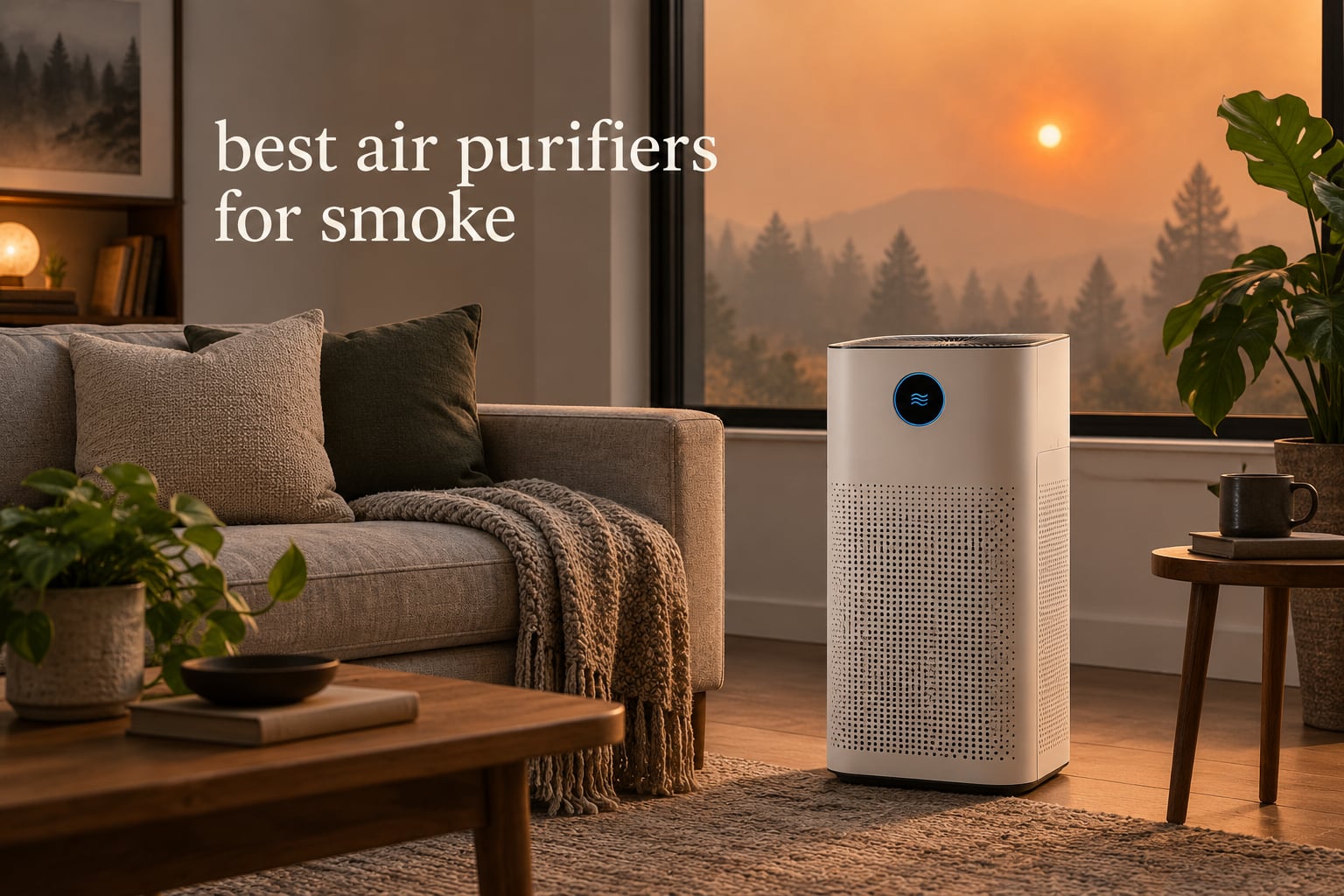
Smoke is two problems wearing the same name. The visible half is particulate: ash, soot, and ultrafine PM2.5 that a true HEPA filter physically traps. The half you actually smell is gas-phase, made of volatile organic compounds that pass straight through HEPA media and need a thick activated carbon bed to adsorb them.
That distinction decides everything else. A purifier with a strong HEPA stage and a token carbon sheet clears the visible haze and leaves the odor soaked into your couches, which is exactly why buyers conclude the machine does not work. Our best overall pick, the Winix 5520, earns the top spot because it pairs a washable odor-control carbon stage with 32291 reviews of evidence, auto-sensing that ramps the fan the moment smoke appears, and sleep-mode quiet that makes it usable in a bedroom.
We ranked ten units across the two smoke problems that dominate this search: wildfire smoke drifting in from outside, and chronic cigarette or secondhand smoke inside the home. These need different sizing, different filter priorities, and honestly, different expectations about what gets fixed. If allergies rather than smoke are your concern, our air purifier guide for allergies covers a different filter profile, and if your exposure is solvent or chemical fumes, see our picks for air purifiers for art studios.
Every spec below comes from the manufacturer listing, AHAM or published certification data where available, and the pattern across thousands of buyer reviews. Where reviewers disagree with the spec sheet, we say so.
Table of Contents
Top 3 Best Air Purifiers For Smoke (October 2026)

Winix 5520
- Washable odor control carbon filter
- True HEPA to 0.01 microns
- 23.5 dB sleep mode
- Auto mode with air quality sensor

Levoit Vital 200S-P
- Smoke CADR 250 CFM
- AHAM VERIFIDE certified
- Up to 1875 sq ft coverage
- Dual air inlet design

Coway Mighty AP-1512HH
- Four-stage filtration with bipolar device
- VOC and odor reduction
- Auto and Eco modes
- 3-year warranty
All 10 Air Purifiers for Smoke at a Glance
Below is the full lineup. The carbon column is the one most product pages hide: it tells you whether the unit handles odor or only particles.
| Product | Specifications | Action |
|---|---|---|
| Winix 5520 |
|
Check Latest Price |
| Levoit Vital 200S-P |
|
Check Latest Price |
| Coway Mighty AP-1512HH |
|
Check Latest Price |
 AZEUS GL-FS32 AZEUS GL-FS32 |
|
Check Latest Price |
 Clorox Large Room 11010 Clorox Large Room 11010 |
|
Check Latest Price |
 PuroAir 400 PuroAir 400 |
|
Check Latest Price |
 Wyze Smart Air Purifier Wildfire Filter Wyze Smart Air Purifier Wildfire Filter |
|
Check Latest Price |
 WESTHEY AP02 WESTHEY AP02 |
|
Check Latest Price |
 DBFIT AP2410 DBFIT AP2410 |
|
Check Latest Price |
 MOOKA B-D02L MOOKA B-D02L |
|
Check Latest Price |
1. Winix 5520 – Best Overall for Smoke and Wildfire Haze
- Washable carbon layer that measurably reduces smoke and cooking odor
- Very quiet sleep and auto modes for bedrooms
- Auto mode reacts quickly to smoke and cooking events
- Reasonable filter cost with roughly 12-month filter life
- Owners report 3-5 years of continuous daily use
- App can be laggy and 2.4 GHz Wi-Fi only
- Filter life indicator is runtime-based not condition-based
- Occasional clicking fan noise on the lowest speed
The Winix 5520 is the unit we keep coming back to because its review history is long enough to trust. At 32291 ratings and a 4.6 average, it has more accumulated evidence behind it than anything else in this group, and that evidence is unusually consistent about the thing that matters for smoke: odor, not just particle count.
Smoke and cooking smells are described across the reviews as disappearing within minutes on high or turbo. That result comes from the third stage, a washable advanced odor control carbon filter, which reviewers repeatedly single out as the difference-maker against HEPA-only units of similar size. The Winix True HEPA captures 99.99 percent of airborne particles down to a claimed 0.01 microns, and AHAM verification and UL certification back the platform.
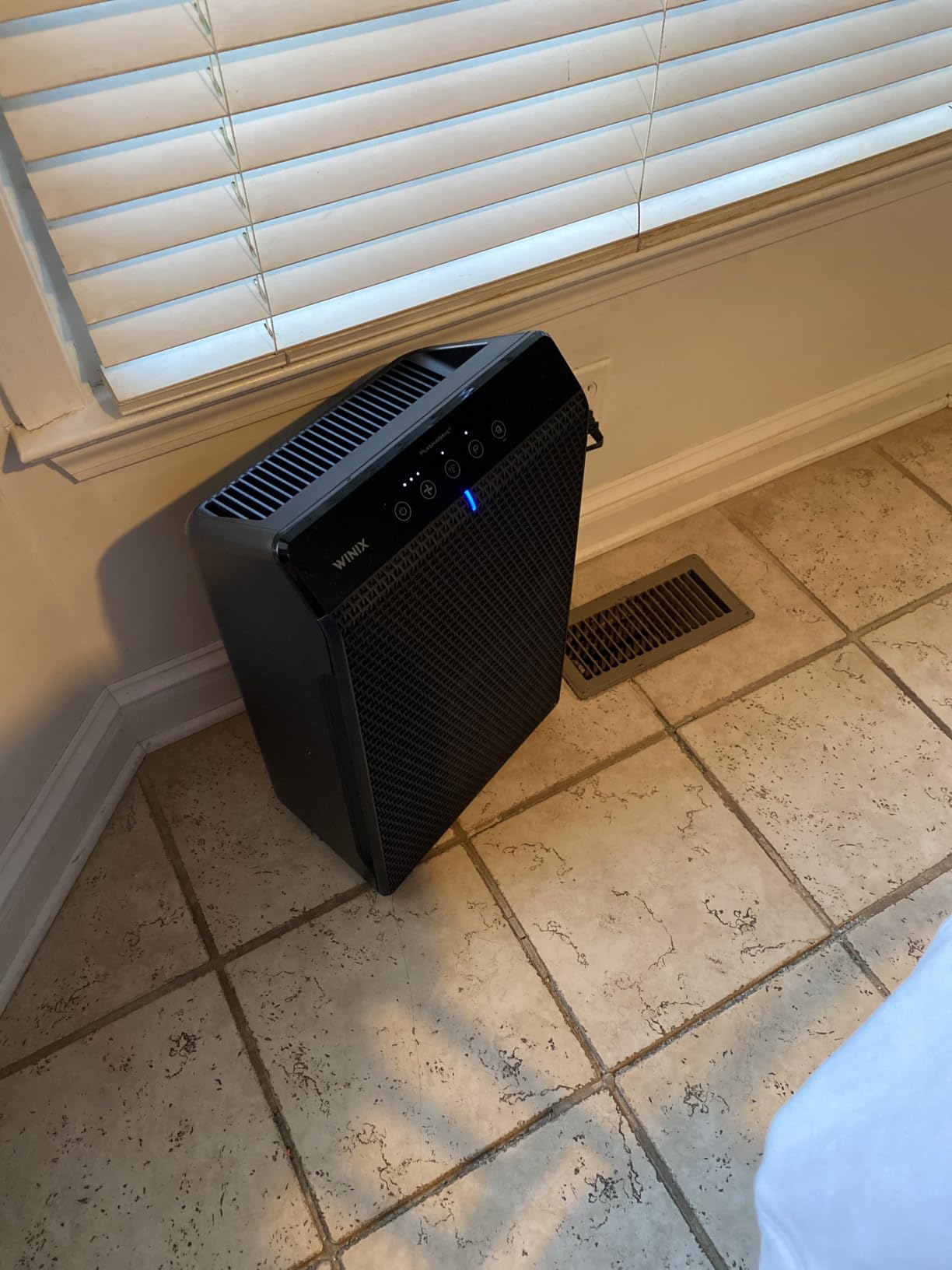
Coverage is where the spec sheet gets generous. Marketing cites up to 1882 sq ft in one hour, or 941 sq ft in 30 minutes, while the AHAM-verified figure for the certification is 392 sq ft. Use the AHAM number for planning and treat the rest as a best case at maximum fan speed.
The second big theme in the reviews is quiet. Sleep mode is described as near-inaudible, and the light sensor drops the unit to sleep when the room darkens, which solves the bedroom problem without unplugging anything. Durability is unusually strong for a smart purifier, with multiple owners reporting 3 to 5 years of continuous daily operation.
Who the Winix 5520 fits?
This is the default recommendation for most smoke situations: wildfire haze outside a mid-sized living room, an apartment where smoke drifts in from a neighbor, or a bedroom next to a smoker. The sensor and auto mode do the thinking for you, ramping the fan before you notice the haze.
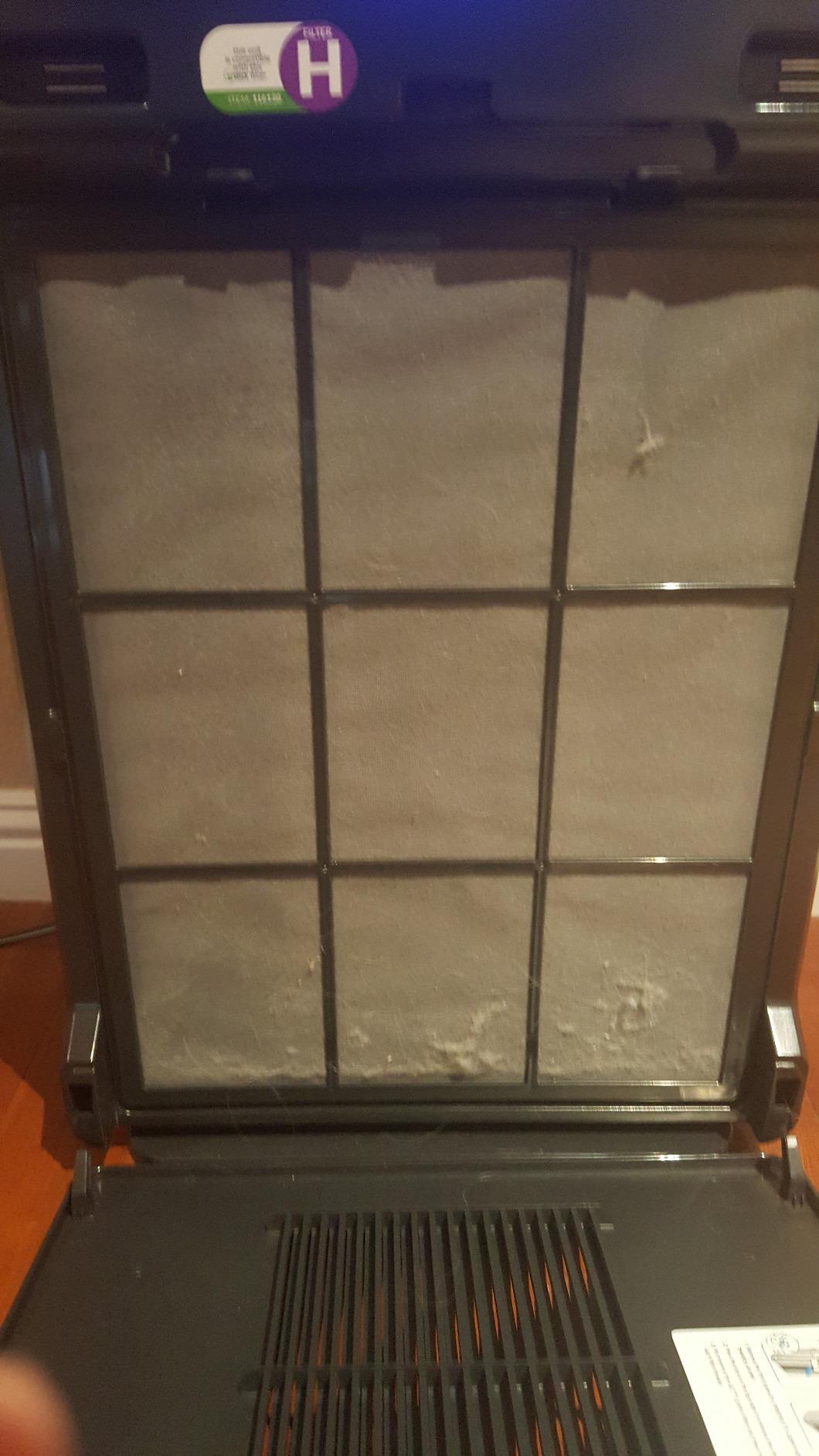
It also suits anyone who wants an air quality readout without digging through app menus, since the LED indicator shows real-time conditions on the unit itself. The magnetic front panel makes filter access quick, which matters more than it sounds when you are changing a saturated carbon layer every few weeks.
Where the Winix 5520 falls short?
The complaints are software-side rather than hardware-side, which is an unusual pattern for a smart purifier. The app can be laggy and intermittently unresponsive, and it only supports 2.4 GHz Wi-Fi, so a dual-band router may need reconfiguring.
Two smaller quirks are worth knowing. The filter life indicator counts runtime rather than measuring actual filter condition, so in a heavy smoking home the carbon can be spent before the light tells you. A few owners also report a faint clicking fan on the lowest speed setting.
2. Levoit Vital 200S-P – Best High-CADR Machine for Large Rooms
- Highest published smoke CADR in this group at 250 CFM
- AHAM VERIFIDE certification gives independent numbers
- U-shaped secondary inlet catches pet hair and odors
- 4.7 average rating with 85 percent five-star reviews
- Costs more than most compact units
- Carbon media capacity is not the focus of the design
- Not a dedicated odor machine
Where the Winix wins on evidence, the Levoit Vital 200S-P wins on published airflow. Its smoke CADR of 250 CFM is the highest figure in this group, and it is independently certified: AHAM VERIFIDE covers air cleaning performance, safety, and energy efficiency, which means the number was measured rather than estimated.
Smoke is the specific contaminant the certification is quoted against, alongside dust at 254 CFM and pollen at 289 CFM. That matters because CADR numbers for smoke reflect real gas-phase-adjacent load and fine particulate performance, not a dust-only marketing figure.
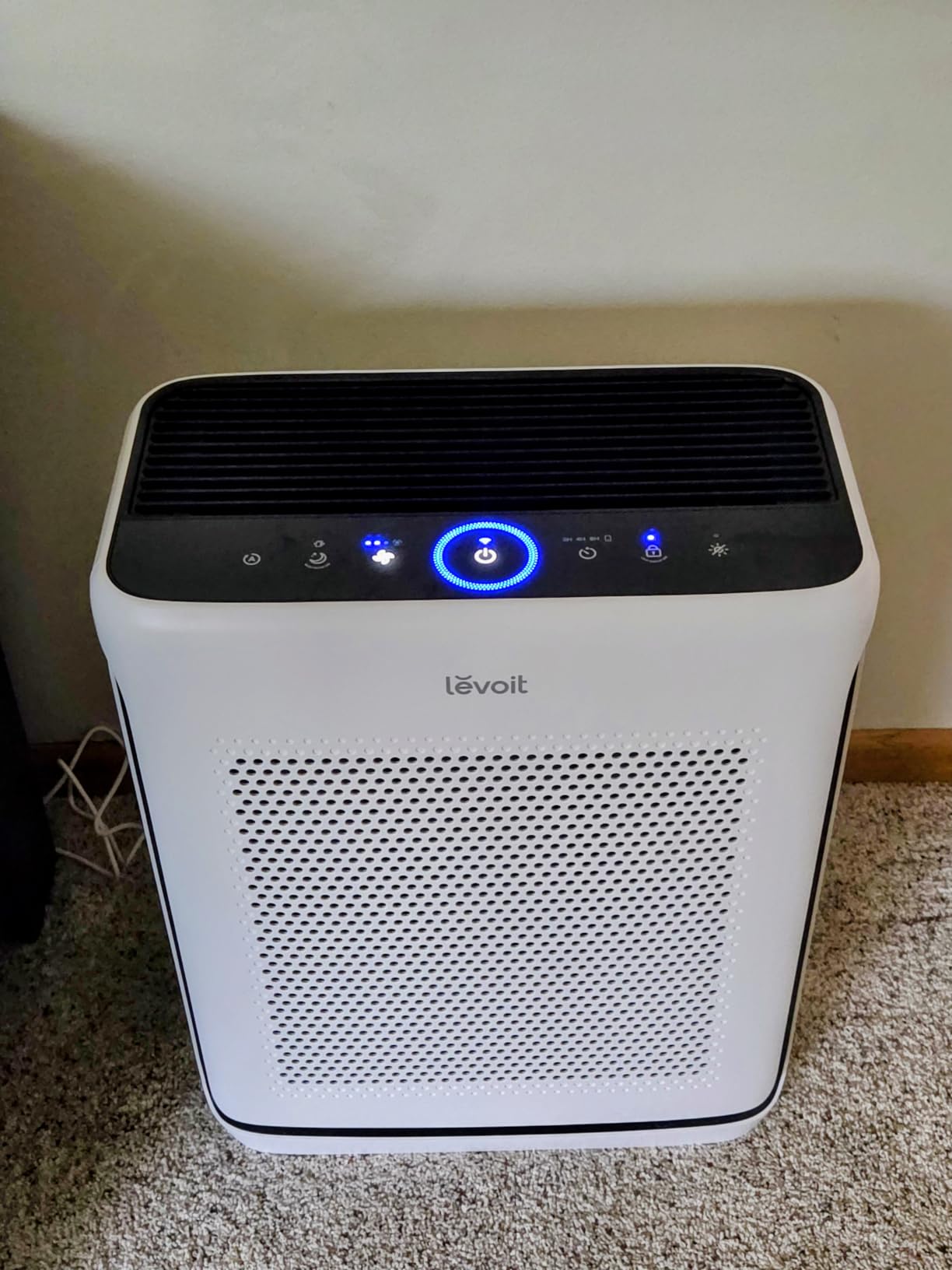
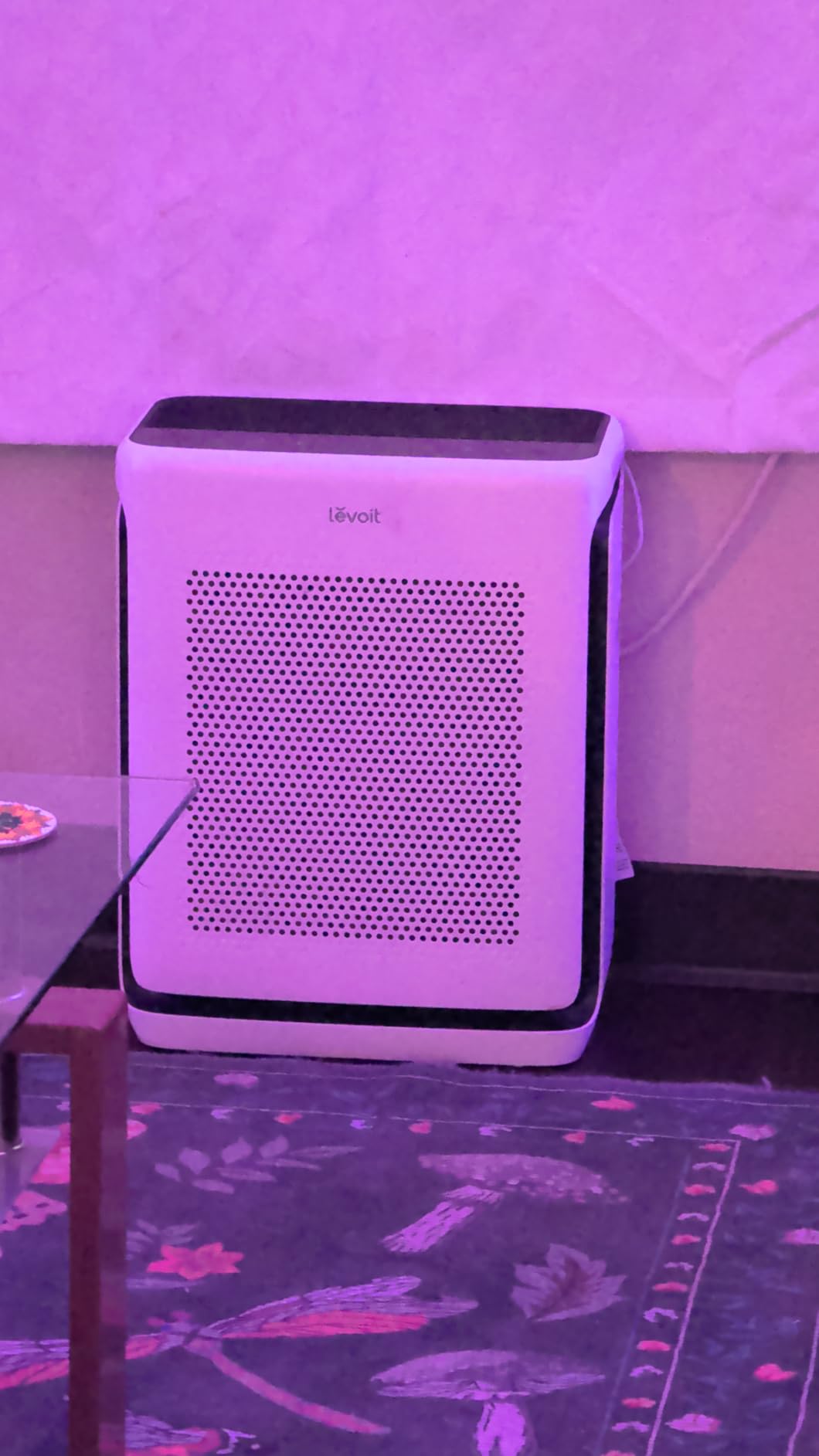
Coverage is quoted at up to 1875 sq ft, and the U-shaped secondary air inlet is designed to catch pet hair and odors before they reach the primary filter, which also reduces the clogging that slows a purifier down in a smoky room. The unit weighs 13.2 pounds and stands just under 20 inches tall.
Reviewers treat this as a high-output large-room machine rather than a smoke specialist, and that framing is fair. It clears open-plan spaces quickly, and the 4.7 average across 15299 ratings with 85 percent five-star reviews is the highest rating in the set. Few substantive complaints are recorded beyond cost relative to smaller units.
Who the Levoit Vital 200S-P fits?
Pick this one for a big open-plan living room, a finished basement, or any space where the smoke load is high and you need the air turned over quickly rather than gently. The 250 CFM smoke figure gives you real headroom when a wildfire event pushes PM2.5 readings off the scale.
It is also a good fit for allergy and pet households that want a certified number on the box. If your smoke concern is odor specifically rather than particle load, read the carbon note below before committing.
Where the Levoit Vital 200S-P falls short?
The honest limitation is carbon. The Vital 200S-P is not designed as an odor machine, and reviewers acknowledge that its carbon media capacity is not the focus. In a household where someone smokes indoors every day, you will replace filters more often than the particle-only performance suggests.
Cost is the second consideration. It sits above the budget tier of this list, and for a small bedroom that only ever sees light smoke, the extra airflow is money spent on capacity you cannot use.
3. Coway Mighty AP-1512HH – Best for a Household That Smokes Daily
- Dedicated deodorization stage plus bipolar device targets smoke odor
- Four-stage design also handles large particles and VOCs
- Filter alert indicator removes maintenance guesswork
- 3-year manufacturer warranty
- Very long availability and review history
- Deodorization filter is a recurring consumable cost
- Larger and heavier than most compact rivals
- LED air quality light can be distracting in a dark bedroom
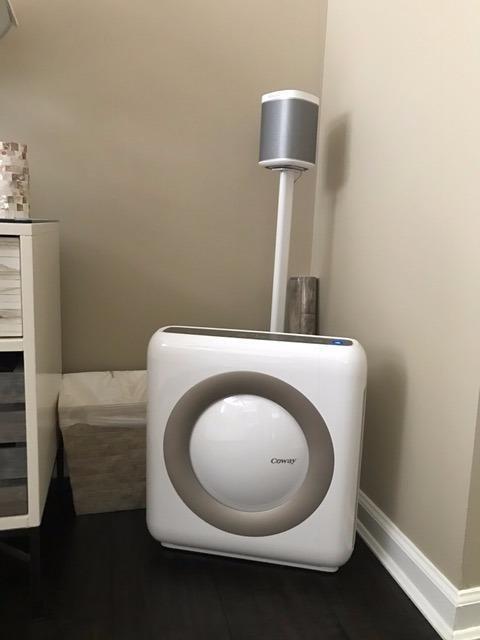
The Coway Mighty AP-1512HH is the unit we recommend when smoke is generated inside the home rather than outside it. Its four-stage stack is washable pre-filter, deodorization filter, bipolar device, then HEPA, and it is the deodorization stage combined with the bipolar device that reviewers credit for handling smell rather than just particles.
This model has been available since October 2015, and the review base of 29097 ratings at 4.6 reflects that longevity. That long history matters for a heavy smoke household: it is one of the few units here where the odor-control performance has been validated by years of accumulated owner reports rather than a few months of samples.
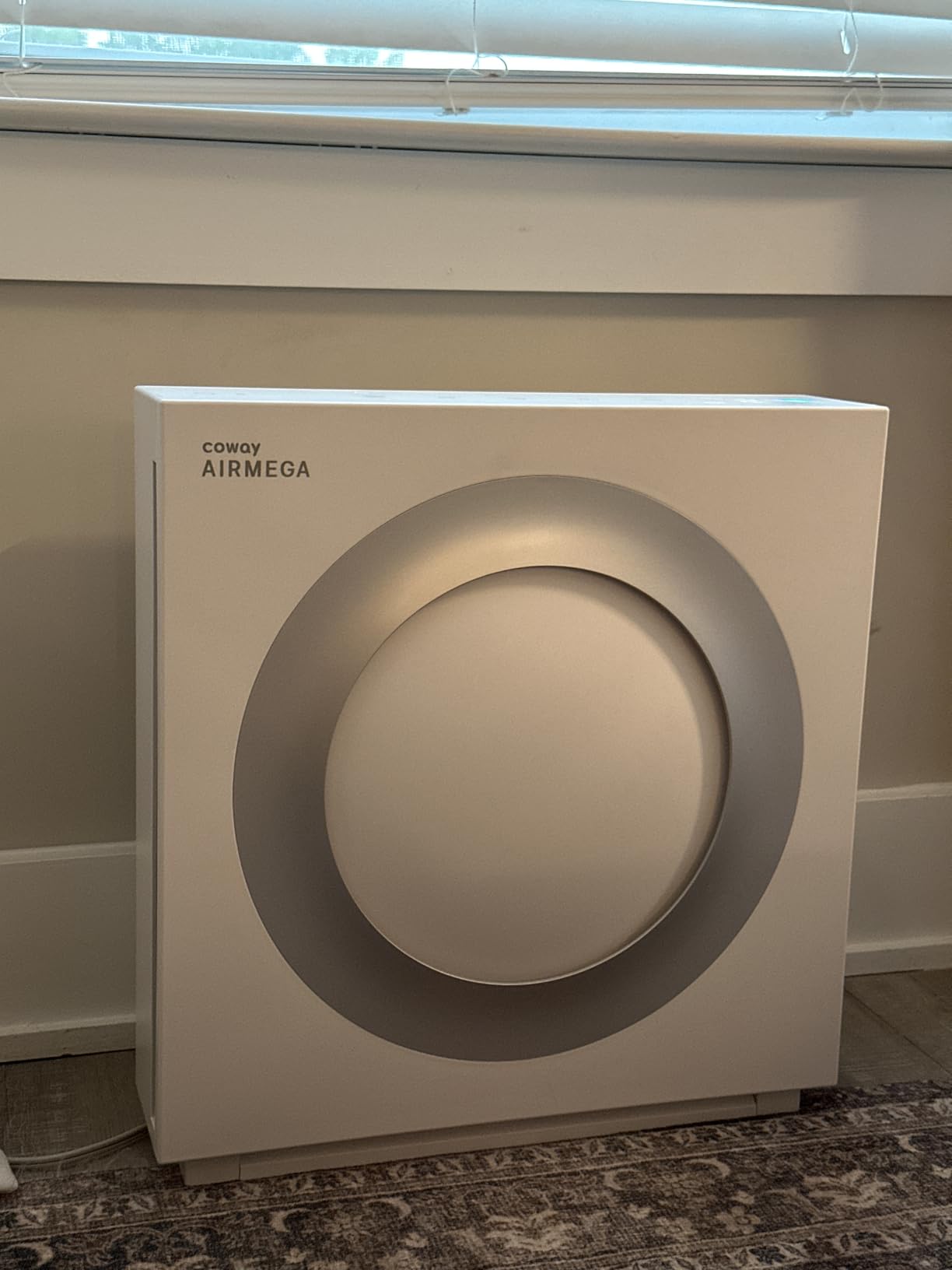
Coverage is quoted at up to 1748 sq ft in 60 minutes, and the unit reduces 99.97 percent of 0.3 micron particles while also reducing VOCs and odor. Auto mode continuously monitors air quality and adjusts the fan, and Eco mode drops it to low power when the room is already clean, which is what makes running it continuously practical.
The filter alert indicator is repeatedly called out as a genuinely useful feature rather than a gimmick. In a home with daily smoke, knowing when the deodorization filter is spent is the difference between managing running costs and discovering them.
Who the Coway Mighty AP-1512HH fits?
This is our pick for households where a smoker lives in the home, and for people dealing with smoke infiltrating from a downstairs or adjacent unit where the source cannot be removed. The four-stage architecture handles both the particle and gas-phase load in one pass.
It also suits anyone who plans to leave the machine running 24/7. Auto and Eco modes make that affordable and quiet enough to live with, and the sensor means you do not have to remember to turn it up when someone lights up.
Where the Coway Mighty AP-1512HH falls short?
The deodorization filter is a recurring consumable, and in a home with heavy daily smoking it will need replacing far more often than the HEPA alone would. Budget for it before you buy rather than discovering the cadence later.
Two practical notes. The unit is physically larger and heavier than most compact competitors, which matters in a small room where floor space is tight, and the status LED can need turning off for bedroom use.
4. AZEUS GL-FS32 – Best Dedicated Wildfire Smoke Unit
AZEUS Air Purifier for Wildfire Smoke, UV-C HEPA for Home Large Room, White
- Purpose-built and reviewed for wildfire smoke events
- Full light-off solves the bedroom sleep problem
- Weekend and work scheduling modes
- Light at 7.72 lb despite large-room claims
- UV-C plus ionizer layers beyond plain HEPA
- Whistling tone on the high speed setting
- Weak on VOCs and odor against heavy carbon units
- Infrared sensor also reacts to humidity
- Replacement filters relatively costly
The AZEUS GL-FS32 is the only unit in this group explicitly designed and marketed for wildfire smoke, and its reviews reflect that focus. Owners in smoke-heavy regions report the strongest results during hazardous air quality events, describing indoor air where they could not smell smoke and did not need a mask.
Filtration is 5-in-1: pre-filter, HEPA, activated carbon, UV-C light, and ionizer. The HEPA captures 99.97 percent of particles down to 0.3 microns, and the listed targets are specific to the problem: ash, PM2.5, wildfire smoke, dust, and pollen.
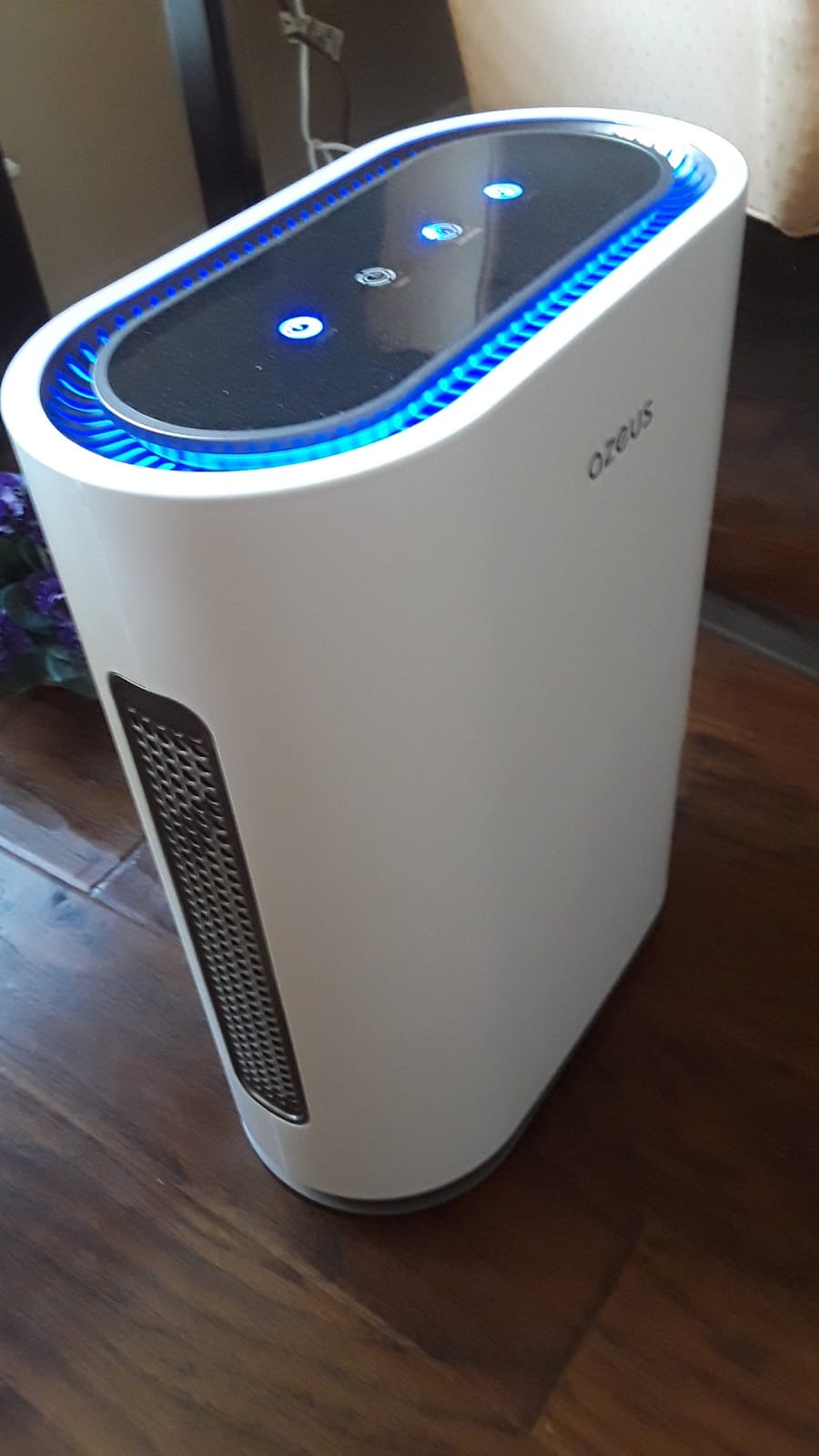
A centrifugal wheel design refreshes 2,160 sq ft in 90 minutes or 1,080 sq ft in 45 minutes, which is why the unit clears a large living room during a smoke event rather than working on it one corner at a time. It weighs just 7.72 pounds despite those coverage claims, so it is genuinely portable for staging around a home.
Two details separate it from the pack in practical terms. The lights can be switched off completely, which solves the glowing-LED bedroom problem outright, and the Weekend and Go To Work scheduling modes are features most competitors at this coverage level do not offer.
Who the AZEUS GL-FS32 fits?
This is the unit to buy ahead of a smoke season, or to stage in a home that sits under a smoke corridor for a few weeks each year. The targeted particle list and the high-speed coverage figures are the reasons it performs when outdoor air is genuinely bad rather than mildly hazy.
It also works well as a room-to-room tool because of the low weight. Owners with smoke in different parts of the home during an event move it rather than buying a second machine.
Where the AZEUS GL-FS32 falls short?
Sound is the clearest negative. Several reviewers say the high setting develops a loud whistling quality, while all lower settings remain quiet. If you plan to run this at maximum during a smoke event, and especially if you plan to sleep near it, that tradeoff needs weighing.
The carbon stage is thinner than the units built for odor. Reviewers rate it weak on VOCs and odors next to heavy carbon designs, which is expected given the wildfire focus but worth knowing if your smoke problem is a smoker rather than a fire. The infrared sensor also reacts to humidity in one reported case, ramping the fan for reasons unrelated to smoke.
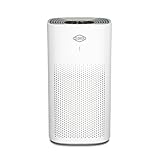
5. Clorox Large Room 11010 – Best 360 Degree Intake for Open Plans
Clorox Large Room HEPA Air Purifiers for Home With True HEPA Filter
- 360 degree intake pulls contaminated air from every direction
- Finest published particle spec in this group at 0.1 microns
- Active carbon stage handles smoke odor not just particles
- Third-party lab testing and 3-year warranty
- Filter rated 6-12 months and one included
- No app or smart home integration
- Replacement filters must be genuine Clorox parts
- Smaller review history than top sellers
The Clorox Large Room 11010 is the pick when the smoke problem is architectural. Its 360 degree intake pulls contaminated air from every side rather than only the front, which matters in an open-plan space where smoke collects under the ceiling and drifts away from a single intake face.
The published particle spec is the tightest in this group: 99.97 percent capture of particles as small as 0.1 microns, plus 99.9 percent of viruses and bacteria. Filtration is a 3-stage 360 degree arrangement of pre-filter, True HEPA, and active carbon, so odor is addressed rather than ignored.
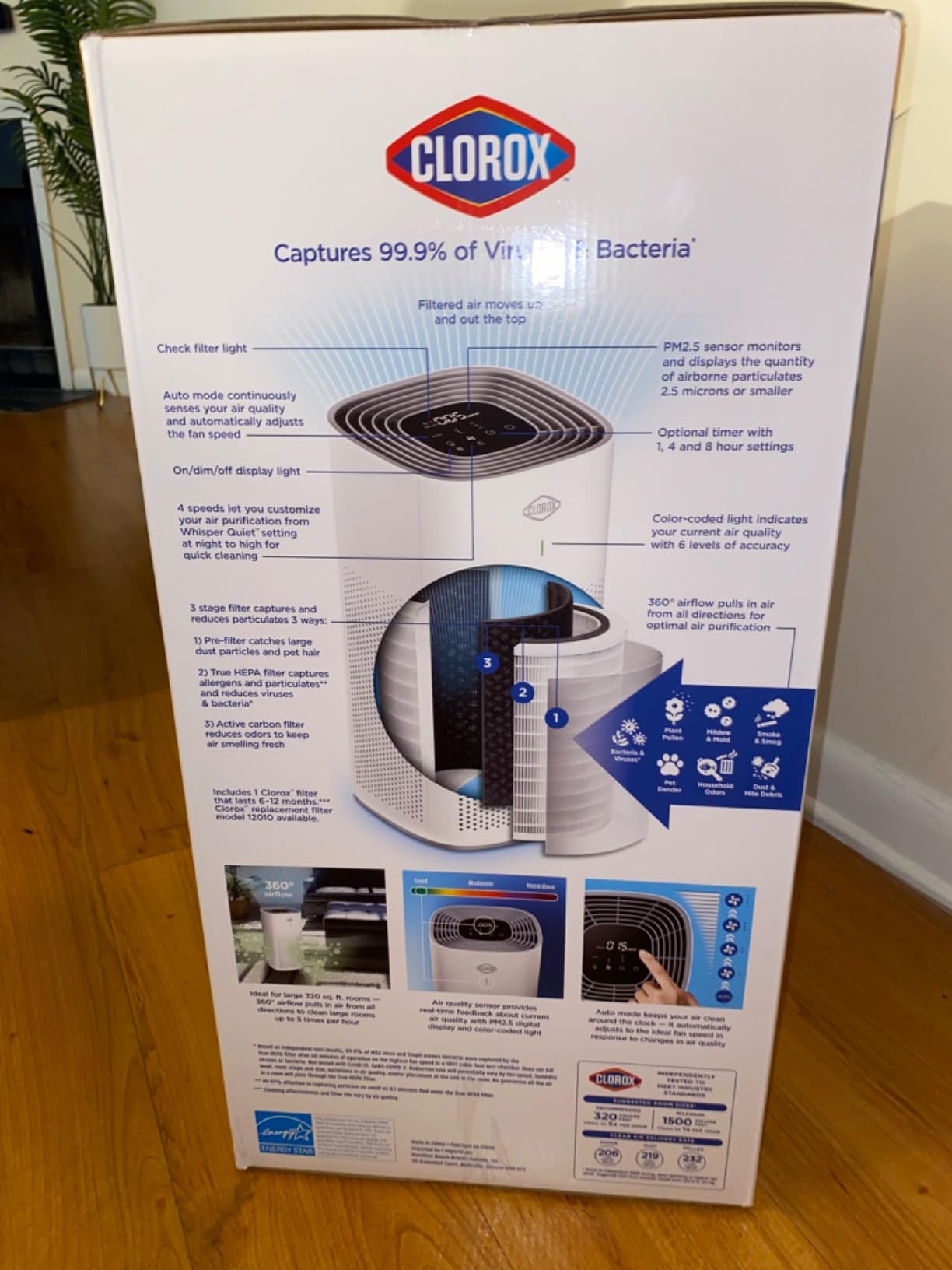
Coverage is quoted at up to 1,500 sq ft at one air change per hour, and up to 5 air changes per hour in a 320 sq ft room. That distinction is the honest way to read the number: for heavy smoke you want the smaller room figure, not the maximum coverage claim.
Two things raise confidence in the marketing. The claims are backed by third-party testing from LMS Technologies, Inc. dated August 31, 2021, and the unit carries a 3-year limited manufacturer warranty. It runs at 30 dB and 32 watts, and the included filter is rated for 6 to 12 months.
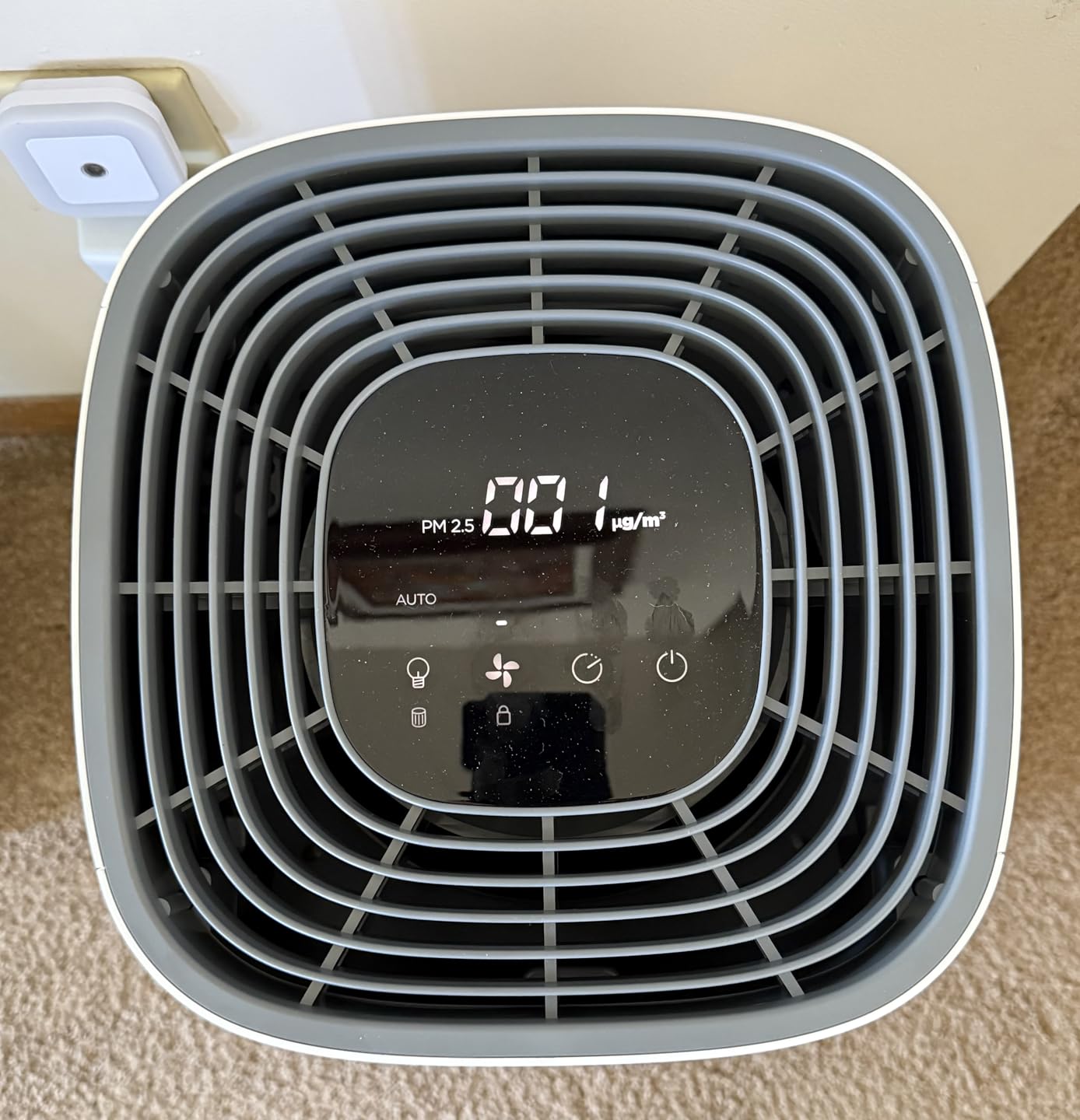
Who the Clorox Large Room 11010 fits?
Open-plan living areas, loft conversions, and finished basements benefit most from the 360 degree intake. If your smoke is dispersed through a large volume rather than concentrated near a seat, a full-perimeter intake simply sees more of it.
It also suits buyers who distrust app-driven machines. The touch controls and auto mode with adjustable speed and timer are straightforward, and there is no account to create or firmware to update.
Where the Clorox Large Room 11010 falls short?
There is no app or smart home integration, which some buyers comparing against app-driven competitors view as a step back. You give up remote control and detailed air quality history in exchange for simplicity.
Replacement filters must be genuine Clorox parts, which some owners see as a long-run cost. The review history of 1617 ratings is also thinner than the top sellers here, so you are relying more on the lab testing and less on accumulated owner evidence.
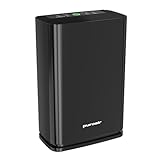
6. PuroAir 400 – Best Premium Pick with Lab-Verified Filtration
PuroAir 400 HEPA Air Purifiers for Home Large Room Pets Filter 2,000 Ft²
- Largest stated coverage in this group at 2000 sq ft per hour
- ISO 17025 lab testing backs the filtration claim
- CARB
- ETL
- ISO and UL certification stack
- Sensor-driven auto mode is genuinely set and forget
- Partnered with the American Lung Association
- Most expensive unit in this group
- Heaviest at 14.73 pounds
- No published smoke-specific CADR figure
The PuroAir 400 is the confidence pick. Where some units publish a filtration claim with nothing behind it, this one lists testing in an ISO 17025 certified lab across 2024 and 2025, plus a certification stack of CARB, ETL, ISO, and UL. Buyers treat that substantiation as the reason to trust the 99.9 percent figure.
Filtration is 3-layer: pre-filter, HEPA filter, and activated carbon. The carbon stage is what makes it viable for smoke rather than dust alone, and the listed pollutants include smoke, VOCs, pet dander, and pollen.
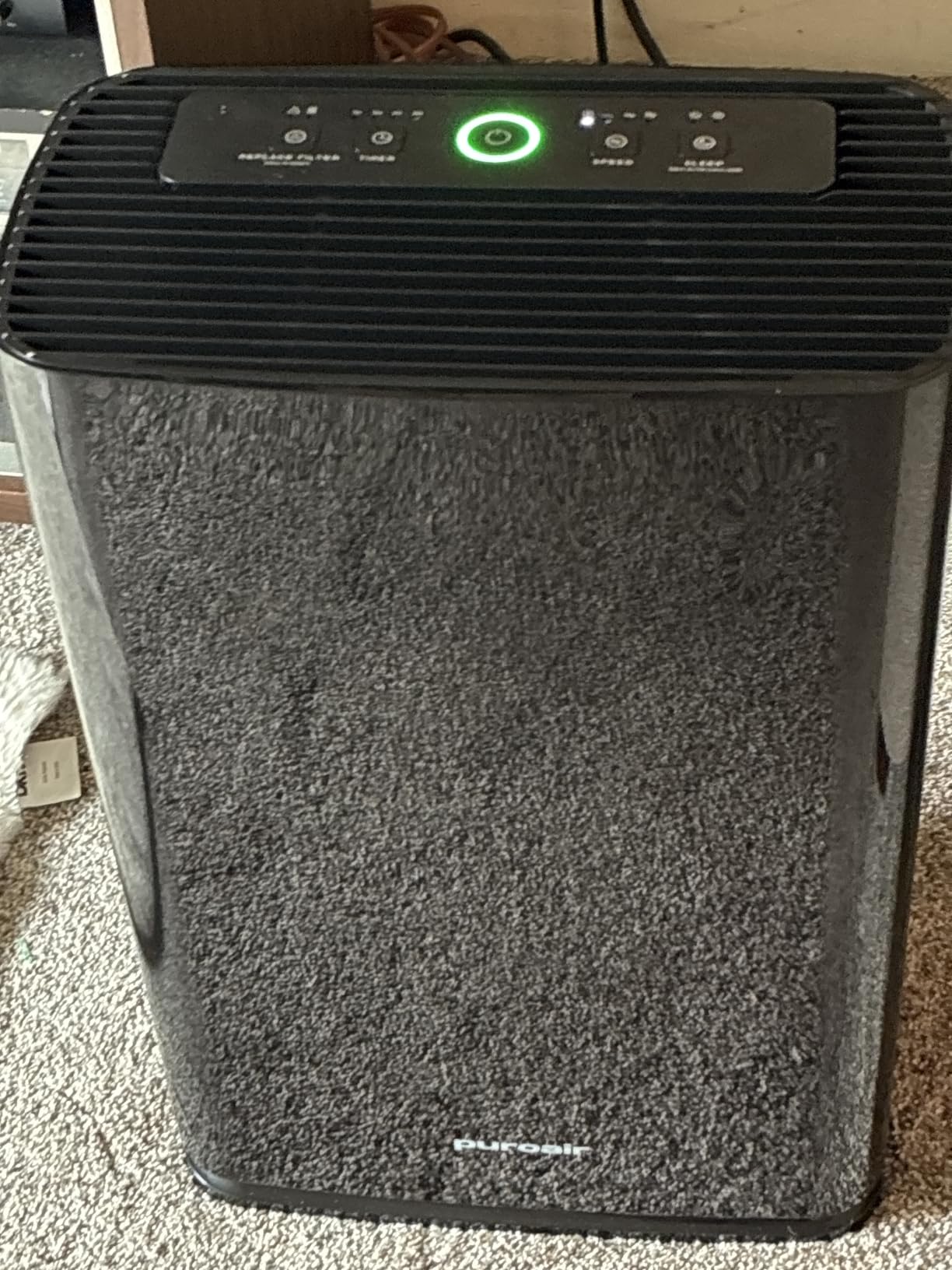
Coverage is quoted at up to 2,000 sq ft in one hour, the largest stated figure in this group. A smart particle sensor adjusts power when pollution is detected, and a built-in sleep mode is designed for continuous 24/7 running, which is the correct posture for a home dealing with chronic smoke.
The warranty is 2 years with a stated US-based support team, and the unit is partnered with the American Lung Association. That is not a filtration spec, but for buyers spending at this level, the paperwork matters nearly as much as the numbers.
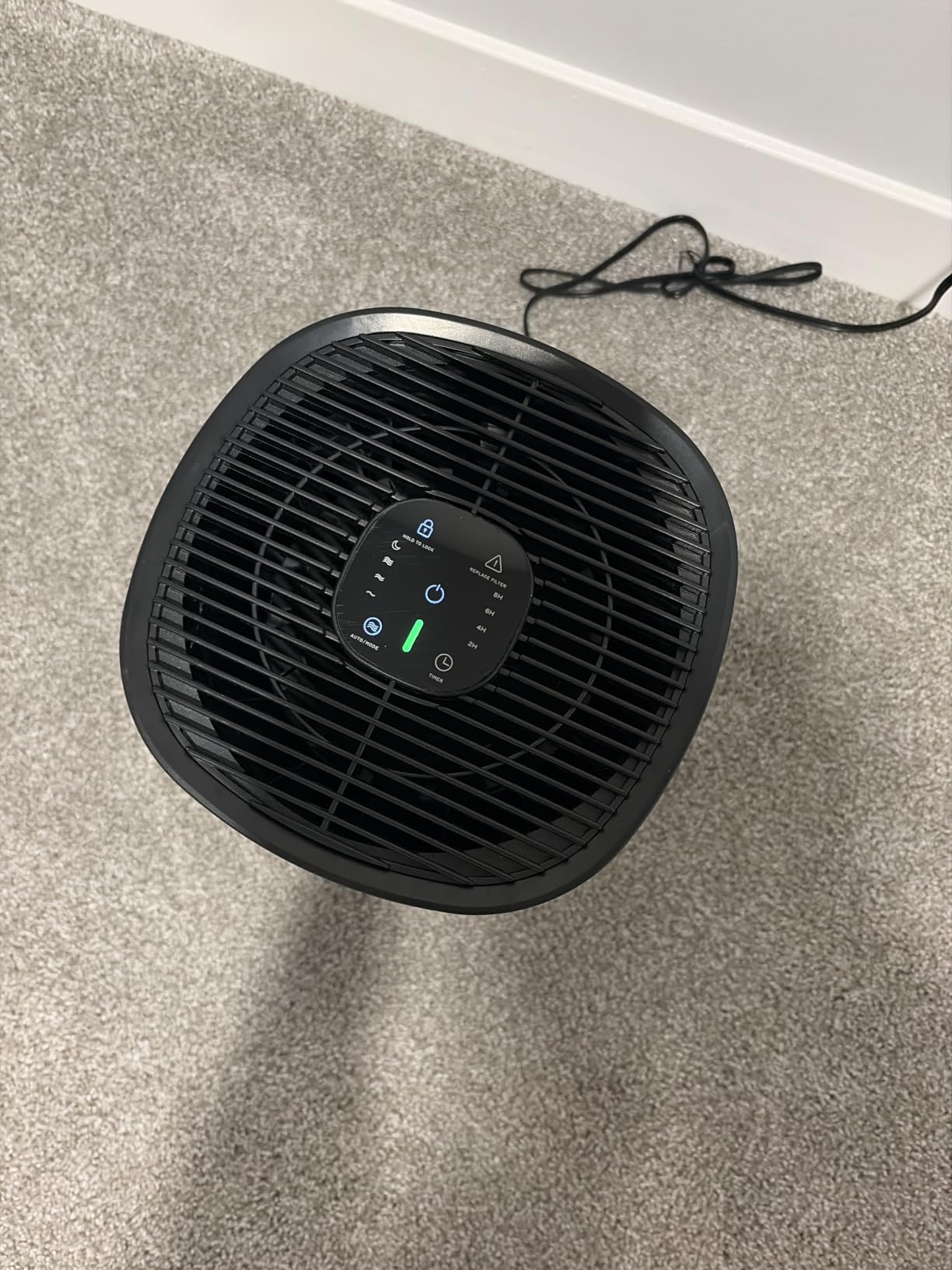
Who the PuroAir 400 fits?
Choose this for a large room where you want documented test data rather than a marketing claim, and for buyers who intend to keep the machine for years. Certification dated to 2024 and 2025 tells you the numbers describe a current production unit.
It is also a strong choice for a home with multiple smoke sources, since the 2,000 sq ft per hour figure gives you the reach to run one machine rather than two smaller ones.
Where the PuroAir 400 falls short?
Cost is the straightforward objection. It is the most expensive unit in this group, and in a low-smoke situation the premium buys capacity you may never use. Reviewers consistently name price as the reason to consider something else.
At 14.73 pounds it is also the heaviest unit here, which is awkward if you plan to move it between rooms. Some reviewers note the absence of a published smoke-specific CADR figure, unlike the Levoit, which makes cross-model comparison harder.
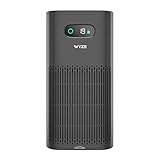
7. Wyze Smart Air Purifier Wildfire Filter – Best for Watching Smoke Levels
- Special filter purpose-built for smoke
- ash and smoke smell
- Laser dust sensor with front PM2.5 readout
- 21 dB low setting is among the quietest available
- App control with indoor and outdoor air quality tracking
- Low power draw relative to its size
- App disconnects from Wi-Fi frequently
- App readings disagree with the unit display
- Levels 1 and 2 move too little air to be useful
- Filter changes sooner than expected and cost more than expected
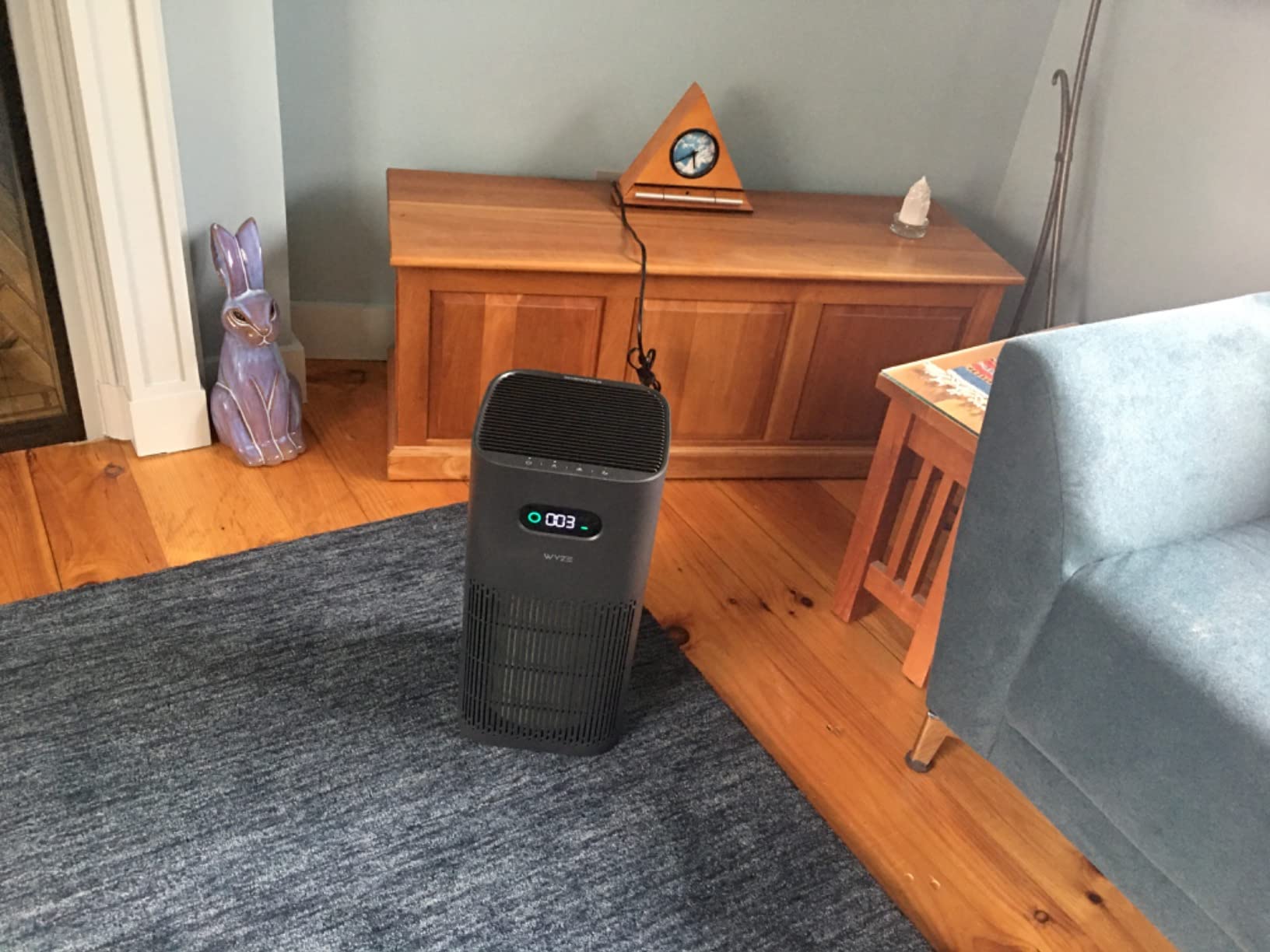
The Wyze Smart Air Purifier with the wildfire filter is the pick if you want to watch the smoke rather than just react to it. Its laser dust sensor drives a front-facing PM2.5 numeric readout, which is more precise than the infrared sensors used by several competitors here, including the AZEUS.
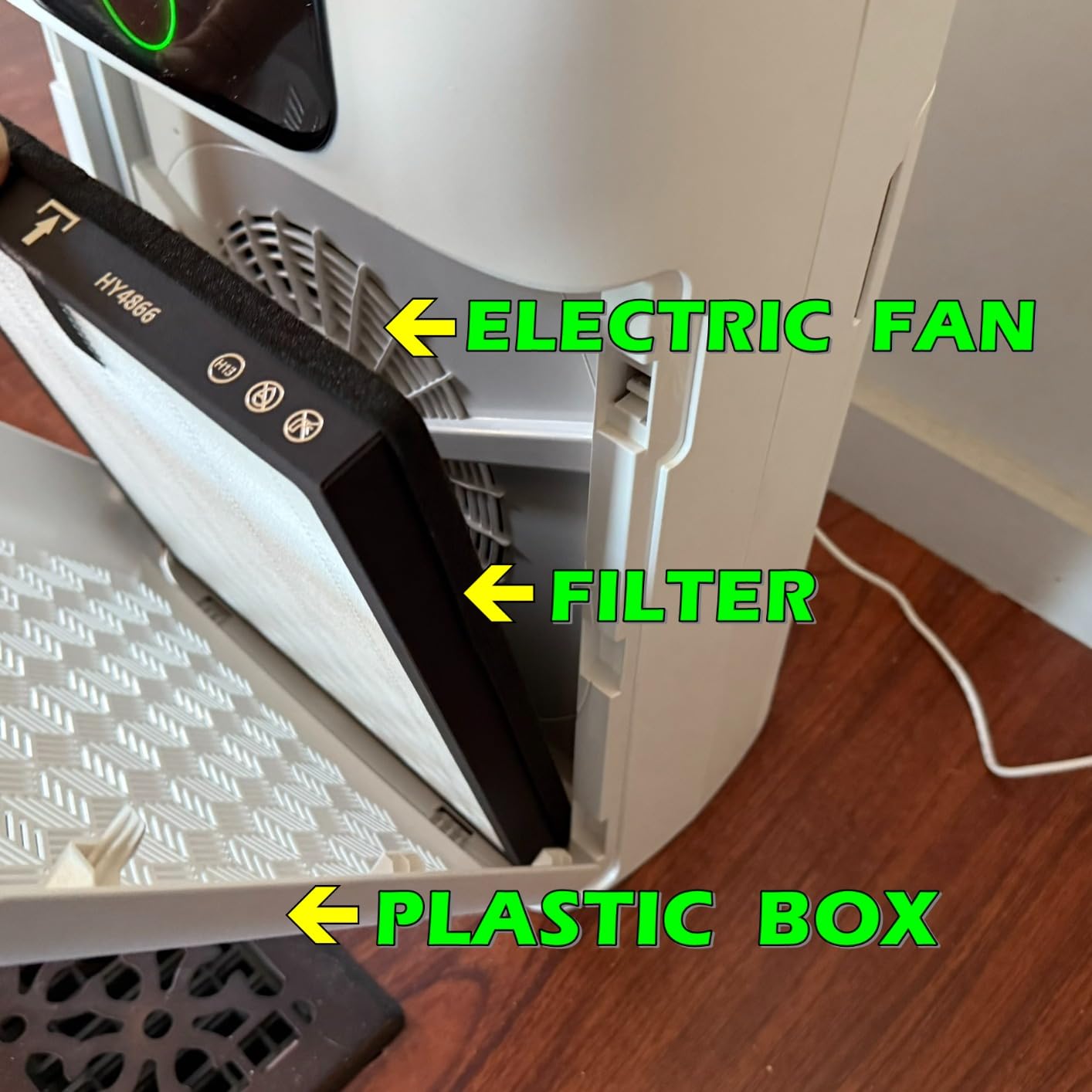
Filter choice is the real differentiator. The unit accepts three media options: Standard for particles, pollen and odor, Special for smoke, ash, and smoke smell, and Premium for formaldehyde and heavy odor. This is one of the few machines in the group where the smoke-rated media is a named, selectable option rather than an assumption.
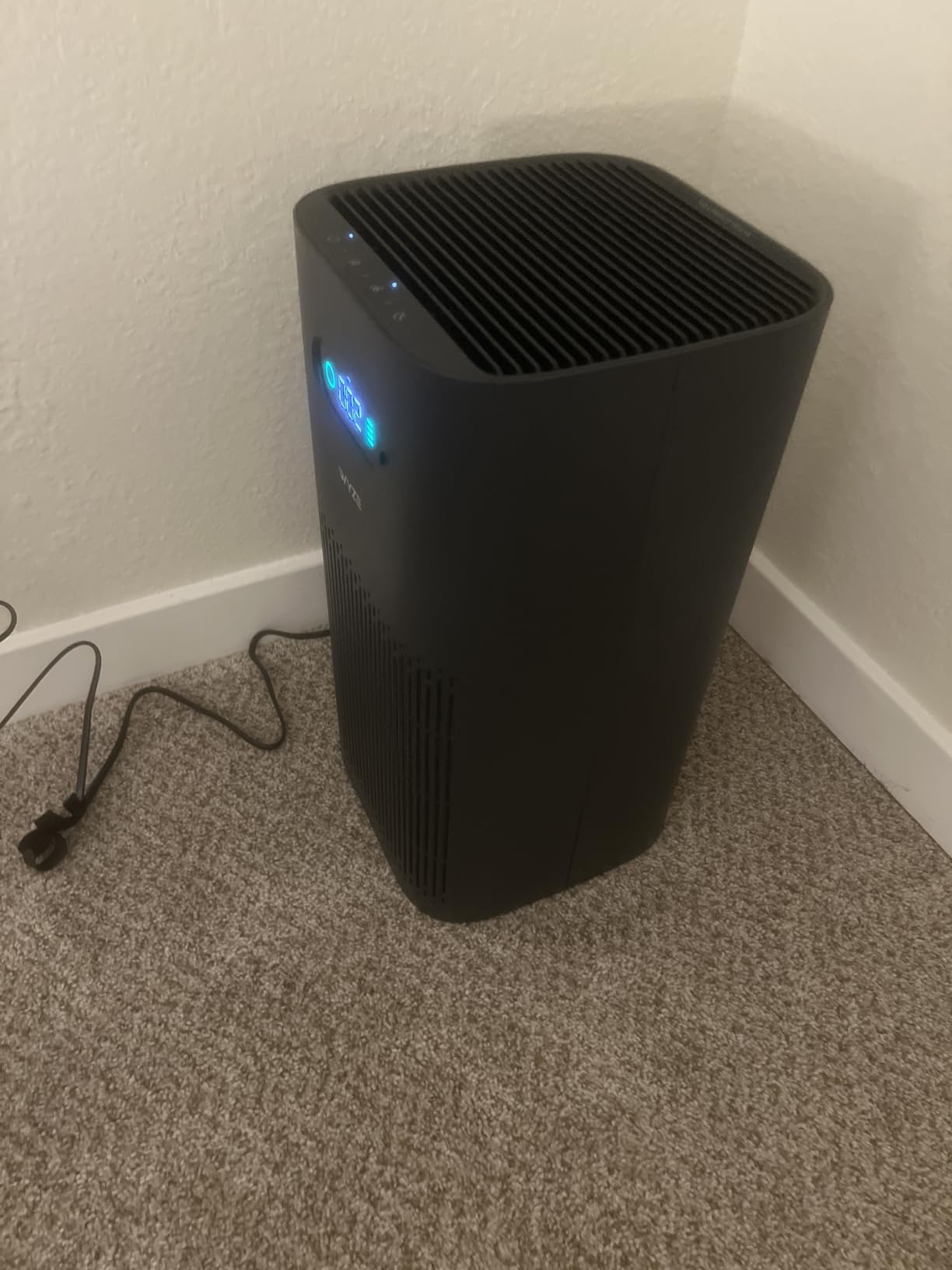
CADR is quoted at 350 cubic meters per hour, cleaning a 500 sq ft room more than three times per hour. That is a genuine air-change figure for a normal bedroom or office, which makes it a better fit for an occupant’s room than a living room.
Owners in wildfire areas report dry eye and allergy symptoms improving within about a week of running it, and the 21 dB low setting is praised as among the quietest available in any class. The app tracks indoor and outdoor air quality, which is useful for judging whether opening a window will help or make things worse.
Who the Wyze Smart Air Purifier fits?
This suits a bedroom, a home office, or a child’s room where you want the quietest possible operation and a number you can check. In a wildfire event, the PM2.5 readout lets you decide when to run on high and when to close up the house instead.
It is also a reasonable second machine for a room the main purifier does not reach. Small, light, and app-driven, it is easy to place and easy to move.
Where the Wyze Smart Air Purifier falls short?
Connectivity is the dominant complaint and it is not minor. Multiple reviewers report the unit dropping off Wi-Fi daily, with the only fix being a manual unplug and replug. The app is also criticized for readings that disagree with the values on the unit itself, which undermines the reason to buy it.
Other limitations: the app will not schedule individual fan speeds, only Auto, Sleep, or Off, and levels 1 and 2 move too little air to be useful in a smoky room. Filter changes come sooner than expected and cost more than buyers expect, and the unit must be lifted to reach the filter.
8. WESTHEY AP02 – Most Versatile with an H13 Filter
WESTHEY H13 HEPA Air Purifier for Home up to 1650 Sq Ft Washable Pre-Filter
- H13 filter at 99.98 percent is the most aggressive published spec at this price
- 360 degree intake effectively doubles filter surface area
- Lightest body in the group at 3.5 pounds
- 15 dB sleep mode is quiet enough to sleep beside
- Two filters included
- one HEPA and one carbon
- Top speed reverts to auto after 2 to 4 hours by design
- Replacement filter cost is high relative to the unit price
- Digital PM2.5 display can be distracting
- No remote and no wheels
The WESTHEY AP02 delivers the most aggressive published filtration spec at the entry level of this list: H13 grade HEPA capturing 99.98 percent of 0.3 micron particles. That is a stronger claim than most units several times its size make, and experienced buyers in the reviews treat it as credible.
The 360 degree surround air intake is the second thing owners praise, because pulling from both sides effectively doubles the filter surface area exposed to room air. Coverage is quoted up to 1,650 sq ft, and 6 air changes per hour in a 275 sq ft room, which is a genuinely useful figure for a bedroom.
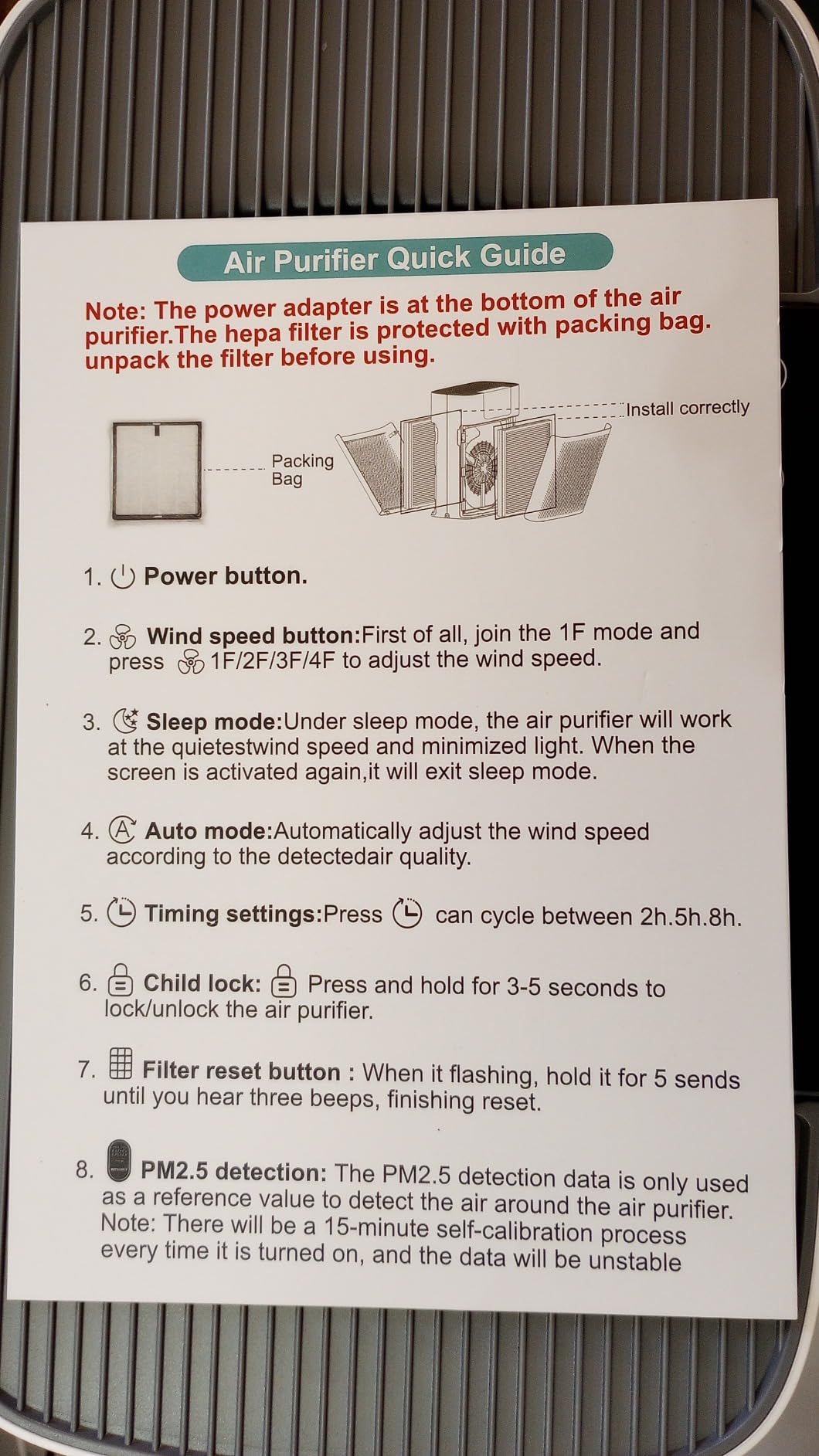
Smoke is a named target alongside pet hair, dander, odor, fine dust, and pollen, and users in smoking households report it clears smoke odor quickly. A PM2.5 digital display with green, yellow, and red prompts shows the room condition, with a filter life indicator and a replacement reminder light.
At 3.5 pounds it is the lightest machine here by a wide margin, and the 15 dB sleep mode is described as quiet enough to sleep beside. Two filters are included, one HEPA and one carbon, rather than a single unit, which is unusual at this tier.
Who the WESTHEY AP02 fits?
This is the budget answer for a bedroom, a dorm, a home office, or a first apartment where smoke is an occasional problem. The light body means you can carry it between rooms without thinking about it, which matters because it has no wheels and no remote.
Owners who want a specific particle spec at low cost will appreciate the H13 rating, and the aromatherapy pad and color-changing night light are extras that rarely survive at this price.
Where the WESTHEY AP02 falls short?
The top speed is the biggest limitation, and it is a design choice rather than a defect. It reverts to auto mode after roughly 2 to 4 hours to protect the motor, so if you need sustained maximum output during a smoke event, you will be disappointed. Several owners note the second-highest speed performs nearly as well, which is the workaround.
Replacement filter cost is described as higher than expected relative to the unit price, which matters in a home where the filter is changed often. The digital PM2.5 display can also be distracting unless turned off.
9. DBFIT AP2410 – Best for Bedrooms, Kids and Pet Odor Mixes
- Honeycomb carbon holds 112.5 percent more media than the previous version
- Washable nylon pre-filter extends main filter life
- Cleanable PM2.5 sensor keeps readings accurate over time
- Child lock and 1-12 hour timer
- Explicitly ozone-free with no UV light
- 15 dB sleep mode with display off
- Composite filter is a recurring cost every 3-6 months
- Small review base of 451 ratings
- 15.7 inch tall footprint for the coverage claimed
The DBFIT AP2410 is the newest unit here and the one with the most specific carbon claim. Its upgraded honeycomb carbon holds 112.5 percent more activated carbon than the previous version, and reviewers credit that media with handling pet odor, litter box smells, and urine odor alongside smoke.
Filtration is 3-stage: washable nylon pre-filter, then a composite True HEPA and honeycomb activated carbon filter. That pre-filter rinses clean, which extends the life of the main composite filter in a home where smoke residue and pet hair both load up quickly.
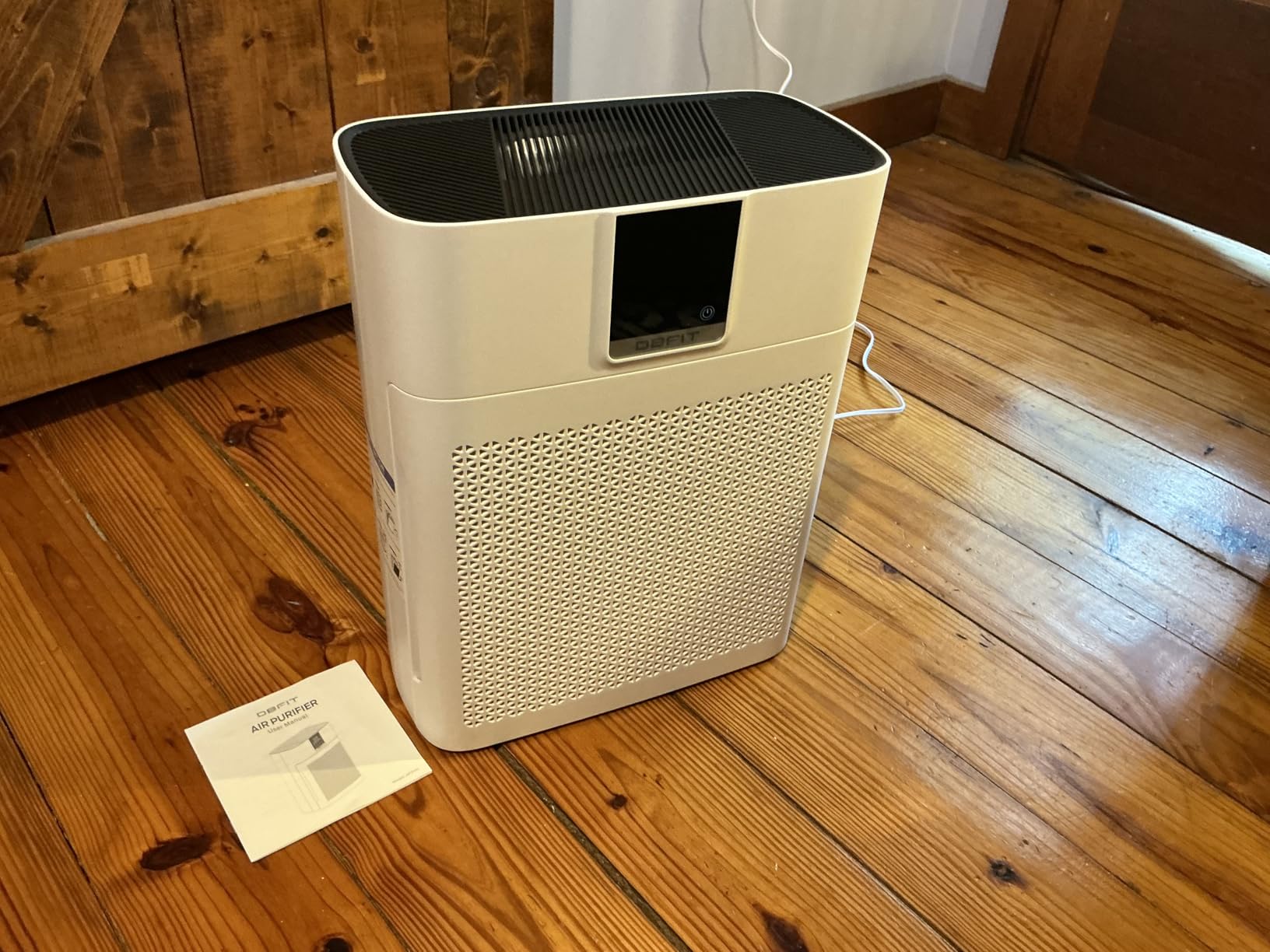
Coverage is quoted at up to 2,180 sq ft per hour, the highest stated figure in this group. The rear PM2.5 sensor is cleanable with a cotton swab, which is a small detail with real consequences: sensors drift out of calibration, and a wipeable sensor keeps the displayed reading honest over the life of the machine.
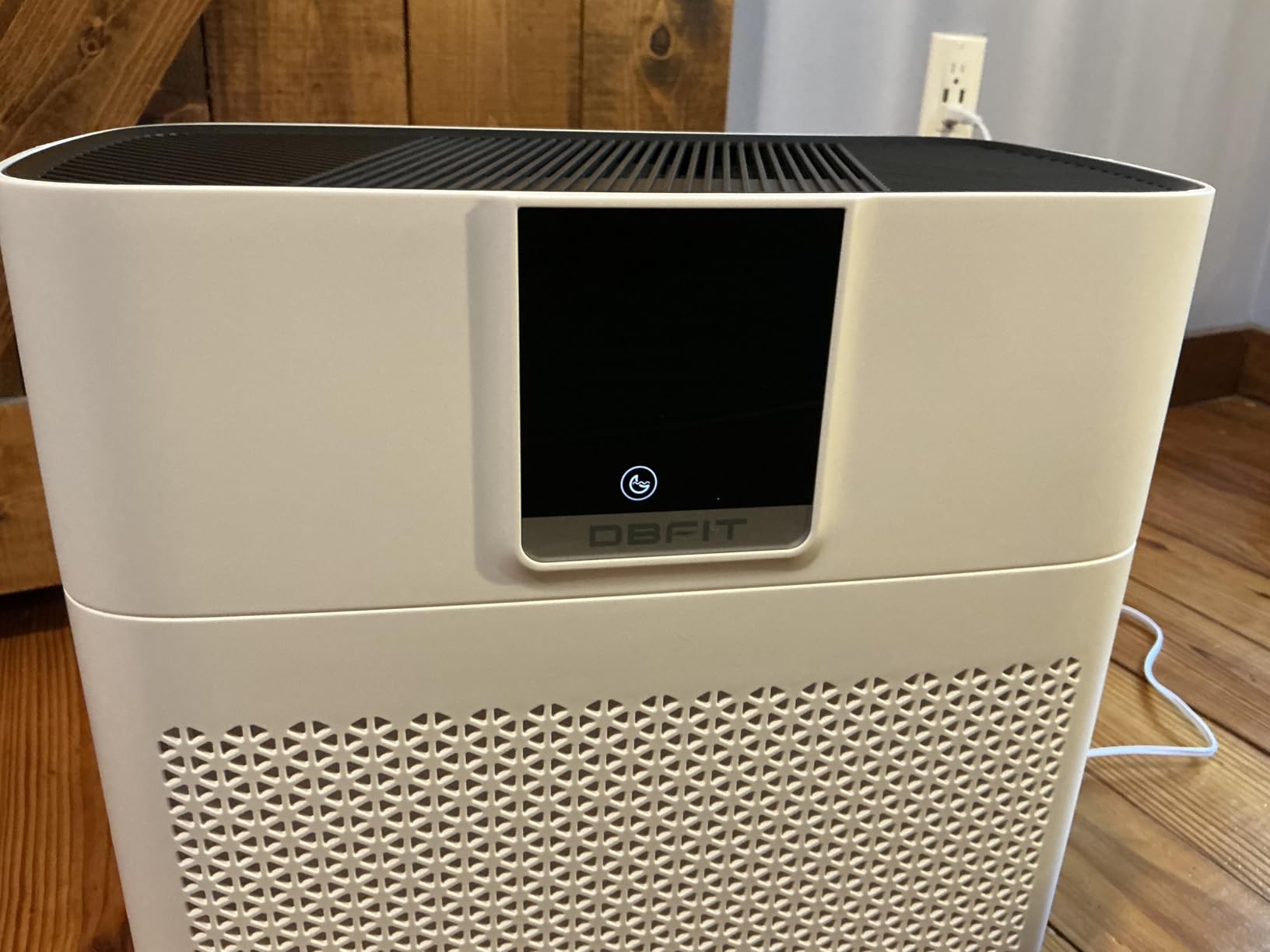
It carries CARB, ETL, DOE, and FCC certification and is explicitly ozone-free with no UV light. The child lock and 1 to 12 hour timer make it a sensible choice for a kid’s room, and sleep mode runs at 15 dB with the display off.
Who the DBFIT AP2410 fits?
A household dealing with smoke plus pet odor plus cooking smells is the ideal case for this unit, because the honeycomb carbon is built for mixed odor sources rather than a single pollutant. The child lock and quiet sleep mode suit a nursery or bedroom.
Buyers who care more about an explicit ozone-free claim than any ionizer or UV feature will also find what they are looking for. Several units here add ionization, and this one deliberately does not.
Where the DBFIT AP2410 falls short?
The composite filter is a recurring cost every 3 to 6 months as specified by the manufacturer, and in a smoky home that will come faster. Cost of ownership, not purchase price, is the thing to model here.
The main caveat is evidence. This is a 2025 model with 451 ratings, the smallest review base in the group, so the long-term reliability picture is still forming. It is also 15.7 inches tall, a narrow but imposing footprint for a room, and it weighs 7 pounds.
10. MOOKA B-D02L – Best Lightweight Pick for Small Rooms and RVs
MOOKA Air Purifiers for Home Room up to 1076ft², True HEPA Filter, B-D02L
- Lowest cost in the group with 9436 ratings of history
- Activated carbon stage handles cooking and smoke odor effectively
- 20 dB brushless motor is quiet for the tier
- Compact 3.6 pound body is easy to reposition
- Child lock and soft night light included
- Smallest coverage at 1076 sq ft
- No air quality sensor or display so it runs without auto mode
- Replacement filters come in packs of two
- Holding the power button to toggle the light can shut the unit down
The MOOKA B-D02L is the budget entry point that does the smoke job without a heavy carbon bill, and its 9436 ratings make it one of the better-evidenced low-cost machines available. Three-stage filtration runs pre-filter, true HEPA, and a high-efficiency activated carbon layer.
That carbon layer is the reason this unit shows up in smoking households at all. Owners in multi-unit buildings report it eliminating cooking smells carried between floors overnight, and one reviewer credits it with clearing a room of smoke odor. It removes contaminants down to 0.3 microns.
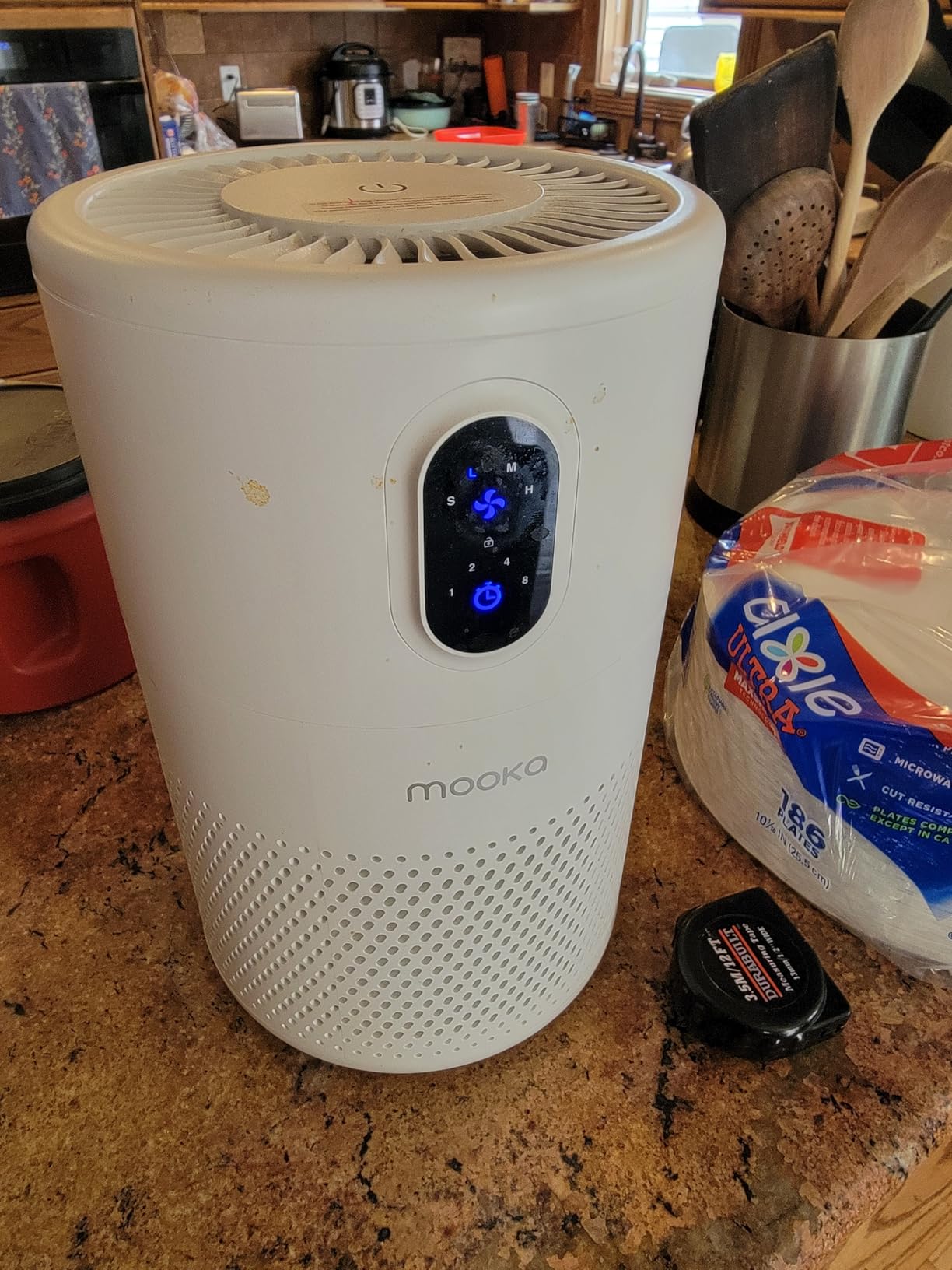
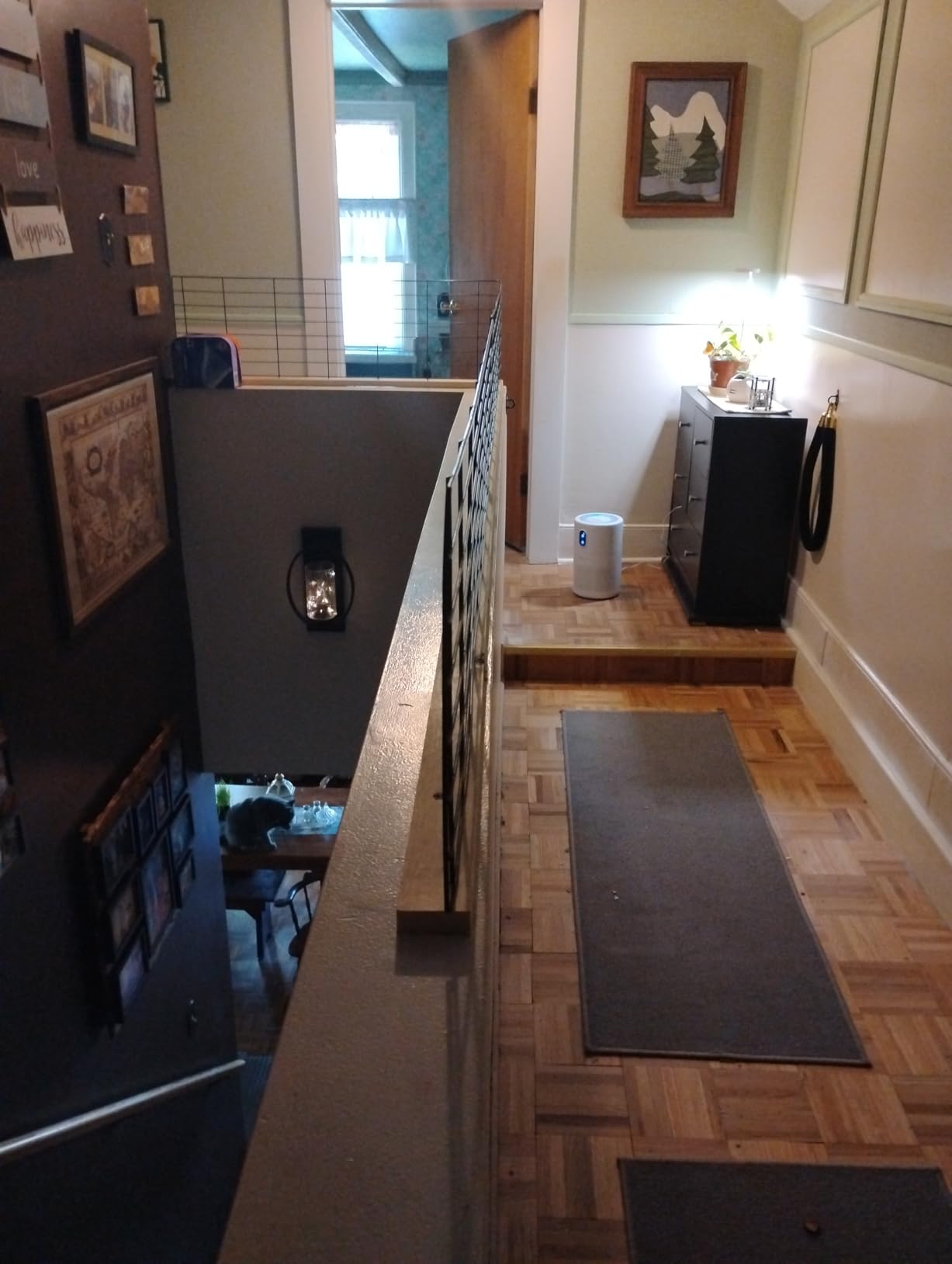
Coverage is up to 1,076 sq ft, or 6 air changes per hour in a 215 sq ft room, which makes it a single-room machine by design. The brushless motor runs at 20 dB, quieter than most units at this level, and four timer settings plus sleep, low, medium, and high modes give you basic scheduling.
The cylinder is 3.94 inches across, 7.7 inches deep, and weighs 3.6 pounds, so it moves between a bedroom, a bathroom, and a vehicle without effort. Filter changes take under a minute, and replacement filters are widely available from many vendors.
Who the MOOKA B-D02L fits?
This is the pick for a small room, a vehicle, a rental, or a first apartment on a tight budget where smoke is an occasional rather than constant problem. It also works well as a second machine in a room your main purifier does not reach.
Parents and pet owners get value from the child lock and soft night light at this price. The filter change being under a minute matters more than it sounds if you expect to replace filters every few months.
Where the MOOKA B-D02L falls short?
There is no air quality sensor and no display, so it runs blind with no auto mode. In a smoke situation that means choosing the fan speed yourself, and the low speed pushes very little air.
Coverage is the smallest here, so it is a room machine and not a whole-apartment solution. Replacement filters come in packs of two, and holding the top power button to toggle the night light sometimes turns the unit off instead, a small bug worth knowing before you set up.
What to Look for in an Air Purifier for Smoke?
Three specs decide whether a purifier handles smoke or merely filters the visible haze. If a product page does not answer all three, treat that as information in itself.
True HEPA filter, not HEPA-type
A true HEPA filter captures 99.97 percent of particles at 0.3 microns, which is the size that matters most for smoke. HEPA-type and HEPA-grade wording often means no sealed housing and air bypasses the media through gaps, so check that the filter housing is sealed.
Smoke contains ultrafine particulate below 0.3 microns, so claims about 0.01 micron capture, as on the Winix 5520 and Clorox 11010, describe performance in the range that actually includes the smallest smoke particles. HEPA handles the particulate half of smoke. It does nothing at all for the smell, which is the next point.
Heavy activated carbon, measured not asserted
Activated carbon adsorbs gas-phase VOCs and odor molecules onto its porous surface, which is the only mechanism that removes smoke smell rather than hiding it. The problem is that most listings never state how much carbon is in the unit.
Watch for specific language: a washable odor control carbon filter as on the Winix 5520, a dedicated deodorization stage plus bipolar device as on the Coway AP-1512HH, or a honeycomb carbon holding 112.5 percent more media as on the DBFIT AP2410. A thin carbon sheet quoted as activated carbon filter is usually decorative, and it saturates within weeks in a smoking home.
High CADR matched to real room volume
CADR, the Clean Air Delivery Rate, is the volume of clean air a unit delivers per hour, and it is the number that tells you whether a room can be cleared in a smoke event. Published figures are the honest comparison: the Levoit Vital 200S-P is certified at 250 CFM for smoke and the Winix is AHAM verified at 392 sq ft.
Ignore coverage claims stated only as square feet at one air change per hour for large rooms. A unit rated 1,500 sq ft at one change per hour may deliver only a fraction of that when smoke is heavy. Match CADR to room volume instead, which is the next section.
Sizing a Smoke Purifier: CADR, ACH and Room Math
Three numbers decide whether a machine is big enough: room volume in cubic feet, the unit’s CADR in cubic feet per minute, and the air changes per hour you need. Multiply volume by your target ACH, divide by 60, and that is the CADR you require.
For heavy smoke, target 4 to 5 air changes per hour. At the low end you are treating a room on a bad smoke day; at the high end you can clear a room between smoke events rather than during one.
A 250 sq ft bedroom with an 8 foot ceiling is 2,000 cubic feet. At 4 air changes per hour you need about 133 CFM.
A 400 sq ft living room with a 9 foot ceiling is 3,600 cubic feet. At 5 air changes per hour you need about 300 CFM.
A 600 sq ft open-plan space with a 10 foot ceiling is 6,000 cubic feet. At 4 air changes per hour you need about 400 CFM.
Run this math before you read any coverage number. Several units here advertise coverage of 1,650 to 2,180 sq ft, but those figures assume one air change per hour in a space with no ongoing smoke source. If your smoke source is inside the home, size for the worst case, not the average.
Wildfire Smoke vs Cigarette Smoke: Two Different Jobs
Outdoor smoke from a wildfire is a large, sharp, temporary load. It is dominated by fine particulate, it arrives everywhere in the home at once, and it stops when the air clears. High CADR run continuously is the correct response, and units like the AZEUS GL-FS32 and PuroAir 400 were built for that shape of problem.
Indoor cigarette smoke is a small, constant source with a large odor footprint. The particle concentration is usually lower than during a smoke event, but the gas-phase load never stops, so carbon saturates continuously. This favors carbon mass over raw airflow, and it is why the Coway AP-1512HH and the Winix 5520 are the picks here rather than the highest-CADR machine.
There is a third scenario that sits between the two: smoke entering from a downstairs or adjacent unit. There the source is continuous and the load is spread through the home, which argues for two machines in separate rooms rather than one powerful machine in the wrong location.
Pre-event preparation matters more than people expect. Have the filter staged and installed before smoke arrives, keep windows and doors closed while the outdoor air is bad, and run the machine on manual maximum rather than auto. An auto sensor reacts to a threshold; an outdoor event can cross that threshold before you have closed anything.
Ionizers, Ozone and Electrostatic Mode: The Safety Question
Ionizing purifiers charge particles so they clump and stick to surfaces or to a collector plate, which can raise effective capture without a heavier filter. The trade-off is that the same charge process can generate ozone as a byproduct, and ozone is a respiratory irritant.
Our recommendation is straightforward. In a home with asthma, COPD, children, or frequent respiratory illness, leave ionizer mode off and buy a unit that does not need it. The AZEUS GL-FS32 in this list includes an ionizer stage, and the DBFIT AP2410 is explicitly ozone-free with no UV, which is the safer configuration for a bedroom.
This is a known community concern rather than a theoretical one. Buyers consistently ask whether ionizer modes aggravate asthma, and the honest answer is that they can, at low levels you would not notice but that a sensitive airway will. The particle capture difference between an ionizing and a non-ionizing unit of the same size rarely justifies the risk in a home with a smoker in it.
Filter Life and Annual Running Cost in a Smoke-Heavy Home
Filter cost is the objection that decides most purchases in this category, and it is rarely mentioned on a product page. In a home where smoke is present daily, a carbon stage specified for 12 months can be spent in a few weeks.
Two specific numbers from the specs here are worth planning around. The DBFIT AP2410 specifies replacement every 3 to 6 months, and the Clorox 11010 includes a filter rated 6 to 12 months with an indicator that illuminates after 4,380 hours of runtime. A runtime-based indicator like this does not know that your carbon is spent.
A simple rule for budgeting: multiply the replacement filter price by the number of changes you actually expect per year in your situation, which is roughly four per year for a daily smoking household, two per year for a wildfire-exposed room, and one per year for a room with occasional smoke. Owners report the Clorox and WESTHEY filters being the higher-cost items relative to their unit prices, so check that line before you buy.
Hand-me-down units are worth considering for exactly this reason. A secondhand unit with replaceable, still-available media can be the cheapest way to handle smoke, provided you replace the filter on arrival regardless of what the previous owner did. Check that the replacement filter is still sold before you commit to an old model.
What an Air Purifier Cannot Fix?
An air purifier clears the air. It does not remove smoke that has already soaked into upholstery, carpets, curtains, and bedding. This is the single most common reason buyers conclude a working machine does not work, so it is worth being blunt about it.
If the odor is gone from the air but still present in the couch, the machine is working. The remaining fix is washing fabrics, shampooing carpets, and deodorizing soft surfaces, none of which a purifier does for you.
It also does not stop smoke production or block infiltration. If a neighbor or downstairs tenant is the source, the purifier reduces what reaches your lungs while you are home, and it cannot change the fact that the source keeps producing. In that situation, combining a purifier with source control measures where you have any leverage produces a better outcome than either alone.
Frequently Asked Questions
What air purifier is best for removing cigarette smoke smells?
The Coway Mighty AP-1512HH is our pick for cigarette smoke odor, because its four-stage stack pairs a dedicated deodorization filter with a bipolar device rather than a thin carbon sheet. Its 29097 ratings at 4.6 give it more long-term evidence of odor performance than anything else we tested. In a daily smoking household, run it continuously on Auto so the fan rises before odor builds.
Which air purifier is best for removing smoke smells?
It depends on where the smoke comes from. For a smoker inside the home, choose heavy carbon: the Coway Mighty AP-1512HH or the Winix 5520. For smoke drifting in from a wildfire, choose airflow and coverage: the AZEUS GL-FS32 or the PuroAir 400. For a bedroom, the Wyze Special filter unit at 21 dB is the quietest option in this group.
Do air purifiers really get rid of smoke smell?
Partly, and the distinction matters. A true HEPA filter removes the visible particulate but does nothing for odor, because smell molecules are gases that pass straight through the media. Removing odor requires a substantial activated carbon bed. Even with heavy carbon, odor already soaked into couches, carpets, and curtains needs washing and deodorizing separately.
Which air purifier did Consumer Reports recommend for removing cigarette smoke?
We do not cite a specific Consumer Reports pick here, because their ratings change as models are retested and we cannot verify a current attribution. If you want a third-party view, check the latest Consumer Reports air purifier ratings directly and filter for smoke performance. The specs we verify here come from AHAM, UL, ETL, CARB, and ISO lab testing instead.
What is the best air purifier for getting rid of smoke?
The Winix 5520 is our best overall pick because it combines a washable advanced odor control carbon filter with True HEPA capture, so it addresses both the particulate and the gas-phase halves of smoke. It also has the largest review base in this group at 32291 ratings, 23.5 dB sleep operation, and auto mode that ramps the fan when smoke appears.
Do air purifiers really work for smoke?
Yes, with correct sizing and both filter types present. Size by CADR against room volume for 4 to 5 air changes per hour, run the unit continuously during and after a smoke event, and confirm the carbon stage is a real bed rather than a sheet. A purifier clears airborne smoke and reduces the particle load you breathe, but it cannot remove odor already embedded in fabrics.
What is the best device to remove cigarette smoke from air?
A filtered air purifier with true HEPA plus substantial activated carbon is the right device. Ozone generators and plug-in odor neutralizers are not substitutes: ozone does not remove particles, it merely oxidizes odor molecules at concentrations that irritate the airways. In a home with asthma or COPD, avoid ionizing and ozone-generating units entirely.
The Best Air Purifiers for Smoke, by Category
For most people, the Winix 5520 is the answer: a washable carbon stage, True HEPA, quiet enough for a bedroom, and the deepest review history in this group. For a large room where the smoke load is severe, the Levoit Vital 200S-P has the highest published smoke CADR at 250 CFM with AHAM VERIFIDE certification behind it.
For a household where someone smokes inside daily, choose carbon over airflow and go with the Coway Mighty AP-1512HH. For wildfire season, the AZEUS GL-FS32 was built for the event, and the PuroAir 400 is the pick if you want documented lab data and certification behind the claims.
Whatever you choose, verify three things before you buy: a true HEPA rating at 0.3 microns, a carbon stage described in terms more specific than activated carbon filter, and a CADR figure you have matched to your room volume. That is the whole difference between a purifier that handles smoke and one that only clears the haze.