
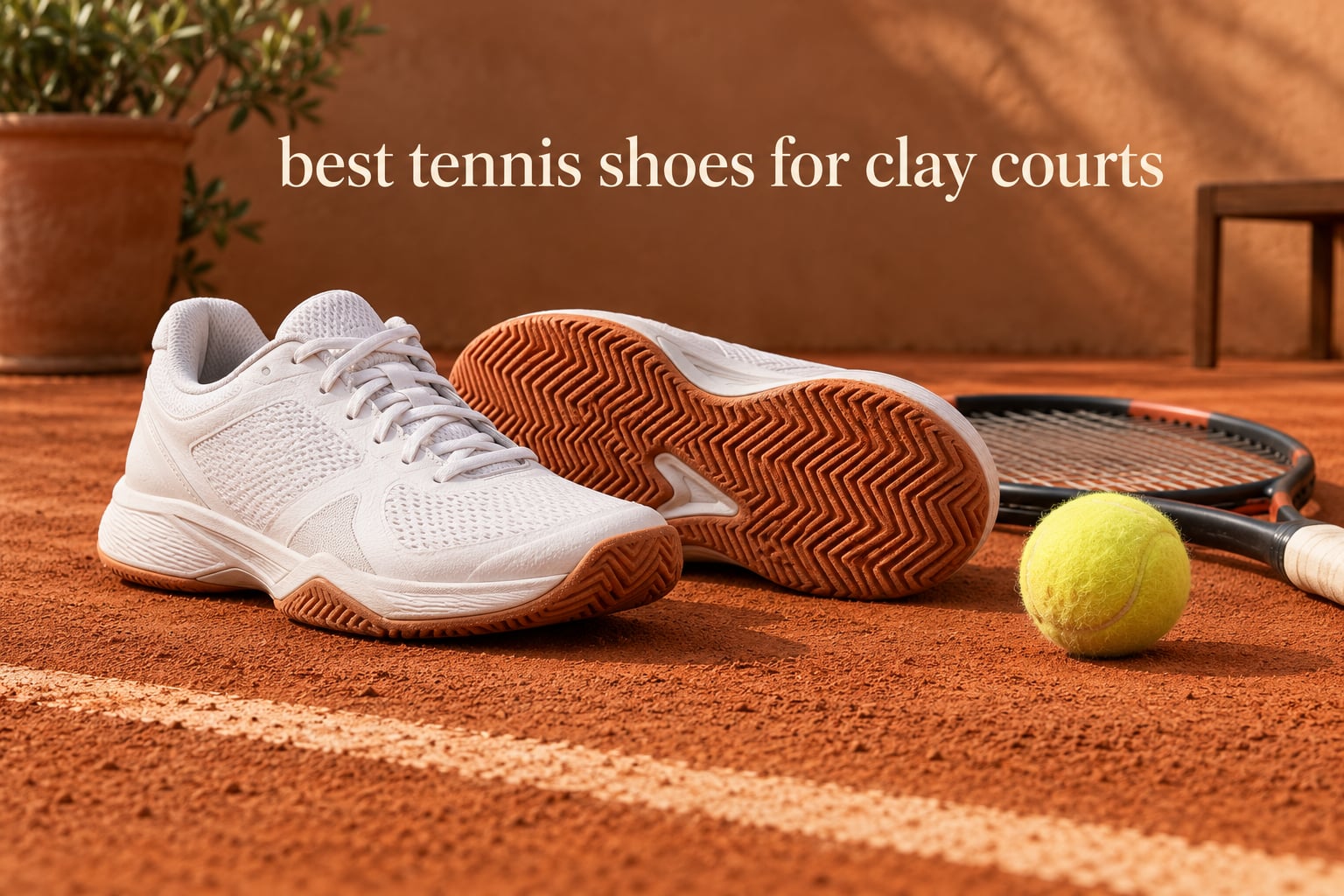
The best tennis shoes for clay courts are built around one defining feature: a full-length herringbone outsole. Those chevron-shaped grooves bite into loose clay for traction on acceleration and direction changes, then let the surface shift beneath the sole so you slide on purpose instead of losing your footing.
Everything else on a clay shoe follows from that outsole. The rubber compound is softer and less aggressively reinforced than a hard court outsole, because clay grinds far less than concrete. The upper is tighter and better sealed against dust. The midsole is often a little softer so your foot still feels the surface after a long slide.
We went through the current clay-specific lineup from ASICS, K-Swiss and Wilson side by side, weighing the tread design, the midsole stack, the lockdown system and the fit notes real owners report. Six shoes earned a place below. Three of them cover almost everyone who plays on clay regularly.
The rest of this guide covers how to tell a clay shoe from a hard court shoe, which model suits your foot shape, and how to clean packed clay out of herringbone grooves before the traction disappears. If you play a few times a year, your hard court shoes will do an acceptable job, and that is covered in the buying guide too.
Table of Contents
Top 3 Best Tennis Shoes for Clay Courts in 2026

K-Swiss Hypercourt Express 2 HB
- AOSTA 7.0 outsole
- 180 PSC stability chassis
- Surgelite midsole
- Ortholite sockliner

ASICS Gel-Resolution X Clay
- DYNAWALL chassis
- Forefoot GEL
- AHARPLUS outsole
- Two-piece midsole
Best Tennis Shoes for Clay Courts at a Glance in 2026
| Product | Specifications | Action |
|---|---|---|
| K-Swiss Women’s Hypercourt Express 2 HB Clay Court Tennis Shoe |
|
Check Latest Price |
| ASICS Men’s Gel-Resolution X Clay Tennis Shoes |
|
Check Latest Price |
 Wilson Men’s Rush Pro 4.5 Men’s Clay Tennis Shoes Wilson Men’s Rush Pro 4.5 Men’s Clay Tennis Shoes |
|
Check Latest Price |
 ASICS Men’s Gel-Challenger 15 Clay Tennis Shoes ASICS Men’s Gel-Challenger 15 Clay Tennis Shoes |
|
Check Latest Price |
 K-Swiss Men’s Hypercourt Express 3 Clay K-Swiss Men’s Hypercourt Express 3 Clay |
|
Check Latest Price |
 ASICS Men’s Solution Speed FF 4 Clay Tennis Shoes ASICS Men’s Solution Speed FF 4 Clay Tennis Shoes |
|
Check Latest Price |
1. K-Swiss Women’s Hypercourt Express 2 HB – Best Overall Clay Court Shoe
K-Swiss Women’s Hypercourt Express 2 HB Tennis Shoe, White/Neon Pastel Pink/Black, 7.5 M
- Excellent comfort for wide feet
- No break-in period
- Good arch support
- Wide toe box across the forefoot
- Runs slightly short for some feet
- Blistering on the lateral ankle
- Bright colourways
The Hypercourt Express 2 HB is the shoe we kept reaching for when our feet started complaining. It carries the widest toe box in this group, and that single detail matters more on clay than on any other surface. When the outsole is packed with dust and you need to plant a foot and rotate, your toes need room to splay without the upper pressing back.
Owners in this listing treat it as a comfort shoe rather than a technical one. Reviews describe good support for plantar fasciitis and general foot conditions, and the Durawrap Flex upper is specifically designed so there is no break-in period. That matters on clay, where most people buy a pair right before a league season starts.
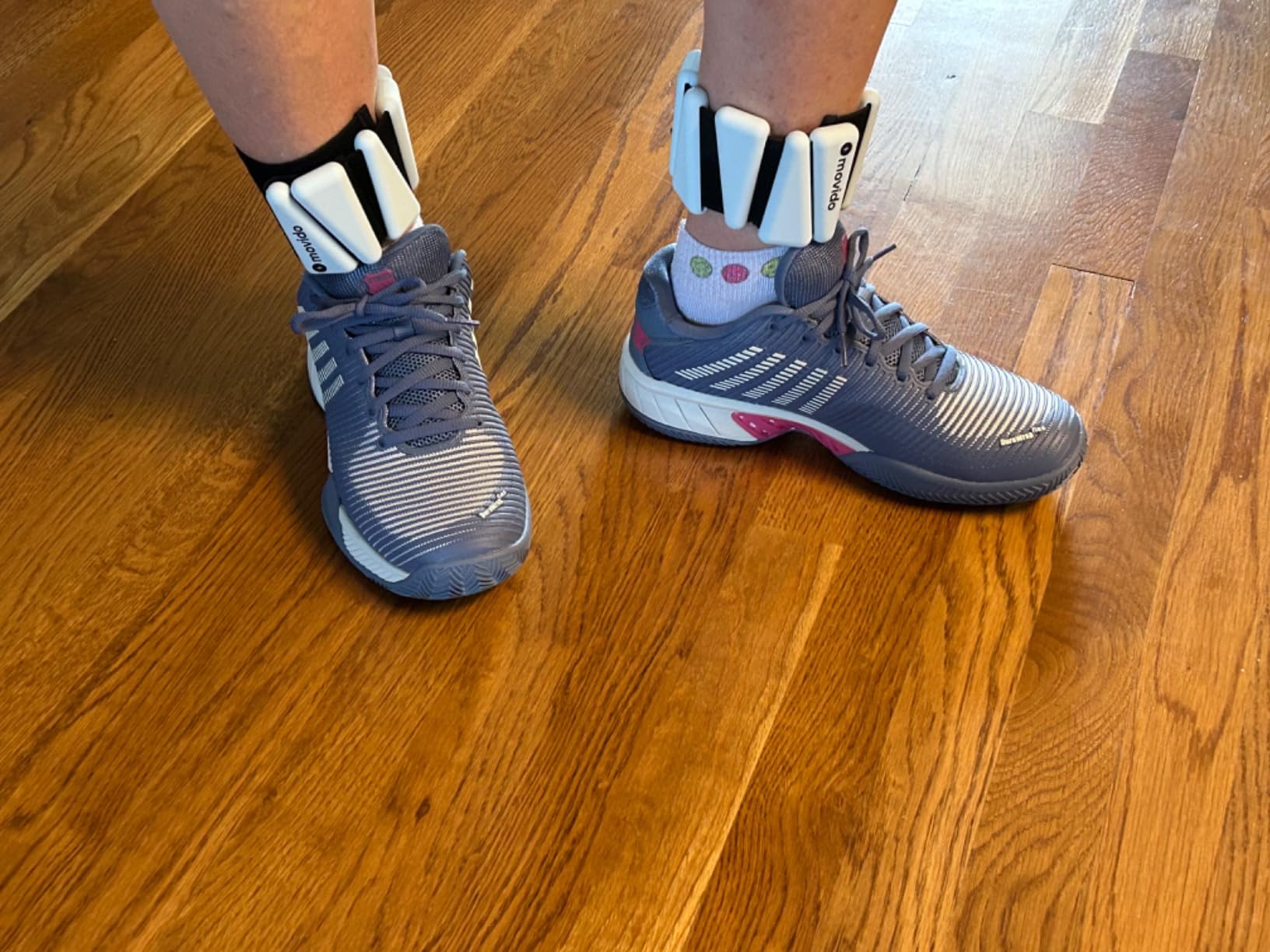
The build underneath is more substantial than the low weight suggests. A 180-degree thermal plastic Plantar Support Chassis sits under the midfoot to resist torsion when you slide sideways into a shot, and the Surgelite midsole keeps the ride soft without letting the foot roll off the platform. The Ortholite sock liner keeps feet cool through long afternoon matches and pulls moisture away from the skin.
Durability is the quiet strength here. Owners playing three to five sessions a week report the outsole and upper holding together, which fits how the clay surface treats a shoe. Sand is gentle on rubber, so wear tends to come from toe-dragging and midsole compression rather than abrasion.
What to check before you buy
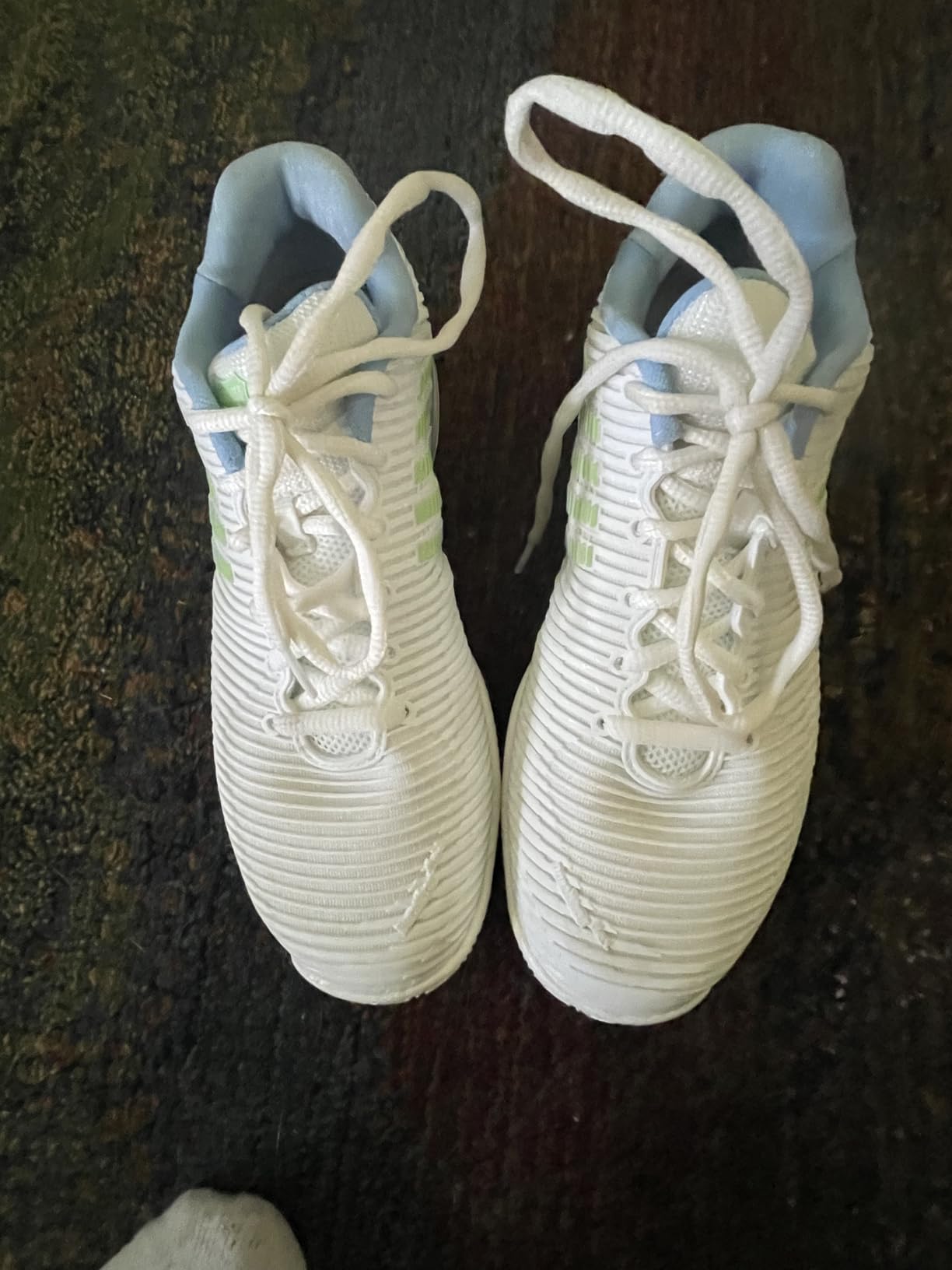
Two fit details deserve attention. Some reviewers report the shoe running slightly short, so if you are between sizes or have a long second toe, read the sizing feedback on your size rather than ordering blind. The second detail is the heel and ankle collar: a small number of owners report blistering on the lateral ankle during court play, usually on the inside edge of the upper.
If you have wide feet, a high arch, or any history of plantar fasciitis, this is the safest choice in the roundup. The toe box does not pinch, the midfoot chassis does the work that a soft midsole would normally fail to do, and there is no break-in to negotiate before your first match.
Where it falls short
This is not the lightest clay shoe here, and the cushioned midsole is not what a player chasing fast direction changes will want. If you play mostly on clay but spend a lot of your time defending and sliding rather than attacking from the baseline, you will notice a little more weight under your forefoot than a FlyteFoam build gives you.
The colour range also runs bright. Clay dust shows on every colourway, but the neon shades disguise it far less than a neutral tone would. Buy dark and you will notice the staining sooner; buy bright and you will simply not worry about it.
2. ASICS Men’s Gel-Resolution X Clay – Best for Stability
ASICS Men’s Gel-Resolution X Clay Tennis Shoes, 9, Greige/Soft Oat
- Strong lateral stability on direction changes
- Forefoot GEL absorbs impact at footstrike
- Two-piece midsole gives stable landings
- Good clay traction in reviews
- Runs large so size down half a size
- Narrow forefoot for wide feet
- Stiff through the outer edge
Stability is the whole argument for this shoe. The DYNAWALL midsole structure is designed to resist twisting through the midfoot, and on clay that stability lets you lean into a slide and recover rather than wobbling out of the shot. Players who change direction late or who push off from an awkward body position feel the difference most.
The impact protection is handled in the forefoot rather than the heel. ASICS places GEL under the forefoot here to soften footstrike and absorb the load that builds up during long clay rallies, where the surface absorbs far less shock than concrete does. A two-piece midsole design spreads that landing across a wider area.
Dynalacing runs through the upper to hold the foot in place during those lateral cuts, and PGUARD adds an abrasion-resistant layer in the forefoot interior where clay dust and repeated toe drags wear the inside first. AHARPLUS outsole rubber is the higher-durability compound in the range.
What to check before you buy
Size down half a size. That note appears in the product details and is echoed across reviews, so treat it as part of the shoe rather than a preference. Once you have compensated for it, the fit is described as true to size and the Dynalacing system does its job during movement.
The forefoot is the part to evaluate carefully. A meaningful number of reviewers describe the toe box as narrow, and some compare the overall comfort unfavourably with earlier versions of the same line. If you have genuinely wide feet, this is not the shoe to try first.
Where it falls short
Several owners describe the shoe as stiff across the outside of the foot through the first sessions. That is the flip side of the stability system and it needs a few matches before it stops fighting you. The lacing is also reported as difficult to adjust quickly, which is a real annoyance in a changeover.
It is also the shoe in this roundup with the most divided feedback on comfort. The 4.1 rating reflects owners who like the platform and owners who found the fit unforgiving. If comfort matters more to you than the chassis, the K-Swiss above is the safer route.
3. Wilson Men’s Rush Pro 4.5 Clay – Best Value for Baseliners
WILSON Rush Pro 4.5 Clay Men’s Tennis Shoe – White/Navy Blazer/Gum1a, Size 14 US
- Built for baseline movement
- Lightweight Energy Cell forefoot foam
- Breathable engineered mesh upper
- Endofit sock locks the midfoot
- 11% of reviews are 1-star
- Thin long-term durability data
- Less lateral structure than rivals
The Rush Pro 4.5 is designed around a specific player: the baseliner who takes the ball early and pushes forward. Wilson describes it as a dynamic clay-court build for exactly that style, and the geometry of the shoe follows through. The 4D Support Chassis 2.0 extends under the foot rather than sitting in the heel, so the platform responds when you drive off the back foot.
Energy Cell, a lightweight EVA foam placed in the forefoot of the midsole, gives a softer landing and a bit of pop on acceleration without adding the height of a full cushioned stack. It is a lower-profile setup than the Gel-Resolution X, and that low profile is exactly what makes it feel quick when you are moving forward rather than bracing.
The upper is where the clay-specific thinking shows. Sensifeel 2.0 is a minimally layered engineered mesh, so there is very little material between your foot and the court but what is there is breathable and uniform. Endofit wraps the foot with a full inner sock that adds stability and stops the foot sliding around inside the shoe during a long slide.
What to check before you buy
The most important check is the width. Because the upper is minimally layered, the shoe gives you less stretch across the forefoot than a mesh-and-overlay build would. If you are between widths or have a broad foot, try it on rather than relying on your usual size.
Look at the outsole compound too. This shoe sits at a lower price point, which usually means a less reinforced rubber than the flagship models in this list. On clay that is a fair trade, since the surface is so gentle, but if you double up on hard courts in the same week the tread will wear faster.
Where it falls short
The rating breakdown shows about 79% of owners giving five stars but roughly 11% giving one star, which points at consistency rather than an average problem. Durability reports are also thin simply because the model is recent, so there is limited long-term wear data available yet.
If you defend a lot or need a chassis that resists heavy rotation, this shoe will feel less planted than the Gel-Resolution X. It is built to move you forward, and it does not pretend to be a stability platform.
4. ASICS Men’s Gel-Challenger 15 Clay – Best Budget Entry
ASICS Men’s Gel-Challenger 15 Clay Tennis Shoes, 10, White/Digital Sakura
- Lowest entry build in the roundup
- AHARPLUS outsole resists abrasion
- Ortholite sockliner handles moisture
- Wide colour range
- 8% of reviews are 1-star
- Small review base at launch
If you are starting out on clay or you play a few times a month, the Gel-Challenger 15 is the shoe that makes the most sense. It carries the durability features that matter on a loose surface, in an entry build, without asking you to pay flagship money for a chassis you may never use.
AHARPLUS is the outsole rubber ASICS rates at roughly three times the durability of a standard outsole compound, and on a herringbone tread pattern that difference shows. Owners report the grooves still biting after sustained use, which is the whole point on a surface where packed clay will fill a soft tread in a few sessions.
WINGWALL handles lateral stability around the midfoot, which is enough to keep the foot centred through direction changes without the heavy feel of a full support chassis. Rearfoot GEL under the heel absorbs the shock of repeated hard stops, and the Ortholite sockliner adds cushioning and moisture management for players who play through hot afternoons.
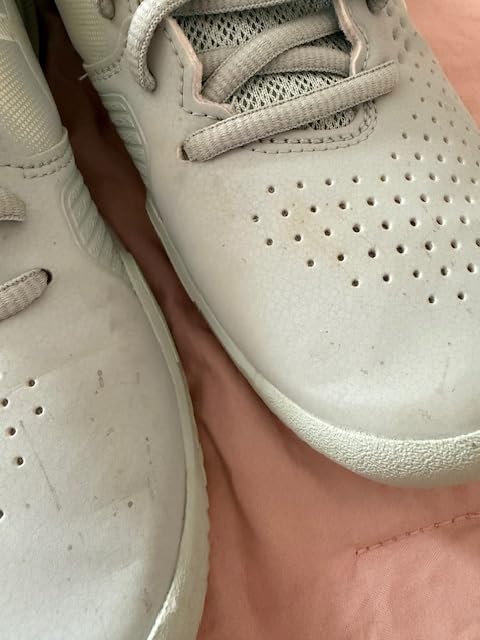
One detail that rarely makes a review headline: this shoe goes through ASICS solution dyeing, which the company says cuts water usage by roughly a third and carbon emissions by around 45%. It does not change how the shoe plays, but it explains why the colour options are unusually broad for this tier.
What to check before you buy
The fit is the thing to verify first. ASICS clay models in this roundup do not share one last shape, so do not assume this fits like the Gel-Resolution X. Wear the socks you will actually play in and check how the toe box sits when you flex into a lunge.
Also consider how often you will wear them. Rearfoot GEL is a comfort feature, and comfort features compress over time. If you are going to put twenty court sessions a season through one pair, the flagship models handle that better. At three sessions a season, this is the smarter buy.
Where it falls short
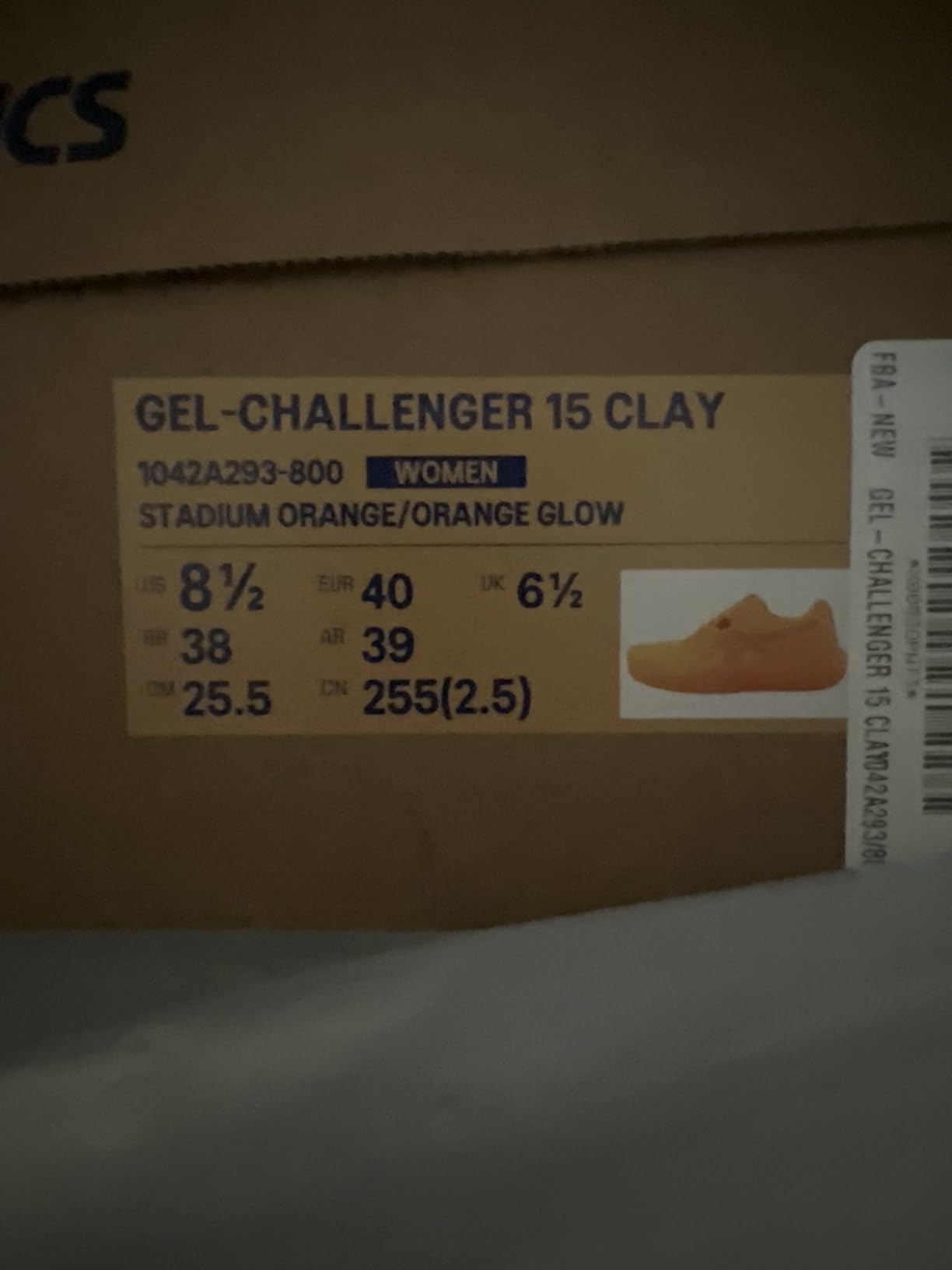
The review base is still small, with 54 ratings, so the long-term feedback you would want before a big purchase is not there yet. Around 8% of current reviews are one star, which is worth reading through rather than averaging away.
Stacking level is also modest compared with the cushioned models. Players who want a noticeably softer ride under the heel will not find it here. The cushioning is present and it does its job on impact, but it is not the plush option.
5. K-Swiss Men’s Hypercourt Express 3 Clay – Best for Durability
K-Swiss Men’s Hypercourt Express 3 Clay,White/Peacoat/Silver,10.5 M
- Dragguard 7.0 in high wear zones
- Durawrap resists toe drag
- Stay Tied laces catch in place
- 180 PSC midfoot chassis
- Stiff through the first sessions
- Small review base at launch
The Express 3 takes the durability story from the women’s model above and pushes it further. The headline feature is Dragguard 7.0, a heavier rubber placed in the toe and heel, which are the two zones that wear fastest when you slide into a defensive stop with the toe pointed or the heel landing first.
Durawrap adds a toe guard against excessive toe dragging, which is the single most common way clay players chew through the front of a shoe. It matters because the toe is also the first part of the herringbone tread to lose groove depth, and a worn toe section is exactly where you push off when you start a point.
Underneath, Surge+ 7.0 is a lightweight premium cushioning system focused on energy return, and the 180-degree Plantar Support Chassis keeps the midfoot from twisting. The details are small but real: Stay Tied laces catch on the eyestay so they stay tied, and the Heel Grip lining uses interlocking fibres to hold the sock in place and cut heel slippage.
What to check before you buy
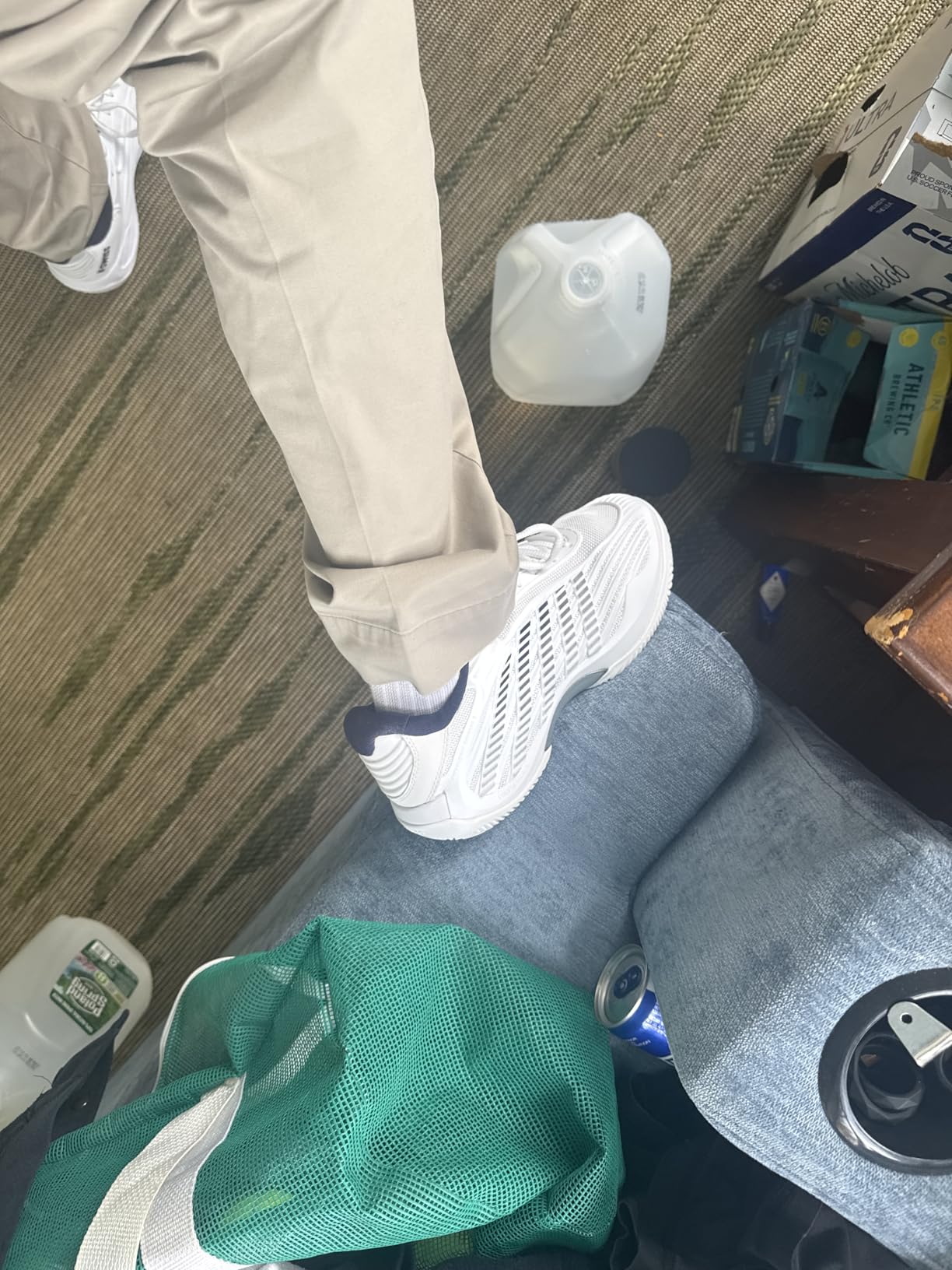
Expect a break-in period, which is unusual in this group. Owners consistently report the shoe feeling stiff at first, and the fit is likely to feel snug until the upper and midsole flex a few times. If you have a tournament in the first month after buying, wear them on court before that weekend.
Check the toe box room as well. The Dragguard and Durawrap protection adds material around the front of the foot, so if you have wide feet or a high instep, make sure the forefoot has space before you commit.
Where it falls short
With 46 ratings and roughly 10% one-star reviews, the sample is thin enough that we would treat the durability claims as promising rather than proven. The model is new, and long-term owners have not yet put enough sessions on it to tell you how the Dragguard sections wear at the one-year mark.
It is also a firmer ride than the Express 2 above. If your priority is a soft landing rather than a shoe that survives contact with the baseline, the women’s model is the more cushioned choice.
6. ASICS Men’s Solution Speed FF 4 Clay – Best for Speed
- Light FlyteFoam midsole
- Speedtruss tuned for cutting
- PU and eyelet loops stop lace breaks
- Clay-specific outsole
- Only 23 reviews so far
- Newer model with no wear history
- Sits at the top of the price tier
This is the speed option. FlyteFoam keeps the midsole light and low, and Speedtruss is the structure that firms up the midfoot for cutting movements. Together they make this the shoe for the player who wants to react quickly to a short ball and accelerate out of a defensive position rather than plant and hold.
Players on r/10s have recommended the Solution Speed FF name for a long time as a lightweight clay option, with owners specifically praising the traction around the court. The FF 4 is the current version of that line and keeps the same philosophy. It is not a cushioned shoe and it is not a support platform. It is built to be quick, and that shows in the lower stack height.
The small hardware details are worth noting. PU loop and eyelet loops replace standard eyelets at the top of the lacing so the laces are far less likely to snap mid-point, which on clay happens more often than people expect because the surface drags your feet. The shoe is also built through the same solution dyeing process as the Gel-Challenger 15.
What to check before you buy
Toe flex. Speedtruss adds structure precisely where a fast player needs it to change direction, which means the forefoot will resist bending more than a soft-soled shoe. Try a hard lateral cut in the store and see whether the forefoot gives you enough range to reach a low ball.
Because the ride is light and low, this is also the shoe where cushioning preference matters most. Players with heavy footstrike patterns or joint sensitivity should try the Gel-Resolution X or the Express 2 instead, since this model prioritises response over impact absorption.
Where it falls short
Twenty-three reviews is a very small base, and the model is recent enough that no long-term wear feedback exists. Early feedback is good, with 74% five-star ratings and no one-star reviews, but that is a promise rather than a track record.
It also sits at the top of the price tier in this roundup while offering the least support of the six. If you are not chasing speed, the value elsewhere in this list is harder to justify.
How to Tell if Tennis Shoes Are Clay or Hard Court
This takes ten seconds and it prevents the most common clay mistake, which is buying a hard court shoe and wondering why it feels different every time. Four checks cover it.
1. Look at the tread from directly underneath. A clay shoe has a herringbone pattern covering most of the outsole, that is the classic chevron shape running in rows from heel to toe. A hard court shoe has a solid rubber field with a smooth circular pivot area in the centre of the forefoot, plus separated hexagonal or square pods at the heel and toe. An all-court shoe has a hybrid pattern with both elements, usually herringbone at the forefoot with a smoother rearfoot.
2. Check whether the tread is continuous or broken. Clay outsoles tend to look like a single sheet of finely grooved rubber. Hard court outsoles look assembled, with visible gaps between the pods and a herringbone-like ring around the edge of the toe section.
3. Turn it over and look at the rubber colour and thickness. Hard court compounds are usually dark, thick and glossy because they are reinforced against abrasive concrete. Clay compounds are often a lighter colour or a visibly softer foam, and the outsole is thinner so the shoe can flex.
4. Read the model name. Clay versions are almost always labelled Clay, Clay Court or HB. If the name says nothing about surface, treat it as hard court or all court. If you want one more signal, browse the best tennis court systems available for home court setups to understand which surfaces you will actually be moving between.
What Makes a Clay Court Outsole Different
Herringbone geometry is the whole story, and understanding why explains every other difference on the shoe. The chevrons point in multiple directions, so the grooves bite into loose clay no matter which way your foot is oriented. On a hard court, traction comes from rubber pressing against a solid surface and the pivot point is a fixed smooth circle. On clay, traction comes from the shoe sinking into a granular surface and the material shifting around the grooves.
That produces the slide. When you decelerate into a defensive stop, clay moves under the shoe and the chevrons let it travel rather than locking. The result is a controlled slide that a hard court shoe cannot produce, because the same grooves that grab for grip release evenly as the surface shifts. Full herringbone covers the whole outsole for exactly this reason: any uncovered smooth patch behaves like a hard court pivot and makes you catch.
Modified herringbone is the compromise, and several shoes in this roundup use it. The pattern is concentrated under the heel and the inner forefoot, where grip matters most for acceleration and serving, with smoother material elsewhere to reduce weight. It slides less freely than a full herringbone but it also weighs less.
Red clay and green clay are not the same surface. European red clay is a loose top layer over hard aggregate, which is why the grooves matter so much. American green clay, sold as Har-Tru, is a synthetic or crushed-top surface that sits on a firm base and behaves somewhat more like a hard court. A deeper herringbone tread grips red clay better, while players on green clay can often manage with a shallower modified pattern.
The upper follows the outsole logic. Clay dust enters a shoe with a loose mesh upper, so clay-specific models use tighter woven uppers and sealed overlays that keep particles out. Ventilation is deliberately a little more restrained than on a hard court shoe, because breathability and dust exclusion pull in opposite directions.
Buying Guide: Weight, Fit, Width and Cushioning
Weight matters more on clay than on any other surface. The surface absorbs less impact, so every ounce returns to your legs over a long match, and the extra drag of loose material makes quick starts harder. Shoes in this roundup span a low-profile FlyteFoam build for speed through to a cushioned and chassis-heavy stability shoe. Lighter suits fast players; heavier suits players who need containment.
Width is the second priority, and the forum consensus on this topic is consistent: fit is inconsistent across brands, with no shared sizing standard. ASICS clay models in this roundup do not share a last, so a size that fits one will not necessarily fit the other. K-Swiss and New Balance style lasts tend to run roomy, ASICS can run narrow in the forefoot on some models, and the only reliable method is reading the sizing notes for the exact shoe.
For wide feet specifically, the K-Swiss Women’s Hypercourt Express 2 HB is the clear pick. Reviewers repeatedly call out the wide toe box and comfort for wide feet, plus specific praise from players dealing with neuroma and bunion issues. It is also the shoe with the most established feedback in this group, at 229 ratings, so the wide-fit claim is backed by a large sample rather than a handful of reviews.
Toe flex is the third check. Bend the shoe at the ball of the foot with your hand. A clay shoe should flex there without a fight, because you need to push off in any direction on a surface where you rarely get a planted second step. A stiff forefoot is not automatically bad, but it tells you the shoe is tuned for stability rather than quickness.
Arch support matters for players who already have foot issues, and again the reviews are informative. The Express 2 HB draws the strongest mention of arch support in this set, with owners citing plantar fasciitis relief. Midfoot chassis systems in the Gel-Resolution X and the Express 3 do comparable work by limiting torsion rather than by propping the arch directly.
Cushioning is the last dial. On clay, the court absorbs less shock than concrete, so more foam does not automatically feel better. A thick cushioned midsole feels comfortable for the first hour and then feels unresponsive when you want to move. Pick soft if you have joint sensitivity or a heavy footstrike, and pick low if you play aggressively and want to feel the surface.
Finally, be honest about how often you are on clay. Players who show up two or three times a year will get acceptable results from their hard court shoes, because the main difference they will notice is that a hard court outsole glides more than it grips. Players who are out several times a week, who slide to stay in points, or who compete in leagues and tournaments will feel the herringbone difference within one session.
How to Clean Clay Out of Herringbone Grooves
This is the most common clay complaint and the one most roundups leave unanswered. Packed clay fills the grooves, the herringbone stops biting, and the shoe feels vague on serve and heavy on lateral movement. Forum threads describe this happening within a few sessions, usually because people put clay shoes away without doing anything.
The routine is simple and takes a few minutes. Let the shoe dry fully first, because brushing damp clay pushes it deeper into the tread. Tap the soles together and against a hard edge to knock out the loose material, then work a stiff brush across the herringbone rows in one direction so the bristles follow the grooves rather than across them.
For clay that has hardened in the grooves, a toothbrush with a little warm water and mild soap gets into the chevrons that a larger brush misses. Wipe rather than soak, and keep the upper dry, because a soaked shoe takes days to dry and the adhesive in a glued upper does not enjoy that.
Clean the grooves at least every two or three sessions and the traction stays consistent for the life of the shoe. There is also a habit worth building: tap your shoe with your racquet against the fence or your foot before walking off court, and wear dark socks. Both take seconds and both keep more clay out of the shoe in the first place.
Frequently Asked Questions
What are the best tennis shoes for playing on clay courts?
The best tennis shoes for clay courts all share one feature: a full-length herringbone outsole. The chevron grooves grip loose clay for traction on acceleration and direction changes, then release during a slide. Look for tighter woven uppers that block dust, a softer outsole compound than a hard court shoe, and a midsole matched to how much support you want. In our roundup the K-Swiss Hypercourt Express 2 HB leads for wide feet and all-round comfort, the ASICS Gel-Resolution X Clay leads for stability, and the ASICS Solution Speed FF 4 Clay leads for speed.
How to tell if tennis shoes are for clay or hard court?
Look at the tread from directly underneath. A clay shoe has herringbone chevrons covering most of the outsole with no smooth pivot circle. A hard court shoe has a solid rubber field with a smooth circular pivot area in the forefoot and separate heel and toe pods. A third clue is the rubber itself: hard court outsoles are darker, thicker and glossier, while clay outsoles are thinner and often lighter in colour. Finally, clay models are nearly always labelled Clay, Clay Court or HB in the model name.
Do you need different tennis shoes for clay?
Only if you play on clay regularly. If you are on court several times a week, slide to stay in points, or compete in leagues and tournaments, a herringbone clay outsole gives you noticeably better traction and a more predictable slide. If you play on clay a few times a year, your hard court shoes will perform acceptably, though they will glide more than they grip and will wear faster. Players who split time across surfaces are usually better served by a durable all-court shoe than by two worn-out pairs.
What are the best wide tennis shoes for clay courts?
The K-Swiss Women’s Hypercourt Express 2 HB is the strongest wide-fit pick in this roundup. Reviewers repeatedly describe a wide toe box that lets the forefoot splay, along with comfort for wide feet and for conditions such as neuroma and bunion pain. Fit is not consistent across brands, so check the sizing notes for the exact model rather than assuming your usual size carries over. Note that the ASICS Gel-Resolution X Clay in this group is reported by some owners to have a narrow toe box, so it is not the safe choice for wide feet.
What are some good men’s tennis shoes for clay courts?
For stability and heavy direction changes, the ASICS Gel-Resolution X Clay uses a DYNAWALL chassis and forefoot GEL, and it runs large so size down half a size. For a baseliner who moves forward, the Wilson Rush Pro 4.5 Clay pairs an Energy Cell EVA forefoot with a split support chassis. For players who need a shoe that survives frequent play, the K-Swiss Hypercourt Express 3 Clay adds Dragguard 7.0 rubber in the toe and heel plus a Durawrap toe guard. For speed, the ASICS Solution Speed FF 4 Clay uses a lightweight FlyteFoam midsole and Speedtruss structure.
Final Pick for Best Tennis Shoes for Clay Courts in 2026
The best tennis shoes for clay courts in 2026 come down to one question: what kind of clay player are you? The K-Swiss Hypercourt Express 2 HB is the overall pick. It has the widest toe box in this group, no break-in period, midfoot support from the 180 PSC chassis, and by far the largest review base here at 229 ratings, so its comfort claims are backed by real wear reports rather than a handful of early impressions.
Choose the ASICS Gel-Resolution X Clay if stability is your priority and you size down half a size. Choose the Wilson Rush Pro 4.5 Clay if you are a forward-moving baseliner and want the lowest price among the premium-feeling builds. Choose the ASICS Gel-Challenger 15 Clay if you play a few times a month and want a durable herringbone shoe without paying flagship money. Choose the K-Swiss Express 3 Clay if you grind through pairs quickly. Choose the ASICS Solution Speed FF 4 Clay if you want the lightest, quickest feel and you can accept a thin review base.
Whatever you pick, clean the herringbone grooves every few sessions. Traction you paid for does not survive packed clay, and two minutes of brushing keeps it working for the whole season.