
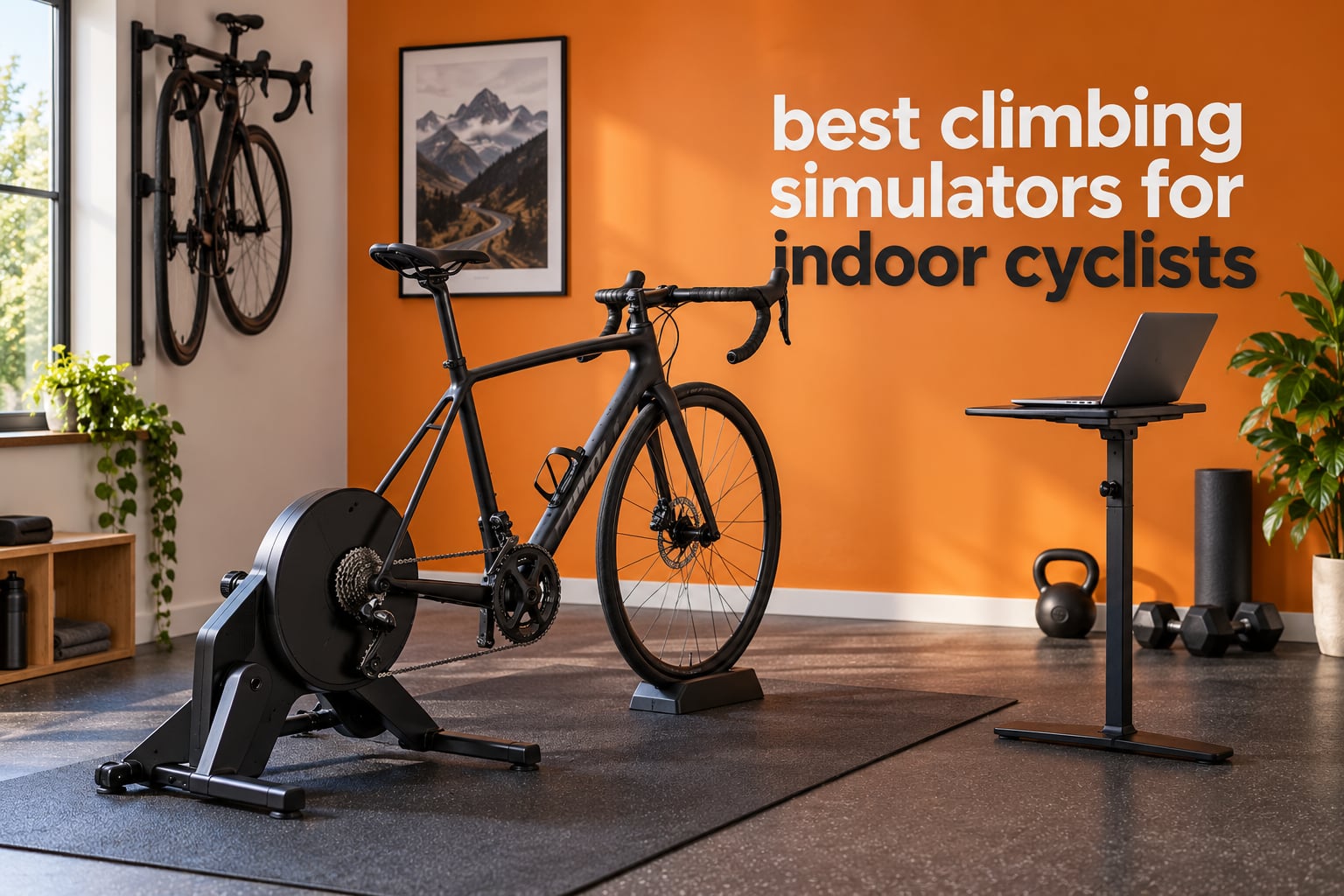
Most indoor climbing pain is not a power problem. It is a geometry problem. When a smart trainer raises resistance electronically, the bike stays perfectly level on the floor, so your legs work harder while your torso, hips and shoulders stay in a flat-road position. A climbing simulator fixes that by physically moving the bike, either lifting the front wheel in the air or tilting the whole frame, so your body actually sits at the angle of the road you are climbing.
That is the definition worth holding onto for this whole guide: a climbing simulator, also called a grade simulator or gradient simulator, is hardware that changes the geometry of your bike during a ride. Searching for one throws up wall climbers, smart bikes and step machines too, none of which simulate a road gradient for your own bike. Everything below is a device that makes a stationary bike reproduce the effort of a real hill.
We ranked eight of the best climbing simulators for indoor cyclists available now, covering both approaches: dedicated front-wheel lifters like the Wahoo KICKR CLIMB, and direct-drive trainers that deliver electronic gradient from 10% up to 25%. Every grade, wattage and accuracy figure below comes from the published manufacturer specification for that unit, and we note where reviewers disagree with the spec sheet. Specs in this category do move with firmware updates, so treat them as the 2026 state of each product.
Table of Contents
Top 3 Picks: Best Climbing Simulators For Indoor Cyclists (October 2026)
The Garmin Tacx Neo 2T takes our top slot because it is the only unit here with hundreds of owners reporting on it at a 4.7 average, and 16% of electronic grade is enough to ride almost any real climb in Zwift. The ThinkRider XXPRO ties for the steepest electronic grade at 25% and adds 2500W, and the ThinkRider X2Max is the quietest way to get a solid 18% hill without spending flagship money.

Garmin Tacx Neo 2T
- 16% electronic grade
- 2200W resistance
- 32 neodymium magnets
- Foldable direct drive

ThinkRider XXPRO
- 25% maximum grade
- 2500W maximum power
- Self-powered operation
- plus or minus 1% accuracy

ThinkRider X2Max
- 18% grade simulation
- 2000W maximum power
- About 58dB at 30km/h
- Self-powered option
Every Climbing Simulator We Ranked in 2026
All eight units below electronically simulate a gradient with the exception of the KICKR CLIMB, which lifts the front wheel to 20% incline and drops it to 10% descent. Ratings and owner counts are copied from the current listing data for each product.
| Product | Specifications | Action |
|---|---|---|
| Garmin Tacx Neo 2T Smart Trainer |
|
Check Latest Price |
| ThinkRider XXPRO Smart Trainer |
|
Check Latest Price |
| ThinkRider X2Max Smart Trainer |
|
Check Latest Price |
 Wahoo Fitness Kickr Climb Wahoo Fitness Kickr Climb |
|
Check Latest Price |
 Garmin Tacx NEO 3M Smart Trainer Garmin Tacx NEO 3M Smart Trainer |
|
Check Latest Price |
 CYCPLUS Smart Bike Trainer R200 CYCPLUS Smart Bike Trainer R200 |
|
Check Latest Price |
 CYCPLUS Smart Bike Trainer T2 CYCPLUS Smart Bike Trainer T2 |
|
Check Latest Price |
 Elite Tuo Wheel-On Trainer Elite Tuo Wheel-On Trainer |
|
Check Latest Price |
1. Garmin Tacx Neo 2T Smart Trainer – the most proven climbing hardware here
- 472 owner reviews at a 4.7 average
- 16% grade covers most real climbs
- 2200W handles sprints and steep virtual walls
- Magnetic resistance runs quiet and smooth
- Folds for storage
- 16% grade is short of the 20% plus units
- 47.4 lb is a two-person carry
- No descent below flat on the electronic side
The Neo 2T is a magnetic direct-drive trainer from Garmin’s Tacx line, and it is the one I trust most of the eight in this guide for the simple reason that it has the deepest owner history. 472 reviews at a 4.7 average is a much thicker base of evidence than anything else on this list. It electronically simulates grades up to 16% and holds 2200 watts of resistance, which covers almost every road climb you would want to rehearse in a training app.
Sixteen percent sounds modest next to the 25% headline figures further down, but the grade number is not the whole story. A 16% grade at a realistic climbing power is genuinely hard, and the Neo 2T’s 32 neodymium magnets deliver that resistance smoothly rather than in the steppy way cheap magnetic units tend to. The rear wheel spins up and winds down like a real bike on a real road.
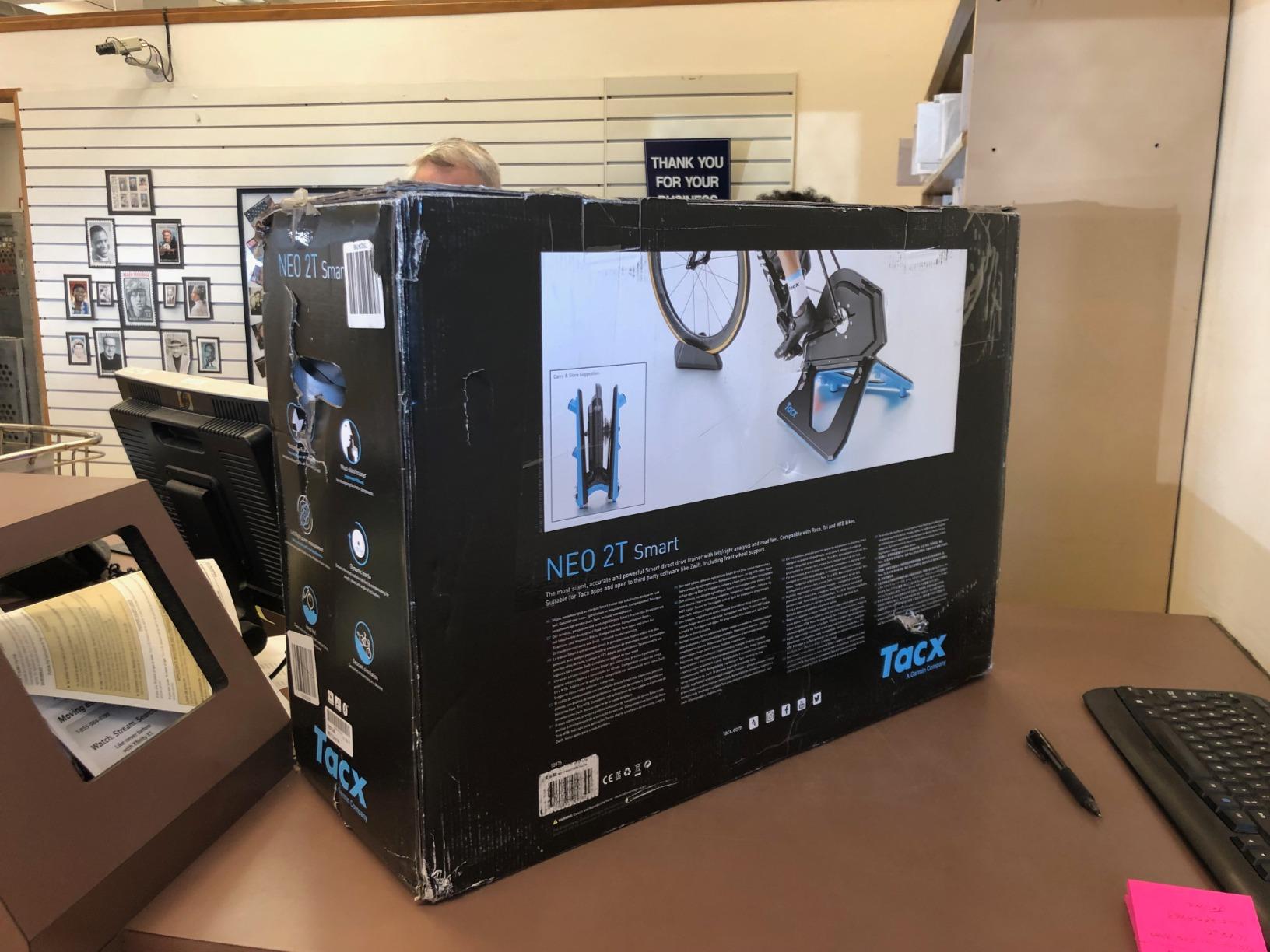
The spec sheet also says magnetic resistance, ANT+ and Bluetooth, a foldable frame, and a one-month Tacx Premium software trial in the box. Quick release and thru-axle adapters for 142 by 12 mm and 148 by 12 mm hubs are included, so fitting it to a road bike or a mountain bike is not the headache it used to be. Wheel wear is not an issue because the drivetrain, not the tyre, takes the load.
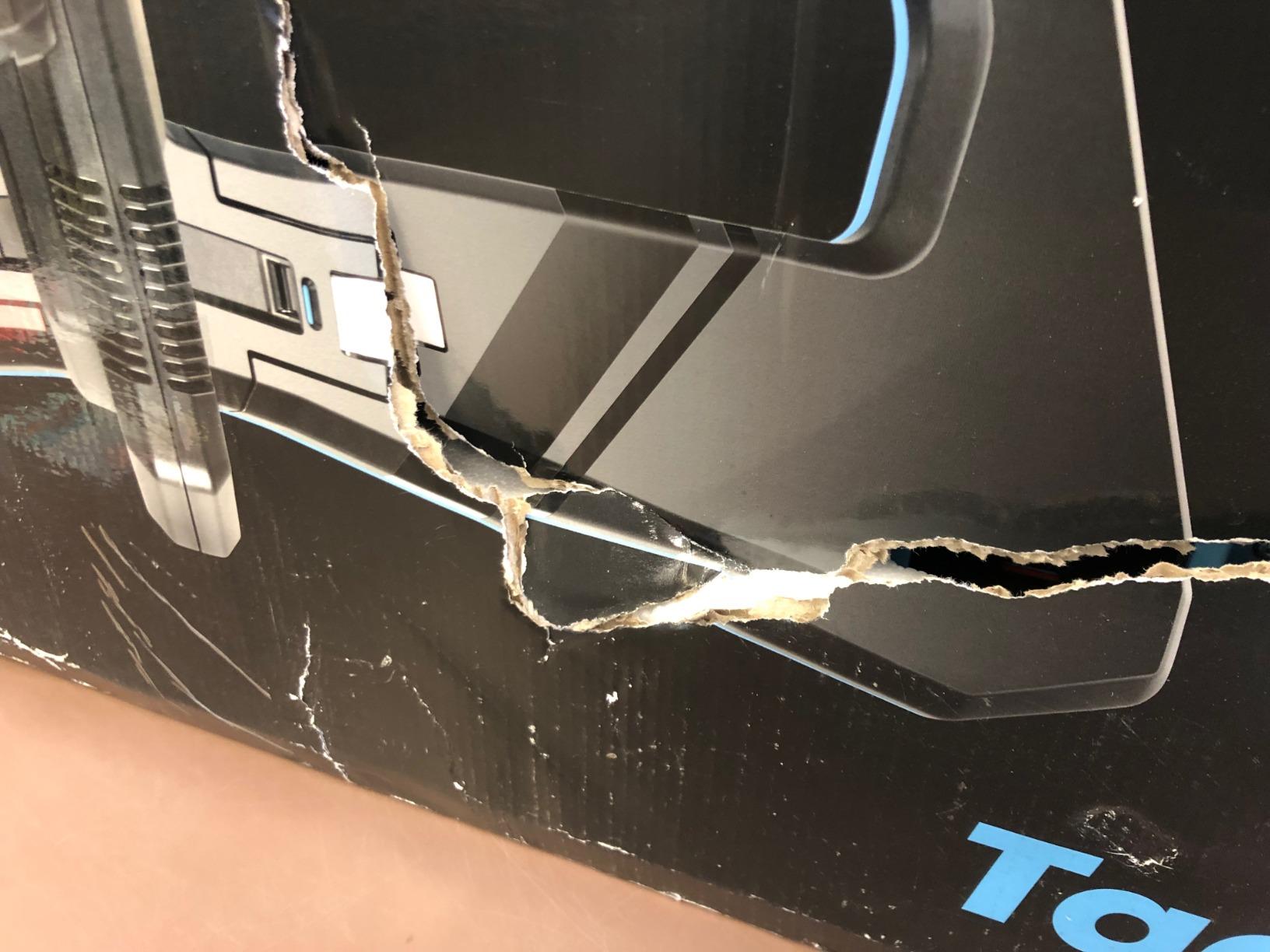
Owners consistently single out the quietness and the smoothness of the power curve. Several riders coming from older, louder trainers describe the Neo 2T as the point where indoor riding stopped feeling like riding a stationary bike. The same reviews keep pointing at the same two negatives: it weighs 47.4 pounds, and it is a large footprint when set up at 27 inches by 19 inches by 10 inches.
Is it the right fit for your riding?
This is the trainer to buy if you already have a bike you love, ride mostly in Zwift or TrainerRoad, and want a hill session three or four times a week without moving the bike around. It suits riders who care more about a smooth, repeatable power curve than about the most extreme virtual gradient available.
It is a good first upgrade for someone moving off a cheap wheel-on unit, because the step in noise and power accuracy is immediate. It is also a strong second trainer for a household with two riders, given the foldable frame and the fact that setup is simple once the adapters are in place.
Where it will disappoint you
If your goal is to ride the steepest climbs in the game, 16% is the ceiling and no firmware will change that. Riders chasing 20% to 25% walls in Zwift will hit that ceiling regularly, and there is no add-on that lifts a Tacx trainer the way the KICKR CLIMB lifts a Wahoo one.
The weight is the other catch. At 47.4 pounds, moving it between rooms or taking it up stairs is a two-person job, and in a small apartment that is a real constraint rather than a minor annoyance. If storage space is tight, look at a folding model instead.
2. ThinkRider XXPRO Smart Trainer – a 25% electronic grade at 2500W
- Ties for the steepest grade simulation available here
- 2500W maximum power
- Self-powered so no outlet is required
- No calibration routine needed
- Downhill simulation included
- Assembly hardware reports of wrong-size screws
- No 7-speed cassette spacer included
- Cassette sold separately
- App not in the major app stores
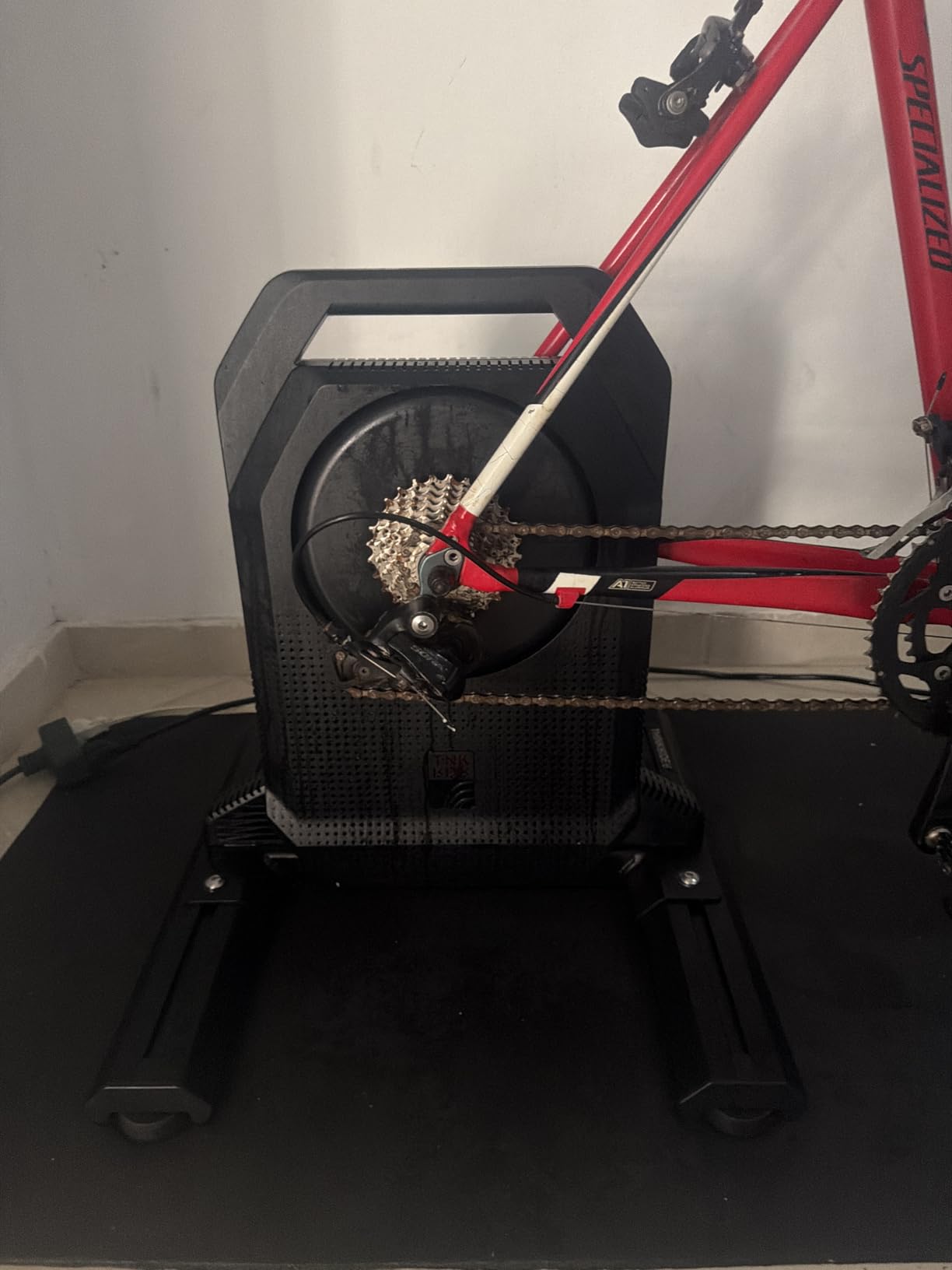
The ThinkRider XXPRO is a direct-drive electromagnetic trainer built around one number: 25% maximum analog slope, the steepest grade any unit in this roundup simulates. At 2500 watts of maximum power it out-muscles every other unit here, which means a 20% wall in a training app arrives as a genuine full-body effort rather than a slow fade.
What stands out beyond the headline grade is the self-powering design. The unit can generate its own electricity, so you can ride it without a power adapter plugged into the wall, which matters in rooms with awkward socket placement. Owners also like that the direct motor drive reports power to plus or minus 1% with no calibration step, so data stays honest without a spin-down routine.
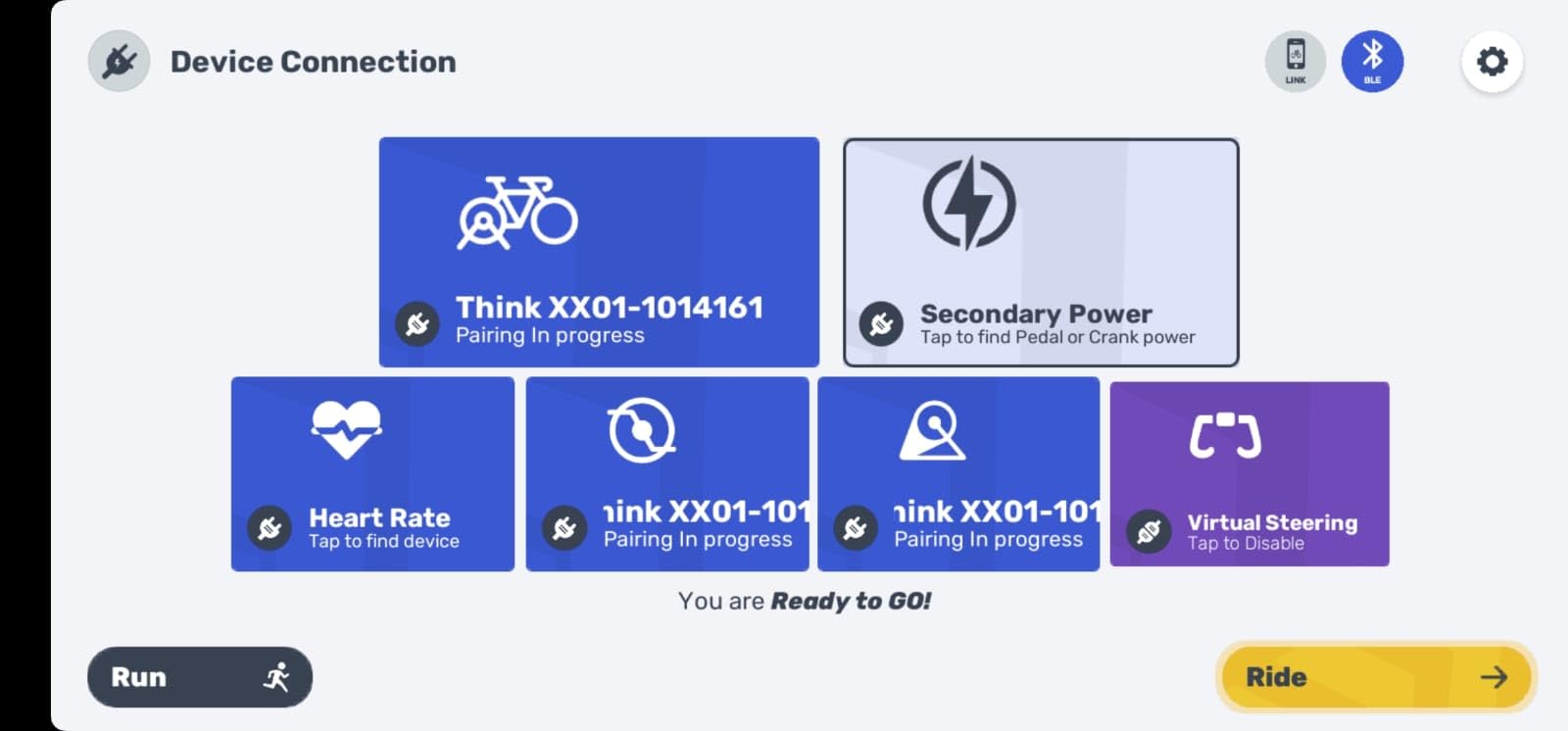
Connectivity covers Bluetooth, ANT+, a bike GPS head unit and Zwift, and downhill simulation adjusts automatically to the slope of the map rather than only handling climbs. The frame is iron, the load rating is 242 pounds, and the footprint is a compact 19.49 by 18.9 by 20.87 inches, which is smaller than most direct-drive units here.
The recurring complaints in reviews are about assembly rather than riding. Several owners report screws arriving at the wrong size, and the missing 7-speed cassette spacer catches people out during setup. A cassette is not included at all, and you will need cassette removal tools to fit one.
Who benefits most from this trainer
Riders in genuinely flat places who race or ride in the mountains will get the most from it, because 25% means you can rehearse the sort of gradient that ends a lot of riders on the road. It is also a good match for anyone who does long steady sessions and does not want a cable running across the floor.
Zwift, MyWhoosh and head-unit connectivity make it flexible for mixed setups, especially if you alternate between a laptop ride and a bike computer session. Owners who upgraded from a basic trainer frequently describe the ride feel as the biggest change rather than the numbers.
Where the setup will frustrate you
The brand’s own app is not available in the major app stores, so you are relying on third-party platforms or your head unit for most functions. That is fine if you ride in Zwift and a nuisance if you want brand-level software support.
Budget an evening for assembly and a cassette purchase before your first ride. If you want something that works out of the box with the hardware already in the box, one of the units that ships with a cassette installed is a calmer first experience.
3. ThinkRider X2Max Smart Trainer – quiet climbing without flagship pricing
- About 58dB at 30km/h makes it one of the quietest here
- 18% grade and 2000W cover most training
- Self-powered option for cable-free rooms
- Works with quick release and thru-axle bikes
- Short feet can tip during very hard standing efforts
- Cassette not included
- Setup notes for cassette fitting are unclear
- Companion phone app is basic
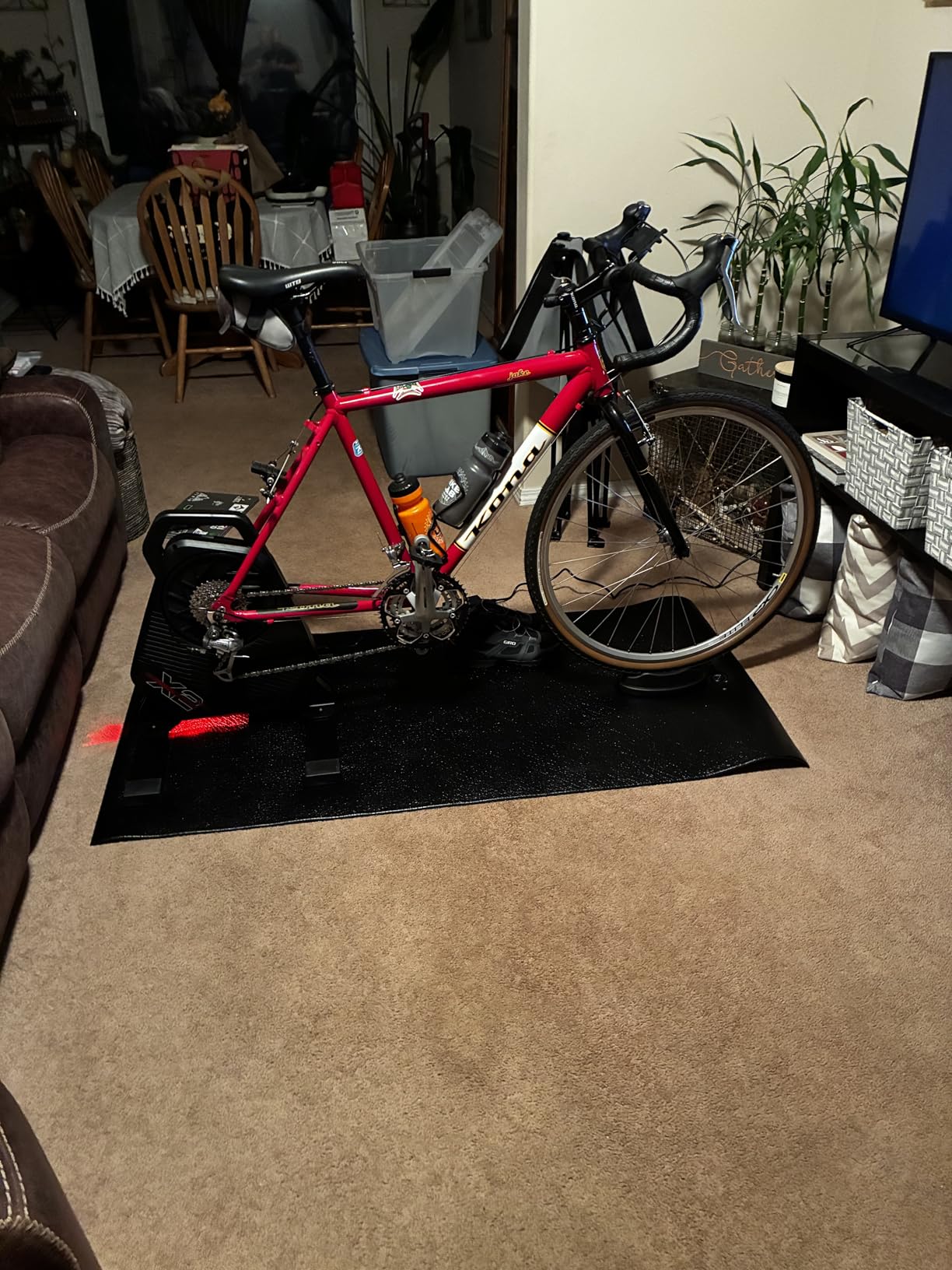
The X2Max is the trainer to look at if noise is your main concern. The published figure is about 58dB at 30km/h, which puts it among the quietest hardware in this roundup and comfortably ahead of anything wheel-on. In a flat with a downstairs neighbour, that number matters more than a couple of extra percent of grade.
Climbing capability is 18% with up to 2000 watts of resistance from a DEPT dynamic electromagnetic torque meter that reports power to plus or minus 2%. That is slightly wider than the plus or minus 1% figure on the ThinkRider XXPRO above, but for training decisions it is a difference you will not feel. Bluetooth and ANT+ both work, and it pairs with Zwift, Rouvy and MyWhoosh.
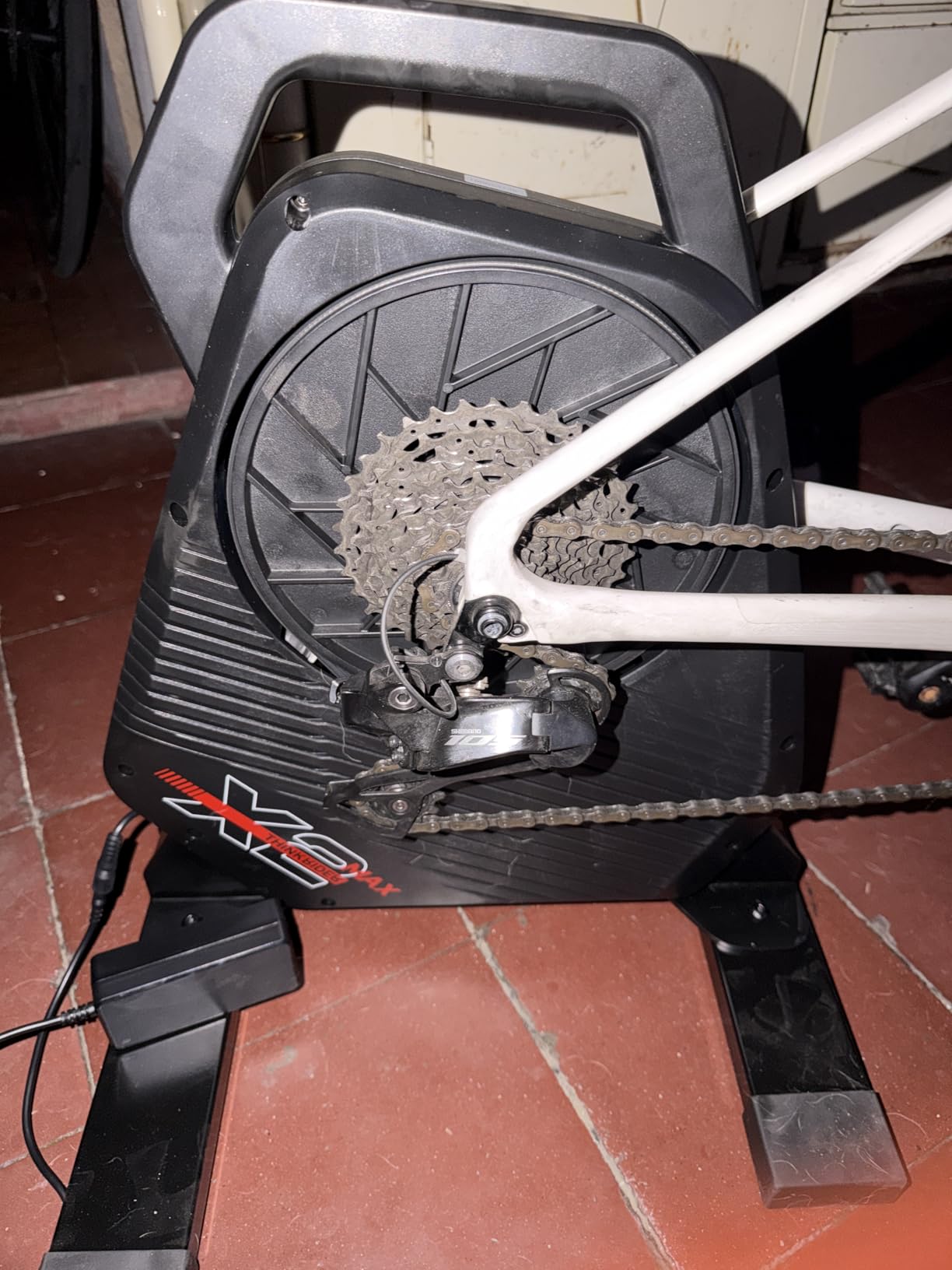
The structure is an I-beam triangular frame that owners credit for stability, weighing 35.2 pounds with a 240 pound load rating and a 17.7 by 19.2 by 21.6 inch footprint. Spacers and adapters are included, and it works with both quick-release and thru-axle bikes. Self-powered operation is possible if you would rather not run a cable to the wall.
Two issues come up repeatedly. The feet are reported as short, which can let the unit tip during aggressive standing efforts, and some owners note slight hub wobble that adds a bit of chain noise. The cassette is not included, and the instructions for fitting one are called out as unclear.
Why this is the value pick for climbing
Eighteen percent is enough to make hill sessions feel like hill sessions, and roughly 58dB means you can ride at odd hours without the whole household knowing. It suits riders in apartments, shared houses, or anyone training early before a long day.
It is also a sensible first direct-drive purchase for riders moving up from a wheel-on trainer, because the stability frame handles standing sprint work better than most entry-level units. Owners using it with Rouvy and MyWhoosh report straightforward Bluetooth pairing once the unit is set up.
Where you will feel the compromises
The short feet are the honest weakness. During repeated out-of-the-saddle efforts at high power, the front end can lift, and if you ride like that often you should step up to a unit with a wider base. The slight hub wobble producing chain noise is cosmetic rather than a power-accuracy problem.
You will also need to buy a cassette separately, and the phone app is described as basic. Neither of those stops the unit working with the big training platforms, but both are small friction points at setup time.
4. Wahoo Fitness Kickr Climb Hill Climbing Simulator – the only true front-wheel lifter
- The only unit here that physically lifts the front wheel
- 20% incline and 10% descent in one unit
- Handlebar remote for manual grade control
- Locked and unlocked response modes
- Will not work without a Wahoo KICKR trainer of 2017 or newer
- Only fits quick release hubs at listed spacings
- Nothing works if you already own a non-Wahoo trainer
The KICKR CLIMB does something none of the other seven units here do: it raises the front wheel into the air so the bike sits at a true road angle. Through app control or the handlebar remote it simulates inclines up to 20% and descents to 10%, which is a different sensation from electronic gradient because the whole bicycle moves with the hill.
That physical motion is the whole argument for this device. Riders describe steep virtual climbs as a serious pull-up rather than a number on a screen, because your weight shifts, your hands take load through the bars, and the front wheel floats. Reviewers consistently single out immersion as the reason the add-on earns its place.
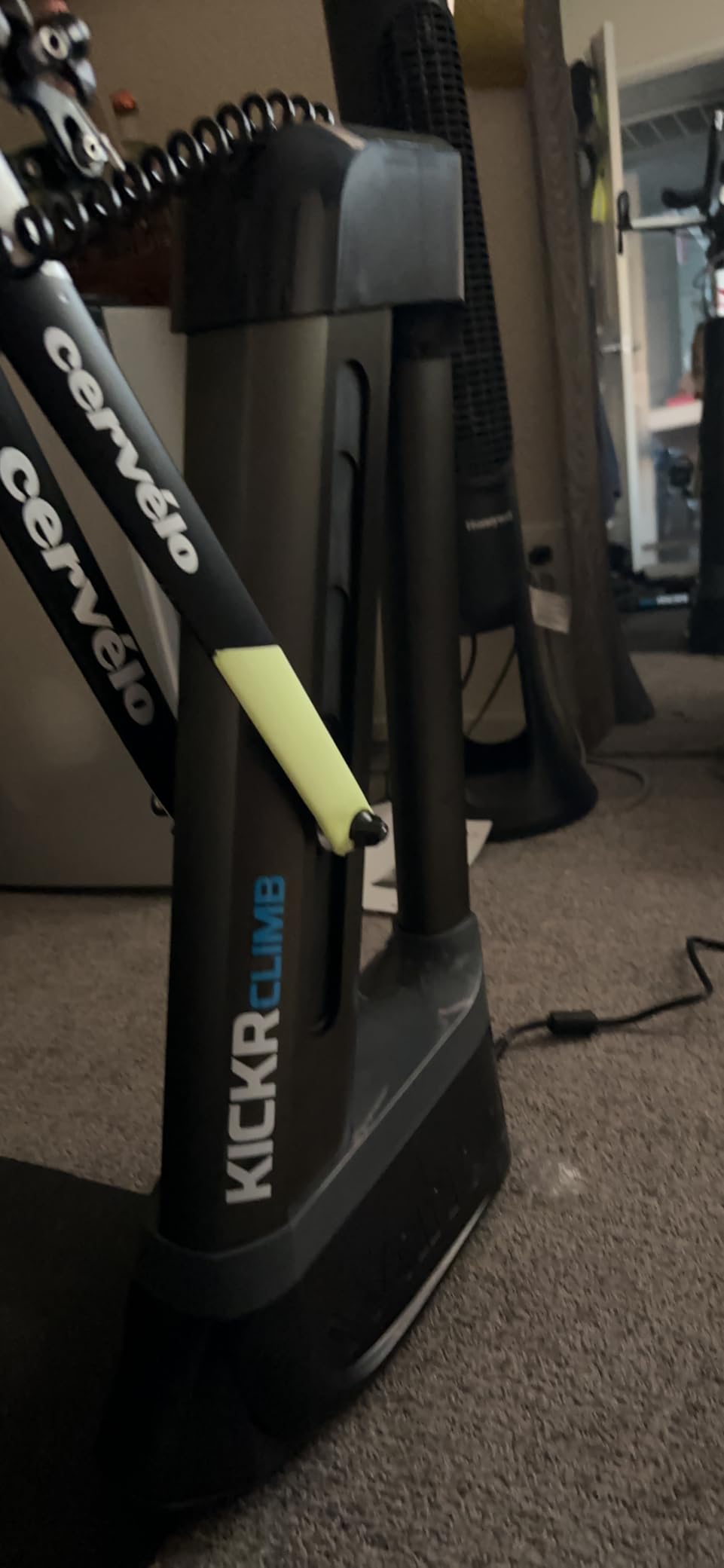
The catch is compatibility, and it is a hard one. The unit works exclusively with Wahoo KICKR smart trainers, specifically the KICKR, KICKR CORE and KICKR from the 2017 editions onward. It pairs directly to the trainer by proximity, supports locked and unlocked climbing modes so the unit either follows app input or only your remote, and works alongside Wahoo ELEMNT, BOLT and ROAM computers.
In the box you get the CLIMB unit, a power adapter and quick release adapters for 12×100, 15×100 and 15×110 hubs. The carbon steel unit weighs 5 kg, carries a 250 pound load rating, and comes with a one year manufacturer warranty. Wahoo SYSTM, Zwift and TrainerRoad are all named as controlling apps.
When the front-wheel lifter makes sense
If you are fully committed to the Wahoo ecosystem, this is the only way to get true whole-bike gradient in 2026. It suits riders who do long climbs, want descents simulated as well as climbs, and train on hills that get steeper than most electronic trainers will go.
Because it also descends to 10%, it is the only unit in this roundup that can take you back down a virtual mountain. For riders rehearsing a specific col or gran fondo climb, being able to ride both directions of the profile is a real advantage.
When it is the wrong purchase
If you own a Tacx, Elite, CYCPLUS or any other trainer, this unit simply will not work, and no adapter changes that. That makes it the highest-risk purchase in this guide for anyone who has not already chosen Wahoo hardware.
The listed hub adapters also cover quick release spacings only, so a thru-axle bike needs checking before you commit. And at 4.1 from 88 reviews it is the least well-reviewed unit here, with owners noting the ecosystem lock as a permanent limitation rather than a temporary one.
5. Garmin Tacx NEO 3M Smart Trainer – ride feel and road surface first
Garmin TacX NEO 3M Smart Trainer, Multidirectional Movement, Realistic Ride Fee
- 25% grade with descent simulation
- Motion plates give genuine fore and aft movement
- Virtual flywheel adds cobblestone and gravel feel
- 11-speed cassette pre-installed with no calibration
- Heaviest unit here at 52 pounds
- Large footprint at 23.4 by 24.8 by 31.5 inches
- Plastic frame material
- Cost puts it out of reach for most riders
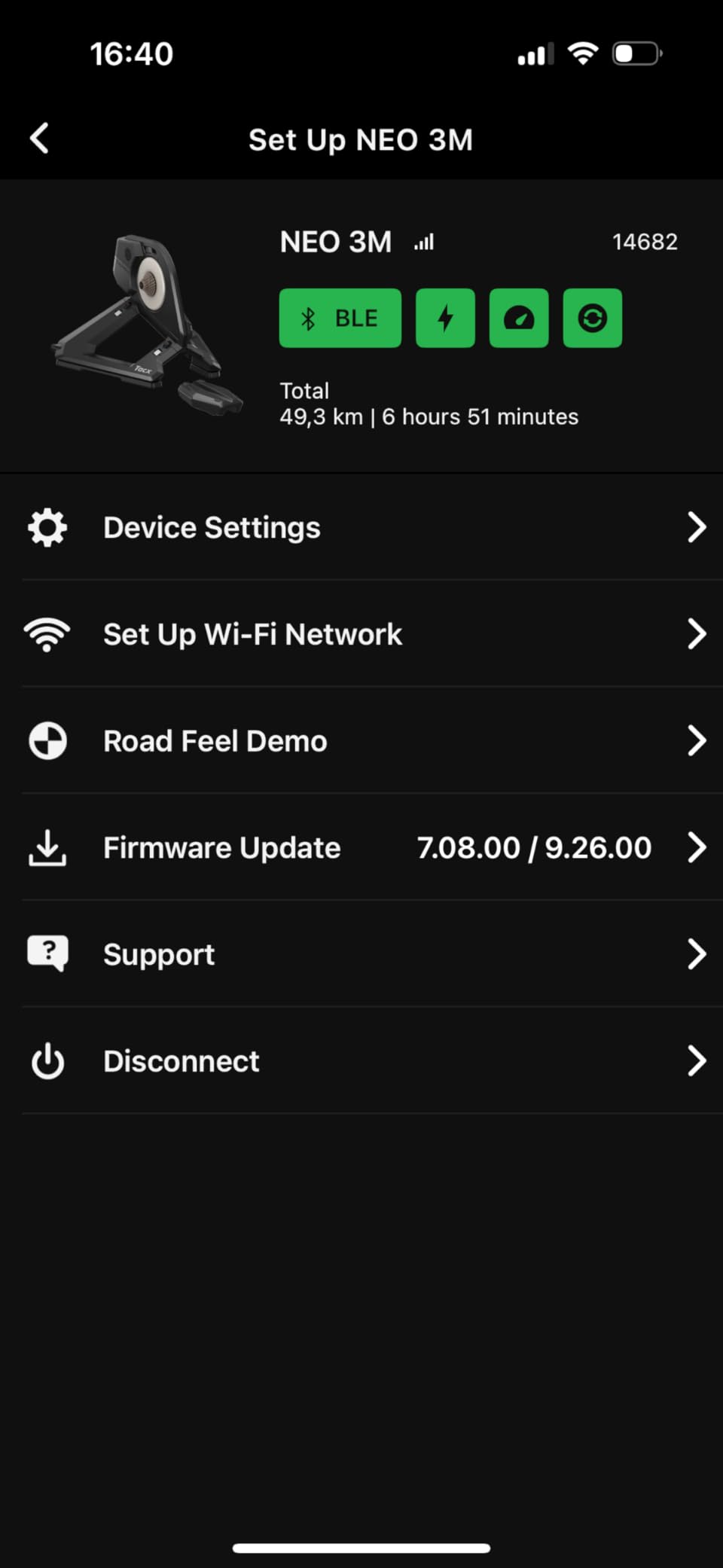
The Tacx NEO 3M is the most mechanically interesting unit in this roundup. It carries the same 25% grade ceiling as the ThinkRider XXPRO but adds descent simulation and integrated motion plates that you can toggle on and off, letting the bike move in more than one direction as the gradient changes. That fore-and-aft movement is what makes long sessions feel less rigid.
There is also a virtual flywheel that reproduces different road surfaces, including cobblestone and gravel, so the trainer can add texture to a ride rather than only resistance. Power accuracy is within 1% across a broad range, the design stays stable through 2200 watt sprints, and a built-in LED indicator shows your power output as a colour range so you can read effort without looking at a screen.
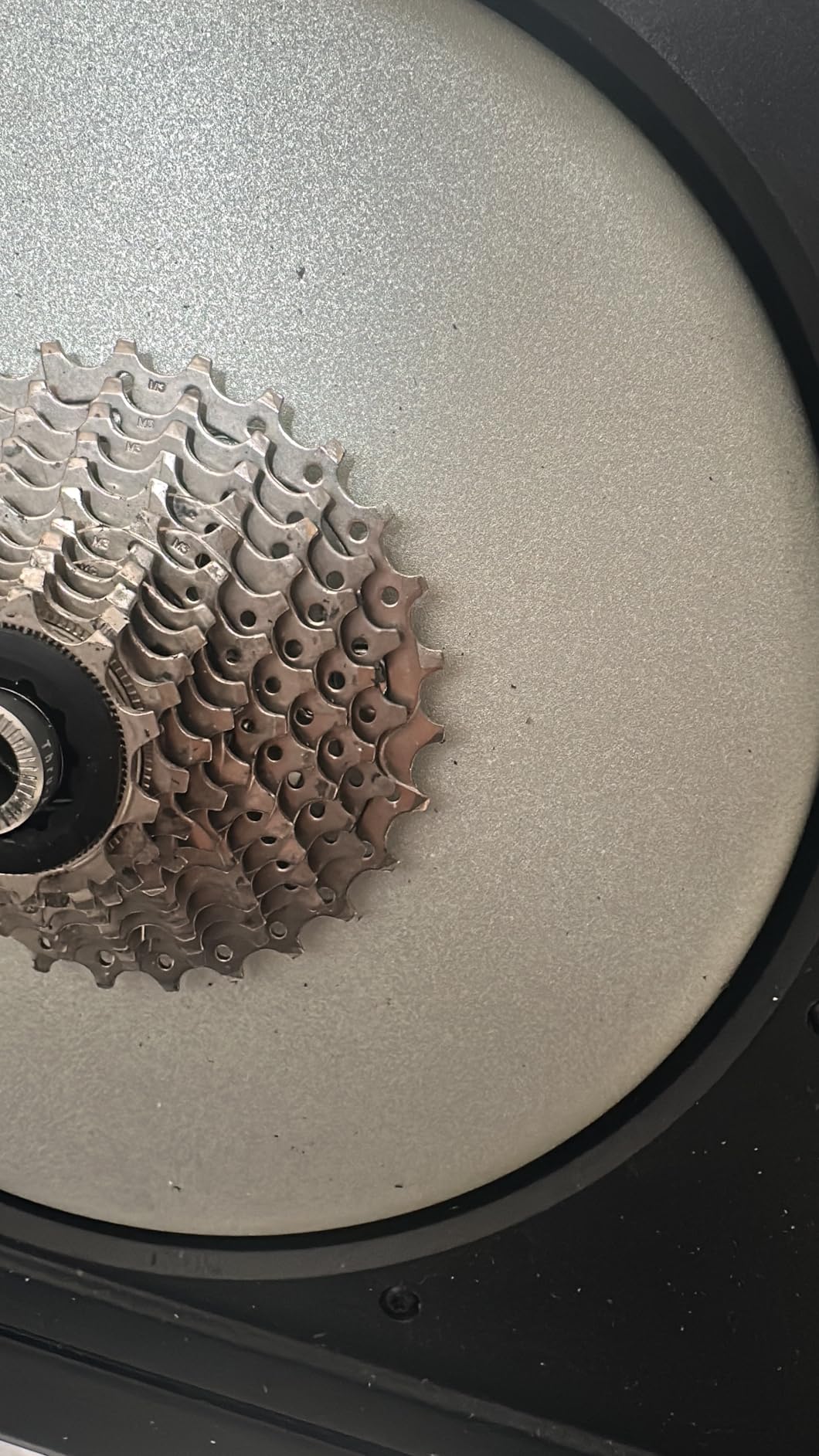
Setup is refreshingly simple. An 11-speed cassette is pre-installed and the trainer needs no calibration, and a smart network adapter supports Ethernet and Wi-Fi for stable multi-trainer connections. It integrates with TrainerRoad, Zwift and other popular apps, and a three-month Tacx Premium voucher is included to get you started.
The practical drawbacks are size and weight. At 52 pounds and a 23.4 by 24.8 by 31.5 inch footprint, this is the biggest unit here, and the frame is plastic rather than metal. The load rating is a generous 300 pounds, and quick release plus thru-axle adapters are in the box.
Who should spend up for this one
Riders doing long endurance sessions, or anyone who finds a rigid bike uncomfortable after an hour, are the people this is built for. The movement plates take pressure off the pelvis and lower back, which addresses the saddle soreness and back fatigue that long trainer sessions produce.
It is also the strongest option here for racing and descent practice, since it is one of only two units that can both climb to 25% and simulate the way back down. Zwift and TrainerRoad riders get the full experience out of the box.
Where the premium does not pay off
Price is the obvious barrier, and this sits at the top of the category by a wide margin. If your sessions are 45 minutes of structured training rather than three-hour endurance rides, the motion plates are a feature you will pay for and rarely notice.
Handling it is also the issue. Fifty-two pounds and a large footprint make this a poor fit for a small flat or a rider who wants to train in a hotel room. Anyone with limited floor space should read the physical dimensions twice before ordering.
6. CYCPLUS Smart Bike Trainer R200 – a quiet 19% workhorse
CYCPLUS Smart Bike Trainer R200, 2200W, 19% Gradient, Brushless Motor,
- 19% grade with uphill and downhill simulation
- 2200W peak at plus or minus 1% accuracy
- Self-powered and plug-in operation
- Two-year manufacturer warranty
- Easy assembly with clear packaging
- Virtual shifting needs the BC2 shifter sold separately
- Cassette not included
- No dedicated power switch on the unit
- Some reports of heat-related brake drag
The R200 is a 19% grade direct-drive unit that sits in the useful middle of this category: steep enough for serious climbing, cheap enough to be a first serious trainer, and built around a brushless motor that keeps noise down. It produces up to 2200 watts of peak power from an 80 N.m motor with plus or minus 1% accuracy, and it handles both uphill and downhill simulation in step with your riding software.
Two practical details make it easy to live with. It runs self-powered or plugged in, so you are not tied to a wall socket, and a built-in cooling fan with optimised airflow handles heat dissipation during long efforts. Connectivity is BLE and ANT+ for Zwift, MyWhoosh and the CYCPLUS app, and the load rating is 250 pounds.
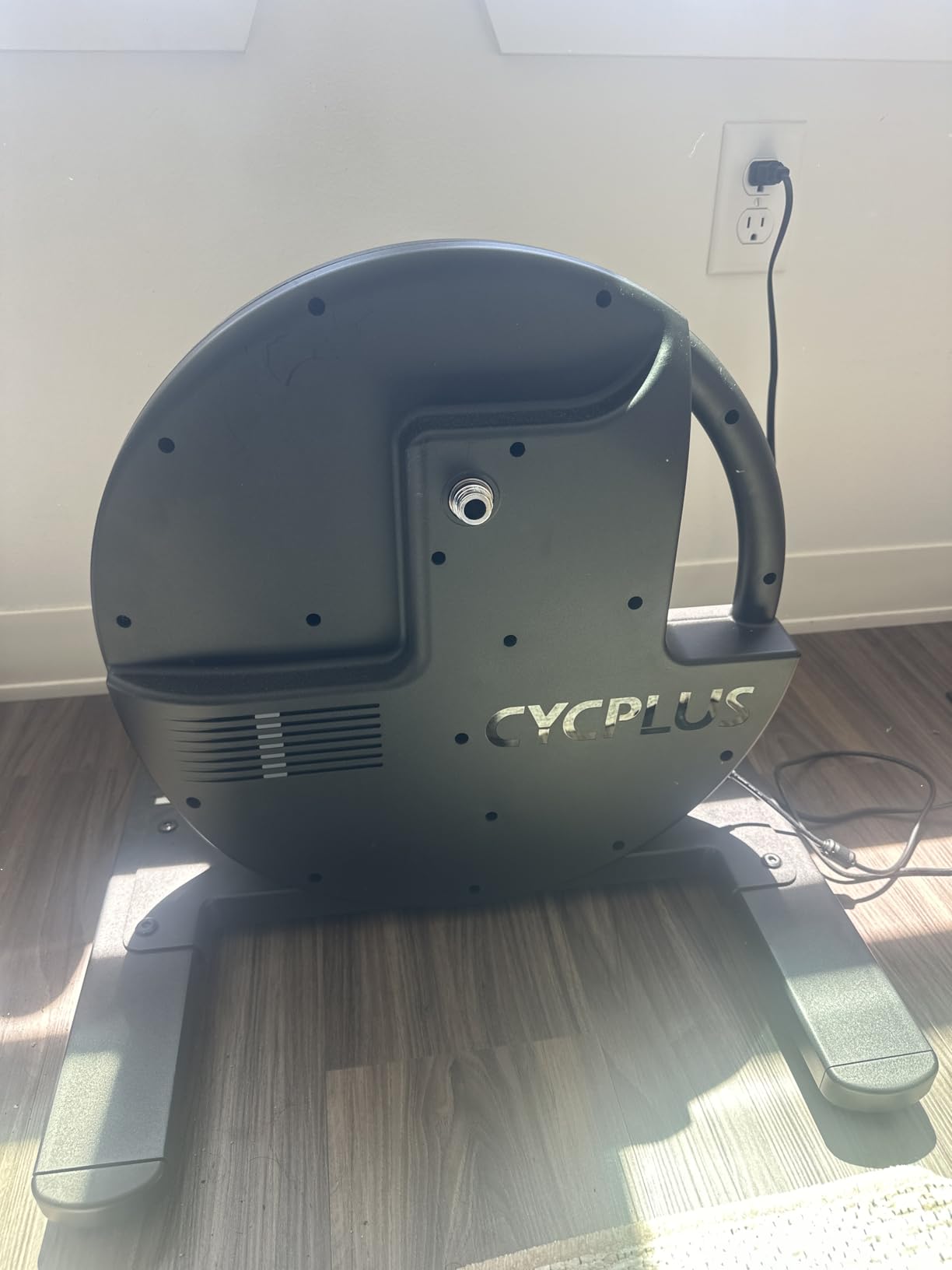
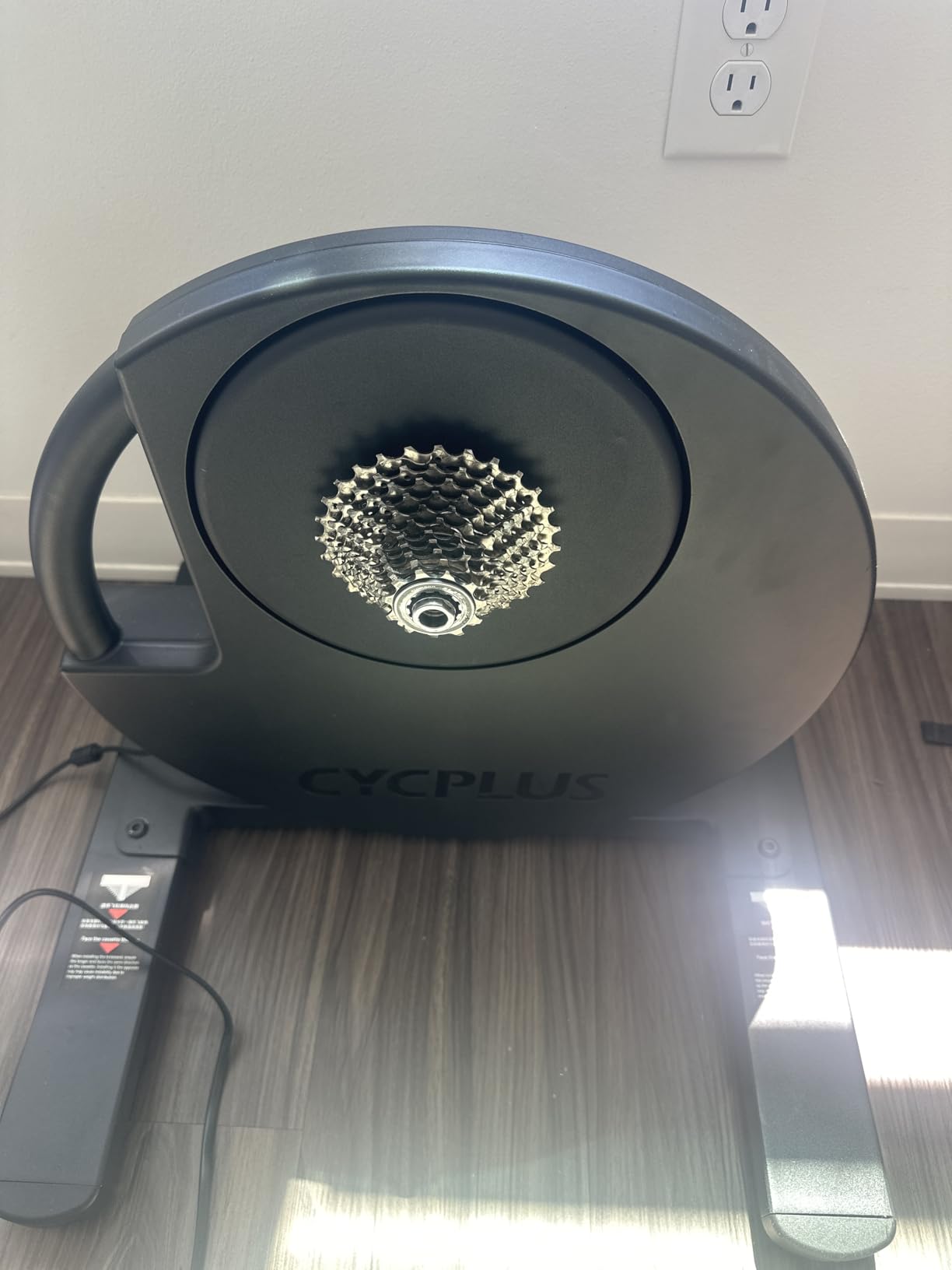
The box includes a quick release, a quick release adapter, a thru-axle adapter, an 8 to 10 speed cassette spacer, legs, screws and a power cable, with a two-year manufacturer warranty behind it. The frame is a mix of alloy steel, stainless steel and plastic at 20.47 by 18.31 by 20.35 inches.
Reviewers rate the assembly as straightforward and praise the packaging. The recurring gripes are the separate BC2 shifter needed for virtual shifting, the missing cassette, and an absence of a dedicated power switch, which means unplugging the unit rather than pressing a button. A few owners report heat-related brake drag after long rides, and the cooling fan is audible at higher speeds.
Why this suits a shared home
The brushless motor and the 19% ceiling make this a good balance for anyone who wants real climbing without a machine that shakes the floor. The cooling fan keeps temperatures down on long efforts, which is the part of the package that matters most for ride after ride.
Riders moving from a wheel-on trainer will find the jump in power accuracy and low-speed control obvious, and the two-year warranty is longer than most in this roundup. It is also a straightforward upgrade path if you later want virtual shifting, since the shifter is the only extra part.
Where it falls down
Virtual shifting is a paid extra, and the shifter is sold separately, so budget for it if you want single-cog riding. Without a cassette in the box you are also buying that on day one, which is a common source of confusion during first assembly.
Heat-related brake drag is the complaint to watch. If your sessions run past a couple of hours in a warm room, check that airflow around the unit is clear, and expect a service conversation if resistance starts to feel gritty late in a ride.
7. CYCPLUS Smart Bike Trainer T2 – folds flat when the ride is done
CYCPLUS Smart Bike Trainer T2 2200W Brushless Motor,20% Gradient
- 20% grade simulation with a compact folded footprint
- 2200W and plus or minus 1% with no calibration
- 85 N.m brushless motor runs very quietly
- 11 setting selection
- Two-year warranty
- BC2 shifter needed for virtual shifting
- Shimano-only cassette in the box
- Sporadic cadence readings over ANT+ on laptops
- Reports of spinning out at the highest efforts
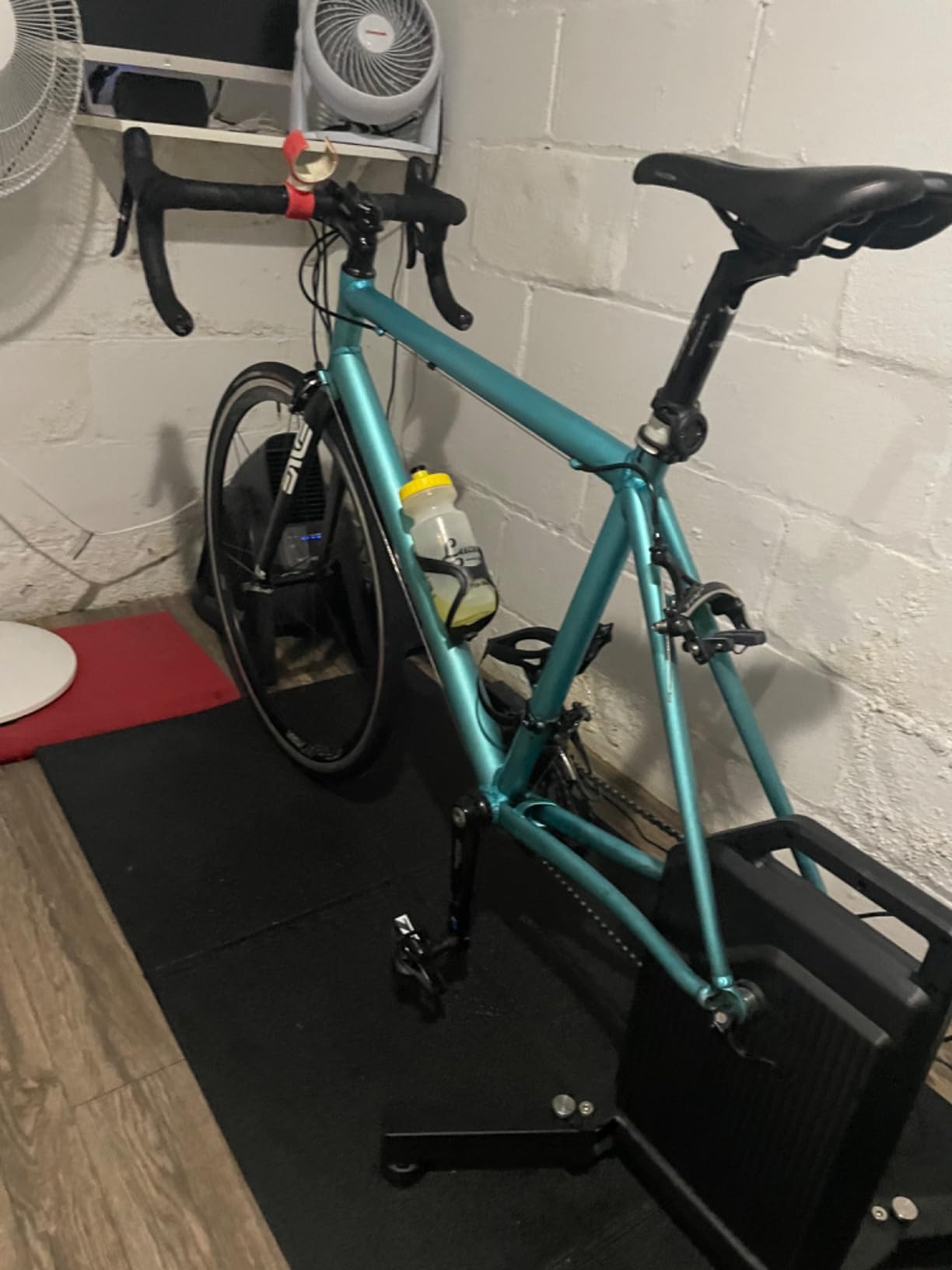
The T2 is the one to consider if your bike lives in a small room and comes out when you train. It folds to 11.8 by 10.1 inches with a slim 2.1 inch profile and an oversized handle, which is a genuine difference in a flat where floor space is the limiting factor. Climbing capability is 20%, right in line with the dedicated Wahoo unit, with automatic adjustment from cycling apps.
The motor is an 85 N.m brushless unit delivering up to 2200 watts at plus or minus 1% accuracy with no calibration needed. Owners coming from a Wahoo KICKR v5 report smoother and quieter delivery, and several describe the power readings as matching spider-based power meters. Support is listed for riders up to 220 pounds, and there are 11 setting selections.
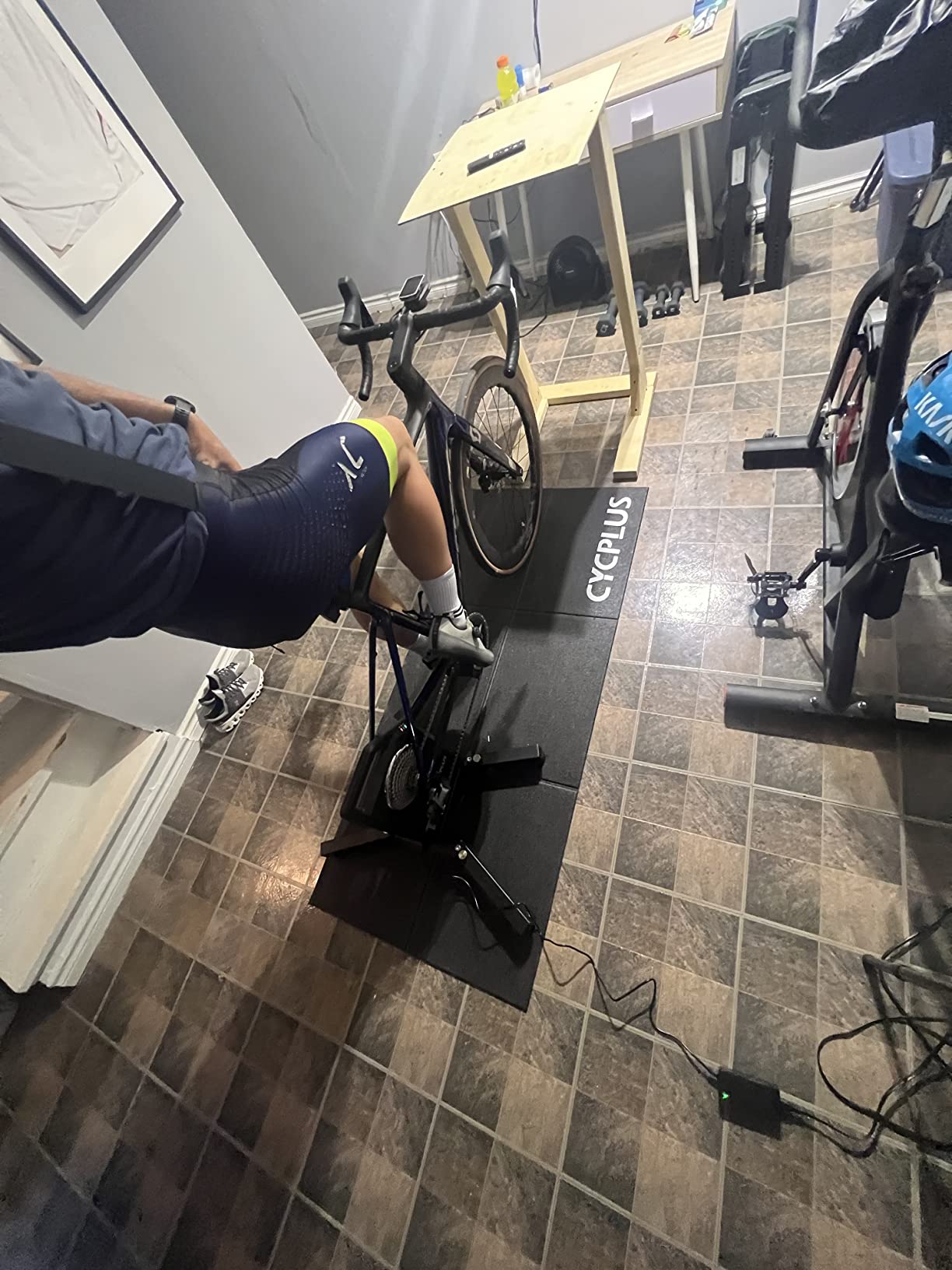
Connectivity is dual-mode BLE and ANT+ for Zwift and the CYCPLUS app, the unit works self-powered or plugged in, and a two-year warranty applies. A T3 variant also exists in the same family, and the build is alloy steel, metal, plastic and stainless steel at 17.2 kg, or 37.9 pounds.
The limitations are mostly around accessories. Virtual shifting needs the BC2 shifter, and the cassette that ships is Shimano, with SRAM available through the brand’s own site. Cadence readings have been reported as sporadic over an ANT+ dongle on a laptop, though the same owners say it works fine on an Apple TV.
When the folded footprint changes the decision
If your trainer has to disappear between sessions, a folded depth of 11.8 by 10.1 inches is the number that makes this one work. Riders in studio flats, guest rooms, or homes where the bike doubles as furniture are the ones who get real value from it.
For everyone else, 20% of electronic grade, a quiet brushless motor and plus or minus 1% accuracy make this a solid all-rounder for structured climbing sessions, and the two-year warranty is a good length of cover.
Where you should look elsewhere
Reports of spinning out during the highest intensity efforts suggest this is a training trainer rather than a sprint machine, so racers doing short maximal efforts may find it wanting at the top end. A heavier unit with a larger motor handles that better.
The Shimano-only cassette and the extra cost of the BC2 shifter both add to the total, and the laptop cadence issue is worth knowing about if you plan to ride off a computer rather than a bike computer. Check your platform before committing.
8. Elite Tuo Interactive Wheel-On Trainer – the cheapest way to test climbing indoors
- Lowest cost way to try gradient riding
- Compact 23 by 23 by 9 inch footprint
- ANT+ FE-C and Bluetooth FTMS connectivity
- Beechwood legs suit a living space
- Only 10% grade simulation
- 10% figure is well short of the direct-drive units
- Louder and tyre-wearing by design
- Calibration and myETraining app issues reported
The Elite Tuo is a wheel-on magnetic trainer with 10% gradient simulation, and its job is to tell you whether indoor climbing training is something you enjoy before you spend flagship money. At 10 kg and a 23 by 23 by 9 inch footprint with beechwood legs, it is the smallest, lightest and least industrial-looking unit in this roundup.
Wireless communication covers ANT+ for FE-C, power, speed and cadence, plus Bluetooth FTMS for power, speed and cadence, and three LED indicators show power, ANT+ and Bluetooth status. Output is up to 550 watts at 20 km/h and 1300 watts at 40 km/h, with 16 setting selections, a 300 pound load rating, and a two-year manufacturer warranty.
Being a wheel-on trainer is the defining trade-off. Your rear tyre takes the load rather than the drivetrain, which is why it is louder and why tyres and tubes wear faster. It also needs a proprietary thru-axle adapter, and both hybrid and mountain bike setups fit as well as road.
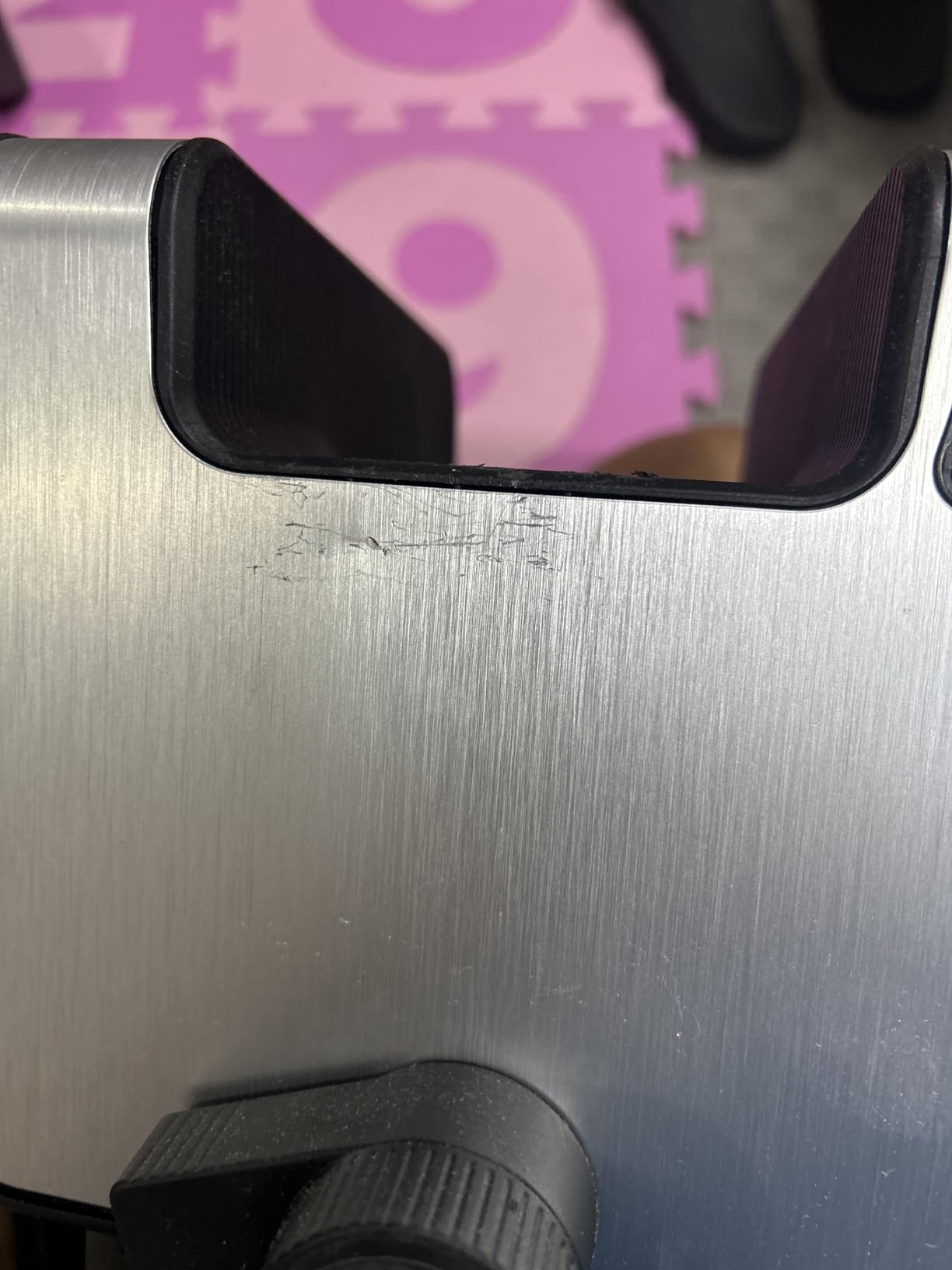
At 3.5 from 43 reviews, this is the weakest-reviewed unit here, and the reasons are consistent: calibration difficulties, the myETraining app forgetting settings, confusing assembly instructions, and reports of cracked plastic panels and wrong power adapters being shipped.
Who it works for
If your current training is zone 2 and light intervals, this is a low-risk way to add a 10% gradient to the mix and find out whether you respond to virtual climbing. It suits riders on a hard budget, in a small flat, or anyone who needs the trainer to fit in a cupboard between rides.
It pairs with Zwift, Rouvy and Garmin devices, and the beechwood legs mean it does not look like gym equipment in a living room. For riders under 300 pounds with a road or hybrid bike, the setup is straightforward enough once you have the right adapter.
Why most riders should step up instead
Ten percent is a shallow hill. Most of the climbs riders want to practise are steeper, and no firmware update will move this ceiling, so the training value runs out quickly. If your interest in climbing is real, 10% will not tell you much about the steeper stuff.
Add tyre wear, louder operation and the reported calibration problems, and a direct-drive unit a couple of tiers up is usually the better first serious purchase. Treat the Tuo as a stopgap or a second trainer for a second bike rather than a long-term climbing platform.
Do You Even Need a Separate Climbing Simulator?
You probably do not need the add-on. Of the eight units here, seven are complete direct-drive trainers that deliver gradient electronically through the motor, with no separate accessory required. The only true climbing simulator is the Wahoo KICKR CLIMB, and it exists because it lifts the front wheel rather than only changing resistance.
The question worth asking is whether electronic gradient is enough for your training. If your trainer already simulates 16% to 20%, the marginal benefit of more climbing hardware is small, and the forum consensus among indoor riders is that a working smart trainer on its own handles zone 2 and interval work fine. If you are a flat-region rider racing in the hills, virtual climbing has a specific purpose that no amount of flat intervals covers, and that is where these units pay for themselves.
Compatibility: Which Trainer Goes With Which Simulator
Get this right before you buy anything, because it is the most common expensive mistake in this category. The Wahoo KICKR CLIMB is an accessory, not a trainer, and it works exclusively with Wahoo KICKR, KICKR CORE and KICKR SNAP models from the 2017 editions onward. It will not attach to a Tacx, Elite or CYCPLUS trainer under any circumstances.
Everything else in this roundup is standalone. The Tacx Neo 2T, the Tacx NEO 3M, both ThinkRider trainers and both CYCPLUS trainers are complete units that need no additional hardware to simulate a gradient. That is the single biggest practical difference in this list, and it is why a standalone trainer is usually the safer first purchase than an add-on tied to one brand.
What to Look For Before You Buy
Max simulated grade is the headline number, but treat it as a ceiling rather than a promise. A rider weighing 70 kg producing 250 watts is already at a demanding gradient, and 18% to 20% covers the great majority of real road climbs. Numbers above 25% matter mostly for Zwift climbing spikes and ultra-steep alpine stages.
Descent simulation is the criterion most lists skip. Only the Wahoo unit descends to 10% and the Tacx NEO 3M simulates descent, so if you want to ride a mountain profile in both directions, those two are your only options in this group.
Wattage and accuracy decide how the grade feels. 2200 watts gives headroom for sprints, and plus or minus 1% accuracy means your power data can be trusted for interval targeting. Anything at plus or minus 2% is still usable.
Noise and footprint come last for most buyers and first for anyone in an apartment. Published figures of about 58dB at 30km/h sit at the quiet end here, while wheel-on designs are inherently louder and wear tyres. Folded dimensions matter if the bike lives in a room you also use for other things.
Finally, check the wireless standard. ANT+ FE-C and Bluetooth FTMS are both common, and units with both connect to more computers, head units and apps. A unit that only speaks one protocol can limit which devices you can ride from.
Where to Ride Once You Have a Simulator
Zwift is the default answer for gradient work because its elevation data drives the steepest climbs and the most consistent lane-based riding. Rouvy is a strong alternative when you want to follow real recorded routes and climbs, and TrainerRoad suits structured interval programming rather than open riding.
MyWhoosh is worth a mention as a free option, and most units here connect to a head unit over ANT+ or Bluetooth FTMS if you would rather ride from a bike computer. Whichever platform you pick, confirm your trainer speaks the same protocol as the device you plan to use.
Frequently Asked Questions
What is the best climbing simulator for indoor cyclists?
The Garmin Tacx Neo 2T is the most proven option, with 472 owner reviews at a 4.7 average, 16% electronic grade simulation and 2200W of resistance. The ThinkRider XXPRO matches the steepest grade available here at 25% and 2500W, and the Wahoo KICKR CLIMB is the only unit here that physically lifts the front wheel to 20% incline.
Do I need a separate climbing simulator if my trainer already simulates 20%?
Usually not. If your smart trainer already simulates 16% to 20% electronically, the added benefit of climbing hardware is small and a better spent budget goes toward power accuracy or a quieter unit. A separate front-wheel lifter only makes sense if you want true whole-bike geometry and ride steeper virtual terrain than your current trainer can deliver.
What trainer does the Wahoo KICKR CLIMB require?
The KICKR CLIMB works exclusively with Wahoo KICKR smart trainers, including the KICKR, KICKR CORE and KICKR SNAP from the 2017 editions onward. It will not work with Tacx, Elite, CYCPLUS or any other brand. Quick release adapters for 12×100, 15×100 and 15×110 hubs are included.
Can a climbing simulator simulate downhill as well as uphill?
Some can. The Wahoo KICKR CLIMB simulates a 10% descent alongside 20% of climb, and the Tacx NEO 3M and the ThinkRider XXPRO include downhill simulation driven by the route profile. The other units in this roundup hold the bike level and change resistance only, so descents are simulated electrically rather than physically.
Is simulated climbing useful if I ride indoors mostly for fitness?
It can be, but the benefit depends on your goal. Riders who want to prepare for hilly events get real value from gradient work because it rehearses pacing and standing rhythm. Riders training purely for general fitness get most of the benefit from structured intervals, and a mid-range trainer with 18% to 20% simulation covers that well enough.
Conclusion
After ranking eight of the best climbing simulators for indoor cyclists, the Garmin Tacx Neo 2T stays our pick because its 472-review record and smooth 16% gradient are the most dependable foundation for regular climbing sessions. The ThinkRider XXPRO takes the steepest terrain at 25%, and the ThinkRider X2Max delivers 18% climbing at the quietest volume in the group.
Only buy the Wahoo KICKR CLIMB if you already run Wahoo trainer hardware, since it is the single unit here that lifts the front wheel rather than changing resistance alone. Check the brand of your current trainer first, and use the comparison above to match the grade ceiling to the hills you actually want to ride.