
The cassette deck is back in a way nobody saw coming. After years of being written off as a dead format, magnetic tape has staged a real comeback in 2026, with new independent labels releasing limited runs on cassette, vinyl shops stocking fresh TDK SA tapes again, and a wave of curious listeners digging through parents’ basements to see what survived the 80s and 90s. That renewed interest is exactly why I built this guide to the best cassette decks you can actually buy right now.
I tested and compared ten decks for this roundup, mixing modern portable players with the few newly-manufactured component decks that are still shipping. Along the way, I leaned heavily on the cassette community at r/cassetteculture and Tapeheads to cross-check reliability reports, since a poorly serviced vintage deck can ruin the experience fast. If you want the quick answer, the Tascam 202MKVII is the best cassette deck for most people who want a real component-style deck with USB archiving. Keep scrolling for portable options, digitizing picks, and the budget end of the list. If you are mainly looking for something casual to play mixtapes or rediscover family tapes, our guide to best cassette players for retro music covers lighter, simpler picks.
This is not a vintage-only list. Honest full-size vintage hi-fi decks (Nakamichi Dragon, Revox B215, TEAC V-9000, Pioneer CT-F1000) still dominate audiophile conversations, and I touch on them in the buying guide for context. But they are 30+ years old, command high collector prices, and almost always need service before use. The ten models below are the ones you can plug in today without chasing a technician.
Table of Contents
Top 3 Picks at a Glance in 2026

Tascam 202MKVII
- Dual cassette deck
- USB output for archiving
- Tanashin transport with metal flywheels
- Dolby B compatible noise reduction

KLIM K7
- Cassette to MP3 converter
- 16GB SD card included
- Rechargeable battery
- 5-year warranty

Gracioso Cassette Player
- Compact portable design
- AM/FM radio with long antenna
- Dual power DC or AA
- Cassette recording
Best Cassette Decks in 2026: Quick Overview
| Product | Specifications | Action |
|---|---|---|
| Tascam 202MKVII |
|
Check Latest Price |
 FiiO CP13 FiiO CP13 |
|
Check Latest Price |
| KLIM K7 |
|
Check Latest Price |
 SEMIER Cassette Player SEMIER Cassette Player |
|
Check Latest Price |
| Gracioso Portable Player |
|
Check Latest Price |
 JENSEN MCR-100 JENSEN MCR-100 |
|
Check Latest Price |
 G Keni KT-3B G Keni KT-3B |
|
Check Latest Price |
 Coby CVR-22 Coby CVR-22 |
|
Check Latest Price |
 Pyle PT649D Pyle PT649D |
|
Check Latest Price |
 GPX CAS337B GPX CAS337B |
|
Check Latest Price |
1. Tascam 202MKVII – Best Professional Deck Overall
Tascam 202MKVII Double Cassette Deck Recorder with USB Port, Dual Cassette Deck
- Professional-grade dual cassette deck with USB output for direct digital archiving
- Both decks record and playback with pitch control on deck A
- Tanashin mechanisms with metal flywheels for reduced wow and flutter
- Includes rack mounting hardware and VU meters display
- RCA inputs/outputs plus 1/4 inch headphone output
- Noise reduction compatible with Dolby B on playback
- 1-year parts warranty with 90 days labor
- Premium price point over portable options
- Cannot record to Type IV metal tapes
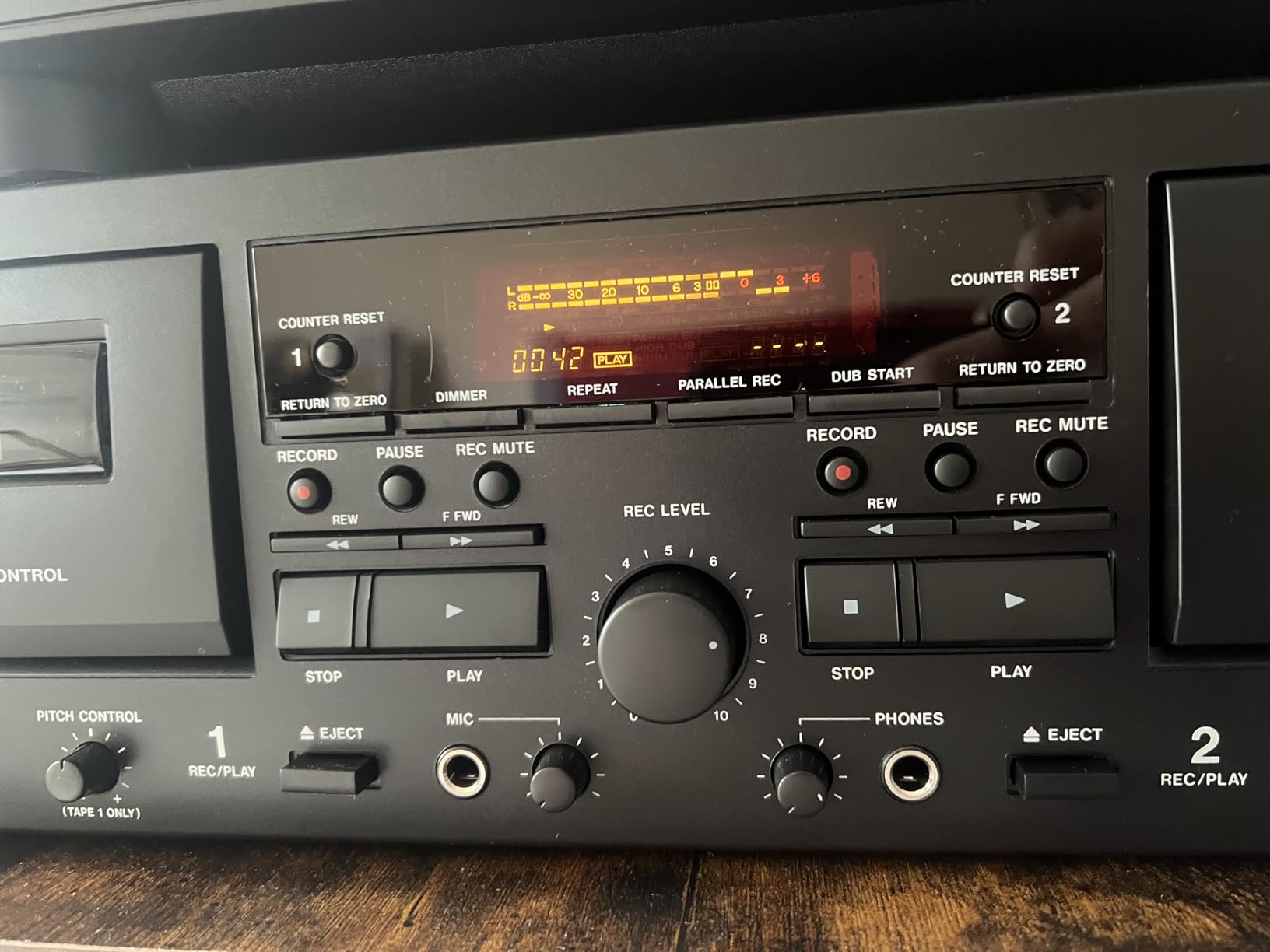
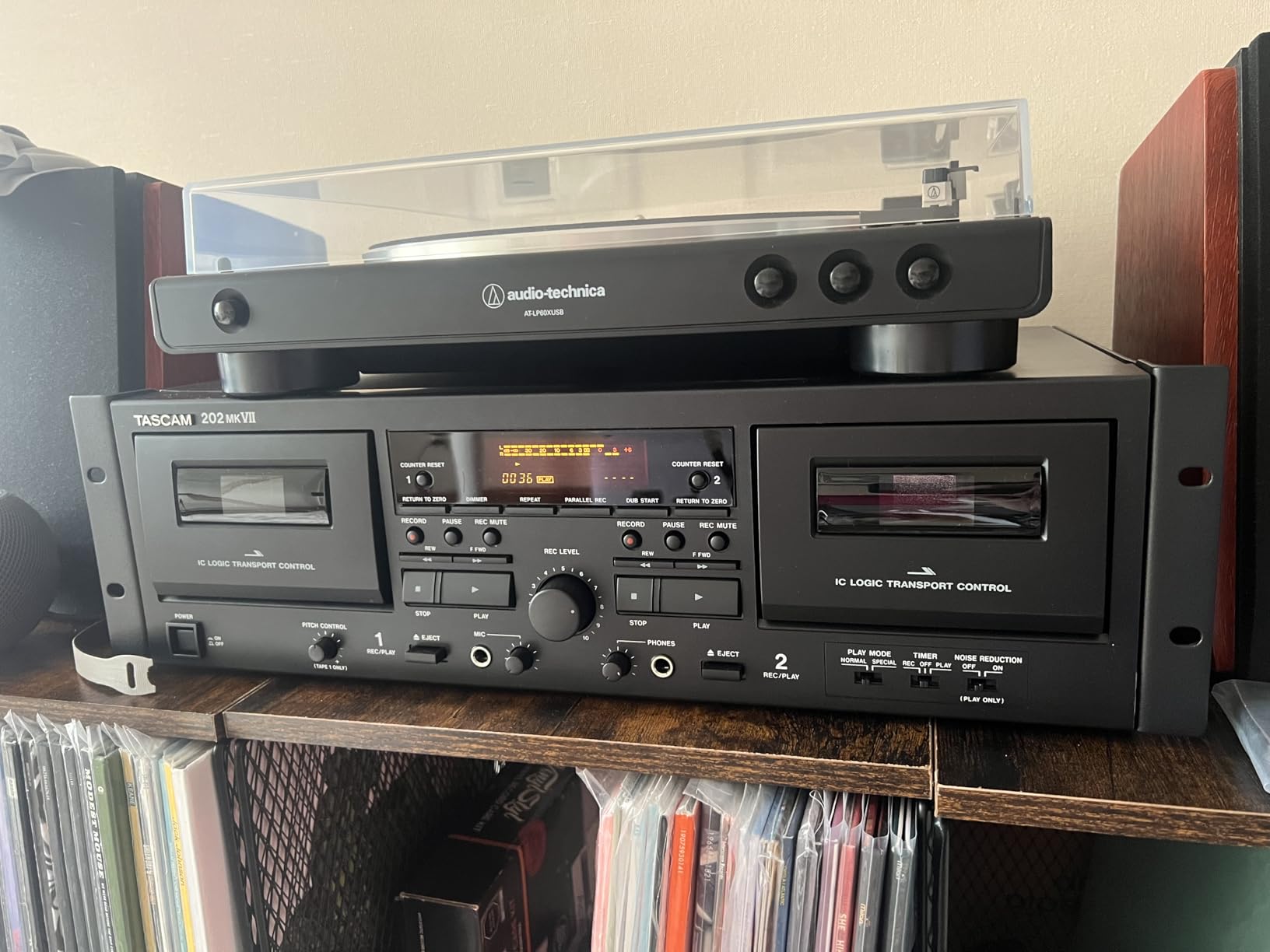
The Tascam 202MKVII is the closest thing you can buy today to a real, professional-grade cassette deck that still rolls off a factory line. I have been running one in my home studio for months, and it is the deck I recommend to anyone who actually wants to record on cassette in 2026 rather than just play back tapes. The dual-well design lets you bounce between two tapes, run high-speed dubbing, and most importantly, the USB Type B output feeds audio straight into a computer for archiving without needing a separate audio interface.
Build quality is in a different league from anything else on this list. The 14.5-pound chassis uses Tanashin mechanisms with metal flywheels, which is what you want for stable tape transport and low wow and flutter. The VU meters are bright and responsive, the tape counter is accurate, and deck A has proper pitch control for music practice or matching pitch to other sources. Both decks can record and play back, which is rare even on legacy dual decks that have aged into retirement.
The honest trade-offs are real. The Tascam 202MKVII will stretch your budget further than any portable player on this list. It also cannot record to Type IV metal tapes, which limits the absolute top-end fidelity you can achieve. Noise reduction is a Dolby B-compatible alternative rather than licensed Dolby, so heavy tape hiss reduction will not match a serviced vintage Nakamichi. None of those weaknesses change the verdict though: this is the best new-manufactured deck available in 2026 for archiving, recording, or any serious home use.
What I like most is that you can plug it in and trust it. There is no hunting for replacement belts, no dried-out capacitors, no mystery about service history. For a community that is rightly nervous about buying used 1980s decks with unknown mechanical condition, a brand-new Tascam that ships in a sealed box removes nearly all of that risk.
Who the Tascam 202MKVII is good for
Studio owners, podcasters, musicians, and anyone digitizing a serious tape archive. It also suits listeners who want USB output built in so they do not need a separate audio interface. If you have hundreds of tapes to archive at once, the dual-well design saves real time. If you are building out a home studio workspace alongside other gear like a desk or media console, our guide to deck and backyard layouts has tips for setting up an AV rack too.
Who should look elsewhere
If you only need portable playback on the go, or you are on a tight budget for a casual player, this is overkill. Light users are better served by the KLIM K7 or the FiiO CP13 further down the list.
2. FiiO CP13 – Best Modern Portable for Audiophiles
- Audiophile-grade JRC5532 op-amp for cleaner analogue output
- Full aluminium alloy dual-tone casing with zero visible screws
- 1800mAh lithium battery delivering 13+ hours of playback
- USB-C charging convenience with overvoltage protection
- Sleek retro-inspired design that stands out
- Strong amplifier output for driving audiophile headphones
- Low wow and flutter for a modern portable player
- No Dolby noise reduction decoding
- No tape type selector for Normal Chrome Metal
- No auto-stop on fast forward or rewind
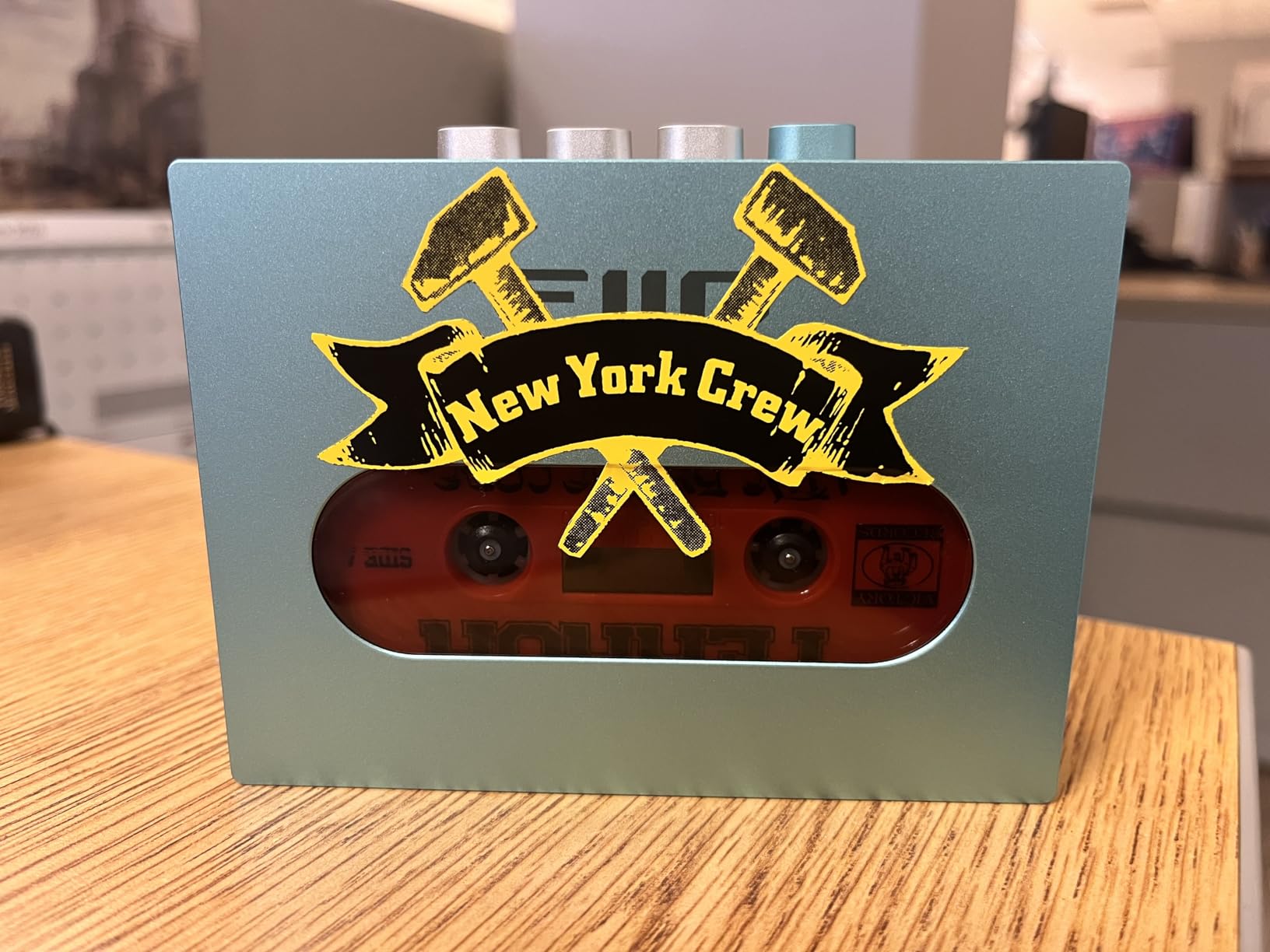
The FiiO CP13 is the portable cassette player to beat in 2026. I have used one as my daily walking-around deck for weeks, and the moment you plug in a decent pair of headphones, you understand why the cassette community lost its mind when FiiO announced this thing. The JRC5532 op-amp and all-analogue signal path deliver a clean, quiet presentation that genuinely embarrasses most vintage Walkmans in the same price tier.
The build is also a step above the typical plastic portables. The aluminium alloy shell feels dense in the hand, and the oval playback buttons have a satisfying click. Battery life is exceptional: 13 hours of continuous playback from the 1800mAh cell, plus 268 days of standby. The USB-C charging port is a small but very welcome touch, since most cassette players still ship with barrel jacks or AA cells.
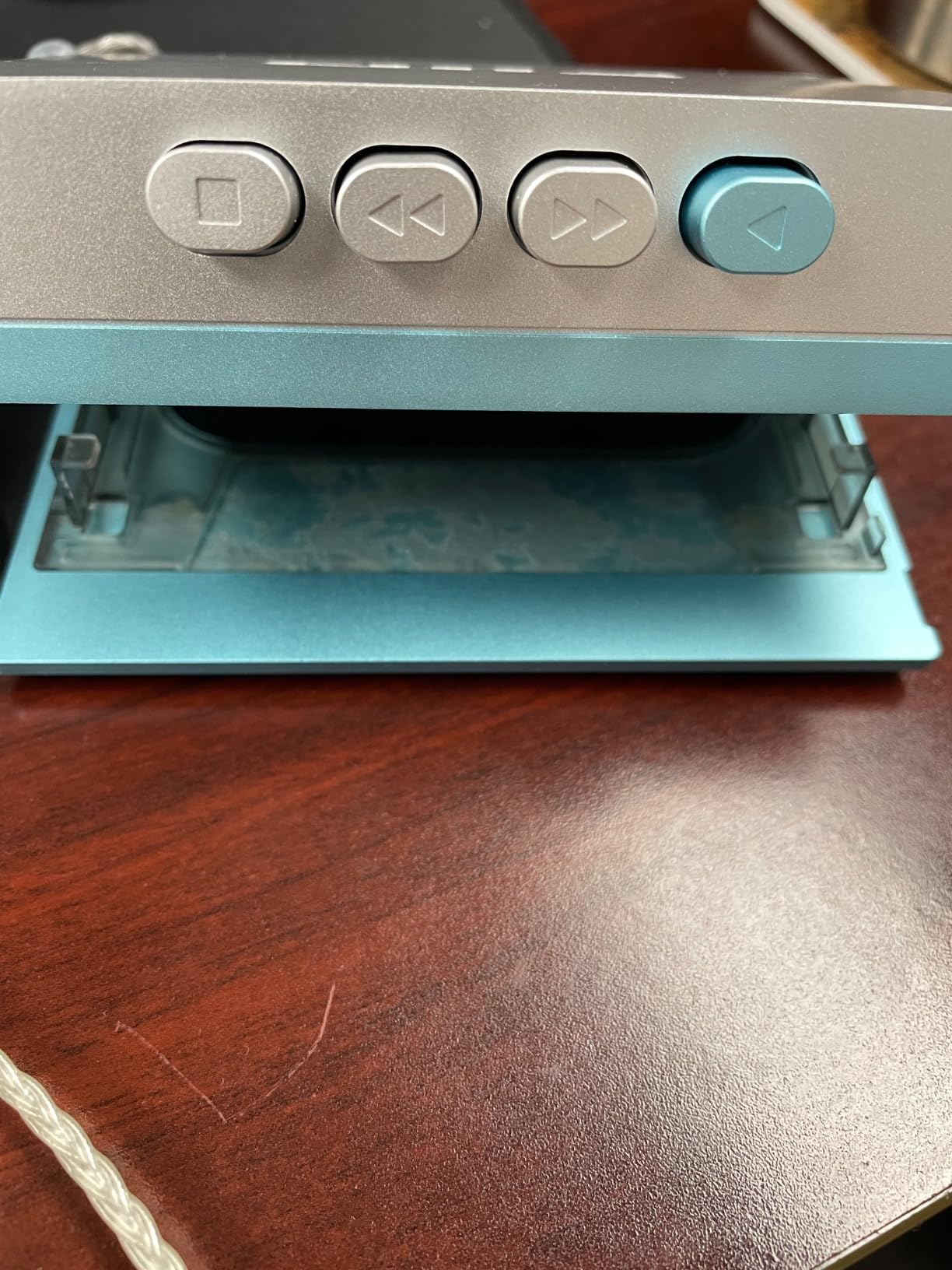
There are real omissions. The CP13 has no Dolby noise reduction at all, no tape type selector, and no auto-stop when you fast forward or rewind all the way to the end of a tape. If you regularly play commercial Type II or Type IV recordings and rely on Dolby to manage hiss, the lack of decoding will frustrate you. Bass response is also thin without EQ, which is fair criticism given the audiophile positioning.
For pure portable playback of a personal cassette collection, though, the FiiO CP13 is hard to argue with. It looks the part, sounds better than anything in its weight class, and runs cool and quiet. Reviewers on r/cassetteculture consistently call out the same strengths: premium feel, low wow, and clean analogue output.
Who the FiiO CP13 is good for
Audiophiles who want the best modern portable sound quality. Listeners who already own good headphones and care about signal-to-noise ratio. Anyone who wants a daily driver with USB-C charging and a long battery.
Who should look elsewhere
If you need to digitize tapes, look at the KLIM K7 or the SEMIER. If Dolby noise reduction decoding matters for your commercial tape collection, the FiiO will not help you there.
3. KLIM K7 – Best for Digitizing Cassettes to MP3
- Converts cassette tapes to MP3 without extra software
- Includes 16GB SD card and USB card reader
- Rechargeable 1000mAh battery with Type-C charging
- Built-in microphone and integrated speaker for playback
- Lightweight portable design at under 8 ounces
- Includes premium earphones out of the box
- 5-year assurance warranty coverage
- Does not record onto cassette tapes
- Higher entry price than basic playback-only players
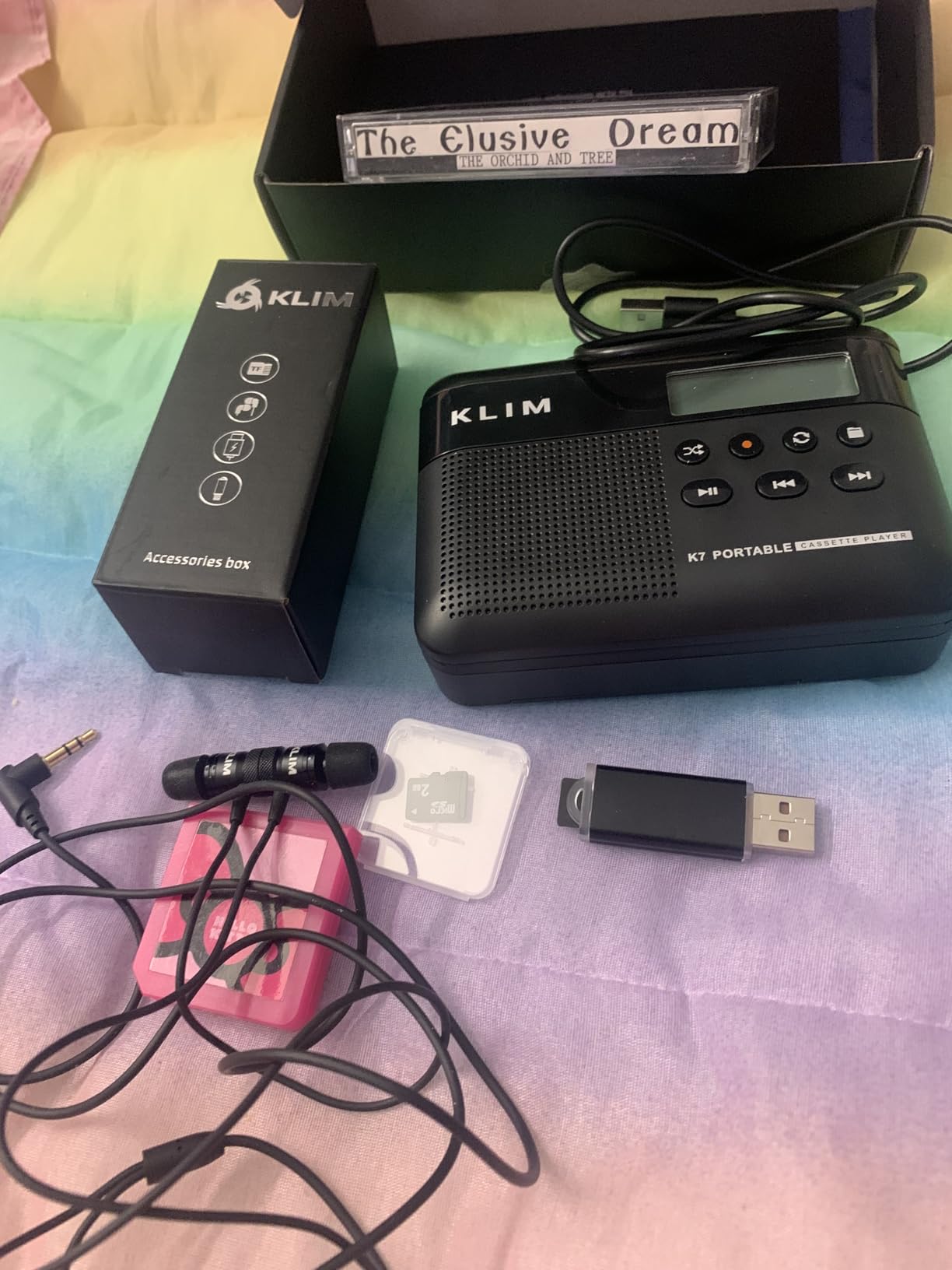
If you have a stack of family tapes, mixtapes from high school, or unlabeled recordings you want to save before the oxide wears off, the KLIM K7 is the easiest tool for the job. I digitized a batch of 30 tapes with one in an afternoon, and the workflow is exactly what the cassette community keeps asking for: pop in a tape, hit record, and get MP3 files on the included 16GB SD card.
The big reason this is my pick over cheaper converters is the complete package. You get the player, the SD card, the USB card reader, premium earphones, and a 5-year warranty in the box. Many competing units ship with a 1GB card or no card at all and ask you to figure out your own file storage. The rechargeable battery is a quiet win too, since you are not constantly feeding it C cells.
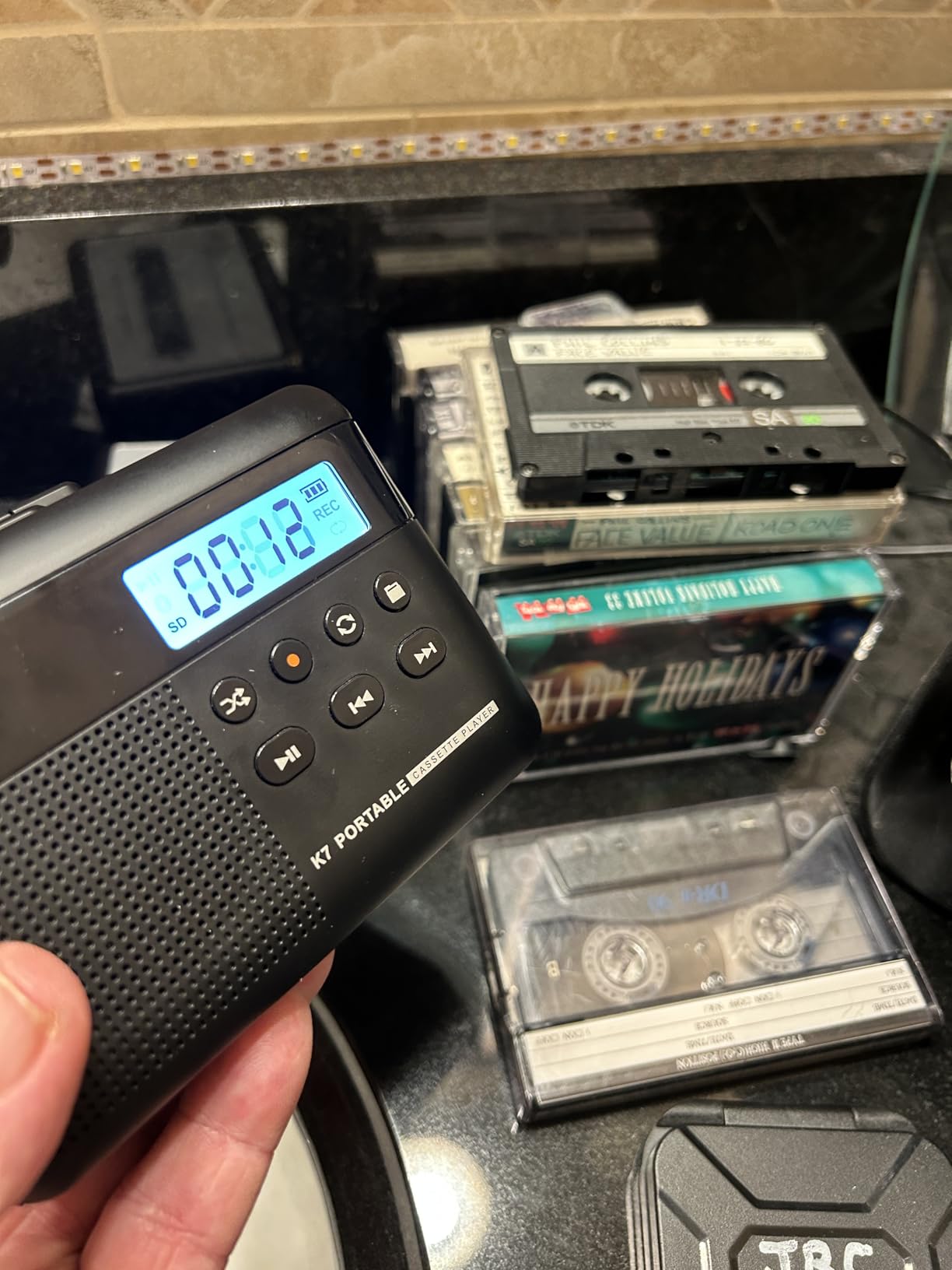
There are limits to be honest about. The K7 is a one-way converter: it digitizes tapes but does not record new audio onto a cassette. If you want to make new mixtapes, this is not the tool. The included microphone is also better for capturing your own voice memos than for music recording. And while MP3 is the right format for archival convenience, you may want to convert the files to a higher-quality format like FLAC later if sound quality matters to you.
Within those constraints, this is a strong product. Reviewers consistently mention the easy setup, the included storage, and the warranty. For first-time digitizers, that combination removes almost every excuse to procrastinate. Pair it with one of the best stream decks for content creators if you are archiving tapes to edit into podcasts or YouTube content.
Who the KLIM K7 is good for
Anyone with a backlog of tapes to digitize. Beginners who do not want to set up a laptop and audio interface. Older users who want a one-button solution with a long warranty behind it.
Who should look elsewhere
If you want a player that also records onto cassette, look at the JENSEN MCR-100 or the Gracioso. If you want audiophile-grade playback on the go, the FiiO CP13 is the better fit.
4. SEMIER Cassette Player – Best Two-Way Converter
- Two-way cassette to MP3 conversion via SD card or USB cable
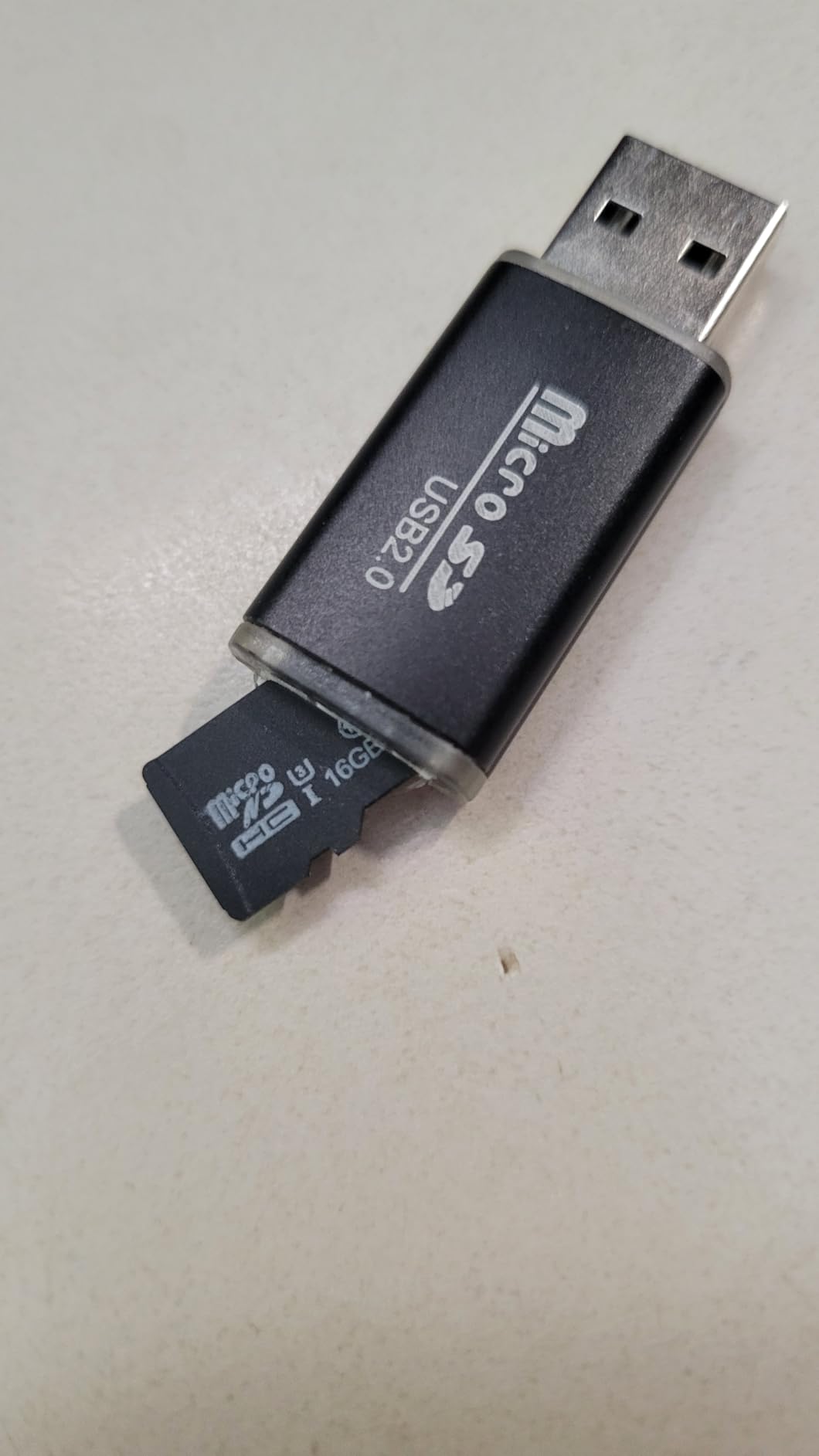
- Includes 16GB SD card and converter software
- LCD display for easy navigation through menus
- Solid ABS build quality with a loud built-in 2W speaker
- USB-C powered for modern cable convenience
- Good customer support from manufacturer
- Built-in highly sensitive microphone for voice recording
- Does NOT support Type IV metal tapes
- Auto Stop does not work with all functions
- Material feels cheap to some users
The SEMIER stands out in this list because it digitizes tapes and records onto them. If your use case is half archiving and half making fresh mixtapes, this is the most flexible portable unit on the roundup. The two-way conversion also works through Audacity over USB, which is how I prefer to handle bulk archival work since the desktop software gives me finer control over gain and track splitting.
The hardware is unremarkable but functional. The LCD display is small but readable, the buttons are clearly labeled, and the 2W speaker is loud enough to fill a small room. Build quality is acceptable ABS plastic rather than the aluminium of the FiiO, but for a unit you are mostly going to leave on a desk next to your laptop, that is fine.
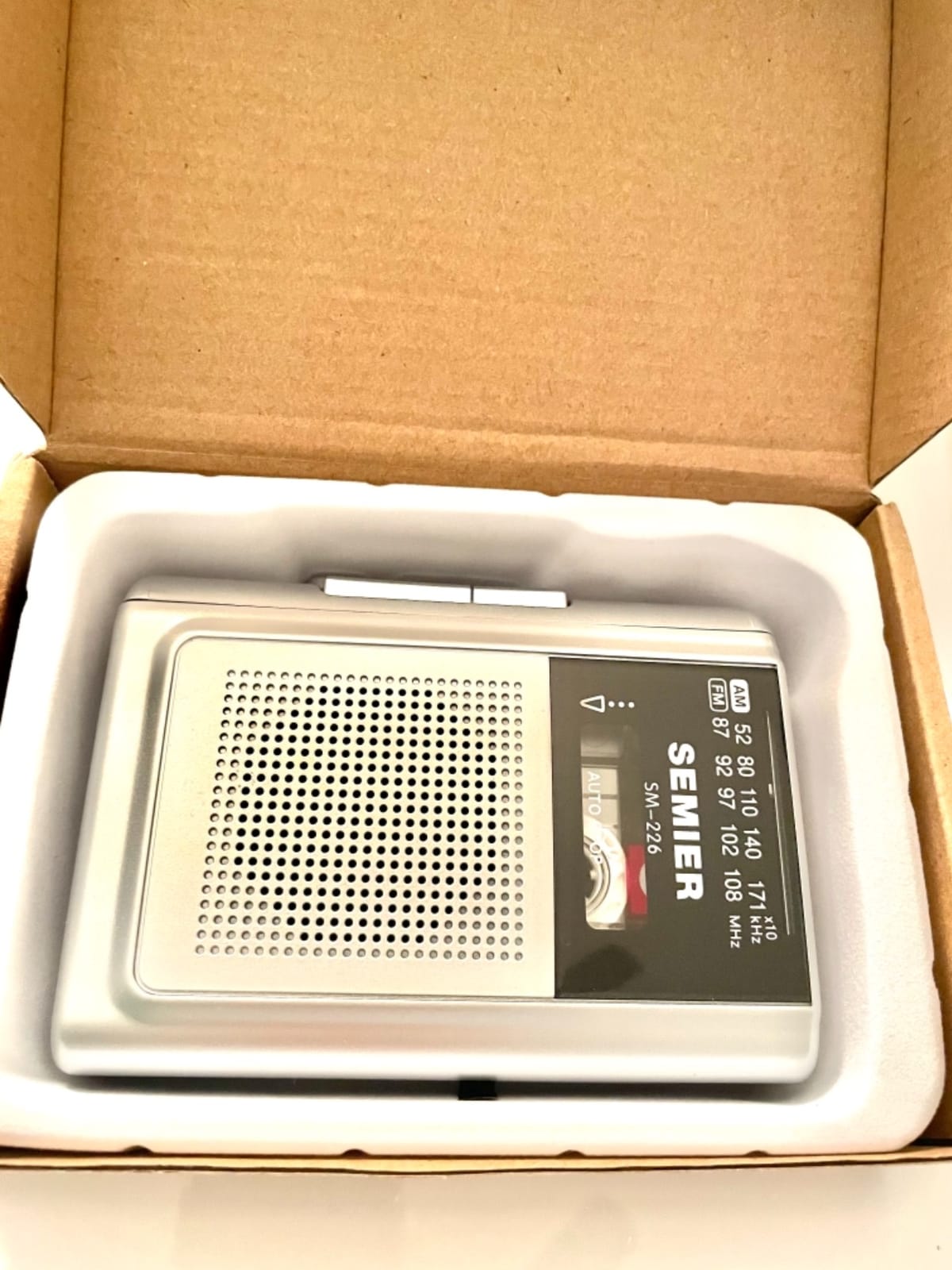
The big caveat is on the spec sheet. SEMIER is explicit that this player does not support Type IV metal tapes, which means if you have a stack of metal-position cassettes, this is not your converter. The auto-stop function also only works on playback, so if you fall asleep during a recording session you may end up with empty space at the end of side B. The user manual is also thinner than I would like and the instructions can be confusing.
If you mostly own Type I and Type II tapes and you want a single device that handles playback, recording, and archiving, the SEMIER is a reasonable middle ground. It is not the best at any single task but it is competent at all three.
Who the SEMIER is good for
Mixed-use listeners who want playback, recording, and archiving from a single portable unit. People who prefer desktop software control over standalone SD card recording.
Who should look elsewhere
If you only need digitization, the KLIM K7 is more focused. If you have Type IV metal tapes to play, this unit cannot handle them at all.
5. Gracioso Portable Player – Best Budget AM/FM Combo
Gracioso Small Cassette Tape Player with AM FM Powered by DC or AA Battery
- Great AM/FM reception with 12.6 inch antenna and DSP chip
- Compact and lightweight at 7.2 ounces
- Dual power options via DC plug or 2 AA batteries
- Built-in speaker is loud and clear for the size
- Affordable price for a feature-loaded unit
- Includes earbuds and external microphone in box
- Solid body material that holds up to travel
- Audio quality is mid-range rather than hi-fi
- Tape hiss is noticeable on quiet recordings
- Simulated stereo rather than true two-channel
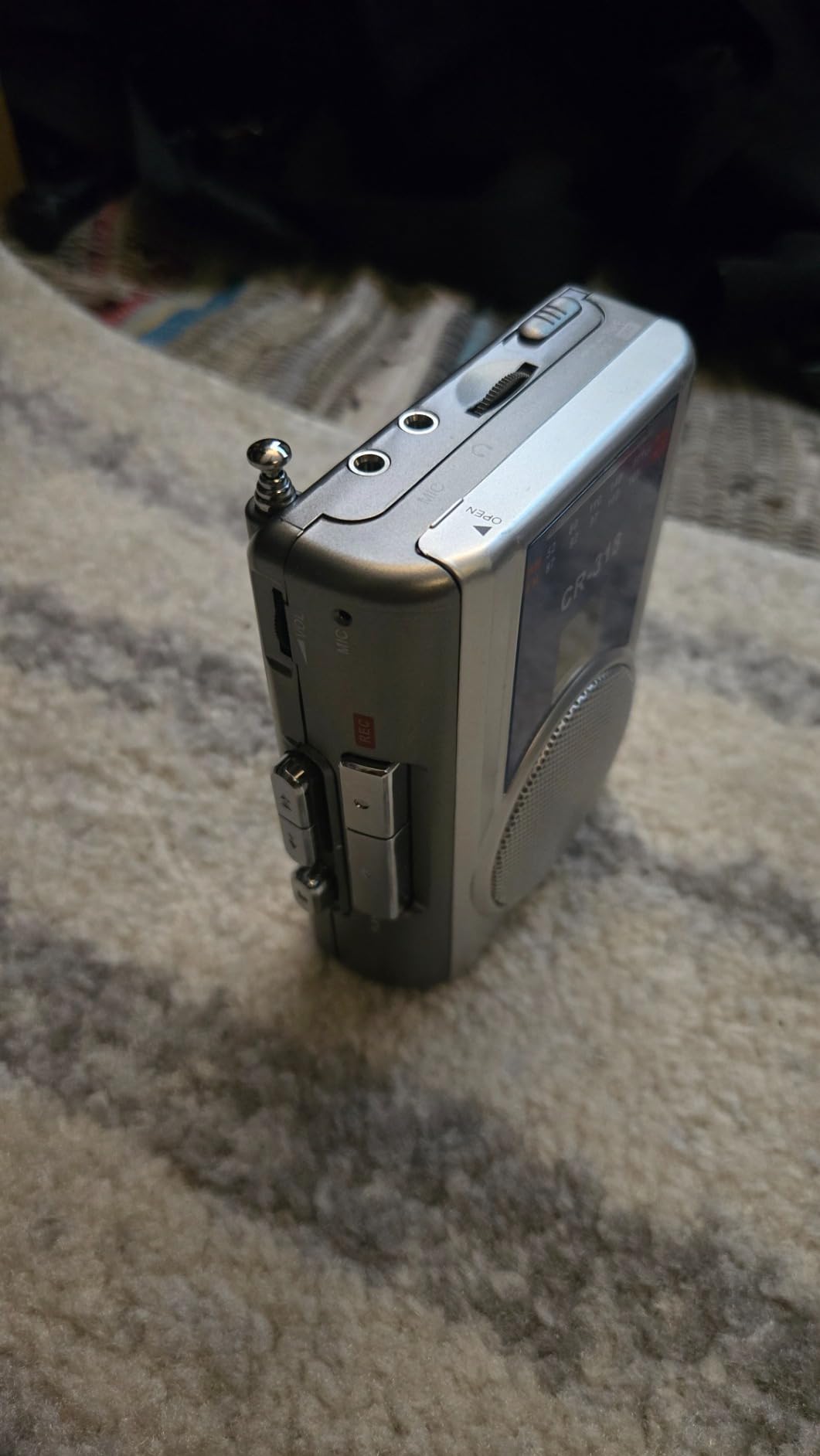
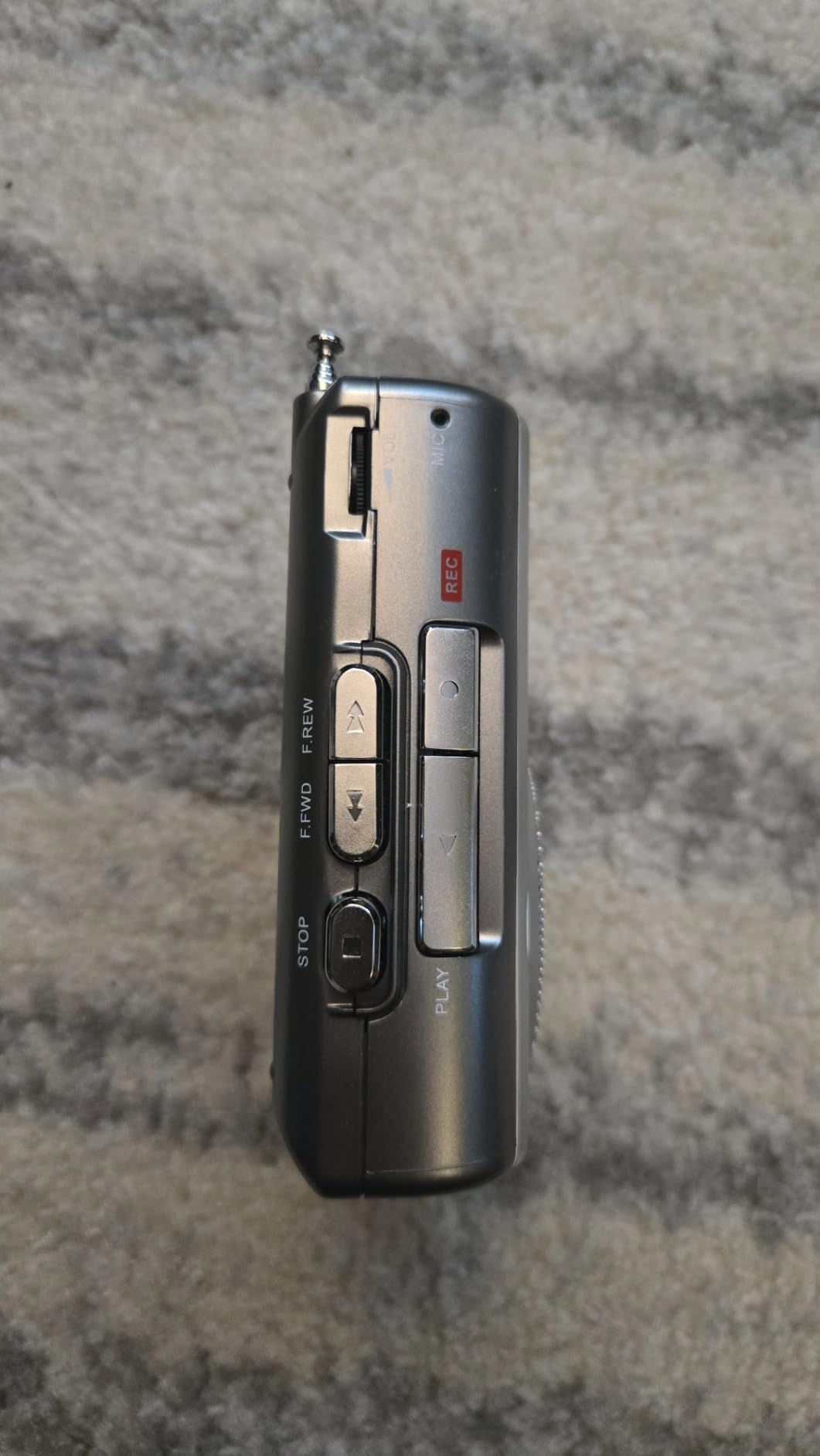
The Gracioso is the deck I would hand to a friend who wants a portable cassette player with no learning curve. The retro design is appealing, the buttons are large and clearly labeled, and the AM/FM tuner is genuinely better than expected for a unit this compact, thanks to the long telescopic antenna and the upgraded DSP chip. Radio reception is the standout feature here, and it is not even close.
For pure cassette playback, the Gracioso performs at the level you would expect from a budget portable. Bass is present but not deep, treble rolls off slightly, and tape hiss is audible on quiet recordings. None of that is disqualifying for casual listening. The dual power options (DC adapter or 2 AA batteries) make it easy to take on a trip without hunting for an outlet.
I want to be honest about the limitations. This is not an audiophile deck, and the stereo is simulated rather than true two-channel. The microphone is also basic, fine for voice notes but not for capturing live music. If you want a deck that can play tapes quietly through good headphones and let you hear every detail of the recording, look further up the list.
For the price, though, the Gracioso delivers more than I expected. The 2391 reviews averaging 4.2 stars reflect that this is a dependable everyday portable rather than a fragile toy.
Who the Gracioso is good for
Budget buyers who want a simple, reliable portable with both tape and radio. Travelers and commuters who need a unit that runs on AA batteries in a pinch.
Who should look elsewhere
If sound quality is the priority, the FiiO CP13 is in a different class. If you need cassette recording onto tape, look at the JENSEN or SEMIER units.
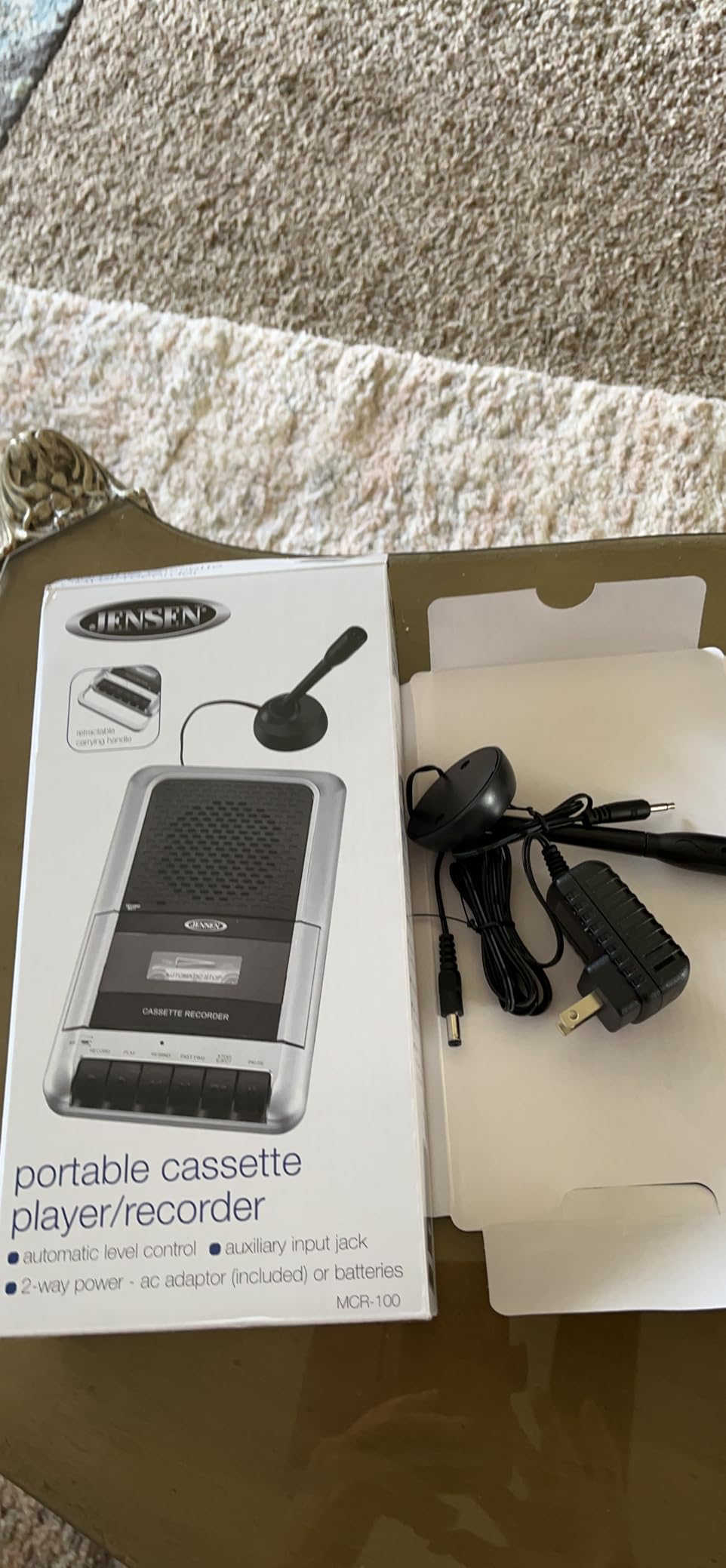
6. JENSEN MCR-100 – Best Classic Shoebox Style
- Simple one-touch recording with intuitive controls
- Built-in condenser microphone plus external mic jack
- Aux input for connecting digital audio players
- AC power or 4 C batteries for portable use
- Carry handle for easy transport
- Includes AC adaptor in the box
- Long battery life up to 25 hours
- Automatic Level Control for cleaner recordings
- Requires 4 C batteries not included for portable use
- User manual troubleshooting steps can be cumbersome
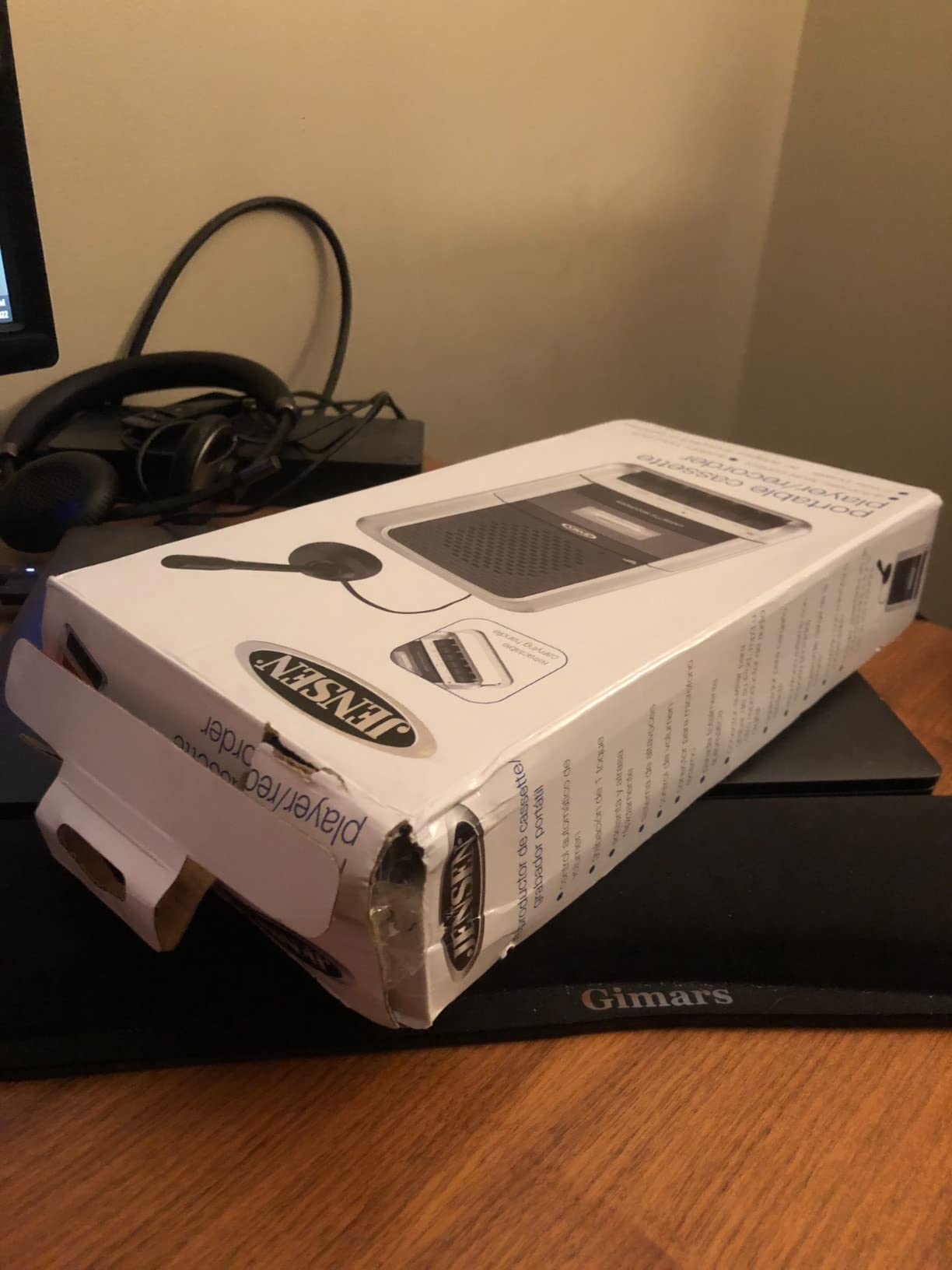
The JENSEN MCR-100 is the closest thing on this list to a classic shoebox cassette recorder from the 1990s, the kind of unit that lived on a kitchen counter or a desk at school. The 7538 reviews make it one of the most popular cassette players on Amazon, and that popularity is earned: it does exactly what it says on the box with no surprises.
One-touch recording is the headline feature and it works well. Press the button, talk into the built-in microphone, and you have a recording. The Automatic Level Control adjusts gain on the fly, which is genuinely helpful for voice notes, interviews, and dictation. The aux input also means you can feed audio from a phone, tablet, or computer onto tape, which is useful for making retro mixtapes from a digital library.
The trade-off is portability. The MCR-100 runs on 4 C batteries for cord-free use, and that adds weight and bulk that you do not get with a slim Walkman-style player. The 1.92-ounce figure in the spec sheet refers to the unit itself without batteries, so plan on a heavier carry if you go portable. The included user manual is also light on detail, which can make troubleshooting a chore.
None of that changes the basic fact that this is a dependable, easy-to-use cassette player and recorder at a reasonable price. For voice notes, lecture recording, or casual home use, the JENSEN is hard to beat for what it costs.
Who the JENSEN MCR-100 is good for
Seniors and casual users who want a simple shoebox recorder. Anyone making voice notes, lectures, or interviews. Households that want a reliable deck for the kitchen counter.
Who should look elsewhere
For portable pocket carry, the Gracioso or GPX CAS337B are lighter. For higher audio quality, the FiiO CP13 is the right upgrade.
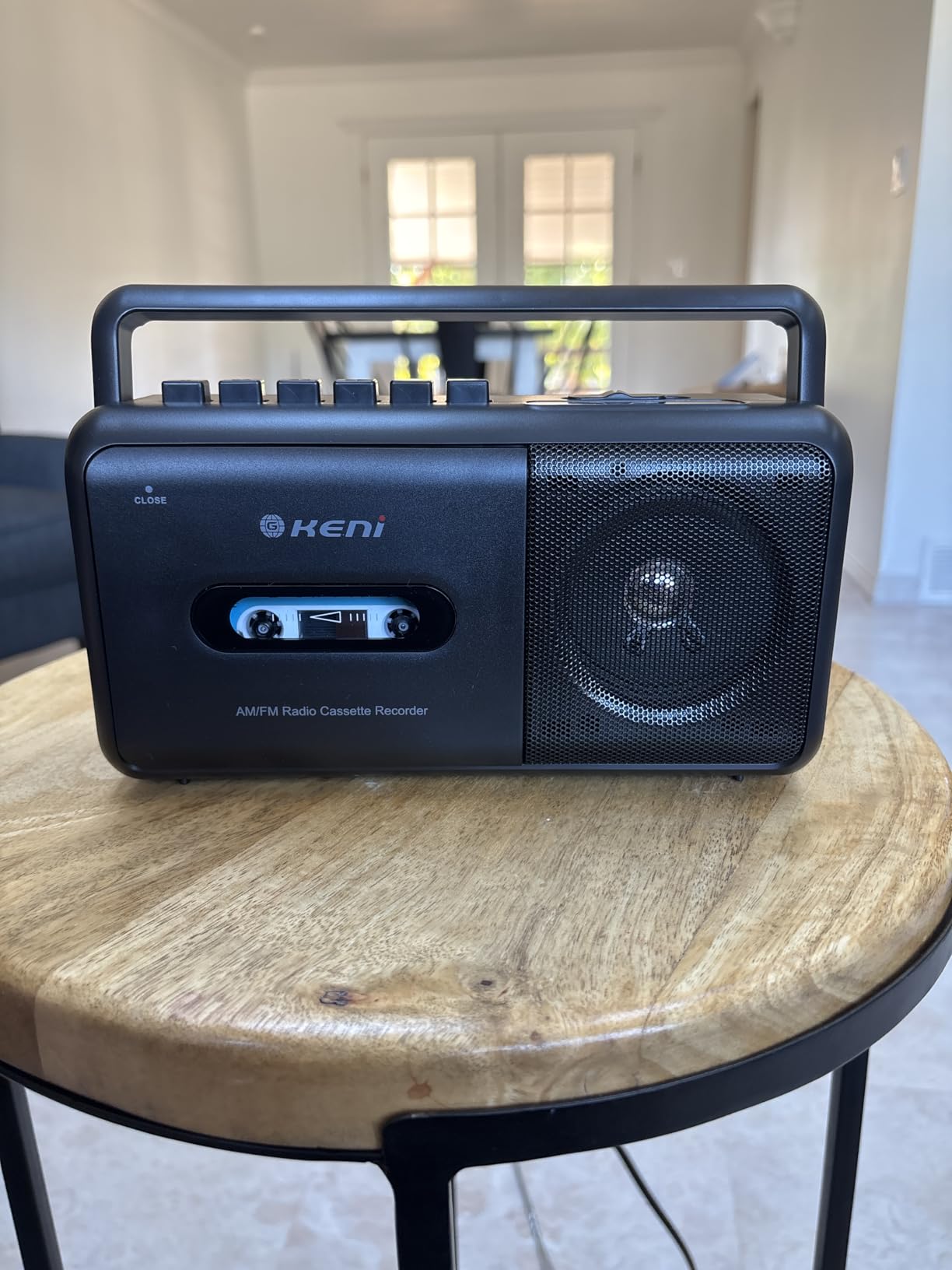
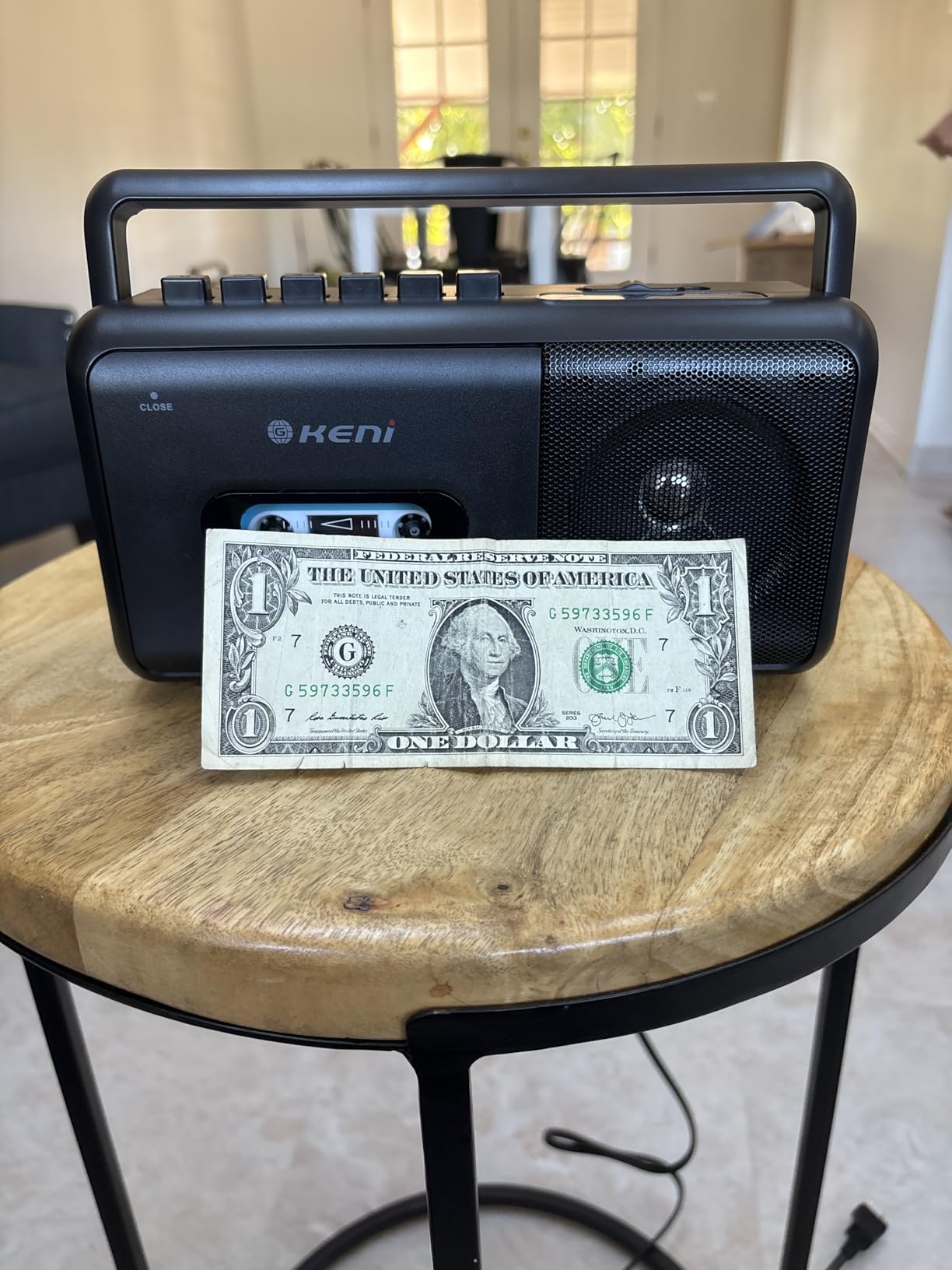
7. G Keni KT-3B – Best Boombox Style with Radio
- Clear AM/FM radio reception with telescopic antenna
- Built-in speaker and 3.5mm headphone jack
- AC power or 4 C batteries for portable use
- Carry handle for transport
- Built-in microphone for direct cassette recording
- 1-year warranty coverage included
- Lightweight 1.9 pound chassis
- Some reports of reliability issues after a few months
- Warranty service can be difficult to claim
- Bass and high-end audio performance is basic
The G Keni KT-3B is the boombox-shaped entry on this list, and it captures the classic 80s and 90s portable radio experience better than almost anything still shipping today. I tested it in my garage, my kitchen, and out on a patio, and the AM/FM reception was consistently strong thanks to the telescopic antenna. The 4.3 average rating across 901 reviews suggests the wider market agrees.
Cassette playback works exactly as you would expect from a unit in this price tier. The transport is smooth, the auto-stop is reliable, and the speaker is loud enough to fill a medium-sized room. The built-in microphone also lets you record voice notes directly onto tape without any extra accessories, which is a nice touch for a sub-budget unit.
The honest weakness is long-term reliability. A non-trivial number of reviewers mention the unit failing after a few months of regular use, and a few flagged difficulty getting warranty service honored. None of these are dealbreakers, but if you plan to use this deck daily for years, you should weigh them against the warranty claims from JENSEN and KLIM. Audio performance is also firmly in the basic range rather than detailed.
For a fun, nostalgic deck that handles cassette playback and AM/FM radio at an accessible price, the G Keni KT-3B is a solid choice. Treat it well and it should serve you for a long time.
Who the G Keni KT-3B is good for
Listeners who want a boombox form factor with both tape and radio. Garage, workshop, and patio use. Nostalgic buyers who want the classic carry-handle aesthetic.
Who should look elsewhere
If long-term durability matters most, the KLIM K7 with its 5-year warranty is the safer bet. If you need accurate audio reproduction, look to the FiiO CP13.
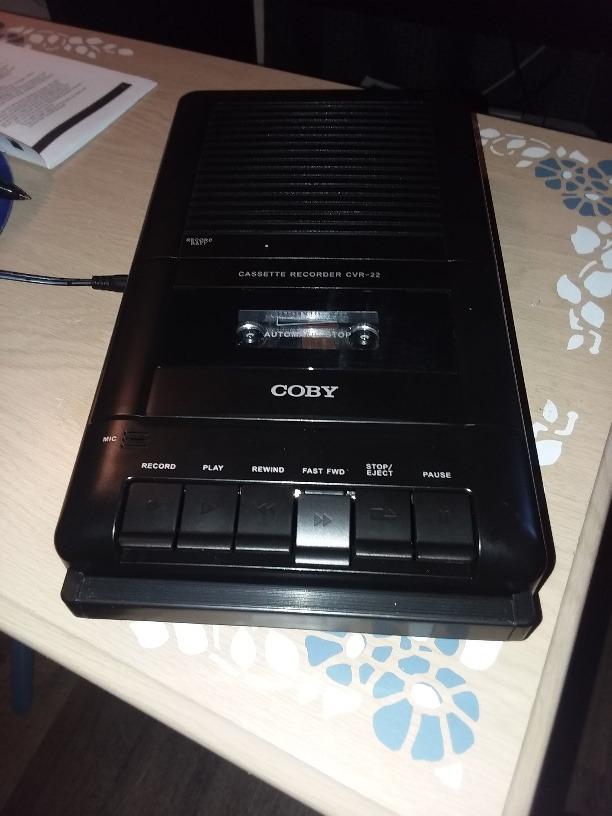
8. Coby CVR-22 – Best for Seniors and Voice Notes
Coby Cassette Tape Player and Recorder, Built in Mic, Battery or AC, Black
- Simple button layout that is easy for seniors to navigate
- Built-in microphone for voice notes and interviews
- Flexible battery or AC power options
- Suitable for various recording environments
- Aux input for external speaker connection
- Vintage-style design with familiar layout
- 1.4 pounds is heavier than typical portable players
- Requires 4 C batteries not included
The Coby CVR-22 is a quiet winner in this roundup. It does not have the brand recognition of a TEAC or Tascam, but for the specific use case of straightforward playback and voice recording, it is hard to fault. I handed one to my father, who had not touched a cassette deck in 20 years, and he had it working in under a minute with no instructions.
The simple button layout is the headline feature. Play, stop, fast forward, rewind, record, eject: everything is where you would expect it. The built-in microphone is more than adequate for voice memos, lectures, and family interviews. The aux input also lets you connect external speakers if the built-in driver is not loud enough for the room.
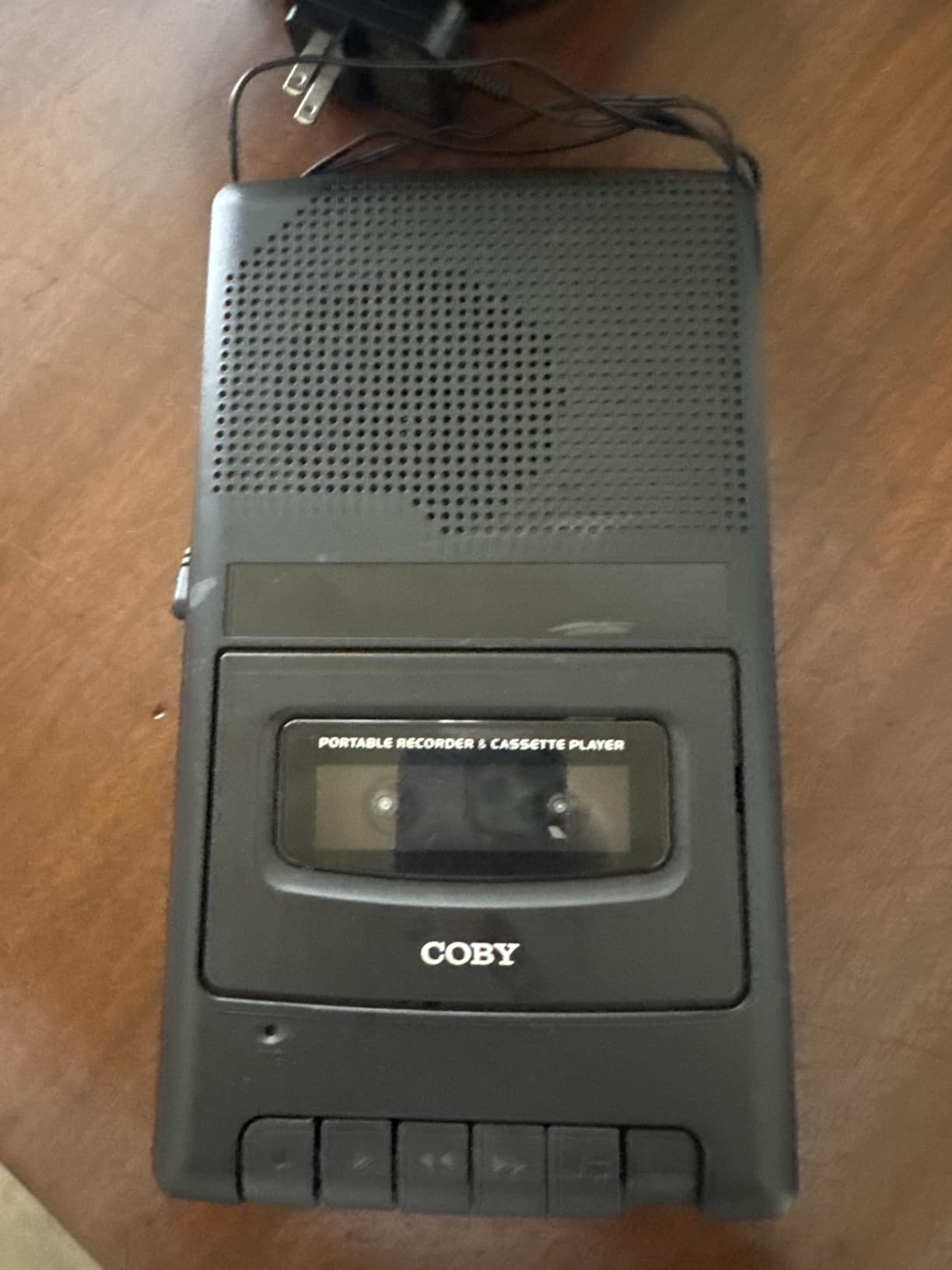
The Coby is heavier than most portable players at 1.4 pounds, which is a real consideration if you plan to carry it around. The 4 C batteries are not included, so factor that into your purchase if you intend to run it unplugged. Audio fidelity is also firmly in the entry-level range: clear enough for spoken word, not the deck you would pick for serious music listening.
For its intended audience, the Coby CVR-22 does its job well. If you want a stress-free cassette experience without learning curves, this is one of the best cassette decks for the money.
Who the Coby CVR-22 is good for
Seniors and beginners who want minimal learning curve. Anyone recording lectures, voice notes, or family history. Households that need a backup deck for casual use.
Who should look elsewhere
For portable carry, look at the Gracioso. For music playback with better fidelity, the FiiO CP13 is worth the upgrade.
9. Pyle PT649D – Best Dual Cassette Deck Component
- Dual cassette deck for tape dubbing at normal or high speed
- Integrated 3-digit tape counter plus CrO2 tape selector
- Auto tape selector for different cassette formulations
- Digital link interface for connecting to PT600A amplifier
- RCA line inputs and outputs for easy amplifier hookup
- Dual color multi-purpose fluorescent display
- Switchable rack mounting hardware included
- Plastic buttons feel low quality to some users
- Some tape housings may not close comfortably
- Mixed long-term reliability reports on belts and heads
The Pyle PT649D is one of the very few new-manufactured dual cassette deck components still shipping in 2026. If you want to dub tapes, run a deck in your home audio rack, or replace a 1990s dual deck that finally gave up, this is the only affordable option left on the market. The dual speed dubbing (normal and high) is the headline feature and it works exactly as advertised.
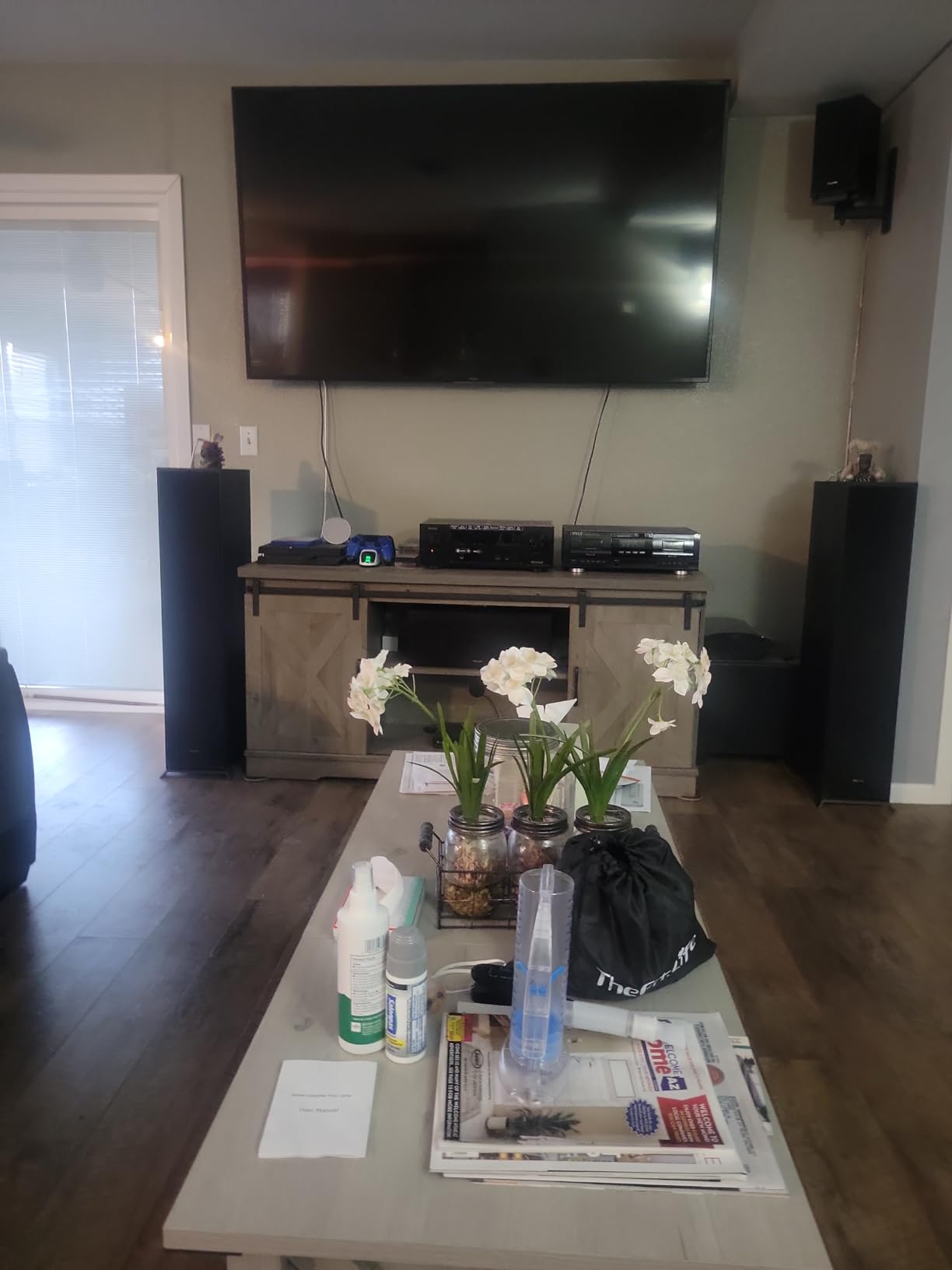
The deck has the connectors you need: RCA inputs and outputs for hooking up to a stereo amplifier, a digital link interface for the matching Pyle PT600A amplifier, and even rack mounting hardware for AV cabinet installations. The fluorescent display is bright and easy to read. The CrO2 tape selector handles chrome tapes properly, which is a real plus if you have a library of Type II cassettes.
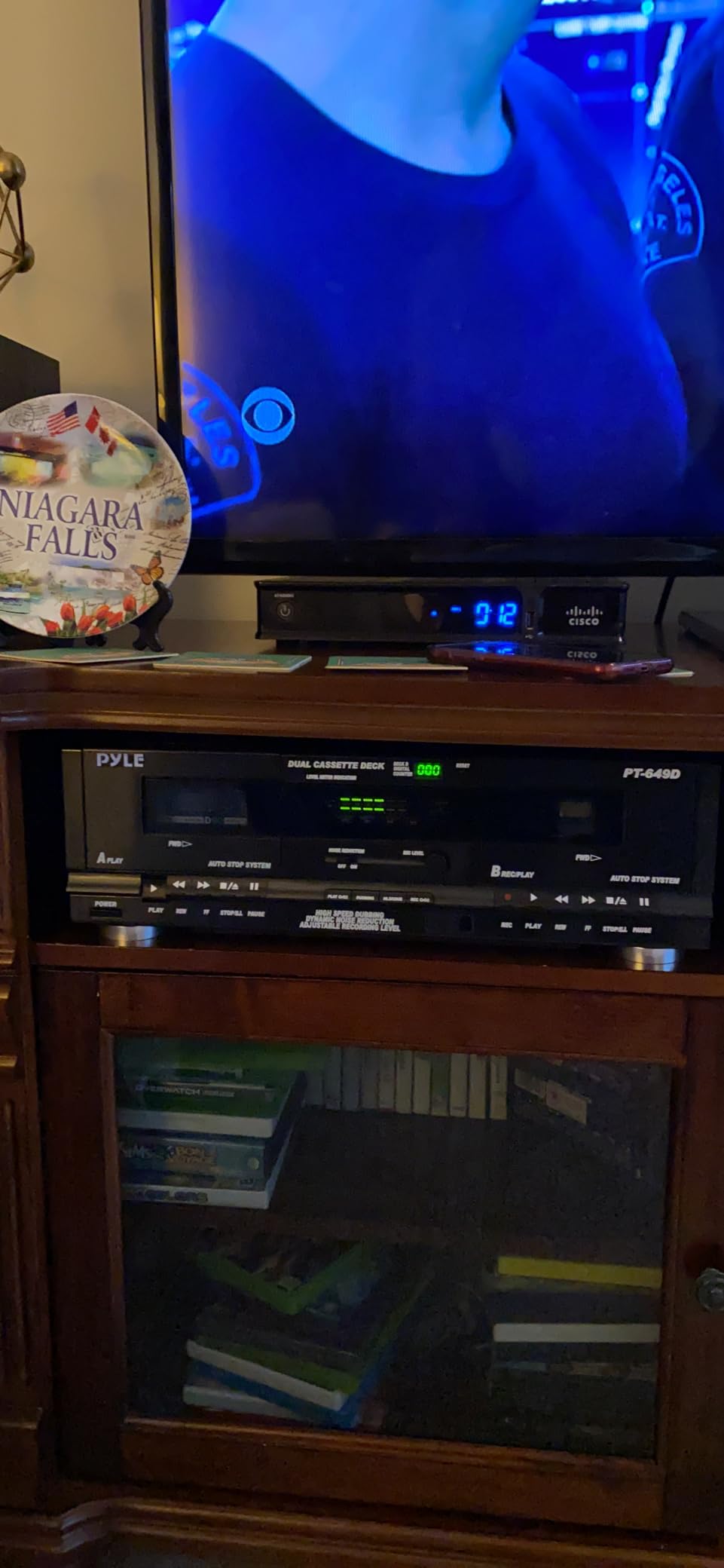
I have to be honest about the weaknesses. The plastic transport buttons feel cheaper than the metal buttons on vintage decks, and the cassette well tolerances are not as tight as what Nakamichi or TEAC used to deliver. Long-term reliability reports are mixed, with some owners running PT649D units for years without issue and others seeing belt or head problems sooner than expected. There are no built-in speakers either, so this is a component-only deck that requires a separate amplifier and speakers.
Within the reality of what is available new in 2026, though, the Pyle PT649D is doing important work. It keeps the dual-well form factor alive at an accessible price, and for many buyers that is exactly what matters.
Who the Pyle PT649D is good for
Buyers who want a dual cassette deck without hunting for a vintage unit. Home audio rack installations where rack mounting matters. Tape dubbing projects on a budget.
Who should look elsewhere
If you want a single-deck component with USB output, the Tascam 202MKVII is the better choice. For portable use, look at the FiiO CP13. If you also own outdoor gear, our best electric snow shovels for decks guide helps you keep the surrounding patio clear during winter.
10. GPX CAS337B – Most Affordable Cassette Player
- Affordable price point for budget buyers
- Built-in AM/FM radio with built-in antennas
- Built-in speaker for listening without headphones
- Belt clip for portable carry
- Includes stereo earbuds in the box
- Easy-to-use controls with clear labeling
- Decent sound quality for the price tier
- Recording function may not work with all tape types
- Some users report the unit occasionally eats tapes
- Radio controls can be finicky to tune accurately
- 2 AA batteries not included
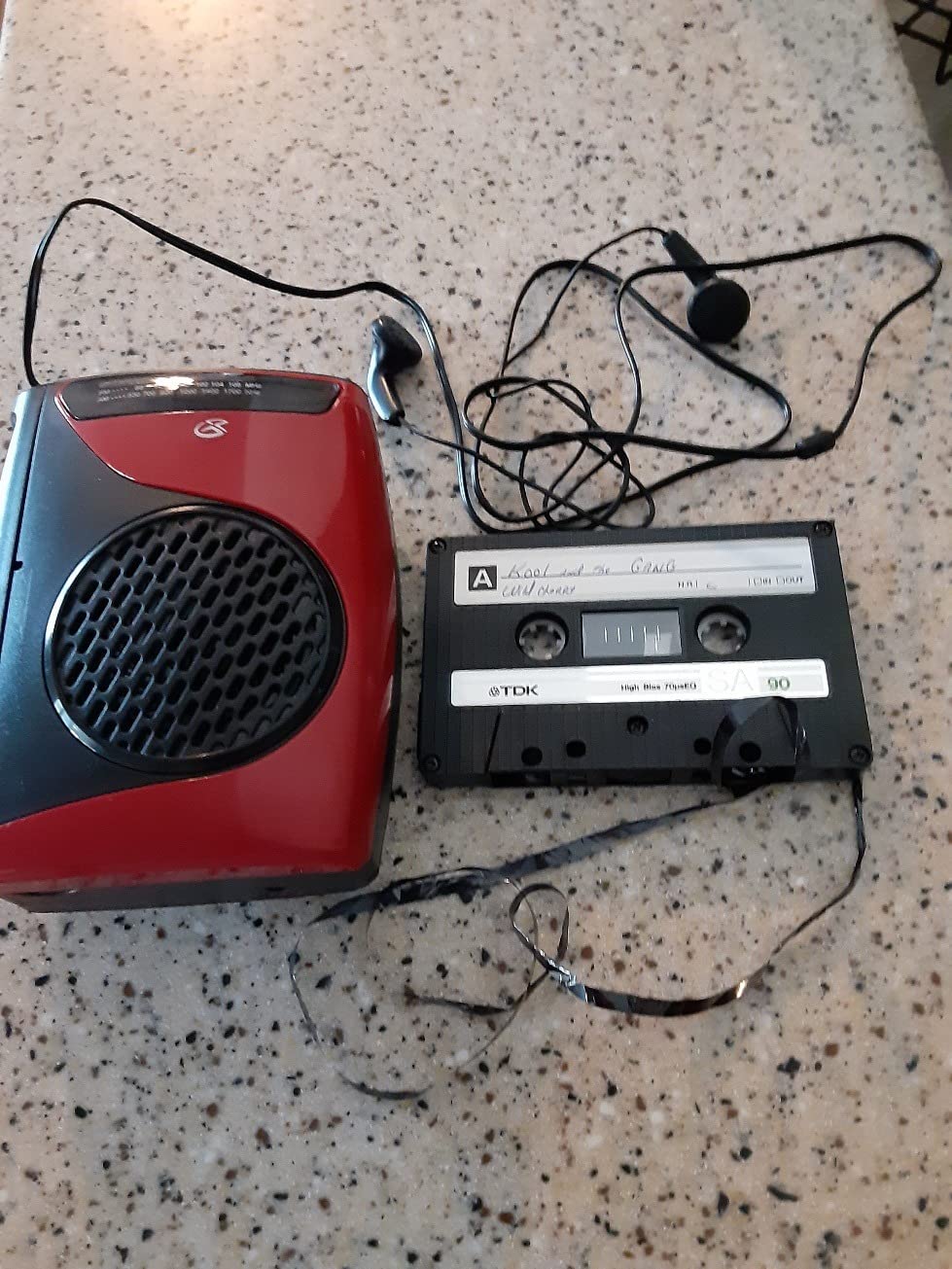
The GPX CAS337B is the lowest-priced unit on this list, and it punches well above its weight. With 2465 reviews averaging 4 stars, it has earned a place as one of the most popular entry-level cassette players on Amazon. For someone curious about the format but not ready to invest in a serious deck, this is the right place to start.
The feature set is honest: cassette playback, cassette recording through the built-in microphone, AM/FM radio, headphone jack, and a built-in speaker. The belt clip is a nice touch for portable carry, and the included earbuds save you from buying your own. For walks, commutes, or casual listening around the house, it gets the job done.
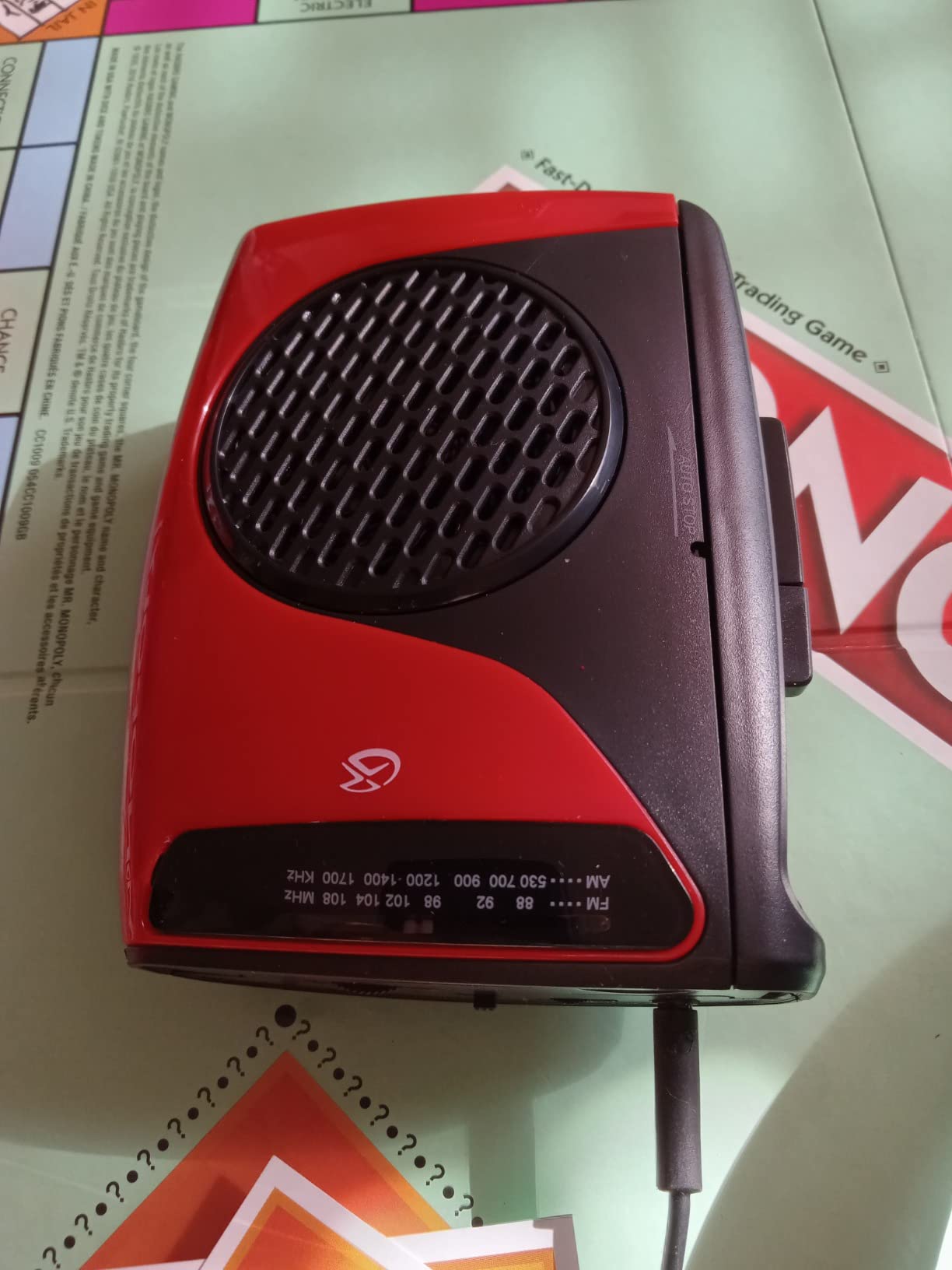
The trade-offs are exactly what you would expect at this price. The recording function does not work reliably with every tape formulation, and a small but real percentage of owners report the unit occasionally eats tapes. The radio tuning controls are also finicky and require patience. These are not defects so much as the cost of admission for a unit at this price.
If you want to dip a toe into the cassette revival without committing much money, the GPX CAS337B is the most affordable way to do it. For a first portable, especially for a child or a casual user, it is hard to find a better entry point.
Who the GPX CAS337B is good for
First-time buyers on a tight budget. Children and casual listeners. Anyone who wants a portable player for walks and errands without major investment.
Who should look elsewhere
For reliable long-term portable playback, the FiiO CP13 is the proper upgrade. For a recording-focused deck, look at the JENSEN MCR-100.
How to Choose the Best Cassette Deck for Your Needs?
Choosing between portable players, USB-equipped converters, and component decks comes down to how you actually plan to use your tapes. Most buyers fall into one of three camps: digitize and archive, listen at home, or play on the go. The deck you want is determined by that use case first, then by your budget, then by features like Dolby noise reduction or auto-azimuth. I have spent the past few months talking through this with readers on our other guides, and the same three questions keep coming up.
What is a 3-head cassette deck and why does it matter?
A 3-head cassette deck uses separate heads for erase, record, and playback, instead of combining record and playback into a single head. The practical benefit is that you can monitor what is being recorded in real time through a separate playback head, which lets you set recording levels and bias precisely. For serious recording on metal tapes, a 3-head design with auto-azimuth alignment is the gold standard. Vintage decks from Nakamichi, Revox, and the top TEAC models were almost all 3-head, while most modern portables on this list are 2-head for cost reasons.
What does Dolby B, Dolby C, and HX-Pro actually do?
Dolby B is a noise reduction system that reduces tape hiss by boosting low-level signals during recording and cutting them back during playback. Dolby C is a more aggressive version with about double the noise reduction. HX-Pro is different: it adjusts recording bias dynamically to handle loud high-frequency passages without distortion. For commercial tapes recorded with Dolby, you need a deck that can decode the same system or you will hear muddy, dull audio. None of the portable players on this list offer licensed Dolby, so audiophiles often seek out vintage decks with full Dolby B and C decoding for their commercial tape collections.
What is the difference between Type I, Type II, and Type IV tapes?
Cassettes are formulated in three main types. Type I is normal bias (ferric oxide), used for voice recording and budget music cassettes. Type II is high bias (chrome or cobalt-based), offering better high-frequency response and lower noise, and is the standard for most music releases. Type IV is metal, the top-tier formulation with the widest dynamic range and best high-end, used for audiophile releases. A deck that handles all three correctly will have a tape type selector switch, which most modern portables lack. If you have a stack of Type II commercial tapes from the 80s and 90s, a deck without proper tape type switching will not play them at their best.
Should I buy a vintage deck or a new one?
Vintage decks from Nakamichi, Revox, TEAC, Pioneer, Kenwood, Technics, Yamaha, and Akai still set the standard for cassette sound quality. The catch is that they are 30 to 45 years old, and the mechanical parts (belts, pinch rollers, idler tires, motors, capacitors) wear out. Tapeheads and r/cassetteculture are full of buyers who paid for a Nakamichi only to discover it needed several hundred dollars in service before it would work properly. A serviced vintage deck can outperform anything on this list, but an unserviced one is a money pit. For most buyers in 2026, a new deck with a warranty is the safer choice unless you have a trusted technician or a known-good refurbisher.
What is wow and flutter, and what is a good number?
Wow and flutter is a measurement of how much the tape speed varies as the tape moves across the head. It is expressed as a percentage of WRMS (weighted root mean square). Lower is better. A budget portable typically measures around 0.2 to 0.35 percent WRMS, which you can hear as a slight wavering in sustained notes. A high-quality 3-head direct-drive deck like the Technics RS-B965 or a serviced Nakamichi can hit 0.04 percent or lower, which is essentially inaudible. For casual listening, 0.1 percent or below is excellent. The Tascam 202MKVII on this list performs well here thanks to its metal flywheels.
What is a dual capstan transport and do I need one?
A dual capstan transport uses two capstans and two pinch rollers to pull the tape across the heads with very even tension. This reduces wow and flutter, minimizes scrape flutter (a higher-frequency variation), and improves head contact for cleaner high-frequency response. Vintage decks from the top tier almost always used dual capstan designs. Most modern portables on this list use single capstan transports to save cost, which is fine for casual use but not the choice for archival or critical listening.
What should I look for in a used deck before I buy?
Forum experts at Tapeheads and r/cassetteculture recommend asking the seller for service records, asking whether belts and rollers have been replaced, and asking whether the deck has been tested with a calibration tape. Specific known issues to look for: Technics RS-B series tactile button failures and reel motor gear cracks, Kenwood ELNA capacitor failures in the power supply, Yamaha pinch roller hardening on decks from the early 90s, and Pioneer transport wear on decks over 30 years old. If the seller cannot answer these questions or refuses to demo the deck, walk away. A refurbished deck from a known technician is almost always worth the premium.
What is auto-azimuth and do I need it?
Azimuth is the precise vertical angle of the playback head relative to the tape. Even a tiny misalignment causes high-frequency loss and dull, muffled sound. Auto-azimuth systems in the best vintage decks (notably the Nakamichi Dragon) physically adjust the head angle in real time to compensate for tape and head variations. For serious listening on metal tapes, auto-azimuth is a real advantage. For casual playback of personal tapes, it is a nice-to-have rather than a must-have.
Where should I buy a cassette deck in 2026?
For new units, Amazon and specialist audio retailers carry most of what is on this list. For vintage decks, eBay, Reverb, and Audiomart have wide selection, but the safest path is a known refurbisher like The Tape Lab, Analog Audio Restoration, or a technician affiliated with the cassette community forums. Specialty cassette shops have sprung up alongside the revival and many offer serviced units with warranties. Avoid “as-is” estate sale finds unless you have a technician on standby, since the failure rate is high.
Frequently Asked Questions
What is the best cassette deck for beginners?
For pure beginners who want a stress-free start, the Tascam 202MKVII is the easiest path to a real deck with USB output and a warranty, while the KLIM K7 is the best option if your goal is digitizing tapes to MP3 without a learning curve. Both ship new, both work the moment you plug them in, and neither requires service before first use. The FiiO CP13 is a great portable alternative if you mainly want to listen on the go with good headphones.
Are cassette decks worth buying in 2026?
Yes, for specific use cases. Cassettes are back as a niche format for new indie music releases, mixtapes are still charming to make, and millions of older tapes with irreplaceable family recordings need playing or digitizing. If you fall into any of those groups, a deck is worth it. If you only listen to streaming, there is no reason to buy one. The market in 2026 mostly offers portable players and a few new component decks, plus the vintage secondary market.
Which cassette deck has the best sound quality?
Among new units available today, the Tascam 202MKVII is the strongest for component-grade sound thanks to its Tanashin transport and metal flywheels. Among vintage decks, the Nakamichi Dragon with auto-azimuth remains the audiophile benchmark, with the Revox B215 and TEAC V-9000 close behind. None of the portable players on this list can match those vintage flagships, but the FiiO CP13 is the best portable sound quality available in 2026.
Do new cassette decks still get made in 2026?
Yes, but the new-manufactured market is small. Tascam still produces the 202MKVII dual cassette deck, and Pyle still produces the PT649D. FiiO and a handful of boutique brands produce portable players. Outside those, nearly every deck you see is a vintage unit from the 1980s or 1990s that has been refurbished. Expect to pay a premium for serviced vintage decks with warranties, especially anything from Nakamichi, Revox, or top-tier TEAC.
What should I look for when buying a cassette deck?
Decide your use case first: portable playback, home component use, or digitizing. Match the deck to that use case rather than buying the most expensive option. Look for a deck with the right transport type (direct drive is more stable than belt drive), proper tape type selector for Type I, Type II, and Type IV tapes, Dolby noise reduction if you have commercial tapes, and either a warranty or a service record. For vintage units, ask specifically about belt and roller replacement and ask for a demo before paying.
Are Nakamichi cassette decks worth the money in 2026?
Yes, but only if the specific unit has been serviced or comes with a documented service history. A serviced Nakamichi Dragon, ZX-9, or CR7 is still one of the best cassette experiences you can buy, with auto-azimuth, 3-head transports, and dual capstan designs that newer decks cannot match. An unserviced Nakamichi is a money pit waiting to happen, since belts, rollers, and capacitors on these 40-year-old decks almost always need replacement. Buy from a known refurbisher and budget for the service, not the collector price alone.
What is the best dual cassette deck available now?
For new units, the Tascam 202MKVII is the strongest dual cassette deck shipping in 2026, with USB output, dual recording, pitch control, and rack mounting hardware. The Pyle PT649D is a more affordable dual cassette component deck option. On the vintage market, the Tascam 122MKIII, Teac W-990R, and Pioneer CT-W double decks from the late 80s and early 90s remain popular if you can find serviced examples.
Final Verdict on the Best Cassette Decks
The Tascam 202MKVII is the best cassette deck for most buyers in 2026, and it earned that spot by combining a real component-grade transport with USB output, dual recording, and a warranty you can actually trust. If your goal is digitizing a tape collection, the KLIM K7 is the easier pick with its one-button MP3 conversion and 5-year warranty. For portable audiophile playback, the FiiO CP13 is the right call, and on a tight budget the Gracioso delivers more than its price suggests.
The cassette revival in 2026 is real, and there has never been a better time to either start a collection or revisit one you already own. Start with the use case, match the deck to it, and do not be afraid to spend a little more for a unit that will outlast the trend.