
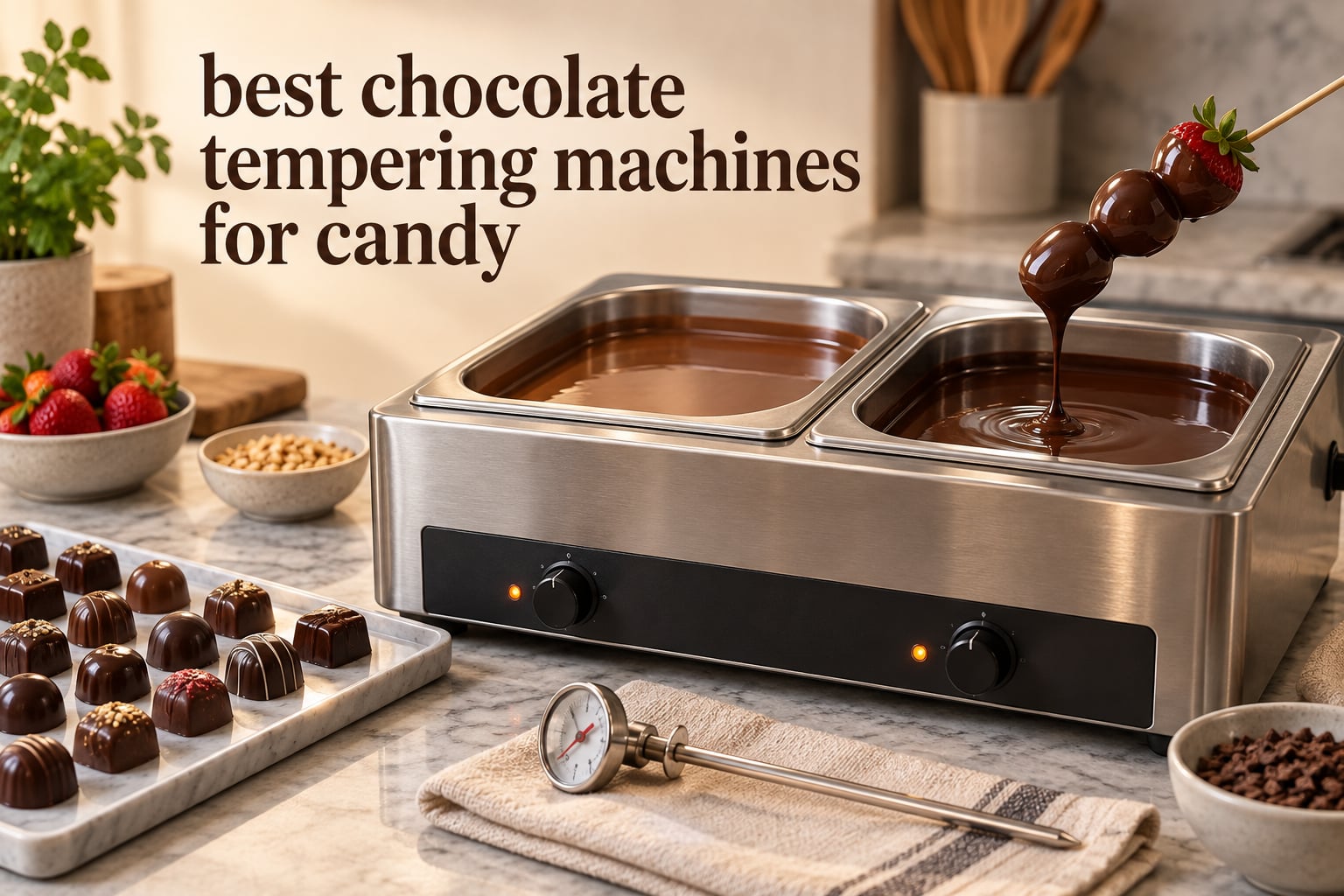
Most of the chocolate tempering machines listed online are not tempering machines at all. They are melting pots with a thermostat, and sellers label them as if a bowl that holds warm chocolate is the same thing as a machine that cycles melted chocolate through a controlled cool and reheat to crystallise the cocoa butter properly. That gap is where most disappointing purchases come from, so we sorted all ten picks in this roundup into two honest groups before we wrote a word of advice about them.
We spent weeks working through the specification sheets, owner reviews and forum threads for a category that spans everything from a small aluminium pot that takes a single bowl of chocolate to a forced-air automatic temperer rated at 100 lb of output a day. The chocolate molds we tested with behaved very differently depending on which of those two machine types fed them, and that difference is the thread running through this whole guide.
Below you will find a definition that clears up the melter-versus-temperer confusion, a comparison of all ten machines, ten individual reviews, a buying guide that tells you when to skip the purchase entirely, a corrected tempering walkthrough in both Fahrenheit and Celsius, and a straight answer on which machine fits which volume of work. Last updated for September 2026.
Table of Contents
What Is a Chocolate Tempering Machine?
A chocolate tempering machine heats chocolate to melt every existing cocoa butter crystal, then precisely cools and reheats it so the fat re-solidifies in its stable Form V crystal structure. That controlled melt, cool and reheat cycle is what gives you a glossy surface, a clean snap and a shell that holds its shape instead of going dull, soft or bloomed. A melter only holds chocolate warm, so it cannot do this.
That difference matters because cocoa butter is a polymorph. It can set into six different crystal forms, and only one of them gives chocolate the snap and shine you actually want. Tempering is the process of steering the fat into that one form, and a true tempering machine does the steering for you rather than leaving it to a bowl and guesswork.
Melter or tempering machine: the distinction that matters most
Read the spec sheet for one word before you read anything else. A melting machine heats a bowl or tank of chocolate and holds it at a set temperature. It is genuinely useful for dipping fruit, melting butter for caramel work, or keeping a big batch fluid so you can stir and drizzle. It cannot crystallise cocoa butter for you, so you are still seeding, cooling and testing by hand.
A tempering machine runs the full cycle. It melts the chocolate, drops it to a cooling temperature to seed the crystals, then brings it back up to a working temperature and holds it there. In this roundup, nine of the ten machines are melters, and one is a true automatic temperer. We have labelled every one so you know which category you are reading about.
One more honest limit: a machine controls and holds temperature, but it cannot verify that the chocolate has actually reached temper. You still need to test every batch for gloss and a clean set on a knife blade or a scrap of parchment. Anyone who tells you a machine removes the skill from tempering is selling something.
Top 3 Picks for Candy Makers (September 2026)

Dyna-Living Dual-Pot Melter
- 80W dual pot
- 86 to 185F range
- food-grade aluminum
- removable pots


Every Machine Compared in 2026
All ten machines sit in the table below. Read the capacity column first, because bowl volume decides how much chocolate you can finish in one session, and read the wattage column second, because a 1200W water bath unit and an 80W pot behave very differently when you need chocolate fluid for several hours.
| Product | Specifications | Action |
|---|---|---|
| Dyna-Living Dual-Pot Melter |
|
Check Latest Price |
| VEVOR 9 lb 2-Tank Melter |
|
Check Latest Price |
 WICHEMI Single-Pot Melter WICHEMI Single-Pot Melter |
|
Check Latest Price |
| Magula Dual-Pot Melter |
|
Check Latest Price |
 AEYDJXMER 2-Tank Melter AEYDJXMER 2-Tank Melter |
|
Check Latest Price |
 HTTSICHI 16.5 lb Dual-Bowl Melter HTTSICHI 16.5 lb Dual-Bowl Melter |
|
Check Latest Price |
 SIJIDING 2-Cylinder Melter SIJIDING 2-Cylinder Melter |
|
Check Latest Price |
 ChocoVision Revolation Delta ChocoVision Revolation Delta |
|
Check Latest Price |
 WantJoin 18 lb Dual-Pan Melter WantJoin 18 lb Dual-Pan Melter |
|
Check Latest Price |
 ZEVELOO 9 lb 2-Tank Melter ZEVELOO 9 lb 2-Tank Melter |
|
Check Latest Price |
1. Dyna-Living Dual-Pot Melting Machine – Our All-Round Starter
Dyna-Living Chocolate Melting Pot Dual-Pot Chocolate Tempering Machine
- Largest review base in this roundup at 155 ratings
- Dual pots let you run dark and milk at once
- Removable pots and detachable base clean easily
- PTC energy-saving mode
- Also handles cheese
- butter and candle wax
- Temperature fluctuates under load
- Fuse may need replacing over time
- Aluminum rather than stainless steel
This is the one we come back to. It has the deepest review history of anything in the roundup, and once the review count passes a hundred the pattern in the feedback becomes trustworthy: fast even melting, two pots you can run separately, and no complaints about chocolate scorching at normal working temperatures. For a home candy maker doing holiday moulding or a market stall of hand-dipped pieces, that is exactly the right amount of machine.
The 80W rating looks modest on paper, and it is. This is not a machine you will pre-heat twenty minutes ahead while you fill moulds. It is a pot that gets chocolate to temperature, then holds it. The two removable pots and the detachable base are the detail that earns its keep, because you can carry a pot to the sink and rinse it in seconds instead of scraping a fixed bowl.
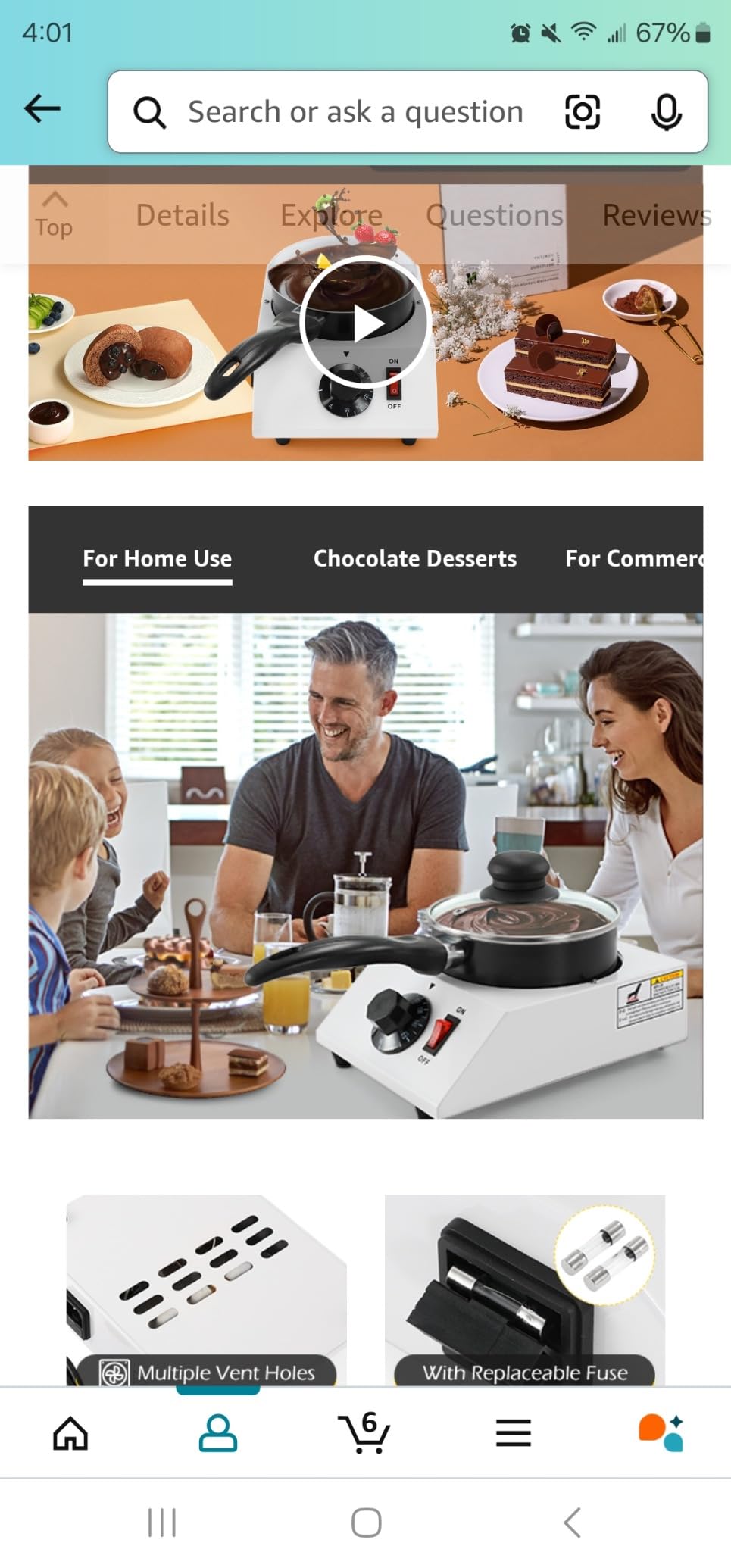
Owners describe the 86F to 185F range as more than enough headroom for both milk and dark, and the PTC mode keeps draw low once the pot is up to temperature. We would flag one thing before you commit: the temperature does wander when you drop a large cold batch into a warm pot, so give it a stir and check with a thermometer rather than trusting the dial alone.
The other recurring note is the replaceable fuse. Several owners mention replacing it once over the life of the pot, which is a design choice rather than a defect, but it is worth knowing the part exists and is standard. Nothing here needs a technician, which matters in a category where lesser-known brands are often impossible to service.
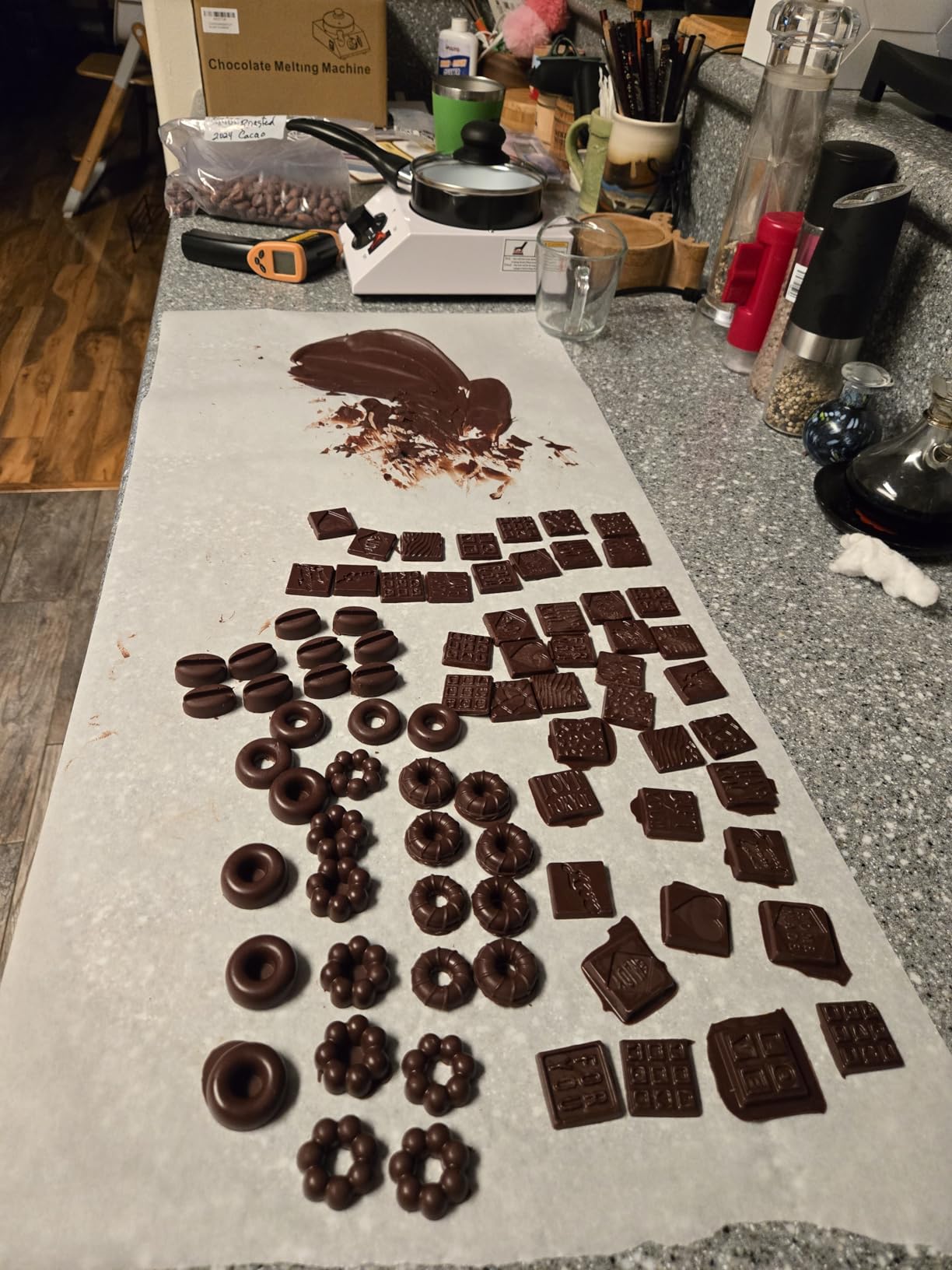
Who this suits?
A home maker who wants to dip, drizzle and mould in the same session and prefers one pot for dark and one for milk, so they can switch between them without re-melting. It is also a good first machine for a cottage food seller working small farmers market batches of roughly five to fifteen pounds of chocolate at a time.
Who should skip it?
Anyone doing long multi-hour enrobing runs where a temperature wobble ruins the finish, or anyone who needs stainless steel for food-safety paperwork. It is an aluminum pot, and while that is fine for home candy, some commercial buyers want a documented stainless basin on the invoice.
2. VEVOR 9 lb 2-Tank Water Bath Melter – The Stainless Workhorse
- 304 stainless steel body resists corrosion
- Water bath heats evenly without scorching
- Two independent 1.7 qt cylinders hold dark and milk separately
- Detachable pots and dust cover
- Fast to heat
- Not a true tempering machine
- temperature maintenance issues reported
- Some reports of rust on tanks
- Customer support can be unresponsive
VEVOR dominates this tier, and this is the version most people end up with. The 800W M-shaped heating tube sits in a water bath, which is the single best design decision in the budget class: water distributes heat far more evenly than a dry element pressed against a pot wall, so you are far less likely to scorch the chocolate sitting above the tube.
The body is 304 food-grade stainless steel with two independent 1.7 quart cylinders, and reviewers consistently call out the build quality for the money. The honest headline, though, is in the review feedback itself: owners are explicit that this is a warming and melting machine, and that you are still doing the seeding yourself.
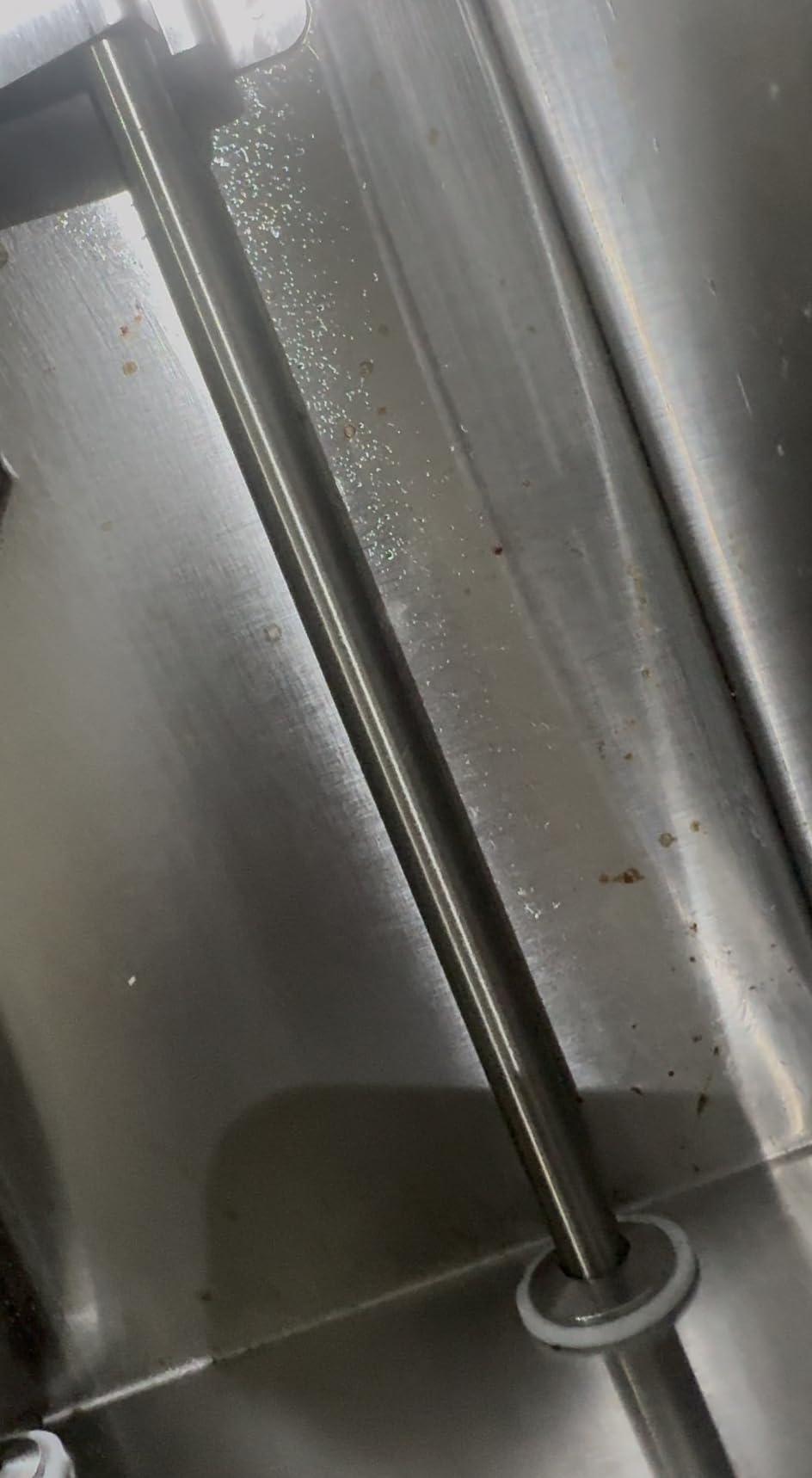
Two real issues appear in the reviews. The thermostat is manual with no digital readout, and some owners describe it cycling on at 35C and continuing to heat rather than modulating, so it can overshoot if you do not watch it. A few buyers also report rust appearing on the tanks. Cleaning with dilute vinegar is the commonly recommended fix, but it tells you the basin is not maintenance-free.
One specification detail deserves attention: this machine is listed at 220 volts, not 120. If you are in North America you will need to confirm the plug and element before you commit, because that changes where and how you can use it.
Who this suits?
A seller or cafe that melts a lot of chocolate for display, dipping or decorating and needs stainless steel basins for their food-safety paperwork. It is also the pick for anyone who plans to move to a bigger stainless setup later and wants to learn water-bath control on a small budget first.
Who should skip it?
Anyone hoping it will temper for them, and anyone without access to a 220V circuit. The manual dial also makes it a poor fit if you need a set-and-forget working temperature across a long session.
3. WICHEMI Single-Pot Melting Machine – Smallest Footprint
WICHEMI Chocolate Melting Pot Chocolate Melter Chocolate Tempering Machine
- Smallest footprint in the roundup at just over 4 lb
- Removable non-stick pot cleans quickly
- Intelligent temperature controller holds steady
- Leakage resistance and power-off protection
- Simple controls with no learning curve
- Single pot limits simultaneous melting
- Smaller capacity than the two-tank models
If your counter space is the constraint, this is the one. It weighs just over four pounds and measures roughly eleven by nine inches, so it stores in a cupboard and comes out for a single evening of holiday moulding. The food-grade aluminum body and PTC element heat quickly for its size, and the intelligent temperature controller with constant temperature protection is the feature owners mention most.
Reviews describe it as straightforward and good for small batches, which is exactly its lane. The removable non-stick pot means cleanup is close to instant, and the pot is deep enough for a modest quantity of dipping chocolate for cookies or pretzels.
Who this suits?
A beginner who is making a few dozen pieces a month and wants the smallest possible machine to learn on. It also suits anyone running a home kitchen where equipment has to be put away between sessions rather than left on the counter.
Who should skip it?
Anyone working with two chocolate types in one session, or anyone who needs enough fluid chocolate to enrobing a full tray of bonbons. The single pot is the whole story here, and the manufacturer does offer a double-pot version for buyers who need it.
4. Magula Dual-Pot Ceramic Coated Melter – Best Dual Control
- Highest average rating in the roundup at 4.5 stars
- Two pots with genuinely separate temperature controls
- Melts 1kg of chocolate in 10-15 minutes
- Ceramic non-stick coating wipes clean
- Smart thermostat chip tracks temperature in real time
- Pots are small for large dipping pieces
- Needs time to warm up fully at the start
This is the one to buy if two independent dials matter to you. Unlike the budget melters where both pots share a single thermostat, each pot here has its own control knob, so you can hold dark chocolate at one working temperature and white at another without compromising either. Reviewers consistently single out the control separation as the reason they came back to it.
The build is a 304 stainless steel outer casing with a ceramic coated non-stick inner pot, which is a nicer combination than it sounds: stainless outside for durability, ceramic inside for release. Owners report the coating makes cleanup fast, and the smart thermostat chip with its temperature protection indicator seems to hold the set point well once the pot is up to heat.

Capacity is the trade-off. At 1kg melted in roughly ten to fifteen minutes per pot, this is quick for a small machine, but the pots are shallow. Several buyers note they are too small for large dipping items, and a few describe the initial warm-up as slow, so it is not the machine you reach for when the order is already on the bench.
One detail in the owner feedback is worth repeating because it is rare: several reviewers say this one actually lets them get to a usable tempered state, not just melted chocolate. That is still manual work rather than automation, but it is closer than most of the budget pots manage.

Who this suits?
A maker who runs several chocolate types in one session, such as a dessert counter doing dark, milk and white work in the same hour. The separate knobs also make it a good teaching tool, because you can watch one pot hold a working temperature while the other comes up.
Who should skip it?
Anyone dipping oversized items or enrobing deep bonbon moulds, where the shallow pots will be awkward. It is also a single-operator machine rather than a buffet one, given the shallow profile.
5. AEYDJXMER 2-Tank Stainless Melter – Simple Mechanical Controls
Commercial 2-Tank Chocolate Cheese Melter, 1000W Tempering Melter
- Full stainless steel construction throughout
- Water bath heating gives uniform heat without burnt residue
- Mechanical controls are easy for beginners to learn
- Independent power switches per tank
- Smooth surfaces with no dead corners to clean
- Temperature dial reported off by 8-10F
- Does not consistently restart after cycling
- Tanks are shallower than expected
- Some units have failed after a few months
- No manufacturer warranty
The appeal here is honesty of design. There is no digital display and no app, just a 1000W water bath system, two independent stainless steel tanks, and a mechanical thermostat you can set from 80F to 185F. For a beginner or a seller who wants a machine nobody can accidentally over-program, that simplicity is a real advantage rather than a compromise.
Water bath heating means the heat comes from warm water in the outer chamber rather than a dry element touching the chocolate, and reviewers confirm it does not scorch. The smooth stainless surfaces with no dead corners are also mentioned as a genuine win for cleaning, which is a bigger factor than most spec sheets suggest.
Who this suits?
A cafe, bakery or dessert counter that keeps large volumes of melted chocolate fluid for decorating and display all afternoon. Anyone who prefers a mechanical dial to an app will find this refreshingly uncomplicated to run.
Who should skip it?
Anyone who needs a precise set point, because owners report the dial reading eight to ten degrees off and describe inconsistent cycling. Several buyers also report failures after a few months, and the listing carries no manufacturer warranty, which is the main risk here.
6. HTTSICHI 16.5 lb Dual-Bowl Melter – Highest Melter Capacity Here
- Largest total capacity of any melter in this roundup at 16.5 lb
- 1200W U-shaped tube heats fast
- 100 percent food-grade stainless steel body
- Removable basins with a built-in water level line
- Wide-mouth bowls are easy to stir and ladle from
- Newer model with a smaller review history
- Wide shallow bowls suit stirring more than deep moulding
If your problem is volume rather than precision, this is the machine in the roundup built for it. Two bowls hold up to 7.5 kg or 16.5 lb in total, driven by a 1200W thickened U-shaped heating tube in a water bath, all inside a 100 percent food-grade stainless steel body. That is roughly double the batch size of most of the two-tank machines here.
Owner feedback focuses on the wide-mouth bowl shape, which makes it easy to stir and to ladle from when you are doing dipping rather than moulding. The removable basins and built-in water level line simplify the daily clean, and the range covers everything from chocolate and cream to cheese, caramel and jams.
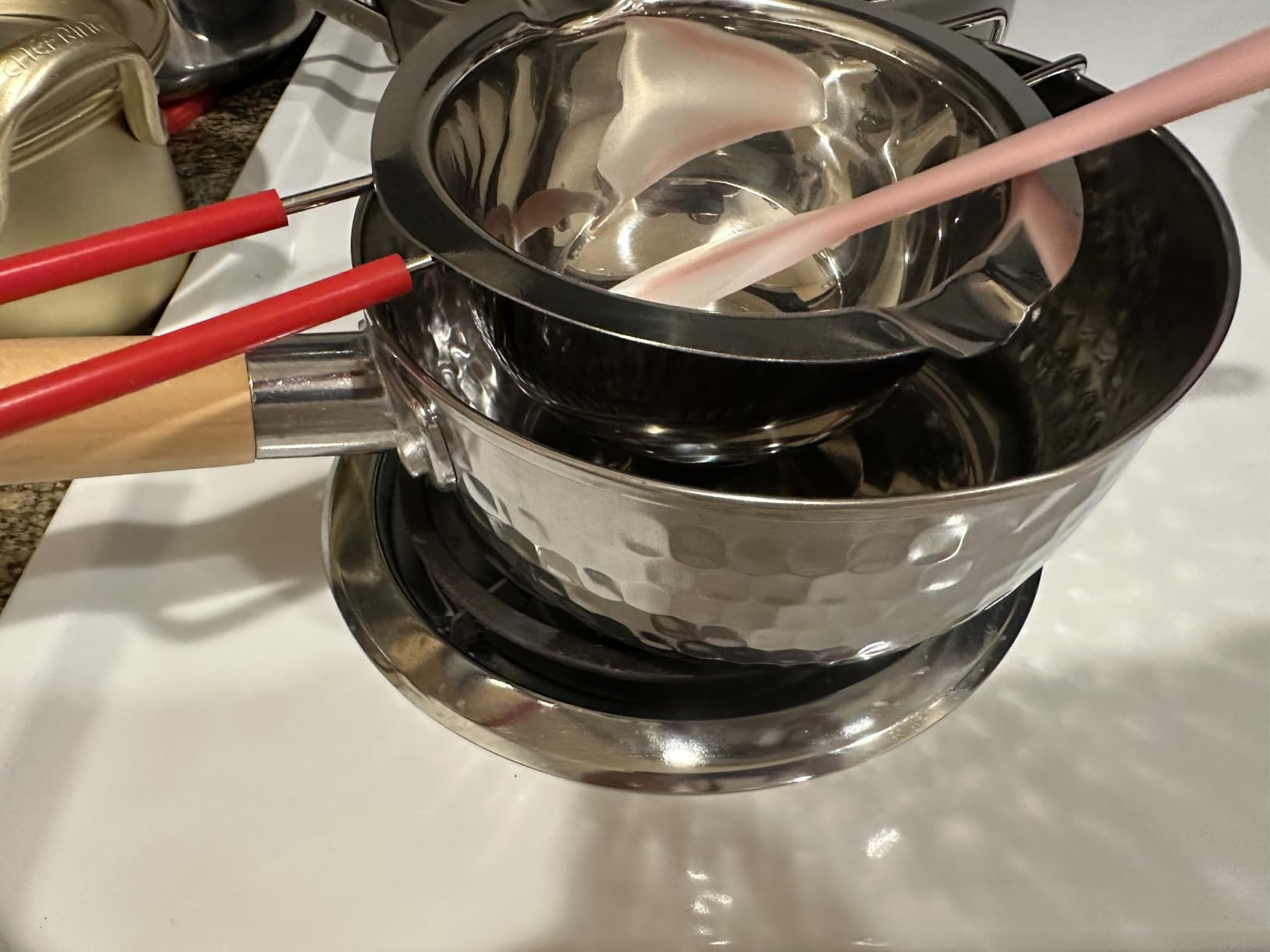
This is a recent release, and the review base is still building, so treat the early enthusiasm with some caution. Nobody is reporting a fundamental flaw, but there is not yet a long-term track record of the heating element holding calibration after a year of daily use, which is exactly the question that matters for a machine meant to sit on a counter all day.
The bowls are also wide and shallow by design. That is excellent for stirring and for holding a large fluid volume you will ladle out of, and less ideal if you are trying to dip tall items or fill deep moulds without spilling.
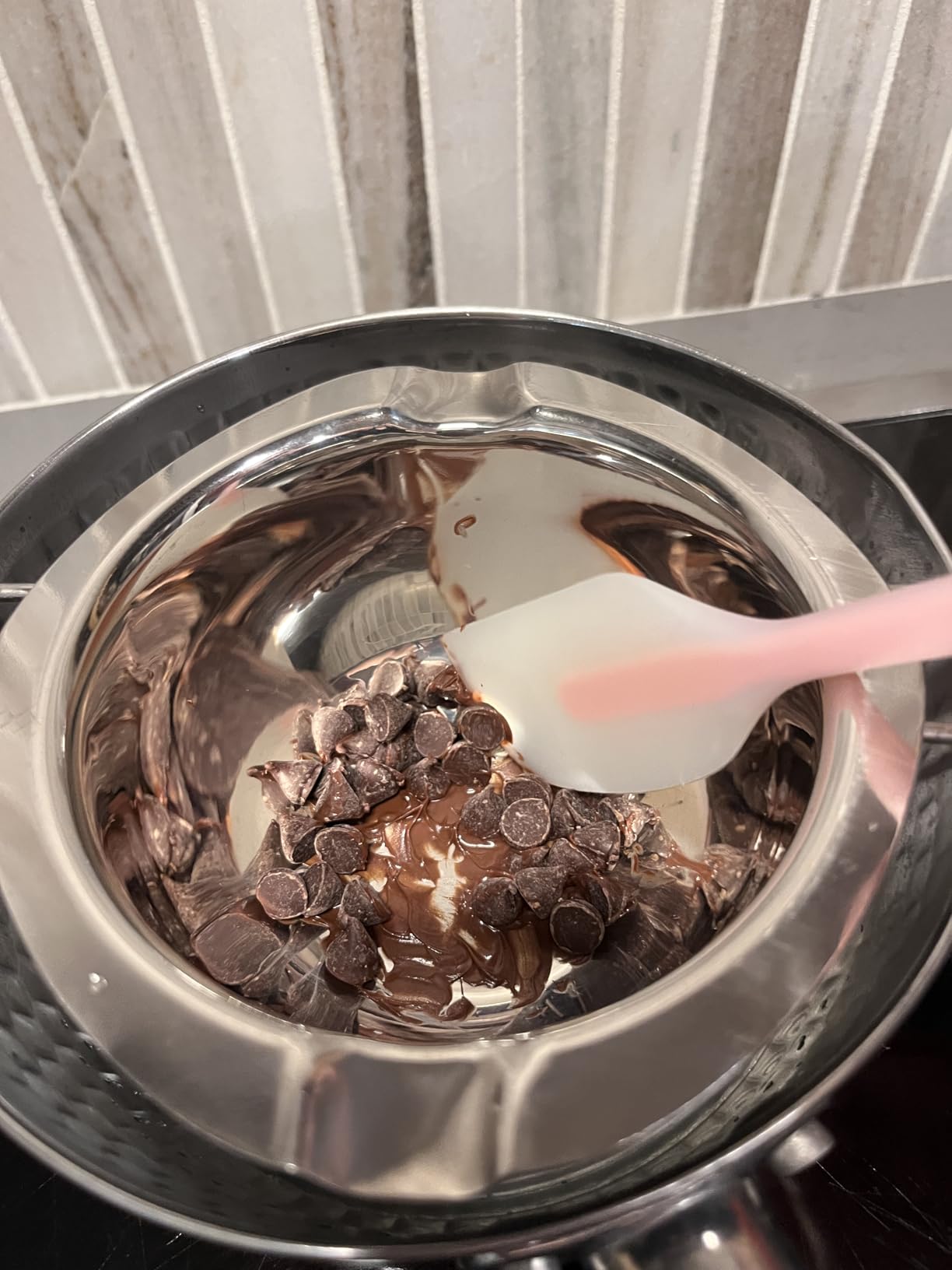
Who this suits?
A market stall or dessert counter that melts chocolate continuously through a service and needs a large working volume without refilling. It is also a sensible step up for a maker moving from home batches into small paid orders.
Who should skip it?
Anyone who needs exact temperature discipline, since a 4.0 average with an element that cycles on a wide dial leaves less margin for error than a machine with a readout. It is also a large footprint, at nearly twenty inches of package length.
7. SIJIDING 2-Cylinder Water Bath Melter – Built for Two Chocolates
1000W Electric Chocolate Tempering Machine, Commercial Chocolate Melter with 2 Cylinders, Water Bath Heating, Adjustable Thermostat & Indicator Light, Stainless Steel Chocolate Warmer
- Seamless sink design stops chocolate sticking to the bottom
- 1000W water bath heats fast and evenly
- Stainless steel resists rust
- heat and corrosion
- Double cylinders run two chocolate types at once
- Indicator light shows when the element is drawing power
- Newer model with a limited review history
- Stainless basin is heavier to move than aluminum
- No digital readout
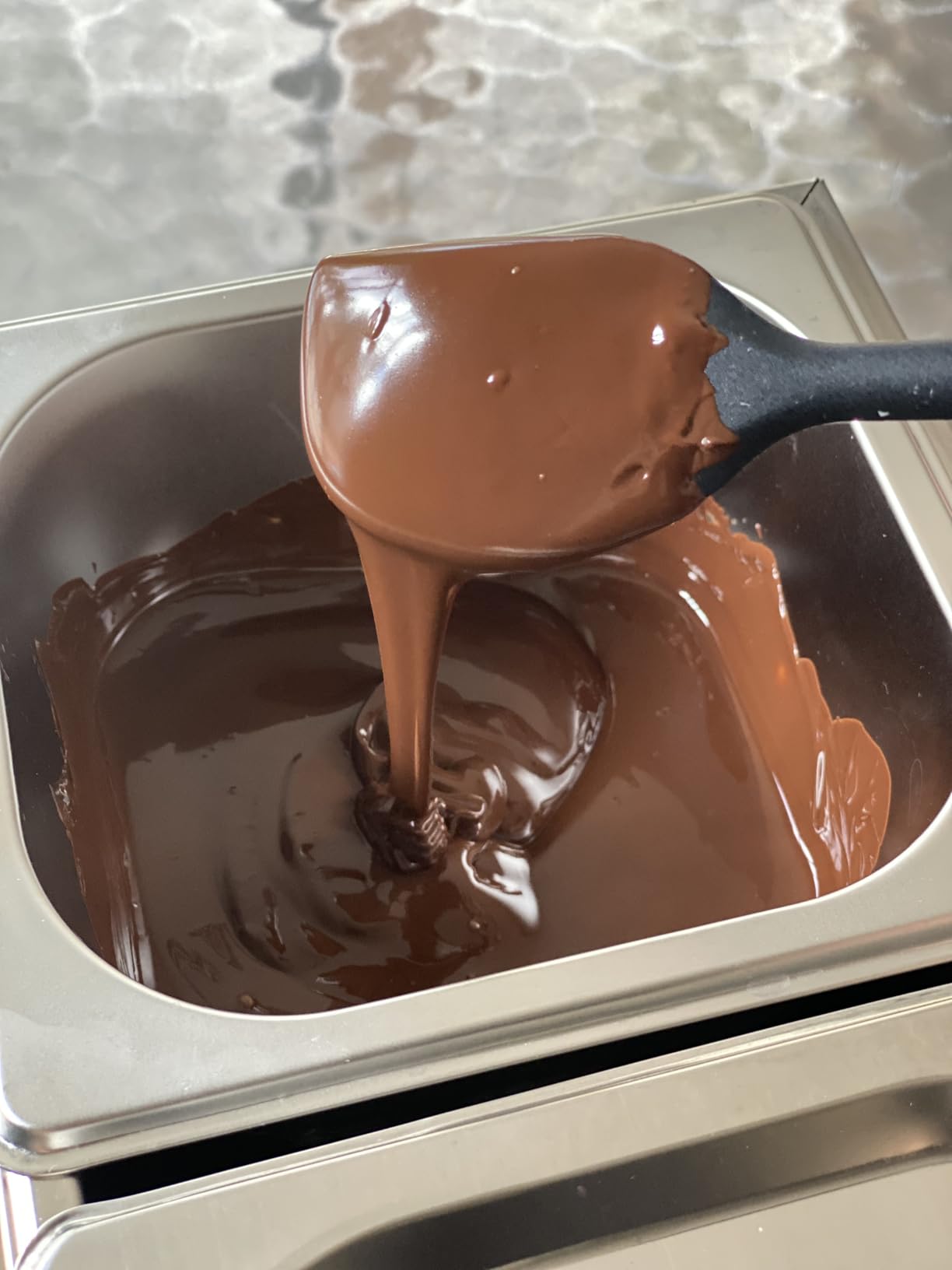
The design detail that separates this from the other budget two-tank machines is the seamless sink. There is no welded seam in the basin floor for chocolate to lodge in and catch fire, and owners who have used it report that the bottom simply wipes clean at the end of a session rather than needing a scrape and a soak.
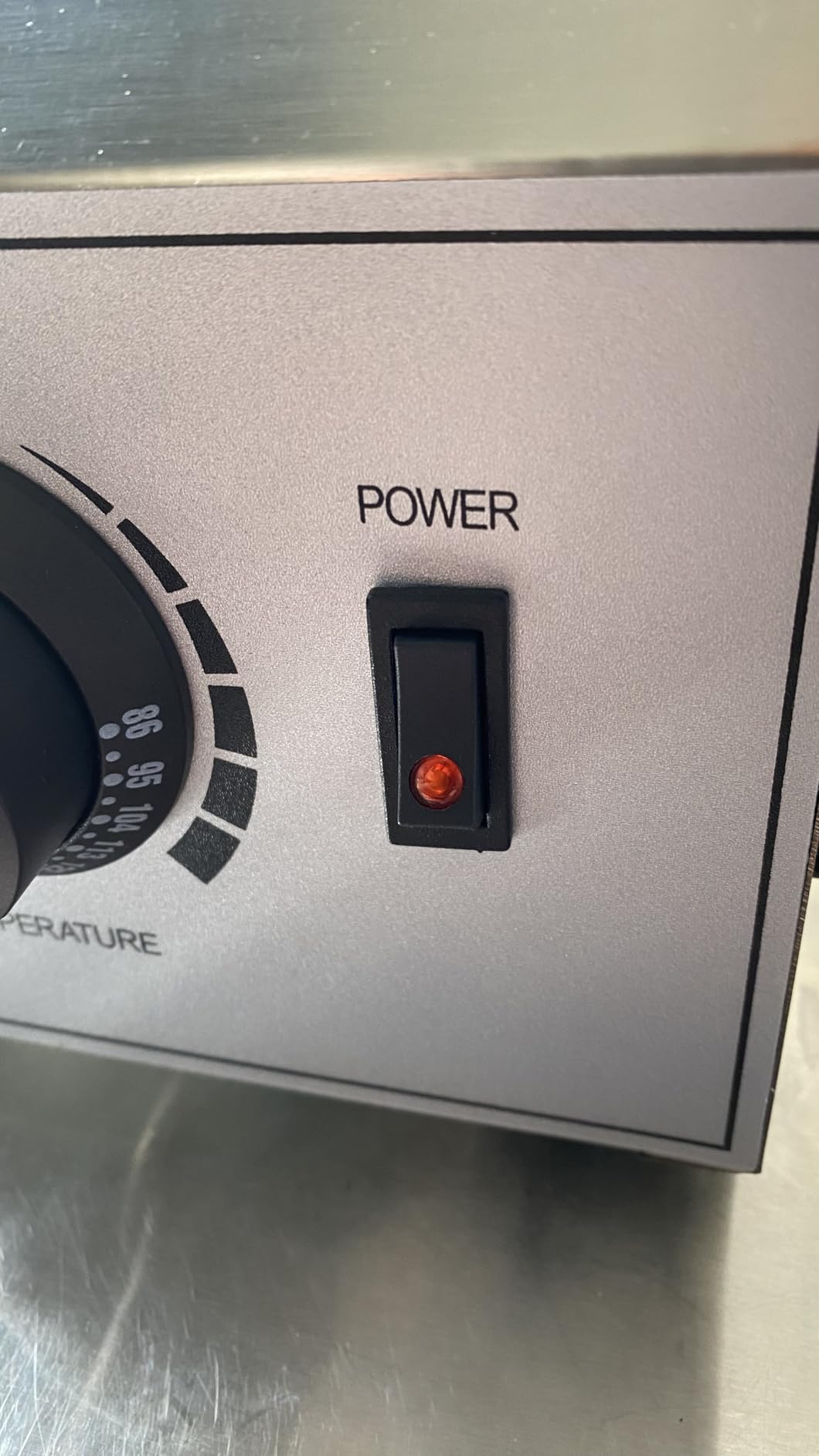
It is a 1000W water bath design in a stainless steel body rated from 86F to 185F on a manual adjustment, with two cylinders for running dark and milk at the same time. The indicator light is a small touch that tells you at a glance whether the element is currently calling for heat, which is useful when you are watching rather than guessing.
The honest limitation is history. This is a recent release carrying twenty reviews, so the feedback is all early and positive but thin. Nothing in the reviews suggests a fault, yet there is simply no long-term data on whether the thermostat and the element keep working after a year of daily service, and that is the question we would want answered before committing.
It is also worth weighing stainless against aluminum for handling. Stainless is the better material for food-safety paperwork and resists corrosion better, but it is noticeably heavier to lift when you want to move a full basin to the sink.
Who this suits?
A maker who alternates between two chocolate types and is tired of scraping chocolate out of a basin between runs. It suits anyone whose food-safety process requires a documented stainless vessel rather than coated aluminum.
Who should skip it?
Buyers who want reassurance from a long review history, and anyone who needs a digital temperature readout to hold a set point across a long session. If moving a heavy full basin is a problem, look at an aluminum pot instead.
8. ChocoVision Revolation Delta 10 lb – The Only True Automatic Temperer
ChocoVision Revolation Delta 10 lb Chocolate Tempering Machine
- Actually tempers rather than just melting
- Handles 3 to 10 lb batches and holds temper for 15+ hours
- Rated at 100 lb of output per day
- Forced hot air heating means no water bath to manage
- Display and software system show the cycle
- Made by the anchor brand in the category
- By far the most expensive machine in the roundup
- Heavy at 36 lb and oversized for a home kitchen
- Overkill unless you are producing chocolate as a business
This is the machine the rest of this roundup is measured against, and the only one here that performs the full cycle. A fully automatic microprocessor runs forced hot air across the bowl, melts and tempers a batch of 3 to 10 lb in about an hour, then holds the chocolate in temper for over 15 hours while you work through it. Rated daily output is 100 lb.
What that buys you is not a gadget, it is time and consistency. A manual temperer needs your attention through every stage, and any interruption can mean a re-temper. The Delta runs the curve on a programmed cycle with a display, so the chocolate sits at working temperature while you mould, dip and enrobing without babysitting a dial.
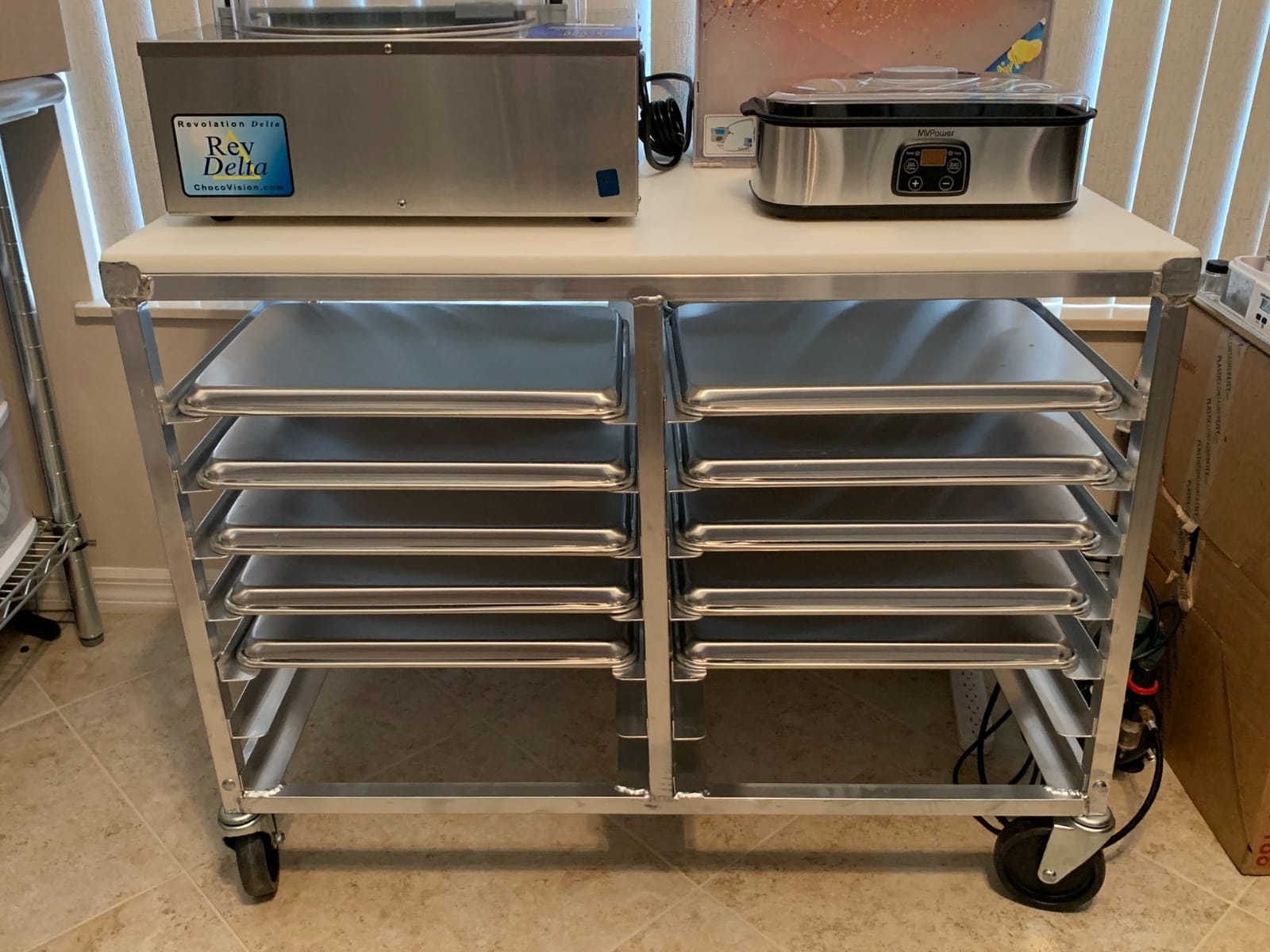
The reasons people hesitate are all on the physical and financial side. At 36 lb it is a floor-adjacent appliance rather than a countertop one, and it is by far the costliest thing in this roundup by a wide margin. Owners also note that the footprint works against a domestic kitchen, and that for casual home use it simply is not the right tool.
For a confectionery or a growing bean-to-bar operation running regular paid production, the maths is different. Once you are tempering chocolate every week rather than at Christmas, the machine pays for itself in recovered time and in batches that do not fail and have to be remade. If you are not at that volume yet, the r/chocolate consensus is clear: hold off.
Who this suits?
A working chocolatier, a cottage food business that has grown past market-stall volume, or a bean-to-bar maker running weekly production. It also suits anyone whose buyers require a consistent professional finish and where a failed batch is lost money rather than a Sunday wasted.
Who should skip it?
Anyone making chocolate a few times a year. Below roughly 25 kg of chocolate a week, the r/chocolate advice is that a small batch tempering machine is not worth the money, and a microwave with an accurate thermometer will do the same job for a fraction of it.
9. WantJoin 18 lb Dual-Pan Melter – Newest Build With Warranty Support
WantJoin Chocolate Tempering Melting Machine 2-Tank 1/3 Size 18Lbs Capacity
- Largest total capacity of any melter here at 18 lb
- Lowest temperature floor in the roundup at 75F
- Water bath heating with 304 stainless steel pans
- Built-in overheat protection and a UL-certified cord
- Comes with a one-year warranty and a silicone spatula
- Very new model with only two reviews
- No long-term reliability record yet
- Costs more than the entry-level melters
Two specifications stand out before anything else. The total capacity of 18 lb across two third-size pans is the highest of any melter in this roundup, and the temperature floor of 75F is lower than the 86F common across the budget class, which matters because chocolate working temperatures for dark chocolate sit close to that floor.
It is a 1200W water bath system in a 304 stainless steel interior, with dual third-size food-grade pans, built-in overheat protection, a UL-certified power cord and a silicone spatula included. Buyers also get a one-year warranty with dedicated support, which in this product category is genuinely rare and worth real money given how many lesser-known brands there are.
Who this suits?
A maker stepping up from a small home pot who wants one substantial machine with a warranty behind it. The low temperature floor and the stainless pans are both practical wins for anyone working with couverture rather than compound chocolate.
Who should skip it?
Anyone who wants an established track record. This is a very new release with just a couple of reviews, both five star, which tells you very little about how the element and thermostat behave after a year. Judge it on the specification and the warranty, not the rating.
10. ZEVELOO 9 lb 2-Tank All-Stainless Melter
- Entirely stainless steel with no non-stick coating
- Double tank handles two chocolate types at once
- 1000W water bath heats both bowls evenly
- Smooth inner walls are easy to clean
- No coating to scratch or degrade over time
- Temperature does not reach low enough for precise tempering on some units
- Unclear instructions
- One report of a melter that never warmed up
- Limited long-term data on a newer model
The defining choice here is the absence of coating. Everything is food-grade stainless steel, right down to the smooth inner walls, so there is no non-stick layer to scratch, delaminate or worry about in a food-safety inspection. Several owners specifically call out having no toxic non-stick surfaces as their reason for choosing it.
It is a double tank holding 9 lb in total, heated by a 1000W tube in a water bath, adjustable from 86F to 185F. Reviewers like that both bowls heat evenly and that the intelligent temperature control system keeps them consistent, and the walls are reported as easy to wipe clean between runs.
Who this suits?
A buyer whose food-safety process or customer base expects uncoated metal, such as a health-conscious producer or a workshop with strict material rules. It also works well for a seller running two chocolate types on a stall where cleaning time is limited.
Who should skip it?
Anyone who needs to dial in a low working temperature precisely, because reviews note the range does not go low enough for careful tempering on some models. The instructions are also widely described as unclear, so budget time for learning it.
How to Choose a Chocolate Tempering Machine?
Start by deciding whether you need a melter or a temperer, because that choice eliminates most of the list in one step. If you are dipping, drizzling or pouring and you are content to cool and seed the chocolate by hand, any of the first nine machines will do the job. If you want the machine to run the melt, cool and reheat cycle itself, only the ChocoVision Delta in this roundup does that.
Before you buy: do you even need a machine?
The most common question in the forums is whether the machine is worth it at all, and the answer is usually no at low volume. Members of r/chocolate are consistent that you should not buy a tempering machine until you need more than about 25 kg of chocolate, because small batch tempering machines are described as problematic rather than transformative. Many home makers never buy one. They temper in a microwave in one-minute bursts with an accurate thermometer, which works and costs a fraction of a machine.
A machine earns its place when you are tempering the same chocolate every week, when a failed batch costs you money, or when the manual cycle is taking longer than the making itself. Cottage food sellers posting in Facebook groups are actively hunting an affordable temperer because the premium brands are hard to get hold of, which tells you the demand is real but concentrated in a narrow band.
Capacity is the axis that decides everything
Ignore marketing phrases like large capacity and read bowl volume in pounds instead. A 9 lb two-tank machine and a 4 lb single pot feel completely different on a working Saturday. Buyers repeatedly ask for capacity in pounds and real batch throughput because a spec sheet rarely tells you how much finished candy a tank actually produces once you account for what stays on the wall.
For reference, our chocolate making kit for beginners typically consumes a few pounds per session, which is the range a 9 lb machine covers comfortably. Sessions past about 20 lb start to strain anything below the 18 lb WantJoin or the 16.5 lb HTTSICHI, and sessions past that push you toward the automatic temperer.
Temperature control: verified accuracy, not maximum rating
Every machine here advertises a maximum of 185F, so the top of the range tells you nothing useful. What matters is whether the set point holds, whether there is a readout, and how low the dial goes. Buyers ask for verified accuracy rather than a maximum rating for exactly this reason. A machine that cannot reach below about 80F limits how closely you can hold dark chocolate at its working temperature.
Power, voltage and where the machine will actually live
Wattage from 80W to 1200W is the biggest spread in this roundup, and it maps almost exactly onto capacity. Low-wattage pots are fine for a few pounds. If you plan to hold chocolate fluid for a full service, you want the 1000W to 1200W water bath units, because they recover temperature quickly after a cold batch or a lid goes on. Check voltage before you commit as well; the VEVOR listed here is a 220V model, which changes where you can use it.
Materials, cleaning and cottage food rules
Stainless steel is the material to look for if you sell commercially, both because it is easier to clean and because food-safety paperwork is simpler. NSF approval and cottage food compliance matter to anyone running a licensed home kitchen, and buyers consistently ask about both. The budget pots in this roundup do not carry that documentation, while the stainless models at least give you a cleanable surface to point at.
Matching machine class to candy type
Different candies want different machines. Moulding bars and holiday shapes needs modest volume and a temperature you can hold steady. Dipping fruit and cookies wants a wide, shallow bowl you can ladle from, which favours the HTTSICHI and SIJIDING designs. Enrobing filled bonbons wants a machine with a pump or spout, and for that our guide to chocolate transfer sheets covers the decorative side. Panning centres is a production task that belongs on a continuous machine, and a chocolate fountain is for serving rather than tempering.
How to Temper Chocolate with a Machine?
Whether you are working with an automatic temperer or a melter plus a thermometer, the curve is the same. The numbers below cover dark chocolate, and milk and white run slightly cooler at the cooling and working stages. Work in one unit and stay in it; mixing figures is the most common reason batches fail.
The four-step tempering cycle
1. Melt. Bring the chocolate to 113F, which is 45C, and hold until every solid piece has gone. For dark chocolate that is a full melt with no crystals left. If a drop of seed survives, the next step will not work properly.
2. Cool. Drop the temperature to 82F, which is 31C for dark chocolate. Milk and white cool to around 80F. This is where seed chocolate or cocoa silk goes in, and members of r/CandyMakers note that silk lets you work the chocolate at a higher temperature than seeding or tabling does, so it stays more fluid and is easier to temper from there.
3. Reheat. Bring it back up to a working temperature of 88F to 90F, which is about 32C. This is the temperature at which you mould, dip and enrobing. Going higher than this is the single most common mistake, and it is what causes chocolate to refuse to set later.
4. Hold and test. Keep the chocolate at working temperature and test it on a knife blade or a scrap of parchment before every batch. A good temper shows gloss, a clean break and no streaking.
Why tempered chocolate will not set?
Four causes account for almost every failure. The chocolate was worked above its holding temperature, which pushes it out of the crystal structure you need. The chocolate was overheated at the melt stage, or a single drop of water got in, which seizes it into a stiff paste that will not flow. The room was too warm or too humid, and heat and moisture are the enemies of a clean set. Or the batch was never properly seeded, so there were no stable crystals to build from in the first place.
On timing, a properly tempered mould sets in around five to ten minutes at room temperature, and faster in a cool room or a refrigerator for a few minutes. If yours is still soft after twenty minutes, it was not in temper. It will not set no matter how long you wait.
On the 78 degree question, no, chocolate does not melt at 78F. That figure is close to the dark chocolate working temperature, not a melting point. Cocoa butter begins to melt somewhere around 93F to 97F, and the visible softening people see in a warm car or pocket is fat bloom, which is the chocolate’s surface fat separating because the chocolate was too warm too long. It looks dull and grey and it melts in your hand, but it is not the same as a properly tempered piece that has been left near a window.
Frequently Asked Questions
What is a chocolate tempering machine?
A machine that melts chocolate to destroy all existing cocoa butter crystals, then precisely cools and reheats it so the fat re-crystallises into its stable Form V structure. That produces glossy, hard-snapping chocolate that holds a shape. A melting pot only holds chocolate warm and cannot do this.
What is the best chocolate tempering machine for home use?
For most home candy makers, a dual-pot stainless or aluminum melter around 9 lb of capacity is the sweet spot. The VEVOR 9 lb 2-Tank and the Dyna-Living dual-pot both cover a few pounds of chocolate per session, and both run two chocolate types at once. If you want the machine to temper automatically rather than melt, step up to a tabletop automatic temperer.
How much does a chocolate tempering machine cost?
Prices in this category span four tiers. Entry-level melting pots sit at the bottom of the range. Stainless two and three tank melters sit well above them. Tabletop automatic tempering machines move into the high hundreds, and continuous production temperers with auger pumps and chilled plates run into the thousands. The gap between the cheapest melter and a production temperer is enormous, so match the machine to your weekly volume rather than to the feature list.
What can you use to temper chocolate if you do not have a machine?
A microwave with an accurate candy thermometer and a bowl is enough for home quantities. Melt in one-minute bursts, stir, check the temperature, and repeat. Many experienced home makers in r/Chefit and candy forums use this method successfully and never buy equipment. It is more hands-on, but it costs very little.
What are the common mistakes when tempering chocolate?
Working the chocolate above its holding temperature, overheating it at the melt stage, letting a drop of water in which seizes it, tempering in a hot or humid room, and skipping the seed so there are no stable crystals to build from. The first is the most common and causes chocolate that will not set.
Why won’t my tempered chocolate set?
Almost always the chocolate was too warm when it was poured, moulded or dipped, which knocks it out of temper. Other causes are overheating, water getting in and seizing the chocolate, a room that is too warm, and a batch that was never properly seeded. Untempered chocolate will not set no matter how long you wait for it.
What is the perfect temperature for tempering chocolate?
For dark chocolate, melt to 113F, cool to 82F, then bring back to a working temperature of 88F to 90F. Milk and white chocolate cool to around 80F and work at a slightly lower temperature. In Celsius that is 45C, 31C, and about 32C for dark chocolate.
At what temperature does cocoa butter melt?
Cocoa butter starts to melt somewhere around 93F to 97F, which is why tempered chocolate softens and loses its snap in a warm room. What people often mistake for melting is fat bloom, where surface fat separates and leaves a dull grey film after chocolate has been too warm for too long.
What is the most accurate candy thermometer for tempering chocolate?
Look for a digital probe thermometer that reads to a single degree and has a thin probe, plus a second thermometer to check the bowl. Accuracy to a single degree matters more than range, because the whole tempering curve is built on a window of a few degrees between cooling and working temperature.
How long does chocolate take to set after tempering?
A properly tempered mould usually sets in about five to ten minutes at room temperature, and faster with a short spell in a refrigerator. If the chocolate is still soft after twenty minutes, it was not in temper and it will not set regardless of waiting time.
Which Machine Should You Actually Buy?
Make your buying decision by volume, not by wishful thinking. Below roughly 25 kg of chocolate a week, the honest advice from r/chocolate is that a tempering machine is not worth it, and a microwave with a single-degree thermometer will serve you better for a fraction of the cost. Most of the disappointment in this category comes from buying automation before you have the volume to use it.
Once you are making several pounds a week, start with a dual-tank melter in the 9 to 18 lb range. The Dyna-Living dual-pot is our all-round pick for a home maker because it has the deepest review history in the set and the least drama. The Magula is the better machine if running two chocolate types at separate temperatures is your normal working pattern, and the HTTSICHI is the one to buy if volume is the real constraint.
Buy the ChocoVision Revolation Delta when chocolate has become a business rather than a hobby, and only then. It is the sole machine here that runs the complete melt, cool and reheat cycle without you, holds temper for 15 hours at a time, and handles batches of 3 to 10 lb. If you are not there yet, save the money and master the seed method first, because a machine still needs a skilled operator behind it. Pair whatever you choose with the right moulds and a solid thermometer, and you will turn out better candy than any machine can make for you.