
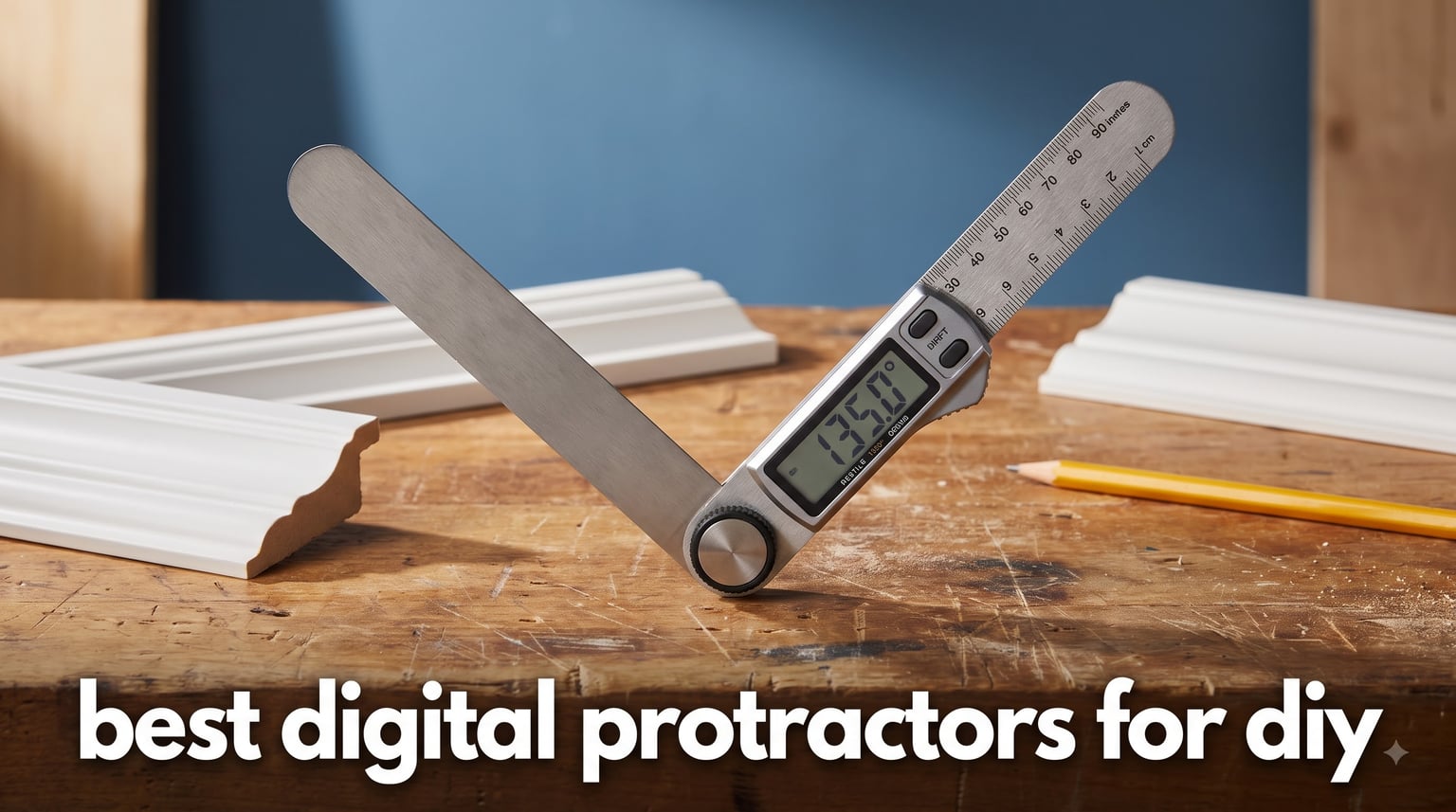
Finding the best digital protractors for DIY projects changed how I work in my shop. I used to fight with a plastic school protractor and a pencil, squinting at tiny markings and second-guessing every angle. A good digital angle finder takes the guesswork out of crown molding, miter cuts, tile layout, and pretty much any project where being off by one degree means a visible gap.
Digital protractors use an internal inclinometer sensor to measure the angle between two surfaces and display it on an LCD screen. Most are accurate to within 0.1 to 0.3 degrees, which is far more precise than what I could achieve with an analog tool. Some double as rulers, levels, or miter calculators, making them a versatile addition to any DIY toolbox.
Our team spent weeks comparing 8 of the most popular models on the market, from sub-$20 budget gauges to professional-grade angle finders. We looked at accuracy ratings, build quality, display readability, and real feedback from thousands of DIYers and woodworkers. Whether you need something for occasional home projects or regular workshop use, this guide covers the top options available in 2026.
Table of Contents
Top 3 Picks for DIY Digital Protractors
If you want to skip the deep dive and just grab the right tool, here are our three favorites. The Klein Tools 935DAG is our editor’s choice for its accuracy and magnetic base. The GemRed 82305 delivers the best value with a ruler-protractor combo under $20. And the SHAHE angle gauge is our budget pick for anyone who needs a simple, affordable angle cube.

Klein Tools 935DAG Digital Angle Gauge
- 0.1 degree resolution
- Magnetic base
- IP42 rated
- Auto-rotating display

GemRed 82305 Digital Angle Finder
- Stainless steel blades
- Ruler combo
- 0.3 degree accuracy
- Lock function

SHAHE Digital Angle Gauge
- 0.2 degree accuracy
- 0.05 degree resolution
- Magnetic base
- Backlit display
Best Digital Protractors for DIY in 2026
Here is a quick comparison of all 8 models we tested. Each one earned its spot through a combination of accuracy, build quality, user reviews, and value for DIY use.
| Product | Specifications | Action |
|---|---|---|
| Klein Tools 935DAG Angle Gauge |
|
Check Latest Price |
| GemRed 82305 Angle Finder |
|
Check Latest Price |
 Bosch GAM 220 MF 4-in-1 Bosch GAM 220 MF 4-in-1 |
|
Check Latest Price |
 Neoteck 16in Digital Protractor Neoteck 16in Digital Protractor |
|
Check Latest Price |
 General Tools 822 Angle Finder General Tools 822 Angle Finder |
|
Check Latest Price |
 Klein Tools 935DAGL Level Finder Klein Tools 935DAGL Level Finder |
|
Check Latest Price |
| SHAHE Digital Angle Gauge |
|
Check Latest Price |
 Lexivon Aluminum Angle Finder Lexivon Aluminum Angle Finder |
|
Check Latest Price |
1. Klein Tools 935DAG – Best Overall Digital Angle Gauge
- Extremely accurate with 0.1 degree resolution
- Strong magnetic base holds securely on metal surfaces
- Compact and portable at 3.5 ounces
- Auto-rotating display reads in any orientation
- IP42 dust and water resistant
- Small display hard to read in low light
- Requires AAA batteries not USB rechargeable
- Initial calibration process takes practice
I have used the Klein Tools 935DAG on everything from miter saw setup to shelving installation, and it has become the tool I reach for first. The magnetic base snaps onto my table saw blade and fence with a satisfying click, and the reading settles almost instantly. At 3.5 ounces, it is light enough to carry in a pocket without thinking about it.
The auto-rotating display is a feature I did not know I needed until I used it. No matter which way the gauge is oriented, the numbers flip right-side up. This matters more than you might expect when you are working under a cabinet or on an awkward angle.
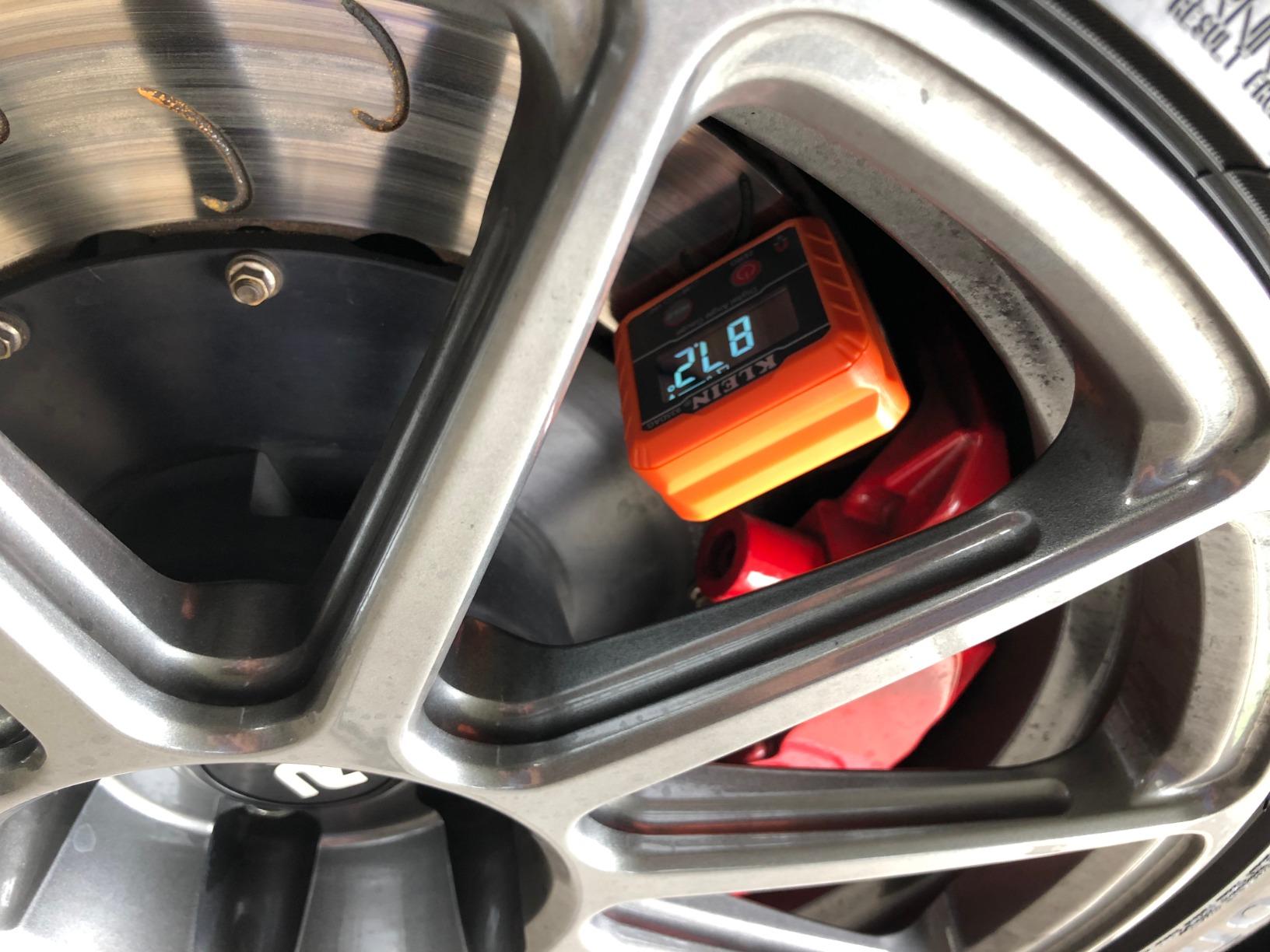
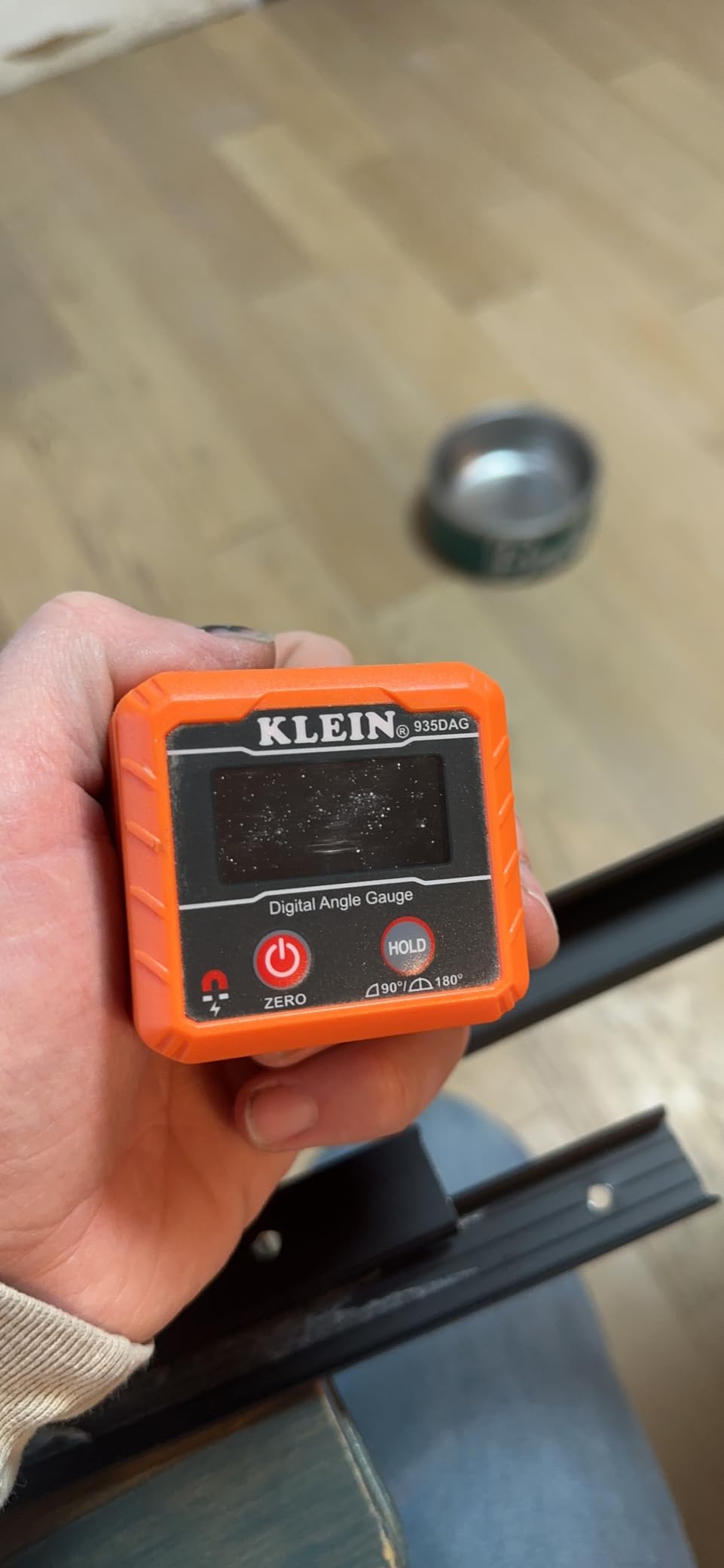
On the technical side, the 935DAG measures 0 to 90 and 0 to 180 degree ranges with 0.1 degree resolution. The IP42 rating means it can handle workshop dust and light splashes, which is more than I can say for some of the cheaper models I tested. Klein includes a soft carrying case and two AAA batteries, so it is ready to work right out of the box.
The V-groove edges are a nice touch for anyone working with conduit or pipe. I used them to verify a bend on some EMT conduit and the groove held the pipe squarely against the gauge. The zero calibration button lets you set a reference angle on any surface, which is handy for transferring angles from one piece to another.
Who should buy this
This gauge is perfect for DIYers who need a compact, magnetic angle finder for miter saw setup, table saw blade alignment, knife sharpening, and general leveling tasks. If you work with metal surfaces or power tools with ferrous tables, the strong magnetic base makes it a no-brainer.
What to watch out for
The display is on the smaller side, which can be tough to read in dim workshop lighting. The calibration process requires a flat reference surface, and some users report needing to recalibrate after battery changes. Also, it only zeroes near level, so you cannot set an arbitrary reference angle.
2. GemRed 82305 – Best Value Digital Protractor with Ruler
- Ruler and protractor in one tool
- Durable laser-etched stainless steel
- Locking function holds any angle
- Measures inside and outside angles
- Excellent value under $20
- Battery compartment prone to loosening
- Loses zero after auto-shutoff
- No backlight for dim conditions
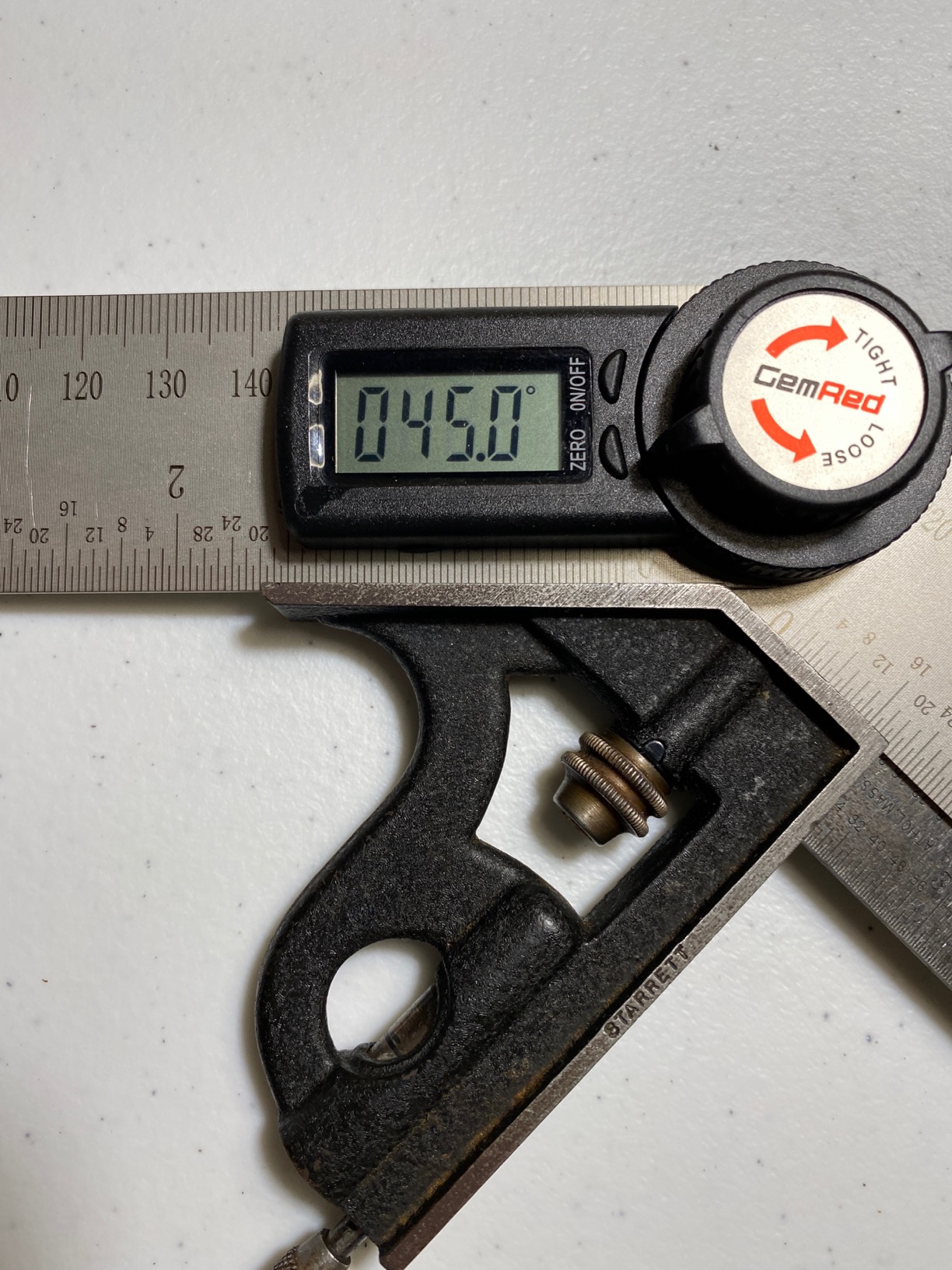
The GemRed 82305 is the best digital protractor for DIYers on a budget. I picked one up for a crown molding project and was surprised by how solid it felt for the price. The stainless steel blades have laser-etched markings that are easy to read and will not rub off over time like printed scales do.
What sets the GemRed apart is the ruler-protractor combination. You get a functioning stainless steel ruler with both metric and imperial markings, plus a digital angle readout in the center pivot. For DIYers who do not want to carry multiple tools, this is one of the best digital protractors for daily use.
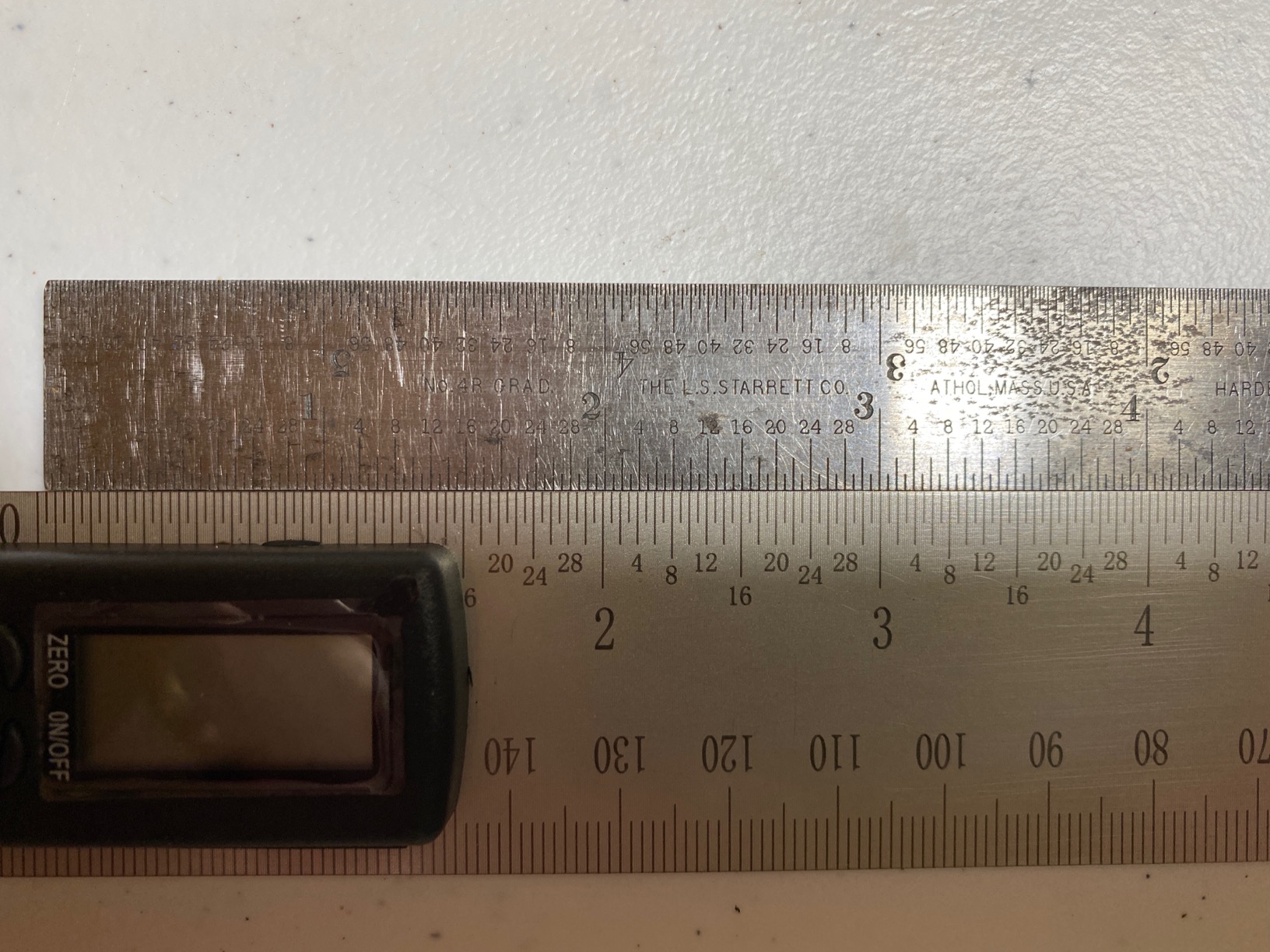
Accuracy is rated at plus or minus 0.3 degrees, which is good enough for most DIY woodworking and carpentry tasks. The locking function lets you set an angle and transfer it to another surface, similar to how a traditional bevel gauge works. The blade arms open to a full 400mm (about 15.75 inches) and fold down to 7.5 inches for storage.
The CR2032 battery is included, and battery life is decent for occasional use. The digital LCD is clear and easy to read in normal lighting, though there is no backlight for darker environments. One frustration is that the zero reference resets after auto-shutoff, so you need to re-zero each time you power it on.
Who should buy this
The GemRed 82305 is ideal for DIY woodworkers, carpenters, and home improvement enthusiasts who want a combination ruler and angle finder at a great price. If you primarily work with wood and need to measure angles for crown molding, trim, or furniture building, this is hard to beat.
What to watch out for
The battery compartment has a tendency to work loose over time, and some users report the contacts needing occasional cleaning. The power button only turns off the display rather than fully shutting down the unit, which can drain the battery if it sits in a drawer. There is also no backlight, so it is not great for dimly lit workspaces.
3. Bosch GAM 220 MF – Best Premium 4-in-1 Angle Finder
- Combines angle finder miter calculator protractor and level
- Illuminated rotating flip display
- IP54 dust and water resistant
- Extendable leg for large surfaces
- Angle memory function for repeated cuts
- Premium price point
- Heavier at 2.4 pounds
- Cannot be user calibrated
- Audible humming from electronics
The Bosch GAM 220 MF is a professional-grade tool that replaces four instruments in one package. Our team tested it on a stair-building project where we needed to measure angles, calculate miter cuts, check levels, and transfer angles between stringers. Having all of those functions in a single tool saved us serious time.
The illuminated flip display rotates so you can read it regardless of the tool’s orientation. Bosch included an angle memory function that stores measurements, which is incredibly useful when you are working alone and need to recall a measurement without walking back to check. The miter calculator takes a measured angle and tells you exactly what to set your saw to.
Build quality is where the Bosch justifies its premium price tag. The aluminum body feels rigid and durable, and the IP54 rating means it can handle dusty job sites and light rain. The extendable leg reaches up to 16 inches, which is great for measuring across wider surfaces like doors or sheet goods.
The hard thermoformed case that comes with it is well-made and protects the tool in transit. Bosch includes four AA batteries, and battery life has been solid in our testing. The one-year warranty extends to two years if you register the tool with Bosch.
Who should buy this
The Bosch GAM 220 MF is designed for serious DIYers who tackle complex projects like stair building, metal fabrication, or crown molding in multiple rooms. If you regularly need miter calculations and angle transfers, the 4-in-1 functionality saves time and reduces errors on demanding projects.
What to watch out for
The price is significantly higher than every other tool on this list. The unit produces a faint constant humming sound from the electronics, which some users find annoying. The tool also cannot be recalibrated by the user, so if it drifts out of spec you need to send it in for service.
4. Neoteck 16 Inch Digital Angle Finder – Best Wide Range Protractor
- Wide 0-225 degree measurement range
- Backlit LCD for dim conditions
- Horizontal and vertical bubble levels
- Data hold function locks readings
- 16 inch aluminum arms
- Locking knob does not firmly hold angle
- 12V battery type less common
- Display washes out in direct sunlight
The Neoteck 16-inch digital angle finder caught my attention because of its 225-degree measurement range. Most protractors in this price range top out at 180 degrees, and that extra 45 degrees matters more than you might think for obtuse angles in furniture building and tile layout. The aluminum arms feel rigid and do not flex when measuring.
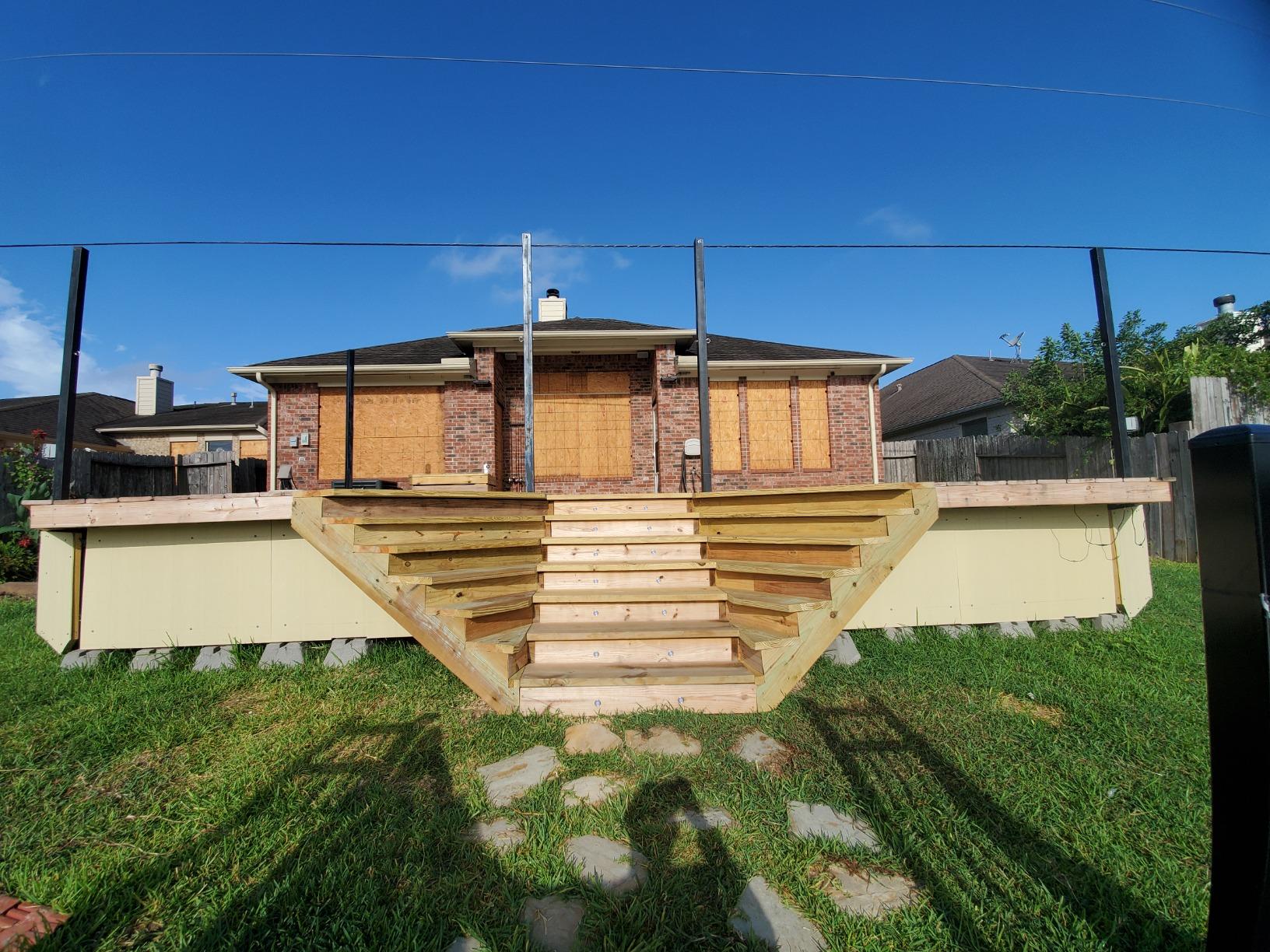
I tested the Neoteck during a solar panel installation project, and the backlit display was a lifesaver when working early in the morning before sunrise. The bubble levels built into the body add a level of versatility that most competitors lack. You can use it as a basic spirit level for quick checks without needing a separate tool.
Accuracy is rated at plus or minus 0.5 degrees with 0.1 degree resolution. That is slightly less precise than the GemRed or General Tools models, but for most DIY tasks the difference is negligible. The data hold function lets you freeze a reading on the display, which is handy when measuring in tight spaces where you cannot see the screen directly.
The auto-off function helps preserve battery life, and the included carrying bag keeps the tool protected. The 12V battery is a less common type than AAA or CR2032, so you may need to order replacements online rather than picking them up at a local store.
Who should buy this
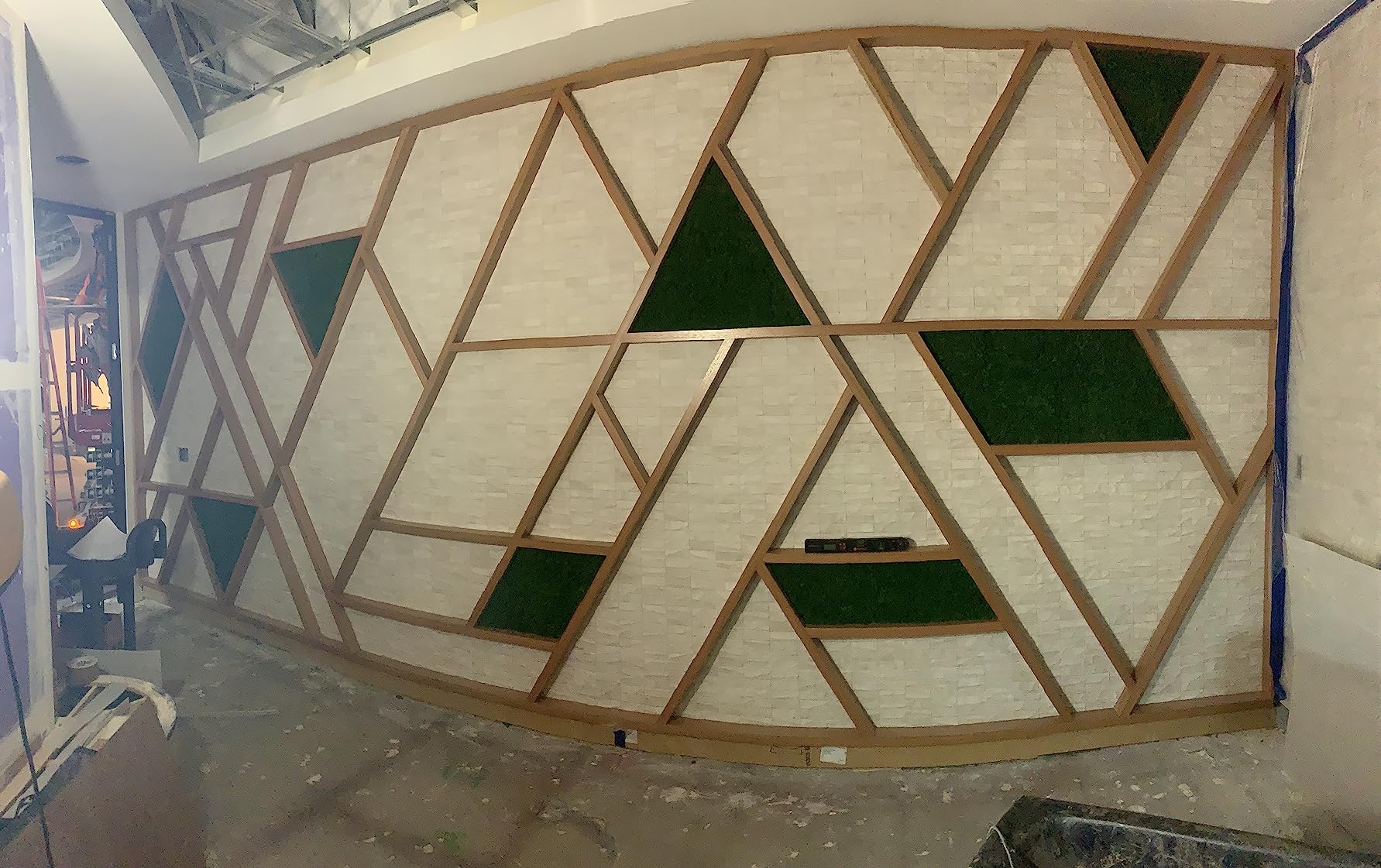
The Neoteck is well-suited for DIYers who work on projects requiring wide angle measurements beyond 180 degrees, such as furniture building, solar panel setup, or interior design work. The bubble levels make it a good choice if you also need a basic leveling tool without buying a separate instrument.
What to watch out for
The locking knob loosens and tightens the arms but does not actually lock them in place firmly. If you need to transfer an angle to another surface, you will need to hold the arms steady manually. Some users also report the display washing out in bright outdoor sunlight.
5. General Tools 822 – Best Compact Digital Angle Finder Ruler
- Very accurate to 0.1 degree
- Compact 5-inch size
- Large easy to read LCD display
- Reverse angle function for quick calculations
- Durable stainless steel construction
- No dedicated on/off button
- Battery contact fatigue over time
- Sharp edges on steel rulers
The General Tools 822 is a pocket-sized digital angle finder that punches above its weight class. I carried this one in my apron pocket during a cabinetry install, and the compact 5-inch size meant it was always within reach. The large LCD is surprisingly readable for such a small tool, showing measurements clearly even at arm’s length.
What impressed me most is the 0.1 degree precision, which matches the accuracy of tools costing three times as much. The reverse angle function is a thoughtful addition that calculates the complementary angle automatically, saving mental math when setting up miter cuts. General Tools also offers a 10-inch version if you need longer blades.
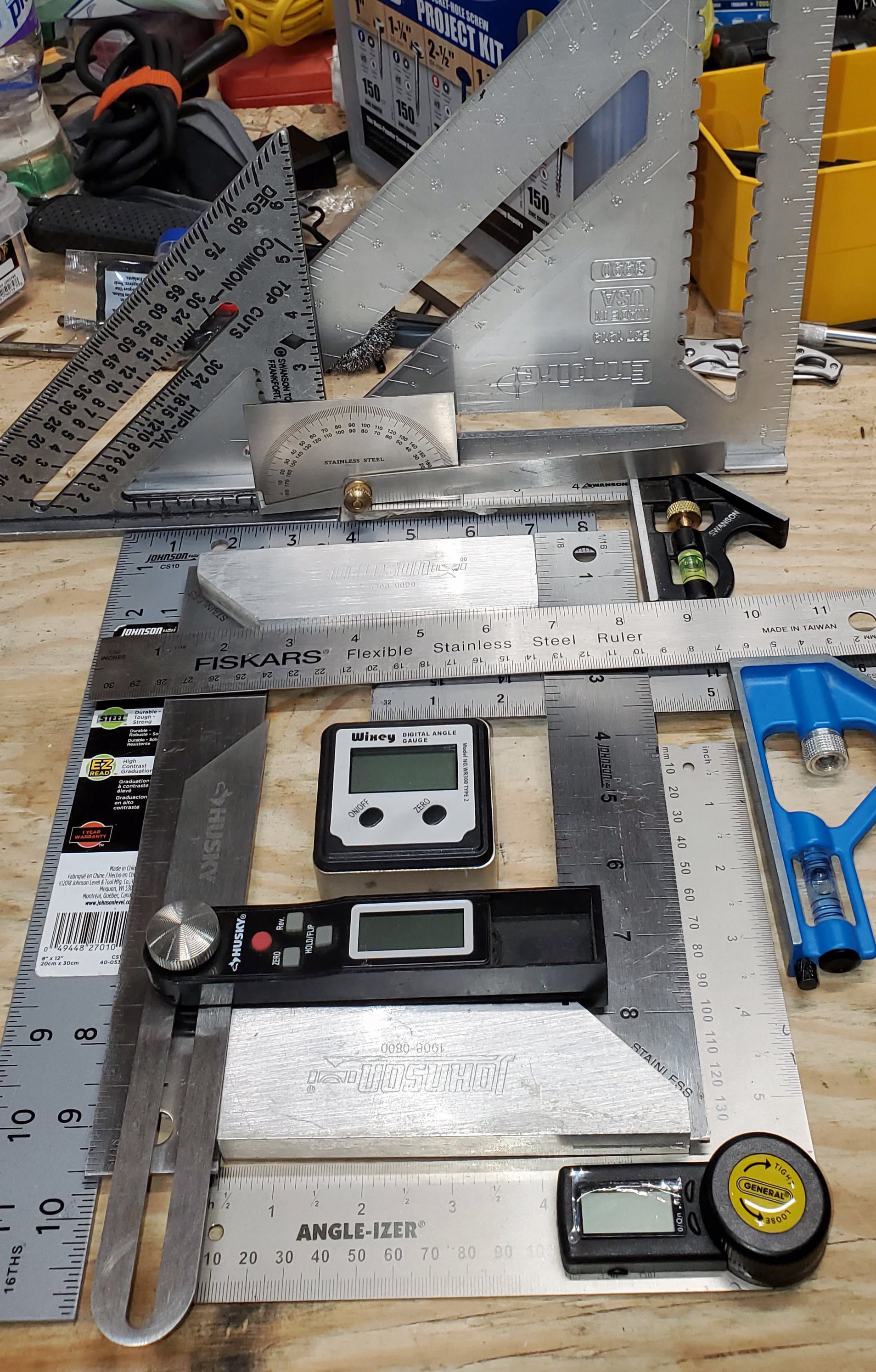
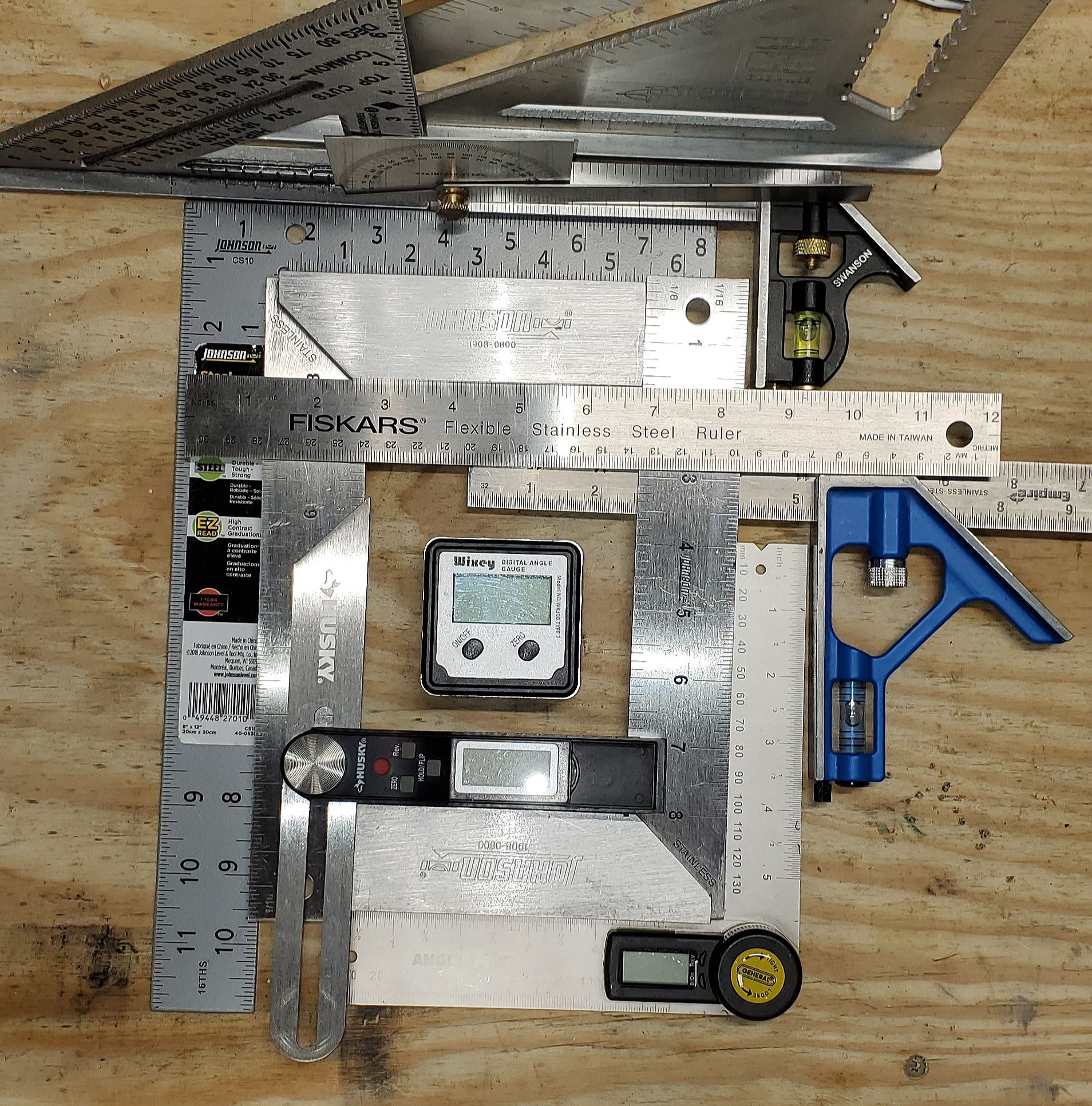
The 360-degree measurement range means you can measure any angle without repositioning the tool. The center check notch on the blade helps you align the pivot point precisely on a mark. The locking knob holds the blades steady once you have your angle, though it is a friction lock rather than a positive stop.
The stainless steel construction feels durable, but the edges are somewhat sharp right out of the package. I recommend running a file or sandpaper along the edges to take the burr off. Battery life is decent thanks to auto-shutoff, though there is no manual power button, so you have to wait for it to time out.
Who should buy this
The General Tools 822 is perfect for DIYers who need a compact, accurate angle finder for trim work, flooring installation, and furniture building. The 5-inch size makes it easy to carry and store, and the 0.1 degree accuracy handles fine woodworking tasks with confidence.
What to watch out for
The lack of a dedicated power button means the tool only turns off via auto-shutoff, which can drain the battery if it gets bumped in a drawer. Some long-term users report battery contact issues after extended use. The tool also does not retain its zero reference after powering down, requiring recalibration each session.
6. Klein Tools 935DAGL – Best Programmable Angle Finder with Alarm
- Programmable pitch angles for quick setup
- Audible and visual angle alarm
- Dual axis bullseye level
- 1/10 degree precision
- Auto-rotating high contrast display
- Screw-back battery compartment
- Low quality carrying case
- Alarm only triggers near target
- Larger than basic angle gauges
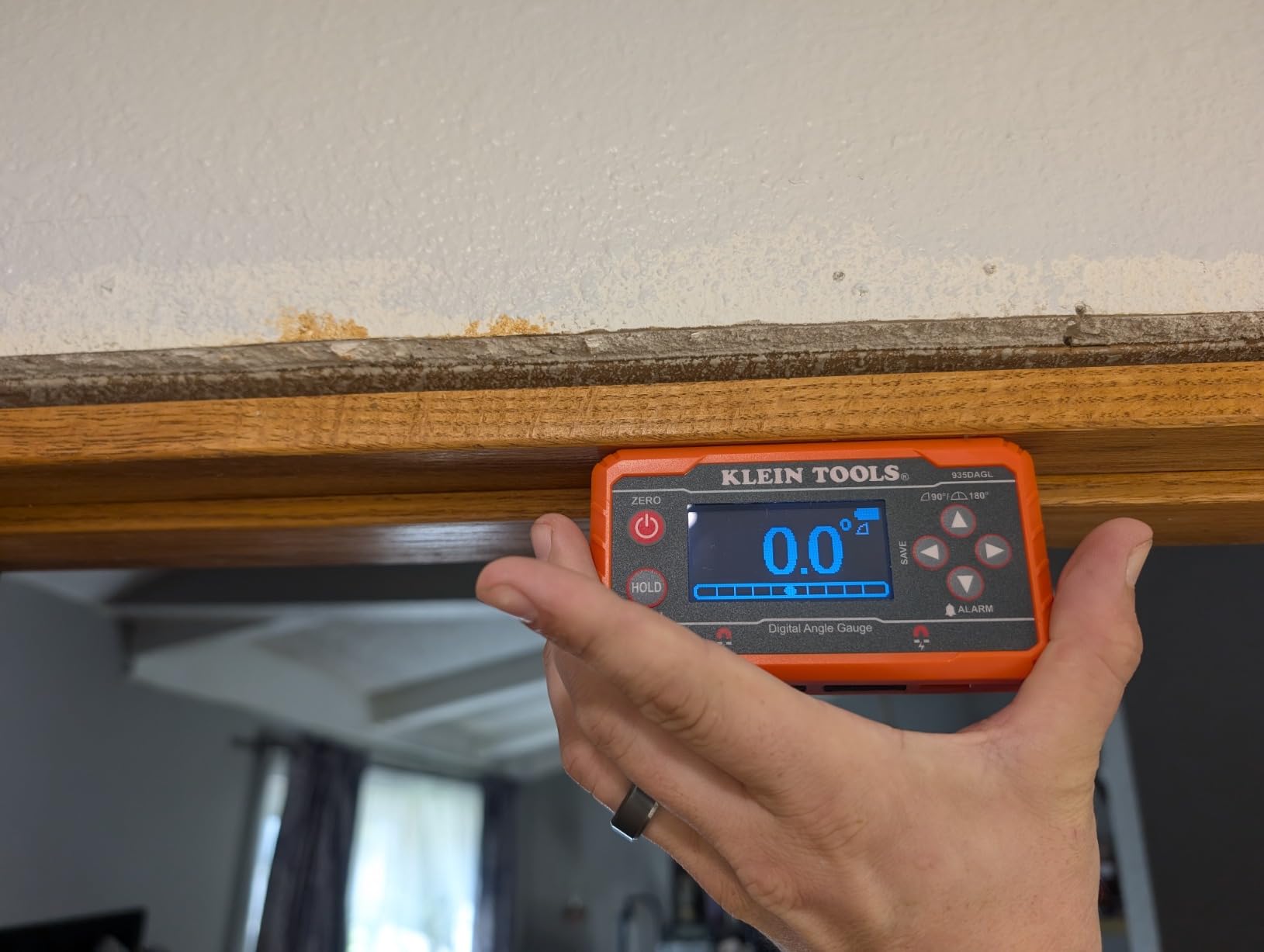
The Klein Tools 935DAGL is the more advanced sibling of the 935DAG, and the programmable angle feature is what sets it apart. I used it to set up a drill press table to a precise 5-degree tilt, and the angle alarm beeped when I hit the exact target. That is the kind of feature that saves you from having to check and recheck your setup.
The dual axis bullseye level is useful for tasks that require alignment on both the X and Y axes simultaneously. I found it handy when leveling a wall-mounted TV bracket where the mounting plate needed to be level in two directions at once. The high-contrast display is visible even in dim conditions where other gauges struggle.
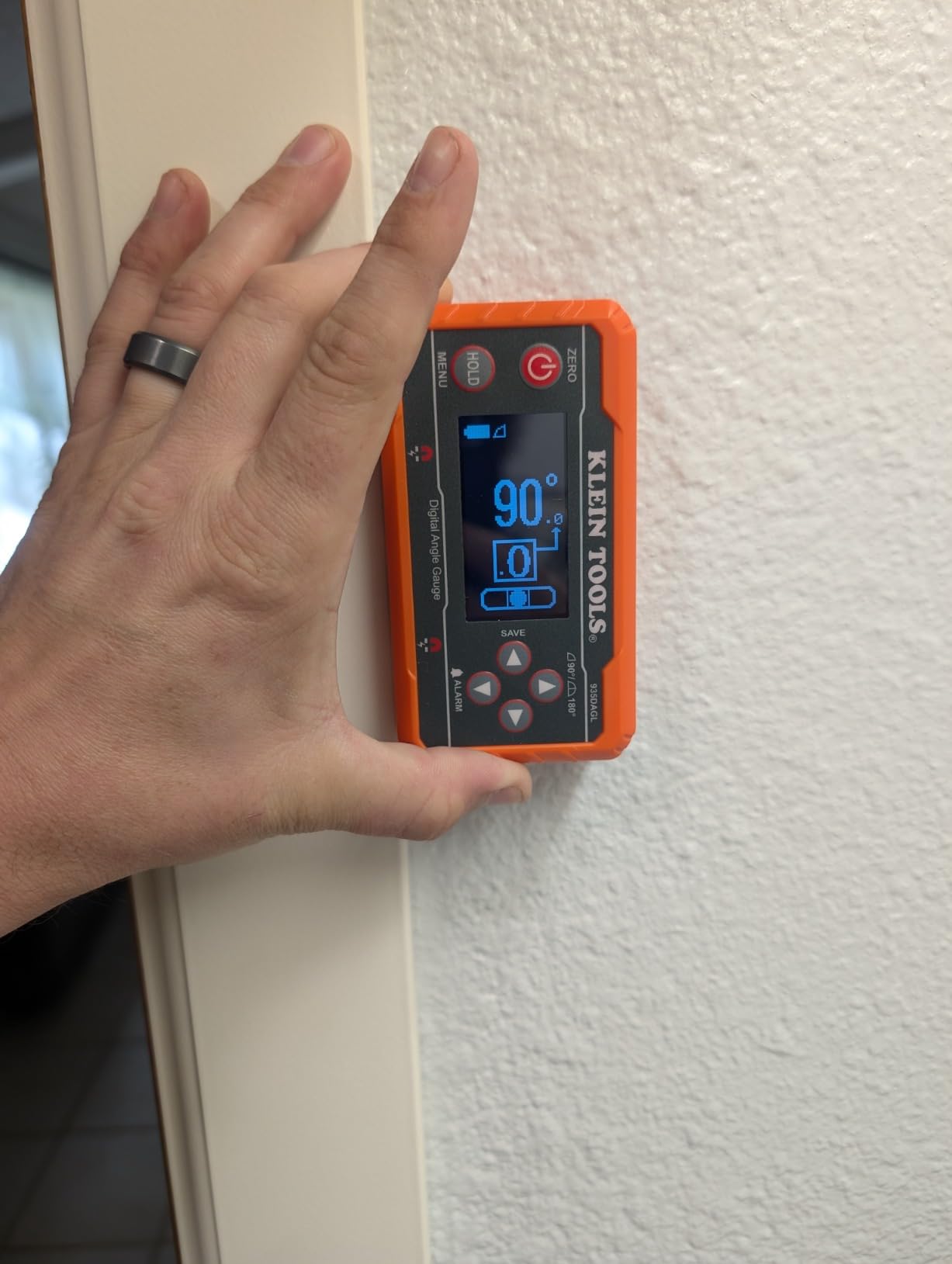
Accuracy is rated at one-tenth of a degree, matching the best protractors on this list. The programmable pitch angles cover common slope ratios like quarter-inch and half-inch per foot, which are standard in plumbing and drainage work. The magnetic base is strong enough to hold the tool vertically on a steel surface without slipping.
The shock-resistant bumper around the housing gives it extra durability compared to the standard 935DAG. Battery life has been excellent in my testing, and Klein includes batteries and a soft case. The tool is slightly larger than the base model, but the extra features more than justify the size increase.
Who should buy this
The 935DAGL is ideal for DIYers who regularly work with specific target angles, such as plumbing slopes, drill press setups, or RV leveling. The programmable angles and alarm function make it a precision tool for anyone who values repeatable accuracy in their workshop.
What to watch out for
The screw-back battery compartment requires a coin to open, which is inconvenient when you need to swap batteries mid-project. The included carrying case is thinner and less protective than the one that ships with the 935DAG. The angle alarm also only triggers when you are very close to the target, which can feel abrupt.
7. SHAHE Digital Angle Gauge – Best Budget Magnetic Angle Cube
- Impressive 0.05 degree resolution
- Strong magnetic flat base
- Compact cube design
- Backlit display
- Great value for price
- Screen visibility issues in bright sun
- Magnet only on bottom surface
- Display flickers occasionally
- Err messages when moved
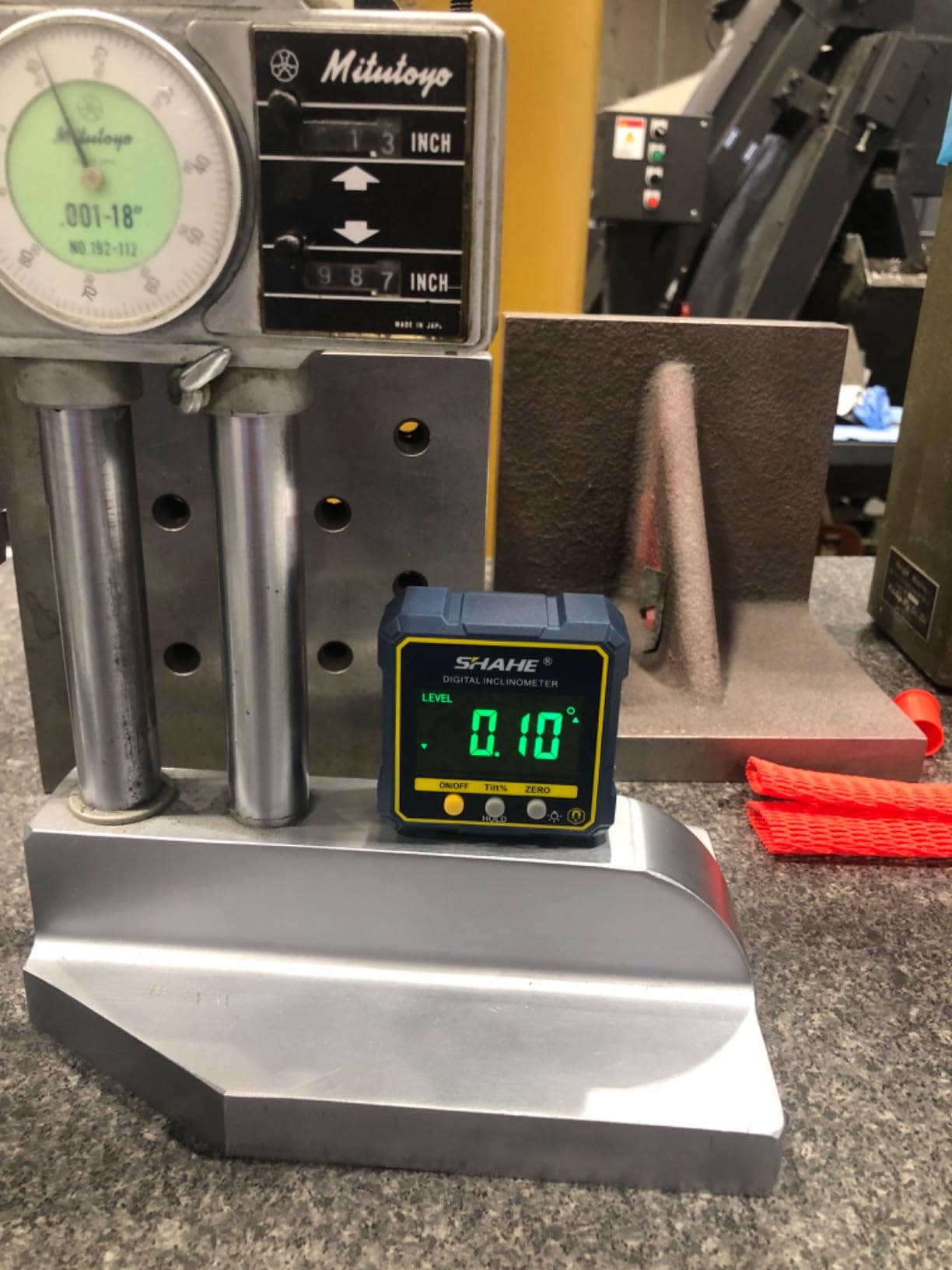
The SHAHE digital angle gauge is one of the most affordable digital protractors I have tested, and the accuracy is surprisingly good for the price. With 0.2 degree accuracy and 0.05 degree resolution, it out-specs tools costing twice as much on paper. I tested it against my Klein gauge and the readings were consistently within 0.1 degrees of each other.
The compact cube design fits easily in a tool pouch and the magnetic base attaches firmly to saw tables, blades, and other flat ferrous surfaces. I used it primarily for knife sharpening angle verification and table saw blade setup, and it handled both tasks well. The backlit display is a nice touch for a tool at this price point.
SHAHE includes two AAA batteries and a small screwdriver for opening the battery compartment, which is a thoughtful inclusion. The 360-degree measurement range means you can use the tool in any orientation without worrying about exceeding its range. Auto-shutoff conserves battery life during long breaks between measurements.
The hold function freezes the current reading on the display, and the zero function lets you set any surface as your reference. These two features cover most of what a DIYer needs from an angle measurement tool. The rapid auto-start means the tool wakes quickly when you pick it up after auto-shutoff.
Who should buy this
The SHAHE gauge is perfect for budget-conscious DIYers who need accurate angle measurements for knife sharpening, saw blade setup, telescope alignment, or general workshop use. If you want a simple magnetic angle cube without spending more than $20, this is the best digital protractor for the job.
What to watch out for
The display can be hard to read in direct sunlight, and some users report occasional flickering or shadowing on the screen. The tool sometimes displays an error message when moved too quickly, requiring you to wait a moment for it to settle. The magnet is only on the bottom surface, so it cannot attach to vertical or angled metal surfaces.
8. Lexivon LX-DAF7 – Best Digital Angle Finder with XL Display
- Extra large easy to read display
- High 0.05 degree resolution
- Durable anodized aluminum construction
- Ergonomic angle lock knob
- Includes heavy duty zippered pouch
- Accuracy degrades beyond 90 degrees
- Locking knob can shift reading
- Battery secured with small screw
The Lexivon LX-DAF7 stands out for its extra-large LCD display, which is the most readable screen of any tool in this roundup. I tested it alongside the GemRed and General Tools models, and the Lexivon’s display is noticeably larger and clearer. For DIYers who wear reading glasses or work in less-than-ideal lighting, this makes a real difference.
The anodized aluminum construction feels premium, and the laser-etched markings on the ruler edges are crisp and precise. Lexivon includes a heavy-duty zippered pouch that provides real protection in a tool bag, unlike the thin cloth pouches that come with some competitors. The tool also ships with a unique serial number for quality tracking.
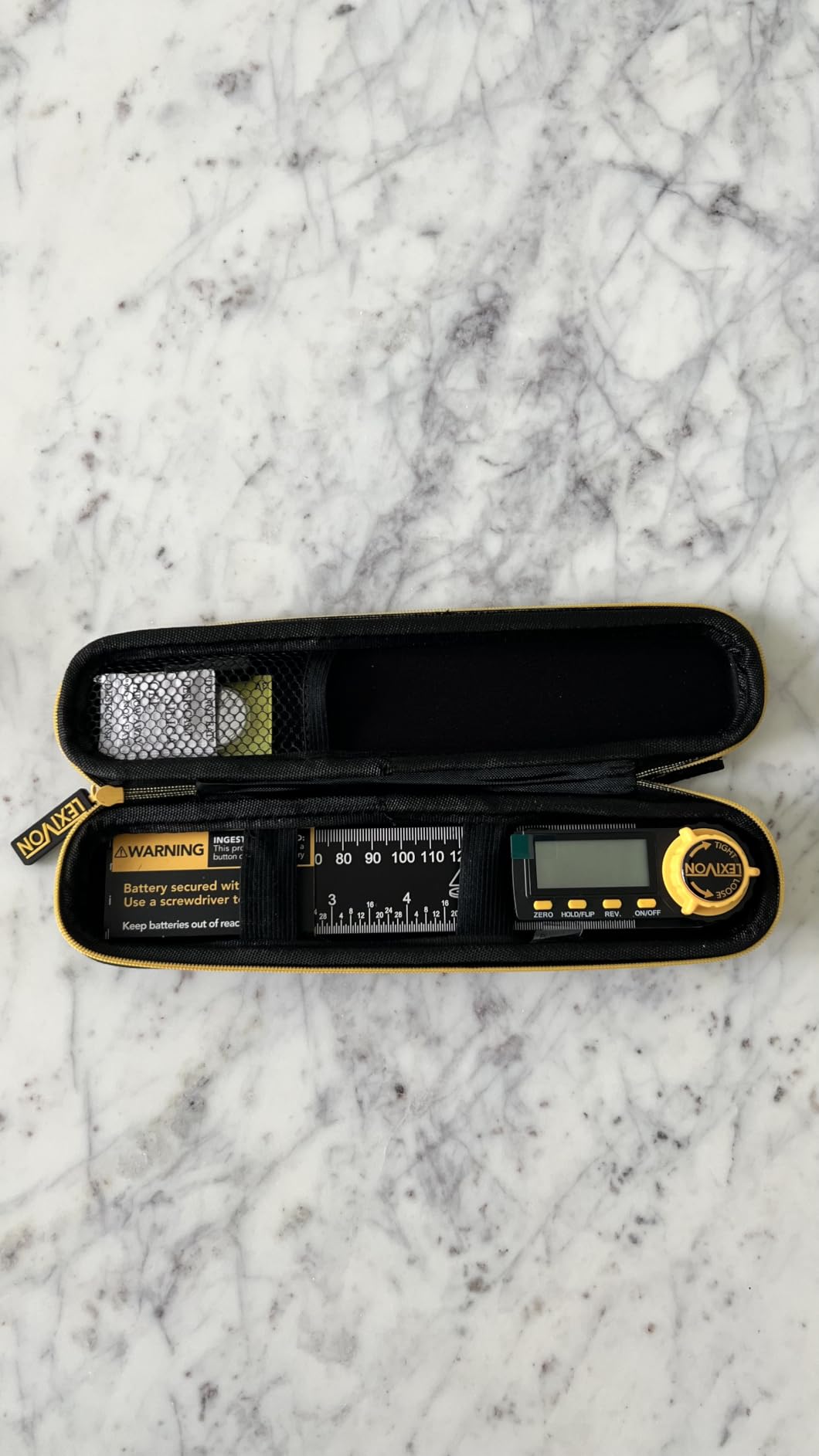
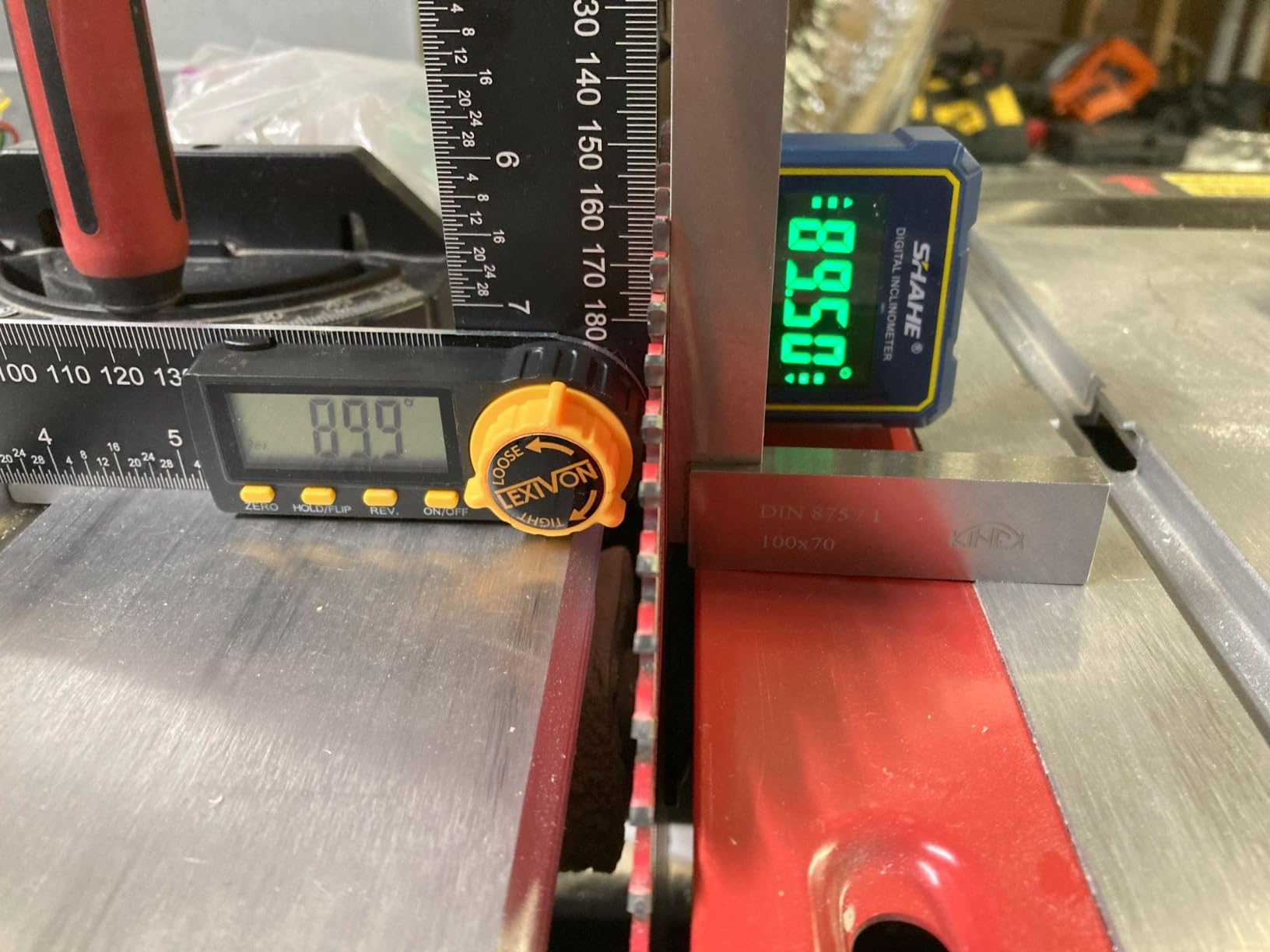
Accuracy is rated at plus or minus 0.3 degrees with an impressive 0.05 degree resolution. The 360-degree measurement range handles any angle you are likely to encounter. The four-button interface gives you dedicated controls for zero, hold and flip, reverse angle, and power, which is more intuitive than single-button cycling.
I found the ergonomic lock knob comfortable to operate, though it can subtly shift the reading if you tighten it too aggressively. The tool is available in 5, 7, and 10-inch sizes, so you can choose the blade length that fits your typical projects. Battery life is solid, and the included battery is ready to go out of the box.
Who should buy this
The Lexivon LX-DAF7 is a great choice for DIYers who prioritize display readability and build quality at a mid-range price. It suits woodworking, 3D printing verification, flooring layout, and general fabrication work. If you are upgrading from a budget model, the XL display and aluminum construction are noticeable improvements.
What to watch out for
Some users report that accuracy becomes less consistent beyond 90 degrees, so verify your readings if you are measuring obtuse angles. The battery compartment is secured with a small screw, which requires a screwdriver to access. The locking knob needs a gentle touch, as over-tightening can shift the blade position slightly.
How to Choose the Best Digital Protractor for Your DIY Projects
Choosing the right digital protractor comes down to matching the tool’s features to the projects you actually work on. After testing 8 models and reading thousands of user reviews, here are the factors that matter most for DIYers in 2026.
Accuracy and Resolution
Accuracy tells you how close the displayed angle is to the true angle, while resolution tells you the smallest increment the display can show. For DIY woodworking and carpentry, plus or minus 0.3 degrees is sufficient for most tasks. If you do fine joinery or metalworking, look for 0.1 degree accuracy or better.
Resolution of 0.05 to 0.1 degrees is standard across most models. Higher resolution looks impressive on a spec sheet, but it only matters if the underlying accuracy supports it. A tool with 0.05 degree resolution but only 0.5 degree accuracy gives you false precision.
Measurement Range
Most digital protractors cover 0 to 180 degrees, which handles the majority of DIY projects. If you work with obtuse angles in furniture building or tile layout, look for tools with extended ranges like the Neoteck’s 225 degrees or the General Tools and Lexivon models with full 360-degree capability.
The Klein Tools angle gauges cover 0 to 90 and 0 to 180 degrees through separate measurement modes. Think about the types of angles you measure most often and choose a tool that covers them without requiring repositioning.
Display Quality
A backlit or illuminated display is essential if you work in garages, basements, or other dim environments. The Bosch GAM 220 MF and Neoteck both offer backlit displays that perform well in low light. The Lexivon stands out for display size, making it a good pick for anyone who struggles with small screens.
Auto-rotating displays, like those on the Klein Tools models, flip the numbers to stay readable regardless of orientation. This is more useful than it sounds when you are measuring at odd angles or working in tight spaces.
Build Quality and Materials
Stainless steel and aluminum construction will outlast plastic housings, especially in a workshop environment. The GemRed and General Tools models use stainless steel blades, while the Neoteck and Lexivon use aluminum. Woodworkers on forums consistently recommend metal construction over plastic for long-term durability.
An IP rating of IP42 or higher protects against dust and moisture. The Klein 935DAG carries an IP42 rating, and the Bosch GAM 220 MF is rated IP54 for more demanding environments. If your workshop is dusty or you work outdoors, this matters.
Special Features
A hold or lock function freezes the reading so you can move the tool and read the display comfortably. This is one of the most frequently used features in real projects. A zero or calibration button lets you set a reference surface, which is essential for transferring angles.
Magnetic bases are essential if you work with table saws, miter saws, or other ferrous metal surfaces. The Klein, SHAHE, and both angle gauges feature strong magnets. Bubble or spirit levels add versatility, letting you pull double duty as a leveling tool.
Battery Type and Life
CR2032 and AAA batteries are the most common and easiest to replace. The Neoteck’s 12V battery is less common and harder to find locally. Check whether batteries are included, as most models in this guide ship with them. Auto-shutoff is a standard feature that extends battery life between uses.
Calibration Tips for DIYers
To calibrate a digital protractor, place it on a known flat surface like a granite tile or machinist’s surface plate. Press the zero button to set your reference, then flip the tool 180 degrees and check that it reads zero again. If it does not, the surface or the tool may need attention.
Recalibrate whenever you change batteries or if the tool has been dropped. Store your protractor in its case to protect the sensor from impacts. Avoid leaving it in a hot car, as temperature extremes can affect the sensor calibration over time.
Frequently Asked Questions
What are digital protractors used for?
Digital protractors are used for measuring and transferring angles in woodworking, carpentry, construction, metalworking, tile layout, and DIY home improvement projects. They help set miter saw angles, verify bevel cuts, align machinery, and measure crown molding angles with precision that analog tools cannot match.
How accurate is a digital protractor?
Most consumer digital protractors are accurate to within plus or minus 0.1 to 0.3 degrees. Budget models like the SHAHE gauge offer 0.2 degree accuracy, while precision tools like the Klein 935DAG achieve 0.1 degree resolution. Professional-grade tools such as the Bosch GAM 220 MF provide even tighter tolerances for demanding applications.
What is the best digital protractor for woodworking?
For woodworking, the GemRed 82305 and General Tools 822 are excellent choices because they combine a ruler with an angle finder and offer accuracy suitable for trim, crown molding, and furniture building. The Klein Tools 935DAG is also popular among woodworkers for miter saw and table saw setup thanks to its magnetic base.
Are digital protractors worth it?
Yes, digital protractors are worth it for any DIYer who regularly works with angles. They eliminate the guesswork and parallax errors of analog protractors, provide instant readings, and speed up tasks like crown molding, framing, and tile work. Even budget models under $20 deliver accuracy that far exceeds what a traditional protractor can achieve.
How do you calibrate a digital protractor?
Place the protractor on a flat reference surface, press the zero button to set the reference, then rotate the tool 180 degrees and verify it still reads zero. Recalibrate after battery changes, drops, or extended storage. Store the tool in its case and avoid temperature extremes to maintain calibration accuracy.
Can a digital protractor replace a bevel gauge?
A digital protractor can replace a bevel gauge for most DIY tasks because it measures and locks angles just like a traditional T-bevel, with the added benefit of a digital readout. However, some woodworkers prefer a traditional bevel gauge for marking lines directly on wood, since a digital protractor’s blades are typically wider and less suited for scribing.
What is the difference between an angle finder and a protractor?
An angle finder typically has two arms or blades that you open to match an existing angle, while a protractor measures angles from a flat reference surface. Digital versions often combine both functions, so the terms are frequently used interchangeably. Angle gauges or cubes, like the Klein 935DAG and SHAHE, measure inclination from a single flat base rather than using pivoting arms.
Final Thoughts on Digital Protractors for DIY
After testing all 8 models, our top recommendation for most DIYers is the Klein Tools 935DAG for its accuracy, magnetic base, and compact design. If you want the best value, the GemRed 82305 delivers a ruler-protractor combo that handles most woodworking tasks for under $20. And for budget-conscious shoppers, the SHAHE angle gauge offers impressive precision at the lowest price point.
The best digital protractors for DIY projects are the ones that match your specific workflow, whether that means miter saw setup, crown molding installation, or general angle measurement around the house. Any of the 8 tools in this guide will serve you better than guessing with an analog protractor and a pencil. Pick the one that fits your projects and budget, and start measuring with confidence in 2026.