
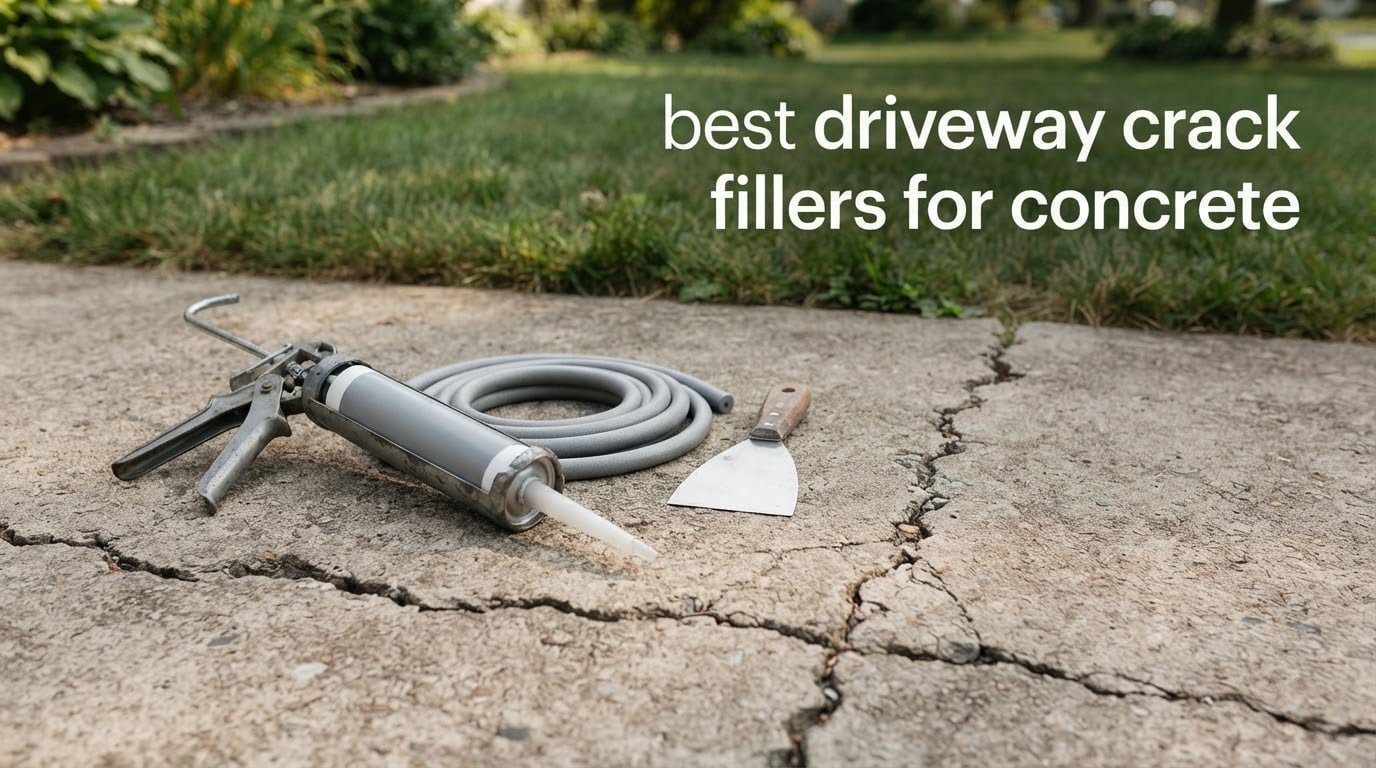
A crack in a concrete driveway is not a cosmetic problem. Water gets in, freezes overnight, expands, and pushes the edges apart. Do that two dozen times and a hairline line becomes a spalled trench that eventually turns into a pothole you can trip over in the dark.
That is the whole argument for a driveway crack filler. Seal the crack, keep water and de-icing salt out of the slab, and the damage stops compounding. The bad news is that most people buy the wrong class of product for the crack they actually have, then wonder why it peeled out after a single winter.
Over the last few months our team worked through the ten concrete crack fillers on this list, read the customer reviews closely, and cross-checked every spec against the manufacturer data. What follows is a ranked look at the best driveway crack filler options available right now, plus the crack-width rules that decide which one you should buy.
One quick note before we start: a lot of what surfaces in the shopping results for this search is asphalt and blacktop filler rather than concrete filler. Those products behave differently and they are not designed to bond to a concrete slab. We have kept this list concrete-only. If your driveway is asphalt rather than concrete, the material logic in the buying guide is different and you should not use any product on this page.
Table of Contents
Top 3 Best Driveway Crack Fillers For Concrete (October 2026)
Three products earned the right to lead this list. Each one carries a large review base, holds a rating above 4.3, and solves a genuinely different problem on a driveway. Here they are at a glance before we get into the full ten.

Sikaflex Self-Leveling Sealant
- Self-leveling polyurethane
- Waterproof once cured
- Tack-free in hours
- Resists weathering

Sikaflex Crack Flex Sealant
- Highest rating in the group
- Textured gray blend
- Up to 1 inch horizontal cracks
- Fast skinning

DAP Concrete and Mortar Filler
- Ready to use
- no mixing
- Water cleanable
- 24 hour return to service
All 10 Driveway Crack Fillers at a Glance
The table below lists every product in the roundup with the crack width it is actually built for. The width column matters more than any other spec on the sheet, because a filler asked to span twice the gap it was formulated for is the single most common reason a repair fails.
| Product | Specifications | Action |
|---|---|---|
| SIKA Sikaflex Self-Leveling Concrete Expansion Joint Sealant |
|
Check Latest Price |
| SIKA Sikaflex Crack Flex Sealant |
|
Check Latest Price |
| DAP Concrete and Mortar Filler and Sealant |
|
Check Latest Price |
 DAP Liquid Cement Crack Filler 32 oz DAP Liquid Cement Crack Filler 32 oz |
|
Check Latest Price |
 Sashco Slab Concrete Crack Filler Sashco Slab Concrete Crack Filler |
|
Check Latest Price |
 DAP Concrete Crack Filler Water-Activated Powder DAP Concrete Crack Filler Water-Activated Powder |
|
Check Latest Price |
 ConSandtrate Concrete Crack Filler 3 lb ConSandtrate Concrete Crack Filler 3 lb |
|
Check Latest Price |
 SIKA Sikaflex Concrete Fix Crack and Joint Sealant SIKA Sikaflex Concrete Fix Crack and Joint Sealant |
|
Check Latest Price |
 Quikrete Grey Concrete Crack Seal 946 mL Quikrete Grey Concrete Crack Seal 946 mL |
|
Check Latest Price |
 Wadities High Elasticity Concrete Crack Filler 2-Pack Wadities High Elasticity Concrete Crack Filler 2-Pack |
|
Check Latest Price |
A few things stand out. Four of the ten here are polyurethane or acrylic sealants that stretch with the slab, and those are the right answer for almost any crack that is still moving. Three are cementitious, and they trade flexibility for speed. Nothing on this list is an epoxy injection system, which is deliberate, because epoxy needs a real job to do and a driveway edge rarely justifies it.
1. SIKA Sikaflex Self-Leveling Concrete Expansion Joint Sealant — Best Overall Filler for Expansion Joints
- No taping or tooling needed
- Adhesion survives pressure washing
- Stays flexible after cure
- Narrow tip gives good control
- Paintable and sandable when cured
- Will run on vertical surfaces
- Deep cracks waste product without backer rod
- Several days of cure before traffic
- Messy to clean off hands
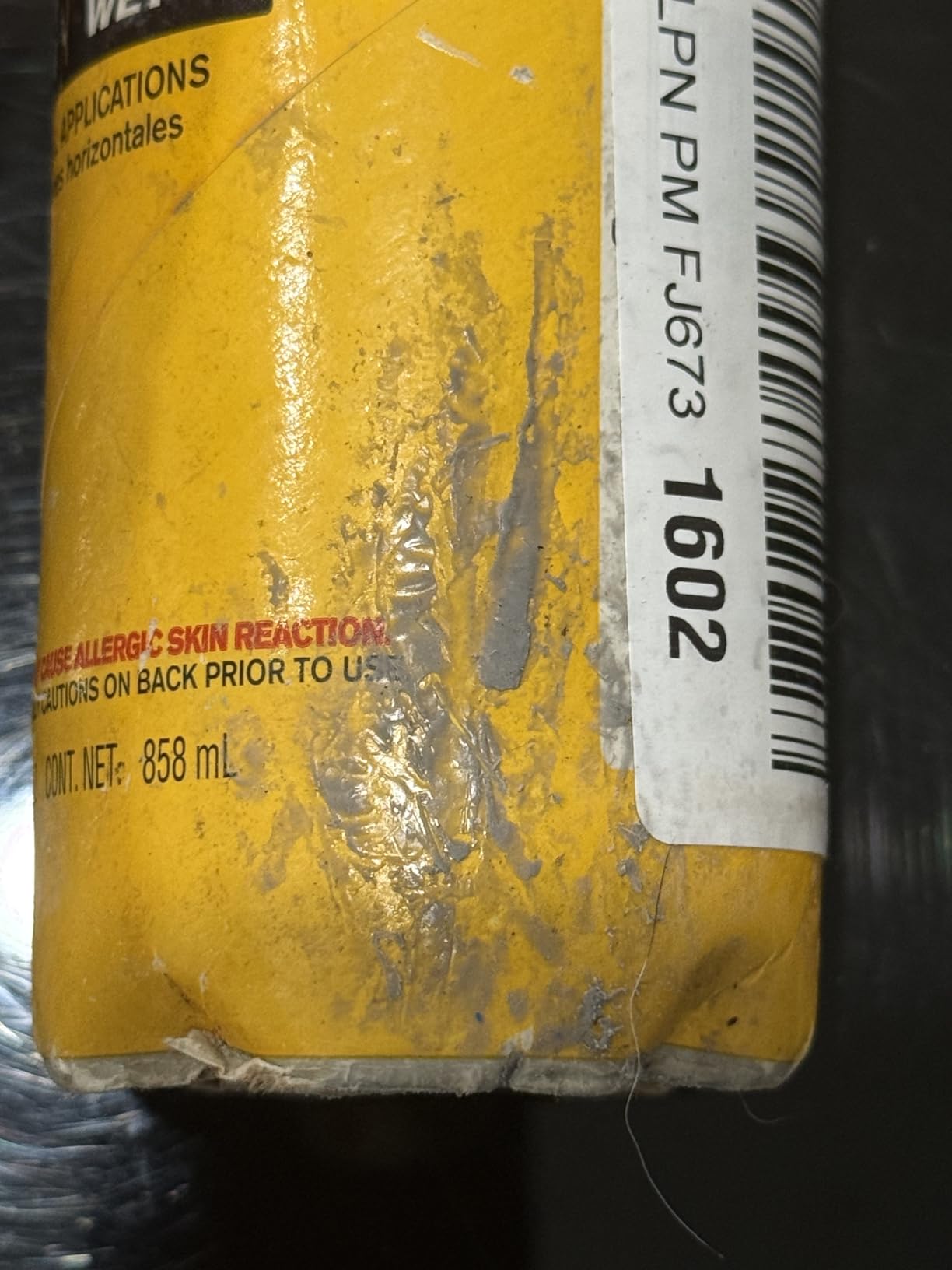
This is the one we end up recommending to most people. It is a 10.1 oz polyurethane cartridge that flows into the joint and finds its own level, which means you are not fighting a knife or a trowel to get a flush finish. If you have never used a caulking gun before, the self-leveling behaviour is the difference between a decent repair and an abandoned project.
We used it on a two-car driveway with an expansion joint running the width of the slab and a couple of random cracks feeding off it. The nozzle tip is narrow enough to thread a standard caulking gun and control the bead, and the product tack-frees within a couple of hours, so you are not walking around it for a day. Full cure is under a week depending on the depth you laid down.
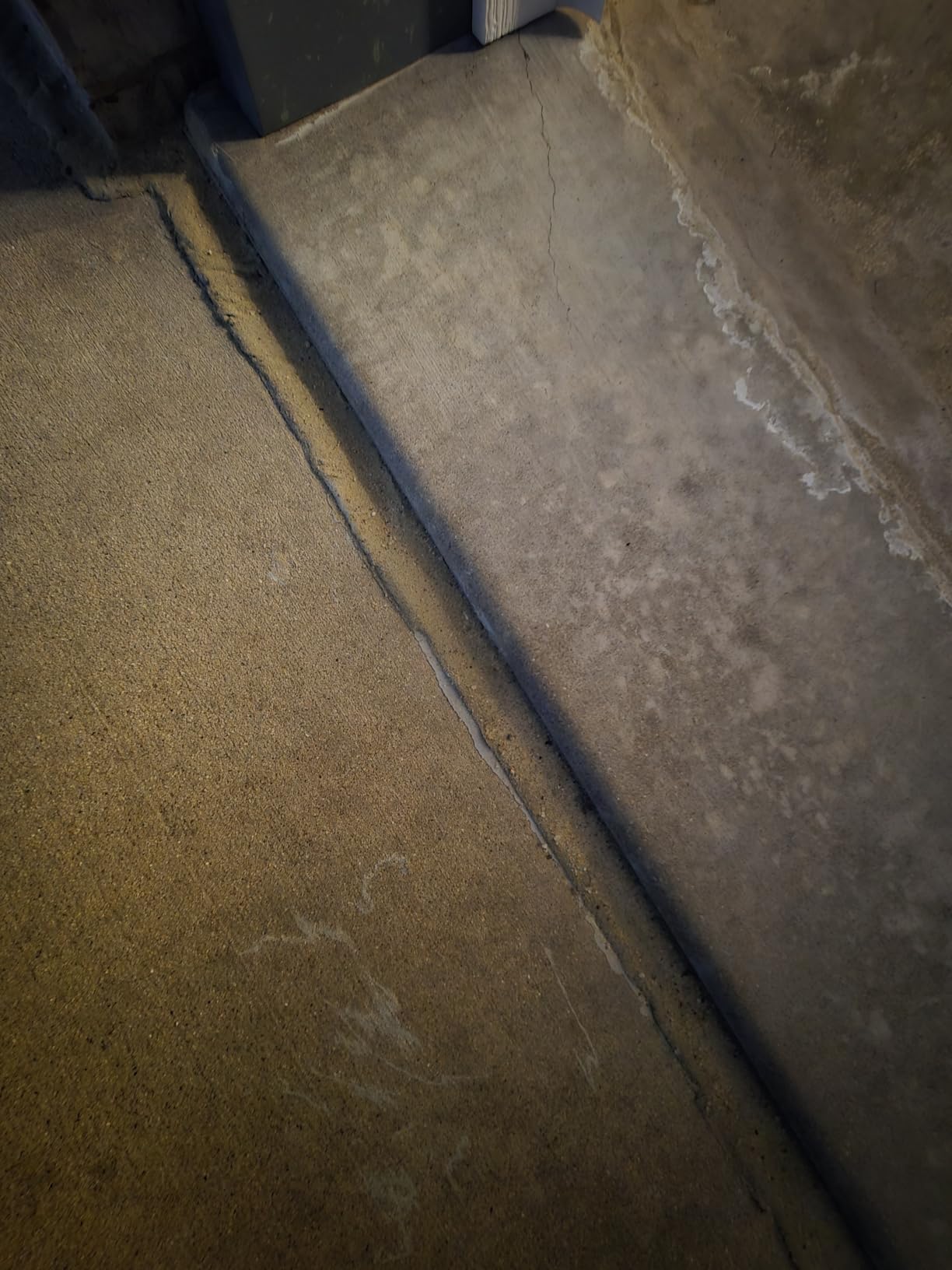
The bond reviewers mention is real, in the good sense. Once cured, this material is genuinely hard to remove, even with a pressure washer. That matters on a driveway because it means the bond will not let go the way a cheap acrylic caulk does after a freeze-thaw season or two. The cured bead is also waterproof and immersible, so standing water in the joint is not a concern.
The catch is the flow rate. Self-leveling means fluid, and fluid in a deep crack means you pour three cartridges into a joint that needed one unless you back it with foam rod first. On our job we used backer rod in the deeper sections and it made a visible difference in how much product the joint consumed.
What it handles well and where it struggles?
This is built for horizontal joints and nothing else. Put it on a vertical crack or a riser and it will run down the wall before it sets, so if your damage includes step edges or a raised lip, you need a gun-grade sealant instead. The cure time is also the longest here at several days depending on how deep you laid the bead, which means the driveway section is effectively closed off while it finishes.
Who should buy it?
Buy this one if your cracks and joints are horizontal, you want the repair to blend into the surface, and you can leave the section closed for a few days. It is the safest general-purpose concrete crack filler on the list for a first-time user.
2. SIKA Sikaflex Crack Flex Sealant — Best Rated Filler for a Textured Concrete Blend
- Highest average rating in this group
- Self-levels into chased cracks
- Skins quickly against tracking
- Textured gray blends well
- Elastic through temperature swings
- Very fluid
- so coverage runs high
- Long joints may need extra cartridges
- Texture improves with a sand topcoat
- Horizontal use only
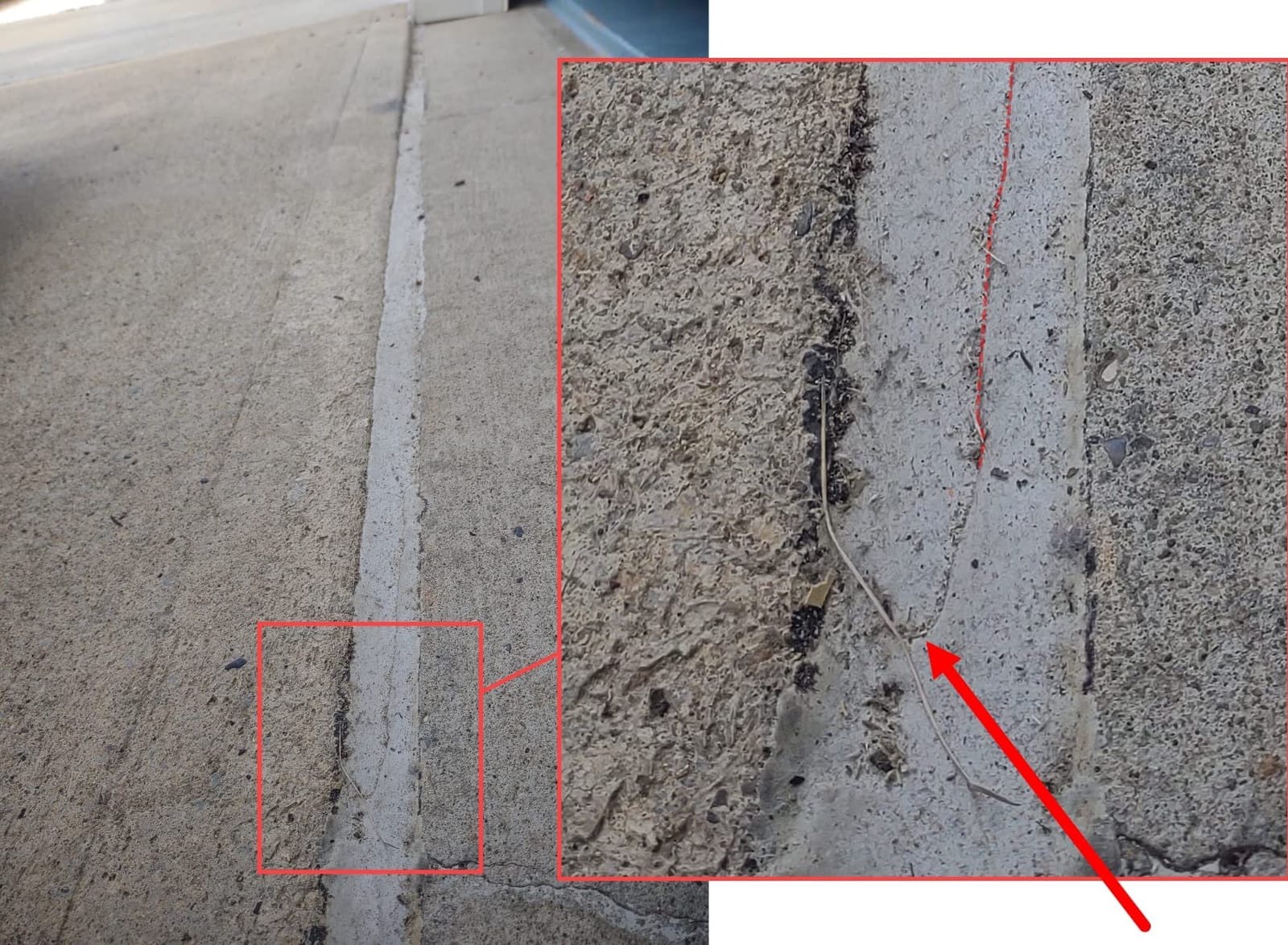
This one carries the highest average customer rating of anything we ranked, and after working with it that rating makes sense. It is the same basic chemistry as the Sikaflex self-leveling above, but the gray bead is textured rather than glossy, which is a small thing that changes how the finished repair reads in sunlight.
Color matching is the most common complaint we saw across this entire category, and textured beads are the workaround. A glossy gray bead in an aged driveway looks like a rubber strip. A textured one scatters light the way the surrounding concrete does, and several reviewers note that a light sprinkle of matching aggregate into the wet bead improves the blend further.
It is rated for horizontal cracks up to 1 inch wide, which makes it more capable than most of the sealants here. Skinning is fast, so the window where someone drives over a wet bead is short. That matters on a driveway where a car is parked a few feet from the joint while you work.
The main drawback is the same one that comes with every self-leveling polyurethane: it is fluid, and open voids swallow product. On longer joints you will burn through cartridges faster than the coverage chart suggests. We would plan on buying a spare and backer rodding anything deeper than about a quarter inch.
What it handles well and where it struggles?
Its strength is appearance plus elasticity in one product, which is why it earns the top rating in this group. It will not hold a vertical crack, and the texture can look slightly proud on a very smooth, broom-finished slab if you overwork the tooling.
Who should buy it?
Buy this if you are fussy about how the repair looks in the finished driveway and your cracks are horizontal and under an inch. It is our pick for a customer who cares about curb appeal as much as function.
3. DAP Concrete and Mortar Filler and Sealant — Best Value Filler for Small Cracks
- No mixing or additives needed
- Low odor
- easy water cleanup
- 24 hour return to service
- Resists gasoline salt grease and oil
- Paintable with latex or oil
- Paste consistency is not self-leveling
- Joints may need hand tooling
- Limited coverage per small tube
This is the tube we hand to someone who wants a repair done in an afternoon and does not want to read a datasheet. It is a ready-to-use silicone paste with no mixing, no additives, and a low-odor profile you can work around without opening every window in the house.
The cured seal resists gasoline, salt, grease and oil, which covers most of what a driveway actually gets exposed to. Return to service is 24 hours, shorter than the polyurethane sealants on this list, and it cleans up with water before it cures. That combination makes it a strong option for a garage floor or a walkway where you need the space back quickly.
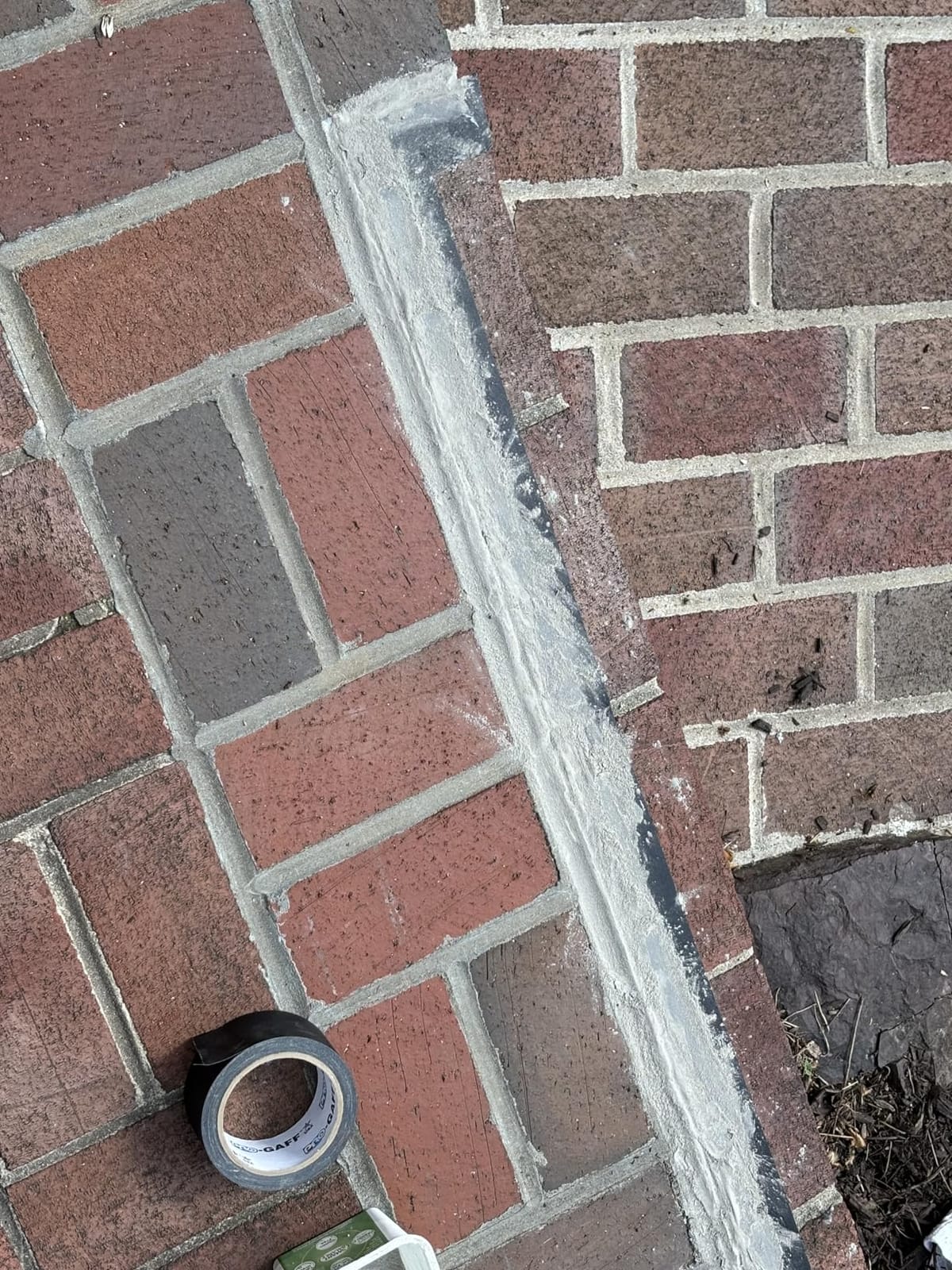
Where it gives ground is consistency. This is a paste, not a liquid, so it does not self-level the way the Sikaflex products do. On a horizontal joint you will want to tool it, and on anything wider than a quarter inch the surface will not come up flush without some work. Coverage per 10.1 oz tube is also modest compared with the quart-sized pourable options further down this list.
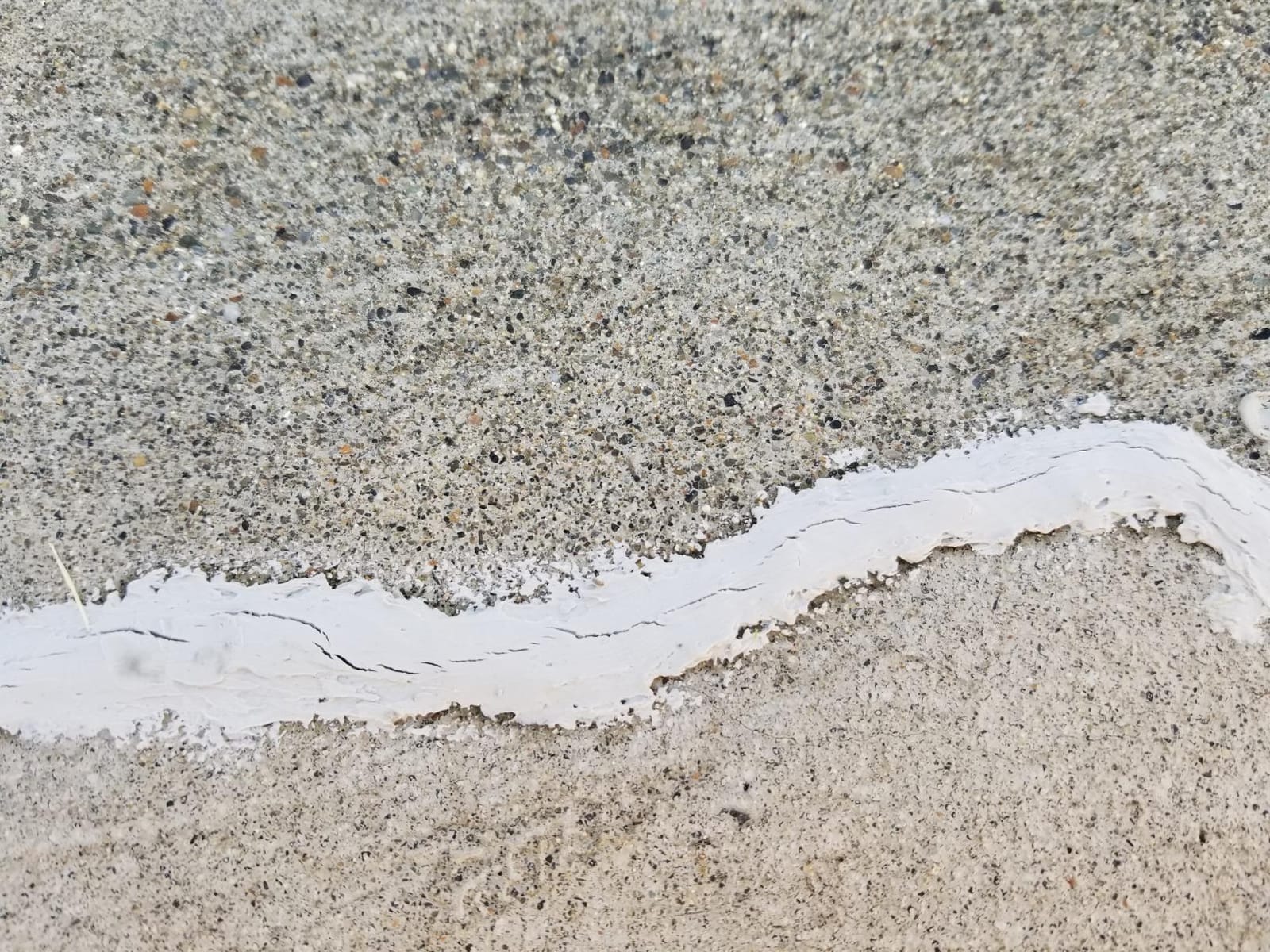
What it handles well and where it struggles?
It shines on hairline cracks, small holes, and interior or exterior masonry that you want back in service the next day. It struggles on wide moving joints, where a rigid paste is the wrong tool because it will not flex with the slab.
Who should buy it?
Buy this if your cracks are under a quarter inch, you want the simplest possible application, and the finish does not need to be invisible. It is the sensible low-commitment option for most homeowners.
4. DAP Liquid Cement Crack Filler — Best Filler for Horizontal Cracks Up to 1 Inch
DAP Liquid Cement Crack Filler (Ready to Use), Gray, 32 Oz (7079837584)
- Pour-and-go with no mixing
- Self-levels and dries gray
- Back in service in under an hour
- Handles cracks up to 1 inch
- One bottle covers a large area
- Horizontal cracks only
- Very low viscosity runs from deep voids
- Needs full dry time to harden
- Dries lighter than aged concrete
When a driveway crack is wide enough that caulk is a non-starter, this is the bottle to reach for. It is a 32 oz liquid cement filler you shake and pour, rated for horizontal cracks up to 1 inch wide, and it levels itself out as it sits. No caulking gun, no cartridge, no backer rod gymnastics.
The traffic-ready window of 30 to 45 minutes is the standout number in this entire roundup. Nothing else here gets a car back over the repair that quickly, which makes it the right pick for a driveway where a vehicle has to cross the work area the same afternoon.
Reviewers consistently like the shake-and-pour simplicity. One 32 oz bottle covers a substantial length of cracked slab, so for a long hairline network rather than a few discrete cracks, the coverage per bottle of material here is better than the cartridge products.
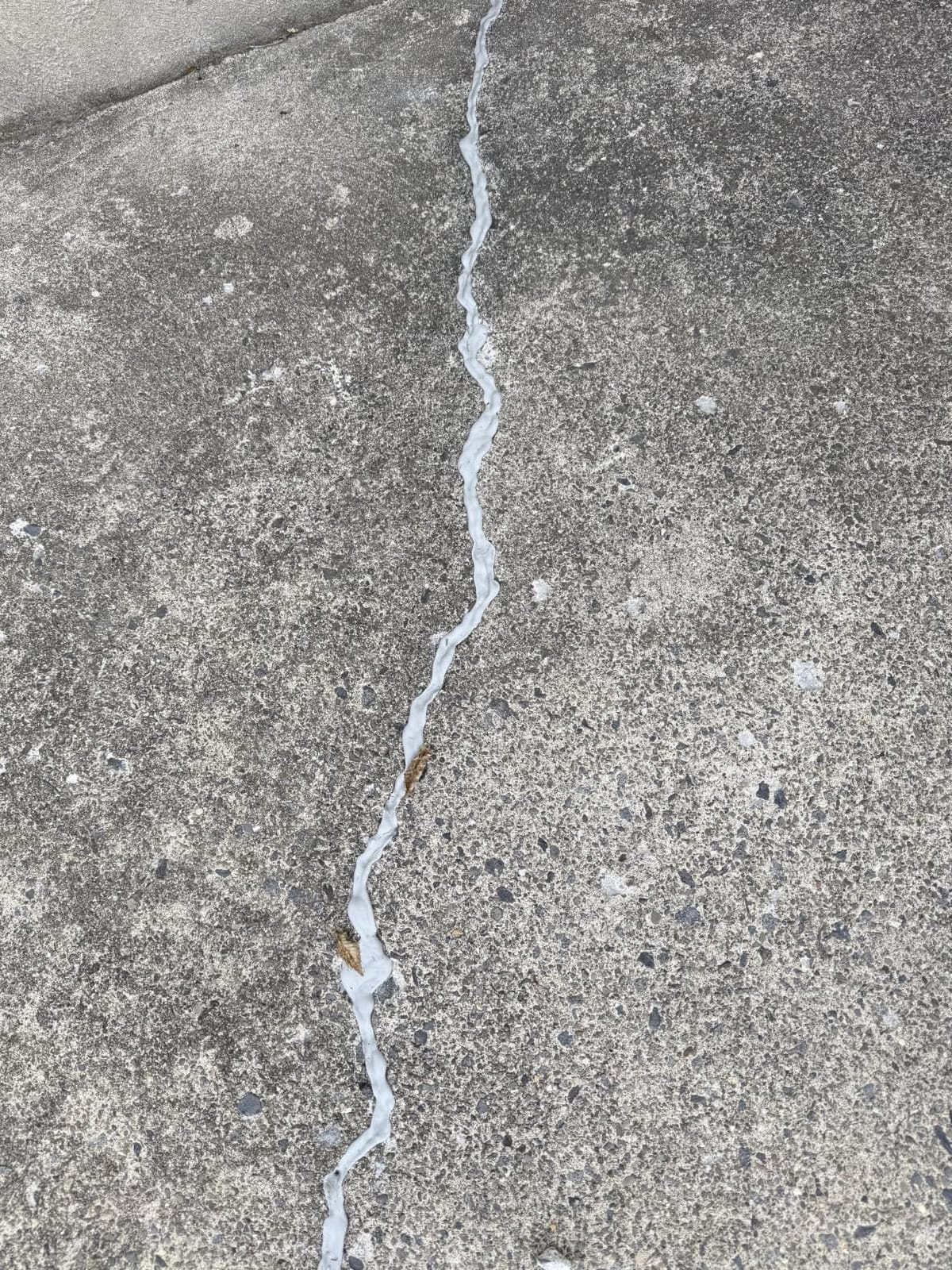
The low viscosity is a real limitation. It will not hold in a deep void or a vertical crack, and a deep section will keep absorbing material until it either levels off or runs out. Reviewers also report the finish drying lighter than aged concrete, so on a weathered driveway you may need a second pass or a topcoat to hide it.
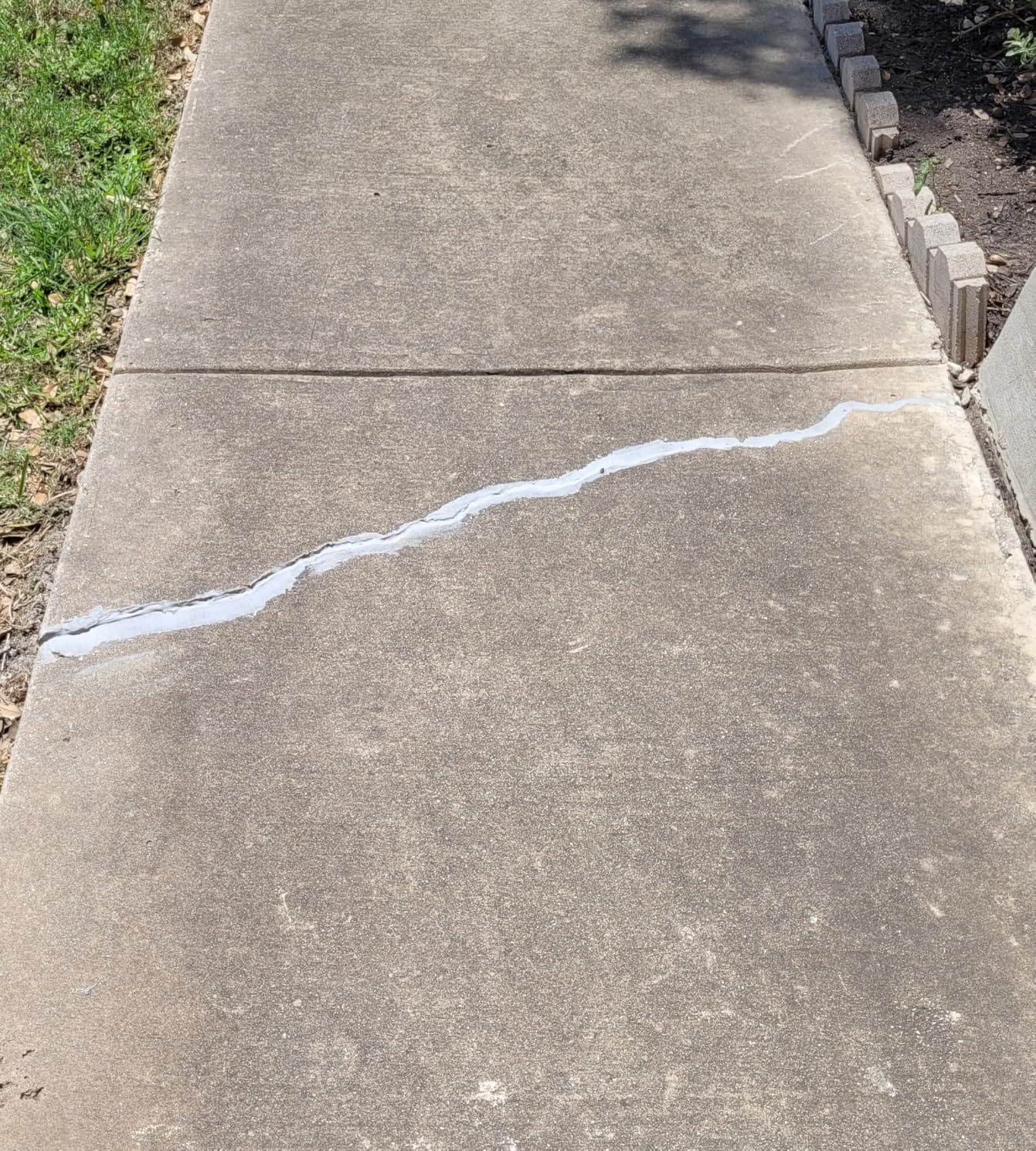
What it handles well and where it struggles?
It handles medium to wide horizontal cracks quickly and with very little technique. It does not flex like a polyurethane, so a crack that is still actively moving under vehicle load can reopen the repair once the cementitious material has hardened.
Who should buy it?
Buy this if your cracks are horizontal, wider than a quarter inch, up to about an inch, and you need the driveway open to traffic the same day. It is also the easiest product here to use on a long run of cracking.
5. Sashco Slab Concrete Crack Filler — Most Versatile for Wide Gaps and Cold Climates
- Stretches up to 300 percent of crack size
- Textured finish blends like concrete
- Handles 3 inch gaps with no slump
- Works horizontal and vertical
- Freeze-thaw stable through 10 cycles
- Messier to gun than self-leveling types
- Single cartridge in this pack
- Texture may not suit smooth finishes
- Longer full cure than cement fillers
Everything else on this list has a crack width ceiling that makes you uncomfortable somewhere between a half inch and an inch. This one does not. Sashco Slab is rated to span gaps up to 3 inches wide without slumping, and it stretches up to 300 percent of the original crack size as the slab moves.
That elasticity is the reason it shows up in the reviews of people whose earlier caulk repairs had already failed. If a joint on your driveway has reopened after a cheaper filler peeled out, the answer is not a harder product, it is a more flexible one. Nothing else here stretches as far as this one does.
The freeze-thaw rating is the other headline. It is tested stable through 10 cycles, and in a climate where salt goes down every winter that is the number that decides whether a repair is still there in spring. It also works on vertical cracks and stair edges without slumping, which most of the horizontal-only products cannot do.
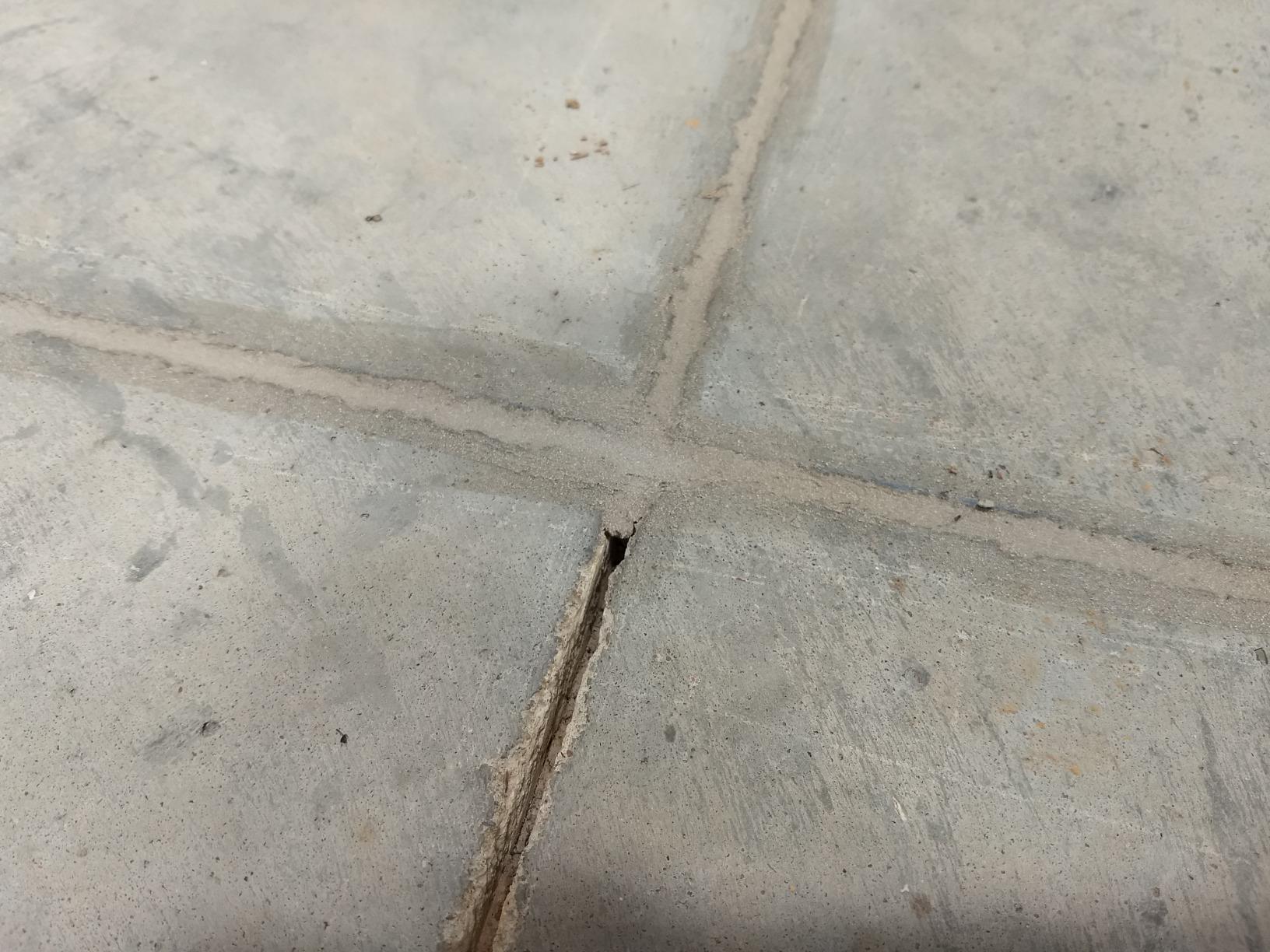
It is not as forgiving to apply. This is a paste that needs hand tooling rather than a self-leveling flow, and reviewers with limited caulking gun experience note that it is messier than the Sika options. The pack contains a single 10.5 oz cartridge, so a driveway with more than a few cracks means multiple cartridges.
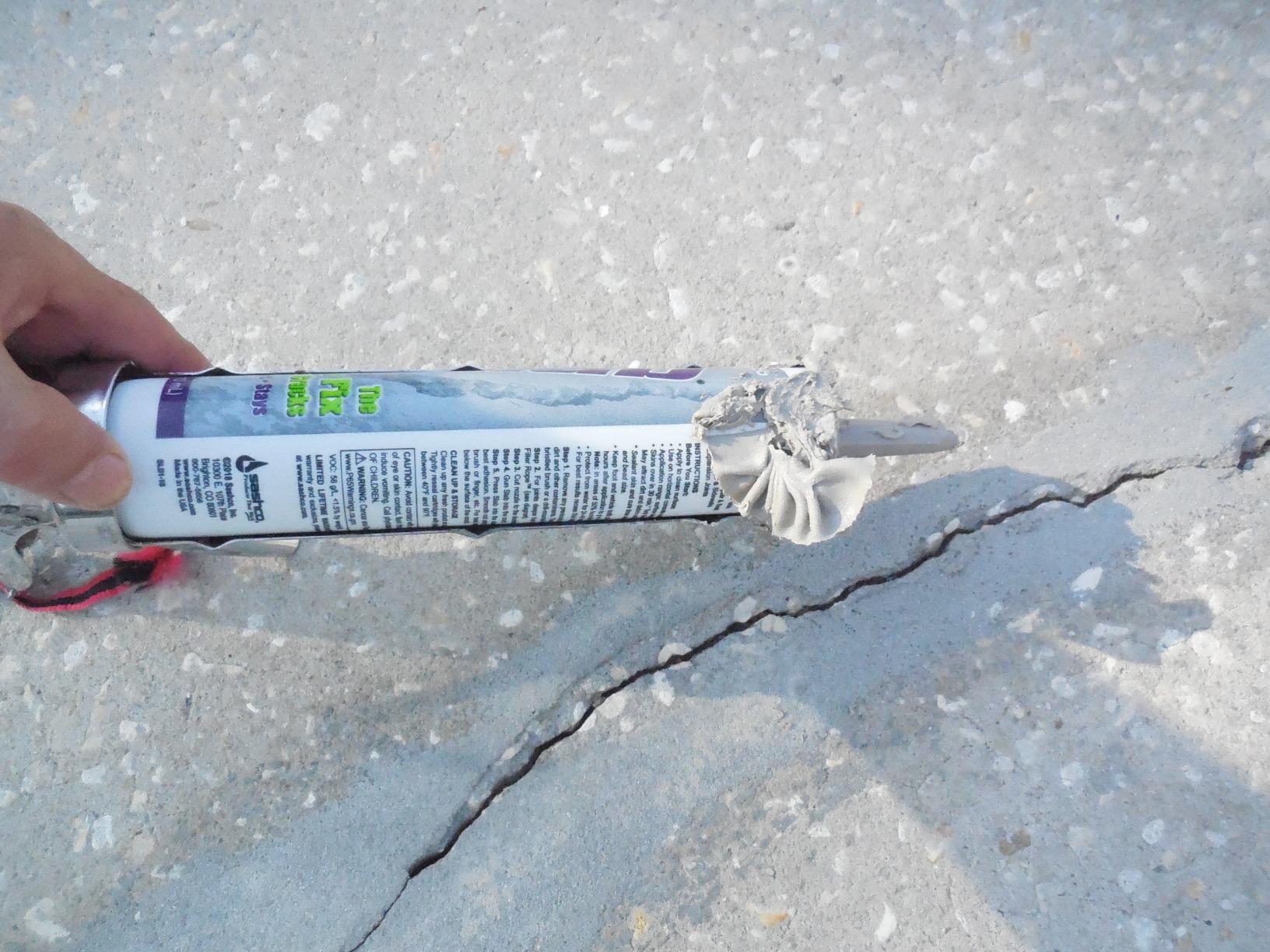
What it handles well and where it struggles?
It handles very wide gaps, moving joints, vertical cracks, and hard freeze-thaw climates better than anything else here. It struggles on very smooth or broom-finished slabs where the textured top coat is visible against the surrounding surface, and it takes longer to fully cure than the quick-set cement options.
Who should buy it?
Buy this if you have wide cracks, a cold climate with regular de-icing salt, or a driveway where a previous filler has already failed once. If elasticity and longevity matter more than a clean bead, this is the one.
6. DAP Concrete Crack Filler Water-Activated Powder — Best for Fast Turnaround on Medium Cracks
- No shaking or mixing at all
- Single-pass fill up to half inch
- Foot traffic in 4 hours
- 48 hours for vehicles
- Resists shrinkage and UV fading
- Limited to gaps around half inch
- Must be misted so unusable in freezing conditions
- Less elastic than polyurethane
- Powder residue needs cleanup
The application is about as simple as it gets. You prep the surface, fill the crack, and mist it. There is no shaking, no measuring, no mixing, and no caulking gun. Reviewers who are tired of polyurethane mess single this out as a relief.
It fills cracks up to half an inch wide by half an inch deep in a single pass, which covers the most common residential crack size there is. Foot traffic is allowed at 4 hours and vehicles at 48 hours, so it is not quite as instant as the liquid cement pour but it is close, and the cure happens in stages rather than all at once.
Because the product is water-activated acrylic polymer rather than cement, it resists shrinkage, which is the usual failure mode of cement-type repairs. The waterproofing and low-odor profile also beat most solvent-based sealants for anyone working in an enclosed garage.
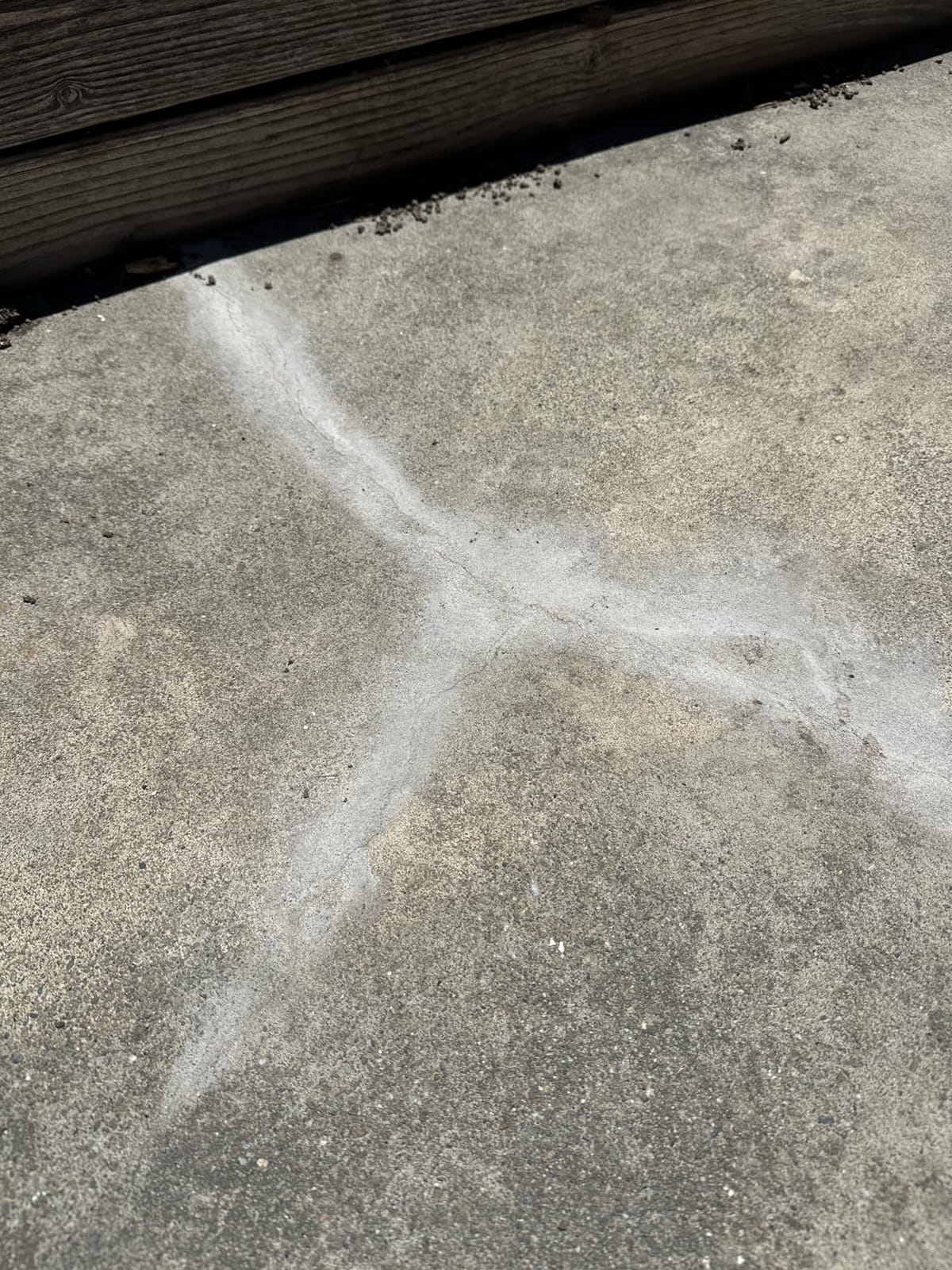
Two limits are consistent across the reviews. Anything wider than about half an inch needs a different product or a backer rod first, and because it needs misting to activate, it cannot be used in freezing conditions. On a heavily moving joint it is also less elastic than a polyurethane, so it can take more stress but flexes less.
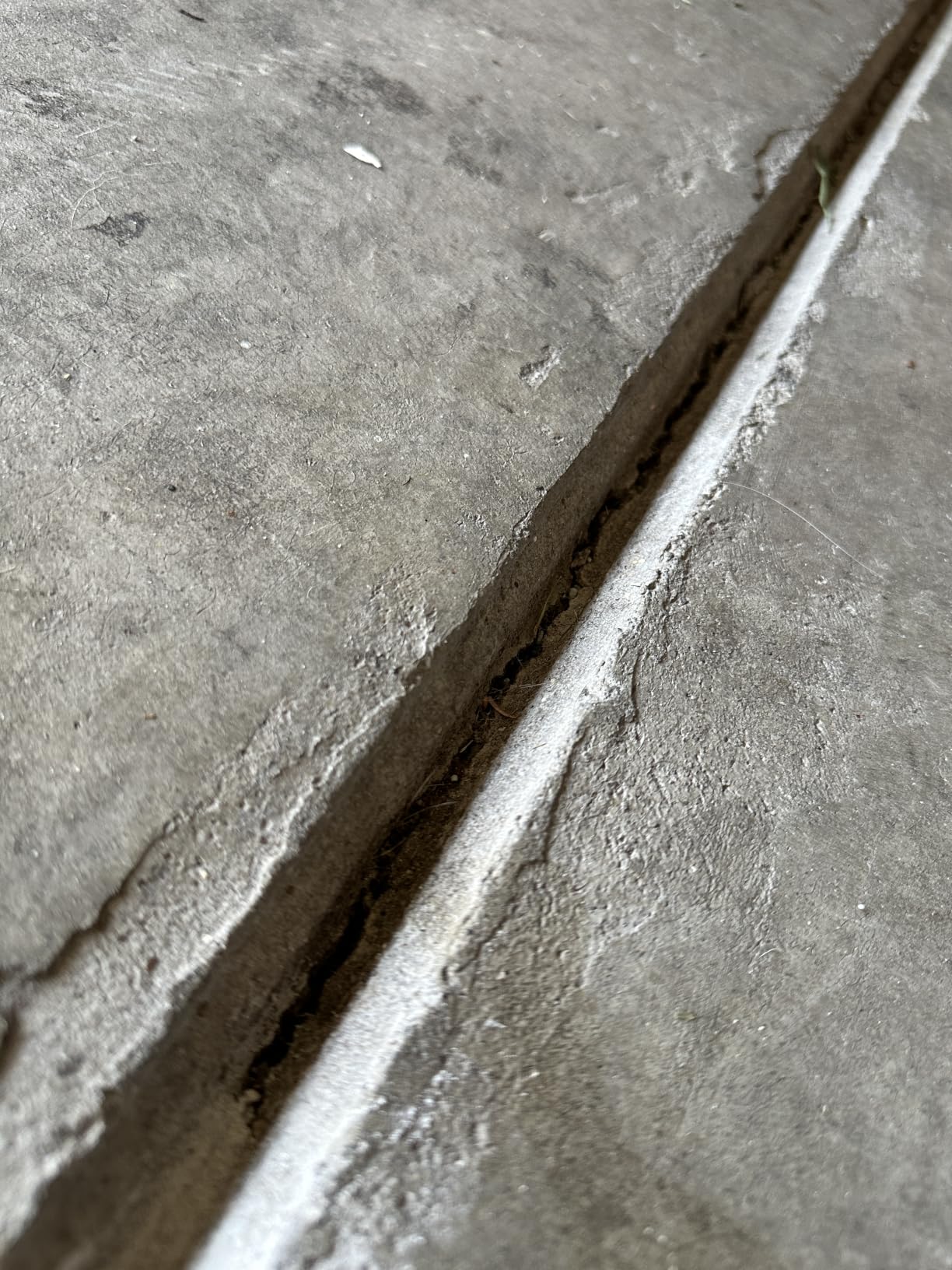
What it handles well and where it struggles?
It handles the mid-range crack, hairline networks, and small holes with almost no equipment. It struggles above half an inch, in cold weather, and on joints that need to stretch rather than just fill.
Who should buy it?
Buy this if your cracks are a quarter inch or under, you do not own a caulking gun, and you want the driveway back to foot traffic the same afternoon. It is the lowest-friction entry point in this list.
7. ConSandtrate Concrete Crack Filler — Best for the Easiest Pour-and-Mist Application
ConSandtrate Concrete Crack Filler – Gray – 3 lb. (Single Bottle) – Polymer Based Sealant for Filling in Concrete Cracks on Driveways, Walkways and Patios (Gray)
- Far less messy than cartridge sealants
- Hairline cracks effectively disappear
- Five color options including gray and tan
- Self-healing polymers move with the slab
- Holds up to light rain when misted
- Color runs lighter than aged concrete
- Shade varies bottle to bottle
- Sand-like residue is hard to clean up
- Prefers no pressure wash beforehand
This is the one to try if the whole idea of a caulking gun makes you put the project off. You cut the tip on the supplied Yorker, pour the material straight into the crack, and mist it. The self-healing polymer chemistry is designed to react and reinstate itself as the concrete expands and contracts, so a small amount of re-cracking inside the repair does not end the job.
The most common feedback is that hairline cracks effectively disappear. That is not a marketing claim, it is the recurring observation in the reviews: a fine network of cracks that was collecting dirt now reads as a continuous surface. It also handles light rain soon after application when it has been misted properly.
It comes in five color options, which is more choice than anyone else on this list offers, and the 3 lb bottle is a reasonable amount of material for a full driveway with a lot of hairline cracking.
What it handles well and where it struggles?
It handles hairline and moderate cracks with less mess and less technique than the cartridge sealants here. Color is the real weak point. Reviewers consistently report the gray and tan running lighter than expected and not blending with aged concrete, with some variation between bottles of the same color. The instructions also advise against pressure washing the surface beforehand, which makes prep less forgiving than it sounds.
Who should buy it?
Buy this if you are dealing with a lot of hairline cracking rather than a few wide cracks, you want one of the least messy applications on this list, and you are willing to test the color in an inconspicuous spot first. If the shade matters a great deal to you, pick one of the textured sealants instead.
8. SIKA Sikaflex Concrete Fix Crack and Joint Sealant — Best Gun-Grade Filler for Narrow Cracks
SIKA Sikaflex Concrete Fix Crack and Joint Sealant, Limestone, 10.1 fl oz
- Strong adhesion to concrete brick and metal
- Maintains plus or minus 35 percent joint movement
- Can bond to damp or uncured concrete
- Better control than self-leveling types
- Smooth cartridge flow
- Limestone tone is really a light gray
- Thick material is hard to squeeze
- Vertical cracks may need a second coat
- Narrow tip can plug between uses
Every self-leveling product on this list is fast and fluid, and fluidity is exactly what you do not want in a hairline crack. This gun-grade polyurethane is the opposite. It is thick, it holds its shape, and it gives you real control over a narrow bead.
The joint movement spec is the number to pay attention to. It holds plus or minus 35 percent movement, which is a direct statement about how much the joint can open and close before the seal is stressed. It also bonds to damp concrete or concrete that has not fully cured, which is useful after rain or on a garage slab.
Reviewers report it sticking to concrete, brick, stucco and metal without extra prep, and several note that sprinkling a little sand into the wet bead improves the color match, since the limestone tone is a light gray rather than a mid gray.
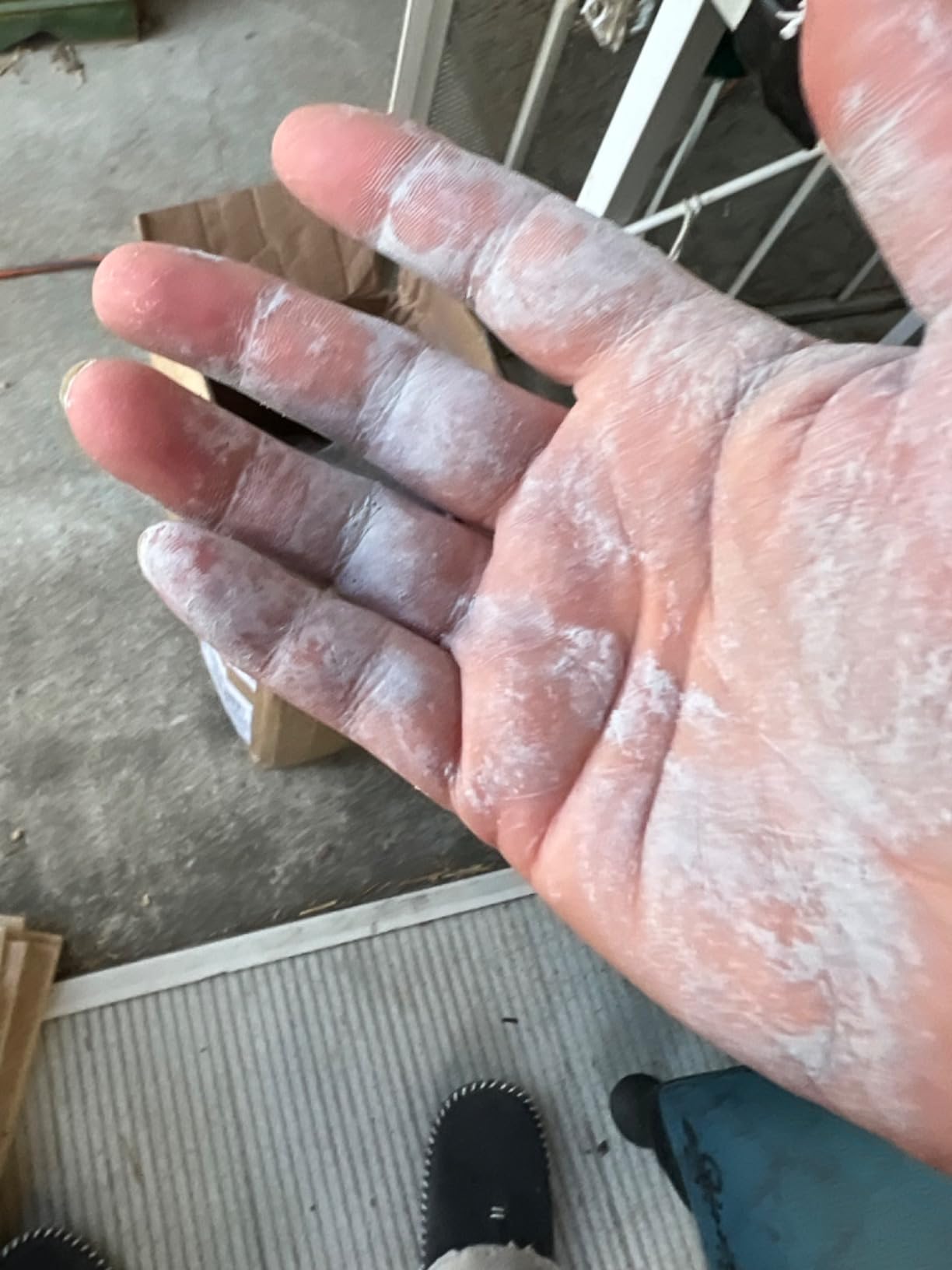
Two practical issues come up repeatedly. The material is thick and gloppy, so it takes effort to squeeze from the cartridge, and the narrow tip can plug and harden between uses if you do not cap the tube. Both are manageable but neither is convenient.
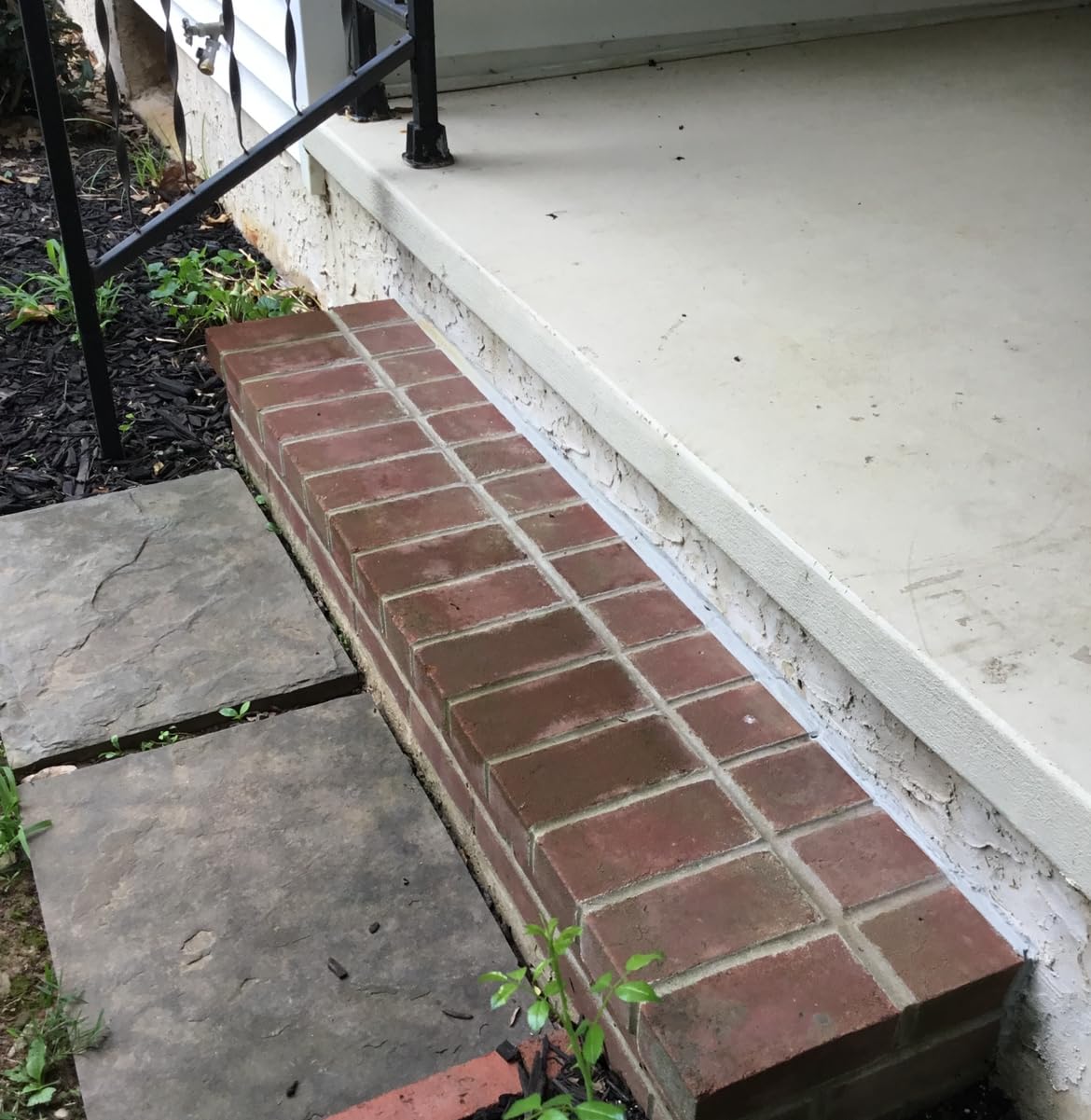
What it handles well and where it struggles?
It handles narrow cracks and joints with precision, plus vertical cracks that need a second coat as the first sets. The color is the compromise, as the light gray reads lighter than most aged concrete, and the thick consistency is harder work than a self-leveling product.
Who should buy it?
Buy this if your cracks are hairline to about a quarter inch and you want control rather than speed. It is also the pick for vertical cracks and step edges where a self-leveling sealant would simply run.
9. Quikrete Grey Concrete Crack Seal 946 mL — Best for Long Runs of Cracking
- Pours from the bottle with no gun or mixing
- Flows into narrow cracks and self-levels
- Grey tone suits natural concrete
- Good coverage for a large area
- Crack-resistant rubberized formula
- Shade runs lighter than weathered concrete
- Very fluid so it will not hold deep or vertical
- Needs full drying time before traffic
- Narrow cracks may need a second pass
Coverage is the argument for this one. A 946 ml quart bottle poured straight from the container covers a lot of cracking, and there is no gun, no cartridge, and no mixing. For a driveway with a long hairline network rather than a handful of isolated cracks, that combination of volume and simplicity is hard to argue with.
It is a rubber-based formula that flows readily into narrow cracks and self-levels, which is unusual for something this fluid. The grey tone is described as blending with natural concrete, and that holds up best on concrete that has not yet weathered to a much lighter or darker shade.
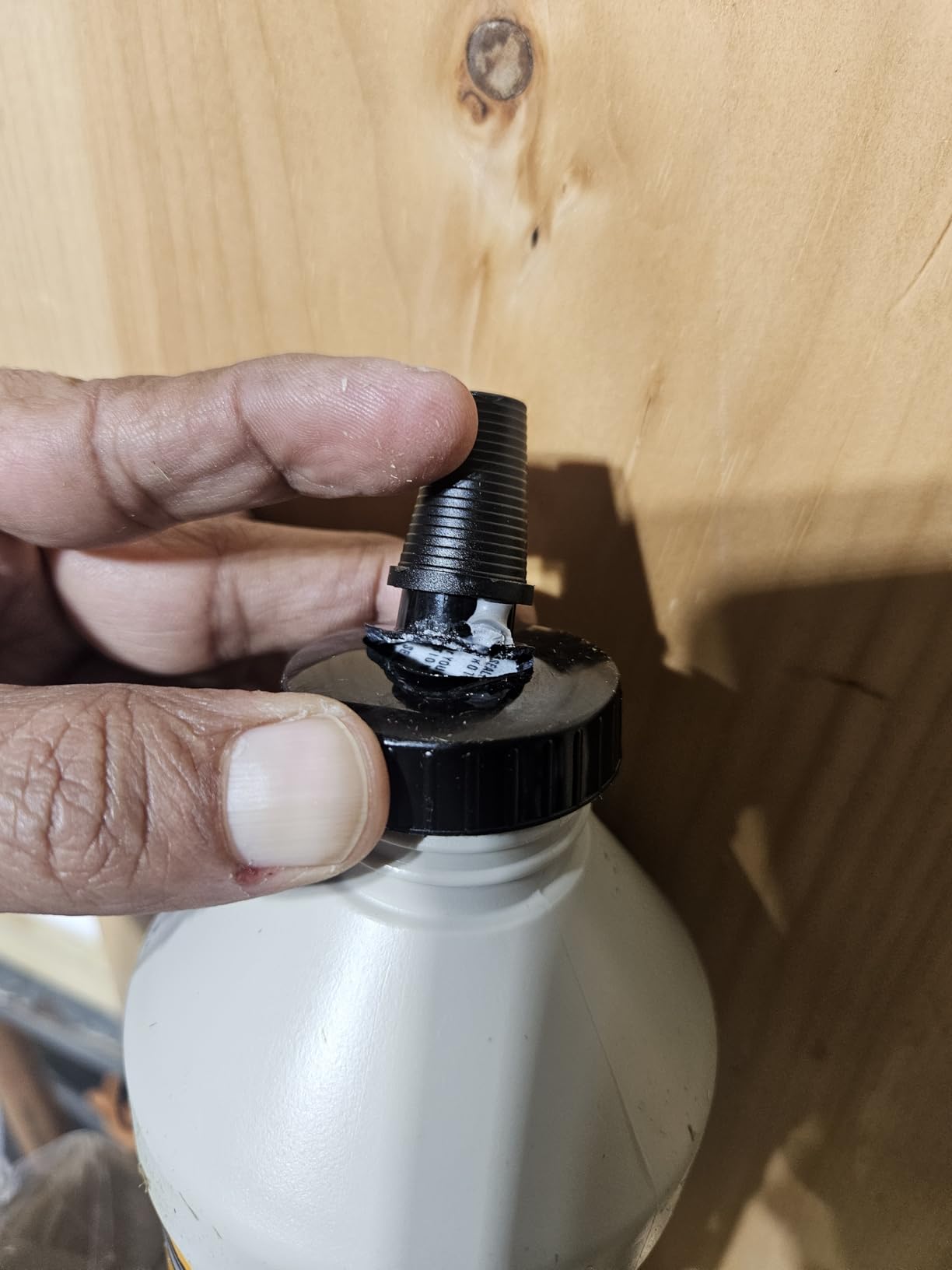
Like the other pourable products here, the main cautions are predictable. It is fluid, so deep voids and vertical cracks need back-filling first, and narrow cracks sometimes take a second pass to fill completely. Allow the full drying time before putting a vehicle on it.
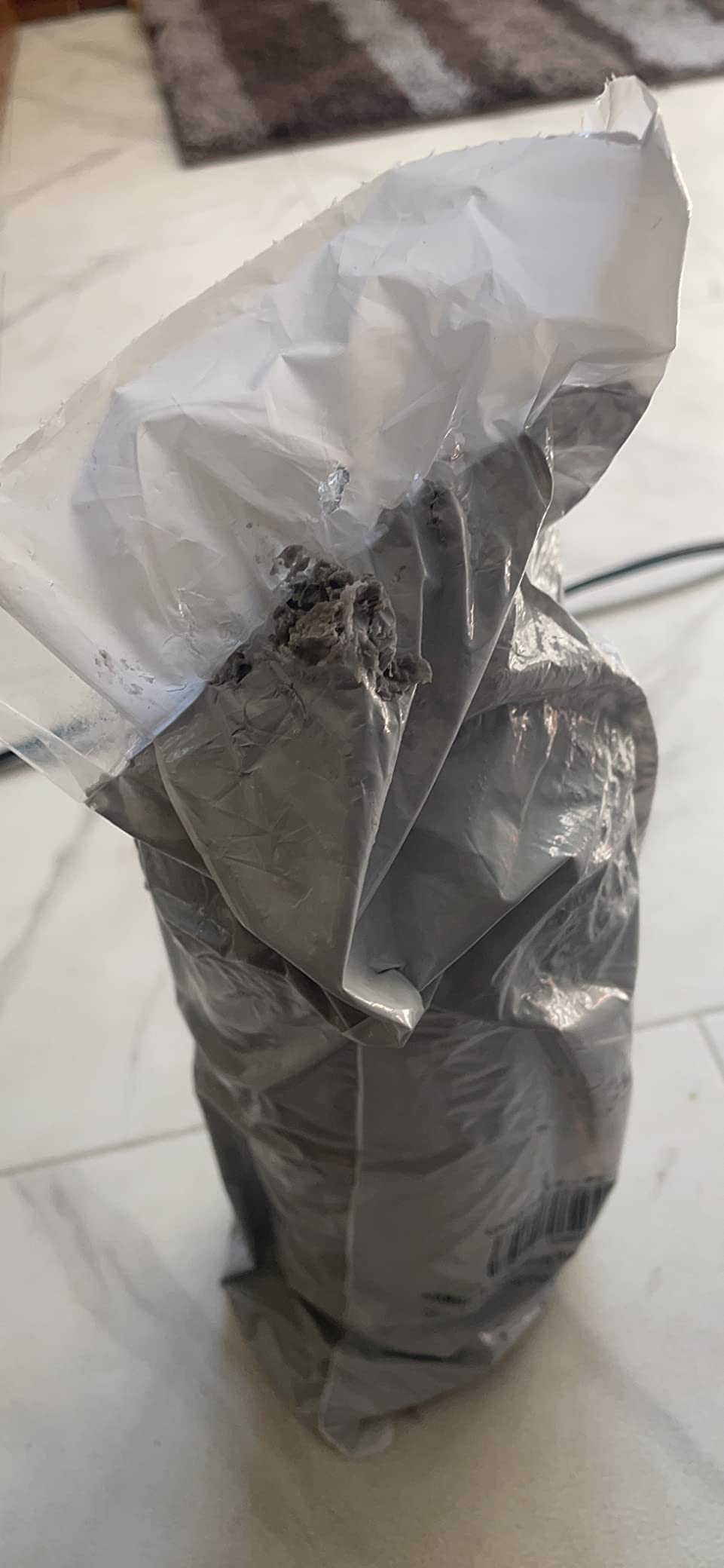
What it handles well and where it struggles?
It handles broad areas of surface cracking, hairline networks, and long joint runs where cartridge products would mean a dozen tubes. It struggles on aged, deeply weathered concrete where the gray reads too light, and on any crack with real depth or vertical run.
Who should buy it?
Buy this if your problem is quantity rather than width. Long cracks, lots of small cracking, and a driveway you want treated in one session with minimal equipment is exactly the case this bottle was made for.
10. Wadities High Elasticity Concrete Crack Filler 2-Pack — Best Bundle for Multi-Surface Repairs
Concrete Crack Filler, 2.65LB High Elasticity Cement Crack Repair Sealant
- Scraper and gloves included in the pack
- Self-leveling with a fast surface dry
- Works on concrete asphalt brick tile metal and wood
- High elasticity under vehicle traffic
- Useful as a waterproof membrane on roofs
- Lowest average rating in this group
- Color reads lighter than weathered concrete
- Must be injected carefully to avoid overfilling
- Needs 24 to 48 hours before heavy vehicle traffic
This is the odd one out in the list, and worth including for that reason. It arrives as two 2.65 lb packs with a scraper and a pair of gloves, which removes the small annoyance of buying tools separately. The material is a high-elasticity liquid that self-levels and is surface dry in 4 to 6 hours, fully cured in 24 to 48.
Its real strength is versatility. It bonds to concrete, asphalt, brick, tile, metal and wood, and it forms a seamless waterproof membrane that reviewers use on flat roofs, foundations, gutters and planter boxes as well as driveways. If you have several small concrete problems around the property rather than one driveway, one product covering all of them has obvious appeal.
On elasticity under vehicle traffic the feedback is positive, and the quick surface dry time means you are not locked out of a section for a full day.
What it handles well and where it struggles?
It handles general driveway and walkway repair, plus sealing jobs on other surfaces, and the included tools make a first attempt straightforward. The trade-offs are a 4.2 average rating, the lowest in this group, a gray that reads lighter than weathered concrete, and a firm instruction to inject carefully so you do not overfill a wide crack.
Who should buy it?
Buy this if you want a single product for concrete and non-concrete sealing jobs, you want the applicator tools included, and you are comfortable with a shorter track record of long-term customer feedback than the established brands offer.
How to Fill Cracks in a Concrete Driveway Step by Step?
The product only matters as much as the preparation behind it. Almost every failed repair we read about started with a crack that was still full of dust, oil, and loose concrete powder.
1. Find out why the crack is there. Look at the edges. If the crack is a straight line across the full width of the slab with an edge on both sides, you are looking at a control joint, and it is supposed to be there. If it runs diagonally from a corner, that usually means settlement. Cracks that run alongside tree roots are usually growing and will reopen whatever you fill them with.
2. Cut the crack open. A crack with crumbling, rounded walls will not bond to anything. Chase it out with a wire brush or a crack chaser so the walls are clean and vertical, and widen the top of the crack slightly. Many people skip this step, and a Houzz discussion recommends cleaning out the crack before filling for exactly this reason.
3. Back it with foam rod if the crack is deep. Anything deeper than about half an inch wants a backer rod, cut to roughly 25 percent wider than the gap and pushed in with a tool that will not gouge the walls. This stops self-leveling sealants running through to the sub-base and cutting your material use dramatically.
4. Clean and dry. Compressed air or a vacuum, then let the surface dry. Oil and salt residue from winter use will stop any sealant adhering, and a clean surface is the cheapest insurance in this whole process.
5. Fill it. Cut the nozzle at 45 degrees, push the tip into the crack, and gun with steady pressure so the material is pushed to the back of the joint. Overfill shallow cracks slightly, since most products shrink a little as they cure.
6. Cure and protect. Traffic-ready and cure-ready are not the same thing. Follow the full cure time before parking a car on the repair, and keep foot traffic off for the first few hours. If the crack is in a high-salt corridor, a driveway sealer applied after curing will protect the whole slab, not just the joint. Our guide to the best driveway sealers for concrete covers that step.
Which Filler Matches Your Crack Width?
Here is the decision table nobody in this search space publishes properly, and it settles most of the confusion in the comments. Measure the crack at its widest point with a ruler before you buy anything.
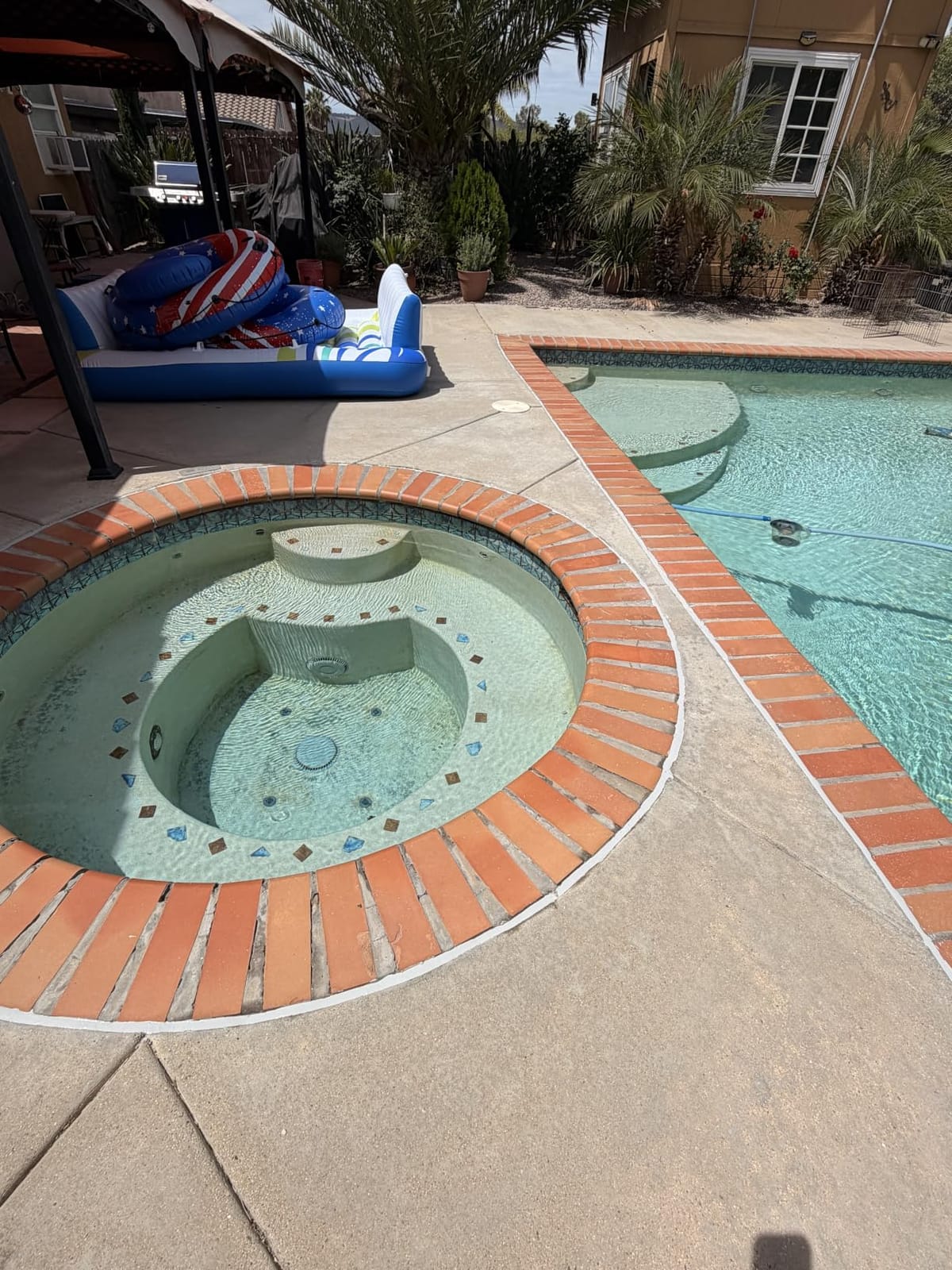
Under 1/8 inch, hairline. Use a gun-grade sealant such as the Sikaflex Concrete Fix. A self-leveling product is wider than the crack, and you will spend your time trimming squeeze-out. Many hairline cracks do not need filling at all, so check whether water actually collects there first.
1/8 to 1/4 inch. This is the most common residential range and the one described in a Reddit r/HomeImprovement thread on driveway crack filling. A flexible polyurethane sealant handles it well. The Sika products and DAP filler in this roundup all live here comfortably.
1/4 to 1/2 inch. Use a self-leveling sealant or the water-activated acrylic powder, both of which fill this range in a single pass. The DAP powder is the fastest here, with foot traffic at 4 hours.
1/2 to 1 inch. Beyond a half inch you need a self-leveling or pourable product rated for the width: the DAP Liquid Cement and the Sikaflex Crack Flex both cover up to 1 inch. Back-fill deeper sections first.
Over 1 inch, or a moving seam. This is where DIY stops being sensible. Foam backer rod, a flexible sealant rated for the span such as Sashco Slab, and a close look at whether the crack is structural. A crack wider than 1 inch that has spalled edges is a contractor conversation.
Spalled edges, chips and potholes. Crack filler is not a patch. For missing material you want a concrete patching compound, and for a hole in the slab a cold patch or a partial slab replacement is the correct answer.
One more distinction worth making. Every product here is a concrete product. Asphalt and blacktop driveways need rubberized or hot-pour asphaltic fillers, which flex differently and bond to asphalt rather than cement paste. If the surface under your tires is black rather than gray, none of the ten products on this list is the right choice.
Color Matching Is the Hardest Part of Any Concrete Repair
Color matching is the most common frustration in this category, raised repeatedly across forums, and no product fully solves it. Fresh concrete is one shade, five-year-old concrete is another, and every repair product on the market is somewhere in between or slightly off.
Our rule is simple: test first, always. Buy the smallest amount available, apply it to an inconspicuous corner, and look at it wet and again once dry. Wet sealant always looks darker than cured sealant, and a repair that matches in the cartridge can still read as a pale line a day later.
Textured finishes help more than the colour choice does, which is why the Sika Crack Flex and Sashco Slab both perform well here. A textured bead scatters light like the concrete around it, so the eye reads the joint as a shadow line rather than a foreign object.
If a repair still stands out, the final trick is a light sprinkle of matching aggregate or dry sand into the wet bead, which several reviewers across the Sika and Quikrete listings use successfully. If the driveway has shifted enough to lift or settle noticeably underfoot, the more common cause is soil movement beneath the slab, and understanding why clay cracks and how to prevent it will tell you whether a filler will hold at all.
When to Hire a Concrete Contractor Instead?
There are four signals that the problem is bigger than a tube of sealant.
The crack is wider than half an inch and spalled. Spalling means the slab edge is breaking away around the crack, which happens when water has been cycling in the joint for seasons. Filling the line does not replace the lost concrete around it.
Cracks radiate from a corner or a column. Diagonal cracks running toward structural elements point to load or support problems rather than surface wear. A filler will hold for a season and then the crack comes back wider.
Doors to the house or the garage no longer close. That is slab movement, not a crack. Once the slab has heaved enough to bind a door, the underlying base or subgrade needs attention.
The driveway is approaching full replacement anyway. If the slab is already in poor condition across its whole surface, patching individual cracks is spending money on a surface you are going to replace. A contractor can give you an honest read on whether a repair or a replacement makes more sense.
It is also worth asking your contractor about base compaction before any new surface goes down, which is a different job from crack filling entirely. Our guide to plate compactors for driveway projects covers that side of things if you are planning a larger repair.
Frequently Asked Questions
Do concrete crack fillers really work?
Yes, when you match the product to the crack width and the joint is still moving gently. A flexible polyurethane or acrylic sealant will keep water out of a crack for several seasons in a typical climate. They stop working when the crack is wider than the product was formulated for, when the surface was not properly cleaned, or when the underlying slab is actually settling. Expect the repair to need attention every few years rather than lasting permanently.
What is the best material to fill cracks in a concrete driveway?
For cracks under 1/4 inch, a polyurethane concrete crack sealant is the standard answer. For 1/4 to 1/2 inch, use a self-leveling sealant or a water-activated acrylic powder. For cracks between 1/2 and 1 inch, use a pourable liquid cement filler or a self-leveling sealant rated to that width. Anything over an inch wide needs a contractor.
What is the best way to fill large cracks in concrete?
Start by chasing the crack open with a wire brush or crack chaser so the walls are clean and vertical. If the crack is deeper than about half an inch, push in foam backer rod cut slightly wider than the gap. Then fill with a pourable or self-leveling product rated for the width, overfilling slightly. Backfill deep sections first and allow the full cure time before returning vehicles to the section.
Should you fill concrete cracks in a driveway?
Usually yes, because the value is keeping water and de-icing salt out of the slab. Unsealed, water freezes in the crack, expands, and progressively spalls the edges until the crack becomes a trench. The exception is a hairline crack that never collects water, which is not worth the effort. Filling is not worth it either when the slab is heaving, when doors no longer close, or when the whole surface is due for replacement.
What concrete crack filler is ranked best by Consumer Reports?
Consumer Reports does not run a ranked testing program for concrete crack fillers, so there is no official best pick to quote. What matters instead is the specification on the tube: the maximum crack width, the joint movement range, the cure time, and whether the finish is self-leveling or needs tooling. On those numbers, a self-leveling polyurethane rated for your crack width and your climate beats a generic sealant every time.
How long does a filled crack last in concrete?
In a mild climate, a well-prepared flexible sealant repair commonly lasts several years before it needs redoing. In a freeze-thaw climate with regular de-icing salt, expect closer to two or three seasons before you are touching it up again. Cement-type fillers are quicker to fail on moving cracks because they cannot flex, while high-elasticity acrylic sealants rated for freeze-thaw cycles hold on longest.
Final Verdict
If you want one driveway crack filler and you do not want to think about it, the SIKA Sikaflex Self-Leveling Concrete Expansion Joint Sealant is the pick. It handles horizontal joints, self-levels to a clean finish, bonds hard, and has the largest review base in this group to back it up.
If your cracks are wider than a quarter inch and you need the driveway open to traffic the same day, the DAP Liquid Cement Crack Filler reaches 1 inch and is traffic-ready in 30 to 45 minutes. If you are in a cold climate with salt every winter, the Sashco Slab is the one built for it, rated for 3 inch gaps and stable through 10 freeze-thaw cycles. And if the whole driveway is covered in hairline cracking rather than a few isolated lines, the ConSandtrate pour-and-mist bottle is the tidiest way to treat all of it.
Whichever one you choose, the preparation matters more than the tube. Chase the crack out, backer rod anything deep, clean it properly, and give it the full cure time. That is the difference between a repair that is still holding next spring and one that is peeling out of the slab.