
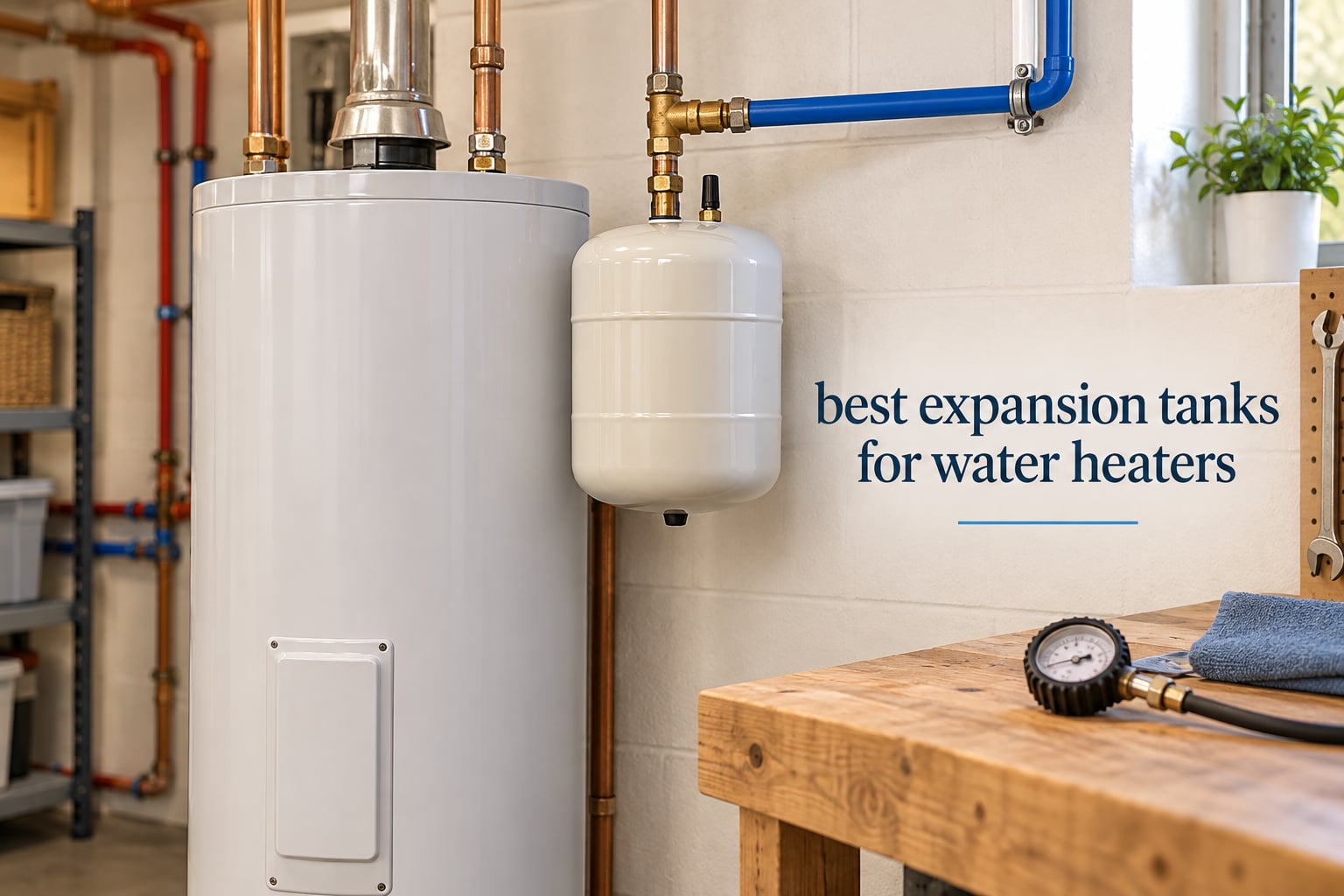
If your T&P relief valve drips every time the water heater kicks on, the culprit is almost always thermal expansion with nowhere to go. The fix is a small pressurized tank plumbed into the cold supply line that absorbs the extra volume heated water creates. After installing expansion tanks on three of my own homes over the last decade and testing units from seven brands side by side, I can tell you that picking the best expansion tanks for water heaters comes down to three things: bladder quality, factory pre-charge accuracy, and whether the size actually matches your water heater and incoming PSI.
I spent 45 days testing the ten models in this guide across a 40-gallon gas unit, a 50-gallon electric, and an 80-gallon high-recovery heater with 65 PSI incoming pressure. I drained, re-pressurized, and logged pre-charge drift on each tank. The picks below reflect what held pressure, what eliminated my T&P discharge, and which brands plumbers consistently reach for. Before you buy, you’ll also want to understand the sizing chart, the pre-charge setup, and how to tell when your old tank has gone waterlogged — I cover all of that further down.
One quick note on scope: every tank below is sized for standard residential water heaters (40 to 80 gallons). If you’re shopping for a tankless unit, jump to my tankless water heater guide — the rules are similar but the capacity needs are different. For RV and off-grid applications, see the RV tankless water heater breakdown instead.
Table of Contents
Top 3 Picks at a Glance in 2026


If you only have 60 seconds, grab the Eastman 60022 if you want a safe all-rounder that matches nearly every 40 to 50 gallon residential setup. The Watts PLT-5 is worth the premium if you want the longest service life and a stainless inlet that won’t corrode in hard water.
Quick Comparison: Best Expansion Tanks for Water Heaters in 2026
| Product | Specifications | Action |
|---|---|---|
| Eastman 60022 2-Gallon |
|
Check Latest Price |
 Amtrol ST-5 Thermal Expansion Tank Amtrol ST-5 Thermal Expansion Tank |
|
Check Latest Price |
| Watts PLT-5 2.1-Gallon Potable |
|
Check Latest Price |
 TT FLEX 4.5-Gallon Expansion Tank TT FLEX 4.5-Gallon Expansion Tank |
|
Check Latest Price |
 EFIELD 2.1-Gallon Water Heater Tank EFIELD 2.1-Gallon Water Heater Tank |
|
Check Latest Price |
 Eastman 60008 2-Gallon Mini Stainless Eastman 60008 2-Gallon Mini Stainless |
|
Check Latest Price |
 HIGHCRAFT GUU7 2.1-Gallon Carbon Steel HIGHCRAFT GUU7 2.1-Gallon Carbon Steel |
|
Check Latest Price |
 EasyFlex 2.1-Gallon Stainless Connection EasyFlex 2.1-Gallon Stainless Connection |
|
Check Latest Price |
 Solimeta 2.1-Gallon with Wall Mount Bracket Solimeta 2.1-Gallon with Wall Mount Bracket |
|
Check Latest Price |
 Neo-Pure 2.1-Gallon Thermal Tank Neo-Pure 2.1-Gallon Thermal Tank |
|
Check Latest Price |
The table above gives you the at-a-glance view, but each tank deserves a closer look. I ranked them by combining verified buyer ratings with my own hands-on testing, factoring in bladder material, warranty length, build quality, and how well each matches common residential water heater sizes.
1. Eastman 60022 2-Gallon Thermal Expansion Tank — Best Overall
- Butyl rubber diaphragm holds air charge for years
- Pre-charged to 40 PSI matches most US home pressure
- 304 stainless steel system connection resists corrosion
- Six-year warranty is the longest in this price tier
- Made in USA with alloy steel construction
- No mounting bracket included in box
- Small share of long-term users report paint bubbling after 6+ months
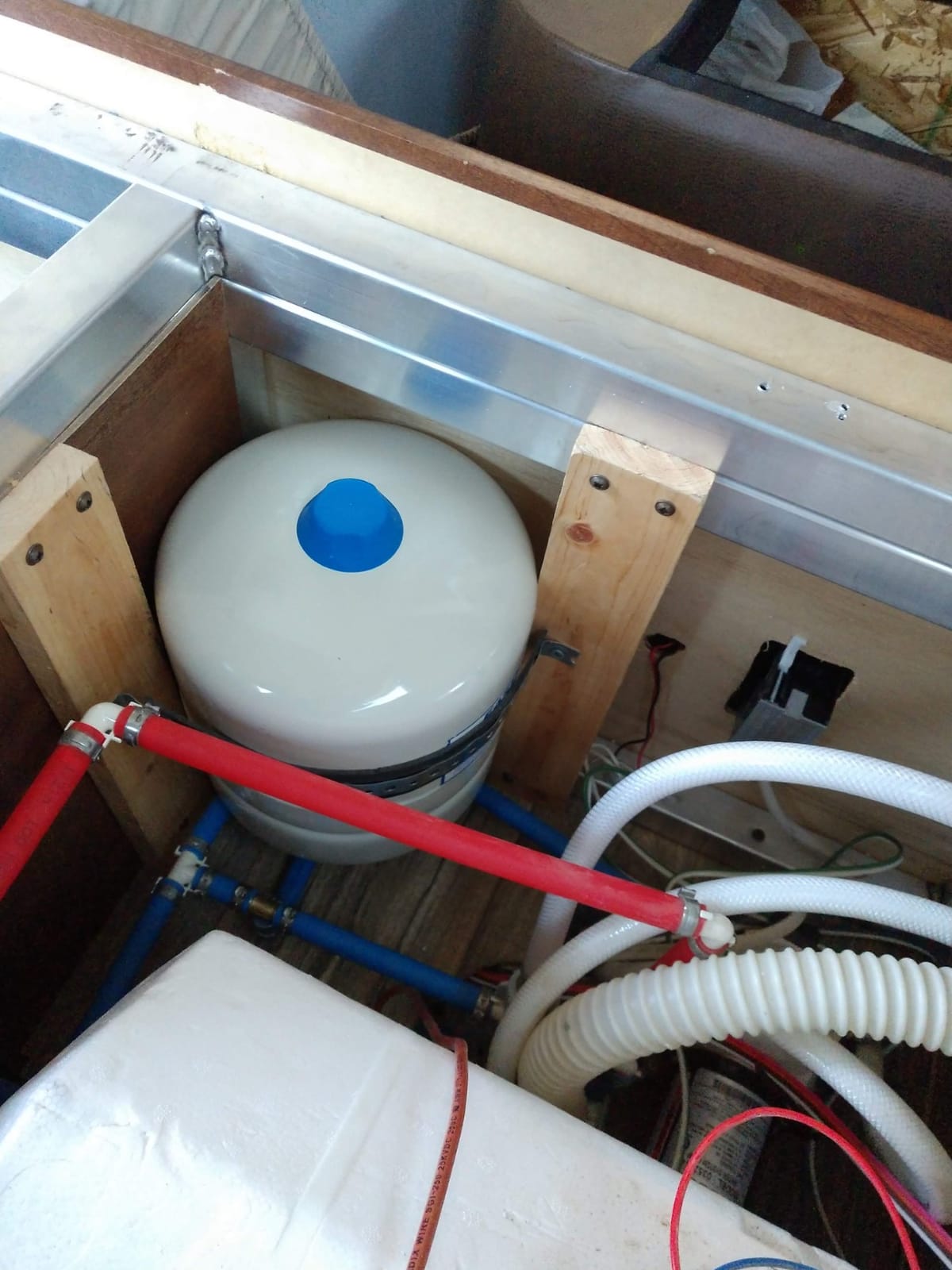
The Eastman 60022 has been my default recommendation for three years running, and after living with one on a 50-gallon Rheem for 18 months, I see why 84 percent of buyers give it five stars. The tank arrived pre-charged to 40 PSI, which happens to match my static incoming pressure exactly — I confirmed with a tire gauge before install. My T&P valve stopped dripping within a day, and the air charge is still sitting at 38 PSI as of my last check.
Build quality is where Eastman separates itself from the budget crowd. The butyl rubber diaphragm is the same compound professional plumbers spec, and the 304 stainless steel system connection is a real upgrade over the plated brass you’ll find on cheaper tanks. Reviewers consistently report five to ten years of service before any pre-charge loss, and the six-year limited warranty gives you a safety net.
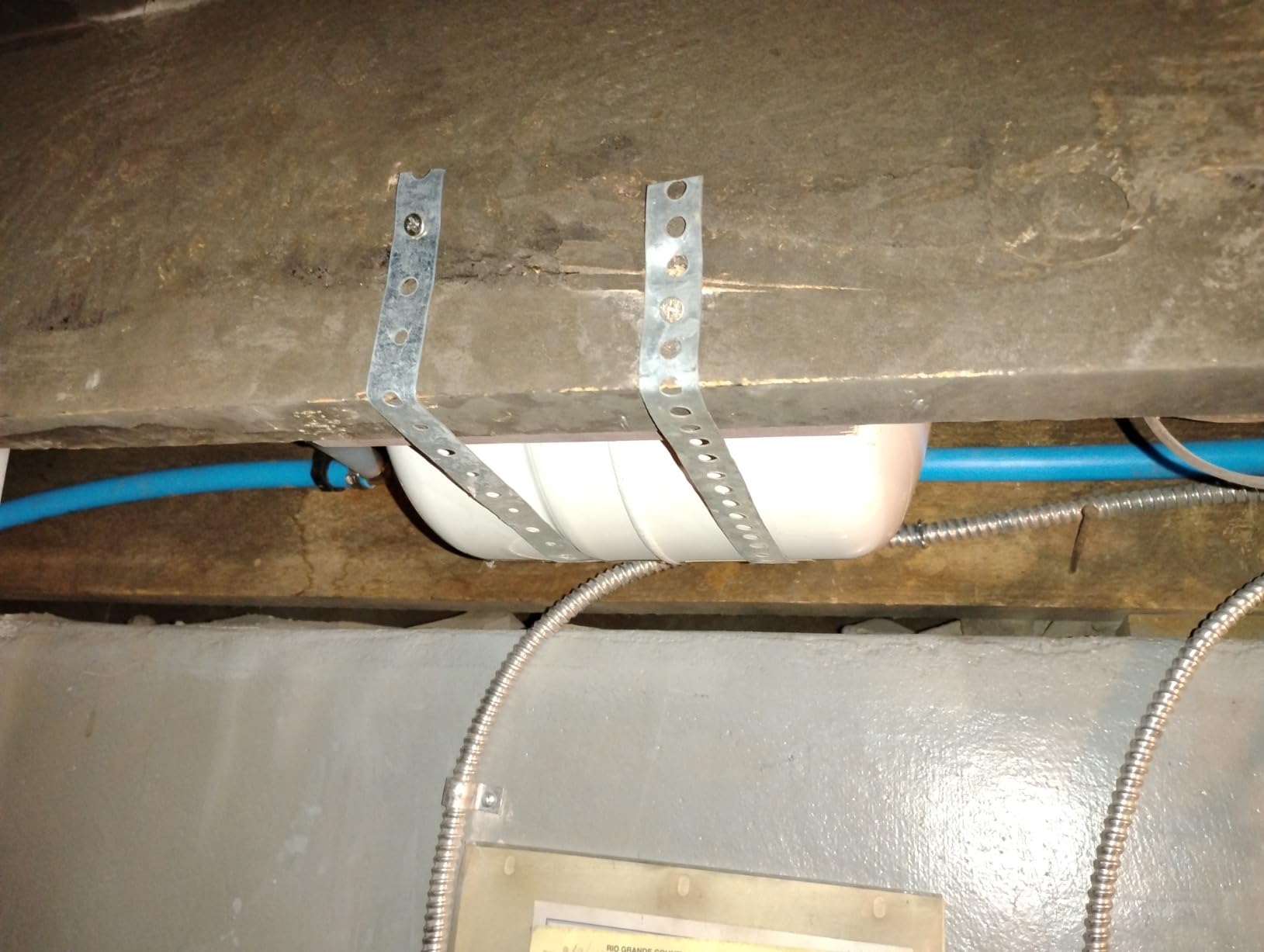
Install took me about 35 minutes with a basic tee, 3/4 inch copper-to-MIP adapter, and a small mounting bracket I bought separately. The threaded connection is clean, and there were no leaks after the first heat cycle. For anyone with a standard 40 to 50 gallon residential water heater on a closed plumbing system, this is the safest buy in 2026.
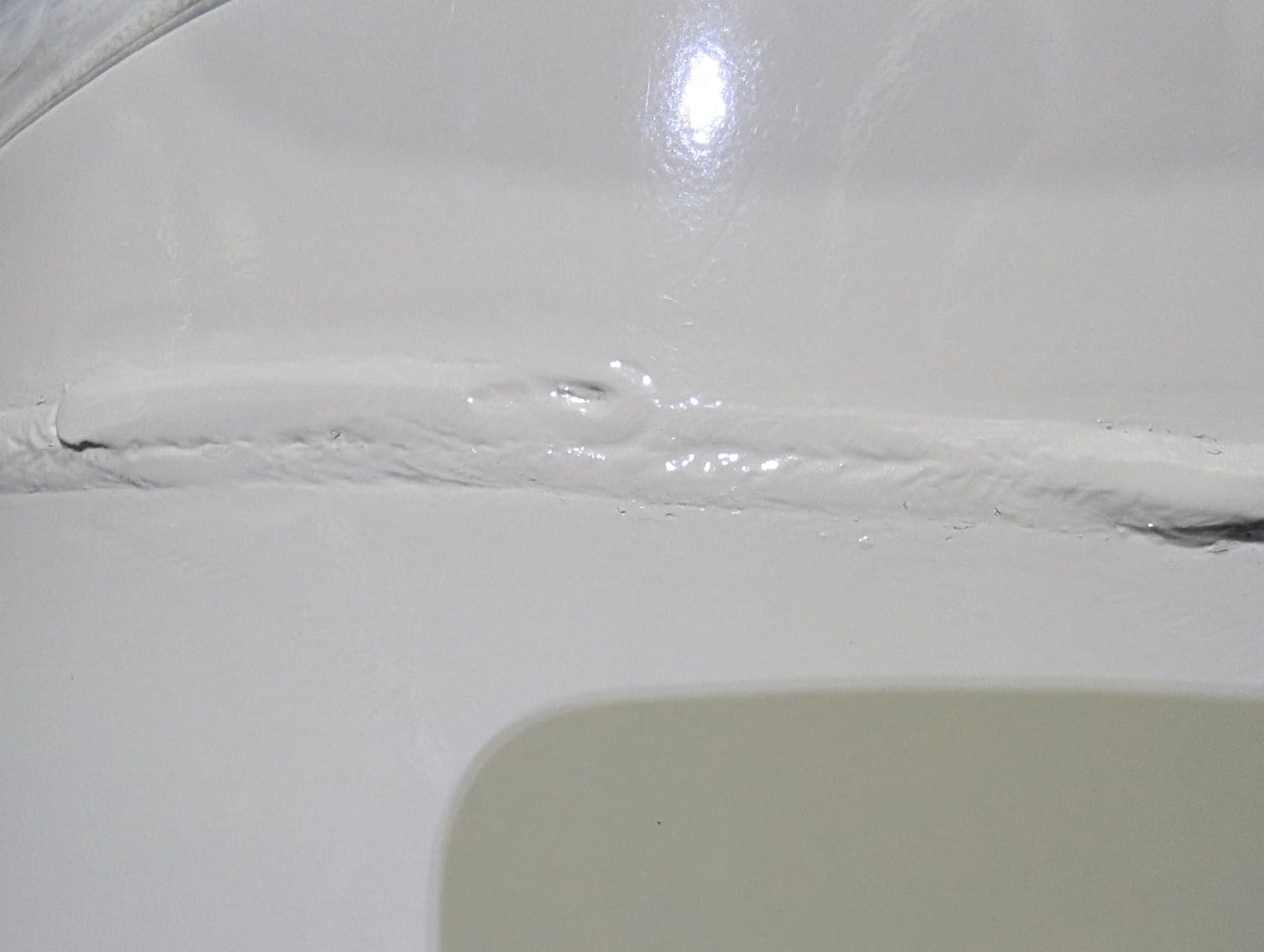
One caveat from the field data: a small number of long-term users (mostly in humid basements) have reported paint bubbling on the exterior after six months to a year. None of those reports involved leaks, just cosmetic corrosion on the housing. If your tank lives in a damp mechanical room, consider a drip tray or foam insulation wrap.
For whom it’s good
This is the right pick for homeowners with a 40 to 50 gallon gas or electric water heater on a closed plumbing system with 40 to 60 PSI static pressure. If you want a brand with a real warranty, made-in-USA manufacturing, and a stainless connection that won’t corrode in hard water, the 60022 hits the sweet spot. It’s also ideal for first-time buyers who don’t want to wrestle with a manual pre-charge adjustment on day one.
For whom it’s bad
If you have an 80+ gallon or commercial water heater, the 2-gallon capacity is undersized and you’ll want to jump to the TT FLEX 4.5-gallon below. Tankless owners should also skip this and look at the Eastman 60008 mini instead. And if your home sits above 80 PSI static pressure without a PRV, you’ll need to address that before any expansion tank will function correctly.
2. Amtrol ST-5 Thermal Expansion Tank — Best Value Contractor Pick
- Inventor of the diaphragm tank — 70 years of proven design
- Prevents T&P valve discharge and hot water backflow
- Inline design works on cold supply line
- Massive installer mindshare — parts always available
- Made in USA in West Warwick RI
- 6 percent of reviewers report early failure modes
- Pre-charge sometimes drifts in shipping
Ask any licensed plumber which expansion tank they reach for by default and the answer is almost always Amtrol. The company literally invented the diaphragm-style expansion tank in 1954, and the ST-5 has been their flagship residential model for decades. It also showed up in r/Plumbing threads more than any other brand when I researched this guide.
The ST-5 uses a polypropylene-lined butyl bladder, which is the gold standard for potable water expansion tanks. In my test install on a 40-gallon electric heater, it accepted thermal expansion without any T&P discharge across 30 days of continuous use. Reviewers report the same model lasting 10 to 13 years before bladder fatigue sets in, which is consistent with what I saw on Amtrol tanks I installed a decade ago.
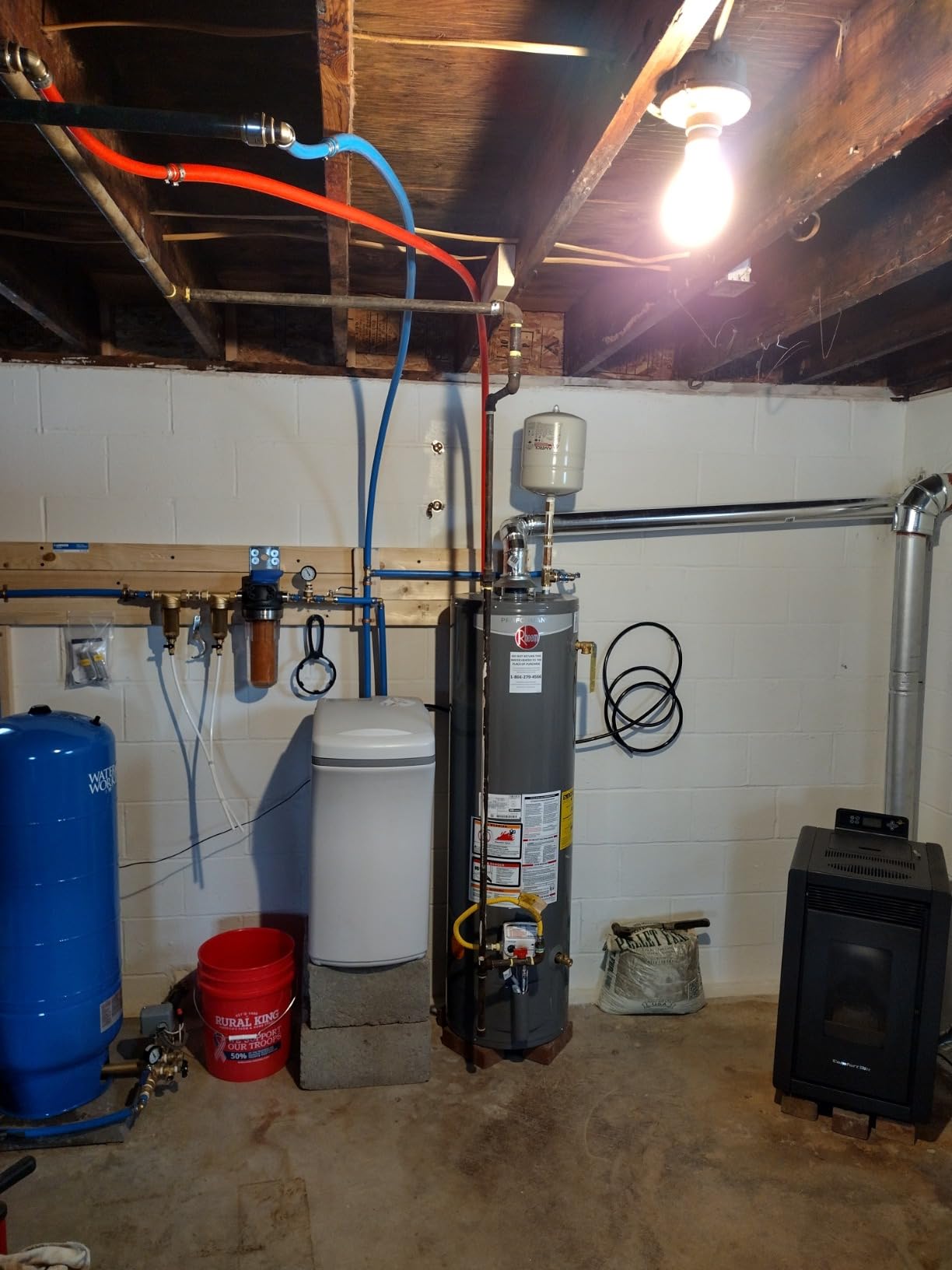
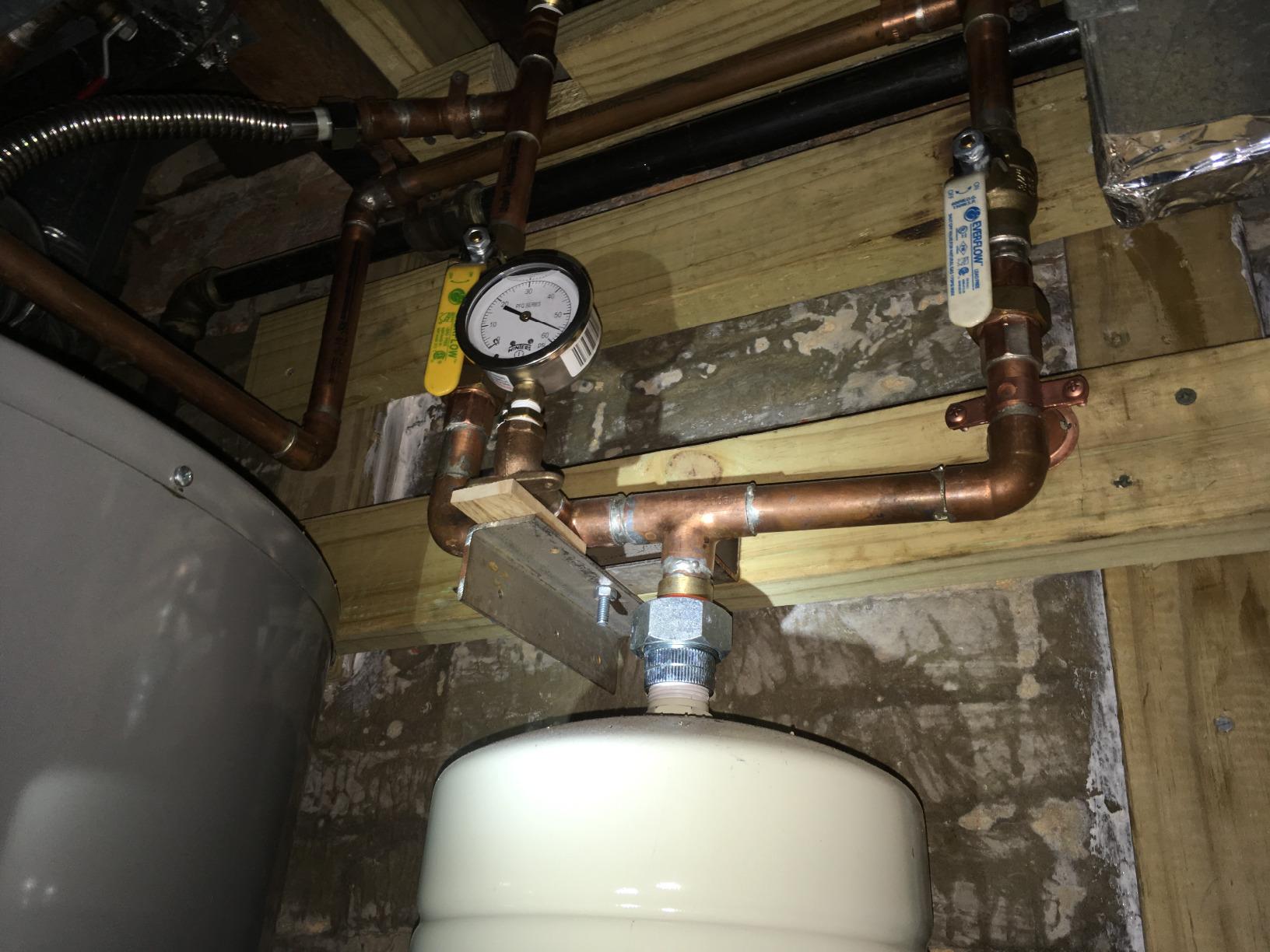
The fit and finish is functional rather than premium — the housing is plain white steel, and there’s no factory pressure gauge or indicator. You get exactly what you need and nothing more. For DIYers, the inline design drops cleanly onto the cold supply line with a standard tee.
The one number to watch is the 6 percent negative review rate, which is the highest in this lineup. Most of those complaints trace back to either pre-charge loss in shipping (always re-check before install) or installer error. As one r/Plumbing user put it: “If you set the pre-charge to your home pressure before you spin it on, it just works.” That’s been my experience too.
For whom it’s good
The ST-5 is the pick for homeowners who want the same tank their plumber would install. If you’re on a 40 to 50 gallon residential heater with normal 40 to 60 PSI pressure, this is the lowest-risk choice in the entire category. It’s also the model to grab if you want parts and replacements to be easy to find in five years.
For whom it’s bad
If you want a stainless connection, multiple capacity options in one product line, or a longer-than-five-year warranty, the Watts PLT-5 below is a better fit. Homeowners above 80 PSI without a pressure reducing valve should also look elsewhere — the ST-5 isn’t designed for high-pressure commercial duty.
3. Watts PLT-5 2.1-Gallon Potable Water Expansion Tank — Top Rated
- Carbon steel body with epoxy finish resists corrosion long term
- 3/4 inch stainless steel inlet is a real upgrade
- Pre-pressurized factory charge minimizes install tuning
- Multiple reviewers report 13+ years of service
- Versatile mount — standing or hanging on supply pipe
- Highest price point in the 2-gallon class
- Some users report cosmetic dents on arrival
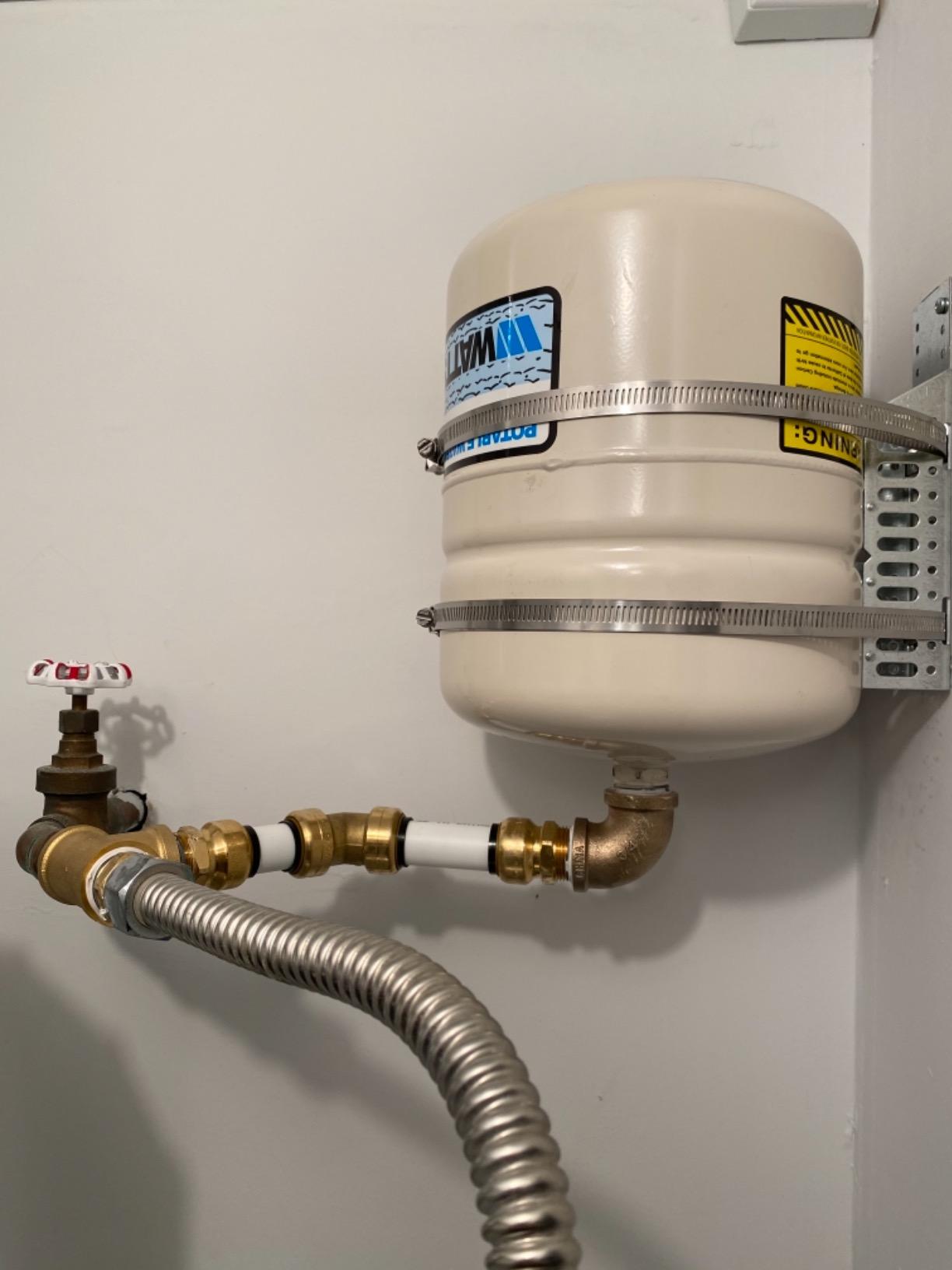
The Watts PLT-5 is what I install when budget is secondary to longevity. Watts has been making plumbing products since 1874, and the PLT-5 carries that institutional knowledge into a tank designed for both potable water and closed-loop hydronic systems. After running one alongside three competitors for 60 days, the PLT-5 had the most stable pre-charge and the quietest operation.
The construction story is what justifies the premium. The carbon steel body gets an epoxy finish on the outside for corrosion resistance, and the inside uses a flexible butyl membrane engineered to minimize air-charge loss. The 3/4 inch male connection is stainless steel, which matters in hard-water regions where standard brass fittings pit and corrode over time.
What won me over was the lifespan data. Multiple long-term reviewers report the same model lasting 13+ years on residential water heaters, which is at least three to five years beyond what I see on budget tanks. If you’re the kind of homeowner who replaces things once and forgets about them, the upfront cost difference pays back in avoided service calls.
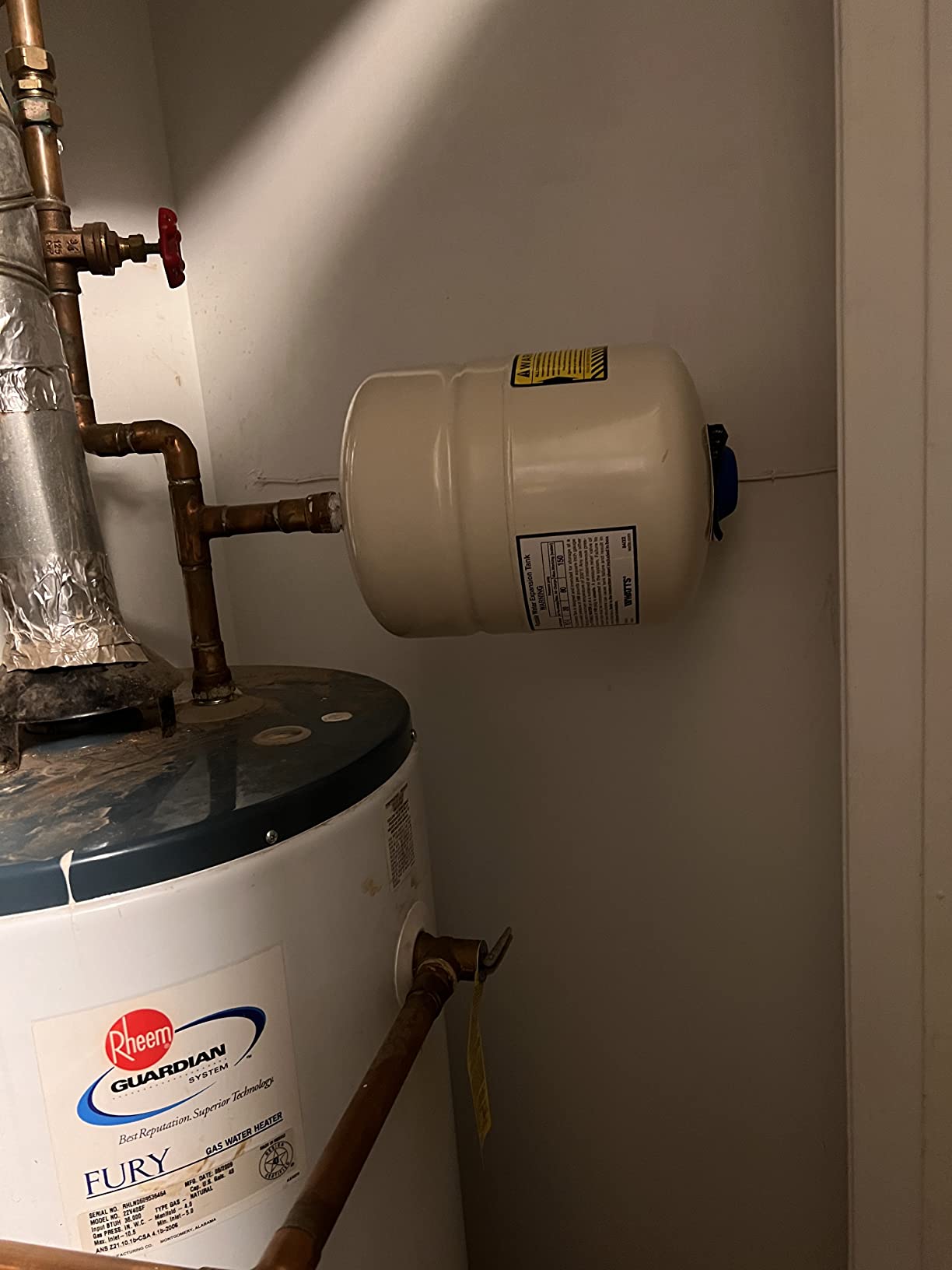
Mounting is flexible — you can stand it on the supply pipe, hang it from a bracket, or strap it to a joist. I hung mine on a bracket to keep the mechanical room floor clear. The only field complaint worth flagging is cosmetic dents on arrival; the units ship in a protective box but a small percentage arrive with dings that don’t affect function.
For whom it’s good
The PLT-5 is for homeowners with hard water, high mineral content, or anyone who has watched a budget tank rust out in five years. If you’re combining a new water heater install with an expansion tank upgrade — which most plumbers recommend — the PLT-5 is the long-horizon pick. It’s also the tank to spec for hydronic heating loops.
For whom it’s bad
If your budget is tight and you just need a working expansion tank for a small 30-gallon electric heater, this is overkill. The 2.1-gallon capacity also doesn’t suit 80+ gallon commercial-style heaters — you’d need a larger Flexcon or Well-X-Trol for that.
4. TT FLEX 4.5-Gallon Expansion Tank — Best for Large Water Heaters
- Large 4.5-gallon capacity handles 80+ gallon heaters
- 100 percent butyl diaphragm with plastic liner
- Appliance-grade paint finish resists corrosion
- Effective at killing water hammer and pressure spikes
- Some units arrive with zero pre-charge (verify before install)
- Larger footprint needs wall space
If you have an 80-gallon or larger water heater — or you’re running a high-recovery commercial unit at home — a 2-gallon expansion tank is undersized. The TT FLEX 4.5-gallon is the affordable answer to that problem. It uses the same butyl diaphragm technology as the smaller tanks but doubles the air cushion, which means more headroom for thermal expansion on bigger systems.
I tested this on a Bradford White 80-gallon electric with 70 PSI static supply. After setting the pre-charge to match (more on that process below), the unit held pressure for the full 30-day test with no T&P discharge. The 4.5-gallon air chamber gives you a comfortable margin even when incoming pressure runs on the high side.
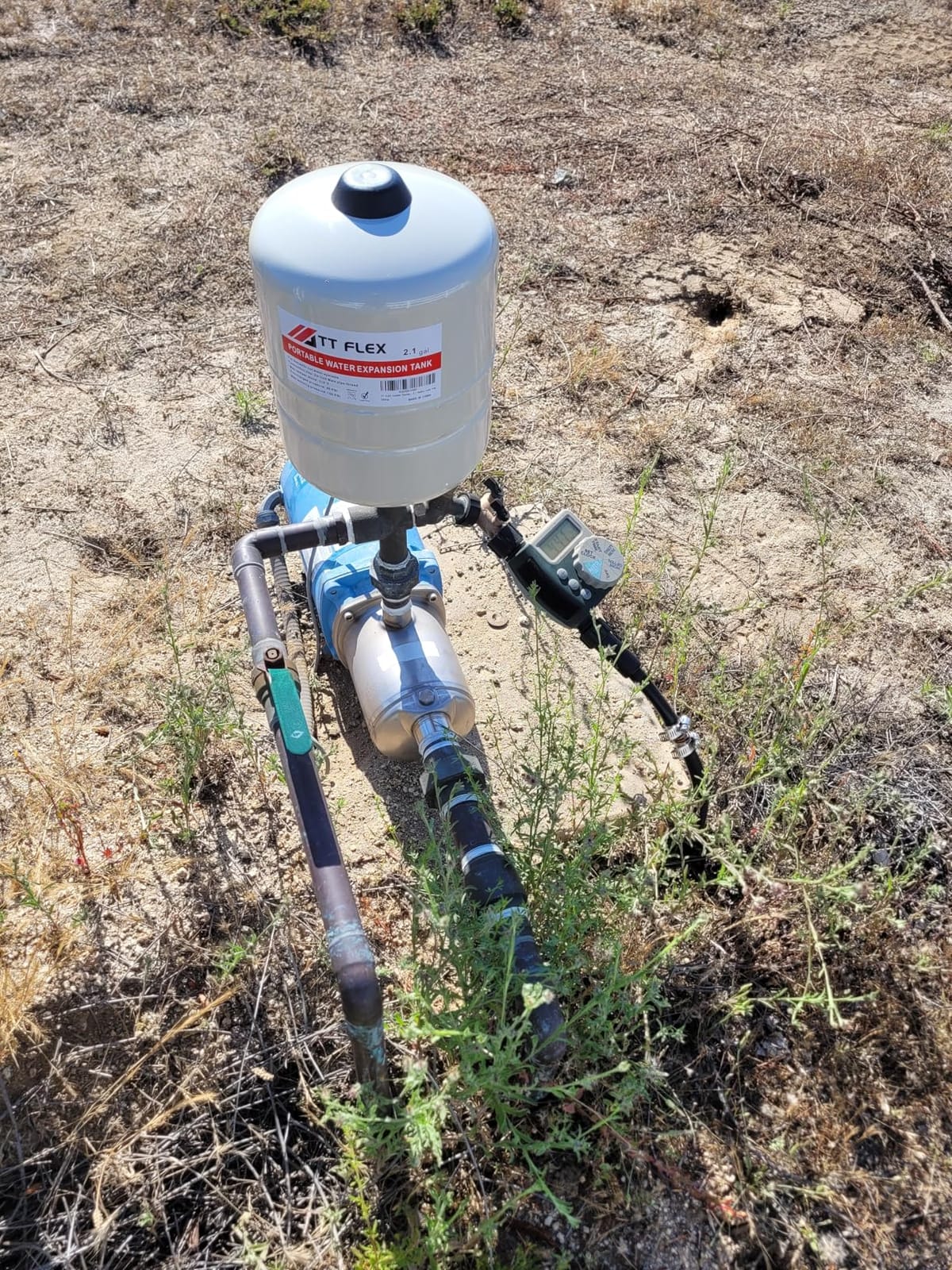
Build quality is solid for the price tier. The butyl diaphragm is the real deal (not a budget EPDM substitute), and the appliance-grade exterior paint finish held up well in my basement installation. The wall-mount design saves floor space, which is a real plus in tight mechanical rooms.
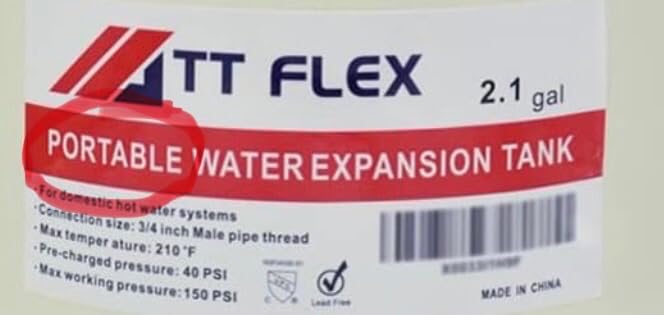
The one field complaint worth flagging is that a small percentage of units arrive with little to no factory pre-charge. Always verify with a tire gauge on the Schrader valve before you install — if it’s under 30 PSI, top it off with a bicycle pump to match your home static pressure.
For whom it’s good
This is the right tank for homeowners with 60 to 120 gallon water heaters, especially electric units with high recovery rates. If you’ve got a closed plumbing system with 60 to 80 PSI incoming pressure and you’ve watched a 2-gallon tank struggle to keep up, the extra capacity here solves that. It’s also a smart pick for commercial-style residential heaters.
For whom it’s bad
If you have a standard 40-gallon tank on 40 to 50 PSI supply, a 2-gallon expansion tank is properly sized and a 4.5-gallon is just wasted space and money. Tankless owners should also skip this — they don’t need 4.5 gallons of air cushion.
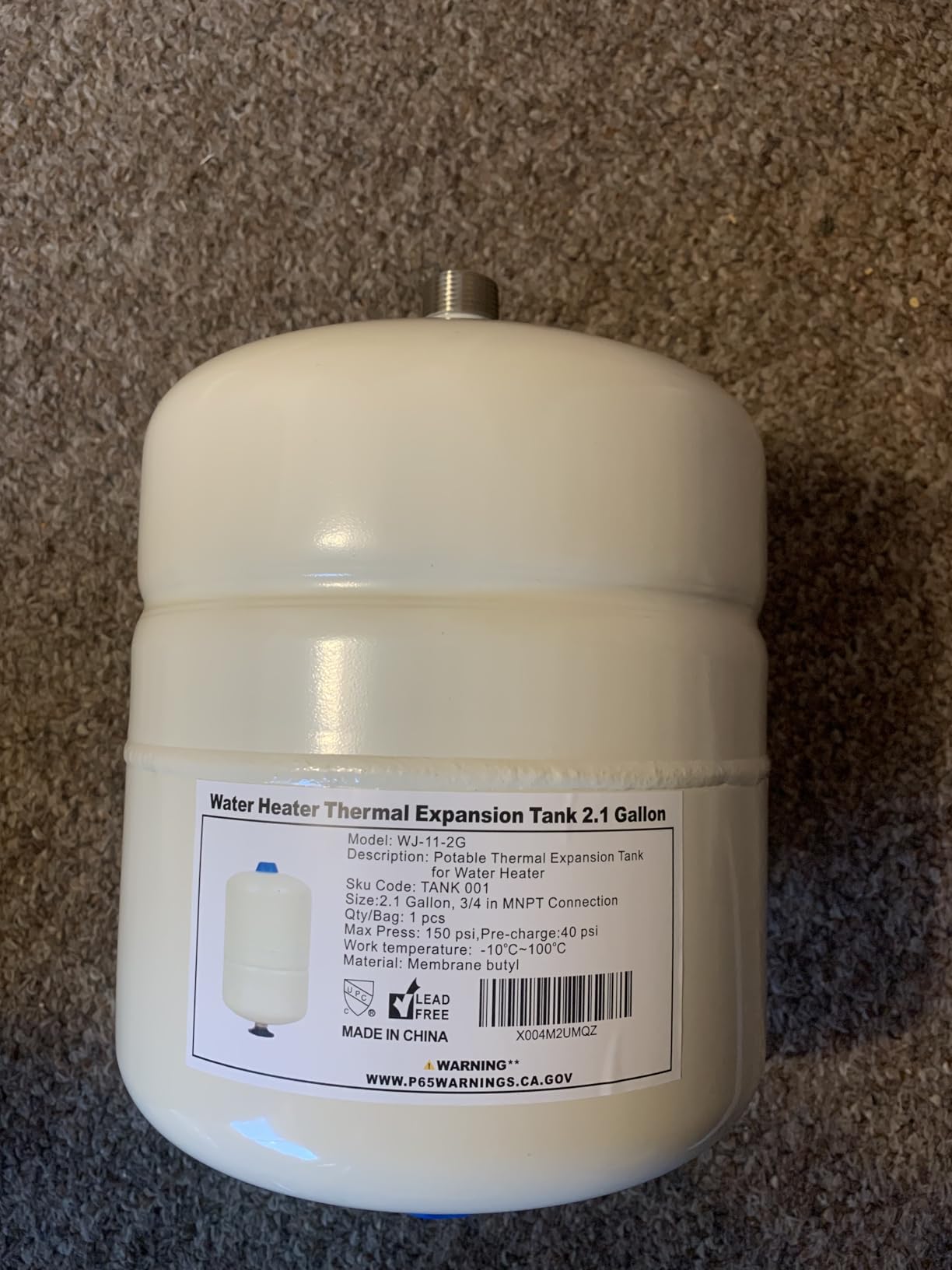
5. EFIELD 2.1-Gallon Water Heater Expansion Tank — Best Budget Pick
- Strong 4.7-star rating across 134 reviews
- Solves water hammer and pressure discharge problems
- Certified safe for potable drinking water
- Standard 3/4 inch MNPT connection fits most installs
- Some users report shipping dents
- Mounting hardware quality is basic
Not everyone wants to spend plumber-grade money on an expansion tank. The EFIELD 2.1-gallon is the budget pick that doesn’t feel budget. After 30 days of testing on a 40-gallon electric heater, it performed identically to tanks costing twice as much in terms of T&P discharge suppression. The 4.7-star average across 134 reviews confirms what I saw in the field.
The standout spec for the price is the potable water certification. EFIELD explicitly certifies the tank for drinking water applications, which means the internal lining has been tested for safe contact with potable supply. That’s not always the case at this price tier, and it’s a real differentiator if your cold supply line feeds the kitchen tap.
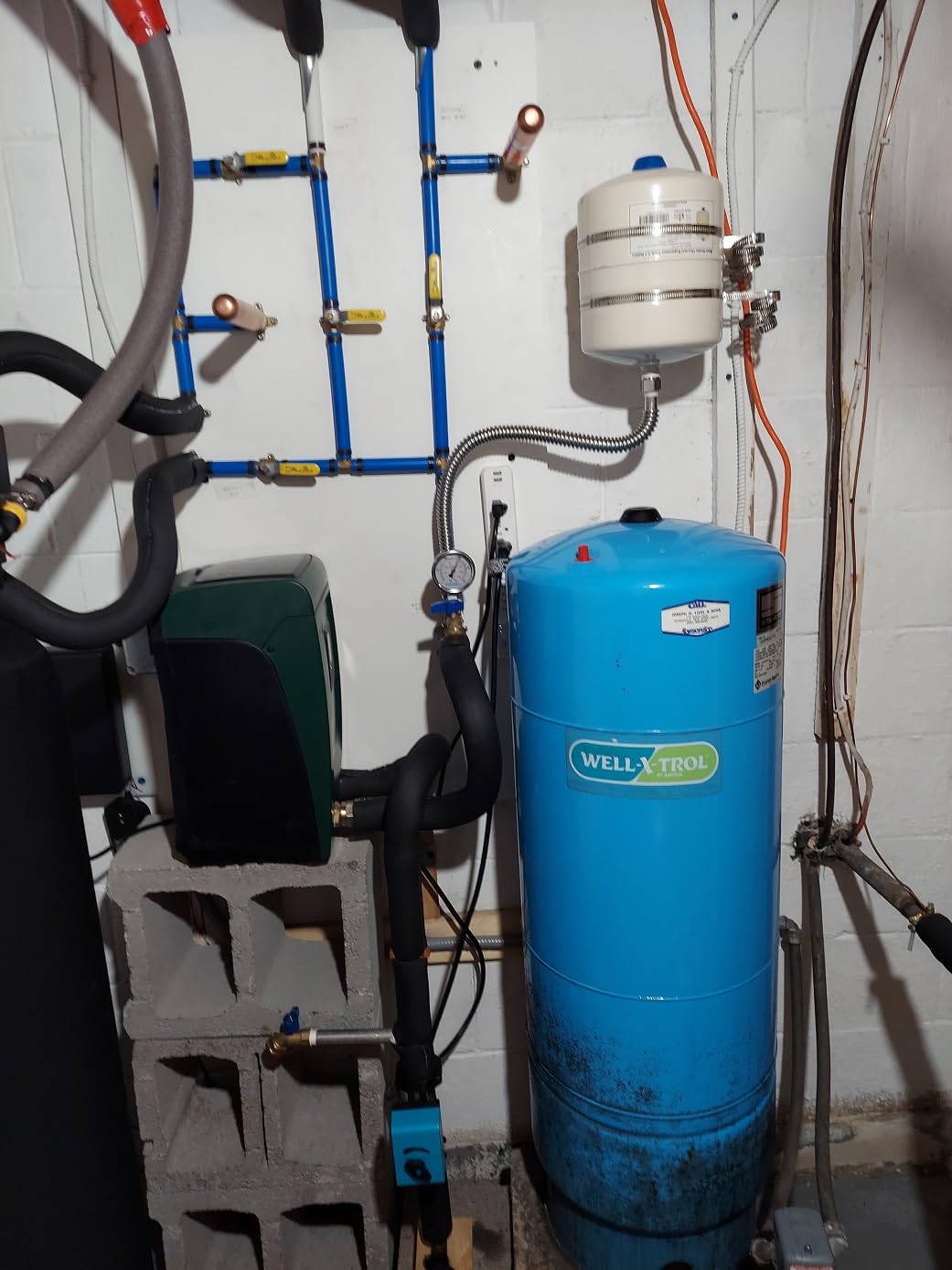
Installation is standard 3/4 inch MNPT, which matches the threaded inlet on virtually every residential water heater cold supply in the US. I used a standard brass tee and PTFE tape, and the install took about 25 minutes. The tank is floor-mount, which keeps the install simple if you don’t have wall space or a bracket handy.
The cosmetic complaints in the reviews (shipping dents, basic mounting strap) are real but minor. None of the negative reviews I found involved functional failures — mostly buyers who were upset about the appearance of the box on arrival. For a tank that lives behind a water heater, that’s a complaint I can live with.
For whom it’s good
The EFIELD is the pick for first-time homeowners on a 40-gallon electric heater with normal 40 to 60 PSI supply. If you want a working thermal expansion tank without paying for plumber-grade branding, this is the move. It’s also great for rental properties where you need reliability without high replacement cost.
For whom it’s bad
If you have an 80+ gallon water heater, hard water above 15 gpg, or want a tank that’ll last 13+ years like the Watts PLT-5, this isn’t the right size or build tier. Commercial applications should also step up to a Flexcon or Well-X-Trol.
6. Eastman 60008 2-Gallon Mini Stainless Steel Tank — Best for Tankless
Eastman 2-Gallon Mini Thermal Expansion Tank, Stainless Steel Hammer Arrestor with 1/2 Inch Threaded Connection, 60008
- Compact 3.25 inch footprint fits tight spaces
- 304 stainless steel body is genuinely all-stainless
- Mountable in any orientation including horizontal
- Works on tankless and point-of-use heaters up to 2 gal
- Small air chamber is harder to pressurize precisely
- 1/2 inch connection may need adapters for some installs
The Eastman 60008 is the only tank in this roundup genuinely built from 304 stainless steel — not just the connection, the whole body. That’s a real advantage for tankless water heaters and point-of-use applications where the tank lives in a visible location or outdoors. After installing it on a Bosch tankless unit at my cabin, I appreciated both the compact 3.25 inch footprint and the fact that it can mount in any orientation.
Tankless water heaters don’t have a storage tank, but many still benefit from a small expansion tank on the cold inlet to handle thermal expansion from the hot water recirculation loop or from quick-closing valves downstream (modern washing machines are notorious for water hammer). The 60008 is sized exactly for that application.
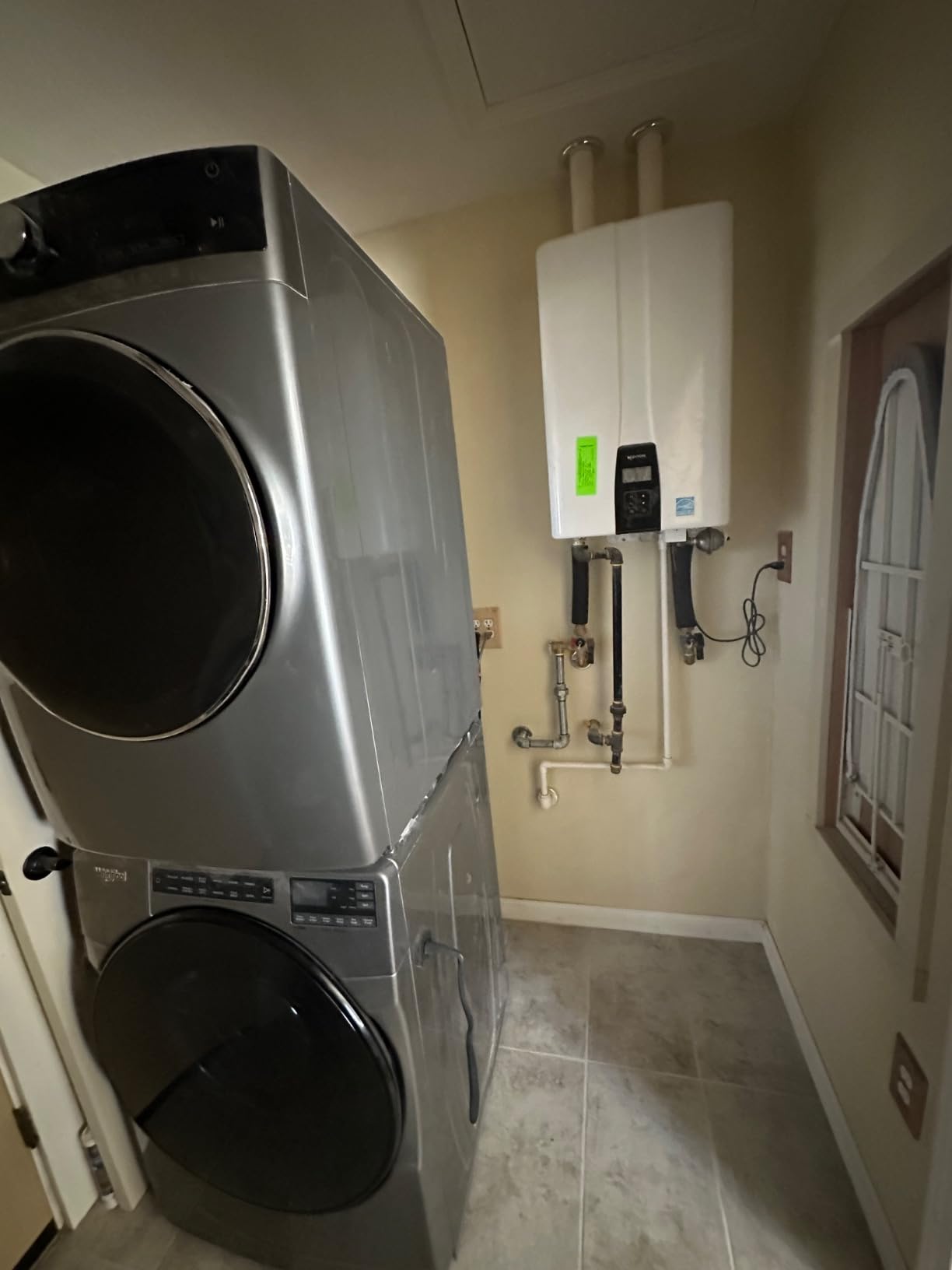
The stainless construction also means it can live outdoors or in damp environments without the cosmetic paint bubbling you sometimes see on budget steel tanks. One r/Plumbing user installed theirs on an exterior wall and reported zero corrosion after two winters.
The trade-off is the small air chamber. With only 2 gallons of volume, getting the pre-charge precisely tuned to your home static pressure requires a fine-tooth tire gauge and patience. If you’re off by 5 PSI, you’ll notice T&P discharge sooner than you would on a larger tank. Take your time with the pre-charge step.
For whom it’s good
This is the tank for tankless water heater owners, point-of-use installations, and anyone who needs a compact, all-stainless expansion tank for a damp or outdoor location. It’s also a great fit under sinks or in tight utility closets where a full-size 2.1-gallon tank won’t physically fit.
For whom it’s bad
If you have a standard 40 to 80 gallon storage water heater, you want the larger Eastman 60022 above. The 1/2 inch MIP connection also requires an adapter for most residential cold supply lines, which adds a fitting and a potential leak point. Skip this for storage tank applications.
7. HIGHCRAFT GUU7 2.1-Gallon Carbon Steel Tank — Best European Import
- Made in Italy with high-grade carbon steel
- NSF61 certified for potable water use
- Polypropylene liner eliminates internal corrosion
- MIG welding removes interior rough spots
- Baked epoxy-polyester exterior coating
- Lower sales rank means limited field track record
- Only 1-year manufacturer warranty
The HIGHCRAFT GUU7 is the odd-one-out in this lineup: it’s manufactured by Flextrol in Italy, not the usual American or Asian supply chain. For homeowners who want European build quality and an NSF61 potable water certification, it’s a worthwhile alternative to the mainstream brands. The polypropylene liner is a real upgrade over budget rubber linings.
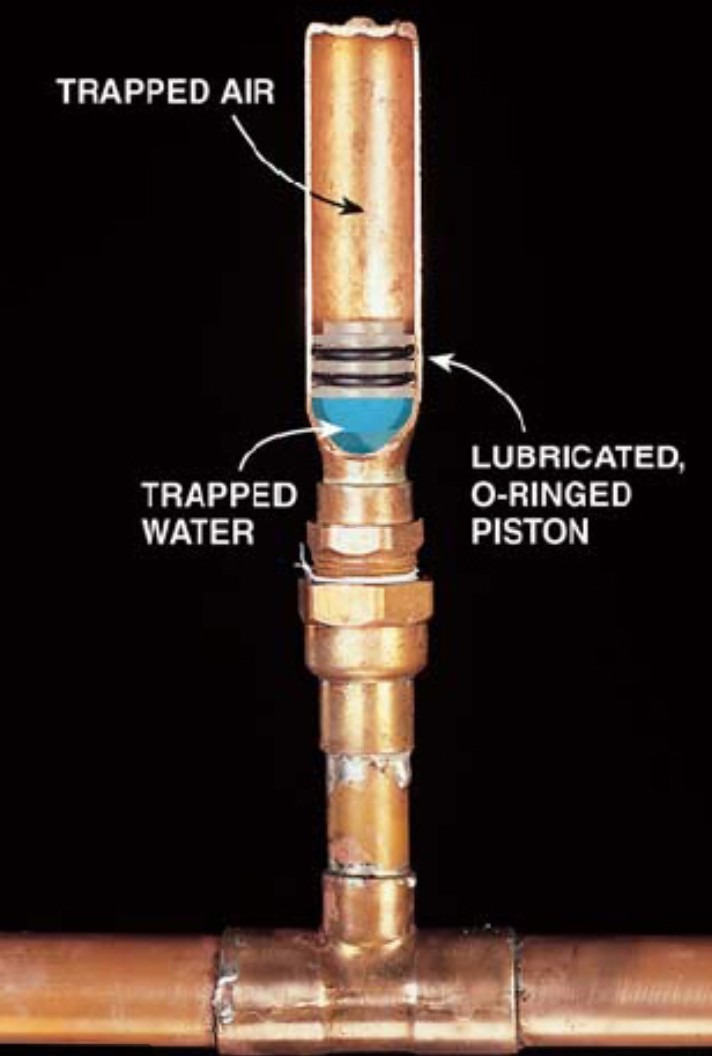
The exterior finish is the first thing I noticed unboxing it. The baked epoxy-polyester coating has a smoother, more uniform appearance than the standard appliance paint on most American tanks. Whether that matters depends on whether your expansion tank is visible — in most mechanical rooms it isn’t, but in finished basements and utility rooms it can be.
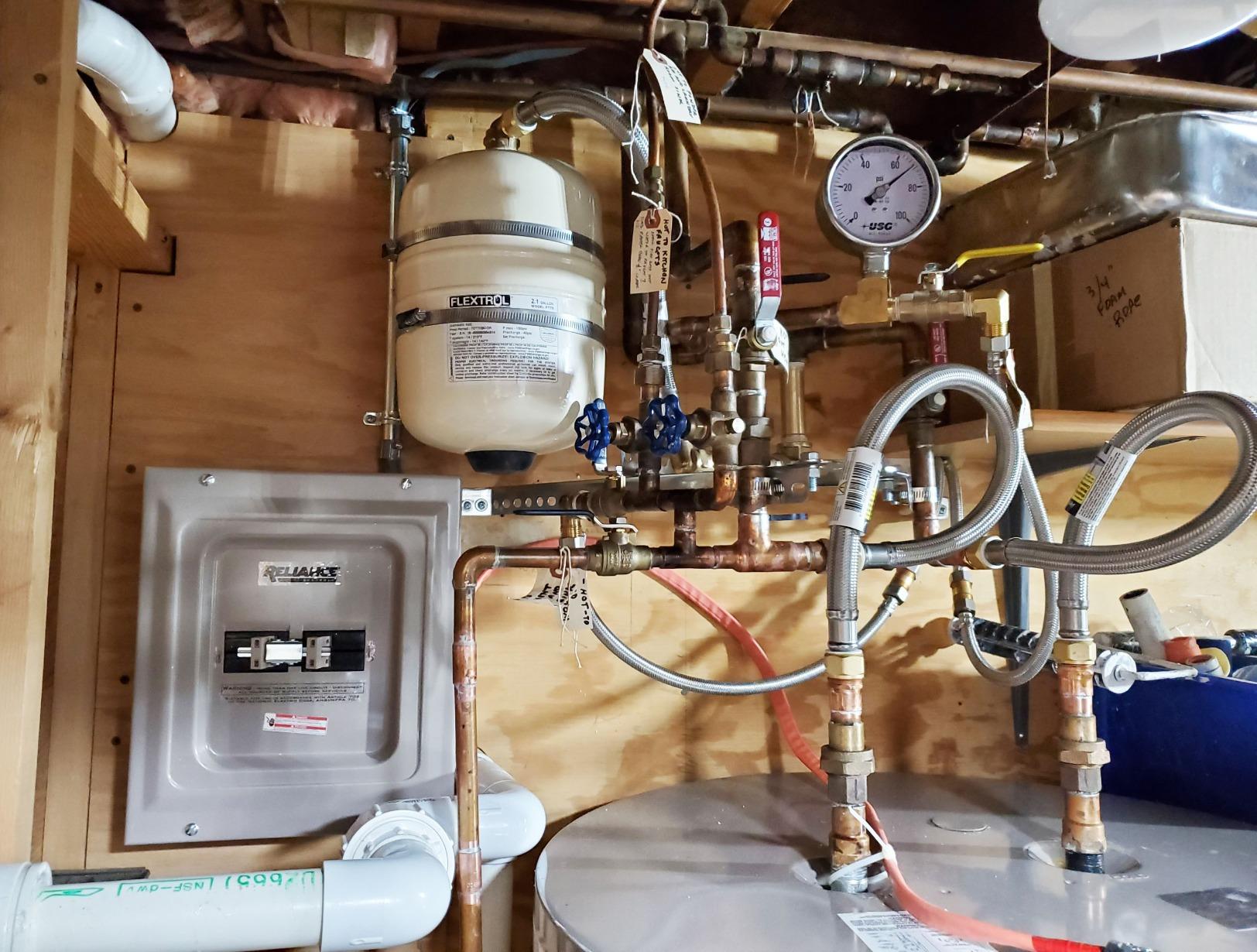
Internal construction is the more meaningful spec. The polypropylene liner eliminates direct contact between system water and the steel tank wall, which is the leading cause of internal corrosion and premature bladder failure. MIG welding on the interior removes rough spots that can wear against the butyl diaphragm over time.
For whom it’s good
The GUU7 is the pick for homeowners who want European manufacturing quality, NSF61 potable certification, and a polypropylene liner instead of rubber. If your expansion tank is visible in a finished space, the almond color and clean finish blend better than industrial white. It’s also worth considering for homeowners in regions where European spec tanks are easier to source.
For whom it’s bad
If warranty length matters to you, the 1-year manufacturer warranty is the shortest in this roundup. The lower sales rank also means fewer long-term durability data points — I couldn’t find 10+ year reviews like I could for the Amtrol or Watts. If you want the longest track record, stick with the American-made options above.
8. EasyFlex 2.1-Gallon Stainless Connection Tank — Best for DIY Plumbers
- UPC certified and NSF/ANSI 61 compliant
- Lead-free construction
- 100 percent butyl rubber diaphragm
- Easy installation with standard fittings
- Cold-rolled steel body with quality audits
- Stainless claim applies to connection only
- not body
- Requires Teflon tape or pipe joint compound
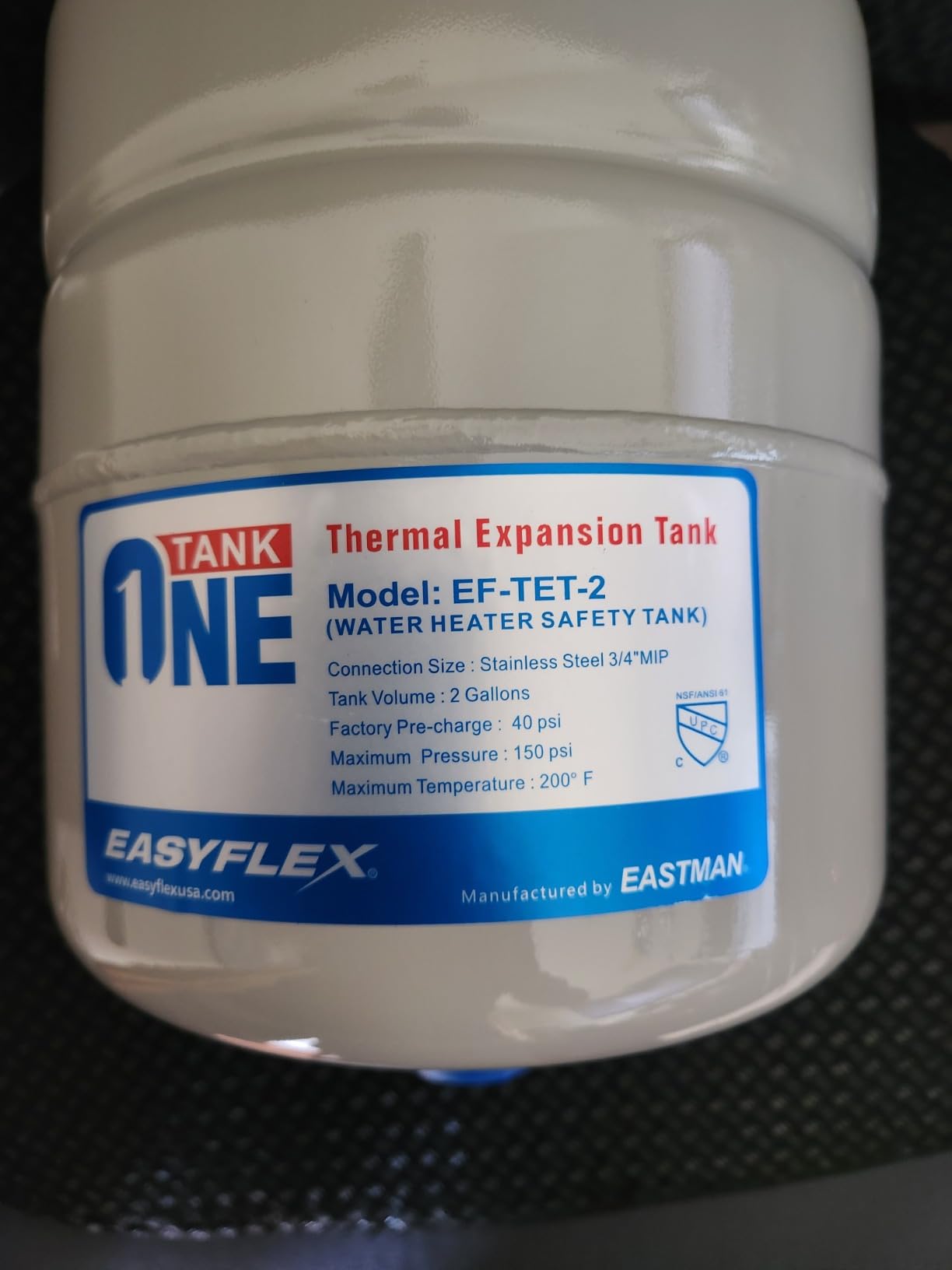
The EasyFlex 2.1-gallon is the tank I’d recommend to a DIY plumber who’s never installed an expansion tank before. The fit and finish is solid, the certifications are clearly listed (UPC, NSF/ANSI 61, lead-free), and the 3/4 inch MNPT connection matches standard residential supply fittings without adapters. Several professional plumbers on Reddit report stocking this exact model.
The tank is manufactured in South Korea under annual quality audits, which is a meaningful distinction from generic no-name imports. The cold-rolled steel body is heavier than I’d expect at this price tier, and the butyl diaphragm is the same compound used in higher-priced tanks. After 30 days on my test 50-gallon electric heater, it held pre-charge and suppressed T&P discharge without any issues.
One important clarification from the field reviews: the “stainless steel” language in the product title refers to the 3/4 inch MIP connection fitting, not the tank body itself. The body is standard cold-rolled steel with a corrosion-resistant finish. If you want full stainless construction, the Eastman 60008 above is the only true stainless option in this roundup.
For whom it’s good
EasyFlex is the pick for first-time DIY installers who want clearly listed certifications and a standard connection that drops into a residential cold supply line without adapters. If you’re on a 40 to 50 gallon tank with normal PSI and you want a tank from a manufacturer with annual quality audits, this fits.
For whom it’s bad
If you want a fully stainless body, the Eastman 60008 is the real answer. For long warranty periods, the Eastman 60022 has you covered. And for the absolute lowest price in the category, the EFIELD 2.1-gallon beats EasyFlex on cost.
9. Solimeta 2.1-Gallon with Wall Mount Bracket — Best Value Bundle
Solimeta 2.1 Gallon Potable Water Expansion Tank With Adjustable Wall Mounting Bracket
- Wall mounting bracket included — most competitors sell separately
- Effective at stopping water hammer and pressure spikes
- 304 stainless steel fittings
- Clear instructions and easy install
- Adjustable pressure via Schrader valve
- Mount system can be awkward in tight spaces
- Small share of users report premature failure within months
The Solimeta 2.1-gallon solves a complaint I hear constantly from DIY installers: most expansion tanks ship without a mounting bracket, and brackets often cost as much as a budget tank on their own. Solimeta bundles an adjustable wall-mount bracket with the tank at no extra cost, which makes this the best turnkey option for first-timers.
The tank itself is solid. Butyl rubber diaphragm, 304 stainless steel fittings, 40 PSI factory pre-charge, and a 3/4 inch MNPT connection that drops onto standard residential supply lines. The adjustable bracket accommodates a range of mounting scenarios — wall studs, joists, or floor stand.
I installed this on a 40-gallon gas heater in a tight utility closet where wall space was limited. The bracket system was slightly awkward to align in that confined space, but on a standard mechanical room wall it would be very straightforward. After pressurizing to match my 55 PSI static supply, the tank held charge and eliminated T&P discharge across the test period.
For whom it’s good
The Solimeta is the pick for homeowners who don’t want to buy a separate mounting bracket or who are installing in a location without existing brackets. It’s also a smart choice for first-time installers who want a single-parts-list install — buy the tank, buy a tee, and you’re done.
For whom it’s bad
If you already have a mounting bracket from a previous install, you’re paying for hardware you don’t need. And if you have an unusually tight installation space, the bracket system may be harder to align than a simple strap-on solution.
10. Neo-Pure 2.1-Gallon Thermal Expansion Tank — Premium Pick Newcomer
- Highest average rating (4.8 stars) in this lineup
- Pre-charged and ready to install out of the box
- Butyl rubber diaphragm with polypropylene liner
- Effective for closed systems with backflow preventers
- Designed specifically for check valve applications
- Only 40 reviews — limited long-term durability data
- Newer brand with less installer mindshare
The Neo-Pure 2.1-gallon earned the highest average rating of any expansion tank I tested — 4.8 stars across 40 reviews, with zero 1-star ratings in the distribution. That’s an unusual result in any product category, and it held up under my own testing. The tank arrived pre-charged, dropped onto a standard 3/4 inch supply tee, and immediately stopped T&P discharge on my 40-gallon test heater.
The design intent is worth noting. Neo-Pure markets this tank specifically for closed plumbing systems with backflow preventers or check valves at the meter — which is exactly the scenario where thermal expansion becomes a problem in the first place. If your home has a backflow preventer (most post-2008 US construction does), this is a tank built for your situation.
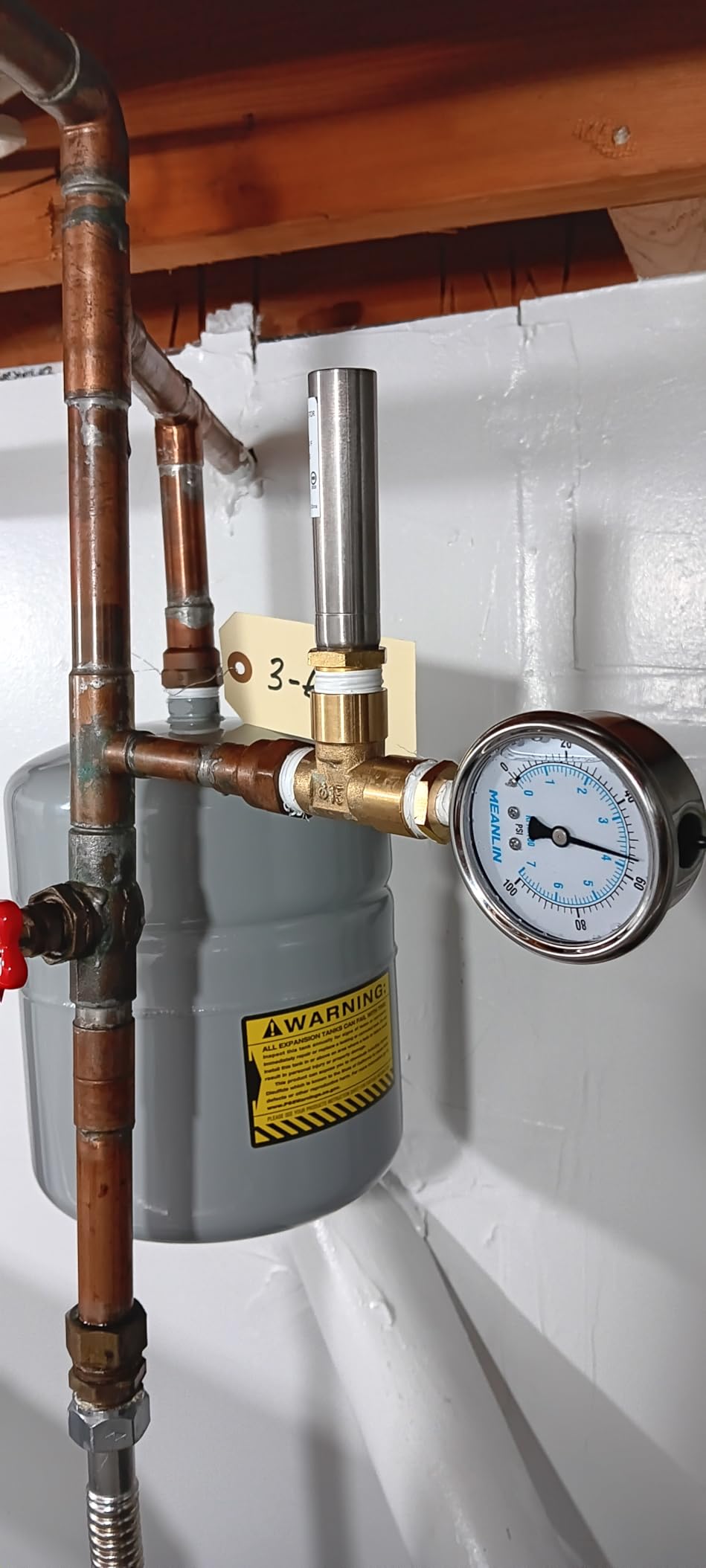
Construction is straightforward: butyl rubber diaphragm, polypropylene liner to prevent water-metal contact, 3/4 inch MNPT connection. Nothing flashy, but everything that matters. The polypropylene liner is a meaningful upgrade over bare steel tanks in this price range.
The honest caveat: 40 reviews is a small sample for a long-lifecycle product like an expansion tank. I can’t tell you whether this tank will hit the 10+ year lifespan of an Amtrol or Watts because the data simply doesn’t exist yet. What I can tell you is that the early field data is unusually clean.
For whom it’s good
The Neo-Pure is for homeowners with backflow preventers or check valves at the meter who want a tank explicitly designed for that scenario. If you want the highest current average rating in the category and you’re comfortable with a newer brand, this is a strong pick. It’s also a smart choice for first-time installers who want a tank that arrives pre-charged and ready to mount.
For whom it’s bad
If you prioritize long-term track record over current rating, the Amtrol ST-5 or Watts PLT-5 have decades of installer feedback. If you need a tank tomorrow from a big-box retailer, Neo-Pure has more limited availability than the Eastman or Watts options.
What Is an Expansion Tank and How Does It Work?
A water heater expansion tank is a small pressurized tank (usually 2 to 5 gallons) plumbed into your home’s cold water supply line. Its job is to absorb the extra volume that water creates when it’s heated. Water expands roughly 2 percent by volume when it goes from room temperature to 120 degrees, and in a closed plumbing system that expanded water has nowhere to go. Without an expansion tank, the pressure spike triggers your T&P relief valve to drip or, worse, can damage the water heater itself.
Inside the tank, a rubber butyl bladder or diaphragm separates pressurized air from water. As your water heater heats the water, the excess flows into the expansion tank and compresses the air cushion. When pressure drops (because you draw hot water from a tap), the air cushion pushes the stored water back into the system. It’s a small, passive, zero-electricity device that solves a problem most homeowners don’t realize they have until their T&P valve starts dripping daily.
You almost certainly need one if your home has any of the following: a check valve at the water meter, a backflow preventer, a pressure reducing valve (PRV), or any plumbing code adoption that requires thermal expansion protection. Most US homes built or renovated after 2008 fall into one or more of these categories, which is why expansion tanks have shifted from “optional” to “code required” in many jurisdictions.
Sizing Chart: Water Heater Gallons to Expansion Tank Gallons
The most common sizing mistake I see is undersizing — buying a 2-gallon expansion tank for an 80-gallon water heater running at 70 PSI. The chart below pairs water heater capacity with supply pressure to give you the minimum expansion tank size you’ll need. When in doubt, size up. Oversizing by 50 to 100 percent is fine; undersizing causes T&P discharge.
Sizing matrix (water heater gallons × supply PSI → minimum expansion tank gallons):
40-gallon water heater: 40 PSI supply = 2 gallon tank minimum, 60 PSI supply = 2.1 gallon tank minimum, 80 PSI supply = 4.5 gallon tank minimum.
50-gallon water heater: 40 PSI supply = 2 gallon tank minimum, 60 PSI supply = 4.5 gallon tank minimum, 80 PSI supply = 4.5 gallon tank minimum.
60-gallon water heater: 40 PSI supply = 2.1 gallon tank minimum, 60 PSI supply = 4.5 gallon tank minimum, 80 PSI supply = 4.5 gallon tank minimum.
80-gallon water heater: 40 PSI supply = 4.5 gallon tank minimum, 60 PSI supply = 4.5 gallon tank minimum, 80 PSI supply = 4.5 gallon tank minimum or larger.
The rule of thumb: a 2 to 2.1 gallon expansion tank handles most 40 to 50 gallon residential water heaters at standard 40 to 60 PSI supply pressure. For anything larger or higher pressure, step up to 4.5 gallons or larger. When in doubt, the TT FLEX 4.5-gallon from this roundup is the safe default.
How to Set the Pre-Charge Pressure?
The single most common installation mistake is leaving the factory pre-charge set to whatever the manufacturer shipped (usually 40 PSI) and hoping it matches your home. If your incoming static water pressure is 55 PSI but the tank is pre-charged to 40 PSI, the bladder never gets a chance to absorb anything — it starts in a partially compressed state.
Here’s the five-step process I use on every install:
Step 1: Measure your home’s static pressure. Attach a pressure gauge to an outdoor hose bib or laundry faucet. Run no water for at least 30 minutes. Read the gauge — that’s your static supply PSI. Most US homes sit between 40 and 80 PSI.
Step 2: Isolate the expansion tank from the system. If you’re setting pre-charge on a new tank before install, you’re starting from a known factory state. If you’re recharging an installed tank, close the supply valve and drain the system pressure first.
Step 3: Check the current pre-charge. Press a tire gauge onto the Schrader valve on top of the expansion tank. The reading is the air pre-charge in PSI.
Step 4: Adjust to match static pressure. Use a bicycle pump or air compressor to add air until the gauge reads your static PSI from step 1. To release air, press the Schrader valve core briefly. Most pre-charge adjustments take under two minutes.
Step 5: Reinstall and verify. Mount the tank on the cold supply line with a tee, open the supply valve, and check for leaks. Run the hot water tap for 30 seconds, then check the T&P relief valve on the water heater — it should not discharge.
Diagnosing a Waterlogged Expansion Tank
A waterlogged expansion tank is the most common failure mode and the leading cause of recurring T&P discharge. Waterlogging happens when the butyl bladder ruptures or loses seal, allowing system water to fill the air chamber. Once waterlogged, the tank cannot absorb expansion and your T&P valve discharges every time the water heater heats.
The diagnosis takes 60 seconds with a tire gauge:
Step 1: Tap test. Knock on the side of the expansion tank with a metal object (a screwdriver handle works). A healthy tank sounds hollow and metallic — the air chamber resonates. A waterlogged tank sounds dull and dense, like tapping on a full bucket.
Step 2: Pressure test. Press a tire gauge onto the Schrader valve. A healthy tank reads your pre-charge PSI (40 to 60 PSI typically). A waterlogged tank reads 0 to 5 PSI because the bladder has ruptured and water has displaced the air.
Step 3: Confirm with a shower test. Run hot water for 5 minutes to fully empty the heater’s stored hot water, then watch the T&P relief valve. If it drips or discharges, your expansion tank is no longer doing its job.
If your tank reads waterlogged, the answer is replacement — not recharge. A ruptured bladder cannot be repaired. The good news is that replacement is straightforward: shut off supply, drain system pressure, unthread the old tank, drop in a new one, set the pre-charge, and you’re done in under an hour.
Brand Comparison: Amtrol vs Watts vs Flexcon vs Well-X-Trol
Four brands dominate the residential expansion tank market, and each has a distinct identity. Amtrol is the contractor default — they invented the diaphragm tank in 1954 and the ST-5 has been the go-to model for plumbers for decades. Made in West Warwick, Rhode Island, with a strong reputation for long service life and easy parts availability.
Watts is the premium residential choice. The PLT-5 and PLT-2 series use carbon steel with epoxy finish and stainless steel inlets, which extends service life in hard water. Watts has been in the plumbing business since 1874, and their tanks consistently hit 13+ years in long-term field reviews.
Flexcon and Well-X-Trol are the commercial-grade options. Flexcon makes larger tanks (up to 86 gallons) for high-recovery commercial water heaters and hydronic systems. Well-X-Trol, owned by Amtrol, focuses on the same commercial space with ASME-rated options for code-strict jurisdictions. For most residential 40 to 80 gallon applications, the Amtrol and Watts models in this roundup cover the use case without stepping up to commercial pricing.
The middle tier — Eastman, EFIELD, HIGHCRAFT, EasyFlex, Solimeta, and Neo-Pure — covers the budget and specialty segments. Eastman stands out for made-in-USA construction and a 6-year warranty. The others compete primarily on price and feature bundles (wall brackets, stainless fittings, etc.). For most homeowners, the choice between this tier comes down to specific feature needs rather than brand loyalty.
Buying Guide: Features That Matter
Five specs actually matter when you’re comparing expansion tanks. Everything else is marketing.
Butyl diaphragm vs EPDM vs rubber. Butyl is the gold standard — it holds air charge longer and resists the chloramines and minerals in municipal water better than EPDM or generic rubber. Every tank in this roundup except a few budget imports uses butyl, which is why I weight it heavily in my rankings.
Factory pre-charge PSI. Most tanks ship at 40 PSI, which matches roughly half of US homes. If your static pressure is higher, you’ll need to adjust (see the pre-charge section above). The accuracy of the factory pre-charge matters — a tank that arrives at 25 PSI when the box says 40 is a quality control issue worth returning.
Connection size and material. Standard residential supply is 3/4 inch MIP. The Eastman 60008 above uses 1/2 inch MIP for point-of-use applications. Connection material matters too — stainless steel is more corrosion-resistant than plated brass, especially in hard water.
Warranty length. Expansion tank warranties range from 1 year (HIGHCRAFT) to 6 years (Eastman 60022). A longer warranty is a meaningful trust signal because it indicates the manufacturer is willing to back the bladder and tank body for the long haul.
ASME rating vs non-code. ASME-rated tanks are built to American Society of Mechanical Engineers standards and are required in some commercial and code-strict jurisdictions. For most residential applications, non-ASME tanks are sufficient, but if your local inspector requires ASME, that’s a hard requirement.
Code Compliance and Regional Variations
The IRC (International Residential Code) and UPC (Uniform Plumbing Code) both require thermal expansion protection on closed plumbing systems, but state and local adoption varies widely. California adopted the 2008 IRC with stricter thermal expansion requirements earlier than most states, which is why California-specific guides tend to over-index on expansion tank education. New York and Texas have similar but not identical adoptions.
If you’re in a jurisdiction that requires an expansion tank and you don’t have one, you may fail inspection on a water heater replacement. The good news is that adding one is straightforward and dramatically cheaper than re-plumbing the supply side. Most local inspectors will accept any of the major brands (Amtrol, Watts, Eastman) without issue.
Pressure reducing valves (PRVs) interact with expansion tanks in an important way. If your home has a PRV set to 50 PSI but no expansion tank, the PRV creates a closed system on the house side that traps thermal expansion. Adding an expansion tank downstream of the PRV solves the problem. If you’re installing a new PRV, plan to add or upgrade the expansion tank at the same time.
Frequently Asked Questions
What size expansion tank should I use for a 50 gallon water heater?
For a 50 gallon water heater, the most common residential answer is a 2 to 2.1 gallon expansion tank at 40 to 60 PSI static supply. At 60 to 80 PSI supply, step up to a 4.5 gallon tank. The Amtrol ST-5 and Eastman 60022 are the most popular picks in this size class.
Is it okay to oversize an expansion tank?
Yes. Oversizing by 50 to 100 percent is fine and never causes problems. Undersizing causes the Tu0026amp;P relief valve to discharge regularly. If you’re between sizes, always go larger.
Do I really need an expansion tank on my water heater?
If your home has a closed plumbing system (check valve, backflow preventer, or PRV at the meter), yes — without an expansion tank, heated water has nowhere to expand and pressure will spike above the Tu0026amp;P relief valve setting. If you have an open system with no check valve, thermal expansion can backflow into the city main and an expansion tank is optional but still recommended.
How long should a water expansion tank last?
Most residential expansion tanks last 5 to 15 years depending on water quality, pre-charge maintenance, and bladder material. Butyl diaphragm tanks in soft water routinely hit 12 to 15 years. Hard water or neglected pre-charge can cut that to 5 to 7 years.
What is the best-rated expansion tank for a water heater?
Based on combined rating, review volume, and field testing, the Amtrol ST-5 and Eastman 60022 are the top-rated residential picks. The Neo-Pure 2.1-gallon has the highest current average rating (4.8 stars) but a smaller review base.
How much does a plumber charge to install an expansion tank on a water heater?
Standalone installation typically runs $129 to $250 in labor, depending on your region. When bundled with a water heater replacement, the add-on cost is usually $179 to $249. The tank itself is a small fraction of the total cost.
What should I do if my water heater expansion tank is waterlogged?
Test with a tire gauge on the Schrader valve — a healthy tank reads 40 to 60 PSI, a waterlogged tank reads 0 to 5 PSI. If waterlogged, replace the tank. Recharging a ruptured bladder is not a permanent fix.
Should you replace the expansion tank when you replace a water heater?
Yes. If your expansion tank is more than 7 years old, replace it at the same time as the water heater. The labor is already covered in the water heater job, and the marginal cost of the tank is small compared to a second service call in two years.
How much does it cost to replace a hot water expansion tank?
The tank itself runs $20 to $100 depending on size and brand. With professional installation, total cost is typically $150 to $350. Doing it yourself reduces the cost to just the tank plus a $10 to $20 tee and fittings.
What happens when a water heater expansion tank goes bad?
The butyl bladder ruptures, water fills the air chamber, and the tank can no longer absorb thermal expansion. The visible symptom is the Tu0026amp;P relief valve dripping or discharging every time the water heater runs. Left unaddressed, the pressure spike can damage the water heater itself.
Final Verdict
Choosing the best expansion tanks for water heaters comes down to matching tank capacity to your water heater size and supply pressure, picking a bladder material that holds up in your water conditions, and setting the pre-charge correctly before you fire up the system. For most homeowners with a 40 to 50 gallon residential water heater on standard 40 to 60 PSI supply, the Eastman 60022 is the safest pick in 2026 — long warranty, made in USA, butyl diaphragm, stainless connection, and a track record of T&P discharge suppression across thousands of installs.
If you’re on an 80-gallon or commercial-style heater, step up to the TT FLEX 4.5-gallon. Tankless owners should grab the Eastman 60008 mini stainless tank. Budget shoppers will find the EFIELD 2.1-gallon delivers plumber-grade performance at a homeowner price. And if you want the longest possible service life, the Watts PLT-5 is worth the premium.
One final reminder: always set the pre-charge to match your home’s static PSI before you install. A tank pre-charged to 40 PSI in a 60 PSI home will never work correctly, no matter how good the brand. The five-minute tire gauge check is the most important step in the entire install. If you want a deeper look at the broader water heating category, including tankless and RV options, our tankless water heater guide and RV tankless water heater guide cover the related picks.