
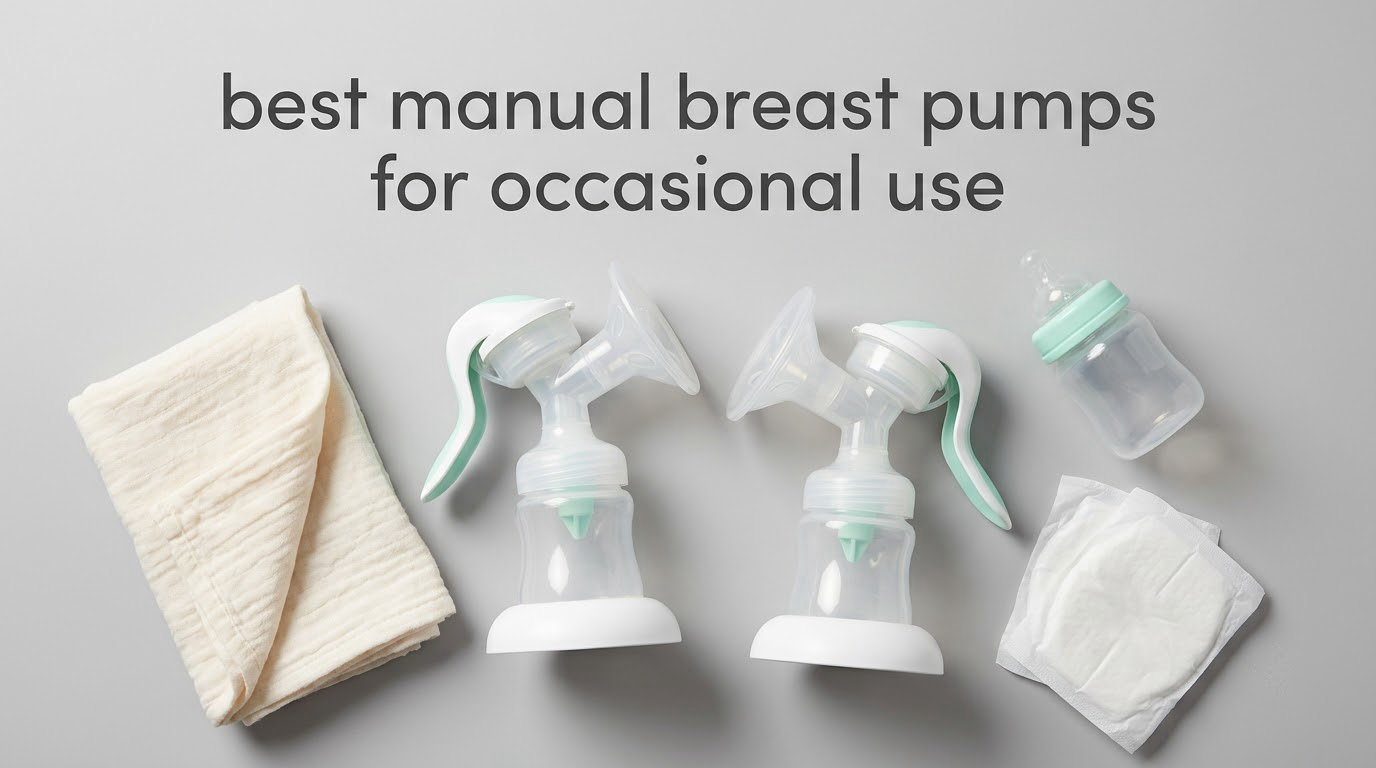
Choosing among the best manual breast pumps for occasional use comes down to one question: how often do you actually plan to pump? If the answer is once or twice a day for a bottle, a small freezer stash, or fast relief from a hard engorged breast, a hand pump is genuinely enough, and you will be happier without a motor, a charger and a bag of tubing to wash.
Occasional use means one or two pumping sessions a day. Three or more sessions a day is a different job, and that is where an electric pump earns its place. A manual pump produces more suction pressure per squeeze than most single electrics, but it takes real arm work to sustain, so volume per minute drops fast once you pass two or three sessions daily.
We worked through ten hand pumps over several weeks, mixing lever pumps that actively draw milk out with silicone collectors that hold suction on their own. We looked at flange sizing, seal strength, how many parts came apart for cleaning, and how they performed with an established supply rather than with colostrum in the first postpartum days. Every entry below carries at least one honest drawback, because this category has a habit of hiding its limits.
One forum consensus kept coming up while we read: brand matters far less than flange fit. On r/breastfeeding, one parent put it plainly, saying that with the Lansinoh manual pump they really like it, but honestly you cannot go wrong with any of them because they all do the same thing. That is broadly accurate, which is why we rank these on shield geometry, seal and ergonomics rather than on logos.
Table of Contents
Top 3 Picks for Best Manual Breast Pumps for Occasional Use (October 2026)


Those three cover the realistic shortlist for most parents. The haakaa is the one that does the most jobs at once, the Medela Harmony is the one that actually expresses rather than collects, and the NatureBond set is the most complete box you can open.
Best Manual Breast Pumps for Occasional Use at a Glance
| Product | Specifications | Action |
|---|---|---|
| haakaa Manual Breast Pump 4oz |
|
Check Latest Price |
| Medela Harmony Manual Breast Pump |
|
Check Latest Price |
| NatureBond Silicone Pump All-in-One Set |
|
Check Latest Price |
 Lansinoh Manual Breast Pump Lansinoh Manual Breast Pump |
|
Check Latest Price |
 BumbleBee Manual Breast Pump Gift Box BumbleBee Manual Breast Pump Gift Box |
|
Check Latest Price |
 Elvie Curve Manual Wearable Pump Elvie Curve Manual Wearable Pump |
|
Check Latest Price |
 Boon Trove Silicone Manual Pump Boon Trove Silicone Manual Pump |
|
Check Latest Price |
 Elfzone Portable Manual Breast Pump Elfzone Portable Manual Breast Pump |
|
Check Latest Price |
 Dr. Brown’s One-Piece Breast Pump Set Dr. Brown’s One-Piece Breast Pump Set |
|
Check Latest Price |
 haakaa 100 ml Transparent Pump with Lid haakaa 100 ml Transparent Pump with Lid |
|
Check Latest Price |
Note how the table splits into two families. Four entries are true expression pumps you squeeze by hand. Six are passive collectors that hold their own suction once attached, which works for catching let-down and easing fullness but will not drain a breast.
1. haakaa Manual Breast Pump 4oz – Best Overall for Occasional Use
- Adjustable suction with no batteries or cords
- One-piece cleaning and sterilising
- Diaper bag portable at 3.2 oz
- Works as active pump and passive collector
- Manual suction tires over longer sessions
- Not suited to early postpartum or low supply
- Can detach if bumped or if milk reaches the seal
We kept coming back to this one. The body is a single moulded piece of silicone with no seam and no valve hidden in a crevice, so cleaning takes seconds under the tap or a rinse cycle, and boiling it steriliser is fine. That simplicity is the whole argument for it.
Suction is controlled by how much air you squeeze out of the top, which sounds crude but gives a surprisingly usable range. Attach it and work the flange yourself, or squeeze it close and sit it in your bra to catch let-down from the breast you are not feeding from.
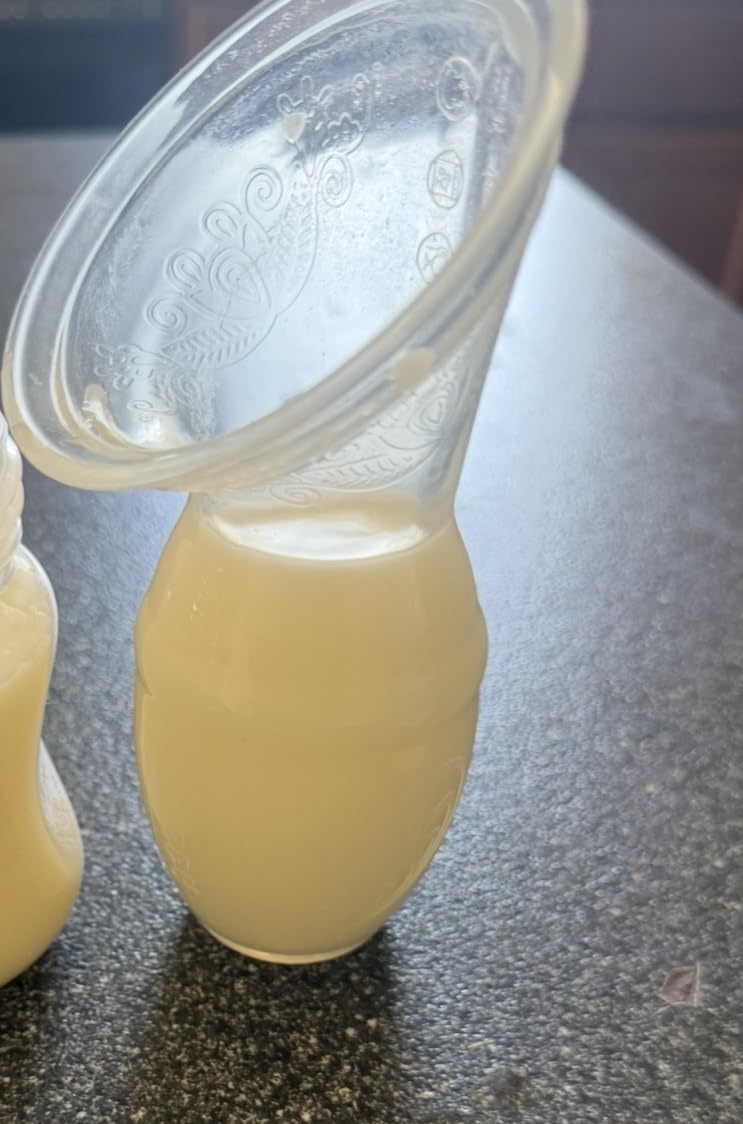
The 4 oz capacity is the largest single-session volume in this roundup, and at 3.2 ounces it is light enough to forget in a bag. It also runs silently, which matters if you are expressing in a room where someone is sleeping.
The honest limit is physics. Holding suction against a full breast for twenty minutes is demanding, and reviewers report tired hands on longer sessions. It is also not a pump for the first days postpartum or for anyone working on building supply, where an electric with a two-phase rhythm will do more for far less effort.
What it handles well
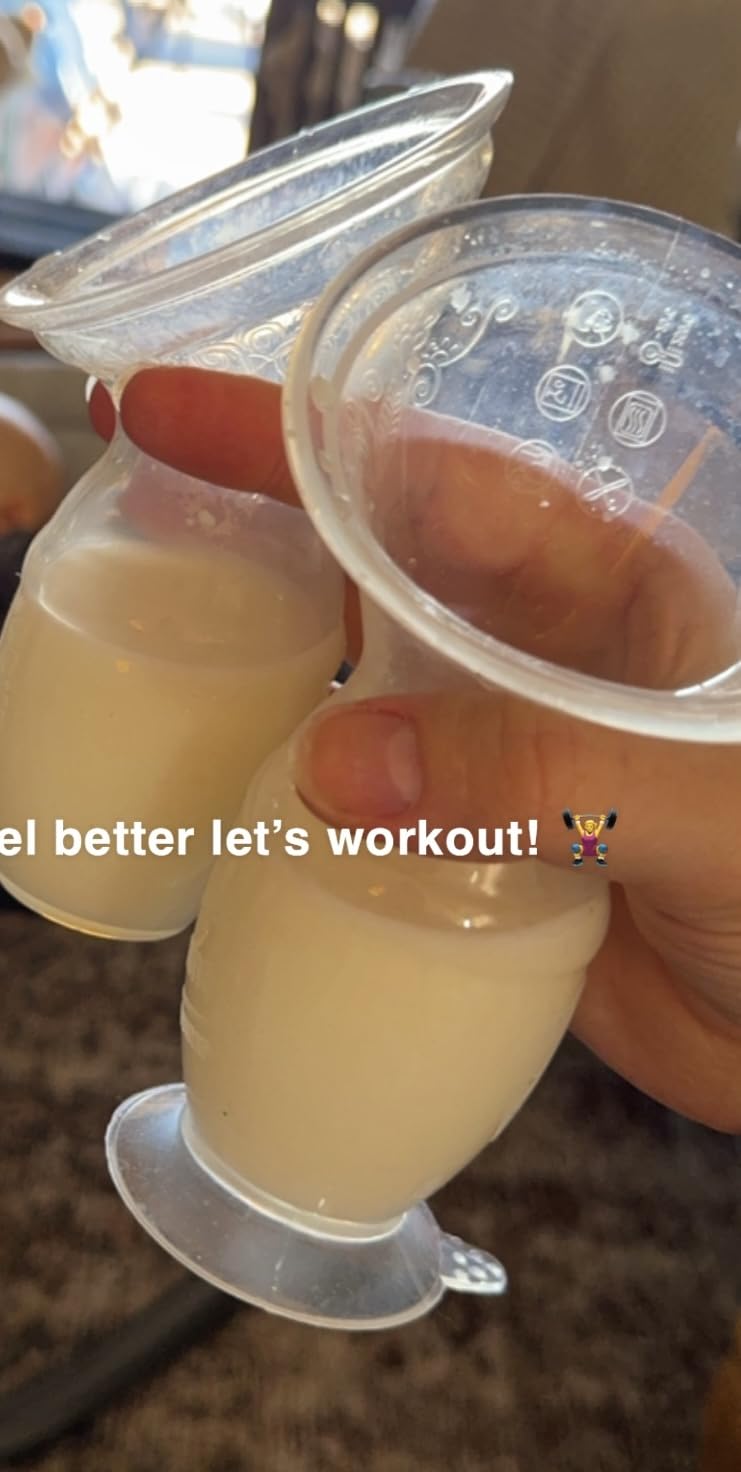
A four-ounce collection in one attachment is enough for a single bottle, which is the most common occasional-use job there is. The one-piece body also survives a nappy bag far better than a lever pump with a membrane and a duckbill valve that can be lost in a pocket.
Owners also use it in a pumping bra during flights and road trips, which is exactly the battery-free travel use case.
Where it falls short
It does not drain a breast the way a lever pump can, so if you are chasing an active let-down rather than collecting one, expect less per session. And because the seal is passive, a baby kicking mid-feed can pop it loose, which is a real issue in the first months.
2. Medela Harmony Manual Breast Pump – Best Lever Pump for Real Expression
- Precise suction control and fast let-down
- Few parts that disassemble in seconds
- Standard thread accepts other bottles
- Pumps and stores in the included bottle
- Included bottle feels flimsier and markings wore off in the dishwasher
- Handle and membranes need replacing with heavy use
- Not hands-free
If you want a hand pump that genuinely expresses rather than collects, this is the shape you want. The lever creates a true vacuum, so milk moves down the ducts instead of pooling in a cup, and you control the squeeze strength with your wrist.
The handle runs two phases. A light, quick press triggers the let-down reflex, then a longer, slower pull expresses. Learning that rhythm takes a couple of sessions, and once you have it the pump feels far more productive than it did at first.
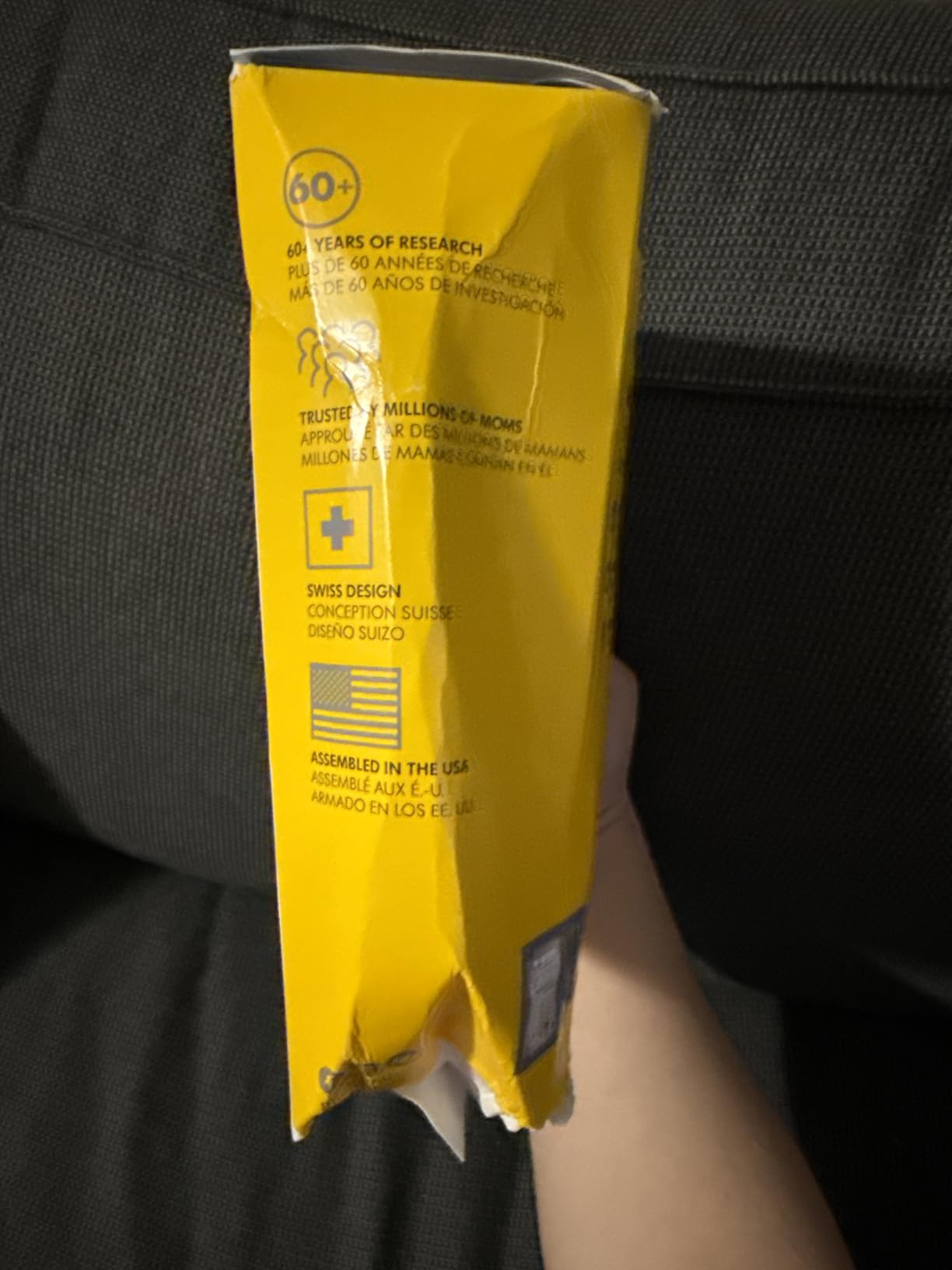
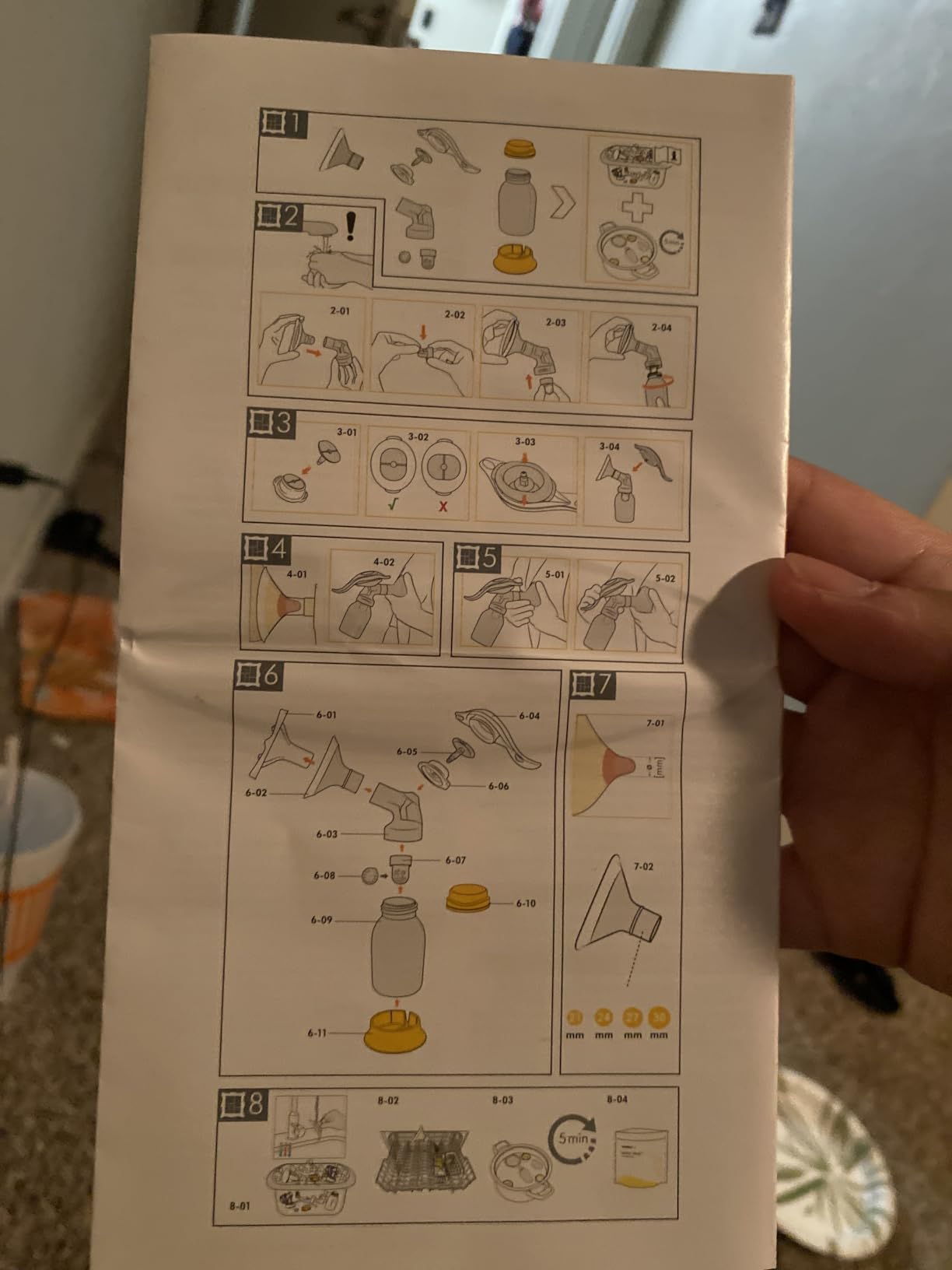
The shield rotates through 360 degrees, so you can angle the tunnel toward your wrist instead of twisting your body. At 24mm it suits many nipple sizes out of the box, and other shield sizes are sold separately if you need them.
It is the smallest item in the roundup by weight, which makes it a genuine diaper bag option. The bottle is a standard thread, so you can swap it for a bottle you already own instead of being tied to one brand.
Users often report beating pricier electric pumps for volume, which sounds unlikely until you realise the vacuum in a hand pump is more intense per pull. The catch is effort, and the complaints we saw cluster on the flimsy collection bottle and on membranes that wear out under heavy daily use. For twice-daily pumping that is not a problem.
What it handles well
Two-phase expression plus a rotating shield is the combination that lets you work at your own pace rather than guessing. The part count is low, so assembly and washing between sides takes seconds rather than minutes.
It is also the only lever pump here that doubles as an in-bra pump with the separate collector, which broadens what one device can do across a year of use.
Where it falls short
Both hands are busy while you squeeze, so you cannot hold a bottle, feed a baby, or work at a desk at the same time. Users with wrist or tendon issues report discomfort well before twenty minutes, and the included bottle is the weakest part of the package.
3. NatureBond Silicone Breast Pump All-in-One Set – Best Value Collector Set
- Soft spout-free silicone reported as comfortable
- Strap and stopper reduce spills
- Silent and light for travel and night use
- Complete gift box with pouch and dust cover
- Passive suction drains leaks rather than emptying a breast
- Can release if bumped or milk sits at the seal
- Strap and stopper add parts to clean
What separates this from the other collectors is the box. You get the pump, a pump strap, a silicone stopper, a dust cover lid, a velvet pouch and a gift box, and the pouch is what turns it into a grab-and-go item.
The flange has no pour spout, which sounds like a detail until you compare comfort against collectors with a hard ridge pressing the nipple. Reviewers single this out as the quietest reason to like the design.
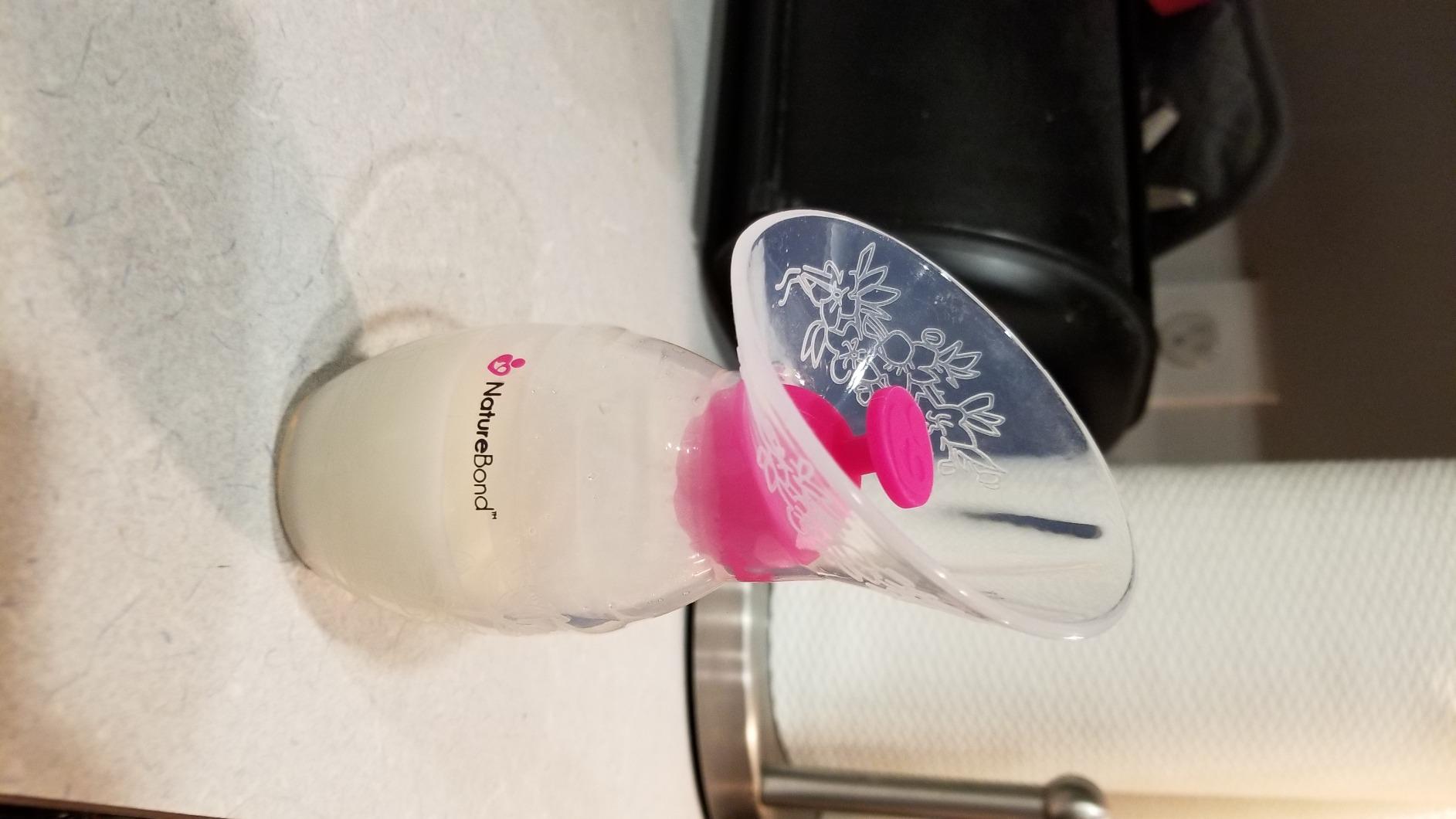
The strap lets you wear it hands-free on the non-feeding breast while the baby nurses on the other. In that role the passive suction is enough, because the milk is already coming down. That is the single most common use for a manual silicone pump, and this one is built for it.
It has been on the market for years, which tells you something about how well the seals hold over time. The trade is straightforward: you are buying a leak-catching comfort device with a full accessory set, not an expression pump.
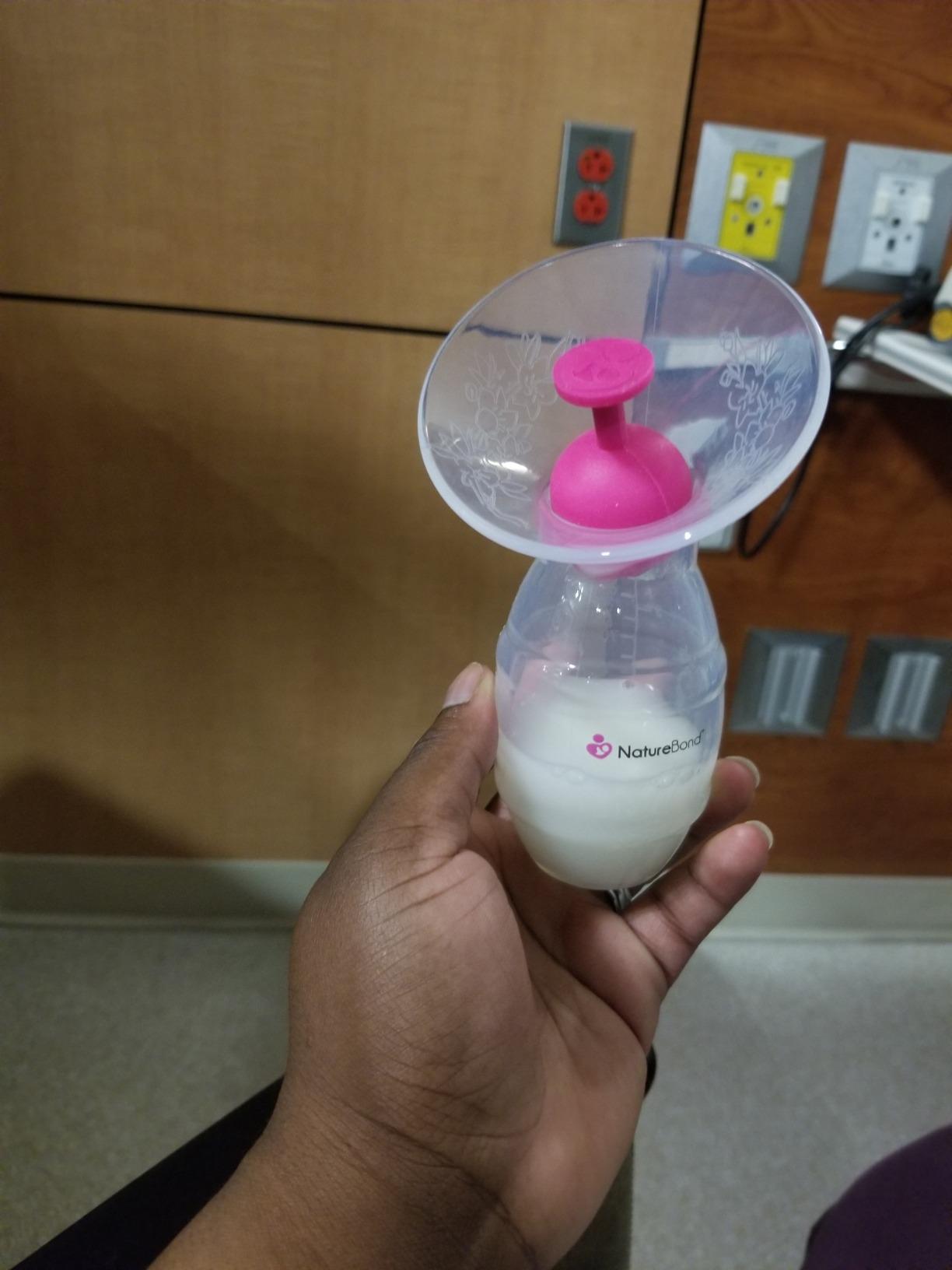
What it handles well
Comfort over long wear, because there is no spout digging in and no handle cranking. The stopper and lid mean collected milk stays protected in the pouch rather than sitting exposed.
It is the pick for night-time let-down catching and for anyone who finds silicone collectors comfortable but wants fewer loose parts.
Where it falls short
Passive suction means it takes what leaks out rather than driving milk down the ducts. Users looking for volume report hitting a ceiling, and the strap, stopper and pouch all need washing alongside the pump body.
4. Lansinoh Manual Breast Pump – Best for Wide-Neck Bottle Compatibility
- Many users report more output than their electric
- Comfortable handle with adjustable squeeze
- Works with Lansinoh glass and other bottles
- Two flange sizes included
- Stock duckbill valves need frequent replacing
- Included flange sizing feels odd to some users
- Handle assembly can trap water after washing
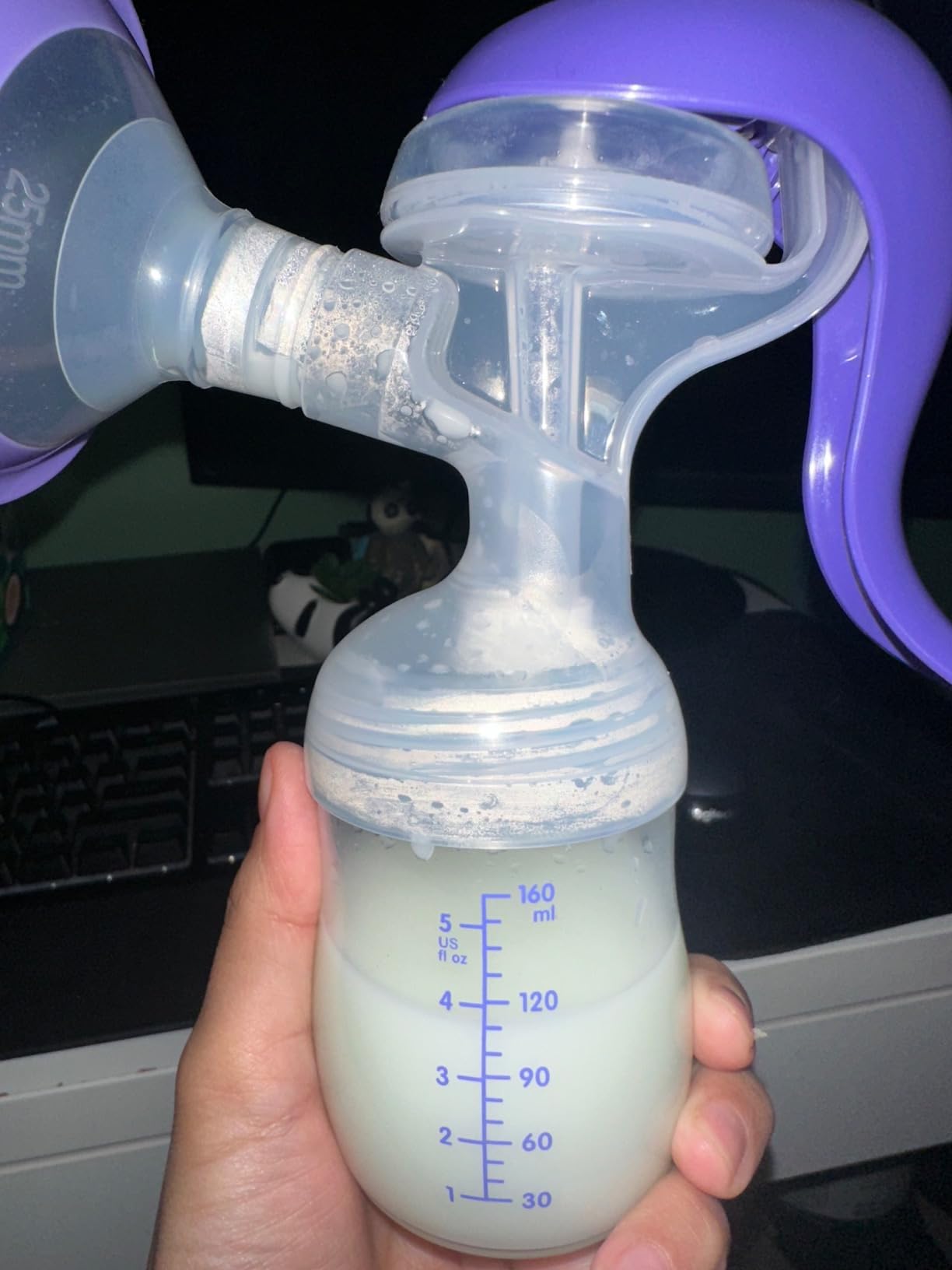
This pump has been in continuous production for over a decade, and the reason it has survived is the wide-neck thread. If you already own Lansinoh bottles, or bottles from brands that share that thread, this pump screws straight onto them.
Two flange sizes ship in the box at 25mm and 30.5mm, which is more generous than most competitors. That matters more than it sounds, because a shield that is the wrong size is the most common cause of a hand pump feeling ineffective.
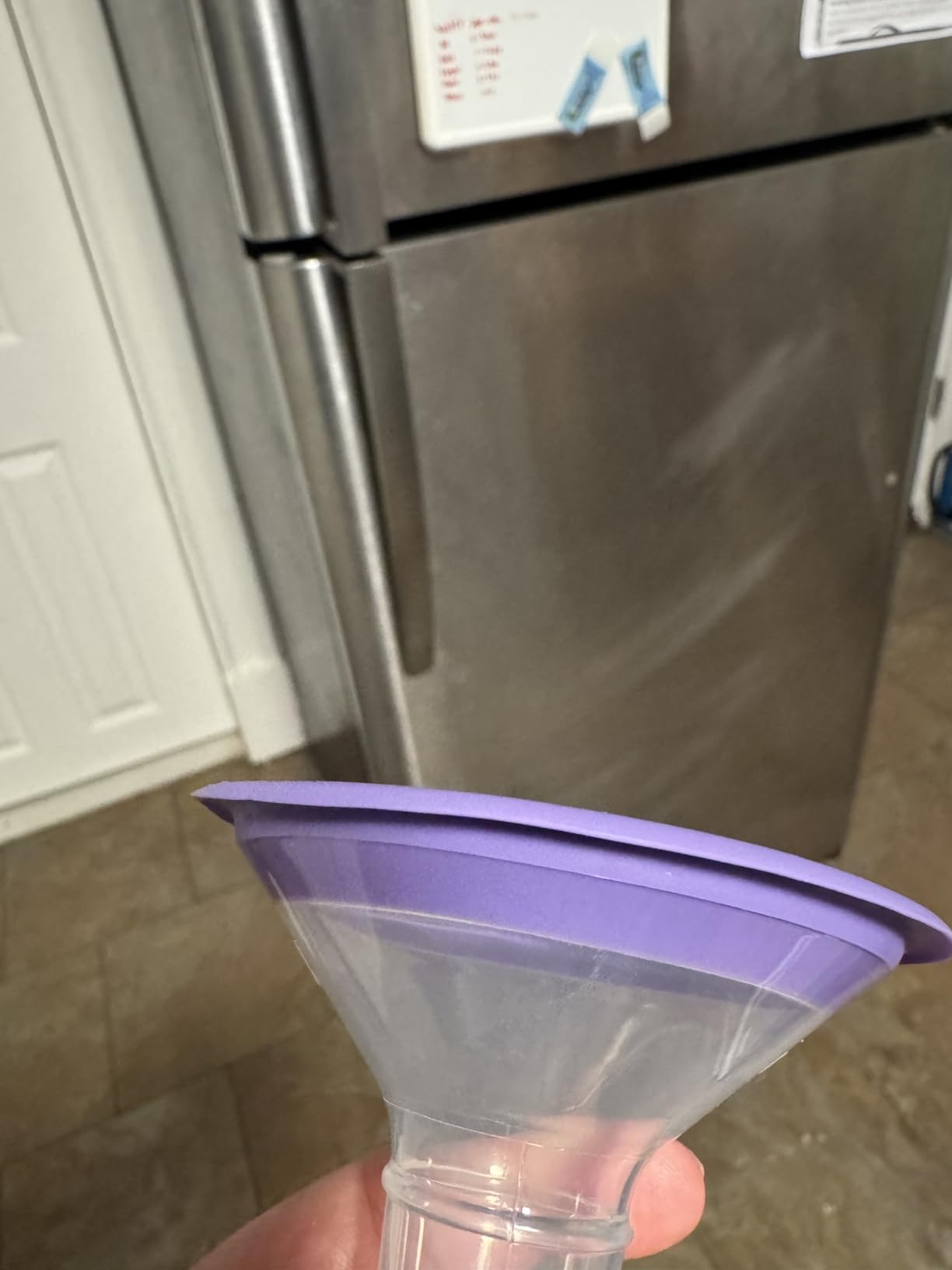
The handle is a wide lever with a smooth squeeze, and the brand positions it specifically to reduce hand fatigue. On r/breastfeeding this is one of the four most-repeated names across every forum thread we read, usually with a comment that you cannot go wrong with any of them.
Output is the surprise. A recurring theme in reviews is parents getting more from this hand pump than from their electric, which fits the physics of a strong vacuum and a two-phase squeeze. The weakness is durability of the consumables rather than the pump itself.
What it handles well
Compatibility. If bottle threading is a factor in your household, this is the pump that plays nicely with what you already own, and that removes a whole category of frustration.
It also pumps into the bottle you feed from, so the whole step of decanting milk disappears from your day.
Where it falls short
The stock duckbill valves need replacing more often than the rest of the pump, and that is the recurring complaint. Users also report suction fading after several months of daily use, and some find the handle traps water after a wash unless it is left open.
5. BumbleBee Manual Breast Pump Gift Box – Best for Clogged Duct Relief
Bumblebee Manual Breast Pump with Breastfeeding Milk Saver Stopper& Lid in Gift Box Food Grade Silicone BPA PVC and Phthalate Free 3.04oz/90ml
- Can be filled with warm water and salts for compresses
- Strong suction for a passive collector
- Hands-free and silent
- Stopper lid and pouch included
- Can pop off if the baby kicks
- Weak base stability and easy to knock over
- Suction needs re-establishing once milk reaches the seal
Most silicone pumps are collectors. This one also works as a warm compress, which is the specific tool for a blocked duct or the early, achy stage of mastitis when you need heat and drainage rather than more volume.
Fill it with warm water and Epsom salts, sit it against the tender area for a few minutes, and the shape holds the warmth exactly where it is needed. Users mention this more than they mention the pumping side.
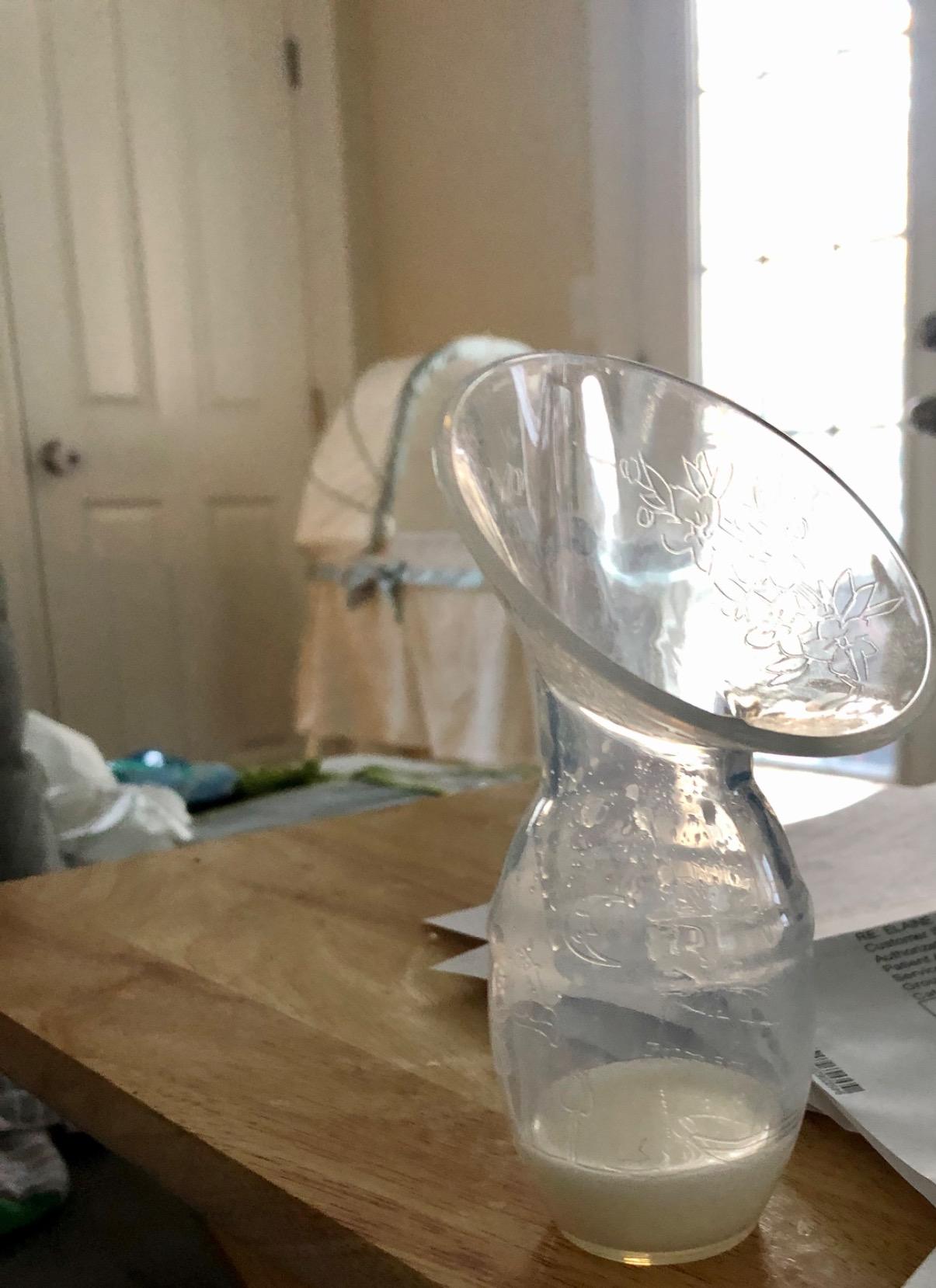
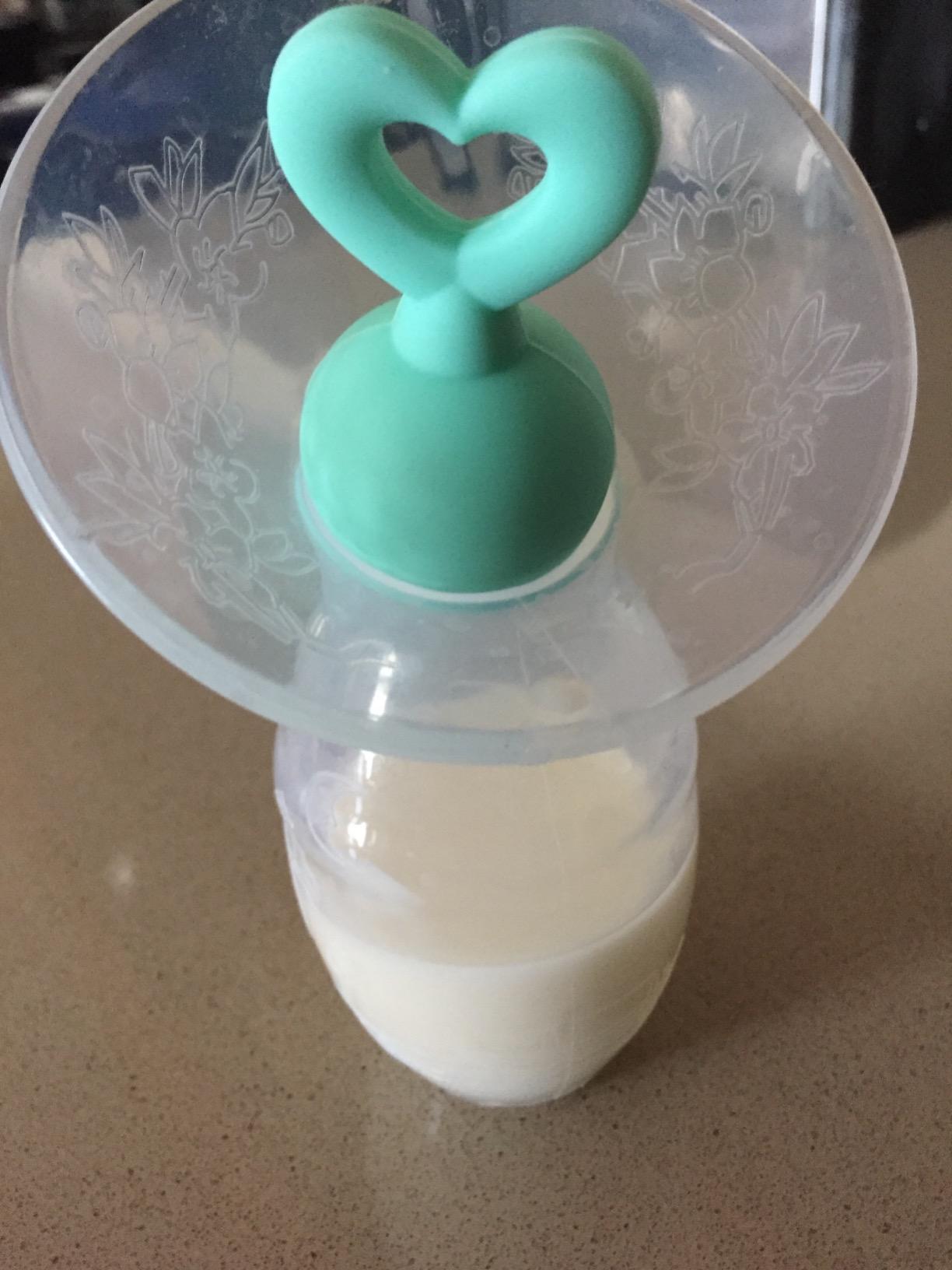
As a collector it behaves like the Haakaa class of product, with a neck strap for hands-free wearing, a stopper and lid to keep the milk in, and a pouch for the bag. Collectors like this typically gather one to three ounces across a let-down session.
It is a lower-cost route into silicone collection, and the one-piece body boils for sterilising without any concern about a membrane or a valve underneath.
What it handles well
A blocked duct or a breast that has gone hard and hot. The compress function is the differentiator, and nothing else in a manual kit covers that job.
It is also the practical choice if you want the Haakaa pattern but prefer a complete box with a strap and stopper already included.
Where it falls short
Stability is the weak point. The base is narrower than the Haakaa, so it gets knocked over more easily and can come loose when a baby kicks during a feed. The silicone surface also attracts lint, which is a minor annoyance in a laundry basket.
6. Elvie Curve Manual Wearable Pump – Best In-Bra Design
- Kick-proof in-bra wear that stays put during feeds
- Both hands stay completely free
- Only two parts and dishwasher safe
- Suction adjustable on the move
- Passive collection only so it does not empty a breast
- Lowest average rating in this roundup with a share of one-star reviews
- May need adjusting to get a comfortable seal
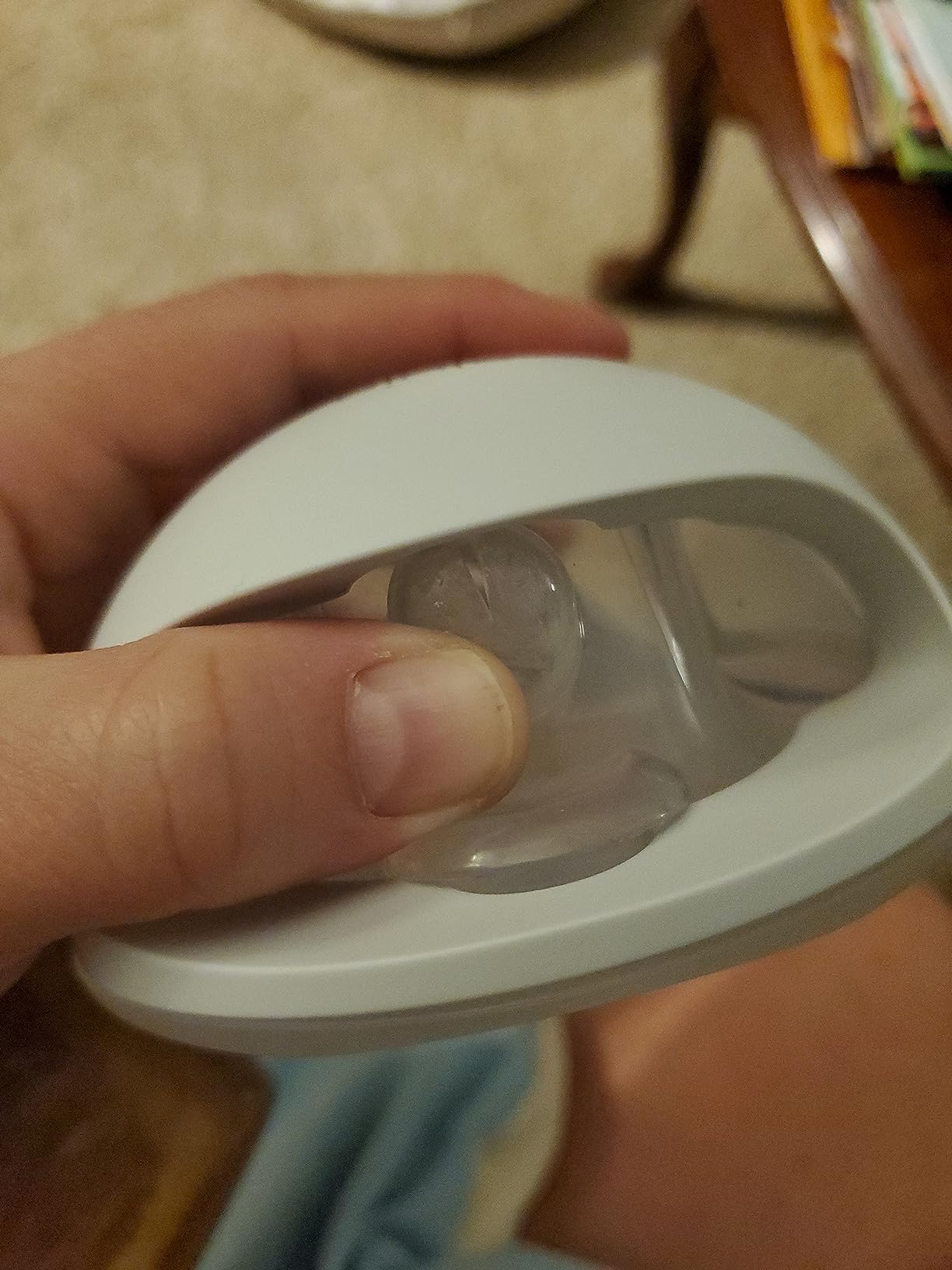
The pitch here is geometry. This is the shallowest, most body-conforming collector in the roundup, and it sits inside a bra rather than projecting out of it, so it stays put through a feed and shows very little under a shirt.
Suction is increased by pressing the silicone pouch and reduced with the top control valve, which means you can dial it down for comfort without taking it off. That adjustability is what separates it from a plain cup collector.
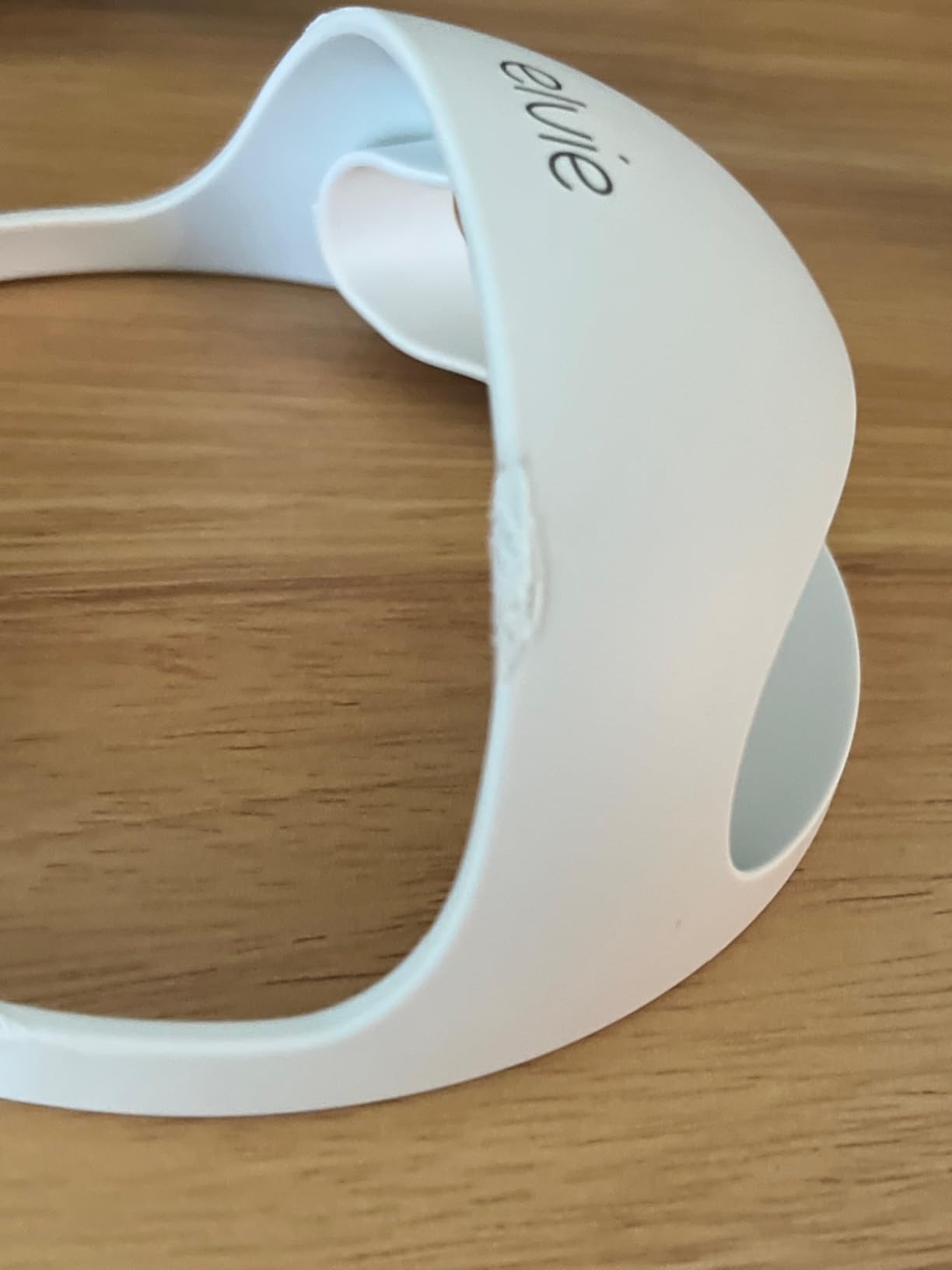
Cleaning is the easiest in the roundup: two parts, both dishwasher safe. There is no strap, no stopper, no lid and no pouch, so there is nothing else to lose in a bag.
The honest headline is the rating. It sits lowest in this list with a noticeable share of one-star reviews, and the pattern is consistent: people who bought it expecting an expression device were disappointed by a wearable let-down cup.
What it handles well
Discreet in-bra wear during a feed, a work meeting or a flight. It is also the pick for anyone who cannot or does not want to hold a lever with one hand for twenty minutes.
If you also pump by hand later, this is a comfortable second device rather than a replacement for one.
Where it falls short
Passive suction only, so it collects what is released rather than driving milk down the ducts. It also takes a couple of adjustments to seal comfortably, and being discreet does not mean invisible under a thin bra.
7. Boon Trove Silicone Manual Breast Pump – Budget Pick
- Stays put in a nursing bra better than tall collectors
- Gentle suction that does not pinch
- Stands unaided and pours through an arrow channel
- Plug closes it when you set it down
- Relieves pressure but does not fully drain
- Suction needs re-establishing after movement
- A little weaker than competing collectors
The fix for the complaint every tall collector draws is height. This one is short and sits flush in a bra, so a kicking baby pushes it sideways rather than off.
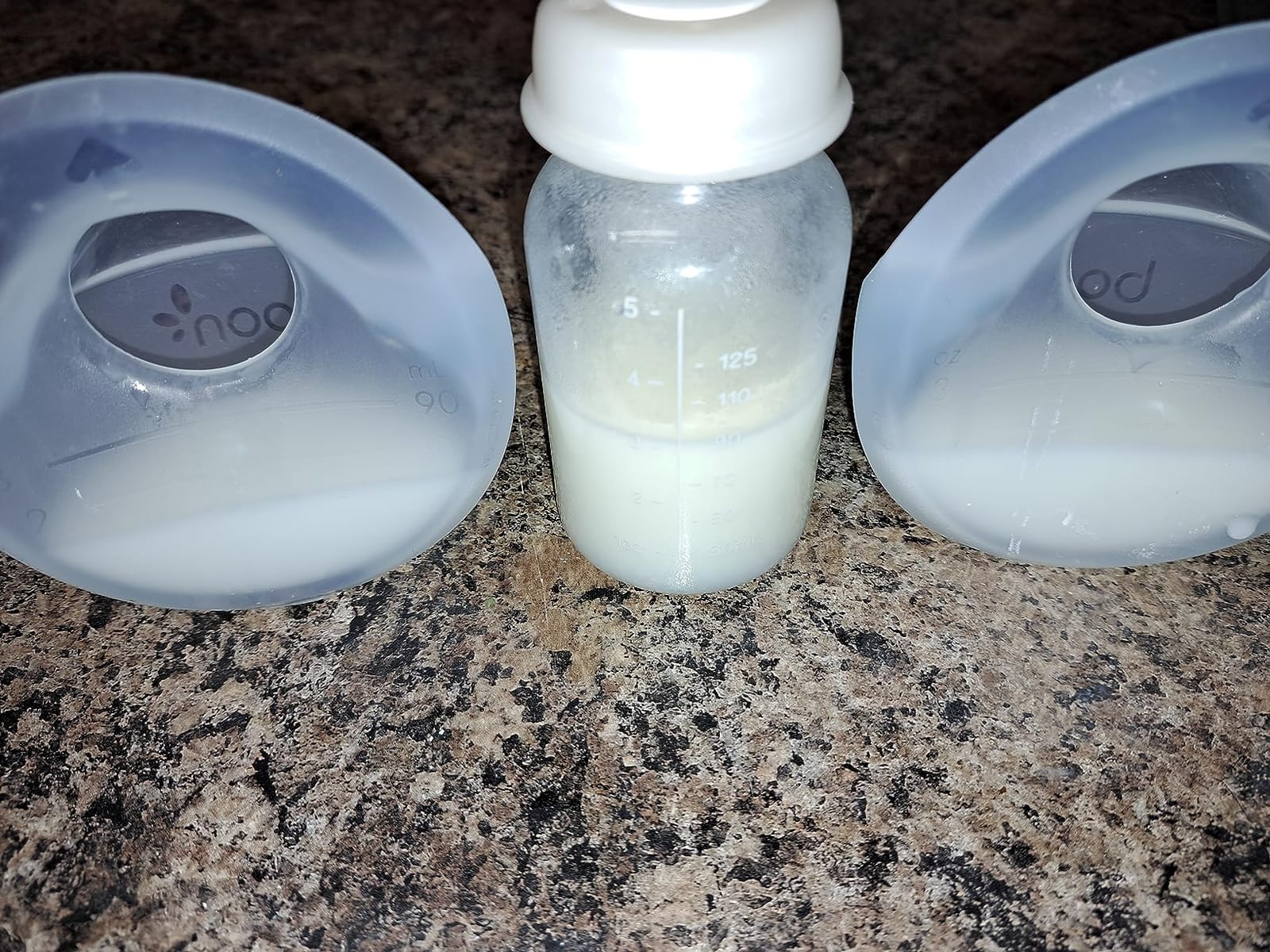
The second fix is the base. It is wide and flat enough to stand unaided, so you can set it down on a table, pour along the marked channel into a bag or bottle, and close it with the plug.
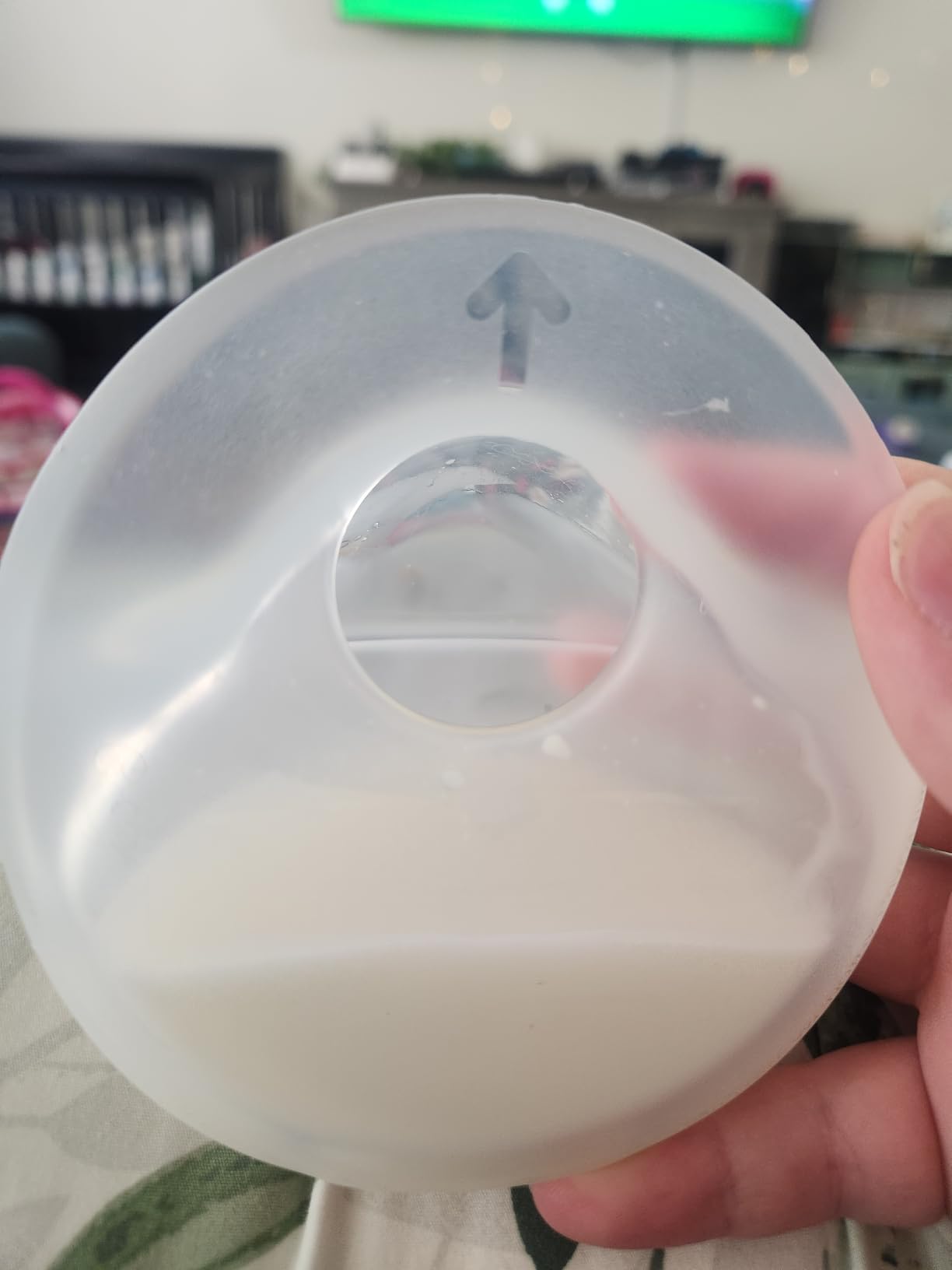
Suction is gentler than most, and reviewers note it does not pinch the way some collectors do. That makes it a good first device for someone who finds silicone pumps uncomfortable at higher settings. Some users report collecting up to four ounces across a session of wearing it.
It is a single moulded piece of food grade silicone, top rack dishwasher safe, with no strap or stopper to buy separately. For a first occasional-use device, that simplicity is the main selling point.
What it handles well
Let-down catching on the idle breast while the baby feeds on the other, and general daytime fullness relief. It is the most stable bra-worn collector we tried for the price.
It also works well as a travel item, since it collapses to almost nothing and pours without a separate funnel.
Where it falls short
Suction is on the gentler side, and it collects rather than drains, so an engorged breast gets relief without being emptied. Movement during a feed usually means reseating it before collection resumes.
8. Elfzone Portable Manual Breast Pump – Best for Travel With a Storage Bottle
- Reports of fast output for a budget lever pump
- Soft silicone reported as gentle on nipples
- Lightweight and easy to carry while travelling
- Comfortable handle that comes apart for cleaning
- Loud pop sound on every squeeze
- Hand gets sore after about ten minutes
- No flange size options and the petal can leave nipples sore
This is one of only two lever pumps here that ships with a bottle in the box, and it is the one to pack. A 5 oz bottle with a dust lid means no funnel, no decanting and no leaking into a bag.
The handle has two stages: a short stroke for stimulation and a longer stroke for expression. That mirrors the two-phase approach on the more established pumps at a fraction of the outlay, and reviewers report unusually quick output for a budget model.
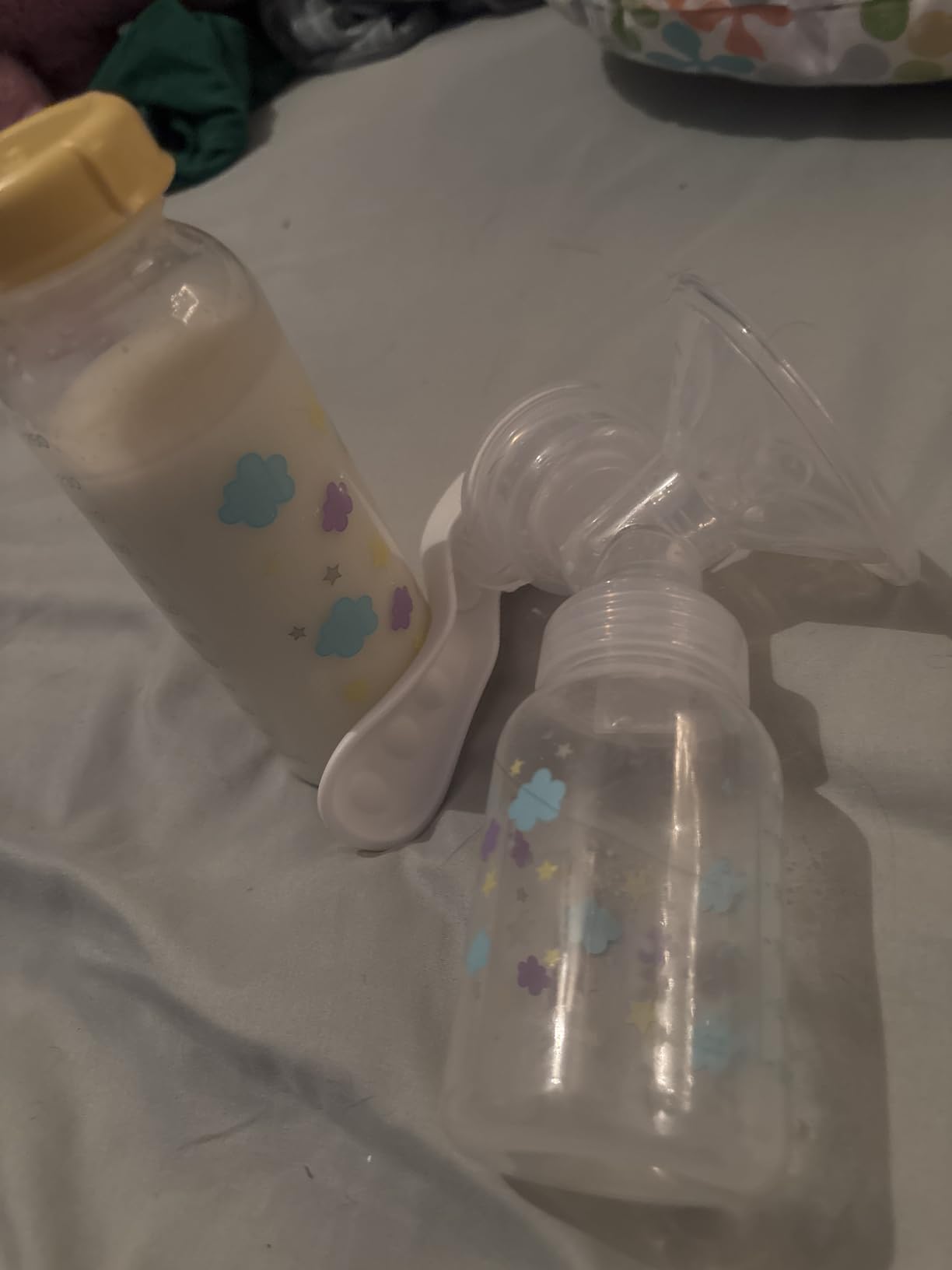
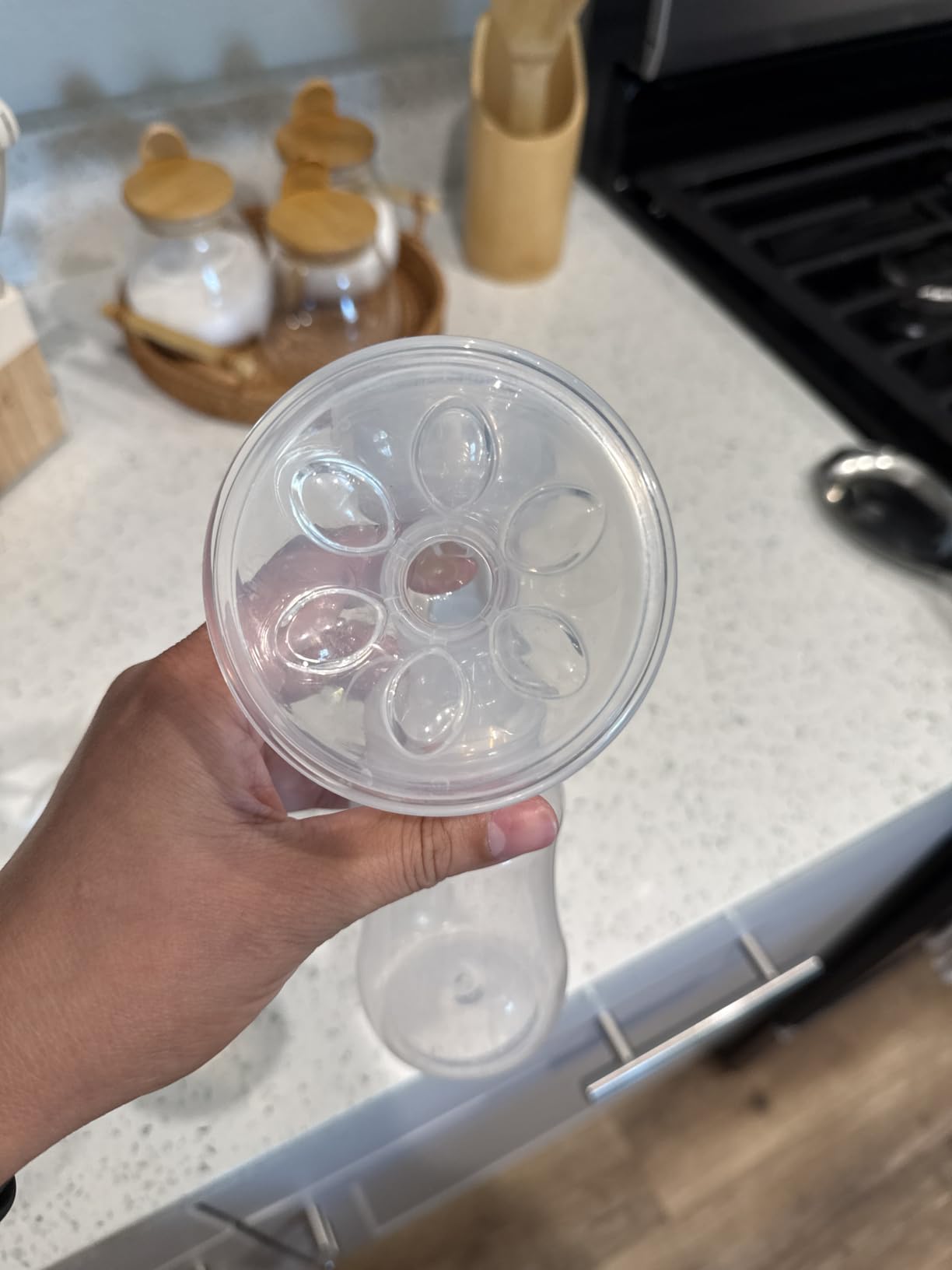
The included silicone seal ring is what makes the fit reliable. It forms an airtight seal without a membrane that can tear, and the whole thing boils for sterilising.
Reviews are genuinely split on this one, and the split is worth reading before you buy. Positive reviews emphasise volume and gentleness. Negative ones focus on the pop of the handle, hand soreness after ten minutes and inconsistent suction after repeated use.
What it handles well
Travel without power, and travel without assembly. You open a bag, express into the bottle that came in the box, close the lid and put it away.
It is also the best budget option here if you want a real two-stage lever rather than a passive collector.
Where it falls short
There are no flange size options, so the single petal has to suit you as-is, and sore nipples are a recurring theme. The pop on each squeeze is louder than a silicone collector, which rules it out for night-time use in a shared room.
9. Dr. Brown’s One-Piece Breast Pump Set – Best Pump, Store and Feed Kit
- Soft flexible silicone fitting a range of breast shapes
- Complete set with bottle cap and travel bag
- Can pump store then feed by adding bottle parts
- Silent and compact while travelling
- Passive collection only so it will not empty a breast
- Smaller capacity than 4 oz collectors
- Lower review volume than the leaders
The idea here is one device for the whole loop. You express into the collector, pop the travel cap on to store it, and when it is bottle-feeding time you add the anti-colic bottle parts and nipple to the same unit.
That removes the transfer step entirely, which is where expressed milk usually gets spilled. For a parent doing one bottle a day, cutting one transfer is worth a lot more than a feature list suggests.
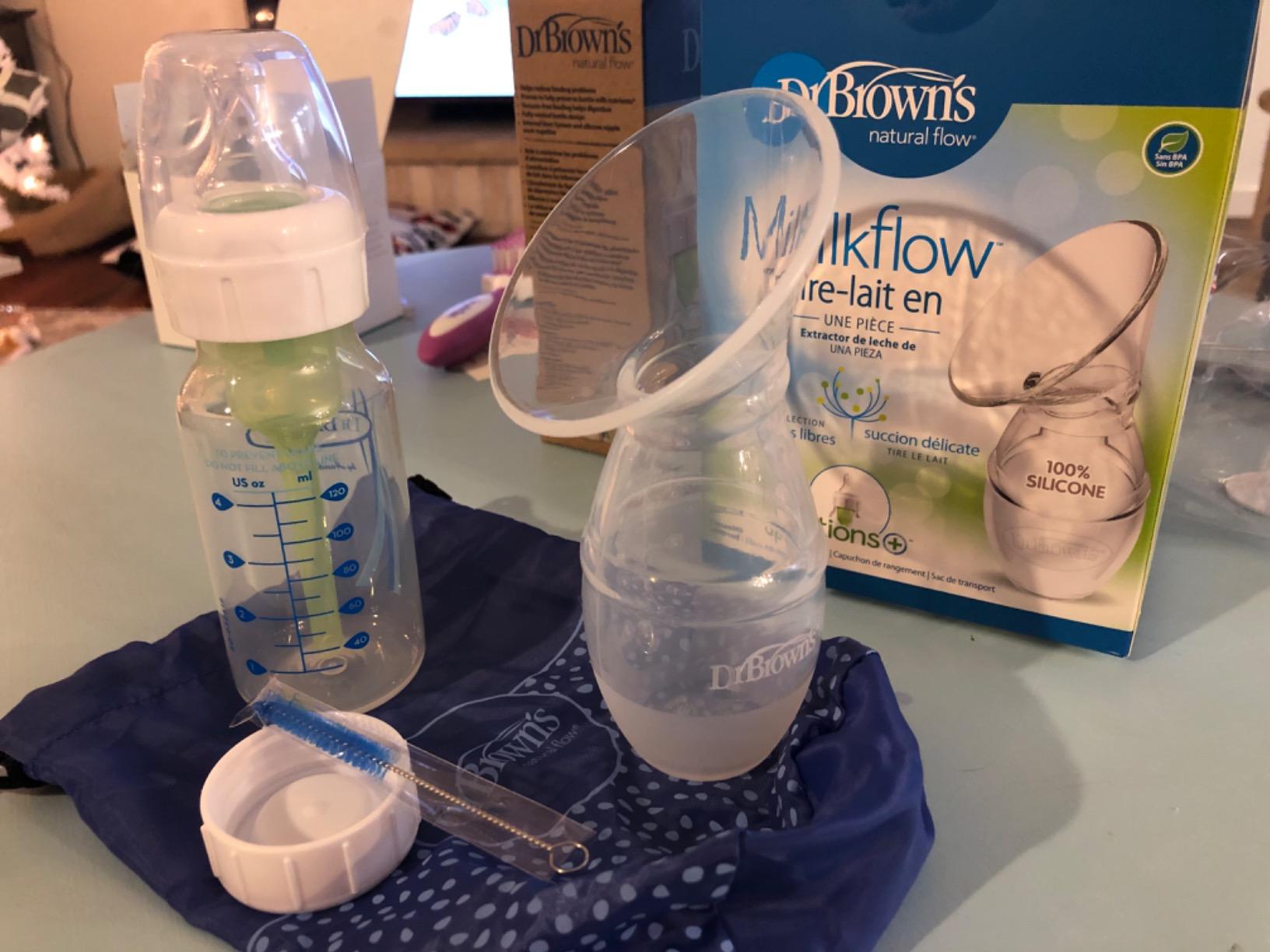
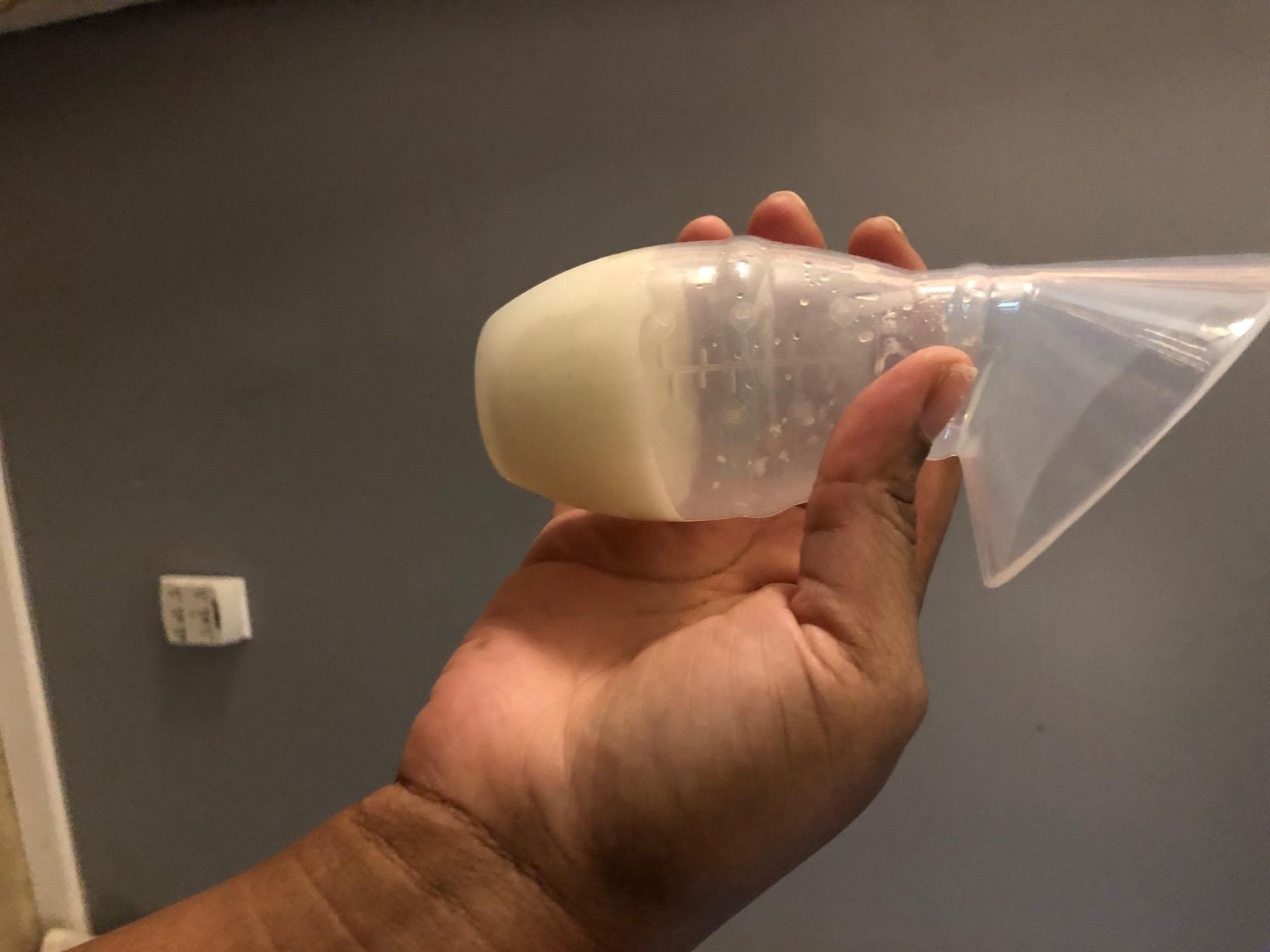
The silicone is soft and flexible enough to fit a range of breast shapes, and the easy-pour spout moves milk without losing drops down the side. It is quiet, compact, and the travel bag means it is a genuine hand luggage item.
Capacity is the trade. It is smaller than the 4 oz collectors, so a single let-down session fills it faster, and it collects passively rather than expressing actively.
What it handles well
One bottle a day, start to finish, with nothing to wash beyond one piece and a bottle. It is also the easiest kit to hand to someone else looking after your baby for a few hours.
The travel bag is a small thing that makes a real difference on a day out.
Where it falls short
It will not empty a breast, so it is not a tool for clearing a blocked duct or for anyone monitoring output closely. Being the smallest capacity here, it needs emptying more often during a heavy session.
10. haakaa 100 ml Transparent Pump with Lid – Best for Seeing What You Collected
haakaa 100 ml Silicone Breast Pump with Lid, Transparent Manual Breast Pump, Healthy and Harmless, Save Every Drop of Breast Milk
- Transparent body shows the volume collected at a glance
- Tight-fitting lid protects the milk
- No assembly needed to use it
- Lightweight and discreet in a bag
- Costs more than comparable listings despite smaller capacity
- Passive suction collects rather than drains
- Can detach if knocked
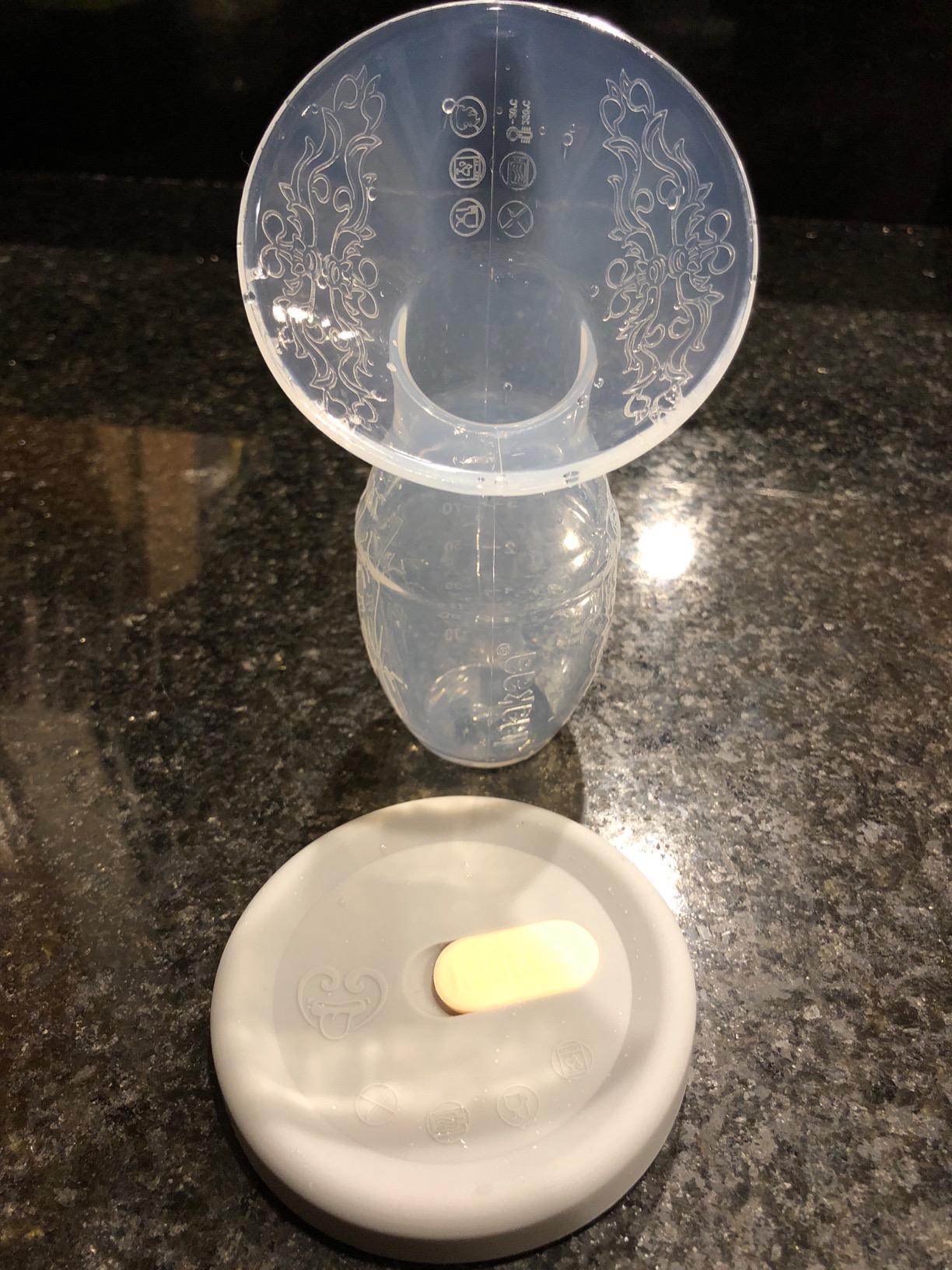
When you are only pumping occasionally, knowing how much you actually got matters more than it does when you pump eight times a day. This listing answers that question because the body is transparent.
The lid is a matching silicone cap that seals tightly enough to protect collected milk in a bag. There is no assembly at all: squeeze, attach, wait, pour.
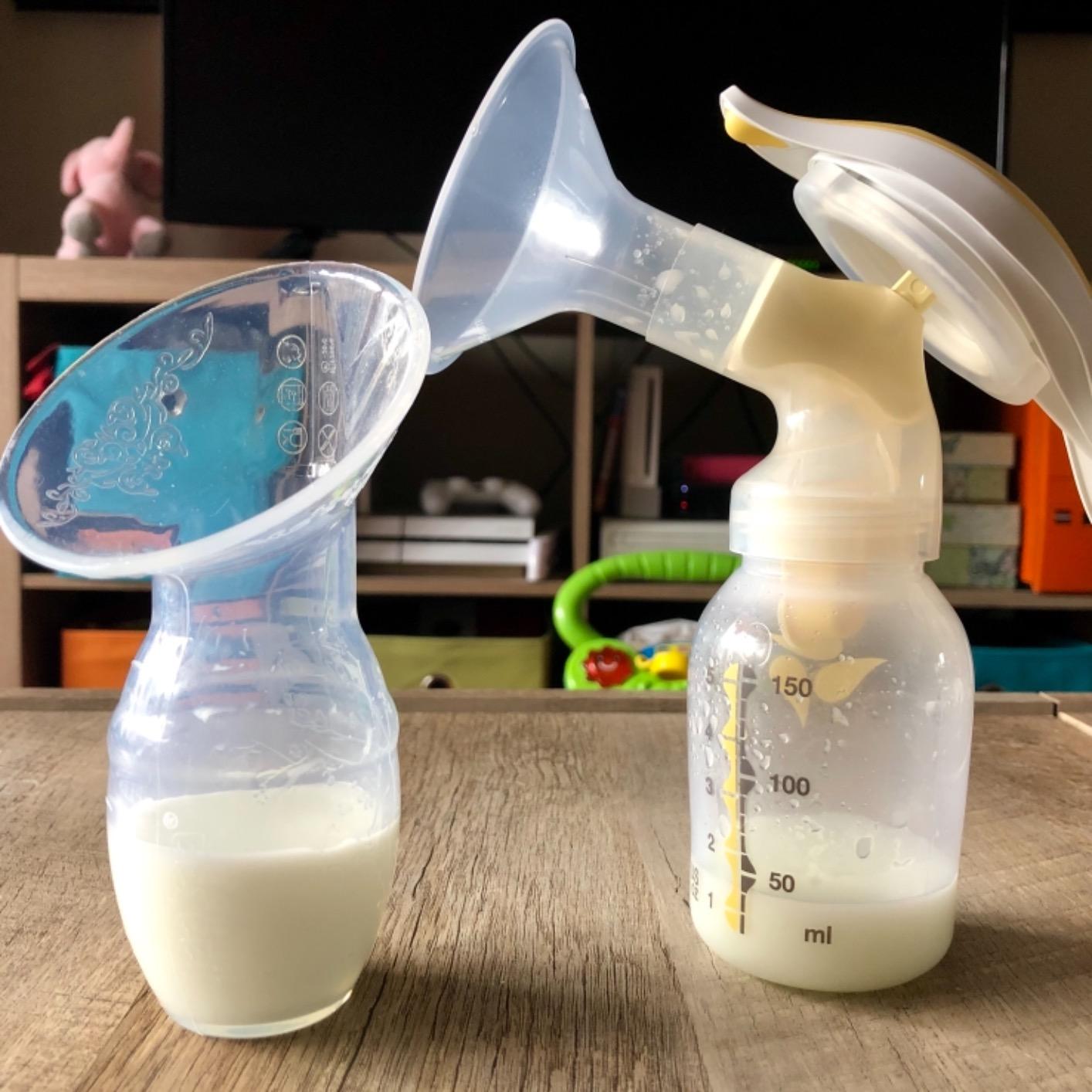
It is the original patented Haakaa body in a clear 100 ml form, and it works the same two ways as the larger model, as an active expression tool and as a passive collector worn while feeding on the other side.
It boils for sterilising as a single piece and weighs just over four ounces. If you are tracking output as part of building a small stash, the visibility is the reason to pick this over the opaque version.
What it handles well
Output tracking on a small scale. Seeing one, two or three ounces arrive in real time tells you far more than estimating from a bottle marked in the dishwasher.
It is also the right choice for anyone who does not want milk sitting exposed in an open collector during the walk home from a session.
Where it falls short
You are paying for transparency and the lid, and comparable listings offer more capacity for less. It collects rather than drains, and like the other passive designs it can come loose if it is knocked.
How to Use a Manual Breast Pump Without Ruining Your Hands
Most disappointing hand-pump sessions are technique problems, not pump problems. A lever pump that is worked with a wrist and a loose grip behaves very differently from one gripped hard for twenty minutes.
Start in the stimulation phase. Press quickly and lightly for the first minute or two to trigger the let-down reflex, then switch to slower, longer pulls for the expression phase. Holding the fast rhythm for the whole session is the most common reason people feel like nothing is coming.
Switch sides every five to seven minutes rather than emptying one side completely. Alternating keeps both breasts moving and gives your hand a rest, and it matches the way a baby feeds.
Sit supported with your forearm resting on your thigh or the arm of a chair. Support carries the weight, so your hand is only adding pressure, not holding the pump up in mid-air for the entire session.
Keep a cold pack or a wrapped ice cube on your wrist between sides if you feel heat building. Short sessions beat long ones, and two sessions of ten minutes will produce more than one marathon session with a failing grip.
Clean everything straight after each use. Break the pump into its parts, rinse with cool water, wash in a basin with a little washing-up liquid, and let the pieces air dry fully rather than reassembling them damp. Silicone collectors can go in the dishwasher or be boiled; lever pumps with membranes and duckbill valves should be hand-washed so the seals last.
If you are storing expressed milk for a newborn or a medically vulnerable baby, sanitise on a separate cycle from washing, following the guidance your midwife or health visitor gave you.
How to Choose: A Buying Guide for Occasional Pumping
Decide whether you are collecting or expressing. A collector holds suction by itself and takes what leaks out during let-down. An expression pump uses a lever to create vacuum and drives milk down the ducts. Half the confusion in this category comes from expecting a collector to drain a breast, which it was never designed to do.
Check the flange fit before anything else. If you feel chafing, get white blotches or blisters on the nipple, or you simply get no output, the shield is the wrong size rather than the pump being faulty. Measure your nipple width with a ruler before a feed and match it to the shield diameter, then look for a brand that sells other sizes.
Decide closed or open. Lever pumps with a membrane and a duckbill valve keep milk away from the handle mechanism, which matters for a premature or hospitalised baby. Silicone collectors are open systems by nature, which is fine once your milk supply is established and you are collecting for healthy term babies.
Look at parts compatibility before brand. If you already own bottles, a pump that fits that thread removes the decanting step. The Lansinoh wide-neck thread and the standard thread on the Medela bottle cover the two most common setups, and that is often worth more than a marginal difference in suction.
Count the parts, not just the price. Fewer parts means fewer crevices to wash and fewer things to lose. The Elvie cleans in two pieces; a lever pump is five or six.
Expect hand fatigue, and plan around it. Forum threads describe cramping and wrist pain as the number one deal breaker across this category, and the fix is a supported posture, a relaxed grip and short sessions rather than a different product.
Plan for storage and warming. If you are expressing once or twice a day, how you store and bring milk to temperature takes more of your time than the pumping itself. Our guide to the best bottle warmers for breast milk covers that side of the routine.
Finally, check who should not use a manual pump. Anyone exclusively pumping, anyone working to build supply, and anyone expressing for a premature or hospitalised baby should use a hospital-grade electric, because sustained frequency and safe closed-system collection both matter more than portability in those situations.
Frequently Asked Questions
Is it okay to only use a manual breast pump?
Yes, for occasional expression it is genuinely fine. A manual pump works well when you pump once or twice a day for a bottle, a small freezer stash, or relief from a full or blocked breast. It becomes a poor choice at three or more sessions a day, because sustained effort per session causes hand fatigue before the volume justifies it. Exclusively pumping, building supply at the start, and expressing for a premature baby are all cases where an electric pump is the better tool.
What is the best manual breast pump for hand use?
Among lever pumps that actively express, the Medela Harmony offers the most control with its two-phase handle and rotating shield. If you want something quieter and lighter in a bag, the Haakaa works for collection and light expression. The Lansinoh is the strongest option when you already own wide-neck bottles. Whichever you choose, correct flange sizing matters more than the brand.
How often should I use a manual breast pump?
Once or twice a day suits a manual pump well. Keep each session to roughly fifteen to twenty minutes per side, work the stimulation rhythm for the first minute or two, then switch to slower deeper pulls. Change sides every five to seven minutes so both breasts keep moving. Pumping the same side repeatedly without alternating tends to lower output and tires the hand sooner.
Are manual breast pumps more effective?
Per squeeze, a manual pump often produces stronger vacuum than a single electric, and some users report more output than with an electric. Per hour, an electric wins clearly because it holds suction without effort. Output of one to three ounces per session is normal for occasional manual pumping and is not a sign of a supply problem, as long as the baby is feeding well directly.
Can I use a Haakaa as a manual breast pump?
Yes, though it works differently from a lever pump. You squeeze the Haakaa to expel air and attach it, and it holds that suction on its own, so it can also be worn in a bra to catch let-down from the breast you are not feeding from. Because the suction is passive it collects milk that is released rather than driving milk down the ducts, so it will not fully empty a breast.
Which manual breast pump is the most effective?
For active expression the Medela Harmony is the most effective of these ten, thanks to a true two-phase lever and a rotating shield that supports milk flow. For catching let-down with no effort at all, the Haakaa collects the most from a single attachment. If you already own wide-neck bottles, the Lansinoh can be the most effective for you specifically, because compatibility removes the transfer step.
The Verdict: Which Manual Pump Should You Buy
For most people searching for the best manual breast pumps for occasional use, the decision comes down to one question: are you collecting what leaks out, or actively expressing? If you are collecting, start with the haakaa 4 oz, which carries the highest rating and the largest review base in this roundup, cleans in one piece and works both in a bra and in your hand. If you are expressing, the Medela Harmony gives you a real two-phase rhythm and the control that a full or blocked breast needs.
Pick your pump by flange fit, by the bottles you already own, and by how many sessions a day you actually face. Those three things decide whether you will keep using it, not the logo on the box.
We updated this roundup in 2026, and every drawback listed above came from the same review pool we used for the ratings, so you can weigh them yourself before you buy.