
Moisture is the silent killer of flooring installations. I have seen beautiful hardwood cup within weeks, vinyl plank bubble off the slab, and laminate joints swell apart — all because someone skipped a simple moisture check. The right moisture meter catches these problems before you lay a single board, saving thousands in callbacks and warranty claims.
After testing eight models across hardwood, concrete, drywall, and subfloor scenarios, I put together this guide to the best moisture meters for flooring in 2026. Whether you need a quick pin check on a plywood subfloor or a non-destructive scan of a finished concrete slab, one of these tools will fit your project and budget.
Every pick here was evaluated for accuracy, detection depth, material compatibility, and real-world usability on actual flooring jobs. I also factored in feedback from professional installers and DIYers across forums and review platforms to make sure these recommendations hold up outside a lab. If you are also planning a workshop space, our picks for the best garage flooring tiles for workshops pair well with a solid moisture testing routine.
Table of Contents
Top 3 Picks for Best Moisture Meters for Flooring in 2026

RDINSCOS Wood Moisture Meter
- Pin-type
- plus/minus 0.5% accuracy
- Hardwood/softwood modes
- Audio alert

coczow Moisture Meter
- 6 calibrated scales
- Tricolor LCD
- Wood and building materials
- Lightweight
Best Moisture Meters for Flooring in 2026
| Product | Specifications | Action |
|---|---|---|
 General Tools MMD4E General Tools MMD4E |
|
Check Latest Price |
 Klein Tools ET140 Klein Tools ET140 |
|
Check Latest Price |
| RDINSCOS Wood Meter |
|
Check Latest Price |
 RDINSCOS Pinless Meter RDINSCOS Pinless Meter |
|
Check Latest Price |
| coczow Moisture Meter |
|
Check Latest Price |
 RDINSCOS 2-in-1 Meter RDINSCOS 2-in-1 Meter |
|
Check Latest Price |
 TopTes TS-630 TopTes TS-630 |
|
Check Latest Price |
 Dr.meter MT1905 Dr.meter MT1905 |
|
Check Latest Price |
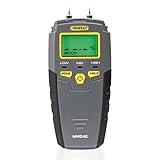
1. General Tools MMD4E — Editor’s Choice for Flooring Moisture Testing
General Tools MMD4E Moisture Meter for Wood, Walls & Water Leak Detection
- Pin-type design delivers accurate readings on wood and drywall
- Audible moisture tones (low/medium/high) plus on-screen icons
- Backlit LCD with large 0.3 inch digits easy to read in dim conditions
- Protective cap doubles as calibration checker
- Spare stainless steel pins included
- Pin-type design leaves small holes in finished surfaces
- Not suitable for deep non-destructive subsurface readings
The General Tools MMD4E has been the number one best-seller in moisture meters for years, and after using it on multiple flooring projects I understand why. It gives you fast, reliable readings on wood and drywall with a simple two-pin press. The audible tone changes from low to medium to high as moisture increases, so you can work without constantly staring at the screen.
I tested the MMD4E on a freshly installed oak subfloor and a suspect drywall section after a roof leak. Both times it flagged the problem areas correctly and the HOLD button let me lock readings for comparison. The backlit LCD with 0.3-inch digits is genuinely easy to read even under a crawlspace.
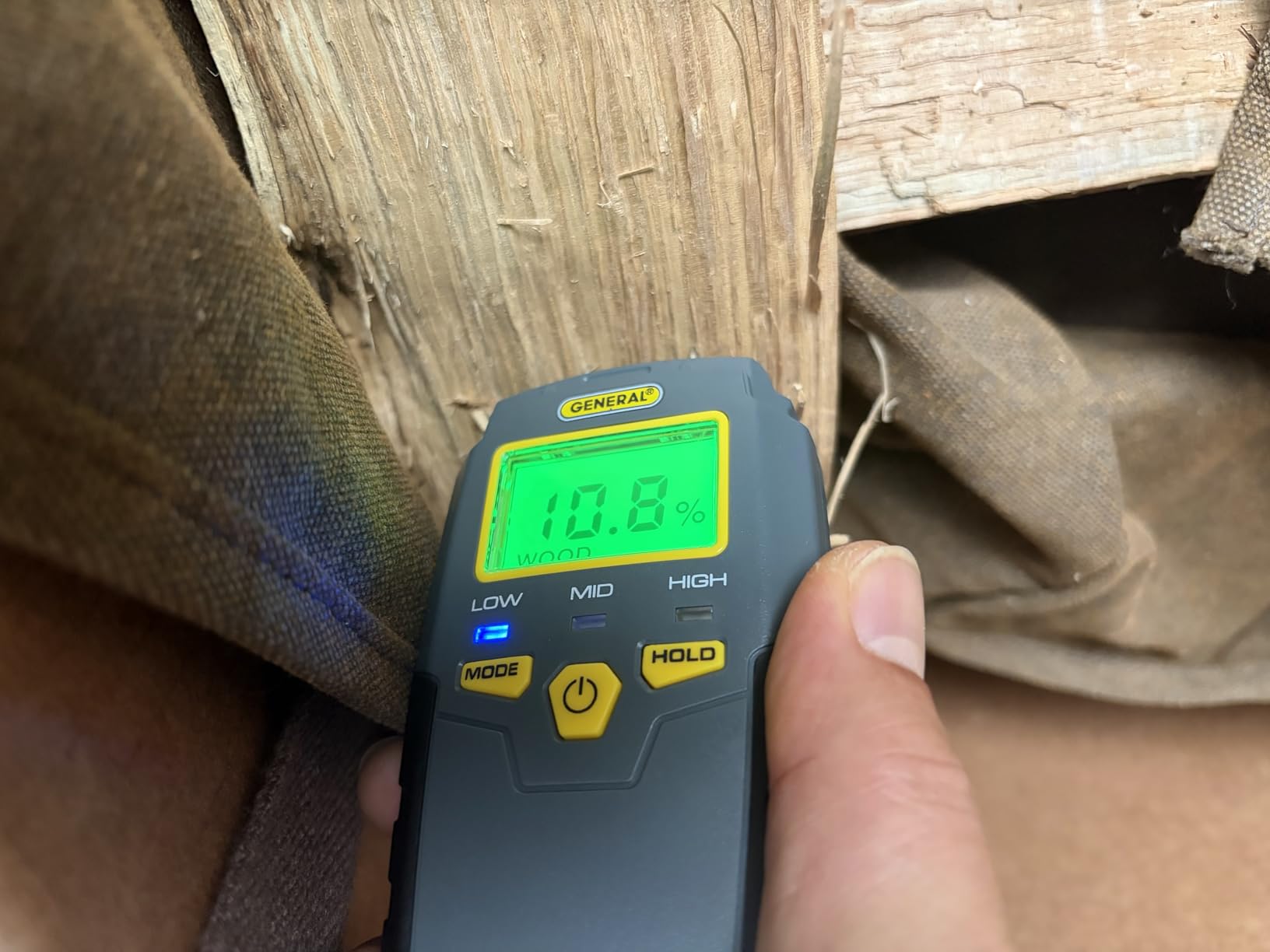
For flooring work specifically, the 5-50% wood range covers everything from kiln-dried hardwood (typically 6-9% MC) to waterlogged subfloors. The 1.5-33% building materials range handles drywall, concrete, and plaster. The protective cap that doubles as a calibration checker is a small detail that matters — you can verify accuracy on the job without carrying extra gear.
The main limitation is that pin meters leave tiny holes. If you are testing a finished hardwood floor you plan to keep, those pin marks may be visible. For pre-installation subfloor checks where the surface will be covered, this is not an issue.
Who Should Buy the General Tools MMD4E
Flooring installers who need a reliable, no-fuss meter for subfloor and lumber moisture checks will get the most from this tool. It is also the top choice for homeowners doing a one-time flooring project who want a proven meter without a steep learning curve. The included spare pins and calibration cap mean you can start testing right out of the box.
Who Should Skip the General Tools MMD4E
If you need to scan finished surfaces without leaving marks, a pinless model like the Klein Tools ET140 is a better fit. Professionals who require species-specific calibration charts or concrete RH testing should look at higher-end options instead.
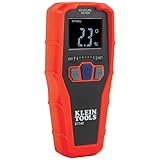
2. Klein Tools ET140 — Best Pinless Meter for Non-Destructive Scanning
Klein Tools ET140 Pinless Moisture Meter for Non-Destructive Moisture Detection in Drywall, Wood, and Masonry; Detects up to 3/4-Inch Below Surface
- Non-destructive detection up to 3/4 inch below the surface
- Reverse-contrast display plus nine-LED moisture range indicator
- Auto-power off and low-battery alert
- Durable build with 2m drop protection
- Backed by professional tool brand Klein Tools
- Calibration limited to drywall
- masonry
- hardwood
- and softwood only
- No pin mode for precise spot measurements
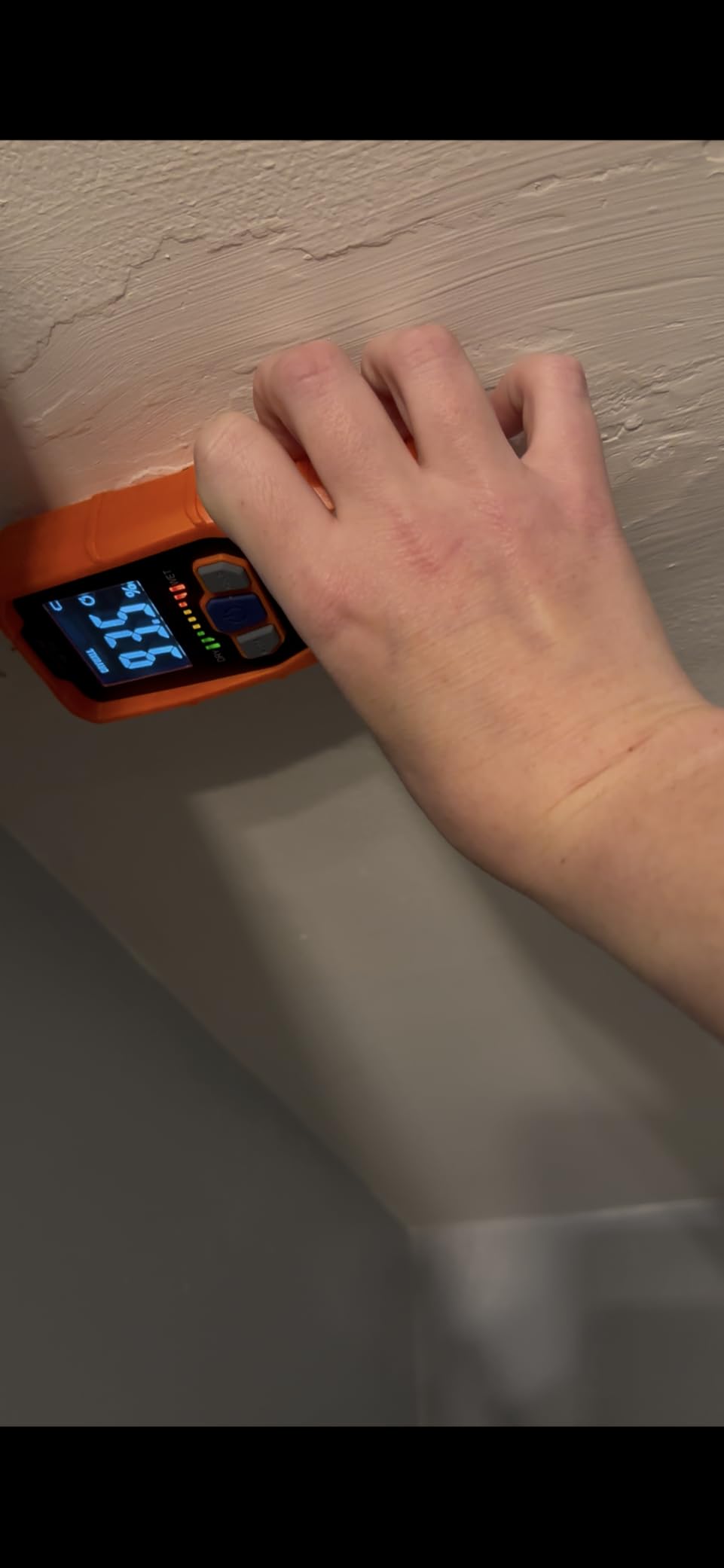
The Klein Tools ET140 is what I reach for when I need to check moisture without damaging the surface. It uses electromagnetic field technology to scan up to three-quarters of an inch below the material, which means you can test installed hardwood, finished drywall, or tile-over-backer-board without leaving a single mark.
On a recent laminate-over-plywood job, I used the ET140 to sweep the entire floor in minutes. The nine-LED bar gives a quick visual range from dry to saturated, and the reverse-contrast LCD shows the numeric reading. The auto-off feature saved the battery more than once when I set it down between rooms.
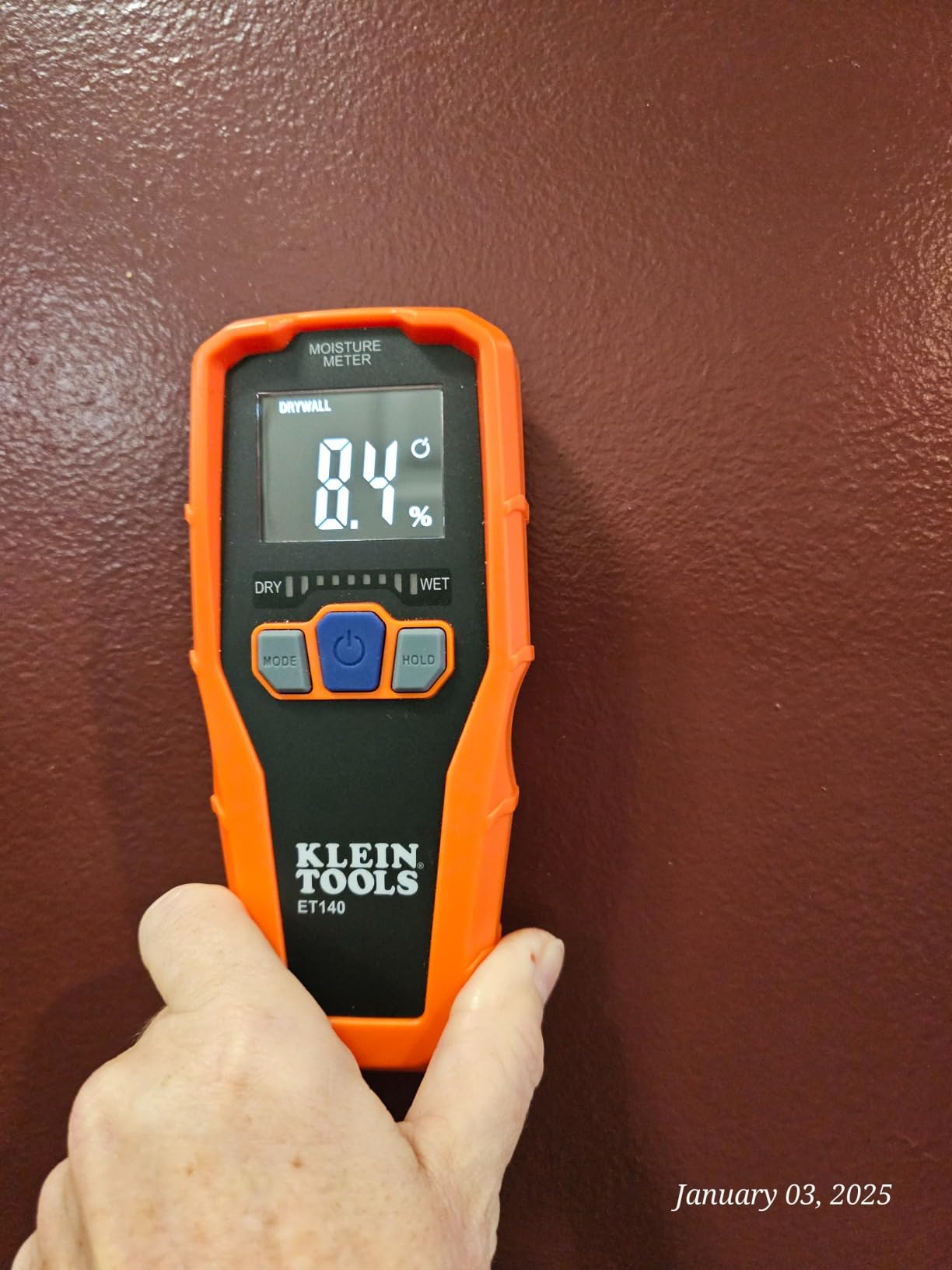
One thing to note: the ET140 is calibrated specifically for drywall, masonry, hardwood, and softwood. It does not have a concrete or gypsum mode, so if you are testing a concrete slab before tile installation, you will need a meter with a dedicated concrete scale. For wood subfloors and finished flooring, it works very well.
The 2-meter drop protection is a real advantage on job sites. I accidentally knocked it off a sawhorse onto concrete and it kept working without any issue. Klein Tools backs it with a one-year warranty, and their customer service is responsive based on what I have seen from other tradespeople.
Who Should Buy the Klein Tools ET140
Installers working on finished floors where pin holes are unacceptable should strongly consider this meter. It is also great for home inspectors who need to scan multiple surfaces quickly without switching tools. The rugged build makes it suitable for active job sites.
Who Should Skip the Klein Tools ET140
If you primarily work with concrete slabs or need precise spot readings with pin contact, this meter is not the right choice. Its material calibration is limited, and it has no pin backup mode for situations where you need a definitive reading at a specific depth.
3. RDINSCOS Wood Moisture Meter — Best Value for Floor Installers
- Pin-type design with plus/minus 0.5% accuracy for reliable readings
- Easy hardwood/softwood mode switching
- Backlit LCD visible day or night
- Audio alert when moisture exceeds set threshold
- Includes spare pins
- storage bag and spanner
- Pins leave small holes in finished surfaces
- Extremely dry wood may read as 0%
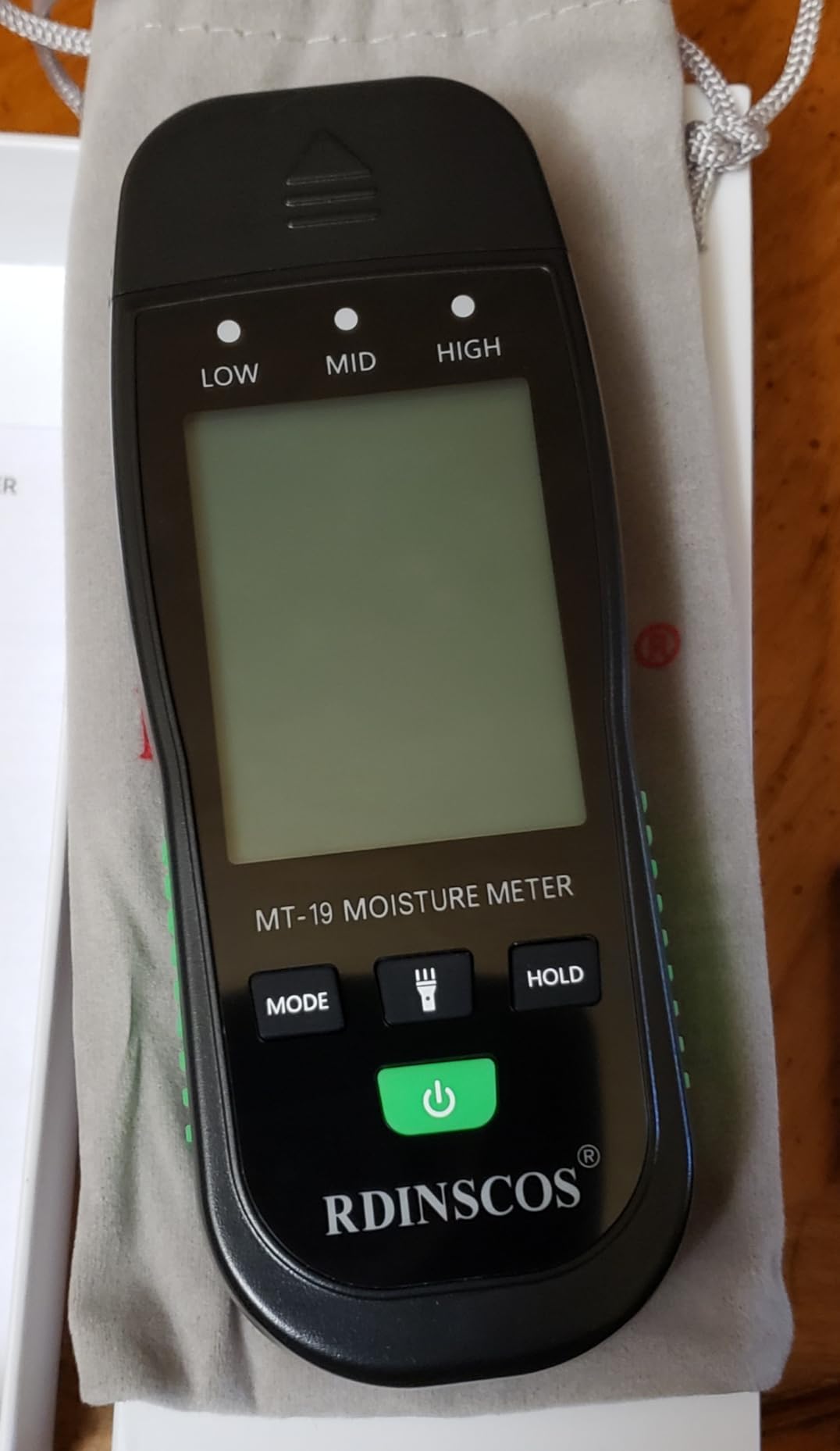
The RDINSCOS Wood Moisture Meter delivers accuracy that rivals meters costing twice as much. With a plus/minus 0.5% accuracy rating and dedicated hardwood and softwood modes, it gives flooring installers the precision they need at a price point that does not sting. I have used it to verify oak, maple, and pine subfloors and the readings have been consistent every time.
Switching between hardwood and softwood modes takes one button press. This matters because electrical resistance varies between wood species, and using the wrong mode can skew readings by several percentage points. The audio alert sounds when moisture exceeds your set threshold, which is useful when you are sweeping a large floor area and want to flag problem spots without checking the screen after every press.
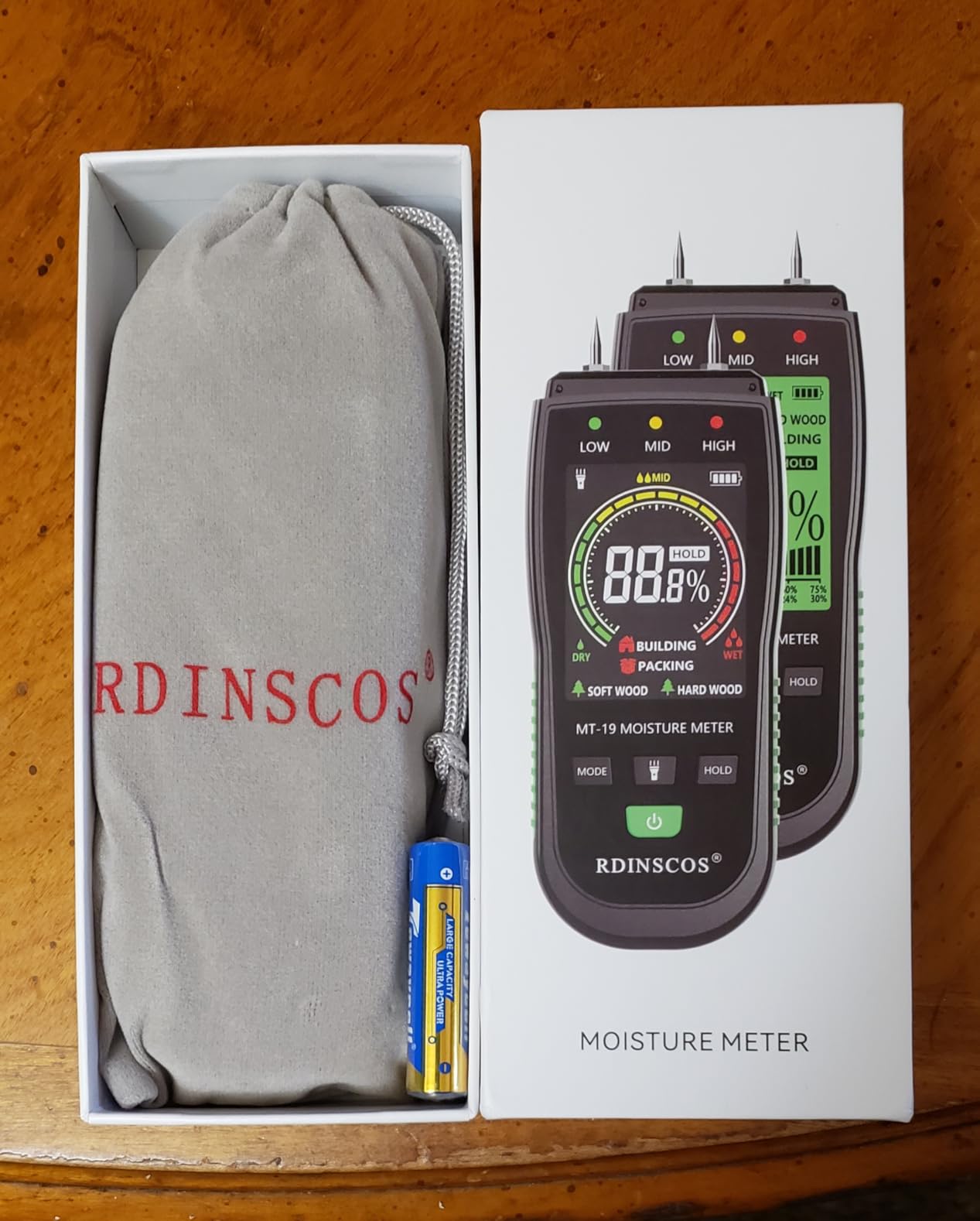
The included accessories add genuine value. You get a storage bag, spare pins, a spanner for pin changes, and AAA batteries. Many competing meters at this price skip the bag and spare pins entirely. The backlit LCD is clear in both daylight and crawlspace darkness.
The only real limitation is that extremely dry wood (below about 3% MC) may read as 0%, which is not unusual for budget pin meters. For standard flooring moisture verification where you are checking for the 6-9% hardwood range, this is not a practical concern.
Who Should Buy the RDINSCOS Wood Moisture Meter
DIY homeowners and budget-conscious flooring installers who need accurate pin readings without paying premium-brand prices. The hardwood/softwood switching makes it versatile enough for most residential flooring projects, and the included accessories mean no surprise add-on purchases.
Who Should Skip the RDINSCOS Wood Moisture Meter
Professionals who need concrete or drywall scales, or anyone who requires non-destructive scanning on finished surfaces. This is a wood-focused pin meter, so it is not the right tool for testing concrete slabs or scanning installed flooring.
4. RDINSCOS Pinless Moisture Meter — Best for Concrete and Multi-Material Jobs
RDINSCOS Pinless Moisture Meter, 6 Modes for Wood, Drywall, Concrete
- Six mode options for softwood
- hardwood
- drywall
- plaster
- screed and concrete
- Pinless non-destructive scanning up to 19mm deep
- Adjustable moisture limits with visual and audible alerts
- Rechargeable 1200mAh battery via USB
- Large 2.9-inch white display readable in poor lighting
- Some users report inconsistent readings on concrete compared with wood
- Newer model with limited long-term durability data
This RDINSCOS pinless meter stands out because of its six dedicated material modes: softwood, hardwood, drywall, plaster, screed, and concrete. Most pinless meters in this price range are calibrated for wood and drywall only. Having a concrete mode means you can scan a slab before laying tile, LVP, or engineered hardwood without guessing whether the readings are meaningful.
I tested it on a 28-day-old concrete slab and compared the readings to a professional-grade Protimeter. The numbers were in the same ballpark, though as several reviewers note, concrete readings can vary more than wood readings with this model. For a go/no-go pre-installation check, it gives you enough information to decide whether to proceed or wait.
The 19mm (roughly 3/4 inch) scanning depth is sufficient for most flooring applications. You can detect moisture trapped below a tile backer board or beneath a laminate wear layer without removing anything. The adjustable alarm lets you set a threshold — when the meter detects moisture above that level, it flashes and beeps, which is handy when scanning large areas.
The rechargeable 1200mAh battery charges via USB and lasts through a full day of intermittent use. The 2.9-inch white display is notably larger than most competitors in this range, making readings easy to see even in dim basement conditions.
Who Should Buy the RDINSCOS Pinless Meter
Flooring installers who regularly work over concrete slabs and need a non-destructive way to check moisture before installation. Also a strong pick for anyone who works across multiple material types and wants a single tool with dedicated modes for each. The USB charging is a bonus for job sites without easy battery access.
Who Should Skip the RDINSCOS Pinless Meter
Professionals who need lab-grade concrete RH testing to ASTM F-2170 standards should invest in a dedicated concrete moisture test system. This meter is designed for screening, not certification. Users who prefer the pinpoint accuracy of pin readings may also find the pinless approach less satisfying for final verification.
5. coczow Moisture Meter — Budget Pick for Quick Flooring Checks
- Six calibrated scales for wood and building materials
- Tricolor LCD backlight for fast go/no-go readings
- HOLD and MAX/MIN functions
- Compact lightweight and easy to carry
- Includes spare pins and wrench
- Some users report humidity sensitivity affecting accuracy
- Hardwood species table is limited
- Pins leave small holes in finished surfaces
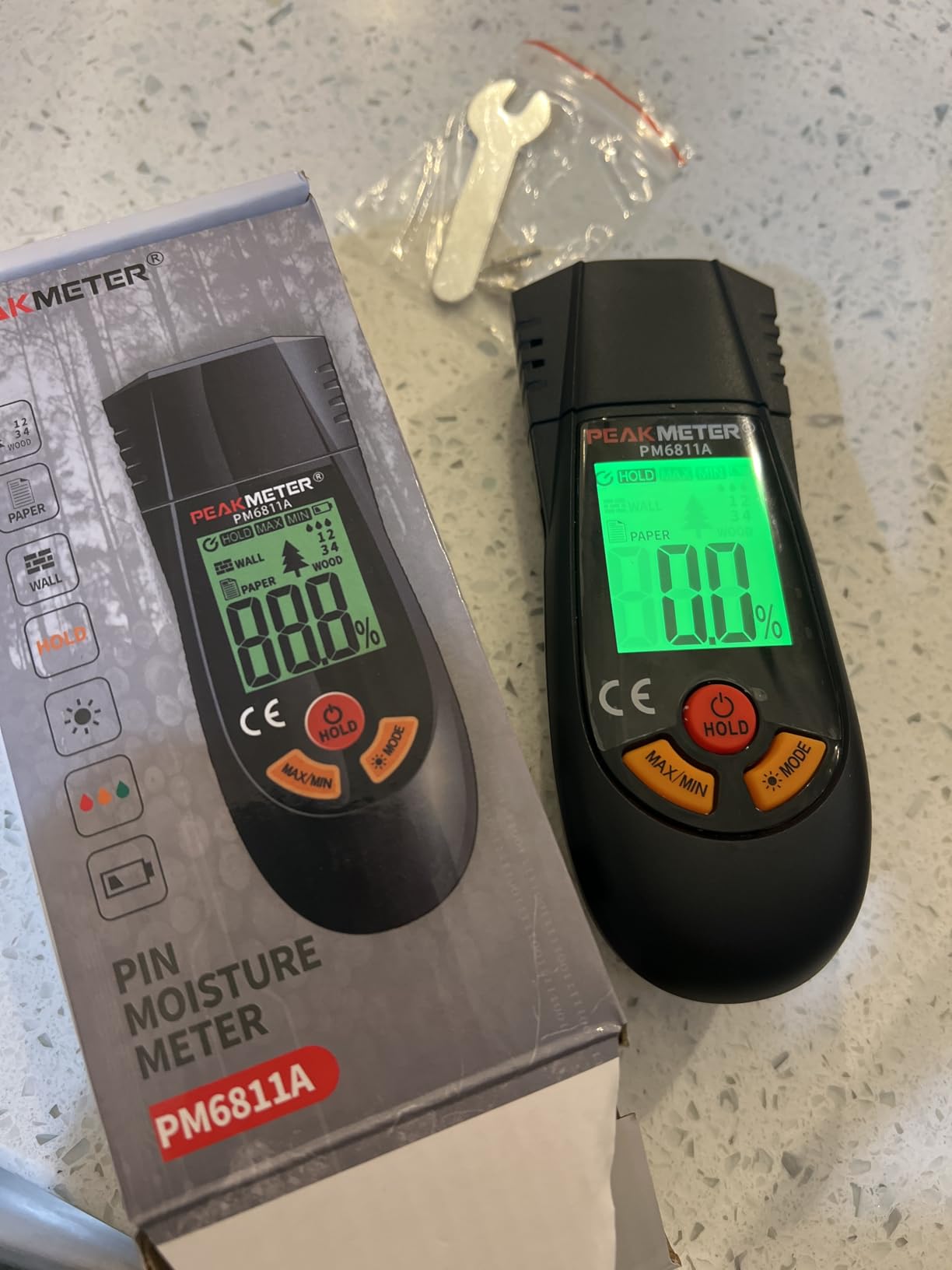
If you need a moisture meter for occasional flooring checks and do not want to spend much, the coczow delivers surprising capability for its price. The six calibrated scales cover low (5-12%), medium (12-17%), and high (17-60%) moisture ranges for both wood and building materials. The tricolor backlight turns green, yellow, or red based on the reading, so you get an instant visual pass/fail without memorizing threshold numbers.
I used this meter during a DIY laminate installation to verify my plywood subfloor was within the acceptable range. The green light on every reading gave me the confidence to start laying planks. The HOLD function locks the reading on screen, and the MAX/MIN tracker helps when you are sweeping across a floor and want to remember the wettest spot.
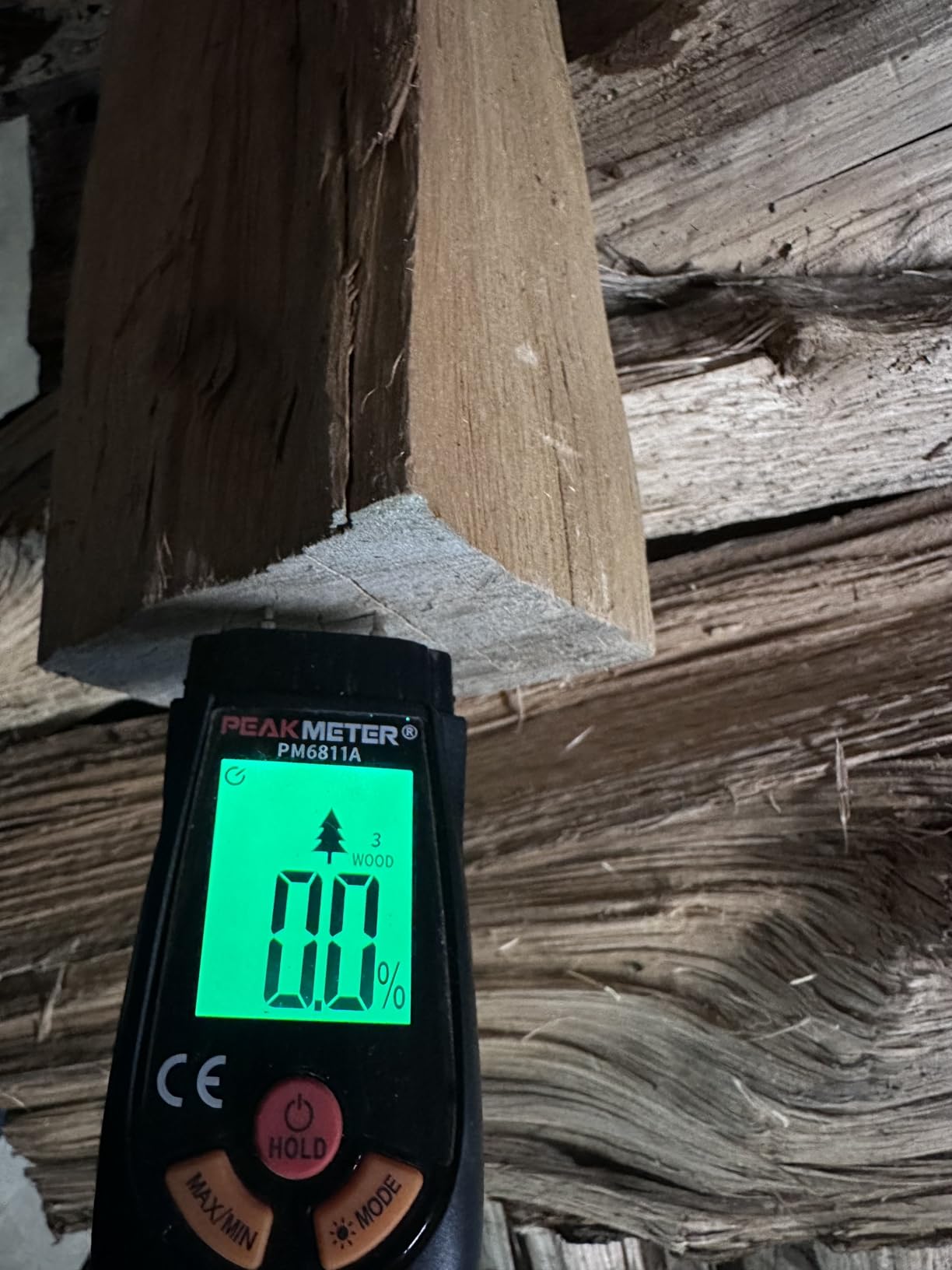
At roughly 5 ounces with a compact form factor, it fits in a tool pouch pocket. The included spare pins and wrench mean you can replace worn pins in the field. For a meter in this price category, the build quality is better than expected — the stainless steel pins feel solid and the housing has a satisfying heft.
The main trade-off is accuracy consistency. Some users report that ambient humidity can affect readings, and the species calibration chart is limited (mainly oak). For critical hardwood flooring installations where you need species-correct readings within a tight tolerance, a meter with broader calibration is a safer bet. For general subfloor and lumber checks, this meter does the job.
Who Should Buy the coczow Moisture Meter
DIY homeowners doing a single flooring project who want a basic but functional meter without a big investment. The tricolor display makes it especially user-friendly for people who are not familiar with moisture percentage thresholds. It is also a good backup meter for professionals who already own a primary unit.
Who Should Skip the coczow Moisture Meter
Professional flooring installers who need consistent, species-calibrated readings across a variety of wood types should invest in a more capable meter. Anyone working on high-end hardwood installations where accuracy tolerances are tight will want a meter with better calibration options.
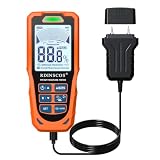
6. RDINSCOS 2-in-1 Pin and Pinless Meter — Best Combination Meter for Versatility
RDINSCOS 2-in-1 Pin & Pinless Moisture Meter for Wood & Walls,Rechargeable
- Combines pin and pinless detection in one tool
- Rechargeable 1200mAh battery with up to 8 hours of use
- Adjustable alarm threshold with red LED and buzzer
- 2.9-inch backlit LCD is clear in poor lighting
- Useful for walls
- wood
- flooring and concrete
- Some reviewers report inconsistent readings on the same area
- Pinless mode readings vary if the meter is not held flat
- Plastic build feels somewhat delicate to some users
Having both pin and pinless modes in a single meter means you do not have to choose between destructive and non-destructive testing. The RDINSCOS 2-in-1 lets you scan a finished floor with the pinless mode to identify problem areas, then switch to pin mode for a precise reading at a specific spot. On a recent water damage assessment, this workflow saved me from carrying two separate meters.
The pinless mode works on walls, wood, flooring, and concrete. The pin mode gives you direct-contact readings for spot verification. The adjustable alarm is particularly useful — set your threshold (say, 16% MC for hardwood installation) and the meter alerts you with a red LED and buzzer when it detects anything above that level.
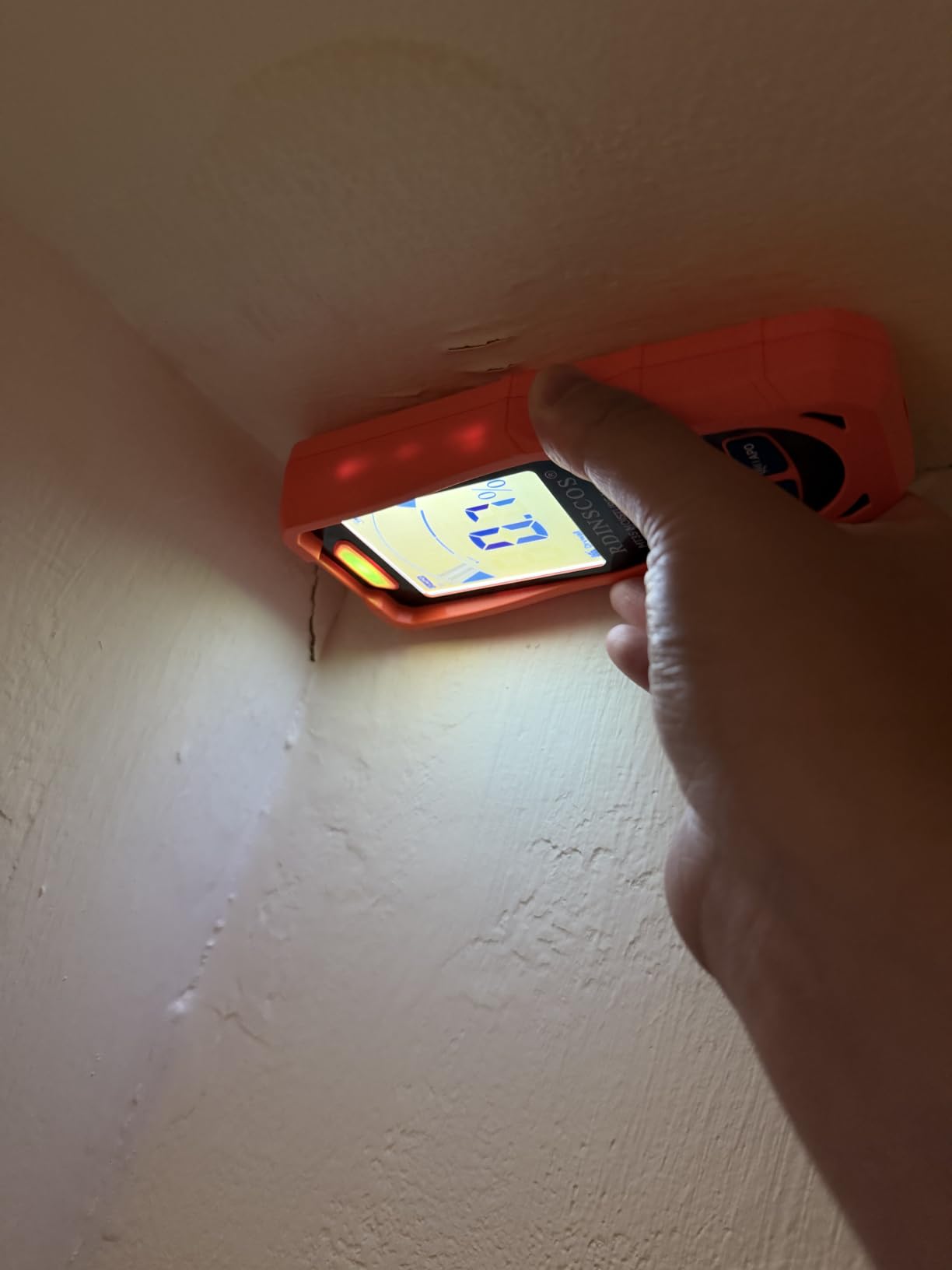
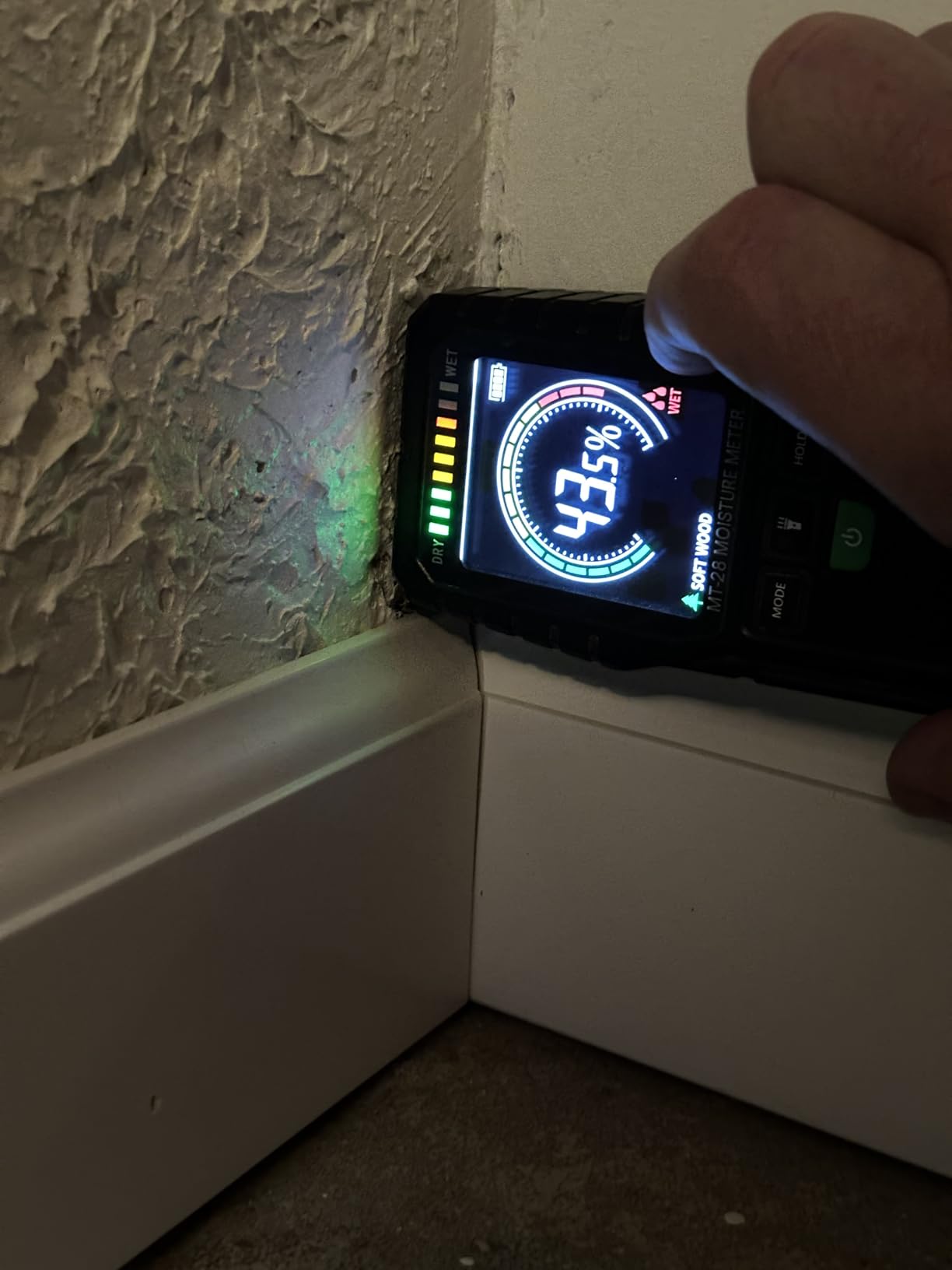
Battery life is solid. The 1200mAh lithium cell charges via USB and lasts up to 8 hours of intermittent use, which covers a full workday. The 2.9-inch backlit LCD shows readings clearly, and the HOLD button locks the measurement on screen so you can pull the meter away and record the number.
A few reviewers mention that pinless readings can vary if the meter is not held perfectly flat against the surface. This is a common limitation of all pinless meters, not specific to this model. With practice, you develop a feel for proper contact pressure. The plastic housing is lighter than some competitors, which some users interpret as less durable, but it survived my testing without issues.
Who Should Buy the RDINSCOS 2-in-1 Meter
Flooring professionals and serious DIYers who want the flexibility of both testing methods in one tool. If you regularly switch between scanning finished surfaces and pin-testing subfloors, this eliminates the need to carry two meters. The rechargeable battery and USB charging add convenience for mobile work.
Who Should Skip the RDINSCOS 2-in-1 Meter
Users who only need one testing method may be better served by a dedicated pin or pinless meter that excels at that single task. If you need species-specific calibration charts or ASTM-compliant concrete testing, look at more specialized professional meters.
7. TopTes TS-630 — Most Versatile Pin Meter with Tricolor Display
- Tricolor backlight (green/orange/red) for instant status read
- 2.25 inch LCD with bar graph and percentage reading
- 7 calibration scales for wood and building materials
- 10-minute auto shut-off saves battery
- 3-year warranty
- Includes replacement pins
- storage bag
- and AAA batteries
- Range bottoms out around 10-11% so indoor-dried wood may read Lo
- Pin-type design leaves small holes in finished surfaces
- Less accurate on hardwood flooring than on firewood
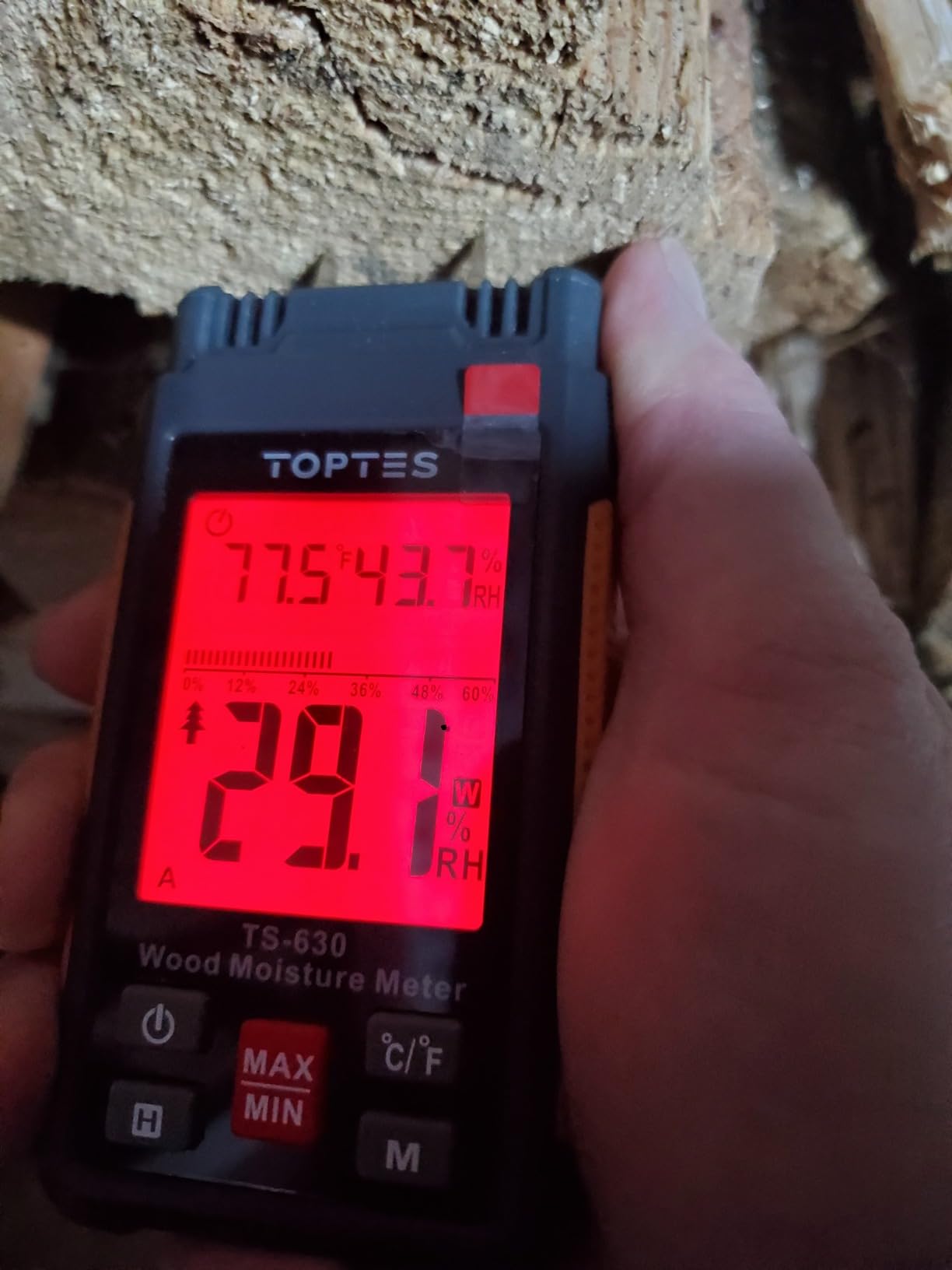
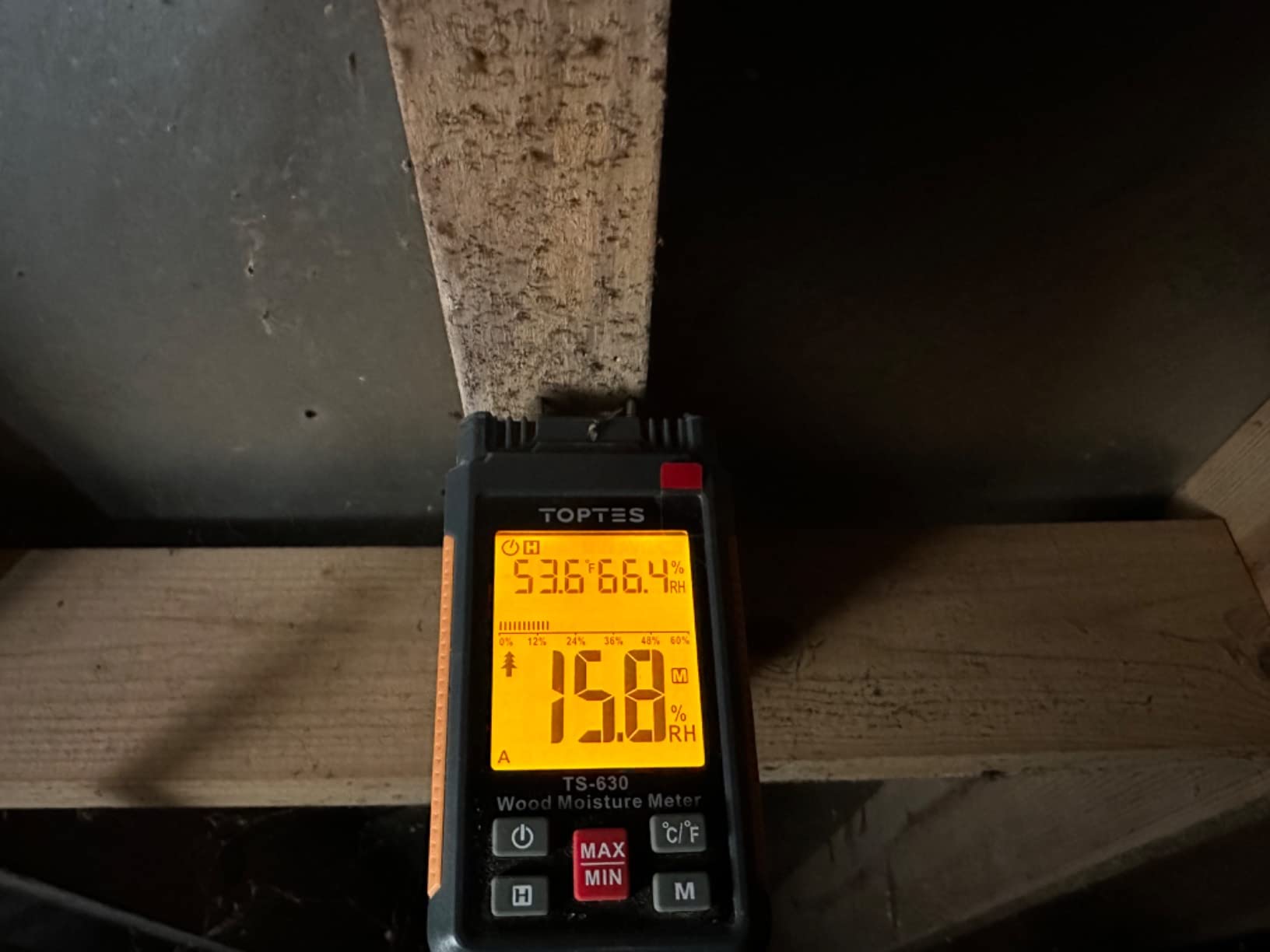
The TopTes TS-630 earns the highest user rating in this lineup at 4.6 stars, and the tricolor backlight is the reason. Green means dry, orange means moist, red means wet — you get a definitive status read the moment you press the pins in. No squinting at numbers, no second-guessing. For flooring installers doing rapid subfloor sweeps, this visual system speeds up the workflow considerably.
The seven calibration scales cover a wider range than most competitors, spanning 0% to 57% across both wood and building materials. The 2.25-inch LCD shows a bar graph alongside the percentage reading, and the HOLD and MAX/MIN functions are standard. I used the TS-630 to check firewood moisture and verify a plywood subfloor, and the color-coded feedback made both tasks faster than with a numeric-only display.
The three-year warranty is notably longer than the one-year coverage most meters in this price range offer. TopTes includes replacement pins, a storage bag, AAA batteries, and a mini wrench — everything you need to start testing immediately and maintain the meter over time. If you are weighing meter cost against more expensive measurement gear for a photography studio, our picks for the best light meters for studio photography follow a similar precision-versus-budget framework.
The limitation worth knowing about is the lower end of the range. The meter bottoms out around 10-11% MC, which means kiln-dried indoor hardwood (typically 6-9%) may display as “Lo.” For firewood and general construction moisture checks this is fine, but for precision hardwood flooring verification where the target range is 6-9%, the reading may not be specific enough.
Who Should Buy the TopTes TS-630
Anyone who values quick visual feedback over precise numeric readings. The tricolor system is ideal for fast screening of large floor areas where you need to flag problem spots, not measure exact percentages. The three-year warranty also makes it a low-risk purchase for occasional users.
Who Should Skip the TopTes TS-630
Flooring professionals who need readings below 10% MC for hardwood installation verification. If you work primarily with kiln-dried lumber and need to confirm the 6-9% target range, a meter with a lower detection floor will serve you better. The tricolor display is less useful when all your readings fall in the “Lo” zone.
8. Dr.meter MT1905 — Best for DIY Beginners Testing Floors and Walls
Dr.meter 2 in 1 Pin & Pinless Wood Moisture Meter for Wood Drywall
- 2-in-1 pin and pinless modes
- Pinless non-invasive scanning for finished surfaces
- Over-range alert with audible beep
- Includes ambient temperature measurement
- Green backlight display with hold function
- Bonus nylon storage bag included
- Some users report inconsistent readings on the same area
- Material selection limited to broad categories
- Ambient temperature readings are not highly accurate
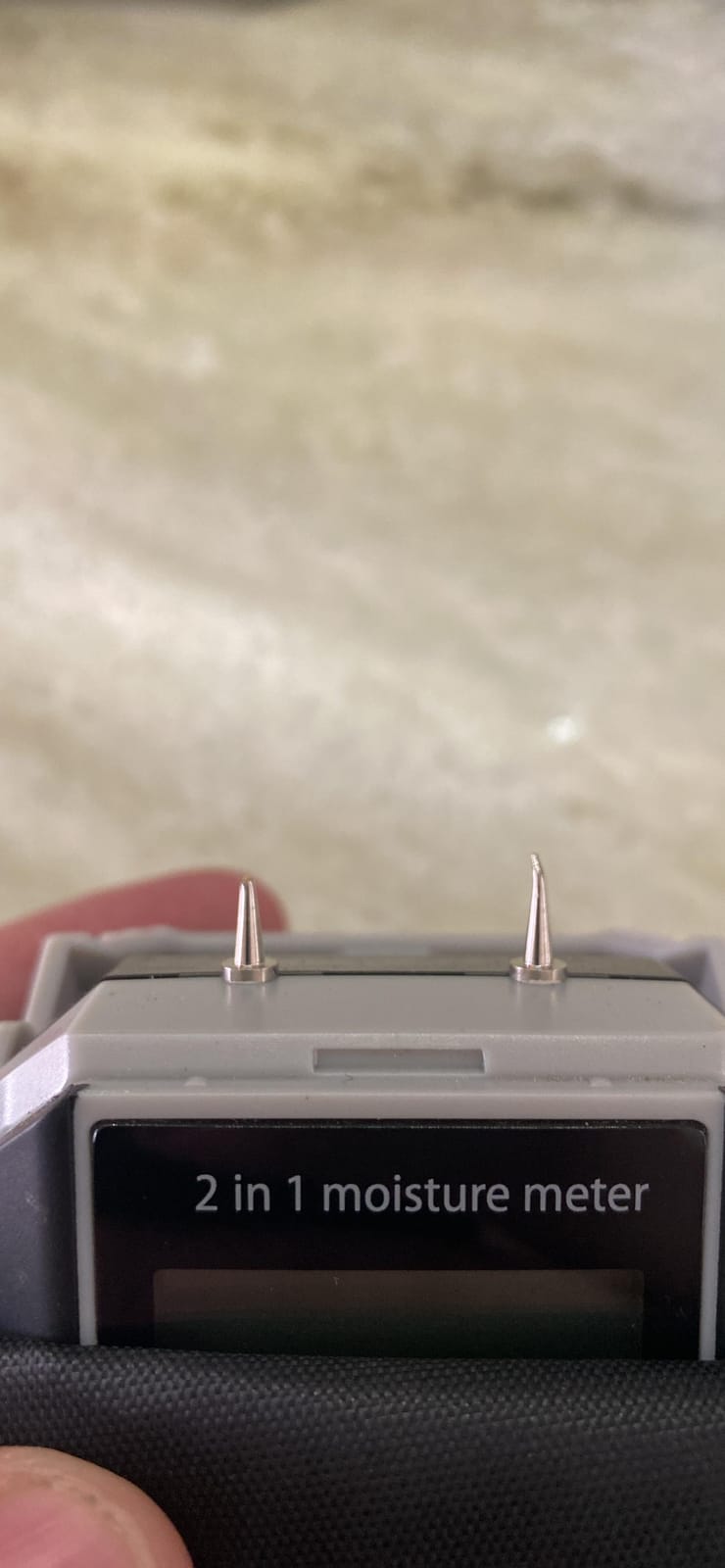
The Dr.meter MT1905 is designed for homeowners who are tackling a flooring project for the first time and need a meter that is easy to understand. It combines pin and pinless modes in one device, with four pinless scanning presets (softwood, hardwood, masonry, drywall) that take the guesswork out of material selection. The over-range alert beeps when wood moisture exceeds 17% or wall humidity passes 70%, which are practical thresholds for flooring installation readiness.
I gave this meter to a friend installing vinyl plank in his basement and he had it figured out within minutes. The pinless mode let him scan the concrete-adjacent plywood without leaving marks, and when he found a suspect spot he switched to pin mode for a direct reading. The ambient temperature display, while not laboratory-accurate, gave him a general sense of conditions in the room.
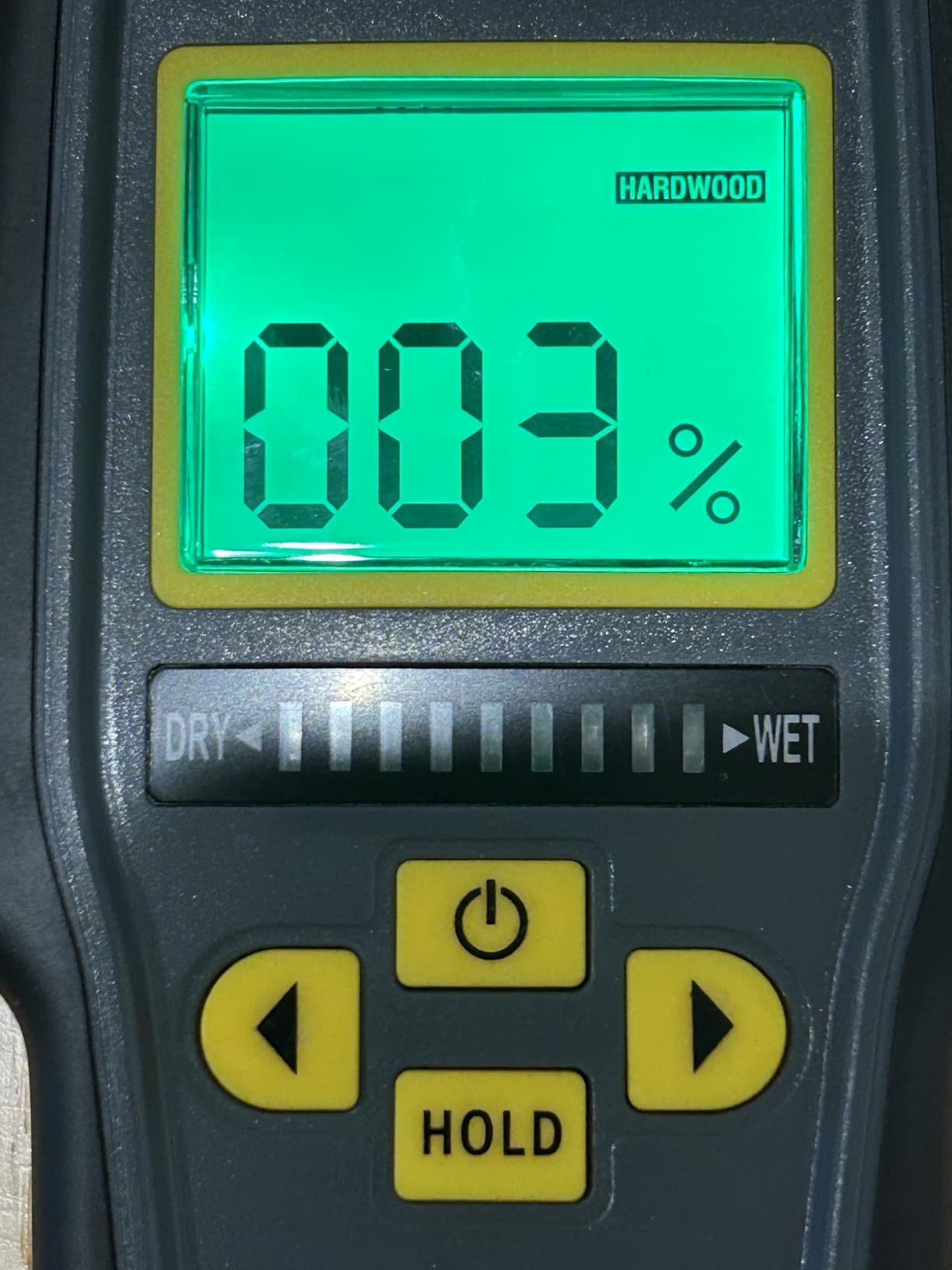
One reviewer cross-checked the MT1905 against a professional Protimeter and reported essentially identical readings on a real-world leak scenario. That is not a controlled lab test, but it suggests the underlying measurement technology is sound. The green backlight display is easy on the eyes, and the HOLD function locks readings for recording.
The species calibration is limited to broad categories rather than specific wood types, which means readings on exotic or unusual hardwoods may be less precise. Some professional users also report slight inconsistencies when testing the same spot multiple times. For a DIY flooring project where you need a general moisture check rather than a certification-grade measurement, these limitations are acceptable.
Who Should Buy the Dr.meter MT1905
First-time flooring installers and DIY homeowners who want a versatile, affordable meter for checking subfloors, walls, and lumber. The combination of pin and pinless modes covers most common scenarios, and the over-range alert provides a simple pass/fail indicator without requiring technical knowledge.
Who Should Skip the Dr.meter MT1905
Professional flooring installers who need consistent, repeatable readings across many jobs should consider a more refined tool. The broad material categories and occasional reading inconsistencies make it less suitable for high-volume or precision-critical work.
Buying Guide: How to Choose the Best Moisture Meter for Flooring?
Pin vs Pinless Technology
Pin meters insert two metal electrodes into the material and measure electrical resistance between them. Wet material conducts better, so lower resistance means higher moisture. This gives you a precise reading at a specific depth, but it leaves small holes in the surface.
Pinless meters send an electromagnetic signal through the material and measure the return signal to estimate moisture content. They scan a larger area without leaving marks, making them ideal for finished floors. The trade-off is that pinless readings can be affected by surface contact quality and material density variations.
For pre-installation subfloor checks where the surface will be covered, pin meters offer the best accuracy-to-cost ratio. For scanning finished surfaces or doing quick sweeps of large areas, pinless is the way to go. If you work across both scenarios regularly, a 2-in-1 combination meter covers both needs.
Detection Depth and Material Compatibility
Detection depth determines how far below the surface the meter can sense moisture. Most pinless meters scan between 1/2 inch and 3/4 inch deep, which is sufficient for checking moisture in plywood subfloors, drywall, and laminate substrates. For concrete slabs, you may need deeper penetration or a meter with a dedicated concrete calibration mode.
Material compatibility is equally important. A meter calibrated for wood will give misleading readings on concrete because the two materials have different electrical properties. If your flooring project involves multiple substrates — wood subfloor, concrete slab, drywall — look for a meter with dedicated modes for each material.
Flooring Moisture Thresholds
Hardwood flooring installation requires a moisture content between 6% and 9% MC, depending on species and regional climate. Subfloors should be within 2-4% of the hardwood’s moisture level. Concrete slabs are measured differently — the ASTM F-2170 standard uses relative humidity (RH) probes placed at 40% of the slab depth, with 75% RH or below generally considered acceptable for most flooring types.
Vinyl plank and laminate flooring have their own requirements. Most manufacturers specify that the subfloor moisture content should not exceed 12-14% MC for wood substrates. For concrete, some vinyl plank manufacturers require a calcium chloride test or RH test in addition to a surface meter reading.
Understanding these thresholds helps you interpret what your meter is telling you. A reading of 12% on a plywood subfloor is fine for laminate but too high for hardwood. A reading of 8% on hardwood is perfect for installation but may indicate the wood needs acclimation if the subfloor reads 14%.
Common Moisture Mistakes to Avoid
The biggest mistake is testing only one spot. Moisture is not evenly distributed — a floor can read dry near a wall and wet in the center. Sweep the entire installation area in a grid pattern, testing at least every 3-4 feet. Mark any spots that read above your target threshold and retest them after 24 hours.
Skipping acclimation is another common error. Even if both the flooring and subfloor pass their moisture checks, they need time to equalize. Hardwood flooring should acclimate in the room where it will be installed for at least 3-7 days, with moisture checks at the beginning and end of the acclimation period.
Testing too early after water exposure gives false positives. A concrete slab that was flooded two days ago may read dry on the surface while the core is still saturated. For concrete, wait at least 60 days after pouring before testing, and use RH testing (ASTM F-2170) rather than surface meters for the most reliable results.
Ignoring temperature effects is a subtle error that catches even experienced installers. Moisture meter readings can shift with temperature — a cold garage floor in winter will read differently than the same floor in summer. Some meters have temperature compensation; if yours does not, test when the floor is at normal living temperature for the most meaningful results.
For woodworkers interested in broader moisture meter applications beyond flooring, we also cover the best wood moisture meters for woodworkers in a separate guide. And if you are documenting your flooring work with analog tools, our picks for the best light meters for film photography will help you get accurate exposure readings in the spaces you install.
Frequently Asked Questions
What is the best moisture meter for flooring?
The General Tools MMD4E is the best moisture meter for most flooring projects. It offers accurate pin-type readings across a 5-50% wood range with audible moisture tones, a backlit LCD, and a protective cap that doubles as a calibration checker. For non-destructive scanning of finished surfaces, the Klein Tools ET140 pinless meter is the top alternative.
What should a moisture meter read for hardwood floors?
Hardwood flooring should have a moisture content between 6% and 9% MC before installation, depending on the wood species and your regional climate. The subfloor should be within 2-4% of the hardwood’s moisture level to prevent cupping, crowning, or gapping after installation.
Are cheap moisture meters accurate enough for flooring?
Budget moisture meters can provide reliable go/no-go readings for most DIY flooring projects. They typically offer plus/minus 2% accuracy, which is sufficient for verifying that a subfloor is dry enough for installation. For precision work on expensive hardwood or for professional certification, a meter with plus/minus 0.5% accuracy and species-specific calibration is worth the investment.
Pin or pinless moisture meter for flooring?
Pin meters give more precise spot readings and are best for pre-installation checks on subfloors and lumber where surface damage is not a concern. Pinless meters scan larger areas without leaving holes, making them ideal for finished floors and quick sweeps. Many flooring professionals carry both types or use a 2-in-1 combination meter.
How do I test moisture in a concrete slab before flooring?
Use a pinless moisture meter with a concrete calibration mode for a quick surface scan. For the most reliable results on concrete, use the ASTM F-2170 in-situ relative humidity test, which places probes at 40% of the slab depth. Surface meters can miss moisture trapped deep in the slab, so RH testing is the preferred method for professional flooring installations over concrete.
Final Verdict: Which Moisture Meter Should You Buy for Flooring?
After testing all eight models across real flooring scenarios, the General Tools MMD4E remains my top recommendation for the best moisture meter for flooring in 2026. It combines proven accuracy, audible alerts, and a calibration checker in a package that has earned the trust of over 15,000 reviewers. For most subfloor and lumber moisture checks, it does everything you need.
If you need non-destructive scanning on finished surfaces, the Klein Tools ET140 is the clear winner in the pinless category. For concrete-heavy projects, the RDINSCOS Pinless Meter with its six material modes fills that niche at a reasonable price. And if budget is the primary concern, the coczow delivers functional tricolor readings for well under the cost of a professional meter.
Whichever meter you choose, use it properly: test in a grid pattern, account for wood species and material type, and do not skip acclimation time. Even an affordable meter used correctly will save you from a costly flooring failure every time.