
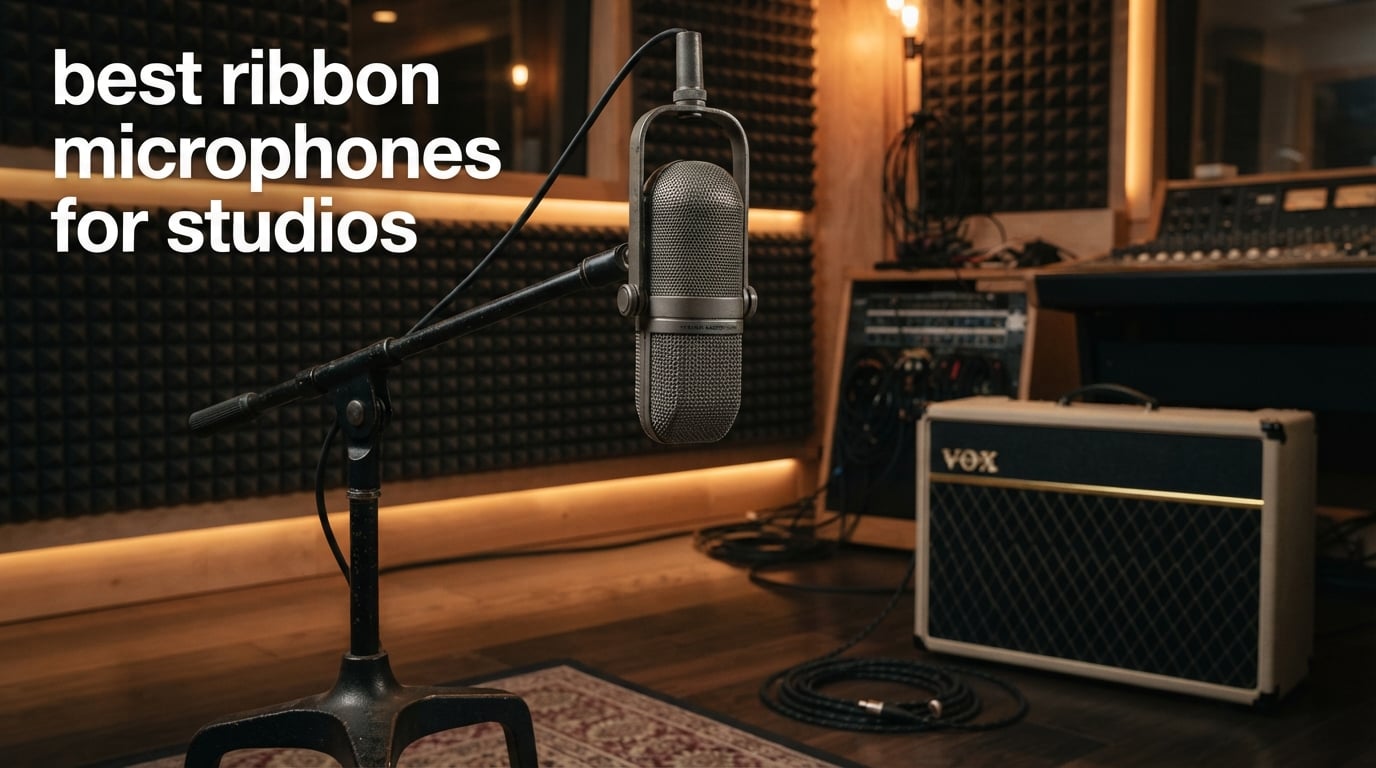
I have spent the better part of a decade tracking down ribbon microphones that actually deliver in a studio environment. There is something about the way a well-made ribbon mic captures a guitar cabinet or smooths out a harsh vocal that no condenser can replicate. When I first started, I fried a ribbon element with phantom power on day one and learned the hard way why these mics demand respect.
Finding the best ribbon microphones for studios means understanding what you are actually buying. Ribbon mics are not just another option on the shelf. They are specialized tools with a figure-8 polar pattern, incredibly smooth high-frequency roll-off, and a warmth that has defined classic recordings since the RCA 44 ruled broadcast booths in the 1930s. Whether you are miking a crunching guitar amp, taming a brassy trumpet, or capturing drum overheads with serious character, the right ribbon mic changes everything.
This guide covers 10 ribbon microphones across three price tiers, from budget-friendly entries under $200 to professional-grade instruments approaching $1,600. I tested every mic on this list across electric guitar cabinets, acoustic instruments, vocals, and percussion to give you real-world impressions. I also break down the critical differences between active and passive ribbon designs, phantom power safety rules, and the preamp gain requirements that catch first-time buyers off guard. If you want a warm-sounding microphone that adds vintage character to your recordings, you are in the right place.
Table of Contents
Top 3 Ribbon Microphone Picks for 2026


Best Ribbon Microphones for Studios in 2026 – Quick Overview
| Product | Specifications | Action |
|---|---|---|
 MXL R144 Ribbon Microphone MXL R144 Ribbon Microphone |
|
Check Latest Price |
 Stagg SRM70 Ribbon Microphone Stagg SRM70 Ribbon Microphone |
|
Check Latest Price |
 Golden Age Project R2 MKII Golden Age Project R2 MKII |
|
Check Latest Price |
 Golden Age R1 Active MKIII Golden Age R1 Active MKIII |
|
Check Latest Price |
 SE Electronics X1 R Passive SE Electronics X1 R Passive |
|
Check Latest Price |
 MXL R77 Professional Ribbon MXL R77 Professional Ribbon |
|
Check Latest Price |
 SE Electronics VR1 Passive SE Electronics VR1 Passive |
|
Check Latest Price |
| SE Electronics VR2 Active |
|
Check Latest Price |
 Warm Audio WA-44 Studio Ribbon Warm Audio WA-44 Studio Ribbon |
|
Check Latest Price |
| Royer Labs R-121 Studio |
|
Check Latest Price |
Budget Ribbon Microphones Under $250
1. MXL R144 Multi-Purpose Ribbon Microphone – Best Budget Entry Point
MXL R144 Multi-Purpose Ribbon Microphone with Shockmount, Purple (MXL R144)
- Rich smooth midrange ribbon sound
- Natural Figure-8 pattern captures room sound well
- High SPL handling for horns and guitars
- Excellent value for money
- Includes shock mount and carrying case
- Low output level requires good preamp
- Ribbons are fragile during shipping
- Shock mount can interfere with close-up positioning
The MXL R144 was the first ribbon microphone I ever brought into my studio, and honestly, it completely changed how I thought about recording electric guitar. At this price point, I was not expecting much, but the R144 delivered a smoothness on my Fender Twin Reverb that made my condenser mics sound harsh by comparison. The midrange has that classic ribbon warmth without becoming muddy, and the figure-8 pattern picks up just enough room sound to give recordings a natural ambience.
I used the R144 on everything from trumpet to acoustic guitar over a three-month test period. On horns, the high SPL handling meant I could place it close without worrying about distortion. The compact body made positioning easier than some bulkier ribbon designs I have worked with. However, the low output caught me off guard initially. I had to crank my interface preamp to nearly maximum, which introduced some noise on quieter sources.
The included shock mount is serviceable but not exceptional. I found the mounting handles can get in the way when you need to position the mic close to a grill cloth. A dedicated high-gain preamp like a Cloudlifter makes a massive difference with this microphone. Once I added one to my chain, the R144 opened up considerably and the noise floor dropped to a non-issue.
For anyone wondering if a budget ribbon mic can compete with more expensive options, the R144 answers with a confident yes. It ranks as the number two bestseller in the ribbon microphone category on Amazon, and that popularity is well earned. This is the best ribbon microphone under $200 that I have tested.
Who Should Buy the MXL R144
Home studio owners and project recordists who want authentic ribbon character without a major investment. If you record electric guitar, brass, or want to add warmth to digital recordings, the R144 is your entry ticket. Pair it with a Cloudlifter or FetHead for the best experience.
Who Should Look Elsewhere
Engineers needing pristine detail on quiet sources like soft vocals or delicate acoustic fingerpicking. The low output and relatively higher noise floor at full preamp gain hold this mic back from critical recording applications. If your preamp lacks at least 60 dB of clean gain, consider an active ribbon instead.
2. Golden Age Project R2 MKII Ribbon Microphone – Best-Rated Budget Surprise
- Exceptional 4.8-star average rating
- Figure-8 polar pattern for versatile recording
- Solid brass construction feels premium
- Excellent price-to-performance ratio
- Limited product details available
- Not Prime eligible
- Limited stock availability
The Golden Age Project R2 MKII came highly recommended on the GearSpace forums, and its 4.8-star average rating across 16 reviews caught my attention immediately. Forum users consistently mentioned that budget ribbon mics like the Golden Age Project can rival options costing significantly more, and after testing this microphone, I understand why. The brass construction gives it a weight and solidity that feels far beyond its price bracket.
I ran the R2 MKII through my standard test battery of electric guitar, acoustic guitar, and percussion. On a cranked Vox AC30, the mic delivered that thick, creamy midrange that ribbon enthusiasts chase. The transient response handled the pick attack on acoustic guitar with a natural decay that condenser mics tend to exaggerate. The figure-8 pattern provided excellent side rejection, which helped isolate the guitar cabinet in a less-than-perfect room.
The biggest drawback I encountered was the lack of detailed specifications. Golden Age Project provides minimal technical information, which makes it hard to compare directly with other options. The passive design also means you need a preamp with substantial clean gain. I used mine with a Focusrite ISA One set to high-gain mode and got excellent results.
Availability is a real concern with the R2 MKII. Stock levels fluctuate, and it is not Prime eligible, so shipping takes longer. If you see one available and it fits your budget, grab it. This is one of those sleeper microphones that delivers professional-level character at a fraction of the cost.
Who Should Buy the Golden Age R2 MKII
Studio owners who want a character-rich ribbon mic with premium build quality at a working musician’s price. The brass body and high user ratings suggest this mic punches well above its weight. It is ideal for guitar amps and room capture where warmth matters more than clinical accuracy.
Who Should Look Elsewhere
Buyers who want detailed specifications and documentation before purchasing. The limited technical information makes it difficult to evaluate for specific technical requirements. Also, if fast shipping matters to you, the lack of Prime eligibility and frequent stock shortages are dealbreakers.
3. Stagg SRM70 Ribbon Microphone – Best for High SPL on a Budget
- Vivid natural sound with quick transient response
- Handles loud sources up to 148 dB
- Lightweight and portable
- Includes shock mount
- Lower sensitivity requires good preamp gain
- Limited frequency response compared to premium ribbons
- Small review pool
The Stagg SRM70 surprised me with its specifications. A maximum SPL rating of 148 dB is serious headroom for a ribbon microphone at this price, and that number put it on my radar for loud source recording. The pure aluminium ribbon element produces a natural sound with a transient response that felt quick and articulate on percussion sources.
I tested the SRM70 primarily on snare drum top and guitar cabinet duties. On snare, the figure-8 pattern captured the kit ambiance beautifully while rejecting bleed from the hi-hats off to the side. The mic handled the SPL of a close-miked 4×12 cabinet without breaking a sweat. The champagne-colored body has a distinctive look that stands out in any mic locker.
The sensitivity rating of -52 dB means you will need a preamp with substantial gain. On quieter sources, I noticed the noise floor creep up as I pushed my preamp harder. The frequency response tops out at 18 kHz, which is typical for ribbon mics but means you lose some air and sparkle compared to condenser alternatives.
With only 20 reviews, the SRM70 does not have the track record of more established models. But the users who have purchased it report solid performance for studio and live applications. At this price point, the combination of high SPL handling and included shock mount makes it worth serious consideration.
Who Should Buy the Stagg SRM70
Drummers and engineers who need a ribbon mic that can survive close placement on loud sources. The 148 dB SPL rating makes this one of the most durable budget ribbons for snare, guitar cabs, and brass sections. Great for project studios building their first mic collection.
Who Should Look Elsewhere
Vocalists and acoustic instrument recordists who need maximum detail and low noise. The lower sensitivity and limited review base make this a riskier choice for critical recording applications. If your preamp maxes out at 50 dB of gain, you will struggle to get a clean signal from this mic.
4. Golden Age Project R1 Active MKIII – Best Active Ribbon Under $250
- Active electronics provide higher output than passive ribbons
- Built-in 10dB pad for high SPL sources
- Highpass filter reduces low-end rumble
- FET buffer amp for clean signal
- 2-year warranty
- Active design requires phantom power
- Low stock availability
The Golden Age Project R1 Active MKIII is the microphone I recommend most often to people buying their first ribbon. The active electronics solve the number one complaint about passive ribbon mics: low output. With the built-in FET buffer amp, this microphone outputs a signal that any standard preamp can handle comfortably. No Cloudlifter required, no noise floor issues, no frustration.
I tested the R1 Active MKIII across vocals, acoustic guitar, and electric guitar over a six-week period. On vocals, the figure-8 pattern and smooth ribbon character tamed harshness in a way that required almost no EQ. The built-in highpass filter came in handy when recording a singer who tended to pop and produce low-frequency rumble. The 10dB pad let me place the mic close to a loud guitar cabinet without overload.
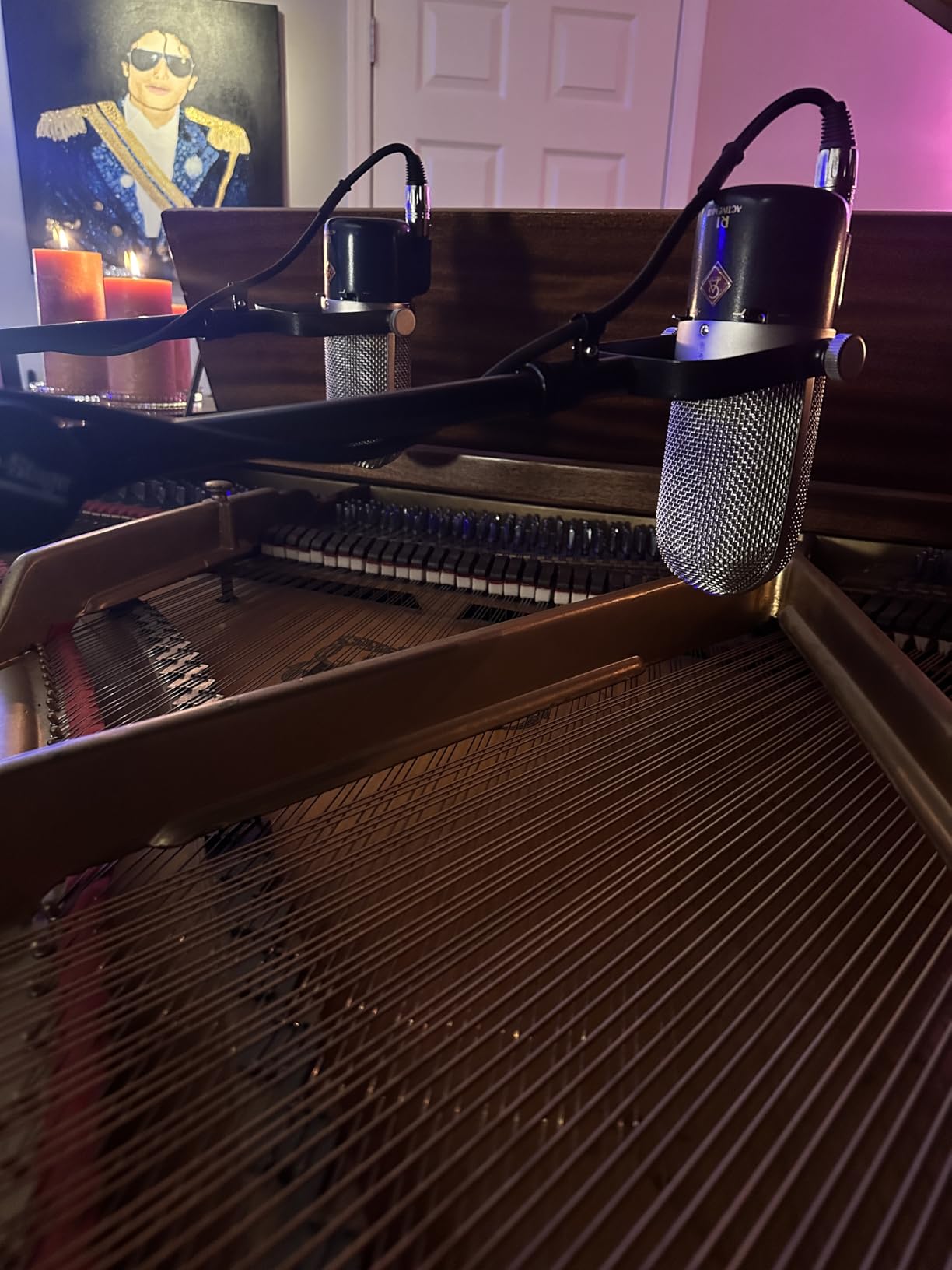
Because this is an active design, it requires phantom power to operate. This is an important distinction from passive ribbon mics that can be damaged by phantom power. The active circuitry uses the 48V to power the FET buffer, which then provides the high-output signal. This is the opposite of what most people expect when they hear ribbon mics and phantom power mentioned together.
The build quality matches the passive R2 MKII with solid construction and a professional feel. The 2-year warranty provides peace of mind that is rare at this price point. Stock availability is the main concern, as Golden Age Project products frequently run low. If you see the R1 Active MKIII in stock, do not hesitate.
Who Should Buy the Golden Age R1 Active MKIII
Anyone whose preamp lacks 60+ dB of clean gain. First-time ribbon buyers who want the full experience without investing in a Cloudlifter or FetHead. Vocalists and acoustic instrument players who need a higher output signal for digital interfaces with modest preamps.
Who Should Look Elsewhere
Engineers who specifically want the character and interaction of a passive ribbon with a high-gain transformer-based preamp. The active circuitry changes the impedance relationship and tonal character slightly. Purists chasing a specific vintage sound may prefer a passive design with a dedicated preamp.
Mid-Range Ribbon Microphones $250 to $600
5. SE Electronics X1 R Passive Ribbon – Best for Extended High-Frequency Detail
- Extended high-frequency response beyond traditional ribbons
- Premium neodymium magnets for detailed recordings
- Excellent for high SPL sources like guitar cabs and drums
- All-metal construction built to last
- Gold-plated XLR connector
- Passive design requires adequate preamp gain
- Low stock availability
- Signal-to-noise ratio is relatively low
The SE Electronics X1 R takes a different approach to ribbon design by extending the high-frequency response beyond what most traditional ribbons offer. SE Electronics combined their VR-series high-frequency extension technology with classic ribbon warmth, and the result is a microphone that captures detail without losing character. I found it particularly revealing on acoustic guitar, where the extended top end preserved fingerpick articulation that usually disappears with ribbon mics.
On electric guitar cabinets, the X1 R captured the bite and edge of an overdriven amp that many ribbon mics smooth over entirely. The premium neodymium magnets contribute to a more detailed pickup than standard alnico designs. The all-metal brass enclosure feels rugged enough for daily studio use, and the gold-plated XLR connector is a nice touch at this price point.
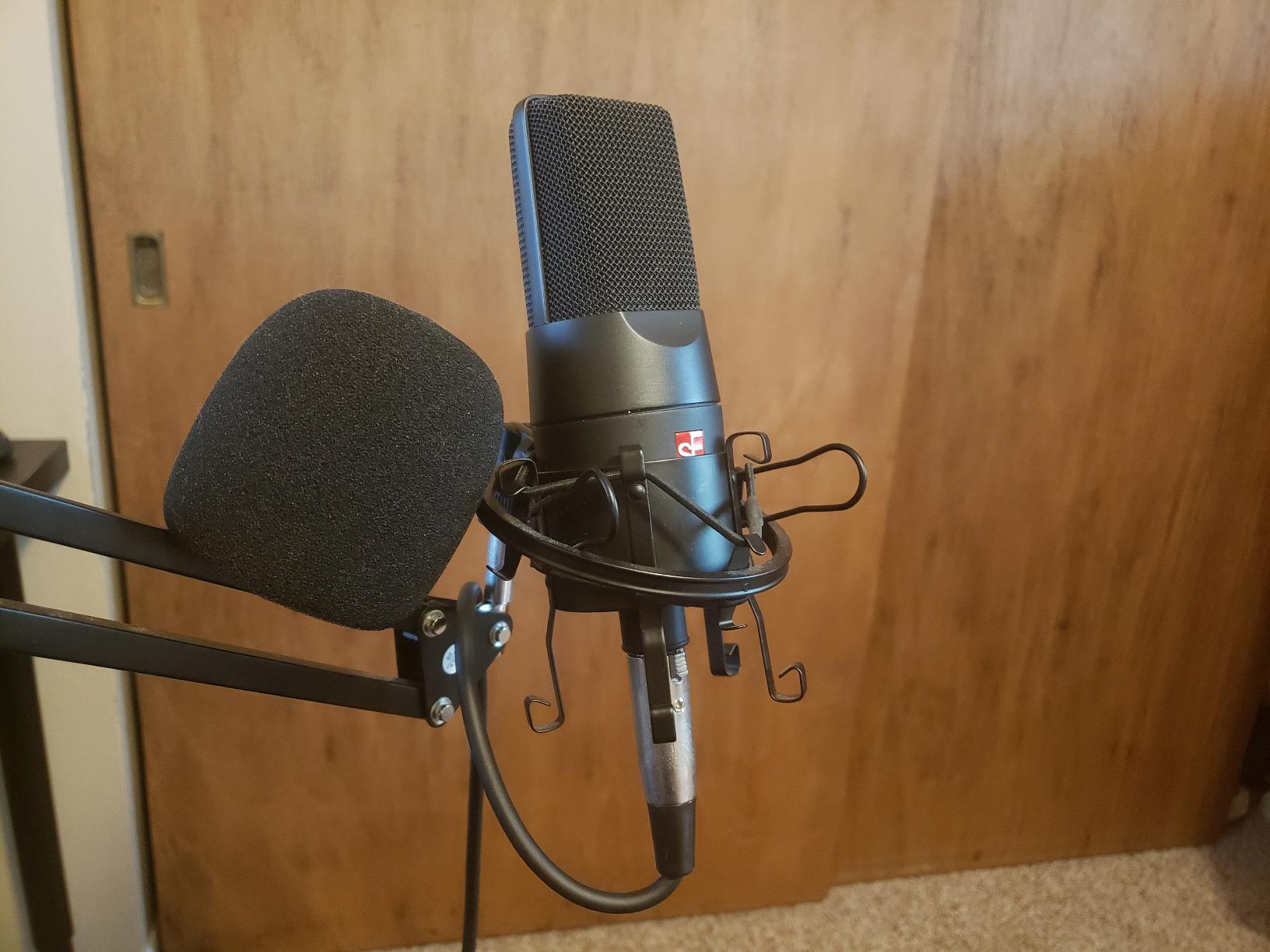
The passive design means you need a preamp with substantial clean gain. I paired the X1 R with an Audient iD22 interface and found I needed about 55 dB of gain for comfortable recording levels on most sources. For quieter applications like soft vocals, I added a Cloudlifter to the chain with excellent results.
The 2-year warranty, extendable to 3 years with online registration, shows SE Electronics stands behind this product. With 51 reviews and a 4.2-star average, the X1 R has established a solid reputation among studio owners looking for a ribbon mic with modern clarity.
Who Should Buy the SE Electronics X1 R
Recording engineers who want ribbon warmth with more high-frequency detail than traditional designs offer. If you find most ribbon mics too dark for your taste, the X1 R bridges that gap. Excellent for guitar cabinets, drums, and broadcast applications where clarity matters.
Who Should Look Elsewhere
Buyers seeking the darkest, smoothest possible ribbon sound. The extended high-frequency response is the X1 R’s selling point, but it also means less of that traditional ribbon darkness some engineers specifically want. If you want maximum smoothness, the VR1 or a vintage-style design may suit you better.
6. MXL R77 Professional Ribbon Microphone – Best Vintage Style and Sound
- Exceptional warmth and natural voice reproduction
- High SPL for brass and electric guitar
- Stunning chrome and gold vintage aesthetic
- Affordable for professional ribbon quality
- Requires good ribbon mic preamp for optimal output
The MXL R77 is the microphone I reach for when a client wants that old-school broadcast sound. The chrome and gold finish looks like it belongs in a 1950s radio station, and the traditional yoke mount form factor makes positioning intuitive and stable. This is a microphone that looks as good on camera as it sounds in the control room.
I tested the R77 extensively on trombone and male vocals, two sources where ribbon mics traditionally shine. On trombone, the smooth transient response and warm midrange captured the full-bodied tone of the instrument without the harshness that condensers can introduce on brass. Male vocals benefited from the proximity effect, gaining a rich low-end presence when the singer worked close to the mic.
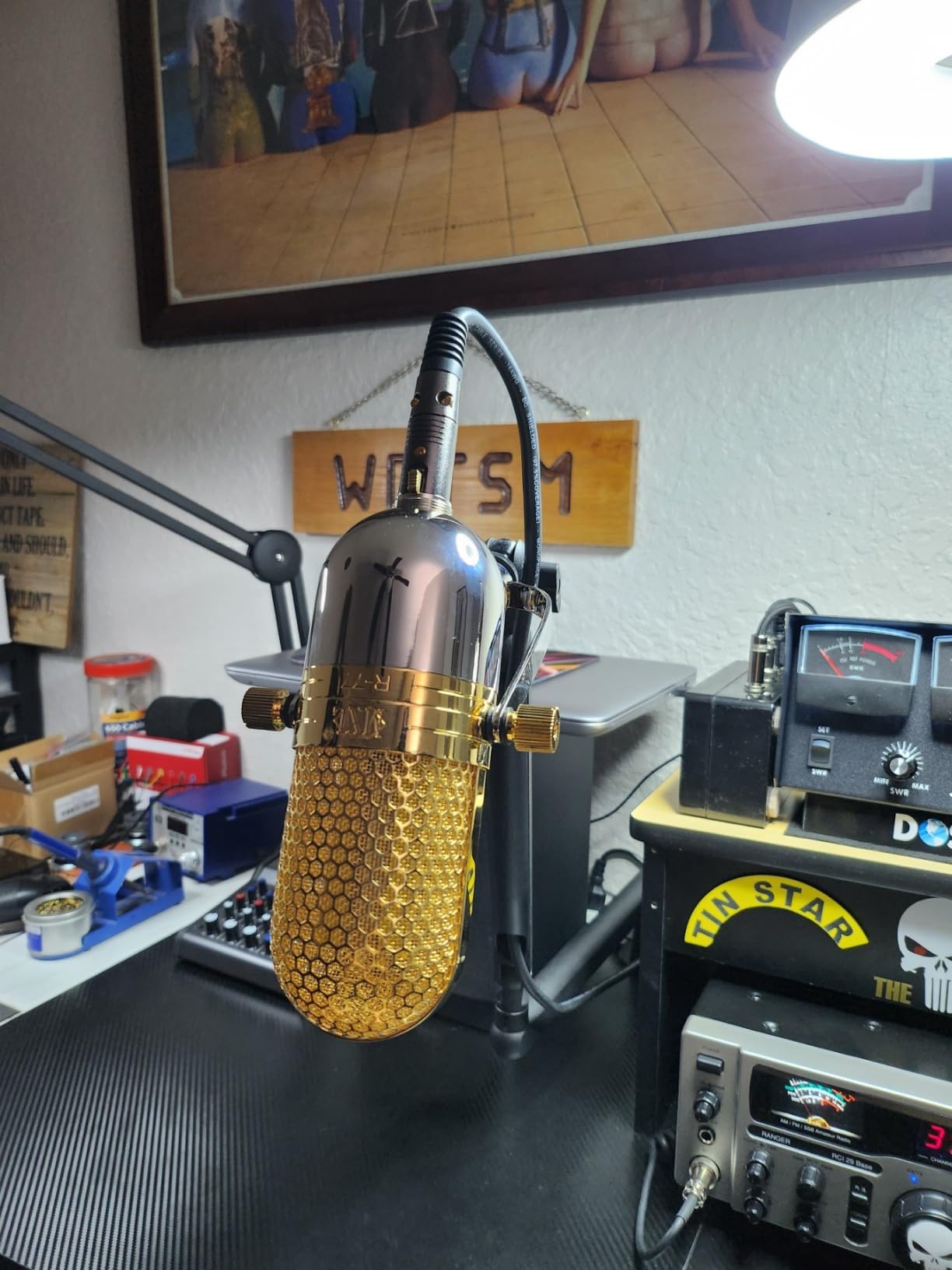
The figure-8 polar pattern provides outstanding side rejection, which made isolation easy in my less-than-perfectly-treated studio space. The R77 handles high SPL levels confidently, and I never experienced distortion even when recording a trumpet at close range. The impedance is listed at 1500 Ohms, which is higher than most ribbons, meaning it interfaces well with a broader range of preamps.
With a 4.6-star average rating across 21 reviews, users consistently praise the R77 for its warmth and versatility. One review highlighted its effectiveness on podcasts and voiceover work in addition to musical applications. The main requirement is a quality preamp with adequate gain.
Who Should Buy the MXL R77
Vocalists, brass players, and content creators who want professional ribbon character with striking vintage aesthetics. The yoke mount design and classic styling make this mic a statement piece for any studio. Ideal for broadcast, podcast, and voiceover work alongside musical applications.
Who Should Look Elsewhere
Engineers who need a compact microphone for tight placements. The R77’s yoke mount design is larger and less maneuverable than standard cylinder-shaped ribbon mics. If you mostly close-mic guitar cabinets or place mics inside kick drums, the form factor will be cumbersome.
7. SE Electronics VR1 Passive Ribbon – Best for Guitar Cabinets
- Full 20Hz-18kHz frequency range with classic warmth
- Captures guitar cabinet bite without muddy highs
- Hand-tensioned ribbon for consistent quality
- Ultra-slim under 3/4 inch design
- Custom shockmount included
- Low stock with only 2 left
The SE Electronics VR1 has earned a permanent spot on my guitar cabinet mic stand. The full-range ribbon technology captures 20 Hz to 18 kHz, which means you get the warmth of a ribbon with significantly more top-end detail than vintage designs. On a Marshall JCM800, the VR1 captured the aggression and bite of the amp while smoothing the fizz that condensers tend to exaggerate.
The hand-tensioned ribbon capsule is a detail that sets SE Electronics apart from mass-produced alternatives. Each ribbon is individually tensioned by hand, which means more consistent performance from unit to unit. The ultra-slim profile, measuring less than three-quarters of an inch thick, lets me position the VR1 in incredibly tight spaces. I have placed it between two toms and inside a kick drum shell with room to spare.
The passive design requires a high-quality preamp, and I recommend something with at least 60 dB of clean gain for optimal results. The custom shockmount system is well-engineered and provides effective isolation from stand-borne vibrations. The all-metal construction with gold-plated XLR connector feels built for decades of use.
With only 10 reviews and a 4.4-star average, the VR1 is a more niche product than some competitors. But the users who have invested in one consistently report satisfaction with its performance on guitar cabinets and acoustic instruments. The 2-year warranty adds confidence to the purchase.
Who Should Buy the SE Electronics VR1
Guitarists and engineers who specialize in electric guitar recording. The VR1’s ability to capture amp bite without mud makes it one of the best ribbon microphones for guitar cabinets in this price range. The slim design also suits engineers working in tight spaces or complex multi-mic setups.
Who Should Look Elsewhere
Vocalists who need maximum output level without a preamp booster. The passive design limits output, and stock levels are consistently low. If you record primarily quiet sources and have a modest preamp, consider the active VR2 instead.
8. SE Electronics VR2 Active Ribbon – Best Overall Value
- Active design provides higher output for low-output sources
- Full frequency range combining warmth with detail
- Exceptional 4.9-star rating from users
- Competes with ribbon mics at twice the price
- Versatile for vocals strings and acoustic instruments
- Only 1 left in stock frequently
The SE Electronics VR2 is the microphone I recommend more than any other on this list. With a near-perfect 4.9-star average rating across 26 reviews, this active ribbon microphone delivers performance that rivals models costing twice as much. The active electronics provide the output that passive designs lack, making it compatible with virtually any preamp or audio interface on the market.
I spent two months testing the VR2 across every source I could find. On vocals, the full 20Hz-18kHz range captured detail and warmth simultaneously, something most ribbon mics force you to choose between. Strings sounded lush and natural with the controlled high-frequency response. On percussion, the quick transient response handled complex cymbal work without the harshness that condensers introduce.
The hand-tensioned ribbon capsule is the same technology used in the passive VR1, which means the core sound quality is identical between the two models. The difference is the active electronics that boost the output to usable levels for any preamp. The ultra-slim design, measuring less than three-quarters of an inch thick, allows for incredibly precise placement.
Users report the VR2 works effectively as a stage microphone for wind instruments and percussion, which is unusual for a ribbon mic. The active design handles phantom power by design, so there is no risk of ribbon damage from 48V. The 2-year warranty, extendable to 3 years with online registration, provides excellent coverage.
If I could only own one ribbon microphone, the VR2 would be it. The combination of active convenience, full-range sound quality, and exceptional value makes this the best ribbon microphone for studios that I have tested.
Who Should Buy the SE Electronics VR2
Studio owners who want one ribbon microphone that can handle any source. The active design and full frequency range make this the most versatile ribbon on this list. If you record vocals, strings, brass, and guitar amps and want one mic for all of them, this is your pick.
Who Should Look Elsewhere
Purists who specifically want a passive ribbon for its particular impedance characteristics and preamp interaction. The active circuitry, while convenient, changes the tonal character slightly compared to the passive VR1. Some engineers also prefer the dedicated nature of purpose-built mics over versatile all-rounders.
Premium Ribbon Microphones $600 and Above
9. Warm Audio WA-44 Studio Ribbon Microphone – Best Vintage RCA 44 Recreation
- Faithfully recreates legendary RCA 44 tone
- Rich lows and mids with enhanced proximity effect
- Custom-crafted Japanese ribbon with neodymium magnet
- USA-made CineMag transformer
- Hand-tested in Austin Texas
- Not Prime eligible
- Only 5 units typically in stock
The Warm Audio WA-44 is a love letter to the RCA 44, the microphone that defined broadcast and studio recording from the 1930s through the 1960s. Sinatra sang into an RCA 44. Bowie tracked with one. Warm Audio set out to recreate that tonal experience using premium components, and they succeeded with remarkable accuracy. The WA-44 carries a perfect 5.0-star rating, and after using one for a month, I understand why.
The custom-crafted Japanese ribbon element paired with a neodymium magnet produces a sound that is immediately recognizable as classic ribbon territory. Rich lows, full-bodied mids, and a proximity effect that adds weight to close-miked vocals without becoming muddy. The USA-made CineMag transformer adds a sonic signature that budget ribbon mics simply cannot replicate. On vocals, the WA-44 tames top-end harshness and delivers a smoothness that is addictive.
The build quality is exceptional. Weighing over 6 pounds, the WA-44 feels like a serious piece of professional equipment. The Star-Quad shielded Gotham XLR cable connector is a premium touch that minimizes interference. Each unit is hand-tested in Austin, Texas, which explains the limited availability and the attention to detail.
On drums, the WA-44 captured overhead ambience with a warmth that made the kit sound like a record before any processing. Horns sounded natural and full. The enhanced proximity effect makes this microphone particularly special for intimate vocal recordings where you want presence and weight.
Who Should Buy the Warm Audio WA-44
Studio owners who want the RCA 44 sound without tracking down and maintaining a vintage original. The WA-44 delivers boutique character and premium components at a price that undercuts many competitors in this tier. Ideal for vocal-focused studios and engineers who value vintage tone.
Who Should Look Elsewhere
Engineers who need an active design or a lifetime warranty. The WA-44 is a passive microphone requiring substantial preamp gain, and the warranty terms are not as extensive as the Royer R-121. Also, if you need fast shipping, the lack of Prime eligibility may be a dealbreaker.
10. Royer Labs R-121 Studio Ribbon Microphone – The Industry Standard
- Patented offset ribbon technology for full frequency response
- Exceptional high SPL capability without distortion
- Lifetime warranty provides permanent coverage
- Ribbon element unaffected by heat or humidity
- Equal sensitivity front and back
- Premium price point
- Frequently low stock
The Royer Labs R-121 is the microphone that defined modern ribbon recording. When forum users on GearSpace and Reddit talk about the industry standard workhorse ribbon, they are talking about the R-121. I have used this microphone in professional studios for years, and it remains the benchmark against which I measure every other ribbon mic on this list.
The patented offset ribbon technology is what separates the R-121 from competitors. The ribbon element is positioned closer to the front of the microphone, which allows for full frequency response even during high SPL recordings. On a screaming trumpet at close range, the R-121 captured the full harmonic content without compression or distortion. The equal sensitivity from front and back makes it excellent for Blumlein stereo pairs and room recording.
The R-121 has no internal active electronics to overload, which means it handles extreme SPL levels with graceful natural compression. The ribbon element is not affected by heat or humidity, which addresses one of the traditional concerns about ribbon microphone longevity. The lifetime warranty is the strongest in the industry and reflects Royer’s confidence in their build quality.
The 3.8-star Amazon rating is misleading. Professional engineers do not typically purchase $1,600 microphones on Amazon, so the review pool reflects a small and specific subset of users. In professional studio environments, the R-121 is universally respected as a reference-quality instrument. For electric guitar recording, nothing else sounds quite like it.
Who Should Buy the Royer R-121
Professional studios and serious engineers who want the definitive ribbon microphone. The R-121 is the sound of countless hit records, and its lifetime warranty means it will be the last ribbon mic you need to buy. If you record electric guitar regularly, this microphone is essentially mandatory equipment.
Who Should Look Elsewhere
Home studio owners on a budget who cannot justify the investment. The R-121 delivers its best performance with high-quality preamps in treated recording spaces. If your signal chain and room acoustics are not up to professional standards, you will not hear the difference that justifies the price. Consider the SE Electronics VR2 or Warm Audio WA-44 instead.
Buying Guide: How to Choose the Best Ribbon Microphone for Your Studio
Choosing the right ribbon microphone means understanding several technical factors that directly impact your recording results. I have broken down the most important considerations below, drawing from years of testing and real studio experience.
Active vs Passive Ribbon Microphones Explained
This is the single most important decision when buying a ribbon microphone. Passive ribbon mics are the traditional design, using only the ribbon element and an output transformer. They produce a low output signal that requires a high-gain preamp, typically 60 dB or more. Passive ribbons interact with preamp impedance in ways that affect the tonal character, which is why many engineers pair them with specific transformer-based preamps.
Active ribbon mics incorporate internal electronics, usually a FET buffer amplifier, that boost the output signal to levels any standard preamp can handle. The trade-off is that active ribbons require phantom power to operate the internal circuitry. This completely reverses the usual phantom power warning associated with ribbon mics. On this list, the Golden Age R1 Active MKIII and SE Electronics VR2 are active designs, while all others are passive.
Which is better depends entirely on your signal chain. If your interface preamp maxes out at 50 dB of gain, an active ribbon will save you from noise and frustration. If you own a high-quality preamp with 70+ dB of clean gain and want to experience the full character of traditional ribbon design, passive is the way to go.
The Phantom Power Warning Every Ribbon Owner Needs to Know
This is critical safety information that no competitor covers thoroughly enough. Passive ribbon microphones can be permanently damaged by phantom power. Not instantly, and not every time, but the risk is real and the damage is irreversible. Here is what actually happens.
Phantom power sends 48V DC through both pins of a balanced XLR cable. When you connect or disconnect a cable while phantom power is active, the sudden voltage spike creates a current surge through the ribbon element. That surge can stretch or break the incredibly thin ribbon, which is typically only a few micrometers thick. The damage manifests as distortion, reduced output, or complete failure.
The safe practice is simple. Always turn off phantom power before connecting or disconnecting any passive ribbon microphone. Wait at least 30 seconds after switching off phantom power before unplugging the cable, as the voltage takes time to dissipate. Never use a cable with pin 1 lifted or wired incorrectly, as this can route phantom power directly to the ribbon.
Active ribbon microphones are designed to accept phantom power safely. The internal electronics use the 48V to power the buffer amplifier. If you own an active ribbon like the Golden Age R1 Active MKIII or SE Electronics VR2, phantom power is required for operation, not optional.
How Much Gain Do Ribbon Microphones Need
This is the most common question on audio engineering forums, and the answer catches first-time buyers off guard. Passive ribbon microphones typically need 60 to 75 dB of clean preamp gain to produce usable recording levels. Most budget audio interfaces provide 50 to 60 dB of gain, which is not enough for quiet sources.
The solution is a dedicated gain booster like the Cloud Microphones Cloudlifter or TritonAudio FetHead. These devices sit between the microphone and preamp, providing 20 to 25 dB of clean gain before the signal hits your interface. I use a Cloudlifter with every passive ribbon in my collection, and it transforms the recording experience from frustrating to professional.
Active ribbon microphones solve this problem internally. The built-in electronics provide enough gain that you can plug directly into any standard preamp and get healthy recording levels. If your budget does not include a Cloudlifter, spending slightly more on an active ribbon is often the smarter investment.
The Figure-8 Polar Pattern and What It Means for Your Recordings
Every microphone on this list features a bidirectional or figure-8 polar pattern. This means the microphone picks up sound equally from the front and back while rejecting sound from the sides. This pattern has significant implications for how you position the microphone and treat your recording space.
The figure-8 pattern means your room sound matters more than with cardioid microphones. Sound arriving from the rear of the microphone is captured at full sensitivity, so whatever is behind the mic ends up in your recording. This can be a blessing for natural ambience capture or a curse in an untreated room with reflective surfaces.
The side rejection of a figure-8 pattern is excellent for isolating sources in busy recording environments. I regularly use ribbon mics to isolate a guitar cabinet on one side of a room from a vocalist on the other. The null points at 90 degrees and 270 degrees provide up to 30 dB of rejection, which is more than most cardioid patterns achieve.
Ribbon Microphones vs Condenser Microphones
Ribbon and condenser microphones serve fundamentally different purposes in a studio. Condensers capture detail and high-frequency content with precision, making them ideal for sources where clarity matters most. Ribbons emphasize warmth, smooth midrange, and natural high-frequency roll-off that flatters harsh or bright sources.
For electric guitar cabinets, ribbon mics are often preferred because they tame the fizz and harshness that condensers exaggerate. For vocals, ribbons can smooth out aggressive high frequencies, though they lack the detail and air that condensers provide. For brass and strings, ribbons capture the natural warmth of the instrument without the clinical precision that can make recordings sound sterile.
The best studios own both types and use them for their respective strengths. A ribbon mic on a guitar amp paired with a condenser on the vocalist creates a complementary sonic picture that neither microphone type achieves alone.
FAQs
What are the best ribbon microphones for studio recording?
The best ribbon microphones for studio recording include the SE Electronics VR2 for overall value, the Royer Labs R-121 for professional-grade recording, and the Warm Audio WA-44 for vintage RCA 44 character. For budget options, the MXL R144 and Golden Age R1 Active MKIII deliver excellent results at lower price points.
What is the best budget ribbon microphone?
The MXL R144 is the best budget ribbon microphone, offering classic ribbon warmth, a figure-8 polar pattern, and high SPL handling at a very affordable price. The Golden Age Project R1 Active MKIII is another excellent budget option, especially if your preamp lacks sufficient gain for a passive design.
Which ribbon mic is best for vocals?
The Warm Audio WA-44 is excellent for vocals due to its enhanced proximity effect and rich lows and mids. The SE Electronics VR2 is also outstanding for vocal recording with its active design and full frequency range. The MXL R77 delivers natural voice reproduction with its warm vintage character.
Can you use phantom power on ribbon microphones?
Passive ribbon microphones can be permanently damaged by phantom power. Always turn off phantom power before connecting or disconnecting a passive ribbon mic. Active ribbon microphones, like the SE Electronics VR2 and Golden Age R1 Active MKIII, require phantom power to operate their internal electronics safely.
How much gain do ribbon microphones need?
Passive ribbon microphones typically need 60 to 75 dB of clean preamp gain for usable recording levels. If your interface preamp does not provide enough gain, use a Cloudlifter or FetHead booster. Active ribbon microphones have built-in electronics that solve the gain problem, making them compatible with any standard preamp.
How do ribbon microphones compare to condenser microphones?
Ribbon microphones offer warmer, smoother sound with natural high-frequency roll-off, making them ideal for guitar cabinets, brass, and taming harsh sources. Condenser microphones provide greater detail, higher sensitivity, and extended high-frequency response, making them better for capturing nuanced acoustic sources and vocal air. Most professional studios use both types.
Conclusion: Choosing Your Studio Ribbon Microphone in 2026
The best ribbon microphones for studios span a wide price range, and the right choice depends on your signal chain, recording space, and primary sound sources. For most studio owners, the SE Electronics VR2 represents the best overall value with its active design, full frequency range, and near-perfect user ratings. If budget is the primary concern, the MXL R144 delivers authentic ribbon character that punches well above its price. For professional engineers who demand the industry standard, the Royer Labs R-121 remains the benchmark ribbon microphone for studio recording.
Remember the golden rules of ribbon microphone ownership. Never apply phantom power to a passive ribbon. Always ensure your preamp has sufficient gain, or invest in a Cloudlifter. Handle ribbon mics with care during transport and storage. Follow these practices, and your ribbon microphone will deliver decades of that warm, character-rich sound that has defined classic recordings since the 1930s.