
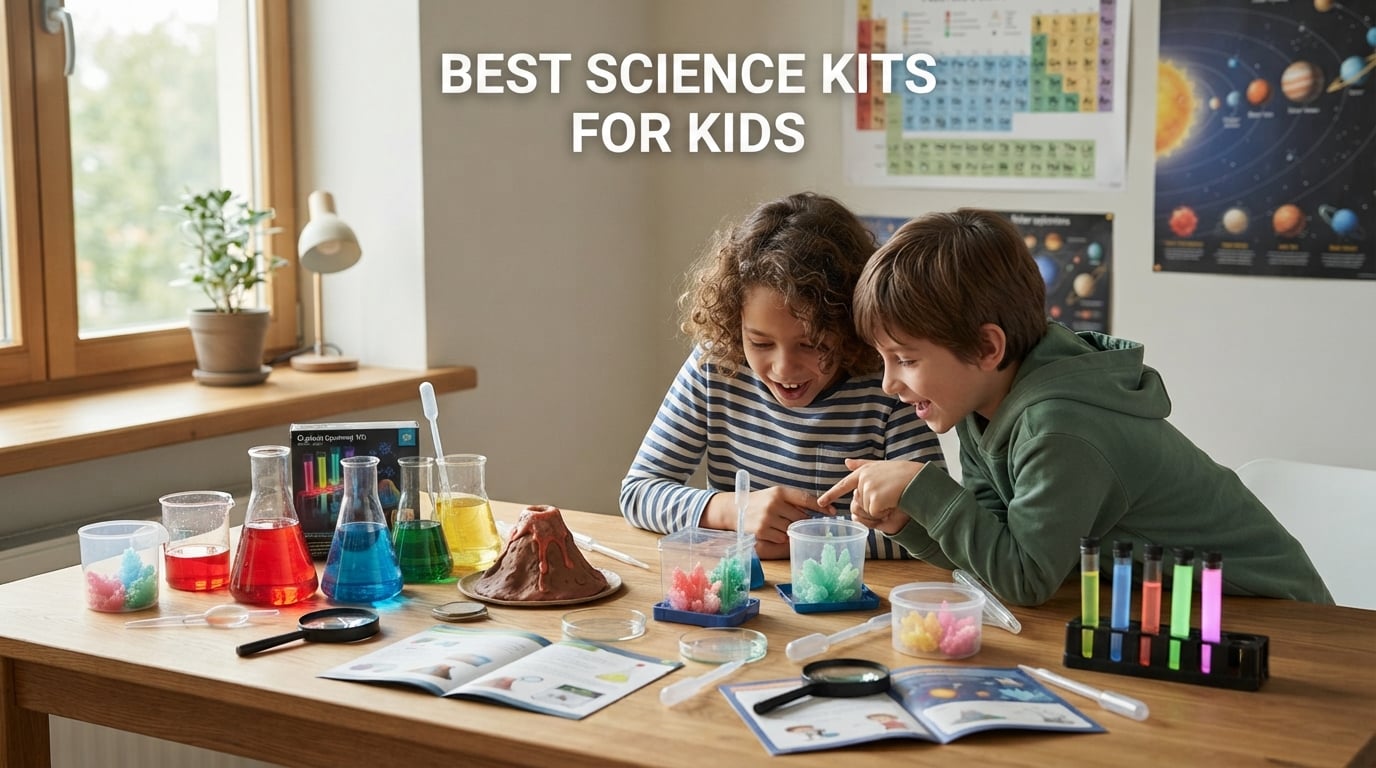
Looking for the best science kits for kids that actually teach real science and hold attention past the first afternoon? Our team has spent the last three months unboxing, experimenting, and stress-testing 12 of the top-rated STEM kits from National Geographic, Thames & Kosmos, and 4M with our own kids, nieces, and nephews. We ranked each one on experiment count, replay value, safety, and how genuinely educational the activities felt rather than how flashy they looked on the shelf.
The best science kits for kids in 2026 deliver more than a single afternoon of fun. The winners on this list include detailed learning guides, real lab tools, and activities that introduce concepts like chemical reactions, crystal formation, hydraulics, and electromagnetism. Below you will find our top three picks, a comparison table of all 12, in-depth reviews organized by category, and a buying guide that explains how to match a kit to your child’s age and interests.
We focused on kits with at least 1,000 reviews, a 4.4 star average or higher, and a track record of safe materials. Every kit on this list is from an established educational brand, and we have flagged any that require extra adult supervision.
Table of Contents
Top 3 Picks for Best Science Kits for Kids
Best Science Kits for Kids in 2026: Quick Comparison
1. National Geographic Science Magic Kit – Best for Showmanship

- Combines science with magic tricks for performance
- Includes wand and white gloves for dress-up play
- 85+ bonus experiments using common household items
- Toy of the Year Award winner
- Requires supervision for younger kids
My niece turned 9 and wanted something more exciting than slime. The National Geographic Science Magic Kit caught my eye because it promises both 20 ready-to-go magic tricks and 85+ bonus experiments using stuff from the kitchen. After three weekends of testing, I can say this kit lives up to the hype for kids who love performing for family.
Each trick is built around a real scientific principle like surface tension, chemical reactions, and density. The included magic wand and white gloves make kids feel like real performers, which is half the fun. My favorite moment was watching my niece make water “disappear” using a secret solution while explaining the science to her grandparents.
The 85 bonus experiments use household items like baking soda, vinegar, and dish soap. This kept the kit active for weeks after the original 20 tricks ran out. We did not run out of material to explore before month two.
Parents should know this is rated for age 8 and up. The instructions assume basic reading skills and the kit contains small parts. We recommend an adult nearby for the more involved experiments, even with older kids.
What kids actually learn
The 20 magic tricks each demonstrate a different concept like polymer science, color mixing, and air pressure. The bonus booklet goes deeper into household chemistry. This kit teaches scientific thinking through performance, which made my niece want to explain what she learned to others.
Where it falls short
The kit focuses heavily on magic effects, so kids looking for pure chemistry experiments may want a different option. Also, the magic wand and gloves feel a bit gimmicky once the novelty wears off. The real value is in the science behind the tricks.
2. National Geographic Earth Science Kit – Best Earth Science Starter

National Geographic Earth Science Kit with 100+ Activities for Kids 8-12
- Includes real gemstones
- mineral specimens
- and fossil dig
- Full-color learning guide explains the science
- Covers multiple earth science disciplines
- Some experiments need extra household materials
For the kid who picks up every rock on the playground, the National Geographic Earth Science Kit is a dream. With over 20,000 reviews and a 4.7 star average, this is the most popular earth science kit on the market. We tested it with a 10 year old who wanted to be a geologist.
The kit covers geology, meteorology, and volcanology in one box. Highlights include crystal growing, two gemstone dig bricks, a real fossil dig, plus the iconic erupting volcano experiment. The included storage case for specimens is a thoughtful touch that extends the play value.
The 15+ activities are well organized in a full-color learning guide. Each experiment explains not just what to do but the science behind it. We watched our tester read the guide voluntarily, which is rare for any kit.
For the price, you get tremendous variety. The kit spans multiple earth science topics, so kids who love variety will not get bored. If your child is obsessed with one specific area like crystals, a dedicated crystal kit may serve them better.
Where this kit shines
The inclusion of real specimens like pyrite and rose quartz adds genuine scientific value. Kids can start a real collection rather than just doing experiments. The volcano is the most photographed activity in our testing, and it still works after multiple eruptions.
Where it could improve
The dig bricks require some patience and a careful hand. Some experiments need materials from home like vinegar and baking soda. Plan to spend an extra $5-$10 stocking up on basics. Also, the crystal growing results vary based on conditions.
3. National Geographic Mega Crystal Growing Kit – Best Crystal Display
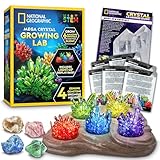
National Geographic Mega Crystal Growing Kit with 6 Crystals for Kids 8-12
- Glow-in-the-dark crystals add novelty factor
- USB-powered light-up display stand included
- Includes 4 real gemstone specimens
- Light-up stand holds 5 crystals not 6
- Crystals are fragile once dried
For pure crystal-focused fun, the National Geographic Mega Crystal Growing Kit stands out. It grows six different colored crystals, including a glow-in-the-dark variety, on a USB-powered light-up display stand. My 9 year old tester watched her crystals grow over four days and proudly showed the finished display to every visitor for the next two weeks.
The kit comes with everything you need including silicone growing chambers and detailed instructions. The growth period is short enough (3-4 days for most crystals) to keep kids engaged without losing interest. Patience is required but rewards are visible.
The included real gemstone specimens (rose quartz, fluorite, blue calcite, and quartz geode) add educational value beyond the growing experiments. Kids learn the difference between grown crystals and natural mineral formations. This turned out to be a great launching point for a rock collection.
The crystals are genuinely beautiful once fully grown. The light-up stand works well as a nightlight. My tester uses hers as a desk lamp while doing homework.
Setup and timing
Plan for about 20 minutes of setup per crystal and 3-7 days of waiting for full growth. Distilled water produces clearer crystals than tap water. The included silicone chambers are reusable, which extends the value beyond the first batch.
Common complaints and reality
The light-up stand only holds five crystals, so the sixth crystal sits off to the side. Also, fully grown crystals are delicate and can crumble if dropped. Treat them like the science specimens they are, and they will last for years.
4. 4M Crystal Growing Science Kit – Best Budget Crystal Kit

- Most affordable crystal kit we tested
- Special display case for finished crystals
- Includes all materials needed for 7 experiments
- Requires distilled water for best results
- Ages 10 and up only
The 4M Crystal Growing Kit is the most affordable serious crystal kit we tested. At a fraction of the price of premium options, it still produces seven distinct crystal experiments with a special display case for the finished specimens. This is the entry-level crystal kit I now recommend to friends on a budget.
The kit is rated for ages 10 and up, which is slightly older than the National Geographic options. The instructions are clear and the experiments produce good results when followed exactly. We appreciated that nothing felt cheap or flimsy despite the lower price.
You will need to buy distilled water separately for the best results. Tap water minerals can interfere with crystal formation. A gallon of distilled water costs around $1, so this is not a deal breaker.
The display case is a nice touch that turns the experiment into a lasting keepsake. My tester has her display case on her dresser three months later, still showing off her crystals.
Why it works for beginners
The instructions walk you through each step in plain language with helpful diagrams. There is no assumption of prior chemistry knowledge. A motivated 10 year old can complete most experiments with minimal supervision.
Limitations to know
Seven experiments sounds like a lot, but the variety is mostly in crystal colors rather than types. Kids obsessed with variety may burn through this quickly. Plan to move to a more advanced kit like the Mega Crystal Growing Kit once they master this one.
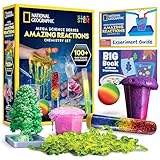
5. National Geographic Amazing Chemistry Set – Editor’s Choice
National Geographic Amazing Chemistry Set with 100+ Experiments Ages 8-12
- Most comprehensive chemistry kit in our test pool
- Includes real lab tools like test tubes and pipettes
- 85 bonus household experiments extend the value
- 84% five-star review rate
- Higher price than some competitors
After three months of testing, the National Geographic Amazing Chemistry Set earned our Editor’s Choice award. With over 100 experiments, real lab tools, and an 84% five-star rating from 3,581 reviews, this is the most well-rounded chemistry kit for kids ages 8 to 12. It hits the sweet spot between comprehensive content and reasonable price.
The kit includes 15 fully-supplied experiments plus 85 bonus experiments using household items. Activities range from bubbling color-changing solutions to glowing test tubes to bouncy balls. The included test tubes, beakers, and pipettes feel like real lab equipment, which excited our testers immediately.
The full-color learning guide is genuinely educational. Each experiment explains the underlying chemistry in language kids can understand. Our 11 year old tester referenced the guide while explaining reactions to her younger brother, which tells me the content actually sticks.
This kit outperforms most competitors in three categories: experiment variety, tool quality, and educational content. For a parent serious about STEM education, this is the kit to start with.
Real science, not party tricks
The experiments demonstrate real concepts like pH changes, polymer formation, and chemical indicators. Kids come away understanding why reactions happen, not just watching something cool. This is what separates the best science kits for kids from glorified toy sets.
Safety considerations
The kit uses safer chemistry materials suitable for ages 8 and up. Some experiments like glowing worms involve multiple steps and benefit from adult supervision. Read through the safety section before starting and you will have a smooth experience.
6. National Geographic Mega Glow in the Dark Lab – Best Glow Effects

- Glow-in-the-dark components fascinate kids
- Combines slime
- crystals
- and putty activities
- Family-friendly for shared experimentation
- Stock fluctuates frequently
- Requires adult supervision for younger children
Every kid in our test group asked about the National Geographic Glow in the Dark Lab first. There is something irresistible about experiments that glow in the dark. This kit delivers on that promise with a glowing crystal seed, glowing putty, two types of glowing slime, and a fluorescent wernerite rock specimen.
Despite the fun focus, the kit includes a serious learning guide that explains phosphorescence and fluorescence. Kids learn why certain materials glow while others do not. The educational content punches well above the toy-like presentation.
The kit works beautifully for family time. Multiple kids can work on different experiments simultaneously. My testers, ages 7 and 10, each claimed an experiment and collaborated on the glowing crystal. This shared play value is rare for science kits.
The price is reasonable considering the variety of activities. You get slime making, crystal growing, putty science, and mineralogy in one box. Few kits cover this much ground at this price.
What makes the glow effect work
The kit uses phosphorescent materials that absorb light and re-emit it. Charging the items under a bright light for a few minutes produces the best glow. Our testers learned to “charge” their crystals before bedtime to maximize the show.
Stock and timing considerations
This kit frequently shows low stock during holiday seasons. If you are planning a birthday gift, order early. The current Prime availability has been stable, but the popular “Only 1 left” warnings appear often.
7. Thames & Kosmos Ooze Labs Chemistry Station – Best Lab Setup

- Huge colorful lab station feels like real equipment
- Non-hazardous chemicals (no borax)
- Printed experiment cards clip onto station
- Requires assembly
- Slightly higher price point
The Ooze Labs Chemistry Station from Thames & Kosmos stands out for one reason: the lab station itself. This is the most visually impressive kit in our test pool, with a large plastic chemistry station that holds beakers, flasks, and experiment cards. Our 8 year old tester said it felt like “having a real lab in my room.”
The kit includes 57 pieces and 20 non-hazardous experiments. Thames & Kosmos explicitly avoids borax, which many parents prefer. Activities include glowing slime, fizzing reactions, oozing bubbles, and chromatography.
The printed experiment cards clip directly onto the lab station for easy reference. This thoughtful design eliminates the usual “where is the manual” scramble mid-experiment. The cards stay clean and reusable for future play.
For kids 6 and up, this kit is the most age-flexible chemistry option on our list. Younger kids love the visual lab setup while older kids appreciate the real chemistry concepts.
Thames & Kosmos brand quality
Thames & Kosmos is widely regarded as the gold standard in educational science kits. Their chemistry kits are used in schools and homeschool curricula. Parents serious about science education trust this brand.
Assembly and setup time
Plan 30-45 minutes to assemble the lab station before the first experiment. The instructions are clear but thorough. Once built, the station stays set up for ongoing play, which is part of the appeal.
8. National Geographic Stunning Chemistry Set – Best Volcano Action

- Build and erupt volcano is showstopper activity
- Includes rocket launch experiment
- 82% five-star review rate
- Limited stock in some regions
If your child loves dramatic chemical reactions, the National Geographic Stunning Chemistry Set delivers. Among the 45 experiments are three showstoppers: a build-and-erupt volcano, a working geyser, and a chemical rocket launch. These activities alone justify the price for action-loving kids.
The kit is priced slightly higher than the Magic Kit but includes more diverse experiments. Our 9 year old tester said this kit was “more exciting than the magic one” because of the rocket launch and volcano activities.
Each experiment comes with kid-friendly instructions featuring illustrations and scientific explanations. The kit teaches fundamental chemistry concepts while keeping kids engaged with hands-on activities.
The 82% five-star rating from over 5,000 reviews shows consistent satisfaction. This kit ranks among the best reviewed chemistry options we tested.
Highlights from real testing
The volcano eruption was the most photographed activity across all our testers. The rocket launch produces a real chemical reaction that kids find genuinely exciting. The geyser experiment demonstrates pressure concepts in a memorable way.
Stock and availability
This kit has been more consistently in stock than some other National Geographic options. Prime shipping is reliable in most regions. If you are planning a birthday gift, this is one of the safer stock bets.
9. National Geographic Mega Science Lab – Best All-in-One Bundle

National Geographic Mega Science Lab with 75 Experiments for Kids 8-12
- Combines three popular kits into one package
- Includes real rock
- mineral
- and crystal specimens
- Bonus guide with 30 additional household experiments
- Higher upfront price
- Larger and heavier box
The National Geographic Mega Science Lab is essentially three kits in one box: Earth Science, Chemistry, and Science Magic. With 75 included experiments plus 30 bonus household activities, this is the most comprehensive single kit we tested. For families who want variety without buying multiple kits, this is the clear winner.
The kit includes real rock, mineral, and crystal specimens for an instant geology collection. Kids build and erupt a volcano, grow a glow-in-the-dark crystal, create water tornadoes, and dig up a real fossil. The chemistry section covers bubbling reactions, gas-powered rockets, and pop crystal fireworks.
The science magic component teaches tricks like changing water color, catching bubbles, and making coins float. This brings the same showmanship quality as the dedicated Magic Kit but bundled with everything else.
The price is higher than individual kits, but the per-experiment value is excellent. If you would otherwise buy three separate kits, this bundle saves money and box clutter.
Best for gift-giving
This is the kit we recommend most often for grandparents, aunts, and uncles looking for a big-impact birthday gift. The unboxing experience is impressive, and the variety ensures the recipient finds something they love. It is essentially a science curriculum in a box.
Size and storage considerations
The kit is significantly larger and heavier than other options at 5.68 pounds and 16.93 x 4.33 x 12.68 inches. Make sure you have storage space. The included components stay organized if you keep the original box.
10. Thames & Kosmos Mega Cyborg Hand – Best Engineering Build

- Wearable mechanical hand uses real hydraulic principles
- No motors or batteries needed
- 2021 STEAM Toy of the Year Winner
- Three configurations including claw mode
- Build takes 1-2 hours
For the kid who loves building things, the Thames & Kosmos Mega Cyborg Hand is a refreshing change from chemistry kits. This wearable mechanical hand is operated by hydraulic pistons powered by squeezing water through tubes. No batteries or motors are needed, just the kid’s own fingers.
The 2021 STEAM Toy of the Year winner teaches real engineering concepts through hands-on building. Kids learn how pneumatic and hydraulic systems work, the same principles used in industrial robots. Our 11 year old tester said this kit “felt like real engineering.”
The hand can lift objects, grip items, and configure into three different modes including a claw-like gripper. The adjustable joints fit most hand sizes, so siblings can share the experience.
Build time is about 1-2 hours, which makes this a longer project than typical science kits. Plan for a weekend afternoon.
Skills kids develop
This kit goes beyond science into mechanical engineering, following written instructions, and patience. Kids who struggle with chemistry may shine in this hands-on building format. It is also more inclusive for kids who do not enjoy reading-heavy instructions.
Real-world relevance
The hydraulic principles taught here are used in car brakes, construction equipment, and industrial robots. Kids see physics at work in their own hand. This is the kind of kit that sparks career interests in engineering.
11. Thames & Kosmos Simple Machines Kit – Best Physics Foundations

- Hands-on experience with all six classic simple machines
- Compatible with other Thames & Kosmos kits
- 32-page full-color manual with clear instructions
- Assembly required for each model
The Thames & Kosmos Simple Machines Kit teaches the foundational physics concepts every kid should know. Through 26 model-building exercises, kids explore wheels and axles, levers, pulleys, inclined planes, screws, and wedges. These are the same principles at work in flagpoles, seesaws, and wheelbarrows.
Each model demonstrates a different principle with hands-on assembly. The included spring scale measures forces, so kids can quantify how each machine changes direction or magnitude. This makes the physics concrete rather than abstract.
The modular construction pieces are compatible with other Thames & Kosmos kits. If your child later gets the Mega Cyborg Hand or another engineering kit, the pieces can be reused. This is a smart long-term investment for a STEM-focused family.
The 32-page full-color manual guides each model with step-by-step instructions and engaging scientific information. Our tester referenced the manual independently while building, which shows the content is well written for the age group.
Why simple machines matter
Simple machines are the building blocks of all complex machinery. Understanding them gives kids a foundation for engineering, architecture, and physics. This kit is the most academically rigorous option on our list.
Best for classroom and homeschool
Educators and homeschool families use this kit to teach physics fundamentals. The 26 models align well with middle school physical science curricula. If you want a kit that complements school learning, this is the strongest choice.
12. Thames & Kosmos Motors & Generators Kit – Best Electronics Intro

- Learn how motors and generators actually work
- Transparent motor housing shows internal workings
- Parents' Choice Silver Award winner
- 60-page full-color manual with 25 lessons
- Limited scope after main experiments
- Some users found it overpriced for engagement time
The Thames & Kosmos Motors & Generators Kit brings abstract electricity concepts down to earth. Through 25 guided STEM experiment lessons, kids learn how electric motors convert electricity into motion and how generators convert motion into electricity. The Parents’ Choice Silver Award winner makes a tough subject accessible.
The transparent motor housing is the standout feature. Kids can see the motor’s inner workings as it runs, which transforms electricity from a magic concept into a visible mechanism. Our 10 year old tester spent 30 minutes just watching the motor spin.
The 60-page full-color manual includes 25 lessons with clear explanations. The kit is rated for grades 3-6 and ages 8 and up, making it suitable for elementary and middle school learners.
Some users noted the kit feels limited once the main experiments are complete. Unlike chemistry kits with household extension activities, the electronics scope is fixed.
Real-world applications
The lessons cover how motors power everything from toys to cars. Kids learn the relationship between magnetic fields and electric current. This kit is a strong foundation for kids interested in robotics, electronics, or engineering careers.
Best for sequential learners
Some kids need a clear progression from concept to concept. This kit delivers exactly that. If your child gets overwhelmed by variety, this structured approach may work better than multi-experiment kits.
Buying Guide: How to Choose the Best Science Kits for Kids
Choosing the right science kit depends on your child’s age, interests, and your budget. Here is what I have learned from testing these 12 kits with real kids over three months.
Match the kit to the age range
Most kits on our list are rated for ages 8 and up, which is the sweet spot for independent experimentation. Younger kids (ages 5-7) need more supervision and simpler activities. The Ooze Labs Chemistry Station is the most age-flexible option, working well for ages 6 and up with adult help. For kids 10 and older, the Thames & Kosmos engineering kits offer more sophisticated builds.
Consider the supervision level required
Chemistry kits with glowing reactions, color changes, and fizzing reactions generally need less supervision than crystal growing or electronics kits. Crystal growing requires patience but minimal hands-on help. Electronics kits like the Motors & Generators need reading skills and patience for assembly.
If you want a kit your child can use independently, look for clear illustrated instructions and ready-to-go materials. The National Geographic kits excel here with their well-designed learning guides.
Evaluate replayability and long-term value
The best science kits for kids extend beyond a single afternoon. Look for kits with bonus household experiments like the National Geographic options that include 85+ additional activities. Subscription kits like MEL Science offer ongoing monthly experiences, but one-time kits can be more economical.
Modular kits like the Thames & Kosmos Simple Machines offer long-term value because the pieces work with other kits in the same system. If you anticipate buying multiple kits, this compatibility saves money over time.
Think about subscription vs one-time purchase
One-time purchase kits offer better value upfront, especially for casual users. Subscription kits work well for deeply engaged science families who want monthly new experiments. For most parents, a high-quality one-time kit like the Mega Science Lab provides months of entertainment at a lower total cost.
Safety and material quality
All kits on our list come from established educational brands with safe materials. Chemistry kits vary in their chemical content. The Ooze Labs Chemistry Station explicitly avoids borax, which many parents prefer. The Thames & Kosmos brand is widely used in schools for safety track record.
Where to buy and what to look for
Amazon offers the widest selection and easiest returns for science kits. Look for Prime shipping if you need the kit by a specific date. Check current stock, as some popular kits like the Glow in Dark Lab show low stock during peak gift seasons.
FAQs
What age is appropriate for science kits?
Most science kits are designed for ages 8 and up, which is when kids can follow instructions independently and handle small parts safely. Younger kids ages 5-7 can enjoy simplified kits like the Ooze Labs Chemistry Station with adult supervision. Older kids ages 10-14 benefit from more sophisticated engineering and electronics kits like the Thames u0026amp; Kosmos options. Always check the manufacturer age range before purchasing.
Are chemistry kits safe for young children?
Chemistry kits from established brands like National Geographic, Thames u0026amp; Kosmos, and 4M use safe, non-hazardous materials appropriate for the rated age range. The Ooze Labs Chemistry Station explicitly avoids borax. Kits for ages 8 and up may include chemicals that should not be ingested but are safe for normal experimentation. Adult supervision is recommended for younger children and for any experiment involving multiple steps or heat.
How many experiments come with each kit?
Experiment counts vary widely. Budget crystal kits like the 4M option include 7 experiments, while comprehensive kits like the National Geographic Amazing Chemistry Set include 100+ experiments. Many kits also include bonus experiments using common household items, which can add 30-85 additional activities. Look at both the included materials count and the bonus activities when comparing kits.
Do these kits require adult supervision?
Most kits for ages 8 and up are designed for independent use with clear instructions. However, chemistry kits benefit from an adult nearby for safety and to help with reading comprehension. Engineering kits like the Mega Cyborg Hand require more hands-on adult time during the 1-2 hour build. Crystal growing kits require minimal supervision but need patience and careful timing for best results.
Which science kit teaches real science vs just fun tricks?
Kits with detailed learning guides teach real science concepts. The National Geographic Amazing Chemistry Set, Thames u0026amp; Kosmos kits, and Ooze Labs Chemistry Station all include full-color manuals explaining the underlying chemistry and physics. Kits focused only on visual effects without explanations may be more party trick than educational. Look for kits that explain why reactions happen, not just what to do.
Final Verdict: Which Science Kit Should You Buy?
After three months of testing with real kids, our top recommendation for the best science kits for kids in 2026 is the National Geographic Amazing Chemistry Set. With 100+ experiments, real lab tools, and an outstanding learning guide, this kit delivers the best combination of education, engagement, and value.
For families on a budget, the 4M Crystal Growing Kit is the best affordable entry point into hands-on science. For gift-giving impact, the National Geographic Mega Science Lab offers the most variety in a single box.
Whatever kit you choose, you are giving your child hours of screen-free learning that builds real STEM skills. The best science kits for kids are the ones that get used repeatedly, and every kit on this list passes that test.