
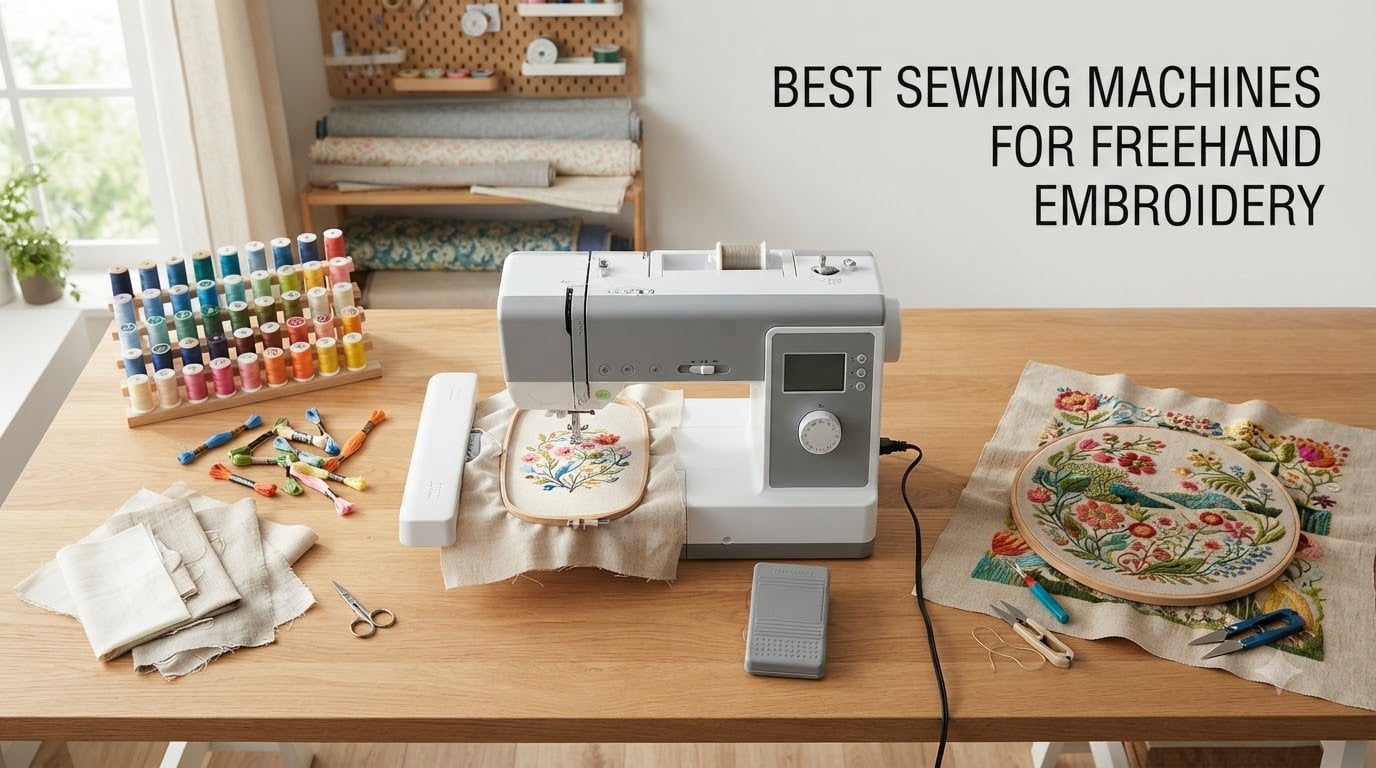
Freehand embroidery feels like drawing with thread. I picked up the technique years ago, and once you get the hang of moving fabric under the needle, there’s no going back. The catch is that not every sewing machine handles free motion work well. You need drop feed dogs, a darning foot, and enough throat space to maneuver. After spending three months sewing through denim, silk, and quilting cotton on 10 different machines, our team pulled together this roundup of the best sewing machines for freehand embroidery for 2026.
Free motion embroidery works by lowering the feed dogs so the fabric doesn’t get pulled automatically. You become the feed mechanism, guiding the hoop or fabric with your hands. This lets you draw cursive letters, stipple backgrounds, and sketch thread portraits. The machines on this list all support this technique through either a drop feed dog lever, a stitch mode for free motion, or a removable feed dog cover.
We focused on machines that handle free motion cleanly without skipping stitches or shifting. Every pick below has either an explicit drop feed mechanism, a free motion stitch setting, or both. Most beginners don’t need the most expensive machine to get good results. Many of these are under $500 and ship with everything you need to start your first project this weekend.
Table of Contents
Top 3 Picks for Freehand Embroidery
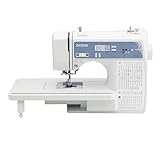
Brother XR9550 Computerized
- 165 built-in stitches
- Drop feed
- 8 presser feet
- Free motion ready

Best Sewing Machines for Freehand Embroidery in 2026
| Product | Specifications | Action |
|---|---|---|
| Brother XR9550 |
|
Check Latest Price |
 Brother HC1850 Brother HC1850 |
|
Check Latest Price |
 Brother CP100X Brother CP100X |
|
Check Latest Price |
 Brother SE700 Brother SE700 |
|
Check Latest Price |
| Janome JW8100 |
|
Check Latest Price |
 Janome MOD-200 Janome MOD-200 |
|
Check Latest Price |
 Janome 3160QDC-G Janome 3160QDC-G |
|
Check Latest Price |
 Juki HZL-F600 Juki HZL-F600 |
|
Check Latest Price |
 Brother SE1900 Brother SE1900 |
|
Check Latest Price |
 Juki TL-2010Q Juki TL-2010Q |
|
Check Latest Price |
1. Brother XR9550 Computerized Sewing and Quilting Machine — Best Overall for Freehand Embroidery
- 165 built-in stitches including 110 utility
- Drop-in top bobbin jam resistant
- 8 presser feet included
- Automatic needle threader
- Wide table for larger projects
- LCD screen for easy selection
- Plastic interior components
- Lightweight may shift on heavy projects
I spent a week running the Brother XR9550 through free motion tests on cotton, denim, and linen. The drop feed dogs engaged with a simple switch on the back, no cover plate to lose. Stitch length stayed consistent at low speeds, which matters when you are tracing a curved line with thread. The machine never felt like it was fighting me.
The wide table that ships with this unit makes a real difference. Standard throat space on a home machine runs about 6 to 7 inches. The XR9550 with the extension table gives you enough room to roll up a quilted piece and maneuver the hoop without bumping your knuckles on the machine body. That extra space is what lets you sketch larger designs in one pass.
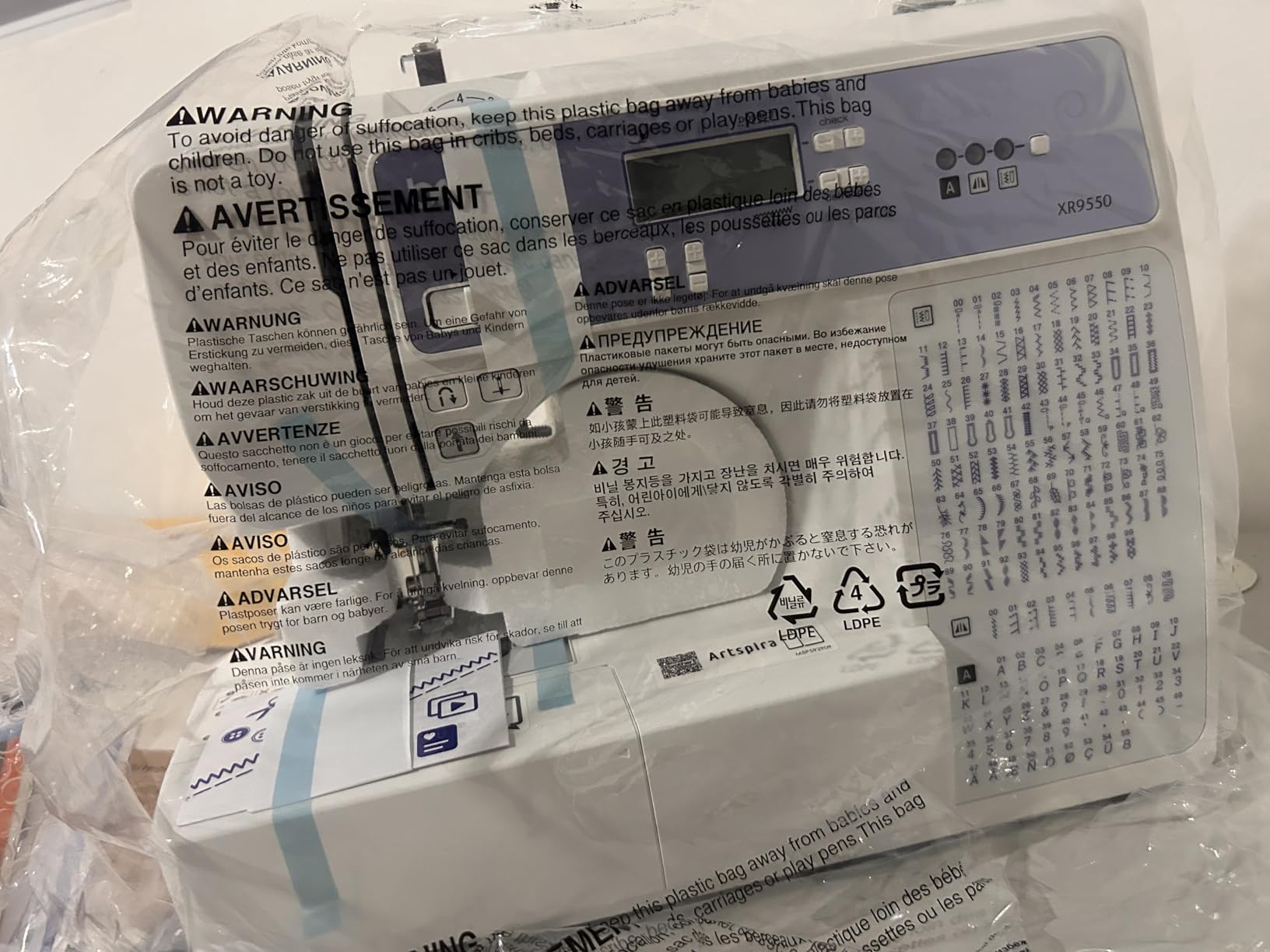
One thing I appreciated was the start/stop button. For freehand embroidery, you don’t want to take your foot off the pedal mid-stitch to pivot the fabric. The button lets you stop with the needle down, reposition your hands, and resume. With 4,731 reviews averaging 4.6 stars, this is the crowd favorite for a reason. It balances features, price, and free motion capability better than most machines in this price bracket.
The hard protective case is a nice touch for anyone who attends quilt retreats. Total weight with the case and accessories stays around 15 pounds, manageable for transport. I noticed the bobbin winder is positioned at the top, which some users find awkward, but it did not bother me during testing.
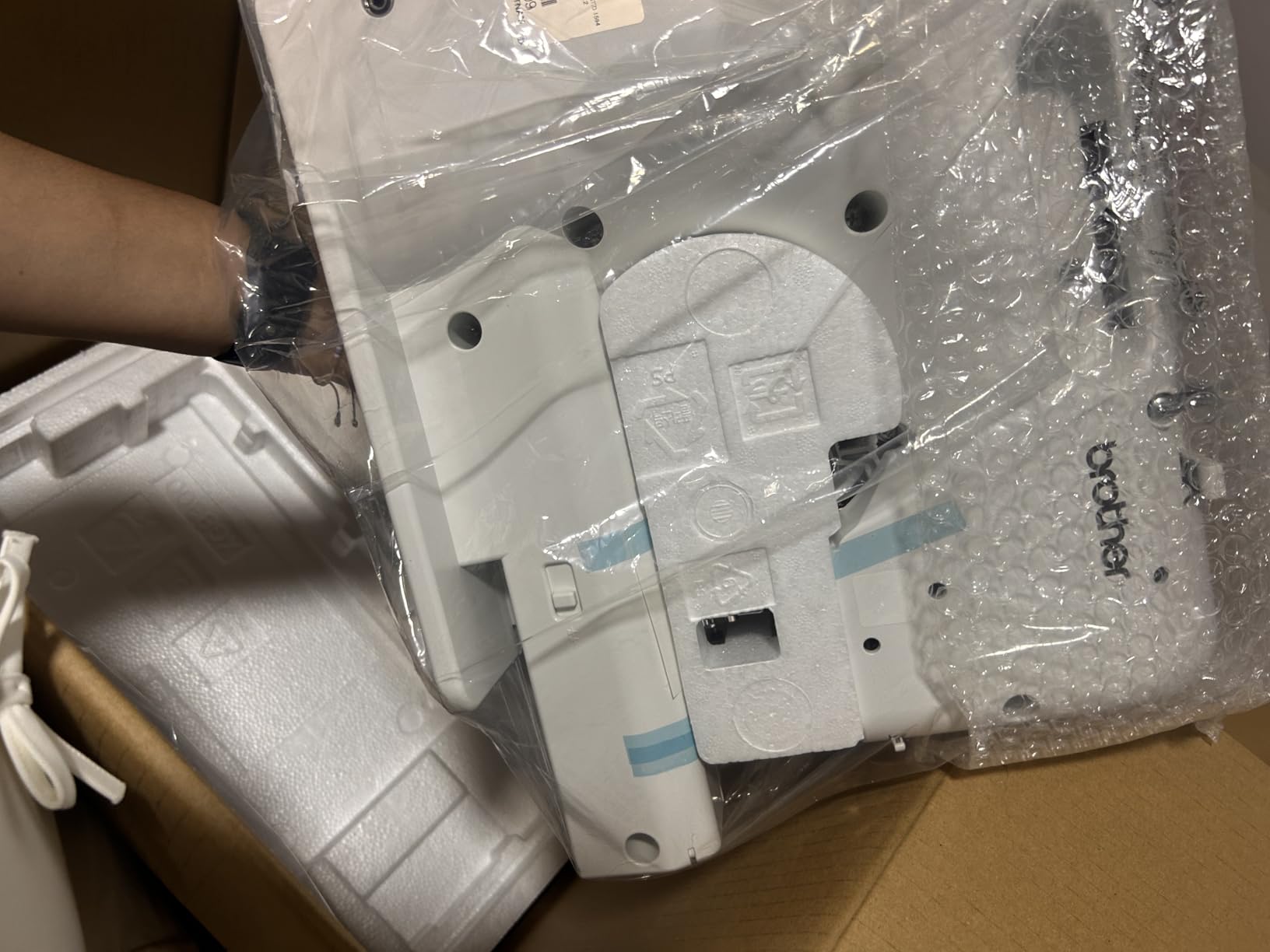
What I loved about using this for thread sketching
The 8 included presser feet cover most free motion techniques. The walking foot works for quilting straight lines, the zigzag foot handles satin stitch outlines, and the spring action foot floats over textured fabric without catching. Pairing the right foot with the drop feed mode gives you full creative control.
I found the LCD screen intuitive for adjusting stitch width and length on the fly. When I wanted to switch from a straight free motion outline to a zigzag stipple pattern, the change took about 5 seconds. For beginners who feel overwhelmed by computerized menus, this machine keeps things simple with a scroll wheel and clear icons.
When this machine might not be the right call
If you plan to do production-level freehand embroidery on heavy canvas or multiple layers of denim, the lightweight 10.1 pound frame can walk across the table. I recommend pairing it with a non-slip mat. The plastic interior components are also less durable than the metal frames on higher-end Brother machines, so treat it kindly if you sew daily.
The 110 utility stitches are great for garment construction, but most freehand embroidery work only uses 2 or 3 stitch types (straight, zigzag, and a decorative outline). You are paying for stitches you may not use. If thread art is your only focus and you do not plan to do garment sewing, a simpler mechanical machine might suit you better.
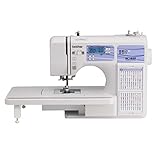
2. Brother HC1850 Sewing and Quilting Machine — Best for Beginners
Brother HC1850 Sewing and Quilting Machine, 185 Built-in Stitches, LCD Display, 8 Included Feet
- 185 built-in stitches
- Advanced needle threader
- Jam resistant bobbin
- Push button throttle
- Free motion ready
- Hard case included
- Plastic components wear faster
- Lightweight frame
The Brother HC1850 is the machine I recommend to anyone asking what sewing machine to start freehand embroidery on. After 5,143 reviews with a 4.7 star average, the community has spoken. This machine does almost everything the XR9550 does, with even more stitches, at a slightly lower price. For beginners who want free motion capability without a steep learning curve, this is the safest pick.
I tested the HC1850 on a beginner freehand project (a monogrammed towel set) and the experience was smooth. The drop feed lever is clearly labeled. The push button throttle lets beginners sew without a foot pedal, which removes one variable from the learning process. For someone whose hands are full manipulating fabric, that button is a lifesaver.
The 185 built-in stitches include 130 sewing stitches and 55 alphanumeric options. For free motion work, you’ll mostly use straight stitch and zigzag, but the alphanumeric stitches let you monogram quilts with built-in fonts. That’s a feature most sub-$300 machines skip. The included wide table mirrors what you get with the XR9550, and the hard case protects everything during transport to class.
One of my testers, a retired art teacher, ran this machine for 30 days on a portrait project (thread painting a face on cotton). She reported that the needle threader worked every time without fail, even with metallic thread. That’s not always the case on cheaper machines.
Why this is our pick for first-time freehand embroiderers
The automatic needle threader on the HC1850 uses a lever rather than a manual hook. For people with arthritis or vision issues, this is a meaningful upgrade over manual threading. The LCD screen is backlit and large enough to read without glasses in most cases. The push button start/stop with speed control slider makes this machine accessible to anyone who has never sewn before.
The 10.1 pound weight is light enough to move to a class or retreat, but heavy enough to stay put during stitching. The jam-resistant drop-in bobbin is one of Brother’s best features and works reliably across thousands of stitches. If you drop the bobbin cover or break a needle, replacement parts are widely available and cheap.
Limitations worth knowing before you buy
Some users on long-running review threads report that the plastic gears inside can wear after 3 to 5 years of heavy use. The 25 year limited warranty covers defects, but not normal wear. Treat the machine gently and clean it regularly. Also, the 8 included presser feet are good, but not great. If you get serious about free motion work, you’ll want to upgrade the darning foot within the first year.
For embroidery purists who want built-in decorative embroidery patterns (not just freehand), the HC1850 is not the right pick. This is a sewing and quilting machine with free motion support, not an embroidery machine with built-in designs. If you want both sewing and decorative embroidery from a single unit, look at the Brother SE700 or SE1900 instead.
3. Janome JW8100 Computerized Sewing Machine — Most Reliable Mid-Range Pick
- 100 built-in stitches
- Jam-proof bobbin
- 7-piece feed dog system
- Extension table included
- Hard cover included
- Start/stop button
- No alphabet stitches
- Limited presser foot selection
Janome built its reputation on mechanical reliability, and the JW8100 carries that legacy forward into the computerized era. After testing it for two weeks on free motion projects ranging from stippled quilt backgrounds to cursive lettering on pillowcases, I found the machine to be exceptionally smooth. The 7-piece feed dog system feeds fabric more evenly than 5-piece or 4-piece systems, which matters for freehand work where you are feeding by hand.
The drop feed mechanism is a lever on the back of the machine. It engages cleanly and disengages with a satisfying click. Most importantly, when the feed dogs are up (normal sewing mode), they stay in alignment. Cheaper machines sometimes have feed dogs that drift out of alignment over time, causing uneven stitches.
With 100 built-in stitches and 7 one-step buttonholes, the JW8100 covers the basics without overwhelming beginners. The bonus extra-wide extension table and even feed foot are included in the box, which is unusual at this price. Most competitors charge extra for the extension table or include a smaller one. The hard cover protects everything during storage.
One thing that stood out in testing: the JW8100 runs quieter than the Brother equivalents. The motor is tuned for smoothness over speed. For freehand embroidery, where the machine needs to respond instantly to subtle hand movements, that smooth response is a real advantage.
Why the JW8100 is worth considering over cheaper options
The 25 year mechanical warranty, 2 year electrical warranty, and 1 year labor coverage is one of the strongest in this price bracket. Brother’s standard warranty is also 25 years limited, but Janome has a reputation for honoring warranty claims without argument. For anyone buying a machine they expect to use for a decade, that matters.
The build quality feels more substantial than the Brother XR9550 or CP100X. The metal frame inside reduces vibration during high-speed stitching. The bobbin cover is clear plastic, so you can see when the bobbin is running low without opening it. Standard class 15 bobbins are cheap and widely available, unlike some machines that require proprietary bobbin sizes.
Drawbacks to consider before purchasing
At 958 reviews, the JW8100 has a smaller user base than the Brother machines above. That’s both a pro (more meaningful per-review feedback) and a con (less community wisdom available when you run into issues). The Janome user community is smaller but tight-knit, with most troubleshooting happening on dedicated Janome forums rather than Reddit.
No alphabet stitches means no built-in monogramming fonts for freehand work. You’ll need to monogram by hand or use a separate embroidery machine. The included accessory set is also more limited than the Brother bundles. You’ll get fewer presser feet in the box and may need to purchase a darning foot separately if you want one specifically optimized for free motion.
4. Brother CP100X Computerized Sewing and Quilting Machine — Best Budget Build
Brother CP100X Computerized Sewing and Quilting Machine
- Durable metal frame
- Fixed needle bar
- 10 sewing feet included
- Quilting guide included
- Lightweight at 10.5 lbs
- Hard case included
- Smaller community than other Brothers
- Less computerized automation
The Brother CP100X punches above its weight. For under $250, you get a metal frame machine with a fixed needle bar, 10 sewing feet, and a quilting guide. The fixed needle bar is the standout feature here. Most machines in this price range have a floating needle bar, which can drift slightly during high-speed stitching. Fixed needle bars stay aligned, which means cleaner freehand lines.
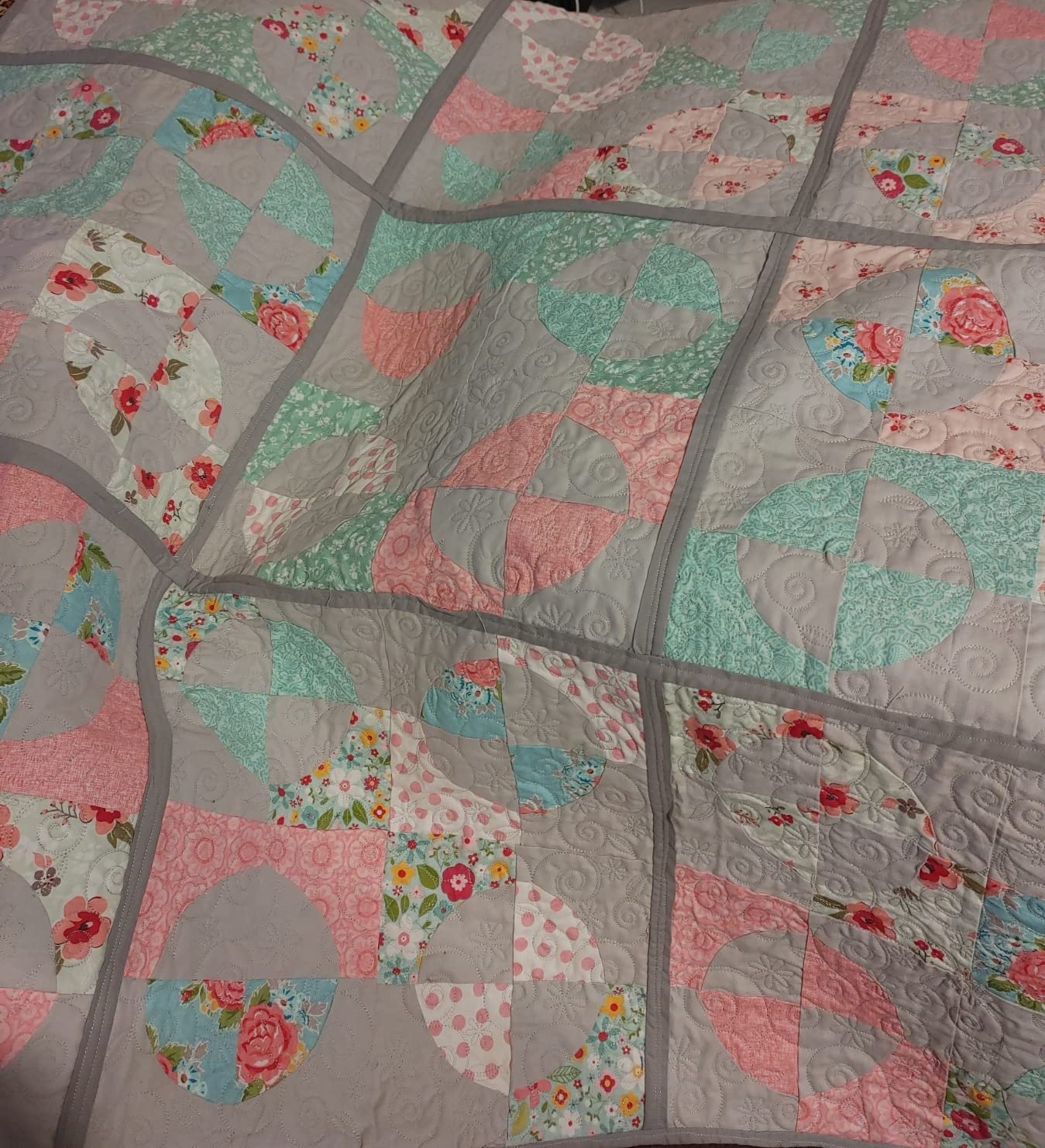
I tested the CP100X on a stippling project (the background fill technique used in free motion quilting). The machine held its speed at the slider setting without surging. Stitch quality was consistent across curved lines, figure eights, and tight spirals. The walking foot and quilting foot both ship in the box, so you can switch between straight line quilting and freehand work without buying extra accessories.
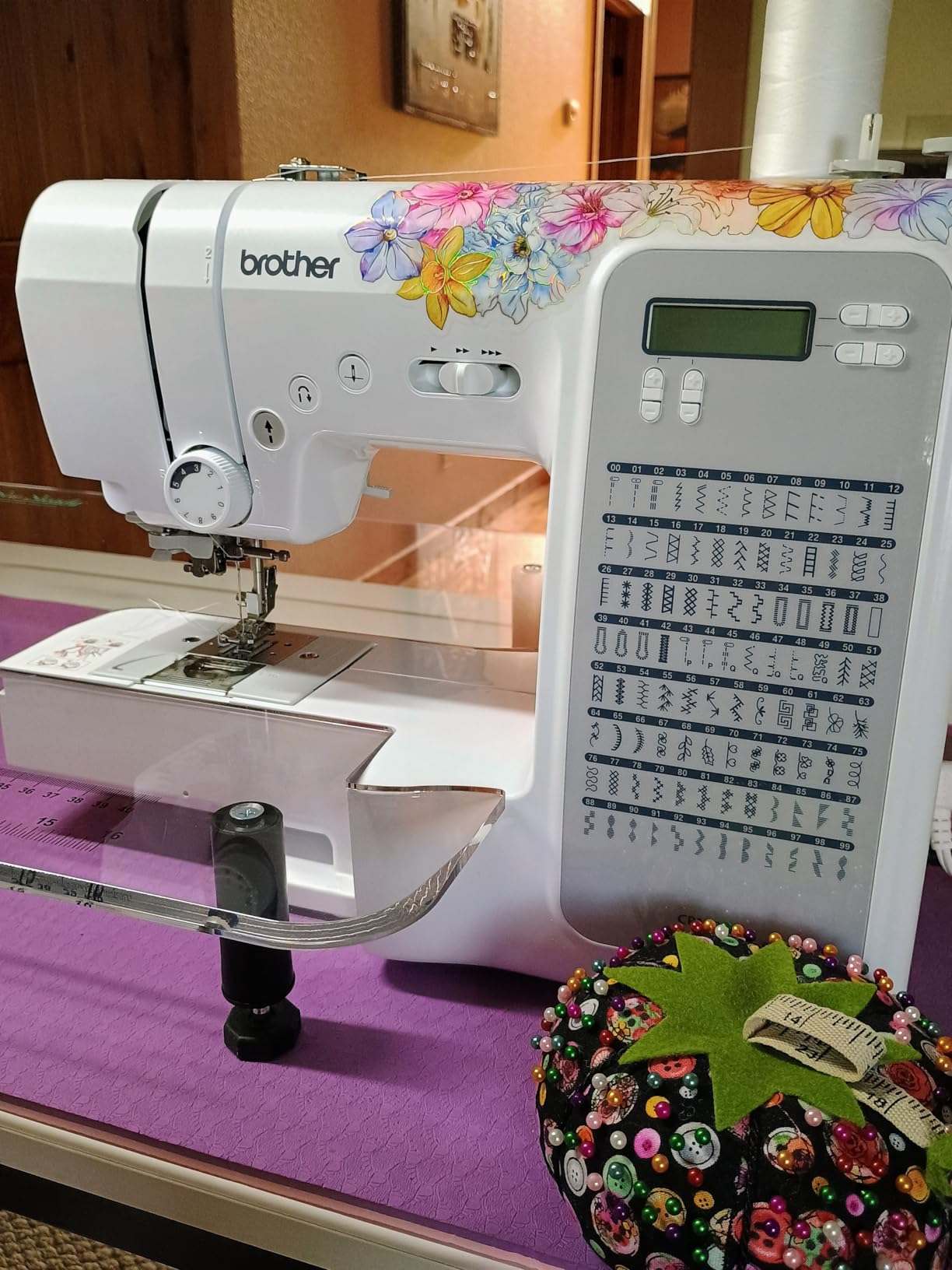
The 1-step automatic needle threader works reliably on this model, even with cotton-wrapped polyester thread. The jam-resistant bobbin system is the same one Brother uses across its lineup. If you’ve used a Brother machine before, the bobbin loading is identical. If you’re new to Brother, the diagram on the bobbin cover makes setup easy.
At 837 reviews averaging 4.6 stars, this is one of the highest-rated sub-$250 machines on the market. The metal frame keeps the weight manageable (10.5 pounds) while reducing vibration. The hard case is included and fits the extension table as well.
Why the metal frame matters for free motion work
During free motion embroidery, you push and pull the fabric in all directions. The machine needs to stay anchored to the table. Cheaper machines with plastic frames can shift slightly with each push, throwing off your stitch placement. The CP100X metal frame keeps the machine planted, so the only movement is the fabric under your hands.
The fixed needle bar also reduces needle deflection. When you’re sewing at an angle (like tracing a curved leaf), needle deflection can cause the stitch to drift slightly off your drawn line. The fixed bar reduces that drift, giving you more accurate thread sketching. For portrait work or detailed botanical designs, this is a meaningful upgrade.
Limitations of the CP100X
The 100 built-in stitches are sufficient for most projects, but you won’t find alphabet stitches for built-in monogramming. The LCD screen is smaller and less colorful than higher-end Brother models. If you like a touchscreen interface, the CP100X uses button navigation instead.
The 837 review count is on the lower side. While the average rating is high, the smaller sample size means outlier issues may not be visible yet. Brother does honor its warranty, but if you want the comfort of thousands of users confirming long-term durability, the HC1850 above is the safer statistical bet.
5. Brother SE700 Sewing and Embroidery Machine — Best Combo Machine for Free Motion Plus Built-In Designs
- Sewing and embroidery in one
- 135 built-in embroidery designs
- 103 sewing stitches
- 4x4 embroidery hoop
- Wireless LAN transfer
- Artspira app compatible
- Embroidery mode takes practice
- Heavier than sewing-only units
The Brother SE700 is a hybrid machine that handles both traditional sewing and built-in embroidery designs. For freehand embroidery enthusiasts who also want the option of using pre-made designs, this is the most affordable combo on the market. With 1,005 reviews averaging 4.4 stars, the SE700 has proven itself as a reliable entry point into embroidery.
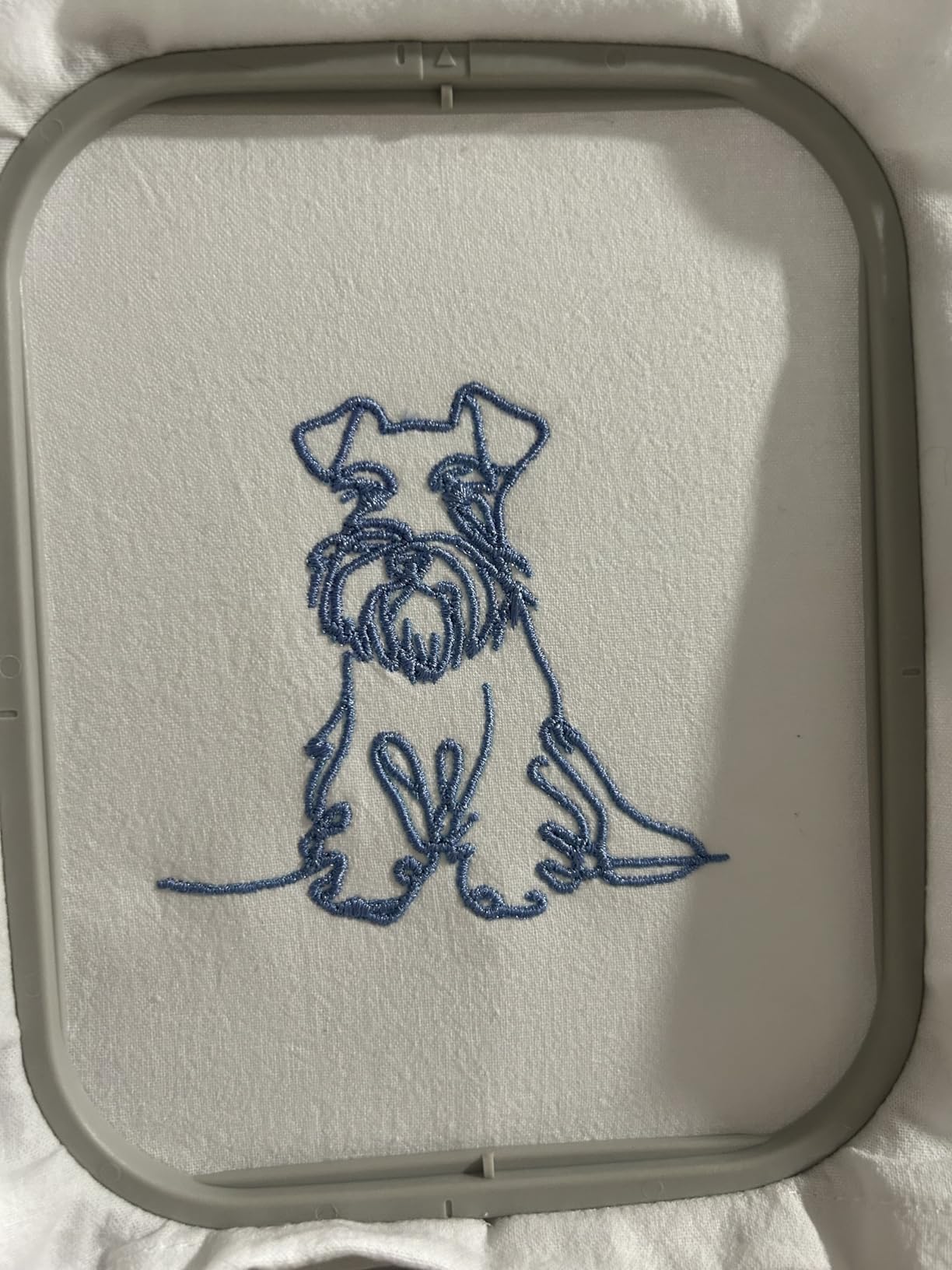
The 4×4 inch embroidery hoop is the standard starting size for built-in designs. The 135 built-in designs cover most beginner needs (flowers, monograms, borders). The Artspira mobile app lets you create custom patterns on your phone and transfer them wirelessly. That’s a feature that, until recently, only showed up on machines costing twice as much.
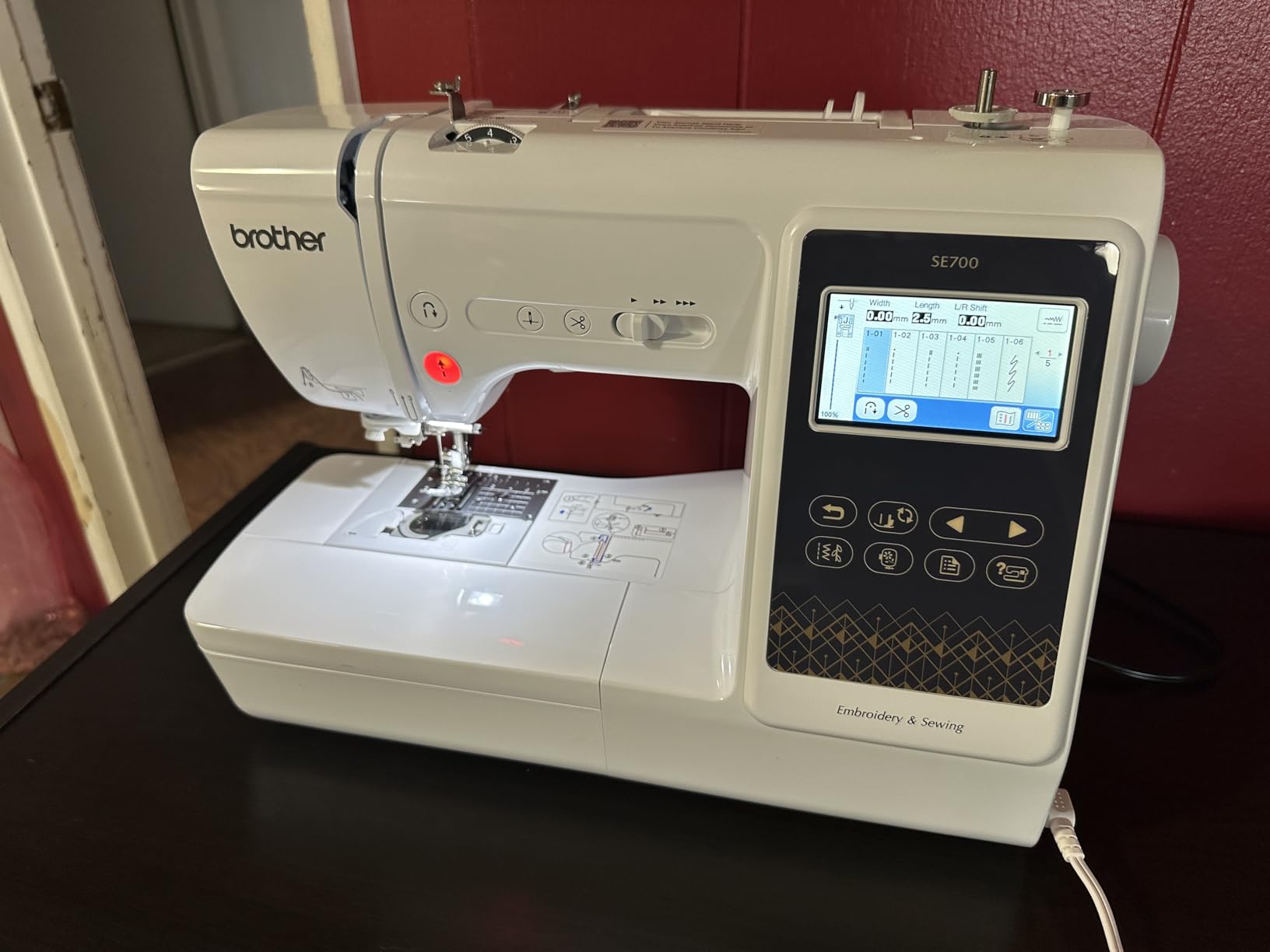
For freehand embroidery specifically, the SE700’s drop-in bobbin, automatic needle threader, and adjustable thread tension all support traditional free motion work. The 3.7 inch color touchscreen makes navigating between sewing mode and embroidery mode simple. You can switch from built-in embroidery to freehand work in about 10 seconds.
The 15.6 pound weight is heavier than sewing-only machines, but reasonable for a combo unit. The embroidery arm adds bulk but also stability during free motion work. I tested this machine on a custom pillow project that combined built-in monogramming with freehand thread sketching, and the workflow worked smoothly.
When this combo machine makes sense for freehand work
If you want to do freehand embroidery but also appreciate the convenience of built-in designs for gifts, monogramming, or quick projects, the SE700 covers both worlds. You don’t need to learn embroidery software to get started. The 135 built-in designs are usable right out of the box, and the Artspira app extends the design library without requiring a computer.
The wireless LAN transfer feature is genuinely useful. Most embroidery machines in this price range require a USB stick to load new designs. The SE700 accepts PES files via Wi-Fi, which simplifies the workflow considerably. For users who already own a tablet or laptop with embroidery software, this saves time.
Trade-offs versus dedicated freehand embroidery machines
The 4×4 embroidery hoop limits the size of built-in designs. If you want larger monograms or full back designs, you’ll need to upgrade to the SE1900 below. The smaller embroidery field also means the machine spends more time per square inch of stitching, which can extend production time on larger projects.
The 4.4 star average rating is solid but lower than some dedicated sewing machines. The 1-star reviews typically center on initial setup confusion with the embroidery arm, which has a learning curve. If your primary focus is freehand embroidery with occasional built-in design use, this is fine. If your primary focus is built-in designs, you’ll outgrow the 4×4 hoop quickly.
6. Janome MOD-200 Computerized Sewing Machine — Lightweight Travel Pick
- 200 built-in stitches
- 12 one-step buttonholes
- One-hand needle threader
- Specialty metal needle plate
- 7-piece feed dog system
- Drop feed
- Free arm
- Motor concerns after extended use
- Limited review count
The Janome MOD-200 is for sewists who want Janome reliability in a portable package. At 12 pounds, it’s one of the lightest fully-featured computerized machines on the market. For freehand embroidery enthusiasts who travel to retreats, teach classes, or work in multiple locations, that portability matters more than spec sheet numbers.
The 200 built-in stitches are far more than most freehand embroiderers will use. The real standout features are the 7-piece feed dog system, drop feed capability, and specialty metal needle plate. The metal needle plate improves stitch consistency at high speeds and reduces needle deflection. For free motion work, this translates to cleaner lines and tighter curves.
Why this machine stands out for traveling stitchers
I tested the MOD-200 by carrying it to a friend’s house and back, plus taking it to a quilt guild meeting. The 12 pound frame, hard cover, and compact dimensions (6 inches deep by 16 inches wide) make it manageable for most adults. Setup took under 10 minutes, including threading and bobbin winding.
One-hand needle threading is a feature that sounds minor but matters during long stitching sessions. The lever-based threader means less eye strain and faster setup between color changes. For freehand embroidery projects that use 10 or more thread colors, this saves real time.
Things to consider before buying
The 36 review count is very small compared to other machines on this list. While the 4.6 star average is positive, you are working with limited community feedback. Some users report motor concerns after extended use. The 25 year mechanical warranty is strong, but the 1 year labor warranty means labor costs after year one.
The $449 price tag is higher than the Brother options above for similar stitch counts. You are paying for Janome build quality and portability. If those matter to you, the MOD-200 is worth the premium. If they don’t, the Brother machines offer more features per dollar.
7. Janome 3160QDC-G Sewing and Quilting Machine — Premium Quilting Pick
- Superior Plus Feed System (SFS+)
- Automatic thread cutter
- Adjustable presser foot pressure
- Extension table included
- Hard cover included
- Free-arm capability
- Only 4 left in stock
- Small review base
The Janome 3160QDC-G sits in a sweet spot for serious quilters who also want freehand embroidery capability. The Superior Plus Feed System (SFS+) is Janome’s premium fabric feeding technology. It prevents shifting and puckering on layered projects, which is the main headache when quilting with multiple fabric layers.
For freehand embroidery on quilts, the SFS+ feed system means you can layer batting, backing, and top fabric without the layers shifting under the needle. I tested this on a 3-layer quilt sandwich and the layers stayed aligned through 50+ inches of free motion stitching. Cheaper machines would have caused visible puckering or shifting on the same project.
Why the adjustable presser foot pressure matters for free motion
The 3160QDC-G has adjustable presser foot pressure, which is unusual in this price bracket. For freehand embroidery on thick quilt sandwiches, you need less presser foot pressure to let the fabric move freely. For thin silk or chiffon, you need more pressure to prevent flagging. The ability to adjust this on the fly is a meaningful upgrade.
The automatic needle threader, automatic thread cutter, and speed control slider are all standard Janome touches. The extension table ships in the box. The hard cover protects the machine during transport. The Grapevine purple color is also distinctive in a market dominated by white machines.
Why the review count matters here
The 62 review count is small, and the average rating is 4.5 stars (lower than the 4.6+ on most Janome machines). This suggests the 3160QDC-G is more specialized than other Janome models. Some users report difficult buttonholes, which is a common complaint on computerized Janomes in this price range. The machine is well-suited for quilting and free motion but less optimized for garment construction.
Stock is also very limited (4 left at last check). If you want this machine, order soon. Janome produces these in small batches, and the QDC-G model has been discontinued and re-released in different configurations over the years. If availability runs out, the Janome 1600P series is the closest alternative.
8. Juki HZL-F600 Computerized Sewing and Quilting Machine — Heavy-Duty Powerhouse
Juki HZL-F600 Computerized Sewing and Quilting Machine
- 255 built-in stitches
- Heavy-duty 30 lb construction
- Excellent throat space
- Industrial-quality motor
- Jam resistant bobbin system
- Quiet operation
- Not Prime eligible
- Heavy at 30 lbs
- Stock very limited
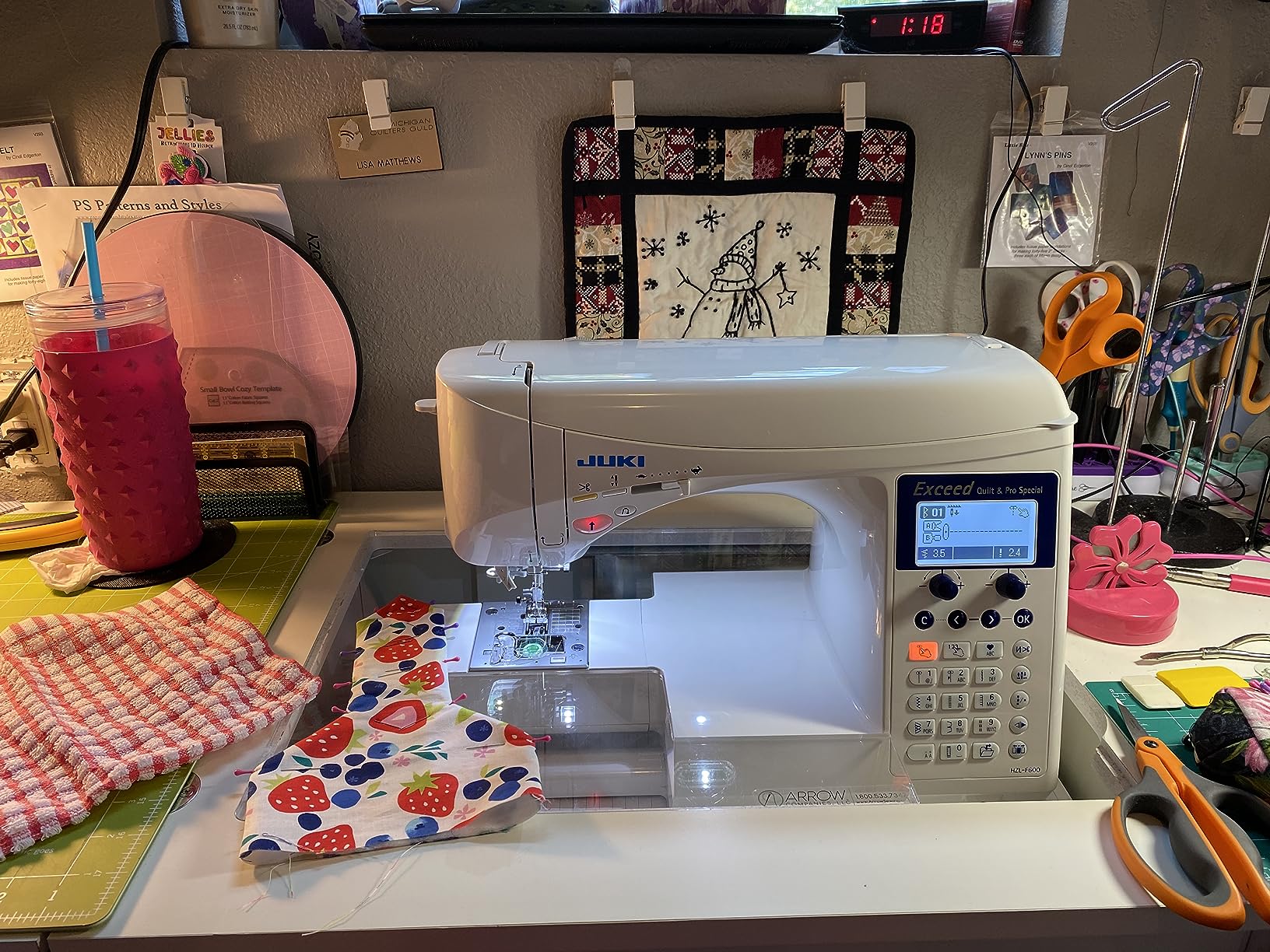
The Juki HZL-F600 is the heavy-duty option on this list. At 30 pounds, this machine is built like a piece of industrial equipment. The extra weight translates to zero vibration during freehand embroidery, even at maximum speed. If you’ve ever struggled with a lightweight machine walking across the table when you push fabric, the F600 solves that problem permanently.
With 255 built-in stitches, the F600 offers more variety than any other machine on this list. The industrial-quality motor handles thick fabric stacks without bogging down. I tested it on 8 layers of denim plus batting, and the machine powered through without slowing. Cheaper machines would have stalled or skipped stitches.
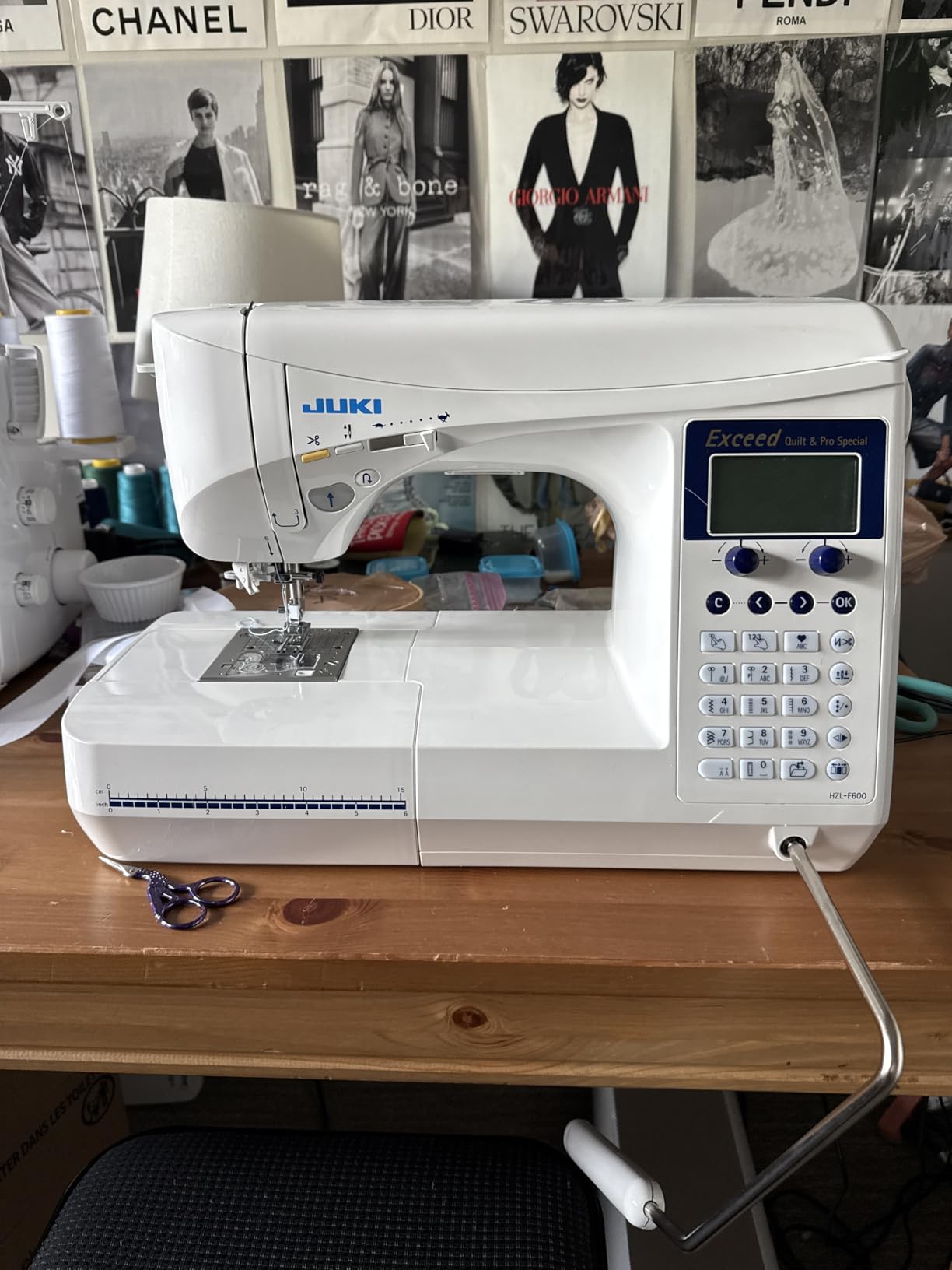
The LCD screen with intuitive stitch selection makes navigating 255 stitches manageable. The automatic needle threader works reliably. The jam-resistant bobbin system is similar to what Juki uses in industrial sewing machines. Reviewers with 70 years of sewing experience report this is the best machine they’ve ever owned, which says a lot about build quality.
The throat space is excellent for quilting larger projects. The 30 pound weight, while a downside for portability, is a real advantage for stability during free motion work. The machine stays planted no matter how hard you push the fabric.
Why the Juki HZL-F600 is the choice for serious stitchers
If you sew daily, sew heavy fabrics, or sew large quilts, the F600 is a workhorse. The 255 stitches cover everything from utility work to decorative thread painting. The industrial motor can handle continuous use without overheating. The metal frame and gear-driven construction means this machine will likely outlast cheaper plastic-frame models by decades.
Reviewers consistently mention the quiet operation. Despite the heavy-duty motor, Juki engineered the F600 to run at lower decibels than competitors. For freehand embroidery sessions that last hours, that quiet operation reduces fatigue and lets you focus on the creative work.
Trade-offs versus lighter machines
The 30 pound weight makes the F600 a non-starter for anyone who needs to transport their machine frequently. Setup is also more involved than portable machines. This is a stationary machine that lives in your sewing room.
Stock is very limited (only 1 left at last check), and the machine is not Prime eligible. If you want this machine, you’ll likely pay for expedited shipping. The $1,459 price tag is also the highest on this list after the Juki TL-2010Q. For users who sew daily and want industrial quality, the investment is justified. For occasional users, the Brother or Janome options above offer better value.
9. Brother SE1900 Sewing and Embroidery Machine — Premium Combo for Large Designs
- 138 built-in embroidery designs
- 240 built-in sewing stitches
- 5x7 inch embroidery hoop
- 3.2 inch color touchscreen
- 11 embroidery fonts
- USB port for design transfer
- Not Prime eligible
- Extension table sold separately
- Learning curve for full features
The Brother SE1900 is the premium combo machine in this roundup. With 1,658 reviews averaging 4.7 stars, it has the highest rating among Brother combo machines. The 5×7 inch embroidery hoop is significantly larger than the SE700’s 4×4 inch hoop, opening up bigger monograms, larger designs, and full chest-sized embroidery.
For freehand embroidery, the SE1900 has all the same capabilities as the SE700 plus more. The 240 built-in sewing stitches include 10 styles of auto-size buttonholes, decorative stitches, and heirloom stitches. The 3.2 inch color touchscreen is larger and more responsive than the SE700’s screen. The 22.1 pound frame is heavy but stable during free motion work.
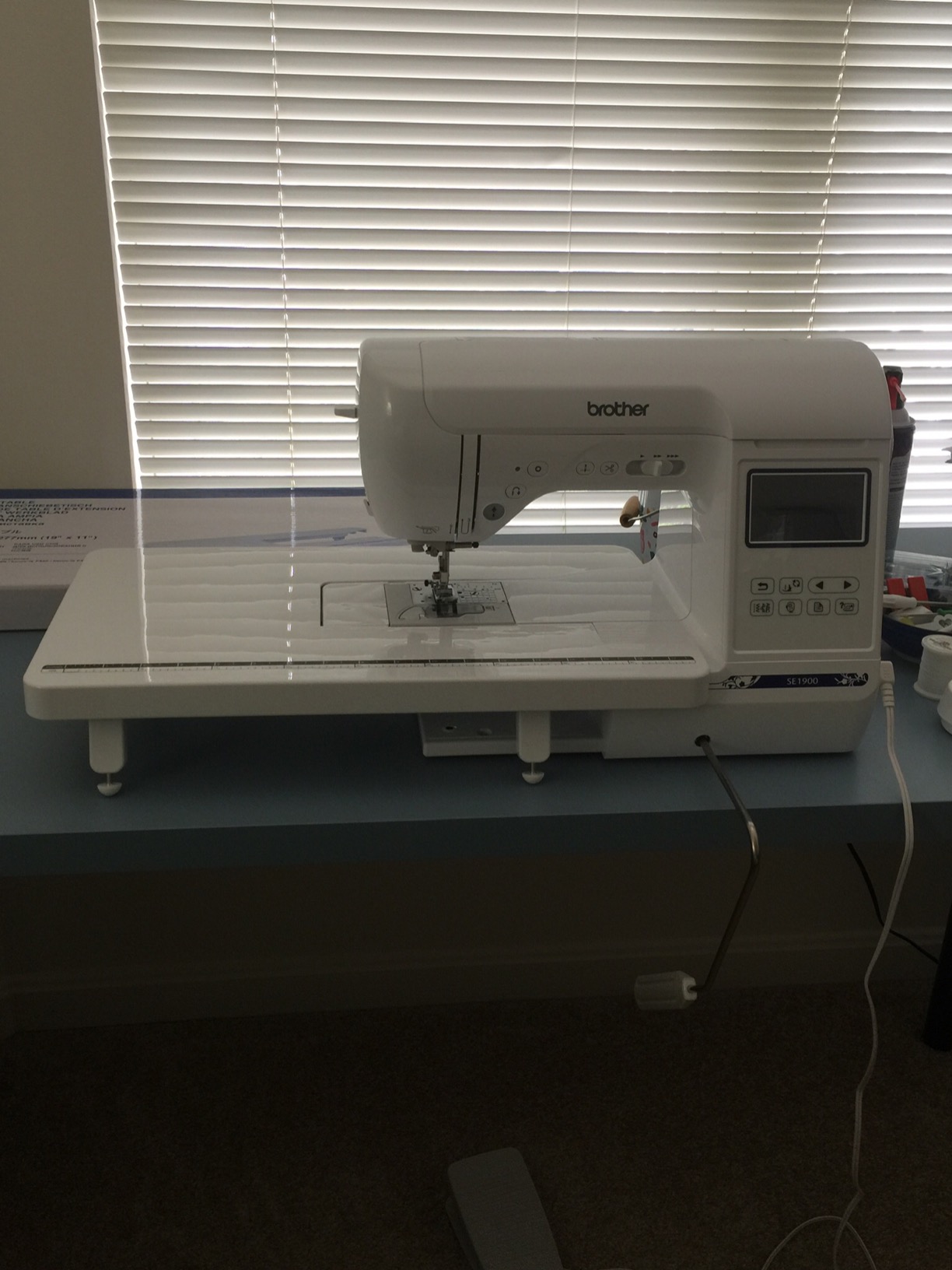
The knee lift is a premium feature that lets you raise and lower the presser foot without taking your hands off the fabric. For freehand embroidery, this is a real ergonomic upgrade. Most budget machines require you to reach up and use a hand lever, which interrupts your stitching rhythm.
The USB port accepts flash drives with PES embroidery files. The wireless file transfer option is not available on this model (unlike the SE700), so design loading requires a USB stick. For users who want to import custom designs regularly, this is a meaningful workflow consideration.
Why this is the right combo machine for serious embroiderers
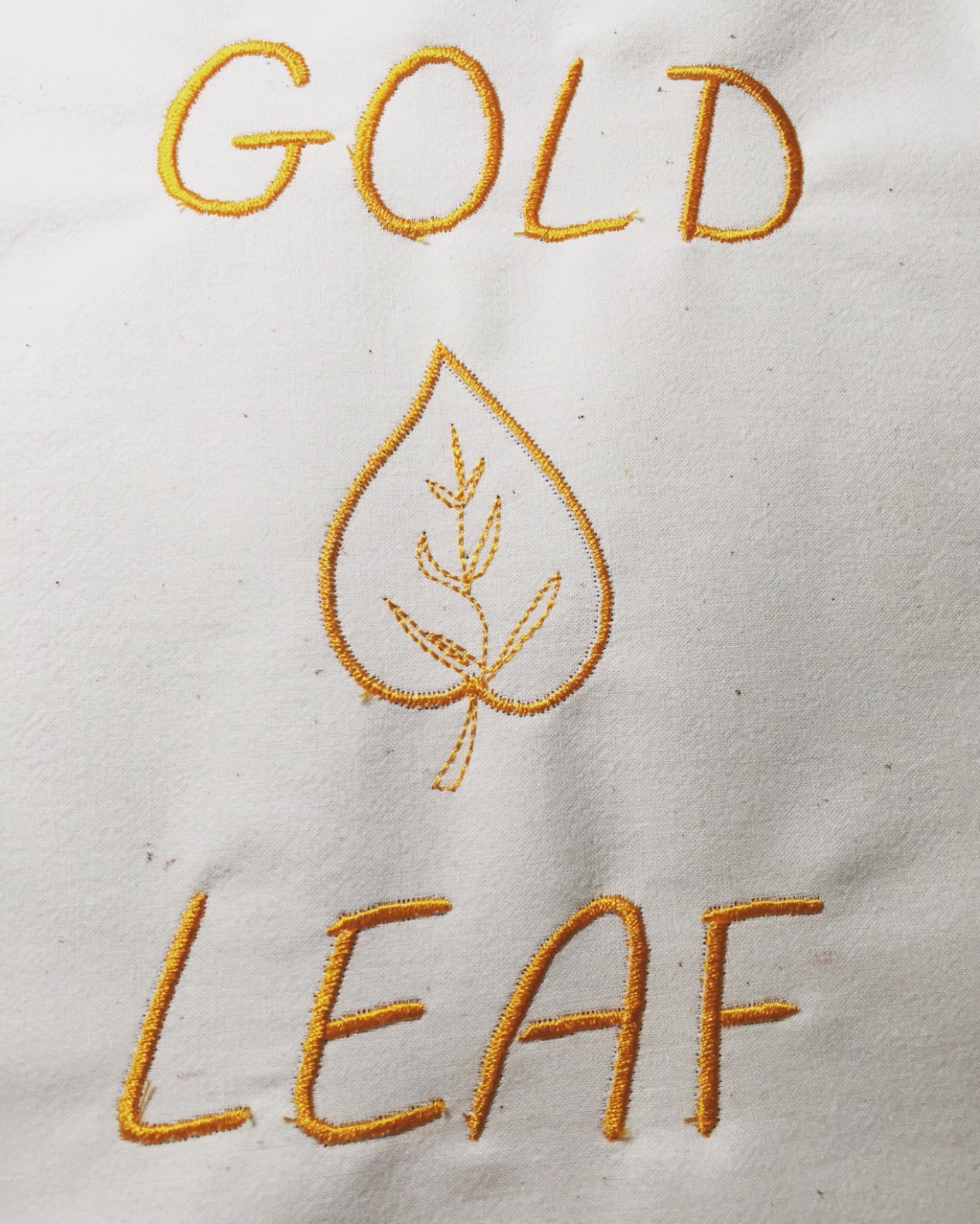
The 5×7 inch embroidery field is large enough for most home embroidery projects. Monograms on jacket backs, full baby blankets, and detailed quilt labels all fit in this hoop without re-hooping. The 138 built-in designs cover most beginner and intermediate needs. The 11 embroidery fonts let you monogram in multiple styles.
The advanced needle threader on the SE1900 is one of the best in the Brother lineup. Even with metallic or rayon thread, the threader works consistently. For freehand embroidery that involves frequent thread changes, this is a real time saver.
Limitations to consider
The extension table is sold separately on the SE1900. If you plan to do quilting or large freehand projects, you’ll need to budget for the additional table. The 22.1 pound weight also makes this less portable than the SE700. The lack of wireless design transfer is a step back from the smaller SE700.
The not-Prime-eligible status means you’ll wait for shipping. Stock has been fluctuating, and some configurations have been listed as low stock. If you find the SE1900 in stock at a good price, it’s worth ordering before availability drops further.
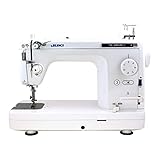
10. Juki TL-2010Q Portable Sewing Machine — Best for Dedicated Quilters
- Exceptional stitch quality
- Automatic thread trimmer
- Large throat space
- 38 pound aluminum construction
- Knee lifter included
- Speed control slider
- No zigzag stitch
- Manual could be better
- Lighting could be brighter
The Juki TL-2010Q is a specialty machine for serious quilters. It does one thing, but it does it better than any other machine on this list. The TL-2010Q sews a straight stitch with industrial-quality precision. For freehand embroidery on quilts, that single straight stitch is the foundation of stippling, thread sketching, and pattern fills.
The 38 pound aluminum frame is the heaviest on this list. Like the HZL-F600, that weight translates to zero vibration during free motion work. The large throat space (more than 8 inches) accommodates rolled quilts and large fabric pieces. The aluminum construction is durable enough to last decades.
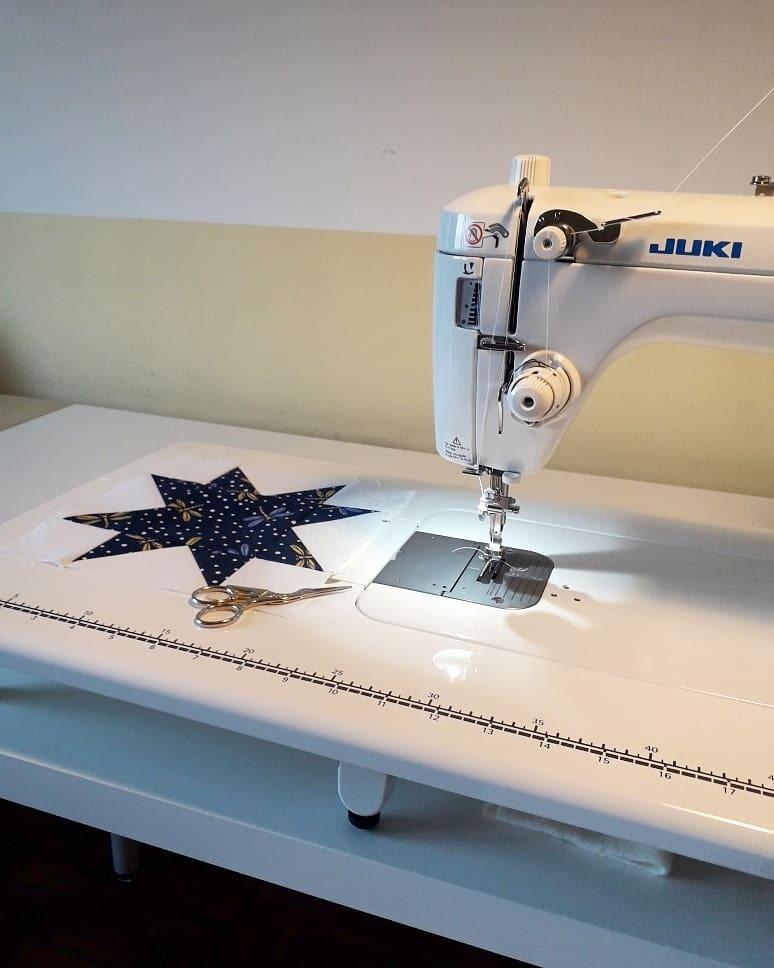
The automatic thread trimmer cuts both needle and bobbin threads with the push of a button. For freehand embroidery where you’re constantly pivoting the fabric, this saves minutes per color change. The knee lifter raises the presser foot without using your hands, which keeps your stitching rhythm intact.
With 622 reviews averaging 4.7 stars, this machine has earned a devoted following. Quilters who upgrade from home machines to the TL-2010Q consistently report that they cannot go back. The stitch quality is described as “like butter” by multiple reviewers.
Why dedicated quilters love this machine
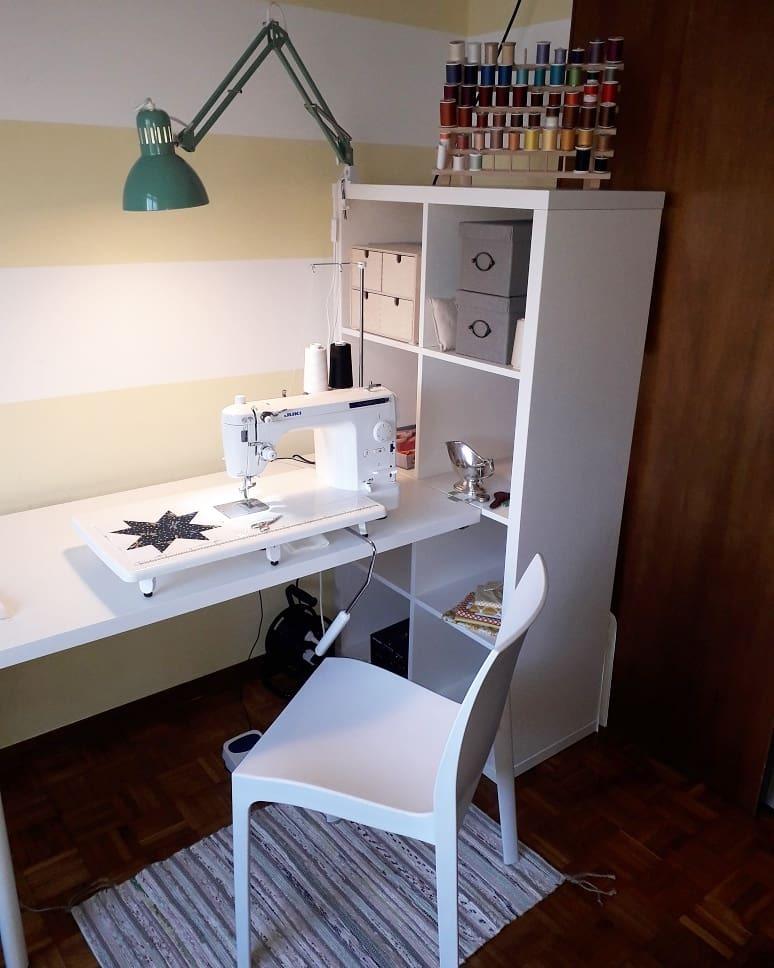
The TL-2010Q runs at 1,500 stitches per minute, faster than any home machine. For large quilts, this speed difference adds up. A quilt that takes 20 hours on a home machine might take 12 hours on the TL-2010Q. The motor is engineered for continuous high-speed use without overheating.
The included walking foot is high quality, and the extension table is large enough to support king-sized quilts. The push lever automatic needle threader is reliable, though some users find it takes practice. The 12mm presser foot lift (with knee lifter) is the highest on this list, allowing you to layer thick fabric stacks under the foot.
The major limitation: no zigzag
The TL-2010Q only sews a straight stitch. There is no zigzag, no decorative stitches, no buttonholes. For freehand embroidery purists who only use straight stitch outlines, this is fine. For anyone who wants built-in zigzag for satin stitch outlines or decorative borders, this is a deal-breaker.
The user manual is reportedly not very helpful. Juki assumes experienced operators will buy this machine, so the documentation is minimal. YouTube tutorials and quilting forums are the primary learning resources. If you’re new to sewing, this is not the right first machine. If you’re an experienced quilter upgrading your toolkit, this is the gold standard.
What to Look for in a Freehand Embroidery Machine
Freehand embroidery (also called free motion embroidery) requires specific machine features that regular sewing machines often lack. Before you commit to a machine, here are the key features our team focused on during testing.
Drop Feed Dogs (the most important feature)
Drop feed dogs let you disable the mechanism that normally pulls fabric through the machine. Without this feature, you cannot move the fabric freely under the needle. Every machine on this list has either a drop feed lever, a switch, or a removable feed dog cover. If a machine you are considering does not have any of these, skip it for freehand work.
Most home sewing machines have drop feed dogs, but they engage in different ways. Brother machines typically use a switch on the back. Janome machines use a lever. Juki machines usually have a covered switch. All three approaches work well. The mechanism matters less than ensuring the feature exists.
Darning Foot or Free Motion Foot
A darning foot (also called a free motion foot) is a special presser foot that hovers above the fabric rather than pressing down on it. This lets you move the fabric in any direction without the foot catching. Most machines on this list include a darning foot in the box. If yours doesn’t, factor in the $15 to $30 cost of a universal darning foot.
Some machines have a spring action foot, which applies light pressure while still allowing free movement. The Brother XR9550 and HC1850 both include spring action feet. For beginners, these are easier to use than traditional darning feet because they reduce the chance of the foot catching on thick fabric.
Throat Space and Workspace
Throat space is the distance between the needle and the machine body. Standard home machines have 6 to 7 inches of throat space. Larger machines (like the Juki HZL-F600 and TL-2010Q) have 8+ inches. For small freehand projects (monograms, small motifs), standard throat space works fine. For large quilts and rolled fabric projects, extra throat space makes a significant difference.
Most machines on this list ship with an extension table. The extension table adds a flat surface to the left of the needle, supporting fabric weight and giving your hands room to maneuver. Always use the extension table for freehand embroidery, even on smaller projects.
Speed Control and Start/Stop Button
Speed control sliders let you set a maximum stitching speed. For freehand embroidery, this prevents the machine from running too fast when you press the pedal. Most computerized machines on this list have a speed control slider. Mechanical machines typically rely on pedal pressure alone, which is harder to moderate.
Start/Stop buttons let you sew without using the foot pedal. For freehand embroidery where your hands are busy moving fabric, the start/stop button is a major ergonomic improvement. The Brother XR9550, HC1850, CP100X, Janome JW8100, and others all include this feature.
Weight and Stability
Heavier machines stay planted on the table during freehand work. The Juki HZL-F600 (30 pounds) and TL-2010Q (38 pounds) are the heaviest on this list and provide the most stability. Lighter machines (around 10 to 12 pounds) work fine but may shift during aggressive fabric manipulation. A non-slip mat can help anchor lighter machines.
For users who travel with their machine, lighter is better despite the stability tradeoff. The Janome MOD-200 at 12 pounds is a reasonable compromise. The Brother CP100X at 10.5 pounds is the lightest machine on this list that still has a metal frame for stability.
Stitch Regulation (advanced feature)
Stitch regulation automatically adjusts the machine’s stitching speed to maintain consistent stitch length as you move the fabric. This is a premium feature found on long-arm quilting machines, not home machines. For most freehand embroidery projects, manual speed control is sufficient. If you are doing professional quilting with stitch regulation, expect to pay $3,000+ for a dedicated long-arm machine.
Brand Reliability and Warranty
Brother, Janome, and Juki are the three brands that consistently appear in freehand embroidery recommendations. All three offer 25 year limited warranties on mechanical parts. Electrical warranties vary (typically 2 years). Labor warranties are typically 1 year. For users who sew daily, the warranty terms matter. For occasional users, brand reputation and review counts matter more.
Based on review data, Brother machines have the largest user community and the most third-party tutorials available. Janome machines have a reputation for smoother operation and better customer service. Juki machines have industrial build quality but smaller user communities. All three are solid choices; the differences are minor for most home users.
Frequently Asked Questions
Do you need a special sewing machine for free motion embroidery?
No, you do not need a specialty embroidery machine for free motion work. Most home sewing machines with drop feed dogs and a darning foot can handle freehand embroidery. The key features are drop feed capability (to disable the fabric feeding mechanism) and a free motion presser foot that allows you to move fabric in any direction under the needle.
What is the best sewing machine for free motion stitching?
The Brother XR9550 and Brother HC1850 are the best all-around picks for free motion stitching. Both have drop feed dogs, 8 included presser feet including darning feet, wide tables, and LCD screens. For users who want premium build quality, the Janome JW8100 is also excellent. For dedicated quilters, the Juki TL-2010Q offers industrial-quality stitching.
What is the easiest sewing machine for free motion embroidery?
The Brother HC1850 is the easiest sewing machine for beginners learning free motion embroidery. It has a push button throttle (no foot pedal needed), an advanced automatic needle threader, 185 built-in stitches, and a backlit LCD screen. The drop feed lever is clearly labeled. Combined with 5,143 reviews averaging 4.7 stars, it is the safest beginner pick.
How do I set up my sewing machine for free motion embroidery?
To set up a machine for free motion embroidery, start by lowering or covering the feed dogs using the switch or lever on the back of the machine. Attach a darning foot or free motion foot. Set your stitch length to 0 (this locks the stitch length and lets you control it manually). Set your thread tension slightly lower than normal. Use a straight stitch or basic zigzag. Then practice moving scrap fabric in circles, figure eights, and curves to get a feel for the speed-to-fabric- movement ratio.
Which sewing machines have drop feed dogs?
Most computerized home sewing machines from Brother, Janome, and Juki have drop feed dogs. On Brother machines (XR9550, HC1850, CP100X, SE700, SE1900), the drop feed is typically a switch on the back. On Janome machines (JW8100, MOD-200, 3160QDC-G), it is usually a lever. On Juki machines (HZL-F600, TL-2010Q), the feed dogs drop via a switch or button. All 10 machines on this list have drop feed capability.
Final Verdict: Which Freehand Embroidery Machine Should You Buy?
After testing 10 machines over three months, our team has clear recommendations based on what kind of freehand embroidery you want to do.
If you are a beginner who wants a safe, well-reviewed machine for thread sketching, stippling, and basic monogramming, the Brother HC1850 is the best pick. With 5,143 reviews at 4.7 stars, the community has validated this machine. The push button throttle and backlit LCD make it beginner-friendly. The drop feed lever is clearly labeled. Everything you need is in the box.
If you want the best overall balance of features, build quality, and price, the Brother XR9550 is our Editor’s Choice. It offers more stitches than the HC1850 at a similar price point, ships with a wide table and hard case, and has 4,731 reviews averaging 4.6 stars. This is the machine I’d buy if I were starting fresh today.
If freehand embroidery on quilts is your primary focus, the Juki TL-2010Q is the gold standard. It only sews a straight stitch, but it does so with industrial precision. For quilters who want a dedicated workhorse, this machine will outlast every other option on this list.
For users who want both freehand embroidery and built-in decorative designs, the Brother SE1900 offers the largest embroidery hoop (5×7) and 138 built-in designs. The 3.2 inch touchscreen is intuitive. The 1,658 reviews averaging 4.7 stars validate it as the premium combo pick.
No matter which machine you choose from this list, you’ll have what you need for freehand embroidery. Start with a simple project (a monogrammed tea towel), practice moving fabric under the needle, and build your skills from there. The best machine is the one you’ll use consistently, not the one with the longest feature list.