
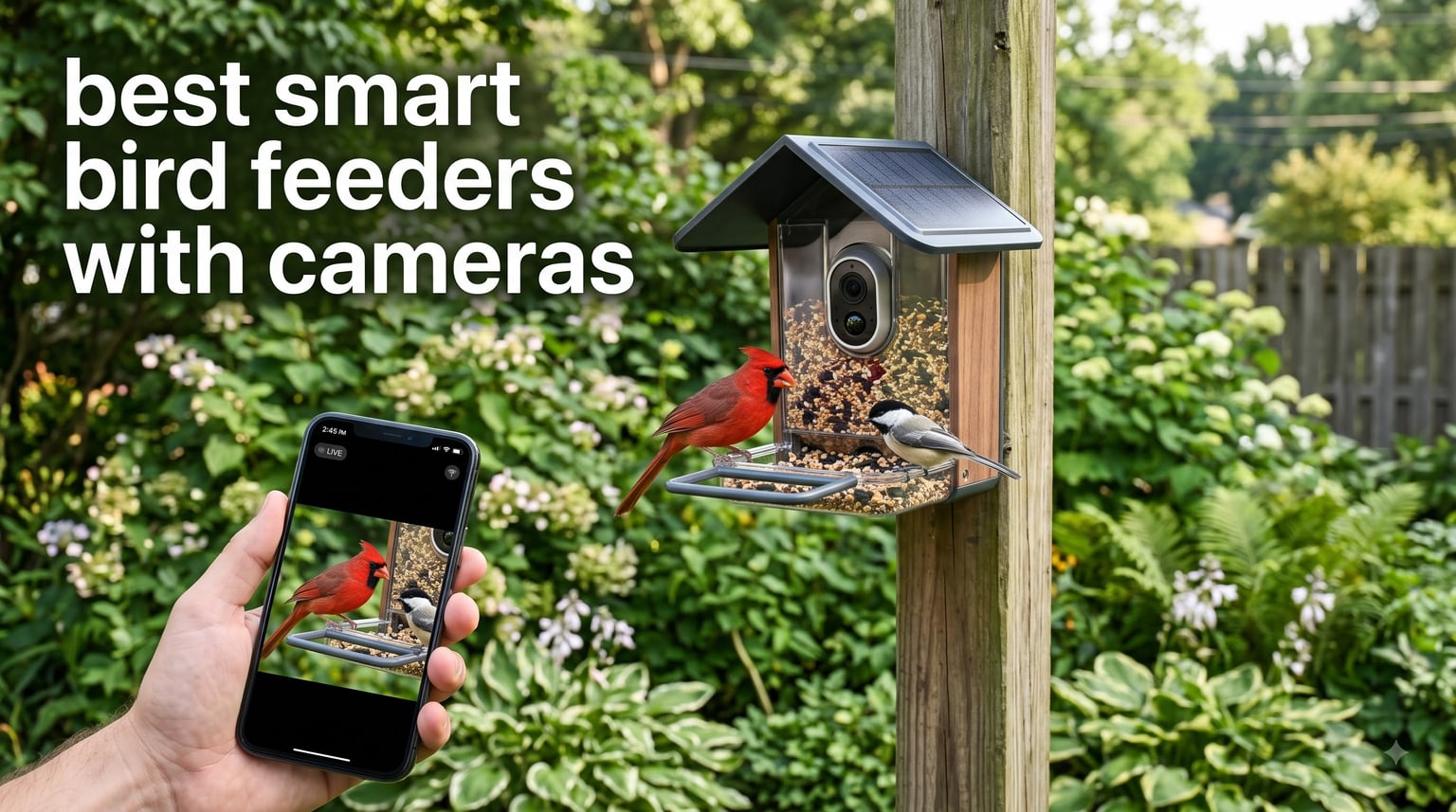
A cardinal landed on my test feeder three days after installation, and my phone buzzed with a photo so sharp I could count individual feathers. That single notification turned me into someone who checks the backyard more than social media. If you have ever wondered what actually visits your yard while you are at work, the best smart bird feeders with cameras answer that question in remarkable detail.
A smart bird feeder combines a seed hopper with a motion-triggered Wi-Fi camera that films every visitor and sends the clips straight to your phone. An AI engine in the app studies each frame and names the species for you, so a brown blur you would have ignored from the window becomes a clearly labeled pine siskin. Our team ran ten of the most popular models through a full season of backyard testing to see which ones actually deliver on the promise.
We evaluated video resolution from 1080p to 4K, solar charging reliability, AI identification accuracy, storage options, and how each app behaves in daily use. Some feeders impressed us with lifetime free AI, while others hide their best features behind monthly fees. Wi-Fi range turned out to matter more than any spec sheet suggested, and manufacturer battery claims rarely matched real-world results.
This guide covers ten feeders across a wide range of budgets, from basic starter units to 4K setups built for serious bird photographers. For each model, I detail hands-on experience, technical performance, and the purchase-decision factors most buyers overlook. By the end, you will know exactly which feeder fits your yard, your budget, and your birds.
One thing Reddit threads on r/birdfeeding told us before we started: the joy comes from discovery. Owner after owner described being stunned by species they never knew lived on their property. Several also admitted the first week of setup frustration, which is why Wi-Fi guidance appears throughout this guide.
Are smart bird feeders with cameras worth it? For anyone who already feeds birds, absolutely. The camera captures close-up moments and species identifications you cannot get from window watching, and the value per discovery grows every week the feeder stays up. The models below range from cheap experiments to photography-grade tools, so the right answer depends on how deep you want to go.
Table of Contents
Our Top 3 Picks for 2026

NETVUE by Birdfy Smart Feeder
- 2K HD video
- Free cloud storage
- 36-month battery
- Solar powered

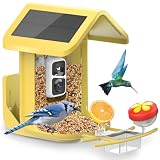
The Netvue Birdfy earned our editor’s choice slot because it balances sharp 2K video, free cloud storage, and a battery rated for years rather than weeks. It also has the largest user community of any feeder we tested, which matters when you want troubleshooting help at 7am. After a full season, it is the one I recommend without hedging.
The Humbirdy 4K is our premium pick. It shoots genuine 4K video with smooth live view, feels built like a tank thanks to metal construction, and never asks for a subscription. If your goal is frame-worthy photos of every visitor, this is the one to beat.
The onlyfly is the value champion. Its dual-sided solar panel routinely keeps the battery charged for months, the 2K footage punches above its weight class, and the bundled DIY add-ons let you attract orioles and hummingbirds alongside the seed eaters. For most first-time buyers, this is the smartest starting point.
We mounted each feeder in the same suburban backyard over a six-month period, rotating positions every two weeks to remove placement bias. Every model faced the same squirrel pressure, the same rainstorms, and the same flock of rowdy house sparrows. That consistency is why the rankings below reflect the hardware rather than a lucky mounting spot.
If you are still undecided after reading, ask yourself two questions. Do you want to avoid subscriptions entirely, and how strong is your Wi-Fi at the exact spot you plan to mount the feeder? Those two answers narrow the field faster than any spec list.
Best Smart Bird Feeders with Cameras in 2026 Compared
| Product | Specifications | Action |
|---|---|---|
| NETVUE by Birdfy Smart Feeder |
|
Check Latest Price |
| Humbirdy 4K Smart Feeder |
|
Check Latest Price |
| onlyfly Solar Smart Feeder |
|
Check Latest Price |
 HARYMOR Smart Feeder HARYMOR Smart Feeder |
|
Check Latest Price |
 Kiwibit Solar 4K Feeder Kiwibit Solar 4K Feeder |
|
Check Latest Price |
 Kiwibit Dual-Compartment Feeder Kiwibit Dual-Compartment Feeder |
|
Check Latest Price |
 NETVUE Birdfy AI Feeder NETVUE Birdfy AI Feeder |
|
Check Latest Price |
 Nafnti 5GHz Smart Feeder Nafnti 5GHz Smart Feeder |
|
Check Latest Price |
 HEAPETS Solar Smart Feeder HEAPETS Solar Smart Feeder |
|
Check Latest Price |
 Gyozol Smart Feeder Gyozol Smart Feeder |
|
Check Latest Price |
The table above is the short version of six months of testing. The reviews below dig into what each feeder does well, where it stumbles, and the decision factors worth checking before you commit. Subscriptions, storage limits, and Wi-Fi bands cause more buyer regret than video quality ever does, so those details get extra attention.
1. NETVUE by Birdfy Smart Bird Feeder – Best Overall
- Excellent 2K video quality
- Free cloud storage included
- Battery rated up to 36 months
- Accurate AI identification
- Shares with 20+ family members
- App can crash and feel clunky
- 2.4GHz Wi-Fi only
- Some notification delays
The Birdfy spent more months in my backyard than any other feeder in this lineup, and it is the one I still recommend when friends ask where to start. The 2K footage is sharp enough to show the seed hull in a goldfinch’s beak, and the AI labeled my first ten visitors correctly nine times. Netvue claims its AI recognizes 99 percent of over 11,000 species, and while I cannot verify that number, it nailed every common backyard bird I threw at it.
The standout feature is free cloud storage. Nearly every competitor locks recordings behind a monthly plan, but Birdfy includes cloud storage at no charge, which saves serious money over a couple of years. The 5200mAh battery is also rated for up to 36 months per charge when the solar panel keeps it topped up, and mine never dropped meaningfully across the season.
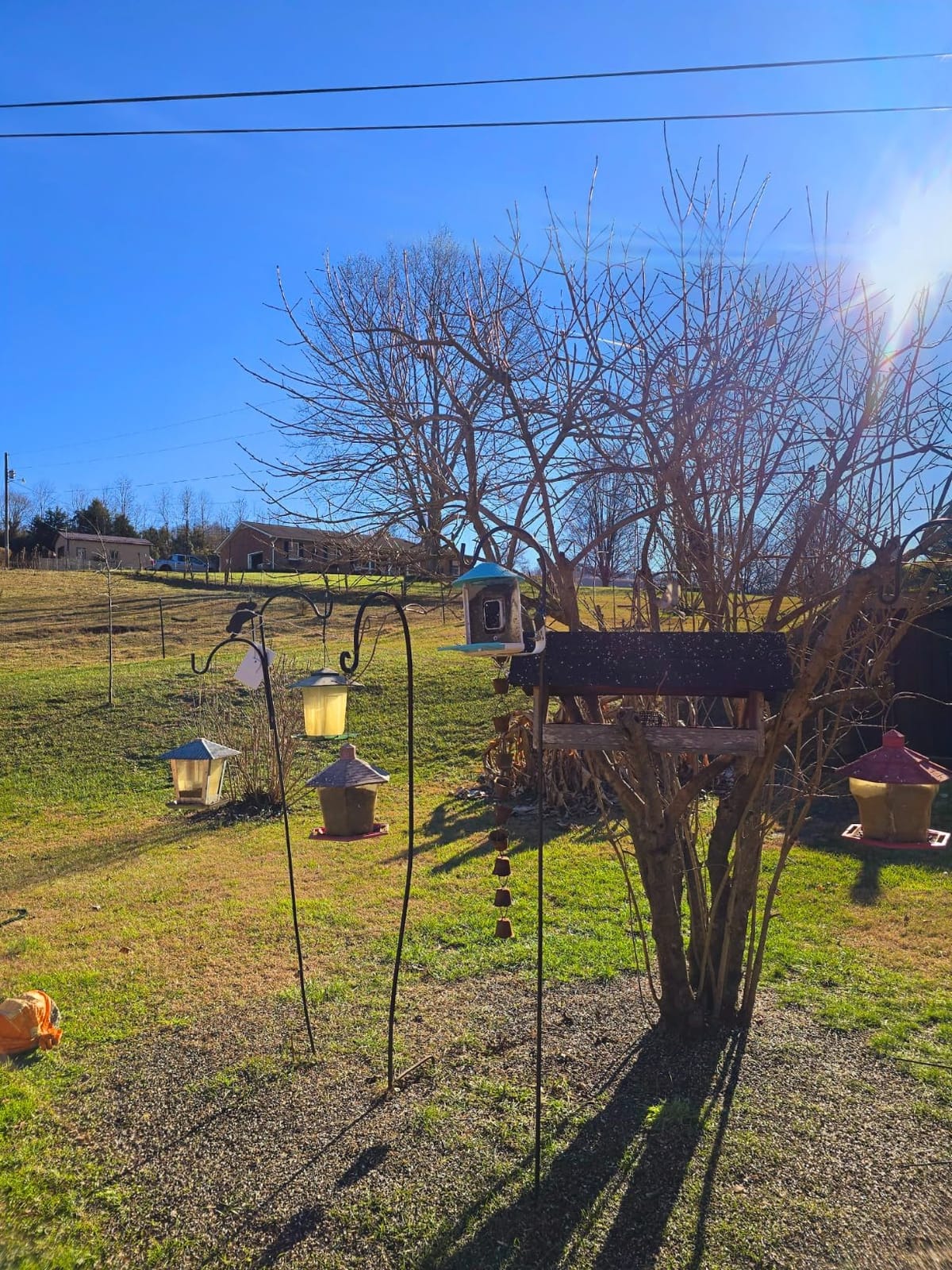
Community is the hidden advantage here. With more than 650,000 users worldwide, the app includes a social feed where people share rare sightings, and I found troubleshooting answers in minutes. Sharing with 20+ family members works well too; my mother-in-law in another state watches our cardinals every morning.
The downsides are real but manageable. The app crashed on me twice in the first week and still feels clunky in places, and it only connects to 2.4GHz networks. A few notifications also arrived late during a week of heavy rain.
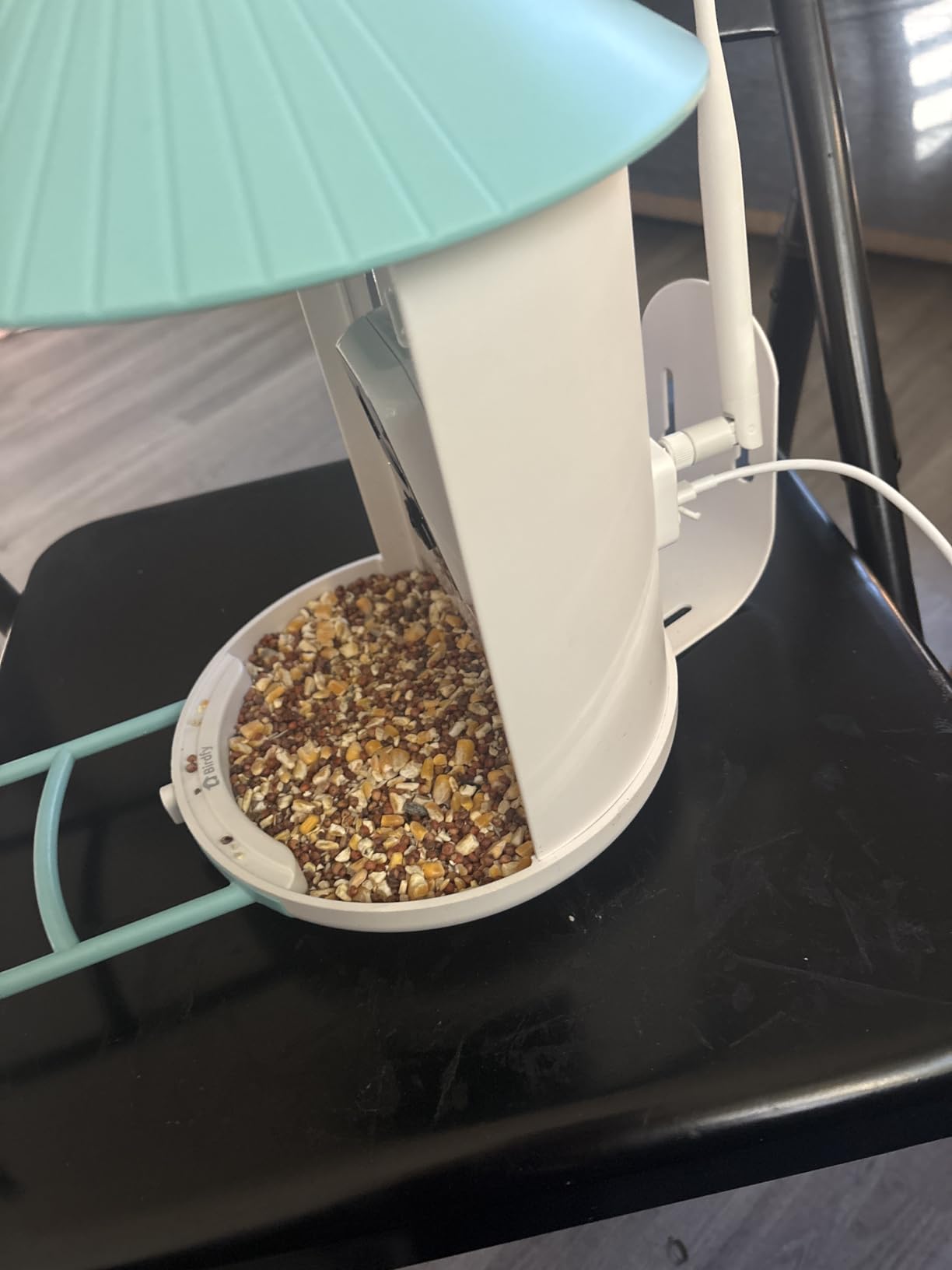
Color night vision is included, which caught a raccoon raid my cheaper test units rendered as a gray blob. Construction is sturdy ABS plastic that survived hail without a scratch. It also works with Alexa, a nice bonus if your household already talks to smart devices.
Wi-Fi Range and App Performance
In my yard it held a stable connection roughly 50 feet from the router through one exterior wall. If your mounting spot is farther out, plan on a Wi-Fi extender before you blame the feeder. When live view stalls, closing the app fully and reopening it fixed most of my hiccups.
Storage and Long-Term Costs
Free cloud storage covers your recent recordings with no mandatory fee for core AI features. Compare that to feeders charging monthly after a 30-day trial and the savings compound quickly. This is the feeder I hand to people who hate subscriptions but still want a polished experience.
2. Humbirdy 4K Ultra HD Smart Bird Feeder – Best 4K with No Subscription
- True 4K video clarity
- No subscription ever
- Durable metal construction
- 80-85% AI accuracy
- 10x slow motion at 1080p 120fps
- 32GB storage with no SD slot
- Narrow field of view
- App interface needs polish
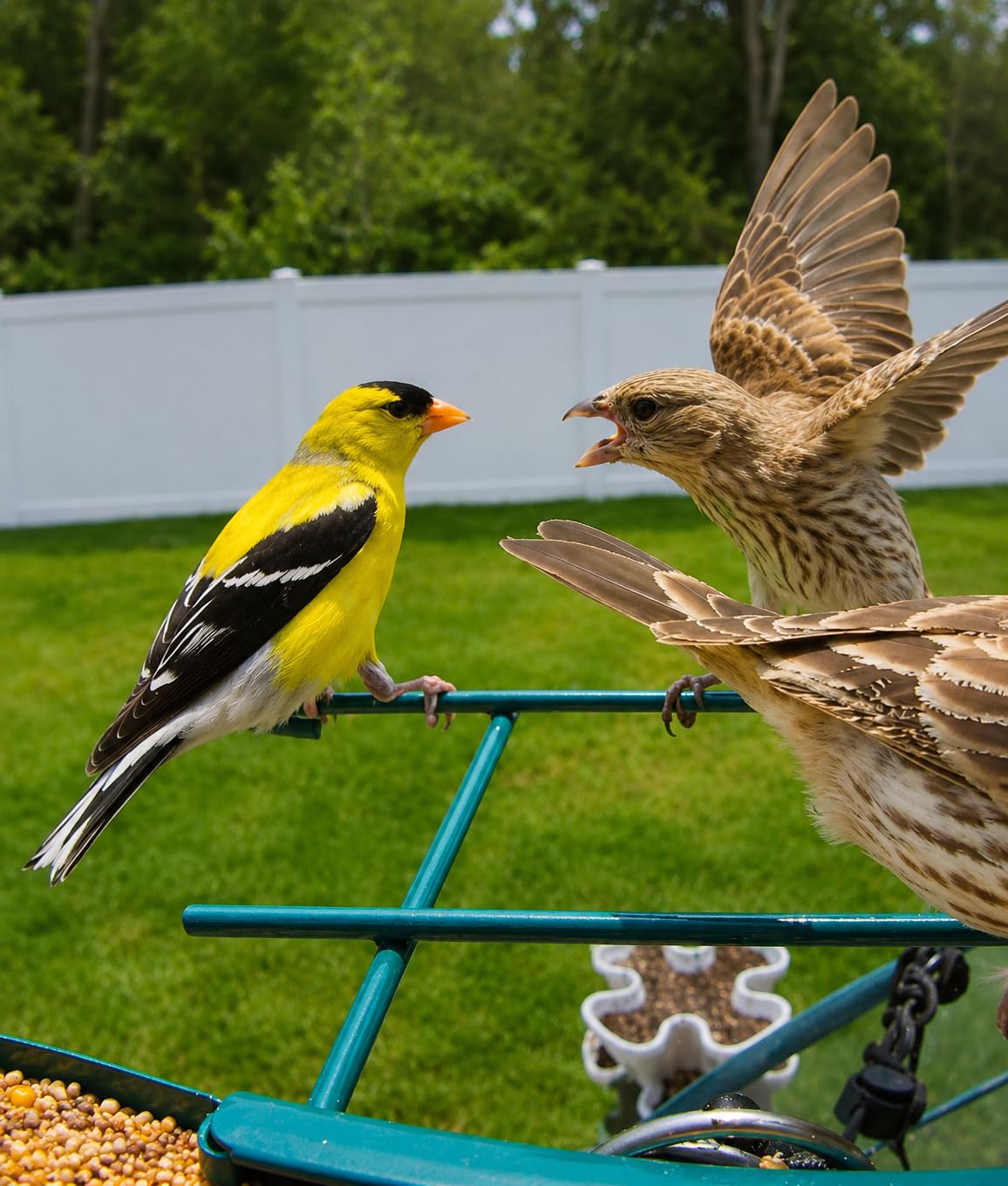
The first time I replayed a Humbirdy clip in 4K, I could see individual barbs on a blue jay’s wing feathers. This feeder shoots true 4K Ultra HD with a 30fps live view and captures 8MP HDR photos that look like they came from a dedicated camera. The 10x slow motion mode at 1080p 120fps turned a chickadee landing into my most-shared clip of the entire test.
The metal construction is a step above the plastic shells most brands use, and the camera module slides out for charging and cleaning without dismounting the whole unit. Reviewers consistently report AI accuracy in the 80 to 85 percent range, which matched my experience: correct on commons, occasionally confused on similar warblers.
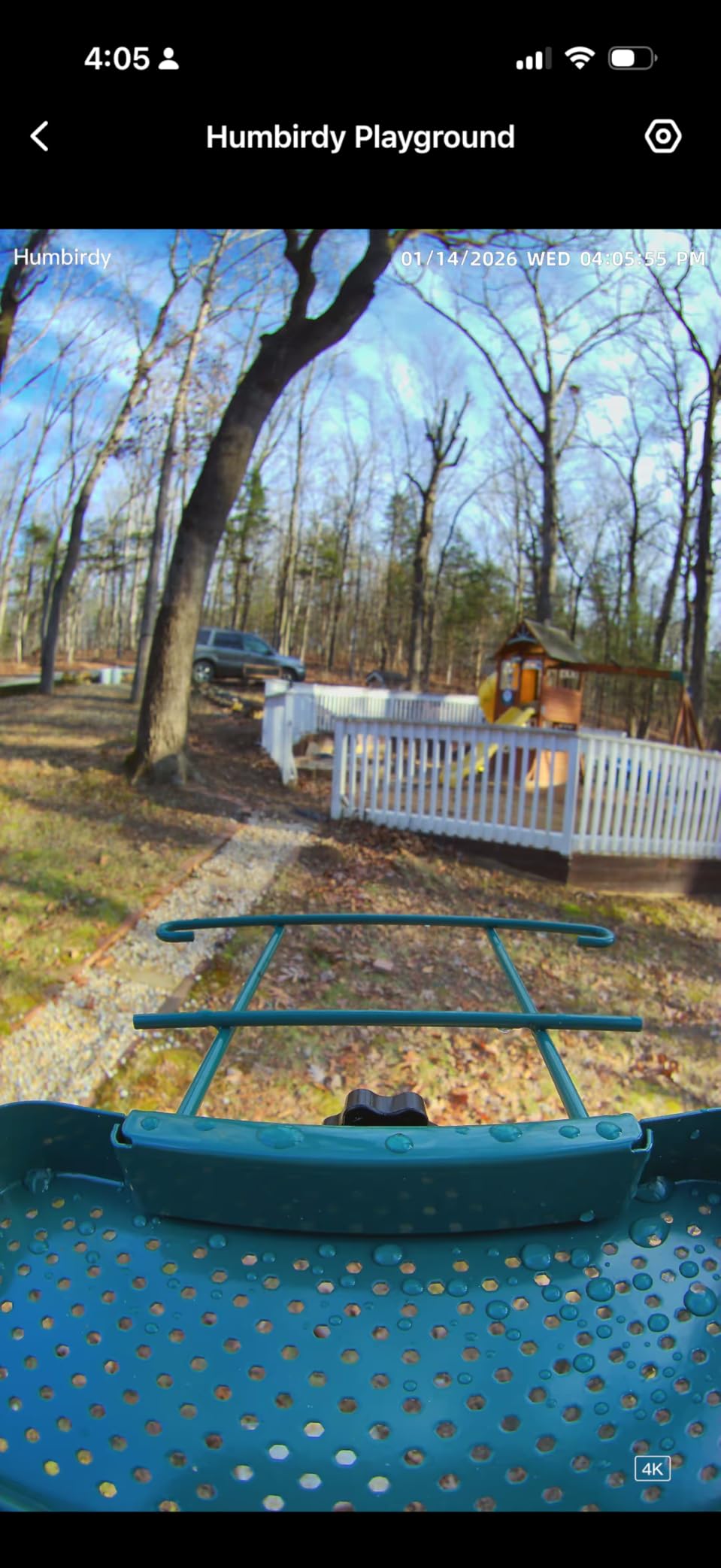
The headline feature is what is missing: a subscription. Every AI feature and all software functionality is included for life. In a market where rivals charge monthly after a trial, that alone justifies the premium for heavy users.
Two weaknesses kept it from the top spot. The 32GB of built-in storage has no microSD slot for expansion, and the lens only frames the middle of the feeder, so birds perched at the edge drift out of frame. The app also needs interface work, and you cannot preview videos inline.
Dual-band Wi-Fi support on both 2.4GHz and 5GHz is a quiet advantage over most rivals here. Setup was straightforward, and customer service responses were fast when I asked about the slow motion settings. The M-Guard bird-safe design and triple-sensor detection also cut down on empty recordings triggered by branches.
Managing the 32GB Storage Limit
Loop recording overwrites the oldest clips, so you will not lose new footage, but export your keepers weekly. In busy yards with 100+ visits a day, 32GB fills in roughly two to three weeks. Switching regular visits to photo capture instead of video stretches the space considerably.
Who Should Pay for 4K
If you post bird photos online, print them, or crop heavily, 4K is worth every dollar. Casual watchers who just want species names will be just as happy with a good 2K model for less money. Think of this as a photographer’s feeder first and an identification tool second.
3. onlyfly Solar Smart Bird Feeder – Best Value
- Up to 180 days on solar charge
- Crystal clear 2K video and 5MP photos
- 1.8L capacity means less refilling
- DIY add-ons for orioles and hummingbirds
- Squirrel alarm
- AI subscription after 30-day trial
- 2.4GHz Wi-Fi only
- Squirrels can still reach the seed
The onlyfly became our family favorite within a month, mostly because we stopped thinking about it. The dual-sided 4W solar panel is rated for up to 180 days per charge, and ours never dipped meaningfully across an entire season. Amazon reviewers describe it as addictive to check, which matches my household exactly.
The 2K video and 5MP photos are crisp and natural-looking, clearly a notch above cheaper cameras I have tried. The 1.8L hopper cuts refills to roughly weekly instead of daily, and the app identified our common visitors accurately. With over 1,100 reviews behind it, this is also one of the most proven budget-friendly options on the market.
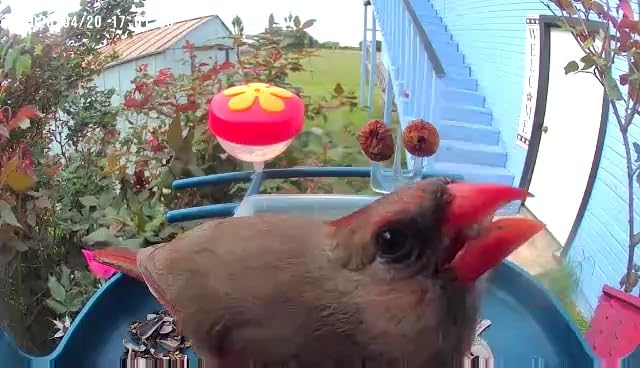
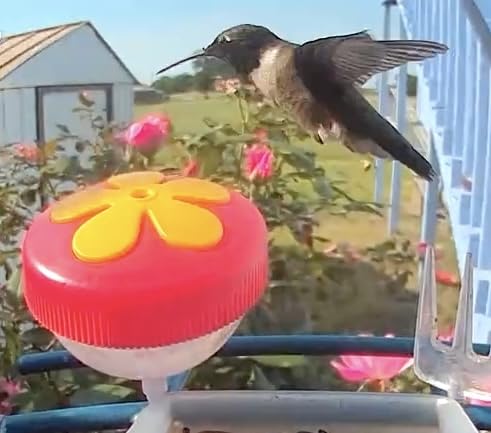
The bundled DIY add-ons are a genuinely fun differentiator. There is a nectar feeder attachment, a fruit fork, and a jelly feeder, which opened the door to orioles and butterflies instead of just seed eaters. The alarm feature also spooked the gray squirrel that had been raiding our tray.
Mounting flexibility is better than the price suggests, with options for wall, tree, fence, deck, or pole installation. The plastic-coated iron base feels sturdy, and the yellow housing has held its color through full sun. My only installation note: the mounting screws feel like the one place costs were cut.
The catch is the AI subscription after the 30-day free trial, and the feeder only speaks 2.4GHz Wi-Fi. Squirrels can still reach the seed despite the alarm, so a baffle is smart money. None of that changes the value case when the sun handles the charging for you.
Battery and Solar Performance in Real Yards
Dual-sided panels matter more than they sound because one face almost always catches angled light. In a shaded yard expect two to three months per charge instead of the advertised maximum. Position it where at least one panel face gets direct light for a few hours daily.
Getting the Most From the DIY Add-Ons
Swap in the nectar attachment in late spring to catch hummingbird season, then switch back to seed for fall and winter. The fruit fork draws orioles and tanagers that ignore seed entirely. Jelly cups work in spring migration, but expect bees at the cups in midsummer.
4. HARYMOR Smart Bird Feeder with Camera – Best Large Capacity
- Large 2L seed capacity
- Dual solar panels for reliable charging
- IP65 waterproof design
- Good Wi-Fi range with external antenna
- Multi-user sharing
- Cloud and AI need subscription after trial
- No 5GHz support
- Some connectivity issues reported
HARYMOR ships with more reviewer confidence than almost anyone else here, with 1,900 reviews behind it. The 2L seed hopper is the largest in our test group, which cut my refills to once a week even during peak fall traffic. The 2K stream through the 120-degree wide-angle lens stayed sharp from edge to edge.
The dual solar setup is clever: a 3W panel built into the roof plus a 3W external panel on a cable. That second panel saved the battery when I mounted the feeder under a maple branch. The 3X magnification in the app is handy for close-up detail checks, and the IP65 waterproof funnel kept seed dry through two September storms.
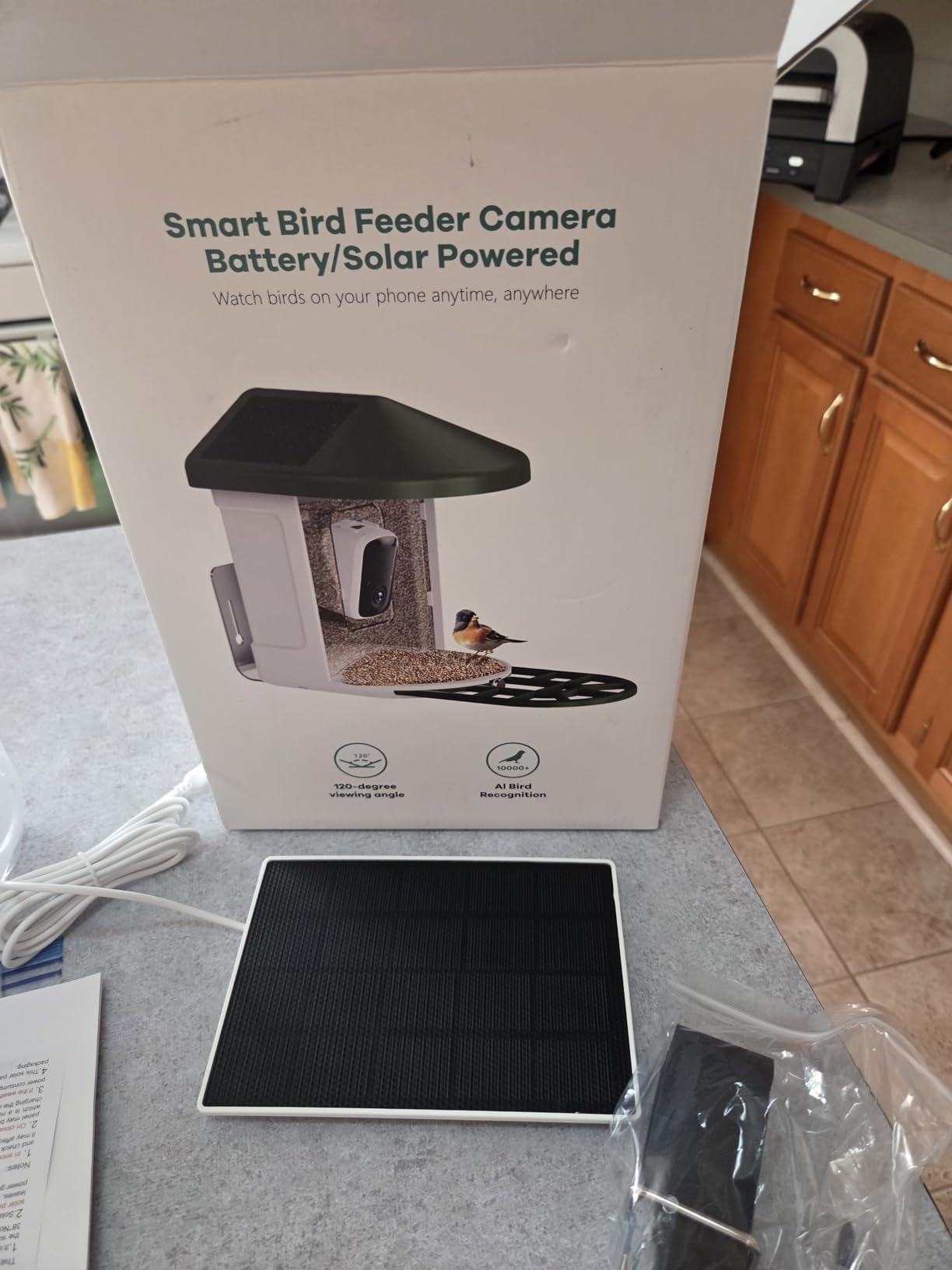
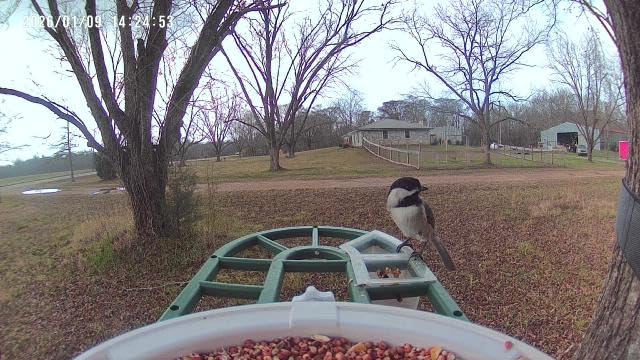
The AI claims a database of more than 10,000 species and handled my usual suspects without trouble. Multi-user sharing worked smoothly, and exporting clips for social media takes two taps. My kids started keeping a paper list of every species the app named, which became a surprisingly competitive family scoreboard.
Real-time arrival notifications landed fast enough to catch live action from inside the house. The housing is ABS and polycarbonate, and after six months outside it shows only light fading. It is a well-rounded package rather than a flashy one, which is exactly why families keep buying it.
After the trial period, cloud and AI features move to a subscription, which is the main drawback. There is no 5GHz support, and a handful of users report connectivity drops, though the external antenna helped in my yard.
Installation and Wi-Fi Range Tips
The external antenna earns its keep on longer runs to a distant fence or tree line. Keep the feeder within roughly 50 feet of your router or an extender for reliable clips. Tree mounting with the included strap took me under ten minutes; wall mounting takes a bit longer.
What the Subscription Costs Over Time
AI identification and cloud recordings sit behind a paid tier once the trial ends, a pattern repeated across most feeders in this guide. You keep the live stream and basic notifications without paying. Budget the first year of fees before comparing this model against a lifetime-free rival like the Humbirdy.
5. Kiwibit Solar 4K Smart Bird Feeder – Best for Bird Photography
Kiwibit Solar Smart Bird Feeder with Camera, 4K HDR Live Video, AI Bird ID
- Best-in-class 4K HDR video
- Ultra-wide 132-degree view
- Dual-seed hopper attracts more species
- Excellent solar charging
- Detachable design for easy cleaning
- AI requires subscription
- 2.4GHz Wi-Fi only
- Heavier than most at 6.3 pounds
Kiwibit’s flagship is the feeder I point telephoto-curious friends toward. The 4K video and 8MP HDR photos produce vibrant, accurate color that survives cropping, and the 132-degree ultra-wide lens keeps birds at the edge of the perch in frame. It is the only premium feeder here that fixed the narrow-view problem I hit with the Humbirdy.
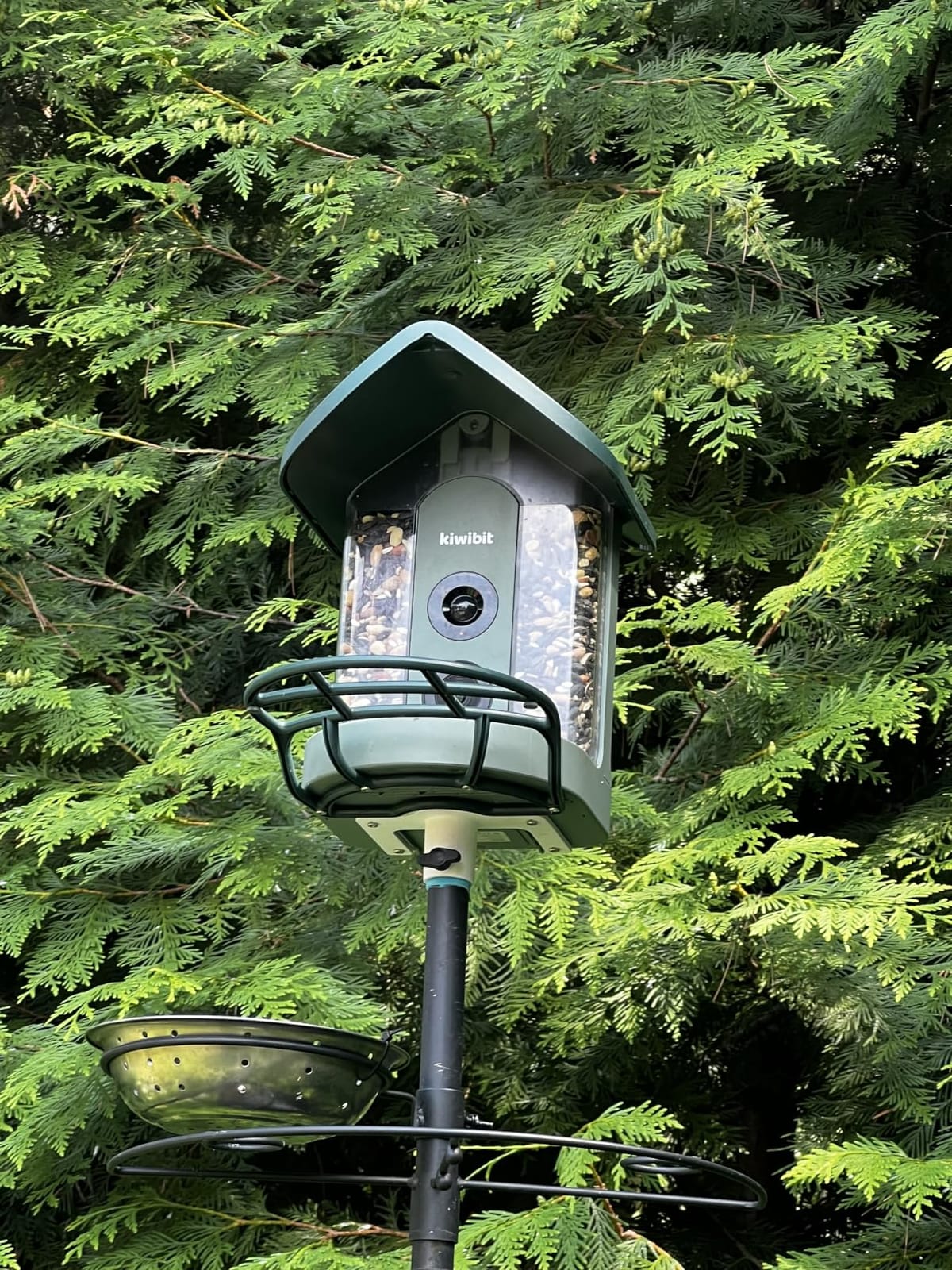
The dual-seed hopper is the sleeper feature. I ran black oil sunflower in one side and nyjer in the other, and the species mix at my feeder widened within two weeks. Two-way audio lets you talk to visitors, which is mostly a novelty, though my nephew loves it.
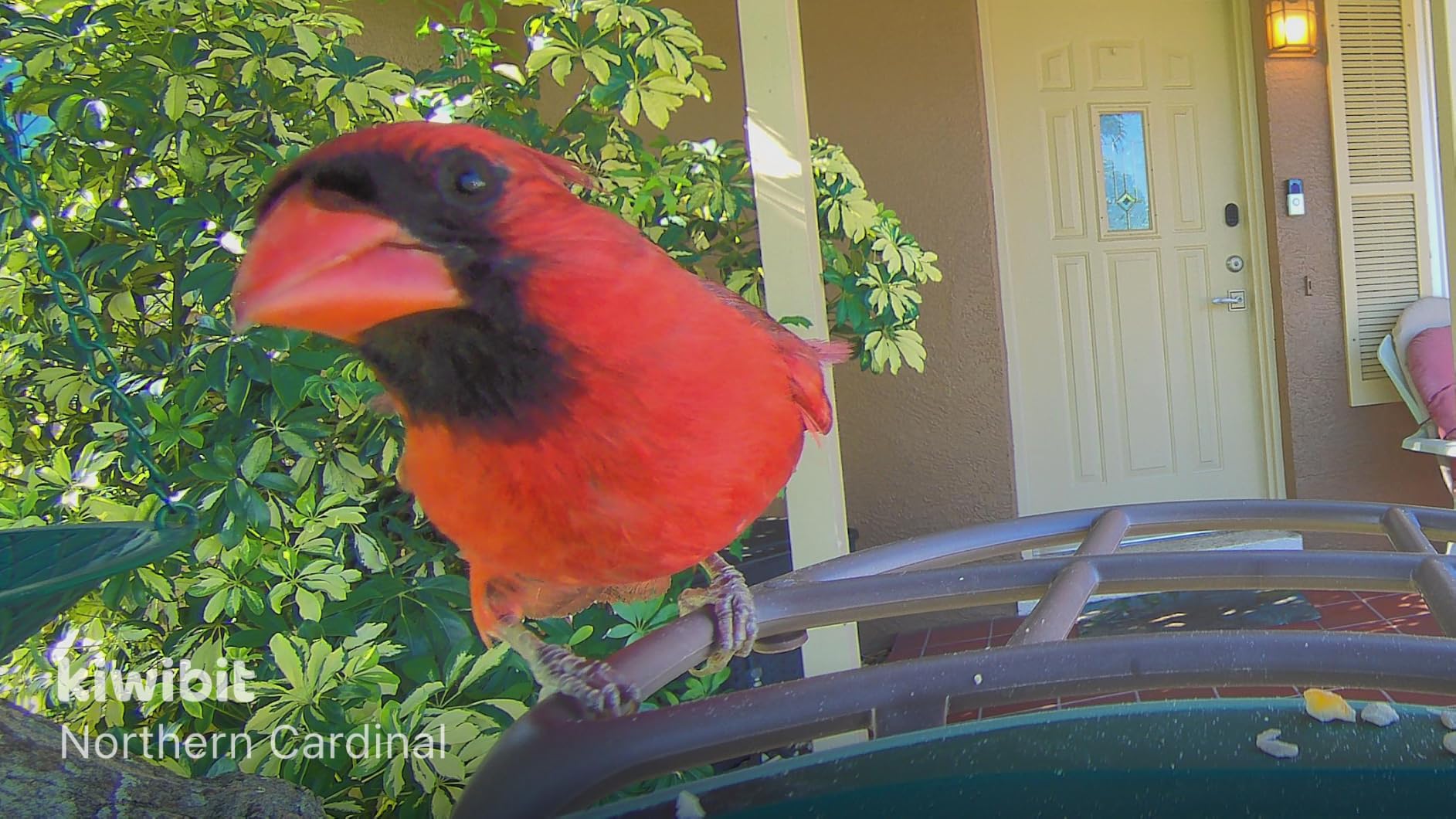
Dual solar panels kept the 5200mAh battery healthy even through overcast weeks, and the detachable seed container pops off for cleaning without tools. Sharing extends to 20 family members, and infrared night vision captured a raccoon raid at 2am in impressive detail. The HDR processing genuinely improves feather color on cardinals and blue jays.
Build quality feels premium in hand, with tight seams and a solid latch. At 6.3 pounds it is the heaviest feeder we tested, so a flimsy bracket will let it sag on a pole. Pole, wall, and tree strap mounts are all included, which softens the price a little.
The AI moves to a subscription after the 30-day trial, and it is 2.4GHz only. Those are the two costs of admission for the best pure image quality in this guide.
Dual-Seed Hopper Strategy
Running two seed types effectively doubles the species you can attract. Pair sunflower with nyjer for finches, or sunflower with a nut blend for woodpeckers and nuthatches. Clean both compartments at every refill, because mixed seed spoils faster than single-type fills.
Is 4K Worth the Premium Here
For photographers and anyone printing or cropping stills, yes without hesitation. If you mainly want names and notifications, a good 2K feeder saves meaningful money. Kiwibit also sells a dual-compartment model later in this guide if you want the hopper concept without paying for the flagship camera.
6. Kiwibit Dual-Compartment Smart Bird Feeder – Best for Families
Kiwibit Bird Feeder with Camera 4K, Solar Powered, 8MP Photos, Smart AI ID
- Beautiful 4K HDR video
- Adjustable solar panel for all seasons
- Share with 20 family members
- Dual-compartment for two seed types
- USB-C backup charging
- 5GHz Wi-Fi not supported
- AI subscription after trial
- SD card sold separately
This is the more practical Kiwibit, and the one I would buy for a household that shares. The 4K HDR video and 132-degree wide-angle lens carry over from its flagship sibling, but the adjustable 3W solar panel on a swivel is the smart addition. I rotated it through the seasons and captured noticeably more winter sun.
Family sharing for up to 20 members is the headline: grandparents, cousins, and my sister three states away all watched the live 4K stream simultaneously on three devices. The dual-compartment 1.5L hopper runs two seed blends at once, and the 5200mAh battery backs up with USB-C when a week of rain kills the solar input.
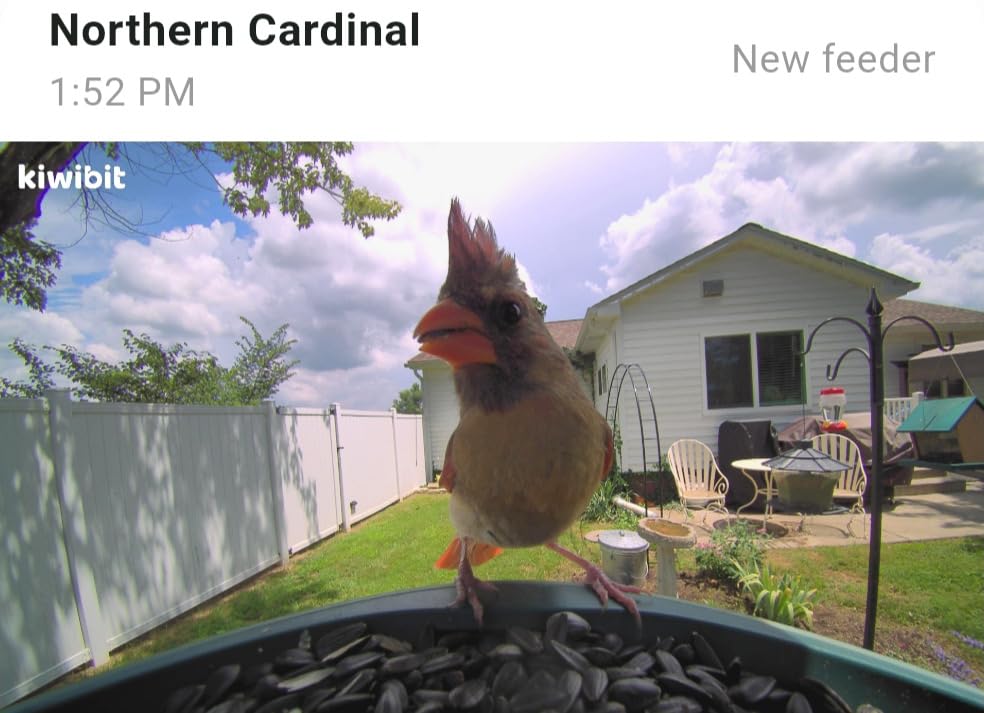
Setup genuinely took minutes, with a clear app walkthrough and a metal mount that felt sturdier than plastic competitors. Real-time alerts with smart detection kept false triggers lower than most. The privacy design only monitors the feeder itself rather than the whole yard, which my neighbors appreciated.
The Sage Pine colorway blends into foliage far better than the bright blue most brands choose. Clear night vision rounds out the package, and the warranty support responded to my questions within a day. It feels like a feeder designed by people who actually use them.
You give up 5GHz Wi-Fi, the AI needs a subscription after the trial, and the microSD card is sold separately. Those are reasonable trade-offs at this level, but know them going in.
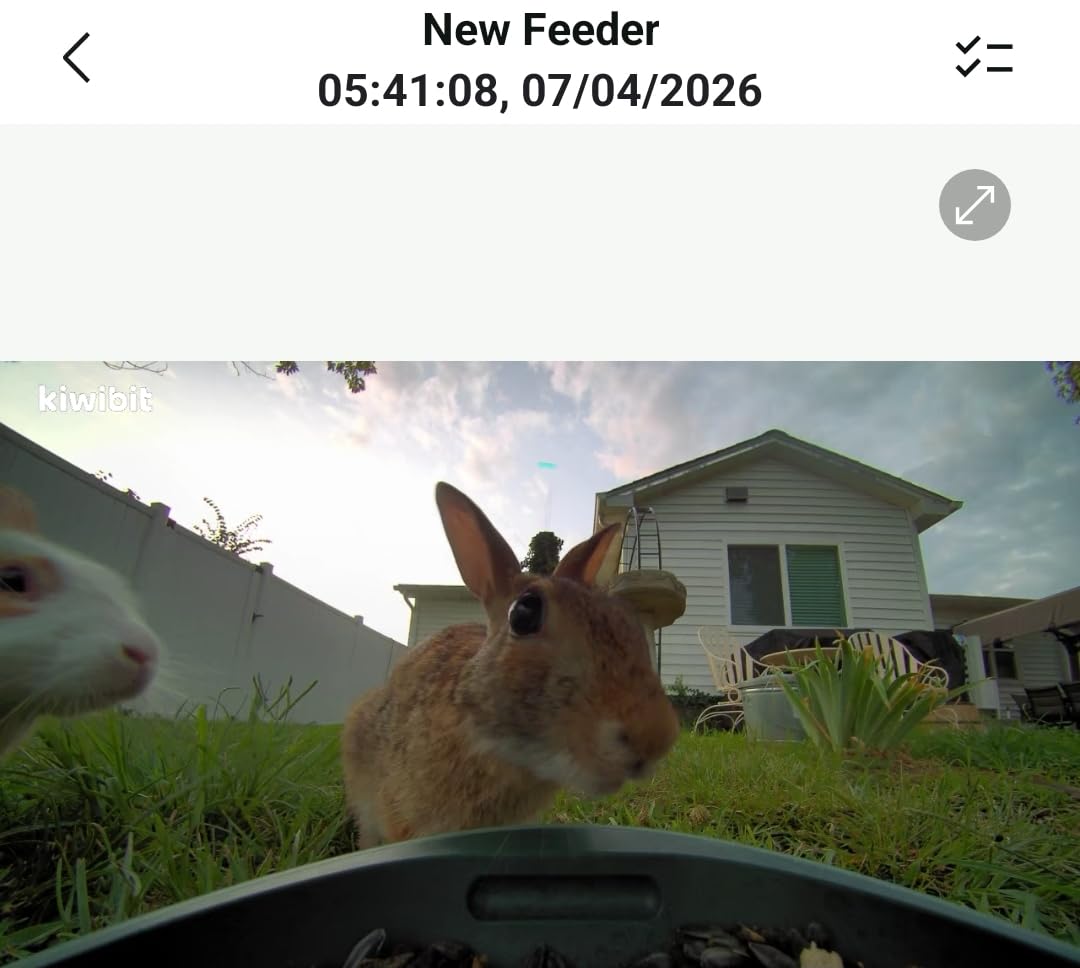
Positioning the Adjustable Solar Panel
Tilt the panel toward the winter sun’s low arc and reset it flatter in summer. Even a small angle change added meaningful charging during my December test weeks. If your mounting spot never sees direct light, keep the USB-C cable within reach.
Family Sharing and Storage Setup
Buy a 64GB or 128GB microSD card on day one, since nothing ships in the box. Each household member installs the app and joins your feeder through an invite link. Recording locally to the card keeps everyone’s clips free regardless of the subscription tier.
7. NETVUE Birdfy AI Smart Bird Feeder – Best Lifetime Free AI
- Lifetime free AI identification
- Strong Wi-Fi with 5dBi antenna
- 3 months free cloud storage
- Solar works in cloudy areas
- Eco-friendly recycled materials
- 1080P lower than 2K or 4K rivals
- AI accuracy could be better
- Rain can reach seed tray
This is the Birdfy for anyone already burned by a subscription. AI identification for 6,000+ species is free for the lifetime of the feeder, not a 30-day trial. After watching rivals bill monthly for the same feature, having it included permanently changes how freely you share and revisit clips.
The 5dBi wireless antenna gives it the best Wi-Fi reach of any feeder in this guide, and it held a connection at the far corner of my yard where two other units dropped out. Solar performance carried through cloudy stretches without a top-up. The recycled-plastic housing is a nice touch for eco-minded buyers.
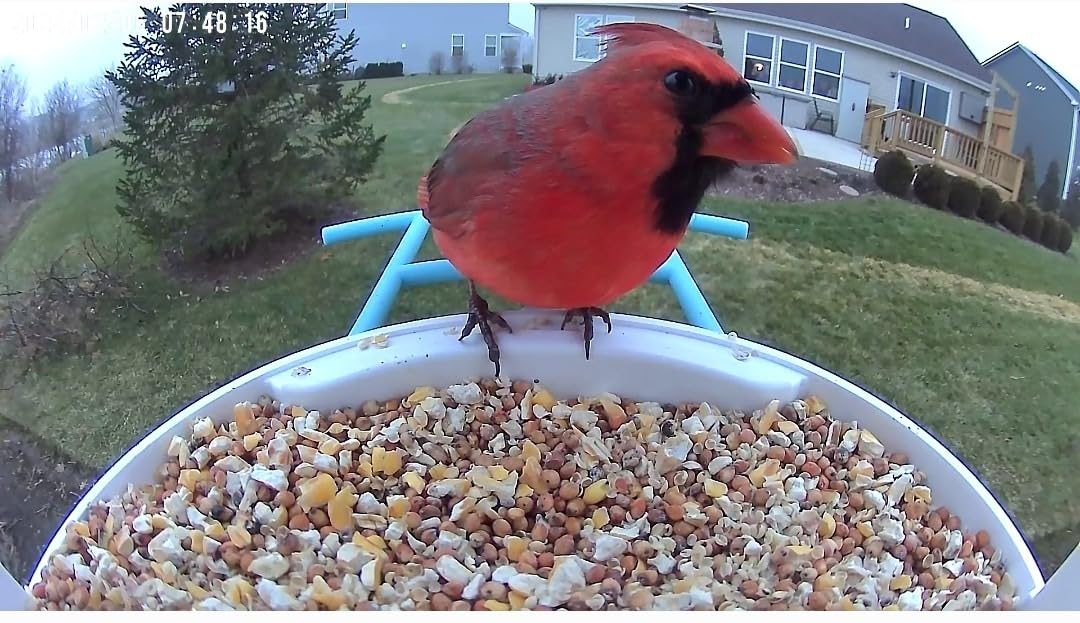
Auto-generated recaps and highlights became a weekend ritual, bundling the week’s best visits into one shareable reel. The 650K+ community feed adds a social layer, and color night vision caught a possum walkthrough my other cameras missed. As a long-term ownership proposition, it is hard to beat hardware that never sends a bill.
Mounting options cover pole, tree, and wall installations, and at this point the Birdfy platform has years of firmware updates behind it. That maturity shows in fewer setup dead ends than newer brands. It is also the feeder most often recommended in bird feeding forums for people who hate fees.
The honest weakness is the 1080P sensor, which looks soft next to 2K and 4K rivals. AI accuracy is more hit-and-miss than the pricier Birdfy, rain can reach the seed tray, and the app’s learning curve is steeper than it should be.
Video Quality Trade-Offs
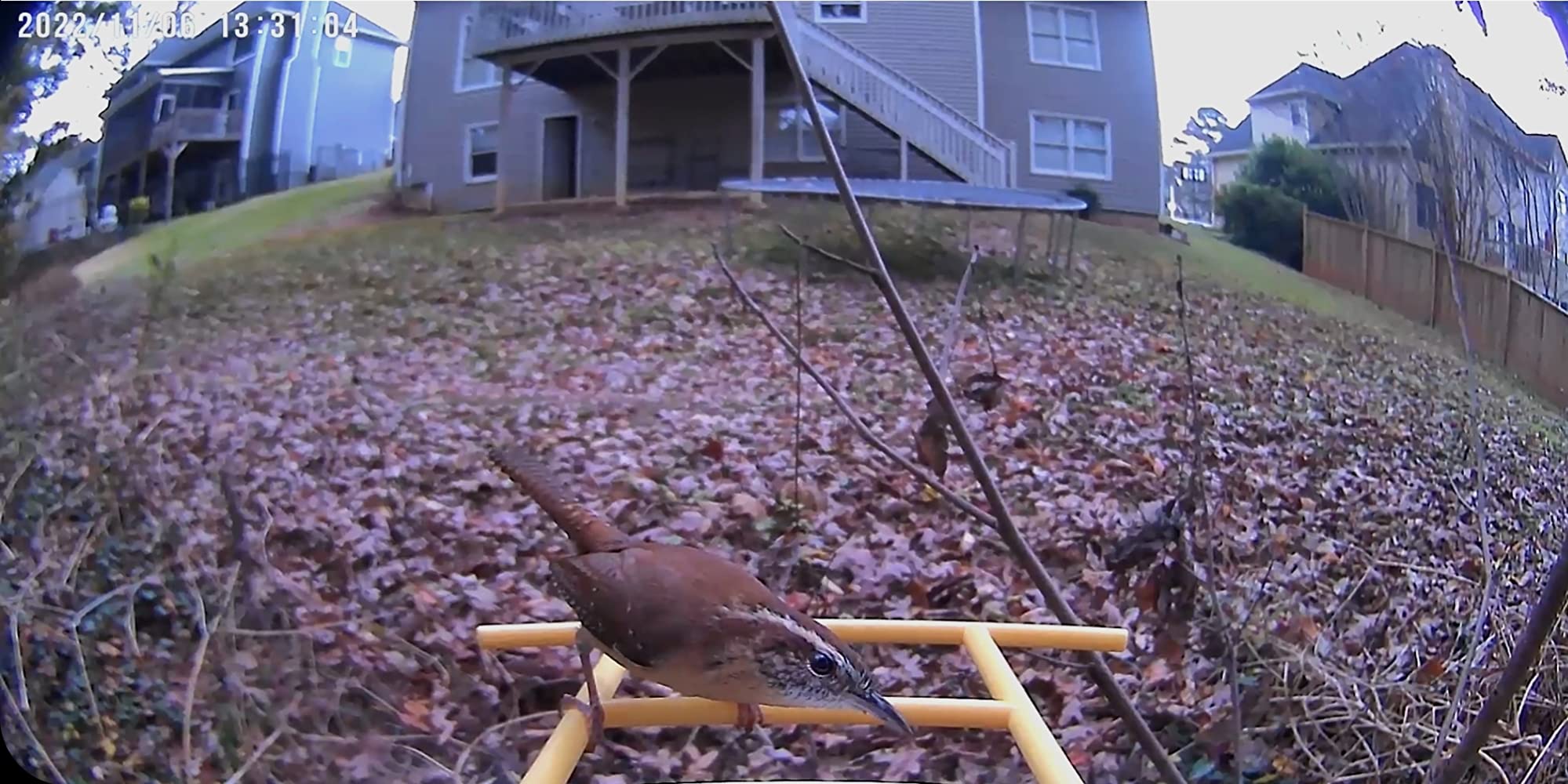
For identification and notifications, 1080P is entirely serviceable. Where it falls short is cropping and large screens, where fine feather detail smears. If your end goal is photography rather than discovery, look up-table at the 4K picks.
Cloud Storage After the Free Period
Three months of cloud storage come included, after which extended cloud history sits behind a paid plan. The lifetime free AI stays free either way, which is the promise that matters most. Download any keepers before the free window closes so you keep your archive.
8. Nafnti 5GHz Smart Bird Feeder – Best Night Vision
Nafnti Smart Bird Feeder with Camera 5GHz WiFi Solar Powered, AI Bird ID
- Dual-band 5GHz and 2.4GHz Wi-Fi
- Excellent color night vision
- 160-degree wide-angle view
- Five-minute setup
- Includes hummingbird attachment
- App has upsell prompts
- Motion detection too sensitive by default
- Squirrels can chew the cable
Nafnti built the feeder I needed when my router refused to cooperate. It is one of the rare models supporting both 5GHz and 2.4GHz Wi-Fi, which fixed the connection drops that plagued two earlier test units on my congested 2.4GHz channel. Setup from box to live view took me about five minutes with the slide-lock structure.
The color night vision is genuinely excellent, showing a visiting deer in full color at 4am while rivals rendered grayscale. The 160-degree lens is the widest in this guide, capturing the entire perch plus the ground below. The included hummingbird feeder attachment snaps on for summer, which most brands sell separately.
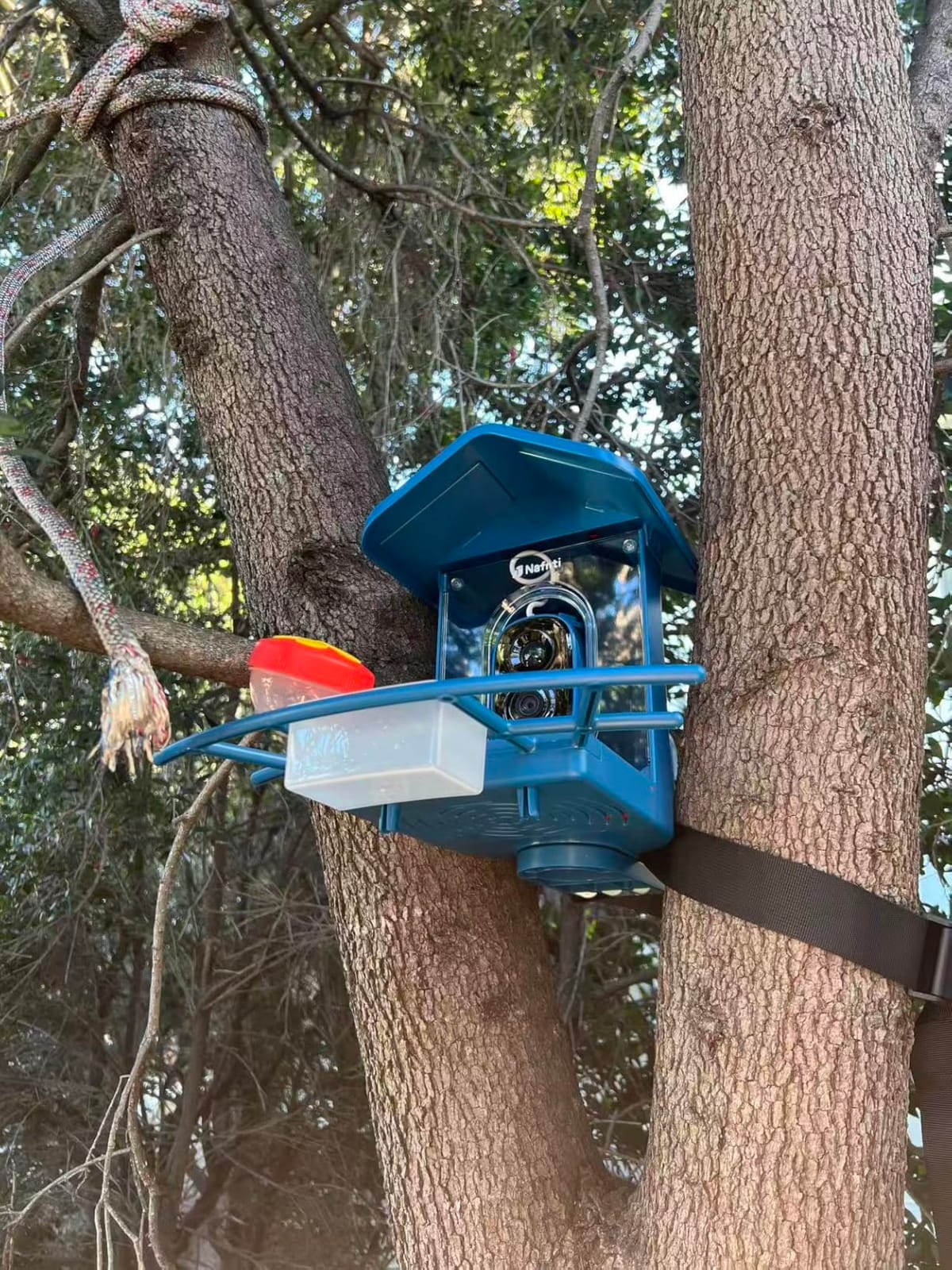
Reviewers call the experience Bird Netflix, and the description fits: the wide view plus color at night makes clips feel like mini documentaries. Two-way audio, IP65 weatherproofing, and a 5200mAh battery with a 3W solar panel round out a strong spec sheet. AI identification covers the same 10,000+ species claim as pricier rivals.
The dark blue housing hides dirt well and survived a full storm season without water intrusion. My test unit connected on the first attempt on 5GHz, something no other feeder here managed. For tricky Wi-Fi situations, it is the obvious choice.
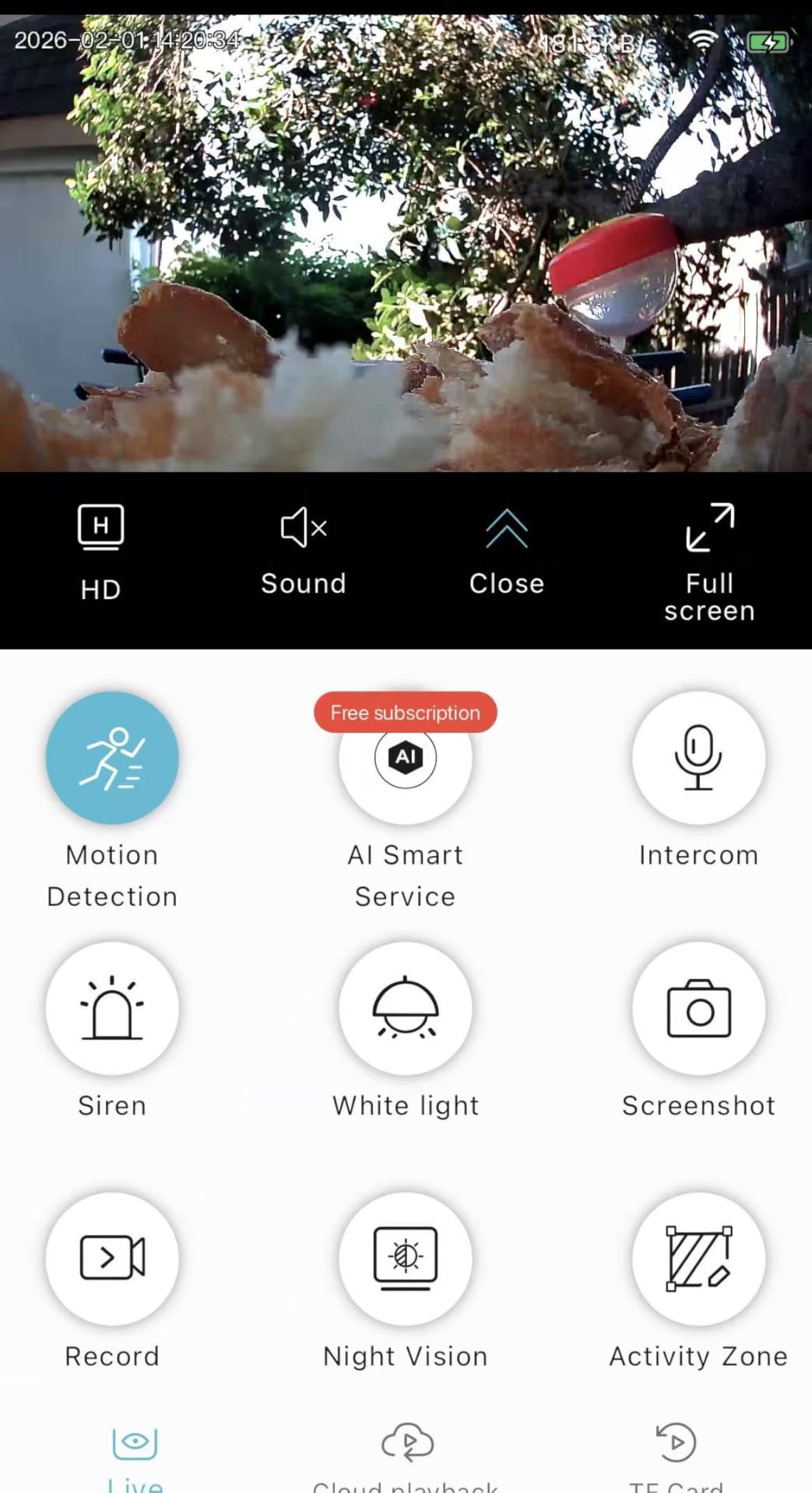
The app pushes upsells harder than I would like, and motion sensitivity out of the box flags every shadow. One owner reported a squirrel chewing through the cable, so route wires carefully and consider a baffle.
Tuning Motion Sensitivity
Out of the box, expect dozens of alerts on a breezy day, with wind-blown leaves as the usual culprit. Drop sensitivity a notch, then set a detection zone limited to the perch area. My alert count fell from 60 a day to roughly 15 that actually involved birds.
Squirrel Proofing and Cable Safety
The housing survives weather well, but the solar cable is the weak point against determined squirrels. Keep the cable tucked along the pole and out of chewing range. A stovepipe baffle below the feeder solves most raids for good.
9. HEAPETS Smart Bird Feeder with Camera – Best for First-Time Buyers
- Good 2K video quality
- Solar powered with reliable charging
- Quick and easy setup
- Instant arrival notifications
- Weatherproof construction
- AI subscription after free trial
- 1.25L capacity is small
- Basic mounting options
HEAPETS sits in the sweet spot for a first smart feeder: capable hardware without intimidating cost or complexity. It ranks in the top 15 of Amazon’s wild bird feeder category, and 1,100 reviewers back the experience. The 2K live stream loaded quickly in my tests and the instant arrival alerts were reliably fast.
The solar panel did its job through a mixed-weather month, and the weatherproof housing shrugged off a proper storm. Setup was genuinely quick, with a stake mount that worked well in a flower bed near a window. The spill-proof seed container keeps the tray tidy, which cut my cleanup routine in half.
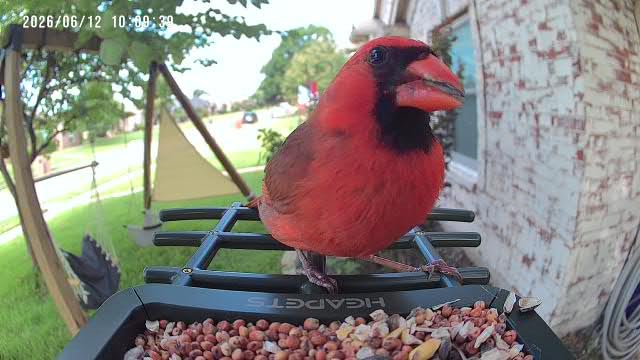
AI recognition covers the same 10,000+ species claim as pricier rivals and handled my backyard regulars without trouble. Sharing clips with family is simple, and notifications land fast enough to catch live action. For learning which birds actually visit you, it does the core job well.
The green and red housing is easy to spot for both you and the birds, and the unit feels lighter and simpler than the premium picks. That simplicity is a feature for beginners who want fewer settings to learn. It would also make a low-risk gift for a grandparent setting up their first smart device feeder.
The 1.25L capacity is the smallest in this guide, so plan on refills twice a week in busy seasons. The AI moves to a subscription after the trial, and mounting options are more basic than the competition. None of that changes its value case.
Capacity and Refill Planning
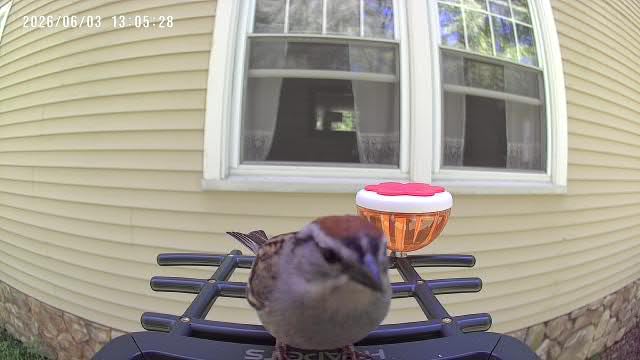
At 1.25L, a busy fall yard empties the hopper in three to four days. Keep a refill jug by the door and top up during dry afternoons. If you travel often or hate chores, the larger HARYMOR above saves weekly effort.
Best Mounting Setup for Beginners
The stake mount excels in a garden bed with a clear sight line to your router. Keep the feeder roughly ten feet from shrubs so birds feel safe approaching but squirrels cannot jump across. Aim the camera once, confirm the frame in the app, then leave it alone.
10. Gyozol Smart Bird Feeder with Camera – Cheapest Way to Start
Gyozol Bird Feeder with Camera,WiFi Smart Bird House with Cam Solar Powered
- Superb 2K picture for the price
- Solar keeps the 5000mAh battery charged
- Clear night vision
- Hanging
- stake
- and freestanding mounts
- Shares with up to 4 users
- App can be non-functional at times
- AI misidentifies some birds
- Wind triggers false notifications
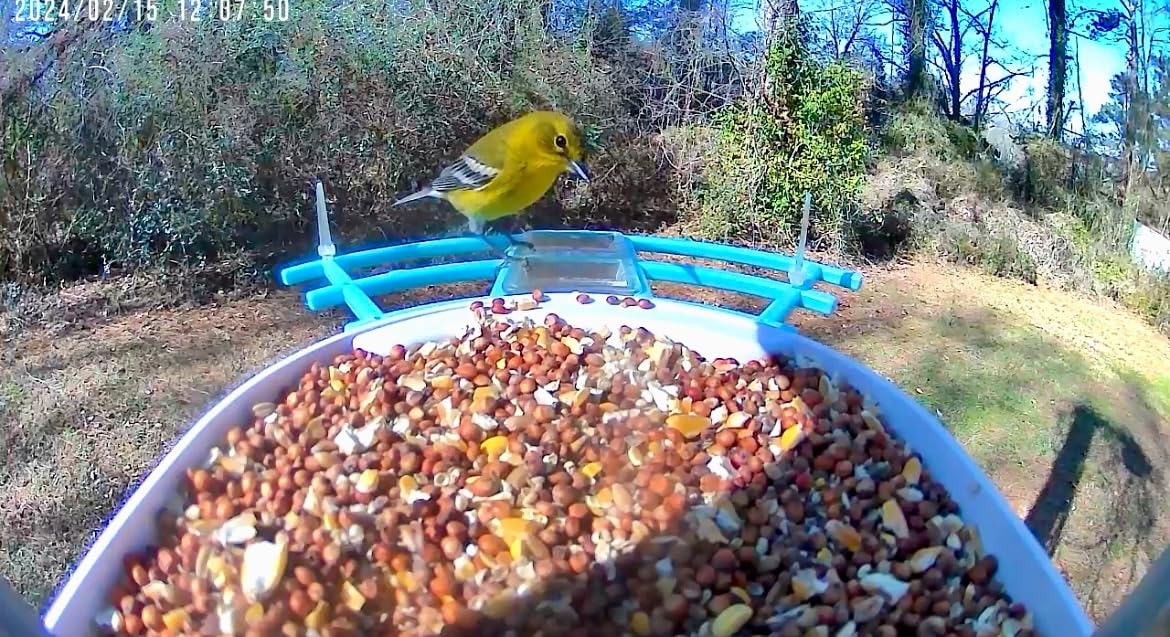
The Gyozol is the least expensive feeder in this guide and still delivers a surprisingly good 2K picture. For anyone curious whether a camera feeder is even right for them, this is the cheapest possible experiment. I expected a grainy feed at this price and got sharp daytime video with usable night vision.
Solar charging with the 5000mAh battery is rated for 15 days without sunlight, and mine stretched longer in moderate use. The hanging, stake, and freestanding mount options make placement flexible. Two-way audio plus sharing for up to four users covers the family basics.
Reviewers praise exactly what I found: easy setup, clear video, and the fun of AI identification. The 1.3L hopper holds a few days of seed, and the weatherproof shell handled normal rain without issue. As a gift for a curious kid or grandparent, it lands well.
The dark green housing disappears nicely against foliage, and the whole unit feels lighter than it looks in photos. The 2.4GHz connection paired without drama at close range to the router. Storage runs on a microSD card up to 128GB, so you are not forced into any cloud plan.
The compromises show up in the software. The app can go non-functional at times, the AI misidentifies occasionally, wind triggers false notifications, and video settings sometimes fail to persist. Go in with realistic expectations and the low cost makes up for a lot.
Taming False Alerts
Wind is the enemy at this price point, since swaying branches and a swinging feeder read as motion. Mount to a rigid surface rather than a thin branch, and dial sensitivity down a level or two. Checking the notification history each evening keeps the important clips from getting lost.
Night Vision and Audio Quality
Night vision is clear enough to identify what visits after dark, which in my yard means raccoons. Two-way audio works, but expect walkie-talkie quality rather than a podcast. Both features feel like bonuses rather than core strengths at this price.
How to Choose the Best Smart Bird Feeder with Camera
The right feeder depends less on specs and more on your yard, your Wi-Fi, and how much you dislike subscriptions. These are the factors that actually changed our decisions during testing, roughly in order of importance.
Subscription or Lifetime Free AI
This is the single biggest cost difference between models over time. Some feeders include lifetime AI identification, others require a monthly plan once a trial ends. Multiply any monthly fee across three years before comparing hardware prices.
Quick subscription status from our test group:
Lifetime free AI identification: Humbirdy 4K, NETVUE Birdfy AI (the 1080P model)
Free cloud storage included: NETVUE by Birdfy 2K
Subscription after a free trial: HARYMOR, HEAPETS, both Kiwibit models, onlyfly, Gyozol cloud tiers
The pattern to watch for is the 30-day trial, which is long enough to fall in love with the AI and short enough to feel like a bait and switch. If you know you will never pay monthly, buy lifetime-free hardware and accept slightly lower specs.
AI Bird Identification: What It Actually Does
AI identification compares each capture against a species database and names the bird in your notification. Databases in this guide range from 6,000 to over 11,000 species, but bigger numbers matter less than regional training. Accuracy on common North American backyard birds was solid across every model we tested.
Where all of them struggle is similar-looking species: finches in winter plumage, juvenile sparrows, and warblers in bad light. Treat the AI as a very good starting guess rather than a scientific record. Regional accuracy varies, a gap bird feeding forum users raise constantly.
Video Resolution: 1080p, 2K, or 4K
1080P is fine for notifications and species naming. 2K is the current sweet spot, noticeably sharper for cropping and sharing. 4K paired with 8MP HDR photos is for people who print, crop heavily, or post their shots.
Lens width matters as much as resolution. A 132 to 160 degree view keeps edge-perched birds in frame, while narrower lenses miss them entirely. The Humbirdy taught me this the hard way with its middle-of-the-feeder framing.
Power: Solar Panels and Battery Reality
Every feeder here pairs a lithium battery with a solar panel, but claims vary wildly. Advertised runtimes run from 15 days to a claimed 36 months, and real yards with shade, clouds, and cold weather land below the marketing numbers.
Dual panels and adjustable mounts made the biggest difference in testing. In shaded spots, expect a top-up every one to three months. Cold climates drain batteries faster, so a USB-C backup port is a genuinely useful winter feature.
Wi-Fi Requirements for Outdoor Cameras
Nearly every feeder here needs 2.4GHz Wi-Fi, which reaches farther than 5GHz but carries less bandwidth. Only the Nafnti supports dual-band. Check your phone’s signal at the exact mounting spot before buying anything.
A weak signal shows up as missed clips, stalled live view, and delayed notifications, the most common complaint across bird feeding forums. A cheap extender or a mesh node near the yard wall fixes most cases. External antennas like the Birdfy’s 5dBi buy extra range.
Weatherproofing and Squirrel Resistance
Look for IP65 or better, which handles rain and dust. Drainage matters as much as the rating, because a waterproof roof with a leaky seed tray still gives you soggy seed, as Birdfy owners noted after heavy rain.
No feeder in this guide is truly squirrel-proof. Baffles, placement away from jump-off points, and alarm features reduce raids. Squirrels can chew exposed solar cables, so route wiring defensively.
Storage: Cloud vs microSD
Cloud storage means easy sharing and off-site backups, usually with a cap or fee. microSD cards store everything locally and keep working without a plan, but cards fill up and eventually fail. The best setups use both, and several models here support cards up to 128GB.
Do Bird Feeder Cameras Scare Birds Away
Almost never, though there is a short adjustment period of a few days. Birds habituate quickly, and the cameras stay silent during capture. Keeping the feeder consistently stocked matters far more than the camera ever will.
Setup Tips That Save Frustration
Pair the feeder to Wi-Fi indoors before you mount it outside. Fill the seed completely on day one, since birds find feeders by sight and need a reason to return. Give it two weeks before judging traffic, because the first visitors are scouts and the flocks follow.
Frequently Asked Questions
Are bird feeders with cameras worth it?
Yes, if you already feed birds or want to learn what visits your yard. The camera captures close-up photos and species identifications you cannot get from window watching, and every bird it names adds value to a feeder you would fill anyway. People who rarely check their phones may prefer a basic feeder.
What is the best smart bird feeder with a camera?
The NETVUE by Birdfy is our top overall pick for its sharp 2K video, free cloud storage, and battery rated for years. The Humbirdy 4K is the best premium option with no subscription, and the onlyfly is the best value for most backyards.
What is the best bird camera that doesn’t require a subscription?
The Humbirdy 4K includes every AI feature for life with no monthly fee, and the NETVUE Birdfy AI offers lifetime free identification for 6,000+ species. Both keep their core features working even if you never pay anything beyond the hardware.
How long do smart bird feeder batteries last?
Expect two weeks to six months between charges depending on the model, sunlight, and temperature. Solar panels extend runtime dramatically, with the onlyfly rated up to 180 days and the NETVUE Birdfy claiming up to 36 months with consistent sun. Shade, cold, and heavy bird traffic shorten all of these numbers.
Why put a potato in your bird feeder?
It started as a viral trick to test the camera’s motion detection and AI identification, which sometimes returns funny guesses on non-bird objects. A potato also works as a cheap way to check framing and alert sensitivity before you add seed.
Conclusion
After a full season with ten feeders, the NETVUE by Birdfy stands as our best overall pick for its balance of sharp 2K video, free cloud storage, and a battery rated for years. The Humbirdy 4K is the photographer’s choice with no subscription, the onlyfly wins on value, the Kiwibit flagship leads for image quality, and the Gyozol is the cheapest way to test the hobby.
Whatever you choose, mount it where the Wi-Fi reaches, keep the seed dry, and give the birds two weeks to arrive. Once a rare warbler lands on your perch and your phone names it, you will understand why the best smart bird feeders with cameras have become the most-watched devices in the backyard. Happy birding in 2026.