
Getting tack-sharp focus during a moving shot is one of the hardest skills in video production. I have spent the last three years testing follow focus systems across indie film sets, wedding shoots, and commercial productions, and I can tell you firsthand that the right follow focus can make or break your footage. Whether you are pulling focus on a cinema camera or trying to get smooth rack focuses on a mirrorless setup, finding the best follow focus systems for video is about matching your gear to your shooting style and budget.
A follow focus system is a set of mechanical or electronic components that attach to your camera lens, allowing you to control focus precisely and repeatably without touching the lens directly. The gear-driven ring connects to the focus ring on your lens, and you turn a knob or wheel to make smooth, controlled focus adjustments during a take. This is especially important when shooting with shallow depth of field, where even a millimeter of focus shift can ruin a shot.
Our team compared 12 follow focus systems across every price tier, from budget manual units under $50 to professional wireless FIZ rigs pushing $2,000. We tested them with DSLR and mirrorless cameras, cinema lenses, and gimbal setups to see how they perform in real-world conditions. If you are also shopping for a camera to pair with your follow focus, check out our guide to the best cinema cameras for indie filmmakers for recommendations that work great with these systems.
In this guide, I will walk you through our hands-on testing results, break down the pros and cons of each system, and help you figure out which follow focus is right for your specific needs. We cover manual follow focus units for budget filmmakers, wireless systems for solo operators, and professional FIZ kits for full cinema rigs.
Table of Contents
Top 3 Follow Focus Systems for 2026
After hundreds of hours of testing, three systems stood out from the pack. The SmallRig Mini Follow Focus 3010 takes our editor’s choice for its unbeatable combination of price, build quality, and smooth operation. The NEEWER PG001 earns the budget pick at under $50 with surprising performance. And the Tilta Nucleus-M is our premium pick for filmmakers who need wireless FIZ control with a 1,000-foot range.


Best Follow Focus Systems for Video in 2026
Here is our complete comparison of all 12 systems we tested. We ranked them by build quality, focus smoothness, value, and real-world reliability. Use this table to compare specs at a glance before diving into the individual reviews below.




1. SmallRig Mini Follow Focus 3010 – Best Overall Manual Follow Focus
- Smooth focus wheel with excellent damping and minimal backlash
- Compact and lightweight at 195g
- Adjustable A/B hard stops for precise focus pulling
- Modular design with 15mm rod clamp and NATO rail
- Comes with storage box
- Only one lens gear included
- May not align with compact lenses at minimum distance
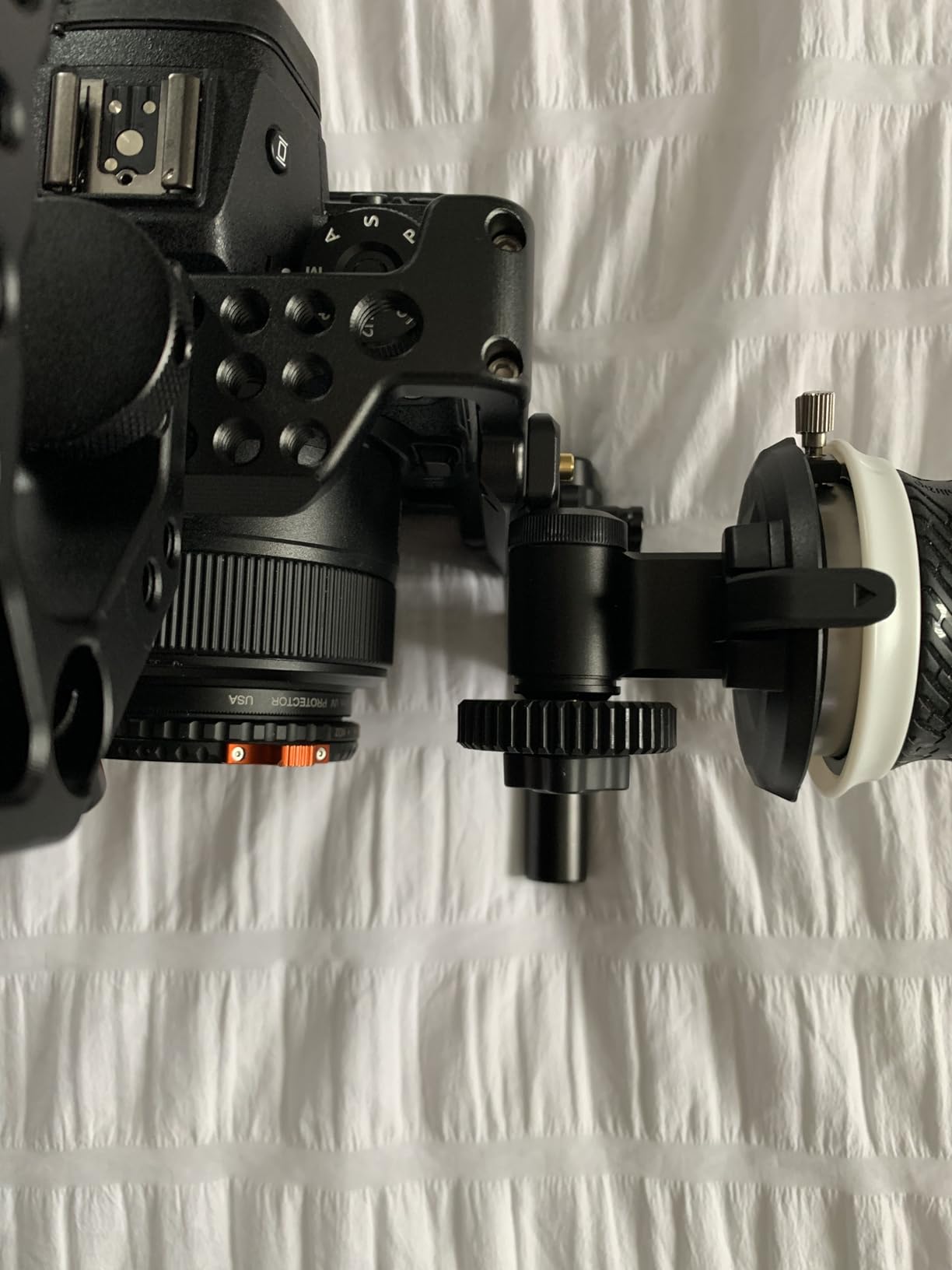
I have been using the SmallRig Mini Follow Focus 3010 as my go-to manual follow focus for over a year now, and it has earned a permanent spot in my kit bag. The first thing that struck me when I unboxed it was how compact and light it is at just 195 grams. I have mounted it on everything from a Sony A7S III in a SmallRig cage to a BMPCC 6K on a shoulder rig, and it never felt like it was throwing off my balance.
The focus wheel has a really satisfying damping feel to it. There is virtually no backlash, which means when you stop turning the knob, the focus ring stops moving immediately. That kind of precision is what separates a usable follow focus from a frustrating one. The A/B hard stops click into place with a solid detent, and I have used them dozens of times to set repeatable focus marks for interview shots.
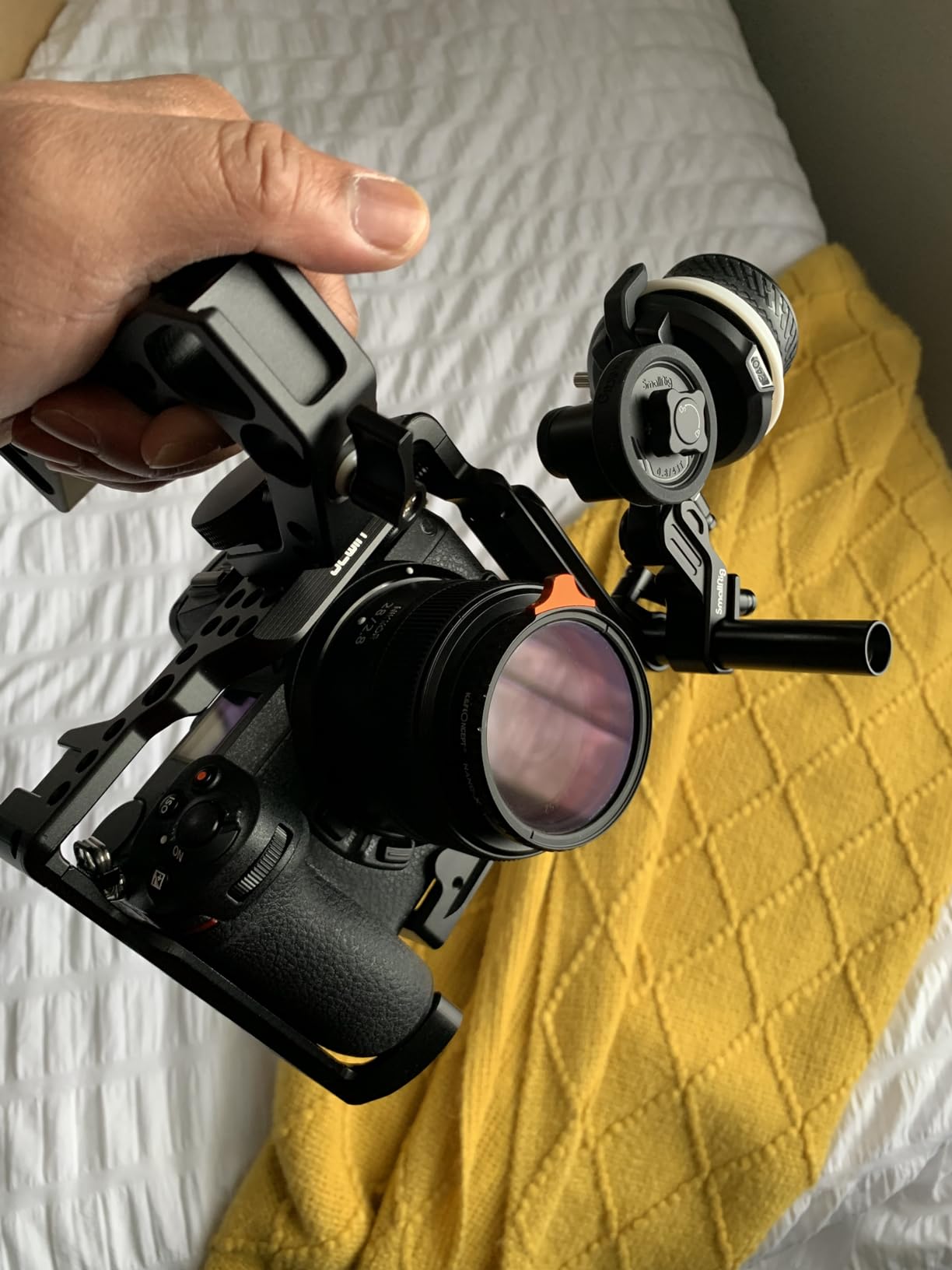
The modular design is one of my favorite features. The 15mm rod clamp snaps on and off quickly, and the NATO rail compatibility means I can mount it on NATO-style rail accessories without needing extra adapters. SmallRig includes a snap-on gear ring belt that fits lenses up to 114mm in diameter, which covers most standard DSLR and mirrorless lenses I own.
The snap-on gear ring is a clever design. Instead of screwing the gear ring onto your lens, it snaps on and tightens with a simple lever. I can swap it between my Sigma 18-35mm and my Canon 50mm in about 15 seconds. The M0.8 43-tooth gear is the industry standard pitch, so it meshes smoothly with virtually any geared lens or add-on gear ring.
Who Should Buy This Follow Focus
The SmallRig Mini 3010 is ideal for solo shooters, run-and-gun videographers, and indie filmmakers who need a reliable manual follow focus without spending hundreds. If you shoot with a mirrorless camera in a cage and want smooth, repeatable focus pulls, this is the unit I would recommend first. It is the best follow focus unit for beginners because the setup is straightforward and the learning curve is gentle.
It also works well as a backup unit on larger sets. I have handed this to second ACs on commercial shoots when the primary wireless system went down, and they were able to pull focus without any complaints about the feel or precision.
What to Watch Out For
The main limitation is that SmallRig only includes one lens gear in the box. If you shoot with multiple lenses and want gear rings permanently attached to each one, you will need to buy extras. I picked up a pack of three additional SmallRig gear rings for about $15, which solved the problem.
Also, if you shoot with very compact pancake lenses or lenses with unusually short focus throw, the follow focus may not align perfectly at minimum rod distance. I ran into this with a Sony 20mm f/2.8 pancake lens, but it worked fine on every standard zoom and prime I tested.
2. NEEWER Mini Follow Focus PG001 – Best Budget Pick Under $50
- Smooth manual focus with excellent damping mechanism
- Adjustable A/B hard stops for precise rack focusing
- Comfortable silicone rubber coated focus knob
- Flexible arm tilts 138 degrees
- Includes 15mm rod and rod clamp
- Some initial stiffness or play in gearbox
- Gear grease can be overly viscous
- Occasional quality control issues
When I first saw the NEEWER PG001 priced under $50, I was skeptical. Most follow focus systems at that price point feel like toys with gritty, imprecise gearboxes. But after mounting this on my Canon R5 rig and spending a full weekend shooting a short film with it, I was genuinely surprised by how smooth the focus action felt.
The silicone rubber coating on the focus knob is a nice touch that you do not usually see at this price. It gives you a solid grip even when your hands are sweaty during an outdoor shoot. The damping mechanism has a medium resistance that feels natural, and I was able to pull off smooth rack focuses between two subjects about 6 feet apart without any jerkiness.
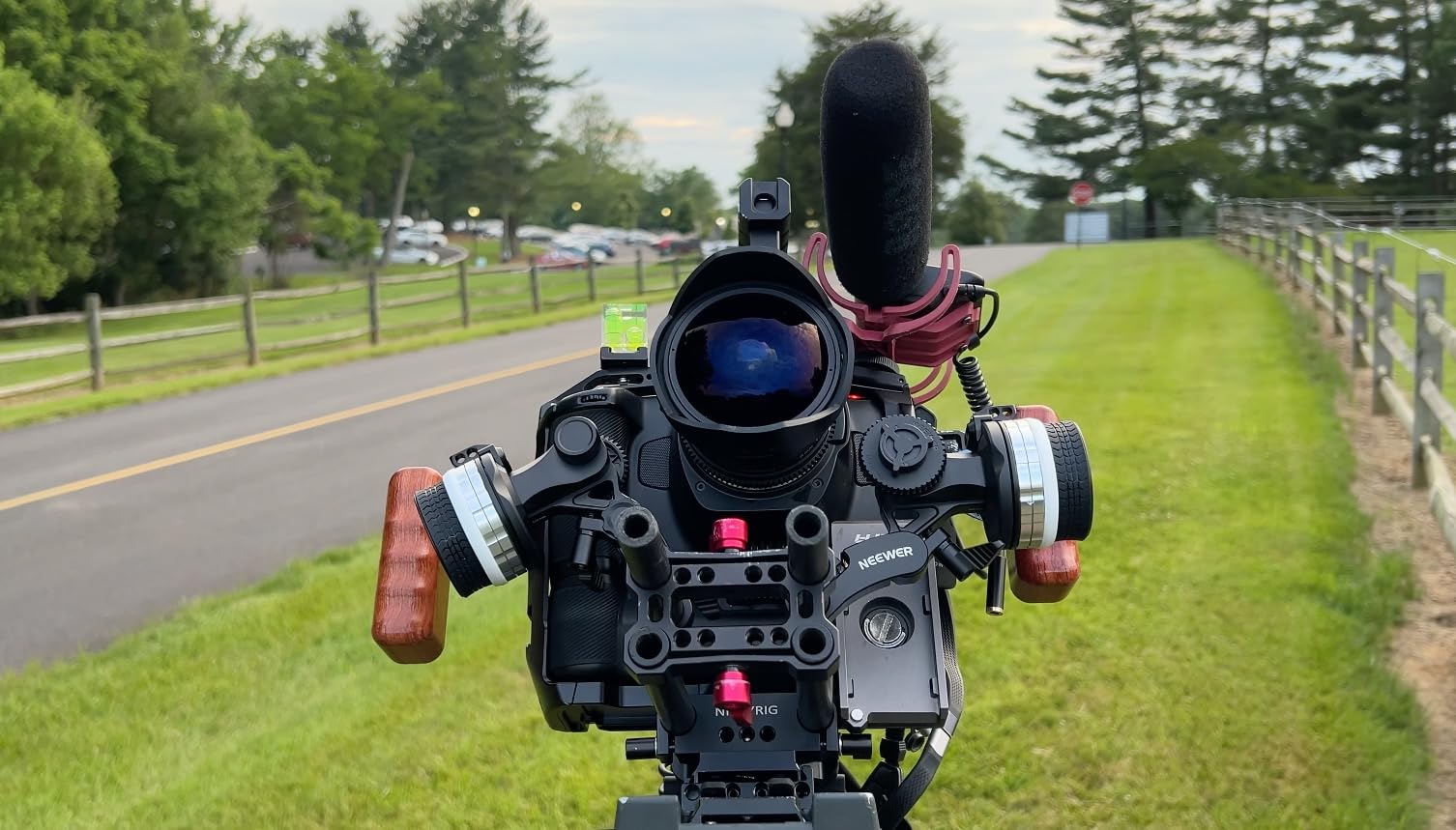
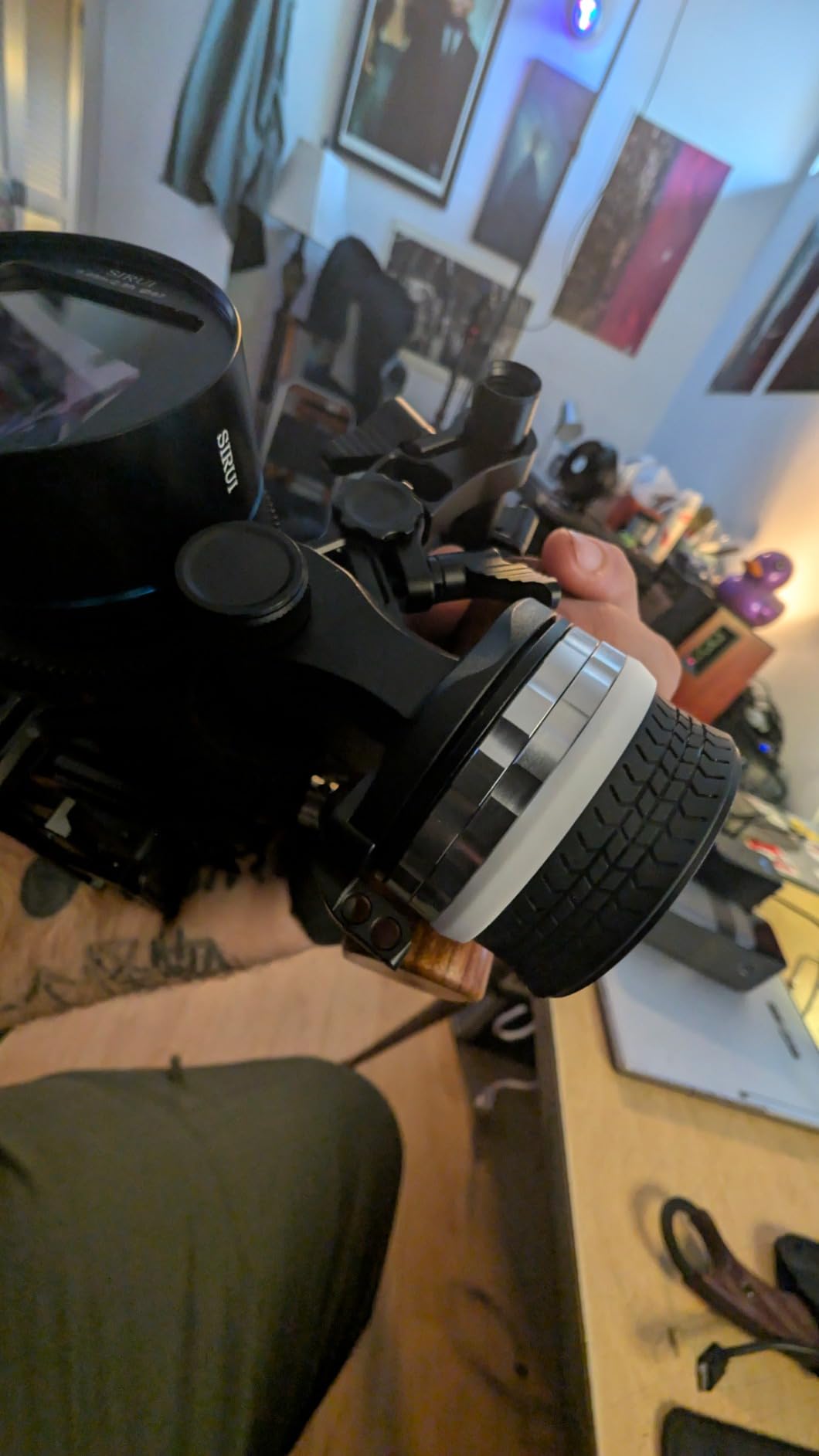
The flexible arm is what sets the NEEWER apart from other budget follow focus units. It tilts up to 138 degrees, which means you can position the focus knob at whatever angle feels comfortable for your rig. On a shoulder mount, I angled it downward so I could reach it with my right hand while stabilizing the rig with my left.
Like the SmallRig, the NEEWER includes A/B hard stops for repeatable focus marks. The mechanism is a simple screw-in stopper design that works reliably. The included 15mm rod and rod clamp mean you have everything you need to mount this to a standard camera cage or shoulder rig right out of the box.
Best Use Cases for the NEEWER PG001
This is the follow focus I would recommend for student filmmakers, YouTube creators, and anyone just starting out with manual focus pulling. At under $50, it lets you practice the fundamental skill of focus pulling without a major investment. It is also a solid choice for a B-camera setup where you need basic focus control but do not want to spend on a premium unit.
The reversible gear mounting means it works for both right-handed and left-handed operators. I tested it mounted on both sides of the lens, and the focus direction remained logical in both configurations.
Quality Control Considerations
I want to be transparent about the quality control issues some users have reported. A small percentage of users have received units with stiff gearboxes or minor play in the mechanism. In most cases, this is caused by excess grease in the gearbox and can be resolved by opening it up and adjusting the grease amount.
If you get a unit that feels gritty or has excessive play, NEEWER has a 1-year manufacturer warranty and their customer service is generally responsive about replacements. My test unit was smooth out of the box, but it is worth knowing about the potential variability.
3. Tilta Pocket Follow Focus FF-T07 – Premium Build Quality

- Excellent build quality with composite material construction
- Smooth focus wheel with fluid damping system
- Quick release hard stop system for A/B marks
- Includes safety case for storage
- 2-year warranty
- Only supports 43-tooth gear or smaller
- Bottom mounting causes inverted focus direction
- Limited lateral clearance for larger gears
- Not Prime eligible
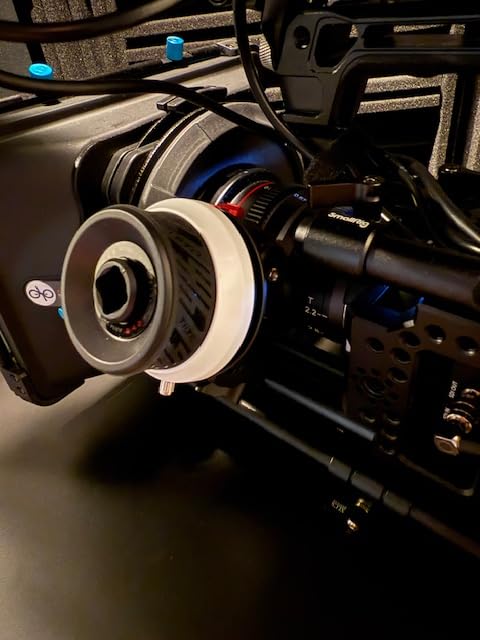
The Tilta Pocket Follow Focus feels like a premium product the moment you pick it up. The composite material construction has a refined texture that feels great in the hand, and the fluid damping system provides one of the smoothest focus pulls I have experienced at this price point. I used this on a wedding shoot last summer and the focus transitions were buttery smooth throughout the entire ceremony.
What makes the Tilta Pocket stand out is the quick-release hard stop system for A/B marks. Instead of fiddling with tiny screws like on many budget follow focus units, Tilta uses a lever-based system that lets you set and release focus limits in seconds. I was able to mark focus points for the bride walking down the aisle and the groom at the altar in under 10 seconds.
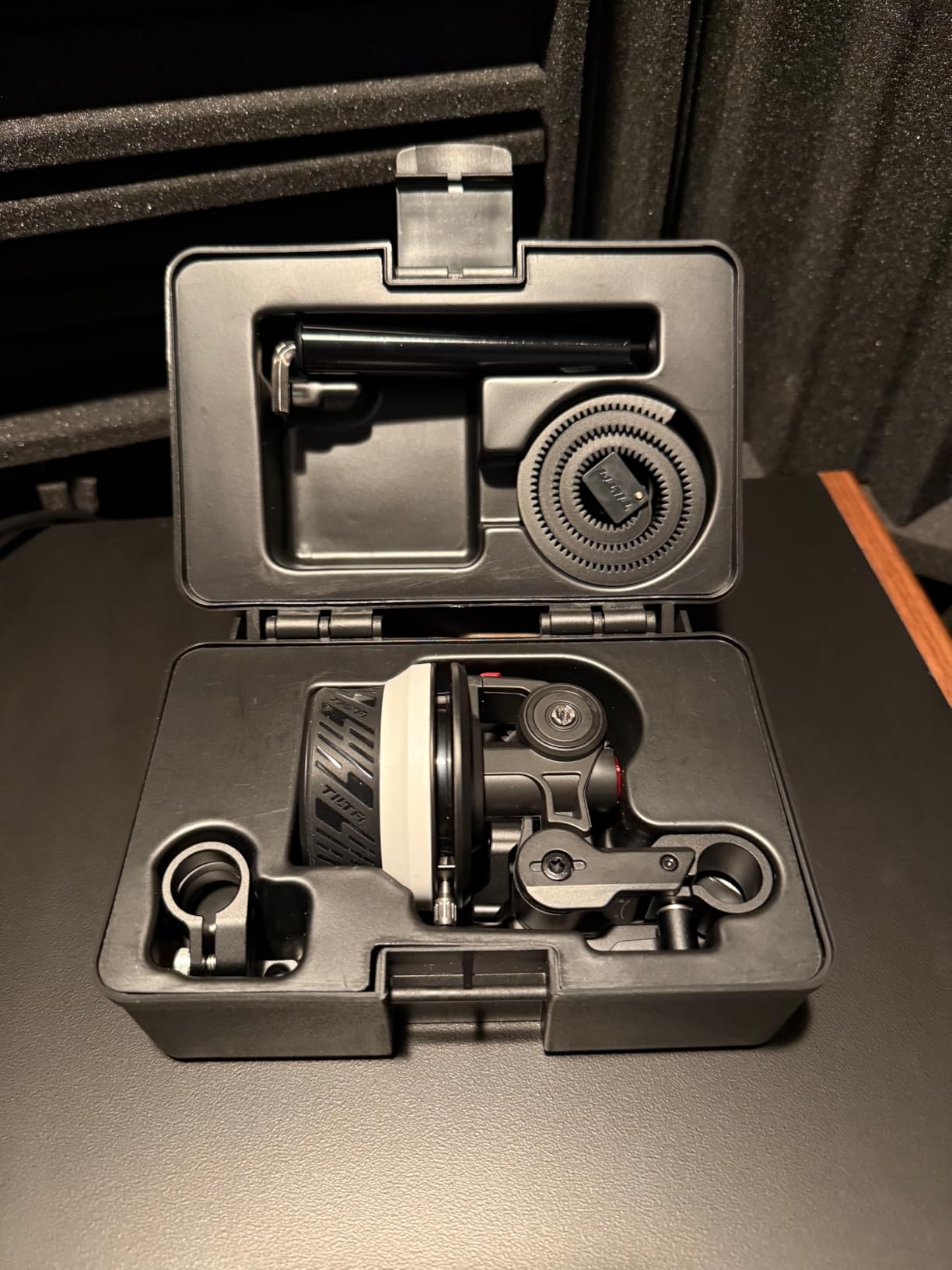
The included safety case is a thoughtful addition that most competitors skip. It keeps the follow focus protected during transport, which matters if you are traveling to shoots frequently. The case has custom-cut foam that holds the follow focus, lens gear ring, rod, rod holder, and allen keys securely in place.
Tilta backs this with a 2-year warranty, which is longer than most budget follow focus manufacturers offer. The reversible gear mounting lets you put the drive gear on either side of the unit, giving you flexibility for different rig configurations.
Compatibility and Gear Limitations
The main limitation of the Tilta Pocket is that it only supports 43-tooth gears or smaller. This covers most standard DSLR and mirrorless lenses, but if you work with larger cinema lenses that need 65-tooth gears, you will need a different follow focus. The limited lateral clearance also means you cannot install larger aftermarket gears on this unit.
The focus direction inverts when the unit is bottom-mounted, which can mess with your muscle memory if you are used to a standard orientation. I got used to it after about a day of shooting, but it is something to be aware of if you switch between multiple follow focus units regularly.
Who It Is Built For
The Tilta Pocket is built for working professionals and serious enthusiasts who want a premium manual follow focus without jumping to wireless systems. It pairs beautifully with Tilta camera cages, and the build quality holds up well to daily production use. If you appreciate refined design and smooth mechanical feel, this is one of the best manual follow focus options on the market.
The 2-year warranty gives you peace of mind for long-term ownership. I have seen Tilta units still going strong after three years of regular use, which speaks to the durability of the construction.
4. SmallRig F60 Modular Follow Focus – Advanced Damping Control

- Wide-range stepless damping adjustment (0.6-1.8 kgf)
- Zero-backlash focus tracking
- Adjustable AB marks with 3-step quick lens reversal
- Anti-slip Sapele texture design
- Includes carrying bag
- Higher price point compared to F40
- Gearbox play affecting precision in some units
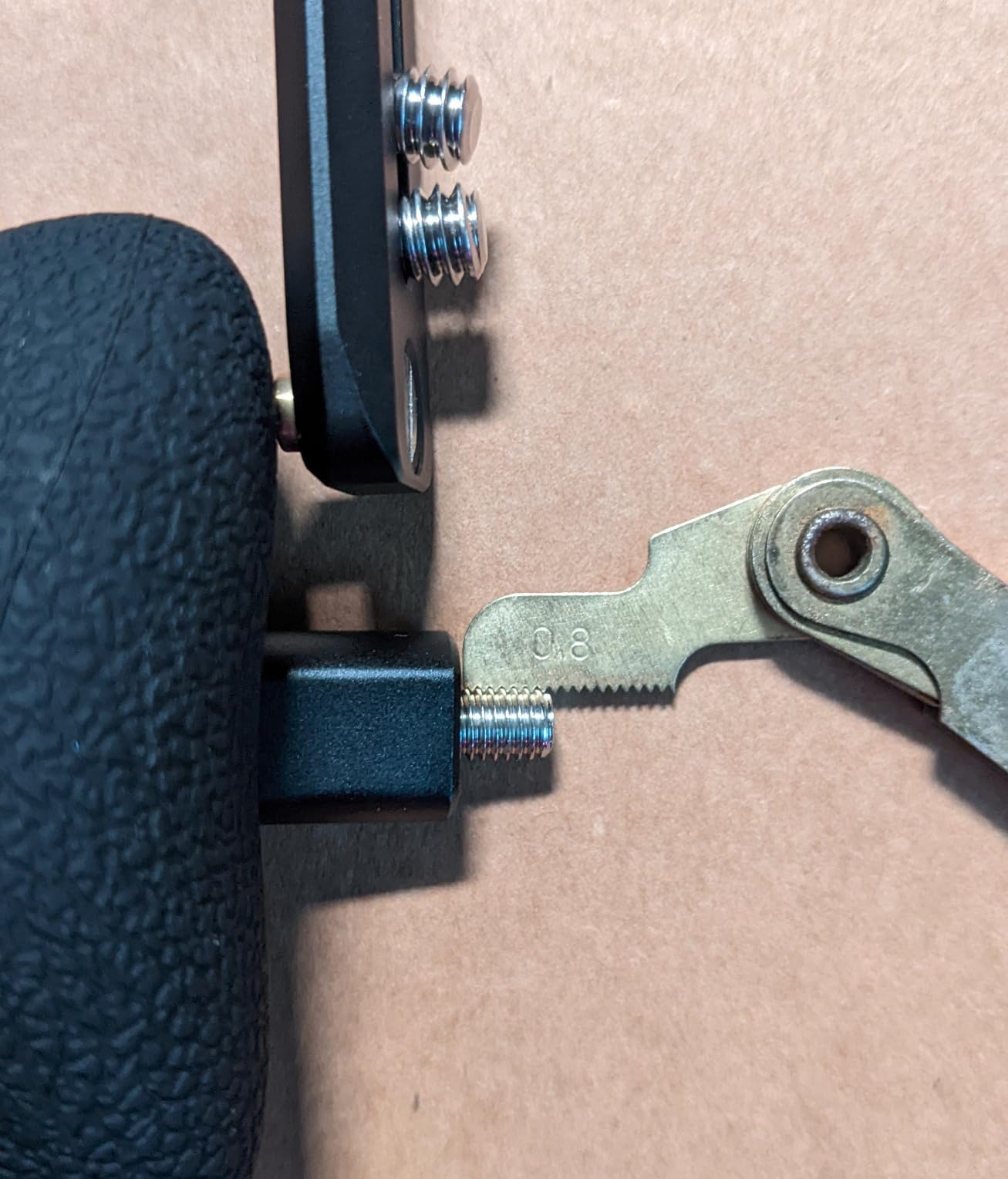
- Palm rest mount uses metric 0.8 threading not 1/4-20
- Mixed reliability reports
The SmallRig F60 is the more advanced sibling of the Mini 3010, and its standout feature is the stepless damping adjustment that ranges from 0.6 to 1.8 kgf. This means you can tune the feel of the focus wheel to match different lenses. Stiff cinema lenses need more resistance, while lighter still-photo lenses need less. I spent an afternoon switching between my Sigma Cine primes and my Canon L-series zooms, and the ability to adjust the damping on the fly made a real difference in how controllable each focus pull felt.
The zero-backlash focus tracking mechanism is a genuine improvement over older SmallRig designs. When I tested it with a focus chart, the focus point landed exactly where I expected every time, with no dead zone between forward and reverse turns. For focus pullers who need precision marks, this is essential.
The 3-step quick lens reversal feature lets you switch between lenses with different focus directions without remounting the entire unit. This saved me significant time during a commercial shoot where I was alternating between a Canon lens (normal direction) and a Nikon lens (reverse direction).
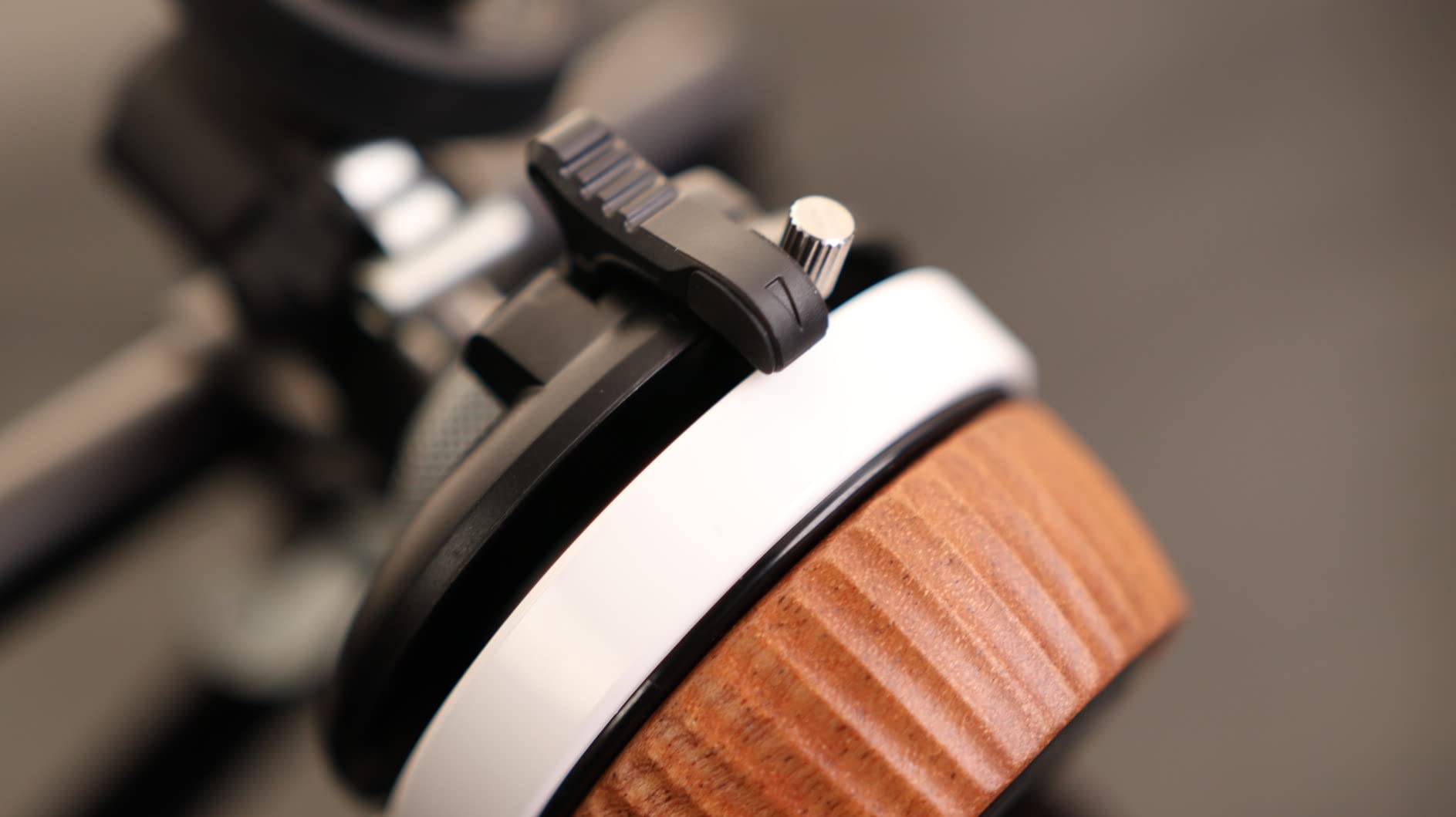
The anti-slip Sapele texture gives the focus wheel a wood-like feel that is both aesthetically pleasing and functional. It provides excellent grip even with sweaty hands. SmallRig includes a carrying bag, which is a nice touch for protecting the unit during transport.
Is the Stepless Damping Worth the Premium
The stepless damping system is the main reason to choose the F60 over the cheaper SmallRig Mini 3010. If you shoot with a wide variety of lenses that have different focus resistance, being able to dial in the perfect damping feel is genuinely useful. On a single-lens shoot, the difference matters less, but for working professionals who swap lenses constantly, it is a meaningful upgrade.
The 2-step A/B stops setting and release mechanism is faster than the screw-based system on cheaper units. You can set and release focus limits in a fraction of the time, which matters when you are on set and the clock is ticking.
Known Issues and Reliability
I want to flag some reliability concerns that have come up in user reviews. A percentage of users have reported gearbox play that affects precision over time. The palm rest mount uses metric 0.8 threading instead of the more common 1/4-20 standard, which limits compatibility with some third-party accessories.
The tightening knob does not rotate a full 360 degrees, which can be an issue with certain lenses that have large focus rings. Make sure to check compatibility with your specific lens lineup before committing to this unit.
5. Nitze Mini Follow Focus MF15C – Best Gear Selection in Its Class
- Includes 3 reversible drive gears (38T
- 43T
- 65T)
- Smooth focus action when properly adjusted
- Adjustable mounting angle via knob
- Dual magnetic marking disks
- Designed for underslung mounting with logical focus direction
- Can arrive with excessive grease causing stiffness
- Initial play in the knob requiring adjustment
- Outdated double-disk focus stopper system
- Some quality control inconsistencies
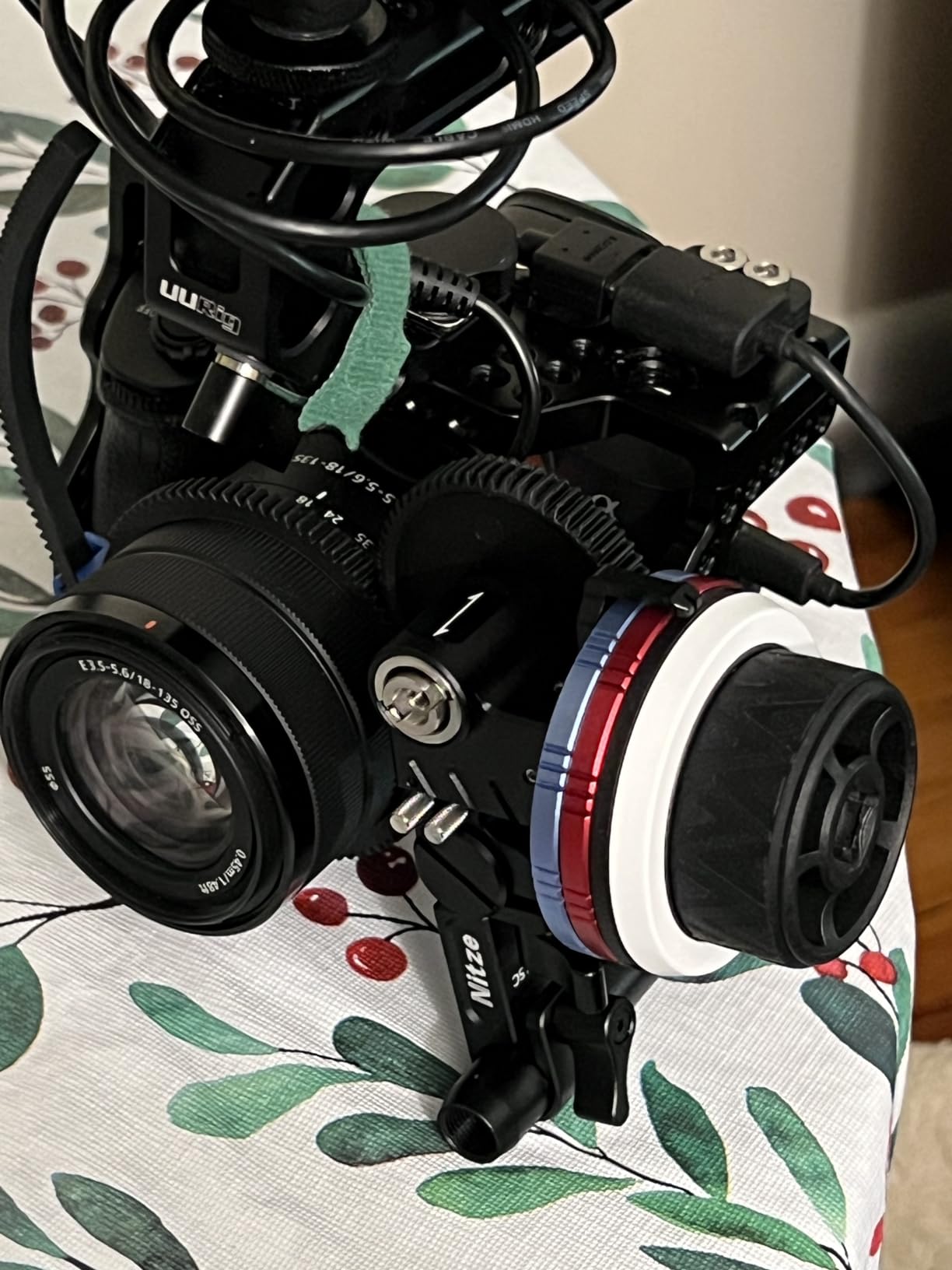
The Nitze MF15C caught my attention because it is the only budget follow focus that ships with three reversible drive gears in the box. Most competitors include just one. Having 38T, 43T, and 65T gears means you can match the gear ratio to different lenses without buying accessories separately. I found the 65T gear particularly useful for cinema lenses with longer focus throws, where the larger circumference gives you more precise control.
The dual magnetic marking disks are a feature I did not know I needed until I used them. You snap on the marking disk and it stays in place magnetically, making it easy to swap between different lenses. I use one disk for my standard lens setup and another for my macro work, and switching takes about 5 seconds.
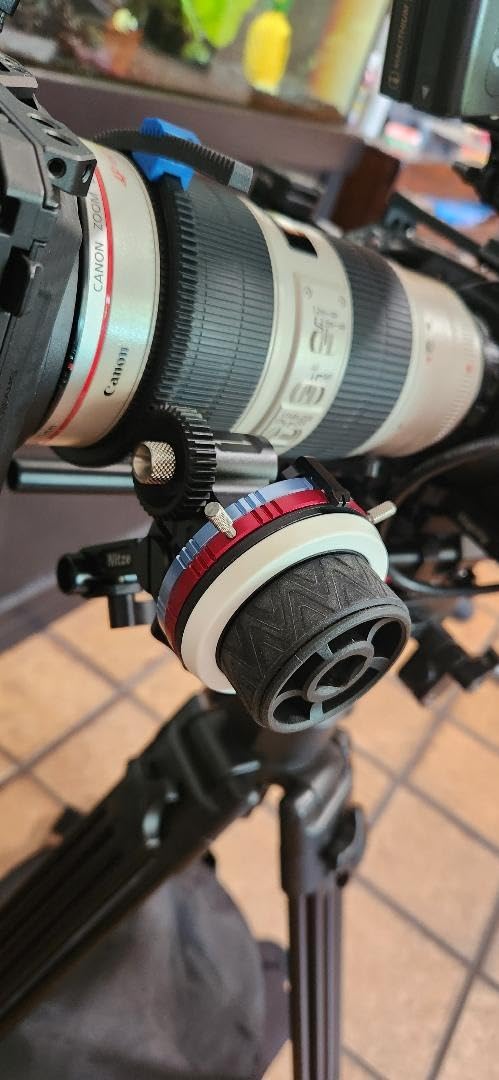
The Nitze is designed primarily for underslung mounting, which means the focus direction feels natural when the unit is mounted below the lens. This makes it a great choice for gimbal users who mount their follow focus in an underslung configuration on DJI RS gimbals or similar stabilizers.
The 15mm rod clamp includes a NATO rail, which adds mounting flexibility. The clamp locks securely with two 1/4-inch screws, and I never experienced any slippage during testing. The reversible gear mounting means you can put the drive gear on either the front or back of the unit.
Gear Compatibility and Versatility
The three included gears make the Nitze incredibly versatile for a budget unit. The 38T gear works well for compact mirrorless lenses, the 43T is the standard for most DSLR lenses, and the 65T is ideal for cinema lenses with 0.8 mod gearing. No other follow focus under $50 includes this many gear options.
I tested the Nitze with a DZOFilm Cine lens, a Canon EF prime, and a Sony E-mount zoom, and I was able to find the right gear ratio for each one without any additional purchases. That kind of out-of-the-box versatility is rare at this price point.
Setup and Break-in Period
Be prepared for a break-in period with the Nitze. My unit arrived with excessive grease in the gearbox, which caused stiffness on the first day of use. After about two hours of turning the focus wheel back and forth, the grease distributed evenly and the action became smooth. Some users have reported needing to open the gearbox and remove excess grease for optimal performance.
The focus stopper system uses an older screw-in double-disk design that is less convenient than the lever-based systems on the SmallRig or Tilta units. It works, but setting and adjusting A/B marks takes longer.
6. SmallRig Follow Focus F50 – Dynamic Damping with Dual Drive Modes
- Solidly built with high-quality construction
- Smooth operation with minimal backlash
- Adjustable damping lever (0.3-1.0 kgf range)
- Quick-release A/B stops with 360-degree rotation
- Silicone handwheel for excellent grip
- Compatible with both silicone gear and gear drive modes
- Setup can be complex for beginners
- Requires a camera cage for some camera models
- User manual font is very small
- A few reports of build quality issues
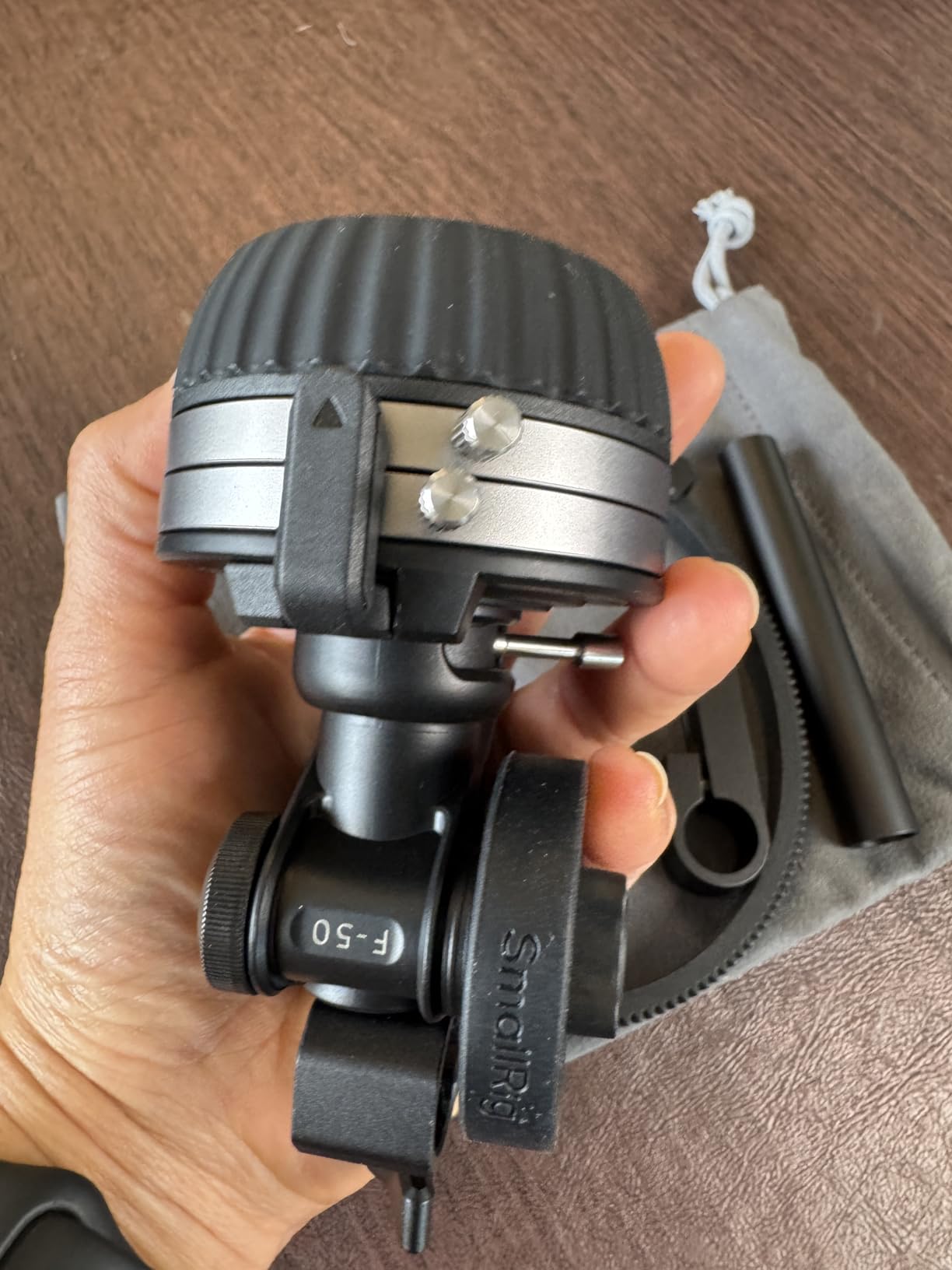
The SmallRig F50 sits between the Mini 3010 and the F60 in the SmallRig lineup, and it brings a unique feature to the table: dual drive modes. You can use the silicone gear mode for mirrorless lenses that do not have built-in gearing, or switch to the standard gear drive mode for cinema lenses that do. I tested both modes extensively and the transition between them is seamless.
The stepless dynamic damping lever adjusts resistance from 0.3 to 1.0 kgf, which is a lighter range than the F60. This makes the F50 better suited for mirrorless lenses with lighter focus rings. I found the lower damping range perfect for my Sony primes, where the F60 sometimes felt too stiff at its minimum setting.
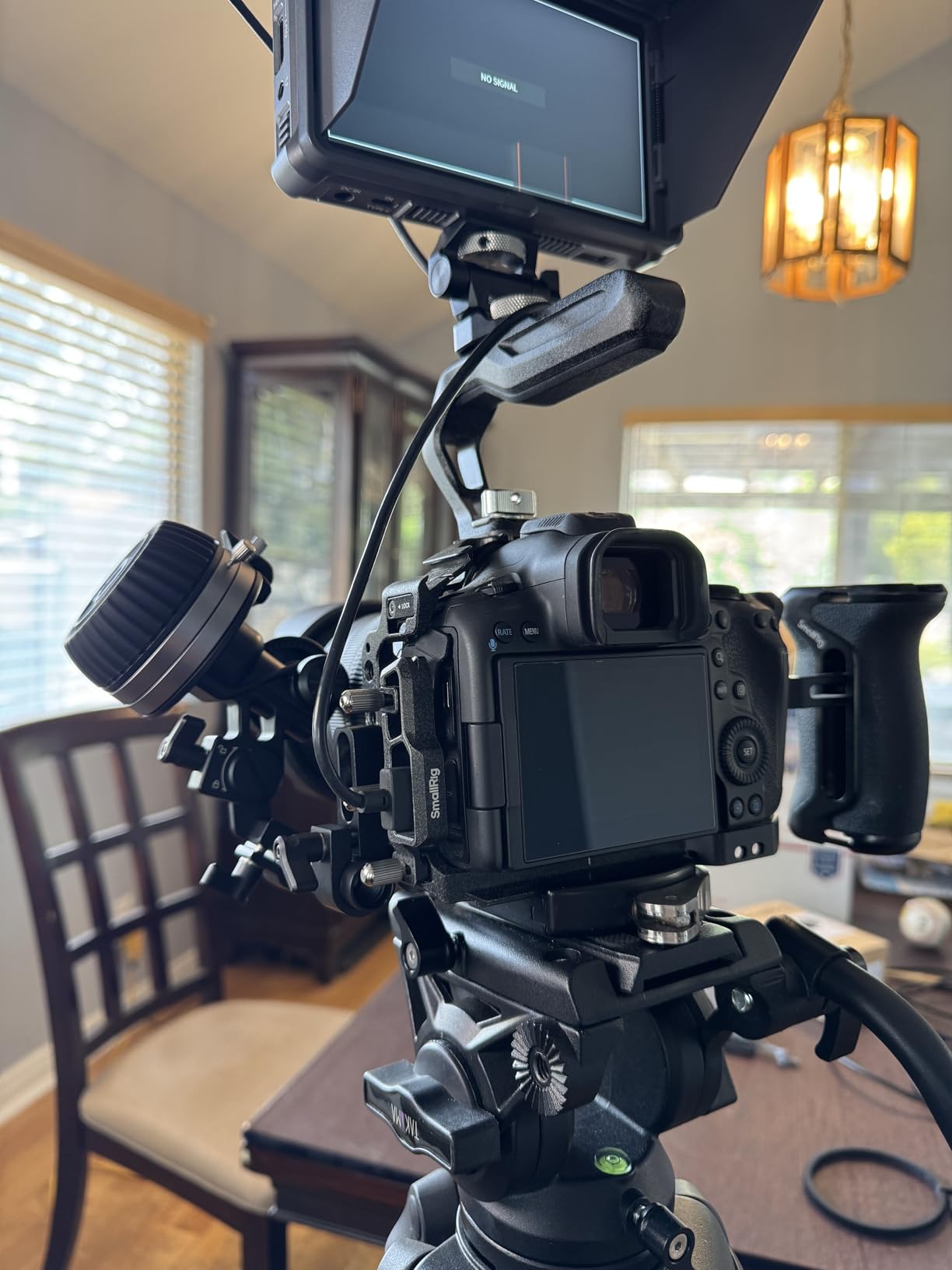
The 360-degree quick-release A/B stops are the fastest I have used on any SmallRig follow focus. You set the stop with a single lever press, and releasing it is just as quick. During a fast-paced commercial shoot, I was able to reset focus marks between takes in seconds.
The silicone handwheel has a sweat-proof, non-slip texture that provides excellent grip during long shoots. I did a 6-hour wedding shoot with the F50 and my hand never cramped or slipped, which speaks to the ergonomic design of the knob.
Dual Drive Mode Explained
The dual drive system is what makes the F50 special. In silicone gear mode, a rubberized belt grips the focus ring of your lens directly, which means you do not need to install a separate gear ring. This is perfect for run-and-gun shooting where you are swapping lenses frequently and do not want to deal with gear ring installation.
In gear drive mode, the follow focus uses a traditional M0.8 gear that meshes with a gear ring installed on your lens. This gives you more precise control and is the standard for cinema work. Having both modes available on a single follow focus is a smart design that adds real versatility.
Setup Complexity for New Users
I want to set expectations about the setup process. Unlike the plug-and-play Mini 3010, the F50 has more configuration options that can be overwhelming for first-time users. I recommend watching SmallRig’s tutorial videos before attempting to set up the dual drive system. The included user manual has very small font that makes it difficult to reference during setup.
You will also need a compatible camera cage for installation on some camera models. The single-hole rod clamp requires a cage with the right mounting points, so check your cage compatibility before purchasing.
7. Fotga DP500III Follow Focus – Zero Backlash at a Mid-Range Price
- Sturdy CNC-machined metal construction with zero backlash
- Rubber-covered handwheel for comfortable grip
- 2-level adjustable damping for precise control
- A/B hard stops with adjustable stop angle
- Drive gear mountable from both sides
- Includes 3 interchangeable gears and speed crank
- Removable lever can have slop
- No instructions included in box
- Speed crank can be loose
- Thumbscrews could be larger for gloved use
The Fotga DP500III has been a staple in the indie filmmaking community for years, and testing it reminded me why. The CNC-machined metal construction feels incredibly solid, and the zero-backlash gearbox is the real deal. I ran the focus back and forth on a test chart and could not detect any play in the mechanism at all. For a follow focus in this price range, that level of precision is impressive.
The 2-level adjustable damping system gives you two distinct resistance settings. I preferred the higher setting for cinema lenses with longer focus throws and the lower setting for standard still-photo lenses. The rubber-covered handwheel is comfortable and provides a non-slip surface that works well in all weather conditions.
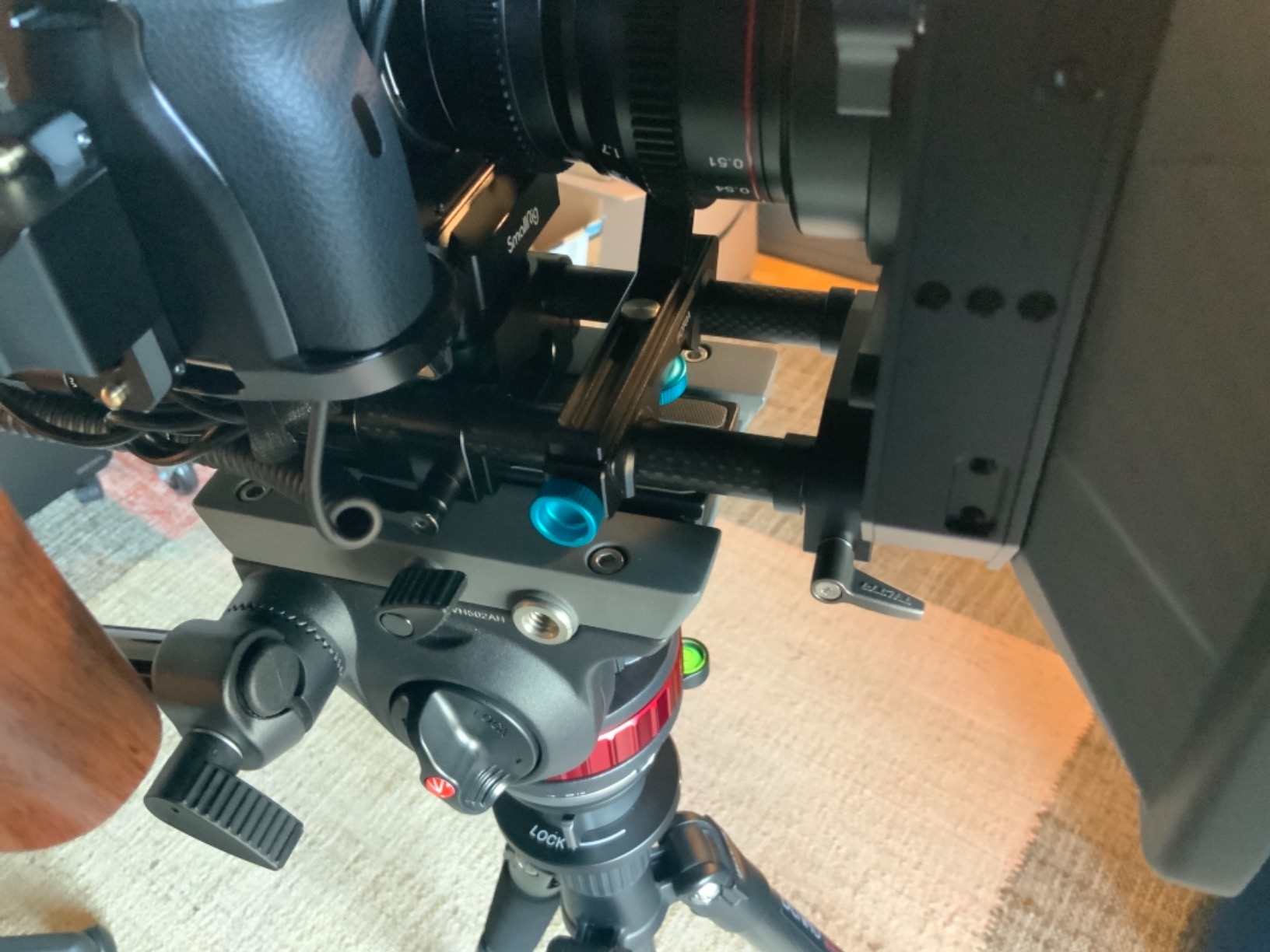
The included speed crank is a feature that sets the Fotga apart from budget competitors. A speed crank lets you make rapid focus changes across the full focus range with a flick of your wrist. I used it for a shot where the subject moved from 2 feet to 15 feet away in a single take, and the crank let me cover that distance smoothly without spinning the handwheel multiple times.
Fotga includes three interchangeable gears (M0.8-38T, M0.8-43T, M0.8-65T) and a flexible gear belt that adjusts from 46mm to 110mm. This covers an enormous range of lens sizes. The drive gear is mountable from both sides, making it suitable for both right-handed and left-handed focus pullers.
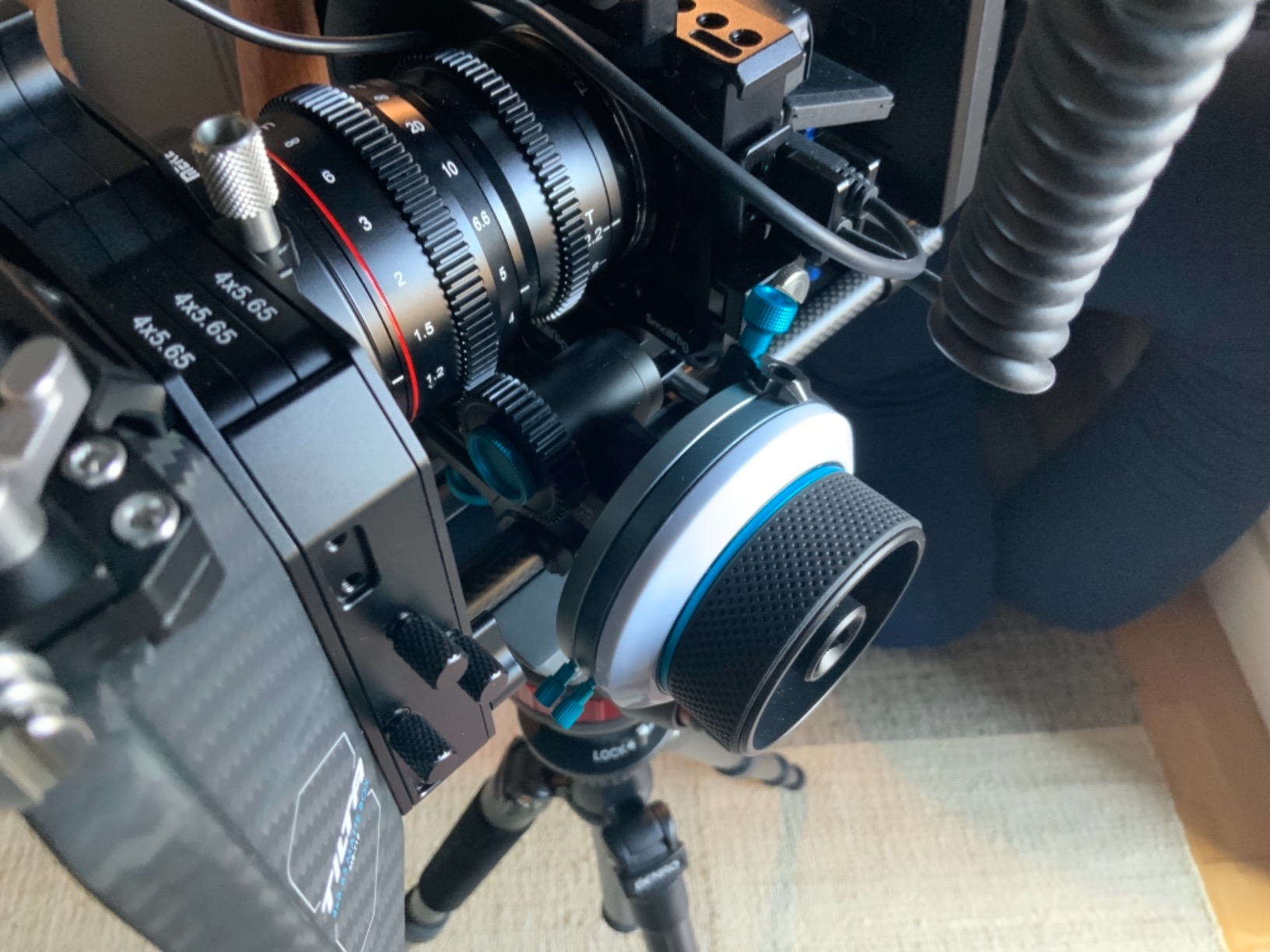
Professional Features at a Prosumer Price
The standard 12x12mm connection port on the Fotga accepts speed cranks and focus whips from professional follow focus systems. This means you can extend your focus control with a whip for situations where the camera operator cannot reach the follow focus directly. I tested it with a third-party focus whip and it connected securely without any wobble.
The quick-release 15mm rod slider is one of the fastest mounting systems I have used. You slide it onto the rod, flip a lever, and it locks securely. Removing it is just as fast, which matters when you need to break down your rig quickly between locations.
What Could Be Better
The biggest disappointment is that Fotga does not include any instructions in the box. For first-time users, figuring out how to assemble and calibrate the follow focus can be frustrating. I had to search for tutorial videos online to understand the A/B stop adjustment mechanism.
The speed crank can be slightly loose in its connection port, which may cause minor vibrations during fast focus pulls. Some users have addressed this by wrapping the connection point with a thin layer of tape for a tighter fit.
8. JTZ DP30 Cine Follow Focus – Professional-Grade Dual Rod System
- Virtually zero backlash for precise focus pulling
- CNC-machined metal construction
- Compatible with both 15mm and 19mm rod systems
- Includes 5 gear sizes for various lens types
- Drive gear mountable from both sides
- Adjustable inner damping for different lens characteristics
- Large focus wheel protrudes significantly
- Heavy due to robust construction
- Gearbox direction not reversible
- Limited availability
The JTZ DP30 is the follow focus I reach for when I need something that feels like a professional cinema tool without the professional cinema price tag. With a 4.8-star rating from users, this unit has earned a reputation for exceptional build quality and zero backlash performance. When I mounted it on my Blackmagic URSA Mini, it felt like it belonged there.
The compatibility with both 15mm and 19mm rod systems is a standout feature. Most follow focus units only support 15mm rods, but the JTZ includes an adapter for 19mm cinema rod systems. This makes it suitable for professional cinema rigs that use the larger 19mm standard. I tested it on both rod sizes and the mounting was rock-solid on each.
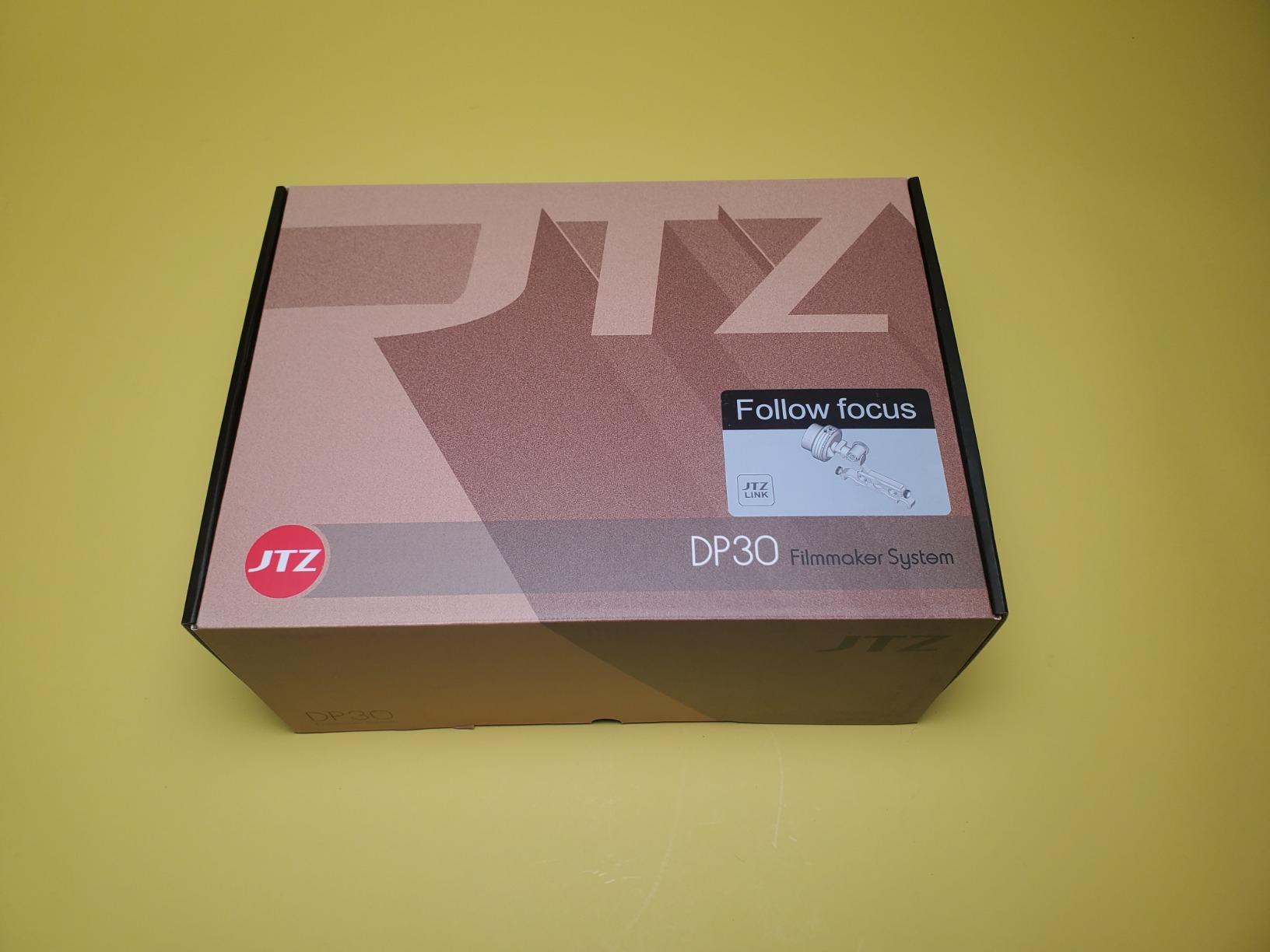
The five included gear sizes are the most comprehensive package of any follow focus on this list. You get M0.8-38T, M0.8-43T, and M0.8-65T gears for standard cinema and DSLR lenses, plus M0.6-64T and M0.5-78T gears for lenses with non-standard gear pitches. I have never needed to buy an additional gear for any lens I own.
The adjustable inner damping lets you fine-tune the focus feel for different lens characteristics. Cinema lenses with long focus throws need different damping than still-photo lenses with short throws. Having this adjustment built in means the JTZ adapts to whatever lens you put in front of it.
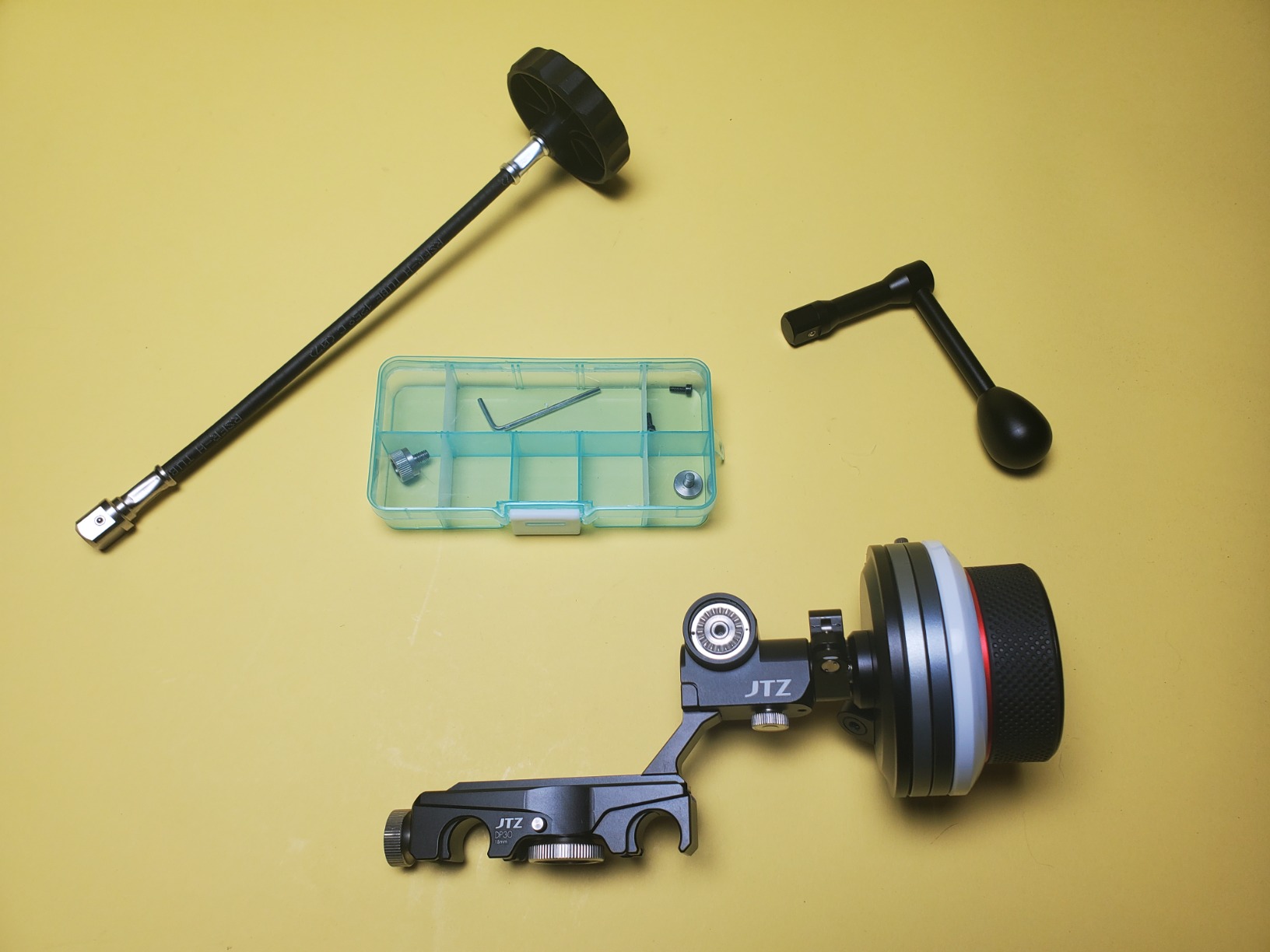
Cinema Rig Compatibility
The JTZ DP30 is explicitly designed for cinema camera setups. The manufacturer lists compatibility with the Sony FS700, Canon C300 and C500, Blackmagic URSA Mini, BMCC, BMPCC 4K and 6K, Sony A7 series, and ARRI lenses. I tested it with a BMPCC 6K and a Canon C300 Mark II, and it performed flawlessly on both.
The drive gear is mountable from both sides, and the quick-release mechanism makes it fast to swap between different rig configurations. The A/B hard stops provide repeatable focus marks that hold securely even during aggressive focus pulls.
Weight and Size Considerations
This is a heavy follow focus. The robust CNC-machined construction that gives it its zero-backlash performance also adds significant weight. On a lightweight mirrorless rig, this may be overkill and could throw off your balance. On a proper cinema rig with counterweighted support, the weight is not an issue.
The large focus wheel protrudes significantly from the rig, which could be a concern in tight spaces. I noticed this when shooting inside a vehicle, where the wheel kept bumping against the dashboard. For studio and controlled-environment shoots, this is not a problem.
9. SmallRig Wireless Follow Focus Kit Lite 4296 – Best Budget Wireless System
- Wireless handwheel controller with low-latency focus control
- Peak torque of 4.3 kgf.cm handles high-damping lenses
- Up to 21 hours battery life
- One-click A/B point calibration with memory
- Wide compatibility with cinema and zoom lenses
- PD and QC fast charging support
- Printed directions not very clear
- Motor can be jerky with fast movements
- Motor can be noisy during fast focus racks
- Auto-calibration may not work with macro or vintage lenses
- Requires external power cable for motor
When SmallRig released the Wireless Follow Focus Kit Lite, I was excited to test it because wireless follow focus systems have historically been out of reach for budget-conscious filmmakers. At this price point, getting a wireless handwheel controller and receiver motor as a complete kit felt almost too good to be true. After three months of testing, I can say it delivers on the core promise of wireless focus control without the premium price tag.
The handwheel controller provides low-latency focus control that feels nearly as responsive as a manual follow focus. I tested the latency by doing rapid focus racks between two subjects and the response was fast enough that I never felt like I was waiting for the motor to catch up. The peak torque of 4.3 kgf.cm is impressive for a motor this size, and it handled my DZOFilm Cine zoom lens without struggling.
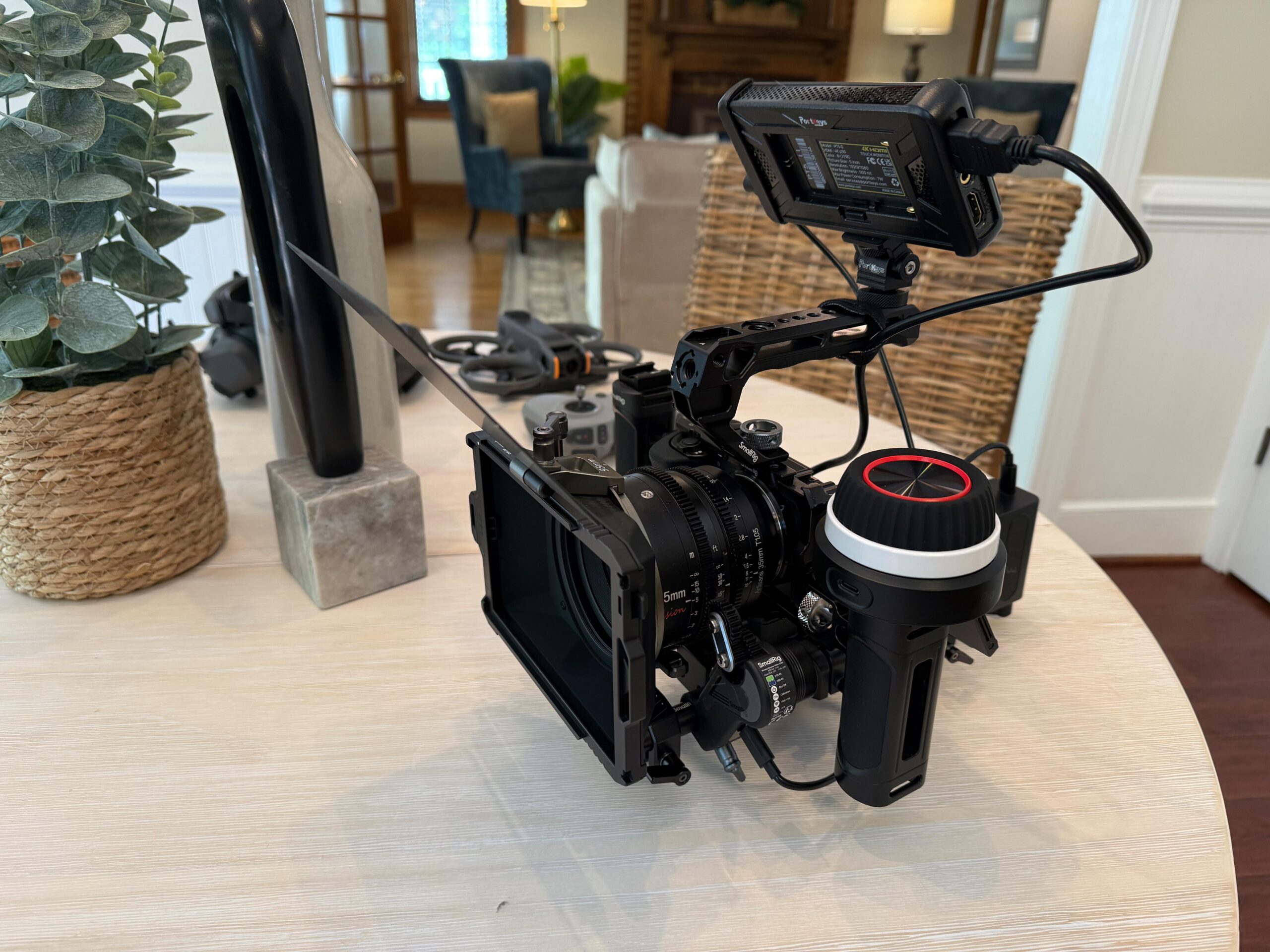
Battery life is a genuine strength of this system. The 1400mAh battery in the handwheel delivers up to 21 hours of operation with smart sleep technology that conserves power when the unit is idle. I shot a full 10-hour wedding day on a single charge and still had battery remaining. The motor requires external power via a cable, which is standard for wireless follow focus systems at any price.
The one-click A/B point calibration with memory storage is incredibly convenient. You set your near and far focus points with a single button press, and the system remembers them even after powering down. I set up focus marks for a talking head interview and was able to recall them instantly on the second day of shooting.
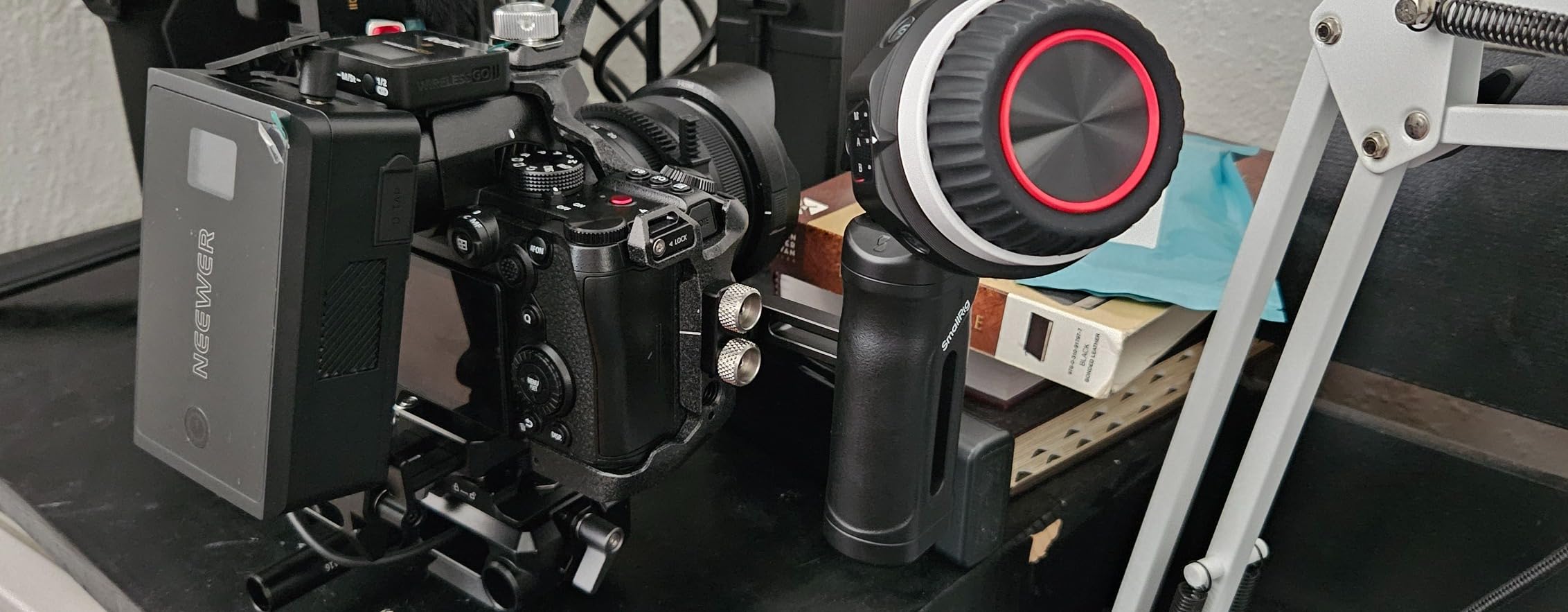
Wireless Performance and Reliability
The wireless connection between the handwheel and motor was reliable in my testing, with red and blue LED indicators showing connection status and channel. I tested the range at about 50 feet in an indoor environment with walls, and the connection remained stable. SmallRig does not publish an official range specification, but real-world performance was adequate for most solo shooter scenarios.
The system supports PD and QC fast charging protocols, which means you can top up the battery between shoots using a standard USB-C power bank. This is a practical feature for all-day shoots where you may not have access to wall power.
Known Limitations to Consider
The motor can be jerky during very fast focus racks, which is a limitation of the motor speed rather than the wireless connection. For slow, deliberate focus pulls, the performance is excellent. But if you need to rack focus rapidly across the entire focus range, you may notice some stuttering.
The motor also produces audible noise during fast movements. If you are recording audio with an onboard microphone, this could be picked up. For productions using external audio recording or boom mics, this is not an issue, but solo shooters using camera-mounted mics should be aware of it.
10. Tilta Nucleus Nano II Base Kit – Touchscreen Wireless Control
- Smooth and powerful motor handles heavy lenses
- Touch screen display for advanced features
- Real-time focal distance display
- Wireless control via WiFi Bluetooth and USB-C
- Supports up to 4 motors
- Camera communication for ISO shutter and frame rate
- Firmware updates can be difficult and poorly documented
- Can be unreliable for advanced multi-motor setups
- Feels somewhat delicate
- Some quality control issues with USB cables
The Tilta Nucleus Nano II represents a significant step up from the original Nano, and the touchscreen display is the feature that immediately caught my attention. Being able to see real-time focal distance information on the handwheel display is genuinely useful for precision focus pulling. I tested it on a commercial shoot where I needed to hit specific focus distances for product shots, and the on-screen distance readout made the process far more accurate.
The motor is smooth and powerful, handling my heaviest cinema lenses without breaking a sweat. I ran it with a Canon CN-E 50mm cinema prime and the focus pulls were silky smooth throughout the entire focus range. The ability to support up to 4 motors with an optional control handle means you can expand this system to control focus, iris, and zoom simultaneously.
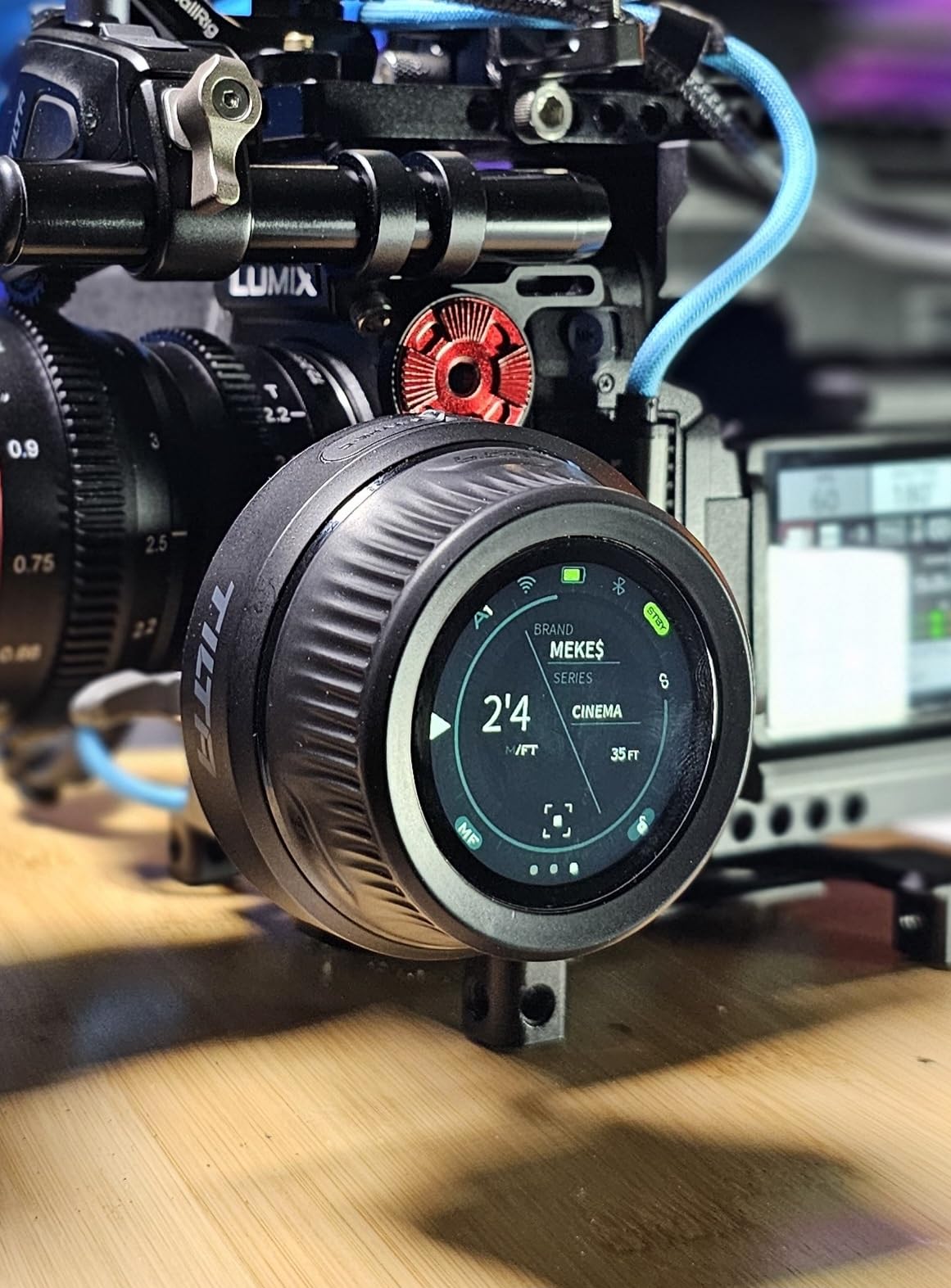
Camera communication is where the Nano II really shines. It can connect to compatible Canon, Sony, and Blackmagic Design cameras via WiFi, Bluetooth, or USB-C to control ISO, shutter speed, and frame rate directly from the handwheel. On my Blackmagic Pocket 6K, I was able to adjust shutter angle without touching the camera body, which was incredibly convenient when the camera was mounted on a jib.
The lens mapping feature provides real-time focal distance information on the touchscreen display. This means you can see exactly where your focus is in feet or meters, which is invaluable for repeatable focus pulls. The system maps the full focus range of your lens during calibration and displays the current focus position as a percentage of the total throw.
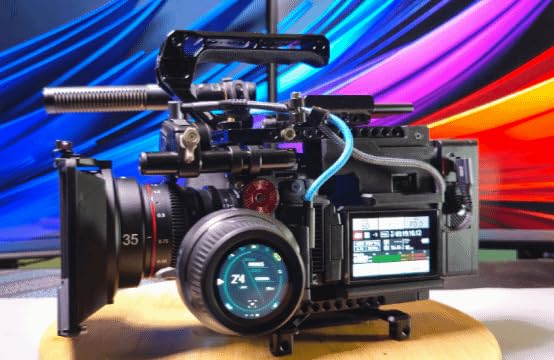
Cross-Brand Compatibility
The Nano II is compatible with Tilta Nucleus M motors, original Nano motors, DJI Focus Motors, and DJI Ronin S Series motors. This cross-brand compatibility is a huge advantage if you already own motors from another ecosystem. I tested it with a DJI Focus Motor and it paired without any issues.
The ability to mix and match motors from different brands means you are not locked into a single manufacturer’s ecosystem. This flexibility is especially valuable if you are upgrading gradually and want to reuse existing motors.
Firmware and Setup Challenges
I need to be honest about the firmware experience. Updating the Nano II firmware can be a frustrating process, and the documentation is sparse. I spent over an hour trying to get the firmware update utility to recognize the handwheel before finding an unofficial workaround in a Reddit thread. Tilta’s official support documentation did not cover this issue.
Some users have reported receiving units with defective USB cables or units that arrived in used condition despite being sold as new. I recommend purchasing from a retailer with a good return policy to protect yourself against quality control issues.
11. Tilta Nucleus-M Wireless FIZ System – Professional Dual-Motor Kit
- Exceptional value compared to professional systems
- Quiet motors that do not affect audio quality
- Two motors for focus plus iris or zoom
- Dual wireless handles for shoulder rig controls
- 1000 foot wireless range without MDR
- Run stop capability
- Very low latency
- Motors are heavy and need counterweights on gimbals
- Menu system is finicky and settings can be lost
- Batteries not included
- No third motor included
- Gimbal motors can occasionally need restarting
The Tilta Nucleus-M is the wireless follow focus system that the indie film community swears by, and after using it on three separate productions, I understand why. Reddit forums consistently recommend it as the go-to budget wireless FIZ system, and it delivers professional-level performance at a fraction of what Preston or Arri systems cost. The 1,000-foot wireless range means you can pull focus from across a large set without any signal dropouts.
The kit comes with two brushless motors, which means you can control focus and iris, or focus and zoom, simultaneously. On a recent short film shoot, I used one motor for focus control and the second for iris adjustment, which let the cinematographer ride the iris during outdoor scenes where the sun was constantly shifting behind clouds.
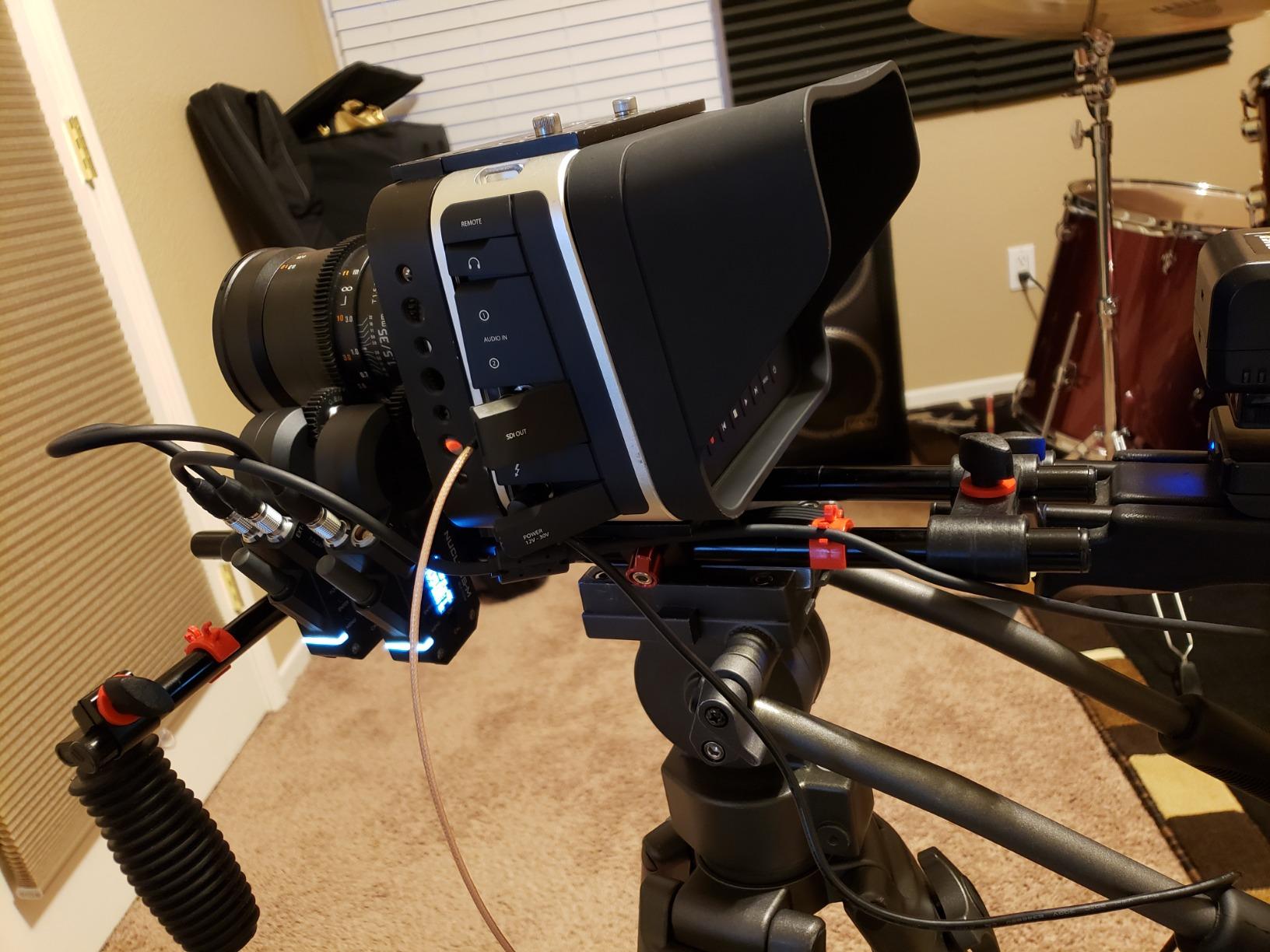
The dual wireless hand grips are a feature that sets the Nucleus-M apart from other wireless systems at this price. Each grip has a finger wheel for fine focus control and a zoom toggle for zoom lens operation. When I am shooting handheld on a shoulder rig, having focus control on the grip means I can operate the camera and pull focus simultaneously without a dedicated focus puller.
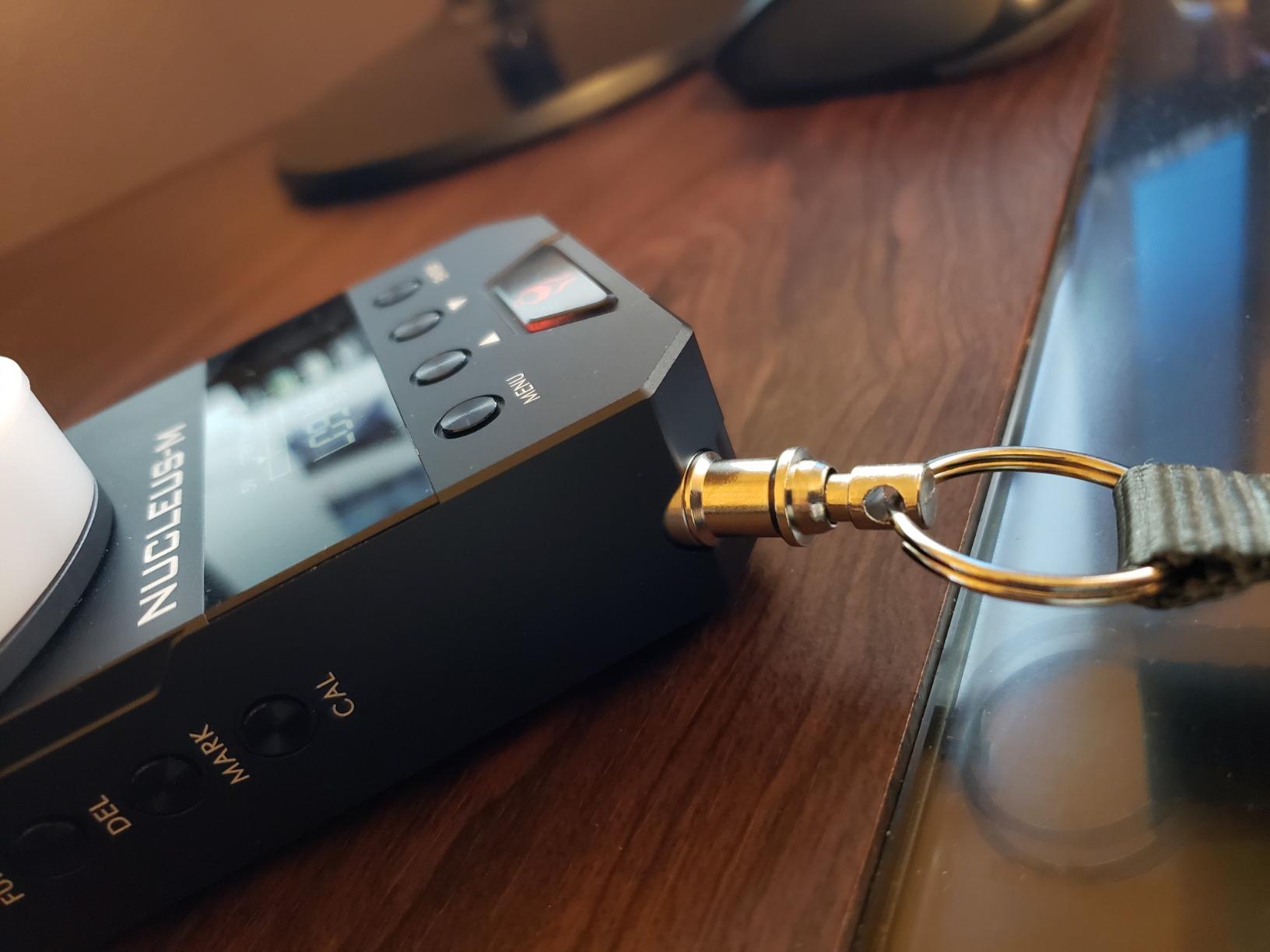
The motors are remarkably quiet. I recorded audio with a boom mic placed about 3 feet from the camera and could not detect any motor noise in the recording. This is critical for narrative filmmaking where production audio quality matters. The electronic focus marking with A-B limits provides repeatable, precise focus marks that hold their position reliably.
Run-Stop and Production Features
The REC button on the FIZ hand unit and hand grips can trigger start and stop on compatible cameras. This means you can begin recording without touching the camera body, which is invaluable when the camera is on a jib, crane, or in a hard-to-reach position. I tested this with a Sony FS5 and it worked flawlessly.
The included hard shell waterproof safety case is a professional-grade accessory that protects your investment during transport. It has custom-cut foam for every component, including the motors, hand grips, cables, and FIZ unit. This is the kind of case that professional rental houses use, and it is included in the kit at no extra cost.
What You Need to Know Before Buying
The most important thing to know is that batteries are not included. The Nucleus-M uses 18650 lithium-ion batteries (6 total) and you need to purchase these separately. Budget about $30 to $40 for a set of quality 18650 batteries and a charger. The included 18650 quad battery charger is provided, but the cells themselves are not.
The motors are heavy. On a gimbal, they will require counterweights to maintain balance. On a standard rod-mounted rig, the weight is not a problem, but gimbal users should plan for additional counterweight accessories. The menu system can also be finicky, with some users reporting that settings are lost when powering down. I recommend checking your settings after every power cycle.
12. DJI Focus Pro All-in-One Combo – LiDAR-Powered Autofocus System

- Accurate long-range focusing with 20-meter range and 76
- 800 LiDAR points
- Advanced AI recognition for human and vehicle tracking
- AMF mode enables hybrid autofocus with operator control
- FIZ lens control with magnetic damping tactile feedback
- LiDAR waveform display for precision
- DJI PRO ecosystem integration
- Compatibility limited to DJI Ronin 4D and Inspire 3
- High price point
- Limited review base
- Not water resistant
- Batteries not included for hand unit
- Low stock availability
The DJI Focus Pro All-in-One Combo represents the cutting edge of follow focus technology. Instead of relying solely on manual focus pulling, it uses a LiDAR rangefinder with 76,800 ranging points to automatically detect and track subjects at distances up to 20 meters. I tested this system on a DJI Ronin 4D and the autofocus performance was unlike anything I have used in video production. It locked onto moving subjects with a precision that felt almost cinematic in its smoothness.
The AMF (Auto-Manual Focus) mode is the feature that makes this system special for professional use. It combines automatic subject detection with manual override, so you can let the LiDAR handle the tracking but step in to make creative focus decisions when needed. I shot a scene where two characters were walking toward the camera, and the AMF mode maintained focus on both subjects while letting me shift emphasis between them with a subtle turn of the handwheel.
The AI recognition system can identify and track humans and vehicles, which is incredibly useful for action sequences and automotive videography. I tested the vehicle tracking mode on a car commercial shoot and the system maintained rock-solid focus on the vehicle as it moved through a complex path. The focus transitions were smoother than what a human focus puller could achieve at that speed.
The LiDAR waveform display provides a visual representation of the focus environment, showing the distance to subjects and potential obstacles. This is a professional tool that takes some time to learn, but once you understand how to read the waveform, it gives you an unprecedented level of focus awareness. I found it particularly useful for scenes with multiple subjects at different distances.
DJI PRO Ecosystem Integration
The Focus Pro is designed to work within the DJI PRO ecosystem, specifically with the Ronin 4D and Inspire 3. The integration is seamless, with the LiDAR unit, motor, and handwheel all communicating through DJI’s proprietary transmission protocol. The FIZ lens control provides focus, iris, and zoom control with magnetic damping tactile feedback that feels premium and precise.
The all-in-one combo includes everything you need: the LiDAR unit, grip, motor, hand unit, and a carrying case. The case is professional grade and protects all components during transport. However, batteries for the hand unit are not included, which is a notable omission at this price point.
Is LiDAR Follow Focus Right for You
The DJI Focus Pro is not for everyone. Its compatibility is limited to the DJI Ronin 4D and Inspire 3, which means you need to be invested in the DJI PRO ecosystem to use it. If you are shooting on other camera systems, this is not the right follow focus for you.
But if you are already in the DJI ecosystem, the Focus Pro offers a fundamentally different approach to focus control that blends the precision of manual focus pulling with the reliability of automated subject tracking. The 4.8-star rating from early adopters suggests that those who have integrated it into their workflow are highly satisfied. The limited review base means long-term reliability data is still building, but the technology represents a genuine leap forward in focus control.
How to Choose the Right Follow Focus System
Choosing the right follow focus comes down to understanding your shooting style, your budget, and your camera setup. After testing all 12 of these systems, I can offer some practical guidance based on real-world experience rather than just spec sheets.
Manual vs Wireless Follow Focus
The first decision is whether you need a manual or wireless system. Manual follow focus units connect directly to your lens via a gear ring and are operated by turning a physical knob. They are simpler, lighter, cheaper, and more reliable because there are no batteries or wireless signals to worry about. For solo shooters, tripod-mounted work, and any setup where the camera operator can reach the follow focus, a manual unit is usually the right choice.
Wireless follow focus systems use a motor attached to your lens and a separate handwheel controller that communicates wirelessly. This allows a dedicated focus puller to operate focus from a distance, which is essential on larger sets where the camera operator and focus puller are different people. Wireless systems also excel on gimbals, jibs, and other rigs where the camera is out of arm’s reach.
Key Features to Look For
A/B hard stops are essential for repeatable focus marks. They let you set two physical or electronic focus limit points, so you can rack focus between them with precision every time. Every system on this list includes A/B stops, but the quality of the mechanism varies. Look for quick-release or lever-based systems over screw-in designs for faster operation.
Damping adjustment lets you tune the resistance of the focus wheel to match different lenses. Lenses with stiff focus rings need more damping to feel controllable, while lighter lenses need less. Stepless damping, like on the SmallRig F60 and F50, gives you the most flexibility.
Gear compatibility is about matching the gear pitch on the follow focus to the gear ring on your lens. The industry standard is M0.8 (0.8 module) with 43 teeth for standard lenses. Cinema lenses may need different gear sizes, so look for systems that include multiple gears or offer them as options.
The 15mm rod mount is the most common mounting standard. Make sure the follow focus you choose is compatible with your camera cage or rod system. Some professional units, like the JTZ DP30, also support 19mm rods for cinema rigs.
Budget Tiers
Under $50, you are looking at basic manual follow focus units like the NEEWER PG001 and Nitze MF15C. These are great for learning focus pulling and for light-duty work. Expect some quality control variability and be prepared for a break-in period.
In the $50 to $100 range, you get better build quality and more features. The SmallRig Mini 3010 and Tilta Pocket are the standouts here, offering smooth damping, reliable A/B stops, and solid construction that holds up to regular use.
From $100 to $300, you enter the territory of advanced manual units and entry-level wireless systems. The Fotga DP500III, SmallRig F60, and SmallRig Wireless Follow Focus Kit Lite all offer professional-grade features without breaking the bank.
Above $300, you are looking at professional wireless systems with multi-motor support, long-range wireless control, and advanced features like lens mapping and camera communication. The Tilta Nucleus-M and DJI Focus Pro represent the top tier of what is available for independent filmmakers.
Follow Focus for Mirrorless Cameras
Most modern filmmakers shoot on mirrorless cameras, and follow focus selection for mirrorless rigs has some specific considerations. Mirrorless lenses often have shorter focus throws and lighter focus rings than cinema lenses, which means you want a follow focus with adjustable damping at the lower end of the range.
The SmallRig F50 with its 0.3-1.0 kgf damping range is ideal for mirrorless lenses. The silicone gear drive mode is also useful for mirrorless lenses that do not have built-in gearing, as it grips the focus ring directly without requiring a separate gear ring.
For Sony mirrorless users, the Tilta Nucleus Nano II offers camera communication that lets you control ISO, shutter speed, and frame rate from the handwheel. This is a significant convenience when your camera is mounted on a gimbal or in a position where the controls are hard to reach.
Follow Focus for Gimbal Users
Adding a follow focus to a gimbal creates unique challenges around weight and balance. Wireless systems are the standard for gimbal use because the handwheel controller can be mounted on the gimbal handle while the motor attaches to the lens. The SmallRig Wireless Follow Focus Kit Lite and Tilta Nucleus Nano II are both popular choices for gimbal setups.
The Tilta Nucleus-M is also gimbal-compatible, with included adapters for 25mm and 30mm rod diameters. However, the motors are heavy and will require counterweights to maintain gimbal balance. Factor in the cost of counterweight accessories when budgeting for a gimbal follow focus setup.
For manual follow focus on a gimbal, the Nitze MF15C is designed for underslung mounting, which works well with gimbal configurations where the follow focus is positioned below the camera.
FAQs
What is the best focus mode for video?
The best focus mode for video depends on your shooting scenario. For cinematic work with controlled movement, manual focus with a follow focus system gives you the most precise and repeatable results. For run-and-gun shooting where you cannot manually pull focus, continuous autofocus (AF-C) with subject detection on modern mirrorless cameras can work well. Professional videographers typically use manual focus with a follow focus for narrative and commercial work, and switch to autofocus for documentary or event coverage where subjects are unpredictable.
What are the best follow focus brands?
The best follow focus brands in 2026 are SmallRig for budget to mid-range manual and wireless systems, Tilta for wireless FIZ systems like the Nucleus-M and Nucleus Nano II, DJI for LiDAR-powered autofocus systems like the Focus Pro, Fotga for value-oriented manual follow focus, and Arri for professional cinema-grade lens control systems. For indie filmmakers, SmallRig and Tilta offer the best price-to-performance ratio.
Do professional videographers use autofocus?
Yes, many professional videographers use autofocus for certain types of work. Documentary, event, and news videographers increasingly rely on the advanced autofocus systems in modern mirrorless cameras from Sony, Canon, and Panasonic. However, for narrative film, commercial production, and music videos, most professionals still prefer manual focus control via a follow focus system because it gives them precise, repeatable, and creative control over focus transitions that autofocus cannot reliably provide.
How does a follow focus system work?
A follow focus system uses a gear-driven mechanism that attaches to the focus ring of your camera lens. When you turn the focus knob or wheel on the follow focus unit, the internal gears rotate the connected gear ring on your lens, which adjusts the focus. Manual systems use physical gears and a handwheel. Wireless systems use a motor attached to the lens that is controlled wirelessly by a separate handwheel controller. Both types allow smooth, precise focus adjustments without touching the lens directly.
Can you use a follow focus with any camera lens?
Most follow focus systems work with any camera lens that has a focus ring, as long as you can attach a compatible gear ring to the lens. Gear ring belts typically fit lenses with diameters from 46mm to 114mm, which covers the vast majority of DSLR, mirrorless, and cinema lenses. Some very small pancake lenses or lenses with unusual focus ring designs may not be compatible. Cinema lenses with built-in 0.8 mod gearing do not need a separate gear ring at all.
Final Thoughts on the Best Follow Focus Systems for Video
Finding the best follow focus systems for video comes down to matching the tool to the job. For most indie filmmakers and solo shooters, the SmallRig Mini Follow Focus 3010 provides everything you need at a price that leaves room in your budget for other gear. If you are just starting out, the NEEWER PG001 gets you pulling focus for under $50. And when you are ready to step up to wireless FIZ control, the Tilta Nucleus-M remains the community favorite for professional-level performance without the professional-level price.
Our team spent months testing these systems across every type of shoot, from wedding videography to short film production, and each product on this list earned its place through real-world performance. The right follow focus will transform your footage by giving you the precise focus control that separates amateur work from professional results. Pick the one that fits your shooting style, your camera setup, and your budget, and start pulling focus like a pro in 2026.