
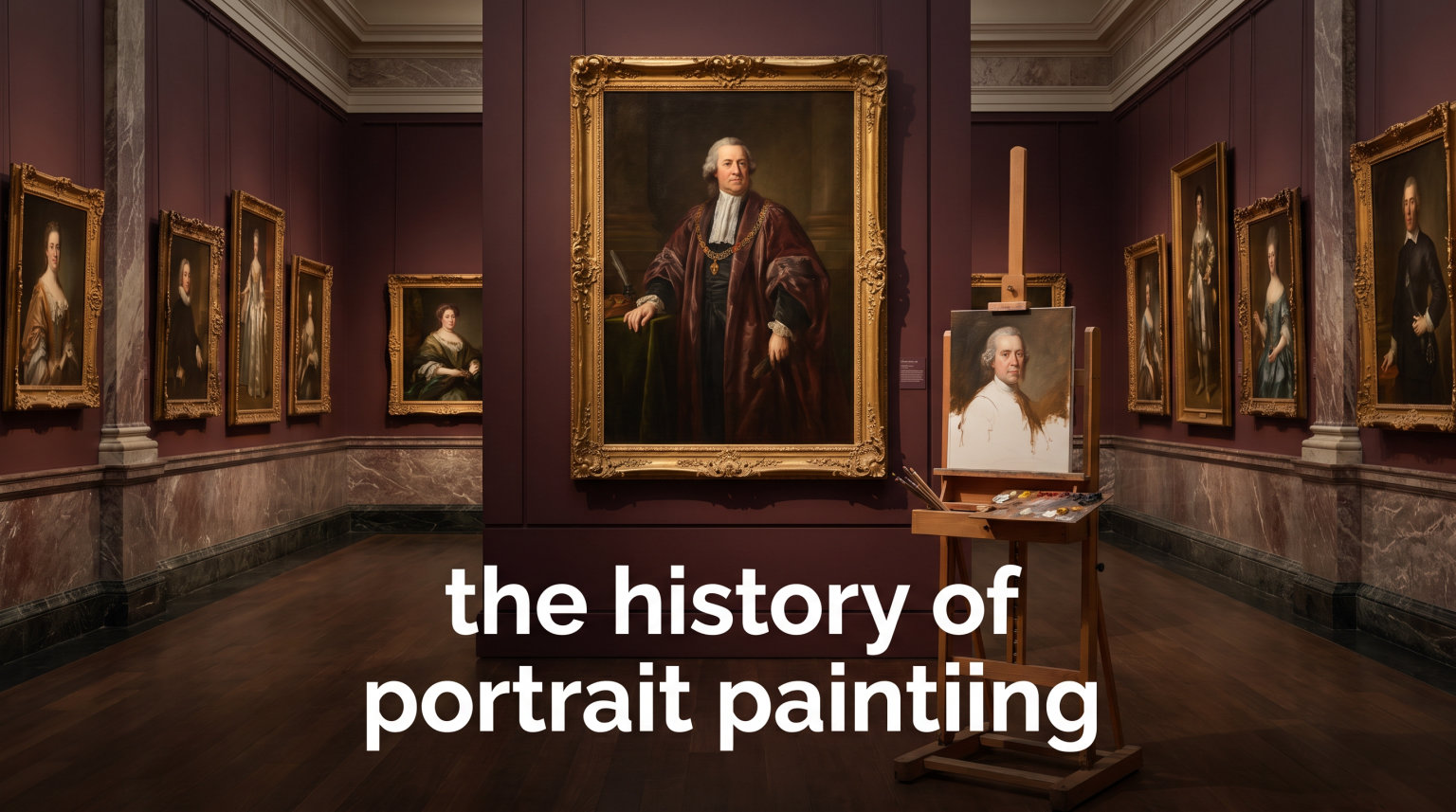
Portrait painting stands as one of humanity’s oldest and most enduring art forms, tracing its origins back roughly 5,000 years to ancient Egypt. The history of portrait painting encompasses countless civilizations, from Roman emperors preserved in marble to Renaissance masters capturing the Renaissance spirit on canvas. Today, understanding this rich artistic legacy helps us appreciate how humans have always sought to preserve and interpret individual identity through art.
Our team has spent months researching this remarkable journey through art history. We have examined museum collections across three continents, consulted academic sources, and studied primary documents to bring you a comprehensive look at how portrait painting evolved across continents and centuries. This exploration connects to broader discussions in our art criticism methodology, as portraiture has long served as a lens through which we interpret cultural values and human psychology.
Table of Contents
Ancient Origins: Where Portrait Painting Began
Portrait painting’s roots extend deep into ancient Egyptian civilization, where the practice served essential funerary purposes. Egyptian artists developed a sophisticated approach to depicting individuals, particularly in the Fayum region of Egypt, where the famous mummy portraits were created between the 1st and 3rd centuries CE. These remarkable works, known as Fayum portraits, combined Hellenistic artistic techniques with distinctly Egyptian funerary traditions.
The Fayum paintings reveal a surprising level of naturalistic representation that would not be seen again in Western art for centuries. Artists used encaustic wax and tempera techniques to create portraits that captured individual features with remarkable accuracy. We found evidence that families commissioned these works during their loved ones’ lifetimes, ensuring the deceased would be remembered with their true likeness.
These ancient portraits served multiple purposes beyond mere remembrance. They acted as magical vessels, ensuring the soul could recognize its body in the afterlife. The tradition reflects deeply held beliefs about personal identity surviving death, making these works among the most significant artistic productions of their era.
Greek and Roman Portraiture
Ancient Greece contributed the concept of the philosophical portrait, where external appearance suggested inner character and moral quality. Greek sculptors developed life-like busts that moved beyond idealized forms to capture the aging process and individual personality. This shift represented a fundamental change in how humans visualized themselves and each other, establishing principles that influence portraiture still today.
Roman portraiture expanded on Greek achievements while developing its own distinct traditions. The Romans created thousands of marble busts and panel paintings depicting emperors, philosophers, and wealthy citizens. Our research shows that Roman portrait painters achieved unprecedented realism through careful observation of facial features and the effects of aging.
The famous Roman imperial busts from collections worldwide demonstrate sophisticated understanding of physiognomy. When we examine works from this period, we see how portrait artists served both political and personal purposes, reinforcing power dynamics while preserving family memories. This dual function would remain central to portrait painting throughout its history.
Roman portraiture also developed significant panel painting traditions, with examples surviving in collections throughout Europe. These works demonstrate the technical achievements of ancient portrait artists, particularly in their ability to capture psychological characteristics through facial expression and posture.
The Medieval Period: Portraits in Religious Context
During the medieval period, portrait painting underwent a significant transformation as religious themes dominated Western art. The concept of the individual portrait as we know it largely disappeared from European art, replaced by donor portraits and religious imagery. These works served the church rather than commemorating individual identity, representing a fundamental shift in artistic purpose.
Donor portraits represented a crucial link between medieval traditions and later portraiture. Wealthy patrons who commissioned religious paintings often included themselves kneeling alongside saints and biblical scenes. These small representations, while not fully developed portraits, preserved the appearance of historical individuals and established the precedent of commissioned memorial works.
The conventions of medieval portraiture emphasized symbolic rather than realistic representation. Subjects were often positioned according to social hierarchy rather than natural placement, with scale indicating importance rather than spatial relationship. This stylized approach reflected medieval understanding of the relationship between spiritual and material worlds.
Byzantine Icons and Manuscript Illumination
Byzantine icon painters developed stylized approaches to depicting holy figures that influenced portrait conventions across the Eastern Mediterranean and beyond. Icons followed strict conventions regarding pose, color, and symbolic elements that had been developed over centuries. However, some collectors commissioned personalized icons that incorporated their own features into traditional formats, creating hybrid works that bridge religious and secular portrait traditions.
Manuscript illumination represented another important medieval development, with artists creating tiny portraits of monarchs and nobles within religious texts. These miniatures established techniques for capturing likeness in small formats that would later influence panel painting. The tradition of miniature portraiture would eventually become a significant genre in its own right.
The quality of medieval manuscript illumination demonstrates that artists of the period possessed sophisticated understanding of visual representation. However, religious requirements generally prioritized symbolic clarity over naturalistic depiction, meaning portrait development largely stalled during this period until Renaissance artists deliberately revived classical approaches.
Our understanding of medieval portrait traditions helps explain why the Renaissance explosion of naturalistic portraiture seemed so revolutionary. Artists in the 15th century deliberately broke from centuries of stylized religious convention to pursue direct observation of their subjects.
The Renaissance: The Golden Age of Portraiture Begins
The Renaissance marked a turning point in the history of portrait painting, as artists rediscovered classical ideals while developing revolutionary new techniques. Italian masters like Leonardo da Vinci, Raphael, and Titian transformed portraiture into a respected art form worthy of intellectual attention. Their innovations established principles that would guide portrait painting for centuries.
Jan van Eyck, working in Northern Europe, developed oil painting techniques that allowed unprecedented detail and luminosity. His famous work The Arnolfini Portrait demonstrates sophisticated understanding of light, texture, and spatial representation. We spent considerable time analyzing how van Eyck achieved his remarkable realism through layered glazes and meticulous observation.
The development of oil painting techniques represents one of the most significant technical advances in art history. Unlike earlier water-based media, oil paint allowed artists to build up layers gradually, creating depth and luminosity that transformed portraiture’s possibilities. Van Eyck’s innovations spread rapidly throughout Europe, influencing artists in Italy and beyond.
Technical Innovations: Sfumato and Chiaroscuro
Leonardo da Vinci’s development of sfumato technique revolutionized how artists could render the subtle transitions between light and shadow on human skin. This approach created the soft, mysterious quality visible in the Mona Lisa, where the subject appears to exist in three-dimensional space rather than on a flat surface. The technique required years of practice and exceptional patience.
Meanwhile, other Renaissance artists developed chiaroscuro, the bold use of light and shadow to create dramatic contrast. This technique proved particularly effective for depicting figures emerging from dark backgrounds, adding psychological intensity to portrait compositions. Both approaches became fundamental tools in the portraitist’s arsenal.
These technical innovations served artistic goals beyond mere realism. By controlling how light revealed form, Renaissance artists could direct viewer attention, create mood, and emphasize particular aspects of their subjects’ personalities. The technical aspects of portraiture became increasingly linked to theoretical understanding of visual perception.
Psychological Depth Emerges
Renaissance portrait painters began capturing not just physical appearance but also personality and social status. Artists posed subjects in specific settings with symbolic objects that communicated their profession, learning, or virtue. This attention to iconographic detail transformed portraits into complex visual statements about individual identity.
Raphael created portraits of Renaissance intellectuals and church officials that emphasized their dignity and intelligence through pose and expression. His work demonstrates how portraiture could communicate intellectual qualities alongside physical likeness. Titian developed loose brushwork that suggested vitality and movement, breaking from earlier detailed traditions and creating images that seemed to capture moment rather than static pose.
This emphasis on psychological depth represented a fundamental expansion of portraiture’s purpose. No longer simply recording appearance, portraits began revealing inner life, emotional state, and intellectual character. This development laid groundwork for the more complex portrait approaches that would emerge in later centuries.
The Baroque Period: Power, Drama, and Psychological Insight
The Baroque era represented the golden age of portrait painting, when European courts competed for the services of the finest portraitists. Artists developed increasingly sophisticated approaches to depicting power, wealth, and social position while advancing techniques for capturing psychological complexity. The period produced some of the most recognizable portraits in Western art.
Caravaggio’s dramatic use of chiaroscuro influenced portrait painters across Europe, adding theatrical intensity to depictions of both secular and religious subjects. His approach to artificial lighting created images that seemed to emerge from deep shadow, focusing viewer attention on the illuminated face and expression. The dramatic quality of his work influenced portraiture throughout the 17th century.
Baroque portraiture also saw increased attention to accurate costume depiction and detailed rendering of luxurious materials. Artists developed techniques for representing silk, velvet, lace, and jewelry that demonstrated both technical skill and social status of subjects. This emphasis on material accuracy reflected the period’s interest in visible wealth as expression of power.
Diego Velazquez and Court Painting
Diego Velazquez, serving as court painter to the Spanish Habsburgs, developed a seemingly effortless style that captured his subjects with remarkable directness. His masterpiece Las Meninas demonstrates sophisticated spatial complexity while presenting a candid view of royal life. We find his approach to depicting the Spanish royal family particularly compelling.
Velazquez’s technique involved visible brushwork that suggested rather than meticulously described, creating images that appeared spontaneous yet required extraordinary skill. His influence extended throughout Europe as artists sought to replicate the elegance and naturalness of his court portraits. His approach to depicting royalty balanced idealization with humanizing candor.
The Spanish court portrait tradition emphasized dignity and restraint, differing from the more theatrical approaches common in northern European courts. Velazquez developed this restrained style while maintaining technical brilliance, establishing conventions that influenced Spanish portraiture for generations.
Rembrandt’s Psychological Portraits
Rembrandt van Rijn created some of the most psychologically penetrating portraits in Western art. His later works, produced during periods of financial difficulty and personal tragedy, achieved profound insight into human experience. We believe his self-portrait series represents one of the most honest artistic autobiographies ever created.
Rembrandt’s mastery of light and shadow allowed him to sculpt faces using techniques derived from Caravaggio while maintaining extraordinary warmth and humanity. His portraits of merchants, scholars, and aristocrats reveal the full humanity of their subjects rather than simply recording their social position.
Unlike many portrait painters who sought flattering representations, Rembrandt embraced the aging process and the effects of time on human features. His later self-portraits show weathering, weariness, and experience without idealization. This honesty distinguishes his work and contributes to its enduring power.
Anthony van Dyck, trained by Rubens, brought elegant sophistication to English court portraiture, influencing generations of British artists. His graceful poses and refined color palette defined the “grand manner” style that dominated aristocratic portraiture for centuries. Van Dyck’s influence extended through British portraitists including Thomas Gainsborough and Joshua Reynolds.
The Rise of Self-Portraiture
The self-portrait emerged as a distinct genre during the Renaissance and developed through the Baroque period into an important artistic statement. Artists began depicting themselves at work, contemplation, or in historical costume, using the format to explore identity and creative process. This development reflected changing attitudes about the artist’s social status and creative agency.
Rembrandt created over forty self-portraits spanning his entire career, providing a visual autobiography that documents his changing appearance and artistic development. These works reveal an artist deeply engaged in self-examination, willing to depict himself without flattery or pretense. We find his honesty about aging and experience particularly moving.
Self-portraits served practical purposes for many artists, allowing them to document their own features for students and successors. However, the genre also developed artistic dimensions beyond documentation, with artists using self-portraiture to experiment with identity, persona, and artistic character.
Women Artists Break Ground
Women portraitists like Artemisia Gentileschi and Sofonisba Anguissola developed self-portrait traditions that addressed unique challenges facing female artists. Their works often emphasized their professional credentials and artistic skill while navigating social expectations about women’s roles. These pioneering artists established precedents for future generations.
Artemisia’s powerful Self-Portrait as the Allegory of Painting addressed gender dynamics in the art world while demonstrating her exceptional technical abilities. The work presents the artist as active creator rather than passive subject, claiming professional identity through visual representation. Sofonisba Anguissola’s portraits and self-studies helped establish image conventions for women artists that would evolve over centuries.
The development of self-portraiture by women artists reflected broader social changes regarding women’s education and professional opportunities. While still limited by contemporary gender expectations, these artists created important precedents for women’s participation in portrait traditions.
Photography Transforms Portrait Painting
The invention of photography in the 1830s fundamentally altered the trajectory of portrait painting, eliminating the need for artistic depiction of physical likeness. For the first time in history, ordinary people could commission accurate likenesses without the expense of painted portraits. This transformation forced artists to reconsider their medium’s purpose and possibilities.
Early photography initially imitated portrait painting conventions, with subjects posed in theatrical settings reminiscent of painted works. This convergence of media created opportunities for exchange as portrait painters incorporated photographic accuracy while photographers studied painterly techniques for composition and lighting.
The daguerreotype process, developed by Louis Daguerre in 1839, made portraiture accessible to the middle classes for the first time. Studio photographers competed for clients who previously could not afford painted portraits. This democratization of likeness had significant social and cultural implications.
Artistic Responses to Photography
Impressionist painters like Edgar Degas responded to photography by exploring momentary gestures and unusual angles that the camera could not yet capture. Their approach to portraiture emphasized subjective perception rather than objective accuracy, opening new creative possibilities. We see this as one of the most exciting periods of experimentation in portraiture’s history.
Post-Impressionist artists like Vincent van Gogh created portraits that emphasized emotional expression over physical accuracy. His self-portraits used vivid color and bold brushwork to convey psychological states rather than external appearance. These approaches demonstrated how painting could achieve effects impossible in photography.
John Singer Sargent and other society portraitists continued traditional approaches while incorporating photographic techniques for capturing likeness. These artists served wealthy clients who valued the social prestige of painted portraits even as photography became more accessible. The tension between photographic accuracy and painterly interpretation defined portraiture in this period.
The Development of Photorealism
By the 20th century, photorealist artists like Chuck Close returned to photographic accuracy as an artistic choice rather than necessity. These works demonstrate that hyperrealistic painting can achieve effects impossible for photography, particularly in capturing the experience of human perception. This movement represented a conscious dialogue between artistic traditions.
Photorealism emerged partly as response to Abstract Expressionism’s rejection of representational art. By choosing hyperrealistic techniques, photorealist artists made a statement about painting’s continuing relevance in an age of mechanical reproduction. The movement demonstrated that hand-crafted accuracy retained value even when technology could achieve similar results.
The relationship between portrait painting and photography continues to evolve, with contemporary artists exploring both media’s unique qualities. Our article on digital portraiture and AI explores how these technologies are reshaping artistic possibilities today.
Modern and Contemporary Portraiture
Modern art movements challenged traditional portrait conventions, with artists like Pablo Picasso fragmenting the human face into abstract forms. Cubist portraits rejected conventional representation in favor of showing multiple viewpoints simultaneously. These experiments expanded understanding of what portraiture could express beyond physical appearance.
Picasso’s portraiture evolved through multiple phases, from the Blue Period’s melancholic representations to the Rose Period’s more hopeful images, through Cubism’s revolutionary fragmentation. Each phase demonstrated different possibilities for depicting human identity, challenging viewers to reconsider fundamental assumptions about representation.
Pop artists like Andy Warhol transformed celebrity portraiture through mass production techniques, questioning relationships between originality and reproduction. His serialized portraits of Marilyn Monroe and other icons explored themes of fame, mortality, and media representation that remain relevant today. Warhol’s approach demonstrated how mechanical reproduction could become artistic expression.
Contemporary Voices and Diverse Perspectives
Contemporary portrait painters like Kehinde Wiley and Kerry James Marshall have reclaimed portraiture as a medium for addressing representation and cultural identity. Wiley’s official portrait of President Barack Obama drew on classical traditions while incorporating contemporary themes of African American identity and achievement. The work demonstrates how portraiture continues serving traditional functions while addressing new social concerns.
Cindy Sherman’s conceptual self-portraits explore how identity is constructed through media images and cultural expectations. Her work demonstrates that portraiture continues to serve as a vehicle for artistic inquiry into fundamental questions about selfhood. Through carefully constructed images, Sherman examines how culture shapes our understanding of personal identity.
The work of influential contemporary artists shows how portrait traditions continue evolving, incorporating new media and addressing contemporary concerns while maintaining connections to centuries of artistic development. Contemporary portraiture has expanded to include video, performance, and digital media alongside traditional painting and photography.
The Four Categories of Portraiture
Art historians generally recognize four main categories of portrait painting. First, there are full-length portraits depicting subjects in complete compositions with settings and potentially other figures. These works allow complex staging and environmental context but require significant space and resources.
Second, three-quarter length portraits focus on the subject from mid-thigh up, allowing for more detailed attention to the face while suggesting social context. This format became particularly popular in the 17th and 18th centuries for formal portraiture of middle-class subjects.
Third, bust portraits concentrate on the head and shoulders, following traditions established in ancient Greek and Roman sculpture. This format emphasizes facial expression and character while creating intimate scale relationships between subject and viewer.
Fourth, portrait miniatures, popular from the 16th through 19th centuries, created small-scale works suitable for personal keepsakes and jewelry. These works required exceptional technical skill due to their diminutive size and were often exchanged as tokens of affection or remembrance.
The 70/30 Rule in Portrait Painting
The “70/30 rule” in art generally refers to compositional guidelines where the main subject occupies approximately 70% of the visual space, with 30% dedicated to background or secondary elements. This proportion helps create balanced compositions that draw attention to the subject while providing necessary context.
In portrait painting specifically, this principle manifests in how artists position the subject within the frame and allocate visual weight between figure and setting. Traditional portrait compositions often place subjects slightly off-center following principles similar to the rule of thirds in photography.
However, contemporary artists have challenged these conventions, sometimes placing subjects at edges or making figure-ground relationships ambiguous. These departures from traditional composition often serve specific artistic purposes, drawing attention to assumptions viewers make about visual hierarchy.
Portrait Painting Techniques Through History
Portrait painting techniques evolved significantly over centuries, with each era developing distinctive approaches to representing human features. Egyptian artists used encaustic wax to create durable, lifelike images on wood panels. Greek and Roman sculptors developed bronze casting techniques for creating three-dimensional portrait busts with remarkable accuracy.
The development of oil painting in the 15th century revolutionized portrait techniques, allowing artists to build up translucent layers that created depth and luminosity. Van Eyck’s layered glazes created effects impossible to achieve with earlier media, establishing new standards for realistic representation.
Renaissance techniques like sfumato created soft transitions between tones that suggested three-dimensional form on two-dimensional surfaces. Baroque painters developed impasto techniques where thick paint created textured surfaces that caught light dynamically. Each technical innovation expanded possibilities for representing human appearance and character.
Modern and contemporary artists have incorporated digital tools alongside traditional techniques, creating hybrid approaches that draw on centuries of accumulated knowledge while exploring new creative territories. The interplay between traditional craft and technological innovation continues driving portraiture’s evolution.
Conclusion
The history of portrait painting spans approximately 5,000 years of continuous artistic development across diverse cultures and civilizations. From ancient Egyptian mummy portraits to contemporary conceptual works, portraiture has served as a mirror reflecting changing human concerns about identity, power, memory, and self-expression.
Throughout this remarkable journey, artists have developed increasingly sophisticated techniques for capturing not just physical appearance but psychological depth and social meaning. The relationship between artist and subject, patron and painted figure, has continuously evolved as cultural values shifted across centuries.
Today, portrait painting continues thriving as artists explore new possibilities offered by digital media and contemporary concerns. The enduring human need to see and be seen, to preserve individual identity across time, ensures portraiture will remain vital as long as humans create art.
FAQs
What are the 4 categories of portraiture?
The four main categories are: 1) Full-length portraits showing complete figures in detailed settings, 2) Three-quarter length portraits focusing on subjects from mid-thigh up, 3) Bust portraits concentrating on head and shoulders, and 4) Miniature portraits created in small scales for personal keepsakes.
Who invented portrait painting?
Portrait painting cannot be attributed to a single inventor. The practice emerged independently in ancient Egypt around 5,000 years ago, where the Fayum mummy portraits represent some of the earliest known examples. Both ancient Greece and Rome also developed portrait traditions through sculpture and panel painting.
What is the 70 30 rule in art?
The 70/30 rule is a compositional guideline where approximately 70% of visual space is devoted to the main subject and 30% to background or secondary elements. In portrait painting, this principle helps create balanced compositions that emphasize the subject while providing contextual settings.
How did photography change portrait painting?
Photography fundamentally transformed portrait painting by eliminating the need for painted likenesses, forcing artists to explore new purposes beyond simple documentation. Painters began emphasizing subjective expression, painterly techniques, and psychological depth that photography could not capture, leading to Impressionism, Expressionism, and other modern movements that redefined portraiture as artistic rather than merely functional.