
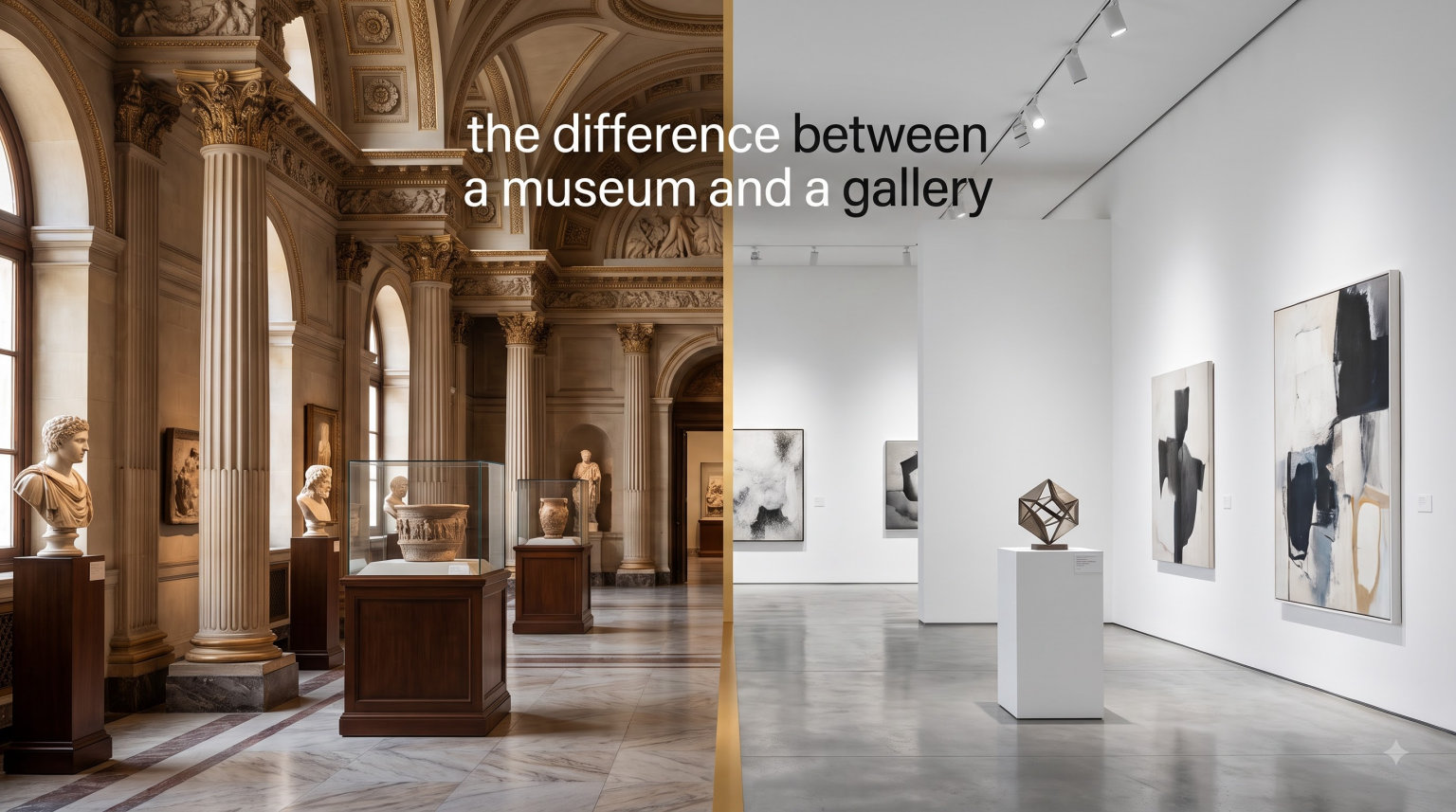
If you have ever walked into an art space and wondered whether you were in a museum or a gallery, you are not alone. I have spoken with countless visitors who find these terms confusing, and honestly, the line can blur depending on where you are in the world. Understanding the difference between a museum and a gallery matters whether you are planning your next cultural outing, launching an art career, or simply want to understand what you are looking at when you step inside one of these spaces.
In this guide, we will break down exactly what distinguishes these two pillars of the art world. We will compare their purposes, funding models, collection practices, and how they approach the art they display. Whether you are exploring modern and contemporary art for the first time or deepening your existing knowledge, by the end you will have a clear grasp of the difference between a museum and a gallery, and why both matter to our cultural landscape.
Table of Contents
What Is a Museum?
A museum is a non-profit institution dedicated to preserving, researching, and displaying art, artifacts, and objects of cultural, historical, or scientific significance. Museums exist primarily to serve the public interest. Their collections often span centuries, and many institutions hold works they have owned for generations.
The core mission of any museum revolves around education and preservation. When you visit a museum, you are experiencing a space designed to help you understand art and history in a meaningful context. Museums employ curators, educators, and researchers who spend years studying their collections and developing exhibitions that tell compelling stories.
Most major museums operate as public institutions, meaning they often receive government funding, private donations, and membership support. The admission fees you pay help support these operations, but the primary goal is never profit. It is about making art and knowledge accessible to everyone. The Louvre, MoMA, and the Tate Modern all follow this model, maintaining massive permanent collections while rotating temporary exhibitions that draw millions of visitors each year.
Museums also play a crucial role in canonization within the art world. When a museum acquires a work or organizes a retrospective, that artist often gains historical significance that extends far beyond the commercial market. This is why conceptual art in museums and galleries carries such weight in art historical discourse.
What Is an Art Gallery?
An art gallery is a space dedicated to exhibiting and often selling artwork. While some galleries operate as non-profits, the majority are commercial enterprises that represent artists and connect them with collectors, interior designers, and corporate buyers. Galleries can range from small neighborhood spaces showing local artists to massive international operations with multiple locations worldwide.
The primary purpose of a commercial gallery is to support artists careers and facilitate sales. When you walk into a gallery during an opening, you are witnessing a business in action. The gallery earns money by taking a commission on sales, typically between 30 and 50 percent of the final price. This model allows galleries to invest in their artists, organize exhibitions, and build their reputations over time.
Gallery exhibitions typically run for four to six weeks before rotating to the next show. This pace allows collectors and visitors to see fresh work regularly and gives emerging artists a chance to test the market with their gallery art versus other art spaces. Many galleries also participate in art fairs, where they bring selected works to temporary booths and connect with a broader audience.
Visitors often wonder if they need to buy something when they enter a gallery. The short answer is no. Most galleries welcome browsers and encourage people to experience the work. The staff expect conversations and are usually happy to discuss the artists and their practices without any pressure to purchase.
Key Differences Between Museums and Galleries
Now that we understand what each institution does, let us get into the specifics of how museums and galleries differ across several important dimensions.
Purpose and Objectives
Museums exist to educate and preserve. Every decision a museum makes, from which exhibitions to mount to how they interpret their collections, centers on public benefit and cultural enrichment. Galleries, especially commercial ones, exist to sell art and support their represented artists financially. These fundamentally different purposes shape everything from the artwork they show to the atmosphere they create.
As one museum professional noted, museums offer public value while galleries serve collectors more directly. This does not make galleries selfish; it simply reflects their different roles in the art ecosystem.
Business Model and Funding
Museums are typically non-profit organizations funded through a combination of public grants, private donations, membership fees, and ticket sales. When you pay to enter the Met or the Smithsonian, that money supports preservation efforts, educational programming, and ongoing operations. Donors often contribute significant sums because their gifts come with tax benefits and the prestige of supporting cultural institutions.
Galleries operate as for-profit businesses. Their revenue comes entirely from art sales. When a gallery sells a painting, they take their commission and pass the rest to the artist. This commercial model means galleries must balance their artistic vision with market realities. A gallery that only shows challenging conceptual work might struggle to pay rent, so many maintain a mix of established and emerging artists.
Collection Ownership
Museums typically own their collections outright. They acquire works through purchases, donations, and bequests, building permanent collections that belong to the institution forever. If you donate a painting to the Museum of Modern Art, that work stays at MoMA regardless of what happens to the donor later.
Galleries usually do not own the art they show. Instead, they represent artists, displaying works that remain the property of the artist or the collector who loaned them. The gallery acts as an intermediary, not a collector. This distinction matters because it shapes how galleries operate and what kinds of relationships they build with artists and collectors.
Curation Approach
Museum curation is a scholarly endeavor. Curators hold advanced degrees in art history or related fields and spend years researching their areas of expertise. When the Museum of Fine Arts organizes an exhibition, curators work with registrars, educators, and conservators to present art in its historical context and make it accessible to diverse audiences.
Gallery curation often involves the dealer or gallery director making aesthetic and commercial judgments about which artists to represent. While some galleries have formal curatorial staff, many smaller spaces rely on the owners taste and market knowledge. This does not make gallery curation inferior; it simply reflects a different set of priorities focused on discovering new talent and matching art with buyers.
If you want to understand how museums curate their collections in more depth, we have covered this topic extensively in our guide on museum curatorial processes.
Exhibition Duration
Museum exhibitions can last anywhere from a few weeks to several months, and some installations become permanent features. The British Museum has galleries that have been on view for decades, giving visitors a consistent experience alongside rotating special exhibitions.
Gallery shows typically run for four to six weeks before the space is cleared for the next exhibition. This faster pace allows galleries to represent more artists and keep their programming fresh. It also means visitors who want to see a particular show need to plan their visits accordingly. These curatorial techniques for art display reflect the different goals of commercial versus institutional spaces.
Target Audience
Museums cater to everyone from school children on field trips to international tourists to scholars conducting research. Their programming often includes educational events, family activities, and accessibility initiatives designed to reach diverse communities.
Galleries tend to attract collectors, art advisors, interior designers, and serious enthusiasts. While many galleries open their doors to the general public free of charge, their programming naturally appeals to people actively engaged with the art market. This does not mean regular visitors are unwelcome; it simply means galleries often focus their energy on building relationships with potential buyers.
Types of Museums
Museums come in many forms beyond the traditional art museum. Understanding these categories helps clarify why museum experiences can vary so dramatically from one institution to the next.
Art museums focus on works of art across all media, from ancient sculptures to contemporary installations. The Getty Center, the Art Institute of Chicago, and the Uffizi Gallery all fall into this category, though their collections and approaches differ significantly.
Historical museums preserve and interpret specific periods or events. The Holocaust Memorial Museum, Colonial Williamsburg, and the National Museum of African American History and Culture all serve educational missions focused on historical understanding rather than aesthetic appreciation alone.
Science and natural history museums explore the natural world through interactive exhibits and preserved specimens. The Natural History Museum in London and the Smithsonian National Museum of Natural History combine entertainment with education in spaces that appeal particularly to families and school groups.
Specialized museums focus on narrow topics ranging from baseball cards to vintage cars to contemporary design. These institutions often operate with smaller budgets but serve passionate communities of interest.
Types of Galleries
Galleries similarly exist in various forms, each with distinct characteristics and business models that suit different artists and audiences.
Commercial galleries are for-profit businesses that represent artists and earn money through sales commissions. The big players like Gagosian, Pace, and Hauser and Wirth have multiple locations worldwide and represent some of the most successful artists working today. These mega-galleries have grown so large that they sometimes rival museums in terms of space and influence.
Cooperative or artist-run galleries are spaces owned and operated by the artists themselves. These galleries often operate on a non-profit basis, with participating artists sharing responsibilities and costs. Artist-run spaces tend to take more risks with challenging work and provide crucial early exhibition opportunities for emerging talent.
Non-profit galleries, including many municipal and university galleries, receive funding from governments, foundations, or institutional budgets. These spaces can show work without commercial pressures, making them ideal for experimental projects and community-focused programming.
Online galleries have grown significantly in recent years, allowing artists to reach collectors anywhere in the world without the overhead of physical space. Platforms like Artsy and 1stDibs have transformed how people discover and purchase art, though they cannot replicate the experience of standing before a physical work.
When Museums and Galleries Overlap: The Mega-Gallery Phenomenon
Perhaps no development illustrates the blurring lines between museums and galleries more dramatically than the rise of the mega-gallery. Galleries like Gagosian, Hauser and Wirth, and Pace have expanded globally, opening massive exhibition spaces that rival museum galleries in scale and ambition.
These galleries now organize museum-quality retrospectives, publish scholarly catalogs, and attract the same critics and curators who traditionally worked with museums. Some have even developed permanent collections, a practice previously associated exclusively with museums. This convergence has sparked debate about whether these galleries still truly function as commercial enterprises or have evolved into something closer to institutions.
The mega-gallery phenomenon reflects broader changes in the art market. When a single gallery represents hundreds of artists across multiple continents, traditional distinctions between commercial and institutional art spaces become harder to maintain. This evolution benefits collectors who can access museum-caliber work through gallery channels, but it also raises questions about power concentration in the art world.
For emerging artists, this landscape creates new challenges and opportunities. Getting represented by a major gallery can launch a career overnight, but the path to such representation remains highly competitive and often depends on personal connections and market timing.
How Museums and Galleries Work Together
Despite their differences, museums and galleries often maintain productive relationships that benefit the broader art ecosystem.
Galleries frequently serve as discovery pipelines for museums. Curators visiting gallery exhibitions spot emerging talent and may eventually acquire works for their institutions or recommend them to collectors who later donate to museums. Many museum acquisitions come from artists who first gained recognition through commercial galleries.
Museums sometimes deaccession works, selling pieces from their collections to raise funds for new acquisitions. These works often end up in private collections or at auction houses, and galleries may facilitate these transactions as intermediaries.
Joint programming and collaborations also occur, particularly around major exhibitions. A museum might partner with a gallery to organize a retrospective that includes works from both institutional and private collections, creating richer exhibitions than either could mount alone.
Frequently Asked Questions
Are galleries and museums the same?
No, galleries and museums are not the same. Museums are typically non-profit institutions focused on preserving art and artifacts for public education and cultural enrichment. Galleries, especially commercial ones, are businesses that exhibit and sell art, often representing specific artists.
What are the three types of galleries?
The three main types of galleries are: 1) Commercial galleries (for-profit businesses that represent artists and earn revenue through sales commissions), 2) Cooperative or artist-run galleries (spaces owned and operated by the artists themselves, often non-profit), and 3) Non-profit or public galleries (such as municipal galleries) that receive funding to support art access.
Is the Louvre a museum or gallery?
The Louvre is a museum, not a gallery. It is one of the world’s largest and most famous art museums, housing thousands of works of art in a former royal palace. The Louvre’s mission is preservation, research, and public education, which are hallmarks of museum institutions.
Who are the big 4 galleries?
The ‘big 4’ or mega-galleries typically include: Gagosian, Pace Gallery, Hauser u0026amp; Wirth, and White Cube. These galleries have expanded globally with multiple locations and increasingly function like museums with large exhibition spaces, institutional clients, and artist-focused programming.
What is the difference between a museum and an exhibition?
A museum is an institution with a permanent collection and ongoing operations dedicated to preserving and displaying art or artifacts. An exhibition is a temporary showing of artwork or objects within a museum, gallery, or other space. Exhibitions can appear in both museums and galleries, but the institution hosting them differs in purpose and business model.
What is the difference between an exhibition and a gallery?
An exhibition is a curated showing of artwork that exists for a defined period, while a gallery is the physical space that hosts exhibitions and often represents artists. A gallery may host multiple exhibitions throughout the year, but the gallery itself is the ongoing business or institution.
Conclusion
Understanding the difference between a museum and a gallery helps you navigate the art world with more confidence and appreciation for what each institution contributes. Museums serve as guardians of our cultural heritage, preserving art and artifacts for future generations and making them accessible to the public through thoughtful interpretation and education. Galleries, particularly commercial ones, function as the marketplace where artists build careers and collectors discover work they love.
The two systems interlock in complex ways that benefit everyone involved in art. Galleries discover and nurture talent that museums eventually celebrate. Museums provide legitimacy that helps artists achieve lasting significance. Together, they create an ecosystem where art thrives and reaches audiences ranging from casual visitors to serious collectors.
Whether you plan to visit a museum, explore a gallery, or simply understand the art world better, knowing these distinctions transforms how you experience visual culture. Both spaces offer unique value, and the art world would be poorer without either. So next time you step through those doors, you will know exactly what kind of space you have entered and what to expect from the experience.