
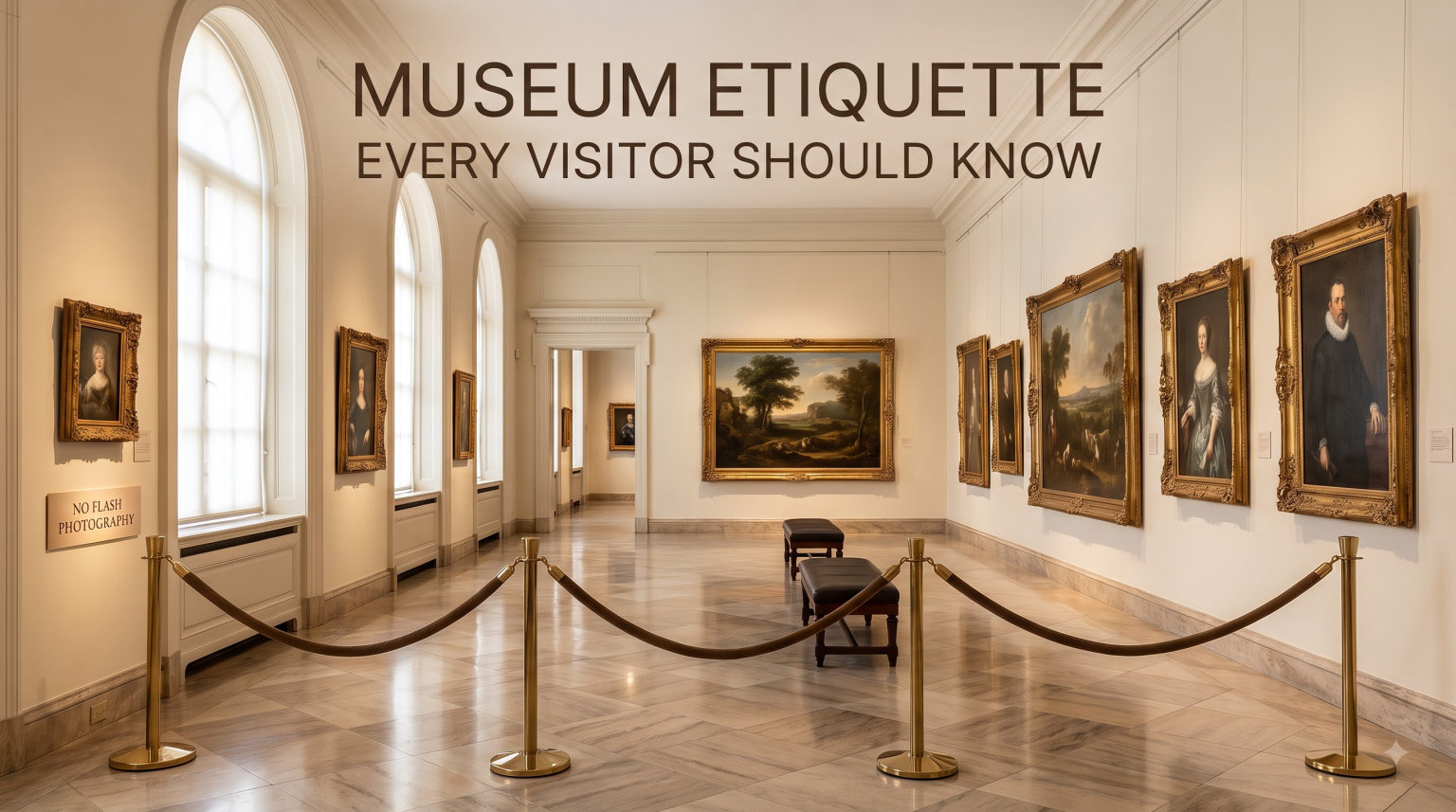
Walking into a museum for the first time can feel a little intimidating. There are unspoken rules, quiet galleries, and the sense that everyone around you knows something you don’t. But here is the truth: museum etiquette is not about being fancy or pretentious. It is about protecting fragile artworks and making sure every visitor gets a meaningful experience. If you are planning a visit and want to feel confident walking through those doors, this guide covers the museum etiquette every visitor should know before stepping into a gallery.
Whether you are heading to a world-class institution or exploring local cultural institutions in your area, the basics remain the same. For a deeper dive into gallery-specific tips, check out our gallery etiquette guide covering top art spaces and their unique visiting rules.
Table of Contents
Museum Etiquette Every Visitor Should Know
Before we get into the details, here is a quick overview of the core rules that apply to nearly every museum you will visit in 2026. These are the behaviors that separate a great museum visit from a disruptive one:
Don’t touch the art — even a light graze leaves damaging oils behind
Keep a safe viewing distance — respect barriers and floor markers
Follow photography rules — check signs before snapping photos
No food or drinks in galleries — spills cause permanent damage
Use your indoor voice — keep conversations quiet and brief
Respect personal space — don’t block views or crowd others
Store large bags — use coat check or lockers when available
Follow staff instructions — they are there to protect the collection
These eight guidelines form the foundation of proper museum behavior. Let’s break down the most important ones so you understand not just what to do, but why each rule matters.
Don’t Touch the Art (Here’s Why It Matters)
This is the single most important rule in any museum. The oils, sweat, and dirt on human hands cause real, cumulative damage to paintings, sculptures, and delicate artifacts. Even a single touch can leave residue that attracts more dust and begins a slow process of degradation.
I have seen museum professionals explain this countless times, and the science backs it up. The natural oils on your fingertips interact with pigments, varnishes, and surfaces in ways that are impossible to reverse. Over time, hundreds of “just one quick touch” moments can wear down a surface that has survived centuries.
That is why museums install rope barriers, place paintings behind glass, and paint distance markers on the floor. These are not suggestions. They are preservation tools designed to keep irreplaceable works safe for future generations. When you see a barrier, stay behind it. When a floor marker says “stand here,” stand there.
If you have children with you, this is the first rule to explain before entering the galleries. Frame it positively: “We keep our hands in our pockets so the art stays beautiful for everyone.”
Photography Rules in Museums
Photography policies vary widely between museums, and sometimes even between different rooms within the same building. The best approach is simple: look for posted signs near the entrance of each gallery before taking out your camera or phone.
Flash photography is almost universally banned because intense bursts of light accelerate the fading of light-sensitive pigments and textiles. Even if your phone flash seems minor, imagine thousands of visitors doing the same thing every week. The cumulative effect is significant.
Some museums allow non-flash photography in permanent collection galleries but restrict it entirely in special exhibitions. This often comes down to copyright agreements with lenders. If you see a “no photography” icon, put the phone away and enjoy the moment instead.
Selfie sticks are prohibited in most museums because they pose a physical risk to artworks and other visitors. The reach of a selfie stick can easily cross a barrier or bump into a fragile object. Tripods and monopods face similar restrictions because they take up space and create tripping hazards in crowded galleries.
When photography is allowed, be considerate. Take your photo quickly, then step aside so others can view the work. Nobody wants to wait while you shoot thirty angles of the same painting.
Food, Drinks, and What Not to Bring
Food and beverages are prohibited in museum galleries, and for good reason. A single spilled drink can ruin a painting, stain a historic textile, or corrode a metal artifact. Crumbs attract pests that can damage organic materials in the collection. These rules are not arbitrary inconveniences; they are preservation necessities.
A common question visitors ask is whether they can bring a water bottle. Most museums do not allow outside drinks in the galleries, even sealed water bottles. The risk of an accidental spill is too great. Many museums have water fountains near restrooms and cafeterias where you can hydrate during your visit.
Backpacks present another issue. Several museums require visitors to check large bags at the coat check because worn backpacks can swing and accidentally hit artworks or other guests. If a museum offers free or low-cost bag storage, use it. Your shoulders will thank you after a few hours of walking anyway.
Umbrellas, tripods, and large parcels also fall into the “check it” category. If you are unsure about an item, ask at the front desk. Museum staff would much rather answer your question upfront than deal with a problem inside the galleries.
Keep Your Voice Down and Respect the Space
Museums are shared contemplative spaces. People visit to think, observe, and connect with art and history. Loud conversations, phone calls, and animated discussions disrupt that atmosphere for everyone around you.
Using your indoor voice does not mean you have to whisper. Normal, conversational volume at a low level is perfectly fine. Save phone calls for the lobby, café, or outdoor areas. If you need to take an urgent call, step out of the gallery momentarily.
Personal space is equally important. Museum professionals on forums consistently report that visitors blocking views and pushing past others is one of the most common behavioral issues they see. When approaching a popular piece, wait your turn rather than wedging yourself between people who were there first.
If you are viewing a painting and someone steps up beside you, be willing to share the space. Move slightly to one side so both of you can see comfortably. If you have finished looking, step away to make room for the next person. These small courtesies make the experience better for everyone.
Forum discussions among museum staff also highlight a troubling post-COVID trend of declining visitor behavior. Being aware of how your actions affect others is more important now than ever.
Special Situations: Kids, Sketching, and Service Animals
Not every museum visit looks the same. Families with children, artists who want to sketch, and visitors who rely on service animals all have specific considerations that are worth understanding before you go.
Visiting With Children
Children are welcome in most museums, but preparation makes a huge difference. Before your visit, talk to kids about the rules in simple terms. Explain that museums are quiet places and that art is fragile. Many museums have interactive areas specifically designed for hands-on exploration where kids can touch, build, and experiment safely.
For younger children, keep visits short. An hour or two is often plenty. Plan breaks in café areas or outdoor spaces. Some museums offer family guides or scavenger hunt activities that keep children engaged while teaching them to respect the space.
Sketching in Galleries
Many museums welcome visitors who want to sketch, but there are restrictions. The most common rule is pencils only. Pens, markers, and paints can permanently damage surfaces if they accidentally mark a wall or artwork. Some museums also restrict easels and large drawing boards because they take up too much floor space in crowded galleries.
Check the museum’s website or ask at the information desk before bringing your supplies. A small sketchbook and a couple of pencils are usually fine in most institutions.
Service Animals
Service animals are generally permitted in museums under the Americans with Disabilities Act, but emotional support animals and pets are usually not allowed. If you rely on a service animal, check the museum’s specific policy beforehand. Some institutions require advance notice or documentation.
When visiting with a service animal, keep the animal close to you and under control at all times. This protects both the animal and the artworks.
How to Make the Most of Your Museum Visit
Knowing the rules is just the starting point. The real reward comes from engaging deeply with what you see. After years of visiting museums, I have found that the people who enjoy their visits the most are the ones who approach galleries with intention rather than trying to see everything at once.
Pick five to ten pieces that genuinely interest you and spend real time with each one. Read the wall labels. Look at the brushwork up close, then step back and take in the whole composition. Notice details you might miss in a quick glance. This approach is far more rewarding than speed-walking through fifty rooms and remembering nothing.
Take breaks. Museum fatigue is real. After about 90 minutes of concentrated looking, your ability to absorb new information drops sharply. Sit down in a designated rest area, grab a coffee in the café, or step outside for fresh air before returning to the galleries.
Ask staff questions. Museum guards and docents are often deeply knowledgeable about the collection and genuinely enjoy sharing what they know. If you are curious about a piece, a quick question can open up an entirely new perspective.
If you see another visitor breaking the rules, do not confront them directly. Instead, find a staff member and let them handle it. Museum professionals are trained to address these situations politely and effectively.
FAQs
What is proper museum etiquette?
Proper museum etiquette means following a set of behavioral guidelines that protect artworks and ensure a respectful atmosphere for all visitors. The core rules include not touching the art, maintaining a safe viewing distance, following photography restrictions, keeping your voice low, and avoiding food and drinks in galleries. These practices preserve fragile artifacts and create a contemplative environment where everyone can enjoy the collection.
What are some common museum rules?
The most common museum rules are: do not touch artworks or artifacts, keep a safe distance from exhibits, do not use flash photography, do not eat or drink in galleries, speak quietly, store large bags at coat check, follow all posted signs, and obey staff instructions. Many museums also prohibit selfie sticks, tripods, and pets (with the exception of service animals).
What is not allowed in a museum?
Items and behaviors typically not allowed in museums include: touching artworks, flash photography, food and beverages in galleries, loud conversations or phone calls, running or horseplay, large backpacks (when worn), selfie sticks and tripods, pets (not including service animals), pens and markers in sketching areas, and smoking or tobacco products. Some museums also restrict video recording and the use of permanent-label stickers or adhesives.
Why are you told not to touch anything in the museum?
You are told not to touch anything because the natural oils, sweat, and dirt on human hands cause permanent damage to artworks and artifacts. Even a brief touch deposits residue that attracts additional dust and begins a slow, irreversible degradation process. Over time, repeated contact from thousands of visitors would destroy the very surfaces the museum is trying to preserve. This is why barriers, glass cases, and distance markers are placed around fragile pieces.
Can I bring a water bottle into the museum?
Most museums do not allow outside water bottles in the galleries because even a small spill can damage paintings, textiles, or other fragile artifacts. Many museums provide water fountains near restrooms and have cafeterias or cafés where you can drink. If you have a medical need for water, check with the front desk when you arrive, as some institutions make exceptions for health-related requirements.
Conclusion
The museum etiquette every visitor should know comes down to a few basic principles: protect the art, respect the space, and be considerate of the people around you. These are not stuffy rules designed to make museums feel exclusive. They are practical guidelines that keep centuries-old works safe and ensure every visitor can have a meaningful experience.
Most of this is common sense. Keep your hands to yourself, lower your voice, follow posted signs, and treat the space with care. When you do, you will find that museums are incredibly welcoming places that reward your attention and curiosity. The more you put into a visit, the more you get out of it.
If you are ready to put these tips into practice, start by exploring some of the best galleries in NYC or find a museum near you. Every great museum experience begins with a little preparation and a lot of respect for the art and the people who share the space with you.