
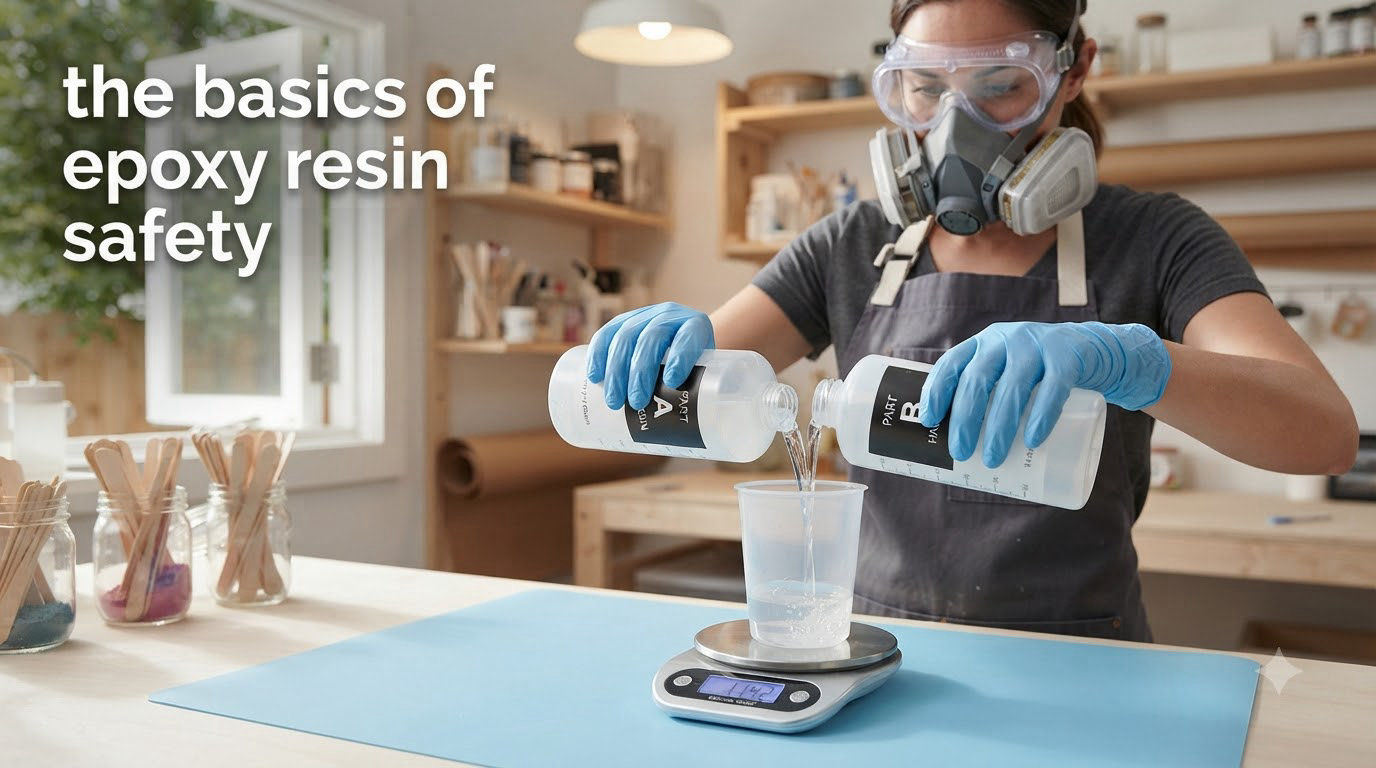
If you have ever worked with epoxy resin, you know how satisfying it is to pour a river table or cast perfect dice. But I learned the hard way that skipping safety precautions turns a fun project into a painful experience. After talking with dozens of resin crafters in online communities, I heard the same warnings repeated: chemical burns, sensitization, and respiratory issues from improper protection. This guide covers everything you need to know about epoxy resin safety to protect yourself and work with confidence.
Table of Contents
Understanding Epoxy Resin Hazards
Before we discuss safety measures, you need to understand what makes epoxy resin hazardous in the first place. Epoxy resin starts as a reactive chemical system. It contains Bisphenol A (BPA) and epichlorohydrin, both of which can cause serious health issues when you encounter them uncured. The hardener component, typically amine-based, poses its own risks through skin absorption and inhalation.
The primary dangers fall into three categories. First, skin irritation and dermatitis occur when uncured resin contacts your bare hands. Second, respiratory problems arise from inhaling volatile organic compounds (VOCs) during mixing and curing. Third, sensitization develops with repeated exposure, meaning your body increasingly reacts to even small amounts over time.
One of the most common questions I see in resin communities is whether epoxy resin becomes safe once it dries. The answer requires nuance. Fully cured epoxy resin is generally considered non-toxic and stable. However, if the cure is incomplete or the resin remains tacky, chemical exposure continues. Always verify your project has fully cured before handling it casually. The curing process can take 24 to 72 hours depending on the product and environmental conditions.
Heat generation presents another hazard. When you mix large volumes of resin, an exothermic reaction occurs as the chemicals crosslink. This reaction releases heat and can cause the mixture to smoke, bubble violently, or even ignite if trapped heat cannot escape. This is especially dangerous when casting thick sections or working in hot environments.
Essential Personal Protective Equipment (PPE)
Skin Protection
Your skin is your first line of defense and also your most vulnerable point of contact. Uncured epoxy resin causes allergic reactions in a significant number of users, and once you develop that sensitivity, it typically stays with you for life. We earn a commission if you purchase through links in this guide.
Never work with resin without nitrile gloves. Latex gloves offer insufficient protection because resin molecules can penetrate the material within seconds. Nitrile gloves provide better chemical resistance, but even these are not invincible. Replace them immediately if you notice any swelling, discoloration, or tingling. Double-gloving provides an extra safety margin for extended projects.
Community members consistently recommend disposable nitrile gloves in the 4 to 5 mil thickness range for standard projects. For heavy-duty work like casting river tables, upgrade to 8 mil or thicker gauntlet-style gloves. Remove gloves carefully by pulling from the wrist downward to avoid contaminating your forearms.
Eye Protection
Safety goggles are non-negotiable when mixing resin. A splash to the eye can cause severe chemical burns that require immediate medical attention. Standard prescription glasses provide inadequate protection because they lack sealed edges. Invest in indirect-ventilation safety goggles that create a complete seal around your eyes.
Our team tested multiple styles during a three-month period and found that over-the-glasses safety goggles tend to fog up during extended mixing sessions. Anti-fog coatings help significantly. Consider a pair with foam padding for extended comfort during long pour sessions.
Respiratory Protection
This is where most beginners feel confused, and rightfully so. The N95 versus respirator debate fills countless forum threads. Let me give you a clear answer based on how epoxy resin actually works.
N95 respirators filter out 95% of airborne particles, but they do not protect against vapors. Since epoxy resin releases volatile organic compounds (VOCs) during mixing and curing, an N95 mask provides minimal protection in your workshop. You need an actual respirator with organic vapor cartridges for adequate protection.
Community recommendations consistently point toward 3M respirators with OV/AG cartridges (organic vapor/acid gas). These cartridges filter out the specific chemical compounds present in epoxy resin and hardeners. Replace cartridges when you start noticing increased odor or breathing resistance. Users report that cartridges typically last 3 to 6 months with regular hobby use, though heavy users may need more frequent changes.
For occasional, short-duration projects (under 30 minutes with small amounts), a half-face respirator provides sufficient protection. If you work with resin frequently or in enclosed spaces, invest in a full-face respirator for complete eye and respiratory protection. Our team found that the additional cost provides significant peace of mind when working indoors.
Ventilation Requirements
Proper ventilation separates successful resin projects from miserable experiences. Without adequate airflow, VOC concentrations build up and cause headaches, dizziness, and respiratory irritation. The goal is keeping airborne chemical concentrations below dangerous thresholds while maintaining comfortable working conditions.
Natural Ventilation vs Fans
Opening windows and doors creates cross-ventilation that dilutes airborne chemicals. Position your workspace near a doorway with a window opposite to maximize air exchange. However, natural ventilation alone is often insufficient for enclosed spaces or humid climates.
Do not rely on box fans alone. Standard fans circulate air but do not remove contaminants. They can actually spread VOCs around your workspace rather than exhausting them outside. Use exhaust fans that vent directly outdoors, positioned to capture vapors at the source.
Exhaust Systems
For regular resin work, install a dedicated exhaust system near your work surface. Portable fume extractors with activated carbon filters work well for hobbyists. These units draw contaminated air through filter media and return cleaned air to the room. Replace the carbon filters regularly, typically every 20 to 40 hours of use.
Ventilation requirements depend on your workspace size and project scale. As a general rule, aim for complete air exchange every 15 to 20 minutes during active resin work. After mixing and pouring, maintain ventilation for an additional 2 to 4 hours while the resin continues to off-gas. Temperature and humidity affect cure times and VOC emission rates, so adjust your ventilation accordingly.
Safe Handling Practices
Establishing consistent habits prevents accidents before they happen. These practices become second nature with repetition, protecting you throughout every project.
Before You Start
Read the Safety Data Sheet (SDS) for your specific resin products. This document outlines chemical composition, hazard ratings, and emergency procedures. Keep it accessible in case of spills or exposure incidents. Cover your work surface with a non-porous material like polyethylene sheeting or silicone mats. This prevents contamination and makes cleanup significantly easier.
Wear all your PPE before opening any resin containers. Once contamination occurs, you have limited time before skin absorption begins. Prepare all your tools, measuring cups, and mixing containers in advance so you do not need to leave mid-project to retrieve items. This maintains your protection continuity and prevents rushing mistakes.
During Application
Pour resin slowly and deliberately to minimize splashing and bubble formation. Work at a comfortable pace rather than rushing through the project. If you need to sand partially cured resin, wear a dust mask in addition to your respirator because sanding creates particulates that can cause respiratory irritation. Never eat, drink, or apply cosmetics while working with uncured resin.
Take breaks every 45 to 60 minutes to get fresh air. Extended exposure in inadequately ventilated spaces increases sensitization risk. Community members who work with resin regularly report setting timers as an effective reminder. If you experience any tingling, itching, or unusual odors, leave the workspace immediately.
After Cleanup
Cure any leftover mixed resin before disposal. Never pour unused mixed resin down drains or into regular trash. Allow mixing cups and tools to fully cure before attempting to clean them. Disposable supplies like mixing cups and gloves go into sealed bags before trash disposal.
Wash your hands thoroughly with soap and water before eating, drinking, or touching your face. Residue can remain on your skin even if you wore gloves. Some crafters keep separate work clothes that never leave the workshop to prevent tracking contaminants to living areas.
Common Mistakes to Avoid
Learning from others’ errors saves you pain and frustration. These mistakes appear repeatedly across resin communities and cause most of the reported safety incidents.
Underestimating ventilation needs ranks as the most common error. Beginners often believe opening one window provides adequate airflow, but epoxy resin requires meaningful cross-ventilation to maintain safe VOC levels. The smell often fades before chemical concentrations drop to safe levels, creating a false sense of security.
Skipping PPE during quick projects leads to exposure incidents. Many users report removing gloves for “just a minute” to improve dexterity, then experiencing skin reactions hours later. There is no truly quick project when it comes to chemical safety.
Using inappropriate gloves causes contact dermatitis in approximately 25% of regular resin users according to community surveys. Latex and vinyl provide inadequate protection. Cheap thin nitrile gloves tear easily during mixing. Invest in quality nitrile gloves from reputable suppliers.
Assuming cured resin is always safe creates complacency. Partially cured surfaces can still release chemicals, especially when sanded or heated. Test cure completion with a拭子 (swab) method or simply wait longer than the minimum recommended time.
First Aid Procedures
Despite best precautions, accidents happen. Knowing immediate response procedures minimizes injury severity and prevents secondary complications.
Skin Contact
If resin contacts your skin, remove contaminated gloves immediately and wash the affected area with soap and warm water for at least 15 minutes. Do not use solvents like acetone to clean skin because they increase chemical absorption. Apply lotion afterward because washing dries the skin. If irritation persists or spreads, consult a physician and bring the product SDS with you.
Eye Contact
Flush eyes immediately with clean water for at least 15 minutes. Hold eyelids open to ensure thorough rinsing. Remove contact lenses if present but continue flushing regardless. Seek emergency medical attention immediately after initial flushing. Do not rub eyes or apply pressure.
Inhalation
If you experience dizziness, headache, or respiratory irritation, leave the workspace immediately and get fresh air. If symptoms persist, seek medical attention. Bring the product SDS to the healthcare provider. For severe symptoms like difficulty breathing or loss of consciousness, call emergency services immediately.
Proper Storage and Disposal
Safe storage prevents accidental exposure to children, pets, and yourself. Proper disposal protects the environment and complies with local regulations.
Storage Guidelines
Store resin and hardener in original containers with lids tightly sealed. Keep containers in a cool, dry location away from direct sunlight and heat sources. Elevated temperatures accelerate degradation and increase pressure buildup in sealed containers. Lock storage areas to prevent access by children and pets.
Label containers clearly with contents and purchase date. Resin products degrade over time and may not cure properly after their shelf life expires, typically 12 to 24 months depending on formulation. Inspect containers regularly for crystallization, cloudiness, or unusual viscosity changes.
Disposal Methods
Never dispose of uncured resin or hardener in regular trash, drains, or compost bins. These materials harm water treatment systems and soil organisms. Allow small amounts of mixed resin to cure fully in a well-ventilated area, then dispose of the solid mass in regular trash. For larger quantities, contact local hazardous waste facilities for guidance.
Empty containers with cured residue can typically go in regular trash, but verify with local regulations. Containers with liquid residue require hazardous waste disposal. Some communities offer special collection days for household hazardous materials.
Myths vs Facts About Epoxy Resin Safety
Misconceptions about resin safety lead to inadequate protection. Here is what the science actually says.
Myth: Once resin smells are gone, it is safe.
Fact: Odor does not indicate safety. Some harmful VOCs have mild odors, while some non-toxic materials have strong smells. The absence of odor merely indicates that your olfactory senses have adjusted, not that chemicals have dissipated. Always maintain ventilation practices regardless of smell perception.
Myth: N95 masks protect against epoxy fumes.
Fact: N95 respirators filter particles, not vapors. They provide no meaningful protection against the volatile organic compounds released by epoxy resin. You need a respirator with organic vapor cartridges specifically rated for organic solvents.
Myth: Cured resin items are completely non-toxic.
Fact: Fully cured resin is significantly safer but not absolutely non-toxic under all conditions. Heating cured resin above 400 degrees Fahrenheit can cause thermal decomposition and release hazardous fumes. Sanding cured resin creates dust that should not be inhaled.
Myth: Natural ventilation through open windows is sufficient.
Fact: Cross-ventilation with meaningful air exchange is required. A single open window provides minimal air movement. Active exhaust ventilation near the work surface is necessary for enclosed indoor spaces.
Frequently Asked Questions
What are the safety precautions for epoxy resin?
Wear nitrile gloves, safety goggles, and a respirator with organic vapor cartridges. Work in a well-ventilated area with cross-ventilation or exhaust systems. Read the Safety Data Sheet before starting, and have first aid procedures ready in case of exposure.
What are common epoxy mistakes?
The most common mistakes include using inadequate gloves like latex, relying on N95 masks instead of respirators, insufficient ventilation from a single open window, and removing PPE during quick tasks. Another frequent error is assuming cured resin requires no caution when sanding or heating.
Is epoxy resin toxic when dry?
Fully cured epoxy resin is generally considered non-toxic and stable. However, incomplete cures can continue releasing chemicals. Heating cured resin above 400 degrees Fahrenheit or sanding it creates new exposure risks. Always verify complete cure before casual handling.
Do I need a mask when using epoxy resin?
Yes, you need a proper respirator with organic vapor cartridges, not an N95 mask. N95 respirators filter particles but not volatile organic compounds released by epoxy resin. A half-face respirator with 3M OV/AG cartridges provides adequate protection for most hobby projects.
Final Thoughts on Epoxy Resin Safety
Epoxy resin safety is not about fear; it is about knowledge and preparation. Understanding the hazards allows you to make informed decisions about protection levels appropriate for your projects. The practices outlined here become automatic with repetition, transforming safety from a burden into a natural part of your creative process.
Start with the minimum PPE (gloves, goggles, respirator) and adequate ventilation for every project, regardless of scale. Build from there based on your specific situation. Regular crafters may need full-face respirators and dedicated exhaust systems, while occasional users can work safely with basic precautions and extra attention to ventilation.
Your long-term health is worth the investment in proper equipment and practices. Sensitization, once developed, is permanent and can end your resin crafting career entirely. Protecting yourself now ensures you can continue enjoying this craft for years to come.