
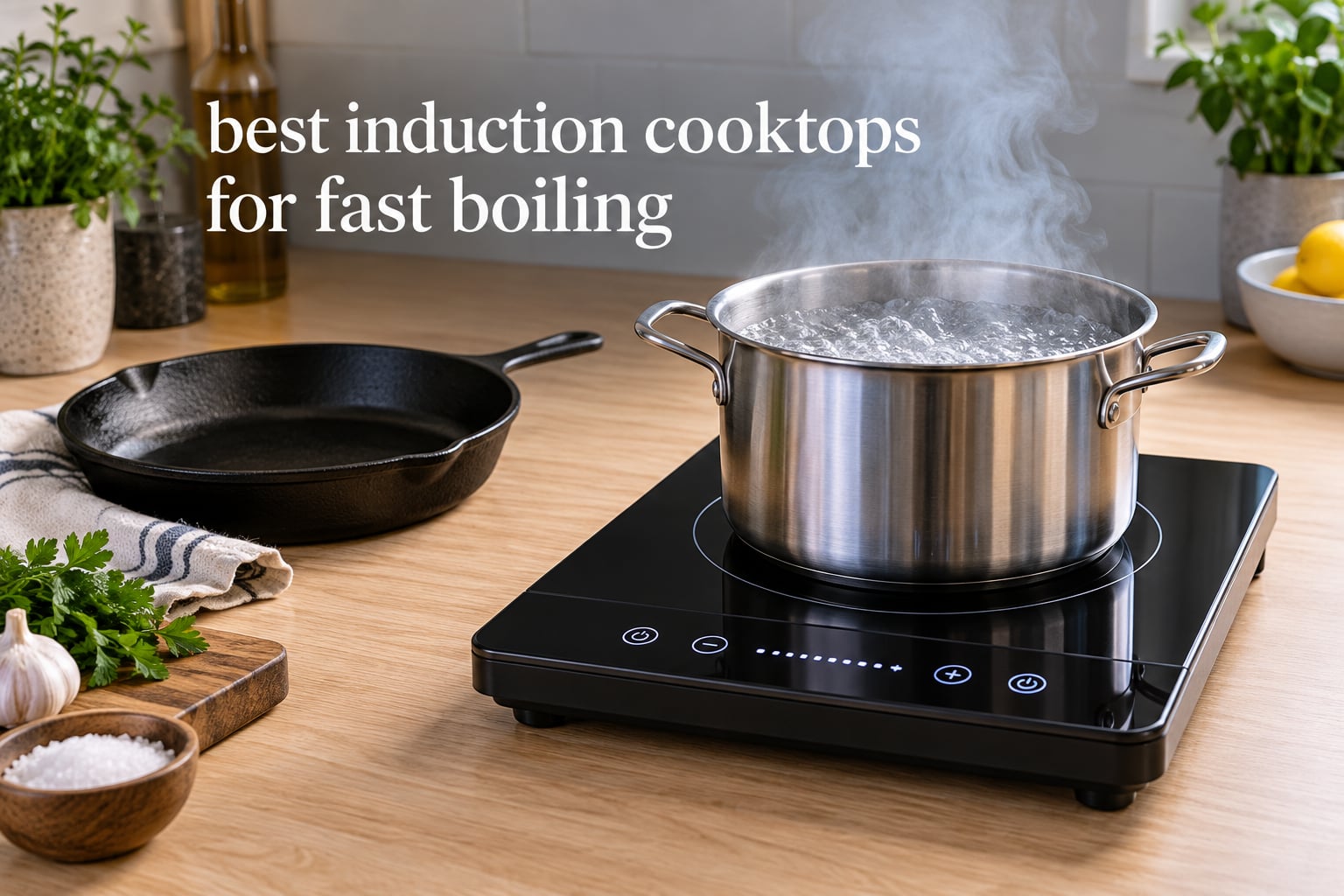
Yes, induction cooktops boil water faster than gas or traditional electric coil stoves. The reason is simple: an induction cooktop sends electromagnetic energy straight into the base of the pan, so the water heats immediately instead of waiting for a coil or a flame to warm the air around it first. In the roundup below, we ranked the best induction cooktops for fast boiling by looking closely at continuous power output, coil diameter, how quickly a unit reaches its top setting, and how well the burner holds that output without cutting out.
That last part matters more than most buyers expect. Two burners can carry the same wattage on the label and behave very differently in real use, because one feeds a full 1800 watts straight to a large coil while the other steps up in stages or throttles back under sustained load. If you boil a large pot of water for pasta or stock every week, that gap shows up on your clock more than any feature list will tell you.
We also weighed the practical details that decide whether fast boiling actually matters to you: how big a pot the coil can heat evenly, whether the controls give you fine steps or coarse ones, how loud the cooling fan gets at full power, and whether the unit has a dedicated boil mode that skips the power ramp. All ten units below run on standard 120V household power, plug into a regular outlet, and work with any magnetic cookware.
If you are still deciding between built-in and portable, our guide to the best induction cooktops for apartments covers the space and electrical constraints that come with the portable format. If cookware is on your shopping list too, start with our picks for the best cookware sets for induction cooktops, since a pan with a mismatched diameter can undo a burner’s advantages entirely.
Table of Contents
Top 3 Picks: Best Induction Cooktops For Fast Boiling (October 2026)
The three units below are the ones we would put in a kitchen first. Each one combines enough sustained power with a coil large enough to heat a full pot evenly, and each has a large enough base of owner feedback to trust what reviewers actually report.
Duxtop 8100MC 1800W Portable
- 1800 watts across 15 power levels
- Compact 5.8 pound glass body
- Count-down timer to 170 minutes
- Auto-pan detection with 60 second shutoff

Nuwave Gold Precision 1500W
- Large 8 inch heating coil
- 5 degree temperature steps to 575F
- 85 to 90 percent energy transfer
- Wipe-clean ceramic glass

AAOBOSI 1800W Slim Cooktop
- 1800 watts with 20 power levels
- Dedicated Boil preset mode
- 1.7 inch slim profile
- Child lock and residual heat indicator
All 10 Induction Cooktops Compared Side by Side in 2026
This table covers every model in the roundup with the features that drive boil speed. Power output and coil diameter tell you how much energy reaches the pan and how wide it is spread; the timer, safety, and control details explain how usable the burner is once the water is rolling.
| Product | Specifications | Action |
|---|---|---|
| Duxtop 8100MC 1800W Portable Induction Cooktop |
|
Check Latest Price |
| AAOBOSI 1800W Portable Induction Cooktop |
|
Check Latest Price |
| Nuwave Gold Precision Induction Cooktop |
|
Check Latest Price |
 CHANGBERT CIB-80 Commercial Grade 1800W CHANGBERT CIB-80 Commercial Grade 1800W |
|
Check Latest Price |
 Duxtop P961LS Professional Portable Cooktop Duxtop P961LS Professional Portable Cooktop |
|
Check Latest Price |
 Nuwave Pro Chef 1800W Induction Cooktop Nuwave Pro Chef 1800W Induction Cooktop |
|
Check Latest Price |
 Nuwave Double Pro Two-Zone Cooktop Nuwave Double Pro Two-Zone Cooktop |
|
Check Latest Price |
 CHANGBERT CIB-80 Plus One-Click Boil CHANGBERT CIB-80 Plus One-Click Boil |
|
Check Latest Price |
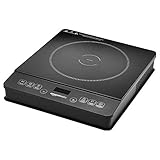 Amazon Basics 1800W Portable Induction Cooktop Amazon Basics 1800W Portable Induction Cooktop |
|
Check Latest Price |
 CHANGBERT FC1S13 12 Inch Surface Burner CHANGBERT FC1S13 12 Inch Surface Burner |
|
Check Latest Price |
How We Measured Boil Speed
Boil speed is not one number, so we broke it into the parts a buyer can actually evaluate. The first factor is raw power delivered to the pan, which is the wattage the burner can sustain rather than the peak it advertises for a moment. The second is coil diameter, because a narrow coil concentrates that energy on a small patch of the pan base and heats a small pot fast while leaving the edges of a wide pot cold.
The third factor is how the burner gets to its top setting. Some models ramp from low to full power over several minutes, which adds time to every boil. Units with a dedicated boil button or a one-click maximum power control skip that ramp, and reviewers of the CHANGBERT CIB-80 Plus specifically report water boiling in under five minutes after pressing that button.
The fourth factor is sustained output. A burner that delivers full power for the first three minutes and then throttles down will still beat a slow burner for a kettle, but it will disappoint on a six-quart pot of pasta water. We looked for the design cues that indicate steady output, such as continuous-duty circuitry, multiple selectable wattage settings, and dual IGBT control boards.
The fifth factor is the pan itself. An induction burner only works with magnetic cookware, and the base diameter needs to roughly match the coil. Too small and you waste power; too large and you get an uneven ring of heat. We also considered how the reported boil times change with pot volume, since most owners test a two-quart saucepan while most families boil four to six quarts.
Reviewers report boil times ranging from roughly two to four minutes for a small pot up to twenty minutes for a gallon of water on a portable unit, and the same burner can vary by a couple of minutes depending on cookware thickness and how strongly magnetic the base is. Treat any single number as directional rather than a promise, and always run your own pot of water on the day you unbox a new burner.
1. Duxtop 8100MC 1800W Portable Induction Cooktop – Best Overall for Fast Boiling
Duxtop 1800W Portable Induction Cooktop Countertop Burner, Gold 8100MC
- 1800 watts spread across 15 power levels for rapid boiling
- Compact 5.8 pound body that stores easily
- Count-down timer up to 170 minutes
- Auto-pan detection and voltage warning safeguards
- Largest owner feedback base in the group at over 17000 ratings
- 15 temperature steps are coarser than 5 degree models
- Push buttons feel less responsive than touch panels
- Requires magnetic cookware which rules out some pans
The Duxtop 8100MC is the unit we keep coming back to because it does the one thing fast boiling depends on without any drama. It draws the full 1800 watts from a standard 120V outlet and holds them across fifteen power levels, which means a kettle, a saucepan, and a six-quart pot all heat on the same burner with no adapter and no circuit worries. Buyers on Amazon describe it as noticeably quicker than a coil stove, and a few note it outpaces units that cost more.
Control is straightforward. The digital panel gives you fifteen power settings and fifteen temperature steps from 140°F up to 460°F, plus a count-down timer that runs to 170 minutes. Fifteen steps is not fine control, and anyone making a delicate sauce will feel the gap. For boiling water, though, the coarseness barely registers because you set a level and walk away.
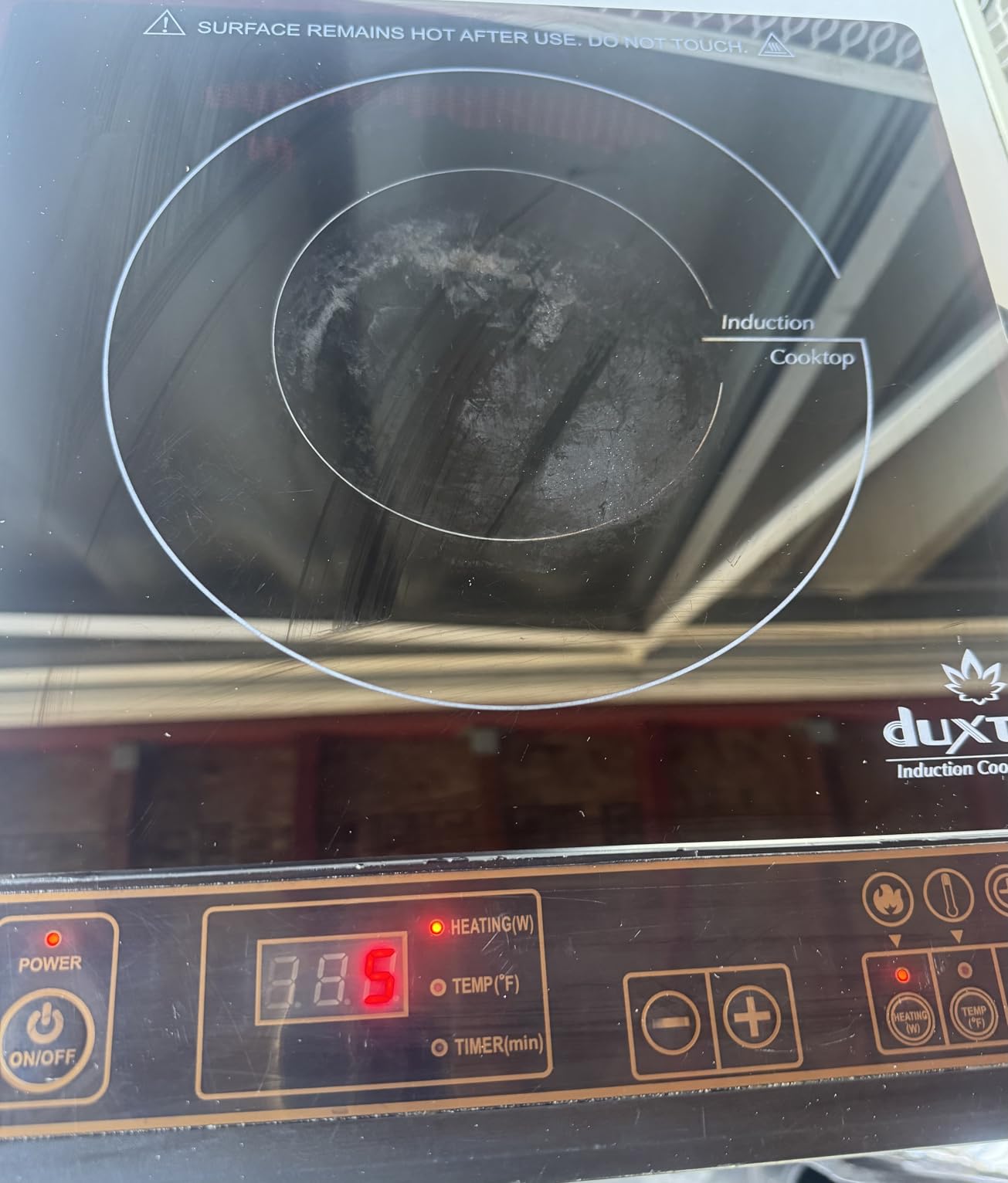
What we appreciate is how little fuss the safety systems add. Auto-pan detection shuts the unit off after sixty seconds if it senses no cookware, and a voltage warning system flags a weak supply before the burner cooks unevenly. Both of those matter in an older home where a shared circuit is already carrying other loads.
At 5.8 pounds and 13 by 11.5 inches, it is one of the easiest burners here to move between a counter, a dorm room, and an RV. The glass top wipes clean after a boil-over, and the ETL approval covers both the electrical and electromagnetic side of the design.
What to check before you buy the 8100MC
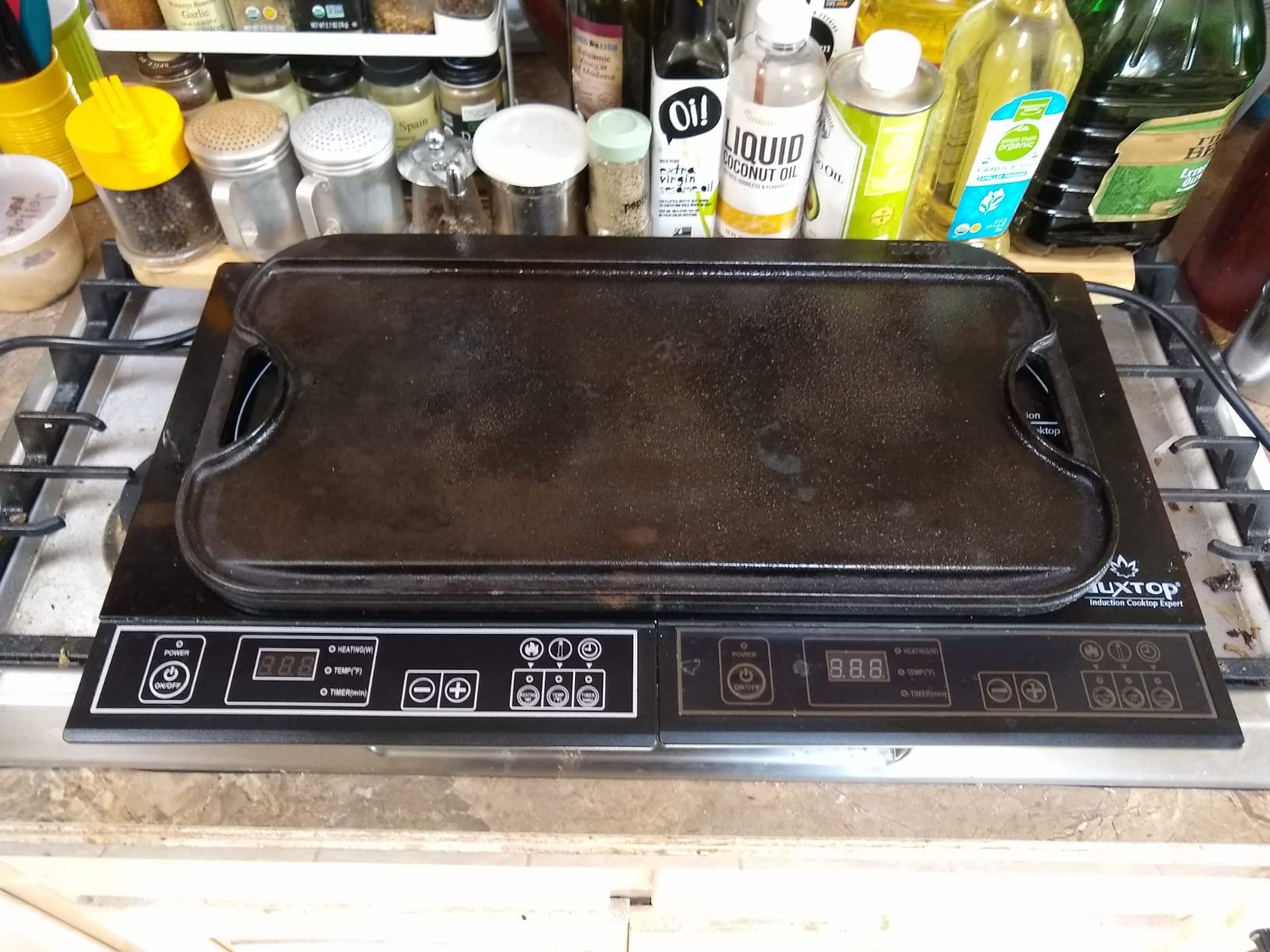
Run the magnet test on the pots you already own before you commit. A magnet that sticks to the base is a good sign, but it is not a guarantee of a strong coupling, and thin or lightly magnetized stainless will boil more slowly than a heavy clad pan. If most of your cookware fails the test, budget for a replacement set as part of the purchase rather than after it.
Give it a dedicated outlet if you can. A 1800 watt burner on a shared 15-amp circuit can trip a breaker when a toaster or kettle runs nearby, and the voltage warning will light up before that happens. One outlet, one appliance, no surprises.
Where the 8100MC falls short
The fifteen-step temperature range is the honest weakness. Cooks who came from gas with a fine-tempered knob will find the jump between levels visible in how aggressively water bubbles. It is a limitation that matters for melted chocolate and slow reductions, not for a full rolling boil.
Push buttons also feel dated next to the touch panels on newer models, and a wet finger can slip on them. None of that touches boil speed, so if your kitchen sees mostly boiling and searing, this is still the pick we would make first.
2. AAOBOSI 1800W Portable Induction Cooktop – Finer Control, Smaller Coil
AAOBOSI Portable Induction Cooktop, 1800W, 20 Temp & Power Levels, Timer
- Dedicated Boil preset that jumps straight to full output
- Twenty power levels and twenty temperature steps for finer control
- Four preset modes simplify everyday cooking
- Child lock and residual heat indicator included
- Thin 1.7 inch body is easy to store and carry
- 6.8 inch coil is smaller than the 8 inch coils on rival 1800W burners
- Only a 1 year warranty
- Newer brand with a smaller pool of long-term field reports
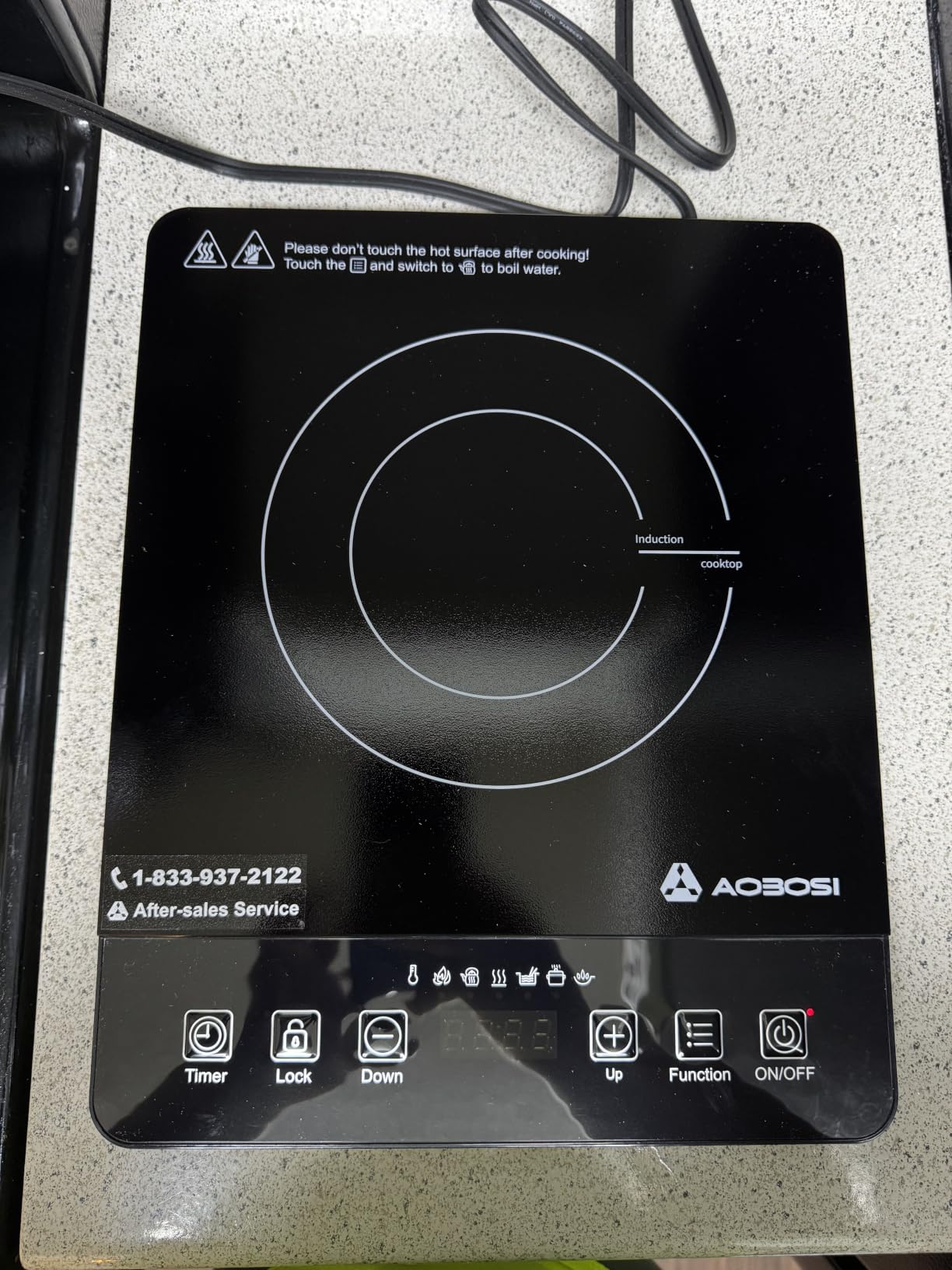
The AAOBOSI is a 1800 watt burner with more control granularity than most of its direct competitors. Twenty power levels and twenty temperature steps from 120°F to 465°F give you noticeably finer adjustment than a fifteen-step panel, and the four preset modes, including a dedicated Boil setting, cut down on the tapping required for a pot of water.
That Boil preset is the feature that matters for this roundup. Instead of nudging the power up through ten levels and waiting for the coil to catch up, one press puts the burner at full output. Reviewers consistently call out fast boiling as the first thing they noticed, and the 4.5 star average across more than 2,500 ratings reflects how well the rest of the unit holds up.
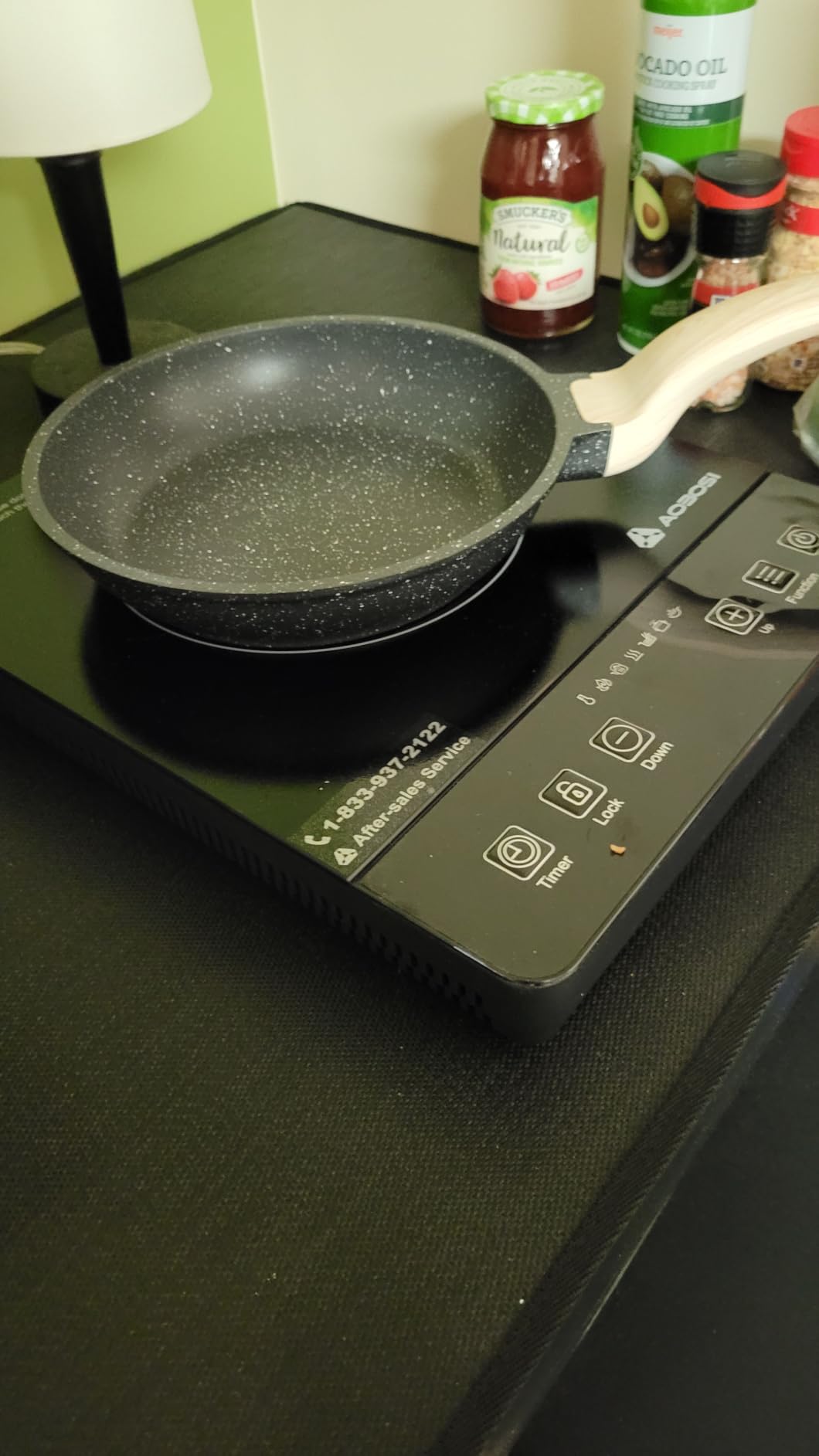
The ceramic glass top is thin and light, and the whole body measures just 1.7 inches, so it slides into a cabinet or a drawer with room to spare. A four-hour timer covers long sessions, and the child lock plus residual heat indicator give you the two safety basics most portable burners skip.
The trade-off is the 6.8 inch coil. It is smaller than the 8 inch coils found on the CHANGBERT and Nuwave models in this list, and reviewers name that as the most common criticism. On a wide pot, the outer ring of the base lags behind the center.
When the AAOBOSI makes sense
This is a strong pick if you mostly boil a kettle, a small saucepan, or a four-quart pot, because the smaller coil concentrates the 1800 watts where the water actually is. The twenty-step control is a genuine upgrade if you move between a hard boil and a gentle simmer on the same burner and want both to be reachable.
It is also one of the easier units to move between a small kitchen and an outdoor setup, since the slim body and the light weight do not strain a shelf. A dedicated outlet still matters at 1800 watts, so plan the outlet before the burner arrives.
When another burner fits better
If your usual job is a six-quart pot or a tall pot of pasta water, the 6.8 inch coil will spread the energy too thin for the best result. Look at one of the 8 inch coil models instead. The gap is not dramatic on a small pot, but it grows as the pot widens.
The 1 year warranty is also shorter than the coverage some rivals offer, and the brand has a shorter track record in kitchens. That is not a reason to skip it, but it is a reason to keep the receipt.
3. Nuwave Gold Precision Cooktop – Best Value for Large Pots
- Large 8 inch coil heats wide pots evenly
- Finest temperature stepping in the group at 5 degree increments
- Reviewers report boiling faster than gas
- Wipe-clean surface with no open flame or hot coil
- Portable and light enough for outdoor patios and RVs
- Cooling fan produces a noticeable hum while cooking
- Large body takes up substantial counter space
- Lightweight chassis can slide when a heavy pan moves quickly
- Programmable stages are lost if power is removed
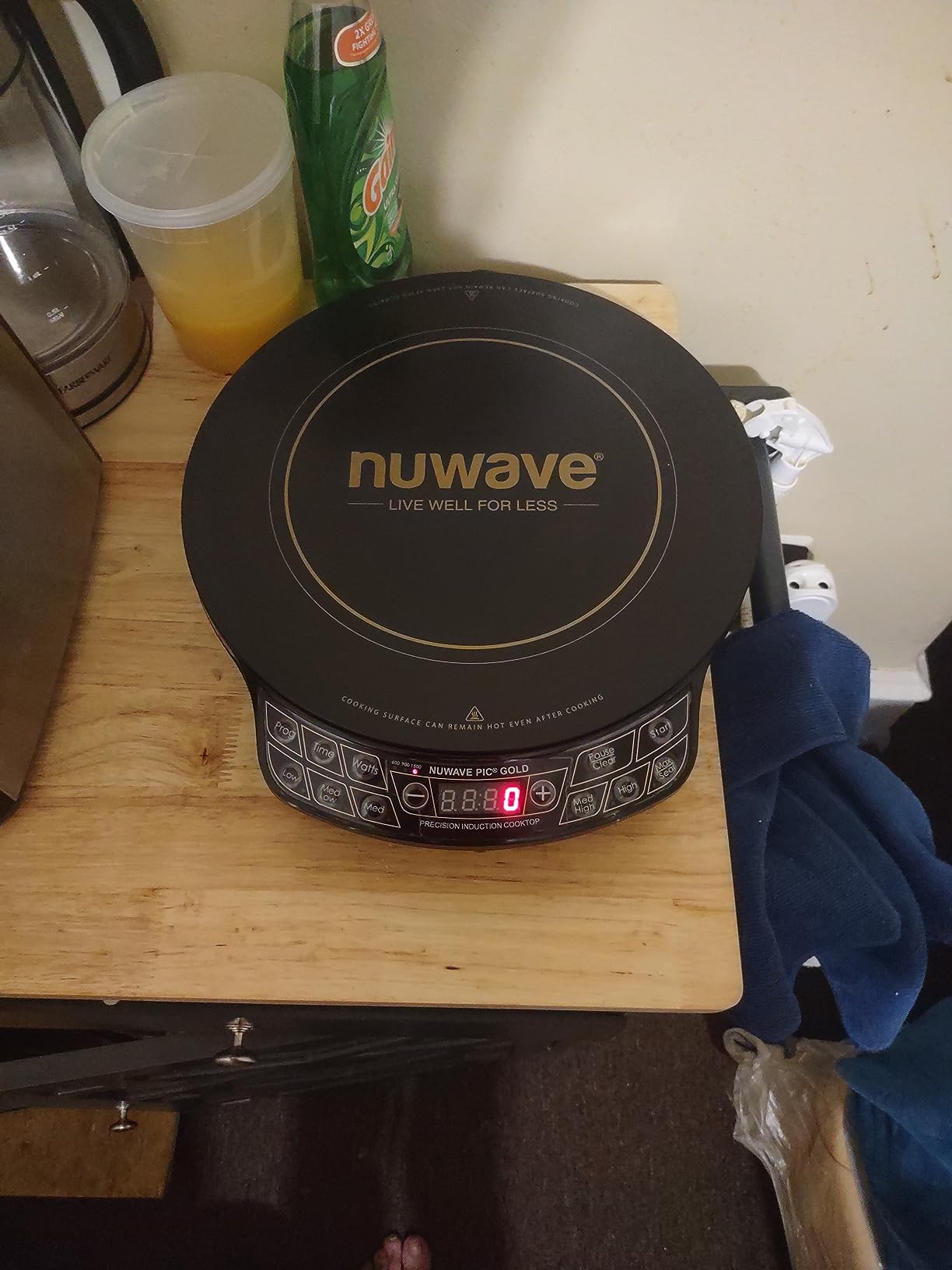
The Nuwave Gold is the burner we recommend when the pot is bigger than the burner. Its 8 inch coil is one of the largest here, and the manufacturer rates energy transfer into the pot at 85 to 90 percent, which explains why owners so often describe it as faster than gas. The rated wattage is 1500, lower than the 1800 on most of this list, but the wide coil is what keeps a large pot heating across its whole base.
Where it truly stands out is control. Ninety-six pre-programmed temperatures run from 100°F to 575°F in 5 degree steps, adjustable with plus and minus buttons while cooking continues. That is fine enough for a careful simmer, a fry, or a low-and-slow braise, and it is adjustable on the fly without stopping and restarting the burner.
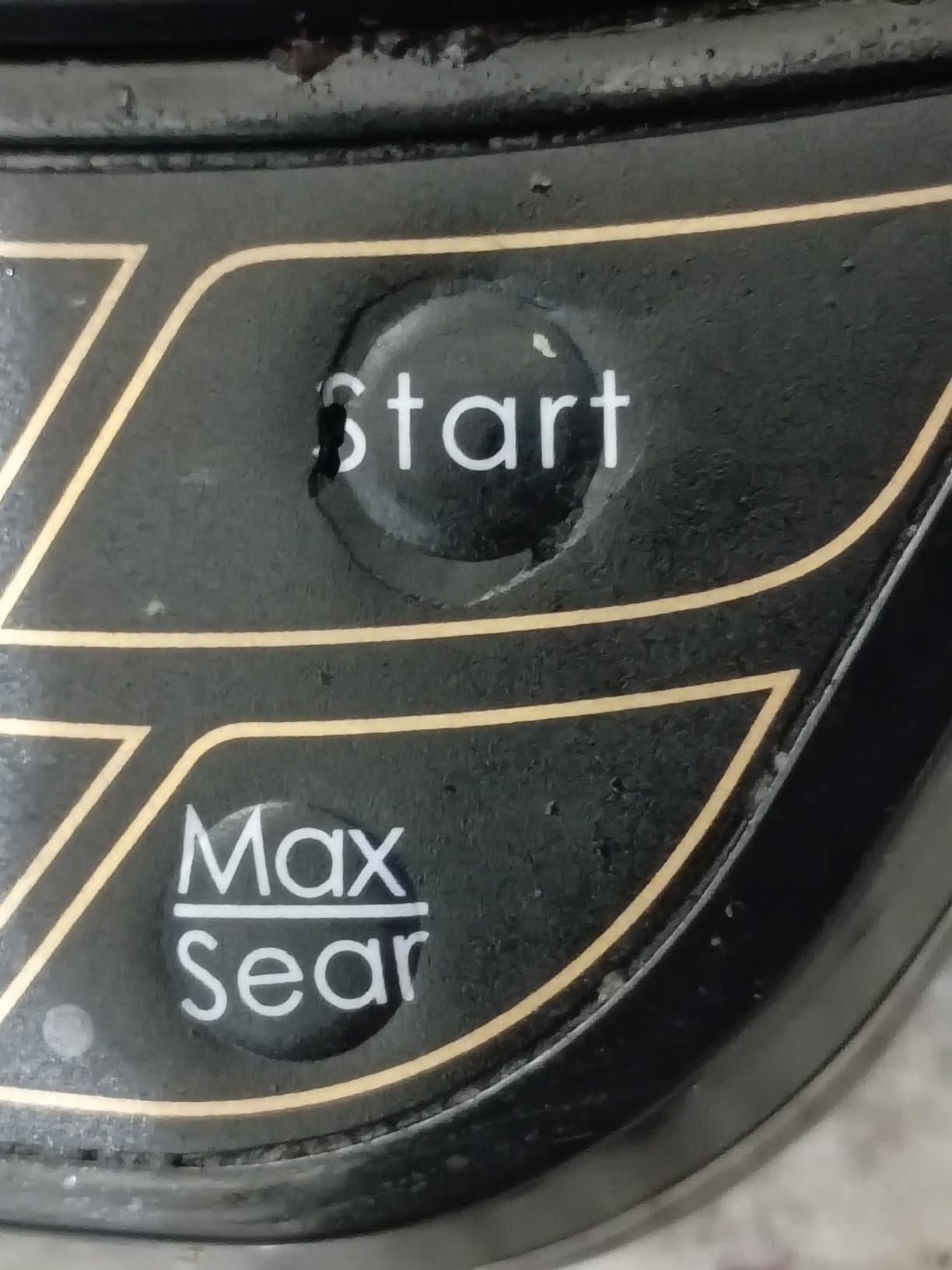
One reviewer running a detailed test measured a boil time of about two to four minutes depending on the cookware, which lines up with what the rest of the feedback describes. You can change the set point and the cooking time while the pot keeps going, and the unit counts down and shuts itself off when the time runs out.
At 4.5 stars across more than 4,400 ratings, this is one of the most established portable induction burners on the market, and the feedback is consistent rather than scattered. The ceramic glass surface is shatter-proof in the manufacturer’s testing and wipes clean without crevices that trap sugar.
Why the 8 inch coil wins on big pots
Coil diameter decides how evenly a wide pot heats, and an 8 inch coil covers the base of most stock pots and dutch ovens. Even coverage means the whole volume of water reaches boiling at roughly the same moment, which is exactly the difference between a pot that boils in six minutes and one that takes nine.
Because the heating is spread rather than concentrated, this burner is also more forgiving with a mismatched pan. A pot slightly wider than the coil still heats well here, where a narrow coil would leave a cold ring. That makes it a safer pick if you rotate between several different pots.
Where you will notice the fan
The cooling fan is audible during active cooking, and owners mention it directly. On a quiet kitchen counter at night you will hear it. It sits below the whine of some older coil-pulse burners, but it is not silent, and reviewers who replaced a gas range often mention the sound as the biggest change in feel.
The body is also among the largest here at 12 by 14.25 inches, so it needs real counter space, and the light chassis can shift if you drag a heavy pot across it. Neither issue affects how fast the water boils.
4. CHANGBERT CIB-80 Commercial Grade Burner – Built for Heavy Stockpots
- Continuous-duty circuitry holds full 1800 watts for long sessions
- Large 8 inch coil spreads heat evenly across 10 to 12 inch pans
- Stainless housing supports pots up to 100 pounds
- NSF certified and UL commercial standard 197 rated
- Tactile push buttons work with wet or gloved hands
- 10 hour countdown timer for unattended cooking
- 18 temperature steps in 20 degree increments is coarse
- 200W minimum power is high for a very gentle simmer
- Wide rectangular body takes more counter space than a round burner
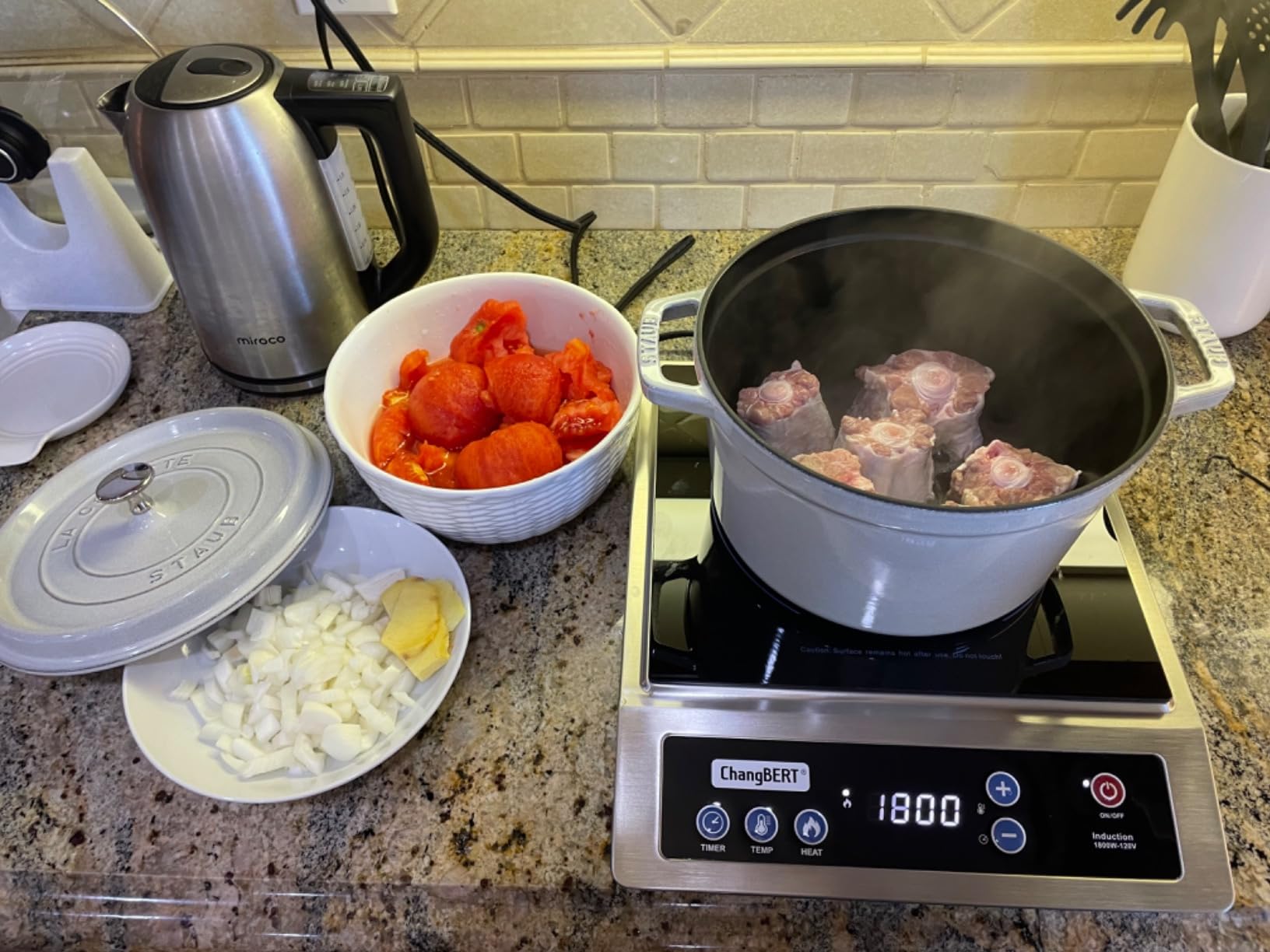
The CHANGBERT CIB-80 is built for the case where you genuinely boil large volumes. Owners in home and commercial kitchens report bringing a five-gallon pot to a boil on it, and the continuous-duty circuitry is the reason: the design is meant to hold full 1800 watts for long stretches instead of stepping down as the unit heats up.
It is also one of the most heavily certified burners in this roundup, carrying NSF certification alongside ETL approval and UL commercial standard 197, plus a passed drop test. The stainless steel housing is rated to support up to 100 pounds on the surface, which is the kind of detail that matters when you set a heavy pot down hard.
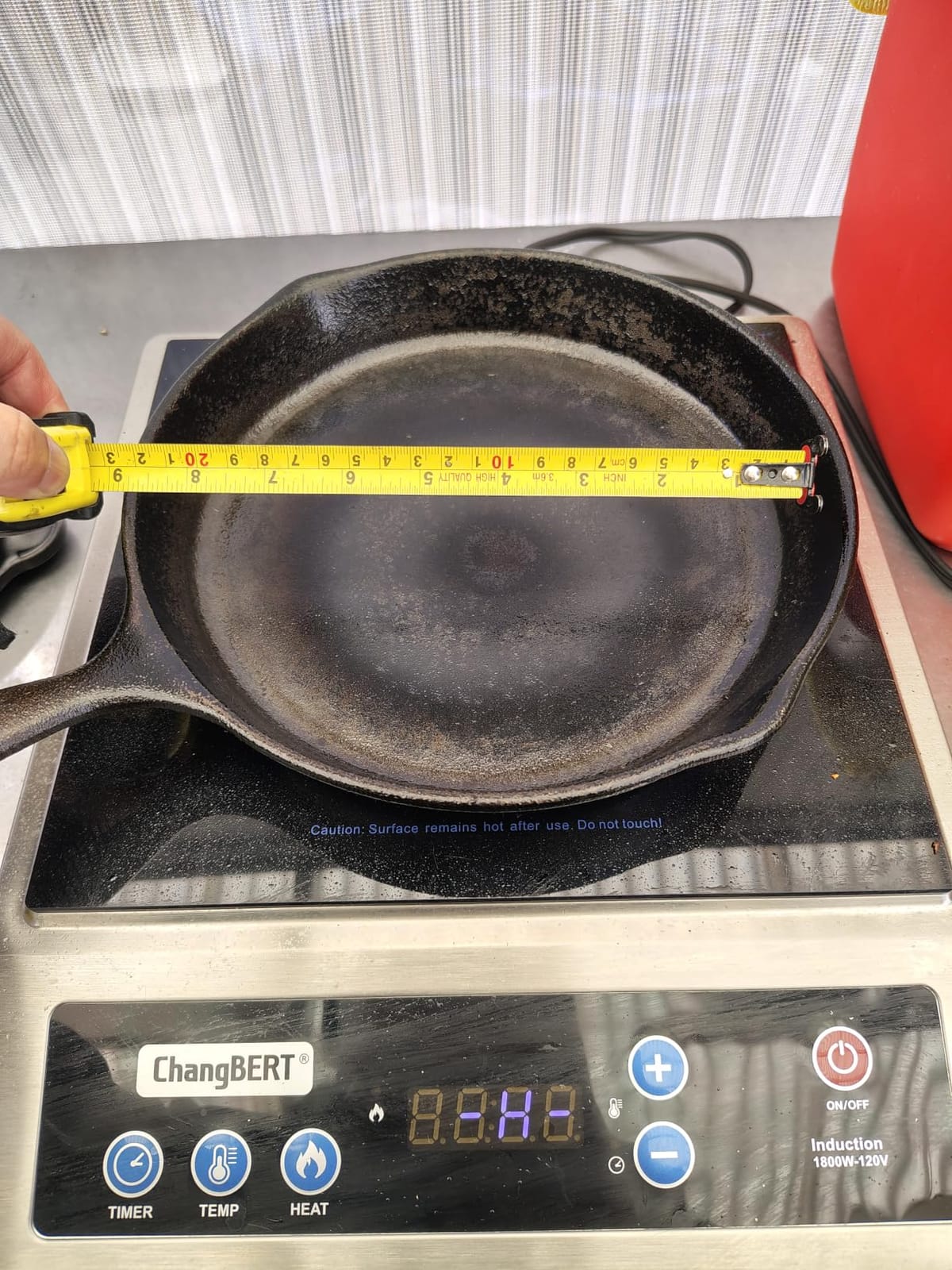
Controls are tactile push buttons rather than touch, and that is a genuine advantage in a busy kitchen. A wet or greasy finger still registers, and the buttons have no seams where food can lodge. The expanded magnetic coil design spreads heat across the base of wide cookware instead of concentrating it in the center.
Energy efficiency is rated at 83 percent, and the 10 hour countdown timer covers everything from a long stock simmer to canning. The full safety suite includes auto-pan detection, overheat protection, hot surface indication, small article detection, auto shutdown, and circuit failure protection.
Best reasons to choose this burner
If you can a lot, make stock, or cook for a group, the sustained output is the deciding factor. Reviewers who use this burner daily in restaurant settings point to the continuous-duty design and the 100 pound surface rating as the reasons it holds up under repeated heavy loads without complaint.
It is also a good match for anyone who does not want to learn a touchscreen. Four straightforward controls, an obvious on state, and a stainless body that tolerates a knock from a stockpot. At 6.1 pounds it stays portable enough for an outdoor setup.
Where the coarse steps show up
Eighteen temperature settings in 20 degree jumps is the main compromise. There is no meaningful fine control, so a low simmer either bubbles or sits still. The 200 watt minimum power setting compounds the same problem for anyone doing a long braise that needs a whisper of heat.
The 15 by 12.2 inch rectangular body also claims more counter than a round single burner. If you boil large pots often, that is a fair trade. If you mostly need a tea kettle, you are paying for capacity you will not use.
5. Duxtop P961LS Professional Cooktop – Big Readout, Bigger Footprint
Duxtop Professional Portable Induction Cooktop P961LS Silver/Black
- Twenty power levels from 100W to 1800W give a wide operating range
- Large angled LCD is readable from across a room
- Stainless steel body is durable and easy to wipe clean
- Automatic shut-off and count-down timer for unattended use
- Rated for commercial catering and outdoor events
- Heaviest single burner here at 12.4 pounds
- Largest footprint among the single-burner models
- No 5 degree temperature increments
- Some reviews report output cutting out under sustained heavy use
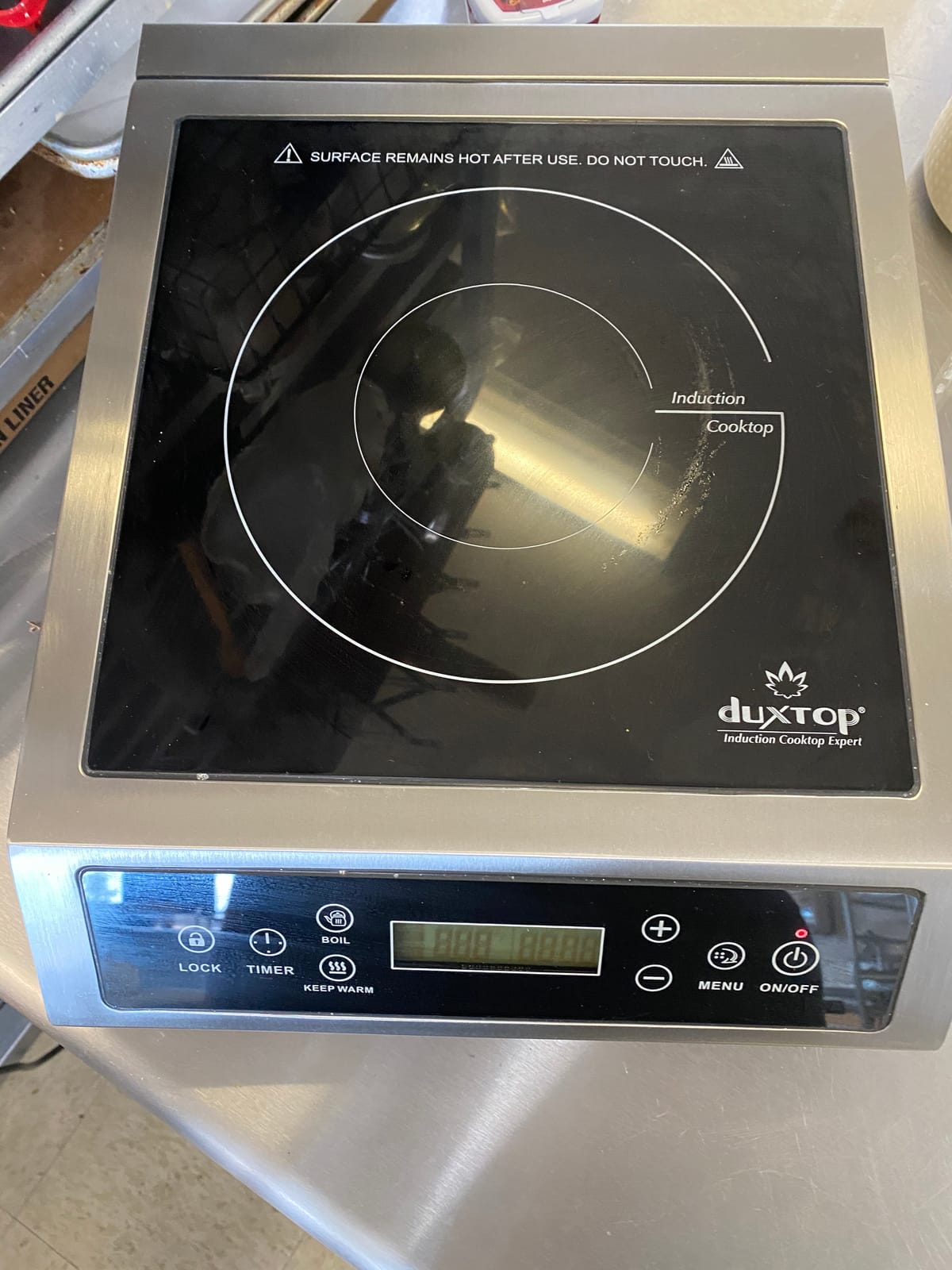
The P961LS is the Duxtop aimed at people who need to see the setting from a distance. The angled sensor touch panel with a large LCD readout is unusually legible, which matters when you are working a pan and want to confirm the power level without leaning over the unit. Twenty power levels from 100 watts to 1800 watts and twenty temperature settings give a broad operating range.
On boil performance it sits in the middle of this group. The 1800 watt output is fully present, and a 7-blade fan with a rear tuyere handles heat dissipation, but a portion of reviews report output cutting out under sustained heavy use. That is the same throttling behaviour the continuous-duty designs were built to avoid, so if you are boiling a full pot every week, read those reports carefully.

The stainless steel shell is the most durable-feeling part of this burner, and it wipes clean without a scratch risk. ETL listed and running on a standard 120V 15A outlet, it needs magnetic-bottom cookware with a minimum 5 inch diameter, which covers most everyday pans and saucepans.
Manufacturer listings point to home kitchens, portable use while camping or at outdoor events, and commercial catering as intended settings, and that is consistent with how owners describe using it. The countdown timer and automatic shut-off make longer unattended cooking practical.
Why the display matters more than usual here
Every induction burner on this list uses some kind of level indicator, but the angled LCD on this one is bigger and set at a viewing angle rather than flat. In a catering or outdoor setting where you are moving around the counter, that difference removes a lot of guesswork from a cook.
Touch controls combined with a stainless body also make this a straightforward unit to sanitize between uses. The surface has no exposed seams around the control area, and the whole top wipes down in one pass.
What to weigh against the extras
At 12.4 pounds and 16.5 by 12.9 inches, this is the heaviest and widest single burner in the roundup. That is a real cost for anyone whose main use is moving a burner between a kitchen and a small outdoor table. Carrying it back and forth becomes a two-hand job.
It also holds the lowest average rating here at 4.3 stars, with eight percent one-star reviews clustered around the weight, the bulk, and the heat output cutting out. The temperature range of 100°F to 460°F in 20 degree steps is also coarser than the best units here, so precise work is not its strength.
6. Nuwave Pro Chef 1800W – Best for Precise Temperature Work
Nuwave Pro Chef Induction Cooktop, Commercial-Grade Portable Burner
- Combines 1800 watts with a large 8 inch coil
- Finest temperature control in the group at 5 degree increments
- Selectable wattage suits limited-power outlets
- Slim 2.4 inch body stores easily in dorms and RVs
- Programmable stage cooking with a delay feature
- Most expensive burner in this roundup
- Fan noise is audible during active cooking
- Ceramic glass can mark if hot oil splashes
- Only a 1 year limited warranty
The Pro Chef is the burner to buy if you want fast boiling and genuinely fine control in the same unit. It puts 1800 watts through a large 8 inch coil, and the manufacturer’s patented insulation technology brings the coil closer to the cookware, which is what reduces the hot and cold spots that show up on wide pans with other designs.
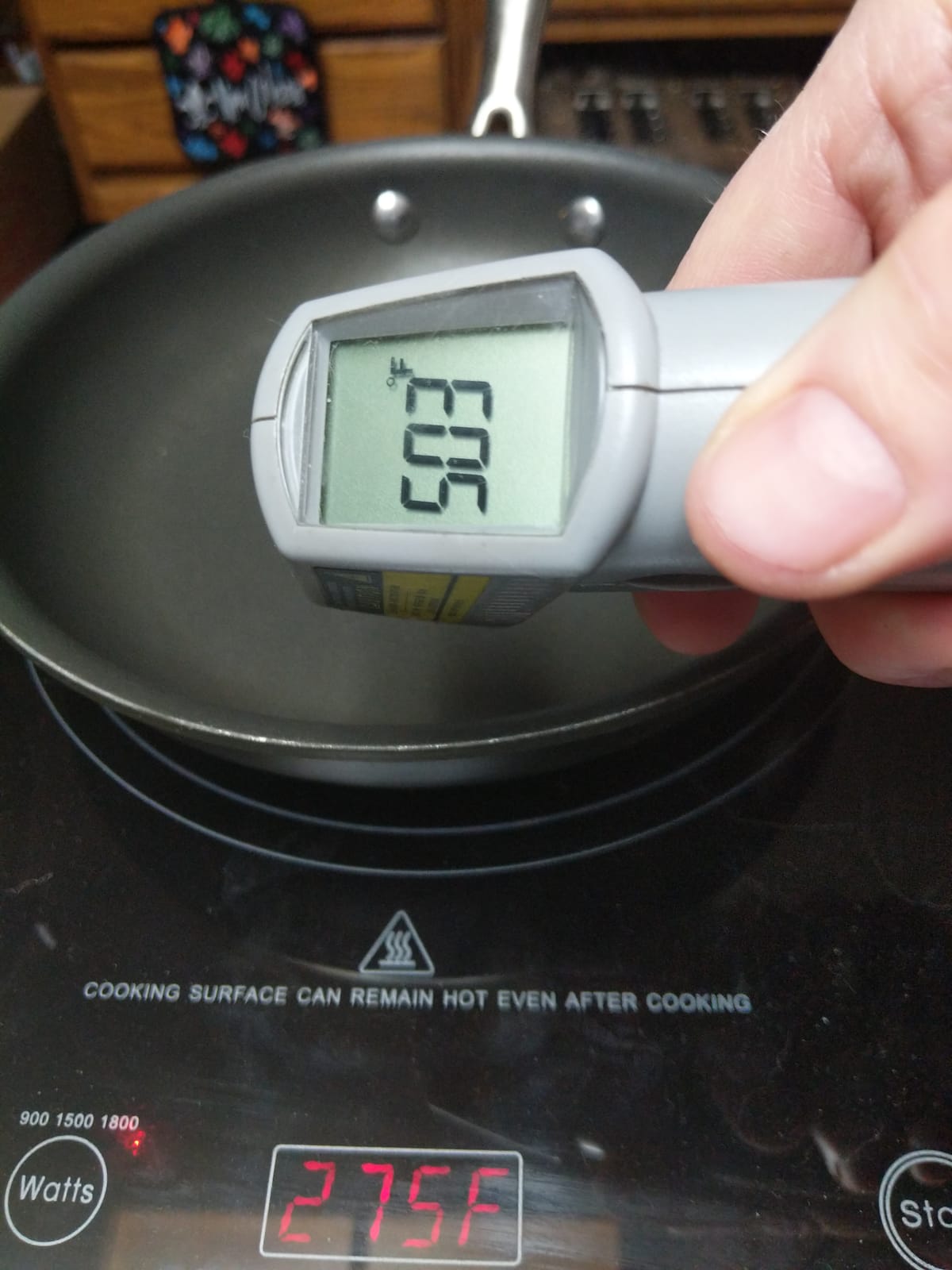
Control is the headline feature. Ninety-four pre-programmed temperatures from 100°F to 575°F in 5 degree increments cover melting, frying, and simmering with room to fine-tune, and three wattage settings, 900W, 1500W, and 1800W, let you drop the burner to match a weak circuit or a lower power setting in a rental.
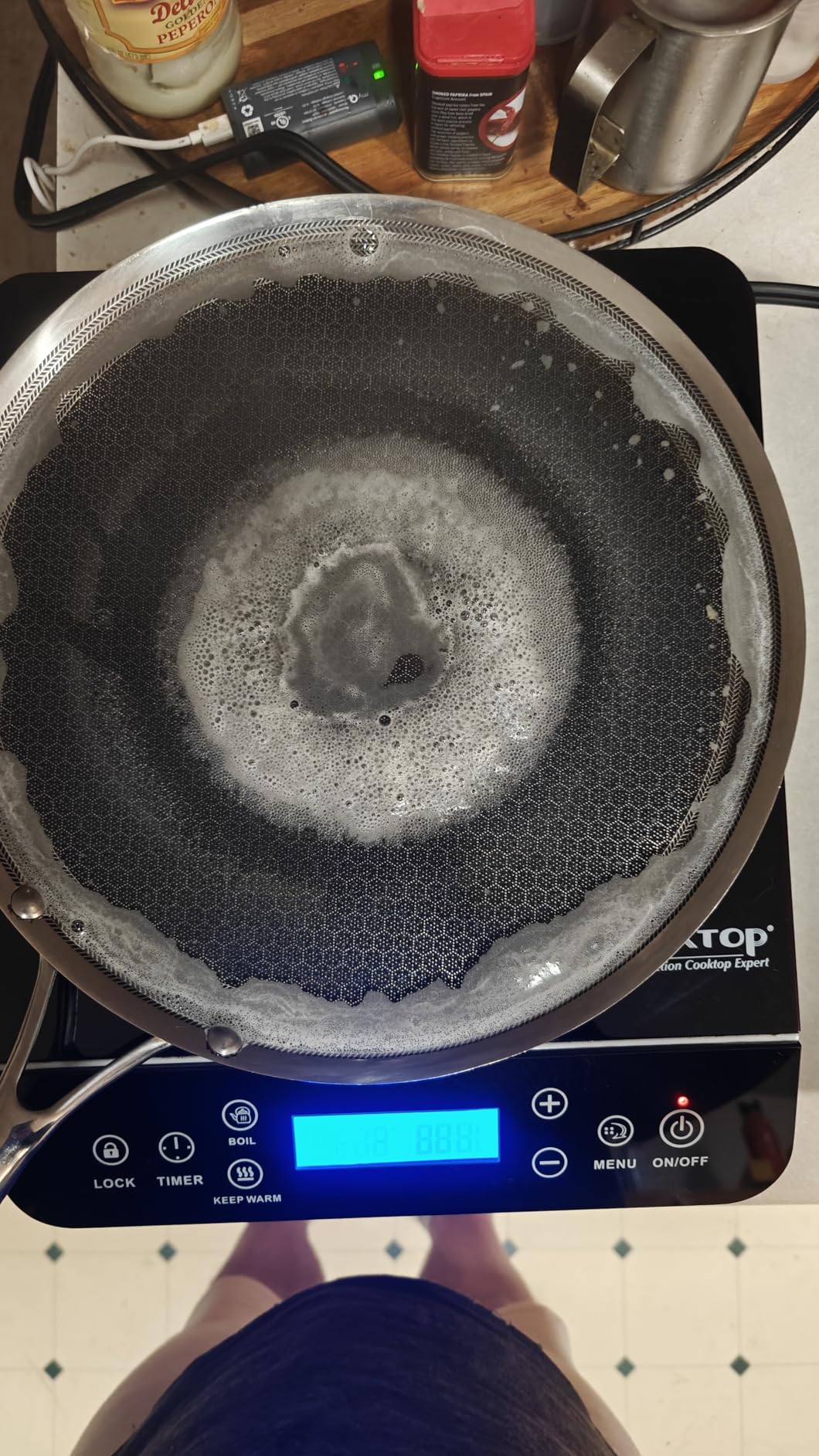
That wattage flexibility is genuinely useful for boiling. If you are on a circuit that cannot hold 1800 watts, running at 1500W avoids tripping a breaker mid-pour, and the unit still has enough output to bring a pot up quickly. Energy transfer is rated at 85 to 90 percent, matching the efficiency claims of the brand’s other portable models.
Programmable stage cooking lets you set a sequence, such as a high boil followed by a lower hold, and the delay feature starts the cycle later. At 7 pounds and 2.4 inches thick, it is one of the easier units here to store in a small kitchen, a dorm, or an RV cabinet.
Where the combination of power and control pays off
Most burners force a choice between raw output and fine adjustment. The Duxtop models give you power with coarse steps, and the Nuwave Gold gives you fine steps with a lower 1500 watt rating. This one carries 1800 watts and 5 degree increments at the same time, which is why it suits a kitchen that both boils pasta and makes a careful sauce.
NSF certification and commercial-grade construction mean it also holds up outside the home, in a teaching kitchen or a small prep space. The 900 watt setting is a genuine benefit where electrical supply is limited, which is a common situation in older apartments and RVs.
What you give up for it
It is the most expensive unit here, and that only makes sense if you will actually use the temperature resolution. If you boil water and sear meat, the extra spend buys little over a well-made 1800 watt burner with coarser steps.
The fan is audible while cooking, and reviewers warn that the ceramic glass surface can mark or melt if hot oil splashes onto it. There is also only a 1 year limited warranty, which is shorter than the coverage offered by some of the other brands in this roundup.
7. Nuwave Double Pro Two-Zone Cooktop – Two Pans on One 120V Circuit
Nuwave Double Pro Cooktop Induction Countertop Burner, Portable, 50°F-575°F
- Only two-zone option here
- allowing a full-power boil beside a simmer
- Large 8 inch coils on both zones
- Independent temperature control per zone plus stage cooking and delay
- Edge-to-edge glass wipes clean without debris buildup
- Low profile fits over an existing glass cooktop
- Both zones drop to 900W when run at once
- 23.6 inch wide and 14 pounds makes it the least portable option
- Fan noise and a high-pitch whine reported by several owners
- Touch buttons are easy to bump and there is no active-heating indicator
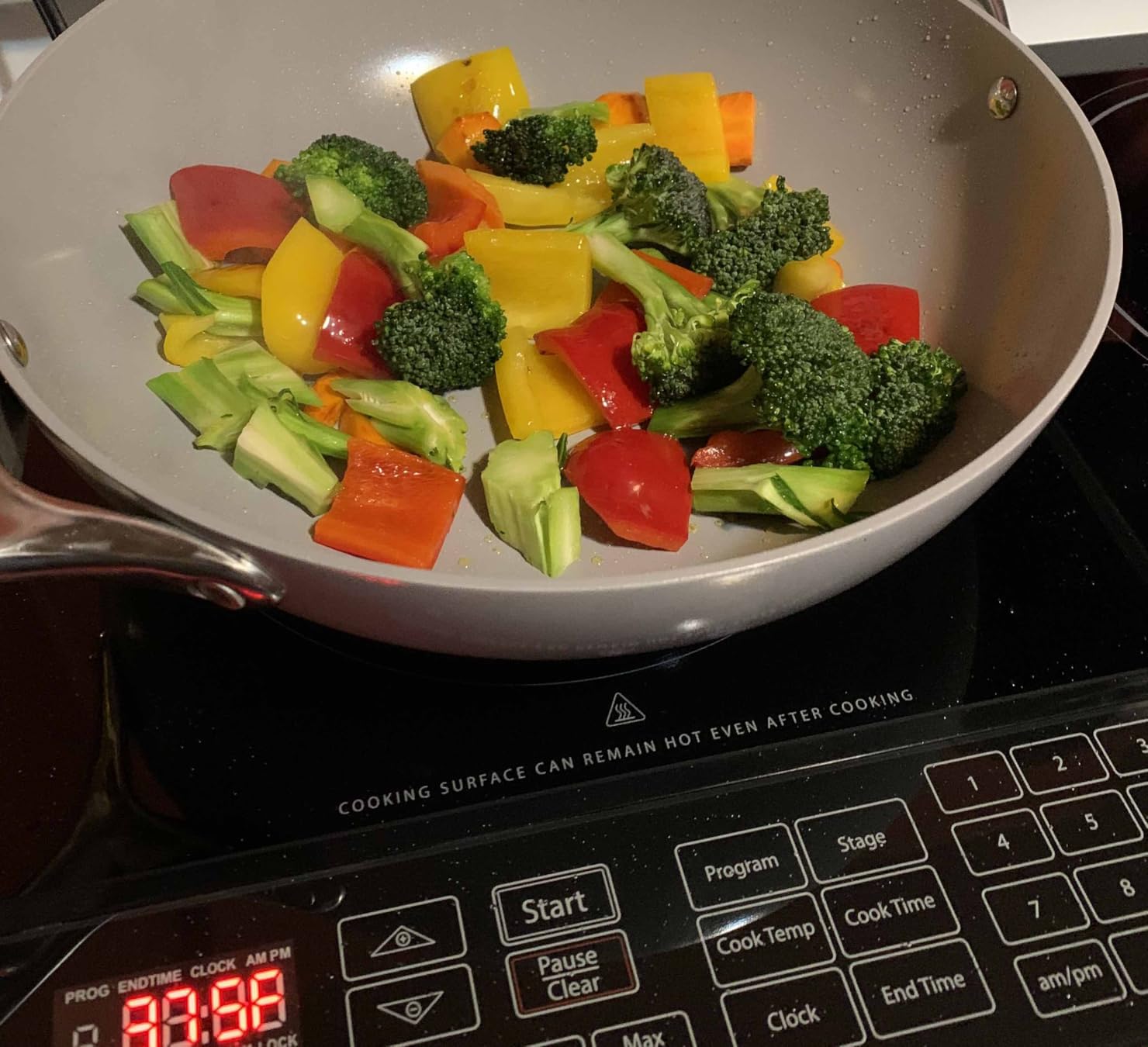
The Double Pro is the only two-burner unit in this roundup, and that changes how you use it. One zone can run a full boil while the other holds a simmer at a completely different temperature, each adjusted independently, which is how you cook pasta and a sauce in the same ten minutes on a single 120V circuit.
Boil speed on a single zone is strong. Owners replacing a full range frequently describe it as the fastest-boiling cooktop they have owned, and the large 8 inch coils on both sides spread power across wide pans. The temperature range runs from 50°F to 575°F in 5 degree increments, with five presets and a Precision Key that ramps heat gradually to hold a set point.
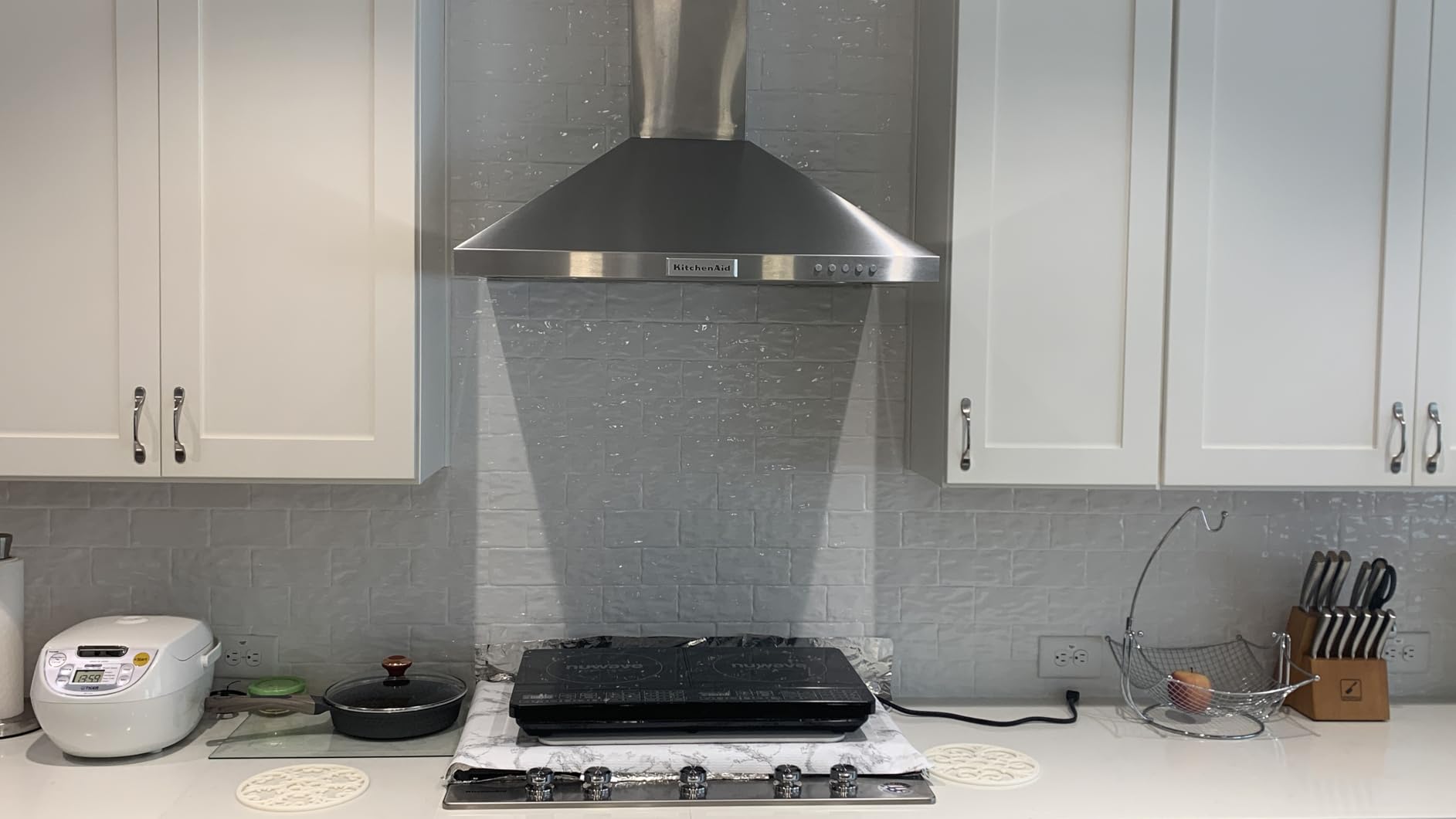
The Dynamic Watt Technology is the feature to understand before you buy. One burner can draw up to 1800 watts, but if you run both at once, each drops to 900 watts. That is a limitation of a 120V 15 amp circuit, not a defect, and it is the same constraint described in forum discussions about portable burners: you cannot have two burners at full power on one plug.
Automatic shutoff triggers at two hours and whenever a pot is removed, and the seamless touch panel sits on edge-to-edge ceramic glass that wipes clean in a single pass. The low 2.6 inch profile lets it sit over an existing glass cooktop, which owners in RVs and off-grid setups take advantage of.
Who benefits from two zones
A household cooking one main dish and one side at the same time gets the most from this layout, especially when the second dish needs a lower temperature. Stage cooking and delay functions let both zones run unattended, and independent zone control means you are not compromising one pot to serve the other.
It also works well as a temporary replacement for a range during a remodel, and the ability to place it over an existing glass cooktop keeps the setup tidy in a small kitchen. A 14 pound weight and 23.6 inch width mean it is a fixed piece of equipment rather than something you carry around.
Where the two-zone layout disappoints
If you boil a very large pot, you want one zone at full 1800 watts, and you have to accept that the other zone is not available at the same time. The 900 watt split is fine for a side dish and wrong for a second stockpot. Plan your workflow around a single large boil rather than parallel large boils.
Several owners also report fan noise and a high-pitch whine during heating, and the touch buttons sit close enough together to be bumped accidentally while you are moving a heavy pot. There is no visual indicator showing which zone is actively heating, so a bumped setting is not always obvious until you look.
8. CHANGBERT CIB-80 Plus – Quiet 1800W With a One-Click Boil Button
- One-click BOIL button sends water to full power immediately
- Quietest running unit here according to owner reports
- 8 inch coil handles 10 to 12 inch pans without error codes
- Bright dual display stays readable in sunlight
- Tactile buttons work with wet or gloved hands
- Dual IGBT board keeps output stable through long sessions
- 18 temperature steps in 20 degree increments
- 200W minimum power is high for some long simmers
- Display temperature can differ from actual liquid temperature
- TEMP mode cycles on and off by design
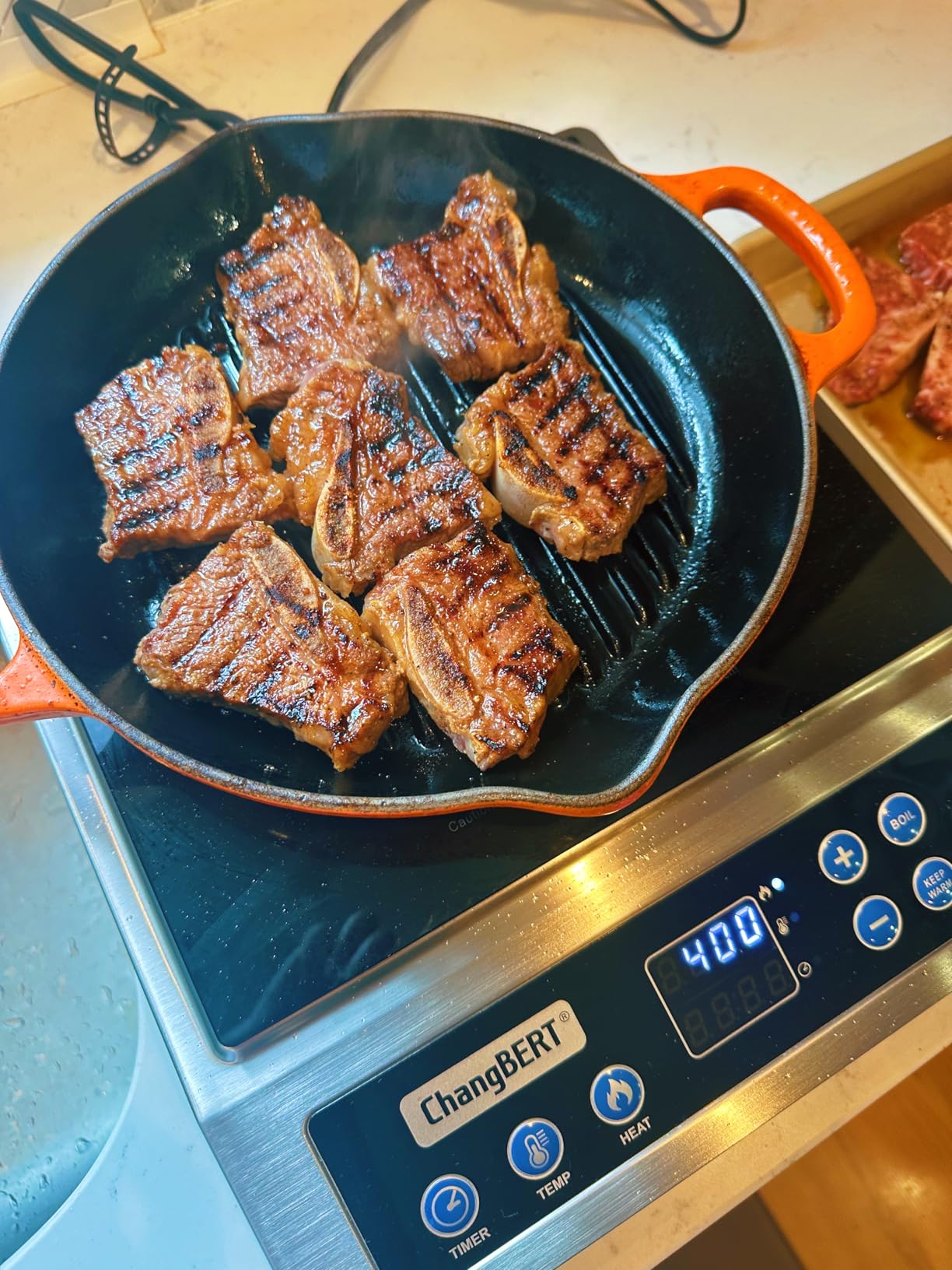
The CIB-80 Plus is the updated version of the commercial-grade burner, and the change that matters for this roundup is the one-click maximum power button. Press it and the burner goes straight to 1800 watts through a dual IGBT upgraded control board. Reviewers report water boiling in under five minutes after that press, and continuous-duty circuitry keeps output stable through a long session rather than throttling back.
It also carries the highest average rating in this group at 4.5 stars, with 81 percent five-star ratings across more than 600 reviews. The feedback is unusually consistent, and the quiet running is the detail owners mention most. People describe the fan as barely audible in normal conversation, which is rare for a burner pushing 1800 watts.
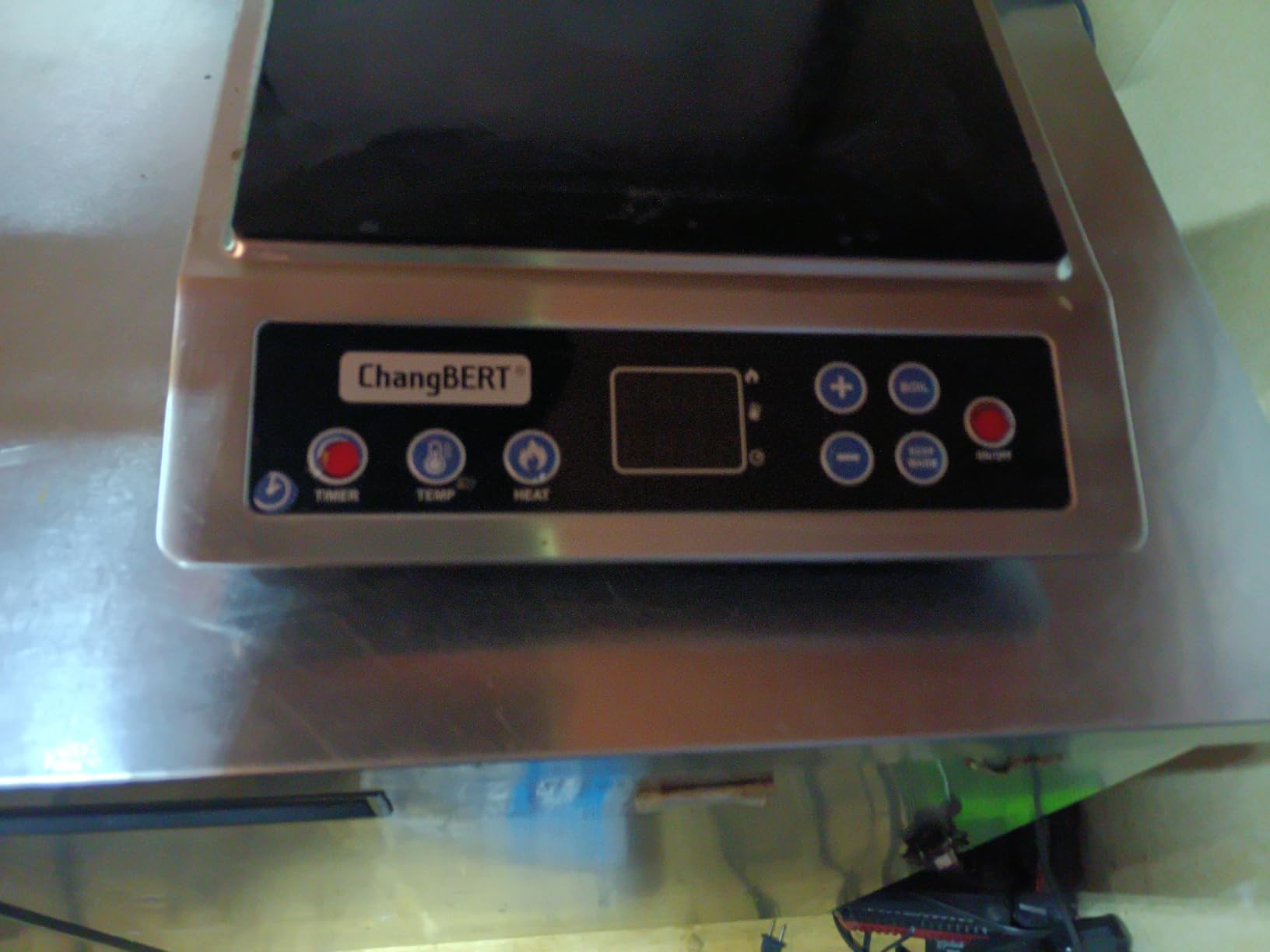
The expanded 8 inch magnetic coil with optimized winding handles large pans without the overheating errors owners hit with smaller 6 inch units. A dual digital display shows power or temperature alongside the timer, and it is bright enough to read in sunlight, which is not something we could say about most glass-top burners.
Certification matches the original, with NSF, ETL approval, and UL commercial standard 197. The stainless body is rated to 100 pounds, and the safety suite covers auto-pan detection, overheat protection, hot surface indication, small article detection, auto shutdown, and circuit failure protection, with a 2 year home warranty behind it.
Why the boil button changes the routine
Most portable burners reach full power by ramping through levels, and that ramp is dead time every single time you fill a pot. A dedicated BOIL button removes the ramp, so a kettle or a small pan of water goes from cold to rolling without supervision. If you boil water several times a day, that is the feature you will feel most.
The quiet running is the second reason to like it. The design uses continuous-duty circuitry, and owners in open kitchens report being able to hold a conversation at normal volume while it runs. For an apartment, an RV, or a small office kitchen, that difference is real.
What the coarser temperature steps cost you
Eighteen settings in 20 degree increments means the temperature control is coarse, and owners wish for 5 or 10 degree resolution. The 200 watt minimum is also high for pressure cooking or a long simmer that needs minimal heat. Some cooks work around both by switching the display from temperature to power.
Be aware that the displayed temperature does not always match the actual liquid temperature in the pot, and TEMP mode cycles the element on and off by design to hold the set point. Both are normal behaviour, but they surprise people who expect continuous modulation.
9. Amazon Basics 1800W Cooktop – Compact Unit for Small Kitchens
- Least expensive unit in the roundup while still delivering 1800 watts
- Reviewers report a rolling boil in a 4 quart pot in about 4 to 5 minutes
- Compact 6.2 pound body stores and transports easily
- Child lock
- overheat protection
- auto-pause
- and voltage warning
- Tempered glass surface wipes clean easily
- Only 8 power levels with 40 degree temperature steps
- Coil is about 5 inches across
- creating hot and cold spots on larger pans
- Not recommended for slow or low temperature cooking
- Some owners report the burner cutting out after about 10 minutes
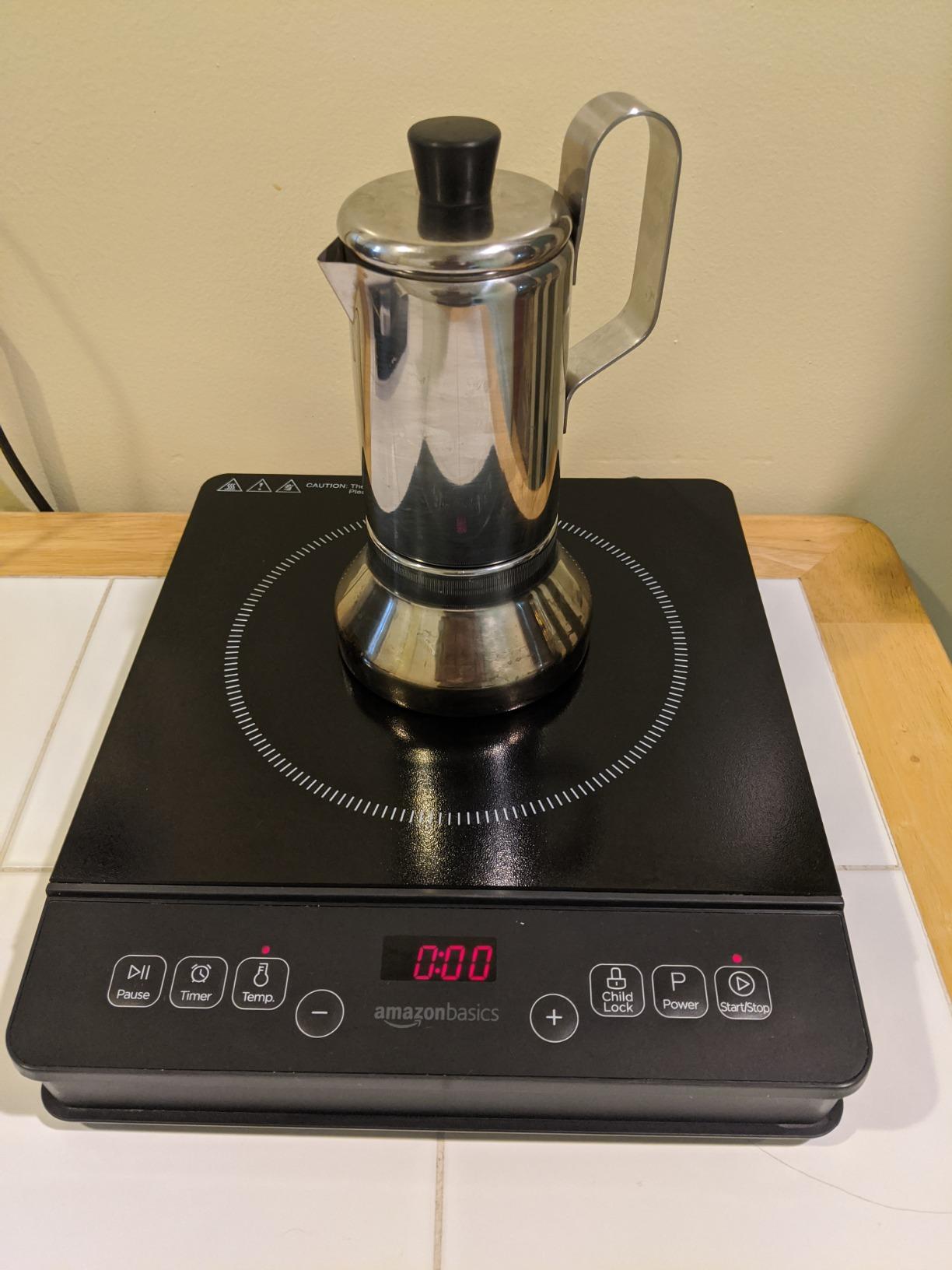
The Amazon Basics burner is the value entry here, and the surprise is that its boil performance is genuinely competitive. Reviewers report a rolling boil in a three-quarter full four-quart pot in about four to five minutes, and several say it beat a Nuwave Gold they replaced. At 1800 watts with a dedicated boost, the raw numbers support that claim.
It is also the smallest and lightest unit in this roundup at 6.2 pounds, and the 11.4 by 13 inch footprint fits a counter that cannot hold anything else. Cookware compatibility is narrow but clearly stated, with a 5.7 to 8.2 inch flat-bottom diameter range and no aluminum.
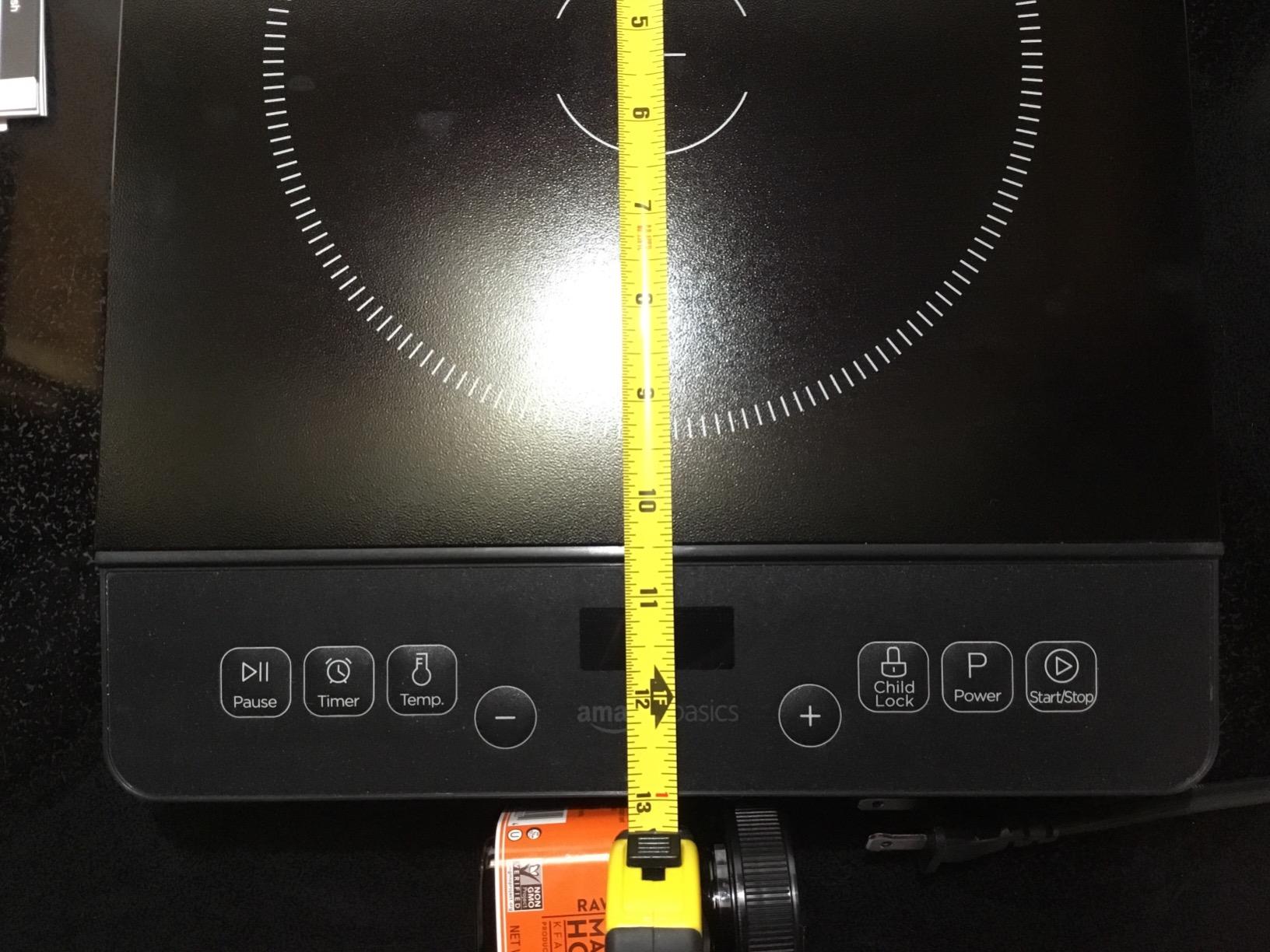
Safety features are more complete than the price suggests, including a child lock, overheat protection, auto-pause, and a voltage warning system. A three-hour timer with preset cooking modes and an LED display cover most unattended cooking, and the tempered glass top wipes clean after a boil-over.
The 4.1 star average is the lowest here, with 62 percent five-star and 13 percent one-star ratings. The split is understandable: the burner delivers speed and simplicity, but it gives up control granularity in exchange, and a few owners report it shutting off after roughly ten minutes until it is power-cycled.
When this budget burner makes sense
This is a good fit for a first induction purchase, a rental, an RV, or a studio where the burner lives in a drawer most of the time. If your cooking is largely boiling water, reheating, and simple one-pan meals, the eight power settings are enough. If you are boiling on a schedule, the reported ten-minute cutouts are worth planning around.
It is also the most forgiving purchase regarding other cookware, because the price leaves room for a proper induction-compatible pot. A wide flat clad pan on this burner performs much better than a small one, so if you already own quality magnetic cookware, this is where it pays off.
Where the trade-offs show
Eight power levels means 40 degree temperature steps, and there is no setting between 200°F and 240°F, so there is nothing between a bare simmer and a violent boil. The manufacturer also states the unit is not recommended for slow or low-temperature cooking such as melting chocolate, which is a real limitation for a cook who does that.
The coil is only about 5 inches across, which creates hot and cold spots on pans wider than the burner accepts. Paired with the lowest rating and highest one-star share in this group, it is the pick to make if you want boiling speed on a budget and little else.
10. CHANGBERT FC1S13 – 12-Inch Surface for 10-Quart Pots
- 12 inch glass surface fits 10 quart pots skillets and griddles
- Owners report faster boils than previously owned induction units
- Only four buttons so anyone can operate it without training
- Tactile buttons stay responsive with wet or greasy hands
- NSF certified and rated for continuous restaurant service
- Even heating across the full surface
- No separate temperature control
- only 10 fixed power levels
- Some owners report a high-pitch whine developing over time
- Glass top can crack if handled roughly
- Smallest review base in the roundup
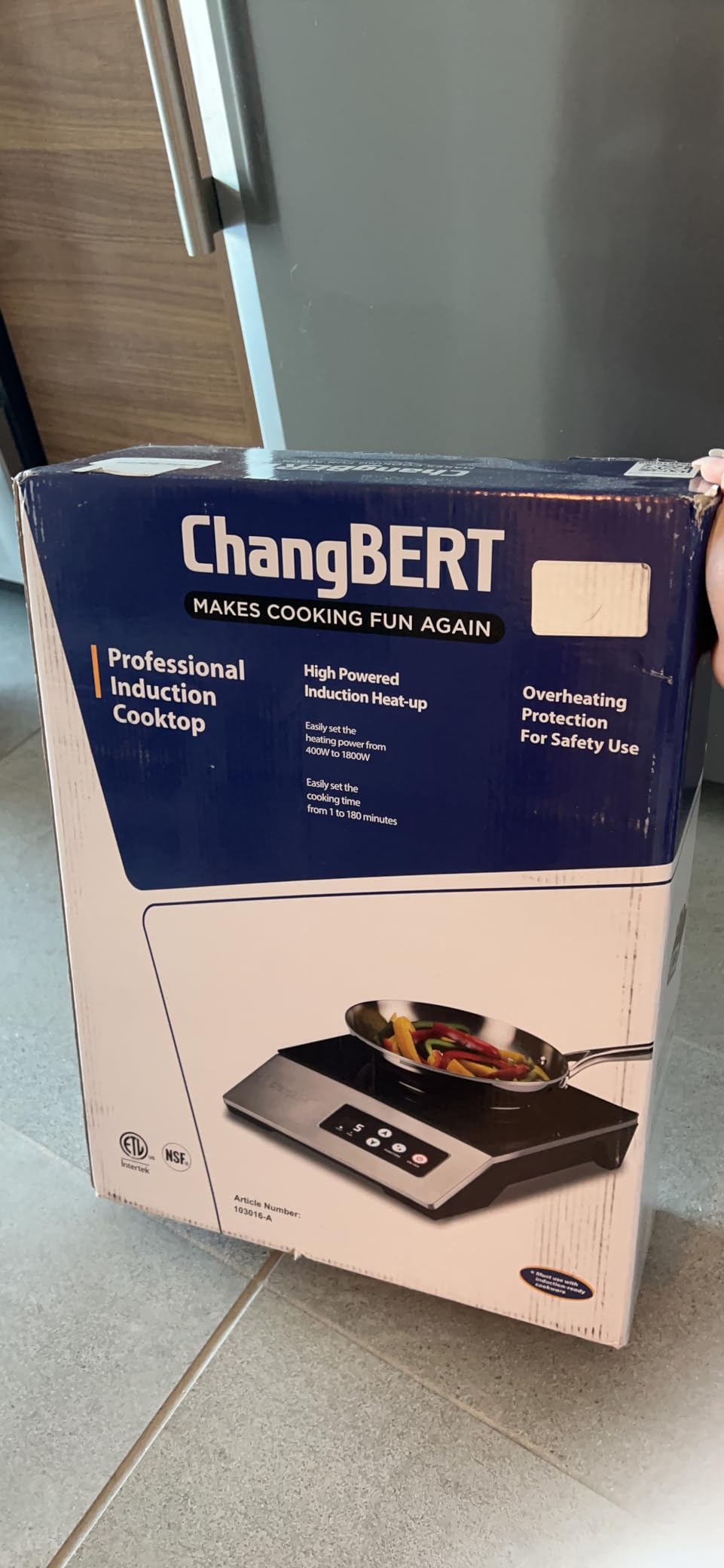
The FC1S13 is the pick for oversized cookware. Its 12 inch shatter-resistant glass cooking surface is larger than anything else here, and owners use it for 10-quart pots, 12 inch skillets, and flat-top griddles. The stainless steel body supports cookware up to 100 pounds, so a heavy stockpot goes down without a second thought.
Boil speed is a strength in reviews, with at least one owner noting faster times than a previously owned induction unit. The continuous-duty circuitry includes internal thermal management specifically to reduce fan noise, and even so, a few owners report a high-pitch whine developing after a few weeks of use.
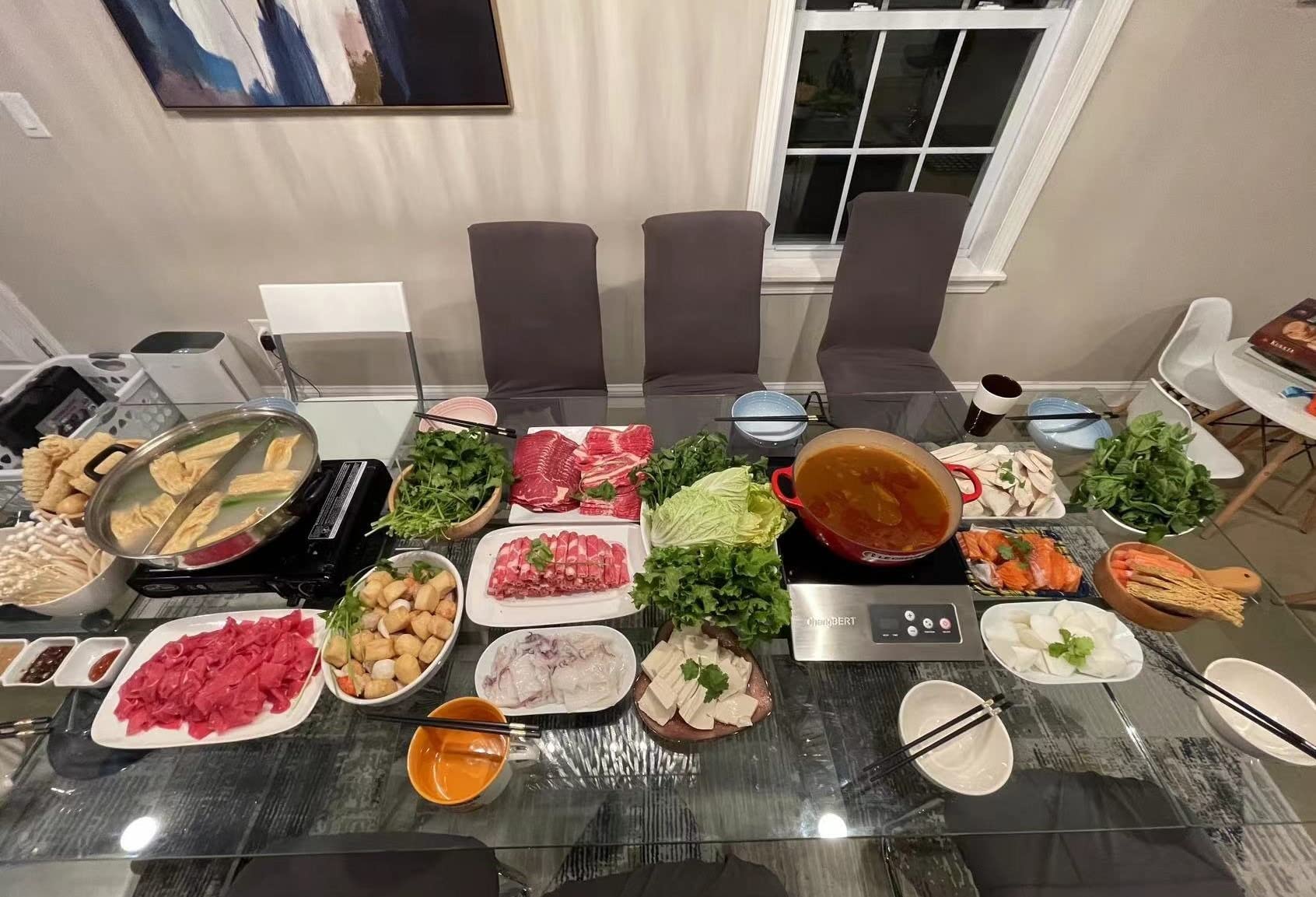
Operation is four buttons, power, plus, minus, and a mode toggle. That is deliberately simple, and it is a real advantage in a restaurant, a classroom, or a home where more than one person cooks. The buttons have no crevices to trap food, so cleanup after a boil-over is a wipe.
Certification runs to NSF, ETL approval, and UL commercial standard 197 with a passed drop test. A 360 minute countdown timer covers long simmering and canning sessions, and the safety suite adds auto-pan detection, overheat protection, hot surface indication, small-object detection, and auto shutdown.
When the 12 inch surface earns its place
If you can vegetables, make stock, or cook for a crowd, a 12 inch surface changes what fits on the burner. Wider cookware means more water heating at once from a single coil, and reviews specifically call out even heating across the full surface rather than a hot center.
The simple four-button layout also makes it a good fit for shared equipment. Nobody has to learn a menu, and the tactile response survives wet or greasy hands, which matters in a commercial line where washing is constant.
What you trade for the simplicity
Ten fixed power levels from 400 watts to 1800 watts is the whole control scheme, with no separate temperature control. Heat therefore changes in coarse steps, and owners note that butter does not melt evenly for a roux. If you cook sauces regularly, that is a real cost.
This burner also has the smallest review base here at just over 190 ratings, and the glass top is described as less durable than the ceramic surfaces on competing models. A high-pitch whine has also developed on a few units after weeks of use, so it is worth weighing the limited field history against the larger surface.
What Actually Makes Induction Boil Water Faster
Sustained wattage beats peak wattage. The number on the box is what the burner can deliver at its top setting, and what you feel is how long it holds that number. Continuous-duty circuitry and dual IGBT control boards are the design features that indicate steady output, while reviews mentioning heat that cuts out under sustained use are a warning sign for anyone boiling a large pot every week.
Coil diameter decides how the pot is heated. A narrow coil sends all its energy into a small circle, which is fast for a kettle and uneven for a wide pot. An 8 inch coil covers the base of most stock pots and dutch ovens, so a large volume of water reaches boiling across its whole span instead of in patches. When you compare two burners with the same wattage, the coil size is the tiebreaker.
Match the pan base to the coil. Induction only works with magnetic cookware, and a magnet that sticks is a starting point rather than a guarantee. A pan base much smaller than the coil wastes energy, and one much larger than the coil produces a ring of heat with a cooler center. Aim for a base diameter that covers the coil closely, and remember that a heavy clad or thick disc-bottom pan absorbs and spreads energy differently from a thin one. This is also why upgrading your cookware changes boil times as much as upgrading the burner, and it is why we suggest reading our best cookware sets for induction cooktops before blaming the appliance.
Look for a fast path to full power. Some burners ramp through levels before reaching maximum output, and that ramp is dead time on every boil. A dedicated boil button or a one-click maximum power control removes it, which is the single most useful interface feature for this task. Adjustable wattage settings, like the 900W, 1500W, and 1800W options on one unit here, serve the same purpose on circuits that cannot hold full power.
Understand the voltage ceiling before you shop. Every burner in this roundup is a 120V plug-in unit, which is exactly why most of them top out at 1800 watts. A built-in cooktop on a 240V circuit draws several times that on a single element, and forum discussions about portable units point out the same limit: you cannot run two 1800 watt burners at full power on one 15-amp plug. If your cooking is mostly small pots, 1800 watts is genuinely quick. If you regularly boil a gallon, plan around the size of the pot more than the size of the burner.
Treat fan noise and surface size as the real trade-offs. Every burner here needs a cooling fan, and the difference between a whine you notice across a kitchen and one you stop hearing matters in an open-plan space. The CIB-80 Plus is the quietest of the group by owner report, and the Nuwave units are noticeably louder. Counter space is the other quiet constraint: check the footprint before buying, because a wide unit is hard to use in a small kitchen no matter how well it performs.
Safety features protect more than the burner. Auto-pan detection, overheat protection, child lock, and auto shutoff are standard on most units in this list and worth having. If you are choosing between cooktop types for a rental or a family kitchen, our guides to the best electric cooktops and the best downdraft cooktops cover the alternatives if you want to compare before deciding.
Frequently Asked Questions
Do induction cooktops boil water faster?
Yes. Induction sends electromagnetic energy directly into the base of the pan rather than heating a coil or a flame first, so the water starts warming almost immediately. Reviewers report a four-quart pot reaching a rolling boil in roughly four to five minutes on a 1800 watt portable burner, and small pots boiling in two to four minutes. Actual times vary with pot volume, pan thickness, and how strongly magnetic the cookware base is.
How fast does induction boil water compared to gas?
Induction generally wins on boil time. Owners of the burners in this roundup describe boiling faster than gas, and the same 1800 watt class of portable induction is reported to heat water two to three times faster than an electric coil stove. The advantage comes from efficiency: manufacturers rate induction energy transfer into the pot at 85 to 90 percent, so less of the output is lost to the surrounding air.
What wattage do I need for fast boiling?
For a kettle or a small saucepan, 1800 watts is the practical ceiling for a 120V plug-in burner and is what most models in this roundup deliver. For a six-quart pot or a large batch of pasta water, wattage alone is not enough, and coil diameter matters just as much. An 8 inch coil spreads the power across a wider base so the whole pot reaches temperature at roughly the same time.
Do you need special pans for induction boiling?
You need magnetic cookware. A magnet that sticks to the base of the pan is a quick check, though it does not guarantee strong coupling. Aluminum, copper, and most glass cookware will not work at all. For fastest boiling, match the pan base diameter closely to the burner coil, since a base much larger than the coil produces uneven heat around the edges.
Does pan size and material affect induction boil time?
Yes, significantly. A small pan on a wide coil wastes energy, and a wide pan on a narrow coil heats in a ring with a cool center. Thicker and more heavily clad bases absorb and spread energy differently from thin stainless, and the same burner can vary by a couple of minutes depending on cookware. Using an induction-compatible pot with a base sized to the coil is often the cheapest way to shorten boil times.
Final Verdict for Fast Boiling in 2026
After working through ten burners, the best induction cooktops for fast boiling come down to three clear cases. The Duxtop 8100MC is the one we would buy first: full 1800 watts, a compact body, and the largest base of owner feedback in the group at over 17,000 ratings. The Nuwave Gold is the better answer when your pot is the problem, because its 8 inch coil heats wide cookware evenly. The CHANGBERT CIB-80 Plus wins on refinement, with a one-click boil button, the quietest fan, and the highest average rating here.
Whichever you pick, boil a pot of your own water on day one, using the pan you use most. That single test will tell you more about real performance than any specification, and it takes less time than the first pot you are trying to save.