
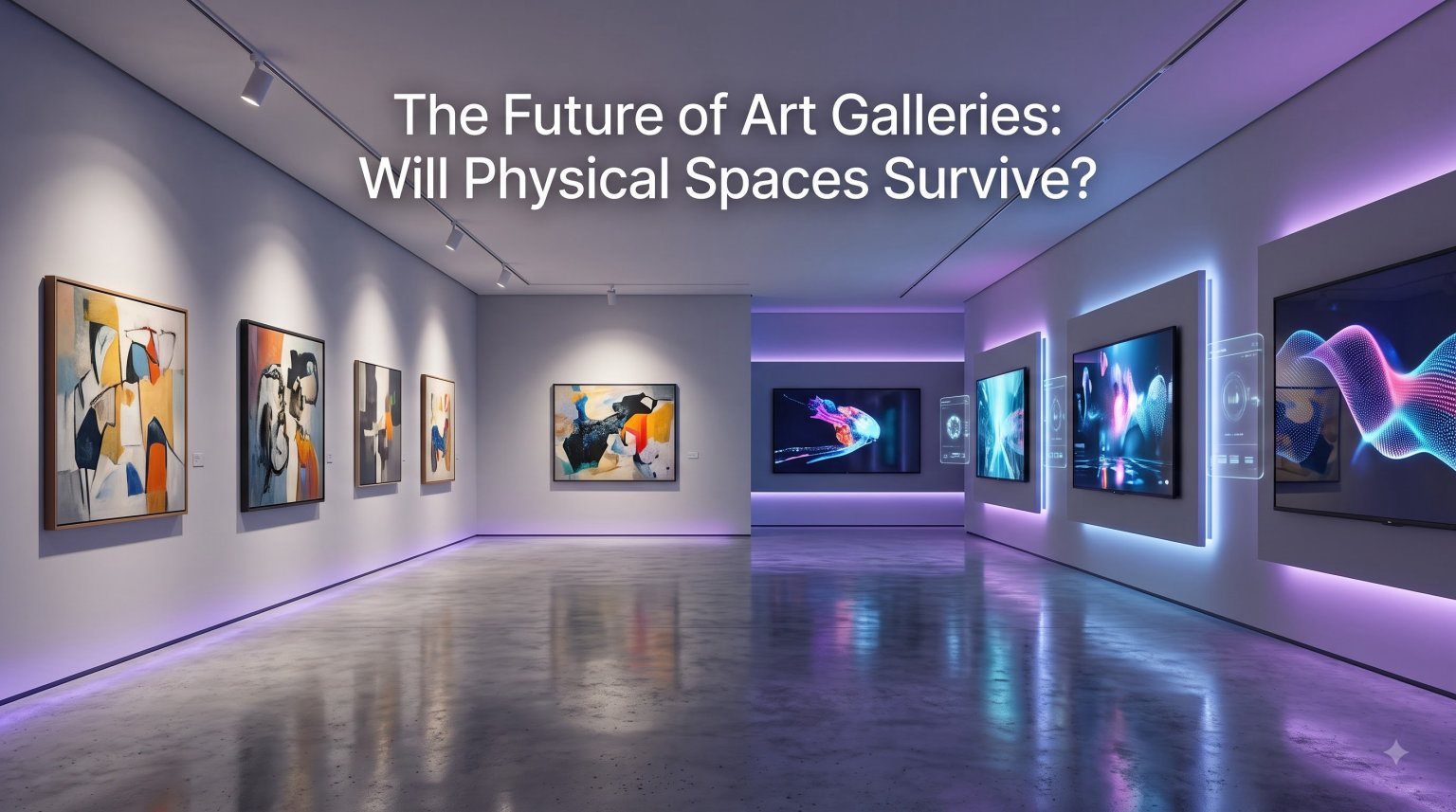
I’ve spent the last six months talking with gallery owners, artists, and collectors across New York, Los Angeles, and London. One question keeps surfacing in every conversation: are physical art galleries dying? The short answer is no. But the complete answer is more nuanced and far more interesting than a simple yes or no.
The art world in 2026 stands at a crossroads. Gallery closures dominated headlines throughout 2025, with spaces from Chelsea to Chinatown shutting their doors after decades of operation. Yet simultaneously, new galleries are opening with radically different business models. Digital art sales have surged. Virtual exhibitions now attract global audiences that physical spaces could never reach.
This article examines the future of art galleries through real data, expert perspectives, and the lived experiences of those navigating this transformation. Whether you are an artist seeking representation, a collector wondering where to find work, or simply someone who values art spaces in your community, understanding these shifts matters. The gallery of tomorrow is being built today.
Table of Contents
Are Art Galleries Declining?
Art galleries are not declining. They are transforming. While 2025 saw significant gallery closures across major art markets, this contraction represents evolution rather than collapse.
According to industry data, approximately 42 percent of galleries surveyed in 2025 reported higher sales than the previous year. The closures were concentrated among mid-tier brick-and-mortar spaces with outdated business models. Meanwhile, hybrid galleries combining physical presence with digital-first operations showed strong growth.
The traditional gallery model faces pressure. But galleries themselves are not disappearing. They are adapting to new economic realities, changing collector behavior, and digital opportunities that were unthinkable just a decade ago.
The State of Art Galleries in 2026
The gallery landscape in 2026 looks dramatically different than it did five years ago. High-profile closures in 2025 sent shockwaves through the art world, but the full picture requires looking beyond the headlines.
New York experienced a significant contraction. Long-established Chelsea galleries closed after twenty or thirty years. Downtown spaces that survived the pandemic finally succumbed to rising rents. Los Angeles saw similar patterns, with gallery districts in Chinatown and Hollywood experiencing departures. London’s Mayfair and Fitzrovia neighborhoods lost notable spaces.
Yet this is only half the story. Galleries are not vanishing. They are relocating, resizing, and reimagining their purpose. Some moved to less expensive neighborhoods. Others downsized to intimate viewing rooms. Many launched robust online platforms that now generate significant revenue.
The survivors share common characteristics. They operate leaner businesses. They embrace digital tools. They maintain strong relationships with collectors who have adapted to online purchasing. These galleries prove that the model can work when it evolves with the times.
Why Are So Many Galleries Closing?
Understanding gallery closures requires examining multiple interconnected pressures. No single factor explains the trend. Rather, a perfect storm of economic, social, and technological forces has made the traditional gallery model unsustainable for many operators.
Rising Real Estate Costs Are Crushing Mid-Tier Spaces
Commercial rent increases have outpaced gallery revenue growth in most major art markets. In Manhattan, prime gallery district rents increased 40 percent between 2020 and 2025. Meanwhile, art sales at mid-tier galleries remained flat or declined.
The math became impossible for many. A gallery generating $500,000 in annual sales simply cannot afford $20,000 monthly rent plus staff, insurance, utilities, and art fair participation costs. These galleries faced an impossible choice: move to cheaper locations with less foot traffic, downsize dramatically, or close entirely.
Urban gentrification compounds the problem. As neighborhoods become more expensive, galleries that once anchored artistic communities get priced out. The very success of gallery districts in attracting visitors often leads to their destruction as landlords seek higher-paying retail tenants.
The Art Fair Fatigue Crisis
Art fairs once represented the lifeblood of gallery sales. Now they threaten to bleed galleries dry. Participation costs have skyrocketed while returns have diminished.
A mid-sized gallery pays approximately $50,000 to $100,000 per major art fair when including booth fees, shipping, staff travel, accommodation, and marketing. For many, this represents 20 to 30 percent of annual revenue spent on a single event. The gamble often does not pay off.
Gallery owners report increasing burnout from the art fair circuit. The endless cycle of application, preparation, installation, selling, breakdown, and shipping consumes enormous energy. Many have begun questioning whether the traditional art fair model serves their business or merely extracts value from it.
Younger collectors, meanwhile, are discovering artists through Instagram and online platforms rather than art fair booths. The fairs’ role as the primary discovery mechanism is eroding, even as costs continue rising.
Changing Collector Behavior
The collector of 2026 behaves differently than their predecessors. This shift fundamentally challenges traditional gallery relationships.
Direct artist-to-collector relationships have become normalized. Instagram allows collectors to follow artists, view their process, and purchase work without gallery intermediaries. Many younger collectors see no reason to pay gallery commissions when they can buy directly.
Online purchasing comfort has increased dramatically. Established collectors who previously insisted on seeing work in person now confidently buy from JPEGs. The pandemic accelerated this trend, and it has persisted even as physical spaces reopened.
Transparency expectations have shifted. Collectors now expect clear pricing information, detailed provenance, and straightforward terms. Galleries that maintain opaque practices find themselves at a disadvantage compared to more open competitors.
How Digital Transformation Is Reshaping the Art World
Digital technology has fundamentally altered how art is discovered, viewed, and purchased. Galleries that embrace this transformation find new opportunities. Those that resist it struggle to survive.
The Rise of Online Art Sales
Online art sales have grown from a curiosity to a major market force. According to industry reports, online sales now represent a significant percentage of total art market transactions, up from negligible levels a decade ago.
Platforms like Artsy, Artnet, and gallery-specific online viewing rooms have normalized digital art purchasing. Collectors browse thousands of works from their phones. They compare prices across galleries instantly. They research artists through online portfolios and social media presence.
This shift benefits certain galleries enormously. Spaces with strong digital presence can reach global audiences impossible to access through physical locations alone. A gallery in Berlin can sell to collectors in Seoul, São Paulo, and San Francisco simultaneously through a well-designed online platform.
The pandemic accelerated adoption but did not create the trend. Established collectors who adapted to online purchasing during lockdowns have maintained the habit. The convenience of browsing from home, combined with generous return policies and condition guarantees, has made online art buying mainstream.
Virtual Exhibitions and Digital Curation
Virtual exhibitions have evolved from emergency pandemic measures to sophisticated permanent offerings. Leading galleries now maintain parallel physical and virtual exhibition programs.
Technology platforms enable impressive virtual experiences. 3D gallery spaces allow remote visitors to navigate exhibitions as if physically present. High-resolution photography captures texture and detail impossible to appreciate through standard web images. Video documentation brings performance and time-based work to global audiences.
The reach of virtual exhibitions exceeds anything physical spaces could achieve. A traditional gallery opening might attract fifty to two hundred visitors. A virtual opening can engage thousands from every continent simultaneously.
However, virtual exhibitions serve different purposes than physical ones. They excel at documentation, accessibility, and reach. They cannot replicate the in-person experience of standing before a large painting, feeling its physical presence, seeing how light interacts with surface texture. Smart galleries use virtual exhibitions to complement rather than replace physical shows.
The Transparency Imperative
Digital transformation has forced pricing transparency upon the art world. This represents one of the most significant shifts in gallery business models.
Historically, galleries guarded pricing information closely. Interested collectors had to inquire directly, creating opportunities for relationship-building and negotiation. This opacity served galleries’ interests but often frustrated buyers.
Today’s collectors expect clear pricing. Online platforms display prices prominently. Galleries that hide pricing appear evasive and untrustworthy. The Amazon model of transparent pricing with clear guarantees has trained consumers to expect similar openness from art sellers.
Transparency extends beyond pricing. Collectors want information about artist backgrounds, exhibition histories, and work provenance. Galleries that provide comprehensive digital documentation build trust and close sales more efficiently than those that remain secretive.
This transparency challenges traditional commission structures. When collectors can easily compare prices across platforms, galleries must justify their value through curation, expertise, and service rather than information control.
What Is a Hybrid Gallery Model?
The hybrid gallery model represents the dominant response to current challenges. Rather than choosing between physical and digital presence, successful galleries combine both strategically.
The Click-and-Mortar Approach Explained
Click-and-mortar galleries maintain physical spaces while operating primarily as digital businesses. Their physical locations serve specific functions rather than operating as traditional full-time exhibition spaces.
These galleries typically maintain smaller, more flexible physical footprints. They use spaces for curated exhibitions, client viewings, and special events rather than continuous programming. The reduced overhead allows investment in digital infrastructure and online marketing.
Successful click-and-mortar galleries treat their websites as primary exhibition spaces. They update online inventory constantly. They produce high-quality digital documentation. They engage collectors through email newsletters, social media, and virtual events.
The model works because it acknowledges different collector preferences. Some buyers want in-person experiences for major purchases. Others prefer the convenience of online browsing. A click-and-mortar gallery serves both without the crushing overhead of traditional spaces.
Pop-Up Spaces and Short-Term Leases
Pop-up galleries represent an extreme version of the hybrid model. These operations forgo permanent physical space entirely, instead renting locations for specific exhibitions or events.
The financial advantages are clear. A gallery can rent a space for three months, mount a focused exhibition, generate sales, and close without ongoing rent obligations. This flexibility allows galleries to respond to market conditions and collector locations rather than maintaining expensive permanent presences.
Pop-up spaces also create urgency and exclusivity. Limited-time exhibitions drive attendance and sales in ways that permanent programming cannot match. Collectors know the opportunity to see the work is brief, prompting quicker purchase decisions.
Some galleries have developed sophisticated pop-up strategies. They maintain relationships with multiple venue owners across different cities. They rotate exhibitions through temporary spaces in art districts, luxury retail environments, and unconventional locations. This nomadic approach keeps overhead low while maintaining physical presence where it matters.
What Industry Leaders Say About the Future
Industry perspectives on gallery transformation vary, but a consensus is emerging. The gallery of the future will look different from its predecessors. Physical spaces will survive but in modified forms.
Gallery owners describe a painful but necessary evolution. Those who have adapted report that hybrid models can be more profitable than traditional approaches once the transition is complete. The initial investment in digital infrastructure pays dividends through expanded reach and reduced overhead.
Artists express mixed feelings. Many value gallery representation for credibility and access to established collectors. They appreciate professional handling of sales, shipping, and relationships. However, artists also recognize that gallery closures have forced them to develop direct sales skills and online presence. The most successful artists now maintain strong personal brands independent of any single gallery.
Collectors increasingly comfortable with online purchasing still crave physical experiences for major acquisitions. They want to see large works in person. They value the social aspects of gallery openings and art fair networking. However, they no longer require physical presence for every transaction.
The consensus view holds that galleries will survive as hybrid operations. Purely physical spaces without digital presence will continue struggling. Purely virtual galleries will struggle to build the trust and relationships necessary for high-value art sales. The successful middle path combines the best of both approaches.
Will Physical Art Spaces Survive?
Yes, physical art galleries will survive. But survival requires adaptation. The galleries that thrive in 2026 and beyond will bear little resemblance to the traditional white cube model that dominated the twentieth century.
The Irreplaceable Value of Physical Galleries
Physical galleries provide experiences that digital platforms cannot replicate. This irreplaceable value ensures their continued existence.
Scale matters enormously in art. A painting that looks compelling online may overwhelm or underwhelm in person. Texture, surface quality, and material presence become apparent only through direct viewing. Collectors making significant purchases will continue wanting to see work in physical space before committing.
Atmosphere affects perception. The lighting, spacing, and architecture of a gallery shape how viewers experience art. These environmental factors influence emotional responses and purchase decisions in ways that virtual exhibitions cannot duplicate.
Physical galleries serve social and community functions beyond mere sales. They anchor neighborhoods culturally. They provide gathering spaces for artists, collectors, and enthusiasts. The gallery opening remains a vital social ritual in art world culture. These community functions ensure that physical spaces will persist even as their economic models change.
The Gallery of the Future
The gallery of 2026 and beyond will likely combine several characteristics. These predictions emerge from current trends and expert consensus rather than speculation.
Smaller physical footprints will become standard. Galleries will maintain strategic locations but minimize square footage. Spaces will be designed for flexible programming rather than fixed installations. Multi-purpose rooms will serve exhibition, storage, meeting, and event functions.
Digital infrastructure will receive major investment. Gallery websites will function as primary exhibition spaces with constant content updates. Virtual reality and augmented reality technologies will enhance remote viewing experiences. Online sales platforms will integrate seamlessly with physical inventory management.
Service models will diversify beyond traditional representation. Galleries will offer art advisory, collection management, installation services, and digital curation. Revenue streams will multiply beyond simple sales commissions.
Collaboration will replace competition in many contexts. Gallery networks will share resources, split exhibition costs, and coordinate programming. Co-operative models may emerge where artists and collectors share ownership of gallery spaces.
Frequently Asked Questions
What is the 70 30 rule in art?
The 70 30 rule in art refers to a commission structure where the gallery keeps 70 percent of sales proceeds and the artist receives 30 percent. This split is more common for emerging artists or in certain international markets. It represents a departure from the traditional 50-50 split and reflects the increasing costs galleries face in marketing and selling work.
What is phygital art?
Phygital art combines physical and digital elements to create hybrid art experiences. The term merges physical and digital to describe artworks that exist in both realms simultaneously. Examples include sculptures with augmented reality components, paintings with embedded NFC chips linking to digital content, and installations that blend physical space with virtual projections.
How are galleries adapting to digital transformation?
Galleries are adapting through multiple strategies: launching online viewing rooms with detailed artwork documentation, accepting cryptocurrency payments for digital and physical art, using virtual reality to create immersive exhibition experiences, implementing transparent online pricing, building robust social media presence for artist promotion, and developing email marketing programs to engage collectors directly.
Are virtual galleries replacing physical exhibitions?
Virtual galleries are not replacing physical exhibitions but complementing them. While online platforms have expanded access and sales opportunities, collectors still value in-person experiences for significant purchases. The most successful galleries maintain both physical and virtual presences, using each format for its strengths. Virtual galleries excel at reach and accessibility; physical galleries provide irreplaceable sensory experiences.
Why is the art market struggling?
The art market faces multiple pressures: rising real estate costs making gallery operations expensive, changing collector behavior favoring online discovery and direct artist relationships, art fair fatigue from excessive participation costs, economic uncertainty affecting discretionary spending on art, and oversaturation as more artists enter the market through digital platforms. These factors particularly affect mid-tier galleries and emerging artists.
Conclusion: Evolution, Not Extinction
The future of art galleries is not extinction. It is evolution. Physical art spaces will survive 2026 and beyond, but they will look and operate differently than the galleries of previous decades.
The closures of 2025 were painful but necessary. They cleared space for new models better suited to current realities. The hybrid gallery approach combining physical presence with digital-first operations represents the most promising path forward. Galleries that embrace transparency, expand their digital reach, and right-size their physical footprints are finding success.
For artists, collectors, and communities, this transformation offers both challenges and opportunities. Artists must build personal brands while seeking representation. Collectors gain unprecedented access to global art markets. Communities will continue having physical spaces for cultural gathering, even if those spaces operate on different economic models than before.
The art gallery has survived centuries of technological and social change. Photography, cinema, television, and the internet all threatened to make physical art spaces obsolete. Yet galleries persisted because they offer something irreplaceable: the direct experience of art in shared space. That fundamental value remains unchanged even as the business models evolve around it.
The gallery is dead. Long live the gallery.