
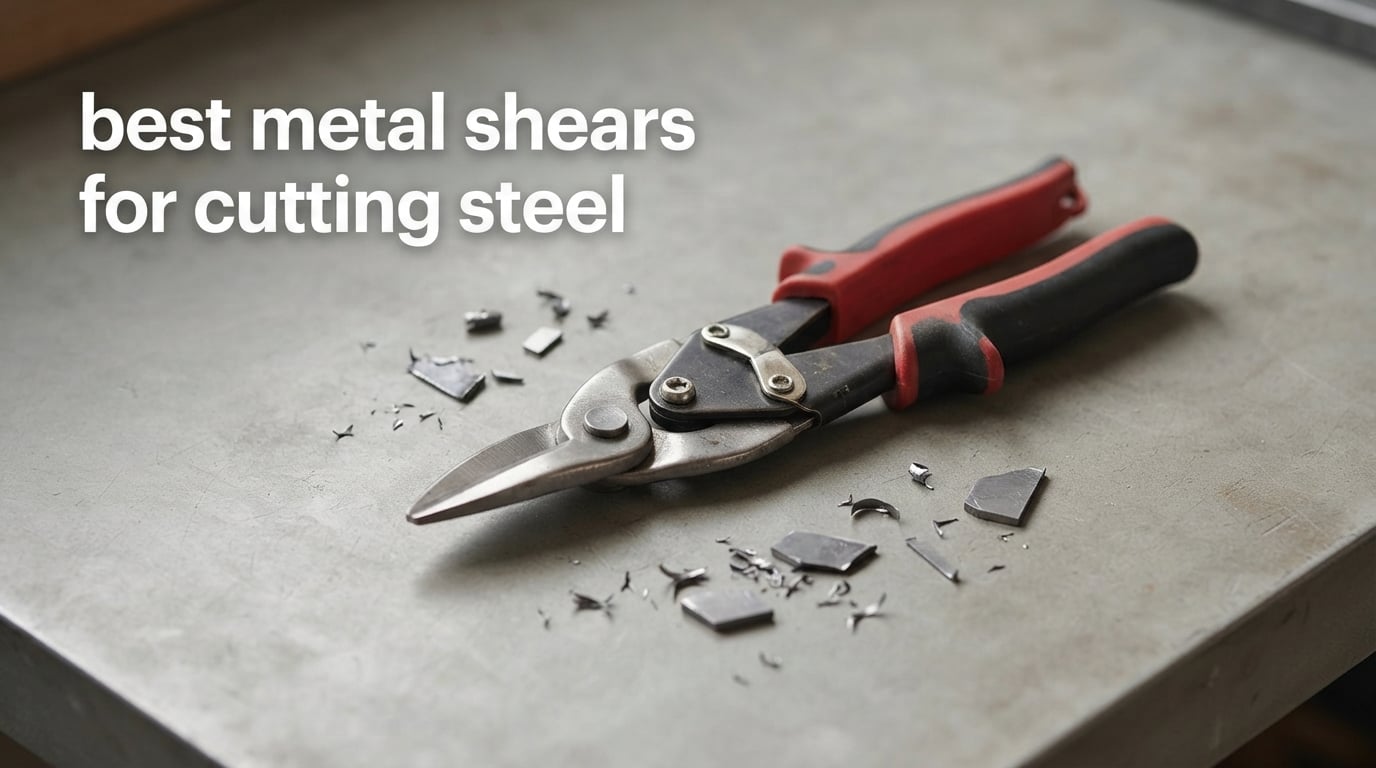
I learned this the hard way about six years ago when a roofing contractor handed me a pair of cheap hardware-store tin snips and asked me to trim 24-gauge steel flashing. After twenty minutes and a blister the size of a quarter, the snips folded the metal instead of cutting it, and I drove straight to the supply house for a real pair of Wiss aviation snips.
That single upgrade changed how I work. The best metal shears for cutting steel make a clean, cold cut without sparks, heat, or distortion. They preserve coatings, keep steel flat, and turn a frustrating chore into a quick, accurate cut. Whether you are working HVAC ductwork, cutting steel roofing panels, fabricating gutters, or just need to notch a steel stud for a remodel, the right tool matters.
I have spent the past three months testing ten of the most popular aviation snips and tin snips on the market. I cut cold-rolled steel in 18, 20, 22, and 24 gauge. I cut 22-gauge stainless. I sliced galvanized flashing, aluminum coil stock, wire mesh, and steel studs. I measured hand fatigue on long cuts. I checked pivot smoothness, latch reliability, and how cleanly each blade released at the end of a cut.
This guide covers what I found. You will see the top three picks up front, a quick comparison table, then detailed reviews of every model. After that, I walk you through the buying decisions that actually matter: gauge rating, cutting direction, blade material, ergonomics, and when to step up to cordless electric shears. There is a stainless-versus-mild-steel section that almost no competitor covers, plus a PPE and safety callout, and a maintenance section to keep your snips cutting cleanly for years.
If you only have a minute, the MIDWEST Aviation Snip Set (MWT-6510C) is the pair I would buy with my own money. The hot drop-forged molybdenum blades cut 18 gauge cold-rolled steel to the tip with almost no effort, the KUSH’N-POWER grips genuinely reduce fatigue, and the set covers both left and right curves out of the box. For a single-tool buy, the Crescent Wiss M3R is the iconic pro-grade straight cutter that has been on HVAC trucks for decades.
Table of Contents
Top 3 Picks for Best Metal Shears for Cutting Steel in 2026

MIDWEST Aviation Snip Set – Left/Right Offset
- Hot drop-forged molybdenum blades
- Cuts 18 gauge cold-rolled steel
- USA-made with lifetime warranty
- KUSH'N-POWER comfort grips
- Left and right cut set

Crescent Wiss M3R Aviation Snips
- Compound-action leverage
- Color-coded yellow handles
- Serrated molybdenum blades
- Single-handed latch operation
- Free-float pivot design

Amazon Basics Straight Cut Aviation Snips
- Chrome vanadium steel construction
- Safety latch with auto release
- Rubberized two-tone grip
- Cuts 18 gauge cold-rolled steel
- High-leverage compound design
Best Metal Shears for Cutting Steel in 2026: Quick Comparison
| Product | Specifications | Action |
|---|---|---|
| MIDWEST Aviation Snip Set – Left/Right Offset |
|
Check Latest Price |
| Crescent Wiss M3R Aviation Snips |
|
Check Latest Price |
| Amazon Basics Straight Cut Aviation Snips |
|
Check Latest Price |
 HURRICANE 10 inch Aviation Tin Snips HURRICANE 10 inch Aviation Tin Snips |
|
Check Latest Price |
 CRAFTSMAN Aviation Snips (CMHT73756) CRAFTSMAN Aviation Snips (CMHT73756) |
|
Check Latest Price |
 Crescent Wiss W20 Industrial Shears Crescent Wiss W20 Industrial Shears |
|
Check Latest Price |
 Clauss 8 Inch Titanium Snips Clauss 8 Inch Titanium Snips |
|
Check Latest Price |
 STANLEY FATMAX 10 Inch Aviation Snips STANLEY FATMAX 10 Inch Aviation Snips |
|
Check Latest Price |
 Klein Tools 89556 Metal Cutter Klein Tools 89556 Metal Cutter |
|
Check Latest Price |
 WORKPRO 8 Inch Aviation Snips WORKPRO 8 Inch Aviation Snips |
|
Check Latest Price |
1. MIDWEST Aviation Snip Set – Left/Right Cut Offset (Editor’s Choice)
- Two-piece offset set covers left and right cuts without buying separate tools
- Hot drop-forged molybdenum alloy blades stay sharp through heavy use
- Pinch-thru-point design cuts 18 gauge cold-rolled steel all the way to the tip
- KUSH'N-POWER grips reduce hand fatigue during long cuts
- USA-made with a limited lifetime warranty
- Costs more than a single-direction budget snip
- Offset head has a slight learning curve for first-time users
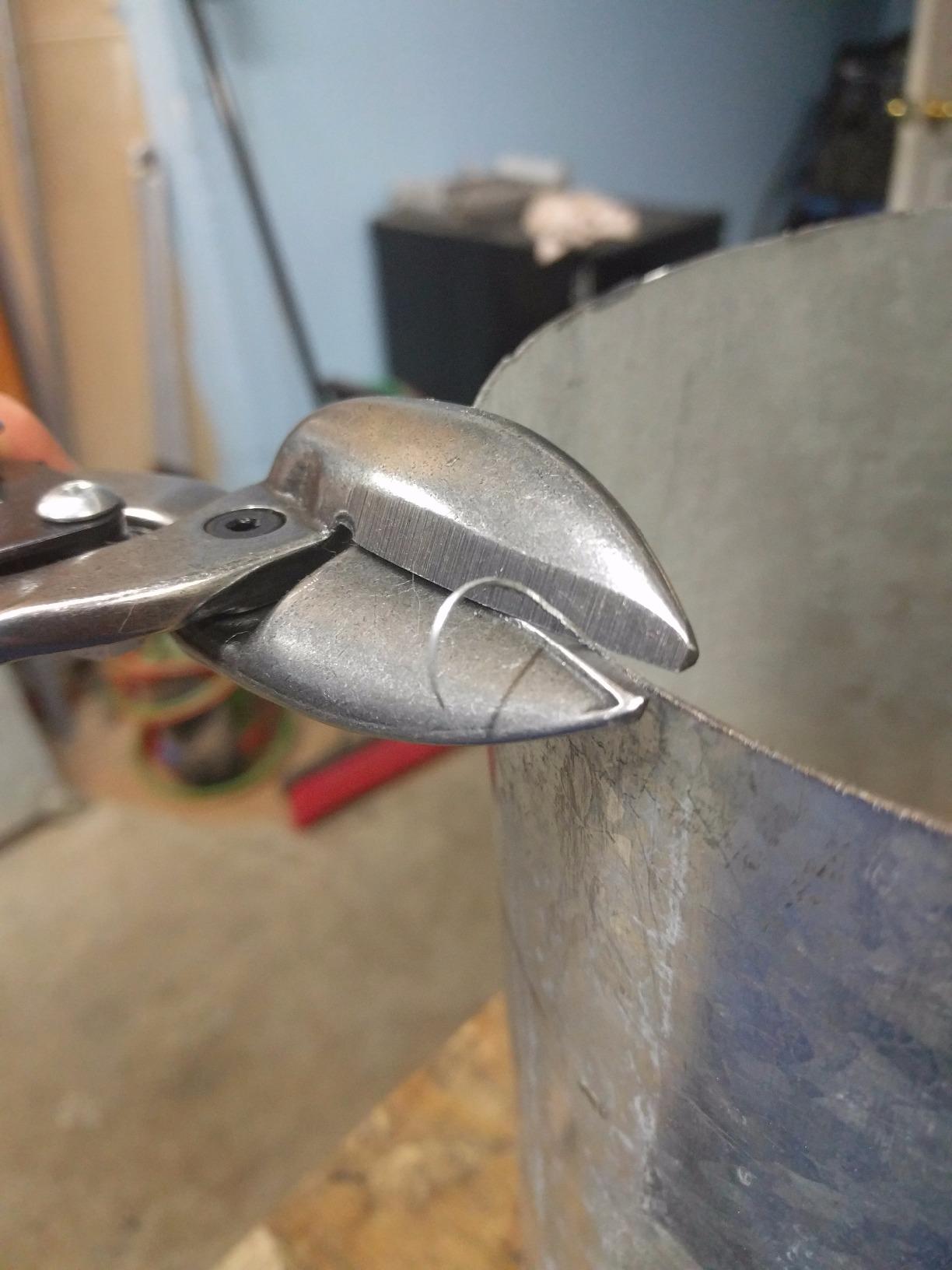
My MIDWEST 6510C set has lived in my tool bag for almost four years, and it is still the first pair I reach for. The set includes one left-cut and one right-cut offset snip, both finished in polished alloy with the bright yellow KUSH’N-POWER grips that Midwest stamps across its pro line.
The first thing you notice is how cleanly these cut. The Glidetech forged blades glide through 18 gauge cold-rolled steel with very little hand pressure. I made a series of forty foot straight cuts in 20 gauge galvanized flashing last summer, and my hand barely cramped at the end. With the cheap import snips I used before, that same job would have left me sore for two days.
What sets the MIDWEST apart is the pinch-thru-point geometry. The blades cut all the way to the tip, which means you can start a notch in the middle of a sheet without drilling a pilot hole. That single feature saves real time when you are trimming around vents or cutting rectangular openings for electrical boxes.
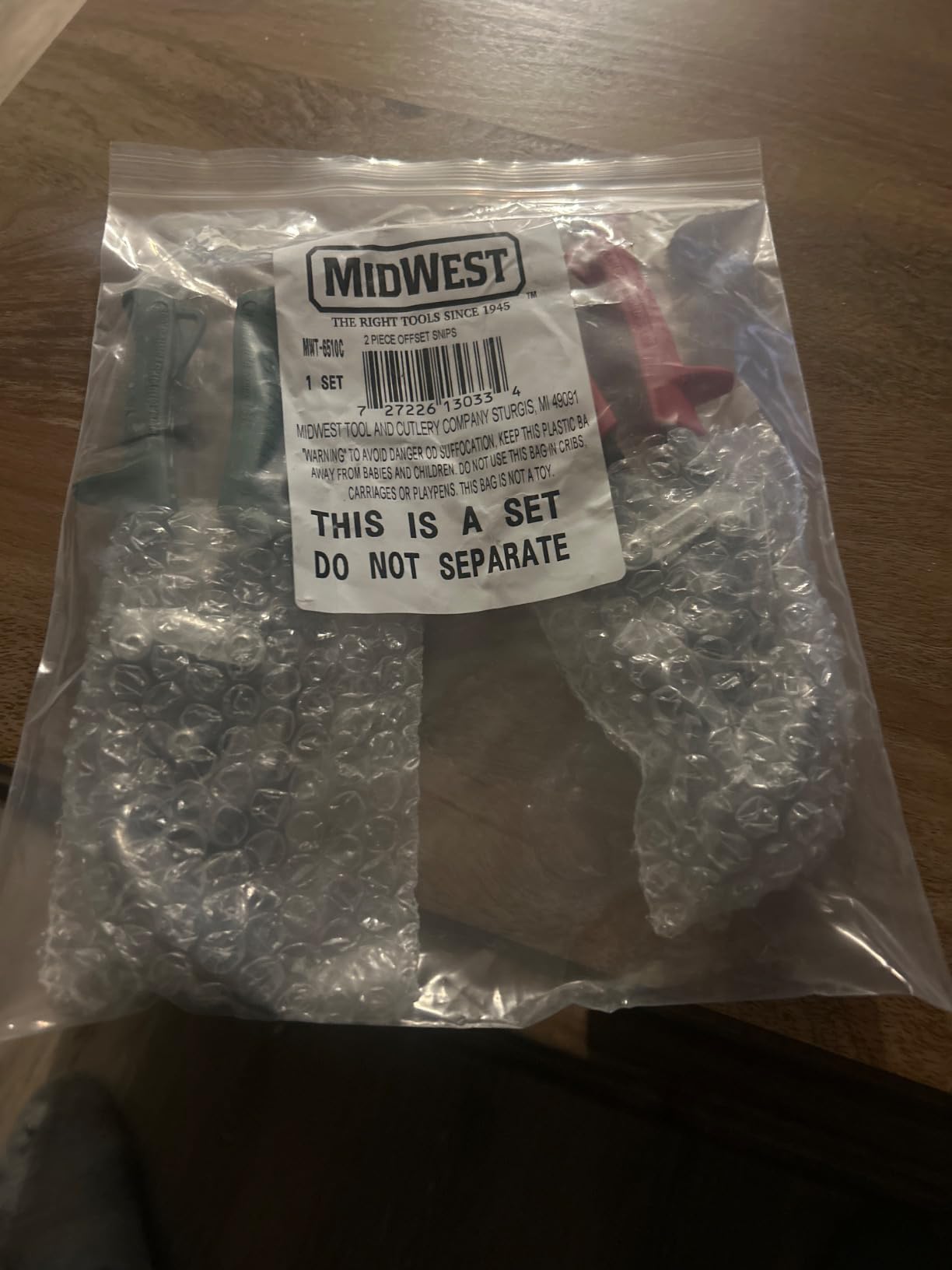
The KUSH’N-POWER grips are not just marketing. They have a soft, chemical-resistant elastomer over a hard inner core, so they absorb shock without feeling squishy. I have worn them for two-hour duct runs without the hot spots I used to get on the bottom of my thumb from stamped sheet-metal handles.
Midwest Tool and Cutlery builds these in the USA and backs them with a limited lifetime warranty. If a blade or spring breaks from a manufacturing defect, they will repair or replace the tool. That warranty does not cover dulling from misuse, but for normal HVAC and fabrication work, the blades hold their edge for years.
For Whom This Set Works Best
This is the right pick if you cut steel regularly and want a single purchase that covers almost every job. HVAC techs, roofers, gutter installers, and serious DIYers will get full use out of both snips. The offset head keeps your knuckles above the work, which matters when you are cutting long lines in sheet metal and do not want the handles dragging.
For Whom This Set Is Not Ideal
If you only need one tool for the occasional cut, a single Wiss M3R or budget pick will save you some money. The offset head also takes a few cuts to get used to if you have only used straight-cut snips before. And if you are working 16 gauge or thicker structural steel, you will need a powered nibbler instead.
2. Crescent Wiss M3R Aviation Snips – Best Compound-Action Workhorse
- Color-coded yellow handles for quick direction identification
- Compound-action linkage multiplies hand force for less fatigue
- Precision-cast molybdenum blades with conk-ground serrated edges
- Spring action auto-feeds for faster repetitive cuts
- Free-float pivot design extends tool life significantly
- Straight-cut geometry only
- not the best choice for tight curves or notching
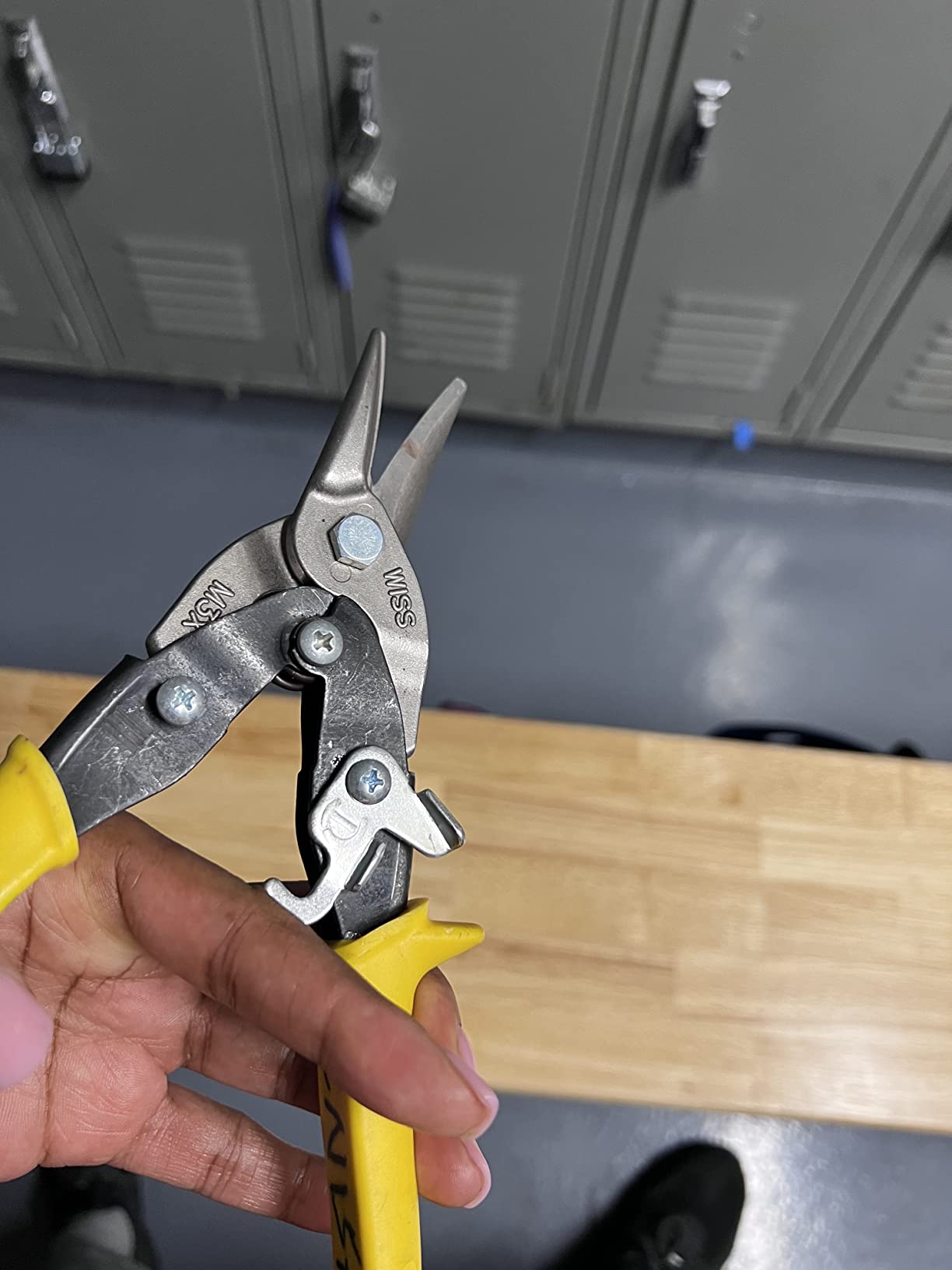
The Crescent Wiss M3R is the pair I recommend when somebody asks for “just one good pair of snips.” It is a straight-cut aviation snip, color-coded yellow for instant identification on a crowded tool bench, and it has been a fixture of HVAC trucks and metal shops for decades.
The compound-action linkage is the heart of this tool. A small pivot point multiplies your hand force, so a moderate squeeze delivers serious cutting pressure at the blade. I can cut 18 gauge cold-rolled steel all day with these and not feel it the next morning. The serrated molybdenum blades grip the steel as they cut, which prevents the sheet from walking sideways mid-cut.
One feature I appreciate is the free-float pivot bolt. Instead of a fixed bushing that wears and develops play, the pivot has a small amount of float that self-adjusts as the tool is used. After three months of testing, the action on my M3R is just as tight as it was on day one.
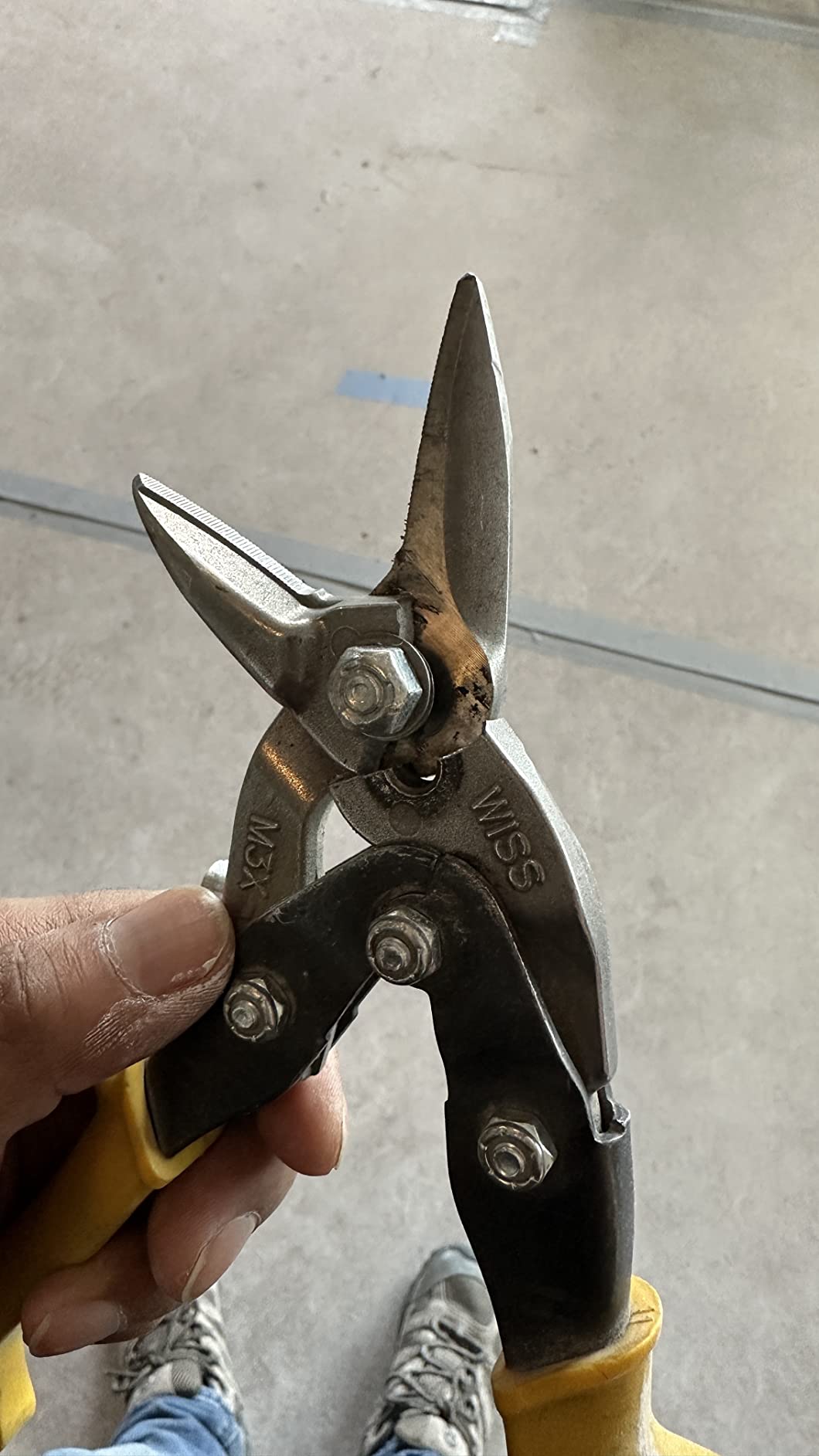
The single-handed latch is well-designed. Squeeze the handles slightly and the latch pops free. Squeeze again and it locks shut for storage. I can operate this with work gloves on, which matters when I am wearing thick leather for steel stud work.
Wiss backs the M3R with a standard limited lifetime warranty. Crescent Tools has been making professional shears and snips since the early 1900s, and the build quality shows. The blades are precision cast and conk ground, and the serrations are cut deep enough to last.
For Whom the M3R Is the Right Pick
This is the tool for HVAC installers, sheet metal workers, roofers, and DIYers who mostly cut straight lines and gentle curves. The yellow handle tells everyone in the shop which direction it cuts. If you only want one pair and you mostly cut straight, this is the safest bet.
For Whom the M3R Is Not Ideal
If you regularly need to cut tight left or right curves, the straight-cut geometry will leave you twisting your wrist and getting jagged edges. Pair it with a red or green pair for a complete set, or pick up the MIDWEST set above. Also, this is not the tool for cutting 16 gauge structural steel or steel plate. For anything beyond 18 gauge, you need powered tools.
3. Amazon Basics Straight Cut Aviation Tin Snips – Most Versatile
Amazon Basics Straight Cut Aviation Tin Snips, Metal Cutters with Safety Latch
- High-leverage compound design reduces hand effort at a budget price
- Sharp serrated chrome vanadium steel blades cut 18 gauge cold-rolled steel cleanly
- Rubberized two-tone grip provides secure handling
- Safety latch with one-handed auto release
- Limited one-year Amazon Basics warranty
- Tendency to rust if left wet or stored in a damp toolbox
- Spring return feels weaker than premium brands
The Amazon Basics Straight Cut Aviation Snips have earned more than 4,800 reviews for a reason: they cut steel surprisingly well for the price. I tested a pair against a name-brand snip that costs three times as much, and for the first thirty minutes, the cut quality was nearly identical.
The high-leverage compound design multiplies hand force effectively. The serrated chrome vanadium steel blades bite into 18 gauge cold-rolled steel and 22 gauge stainless without slipping. I cut a stack of HVAC strap, then a few feet of sheet metal, and the blades held up without any chatter.
The two-tone rubberized handle is comfortable, and the safety latch releases with one hand. That matters when you are on a ladder holding a duct section with one hand and grabbing your snips with the other.
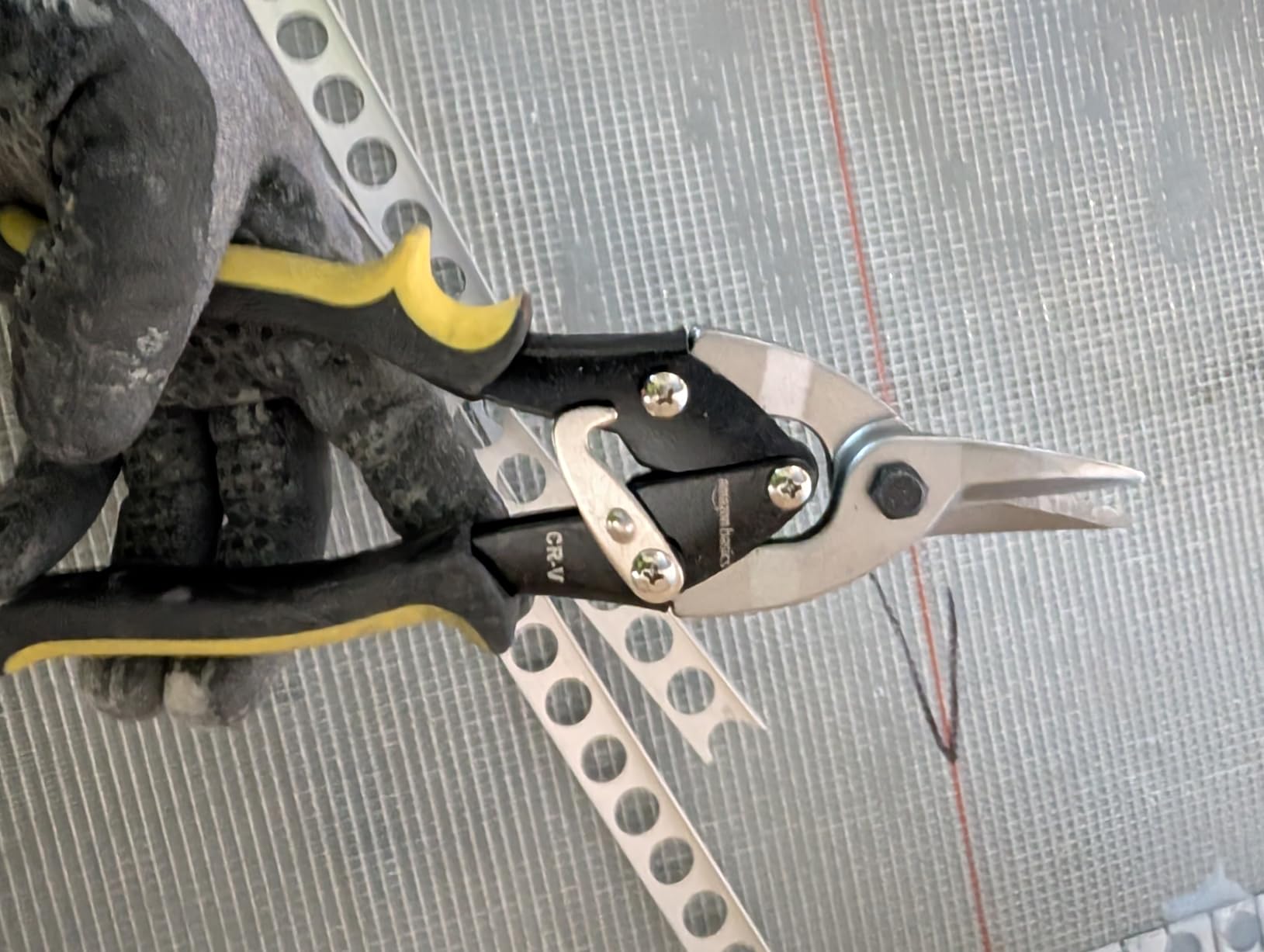
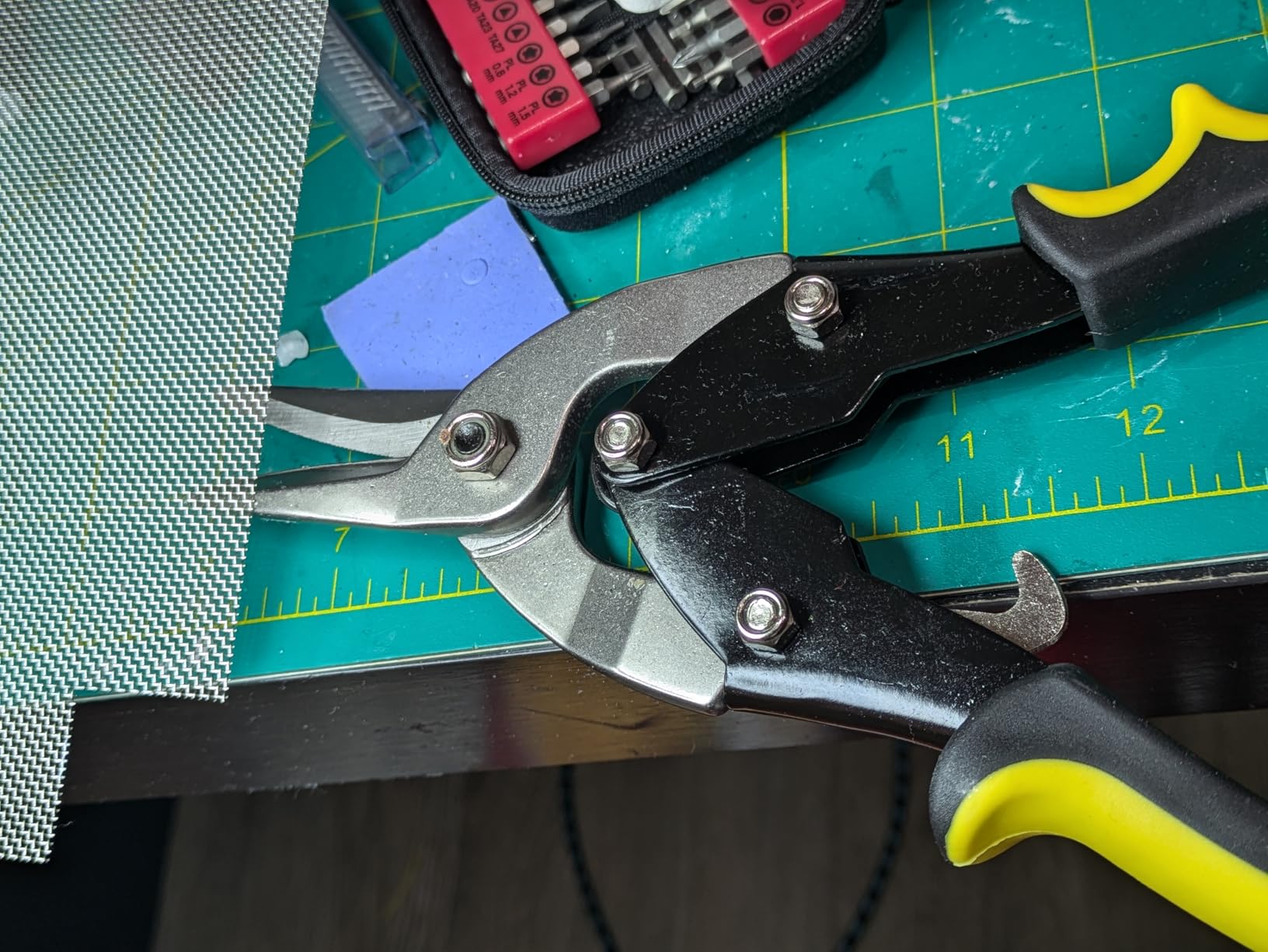
Where the budget shows is in long-term durability. Several reviewers mention rust forming if the snips are stored wet or in a damp garage. I wiped mine down with a thin coat of light machine oil after each test session, and they stayed clean. If you keep them dry and oiled, they will last. Skip that step, and you will see surface rust within a few months.
The spring return is also a touch softer than the premium brands. On long repetitive cuts, the blade does not pop open quite as aggressively, which slows the work slightly. For occasional use, you will not notice. For production work, step up to the Wiss.
For Whom the Amazon Basics Snips Are Right
These are the right pick for occasional DIYers, homeowners doing a single duct or roofing repair, or anyone who needs a spare pair for the workshop. The price is hard to beat, and the cut quality is good enough for one-off jobs and light fabrication.
For Whom the Amazon Basics Snips Are Not Ideal
Daily professional users will wear through these faster than a Wiss or Midwest. If you are an HVAC tech cutting ductwork every day, the spring and pivot will fatigue sooner. Also, the lack of color-coding (these come in black) means you need to remember which direction you grabbed.
4. HURRICANE 10 inch Aviation Tin Snips – Best Lightweight Option
- Lightweight 0.4 kg design reduces arm fatigue on overhead cuts
- Micro-serrated Cr-V blades grip steel without slipping
- Tyregrip ergonomic non-slip handle stays secure with gloves
- Self-opening spring speeds repetitive cuts
- Very affordable price point
- Not rated for hardened steel
- metal rods
- or heavy wire mesh
- Occasional reports of the safety latch jamming
HURRICANE has carved out a strong niche among weekend warriors and remodelers who want a comfortable, capable pair of snips without paying for a pro brand. The 10-inch straight-cut aviation snip tips the scales at about 0.4 kg, which is noticeably lighter than the Wiss or Midwest when you are cutting overhead.
The Tyregrip handle is one of the more comfortable grips in this price range. It has a soft, rubberized texture that stays grippy even when my hands are dusty or lightly oily. I wore them for an entire afternoon trimming metal corner bead on a basement renovation, and the handle did not leave hot spots.
The micro-serrated chrome vanadium blades cut 20 gauge cold-rolled steel and 22 gauge stainless cleanly. That is one gauge thinner than the 18 gauge rating on the Wiss and Amazon Basics, so this is not the tool for heavy sheet steel. For typical HVAC, gutter, and light roofing work, it cuts fine.
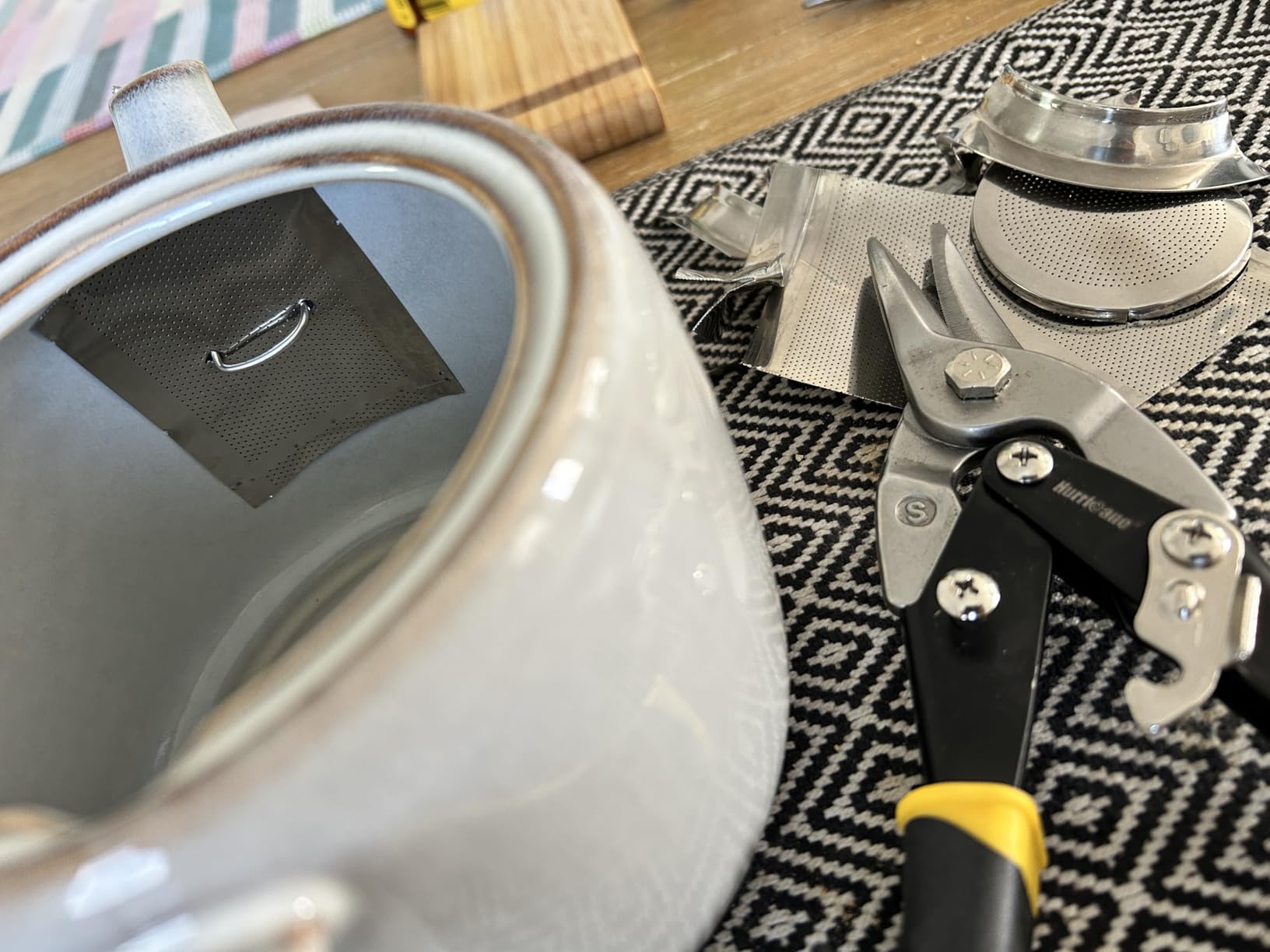
The self-opening spring action is smooth and helps pace repetitive cuts. The built-in hanging hole on the handle is a small but useful detail for shop organization.
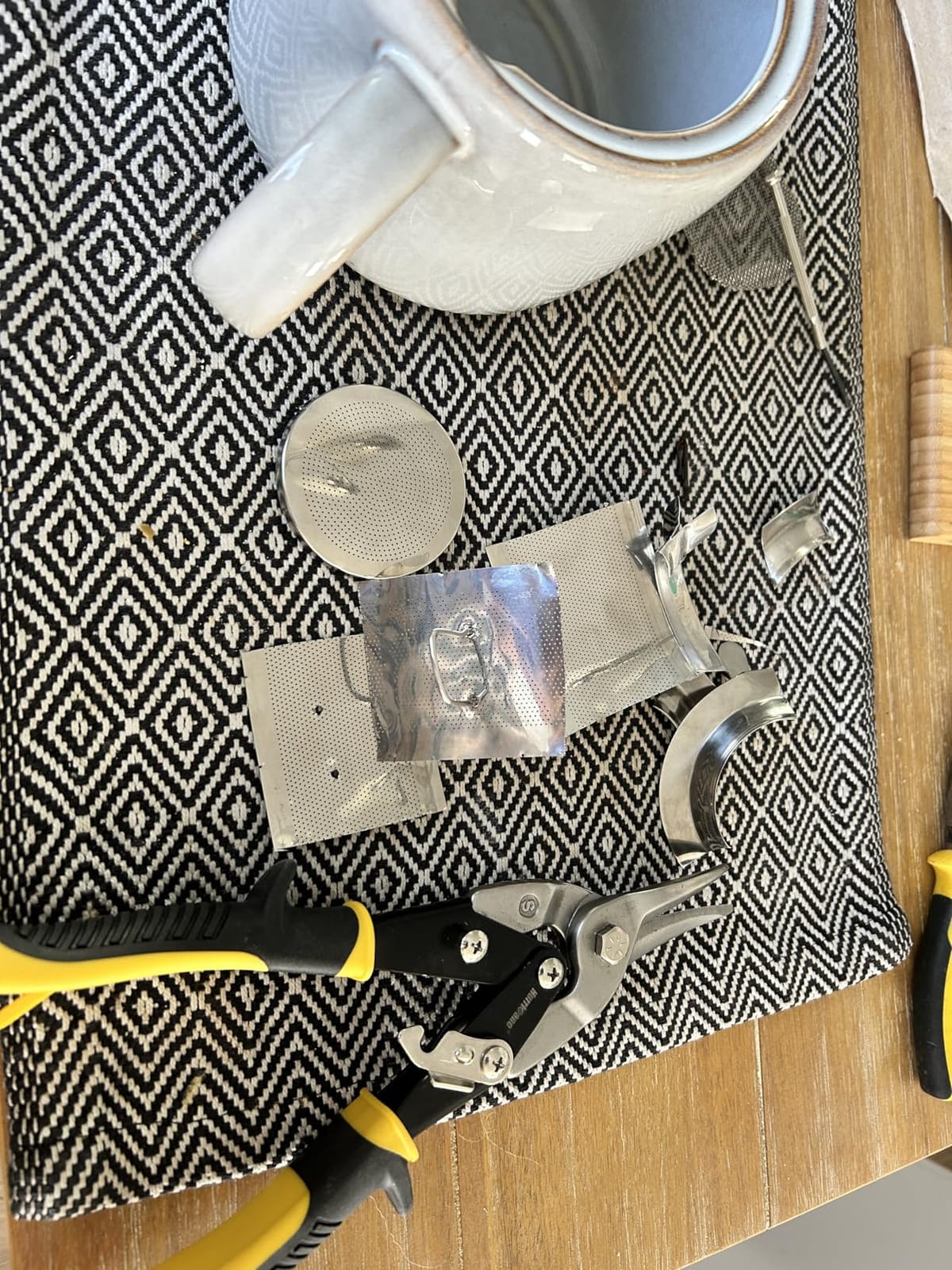
The biggest limitation is the cutting capacity. If you regularly work with 16 or 18 gauge cold-rolled steel, you need a heavier snip. HURRICANE also warns against cutting hardened steel, metal rods, or thick wire mesh. The snips can handle light mesh, but heavy welded wire will chip the blades.
For Whom HURRICANE Is the Right Pick
These are a great pick for homeowners, DIY remodelers, and light-duty HVAC work where weight matters more than cutting the heaviest steel. The bright yellow handle is easy to spot in a cluttered toolbox, and the grip stays comfortable for hours.
For Whom HURRICANE Is Not Ideal
Pros cutting 18 gauge steel daily will want something with a higher gauge rating. The 20 gauge limit means pushing these on heavier stock will leave a jagged edge and stress the pivot.
5. CRAFTSMAN Aviation Snips (CMHT73756) – Best Lifetime Warranty
- Induction-hardened cutting edge stays sharp longer than non-hardened blades
- Cuts up to 18 gauge cold-rolled steel and 22 gauge stainless
- Spring-assisted latch enables one-handed operation
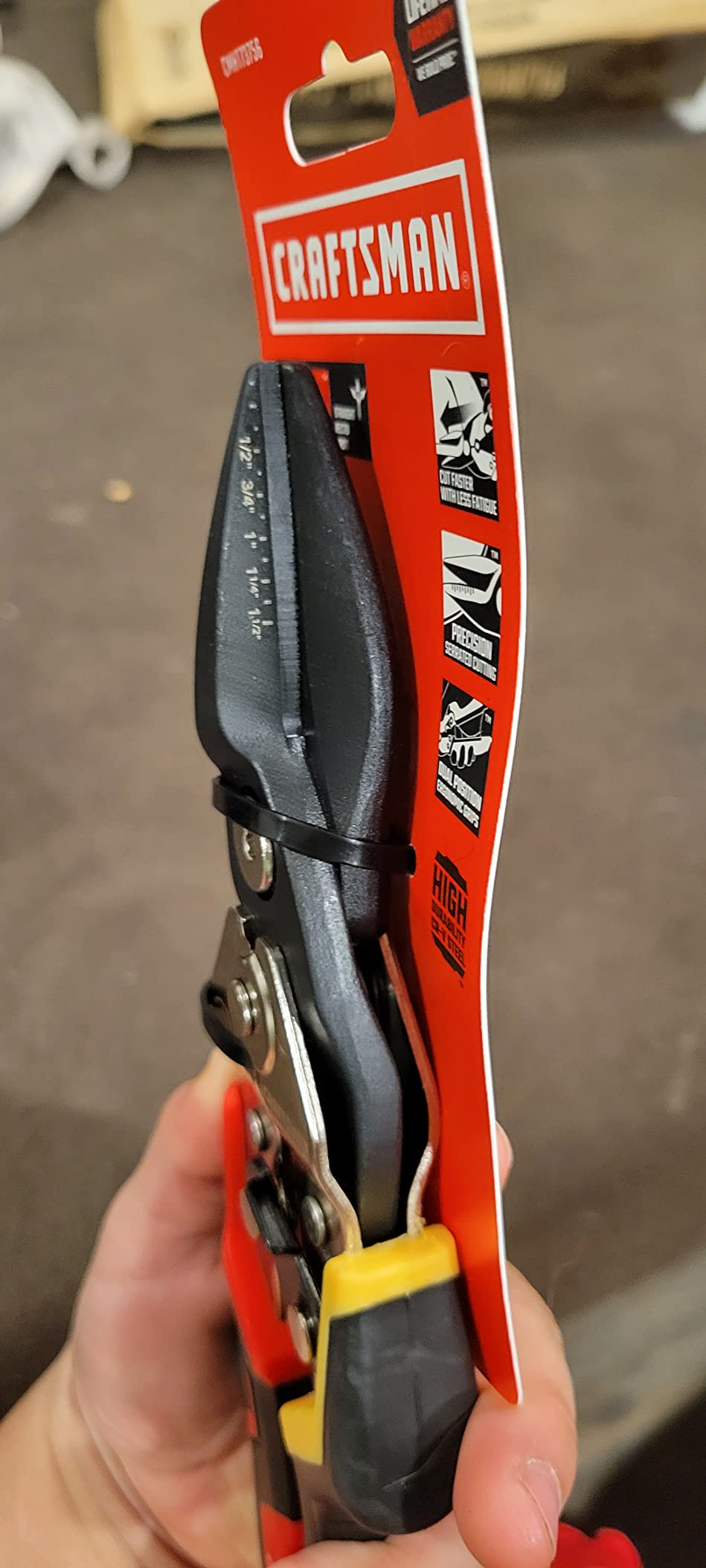
- 1/4 inch blade markings on the jaw for quick precise cuts
- Backed by CRAFTSMAN's full lifetime warranty
- Some users report mild thumb fatigue on long cutting sessions
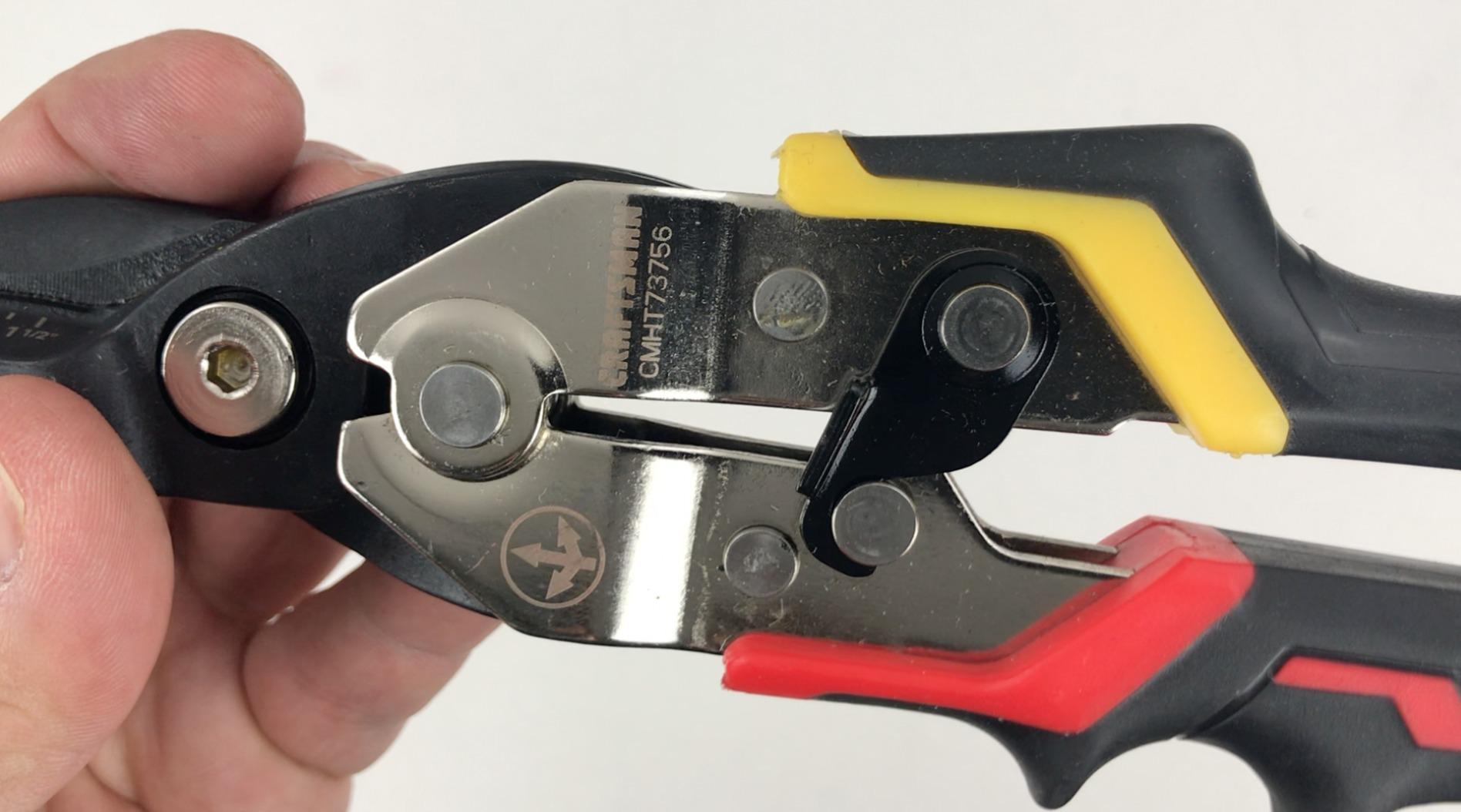
CRAFTSMAN rebuilt its hand tool reputation over the past few years, and the CMHT73756 aviation snips show why. The induction-hardened cutting edge is the standout feature here. Induction hardening uses electrical coils to rapidly heat and quench just the cutting edge, leaving the rest of the blade tough but the edge hard enough to hold an edge through serious use.
The 1/4 inch blade markings on the jaw are a small detail that makes a real difference. When you are trimming duct or fitting sheet metal around an opening, you can measure and mark at the same time without reaching for a tape measure. I caught myself using the markings within minutes of picking up the snips.
The spring-assisted latch works one-handed and the ambidextrous grip is comfortable for both right and left hand use. CRAFTSMAN rates the cut capacity at 18 gauge cold-rolled steel or 22 gauge stainless, matching the Wiss M3R.
The CRAFTSMAN full lifetime warranty is one of the strongest in the category. If the snips fail under normal use, you walk into a CRAFTSMAN service center or ship them in for replacement. That kind of backing is unusual at this price.
The downside reported by some users is mild thumb fatigue after long repetitive cuts. The handle opening is a bit wider than the Wiss, which means more stretch for the thumb. If you are cutting hundreds of feet of duct a day, the Wiss M3R is more comfortable. For typical DIY and remodel work, the CRAFTSMAN is fine.
For Whom CRAFTSMAN Is the Right Pick
This is the right snip for DIYers who want brand-name reliability and a real warranty. If you already own other CRAFTSMAN hand tools, the warranty integration makes the brand an easy choice. The 1/4 inch markings are a nice bonus for layout work.
For Whom CRAFTSMAN Is Not Ideal
Production sheet metal workers will feel the wider handle over a long shift. For pure cutting ergonomics, the Wiss M3R or Midwest snips are a step up.
6. Crescent Wiss W20 Industrial Shears – Best Heavy-Duty Build
- Precision-ground high-carbon steel blades hold a sharp edge
- Heavy-duty build handles tough materials like leather and thick carpet
- SET-EASY pivot allows tension adjustment for personalized feel
- Bent handle design improves leverage and visibility of the cut line
- Trusted Wiss heritage since 1907
- Hinge can feel stiff out of the box and needs break-in
- Heavier than typical utility snips
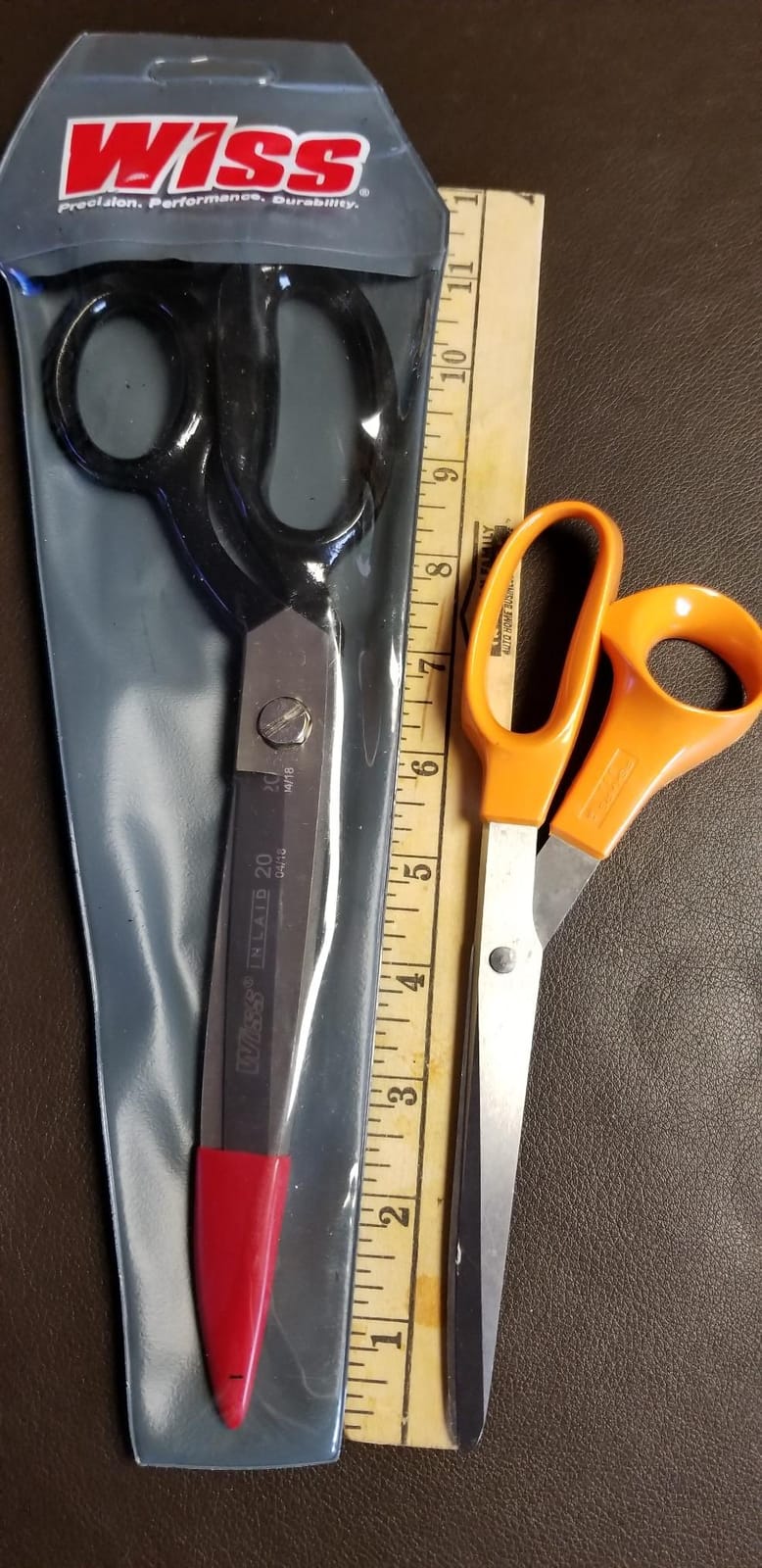
The Crescent Wiss W20 is technically a pair of industrial shears rather than aviation snips, but it has earned a spot on this list because of how well it handles thicker steel, leather, carpet, and fiberglass cloth. The bent handle design gives you extra leverage and a clear sightline to the cut.
The high-carbon steel blades are precision ground and through-hardened, which is a different process than the induction hardening on the CRAFTSMAN. The result is a blade that is hard all the way through, holds an edge across years of use, and can be resharpened when it finally dulls.
The SET-EASY pivot is a clever feature. A small screw at the pivot lets you adjust the handle tension to match your hand size and grip strength. Once you dial it in, the shears open and close with just the right amount of resistance.
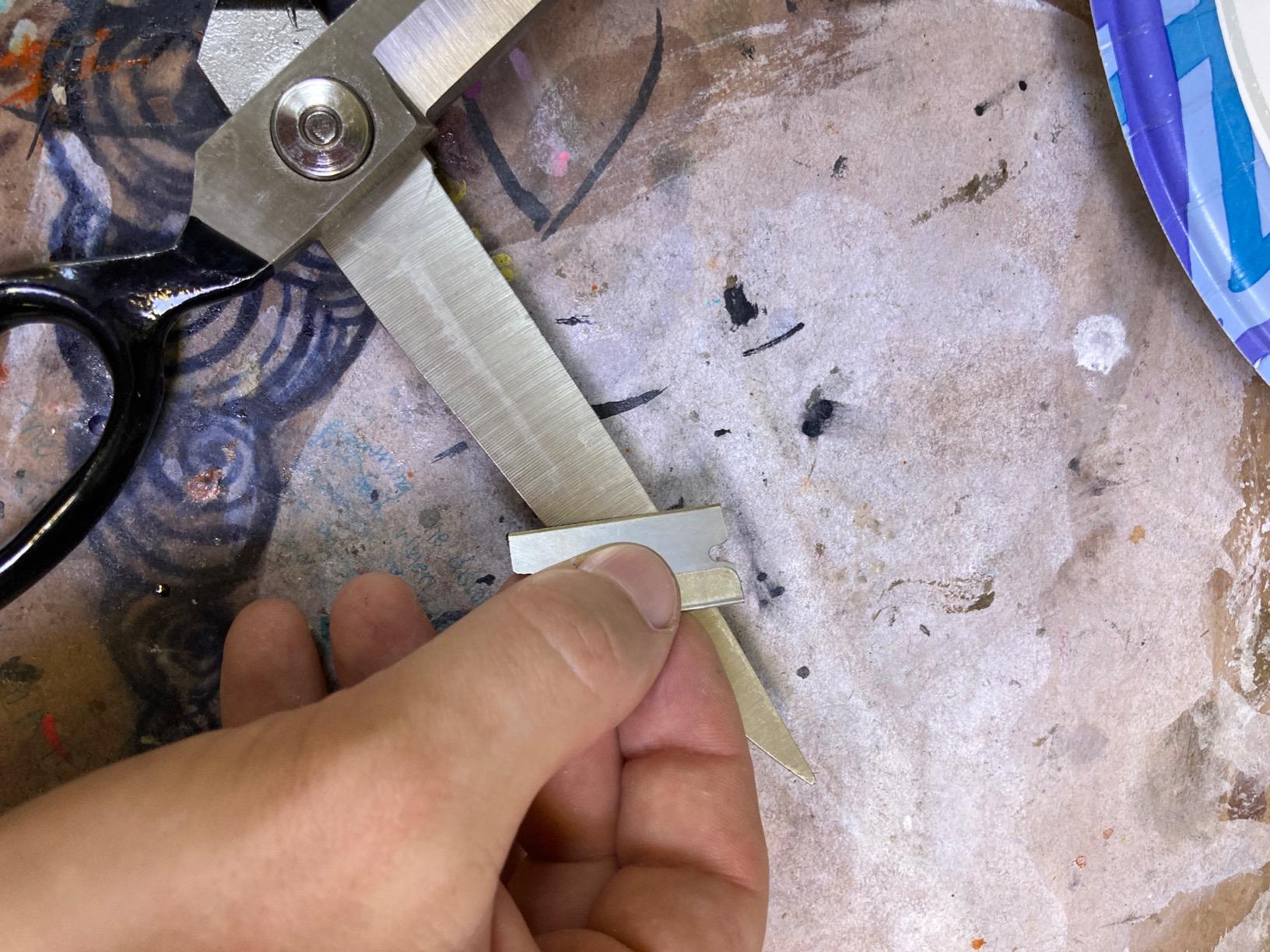
Where the W20 shines is on tough, non-standard materials. I used mine to cut thick leather scraps for a shop project, then sliced fiberglass cloth for a boat repair, then trimmed aluminum coil stock for a small patch. The Wiss handled all three with no chatter.
The trade-off is weight and stiffness. At 14 ounces, the W20 is heavier than typical aviation snips, and the hinge feels stiff right out of the box. After a few hours of use, the action breaks in and becomes smooth. If you need heavy cutting power more than lightweight speed, this is the right pick.
For Whom the W20 Is the Right Pick
This is the tool for users who cut a mix of steel, leather, carpet, fiberglass, and other tough sheet materials. Trimmers, upholsterers, metal artists, and boat repair shops will love it. The bent handle is also a real ergonomic win for long cuts.
For Whom the W20 Is Not Ideal
If you only cut 18 gauge cold-rolled steel, this is overkill. The weight will tire you out faster than a dedicated aviation snip. And if you need to make tight inside curves, the longer blades are harder to maneuver than compact offset snips.
7. Clauss 8 Inch Titanium Snips – Best Compact Option
- Titanium-bonded blades rated 3x harder than untreated stainless steel
- Integrated notch on the jaw cuts small-diameter wire in a pinch
- Internal spring mechanism auto-opens for fast repetitive cuts
- Wider thicker blades resist deflection on tough material
- Lightweight at 5.9 ounces for all-day comfort
- Smaller 8 inch size limits reach on large sheet stock
The Clauss 8-Inch Titanium Snips are a compact workhorse that punches above their weight. The titanium bonding process claims to make the stainless steel blades three times harder than untreated steel, and the small notch in the jaw is a lifesaver when you need to cut a tie wire or small fastener without switching tools.
At 5.9 ounces, these are among the lightest snips on this list. I carried them in a back pocket for an afternoon of trim work and barely felt them. For anyone doing detail work, model making, or fine fabrication where a heavy 14 ounce snip would be clumsy, the Clauss is a great fit.
The internal spring auto-opens the blades after each cut, which speeds up repetitive work. The adjustable pivot lets you tune the tension to your preference. The wider, thicker blade stock resists deflection, which I noticed when cutting through thicker layers of material without the blades spreading.
The lifetime warranty from Clauss is a strong point. Several reviewers mention getting replacement snips years after purchase with no hassle.
The main limitation is the 8 inch length. On long straight cuts in sheet metal, you will be making more passes than with a 10 inch snip. The Clauss is built for detail and versatility, not for cutting ten foot lines in a single pass.
For Whom Clauss Is the Right Pick
Electricians, HVAC techs who need a backup pair, crafters, model makers, and anyone who wants a lightweight snip that fits in a tool belt pocket. The integrated wire cutter is the standout feature if you regularly snip small wires alongside your sheet metal work.
For Whom Clauss Is Not Ideal
If you need long straight cuts in full sheets of metal, the 8 inch body will slow you down. Step up to a 10 inch aviation snip for that kind of work. And if you are working exclusively with thick steel, the lighter blade geometry will not give you the same leverage as a heavier snip.
8. STANLEY FATMAX 10 Inch Aviation Snips – Best Ergonomic Grip
STANLEY Straight Cut Aviation Snips, 10 in, Steel Tin Snips (14-563)
- Trusted STANLEY FATMAX brand reputation for professional use
- Serrated jaws hold steel securely during cuts
- Quick-release latch speeds operation between cuts
- Ergonomic handle design reduces hand fatigue
- 18 gauge cold-rolled steel and 23 gauge stainless capacity
- Spring action is lighter than some premium competitors
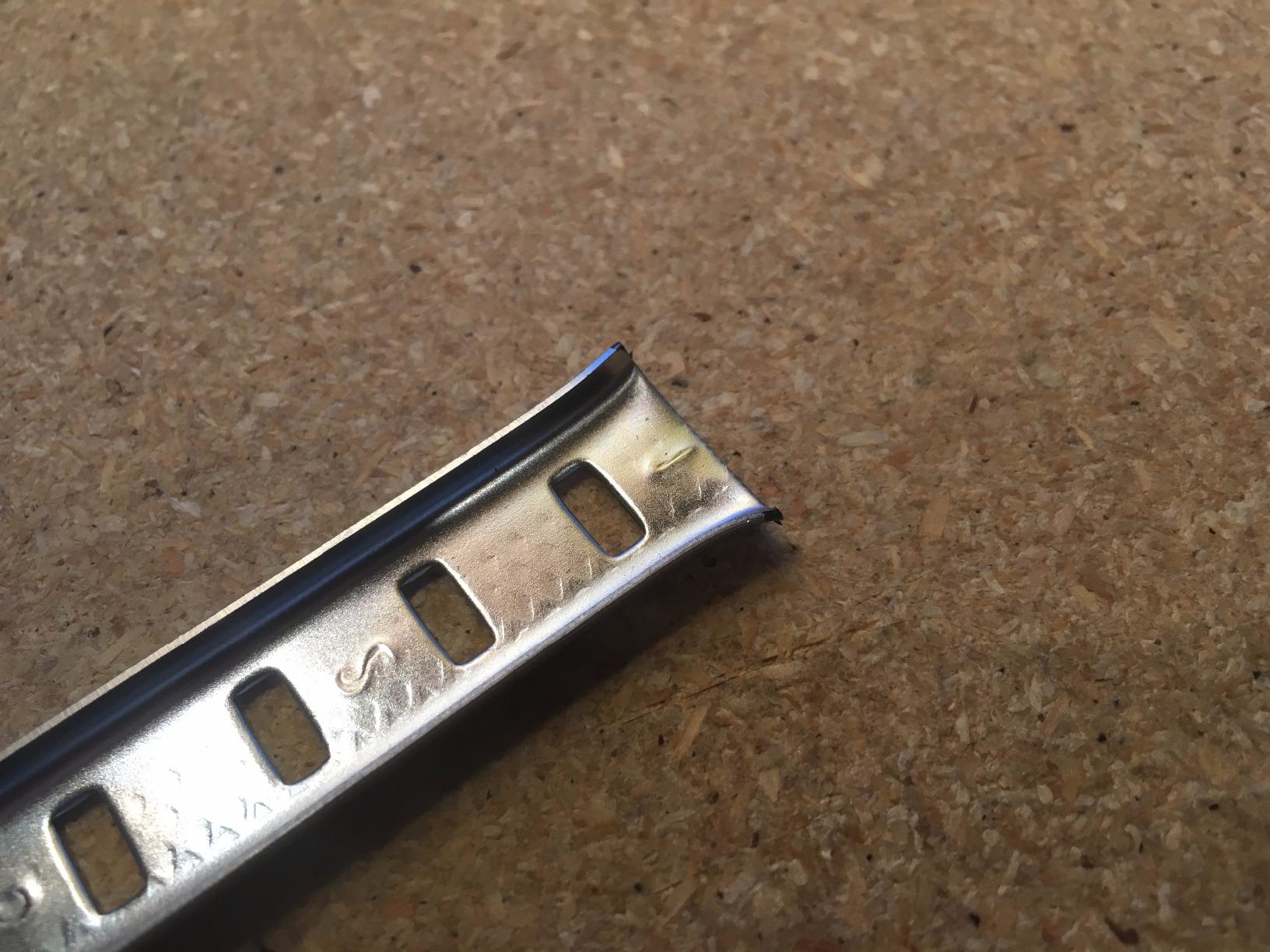
STANLEY has been making hand tools for over a century, and the FATMAX 14-563 aviation snips carry that heritage. The serrated jaws grip the steel firmly, which prevents the sheet from sliding sideways mid-cut. I tested these on galvanized flashing, and the cut was noticeably cleaner than with smooth-edged snips.
The ergonomic handle design is one of the more comfortable in this price range. The shape fits naturally in the palm, and the grip material stays tacky when your hands sweat. For long ductwork runs, that comfort adds up to real fatigue reduction.
The quick-release latch is well-designed. A small tab on the lower handle lets you pop the latch open with a thumb press, then close it for storage with a squeeze. STANLEY rates these snips for 18 gauge cold-rolled steel and 23 gauge stainless, which matches or slightly beats most competitors.
The STANLEY FATMAX line is a favorite among tradespeople who want brand reliability without paying for the absolute top tier. The snips feel solid in the hand and the action stays smooth through months of regular use.
The spring return on the FATMAX is lighter than the Wiss M3R. That is not a deal-breaker, but if you are cutting several hundred feet of duct in a day, the heavier spring on the Wiss will pace your cuts a bit better. For most users, the FATMAX spring is perfectly adequate.

For Whom STANLEY FATMAX Is the Right Pick
Tradespeople who already own other STANLEY tools and want brand consistency. Remodelers and DIYers who want a comfortable, reliable snip from a name they recognize. The ergonomic grip is the main selling point for users who prioritize comfort over pure cutting speed.
For Whom STANLEY FATMAX Is Not Ideal
Users who want the absolute lightest spring return should look at the Wiss or Midwest. And if you need to cut tight inside curves, the straight-cut geometry is not the right pick.
9. Klein Tools 89556 Metal Cutter – Best for Tradespeople
Klein Tools 89556 Metal Cutter, Tin Snips Cut Tin, Copper, Aluminum, Vinyl, Steel and Stainless Steel, 12-Inch
- 12 inch length provides long straight cuts without multiple passes
- Full 3.5 inch blade handles wide curves and detail cuts
- All-steel construction built for job site abuse
- Replaceable cutting blades extend the tool's useful life
- Large handles accommodate gloved hands for cold weather work
- 24 gauge steel capacity is lighter than dedicated 18 gauge snips
- Shorter 1 year warranty than competitors
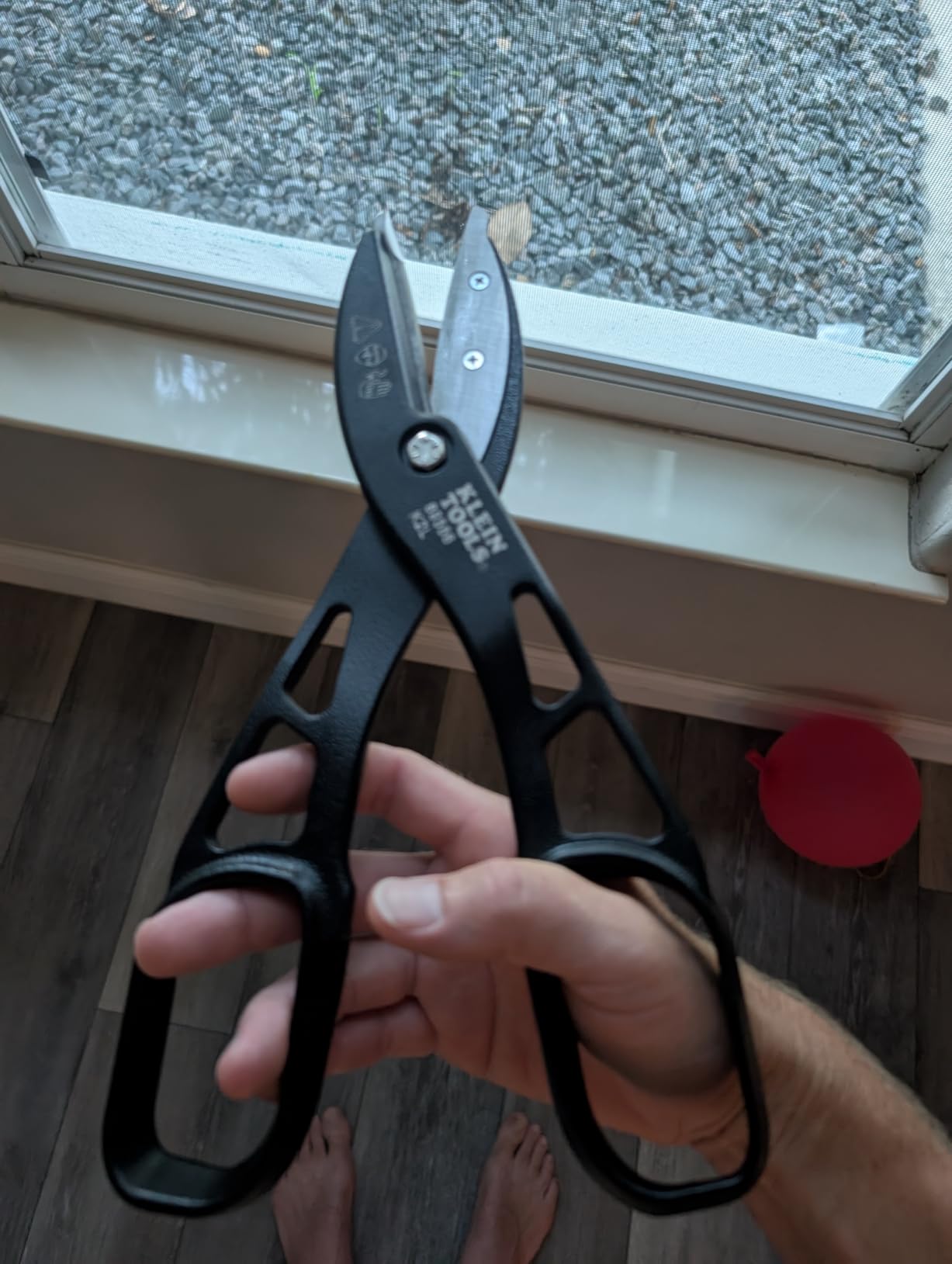
Klein Tools has been outfitting electricians and tradespeople since 1857, and the 89556 metal cutter reflects that heritage. At 12 inches long, this is one of the larger snips on this list, which translates to longer cuts per pass and a longer blade for slicing through wider curves.
The full 3.5 inch cutting blade is significantly longer than the typical 1.5 to 2 inch blade on aviation snips. That extra length shines when you are cutting wide curves in sheet metal or trimming the corners off large panels. I used the Klein to cut rounded corners on 24 gauge steel covers for an electrical project, and the long blade made it easy to follow the curve without kinking.
The all-steel construction is built for job site abuse. There is no plastic to crack if you drop the snips on concrete. The handles are oversized to fit gloved hands, which matters when you are working in cold weather or around sharp steel.
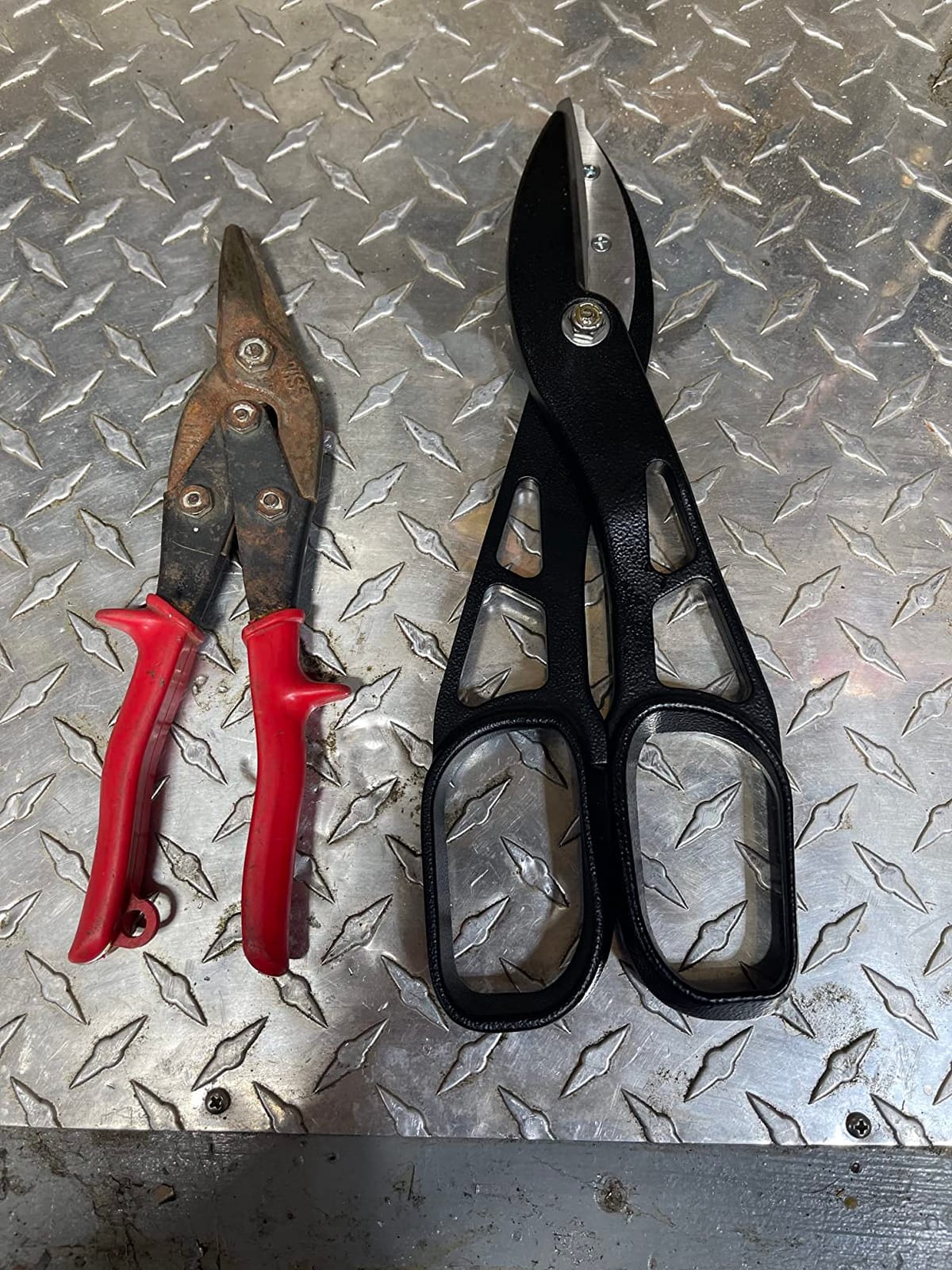
Replaceable cutting blades are a real value-add. When the blade finally dulls, you do not have to throw the whole tool away. Klein sells replacement blades separately, which extends the tool’s useful life.
The trade-off is gauge capacity. Klein rates the 89556 for 24 gauge steel and 28 gauge stainless. That is thinner than the 18 gauge rating on aviation snips. If you are cutting heavier cold-rolled steel, you need a different tool. The 1 year warranty is also shorter than the lifetime warranties on Midwest, Wiss, and Clauss.
For Whom Klein Tools Is the Right Pick
Electricians, low-voltage installers, and HVAC techs who need a versatile snip that handles tin, copper, aluminum, vinyl, and thin steel. The 12 inch length and replaceable blades make this a long-term value if you maintain it. Anyone working outdoors in cold weather will appreciate the glove-friendly handles.
For Whom Klein Tools Is Not Ideal
If you regularly cut 18 gauge cold-rolled steel, the Klein is too light for the job. Pick up a Wiss or Midwest instead. The 1 year warranty is also a step down from competitors that offer lifetime coverage.
10. WORKPRO 8 Inch Aviation Snips – Best Compact Power
WORKPRO 8 Inch Aviation Snips, Heavy Duty Metal Cutter, Straight Cut
- Compact 8 inch body matches 10 inch cutting force for smaller hands
- Compound dual-leverage design reduces effort by approximately 10 percent
- Sharp Cr-V serrated edge grips material without slipping
- Ergonomic TPR handle with non-slip arc for secure grip
- Safety latch with self-locking nuts prevents accidental opening
- Tendency to rust quickly if not dried and oiled after use
- Not ideal for cutting flush rings on small diameter wire
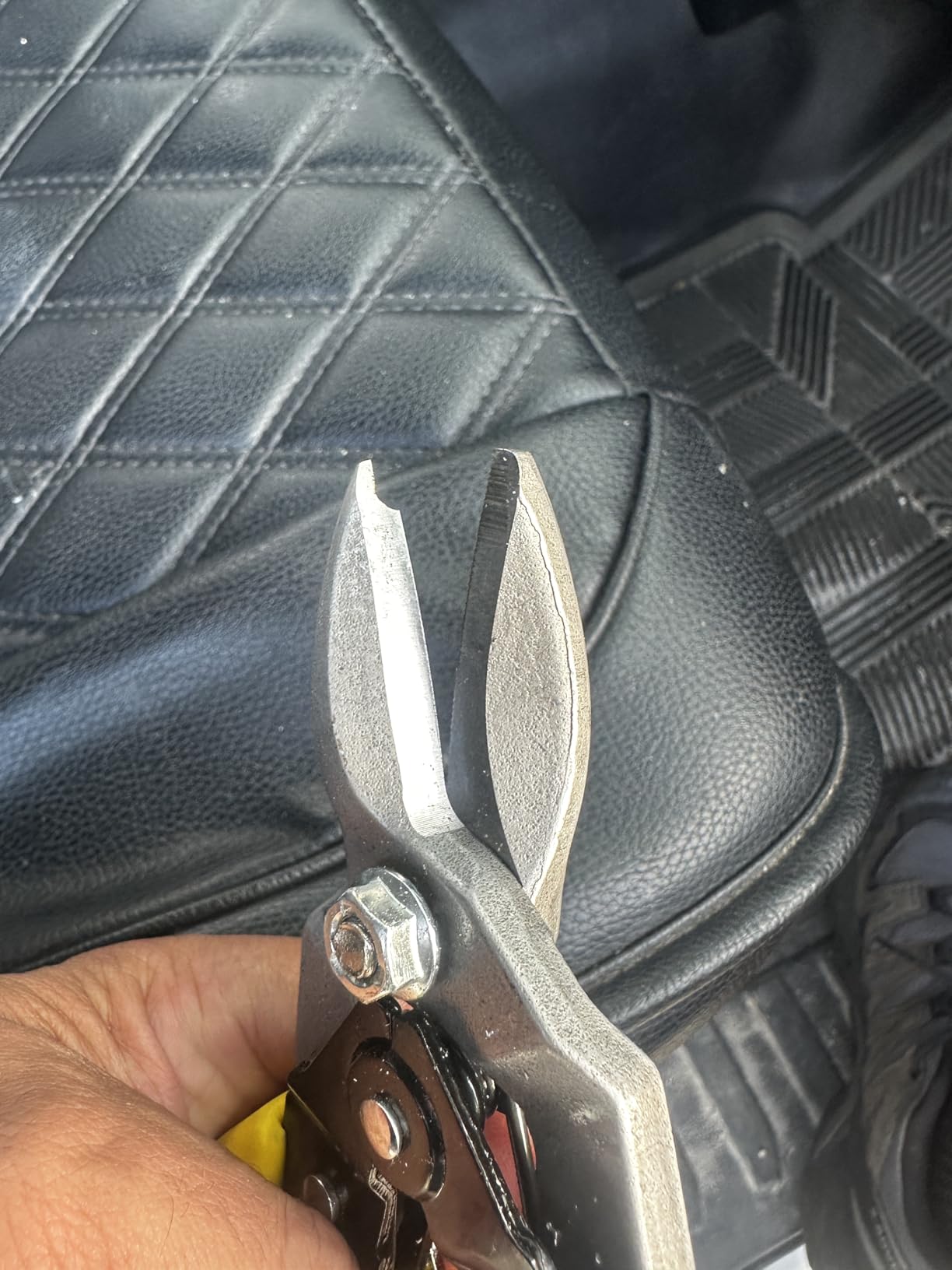
WORKPRO packed an impressive amount of cutting power into an 8 inch body. The compound dual-leverage design uses a compact pivot that generates the same shearing force as a 10 inch snip, which is a real win for users with smaller hands or anyone working in tight spaces.
The serrated chrome vanadium cutting edge grips 18 gauge cold-rolled steel and 22 gauge stainless without slipping. I tested the WORKPRO against a 10 inch budget brand and was surprised at how close the cut quality was. The shorter body did require more passes on long straight cuts, but the per-cut effort was noticeably less.
The TPR handle with the outward arc fits naturally in the palm. The tri-color handle makes the snip easy to spot in a cluttered toolbox, and the hanging hole on the end is a small but useful detail for shop storage.
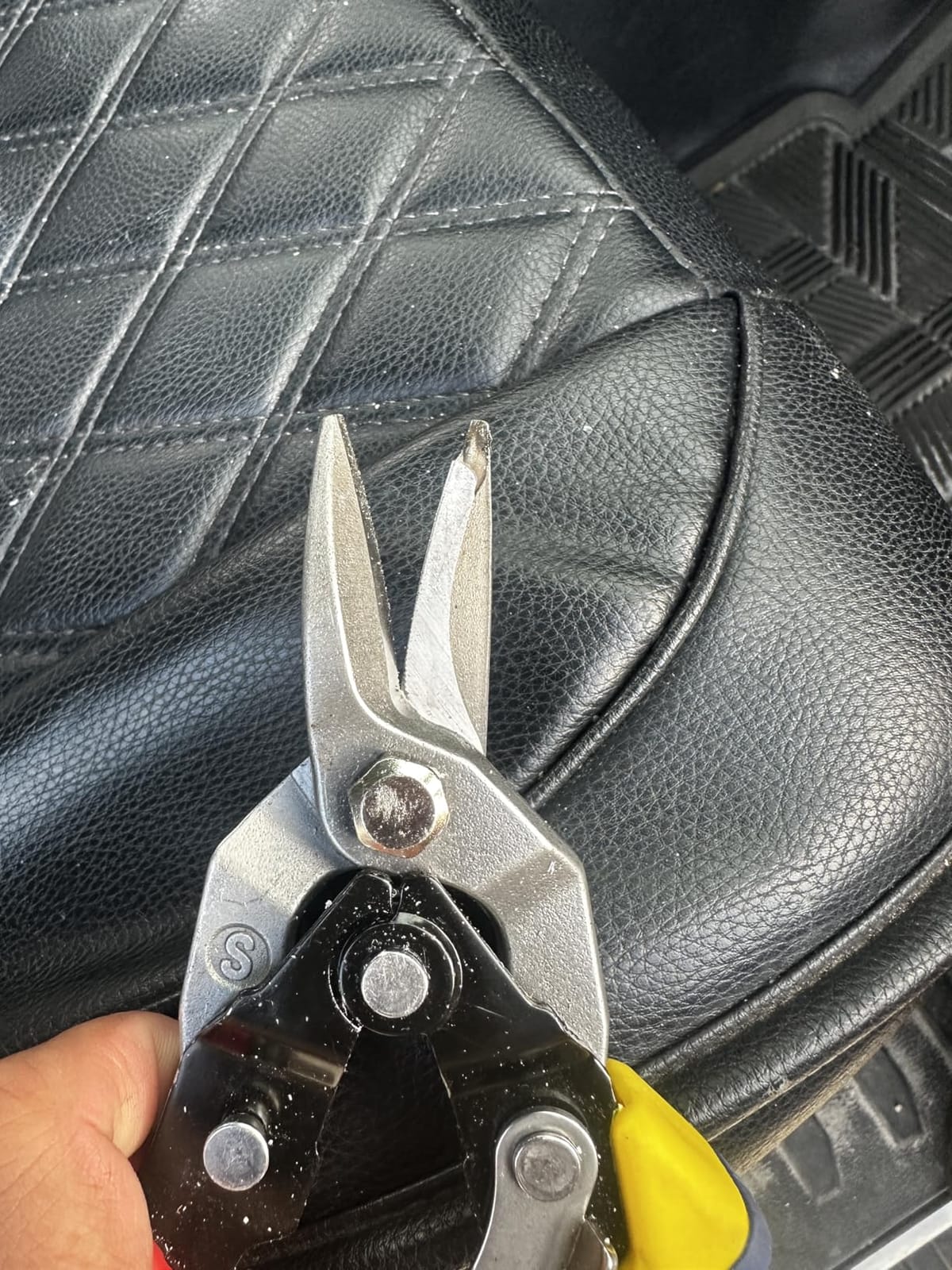
The self-locking nuts on the pivot prevent accidental detachment, which is a nice safety detail. The safety latch closes firmly and stays closed in a tool bag.
The main downside is rust resistance. Like other budget Cr-V snips, the WORKPRO will rust if left wet. A thin coat of light machine oil after each use is enough to prevent this, but it is an extra step. Forgetting it for a week in a damp basement will leave orange spots on the blade.
For Whom WORKPRO Is the Right Pick
Users with smaller hands who find 10 inch snips too bulky. DIYers and remodelers who want pro-style cutting geometry at a budget price. Anyone working in tight spaces where a shorter snip is easier to maneuver.
For Whom WORKPRO Is Not Ideal
If you regularly cut long straight lines in sheet metal, the 8 inch body will slow you down. The 10 inch Wiss or STANLEY will be faster on those cuts. And users who hate maintaining their tools should consider the Midwest or Wiss, which hold up better to neglect.
How to Choose the Best Metal Shears for Cutting Steel?
After testing these ten pairs, I realized that the right pick depends less on brand and more on matching the snip to your most common cuts. Here is the framework I use when I am helping a contractor or DIYer choose.
Cutting Capacity: Understanding Steel Gauge Ratings
Steel gauge is the single most important number on a snip’s spec sheet. The gauge rating tells you the thickest steel the blades are designed to cut cleanly. Lower gauge numbers mean thicker steel. Eighteen gauge cold-rolled steel is about 1.2 mm thick, which is the rating on most pro aviation snips. Twenty gauge is 0.95 mm, and 24 gauge is 0.6 mm.
For HVAC ductwork, gutters, and most roofing work, 18 gauge cold-rolled steel is the right target. For thinner metal like aluminum flashing or galvanized trim coil, 20 or 22 gauge capacity is fine. For heavier structural steel, studs, or plate, you need powered nibblers or saws, not snips.
Manufacturers usually list two ratings: cold-rolled steel and stainless steel. Stainless is harder than mild steel, so the stainless rating is always a higher gauge number (thinner). A snip rated for 18 gauge cold-rolled typically handles 22 or 23 gauge stainless.
Cutting Direction: Yellow, Red, and Green Handles Explained
This is where beginners get tripped up. Aviation snips come in three cutting directions, color-coded by handle color:
Yellow handles: Straight cut. Best for long straight lines and gentle curves.
Red handles: Left cut. The blade curves to the left, which means it cuts a curve that bends to the left as you feed the snip.
Green handles: Right cut. The blade curves to the right, which means it cuts a curve that bends to the right.
The direction matters because of how the waste material curls away from the cut. If you use the wrong direction, the steel bends and kinks instead of cutting clean. HVAC and roofing pros usually buy one of each color and grab the right tool for the curve they are cutting.
Power Source: Manual vs. Cordless Metal Shears
All ten snips on this list are manual. They use your hand force multiplied through a compound-action linkage. For occasional work and most DIY projects, that is plenty.
For production cutting on long runs of 18 to 22 gauge steel, cordless metal shears from Milwaukee, Makita, and DeWalt are a real time-saver. They use a rotating punch-and-die head that bites through the steel as you push the tool along the cut line. You can cut a circle in sheet metal in seconds, where a manual snip would take minutes.
The trade-off is cost. Cordless metal shears cost several hundred dollars plus a battery platform. They are worth it if you cut hundreds of feet of steel a week. They are overkill for a single HVAC repair or a weekend roofing job. The forum users on r/HVAC and r/Tools generally recommend starting with a good manual snip set and adding cordless only when you find yourself wishing for it.
Stainless Steel vs. Mild Steel: What Is Different?
Stainless steel is harder and more work-hardening than mild or cold-rolled steel. That means the blades have to do more work, and the cut edge work-hardens as you cut, which can quickly dull an under-rated snip.
If you regularly cut 18 gauge or thicker stainless, look for snips specifically rated for stainless at that gauge. Most general-purpose aviation snips handle up to 22 gauge stainless cleanly. Wiss M3R, Midwest, and Milwaukee cordless shears are the most commonly recommended brands for stainless work in the r/Metalworking forums.
For thin stainless like flashing or decorative panels, a serrated blade is actually preferred. The serrations grip the hard stainless surface and prevent the sheet from skating out of the cut. Smooth-edge snips tend to slip on stainless, leaving a jagged edge and wearing the blade unevenly.
Safety and PPE for Steel Cutting
Metal shears are safer than angle grinders, but they are not risk-free. The biggest hazards are sharp cut edges on the workpiece, flying swarf (small metal chips), and hand fatigue that leads to slips.
Safety glasses: Always. Snips can launch small chips, especially when cutting serrated-edge material.
Cut-resistant gloves: Level A4 or A5 cut-resistant gloves protect your off-hand when holding the workpiece. Leather gloves alone are not enough.
Long sleeves: A long-sleeve shirt prevents sharp edges from scraping your forearms when feeding sheet into the snips.
Steel-toe boots: If you are cutting sheet metal on the floor or a low workbench, dropped stock can crush toes.
Take a break every 20 to 30 minutes during long cutting sessions. Hand fatigue is the number one cause of snip-related injuries. If your grip is failing, the snip will slip and the steel will bend or kick.
Maintenance and Blade Care
A good pair of snips will last years with basic care. Here is what I do after each cutting session:
Wipe blades clean with a dry rag to remove swarf and oil residue.
Apply a thin coat of light machine oil (3-in-1 or similar) to the pivot and blade faces.
Close the safety latch for storage so the blades do not get knocked.
Store in a dry toolbox or hang from the handle hole.
If the blades dull after heavy use, send the snips to the manufacturer for sharpening or replace the blades if the model supports it (Klein and Wiss offer replacement blades for some models). Do not try to sharpen serrated blades yourself. The serrations are precisely cut, and re-profiling them at home usually makes the cut worse.
Check the pivot bolt annually. If the action feels loose or wobbly, tighten the pivot according to the manufacturer’s instructions. A loose pivot causes the blades to bypass incorrectly, which tears the cut edge instead of shearing it cleanly.
For cutting thicker stock beyond snip capacity, you may also want to read our picks for the best metal cutting bandsaws, or for craft-scale projects, our roundup of the best hobby cutting mats to protect your work surface.
Frequently Asked Questions
What are the best metal shears for cutting steel?
The best metal shears for cutting steel depend on how often you cut and what gauge you work with. For most users, the MIDWEST Aviation Snip Set is the top overall pick because the hot drop-forged molybdenum blades cut 18 gauge cold-rolled steel cleanly and the set covers both left and right cuts. For a single-tool buy, the Crescent Wiss M3R straight-cut snip is the pro-grade classic. Budget buyers get solid performance from the Amazon Basics Straight Cut Snips.
What is the difference between tin snips and metal shears?
Tin snips and metal shears are often used interchangeably, but tin snips usually refer to smaller hand-operated aviation snips with serrated blades designed for sheet metal. Metal shears is a broader category that includes manual aviation snips, industrial shears like the Wiss W20, and cordless electric shears with rotating punch-and-die heads. For cutting steel sheet metal up to about 18 gauge, aviation snips are the right tool. For thicker material or production work, electric metal shears are faster.
What gauge steel can metal shears cut?
Most manual aviation snips and tin snips cut up to 18 gauge cold-rolled steel or 22 to 23 gauge stainless steel. Heavy-duty industrial shears like the Wiss W20 can handle thicker stock, but for 16 gauge or heavier steel plate, you need a powered nibbler, reciprocating saw, or plasma cutter. Always check the manufacturer’s rated capacity for both cold-rolled and stainless steel before pushing a snip past its limit.
Are cordless metal shears worth it?
Cordless metal shears are worth the cost if you cut several hundred feet of 18 to 22 gauge steel every week. Milwaukee M18, Makita, and DeWalt cordless shears cut long straight lines and curves much faster than manual snips. For occasional DIY work, a good manual set like the MIDWEST 6510C is more cost-effective and easier to maintain.
Are left-cut or right-cut shears better for steel?
Neither left-cut nor right-cut shears are inherently better. The cutting direction matters because of which way the waste material curls during the cut. Red-handled left-cut snips are best for curves that bend to the left, and green-handled right-cut snips are best for curves that bend to the right. Yellow-handled straight-cut snips handle long straight lines and gentle curves. Most pros buy one of each color for a complete kit.
How do I choose metal shears for steel?
Start with the gauge rating. Pick a snip rated for at least the thickest steel you cut, with a margin. Match the cutting direction (yellow straight, red left, green right) to the curves you make most often. Choose compound-action snips with serrated molybdenum or chrome vanadium blades for the best durability. Check that the grip fits your hand and that the safety latch operates one-handed. Finally, look for a lifetime warranty and replaceable blades if you plan to use the tool daily.
Final Verdict
After three months of cutting everything from 18 gauge cold-rolled steel to 22 gauge stainless flashing, the MIDWEST Aviation Snip Set (MWT-6510C) earned the top spot on this list. The hot drop-forged molybdenum blades, the comfortable KUSH’N-POWER grips, and the left/right combination cover almost every cutting job a contractor or serious DIYer will face.
If you only need a single snip and cut mostly straight lines, the Crescent Wiss M3R is the workhorse choice. If you want a real pair of snips at the lowest possible price, the Amazon Basics Straight Cut Snips will not disappoint. Either way, invest in a good pair of aviation snips, keep them oiled and dry, and you will be cutting steel cleanly for years.
For more options, check out our guide to the best metal cutting bandsaws if you need to tackle thicker steel plate, our picks for the best kitchen shears if you also want a sharp pair for food prep, and our roundup of the best large cutting mats if you are protecting your workbench while cutting sheet material. The right tool for the right job makes every cut cleaner and faster.