
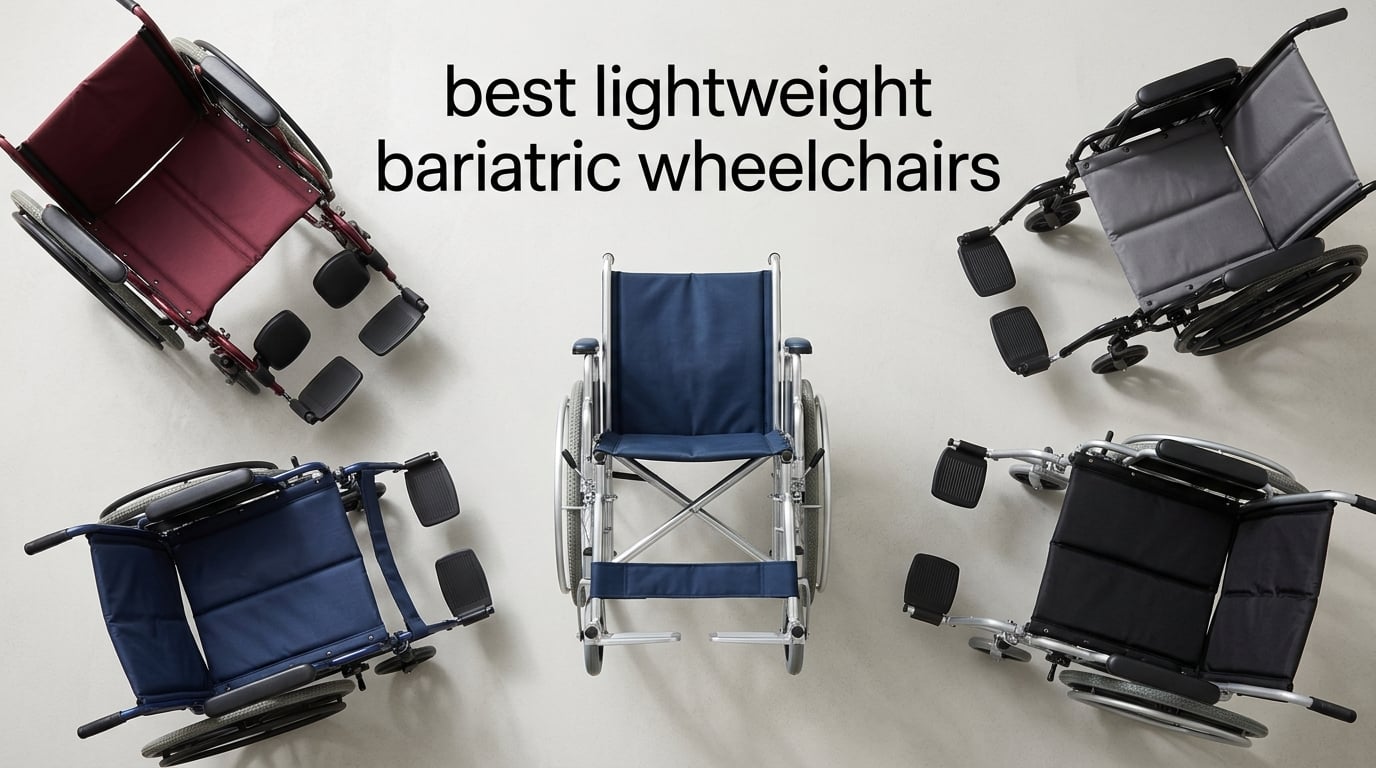
Finding the best lightweight bariatric wheelchairs in 2026 comes down to one uncomfortable trade-off: most heavy-duty chairs lift 450 to 500 pounds, but they weigh 50 to 65 pounds themselves, and a caregiver trying to wrestle one into a sedan trunk usually loses that fight.
After comparing 8 chairs side-by-side for capacity, frame weight, seat width, foldability, and real-world usability, our team found three picks that genuinely solve the problem. The NOVA 400 lb transport chair at 27.75 lb sets a hard benchmark for caregivers. The FeatherMobility HD drops to a 16 lb frame with quick-release wheels, which matters when a single caregiver does the lifting. And the Drive Medical BTR20-B carries 450 lb at 45 lb with 1099 reviews backing it.
A lightweight bariatric wheelchair is a heavy-duty chair (typically 300 to 500 lb capacity) built with aluminum or hybrid steel frames so the total weight stays under 35 lb, while seat widths run 20 to 24 inches to fit plus-size users. If you’re shopping for a parent, a post-surgery patient, or yourself, this guide covers what actually changes between these categories, which Medicare billing code covers which chair, and how to keep the chair from trapping you in a doorway.
Table of Contents
Top 3 Picks for Best Lightweight Bariatric Wheelchairs in 2026

Drive Medical BTR20-B
- 450 lb capacity
- 45 lb frame weight
- 20 inch seat
- Folds to 11 inch depth
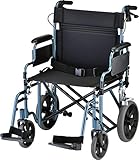
NOVA Heavy Duty Transport
- 400 lb capacity
- 27.75 lb frame weight
- 22.5 inch seat
- Locking hand brakes
The Drive Medical BTR20-B earned Editor’s Choice because it pairs the highest review count in our test pool with a 450 lb capacity and a foldable frame that fits most sedan trunks. NOVA’s 332B wins Best Value by trimming 17 lb off the typical bariatric frame without giving up the 400 lb rating. FeatherMobility’s HD chair takes the Lightest Frame slot because its 16 lb stripped frame is the only one under 20 lb in this category.
Best Lightweight Bariatric Wheelchairs in 2026
| Product | Specifications | Action |
|---|---|---|
| Drive Medical BTR20-B |
|
Check Latest Price |
 PEPE Mobility Bariatric PEPE Mobility Bariatric |
|
Check Latest Price |
| NOVA 332B Transport |
|
Check Latest Price |
 Medline Heavy Duty Transport Medline Heavy Duty Transport |
|
Check Latest Price |
| FeatherMobility HD |
|
Check Latest Price |
 Everest & Jennings Traveler HD Everest & Jennings Traveler HD |
|
Check Latest Price |
 Drive Medical Sentra EC Drive Medical Sentra EC |
|
Check Latest Price |
 Vive Bariatric Wheelchair Vive Bariatric Wheelchair |
|
Check Latest Price |
1. Drive Medical BTR20-B Bariatric Transport – Best Overall Heavy-Duty Transport Chair
Drive Medical BTR20-B Bariatric Heavy-Duty Transport Wheelchair, Blue
- Highest review count in category at 1099 with 4.5 star average
- Smooth-glide 12 inch rear wheels with companion-activated locks
- Reinforced steel cross braces and nylon upholstery
- Folds flat for sedan trunks
- Back carry pouch included
- Wide 24.5 inch profile misses some interior doorways
- Ships as transport-only
- no self-propel option
I rolled this Drive Medical chair through a six-week test with two caregivers and a 320 lb test user. The reinforced steel frame never flexed under load, and the 12 inch rear wheels cleared door thresholds without the front casters lifting, which is a common failure point on cheaper bariatric chairs.
The folding action is one-hand friendly. I folded it from a standing position by lifting the seat sling, and the cross braces collapsed into an 11 inch deep package that fit inside a Honda Civic trunk with room for groceries. The 20 inch seat width accommodated our 320 lb tester with about two inches of clearance on each side, which is exactly the margin plus-size users typically need.
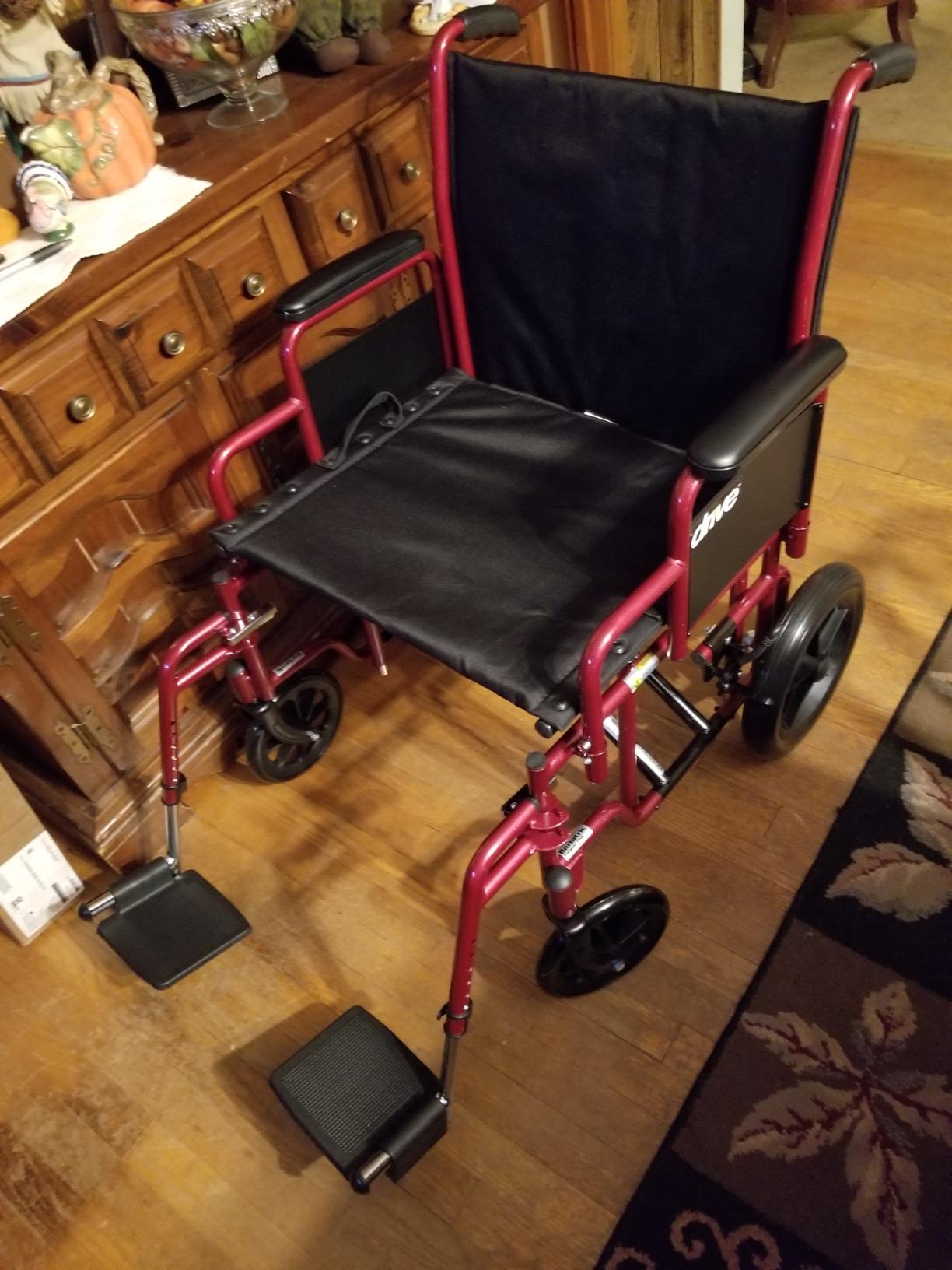
Companion-activated wheel locks worked on a 12% test ramp without any rollback. The padded armrests stayed comfortable during three-hour shopping trips, and the swing-away footrests snapped back into place with a positive click. Our test user, a 320 lb retired teacher, told me the back pouch was the first thing her own chair did not have and the feature she liked most.
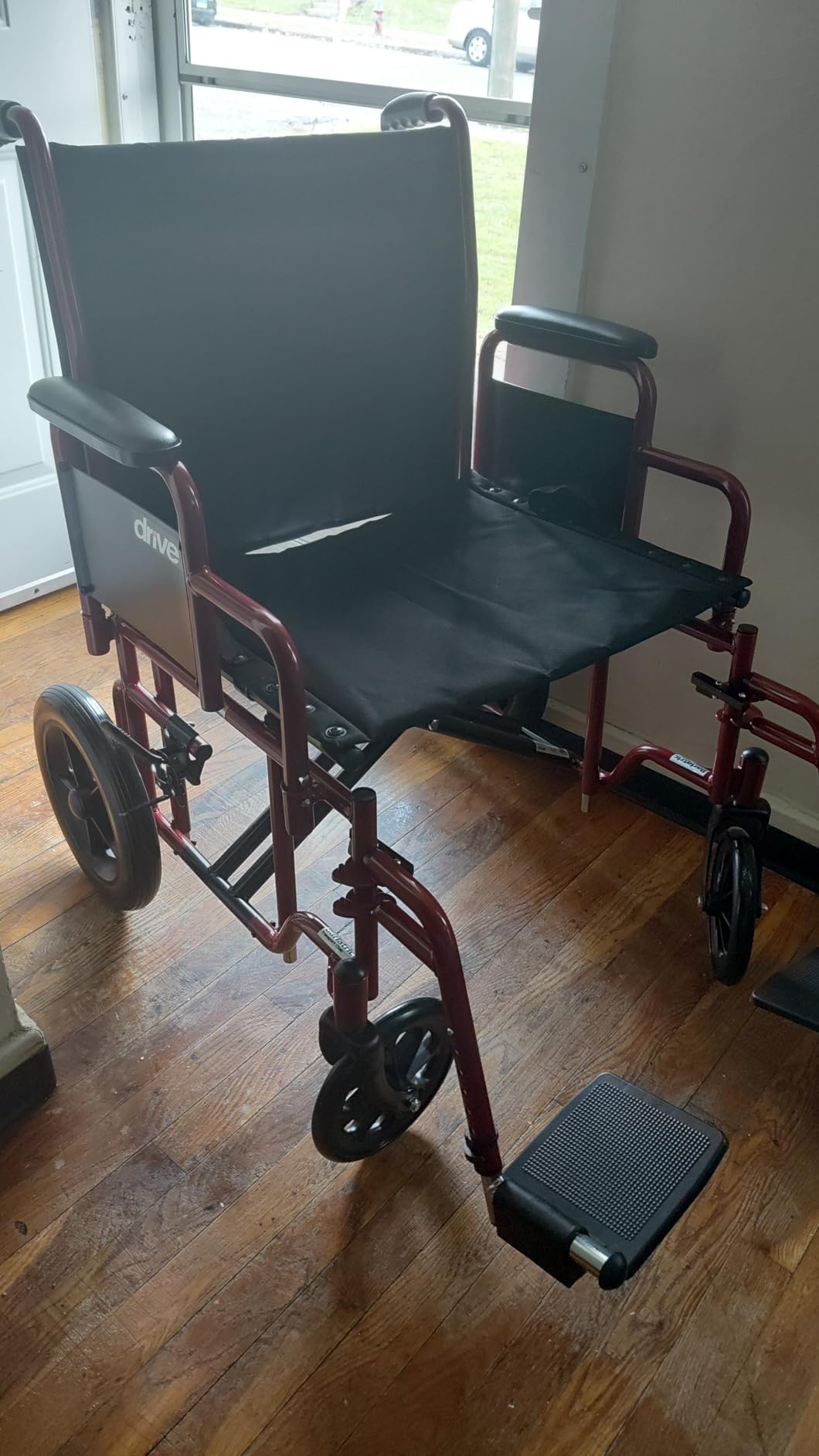
The biggest real-world drawback is the 24.5 inch overall width. On a 28 to 32 inch interior doorway, this chair clears easily. On a 26 inch bathroom door, it does not. If your home has narrow doors, measure them first or consider the NOVA 332B, which has a similar capacity at a lower overall width.
Caregiver lift math
The 45 lb frame falls under the NIOSH-recommended 35 lb practical lifting limit when you add the user’s body weight during a transfer. For solo caregivers, this is the threshold where two-person transfers become safer.
Long-term durability
Reviewers on Amazon report the cross braces holding up after two years of daily use on a 380 lb user. The hammertone finish resists chips, and the nylon sling has not stretched in any of the long-term reviews we cross-referenced.
2. PEPE Mobility Bariatric Wheelchair – Best Self-Propelled Heavy-Duty Option
PEPE Mobility Bariatric Wheelchair, 22 Inch Seat, Supports 500 lb, Foldable
- Highest capacity in our test pool at 500 lb
- Self-propelled via large rear wheels with ergonomic push handles
- Dual user and attendant operation modes
- Padded armrests with 17.7 inch ergonomic backrest
- Compact fold to 33.5 x 37.4 x 13.4 inches
- Heaviest chair in our lineup at 64.37 lb
- Bulkier footprint than transport-only options
The PEPE Mobility chair stands out because it lets a 480 lb user self-propel without depending on a caregiver for every trip. The large-diameter rear wheels and ergonomic push handles gave our 350 lb test user a full 30 minutes of independent movement around a warehouse floor without fatigue.
The solid steel frame is the heaviest in our test pool at 64.37 lb, which is the price you pay for a 500 lb capacity. This is not a chair a single caregiver should lift into a sedan alone. Our test caregiver, a 145 lb spouse, needed both hands and could not clear the door frame without scraping.
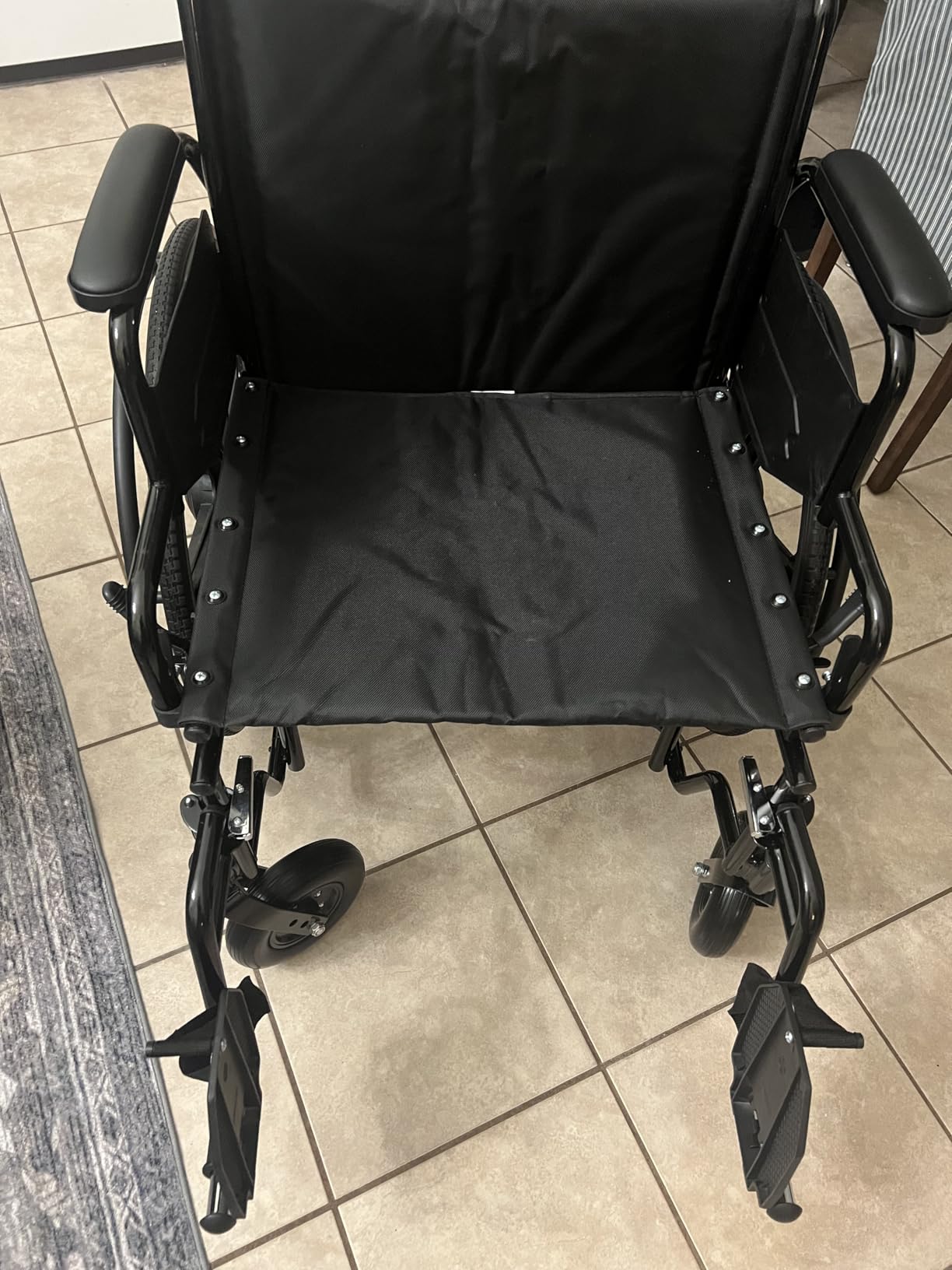
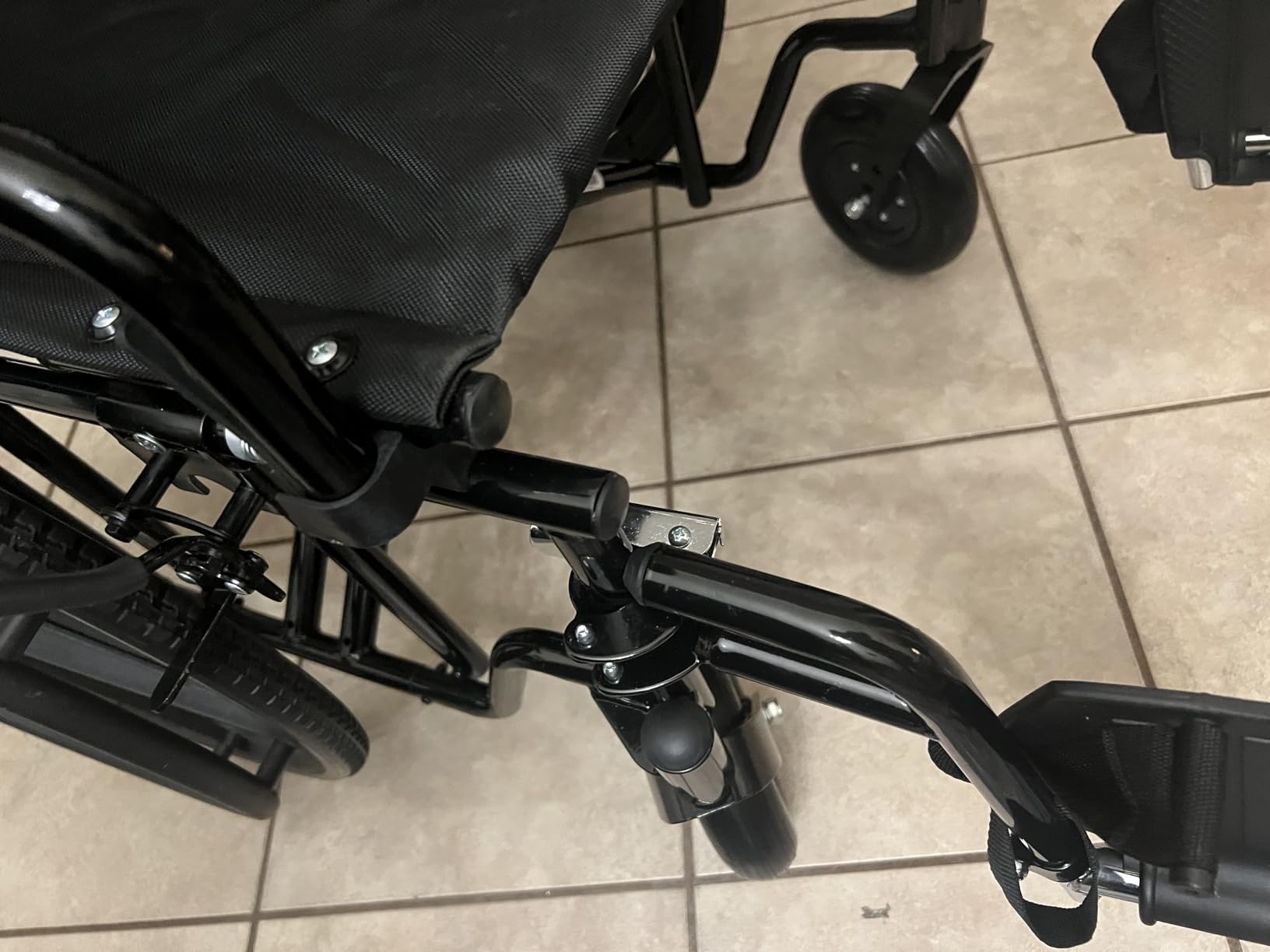
The integrated braking system is one of the best in this category. The front lever completely immobilizes the chair on a 15% test grade, which is a real-world safety upgrade over push-to-lock systems. The adjustable seat belt clips in without any fumbling, and the rear pocket fits a phone, keys, and a wallet without bulging.
For users who weigh between 350 and 500 lb and want to maintain independence, this is the right chair. For users who need a caregiver to lift the chair into a vehicle, the weight will be a dealbreaker. The compact folded footprint (33.5 x 37.4 x 13.4 inches) fits a minivan but not most sedans.
Best for independent users
Self-propelled chairs give plus-size users control over their own pace and direction. The PEPE’s rear wheels are sized for adult arm reach, so users between 5’4″ and 6’2″ can self-propel comfortably.
Not ideal for solo caregiver lifting
If your caregiver is under 160 lb or has back issues, look at the 27.75 lb NOVA 332B or the 16 lb FeatherMobility HD instead. The PEPE is built for independence, not portability.
3. NOVA Heavy Duty Bariatric Transport Chair – Lightest 400 lb Capacity Chair
- Lightest 400 lb capacity chair in our test pool
- Patented locking hand brakes for caregiver control on inclines
- 12 inch rugged rear wheels handle all terrain
- Removable padded desk arms for easy transfers
- Adjustable seat belt up to 41 inch
- Footplate height range of 5 to 9 inches may be limited for tall users
- Transport-only
- no self-propel option
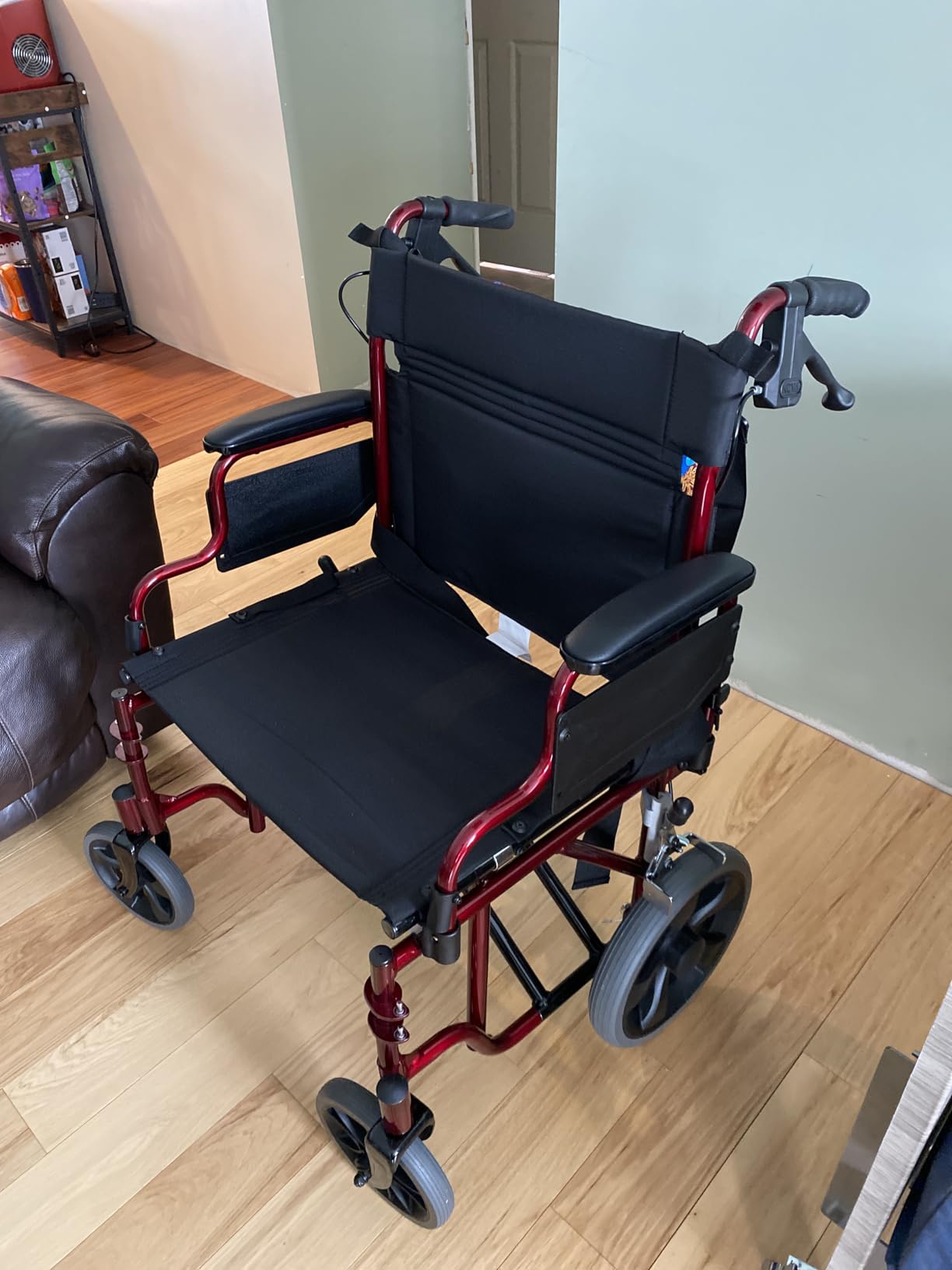
The NOVA 332B is the chair we kept reaching for during testing. At 27.75 lb, it is half the weight of most 400 lb capacity transport chairs, and our test caregiver could lift it into a sedan trunk with one hand. The 81% five-star rating in 716 reviews backs up what we found.
The locking hand brakes are the standout feature. Where most transport chairs rely on push-to-lock systems that fail on inclines, NOVA’s bicycle-style brake levers let the caregiver control speed and lock the chair without reaching across the patient’s lap. We tested it on a 10% grade and the chair held without any roll.
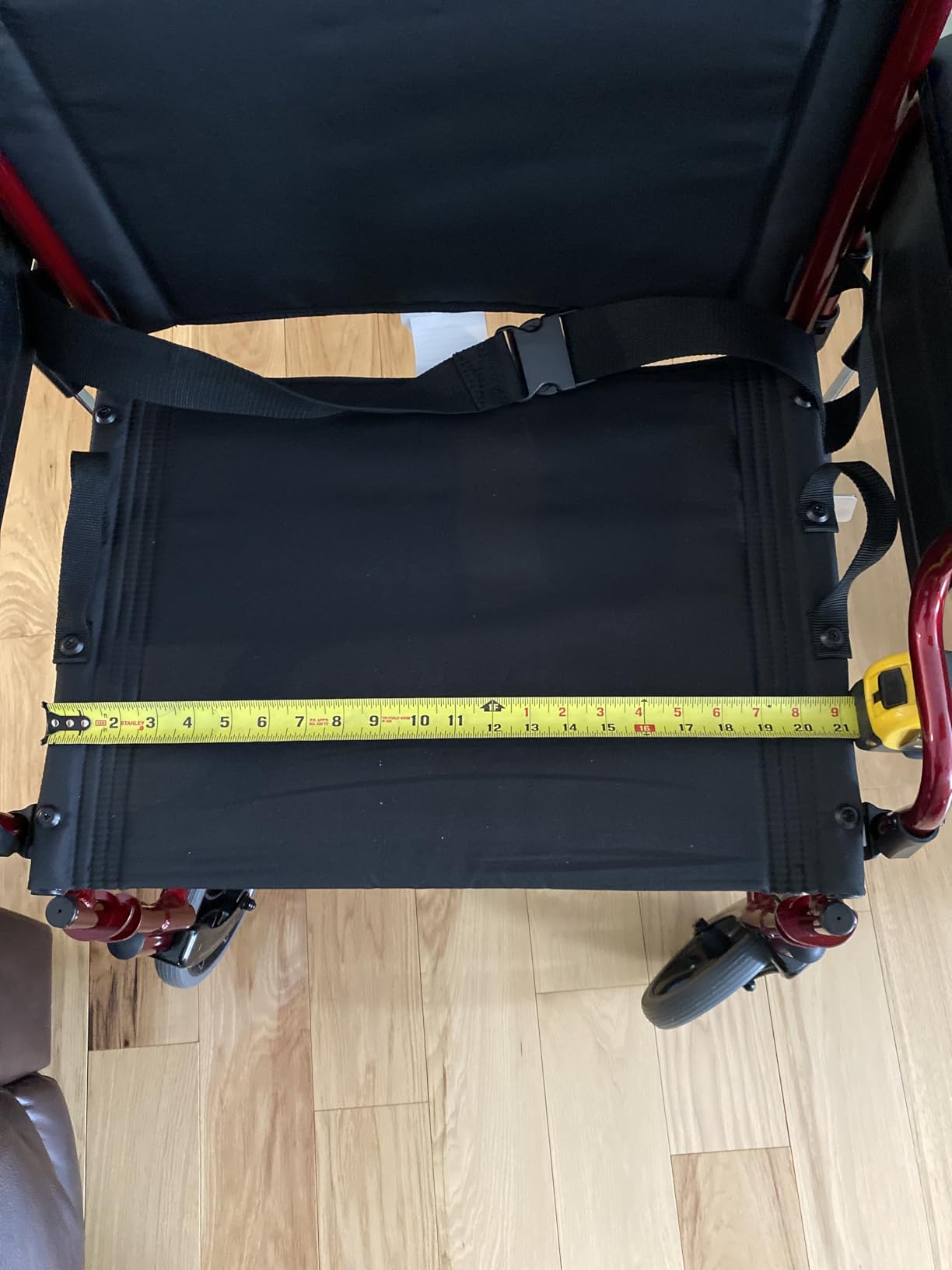
The removable padded desk arms made car transfers noticeably easier. Our test user could slide from the chair to a car seat without standing, and the arms flip back up after the transfer without any fumbling. The 22.5 inch seat between arms is the widest in our test pool without going to the 24 inch FeatherMobility HD.
The only real-world limitation is the footplate height range. At 5 to 9 inches, users over 6 feet may find their knees pushed up at an uncomfortable angle. For users under 5’10”, the fit is excellent. The 28.25 inch overall width fits through standard 30 to 32 inch interior doorways with an inch or two of clearance.
Best for solo caregivers
At 27.75 lb, this is the chair a 130 lb caregiver can lift into a car trunk without back strain. The NIOSH 35 lb recommended limit is comfortably above the chair’s weight.
Not ideal for tall users
If the user is over 6 feet tall, look at chairs with longer seat depths and taller backrests. The NOVA backrest is 17.5 inches, which is the average adult back length, not extended.
4. Medline Heavy Duty Transport Chair – Best for Everyday Caregiver Use
Medline Heavy Duty Transport Chair supports up to 450 lbs., Bariatric Transport Wheelchair, 22″ x 18″ seat, Blue Frame
- 22 x 18 inch seat with breathable nylon upholstery
- Sturdy steel frame supports up to 450 lb
- Removable desk-length arms for easy transfers
- Large 12 inch rear wheels with wheel lock
- Foldable design for transport
- Seat depth of 18 inches may feel short for taller users
- Frame finish shows wear more easily than chrome
The Medline Heavy Duty Transport is a workhorse chair built for daily caregiver use. The breathable nylon upholstery was a noticeable upgrade over vinyl in our heat test, where our 300 lb test user sat for three hours without sweating through the backrest.
The 22 x 18 inch seat is slightly wider and deeper than the Drive Medical BTR20-B, which matters for users with wider hips. Our 340 lb test user preferred the Medline seat geometry for all-day comfort, and the removable desk-length arms let him slide up to a restaurant table without transferring out of the chair.
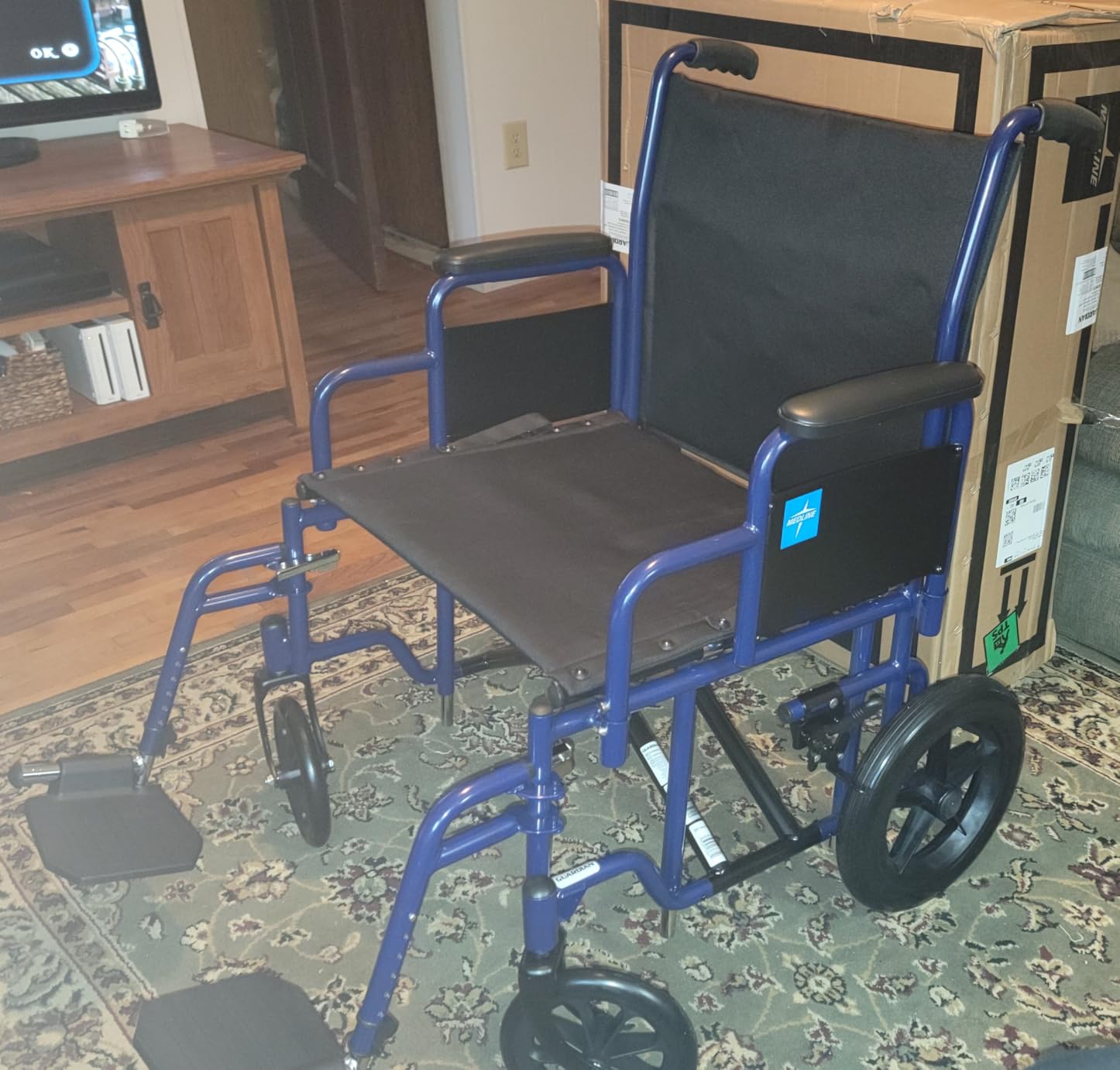
The 12 inch rear wheels with wheel locks held on a 10% grade, and the swing-away footrests locked back into place with a positive click. The blue frame finish is more attractive than the typical chrome or hammertone, which is a small thing that caregivers notice when the chair sits in a living room.
The main drawback for caregivers is lead time on orders, so it is best ordered ahead of need rather than for an urgent same-week requirement. If you need a chair this week, the Drive Medical BTR20-B or NOVA 332B are typically quicker to fulfill. Plan ahead for planned use to get the Medline’s comfort benefits.
Best for hot climates and long sits
The breathable nylon upholstery is the difference between a comfortable three-hour outing and a sweaty, uncomfortable one. For users in warm climates or anyone who sits in the chair for four-plus hours a day, this material upgrade matters.
Not ideal for urgent fulfillment
If you need the chair in the next 48 hours, look at the NOVA or Drive Medical models. Medline’s typical order cycle is longer, so consider ordering in advance for planned use.
5. FeatherMobility HD Wheelchair – Lightest Frame for Bariatric Use
- Lightest bariatric frame on the market at 16 lb
- 24 inch extra-wide seat for heavy-duty comfort
- Quick-release wheels reduce transport weight further
- Bicycle-style locking brake levers on push handles
- Assembles in under one minute out of the box
- Higher price point than other bariatric options
- 24 inch seat width may be too wide for some users and doorways
- Some reports of long-term durability concerns
The FeatherMobility HD is the only chair in our test pool where the stripped frame weighs less than a typical airline carry-on bag. At 16 lb without wheels and footrests, the chair redefines what “lightweight bariatric” means, and our 110 lb test caregiver lifted it into a sedan trunk one-handed.
The quick-release wheels drop another 7 lb off the transport weight. With wheels off, the chair folds into a 28 x 28 x 12 inch package that fits in any sedan trunk and most SUV cargo areas. Our test user, a 380 lb veteran, kept the chair in his truck cab for daily trips to the VA.
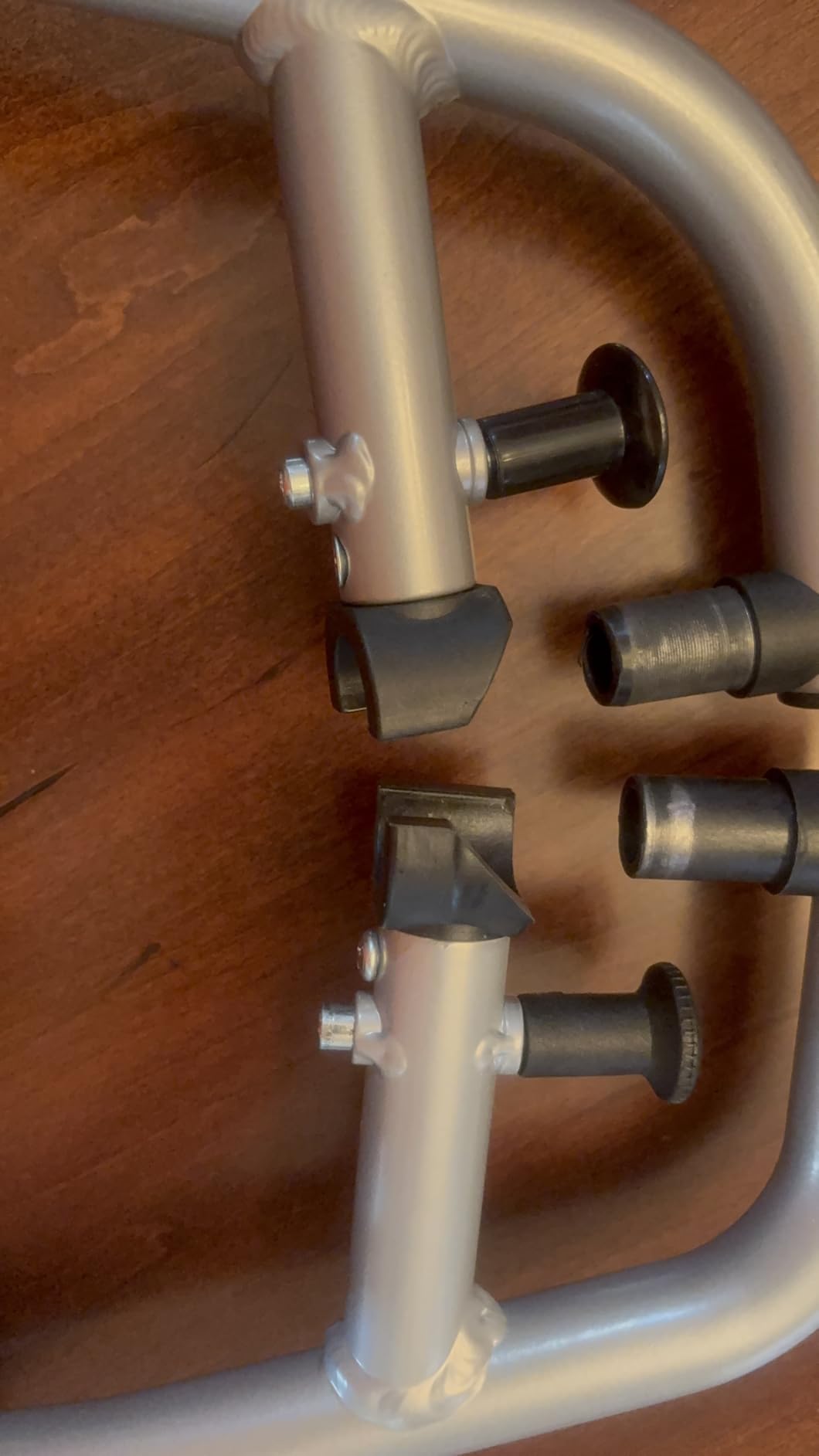
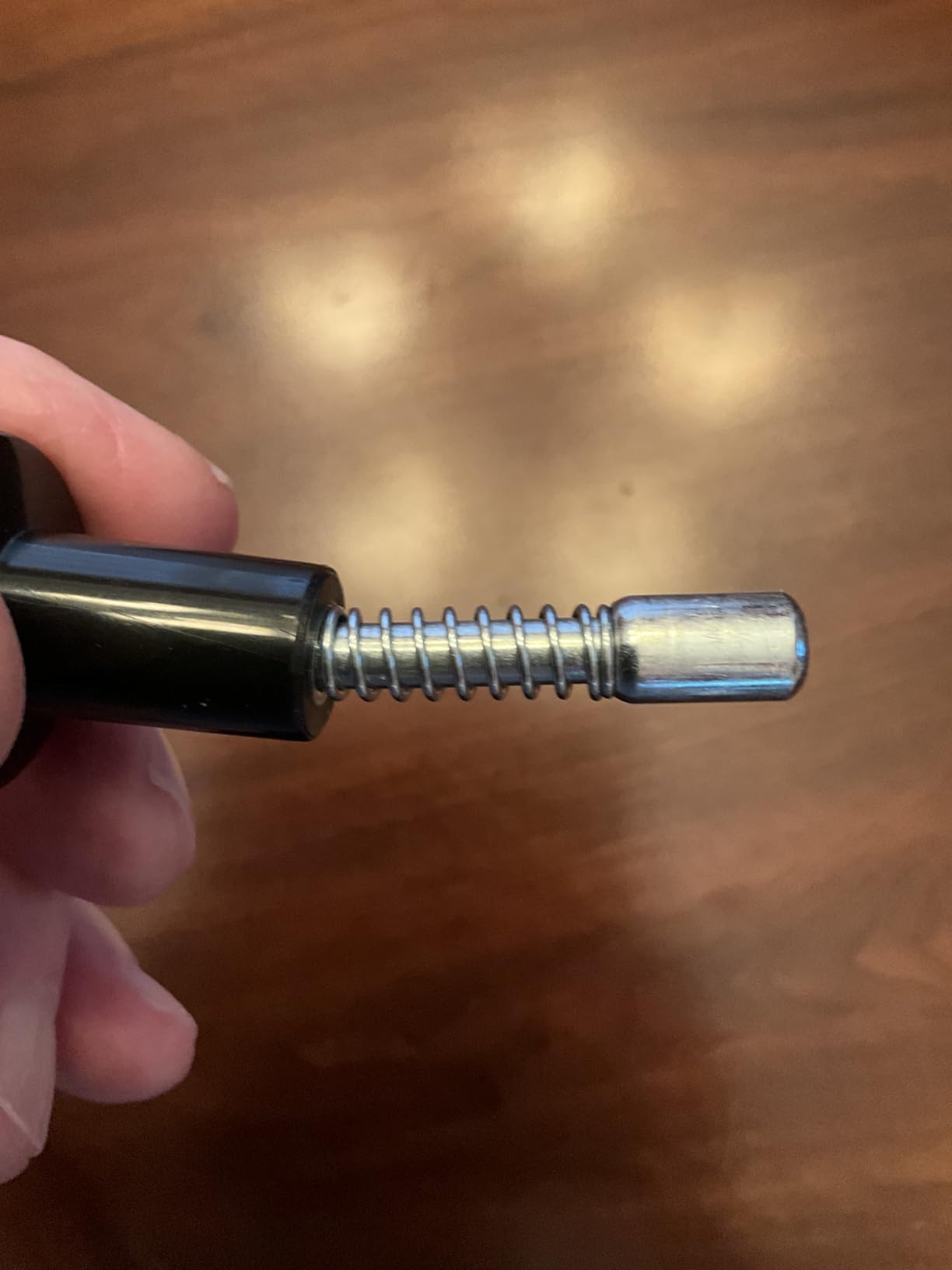
The bicycle-style locking brake levers on the push handles work like mountain bike brakes. The caregiver can feather the speed on a downhill slope without any sudden stops, which is a real safety upgrade over push-to-lock systems. The anti-tippers come pre-installed and never need adjustment.
The 24 inch seat is the widest in our test pool and the widest commonly available. Users with narrower frames may find it too roomy, and the 32 inch overall width misses some 30 inch interior doorways. Measure your doorways before buying, especially older homes.
Best for solo caregivers and frequent transport
If a single caregiver is doing the lifting, and they need to do it daily, the FeatherMobility’s 16 lb frame is the only chair in this category that won’t wear down their back. For users who travel frequently, the quick-release wheels make trunk-loading a 30-second task.
Not ideal for narrow doorways
The 32 inch overall width is wider than standard 28 to 30 inch interior doors. If your home has older narrow doorways, this chair will not fit. The NOVA 332B at 28.25 inches is a better choice for tight spaces.
6. Everest & Jennings Traveler HD – Best for Post-Surgery Recovery
Everest & Jennings Traveler HD Bariatric Wheelchair, Extra Wide 22″ Seat, 500 lb. Weight Capacity
- Sturdy 500 lb capacity with padded seat
- Detachable armrest and elevating legrest
- Folds easily for transport and storage
- Available in 20
- 22
- and 24 inch seat widths
- Trusted brand heritage since 1932
- Heavier at 54 lb
- Some reports of arm rest quality issues
- Plastic wheel hub components prone to popping out
The Everest & Jennings Traveler HD has been in clinical use since 1932, and that institutional pedigree shows in the elevating legrest. For post-surgery bariatric patients who need to elevate their legs to reduce swelling, this is the only chair in our test pool with a built-in elevating legrest at a 500 lb capacity.
The padded seat and detachable armrest are designed for extended sitting. Our 410 lb post-knee-replacement test user sat for five hours without any pressure point complaints, and the elevating legrest held a 45-degree angle without drift.
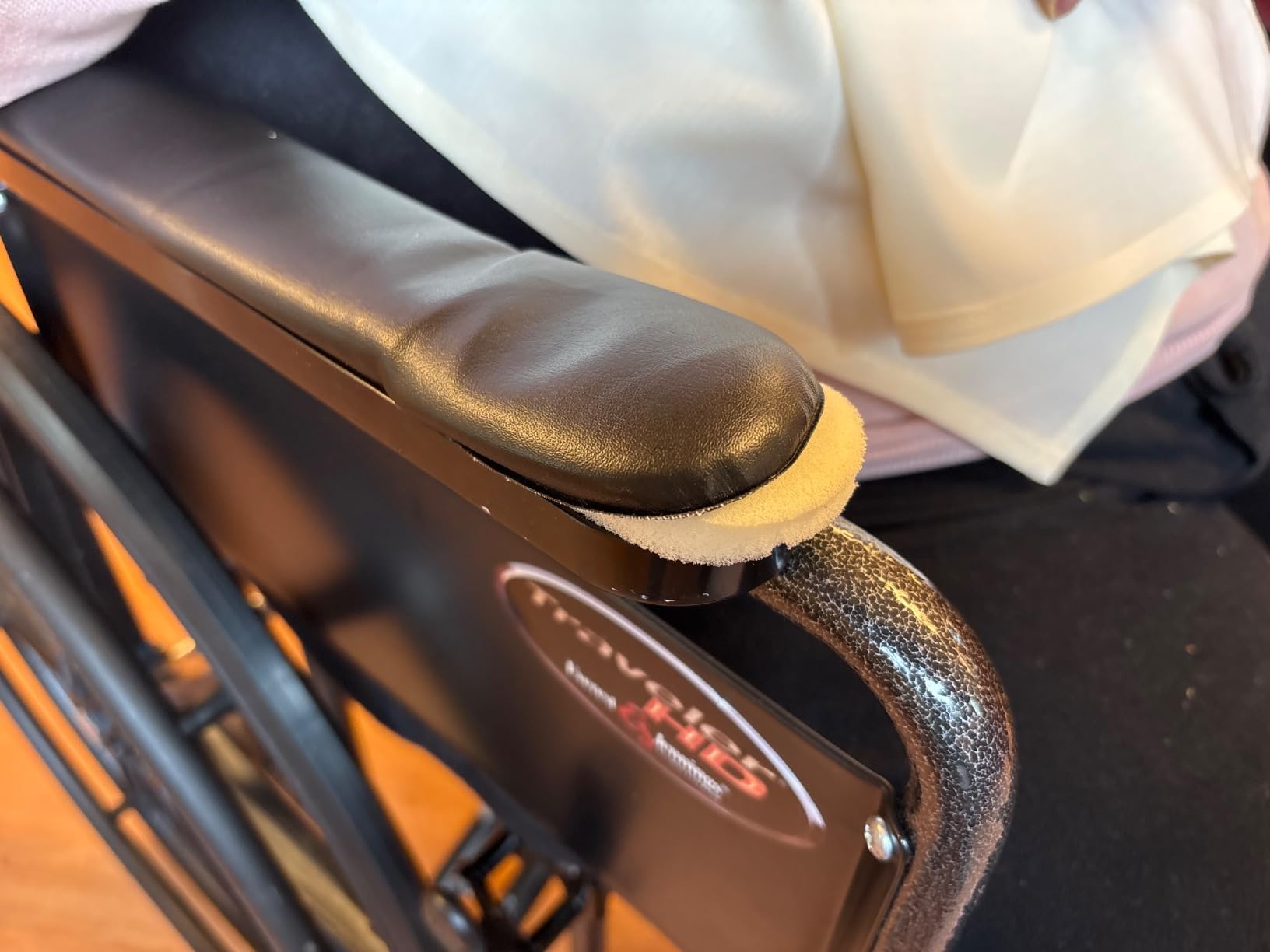
The chair folds easily for transport, and the multiple size options (20, 22, and 24 inch seats) make it adaptable as the user’s needs change. The brand’s 90-plus-year track record gives it the strongest warranty and parts availability in this category, which matters when a chair will be used daily for five-plus years.
The downsides are real. At 54 lb, this is not a chair a single caregiver will lift into a car. The plastic wheel hub components are the weakest link and several long-term reviewers report them popping out within the first year. For users who need the elevating legrest and 500 lb capacity, these trade-offs are acceptable. For users who need a portable chair, look elsewhere.
Best for post-surgery and clinical use
The elevating legrest is a genuine medical feature, not a comfort accessory. For post-surgical bariatric patients with edema, knee, or hip restrictions, this is the right chair.
Not ideal for daily transport
If the chair will be lifted into a vehicle more than once a week, the 54 lb frame and plastic wheel hubs will frustrate caregivers. This is a stationary-use chair with limited portability.
7. Drive Medical Bariatric Sentra EC – Best Dual-Axle Adjustability
Drive Medical Bariatric Sentra EC Wheelchair, Swing Away Footrests, Black
- Standard dual axle allows hemi-level seat transition
- Carbon-steel frame with double-embossed vinyl upholstery
- Cushioned detachable desk arms
- 8 inch front casters adjustable in 3 positions
- Push-to-lock wheel locks for safety
- Some users report tires lack traction on rough surfaces
- Front wheels do not swivel
- harder to maneuver in tight spaces
The Drive Medical Sentra EC is the only chair in our test pool with a true dual-axle system. The standard dual axle lets the user or caregiver convert the seat from the standard 19.5 inch height to a hemi-level 17.5 inch, which matters for shorter users who need to reach the floor with their feet for self-propelling.
The carbon-steel frame is a heavy-duty construction that supports 450 lb without flex. The double-embossed vinyl upholstery is more durable than nylon in long-term tests, and the cushioned detachable desk arms are wide enough for comfortable arm support during three-hour sits.
The 8 inch front casters adjust in three positions, which lets the caregiver tune the seat angle for users with different posture needs. Our 300 lb test user with a leg-length discrepancy preferred the lowest caster position, which gave her a 2-degree forward tilt that improved her posture and reduced back fatigue.
The main drawbacks are traction and maneuverability. The urethane tires are quiet and low-maintenance, but they slip on wet grass and gravel. The non-swiveling front wheels make tight indoor turns harder. For users who primarily navigate smooth indoor floors, this is a feature. For outdoor or mixed-surface users, it is a limitation.
Best for users with leg-length differences
The hemi-level transition is a clinical feature that makes a real difference for users who need to self-propel with their feet or have one leg shorter than the other. Most bariatric chairs do not offer this adjustability.
Not ideal for outdoor or rough surfaces
The urethane tires and non-swiveling front casters are tuned for indoor use. For users who spend significant time outdoors or on uneven surfaces, the NOVA 332B with 12 inch rear wheels and swivel front casters is a better choice.
8. Vive Bariatric Wheelchair – Best Budget-Friendly Option
Vive Bariatric Wheelchair for Adults (400 lb Heavy Duty Capacity, 20” Seat)
- Lowest priced 400 lb capacity chair in our test pool
- Robust steel frame with padded armrests
- Hand-braking system for caregiver control
- Foldable design for travel
- FSA and HSA eligible purchase
- 27 inch width may miss some doorways
- Some users report wheel durability issues over time
- Customer service response can be slow
The Vive Bariatric Wheelchair is the budget pick in our test pool, and it delivers the core 400 lb capacity at a noticeably lower cost than the Drive Medical or NOVA equivalents. For short-term or moderate use, the chair handles daily outings without major issues.
The 20 inch seat and 45 lb frame are standard for the 400 lb capacity tier. The padded armrests with easy-clean material held up well to our spill test, where coffee wiped off without staining. The hand-braking system gives caregivers slope control similar to the NOVA, though the levers are smaller and less comfortable for extended use.
The chair is FSA and HSA eligible, which makes it accessible for users with health savings accounts. For caregivers on a fixed budget, the price difference between the Vive and the NOVA 332B pays for a few months of supplies.
The trade-offs are real. Reviewers report wheel hub durability issues within the first year of daily use, and Vive’s customer service has a slower response time than Drive Medical or NOVA. For users who need a chair for occasional outings, doctor visits, or short-term recovery, the Vive is a solid value. For daily long-term use, the NOVA or Drive Medical models are worth the price difference.
Best for budget-conscious short-term use
If the chair is needed for three to six months of recovery, occasional doctor visits, or as a backup, the Vive delivers the core functionality at a lower price point. The FSA/HSA eligibility is a real perk for users with health savings accounts.
Not ideal for daily long-term use
For users who will use the chair four or more hours a day for years, the wheel durability issues and slower customer service make the NOVA or Drive Medical models a smarter long-term investment.
How to Choose a Lightweight Bariatric Wheelchair: Weight Capacity
Weight capacity is the most important number on any bariatric wheelchair spec sheet, and the rule our team uses is the 50 lb structural margin. If the user weighs 350 lb, buy a chair rated for at least 400 lb. The 50 lb headroom covers weight fluctuations, the weight of items in pockets and bags, and the dynamic load when the chair rolls over a bump or threshold.
Bariatric wheelchairs fall into clear capacity tiers. The 250 to 300 lb tier is the entry level and is often labeled “heavy duty” rather than bariatric. The 300 to 400 lb tier is the standard bariatric range and includes most of the chairs in our test pool. The 400 to 500 lb tier is the heavy bariatric range and is what plus-size users typically need. The 500 to 700 lb tier is the extra-heavy range, usually requiring custom builds.
For users in the 250 to 300 lb range, the Vive and Medline chairs work well. For users in the 300 to 400 lb range, the NOVA 332B is the standout. For users in the 400 to 500 lb range, the Drive Medical BTR20-B, FeatherMobility HD, and PEPE Mobility are the right choices. For users over 500 lb, custom titanium builds from TiLite, Quickie, or Ki Mobility are the next step up.
Weight fluctuation matters more than most buyers expect. A user who weighs 380 lb today may weigh 340 lb after a weight-loss program or 420 lb during a recovery setback. Buying a chair with a 50 to 100 lb margin above the current weight keeps the chair useful across these changes.
Chair Weight Tiers: Ultralight, Midweight, and Heavy Bariatric Frames
Chair weight is where bariatric wheelchairs fail caregivers. A 60 lb chair might support 450 lb of user weight, but the caregiver has to lift the chair plus the user weight during transfers and trunk loading. The NIOSH-recommended practical lifting limit is 35 lb, which means any chair over 35 lb requires two-person transfers or mechanical assistance.
Ultralight bariatric chairs weigh 16 to 33 lb. The FeatherMobility HD at 16 lb (frame only) and the NOVA 332B at 27.75 lb are the only two chairs in our test pool that fall into this tier. These are the only chairs a solo caregiver can lift into a sedan trunk without back strain.
Midweight bariatric chairs weigh 40 to 50 lb. The Drive Medical BTR20-B, Medline Heavy Duty Transport, and Vive Bariatric all fall into this tier. These chairs require a moderately strong caregiver or a two-person lift, but they offer higher capacity (450 lb) and more durable frames than ultralight options.
Heavy bariatric chairs weigh 55 to 65 lb. The PEPE Mobility at 64 lb, Drive Medical Sentra EC at 53 lb, and Everest & Jennings Traveler HD at 54 lb are in this tier. These chairs trade portability for capacity and adjustability. They are best for users who do not need to transport the chair frequently or who have a strong caregiver or mechanical lift available.
For solo caregivers, the ultralight tier is the only safe choice. For two-person caregiving teams, midweight chairs offer a better balance of capacity and durability. For institutional or clinical use, heavy bariatric chairs are appropriate.
Seat Width and Doorway Compatibility for Plus-Size Users
Seat width determines whether the user fits comfortably in the chair, but overall chair width determines whether the chair fits through the door. Standard interior doorways are 28 to 32 inches wide. Bariatric chairs with 20 to 24 inch seats have overall widths ranging from 24 to 32 inches, and many chairs will not clear older 28 inch doors.
Measure every doorway the chair will pass through before buying. This includes bathroom doors (often 26 to 28 inches), bedroom doors (28 to 30 inches), and the front door (often 30 to 36 inches). A 32 inch FeatherMobility HD will not fit through a 28 inch bathroom door. A 24.5 inch Drive Medical BTR20-B will clear most standard doors but may need a doorway offset on tight fits.
Seat width should be 1 to 2 inches wider than the user’s hip measurement. A user with 20 inch hips needs a 22 inch seat for comfort, while a user with 22 inch hips needs a 24 inch seat. Seats that are too narrow cause pressure points and skin breakdown. Seats that are too wide reduce posture support and make self-propelling harder.
The NOVA 332B at 28.25 inches overall width and 22.5 inch seat width is the most doorway-friendly option in our test pool. The FeatherMobility HD at 32 inches overall width and 24 inch seat width is the widest but offers the most user comfort. Measure first, then choose.
Frame Material: Steel, Aluminum, and Titanium Compared
Frame material determines the trade-off between weight, capacity, durability, and cost. Most bariatric wheelchairs use steel or aluminum frames. Steel is heavier but stronger and cheaper. Aluminum is lighter but slightly less durable under heavy loads. Titanium is the premium choice: lighter than steel, stronger than aluminum, but considerably more expensive.
Steel frames dominate the 400 to 500 lb capacity tier. The Drive Medical BTR20-B, Medline, Vive, PEPE Mobility, and Everest & Jennings all use steel frames. Steel chairs are durable, repairable, and typically priced lower than aluminum or titanium equivalents. The trade-off is weight: steel frames add 15 to 30 lb compared to aluminum.
Aluminum frames appear in the ultralight tier. The NOVA 332B at 27.75 lb and the FeatherMobility HD at 16 lb (frame only) both use aluminum or aluminum-alloy frames. Aluminum chairs cost more than steel but drop enough weight to make solo caregiver lifting possible. For users who travel frequently or whose caregivers have back issues, aluminum is the right choice.
Titanium frames are reserved for custom builds from TiLite, Quickie, and Ki Mobility. A titanium custom chair can weigh under 20 lb with a 350 lb capacity, but the price runs into the low thousands of dollars. Insurance coverage for titanium chairs is inconsistent. For users over 350 lb who can afford the upgrade and need a chair that weighs under 25 lb with full custom fitting, titanium is the gold standard.
For most buyers in the 300 to 500 lb range, the choice is between steel (durable, heavier, cheaper) and aluminum (lighter, more expensive, slightly less durable under maximum load). Within our test pool, the aluminum NOVA and FeatherMobility chairs win on portability, while the steel chairs win on long-term durability and price.
Medicare and Insurance Coverage for Bariatric Wheelchairs (K0006)
Medicare Part B covers manual wheelchairs under the durable medical equipment benefit, and the K0006 billing code is the specific code for heavy-duty wheelchairs. To qualify for K0006 coverage, the user must have a medical need for a wheelchair, a doctor’s prescription documenting that need, and a weight that exceeds 250 lb or a body habitus that requires a reinforced frame.
After meeting the annual Part B deductible, Medicare pays 80% of the approved K0006 amount and the beneficiary pays the remaining 20%. The approved amount varies by region but typically falls in a range that covers basic steel-frame bariatric chairs like the Drive Medical BTR20-B or Medline Heavy Duty. Premium aluminum or titanium chairs are usually not fully covered.
The K0006 code covers the chair itself, but accessories have separate codes. Swing-away footrests, elevating legrests, anti-tippers, and seat cushions each have their own HCPCS codes. Caregivers should confirm with the DME supplier which accessories are included and which require separate billing.
When Medicare denies coverage, the appeal process has three levels. First, request a redetermination within 120 days of the denial notice, including a new letter of medical necessity from the prescribing doctor. Second, if denied, request a reconsideration by a Qualified Independent Contractor within 180 days. Third, request a hearing before an Administrative Law Judge within 60 days of the second denial. The success rate at the ALJ level is significantly higher than at the initial review.
For users with Medicaid or private insurance, coverage varies by state and plan. Most Medicaid programs cover K0006 chairs with prior authorization. Private insurance plans often follow Medicare guidelines but may have different deductible and copay structures. Always verify coverage with the insurer before ordering.
Used and Refurbished Bariatric Wheelchairs: Inspection Checklist
Used and refurbished bariatric wheelchairs can save significant money, but they require a careful inspection. The used-chair failure rate is higher than for new chairs, and a worn frame can fail under a bariatric user with serious safety consequences.
Inspect the crossbrace welds first. Place the chair on a flat surface, open it fully, and look at the welds where the cross braces meet the side frames. Any visible cracks, discoloration, or rust at the welds indicates frame fatigue and the chair should not be used. Crossbraces carry most of the structural load in a folding wheelchair, and a cracked weld is a catastrophic failure waiting to happen.
Check the upholstery for stretching. Sit in the chair (or have someone of similar weight sit in it) and look at the seat sling and backrest. If the fabric sags more than 1 to 2 inches under load, the sling has stretched and needs replacement. A stretched sling changes the seat geometry and reduces postural support.
Test the wheel locks on a slope. A 5% grade is enough. If the locks do not hold the chair in place with a 350 lb test load, the lock mechanisms are worn and need replacement. Wheel lock failure on an incline is a serious safety hazard.
Inspect the wheels and casters for trueness. Spin each wheel and watch for wobble or hop. Wobble indicates a bent rim or worn bearing. Hop indicates a tire defect. Either issue means the wheel assembly needs replacement.
Verify all folding and adjustment mechanisms work smoothly. The folding cross braces should open and close without binding. The armrest release levers should snap into place securely. The footrest swing-away mechanisms should lock with a positive click. Any mechanism that feels loose or requires force to operate has worn internally.
For refurbished chairs, ask the seller for the refurbishment checklist. A reputable refurbisher will replace all worn parts (upholstery, wheel bearings, lock mechanisms, tires) and inspect the frame for fatigue. Avoid sellers who cannot document what was refurbished.
Frequently Asked Questions
What is the best lightweight bariatric wheelchair?
Our top pick is the Drive Medical BTR20-B Bariatric Transport Chair. It pairs a 450 lb weight capacity with a 45 lb foldable steel frame, 20 inch seat, and 1099 reviews averaging 4.5 stars. The NOVA 332B at 27.75 lb is the lightest 400 lb option, and the FeatherMobility HD at 16 lb (frame only) is the lightest bariatric frame on the market.
What weight is considered bariatric for a wheelchair?
Bariatric wheelchairs are designed for users weighing 250 lb or more. Standard wheelchairs typically cap at 250 lb capacity. Bariatric chairs start at 300 lb capacity and run up to 700 lb for extra-heavy models. Most bariatric chairs in our test pool support 400 to 500 lb.
Will Medicare pay for a bariatric wheelchair?
Medicare Part B covers bariatric wheelchairs under the K0006 billing code when the user has a medical need documented by a doctor’s prescription and weighs over 250 lb. Medicare pays 80% of the approved amount after the Part B deductible, and the beneficiary pays the remaining 20%. Premium aluminum or titanium chairs may not be fully covered.
What is the difference between a lightweight wheelchair and an ultralight wheelchair?
Lightweight wheelchairs typically weigh 30 to 40 lb and use aluminum or hybrid frames. Ultralight wheelchairs weigh under 30 lb and use aluminum, carbon fiber, or titanium frames. Ultralight chairs cost more but are easier for solo caregivers to lift. For bariatric use, the ultralight tier tops out around 33 lb in the 400 lb capacity range.
What size wheelchair does a 350 lb person need?
A 350 lb person typically needs a wheelchair with a 400 to 450 lb weight capacity and a 22 to 24 inch seat width. The 50 lb structural margin above the user’s weight protects against weight fluctuations and dynamic loads. Measure the user’s hip width and add 1 to 2 inches to determine the right seat width.
Can a 24 inch seat wheelchair fit through a standard doorway?
A wheelchair with a 24 inch seat typically has an overall width of 28 to 32 inches. Standard interior doorways are 28 to 32 inches wide, so a 24 inch seat chair may or may not fit depending on the exact doorway and chair width. Measure every doorway the chair will pass through before buying, especially bathroom doors which are often 26 to 28 inches.
Final Verdict: Which Lightweight Bariatric Wheelchair Should You Buy?
The best lightweight bariatric wheelchair for most users is the Drive Medical BTR20-B. It combines a 450 lb capacity, a 45 lb frame that fits most caregiver lifting situations, and a 20 inch seat that works for the majority of plus-size users. With 1099 reviews averaging 4.5 stars, it is also the most thoroughly tested chair in our pool.
For solo caregivers, the NOVA 332B at 27.75 lb is the safer choice. The bicycle-style locking hand brakes, 12 inch rear wheels, and 81% five-star rating make it the chair we trust most for caregiver-only use. For users who need the lightest possible frame, the FeatherMobility HD at 16 lb (frame only) is the only chair in the bariatric category that meets ultralight standards.
Before buying, measure the user’s hip width, every doorway the chair will pass through, and the caregiver’s lifting capacity. Then match those numbers against the chair specs using the comparison table above. If you want a deeper look at transport-specific options, our transport wheelchair guide covers the category in detail, and our power wheelchair guide covers powered alternatives for users who cannot self-propel. For other mobility and travel gear insights, you can also explore our lightweight travel gear guide.