
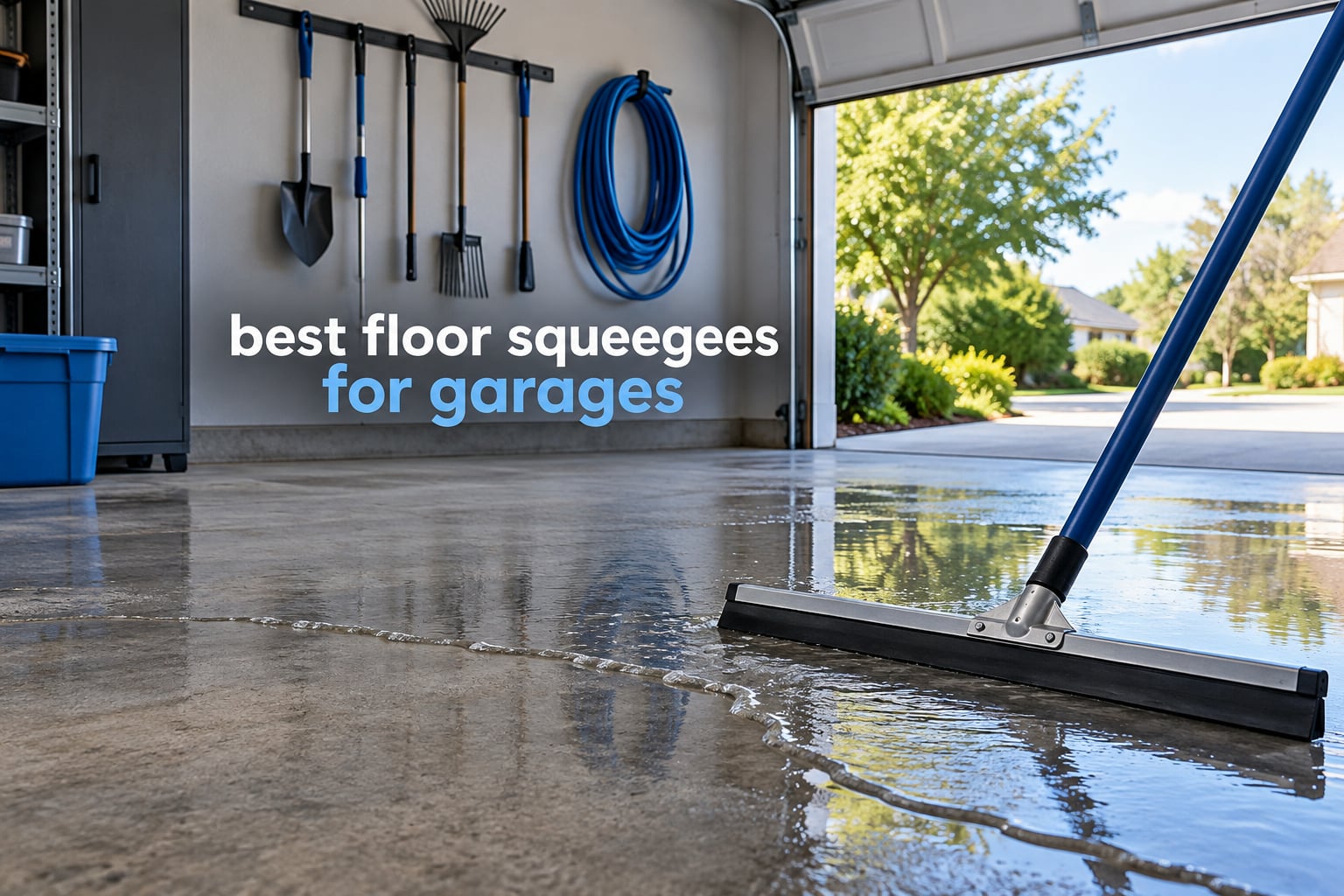
Water sits on a concrete garage slab because concrete is porous and flat, and flat plus porous means nothing carries the water anywhere. The fix is a tool that does one thing: shears a wave of water ahead of itself toward the door. The best floor squeegee for garage use is the Ettore 61054, an 18-inch dual closed-cell foam blade on a galvanized steel frame with a 53-inch handle. It is the pick we would hand to someone who wants one tool that dries bare concrete, tile and sealed floors without leaving streaks.
We have been chasing this category for weeks because the search results are almost entirely retail listings, and none of them answer the question that actually decides the purchase: is your floor smooth, broom-finished, or epoxy-coated? A rigid rubber blade is the wrong answer on textured concrete, and a foam blade is the wrong answer if you are moving grit and slush. Blade material, blade width and handle length are the only three things that matter, and almost nobody explains how they interact with your specific slab.
This roundup covers ten floor squeegees we evaluated against the same criteria: how well the blade seals on concrete, how much water it moves per pull, whether the handle length fits under a closed sectional garage door, and how the tool holds up when grit, road salt and winter melt are involved. If you are still deciding whether to coat the slab at all, start with our epoxy floor coating guide first, because a coating changes which blade you want.
Table of Contents
Our Top 3 Garage Floor Squeegee Picks
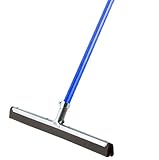
Ettore 61054 Wipe and Dry 18 Inch
- Dual closed-cell foam blade
- Galvanized steel frame
- 53 inch handle
- Works on tile grout and brick
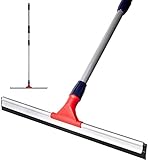
DSV Standard 24 Inch Telescopic
- 23.6 inch silicone blade
- 30 to 57 inch telescopic pole
- Rust resistant aluminum pole
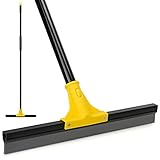
KeFanta 18 Inch Rubber Wiper
- 18 inch rubber blade
- Sectional steel handle to 62.5 inch
- Angled head
- Foam grip
All 10 Best Floor Squeegees for Garages in 2026
| Product | Specifications | Action |
|---|---|---|
| Ettore 61054 Wipe and Dry 18 Inch Floor Squeegee |
|
Check Latest Price |
| DSV Standard 24 Inch Heavy Duty Telescopic Floor Squeegee |
|
Check Latest Price |
| KeFanta 18 Inch Rubber Wiper with 60 Inch Handle |
|
Check Latest Price |
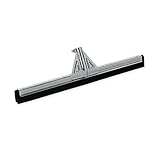 Rubbermaid Commercial Products 22 Inch Heavy-Duty Floor Squeegee Rubbermaid Commercial Products 22 Inch Heavy-Duty Floor Squeegee |
|
Check Latest Price |
 CLEANHOME 17 Inch Rubber Floor Squeegee with Extendable Handle CLEANHOME 17 Inch Rubber Floor Squeegee with Extendable Handle |
|
Check Latest Price |
 Tyroler Bright Tools 17 Inch Heavy Duty Floor Squeegee Tyroler Bright Tools 17 Inch Heavy Duty Floor Squeegee |
|
Check Latest Price |
 eazer Heavy Duty Floor Squeegee with 60 Inch Aluminum Pole eazer Heavy Duty Floor Squeegee with 60 Inch Aluminum Pole |
|
Check Latest Price |
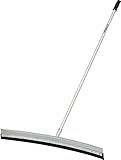 Unger Professional AquaDozer Max Kit 36 Inch Curved Unger Professional AquaDozer Max Kit 36 Inch Curved |
|
Check Latest Price |
 KeFanta 24 Inch Water Wiper Broom KeFanta 24 Inch Water Wiper Broom |
|
Check Latest Price |
 Direct Mop Sales 30 Inch Double Foam Squeegee Kit Direct Mop Sales 30 Inch Double Foam Squeegee Kit |
|
Check Latest Price |
1. Ettore 61054 Wipe and Dry 18 Inch Floor Squeegee – Best Overall
- Dual closed-cell foam blade leaves fewer streaks than single-strip rubber
- Galvanized steel frame holds up to years of use
- Works on uneven surfaces including grout lines and brick
- Backed by a lifetime warranty
- Handle fit depends on the taper of whatever handle you attach
- 18 inch width is narrower than the 22 and 30 inch versions
This is the tool we keep reaching for. The blade is a dual closed-cell foam strip rather than a single rubber lip, which means it has two contact edges that compress independently. On a slab with a slight fall toward the door, that second edge keeps the seal continuous instead of letting air slip under the middle and stall the water.
Owners consistently report that it leaves concrete genuinely dry rather than merely damp. The galvanized steel frame is the other half of the story, because foam is consumable and the frame is not. Several long-term owners describe buying replacement blades over the years and keeping the same frame.
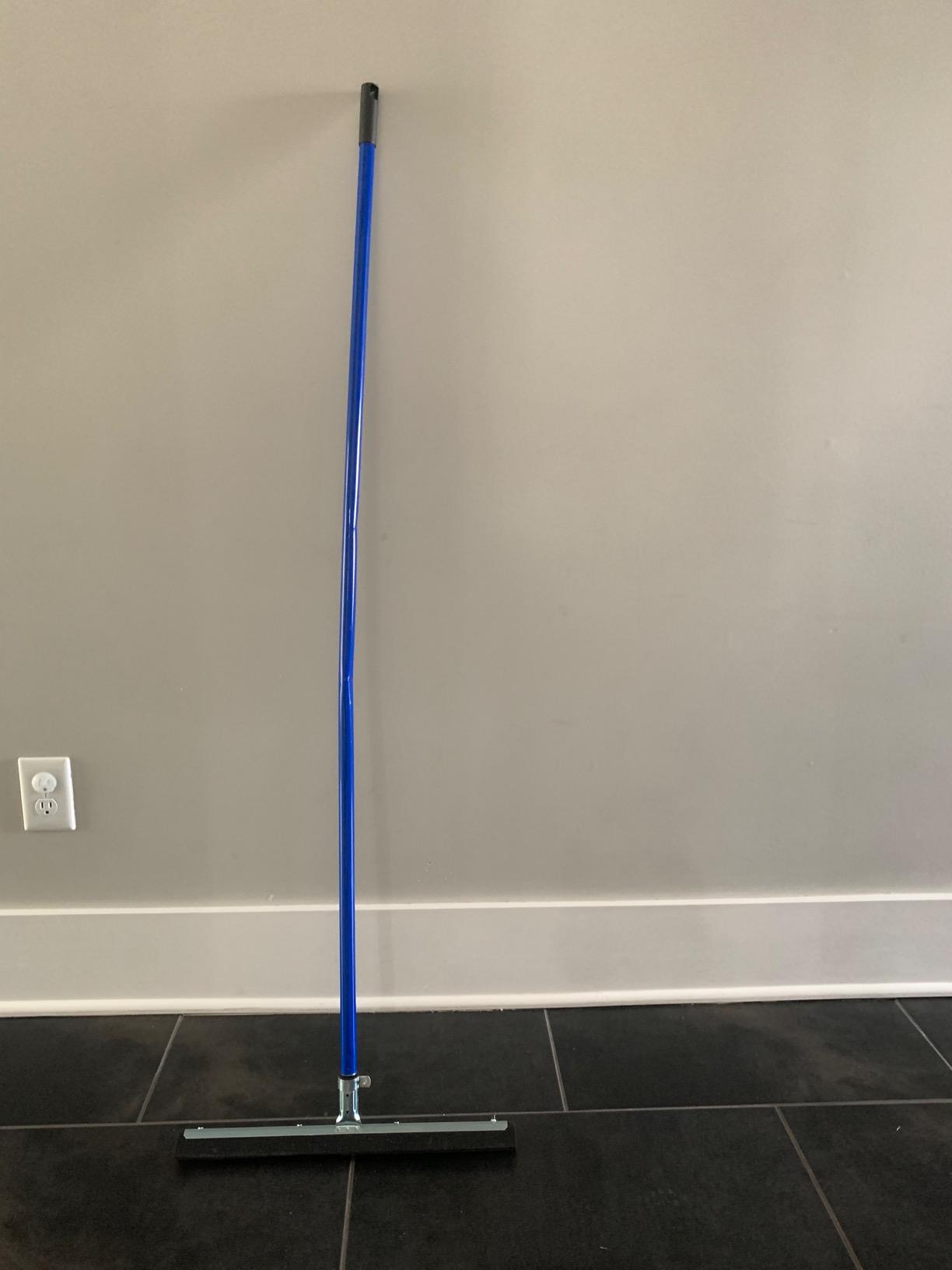
Frame durability matters more than people expect in a garage. A squeegee lives hooked on a wall next to a hot workbench, and it collects moisture every time it is used. Steel holds up better than the plastic frames you find on cheap tools, and it tolerates the odd knock from a mower deck or a toolbox.
The real compromise is width. At 18 inches, this is narrower than the 22, 24 and 30 inch options later in the list, so a two-car garage takes more passes. The same family is made in 22 inch and 30 inch versions, and if you have the space, that is where you would step up. For a single-bay garage or a shop bay, the 18 inch is the sweet spot for control around vehicles and shelving.
The second thing to know is that the head fits most commonly used tapered handles. If you already own a wooden handle in a drawer, you may not need a new one at all. If you plan to buy a handle, match the taper carefully, because that is the single most common complaint on this listing and it is about the handle rather than the squeegee.
Is the foam blade worth it on rough concrete?
Mostly, with one caveat. Foam grips uneven surfaces better than rubber because it compresses into shallow pits and grout lines, which is why this head is the one to reach for on tile, brick and broom-finished slabs. What foam will not do is drag coarse grit or frozen slush across the surface the way a stiff rubber raclette does.
If your garage floor is bare unfinished concrete with an aggressive broom finish, expect to clean more often. Foam picks up surface dust and cement residue faster, and a dirty foam blade stops sealing properly. Wipe it down after each session and it behaves well for years.
Who should skip this one?
Anyone working a two-car slab who wants to dry it in as few passes as possible, and anyone who pushes a heavy volume of water across a flat floor every single day. The 18-inch width is a modest constraint there. The flip side is that this is also the most forgiving tool to learn on, so for occasional use it stays the right recommendation.
If the floor is epoxy-coated, note that foam is a safe pairing with coating and sealer work. The closed-cell surface spreads sealants evenly, which is exactly what you want during floor prep.
2. DSV Standard 24 Inch Heavy Duty Telescopic Squeegee – Best for Two-Car Garages
- 23.6 inch silicone blade covers a large area per pull
- Telescopic pole removes the need to bend
- Silicone resists rust and corrosion
- Handles concrete tile pool decks and glass
- Silicone gathers less debris than stiff rubber on rough concrete
- Extendable pole joint can feel soft under heavy pressure
Width is the headline here. At roughly 23.6 inches of silicone blade on a pole that extends from 30 to 57 inches, this covers a two-car slab in far fewer strokes than an 18-inch tool. If your garage has a wide door opening and a decent fall to the threshold, that is worth more than any material advantage.
Silicone behaves differently from rubber. It stays flexible in cold weather and does not rust, and it will not mark an epoxy-coated floor. In a garage that freezes, a blade that stiffens in January is a real problem, and silicone avoids it.
The telescopic pole is the feature that decides garage suitability. Because you can collapse it to 30 inches, it clears a low-ceilinged bay or a workbench overhang in a way that a fixed 55-inch tool cannot. Lock the collar at the length you want, set the angle, and the extra reach handles the back corners without crouching.
Will it clear a closed sectional garage door?
Yes, provided you collapse the pole before you store it. At full 57 inch extension the head sits too high to pass under a standard closed sectional door, which is exactly the reject that forum users describe. Collapsed to 30 inches, it hangs on a wall hook or a shelf without any problem at all.
Measure your own situation before you order. Open the door fully, note the height of the lowest horizontal panel, and compare it against the collapsed length rather than the extended length. Tools with a fixed 62 inch handle cannot make that measurement work in a low bay; this one can.
Where the silicone blade falls short?
Debris. A smooth silicone edge is excellent at moving water and terrible at picking up sand, cement dust and chunky grit, because it has no stiff scraping lip to catch it. On a broom-finished floor after a winter, you will want a stiff rubber head or a stiff bristle broom first, then this tool to move the water.
The other recurring note is the pole joint feeling slightly soft when you press down hard on a long reach. Keep the extension moderate on big floors and use the angle of the blade rather than downward force, and it behaves well.
3. KeFanta 18 Inch Rubber Wiper with 60 Inch Handle – Best Budget Pick
- Sectional handle adjusts from 19 to 62.5 inch for different user heights
- Rigid rubber head moves standing water off concrete quickly
- Well suited to snow melt and epoxy floor prep
- Breaks into sections for easy storage and transport
- Some buyers report handle bending after months of heavy pushing
- Rubber is firm
- which is less effective on very rough concrete
- Do not store the tool standing on the blade
This is the value pick, and the sectional handle is the reason. The tool arrives in pieces, so the pole adjusts from 19 inches up to 62.5 inches and fits everyone from a 5 foot 5 inch user to a 6 foot 3 inch user on the same tool. Nothing else in this roundup spans that range in one product.
The rubber blade is on the firm side, which is a virtue for concrete. A firm edge keeps its line across a gritty slab and pushes a defined wave rather than a thin smear. Owners report using it for garage snow melt, deck water and even spreading concrete resurfacing cement, which tells you how much abuse the head takes.
At 4.4 stars across more than 1,600 reviews, this is one of the highest-reviewed products we looked at. Repeat buyers describe three and four seasons of weekly garage cleaning before the head needed attention, which is a service life that matches picks costing considerably more.
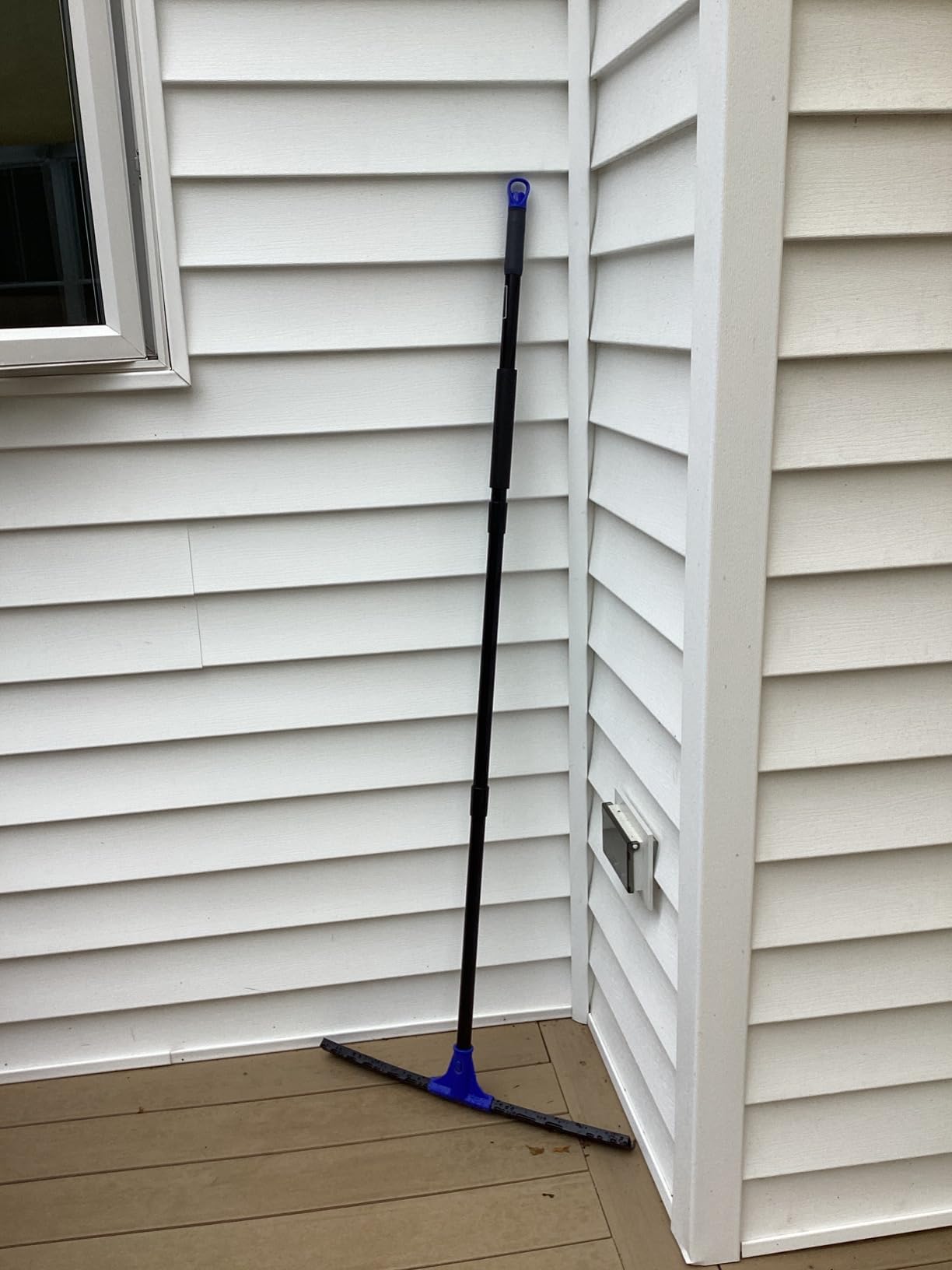
The packaging is a genuine feature in a small garage. A 62 inch assembled tool will not go on a shelf; this one breaks down into sections that fit against a wall. There is also a hanging hole in the handle, and hanging a squeegee rather than standing it on the blade is the correct storage method.
That last point deserves emphasis. The manufacturer specifically warns against leaving the tool standing on its blade, because a rubber or foam edge left under load for months takes a set and stops sealing flat. A warped blade leaves a wet stripe down the middle of every pass, which is the most common complaint we saw about squeegees in general.
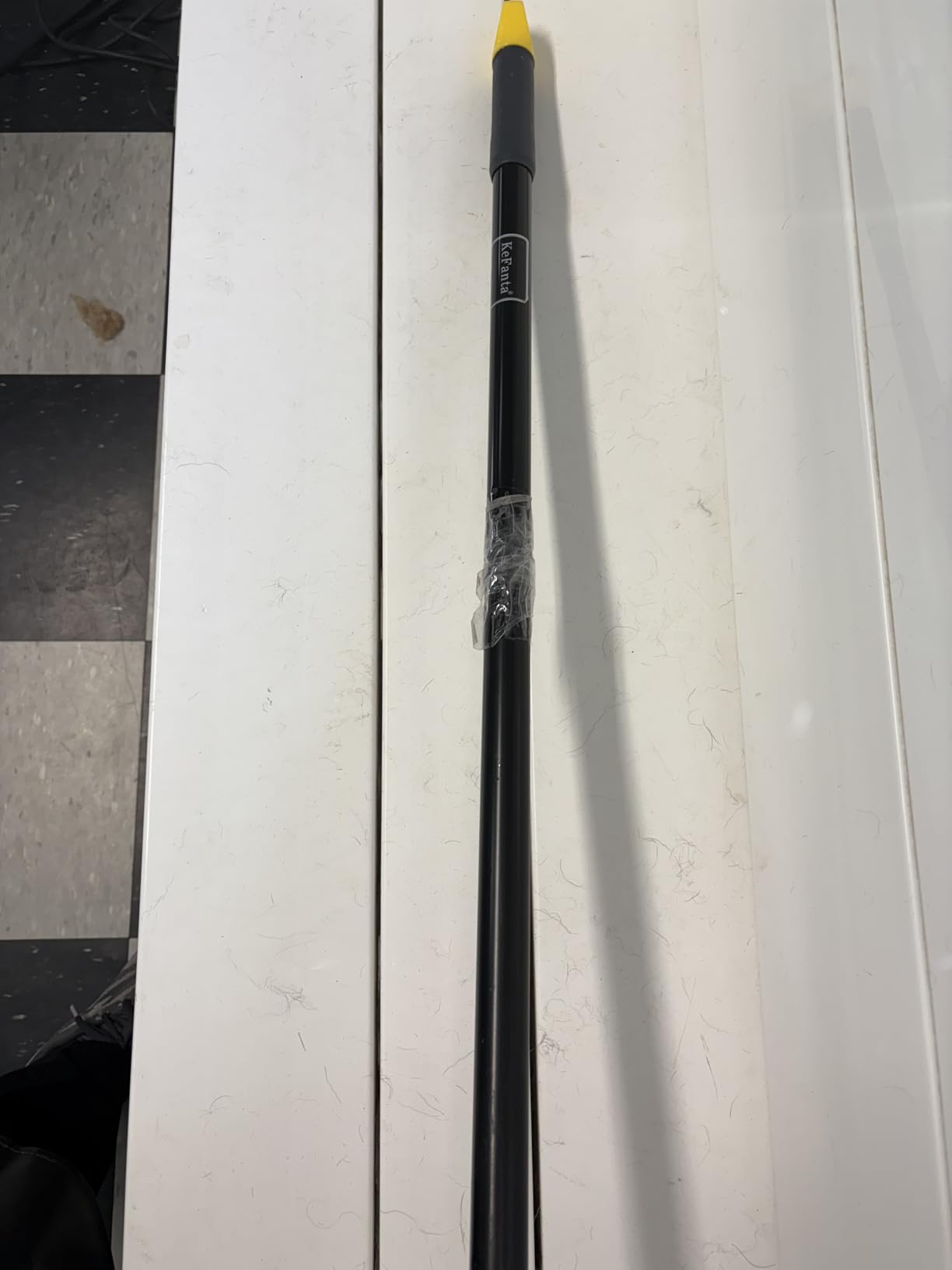
Will the handle survive a large slab?
Mostly. The handle is the weak point, and the honest answer is that this is not the tool for a commercial operator leaning on it across a 1,200 square foot slab every day. A number of buyers report bending after a few months of heavy pushing. For a homeowner clearing meltwater a few times a week, it holds up fine.
Two habits extend the life noticeably. Use the blade angle rather than pressing straight down, and reassemble the sections with the locking pin fully seated. Loose sections under cyclic load are what produce the wobble that eventually becomes a bend.
Is 18 inches wide enough for a two-car garage?
It is workable but not efficient. Eighteen inches covers a narrow path, and a two-car slab is wide, so expect more strokes than with a 24 or 30 inch head. If your garage is a single bay or you have a lot of shelving and vehicles to work around, the narrower blade gives you better control in tight quarters.
If you have a wide open two-car slab and do this often, the same manufacturer’s 24 inch wiper further down this list covers nearly a third more floor per pass.
4. Rubbermaid Commercial Products 22 Inch Heavy-Duty Squeegee – Top Rated
- Highest average rating in the group at 4.5 stars
- Thick moss rubber blade leaves almost no streaks
- Multi-year reports in repair shops and kennels
- Works on smooth concrete and for dry debris pickup
- Handle sold separately
- Handle clamp can loosen and let the head slip during a back drag
- Sharp leading edge can catch laces or trim
This head carries the highest average rating in our group at 4.5 stars, and the reason is material rather than marketing. The moss rubber blade is thick and dense, and owners switching from cheap rubber report a decisive change in how little residual water and streaking is left behind. On a smooth slab, the finish is close to dry rather than merely damp.
It is also the tool that professionals specify. Commercial users report three or more years of daily use where cheaper heads failed every few months, which is the durability evidence that matters most in this category. Repair shops, kennels and car washes all use this pattern of head for good reason.
Here is the catch: it is a head only. No handle is included, so you need a standard tapered handle, and that is an extra purchase and an extra compatibility check. Plan the handle purchase at the same time, because the head will sit in a corner until you have one.
The clamp that grips the handle is the second issue worth understanding before you buy. It can loosen during a back drag, letting the head rotate off the shaft. A surprising number of owners add a screw or a hose clamp to reinforce it, which costs almost nothing and permanently solves the problem.
Is a commercial head overkill for a home garage?
Not in the way you would think. The blade is the same width band as the picks aimed at homeowners, and nothing about it makes it harder to use. What you gain is a denser rubber that outlasts hardware-store blades, which is exactly what you want on a slab that sees grit and salt rather than a bathroom that sees soap.
What you take on is assembly. Two parts instead of one, and a joint you should check after the first few sessions.
Is the leading edge a safety concern?
Worth knowing about. The rubber edge is stiff and relatively sharp, and owners note it can catch shoelaces, a bootlace or the hem of a work trouser when the tool is handled carelessly. Keep the head slightly raised when you are repositioning, and turn the head toward the wall rather than across your path.
That same stiffness is the reason it performs on rough floors, so this is a trade you make knowingly rather than a defect to complain about later.
5. CLEANHOME 17 Inch Rubber Floor Squeegee with Extendable Handle – Best for Compact Storage
- Locking clip holds under pressure
- 17 inch blade clears pooled water off concrete and epoxy
- Firm blade pulls water rather than pushing it
- Lightweight enough for long cleaning sessions
- 54 inch maximum length is short for users over six feet
- Soft rubber wears faster on rough floors
- Angled head is not suited to side-to-side sweeping
At 17 inches this is one of the narrowest blades in the roundup, and that is deliberate rather than a compromise. Narrow heads follow a defined line and are far easier to control around a parked car, a staircase or a stack of shelving, which is where most garage water actually collects.
Buyers describe this as noticeably sturdier and thicker-walled than comparable pole tools in the same bracket. The aluminum base resists rust, which matters in a damp garage, and the whole head is light enough that a long cleaning session does not leave your forearm burning.
The head is angled, and owners repeatedly single out that angle as the reason the tool is easy to use. Because it is built to pull, dragging water toward a drain or sliding it under a closed door is the natural motion rather than something you have to fight.
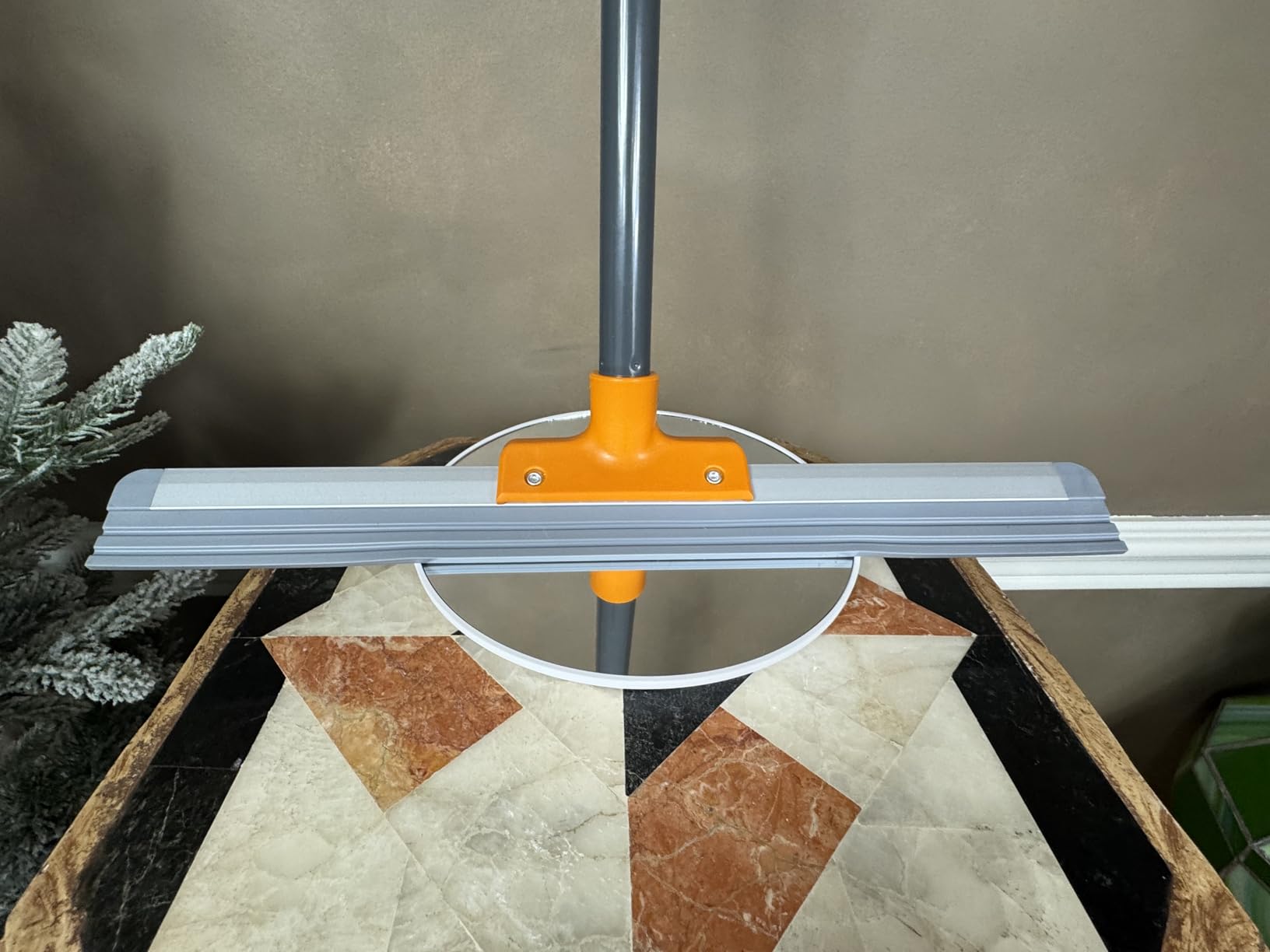
It also doubles as a window and glass squeegee, which is not marketing fluff. The same rubber edge that pulls water off a slab will pull water off a windscreen, and owners use it for pool decks, patios and driveways. In a garage that doubles as a workshop, that versatility earns its place.
The locking clip on the 44 to 54 inch handle is what we would check first when this arrives. Owners report it holds firmly under pressure, which is not always true of the plastic collars on cheaper poles, and it means the head stays at the angle you set.
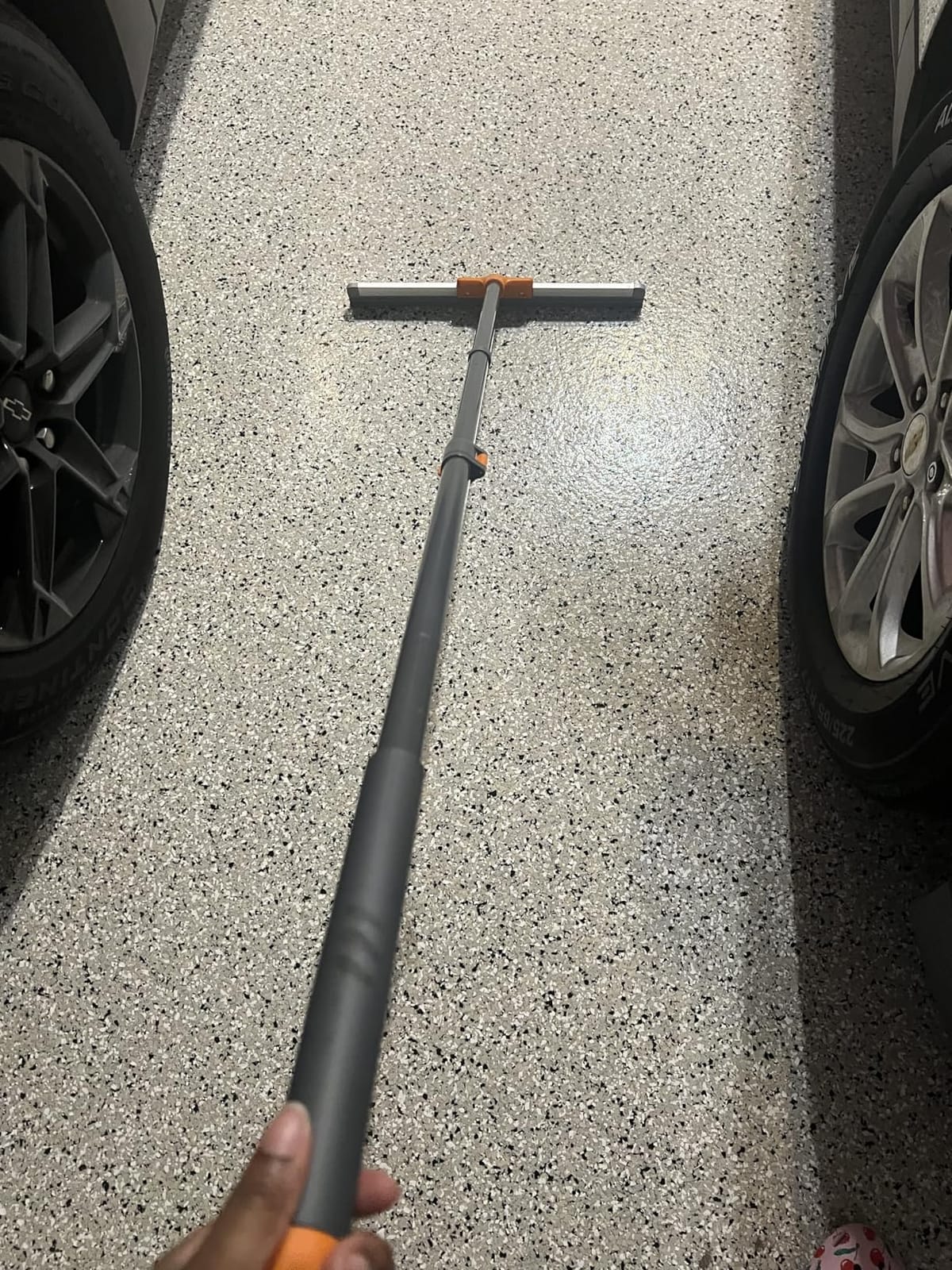
Is 54 inches enough handle length?
For most people, yes. It suits users up to about six feet, and it collapses to 44 inches, which is short enough to store in a tight bay or hang from a shelf bracket. The users who complain are the taller ones, who find themselves bending at the waist on a large floor.
If you are over six feet, prioritise a tool that extends past 60 inches and confirm it will still pass under your closed garage door. Several picks in this roundup reach 60 to 62.5 inches while collapsing to a fraction of that.
How does it handle rough concrete?
Acceptably, but with a shorter life than the stiffer picks. The rubber here is softer than a European raclette-style blade, and softer rubber is gentler on an epoxy-coated floor while wearing faster on a broom-finished slab. Inspect the edge every few months and replace it when the lip starts to look chewed rather than sharp.
Because the head is angled for pulling, side-to-side sweeping strokes are not its strength. If your floor needs debris worked loose first, use a stiff broom, then come back with this to move the water.
6. Tyroler Bright Tools 17 Inch Heavy Duty Floor Squeegee – Best for Two-Way Action
Tyroler Floor Squeegee Heavy Duty 17″ | Floor Squeegee for Concrete Floor
- Single-cast rubber body over a steel rod core resists cracking
- 180 degree handle twist switches between push and pull
- Glides along furniture walls and floors without marking
- Integrated hanger and four piece handle for reach
- Rigid full-rubber body suits smooth floors more than textured concrete
- Push and pull conversion is not obvious without instructions
The signature feature is the handle twist. Turn the handle 180 degrees and the head flips from pull position to push position, which means one tool can drag water toward you and then shove it away. On a floor with a low point in the middle, that flexibility is genuinely useful rather than a gimmick.
Build quality is the reason for the 4.4-star rating across more than 1,200 reviews. The body is a single cast of 100 percent rubber over a steel rod core, which is the structure most likely to resist the flexing and cracking that kills plastic-frame heads. The anti-rust aluminum handle is a sensible pairing for a wet environment.
Owners also note that the head glides along furniture legs and walls without marking them. If you park close to the wall or store a cabinet at floor level, a non-marking edge saves you from scuffs that a stiff raclette style head leaves behind.
The working angle of 30 to 40 degrees is what makes it track cleanly. Hold the handle at that angle and the blade seals; flatten it and water slips underneath. That single adjustment explains most of the difference between a pass that works and a pass that smears.
Is a full-rubber body better than a foam blade?
On smooth floors, yes. The body is rigid enough to hold a straight seal line across a power-trowelled or sealed slab, and it will not compress the way foam does. On deeply textured concrete, the answer flips: a rigid edge bridges the high points and lets water sit in the low spots.
So match it to the finish. Smooth, sealed or epoxy-coated floors suit this. Aggressive broom finish or heavily worn slab suits a foam blade instead.
What is the catch with the twist mechanism?
Discoverability, mostly. The conversion is not obvious the first time you pick it up, and several owners mention that the instructions or a short demonstration made the difference between using it correctly and fighting it.
Once set, it is a two-handed operation in either direction, which is the reason to own this rather than a fixed-angle head. Budget a minute with the tool before your first real floor.
7. eazer Heavy Duty Floor Squeegee with 60 Inch Aluminum Pole – Best for Multi-Surface Use
- Lightweight and quick to assemble with an adjustable pole
- Angled head sweeps water mud and pet hair in one pass
- Works on garage patios tile glass and solar panels
- Compact enough to store in small spaces
- Rubber durability falls short of the heavy duty claim for some users
- Telescoping lock does not clamp as firmly as a screw collar
- Some users want a longer maximum handle length
This is the closest thing in the roundup to a one-tool-cleans-everything option, and that is where its value sits. The same head moves water off a garage slab, a patio, bathroom tile, glass and solar panels, and it handles mud and pet hair in a single pass without leaving streaks.
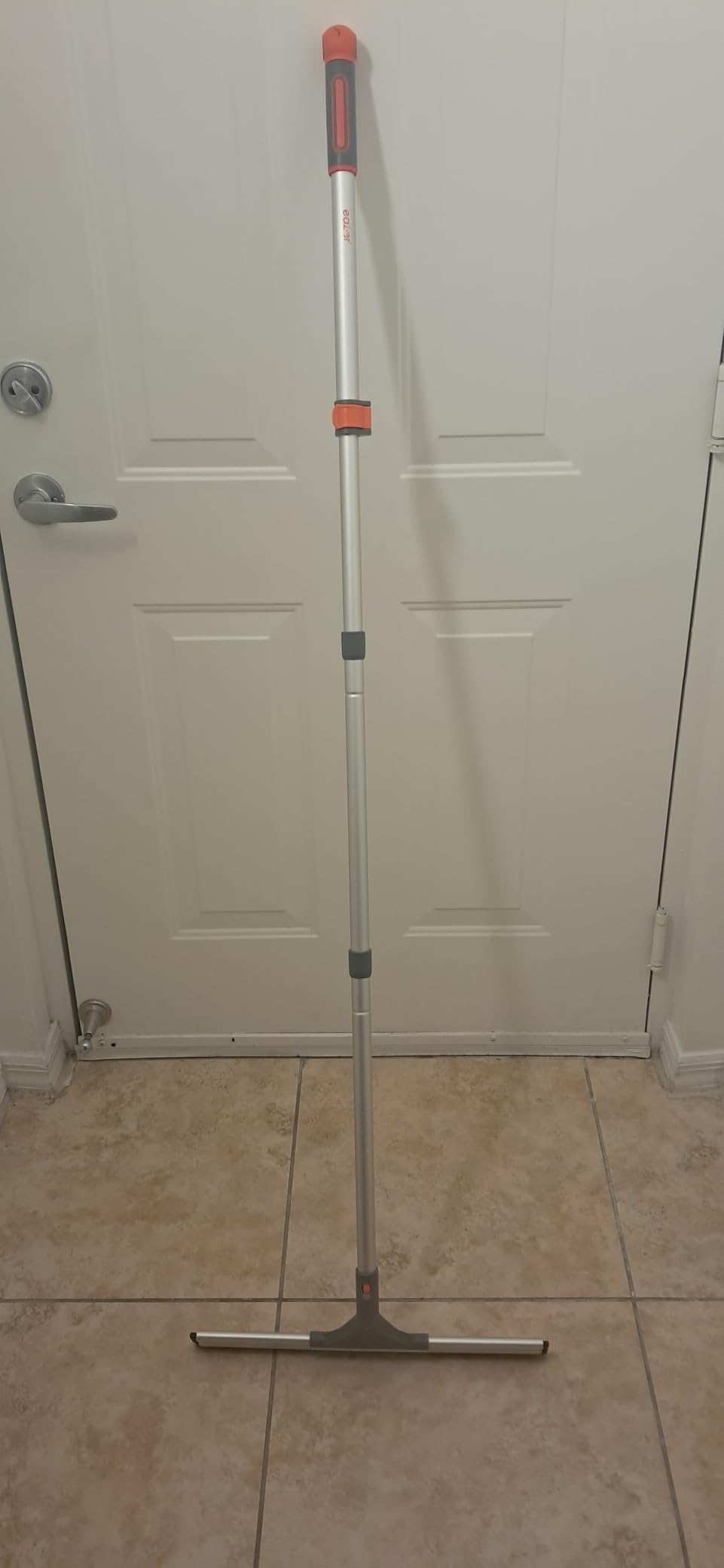
The pole is the quiet strength. It adjusts from about 37.8 inches to 60 inches using a screw and telescopic mechanism, so it collapses to a short enough length for a small storage closet and extends far enough to work under a car deck or along a fence line without crouching.
Owners describe it consistently as practical, light and quick to put together, and at roughly 5 ounces for the head it is the kind of tool you will actually pick up rather than leave in the corner. Assembly takes a couple of minutes and no tools.
There is also a universal attachment port, which means other cleaning heads from the same range will connect to the pole. If you already own one, the pole cost is amortised across multiple tools. If not, treat it as a future option rather than a reason to buy.
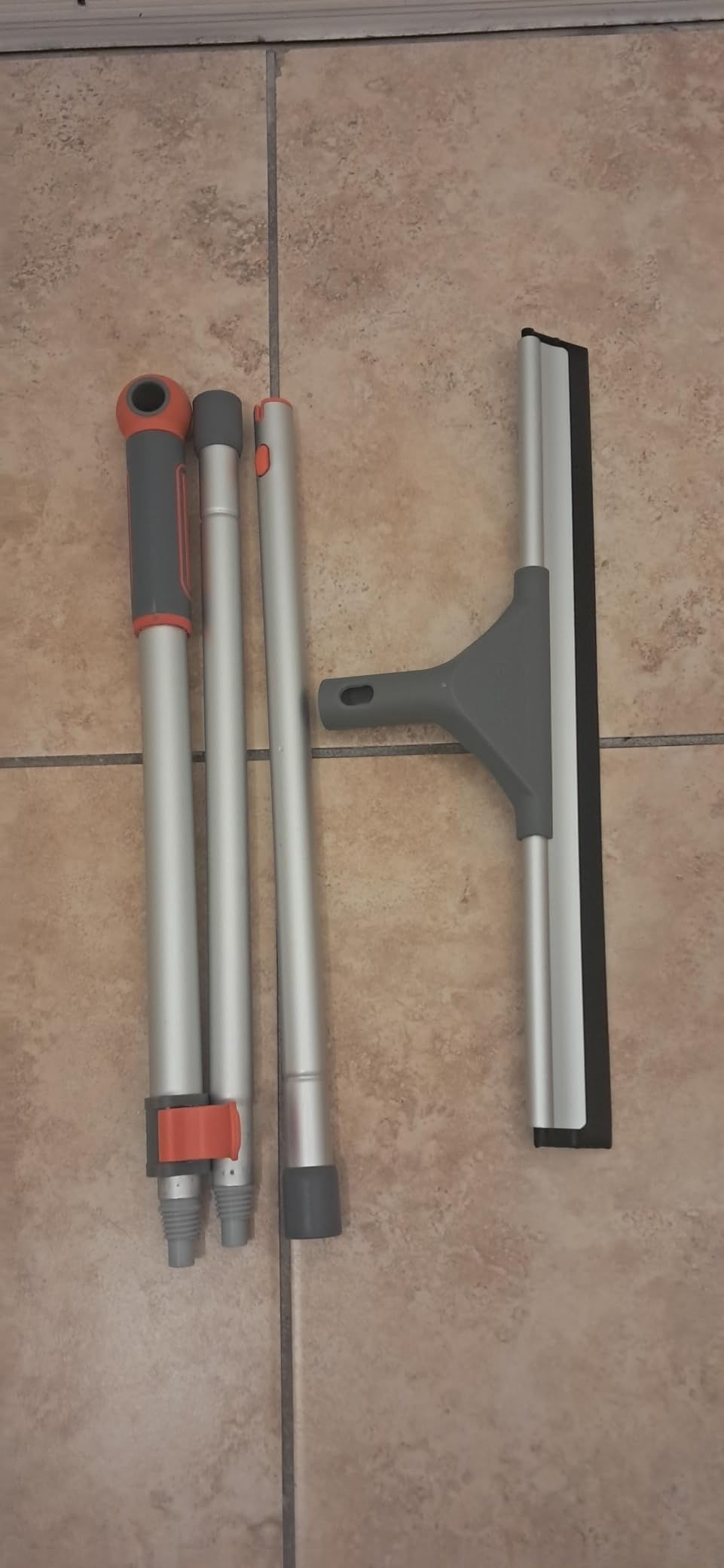
The maintenance story is straightforward, and that matters more than it sounds. The head rinses clean under running water, so cement dust and grit do not get ground into the rubber over time. A squeegee that can be washed in ten seconds will be washed in ten seconds, and a clean blade is a sealing blade.
Rinsing is also the answer to the most common complaint. A small number of owners report the rubber wearing quickly under daily use on smooth concrete, and in most of those cases the head had not been rinsed and was dragging cement residue.
Does the heavy duty label hold up?
Partly, and we would read it as marketing rather than a spec. For occasional garage use, seasonal meltwater and general household surfaces, it performs well and weighs almost nothing. For daily commercial work on gritty concrete, the blade life will not match a dense moss rubber or a solid cast rubber body.
Judge it on the pole joint rather than the blade. The telescopic lock does not clamp as firmly as a screw collar, so re-check the tension after the first few sessions, and do not lean on the tool at full extension.
Is it right for an epoxy-coated floor?
Yes. A 17-inch rubber blade is gentle enough not to mark a cured coating, and the angled head makes following the edge of a coated bay straightforward. If you are prepping the floor before coating, the same rubber edge spreads a sealer or a primer evenly enough to be useful, though the foam picks are better at that specific job.
For a full coating project, our epoxy coating guide covers the prep steps that matter more than the applicator.
8. Unger Professional AquaDozer Max Kit 36 Inch Curved Squeegee – Best Heavy Duty
- Widest blade in the group at 36 inches
- Curved Maxwave hood outmoves a straight blade on floods
- 48 inch dual-end pole threads onto brooms and other heads
- Rubber blade reported as durable and oil resistant
- Aluminum pole bends in the middle under downward pressure
- Needs correct blade angle rather than pressure
- Pushing down can break the pole
At 36 inches, this is by a wide margin the widest blade here, and width is what moves water fast. A curved hood with what Unger calls Maxwave geometry is claimed to shift roughly twice the water and debris of a standard straight-blade squeegee in a single pass, and users working flooded shop floors describe the difference as obvious.
The curved shape also changes how debris behaves. A straight edge tends to push grit in a ridge ahead of itself, while a curved hood gathers it into a roll that you can tip out. On a floor after a winter storm, that difference decides whether you make one pass or three.
The 48-inch dual-end aluminum pole has universal threads at both ends, so it accepts brooms and other attachments from the same range. That makes this a genuine kit rather than a single-purpose tool, and it is why the pole doubles as a broom handle for sweeping the same floor afterwards.
Buyers in large-garage cleaning groups consistently single out the Unger AquaDozer head as one of the favourites for big water cleanups, and the blade itself is reported as durable and resistant to harsh oils, which matters in a workshop where a fluid spills now and then.
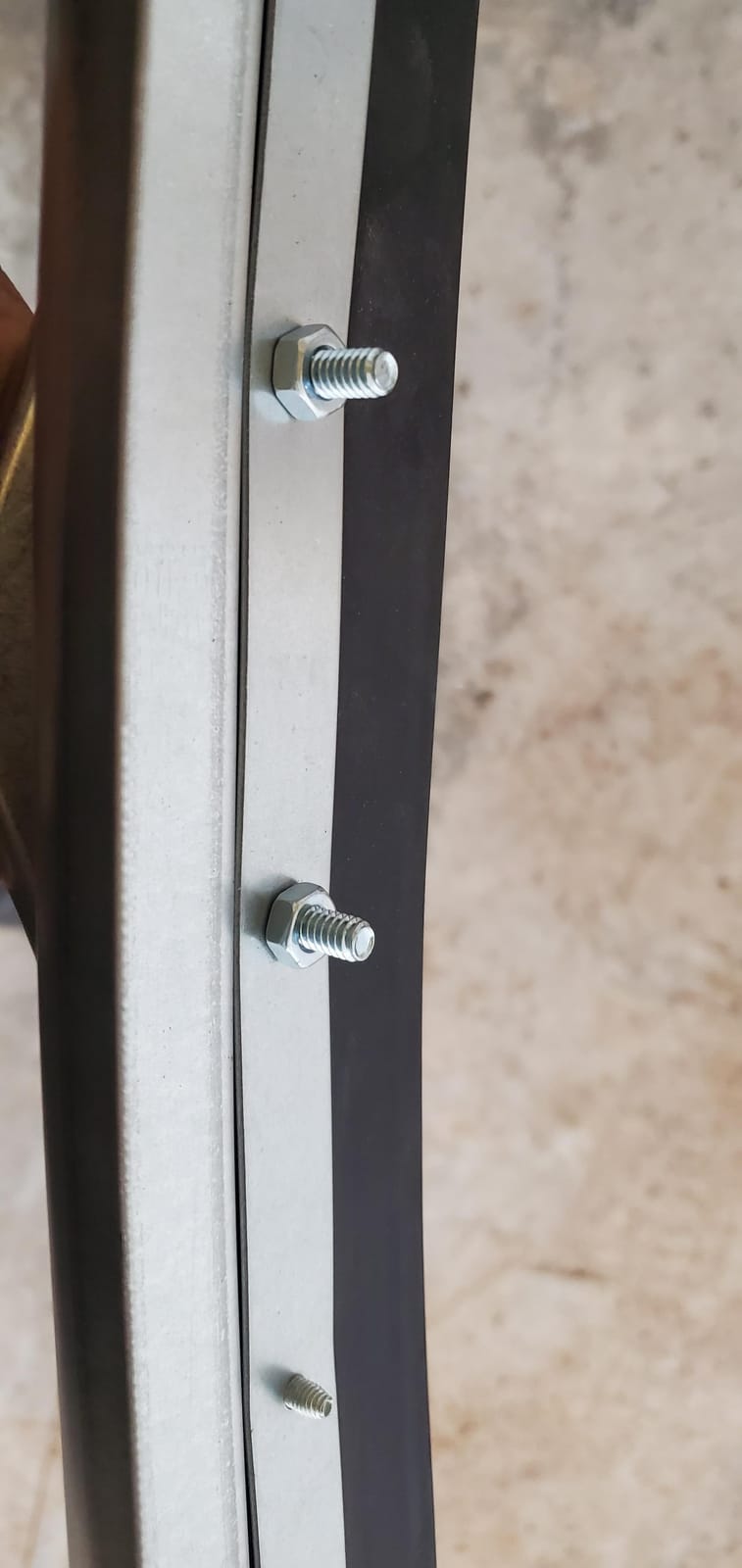
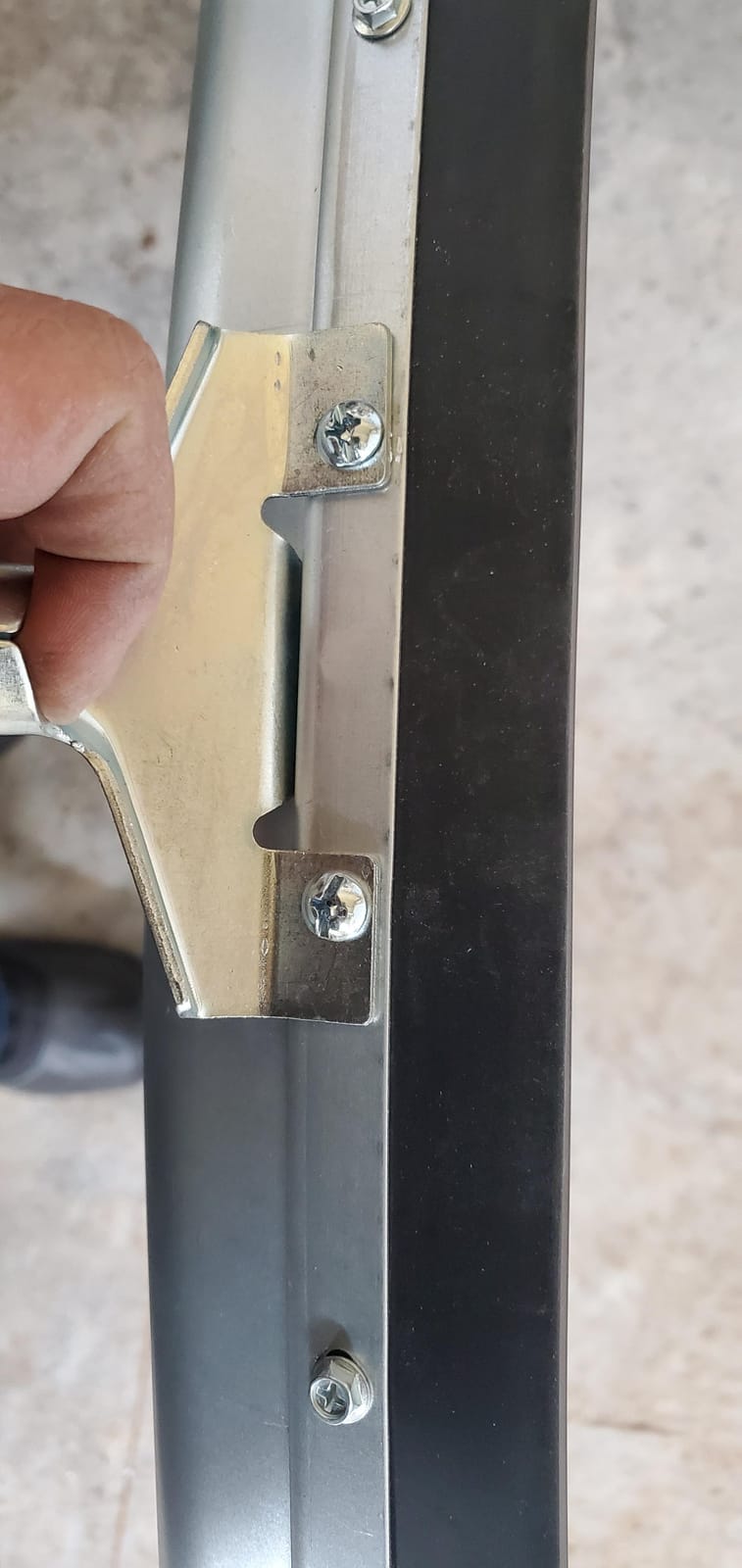
Now the honest part. The pole is the weak point and it is what drives the 4.0-star average, the lowest in this roundup. A noticeable share of one-star reviews describe the aluminum bending in the middle, and the pattern is consistent: it happens when someone pushes down on the head instead of adjusting the blade angle.
That is a technique problem, not purely a product problem, and several buyers say a short manufacturer tutorial fixes it. Treat the angle as a first-class setting, keep the pole at working height, and let the blade do the work.
Is 36 inches too wide for a residential garage?
For a standard two-car slab, no, it is close to ideal. Thirty-six inches covers a large fraction of a bay in one stroke, and on a flat open floor the wide head is a genuine time saver. It becomes awkward only where you are negotiating a car, a staircase or a narrow walkway between shelving, where a wide head is hard to steer.
Check your door opening too. A 36-inch head on a 48-inch pole is a large package, and while it will pass under a fully open door, you need somewhere to hang it that is not in the middle of the floor.
How do I avoid breaking the pole?
Three habits. Never push down on the head; use the tilt angle instead. Retract the pole slightly for long reaches rather than leaning on a fully extended shaft. And inspect the middle of the tube after the first few sessions, because flexing is usually visible before it fails.
At 5.5 pounds for the kit, it carries real mass. On a large slab that is a benefit because the weight does work for you, and on a small bay it is more tool than the job needs.
9. KeFanta 24 Inch Water Wiper Broom – Best for Snow and Slush
Floor Squeegee for Concrete and Tile Cleaning, 24” Water Wiper Broom
- 24 inch blade dries a two-car garage in few passes
- Sectional handle assembles in minutes and adjusts 21 to 60 inch
- Reported to cut drying time sharply under pressure washing
- Foam grip stays comfortable in long sessions
- Handle feels thin under heavy pressure
- Some reports of the handle mount or screw joint loosening
- Minority report less thorough drying than expected
This is the 24-inch companion to the budget pick earlier in the list, and it is the one to buy if your garage is two-car width or you clear snow melt on a regular schedule. The widened blade covers noticeably more floor per pull, and users report dramatic reductions in drying time after pressure washing.
Several owners come from kennels, dog rescues and covered carports, which tells you the kind of environment this head survives. That means repeated water work, animal urine and grit, all of which are harder on a seal than a dry slab is.
The sectional steel handle adjusts from 21 to 60 inches and assembles in a few minutes with no tools. That range covers a short user, a tall user and a user who wants to collapse it to store it against a wall, which is the same clearance consideration that matters for every telescoping tool in this roundup.
At 4.4 stars, the reviews are positive but the sample is smaller than the picks near the top of this list. We are less confident about long-term durability here, and we would weight the head and handle design more heavily than the rating when you decide.
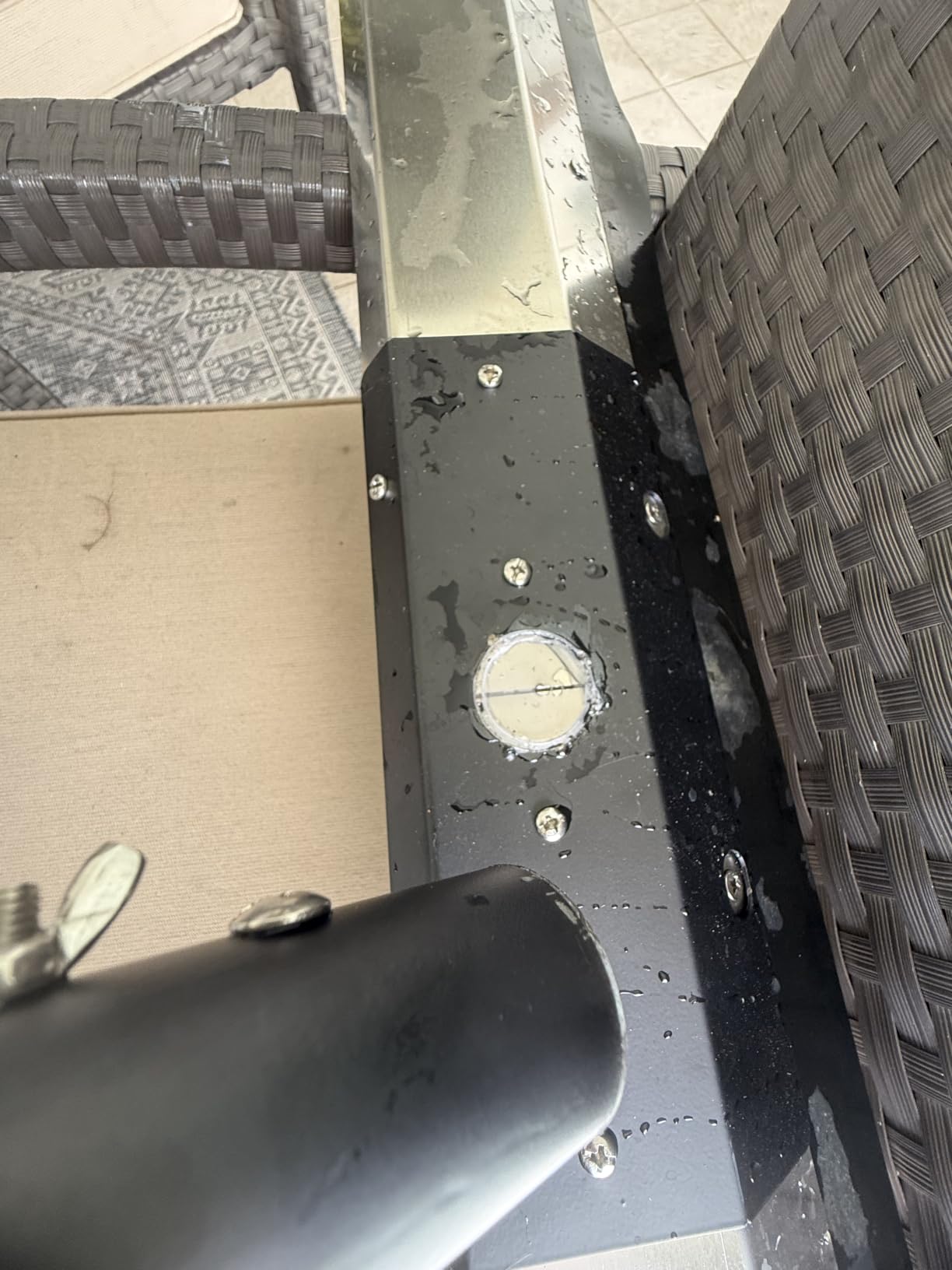
The non-slip foam wrap at the top of the handle is a small detail that matters on long jobs. Wet hands on a smooth steel pole are the fastest way to lose control of a loaded squeegee, and the wrap buys you grip when the floor is wet and your hands are cold.
As with the 18-inch version from the same maker, the manufacturer warns against standing the tool on its blade. Hanging holes are provided in the handle, so hang it. A blade stored under its own weight for a season takes a permanent set and leaves a wet stripe.
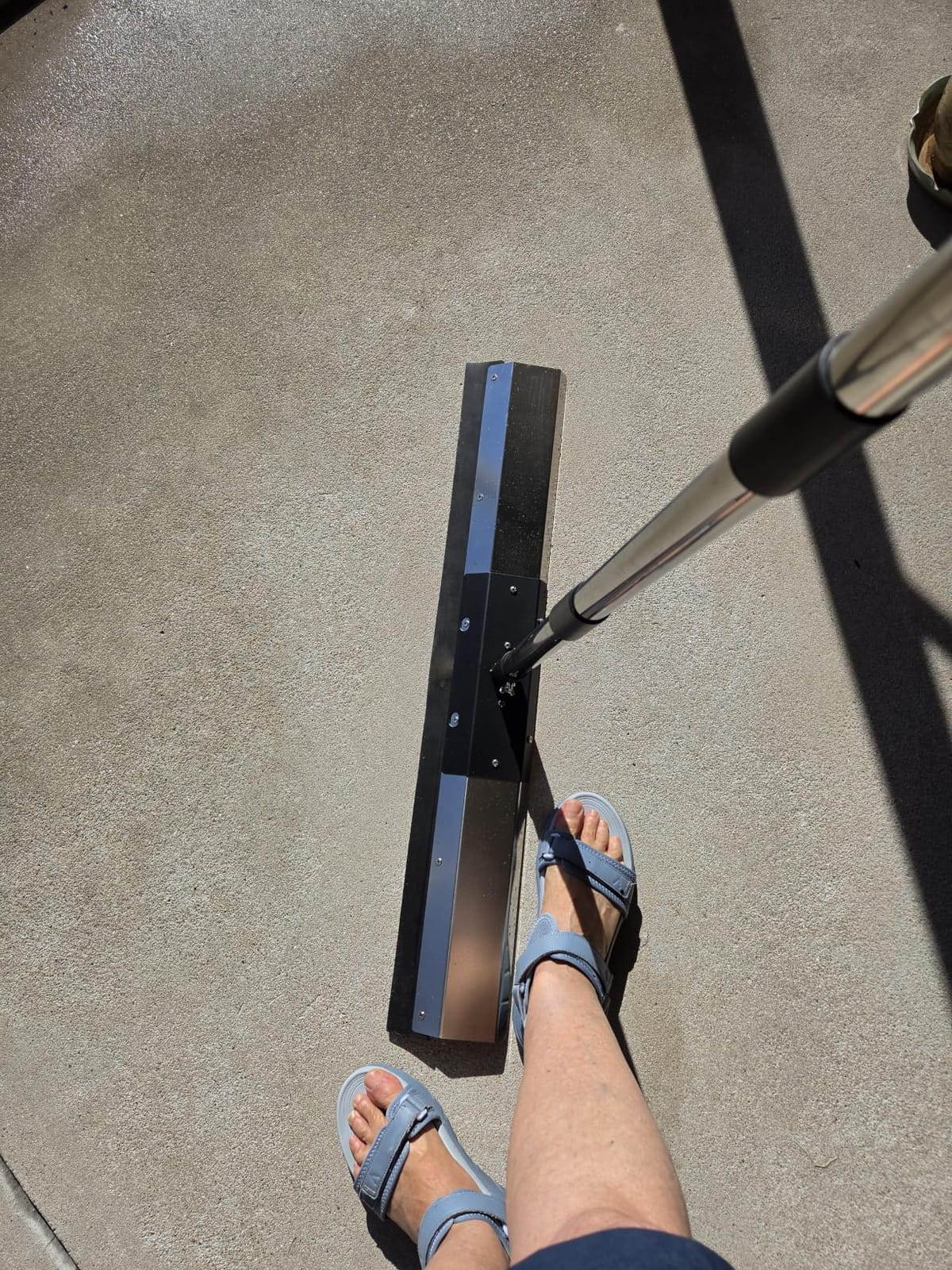
Is it a winter tool or an all-season tool?
Genuinely both. A 24-inch firm rubber edge is the right tool for pushing snow melt and road salt residue out of a door opening, because the wide head moves a large volume of slushy water in one stroke. It also handles ordinary rain and post-wash drying without any change in technique.
For grit, sweep or vacuum first. A firm rubber blade pushes small debris ahead of itself in a line, and if you are not planning to tip that line out, you are relocating the grit rather than removing it.
How strong is the handle mount?
This is the recurring criticism and it is worth taking seriously. The handle itself feels thin under sustained heavy pressure, and there are reports of the mount and screw joint loosening or failing. For weekly household use that is manageable; for daily commercial work, look at a tool with a fixed steel shaft such as the 17-inch cast rubber model earlier in this roundup.
Re-check the mount every few weeks if you use it weekly. The foam wrap hides the joint, so it is easy not to notice.
10. Direct Mop Sales 30 Inch Double Foam Squeegee Kit – Best for Uneven Floors
30″ Professional Floor Squeegee Kit – Premium Double Foam Blade and Telescopic Aluminum Handle
- Only kit here sold as a head and telescopic handle together
- Double foam blade grips uneven and grouted surfaces where rubber skips
- Acid-resistant frame suits workshop cleaning
- 72 inch maximum reach suits tall users
- Foam wears faster than rubber and is poor on coarse debris
- Smallest review base in the roundup at 174 reviews
- Large storage footprint with a 30 inch head and 72 inch pole
This is the complete kit answer, and that alone separates it from several picks in this list. The head and a full telescoping handle arrive together so there is no second purchase and no compatibility guesswork. For a first garage squeegee, removing the two-step setup is worth a lot.
The double foam blade is the reason it earns its place. Two foam strips compress into uneven surfaces and grout lines where a single rubber lip skips over, which makes it the pick for a textured or older slab with a broom finish, and for tiled shop floors with a lot of grout.
Reach is the other headline. The handle telescopes from 39 to 72 inches, and 72 inches is the longest extension in this roundup, which makes it the right tool for a very tall user or for a bay with deep shelving where you cannot get close to the far wall.
The frame is high-impact, acid-resistant polypropylene, which is a sensible material for a workshop where a battery spill or a cleaning chemical is possible. It will not rust, and it tolerates being knocked around in a vehicle boot.
What do I give up with a double foam blade?
Service life on coarse debris. Foam is a softer material than dense moss rubber or a solid cast rubber body, so it wears faster on gritty floors and is less effective at picking up chunks. If your winter cleanup involves frozen grit as much as water, a rubber pick is the better tool.
On water alone, especially over textured concrete, the foam grip is the better choice, and the two-edge contact is why the surface ends up drier than a single-lip blade would leave it.
Is the low review count a reason to skip it?
It is a reason to weight the design over the rating, not a reason to skip it. At 174 reviews this has the thinnest evidence base here, so we cannot promise the same multi-year track record the higher-reviewed picks show. What we can say is that the design logic is sound for uneven floors and the kit is complete as delivered.
One practical warning: a 30-inch head on a pole that extends to 72 inches is a large package. Measure your storage and your garage door clearance before ordering, and plan on hanging it rather than standing it.
How to Choose a Garage Floor Squeegee?
Three decisions matter: blade material, blade width and handle construction. Everything else on a retail listing is detail. Get these three right for your floor and your body, and a mid-priced tool will outperform an expensive one that fights you.
Blade material: rubber, closed-cell foam or silicone
Rubber is the stiffest and most durable option. It holds a straight seal line on rough concrete, drags grit and slush, and typically lasts longest, but it is the harshest on an epoxy-coated or freshly sealed floor. Dense moss rubber and solid cast rubber are the most durable versions we saw.
Closed-cell foam is the opposite trade. It compresses into pits, grout lines and broom texture, leaves fewer streaks than a single rubber lip, and is safe on coated floors, but it wears faster and is poor at coarse debris. Dual foam spreads sealants and coatings evenly, which makes it the applicator’s choice as well as the cleaner’s.
Silicone stays flexible in cold weather, resists rust and will not mark a coated surface, but it collects almost no debris. Use it to move water after you have already swept or vacuumed.
Neoprene is chemically resistant and durable but expensive, and none of the ten picks here use a pure neoprene blade. If you are working with solvents or aggressive chemicals, that changes the calculation entirely.
Blade width: what 17, 18, 22, 24, 30 and 36 inch mean in practice?
Width is coverage per pull, and it is the difference between finishing a job and putting it off. A 17 or 18 inch head is a single-bay or cluttered-garage tool, giving you the control to work around a car and shelving. A 22 to 24 inch head is the general-purpose choice and covers a two-car slab efficiently. A 30 to 36 inch head is a shop tool that clears a large open floor in very few strokes.
Two things narrow the calculation. Wider heads are harder to steer in tight spaces, and they need more open floor in front of you than most people have in a packed garage.
Which floor do you have?
Bare unfinished concrete, rough or broom-finished: a stiff rubber blade, ideally solid cast rubber or dense moss rubber, at 22 inches or wider. Foam will seal into the texture but will not move grit. This is the hardest case, and a stiff broom before the squeegee makes a large difference.
Power-trowelled or ground concrete, smooth: a dual closed-cell foam blade works excellently and leaves the surface closer to dry. Solid rubber also works and lasts longer, at the cost of being harder on the surface.
Epoxy-coated: a foam blade or a soft rubber blade, never a hard raclette edge. Foam spreads a new coating evenly during application and will not mark a cured one. Keep the blade clean, because trapped grit under a hard edge scratches a coating.
Sealed or stained concrete: a dual foam or silicone blade. Both are gentle, and silicone has the advantage of staying flexible if the floor is washed in winter.
Broom-finished with deep grout, or tiled shop floor: double foam is the right call, because the second edge reaches into the valleys that a rubber lip bridges.
Handle construction and garage door clearance
Wood is comfortable, warm in the hand and cheap, but it is heavy over distance and it can split if it is left wet. Fiberglass is lighter and will not split. Aluminum and alloy steel are the most rigid, which is what you want for a wide blade and a long reach, at the cost of the highest fatigue factor when the joint is pushed hard.
Now the constraint that ends purchases: garage door headroom. Open your sectional door, measure the bottom edge of the lowest horizontal panel, and check the collapsed length of the tool against it. A fixed 62 inch handle will not pass under a standard closed sectional door. A telescoping tool that collapses to 30 inches will. Measure the collapsed length, never the extended length.
Storage is the other half. A long pole that racking cannot hold is a pole that ends up leaning in a corner, where it warps the blade. Prioritise a hanging hole, a hanging bracket or a sectional handle over any other feature. If you are still planning the wall layout, our pegboard storage guide covers hanging points that keep tools dry and in reach.
Straight versus curved blade
A straight blade gives you precise control and a predictable seal line, and it is the better choice in confined areas or around obstacles. A curved blade moves more water per pass and gathers debris into a roll you can tip out rather than a ridge you have to chase, which makes it the right pick for a flooded floor or a large open slab.
The cost of curved is steering. On a 36-inch head that curve becomes a wide arc that does not fit between a car and a wall. Choose curved for volume, straight for control.
How to Use a Garage Floor Squeegee?
The tool is simple but the technique is not. A wet floor squeegee works by sealing the blade’s leading edge against the slab and shearing the water into a moving wave ahead of it. Get the angle right and the water comes with you; get it wrong and you push a thin film around the floor instead of moving it.
Start at the back wall and work toward the door. A garage floor almost always has a slight fall toward the opening, so working downhill means gravity helps you the whole way and you finish at the sill rather than dragging water back toward the wall.
Work in stages rather than one long pass. Break a large pool into three or four overlapping strips, overlapping each strip by a couple of inches, and the wave builds cleanly instead of thinning out as the width outruns the water.
Leave the sill clear. If your door has a seal at the bottom, water pushed against it stops and spreads. Check the track and the threshold before you start, and clear grit out of the door rails, because that is where a wet floor quietly goes.
Let air finish the job. The consensus advice on the r/CleaningTips garage floor thread is exactly this: spray or wet the floor, push or sweep the water outside, and let it dry all day. The squeegee removes the water; moving air removes the moisture. A garage door open on a dry day finishes what the tool starts.
A warning about walls: that same thread raises mould risk on particle-board and OSB walls, which is a real concern with many garage walls. Standing water at the base of an OSB wall is how mould starts. Keep the squeegee pass close to the walls so you are not leaving a wet band along them, and run a fan if you have washed the floor down.
For winter work, the same logic applies with more urgency. Meltwater carrying road salt into cracks accelerates freeze-thaw damage, and standing water around stored tools causes rust. Clear the floor as soon as you can after a storm rather than waiting for a dry weekend, and do not use silicone or any penetrating sealant to deal with salt staining, because it traps salt under the surface instead of removing it.
If the floor is wet, remember that concrete grip changes. A smooth power-trowelled or coated surface can be slick when wet, while a hand-trowelled or broom-finished surface usually is not. Take the first few passes more slowly than feels necessary, and wear shoes with real grip if you are working over a coated floor.
Afterwards, rinse the head under a tap or a hose, hang the tool by its hole or bracket, and do not leave it standing on the blade. Cold storage is the other known enemy: foam and rubber both take a set if they are stored damp and compressed, and a warped blade leaves a wet stripe down the centre of every pass.
Frequently Asked Questions
What is the best floor squeegee for a garage?
The Ettore 61054 is the best all-round choice, because its dual closed-cell foam blade seals across uneven concrete and leaves fewer streaks than a single rubber lip, and its galvanized steel frame survives years of garage use. For a wide two-car slab, the DSV Standard 24 inch model covers far more floor per pull, and for rough broom-finished concrete, choose a stiff rubber blade instead.
What kind of squeegee is best for concrete?
A stiff rubber blade is best for bare or rough concrete, because it holds a straight seal line and drags grit and slush. Dual closed-cell foam is better on smooth power-trowelled or sealed concrete and on grout lines, where a rubber lip bridges the valleys. On an epoxy-coated floor, use foam or soft rubber to avoid marking the coating.
Are rubber or silicone squeegees better?
For a garage, rubber is the better all-round choice because it lasts longer and moves debris, while silicone stays flexible in freezing weather and will not mark a coated floor. Silicone collects almost no grit, so use it to move water after sweeping. If your garage is unheated and you clear snow melt, silicone is worth considering for cold-weather flexibility.
What kind of squeegee do professionals use?
Commercial users tend to choose a dense rubber head on a standard tapered handle, such as the 22-inch Rubbermaid Commercial Products pattern, because thick moss rubber survives daily use for years where cheaper foam or soft rubber fails every few months. Wide curved rubber heads are the other professional standard for shop floors, where moving volume of water matters more than precise control.
How wide should a garage floor squeegee be?
For a single-bay garage or a cluttered space, 17 or 18 inches gives you the control to work around a car and shelving. For a two-car slab, 22 to 24 inches is the general-purpose choice and cuts the number of passes sharply. A 30 or 36 inch head is a shop tool that clears a large open floor quickly but is awkward to steer in a narrow bay.
Do I need a squeegee or a wet vac for my garage?
A squeegee is for moving water, and it does that far faster and cheaper than extraction. A wet or dry vac is for grit, oil and spills, because a squeegee pushes dry debris into a ridge rather than collecting it. The sensible pairing is a stiff broom or vac for solids first, then the squeegee to get the water out the door.
The Verdict: Best Floor Squeegees for Garages in 2026
The best floor squeegee for garage use is the Ettore 61054, and the runner-up for a wide two-car slab is the DSV Standard 24 inch telescopic model. The 22-inch Rubbermaid Commercial Products head is the one to buy if you want the densest rubber and can source a tapered handle, and the 36-inch Unger AquaDozer kit is the right call for a shop floor where volume beats steering.
Match the blade to the floor before you match anything else. Stiff rubber for rough concrete, dual closed-cell foam for smooth or coated slabs, silicone for cold weather and water-only work. And measure your closed garage door against the collapsed handle length before you order, because a pole that will not fit under the door is the most common reason a good squeegee ends up unused.
Whichever you pick, hang it rather than standing it on the blade, and use it within a few hours of any wash or meltwater. That habit is worth more than any of the ten tools here.
Last reviewed and updated in 2026. If you are fitting out the rest of the bay, our guides to warehouse ladders for garages and hardwired EV chargers cover the two other upgrades that change how a garage works day to day, and a garage that doubles as a man cave usually needs an outdoor rated refrigerator to go with the tool wall.