
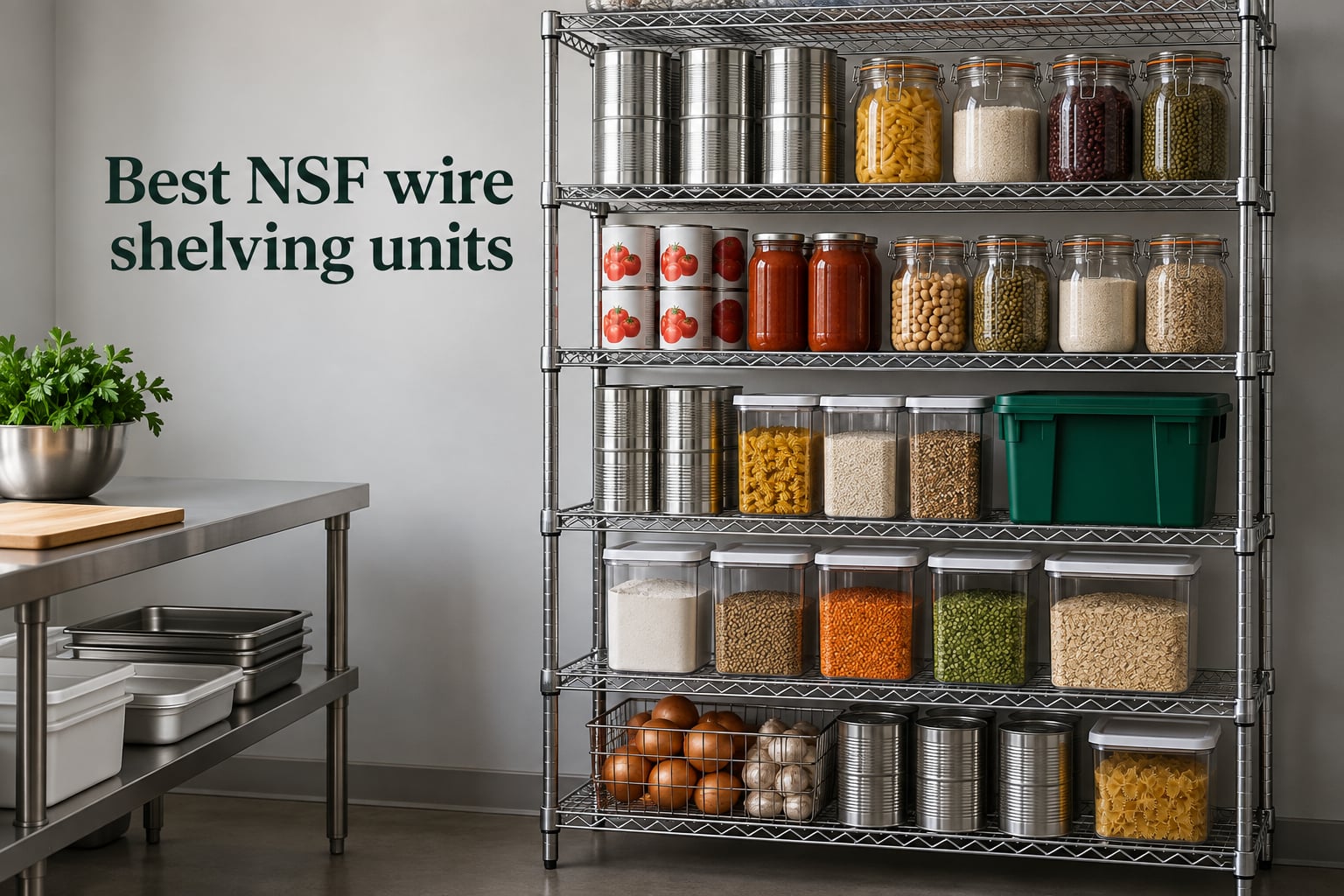
If you are shopping for the best NSF wire shelving, the box on the shelf is telling you the least useful thing on it. A headline figure like 6,000 pounds is a unit total spread across every tier, and it assumes the weight arrives evenly. Put 200 pounds of paint cans on one shelf of a six-shelf rack and the wire deck is carrying four times what the total implies.
So we read the whole set of 12 NSF wire shelving units below the way a spec sheet should be read, then ranked them on the per-shelf figure on leveling feet, whether the certification attaches to an actual model number, whether the manufacturer publishes a wheels capacity, and how long the warranty runs. We also pulled the failure modes out of the review record, because the small complaints are what tell you how a rack behaves after a year in a garage or a walk-in.
What follows is a definition of what NSF wire shelving actually is, a side-by-side table of all 12 picks, twelve reviews, and the buying guide that explains why feet versus casters changes the rating more than any other single line on the page. Spec figures were checked against the product listings and review summaries available in September 2026.
If your storage problem is bulk food rather than tools, our pantry shelving guide covers solid shelves and liner systems, and our garage shelving roundup covers the wider garage category.
Table of Contents
What Is NSF Wire Shelving?
NSF wire shelving is a steel shelving rack certified to NSF/ANSI Standard 2, the public health and sanitation standard covering food equipment. That means the specific model has been evaluated for materials, construction, cleanability and performance in a food-service environment, and the approved environment is stated on the listing, usually dry or wet.
The word that trips people up is “commercial grade”. It is marketing language, not a certification, and plenty of racks described that way have never been through an NSF evaluation. Certification attaches to a model, not to a material, so a chrome finish by itself means nothing about whether the rack is listed. A shopper in an r/castiron thread asked for exactly this distinction and was pointed toward restaurant supply houses, which stock the same NSF wire racks that big-box stores sell, often for less.
For a home user, NSF certification buys you three practical things: a per-shelf capacity figure that was tested rather than guessed, a coating that survives repeated washing, and a warranty with a length attached. For a restaurant operator it is not optional, because local health codes require listed equipment in inspected food areas.
Top 3 Nsf Wire Shelving Units (October 2026)
Three units stand out once you rank on published per-shelf capacity and honest disclosure rather than the marketing total. The Honey-Can-Do 5-Tier is the one most people should buy, the Seville Classics UltraDurable is the one that survives the heaviest loads, and the SafeRacks 6-Tier is the value pick that still publishes real figures.

Honey-Can-Do 5-Tier NSF Wire Shelf
- 200 lb per shelf
- 1000 lb total
- NSF certified
- 1-inch shelf adjustment
- Chrome finish

Seville Classics UltraDurable 5-Tier
- 800 lb per shelf on feet
- 4000 lb total on feet
- 500 lb total on wheels
- NSF/ANSI Standard 2
- 10-year limited warranty

SafeRacks NSF 6-Tier Wire Rack
- 450 lb per shelf
- 2700 lb per rack
- Zinc-plated shelves
- 18 x 48 inch footprint
- Limited lifetime warranty
Best NSF Wire Shelving Compared Side by Side
All twelve racks are listed here with the capacity figures that actually govern a purchase decision. Read the per-shelf column first, then the caster and wheel notes, because those two lines explain most of the disappointment people report later.
| Product | Specifications | Action |
|---|---|---|
| Honey-Can-Do 5-Tier NSF Wire Shelf |
|
Check Latest Price |
 Meet perfect 6-Tier NSF Wire Rack on Wheels Meet perfect 6-Tier NSF Wire Rack on Wheels |
|
Check Latest Price |
| Seville Classics UltraDurable 5-Tier |
|
Check Latest Price |
| SafeRacks NSF 6-Tier Wire Rack |
|
Check Latest Price |
 BestOffice Adjustable NSF Wire Shelf BestOffice Adjustable NSF Wire Shelf |
|
Check Latest Price |
 Brutis 5-Tier Deep Chrome Wire Shelf Brutis 5-Tier Deep Chrome Wire Shelf |
|
Check Latest Price |
 Seville Classics 7-Tier 21-Bin Wire Rack Seville Classics 7-Tier 21-Bin Wire Rack |
|
Check Latest Price |
 Alera NSF Four-Shelf Industrial Wire Kit Alera NSF Four-Shelf Industrial Wire Kit |
|
Check Latest Price |
 Dkeli 6-Tier NSF Wire Shelf with Casters Dkeli 6-Tier NSF Wire Shelf with Casters |
|
Check Latest Price |
 Crescent Housewares NSF Rolling Wire Rack Crescent Housewares NSF Rolling Wire Rack |
|
Check Latest Price |
 PrimeZone 5-Tier NSF Steel Wire Shelf PrimeZone 5-Tier NSF Steel Wire Shelf |
|
Check Latest Price |
 TRINITY Basics 5-Tier NSF Wire Rack TRINITY Basics 5-Tier NSF Wire Rack |
|
Check Latest Price |
1. Honey-Can-Do 5-Tier NSF Wire Shelving Unit
- Tool-free slip-sleeve assembly one person can finish in 15-30 minutes
- Shelf positions adjust in 1-inch increments
- Leveling feet handle uneven floors
- Light enough to move for reconfiguration
- Strong wire decks that do not bow like plastic racks
- Instructions are sparse with unhelpful pictures
- No wall-mount hardware included
- Dark support clips clash with lighter finishes
- Some flex when a heavy load sits on one shelf
This is the rack I recommend to most people. The model number is SHF-01443, the listing carries an NSF certification, and the published figures are 200 pounds per shelf and 1,000 pounds total across five tiers at 36 x 14 x 72 inches. That per-shelf number is modest, but it is the kind of number a 14-inch-deep consumer rack can actually deliver, which is more than you can say for several racks that claim far more.
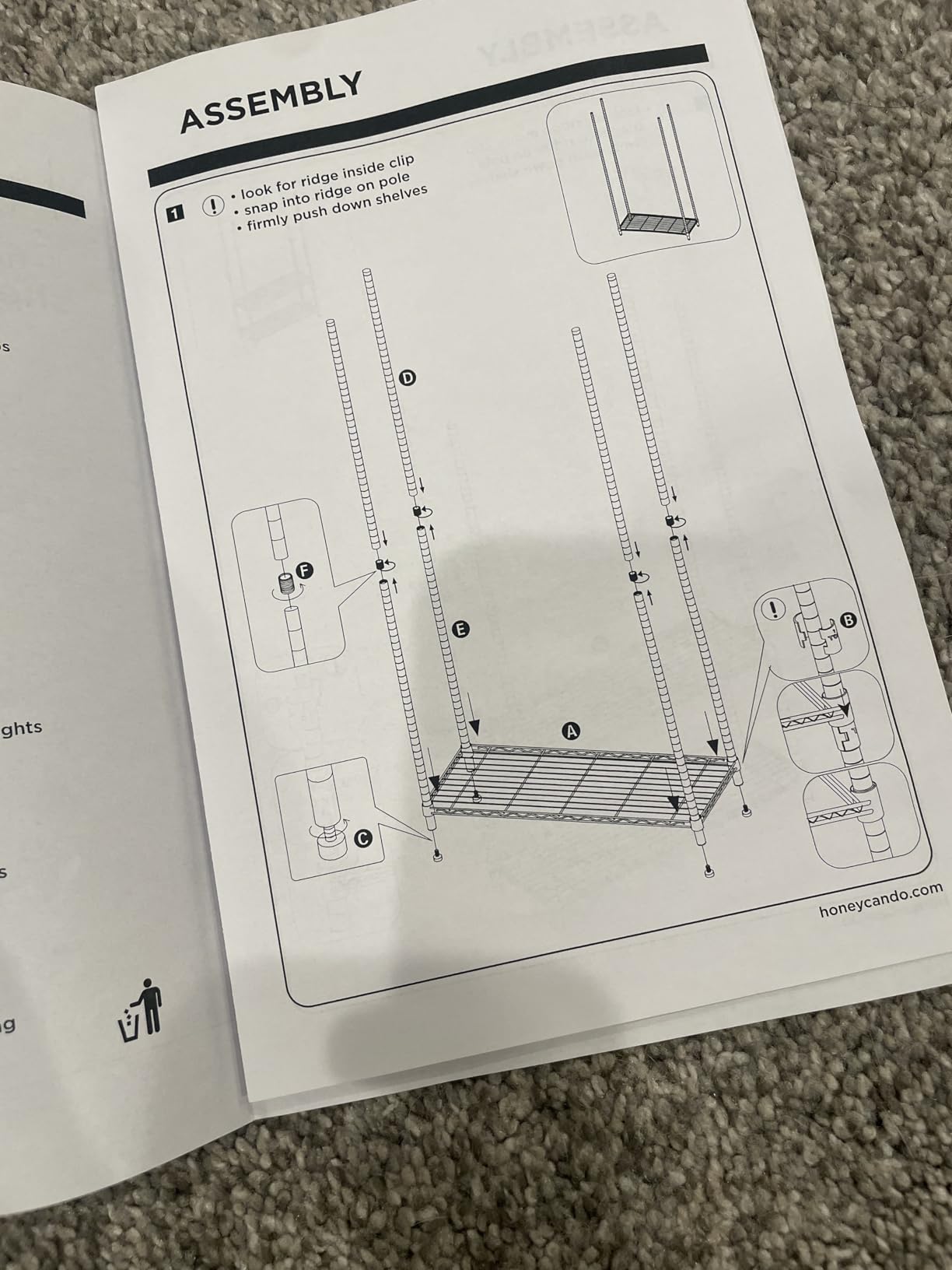
What I like is the shelf adjustment. Slip-sleeve clips let you move shelf height in 1-inch increments and change it again later without taking the rack apart, so the spacing can follow the inventory as it changes. The leveling feet screw in and adjust, which matters on a garage floor or a damp basement where a rack on flat feet will rock.
The review base is the largest in this roundup at more than 14,000 reviews, and the pattern in them is consistent. Owners praise the tool-free build, the adjustable spacing and the fact that the wire shelves do not bow in the middle the way plastic racks do. The recurring complaint is the printed directions, which are thin on text and light on detail, and a smaller number note that no anti-tip wall hardware is included.

Who should buy the Honey-Can-Do 5-Tier?
Buy this one if you want a certified rack for a pantry, a utility room or a garage wall and you do not need to stack paper boxes on a single shelf. It moves at 5.76 kg, so reconfiguration between rooms is realistic rather than aspirational.
It is also the sensible pick for a first food-storage rack in a home kitchen, because the NSF claim gives you a listing to look up and the finish wipes clean without special products.
Where the Honey-Can-Do falls short?
At 14 inches deep it will not take sheet pans, mixing bowls or bulk containers, and the 200-pound per-shelf ceiling is well below what a restaurant dry-storage room needs. Households with children should add an anti-tip bracket, because the rack is freestanding and comes without wall hardware.
Some owners also report slight wobble when a heavy load is concentrated on one shelf, which is the concentrated-load weakness shared by most consumer-grade wire decks.
2. Meet perfect 6-Tier NSF Wire Shelving Unit on Wheels
- Proper 1-inch diameter poles rather than flimsy 3/4-inch posts
- Locking caster wheels roll smoothly and hold position
- Tool-free assembly with adjustable shelf heights
- Shelf heights adjustable at any level
- Multi-year durability reports
- 350 lb per shelf is optimistic with no center support
- 82 inch height crowds 8 foot ceilings and opener tracks
- Effectively a two-person lift
- Once assembled it is very hard to disassemble
This 18 x 45 x 82 rack, model Shelving-776, is a strong mobile option here. It lists NSF, ROHS and CE certification, uses full 1-inch diameter poles, and includes locking caster wheels, which is exactly the combination you want when the rack has to slide out for cleaning or to reach something behind it.
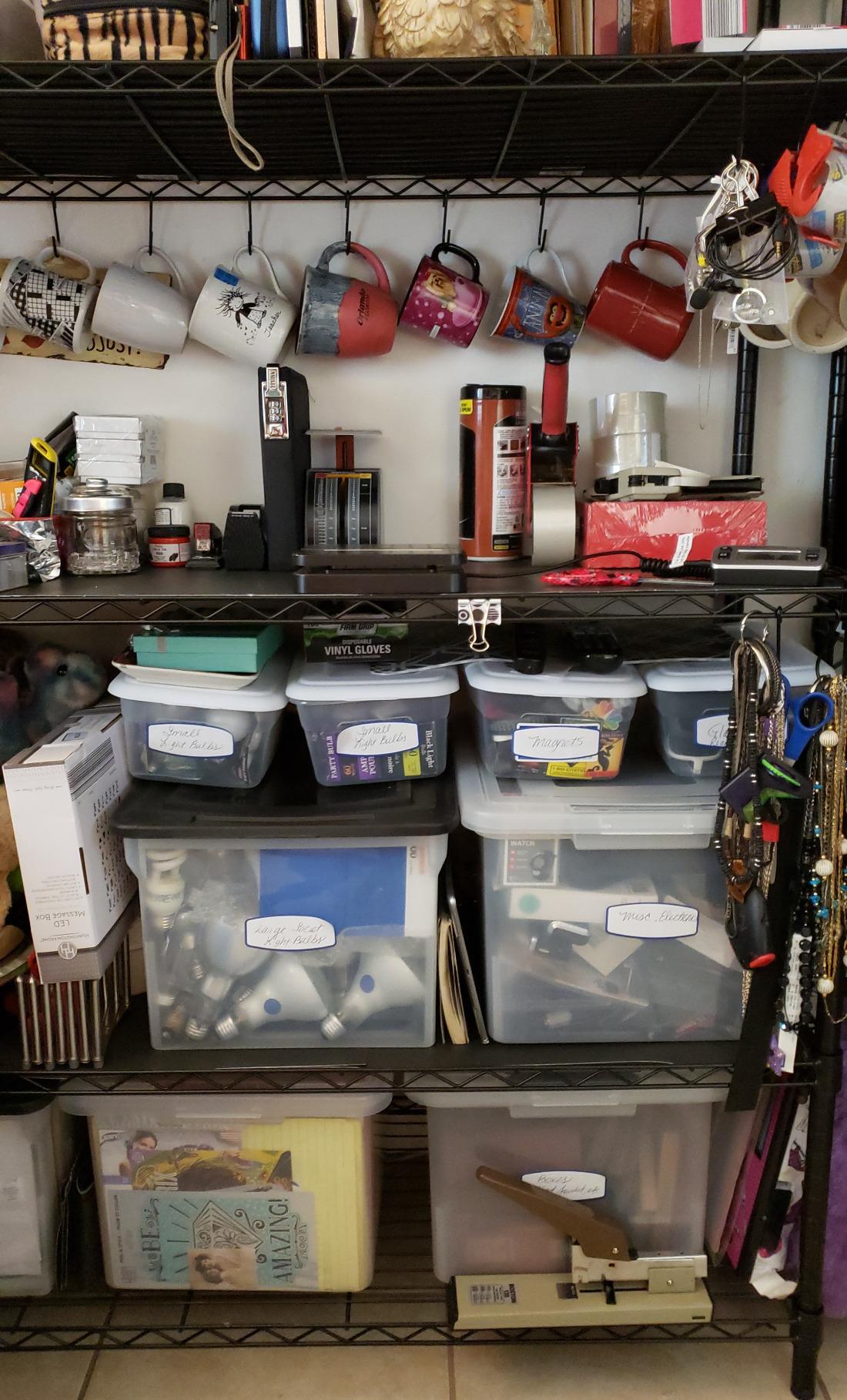
The important caveat is the 350-pound per-shelf figure. Owners are consistent about why it is optimistic: the wire decks have no mid-span support, so they visibly deflect when weight concentrates in the middle. The 1-inch poles are genuinely solid, but the deck is the weaker link, and that is a design choice rather than a quality problem.
At 82 inches tall it barely clears a standard 8-foot garage, and several owners flag that it sits close to garage door opener rails. Plan the drop before you build it, not after.
Where the Meet perfect rack earns its place?
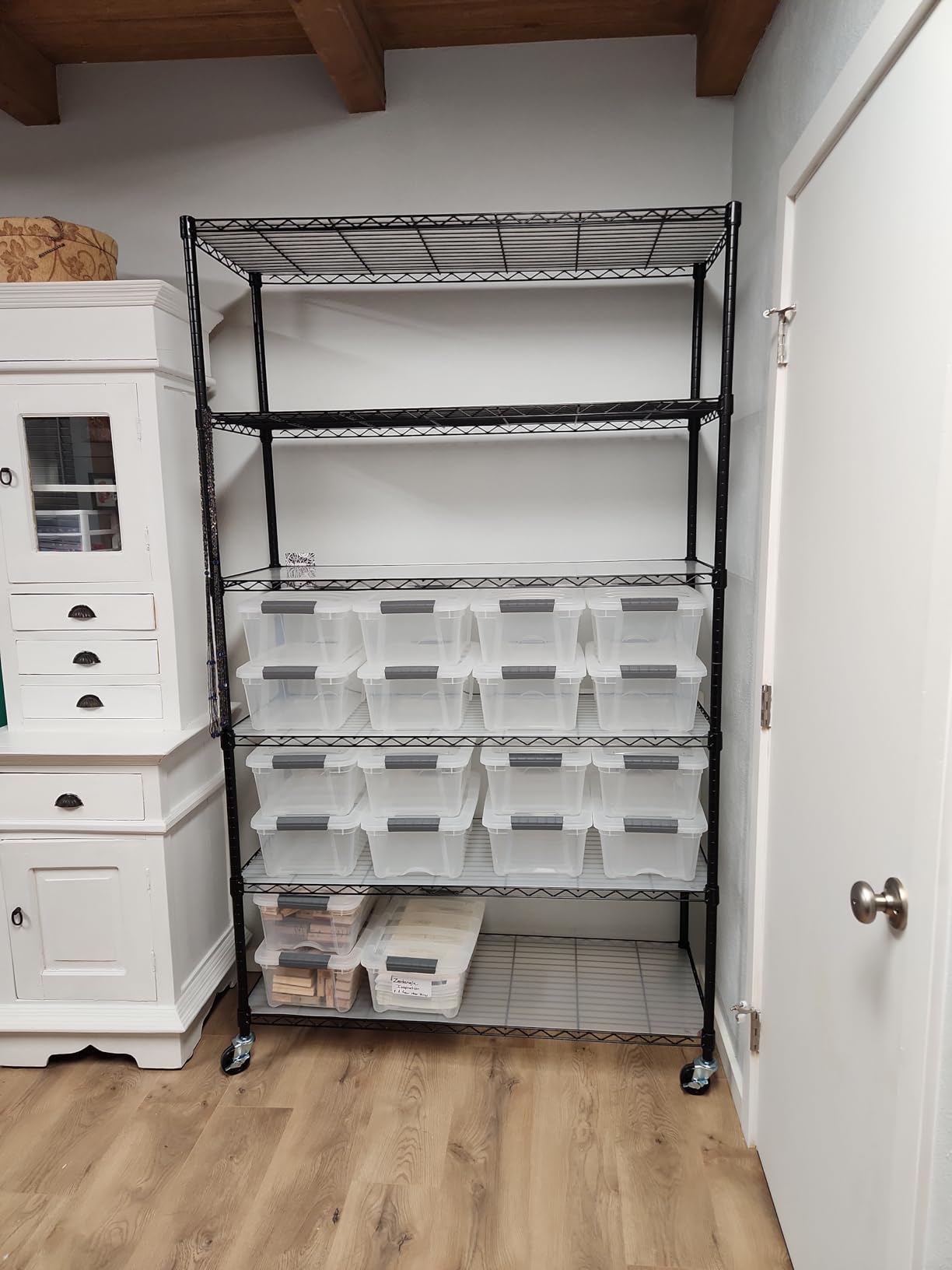
It suits closets, pantries, basements and commercial back-of-house rooms where mobility matters more than maximum deck stiffness. The 45-inch width holds three storage bins per shelf at 18 inches deep, and multiple owners run more than one.
It also works well for anyone who wants a certification claim they can check against a model number rather than a vague commercial-grade label.
Where it falls short?
Treating the 350-pound rating as a real number for a single heavy item is the mistake to avoid. Load the lowest tiers first, spread weight across the poles, and expect visible flex on a concentrated pile.
The 82-inch height, the two-person lift across 45 inches, and the near-impossibility of taking it back apart all make this a build-it-once-and-leave-it rack.
3. Seville Classics UltraDurable 5-Tier NSF Wire Rack
- Full-width center support struts give stronger decks
- Beefy 3-inch casters with two locking
- Tool-free assembly with clearly labeled parts
- Shelf heights reposition in 1-inch increments
- 10-year limited manufacturer warranty
- Very heavy unit needing a two-person lift
- Protective spacers in the box are often crushed
- Poles arrive in two screw-together sections
- Black sleeves are easy to fit the wrong way round
This is the rack that sets the standard for the whole roundup. Model WEB562, 48 inches wide by 18 inches deep by 75 inches tall, certified to NSF/ANSI Standard 2 for dry environments, published at 800 pounds per shelf on leveling feet, 4,000 pounds total on feet, and 500 pounds total on wheels. Almost nobody publishes the feet number and the wheels number side by side, which is why this one ranks where it does.
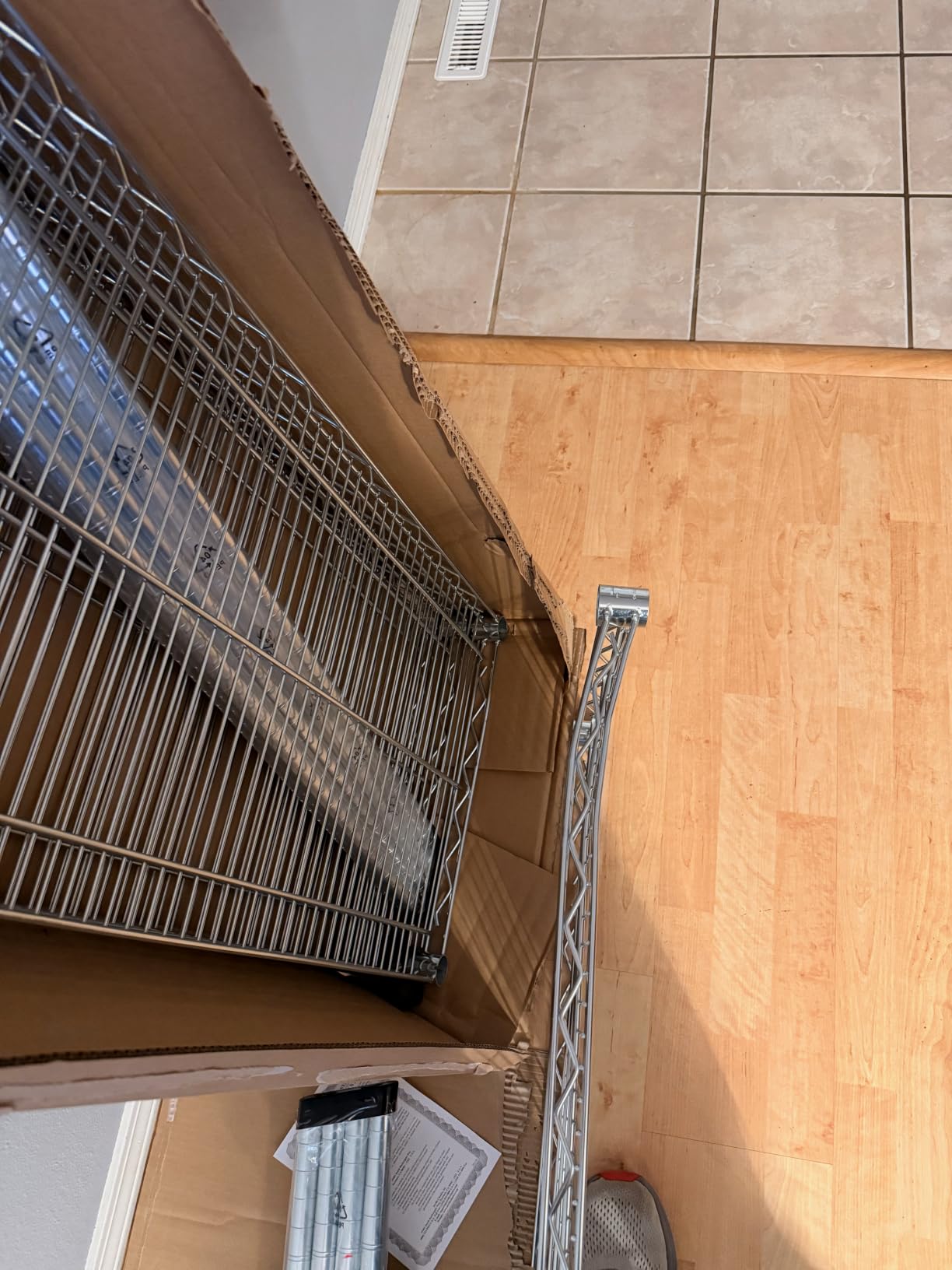
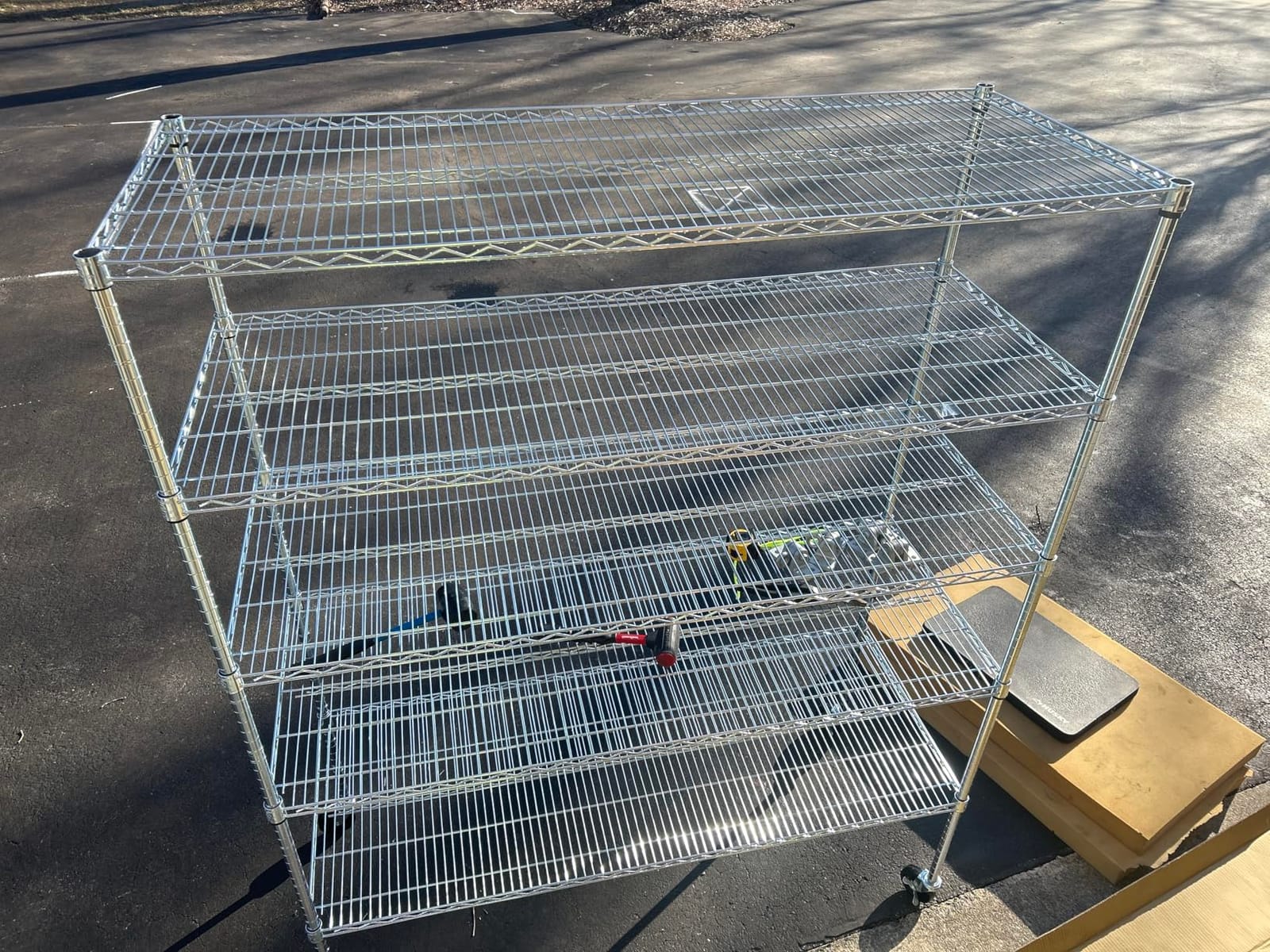
The hardware is the story. Full-width center support struts run under each deck, so the wire does not deflect the way unsupported decks do, and the 3-inch casters are metal-and-rubber with two locking. The box contains four pairs of 1-inch poles, five shelves, four wheels, four leveling feet and twenty slip sleeves, and no tools are needed.
What it costs you is handling. The rack weighs about 56 pounds before assembly and the box is described between 56 and 94 pounds, so plan a two-person lift and a clear floor area.
Why the Seville UltraDurable is worth the effort?
Choose it when you are storing real weight, not boxes of paper. Tool chests, cases of canned goods, bulk pantry containers and workshop materials all sit on decks that will not bow. The 10-year limited warranty is the longest published figure among the consumer-grade wire racks here, and it is a real length with a document behind it.
The 48-inch span and 18-inch depth also make it a footprint that suits more rooms than most in this set, since 48 x 18 is the standard restaurant dry-storage size.
Where the Seville UltraDurable is frustrating?
Protective spacers in the box are frequently crushed in transit, which makes the contents look incomplete until you find the parts. Poles arrive in two screw-together sections rather than single six-foot lengths, and the black support sleeves only seat properly one way round, so a rushed build produces a wobble that is not a defect.
One honest note: the 800-pound per-shelf rating is an on-feet figure. The moment you put the casters on, the published total falls to 500 pounds, so a loaded rolling configuration is a different piece of equipment than the box describes.
4. SafeRacks NSF 6-Tier Heavy Duty Wire Rack
- 450 lb per shelf built to SMA guidelines
- Zinc plating holds up in pantries and moist areas
- Shelf heights slide easily onto securing clips
- NSF compliance suits commercial and home food storage
- Limited lifetime warranty
- 67 pound unit needs two people to move
- Accessory hardware list is complex with different kits per build
The SafeRacks WS1 sits in the middle of this roundup on price while sitting near the top on published capacity. It is 18 inches deep by 48 inches wide by 72 inches tall, six tiers, zinc-plated rather than painted steel, and published at 450 pounds per shelf and 2,700 pounds per rack. The structural supports follow Shelving Manufacturers Association guidelines, which is a stronger claim than a “heavy duty” sticker.
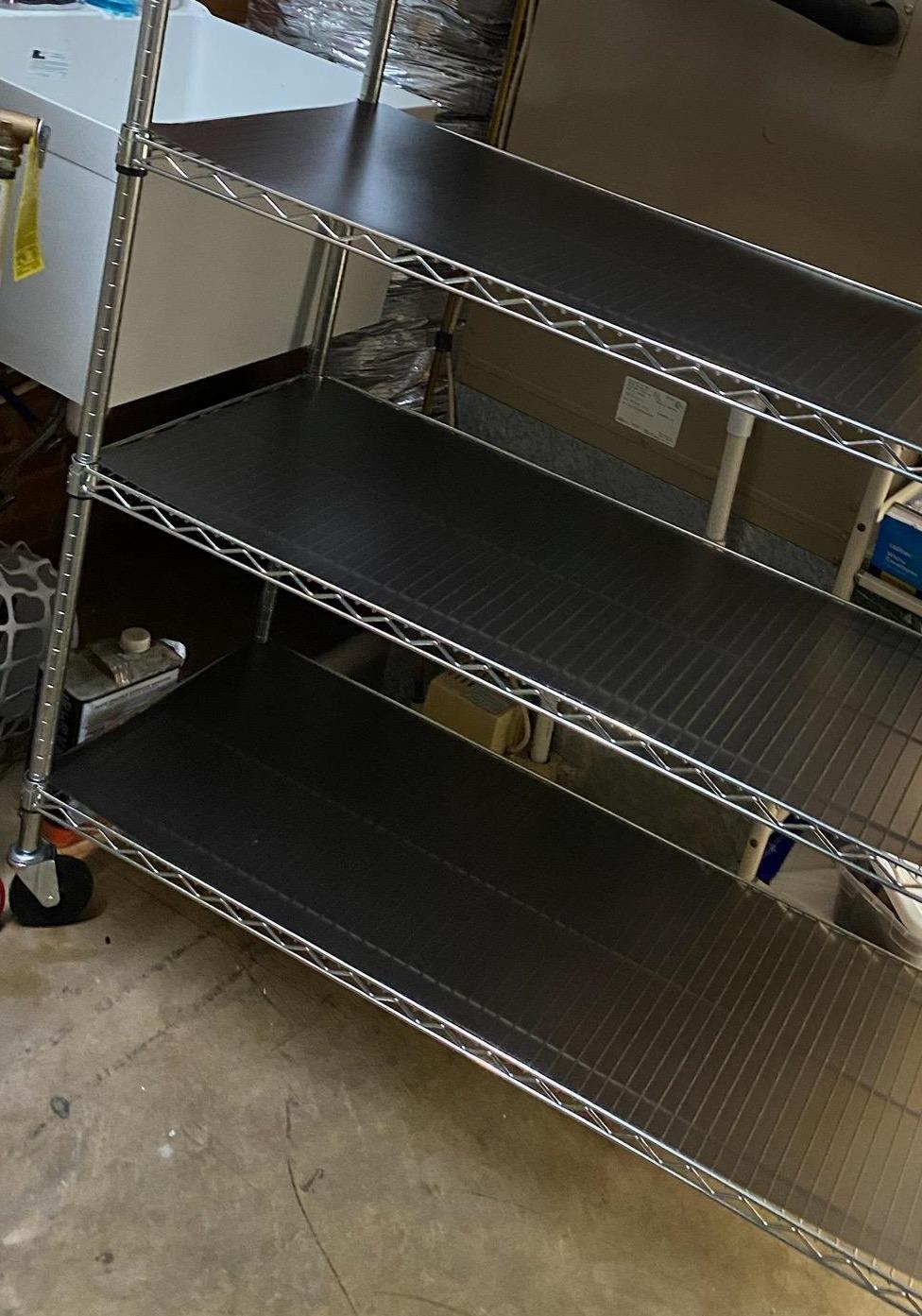
Zinc plating is the detail that matters most in real use. Pantries, walk-in freezers and damp storage rooms are where painted steel pits and where chrome eventually dulls, and zinc holds up better in those conditions. Shelves slide onto securing clips rather than pre-punched holes, so you can change spacing without hunting for a fixed position.
The listing names pantry, walk-in freezer, commercial kitchen, garage and storeroom as intended environments, and owners with manufacturing backgrounds describe it in commercial terms rather than consumer terms.

Why the SafeRacks 6-Tier is the value pick?
It is the pick for anyone who wants a commercial-feeling rack with a documented warranty and a real capacity figure. The limited lifetime warranty is the strongest warranty language among the racks here, and the 18 x 48 footprint is the standard back-of-house size.
It also handles the mobile question honestly: at 76 inches with casters, the rack still clears most walk-in and pantry doorways, and the six tiers give you adjustable spacing for both tall bottles and short containers.
Where the SafeRacks rack is less convenient?
At 67 pounds the shipped rack is a two-person job, and the accessory hardware list is genuinely complex, with different cap and insert kits depending on whether you build a single or dual unit. Read the parts list before you order extra shelving.
It is also a heavier commitment than most household storage needs justify, which is a fair reason to step down a tier in this list.
5. BestOffice Adjustable NSF-Certified Wire Shelf
- Only 9 pounds so it moves easily between rooms
- Tool-free assembly finished in 15-20 minutes
- Shelf spacing adjusts instead of fixed holes
- Coated finish shows no rust in damp basements
- Compact footprint for closets and utility rooms
- Not as heavy duty as the listing implies
- Capacity falls sharply once wheels are fitted
- Assembly instructions are not especially clear
- Occasional racks arrive with a bent shelf
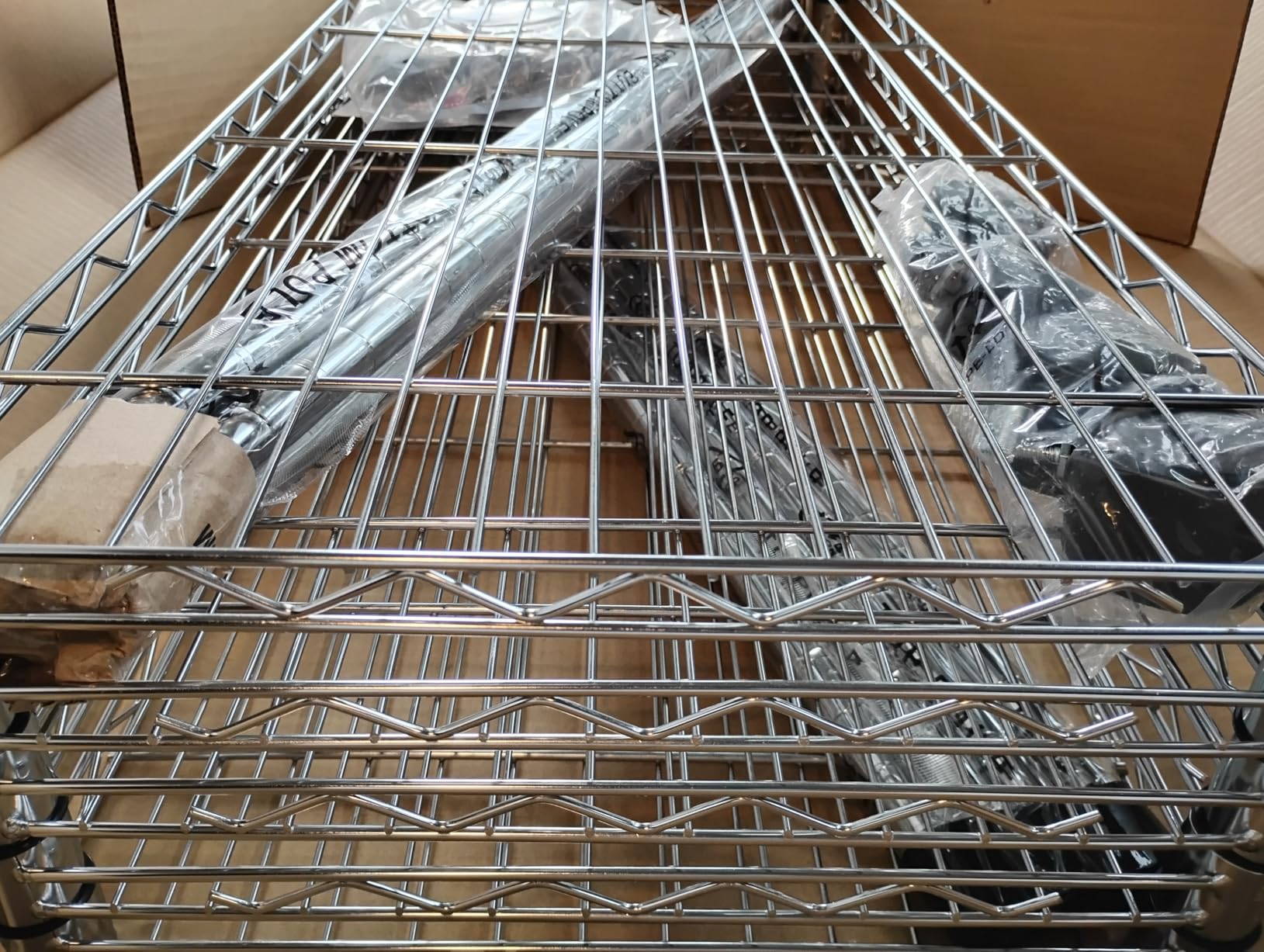
This is the lightest and most portable rack in the set, and the least heavy-duty. It measures 21.5 by 11.6 by 47.6 inches, weighs 9 pounds, and carries five adjustable wire shelves on leveling feet and a tool-free build that most owners finish in 15 to 20 minutes.
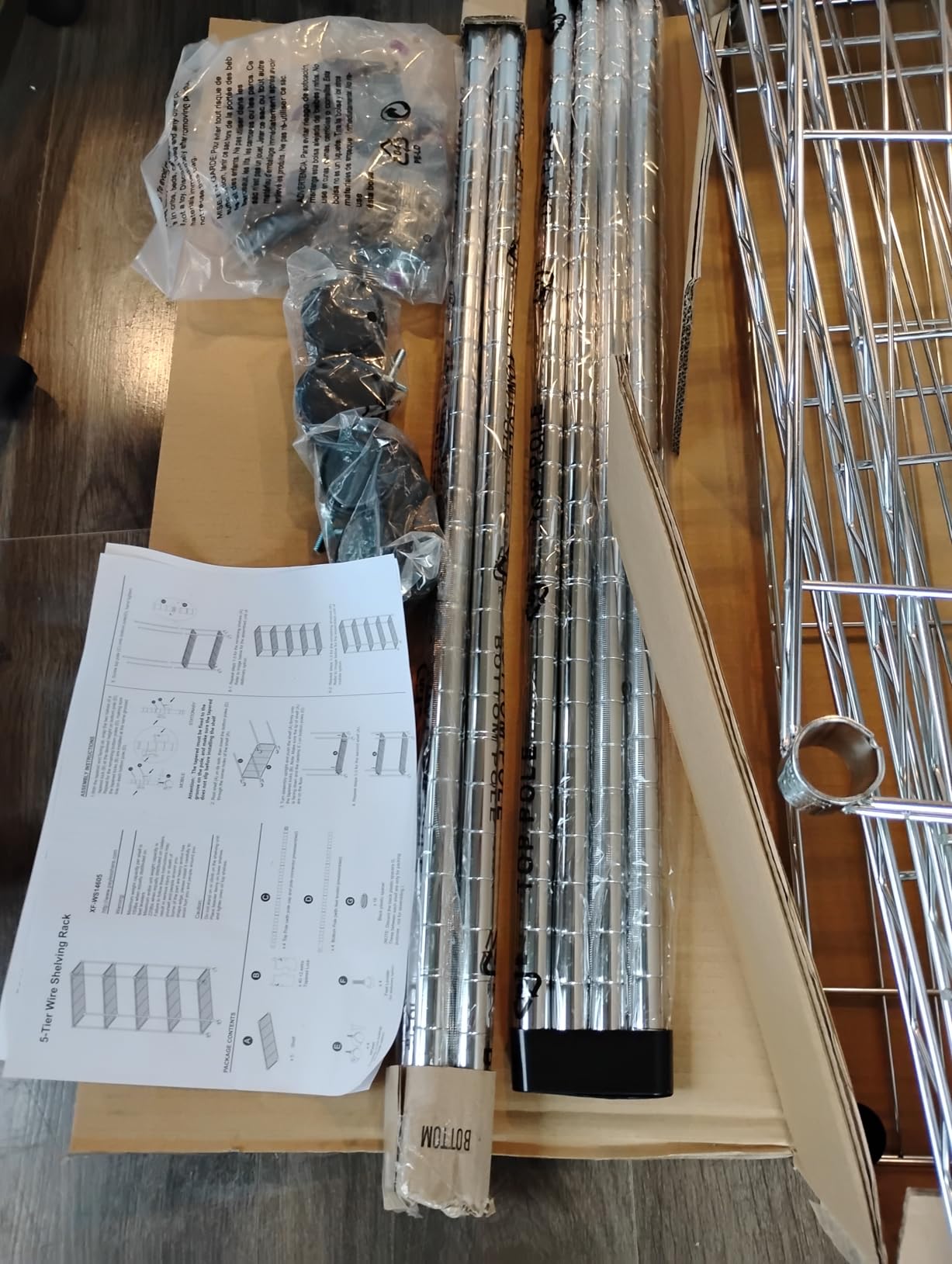
Where it earns its place is small spaces. Apartment closets, utility rooms, offices, damp basements and grow tents are all situations where a 9-pound rack you can carry up a flight of stairs is worth more than a 60-pound rack you cannot. Owners also report the coated finish showing no rust in humid rooms, and the shelf spacing adjusts rather than snapping into fixed pre-punched holes.
The review base is the second largest here at more than 11,000 reviews, and the sentiment is warm for the price and the portability.
Who the BestOffice shelf suits?
Buy it for canned goods, spices, lightweight pantry goods, craft supplies and office storage where the total weight on any shelf stays modest. It is also the easiest unit in the roundup to reconfigure, since moving it takes one person and no tools.
If you want an NSF listing in an apartment or studio without an industrial look and without a two-person delivery, this is the practical answer.
Where the BestOffice shelf falls short?
Useful weight is well below what commercial ratings imply, and the drop is severe once wheels are attached, with owners reporting roughly a third of the standing rating. A small number of racks also arrive with a slightly bent shelf, and the instructions are thin enough that some owners went looking for a video walkthrough.
Treat it as organized light storage, not as a rack for tools, water jugs or bulk stock.
6. Brutis 5-Tier Deep NSF Chrome Wire Shelving
Brutis 5-Tier Deep Shelf, 250 lb/Shelf, NSF, Chrome, 24x18x72 in
- 1-inch posts and thick wire with no flex under load
- Deep 18 inch shelves hold sheet pans and bulk tubs
- Chrome finish is smooth with no rough edges
- Tool-free slip-sleeve assembly
- Leveling feet accept 3/8-16 stem casters
- Five shelves over 72 inches leave wide gaps
- Shelf height is awkward to change once assembled
- Plastic support clips do not sit flush
- Shelf liners are not included
The Brutis SHF-01054 solves the depth problem that stops most household racks from being useful in a kitchen. Its shelves are a full 18 inches deep on a 24-inch-wide frame, at 250 pounds per shelf and 1,250 pounds total, and it is approved to NSF/ANSI Standard 2 for restaurant prep, bakeries and dry food storage.
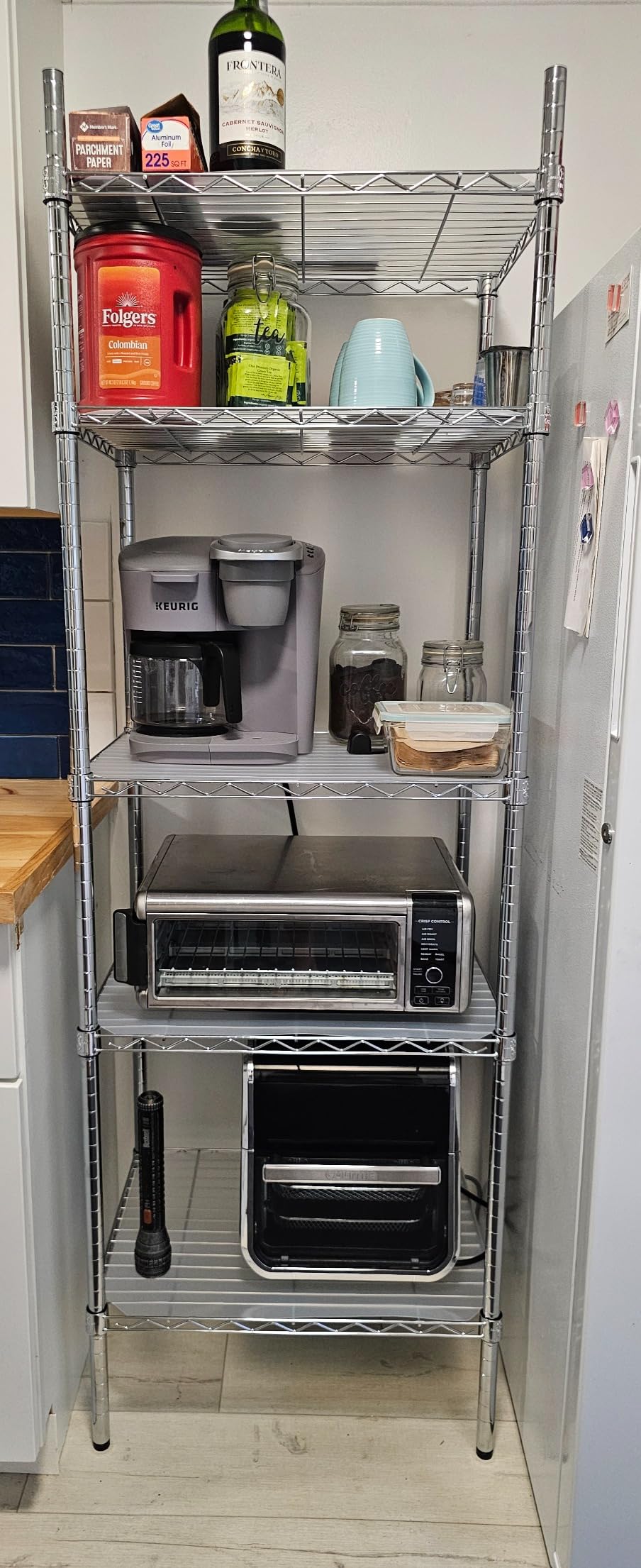
That depth is why owners like it. Mixing bowls, sheet pans and bulk food tubs simply do not fit on a 14-inch shelf, and on an 18-inch deck they sit properly. The build quality is the other reason: 1-inch diameter posts and thick wire give noticeably less flex than the 5/8-inch competitors, and the polished chrome finish is smooth with no rough edges to catch hands or containers.
It assembles in under 20 minutes with leveling feet, and the feet accept standard 3/8-16 stem casters if you decide later that you want wheels.
Why the deep Brutis rack earns a place?
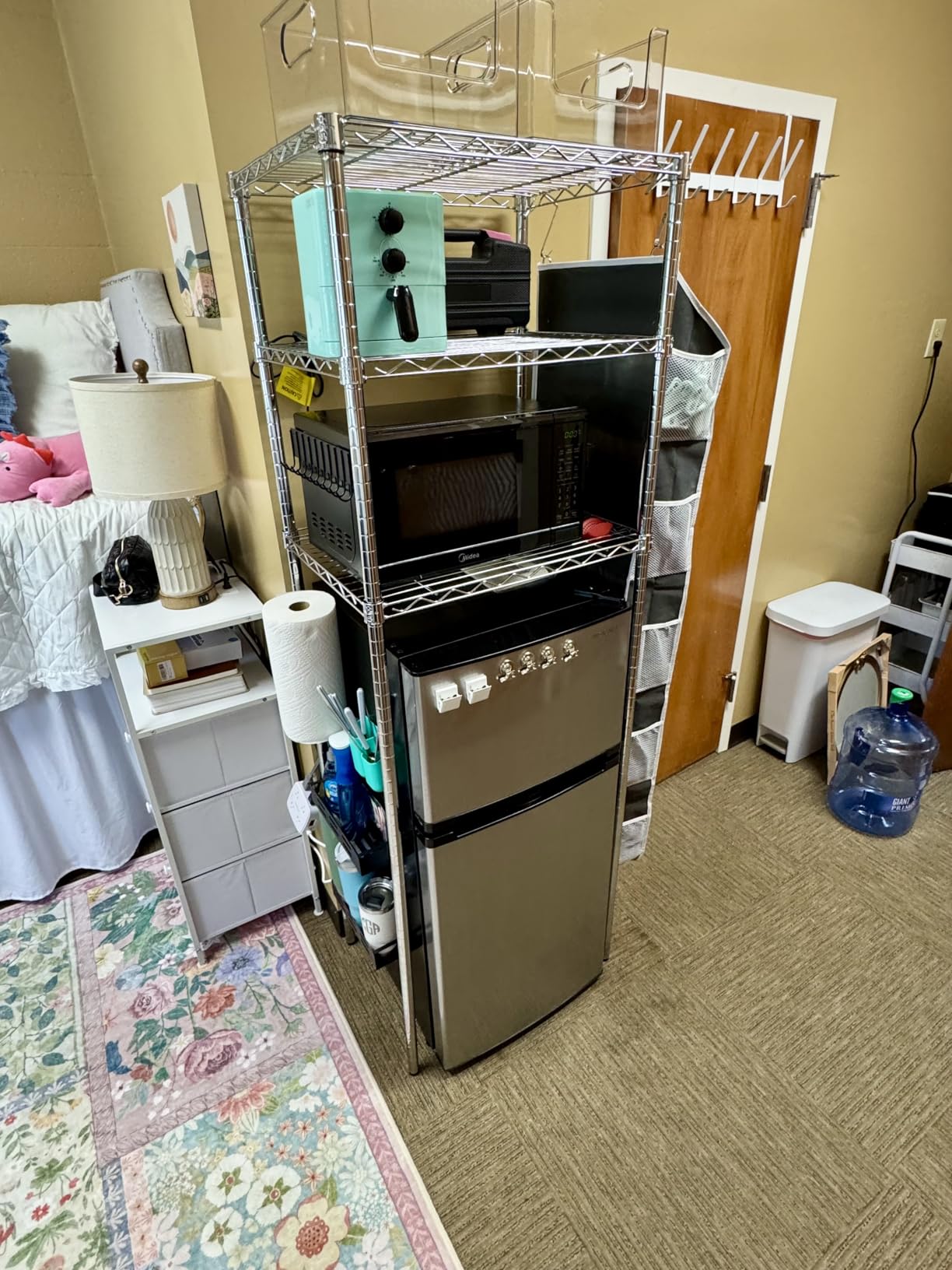
It is the pick for anyone storing food-shaped objects rather than box-shaped objects. Bakeries, prep areas, home canners and bulk pantry users all benefit from the 18-inch deck, and the NSF approval covers the dry food environment the certification is designed for.
Chrome also handles splashes and wash-down better than painted steel, which is why it appears in restaurant dry storage and prep rooms so often.
Where the Brutis rack disappoints?
Five shelves spread across 72 inches leaves gaps wide enough that short pantry items waste vertical space, and many buyers add a sixth shelf to compensate. Shelf height is awkward to change after the unit is fully built, and the plastic support clips leave a visible gap rather than sitting flush.
Shelf liners are not included, and for jars, bottles and small dry goods you will want to add them.
7. Seville Classics 7-Tier 21-Bin NSF Wire Rack
7-Tier NSF 21-Bin Steel Wire Shelving Rack, 48″W x 14″D x 56″H, Gray
- Bins slide out on a patented tilt-lock mechanism
- Seven tiers plus 21 bins give the highest parts count
- Dividers and 33 labels are included
- Powder-coated shelves wipe clean easily
- Two locking wheels let the rack roll out
- Very heavy at 84 pounds
- Per-shelf capacity of 115 lb is low for a wire rack
- Total capacity drops from 800 lb to 500 lb on wheels
- Bins are a fixed 7 inches tall
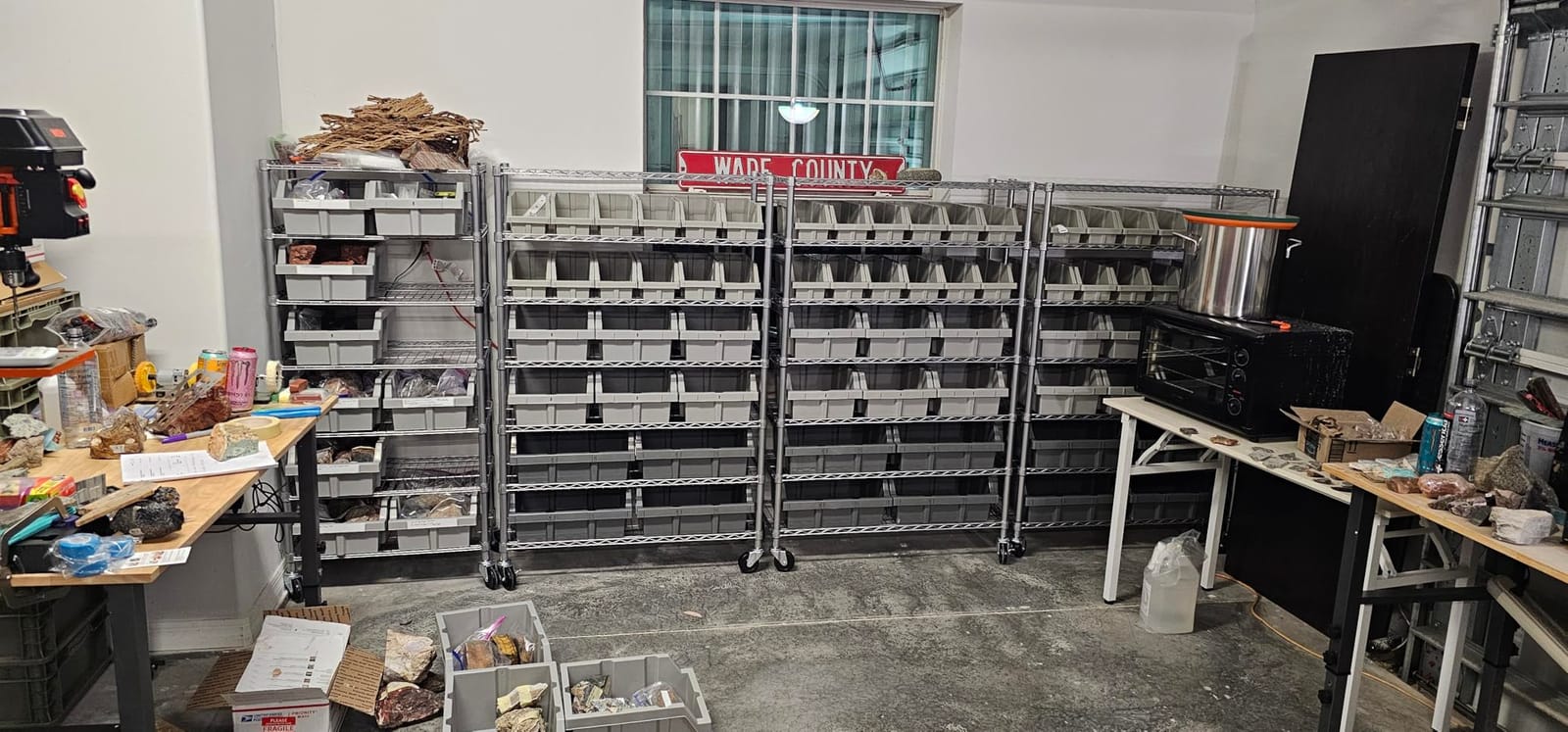
This rack, model WEBK678, is bought for its bin system rather than its capacity. Seven steel wire shelves at 48 x 14 inches carry 21 removable polypropylene bins on a patented tilt-lock mechanism, so a full bin slides forward with one hand instead of tipping out when you lift it. Six bins are extra-large at 16 x 14 x 7 inches and fifteen are large at 10.5 x 14 x 7 inches.
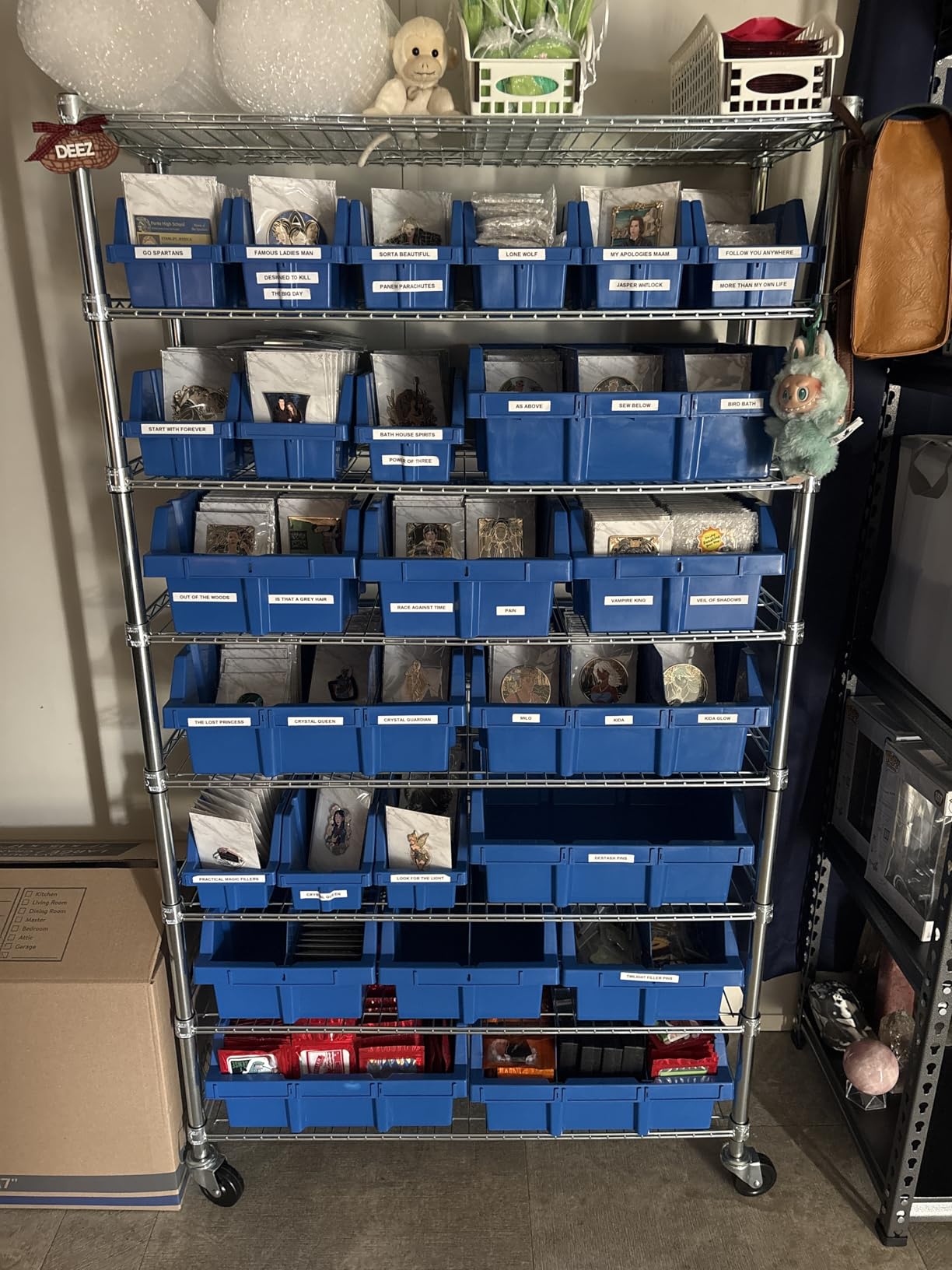
The small parts problem that drives people toward liners is solved here in a more useful way, because the bins are integrated rather than draped over the wire. The package also includes four bin dividers and 33 labels, which is what makes the system usable for hardware, craft stock or hobby inventory rather than a pile of identical tubs.
It is NSF certified for commercial use, and it sits on 3-inch rubber wheels, two of them locking, plus adjustable leveling feet.
Where the 21-bin rack is the right tool?
Choose it when the problem is organizing countable small items, not carrying heavy loads. Tilt-lock access means a single-handed grab, dividers let one bin serve several categories, and the labels stop the drawer-rack archaeology problem in a six-tier garage.
It is also a good fit for a craft room, where a dedicated wire rack with labelled bins beats open shelving every time. Our craft room wire shelving picks go deeper on that setup.
Where the 21-bin rack stops making sense?
Per-shelf capacity is 115 pounds, which is far below the open wire racks in this roundup, and the rack weighs 84 pounds, so moving it is a two-person job. Total capacity also falls from 800 pounds on leveling feet to 500 pounds on wheels.
And the bins are a fixed 7 inches tall, so long items such as yard tools, brooms or rolled stock simply will not fit inside them.
8. Alera NSF Certified Four-Shelf Industrial Wire Kit
Alera NSF Certified Industrial Four-Shelf Wire Shelving Kit, 36w x 18d x 72h, Silver
- Genuinely industrial steel build with firm clip retainers
- Configurable as one 4-tier rack or two 2-tier racks
- Plastic retainers click firmly into pole grooves
- Handles 5-gallon jugs and 50 lb buckets
- Shelf lip edges double as hook points
- First shelf takes considerable patience to seat
- Small metal burrs inside corner rings
- Thin internal packaging leads to bent shelves
- Price has climbed noticeably
- A rubber mallet is effectively required
The Alera kit, model ALESW503618SR, publishes the highest capacity figures in this roundup: 1,250 pounds per shelf and 5,000 pounds unit capacity on a 36 x 18 x 72 inch frame. It is NSF certified for dry environments, and buyers with manufacturing backgrounds rate the steel near true Metro-class quality.
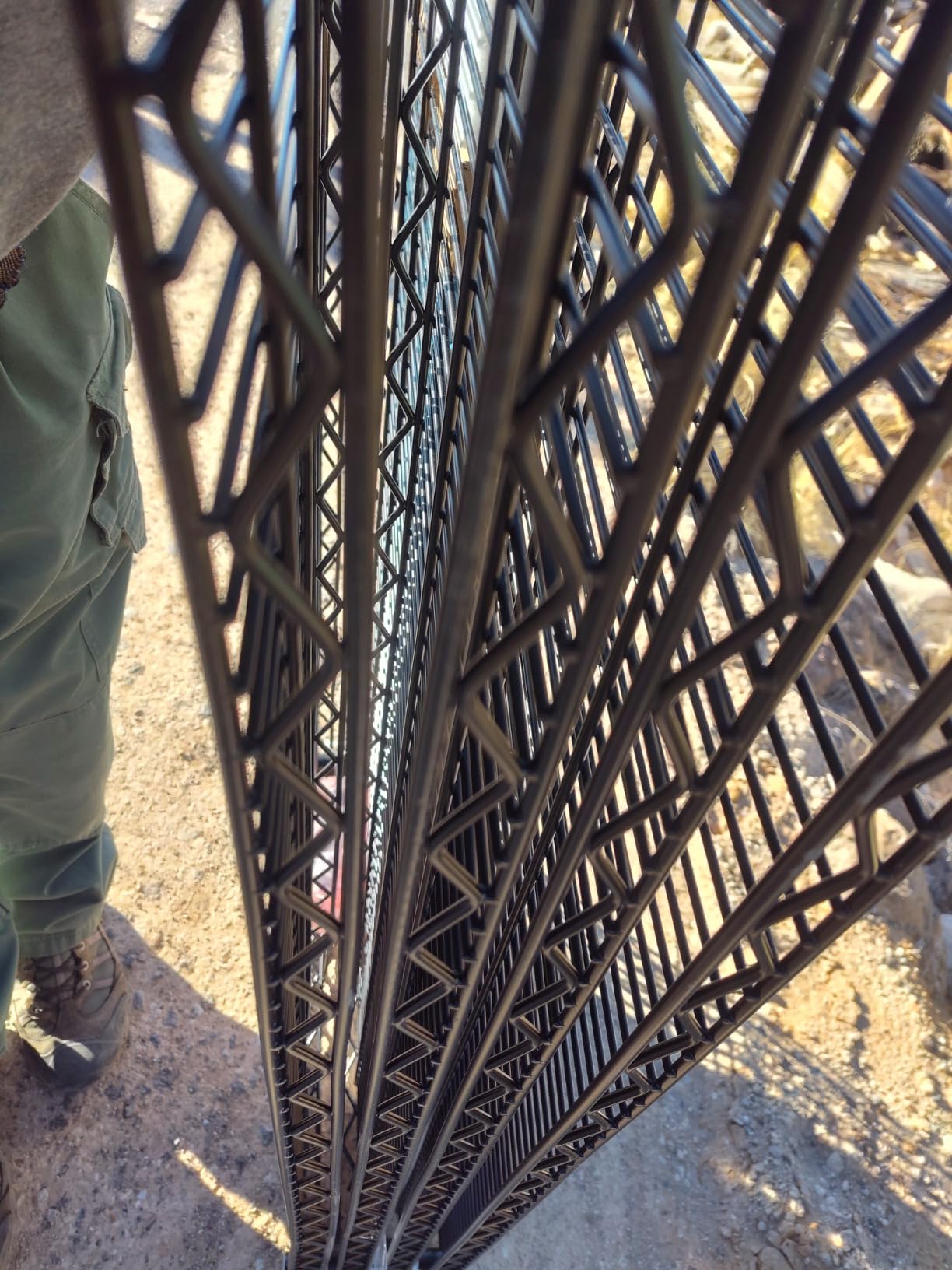
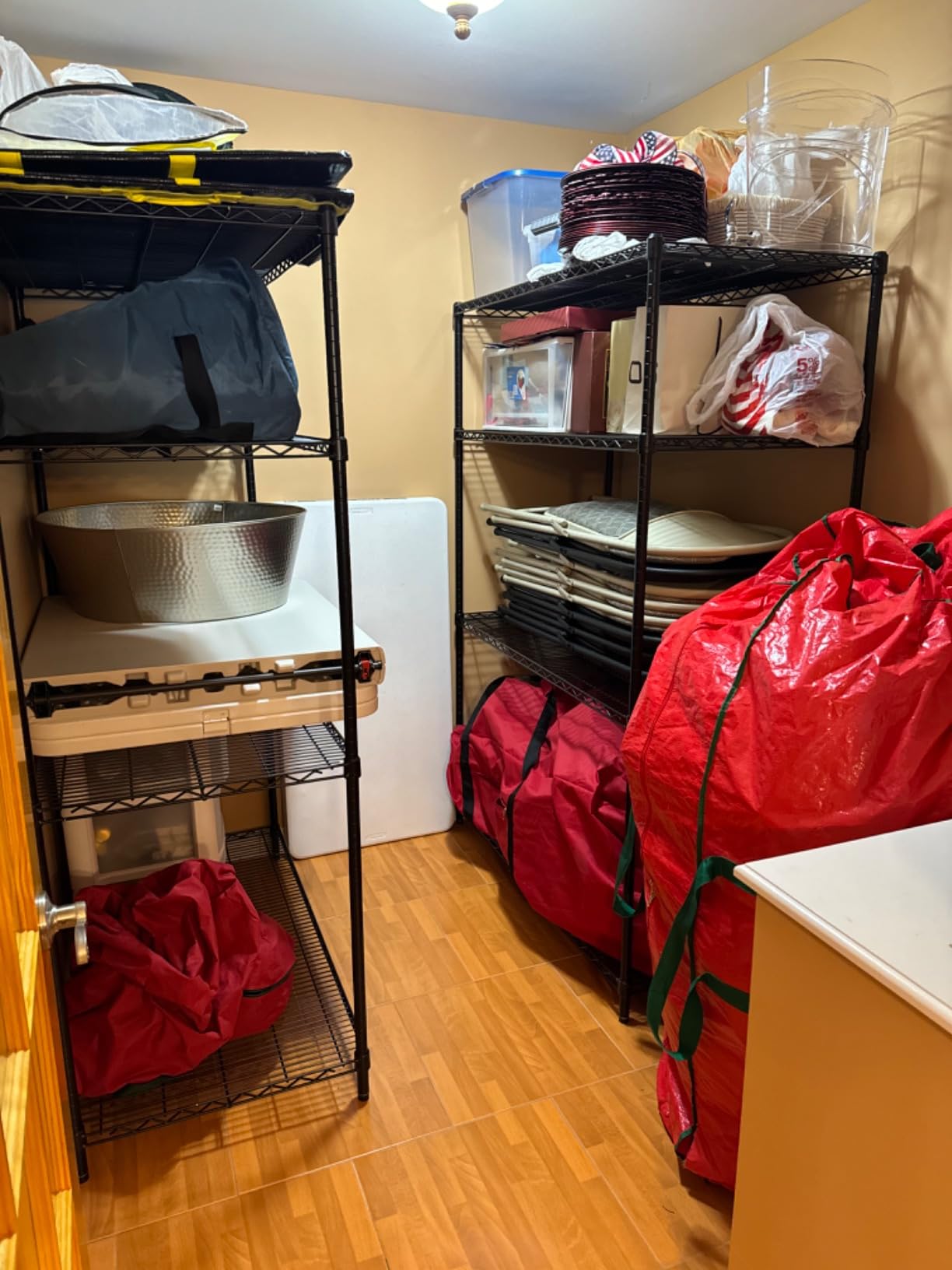
The reason to like this kit is configuration. It snaps together as one four-tier rack or splits into two two-tier racks with the included hardware, which means a single purchase can serve a basement and a garage, or a pantry and a utility room. Shelves adjust in 1-inch increments, and the plastic retainers click firmly into the pole grooves instead of sliding down under load, which is the single most common failure in clip-shelf racks.
Owners also use the shelf lip edges as hook points for kitchenware and tools, and report it holding 5-gallon water jugs and 50-pound buckets without complaint.
Why the Alera kit is worth the assembly effort?
If your loads are genuinely heavy and dry, this is the strongest structure in the set, and the two-rack split is a genuinely useful feature that no other rack in this roundup offers. Dry environments is the certification scope, which suits garages, basements, storerooms and dry food storage.
The snap-together design also means the build is quick once you understand the sequence, and the open wire design keeps air moving around stored goods.
Where the Alera kit frustrates buyers?
Seating the first shelf takes patience, especially solo, and a rubber mallet is effectively required for a good fit. Small metal burrs inside some corner rings have to be filed down before the parts will move, and the internal packaging is thin enough that bent wires arrive fairly often.
The review base is also small here at 522 reviews, and buyers note that the cost has climbed noticeably, which is a fair reason to watch for a reduction before ordering.
9. Dkeli 6-Tier NSF Wire Shelving with Casters
- Solid post and clip connections that hold heavy totes
- Supplied with both leveling feet and 4-inch casters
- One person can assemble a full unit in under 30 minutes
- Powder-coated finish resists rust and dirt
- 6 tiers at 45 inches wide hold three bins per shelf
- Published capacity figures are inconsistent between listing and title
- At 82 inches with casters it crowds opener rails
- Occasional cosmetic damage to poles or shelves
- Top shelf is a stretch for shorter assemblers
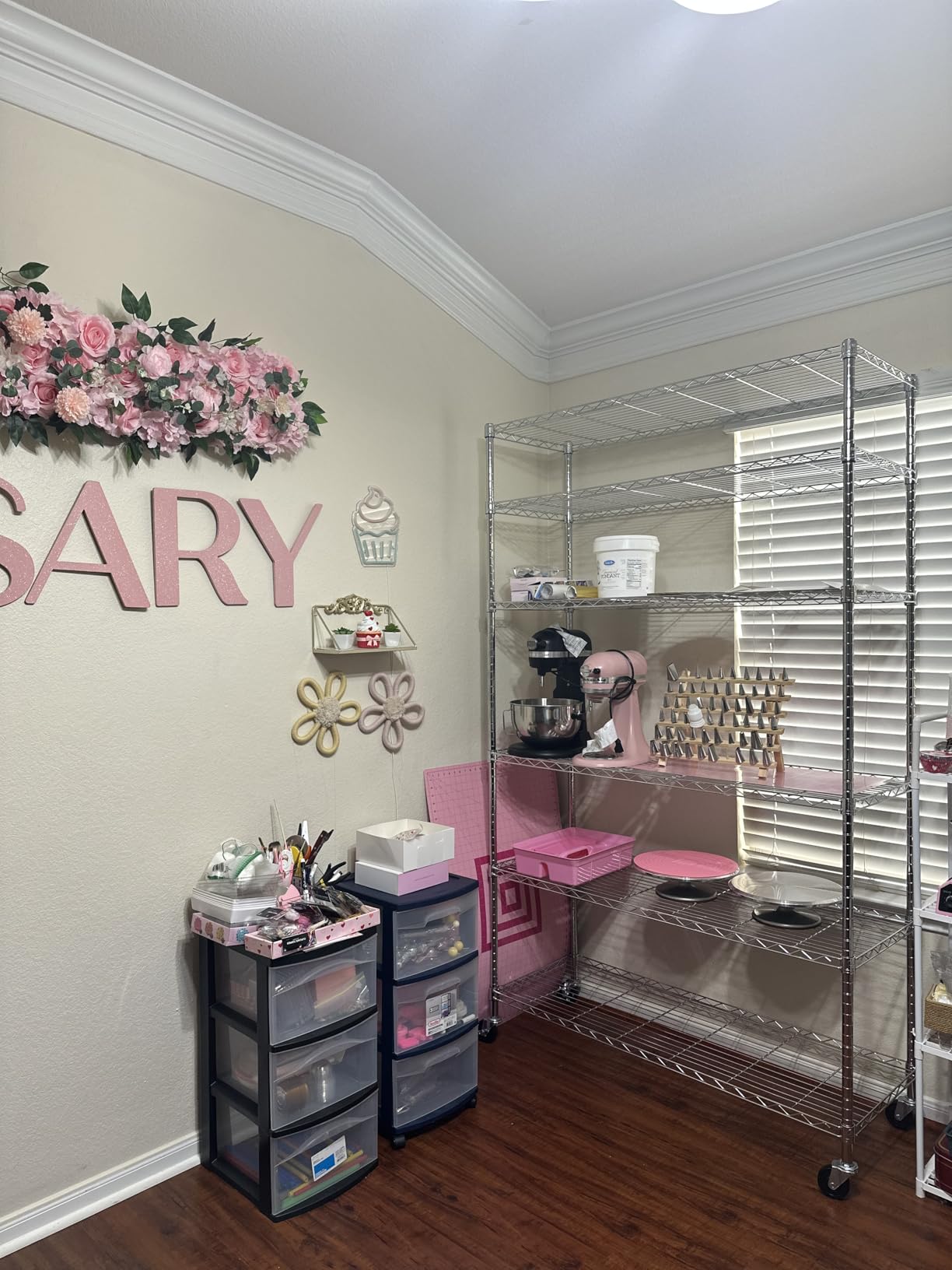
The Dkeli 6-Tier is the one to buy when you want both configurations in one box. It comes with adjustable rubber grip feet and 4-inch casters, so you can build it fixed, roll it for a garage clean, and roll it back without buying a second rack. Six wire shelves adjust in 1-inch increments, and the clip assembly takes about 10 minutes.
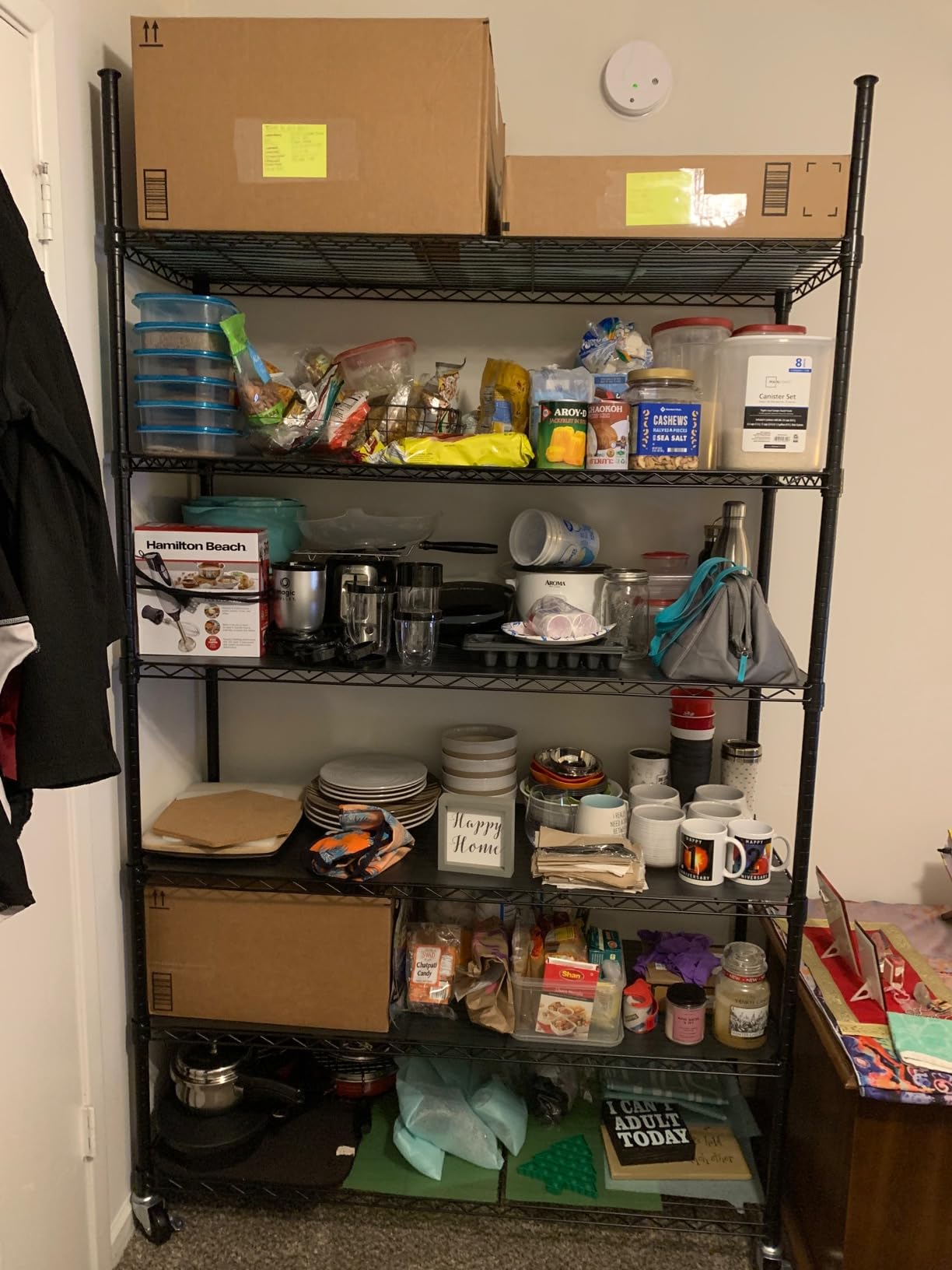
Owners in garages praise the post and clip connections for holding heavy totes without flex, and the powder-coated finish for holding up against dirt and moisture. At 45 inches wide, the shelves take three standard storage bins per shelf, which is the number most garage buyers actually plan around.
The honest problem here is the capacity listing. The spec fields give 2,100 pounds total with 1,000 pounds evenly distributed per shelf, while the product title carries a 6,000-pound figure. Those are not the same claim, and you should plan on the spec field.
Where the Dkeli rack works best?
It suits garages, warehouses, kitchens, pantries and storage rooms where you want mobility more than maximum published capacity. Buyers routinely purchase more than one, which is the clearest signal that the post and clip system holds up in real repeated use.
Having the feet and the casters in the same box also solves a problem most owners hit later, which is wanting to move a full rack without dismantling it.
Where the Dkeli rack is the wrong call?
The inconsistent published capacity is a real reason to pause. If you need a documented weight ceiling, this listing does not give you one, and the gap between title and spec field is exactly the kind of ambiguity that shows up as a bent shelf later.
At 82 inches with casters it also crowds garage door opener hardware, and the top shelf is a genuine stretch for shorter assemblers.
10. Crescent Housewares Heavy Duty NSF Rolling Wire Rack
- Holds 15 cases of canned food per shelf without complaint
- 4-inch metal and rubber casters roll smoothly when loaded
- Easy tool-free assembly when the step order is followed
- Chrome plating resists rust and wipes clean
- Fits 48 x 24 pans and appliances with room to spare
- At 85 pounds it is the heaviest rack in the roundup
- Total capacity falls from 4000 lb to 800 lb on wheels
- Jumping ahead in assembly causes misalignment
- A rubber mallet is effectively required
- Upgraded casters carry a premium
The Crescent Housewares CC5-482472 is the best built for a genuinely mobile heavy load. It is 48 x 24 x 76 inches, five tiers, and comes on 4-inch heavy-duty metal-and-rubber casters with two locking and two non-locking, all on 360-degree rotation. It is NSF certified for food, medical and industrial sanitation environments, which is the broadest certification scope claimed in this roundup.
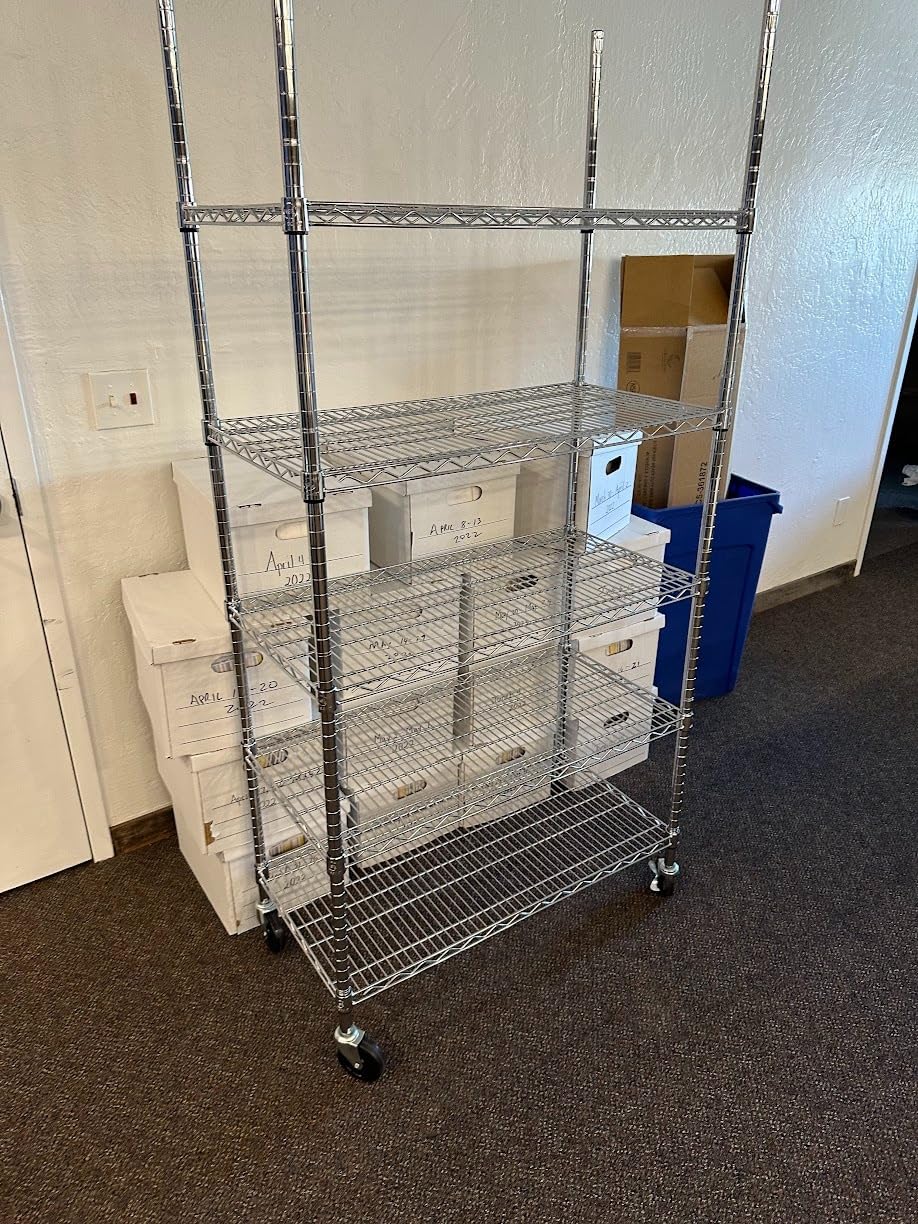
Owners who need real capacity rate it very highly, with one reporting 15 cases of canned food per shelf without complaint. The 48 x 24 shelf is the standard full-size food-service footprint, so pans, appliances and bulk goods fit with room to spare, and the chrome plating wipes clean for food environments.
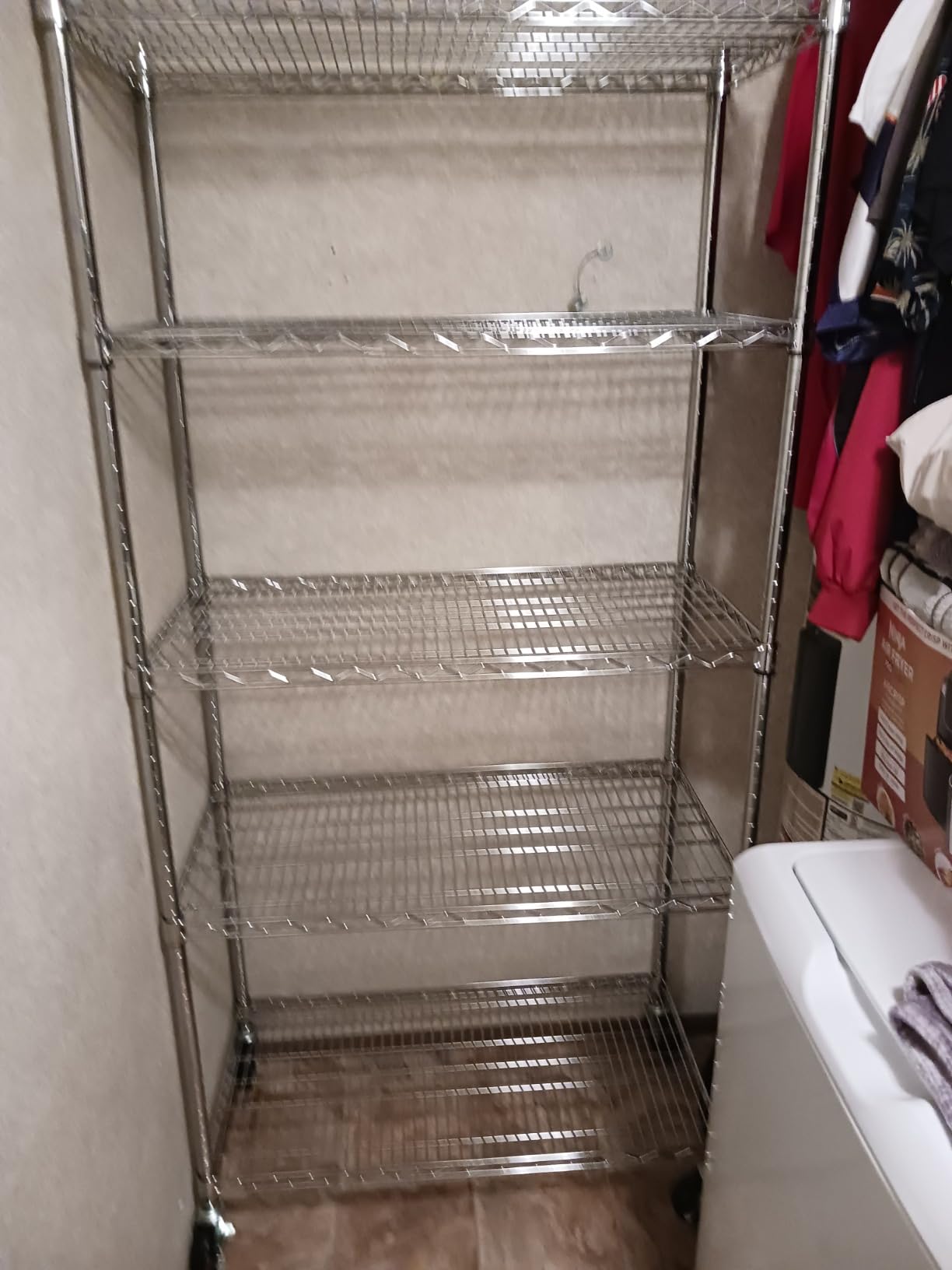
Assembly is tool-free in under 15 minutes using pre-installed pole connectors, and the shelves adjust in 1-inch increments. The rack also splits into a 3-tier and a 2-tier unit, so you can reconfigure it as your inventory changes.
Why the Crescent rack earns the rolling-heavy-load spot?
It is the choice for restaurant dry storage, bulk food warehouses and commercial kitchens where cases move on and off the rack daily. Four-inch casters roll a loaded rack over thresholds and uneven floors in a way that 3-inch wheels do not, and the locking pair keeps it parked.
The split configuration also makes it long-term flexible, which matters more in a commercial setting than in a home garage.
Where the Crescent rack is hard to justify?
At 85 pounds it is the heaviest rack here and needs two people to move. Capacity falls from 4,000 pounds on leveling feet to 800 pounds on the included casters, and a rolling configuration is a different machine than the box implies.
Follow the assembly step order exactly, because jumping ahead causes misalignment, and expect to need a rubber mallet to seat the shelves on their clips.
11. PrimeZone 5-Tier NSF Steel Wire Shelving
PrimeZone 5 Tier NSF Steel 48″ Wx24 Dx81 H Wire Shelving 3000lbs
- Large 48 x 24 footprint at 81 inches maximizes storage
- Chrome alloy steel resists rust in damp basements
- Metal and rubber 4-inch wheels outlast small plastic casters
- Two lockable wheels plus four leveling feet keep it stable
- Clip system assembles in about 10 minutes
- Lowest rating in the roundup at 4.3
- Total capacity drops from 3000 lb to 800 lb on wheels
- Instructions need careful reading before starting
- Some buyers feel load performance falls short of 600 lb per shelf
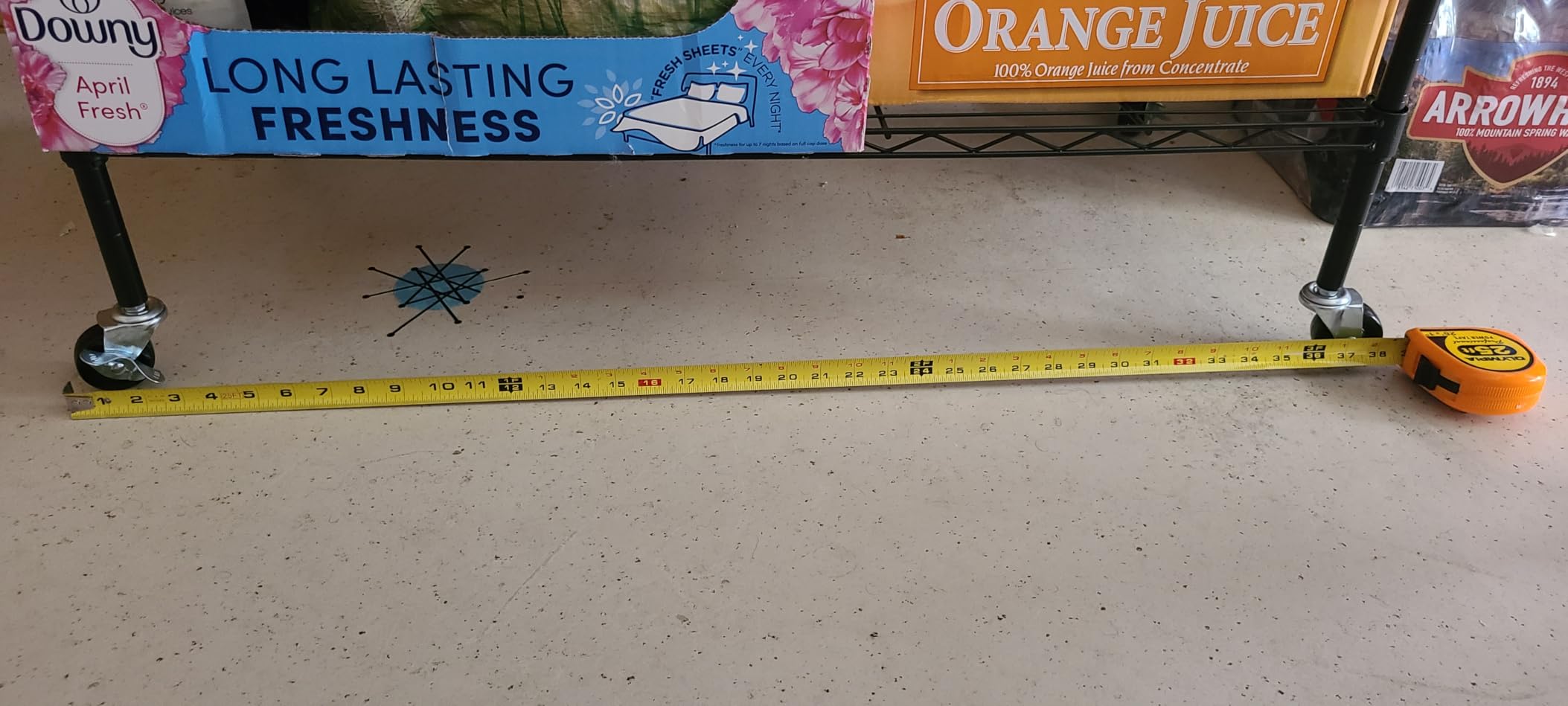
The PrimeZone is a large-format rack with a large-format spec sheet: 48 x 24 x 81 inches, five tiers, 600 pounds per shelf, 3,000 pounds total on feet and 800 pounds on wheels. It comes with 4-inch metal-and-rubber wheels, two of them locking, four leveling feet, plus four hooks for hanging towels, totes and clothing.
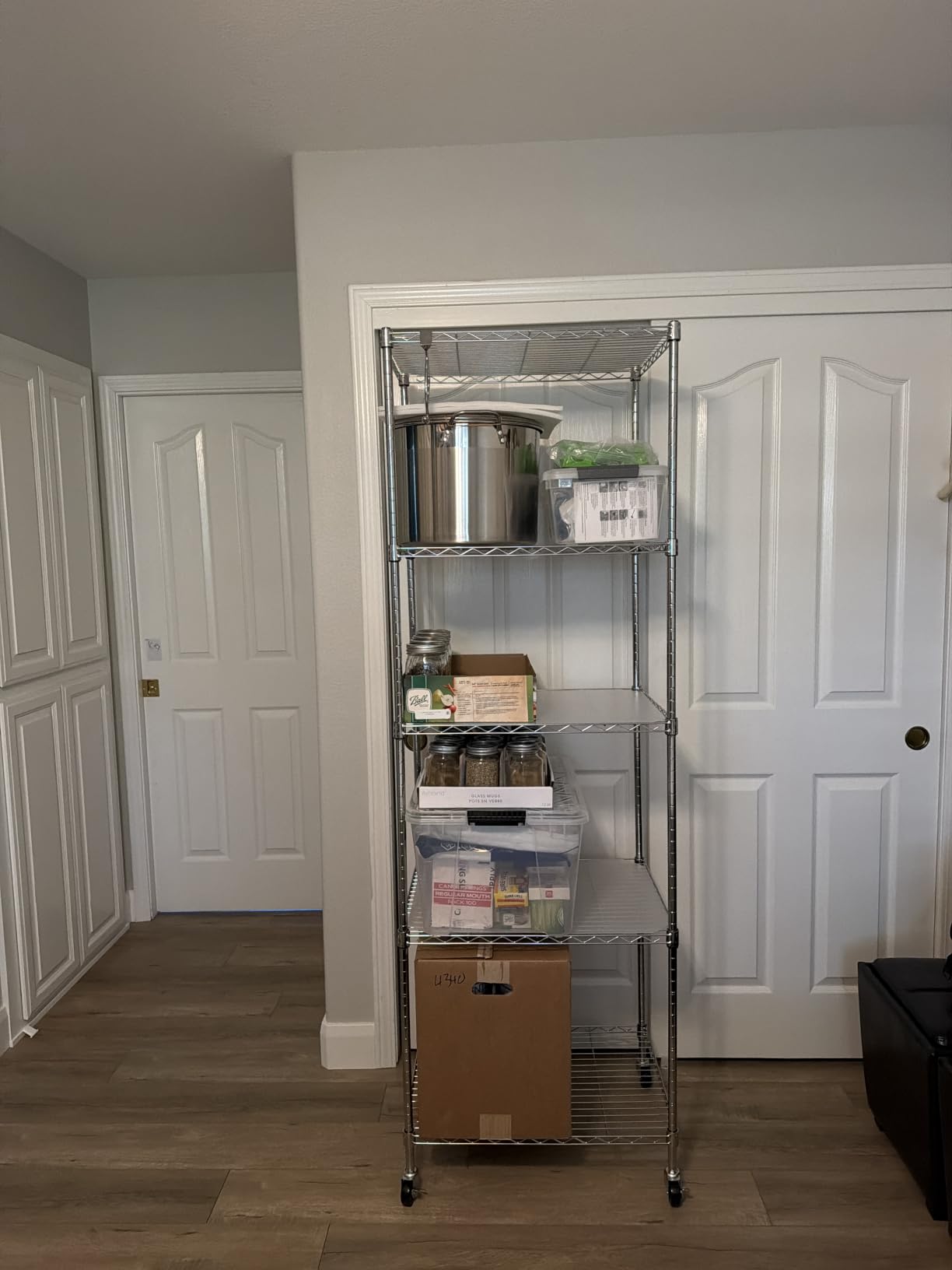
Two things make it worth a look despite the lower rating. The chrome alloy steel with an anti-rust finish holds up in damp basements and garages better than painted steel, and the 4-inch metal-and-rubber wheels are a real upgrade over the small plastic casters most budget racks arrive with. The listed applications also include aquariums and terrariums, which is unusual for a wire rack and makes it a workable plant stand.
The clip system assembles in about 10 minutes once you understand the sequence.
Who the PrimeZone rack suits?
It makes sense for large-format storage in a garage, warehouse, basement or kitchen where the 48 x 24 footprint is the point, and for anyone standing a heavy aquarium or terrarium on a shelf with a rust-resistant surface. The 81-inch height uses vertical space that a five-tier rack at 72 inches cannot.
If you want to move a loaded rack through a doorway, the four wheels and two locks make that manageable.
Where the PrimeZone rack falls down?
It carries the lowest rating in this roundup at 4.3 across 194 reviews, and the review spread is wider, with more complaints about assembly instructions and load performance than any other rack here. Some buyers feel the actual performance falls short of the published 600-pound per shelf figure, which is a caution worth taking seriously.
The published 3,000-pound feet figure dropping to 800 pounds on wheels is another reminder to decide which configuration you are actually buying.
12. TRINITY Basics 5-Tier NSF Wire Shelving with Wheels
TRINITY Basics 5-Tier NSF Heavy-Duty Wire Shelving Rack w Wheels, 60x24x72
- Highest rating in the roundup at 4.8
- Widest shelf span available at 60 inches
- Easy no-tool assembly in about 15 minutes
- Two locking and two non-locking wheels included
- NSF certified for pantries and dry food storage
- 82 pound unit weight means a two-person lift
- 60 inch span is less versatile in narrow rooms
- Capacity falls to 600 lb on wheels
- Marked for indoor use only
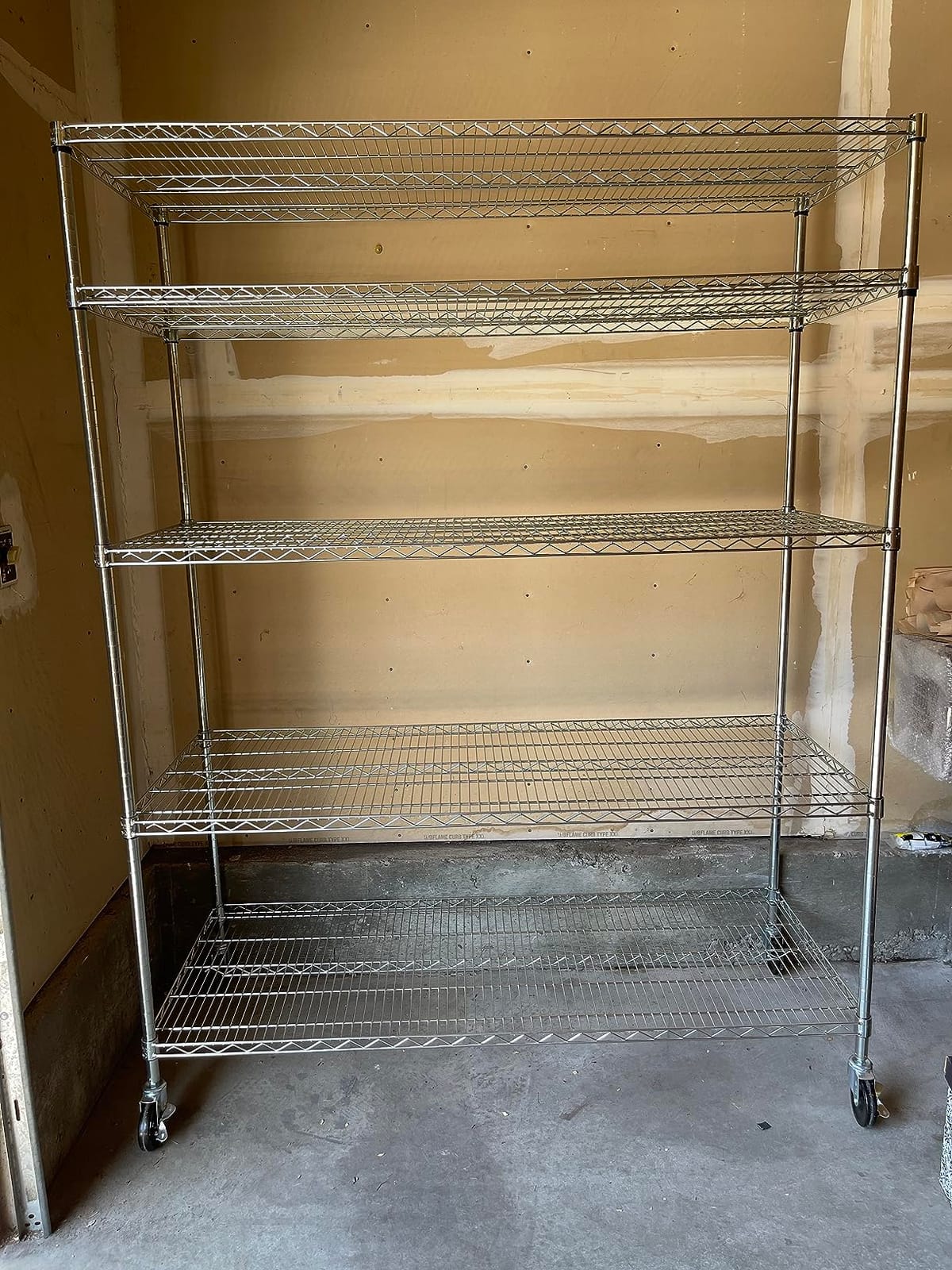
The TRINITY Basics TBFC-0931 has the widest shelf in this roundup at 60 inches on a 24-inch depth, and it publishes the capacity in both configurations: 2,250 pounds total on feet with 450 pounds per shelf, and 600 pounds total on wheels with 120 pounds per shelf. It is NSF certified for pantries and bulk dry food storage.
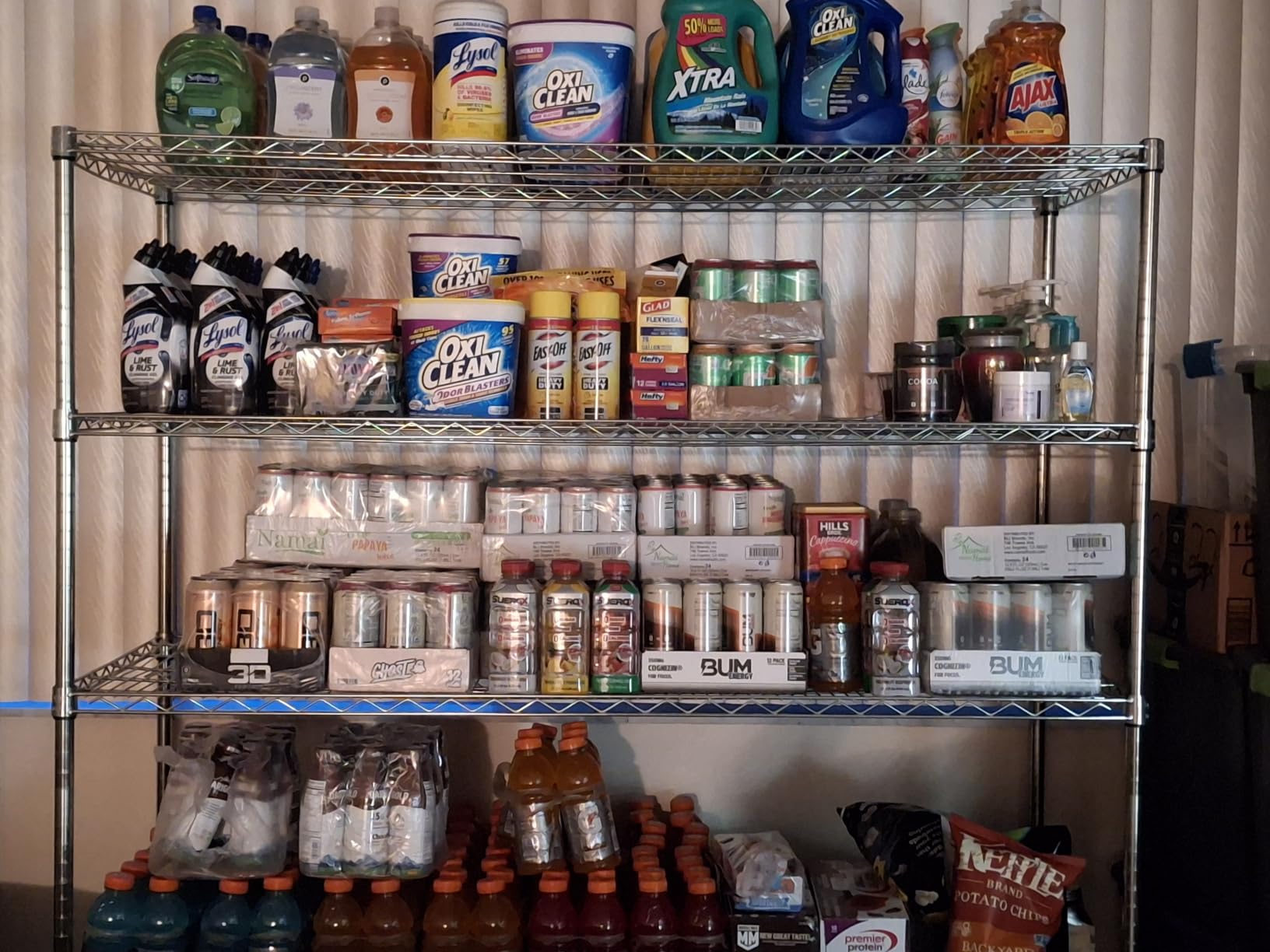
The 60-inch span is the reason to buy it. Wide totes, bulk dry food containers, appliances and long boxes are awkward on a 48-inch shelf and easy on a 60-inch one, and the 24-inch depth handles them properly. Assembly is tool-free in as little as 15 minutes, and the box contains five shelves, poles, four feet levelers, four wheels and 42 slip sleeves.
At 4.8 across 112 reviews it is the highest-rated rack in the set, while the review base is also small, so treat the rating as encouraging rather than settled.
Where the TRINITY rack works?
It suits pantries, bulk dry food rooms, laundry rooms and garages where long items and wide containers are the norm and the floor area can accommodate a 60-inch footprint. The two locking and two non-locking wheels make it easy to reposition a loaded rack, which is exactly the behaviour the 600-pound wheels figure is designed for.
It also suits anyone who wants EcoStorage chrome on steel poles, a finish that blends into a utility room better than a black or zinc rack.
Where the TRINITY rack is the wrong size?
At 82 pounds it is a two-person lift, and a 60-inch span is genuinely less versatile in a narrow room, a closet or a small walk-in. The 450-pound per-shelf figure is an on-feet number and falls to 120 pounds per shelf on wheels.
It is also marked for indoor use only, so it is not a candidate for a damp shed or a covered patio.
Per-Shelf Load Capacity vs Total Capacity
The per-shelf number governs the decision. A total capacity figure assumes weight spread evenly across every tier, so a 4,000-pound total on a five-shelf rack implies 800 pounds per shelf only if you load all five shelves equally. Load one shelf and the number that matters is the per-shelf rating, not the total.
Three examples make the point. The Seville Classics UltraDurable publishes 800 pounds per shelf and 4,000 pounds total on leveling feet, so its per-shelf figure matches the implied average. The Meet perfect 6-Tier publishes 350 pounds per shelf and 2,100 pounds total on six tiers, which implies 350 pounds evenly split, but owners report the decks lack mid-span support and flex under concentrated loads. The Alera kit publishes 1,250 pounds per shelf and 5,000 pounds total, an internally consistent set of figures that says the manufacturer was thinking in per-shelf terms.
Concentrated point loads are the real-world failure. A row of paint cans, a floor jack, a case of oil or a stack of paper all concentrate weight in the middle of a deck, where a wire shelf without a center support strut deflects most. The Seville rack runs full-width center support struts, which is exactly why it holds up better than racks with a higher headline number and no struts.
One forum pattern is worth repeating: buyers who load a single shelf heavily, rather than distributing across the whole rack, are the ones who report sagging and disappointment. Heavy, concentrated items belong on the lowest tier and over the uprights.
NSF Certified vs Commercial Grade Wire Shelving
NSF certified means a specific model has been evaluated against NSF/ANSI Standard 2, the public health and sanitation standard for food equipment, and the approved environment is stated, dry or wet. Commercial grade means nothing verifiable, because it is a marketing description applied to plenty of racks that have never been evaluated.
That distinction matters most where a health inspector will look at it, since local food codes require listed equipment in inspected food areas. It also matters at home, because the listing gives you a model number you can check. The model numbers in this roundup are SHF-01443 for the Honey-Can-Do, WEB562 and WEBK678 for the two Seville Classics racks, WS1 for SafeRacks, SHF-01054 for Brutis, ALESW503618SR for Alera, Shelving-776 for Meet perfect, TBFC-0931 for TRINITY, and CC5-482472 for Crescent Housewares.
What certification does not buy you is a guarantee of capacity you will actually achieve. Certification covers materials, design, construction and performance, and the listing tells you the environment the unit is approved for. It does not tell you the rack tolerates a wet walk-in if the listing says dry environments only, and it does not erase the difference between a rack on feet and the same rack on casters.
Chrome, Epoxy-Coated and Stainless Wire by Environment
Match the finish to the room, because the coating is the first thing that fails and the finish is the one thing you cannot upgrade later. Chrome plating suits dry, indoor, washable spaces. Powder-coated and epoxy-coated steel suits garages and basements where the coating takes the abuse. Stainless steel suits high-moisture and wash-down environments, at a higher cost.
For dry food storage and pantries, chrome is the traditional choice, which is why the Brutis, TRINITY, Honey-Can-Do and Crescent racks use it. For a garage or an unconditioned basement, zinc plating holds up better than painted steel, which is what the SafeRacks 6-Tier uses, and powder coating handles dirt and abrasion, which is what the Dkeli and the Seville 7-bin rack use.
For a walk-in cooler, freezer or wash-down prep area, chrome and zinc are the practical answers, but check the environment rating on the listing first, because several racks here are certified for dry environments only. Users weighing stainless against chrome and epoxy for damp garages get pointed toward stainless on Garage Journal, with the same caveat that everything on an open wire shelf stays visible and collects dust.
How to Verify a Product Is Actually NSF Certified?
Verify the model, not the product page. An NSF listing attaches to a specific model number, and the searchable listings directory is the authoritative record, so a claim you cannot match to a model is a claim you should discount.
The procedure is short. First, find the model number on the listing or on the unit itself, such as WEB562 or SHF-01054. Second, search that model in the NSF listings directory and confirm the product category is shelving or food equipment. Third, read the environment rating on the listing, since dry and wet approvals are not interchangeable. Fourth, check that the per-shelf capacity on the listing or packaging matches what the seller claims, and treat a mismatch as a reason to ask before buying.
Do this for any product described only as commercial grade with no model number, because the term is used on uncertified racks routinely. Forum users planning real loads look for the same three signals: a published per-shelf number, a stated capacity on both feet and casters, and a real warranty length attached to a real model.
Buying Guide: How to Choose NSF Wire Shelving?
Choose the depth before anything else
Depth decides what the rack can hold, and most disappointments are depth disappointments. A 14-inch-deep rack, like the Honey-Can-Do 5-Tier, suits boxes, cans and craft supplies. An 18-inch-deep rack, like the Brutis and the SafeRacks, fits sheet pans, mixing bowls and standard food containers. A 24-inch-deep rack, like the Crescent, TRINITY and PrimeZone, handles bulk goods, appliances and full-size pans. Match the depth to the largest item you plan to store, not the average one.
Width follows the same logic. The standard foodservice footprint is 48 by 18 inches, which is why three of the racks here use it. The TRINITY 60-inch span is wider and less versatile, and useful only if your floor area supports it.
Decide between feet and casters, because the rating changes
Feet and casters are not interchangeable in the rating. The Seville UltraDurable publishes 4,000 pounds total on feet and 500 pounds on wheels. The Crescent Housewares rack publishes 4,000 on feet and 800 on wheels. The TRINITY rack publishes 2,250 on feet and 600 on wheels. The Seville 7-bin rack publishes 800 on feet and 500 on wheels. Read the number for the configuration you will actually use, and note that the per-shelf figure falls too, from 450 pounds to 120 pounds on the TRINITY.
Mobile is worth it when you clean behind the rack, move inventory seasonally, or share a space with a vehicle. It is not worth it when the rack is loaded once and stays put, because you give up most of the capacity figure for nothing.
Plan for wire pitch, liners and small-item retention
Anything smaller than the wire opening will fall through, and that is a near-universal complaint about open wire shelving. The three fixes are liners, integrated bins, or storing small items in containers. The Seville 7-Tier rack solves it with 21 tilt-lock bins, which is the most complete answer. The Brutis rack does not include liners, and the fix for pantry goods is to add them.
Liner fit depends on the wire pitch of the deck, so measure a shelf opening before buying a pack of liners rather than assuming a standard fit.
Match tiers and height to your ceiling
Height is a constraint people check too late. The Meet perfect rack stands 82 inches, the PrimeZone stands 81 inches, and the Dkeli rack reaches 82 inches with casters, so all three sit close to garage door opener rails and to the underside of a standard 8-foot ceiling once loaded. The Seville UltraDurable is 75 inches, or 72 without wheels, which is a friendlier number in a low garage.
Tiers matter more than most buyers expect. A 5-tier rack spread over 72 inches leaves gaps wide enough that short items waste vertical space, and adding a shelf is the usual fix, as owners of the Brutis rack do.
Budget for the build, not just the rack
Assembly is tool-free across this whole roundup, with published times between 10 and 30 minutes. The variable is the weight of the box. Racks at 55, 67, 82 and 85 pounds are two-person lifts, and the 9-pound BestOffice rack is a one-person job. A rubber mallet helps on the kits with tight corner fittings.
Allow floor clearance for leveling feet, and check that any anti-tip anchoring plan matches a freestanding unit, since consumer racks generally arrive without wall hardware.
Where Wire Shelving Is the Wrong Choice?
Wire shelving is wrong for small loose items with nothing to catch them, and it is wrong for unconditioned damp spaces where the plating will eventually go. It is also a poor fit for visible living areas, where an open steel grid looks industrial and shows every item you own.
The dust problem is real and has no clean answer, because open wire cannot be sealed. Garage Journal users dealing with exactly this prefer enclosed cabinets, and one improvised low-cost sliding curtain solution rather than replacing the rack. A moisture rating matters too: epoxy and chrome coatings degrade in persistently wet environments, which is the strongest argument for stainless in a damp garage or an unheated shed.
And if your heaviest items are single point loads, a solid shelf with a continuous deck handles them more predictably than a wire deck with a per-shelf rating. Our modular shelving guide covers solid-deck options if that is your situation.
How We Picked and Ranked?
We ranked on published per-shelf capacity first, because it is the only figure that describes the shelf you will actually load. Everything else follows from that.
The sequence was straightforward. We started with the per-shelf rating on leveling feet, then checked whether the manufacturer publishes a separate capacity for casters, because a listing that acknowledges the derating is telling the truth. Next we confirmed an NSF or NSF/ANSI 2 claim attached to a model number rather than a commercial-grade adjective. Then we looked at finish against environment, warranty length, and the assembly and handling burden. Finally we read the review record for failure modes, since a rack that flexes, arrives bent or assembles badly will disappoint you regardless of its published numbers.
Where two racks were close, we preferred the one with a longer warranty and a clearer configuration story. This is a comparison of published specifications and owner feedback, not a laboratory load test, so treat the capacities as manufacturer figures rather than independently measured ones.
Frequently Asked Questions
What is NSF wire shelving?
NSF wire shelving is a steel shelving rack certified to NSF/ANSI Standard 2, the public health and sanitation standard covering food equipment. The specific model has been evaluated for materials, construction, cleanability and performance, and the listing states whether the approved environment is dry or wet. Certification attaches to a model, not to wire as a material.
What is the difference between commercial grade and NSF wire shelving?
Commercial grade is marketing language with no verification behind it, and plenty of uncertified racks carry it. NSF wire shelving has been evaluated against NSF/ANSI Standard 2 as a specific model, which you can confirm by searching the model number in the NSF listings directory. In an inspected food environment the difference is not optional.
How much weight can wire shelving hold?
It depends on the per-shelf rating, not the total. Racks in this roundup publish between 115 pounds per shelf for a bin rack and 1,250 pounds per shelf for a heavy industrial kit, with unit totals from 1,000 pounds to 5,000 pounds. The total assumes weight spread evenly across every tier, so a heavy item on one shelf is governed by that shelf’s rating.
How much weight can wire shelving hold on wheels?
Substantially less than on leveling feet. The Seville UltraDurable publishes 4,000 pounds total on feet and 500 on wheels, the Crescent Housewares rack 4,000 on feet and 800 on wheels, and the TRINITY rack falls from 2,250 pounds to 600, or from 450 pounds per shelf to 120. Always read the figure for the configuration you plan to use.
Which brand offers the best quality wire shelving?
Among the racks reviewed here, Seville Classics publishes the most complete information, with center support struts, separate feet and wheels capacity, and a 10-year limited warranty. SafeRacks is the strongest value with zinc-plated shelves and a limited lifetime warranty, and Alera offers the highest published capacities with a reconfigurable kit.
What are the disadvantages of using wire shelving?
The main ones are small items falling through the wire, dust collecting on an open deck that cannot be sealed, visible deflection under concentrated point loads, corrosion in persistently damp unconditioned spaces, and an industrial look in visible living areas. Shelf liners or integrated bins fix the first problem, and a damp-rated finish is needed for the fourth.
Do I need NSF certified shelving for a home kitchen?
Not legally, since home kitchens are not inspected food environments. It is still useful, because the listing gives you a tested per-shelf capacity figure, a coating that survives repeated washing and a warranty with a documented length. For home canning and bulk pantry storage, that documentation is worth more than the commercial-grade label.
Do wire shelves rust in a garage?
Chrome plating and powder coating handle a typical dry garage well, and zinc plating holds up better than painted steel in damp rooms. The risk is persistent unconditioned moisture, where any coating eventually degrades. Users weighing stainless against chrome and epoxy finishes for a damp garage generally pay more for the corrosion resistance.
Do I need shelf liners for wire shelving?
Yes for bottles, jars, small parts and anything narrower than the wire opening, which is the most common practical complaint about wire shelving. The alternative is integrated bins, as on the Seville 7-Tier rack with 21 tilt-lock bins. Liners must match the wire pitch of the deck, so measure a shelf opening before buying.
How deep should wire shelving be?
Fourteen inches suits boxes, cans and craft supplies. Eighteen inches fits sheet pans, mixing bowls and standard food containers, and is the standard dry-storage depth. Twenty-four inches handles bulk goods, appliances and full-size pans. Match the depth to your largest item rather than your average one, since depth is what most buyers get wrong.
Conclusion
Three racks came out ahead of the rest of the best NSF wire shelving field. The Honey-Can-Do 5-Tier is the one to buy if you want a certified, adjustable and genuinely portable rack for a pantry, garage or utility room. The Seville Classics UltraDurable is the one to buy if you are storing real weight, because the center support struts and the published 800-pound per-shelf figure on feet mean what it says. The SafeRacks 6-Tier is the one to buy if you want commercial build quality, zinc plating and a limited lifetime warranty at the best capacity-to-cost balance here.
Whichever you choose, read the per-shelf rating rather than the total, check the feet and wheels numbers separately, and confirm the model number against the NSF listings before you order. Our craft room shelving picks cover the liner-based alternative for smaller items.