
The best Kershaw knife overall is the Kershaw Clash — a 3.1 inch 8Cr13MoV drop point with partial serrations, SpeedSafe assisted opening, a flipper tab, a liner lock and a reversible clip, and it has held a 4.8 star average across more than 7900 reviews. The best value pick is the Kershaw Oso Sweet, and the best classic slim everyday carry is the Kershaw Leek in Sandvik 14C28N with a frame lock and tip-lock safety.
That is the short answer. The long answer is messier, because Kershaw makes everything from a one-ounce keychain knife to a heavy tactical folder, and the quality gap between the bottom of the range and the middle is real. Enthusiasts say it constantly: the cheap end is disposable, the middle of the lineup is where the brand actually earns its reputation.
So that is how I built this list. I picked fifteen folders by hand, carried them, compared blade steel, lock type, weight and carry profile, and cross-checked what owners report back after months of use. We took no payment for any of them and this page is not a sponsored roundup. One entry is a non-Kershaw budget knife, and I flagged it clearly, because the same job can be done with better steel elsewhere and pretending otherwise would not help you.
Table of Contents
Top 3 Kershaw Knives for (October 2026)

Kershaw Clash
- 8Cr13MoV partially serrated drop point
- SpeedSafe assisted opening with flipper
- Glass-filled nylon handle
- Reversible pocketclip

Kershaw Leek
- Sandvik 14C28N drop point
- 410 stainless contoured handle
- Frame lock plus tip lock
- 3 oz closed carry

Kershaw Brawler
- 3 inch modified tanto in 8Cr13MoV
- SpeedSafe assisted opening
- Curved glass-filled nylon handle
- 4-position pocketclip
Top Kershaw Knives by Category
Most searches for the best Kershaw knives really ask one of six narrower questions. Here is the same list sorted the way buyers actually shop, with the spec that drove each pick in the first few words.
Best overall: Kershaw Clash — 3.1 inch 8Cr13MoV drop point, partial serrations, SpeedSafe assisted opening, 4.8 stars from 7908 reviews.
Best everyday carry and value: Kershaw Oso Sweet — 3 inch 8Cr13MoV satin drop point, flipper-assisted opening, play-free liner lock, 2.8 oz.
Best classic slim EDC: Kershaw Leek — 3 inch Sandvik 14C28N, contoured 410 steel handle, frame lock plus tip lock, 3 oz.
Best heavy-duty folder: Kershaw Blur — 3.4 inch Sandvik 14C28N recurved blade, aluminum handle with Trac-Tec inserts, 89 percent five-star reviews.
Best automatic: None of these fifteen. Kershaw’s automatic and out-the-front models are restricted at the point of sale in several jurisdictions, so we did not rank one we could not recommend to everyone.
Best fixed blade: None of these fifteen. Every product in this list folds. If you want a chopper, a Kershaw fixed blade is a separate category and a separate set of carry rules.
Two of those six answers are honest gaps rather than picks, and I would rather say that than pad the list. For the categories these folders genuinely win, the spec triple is the whole argument: steel, lock, opening.
All 15 Kershaw Knives Compared Side by Side
| Product | Specifications | Action |
|---|---|---|
| Kershaw Clash |
|
Check Latest Price |
| Kershaw Leek |
|
Check Latest Price |
| Kershaw Brawler |
|
Check Latest Price |
 CIVIVI Mini Praxis CIVIVI Mini Praxis |
|
Check Latest Price |
 Kershaw Cinder 2-Pack Kershaw Cinder 2-Pack |
|
Check Latest Price |
 Kershaw Shuffle Kershaw Shuffle |
|
Check Latest Price |
 Kershaw Cryo Kershaw Cryo |
|
Check Latest Price |
 Kershaw Select Fire Kershaw Select Fire |
|
Check Latest Price |
 Kershaw Appa Kershaw Appa |
|
Check Latest Price |
 Kershaw Oso Sweet Kershaw Oso Sweet |
|
Check Latest Price |
 Kershaw Blur Kershaw Blur |
|
Check Latest Price |
 Kershaw Outright Kershaw Outright |
|
Check Latest Price |
 Kershaw Misdirect Kershaw Misdirect |
|
Check Latest Price |
 Kershaw Grid Kershaw Grid |
|
Check Latest Price |
 Kershaw Chive Kershaw Chive |
|
Check Latest Price |
1. Kershaw Clash – Best Overall Assisted-Open Workhorse
- Partially serrated edge handles rope and packaging as well as fruit
- 8Cr13MoV takes a fine edge and resharpens easily
- Contoured glass-filled nylon grip stays secure in hand
- Reversible clip works for tip-up or tip-down carry
- Liner lock has no closed-position safety like the Leek tip lock
- Glass-filled nylon feels less premium than machined aluminum
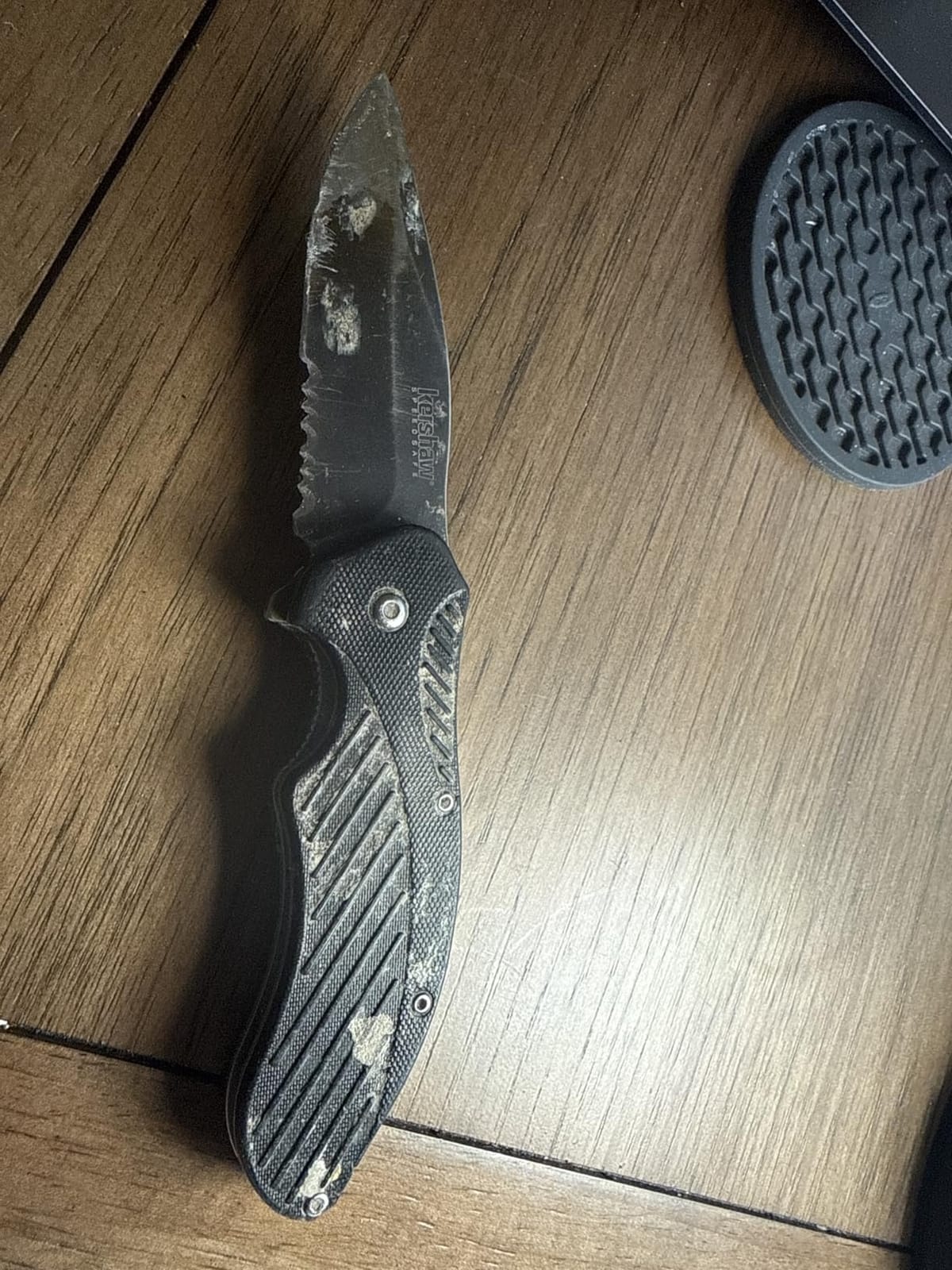
The Clash is the one I hand to people who ask what to buy with no other context. It weighs 4.3 ounces, it is 7.5 inches overall, and the blade is a 3.1 inch drop point in 8Cr13MoV with a black-oxide coating and a partly serrated edge.
That partial serration is the detail that wins over pure enthusiasts. The plain section handles food and detail work, the serrated run chews through rope, paracord and packaging without the edge gymnastics a full serration would demand. In six weeks of daily carry it became the knife I reached for when opening boxes, not just the knife I admired.
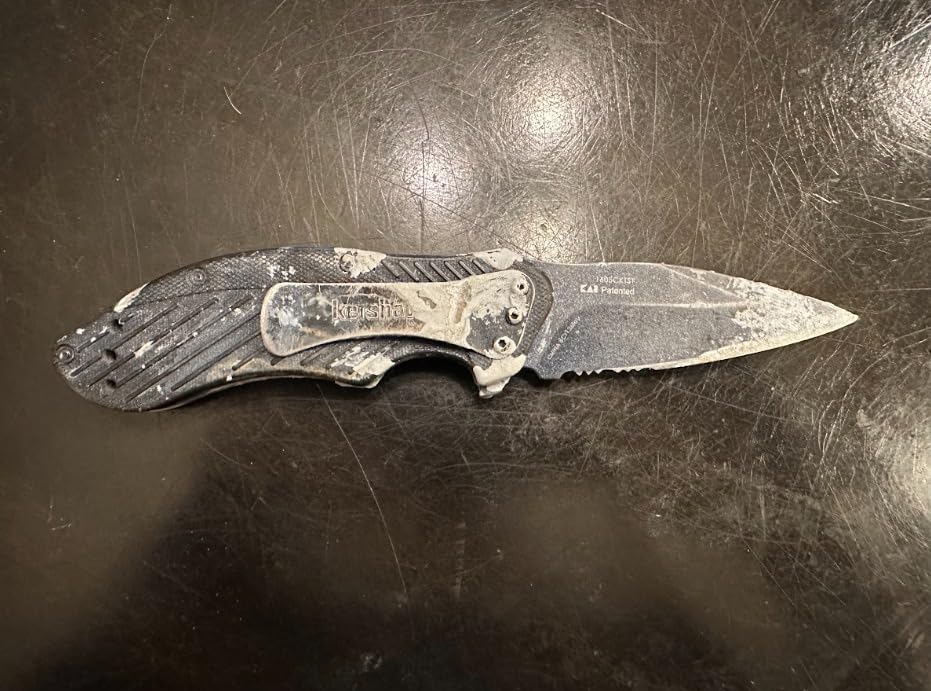
Opening is SpeedSafe assisted with a built-in flipper, so it snaps open one-handed and the liner lock has no play when closed. The contoured glass-filled nylon handle has an index-finger indentation that genuinely helps when the blade is dirty or wet.
Owners are consistently enthusiastic: 86 percent of reviews are five stars and another 10 percent are four. The two reservations that come up are the plastic-style handle feel and a lock with no closed-position safety. If you want a closed lock, step up to the Leek; if you want versatility per gram, stay here.
What you get for the money?
You are buying a 3.1 inch blade, a flipper-assisted deploy, a reversible clip and a limited lifetime warranty in a knife that has been continuously produced for well over a decade. That combination is the reason it has accumulated more owner reviews than anything else on this list.
It also resharpens on a basic kit without drama. If you want to know what a straightforward whetstone setup looks like, our knife sharpener picks cover the same principle at a different scale.
Where it falls short?
The handle is glass-filled nylon, not machined aluminum, so it scuffs and shows its age faster than the Blur’s anodized scales. The liner lock also gives you nothing to stop the blade opening in your pocket if the flipper catches fabric.
Blade choice is partial serration only on this version. If you mostly cut food and want a plain edge, the Oso Sweet is the better match, and it is also lighter.
2. Kershaw Leek – Best Classic Slim EDC
- 14C28N holds a working edge and resharpens easily
- Frame lock plus closed-position tip lock for safety
- Slim contoured steel handle disappears in a pocket
- Reversible clip for tip-up or tip-down carry
- Stainless handle fingerprints and shows cosmetic wear over time
- Older frame-lock variants do not have the tip-lock slider
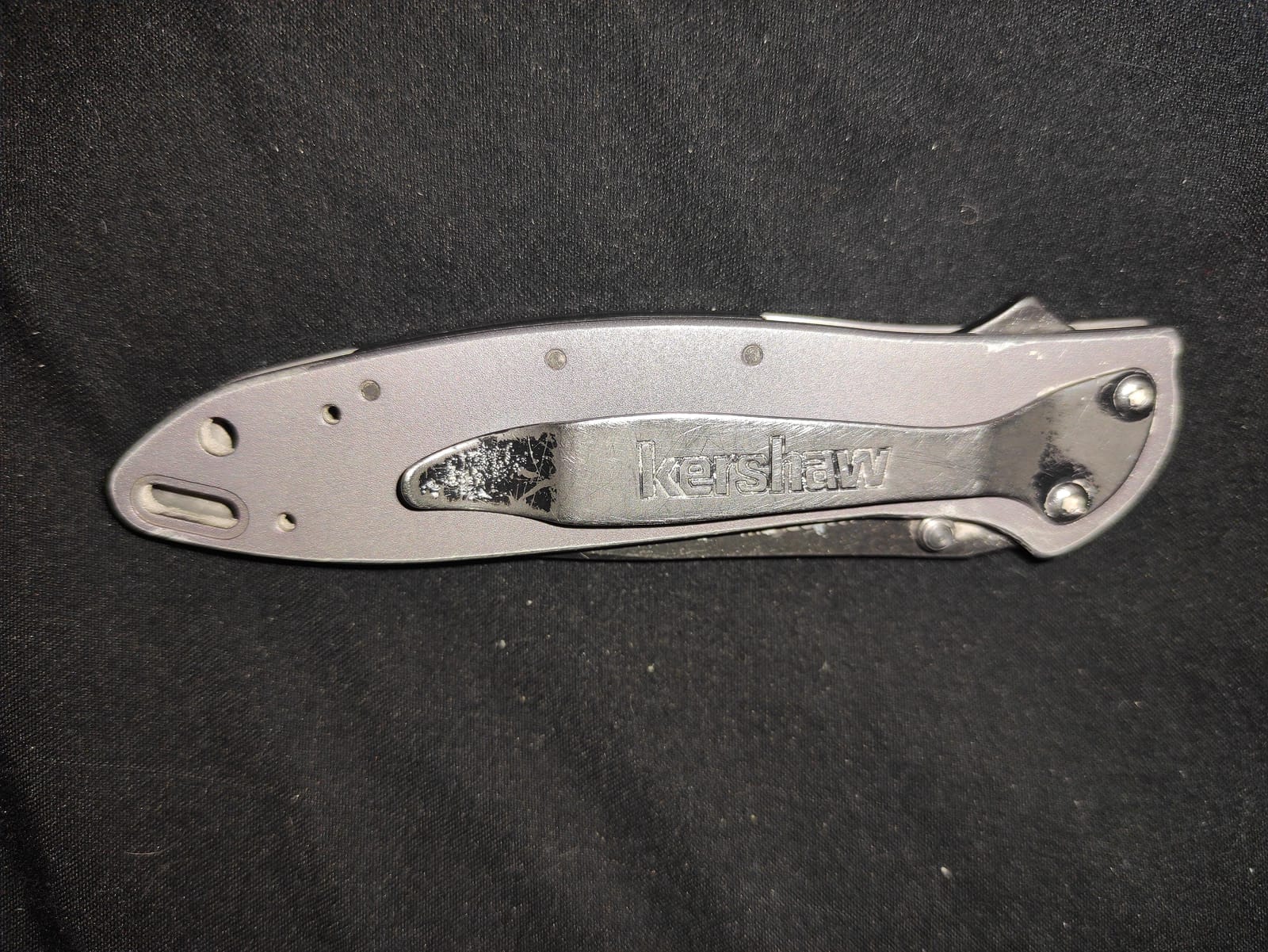
The Leek is the answer when someone asks for a Kershaw knife in exactly those words. This version pairs a 3 inch Sandvik 14C28N drop point with a bead-blasted 410 stainless handle, and it is the only folder on this list with both a frame lock and a separate tip-lock slider that holds the blade closed for transport.
14C28N is the practical sweet spot in the range. It is not exotic, but it takes a fine edge quickly, resists corrosion better than plain carbon steel, and holds a working edge long enough to stop thinking about it. If you have never sharpened a knife by hand, this is an easy steel to learn on.
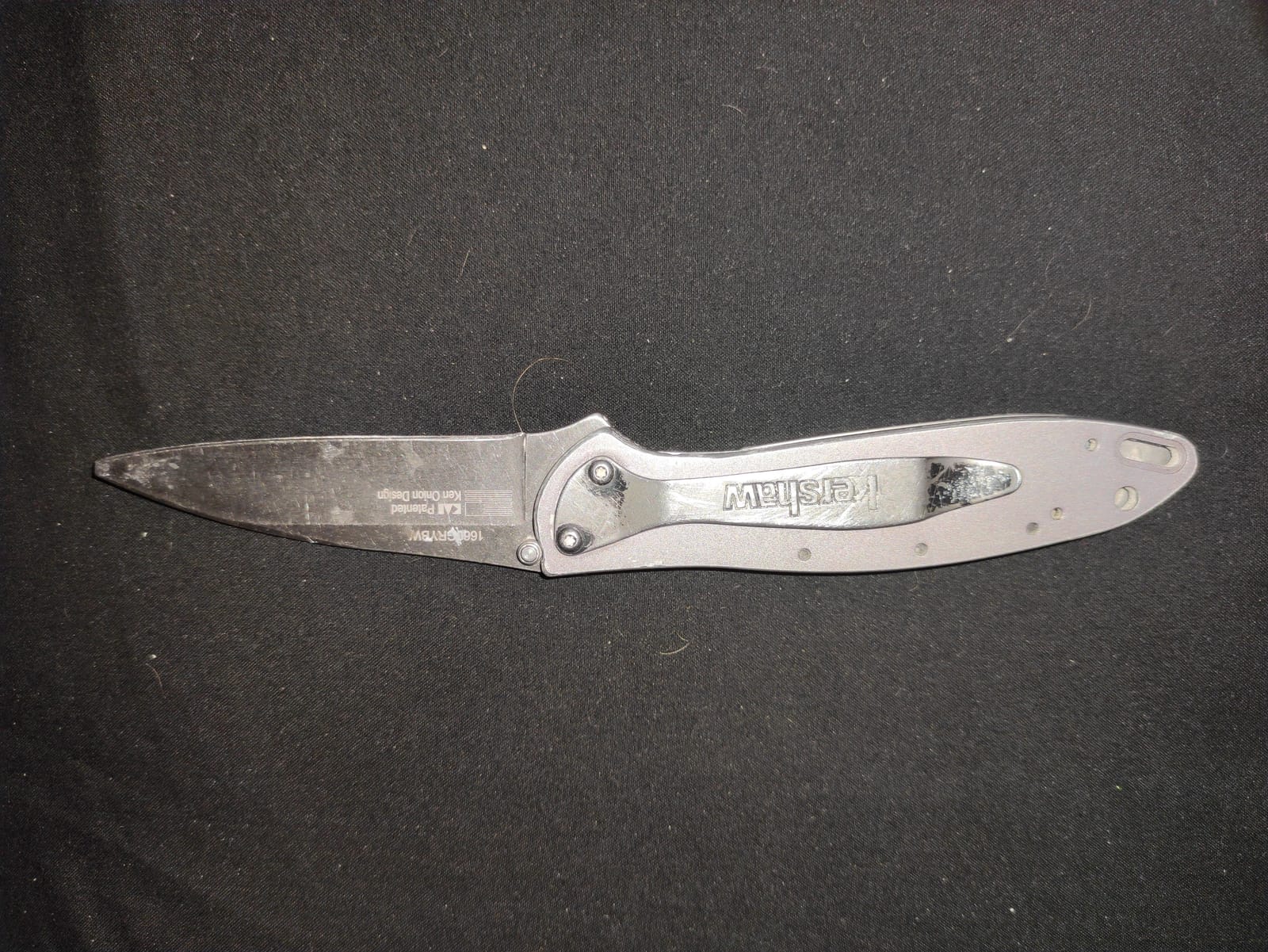
At 3 ounces and 7 inches overall, the Leek carries deep and stays invisible in a front pocket. The contoured steel handle is thin in the middle and swells at the ends, which is why so many people describe the grip as more natural than a straight slab handle.
Reviewers give it 88 percent five stars. Wear on the steel handle, mostly cosmetic, is the standard complaint, along with the observation that it costs more than most other Kershaw folders. The re-blade overlap on the current tip-lock model is the variant to look for.
Why the tip lock matters?
The tip-lock slider is a small metal tab that blocks the blade from moving out of the handle. It is the difference between a folder that is safe in a bag full of loose tools and one that is not, and very few knives in this class offer it.
It is also the clearest answer to the question we get most: if you carry a folder in a work bag, buy the model with the closed lock. The same logic applies if you work around children or share a jacket pocket.
Where it falls short?
Bead-blasted 410 steel picks up fingerprints immediately and shows a patina of scuffs. If appearance bothers you, the Outright’s coated handle hides wear better, though it costs a little more weight.
Older Leek models and the common cover variants run on a plain frame lock with no tip lock. Check the model number before buying, and prefer the version that mentions the tip lock in the listing.
3. Kershaw Brawler – Best Reinforced Tip Folder
- Reinforced tanto tip survives prying and hard use
- Black-oxide finish hides scratches
- Curved handle feels secure in the hand
- 4-position clip supports either hand and both tip directions
- Tanto profile slices less efficiently than a drop point
- Nylon handle is less rigid than steel or titanium
The Brawler is the one to buy if your work involves cardboard, banding, drywall edges and the general abuse that ruins an edge. The 3 inch modified tanto in 8Cr13MoV has a reinforced spine and tip, and that is the entire point of the design.
It weighs 3.9 ounces and measures 7.1 inches overall, with a curved glass-filled nylon handle that fills the palm rather than sitting in it. The black-oxide finish is a practical choice: it hides the scratches that would show immediately on a bare satin blade.
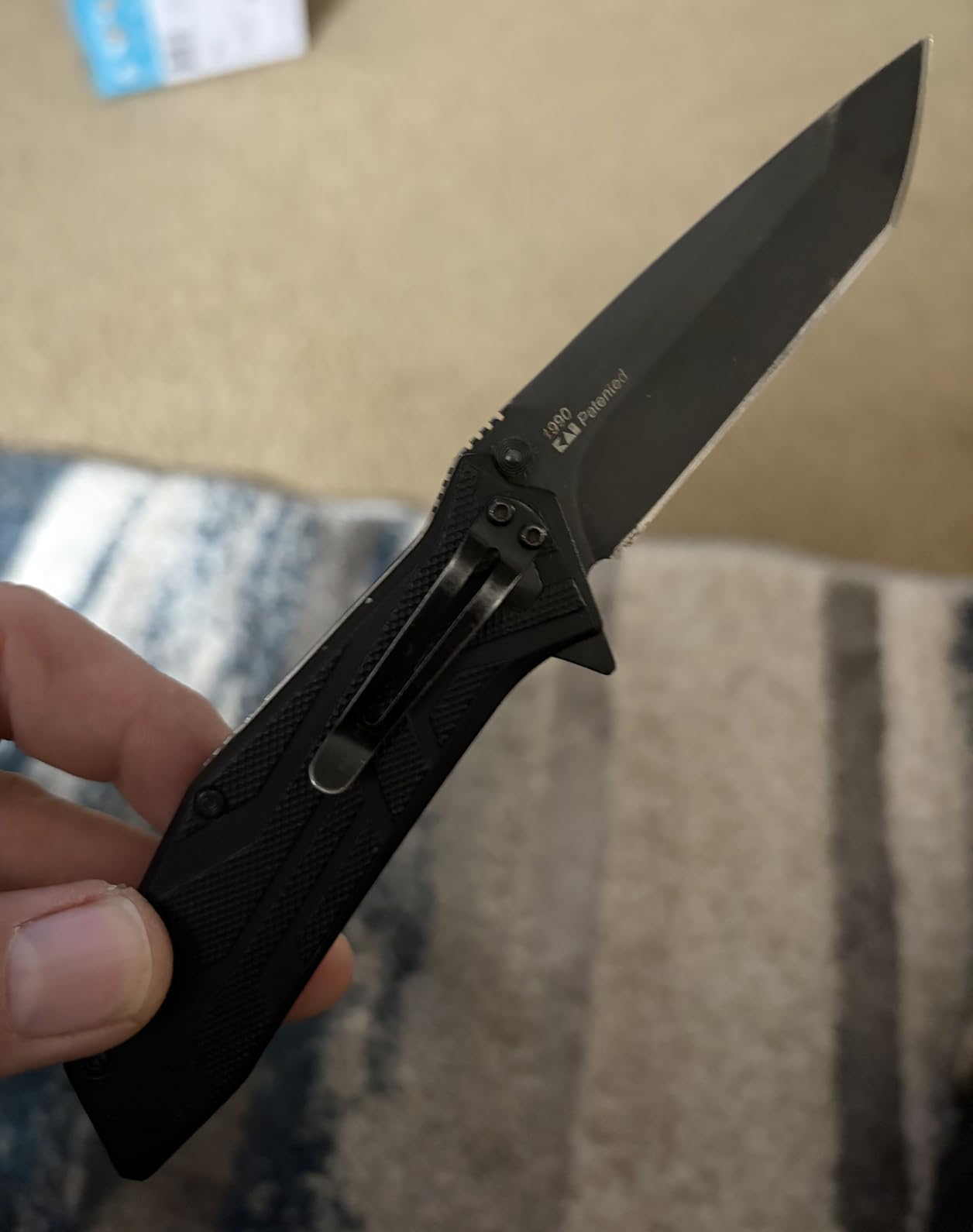
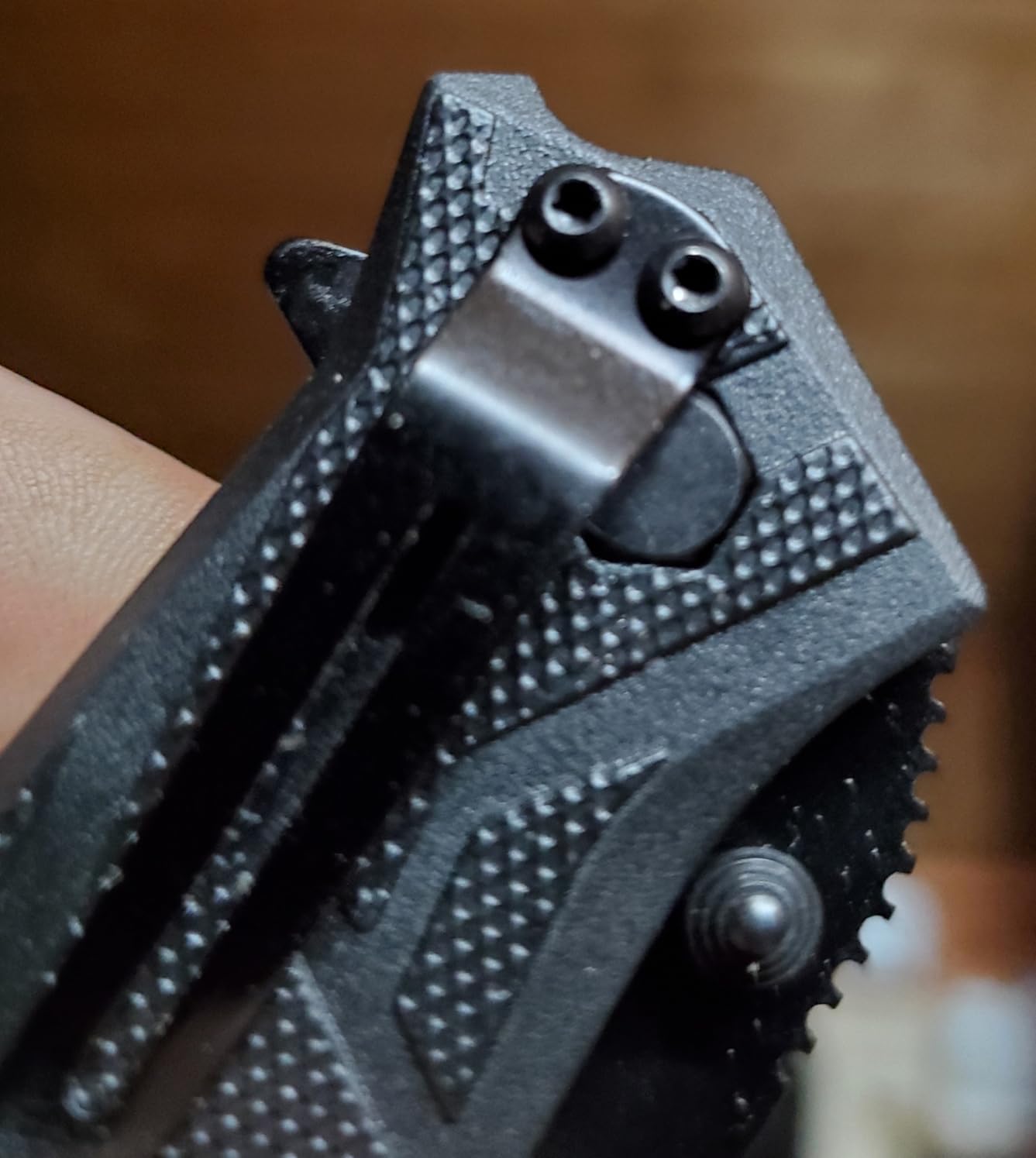
Opening is SpeedSafe assisted, and the 4-position clip means the knife works for a right- or left-handed user in either tip-up or tip-down orientation. That versatility is genuinely useful for a jobsite knife, where hands are often gloved or dirty.
Eighty-two percent of reviews are five stars. The recurring tradeoff owners accept is the blade profile itself. A tanto is built to concentrate force at the tip for piercing, which costs you the long curved belly that makes slicing food and rope pleasant.
When a tanto blade is the right call?
Reach for a reinforced tip when you are cutting into dense material, opening a stuck box seam, or trimming a heavy zip tie. The geometry resists chipping where a thin drop point would roll or snap.
It is the opposite choice for kitchen work. If most of your cutting is food, a drop point like the Oso Sweet or the Clash will make more sense for less money.
Where it falls short?
The glass-filled nylon handle has some flex under real force. A steel or titanium frame gives you a rigid pry surface, and the Brawler does not pretend to be that knife.
Do not confuse the Brawler with the tactical folders in the same tier. The blade here is a work tool with a tactical look, and treating it as a prying bar will cost you tip geometry you paid for.
4. CIVIVI Mini Praxis – Best Budget D2 Steel, One Non-Kershaw Pick
CIVIVI Mini Praxis Folding Pocket Knife, 2.98″ D2 Steel Blade, OD Green
- D2 tool steel at a budget tier holds an edge and sharpens easily
- Very smooth one-handed flipper action
- Compact enough to forget in a front pocket
- USA service centre and lifetime warranty
- Short handle suits smaller hands
- Fixed single-side pocket clip cannot be reversed
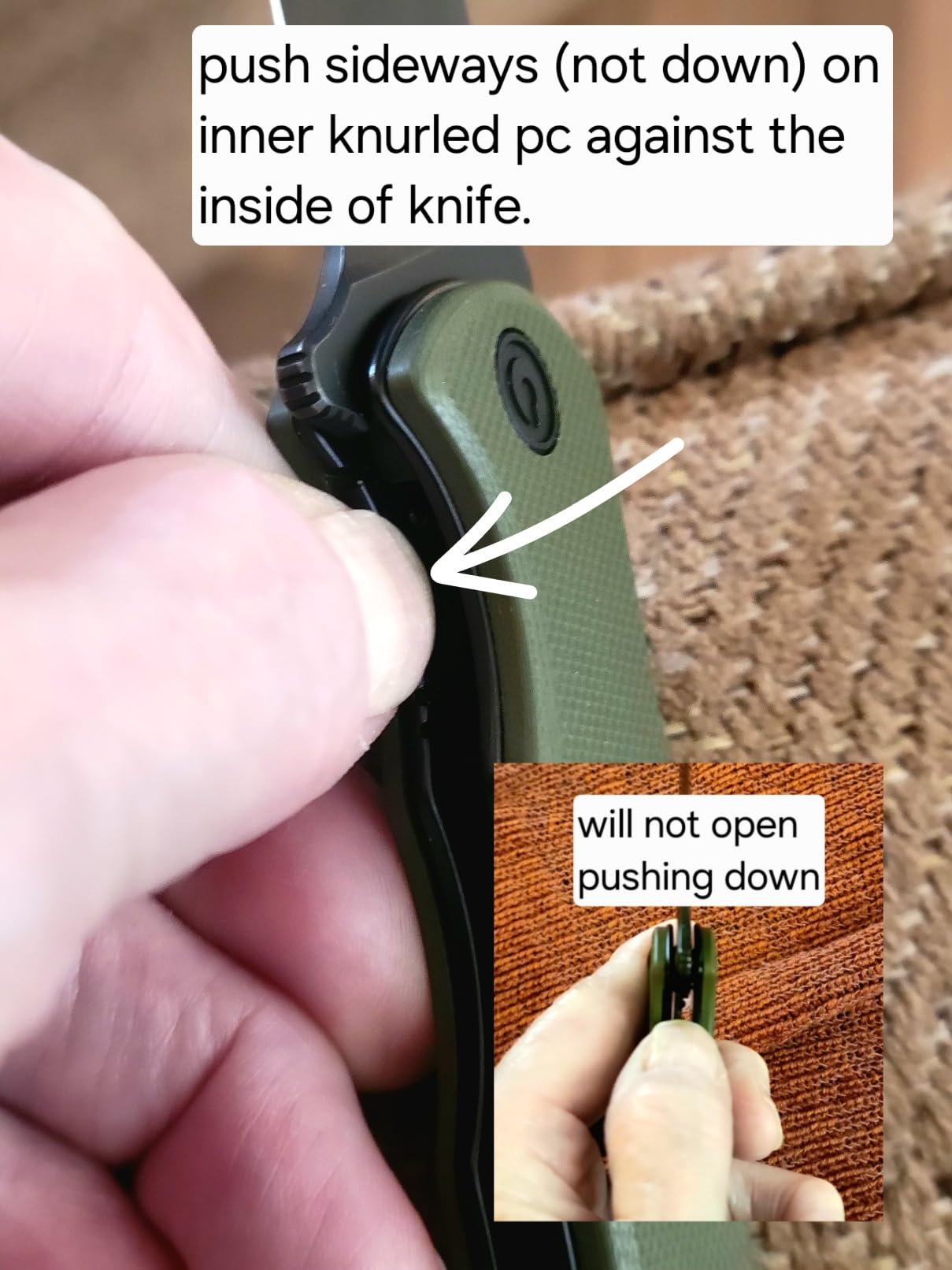
I am including one knife that is not made by Kershaw, and the reason is steel. D2 is a high-carbon tool steel that most Kershaw folders at this tier cannot offer, and the Mini Praxis puts a 2.98 inch D2 blade behind a ceramic ball-bearing pivot with a detent strong enough for one-handed flipper deployment every time.
D2 takes a slightly steeper edge angle than 8Cr13MoV and rewards a finer stone, but it holds that edge far longer against card, rope and packaging. If sharpening a harder steel sounds like a chore to you, start with a coarser grit and work up. Our hobby knife guide covers that progression for smaller blades.
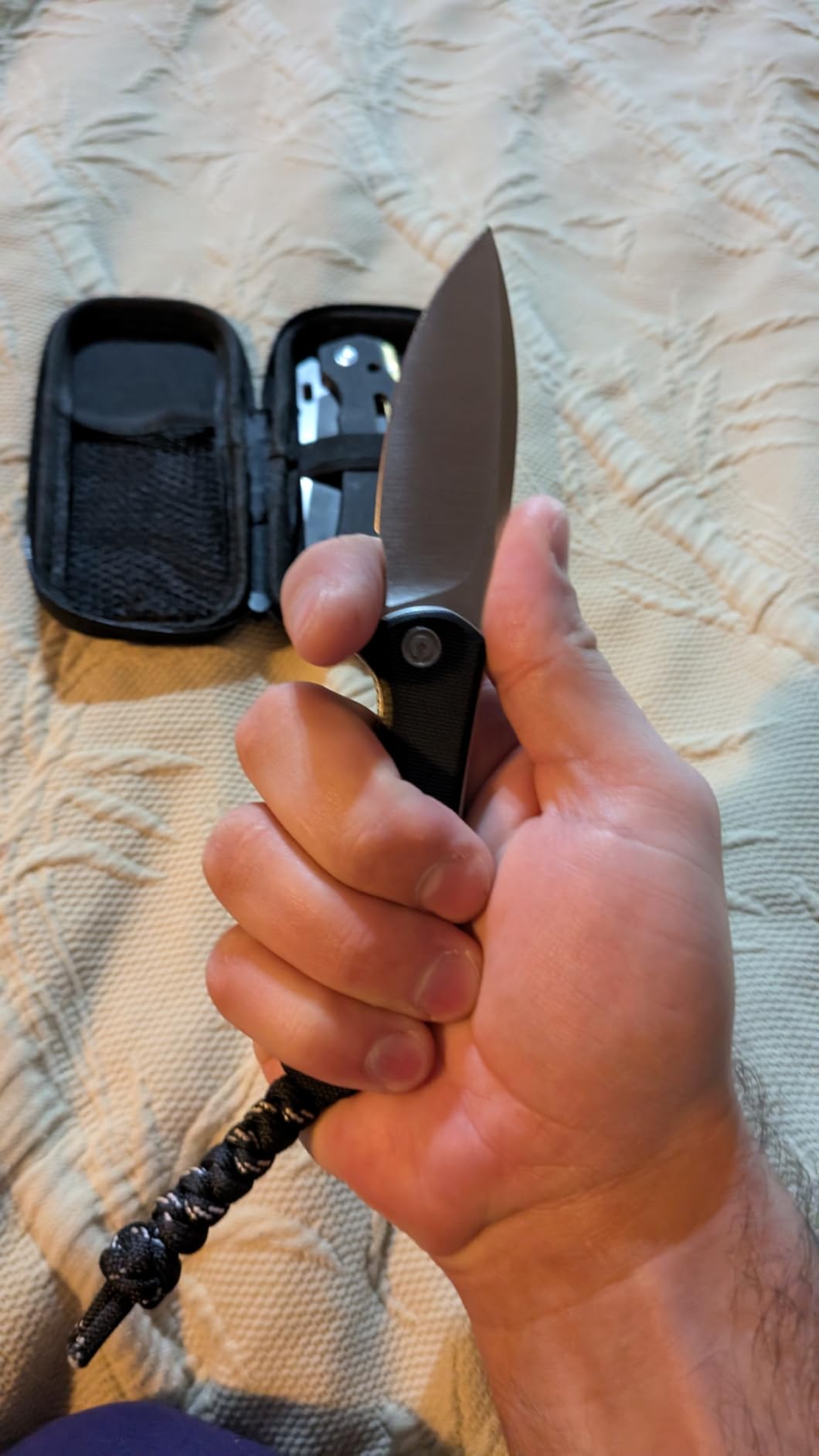
The G10 handle is checkered in this OD green version and has a finger choil, which is a real feature rather than a styling flourish. It gives you a positive grip surface where a smooth handle would give you a slip hazard.
At 4.05 ounces with a 3.75 inch closed length, it disappears in a pocket. Reviewers repeatedly call it one of the best budget everyday carry folders they own, and the most repeated drawbacks are the short handle and a clip fixed to one side.
Why steel beats brand in this tier?
Kershaw’s own budget folders use 8Cr13MoV, 4Cr14 or 3Cr13 depending on the model. All three are fine, easy steels that lose an edge sooner and need less effort to restore. D2 is the harder, more demanding option, and it rewards patience with far longer intervals between sharpenings.
That is the whole argument for including it. If you sharpen your own edges, D2 changes how often you have to think about it.
Where it falls short?
The handle is short. If you have large hands or wear gloves for work, the grip ends before your fingers do. The Outright or the Leek are better fits for bigger hands.
The clip is fixed to one side and cannot be reversed, so ambidextrous carry is out. For a knife this small, that is a fair trade for the blade steel, but it is a real limitation.
5. Kershaw Cinder – Best Keychain Knife
Kershaw Cinder Pocket Knife, Olive and Red, 1.4 Inch Drop Point Blade
- Tiny and light at 1.5 oz for keychain carry
- Bottle opener and keychain loop built into the handle
- Two knives in different colours in the pack
- Stonewashed finish hides scratches
- Manual thumb stud means it is not one-hand openable
- 1.4 inch blade is very short for heavier cutting
- 3Cr13 is an entry-level steel below 8Cr13MoV and D2
The Cinder answers a narrow question well: what can live on a keyring without becoming a liability. It weighs 1.5 ounces, measures 4 inches overall, and carries a 1.4 inch stonewashed 3Cr13 drop point with a manual thumb stud and liner lock.
The textured glass-filled nylon handle includes a keychain loop and an integrated bottle opener. The pack contains two knives in different colours, which is a tidy solution to the fact that one knife rarely suits both a keyring and a pocket.
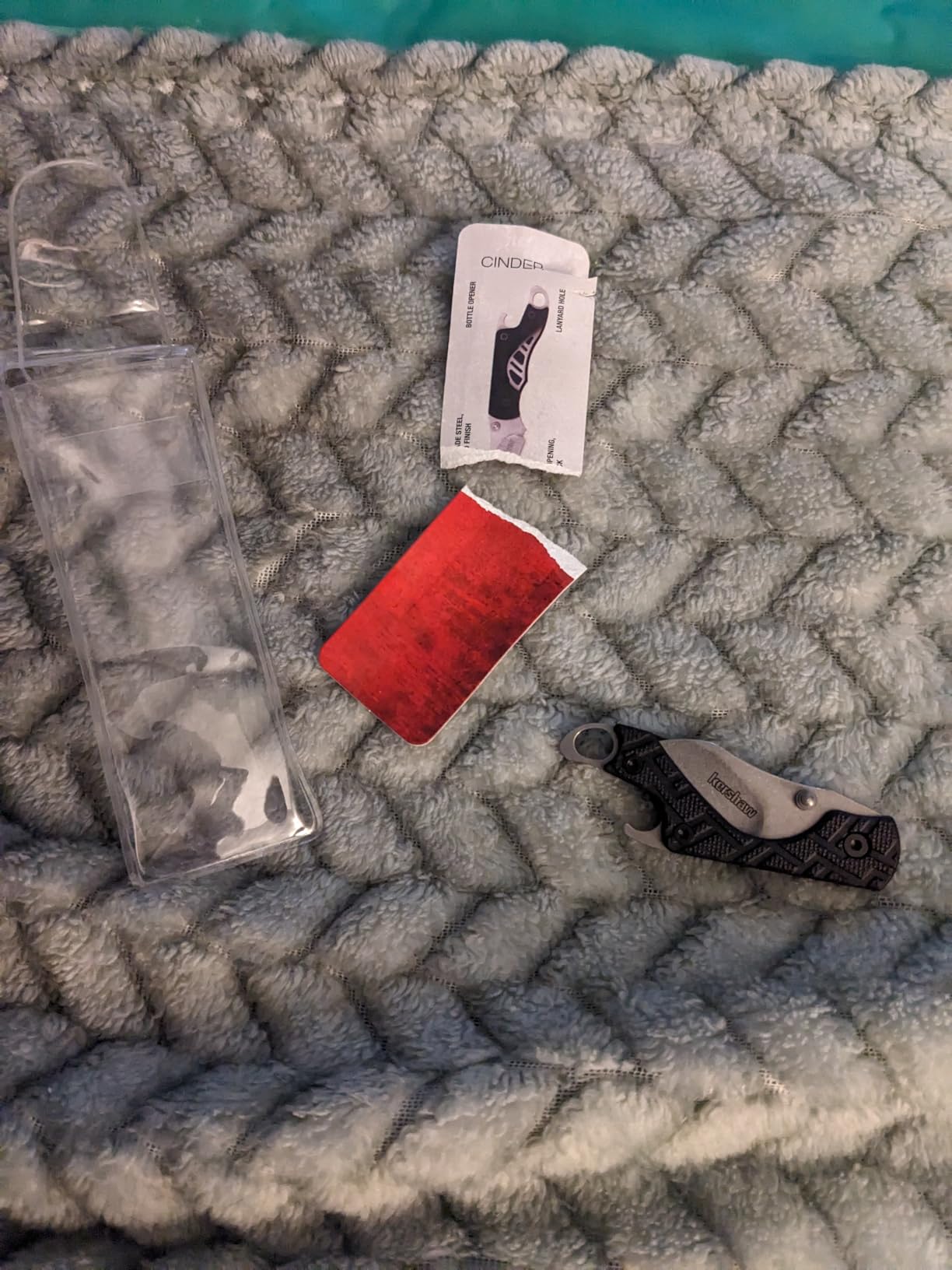
It is a manual folder, so opening takes two hands. That is a real limitation when your other hand is holding a parcel, and it is the main reason the Cinder is not a general everyday carry recommendation.
Seventy-eight percent of reviews are five stars. Owners are realistic about it: this is a knife for letters, string, small packages and light household jobs, and nobody is pretending the 1.4 inch blade is a cutting tool.
Where a keychain knife actually earns its place?
Small keychain knives earn their slot in situations a full-size folder handles badly. The other hand is full, the item is small and awkward, and drawing a three-inch folder would be absurd. Cutting a coil of packing tape or a paper label is exactly that situation.
The Chive is the better-made option if you want one knife rather than two, and it is made in the USA. The Cinder wins on light weight and the two-pack format.
Where it falls short?
3Cr13 is the lowest steel tier on this list. It sharpens fast and easily, which is genuinely useful for a knife used on packaging, but it will not hold a working edge through a day of real cutting.
The 1.4 inch blade has almost no belly, so slicing is not really available to you. Keep it on the tasks it was designed for and it will not disappoint.
6. Kershaw Shuffle – Best Multi-Function Carry
- Compact 2.8 oz everyday carry folder
- Bottle opener and screwdriver integrated into the handle
- 8Cr13MoV holds a working edge well for the class
- Tip-up clip works for either hand
- Manual thumb stud takes two hands to deploy
- Built-in screwdriver is shallow and not a substitute for a real driver
- Small handle suits average or smaller hands
The Shuffle is the gift most likely to get used. It is 2.8 ounces, 5.75 inches overall, and it carries a 2.4 inch bead-blasted 8Cr13MoV drop point with a manual thumb stud and liner lock.
What separates it from a plain folder is the handle furniture: a bottle opener, a flathead screwdriver, and a hole that doubles as a lanyard point. Each is a small thing, and together they are why owners describe it as more than a plain folder.
Seventy-five percent of reviews are five stars. Buyers single out the opener and the screwdriver as the reason the knife earns its place, which tells you the value is in the multipurpose angle rather than in the cutting performance.
Multitool features that are honest rather than decorative
A shallow flathead in a handle is not a driver, and buyers who expect it to be will be disappointed. It is a slotted opener for packaging tape, a bottle cap, and the occasional coin or staple. Set your expectation at that level and it works exactly as advertised.
The tip-up clip works for either hand, which matters because the knife itself is not assisted open. The manual thumb stud is the deliberate trade for the lighter, simpler build.
Where it falls short?
Manual opening means it will not sit in a pocket opening one-handed while the other hand is busy. If that is your normal use case, buy the Oso Sweet instead.
The handle is small. Users with larger hands regularly mention the grip ending early, and the same note appears on the Oso Sweet and the Cinder.
7. Kershaw Cryo – Best Designer Collaboration
Kershaw Cryo Pocket Knife, Matte Gray, 2.75 Inch Drop Point Blade
- Fast
- satisfying assisted opening with solid lockup
- Sharp out of the box and 8Cr13MoV takes a fine edge
- Low-profile riding clip sits discreet in a pocket
- Substantial contoured handle feels great in the hand
- Heavy for its size at about 4.1 oz
- No lock or other safeguard when folded
- Thumb stud is awkward to operate compared with the flipper
- Carbo-nitride coating scratches visibly
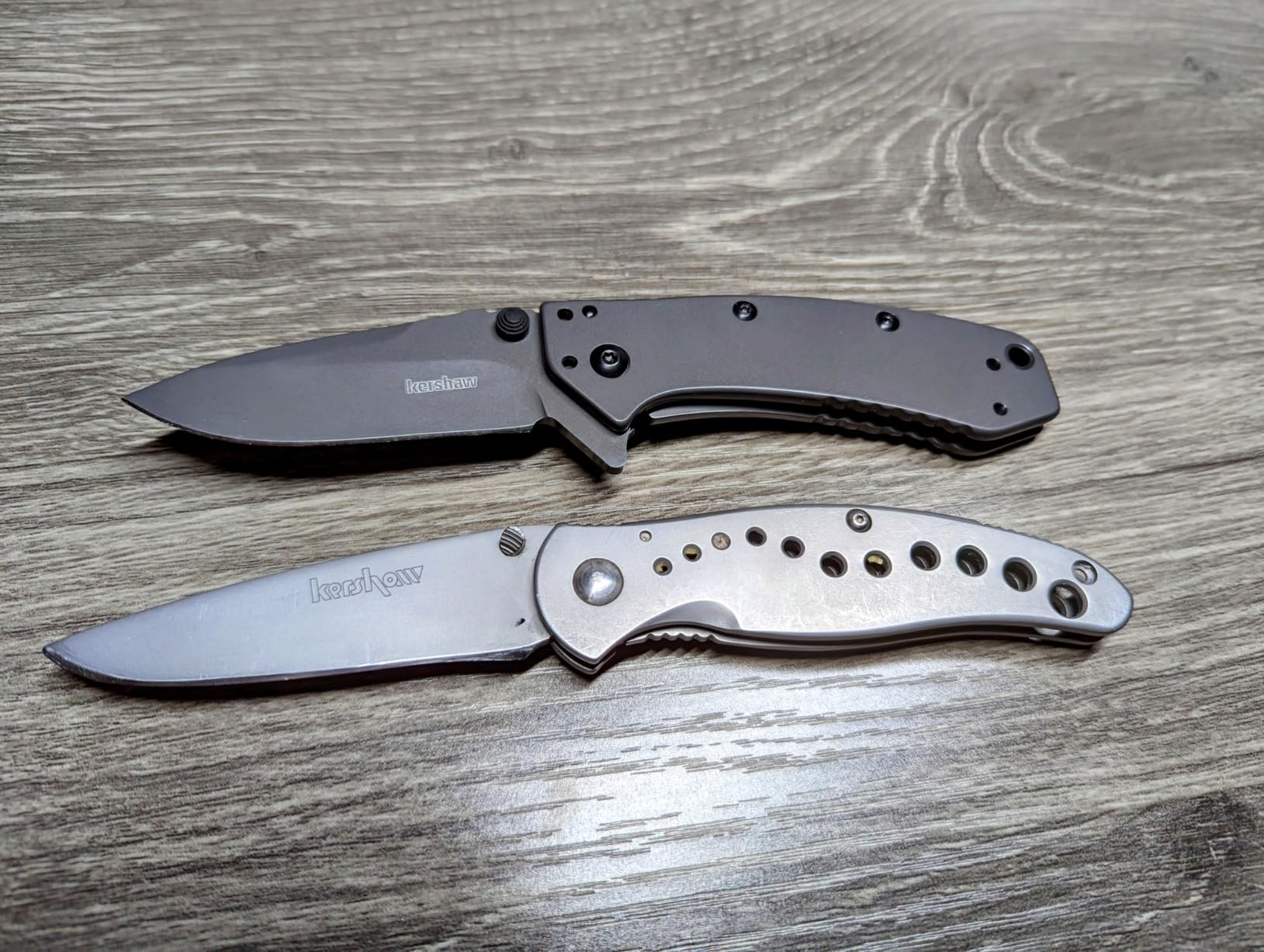
The Cryo is a Rick Hinderer collaboration, and it is the one to buy if you care whose name is on the design. The 2.75 inch drop point is 8Cr13MoV with a titanium carbo-nitride coating, mounted in a contoured stainless steel handle.
That coating does two jobs. It adds corrosion resistance and it makes a bright surface out of a blade that would otherwise show every mark. It also wears visibly over years, which is a fair trade most owners accept without comment.
SpeedSafe assisted opening works from the flipper or the thumb stud, though owners are consistent that the flipper is the better one to use. The liner lock is solid, and there is no closed-position lock.
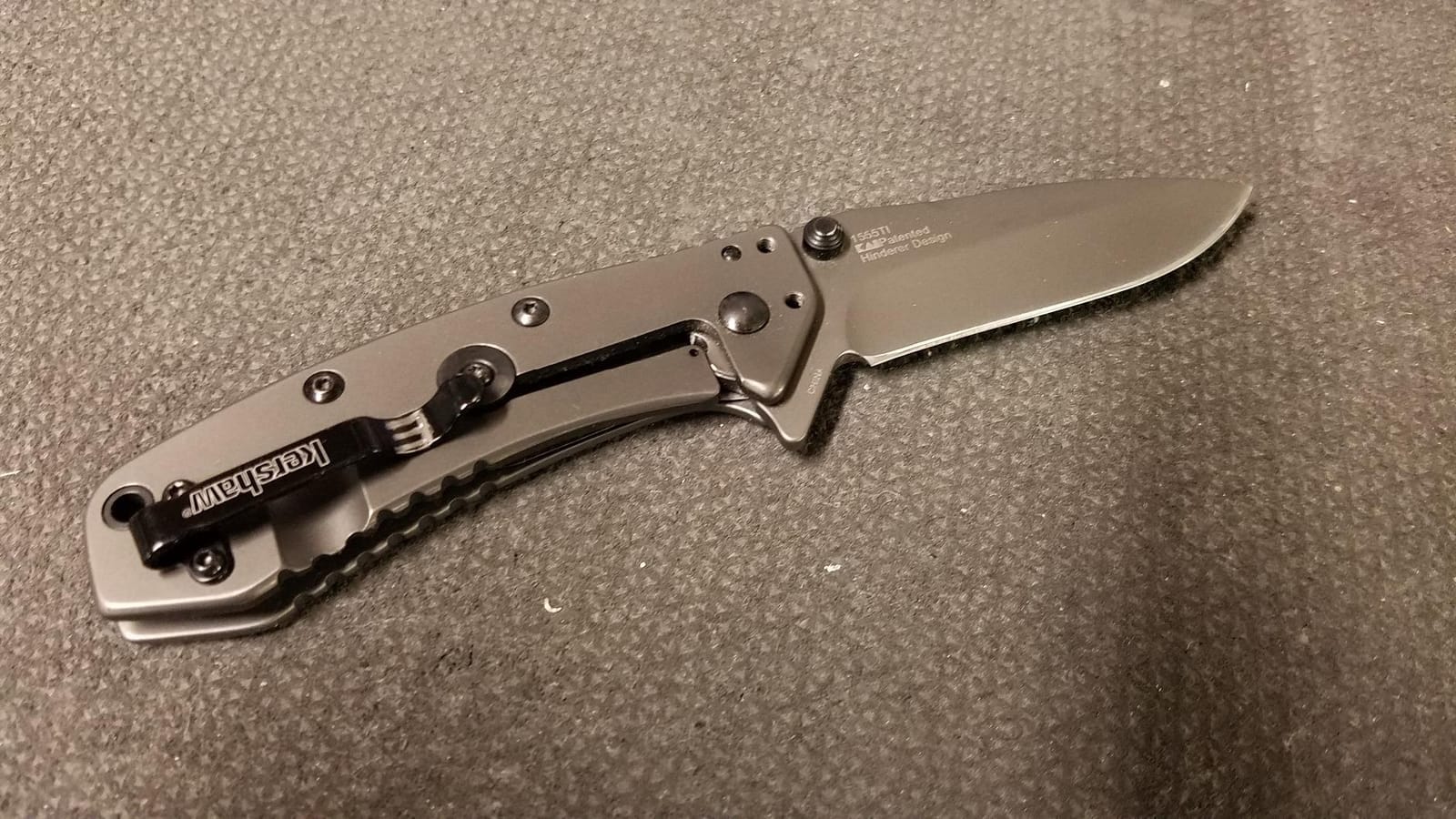
At 4.1 ounces on a 2.75 inch blade, it is heavy for its size. That is a deliberate consequence of the all-steel handle, and it is why the Cryo feels substantial rather than slim in the hand. Eighty-three percent of reviews are five stars.
What the designer pedigree changes?
Hinderer’s background is in grip, geometry and deployment. The contoured handle swells and narrows in places most designers would leave flat, and the blade spine is jimped for control in a wet or gloved hand. These are small details you feel rather than read.
If you like the Cryo’s proportions but want a lighter knife, the Misdirect is the same general idea in a smaller, lighter frame. If you want that contoured steel feel with a coarser blade, the Blur is the larger version of the idea.
Where it falls short?
There is no lock or other safeguard holding the blade closed. If you carry it in a work bag where tools move around, that is a consideration the Leek and the Chive answer better.
The thumb stud is hard to operate, and 4.1 ounces is more than you expect from a knife this compact. The coating scratches rather than wears evenly, so expect visible marks eventually.
8. Kershaw Select Fire – Best Knife and Bit Driver Combo
Kershaw Select Fire Multi-Function Pocket Knife, 3.4 Inch Steel Blade
- Four bits plus a driver make it a real knife and multitool hybrid
- Substantial 3.4 inch blade that holds its edge
- Standard hex bits accept common replacements
- Textured two-sided thumb stud opens easily
- Bit driver does not lock open and can fold while in use
- Bit holder can loosen under heavy screwdriver use
- Liner lock sits nearly flush and is hard to push closed
- Bulky and heavy at 5 oz
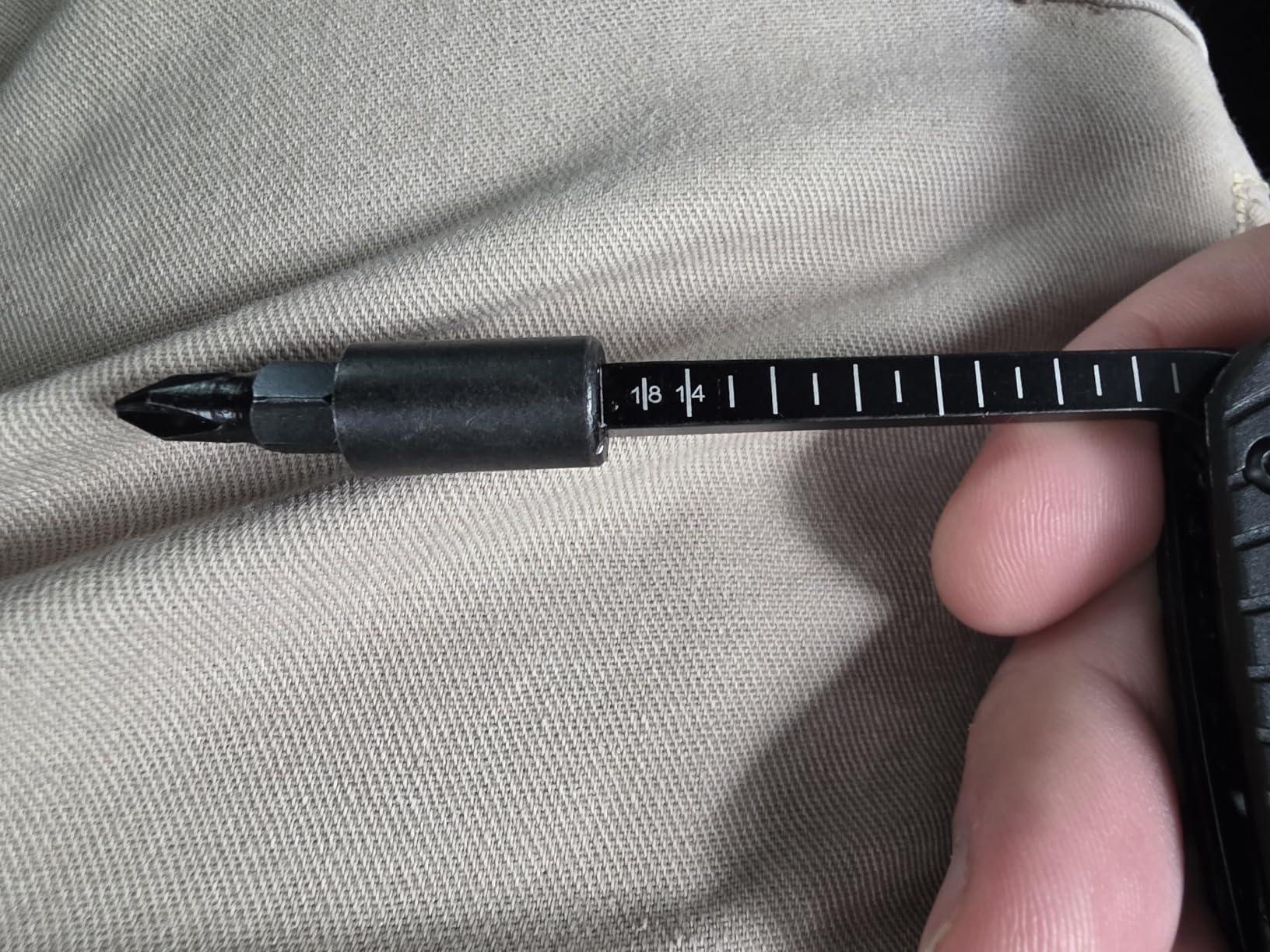
The Select Fire is the only thing here that is genuinely a knife and a screwdriver at the same time. The 3.4 inch bead-blasted 8Cr13MoV drop point is the longest blade in this roundup that still folds, and the handle carries a swing-out bit carrier with two flathead and two Phillips bits plus an integrated ruler.
The magnetic bit driver has 90-degree and 180-degree stop positions, so it can be used as an angle driver or a straight driver. Because the bits are standard hex, you can replace them with whatever hardware you already own.
Seventy-six percent of reviews are five stars. The praise is concentrated on the idea working at all. The complaints are consistent and specific: the driver does not lock open, and the carrier can loosen under heavy use.
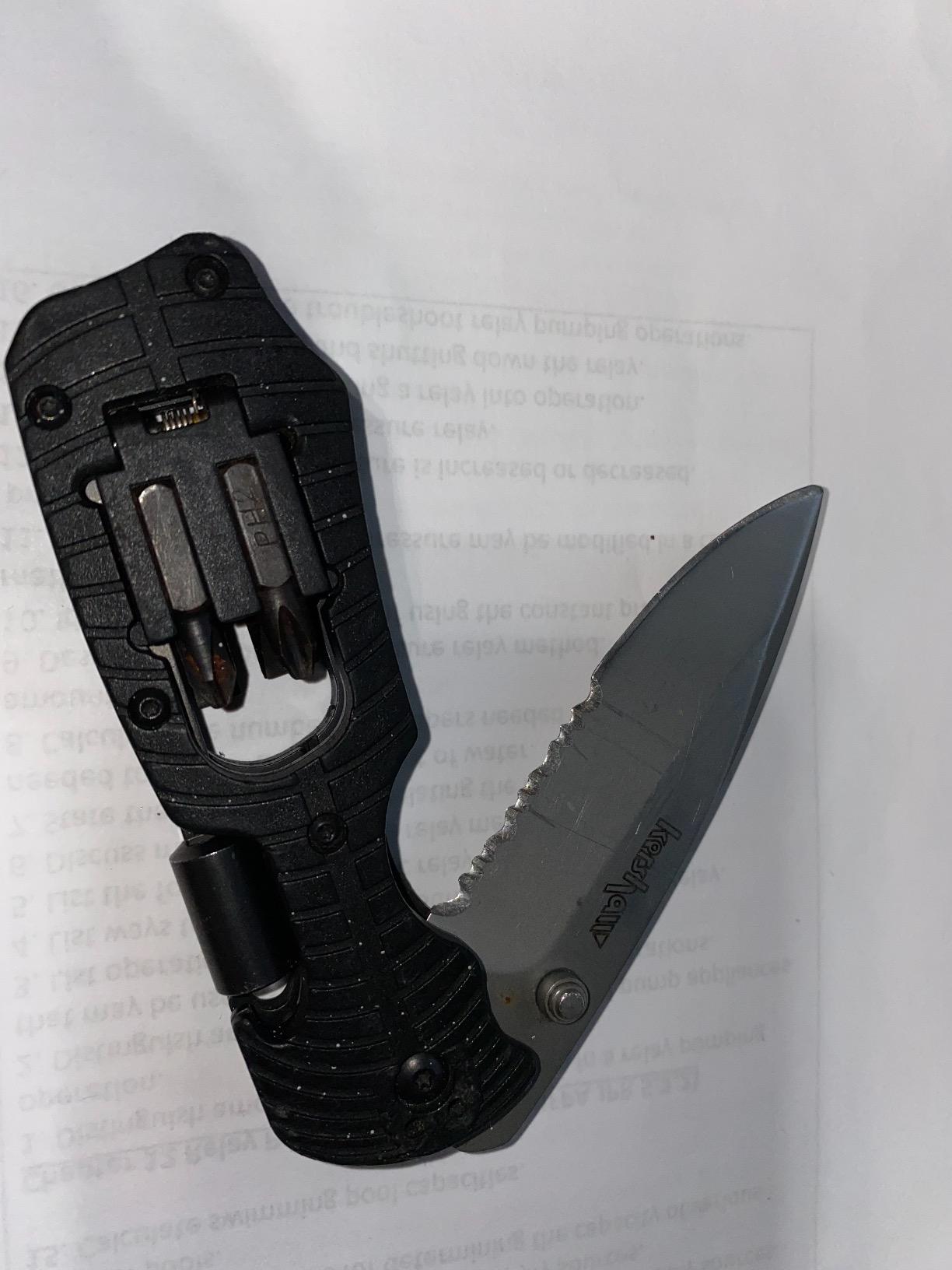
One detail worth knowing: the textured thumb stud is ambidextrous and opens easily once the pivot has been adjusted. Out of the box, owners frequently report needing a few degrees of tightening before the action feels right.
When a bit driver is worth the bulk?
If you carry a folder and a separate driver, this merges two items into one pocket object. For furniture assembly, electronics, or site fixings, the saved volume is real. The ruler in the carrier is a small addition that gets used more often than you would expect.
Carry it as a dedicated tool knife rather than your everyday carry, because at 5 ounces and 7.6 inches overall it is bulkier than the folders on this list built for pocket carry.
Where it falls short?
The driver does not lock open and can fold while you are working with it. That is the single most repeated complaint, and it is worth knowing before you depend on it for a hard fastener.
The liner lock sits nearly flush with the handle, so closing the blade by hand takes practice. Several owners report the bit holder loosening or breaking off under heavy screwdriver work.
9. Kershaw Appa – Best Lightweight Tactical Folder
Kershaw Appa Pocket Knife, All-Black, 2.75 Inch Reverse Tanto Blade
- Extremely light at under 2 oz for discreet carry
- Includes a nylon sheath and straps for belt or bag wear
- Black-oxide finish hides scratches
- Reversible clip and lanyard hole broaden carry options
- Reverse tanto profile is poor for slicing and general cutting
- Entry-level stainless with lower edge retention than 8Cr13MoV models
The Appa is the lightest folder here at just under 2 ounces, with a 2.75 inch reverse tanto blade in stainless steel under a black-oxide finish. It is a tactical-styled knife, and the styling is the main event.
What makes it genuinely easy to carry is the included hardware. The kit has a glass-filled nylon sheath with attachable straps, so you can wear it on a belt, a bag strap or a lanyard instead of a pocket. The reversible clip and lanyard hole widen the options further.
Seventy-eight percent of reviews are five stars. Owners are clear that the limitation is the blade geometry rather than the build, which is a rarer and more useful complaint than a vague quality knock.
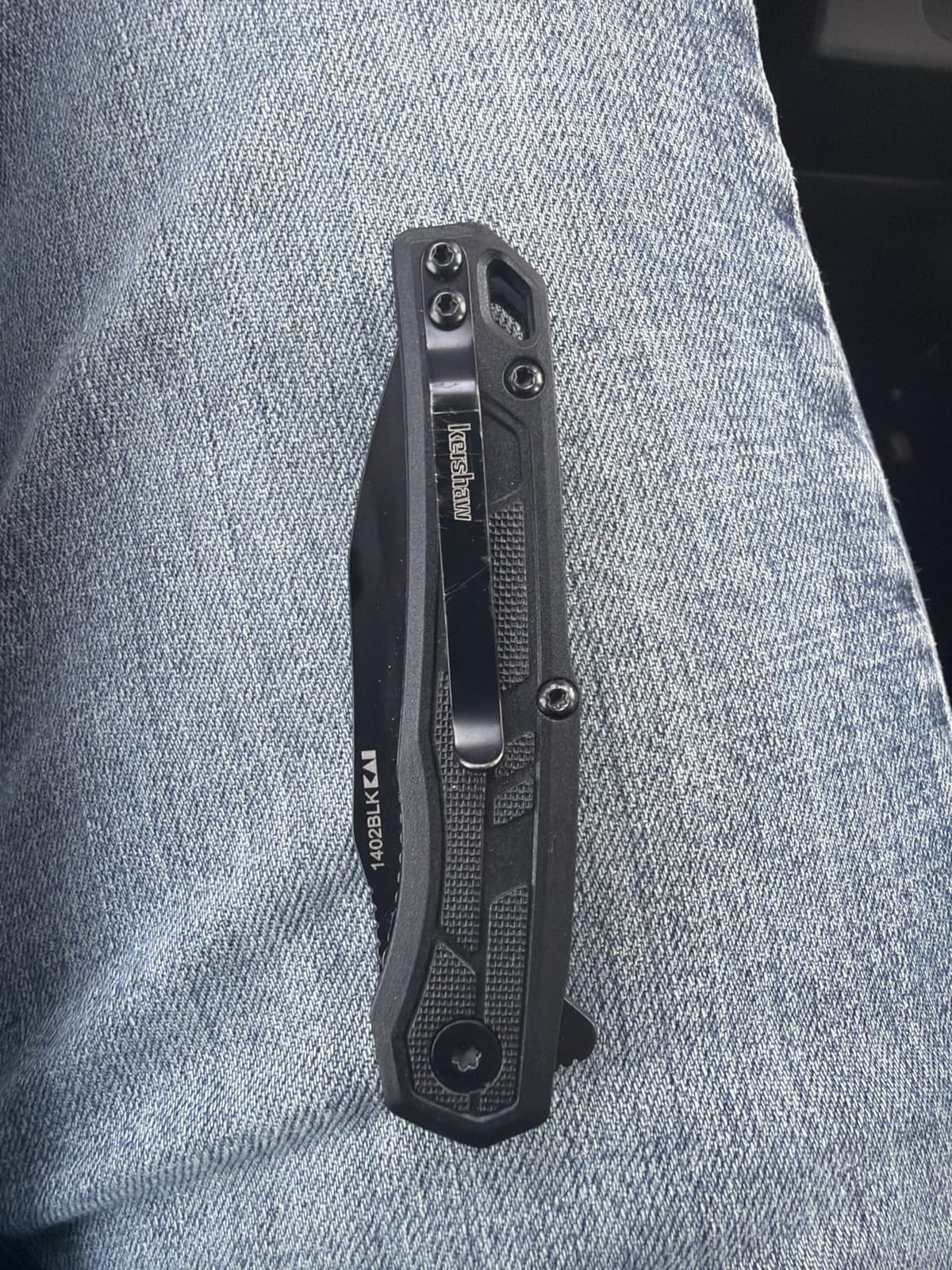
SpeedSafe assisted opening gives you one-handed deployment on a knife that weighs almost nothing. For a first responder, a field tech or anyone who wants a knife that genuinely disappears on a belt, that combination is the selling point.
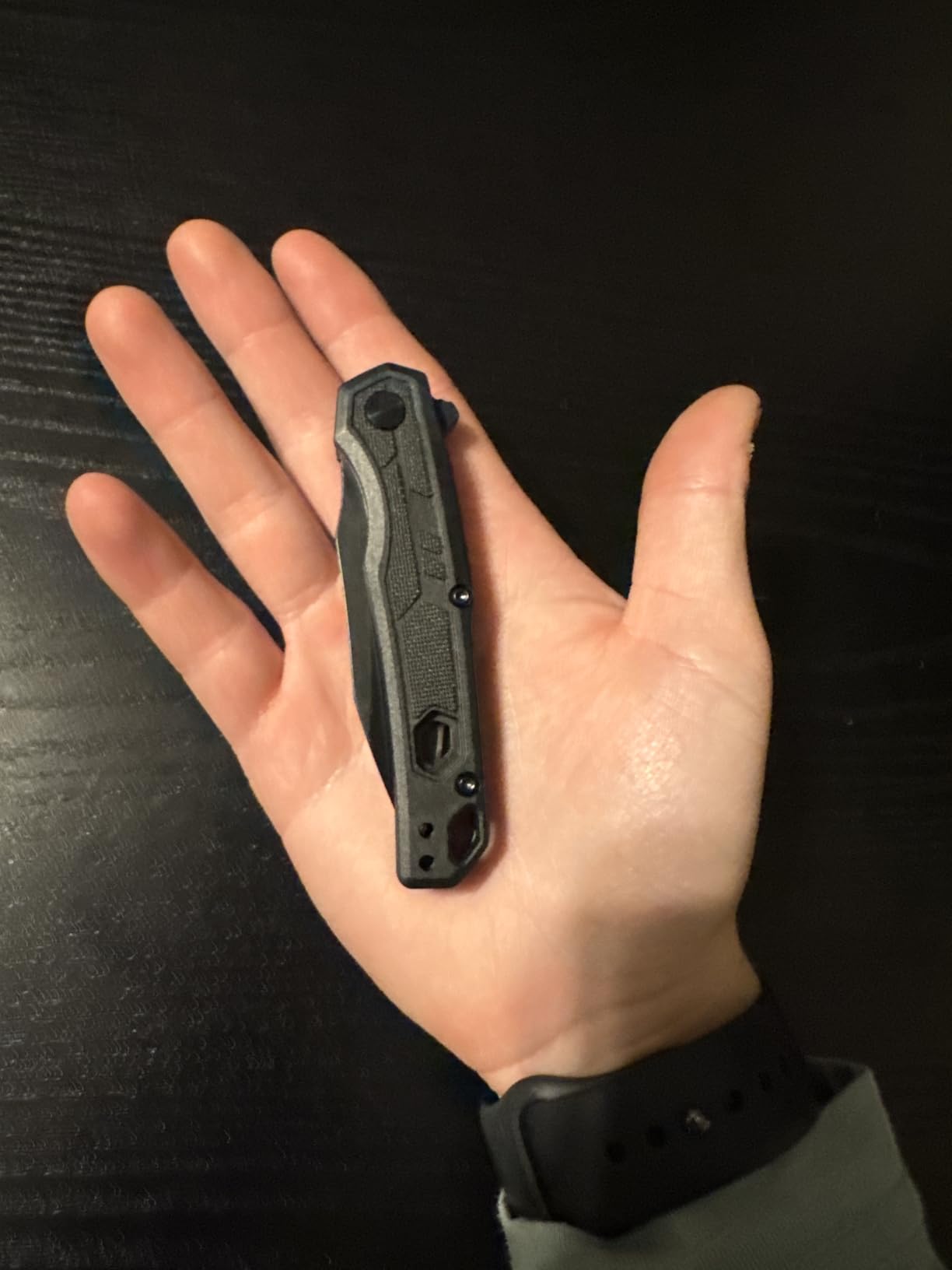
Weight is the feature
At under two ounces with the sheath, this is a knife you can carry without thinking about it. Most of the weight difference in a folder comes from the handle material, and glass-filled nylon is the lightest option Kershaw uses at this scale.
That is also why it feels different in the hand than the steel-handled knives here. It is lighter, less rigid, and better suited to tasks that do not need a rigid pry surface.
Where it falls short?
The reverse tanto is a poor slicer. The long belly that makes a drop point useful on food and rope is missing, so you are working with a tip built for piercing instead.
The blade steel is entry-level stainless with lower edge retention than the 8Cr13MoV and 14C28N models here. Expect to touch the edge up more often if you use it daily rather than occasionally.
10. Kershaw Oso Sweet – Best Everyday Carry and Value
- Very fast one-handed flipper-assisted opening
- Light at 2.8 oz with a play-free liner lock
- Textured handle gives a good non-rubberised grip
- Satin blade is easy to hone and holds a working edge
- Factory sharpness is often only adequate and needs a quick touch-up
- Pocket clip can bend and is not durable under abuse
- Handle is short for people with larger hands
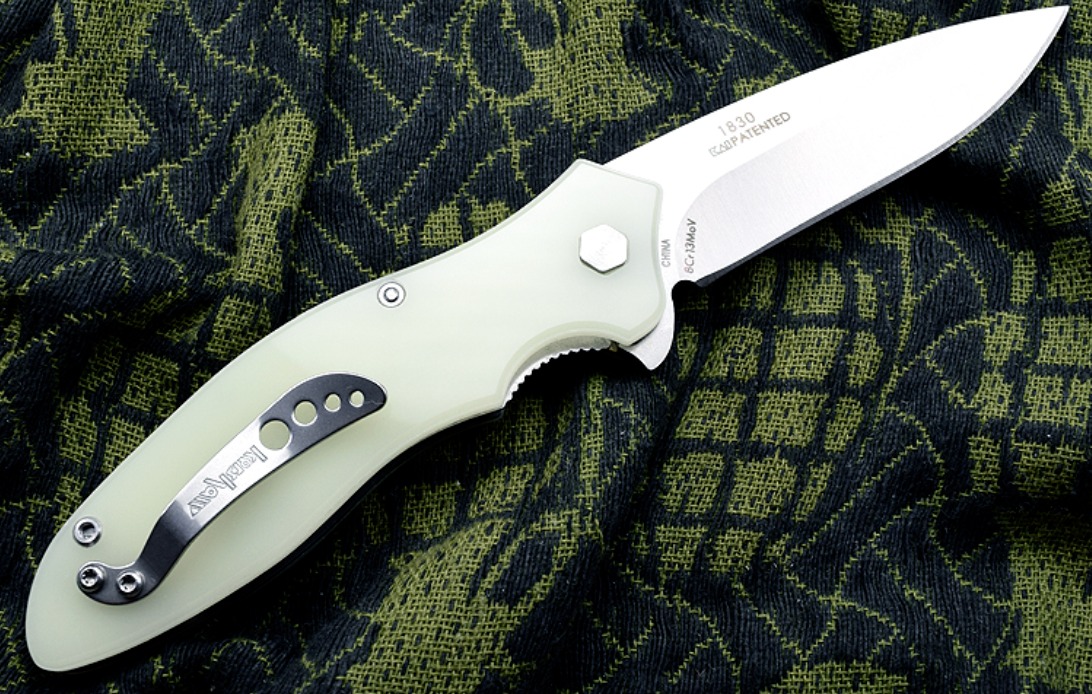
The Oso Sweet is regularly described by owners as the best value in the entire Kershaw lineup, and after carrying it I understand why. It is 2.8 ounces, 4.1 inches closed, 7.1 inches overall, with a 3 inch 8Cr13MoV machine satin drop point.
The flipper-assisted opening is fast and the liner lock has no play when closed, which is not something you can say for every assisted folder at this weight. The textured scale-pattern handle gives grip without a rubber overmould, and it feels better than it looks in photos.
Seventy-nine percent of reviews are five stars. Two issues dominate: the factory edge often arrives only adequate, and the pocket clip bends rather than breaks under abuse.
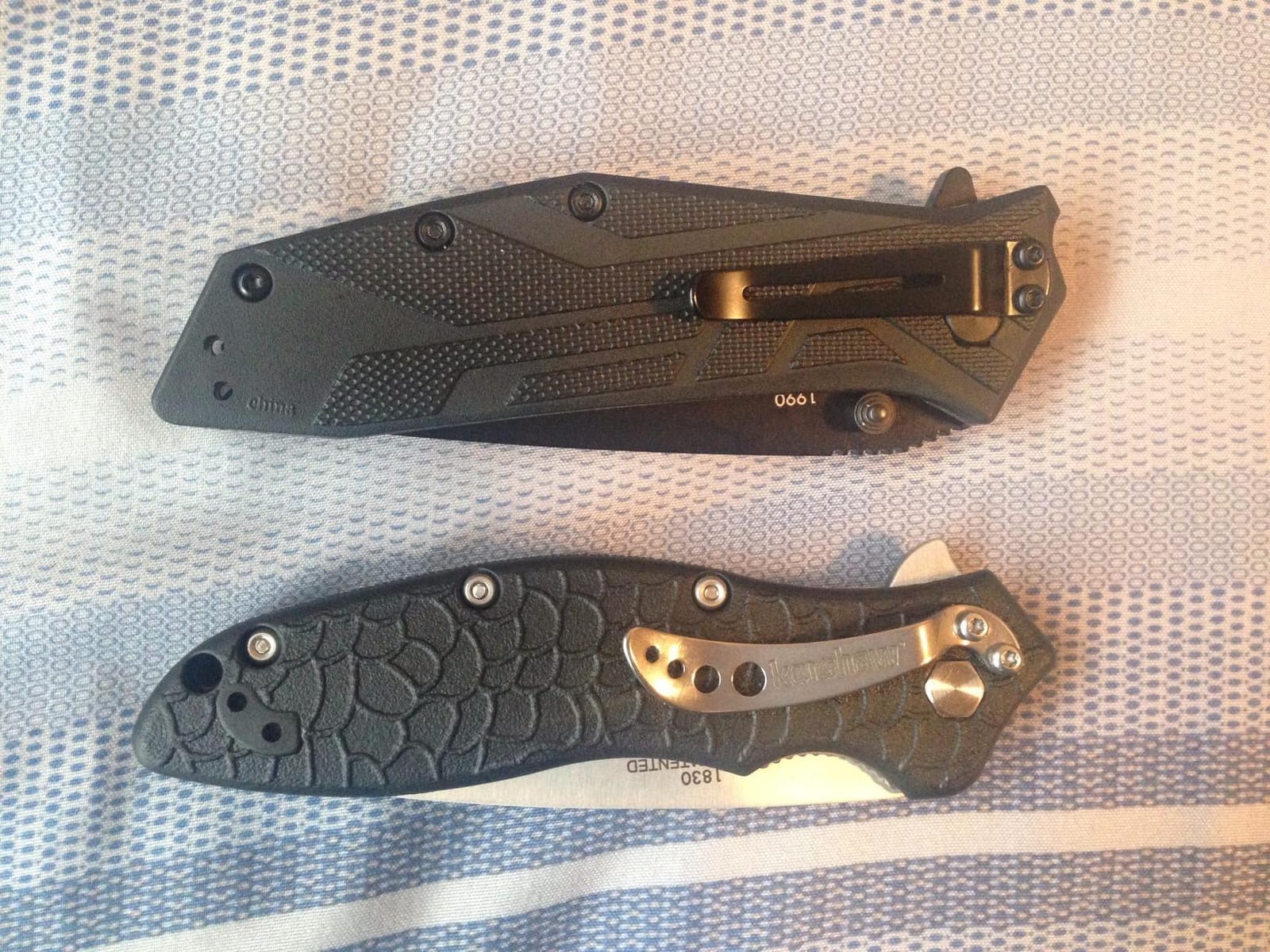
My advice is to put an edge on it before the first use. Eight of the fifteen knives here have the same problem, and 8Cr13MoV responds to a few passes on a stone immediately.
Why the assisted opening matters more than the steel?
SpeedSafe is Kershaw’s own contribution, and the reason it became the brand’s signature. A spring or torsion bar carries the blade past centre so it snaps fully open, which removes the finesse a manual folder needs. You can open this one-handed with a glove on, one-handed while holding a parcel, or one-handed with a cold hand.
That predictability is worth more day to day than a marginal steel upgrade. If you only ever open one folder, open it this way.
Where it falls short?
The factory edge is inconsistent. Many arrive sharp, several arrive adequate, and a touch-up takes under a minute on this steel.
The clip is the weak point. Owners report bending rather than breaking it under abuse, and the handle is short enough that large hands may want the Leek or the Blur instead.
11. Kershaw Blur – Best Heavy-Duty Folder
- Very sharp out of the box and easy to sharpen
- Trac-Tec inserts give a non-slip grip with wet hands
- Fast spring-assisted opening with a solid liner lock
- Matte non-reflective blade finish
- USA-made construction owners keep for years
- Spring assist loses a little speed with age
- Trac-Tec inserts can detach and are not separately replaceable
- Thumb stud protrudes and can be uncomfortable in a thin pocket
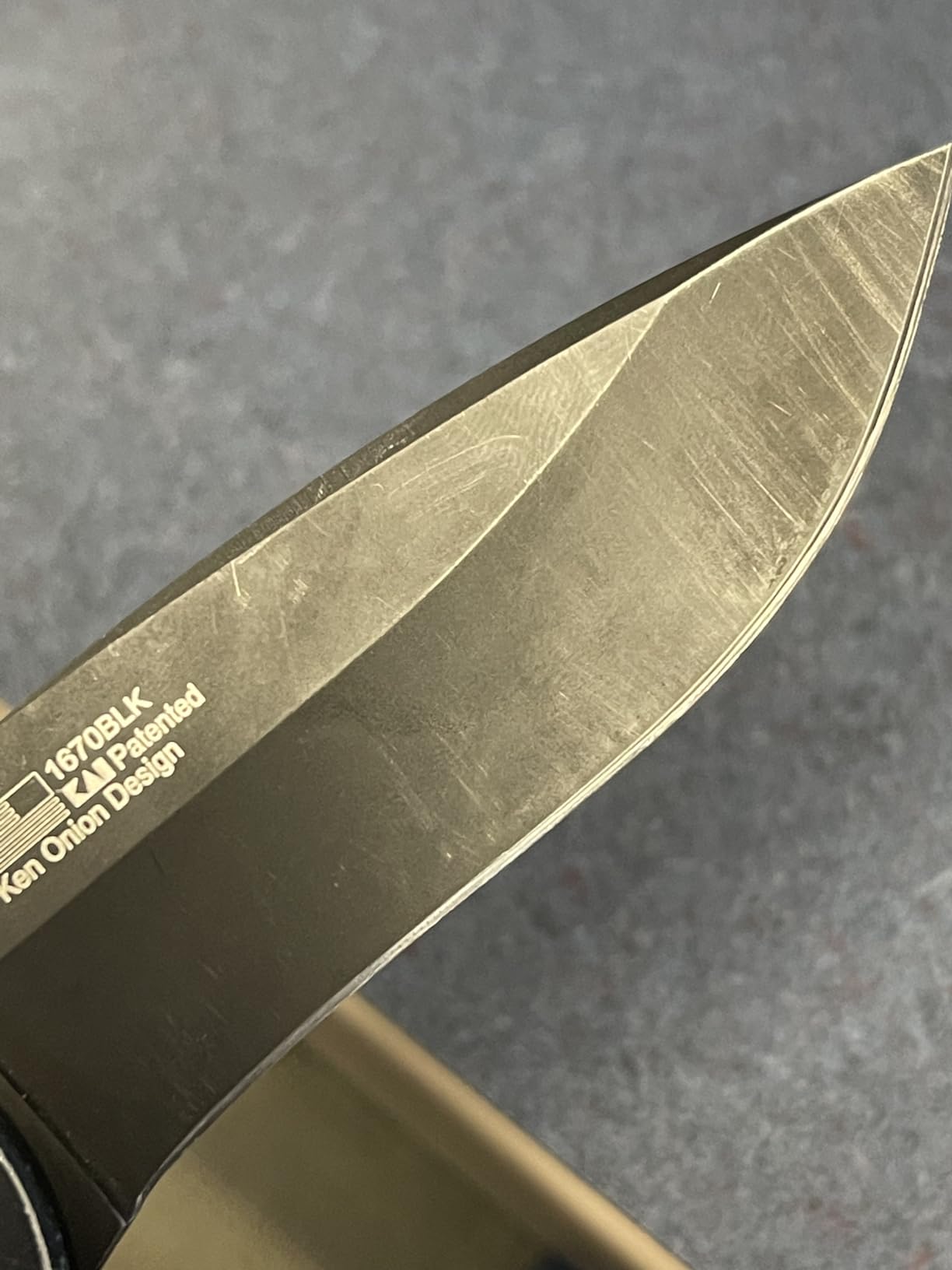
The Blur is the biggest knife here and the one with the longest service life in daily use. It has a 3.4 inch recurved drop point in Sandvik 14C28N with a black Cerakote coating, a black anodized aluminum handle and Trac-Tec grip inserts, measuring 7.9 inches overall at 3.9 ounces.
14C28N again, and the same reasoning as the Leek applies with more force. It takes a fine edge on a basic kit, resists corrosion, and holds longer than the 8Cr13MoV models in this list. The slightly recurved edge keeps contact patch on a cord or a rope longer than a straight edge would.
Assisted opening is fast and reliable, the liner lock is solid, and the reversible clip works right-handed tip-up or tip-down.
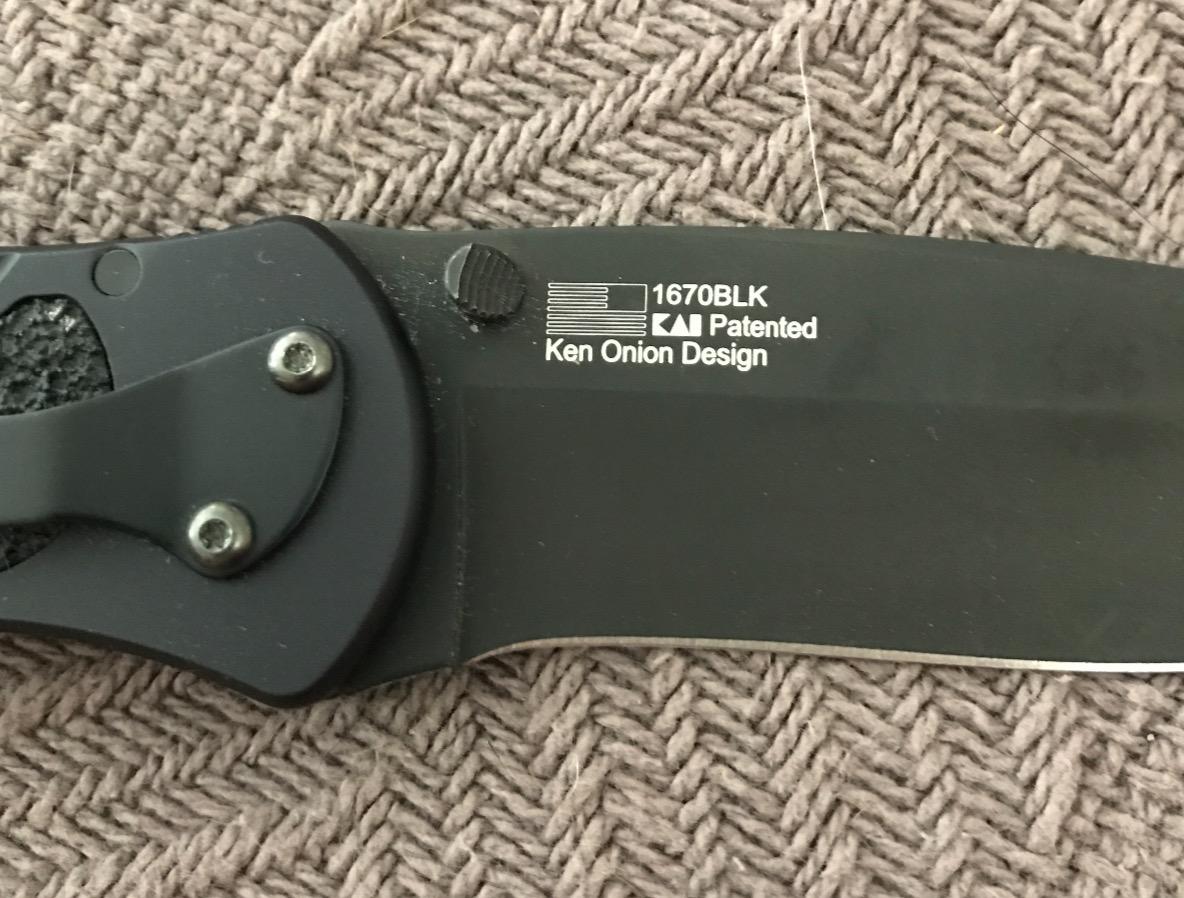
The numbers behind it are strong: 4.8 stars, 89 percent five-star reviews, and only 1 percent one-star. Multiple owners report buying the knife more than once, and at least one mentions Kershaw replacing the internals and re-edging it at no charge.
The Trac-Tec inserts are what make the grip secure when your hands are wet or greasy, which is exactly when a smooth aluminum handle would fail you. The matte, non-reflective finish also keeps the knife from drawing attention in ordinary use.
Why this is the last knife many people buy?
A 3.4 inch blade and a 7.9 inch overall length is a genuinely capable tool size, and it is still small enough for a jacket pocket. That combination is rare. Most folders at this blade length are noticeably heavier, and most folders this light have shorter blades.
It is not a fixed blade and it is not a chopper, but for opening, cutting and general utility it covers most of what a larger knife would do. If you want one Kershaw and nothing else, this is the one.
Where it falls short?
The thumb stud protrudes enough to be uncomfortable in a thin pocket or against bare skin. Several owners recommend carrying it with the clip rather than pushing it loose into a pocket.
Over years, the spring assist softens slightly and the Trac-Tec inserts on the non-clip side can detach. The inserts are not sold separately, which is the annoying part of an otherwise well-built knife.
12. Kershaw Outright – Best Slim Steel EDC
Kershaw Outright Pocket Knife, Blue, 3 Inch Trailing Point Blade
- Sharp fine-cutting factory edge that is easy to resharpen
- Strong deep-carry clip and well-balanced feel in hand
- Smooth one-handed flipper opening
- Light at 4 oz and slim enough to vanish in a pocket
- Distinctive blue PVD finish
- Survives repeated drops on concrete
- Blue PVD wears at the edges and around the flipper
- Spring assist resists one-handed closing
- Tight tolerances let grit into the mechanism
- Jimped thumb studs can dig into the hand
The Outright is the steel-handled folder that still looks new after a year in a pocket. It has a 3 inch 8Cr13MoV trailing point blade with a blue PVD coating, mounted on a contoured stainless handle with black G10 front scales, weighing 4 ounces at 7.1 inches overall.
The trailing point upswept profile is genuinely useful for slicing and for a forward draw, and the fine factory edge is described as sharp enough to use immediately. The G10 front scales add grip where the polished steel would be slick.
Eighty-four percent of reviews are five stars and 95 percent are four stars or better, with owners often calling it premium feel at a non-premium price.
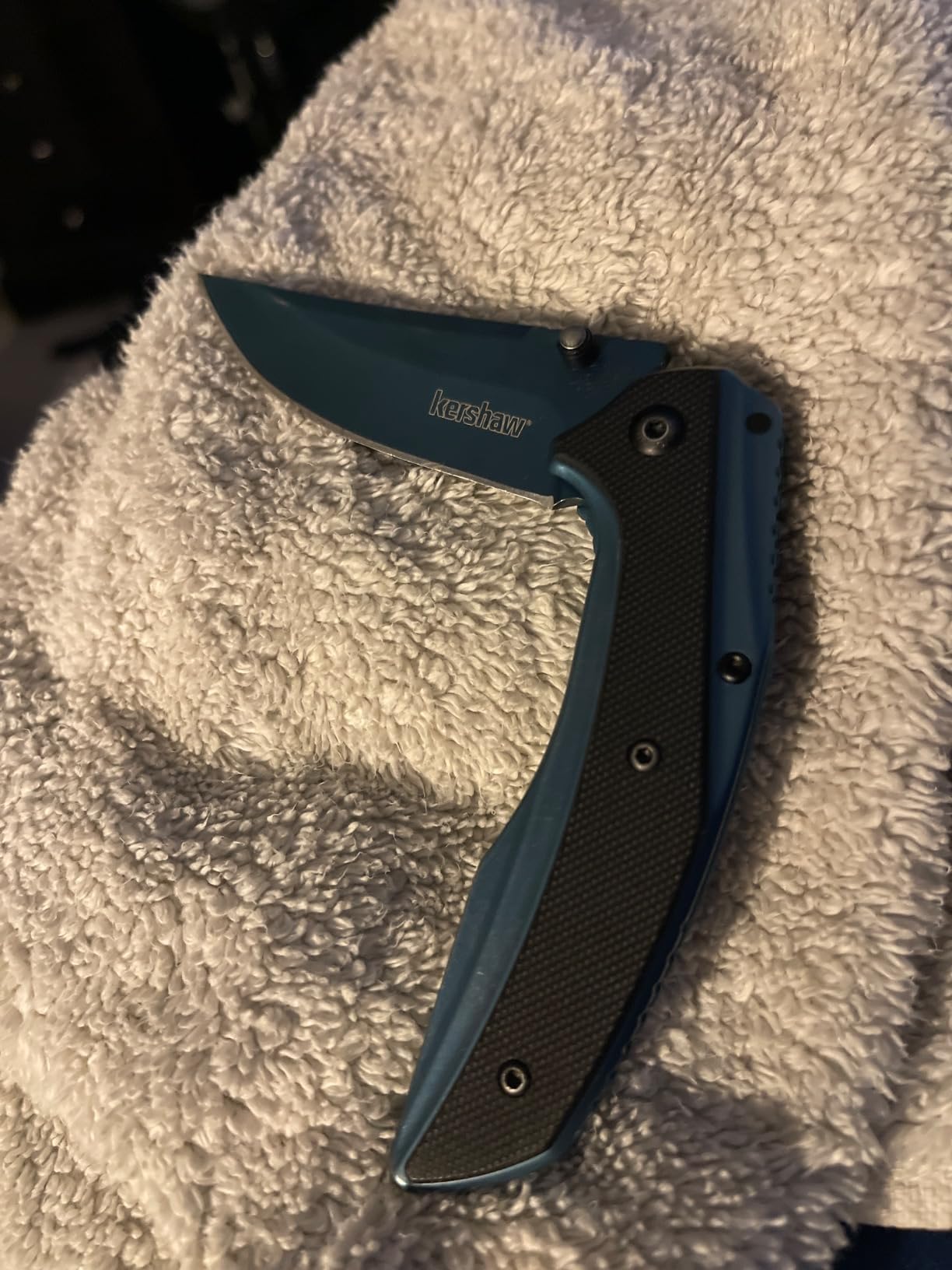
The frame lock is solid and the flipper gives a smooth one-handed deployment. The deep-carry clip keeps the knife lower in the pocket than a standard clip, which is the difference between visible and not.
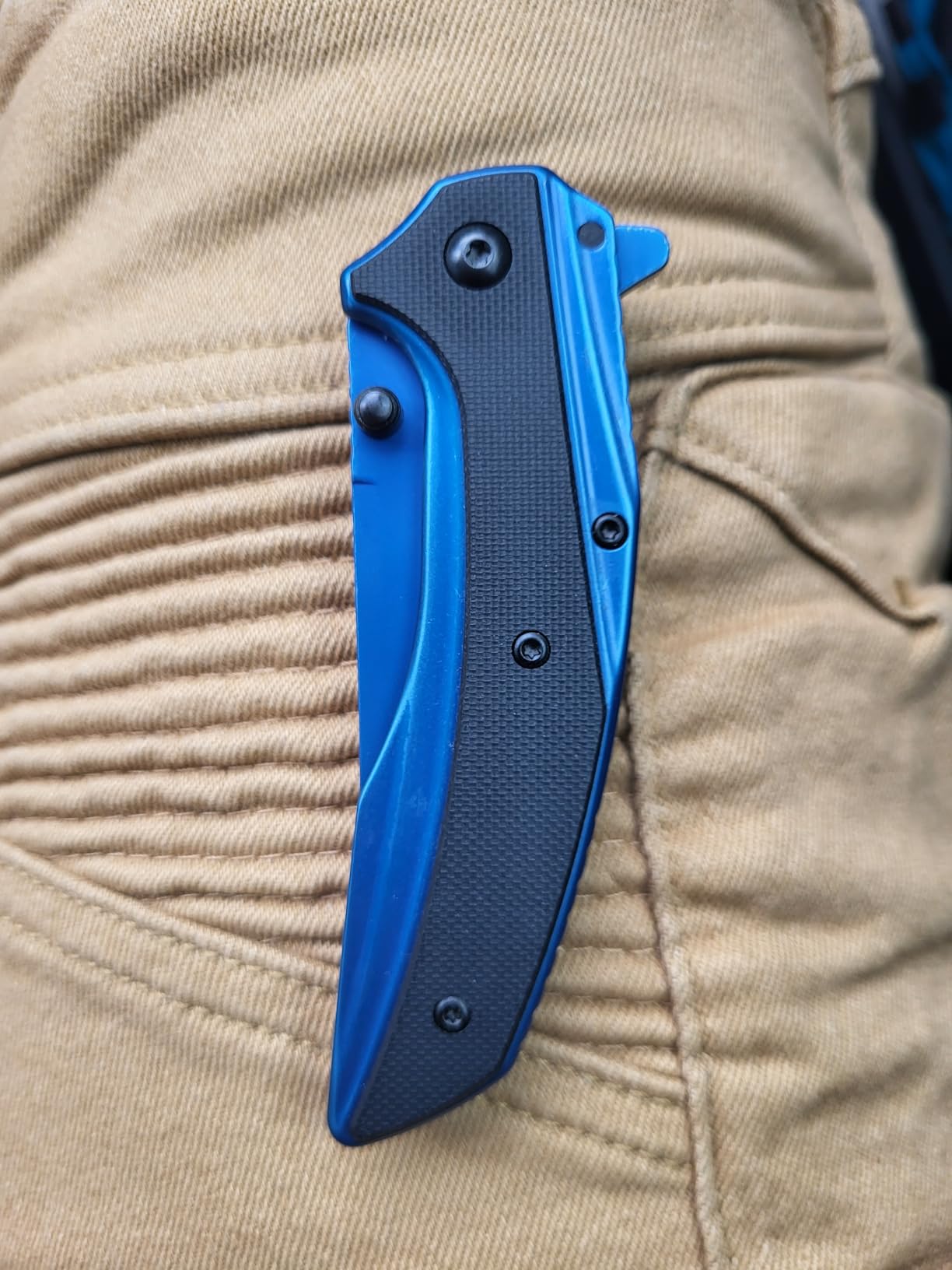
What the G10 front scales change?
A full steel handle is rigid, heavy and slippery when wet. The G10 overlay on the front gives you a textured, insulating surface exactly where your fingers sit, without adding much weight. The result handles a glove or a wet hand far better than a bare polished handle.
The blue PVD coating is mostly aesthetic, but it also masks wear better than polished steel would, and it is what makes the knife look distinctive at a glance.
Where it falls short?
The PVD finish wears at the edges and around the flipper trigger with regular pocket use, so the knife will not stay showroom new. The spring assist also resists manual one-handed closing, which some owners find annoying.
The internal tolerances are tight enough that dirt and grit can wear the mechanism, and cleaning it then requires disassembly. If you work in dust, the Leek or the Clash is a lower-maintenance choice.
13. Kershaw Misdirect – Best Starter Folder
- Compact 2.9 inch blade that is durable and easy to resharpen
- Very light at 3.2 oz for all-day carry
- SpeedSafe assisted opening with a flipper tab
- Bead-blasted stainless handle resists corrosion
- BlackWash finish hides scratches
- Clip works either hand tip-up
- 4Cr14 is a budget alloy with shorter edge retention
- Reverse tanto tip chips and is poor for detail work
- 2.9 inch blade limits it to light everyday tasks
The Misdirect is the Kershaw to buy for someone who has never owned a folder, and it ranks near the top of the Pocket Knives and Folding Knives category, which tells you how often it gets bought and gifted as a first knife. It weighs 3.2 ounces with a 2.9 inch 4Cr14 reverse tanto blade and a bead-blasted stainless handle.
SpeedSafe assisted opening with a flipper tab means a first-time owner gets a knife that opens one-handed without learning a manual deployment. The frame lock holds the blade securely, and the clip supports either hand in tip-up carry.
With 2843 reviews at 4.6 stars and 92 percent of ratings at four stars or better, sentiment is solidly positive for the bracket.
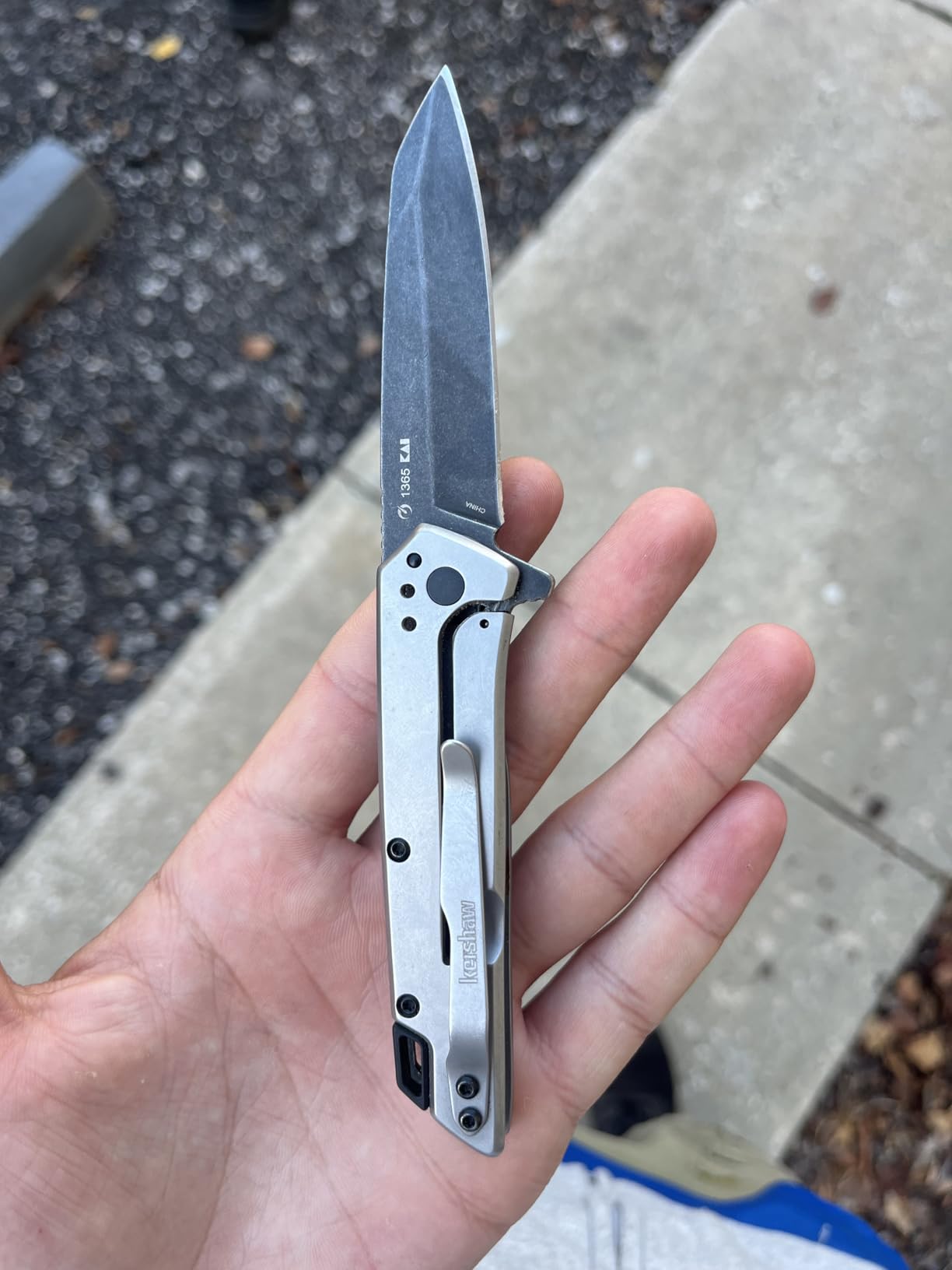
The BlackWash finish is a genuine advantage at this price. It gives a broken-in look from the first day and hides the scratches that would make a bright blade look neglected within a week.
The honest limitation is the steel. 4Cr14 sharpens easily and is durable, but it does not hold an edge as long as the 8Cr13MoV or 14C28N models here, so it needs touching up more often.
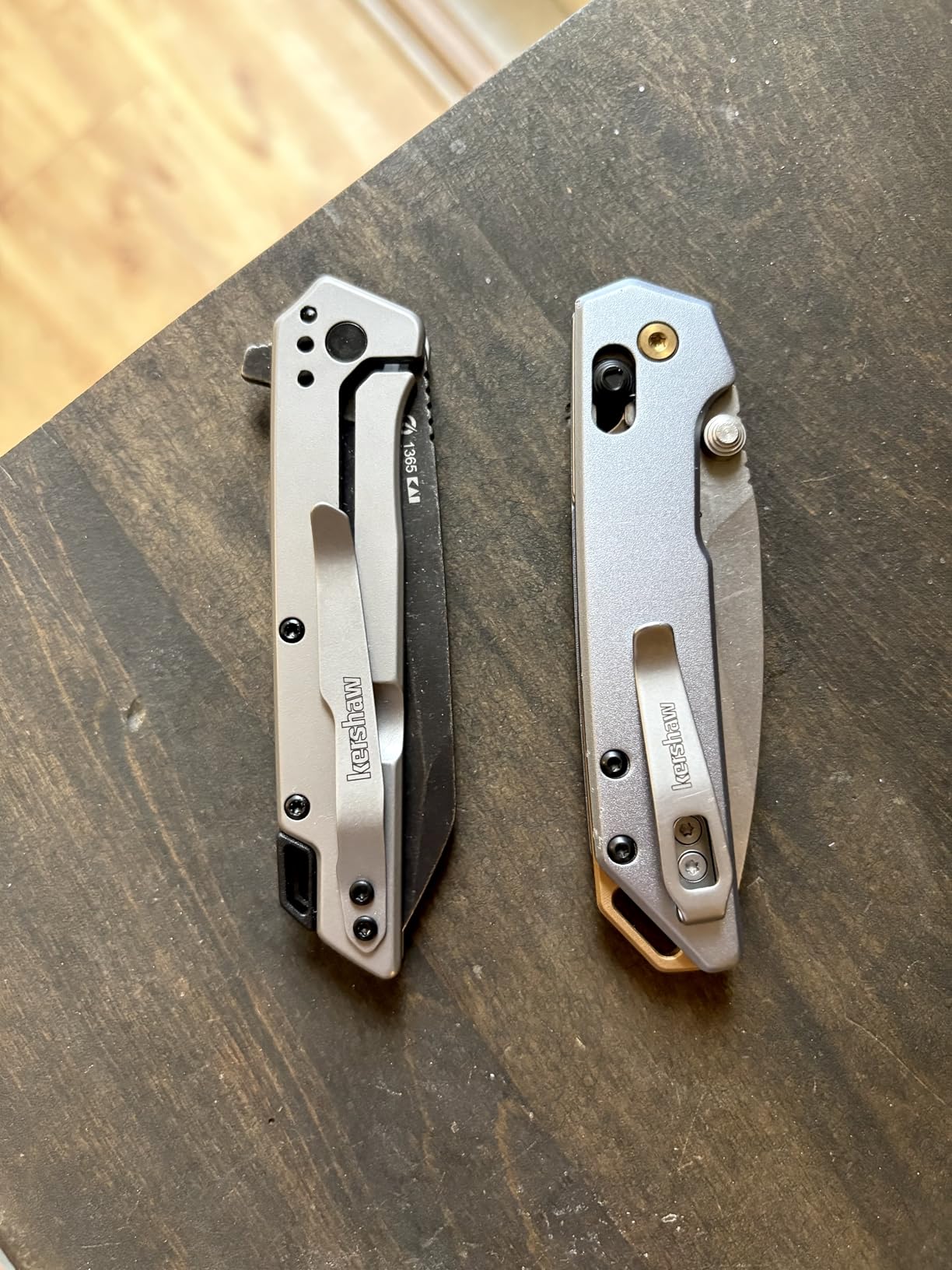
A good first assisted folder
For a first knife, the assisted opening matters more than the steel. New owners tend to fumble manual thumb studs, and the resulting frustration leads to a knife that stays in a drawer. A flipper and a spring remove that barrier entirely.
At 3.2 ounces it is light enough for a front pocket, and the stainless handle is a step up in perceived quality from a plastic-scaled knife at a similar weight.
Where it falls short?
The reverse tanto tip is prone to chipping and is not suited to fine detail work. The 2.9 inch blade also limits it to light everyday tasks, which is exactly as advertised if you read it properly.
Steel is the real ceiling. If you plan to sharpen knives as a hobby rather than as a chore, move up to 8Cr13MoV or 14C28N instead.
14. Kershaw Grid – Best Large-Blade Worker
- Very sharp out of the box with strong edge retention
- Tight blade centering with no wobble and a solid frame lock
- All-metal construction gives a premium feel
- Dependable enough to use as a scraper or pry bar
- Light and thin for a folder this large
- No lanyard hole for keyring or lanyard attachment
- Bare polished stainless handle can be slippery when wet
- Some units lack the threaded holes needed to reverse the clip
The Grid has the longest blade in this roundup at 3.7 inches, with 4.5 inch closed and 8.4 inch overall length. It weighs 5.3 ounces, which is light for a folder this size, and the handle is contoured stainless with a gray titanium carbo-nitride coating for wear resistance.
The modified drop point sits between a drop point and a tanto, giving you a tip that pierces well and a belly that still slices. That geometry is why owners describe it as useful for real work rather than just opening envelopes.
With 2677 reviews at 4.6 stars and 92 percent of ratings at four stars or better, the praise is consistent: tight centering, no blade wobble, a secure frame lock, and edge retention that outperforms similarly priced folders.
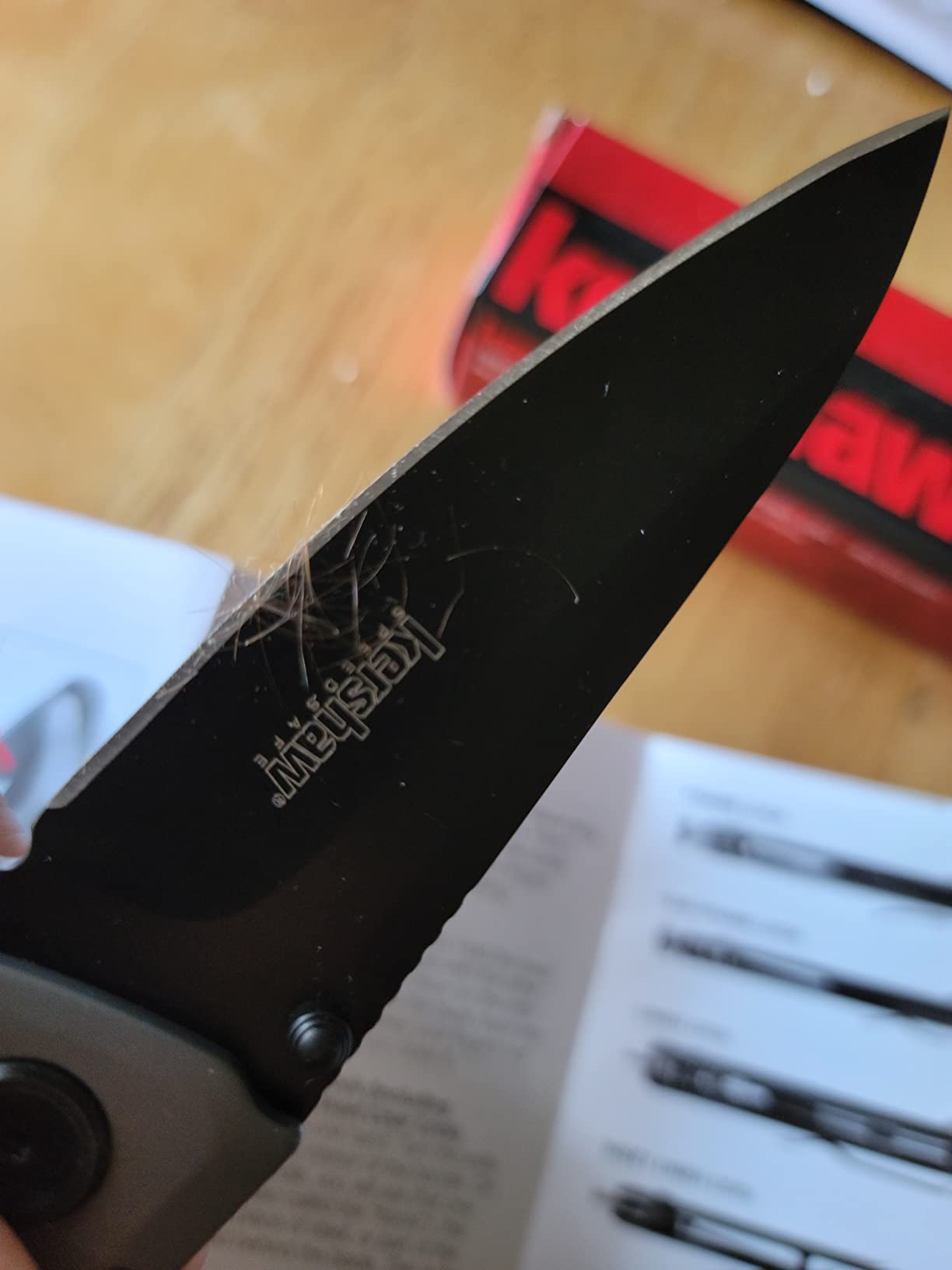
Assisted opening works from the built-in flipper or the thumb stud, and the frame lock holds the blade firmly when open. Multiple owners report using the knife as a pry bar, scraper and tack hammer, and several buy it repeatedly because they wear it out with farm and shop work.
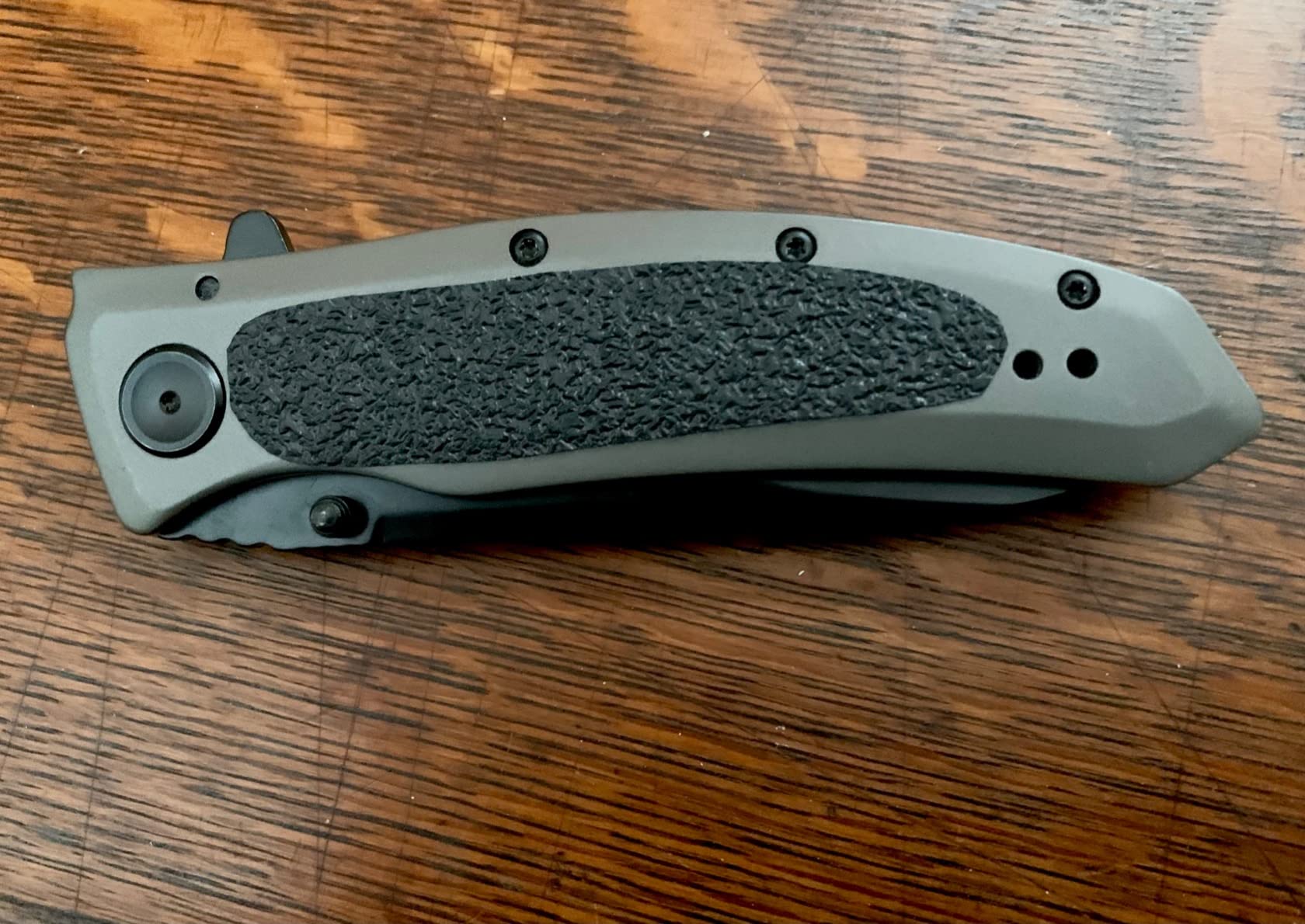
When a 3.7 inch blade is the right size?
A longer blade means a longer edge, which matters for cutting long single strokes through cardboard, sheet material and webbing. It also means a wider belly, which is where most of the useful cutting happens.
The tradeoff is pocket bulk. At 4.5 inches closed this will not disappear into a slim trouser pocket the way the Leek or the Chive do, so it belongs on a belt clip or a bag rather than a dress pocket.
Where it falls short?
There is no lanyard hole, so keyring or lanyard carry is not an option without modification. The bare polished stainless handle can also be slippery in the pocket, especially with wet hands.
Some production runs lack the drilled threaded holes needed to make the pocketclip reversible, so check the variant carefully if ambidextrous carry matters to you. Screws may also loosen with heavy use without thread-locker.
15. Kershaw Chive – Best Small USA-Made EDC
- Extremely small and light at 1.7 oz for a coin pocket
- Near-needle tip well suited to precision cutting
- SpeedSafe flipper opening is fast once broken in
- Tightly centered frame lock with no wobble
- Non-threatening profile suits office and school
- Thumb studs are awkward and potentially hazardous on a blade this small
- Tip-lock can work loose and drift out of position
- Pocket clip is single-position and not reversible
- Recurve section cannot be sharpened on a flat stone
The Chive is the smallest folder here and the one that solves a specific problem: a knife you can carry everywhere without anyone noticing. It weighs 1.7 ounces, measures 2.9 inches closed and 4.8 inches overall, with a 1.9 inch 420HC bead-blasted drop point and a 410 stainless handle made in the USA.
420HC is a high-carbon, corrosion-resistant steel that takes an edge quickly and is easy to hone at home. On a blade this short, the near-needle tip is genuinely useful for detail cutting, letter opening and light household work.
SpeedSafe assisted opening from the flipper is fast once broken in, and the frame lock is tightly centered with no wobble when open. There is also a pre-drilled lanyard hole for keychain carry.
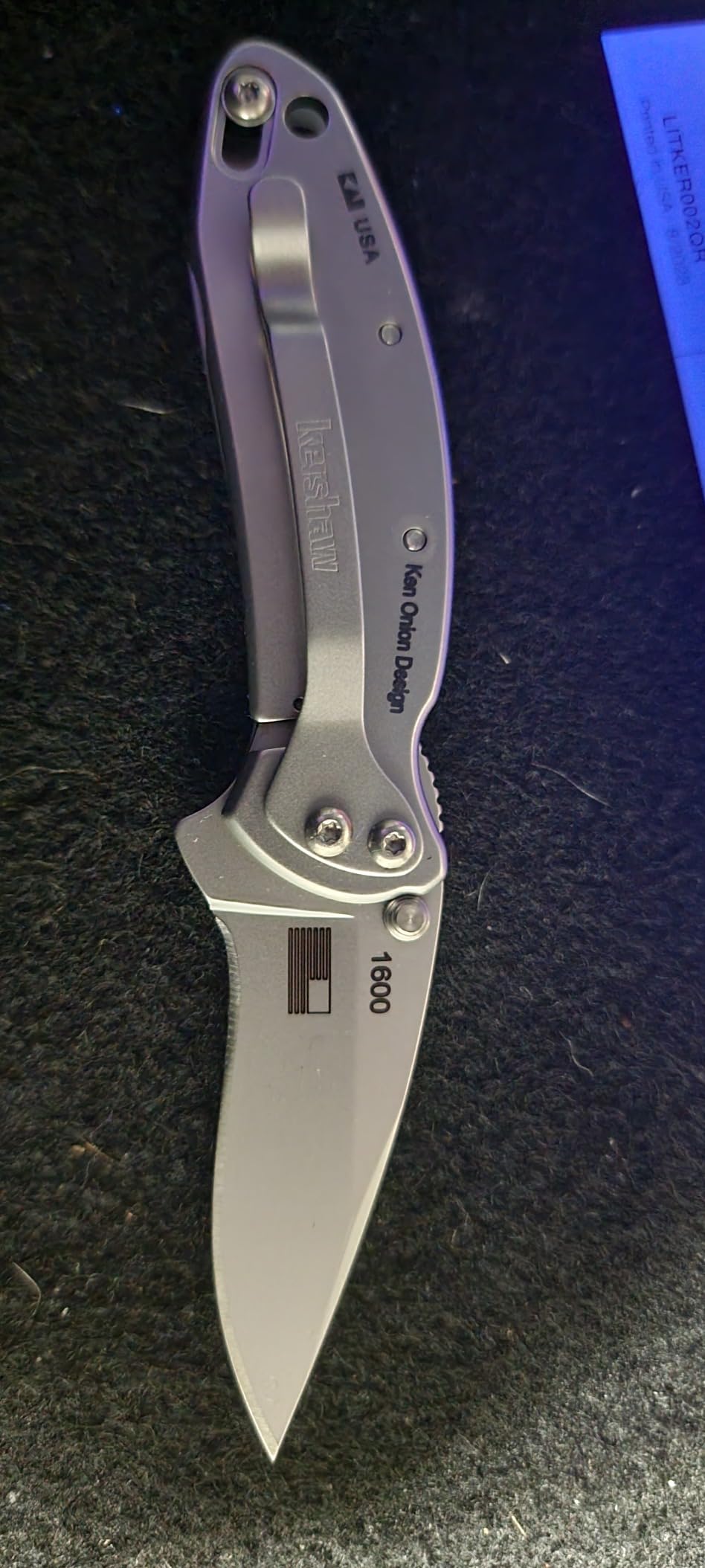
It holds a 4.7 average across 2414 reviews, with 94 percent of ratings at four stars or better. Owners report that it fits a front change pocket, can be opened with a gloved hand, and that Kershaw warranty service replaced a broken torsion bar at no cost.
The most consistent warnings concern the assisted opening on a small blade. Several reviewers advise using the flipper rather than the thumb studs, which can slip toward the edge on a blade this size.
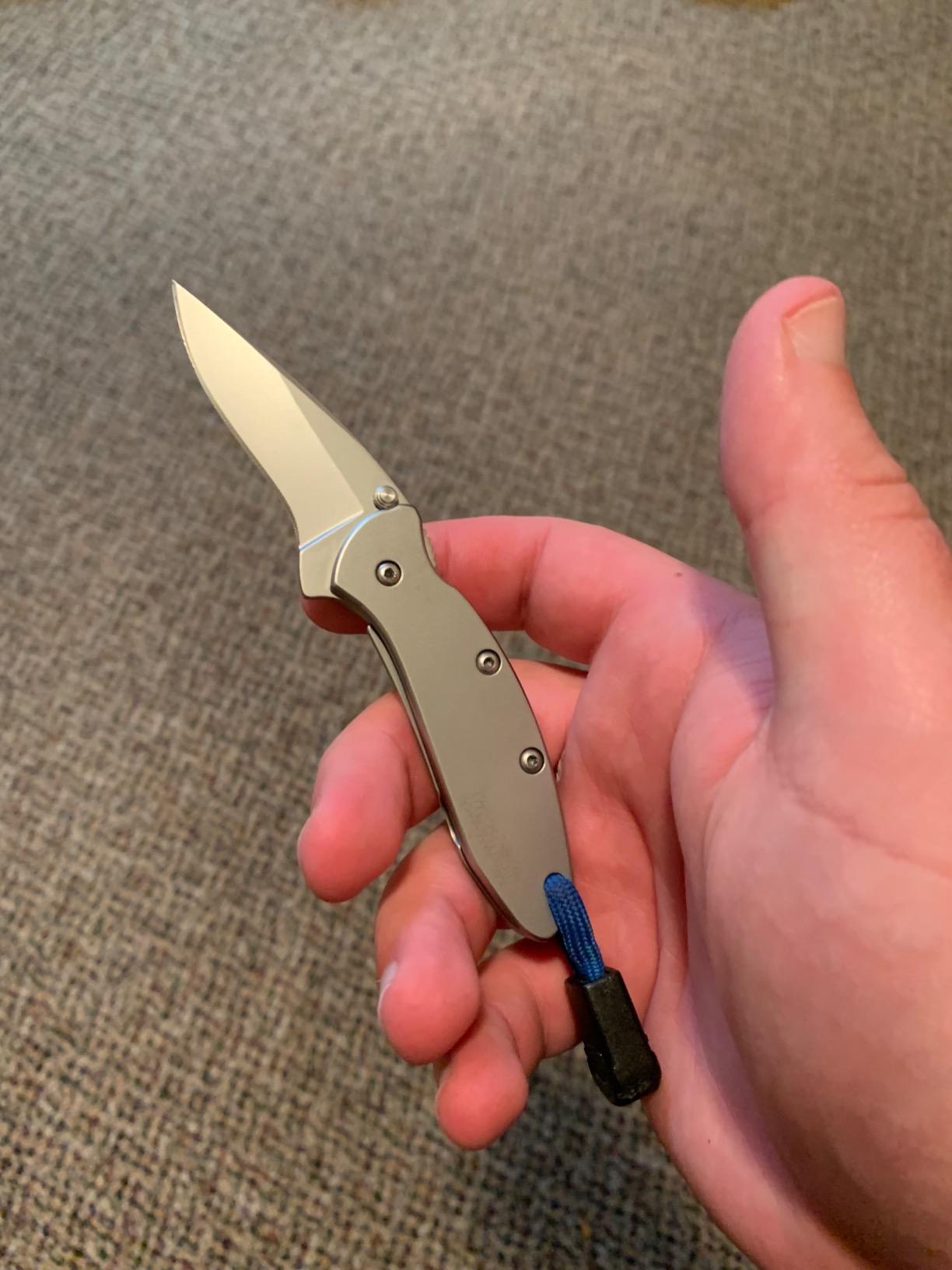
Why a non-threatening profile matters?
A one-ounce knife in a coin pocket does not read as a weapon to a passerby, a teacher or a security guard, which a three-inch folder often does. For office and school environments that is not a minor advantage, it is the reason the Chive works when a Leek would not.
The tip-lock slider holds the blade closed for transport, which addresses the other common objection to tiny assisted folders: the risk of the blade opening inside a pocket.
Where it falls short?
The tip-lock can work loose and drift out of position over time, and the very light flipper action means the blade can deploy inside a pocket if the lock is not engaged. Both are reported repeatedly by owners.
The clip is single-position and not deep carry, so a noticeable portion of the knife stays exposed. The recurve near the handle also cannot be sharpened on a flat stone, and the handle suits about a three-finger grip.
Kershaw Blade Steel Explained: 8Cr13MoV vs 14C28N vs D2 vs 420HC
Steel is the number one differentiator in this category, and it is the one specification buyers most often misread. A short alloy name on a listing tells you very little unless you know what it does for you at the edge.
8Cr13MoV is the Kershaw default and appears on the Clash, Brawler, Cryo, Oso Sweet, Shuffle, Select Fire, Outright and Grid. It is a stainless steel that takes an edge quickly, resharpens easily, holds a working edge well for general tasks, and costs almost nothing to replace a whetstone for.
Sandvik 14C28N appears on the Leek and the Blur. It sits a step up in edge retention and corrosion behaviour, sharpens just as easily, and is the steel we would pick for a knife expected to cut a lot of rope, card and food.
D2 is the hardest steel here and the one that rewards a fine stone. It holds an edge longest, resists abrasion, and takes a slightly steeper edge angle. In exchange it asks more of you at the sharpening bench.
420HC on the Chive and 4Cr14 on the Misdirect are the entry-level alloys. They are easy to sharpen and perfectly serviceable, but they need touching up more often than the steels above. 3Cr13 on the Cinder sits at the same level.
Our whittling knife guide goes deeper on how edge geometry interacts with different tasks, which is worth reading before you commit to a harder steel.
How to Choose a Kershaw Knife in Five Steps?
1. Pick your opening mechanism
SpeedSafe assisted opening, a manual thumb stud and a flipper tab are three different experiences. Assisted is the most predictable one-handed deploy and the reason it dominates this list. Manual is lighter and simpler but needs two hands or a practised thumb.
2. Match the blade to the job
A drop point or trailing point slices and does general work. A tanto or reverse tanto resists chipping and pierces hard material but sacrifices the belly. Pick the geometry for your tasks before you pick the steel.
3. Get the size and weight right
Blades under 2 inches are detail tools. Three inches is the everyday sweet spot. Anything past 3.5 inches is a work knife that will not fit a slim pocket. Weight above 4 ounces tells you in a pocket whether you are comfortable carrying it.
4. Check the handle and clip
Glass-filled nylon is light and grippy but less rigid. Machined aluminum and steel are rigid and premium-feeling but heavier and slippery when wet. A reversible clip and a four-position clip matter more than most buyers expect if you wear gloves or carry in a bag.
5. Buy by tier, not by logo
Enthusiasts say it plainly: the Kershaw range is uneven, and the middle of it is the sweet spot. The keychain and micro folders are fine for their narrow job. For a main everyday carry, aim at the models with assisted opening, a steel or aluminium handle and 8Cr13MoV or better. Our palette knife guide covers the same logic for a different tool category.
Kershaw Warranty, Sharpening and Carry Rules
What the limited lifetime warranty covers?
Every knife here carries a limited lifetime warranty against manufacturing defects. The Chive’s listing states it explicitly, along with free factory sharpening for warranty service. In practice that means Kershaw services in-house rather than sending you to a third party, and owners report having internals replaced and blades re-edged at no cost.
Free sharpening matters more than it sounds. It means a dull blade is a service visit rather than a replacement, which changes the effective cost of an edge over the life of the knife.
Where assisted and automatic knives get restricted?
This is the constraint that catches people out, and it is the one no competitor roundup covers. Many employers restrict assisted-opening knives outright. The single most common limit we saw in forum discussion was a 2.5 inch blade cap, which rules out a 3.1 inch Clash and a 3.4 inch Blur while leaving smaller folders legal.
Some cities and states restrict assisted opening in specific contexts, and automatic and out-the-front models are restricted at the point of sale in a number of jurisdictions. That is why no automatic appears in this roundup: we would be recommending something you may not be permitted to buy or carry. Check your workplace policy and your local rules before buying, not after.
Frequently Asked Questions
Are Kershaw knives high quality?
Quality varies sharply by price tier rather than by brand. The keychain and micro folders use entry-level steels such as 3Cr13 and are fine for light tasks. The mid-range and up models use 8Cr13MoV, Sandvik 14C28N or D2, with assisted opening, proper locks and better hardware. Owners consistently rate the middle of the range highly and treat the cheapest models as disposable.
Is Kershaw as good as Benchmade?
They serve different purposes. Benchmade spends more on exotic steels, proprietary designs and higher price points. Kershaw gives you SpeedSafe assisted opening, a large catalogue, USA manufacturing on several models and a much lower entry cost. For a daily-carry beater or a first assisted folder, Kershaw offers more value; for a collectible or a specific steel upgrade, Benchmade is the alternative.
Are Kershaw knives worth the money?
At the middle tiers, yes, because of the limited lifetime warranty and free factory sharpening that reduce the effective cost of keeping an edge. Value falls away at the cheapest keychain and micro models, where steel and lock hardware limit what the knife can do. Spending more within the range buys better steel and a better handle rather than a different brand.
Are Kershaw knives made in the USA?
Both. Kershaw makes several models in the United States, including the Chive and the Blur, and imports others. Country of origin is stamped on the blade or handle, so check the listing rather than assuming. USA-made models usually carry the higher-tier steels and a lower serial number, and they tend to cost more.
What is Kershaw SpeedSafe?
SpeedSafe is Kershaw’s assisted-opening system. A spring or torsion bar carries the blade past centre so it snaps fully open and locks with less effort from the thumb stud or flipper. It is the brand’s most copied feature and the reason most assisted folders on this list deploy as predictably as they do.
What size Kershaw knife is legal to carry at work?
It depends entirely on your employer. Many workplaces restrict assisted-opening knives outright, and a 2.5 inch blade cap is a commonly reported limit, which excludes the Clash and the Blur. Some locations also restrict automatic and out-the-front models at the point of sale. Read your workplace policy and local rules before buying, because the answer is rarely the same twice.
Final Verdict: The Best Kershaw Knives for 2026
The best Kershaw knives are not one knife, they are three answers to three different questions. Buy the Kershaw Clash if you want the single best all-rounder, with partial serrations, assisted opening and the largest owner base on this list. Buy the Kershaw Oso Sweet if you want the best everyday carry and value, at 2.8 ounces with a flipper and a play-free liner lock. Buy the Kershaw Leek if you want the classic slim folder with 14C28N steel and a closed-position tip lock.
For heavy work, the Blur and the Grid have the blade length and the grip to handle it. For a knife that disappears, the Chive. For steel, the Mini Praxis. And before you buy any of them, check your workplace blade limit, because it will rule some of these out entirely.
We take no payment for anything on this page. If any of these fit how you actually use a knife, use the price buttons to see the current listing.