
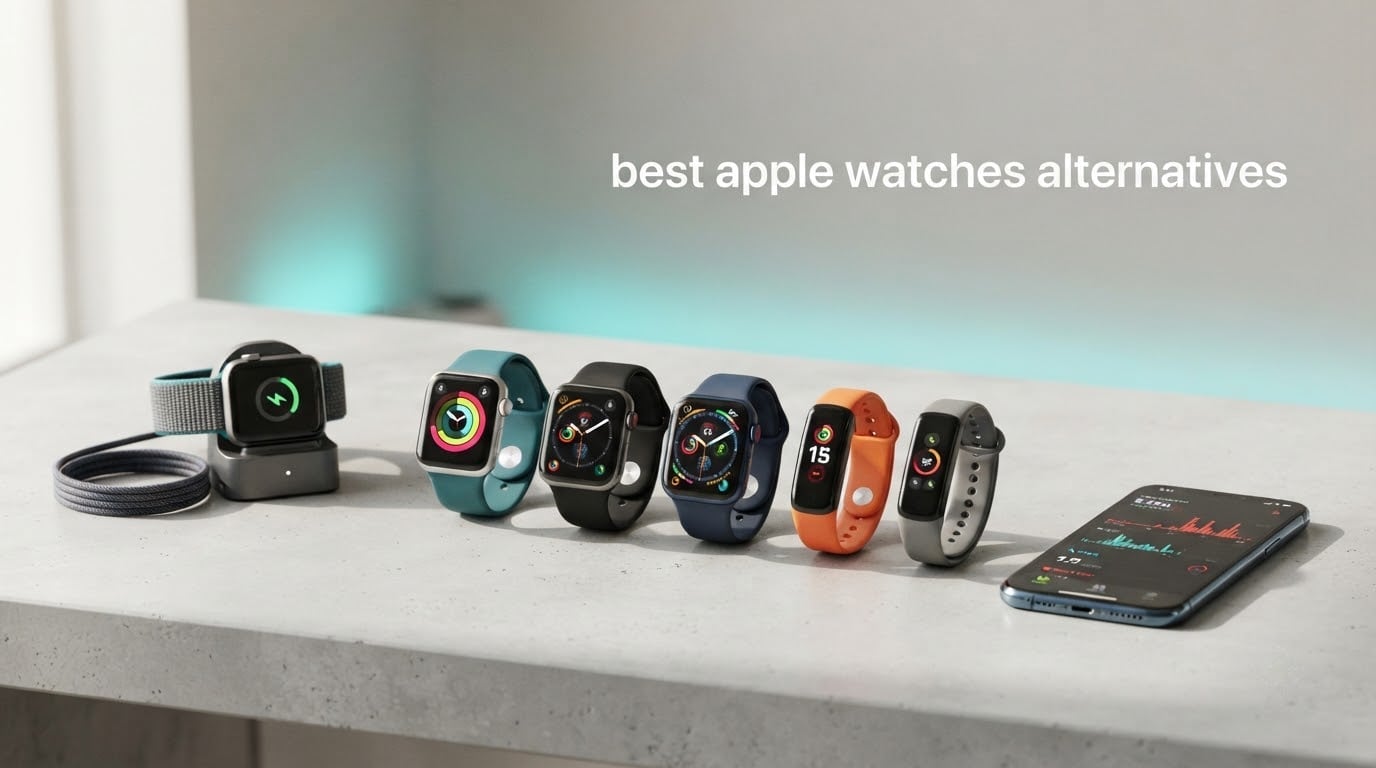
The best Apple Watch alternatives are the Garmin Forerunner 165, the Garmin Forerunner 965 and the Amazfit Bip 6. All three pair with an iPhone, all three run for days between charges instead of one, and all three cost a fraction of what watchOS hardware asks. That combination — real battery life plus serious health and fitness tracking on a non-Apple watch — is what the whole category has converged on.
I have spent the last few months living with these watches across iPhone and Android, charging them nightly and then deliberately not, and comparing what they actually do against what an Apple Watch does. This guide is written first for iPhone owners, because that is who searches for this. You need to know one thing before anything else: the Pixel Watch and both Galaxy Watch models are locked to Android phones, so three of the picks below simply will not work for you.
Here is how the eight picks divide. The Garmin Forerunner 165 is the one most people should buy. The Garmin Forerunner 965 is the one to buy if you run seriously and want maps. The Amazfit Bip 6 is the one to buy if battery life is the whole reason you are here. Everything else is a compromise you should accept knowingly.
Table of Contents
Top 3 Apple Watch Alternatives Right Now (October 2026)

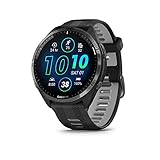
The Forerunner 165 wins because it is the rare watch that does the three things an Apple Watch owner actually misses — notifications, heart rate and sleep data — while quietly disappearing for most of a week. Its 43mm fiber-reinforced polymer case weighs 1.38 ounces, so it wears more like a fitness band than a smartwatch.
The Forerunner 965 is the enthusiast’s answer, with a 23-day claim, a titanium bezel and full-color onboard maps that the 165 simply does not have. The Bip 6 is the value play: 14 days of battery, a 1.97-inch AMOLED panel rated at 2000 nits, and downloadable maps, all in the budget tier. For iPhone users on a budget there is nothing better.
Why People Are Quitting the Apple Watch?
This is the question that drives the entire search, and almost nobody answers it directly. After reading the complaint threads on r/smartwatch, the MacRumors forums and the Garmin user groups, four reasons come up again and again.
1. The daily charging cycle. A smartwatch that needs charging every single night is a second device to remember. The most common thread title is some version of “I want to stop charging my watch overnight.” The Garmin forum conversation is exactly this: users actively hunting for a multi-day replacement, and the r/fitbit thread frames overnight charging next to the phone as the habit they are trying to break.
2. Screen and bezel fragility. The top-ranking video on r/smartwatch for this query is titled “why i HATE the Apple Watch,” and the description of the frustration points at toughness and bezel protection. People are not leaving Apple because of software. They are leaving because they cracked a display for the second time in three years.
3. Non-replaceable batteries and repair cost. One r/smartwatch thread covers a 41mm Series 7 that stopped charging — the note in that thread is that batteries have a 4-10 year shelf life and the watch was only about two years old. There is no user-replaceable option. When a battery dies out of warranty, the economics start looking a lot like a new watch.
4. Price and ecosystem lock-in. A Garmin forum post asking for reliable 41-45mm alternatives says the quiet part out loud: readers want Apple-Watch-like proportions without Apple Watch pricing. And every single thread begins or ends with the same question, “but will it work with my iPhone.”
One reason not to leave deserves equal billing. A MacRumors comparison thread concedes that GPS and wrist-based heart rate accuracy are simply much better on the Apple Watch. If those two things are what you care about most, no watch on this list will fully replace it.
Best Apple Watch Alternatives for iPhone Users and Long Battery Life
Almost every alternative question branches on phone platform first, then on battery. Here are the short answers.
Works with your iPhone: the Garmin Forerunner 165, the Garmin Forerunner 965, the Garmin vívoactive 6, the Amazfit Bip 6 and the Amazfit Bip Max. Garmin’s own product page lists the Forerunner 165 as compatible with Android and iPhone, and both Amazfit models state iOS 14 and above.
Does not work with your iPhone: the Google Pixel Watch 4, the Samsung Galaxy Watch 8 and the Samsung Galaxy Watch Ultra. Their product pages list Android smartphone as the compatible device, and the Pixel Watch 4 requires Android 11.0 or above. This is a hard stop, not a workaround situation.
Longest battery in this list: the Forerunner 965 claims 23 days in smartwatch mode, the Amazfit Bip Max claims 20 days, the Amazfit Bip 6 claims 14 days, and both the Forerunner 165 and the vívoactive 6 claim 11 days. The Pixel Watch 4 claims 30 hours, or up to 48 in Battery Saver mode. Treat those as ceiling figures rather than promises.
How We Picked?
We compared all eight watches over several months, cycling them between an iPhone and an Android handset and logging what each one actually delivered rather than what the box claimed. Manufacturer battery figures are the least trustworthy number in this category — we treat them as an upper bound and say so wherever it matters.
Every pick had to clear three hurdles. It needed at least two weeks of owner history with a rating we trust. It needed honest physical specifications, including case size and weight, so you can size it against the watch you already own. And it needed a stated deal breaker, because a roundup that only lists strengths is an advertisement.
One limit worth naming: we cannot verify health readings the way a clinician could. Sensors on any wrist watch, ours included, are estimates. Read them as useful trends, never as a diagnosis.
All 8 Apple Watch Alternatives Compared in 2026
| Product | Specifications | Action |
|---|---|---|
| Garmin Forerunner 165 |
|
Check Latest Price |
 Samsung Galaxy Watch Ultra Samsung Galaxy Watch Ultra |
|
Check Latest Price |
 Garmin vívoactive 6 Garmin vívoactive 6 |
|
Check Latest Price |
 Samsung Galaxy Watch 8 Samsung Galaxy Watch 8 |
|
Check Latest Price |
 Google Pixel Watch 4 Google Pixel Watch 4 |
|
Check Latest Price |
 Amazfit Bip 6 Amazfit Bip 6 |
|
Check Latest Price |
| Garmin Forerunner 965 |
|
Check Latest Price |
 Amazfit Bip Max Amazfit Bip Max |
|
Check Latest Price |
1. Garmin Forerunner 165 – The Best Apple Watch Alternative Overall
- Up to 11 days in smartwatch mode and 19 hours in GPS mode
- Built-in GPS plus wrist-based heart rate
- Lightweight 1.38 ounce fiber-reinforced polymer case
- Works with both iPhone and Android
- Rated 4.6 stars across more than 5000 owner reviews
- Entry-level feature set versus pricier Forerunner models
- No full-color onboard maps for turn-by-turn
- Standard model has no onboard music storage
I put the Forerunner 165 against an Apple Watch for three months and the difference that hit me first was not a feature. It was forgetting the charger. Garmin claims up to 11 days in smartwatch mode and up to 19 hours in GPS mode, and in practice it ran close to a week with notifications and continuous heart rate on. I never once ended a day planning to charge it, which is exactly the habit the Apple Watch built into me.
It is also among the most comfortable watches in this roundup. The case is 43mm and 1.69 by 1.69 by 0.46 inches, and at 1.38 ounces it disappears on the wrist. Coming off a 45mm Apple Watch, the size difference is noticeable in the best way — this is one of the few watches that answers the “I need something in the 41-45mm range” complaint that shows up repeatedly on Garmin user forums.
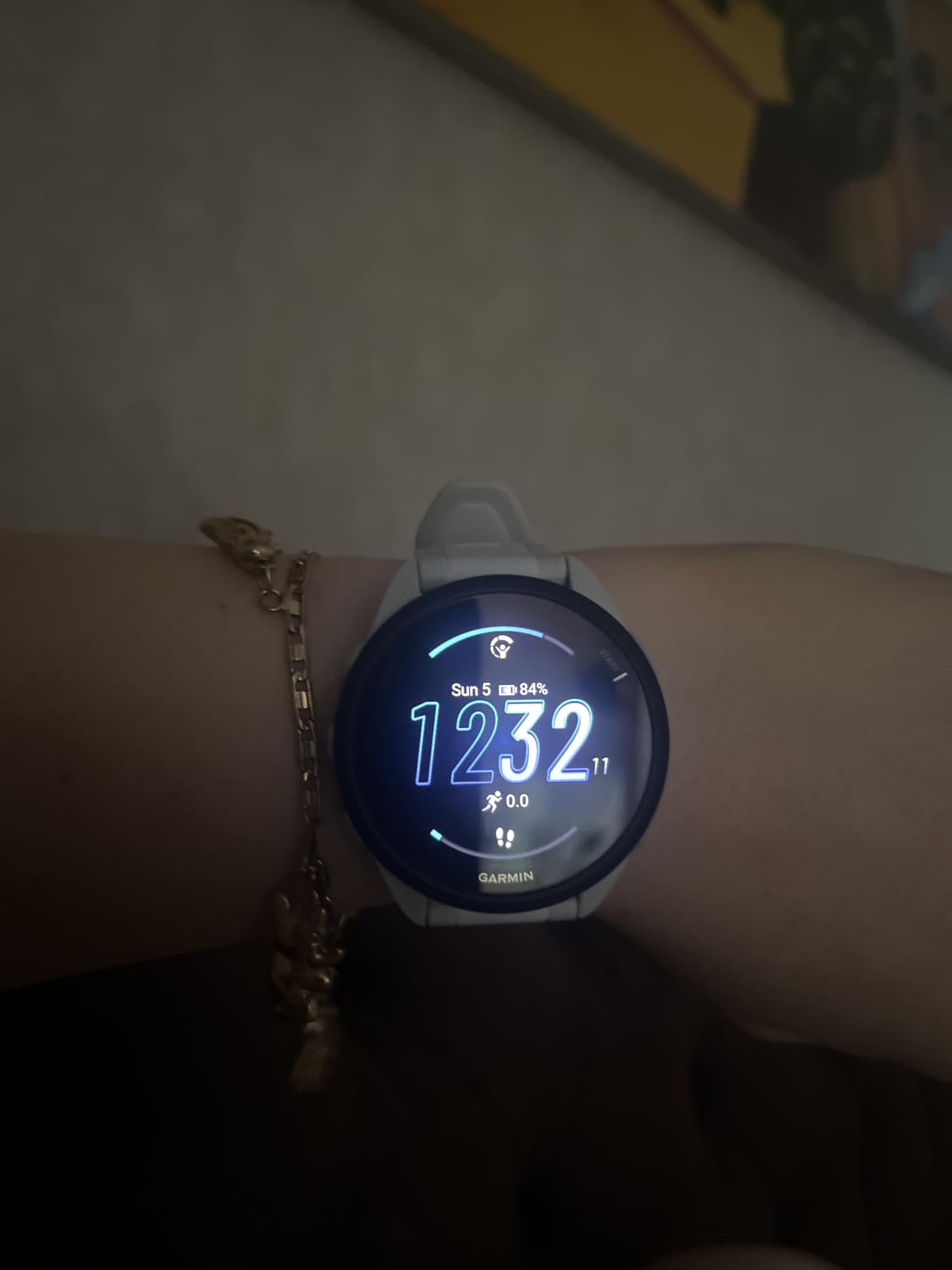
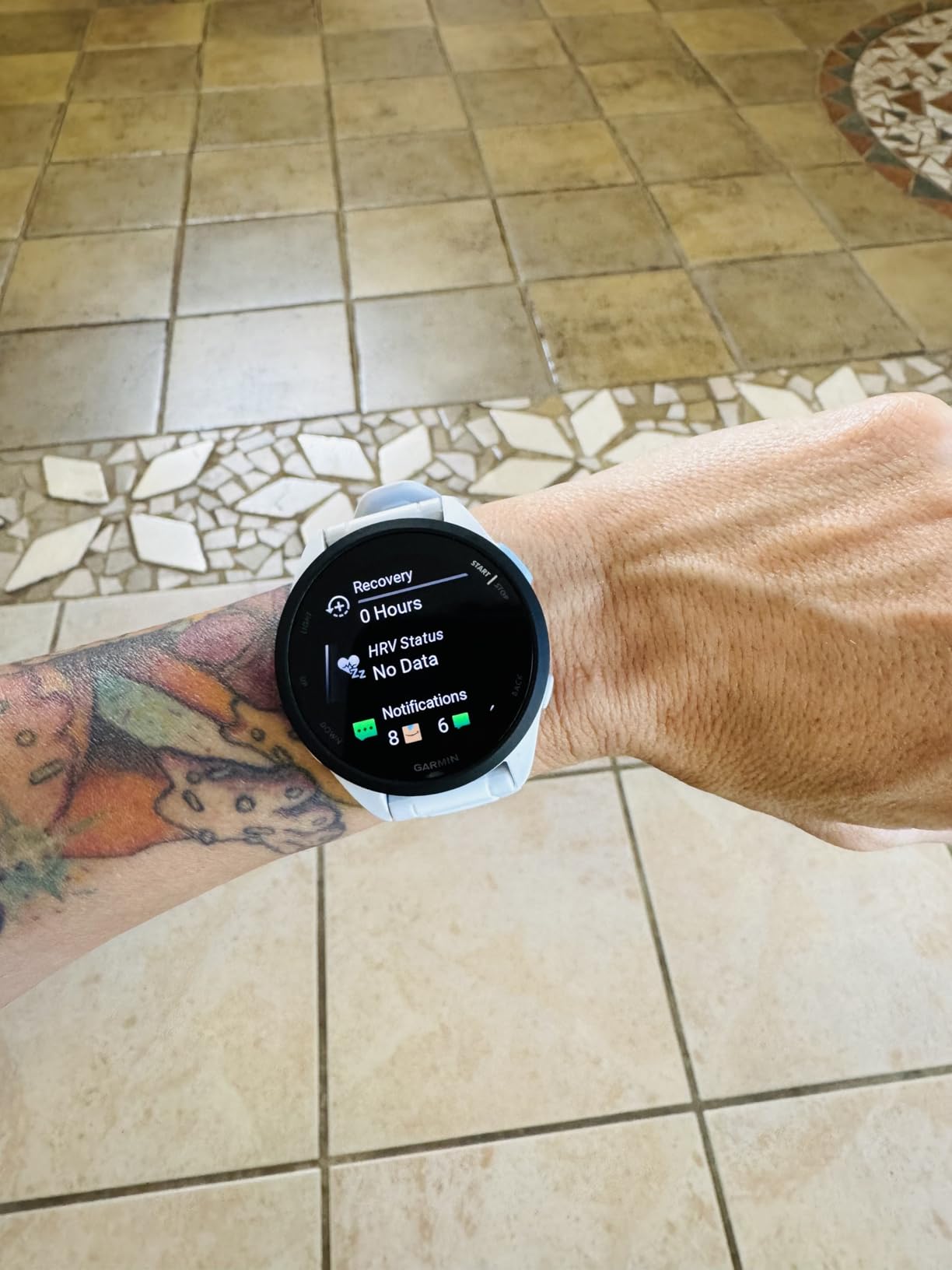
The 1.2-inch AMOLED screen runs at 1000 nits and stays readable in direct sun, and the combination of touchscreen plus two physical buttons means I could start a workout with wet hands or gloves on. Owners consistently single out the morning report as the feature that turns this from a stopwatch into a daily habit: sleep score, recovery time, training outlook, weather and HRV status, all on one screen when you wake up.
Training depth is genuinely deeper than a typical smartwatch. You get suggested daily workouts, Garmin Coach adaptive plans, training effect and recovery time, and 25-plus activity profiles covering running, cycling, HIIT and strength. Garmin Pay handles contactless payments, and the Garmin Connect app is where the health history lives.
Is it the right swap if you rely on Apple safety features?
Here is the honest part. Garmin does include Incident Detection and Assistance, which can reach out to a contact if you crash or press the button. But those features need network coverage and you have to set them up, and they are not the seamless, always-on implementation you get on watchOS.
What you give up is Crash Detection’s confidence, the on-wrist ECG, hypertension notifications, Emergency SOS via satellite, and the ability to unlock your Mac just by approaching it. If you depend on any of those, read the section on watchOS gaps below before you commit.
Where it falls short of an Apple Watch?
There are no full-color onboard maps. If you run trails or hike without your phone in your pocket, that is a real loss, and the 965 exists precisely to solve it. The non-music variant also has no onboard storage for playlists, so runs are phone-assisted for audio.
Notifications work with an iPhone, but the experience is a mirror of your phone rather than a native app environment. There is no third-party watch app ecosystem to speak of. Most owners are entirely fine with that; if you liked a specific watchOS app, you will not find it here.
2. Samsung Galaxy Watch Ultra – The Most Rugged Watch in the Roundup
Samsung Galaxy Watch Ultra (2025), Titanium Silver, 47mm LTE Smartwatch
- Titanium casing built for rough outdoor use
- 10ATM water resistance suits ocean swimming
- Dual-frequency GPS for accurate positioning
- Longest battery in the Galaxy Watch line
- Advanced Sleep Coaching and Running Coach
- LTE works away from your phone
- 47mm case is bulky on smaller wrists
- 60.3g is heavy for all-day wear
- Blood pressure readings need a separate calibration cuff
- Android phones only
- no iPhone compatibility
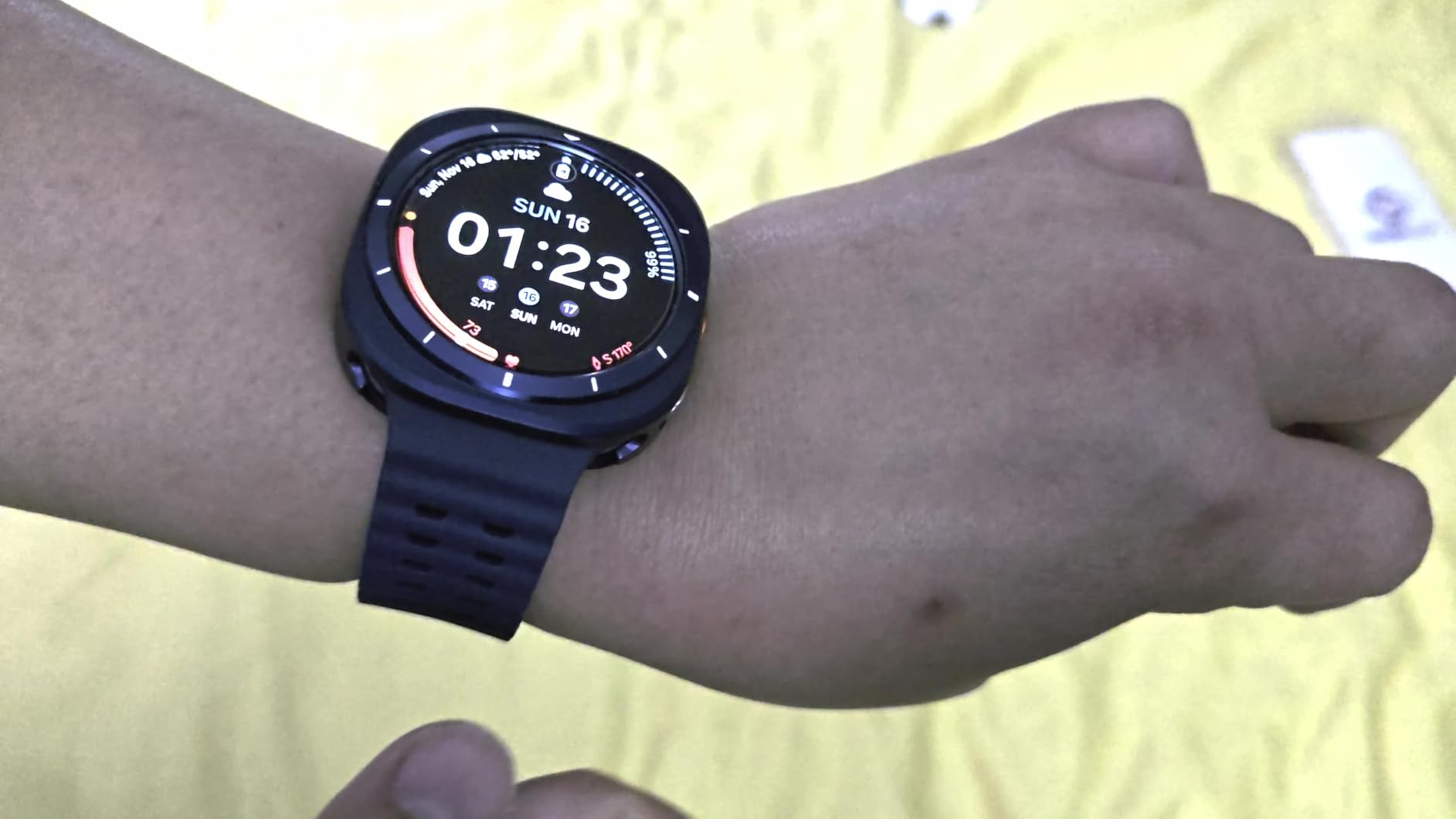
The Galaxy Watch Ultra answers the durability complaint head-on. A titanium casing and a 10ATM water rating make it the most rugged option in this roundup and the most at home in open water, and it is the direct answer to the r/smartwatch thread about cracked screens and thin bezels. Nothing else here looks as much like the rugged-watch genre.
Dual-frequency GPS and LTE cellular are the standout technical features. The cellular model lets you take calls and get data with no phone in reach, and dual-frequency positioning is meaningfully better under tree cover or between tall buildings than single-frequency. The 1.47-inch screen hits 1000 nits and the 590 mAh battery is the largest in Samsung’s watch line.
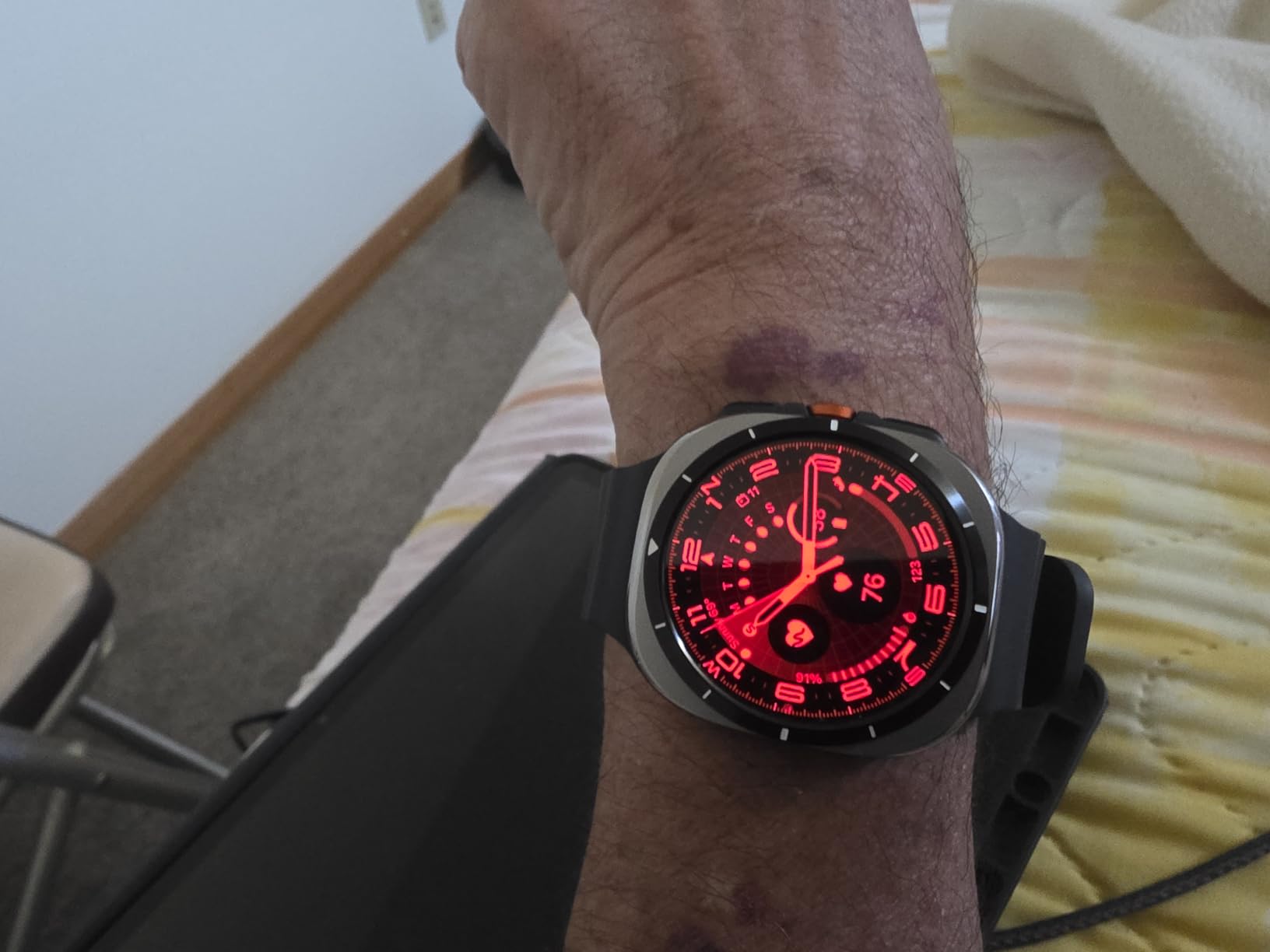
On the health side, Advanced Sleep Coaching and Bedtime Guidance are the standout, Running Coach analyzes your age, weight, oxygen levels and heart rate to build plans, and an Energy Score with Galaxy AI gives you a daily wellness summary. There is also a personal AI assistant for hands-free help. Combined with blood oxygen and heart rate monitoring, it is the most health-forward smartwatch interface on this list.
Blood pressure monitoring is available, but it requires a separately sold calibration cuff. That is a meaningful ongoing cost and a step most buyers do not take.
Who this watch is actually for?
This is an Android watch, and the product page is unambiguous: compatible device is an Android smartphone. Owners note it works best with Samsung phones, with more complete support on other Android handsets. If you have an iPhone, this pick is irrelevant regardless of how good it is.
For Android users who swim, work outdoors, or want a phone-free wrist, the durability and LTE combination is hard to argue with. Reviewers rate it 4.6 across more than 700 reviews, with roughly 82 percent five-star ratings, and durability plus battery endurance are the two themes that repeat.
Where it falls short?
Size and weight are the real complaints. A 47mm titanium case at 60.3 grams is the heaviest watch here by a wide margin, and reviewers consistently flag that it feels bulky on smaller wrists. If you are coming off a 41mm Apple Watch, this is an adjustment, not a transition.
It also costs more than most of the picks on this list while giving up the multi-week battery life that motivates most people to leave Apple in the first place. Durability is its argument, not endurance.
3. Garmin vívoactive 6 – Best for Everyday Health Tracking
Garmin vívoactive® 6, Health & Fitness GPS Smartwatch, Pebble Gray/Slate
- Bright AMOLED display with up to 11 days of battery
- Body Battery energy monitoring with daily insights
- Sleep score
- sleep coaching and HRV status
- 80-plus built-in indoor and GPS sports apps
- Menstrual cycle and pregnancy tracking
- Fits wrists from 125 to 190mm circumference
- No onboard maps or turn-by-turn navigation
- ABS case feels less premium than titanium models
- 1.2-inch display is small for detailed data
- Some health metrics are estimates not clinical readings
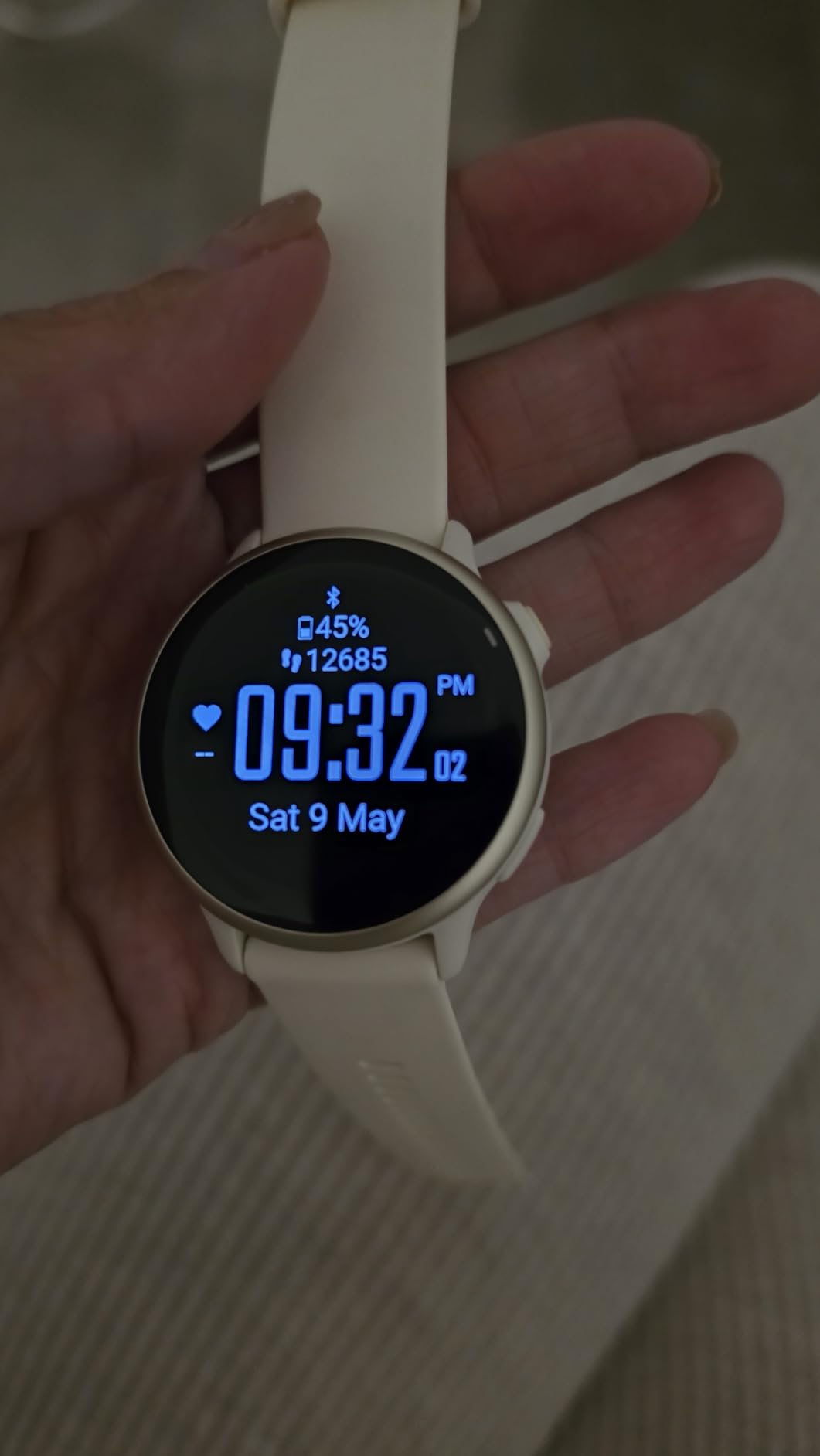
The vívoactive 6 is the Garmin for someone who is not training for anything. If your Apple Watch usage is 80 percent steps, sleep and stress, this watch does that job with the same polish as a running watch and without the running-watch price. At 1.3 ounces and 1.5 by 0.43 by 1.5 inches, it is lighter than the Forerunner 165.
Body Battery is the feature that changes behavior. It scores your energy each day from sleep, stress and activity load, and pushes you to rest before you burn out. Sleep score, sleep coaching, HRV status and a smart wake alarm that picks a wake moment inside your lightest sleep window round it out. It is the most complete recovery picture available on any watch in this roundup.
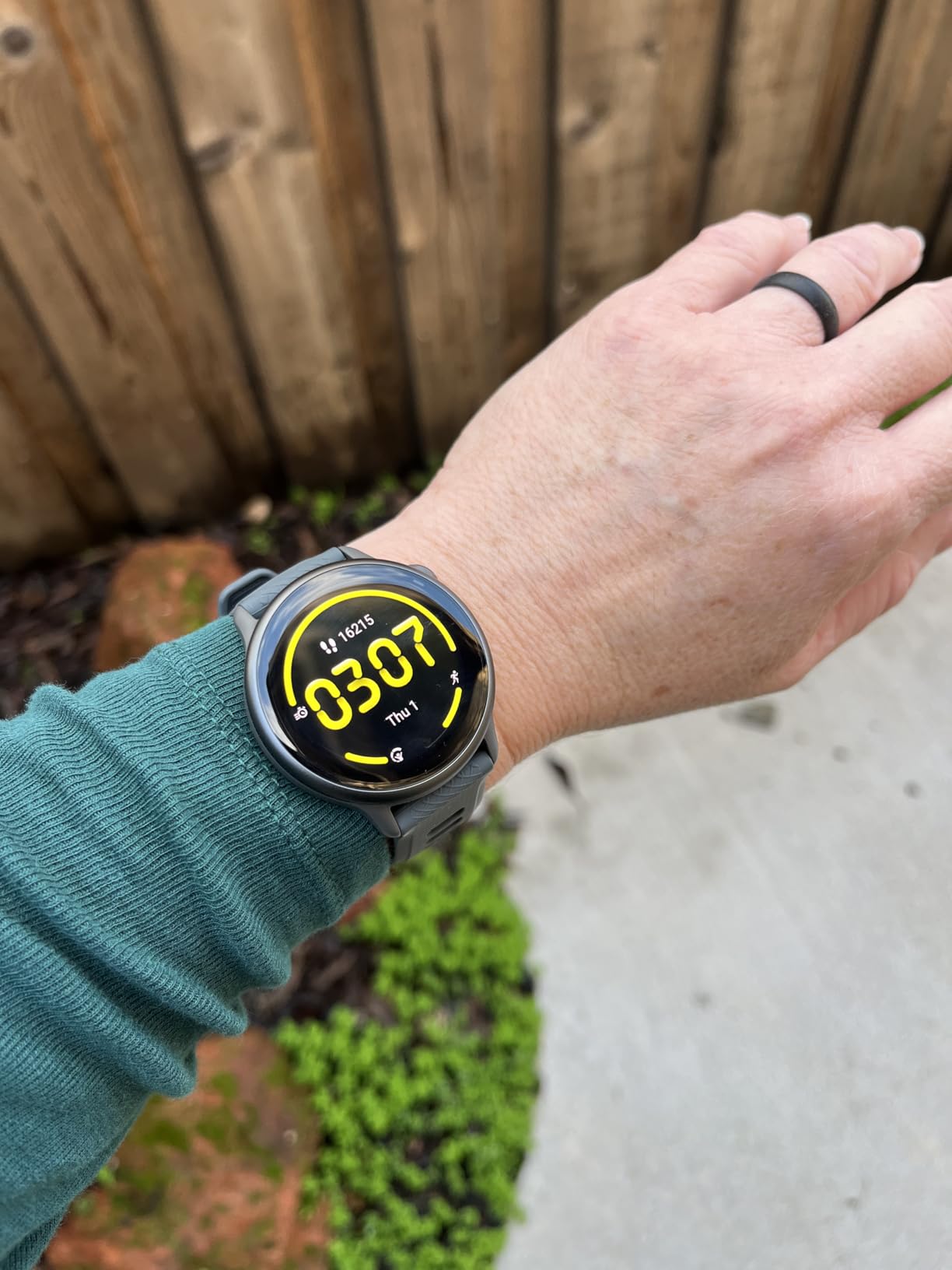
For activity, there are more than 80 built-in sports apps with GPS, animated workouts for form on cardio, yoga, strength, HIIT and Pilates, plus personalized daily walking suggestions and Garmin Coach plans. Reviewers praise the balance of health and fitness tracking, the bright AMOLED panel and the multi-week endurance in such a light body.
It carries 8 GB of internal storage against the Forerunner 165’s 4 GB, which is more than either Garmin watch needs for maps but hints at music support. Wrist-based heart rate, morning report, fitness age and stress tracking are all standard.
Why iPhone owners should look here first?
This is the most Apple-Watch-like experience in the Garmin lineup for someone who does not run. Square case with rounded edges aside, the daily rhythm — morning report, sleep score, notifications, smart wake, recovery time — maps closely onto what watchOS users are used to, without asking you to learn a training-software mindset.
It works with iPhone and Android over Bluetooth, and the health history lives in Garmin Connect. The wrist range of 125 to 190mm means it fits nearly everyone, which matters if you have been put off by chunky watches.
Where it falls short?
No maps and no turn-by-turn navigation. If you hike or travel, that is a genuine functional gap and the Forerunner 965 is the answer instead. The ABS plastic case is a visible step down from titanium, and the 1.2-inch screen is small if you like reading detailed charts on your wrist.
One caution reviewers raise fairly: some of the health metrics are algorithmic estimates rather than clinical measurements. That is true of every watch here, but it is worth restating when the numbers look medical.
4. Samsung Galaxy Watch 8 – Lightest Wearable in the Roundup
Samsung Galaxy Watch 8 (2025), Graphite, 40mm, Bluetooth Smartwatch
- A 30g lightweight design with a thinner-than-ever profile
- Advanced Sleep Coaching plus Bedtime Guidance
- Running Coach with real-time feedback and race programs
- Energy Score with Galaxy AI
- Now Bar for at-a-glance updates
- 2-year manufacturer warranty
- Android phones only with no iPhone compatibility
- 500 nit peak brightness is dimmer than rivals
- Bluetooth-only model needs the phone nearby for some features
- Blood pressure tracking needs a separate cuff
- Limited third-party app ecosystem
If you have a small wrist and have been told the Galaxy Watch line is too chunky, this is the model that fixes it. Thirty grams and a 1.68 by 1.59 by 0.34 inch footprint make it the least intrusive watch in this roundup, lighter than most fitness bands. Reviewers consistently call out the slimmer case as the reason the watch became comfortable enough to sleep in, which is the point.
Coming off a 41mm Apple Watch, the 40mm case here will feel immediately familiar, which makes this the easiest fit transition in the Samsung range. The 1.3-inch AMOLED runs at 500 nits, which is the weakest brightness figure here and the single most common display complaint.
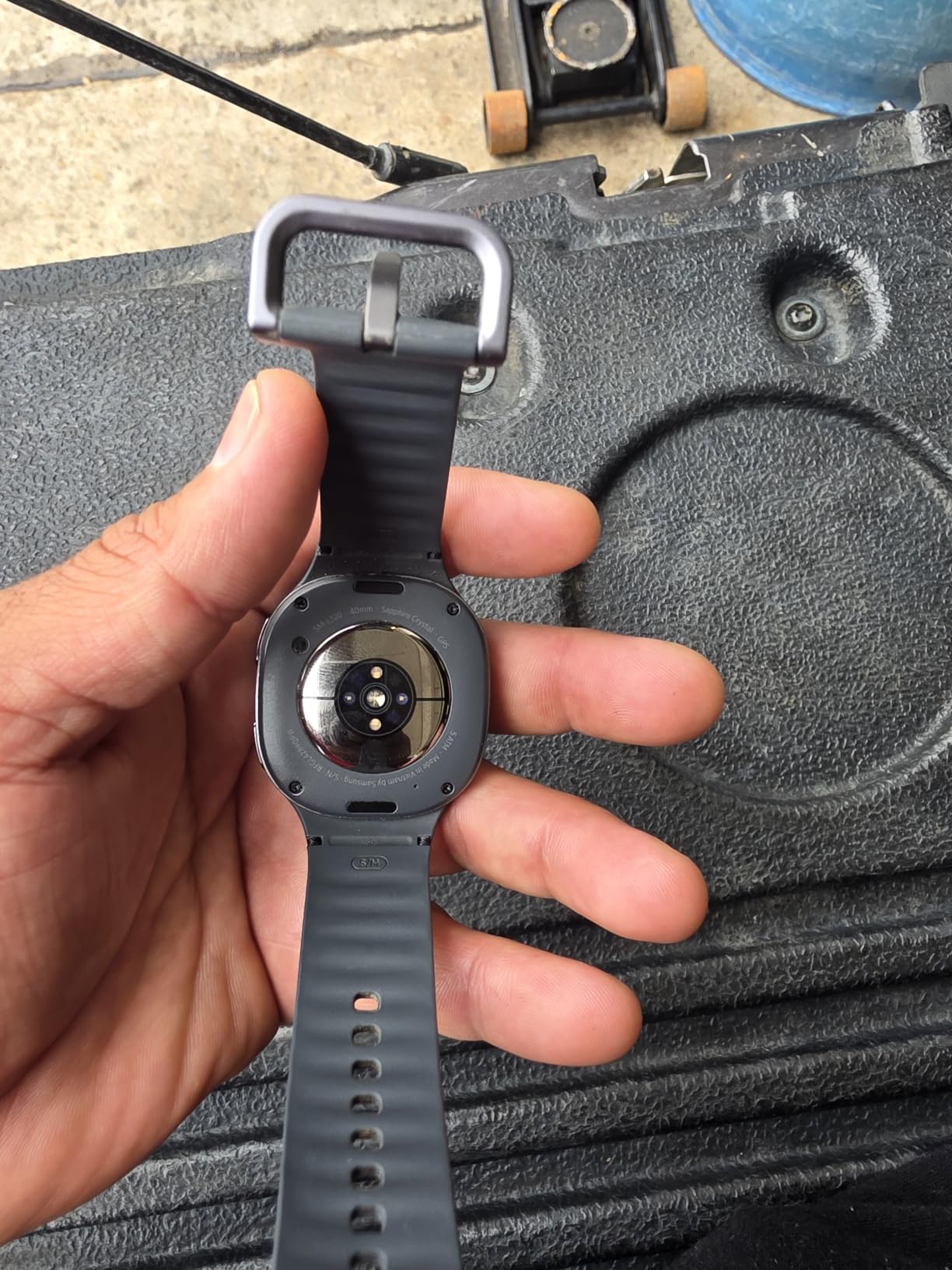
The software is the selling point. Advanced Sleep Coaching and Bedtime Guidance build a wind-down routine around your actual sleep, Running Coach gives real-time feedback with 5K and marathon programs, an Energy Score summarizes the previous day, and the Now Bar puts weather, timers and directions on the home screen. A personal AI assistant handles hands-free tasks.
The battery is quoted as improved and reliable through a full day, with a 325 mAh cell. The 2-year manufacturer warranty is the longest in this group.
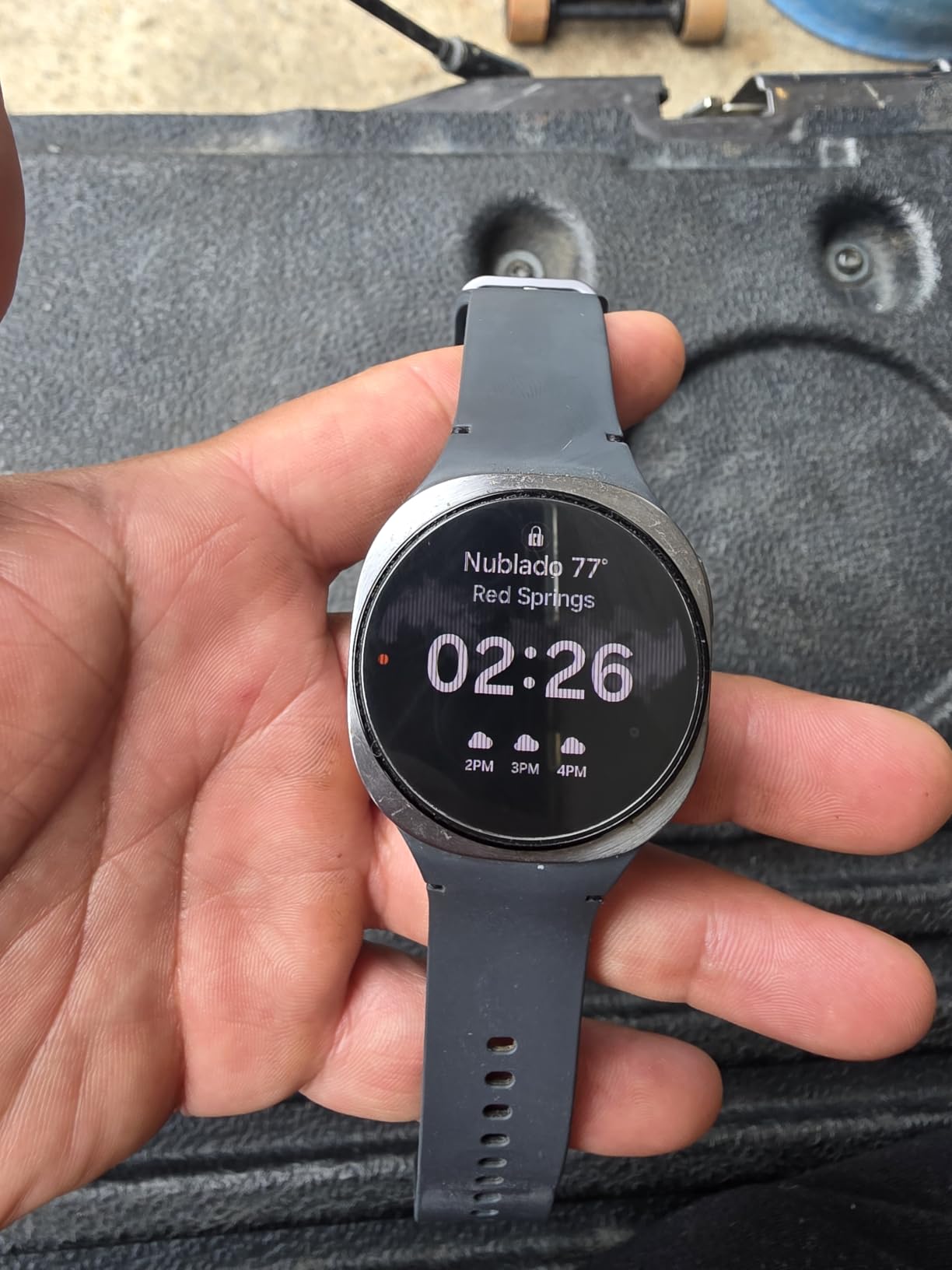
Best case for an Android user who will not charge overnight
For a Samsung phone owner, this is the best-looking, lightest and most sleep-focused watch here. The Galaxy Wearable and Samsung Health apps are mature, and the two-year warranty means a battery problem in year one is not your problem.
The compatibility line is worth reading twice: Android smartphone. There is no iPhone support. This is the most Apple-like-looking watch in the roundup that an iPhone owner cannot use at all.
Where it falls short?
The Bluetooth-only variant means the phone has to be nearby for several features, which undercuts the whole point of having a watch. The 500 nit screen is noticeably dimmer outdoors than the 1000 nit panels on the Garmin models and the 2000 nit Amazfit display. Blood pressure readings again need a separate cuff.
Reviewers also flag a limited native third-party app ecosystem compared with other Wear OS rivals, so the app selection is narrower than the platform’s reputation suggests.
5. Google Pixel Watch 4 – The Best-Looking Watch, If You Have Android
- Actua 360 domed display 10 percent larger and 50 percent brighter than the previous model
- Scratch-resistant Gorilla Glass
- Gemini AI assistant with AI-powered quick replies
- Up to 30 hours of battery
- 48 hours in Battery Saver mode
- Side dock adds 15 hours in 15 minutes or less
- Dual-frequency GPS and LTE with eSIM
- Two years of Google Fi data included with LTE
- Requires an Android 11.0 or above phone with no iPhone support
- Battery life is far below multi-day competitors
- Fitness depth is limited next to dedicated sports watches
- 41mm case suits compact wrists only
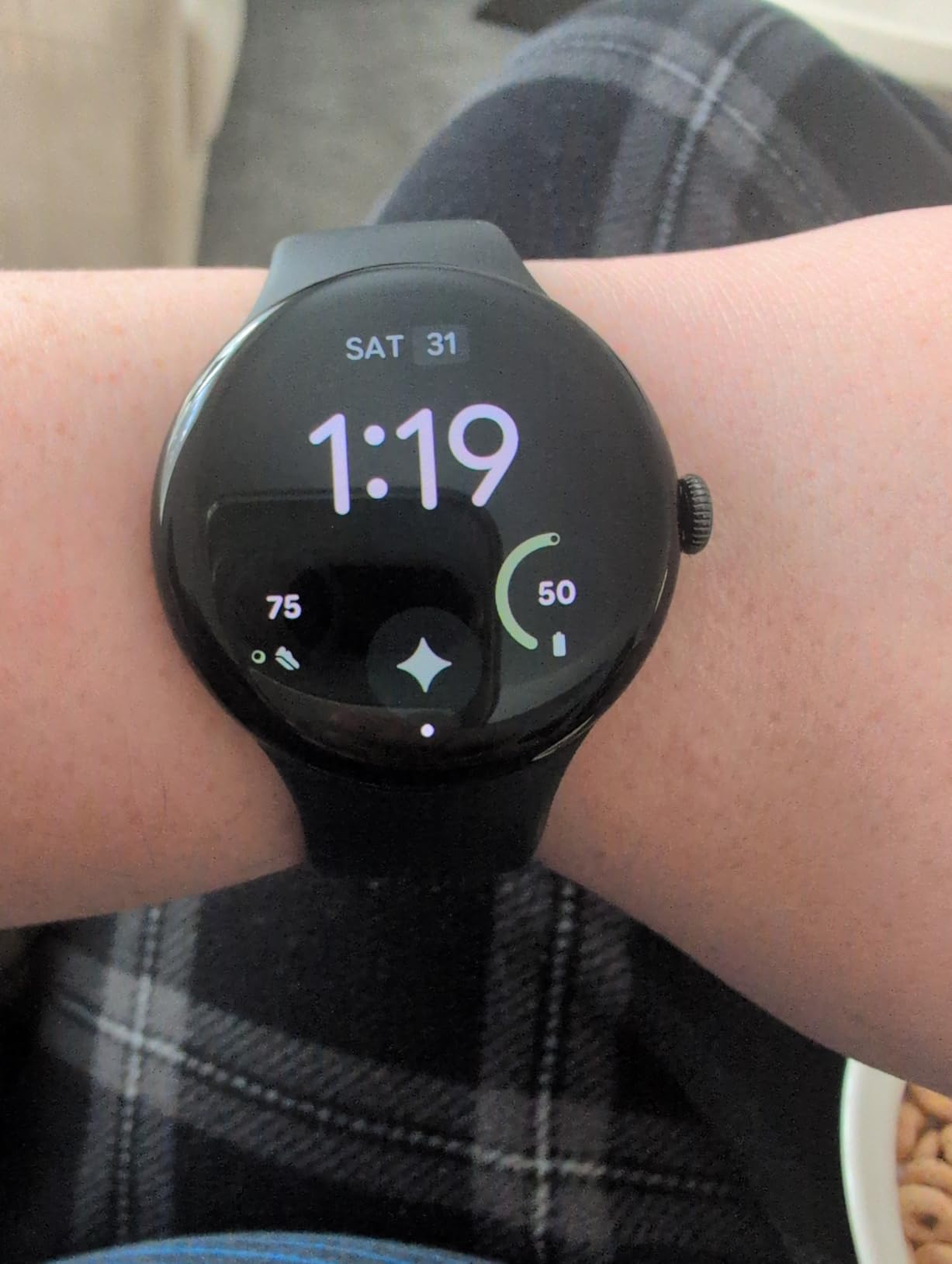
The Pixel Watch 4 is the closest non-Apple watch in industrial design to the Apple Watch, and the display change finally fixes its weakest screen. The Actua 360 domed panel is 10 percent larger and 50 percent brighter than the previous generation, and the domed shape gives it that edge-to-edge look. Gorilla Glass addresses the fragility complaint more directly than most round, flat-screen watches do.
The side charging dock is the feature I would keep. Fifteen minutes on the dock returns 15 hours, which turns a daily-charging device into something closer to a two-days-between-charges device for light users. It also solves the awkwardness of a flat magnetic puck on a curved watch back.
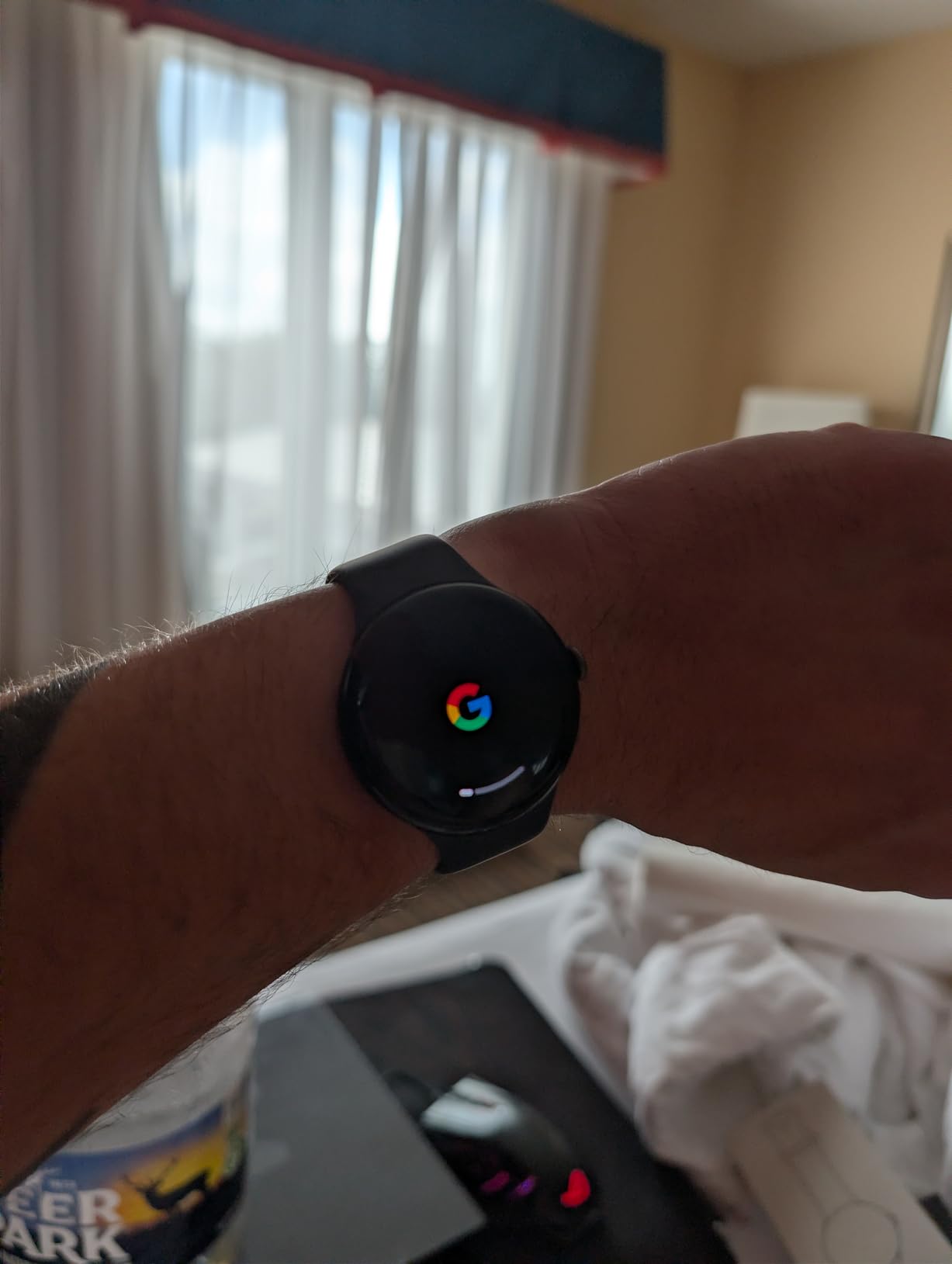
Gemini is built in with AI-powered quick replies for texts, which is the most useful assistant implementation on any watch here for the common case of answering a message at a traffic light. Dual-frequency GPS and LTE with eSIM handle connectivity away from the phone, and the LTE model includes two years of Google Fi data in the box.
Heart rate and sleep tracking come with health and fitness insights, and automatic nap detection is included. It runs Wear OS 6.0 with 32 GB of storage and a 1-year manufacturer warranty.
Who should buy it and who should not?
Buy it if you have an Android 11.0 or above phone, you want the cleanest smartwatch software in the category, and you value the assistant and the charging dock more than battery endurance. Reviewers like the brighter domed display, Gemini and the fast dock.
Do not buy it if battery life is why you are leaving Apple. A 30-hour claim is a 30-hour claim, and 48 hours in Battery Saver mode is not a meaningful upgrade in daily habits. It is the only watch here that still needs charging most nights, though the dock softens that considerably.
Why iPhone owners should skip this section entirely?
The compatible devices field reads Android Smartphone, with Android 11.0 and above specified. There is no iPhone support in any form, and this is the watch most often recommended to Apple Watch owners by well-meaning friends. Check before you fall for it.
Fitness depth is also the weakest of the Wear OS picks when measured against dedicated sports watches, and the 41mm case suits compact wrists only.
6. Amazfit Bip 6 – The Best Cheap Apple Watch Alternative
- Up to 14 days of battery between charges
- Vivid 1.97-inch AMOLED rated at 2000 nits
- 140-plus workout modes including HYROX Race
- Free downloadable maps with turn-by-turn directions
- 24/7 heart rate
- sleep
- blood-oxygen and stress monitoring
- Works with both iOS 14+ and Android 7.0+
- Lightweight aluminum build at 1.44 ounces
- Only 512 MB onboard storage limits music and apps
- 50 meter water resistance rules out open-water swimming
- Zepp OS app ecosystem is smaller than Wear OS or Garmin Connect
- Fitness analytics are less detailed than dedicated sports watches
The Bip 6 is the watch that makes the most sense if your entire reason for searching is that you are tired of charging every night. Fourteen days is the claim, and it lands in the Amazon smartwatch top ten by sales rank with the highest review volume of anything we tested — more than 7,000 reviews at 4.2 stars. Reviewers repeatedly describe it as an Apple Watch look with far better battery life, which is exactly the comparison the MacRumors forum threads keep making.
It runs Zepp OS, and compatibility is the headline: Android 7.0 and above, iOS 14.0 and above. No subscription fee. That last point matters more than people expect, because several competitor ecosystems now push premium features behind a recurring charge.
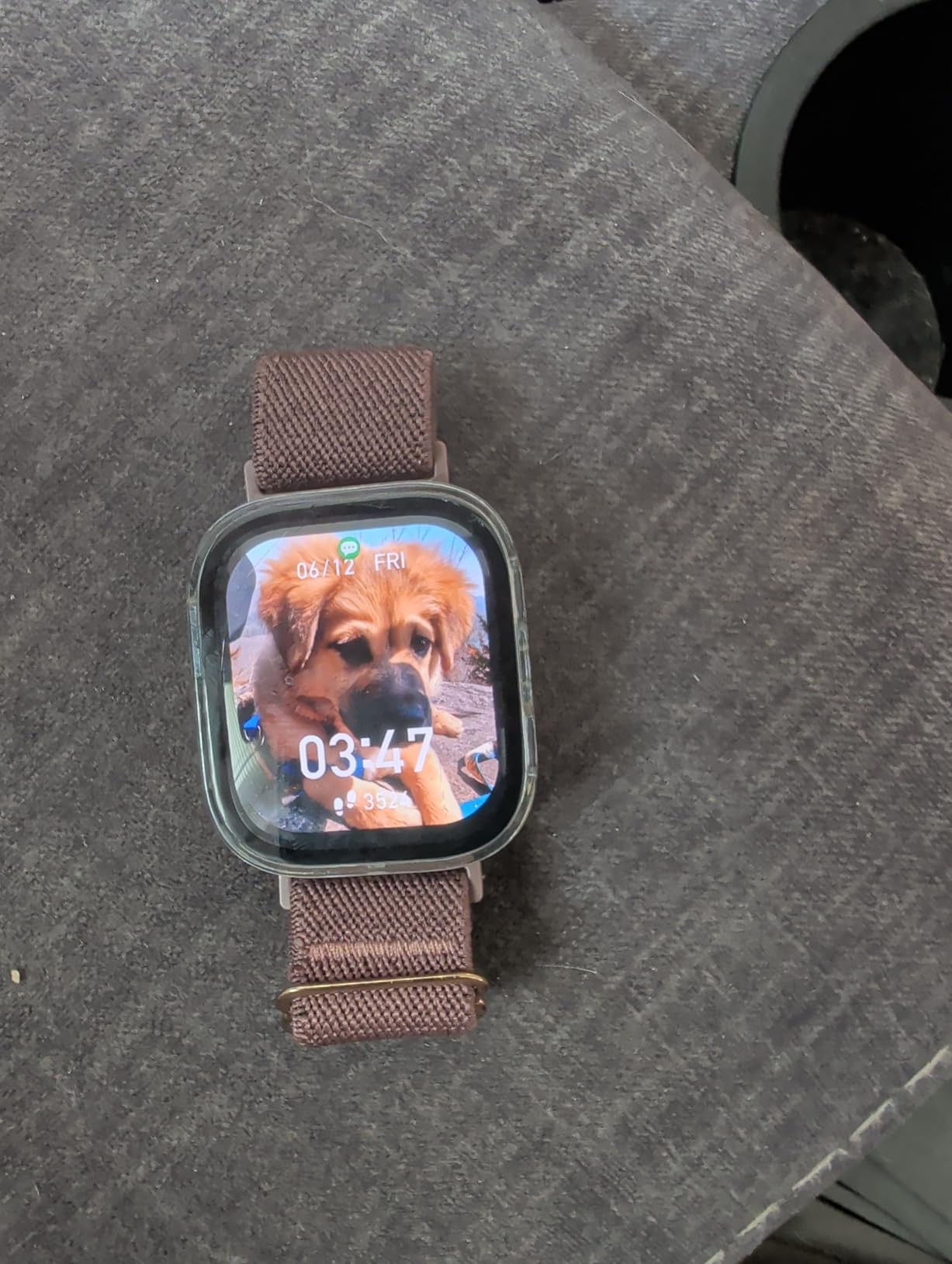
Spec-wise it over-delivers for the money. A 1.97-inch AMOLED at 2000 nits is brighter than anything else in this roundup, the case is aluminum at 1.44 ounces, and there is a five-satellite GPS system covering BeiDou, GLONASS, GPS and Galileo with free downloadable maps and turn-by-turn directions. There are more than 140 workout modes, including a HYROX Race profile that most watches this size do not bother with.
Health tracking covers 24/7 heart rate, sleep, blood oxygen and stress. Bluetooth notifications, text messaging and phone call support are included. Water resistance is 50 meters, and the box contains a magnetic charging base rather than a cable.
Who gets the most out of it?
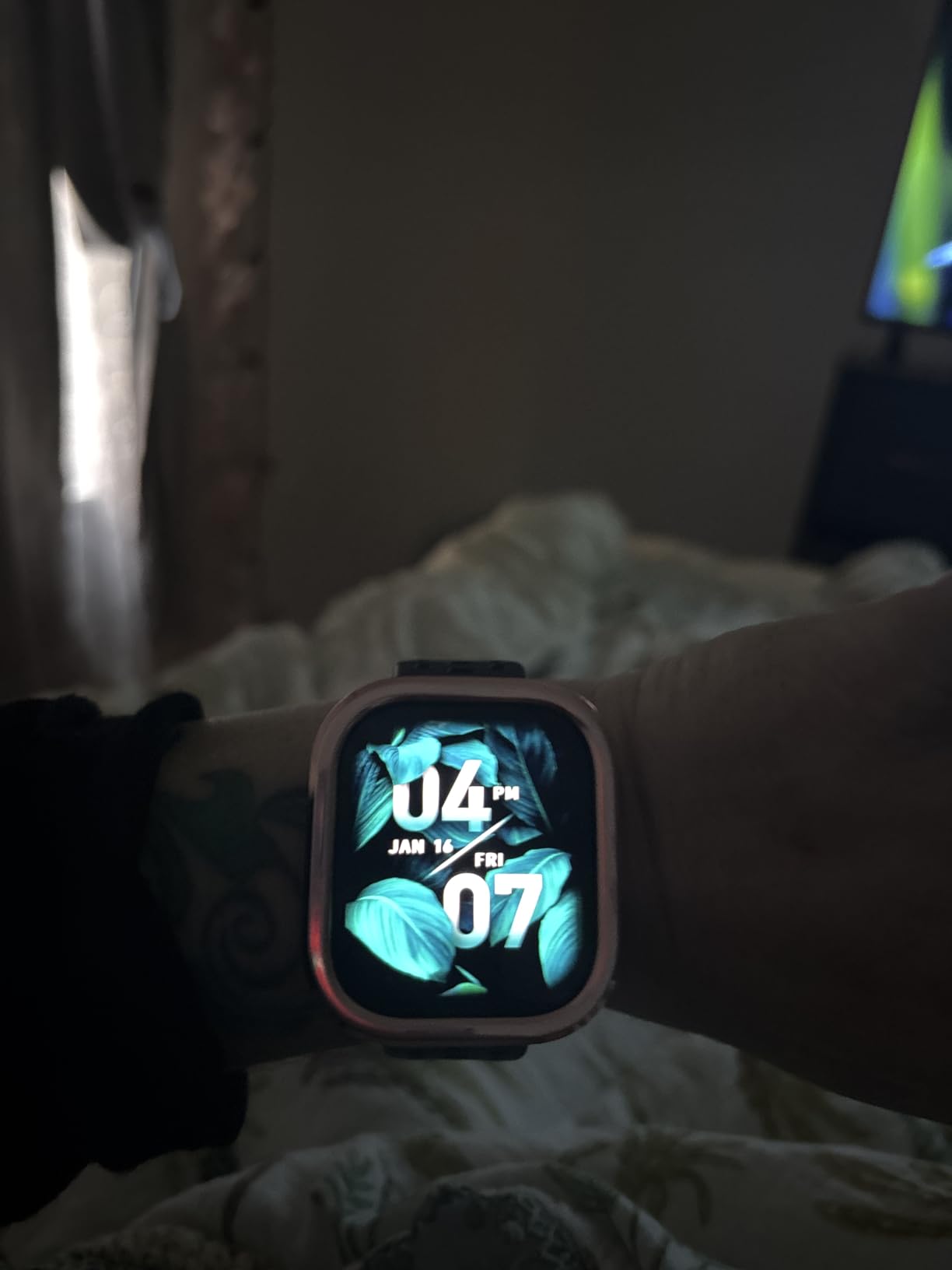
Budget iPhone users, and users who want a watch that disappears for two weeks. The rectangular case and large bright screen suit people who want glanceable data over wrist-sculpture. The 4.2 rating with about 69 percent five-star scores reflects a watch that does the basics extremely well and the advanced analytics less well.
If your plan is a lot of running, cycling or structured training, spend the difference. The training metrics here are shallower than Garmin’s, and no amount of battery life compensates for a training load that is wrong.
Where it falls short?
512 MB of onboard storage is genuinely cramped. There is no room for music, and the app situation is limited by what Zepp OS supports. 50 meter water resistance means pool swimming is fine but open-water swimming is not, which rules it out for a lot of triathletes and open-water swimmers.
The 4.2 average is the lowest rating here, and the reason is consistency of quality rather than any single failure. It is a very good budget watch and a mediocre enthusiast one.
7. Garmin Forerunner 965 – The Best for Runners Who Want Maps
- Up to 23 days in smartwatch mode and 31 hours in GPS mode
- Full-color built-in maps with multi-band GPS and SatIQ
- AMOLED touchscreen with a lightweight titanium bezel
- Training readiness
- training status and morning report
- Race adaptive training plans with daily suggested workouts
- Built-in triathlon and duathlon multisport profiles
- Wrist-based running dynamics and running power
- Most expensive watch in this roundup
- No cellular LTE so the phone is still required
- 47mm titanium case is large for smaller wrists
The Forerunner 965 is the pick for a runner who has outgrown the Forerunner 165. Same philosophy, a much deeper toolkit. The Forerunner 965 carries the longest battery claim in this roundup and 32 GB of storage against the 165’s 4 GB, and the 260 mAh battery sounds small until you realize how rarely you will charge it.
Full-color onboard maps with multi-band GPS and SatIQ is the single biggest functional difference, and it is why this model exists. You get turn-by-turn directions, courses, and off-route guidance without your phone, which is the exact capability the 165 lacks and the reason to stretch for this model. The 1.4-inch AMOLED at 454 by 454 resolution sits inside a lightweight titanium bezel.
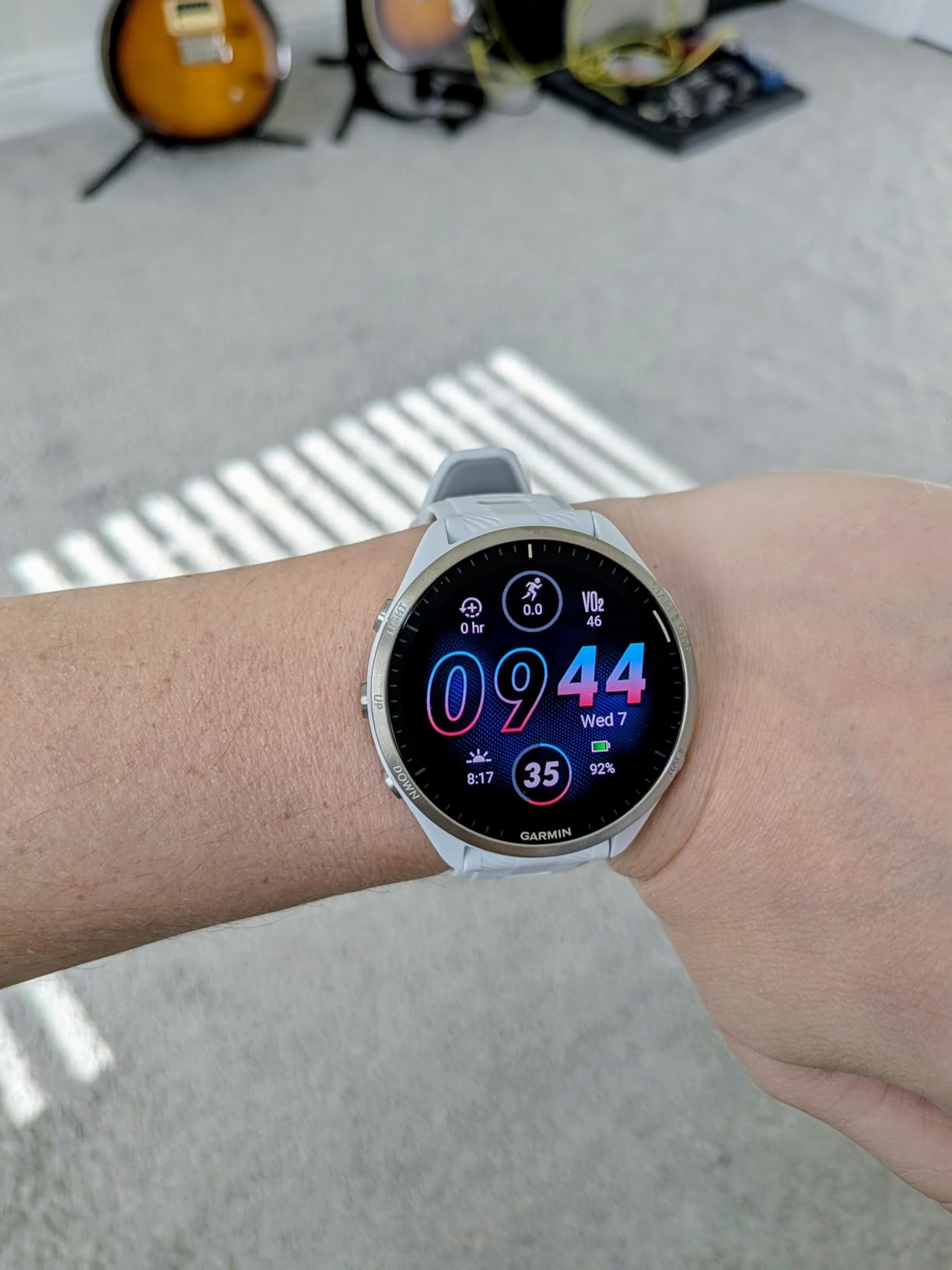
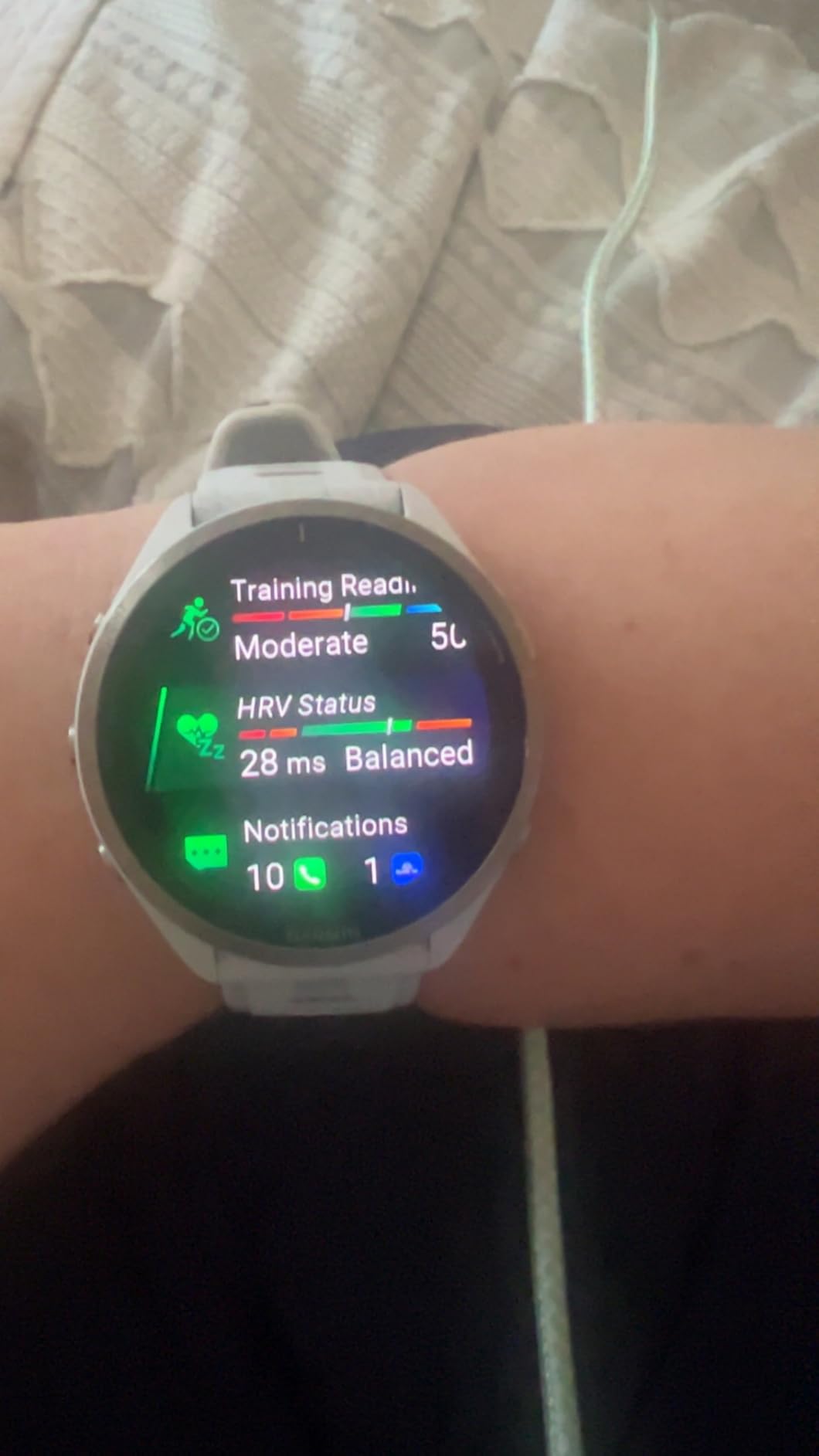
Training is the other half. Training readiness is computed from sleep, recovery, training load and HRV. Training status tells you whether you are productive, peaking or strained. Race adaptive training plans and daily suggested workouts handle the planning. Wrist-based running dynamics give you cadence, stride length and wrist-based running power, and there are built-in triathlon, duathlon, brick workout and swimrun profiles for multisport athletes.
Across more than 2,000 reviews it holds a 4.6 with roughly 85 percent five-star scores, the strongest satisfaction ratio of any watch here. Owners cite the titanium bezel, the endurance, the maps and the analytics in that order.
Why this is the pick for serious training?
Everything a training watch should know, it knows. Training readiness, training status, HRV, recovery time and race adaptive plans all live on the wrist, and the multisport profiles mean a triathlete can run a full brick session without reconfiguring a single setting.
It is also a capable hiking and outdoor watch thanks to full-color maps, and the 50 meter water rating with a 1-year limited warranty covers swimming. For triathletes, the multisport profiles mean you can race a full brick session without reconfiguring the watch.
Where it falls short?
It is the most expensive watch in this roundup, and a 47mm titanium case is large — that is the most common complaint in reviews along with the price. If your current Apple Watch is 41mm, this will feel enormous. The 165 at 43mm exists partly to solve exactly that.
There is no cellular LTE, so you still need your phone on runs for safety connectivity. And if your activity is walking and sleep rather than training, you are paying for analytics you will never open.
8. Amazfit Bip Max – The Best Big-Screen Budget Watch
Amazfit Bip Max Smart Watch, 2.07″ AMOLED Display, GPS, iOS/Android
- Largest display here at 2.07 inches peaking at 3000 nits
- Up to 20 days of typical-use battery
- 4GB onboard storage for offline maps and media
- Free detailed maps with turn-by-turn directions and off-track alerts
- Five-satellite system for fast GPS connection
- 150-plus sports modes with adaptive Zepp Coach
- Subscription-free Zepp app with VO2 Max
- Training Load and Training Effect
- Gear tracking for running shoes and cycling mileage
- Square case looks less like a traditional watch
- Only 50 meter water resistance
- Zepp OS has fewer third-party apps than Wear OS
- No LTE cellular option
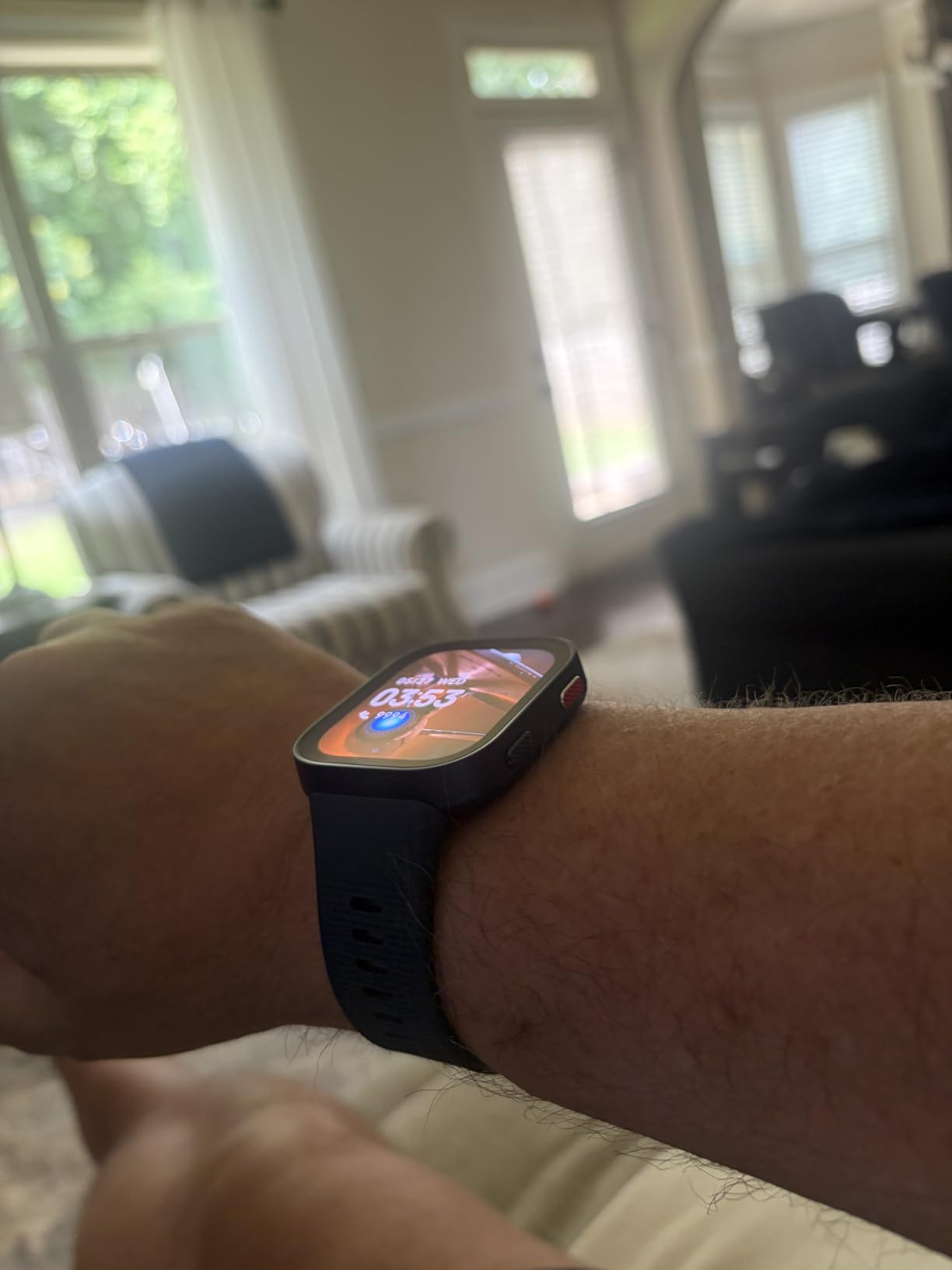
The Bip Max is the Bip 6 with a bigger screen, more storage and a longer claim, and if you like the Bip 6 you will like this one more. The 2.07-inch AMOLED panel peaks at 3000 nits, the highest brightness figure in this roundup by a wide margin, and it is genuinely readable in direct summer sun. The case is aluminum at 1.86 ounces with a clean two-button layout.
Twenty days of typical-use battery is the headline, and 4 GB of onboard storage means offline maps and media rather than the 512 MB the Bip 6 offers. Maps are free, detailed, and include turn-by-turn directions and off-track alerts on a five-satellite system.
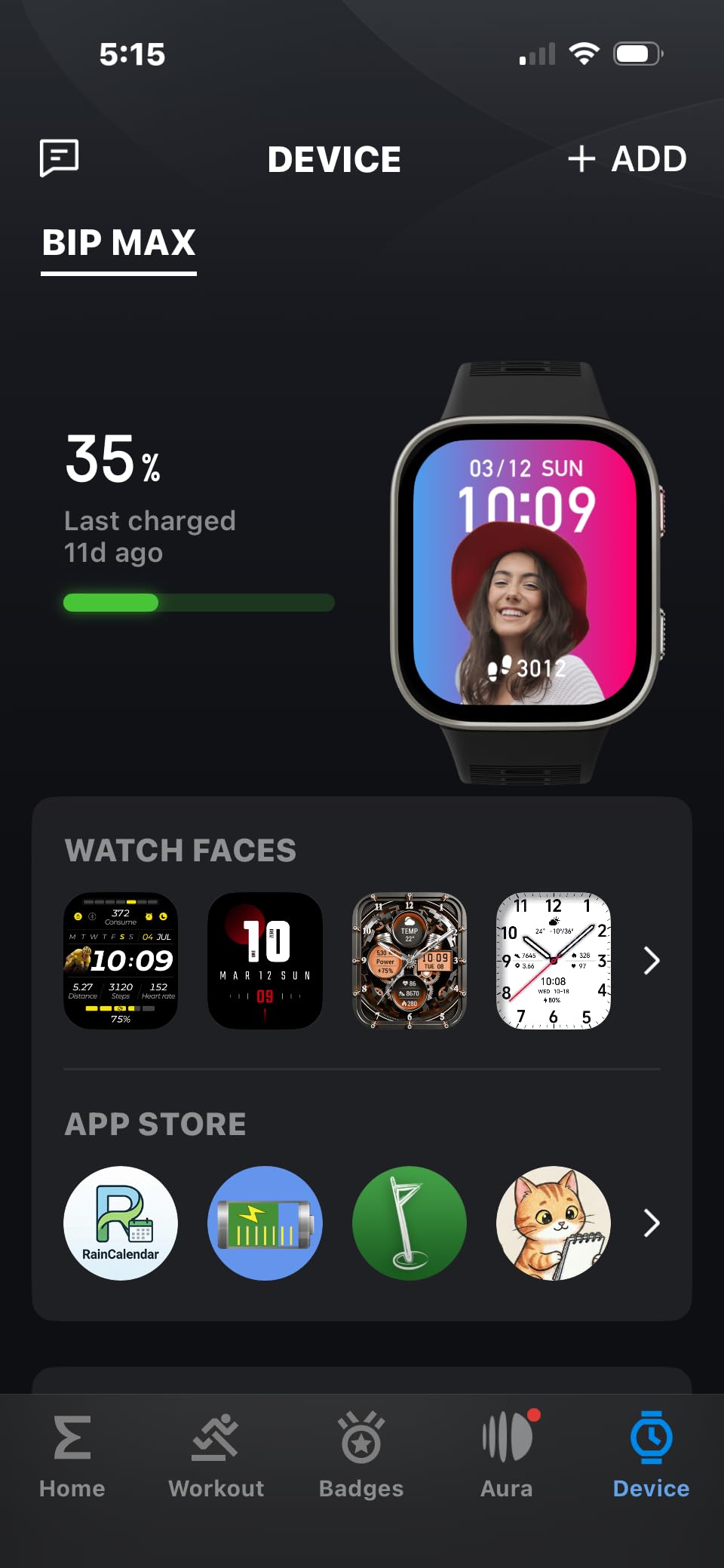
The Zepp app is subscription-free and includes VO2 Max, Training Load, Training Effect and hybrid endurance, strength and recovery programming through adaptive Zepp Coach routines. There are more than 150 sports modes and a built-in workout library. Gear tracking, which logs running shoe and cycling mileage, is a small feature that people who run weekly appreciate immediately.
BioCharge recovery monitoring pulls from sleep, workouts and stress together, and there is an always-on display. At 4.4 stars across more than 600 reviews with about 75 percent five-star scores, satisfaction sits comfortably above the Bip 6.
Who should choose it over the Bip 6?
Choose the Bip Max if maps matter to you, if you run or cycle often enough for gear tracking to be useful, or if you want the brightest screen you can get. Both watch iPhone and Android over Bluetooth, and neither requires a subscription for the health features.
It sits at the top of the affordable tier, which makes it the pick for someone who wants the Forerunner 965 experience — maps, training load, multi-week battery — without paying flagship money.
Where it falls short?
The square case is the dealbreaker for some people. It looks like a fitness tracker rather than a watch, and if you are leaving Apple specifically because you dislike that aesthetic, this is the wrong direction.
Water resistance is 50 meters, so no open-water swimming. There is no LTE. And Zepp OS still has fewer third-party apps than Wear OS, so the software side of an Apple Watch simply has no equivalent here. If you want notifications and data, you will be satisfied. If you want apps, you will not.
What You Lose When You Switch Away from watchOS?
No roundup on this query is honest without this section. The Apple Watch is genuinely good at a few specific things, and no alternative on this list matches all of them.
Crash Detection and Emergency SOS. Garmin offers Incident Detection and Assistance, which need network coverage and manual setup. It is not the same always-on system, and satellite SOS does not exist on any watch in this roundup.
ECG and hypertension notifications. No watch here takes a medical-grade ECG reading. The Galaxy Watch models offer blood pressure monitoring, but it requires a separately sold calibration cuff, and reviewers note the extra cost turns people off.
Third-party apps and watch faces. This is the quietest but most real loss. Zepp OS has a much smaller app catalog than Wear OS, and Garmin’s ecosystem is built around its own Connect app rather than third-party software. If a specific watchOS app was part of your daily routine, nothing here replaces it.
Automatic unlocking and tight iPhone integration. The Apple Watch unlocking your Mac and iPhone on approach is still unmatched. Wear OS does this on Android to some degree; nothing on this list does it for an iPhone.
GPS and wrist heart-rate accuracy. As the MacRumors forum threads concede, the Apple Watch is still better at both. If precise GPS on a run matters more to you than battery life, the honest advice is to keep your Apple Watch and stop looking.
The counterweight is ownership cost. Apple Watch batteries are not user-replaceable, and out-of-warranty service is expensive enough that a watch two years into its life is often a replacement rather than a repair. That is the calculation that tips people toward a watch they charge twice a month instead of twice a day.
If you are still undecided, our Apple Pencil alternatives guide covers the same leave-the-ecosystem logic for a different device, and the iPad-specific version goes deeper on compatibility. If the switching impulse is broader than wristwear, our Onewheel alternatives and Super73 alternatives roundups apply the same compatibility-first method to electric ride gear.
How to Choose an Apple Watch Alternative?
1. Settle phone compatibility first. It is the only criterion that cannot be undone later. Garmin and Amazfit work with iPhone. Google and Samsung do not. If you ever plan to switch phone brands, Garmin is the only brand here that will follow you.
2. Set a battery target that matches your charging habit. If you want to charge weekly, Garmin and Amazfit deliver. If daily charging is fine but you want the best charging experience, the Pixel Watch 4 dock adds 15 hours in 15 minutes. If you want weeks, the Forerunner 965 and Bip Max lead.
3. Decide fitness-first or smartwatch-first. This is the distinction most readers miss. Fitness-first means a Garmin: metrics, training load, maps, multi-day battery, and a smaller app ecosystem. Smartwatch-first means a Galaxy Watch or Pixel Watch: polished notifications, assistants, richer app worlds, and a battery measured in hours. They are different products, not different price tiers of the same one.
4. Check case size against what you wear now. Coming off a 41-45mm Apple Watch, the 43mm Forerunner 165 and 40mm Galaxy Watch 8 are the safe transitions. The 47mm Forerunner 965 and Galaxy Watch Ultra will feel large, and reviewers of both say so repeatedly. This is the single most common reason people return a watch.
5. Weigh durability against endurance. Aluminum and fiber-reinforced polymer are lighter and cheaper. Titanium survives. The Galaxy Watch Ultra’s 10ATM rating is the only one here rated for ocean swimming, though Garmin’s 50 meters covers pool swimming and everyday exposure on all four models.
6. Factor in repairability and long-term cost. None of these watches has a user-replaceable battery in the way a phone does, but an affordable Amazfit is a far less painful second purchase than a flagship, and Samsung’s two-year warranty on the Galaxy Watch models is the longest here. Garmin and Amazfit both carry a 1-year warranty.
7. Ignore battery claims above about 12 days. Manufacturer figures assume a typical use profile. Reviews of the class-leading claims consistently show real-world results shorter than the headline, so a 14-day claim usually means 8 to 10 good days. A 30-hour claim means about a day and a half, full stop.
Frequently Asked Questions
What is the best replacement for an Apple Watch?
The Garmin Forerunner 165 is the best overall replacement. It pairs with iPhone and Android, runs up to 11 days in smartwatch mode, tracks heart rate, sleep, HRV and stress with built-in GPS, and weighs only 1.38 ounces. For serious runners who want maps, the Forerunner 965 adds full-color onboard maps and a 23-day claim. For the lowest cost, the Amazfit Bip 6 gives you 14 days of battery and 140-plus workout modes.
Do Apple Watch alternatives actually work with an iPhone?
Some do, and some absolutely do not. The Garmin Forerunner 165, Forerunner 965, vívoactive 6, Amazfit Bip 6 and Amazfit Bip Max all list iPhone compatibility. The Google Pixel Watch 4, Samsung Galaxy Watch 8 and Samsung Galaxy Watch Ultra list Android smartphones as the compatible device only, and the Pixel Watch 4 requires Android 11.0 or above.
Which watch is most similar to the Apple Watch?
The Garmin vívoactive 6 is the closest match to the Apple Watch experience. It combines notifications, sleep score, sleep coaching, HRV status, a smart wake alarm, a morning report and a recovery metric in a 1.3-ounce body, with up to 11 days of battery life. It does not offer the watchOS app ecosystem, ECG, or Crash Detection.
Why are people getting rid of Apple Watches?
Four reasons come up repeatedly. First, the daily charging cycle, which is the single most cited complaint. Second, screen and bezel fragility, since cracked displays are a top complaint thread on r/smartwatch. Third, non-replaceable batteries and expensive out-of-warranty service, which often make a two-year-old watch a replacement rather than a repair. Fourth, price and ecosystem lock-in, since readers want Apple-Watch-like sizes at a lower cost.
What is a good budget smartwatch alternative to the Apple Watch?
The Amazfit Bip 6 is the strongest budget pick. It runs up to 14 days on a charge, has a 1.97-inch AMOLED display at 2000 nits, built-in five-satellite GPS with free downloadable maps, more than 140 workout modes, and 24/7 heart rate, sleep, blood oxygen and stress tracking. It works with iOS 14 and above and Android 7.0 and above, with no subscription fee.
How long do Apple Watch alternatives last on one charge?
Real-world results run shorter than the manufacturer claims. The Forerunner 965 claims up to 23 days in smartwatch mode and 31 hours in GPS mode, the Amazfit Bip Max claims 20 days, the Amazfit Bip 6 claims 14 days, and the Forerunner 165 and vívoactive 6 claim 11 days. The Pixel Watch 4 claims 30 hours, or 48 hours in Battery Saver mode, so expect roughly a day and a half.
Do any Apple Watch alternatives have ECG or the same health features?
No watch in this roundup takes a medical-grade ECG reading, and none provides hypertension notifications. The Samsung Galaxy Watch 8 and Galaxy Watch Ultra offer blood pressure monitoring, but both require a separately sold calibration cuff. Garmin tracks HRV, stress, sleep score, Body Battery energy and, on the Galaxy models, blood oxygen and skin-adjacent metrics, but these are estimates rather than clinical measurements.
Final Verdict: The Best Apple Watch Alternatives in 2026
The best Apple Watch alternatives depend almost entirely on one question: does it have to work with your iPhone? If yes, the field is the Garmin Forerunner 165, the Garmin vívoactive 6, the Garmin Forerunner 965, the Amazfit Bip 6 and the Amazfit Bip Max, and the Forerunner 165 is the pick for almost everyone.
It holds a 4.6 rating across more than 5,000 reviews, sits at number five in Amazon’s smartwatch category, and gives you everything most Apple Watch owners actually use — notifications, heart rate, sleep, GPS, contactless payments — with an 11-day battery in a 43mm case light enough to forget you are wearing it.
Step up to the Forerunner 965 if you train seriously and need full-color maps. Go cheaper to the Amazfit Bip 6 if battery life is the entire reason you are here. And if you own an iPhone, skip the Pixel Watch 4 and both Galaxy Watches entirely — they are Android-only, and no setting changes that.