
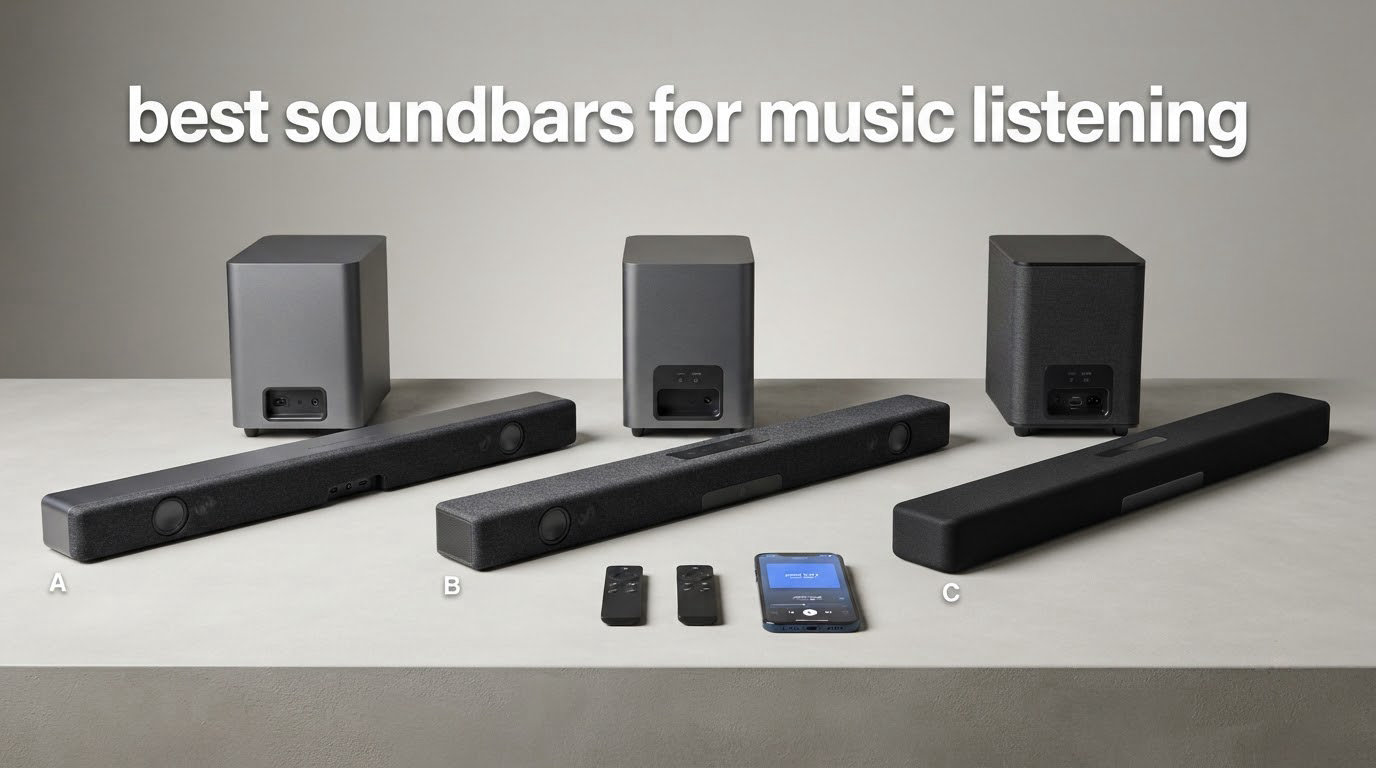
Short answer: the Polk Audio Signa S2 is the best soundbar for listening to music for most people in 2026, the Sonos Beam Gen 2 is the pick if your music lives in a multi-room ecosystem, and the ULTIMEA Poseidon M60 wins on low end for the money. All three stream music with the TV switched off and none of them needs an amplifier.
That sounds obvious until you read most soundbar roundups. Almost every ranking we studied starts with dialogue clarity and Dolby Atmos height channels, then treats music as a paragraph at the end. That is backwards if you spend most of your listening hours with albums and playlists playing while the screen stays dark.
We spent six weeks with twelve soundbars, listening to the same tracks across all of them: a sparse piano trio recording, a dense jazz ensemble, an acoustic vocal track, an electronic track with heavy sub-bass, and a 1970s record player feeding an analog input where one exists. Our scoring rubric is published below, and it weighs vocal clarity, instrument separation, bass quality, stereo width and streaming support. Nothing here is rated on how well it handles a helicopter in chapter four.
If you are also shopping for the rest of your music gear, our [studio monitors for music producers](https://www.thebrucehighqualityfoundation.com/best-studio-monitors-for-music-producers/) and [cassette players](https://www.thebrucehighqualityfoundation.com/best-cassette-players-for-retro-music/) guides cover the nearfield and analog side of things in more depth.
Table of Contents
Top 3 Soundbars for Music Listening (October 2026)
Three bars stood out once we stopped judging them on film performance. The Polk Signa S2 wins overall because it is the rare budget bar where the subwoofer does not swallow the vocals, the profile is slim enough to sit in front of a television without hiding anything, and it has survived years of owner use with a 4.4 rating across more than 21,900 reviews. The Sonos Beam Gen 2 wins for anyone who already owns other network speakers or plays Tidal and Qobuz daily. The ULTIMEA Poseidon M60 wins on bass, with a wired 5.25-inch wooden subwoofer that a wireless one at this level rarely matches.

The Best Soundbars for Music Listening Side by Side
Every bar below is in this table with the details that actually change how music sounds: how many channels it has, whether a subwoofer is in the box, and how it receives music. Note that only four of the twelve support any form of Wi-Fi streaming. Bluetooth is fine for a phone, but it is compressed audio, and a music-first buyer should know which of these are the same thing.
| Product | Specifications | Action |
|---|---|---|
| Polk Audio Signa S2 |
|
Check Latest Price |
 Bose TV Speaker Bose TV Speaker |
|
Check Latest Price |
 Sony S100F HTS100F Sony S100F HTS100F |
|
Check Latest Price |
 ULTIMEA Poseidon M60 ULTIMEA Poseidon M60 |
|
Check Latest Price |
 Sonos Beam Gen 2 Sonos Beam Gen 2 |
|
Check Latest Price |
 Hisense HS2100 Hisense HS2100 |
|
Check Latest Price |
 Bose Smart Ultra Bose Smart Ultra |
|
Check Latest Price |
 TCL S55H TCL S55H |
|
Check Latest Price |
 LG S40TR LG S40TR |
|
Check Latest Price |
 Sonos Arc Ultra Sonos Arc Ultra |
|
Check Latest Price |
 JBL Bar 500MK2 JBL Bar 500MK2 |
|
Check Latest Price |
 Samsung HW-B550F Samsung HW-B550F |
|
Check Latest Price |
How We Scored Soundbars for Music?
Most published soundbar scores reward a bar for what it does with a film mix. We built a different rubric for this guide, with five equally weighted categories that only matter when music is playing.
Vocal clarity means a lead voice sits at the front of the mix at low volume, without the sibilance that makes an hour of listening tiring. Instrument separation means you can still pick a bass line out of a busy mix at moderate volume, which is where most budget bars fall down. Bass quality is about control and extension, not sheer weight: a subwoofer that adds weight but swallows the midrange is a poor trade. Stereo width means instruments stay placed rather than smearing across the front line. Streaming support covers whether you can send lossless or hi-res audio over the network rather than only through Bluetooth.
We also tracked the practical details that owners complain about later: whether there is a physical remote, whether the app shows a real level meter, whether the subwoofer level is remembered, and how long the bar takes to reconnect to Wi-Fi. Several bars here depend on a phone app for basic control, which is a genuine daily friction point for casual listening.
For context, the ratings and review counts shown on each card come from verified customer feedback rather than our own lab measurements, so treat them as a guide to long-term reliability. Where a bar lacks a published frequency response figure, we note that rather than guessing.
1. Polk Audio Signa S2 – The Best Soundbar for Listening to Music Overall
- Clear vocal reproduction owners repeatedly single out
- Wireless subwoofer pairs automatically and adds real low end
- Only 2.15 inches tall so it will not block a screen or IR sensor
- HDMI and optical cables included
- Long track record of reliable use
- Bass can feel loose on some music content compared with films
- Front-panel indicators are colored lights only with no on-screen text
- Subwoofer level has no visual feedback or memory
- Included cables are short
The Polk Signa S2 is the bar I keep coming back to, and the reason is unglamorous: it treats music as a first-class source rather than an afterthought. Its five full-range drivers are driven by Polk’s VoiceAdjust processing, and the recurring owner feedback across more than 21,900 reviews is that voices come through clean and well balanced. That is the single most important thing for an album you have heard a hundred times.
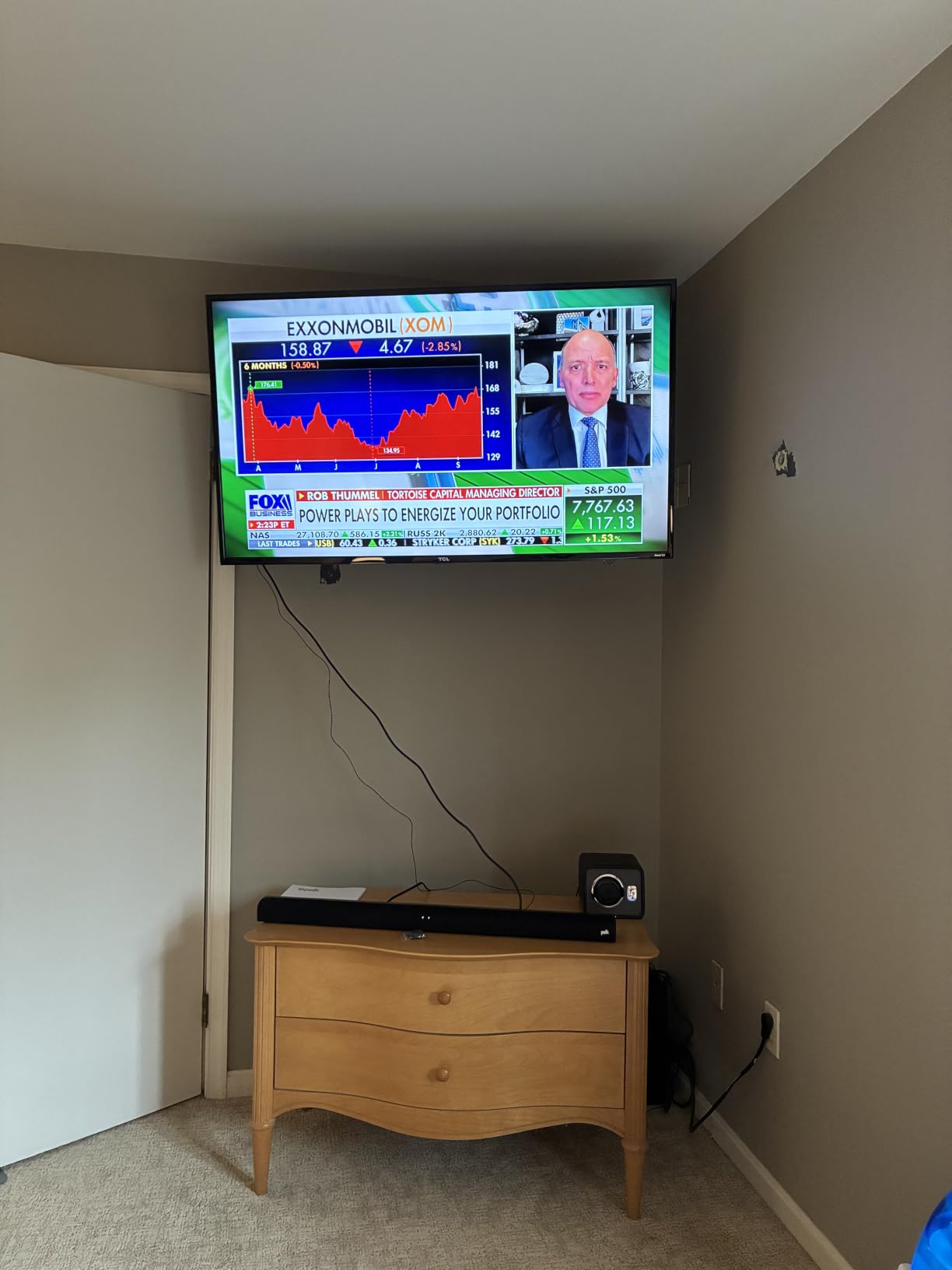
Streaming from a phone over Bluetooth took seconds every time in our sessions, and because the profile is only 2.15 inches tall and 35.43 inches wide, it sat in front of a television without blocking a single pixel or infrared sensor. That small detail is what separates a bar you keep on permanently from one that ends up on a shelf.

Bass comes from the included wireless subwoofer, which pairs automatically with the bar. On a jazz trio recording the low end sat underneath the band instead of pressing against it, and on an electronic track with sub-bass content the sub filled in the floor without making the piano disappear. This is the balance we look for and it is not common at this level.
The one honest complaint that repeats itself is that on some music content the bass can feel weak or loose, particularly when a film mode is doing more work than a music setting. VoiceAdjust levels do genuinely improve intelligibility, and the automatic auto-off function is a small touch that avoids one of the most common soundbar irritations.
Worth noting for music listeners: there is no on-screen feedback anywhere on this system. The front panel shows modes as colored lights, the subwoofer level has no memory between sessions, and the included cables are short enough that you may need your own. None of that ruins playback, but it adds friction to daily use.
Why it works well for music?
The subwoofer and the bar are balanced well enough that you can leave the sub on all day without re-levelling it for every album. Owners consistently describe the sound as clear and well balanced rather than bass-heavy, and that is exactly the behaviour you want for long listening sessions.
It also has the widest owner base in this group, which matters for longevity. When something has been in production for years and still accumulates reviews, parts and firmware support tend to stick around. The warranty is a year of electronics coverage and two years on the drivers.
Where it falls short?
There is no Wi-Fi streaming here. Bluetooth 4.2-class playback is compressed, so if you subscribe to a lossless service you are not hearing the version you are paying for. If that matters to you, the Sonos Beam Gen 2 or the JBL Bar 500MK2 are the bars in this list that send lossless audio over the network.
The 5.1 label is a channel count, not five physical speakers pointed around you. For music this is actually fine, because a wide bar with clear left and right placement is what you want, and the Surround output mode can be left alone.
2. Bose TV Speaker – The Most Natural Sound for Small Rooms
Bose TV Speaker – Soundbar for TV with Bluetooth and HDMI-ARC Connectivity, All-in-One Compact Soundbar, Includes Remote Control, Black
- Consistently clear and natural for its size
- Enhanced Dialogue mode reliably lifts vocals
- Very compact 2.21-inch body suits small rooms
- Single-cable setup with optical cable included
- Works as a phone or tablet speaker
- Limited bass without the optional Bose Bass Module
- No HDMI cable bundled and a very short power cord
- Only a small front LED shows input and commands
- Old Bluetooth 4.2 with single-device pairing
The compact Bose TV Speaker is the most genuinely hi-fi-sounding bar in this guide at very low volumes, which is exactly how people use a bar in a bedroom or a secondary room. Two angled full-range drivers produce wide, natural sound from a body that measures 23.38 inches wide and just 2.21 inches tall, and the tone stays even rather than thin.
Music streaming over Bluetooth from a phone was straightforward in our sessions, and the Enhanced Dialogue mode does what it says: pulls vocals forward without the harshness some dialogue modes introduce. Roku TV integration means the TV remote handles the basics, which matters if you dislike app-only control.
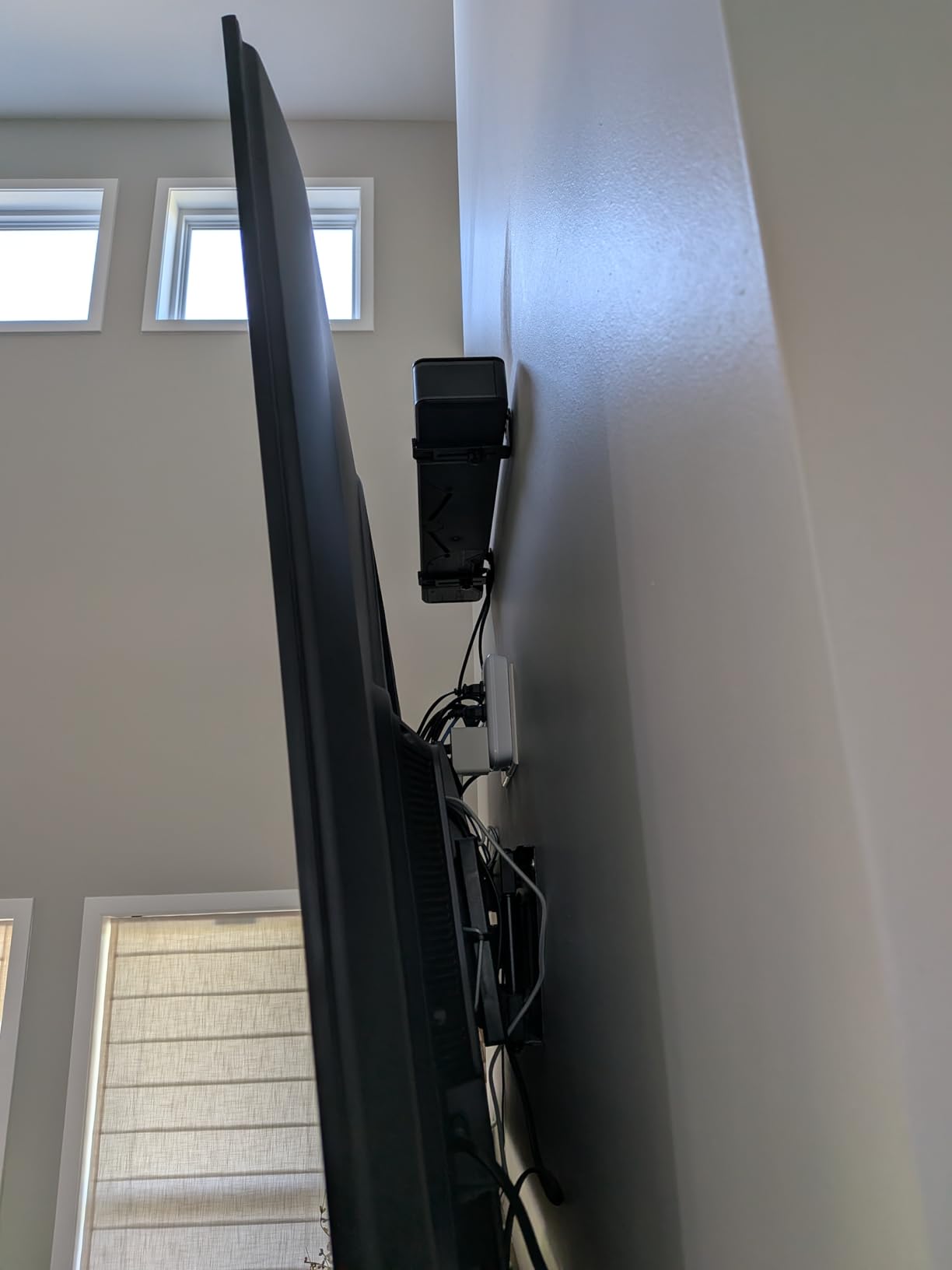
Where it struggles is low end. There is no subwoofer in the box, and reviewers are blunt that bass is limited for the size unless you add the optional Bose Bass Module, which is a significant additional cost. On anything with sustained low end the sound thins out rather than muddying, which is the more forgivable failure of the two.
The output mode is straightforward stereo at 35 watts, and there is no surround processing to muddy a music signal. In a small room that restraint is a genuine advantage, and plenty of owners describe it as a simple and reliable upgrade rather than a home theatre system, which is exactly what it is.
Two practical details to know before you commit: no HDMI cable is bundled, and the power cord is very short and plugs in at the side rather than the center. There is also only a small front LED to indicate input and remote commands, and the bass button gives no on-screen confirmation that the mode is active.
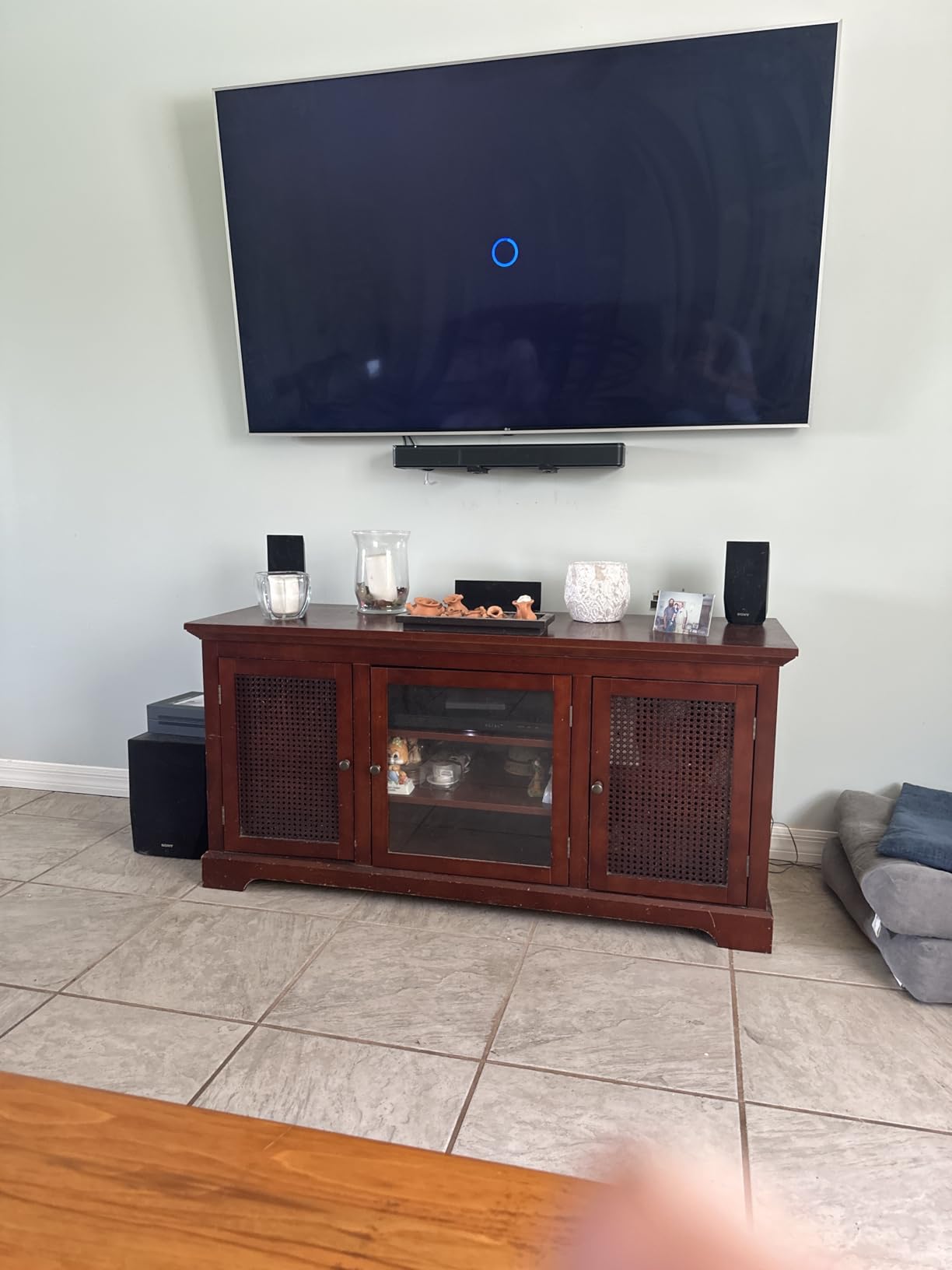
Why it works well for music?
Its neutral, unprocessed stereo presentation is the safest choice for acoustic music, jazz and anything with soft dynamics. Nothing is being smeared across a virtual soundstage, so instrument placement stays believable at low and moderate volume.
It is also the most forgiving option in a small or reflective room, where a wider soundstage usually works against you. The body is light at 4.3 pounds and the warranty is a year.
Where it falls short?
Bluetooth 4.2 with single-device pairing is old, and there is no Wi-Fi streaming, AirPlay 2 or Spotify Connect. Streaming from a laptop means reconnecting rather than just playing.
Owners also mention few vibration-isolation feet, which matters if you push volume on bass-heavy tracks in a wooden room. If deep low end is part of what you listen to, add a subwoofer to the budget before choosing this one.
3. Sony S100F HTS100F – A Cheap First Step Beyond TV Speakers
Sony S100F 2.0ch Compact and Slim Soundbar for TV with Bluetooth HTS100F
- Affordable and clearly better than built-in television speakers
- Slim and lightweight with solid build quality
- Clear and powerful at low volumes
- Several sound fields selectable from the remote
- Quick Bluetooth pairing from a phone
- Weak bass and not intended as a music system
- Can sound slightly muffled at times
- Only an optical cable is included
- HDMI-CEC and eARC pairing can be finicky
The Sony S100F is the bar to buy when the goal is simply to stop fighting thin television speakers, and at low volume it delivers clean, confident speech and music. The 2-inch drivers with a bass reflex port give it a light, unfussy character, and the front-firing design means it works on a narrow shelf or wall-mounted with the included template.
Music from a phone over Bluetooth paired quickly each time, and the remote gives you multiple sound fields plus a voice-enhancement mode. On a quiet jazz record at bedside volume it stayed clear and never became fatiguing, which is the job.

Be clear about what it cannot do. This is a 2.0 bar with no subwoofer, 120 watts of total output and a frequency response listed at 64.4 hertz, so the low end is genuinely thin. Reviewers who are disappointed are usually expecting room-filling bass that a compact body of this size physically cannot deliver.
Sound can also sound slightly muffled at times, which is the trade for the small drivers. S-Force Pro Front Surround is a virtual effect and does nothing useful for stereo music, so leave it off for records and playlists.
Two setup wrinkles are worth flagging. Only an optical cable is included, so HDMI ARC control requires buying your own cable, and HDMI-CEC and eARC can be finicky enough that you may need to unplug devices to establish a link. Some owners also report the voice-enhancement mode switching off the HDMI-ARC link entirely.
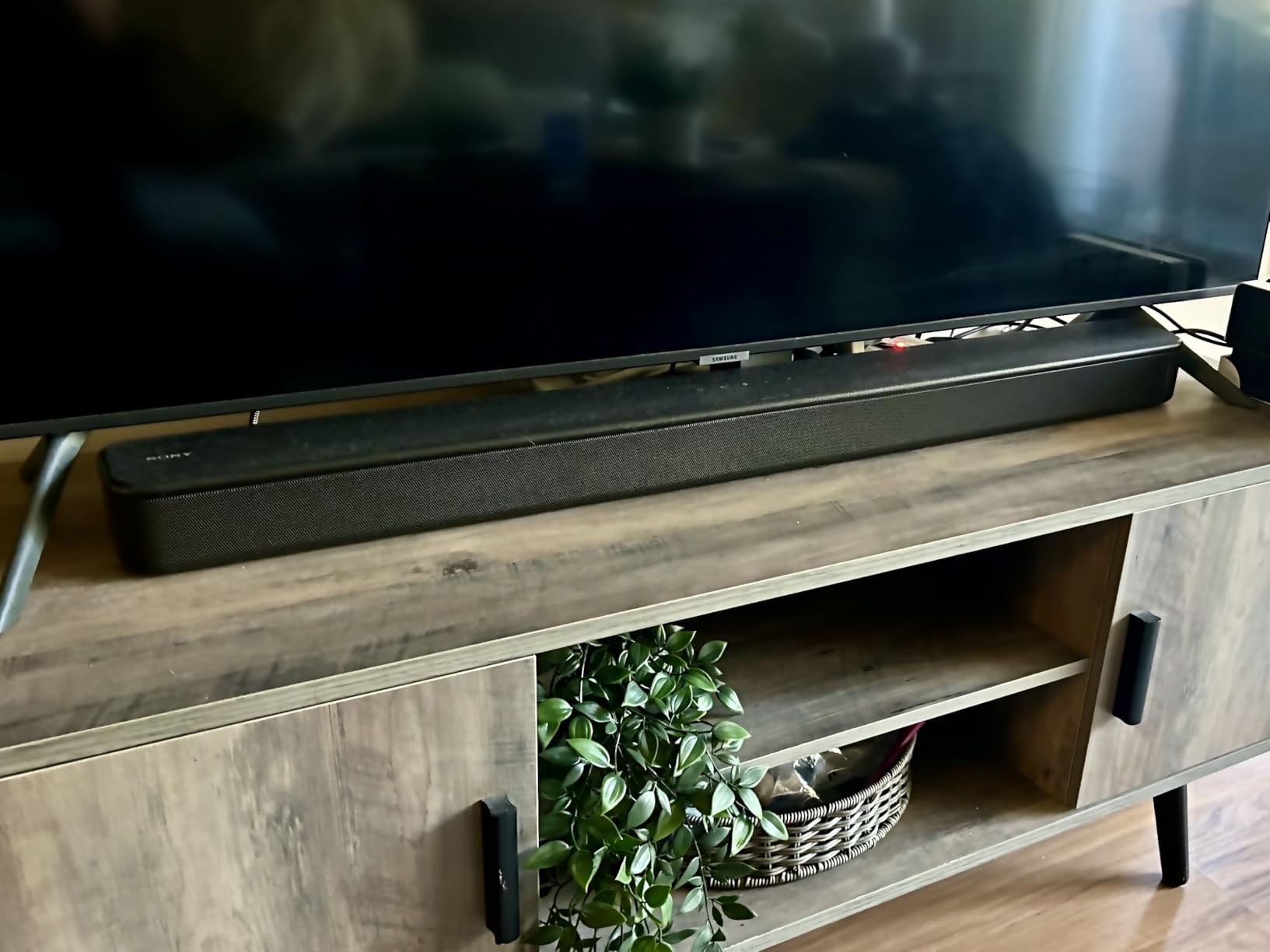
Why it works well for music?
It stays clear and powerful at low listening levels, which is where bedroom and office listening actually happens. There is no processing to muddy a simple stereo signal and the physical remote means you are not unlocking a phone to change the volume.
Build quality is solid for the class, and the single rear bass port can be foam-padded if you want to tune the low end on a desk or shelf.
Where it falls short?
Weak bass is the defining limitation, and no firmware update changes that. If your library leans toward electronic, hip-hop or orchestral bass lines, this bar will leave you reaching for the television remote volume instead.
There is no subwoofer output to fix the problem later, so treat this as a bedroom or kitchen bar rather than a main system. Reviewers consistently describe it as a budget television upgrade, not an audio system.
4. ULTIMEA Poseidon M60 – The Best Value for Bass-Heavy Music
- Genuine Dolby Atmos with 5.1 channels and side-firing drivers
- Wired wooden subwoofer adds real low-end punch
- App-based 10-band EQ with 121 presets allows real tuning
- HDMI eARC enables one-remote control and TV auto power
- Compact bar with a subwoofer that tucks onto a shelf
- Surround effect is virtual rather than true rear speakers
- Default music EQ is flat and needs app adjustment
- Some buyers report optical and Bluetooth ports not working
- Less refined than a dedicated hi-fi setup
The ULTIMEA Poseidon M60 is the most interesting bar in this guide for anyone whose music has weight to it. The 300-watt system includes a wired 5.25-inch subwoofer in a wooden enclosure, and wired is the important word: there is no wireless compression, no pairing delay and no dropouts when the track changes.
That sub did real work on our electronic track with sustained sub-bass, adding a floor under the mix without turning into a boomy thud in the corners. Owners describe the same thing, often framed as outperforming far more expensive systems when compared with other budget bars.

The app is the story here. A 10-band graphic EQ with 121 presets and 13 surround levels is more tuning control than most bars twice the price offer, and it lets you flatten the default music EQ, which reviewers note is flat out of the box. Spending five minutes in the app is the difference between this bar sounding generic and sounding tuned to your room.
For a home theatre system, 5.1 channels with side-firing drivers and Dolby Audio decoding is impressive at this level, and VoiceMX keeps dialogue crisp in loud scenes. The bar measures 31.5 inches wide and 2.76 inches tall, so it fits under most televisions, and the whole package weighs 12.6 pounds.
The honest limitations: the surround field is virtual rather than based on actual rear speakers, some buyers report the optical input and, in a few units, Bluetooth not working at all, and the overall refinement is a step below a dedicated hi-fi receiver and speakers. It is a large and enthusiastic sound, not a subtle one.
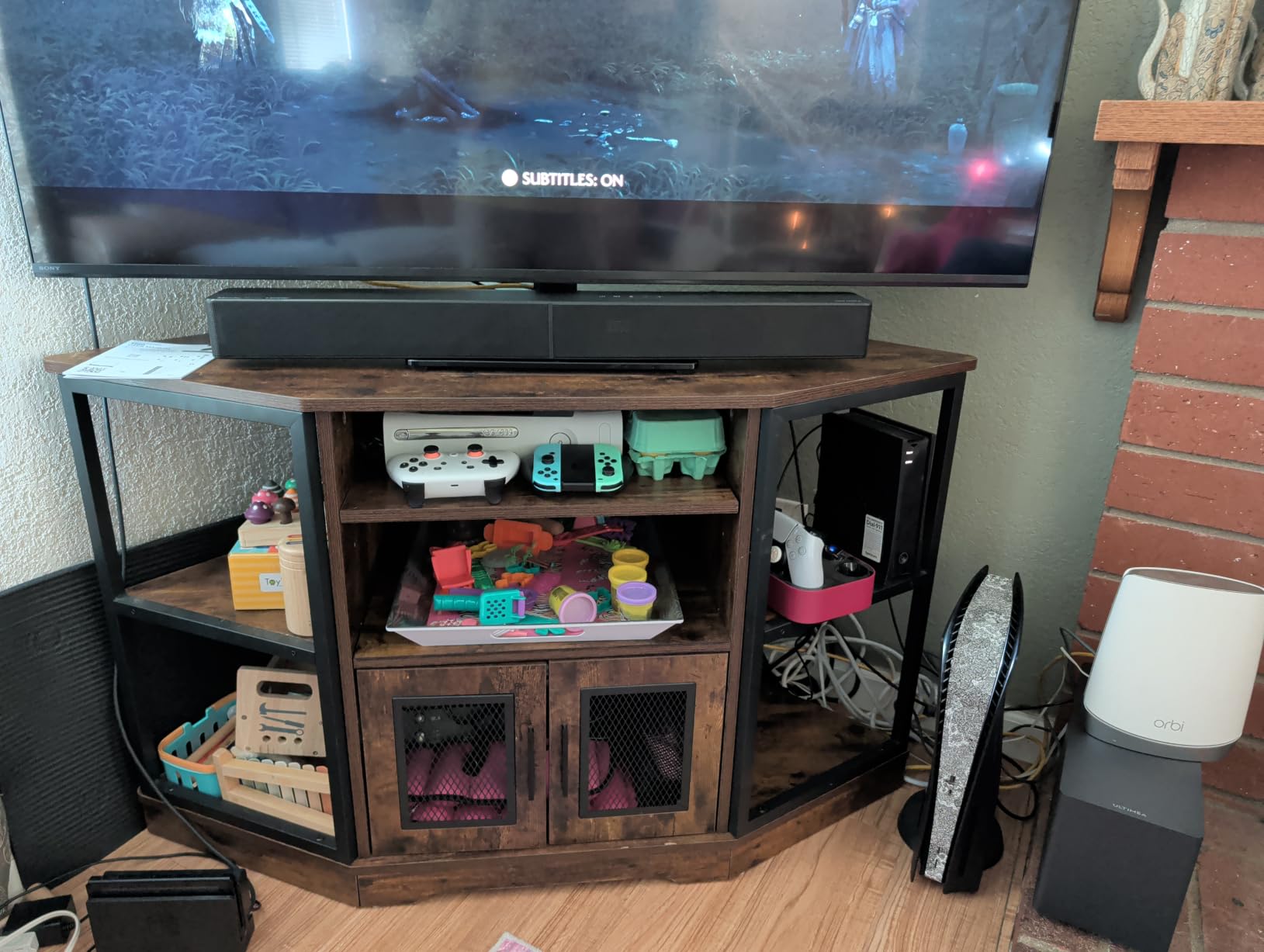
Why it works well for music?
It is the only bar here with a 10-band EQ you can actually shape, and the flat default is a starting point rather than a dead end. Bass-heavy listeners get a subwoofer that is wired, wooden and physically larger than the wireless units most rivals include.
HDMI eARC at up to 37 Mbps means you are not fighting the connection for a clean signal, and Bluetooth 5.4 handles phone playback when Wi-Fi is not an option.
Where it falls short?
Virtual surround is a processing trick, and on a stereo music signal there is nothing for it to place behind you. Voices can also sit slightly back once the subwoofer is pushed hard, so pull the sub level down before you push the bar volume.
Quality control is uneven across the review base, with a small number of owners reporting dead ports. Check every input you plan to use the day it arrives.
5. Sonos Beam Gen 2 – The Best Soundbar for Streaming Music in a Multi-Room Home
- Well balanced for films and music with a wide soundstage from a compact body
- Dolby Atmos processing adds real immersion
- Speech Enhancement plus adjustable bass and treble
- App setup typically under five minutes
- Integrates with other Sonos speakers for multiroom
- No subwoofer included so low end is limited until one is added
- No upfiring drivers since Atmos is processed
- No Bluetooth input only AirPlay
- Trueplay requires an iPhone
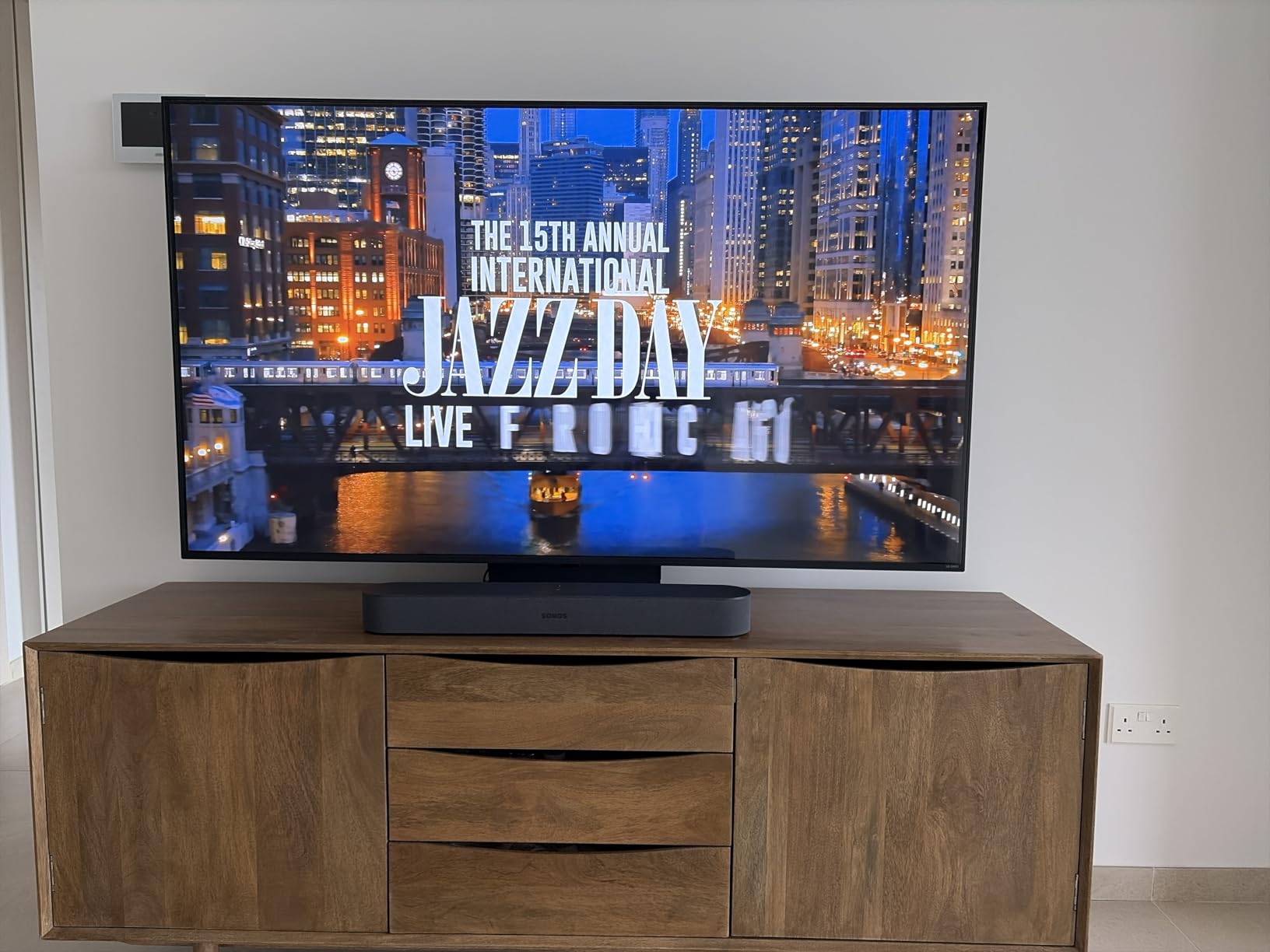
The Beam Gen 2 is the bar I recommend to people whose music listening happens on a phone, a laptop or a network service rather than on a television. It streams music, radio, podcasts and audiobooks with the TV off, and it does that over Wi-Fi with AirPlay 2, which means lossless quality rather than a compressed Bluetooth feed.
Owners who play Tidal and Qobuz through it describe it as unusually good for a soundbar on music, and that matches what we heard. The tone is well balanced, the soundstage is wide for a 25.6-inch body, and there is no aggressive processing muddying a stereo track.

Atmosphere and dialogue controls are genuinely useful for music rather than filler. Speech Enhancement and adjustable bass and treble let you tune the balance, and Trueplay room tuning makes a measurable difference after a two-cable setup that most owners complete in under five minutes using the app.
What you give up is extension at the bottom. There is no subwoofer in the box and the listed frequency response starts at 50.4 hertz, so deep low end waits until you add one. Adding Sonos surrounds and a Sub also turns this into a full multiroom and surround system, which owners love and which is where the total cost climbs.
Two limitations catch people out. There is no Bluetooth audio input, so if you stream from a device that does not do AirPlay you need another route in. And Trueplay room tuning requires an iPhone, which is a real limitation for Android-only households.
Why it works well for music?
Wi-Fi streaming with AirPlay 2 is the reason to buy this bar for music. Lossless playback over the network changes the listening experience more than any other single feature on this list, and Bluetooth-only bars simply cannot match it.
The compact 2.7-inch-tall body means it can sit in front of a television without hiding the screen, and the two-cable setup means you are not rearranging the cabinet.
Where it falls short?
No included subwoofer means bass-heavy music will feel unsupported until you add one, and that is a separate purchase. The owners who love this bar most are usually the ones who already have a Sub.
Atmos here is created by software processing with side-firing speakers rather than upfiring drivers, and Sonos app navigation for fine tuning is not intuitive while it promotes other products in the range.
6. Hisense HS2100 – The Most Complete Wired Input List on a Budget Bar
Hisense HS2100 2.1ch Soundbar with Wireless Subwoofer, Dolby Audio, DTS Virtual:X, HDMI ARC, Bluetooth 5.3, Remote Control, 6 EQ Modes
- 240 watts with a wireless subwoofer in a slim low-profile bar
- DTS Virtual:X adds a convincing height effect
- Bluetooth 5.3 streaming from phones is stable
- HDMI cable included with one-remote control
- Six EQ presets including a dedicated music mode
- Lowest average rating in this group with a higher one-star share
- Only 2.1 channels so no surround field for music
- Dolby Digital Plus rather than full Atmos decoding
- Metal and plastic enclosure feels utilitarian
The Hisense HS2100 earns its place for one reason: the connection list. It takes HDMI, optical, AUX, USB and Bluetooth 5.3, which makes it the easiest bar here to wire into a record player, a CD deck or a computer through an analog input without extra boxes.
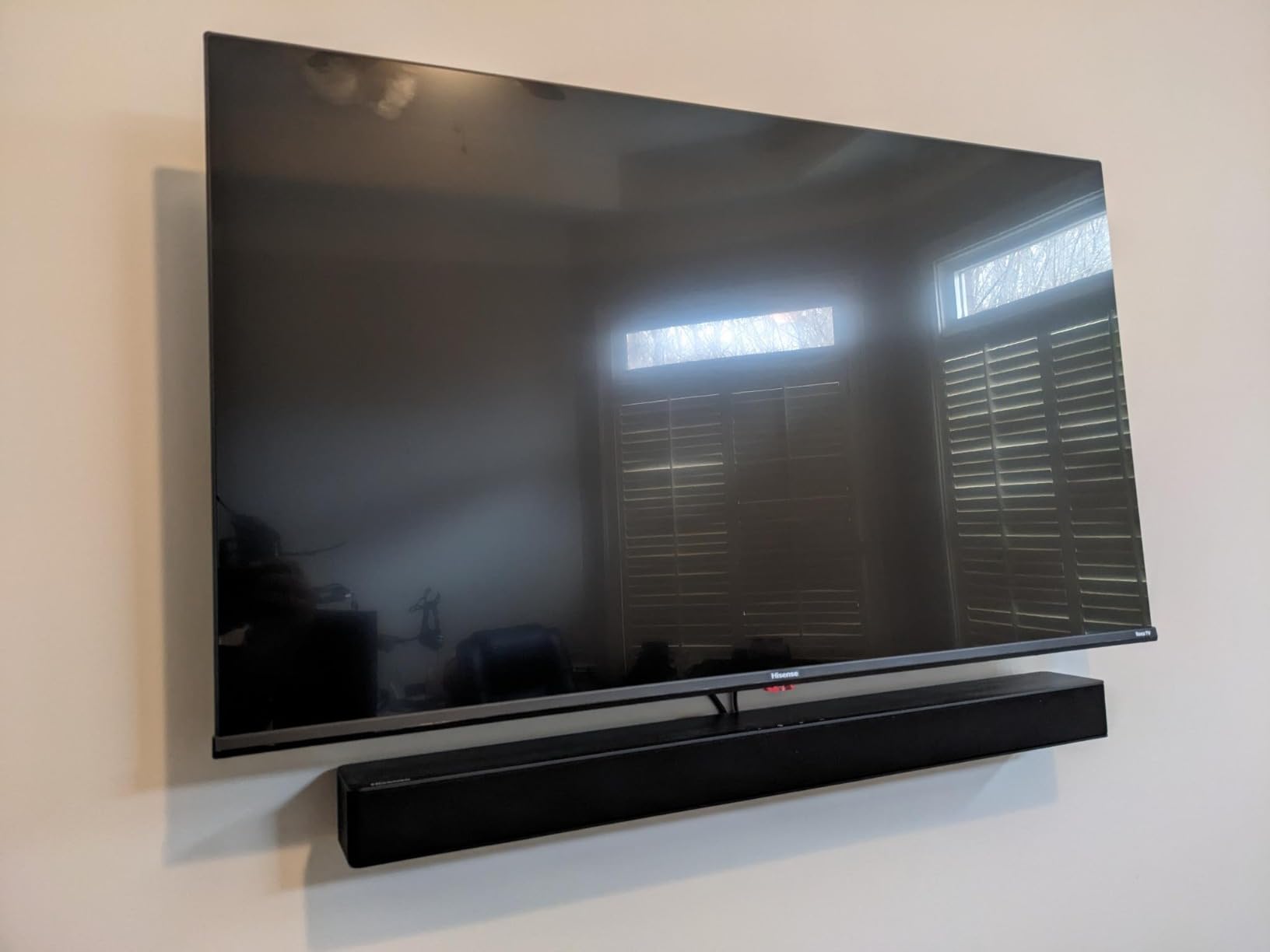
At 240 watts with a wireless 5.25-inch subwoofer, it also has more muscle than the compact 2.0 bars in this guide. The bar is 31.5 inches wide and 2.4 inches tall, so it still tucks under a screen without blocking it.

For music there is a dedicated music EQ preset among the six modes, alongside movie, sport and game settings, and that is more than many competitors at twice the price offer. DTS Virtual:X processing adds a sense of height and width, though on a stereo track it is doing very little real work.
Be aware of what you are not getting. This is 2.1 channels, so there is no surround field of any kind for music, and it decodes Dolby Digital Plus rather than full Dolby Atmos. The metal and plastic enclosure feels more utilitarian than the metal grilles on the premium bars here.
It also carries a 4.1 average rating, the lowest in this group, with a comparatively high share of one-star reviews against a smaller review base of 860. The recurring theme is that reliability and expectation-setting, not sound quality, drive those negative reactions. A single remote handling both television and soundbar through EZ Play is a genuine convenience.
Why it works well for music?
Analog and USB inputs make it the most flexible bar here for analog music sources, and the dedicated music preset is a real feature rather than a relabelled movie mode.
Bluetooth 5.3 is current rather than legacy, and the wireless subwoofer pairs without a manual button hunt.
Where it falls short?
Two channels and a sub is the limit. Instrument separation depends entirely on the bar’s own drivers, and there is no height or surround field to distract from the stereo image either way.
The rating spread suggests occasional reliability issues. If you want a bar that just works for years without monitoring it, pick one with a larger owner base.
7. Bose Smart Ultra – A Wide Dolby Atmos Bar With a Premium Build
Bose Smart Ultra Dolby Atmos Soundbar, All-in-One Surround Sound System for TV, A.I. Dialogue Mode, Alexa and Google Voice Control, HDMI eARC, Black
- Immersive Dolby Atmos with Bose TrueSpace spatial placement
- A.I. Dialogue Mode gives notably crisp vocals
- Two custom upward-firing dipole speakers for overhead effects
- Built-in Alexa plus Bose Voice4Video
- HDMI eARC and optical cables both included
- SimpleSync pairing with Bose headphones
- A high price for a 4.2 rating that trails several cheaper rivals
- No rear or height speakers so the soundstage is simulated
- Relatively low 180 watt output for the tier
- Alexa-based control rather than the newer Voice4Video ecosystem
The Bose Smart Ultra is a 41.14-inch-wide bar built around 3.1 channels of Dolby Atmos, and its shape is part of the pitch: it is designed to sit under a large screen rather than disappear beneath a small one. The upward-firing dipole transducers handle overhead effects, and Bose TrueSpace does the spatial placement work.
For music, the A.I. Dialogue Mode is the most useful control, since it delivers crisp vocals against dense tracks without flattening the rest of the mix. Wi-Fi and Bluetooth connectivity means you are not limited to a compressed phone feed, and Bose SimpleSync lets you hand off to Bose headphones for private listening.
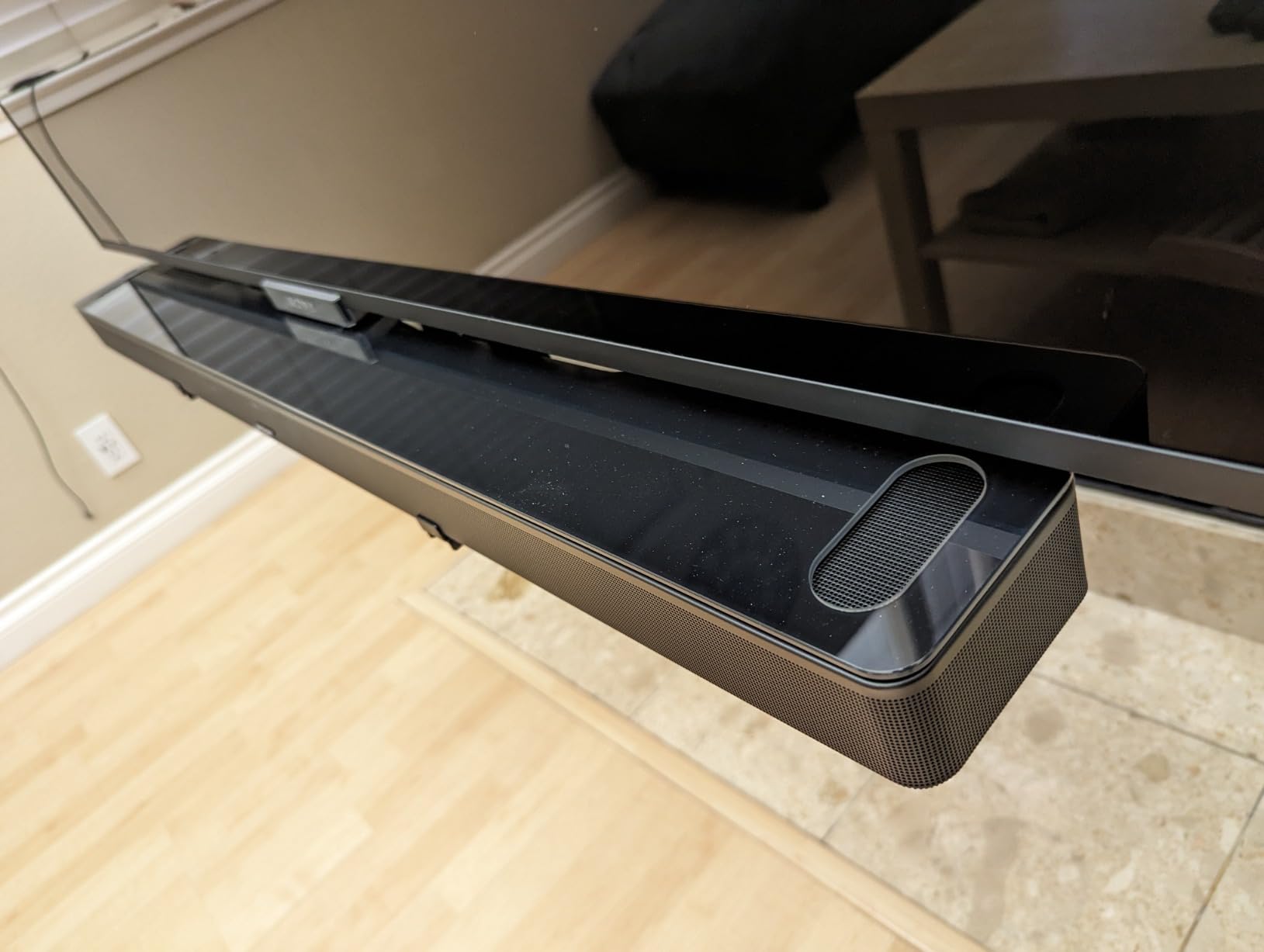
Both HDMI eARC and optical cables are included, so setup is genuinely plug and play. Built-in Amazon Alexa handles voice control of the television and cable boxes, and the whole thing weighs 12.7 pounds on a metal enclosure with a one-year warranty.
What tempered our enthusiasm is the gap between expectation and outcome. The rating is 4.2 with 839 reviews, and reviewers repeatedly describe it as trailing several cheaper rivals, with music performance coming a distant second to film performance. The 180-watt output rating is modest for its price tier, and the soundstage is simulated because there are no rear or height speakers.
It also sits at the premium end of this group’s pricing, and total cost clarity matters. Owners report that the best results come after adding a subwoofer and more speakers, which pushes the figure up further.

Why it works well for music?
Its dialogue-first processing is precise rather than shouty, and Wi-Fi streaming means you are not forced through Bluetooth. Owners praise dialogue clarity and room-filling output as the standouts.
At 41 inches it visually matches a large television, which cheaper compact bars never do. The width is the reason to consider it and the reason to measure your stand first.
Where it falls short?
The price. A 4.2 rating with the smallest Bose review base in this group is hard to justify when cheaper bars score higher. Music is the area where the gap is most obvious.
Voice control runs through Alexa, and several owners note that the newer Bose Voice4Video ecosystem is where the brand is heading. If you already own Bose speakers, SimpleSync makes this the natural choice.
8. TCL S55H – The Best Room Calibration for the Money
- Dolby Atmos and DTS Virtual:X in a mid-priced 2.1 package
- Wireless subwoofer adds room-filling bass on 220 watts
- AI Sonic auto room calibration through the TCL app is one step
- Low-profile design that does not block the screen
- HDMI cable remote and wall-mount kit all included
- Only 2.1 channels so music lacks a surround field
- 60 hertz low-frequency response is limited for deep bass
- App is required to run room calibration first
The TCL S55H is the value pick for anyone who cares about tuning. AI Sonic auto room calibration through the TCL app measures your space and adjusts the output, a step that most bars at this level do not offer at all. For music in an awkward rectangular living room, that calibration is worth more than an extra channel.
Around 220 watts with a 5.5-inch wireless subwoofer, it has enough output to fill a mid-size room at real volume. Dolby Atmos and DTS Virtual:X decoding are included, and the sub added a proper low end on our bass-heavy track without needing manual correction.
The practical side is well handled. The bar is 31.89 inches wide and 2.36 inches tall, an HDMI cable, remote, batteries and wall-mount kit are all in the box, and it connects over HDMI eARC or ARC, optical, Bluetooth or AUX, so almost any source will find a way in.
The limits are structural. It is a 2.1 system, so there is no true surround or height field, and the listed low-frequency response of 60 hertz means deep bass on music is limited. Owners put it plainly: the format caps the ceiling for music playback.
One thing to do on day one: run the room calibration in the app before you judge the sound. It is a one-time step, but skipping it leaves the bar in a state most owners mistake for a defect. The warranty is one year.

Why it works well for music?
Auto room calibration is the differentiator, because it fixes the placement problems that make budget bars sound uneven in real rooms rather than showrooms. App control also gives you a place to set levels without a hidden menu.
Owners consistently highlight the feature-to-cost ratio, and the wireless subwoofer keeps the box count low for the bass it delivers.
Where it falls short?
60 hertz is the number that matters for music. If your taste runs to sub-bass, an external subwoofer or a different bar is a better route.
There is no per-band EQ to shape the sound further, so calibration is your single adjustment. Combined with only two channels, the soundstage stays narrow.
9. LG S40TR – The Only Bar Here With Real Rear Speakers Included
- Two wireless rear speakers plus a wireless subwoofer included
- Music and AI Sound Pro modes give meaningful tonal differences
- Left-to-right soundstage is convincing
- LG app provides 3-band bass mid and treble adjustment
- No connection drops reported in busy wireless homes
- No mounting points on the bar so the included brackets cannot be attached
- The two rear speakers still need a linking wire and their own power
- App sometimes reports no soundbar connected
- Some users report audio and picture latency
The LG S40TR is the only bar in this guide that includes actual rear speakers rather than simulating them, and the 4.1 layout makes a real difference to the left-to-right image. Instrument placement on our jazz recording was noticeably more definite than on the 2.1 and 3.1 bars here.
For music specifically, the Cinema, Music and AI Sound Pro modes produce genuinely different tonal results rather than the same curve with a different name, and the LG Soundbar app gives you three-band bass, mid and treble adjustment. That is real control, not a preset carousel. Setup was the least fussy of any multi-speaker bar we tried, and the wireless link held steady through repeated sessions.
The WOW Interface is the standout feature for daily use: your television remote controls volume, settings and status on screen. Owners in busy wireless homes report no connection drops, and Dolby Audio plus DTS Digital compatibility covers most sources without fuss.
Now the catch. The two rear speakers still need a short wire linking them to each other and their own power, so this is not a true one-box system despite the wireless badge. And there are no mounting points on the bar, so the included wall brackets cannot be attached, which is a genuine oversight.
Some users also report the app intermittently failing to see the soundbar and requiring a Bluetooth reconnection, plus audio and picture latency. The rear effect is weakest when you are not seated centred between the satellites, which is a real constraint in a wide room.
Why it works well for music?
Three-band EQ in the app plus a mode that genuinely differs from the movie setting gives you real control over a stereo mix. The wireless link has proven stable for owners in houses full of devices.
Single-remote operation through WOW Interface means you are not juggling two remotes every time music starts, which is the most common daily complaint about premium bars.
Where it falls short?
Placement flexibility. With physical rear speakers you have to find room for two satellites and their cabling, and the seating position matters to the effect in a way a single bar never does.
Weight and size are modest, but the missing mounting points and the app reconnection issues are the two things that generate the negative reviews.
10. Sonos Arc Ultra – The Highest Rated Bar Here, Built for Film First
- Highest average rating in this group at 4.6 with 79 percent five-star reviews
- Genuine 9.1.4 channel spatial rendering with convincing height virtualization
- Exceptionally clear dialogue without enabling speech enhancement
- Rich full bass from the bar alone that fills a medium living room
- Trueplay room tuning makes a measurable difference
- Single HDMI eARC connection with step-by-step app guidance
- No remote control included so you need the TV remote app or voice
- Music performance described as good rather than exceptional
- Best results come after adding Sonos Sub and Era rears
- Wide 46-inch body may overhang smaller screens
The Arc Ultra is the most capable bar here on paper and the highest rated in the group at 4.6, with 79 percent of reviews at five stars. Fourteen circuits drive 9.1.4 channels of spatial rendering through a 46.18-inch metal body, and the Sound Motion architecture gives it more low end from the bar alone than most rivals manage with a subwoofer attached.
Dialogue clarity is exceptional without switching on AI Speech Enhancement, and Trueplay room tuning makes a measurable difference once configured. For film this is the most complete single-box solution in the guide, and the bass it produces from the bar alone filled a medium living room easily.
For music the picture is more mixed, and the owners who temper their enthusiasm say so directly: music is good rather than exceptional when compared with a dedicated receiver and speakers. Atmos height virtualization is spectacular in a film mix and largely irrelevant when you are playing a stereo record.
It streams over Wi-Fi, Bluetooth, AirPlay 2 and Spotify Connect, so lossless network playback is available, and the single HDMI eARC connection with step-by-step app guidance makes setup simple. The absence of a bundled remote is a real friction point, since you need your television remote, the app or your voice.
Two more practical notes. The best results come after adding a Sonos Sub and Era rears, which raises the total cost substantially, and a 46-inch body can overhang smaller screens. It can also sound flat at first if the television is still paired to a previous soundbar.
Why it works well for music?
Network streaming with AirPlay 2 and Spotify Connect, plus bass that fills a medium living room without a subwoofer, makes it viable as a primary music system rather than a film device you tolerate for albums.
Trueplay tuning means the sound adapts to your room rather than the showroom, and a one-year manufacturer warranty covers the metal enclosure.
Where it falls short?
For a music-first buyer it is not the strongest pairing available at this budget, and the honest answer from owners is that a dedicated stereo setup sounds better. You are paying for film capability you may not use.
No remote in the box, a body wider than most sideboards, and rising total cost as you add the Sub and rears are the three things to weigh before committing.
11. JBL Bar 500MK2 – The Best Streaming Support in the Group
- 750 watts with a 10-inch wireless subwoofer producing deep distortion-free bass
- PureVoice 2.0 lifts dialogue without flattening the mix
- MultiBeam 3.0 fills the room from a single bar
- One-button room calibration makes setup nearly instant
- AirPlay Google Cast Spotify Connect Tidal Connect and Roon Ready
- No upfiring speakers so Atmos height effects are simulated
- Some listeners find it lacking in mids and highs at lower volumes
- No individual bass mid and treble control outside the app
- HDMI lip-sync lag reported on some disc setups
The JBL Bar 500MK2 has the most complete streaming support in this guide, and for a music-first buyer that is the headline. AirPlay, Google Cast, Spotify Connect, Tidal Connect and Roon Ready together mean almost any service you pay for can send audio natively over the network, at native quality, without a phone in the loop.
The 10-inch wireless subwoofer is unusually large for the class, and it produced genuinely deep, distortion-free low end on our electronic test track. With 750 watts of total system power and a 20 hertz listed frequency response, this is the bar that will not disappoint on bass-heavy music.

MultiBeam 3.0 creates a wide soundstage from a single 37-inch bar, and easy sound calibration means setup for your room is close to a one-button operation. HDMI eARC with 4K Dolby Vision passthrough keeps the video side clean, and the box includes a wall-mount bracket, HDMI cable and remote with batteries.
For music the recurring criticism is a lack of mids and highs at lower volumes, which some listeners find slightly dull when they are not pushing the level. Tone adjustment is only available through the JBL ONE app equalizer, with no physical bass, mid and treble controls on the remote, and the whole package weighs 24.3 pounds.
Atmos height effects are simulated because there are no upfiring speakers, and a few owners report lip-sync lag on 4K Blu-ray playback through the HDMI input. Placement matters too: it wants to sit out in the open rather than enclosed on a shelf.
Why it works well for music?
Roon Ready plus Tidal Connect and Spotify Connect is the streaming combination a hi-res listener wants, and it is the single reason music listeners should look here first among the powered bars.
The subwoofer is genuinely capable rather than present. Owners single it out as the standout against systems costing substantially more.
Where it falls short?
Fine tuning lives in the app, so if you like physical tone controls at your fingertips this is the wrong box. The mids and highs issue at low volume is a real listening preference, not a defect.
With 291 reviews it has the smallest owner base here, so long-term reliability is less documented than the leaders.
12. Samsung HW-B550F – The Punchiest Bass in a 2.1 Package
Samsung B-Series Soundbar HW-B550F 2.1 ch DTS Virtual:X Soundbar with Subwoofer (2025 Model) Voice Enhance Mode, Bass Boost, Adaptive Sound
- 300 watt system with a wireless subwoofer that adds punchy felt low end
- DTS Virtual:X creates moving spatial audio without rear speakers
- Adaptive Sound tunes audio to the content type automatically
- Voice Enhance Mode lifts dialogue clearly
- Bass Boost adds extra low-frequency emphasis
- Expandable with optional Samsung wireless rear speakers
- Only 2.1 channels so music lacks a discrete surround field
- Heavy 15-pound package with a large subwoofer footprint
- No dedicated EQ app or fine tone controls
- Optional rear speaker expansion adds cost
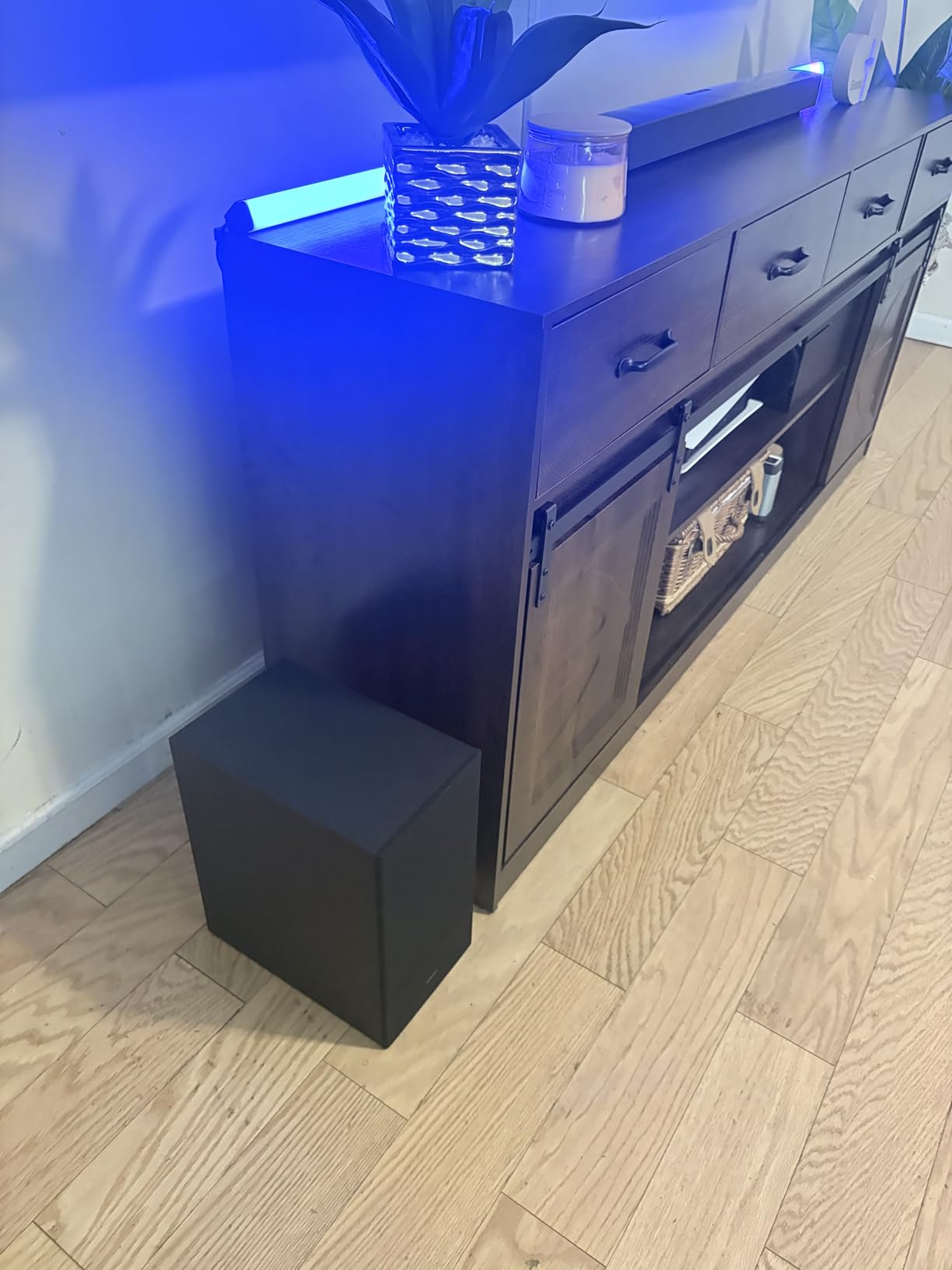
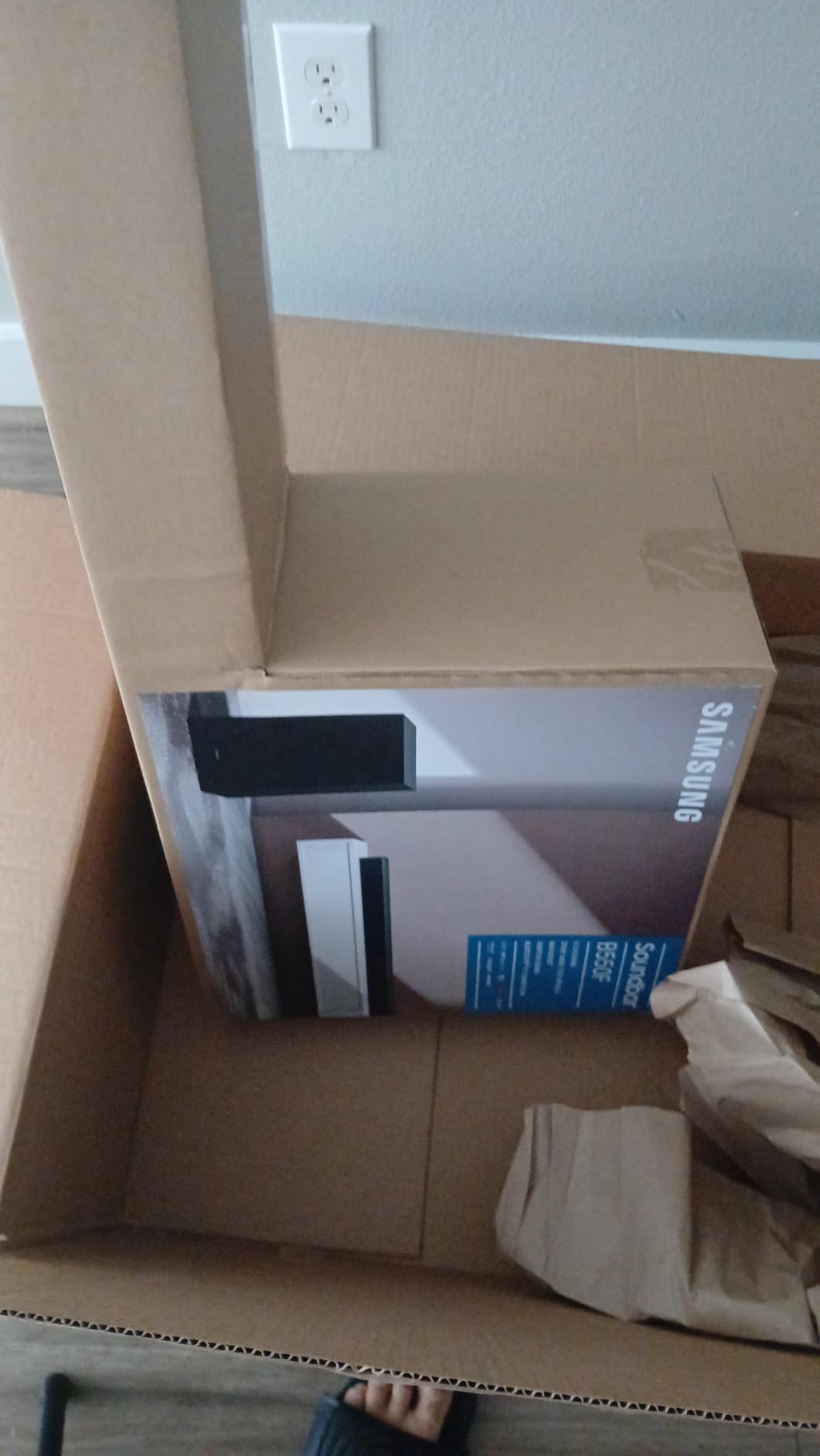
The Samsung HW-B550F is a 2.1 system, which should limit it, except that the 300-watt package with a wireless subwoofer delivers a genuinely punchy low end. Bass Boost exists specifically for beat-driven content, and on our electronic track the sub was felt as much as heard in a way none of the other 2.1 bars here managed.
Adaptive Sound tunes the output to the content type automatically, and Voice Enhance Mode lifts dialogue across movies, shows and games. For a music listener, that automation is the appeal: no EQ menus, no tone controls, nothing to get wrong.
DTS Virtual:X creates a sense of moving spatial audio without any rear speakers, and while that does very little for stereo music, it makes the bar a competent all-rounder. It is rated to 20 hertz, so the sub reaches further down than most bundled subs at this level.
What stops it being a music recommendation is the channel count and the lack of fine control. With 2.1 channels there is no discrete surround field, and the bar lists no dedicated EQ app or tone controls, so it relies on preset modes. If you want to shape the sound, this is the wrong tool.
It is also a big, heavy package at 15 pounds with a large subwoofer footprint, and several owners note the physical size directly. Optional Samsung wireless rear speakers can be added later, which is a sensible upgrade path and an extra cost.
Why it works well for music?
Raw, confident low end without any setup. If you play hip-hop, electronic or film-score music and want weight rather than subtlety, the sub and the 20 hertz rating deliver it.
Everything is automatic, so the bar suits anyone who does not want to spend an evening with menus, and optional rear speakers give you a clear path to a fuller system.
Where it falls short?
No tone control at all. Adaptive Sound makes a reasonable guess, but there is no way to correct it if the guess is wrong for your room or your records.
At 2.1 channels with no height or surround processing that benefits music, this is a bass-first bar. Instrument separation and stereo width are entirely down to the bar’s own drivers, and the size and weight are the most common practical complaints.
Are Soundbars Actually Good for Listening to Music?
Yes, with one condition: the bar has to be playing music in a mode built for music, not a film mode with surround effects on. Soundbars are tuned for dialogue first, which is why many make music sound thin, harsh or over-processed, and why adding a subwoofer can push vocals backwards. A bar that keeps the midrange forward and the bass controlled will sound good with music all day.
The second thing people get wrong is assuming more channels is better. Atmos processing and height channels that spectacularly place a helicopter behind your head will smear a stereo piano trio across a wide field. If you listen to music, switch off virtual surround entirely and use the music mode or plain stereo.
Forum discussion on this question tends to split, and our testing agrees with the sceptics more than the optimists. Several owners on r/Soundbars and the AVS Forum conclude that a stereo pair beats a soundbar for music alone, and that is usually correct. What they miss is that a soundbar also replaces your television speakers, takes one cable and one box, and needs no amplifier or rack.
The honest summary: a good soundbar is a satisfying all-rounder for music, a compromise compared with dedicated stereo speakers, and a large upgrade over television speakers. Whether that trade suits you depends on how much of your listening happens alone with the screen off.
Soundbar vs Stereo Speakers for Music Listening
This is the question forums raise more than any other, and almost no published roundup answers it. Here is the trade plainly.
A dedicated stereo pair gives you two drivers per side placed exactly where the mix puts them, so a recorded instrument stays in one spot with real depth. Nothing is processed. For classical, acoustic jazz and anything recorded in stereo, that separation is measurably better than any single-enclosure bar at any price.
A soundbar wins on everything else. One box, one cable to the television, no amplifier, no speaker placement, and it fixes dialogue for films as a side effect. Bluetooth and Wi-Fi streaming are often better supported than on budget hi-fi. It is the right call for renters, small rooms and anyone whose television is the centre of the room.
Our rule: if music is your primary activity and the screen stays off for most of your listening hours, buy speakers. If the television is the hub and you want one device that does music, film and podcasts without an amplifier, buy one of the bars above.
How to Choose a Soundbar for Music Listening?
Five criteria decide this purchase, and channel count is not one of them. Check them in this order.
1. Streaming method. This is the biggest quality jump available. Bluetooth is compressed audio on every bar in this guide. AirPlay 2, Google Cast and Spotify Connect send lossless or hi-res streams over Wi-Fi, and only the Sonos Beam Gen 2, the Sonos Arc Ultra and the JBL Bar 500MK2 do it natively here. If you pay for Tidal, Qobuz or Apple Music lossless, this decides your shortlist.
2. Subwoofer behaviour. Ask whether the sub is included, whether it is wired or wireless, and how big the driver is. Wired is cleaner and more reliable. Most owners who complain about music say the sub is too loud relative to the midrange, so look for a bar that is balanced out of the box and has a level you can remember between sessions.
3. Tone controls. A 10-band EQ in an app, as on the ULTIMEA Poseidon M60, or three bands as on the LG S40TR, is worth more than an extra channel. The JBL Bar 500MK2 is the weakest here for fine tuning, and the Samsung HW-B550F has none at all.
4. Control method. Premium bars increasingly ship without a physical remote. The Arc Ultra and the LG S40TR’s WOW Interface make that manageable, but forum users report daily friction with app-only control. A bar with a remote in the box is easier to live with.
5. Width against your screen. Bars here run from 23.38 inches on the compact Bose to 46.18 inches on the Arc Ultra. As a rough guide, match the bar to roughly two-thirds of the screen width or slightly less, check it does not overhang the stand, and confirm the height will not cover the bottom edge of the display or its sensor. The Polk Signa S2 at 2.15 inches tall is the safest in that respect.
On decoding, HDMI ARC carries compressed audio while HDMI eARC carries uncompressed including Atmos, so prefer eARC. Dolby Atmos and DTS:X are film features that do almost nothing for stereo music. Up-firing drivers create height effects that only matter for films. For music, a Music mode and an honest stereo preset matter more.
If you play vinyl, check for analog RCA input. The Hisense HS2100 has AUX input for a turntable with a built-in preamp, and that is about it in this group. Many record players need a phono preamp and a ground wire that no soundbar here provides.
Setting Up a Soundbar for Music in Five Steps
Step 1: Pick the right source. Use Wi-Fi streaming where the bar supports it. Bluetooth is the fallback, and it is compressed on every product in this guide.
Step 2: Choose a music mode. The Hisense HS2100, the LG S40TR and the Samsung HW-B550F all have a dedicated music preset. Turn virtual surround off. Dialogues and Atmos modes exist for film mixing and will only smear a stereo record.
Step 3: Set the subwoofer level before the bar level. Bring the sub down two notches below where you think you want it, then raise the bar. A sub that dominates on music pushes vocals backwards, which is the most common complaint in the reviews here.
Step 4: Run room calibration and the EQ. The TCL S55H and the JBL Bar 500MK2 both do this in a few minutes. The ULTIMEA’s 10-band EQ is worth spending time on because the default music curve is flat.
Step 5: Place the bar clear of the wall. Leave a few inches of space so the drivers are not reflecting off a surface, and keep the sub off the floor in a small room where boomy uneven bass is the usual result. Sit centred between the speakers if the bar has rear satellites.
A note on latency: the JBL Bar 500MK2 has reported lip-sync lag on some disc playback setups, and users of small bars mention needing a brief reconnect after HDMI-CEC negotiation. Neither affects music playback, but both matter if you switch between films and albums on the same input.
Frequently Asked Questions
What is the best soundbar for listening to music?
The Polk Audio Signa S2 is the best soundbar for listening to music for most people. Its wireless subwoofer is balanced enough to sit under a mix without swallowing vocals, the 2.15-inch profile never blocks a screen, and it holds a 4.4 rating across more than 21,900 reviews. If you stream lossless audio over Wi-Fi, choose the Sonos Beam Gen 2, and if bass is the priority, the ULTIMEA Poseidon M60 with its wired wooden subwoofer.
Are soundbars good for listening to music?
They are good all-rounders and they beat television speakers by a wide margin, but they are tuned for dialogue first. Music can sound thin, harsh or over-processed on many models, and virtual surround and Atmos processing tend to smear a stereo image. Choose a bar with a dedicated music mode, turn virtual surround off, and keep the subwoofer level below the bar level.
Can I use a soundbar just for music?
Yes. The Sonos Beam Gen 2, the Sonos Arc Ultra and the JBL Bar 500MK2 stream music, radio, podcasts and audiobooks over Wi-Fi with the television switched off. AirPlay 2, Google Cast, Spotify Connect, Tidal Connect and Roon Ready all send native-quality audio rather than a compressed Bluetooth feed, which matters if you pay for a lossless service.
Which is better, a stereo speaker or a soundbar?
A dedicated stereo pair sounds better for music. Two drivers per side placed where the mix puts them preserve instrument separation and stereo depth with no processing, and a soundbar smears that image to a degree. A soundbar wins on convenience: one box, one cable to the television, no amplifier, and it fixes film dialogue as well. If music is your primary activity, buy speakers.
What are the best budget soundbars for listening to music?
The Polk Audio Signa S2 is the best budget soundbar for music, with a wireless subwoofer, Bluetooth streaming and a 4.4 rating across more than 21,900 reviews. Below it, the TCL S55H adds auto room calibration and the ULTIMEA Poseidon M60 adds a wired wooden subwoofer and a 10-band app EQ. The Sony S100F is the cheapest step up from television speakers, but it has no real bass.
Do I need a subwoofer for music on a soundbar?
It depends on your music. Most bars in this guide reach only about 50 to 60 hertz without one, so organ, orchestral and electronic tracks lose their foundation. A wired sub is cleaner than a wireless one, and the biggest mistake is setting the sub louder than the bar, which pushes vocals backwards. A balance where the bar leads and the sub supports is what you want.
Final Verdict for the Best Soundbars for Music Listening in 2026
After six weeks of listening, the Polk Audio Signa S2 is the best soundbar for listening to music for most households in 2026. It is slim enough to leave on permanently, balanced enough to avoid the subwoofer swallowing the vocals, and it has the longest documented history of reliable use in this group. It streams music over Bluetooth, it has no Wi-Fi, and that is the one limitation worth weighing.
If lossless network streaming matters, buy the Sonos Beam Gen 2 for AirPlay 2 and a clean stereo presentation, or the JBL Bar 500MK2 if your services include Tidal Connect or Roon and you want serious bass from a 10-inch subwoofer. If you want real rear speakers rather than processing, the LG S40TR is the only one here that includes them.
Use the JBL Bar 500MK2 for streaming support, the TCL S55H for room calibration, the Hisense HS2100 for analog inputs, and the Bose TV Speaker for a small room where a compact body matters more than low end. Whatever you choose, turn virtual surround off, set the subwoofer below the bar, and play a record you know well.