
Ask any tortoise keeper what confused them most when they started out, and the answer is almost never the enclosure or the substrate. It was the lamp. The bulbs on the market split into compact fluorescents, linear T5 tubes, mercury vapor lamps, and now LED panels, and the packaging rarely tells you which one belongs over a 4x2x2 or how far above your animal it has to sit.
We spent weeks comparing the eight UVB bulbs in this guide against real enclosure sizes, checking the specifications against what owners report after months of daily use, and mapping each one to the species it actually suits. The products span every price tier and both major bulb families, so whatever your setup and budget, there is a defensible pick here.
The short version: a linear T5 HO tube remains the most reliable default for most tortoises because it spreads usable light across a wide area and keeps working above a mesh top. Mercury vapor earns its place in large enclosures where you want heat and UV from one lamp. Compact fluorescents still work well in smaller setups, and LED panels are the new arrival worth watching. If you want the wider reptile context, our [reptile UVB light roundup](https://www.thebrucehighqualityfoundation.com/best-reptile-uvb-lights/) covers the same technologies across more species.
One thing to clear up before we start: none of these bulbs produce meaningful basking heat except the mercury vapor lamp. A separate heat source and a thermostat are non-negotiable in every indoor setup, no matter which lamp you choose.
Table of Contents
What Is the Best UVB Bulb for a Tortoise?
The best UVB bulb for a tortoise is a linear T5 HO fluorescent tube, such as the Zoo Med ReptiSun 10.0 HO T5 or the REPTI HOME 24W 10.0 tube, because it spreads usable UVB across a wide area and still works when mounted above a mesh screen. Testudo, Russian, and leopard tortoises do well on desert-strength 10% to 12% output; tropical forest species such as red-footed tortoises belong on a lower percentage.
That answer assumes an indoor enclosure. A tortoise with regular outdoor access in summer gets its UV from the sun and needs far less from lamps during that stretch, which is a completely different setup to plan for.
Top 3 Best Uvb Bulbs For Tortoises (October 2026)

Zoo Med ReptiSun 10.0 Mini CFL
- 10% UVB / 30% UVA
- Quartz glass for UVB transmission
- Vertical or horizontal mount
- 13-watt compact fluorescent

LUCKY HERP 10.0 Desert UVB CFL
- 10% UVB / 30% UVA
- 23W E26 drop-in base
- Low-degradation UVB phosphor
- 120V only
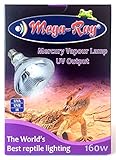
Mega-Ray 160W Mercury Vapor
- UVA
- UVB and heat in one lamp
- 160W / 120V E26 self-ballasted
- PAR38 reflector shape
- Built for large enclosures
The three picks above cover three very different situations. The Zoo Med mini CFL is the safest first purchase for a typical indoor tortoise in a modest enclosure, backed by the deepest review history of anything we looked at. The LUCKY HERP is the same desert spectrum for less money, with the trade-off being a 120V-only design and a thinner manufacturing record. The Mega-Ray is the one to buy if your enclosure is deep and you want a genuine basking zone from a single fixture.
All 8 UVB Bulbs Side by Side in 2026
| Product | Specifications | Action |
|---|---|---|
| Zoo Med ReptiSun 10.0 Mini CFL |
|
Check Latest Price |
| LUCKY HERP 10.0 Desert UVB CFL |
|
Check Latest Price |
| Mega-Ray 160W Mercury Vapor |
|
Check Latest Price |
 REPTITRIP 27 Inch LED UVB Light REPTITRIP 27 Inch LED UVB Light |
|
Check Latest Price |
 UVB Reptile Light 10.0 Two-Pack UVB Reptile Light 10.0 Two-Pack |
|
Check Latest Price |
 Zoo Med ReptiSun 10.0 HO T5 Zoo Med ReptiSun 10.0 HO T5 |
|
Check Latest Price |
 5W LED Desert 10.0 UVB 5W LED Desert 10.0 UVB |
|
Check Latest Price |
 REPTI HOME T5 UVB 24W 10.0 REPTI HOME T5 UVB 24W 10.0 |
|
Check Latest Price |
Two patterns jump out of that table. Four of the eight products are compact fluorescents, which tells you where most tortoise keepers actually start. And the three linear options all sit in the middle of the pack on price, which is the opposite of what the marketing suggests.
1. Zoo Med ReptiSun 10.0 Mini Compact Fluorescent Lamp 13 Watts
- Deepest review history of any bulb in this guide
- Works for tortoises turtles geckos and hatchlings
- Quartz glass built for UVB transmission
- Mounts vertically or horizontally
- Moderate output compared with T5 HO tubes
- UVB drops noticeably after roughly six months
- A small share of units arrive dead or flickering
This is the bulb we recommend first, and the reason is not that it wins on any single specification. It is that 3771 ratings averaging 4.5 stars describe a decade of ordinary use without much drama. Owners put it over tortoises, turtles, geckos, and hatchlings, and the same pattern repeats: it does what the box says for about half a year.
The quartz glass is the part worth understanding rather than skipping. Standard glass blocks most UVB; a tube built around quartz passes a far higher share through to the animal, which is why this lamp holds up in a small glass-fronted enclosure where a cheaper bulb would struggle.
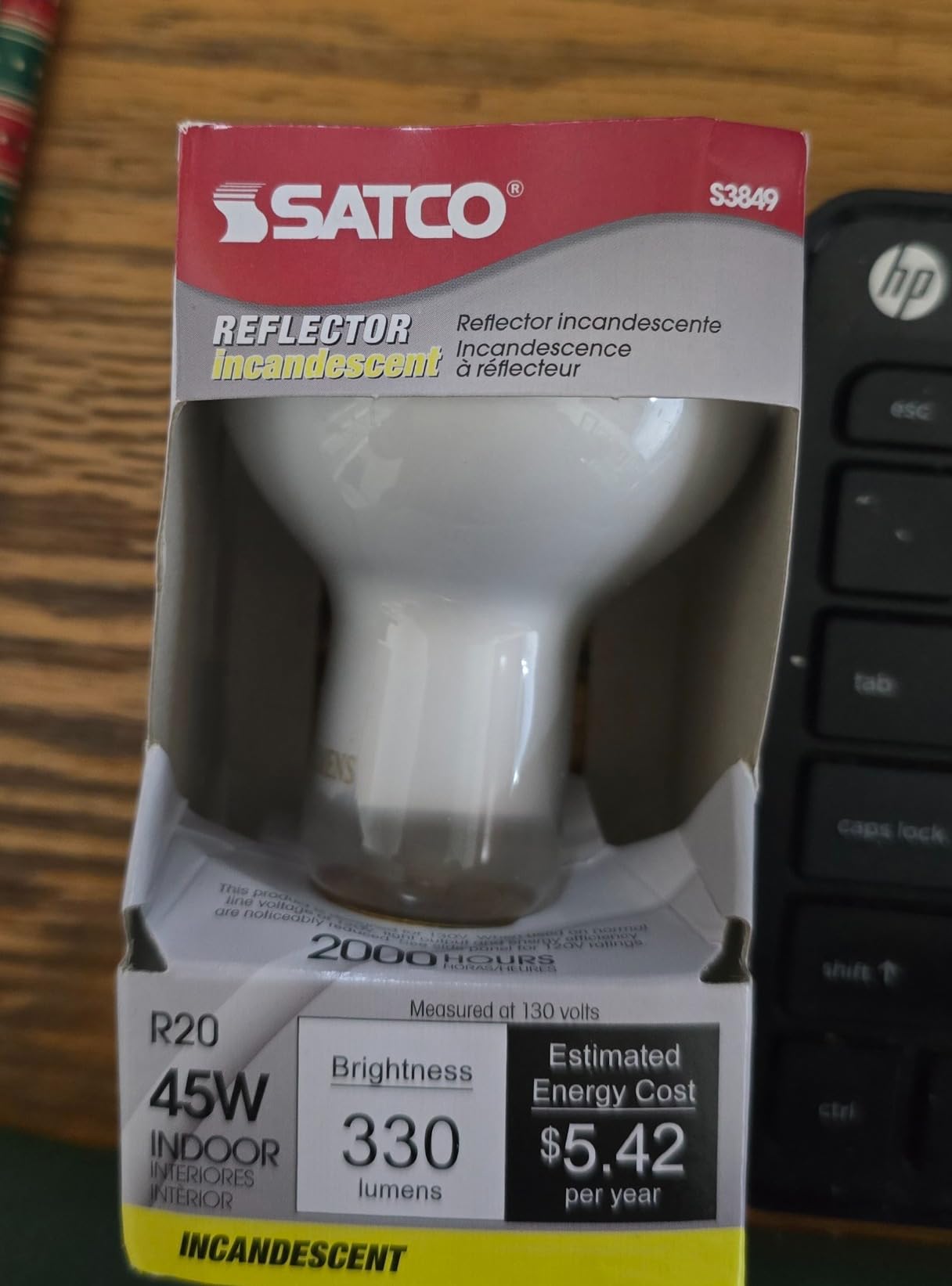
Owners frequently pair it with a separate basking lamp rather than expecting it to heat the enclosure, and that is the correct arrangement. In a dry climate, several reviewers specifically note that it does not push the enclosure temperature uncomfortably high, which is a real advantage for a species that prefers warmth without constant basking.
At 13 watts and 6 x 2 x 2 inches, it is also the least demanding thing to mount. If your enclosure is a 2×2 or a smaller custom box, this is about as much lamp as the space can use productively.
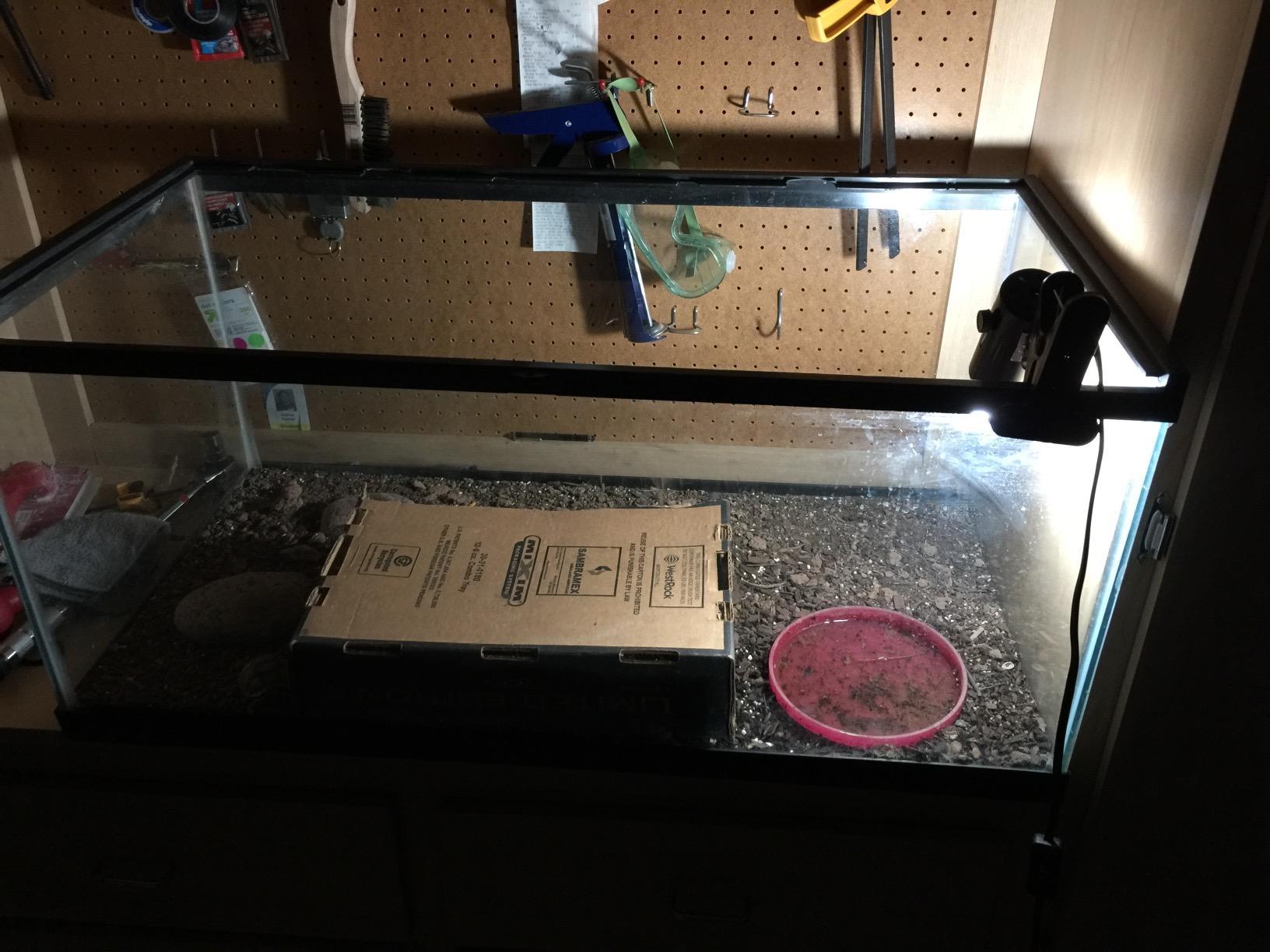
How long the 10% output actually holds up?
Six months is the honest figure most owners report before output falls off enough to notice, and Zoo Med’s own guidance lines up with that. The 10,000-hour-style figures attached to compact fluorescents describe how long the tube glows, not how long it stays useful for calcium metabolism. Those are two different clocks.
This is also the single most common bulb mistake we see: owners run a visibly working tube for two years because it still lights up. A faint glow tells you the ballast works. It tells you nothing about UVB.
Who should skip this lamp?
Skip it if your enclosure is 4 feet or longer in any direction. A 13-watt bulb cannot cover that footprint at a distance that keeps your tortoise out of overheating range, so you would end up lowering it dangerously close to reach the target exposure. In that situation the linear tubes are a better buy even though they cost more.
The other reason to pass is if your tortoise is a tropical forest species. A red-footed or yellow-footed tortoise does better on a lower percentage, and running desert strength over a forest animal all day is more UV than the species evolved for.
2. LUCKY HERP UVA UVB Reptile Light 10.0 Desert UVB Lamp 23W
- Same desert spectrum as pricier name-brand tubes
- Standard E26 base drops into common fixtures
- Low-degradation phosphor for steadier output
- Responsive seller support on faulty orders
- Several reviews report early burnout within weeks
- Occasional flicker on startup
- 120V only and not usable on 220-240V grids
This lamp delivers the same 10% UVB and 30% UVA desert spectrum as the Zoo Med mini at roughly double the wattage, and in a small-to-medium enclosure the extra output is genuinely useful. Owners consistently single out the color rendering as the visible upgrade, describing noticeably more vivid, natural-looking animals under it.
What you are trading away is the manufacturing consistency that comes with a brand whose name is on veterinary clinic shelves. The spec sheet is generous on paper: 6000 Kelvin, 1265 lumens, a stated operating life of 12000 hours, and low-degradation phosphor meant to slow output decay.
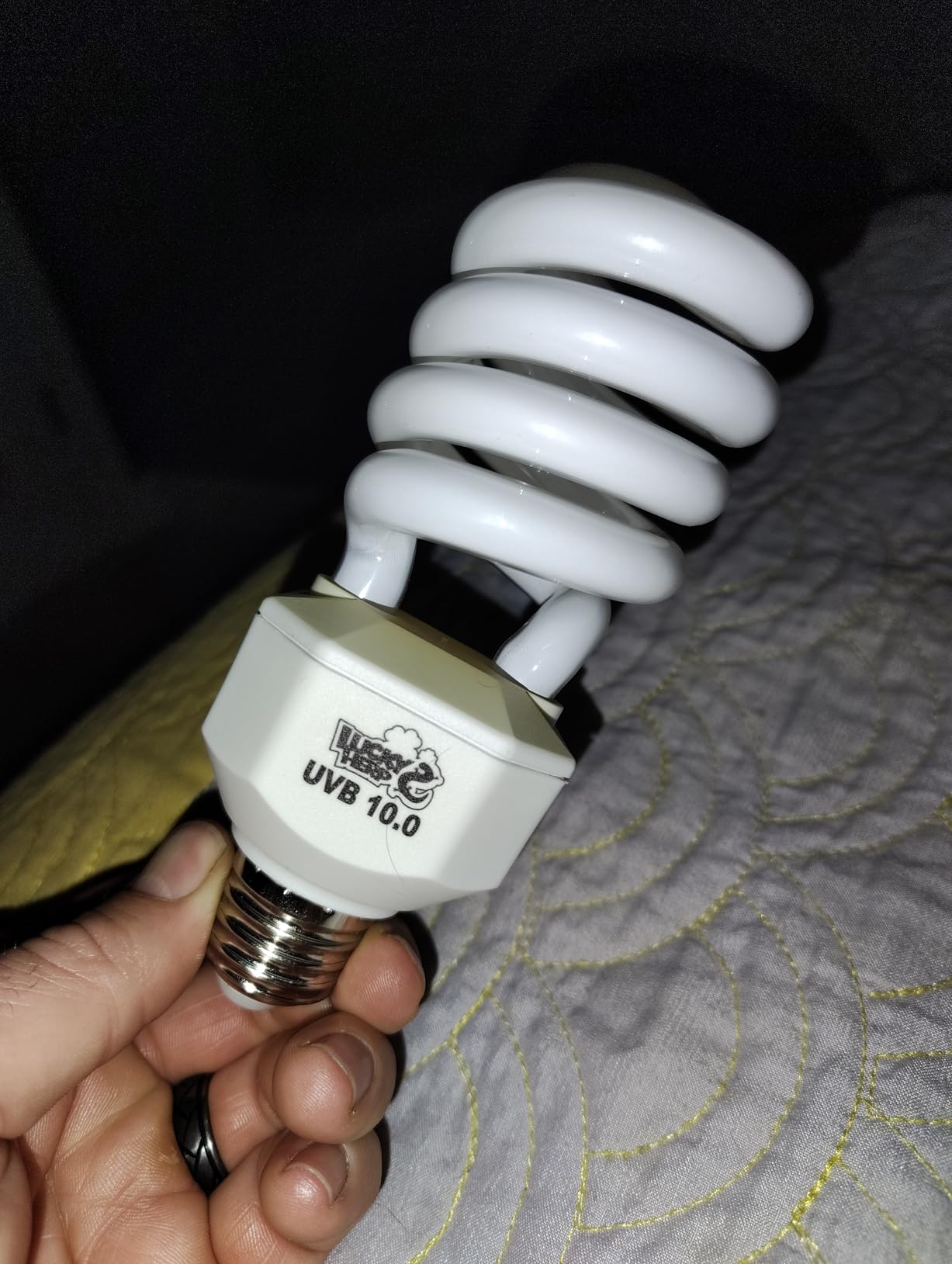
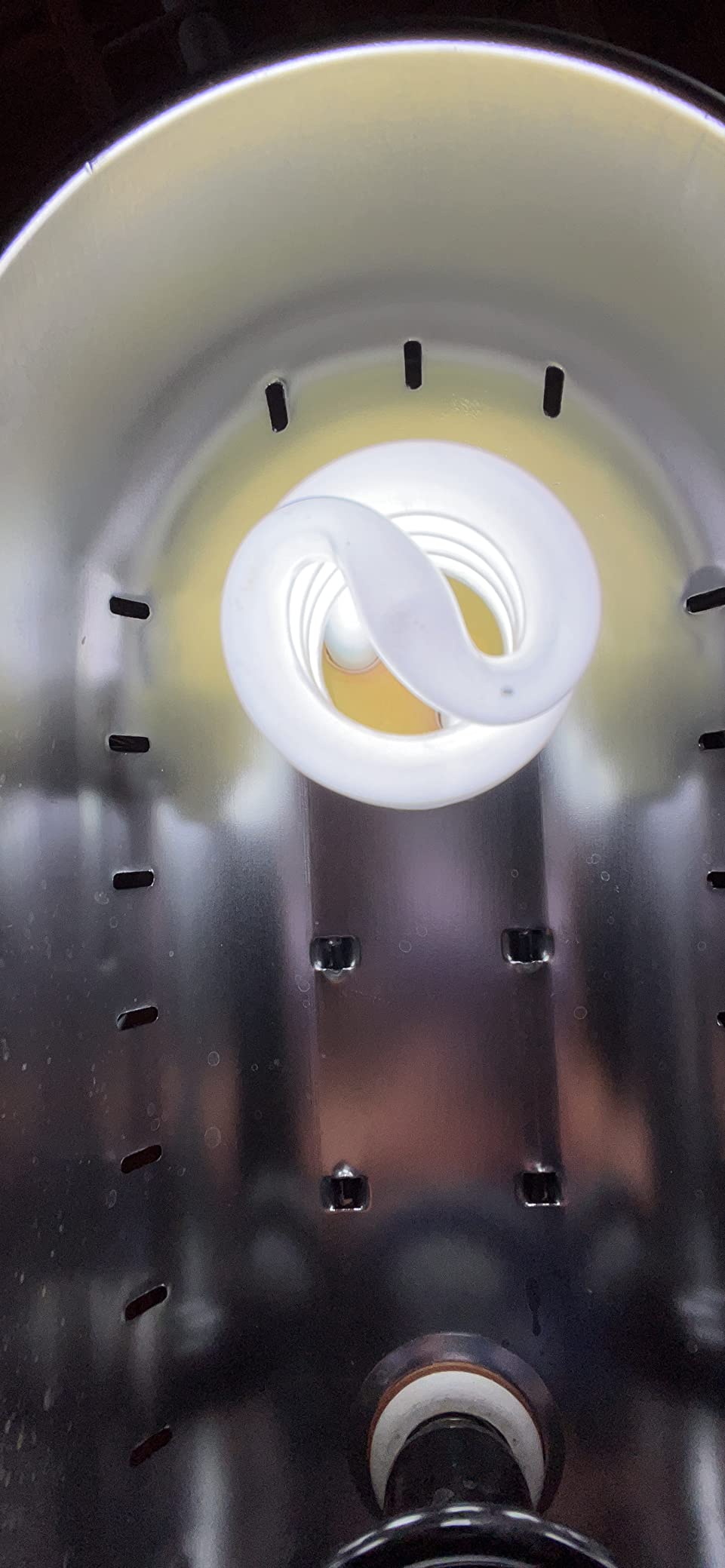
The recurring complaint is bulb life, not light quality. A meaningful share of reviews describe units that stopped working within weeks or a couple of months, and a smaller group mentions startup flicker or units that arrived non-functional. Sellers did resolve these cases for buyers in this group, which is worth something, but it is not the same as a low early failure rate.
One specification detail matters more than most people check. This is a 120V product, so outside North America and compatible markets it will need a converter or a different bulb entirely. If you are on a 220-240V grid, cross this option off your list now rather than after delivery.
Where this one fits better than the Zoo Med mini?
The wattage gap is the reason to pick this lamp over the 13-watt mini. If your enclosure has a 24-inch height and you are mounting inside the screen rather than above it, the 23-watt output reaches the animal at a workable distance where the mini would force you to lower the fixture uncomfortably close.
Owners also note the visible brightness difference most clearly during the morning hours after the lamp comes on, when basking behavior is at its most obvious. Watching a tortoise warm itself under a strong, directional source is one of the better ways to confirm your photoperiod and thermostat are working together.
Who should skip this lamp?
Skip it if early failure would frustrate you, and consider skipping it if you are outside the 120V world. Nobody is troubled by a bulb lasting four months, but replacing a dead bulb every few weeks because of a batch of bad units is a different experience.
Also skip it for a very small enclosure. Combined with a separate heat lamp, a 23-watt UV source in a 2-foot box can make it hard to hold a clean temperature gradient, because the UV lamp adds radiant heat of its own even though it is not a basking lamp.
3. Mega-Ray 160W Mercury Vapor UV Light Bulb 160W 120V
- Delivers UV visible light and basking heat from one fixture
- Long service life for a UV bulb
- Improved coloration and activity reported by owners
- Fits common reflector dome fixtures
- Needs a ceramic socket or ballast to run safely
- Filament is fragile and needs a cool-down after a bump
- Some reviews report units failing within weeks
This is the only lamp here that solves heat and UV in a single fixture, and in a large enclosure that changes the economics of the setup. Instead of a tube plus a basking dome plus two dimming or timer circuits, you run one lamp and shape the rest of the gradient with substrate depth and screen.
Experienced keepers rate it well specifically for vitality. Owners of tortoises and bearded dragons report better coloration, more activity, and improved feeding response within the first few weeks. The UV peaks are tuned to support appetite and calcium absorption through vitamin D3 rather than brute-force brightness.
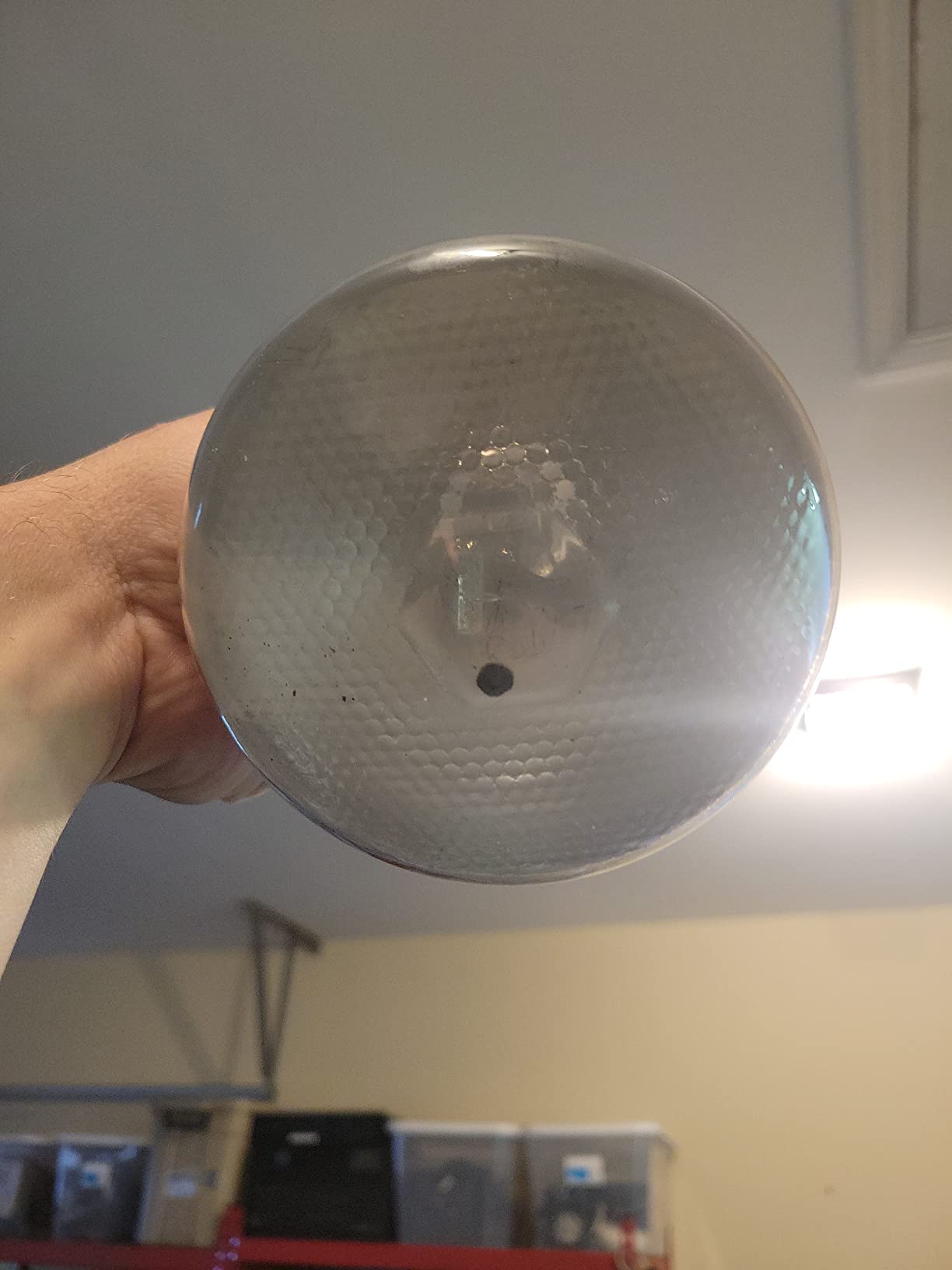
That said, the durability record is the most uneven in this group. A persistent thread of reviews describes bulbs that failed within weeks or that burned out their UV component while continuing to emit visible light, which is the most dangerous failure mode on this list because nothing looks wrong to a casual glance. Replacements from the same line also draw complaints about humming.
The handling rules are non-negotiable. It needs a ceramic socket or proper ballast, the filament is fragile, and a bump while hot can shut it off and require roughly a 15-minute cool-down before it will restart. Handle it like the fragile component it is.
When a mercury vapor lamp genuinely wins?
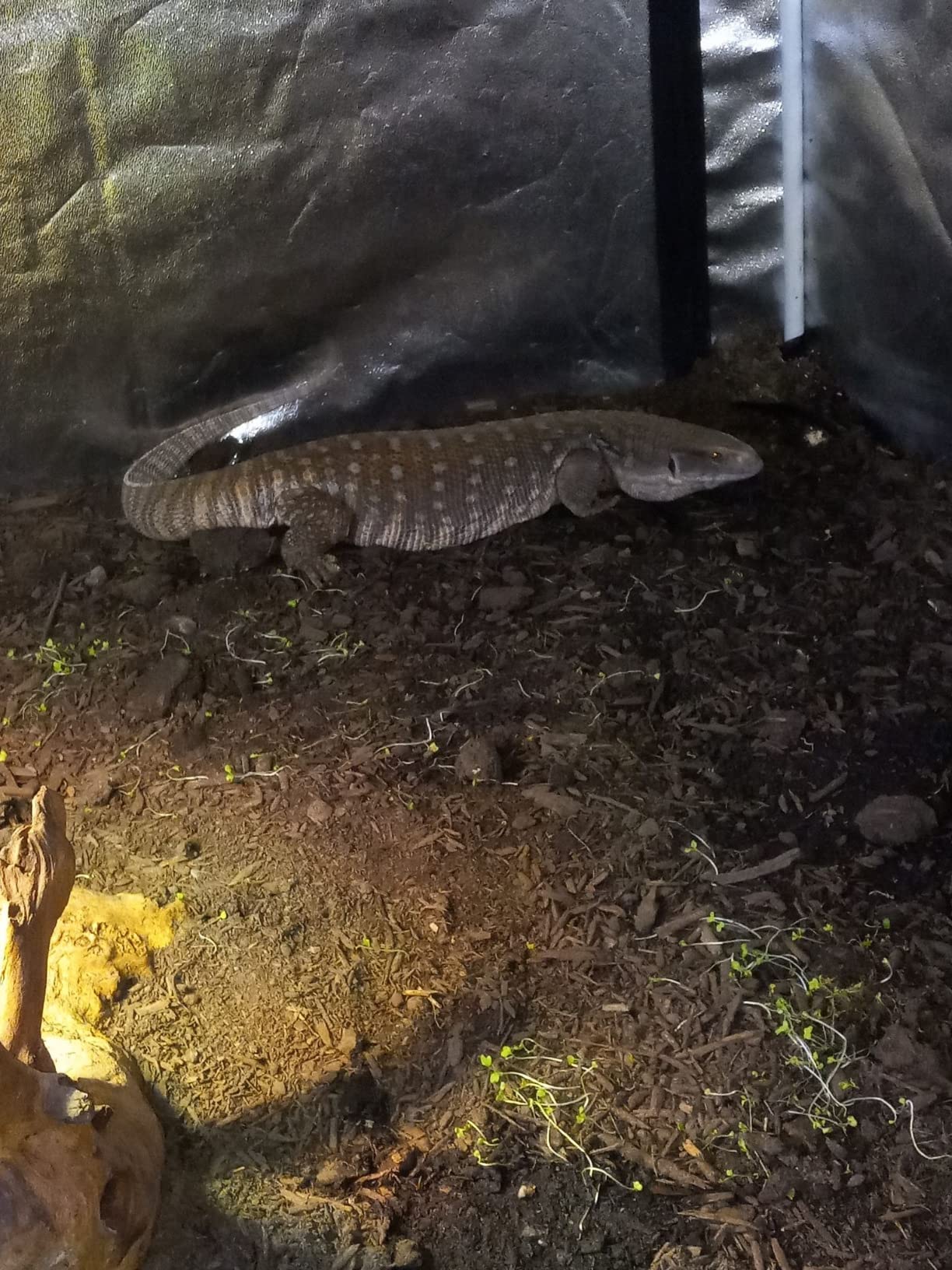
It wins in deep enclosures, measured in 3 feet of vertical space or more, where a fluorescent tube would have to sit high enough that the animal receives almost nothing. At that depth a concentrated source is the only practical way to deliver both heat and UV to the same spot.
Keepers in the tortoise forum recommend an 8-inch deep dome reflector to aim both heat and light properly, and that advice holds. A bare bulb in an open clamp throws a lot of its output at the wall instead of the animal.
Who should skip this lamp?
Skip it for a standard 4x2x2, which is 24 inches tall. That is the clearance problem in one line: a 160-watt bulb needs more vertical room than that to deliver a usable gradient, and forcing it means either burning the basking zone or leaving the rest of the enclosure cold.
Also skip it if you only have one fixture and a ceramic socket is not already in your parts bin, or if a humming bulb would bother you. Pairing it with a linear tube for whole-enclosure coverage is a legitimate strategy that many experienced owners use, but plan for that as a two-lamp budget rather than a one-lamp saving.
4. REPTITRIP 27-Inch LED UVB Light with Timer and Ferguson Zone Modes
- No bulb replacements for the life of the panel
- Ferguson zone 1-4 selection matches output to species
- Timer and sunrise-to-sunset dimming run automatically
- Aluminum housing stays cool and runs inexpensive
- Higher entry cost than a compact fluorescent or T5 tube
- Emits no heat so a separate heat source is required
- A few orders arrived with missing mounting hardware
This is the category’s new arrival and the only product here that eliminates the replacement cycle entirely. There is no tube to swap at month 12 because the UVB source is a solid-state LED panel rated for more than 7000 hours, and the housing is aluminum rather than glass.
The four preset modes covering Ferguson zones 1 through 4 are the part we like most. Instead of guessing a distance and then moving the lamp twice a year, you select a zone and the output matches it, with a manual dimming mode on top for fine tuning. Set it once.
The built-in timer with preset day-night cycle dimming is the sleeper feature. Most keepers run a plug-in timer as a separate accessory; this one is integrated, so the light ramps on its own and keeps the photoperiod consistent through power interruptions and busy weeks.
Output is 6500K cool white with UVA and UVB and no harmful UV rays, and the panel mounts three ways: on a mesh top, on the included brackets, or suspended from a board. That flexibility is what makes it a good answer to the mesh screen problem, since you can hang it above the screen rather than flattening the output through it.
What the LED category still has to prove?
The main question is long-term output stability, and honesty requires saying this category is young. Fluorescent tubes have three decades of field data behind them. LED UVB panels have a few years, and the failure history of the compact fluorescent is precisely that output decays before the visible light fails.
Reports so far are encouraging on stability, with owners noting steady non-flickering output that does not dim over months. But the honest test is a measurement at twelve and twenty-four months, not a review at week two.
Who should skip this lamp?
Skip it if you are replacing a bulb on a strict budget. This is more than a compact fluorescent costs, and if your existing setup already works, the value case is hard to make until your tubes need replacing anyway.
Also skip it if you want one lamp to do everything. It emits no physical heat at all, so you still need a basking lamp or heat pad. There is also a small number of owners reporting sensitive animals that avoided the light outright, including a red-tailed boa and a chameleon. Tortoises are not typically fussy, but watch your individual animal in the first week.
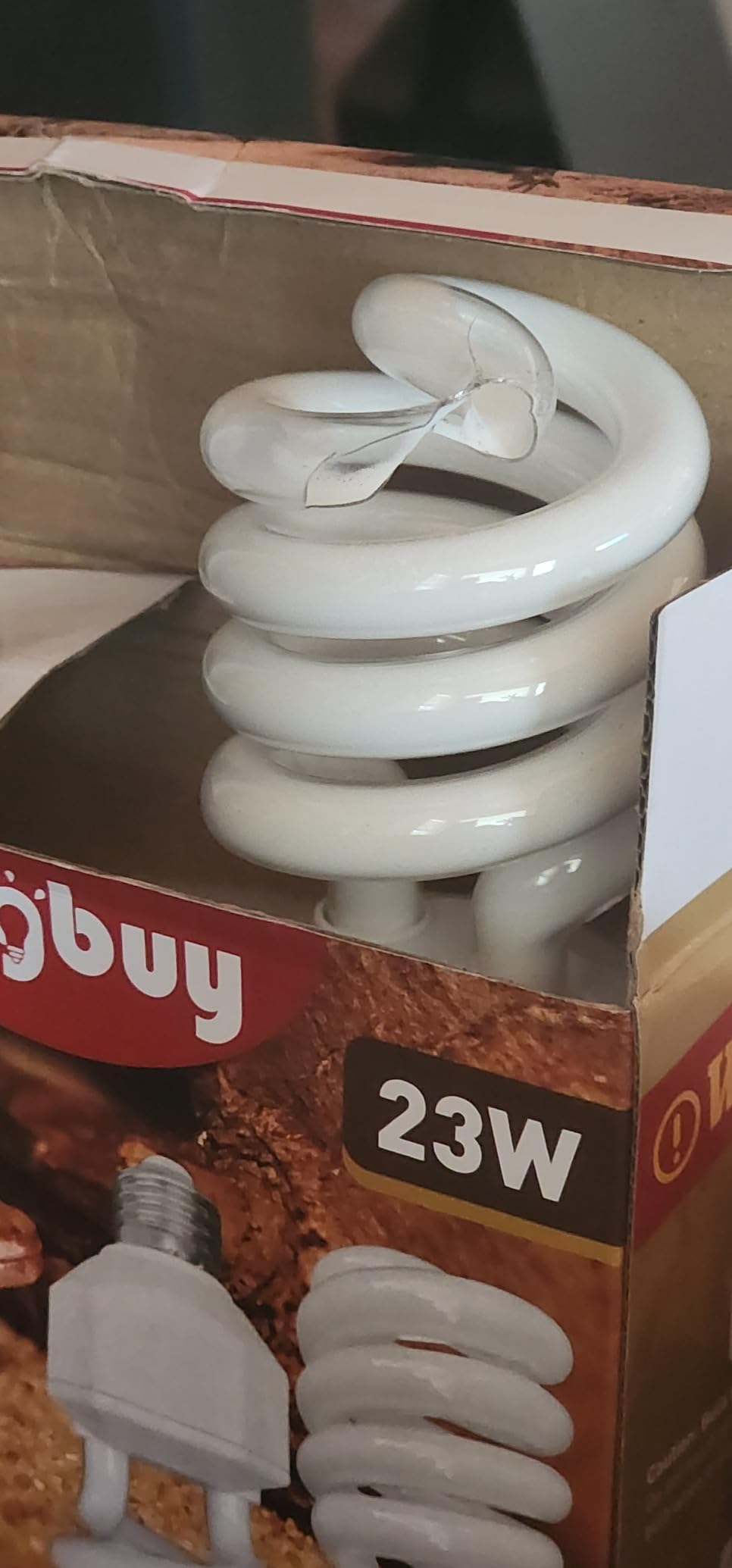
5. UVB Reptile Light Bulb 10.0 23W Two-Pack Compact Fluorescent
- Two bulbs in one pack at a low per-bulb cost
- Fits standard compact fluorescent fixtures
- Reads close to advertised on solar meters
- Some owners report a single bulb lasting years
- Bulb lifespan is inconsistent across units
- Output and brightness described as adequate rather than strong
- Still needs a separate basking heat lamp
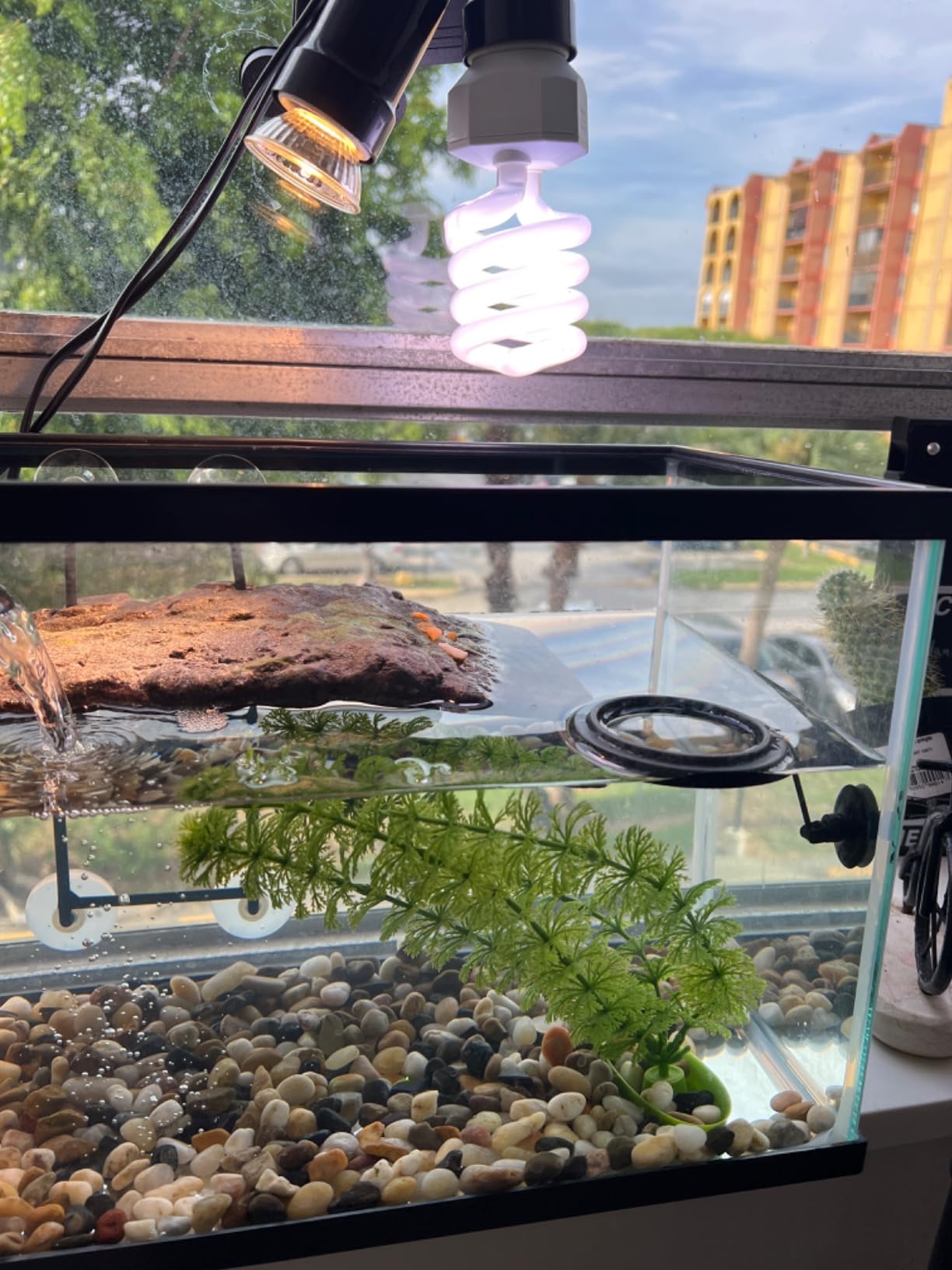
The reason to buy this one is the box: two 23-watt desert bulbs in a single pack, which halves your effective cost per bulb and gives you a spare on hand. Owners with a mid-sized enclosure commonly run one over the basking half and bank the second.
It fits standard compact fluorescent fixtures without modification, and the build uses UVB-transmitting quartz glass with a circuit board described as low-fade. Several owners who own a solar meter report readings close to the advertised 10% level, which is more verification than most products in this price range receive.
The weakness is the same one that shows up in every budget compact fluorescent: variable service life. A number of reviews describe bulbs burning out at around two months, while others report single bulbs lasting years. That spread is wide, and it means you should treat the pack as consumables rather than investments.
On brightness, the honest description from owners is adequate rather than strong. For a tortoise this is usually sufficient, but it does not have the headroom to be lowered far inside a tall enclosure without losing output entirely.
Why two bulbs beat one bulb at the same price?
Staggering replacement is the practical win. If one bulb fades at month seven, you replace it and the second is only three months into its own life, so you avoid the wasteful scenario where both fail in the same week and the enclosure is dark while you wait on a delivery.
A second bulb also gives you a fallback for a fixture that fails, and it lets you run two low-output lamps on separate timers at lower intensity instead of pushing one lamp harder. Owners report that the pair also produces some visible warmth in addition to UV, though it is nowhere near a basking temperature.
Who should skip this lamp?
Skip it if a 4-foot or longer enclosure is your goal. Two compact fluorescents side by side still leave hot spots in the middle and weak edges, and the fix is a linear tube rather than a second CFL.
Skip it if you are sensitive to failure rate. If two bulbs at unpredictable life spans is a worse proposition for you than one bulb with a known brand behind it, spend the difference on a single higher-quality unit instead of doubling your exposure to bad batches.
6. Zoo Med ReptiSun 10.0 HO T5 UVB Lamp 34 Inch 39 Watts
- Wide even coverage across large habitats
- Stronger UVB than standard ReptiSun lamps
- Brand used and recommended by zoos and veterinarians
- Helps prevent or reverse metabolic bone disease
- Highest one-star share in this group at about 15 percent
- UVB output degrades and needs periodic replacement
- Emits no basking heat of its own
This is the tube the mainstream husbandry guidance points to, and for a 4-foot enclosure there is a good reason. A 34-inch T5 HO spreads its output along its whole length rather than concentrating it in a small hot spot, which means your tortoise can move through the enclosure and stay inside the target zone without a fixed basking station.
Compared with the standard ReptiSun compact lamps, the HO version delivers both higher UVB output and brighter visible light, and the manufacturer positions it specifically for larger habitats. Zoos and reptile veterinarians use this product line, which is a meaningful quality signal.
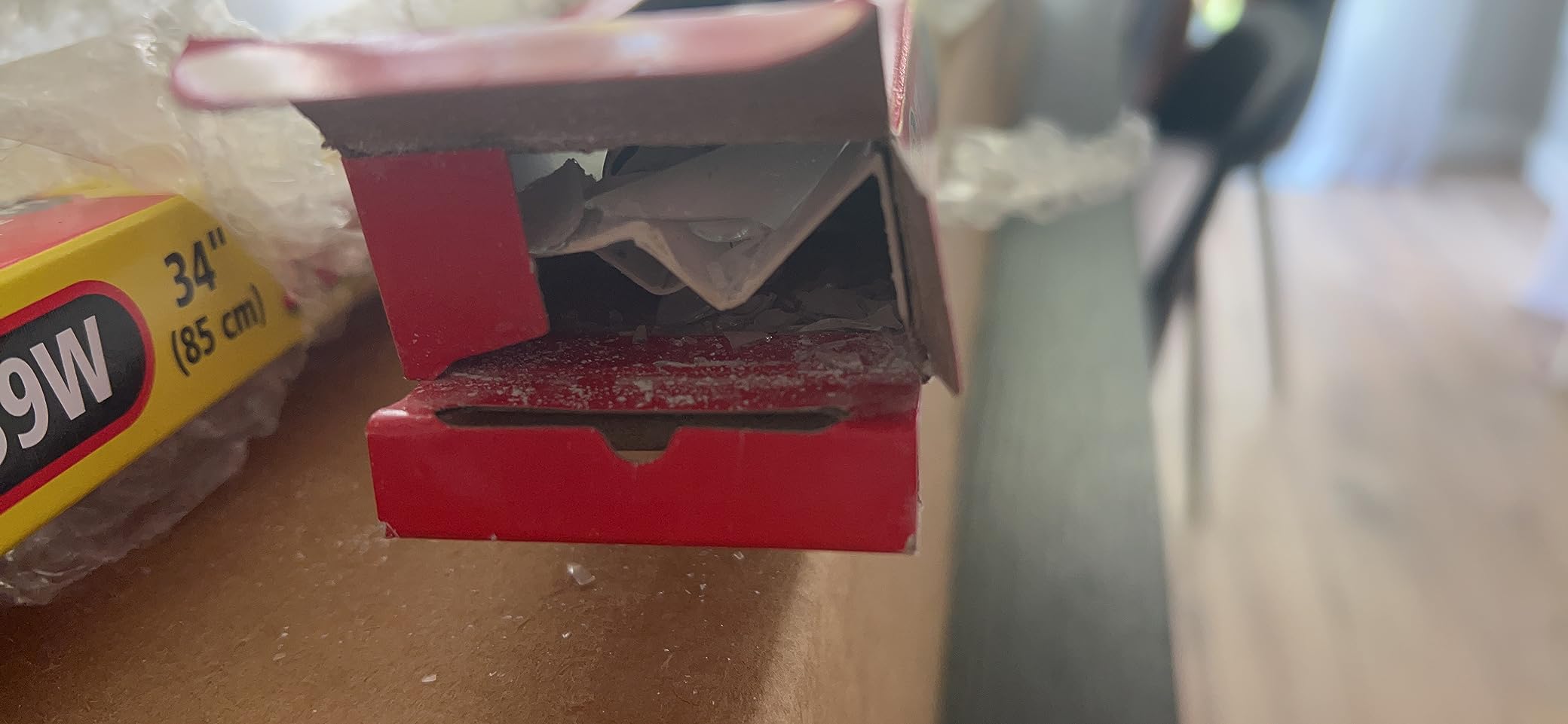
Be aware of the rating distribution, because it is unusual. Around 75% of ratings are five-star, but roughly 15% are one-star, the largest share of negative ratings in this entire comparison. Read the one-star reviews and you will find they concentrate on failure and on declining output over time, not on poor initial performance.
That is the honest picture of any fluorescent tube: it works well, and it eventually stops working, and a meaningful number of owners notice that late rather than early.
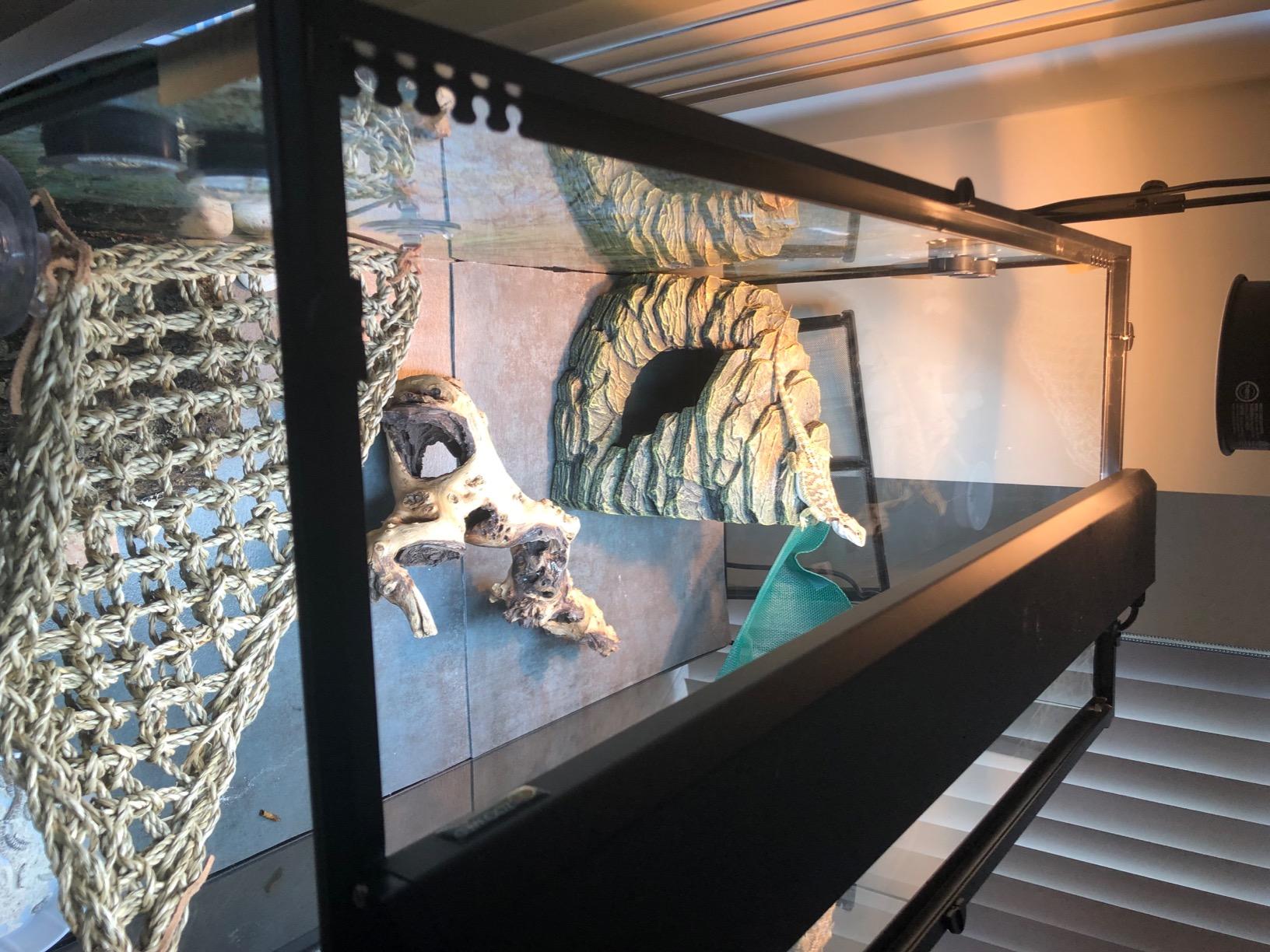
The 24-inch clearance problem with a 34-inch tube
Here is the thing nobody tells you about T5 tubes in 4x2x2 enclosures. You have 24 inches of vertical space, and a 34-inch tube needs a fixture that fits that width, which means the housing hangs across the enclosure and pushes the tube below the screen line. Most keepers mount it inside for exactly this reason.
Inside mounting solves the mesh loss problem and gets the source closer, but it also means the fixture is within reach of an animal that can and will rear up. Secure the housing properly and keep the tube shielded, because contact with a hot T5 HO in a 39-watt fixture is a burn risk.
Who should skip this lamp?
Skip it for enclosures under 3 feet. A 34-inch tube in a 2-foot box either does not fit or overhangs the sides while wasting output where no animal will sit. In a small enclosure, the 13-watt or 23-watt compact is the sensible choice.
Skip it if you need heat as well, since it produces none. It also requires a genuine T5 HO fixture, and T5 and T8 fixtures are not interchangeable, so budget for the housing if you do not already own one.
7. Premium High-Intensity 5-Watt LED Desert 10.0 UVB Light
- Very low 5-watt draw for desert-strength output
- LED output decays more slowly than a compact fluorescent
- Standard E26 base fits common lamp holders
- Compact and easy to add to an existing setup
- Not ideal as the sole light source in a large enclosure
- Provides no basking heat
- Desert strength suits neither tropical nor crepuscular species
Five watts is the number that makes this worth a second look. That is roughly a fifth of the draw of a compact fluorescent at comparable desert-strength output, and for anyone who runs lighting twelve hours a day on a timer the running cost difference compounds across a year.
The more interesting claim is decay rate. LED output falls off more slowly than a compact fluorescent of the same class, which directly addresses the replacement problem every keeper in this article has wrestled with. Owners report consistent output and long service life relative to the CFL bulbs they replaced.
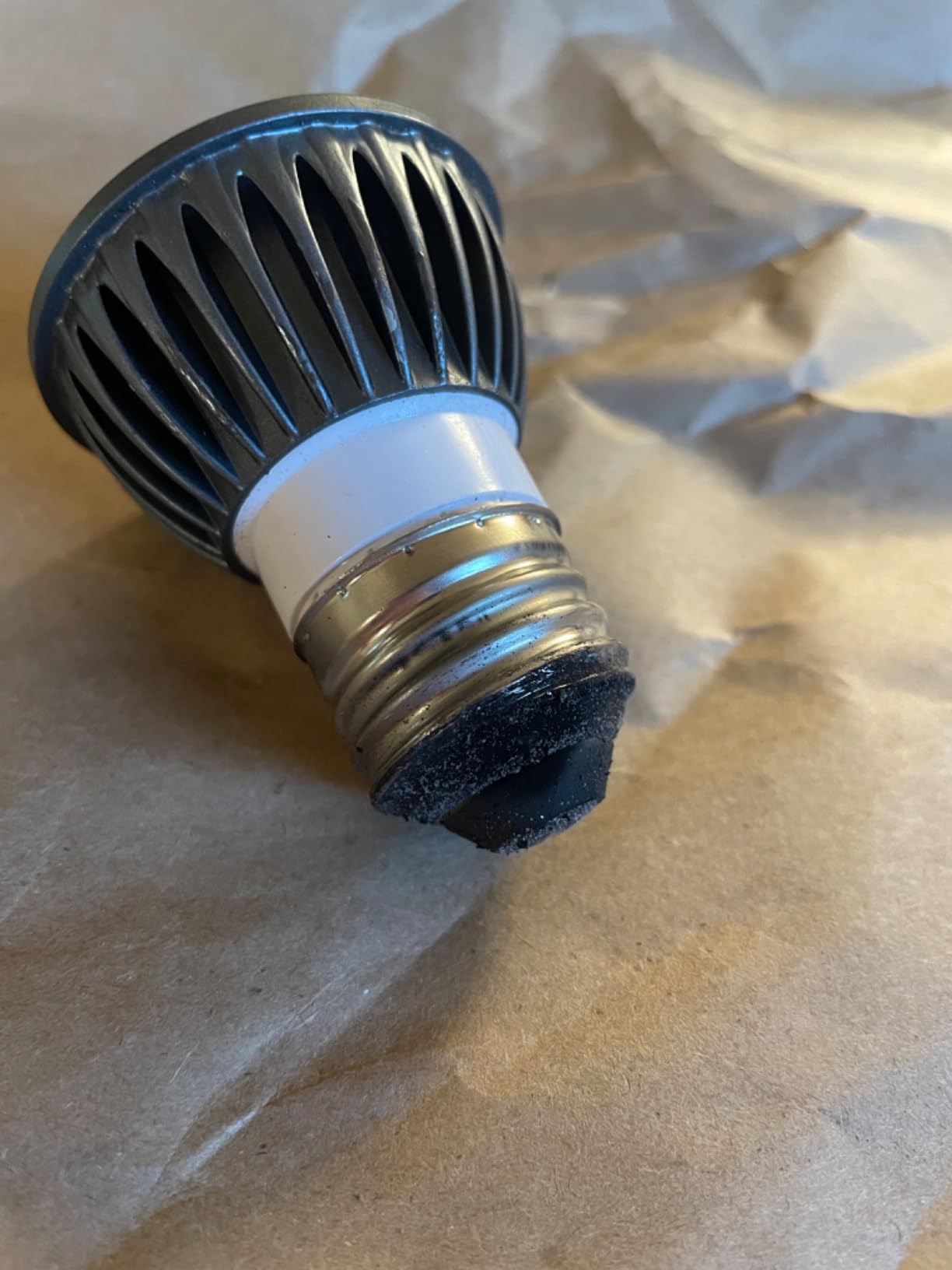
It is built as a supplemental unit. The manufacturer is explicit that it is intended to be combined with a separate reptile heat lamp, and the reflector format means it throws a focused pool of light rather than filling a room-sized footprint. That focus is useful at the basking end and useless at the cool end.
The design targets desert species, with tortoises and bearded dragons named specifically, and the manufacturer notes it is not for leopard geckos. That narrowness is a feature if you own a Mediterranean or Russian tortoise and irrelevant if you keep tropical species.
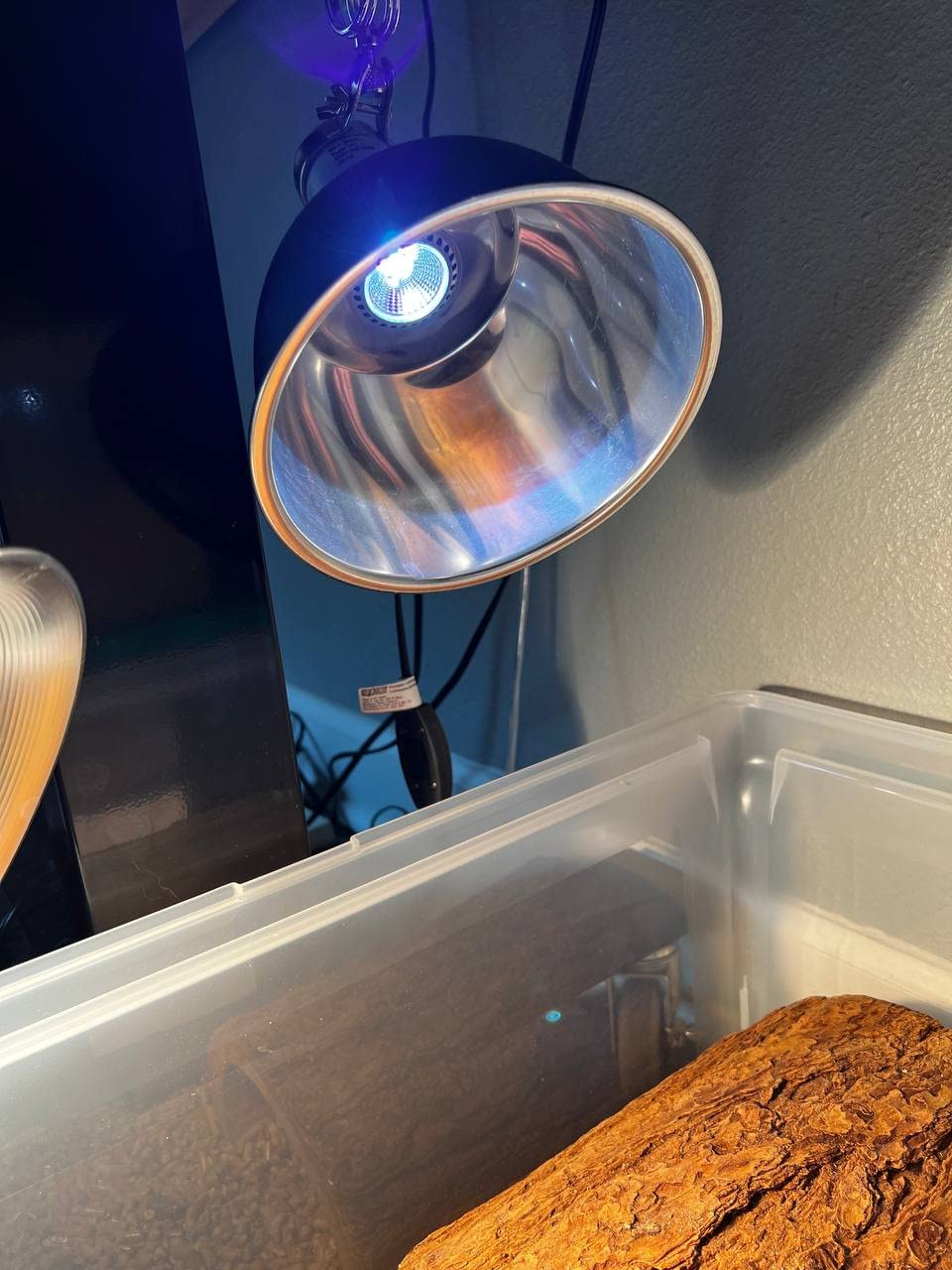
Where a 5-watt LED actually earns its place?
Use it as a second lamp rather than a first lamp. Mount it above the basking area of a 4x2x2 alongside a low-output tube covering the rest of the floor, and you get both a concentrated UV point and even coverage without a single high-wattage fixture throwing heat at one end of the box.
The second use is as a low-heat nighttime-adjacent option. Because it produces so little radiant heat, keepers with a setup that runs warm can add UV without upsetting the temperature gradient, which is a genuine problem in a glass enclosure in summer.
Who should skip this lamp?
Skip it as your only UVB source in anything larger than a small enclosure. Five watts of focused output simply cannot cover floor space, and you would end up cranking it to maximum with the animal still spending most of the day outside the pool.
Skip it for tropical or crepuscular species entirely, since 10.0 desert strength is the wrong spectrum for them. And skip it if you want one lamp to handle basking heat, because there is none here.
8. T5 UVB Reptile Light 24W 10.0 Two-Pack 24-Inch Tubes
REPTI HOME T5 UVB Reptile Light 24W 10.0,UVA UVB Light Bulb for Reptiles,2 Pack Reptile UVB Lamp Tube for Bearded Dragon
- Users report stronger output than cheaper tubes with the same stated spec
- Hermann's owners confirm good light with very little heat
- Fits standard 22 to 24 inch T5 fixtures
- Two tubes allow staggered replacement
- Not the brightest option and may need to sit lower
- UVB strength declines over months and needs annual replacement
- Pack is fixed at two tubes rather than a single
Of everything we tested, this two-pack has the most direct endorsement from tortoise keepers specifically. Hermann’s owners in the reviews confirm good light output with very little heat, which is precisely the balance you want from a UV source that shares an enclosure with a basking lamp.
Several users report it as noticeably stronger than cheaper tubes carrying the same stated 10% UVB specification, and a few mention lower output drift over time relative to budget alternatives. It produces no UVC and is rated for up to 10000 hours of lighting life.
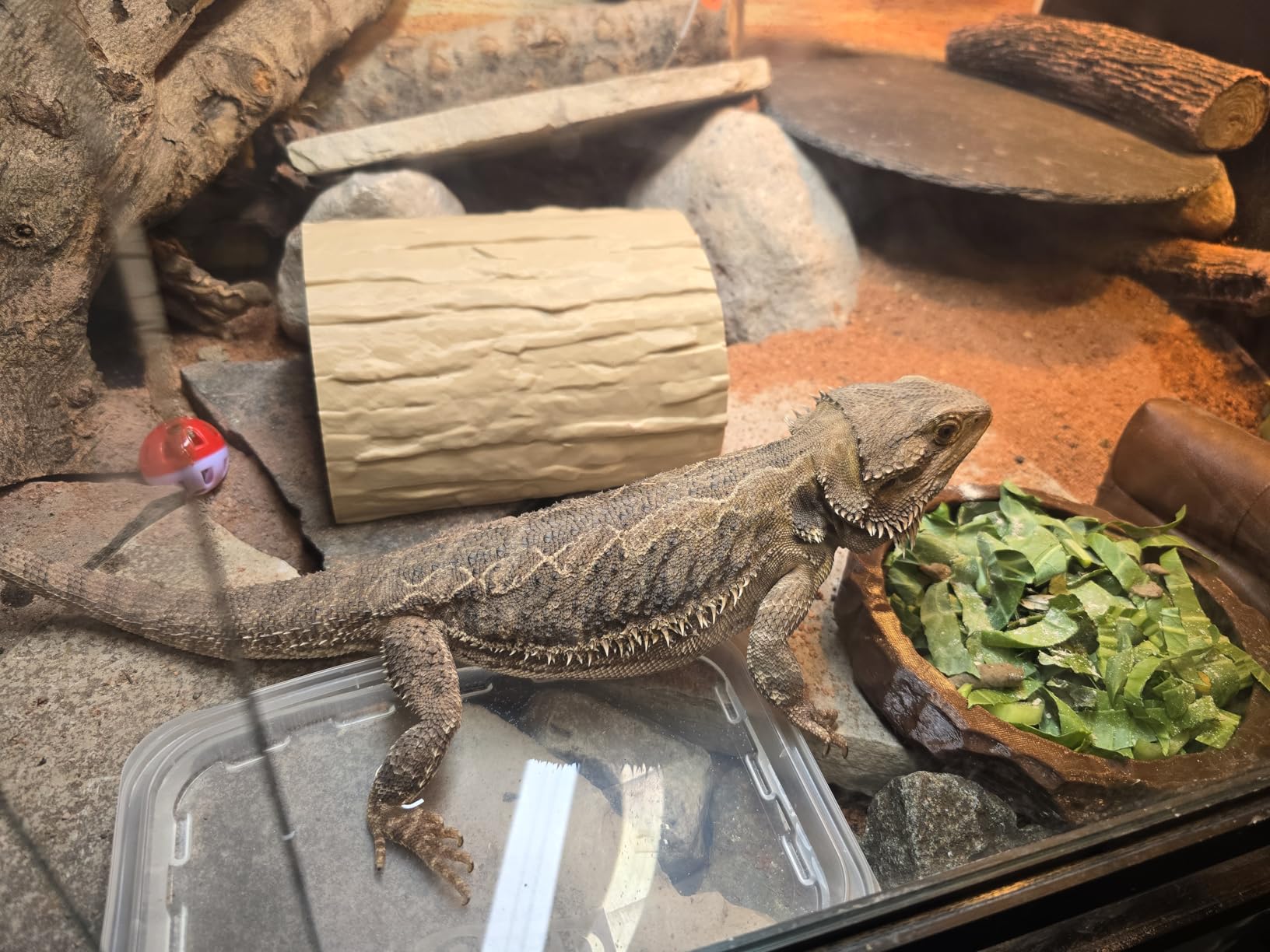
Reported service life clusters around 6 to 12 months of daily use at a 10 to 12 hour photoperiod, which matches manufacturer guidance rather than contradicting it. If you run a solar meter, the tortoise forum’s standard advice is to verify exposure rather than trust the date on the box, and that is the approach we would take with this product too.
The single criticism worth planning around is brightness. If your enclosure is 24 inches tall and the output feels marginal, the fix is to mount the fixture lower rather than buy a stronger tube, which also brings your tortoise closer to the useful exposure.
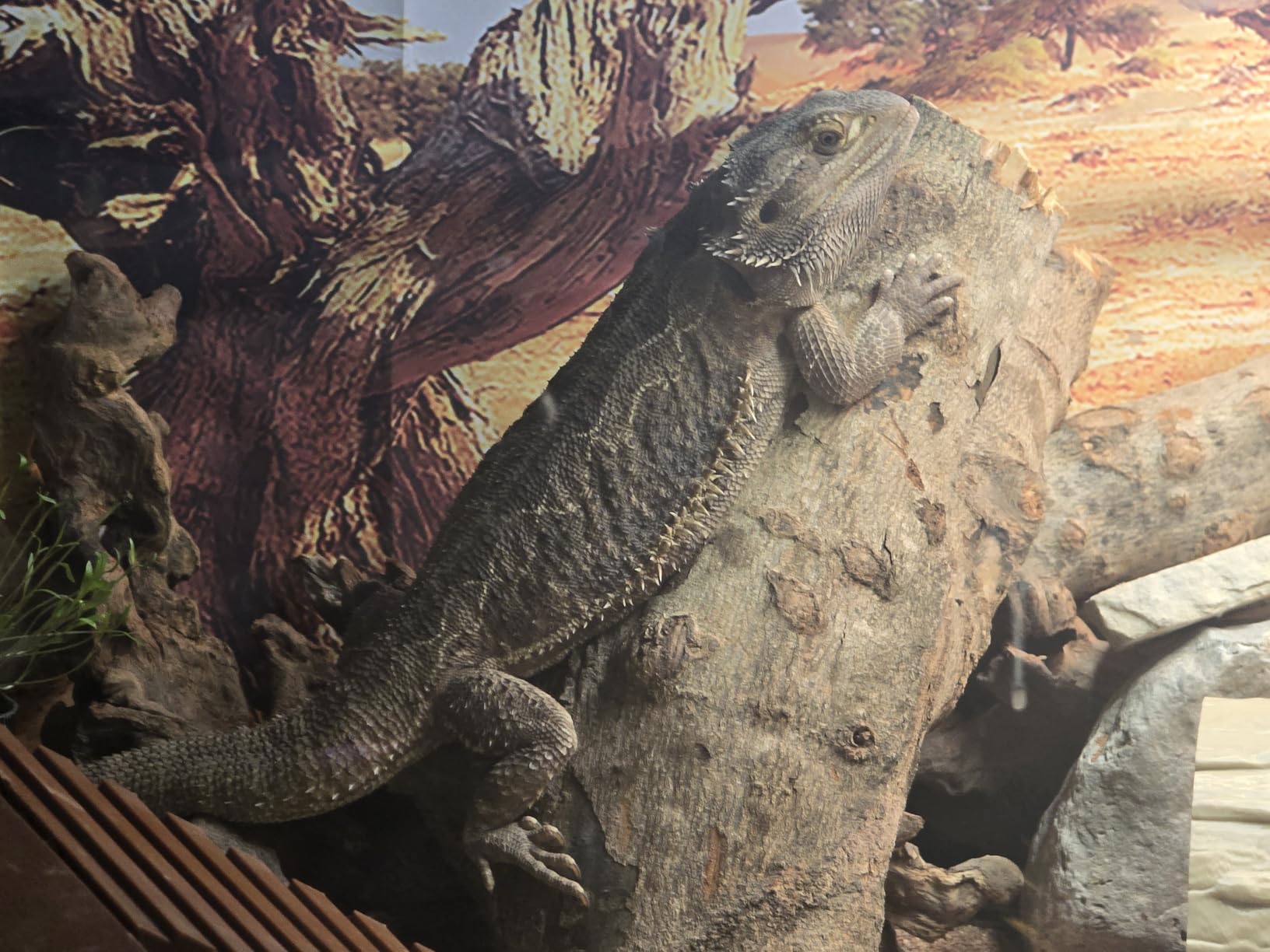
Two tubes, two jobs
The pack is a genuine advantage in a 4-foot enclosure. Run one tube over the front half and the second over the back, or keep one installed and one as the immediate replacement so your enclosure is never dark. Owners use the two-tube configuration to cover a 4x2x2 far more evenly than a single compact could.
It also handles the staggered replacement cycle neatly, since each tube ages on its own schedule. That removes the common frustration of losing all your UVB at once and rushing to order.
Who should skip this lamp?
Skip it if your enclosure is longer than 24 inches without a plan to mount two. Two 24-inch tubes cover a 4-foot floor well. They do not cover a 6-foot floor, and in a 6 or 7 foot enclosure you will need a different length or a second fixture, which is a question that comes up constantly in tortoise circles.
Skip it if you need heat. There is minimal radiant heat here by design, and a separate basking lamp is required. You also need a T5 fixture, since these tubes do not fit T8 housings.
T5 HO Linear vs Mercury Vapor: Which Type Should You Buy?
A basking bulb and a UVB bulb are not the same thing. A basking lamp produces heat and visible light for the purpose of warming the animal; a UVB source targets the wavelength band that triggers vitamin D3 synthesis. They do different jobs, and a mercury vapor lamp is the rare product that does both from a single source.
For most indoor tortoise keepers the linear T5 HO tube is the better default, and the reason is coverage. A tube spreads usable UVB along its entire length, so the animal can move through the enclosure and stay inside the target zone. A mercury vapor lamp produces a concentrated pool, which means a properly placed basking station and a clear cool side.
Concentrated is not automatically worse. In a 3-foot-tall enclosure, a fluorescent would have to hang so high the tortoise receives almost nothing, and a mercury vapor lamp is the only way to get heat and UV to the same spot. That is why experienced keepers treat it as a large-enclosure tool rather than a general upgrade.
The compact fluorescent still has a place, and it is a good one. A 13-watt mini in a 2×2 enclosure, mounted inside, delivers adequate desert-strength exposure at minimal cost and minimal heat, which suits a young tortoise or a small setup perfectly.
LED panels are the fourth option and the newest. They remove the replacement cycle and add selectable Ferguson zone output, but they produce no heat and their long-term output stability is not yet as well documented as fluorescent technology.
How to Choose the Right UVB Strength for Your Tortoise?
Match the percentage to the species, not to the bulb you happen to find on sale. Desert and Mediterranean species evolved under intense open sun and belong on 10% to 12% output. Tropical forest species evolved under a canopy and belong nearer 6%.
Hermann’s tortoise, Greek tortoise, Russian or Horsefield’s tortoise, leopard tortoise, and sulcata all sit in the desert-strength group. These are the species most keepers are asking about, and they are the reason desert 10% and 12% bulbs dominate the results above.
Red-footed and yellow-footed tortoises are the forest group. A 5% or 6% output better matches their natural exposure, and running desert strength over them all day gives more UV than the species evolved to handle. Several reviews in this group mention light-shy animals avoiding a strong lamp, which is worth watching if you keep a red-footed.
Juveniles deserve one more note. A hatchling in a small enclosure receives more usable exposure from a lower wattage lamp mounted close than from a high-output tube mounted at the safe adult distance, because a 4-foot enclosure is simply too much floor for one small animal to patrol.
Distance, Mesh Screens, and Reflectors
UVB output falls off with distance, so mounting height is not a preference, it is a calculation. A rule of thumb for desert tortoises is to start with a 10% to 12% tube mounted 12 to 18 inches above the animal with no screen between, and measure from the top of the shell rather than the substrate.
Mesh is the variable most people underestimate. A typical screen top removes a substantial share of the output before it reaches the animal, which is why a lamp that measured correctly on an open bench can under-deliver by a wide margin in a real enclosure. The two fixes are to mount inside the enclosure or to move closer.
Reflectors matter for the concentrated sources. Mercury vapor lamps belong in a deep dome of at least 8 inches with a ceramic socket, which is the pairing the tortoise keeper community recommends consistently. Compact fluorescents gain less from a reflector because their output is already spread.
For enclosures of 6 to 7 feet, do the math before you buy. Two fixtures covering 3 to 4 feet each will outperform one tube trying to span the whole length, and mounting both inside the enclosure removes the mesh loss entirely. This is the most common question in tortoise lighting threads and the most common purchasing mistake.
How Often to Replace Your Bulb, and How to Test It Without a Meter?
Manufacturer guidance runs 6 to 12 months, and we would plan around 12 for a tube running 10 to 12 hours daily. Forum keepers with meters report longer useful lives for some tubes, sometimes a few years, and both claims are true, because they are measuring different things.
Date-based replacement is a maintenance habit. Measurement-based replacement is accuracy. If you own a UV index meter such as a Solarmeter 6.5 or 6.2, which tortoise keepers recommend more than any other tool, check at the animal’s shell height every few months and replace when the reading drops rather than when a date arrives.
Without a meter you have three weaker signals. First, note the date you installed it and honour the interval. Second, look at your animal rather than the bulb: a tortoise that has stopped basking normally and spends the day pressed into a corner is telling you more than any glow test.
Third, keep a spare. Two of the products here ship as two-packs specifically so you always have a working replacement, which removes the temptation to run an expired tube while you wait on a delivery. The rule is simple: never keep a tube past its interval just because it still lights up.
Warning Signs Your Tortoise Is Not Getting Enough UVB
Metabolic bone disease develops slowly, which is exactly why it is worth learning the early signs rather than waiting for obvious deformity. UVB is what lets the gut absorb calcium from food, so inadequate UV produces a calcium problem even when the diet itself is correct.
A soft or rubbery lower jaw is one of the earliest and most reliable flags. Pyramiding, where the scutes grow into raised cone shapes, is the next most cited. Watch also for shell deformity, unusual lumpiness, lethargy, and limbs that look thin under correct-looking skin.
If you notice any of these, the first step is lighting, not diet. Many cases reverse when UVB exposure and basking temperature are corrected together, and that is why this product category matters more than any supplement schedule. Persistent or advanced signs need a reptile veterinarian, not a forum post.
For a broader look at how these outputs compare across reptiles, our [UVB light testing and picks](https://www.thebrucehighqualityfoundation.com/best-reptile-uvb-lights/) guide covers the same bulbs for bearded dragons, geckos, and other species. And if your interest in lighting runs to general household fixtures, our [smart light bulb guide](https://www.thebrucehighqualityfoundation.com/best-smart-light-bulbs-for-homes/) covers a completely different category for comparison.
Frequently Asked Questions
What is the best UVB bulb for a tortoise?
A linear T5 HO fluorescent tube is the best all-round choice for a tortoise because it spreads usable UVB across a wide area and works above a mesh screen. The Zoo Med ReptiSun 10.0 HO T5 and the REPTI HOME 24W 10.0 two-pack are both strong choices. Desert and Mediterranean species belong on 10% to 12% output.
What kind of UVB does a tortoise need?
Desert and Mediterranean tortoises such as Hermann’s, Greek, Russian, leopard, and sulcata need 10% to 12% UVB output. Tropical forest species such as red-footed and yellow-footed tortoises do better around 6%. Indoor tortoises receive no meaningful UVB through glass or plastic, so an artificial source is required rather than optional.
Is a basking bulb the same as a UVB bulb?
No. A basking lamp produces heat and visible light to warm the animal, while a UVB source provides the wavelength band that triggers vitamin D3 synthesis and calcium absorption. Most setups need both. Mercury vapor lamps are the exception, producing UV, visible light, and heat from one source.
How long should a UVB light be on for a tortoise?
Run UVB lighting for 10 to 12 hours per day on a mechanical timer, then allow a full dark period. Consistency matters more than the exact figure, and an integrated timer such as the one in the REPTITRIP LED panel makes the photoperiod automatic.
How close should my heat lamp be to my tortoise?
For desert tortoises, a 10% to 12% tube works best 12 to 18 inches above the top of the shell with no screen between the lamp and the animal. Mercury vapor lamps need a deep dome of at least 8 inches with a ceramic socket. Mounting inside the enclosure removes a substantial share of mesh loss.
What is the best UVB bulb for a red footed tortoise?
Red-footed tortoises are tropical forest species, so a lower percentage around 5% to 6% better matches their natural exposure than desert-strength 10% output. Reviewers also report that light-shy animals can avoid a strong lamp, so provide shaded areas in the enclosure.
How long can tortoises go without UVB?
Short-term gaps are not an emergency, but prolonged lack of UVB prevents effective calcium absorption and leads to metabolic bone disease. Early signs include a soft lower jaw, pyramiding of the scutes, shell deformity, lethargy, and thinning limbs.
How often should I replace a tortoise UVB bulb?
Plan on replacing compact fluorescents and T5 tubes every 6 to 12 months at a 10 to 12 hour daily photoperiod, with 12 months the safer figure. Output fades before the visible light fails. A UV index meter such as a Solarmeter 6.5 lets you measure at shell height and replace based on readings instead of dates.
The Best UVB Bulbs for Tortoises in 2026: Final Verdict
Pick by enclosure first and species second. A small or mid-size setup with a Hermann’s, Greek, or Russian tortoise is well served by the Zoo Med ReptiSun 10.0 Mini Compact Fluorescent, the most proven lamp in this comparison. A 4-foot enclosure deserves a linear tube, and the REPTI HOME 24W two-pack or the Zoo Med ReptiSun 10.0 HO T5 will cover the floor more evenly than any compact. A deep enclosure with a sulcata calls for the Mega-Ray 160W mercury vapor in a proper deep dome.
Forest species need a lower percentage, and every keeper should add a separate basking heat source with a thermostat regardless of which UV lamp they choose. Whatever you pick, replace it on schedule or measure it, because a bulb that still glows has almost certainly lost the output your tortoise needs.