
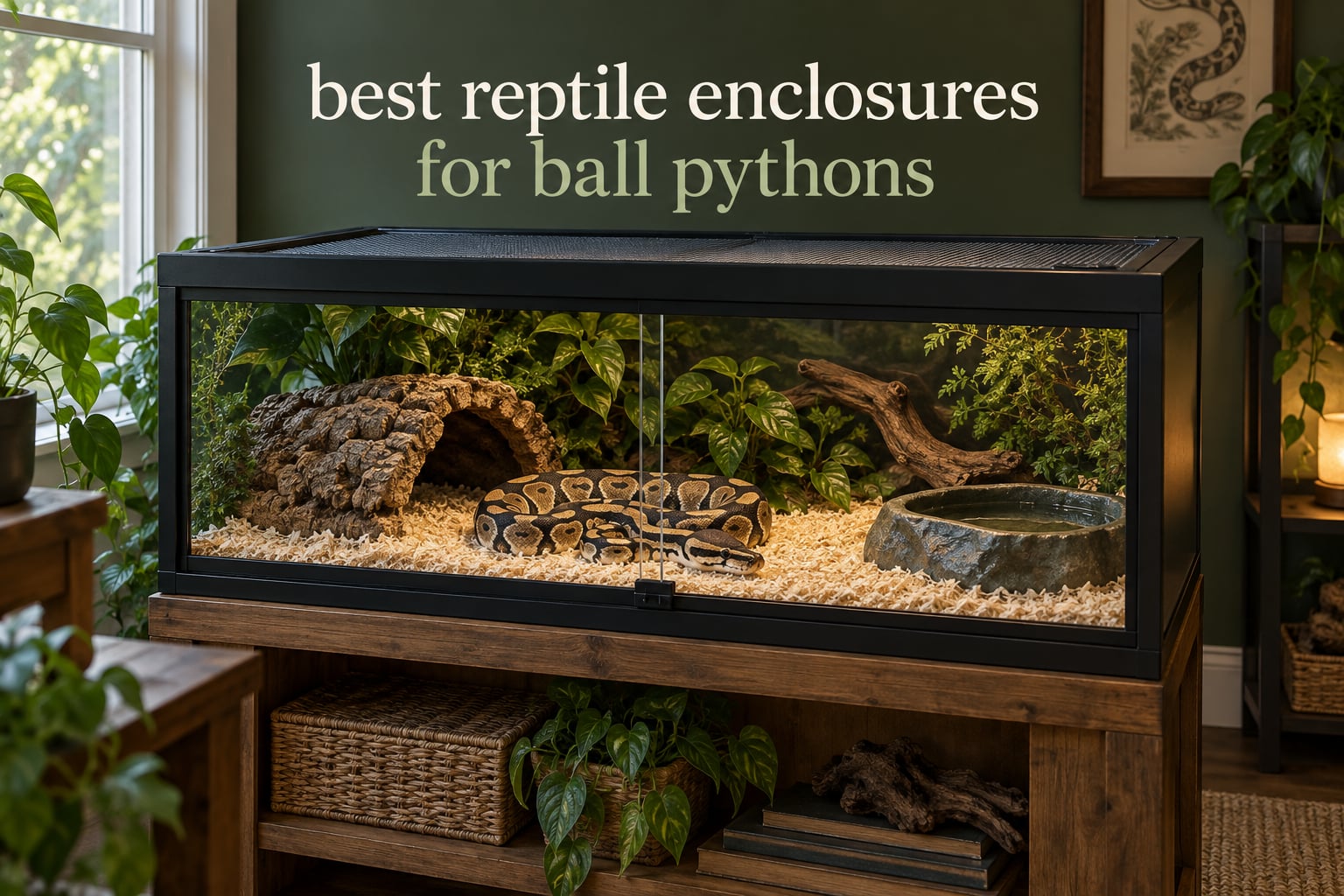
The best reptile enclosures for ball pythons are front-opening PVC units measuring 4 feet by 2 feet by 2 feet, the enclosure most keepers simply call a 4x2x2 or a 120-gallon. For an adult snake that means about 8 square feet of floor area, opaque solid sides rather than glass, sliding doors with a working lock, and a mesh top you are prepared to cover. Everything else on this page is detail built on that answer.
I kept ball pythons long enough to be tired of guessing, and the pattern is consistent across every setup our team looked at. The enclosure decides how easy it is to hold 60% to 80% humidity and a steady warm-to-cool gradient, because opaque panels trap the heat and moisture a screen-topped glass tank throws away. It also decides what thermostat, heat source and humidifier you will have to buy alongside it.
We compared eight enclosures in the 4x2x2 class and one extra-tall option, reading the full review base on each rather than the marketing copy. Below you get the size ladder first, then every pick with named drawbacks, a material comparison, and the gear each enclosure forces you to buy. If you are still working out the basics, our best snake enclosures guide covers the general enclosure types, and our reptile terrarium roundup handles smaller species.
Table of Contents
What Size Enclosure Does a Ball Python Need?
The short answer: at least as long as the snake is, with a floor area near 8 square feet and at least 24 inches of vertical space for anything past the juvenile stage. Hatchlings are fine in something far smaller. Adults are not, and an undersized enclosure is a welfare problem rather than a money saver.
Hatchling to about 300 grams: a 10 to 20 gallon tub or a small 20 x 11 x 13 inch unit works well. Plastic tubs with clamped lids are genuinely easier to heat and humidify at this size.
Juvenile under 3 feet: a 36 x 18 x 18 inch enclosure gives a young python room to stretch out while you work out the adult setup.
Subadult and adult over 3 feet: a 48 x 24 x 24 inch enclosure, the 4x2x2 standard, is the floor and ceiling for a single adult.
Large female or a very long male: a 48 x 24 x 36 inch unit gives extra length for a snake that keeps climbing the sides and wants to straighten out fully.
Vertical interest: ball pythons are ground dwellers, so height is a bonus rather than a requirement. Anything under 24 inches of interior height wastes space and money.
One more practical check before you buy: measure the interior, not the exterior. Several enclosures in this roundup are labelled 4x2x2 and deliver slightly less inside, which costs a snake a couple of inches of stretch length. A front-opening enclosure also matters more than size. A snake that feels exposed will refuse to eat in an enclosure that is technically large enough, so opaque sides and a hiding spot matter more than another 6 inches of height.
Top 3 Best Reptile Enclosures For Ball Pythons (October 2026)

Phailozoo 4x2x2
- True 48x24x24 interior
- Snug-fit metal-bolt build
- 28% blockage mesh top
- True 4x2x2 footprint

Reptile Habitats 4x2x2 V3
- 36 lb total weight
- Removable glass doors
- Bottom seal holds humidity
- QR assembly video
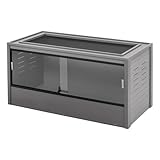
New Age Pet ECOFLEX 48
- Lowest entry point in class
- Tool-free assembly
- Working door lock
- 10-year warranty
The Best Reptile Enclosures for Ball Pythons at a Glance
All eight units below share the 4x2x2 footprint or close to it, so the differentiators are construction weight, lock hardware, panel thickness and how much finishing work each one needs before a ball python goes in. Specifications come from the manufacturer listings and the review data behind each product.
| Product | Specifications | Action |
|---|---|---|
| Phailozoo 120 Gallon 4x2x2 |
|
Check Latest Price |
| Reptile Habitats 4x2x2 V3 |
|
Check Latest Price |
| New Age Pet ECOFLEX 48 Mojave |
|
Check Latest Price |
 REPTI ZOO 120 Gallon PVC Tank REPTI ZOO 120 Gallon PVC Tank |
|
Check Latest Price |
 ToxiRium 230 Gallon Extra Tall ToxiRium 230 Gallon Extra Tall |
|
Check Latest Price |
 ToxiRium 120 Gallon Enclosure ToxiRium 120 Gallon Enclosure |
|
Check Latest Price |
 REPWILD 4x2x2 PVC Enclosure REPWILD 4x2x2 PVC Enclosure |
|
Check Latest Price |
 ToxiRium Twin 4x2x2 Two-Pack ToxiRium Twin 4x2x2 Two-Pack |
|
Check Latest Price |
1. Phailozoo 120 Gallon 4x2x2 Reptile Tank: the best overall enclosure
- Highest rated in the roundup at 4.6 stars
- True interior dimensions
- Weighted roughly like a 40 gallon aquarium
- Snug fit holds heat and humidity
- Tempered doors slide smoothly
- No door locks
- Requires silicone sealing for bioactive setups
- Mesh top must be covered to hold humidity
This is the enclosure we keep coming back to. At 4.6 stars across 758 ratings with 84% of those ratings at five stars, it has the strongest evidence base and the cleanest owner consensus of anything we looked at, and it is a genuine 4x2x2 inside rather than a 4x2x2 on the box.
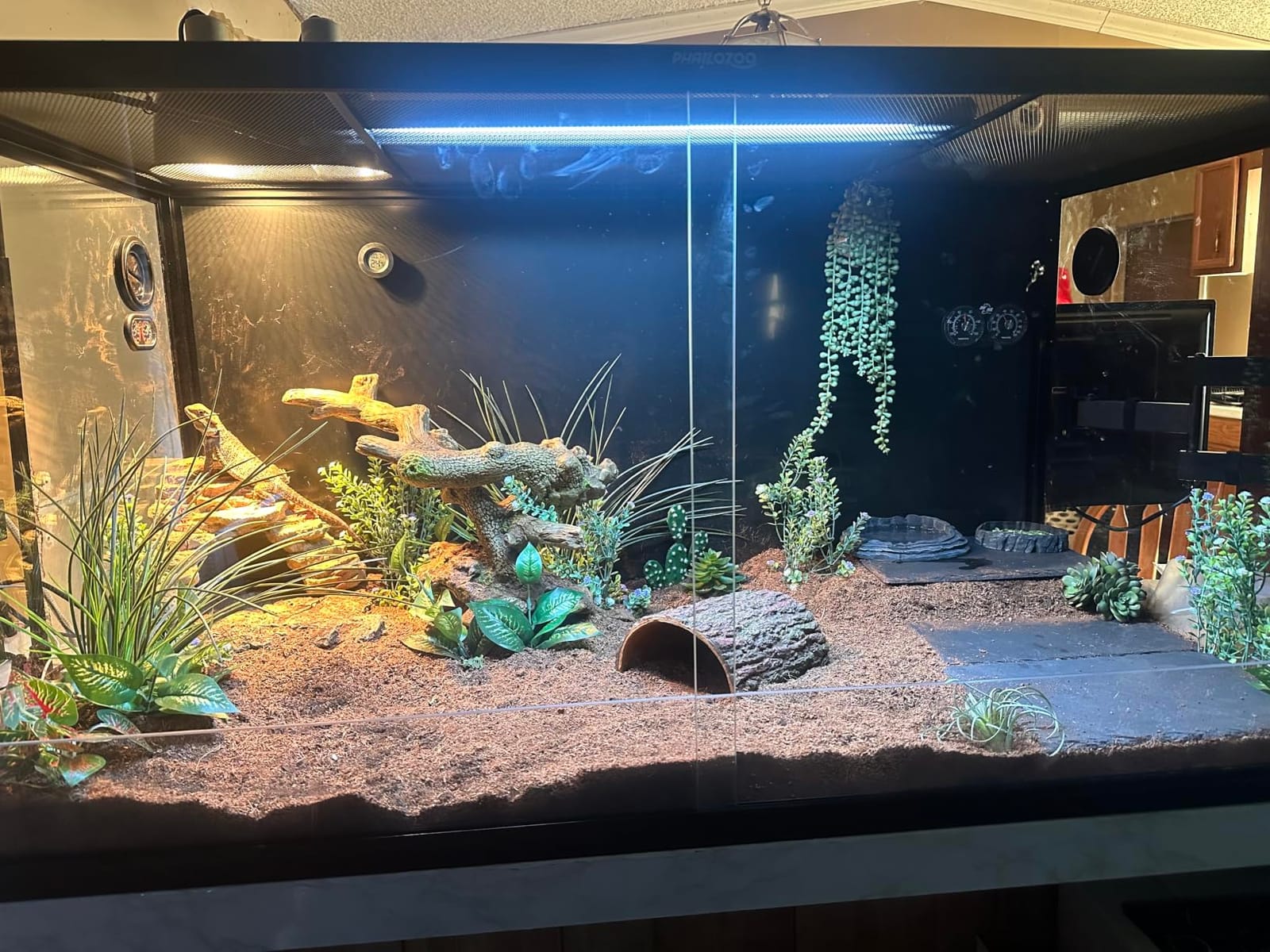
The build is what separates it from the rest. Panels are joined with metal bolts, metal side braces and metal top and bottom frames, and the fit is snug with no gaps. Reviewers report that this is why heat and humidity hold steady, and why it outperformed glass tanks they owned before it. The front is tempered glass in sliding doors with handles, and the metal mesh top blocks only 28% of light, so UVB and heat lamps still get through.
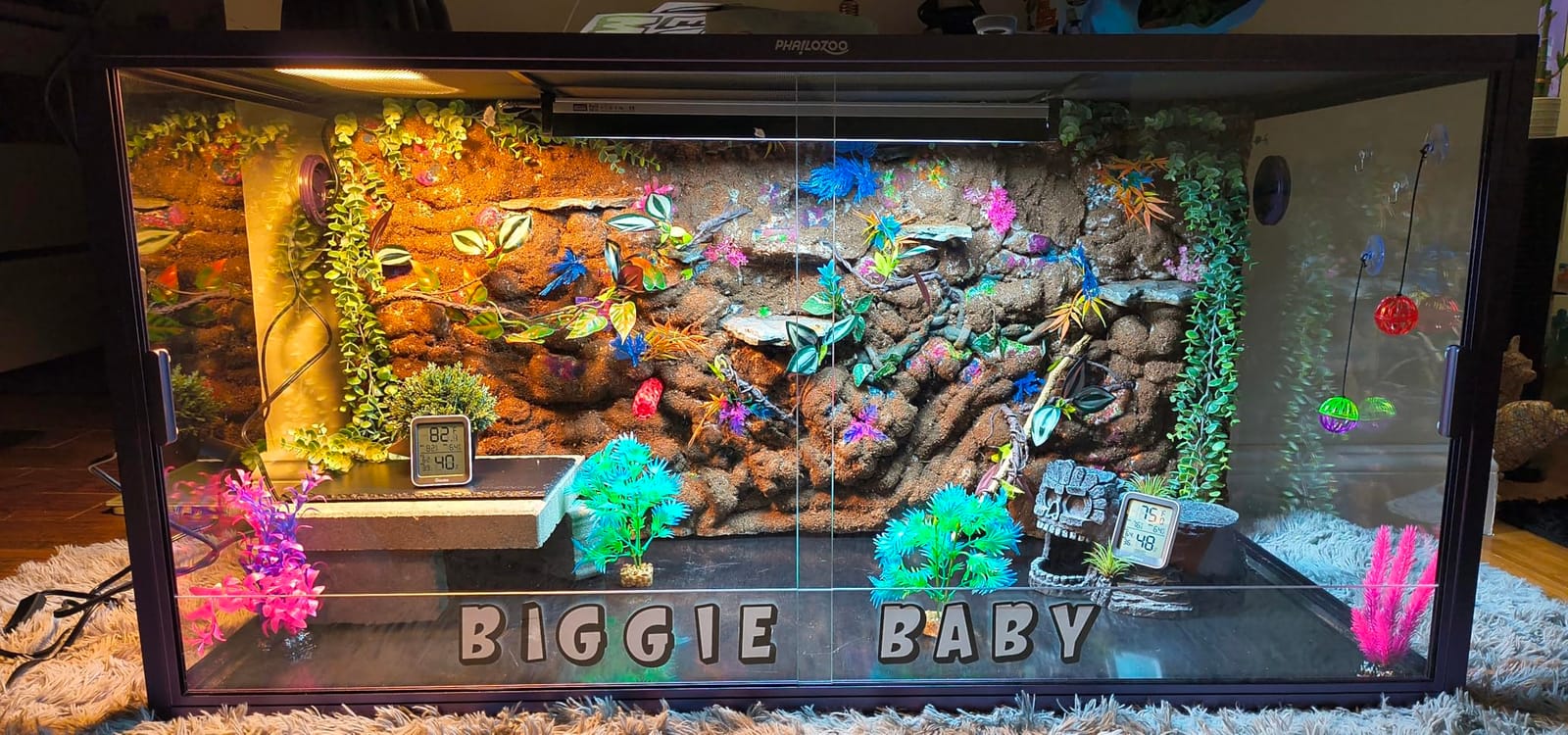
One of the more useful notes from owners is weight. This enclosure weighs 44 pounds, which is about what a 40 gallon glass aquarium weighs with roughly three times the internal volume. That matters if you are moving it, and it matters more if your furniture is rated for a certain load. PVC panel construction is the practical reason ball python keepers migrate away from full glass tanks, and this is the clearest example of that in the roundup.
Owners also like the cord ports for heat lamps, humidifiers, misters and foggers, the substrate barrier at the bottom that keeps bedding from scattering out, and the reptile-inspired colour options with a metallic finish. Packaging arrives with protective film and high-density insulation, and the glass survived transit intact for most buyers.
What you get right with this enclosure?
The strongest point is the ratio of insulation to weight. A snug metal-bolt box this size holding 60% to 80% humidity without a constant humidifier cycle is exactly what a ball python needs, and owners moving up from glass tanks report the difference immediately.
The second strength is dimension accuracy. Listed interior measurements hit a true 4 by 2 by 2, so an adult snake gets the full 48 inches of stretch-out length and the full 8 square feet of floor area rather than a couple of inches short.
Where it falls short for a ball python keeper?
There are no door locks. That is the single most common complaint in the review base, and snake owners work around it with adhesive refrigerator or cabinet locks fitted to the sliding doors. Budget for that as part of the setup rather than a surprise.
The side panels and the bottom front strip are plexiglass, not tempered glass, so they show wear over years in a way the front glass does not. The bottom is silicone-sealed for structural strength only and will leak until you re-seal every seam, and the mesh top needs covering for a tropical setup. Assembly instructions are thin, which is why you will see owners learning the build from video walkthroughs.
2. Reptile Habitats 4x2x2 V3 PVC Enclosure: the lightest 120 gallon unit
- Lightest 120 gallon unit here at 36 lb
- Flawless bottom seal for humidity
- Doors lift out for cleaning
- PVC unaffected by high humidity
- No printed instructions in the box
- Not watertight without silicone
- Fixed top gives no top-down access
This unit shares the top rating in the roundup at 4.6 stars and holds a 4% one-star share across 350 ratings, a profile that says a consistent product rather than a lucky batch. It also happens to be the easiest 120 gallon enclosure to move, which matters more than most buyers expect.
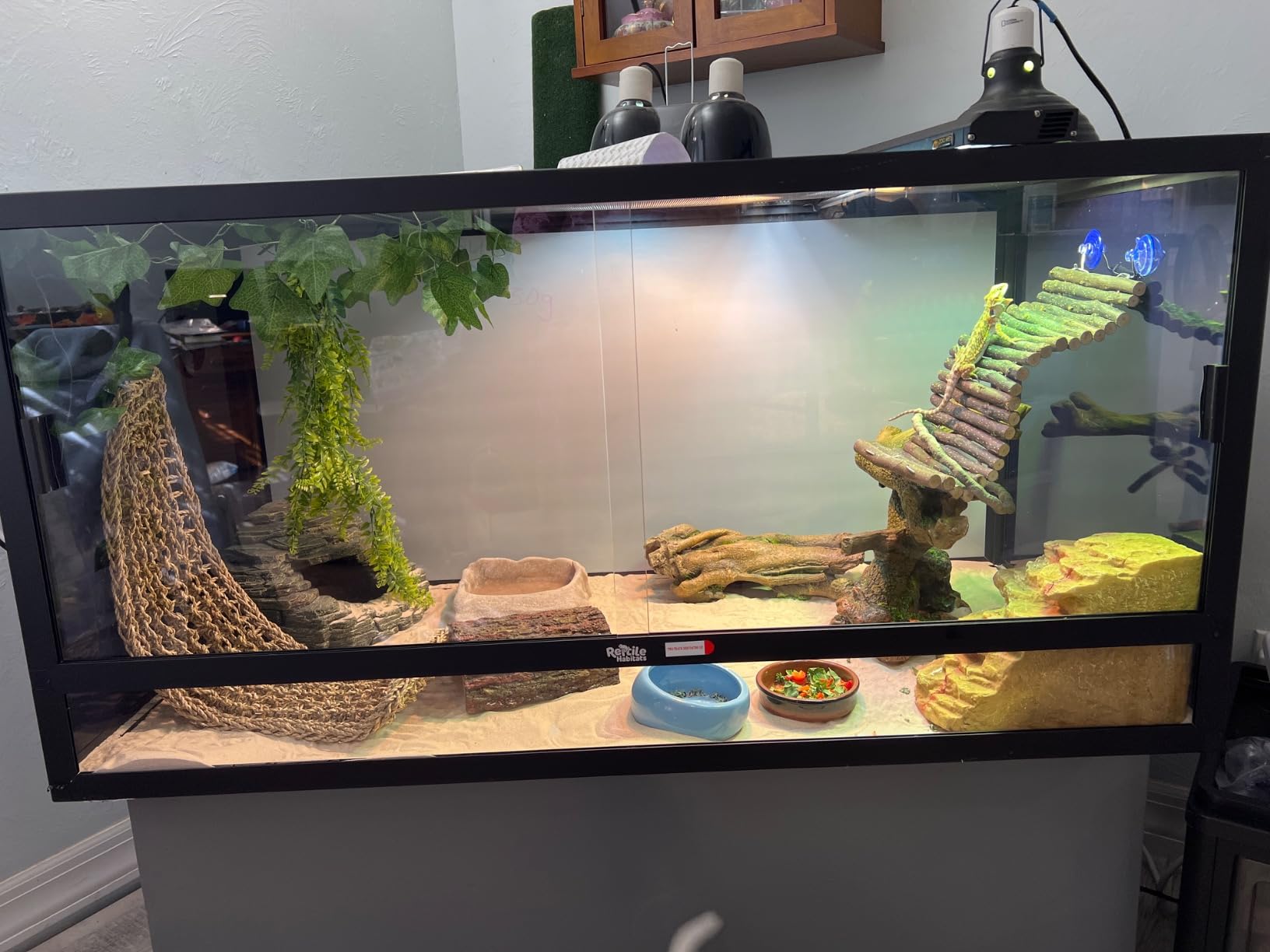
At 36 pounds for the assembled enclosure, this is the unit we recommend if your stand is a normal piece of furniture or your staircase is not thrilled about a 60 pound box. One reviewer moved it solo, and another had a 62-year-old owner assemble and relocate it without help. The frame is strong enough to work as a barrier around prey animals, which tells you something about the joint quality.
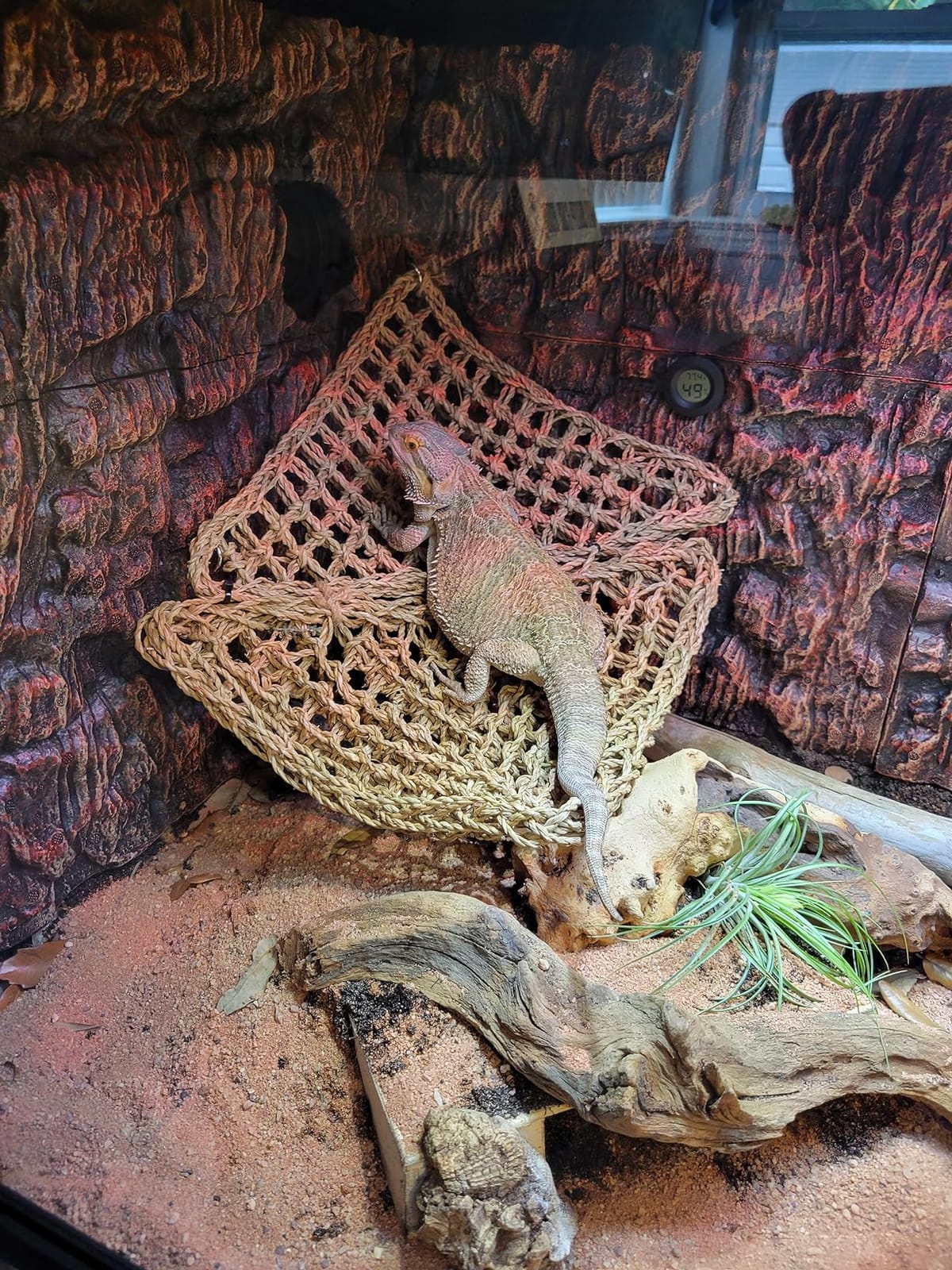
The panels are PVC and they are not affected by high humidity, which is the core reason this material became the standard for ball pythons. Owners running a blue-tongue skink in one report a bottom seal so tight it held humidity without intervention, and ball python keepers describe the same thing. Cord holes in the side panels let you mount a UV light inside the enclosure rather than hanging everything externally.
The glass doors lift out completely for deep cleaning, which you will want to do twice a year with a 10% bleach solution. Buyers across lizard and snake species describe this as the best money they spent on a tank, which is about as consistent an endorsement as review data gets.
What you get right with this enclosure?
Weight is the reason this one stands out. Nothing else in a 120 gallon PVC enclosure at this size comes close to 36 pounds, and it changes how the unit feels in the hand and on the stairs.
The humidity story is the second reason. Reviewers consistently report that the PVC panels and heavy-duty screen stand up to the 60% to 80% humidity a ball python needs, and the removable doors make the twice-yearly deep clean straightforward.
Where it falls short for a ball python keeper?
There are no printed directions in the box. The QR code on the packaging links to an assembly video, which reviewers say solves the problem, but plan for it. Screws can strip or snap during assembly and replacement parts are not easy to source, so assemble it once with the right tool.
The panels are not watertight, so pouring water into the corners to raise humidity leaks unless you line it with silicone. The top is fixed rather than hinged, which removes top-down access to the interior, and the black background is plain enough that most owners add a printed background.
3. New Age Pet ECOFLEX 48 Inch Mojave: the best value enclosure
- Lowest entry point in the 4x2x2 class
- Fastest assembly in the roundup
- Working door lock included
- 10-year warranty
- Light colourway reflects daylight lamps
- Not waterproof
- seams need silicone for bioactive work
- Mesh top loses humidity and bows under light fixtures
- Interior height under an inch short of a true 4x2x2
With 1836 ratings, this is the most reviewed enclosure we looked at, and at 4.2 stars it is also the one with the widest spread of experiences in the group. Sixty-six percent of ratings sit at five stars and nine percent sit at one star. Long-term keepers buy multiples and stack them, which is the clearest signal that it holds up over years rather than months.
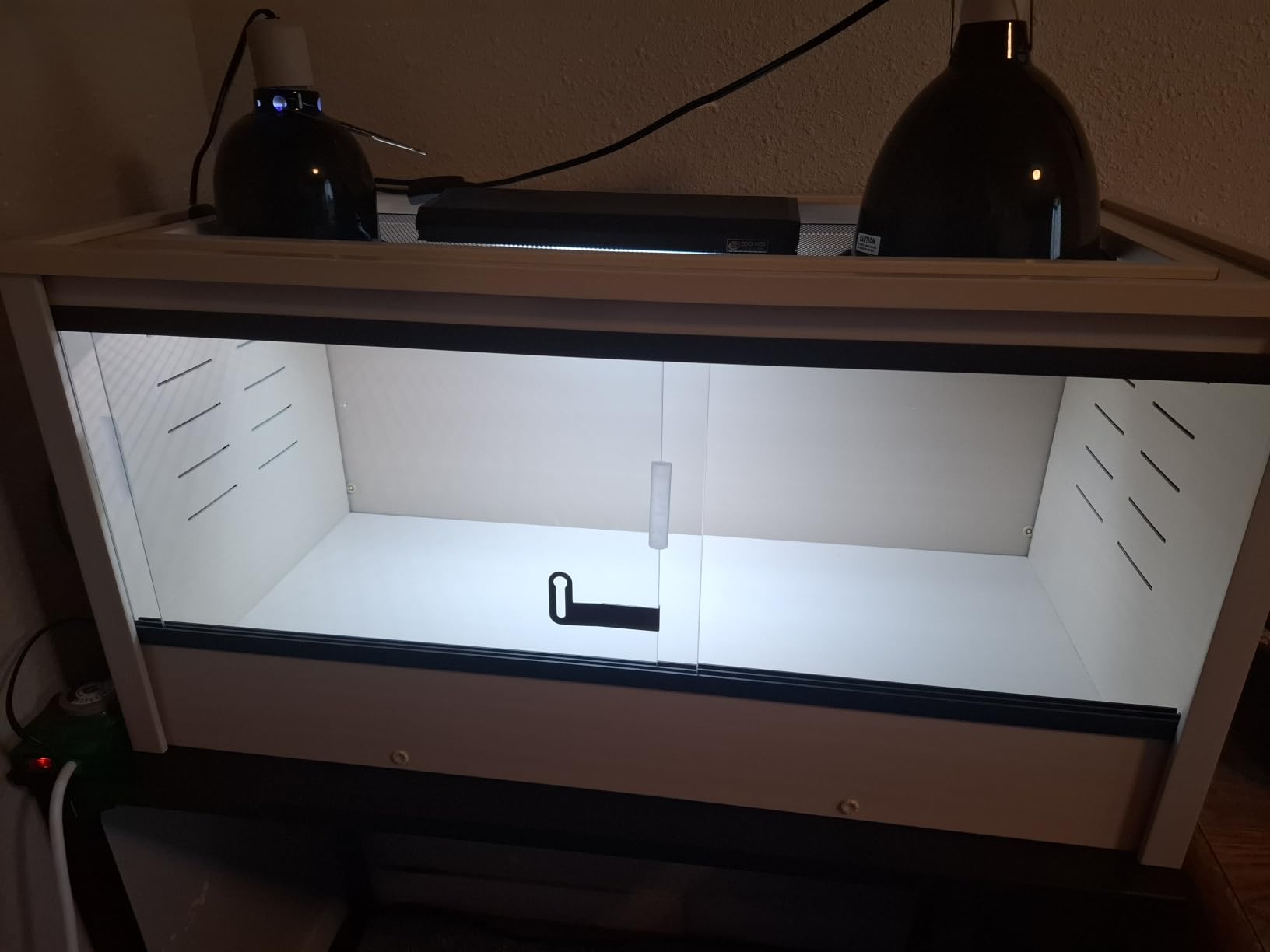
The value case is simple: this is the lowest-cost 4x2x2-class enclosure in the roundup, by a wide margin, and it does not feel cheap in the hand. It uses moisture-resistant ECOFLEX composite panels on an aluminium frame, has vented side panels, and the light Mojave colourway reflects daylight lamps well enough that owners often skip extra lighting. Back knockout grommets fit cords and heat panels cleanly.
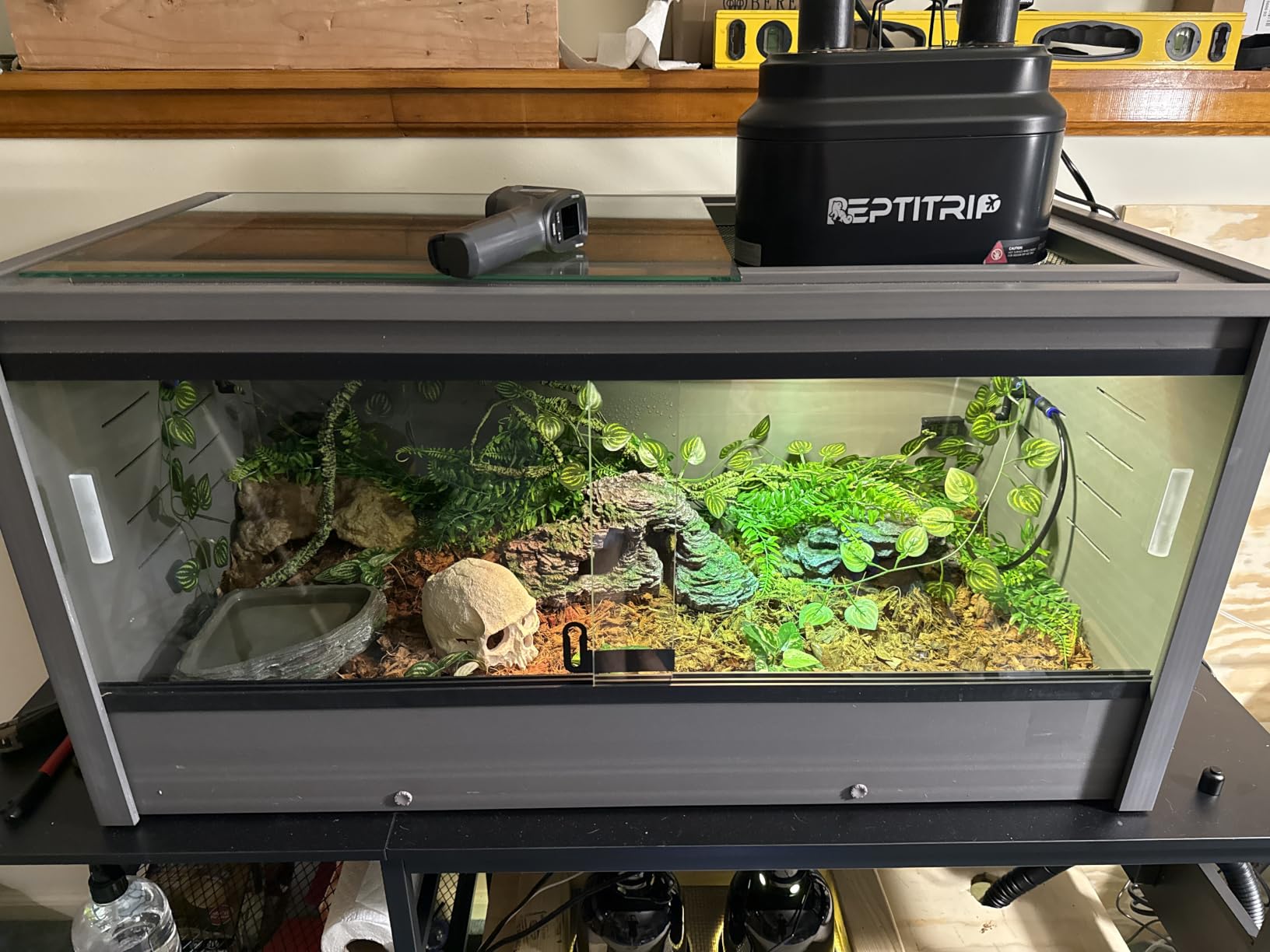
Assembly is the fastest here. Multiple reviewers report 10 to 30 minutes with no mechanical experience, all hardware included with clear instructions, which is more than most competitors can say. Unlike several others in this roundup, it arrives with a working door lock, and the glass door and metal framing stand up to scratching from an adult python pushing against the front.
The catch is the material itself. ECOFLEX is moisture-resistant, not waterproof, so the seams and corners need silicone before you run high humidity or attempt a bioactive setup. This is the specific complaint raised in the r/ballpython thread that ranks first for this search, where ECOFLEX is named among enclosures with design problems. Individual reviews here are more positive, but the sealing work is real and keepers should plan for it.
What you get right with this enclosure?
The cost and the volume together. Reviewers repeatedly describe it as roughly half the price of comparable enclosures, and at 1836 ratings there is a deep enough base of long-term owners to trust the durability claim.
The included lock and the glass front are the details most budget units drop. Getting both, plus a 10-year manufacturer warranty and a light reflective colourway, is why this is our value pick rather than simply the cheapest option.
Where it falls short for a ball python keeper?
Measure the interior before you commit. The interior measures 46.46 by 22.32 by 21.26 inches, so it is a 4x2x2 in footprint but over an inch shorter inside than earlier production, and the latest revision also reduced the front glass viewing area compared with earlier versions.
The screen top is the practical problem. It loses humidity, it bows under double light fixtures, and owners routinely add insulation or foil over it. Knockout panels pop out easily, which means small feeder insects can escape through the seams, and the deep front panel limits your line of sight to a snake sitting low down.
4. REPTI ZOO 120 Gallon PVC Reptile Tank: the thickest panels in this class
- Thicker PVC than most competing enclosures
- Retains heat and humidity well
- Working safety lock on the glass doors
- Panels arrived scratch-free
- Assembles alone in about 45 minutes
- Screw threads can crack or strip during assembly
- Door lock feels flimsy to some owners
- Not watertight as delivered
- Expensive for this size class
This one is at 4.1 stars on 163 ratings with the widest internal spread of the group: 68% five-star and 13% one-star. Most owners of the 24 inch and 36 inch variants describe it as solid and attractive, while the critical minority focuses almost entirely on assembly hardware. Understand that split before you order.
The reason to like it is the wall thickness. Owners repeatedly describe the PVC as thicker than most enclosures they have owned, and several call it the best on the market for the money. Thicker panels insulate better and resist moisture, so holding heat and humidity for a ball python is easier than it would be in a thinner box. The upper and bottom ledges also give the snake more seclusion than a fully open front, which reduces stress.
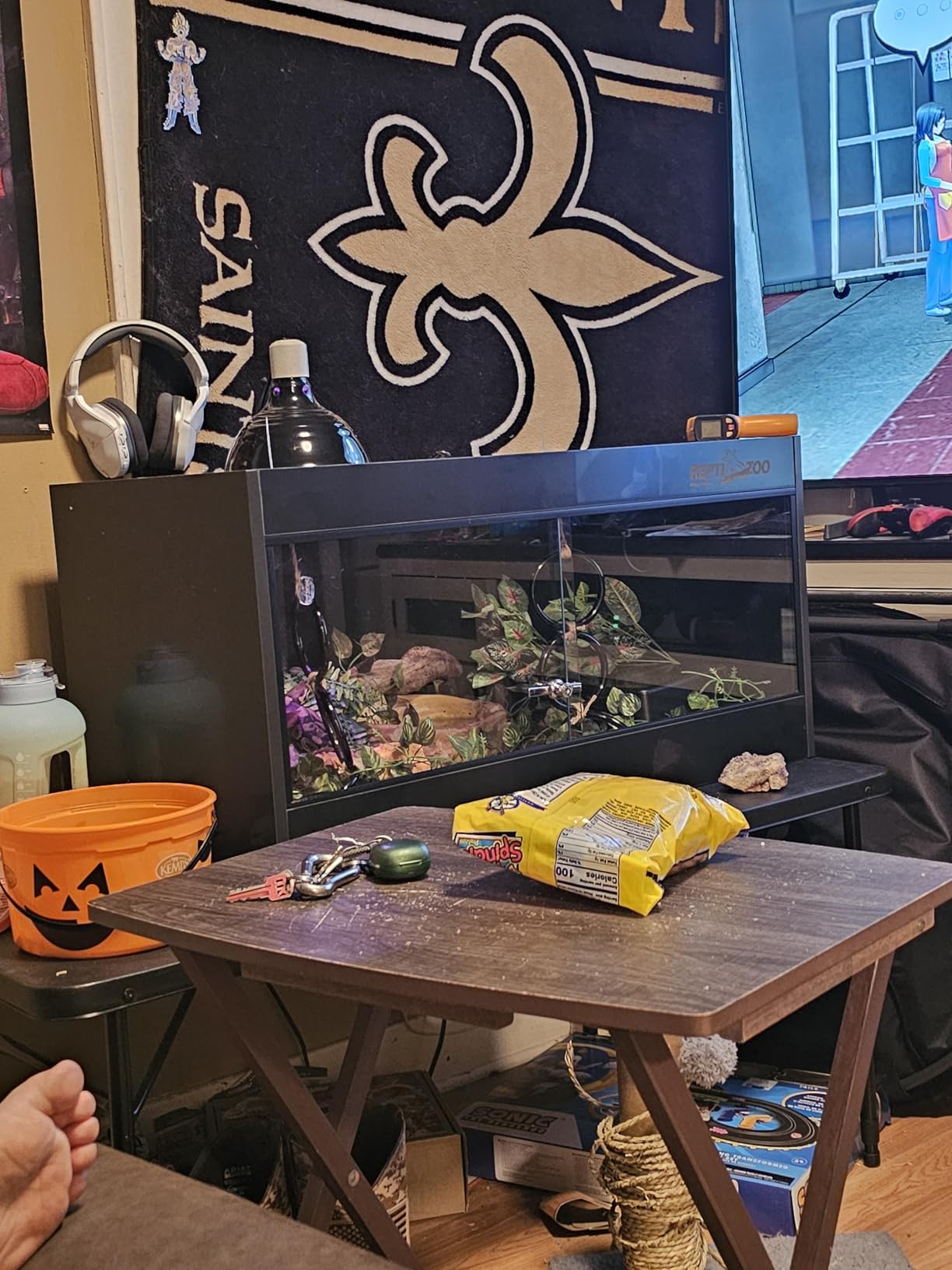
The doors are removable tempered glass in a sliding configuration with a working safety lock, and the detachable mesh top lets UVB, full spectrum and IR light through for heat lamps. Buyers upgrading from glass aquariums report that the difference in humidity retention is immediate enough that they no longer run a humidifier on a schedule.
Assembly takes about 45 minutes with basic tools, done solo. Panels and glass arrived scratch-free and well protected, which tells you the packaging is doing its job on a 66 pound unit.
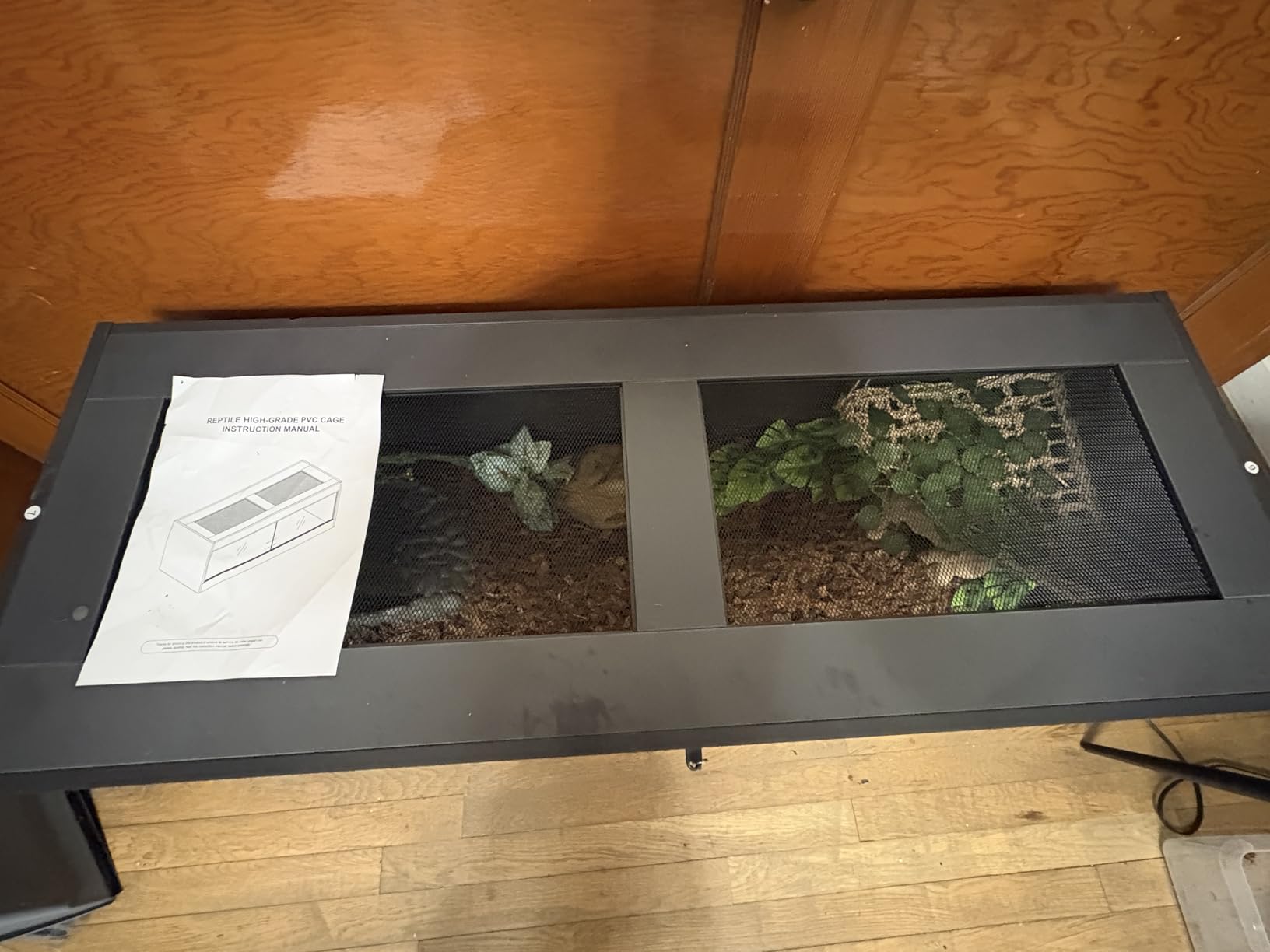
What you get right with this enclosure?
Panel thickness is the headline, and it shows up in the humidity performance. If your priority is the least amount of equipment between you and a stable 60% to 80% humidity range, the thicker the PVC the better.
The seclusion ledges are a genuinely thoughtful addition for a species that hides. Combined with the detachable mesh top and the lock, this is one of the more complete packages in the roundup out of the box.
Where it falls short for a ball python keeper?
Hardware is the weak point. Screw threads can crack or strip during assembly, screw retainers can pop out mid-build, and the included door lock is described as feeling flimsy by some owners. A few reviewers also report seeing light through panel gaps, which defeats the purpose of choosing PVC over glass.
It is not watertight as delivered, so a bioactive setup means silicone-sealing the bottom and seams first. It also sits at the expensive end of this size class relative to competing PVC enclosures, and the glass doors can be awkward to clean or shift out of frame in transport.
5. ToxiRium 230 Gallon Extra Tall Enclosure: the most vertical space
- The only genuinely extra-tall option here at 46 inches
- Combination lock is the strongest escape prevention
- Internal support rod stiffens the tall frame
- Crossbars reposition heat and UVB lamps
- Lowest rating here at 4.0 stars on 87 ratings
- 78 pounds needs two people to position
- Extra height is less useful than extra floor area for a terrestrial python
At 46 inches tall this is the only vertical option in the roundup, and it sits at 4.0 stars on 87 ratings with 60% five-star and a 14% one-star share. Several size variants are pooled under this listing, so read the rating as a range rather than a single verdict. Buyers who specifically wanted height and security are happy; buyers who wanted floor area are the ones leaving one-star reviews.
Escape prevention is the standout feature. The sliding tempered glass front doors carry a keyless combination lock, which no other unit in this group matches, and there are no keys to lose. An internal support rod connects the top and bottom frames specifically to reduce flex at 46 inches, which is the detail an engineer would add and most manufacturers skip.
Black PVC side and back panels give privacy and cut stress without a separate background. The mesh top includes adjustable crossbars so you can reposition heat and UVB lamps without rebuilding the hood, and the raised bottom is designed to accept substrate heaters. The insulated top cover holds heat and humidity better than a bare screen, which is a meaningful gain in a box this tall.
If you keep arboreal species alongside your ball python, the vertical space is genuinely useful. For a ground-dwelling python, most of that extra height is simply height.
What you get right with this enclosure?
The combination lock. It is the only real anti-escape hardware in this roundup, and ball pythons are accomplished escape artists who will push at any sliding door gap.
The engineering at height is real too. The internal support rod, the adjustable crossbars and the raised bottom all exist because someone anticipated how a 46 inch frame behaves once it is loaded and warm.
Where it falls short for a ball python keeper?
Size and weight, plainly. At 78 pounds and 46 inches tall it needs two people and a tall dedicated stand to position safely, and a stand rated for that load is part of the real cost of this option.
Because the footprint is 24 inches deep with a 48 inch length, you get the same floor area as a standard 4x2x2 with the volume spent on height instead. For a terrestrial python that is a poor trade, and the lowest rating here reflects it. You also have to remember and re-enter the combination at every access.
6. ToxiRium 120 Gallon Enclosure: the strongest built-in lock in a standard footprint
- Real combination lock on standard 4x2x2
- Lightweight PVC build is easy to relocate
- Non-reflective black panels need no background
- Stackable with matching units
- Smallest review base here at 36 ratings
- Listed dimensions are under 48x24x24
- Not watertight as delivered
- Black sides cut ambient light
This is the enclosure to look at if your snake is a door-pusher. It is a standard 4x2x2 footprint with genuine lockable sliding doors and a keyless combination lock, which puts it in a different security class from the plain sliding-door designs in this roundup. At 4.2 stars it lands in the middle of the pack.
The honest caveat is evidence. Thirty-six ratings is the smallest review base here, with 66% five-star, 12% one-star and no two-star ratings at all. That distribution is clean, but a small base means less long-term durability data than the 1836-rating or 758-rating options. Treat the rating as less reliable and let the hardware do the talking.
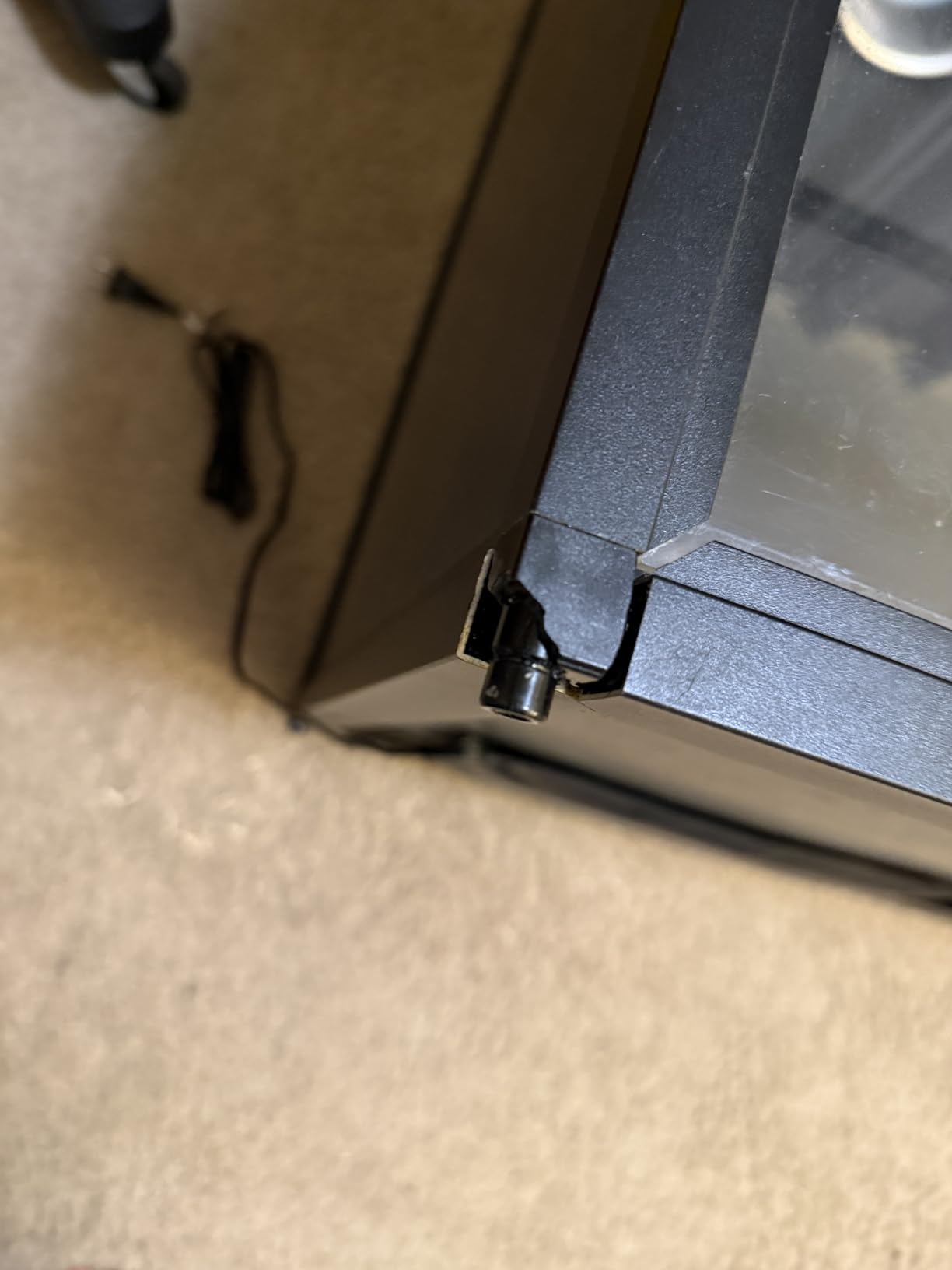
Beyond the lock, the build is sensible. PVC side panels hold heat and humidity well for ball pythons, the heavy duty top screen has two movable parallel crossbars for positioning heat or UVB fixtures, and the 1 cm raised bottom is built to accept substrate heaters. The non-reflective black side and back panels give privacy and reduce stress without you buying a background.
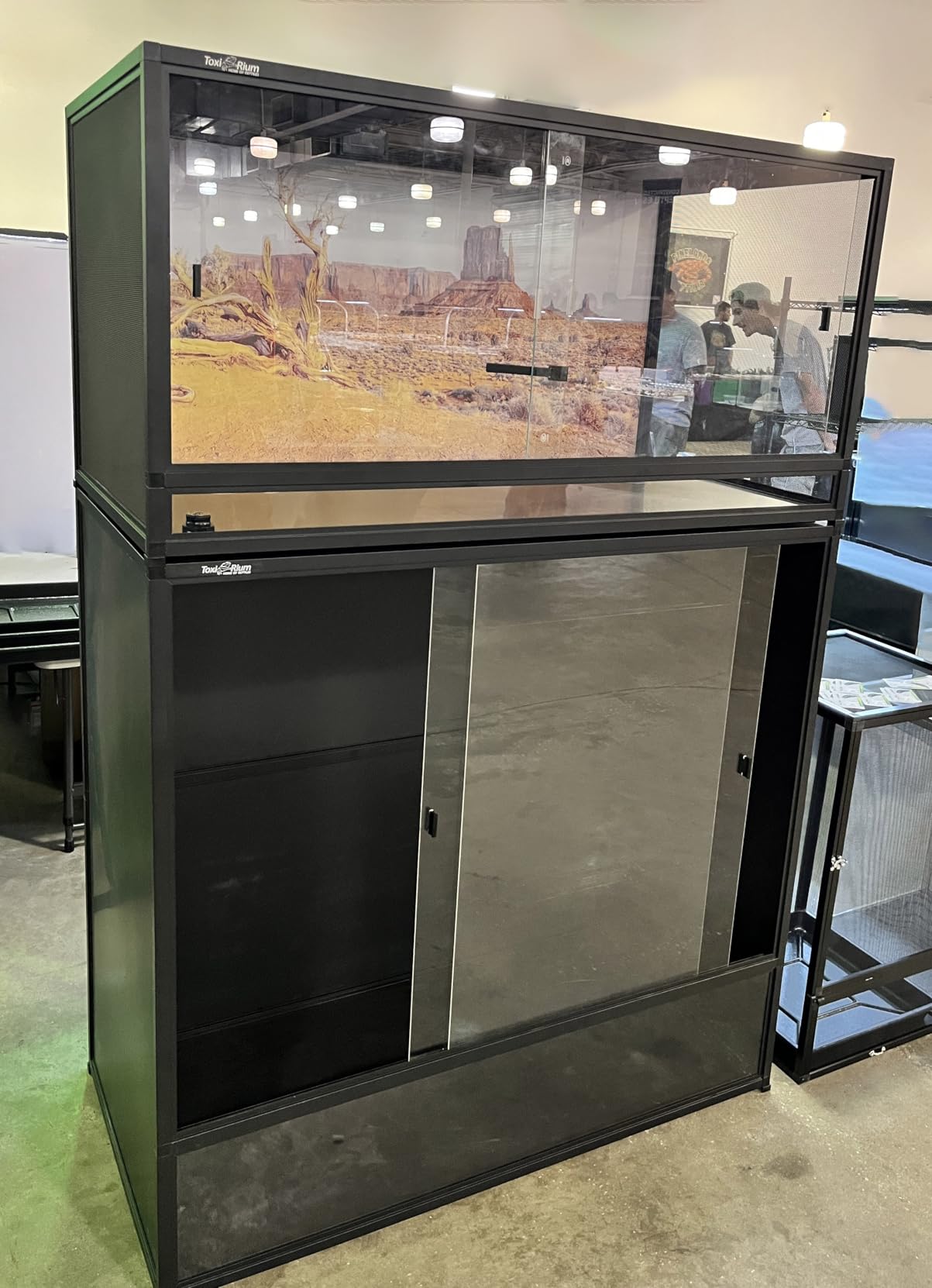
The PVC build is light enough to relocate without a dolly, and it stacks with matching units, which matters if you plan a second enclosure later.
What you get right with this enclosure?
You get a working lock in the most widely available size. If you have had a snake escape through a sliding door gap, this is the pick that addresses it directly rather than leaving you to fit aftermarket hardware.
The privacy panels are built in rather than added. Non-reflective black PVC on three sides gives your python the sense of security that glass walls never will, without the cost of a printed background.
Where it falls short for a ball python keeper?
Measure carefully. The listed dimensions are 47.24 by 23.62 by 23.62 inches, so it falls slightly under the nominal 48x24x24 and gives up a little stretch length on a full-grown snake.
The combination lock has to be re-entered every time you open the doors, and the enclosure is not watertight as delivered, so a bioactive setup still needs silicone sealing. The black panels also cut ambient light, which makes the enclosure harder to view without adding a light source.
7. REPWILD 4x2x2 PVC Reptile Enclosure: the tightest panel fit for bioactive setups
- Thickened PVC resists warping in high humidity
- Tight panel fit needs minimal silicone for bioactive
- Working lock on the tempered glass door
- Illustrated assembly manual included
- Size range covers 24 inch to 48x24x24
- Heaviest packed weight here at 63 pounds
- 4.1 stars on a modest 61 rating base
- Still needs silicone before bioactive use
- Mesh top needs covering for tropical setups
If your plan is a bioactive enclosure with a drainage layer and deep substrate, panel fit is what decides whether you enjoy the process or regret it. REPWILD gets the closest thing to that. It sits at 4.1 stars on 61 ratings, with 64% five-star and 11% one-star.
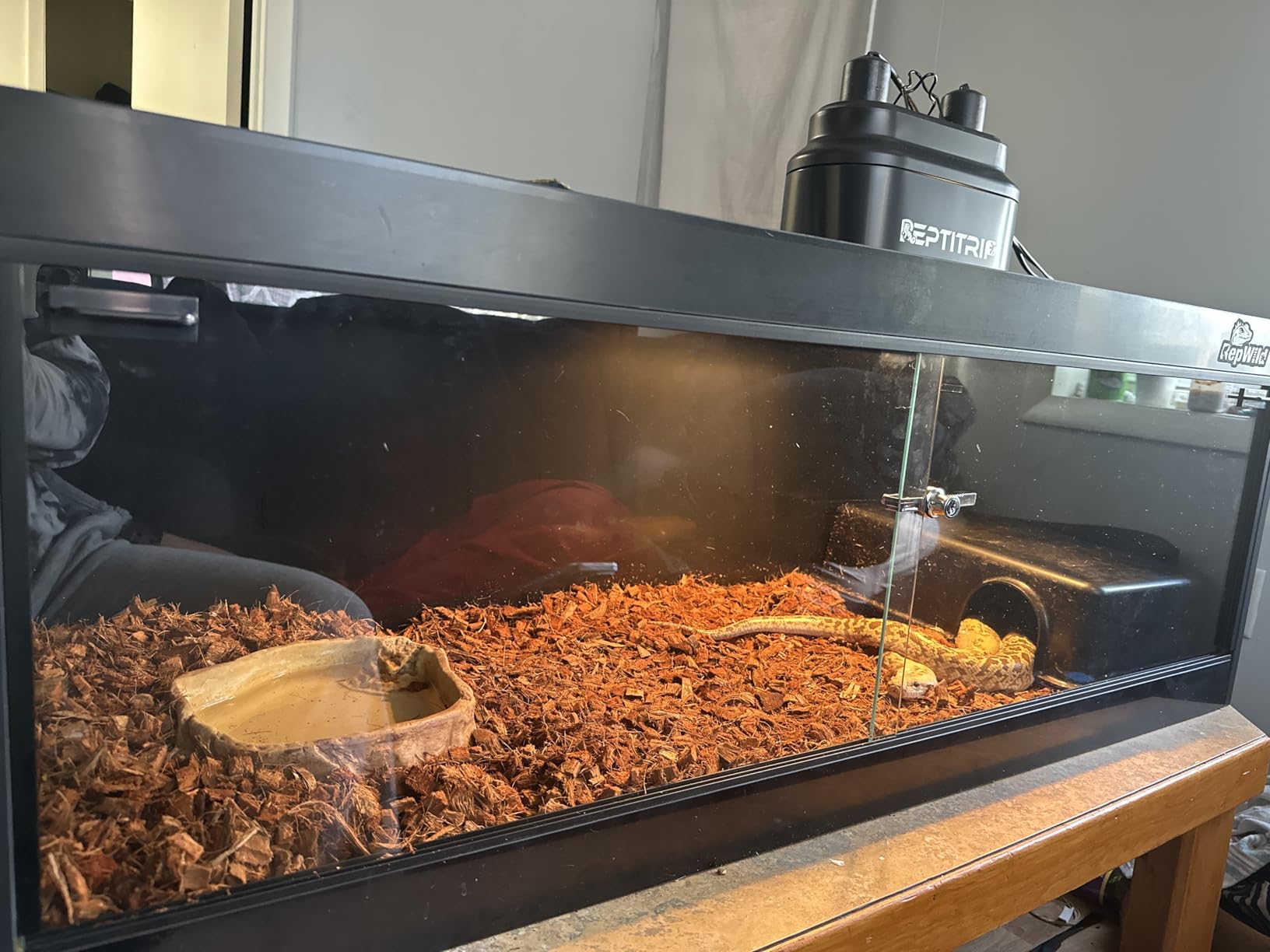
The panels are thickened high-quality PVC described as resistant to warping and deformation in high humidity, which is the failure mode that ruins cheaper builds over time. More importantly, the precision-engineered fit produces near-invisible gaps when assembled. Owners report that this means minimal silicone is needed to make the enclosure effectively leak-proof, cutting hours off a bioactive conversion.
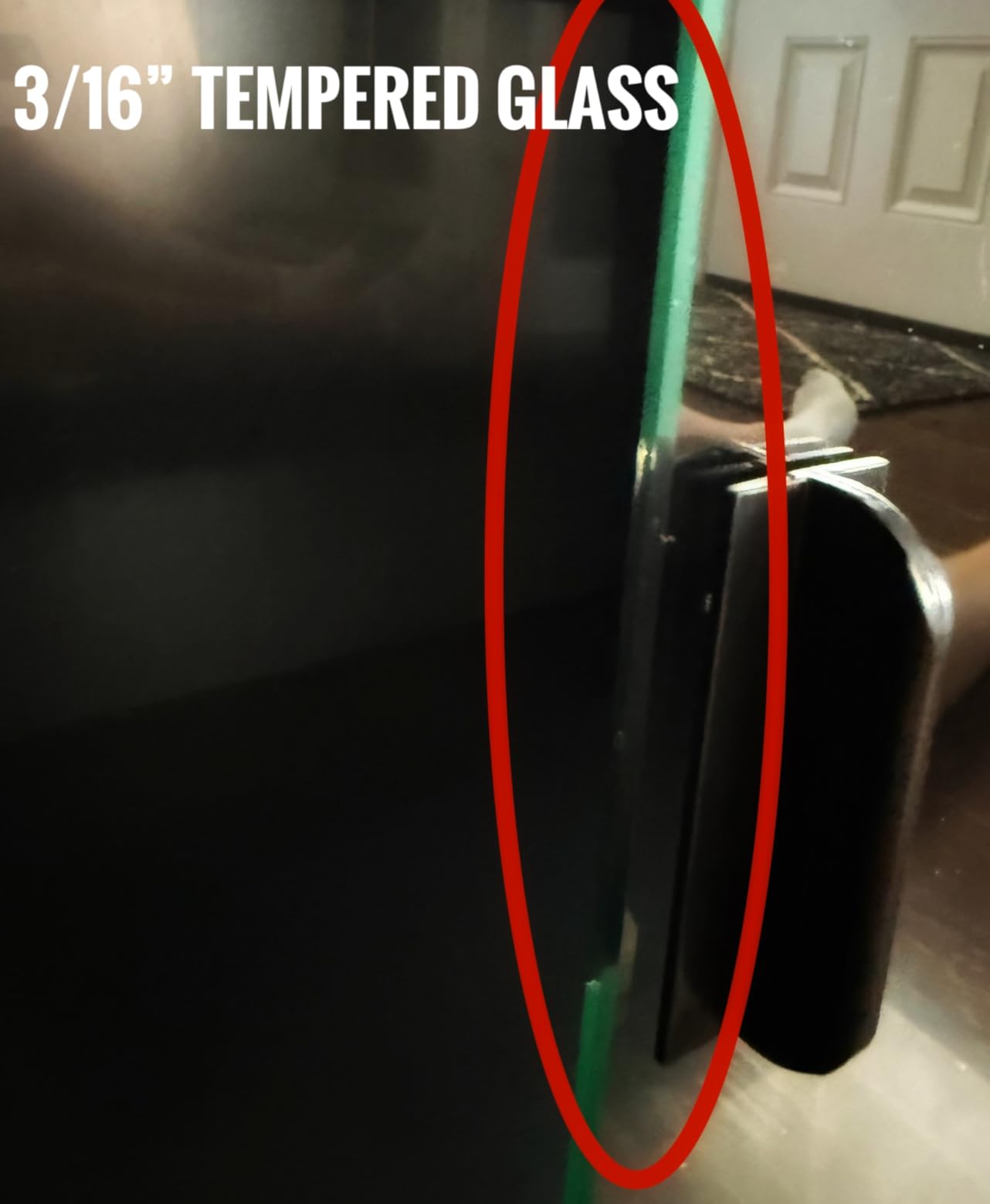
The front is a tempered glass sliding door with a real lock and handle, and the durable mesh top passes UVB and heat while ventilating. For a first enclosure build, the included step-by-step illustrated manual matters: several competitors in this roundup arrive with nothing to follow but a QR code.
The line covers sizes from 24 inches up to the 4x2x2 in the same line, so a matching quarantine unit or a second adult enclosure is available in the same style rather than from a different brand.
What you get right with this enclosure?
Panel fit is the whole story here. Near-invisible gaps mean less silicone, a faster conversion to bioactive, and a better seal against a screen top that leaks humidity.
Documentation is the second win. A printed illustrated manual makes the build less stressful, and the working lock means you are not buying aftermarket hardware on day one.
Where it falls short for a ball python keeper?
Weight and cost, mostly. At 63 pounds packed it is the heaviest unit in this roundup, and it sits above several competing 4x2x2 PVC enclosures in both weight and price. Check your stand load before ordering.
It still needs silicone sealing before you treat it as a bioactive enclosure, and the mesh top needs covering to hold humidity for tropical setups. The review base is also modest at 61 ratings, so there is less long-term data than the heavily reviewed options.
8. ToxiRium Twin 4x2x2 Two-Pack: the pick for pairs and reptile rooms
- Matched twin set in one listing
- Locking sliding doors on both units
- Lowest one-star share here at 5%
- PVC is lighter and easier to modify than glass
- Stackable for a dedicated reptile room
- By far the most expensive option here
- Explicitly not watertight and desert-focused
- Two units need a stand rated for well over 100 pounds
- Four sliding doors means four locks to manage
This is a two-pack of matched 48x24x24 PVC enclosures, and it exists for one situation: you are housing two adult ball pythons, running a breeding setup, or building out a dedicated reptile room. At 4.2 stars on 90 ratings it has a 5% one-star share, the lowest negative share of anything we looked at.
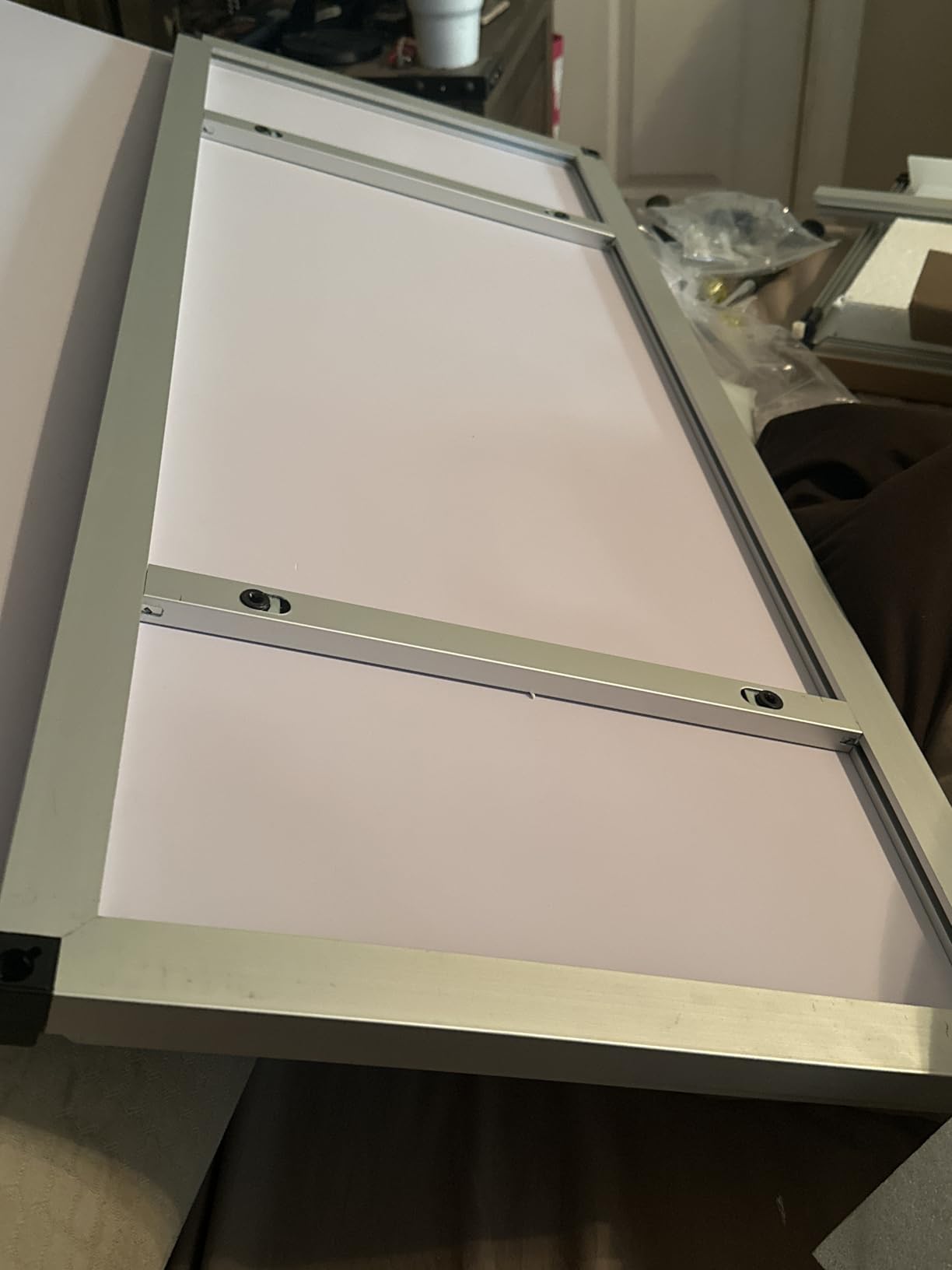
Buyers like the practical details. Each unit has two front sliding doors with a working lock, non-reflective PVC panels on three sides for privacy, extra side vents plus a mesh top for airflow, and a raised bottom frame that accepts heating mats. The units are stackable, easy to install and easy to disassemble, and the PVC is lighter and easier to modify than glass.
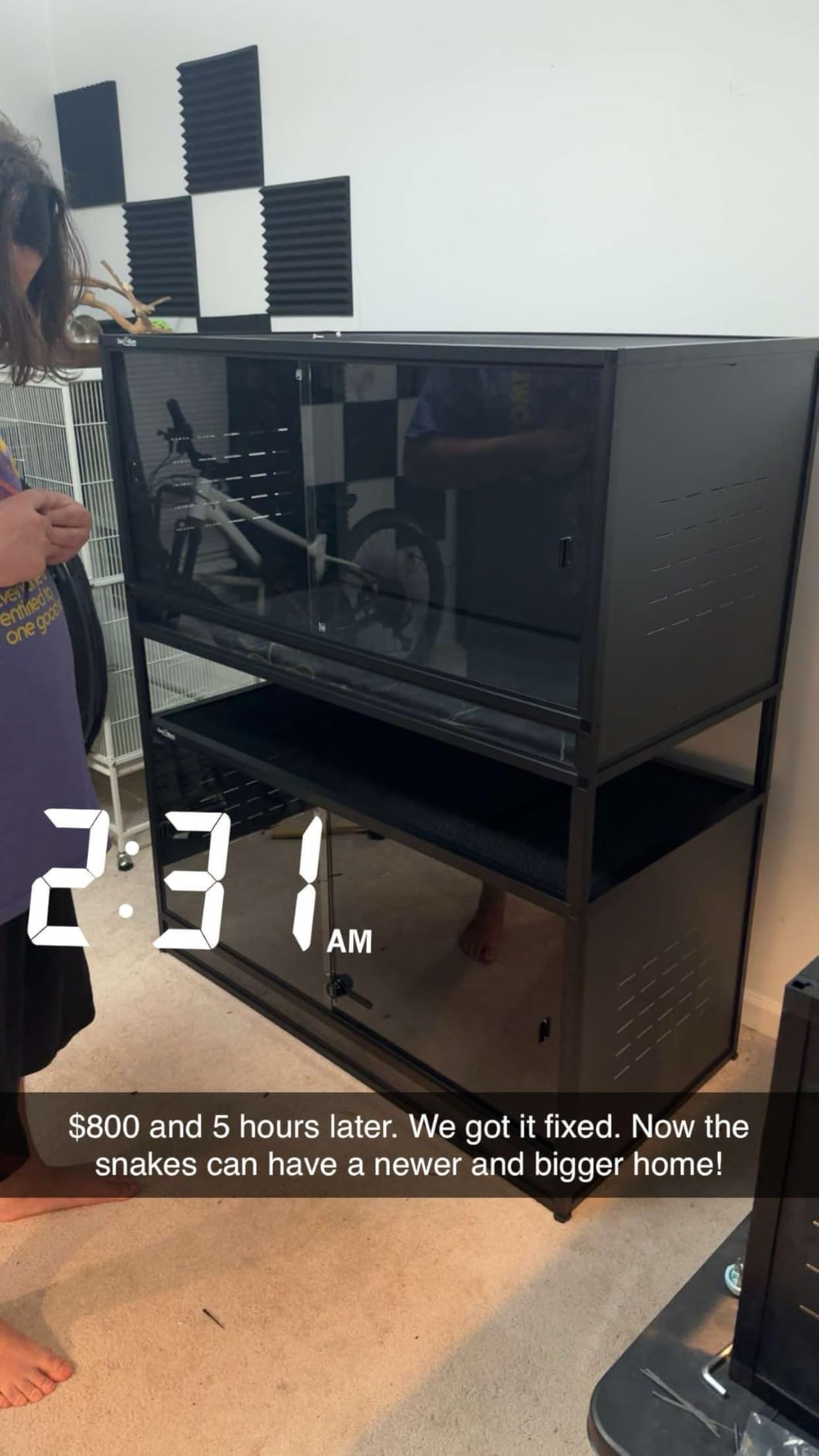
One important husbandry note before you plan a pair. Ball pythons are generally not social animals, and housing two together risks competition, stress and injury. The usual arrangement is two separate enclosures side by side, and this twin set is genuinely convenient for that, but it is not a single habitat for two snakes.
At 50 pounds per unit, two of them need a stand rated for well over 100 pounds, and you are managing four sliding doors and four locks rather than two.
What you get right with this enclosure?
Matched units in the same listing solve a real problem. Two adults need two enclosures anyway, and buying them together means the doors, panel thickness and colour match, which you cannot guarantee across two separate purchases.
The build is straightforward and owner satisfaction is high. Disassembly for moving is easy, which matters when you are installing into a fixed room.
Where it falls short for a ball python keeper?
Cost is the headline drawback. This is well above the cost of buying two single 4x2x2 enclosures, and if you only need one snake, one unit sits unused.
The manufacturer states it is not watertight and is intended for desert-style rather than rainforest bioactive setups, which rules it out if your plan is a planted enclosure without sealing work. Add the furniture load to the equation and this is a specialist choice rather than a general recommendation.
Glass vs PVC vs HDPE: Which Material Should You Buy?
The best vivarium for ball pythons is a front-opening PVC or HDPE enclosure, not a glass aquarium. Glass holds humidity poorly, has no privacy, and weighs roughly twice as much as the same volume in PVC. Every pick above is PVC or an equivalent composite panel for that reason.
One naming wrinkle worth knowing: sellers use the word PVC loosely for both PVC and HDPE panels. HDPE is a stiffer, more scratch-resistant plastic that some keepers prefer, while PVC is softer and easier to work with. Most listings on the market, including the ones here, call both PVC, so treat the material label as a family rather than a specification.
The trade-off that keeps glass on the table is heat dissipation. Glass conducts heat away faster, which some keepers argue makes a temperature gradient easier to establish and discourages mould in very humid setups. If you already have a full glass tank with a screen top and you want to keep it, cover the sides with an opaque background so the snake feels less exposed, and budget for a humidifier to make up what the glass loses.
A sealed wood enclosure sits between the two. It insulates like PVC, looks more like furniture, and works well for ball pythons, but it is heavier and needs sealing at the seams before it holds humidity. Owners on MorphMarket report moving out of wood designs specifically because they wanted PVC panels instead.
Heating and Humidity: How Your Enclosure Choice Affects Both?
Ball pythons need 60% to 80% humidity, an 88-92F warm side and a 75-80F cool side. Whether you can hold those numbers day after day depends heavily on the enclosure, which is why material is a purchasing decision and not just a care topic.
Start with the heat source. Keepers most often pair a 100W ceramic heater with a thermostat set around 92F and report stable results. Whatever the source, a thermostat is not optional. Running a heat mat or ceramic emitter without one is the leading cause of burns, and a thermostat failure without one is a burn waiting to happen.
The mesh top is the humidity leak in every enclosure here. A metal or mesh screen passes moisture straight out, so owners covering the top with insulation or silicone-matted mesh report a dramatic improvement in stability. Front-opening doors matter here too: heat and moisture are trapped inside rather than rising off an open tank.
For UVB, a ball python does not need it to survive, and the consensus among experienced keepers is that it benefits from it. A T5 HO fixture fitted inside the enclosure, mounted through the cord ports or on the crossbars, is the usual route. Our UVB light guide covers fixture selection, and our reptile heat lamp guide covers the source choices.
Known Design Problems to Watch For
The most useful thing we found across the review data is a short list of recurring complaints. None of them makes an enclosure unusable, and every one of them is fixable if you know about it before the box arrives.
Missing or flimsy locks. Several units in this roundup ship without locks, and the ones that do include them are sometimes described as flimsy. On the r/ballpython thread that ranks first for this search, keepers named Zen Habitats, Dubia, ECOFLEX and the SES series from Custom Reptile Habitats as enclosures with a lot of design problems, and lock and door hardware is the complaint that recurs most. Budget for adhesive cabinet locks regardless of what is included.
Mesh tops that lose humidity and bow. Bowing under double light fixtures shows up repeatedly, and so does screens that leak enough humidity that you run a humidifier constantly. Covering the top is the standard fix.
Assembly hardware failures. Stripped or cracked screw threads, retainers popping out mid-build, and missing printed instructions appear in several reviews here. Assemble once, with the correct tool, and keep the manual.
Panels that are not watertight. Most of these enclosures are sealed for structural strength, not for holding water. If you want bioactive, budget an evening with food-safe silicone and seal every seam.
Warping and backgrounds. On the MorphMarket enclosure thread, keepers flag panel warping over time as their top concern with cheaper builds, and privacy or cardboard background panels peeling away is a recurring complaint elsewhere. Thicker panels and non-reflective moulded sides, like the REPWILD and ToxiRium designs here, address both.
How to Choose a Ball Python Enclosure?
Work through these criteria in order and the purchase becomes straightforward. Most buyers who regret an enclosure regret it on size, material or locks, not on colour.
Interior size, not exterior size. Confirm the interior measurements give 48 x 24 x 24 inches for an adult, or close to it. Several listings here are a true 4x2x2 inside and several fall an inch or two short.
Front-opening access. A sliding or hinged door at the front keeps heat and humidity in and makes feeding and cleaning far easier. Top-opening tanks lose humidity constantly and make a snake that refuses to feed harder to work with.
Material. PVC or HDPE panels beat glass for humidity, privacy and weight. Avoid anything you would have to seal from scratch unless you want a project.
Lock hardware. A working lock, or a design where aftermarket locks fit cleanly. A ball python will test every gap. Never secure a lid with tape.
Weight and furniture load. These enclosures run from 36 to 78 pounds. Check what your stand is rated for, and think about whether you will move the unit before it is decorated.
Top and lighting compatibility. A detachable or covered mesh top, cord ports, and crossbars for repositioning lamps all matter if you intend to mount a T5 HO UVB fixture inside.
Warranty and size range. Some lines carry long warranties, and a manufacturer with a range from small units to 4x2x4 makes your next upgrade painless.
Think about the upgrade path too. Most hatchlings end up needing a bigger enclosure within a year or two, so a 4x2x2 is rarely wasted. If you want to buy once, look at the 4x2x3 or 4x2x4 format: for a terrestrial ball python the extra length is more useful than extra height. And if you are certain you will keep two adults, buying the pair together means matching doors and panels.
What to Buy Alongside Your Enclosure?
The enclosure is rarely the whole cost. Every option here needs a thermostat and a heat source, and the cheaper the box, the more equipment you add to make it work. Budget for these before you order so the setup is usable on day one.
A thermostat. Mandatory with any heat source. A dimming thermostat gives more even temperatures than an on/off model.
A heat source. A ceramic heat emitter or halogen fixture, sized to the enclosure and mounted through the top.
A humidity solution. A humidifier is rarely needed in a sealed PVC box, and almost always needed in a glass tank with a screen top.
Substrate. Aspen bedding for a simple setup, or a drainage layer plus organic mix if you are going bioactive.
Hides. At least two, one on each side of the thermal gradient, so the snake can choose its temperature.
Locks. Two, minimum, if the enclosure does not include them.
A hygrometer and thermometer. Cheap, and they tell you whether the box is doing what you paid for.
Frequently Asked Questions
What is the best enclosure setup for a ball python?
A front-opening 4x2x2 PVC enclosure measuring 48 by 24 by 24 inches is the best setup for an adult ball python. Add a thermostat-controlled heat source set around 88-92F on the warm side, an 88-92F warm spot with a cooler 75-80F side, a humidity reading of 60-80 percent, two hides, aspen bedding or a bioactive substrate, and two lid locks.
What size enclosure is best for a ball python?
For an adult ball python, 48 x 24 x 24 inches, sold as a 4x2x2 or 120-gallon enclosure, is the standard minimum. The rule of thumb is at least as long as the snake, with roughly 8 square feet of floor area and 24 inches of vertical space. Hatchlings under 300 grams are fine in a 10-20 gallon tub, and juveniles under 3 feet fit a 36 x 18 x 18 inch enclosure.
What are the best snake cages for ball pythons?
The strongest options in this roundup are front-opening PVC 4x2x2 enclosures with sliding glass doors and a mesh top: the Phailozoo 120 Gallon, the Reptile Habitats 4x2x2 V3, the REPTI ZOO 120 Gallon PVC Tank, and the REPWILD 4x2x2 for the tightest panel fit. Whichever you choose, verify the interior dimensions and plan on adding locks.
What is the best vivarium for ball pythons?
A front-opening PVC or HDPE vivarium is the best choice for ball pythons. Solid opaque panels hold 60-80 percent humidity and a steady temperature gradient far better than glass, weigh roughly half as much as the same volume in glass, and give the snake the privacy it needs to feel secure. Glass tanks work only if you cover the sides and add a humidifier.
Is 90 degrees too hot for a ball python?
No. A warm side of 88-92F is the recommended range for a ball python, so 90F sits in the middle of the target. What matters is the gradient rather than a single number: the cool side should sit around 75-80F so the snake can move away from the heat. Always run the heat source through a thermostat.
Conclusion: The Best Reptile Enclosures for Ball Pythons in 2026
The best reptile enclosures for ball pythons in 2026 come down to two decisions: buy a front-opening PVC enclosure at a true 4x2x2, and add a thermostat-controlled heat source, a humidity solution and locks either way.
Our pick is the Phailozoo 120 Gallon 4x2x2. It has the highest rating on the strongest evidence base in the group, a genuine interior 4x2x2, a snug metal-bolt build that holds heat and humidity, and tempered glass doors that slide properly. The Reptile Habitats 4x2x2 V3 is the runner-up for anyone who needs to carry the enclosure up stairs, and the New Age Pet ECOFLEX 48 is the value choice if you want the largest review base at the lowest entry point.
Whichever you order, measure the interior before assembly, cover the mesh top, seal the seams if you are going bioactive, and check that your stand can carry it. Those four steps take an afternoon and prevent almost every problem owners report.