
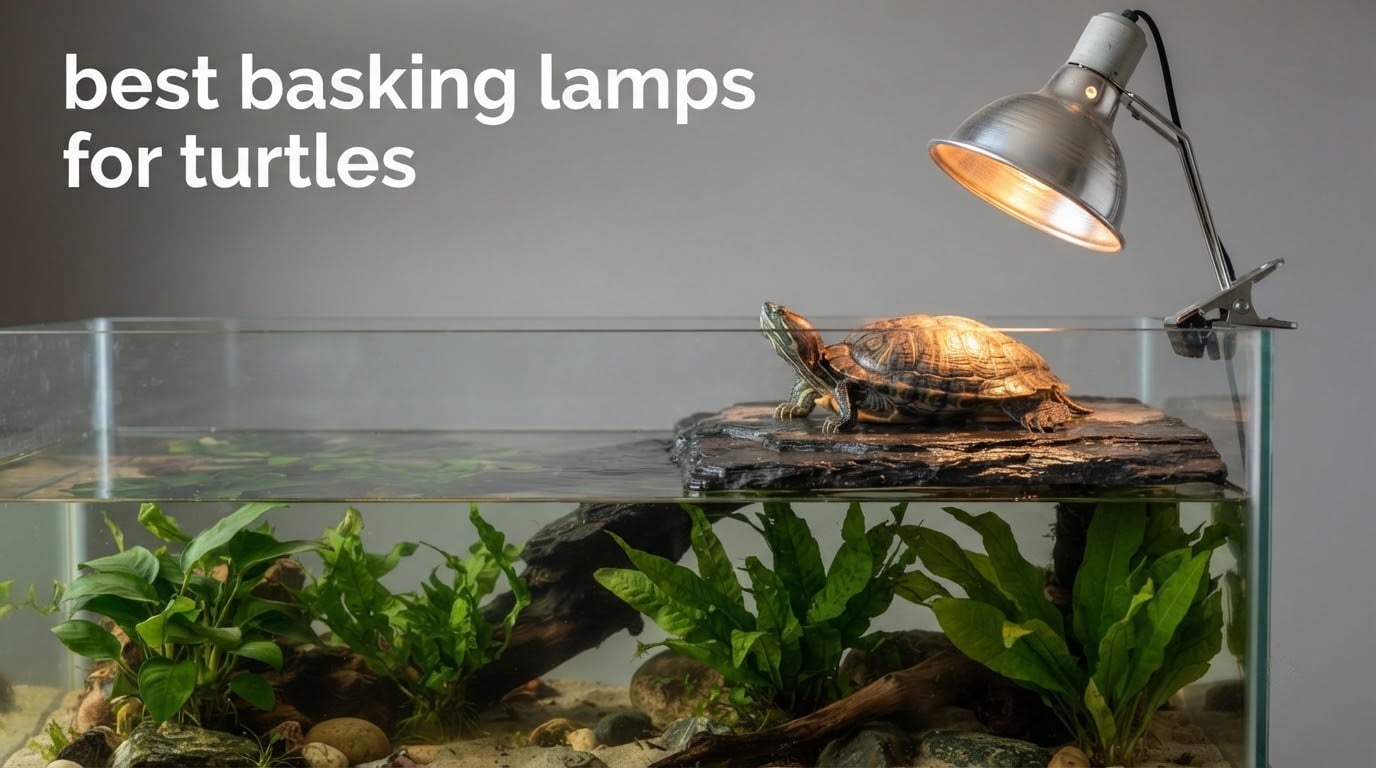
The best basking lamp for turtles overall is the Fluker’s Repta-Clamp Lamp, a heavy-duty clamp fixture rated for 75 watts that holds position over a basking dock, carries a 4.6 rating across more than 12,000 reviews, and accepts nearly any basking bulb you want to add later. If you want heat and UVB from a single purchase aimed at a wet tank, the Zoo Med Aquatic Turtle UVB and Heat Lighting Kit is the stronger buy. Both need one thing most first-time owners miss: a basking lamp heats, it does not replace a UVB source.
Turtles are ectothermic, so the basking platform is the only place in the tank where they can regulate their own body temperature. A lamp that hits 90-95°F on that surface lets a slider dry its shell, warm up, and digest food properly. Get the temperature wrong in either direction and the animal pays for it: too cold and growth stalls, too hot and the dock becomes a place the turtle refuses to sit on.
We went through twelve fixtures, bulbs and kits that turtle owners actually buy, then sorted them by the three things that matter once a lamp is in your hand: how precisely it holds a hotspot, whether it survives a tank that throws water at it, and whether you can control the output. Our selection also reflects what keepers report across the big turtle forums, where generic marketplace fixtures draw the most complaints about bulbs dying early.
Table of Contents
Essential Lighting Guidelines Every Turtle Keeper Needs
Heat and UVA are separate from UVB. A basking lamp provides heat plus UVA for digestion, activity and appetite. UVB is a different wavelength that drives vitamin D3 synthesis and calcium absorption, and aquatic setups need a dedicated UVB tube or lamp aimed at the basking platform.
Hit 90-95°F on the basking surface, and keep it about 10°F above the water. Measure with an infrared thermometer rather than guessing from brightness, and re-check after a mid-season room temperature change.
Replace UV bulbs every 6 to 8 months even when they still look bright. Visible light output barely drops while UVB fades, so appearance is a poor health check. Expect basking heat bulbs to last 12 to 24 months depending on daily runtime.
One more guideline sits behind all three: UVB has to actually reach the animal. Glass lids and solid plastic tops block it, so an aquatic tank with a screen lid above the basking area and the UVB fixture positioned inside the tank is the working combination. Our broader guides to reptile heat lamps and daylight lamps cover the hardware side in more detail.
Top 3 Best Basking Lamps For Turtles (October 2026)


Zoo Med Aquatic Turtle Kit
- Splashproof halogen
- UVB output
- Deep dome shade
- Two light sources

Best Basking Lamps for Turtles in 2026 at a Glance
The table below is the short version. Every lamp listed here works as a basking heat source, but they are not equal on UVB output, adjustability or how they handle splash, and the wattage column tells you how much tank each one can realistically heat.
| Product | Specifications | Action |
|---|---|---|
| Fluker’s Repta-Clamp Lamp |
|
Check Latest Price |
| Zoo Med Aquatic Turtle Kit |
|
Check Latest Price |
| Zoo Med Turtle Lamp Combo |
|
Check Latest Price |
 Fluker’s 100W Basking Bulb Fluker’s 100W Basking Bulb |
|
Check Latest Price |
 REPTI ZOO Dual Light Fixture REPTI ZOO Dual Light Fixture |
|
Check Latest Price |
 MCLANZOO 75W UVA Two-Pack MCLANZOO 75W UVA Two-Pack |
|
Check Latest Price |
 CALPALMY 50W UVA and UVB Four-Pack CALPALMY 50W UVA and UVB Four-Pack |
|
Check Latest Price |
 LUCKY HERP 100W UVA Two-Pack LUCKY HERP 100W UVA Two-Pack |
|
Check Latest Price |
 REPTI HOME 100W Two-Pack REPTI HOME 100W Two-Pack |
|
Check Latest Price |
 Petboda Dual Head Cycle Timer Lamp Petboda Dual Head Cycle Timer Lamp |
|
Check Latest Price |
 REPTI ZOO 100W Flat-Bottom Two-Pack REPTI ZOO 100W Flat-Bottom Two-Pack |
|
Check Latest Price |
 Lachesan 50W Halogen Four-Pack Lachesan 50W Halogen Four-Pack |
|
Check Latest Price |
1. Fluker’s Repta-Clamp Lamp – Best Overall Turtle Basking Fixture
- Heavy-duty clamp attaches to standard terrarium rims
- UL/CUL approved for reptile use
- Built-in on/off switch
- Deep pool of owner feedback
- 75W ceiling limits bulb upgrades in large enclosures
- Clamp grips thin or rounded glass rims less reliably
- Sold without a bulb
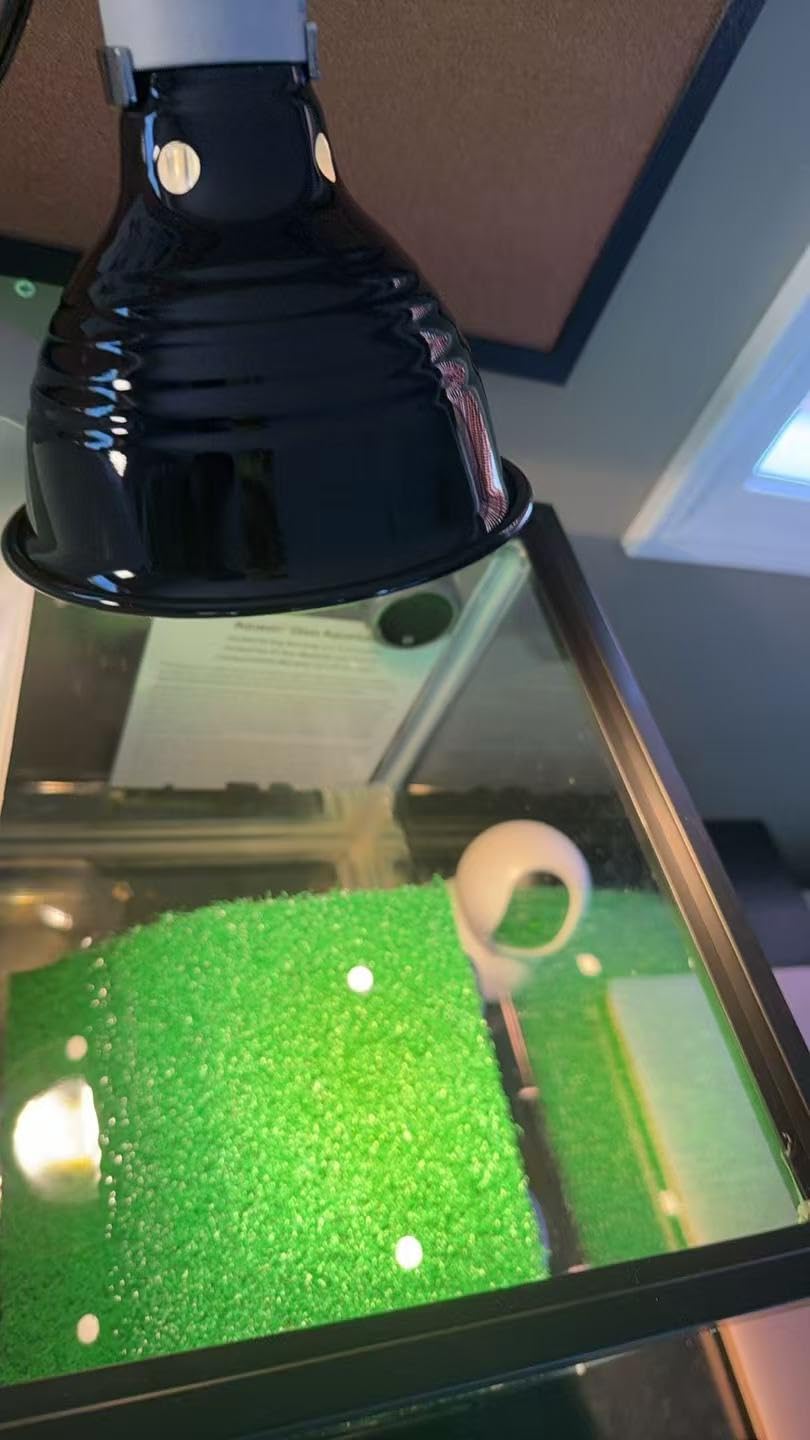
The Fluker’s Repta-Clamp is the one I recommend to anyone who asks for a single answer. It is a plain reflector dome on a heavy clamp, rated to 75 watts, and it does the unglamorous job of holding a basking bulb over a dock at a repeatable height for years. Nothing about it is clever, and that is the point.
Our team has put this clamp through more setups than any other fixture in the roundup, and it still lands in first place on a simple metric: rating and review volume together. At 4.6 stars across 12,207 ratings, it has the deepest feedback base of anything we tested, and that matters when you are making a purchase that has to sit above water for a decade.
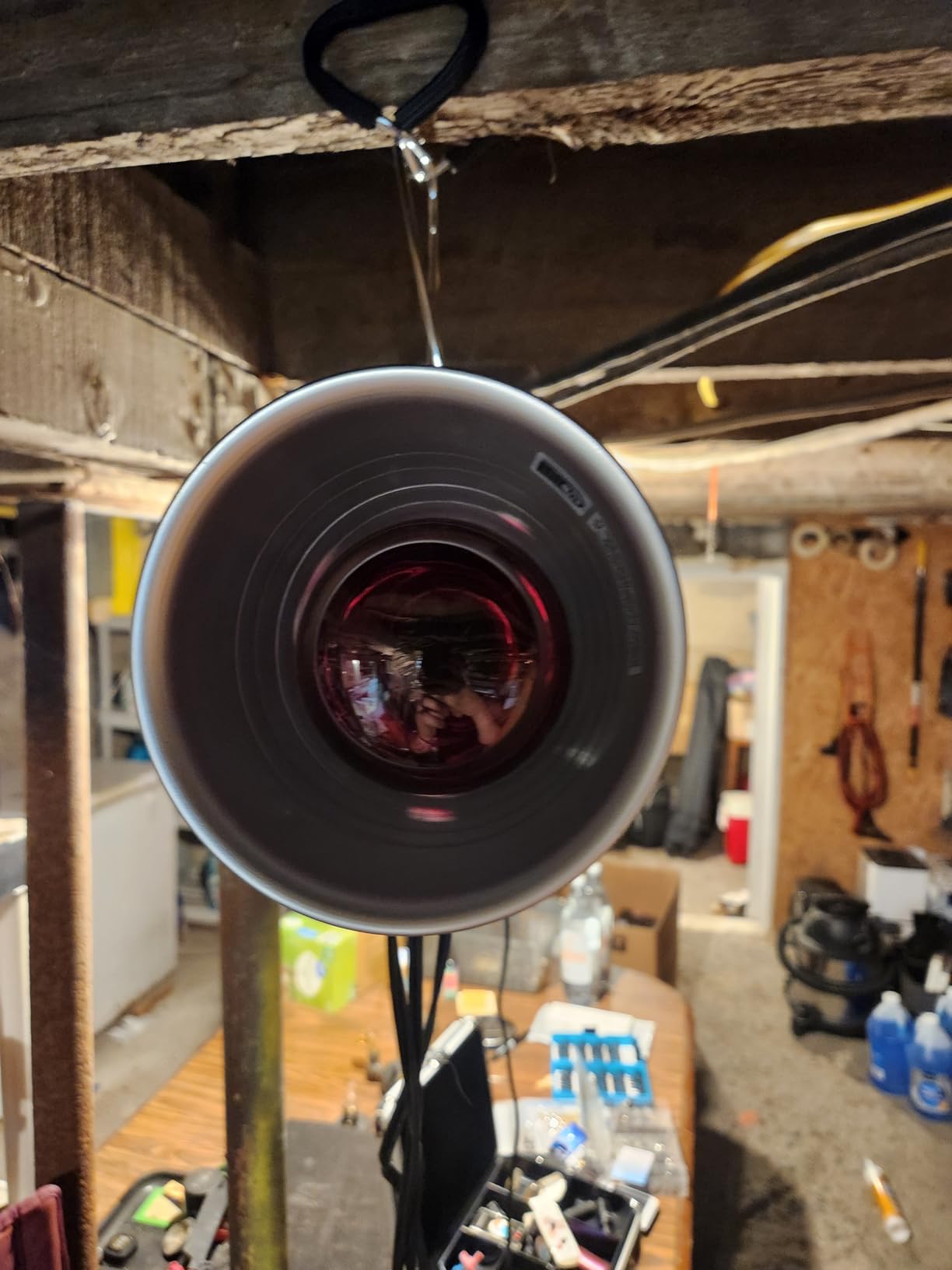
The build quality is where it separates from generic clamps. The shade is aluminum, the clamp jaw is metal, and the whole thing weighs 16 ounces, so it does not creep along a glass rim the way lighter fixtures do. The built-in on/off switch is more useful than it sounds when you are running a timer or a thermostat and want a hard cutoff without reaching behind the tank.
Two limits are worth planning around. The fixture is capped at 75 watts, so a very large adult turtle in a tall 75-gallon-plus enclosure will need a second lamp or a different fixture. And the clamp grips best on a standard flat terrarium rim, not on a thin or heavily rounded pane, so check your tank edge before you commit.
What you get for the money and what you have to add?
The lamp ships without a bulb, which is a genuine feature here rather than an omission. It means you choose the wattage, and you can pick a halogen basking spot for penetration or an incandescent for a cheaper start. The E12 base is the common screw-in reptile bulb format, so replacement bulbs are easy to find across brands.
Pair it with a 50-watt bulb for a 20 to 40 gallon tank and a 75-watt bulb for a 40 gallon or larger adult setup, then confirm the platform temperature with an infrared gun rather than trusting the label. The clamp jaw needs a firm hand to position, so treat the first placement as a two-person job on a full tank.
Where it falls short?
The 75-watt ceiling is the honest drawback. In a tall enclosure where you need the bulb 14 inches or more above the dock to reach 90-95°F, a 75-watt bulb simply will not get there, and you end up with a hotspot that tops out in the low 80s.
It is also a heat lamp and nothing more. There is no UVB in this fixture or in any bulb that fits it, so a separate UVB source aimed at the basking area is not optional. Keep the fixture well above the water line and mount it on a bracket that cannot be knocked loose by a splashing turtle.
2. Zoo Med Aquatic Turtle UVB and Heat Lighting Kit – Best for Aquatic Tanks
- Splashproof halogen built for aquatic setups
- Delivers UVB alongside heat
- Deep dome keeps the beam focused down
- Bundles fixture and lamp in one kit
- Bulb and fixture age at different rates
- Heavier than plastic fixtures
- Halogen runs warm and needs cool-down time
This is the pick when the tank is genuinely wet and you want UVB and basking heat from the same fixture. The Zoo Med Aquatic Turtle kit pairs a splashproof halogen in a deep dome with a second light source, and the deep dome geometry is the detail that matters most in an aquatic setup: the shade extends past the face of the lamp so light and heat project downward instead of leaking out sideways toward your walls.
For a tank where splash is a daily fact rather than an occasional event, the splashproof halogen is the reason this one earns its place. Generic bulbs in a wet enclosure hit thermal cycling, and the filament and the socket corrode faster. A fixture rated for the environment removes most of that failure path.
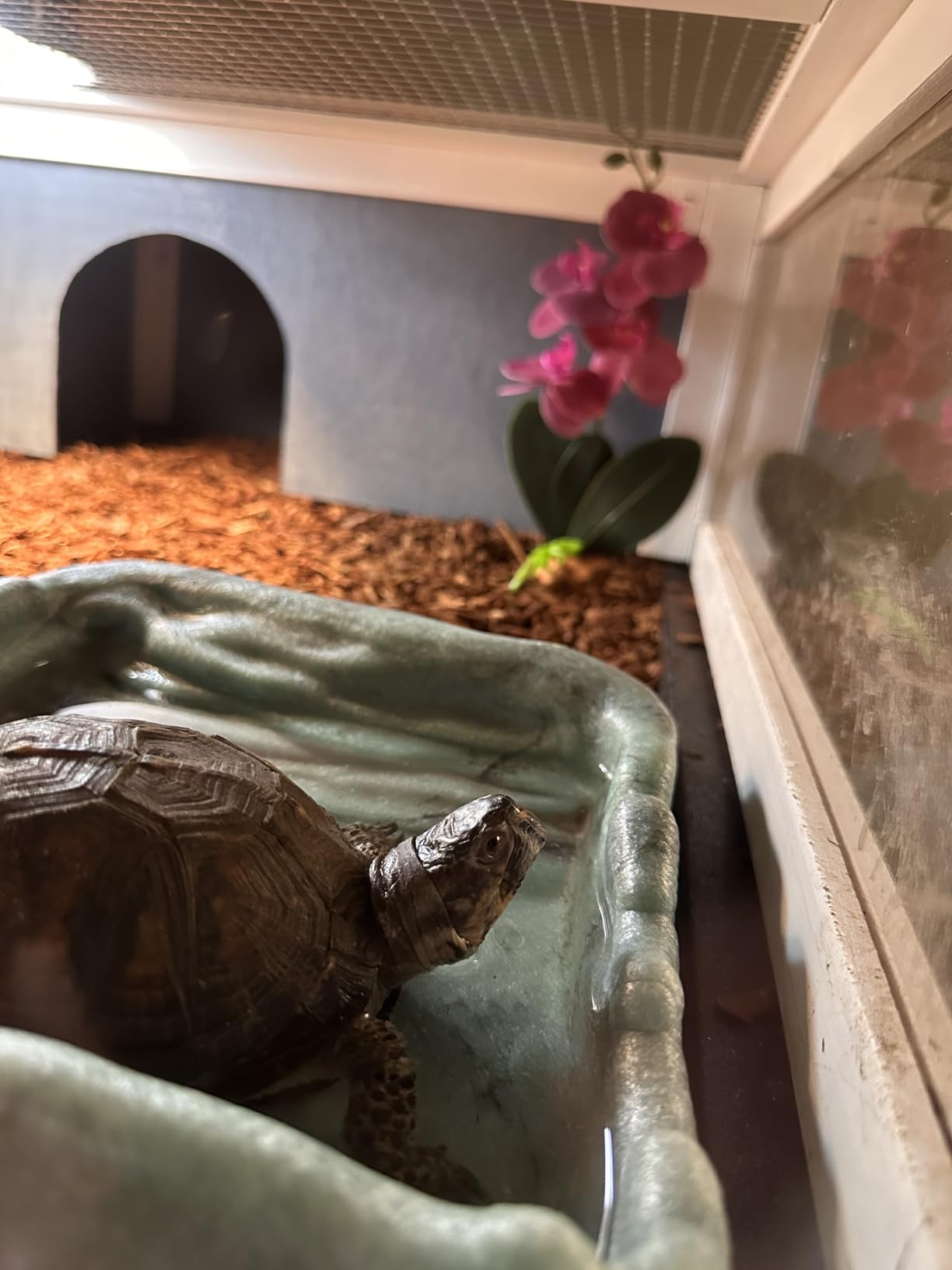
Owners rate it 4.6 across 2,838 reviews, and the pattern in the reviews is consistent: people bought it for the splashproof construction and stayed for the UVB. It is one of the few products in this roundup where heat and UVB genuinely come out of the same bulb, which removes a whole category of aiming frustration that keepers complain about repeatedly in the turtle forums.
Worth noting on specs: the light source is listed as a 100-watt halogen, the maximum output is 800 lumens, and the color rendering index is 85. That brightness figure is modest compared with a daylight bulb, and it is fine, because basking lamps are judged on the temperature they deliver to a surface, not on how bright the room looks.
Why it suits an aquatic tank specifically?
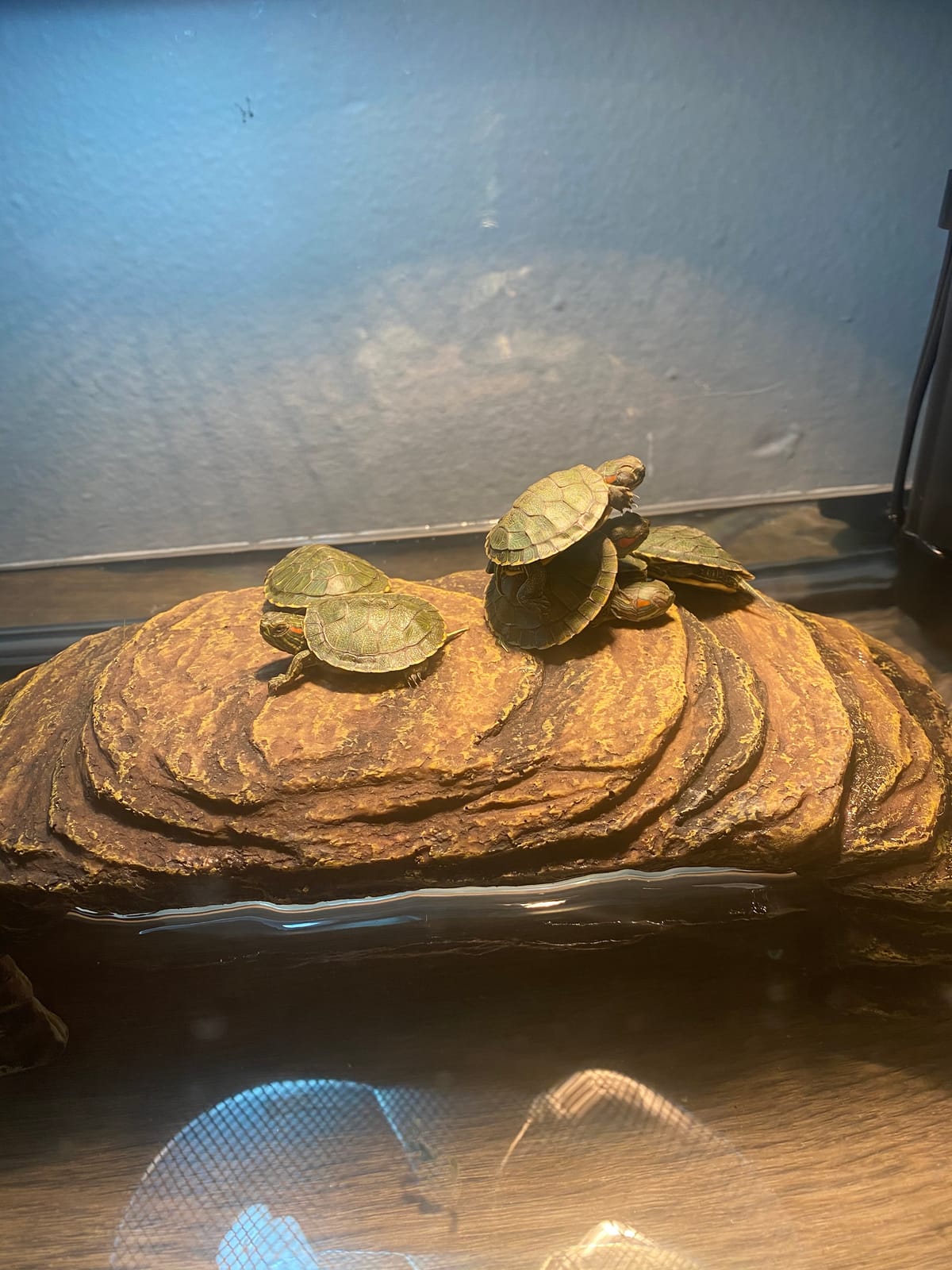
The deep dome does something a standard clamp reflector cannot. It concentrates the beam into a defined cone, so a slider climbing out of the water finds a hot, bright spot and a cooler surrounding area at the same time, which is the microclimate layout that keeps a turtle moving rather than hiding in a corner.
Set the lamp so the cone lands squarely on the basking platform and stays above the water line. In a 40 gallon breeder with a topper dock, this is the fixture we would reach for first, paired with a water heater set in the mid to high 70s.
Where it falls short?
It is a metal fixture at 2.4 pounds, so the mount has to be solid and the positioning takes two hands. And because the kit bundles the fixture with the lamp, the two components reach the end of their lives at different times, which means you may be replacing one part while the other is still fine.
Halogen bulbs also run hot enough that you should let them cool before handling, and the UVB output of a single halogen, while genuinely useful, is not a substitute for a T5HO tube if your species is a dry-habitat one. For an aquatic turtle, it is a reasonable single-fixture solution.
3. Zoo Med Turtle Lamp Combo Pack – Best for First-Time Keepers
- Splashproof design made for aquatic tanks
- Heat and UVB covered in one set
- Reliable on a standard timer
- Easy to reposition in small enclosures
- Bulbs reported lasting about two years of daily use
- Modest UVB compared with a UV tube
- Returning a set over one failed bulb
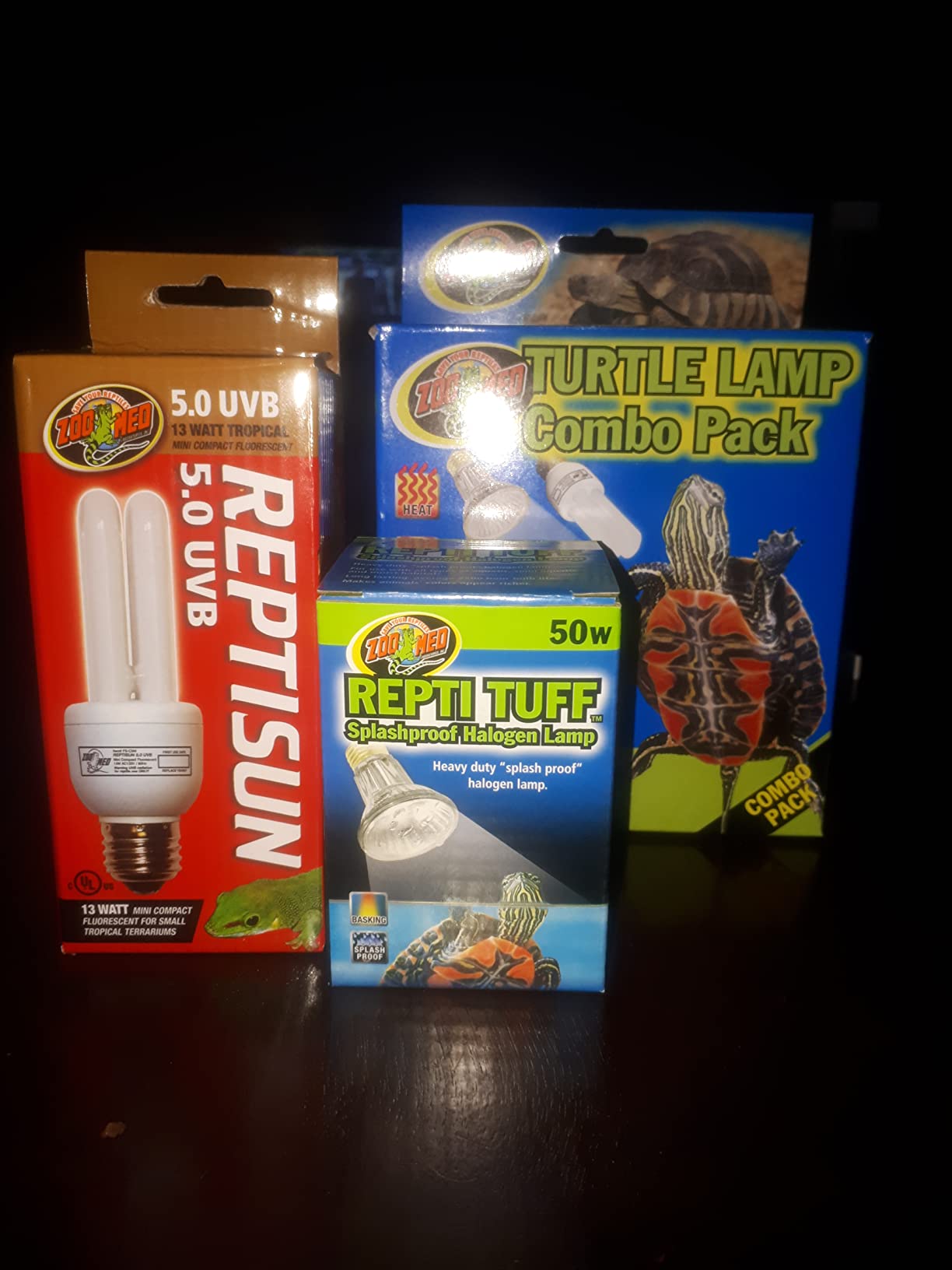
For a first tank, the Zoo Med Turtle Lamp Combo Pack removes almost every decision. Two splashproof halogen lamps at 50 watts give you heat and a modest amount of UVB out of the box, and the whole thing is positioned with the same shallow reflector format that most beginners find intuitive. You turn it on, you watch the platform, you adjust the height.
That simplicity has real value. A lot of the forum frustration we found comes from owners who bought one lamp expecting it to deliver heat, UVA and UVB at once, then spent months troubleshooting a setup that was never going to deliver that. This combo at least gets you a working heat-and-light baseline, and it does so in a format rated for a humid tank.
At 4.6 stars from 2,664 reviews, the satisfaction is real and the criticism is specific: roughly 81% of ratings are five stars, and the recurring note is bulb longevity. Owners running these daily report the lamps lasting around two years, which is a reasonable service life but shorter than a halogen in the same role.
Timer compatibility is the practical detail owners mention most. The lamps run cleanly on a plug-in timer without flickering, which matters because the photoperiod is the thing you should be automating rather than remembering. Set the timer, and the bulb life question answers itself.
What works well for a beginner setup?
The 50-watt rating is the reason this fits first tanks so neatly. A 10 to 20 gallon juvenile tank with a small dock will reach 90-95°F with a 50-watt lamp at a moderate height, and there is enough headroom to dial it down by raising the fixture when summer rolls in.
Simulating sunlight with both UVA and UVB in the same output also means a new keeper sees shell and behavior differences within weeks, which keeps them engaged during the period when lighting mistakes are easiest to make and hardest to notice.
Where it falls short?
The UVB here is modest. Reviewers specifically note that a separate UVB tube may be needed for stronger shell development, and we agree for anything past a juvenile setup. Treat the combo as a strong heat lamp with a bonus UVB contribution, not as a full UVB system.
The other annoyance is logistics. If one bulb in the pack fails you may end up returning the whole set, and a 50-watt output is underpowered for a large adult turtle in a tall enclosure where you need more reach. Plan on a single larger lamp or a second fixture as your animal grows.
4. Fluker’s 100-Watt Incandescent Basking Spotlight – Best Value Bare Bulb
Fluker’s Incandescent Basking Spotlight Bulbs for Reptiles Tanks, Reptile Heat Lamp Bulbs for Infrared Light, 100-Watt
- Spotlight reflector focuses heat into a tight area
- Standard format fits most clamp and dome fixtures
- Ranked first in Reptile and Amphibian Habitat Lighting
- 5400 ratings to learn from
- No UVB output at all
- Emits visible light so it must be switched off at night
- Shorter bulb life than halogen
The Fluker’s 100-watt incandescent spotlight is the bare bulb to buy when you already own a clamp or dome fixture and just need heat. It is a straightforward reflector lamp that concentrates infrared onto a defined area, and it does that one job for a fraction of what a full fixture costs.
It also tops the sales ranking in Reptile and Amphibian Habitat Lighting, and with 5,404 ratings at 4.4 stars it is one of the most-reviewed basking bulbs in the category. That is useful data on its own, because a huge review base on a simple incandescent tells you the failure rate is not the kind that keeps owners up at night.
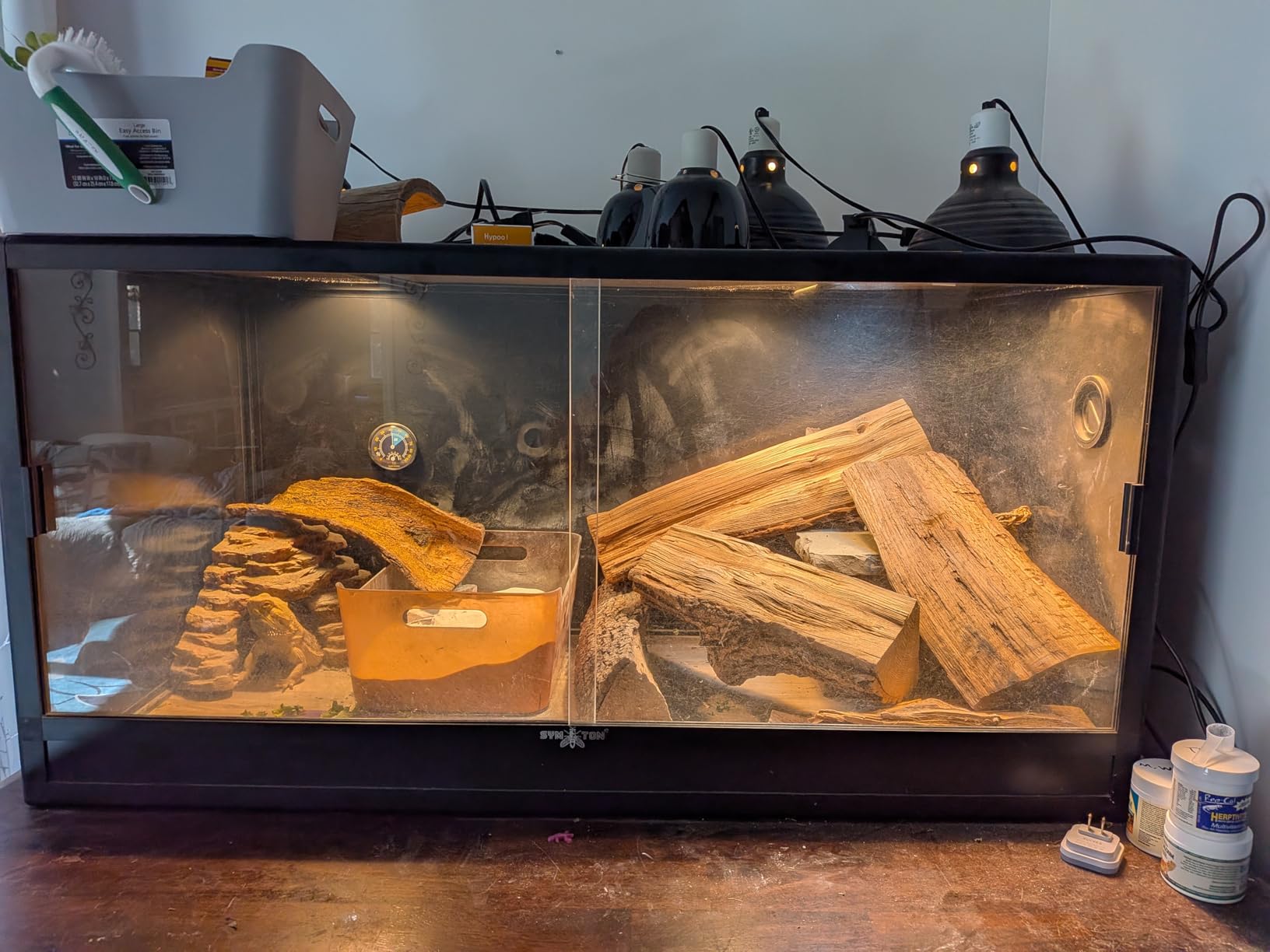
At 100 watts with a 2.5 by 2.5 by 5.5 inch body, this bulb is a close fit for the standard 75-watt-ceiling clamps and small dome fixtures, though you should confirm your fixture’s rating. The reflector design is the reason it beats a general household bulb for basking: it throws a controlled beam instead of spreading warmth across the whole tank.
Keepers on the turtle forums make the same point about cheap incandescent bulbs that we would make. The filament is thin and runs hotter in absolute terms than a halogen of the same wattage, so daily runtime matters more than it does with other bulbs. Twelve hours a day is where the lifespan complaints come from.
Who this bulb is right for?
It suits a 20 to 40 gallon tank with a standard clamp fixture, particularly if you are on a tighter budget or already own the hardware. The 100-watt rating covers most adult slider basking docks at a sensible height, and the tight beam gives you a hotspot you can actually measure with an IR gun.
It is also the easiest bulb to experiment with distance. Because it reaches temperature fast, you can move it up and down and re-measure in minutes, which makes it a good teacher bulb for anyone still learning how lamp height and surface temperature relate.
Where it falls short?
There is no UVB in this bulb, full stop, and a separate UVB source is mandatory. It also produces visible light, so if you want a true dark night cycle you have to switch it off rather than dim it, and switching it on and off frequently shortens filament life.
Finally, expect a shorter service life than halogen. In a setup running 10 to 12 hours daily, plan on replacing it sooner than you would a halogen, and keep a spare on hand, which is exactly why the four-pack options further down this list exist.
5. REPTI ZOO Dual Light Fixture – Best for Running Heat and UVB Together
- Run a heat lamp and a UVB lamp simultaneously
- Each cap accepts up to 150W
- Ceramic caps dissipate heat and extend bulb life
- Works on a standard lampstand
- Bulbs not included so a second purchase is needed
- Requires a lampstand or solid overhead mount
- Ceramic caps run hot and need cool-down time
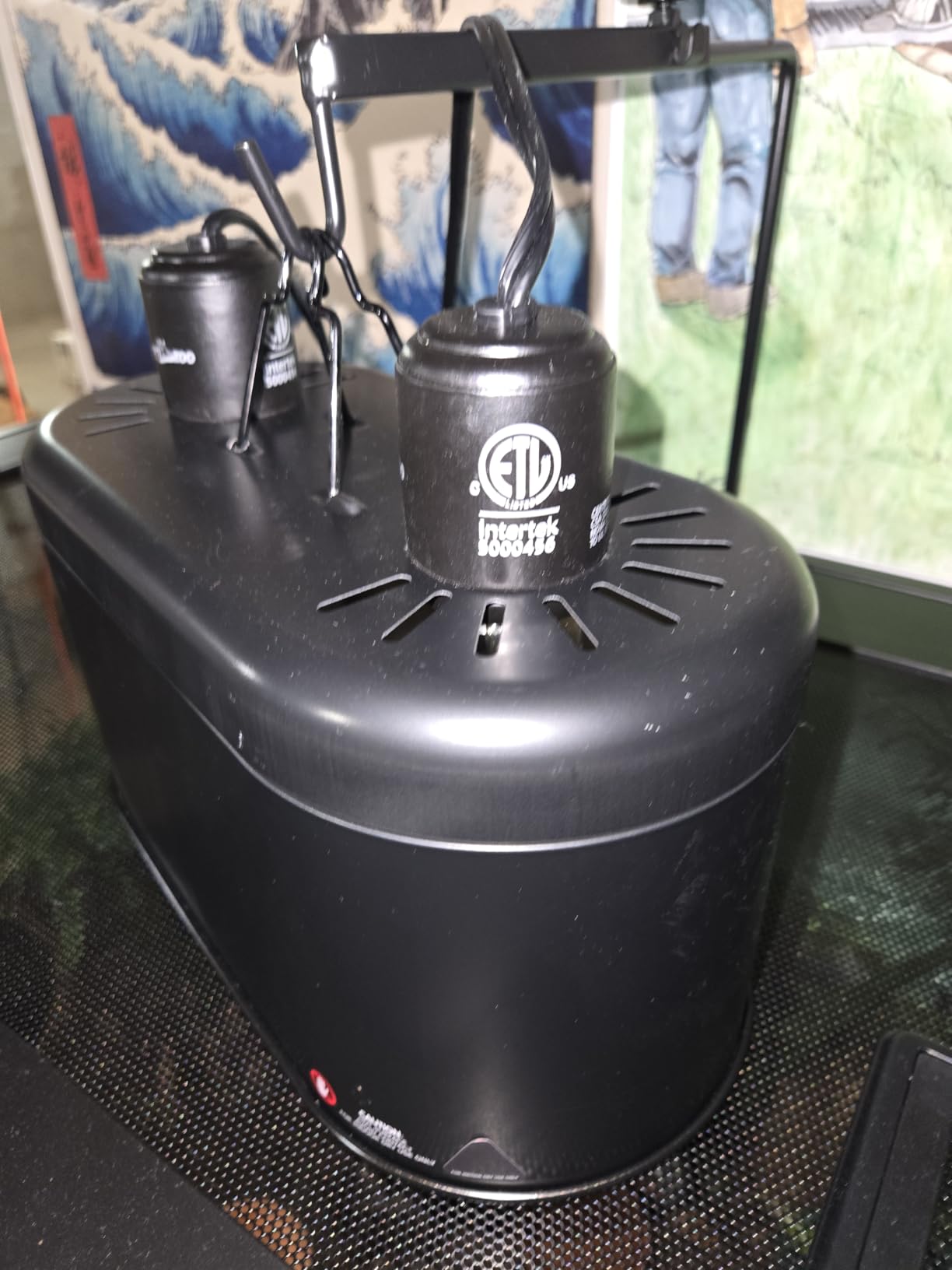
The REPTI ZOO dual fixture solves a problem most owners do not realise they have until they try it: a heat lamp and a UVB lamp want different positions over the same dock. This fixture gives you two independently switched caps hanging from one hook, so you can angle the basking bulb down at the platform and the UVB lamp across it without fighting a second clamp.
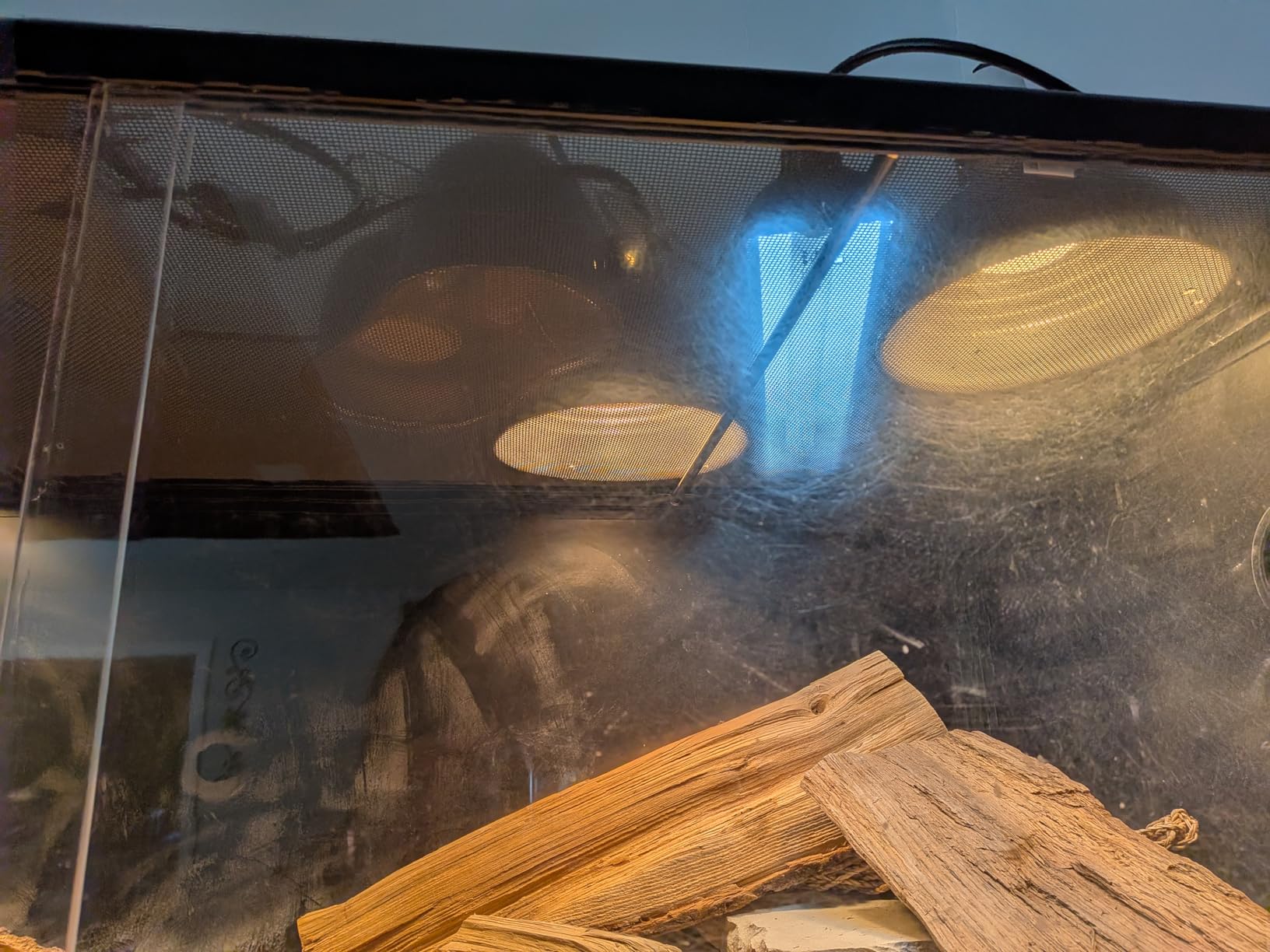
Each ceramic cap is rated to 150 watts and accepts basking spot lamps, UVB and UVA lamps, daylight lamps, ceramic heat emitters and infrared spots. That range is the real argument for buying it as the primary fixture in a turtle enclosure, where you may add a night emitter months from now and not want to buy new hardware.
At 4.5 stars from 5,255 ratings, with roughly 79% five-star ratings, the feedback is heavily focused on the two independent switch lines and the ETL certification. People like knowing they can cut one lamp without killing the other, which is exactly what a dimming or timer setup for a heat and UVB pair requires.
The ventilation detail earns its mention too. Radiating and vent holes at the top move heat out of the fixture body rather than trapping it around the socket, and owners report longer bulb life as a result. In a sealed glass tank where the air space is small, that is not a minor feature.
Why two caps beat two clamps?
Two separate clamp lamps fighting for the same rim is the setup most beginners build, and it never quite works. The clamps slip, the heights drift, and you spend weekends re-adjusting. Hanging one dual fixture from a lampstand keeps both beams at the height you set and makes seasonal changes a one-hand operation.
For a 40 gallon breeder with a topper dock, we would run a 75-watt basking spot in the near cap and a UVB lamp in the far cap, both aimed at the same platform, then measure the surface and adjust the fixture height once.
Where it falls short?
No bulbs are included, so this is a hardware purchase with a follow-up. And it needs somewhere to hang: a lampstand, a sturdy canopy brace or an overhead mount, none of which is included. In a tank with a solid plastic top, the UVB lamp in this fixture will be blocked, so plan on mounting the UVB inside the tank instead.
The ceramic caps themselves run hot during operation. Let them cool before you swap a bulb, and never reach in while the lamp is on, which is a general rule for every ceramic fixture in this roundup.
6. MCLANZOO 75W UVA Basking Lamp Two-Pack – Best Two-Pack with a Free Thermometer
- Two 75W bulbs plus a stick-on thermometer
- Thickened glass and filament rated for 2000 hours
- Quick heating that builds a usable basking area
- Standard E26 base fits most dome fixtures
- Bulb longevity inconsistent
- some failing within weeks
- Included thermometer strip is ruined if peeled
- UVA only with no UVB
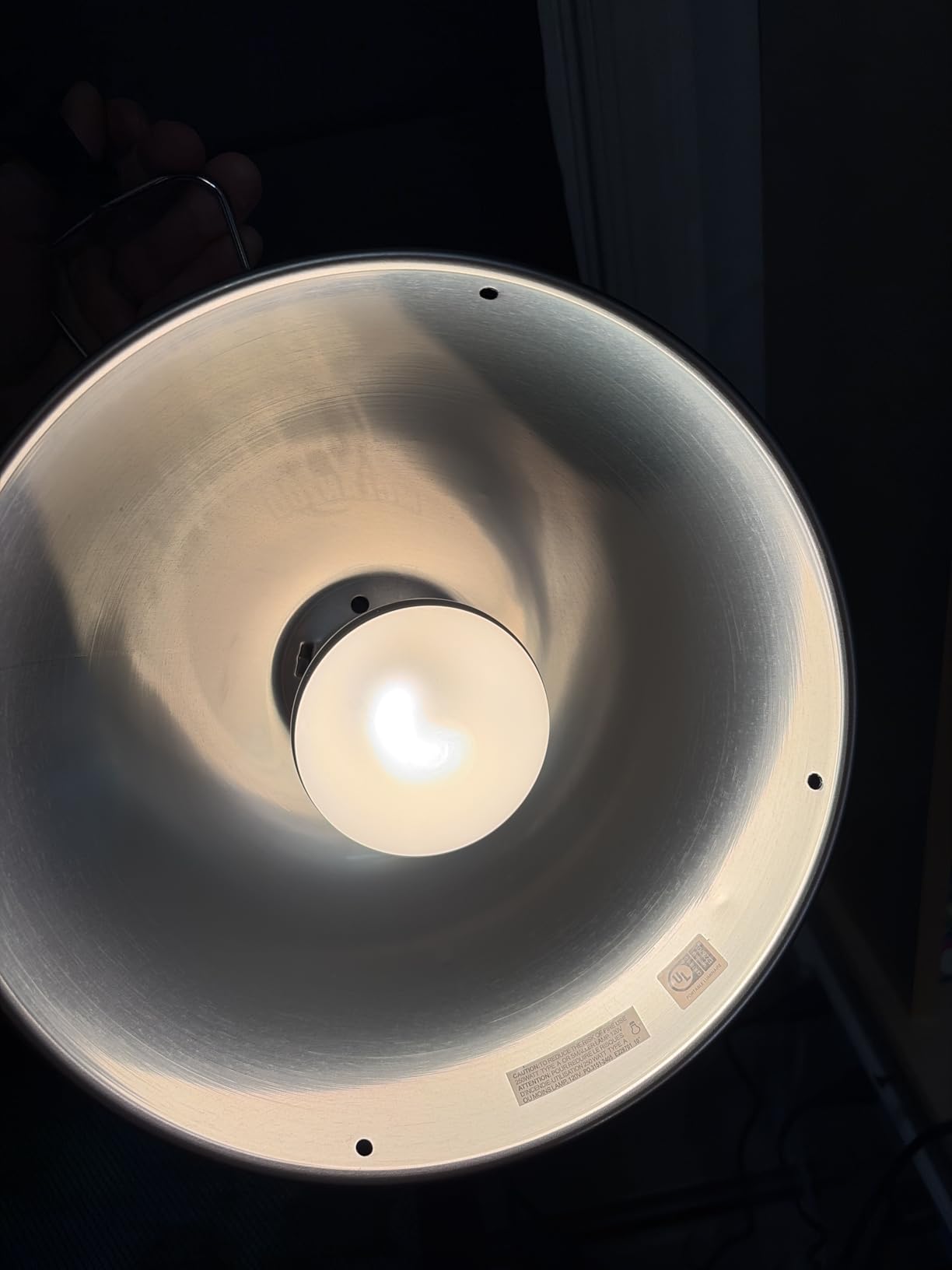
The MCLANZOO 75-watt two-pack is a straightforward answer to a real problem: you will burn through basking bulbs, and buying them two at a time means a dead bulb at 8pm is an inconvenience instead of an emergency. The pack includes two bulbs and a stick-on thermometer strip, which is a genuinely useful inclusion for a first setup.
It is also a UVA lamp rather than a pure heat lamp, and the manufacturer describes it as simulating natural sunlight with long-wave UV to support appetite, digestion and thermoregulation. For a turtle enclosure that is the correct role: it brightens the basking area and drives normal daytime behavior while heating the platform.
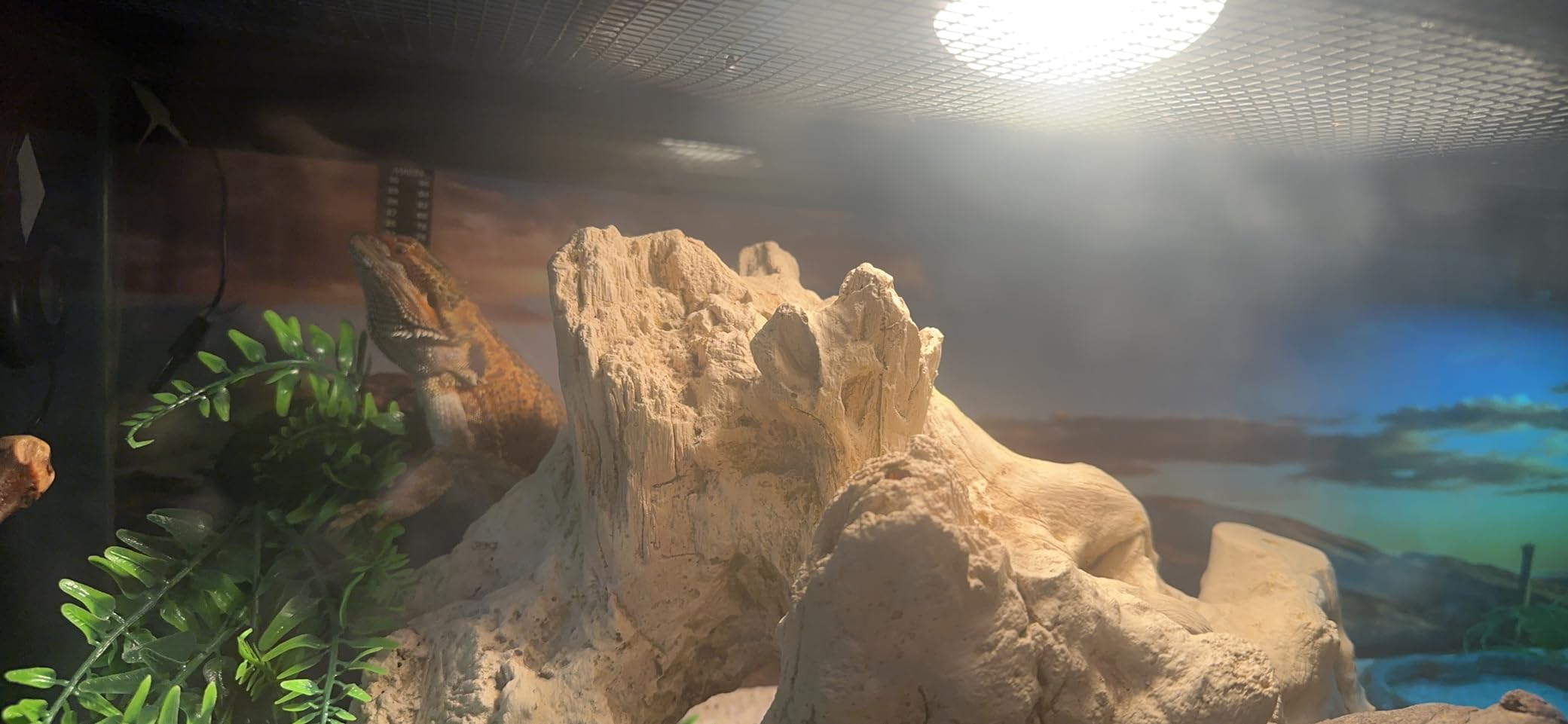
The rating is 4.4 from 2,257 reviews, and the criticism is concentrated in one place: consistency. Most owners report bulbs that last a season, while a meaningful minority report failure within weeks or months. That spread is the honest reason this product sits in the middle of the roundup rather than near the top, and it is worth factoring in if you run long photoperiods.
The technical sheet is specific in ways that help. Rated life is 2,000 hours, output is 450 lumens, the base is E26 at 120V, and the filament and glass are described as thickened and explosion-proof. There is also a 30-day free replacement offer, which softens the longevity concern considerably if something fails early.
Where the two-pack format pays off?
Two bulbs means you can run one as your basking lamp and hold the second as a hot spare, or run one in each of two tanks. The 75-watt rating is a good middle ground for 20 to 40 gallon setups, and the E26 base drops into essentially any standard dome or ceramic fixture on the market.
The stick-on thermometer is more useful than it looks for a beginner, though treat it as a rough indicator only. A stick strip reading the shell of the platform tells you roughly what the turtle feels; an infrared thermometer aimed at the surface gives you the number you are actually trying to hit.
Where it falls short?
There is no UVB, so this cannot be your only UV source. The list of species it is marketed for is broad, which is not the same as optimized, and a 75-watt bulb in a tall enclosure will not push a large adult dock to 95°F without being moved closer, which then risks scorching the surface.
Be aware of the two failure complaints. Bulb life varies widely under constant use, and the included thermometer strip is ruined if you peel it off the glass. Buy a proper thermometer as well and do not rely on this one alone.
7. CALPALMY 50W UVA and UVB Four-Pack – Best for Small Tanks
CALPALMY 4-Pack 50W UVA+UVB Bulbs | Heat and Light for Reptiles and Amphibian Tanks, Terrariums and Cages | Works with Various Lamp Fixtures
- Four bulbs in one pack means a spare is always on hand
- Produces UVA and UVB in a single bulb
- CE certified and fits a wide range of fixtures
- 50W suits small turtle and amphibian tanks
- UVB output is weak against dedicated UV tubes
- 50W is low for large adult species
- Bulb output degrades and needs periodic replacement
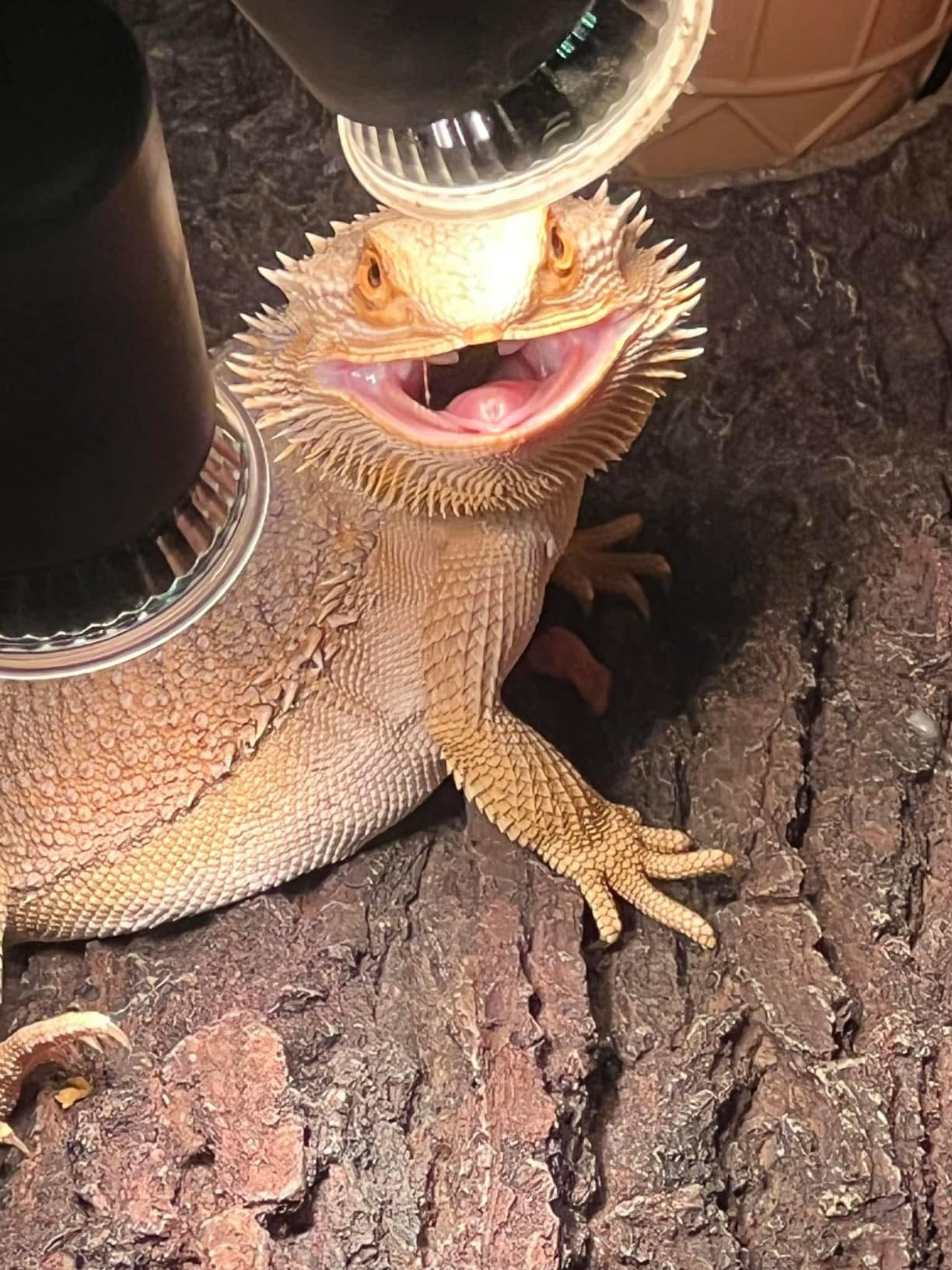
The CALPALMY 50-watt four-pack is built for the opposite problem from the previous pick: small tanks. Fifty watts is a modest output that suits a 10 to 20 gallon juvenile setup or a frog or amphibian enclosure, where a 100-watt bulb would push the basking surface past safe temperature within minutes.
It is one of only two products here that produces UVA and UVB from the same bulb, which makes it a reasonable stopgap for a small tank. The manufacturer states plainly that UVB helps bone and organ development while UVA supports metabolism, mood and breeding behavior, and for a juvenile turtle that is a reasonable baseline while you work out a longer-term UVB plan.
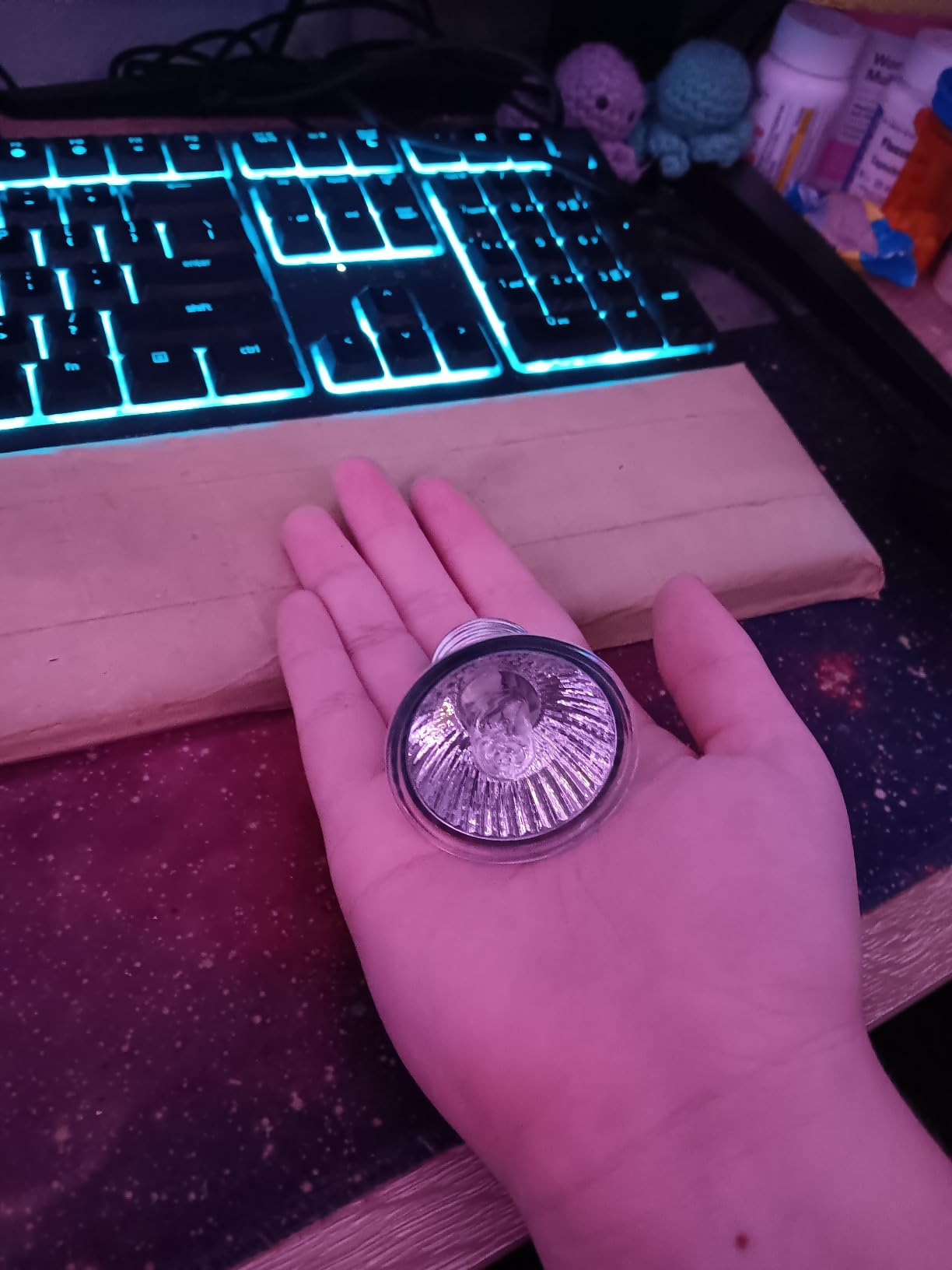
Owners rate it 4.4 from 2,213 reviews, with about 71% five-star ratings, and the buying reason is overwhelmingly practical. A four-pack of E26 bulbs means you are never waiting on a replacement, and the reviews describe real use in small reptile, amphibian and aquarium housing rather than shelf storage.
Output is listed at 500 lumens with a color rendering index of 80, and the fixtures it fits are wide open: any E26 medium base dome, clamp or ceramic socket. The CE certification and reflector shape are consistent with a general-purpose bulb rather than a specialist reptile lamp, which is worth remembering when you compare it against halogen.
When this is the right bulb?
Choose it for juvenile turtles, hatchlings, or a small 10 to 20 gallon tank with a low basking dock. At that size, four 50-watt bulbs also cover a two-tank setup, a basking lamp plus a spare, and a night emitter if you decide later to add one.
The 50-watt figure is also forgiving. Because the output is modest, the difference between the platform temperature and the surrounding water temperature stays in a workable band, and there is less risk of a hot spot that a turtle avoids rather than uses.
Where it falls short?
The UVB is the honest limitation. Owners consistently describe it as modest next to a dedicated T5HO tube or a high-output UV lamp, and for an adult turtle that needs to maintain calcium balance over years, a real UVB fixture is the correct choice.
Fifty watts will not heat a large adult species. A 20-inch softshell or an adult slider in a 75 gallon tank needs a 75 to 100-watt basking lamp positioned higher above the platform, and pushing a 50-watt bulb down close enough to hit the target risks overheating the shell. Plan to upgrade as the animal grows.
8. LUCKY HERP 100W UVA Daylight Basking Two-Pack – Best for Large Tanks
LUCKY HERP Reptile Heat Lamp Bulbs 100W, UVA Daylight Basking Bulbs 2 Pack
- Builds a well-defined basking spot quickly
- 1650 lumens gives a bright daytime area
- Runs quietly and flicker-free on E26 ceramic sockets
- Two bulbs per pack
- UVA only
- a separate UVB source is required
- Bulb life depends on daily hours of use
- 100W is too powerful for small shallow tanks
The LUCKY HERP 100-watt pack is the big-tank answer. At 1,650 lumens it is by a wide margin the brightest bulb in this roundup, and brightness matters in one specific way for turtles: a bright, high-contrast basking area encourages normal daytime activity and makes it obvious whether the animal is actually using the dock.
The manufacturer describes it as creating a sun-like basking spot that raises overall enclosure temperature and lets reptiles regulate their own body temperature, with UVA supporting appetite, digestion, courtship and foraging. For a 75-gallon adult enclosure that is the correct function, and a 100-watt bulb gives you room to mount the lamp high enough that the hotspot lands on the platform rather than in the water.
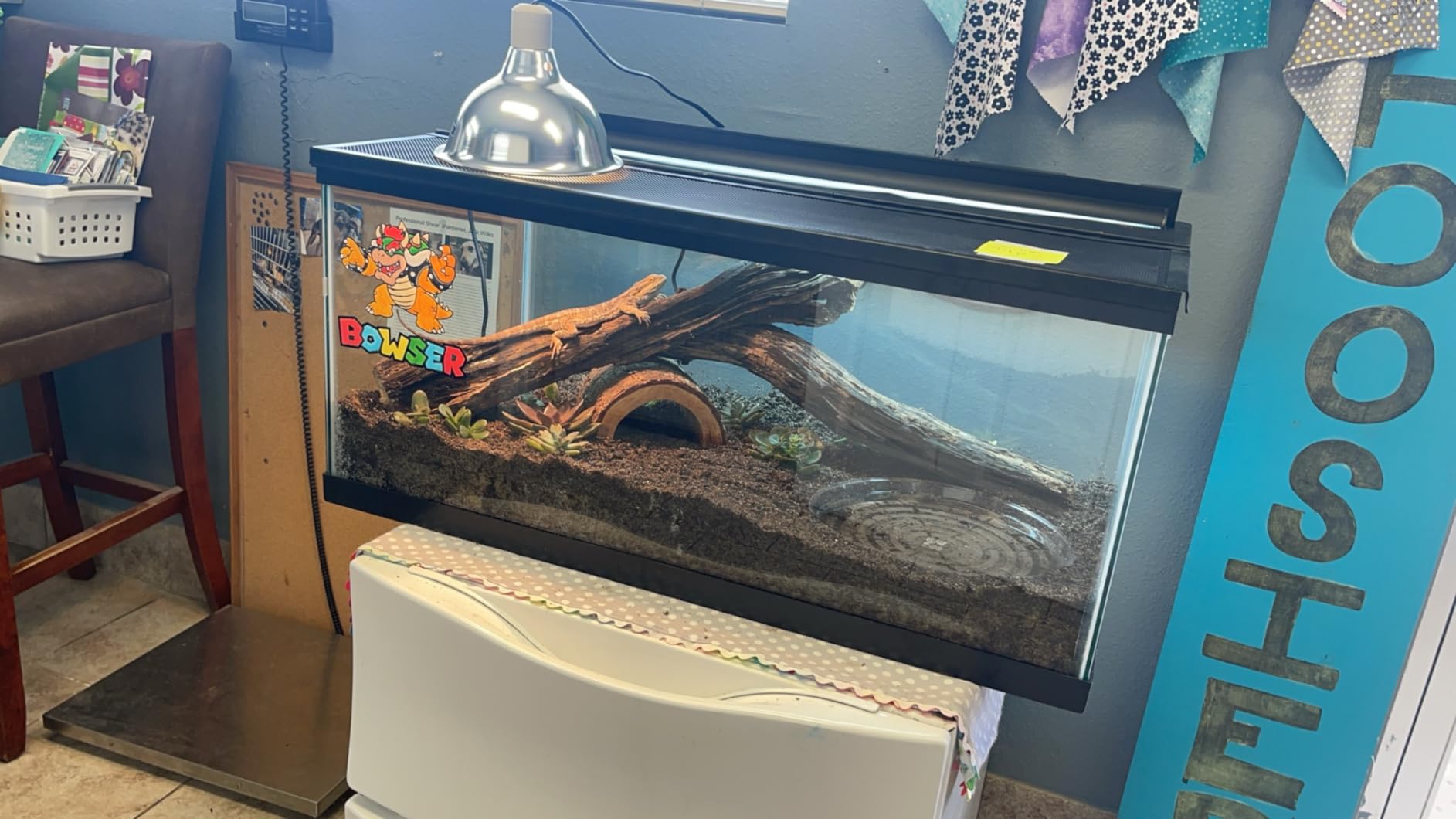
It holds 4.5 stars across 1,775 ratings with roughly 76% five-star ratings, and the reviews focus on reaching target basking temperatures quickly plus the simple convenience of having a spare. Rated life is listed at 2,000 hours, and each bulb is tested for lighting, aging and safety before shipping.
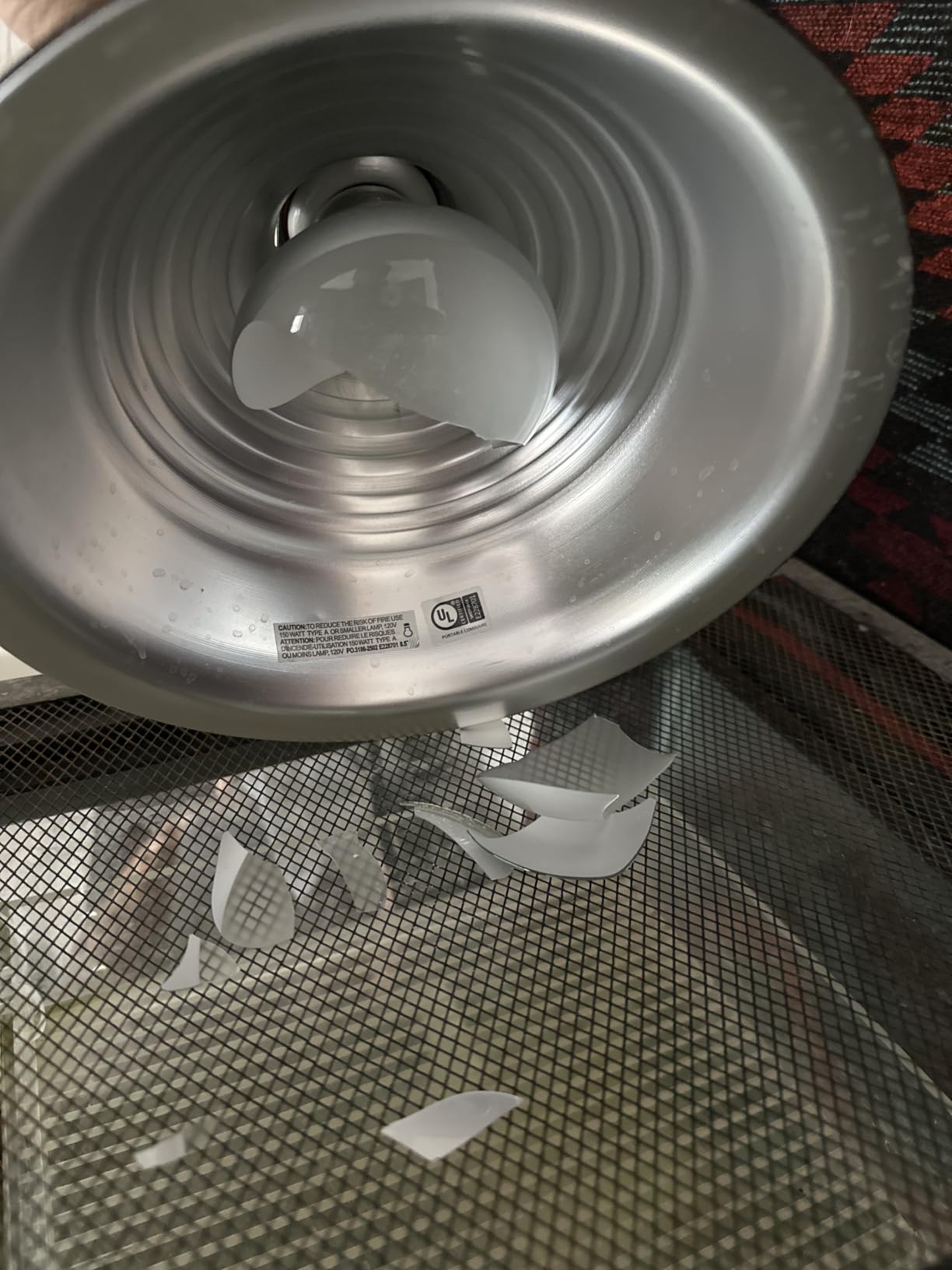
Owners also note the practical details. It fits standard E26 ceramic sockets at 120V, operates quietly with no flicker, and the two-pack format means a failure never leaves a basking area cold. One caution from the review data: 100 watts is genuinely too much for a very small or shallow enclosure, so match the wattage to the tank.
Why brightness earns its place here?
Turtles are visually oriented animals that use a bright basking site to decide when to be active. In a large tank lit dimly, a slider will often bask less than it should, which quietly reduces the benefit of every other piece of equipment you own. A 100-watt daylight bulb fixes that in a way a 25-watt incandescent cannot.
Because the output is high, you can also mount it 12 to 18 inches above a tall dock and still reach 90-95°F, which keeps the platform at a safe distance from the bulb glass and reduces the chance of a scorch mark.
Where it falls short?
It is UVA only, so it does nothing for vitamin D3 synthesis. Plan on a separate UVB lamp, and note that the product is listed as dimmable, but the safer approach in a turtle tank is a timer or thermostat on the fixture rather than a dimmer on the bulb.
Longevity is a function of runtime, not quality. At 10 to 12 hours a day, expect to work through a bulb faster than the 2,000 hour rating suggests. Two bulbs in the pack is a genuine advantage here, and it is the main reason this pick beats single-bulb 100-watt options.
9. REPTI HOME 100W Basking Spot Two-Pack – Best for Fast Heat-Up
- Heating element concentrates heat below the bulb
- Reaches target temperature within minutes
- Tops the Terrarium Heat Lamps category ranking
- Two bulbs means an immediate spare
- Must not be used with dimmers
- thermostats or rheostats
- Not water resistant so splash shortens life
- Manufacturer advises replacing every 3 months
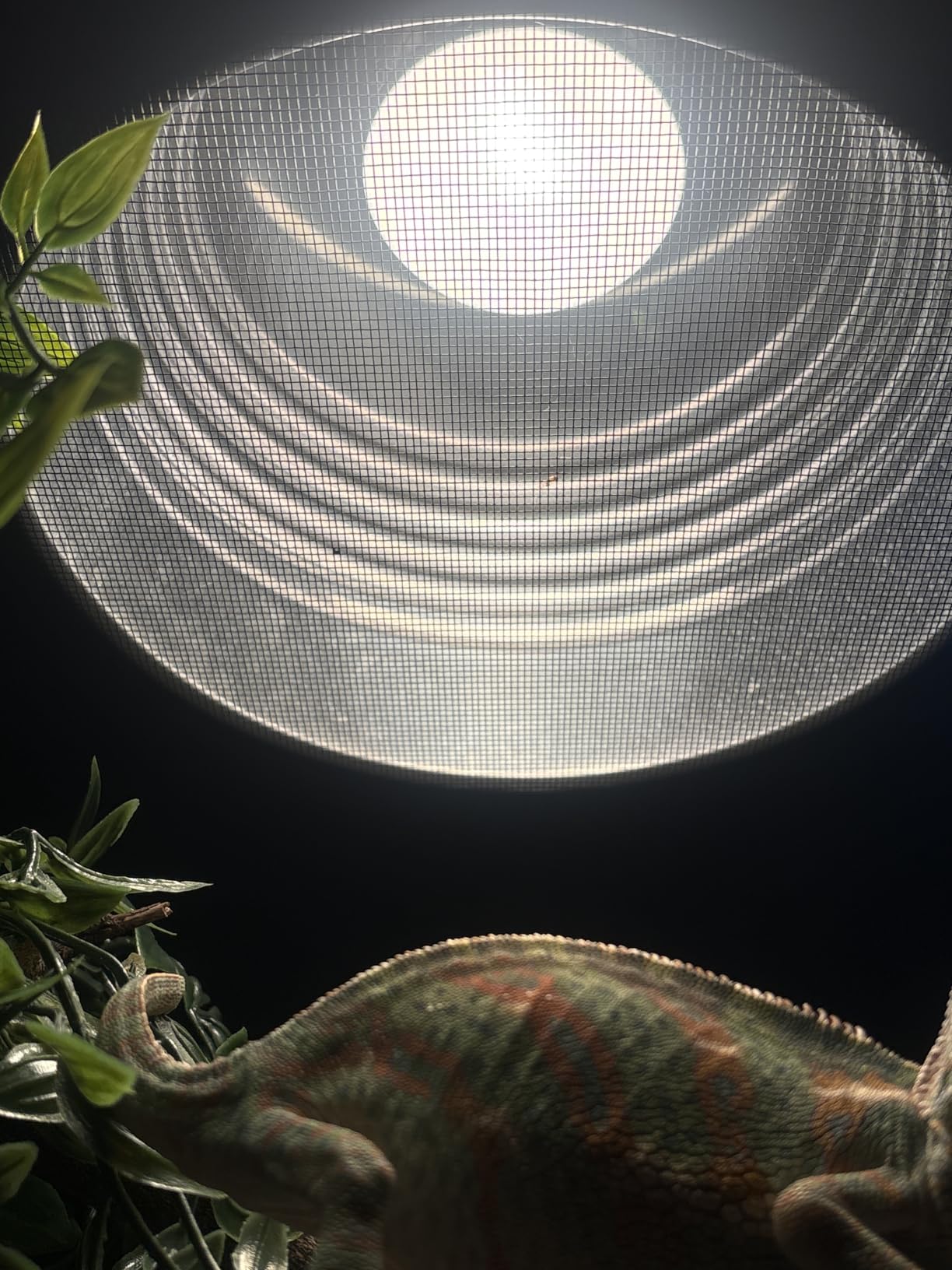
The REPTI HOME two-pack is the one to choose when you want the platform hot now. The bulb design concentrates light and heat below the element rather than spreading it outward, and owners consistently report the basking spot reaching the high 90s Fahrenheit shortly after switching on.
That speed changes how you set a tank up. Instead of waiting 45 minutes to check whether a fixture is too high or too low, you can measure in a few minutes and make two or three corrections in an afternoon, which is how you find the right lamp-to-platform distance in a single session rather than over a week.
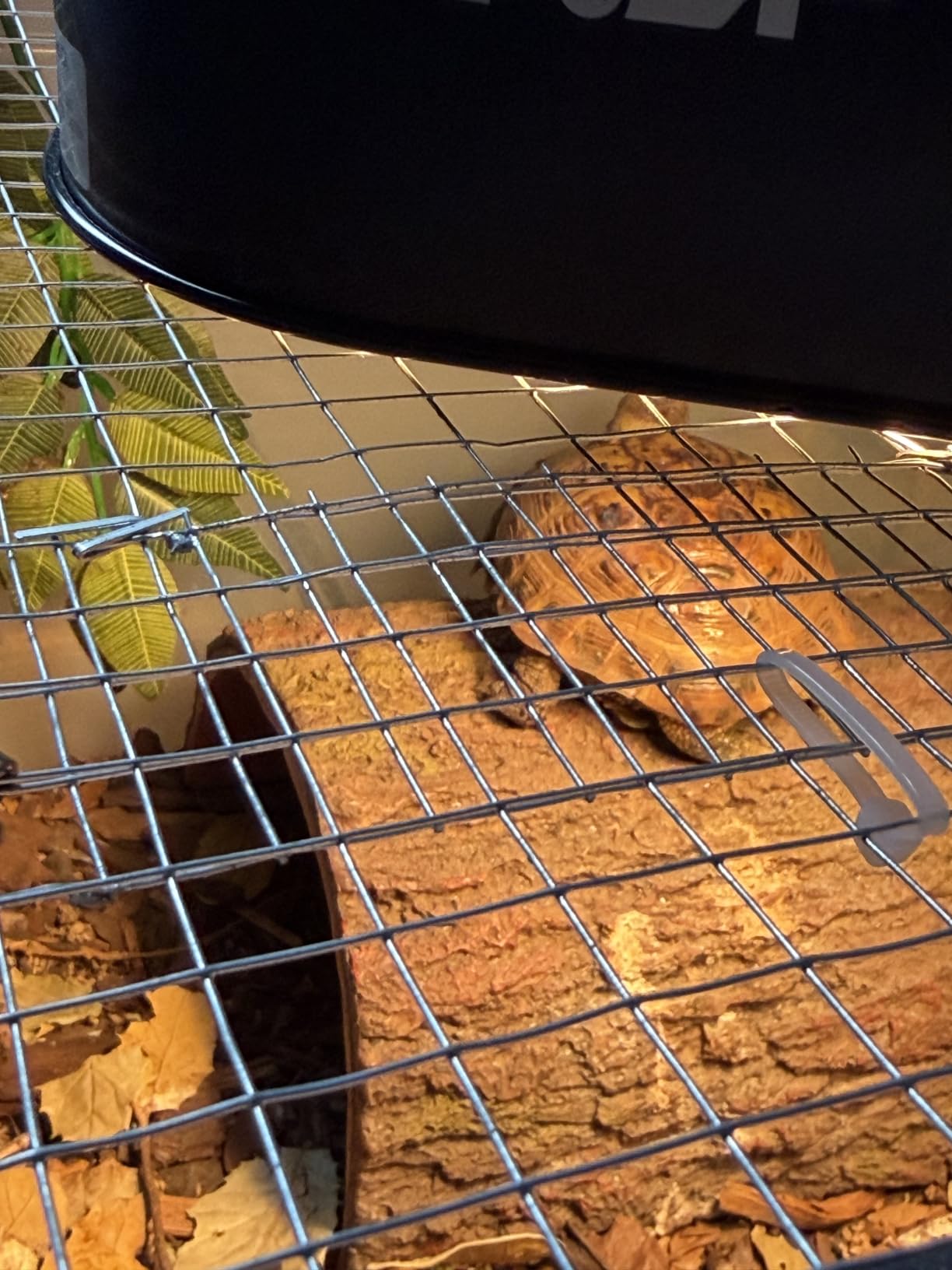
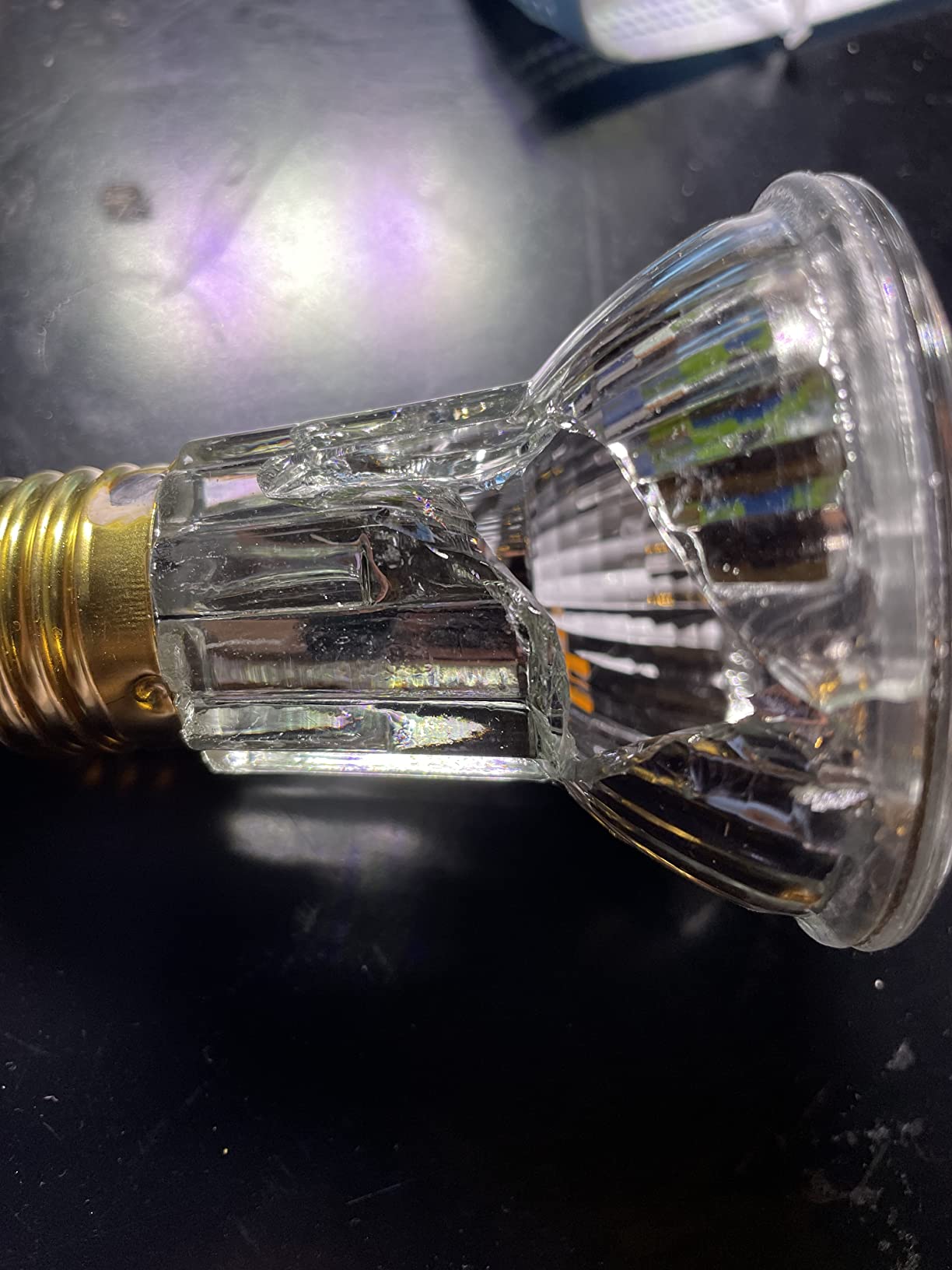
It ranks first in Terrarium Heat Lamps and carries 4.4 stars from 1,476 ratings with about 76% five-star ratings. The most common owner report is steady, quick heat at the basking spot. The minority report is what you would expect from a fast, hot-running incandescent: early failure and a bulb that shattered when being removed.
Two manufacturer instructions deserve attention before you install it. Keep the bulb at least 30 centimeters from the reptile, and do not use it with dimmers, thermostats or rheostats. That restriction is unusual in this category and it rules out one of the common ways of controlling heat output.
Best fit for a mid-to-large tank
At 100 watts, this belongs above a dock in a 40 to 75 gallon enclosure, positioned so the beam covers the whole platform. In a tank with two basking areas, running one lamp over each is a simple way to build a large enough hot zone for more than one turtle.
The 2,000 to 3,000 hour rating is the highest of the incandescent options here, and the recommended use of 4 to 6 hours a day makes it easy to pair with a photoperiod that keeps the basking period moderate without starving the animal of heat.
Where it falls short?
Water is the enemy. This bulb is not water resistant, and a splash from a climbing turtle or a condensation drip onto the hot glass shortens its life noticeably. In an aquatic tank, mount it well above the water line and angle the beam away from the surface.
Also plan around the three-month replacement guidance. Reviewers note some units failed within hours of first use, and the manufacturer advises replacement every three months regardless of condition, which is a lot of bulbs over a decade. Verify the surface temperature frequently rather than trusting a schedule.
10. Petboda Dual Head Lamp with Cycle Timer – Best for Dimming Control
- Two heads cover a much wider basking area
- Three heat levels plus a repeat cycle timer
- Four bulbs in 25W and 50W included
- 360-degree goosenecks and padded clamp
- Must stay at least 12 inches from surrounding objects
- Total bulb rating capped at 100W across both heads
- Clamp can mark or slip on thin glass rims
The Petboda dual head lamp is the only fixture here with real dimming. Three brightness and heat settings let you dial the output down when the room warms up, which matters more in a turtle tank than it does for a bearded dragon setup because aquatic tanks tend to lose heat slowly and run warm in summer.
It also has a built-in cycle timer with a crystal oscillator that repeats daily once you set it. For a photoperiod this is genuinely useful: the lamp turns on and off at the same times every day without a separate plug-in timer, and the crystal oscillator is there specifically to prevent the drift and failure that cheap mechanical timers suffer.
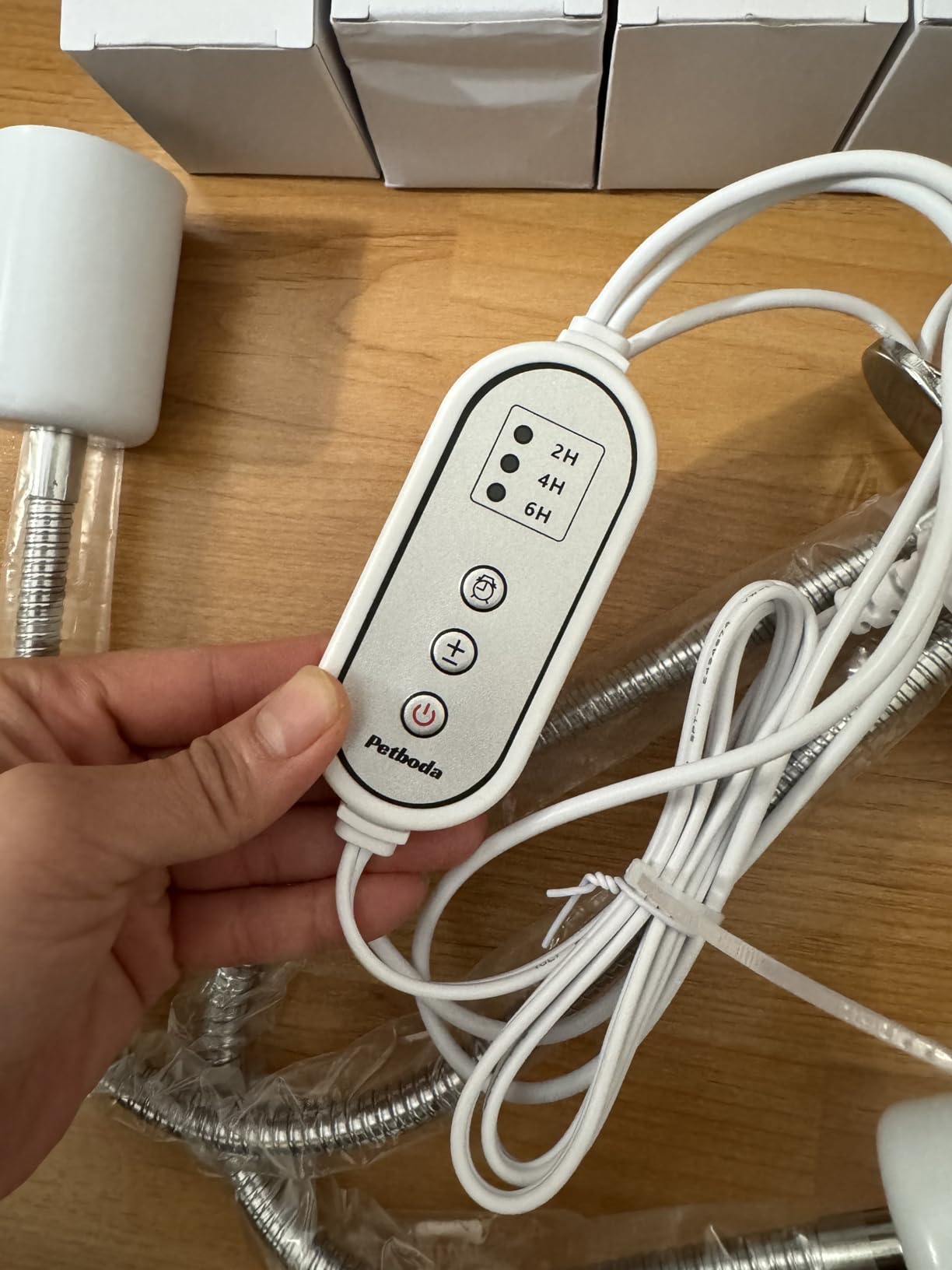
Rating is 4.4 from 1,262 reviews, with roughly 71% five-star ratings, and reviewers single out the combination of a wide basking area, three dimming levels and reliable daily timing. The included bulbs are the other headline: two 25-watt and two 50-watt bulbs ship in the box, so it works immediately out of the package.
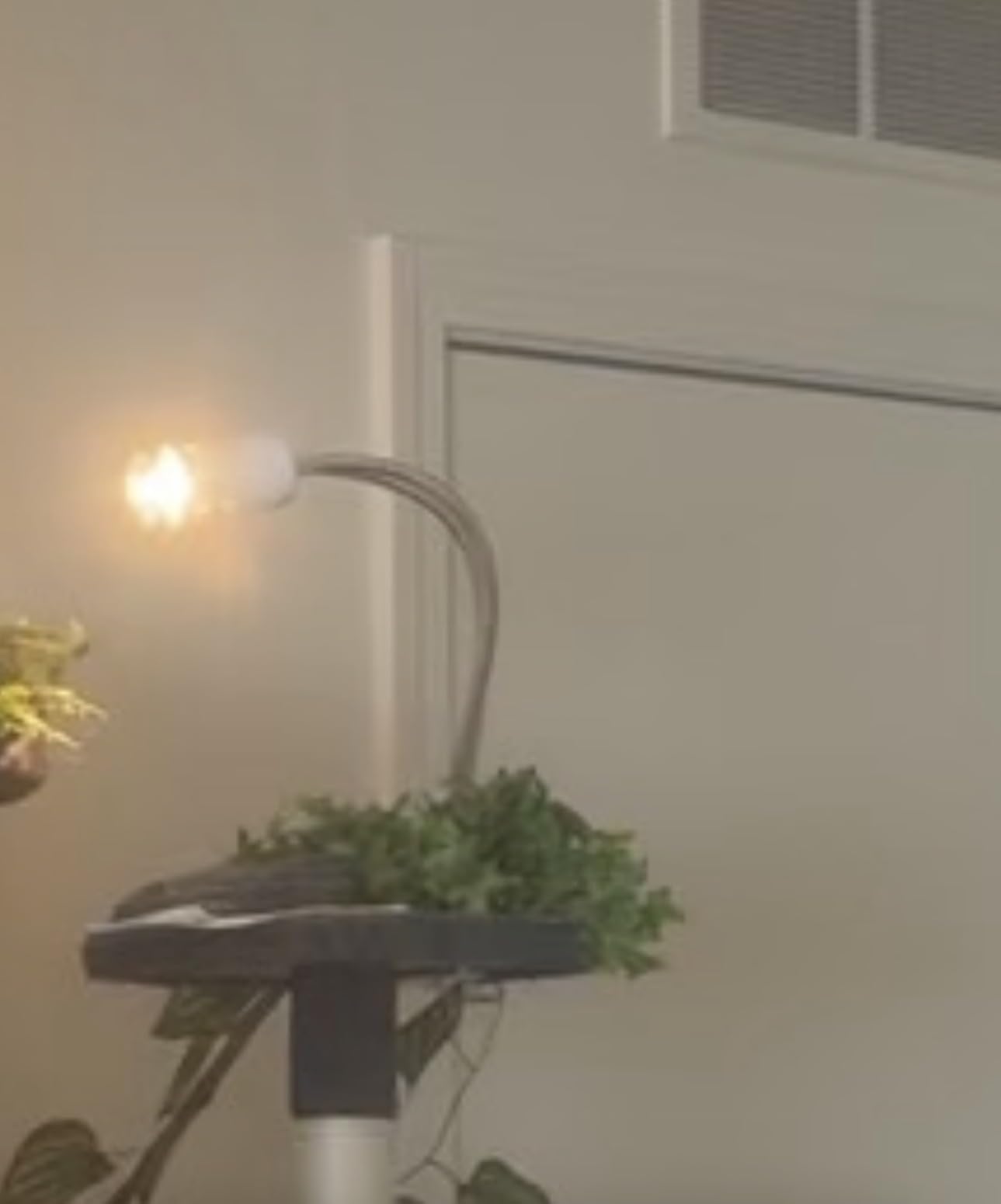
Mechanically, the 15.2-inch goosenecks rotate 360 degrees and mount on a strong clamp with a sponge pad. The one practical complaint in the reviews is that the padded clamp can mark or slip on a thin glass rim, so pad it yourself or mount it on a frame rather than bare glass.
Who benefits most from dimming and timing?
Turtle keepers in warm rooms, and anyone running a multi-turtle or breeder setup where a single fixed-output lamp will be too hot half the year. Three levels plus a repeating timer is close to what a thermostat gives you, and it costs nothing to run.
The dual heads also let you cover a topper dock that is wider than a single reflector. Two beams over a large platform mean the whole surface is usable, which reduces the chance of a turtle choosing the corner of the dock over the warm center.
Where it falls short?
Two constraints are stated plainly in the specifications and both matter. The maximum total bulb rating is 100 watts across both heads, so you cannot fit two 100-watt bulbs in it, and the lamp must stay at least 12 inches from surrounding objects, which is a fire-safety clearance rather than a suggestion.
Total output is listed at 6,400 lumens, which is high, so expect the enclosure to look bright and to run warmer than a 100-watt single lamp. The included 25W and 50W bulbs are a sensible starting point for most tanks, and you can step up within the 100-watt ceiling as your measurements call for.
11. REPTI ZOO 100W Flat-Bottom Basking Two-Pack – Best for a Tight Hotspot
- Flat bottom focuses a tighter
- hotter beam
- Vacuum aluminizing raises efficiency about 35 percent
- Runs silently with no buzzing or flickering
- Three-month free replacement
- Emits visible light so it should be off at night
- UVA only and not a UVB substitute
- Bulb life drops with long continuous run times
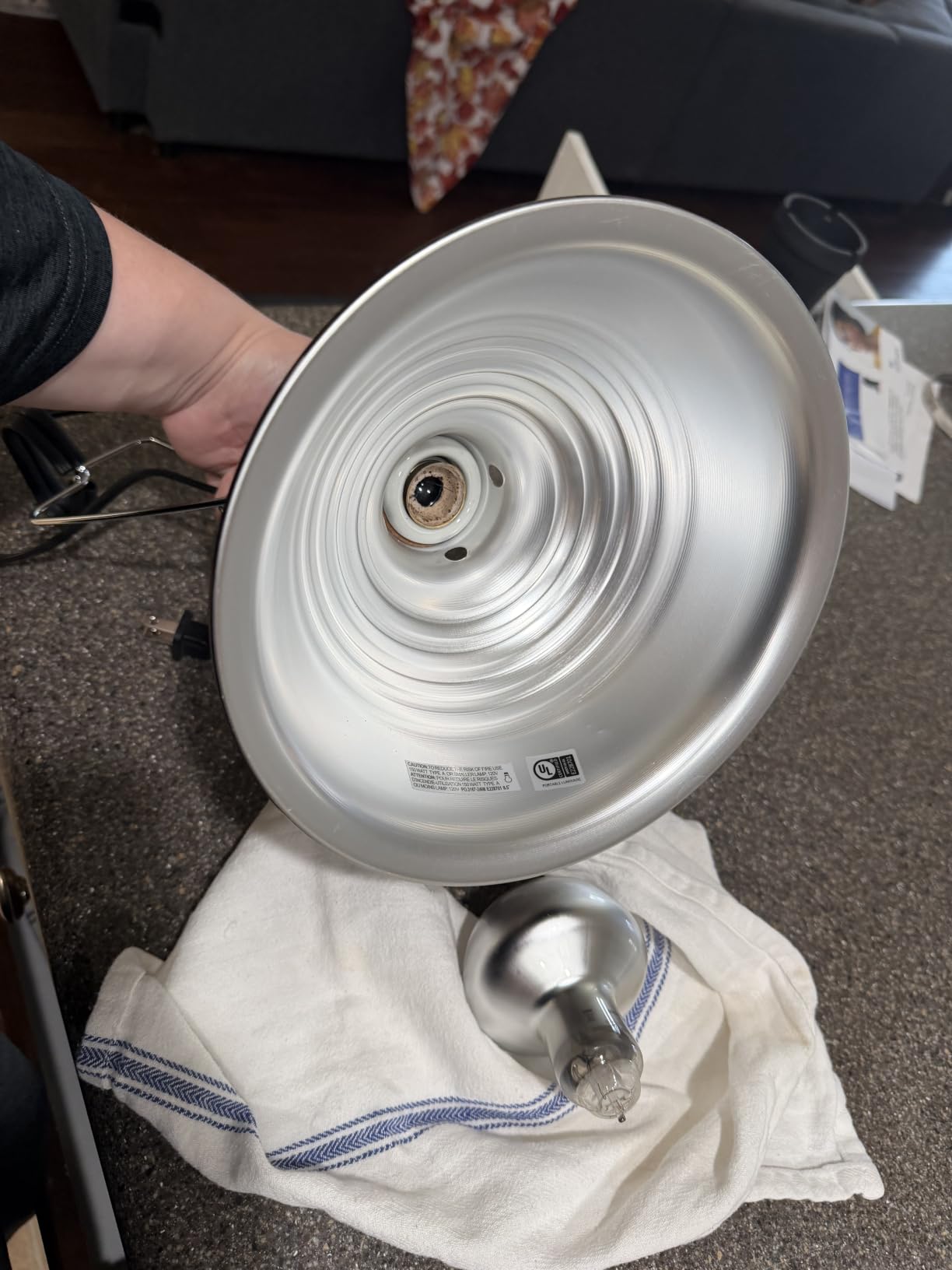
The REPTI ZOO flat-bottom two-pack is the pick when you want a small, intense hotspot rather than a broad warm zone. The manufacturer states that the flat bottom shape focuses 35 percent more light and heat into the beam than other reflector bulbs, and in a tank where the turtle needs a clear, climbable warm spot, that concentration is the feature that matters.
It also uses an updated vacuum aluminizing process the company says improves efficiency by 35 percent and extends rated life to 2,000 to 3,000 hours, which is the highest figure among the incandescent options in this roundup. A focused beam plus a long rated life is a good combination for a setup you want to leave alone.
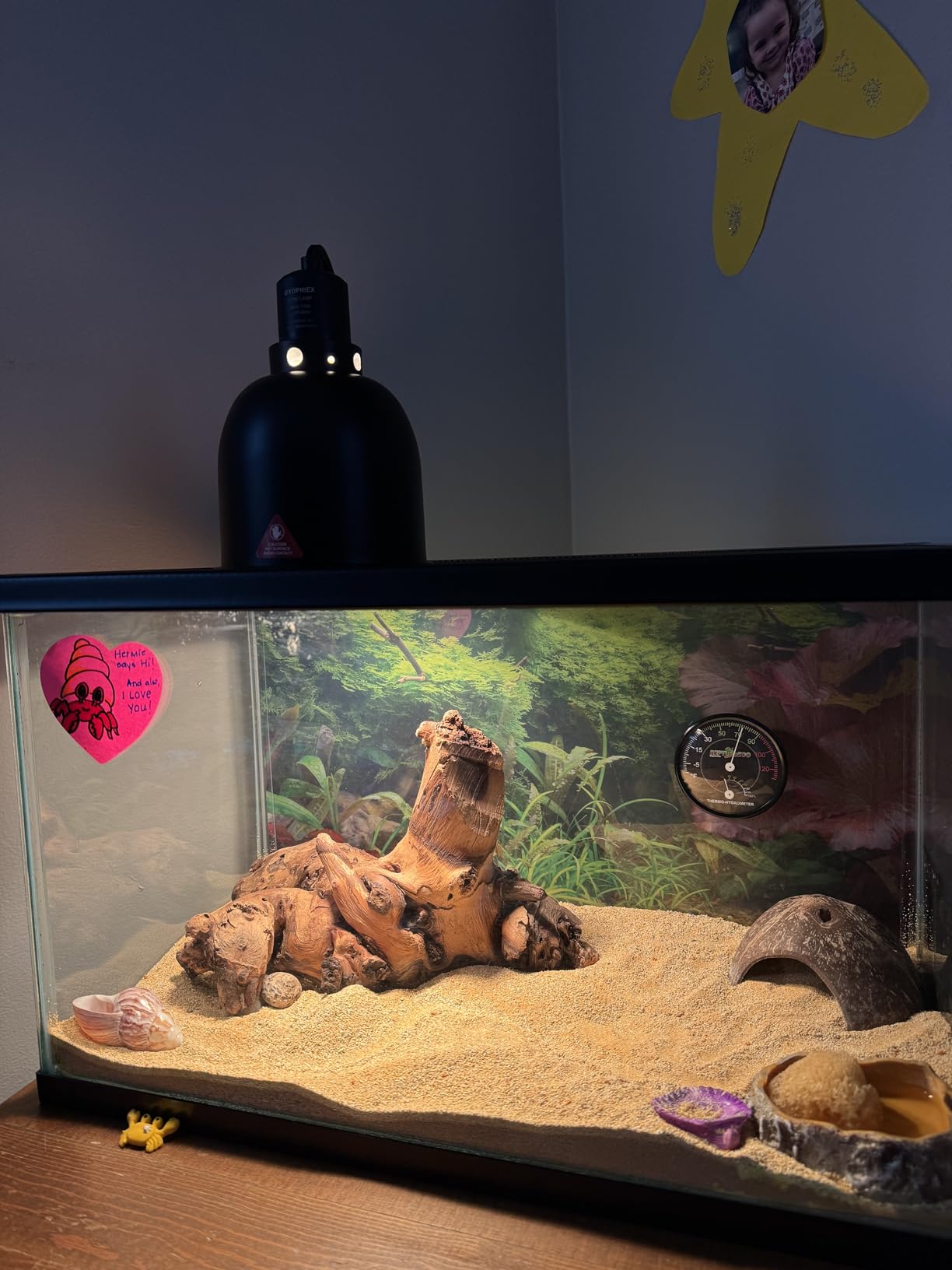
It scores 4.4 stars from 1,095 ratings, about 75% of them five stars, and the review pattern is consistent: owners like the well-defined hot spot, the quiet operation and the replacement policy, and they note it is a visible light source that should be switched off overnight.
Quality control is unusually explicit here. The product listing describes a four-stage inspection covering appearance, a 20-second lighting test, a 30-minute aging test and two pulse voltage tests, plus free replacement for any problem within three months. For a category where early filament failure is the most common complaint, that is worth real weight in a buying decision.
When a tight hotspot beats a wide warm area?
A concentrated beam suits a dock with a defined basking zone, particularly for species that sit and dry rather than roam a large warm area. It also means you can mount the lamp higher and still deliver the target temperature, since a tighter beam loses less heat to the surrounding water and glass.
It pairs naturally with a second, broader lamp if you want a warm gradient across a big tank, which is exactly the two-heat-source layout experienced keepers recommend for large enclosures with multiple turtles.
Where it falls short?
It is UVA only, so it contributes nothing to vitamin D3 production. And because it produces visible light, it should be switched off at night to preserve a true dark cycle, which shortens the daily runtime and extends bulb life as a side effect.
The same flip side applies under long run times: continuous operation is what burns through the 2,000 to 3,000 hour rating fastest. A 10 to 12 hour photoperiod will see a replacement sooner than the number on the box suggests, so track your own runtime rather than a calendar.
12. Lachesan 50W Halogen UVA Four-Pack – Best Four-Pack for Spare Bulbs
- Four halogen bulbs in one pack
- 2700K warm light with 99 color rendering
- Higher rated life than most incandescent options
- Stores compactly and fits standard E26
- Running 12 hours a day can end bulb life in about a month
- Switching off at night extends life considerably
- UVA only with no UVB output
The Lachesan 50-watt halogen four-pack is the spare-bulb solution. Four bulbs at 50 watts, halogen rather than incandescent, is a sensible stock for anyone running two or more basking lamps or who has been burned by a bulb failing mid-week. The rated life of over 3,000 hours is the highest in the roundup.
Halogen is the reason to prefer this over an equivalent incandescent four-pack. Owners consistently report that halogen reaches target temperature faster and runs cooler at the socket for the same wattage, and the 2700K warm output with a 99 color rendering index renders shell and skin tones in a way that makes it easy to see whether a turtle looks healthy.
It holds 4.5 stars from 626 ratings, with roughly 79% five-star ratings, and reviewers describe turtles actively basking under it. The clearest single takeaway in the review data concerns photoperiod: bulbs run 12 hours a day can fail in about a month, while keepers who switch them off at night report life extending to roughly four months.
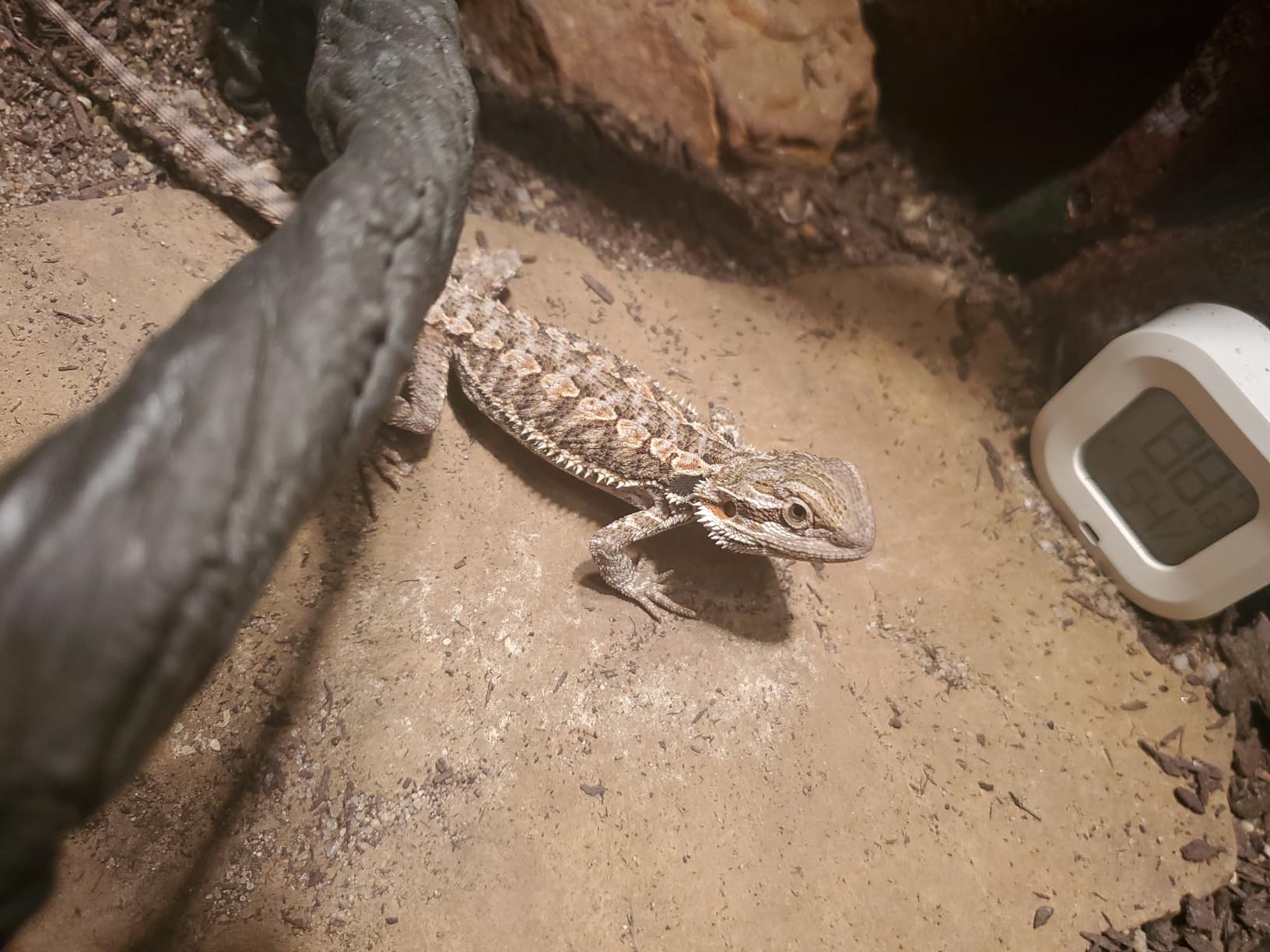
That is a more useful finding than the rated hours, because it tells you the controllable variable. Certifications are listed as ROHS and CE, and the warning to avoid touching the bulb with bare hands while it is operating applies to every halogen in this roundup, including the Zoo Med fixtures.
Where a 50-watt halogen earns its place?
Fifty-watt halogens suit 20 to 40 gallon tanks and any setup where you want a quality bulb for the smaller tank without a separate fixture. Four of them also cover a two-tank arrangement, a spare rotation schedule, and a night emitter if your setup later needs one.
Because halogen warms a fixture less at the same wattage, it is also a reasonable bulb for a small dome that runs close to a plastic top, where an incandescent at the same wattage generates more heat around the socket.
Where it falls short?
No UVB, which is the recurring theme across this roundup and worth stating plainly rather than repeating as a surprise. If your tank is 20 gallons or smaller, a dedicated UVB lamp is still the correct addition, and for an adult turtle it is not optional.
And the photoperiod advice is not optional either. Owners running these bulbs 12 hours a day report failures in about a month, which turns a four-pack into a monthly purchase. Use a timer that switches the lamp off at night, keep four spares in rotation, and you will get closer to the rated life.
Basking Lamp vs UVB Lamp: What Each One Actually Does?
A basking lamp and a UVB lamp are different products, and the confusion between them is the single most common source of wasted money in this hobby. A basking lamp radiates heat, and with it visible light and UVA, onto the basking platform. A UVB lamp emits the short wavelength that lets a turtle convert the UVB into vitamin D3, which is what makes calcium absorption possible.
Only two products in this roundup combine both functions in one bulb, the Zoo Med kits and the CALPALMY pack, and even those deliver a modest UVB compared with a dedicated tube. For most setups the correct answer is one heat lamp aimed at the dock plus a separate UVB source aimed at the same dock, with the two adjusted independently.
The one non-negotiable condition is that UVB has to reach the animal. It does not pass through glass or solid plastic, so a premium UVB lamp mounted under a glass top delivers nothing. An aquatic turtle tank needs a screen lid or an open top, with the UVB fixture positioned inside the enclosure.
Forum consensus on the nutrition side is worth repeating: UVB without dietary calcium still leads to metabolic bone disease. The bulb enables calcium absorption, it does not supply the calcium, so pair a correct UVB setup with a diet that includes it.
How Many Watts Does a Turtle Basking Light Need?
The honest answer is that wattage matters less than the temperature on the surface, which is why we give you a starting range rather than a formula. The table below is the framework most experienced keepers use, and it assumes the lamp is above a basking platform of reasonable size with normal airflow around it.
Use these numbers as a starting point, then measure. A room that stays cool, a tank with a lot of glass, or a platform that sits far from the lamp will all push you toward the higher end, and a hot room or a small, shallow dock will push you down.
A 10 to 20 gallon juvenile tank needs 40 to 50 watts, typically a 50-watt bulb mounted 6 to 8 inches above a small dock. A 20 to 40 gallon tank with an adult slider needs 75 watts at 8 to 12 inches. A 40 to 75 gallon tank needs 100 watts at 10 to 16 inches, and a 75 gallon or larger enclosure with a tall dock needs 100 watts positioned 12 to 18 inches up, or two lamps at 75 watts each.
The last row is the one owners skip and then regret. If a single 100-watt bulb cannot get the surface to 90-95°F at a safe height, add a second lamp rather than lowering the first one closer to the dock. Scorching a basking platform is a fast way to make a turtle stop using it.
For species sizing, treat 75 watts as the baseline for an adult red-eared slider, 100 watts for a large softshell or a topper dock with a wide platform, and stay at 50 watts for juveniles and musk turtles, which are smaller and bask less aggressively. Enclosure volume matters as much as the animal: a common rule of thumb is 10 gallons of water per inch of shell length.
How Far Above the Basking Platform Should the Lamp Sit?
Distance is the variable people guess at most, and guessing goes wrong in both directions. Too close and the platform surface can exceed 100°F, which the turtle avoids. Too far and the hotspot never reaches temperature, so the animal stays in the water where it gets none of the drying and warming benefit.
A 50-watt bulb typically sits 6 to 8 inches above the surface, and a 75-watt bulb sits 8 to 12 inches up. A 100-watt bulb needs 10 to 16 inches in most tanks, and where a dock sits high in a tall enclosure, 18 inches is reasonable. Halogen bulbs can generally sit slightly further away than incandescent at the same wattage.
A deep dome reflector changes these numbers more than wattage does, because it concentrates the beam and reduces the working distance. A standard shallow reflector needs more height to deliver the same surface temperature, which is one reason the deep dome fixtures rank highly for aquatic setups.
Whatever distance you choose, verify it with an infrared thermometer aimed at the shell of the platform rather than at the water, and re-measure when the season changes. Distance guidance is a starting point; the measured number is the only one that counts.
Basking Temperature Targets and How to Measure Them
The target is 90-95°F on the basking surface, with the water roughly 10°F cooler, which usually means a water heater set in the mid to high 70s. That gradient is what encourages a turtle to leave the water, dry off, and warm up rather than sitting at one temperature all day.
Measure with an infrared temperature gun aimed at the shell of the basking platform, and take several readings across the surface because a single reading tells you very little about a hotspot. A dial thermometer stuck to the dock gives you a steadier number over time and is worth running alongside the gun.
The most common mistake is judging temperature by eye. A bright, visible lamp does not mean a hot surface, and a dim bulb at close range can be far hotter than a bright one mounted high. Brightness and heat are different outputs, and only a thermometer settles the argument.
Check the whole gradient, not just the hot spot. If the coolest part of the basking area never reaches 85°F, the dock is too large for one lamp and needs a second heat source aimed at the far end.
Photoperiod: How Many Hours a Day Should the Lamp Run?
Run the basking lamp 10 to 12 hours a day and put it on a timer. A consistent photoperiod matters for more than appearance: it supports normal activity cycles, feeding behavior and rest, and it is the single easiest way to improve bulb longevity because hours on is what burns filaments out.
The review data on the bulbs in this roundup makes the point clearly. Keepers running halogen or incandescent basking bulbs for 12 hours a day report failures in about a month, while the same bulbs switched off at night last several months. The timer is not a convenience feature, it is a maintenance strategy.
Match the photoperiod to the season if you want to be more precise, lengthening it slightly in summer and shortening it in winter, but consistency matters more than precision. And keep the cycle genuinely dark: no red bulbs, no visible light left on overnight.
Night Heating for Turtles: Ceramic Emitters and the Red Light Myth
Some turtles do bask at night, and keepers searching for a night-cycle heat source ask about this constantly in the forums. The right answer is a ceramic heat emitter, which produces heat with no visible light, mounted above the tank on a separate circuit from the daytime basking lamp.
Red and blue night bulbs are the option to skip. They add visible light to a period when the animal should be in darkness, and turtles can see far more of the spectrum than we assume, so a red bulb is not invisible to them. A ceramic emitter warms the tank without a visible glow, which is what the night-cycle question is actually asking for.
Keep the emitter well above the platform. Ceramic emitters radiate more heat per watt than incandescent bulbs, so the surface temperature under one is easy to overshoot, and many emitters get hot enough to burn on contact, so mount them where a climbing turtle cannot reach the surface.
Also watch the temperature drop before you add a night source. In a heated room, a tank with 75 to 100 gallons of water may fall only a few degrees overnight, and a needless emitter just shortens your daylight bulb life. Measure the overnight minimum with a thermometer left in the water before you add hardware.
Deep Dome vs Standard Reflector: Which Geometry Fits a Turtle Tank?
A deep dome extends past the face of the bulb so light and heat project downward in a tighter cone, and a standard reflector is wider and softer. That difference matters more in a turtle tank than in a terrestrial enclosure, because the water and glass around the dock pull heat in every direction.
Choose a deep dome when the tank is tall, the dock is wide, or you need to place a UVB lamp at the same height as the basking lamp without the two beams washing each other out. Choose a standard reflector when the dock is small and low, where a tight cone would overshoot the platform and heat the water instead.
Deep domes also tend to run the fixture cooler at the sides, which reduces the chance of scorching a nearby wall or plastic top. The trade-off is that a tight hotspot has edges, so measure across the whole platform rather than only its center.
If you want a genuinely wide basking area, a dual-head fixture beats a single deep dome. Two beams over a topper dock cover a platform that one reflector would leave half-warm.
Species and Size: Matching Wattage to Red-Eared Sliders, Musk and Softshell Turtles
Species differences are mostly about size and basking behavior. A red-eared slider is an enthusiastic basker that will use a hot, bright spot for hours, which makes it the easiest species to satisfy with a single 75-watt lamp at 8 to 12 inches in a 40 gallon tank.
Musk turtles are smaller, more aquatic and bask less often, so 50 watts at 6 to 8 inches is usually enough. Softshells are flatter and spend more time in open water, and a wide topper dock in a 55 gallon or larger tank generally needs 100 watts mounted higher, at 10 to 16 inches.
Map turtles bask opportunistically rather than sitting, so a moderate 75-watt lamp with a broad warm area suits them better than an intense spotlight. Juveniles of any species should start at 50 watts and step up, because a juvenile in a full-grown adult enclosure is the easiest way to accidentally overheat a platform.
Tank depth is the practical limit on all of this. A lamp cannot heat a platform through a deep water column, so a tall dock on a 75 gallon tank needs both a higher wattage and a close check that the beam still lands on the shell rather than the water beside it. The 10 gallons per inch of shell rule sets the enclosure size; the lamp wattage then follows the dock, not the tank.
Maintenance, Replacement Schedule and What Can Go Wrong
Replace UV bulbs every 6 to 8 months on a schedule, not a visual check. Visible output barely changes as UVB fades, so a bulb that still looks bright can be delivering a fraction of its original UV, and shell problems develop slowly enough that you will not notice until they are advanced.
Expect basking heat bulbs to last 12 to 24 months depending on daily runtime, and mercury vapor or all-in-one lamps 12 to 18 months. Write the dates down at installation, because the single most common cause of poor shell and bone health in indoor turtles is a bulb that was never replaced on time.
The failure modes are predictable. Bulbs dying within weeks usually trace back to running them 12 hours a day in a closed fixture, or to thermal cycling from splash in an aquatic setup. A bulb that scorches a platform is a wattage or distance problem, not a bulb defect.
Premium halogen fixtures in particular draw low retail ratings in shopping data, and the complaints cluster around early failure and heat that reads hotter than expected. Our advice is to measure the platform temperature weekly for the first month after any new fixture, then monthly, and to keep one spare basking bulb in the house.
Splash and Electrical Safety in Aquatic Turtle Tanks
Keep every fixture and bulb above the water line with clearance, and never let a bulb sit where condensation or a splashing turtle can drip onto hot glass. Water resistance is a property of the specific product, and only some of the fixtures in this roundup are rated for it.
Use a GFCI-protected outlet for anything in a wet room, and secure the lamp to a bracket or stand that cannot be knocked loose. A heavy tank does not need to be dropped for a falling fixture to cause damage, and clamps on thin glass rims are the least secure option available.
Respect the clearance figures. The Petboda fixture specifies at least 12 inches from surrounding objects, the REPTI HOME bulb at least 30 centimeters from reptiles, and heat emitters run hot enough to require cool-down time before handling.
Finally, keep the water itself electrically safe. A submerged heater on a proper thermostat with a ground fault protector, an unplugged or top-mounted filter, and a lid that a turtle cannot push off are the baseline. If you add night heating, put it on a separate circuit from the daytime basking lamp so one failure does not take out the whole lighting scheme.
Frequently Asked Questions
What is the best heat lamp for turtles?
The best overall heat lamp setup for turtles is a clamp-mounted reflector fixture like the Fluker’s Repta-Clamp Lamp with a 75-watt basking spot bulb, mounted 8 to 12 inches above the basking platform. For a tank where splash is constant, a splashproof halogen in a deep dome is the better choice. Either way, measure the platform with an infrared thermometer and adjust until it reads 90-95°F.
What is the best basking lamp for aquatic turtles?
For aquatic turtles, pick a splashproof halogen fixture that keeps the beam focused downward and stays clear of the water. A deep dome reflector concentrates heat onto the dock instead of losing it to the surrounding water, and a 75-watt bulb at 8 to 12 inches is the right starting point for a 40 gallon tank with a topper dock. Keep the fixture above the water line and add a separate UVB source.
What kind of lamps do turtles need?
An aquatic turtle needs three things: a heat lamp that raises the basking platform to 90-95°F, a separate UVB source so the animal can synthesize vitamin D3 and absorb calcium, and a water heater to keep the water in the mid to high 70s. A timer on a 10 to 12 hour photoperiod is strongly recommended. Optional extras include a second heat lamp for a larger tank and a ceramic heat emitter for night heating.
How many watts should a turtle basking light be?
A 10 to 20 gallon juvenile tank needs 40 to 50 watts, a 20 to 40 gallon adult tank needs 75 watts, a 40 to 75 gallon tank needs 100 watts, and a 75 gallon or larger enclosure with a tall dock needs 100 watts or two 75-watt lamps. Treat those as starting points and adjust based on the measured platform temperature rather than the wattage on the box.
How far should a basking light be from the turtle?
A useful rule of thumb is 6 to 8 inches above the platform for a 50-watt bulb, 8 to 12 inches for a 75-watt bulb, and 10 to 16 inches for a 100-watt bulb. Halogen bulbs can sit slightly further away than incandescent at the same wattage. If the surface will not reach 90-95°F at that height, add a second lamp rather than lowering the first one closer to the dock.
Do basking lamps provide UVB for turtles?
No. A standard basking lamp provides heat, visible light and UVA, but not the UVB wavelength turtles need for vitamin D3 synthesis. A few products in this roundup combine UVA and UVB in one bulb, though the output is modest. Most setups need a separate UVB tube or lamp aimed at the basking platform, and it must be mounted where the light is not blocked by a glass lid.
How long should a turtle basking light stay on each day?
Run the basking lamp 10 to 12 hours a day on a timer. Keeping the hours consistent supports normal activity and feeding cycles, and it is the main lever for bulb life: keepers running basking bulbs 12 hours a day report failures in about a month, while the same bulbs switched off at night last several months.
How often should I replace a turtle UVB bulb?
Replace UV bulbs every 6 to 8 months on a schedule rather than by eye. Visible brightness barely drops as UVB fades, so appearance is not a reliable test. Plan on 12 to 24 months for basking heat bulbs depending on runtime, and 12 to 18 months for all-in-one mercury vapor lamps.
The Verdict: Which Basking Lamp for Turtles Should You Buy?
Our pick for the best basking lamps for turtles is the Fluker’s Repta-Clamp Lamp, paired with a 75-watt basking bulb. It has the deepest review base in the category, a clamp that holds its height, and no lock-in on bulb brand, which means you can start with an incandescent and upgrade to a halogen later without replacing the fixture.
If your tank is wet enough that splash is a daily event, go with the Zoo Med Aquatic Turtle UVB and Heat Lighting Kit instead. Its splashproof halogen and deep dome are the right geometry for an aquatic setup, and it delivers UVB alongside the heat.
For small tanks, a 50-watt option such as the CALPALMY or Lachesan four-packs covers a juvenile setup and keeps spares in the house. For a 40 gallon adult slider, 75 watts at 8 to 12 inches is the number to start from. Whatever you choose, measure the platform with an infrared thermometer, aim for 90-95°F, and add a dedicated UVB source that the tank lid cannot block.