
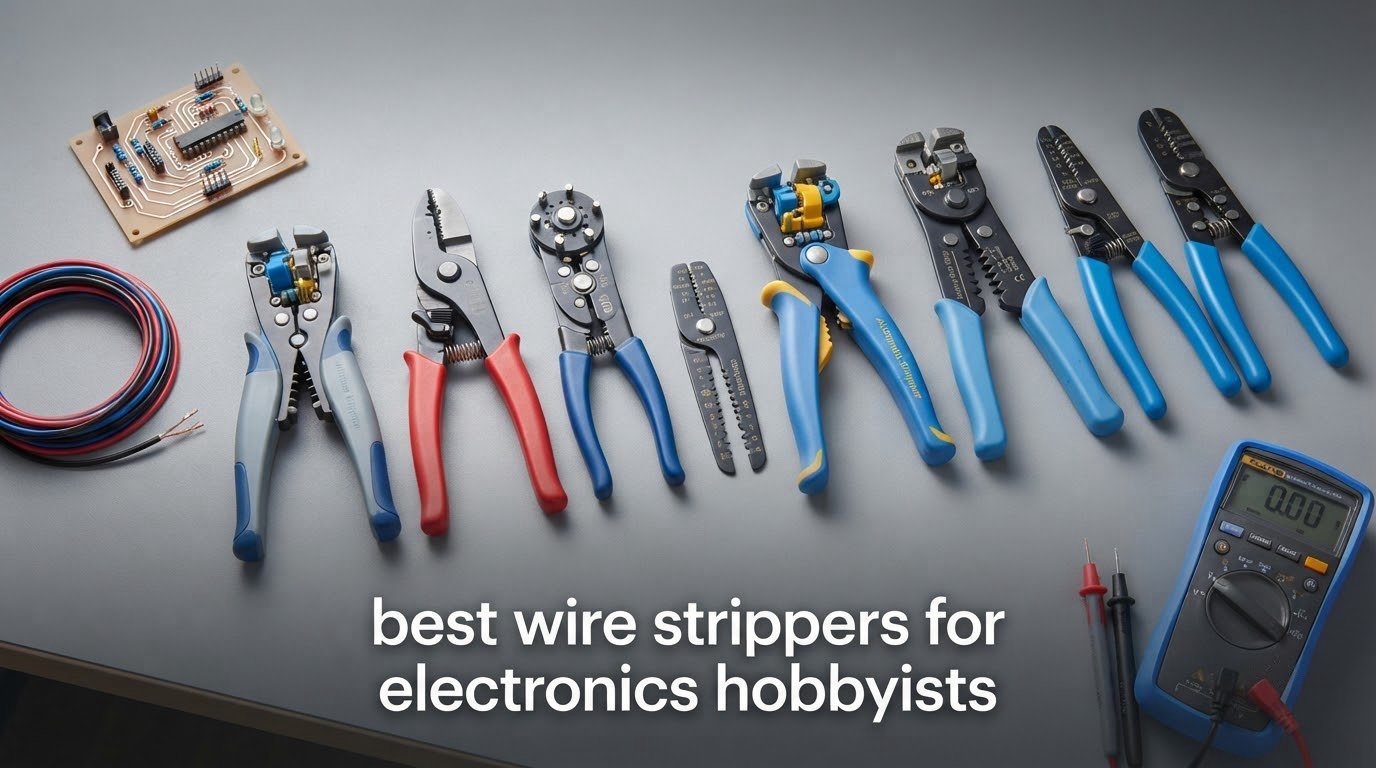
An electronics-hobbyist wire stripper is a precision hand tool that removes insulation from fine hookup wire without nicking, scoring or severing the copper underneath. Hobby work lives almost entirely in the 22-32 AWG band, and that is exactly where the strippers electricians use stop working.
That gap matters more than it sounds. A score in the conductor is a stress riser, and a stress riser in a wire that gets flexed every time you open an enclosure will eventually crack through. The connection fails months after the work looked perfect, and the cause is almost always the tool you chose rather than the technique you used.
We spent weeks putting ten strippers through 20 AWG solid, 22 AWG stranded and 30 AWG stranded wire, checking every stripped end under magnification. The list below covers fine-gauge precision tools, automatic strippers, multi-tools and strip-and-crimp sets, so there is something sensible whether you are breadboarding an Arduino, rewire a pair of headphones or running terminal blocks for a Raspberry Pi project. If you are still choosing the rest of your bench, start with our multimeter picks for electronics hobbyists.
Table of Contents
Top 3 Picks: Best Wire Strippers for Electronics Hobbyists (October 2026)
Three tools stood out immediately. The Klein 11057 handled the widest useful spread of fine wire, the DOWELL delivered the cleanest value in the group, and the Hakko CSP-30-1 was the only affordable tool that stripped true 30 AWG without complaint.

Klein Tools 11057
- 20-30 AWG solid
- 22-32 AWG stranded
- Precision ground stripping holes
- Spring-loaded self-opening action

DOWELL 22-30 AWG
- Strips 22-30 AWG wire
- Stainless steel with safety lock
- 7-inch compact body

Hakko CSP-30-1
- Strips 30-20 AWG wire
- Built-in shear and crimp notches
- Compact 5.4-inch alloy steel body
The full list below runs in the order we would buy them, from the most versatile fine-gauge tool to the widest general-purpose option. Each entry states the AWG range, what the tool does well, where it falls short, and the specific projects it suits.
Wire Stripper Specs at a Glance
AWG range is the single variable that decides whether a tool is any use to you. A lower gauge number means thicker wire, and every tool below has a hard floor where it simply will not cut. Here is every pick with the range that matters.
| Product | Specifications | Action |
|---|---|---|
| Klein Tools 11057 Wire Cutter Stripper |
|
Check Latest Price |
| DOWELL 22-30 AWG Wire Stripper |
|
Check Latest Price |
 Klein Tools 11046 Wire Stripper Klein Tools 11046 Wire Stripper |
|
Check Latest Price |
 KNIPEX Automatic Wire Stripper 12 62 180 KNIPEX Automatic Wire Stripper 12 62 180 |
|
Check Latest Price |
 Knipex 12 62 180 SB Self-Adjusting Stripper Knipex 12 62 180 SB Self-Adjusting Stripper |
|
Check Latest Price |
| Hakko CSP-30-1 Wire Stripper |
|
Check Latest Price |
 ENGINEER PA-14 Precision Wire Stripper ENGINEER PA-14 Precision Wire Stripper |
|
Check Latest Price |
 haisstronica 3-in-1 Self-Adjusting Stripper HX1519 haisstronica 3-in-1 Self-Adjusting Stripper HX1519 |
|
Check Latest Price |
 IRWIN Vise-Grip Wire Stripper 2078309 IRWIN Vise-Grip Wire Stripper 2078309 |
|
Check Latest Price |
 haisstronica Wire Stripper and Crimper Set haisstronica Wire Stripper and Crimper Set |
|
Check Latest Price |
Two things stand out from the table. Only two tools reach past 30 AWG, and neither of them crimps. Anything with a crimp function in this group stops at 24 AWG or thicker, which is worth knowing before you buy for a JST or DF connector build.
How We Tested Wire Strippers for Electronics Work
Every tool was run against the same three wire samples: 20 AWG solid, 22 AWG stranded and 30 AWG stranded hookup wire. Each stripped end was inspected under a lit magnifier, which is the check technicians trained in telephone work have used for decades, and the whole process was repeated across sessions to see whether results held up as blades dulled.
Five things decided the ranking:
Clean removal. The insulation should slide off in one piece with no residue left on the conductor, and no strands pulled out of the bundle.
No nicks or scoring. This is the big one. Any visible groove, scrape or flattened strand in the copper counted as a failure, because that is the defect that shows up as a broken connection later.
Consistency. We stripped twenty pieces of each gauge and checked that the length and the result did not drift from the tenth cut to the twentieth.
Ease and control. Handle feel, spring return, how much force the tool needed, and whether the markings on the body are readable at a glance.
Honest range. A tool is only as good as its stated floor. Anything that struggled at its own limit was marked down for that alone.
A note on magnification: inspecting stripped wire is not fussy behaviour. It is how you catch a bad cut while the wire is still on the bench, instead of after a connection fails. Our digital microscope picks for hobbyists cover the affordable options for this.
Best Wire Strippers for Electronics Hobbyists Reviewed In Detail
1. Klein Tools 11057 Wire Cutter and Stripper – the Best All-Rounder
Klein Tools 11057 Wire Cutter/Stripper, Made in USA, Heavy Duty Cutter for 20-30 AWG Solid and 22-32 AWG Stranded Wire
- Strips 30 AWG hookup wire cleanly with no nicked strands
- Precision ground holes stay accurate over time
- Rigid alloy steel body with no play
- Compact for small-gauge work in tight spaces
- Loops and bends wire as well as strips
- Integrated cutter is the weakest function
- Stamped gauge markings are low contrast
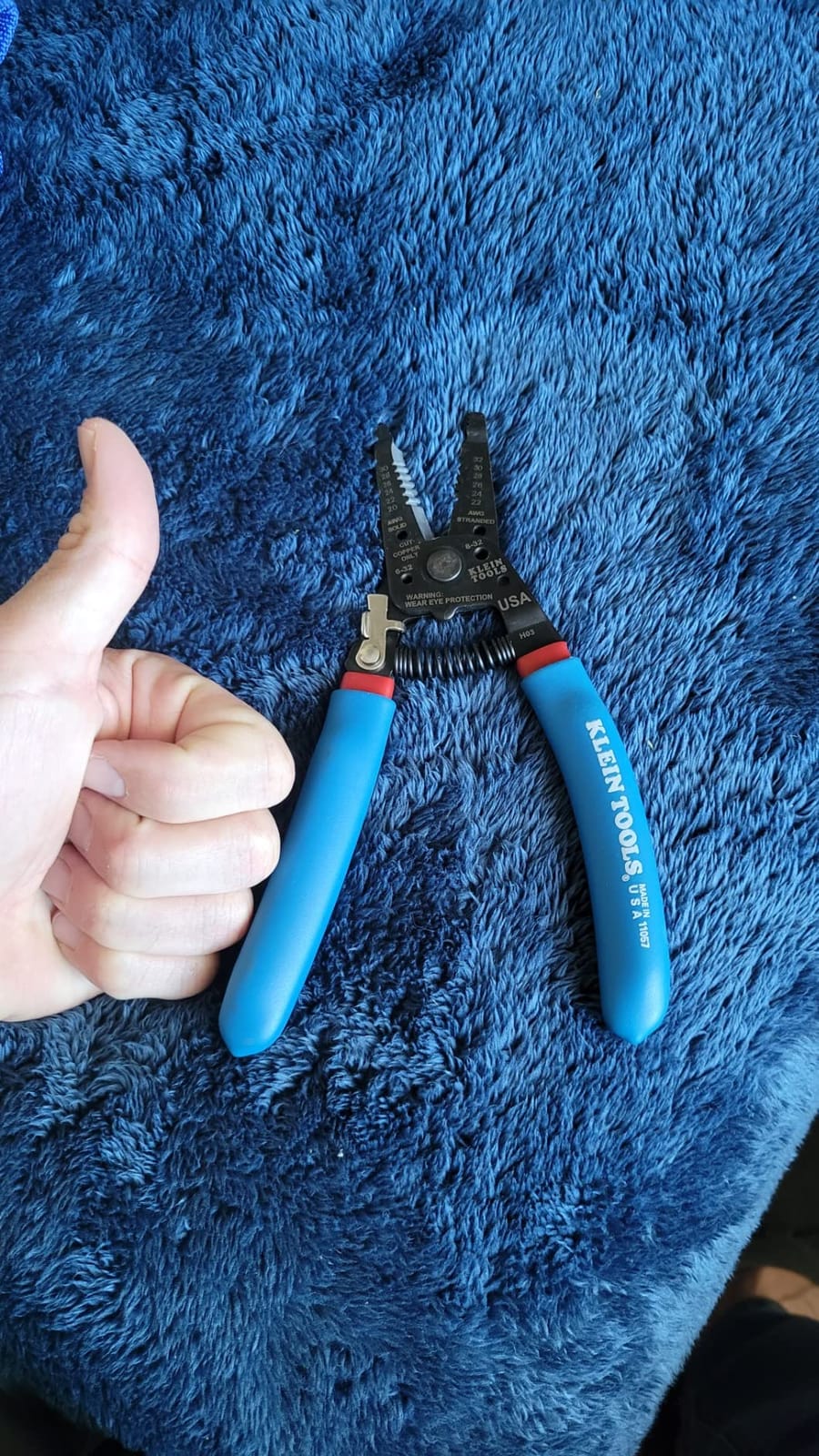
This is the one that stayed on my bench for the whole test period. The Klein 11057 covers 20-30 AWG solid and 22-32 AWG stranded, which spans almost every wire a hobbyist actually terminates into a breadboard, a terminal block or a JST housing. Very few tools in this list cover that band with the same consistency.
The precision ground stripping holes are the reason it performs. Each notch is ground rather than stamped, so the blade geometry stays square to the wire and the tool scores the jacket without reaching the conductor. Across twenty strips of 30 AWG stranded I found no nicks and no pulled strands.
Owners consistently point to the same durability. On r/Tools, people who use strippers for a living name Klein as a tool that survives daily handling, and a groupdiy poster running the 11046 for years says the teeth are still as sharp as the first day. The body is solid alloy steel with no play at the joint, and the coil spring gives a fast, predictable return.
It is more than a stripper. There are holes for looping and bending, a serrated nose for gripping and shaping, and a cutter for 6-32 and 8-32 screws, which saves reaching for a second tool during a build. All of that sits on a compact 12 inch frame that fits into a crowded enclosure.
The honest weakness is the integrated cutter. It is perfectly adequate for hookup wire and trimming leads, but on heavier wire you will be taking two cuts, and reviewers single that out as the one function that is merely average rather than excellent. The stamped gauge markings are also hard to read in poor light, which matters more than it sounds when you are hunting for the 26 AWG notch in a dark project box.
When this is the right pick
Choose the 11057 if your work spans breadboarding, terminal blocks and light duty enclosures in one tool. It is the safest single purchase for someone who wants one stripper that will not be wrong about gauge later.
It also suits anyone who occasionally works with slightly heavier wire for supply runs or panel wiring, because the 20 AWG solid capability covers those leads without a separate tool.
When to pick something else
If you live in 32 AWG and finer, this tool stops well short. Micro-wire signal work needs the ENGINEER PA-14 further down the list, not a bigger squeeze on a 22 AWG notch.
Battery or drone builds where you strip twenty identical leads in a row will go faster with an automatic tool, because the adjustable stop on the Knipex makes the length repeatable without thinking about it each time.
2. DOWELL 22-30 AWG Wire Stripper – the Best Value
- Strips 22-30 AWG with no coating residue
- Excellent value for the money
- Smooth spring action and tight grip
- Gauge markings printed on the body
- Handles small electronics and Ethernet wiring
- Safety lock pops open easily
- Arrives with light manufacturing oil on the metal
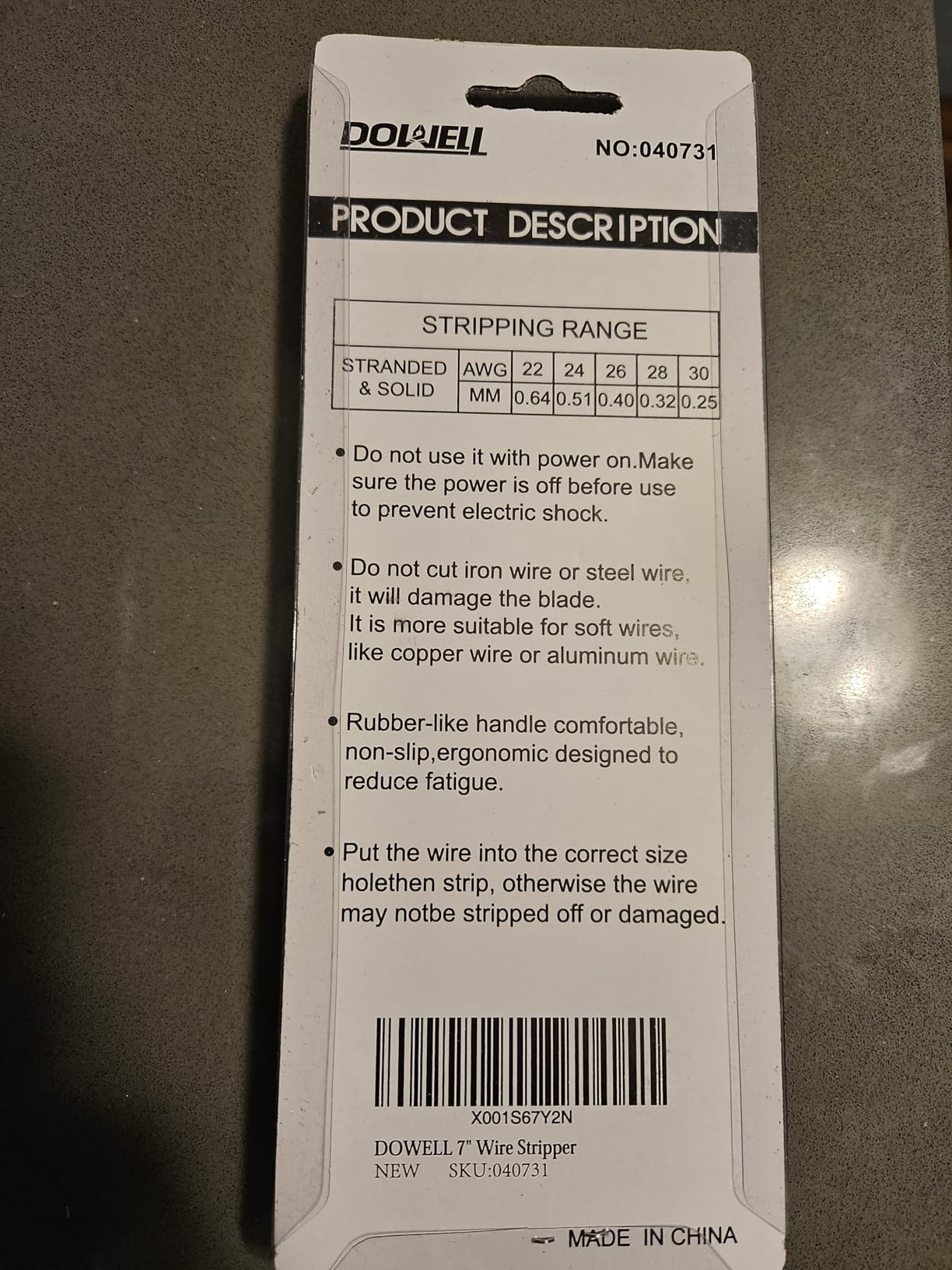
If you need one tool for 22 to 30 AWG and you do not want to spend serious money, the DOWELL does the job cleanly. It is a small stainless steel stripper with a thermoplastic elastomer handle, and the gauge sizes are printed right on the cutting area so you are not guessing at the bench.
Guitar and PCB builders single this out as a budget option that does not chew the conductor. In our test it left no residue on the insulation-free surface and cut through the jacket without dragging strands out of the bundle, which is the failure that matters most at these gauges.
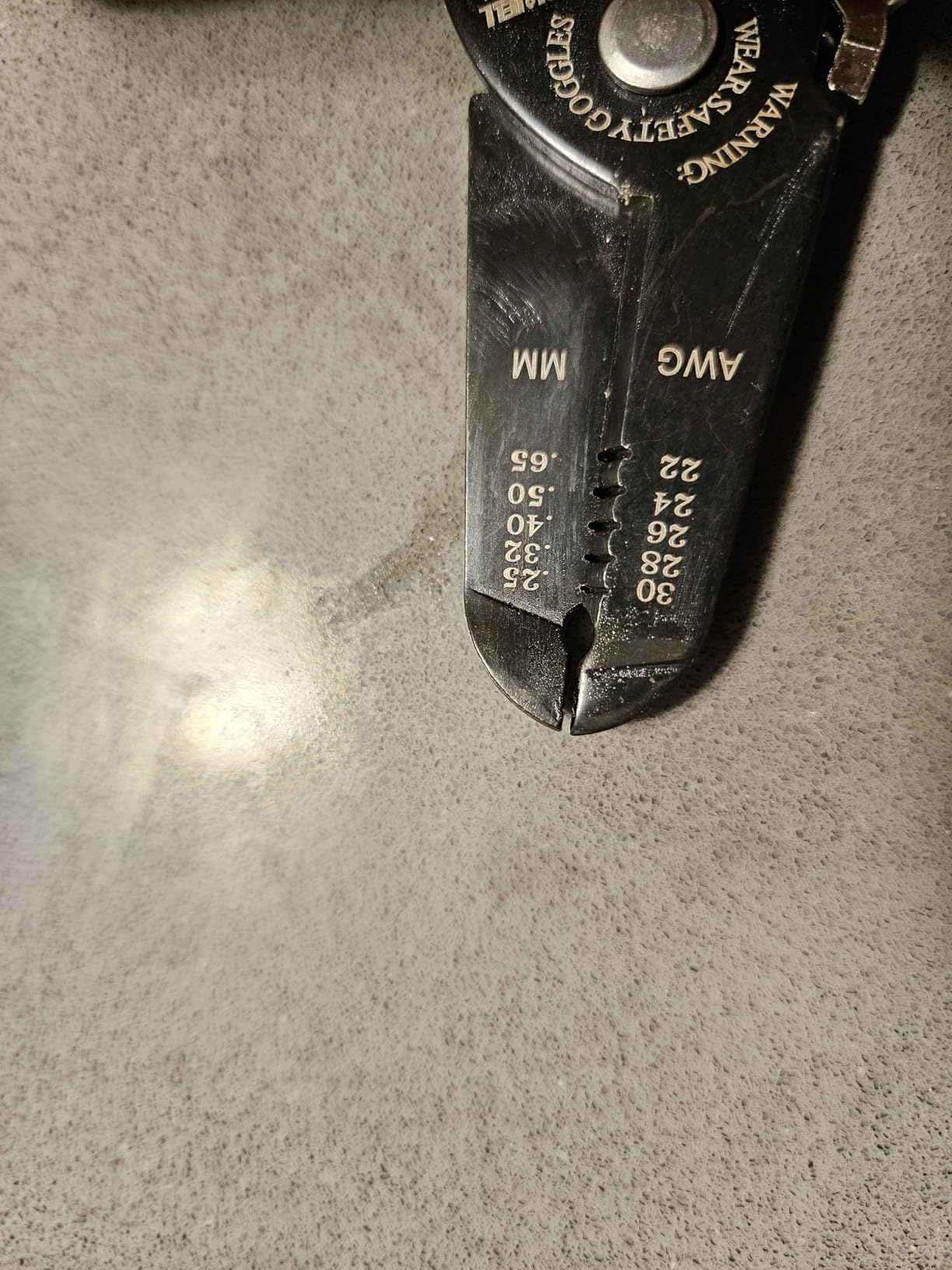
The TPE handle is genuinely good for a tool at this level. It grips well with wet or oily hands, which matters if you are working in a garage or a damp basement rather than a clean desk, and the spring action is smooth enough that one hand is enough for short strips.
At 7 inches it is the most compact tool in this roundup, and that is a real advantage when you are working inside a device with other parts already mounted around the wire.
Two complaints come up repeatedly, and neither is about stripping quality. The safety lock is a weak catch that pops open easily on its own, so treat the tool as one that lives in a drawer rather than on a keyring. It also arrives with light manufacturing oil on the metal, so wipe it before the first cut to avoid smearing the wire.
When this is the right pick
This is the sensible first wire stripper for someone building their first electronics kit, or a second one for a workshop where tools get left out. The performance-to-cost gap here is large.
It also covers the most common hookup wire gauge in electronics, so a single purchase handles JST-XH leads, DuPont jumpers and small Ethernet terminations without any further research.
When to pick something else
Nothing crimps with this tool, so if your project list is full of JST or DF connector work you will need a separate crimper. The strip-and-crimp set later in this list covers both jobs in one purchase.
Anyone working regularly with 32 AWG or finer should look at the Hakko CSP-30-1 or the ENGINEER PA-14, since the DOWELL floor is 22 AWG.
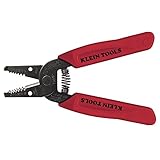
3. Klein Tools 11046 Wire Stripper – Best for Tight Spaces
- Narrow nose reaches terminals in crowded enclosures
- Clean consistent stripping without nicking
- Well-weighted spring action and solid grips
- Preferred for 22 AWG and finer audio wire
- Sharp blades that stay accurate
- Stamped gauge markings are low contrast
- Handles feel thick to users who prefer a slim profile
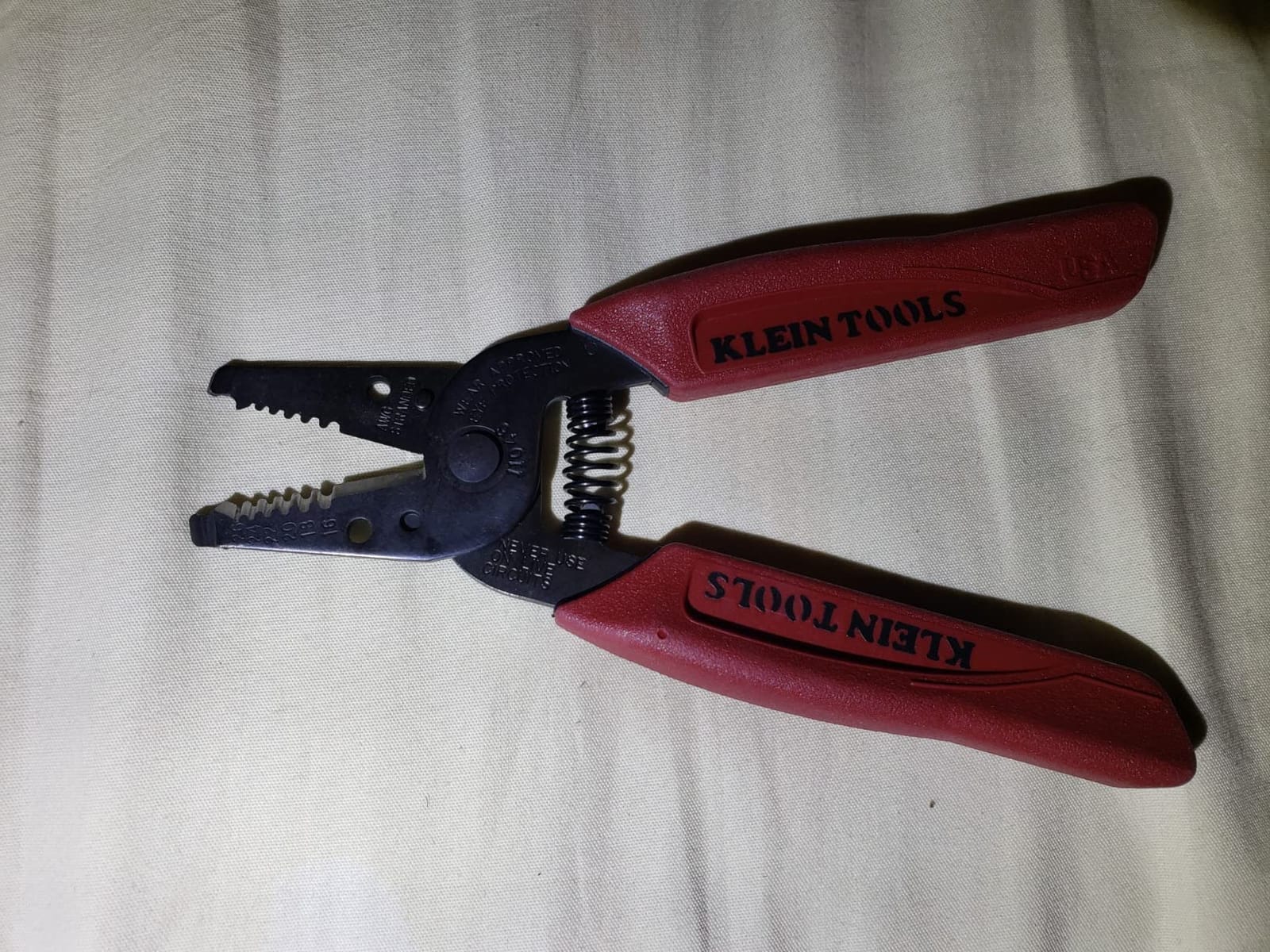
The 11046 is the smaller sibling of the 11057, and the reason to own both is the nose. At 6.25 inches with a narrow profile, it reaches into terminal blocks and enclosures where a full-size stripper simply cannot get in. Low-voltage and audio hobbyists treat it as a go-to for 16-26 AWG stranded work.
Cutting performance matches the bigger tool. The precision ground holes produce clean, consistent stripping on fine conductors, and the blades stay accurate over thousands of cuts rather than softening after a few hundred. The spring action is well weighted for a light frame.
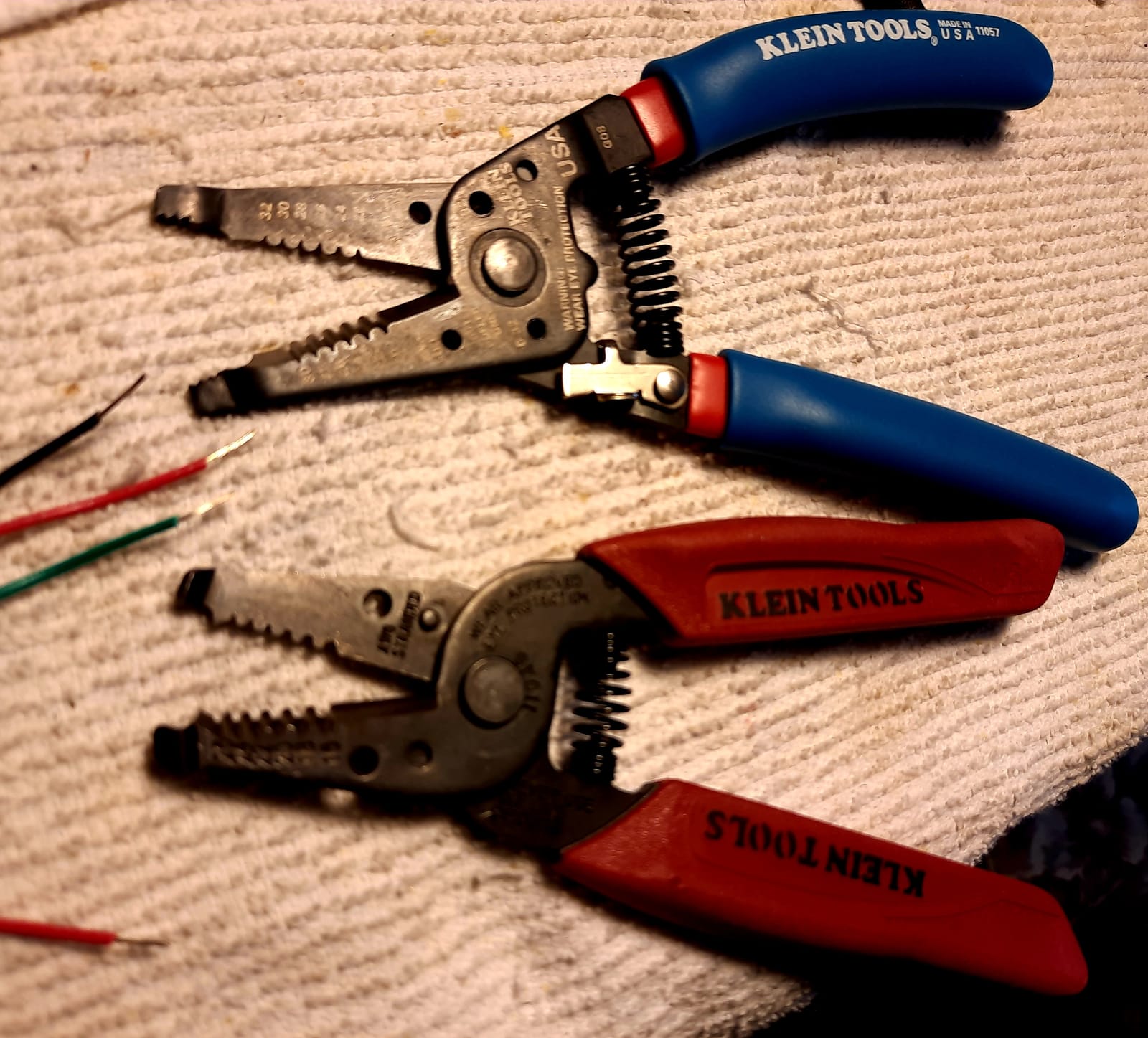
Groupdiy threads about small-gauge strippers keep circling the same point: a tool that bottoms out at 22 AWG solves most of the problem and none of the rest. This is the tool people reach for once the coarse work is done and the fine work starts, and readers there frequently note it is handier for hookup wire than the heavier model.
Gauge markings are printed on both sides, which is genuinely useful because you are rarely holding a stripper at an angle where a one-sided marking is visible. In practice the stamped contrast is still weak, so reading them takes a moment.
Our only real complaint is thickness. At 4.3 ounces with a solid grip, users who prefer a slim, precise instrument find the handles feel chunky over a long session. It is not a problem for short bursts of work.
When this is the right pick
Buy the 11046 when your work happens inside other people’s equipment. Repairs on audio gear, appliance boards and control panels reward a narrow nose more than any other feature.
It is also the right choice if your thinnest wire is 26 AWG, since going thinner than its 16-26 AWG range would mean damaging the conductor.
When to pick something else
If you terminate 28-32 AWG regularly, the gaps between notches become the problem, and a tool with proper fine slots is a better investment. The Hakko CSP-30-1 covers down to 30 AWG at a similar size.
It also stops at 16 AWG at the heavy end, so pair it with the 11057 rather than replacing it if you also run heavier supply wire.
4. KNIPEX 12 62 180 Automatic Wire Stripper – Best for Repeatable Batch Work
- Self-adjusting jaws strip 10-24 AWG without nicking
- Adjustable stop makes batch work fast and consistent
- Light well-balanced frame for long sessions
- Integrated cutter saves tool switching
- Knipex lifetime warranty service widely praised
- Predominantly plastic body feels light for the price
- Enforced minimum strip length of about 5mm
- Struggles at the 10 AWG end with tough nylon wire
Automatic strippers remove the two decisions that cause most mistakes: which notch, and how deep. You put the wire in, squeeze the lever, and the jaws find the right depth on their own. For twenty identical leads, that is the difference between careful work and production.
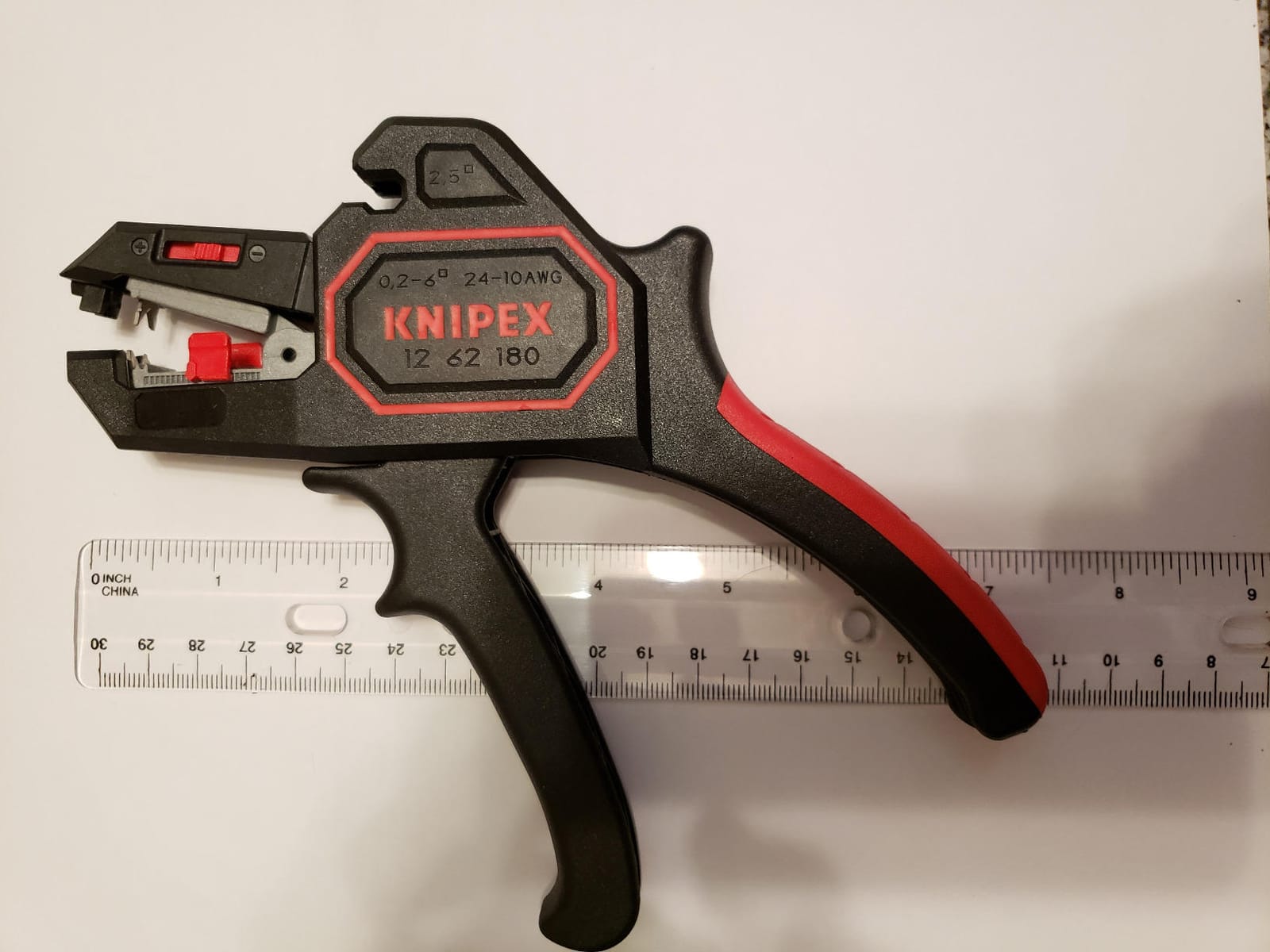
This model handles 10-24 AWG and adds an adjustable stop from short to long strip lengths, so the result is repeatable without a measuring step. Reviewers who use it for terminal work describe it as the fastest and most consistent stripper they own, with the 18-24 AWG range called out as the sweet spot.
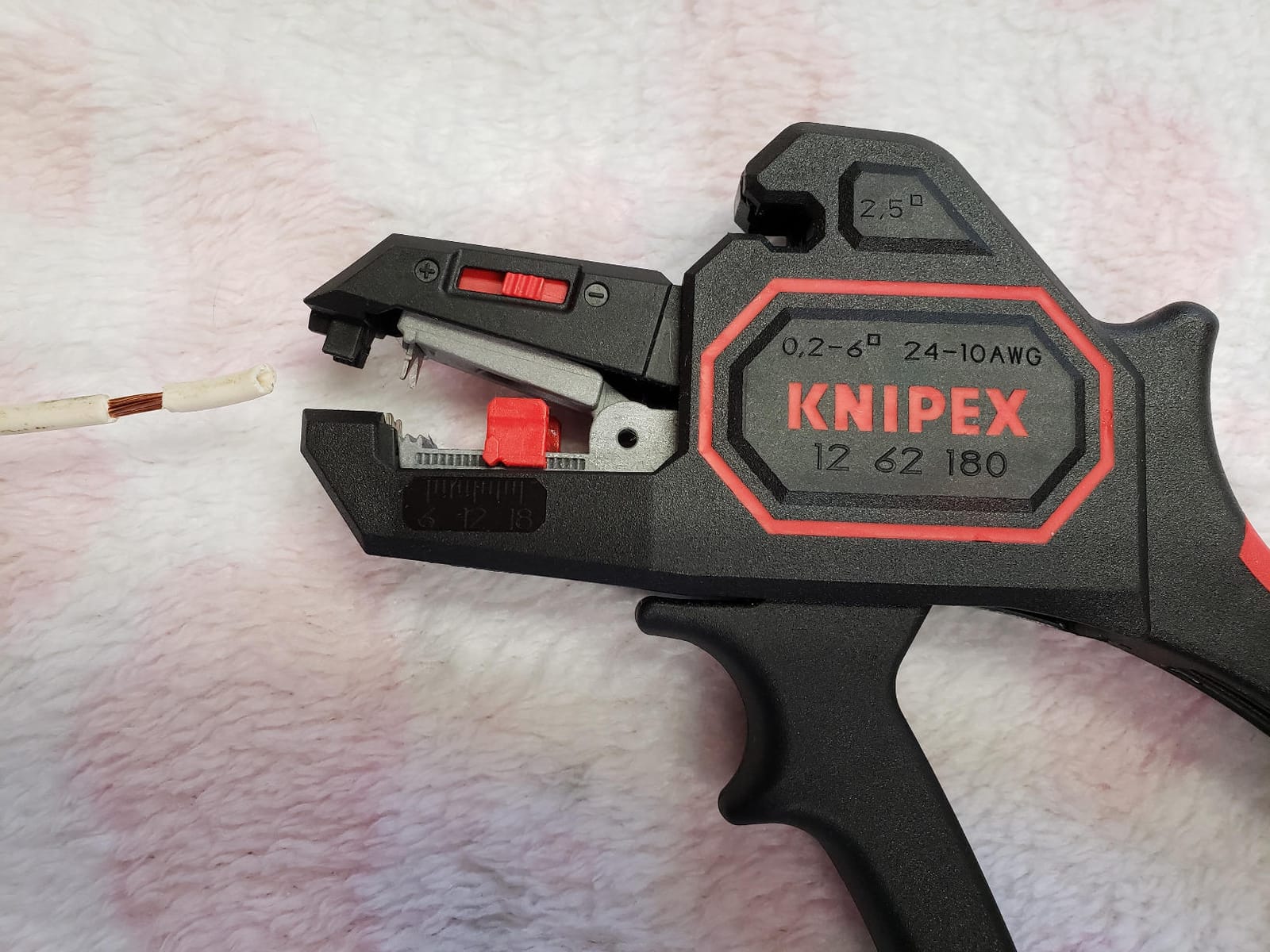
The frame is light and well balanced at 5.6 ounces, so it stays comfortable through a long session, and the one-hand lever operation means you can hold the wire in your other hand and keep your eyes on the work. The integrated cable cutter in the handle saves a tool swap for trimming to length afterwards.
Replaceable stripping blades are a meaningful detail here. When the edge dulls you replace the blade rather than the tool, which is a low-cost fix on a premium-tier product and something not every competitor in this list offers.
Knipex lifetime warranty service comes up repeatedly across forum threads as a reason people keep buying the brand rather than a cheaper automatic. It is a real long-ownership argument for a tool you expect to keep for years.
Where it disappoints is at the bottom of its range. The enforced minimum strip length of roughly 5mm rules out the very short trims some fine work needs, and the 1-star reviews concentrate on hard nylon-jacketed insulation at 10 AWG, where the jaws cannot bite hard enough. The mostly-plastic body also feels light for a tool at this level.
When this is the right pick
Take this tool if you build in batches: terminal blocks, servo leads, drone motors and LED runs. The adjustable stop is worth more than any single-feature upgrade once you are making ten of the same thing.
It suits anyone who finds gauged notches fussy. The whole appeal is removing judgement from the cut.
When to pick something else
It cannot reach micro-thin hookup wire, because 10 AWG is its floor. If your project list is mostly 26-32 AWG signal work, the precision tools further down are a better fit.
Occasional users will find a gauged plier-style stripper faster and cheaper for the job, since the lever takes more effort per cut than a simple squeeze.
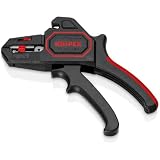
5. Knipex 12 62 180 SB Self-Adjusting Strippers – Best Automatic for Thicker Wire
Knipex Tools 12 62 180 SB Self- Adjusting Insulation Strippers
- Automatic adjustment handles single multiple and fine stranded conductors
- Metal construction feels more robust than plastic-bodied automatics
- Adjustable stop keeps strip length repeatable
- Integrated cutter clears copper and aluminum to 14 AWG
- 10 AWG floor means no micro-thin hookup wire
- Steepest price in this category
- Bulkier profile than a simple precision stripper
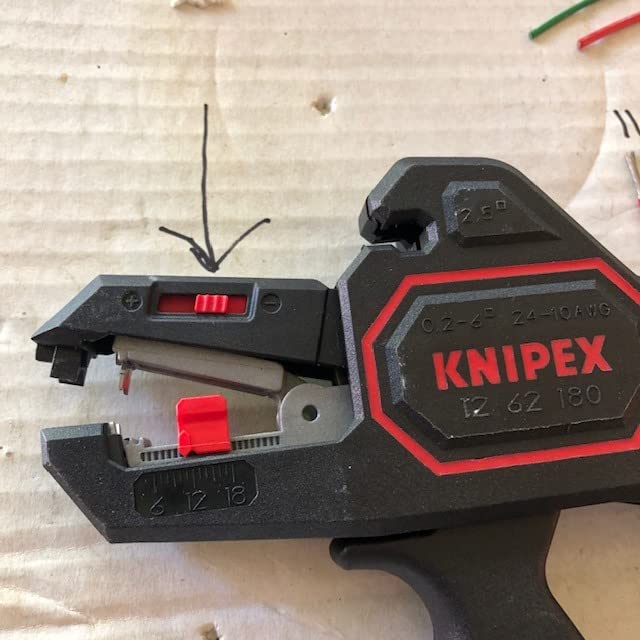
The step up from the plastic-bodied automatic is the frame. This one is metal, and people who have already owned a cheap self-adjusting stripper consistently describe the difference as the moment the tool stopped feeling like a gimmick.
It strips 10-24 AWG automatically, handles single, multiple and fine stranded conductors, and the integrated cutter clears copper and aluminum up to 14 AWG. The adjustable stop keeps strip length repeatable, which is the same batch-work argument that makes automatic strippers worth owning in the first place.
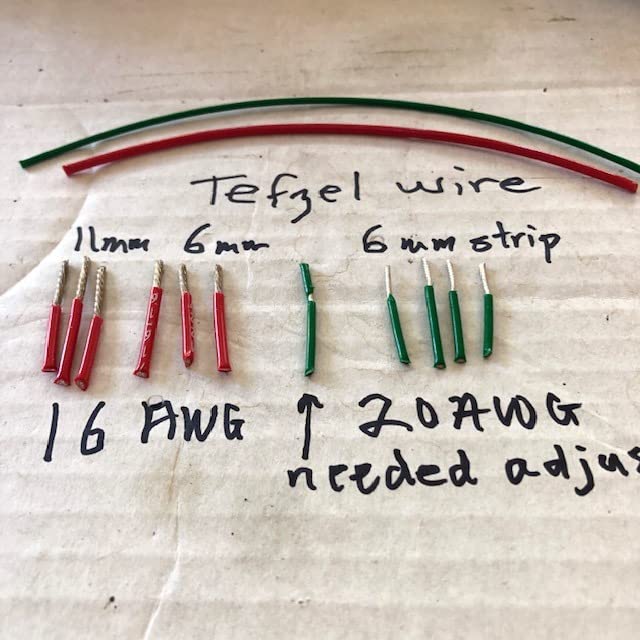
In the forum consensus on this topic, buyers who already own cheap automatic strippers treat a Knipex as the upgrade step: more solid feel, repeatable stops and no conductor damage. Knipex is the most-recommended brand overall in electronics stripper threads, with the 12 12 06, the forged models and the 7-1/4 inch automatic all appearing across different communities.
The mechanics are simple. The jaws grip the wire, the blades score the insulation, and pulling the tool slides the jacket off in one piece. Doing that twenty times in a row without thinking about gauge is the entire appeal.
There is a limit worth stating plainly. A 10 AWG floor means this is not a micro-wire tool, and the review base describes it as such. It also carries the steepest price in this roundup, which is a real consideration when a gauged precision stripper does most of what a hobbyist needs.
The bulkier profile is the other drawback. Compared with a small precision stripper it is not a tool you will enjoy using inside a watch-sized enclosure.
When this is the right pick
One suits hybrid benches where you do some electronics work and also run heavier wiring, because it covers 10-24 AWG and cuts to 14 AWG in a single tool. It is the bridge between the electrician stripper and the precision stripper.
Anyone who has already got a cheap self-adjusting model and found it unsatisfying is the clearest candidate for the upgrade.
When to pick something else
Fine hookup wire is out of reach, so keep a precision stripper alongside it if you build circuit prototypes. For a purely electronics bench, the money is better spent at the fine end of the range.
If you strip only a few wires a month, the price is hard to justify against a manually gauged tool that does the same job on a narrow range.
6. Hakko CSP-30-1 Wire Stripper – Best for 30 AWG Wire
Hakko CHP CSP-30-1 Wire Stripper, 30-20 Gauge Maximum Cutting Capacity
- One of the few affordable tools that genuinely handles 30 AWG
- Strips cleanly with no marring of core strands
- Combines stripper shear and crimper in a compact body
- Rounded rubber grips stay secure on small wire
- Gauge labels on both sides of the jaws
- Embossed gauge numbers are hard to read
- Not intended for heavy residential or commercial wiring
Finding a stripper that genuinely reaches 30 AWG is the most common problem hobbyists raise in electronics forums, and this is one of the few affordable answers. Most tools stop at 22 or 24 AWG, which leaves thin hookup wire to a knife or a second tool.
The Hakko CSP-30-1 covers 30-20 AWG in a 5.4 inch body weighing 1.28 ounces, which is genuinely pocketable. Heat-treated alloy steel holds its edge better than the stamped strippers at similar prices, and the strips came off cleanly with no marring of the core strands in our test.
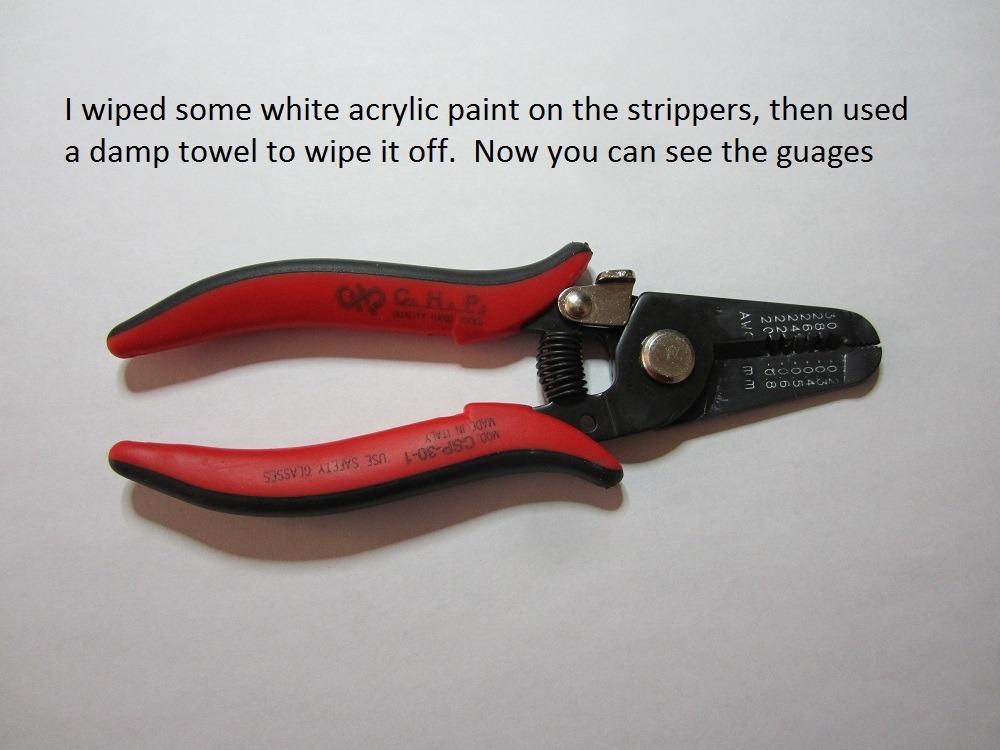
Three functions live in one body: stripper, shear and pliers, with individual crimp notches labelled 20 through 30 AWG for heat-shrink terminals. That is the closest thing to a strip-and-crimp tool in the fine-gauge range, and it is a genuinely useful combination for small builds.
RC, model-rail and appliance-repair hobbyists call this a must-have precisely because true 30 AWG strippers are hard to find cheaply. The soft rounded rubber grips also stay secure on small wire, which is a small thing that matters when the wire is 0.05 mm across.
Hakko-built precision strippers are praised on electronics forums for cutting through insulation with very little force and for not damaging the copper, and this model carries that reputation in the range that hobbyists actually use.
Two honest limitations. The embossed gauge numbers are hard to read without contrast paint, so you are counting notches by feel more than by eye. And it is explicitly not built for heavy residential or commercial wiring, which is a fair trade for a tool this small.
When this is the right pick
Take the CSP-30-1 if your projects involve 30 AWG or 28 AWG hookup wire, small servo leads, or lightweight LED and model wiring. It is the most practical way to cover fine wire without buying a dedicated micro tool.
The built-in crimp notches are a bonus for anyone terminating small heat-shrink terminals without wanting a second tool.
When to pick something else
Below 30 AWG you need a real micro-wire stripper, and this one does not go there. The ENGINEER PA-14 covers stranded wire down to 34 AWG.
If you also need to cut and loop wire regularly, the plier nose is adequate but it is not a replacement for a dedicated cutter-and-bender tool.
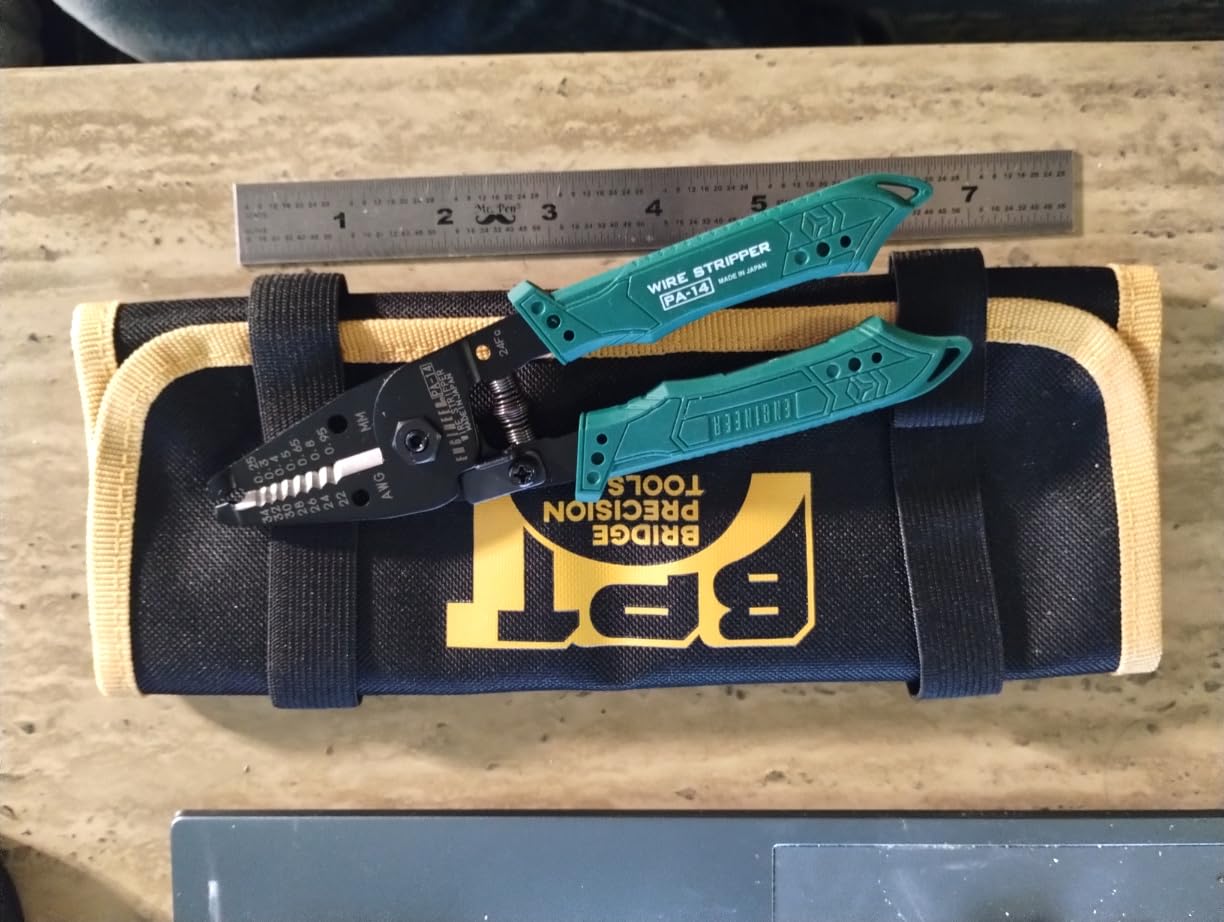
7. ENGINEER PA-14 Precision Wire Stripper – Best for Micro Wire
ENGINEER PA-14 Precision Wire Stripper for Micro-Thin Wire Made in Japan
- Cleanly strips 32-34 AWG signal wire with all strands intact
- Ultra-sharp jaws remove insulation with almost no resistance
- Superb build with a play-free joint and comfortable grips
- Spring pressure tuned for delicate conductors
- Preferred over Klein Blue Point and Ideal for the job
- Smallest slots can sever the wire if fully squeezed
- Narrow hanger opening needs a separate ring
- Costs noticeably more than generic precision strippers
If your work involves the thinnest wire on this list, this is the tool. The PA-14 strips stranded wire from 34 down to 22 AWG and solid wire from 32 to 20 AWG, which is the widest fine-gauge coverage in the roundup by a distance.
The distinguishing feature is the round finishing edge. Rather than leaving a flat blade face that can catch and score the conductor, the edge is finished round, and owners consistently report stripping with all strands intact. Users working on tonearm rewire, model lighting, SMD LED harnesses and slim network cable treat it as the only tool that does not damage the conductor.
High carbon steel alloy jaws stay sharp and need almost no force to close, so delicate conductors are not under stress while you work. The joint is play-free and the thermoplastic rubber grips are oil-resistant, which matters on a bench where flux and solder residue are normal.
One specification detail catches people out. The scale on the right-hand side reads conductor diameter in millimetres rather than AWG cross-section, so the numbers are not the ones on your wire spool. Know that before you assume the tool is wrong.
Reviewers who have compared it directly against Klein, Blue Point and Ideal tools for the same job tend to end up here, which is the strongest endorsement a precision tool in this price range can receive.
The complaints are consistent and worth weighing. The smallest slots can close far enough to sever the wire if you fully squeeze, so technique matters more here than with any other tool in this list. The hanger opening is narrow, meaning a separate ring is needed to hang it up, and it costs noticeably more than a generic precision stripper.
When this is the right pick
This is the answer to the most-asked question in electronics forums: what handles very small gauge wire. Anything from 26 AWG down to 34 AWG stranded belongs here, and nothing else in this list covers that range.
It also suits anyone who has damaged wire with a larger tool and decided to solve the problem properly rather than work around it.
When to pick something else
If you only need 22 AWG and coarser, this is more tool than the job requires. The DOWELL or the Klein 11057 cover that band with less fuss and less risk from over-squeezing.
It also does not crimp, so JST and DF connector work still needs a dedicated crimper with the correct die for the terminal.
8. haisstronica 3-in-1 Self-Adjusting Stripper – Best Multi-Tool
- Self-adjusting mechanism covers AWG 10-24 in one tool
- Heat-treated alloy steel blades hold an edge
- Rubber handle stays comfortable during repetitive work
- Covers cutting and crimping so it replaces several tools
- Handles copper coax hot and aluminum wire
- 10 AWG floor means no micro-thin hookup wire
- Heavier body than a simple precision stripper
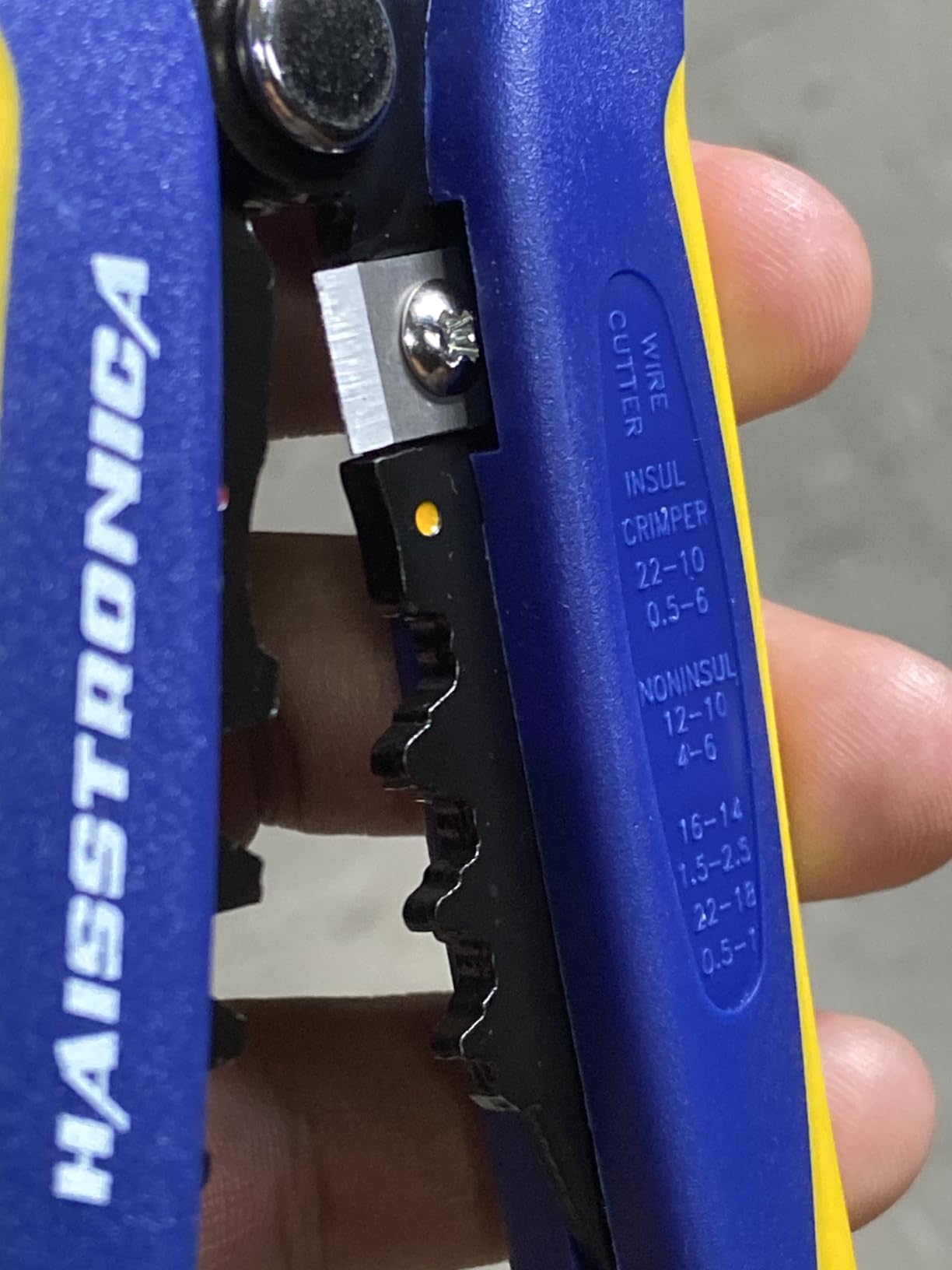
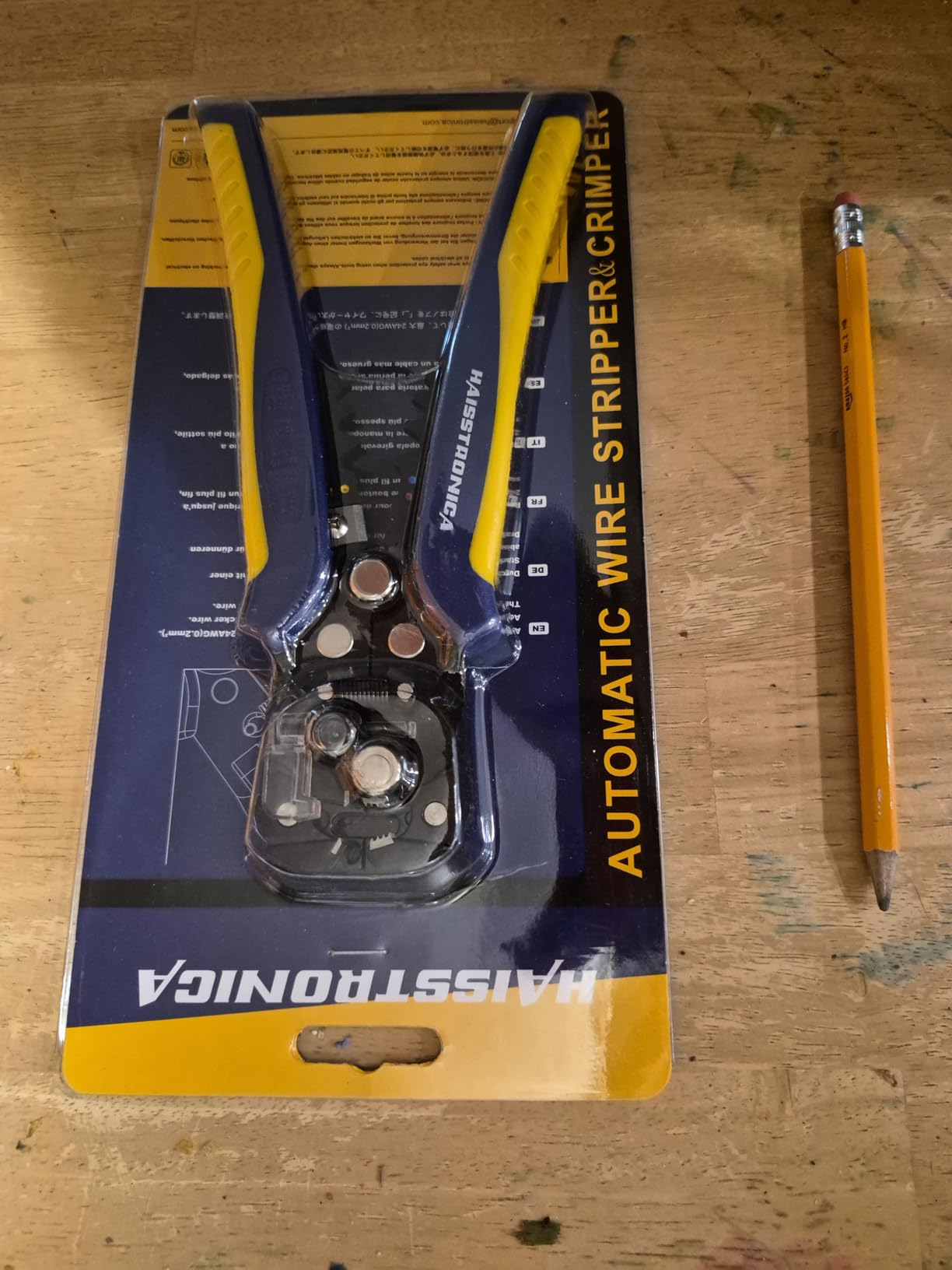
Three functions in one body: stripper, cutter and crimper. The self-adjusting mechanism covers AWG 10-24 without resizing, and the heat-treated black-oxide alloy steel blades hold an edge better than the unbranded multi-tools at similar prices.
It handles copper, cable, coaxial, hot and aluminum wire, and the strip length is adjustable, which is unusual for a tool at this level. The rubber handle keeps the grip workable through repetitive work rather than becoming fatiguing after twenty minutes.
With 3930 ratings and a steady four-plus average, this is one of the most reviewed tools in the group, and the reason it holds that volume is simple value. For someone who wants to strip, cut and terminate from one purchase, it covers more ground than most single-purpose tools without asking you to think about the combination.
The catch is where it sits in the range. Its 10 AWG floor puts it at the wrong end of the scale for fine electronics wire, which is the honest limit of a general-purpose design. It is a bench tool, not a precision instrument.
It is also the heaviest body here, which makes it less pleasant to use on micro-thin wire where control matters more than the extra functions.
On an electronics bench you may not actually use two of those three functions often. But for a mixed electrical and hobby toolkit, having them in one place is the point.
When this is the right pick
Choose this one if you want a single tool that covers 10-24 AWG plus cutting and crimping, and your wire is not thinner than 22 AWG. It is a good fit for home electrical work that occasionally touches on electronics.
The three functions also make it a reasonable gift or starter tool, because it will not be immediately out of depth on whatever wire appears next.
When to pick something else
Fine hookup wire at 26 AWG and below is out of reach, so keep a precision stripper as well if you prototype on breadboards.
The crimp function is a general-purpose terminal crimper rather than a precision JST or DF die, so a dedicated crimper is still the right tool for small connectors.
9. IRWIN Vise-Grip Wire Stripper – Best General-Purpose Option
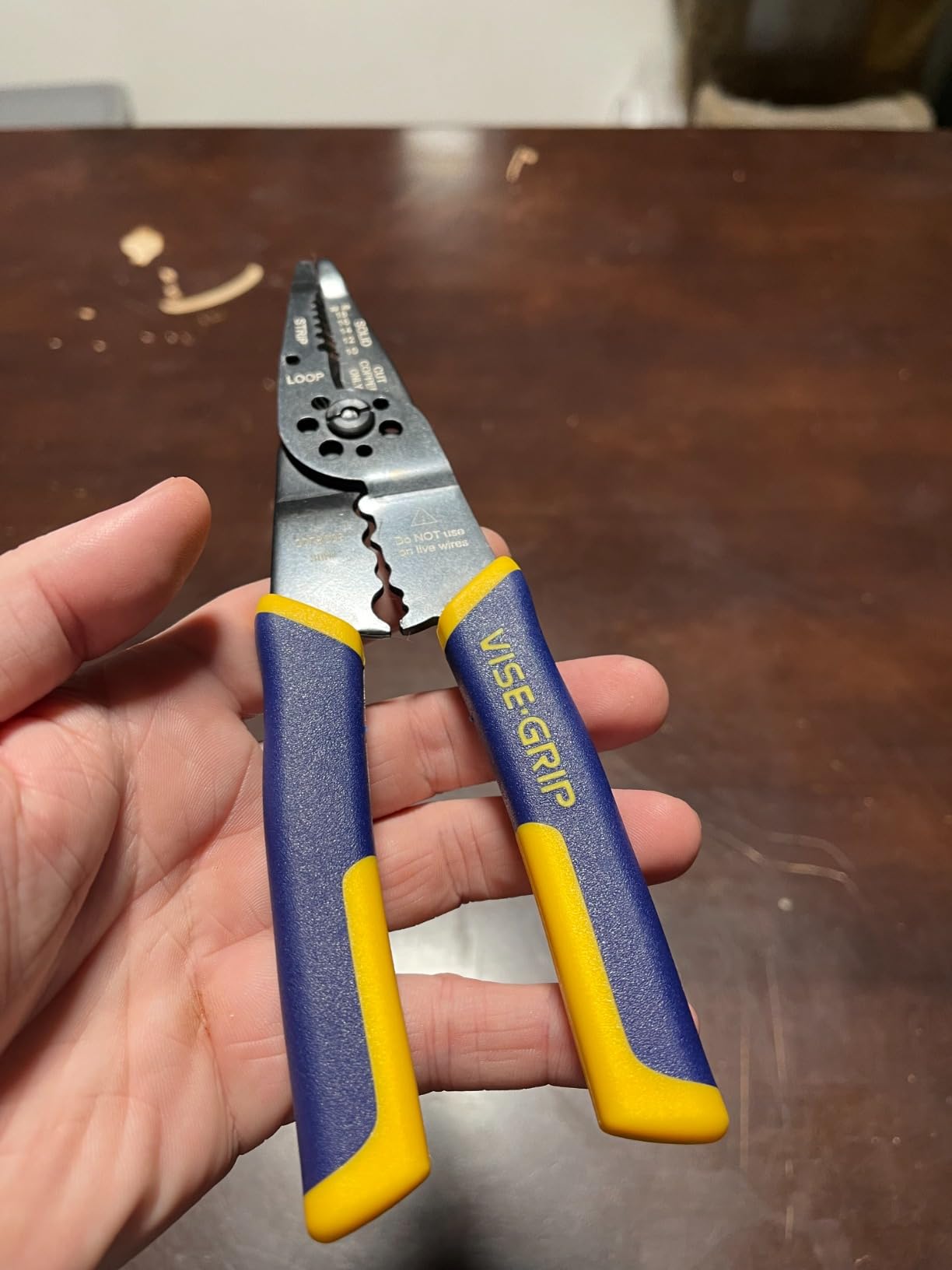
IRWIN VISE-GRIP Wire Stripping Tool / Wire Cutter, 8 inch, Cuts 10-22 AWG, ProTouch Grip (2078309)
- Largest review base at over 21000 ratings
- Induction hardened edge holds sharpness
- Plier nose doubles for pulling and looping wire
- Bolt cutter and terminal crimper built in
- ProTouch grip stays comfortable over long jobs
- 22 AWG floor is too coarse for most electronics hookup wire
- Heavier plier-style body than precision strippers
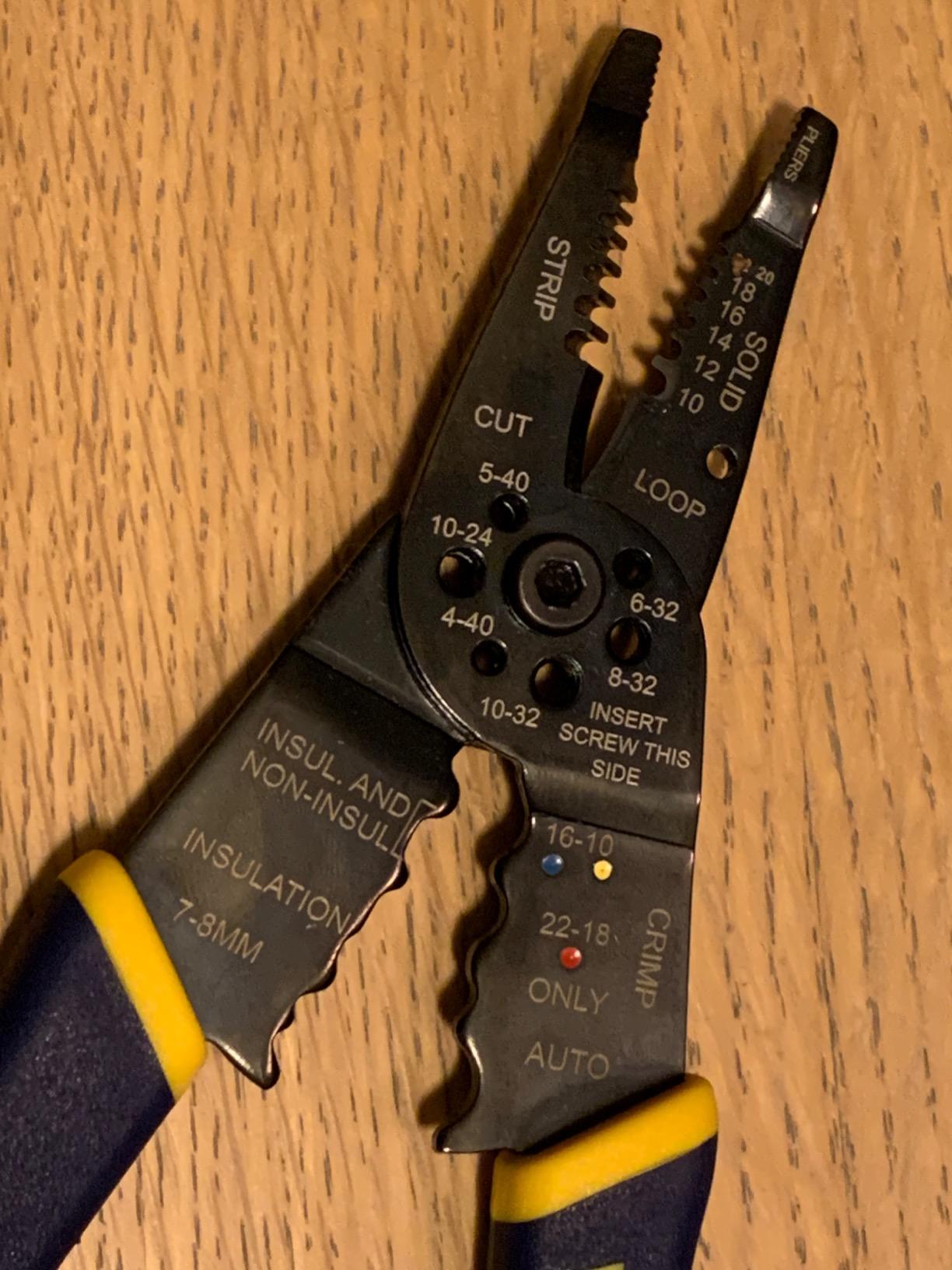
With more than 21000 ratings and an average above 4.5, this is the most proven tool in the roundup, and its near-universally positive feedback tells you something useful about buying mainstream over specialist. The induction hardened cutting edge stays sharp well past the point where cheaper strippers dull.
It is a plier-style tool, so it strips 10-22 AWG, cuts, crimps insulated and non-insulated terminals, and includes a bolt cutter that leaves a clean lead thread. The plier nose doubles for pulling and looping wire, and the ProTouch grip stays comfortable over long jobs.
For anyone who works across both electrical and electronics projects, that combination is hard to argue with. A tool that handles 10-22 AWG plus cutting and terminating in one hand removes a real amount of tool-swapping from a mixed workload.
The limitation for this article is the range. A 22 AWG floor is too coarse for most electronics hookup wire, and this is the exact failure point hobbyists describe when they outgrow a general stripper. Several forum users name it or similar self-adjusting models and then note they do not go smaller than 22 AWG.
It is also a heavier plier-style body than any fine-gauge precision stripper here, which means less precision at the cut and more hand fatigue over a long session.
Its value is as a complement rather than a replacement. Keeping one in the toolbox for supply and panel work frees your precision tool for the wire that actually needs it.
When this is the right pick
This suits a mixed toolkit where electrical work outnumbers electronics work. If most of your stripping is 18 AWG and coarser, the extra capability is worth more than any specialist tool.
The huge review base also makes it the lowest-risk purchase for a beginner, since you will find plenty of long-term ownership reports about how it ages.
When to pick something else
Anything involving hookup wire thinner than 22 AWG needs a dedicated precision stripper, full stop. This tool will not get you there.
For repeated precision work it is the wrong instrument, because a plier-style jaw gives you far less control over strip depth than a gauged or automatic design.
10. haisstronica Wire Stripper and Crimper Set – Best Strip-and-Crimp Combination
haisstronica Wire Stripper and Crimper Set, AWG 26-10 for Heat Shrink
- Bundles a stripper and a ratcheting crimper which most kits do not
- Sharp adjustable blades give clean even removal
- Non-slip handles reduce hand fatigue on long jobs
- Covers AWG 24-10 stripping and 26-10 heat-shrink crimping
- Crimps comparable to dedicated tools once the knob is set
- Crimper needs an adjustment-knob change between gauges
- Crimper heads are not sold as separate replacement parts
- Bulky for fine bench work on micro-thin wire
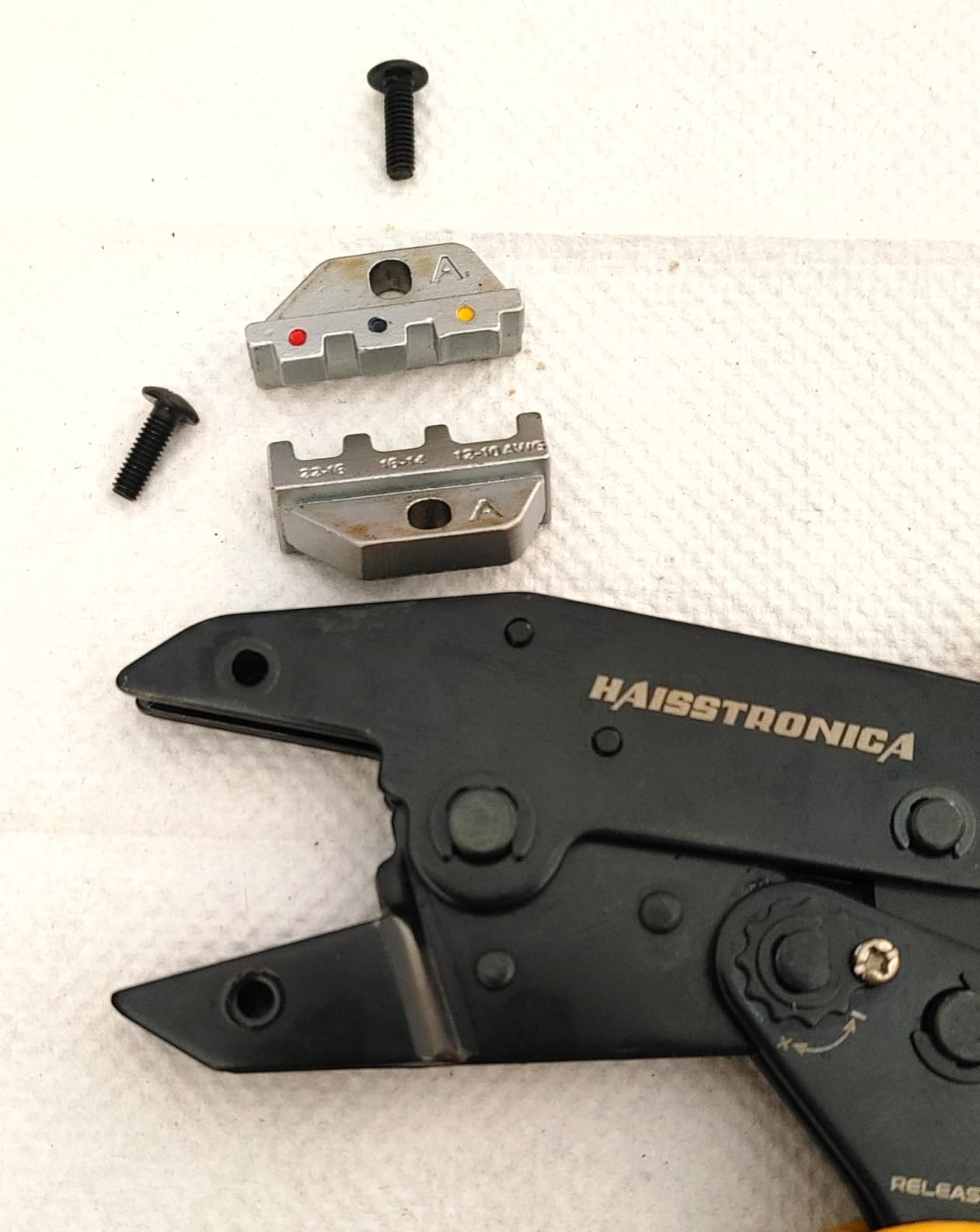
Almost every stripper in this list assumes you already own a crimper. This set does not, which is why it earns a place. You get a wire stripper covering AWG 24-10 plus a ratcheting crimper covering AWG 26-10 for heat-shrink terminals, and the crimper is a genuine ratchet design rather than a plier with a notch cut in it.
The ratchet mechanism with separate gauge controls and adjustable pressure is what separates it from a cheap bundle. Ratcheting crimps hold the terminal correctly while the jaws close, and owners report crimps comparable to dedicated crimpers once the adjustment knob is set for the right die.
The stripper half uses sharp adjustable blades for even removal of insulation, and the non-slip ergonomic handles cut hand fatigue on long wiring jobs, which is the kind of detail you only notice on the twentieth wire of an evening.
Builders doing mixed strip-and-crimp work rate this as the most useful single purchase for a hobby bench, because the combination removes the decision of which two tools to own. The quick-release mechanism on the crimper is a small convenience that adds up when you are changing terminals often.
There is a ramp-up cost. The crimper needs an adjustment-knob setting change between gauges, and until you learn it you will produce bad crimps rather than good ones. That is a real learning curve for a first-time builder and worth knowing before you blame the tool.
Second, the crimper heads are not sold as separate replacement parts, so a damaged head means replacing the tool. Third, and most important for this audience, the set is bulky for fine bench work on micro-thin wire. The 24 AWG floor tells you where it belongs, and that is general wiring rather than precision electronics.
When this is the right pick
Choose this set if your projects need both a stripper and a crimper and you are still building a bench. It removes the most common purchase regret in this category, which is buying an automatic stripper and then finding out it does not terminate anything.
It is also the practical choice for heat-shrink terminal work across a range of gauges, where the ratchet mechanism is doing real work.
When to pick something else
Micro-thin wire is out of reach, so fine signal work still needs a precision stripper such as the ENGINEER PA-14 alongside it.
For JST, DF and DuPont connectors, check that the crimp die matches your terminal before buying. A generic heat-shrink crimper is not automatically the right tool for small plastic connector housings.
How to Choose a Wire Stripper for Electronics Hobbyists
Start with the wire, not the tool. Lay out every gauge you expect to terminate and find the thinnest one, because that is the number that eliminates options fastest. A stripper that handles 20 AWG beautifully and bottoms out at 24 AWG is useless if your LED wiring is 30 AWG.
For most hobby work, the band that matters is 22 to 32 AWG. Anything you buy must reach at least 30 AWG if you use fine hookup wire, and the honest test is whether the tool covers the range with proper slots rather than one oversized notch that you learn to guess with.
Next, pick a tool type that matches how you work. Gauged strippers have fixed notches and are the most precise, but you choose the notch each time. Adjustable strippers use a thumb screw, which reviewers describe as fiddly, with the usual failure being either too little insulation removed or the inner strands cut. Automatic strippers self-adjust and win on repeat work. Precision jaws like the PA-14 are for micro wire, where control beats speed.
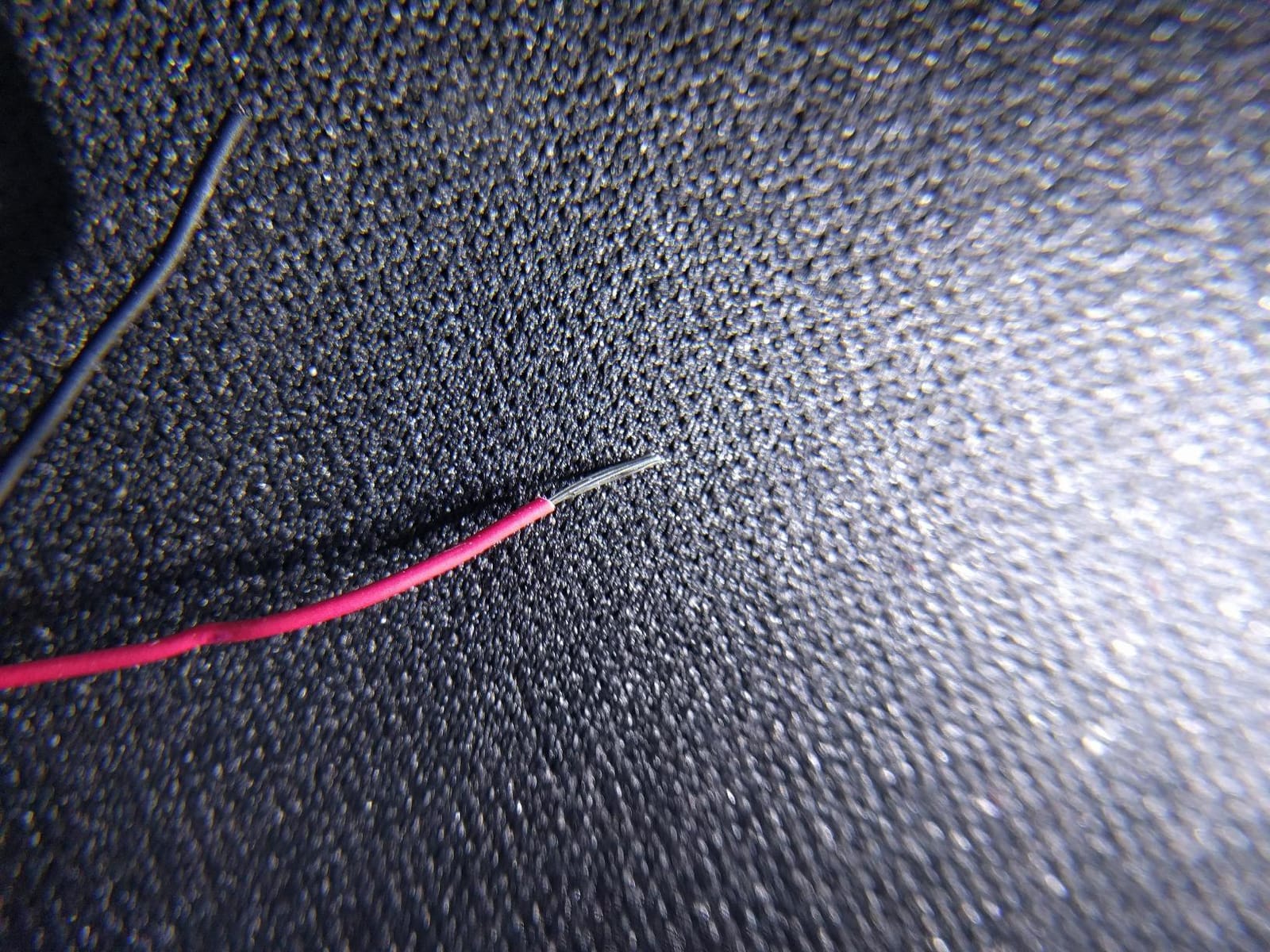
For stripping technique on small electronic wire, the sequence matters. Measure your strip length first, select the notch that matches the gauge rather than guessing, squeeze to score the jacket without cutting through, then pull the tool toward the coil of waste insulation so the jacket slides off in one piece. Cutting away from the coil tears rather than strips. Finish by inspecting the conductor under magnification before you move on.
That inspection step is the one most people skip and most regret skipping. A British electronics trainer described the historical standard for the job as stripping a set length, then checking under a strong magnifying glass for any notch or scrape mark, precisely because nicked wires crack and fail later. Our hobbyist microscope guide covers affordable options for that check.
Decide separately about crimping. A recurring purchase regret among hobbyists is assuming that a stripper also terminates connectors, and most of the tools above do not crimp. For JST, DF and DuPont housings you want a crimper with the matching die, because a generic heat-shrink crimper is a different tool. If you want both functions in one place, the strip-and-crimp set in this roundup covers it, at 24 AWG and coarser.
For enameled and litz wire, mechanical stripping is close to hopeless because the coating is a varnish that will not part cleanly. A thermal stripper removes enamel with controlled heat and leaves the conductor intact, and forum commenters describe it as the best method for the job, even while noting it has gone out of fashion. Sanding or scraping works but risks thinning the wire, so it is a last resort.
Finally, think about comfort and spring return. Over a long session, a tool with a weak return spring causes wrist fatigue, and a tool without a proper grip coating gets slippery. If you already own one stripper and find yourself reaching for a knife, the answer is usually not better technique but a tool with finer notches.
One last piece of advice from the forums that we agree with: owning two or three strippers is normal, not a sign of a bad purchase. Most owners keep a gauged fine-gauge tool for accuracy and an automatic or multi-tool for speed, and neither replaces the other.
Frequently Asked Questions
What AWG wire stripper do I need for electronics?
For most electronics hobby work you need a precision stripper that covers 22 to 32 AWG. Anything with a 22 AWG floor will handle most hookup wire, but check whether it reaches 30 AWG if you use fine LED or signal wiring, because that is where most general-purpose strippers stop.
How do I strip small electronic wire without damaging it?
Measure the strip length first, choose the gauge notch that matches the wire rather than guessing, squeeze only enough to score the insulation, and pull the tool toward the coil of waste insulation so the jacket slides off in one piece. Inspect the conductor under magnification before moving on.
What are the most common wire stripping mistakes?
The usual errors are using the wrong gauge notch, cutting away from the coil so the insulation tears, stripping too much length, checking only large wire and assuming it looks fine, assuming the tool also crimps, and working with dull blades. Each one is cheap to avoid and expensive to discover later.
What is the best way to strip very thin wire?
Use a tool explicitly rated below 26 AWG rather than forcing a larger notch onto micro wire. A precision stripper with a round finishing edge is the safest choice, because a flat blade face can catch and score the conductor. For enameled wire, use controlled heat rather than a mechanical cut.
Why is my wire stripper nicking the conductor?
Usually it is a wrong gauge notch, a dull blade, or too much squeezing. Check the stated AWG range for the tool, confirm the notch matches the wire, and inspect the blade edge under magnification. If the notches are worn, the tool has reached the end of its service life and needs replacing or new blades.
Do I need a separate crimper for JST and DF connectors?
Yes, in most cases. Most precision strippers in this roundup do not crimp, and a generic heat-shrink crimper is a different tool from one with the correct die for a JST, DF or DuPont housing. Buy the crimper that matches your terminal type rather than relying on a multi-tool crimp function.
Final Verdict on the Best Wire Strippers for Electronics Hobbyists
The Klein Tools 11057 is our pick as the best wire strippers for electronics hobbyists overall, because it covers 20-30 AWG solid and 22-32 AWG stranded with precision ground holes that do not nick the conductor, and it stays accurate across hundreds of cuts.
Budget matters, and the DOWELL does the 22-30 AWG job cleanly for very little. If your wire goes thinner, the ENGINEER PA-14 is the only tool here that reaches 34 AWG stranded, and the Hakko CSP-30-1 is the affordable answer for 30 AWG. For repeat work, the Knipex automatic with its adjustable stop is faster and more consistent than anything manual.
Whatever you choose, the habit that protects your connections is the cheapest one: look at the stripped conductor under magnification before you solder or crimp it. The tool decides most of the outcome, and that inspection catches the rest. Once the bench is set up, our rotary tool guide for hobbyists covers the next job in the enclosure.