
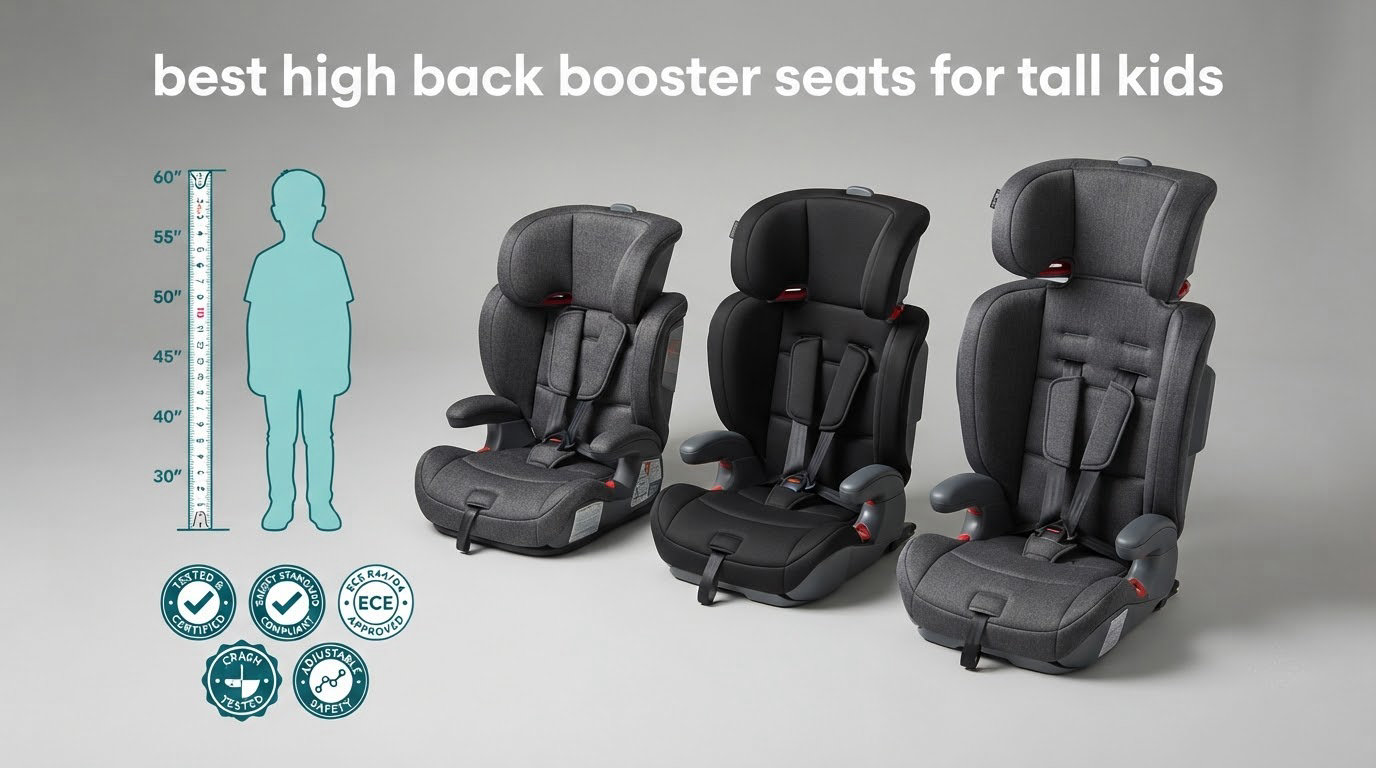
Most parents shopping for a booster for a tall child start with the wrong number. They look at the printed height limit on the box, see 57 inches, and assume a child who is 58 inches has simply outgrown boosters. That single spec is the least useful figure on the box, and it is the reason so many tall kids cycle through seat after seat and still end up sitting with a badly fitted seat belt.
What actually decides whether a booster fits a tall child is torso length and the height of the top shoulder belt guide. A child needs roughly 10 inches of torso clearance above the seat pan, and the shoulder belt guide has to land at or above the midpoint of the shoulder. When the guide sits below the shoulder, the belt rides into the neck and the lap belt drifts up onto the belly, which is the most common and most dangerous booster misuse in the field. Our guide to the best high back booster seats for tall kids organises every seat around those two measurements first, then the height ceiling, then everything else.
We compared eight high back and convertible boosters, checking the published height and weight limits, the headrest range, the belt path, the connector type and the real-world owner feedback. What we found is a split market: a cluster of seats that top out at 57 inches, and a smaller group that reaches 60 to 63 inches and 120 pounds. The difference matters enormously if your child is already 56 inches tall at age seven.
One note before we start. A booster is never a substitute for a forward-facing five-point harness seat. If your child still fits their harness within the seat’s own weight and height limits, keep them in it. We cover when that applies in a section below, because for tall three to five year olds it is often the correct answer rather than a booster.
Table of Contents
Top 3 Picks: Best High Back Booster Seats for Tall Kids in 2026
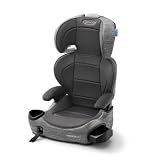
Graco TurboBooster 2.0 LX
- Rated to 57 in and 100 lb
- Converts to a backless booster
- One-hand front-adjust LATCH
- Built-in recline

Chicco MyFit
- 5-point harness to 65 lb
- Booster mode to 54 in
- 9-position headrest
- Fits three across

Britax Skyline
- Rated to 63 in and 120 lb
- Converts to a backless booster
- 10-position headrest
- Color-coded belt guides
Booster Seat Specs for Tall Kids at a Glance
Every limit below is the manufacturer’s published figure. Where a seat lists two modes, we show both. Height is given in inches and weight in pounds so you can match a child to a seat without converting anything.
| Product | Specifications | Action |
|---|---|---|
| Graco TurboBooster 2.0 LX |
|
Check Latest Price |
| Chicco MyFit |
|
Check Latest Price |
 Evenflo Maestro Sport Evenflo Maestro Sport |
|
Check Latest Price |
| Britax Skyline |
|
Check Latest Price |
 Diono Cambria 2 XL Diono Cambria 2 XL |
|
Check Latest Price |
 Diono Everett NXT Diono Everett NXT |
|
Check Latest Price |
 Safety 1st Grow and Go Safety 1st Grow and Go |
|
Check Latest Price |
 UPPAbaby Alta V2 UPPAbaby Alta V2 |
|
Check Latest Price |
Best High Back Booster Seats for Tall Kids: The 8 We Tested
Our single best pick is the Graco TurboBooster 2.0 LX. It is not the tallest seat on this list, and it does not have the highest weight limit. It wins because it does the ordinary things exceptionally well: a 57 inch and 100 pound ceiling, a genuine high-back to backless conversion, a built-in recline that matters enormously for a long-torso child who falls asleep, and the deepest body of owner feedback of any booster in this group. For a family that wants one seat that works, converts and can be carried between two cars, it is hard to argue with.
Below that, the choices split cleanly by child shape. If your child is at the very top of the height range, the Britax Skyline reaches 63 inches and 120 pounds and is the only seat here that does. If your child is tall and wide rather than tall and slim, the Diono Cambria 2 XL gives up room in a way nothing else here does. And if you are moving between vehicles constantly, the rigid LATCH connectors on the Diono Everett NXT and the UPPAbaby Alta V2 change the job from annoying to routine.
1. Graco TurboBooster 2.0 LX: The Best High Back Booster Seat Overall for Tall Kids
Graco TurboBooster 2.0 LX Highback & Backless Booster Car Seat, Gannon
- Rated to 57 in and 100 lb with a real high-back to backless conversion
- Built-in recline gives sleeping kids head support on long drives
- Very light to move between two cars
- Retractable cup holders fit water bottles
- Keeps the shoulder belt off the child's neck
- Padding is thin for chunkier children
- Armrest shape means younger kids still need help buckling
- Light shell can shift in the vehicle when empty
This is the seat we recommend to most families whose child is somewhere around 50 to 55 inches. The published limit is 40 to 100 pounds and up to 57 inches, for ages four to ten, and it converts from a high back to a backless booster without tools or extra hardware.
What sold us is the recline. High back boosters with a fixed upright shell are fine for a 20 minute school run, but a tall child with a long torso who falls asleep at 20 minutes in a rigid seat ends up folded forward over the lap belt. The Graco’s built-in recline solves that, and it is the single feature owners bring up most often in reviews.
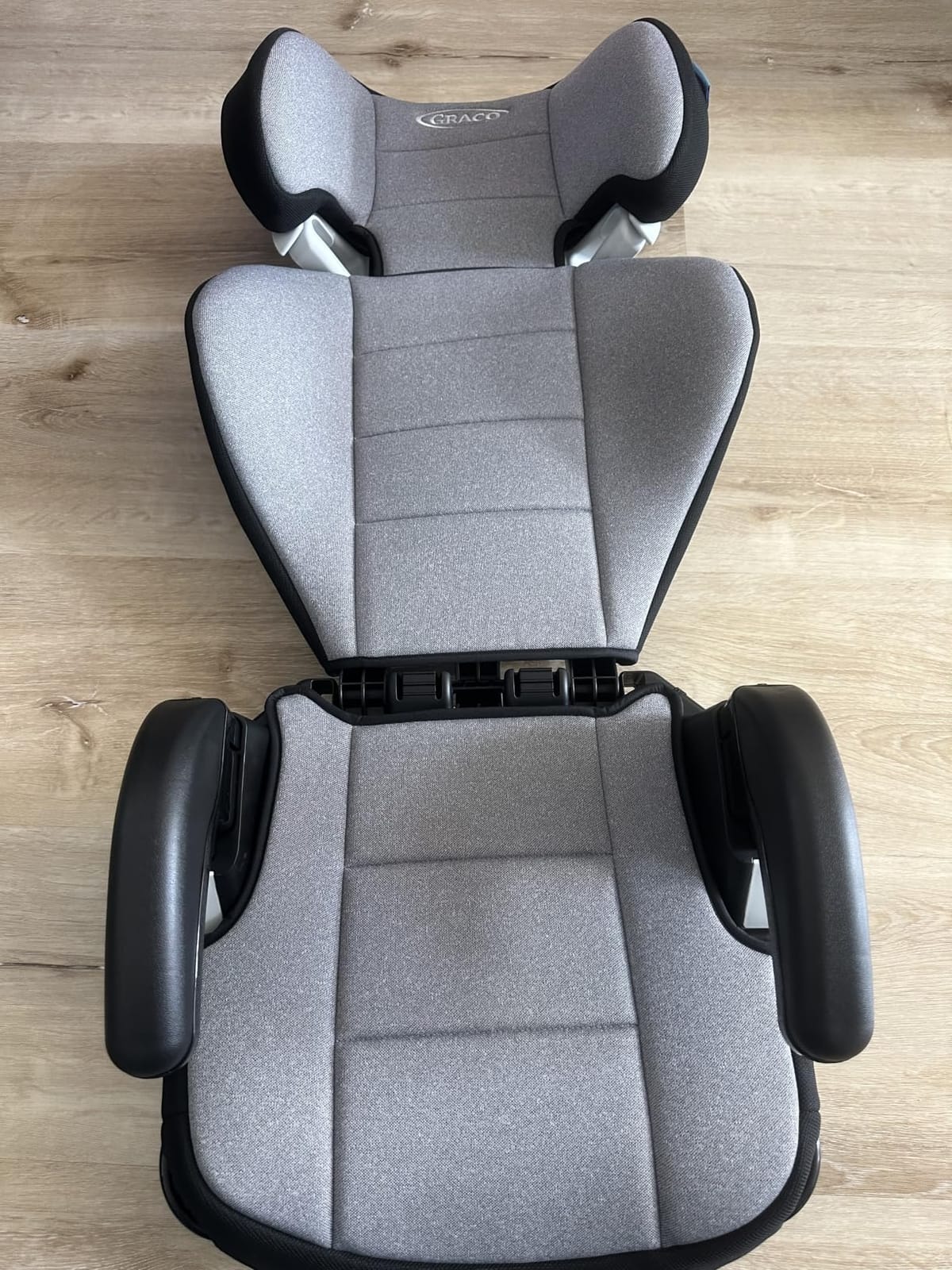
The Graco ProtectPlus system covers frontal, rear and rollover crashes, and the headrest adjusts through its full range one-handed. Installation is a one-hand front-adjust LATCH system, which matters if you are swapping the seat between the back seats of two cars on a carpool run.
The honest limitation for a tall kid is the armrest geometry. Parents report that younger children still need help getting the vehicle belt through the guides, and the same armrest design that keeps the shoulder belt off the neck is what limits independent buckling. A seven or eight year old will not notice this. A five year old will complain about it every single time.
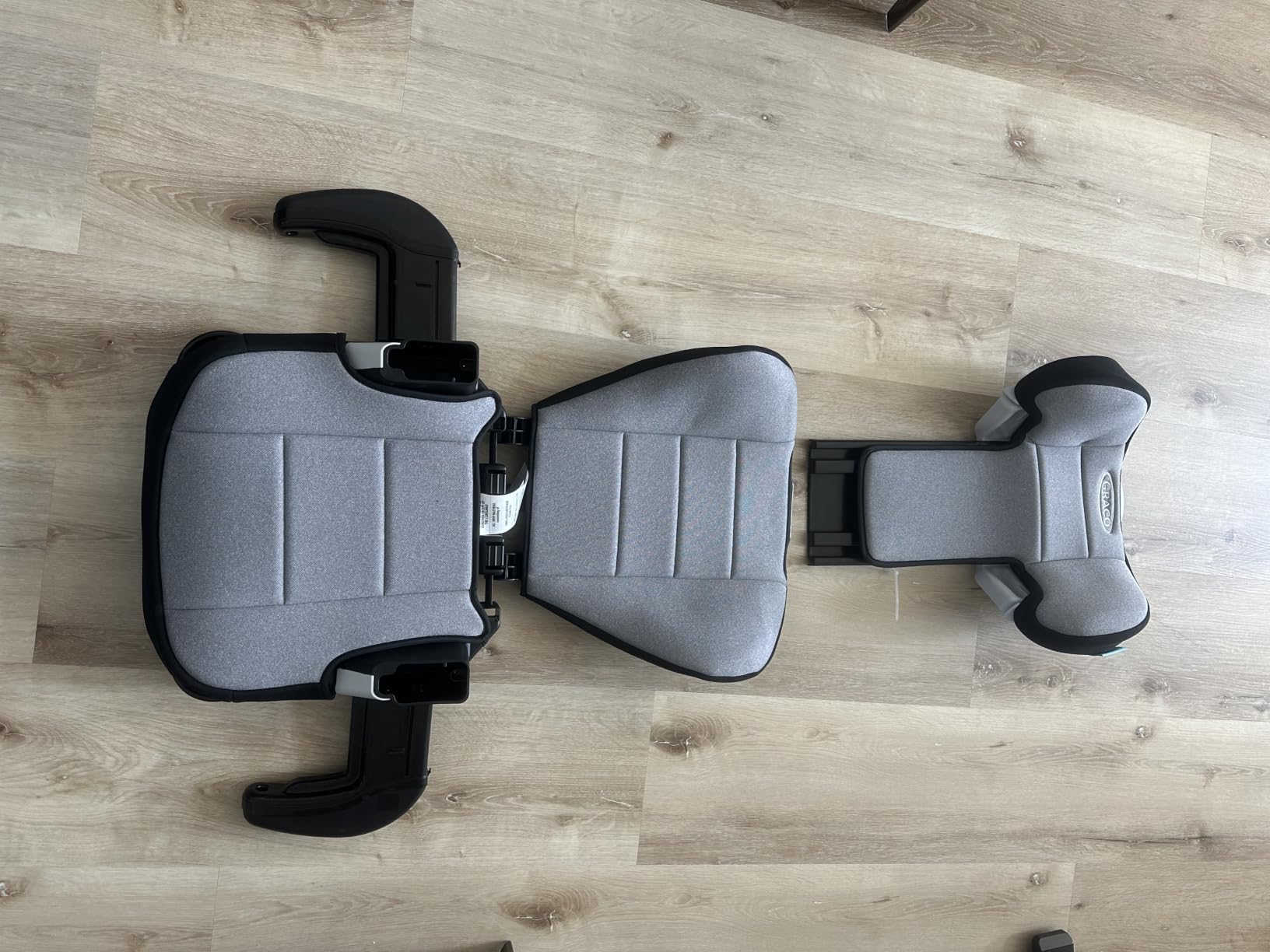
How the Graco TurboBooster 2.0 LX fits a tall child
For a child between 52 and 56 inches, this seat fits well and the top shoulder belt guide lands in the right zone once the headrest is raised to its upper positions. It stays in the running until the child approaches 57 inches, at which point you are at the ceiling and should be planning the next seat rather than fighting the current one.
Reviewers also flag that the padding is thinner than expected, and children who are tall and broad rather than tall and slim sometimes find the seat pan narrow. If your child is both, read the Diono Cambria 2 XL section before you commit.
Where the Graco TurboBooster 2.0 LX falls short
The 57 inch ceiling is the hard limit. If your child is already 56 inches, you are buying roughly a year of use at best, and the recurring complaint from parents of tall kids is exactly that: burning through a booster years before they can pass the five-step test.
It is also the lightest-moving seat here, which is a genuine benefit, but the very light shell can slide around in the vehicle when the booster is unoccupied. Some families tighten the seat belt through the booster when parked to settle it.
2. Chicco MyFit: Best Rated Booster With a Built-In 5-Point Harness
- 4.8 stars across more than 5000 reviews
- Converts from a 5-point harness to a belt-positioning booster
- Advanced Side Impact Protection meeting FMVSS 213a
- 9-position headrest and 4-position recline grow with the child
- Install aids with bubble levels and a leveling system
- Listed at 25 lb
- the heaviest seat here
- Booster mode stops at 54 in
- not 57 or 63 in
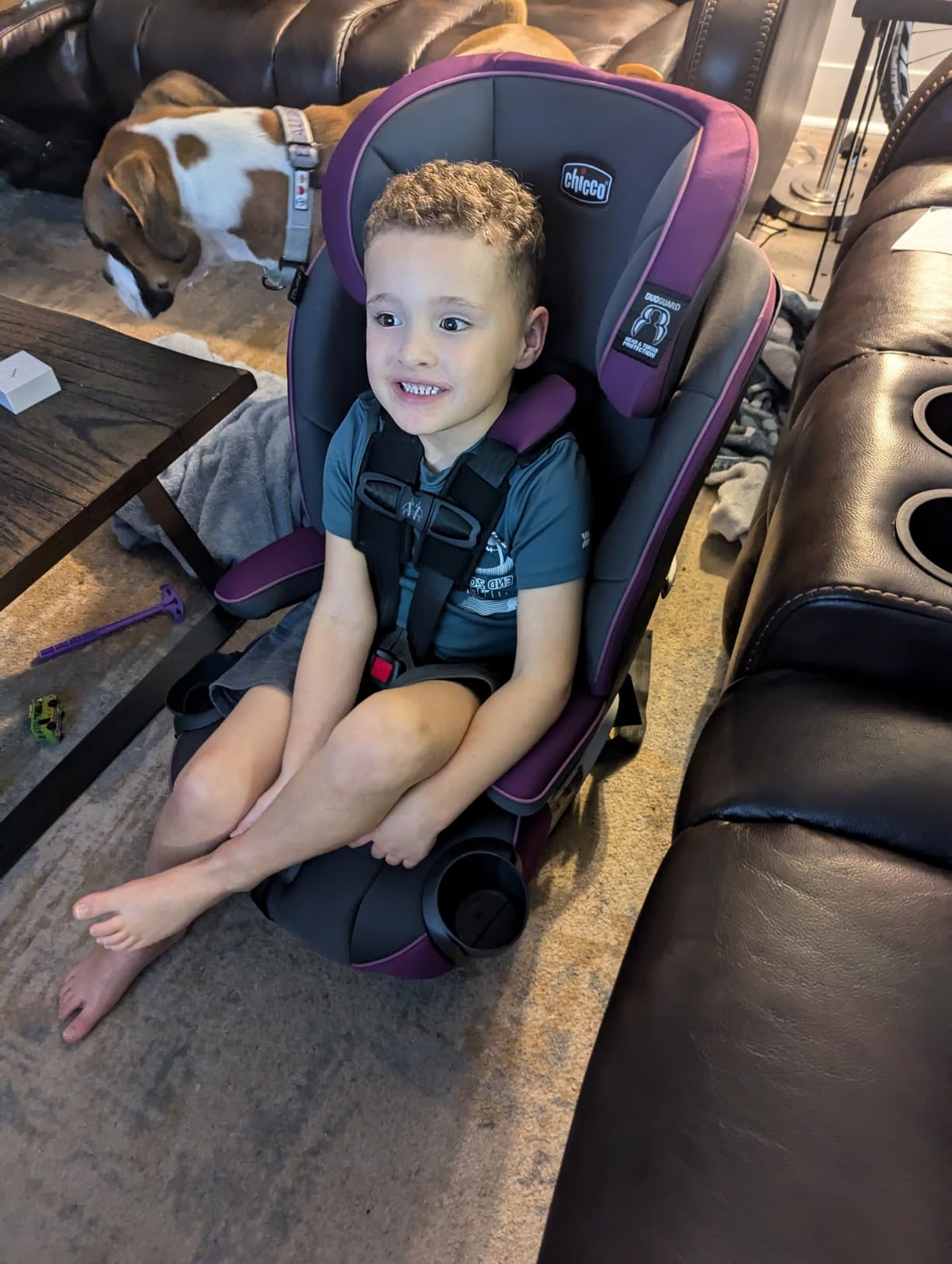
The Chicco MyFit is the highest rated booster in this group and the one with the longest useful life for a single family, because it starts as a forward-facing five-point harness seat and ends as a belt-positioning booster. Harness mode runs from 25 to 65 pounds with a 38 inch minimum, and booster mode extends the overall recommendation to 100 pounds and 54 inches.
That 54 inch booster ceiling is the reason this is not our top pick for tall kids specifically. If your child is already above 54 inches, the harness mode is behind you and the booster mode is already behind you too. Buy this seat for a child who needs harness protection for a while longer, not one who needs maximum height.
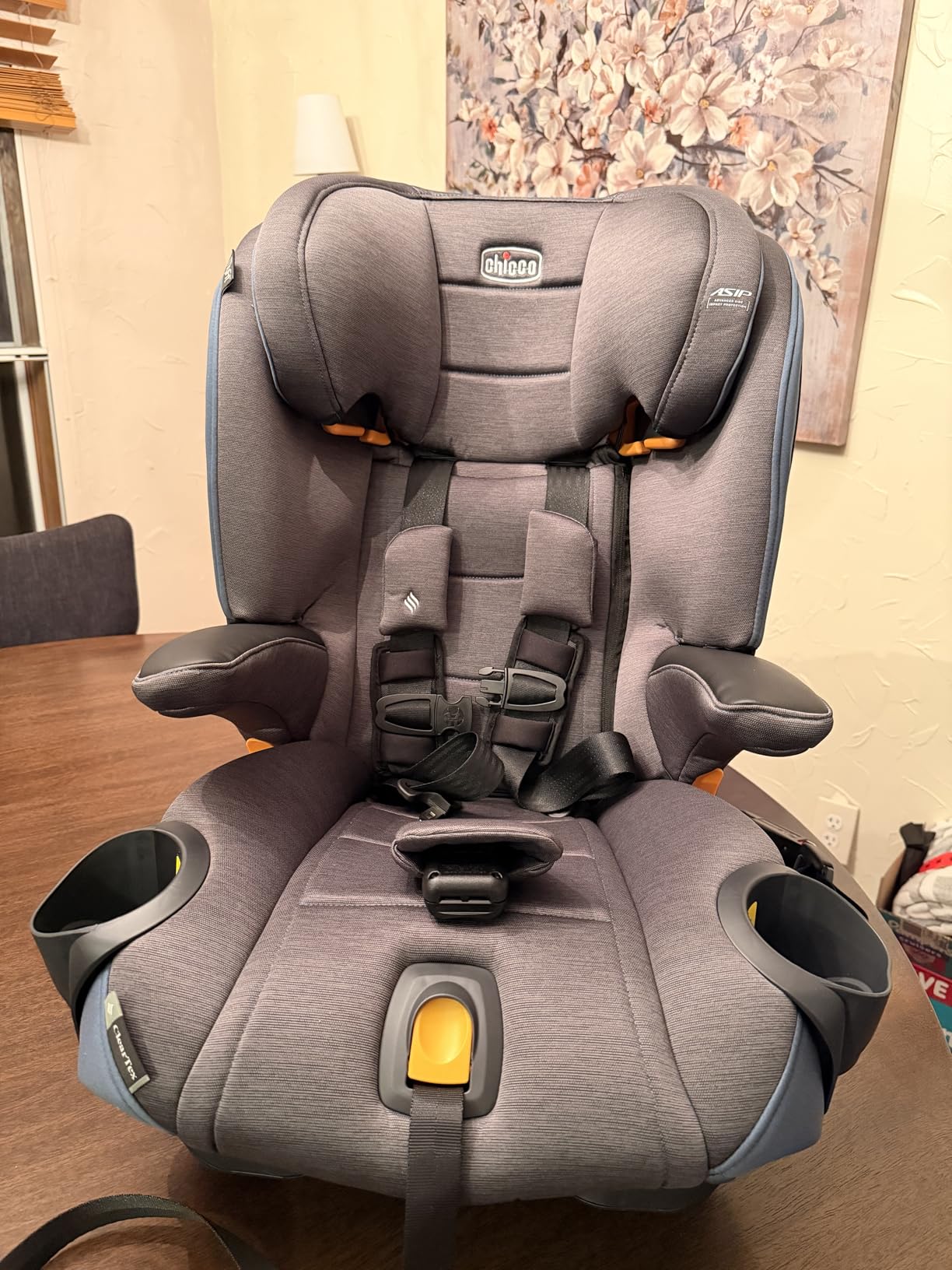
Where the MyFit is genuinely excellent is build quality and installation. The Advanced Side Impact Protection is engineered to meet FMVSS 213a, the LATCH connectors pair with a LockSure belt-tightening system, and the RideRight bubble levels with the ReclineSure leveling system remove the guesswork from getting a tall child correctly angled. The ErgoBoost seat uses dual-density foam, and nine headrest positions cover a wide growth range.
It also fits three across the back seat, which is rare for a seat this substantial, and the two dishwasher-safe cup folders fold away entirely when you need the width for a child seat beside it.
Who the Chicco MyFit works for
This is the right pick for a tall four or five year old who still needs a five-point harness but is clearly heading toward a booster. The 65 pound harness limit is generous, and the bubble-level install aids are close to essential on a tall child whose head sits higher in the seat than most installers expect.
It is also a strong choice for a family that wants one seat to move through every stage, because the same shell handles infant-adjacent forward-facing use and school-age booster use without a second purchase.
When to skip the Chicco MyFit
Skip it if your child is already taller than 54 inches, because the booster mode is finished for them before you unbox it. It is also listed at 25 pounds, which makes it the hardest seat in this roundup to move between vehicles, and carpooling families will feel that immediately.
The booster mode is narrower than the harness mode in terms of what it teaches a child, too. If you know your child is in the booster stage and staying there for years, a dedicated booster with a higher ceiling is the better purchase.
3. Evenflo Maestro Sport: Best Two-Stage Booster for Graduating Families
Evenflo High-Back Booster Car Seat with Harness, 22 to 110lbs, Maestro Sport, Granite Gray
- Generous capacity
- listed from 22 to 110 lb overall
- Low side profile lets a child climb in without help
- Up-front harness adjuster tightens straps quickly
- Shoulder belt guide positions the vehicle belt for you
- Wipe-clean and machine-washable seat pad
- Thin padding for long naps
- Rigid shell has no recline and no flex
- Cup holders pop out and need screwing in
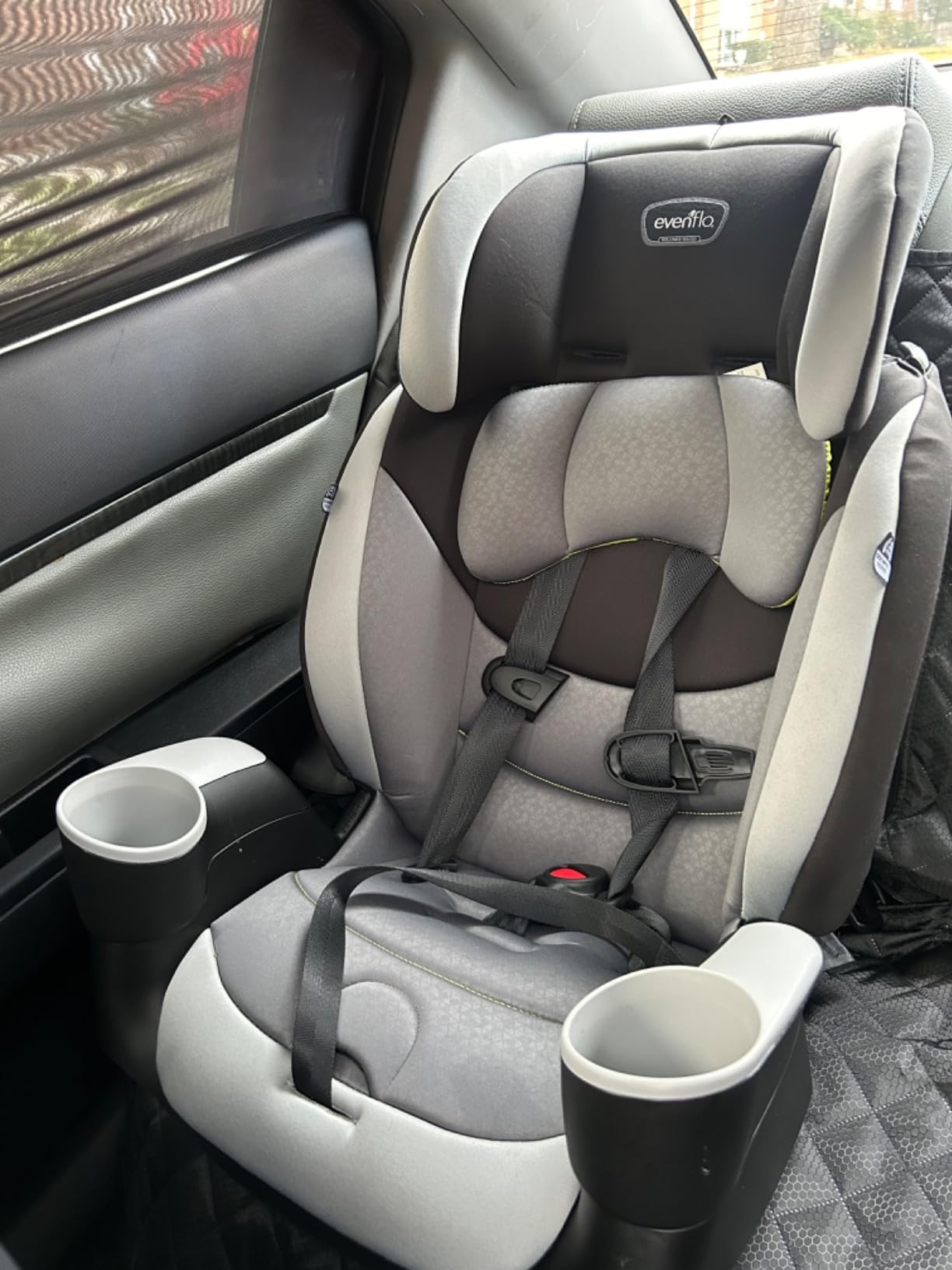
The Maestro Sport is a straightforward two-stage seat: a forward-facing five-point harness for 30 to 50 pounds, converting to a belt-positioning booster up to 100 pounds, with an overall listed range of 22 to 110 pounds. It does one thing and does it plainly, which is a virtue when you are buying for a transition rather than for longevity.
Two details set it apart. The up-front central harness adjuster lets you tighten straps without reaching behind the shell, which is what makes a snug fit achievable on a squirming tall kid. And the shoulder belt guide automatically positions the vehicle belt, which directly targets the belt-misrouting problem described at the top of this guide.
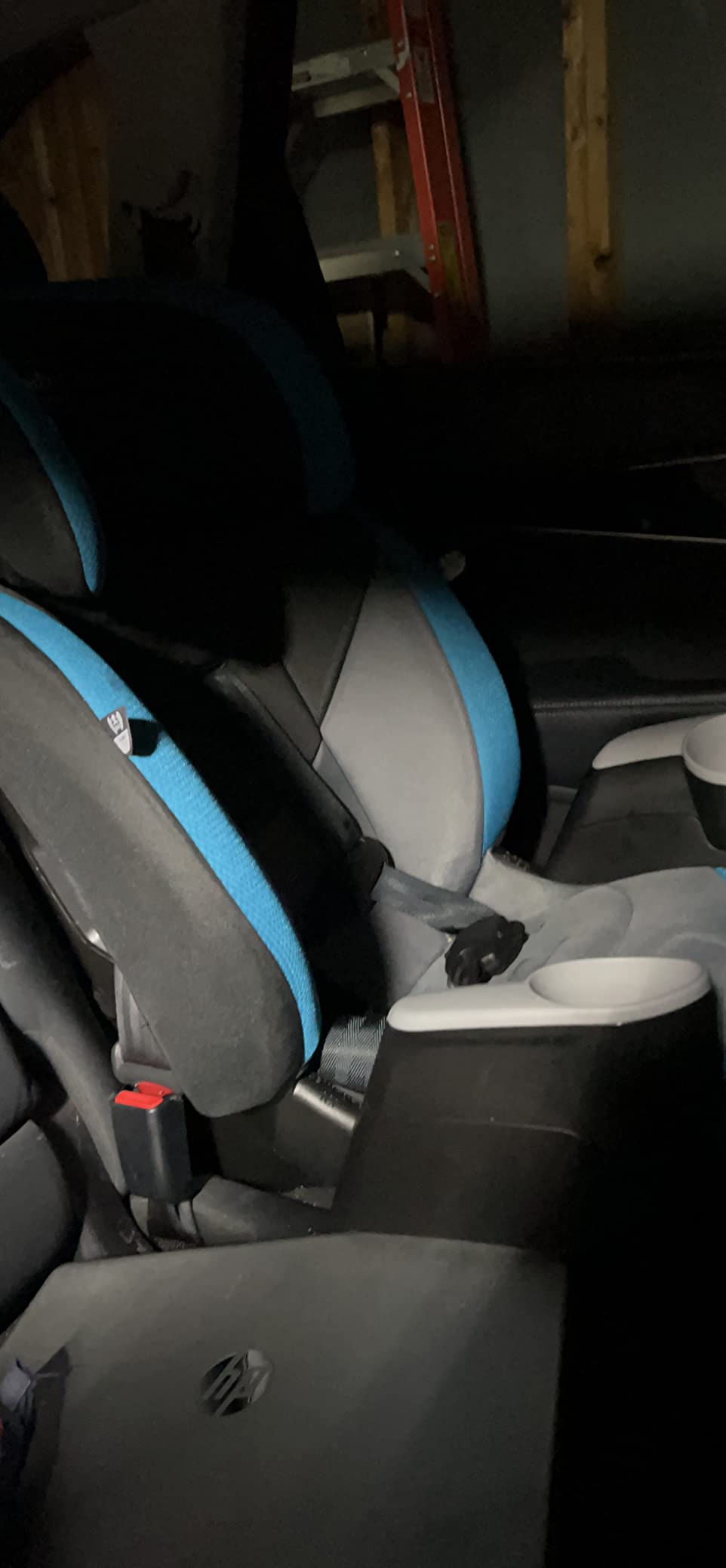
The low profile also matters. A shallow seat side means a child can climb in and out without an adult lifting them, and that independence is a real quality-of-life gain in a family with a tall five year old who is too big to be lifted comfortably.
The rigid shell with no flex is a deliberate design choice. It resists shift in a crash and gives the child a firm back to sit against, but it is also why some children find it uncomfortable on a long trip.
How the Evenflo Maestro Sport fits a tall child
In harness mode this is a 30 to 50 pound seat, so it suits a younger or smaller child. In booster mode it carries to 100 pounds, which is enough for a large seven year old but not enough headroom for a child chasing 60 inches and 120 pounds. For a tall child, think of it as a mid-size seat rather than a ceiling seat.
The automatic shoulder belt guide is the feature that helps most with belt fit on a long-torso child, because it removes the guesswork about where the belt should exit.
Where the Evenflo Maestro Sport falls short
Padding is the most common complaint, and on a child who falls asleep on every drive the lack of recline compounds it. There is no adjustable recline and no flex in the shell, so the seat does the belt job well and the comfort job poorly.
The cup holders are a smaller irritation. They can pop out and, on a new unit, need screwing into place before first use. Fix that once at the start and it stops mattering.
4. Britax Skyline: Best Booster for the Tallest Kids at 63 Inches
Britax Skyline 2-Stage Belt-Positioning Booster Car Seat, Dusk – Highback and Backless Seat
- The highest height limit in this roundup at 63 in
- Carries 40-120 lb and converts to a backless booster
- 10-position headrest adjusts one-handed as the child grows
- Color-coded belt guides show correct placement
- Removable cover and dishwasher-safe cup holders
- Thin seat cushion gets uncomfortable on long trips
- Children may prefer the plushness of premium seats
- No LATCH-style anchoring on this belt-positioning model
This is the seat to buy if height is the whole problem. The Britax Skyline is rated to 63 inches and 40 to 120 pounds, the highest ceiling in the roundup by six inches over the 57 inch seats, and it converts from a high back to a backless booster so the same seat covers the end of the timeline too.
For a child at 58 to 61 inches, no other seat here keeps working. The 10-position headrest adjusts one-handed, so as your child grows you raise the guide in seconds rather than reworking the installation, and the shell has two layers of energy management, a protective seat shell and a foam-lined headrest.
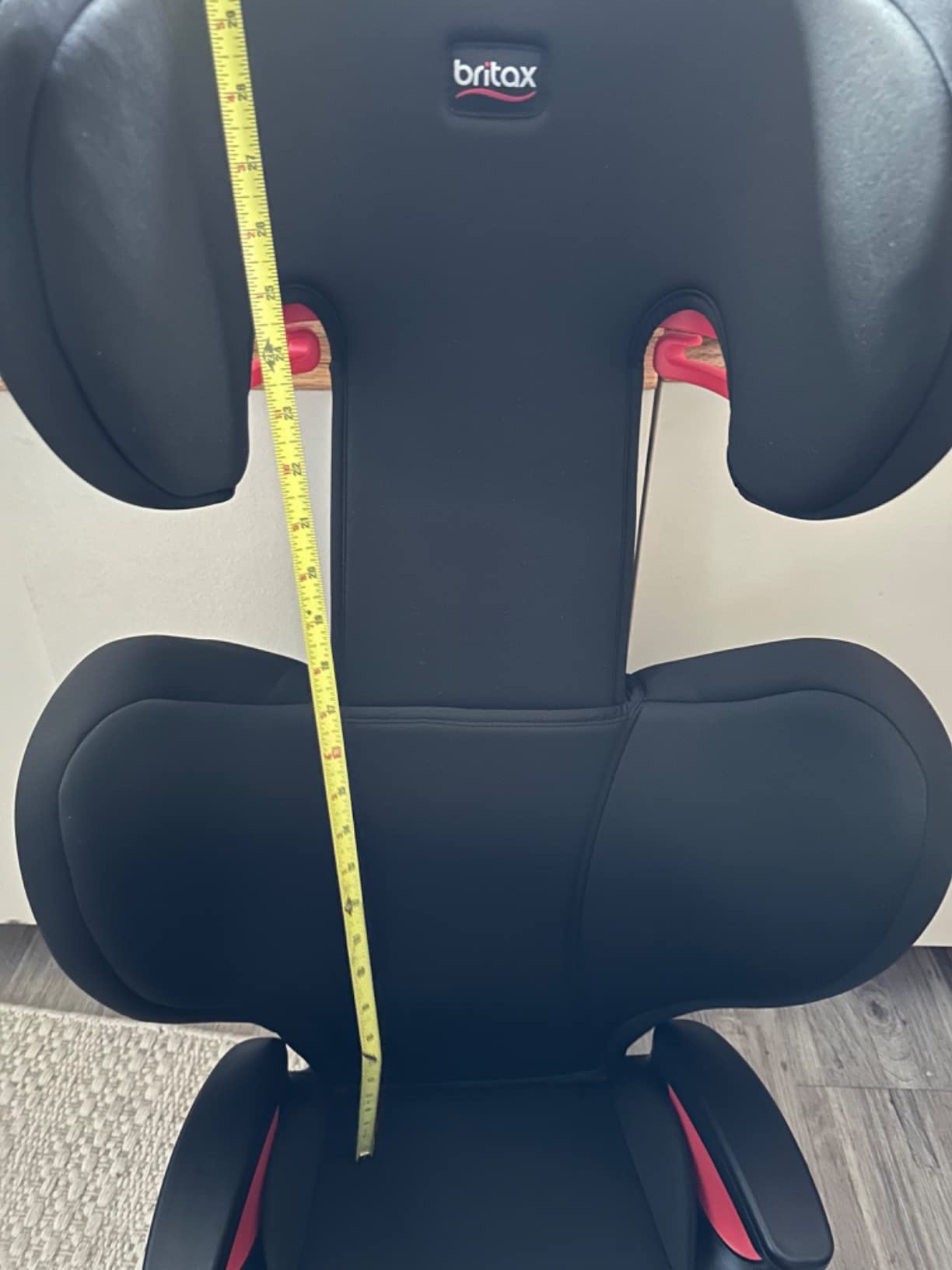
The color-coded belt guides are an underrated feature in a tall-kid context. When the shoulder guide is far higher than usual, parents second-guess the routing. Color coding removes the doubt and speeds up a job people otherwise do wrong.
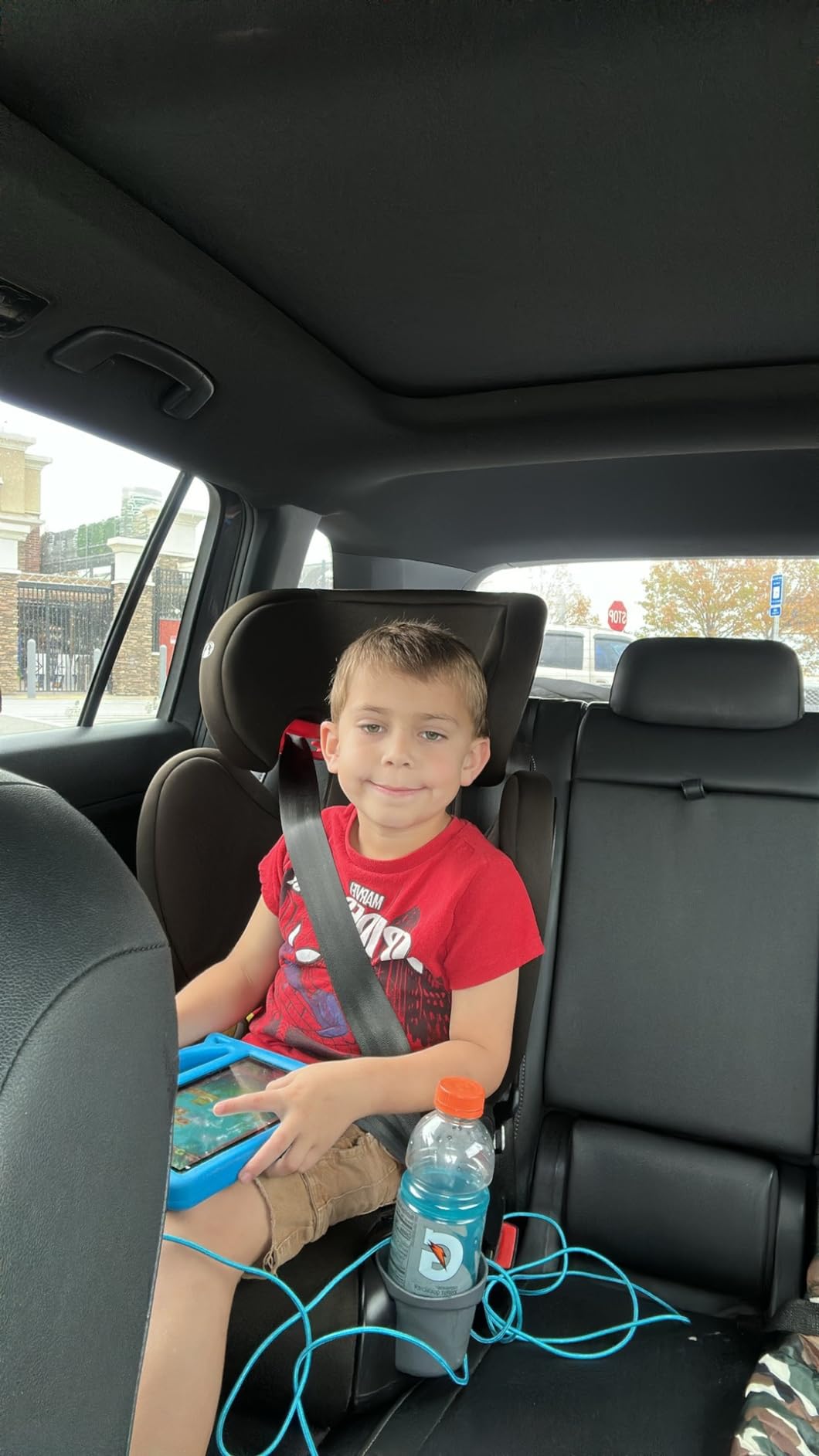
Installation is described as straightforward, and children in this seat can buckle themselves in, which is a genuine advantage once your child is tall enough to reach the buckle and mature enough to hold still for it.
How the Britax Skyline handles a long torso
With ten headrest positions, this seat has more vertical adjustment range than most of the group, and that is what actually extends its usable life. A child with a long torso needs the shoulder guide high, and a seat with few positions runs out of guide height long before it runs out of printed height limit.
It is also the seat most likely to still fit at age nine, which is exactly the scenario parents on parenting forums describe: a child who burned through two boosters before age eight and was still nowhere near ready for the seat belt alone.
Where the Britax Skyline falls short
The seat cushion is thin, and that is the recurring note in reviews, particularly for long drives. It is also a belt-positioning model with no LATCH-style anchoring, so if you expect to move it between vehicles constantly, the connection is the vehicle belt each time.
Some children find it less plush than premium seats at the same size. The cover is removable and the cup holders are dishwasher-safe, so cleaning is not a problem, but comfort out of the box is not its strongest suit.
5. Diono Cambria 2 XL: Best Booster for Tall Kids Who Are Also Wider
- XL wide design gives taller and chunkier children more room
- Carries up to 120 lb
- Retractable cup holder and snack tray store away when not needed
- Built-in padded armrests and deep cushioning
- Dual latch connectors
- Machine-washable cover
- Headrest position count is described inconsistently in the listing
- Wider footprint than slim three-across seats
- Retractable tray adds bulk when extended
Most tall-kid advice stops at height. The Diono Cambria 2 XL addresses the other half of the problem, which is room. The XL wide design is built to give broader children more space across the hips and shoulders, and parents of larger children consistently point to the width and the 120 pound limit as the reason this seat fits where slimmer boosters do not.
It is rated 40 to 120 pounds with a high-back to backless conversion and a seven-position headrest that adjusts upward as the child grows. The contoured premium soft fabrics with layered foam padding are removable for machine washing, which matters more than it sounds with an eight-year-one-seat design.
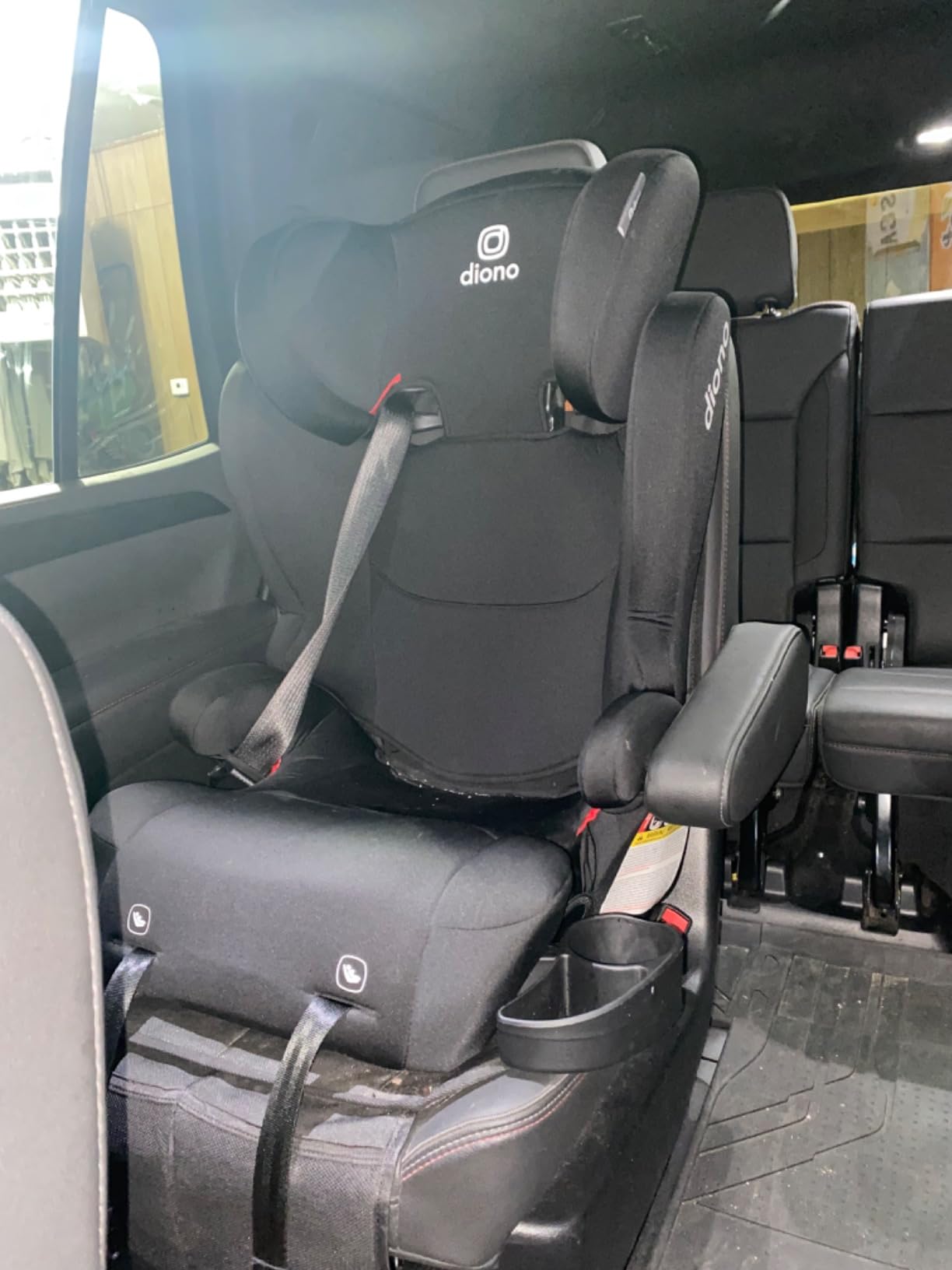
Two layers of side impact protection and built-in padded armrests round out the safety and comfort story. The padded armrests also give the lap belt a defined edge, which helps keep it low on the thighs rather than up on the abdomen.
The retractable two-in-one cup holder and snack tray is the feature children actually notice. It disappears completely when you are not using it, so it does not eat the space that made you buy a wide seat in the first place.
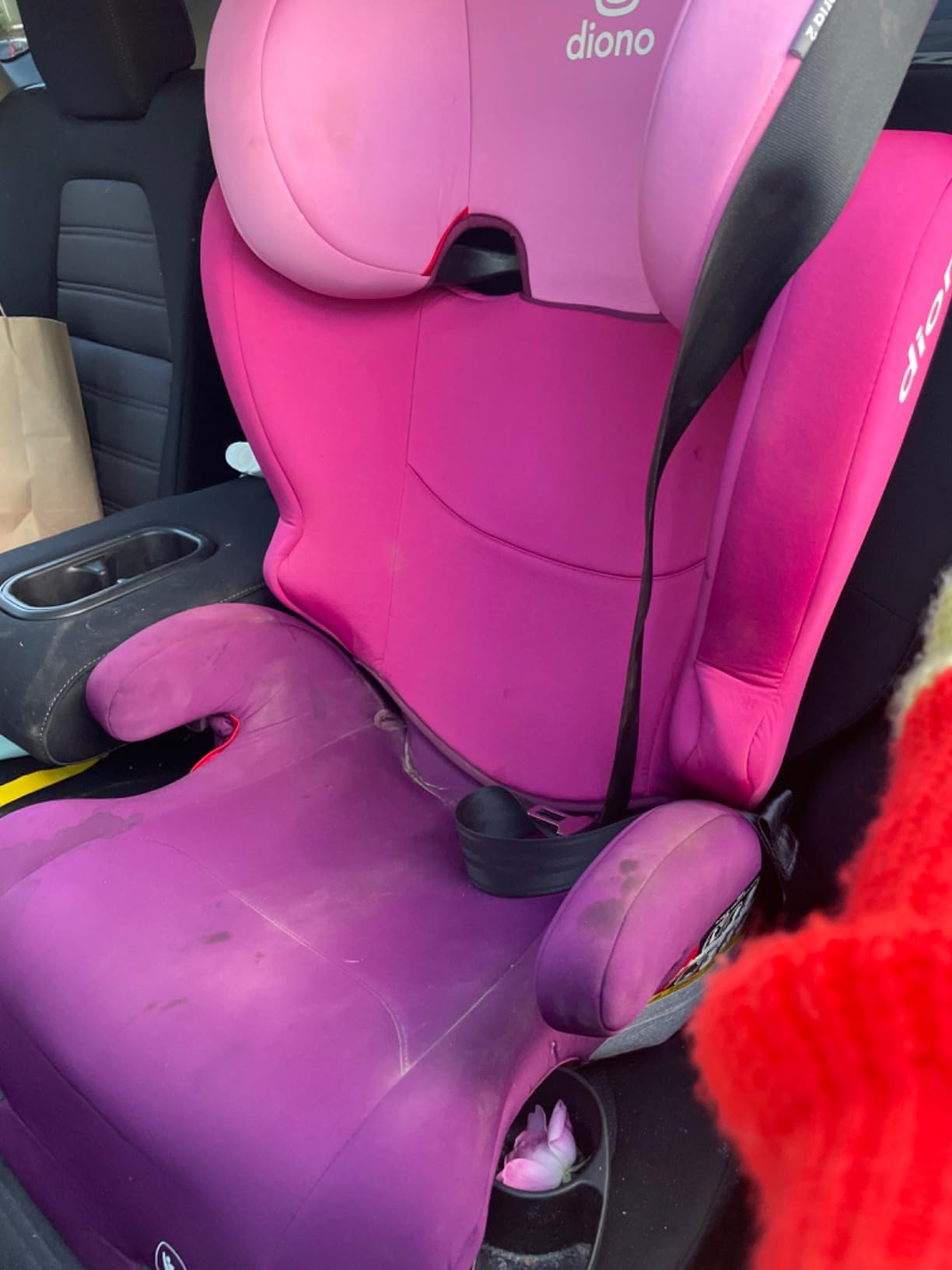
Is the Diono Cambria 2 XL wide enough for your tall child
If your child is tall and slim, the width is wasted and you are better served by the Britax Skyline for the ceiling and the Diono Everett NXT for footprint. If your child is tall and broad, this is the seat in the group designed around that shape, and the deep padded cushioning does more for comfort than the thinner shells here.
The dual latch connectors secure the seat to the vehicle, and owners report that the straight latch pieces are easy for older relatives to handle, which is a real consideration if grandparents drive your child regularly.
Where the Diono Cambria 2 XL falls short
It is a wide seat, and wide means it is not a three-across proposition. In a back row that already has a child seat in the middle position, the Cambria competes for space with the rest of the row rather than fitting into it.
One practical note: the listing describes the headrest count differently in the title and the feature list. Check the actual number of positions on the seat in front of you rather than relying on either description, since headrest range is the spec that matters most for a tall child.
6. Diono Everett NXT: Best Narrow Booster With Rigid LATCH for Three-Across
Diono Everett NXT High Back Booster Car Seat with Rigid Latch, Lightweight Slim Fit Design, 8 Years 1 Booster Seat, Black
- Slim profile confirmed by owners fitting three across
- Automotive steel rigid LATCH connectors that need no tightening
- Straight latch pieces are easy for grandparents to use
- Light enough for car-to-car moves but still sturdy
- 7-position headrest adjusts quickly
- Headrest wings can dip below the belt path at higher settings
- Cup holders press into a small stem and may not last
- Smallest review base in the roundup at 347
The Everett NXT solves a specific problem that no other seat here does: how to fit a 120 pound booster into a back row that already has two children. The slim fit design is confirmed by owners fitting it three across, including in a three-row SUV with a child seat in the middle position.
The rigid LATCH connectors are automotive steel and they need no tightening, with clear engagement feedback so you always know they are locked. They can also be flipped inward for vehicles without lower anchors, which removes the most common reason people abandon a rigid LATCH booster.
For a family that moves seats between cars weekly, rigid LATCH changes the calculus entirely. There is no strap to tighten, no tension to re-check after reinstalling, and no adjustment drift over time. A carpooling household will feel the difference every single week.
The open loop belt guides are designed specifically to help self-buckling, and with seven headrest positions the growth range is adequate for most children in the 40 to 120 pound band.
How the Diono Everett NXT handles a tall child
Here is the honest caveat, and it is the most substantive negative report in this seat’s feedback: at higher headrest settings the wings can extend past the belt path and press into a child’s shoulders. For a tall child whose shoulders are already pressing against the seat, that is not a cosmetic issue.
Before you commit, put the seat in the vehicle and check the shoulder area with your child in it, at the headrest settings you would actually use. It is a five-minute check and it is the single best predictor of whether this seat works for your child.
Where the Diono Everett NXT falls short
The review base is the smallest here at 347 reviews, so the long-term durability record is thinner than the seats with thousands of reviews. That is a legitimate reason to prefer a seat with a deeper history, particularly on a child safety product you plan to keep for years.
The cup holders mount on a small plastic stem, and durability is questioned. Treat them as a convenience rather than a feature you will lean on for a water bottle on every drive.
7. Safety 1st Grow and Go: Best Budget Booster That Still Reaches 57 Inches
- Reaches 57 in while sitting well below the rest of the group
- ComfortWings expand the seat as the headrest rises
- Foldable and very light for multi-car households and travel
- 10-position headrest adjustment
- Machine-washable pad and dishwasher-safe cup holders
- ComfortWings widen the seat
- reducing three-across flexibility
- Newer listing with a smaller review base
The Grow and Go pairs a 57 inch ceiling with a price point that undercuts everything else in this roundup by a wide margin. It is rated 40 to 100 pounds and 43.4 to 57 inches, and it converts from a high back belt-positioning booster to a backless booster.
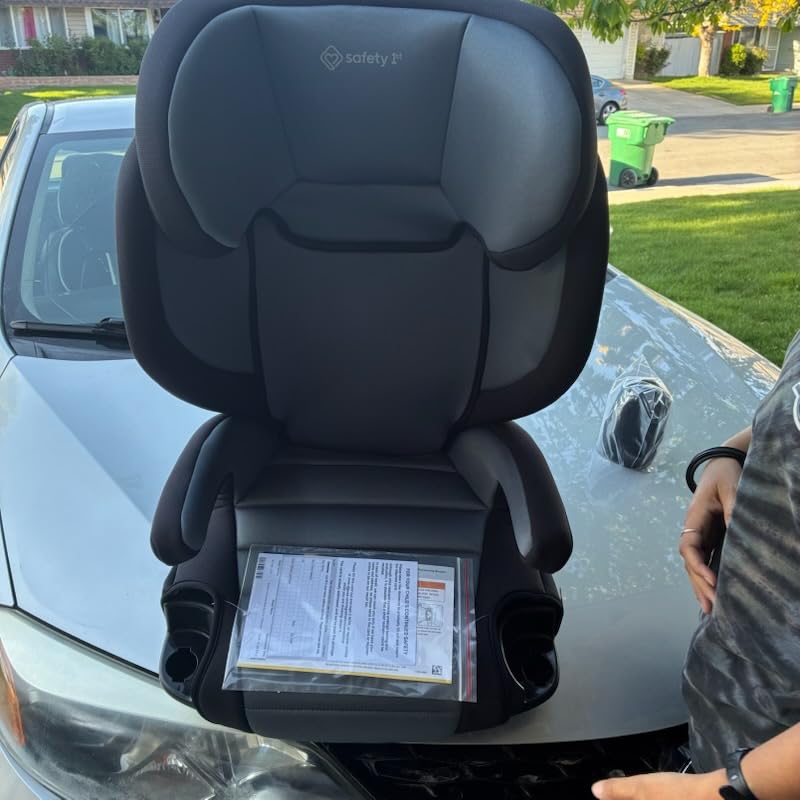
The ComfortWing design is the genuinely clever part. The backrest wings expand to 19 inches total width as the headrest rises, so the seat gets wider at exactly the moment a growing child needs it to. For a tall child on the way up, that is more useful than a fixed-width shell that either fits a small child or crowds a big one.
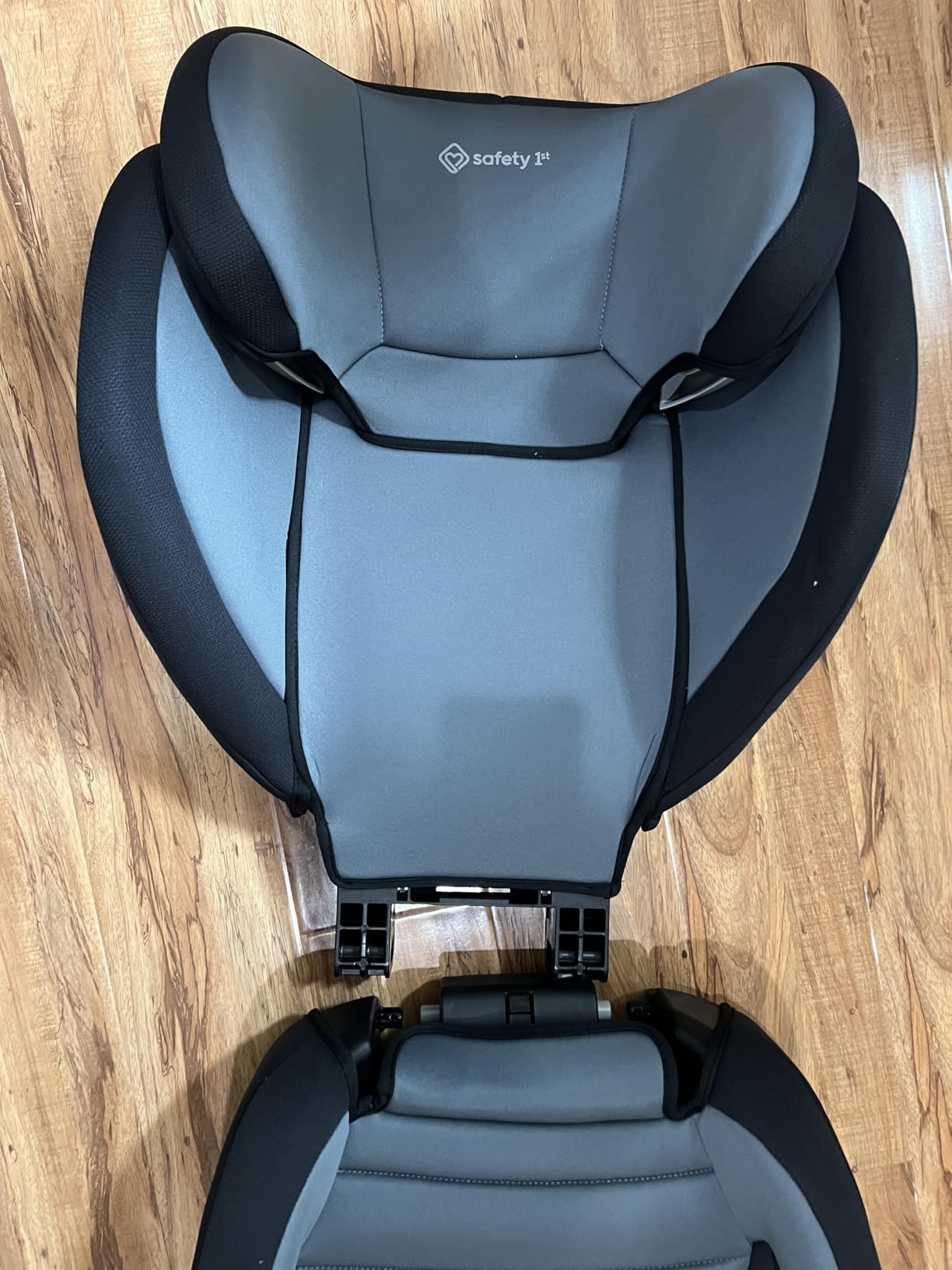
Ten headrest positions, shoulder and lap belt guides for self-buckling, and a machine-washable, dryer-safe pad cover the practical requirements without fuss. The two cup holders are removable and dishwasher-safe.
The foldable, lightweight design is the sleeper feature. It is one of the few seats here that genuinely folds, which makes it the practical choice for a family with two cars, a rental or a grandparent who does the school run.
Is a 57 inch booster enough for a tall child
It is enough for most children, and it is not enough for the ones this page is really about. A child who tops out at 57 inches typically has two or three good years left in a booster, which is a reasonable return on the purchase. A child already at 56 inches has a year and then hits the same wall everyone else does.
The narrowing point is worth stating plainly: if your child is over 57 inches today, the two seats in this roundup that carry to 63 inches and 120 pounds are the only purchases that keep working, and both cost meaningfully more.
Where the Safety 1st Grow and Go falls short
The ComfortWings are the trade-off. Once they extend to 19 inches the seat is no longer narrow, which removes it from contention for three-across layouts. You get growth room by giving up footprint, and you should decide which one your back row needs.
This is also a newer listing with a smaller review base than the long-running models here. The design is sound, but there is less long-term owner history telling you how the hinges and covers hold up after three years of daily use.
8. UPPAbaby Alta V2: Best Built High Back Booster for a Fixed Vehicle
- Exceptionally solidly built shell that does not shift in the vehicle
- Rigid LATCH connectors with a red-to-green connection indicator
- SecureFit belt routing with a lap belt positioner prevents slouching
- Seven-position Active Support Headrest with thick padding
- Removable washable fabrics with a zip-off base
- Fire retardant-free SafeTech fabrics
- Heaviest seat listed
- which makes transfers difficult
- No backless conversion mode
- Premium price versus the rest of the group
The Alta V2 is the seat to buy if your booster stays in one vehicle. It is a high back only design rated 38 to 57 inches and 40 to 100 pounds, with no backless conversion listed. For a child who will use it for a few years and then move up to a seat belt, that is not a shortfall. For a child who might stay in a booster until nine, it is a shorter runway than the convertible seats here.
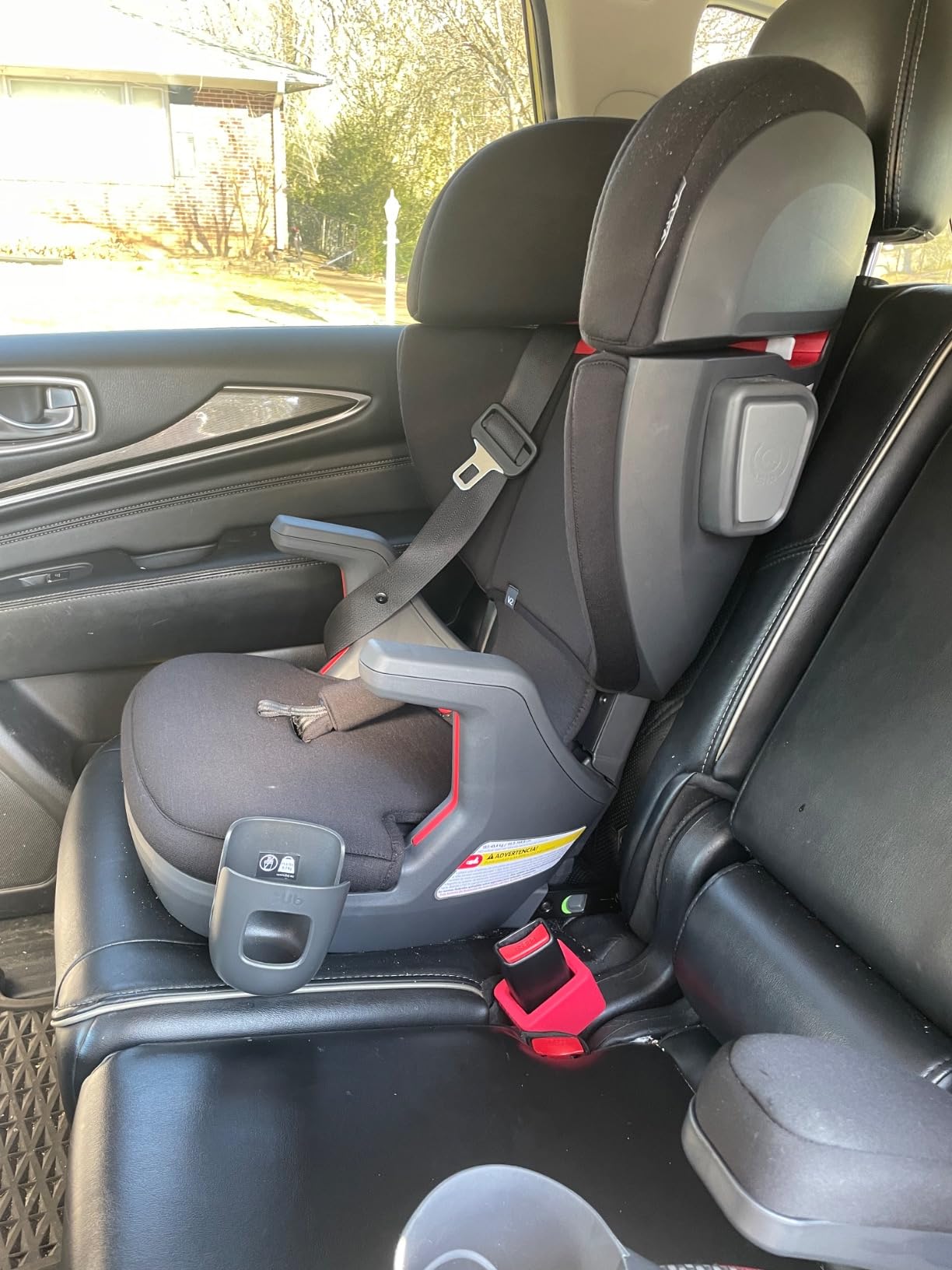
The build is the argument. Owners describe the shell as a tank, and the weight that comes with it is consistently read as a safety feature rather than a nuisance. The always-engaged side impact pods and energy-absorbing foams are part of that same package.
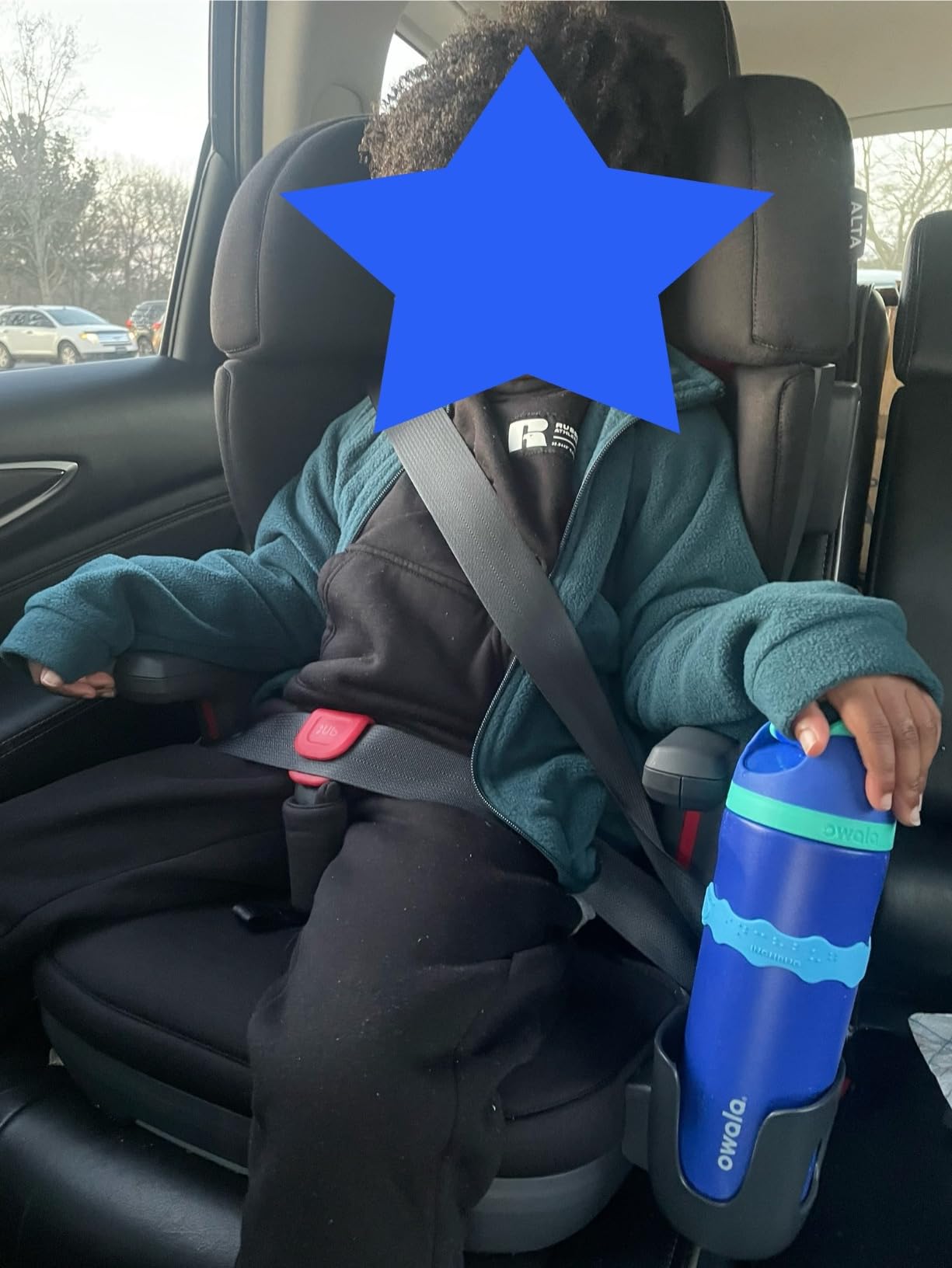
The SecureFit belt routing with a lap belt positioner is the detail that matters most for a tall child. A lap belt positioner physically holds the lap belt low and prevents the child from sliding forward and under the belt, which is the failure mode that a tall, long-torso child is most prone to.
The rigid LATCH connectors have a red-to-green indicator, so there is no guessing about whether the connection is complete. That, plus the seven-position Active Support Headrest and thick padding, is why children fall asleep in this one.
Is the UPPAbaby Alta V2 right for a tall child
Its 57 inch ceiling matches the standard cluster, so it does not solve the height problem that brings most people to this page. What it does solve is fit quality. If your child is tall, has a long torso and slouches in other boosters, the lap belt positioner alone can be the reason this seat works.
The removable, washable fabrics with a zip-off seat base and the fire retardant-free SafeTech fabrics are the practical wins for a seat that stays in the same car and collects the same crumbs for three years.
Where the UPPAbaby Alta V2 falls short
It is the heaviest seat listed here, and that weight is acknowledged as the trade-off in essentially every review. Car-to-car transfers are genuinely difficult, and the removable cup holder that attaches to either side is a small compensation for that.
With no backless mode, you will eventually buy a backless booster anyway. Plan for that as a separate, later purchase rather than assuming this seat covers the whole timeline.
Why Tall Kids Outgrow Standard High Back Boosters Early
Most high back boosters stop at 57 inches and 100 pounds. That sounds generous until you plot it against readiness. The five-step test a child must pass before riding with the seat belt alone is not usually passed until close to five feet, and often not until eight to twelve years old. Seat belts are designed for adult proportions, which means a child’s lap belt wants to sit low on flat thighs and a shoulder belt wants to cross the chest at the collarbone. Until a child’s body can accept both, the booster is doing real work.
For a child on the tall side of normal, the mismatch shows up as a sequence. At 48 inches they outgrow the harness slots in their forward-facing seat. At 50 inches they are ready for a booster in theory. At 53 inches the shoulder belt guide is already near the top of its range. At 55 inches the lap belt is riding up because the seat pan is too short. At 57 inches they are out of the seat, still nowhere near the five-step test, and buying a second booster.
That is the 57 inch ceiling problem in practice, and it is why parents on car seat forums keep asking the same question: which high-back booster will actually last until my child is eight or nine rather than being finished at 57 inches.
When a Tall Child Should Stay in a 5-Point Harness Instead
A booster with a vehicle belt is a step down in restraint from a five-point harness. It only makes sense once your child is at least 40 pounds, sits upright for the entire ride without slouching or leaning, and has genuinely outgrown the harness within the seat’s own limits. Height alone is not the trigger, and neither is age.
For a tall three to five year old, the honest answer is often that a five-point harness seat is the correct purchase, not a booster. The failure mode that trips parents up is a tall, slim child reaching the top harness slot at 45 to 50 pounds: they look too big for the seat while still being too small for a booster, and they are not ready for a seat belt either. That child needs a forward-facing harness seat with a taller harness, or a convertible that lets you keep the harness longer.
Two things are worth knowing here. First, if the harness straps sit below the shoulders on a tall child, that is a fit problem in the seat, not a reason to move to a booster. Second, manufacturer weight limits can force the booster transition regardless of height, and parents often feel pushed into it early. Before you switch, confirm the child meets the booster’s own readiness criteria rather than just the previous seat’s ceiling.
Also worth knowing: harness height in inches is not published consistently across brands, which is precisely why car seat technicians compare figures directly when advising families. A technician can tell you the top harness height of the specific seats you are considering, which answers the question in a way a spec sheet does not.
Buying Guide: How to Choose a High Back Booster Seat for a Tall Child
Four measurements decide whether a booster works for a tall child, and only one of them is on the box. Measure all four before you shop.
1. Torso length. Sit your child in a booster with their back flat against the seat back. Measure from the seat pan to the top of the shoulder. Most booster sizing guides target roughly 10 inches of torso clearance. A child with 11 inches of torso is already outgrowing seats with modest headrest ranges, which is why headrest position count matters as much as the printed height limit.
2. Top shoulder belt guide height. This is the width of the opening at the top of the high back where the seat belt exits, and it is the real longevity spec for a tall kid. The guide must land at or above the midpoint of the shoulder. A seat with a low guide will have your child’s shoulder above the guide before the printed height limit is anywhere near, which is the exact scenario that makes a tall kid outgrow a booster early. The Britax Skyline’s ten headrest positions and the Safety 1st’s ten are the most generous adjustment ranges in this group.
3. Seat base width. Tall children are not always slim children. If your child’s hips are wider than the seat pan comfortably allows, the lap belt will slide up onto the abdomen no matter how tall the seat is. The Diono Cambria 2 XL is built for this, and the UPPAbaby Alta V2’s lap belt positioner physically prevents it. For three-across situations, the Diono Everett NXT is the narrowest design here, though check it with the headrest at the position you will actually use.
4. Vehicle seat back height. A high back booster adds real height. In a low-roof vehicle, a booster can push an already tall child’s head into the headliner, and that is uncomfortable at best. Measure the clearance above the headrest at its tallest setting with your child seated before you commit to a high-ceiling model.
How to pick by height tier
Match the seat to where your child is today and where you expect them to be in two years, not where they are on the day you shop. A child at 50 inches who is growing quickly should be bought a seat with a ceiling well above their current height, because the ceiling is the thing you cannot extend later.
For a child under 52 inches, any seat in this roundup will work, and price, weight and width should drive the decision. For a child between 52 and 55 inches, prioritise headrest range and belt guide height. For a child between 55 and 57 inches, you are inside the standard cluster’s final year, so consider the 63 inch seats now rather than planning to replace in a year. Above 57 inches, only the Britax Skyline in this group still works, and Diono’s 120 pound seats buy weight headroom even where the printed height is not stated.
Rigid LATCH versus a flexible strap versus no connector
On a belt-positioning booster the vehicle belt does the restraining, so a lower connector is not a safety requirement. It is a convenience one, and the value depends entirely on your situation.
Rigid steel LATCH connectors, as on the Diono Everett NXT and the UPPAbaby Alta V2, need no tightening and give clear engagement feedback, which makes them the right choice for a family that moves the seat between cars. A front-adjust flexible strap, as on the Graco TurboBooster 2.0 LX, does the same job with more steps. A belt-positioning seat with no connector at all, as on the Britax Skyline, is entirely fine if the seat lives in one vehicle. Owners with a rigid LATCH booster report that the red-to-green indicator and the straight connector pieces matter most for grandparents and anyone with limited dexterity.
High back versus backless, and when to make the switch
A high back supports the head, neck and upper back. A backless booster only lifts the child so the belt fits, which is all a child needs once their head is supported by the vehicle headrest and they can sit still for the whole ride. There is no fixed age, and age is the wrong test. Move when your child sits properly all the time, in every car, without slouching or leaning.
Slouching is the reason to wait. A child who folds forward puts the lap belt on the belly, and the belly is the worst possible place for it. Seats that convert to a backless booster, like four of the eight here, let you delay that decision and keep the support for a year longer. Seats with a built-in recline, like the Graco TurboBooster 2.0 LX, extend the window further because a child who can sleep comfortably stays properly positioned.
Also route the lap belt under the armrests, never over them. Belting a child over an armrest is the most common and most dangerous booster misuse there is, and it is why the open belt loops and armrest-free routing on this group of seats matter more than they appear to.
The Height Ceiling Problem: What to Do When Your Child Outgrows Every Booster
Yes, a child can be too tall for a booster seat, though it is rare. The tallest high back boosters reach 63 inches and 120 pounds, and a child can measure 64 to 65 inches well before passing the five-step test that says a seat belt fits. In that window the answer is not a bigger booster, because one does not exist. Keep the child in the tallest high back you can find with the vehicle seat back raised to the top of the ears, and consider a backless booster for short trips where the vehicle headrest supports the head well. If the child is slouching or the lap belt is riding onto the abdomen, they are not ready, and a certified Child Passenger Safety Technician is the right person to walk you through it.
Two things drive this. Some children simply grow faster than the tallest seat in production, and for them the gap between the 63 inch ceiling and full belt readiness can span a year or more. And some vehicle headrests are not tall enough to support a child’s head in a backless booster, which pushes those families back toward a high back they have already outgrown.
The practical mitigation is a taller vehicle seat back. Where the vehicle back can be raised to reach the top of the child’s ears, whiplash protection is meaningfully better and a high back booster is doing what it should. Where it cannot, backless mode is a compromise rather than a solution, and you should talk it through with a technician rather than guessing.
How We Chose and How We Test
Every spec in this guide comes from the manufacturer’s published limits: height ceilings, weight ranges, headrest positions, connector types and mode conversions. We did not estimate a single number, and where a listing describes the same feature inconsistently we flagged it rather than picking the flattering version.
Fit reasoning came from owner reviews, where the recurring patterns across thousands of reports are more useful than any single anecdote. The complaints we weighted most heavily are the ones that affect tall children specifically: headrest wings pressing below the belt path, thin padding on long drives, lap belts drifting onto the abdomen, and armrest geometry that stops a child buckling themselves in.
We are not certified Child Passenger Safety Technicians, and this guide does not replace one. If your child is near a weight or height limit, is involved in a crash, or you are unsure whether the belt is positioned correctly, a CPST will look at your specific vehicle and seat combination in a way no article can. A car seat safety technician is the highest-value ten minutes you can spend on this purchase.
If you want the broader picture before the tall-specific detail, our general guide to the best booster car seats for kids covers the mainstream options, and our picks for the best booster seats for travel covers the foldable and backless end of the market.
Frequently Asked Questions
Can a child be too tall for a booster seat?
Yes, though rarely. The tallest high back boosters reach 63 inches and 120 pounds, and some children outgrow even that before they pass the five-step test for riding with a seat belt alone. When it happens, keep the child in the tallest high back available with the vehicle seat back raised to the top of the ears, and consult a Child Passenger Safety Technician about your specific vehicle.
What high back booster seats are available for a 7-year-old child?
For a 7-year-old the main options are the Graco TurboBooster 2.0 LX to 57 inches and 100 pounds, the Britax Skyline to 63 inches and 120 pounds, and the Diono Cambria 2 XL and Diono Everett NXT to 120 pounds. The UPPAbaby Alta V2 and Safety 1st Grow and Go both stop at 57 inches and 100 pounds.
Should my 7 year old be in a backless booster?
Only if they sit upright for the entire ride without slouching or leaning, the vehicle headrest supports their head, and the belt fits properly with the lap belt low on the thighs and the shoulder belt across the chest. If they fold forward even occasionally, keep them in a high back. There is no set age, and sitting properly is the correct test.
What is the best car seat for a tall 4-year-old child?
A forward-facing five-point harness seat with a tall harness, not a booster. A booster is a step down in restraint, and a tall four-year-old who still fits their harness within the seat’s own weight and height limits should stay in it. A belt-positioning booster only makes sense past 40 pounds, with upright sitting and genuine readiness for a seat belt.
What height is too tall for a booster seat?
It depends on the seat. Most high back boosters stop at 57 inches, and only the tallest models reach 63 inches. What matters more than the printed limit is the top shoulder belt guide height, which must sit at or above the midpoint of the shoulder. A child whose shoulders are above the guide has outgrown the seat regardless of the number on the box.
When can kids move from 5-point harness to high-back booster?
Move when your child is at least 40 pounds, sits upright for the whole ride without slouching, and has genuinely outgrown the harness within that seat’s own weight and height limits. Check that the harness straps sit at or above the shoulders before switching. If a tall child runs out of harness height before the weight limit, the seat is the wrong size, not the wrong type.
How do I stop my tall child from outgrowing every booster?
Buy for the ceiling you expect, not the height you have today. A child on the tall side of normal reaches the 57 inch limit with years of booster use still ahead of them. Choose a seat rated to 63 inches and 120 pounds, and verify the top shoulder belt guide sits above the midpoint of the shoulder at the headrest setting you will use.
Does a rigid LATCH booster really matter when the seat belt does the restraining?
It is a convenience, not a safety requirement. Rigid LATCH connectors remove the tightening and re-tensioning step when you move a seat between vehicles, give clear engagement feedback, and are easier for grandparents to handle. If your booster stays in one car, a flexible lower-anchor strap or no connector works just as well for the restraint itself.
Final Verdict
The best high back booster seats for tall kids come down to one question: how far above your child’s current height can the seat still grow. The Graco TurboBooster 2.0 LX is the best all-round pick, with a 57 inch and 100 pound ceiling, a real backless conversion and a recline that keeps a sleeping child positioned. The Britax Skyline is the answer when height is the problem, reaching 63 inches and 120 pounds. The Diono Cambria 2 XL fits tall children who are also wider, and the Diono Everett NXT is the one to buy when you need three across or move the seat between cars every week.
Measure torso length and top shoulder belt guide height before you buy anything, and check the seat in your actual vehicle with your child in it. If you are still unsure, a Child Passenger Safety Technician will settle it in ten minutes.