
The best baby breathing monitors for newborns fall into three clear groups right now. The Babysense True Sleep HD is the most complete package, pairing a non-contact under-mattress movement monitor with a camera. The Owlet Dream Sock is the only option here that tracks pulse rate and blood oxygen on the baby. The Snuza Hero and Levana Oma Sense are the simplest wearables if you want alarms without an app.
Before anything else: no baby breathing monitor prevents SIDS. The American Academy of Pediatrics has not endorsed any consumer monitor as a safety device, and nothing on this list should be treated as one. Safe sleep setup matters far more than hardware.
We spent several weeks reading thousands of owner reviews, comparing detection methods, alert delays, connectivity and hidden costs across ten monitors. Our goal was simple: find the device that fits your nursery, your budget and your tolerance for false alarms, without pretending it replaces safe sleep practice.
If you are still building out the rest of the fourth-trimester setup, our guides to the best baby carriers for newborns and the best baby wraps for newborns cover the daytime hours, since a monitor only handles nights.
Table of Contents
Top 3 Best Baby Breathing Monitors For Newborns (October 2026)

Babysense True Sleep HD
- Video plus non-contact movement monitoring
- 2 under-mattress sensor pads
- No WiFi needed

Owlet Dream Sock
- Pulse rate and oxygen tracking
- Base station plus phone alerts
- 16-hour battery

Lollipop Baby Monitor
- AI breathing monitoring via app plan
- True crying detection
- 1080p with background audio
Baby Breathing Monitors at a Glance
Every monitor below tracks breathing movement. Only a few give you heart rate or oxygen data, and only some need something attached to your baby. The table is the fastest way to narrow the field.
| Product | Specifications | Action |
|---|---|---|
| Babysense True Sleep HD |
|
Check Latest Price |
| Owlet Dream Sock |
|
Check Latest Price |
| Lollipop Baby Monitor |
|
Check Latest Price |
 Nanit Pro Nanit Pro |
|
Check Latest Price |
 Levana Oma Sense Levana Oma Sense |
|
Check Latest Price |
 Babysense 7 Babysense 7 |
|
Check Latest Price |
 Snuza Hero Snuza Hero |
|
Check Latest Price |
 Sense-U AI 2.5K Camera Sense-U AI 2.5K Camera |
|
Check Latest Price |
 BEMPU Baby Movement Monitor BEMPU Baby Movement Monitor |
|
Check Latest Price |
 CuboAi Sleep Sensor Pad CuboAi Sleep Sensor Pad |
|
Check Latest Price |
What Pediatricians Say About Baby Breathing Monitors?
Pediatricians generally do not recommend the Owlet or any other consumer breathing monitor for a healthy full-term baby. The AAP position is that healthy infants should be placed on their back on a firm, flat surface in their own crib, and that commercial monitors have not been shown to reduce SIDS risk.
The criticism of devices like the Owlet centers on false alarms and the anxiety they create. A parent on WhatToExpect described buying a breathing monitor that went off twice, then noted that pediatricians dislike these devices precisely because they produce so much parental anxiety.
There are exceptions. For a baby born premature or discharged from the NICU, pediatricians may recommend a medical-grade apnea monitor, which is a different category of device with different rules.
How Baby Breathing Monitors Work?
Most baby breathing monitors alert after 15 or 20 seconds of no movement. The sensor technology differs, and that difference determines false alarms, portability and what data you get.
Under-mattress sensor pads read pressure changes from breathing micro-movements through the mattress. Nothing touches the baby, but the pads need a firm flat surface and can pick up fans. The Babysense 7 and the CuboAi pad use this method.
Wearables use accelerometers or pulse oximetry against your baby’s foot, abdomen or diaper. The Owlet Dream Sock reads pulse rate and oxygen levels. The Snuza Hero, Levana Oma Sense and BEMPU clip on and read abdominal movement.
Camera-based systems use computer vision to measure chest rise without any device on the baby. The Nanit Pro, Lollipop and Sense-U all fall into this group, with breathing detail delivered through an app.
Across the technologies, two-stage alerts are the pattern to look for: a vibration first, then an audible alarm a few seconds later. It gives the baby a chance to resume normal breathing before anyone is startled.
1. Babysense True Sleep HD – Best All-Round Baby Breathing Monitor for Newborns
- Combines video monitoring and non-contact movement sensing in one package
- Two under-mattress sensor pads give full crib coverage without touching the baby
- Remote PTZ camera with night vision and adjustable night light
- Two-way audio plus lullaby and white noise for soothing
- Separate 5 inch screen unit required rather than phone-only viewing
- Bundle may be more than some parents need
This is the monitor we kept coming back to. It bundles a Babysense 7 movement monitor with a 5-inch HD parent unit and a PTZ camera with IR night vision, so you get breathing alerts and video without owning two systems.
Nothing is attached to your baby. Two sensor pads sit under the mattress and pick up breathing micro-movements, and the control unit alerts you if no movement registers within 20 seconds or if movement slows.
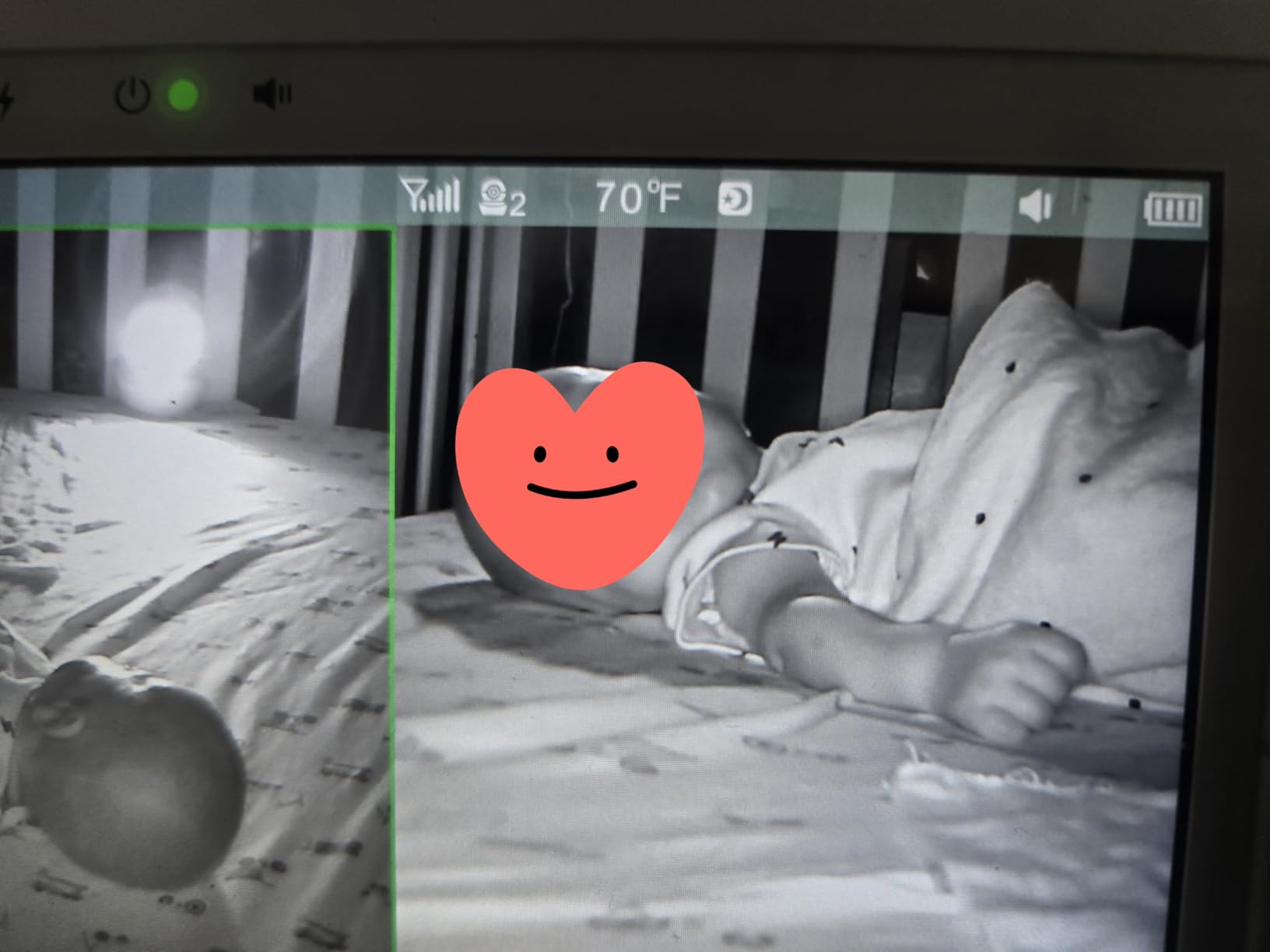
The review base here is large, and 73% of ratings are five stars. Owners most often point to the dual pads covering the whole crib and the relief of a monitor that never touches the baby.
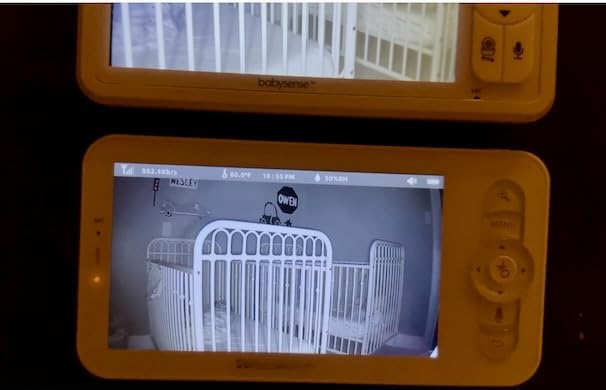
It runs on its own secure connection with no WiFi required, which removes router changes and app updates from the equation. The parent unit also carries an adjustable night light, two-way audio, lullabies and white noise, so night changes are handled on the device.
Why the two pads matter for a newborn?
A newborn spends the first weeks in one spot and then starts scooting. One pad under the head end of the crib misses movement once your baby shifts toward the foot. Two pads spread across the base keep coverage as the baby grows, which is why NICU graduates in the reviews describe this as the reason they could finally sleep.
The blinking green indicator is the underrated feature. Every breath and flinch lights it, so a quick glance confirms the system is working instead of leaving you wondering.
Where the setup frustrates parents?
The bundle is the drawback. Parents who only want movement alerts end up with a screen unit taking up shelf space, and the screen cannot be replaced with the phone you already use.
The pads also demand a firm, flat mattress. Memory foam and extra mattress toppers reduce sensitivity and cause repeat alerts, so this is the wrong pick if your sleep surface is springy. You also need to switch the unit off when lifting your baby out of the crib.
2. Owlet Dream Sock – Best Baby Breathing Monitor for Heart Rate and Oxygen Tracking
- Tracks both heart rate and blood oxygen levels in real time
- Base station and phone alerts let parents respond without watching the app constantly
- Long battery life allows all-night use and a comfortable fabric sock
- Many parents report it reduces anxiety and improves their own sleep
- App setup and Bluetooth pairing can be difficult with connection drops reported
- Range from sock to base is limited in a separate-room nursery
- Subscription features are time-limited and app history is thinner after a session ends
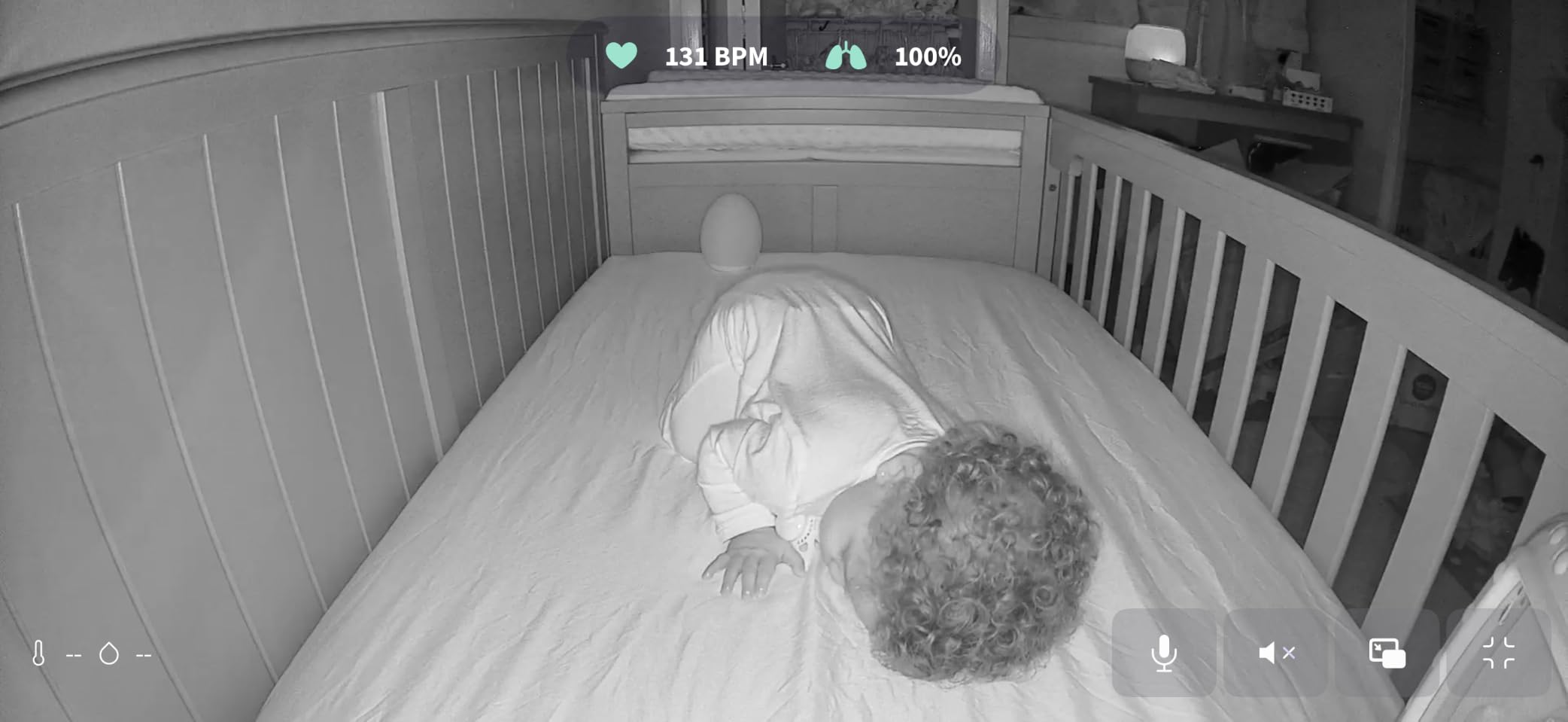
The Owlet Dream Sock is the only monitor in this group that gives you real vitals. It reads pulse rate and blood oxygen levels through a soft sock worn on the foot, and alerts through zone thresholds on both the base station and your phone.
A parent on Glow wrote that she absolutely loved her Owlet and that it was the only reason she was able to sleep the first 14 months of her daughter’s life. That sentiment runs through most positive reviews.
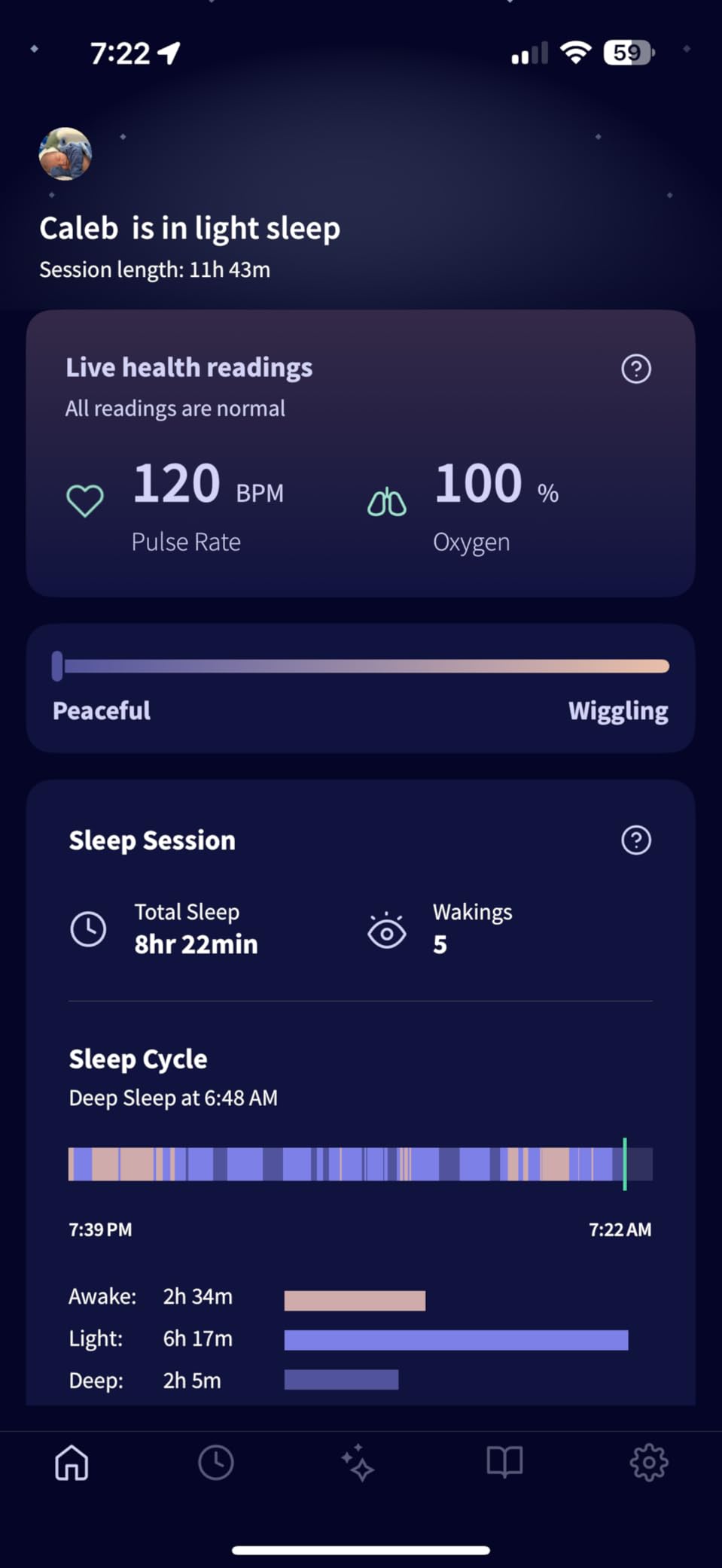
The bundle includes three months of Owlet360 premium features, covering morning reports, long-term health trends and age-based comparisons. Data is protected with 256-bit encryption and elliptic curve authentication.
The 16-hour battery covers several nights of sleep on one charge, and the sock is rated for healthy infants from 1 to 18 months, roughly 6 to 30 pounds. Predictive Sleep Technology also maps wake windows and routines.
Why the vitals data changes the picture?
Movement monitors tell you that breathing stopped. The Owlet also tells you what your baby’s heart rate and oxygen saturation are doing, which answers questions about apnea-of-prematurity patterns that a motion sensor cannot touch.
That makes it the natural conversation starter for a premature baby or one with reflux concerns, provided your pediatrician is comfortable with consumer-grade readings rather than a medical monitor.
Where setup and range cause trouble?
This is the most polarizing monitor in the group, with 67% five-star and 15% one-star. Owners who get the app paired describe accurate pulse readings and better sleep, while a substantial group reports setup frustration, app lag and poor connectivity.
Range is the practical limit. The sock-to-base connection is short, so if your baby sleeps in a separate room with a wall between you, alerts may fire even when readings are fine. It also runs on 2.4 GHz rather than 5 GHz Wi-Fi, and this listing is for the U.S. version only.
3. Lollipop Baby Monitor – Best Baby Breathing Monitor for Camera-First Parents
- No receiver unit needed and you can view from any phone or tablet
- Excellent 1080p day and night image quality with a wide field of view
- Crying detection with adjustable sensitivity cuts unnecessary alerts
- Background audio mode lets you listen while using your phone or at night
- Bendy portable design travels well and core features work without a subscription
- Audio stream depends on Wi-Fi strength and can drop or lag
- Built-in sound machine can drown out the microphone
- App has a learning curve and settings can reset after a reconnect
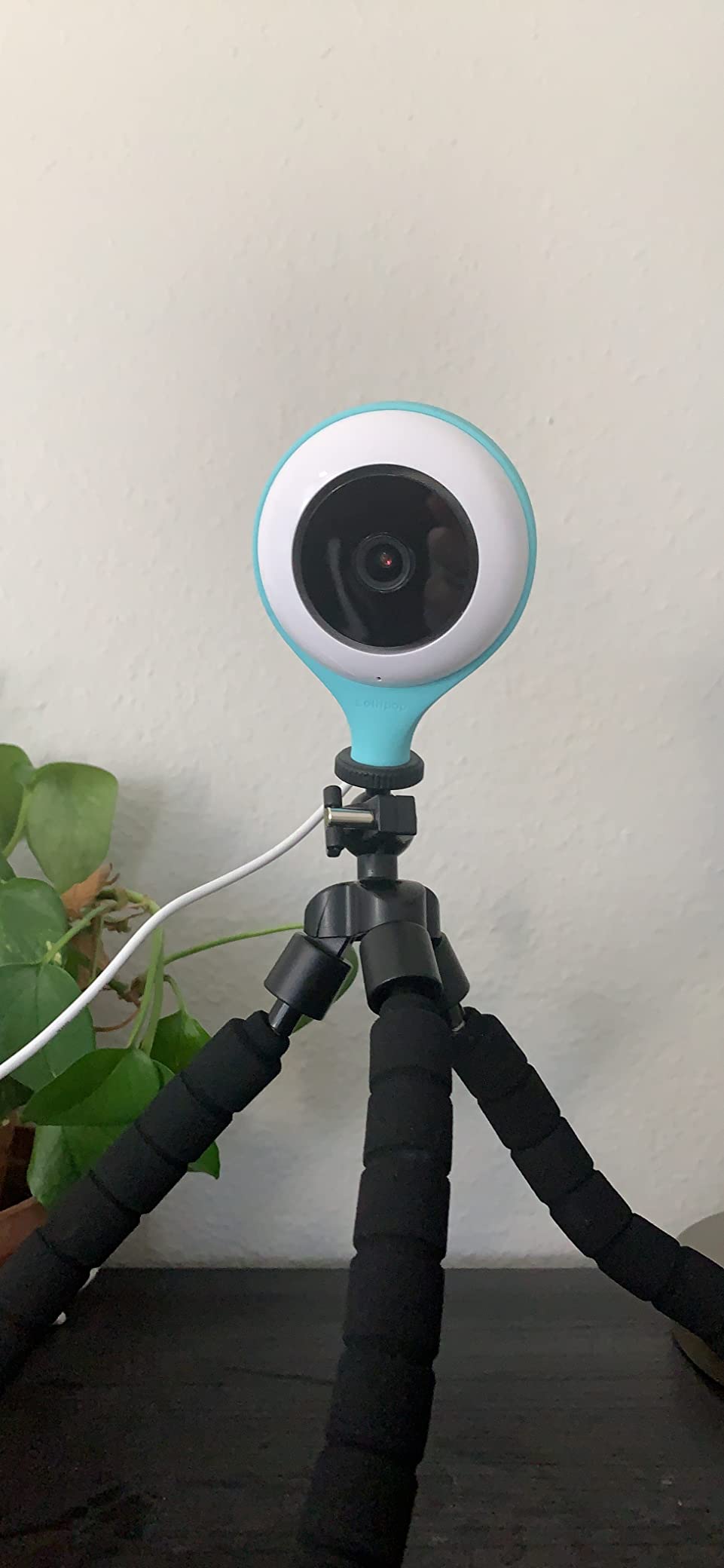
The Lollipop wraps around a crib rail or uses the included wall bracket and streams 1080p video to your phone. Breathing monitoring and sleep position history run through the Lollipop Care in-app plan, which comes with a seven-day free trial.
What makes it interesting here is true crying detection. It separates ambient household noise from an actual crying baby, and the sensitivity is adjustable, which directly reduces the alert fatigue that pushes parents to ignore a monitor.
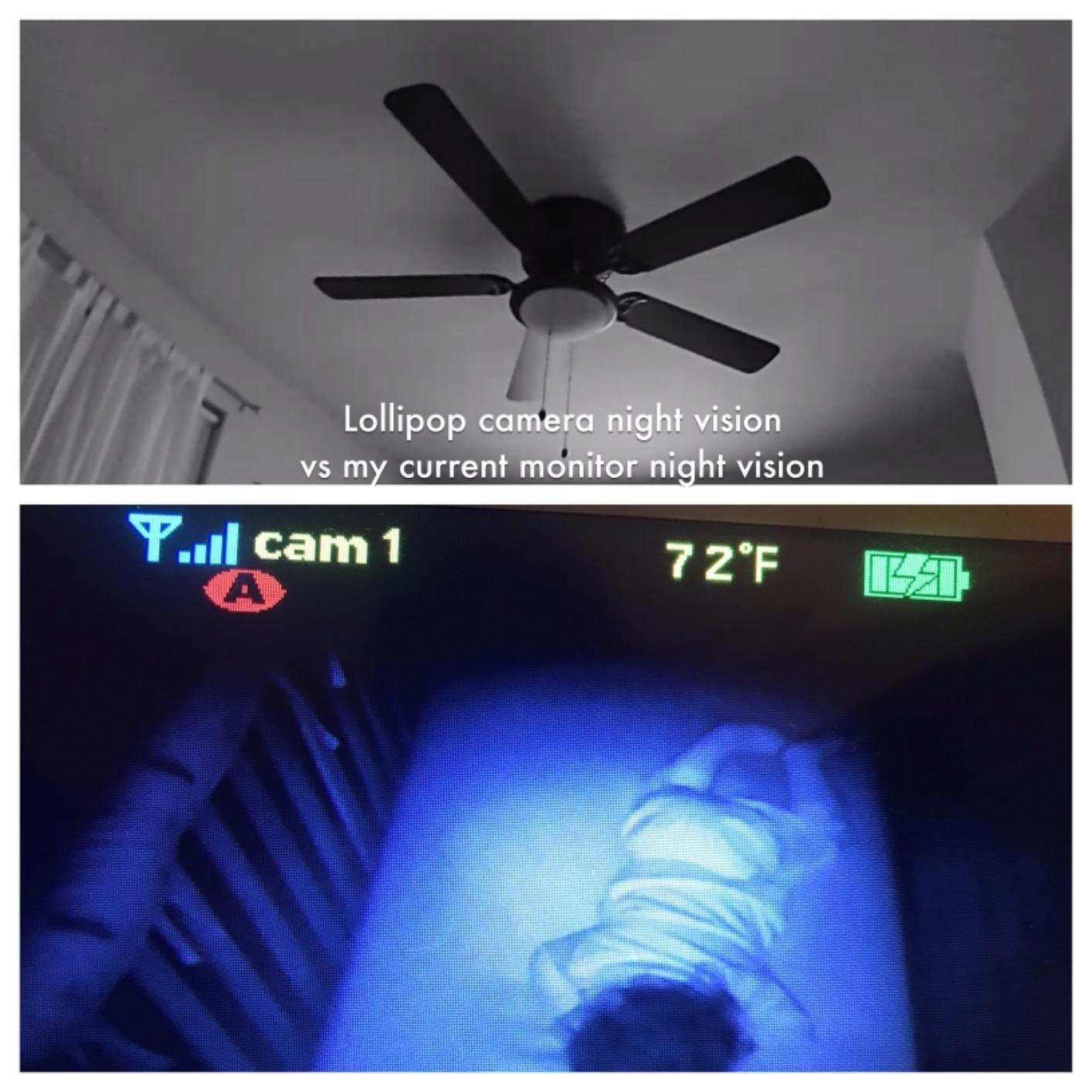
Two features stand out for night use. The world-first audio mode keeps a continuous stream running with your phone screen off, and crossing detection alerts you when your baby moves outside a defined zone in the crib.
You also get 30-second triggered event clips stored for two days, two-way push-to-talk, 12 nature sounds and lullabies, and account sharing over the cloud. Core viewing features stay free.
Why parents who already own a video camera pick this?
If your nursery already runs on a phone-based camera, adding a separate receiver is pointless. The Lollipop skips the parent unit entirely, so the only hardware is the camera itself and one app.
The bendy frame is genuinely portable. It moves between the crib, a bassinet and a grandparent’s house without a base unit to plug in, which suits families whose sleep space changes often.
Where the network dependence bites?
Everything runs over Wi-Fi, so a weak signal or a router change can drop the audio stream or lag the video. Several reviews describe background audio resetting after a power blip and app updates degrading reliability.
The sound machine is a second problem: played loudly enough for your baby, it can drown out the microphone and undercut the crying detection you are paying for. There is also no hardwired fallback if your internet goes down mid-night.
4. Nanit Pro – Top Rated Baby Breathing Monitor for App and Alert Control
- Excellent 1080p picture in both daylight and night vision
- App is well built with deep configurability for sensitivity zones and alerts
- Built-in night light and sound machine are useful for night changes
- Keeps a local connection even when the internet drops
- Multi-user access lets grandparents and caregivers check in
- Paid subscription required for sleep analytics and video history beyond 24 hours
- Pixel quality falls behind newer 2K cameras when zoomed in
- Sleep efficiency calculations are described as rigid
- Sound and motion alerts can be triggered by street noise
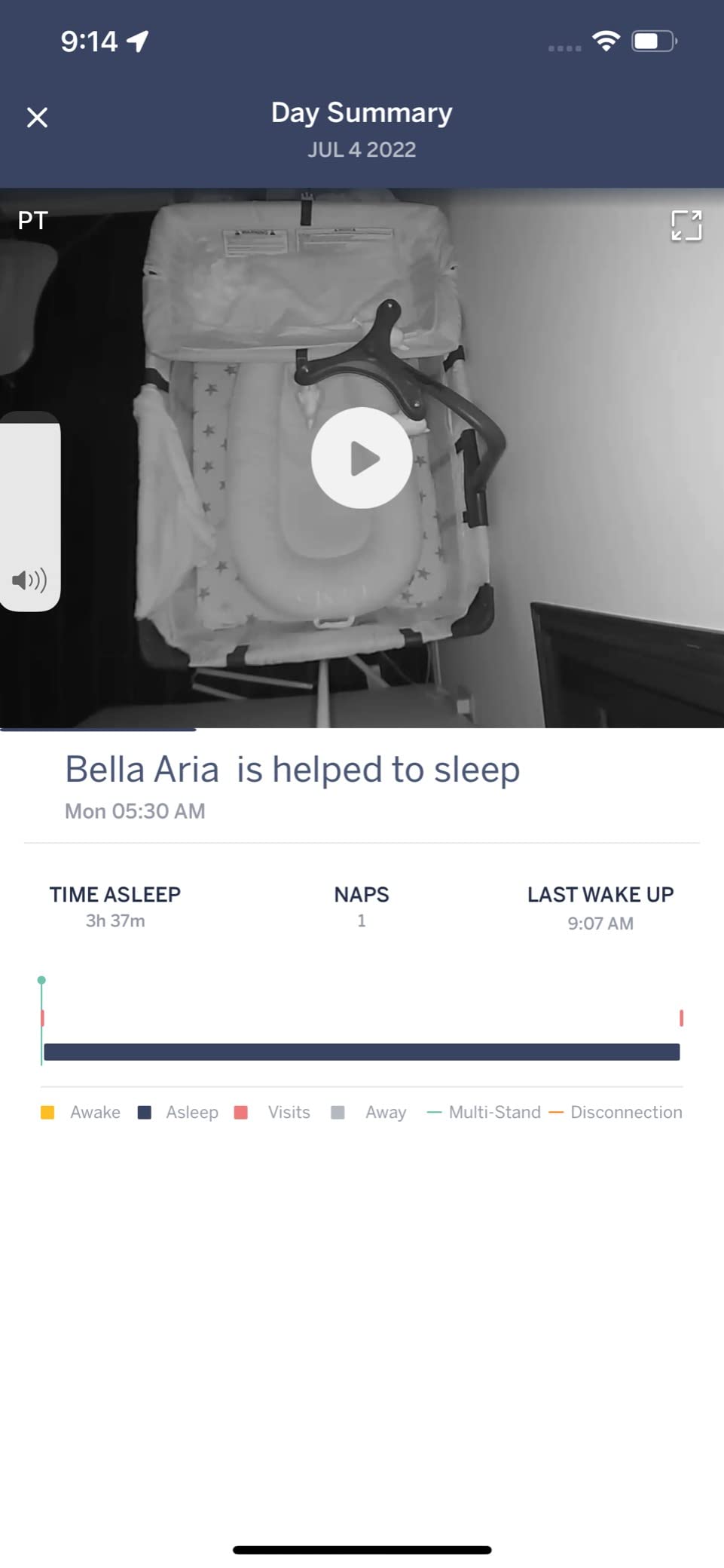
The Nanit Pro holds the highest rating of anything we reviewed, at 4.6 stars with 82% five-star reviews. The camera is 1080p HD with night vision, two-way audio and live temperature and humidity readings, and it includes an ASTM-certified Gen 1 floor stand.
Breathing detail comes through the Nanit Insights sleep plan, which offers a free trial and auto-captured sleep data with a two-day look back. Treat it as a video monitor with sleep analytics rather than a dedicated movement alarm.
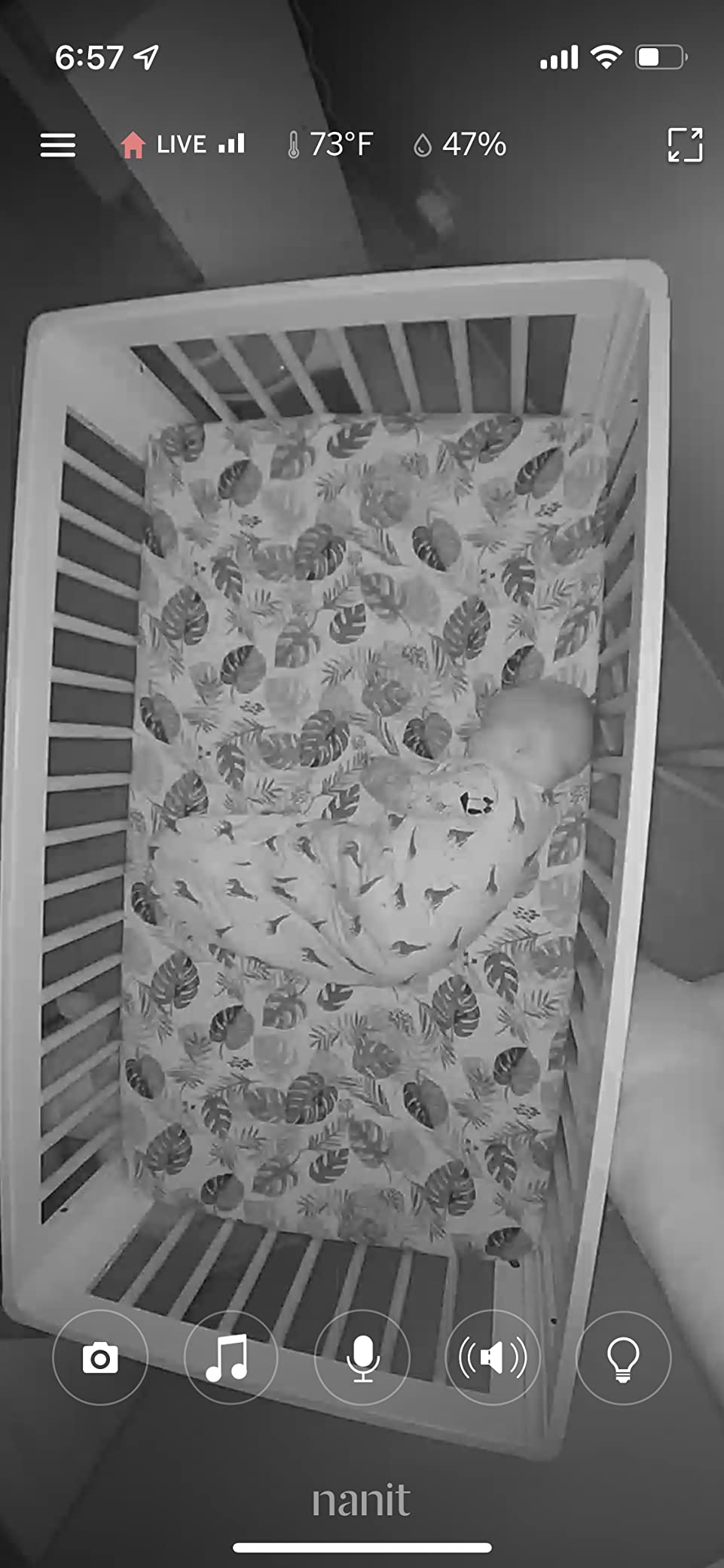
Notifications adapt as your baby grows, adding cough detection to cry detection alongside sound and motion reports. Split Screen gives you simultaneous dual-camera views, which parents with twins or a toddler in an adjoining room rate highly.
Security is handled properly here, with 256-bit AES encryption, two-factor authentication and multi-user access control. Owners also mention support that replaced a cracked floor stand collar at no charge.
Why the app matters more than the sensor?
A Nanit owner on r/cosleeping said she has a lot of anxiety with nap and nighttime in the crib, and that this allowed her to sleep. That reaction is about control of alerts rather than a breathing number.
Sensitivity zones, per-event settings and multi-user access let you tune who gets notified about what. For caregivers beyond the parents, that configurability is the deciding factor.
Where the subscription bites?
Nanit Insights is required for sleep analytics and for video history past 24 hours, and several buyers describe it as an expensive add-on stacked on top of the hardware.
Other limits: image quality trails newer 2K and 2.5K cameras when you zoom in, sleep efficiency figures are described as rigid rather than comprehensive, and passing trucks can trigger sound and motion alerts. Watch vibration alerts on smartwatches also cannot be tailored for deaf or hard-of-hearing users.
5. Levana Oma Sense – Best Baby Breathing Monitor for Newborns 0-6 Months
Levana Oma Sense Portable Baby Breathing Movement Monitor with Vibrations and Audible Alerts Designed to Stimulate Baby and Alert Parents
- Gently stimulates baby with vibration before alerting parents
- No skin contact and no Wi-Fi
- radio or Bluetooth signals
- Portable and simple to clip over a diaper or buttoned onesie
- Designed for infants 0-6 months so it is outgrown quickly
- Audible alarm is fixed and cannot be adjusted in volume or tone
- Must be re-armed and worn correctly each sleep
The Levana Oma Sense does one thing without a screen, an app or a cable. It slips over the diaper or a buttoned onesie and monitors abdominal movement continuously, making no contact with your baby’s skin.
Its signature feature is the two-stage alert. After 15 seconds of no abdominal movement, the unit delivers a randomized vibration to gently rouse your baby, then sounds an audible alarm five seconds later if movement has still not resumed.
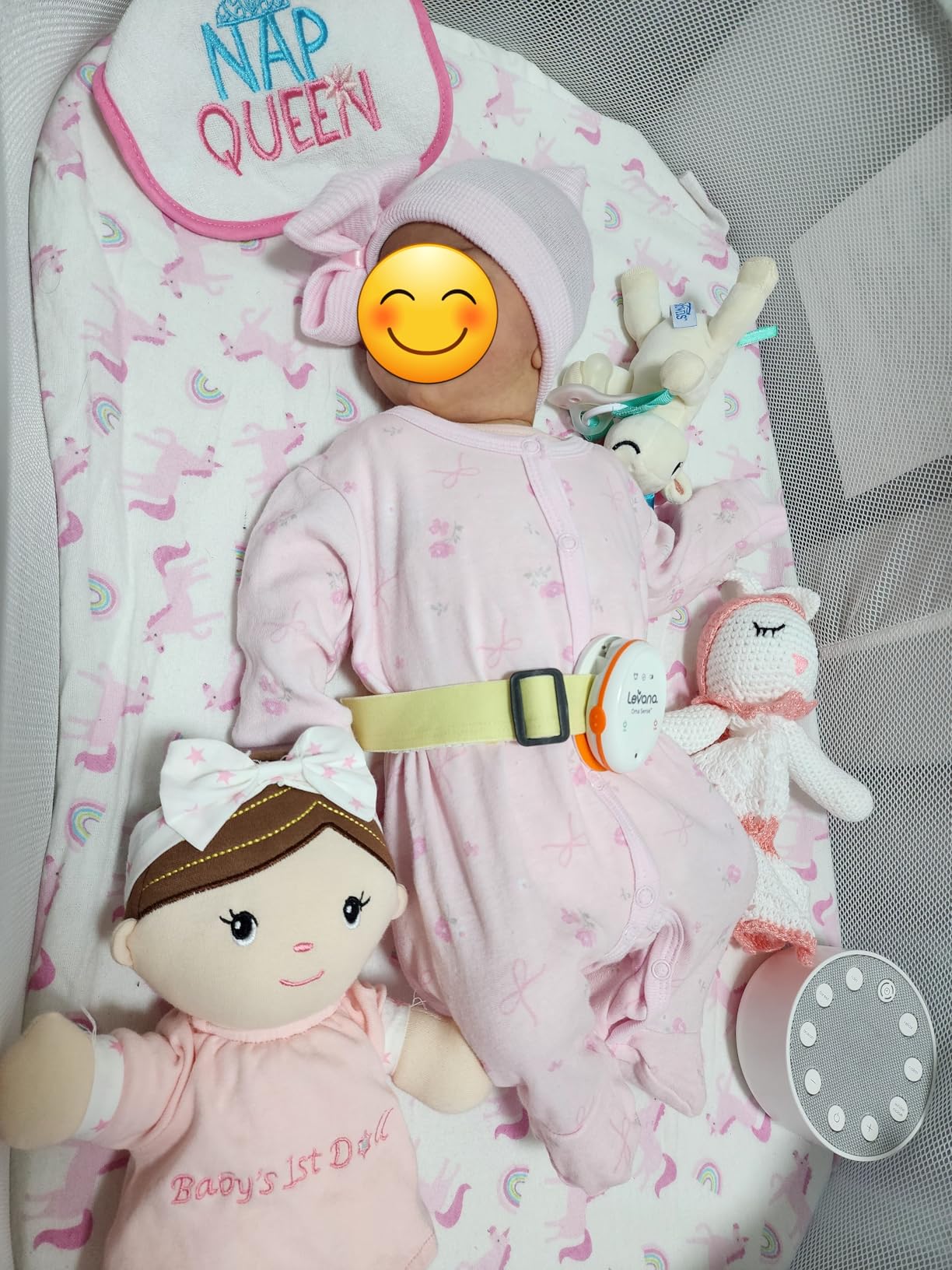
That design is the reason 68% of reviews are five stars. Parents describe the vibration stage regularly letting a baby restart normal breathing before the alarm ever sounds, which turns a scare into a non-event.
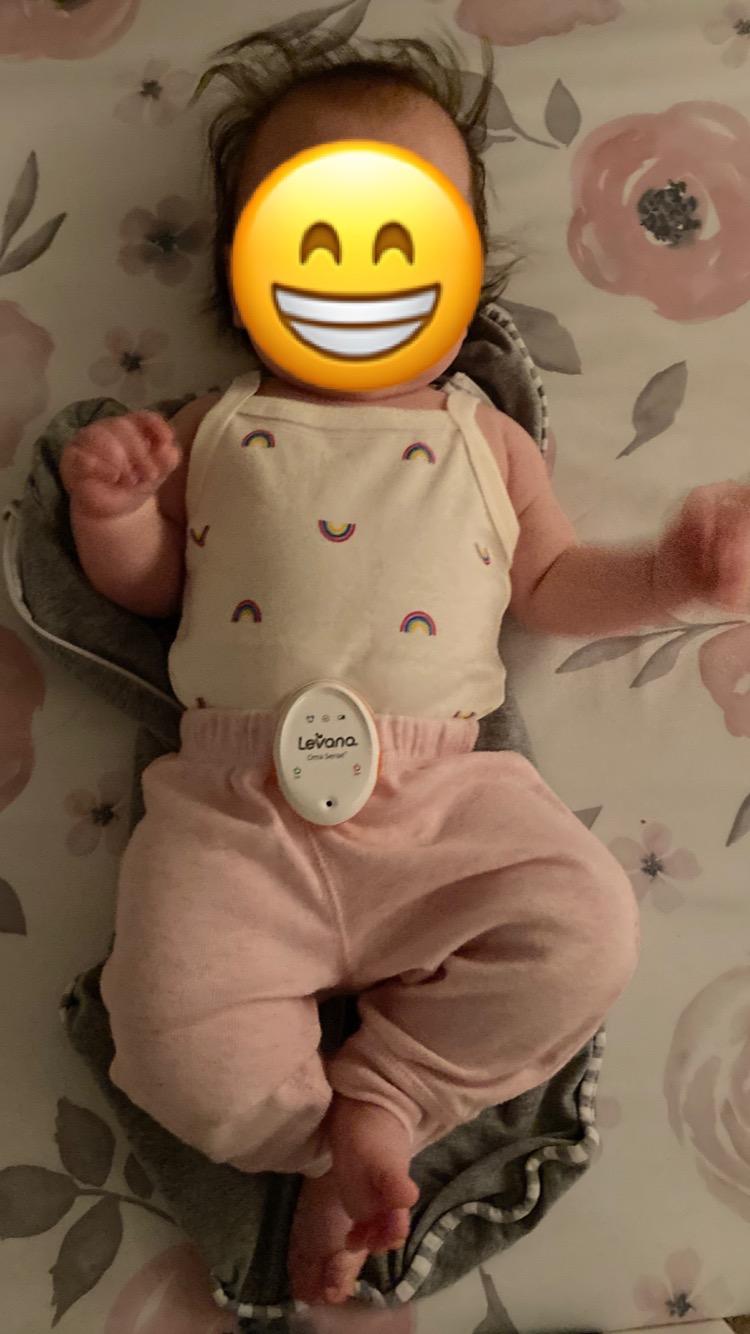
A flashing blue indicator light confirms monitoring is active. The unit runs on batteries, is built with medical-grade materials and was designed in Canada, and it emits no Wi-Fi, radio or Bluetooth frequencies at all.
Why zero wireless signals appeals to a lot of parents?
Privacy concerns run through parent forums, and this device sidesteps them. There is no app, no account and no camera, so nothing about your baby leaves the nursery.
It also survives a power cut, since battery power keeps the alarm working. That matters more than it sounds when the whole point of the device is to wake you at 3am.
Where the six-month limit shows up?
The stated age range is 0 to 6 months, so a monitor you will use longest is the one you replace first. Plan on a second purchase or a switch to a camera-based option later.
The alarm itself is fixed. You cannot adjust the volume or tone, which is awkward in a small apartment or when a baby is a light sleeper. And it has to be clipped on correctly and re-armed for every single sleep.
6. Babysense 7 – Best Baby Breathing Monitor for Under-Mattress Detection
Babysense 7 Baby Movement Monitor, 2 Sensor Pads, Non-Wearable, No WiFi
- Non-contact under-mattress monitoring with nothing attached to the baby
- Two sensor pads cover the whole crib as the baby grows and moves
- Blinking green indicator confirms every breath and flinch is detected
- Alerts after 20 seconds of no movement and works through mattresses and bedding
- No app
- no WiFi
- no camera and no subscription
- Very sensitive to air movement and a ceiling fan can trigger false alarms
- Not portable and best reserved for the primary sleeping surface
- You must remember to switch it off when lifting the baby out
- Not compatible with memory foam mattresses
- Heavy sleepers can trigger false positives
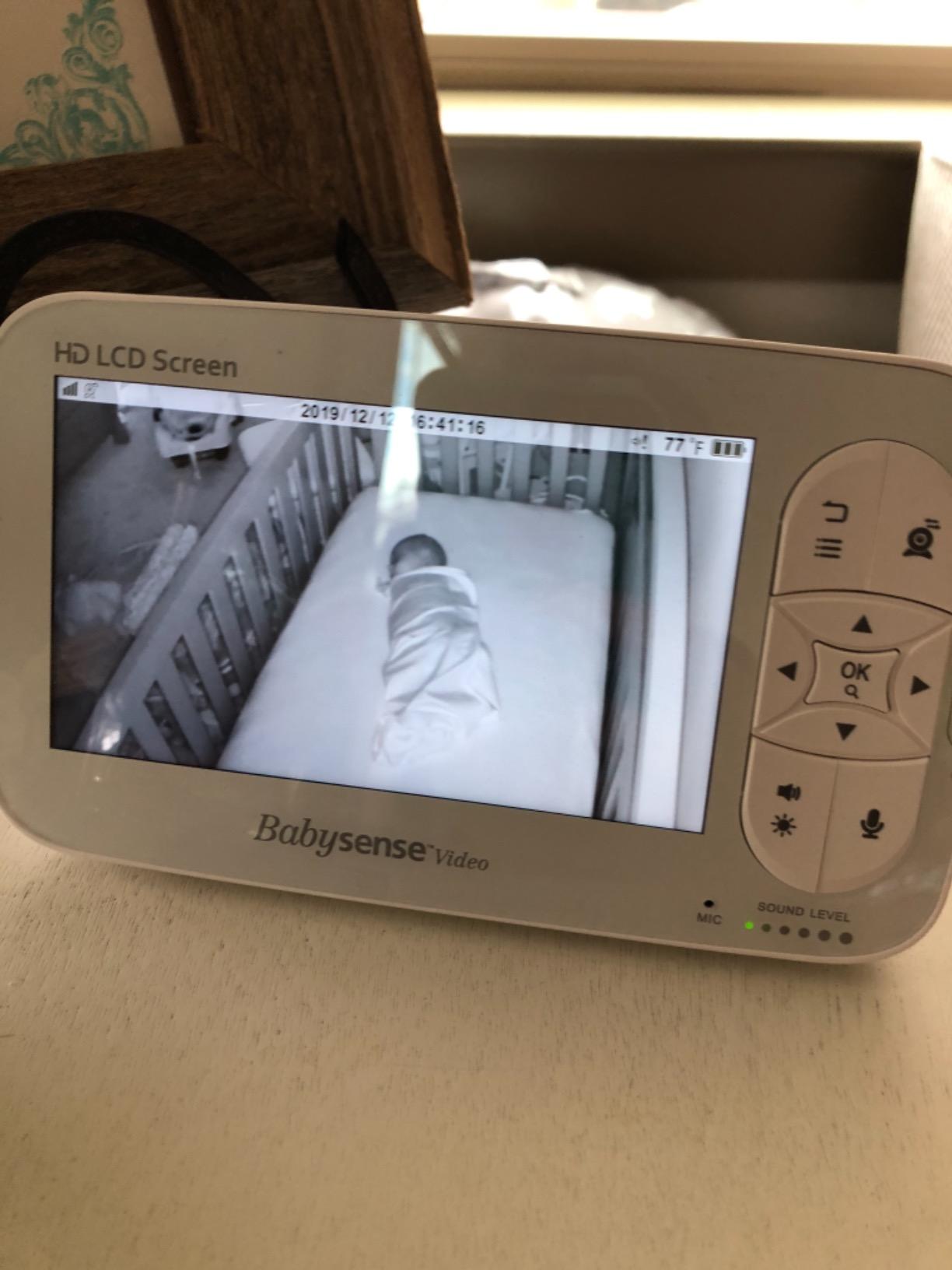
The Babysense 7 is the standalone movement monitor without a camera bolted on. Two sensitive sensor pads sit under the mattress on a firm flat surface, and nothing touches your baby at any point.
It alerts if no movement is detected within 20 seconds or if movement slows. Two pads cover the entire crib or bed area, so a baby who scoots toward the foot is still tracked, and cords stay contained on the control unit.
Reviewers who bought this for a NICU graduate describe it as the reason they could finally sleep, with several recounting alarms that fired during real episodes of stopped breathing or repositioning. 77% of ratings are five stars.
There is no app, no account, no camera and no subscription. The unit runs on alkaline batteries averaging 24 hours of life, and it carries a one-year manufacturer warranty. It weighs 1.8 pounds, which is plenty for a crib-side setup.
Why pad-based detection suits a newborn’s sleep rhythm?
Newborn breathing is irregular, with normal pauses between breaths. A pad reads the pattern as continuous micro-movement rather than a single breath, so it tolerates those pauses better than many clip devices do.
It also travels well in one specific sense: there is nothing on your baby’s body, so nothing to fit wrong at 2am. Owners who previously struggled with sock sizing and clip position tend to move to this quickly.
Where fans and mattresses cause trouble?
Air movement is the single biggest source of false alarms. Multiple reviews note that an air conditioner or fan aimed at the crib gets picked up as movement, so airflow across the sleep space needs to be a deliberate choice.
It cannot sit on memory foam, and heavy sleepers can trigger false positives. Because it is tied to one mattress, it is also useless for travel or for moving between a crib, a bassinet and a bedside. Batting the mattress to test the green light is the standard reassurance ritual among buyers.
7. Snuza Hero – Best Baby Breathing Monitor for Travel and Portability
Snuza Hero Baby Movement Monitor with Patented Sensor Technology for Reliable Movement Monitoring and Alerts. No WiFi, Cords, or Sensor Pads, Portable and Easy to Set Up and Use.
- Direct diaper clip gives the most consistent movement detection of the wearable options
- Vibration first and audible alarm second so baby may be roused before parents are startled
- Six-month battery life means no charging routine and true portability
- No app
- no WiFi and no account to manage
- Small
- light and includes a carry case for travel
- Diaper clip must be repositioned each sleep and can dislodge on very active babies
- No heart rate or oxygen data and movement only
- Not a medical device and not intended for co-sleeping or bed-sharing
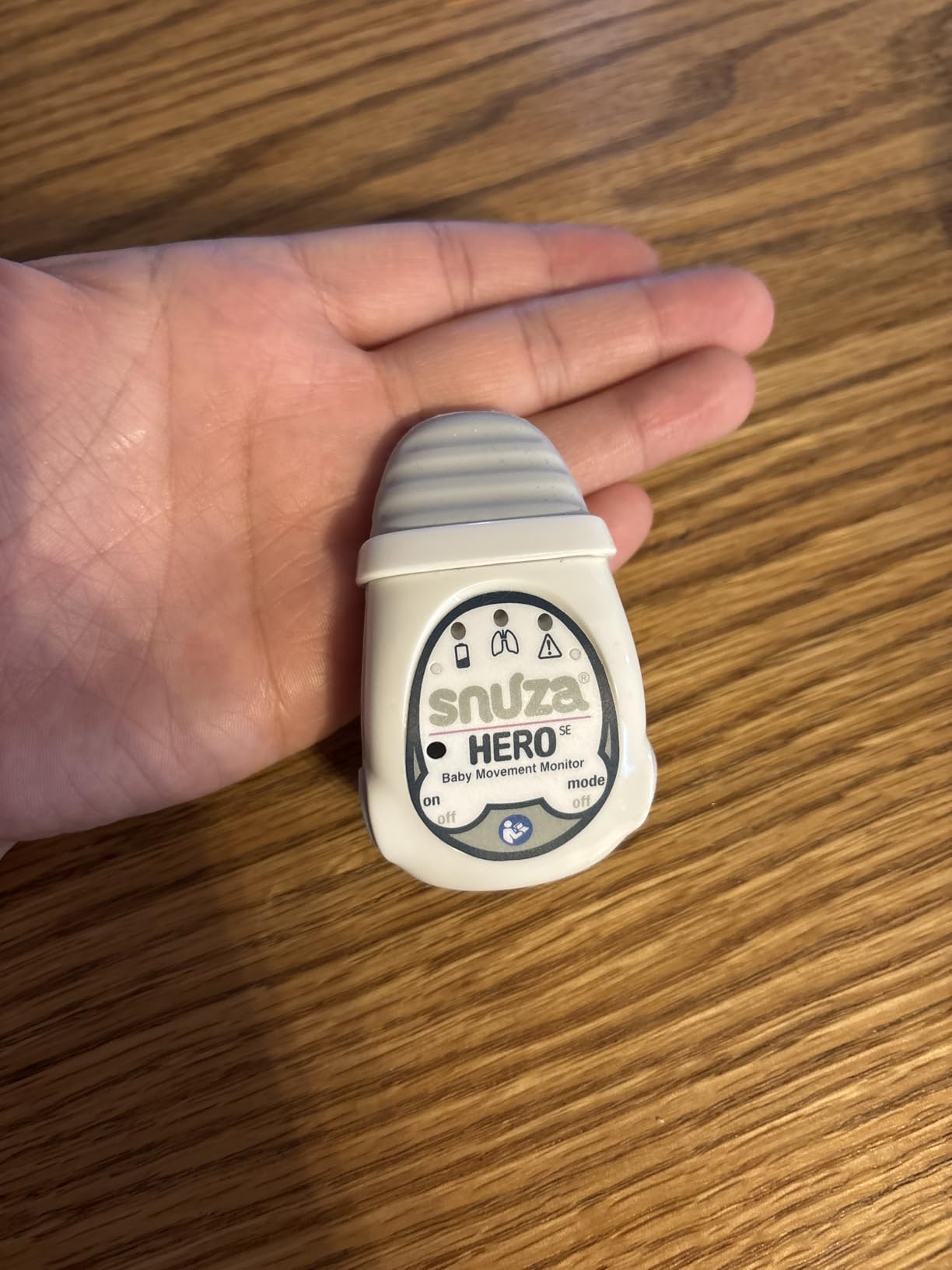
The Snuza Hero clips directly to your baby’s diaper and reads abdominal movement through its patented direct-touch sensor. It is 1.38 ounces, runs on a lithium-ion battery lasting up to six months, and comes with a protective carry case.
Alert timing is the 15-second vibration followed by an audible alarm five seconds later. A green indicator light and an optional ticking sound confirm that movement is being detected, which parents describe as the feature that lets them relax.
80% of ratings are five stars, and the review language keeps returning to reliability. Owners praise the direct-touch sensor for catching every breath and flinch without the false alarms that under-mattress pads are prone to.
There is no Wi-Fi, no app, no cords and no account to set up. You clip it on and go, which makes it the easiest of the wearables to move between a crib, a bassinet and a grandparent’s house.
Why direct touch beats a pad for consistency?
The sensor sits against your baby rather than reading through a mattress, so signal strength does not depend on mattress firmness, toppers or bedding. That is the single biggest reason it out-performs pads on false alarms.
For a baby who is rolling or kicking hard, direct contact also captures the small abdominal flinch that matters most. Just note the manual’s own guidance: it is not intended for co-sleeping or bed-sharing.
Where the clip becomes the weak point?
Every sleep requires re-clipping and repositioning. Very active babies can dislodge it, and a dislodged sensor cannot distinguish a sleeping baby from an empty crib, so it will alert.
You also get movement data only. There is no heart rate or oxygen reading, so this cannot substitute for the vitals your pediatrician may want after a NICU discharge. Never use it in a car seat, because vibration triggers false alerts.
8. Sense-U AI 2.5K Camera – Best Baby Breathing Monitor for Sharp Video and No Monthly Fee
- Sharp 2.5K daytime and low-light video with wide pan and tilt coverage
- Background audio continues even when the phone is locked or the app is closed
- One-time purchase with no required monthly fee
- Quick setup with full pan-tilt-zoom control from the phone
- Multiple rooms and children viewable on one screen
- Movement detection requires the separate Sense-U Movement Badge accessory
- Some users report units failing after a few weeks and difficulty obtaining a refund or replacement
- Cloud storage is an optional extra cost if you want remote video history
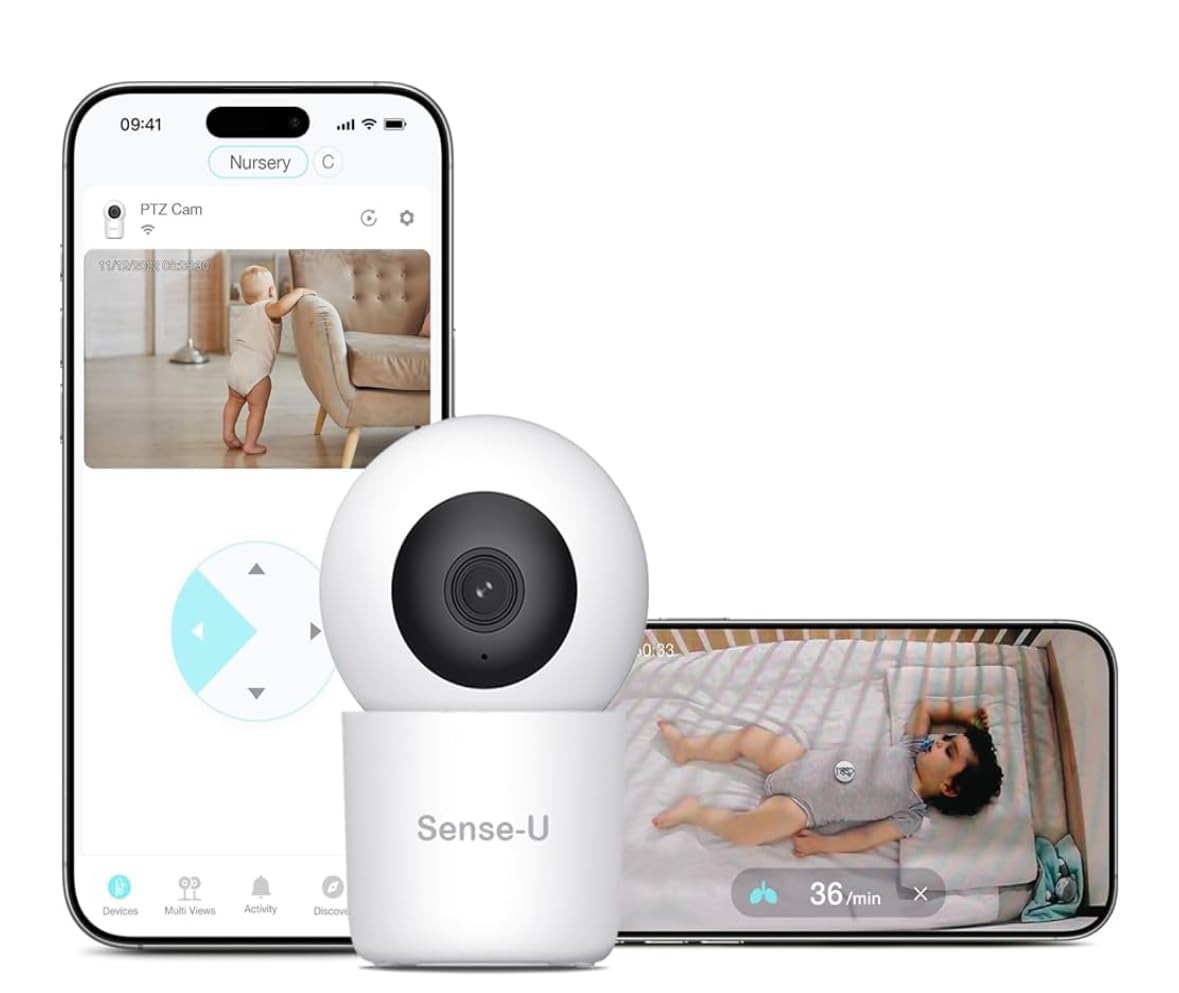
The Sense-U pairs a 2.5K pan-tilt-zoom camera with 345 degrees of pan and 50 degrees of tilt, which is the sharpest sensor in this roundup. Night and low-light video stays clear, and you can control the camera fully from your phone.
Sleep and movement detection runs when you pair it with the Sense-U Movement Badge. Because the camera watches the crib continuously, the app has enough context to distinguish a still baby from a scene with no baby in it.
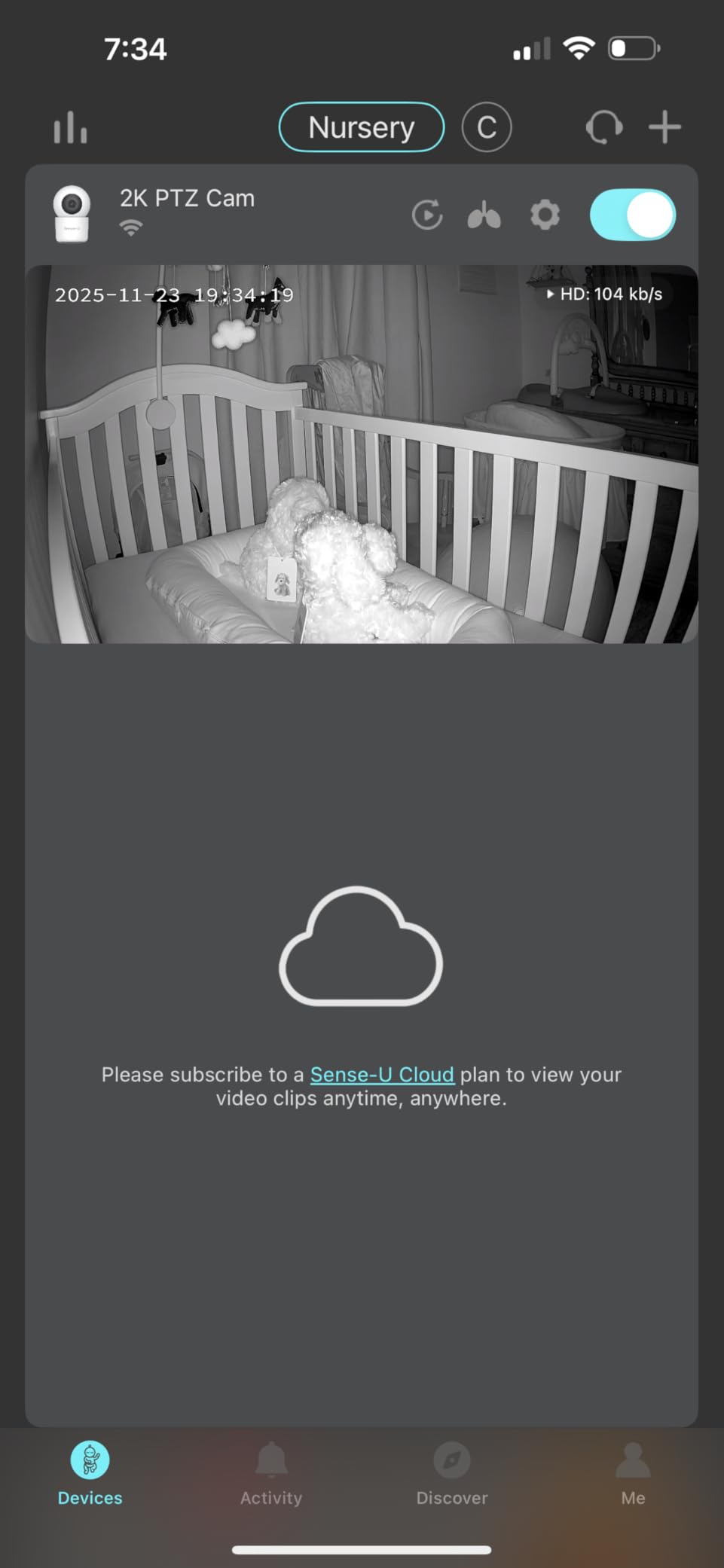
The feature we liked most is background audio. It keeps working when the phone is locked or the app is closed, which closes the gap that makes many phone-only monitors useless overnight.
There is also no required monthly fee. Recording to a local SD card keeps everything on a one-time purchase, and cloud storage is optional. Multi-room and multi-child views, enterprise-level encryption, optional two-factor authentication and a Private Mode that fully shuts the camera down round out the privacy controls.
Why a wider lens changes what a monitor is for?
A 2.5K sensor with 345 degrees of pan means one camera can cover a nursery, a playpen and a changing table. Parents with twins or a second child in an adjoining room get single-screen multi-room views rather than a second device.
Background audio is the quiet hero feature. Once the stream survives a locked screen, you stop checking the app manually, which is where most monitoring habits collapse by the third month.
Where durability and the accessory hold it back?
This is a newer listing with a much smaller review history than the established monitors, and durability is the reported weak point. Several owners describe cameras failing within a few weeks and a difficult refund or replacement process.
Breathing detection is also incomplete out of the box. Without the separate Movement Badge you have an excellent camera rather than a breathing monitor, and cloud storage becomes an added cost if you want remote video history.
9. BEMPU Baby Movement Monitor – Best Baby Breathing Monitor for Lightweight Wearables
BEMPU Baby Movement Monitor – Sleep Monitor with Gentle Vibration Alerts
- Very light at 13 g with a stable
- non-bulky clip that does not disturb sleep position
- Two-step alert lets a gentle vibration prompt movement before the audible alarm
- Works with or without WiFi using Bluetooth Low Energy so it travels well
- Up to 7 days of battery per charge with about a 1 hour recharge
- App works on both Android and iOS with customizable settings
- Must be attached to the baby's clothing or diaper for every sleep
- App connectivity is required for smart alerts even though the device works standalone
- Newer listing with a smaller review history than the established monitors
The BEMPU is the lightest breathing monitor we reviewed, at 13 grams, and the clip is designed not to shift your baby’s sleep position. That matters more than it sounds, because a bulky clip is its own source of disturbed sleep.
It tracks gentle abdominal movement and uses a two-step alert: a soft vibration first, then an audible alarm if movement is still not detected. The vibration is gentle enough that many babies simply resume moving and never reach stage two.
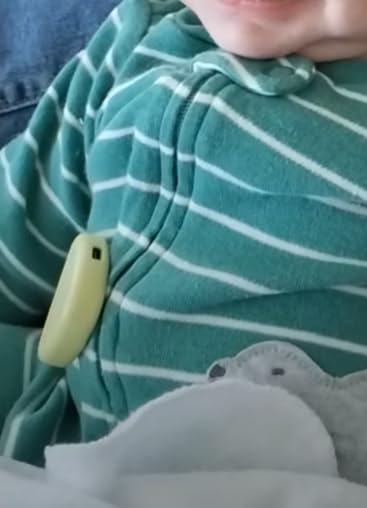
Battery life is the standout number. One charge gives up to seven days of typical daily monitoring and refills in about an hour, so there is no nightly charging habit to build.
It uses a Bluetooth Low Energy module and works with or without Wi-Fi, and alerts go to an app on both Android and iOS with customizable settings. It is FCC-certified and made with skin-contact materials intended to be baby-safe.
Why low weight is a real feature here?
Every gram on a newborn’s abdomen is a reason to shift, and shifting means re-clipping. At 13 grams this is the least intrusive wearable we saw, so the chance of it staying put through a full night is meaningfully better than bulkier designs.
Moving the same device between crib, bassinet and bedside is genuinely practical. Families whose baby changes sleep spaces several times a day would otherwise be carrying a whole monitor system around.
Where the app dependency shows up?
Notifications need the app connection even though the device itself works standalone. If your phone is out of range or the app is closed, you lose the smart alerts and only keep the local vibration.
Like the Snuza, it must be attached to clothing or the diaper for every sleep, and it cannot be used during car seat travel because vibration confuses the sensor. With a small review history so far, it is the pick to watch rather than the one to commit to blindly.
10. CuboAi Sleep Sensor Pad – Best Baby Breathing Monitor for CuboAi Camera Owners
Cubo Ai Sleep Sensor Pad – Real-Time Baby Micro Movement Tracking & Motion Detection with Proactive AI Baby Safety Alerts, Non-Contact | Must be Paired with Cubo Ai Plus Smart Baby Monitor
- No wires
- bands or wearable attached to the baby
- Syncs with the CuboAi camera to show real-time breathing movement on the phone
- Quick five-minute setup that fits under a crib mattress
- Coverage is wider than comparable sensor pads so a baby who scoots is still tracked
- Only works if you already own the CuboAi monitor ecosystem
- Micro movement readings such as movements per minute have no real physiological meaning
- Frequent false alerts when the baby moves around the crib
- Pad creates a noticeable bulge in the middle of the mattress
- Some users report constant disconnections from the camera and app
The CuboAi pad uses four motion sensors under the mattress and cross-checks them against the camera in AI mode. If the camera sees your baby in the crib while the pad registers no micro-movement, it sends an alert.
That dual-input logic is the interesting idea here. Rather than trusting one sensor, the system treats disagreement as the signal, and coverage is claimed to be four times wider than comparable pads so a scooting baby stays tracked.
Installation is non-contact and one-time. You lift the mattress and lay the pad on the bed slats, which takes about five minutes.
Why the camera cross-check is worth testing?
Pad-only systems alert when they feel nothing, which is indistinguishable from your baby having simply moved away. Confirming with the camera means fewer of those ambiguous alerts, and the app shows real-time breathing movement from both inputs.
For parents who already own a CuboAi monitor, the pad is a natural add-on rather than a new system. There are no wires and nothing worn by the baby.
Where the alert volume is a real problem?
This is the lowest-rated product we reviewed, at 3.6 stars with 22% one-star ratings. Owners describe repeated alerts when the baby moves around the crib, sometimes every 10 to 15 minutes, which is exactly the pattern that trains parents to ignore a monitor.
There are practical limits too. The pad only works inside the CuboAi ecosystem, it creates a noticeable bulge in the middle of the mattress, and it is not recommended for sprung or Newton-style mattresses. Reported disconnections from the camera and app are common.
Why Your Baby Breathing Monitor Keeps Going Off?
False alarms are the number one complaint across every category, and they are the reason the AAP counsels against consumer monitors. The cause usually comes down to the sensor type.
Under-mattress pads pick up air movement. A ceiling fan, an air conditioner aimed at the crib or even a strong heating vent reads as breathing. Many owners blame the monitor when the real fix is turning off the fan.
Clip monitors fire when the sensor shifts off the baby’s abdomen or when the baby rolls clear. Re-clip at the start of every sleep rather than at bedtime, and check the position after feeds and nappy changes.
Camera systems alert on sound and motion, so street noise, a truck or a siren can trigger them. Tighten sensitivity zones and turn off motion alerts where audio alone is enough.
Wearables like the Owlet can drop their connection to the base station through walls, producing alerts with no change in your baby’s actual readings. Test the range of your setup before you need it at 3am.
Before anything else, confirm your baby is fine. Walk in, check breathing and colour, and only then investigate the device. Repeated false alarms are worth solving, because a monitor you have learned to ignore is worse than no monitor at all.
How to Choose a Baby Breathing Monitor?
Start with the detection method, because it decides everything else. Nothing attached to the baby is the least intrusive and the easiest to keep correctly positioned. A wearable gives more direct data. A camera gives you the most flexibility but depends on your network.
Next, check the mattress and the room. Pads need a firm, flat surface and fail on memory foam. Wearables need the clip or sock to stay in place, which takes practice. Cameras need stable Wi-Fi in the nursery. If you already own a video baby monitor, a camera-based option like the Lollipop may be all you need.
If you already own a bassinet, our best baby bassinets for newborns guide covers which sleep surfaces pair well with pad-based monitors. Choosing the sleep surface first and the monitor second avoids the compatibility problems we saw repeatedly.
Alert threshold and two-stage alerts
Most monitors trigger at 15 or 20 seconds of no movement. A two-stage alert, where a vibration comes first and an audible alarm follows, gives your baby a chance to resume normal breathing before anyone panics. Every wearable on our list does this.
Check whether you can adjust the sensitivity, and whether the audible alarm can be turned down. Fixed-volume alarms are a real problem in small apartments and with light sleepers.
Wi-Fi versus dedicated connection
Wi-Fi monitors stream video, accept remote viewing and support multi-user access, but they depend on your router and phone. Dedicated-frequency systems such as the Babysense 7, Snuza Hero and Levana Oma Sense emit no Wi-Fi, radio or Bluetooth frequencies at all, keep working through a power cut, and share nothing about your baby with anyone.
Privacy-sensitive households should check whether encryption, two-factor authentication and a physical Private Mode are present. The Nanit Pro, Sense-U and Owlet all publish details on that front; the radio-free devices sidestep the question entirely.
Subscription and hidden costs
Total cost matters more than sticker price. The Owlet Dream Sock bundle includes three months of Owlet360, the Nanit Pro gates sleep analytics and history past 24 hours behind Nanit Insights, and Lollipop puts breathing monitoring and sleep tracking in the Lollipop Care plan with a seven-day trial. The Babysense 7, Snuza Hero, Levana Oma Sense and BEMPU add no ongoing fee for core alerts.
Also budget for extras. Replacement socks and clip units in larger sizes add up over a year, and spare sensor pads are worth having on hand.
Commercial monitors versus medical-grade apnea monitors
Nothing on this list is a medical device, and several manuals say so explicitly. A medical-grade apnea monitor is prescribed for a preterm baby or a NICU discharge and is fitted and monitored by a care team. If your pediatrician recommends one, buy that instead.
For a healthy full-term baby with no breathing concerns, a commercial monitor is a comfort purchase. A parent on r/pregnant offered the most common advice in forums, which is to room-share for the first three to four months rather than buy hardware.
When to stop using a monitor?
Most families stop around the three-month mark, when rolling begins and clip monitors become unreliable, and many others stop at around twelve months when the SIDS risk window closes. Treat the point at which you stop reaching for the monitor as real progress.
If your nursery setup is temporary, choose a portable monitor like the Snuza Hero rather than a pad. For families who travel often, our best travel systems for newborns guide covers the rest of the setup.
Frequently Asked Questions
Do pediatricians recommend the Owlet?
Generally no. The American Academy of Pediatrics has not endorsed the Owlet or any consumer monitor for a healthy full-term baby, because no study has shown these devices reduce SIDS risk. Pediatricians may recommend a medical-grade apnea monitor instead for a premature baby or one discharged from the NICU.
Why are pediatricians against the Owlet?
The main concerns are false alarms and the anxiety they create. A monitor that wakes a parent several times a night for no reason trains everyone to ignore the alarm, which defeats its purpose. The Owlet is also the priciest option in this group, with many of its features paywalled after the included trial period.
Is Snuza or Owlet better?
The Snuza Hero monitors movement only, costs far less, needs no app and runs for up to six months on a charge, making it the simpler choice for a healthy baby. The Owlet Dream Sock tracks pulse rate and blood oxygen as well as movement, which matters for a baby with medical or breathing concerns.
Is it worth getting a baby breathing monitor?
For a healthy full-term baby, it is optional rather than necessary, since no monitor prevents SIDS and safe sleep setup matters more. It is genuinely useful for premature, reflux or medically fragile babies, and for anxious first-time parents who want to stop walking into the nursery to listen.
Can a baby breathing monitor prevent SIDS?
No. No consumer monitor has been shown to prevent SIDS. The main protective measures remain placing your baby on their back on a firm, flat, bare surface in their own crib, in the same room as you for at least the first six months, with no pillows, blankets or bumpers.
What is the FDA-approved baby oxygen monitor for babies?
The Owlet Dream Sock is the consumer option in this group that reports blood oxygen levels, using pulse oximetry through a sock worn on the foot. For a baby who needs monitored oxygen saturation, a hospital-prescribed medical-grade monitor is the appropriate device rather than a consumer product.
Why does my baby breathing monitor keep going off?
Under-mattress pads pick up fans and air conditioning, clip monitors alert when they shift off the baby’s abdomen or when your baby rolls clear, and cameras trigger on street noise. Match your fix to the type: stop airflow across the crib, re-clip before every sleep, or tighten camera sensitivity zones.
When should I stop using a baby breathing monitor?
Many families stop around three months, when rolling makes clip monitors unreliable, and most stop by around twelve months when the SIDS risk window closes. There is no medical rule, so stop when you stop needing to check, and expect to feel the change over a few nights.
Our Verdict on the Best Baby Breathing Monitors for Newborns
Choose the Babysense True Sleep HD if you want the most complete package: non-contact under-mattress detection plus video, with no Wi-Fi dependency and the largest review base on this list.
Choose the Owlet Dream Sock when you need pulse rate and blood oxygen rather than movement alone, and accept the app, the subscription and the range limits. Choose the Snuza Hero or Levana Oma Sense when you want a simple wearable with no app, no camera and no recurring fee.
Whatever you pick in 2026, use safe sleep practices as the real safety plan. A monitor gives you data and reassurance, not protection.