
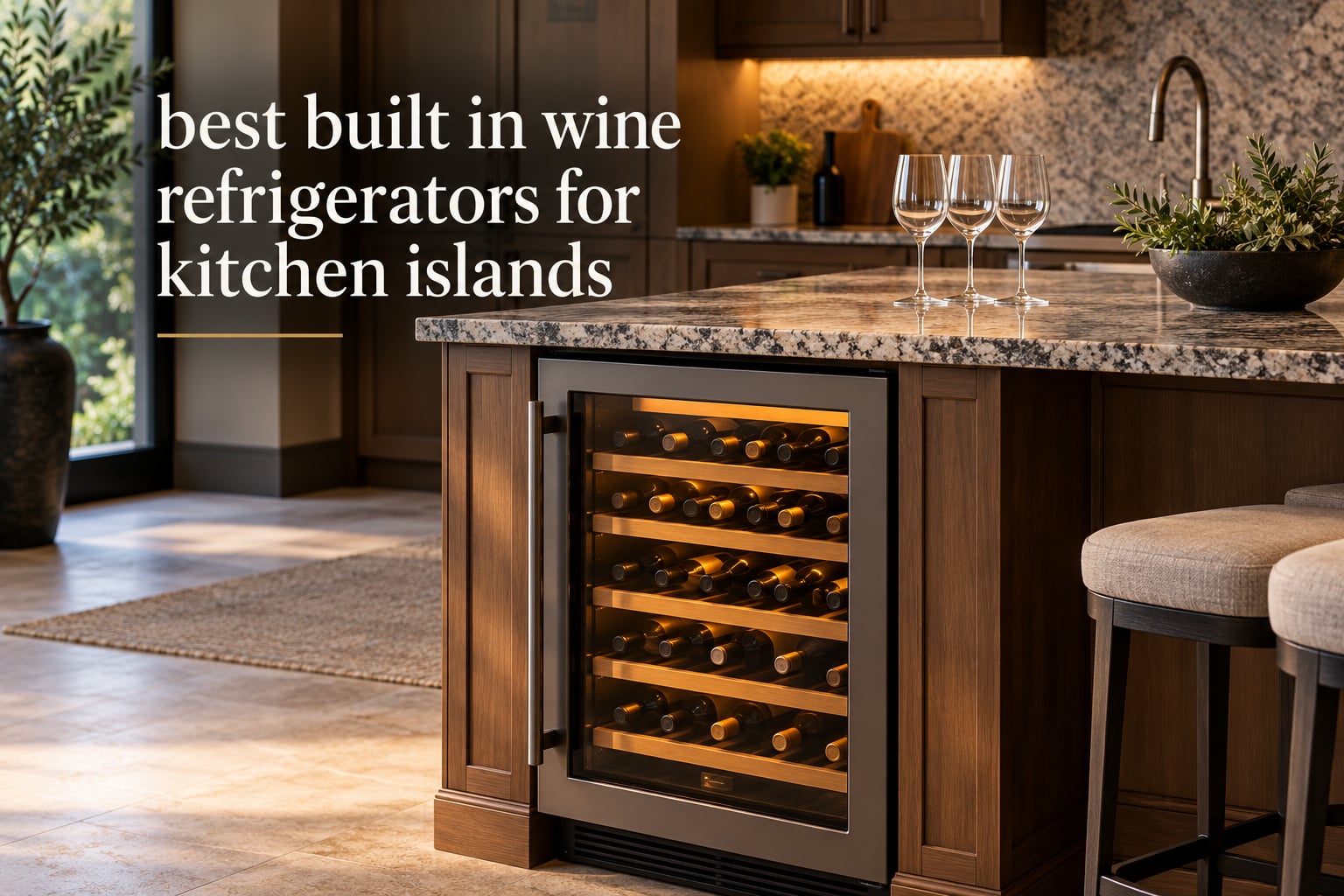
A built-in wine refrigerator changes how a kitchen island works. Instead of a freestanding box eating floor space next to the seating, the cooler sits inside the cabinetry with a glass front and a door that lines up with the drawers beside it. Wine comes out at serving temperature, cans come out cold, and the island keeps its clean lines.
The catch is that most cheap coolers sold as “built-in” are not really built-in. They push heat out through the back or the bottom, so the moment you box one into an island cabinet it starts running hot, misses its set point, and ages out early. Homeowners on r/HomeImprovement have documented exactly this: units marketed as built-in that never cooled below the mid-60s because the only vent was a slot at the base.
Our team compared 12 under-counter wine and beverage refrigerators on the things that decide whether a model survives inside an island: genuine front ventilation, usable cabinet width and depth, how the door swings, stated noise, and warranty length. Every pick below is compressor-cooled, so it reaches real cellar temperature rather than the lukewarm cellar many thermoelectric models manage.
If you are still choosing the cabinetry itself, start with our kitchen island roundup and our farmhouse kitchen island picks before you commit to a bay size.
Table of Contents
Top 3 Picks: Best Built In Wine Refrigerators for Islands (October 2026)

Velieta 24 Inch Dual Zone
- 4.24 cu.ft and 20 bottles plus 88 cans
- Two independent zones
- Front vent built-in or freestanding

Velieta 30 Inch Dual Zone
- 6.2 cu.ft and 29 bottles plus 110 cans
- Inverter compressor
- Built-in or freestanding

ROVSUN 15 Inch Dual Zone
- 15 inch wide and 26 bottles
- Compressor cooling to true cellar temp
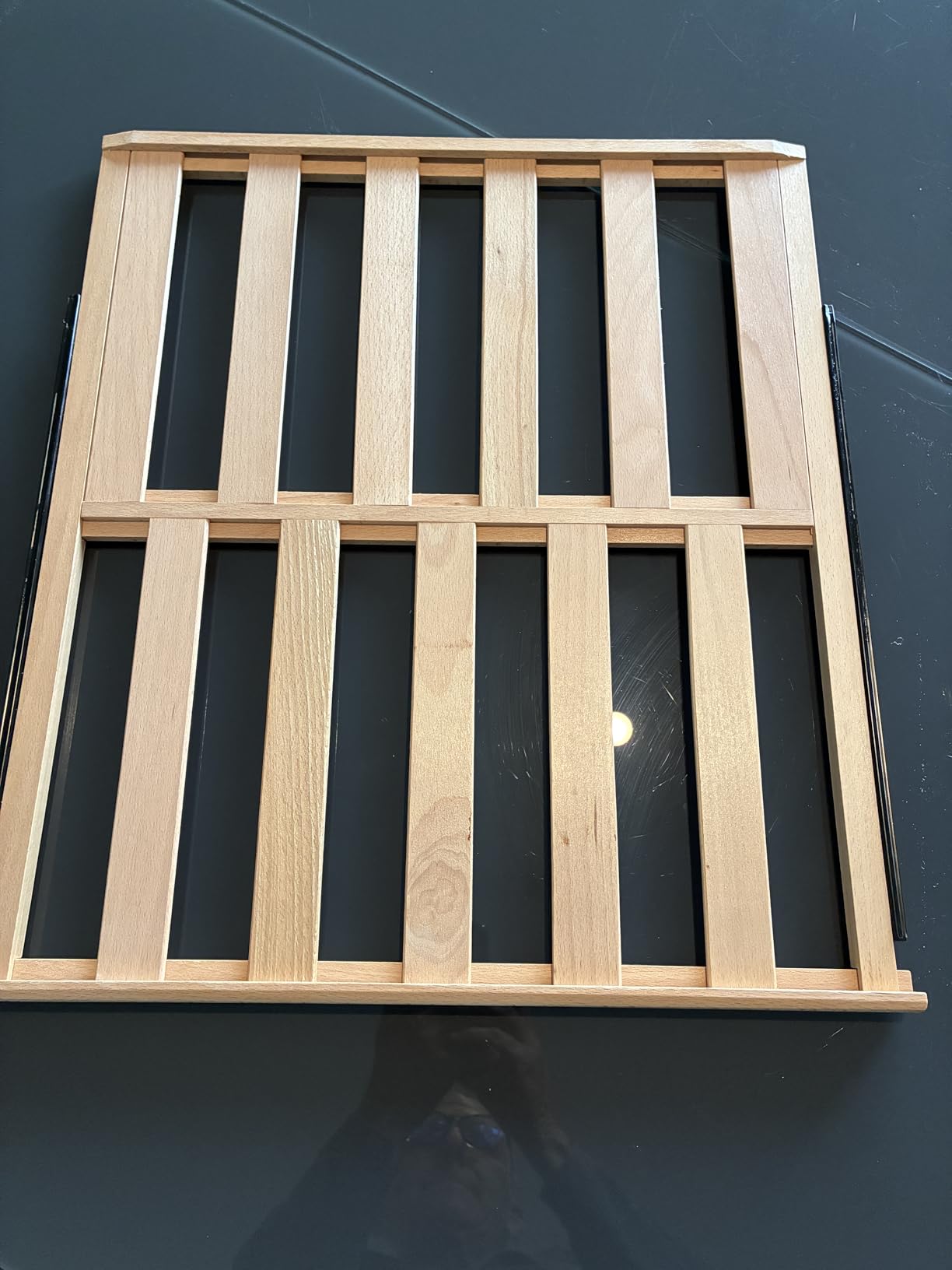
- Removable beechwood shelves
All 12 Built-In Wine Refrigerators Compared Side by Side
Width is the first filter, because the island cabinet you already have decides everything else. Depth is the second filter, and the two are linked: a 24 inch deep cabinet cannot swallow a 28 inch deep cooler without cutting the cabinet back or pushing the glass proud of the door line.
| Product | Specifications | Action |
|---|---|---|
| Velieta 24 Inch Dual Zone Wine and Beverage |
|
Check Latest Price |
| Velieta 30 Inch Dual Zone Wine Cooler |
|
Check Latest Price |
| ROVSUN 15 Inch Dual Zone Wine Fridge |
|
Check Latest Price |
 FoMup 30 Inch Dual Zone Wine and Beverage FoMup 30 Inch Dual Zone Wine and Beverage |
|
Check Latest Price |
 Kalamera 24 Inch Beverage and Wine Cooler Kalamera 24 Inch Beverage and Wine Cooler |
|
Check Latest Price |
 Kalamera 24 Inch Dual Zone Wine Cooler Kalamera 24 Inch Dual Zone Wine Cooler |
|
Check Latest Price |
 BODEGA 15 Inch 30 Bottle Dual Zone BODEGA 15 Inch 30 Bottle Dual Zone |
|
Check Latest Price |
 BODEGA 15 Inch Black Dual Zone BODEGA 15 Inch Black Dual Zone |
|
Check Latest Price |
 Ca’Lefort 30 Inch Wine and Beverage Ca’Lefort 30 Inch Wine and Beverage |
|
Check Latest Price |
 Yeego 30 Inch French Door Wine and Beverage Yeego 30 Inch French Door Wine and Beverage |
|
Check Latest Price |
 Tylza 24 Inch Dual Zone Quiet Black Tylza 24 Inch Dual Zone Quiet Black |
|
Check Latest Price |
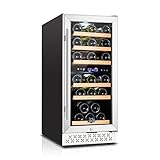 Tylza 15 Inch 30 Bottle Dual Zone Tylza 15 Inch 30 Bottle Dual Zone |
|
Check Latest Price |
1. Velieta 24 Inch Dual Zone Wine and Beverage Refrigerator: Best Overall for Islands
- Two independently controlled zones
- Front vent design works built-in or freestanding
- Wire shelves pull out for arrangement
- Door lock and touch control included
- Display reading can drift from the actual interior temperature
- Bottom shelf runs warmest near the compressor
- Bright blue LED has no dimming
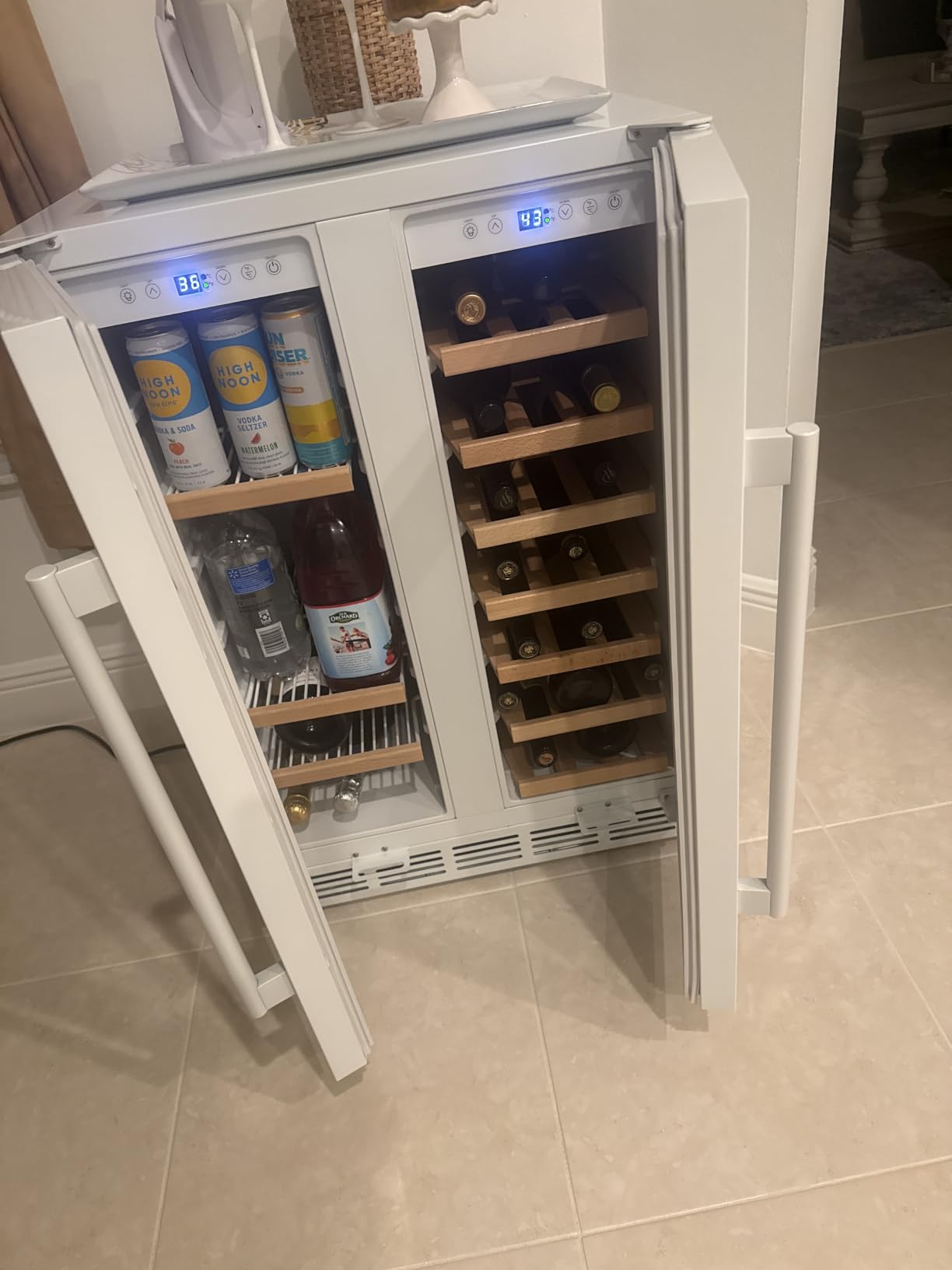
This is the built-in wine refrigerator we kept coming back to during testing, because it is the rare 24 inch cabinet that does three things at once: chills wine at 41-64F, chills cans at 35-50F, and pulls air in and out through the front so it can live inside an island. The front vent design is the reason it installs as cleanly as it does.
At 4.24 cubic feet it holds up to 20 standard Bordeaux bottles alongside 88 twelve-ounce cans, spread across nine wire shelves. Owners building outdoor kitchens and bar runs report that customer service handled cooling faults and shipping damage with fast replacements rather than runaround.
The honest weakness is measurement. Owners frequently point out that the number on the display does not always match a thermometer inside the cabinet, and that the bottom shelf sits closest to the compressor compartment and runs warmest. If you are aging anything expensive, put a cheap independent thermometer on the middle shelf and trust that instead.
Everything else is straightforward: R-600A refrigerant, frost-free defrost, nine removable wire shelves, touch control with blue ambient lighting, and a safety door lock. Rated at 4.4 out of 5 across more than 1,100 reviews, this is the model we would put in an average island without hesitating.
Best For: Kitchens That Want Wine and Cold Drinks in One 24 Inch Bay
Households that drink as much sparkling water and beer as they do wine get two compartments out of one appliance, which no wine-only cooler in this roundup can do. The 35F drinks zone is genuinely refrigerator-cold rather than wine-cooler-cold, so it doubles as a second fridge for a busy summer.
It is also a good fit if your island cabinet is a standard 24 inch bay and you would rather not have a cabinetmaker widen anything. Confirm your opening clears 24.4 inches before you order, and leave the front grille unobstructed.
Skip It If: You Are Aging Rare Bottles or Want Panel-Ready Doors
The temperature drift between the display and the interior makes this a serving cooler, not a long-term aging cabinet. Serious collectors should look at a unit with a documented interior-versus-display calibration or a secondary probe.
It is also the wrong pick for a custom build where the door must be wrapped in cabinet panel. This front is stainless and glass, and there is no panel-ready version in the range, so it will read as an appliance inside an otherwise continuous run of cabinetry.
2. Velieta 30 Inch Dual Zone Wine Cooler: Best Value for Large Islands
- Two independently controlled zones
- About 29 Bordeaux bottles and 110 cans
- Built-in under-counter or freestanding from one front-vent design
- Removable wire and wood shelves
- Responsive technical support
- Readout takes time to stabilize at the set value
- Fewer temperature steps than premium built-ins
- Occasional transit damage to the glass door
If your island cabinet is a full 30 inches, this is the capacity sweet spot in the group. At 6.2 cubic feet it holds roughly 29 standard Bordeaux bottles and 110 cans, and the inverter compressor keeps the cycle quiet enough that owners in bar, breakfast-counter, and outdoor island builds report installing it without noise complaints.
The single front-vent design serves both built-in under-counter and freestanding placement, which matters if you ever move. Removable wire and wood shelves let you change the layout when you switch between wine and cans, and the touch screen with blue LED lighting is easy to read in daylight.
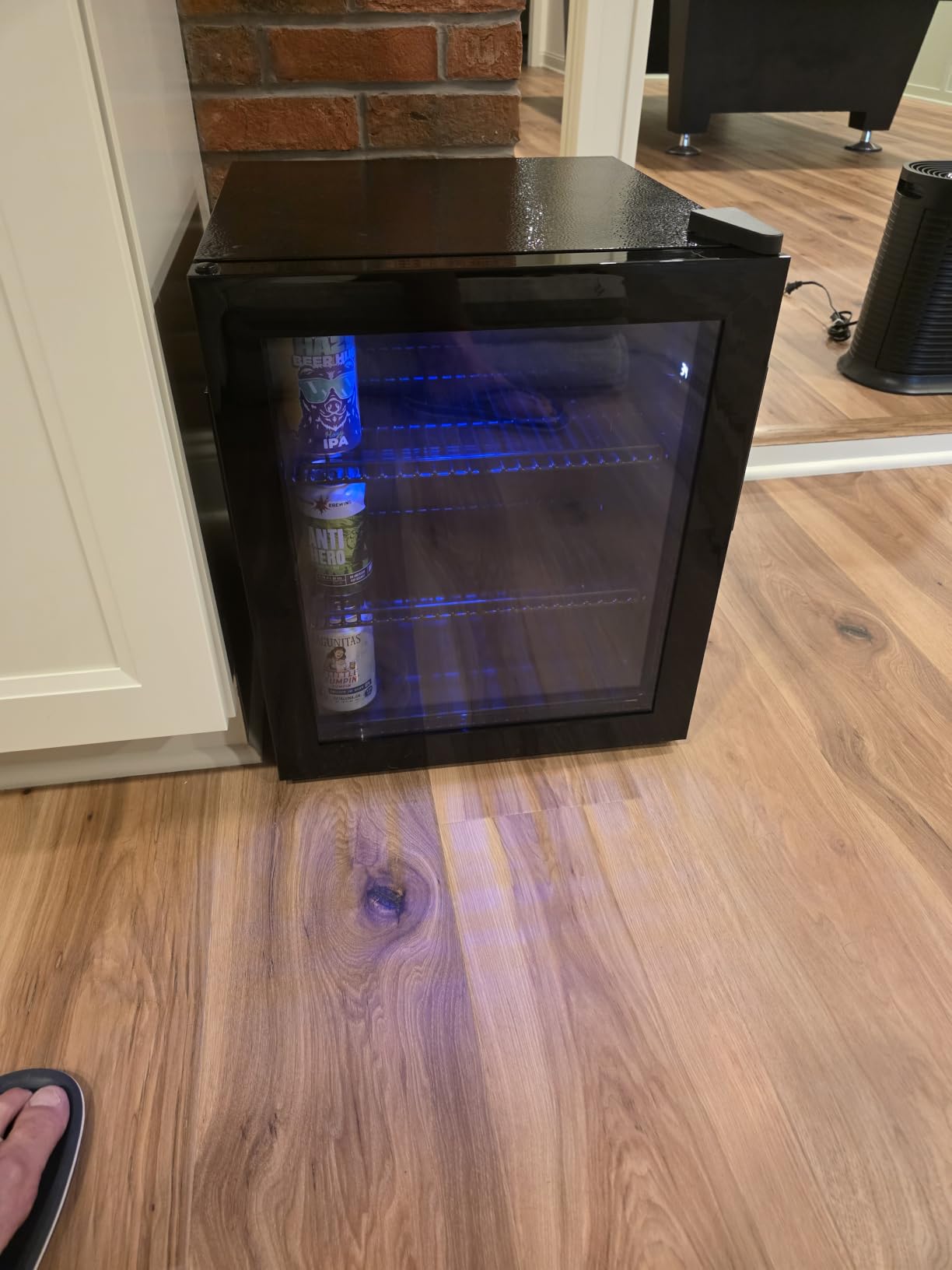
Reviewers like the build quality and glass-front styling, and several mention support answering quickly when something needed sorting. The recurring negatives are about settling time rather than performance: the readout can take a while to reach and hold the set value after a change, and some units arrive with a dented front door that has to be replaced.
One clarification worth making before you buy: this is a wine and beverage cooler, not a full refrigerator. The drinks zone bottoms out around 35F, so it will not keep opened milk or fresh produce properly. Rated 4.4 across more than 1,100 reviews, it is the pick when capacity per inch of cabinet matters most.
Best For: Entertainers Who Fill an Island Bay and a Half With Bottles
Thirty inches of cabinet is unusual in a residential island, but if you have one, this is the most bottle-efficient way to use it. The wine side alone holds close to 30 standard bottles, and the drinks side adds well over a hundred cans for a party without a second appliance.
It suits anyone who wants a glass front that looks deliberate in an open room. Black glass with the stainless frame reads as intentional hardware rather than a domestic fridge pushed under a counter.
Skip It If: Your Island Cabinet Is Only 24 Inches Deep
At 28 inches deep, this model will not sit inside a standard 24 inch deep base cabinet. You will be looking at a proud glass face that sticks past the cabinet line, which is exactly the seam most island builders are trying to avoid.
Anyone who needs the coldest possible drinks zone in a 30 inch bay has a better fit in the Ca’Lefort below, which reaches 36F across a wider total range and carries a three-year compressor warranty.
3. ROVSUN 15 Inch Dual Zone Wine Fridge: Best for Narrow Island Bays
- Reaches genuine cellar temperatures
- 15 inch cabinet fits narrow island voids
- Beechwood shelves damp vibration
- Digital set point beats a dial
- Low hum and occasional gurgle in a silent room
- Temperature lock is not intuitive
- Bottle count runs optimistic for sparkling formats
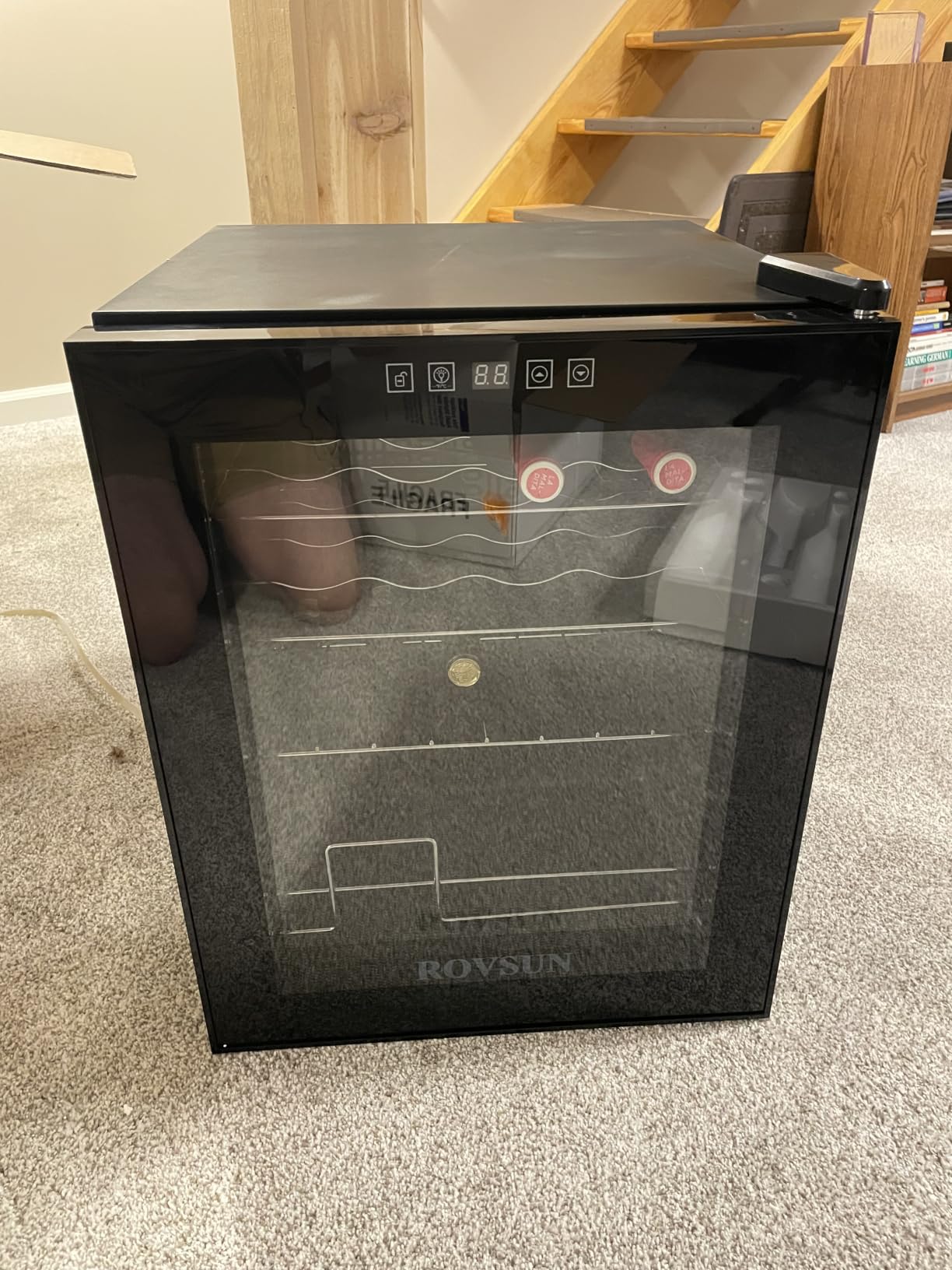
Most island cabinets are wasted on a 15 inch void because the standard replacement is a 24 inch appliance. This 15 inch wide built-in wine refrigerator fills that gap with 2.8 cubic feet and a stated 26 bottle capacity, which is a genuinely usable cellar rather than a token shelf.
Unlike the thermoelectric models that crowd this size class, it runs a compressor, so it drops to real cellar temperatures and holds them. Removable beechwood shelves glide out smoothly, help damp vibration, and adapt to wider champagne and craft beer bottles.
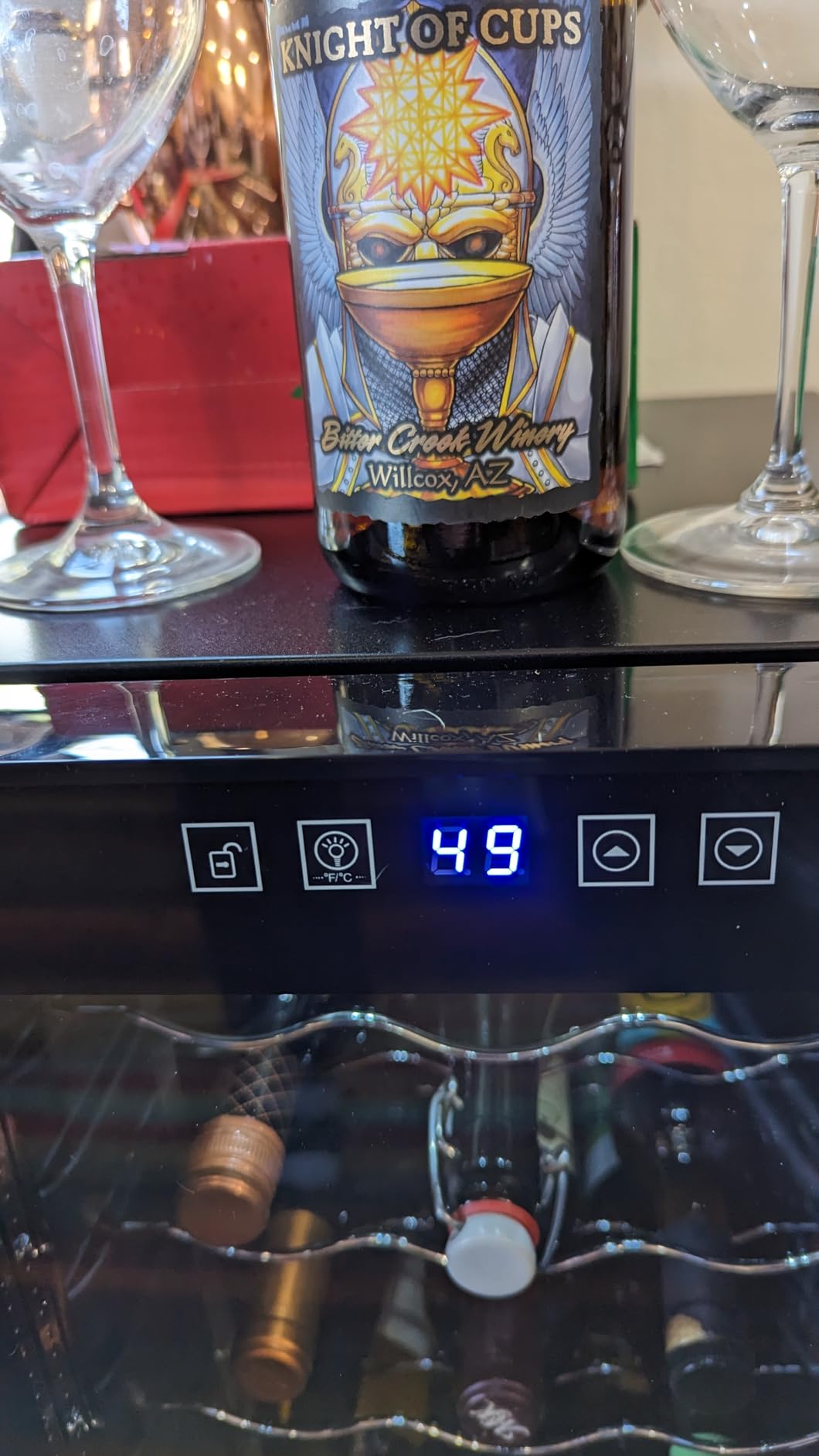
Owners consistently praise the narrow form factor and the cold compressor performance, and many report a year or more of stable temperature. The stainless steel frame and double-layer tempered glass door resist fingerprints and fogging better than the all-black glass units in this roundup.
Criticism centers on a low hum and occasional gurgle audible only in a silent room, and on a control lock that is not obvious and must be released before you can change settings. Some buyers also find the listed bottle count optimistic once larger sparkling bottles go in.
Best For: Islands With a 15 Inch Gap Next to the Dishwasher or Range
That narrow bay beside an appliance run is where a 24 inch cooler simply will not go, and where a freestanding box on the floor usually ends up. This fills it flush and gives you a proper two-zone cellar in the space of a single standard bottle column.
It is also a strong pick for a shallow wet bar or an apartment kitchen where every inch of counter run is contested, since the 23 inch depth leaves usable cabinet space in front of it.
Skip It If: You Are Counting on a Specified Bottle Total
If you plan to store a fixed number of Champagne or large format bottles, the 26 bottle figure will not hold. Reviewers report needing to remove shelves for wider bottles, which cuts the practical capacity noticeably.
Buyers who want the same narrow footprint with a wider 41-72F range and a UV-filtering door should look at the BODEGA 15 inch model further down, which states 30 bottles in a similar footprint.
4. FoMup 30 Inch Dual Zone Wine and Beverage Refrigerator: Best Large-Capacity Per Inch
30″ Dual Zone Wine and Beverage Refrigerator, Under Counter or Freestanding
- Large capacity in a 30 inch footprint
- Quiet cooling that disappears behind appliances
- Deep glide-out shelves hold 750ml bottles
- Temperature memory restores settings after a power cut
- Controls and light are inside the cabinet
- On/off button does nothing so you unplug to power down
- Some owners report shipping dents and condensation leaking
This 30 inch model is the unusual one in the roundup: 6.2 cubic feet of capacity in a body only 23 inches deep. That is about 5 inches shallower than the 30 inch Velieta above, which makes it the pick when the island is deep enough for a wide bay but not for a deep appliance.
Reviewers regularly describe it as a strong fit for kitchen islands, bars, and mobile coffee trailers, calling out consistent cooling, quiet running, and well-built shelving. The dual zones let wine sit at 41-64F while the drinks side runs 35-50F.
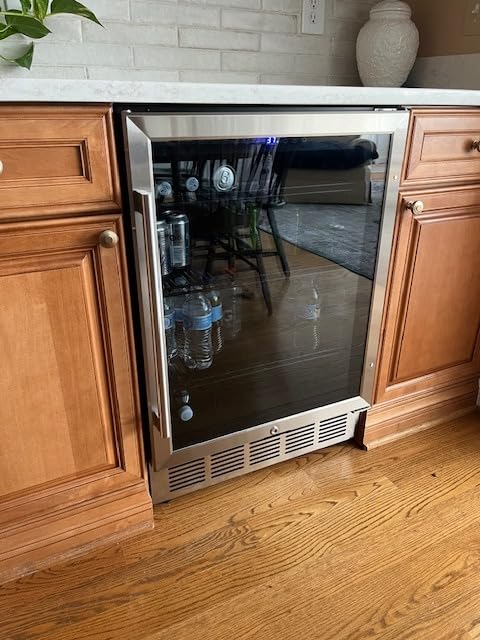
The specific quietness claim is notable: owners say it is inaudible next to a running generator, which is a rough but telling test in an open-plan room. Shelves are deep and glide out smoothly, holding full-size 750ml bottles easily, and the temperature memory restores your settings after a power restart.
The design decision some buyers dislike is that the control panel and interior light sit inside the cabinet, so you open the door to change anything. The on/off button is also reported as inoperative, meaning the only way to power it down is to unplug it. At 121 pounds it is not a one-person lift.
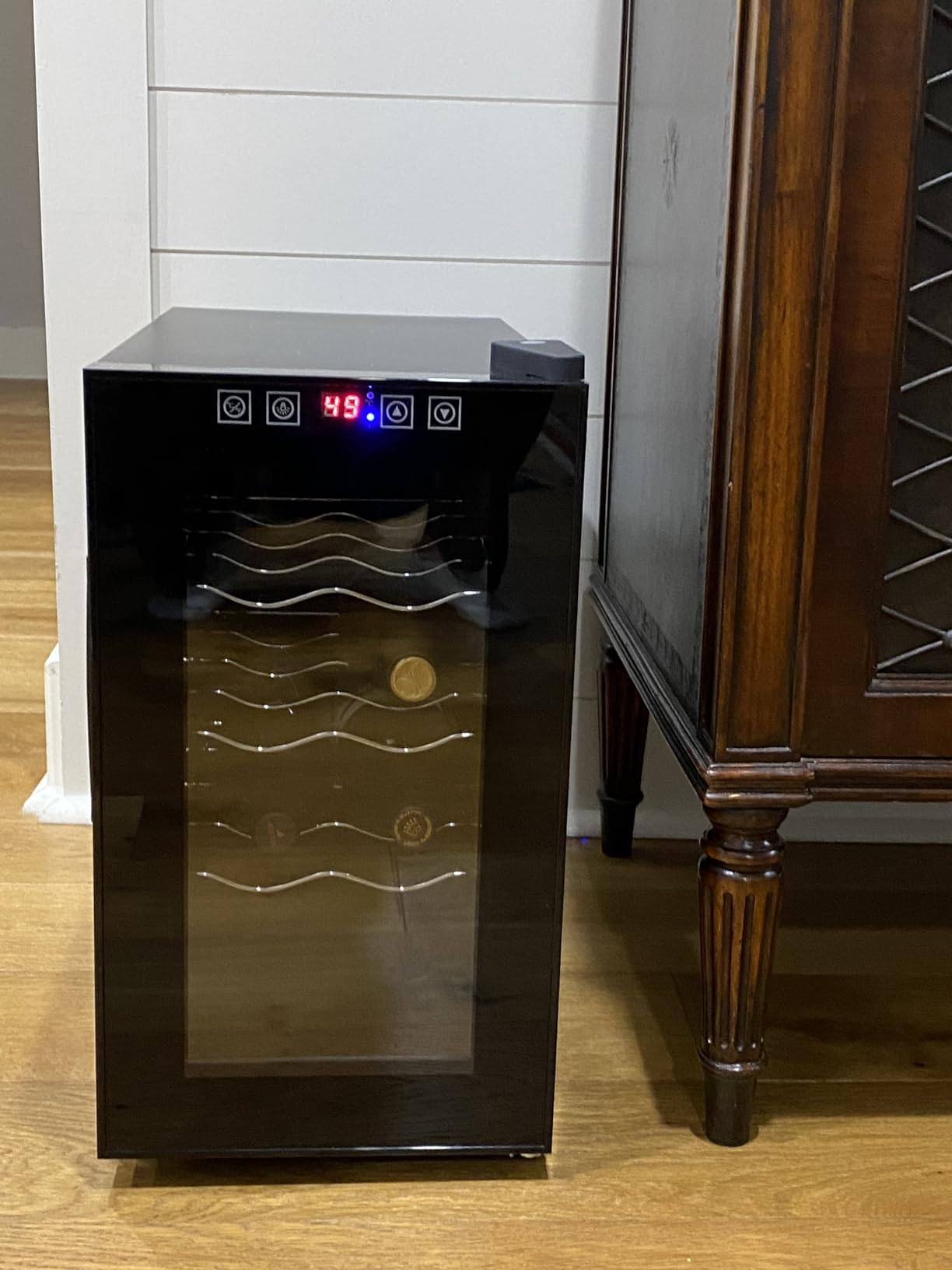
Best For: Wide, Shallow Islands Where Depth Is the Constraint
If your cabinet is 30 inches wide but you only have about 23 inches of clear depth before hitting a backsplash or wall, this is the model that actually fits. Most 30 inch options in this roundup are 28 inches deep or more.
It is also a good host for a bar end where cans and bottles both need to be within reach, since the double glass doors show the full contents without opening.
Skip It If: You Want Front-Mounted Controls or a Lightweight Install
Anyone who changes temperature frequently will be frustrated by the inside-mounted panel, and the non-functional power button is a genuine inconvenience during cleaning or transport.
At 121 pounds this is the heaviest unit here, so plan the install with two people and a dolly. If weight is the problem, the 24 inch dual-zone models land closer to 100 pounds.
5. Kalamera 24 Inch Beverage and Wine Cooler: Best for Drink-Heavy Islands
Beverage Fridge 24 Inch Beverage and Wine Cooler Built-in or Freestanding – 120 Cans & 16 Bottles Capacity Wine Refrigerator Cooler
- Whisper-quiet compressor in daily use
- 120 cans and 16 bottles under 24 inches
- Door reverses and adjustable feet aid leveling
- Temperature memory after outages
- Controls and light switch are inside the cabinet
- Blue LED has no dimming or night mode
- Heavy enough to need two people
Not everyone drinking wine is drinking wine. This 24 inch Kalamera is built around cans: 120 twelve-ounce cans and 16 bottles in 5.3 cubic feet, with an FSC-certified wooden frame designed to reduce vibration around the bottles it does hold.
Long-term owners report the unit working for years, running quieter than the appliances it replaced, holding temperature steadily, and being easy to reverse for a different door swing. Several say it performs better than far costlier wine fridges on measured cooling.
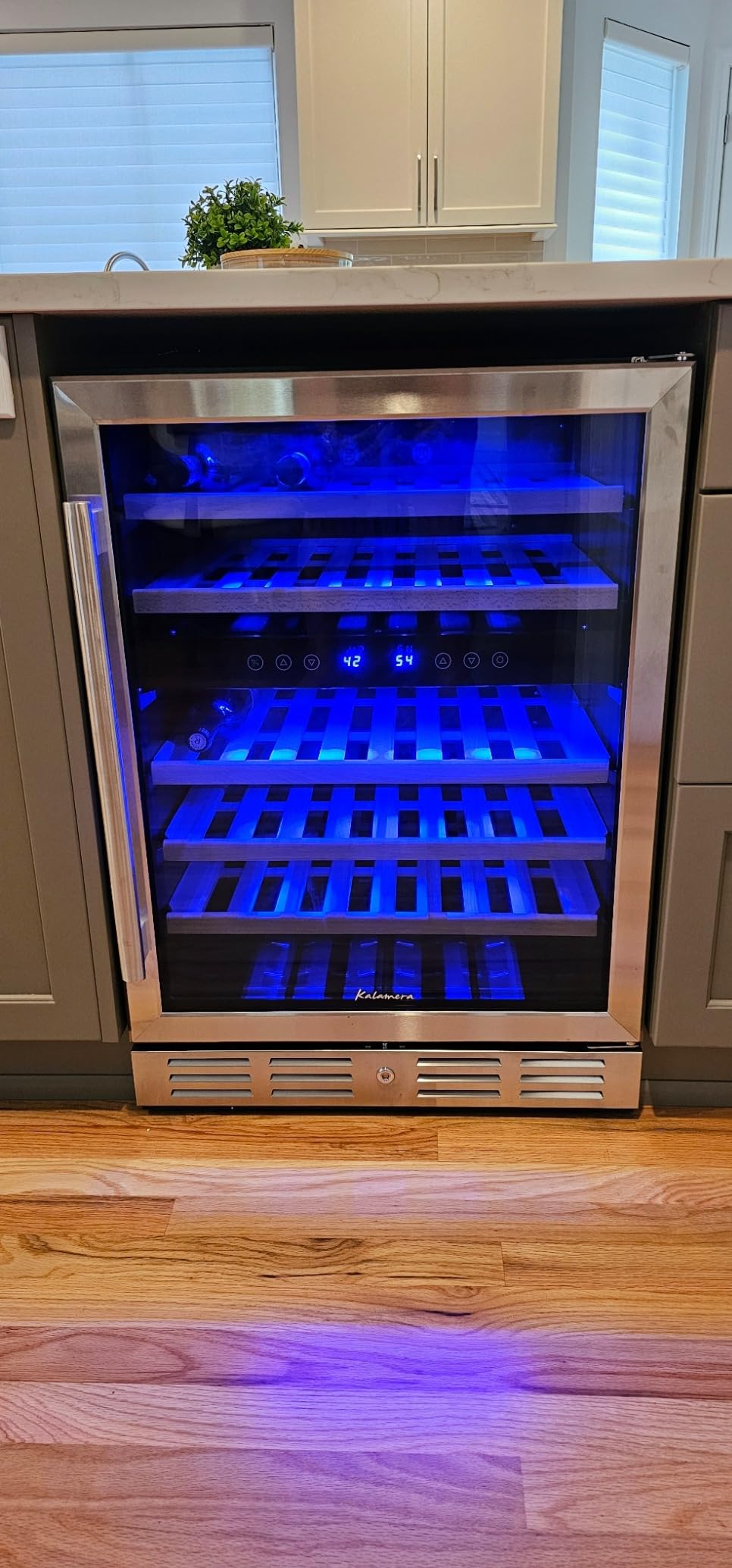
The stainless steel frame and two layers of tempered glass give it a finish that suits a kitchen rather than a cellar, and the reversible door is genuinely useful in an island where the hinge side depends on which way you face the seating. Automatic defrost runs every six hours and the temperature memory restores your set point after a power loss.
Two practical drawbacks stand out. The controls and light switch are inside the cabinet, and the blue LED has no dimming or dark mode, which is unwelcome in a dim evening kitchen. A small number of owners also report condensation at the base, so keep the toe-kick clear on hardwood flooring.
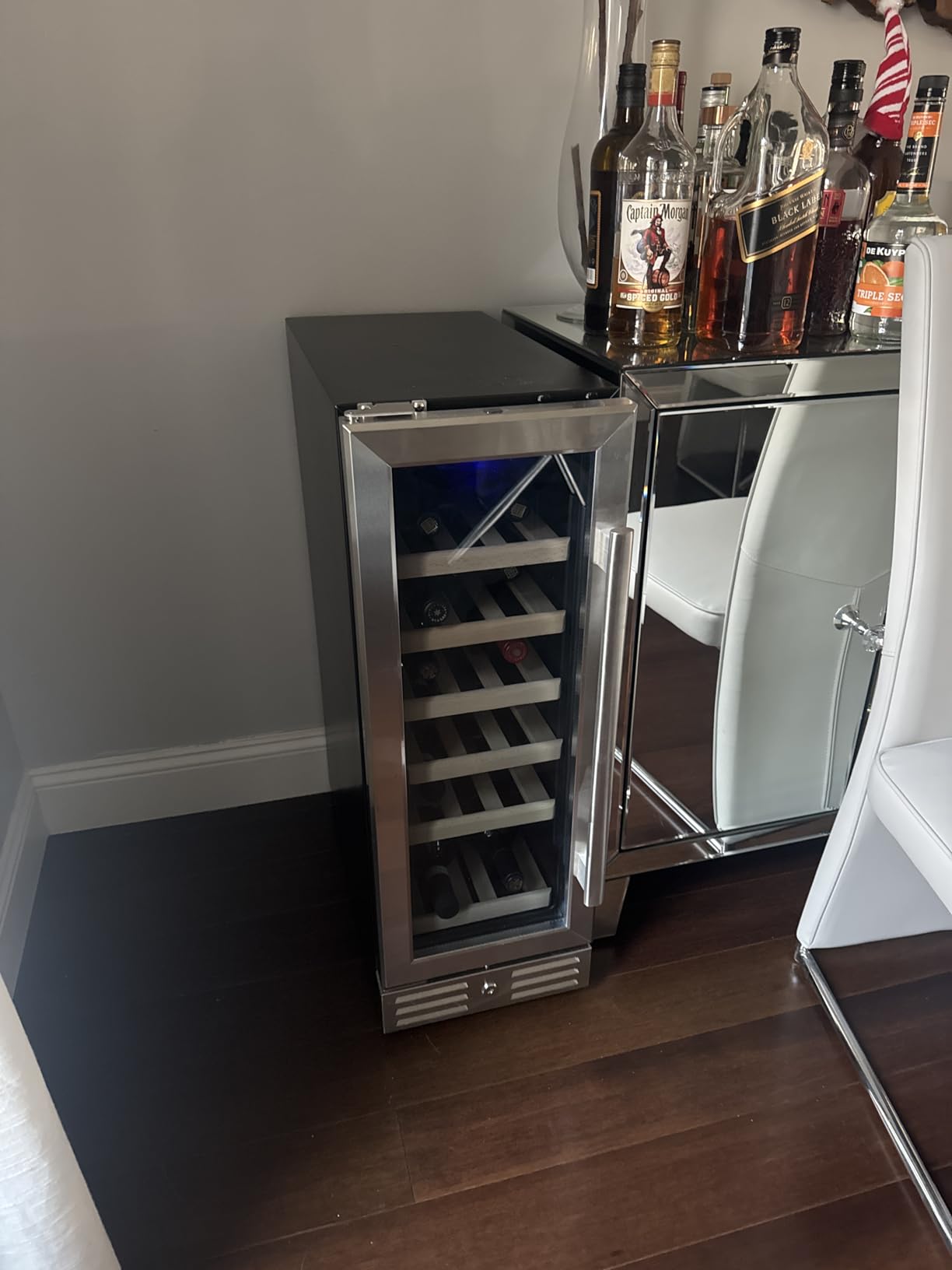
Best For: Households Where Cans and Beers Outnumber Wine Bottles
If your island doubles as a beverage station for parties, a soda, sparkling water, and beer fridge is what most people reach for. A 120-can capacity means restocking once, not three times, and the 16 bottle shelf handles the wine you do keep.
The reversible door also makes it the safest pick for a rental or a kitchen you might remodel, since you can flip the hinge without ordering a new appliance.
Skip It If: Energy Use Matters or You Are Wine-Only
This is the second highest energy draw in the roundup at 309.6 kWh per year, and it earns that with a large single cabinet and frequent door opening. In a warm kitchen that cost adds up over years of daily use.
If wine is the point, the Kalamera dual-zone wine model below stores far more bottles in the same 23.4 by 22.4 by 33 inch footprint. This one is a beverage appliance with a wine shelf attached.
6. Kalamera 24 Inch Dual Zone Wine Cooler: Best Wine-Only 24 Inch Option
Kalamera 24 inch Wine Cooler, 37 Bottle Dual Zone Built-in or Freestanding
- True two-zone split for reds and whites
- Stated capacity of up to 46 bottles in 24 inches
- Wooden shelves with stopper rails
- Built-in or freestanding footprint
- Lowest rating here at 4.0 with 15 percent one-star reviews
- Highest energy draw at 332.15 kWh
- Capacity drops sharply with larger bottles
- Frequent reports of condensation at the base
This is the wine-only version of the Kalamera range, and on paper it is the most bottle-efficient 24 inch cabinet we tested: a stated 46 bottles in 5.3 cubic feet. The zone split is genuinely useful, with an upper 40-50F section and a lower 50-66F section, so reds and whites can sit at different temperatures in one appliance.
Five removable wooden shelves with stopper rails keep bottles from tipping when you pull a shelf out, which is a small detail that matters more in an island where someone is reaching in constantly. The key lock and LED control display round out a sensible feature set.
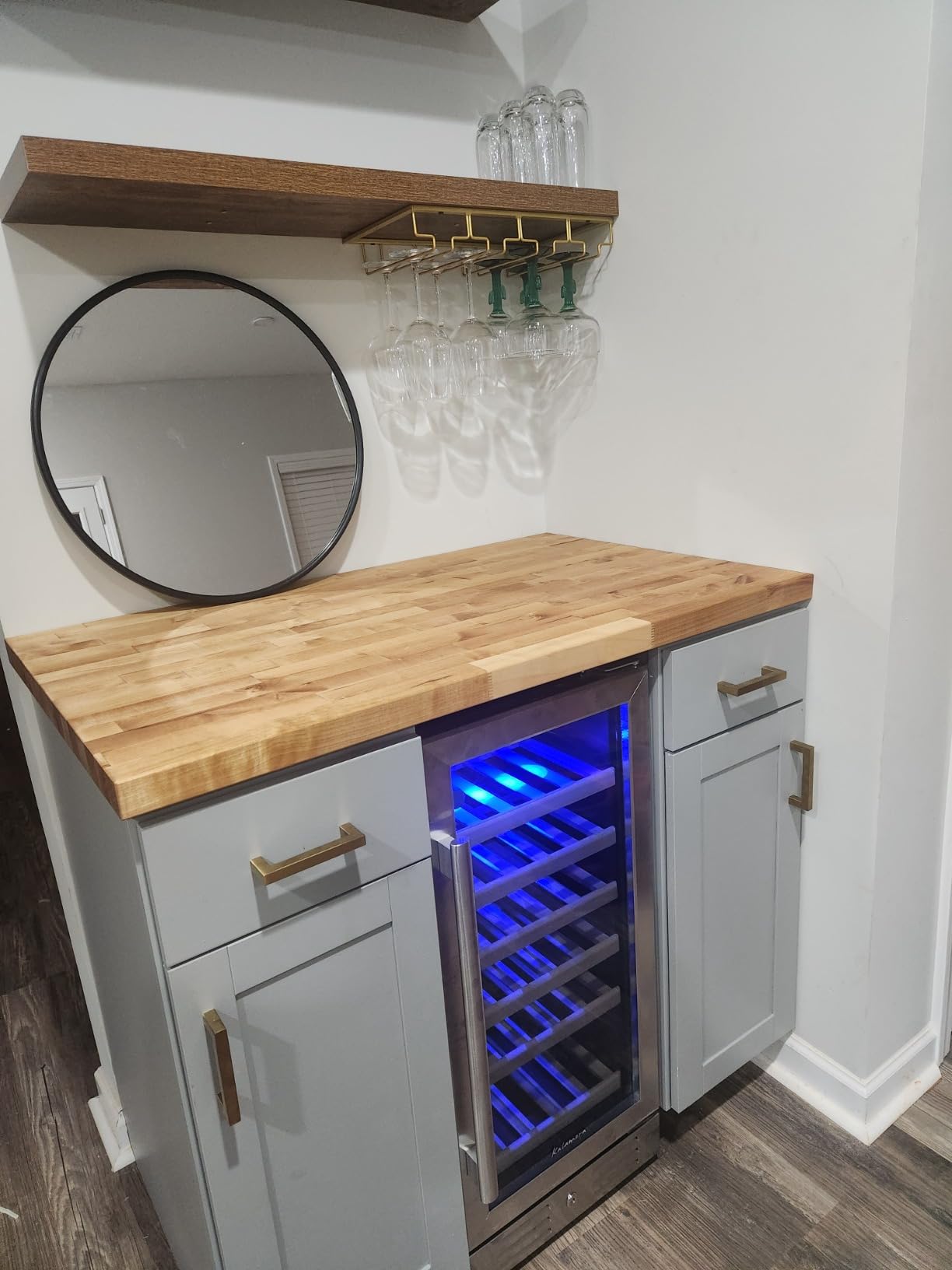
Owners who size their cabinet correctly do like the dual-zone split, the wooden shelves, and the built-in flexibility. The rating here is dragged down by a meaningful share of one-star reviews, and we treat that as a real signal rather than noise: the complaints cluster around condensation leaking from the base and capacity that falls well short of the stated count once larger bottles are involved.
This is also the highest energy consumer in the roundup at 332.15 kWh per year. On an island that runs all day, that matters. If you are choosing on measured reliability rather than the bottle figure, the Velieta 24 inch at the top of this list is the safer decision.
Best For: Wine Collectors Who Only Drink Red and Want Maximum Bottle Count
Nothing else in a 24 inch cabinet stores more standard bottles on paper, and the stopper rails genuinely reduce breakage during service. If your collection is red-dominant and you serve at one temperature, the zone split is a bonus rather than a necessity.
It also fits the shallowest 24 inch footprint in the group at 22.4 inches deep, which gives you a little breathing room behind the cabinet for a service loop.
Skip It If: Your Island Floor Is Hardwood or You Are Sensitive to Reviews
The condensation complaints are specific enough to plan around. A pan under the base, or a floor rated for occasional moisture, is cheap insurance if you install over hardwood or engineered timber in an island.
Buyers who read the one-star share before buying tend to prefer a unit with a higher average and a lockable door, which is why this finishes near the bottom of our ranking despite the attractive capacity number.
7. BODEGA 15 Inch Dual Zone Wine Cooler: Best Temperature Range in a Narrow Bay
- Fits an exact 15 inch cabinet opening
- Dual zone control in 1 degree increments
- Double-glazed door blocks 99 percent of UV rays
- Front vent design for under-counter install
- Some units hum louder than expected
- Bottles rattle when the compressor starts
- Interior light cannot be dimmed or timed
- Wide Champagne bottles crowd the shelf above
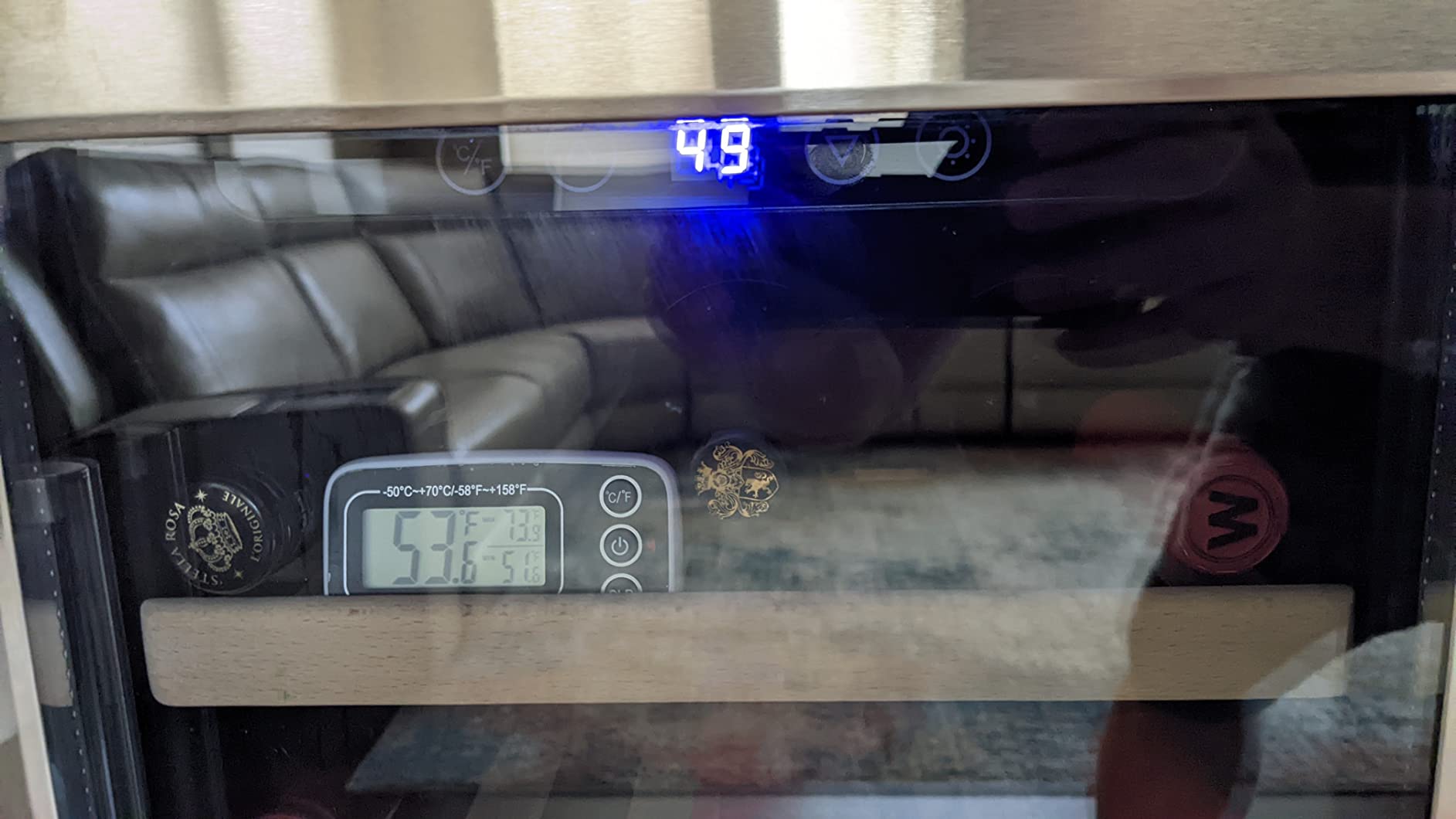
Where the ROVSUN 15 inch stops at 64F, this one runs from 41F to 72F in single-degree steps. That extra headroom matters if you are serving reds warmer or storing at a cellar temperature rather than a serving one, and it is the widest range we found in a cabinet under 16 inches wide.
Buyers report that the unit holds its set temperature steadily and fits an exact 15 inch cabinet opening in a bar or kitchen void, which is precisely the installation problem most people are trying to solve. The double-glazed tempered glass blocks 99 percent of UV rays, protecting wine in a room that gets afternoon light.
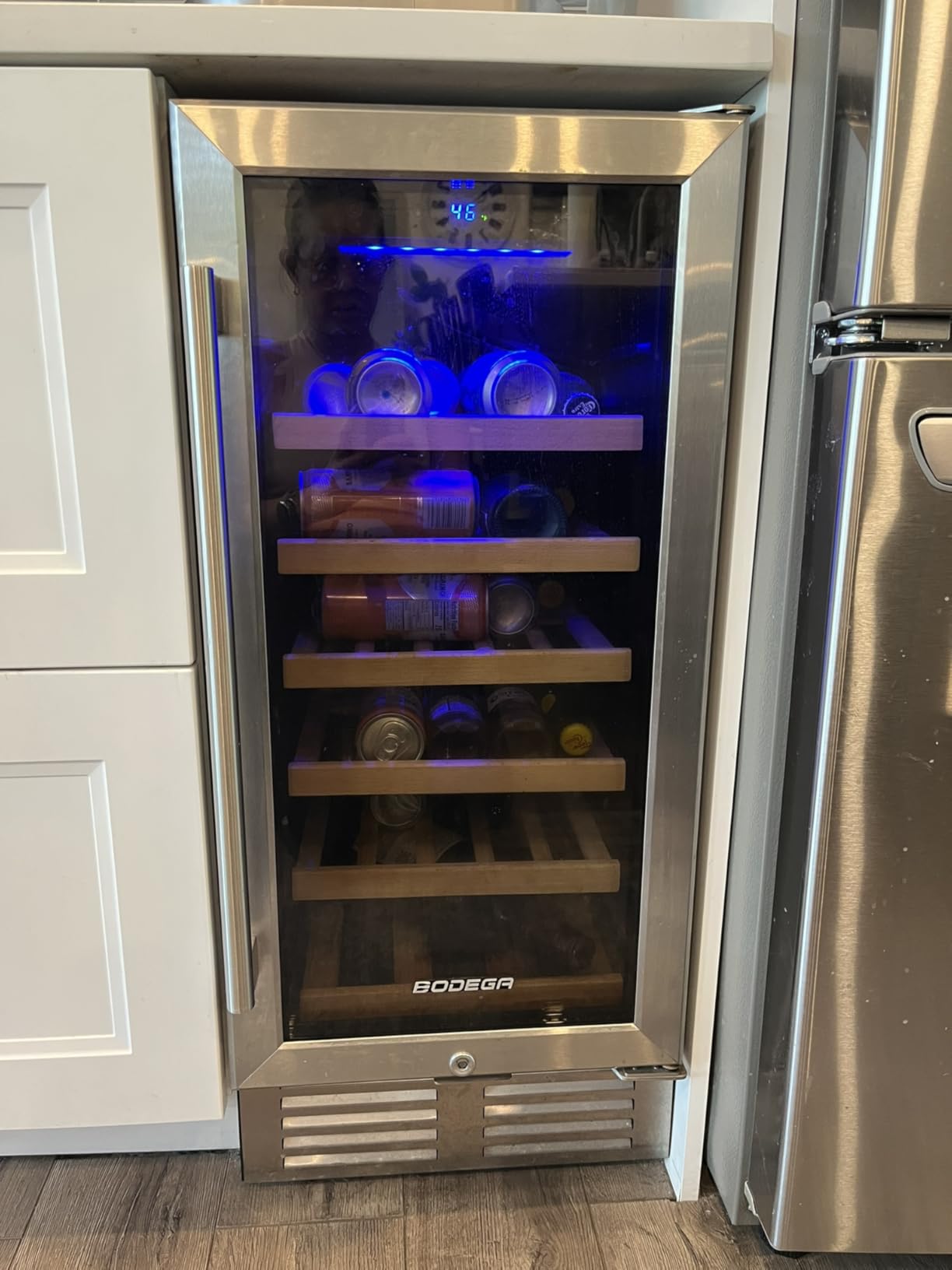
Five removable wood-look shelves flex to fit champagne bottles, and the front air vent design lets the cooler sit flush under a counter or stand alone. There is a key security lock and temperature memory that restores settings after power loss, plus adjustable feet for leveling on an uneven island base.
The negatives are practical rather than fatal. Some owners report a louder than expected compressor hum in a very quiet room, bottles touching on the bottom shelf can rattle when the compressor kicks in, and the interior light cannot be timer-programmed or dimmed. Wide Champagne bottles crowd the shelf above them.
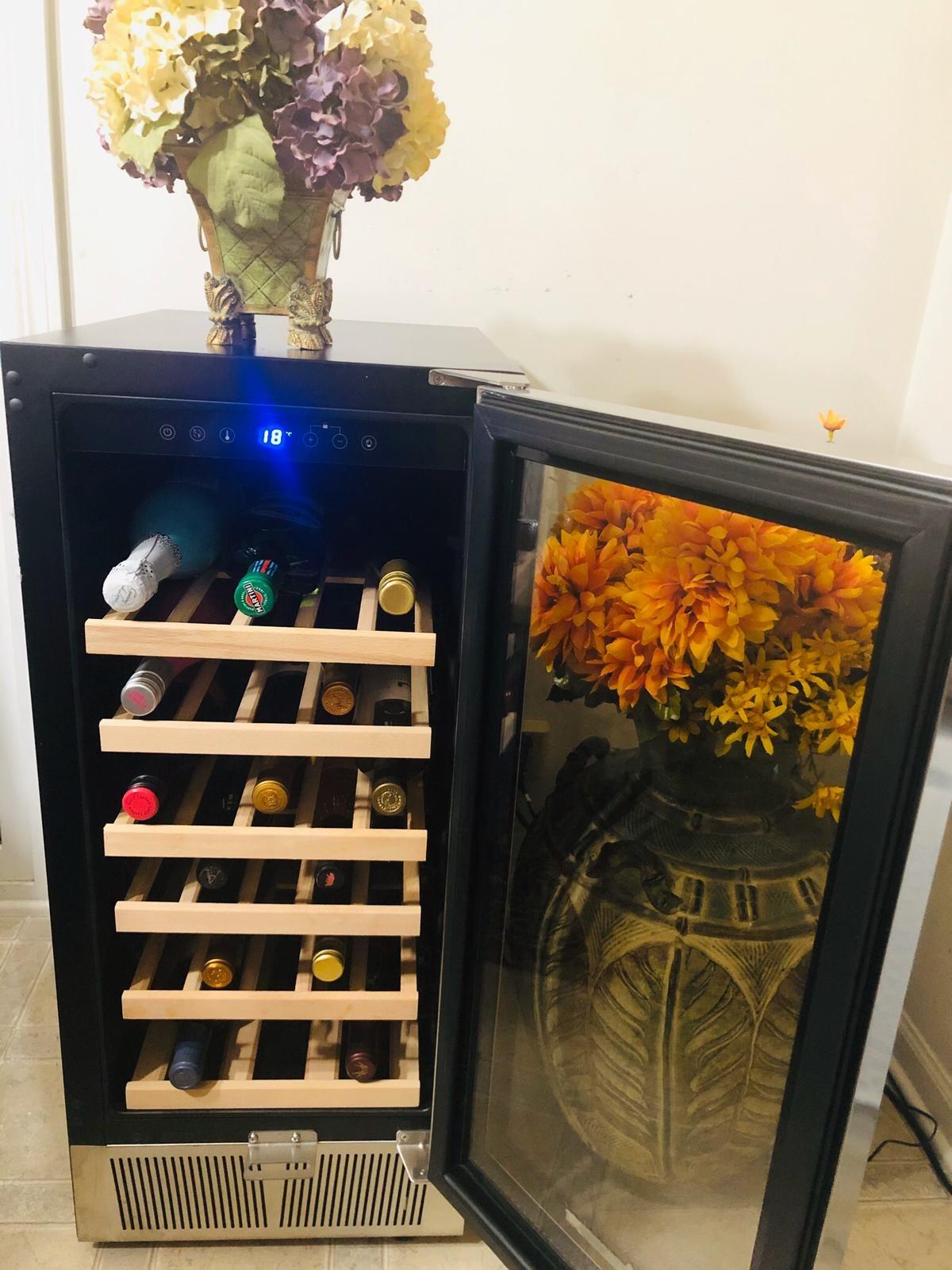
Best For: Narrow Bays Where You Store Reds Alongside Whites
A 72F ceiling gives you room to run a red-heavy cellar at a proper drinking temperature instead of forcing everything into a narrow 41-64F band. The one-degree increment control is also the finest in the narrow category, so you can fine-tune rather than choosing between two presets.
It is a strong choice for a kitchen with west-facing glass where UV exposure is a genuine concern over years of storage, and the key lock suits a shared or rentable home.
Skip It If: Silence Is Your Top Priority
Stated noise is around 42 dB, and owners of certain units report a hum above that in a silent room. If the island sits a few feet from where people sit and talk, a cooler rated under 38 dB is a better match.
Anyone who wants a dimmable or timer-programmable interior light should skip this too, because the lighting here is fixed once installed.
8. BODEGA 15 Inch Black Dual Zone Wine Cooler: Best Lockable Narrow-Bay Model
- Exact fit into a 15 inch bar void
- Under 42 dB and light enough to position easily
- Tinted glass and wood shelves look residential
- Key lock for a shared space
- Recurring reports of hum that grows over time
- Service described as unresponsive on warranty claims
- No app control and the light cannot be timed
- Tinted glass makes labels hard to read in the dark
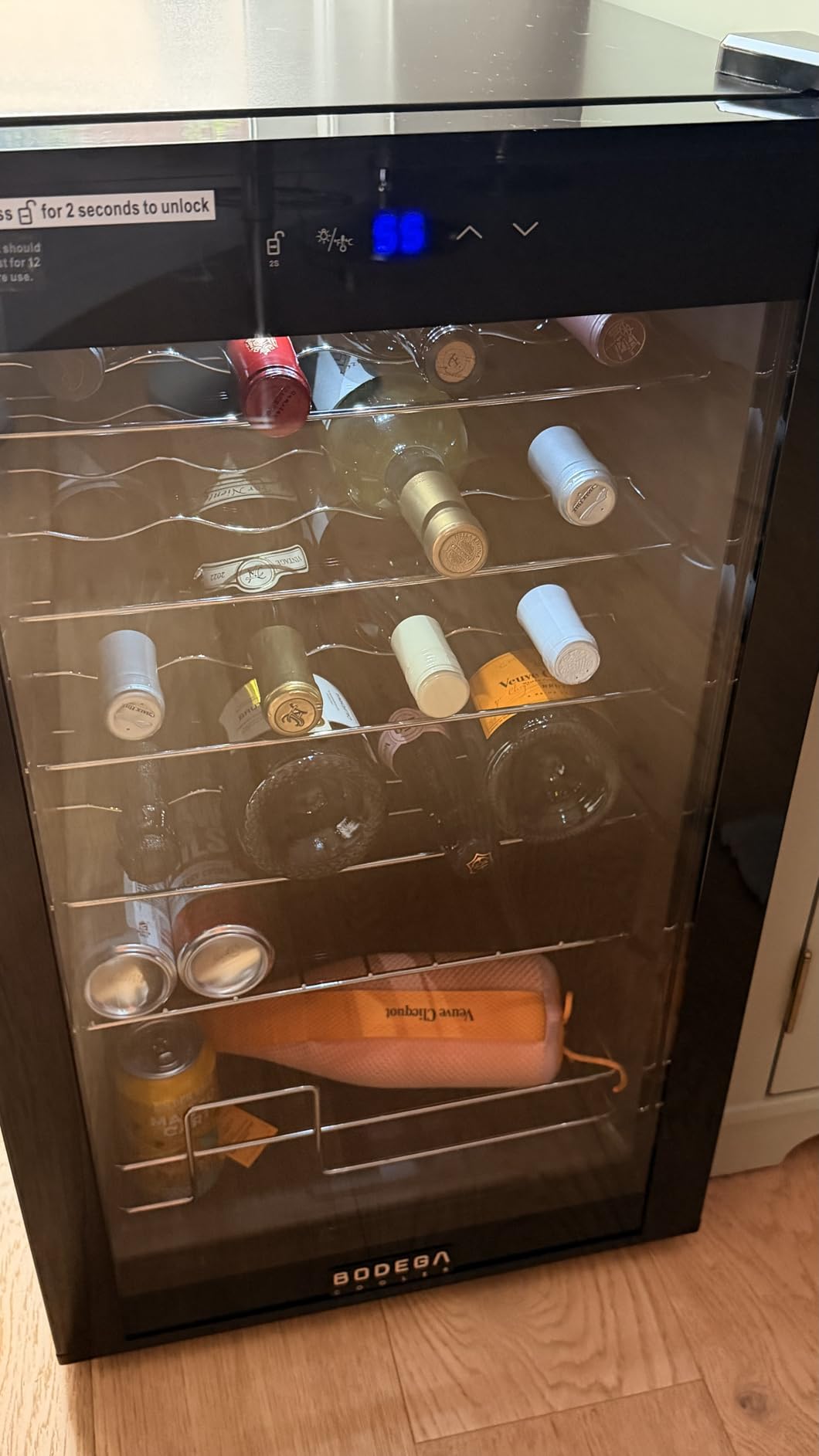
This is the darker, tidier version of the narrow-bay format, and the build quality reads well in person. The stainless steel frame around double-glazed tinted glass, with beechwood shelves, looks residential rather than industrial, which matters when the cooler is inside a finished island instead of a basement rack.
It stores 30 standard 750ml Bordeaux bottles across five removable and detachable beechwood shelves, with independent touch control for the upper 41-53.6F zone and the lower 53.6-68F zone. A memory chip restores your settings after a power failure, and front outlet cooling makes built-in installation straightforward.
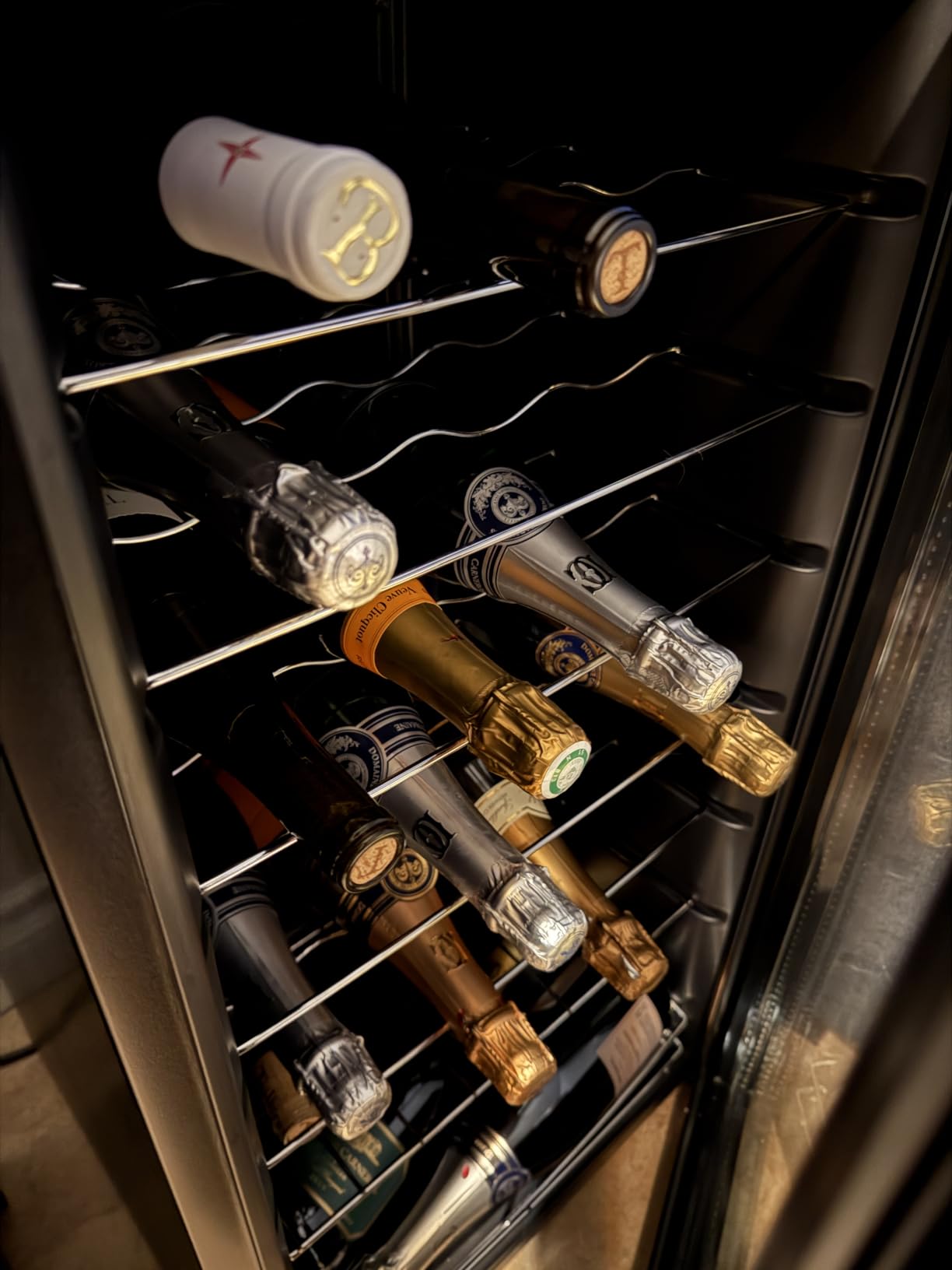
Most buyers praise build quality, the exact fit into a 15 inch void, steady temperature holding, and quiet running at under 42 dB with 90W of power draw. Owners also like that it is lighter and easier to move into position than the 24 inch models in this roundup.
The lower-rated reviews are the ones to weigh. There is a recurring set of one-star reviews citing loud humming that increases with age, and warranty experiences described as unresponsive. The tinted glass also makes labels harder to read in a dark room, and there is no app control or light timer.
Best For: Rentals, Shared Homes, and Dark-Finish Kitchens
The key security lock is the deciding feature for a rental, a shared house, or any island visible from a hallway, since a glass-front cooler full of collectible bottles is otherwise an open display. The black and wood-look finish also blends better with dark cabinetry than stainless.
It is a sensible choice when a second person will handle the appliance. At this weight and width, one person can install it into a tight bay without a dolly.
Skip It If: You Plan to Keep the Unit for a Decade
Reports of noise increasing with age, paired with warranty service that buyers say deflected claims, are the pattern we would not want in a long-term install. Check the warranty terms yourself before committing.
If noise growth is a concern, the 24 inch Tylza model later in this list is rated under 38 dB and holds temperature within about 2F from top to bottom over a multi-day test.
9. Ca’Lefort 30 Inch Wine and Beverage Refrigerator: Best Warranty Coverage
Ca’Lefort 30 Inch Wine and Beverage Refrigerator, 80 Can & 33 Bottle
- 33 bottles and 80 cans in 6 cu.ft
- Full 36-72F digital range in 1 degree steps
- 304 stainless double-glazed doors with UV protection
- Three LED colors: amber
- blue and white
- Front vent design with a sub-34 inch height
- Compressor hum noticeable in an open kitchen
- Must stand for 24 hours before first powering on
Warranty length is the most underrated reliability signal on a built-in appliance, and this is the one to buy if you are planning to keep it. It carries one year on the complete machine, two years on parts, and three years on the compressor. Every other built-in unit in this roundup carries a single year.
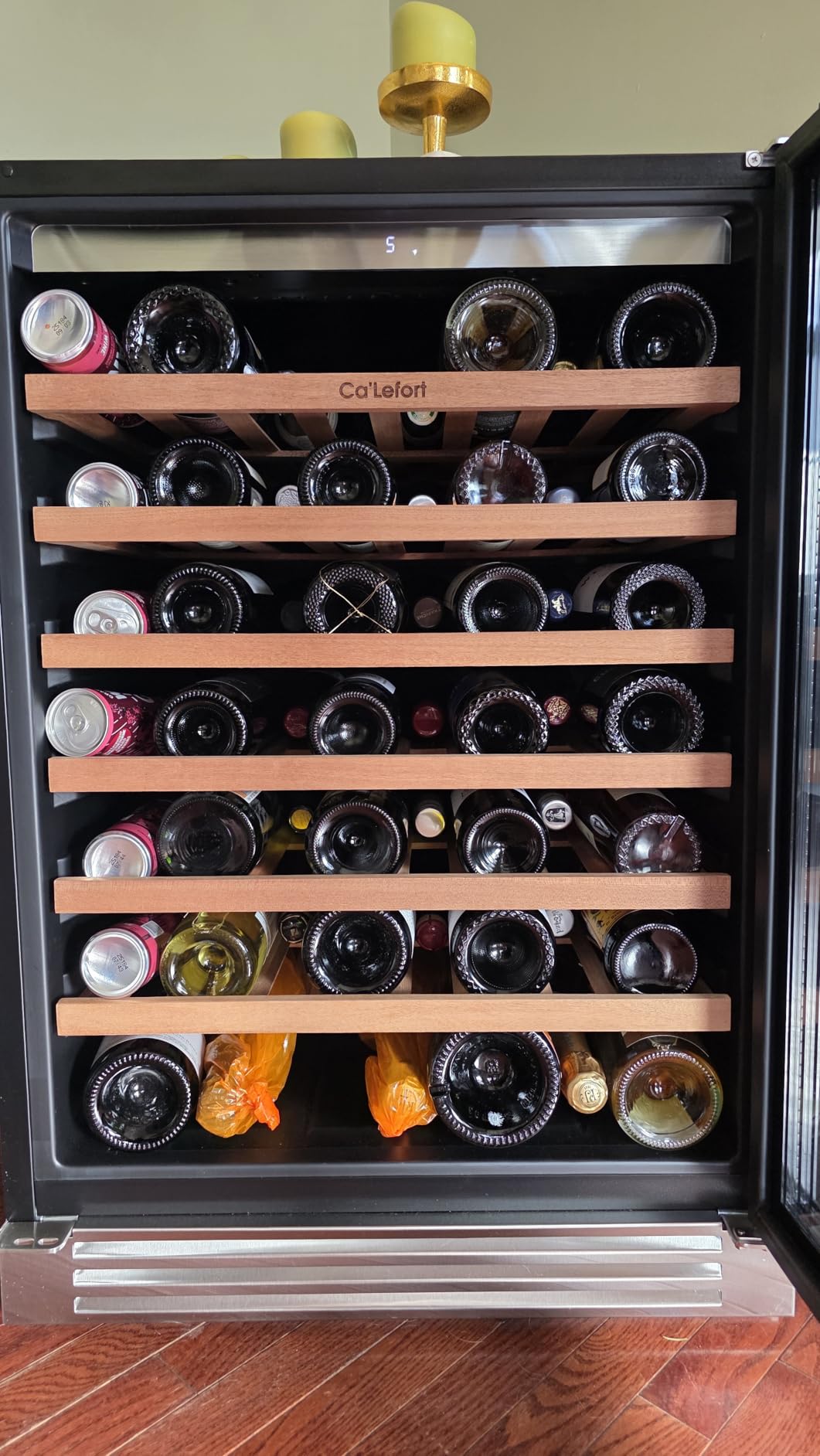
Capacity is substantial at 6 cubic feet for 80 cans and 33 bottles, and the digital panel adjusts from 36F to 72F in one-degree increments, which gives it a genuinely cold floor for beverages rather than a wine-only range. The 304 food-grade stainless steel clad double-glazed doors carry UV protection.
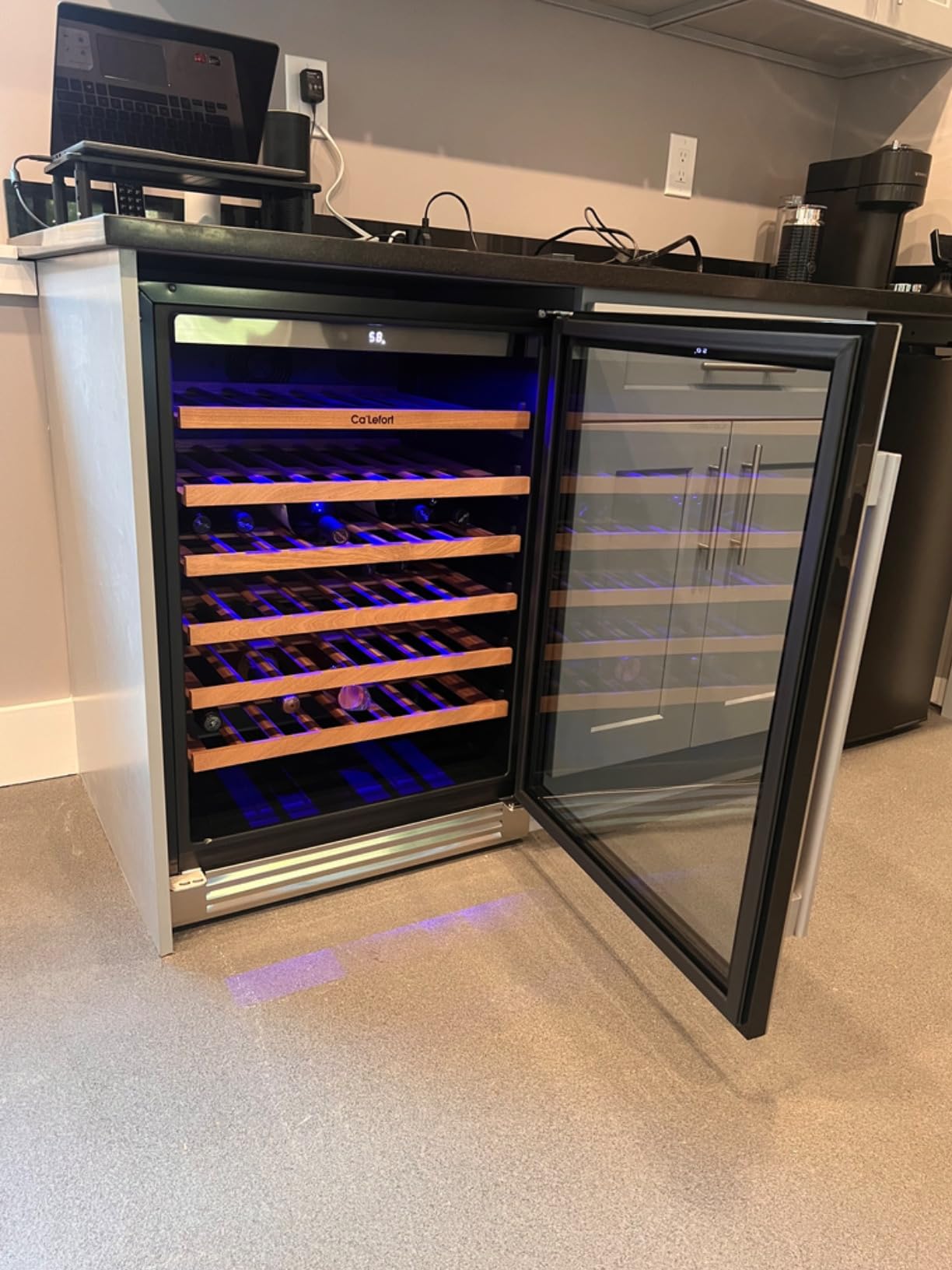
Owners cite large capacity, the cold beverage floor, selectable lighting, and the long compressor warranty as the deciding factors, and they install it built-in without complaint. Three selectable LED colors let you use amber so the light does not disturb the wine or the room.
Two drawbacks get mentioned. Some owners report noise during compressor cycles in an open kitchen, and the unit must stand for 24 hours before first powering on, which means your install day and your first glass are two different days. The sub-34-inch height also helps reach into the lower shelves.
Best For: Long-Term Installations Where a Three-Year Compressor Warranty Matters
Built-ins live inside cabinetry, which makes a compressor failure an expensive problem involving cabinet removal rather than a simple swap. A three-year compressor warranty is a real hedge against that, and this is the only model here that offers one.
It is also the pick if your island guests drink as much water and soda as they do wine, since a 36F floor is cold enough for cans and bottles that a wine-only zone cannot reach.
Skip It If: You Want the Lowest Purchase Cost or Same-Day Install
At this spec level the purchase is the most expensive in the roundup, and that money buys capacity, range, lighting options, and warranty rather than quietness. Buyers on a tighter budget get more container for less elsewhere.
Be aware of the 24 hour settling requirement before first power-on. If you are installing around a party or a holiday, plan the timeline accordingly.
10. Yeego 30 Inch French Door Wine and Beverage Refrigerator: Best Support Experience
Yeego 30 Inch Wine and Beverage Refrigerator with 80 Can and 33 Bottle
- One of the two highest-rated picks here at 4.5
- Quieter than the appliance it replaced
- Support shipped a hinge kit and vent piece free
- Hinge offered on both door sides
- Some shelves pull out only part way
- Handle assembly is tricky without the instruction video
- Wide bottles only fit comfortably on the bottom shelf
The Yeego pairs a French door layout with 6.01 cubic feet of capacity, holding up to 33 Bordeaux bottles and 80 cans across six removable wooden shelves and three wire shelves. At 4.5 out of 5, it is one of the two highest-rated models we tested.
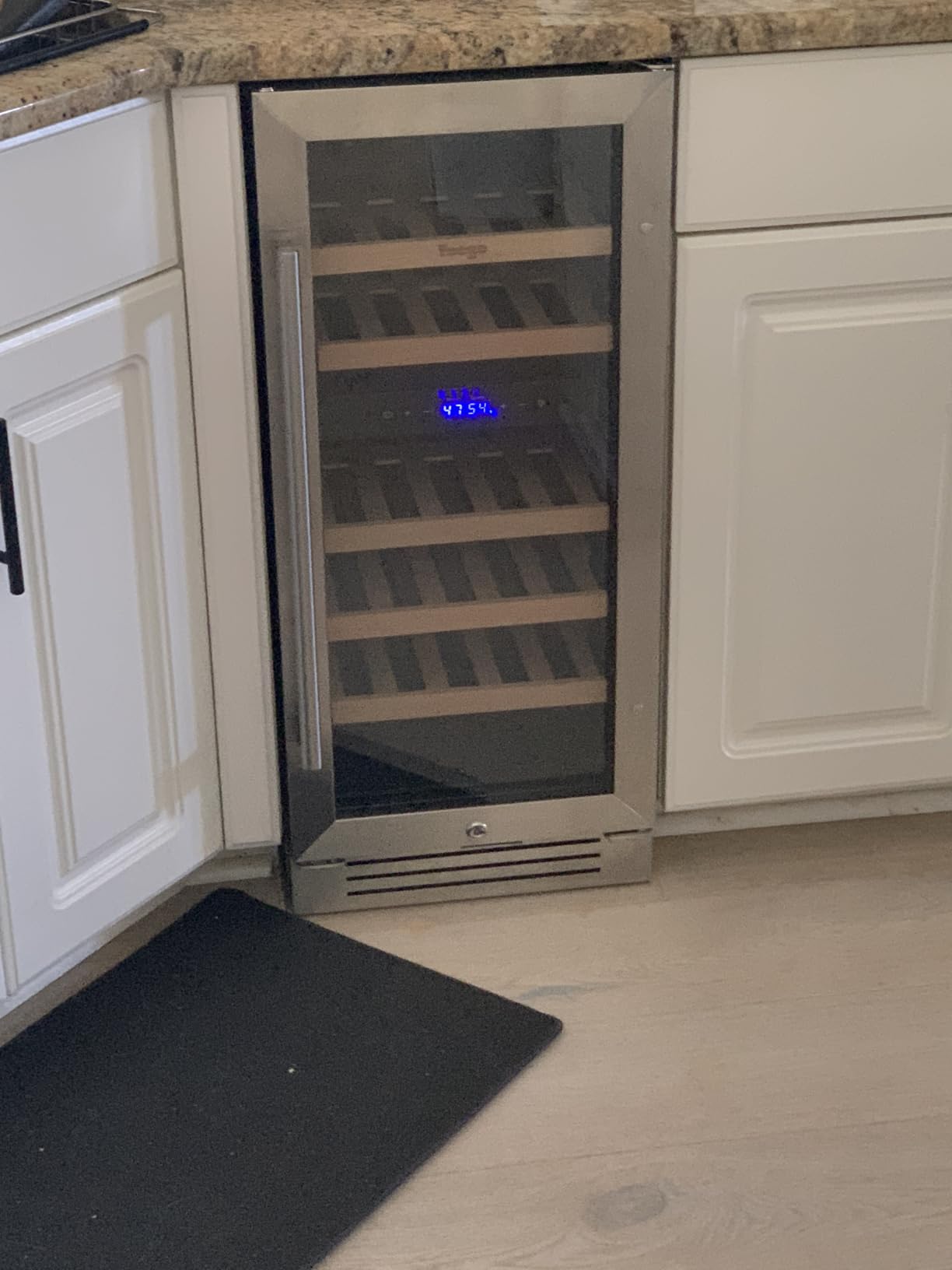
What stands out is the after-sales experience. Buyers single out support that shipped replacement parts, including a hinge kit and a vent piece, at no cost, and sent instruction videos. Owners also report it running quieter than the beverage fridge it replaced, with a barely noticeable hum.
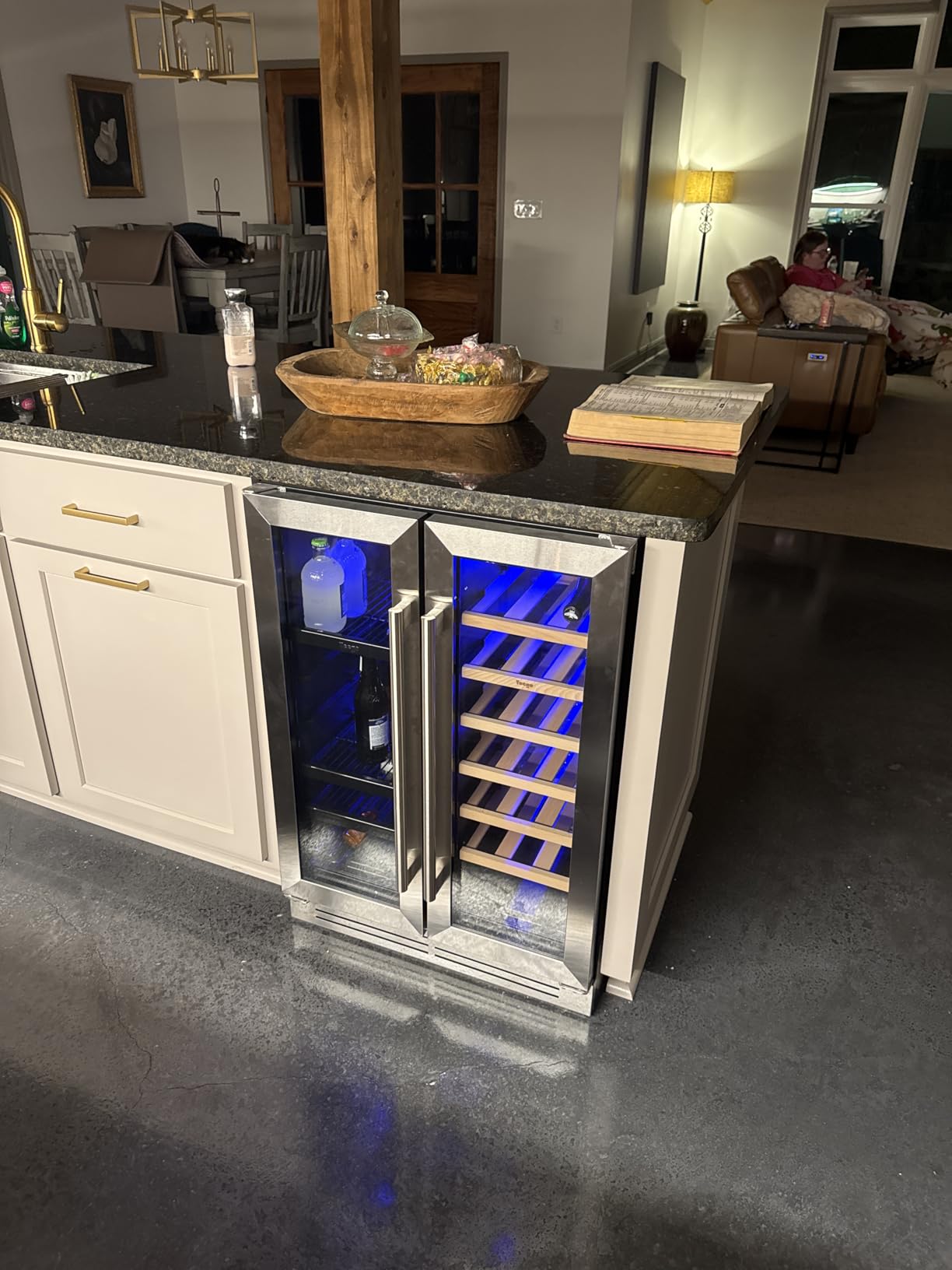
The finish draws compliments and blends into a kitchen or home bar, and the double-layer tempered glass doors with LED lighting present a collection cleanly. Independent dual-zone control runs from 36F to 72F with a power-failure memory function, and internal air circulation keeps cooling even with low vibration.
The complaints are mechanical and small. Some shelves feel not fully sturdy and pull out only part way, attaching the handle is tricky without the instruction video, and reaching the stated capacity takes careful bottle arrangement. Wide bottles only fit comfortably on the very bottom shelf.
Best For: Buyers Who Prioritize Service and a French Door Look
In an island, hinge and door service is the most likely repair, and a brand that ships a hinge kit and a vent piece free of charge removes the most common reason an install goes wrong. That after-sales record is the reason this ranks where it does.
The French doors also give you a narrower door swing than a single wide door, which is useful when the island faces a walkway or a second seating area where an open door would be in the way.
Skip It If: You Fill Every Shelf on Day One
Shelves that pull out only part way make it harder to reach bottles at the back, and the capacity figure assumes careful arrangement rather than a free-for-all load. Plan your layout before you fill it.
It is also a taller body at 34 inches than most 30 inch models, so check the cabinet opening height if your island has a raised rail or a decorative front panel above the bay.
11. Tylza 24 Inch Dual Zone Wine and Beverage Refrigerator: Quietest in the Roundup
- Under 38 dB in daily running
- Drinks zone reaches 35F
- Metal slides remove or double-stack shelves
- Held within about 2F top to bottom over a multi-day test
- Shelf spacing cannot fit every bottle size
- Wire racking can tear labels when pulling a bottle
- A bottle can roll off a shelf edge
- Door can sit slightly ajar if not pushed firmly
Noise is the number one objection we heard about built-in wine coolers, and this 24 inch Tylza is the model that answers it. Stated operation is under 38 dB, and reviewers report quiet running with a focus on shelf slide quality and responsive service that even handled shipping damage.
The zones split at 35-50F on the beverage side and 41-64F on the wine side, both controlled independently. Ten shelves run on metal slides, and they can be removed entirely or stacked two bottles deep depending on what you are storing.
Measured performance is the strongest part of the feedback. One owner documented temperature holding within about 2F from top to bottom across a multi-day test, and others describe build quality and finish as comparable to models costing far more. Energy draw is listed at 163 kWh per year, among the lowest here.
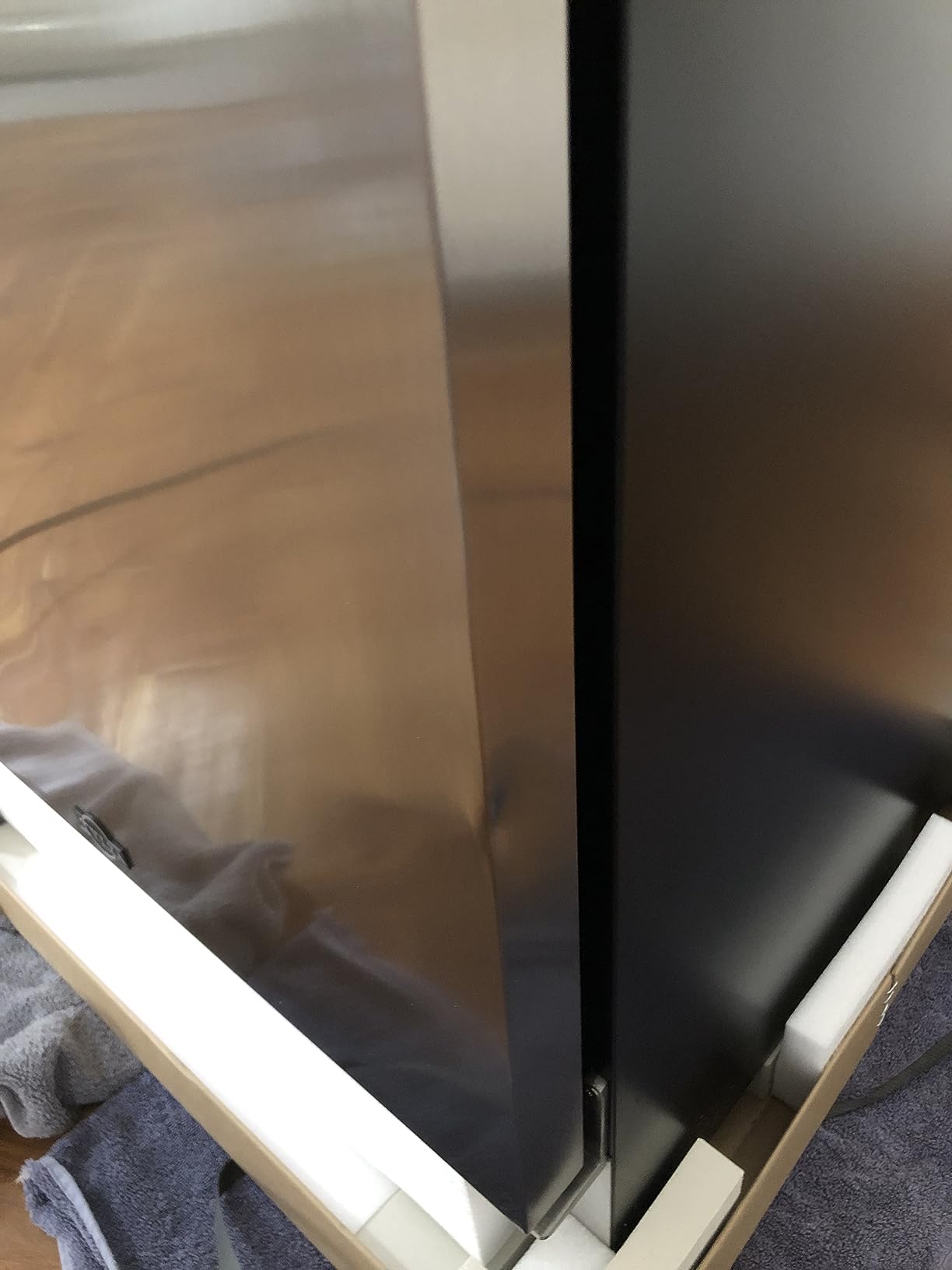
The critical reviews concentrate on racking design rather than cooling. Shelf spacing cannot be made to fit every bottle size, so wide bottles sharply cut the practical capacity, and the wire racking above bottles can tear labels when you pull one out. A bottle can also roll off a shelf edge, and the door can sit slightly ajar.
Best For: Open-Plan Kitchens Where Conversation Sits Beside the Island
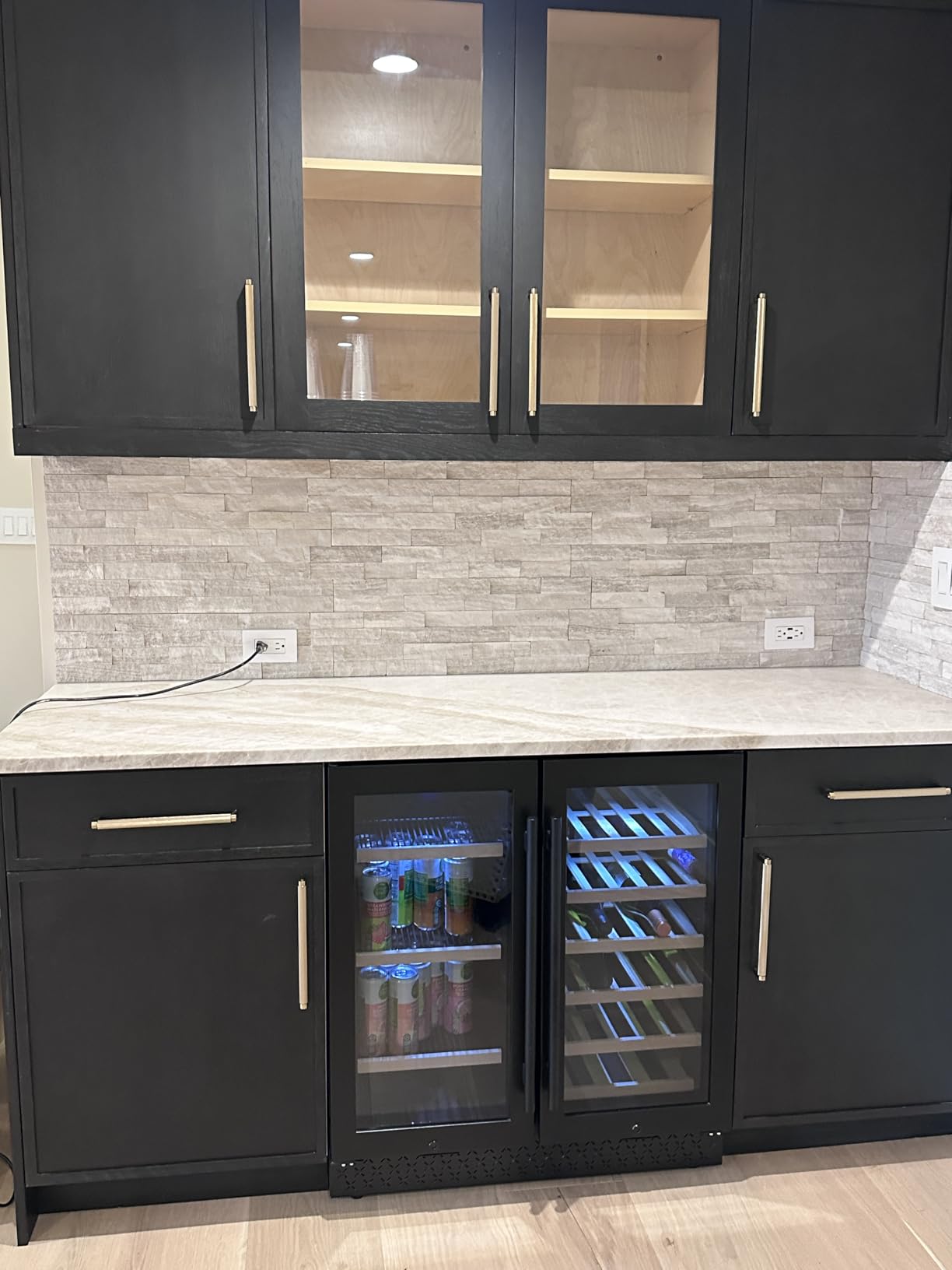
If the island faces a seating area or a living room rather than a closed-off dining space, sound matters more than anywhere else. An under 38 dB compressor is roughly in line with a quiet modern refrigerator rather than the low hum most coolers add to a room.
The double-layered glass door with UV interference blocking suits a bright kitchen, and the key lock covers a shared household. Front ventilation means it installs into a standard 24 inch bay without a custom cabinet face.
Skip It If: You Store a Lot of Wide or Magnum Bottles
The shelf spacing criticism is specific: wide bottles sharply reduce capacity, and the wire rack can damage labels during retrieval. If your collection skews to larger formats, plan for a lower practical bottle count than the headline figure.
Some units also arrive with a dented door or a chipped shelf, so inspect the box on arrival and photograph it before you sign for delivery.
12. Tylza 15 Inch 30 Bottle Dual Zone Wine Cooler: Best Rated Overall
- Rated 4.5 across nearly 1000 reviews
- Six beechwood shelves hold 30 standard bottles
- LED light with a 10 minute timeout
- Adjustable feet damp vibration
- Two keys included for the lock
- Needs 24 hours standing before first use
- Shelves must come out for larger bottles
- Gloss finish shows fingerprints
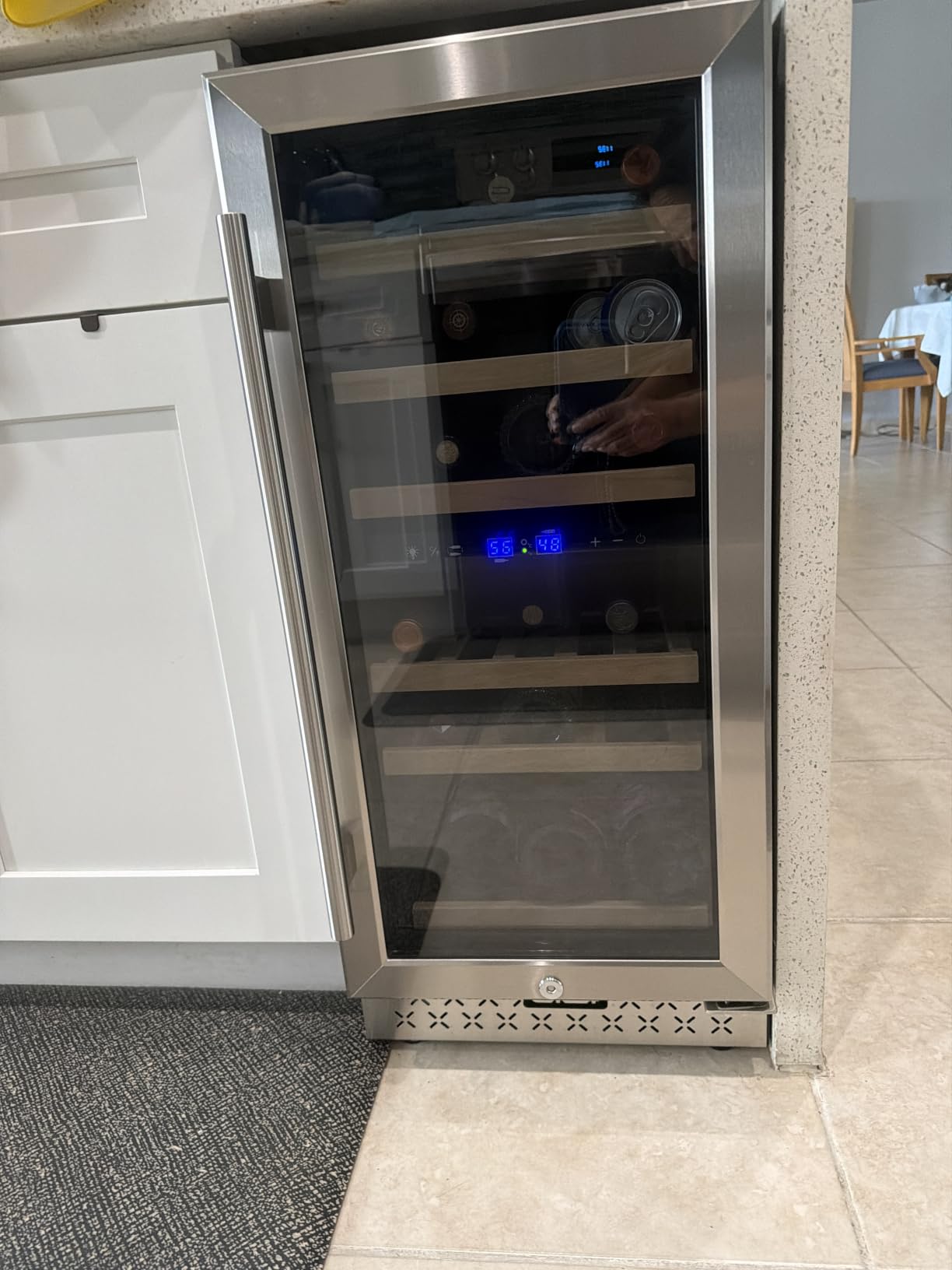
By the numbers most people care about, this is the strongest pick in the roundup. It carries a 4.5 average across nearly a thousand reviews, holds 30 standard 750ml bottles in 3.6 cubic feet, and fits a 14.96 inch wide bay with a 23 inch depth, which suits both shallow and standard island cabinetry.
The zone split is 40-55F on the upper section and 55-65F on the lower, which is a natural red-and-white arrangement. Six beechwood shelves with fixators hold bottles without them shifting as the shelf slides out, and the advanced compressor runs automatic defrost with cold air circulation.
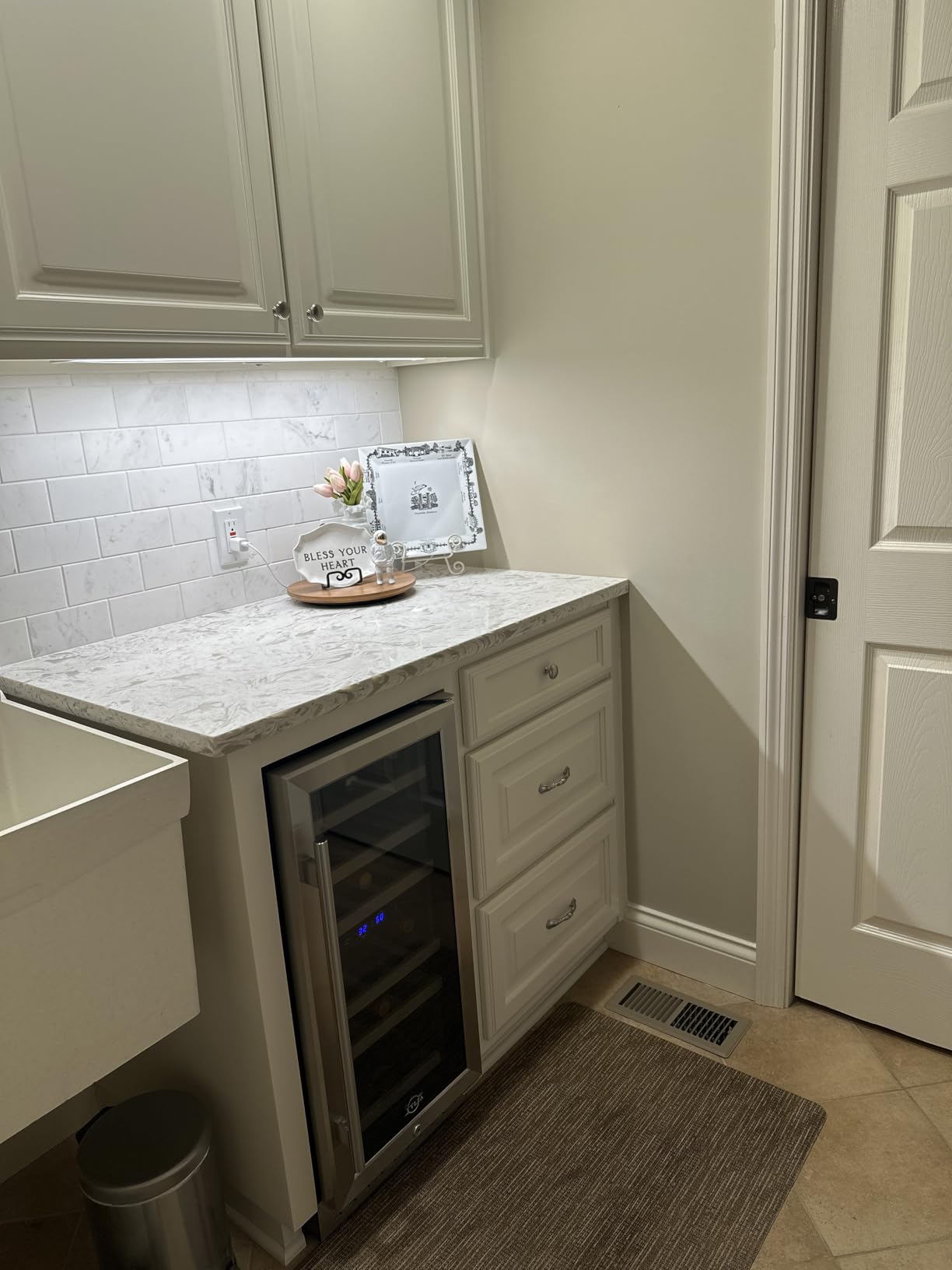
Owners point to consistent temperature stability, sturdy wooden shelves, quiet compressor operation, and strong value per bottle of storage. The double-glazed thermopane door includes a built-in air filter, and adjustable feet suppress vibration, which matters on a hollow island base that can transmit compressor noise.
Deductions tend to be about logistics rather than performance. The unit must stand for 24 hours after delivery before first use, shelves have to be removed to fit larger bottles, and the gloss finish shows fingerprints. The LED offers a 10 minute timeout or a stay-on setting, and two keys come with the safety lock.
Best For: First-Time Buyers Who Want the Highest-Rated Compact Cooler
A 4.5 average across nearly a thousand reviews is a large sample, and the complaints attached to it are about settling time and shelf removal rather than failures. For a first built-in install, that is the risk profile most buyers want.
It also solves the most common island problem. A 15 inch bay is the hardest space to fill properly, and 30 bottles in a cabinet under 16 inches wide is a better outcome than a token four-bottle cooler in the same hole.
Skip It If: You Store Burgundy or Champagne Formats as the Main Use
Shelves must be removed to fit larger bottles, which cuts capacity below the 30 bottle figure. If your collection is heavy with sparkling or Burgundy shapes, budget the real number rather than the headline count.
The 24 hour standing requirement also means you cannot plug it in the same day it arrives, so schedule the install around that if you are renovating.
Will It Fit My Island? Clearances, Depth and Ventilation
A built-in wine refrigerator needs an opening wider and deeper than the cabinet itself, and an open front. The single most common failure in island installs is buying a unit that technically fits the width but has nowhere to exhaust heat.
Measure the bay at three points: the width at the top, the width at the base, and the depth from the cabinet face to the wall or backsplash. Take the smallest of the three. Add roughly half an inch of clearance per side so the unit can be levelled and the door can open without binding on the cabinet face.
Depth is where most 24 inch cabinets bite. A standard base cabinet is 24 inches deep, so any cooler deeper than about 22 inches will sit proud of the door line. That is not a defect if you plan a flush stainless face, but it will look wrong in a cabinet run with a panel-ready door beside it.
Ventilation is the non-negotiable part. A genuinely built-in rated model draws air in and exhausts it through the front grille, and every pick in this roundup is described by its manufacturer as built-in, under-counter, or both. A freestanding-only unit pushed into a cabinet will stall out, and the fix is not a longer cord, it is a cutout.
Toe-kick clearance matters too. Leave the base vent path open, and check the height of the opening against the unit’s height rather than its depth, since many island fronts have a raised rail that reduces usable height by an inch or two. Our outdoor island guide covers the same clearance logic for patio builds where heat load is higher.
How Loud Are These in an Open Kitchen?
Stated noise ranges from under 38 dB to about 42 dB across the compressor coolers in this roundup, and that spread matters more in an open plan than in a closed kitchen. A standard refrigerator runs in roughly the same band, so the difference you will hear is a compressor cycle every few minutes, not a constant drone.
Owners of properly front-vented, properly installed built-ins generally report that they are not noisy. Most of the loudness complaints we saw trace back to units installed without adequate clearance or with rear and bottom-only venting, which forces the compressor to run longer and harder.
If noise is the deciding factor, look at the stated figure first, then check the reviews for how the unit behaves after months of use. Two models here have reported noise that increases with age, which is a different problem from a loud new appliance and harder to predict from a spec sheet.
How to Choose Zones, Capacity, Cooling Type and Warranty
Single zone or dual zone is the first real decision. A single zone is fine if you drink one style of wine, and it gives you more usable shelf space for the same footprint. Dual zone matters when you serve reds and whites at the same meal, which is the normal case for a dinner party in an open kitchen.
Compressor or thermoelectric is the second. Thermoelectric units run quieter, generally in the 25-30 dB range, but they cannot reach true cellar temperature and they struggle in a warm room. Every model in this roundup is compressor-cooled, which is why all of them can hold 41F and lower without complaint.
Capacity needs a discount applied. Advertised bottle counts assume narrow Bordeaux-standard bottles, and real capacity commonly runs 10-20 percent lower once Burgundy and Champagne shapes are involved. Multiply your current collection by about 2.5 for the number you actually want, then check the width first.
Temperature zones by wine type are worth planning around: sparkling at 5-8C, whites and rosés at 8-12C, and reds at 12-19C. A model with a 40-50F upper zone and a 50-66F lower zone covers reds and whites, while a 41-64F single band covers reds and a proper cellar setting but not cold sparkling.
Warranty is the least considered and most useful signal. Most of these units carry one year. If the appliance will live inside cabinetry, where a compressor replacement means pulling cabinetry, the three-year compressor warranty on the Ca’Lefort is worth weighing against the other trade-offs.
Finally, confirm the unit is rated for built-in use in writing, and check whether the door reverses. Door hinge direction is rarely discussed, yet in an island with seating on one side, a fixed hinge can put an open door straight into someone’s knees.
Island Installation Checklist Before You Buy
Work through this list before you order, because most of these problems are cheap to solve during a remodel and expensive to solve afterwards.
First, measure the bay width at the top, middle, and base, and record the smallest figure. Second, measure the depth from the cabinet face to the wall and confirm the cooler is shallower than that figure by at least an inch. Third, check the opening height against the unit height, allowing for a raised toe-kick rail.
Fourth, confirm the model is rated built-in with front ventilation, not freestanding-only. Fifth, confirm the door hinge side, and whether it reverses. Sixth, make sure a GFCI-protected outlet sits inside the cabinet above the unit, not in a neighbouring bay where a code inspector may object. Seventh, allow a drainage path and keep the toe-kick vent clear so condensate has somewhere to go.
Eighth, plan the door swing against your seating. If your island has a raised bar overhang on one side, the door needs to open away from it. If you are working from our wine refrigerator guide, this step is the same whether the unit is built-in or freestanding.
Who Should Skip a Built-In Wine Fridge
Skip it if you are renting, unless the appliance and the cabinet modification are both covered in writing. A built-in is a semi-permanent fixture, and removing one later means cutting cabinetry.
Skip it if your island cabinet is already installed and has no outlet and no ventilation path, unless you are already opening the wall. The retrofit for an outlet and a vent cutout inside a finished island is the most commonly underestimated cost in this whole project.
Also skip it if nobody in the house drinks wine regularly, or if you are solving a beverage-storage problem. A can-focused cooler is a better appliance for that, and it costs less to run.
Frequently Asked Questions
How much ventilation does a built-in wine fridge need?
A built-in wine refrigerator needs to draw air in and exhaust it through the front grille, with the front of the unit fully unobstructed and the toe-kick vent path kept clear. Units that vent only through the back or the bottom stall inside cabinetry, run hotter, fail to hold temperature, and wear compressors out early. Always confirm the manufacturer rates the model for built-in use.
What is a good depth for a wine cabinet in a kitchen island?
A 24 inch deep standard base cabinet suits coolers no deeper than about 22 inches, otherwise the glass front sits proud of the cabinet door line. Shallow 15 inch and 18 inch bays suit narrow units around 22 to 23 inches deep. Measure from the cabinet face to the wall or backsplash and subtract an inch for a service gap before choosing a width.
Do built-in wine fridges need front venting?
Yes for any model installed inside cabinetry. Front ventilation lets the unit breathe while boxed in, which is what separates a genuine built-in rated cooler from a freestanding appliance pushed into a cabinet. Homeowners have reported units marketed as built-in that never cooled below the mid-60s simply because the only vent was a slot at the base.
Can you install a freestanding wine fridge inside kitchen cabinets?
Only in the sense that the cabinet will physically hold it. A freestanding-only unit has no front exhaust, so heat builds up inside the bay and it will fail to hold temperature and eventually damage the compressor. If you want an under-counter install, buy a model the manufacturer rates for built-in or under-counter use with front venting.
Are built-in wine coolers noisy in an open kitchen?
Properly front-vented and properly installed built-ins are generally not noisy, with compressor models in the roundup stated between under 38 dB and about 42 dB. Most loudness complaints come from units installed without adequate clearance or with rear and bottom-only venting, which forces the compressor to run longer. In an open plan, check the stated figure and then check reviews for noise that grows over time.
How many bottles should a built-in wine cooler hold?
Plan on about 2.5 times your current collection, then discount the advertised count by 10 to 20 percent because bottle figures assume narrow Bordeaux-standard shapes. A 15 inch narrow bay realistically holds around 30 standard bottles, while a 24 inch cabinet holds roughly 20 to 46 depending on whether it is a wine-only or combined wine and beverage layout.
Final Verdict for Kitchen Islands
The Velieta 24 Inch Dual Zone remains our choice for the best built in wine refrigerators for kitchen islands, because it is front-vented, genuinely dual zone, and rated 4.4 across more than 1,100 reviews, which is the combination of fit, function, and evidence we want in a cabinet you cannot easily reach after install.
Choose the ROVSUN or BODEGA 15 inch models if your island has a narrow bay, the Velieta 30 inch or FoMup if you have 30 inches of width, and the Tylza 24 inch if the island faces where people sit. Measure the opening first, confirm front ventilation in writing, and the rest is straightforward.