
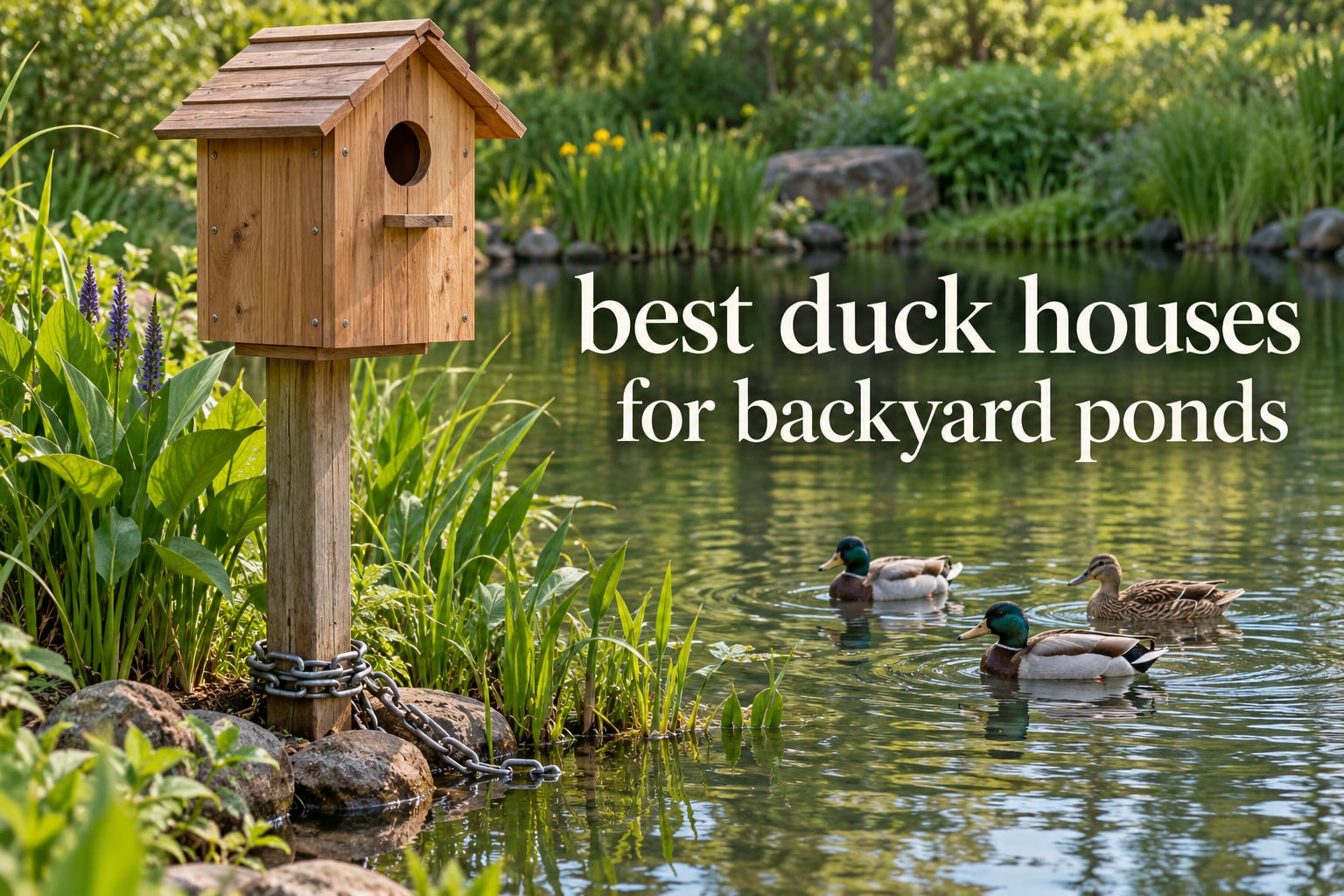
A duck house does three jobs at once for a backyard pond: it keeps birds dry overnight, it gives the flock a safe nesting spot, and it puts a physical barrier between your ducks and the raccoons, minks and river otters that patrol open water. Most people buying one are actually shopping for two very different products, and that is where a lot of purchases go wrong. A tall cedar box bolted to a pole five feet above the waterline is a wood duck nest box, and a domestic flock sleeping in it overnight will be sitting in the rain. A low, insulated, ramped shelter on blocks is a duck coop, and a wild wood duck will never enter it.
This roundup covers all ten of the best duck houses for backyard ponds currently on the market, split honestly between those two categories. We worked through the construction details, entry hole sizing, roof design, cleaning access and predator resistance of each one, then matched every unit to the situation it actually fits. Three of the picks are wild duck nest boxes built to species-correct dimensions, and seven are ground-level shelters sized for a domestic flock.
One thing surprised us while comparing them. The premium tier in this category is not about heavier wood or fancier joinery. What separates a house that survives five winters from one that rots in two is the roof pitch, the floor material, the latch hardware and how much ventilation sits above the birds’ heads. Those four details matter more than the price gap, and we explain exactly what to look for in the buying guide below.
While you are planning the pond side of the setup, it also helps to have the rest of the water feature sorted, from skimming debris to lining the basin, and a pond skimmer guide and a pond liner comparison will keep that side of the project on track.
Table of Contents
Top 3 Picks: Best Duck Houses For Backyard Ponds (October 2026)


Best Duck Houses for Backyard Ponds in 2026
| Product | Specifications | Action |
|---|---|---|
| Woodlink WD1 Cedar Duck House |
|
Check Latest Price |
 Applewood Premium Pine Wood Duck House Applewood Premium Pine Wood Duck House |
|
Check Latest Price |
| JCs Wildlife Cedar Wood Duck Nesting Box |
|
Check Latest Price |
 Amcortn Hexagonal Mallard Nesting Box Amcortn Hexagonal Mallard Nesting Box |
|
Check Latest Price |
| Lovinhut Insulated Duck Coop |
|
Check Latest Price |
 VIXZEN Outdoor Duck and Chicken House VIXZEN Outdoor Duck and Chicken House |
|
Check Latest Price |
 KFY Resin Duck Coop With Hydraulic Lid KFY Resin Duck Coop With Hydraulic Lid |
|
Check Latest Price |
 Wooden Duck Nesting Box, 10 x 10 x 17 Wooden Duck Nesting Box, 10 x 10 x 17 |
|
Check Latest Price |
 Vixzen Outdoor Duck House, Large Resin Vixzen Outdoor Duck House, Large Resin |
|
Check Latest Price |
 WHEGETED Large Wooden Hen House 76 inch WHEGETED Large Wooden Hen House 76 inch |
|
Check Latest Price |
What Is a Duck House for a Backyard Pond?
A duck house for a backyard pond is a weatherproof shelter, either a floating structure or a land-based box on blocks, that gives ducks a dry, predator-protected place to sleep, nest and shelter from rain, wind and cold. The standard is roughly 4 square feet of floor space per duck, a minimum interior height of 3 feet, and a door about 14 inches wide by 12 to 14 inches tall. Wild duck nest boxes follow different rules, with an oval entrance hole of 4 by 3 inches for wood ducks and a mounting height of 5 to 15 feet.
Ventilation matters more here than in a chicken coop. Ducks arrive soaked every time they leave the water, so a house that traps humidity breeds respiratory problems and ammonia faster than any other livestock building. The best designs put vents high, near the ridge, and keep the floor on a raised tray or liner that can be pulled out and hosed down.
1. Woodlink WD1 Cedar Duck House – Best Overall Nest Box
- Kiln-dried red cedar rather than cheaper pine
- Arrives fully assembled with shavings and a fledgling ladder
- Easy-open front cleaning panel
- Wide rear steel hanger for fast mounting
- Works for wood ducks and hooded mergansers
- 4 x 3 inch entry can run tight for larger ducks
- Cedar needs sealing or staining for maximum longevity
This is the box we kept coming back to while assembling the roundup. It carries a 4.8 rating across 292 reviews, by a wide margin the largest review base of anything here, and the construction decisions behind it are the right ones. The body is handcrafted from re-forested, kiln-dried inland red cedar fastened with chromate screws, and every board is thicker and heavier than the pine most competitors use at this tier.
At 12.8 pounds and 10.88 by 15.13 by 23 inches, it is a serious weight to hang on a post, and that heft is exactly why it holds up in wind and rain along a pond edge. A fledgling ladder and a bed of wood shavings are included, so the only real installation step is getting it up on a pole at the right height.
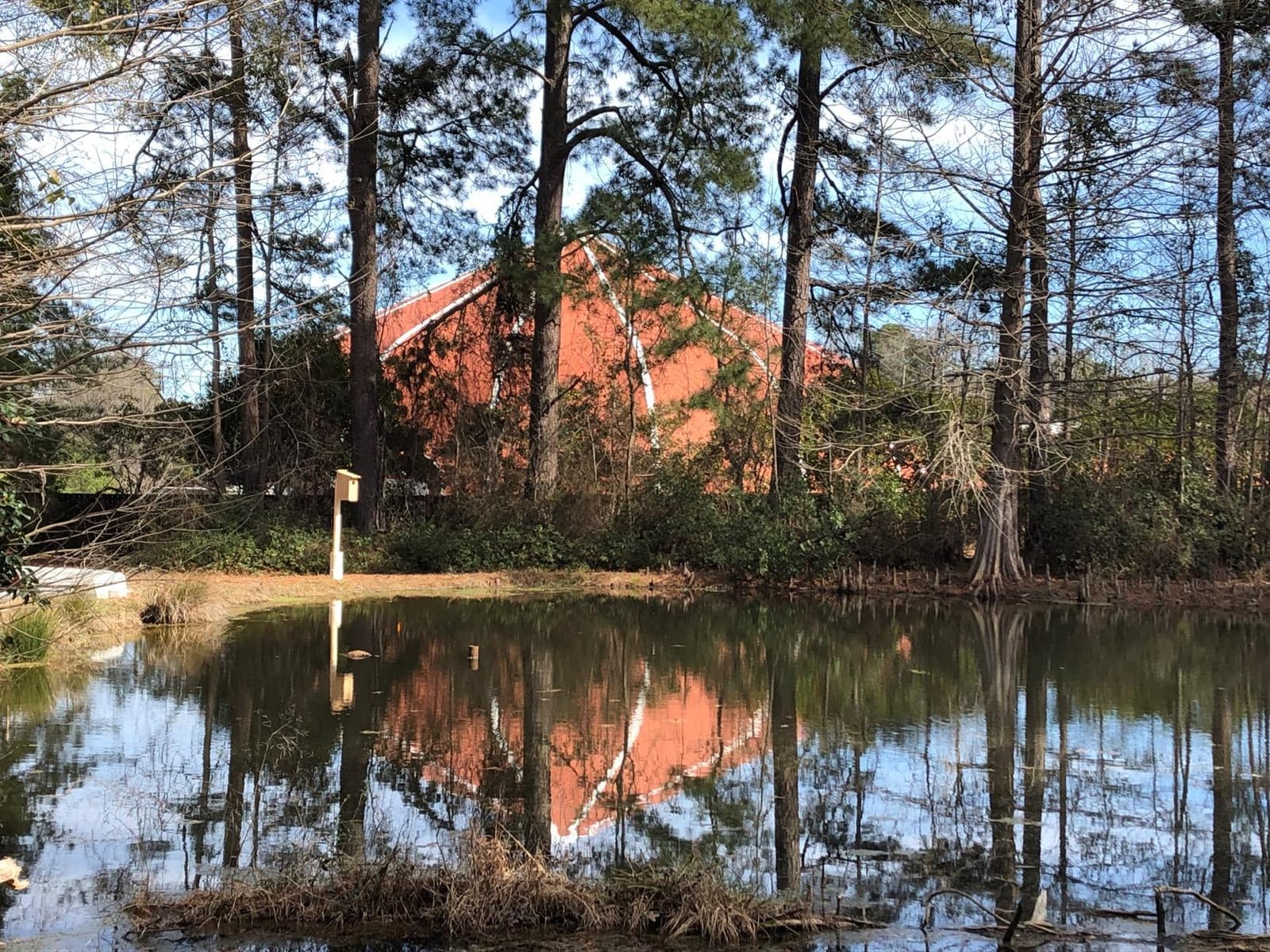
The front panel hinges open for the annual clean-out, which matters more than most buyers expect. Nesting material packs into the corners of a wooden box and holds moisture, and a box you can open in under a minute with one hand gets cleaned properly. A box with a fixed roof gets skipped, and then it smells, and then the ducks stop using it.
The one adjustment owners report making is to the entry hole. At 4 by 3 inches it is correctly sized for wood ducks, the species it is designed around, but some larger domestic breeds and whistling ducks find it tight. Enlarging it slightly, or mounting an additional box at a different height, solves that without replacing anything.
What to check before you mount it
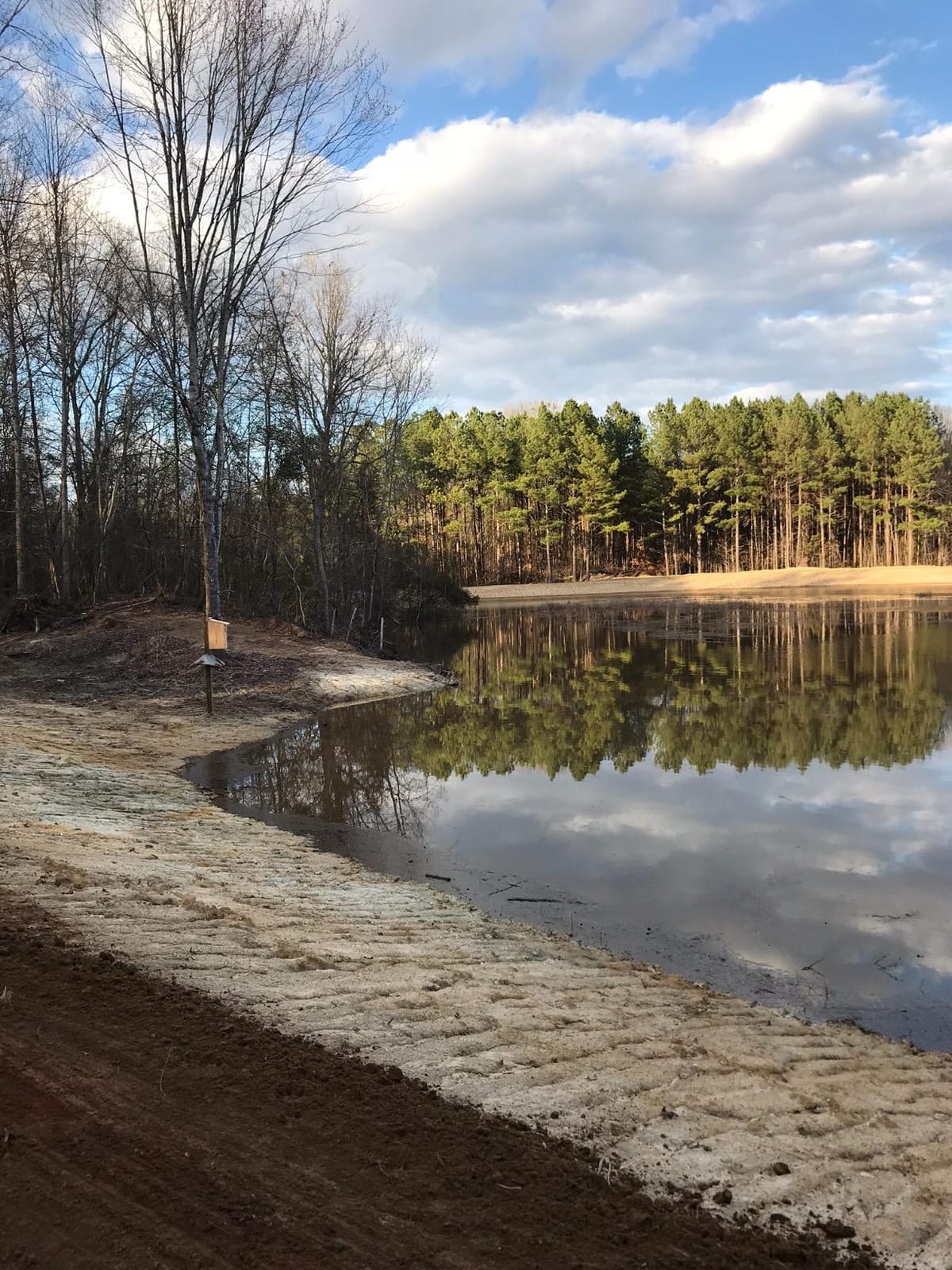
Confirm your post is tall enough. The manufacturer designs this unit for pole mounting in or at the water’s edge, and mounting it low puts it inside the splash zone where spray saturates the cedar year after year. A treated post set deep enough to stay put in soft pond-bottom soil is the only part of this job worth spending time on.
Decide in advance whether you are sealing or staining. Untreated cedar weathers to a silver grey and can last for years, but a coat of sealer on the roof-side panels roughly doubles how long the bottom boards hold. Sealing the entrance kerf area is worth doing carefully so the hole does not swell shut.
Where this box falls short
It is a nest box, not a shelter. There is no ramp, no floor tray and no bedding system inside, so if you are housing a domestic flock at night this is the wrong tool, and a grounded coop like the Lovinhut further down fits that job instead. Treating a nest box as a weather shelter is the most common mismatch we see in this category.
It also is not a floating unit. Ducks on an open pond will loaf on the bank and ignore a structure they cannot reach, and plenty of owners on pond forums report exactly that. Pair it with a low bank-side shelter if you want night lodging, or accept that this box is working on the wild duck side of the pond only.
2. Applewood Premium Pine Wood Duck House – Best Value Nest Box
- Built to species-correct dimensions for wood ducks and hooded mergansers
- Floor drainage holes keep nesting material dry
- Integrated duckling ladder grooves below the opening
- Arrives with steel hanger and mounting screws
- Natural oil finish avoids chemical preservatives
- Pine has lower natural rot resistance than cedar
- Smaller interior than taller conservation-style boxes
Handcrafted in a small Wisconsin woodworking shop, this box hits the same species-correct target as the Woodlink at a lower tier, and it does it with details the cheaper listings usually skip. The 3 by 4 inch entrance is built to wood duck and hooded merganser dimensions, and the duckling ladder grooves molded below that opening give fledglings something to grip on the climb out.
Our favorite detail is the floor drainage. Water in a nesting box is the single most common reason a wood duck abandons a site, and this unit drains from the bottom rather than trapping a puddle against the back wall. Combined with the grain-penetrating oil finish, it handles the wet half of a pond year considerably better than raw pine would.
Installation is genuinely quick. Pre-drilled mounting holes, a heavy-duty steel hanger and three 2.5 inch mounting screws all ship in the box, so you are looking at one person, one pole and about ten minutes. That whole package is what earns it the value slot here, and the 4.6 rating across 86 reviews backs up the build quality claim.
Weight is 12.5 pounds across a 9.5 by 10.25 by 20.75 inch footprint, so it sits slightly smaller and squarer than the Woodlink. For a single nesting site that is a benefit, because a compact box is easier to hide from jays and harder for a squirrel to reach into.
What to check before you mount it
Plan on sealing the exterior within the first year. Pine has no natural rot resistance, and while the oil finish slows moisture uptake at the start, a pond edge is a hard environment for it. A coat of exterior sealer on the body panels and a metal cap over the roof buys several more seasons, and it is a one-afternoon job.
Check the screw length against your post. The supplied fasteners suit a standard untreated post, but if you are mounting into a thick treated pole, pick up longer screws at the hardware store. Screws that end short in the heartwood are what cause boxes to twist loose over a decade of wind loading.
Where this box falls short
It is a nest box, so the same limitation as our top pick applies. No ramp, no floor tray, no bedding system, and it does nothing for a domestic flock that needs a dry place to sleep. Buy it if your goal is attracting wood ducks, and pair it with a separate grounded shelter if you keep domestic birds.
The interior is also smaller than tall conservation-style boxes, which matters if you are targeting a hen that raises a large brood. A restricted floor can mean a clutch gets scattered. If your target species is a bufflehead, goldeneye or merganser, look for a box sized to their smaller 3.25 by 4.125 inch entry instead.
3. JCs Wildlife Cedar Wood Duck Nesting Box – Best for Attracting Wild Ducks
- Untreated natural cedar keeps nesting birds away from preservatives
- Built-in predator guard and kerfed entrance
- Clean out door with drainage holes simplifies maintenance
- Arrives fully assembled with shavings and mounting guidelines
- Written mounting guidance and responsive manufacturer support
- Supplied door latch is stiff and can swing open
- Multi-toned cedar grain reads as uneven on the face panel
- Higher tier price than cedar kit competitors
Among the nesting boxes we tested, this one is the most thoughtfully designed for the job rather than assembled to a price point. The kerfs cut into the entrance face form a built-in predator guard, so the wood around the 4 inch oval hole physically resists a climbing raccoon or squirrel, and the whole entrance is framed in untreated natural cedar with a poly lumber roof that will not absorb water.
That combination of untreated body and synthetic roof is deliberate. Nesting birds touch the interior constantly, and a fully preservative-treated box is a poor choice when the animal inside is a wild duck you are trying to conserve. A poly roof sheds rain without introducing chemicals anywhere near the nest cup.
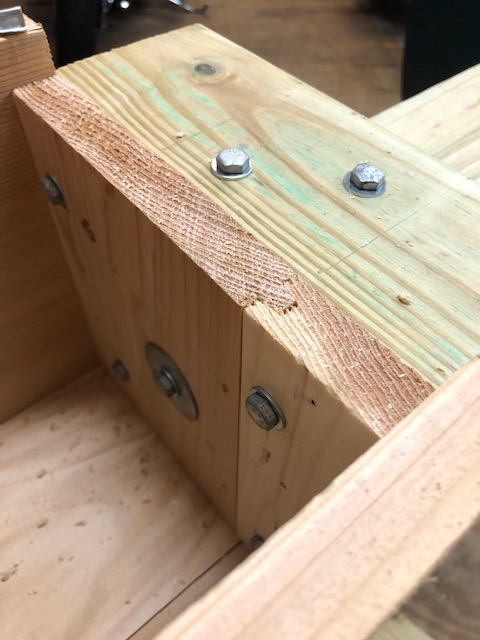
At 11.75 by 9.75 by 24.5 inches and 11.5 pounds, it is the tallest box in this roundup, and that vertical interior is what makes it the right call for a full clutch. Tall conservation-style boxes like this one let a duckling reach a ledge before it can move, which is where most nestling losses happen in a shallow box.
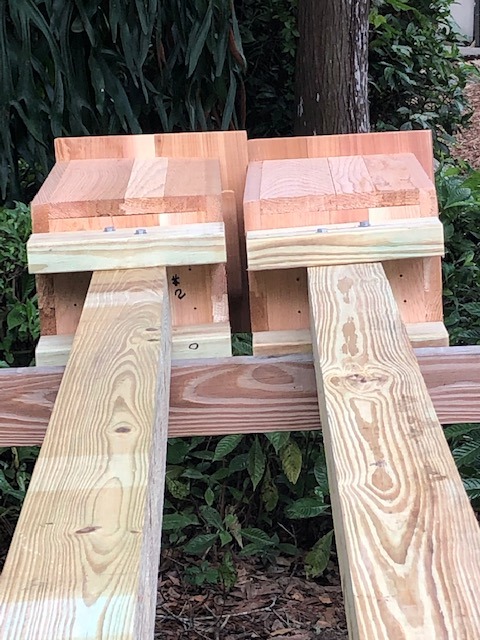
It arrives fully assembled with pilot holes drilled and nesting material in the box, and the manufacturer specifies pole mounting 4 to 5 feet high, either standing in the water or right at the edge. Reviewers single out the written mounting guidance and the responsive support, which sounds minor until you are standing in mud holding a box above your head.
What to check before you mount it
Replace the door latch on day one. Owners consistently report that the supplied latch is stiff and can swing open in wind, which defeats the point of a clean-out door on a box you are relying on for conservation work. A simple ball catch costs nothing and fixes it permanently.
Get the height right relative to the water. The manufacturer suggests 4 to 5 feet, and staying in that range places the box just above the wave action line where a hen can reach it. Push it much higher and wood ducks lose interest; set it much lower and it takes splash damage on every passing duck.
Where this box falls short
The mixed cedar grain color is cosmetic but noticeable. Natural cedar boards vary in tone, and on the flat face panel of this box the variation reads as uneven rather than rustic. If appearance at the water’s edge matters to you, this is not the box.
It is also a pole-mounted wild duck box, so it does nothing for a domestic flock. There is no ramp and no floor tray, and the entry hole is sized for a wood duck, not for a heavy domestic drake trying to get inside. Treat it as a conservation tool, not a shelter.
4. Amcortn Hexagonal Mallard Nesting Box – Best for Nest Checking
- Dual entrances and elevated entry points improve predator resistance and duckling escape
- Observation doors allow nest checks without disturbing the hen
- Removable roof makes the annual clean-out quick
- Pre-drilled holes and included screws simplify assembly
- Keyhole slot on the back simplifies hanging
- Rectangular 17 inch variant is shorter than conservation depth
- Supplied door peg and latch are flimsy and often replaced
- One-eighth inch drainage holes can clog
This hexagonal box is the only one in the roundup with a dual-door observation system, and that changes what you can do with it. You can look at a nesting hen and the clutch without opening the box, shifting the roof or standing in the entrance, which is exactly what you want during the two weeks of incubation when disturbance means abandonment.
The dual 4 inch entry holes also solve a real biological problem. A single entrance creates a bottleneck where a drake blocks a hen trying to leave, and two holes give a second escape route. The enclosed angles and elevated entry points are the same thinking pushed further, denying purchase to snakes, squirrels and small mammals trying to reach in from above.
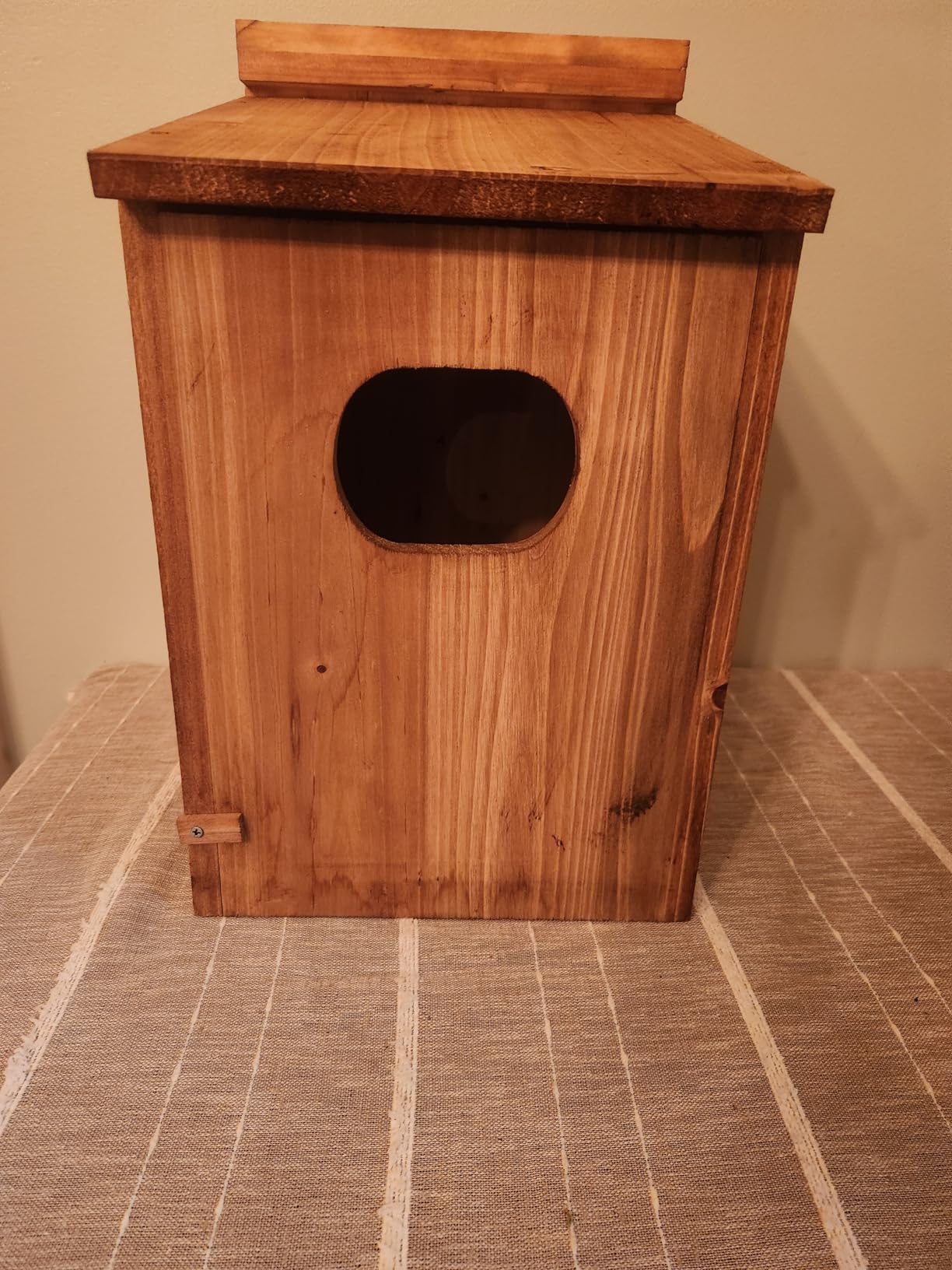
At 3.5 pounds it is by far the lightest unit here, and the keyhole slot on the back panel makes hanging it on a post or a branch a genuine one-person job. The removable roof lifts off for the annual clean-out, so the nest material comes out in one piece rather than being scooped out of a corner.
Assembly is straightforward with aligned pre-drilled holes and included screws, which matters for a product that arrives as a flat pack. The 4.5 rating across 48 reviews is the lowest among the cedar options here, and the reason is almost always hardware rather than structure.
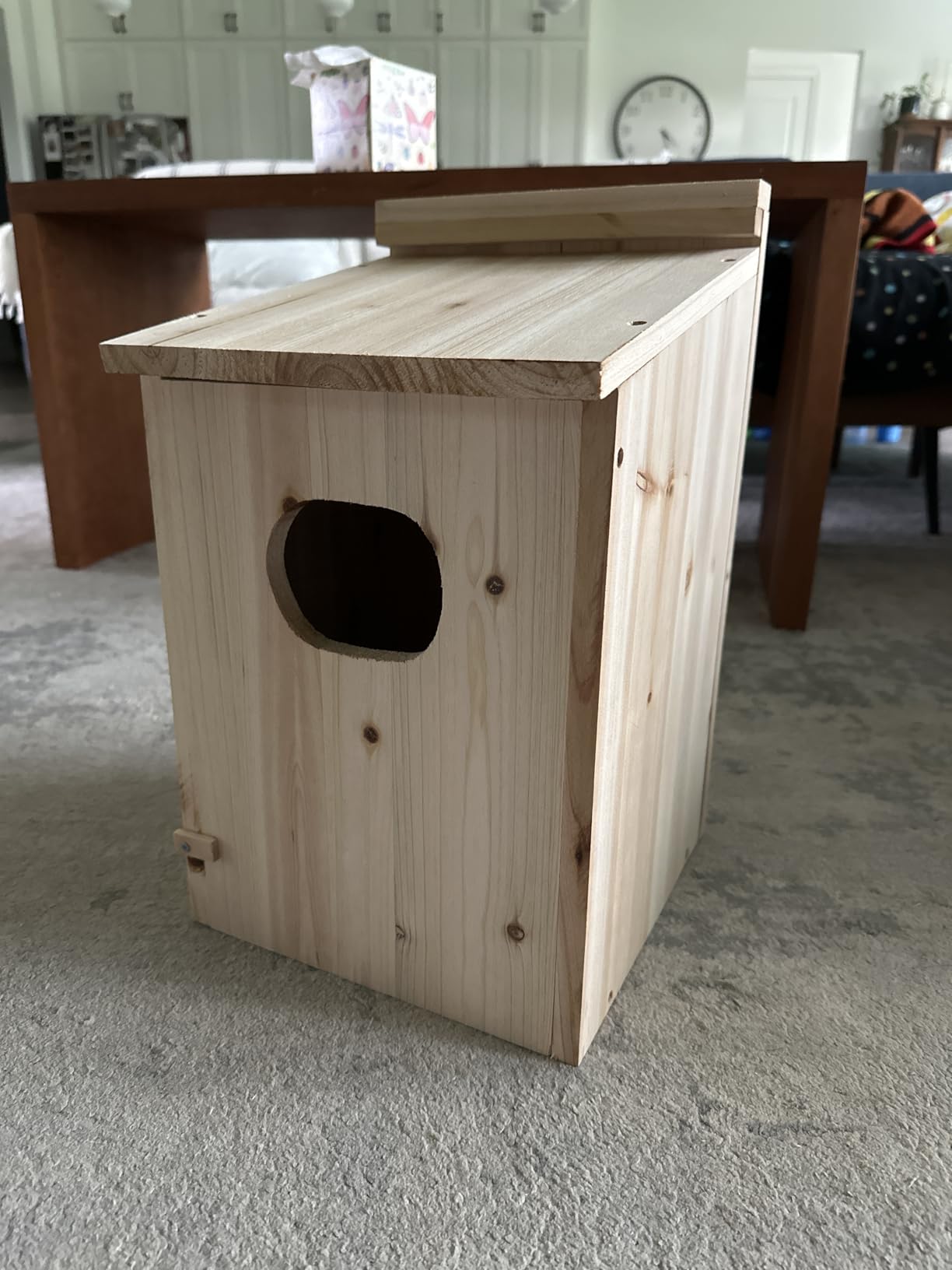
What to check before you mount it
Choose the hexagonal variant at 19.7 inches tall, not the 17 inch rectangular one. The shorter rectangular version gives a shallower interior than the depth conservation boxes target, and a clutch laid on that floor gets scattered. The extra three inches is the whole difference between a brood that fledges and one that does not.
Plan a sealant pass on the joints. Some boards are glued laminates that can split along the joint line if left unsealed, and a pond edge is exactly where that failure shows up first. A light coat of exterior sealer on the seams before mounting takes ten minutes and prevents the problem entirely.
Where this box falls short
The supplied door peg and latch are flimsy, and most owners replace them. That is a five-minute fix, but you should budget for it rather than assuming the box is predator-proof out of the box. The one-eighth inch drainage holes can also clog with debris, so clear them during every clean-out.
Like the other nest boxes here, it is not a shelter for a domestic flock. There is no bedding system, no ramp and no raised floor, and the observation doors are for watching, not for housing. Use it to attract mallards and to monitor broods, and put a separate coop on the ground.
5. Lovinhut Insulated Duck Coop – Best for Cold Climates
- Foam insulation and larger sliding windows hold warmth while clearing ammonia
- PVC floor liner wipes clean in minutes
- Elevated reinforced-leg frame keeps the interior dry and varmints out
- Ramp doubles as the door and accepts an automatic opener
- Assembles in under an hour for most owners
- Legs are tall enough that many owners shorten them for ducks
- Gap between the roof and the front panel creates a draft
- Interior walls can arrive dented from packaging
This is the only genuinely insulated shelter in the roundup, and in a cold climate that single feature moves it to the front. Foam insulation built into the thicker wood walls holds warmth through a freeze, while the front and rear sliding windows are 50 percent larger than standard to clear the ammonia that builds up when wet bedding and dense bird load share a small enclosed space.
That combination is unusual. Most shelters either insulate and trap moisture, or vent well and let the wind in. Here the two jobs are separated, which is the single most important thing a duck house can get right. The smooth black PVC floor liner is the other standout, since a hose-down floor is the difference between a two-minute clean and a half-hour scrape.
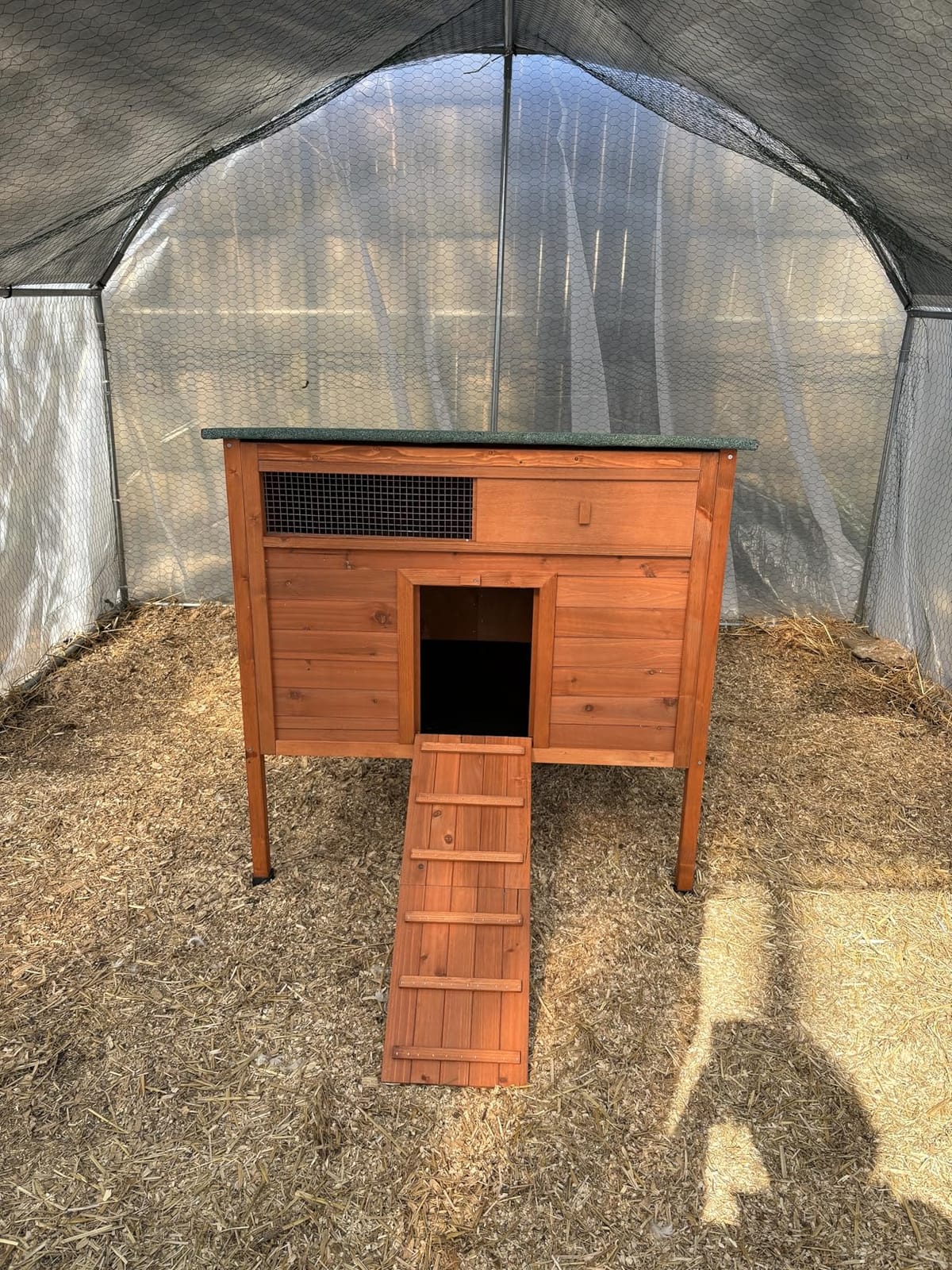
The structure is elevated on reinforced legs with a sloped asphalt shingle roof that sheds rain and prevents pooling on the deck. A door that doubles as a non-slip ramp gives the birds a graded path up off the ground, and it accepts an automatic opener if you want to be shut out of the dawn routine.
At 67 pounds and 41.2 by 27.6 by 39.2 inches, it is the heaviest unit in this roundup and it is not a two-person carry once assembled. That weight is the cost of the insulation and the raised frame, and it buys a structure that does not twist after a season of wet weather. Owners rate it 4.8 across 36 reviews.
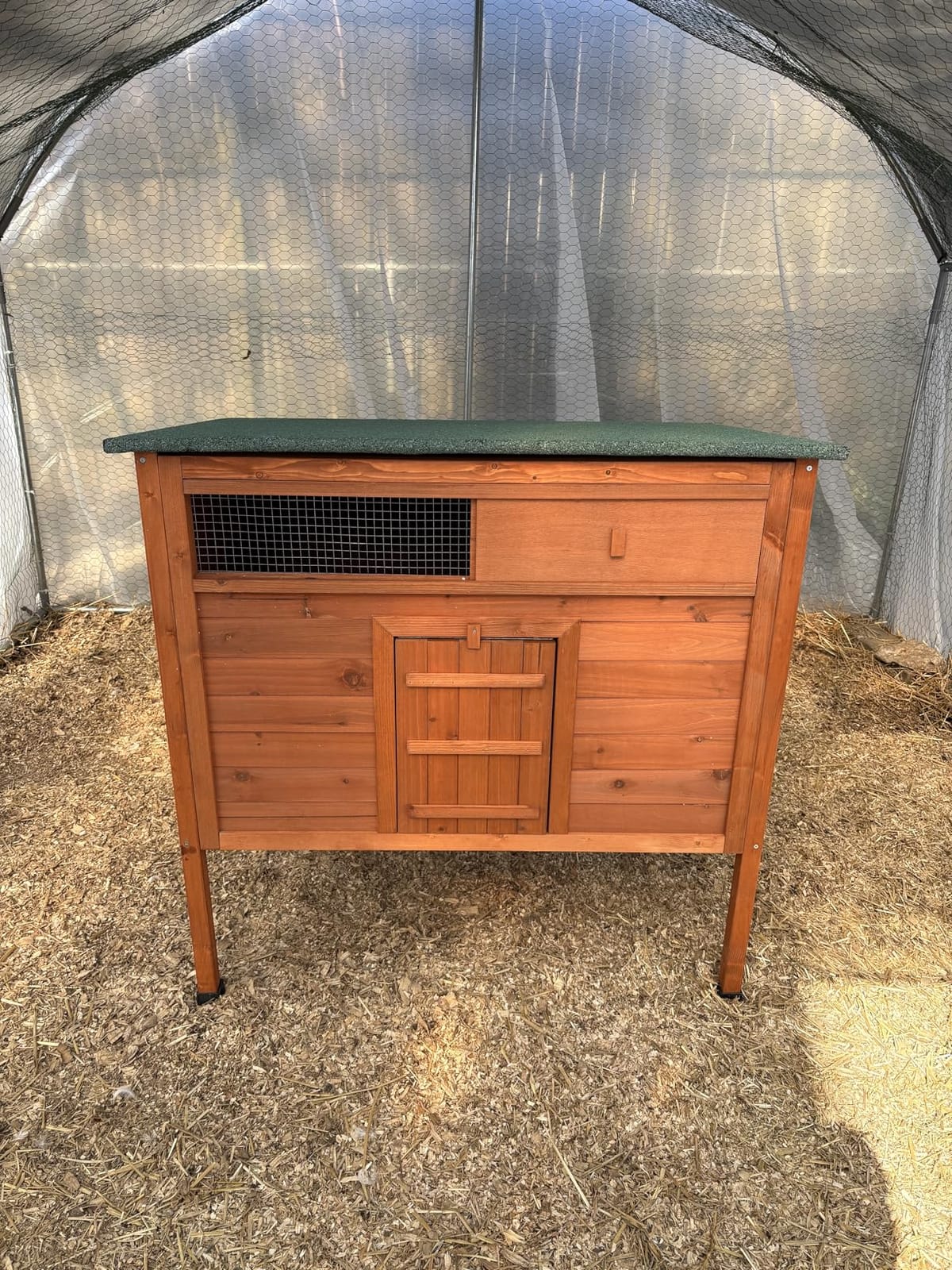
What to check before you assemble it
Measure the leg height against your ducks. The legs are noticeably tall, and many owners cut them down during assembly to bring the entrance closer to the ground, which is the right call for ducks that are not built to jump. It is a modification, so decide before you build rather than after.
Seal the gap between the roof and the front panel. Waterproofing the shell is not the same as sealing every joint, and that seam is a reliable cold-air path straight into the insulated space. A strip of foam tape along the joint closes it in about five minutes.
Inspect the interior walls before you build. A few units arrive with dented inner panels because the packaging does not insulate every side. Dents do not affect performance, but a bowed panel can stop a panel clicking flush during assembly.
Where this shelter falls short
It is small. At 41.2 by 27.6 inches of floor, it suits a small flock comfortably and a larger flock not at all, and there is no extension path for more birds. If you are running eight ducks or more, the pull-out tray floor space becomes the limiting factor long before the structure does.
It is a land-based shelter and it wants a ramp, blocks and a run around it. On a pond with no practical shoreline space, this is the wrong shape of answer, and you should be looking at how to anchor a floating unit instead. Check the interior before committing to a flock size.
6. VIXZEN Outdoor Duck and Chicken House – Best for Low Maintenance
- Waterproof UV-resistant resin removes rot and seasonal upkeep
- Gas strut lid holds itself open for cleaning
- Wood grain exterior looks deliberate in a backyard
- Perimeter ventilation louvers keep air moving
- Tool-free assembly with matched hardware
- Resin has limited insulation value in cold weather
- Some reviewers find the plastic panels flex or squeak after assembly
Resin PP is the material answer to a pond environment, and this house makes the case for it cleanly. The panels are waterproof and UV resistant, which means no rot, no staining, no sealer every spring and no warping when a soaked board dries in the sun. Over a five-year horizon, that is the feature that actually saves money.
The gas strut is the detail we use to pick it out. Most plastic coops have a lid you have to hold with your shoulder while you scrape bedding out. This one rises and stays up on its own, so cleaning a house full of wet straw takes minutes instead of a wrestling match, and the sloped roof drains rather than pooling.
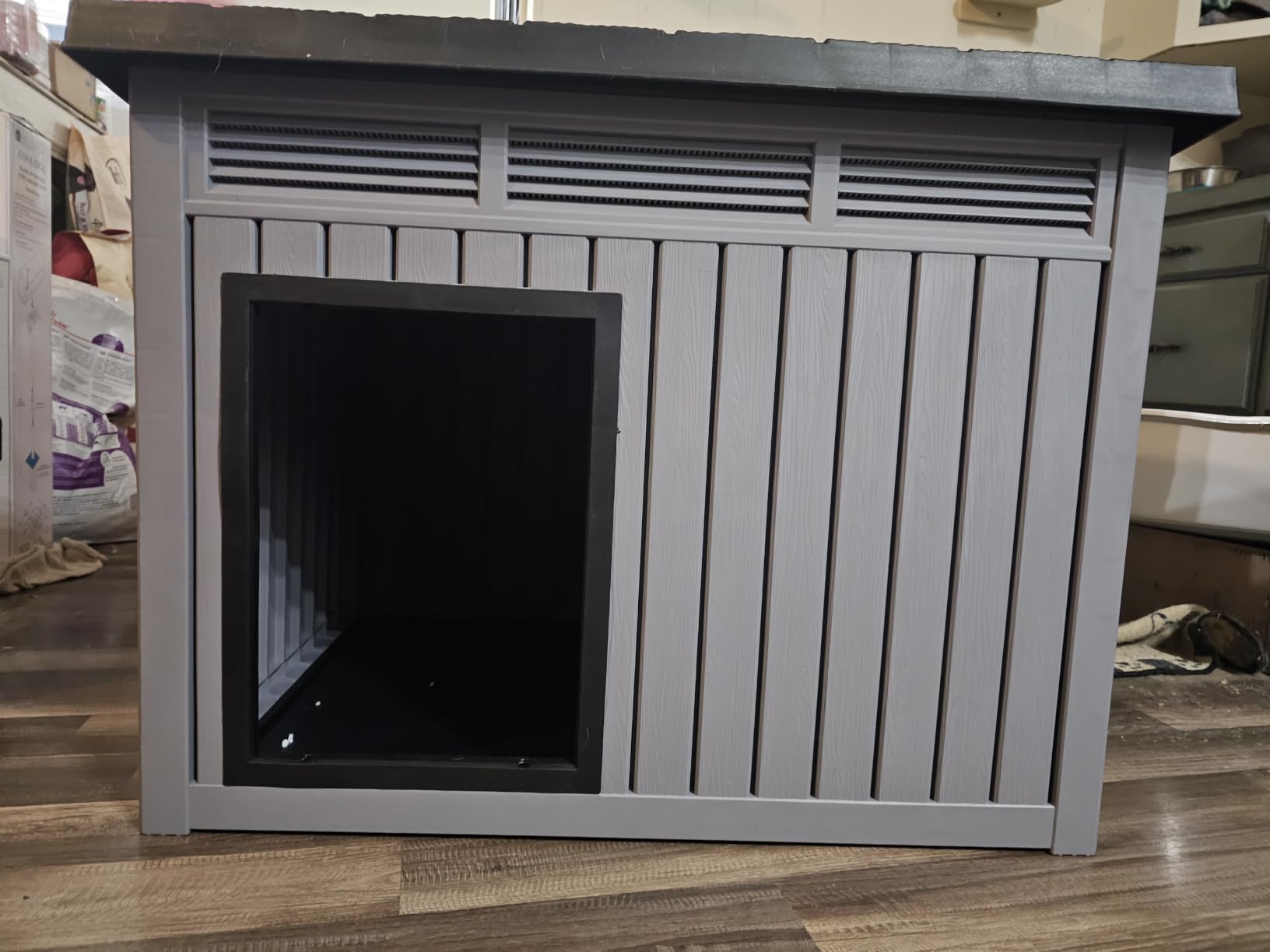
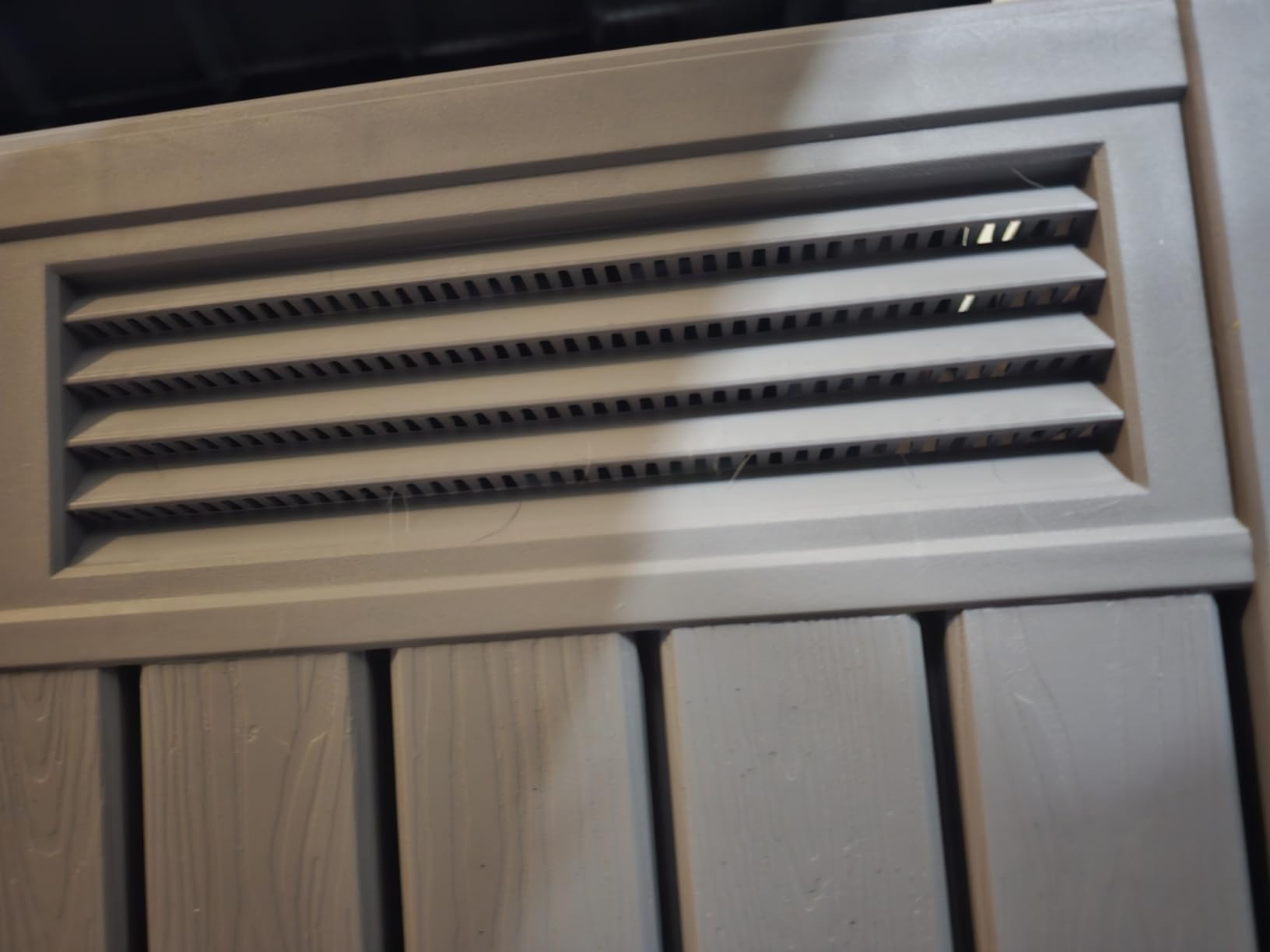
At 32.2 by 25.1 by 24.1 inches, the premium size is larger than most resin coops in the category, and multiple size and color variants exist. Perimeter ventilation louvers run around the lower walls, high enough that the incoming air mixes before it reaches bird level, and tool-free assembly with standardized parts means no hardware bag to lose.
It rates 4.6 across 36 reviews, with buyers pointing at the low maintenance and the backyard appearance. The wood grain finish is the detail people mention in photos, because a molded plastic coop that looks like a shed is easier to live with on a patio than an industrial-looking box.
What to check before you place it
Set it on level, well-drained ground or on low blocks. Resin does not rot, but a resin house sitting in standing mud still floods its floor every storm, and no material solves that. A paver or two of foundation blocks under the four corners makes a real difference over a season.
Plan entry access yourself. Depending on the variant, you may want to add a ramp or a low step, and the molded floor is hard and smooth, so a textured ramp strip matters more here than on a wooden house. It is a small addition and it prevents the most common complaint about molded coops.
Where this shelter falls short
Cold weather is the honest limitation. Resin has almost no insulation value, and while the shell holds off rain and wind, a hard frost will drive heat out of an uninsulated box quickly. In a cold climate, pair it with bedding depth and a wind block rather than expecting the material to do the work.
Some reviewers also note the panels flex or squeak after assembly, which is cosmetic but tells you something about the panel thickness. Treat it as a mild-climate, low-maintenance house and choose an insulated unit instead if you are below freezing for weeks at a time.
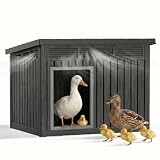
7. KFY Resin Duck Coop with Hydraulic Air Rod – Easiest to Move
- Hydraulic lid stays open on its own during cleaning
- Resin cleans easily and still looks new after weather exposure
- Raised floor keeps bedding dry through rainy spells
- Vents balance airflow without heavy drafts
- Lightweight enough to reposition around the yard
- Not insulated for cold weather
- No built-in door on the base model
- Larger size needs two people to assemble
- Interior pan is hard to scrub once bedding is down
The distinguishing feature here is a hydraulic air rod instead of a gas strut, and the difference shows in daily use. A hydraulic rod holds its position with consistent force and does not slowly droop, so the lid stays exactly where you put it while you pull trays, scoop bedding and check for pests underneath.
The raised floor is the more important feature for a pond, honestly. A floor that sits above the wet ground keeps bedding dry through rainy spells, and dry bedding is the single biggest driver of ammonia and odor in a duck shelter. Owners moving from wooden coops mention that transition most, because the resin pan wipes clean instead of absorbing.
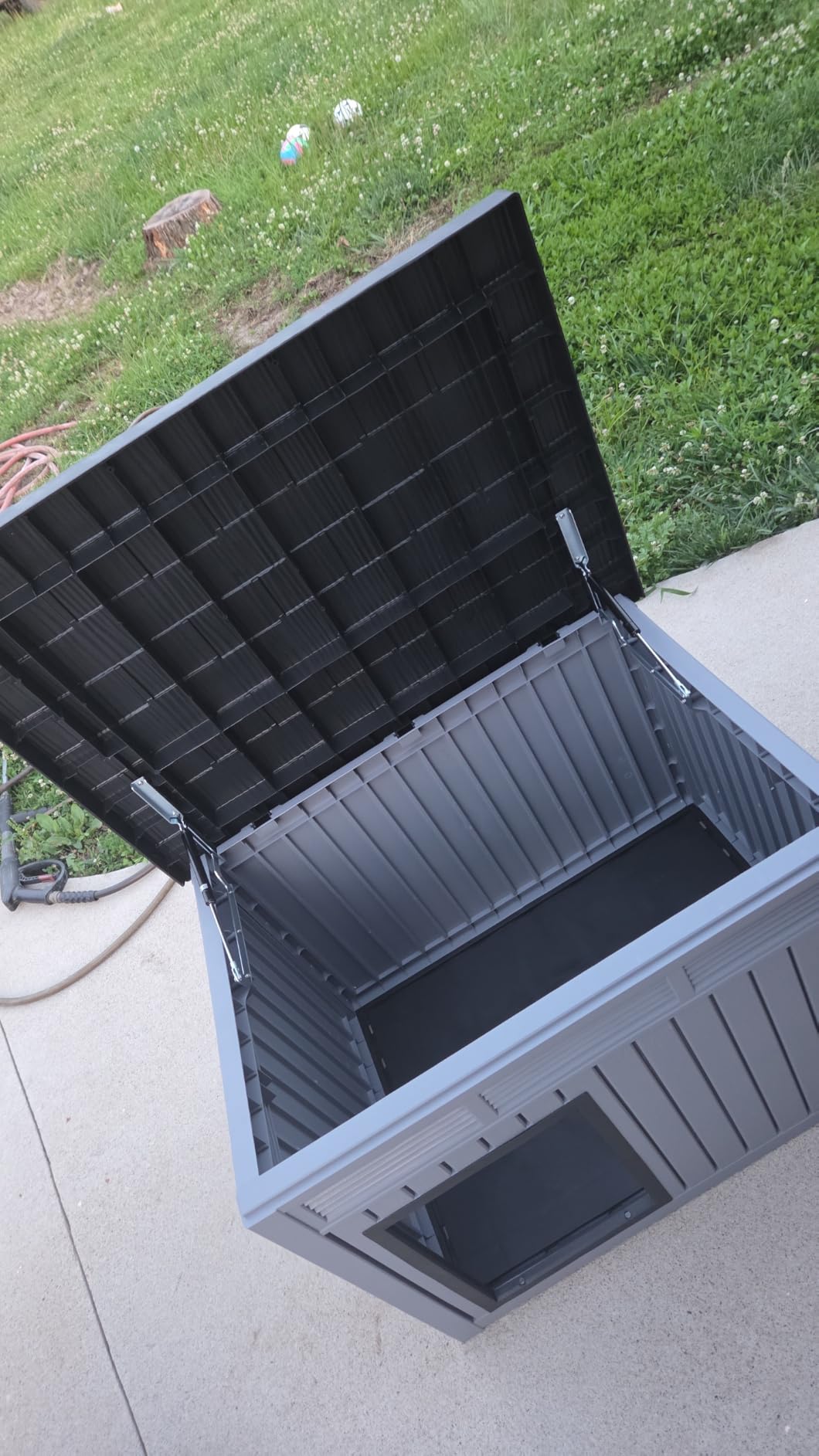
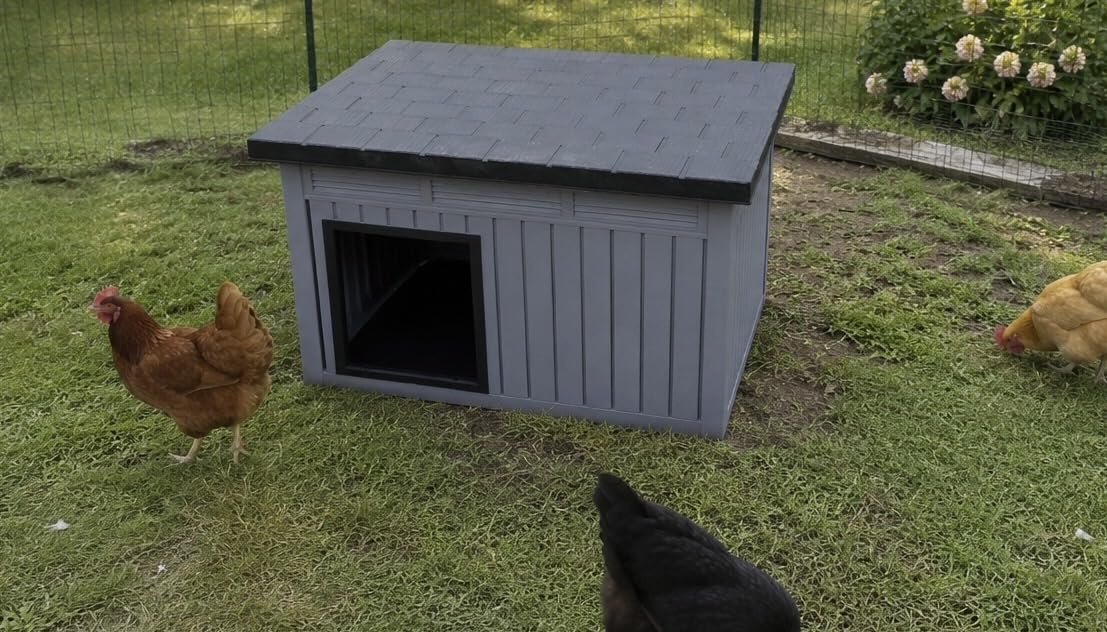
It rates 4.7 across 32 reviews, and the split-panel splicing design assembles without complex tools. At 32.2 by 25.12 by 24.13 inches, the base size is one of the larger footprints in the resin category, and the thickened plate frame and integrated connecting parts are what keep that footprint from flexing once it is full.
Multiple size and color variants exist, and the design is optimized for flat ground placement. The panel venting gives airflow without a heavy draft across the birds, which is what you want in a shelter that is already uninsulated and dependent on moving air rather than trapped warmth.
What to check before you build it
Check the door situation carefully. The base model has no built-in door, and if your flock cannot walk in and out through a gap you cut yourself, the shelter becomes a storage box. Confirm which variant you are buying and whether a door is included before the panels are together.
Get a second person for the larger size. The manufacturer notes two people may be needed, and forcing a thick resin panel into its connector on your own is how frames crack before they ever see a duck. Ten minutes of help up front is cheaper than replacing a panel.
Where this shelter falls short
It is not insulated, full stop. In a genuinely cold climate this is a shoulder-season and mild-winter shelter, and pairing it with deep straw bedding is the only real answer. Buy an insulated unit instead if your winters run well below freezing.
The interior floor pan is the one place the easy-clean promise weakens. Once bedding is down, the base is awkward to scrub properly because the raised design gives you limited access underneath. Plan a deep litter approach with enough material that you can scoop the top layer rather than washing the whole pan.
8. Wooden Duck Nesting Box, 10 x 10 x 17 Inch – Budget Pick
Wooden Duck Nesting Box, Wood Duck House for Outdoor Tree Mounting, 10x10x17 Inch with 4 Inch Entry Hole
- Thicker half inch pine boards give a solid weighty feel
- Smoothly cut oval entry with no splintering
- Forward-sloping roof directs water away from the opening
- Front panel closes flush and opens for cleaning
- Lightweight 5 pound box is easy to hang
- 17 inch depth is shallower than the 24 inch conservation standard
- Assembly instructions are poorly written and parts are unlabelled
- Included screws are too short for long-term outdoor use
- Untreated pine needs sealing before exposure
The material choice here is the story. Half inch pine is noticeably thicker than the thin board used in most entry-tier nest boxes, and at 5 pounds the box has the solid feel of something that will hang on a pole for years instead of rattling in every gust. The oval entry hole is cut smoothly with no splintering, which matters because a ragged edge on a nest box is a hazard to a duckling trying to exit.
The forward-sloping roof is a smart touch at this tier. Water runs away from the entrance instead of down the face and into the nest cup, and combined with the front panel that closes flush, it keeps the interior dry through rain. That single design decision does more for reliability than the price gap to a cedar box would.
It rates 4.2 across 17 reviews, the lowest average in the roundup, and the feedback points to a consistent pattern: good box, poor hardware and instructions. Experienced builders like the stock and the cut, then immediately add glue, longer screws and a pole mount of their own.
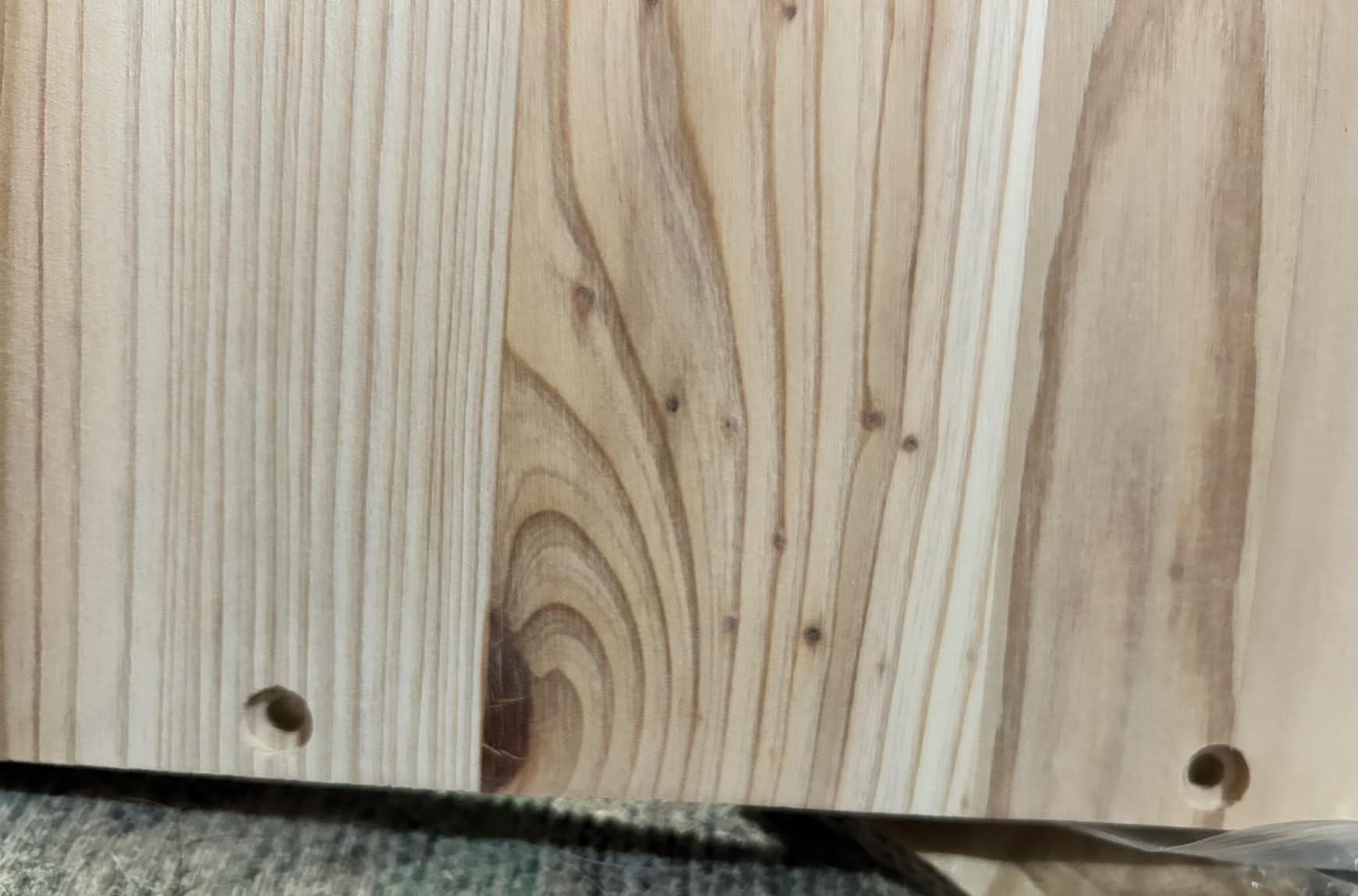
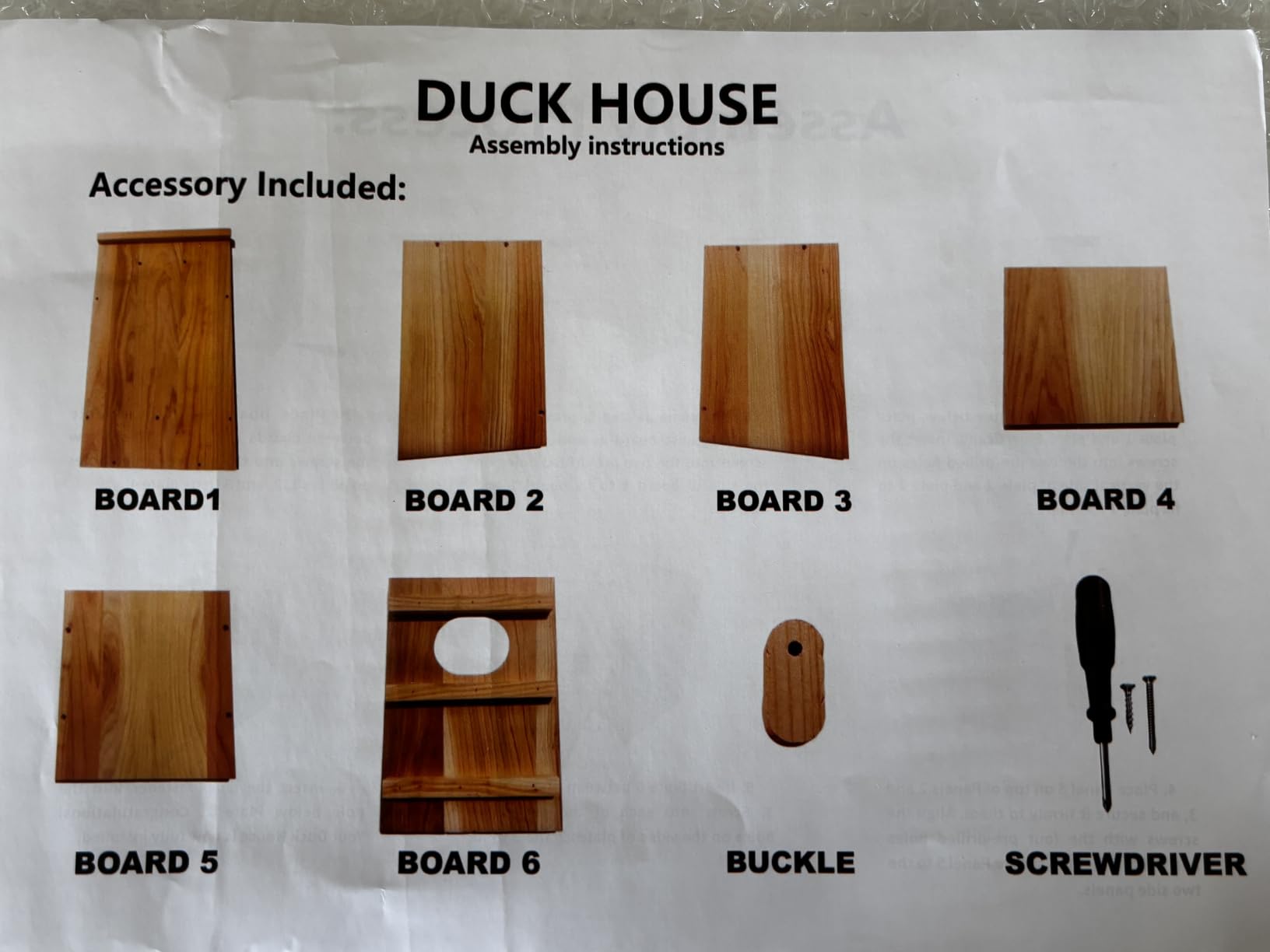
Treat the assembly as the main task rather than a minor one. Instructions are abbreviated, parts are unlabelled and the included screws are too short for long-term outdoor mounting. Setting out the panels, matching them to the diagram first and driving your own exterior-grade screws turns a frustrating hour into a quick one.
The 10 by 10 by 17 inch interior is the real tradeoff. That is a functional nesting cavity, and it is shallower than the 24 inch depth conservation guidance aims for, so a large brood may be cramped on a full floor. Mount it for wood ducks with smaller clutches and it performs well.
What to check before you mount it
Seal the entire box before it goes up. Untreated pine at a pond edge is the weakest link in this pick, and one coat of exterior sealer on all faces, including the underside, roughly doubles the service life. Do this indoors where you can coat all six sides evenly.
Build a pole mount rather than relying on the back panel holes. Pre-drilled holes are there, but a box this size needs a braced steel or treated wood pole to resist swinging, and the front knob latch on the box will not deter a raccoon on its own. Add a proper latch as part of the install.
Where this box falls short
The shallow interior is the headline limitation. If your target is a wood duck hen raising a full clutch, a deeper conservation-style box gives ducklings the vertical space they need to reach a ledge before they can move, and this one does not provide it.
It is also a nest box rather than a shelter, with no ramp, no bedding system and no raised floor. Anyone housing domestic ducks overnight needs a grounded unit instead. Choose this for attracting wild ducks on a budget, and treat the hardware upgrades as part of the project.
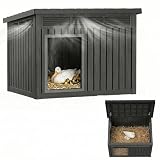
9. Vixzen Large Outdoor Duck House in Resin – Best for Larger Flocks
- Thick PP plastic hoses clean in seconds and dries instantly
- Gas strut flip-top makes bedding changes quick
- Sloped roof keeps rain out in steady showers
- Roomy enough for five ducks plus a chicken
- Fast assembly with all hardware included
- Not a winter-rated shelter in cold climates
- Flimsy panels need careful handling during assembly
- Large size needs two people to move
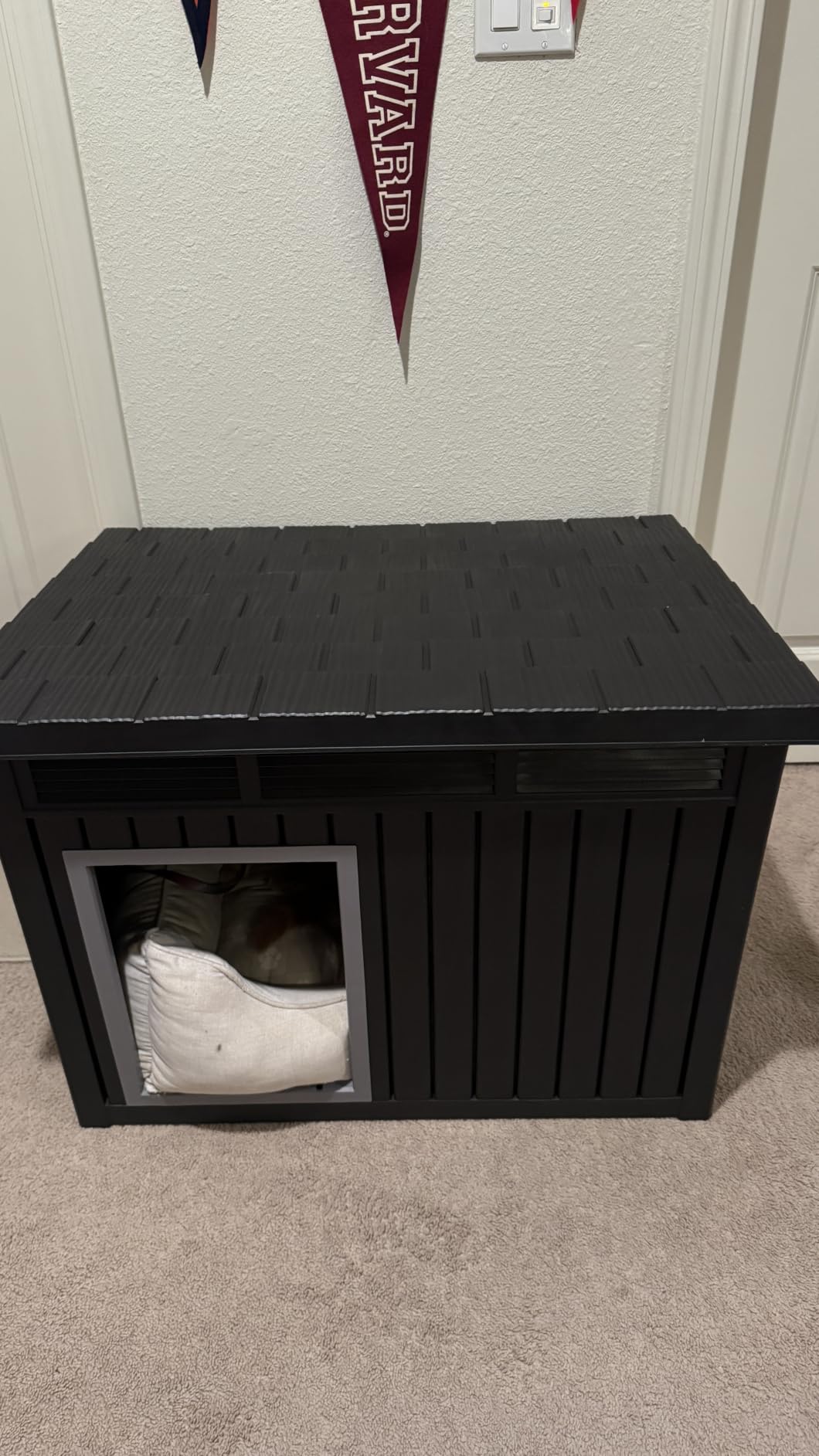
This is the largest floor area of any resin shelter we looked at, and floor area is the number that matters most once you are past three or four birds. At 42.87 by 32.95 by 31.61 inches it is roomy enough for five ducks plus a chicken according to owners who have run it, which puts it at the top of the small-flock range without moving into a full coop.
Every listed review is five stars across 15 ratings, and the reasons are consistent. The thick PP plastic wipes clean in seconds and dries instantly, which matters because a duck house floor is wet by definition, and the gas strut flip-top makes a full bedding change a two-minute job rather than a chore.
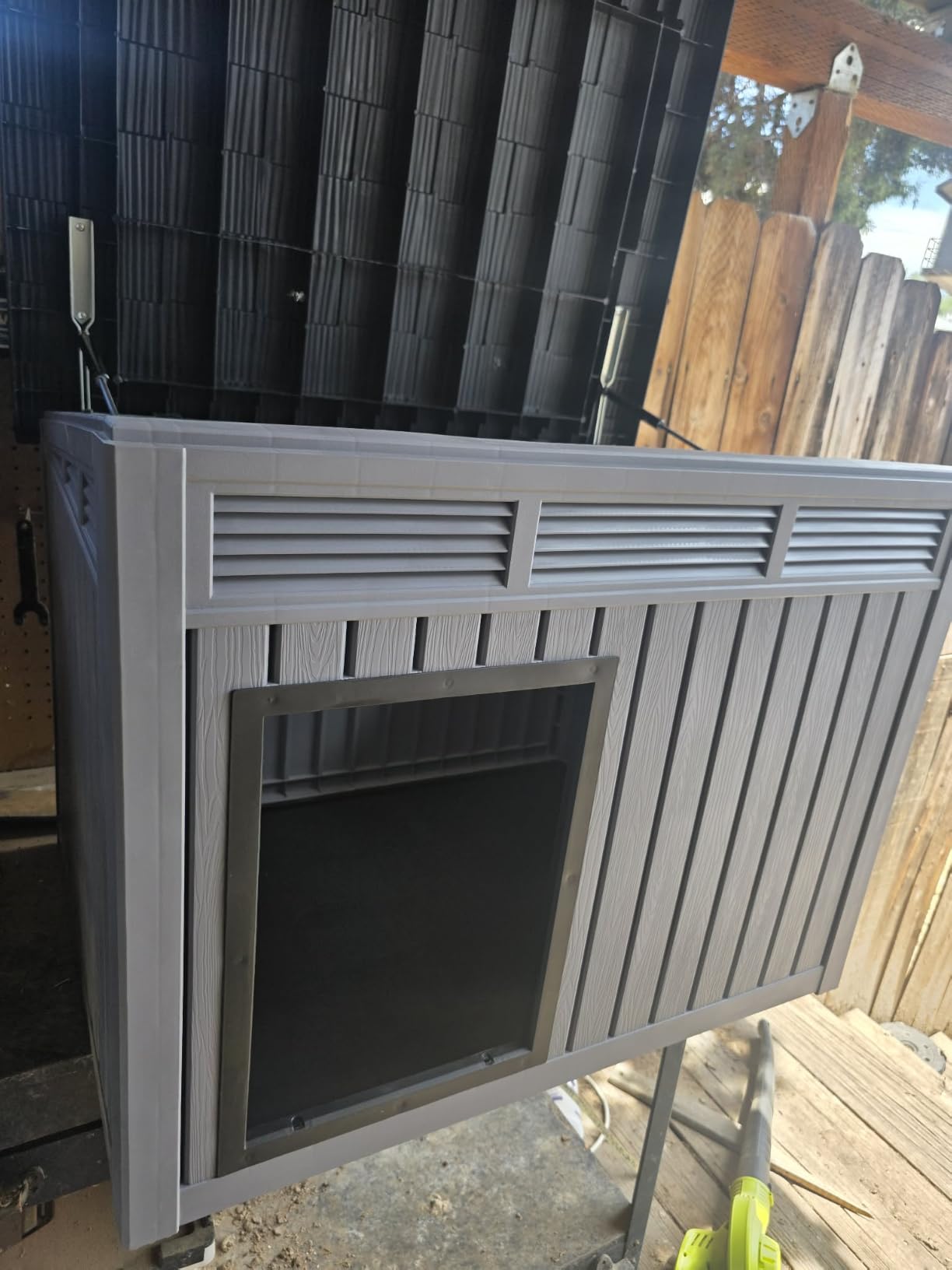
The sloped roof and louvered vents work together well in steady rain. Water sheds off the roof rather than pooling on the deck, and the louvers sit high enough that air moves without a cold draft across resting birds. The layered wood grain exterior is realistic enough that it does not read as molded plastic from across a yard.
It is also the most repurposable unit here. Owners use it for cats, quail and rabbits when the ducks are not in residence, and it doubles as an outdoor storage box, which partly offsets the fact that you are buying more floor area than a small flock strictly needs.
What to check before you place it
Get help moving it. At this size the shell is awkward for one person, and the flexing risk during assembly is the most common complaint in the feedback. Two people and a clear path from the driveway to the final spot prevents both problems.
Confirm your season before committing. This is not a winter-rated shelter, and the resin shell with no insulation gives up heat quickly in a hard freeze. In a cold climate, run it as a spring-through-fall shelter and add deep bedding rather than expecting the material to carry the load.
Where this shelter falls short
Five stars across fifteen ratings is a small sample, and we treat that number with more caution than the 292-review average on our top pick. The design is sound, but the long-term owner data on a product at this stage is thin, and you should factor that into a decision at the top of the price range.
It is also land-based. A unit this size needs a level pad, a run and enough clearance to open the lid, and none of that exists on an open pond where the only realistic shelter position is floating. If your pond has no usable shoreline, this is the wrong category entirely.
10. WHEGETED Large Wooden Hen House – Best Predator Protection
Large Chicken Coop Outdoor Wooden Duck Hen House Poultry Pet Cage 76″
- Galvanized wire run and bolt locks give real predator resistance
- Raised floor and slanted asphalt roof handle rain and snow
- Two-level deck and den suit ducks and small animals
- Pull-out trays make cleaning fast
- About 20 minute setup with pre-drilled holes
- 76 inch footprint needs a large yard area
- Rustic styling suits gardens and barns over modern patios
- 54 pound weight makes repositioning awkward
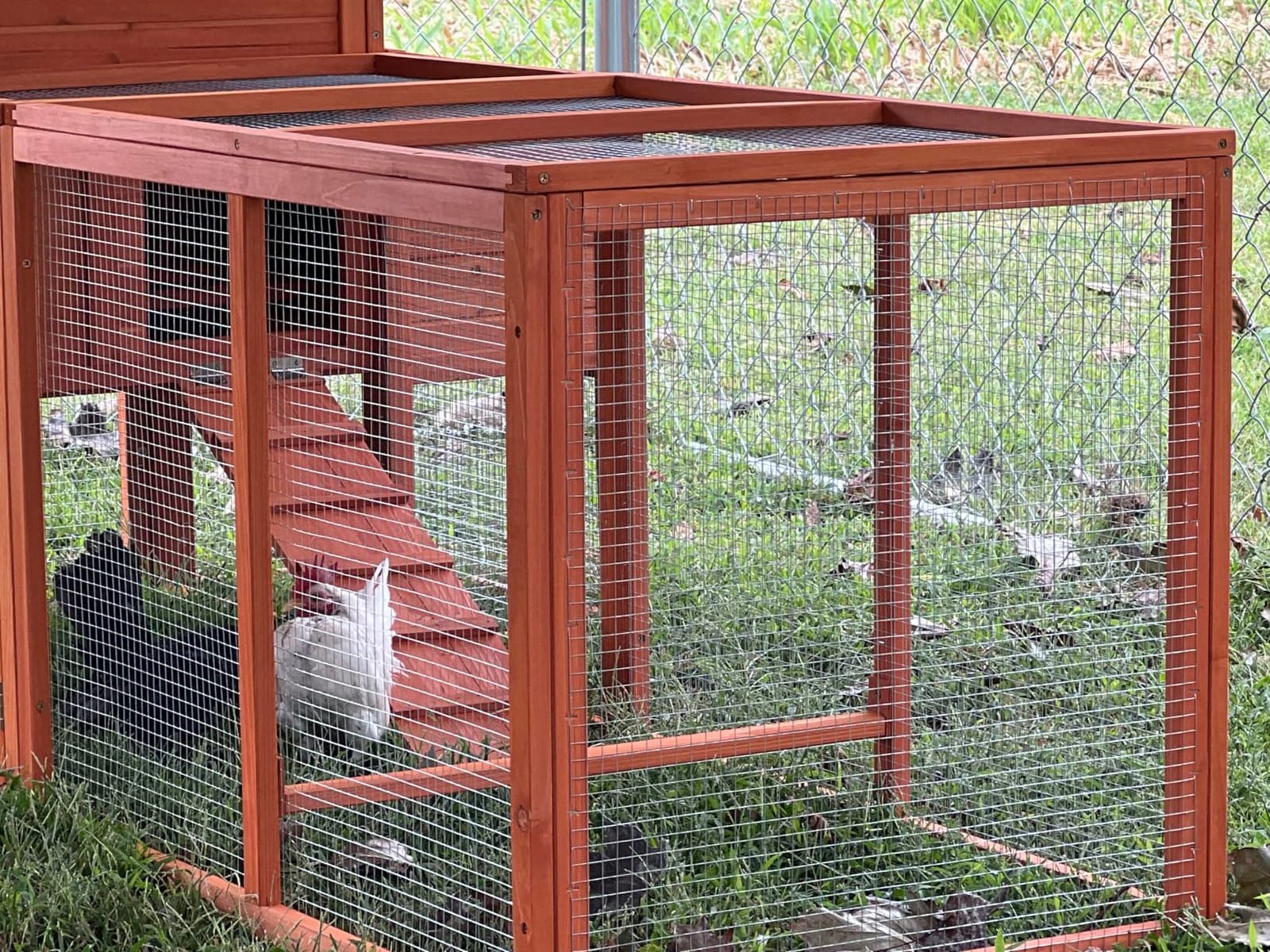
Everything else in this roundup is a box, and this one is a house and run combined. The heavy-duty galvanized wire run with metal bolt locks is the most serious predator containment in the roundup, and on an open pond that is the feature that actually decides whether your flock is still there in the morning.
It also has a raised floor, a waterproof slanted asphalt roof, reinforced fir construction and thick leak-proof pull-out trays, which is a complete answer to the four things that kill duck shelters: wet floor, pooled water, rot and impossible cleaning. The two-level layout puts a ventilated play deck up top and a sheltered den below.
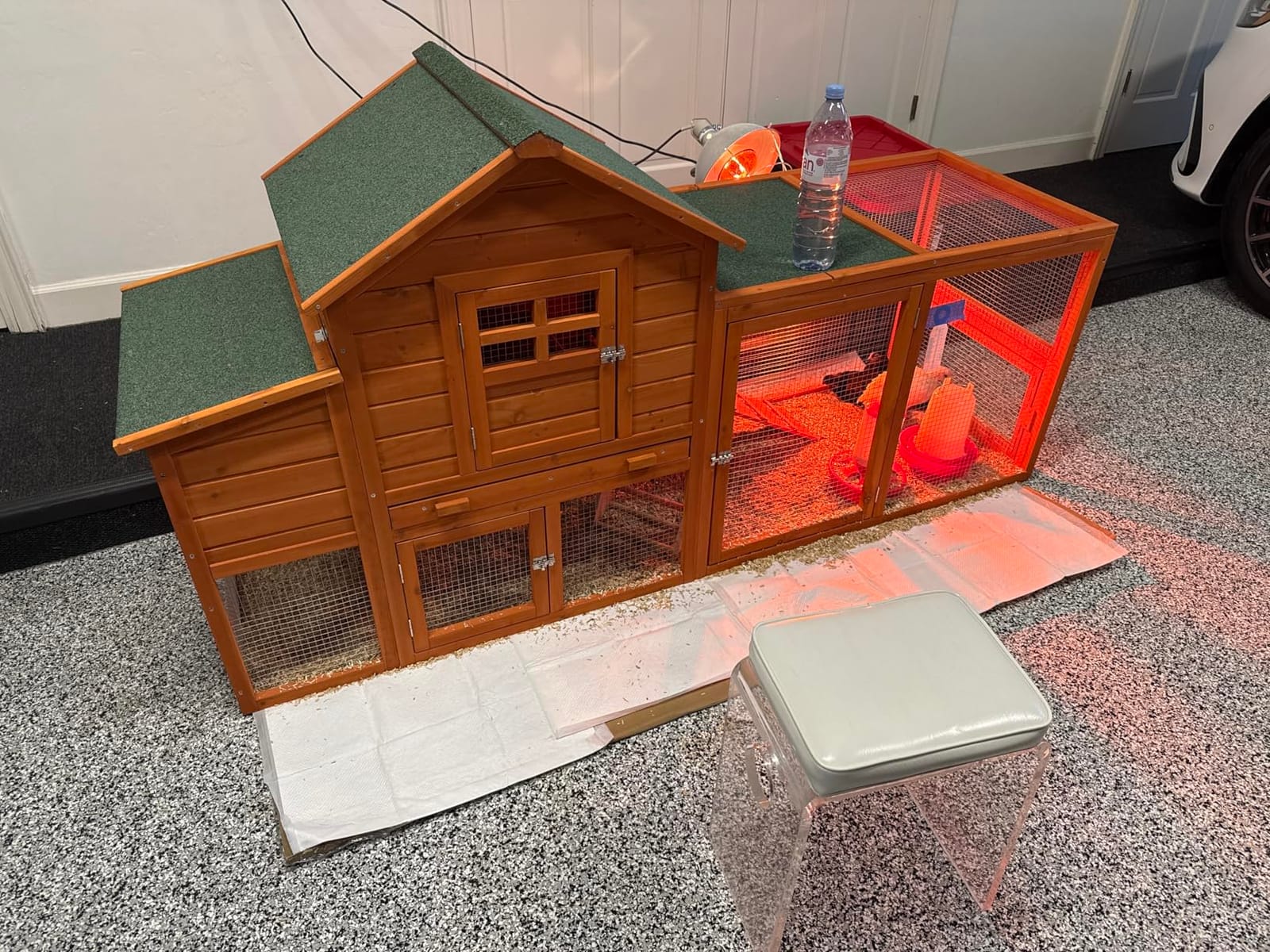
At 76 by 38 by 26 inches across a 76 by 26.38 by 38.58 inch built footprint, this is a large structure and it is sized for it. The anti-slip ramp ridges address webbed feet directly, which is a small detail that a lot of cheaper coops ignore and that ducks notice immediately.
Setup takes about 20 minutes with pre-drilled holes and a manual. The 5.0 rating comes from only five reviews, so the star value is nearly meaningless as a signal, and the useful information is in the build: bolted wire, asphalt roof, raised floor and pull-out trays are all the right choices for outdoor use.
What to check before you buy it
Measure the space properly, twice. A 76 inch footprint with a run attached needs a genuine corner of the yard, and moving it later is awkward at 54 pounds. Also think about how the flock reaches it, because ducks will use a run they can walk into and ignore one they cannot.
Look at the styling against your space. The rustic barn aesthetic suits a garden, a barn yard or a fenced property, and it will look out of place on a modern patio next to a manicured pond. Appearance is a real factor in a structure this large and this visible.
Where this shelter falls short
It is a chicken-and-poultry habitat rather than a duck-specific build, and ducks are not the target animal. That said, the wet floor and low entry the design needs line up well with duck housing, so the fit is workable even though it was not engineered for it.
Most importantly, it is far too large for a two-duck household and it is entirely land-based. If your pond is the habitat and there is no room for a run beside the water, this unit is solving a problem you do not have. For a large flock with yard space, though, the predator containment is the best in this roundup.
Floating vs. Stationary Duck Houses: Which One Suits Your Pond
A floating duck house is a shelter on a sealed pontoon, anchored to the bank, that moves with the water. A stationary house sits on the ground, on blocks or on stilts, with a ramp the birds use to get in and out. The right answer depends on your shoreline, not on which one sounds more interesting.
Choose a stationary house when the ducks have a run. A flock that is penned overnight needs a dry floor, bedding you can replace, a human access door and enough wall area to vent ammonia. None of that works on a pontoon, because there is nowhere to stack straw and nowhere to put a door you can open from a kneeling position.
Choose a floating house when the pond is the habitat. If there is no practical shoreline, if the water is deep at the edge, or if your birds are Muscovies that prefer to roost low and near the water, an in-water unit is the only design that puts the shelter where the birds already are.
Be realistic about the floating option, though. Ducks ignore floating structures more often than buyers expect, and one pond keeper on a backyard poultry forum reported birds that seemed afraid of anything that moved under them and loafed on the bank regardless. Anchor it firmly, place it where the flock already gathers, and consider a low bank-side box as a backup.
Anchoring is the part nobody explains. A floating house needs a chain or cable to a shore post or an anchor weight, plus a line that allows vertical movement as water level changes. Without it, wind and wave action walk the house across the pond within a season, and the birds lose access to it. If you want the pond finished properly, a pond bridge or dock gives you a stable platform to work from while you install and service it.
How to Attract Wild Ducks to Your Backyard Pond
Attracting wild ducks takes more than a box. You need a species-appropriate nest site, clean water, cover and patience, in roughly that order of importance.
First, choose your target species and match the entrance hole. Wood ducks use a 4 by 3 inch oval opening. Buffleheads, goldeneyes and mergansers use something closer to 3.25 by 4.125 inches. An opening that is too large invites starlings and squirrels, and one that is too small simply gets ignored.
Second, mount the box 5 to 15 feet high and as close to the water as you can safely get. Wood ducks are cavity nesters, and they will not use a ground box, and they will not climb a ladder as adults the way a hen climbs into a low shelter.
Third, plant native aquatic vegetation along the edges. Ducks feed on the invertebrates and seeds that grow in that band, and a hard-edged concrete shoreline is the fastest way to tell them a pond is not worth settling on.
Fourth, keep the water clean. Heavy duckweed and algae mats are a top complaint on pond forums, and a stagnant, overgrown pond signals poor habitat even when the water still looks like water. Shallow planted zones and a skimmer go a long way, and our pond skimmer comparison breaks down the options. A waterfall kit adds circulation and aeration that helps in warm months.
Fifth, avoid frequent disturbance near the site. Do not clean the box every week, do not move it after the hen is sitting, and keep dogs away from the water’s edge during the nesting window.
Sixth, stop feeding habituated wild ducks once they come in regularly. A steady food supply concentrates birds, raises disease risk, and eventually stops the attraction entirely. A well-built box with clean water keeps them coming without it.
Seventh, be patient. A new box often sits empty through its first season as the site becomes familiar. Filling it with straw and keeping the sightlines clear improves the odds, and so does adding a second box a short distance away, since competing sites hold a site better than a single one.
How to Predator-Proof a Pond-Side Duck House
Pond predators are different from coop predators, and standard advice falls short here. A raccoon can be stopped with hardware cloth. A mink will find a gap you did not know you had. A river otter treats a bolt latch as a suggestion, and a snapping turtle works on anything within reach of the waterline.
Cover every opening in half inch or quarter inch hardware cloth, not chicken wire. Chicken wire is thin enough for a determined mink to work through over a few nights. Bend the cloth flat against the wall around each opening and fasten it with exterior-grade screws or hot-dipped staples, not tape.
Run an apron of hardware cloth outward at ground level. Bend the mesh down and bury it 12 to 18 inches, or lay it flat under a wide gravel border, so a digger cannot reach the floor from underneath. Ducks roost low, so the floor and the underside of the walls are the most attacked surfaces.
Replace every knob latch and every screw-in slide bolt with a carabiner, a spring-loaded clip or a two-step latch. This is the cheapest upgrade available and it does more than any other single change. A carabiner clipped to a screw eye resists mink and raccoon manipulation reliably.
Keep the floor clear of standing water and give the run a solid base. Wet, soft ground invites digging, and a floor sitting directly on mud is a digger’s invitation. Raising the structure on blocks or pavers with a gravel apron under it removes the target.
Add a second barrier where the house meets the water. Hardware cloth alone will not stop an otter, and the most effective addition is a low fence or mesh panel set in the water a short distance in front of the entrance, angled so an approaching animal has to surface away from the door. Keep it low enough that ducks can still step over it.
Finally, if the pond is small and the predation pressure is heavy, lock the flock in at dusk rather than relying on the house alone. A house is a shelter, not a vault, and a predator-proof door on a run is a stronger guarantee than any box on the market.
How to Choose a Duck House in 7 Steps
Start with use case, because it decides everything else. Wild duck attraction means a tall cedar nest box with a species-correct oval hole, mounted 5 to 15 feet high. Housing a domestic flock means a grounded shelter with a ramp, a floor you can clean and vents above bird level. Buying the wrong one is the most common and most expensive mistake here.
Then get the size right. Budget roughly 4 square feet of floor space per duck, a minimum interior height of 3 feet, and a door about 14 inches wide by 12 to 14 inches tall. A 14 inch wide door lets ducks waddle in without turning sideways, which a narrower opening does not. Many buyers under-build, and forum owners with flocks of 18 and 20 birds almost all report it.
Next, work out the run. Ten square feet of secure run per duck is the floor, and 20 square feet is better. The house is a fraction of the space your flock actually needs, and a small house with a good run is a better setup than a large house the birds never use.
Then choose the material for your site. Cedar and poly lumber are the rot-resistant options and suit pond edges. Plastic resin needs no maintenance and handles wet ground but offers no insulation. Metal is durable and cold, and it is rarely the right answer in a cold climate. Pine works if you seal it and accept the maintenance.
Check ventilation before anything decorative. Vents should sit high, near the ridge, so moisture and ammonia leave the building while the birds stay out of the draft. A closed, well-sealed house is worse for ducks than a drafty open shelter, because ducks arrive wet every single day.
Look at the roof and the floor. A sloped roof with a real overhang sheds rain, and a raised floor or a removable tray keeps bedding out of the mud. A flat roof pools, a floor sitting on soil wicks moisture, and both problems shorten the life of the box faster than the wall material does.
Finally, price the hardware, not just the house. Budget for a two-step latch, a bag of half inch hardware cloth, a bag of exterior screws and a block or two of foundation material. The most-reviewed shelters in this category all got the same owner additions within their first month, and the cost is a fraction of replacing a flock.
Frequently Asked Questions
What is a good floating duck house for a pond?
A good floating duck house has a sealed pontoon or base for buoyancy, a ramp for access, a sloped roof that sheds rain, hardware cloth over every opening, and a chain or cable anchor to a shore post. It also needs a dry, elevated interior with a tray or liner you can clean, because a floating house gets soaked from every direction. Position it where your flock already gathers, since ducks often ignore a floating structure they were not accustomed to, and re-anchor it each season as the water level changes.
How high off the ground should a duck house be?
It depends on which product you are buying. A domestic duck shelter should sit on the ground or on low blocks about 8 to 12 inches off the ground, with a ramp and traction strips for webbed feet. A wild duck nest box is the opposite: mount it 5 to 15 feet high, as close to the water as possible, because wood ducks and other cavity nesters will not use a ground-level box at all.
What is the best type of house for ducks?
For a run-based domestic flock, the best choice is an elevated dry shelter with a low door, a traction ramp, a sloped roof, a removable floor tray and vents high near the ridge. For an open pond where shoreline space is impractical, a floating house anchored to the bank is the better fit. For attracting wild ducks, you do not need a house at all, you need a species-specific nest box mounted 5 to 15 feet high near the water.
What are common duck house mistakes?
The most common mistakes are undersizing the house for the flock, sealing the shelter too tightly and trapping ammonia, leaving a solid floor where the flock will never use the door, skipping the ramp and its traction strips, mounting a wild duck nest box at ground level, placing the house too far from the water, leaving latches as knob screws, and putting a wooden structure straight on wet soil with no foundation blocks beneath it.
How to attract ducks to a backyard pond?
Install an oval-hole nest box sized to your target species, with 4 by 3 inches for wood ducks and about 3.25 by 4.125 inches for buffleheads, goldeneyes and mergansers. Mount it 5 to 15 feet high as close to the water as you safely can, plant native aquatic vegetation along the edges, keep the water clear of duckweed and algae, limit disturbance once a hen is sitting, stop feeding habituated birds, and be patient because new boxes are often ignored through the first season.
What are some good duck cages for outside use?
For outdoor use, look for rot-resistant construction, either kiln-dried cedar or poly lumber for a pond edge, or waterproof UV-resistant resin for zero maintenance. Pair that with a roof that has a real overhang and a raised floor, both of which matter far more than the cage material itself. Poly lumber resists rot but is not insulative, resin needs no upkeep but has no insulation value, and coated steel mesh runs give the strongest predator containment of the three.
Conclusion: Picking the Right Duck House for Your Pond
For most backyard pond owners, the best duck houses for backyard ponds come down to which bird you are actually serving. If the goal is wild ducks, the Woodlink WD1 takes the editor’s choice on the strength of kiln-dried red cedar, a correctly sized 4 by 3 inch oval entry and 292 reviews of long-term use. If the goal is a domestic flock in a cold climate, the Lovinhut insulated coop is the only pick here with real foam insulation and a floor that wipes clean.
For a mild climate and a flock that would rather not be painted, the resin shelters are the lowest-maintenance answer, and the KFY hydraulic lid makes the daily clean fast enough that you will actually do it. For predator pressure on an open pond, hardware cloth and a two-step latch matter more than any brand, and the galvanized wire run is the only design here that includes serious containment.
Whichever you pick, budget 4 square feet of floor per duck, 10 to 20 square feet of run, and a full set of mounting hardware. Set the house on blocks, vent it high, and add the predator upgrades in the same afternoon you install it. If the pond itself is not holding up, a duck decoy comparison will not help, so tackle water quality first, then put up the house.