
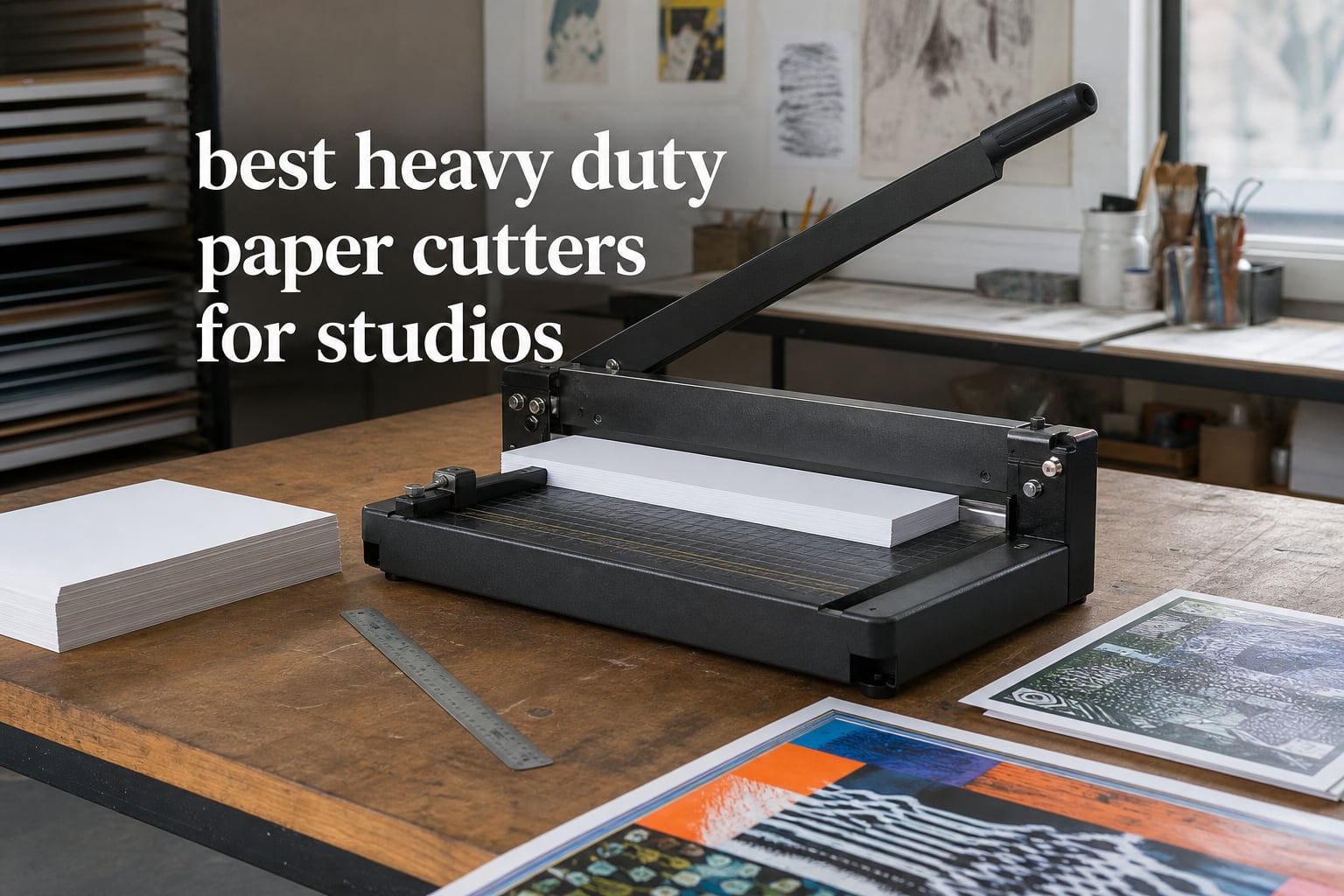
A studio paper cutter earns its bench space by doing one thing repeatedly: making a clean, square cut without turning every batch of prints, cards, or book pages into a measuring exercise. The best heavy duty paper cutters for studios are not all the same tool. A 400-sheet stack cutter suits repeated print-shop work, while a precise 12-inch guillotine or a long rotary paper trimmer can be the better fit for artwork, photos, and one-off production.
For 2026, our clearest overall pick is the Ecraft 400-Sheet Guillotine because its verified solid-steel frame, clamp, safety lock, and 400-sheet stated capacity answer the needs of a fixed cutting station. The Frifreego rotary is the specialist pick when an 18.90-inch cut matters, and the LOTHANEK is a sensible smaller-batch option with a stable MDF base and a stated 32-sheet capacity.
I approached this list as a studio-workflow comparison rather than treating every paper trimmer as interchangeable. That means looking at cut length, construction, clamp design, blade type, stated sheet count, and how safely the machine can live in a shared space. It also means being honest that a 15- or 30-sheet guillotine is capable for cardstock batches, but it is not a substitute for a 400-sheet commercial paper cutter.
Forum discussions repeatedly raise the same practical warning: inexpensive trimmers can begin cutting crooked, and blades can lose their edge sooner than expected. The specifications and review summaries here come from the selected product data, so use the stated capacities as an upper boundary, keep a test sheet nearby, and choose more capacity than your normal pile requires when consistency matters.
Table of Contents
The top 3 picks cover high-volume stacks, long sheets, and stable 12-inch work
Choose the Ecraft 400-Sheet for a dedicated production table, the Frifreego for oversize artwork and photo work, or the LOTHANEK for controlled small-batch jobs. Those choices reflect their stated construction and capacity, not a claim that one cutter suits every material or every studio.


Frifreego 480mm Rotary Trimmer
- 18.90 inch cut
- Self-sharpening rotary blade
- Steel construction
A quick distinction helps here. The Ecraft is a stack guillotine rated for 400 sheets of the specified 2.85-ounce paper, the LOTHANEK is a 32-sheet 12-inch guillotine, and the Frifreego is a 15-sheet rotary system with nearly 19 inches of reach. Pick the mechanism before being swayed by a single headline number.
These heavy duty paper cutters in 2026 cover eight distinct studio jobs
The overview below includes every selected cutter. Check the listed features against the work you actually trim most often: broad sheets, tall stacks, cardstock batches, photos, or bookbinding signatures.
| Product | Specifications | Action |
|---|---|---|
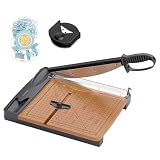 LOTHANEK 12 inch Wood Guillotine LOTHANEK 12 inch Wood Guillotine |
|
Check Latest Price |
| Ecraft 400-Sheet Guillotine |
|
Check Latest Price |
| Frifreego 480mm Rotary |
|
Check Latest Price |
 Firbon 12 inch 30-Sheet Firbon 12 inch 30-Sheet |
|
Check Latest Price |
 Ecraft 12 inch Magnetic Guide Ecraft 12 inch Magnetic Guide |
|
Check Latest Price |
 HFS 400-Sheet Guillotine HFS 400-Sheet Guillotine |
|
Check Latest Price |
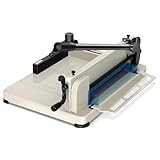 Yhaofu 400-Sheet Guillotine Yhaofu 400-Sheet Guillotine |
|
Check Latest Price |
 We R Makers Cinch Stack Cutter We R Makers Cinch Stack Cutter |
|
Check Latest Price |
The first five choices fit a lighter or mixed studio workflow, although their bases and capacities differ sharply. The Ecraft, HFS, and Yhaofu stack models have the stated 400-sheet capability for jobs that would be painfully slow when divided into 15- or 30-sheet passes.
1. The LOTHANEK Wood Guillotine is the stable choice for medium paper batches
- Stable MDF wood base
- 32-sheet stated capacity
- Dual-scale ruler
- Safety latch
- Blade may dull with continuous use
- Heavy to carry
- Grid precision concerns
The LOTHANEK makes sense when a studio needs a traditional guillotine paper cutter for regular batches but does not need a stack machine. Its 12-inch cutting length works for common letter-size projects, and the MDF wood base gives the 5.17-pound unit a planted feel that a very light cutter may not have.
The manufacturer states a 32-sheet capacity, paired with a 30cr13 stainless-steel blade. For production planning, I would treat that as a maximum under the paper conditions specified by the maker, then run a smaller test stack on the stock you use most. Dense cardstock, coated paper, and uneven stacks need more restraint than ordinary copy paper.
The alignment grid, adjustable paper guide, and dual inch-and-centimeter ruler are practical for art projects where repeatability is more important than speed. It also includes a corner rounder and paper clips, which may be handy at a multi-purpose craft table, though they do not change the cutter’s core cutting capacity.
Review feedback favors the stable base and cutting performance, while noting that blade sharpness may not hold up to constant heavy use. That makes this a strong fit for batches throughout the day rather than an all-day print-room cutter.
The LOTHANEK works best when 12-inch batches need a firm, measured base
Use it for cardstock, classroom materials, craft paper, and art-project trims where 32 sheets is enough headroom. The wood base is useful when the cutter stays on one bench instead of moving from class to class.
The safety protect board, ergonomic handle, and latch with automatic lift give a shared studio a more controlled routine. Lock the arm after each session and keep hands behind the guard area rather than relying on speed.
The LOTHANEK is less suitable when daily work demands stack-cutter volume
A studio that regularly trims hundreds of pages at once should move to one of the stated 400-sheet machines below. Repeating maximum-capacity cuts can also magnify the blade-durability concern reported in the product summary.
Check the grid against a metal ruler before a long run, especially if exact registration matters. A stable base cannot correct a guide that has not been set square to the blade.
2. The Ecraft 400-Sheet Guillotine is the best fit for a fixed production station
- 400-sheet capacity
- Solid steel frame
- Safety lock
- Heavy-duty clamp
- 36.1 pounds
- Large footprint
- Too much for light work
The Ecraft is the clearest choice in this group for studios that have a real stack-cutting workload. It has a stated 400-sheet capacity for 2.85-ounce sheets, a high-speed-steel blade, and a solid-steel frame with non-slip rubber feet. Those are the ingredients that separate a commercial-style stack paper cutter from a conventional desk guillotine.
At 36.1 pounds, this is equipment to assign a location rather than tuck into a drawer. The mass and rubber feet are an advantage when pressing a tall stack, but they also mean a studio should reserve a stable, clear surface for loading, clamping, and removing finished work.
Its heavy-duty clamp and multi-functional cradle address a common cause of ugly cuts: stock shifting at the moment the blade comes down. The A4, B5, and A5 guides are useful starting references, while the extended-leverage handle is intended to make the cut more manageable.
The selected reviews praise the capacity, steel build, safety lock, and clamp. With only 46 reviews in the available data, I would still inspect the delivered cutter, square the backstop, and test its cut on your own paper before assigning it a deadline-heavy job.
The Ecraft works best when the studio cuts repeat stacks of standard-size paper
Print shops, copy rooms, book-production tables, and busy school studios are the natural audience. Its 12-inch cut is tailored to A4 and similar formats, while the claimed 400-sheet capacity can remove many repetitive passes from a production cycle.
The safety lock matters in a room where several people may use the station. Make locking the blade part of the handoff routine, and keep the cutter’s operating zone free of offcuts and tools.
The Ecraft is less suitable when storage, mobility, or small projects rule
This cutter’s package dimensions are 23.5 by 17 by 9.5 inches, so it asks for shelf or bench capacity. Its size and 36.1-pound weight are hard to justify if most work is a few photo prints or greeting cards.
Do not interpret a 400-sheet claim as permission to load irregular, mixed, or curled stock to the limit. Square and clamp each stack; capacity is useful only when the material lies flat and the cut line is correctly set.
3. The Frifreego 480mm Rotary is the long-format pick for artwork and photos
- 18.90 inch cutting length
- All-steel body
- Self-sharpening blade
- Non-slip pads
- 15-sheet limit
- Limited review history
- Blade still wears
The Frifreego answers a problem that the 12-inch guillotines cannot: a stated 480mm, or 18.90-inch, cutting length. That reach is meaningful in photo studios and art spaces where wide drawings, mounted prints, or long paper formats appear often enough to make piecing together cuts unacceptable.
It is a rotary paper trimmer, not a high-capacity stack cutter. The specified capacity is 15 sheets, so its heavy-duty character comes from the all-steel build and long format rather than from a thick-pile claim. That difference is exactly why cutter type should guide the buying decision.
The product data lists a high-quality steel self-sharpening rotary blade and four non-slip pads. “Self-sharpening” does not mean maintenance-free; the review summary still notes normal blade wear over time. Keep the rail and cutting surface free of paper dust, then inspect the cut edge whenever a photo or drawing needs a clean finish.
At 10.12 pounds, this is substantial enough to stay steady without being in the same immovable class as a 400-sheet guillotine. Its reported uses include photos, laminated card, cardboard, drawings, thin leather, and other materials, but test a scrap first because thickness and material behavior can change cutting results.
The Frifreego works best when wide formats need a single continuous cut
An 18.90-inch cutting path is its reason to exist. Select it for studio work that exceeds the 12-inch standard, especially when a clean straight edge on a long print or drawing protects the final presentation.
The rolling blade also keeps the cutting action contained along its rail. That can be reassuring in a shared art room, although every cutter still needs attentive use and a cleared work surface.
The Frifreego is less suitable when stack height is the main demand
Fifteen sheets is a modest capacity beside the 400-sheet Ecraft, HFS, and Yhaofu models. A print-shop workflow with tall repeat stacks will take too many passes, even though the long cutting length is appealing.
The available review count is 29, which gives less long-term feedback than some alternatives here. Build time into your process for a small alignment trial, then verify that wide material is fully supported at both ends.
4. The Firbon 30-Sheet Guillotine is the portable batch cutter for studio classes
- 30-sheet capacity
- Lightweight design
- Guard rail and latch
- Dual-scale grid
- ABS base
- Alignment may shift
- Not commercial duty
The Firbon combines a stated 30-sheet capacity with a 3.61-pound ABS base, making it a practical candidate for a classroom studio or a worktable that must be cleared between projects. It does not offer the stationary confidence of a steel stack cutter, but portability is a real advantage when the cutting station changes.
Its curved 30Cr13 stainless-steel blade, 12-inch cut length, grid, dual scales, and adjustable guide cover the core needs for card making, scrapbooking, photographs, and paperwork. The automatic pop-up trimmer arm and blade latch hook give it a simple, repeatable open-cut-lock workflow.
Safety is a relatively strong point for this format. The guard rail separates fingers from the blade path, and the latch locks the arm when the unit is not in use. That combination is more useful in a shared setting than any claim about being fast.
The limitation is base material. Product feedback says the ABS body keeps it light, but it is less sturdy than metal alternatives and some users report blade-alignment issues over time. Treat it as a movable batch cutter, not as a machine to press into nonstop commercial service.
The Firbon works best when a studio needs 30-sheet flexibility without a permanent station
It is well matched to workshops, school art rooms, pop-up classes, and craft spaces that need to store equipment after use. The 12-inch platform handles the familiar paper formats that dominate most card and print projects.
Set the adjustable guide with a scrap sheet before cutting a set of finished pieces. This habit answers a major forum complaint about trimmers drifting into crooked cuts as use accumulates.
The Firbon is less suitable when the cutter will take constant high-force loads
Thirty sheets of 20-pound paper is the stated figure, not a broad promise for all heavy media. Repeatedly pushing thick, dense, or uneven materials through a plastic-base guillotine may reduce the precision that makes it attractive.
For a high-volume print shop, the HFS, Ecraft, or Yhaofu has a more appropriate stated capacity and heavier construction. For an artist who moves tools frequently, the lower weight can be the more useful tradeoff.
5. The Ecraft Magnetic Guide Guillotine is the straightforward cutter for repeat small batches
- Magnetic positioning guide
- Metal base
- Scales resist fading
- Finger guard
- 15-sheet capacity
- Blade consistency concerns
- Basic feature set
This Ecraft 12-inch model has the strongest review volume of the eight choices, with 1,591 reviews in the selected data. Its main studio advantage is not brute capacity; it is the magnetic paper guide paired with a heavy-duty metal base and laser-printed metric and imperial scales.
For a card-making or photo-trimming table, a guide that stays put can speed setup and reduce small positioning mistakes. The specified 15-sheet capacity is enough for modest batches, while the permanent-looking laser scales address the annoyance of markings that fade after repeated cleaning and use.
The blade-side finger guard and blade guard support safer operation, and the ergonomic handle helps make a simple guillotine feel less awkward over repeated cuts. It also supports listed A4, B5, A5, B6, and B7 reference sizes, which may save measurement time for recurring work.
Still, the review summary calls out a capacity limit and reports of blade quality inconsistency from a minority of users. The 4.2 rating and high review count make it a well-observed choice, not proof that every individual blade will behave identically.
The Ecraft magnetic-guide model works best when consistent positioning matters more than tall stacks
Choose it for repeated small-format cards, photos, vinyl-related craft work, and paper batches where the magnetic guide can stay at a familiar measurement. Its 3.41-pound metal-base design is also easier to reposition than a full stack cutter.
Check the magnetic guide for square before every new dimension. A secure guide is helpful only when it is aligned to the blade edge rather than merely held firmly in place.
The Ecraft magnetic-guide model is less suitable when each cut involves a thick pile
Its stated 15-sheet capacity is less than half the LOTHANEK and Firbon claims and far below the stack cutters. Dividing work into manageable piles will give cleaner results and reduce strain on the blade.
If your studio’s frustration is blade dulling, do not assume a general heavy-duty label resolves it. Monitor cut quality and avoid forcing through stock outside the maker’s intended paper, cardstock, cardboard, vinyl, and photo uses.
6. The HFS 400-Sheet Guillotine is the proven stack-cutting workhorse
- Solid steel build
- 400-sheet capacity
- Replaceable hardened blade
- Adjustable clamp
- 12 inch limit
- Blade is consumable
- 35.8-pound weight
The HFS is a direct answer for studios that need a paper cutter 400 sheets deep but prefer a product with a larger body of available review feedback. It has 771 reviews in the data and a stated capacity of 400 sheets of 2.85-ounce letter paper, or stacks up to 1.5 inches thick.
Its solid-steel construction, 35.8-pound weight, rubber feet, adjustable paper clamp, and safety lock place it firmly in dedicated-workstation territory. The hardened steel blade is described as razor sharp and replaceable, a practical long-term feature because every cutting edge is consumable.
A replaceable blade does not remove the need for disciplined use. Keep paper square, clamp it before lowering the handle, and do not use the machine as a casual material experiment. The listed 12-inch length is appropriate for A4 and letter-size work but will not replace a long-bed rotary cutter for oversized prints.
The review summary describes clean cuts through its rated stack size, while also noting blade wear over time. That is a more useful expectation than a promise of permanent sharpness: a professional paper cutter is an asset when its alignment and cutting edge are maintained.
The HFS works best when recurring paper stacks justify a large, fixed cutter
It suits print production, bookbinding preparation, copy-heavy education departments, and studios that trim the same standard formats repeatedly. The adjustable clamp is especially relevant because stack movement is one of the fastest routes to a ragged or angled edge.
Give it a sturdy table with enough infeed and outfeed support for the sheets you are cutting. A 21-by-15-inch base needs room around it so operators do not balance a tall stack at the edge of the bench.
The HFS is less suitable when 12-inch work is not your studio’s main format
The 12-inch cutting limit is a hard boundary, regardless of capacity. Photography, poster, and drawing work that regularly exceeds that width needs the Frifreego’s stated 18.90-inch rotary reach or another long-format solution.
Its blade is specifically called a consumable and is not covered under warranty according to the product data. Add blade condition to studio maintenance checks rather than waiting for a damaged finished project to reveal a dull edge.
7. The Yhaofu 400-Sheet Guillotine prioritizes scale precision and material flexibility
- ±0.1mm stated precision
- 400-sheet capacity
- Dual safety system
- Spare base included
- Limited review history
- 36.2 pounds
- Less established data
The Yhaofu is another full-size 400-sheet guillotine, but its stated ±0.1-millimeter error control and slider scale from A4 to B7 make its positioning particularly interesting for studios that care about repeat dimensions. It uses an alloy-steel body and a thickened sharp steel knife described as wear-resistant.
Like the Ecraft and HFS, it is a serious bench tool at 36.2 pounds. That weight should be read as a stability feature and a placement requirement. Plan the station before it arrives, including room to square a stack, work the handle, and safely unload the trimmed paper.
The listed dual safety protection includes a safety lock and protective cover. Those features are worth prioritizing where staff, students, or visiting artists may share equipment, though training and a clear operating routine still matter more than any single guard.
The data says it can cut paper, leather, and PVC, and includes a spare base and Allen wrenches. Those details may appeal to a mixed-media studio, but the available sample is only 28 reviews. Test exact materials and keep expectations tied to the maker’s specifications.
The Yhaofu works best when a 400-sheet workflow needs adjustable sizing references
The A4-to-B7 slider and stated precision figure make it appealing for repeatedly sized paper batches. It may fit a studio producing standardized inserts, labels, book pages, or similar components that must line up across a run.
The spare base and included Allen wrenches are useful practical extras for setup and ownership. They are not a substitute for checking the blade, backstop, and clamp before a high-stakes cut.
The Yhaofu is less suitable when established review history is your first filter
Twenty-eight available reviews give a much smaller feedback base than the HFS or Ecraft magnetic-guide model. That does not make it unsuitable, but it does mean a cautious studio should inspect alignment and cutting performance during the return period.
It also shares the stack cutter’s 12-inch limit and large footprint. Choose the Frifreego instead when wide work dictates the tool, or a lighter guillotine when daily volume stays well under stack-cutter territory.
8. The We R Makers Cinch Stack Cutter is the craft-focused choice for thick stacks
- Cuts 1 inch stacks
- Built-in measuring guides
- Easy operation
- Craft-focused design
- Limited long-term feedback
- 12 inch limit
- Automatic mode may not suit all
The We R Makers Cinch Stack Cutter is aimed squarely at scrapbooking, card making, and crafting, with a stated ability to handle 1-inch-thick stacks. Its built-in measuring guides and easy-operation focus may appeal to a creative studio that needs many paper components cut to repeat dimensions.
It has a 12-inch cutting length and high-quality metal construction listed in the source data. The automatic operation mode is unusual in this group, so it is worth checking whether that operating feel matches the way your team wants to work before treating it as a default replacement for a manual guillotine.
For assembly-heavy projects, cutting a prepared stack can save a great deal of repetitive motion. The product summary specifically notes strain-free operation and time-saving stack cuts, which are useful claims for a studio processing batches of invitations, scrapbook pages, or card blanks.
The tradeoff is a 4.1 rating from 99 reviews and some durability concern with very frequent use in the summarized feedback. I would see it as a specialized craft-production tool, not automatically the strongest choice for a print room that needs a conventional commercial stack cutter.
The Cinch Stack Cutter works best when creative projects need repeated thick paper batches
Card-making and scrapbooking studios can benefit from the measuring guides and stated 1-inch stack capability. It is particularly attractive when a batch has already been aligned and needs the same finished edge across many pieces.
Set one measurement, make a trial cut, and inspect the first few pieces before sending the whole stack through. This simple quality-control step is less wasteful than discovering a guide setting error after a full production batch.
The Cinch Stack Cutter is less suitable when industrial feedback and broad material data matter most
The available product information speaks most clearly to paper crafts and does not provide the same detailed blade specification as the Ecraft, HFS, or Yhaofu. A print shop comparing hardened steel, high-speed steel, and formal sheet ratings may prefer those more explicitly specified machines.
It is also limited to 12 inches, so it cannot solve long-format trimming. Match the tool to its craft-focused job rather than asking it to replace every guillotine and rotary trimmer in a busy studio.
The right studio cutter depends on capacity, format, safety, and maintenance habits
Start with the pile you cut on a normal busy day, not the largest pile you can imagine. A 15-sheet trimmer can be excellent for accurate photo and card work, a 30- or 32-sheet guillotine fits moderate batches, and a 400-sheet stack cutter belongs where tall, frequent paper stacks are routine.
A guillotine is best for controlled stacks and a rotary trimmer is best for long formats
A guillotine cutter brings a long blade down across the paper and is usually the right mechanism when capacity is the priority. The Ecraft, HFS, and Yhaofu use this approach for stated 400-sheet cutting, while the LOTHANEK, Firbon, and two Ecraft models serve smaller stacks.
A rotary trimmer moves a circular blade along a rail. The Frifreego has a 15-sheet rating but an 18.90-inch cutting length, making it more useful for wide artwork than a 12-inch stack cutter. Neither mechanism is categorically superior; the material width and stack height decide the answer.
A stated sheet count is useful only when paper type and stack preparation match it
Sheet capacities are usually based on a particular paper weight. Here, the 400-sheet Ecraft and HFS figures specify 2.85-ounce paper, and the Firbon calls out 30 sheets of 20-pound paper. Cardstock, coated sheets, laminate, curled paper, and mixed materials will behave differently.
For clean results, square the pile by tapping it on a flat surface, place it flush against the guide or backstop, clamp it where the cutter provides a clamp, and make one decisive cut. Splitting an awkward stack is not failure; it is how you protect accuracy and the blade.
A shared studio needs a clear safety routine more than a sharper-looking blade
Look for a safety lock, latch, guard rail, or protective cover, then make the feature part of the daily process. The Ecraft 400-Sheet has a safety lock, the Firbon has a guard rail and latch, the LOTHANEK has a protect board and latch, and the Yhaofu lists a lock and cover.
Keep the handle locked when the cutter is idle, mark a no-storage zone around the cutting path, and never reach under an unsecured blade. A cutter should be operated by one person at a time, especially when a clamp, backstop, and tall stack require full attention.
Blade care and alignment checks prevent the crooked-cut problems studios report
Users often complain that trimmers begin to cut crooked or that blades dull faster than expected. Start every important run with a scrap test, use the guide rather than freehand placement, and inspect whether the offcut is consistent from one end to the other.
Clean loose fibers and paper dust from the base and guide with the cutter locked and safely at rest. Do not force a struggling blade through a stack; reduce the pile, check the clamp and alignment, and follow the product instructions for service or blade replacement. The HFS explicitly lists a replaceable blade, while the Frifreego’s self-sharpening rotary blade still experiences ordinary wear.
A dedicated bench is the best home for 400-sheet cutters and a clear drawer suits light guillotines
Measure more than the cutting bed. The Ecraft, HFS, and Yhaofu weigh roughly 36 pounds, so they should stay on a stable bench with room to load and remove paper. Their capacity is most useful when the station itself does not force the operator to balance stock awkwardly.
Lighter models such as the Firbon at 3.61 pounds and Ecraft magnetic-guide unit at 3.41 pounds can move between tables, but storage should still keep the blade arm locked. The Frifreego needs support for its long 18.90-inch cutting path, even though it is much lighter than a stack guillotine.
These FAQs answer the studio paper-cutter questions that matter most
What is the best heavy duty paper cutter?
The Ecraft Heavy Duty 400-Sheet Guillotine is the best overall option here for a fixed studio production station because it combines a stated 400-sheet capacity, solid steel frame, HSS blade, clamp, and safety lock. For wide artwork, the Frifreego rotary trimmer is a better fit because it has an 18.90-inch cutting length.
Is a rotary cutter or guillotine better?
A guillotine is better for cutting stacked standard-size paper because its descending blade and clamp-based designs suit higher sheet capacities. A rotary cutter is better for long, wide, or delicate sheets that need a rail-guided cut. Choose based on cut length and stack height rather than assuming one design is always better.
What type of guillotine is best?
The best guillotine type matches your workload. A steel stack guillotine with a clamp and safety lock is best for frequent tall stacks, while a 12-inch guarded guillotine is better for ordinary cardstock, craft, and classroom batches. Check the stated capacity against your actual paper type before cutting.
What are the common problems with paper slicers?
Common paper-slicer problems include crooked cuts, paper shifting, dull blades, faded or inaccurate scales, and trying to cut stacks that are too thick or uneven. Square the paper, set and check the guide, use the clamp where available, make a scrap test cut, and reduce the stack if the blade does not move cleanly.
How many sheets can a heavy duty paper cutter cut?
Capacity ranges widely. In this group, the rotary and compact guillotines are rated from 15 to 32 sheets, while the Ecraft, HFS, and Yhaofu stack cutters list 400-sheet capacity under their specified conditions. Paper weight, stiffness, and how squarely the stack is prepared affect real cutting performance.
The Ecraft is the strongest all-around pick for high-volume studio paper cutting
For the best heavy duty paper cutters for studios, choose the Ecraft 400-Sheet Guillotine when standard-size stacks and a fixed production station define the work. Choose the HFS for another steel 400-sheet option with a replaceable hardened blade, the Frifreego when the work is wide, and the LOTHANEK or Firbon when a lighter 12-inch guillotine is the better daily tool.
In 2026, the sound decision is to buy capacity and format that match your normal workload, then protect the investment with square setup, locked storage, scrap tests, and sensible blade care. A cutter that fits the workflow will produce cleaner work and create less paper waste than one chosen for its headline specification alone.