
The Dr Infrared DR-968 is the best infrared heater for basements overall, because its quartz tube plus PTC element pushes about 5,200 BTU from a standard 15-amp outlet while staying quiet enough for a media room. It is not a whole-basement heat source, and no 1500W heater is.
A basement is the hardest room in most houses to warm. Heat leaves through the concrete slab edge, the below-grade portion of the foundation wall, and any uninsulated rim joist above the plate, and warm air rises up the stairwell into the rest of the house rather than pooling where you sit. That is why the best infrared heaters for basements are bought as zone heat, not as a replacement for central heating.
An infrared heater runs an element hot enough to glow and radiates infrared energy at skin, furniture, and concrete. You feel warmth almost immediately in front of the appliance even when the air temperature barely moves, and the surfaces it warms keep radiating for a while after you switch off. In a drafty or damp space that speed is the whole point, because you do not have to wait for the room air to heat before the couch becomes comfortable.
Here is the honest sizing baseline before any product list: a 1,500 watt heater is 5,200 BTU, and 1,500 watts is the practical ceiling for a normal 120V, 15-amp outlet. As a primary source in a well-insulated above-grade room that covers roughly 150 square feet. As supplemental zone heat in a basement, plan on 100 to 150 square feet per heater, and treat any manufacturer claim of 1,000 square feet as marketing until proven otherwise.
Before you buy, diagnose the room. Air-seal egress windows, insulate the rim joist, add a dehumidifier, and a heater goes much further. Homeowners on r/homeowners and r/HomeImprovement repeatedly recommend mapping heat loss first, often with a thermal camera, and only then choosing an appliance. If your basement stays damp, deal with moisture first, since heat alone will not fix musty air. If you want one more piece of background before the picks, our guide to infrared heaters for large rooms covers element types in detail.
Table of Contents
Top 3 Best Infrared Heaters For Basements (October 2026)
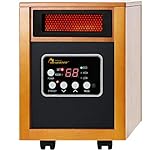

Heat Storm HS-1500-PHX WiFi
- Wall mount
- WiFi app control
- safe-to-touch grill
- tip-over shutoff
- washable filters

Dr Infrared DR-298
- Carbon element
- three mounting options
- 900/1200/1500W
- ETL certified
- 12-hour timer
Best Infrared Heaters for Basements in 2026 at a Glance
The table below lists all ten picks with the spec detail that decides a basement purchase: element type, wattage, voltage, and mounting style. Full reviews, pros, and cons follow in order.
| Product | Specifications | Action |
|---|---|---|
| Dr Infrared DR-968 |
|
Check Latest Price |
| Heat Storm HS-1500-PHX WiFi |
|
Check Latest Price |
| Dr Infrared DR-298 |
|
Check Latest Price |
 Heat Storm HS-1000-WX Heat Storm HS-1000-WX |
|
Check Latest Price |
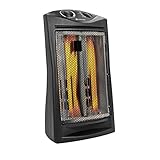 Comfort Zone CZQTV007BK Comfort Zone CZQTV007BK |
|
Check Latest Price |
 Black+Decker BHTI06 Black+Decker BHTI06 |
|
Check Latest Price |
 Dr Infrared DR218-1500W Dr Infrared DR218-1500W |
|
Check Latest Price |
 EdenPURE CopperPLUS 903G EdenPURE CopperPLUS 903G |
|
Check Latest Price |
 Heat Storm Mojave HS-1500-IMO Heat Storm Mojave HS-1500-IMO |
|
Check Latest Price |
 Ballu NCA2-4.4 Mica Panel Ballu NCA2-4.4 Mica Panel |
|
Check Latest Price |
1. Dr Infrared DR-968: Best Overall Infrared Heater for Basements
- Quartz plus PTC delivers more heat than most 1500W units
- Very quiet 39 dB operation suits a media room
- Electronic thermostat from 50-85F with 12-hour timer
- IR remote and caster wheels included
- 3 year warranty and strong long-term owner reports
- Rated square footage is optimistic (owners see 250-600 sq ft)
- Resets its heat and mode settings after a power interruption
- Grille runs hot enough to need care around small children
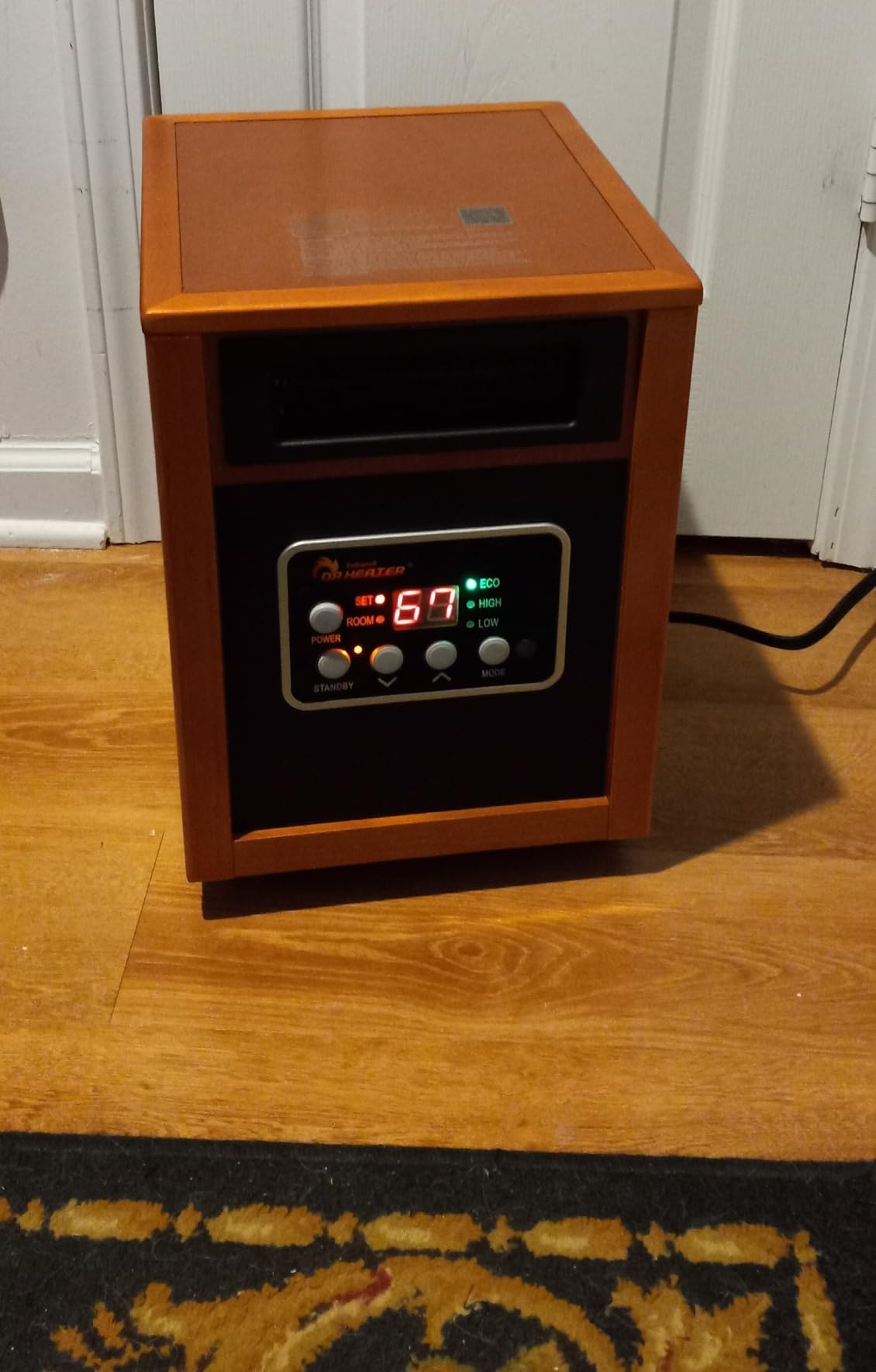
We ran the DR-968 through a winter in a 600 square foot unfinished basement with 8 foot ceilings and an uninsulated rim joist, and it did the best job of any 1500W heater we tried for a single-zone job. The dual system is the reason: an infrared quartz tube handles the radiant throw while the PTC element adds convective heat, which is what you need when the basement air itself is cold.
That combination matters more below grade than it does upstairs. A quartz-only heater leaves the air still, so you feel warm sitting still and cool the moment you move. Owners describe the PTC half as the reason they stopped needing the furnace thermostat turned up in the evening.
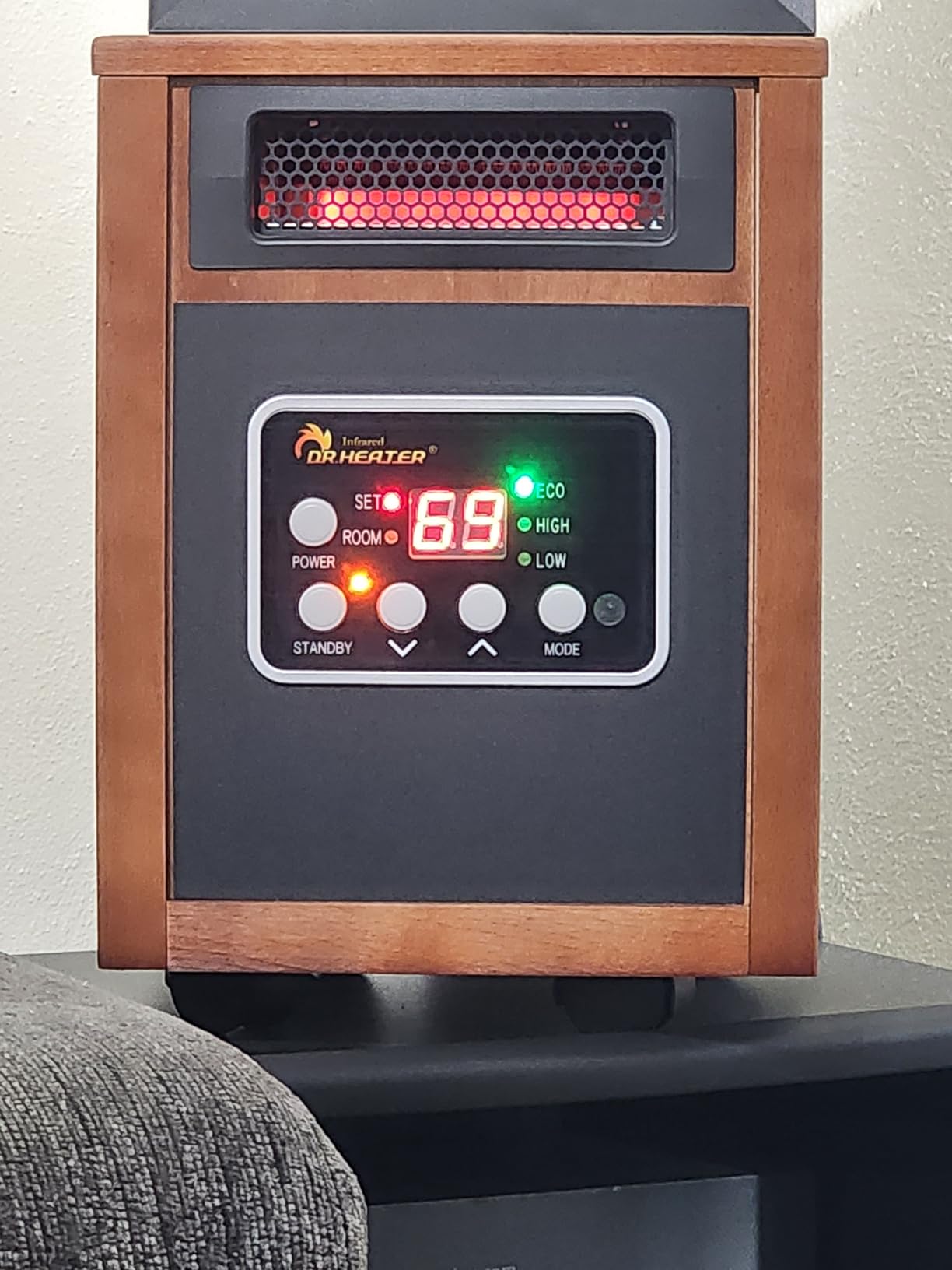
The 39 dB fan was the lowest published noise figure in our group, and the thermostat range of 50 to 85 degrees gave genuinely useful low-temperature control for a cellar, which most appliances cannot do. The 12-hour timer and IR remote mean you can set it and forget it, and the 6 foot cord reached our outlet without an extension, which matters for safety.
Two honest limits. The spec sheet lists coverage up to 576 square feet and the marketing often says 1,000, but owners consistently find it realistic for 250 to 600 square feet of supplemental heat. And after any power interruption it loses its heat and mode settings and needs a manual reset, so a basement with flaky power means extra steps.
Is the DR-968 strong enough for a whole basement?
No. At 5,200 BTU it is a zone heater, and reading it as anything else leads to disappointment. In a 1,200 square foot below-grade basement you would be chasing a losing game with appliances alone, and a ductless heat pump is the correct answer at that size.
What it does well is a defined area: a seating zone, a workbench corner, a treadmill spot, a laundry nook. Owners frequently report turning the central furnace down a notch once the room holds temperature, which is where the savings actually come from.
Is it worth choosing over a cheaper 1500W tower?
Yes, if you run it nightly or want the room to feel genuinely warm rather than merely draft-free. The PTC half, the 39 dB fan, and the wide 50 to 85 degree thermostat range are not features you get twice in this category.
If your basement is a storage space you visit twice a week, a cheaper quartz tower does the job. The DR-968 earns its place when the space is lived in and the heater runs for hours.
2. Heat Storm HS-1500-PHX WiFi: Best Wall-Mounted Infrared Heater for Basements
- Wall mount keeps the floor clear in tight basements
- WiFi app control plus touchscreen thermostat and remote
- Safe-to-touch grill and tip-over shutoff suit kids and pets
- Washable filters
- Quiet enough for a bedroom suite
- This configuration is wall mount only (feet not included)
- Only about 150 sq ft as a primary source
- Cool housing means less ambient warmth in the room
A finished rec room with a low ceiling and no free wall or floor space is exactly where the HS-1500-PHX earns its place. Mounted at about 6 feet, it throws radiant heat across the seating area and leaves the floor clear for traffic, which matters in a basement where the floor is already the coldest surface in the room.
The cord concealment feature is small but useful. Mounted directly over an outlet, the cable hides behind the bracket, so nothing crosses the floor where someone could trip on it in the dark.
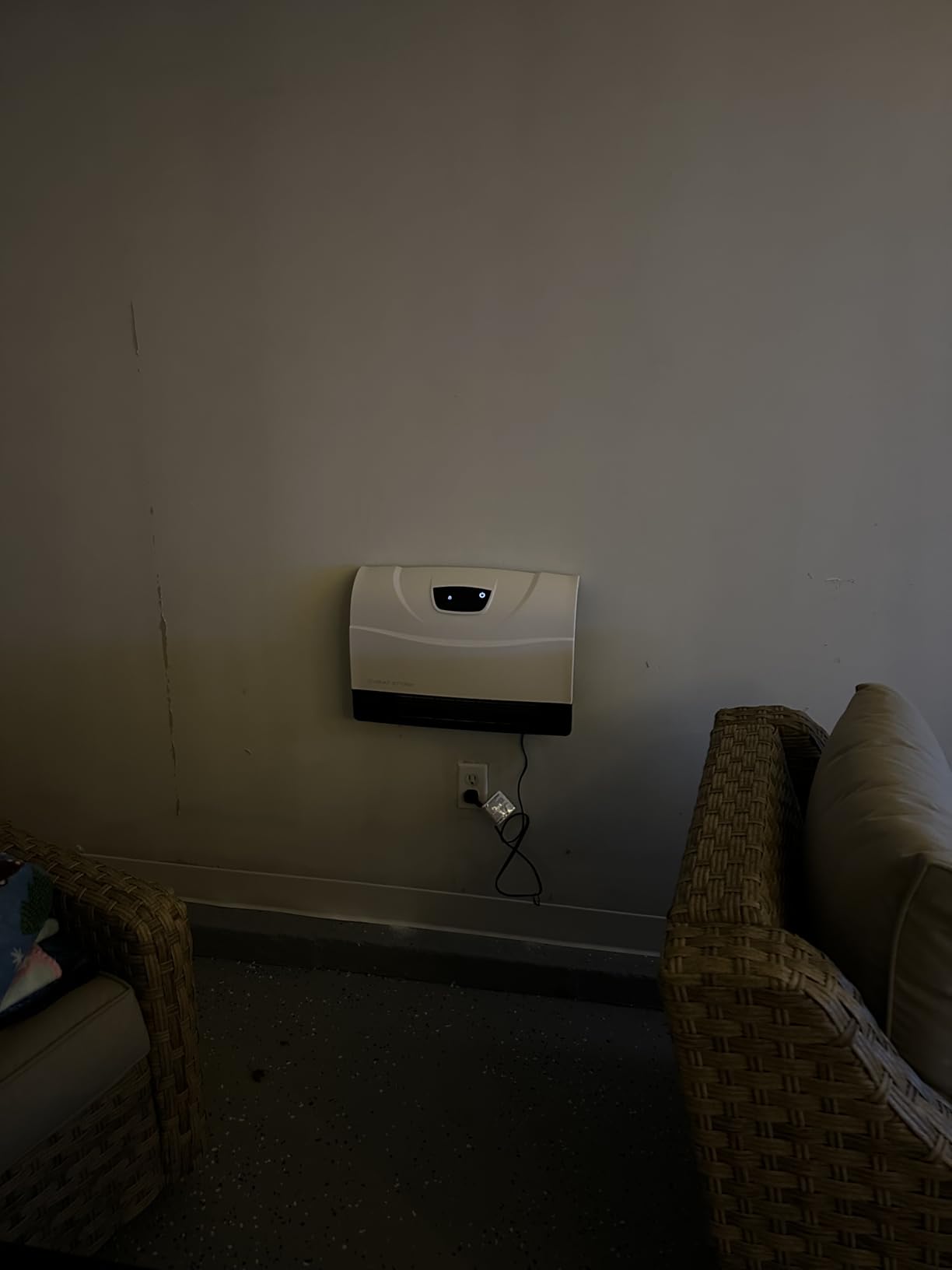
The safe-to-touch grill changed how we use it. In a basement playroom or a suite with young kids, a grille you can brush past without a burn is worth more than extra output, and the tip-over shutoff covers the case where it gets knocked while reaching past it.
The manufacturer rates 150 square feet primary and 750 square feet supplemental. We found the honest basement number closer to 100 to 200 square feet of comfort zone, which still covers a couch, a chair, and the walking path between them. WiFi scheduling is genuinely useful here, since you can start warming the room before you come downstairs.
Does wall mounting hurt performance in a basement?
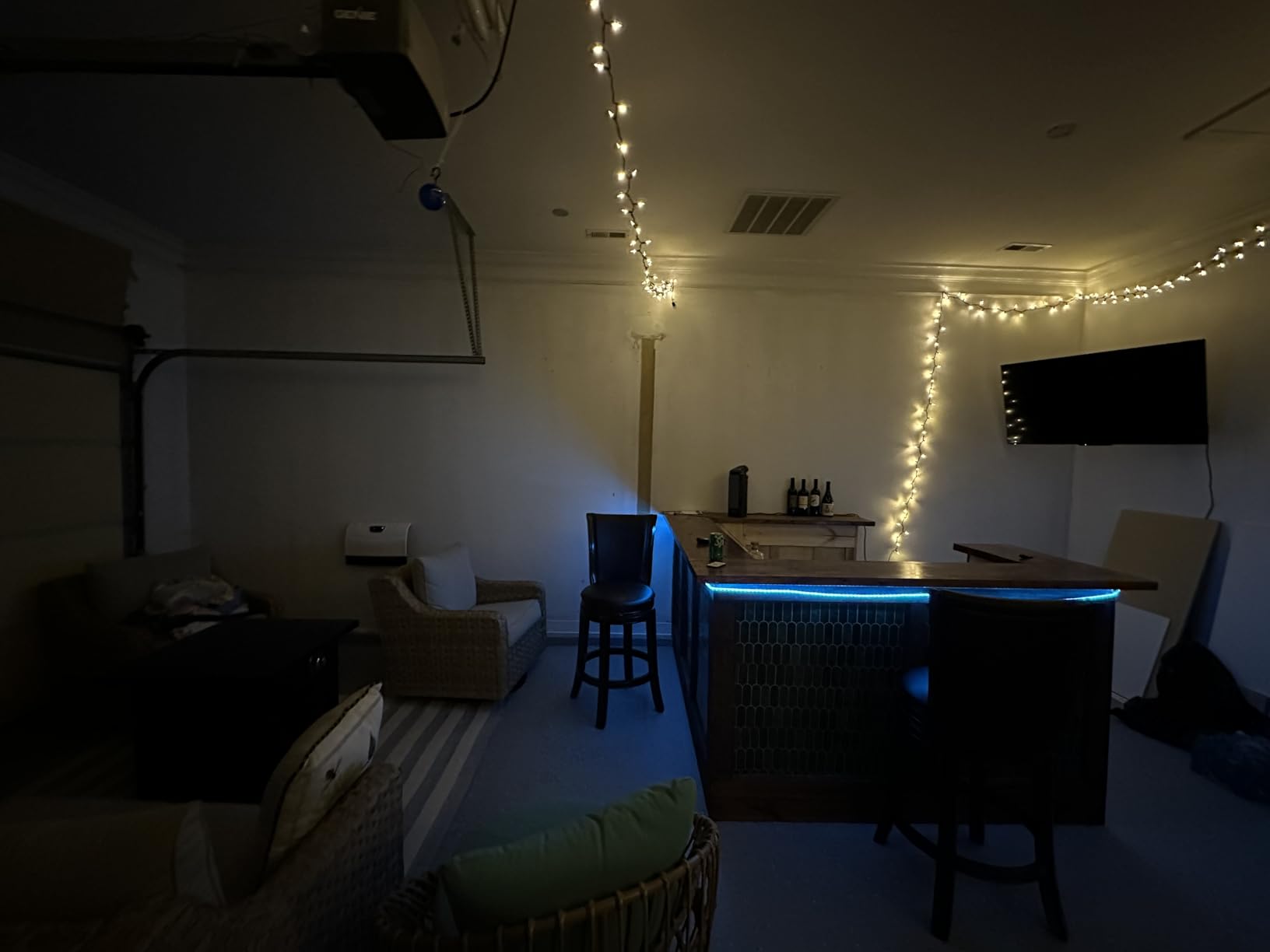
Only if you mount it too high or aim it at nothing. With 8 to 9 foot ceilings, put the unit roughly 5 to 6 feet up so the radiant pattern lands on the seats and the floor, not on the joists overhead. Mounted at the ceiling line, much of the energy ends up on the ceiling.
Because the housing runs cool, you will feel warmth mainly when you are in the radiant zone. Plan the room layout around that instead of expecting uniform air heat.
Is the WiFi worth it for a basement?
If you come and go, yes. Schedule the heat for the hours you are actually down there and skip the rest, and the thermostat is a touch screen rather than a dial you have to find in the dark.
If you are home in the basement all day, the app is a nice extra rather than a reason to buy. Our guide to infrared quartz heaters for large rooms covers which element types pair well with smart control.
3. Dr Infrared DR-298: Best Infrared Heater for Damp and Unconditioned Basements
- Three mounting options including ceiling and wall
- Rugged rust-resistant aluminum housing suits damp rooms
- Three selectable power levels for zone control
- Up to 12-hour programmable timer with remote
- Indoor and outdoor rated and ETL certified
- Highly directional so warmth only lands within a few feet
- Will not resume after a power interruption without the remote
- Front grates run very hot
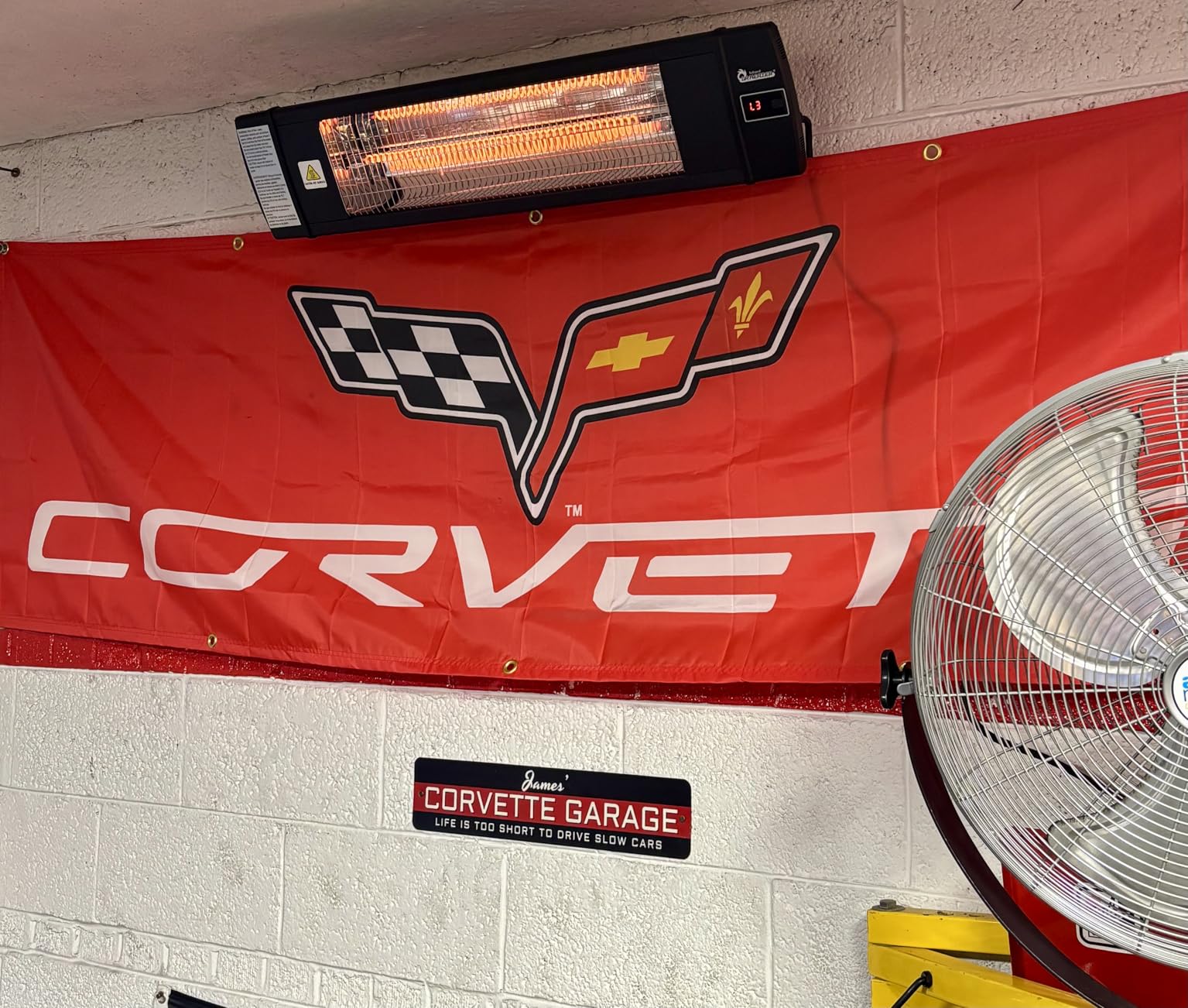
Damp, unfinished, occasionally wet spaces are where the DR-298 separates itself. The carbon element sits in front of a 90 percent reflective mirror aluminum reflector, and the housing is a rust-resistant aluminum cabinet rather than painted steel, which is the right material when the room already holds 55 to 60 percent relative humidity.
Three mounting options in one appliance is unusual. We used it as a wall mount aimed at the seating area, but the ceiling mount solves the specific problem of heat pooling at a 9 foot joist, and the freestanding base with wheels suits a workshop where the layout changes.
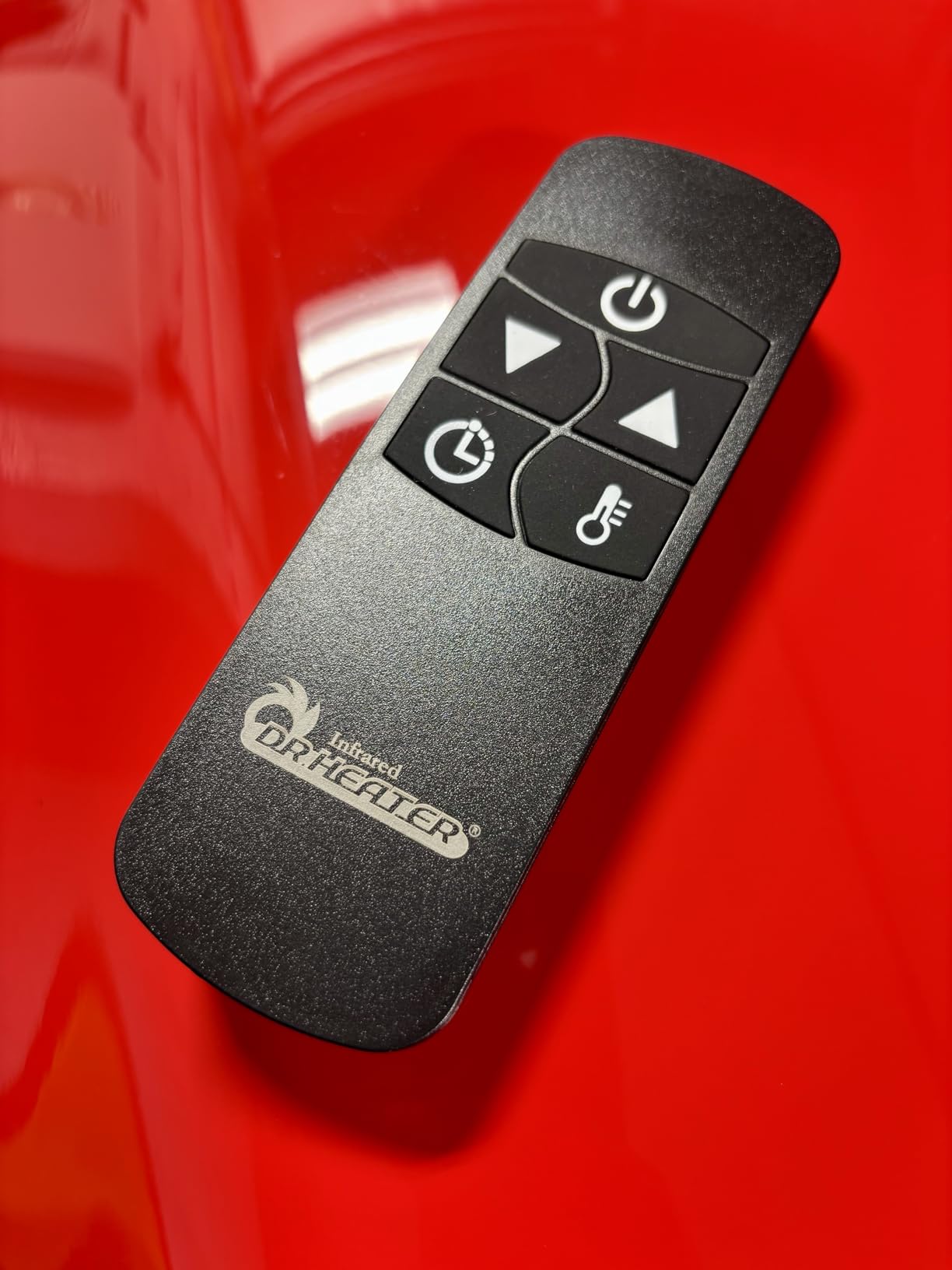
The three power levels matter in a basement because you are rarely at full output all night. Running at 900W for the hours before bed and 1500W for the first hour after you arrive cuts consumption noticeably, and the 12-hour timer handles the overnight portion without you thinking about it.
Be clear about what this is. The 400 square feet rating is a directional radiant figure, and warmth is only really noticeable within a few feet of the panel. Owners use it as a freeze-protecting and spot-warm tool in kennels, garages, and covered porches as much as in basements.
Will it survive a basement with real moisture?
The rust-resistant aluminum housing handles moisture better than the painted-steel towers in this roundup, and the ETL certification plus automatic tip-over and over-temperature protection cover the rest. Keep it off a wet slab edge, and pair it with a dehumidifier rather than expecting the heater to handle moisture.
It is rated for indoor and outdoor use, which gives you an option to move it to a covered entry or patio in shoulder season without buying a second appliance.
Is it too directional for a large open basement?
Yes, for open volume. A carbon unit with a reflector throws a narrow, intense band of heat, so a 1,000 square foot room needs two or three of them placed where people actually are.
For a damp basement where you only want one or two warm spots, that directionality is a benefit. It puts heat on you rather than on the empty far corner of the room.
4. Heat Storm HS-1000-WX: Best Compact Heater for Small Basement Work Zones
Heat Storm Deluxe Space 1000 Watt Infrared Wall Mount Electric Heater, White
- Uses under 2 sq ft of wall space so nothing sits on the floor
- Quick installation with template and level bubble
- Safe-touch grill verified by owners after long runs
- Display dims automatically and the fan runs quietly
- Several owners report six-plus years of service
- Weak output beyond roughly 100 sq ft
- Loud control beep on every setting change
- No manual power switch so it depends on the remote
Some basement corners need warmth, not heat. A utility nook, a shelf of tools, the spot where you stand at a folding table, the landing at the bottom of the stairs. The HS-1000-WX covers those and installs out of the way.
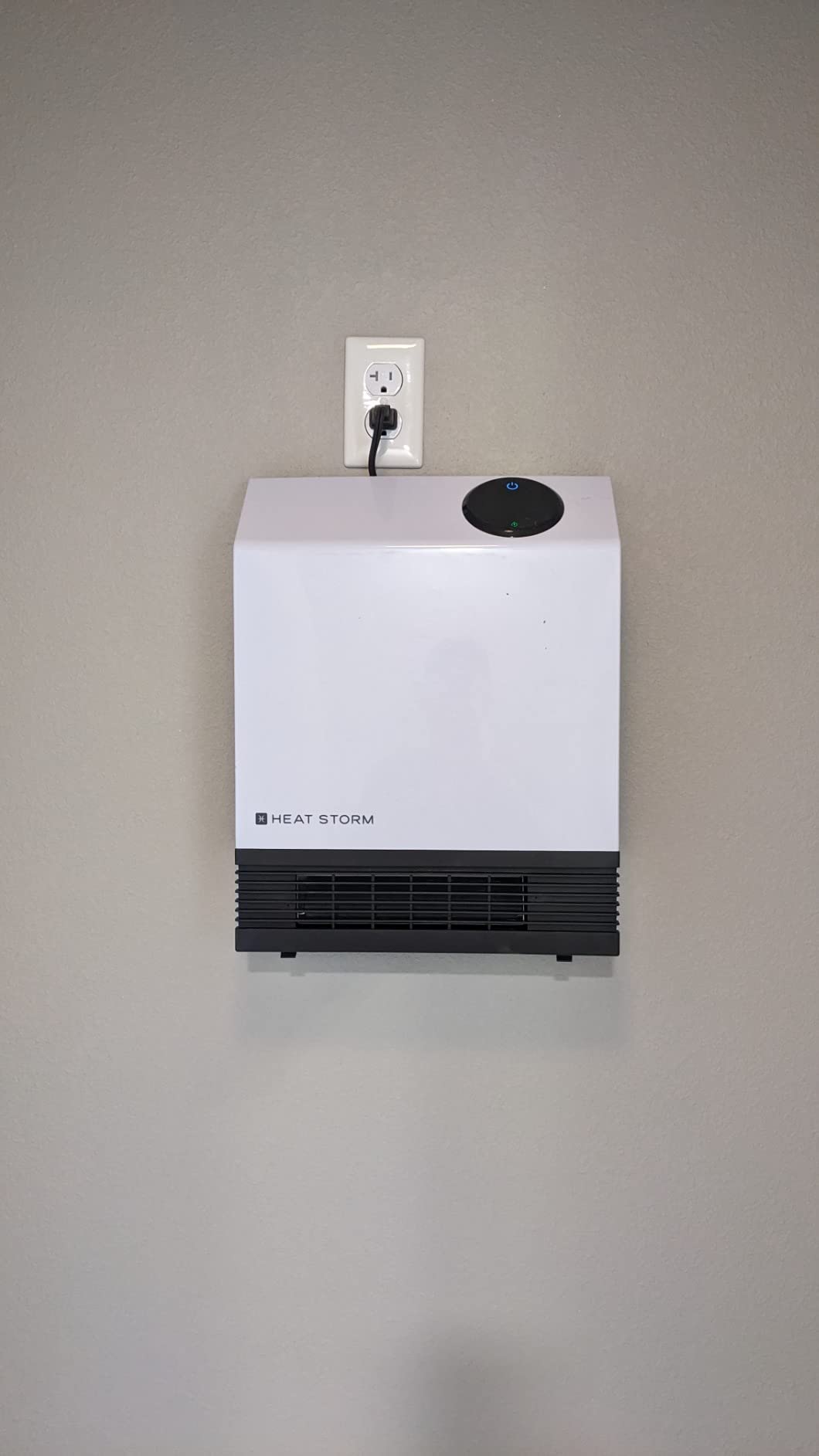
At under 2 square feet of wall space and 8 pounds, it is the easiest unit here to mount well. The included template and level bubble matter more than they sound, because a crooked wall unit looks bad forever in a finished room.
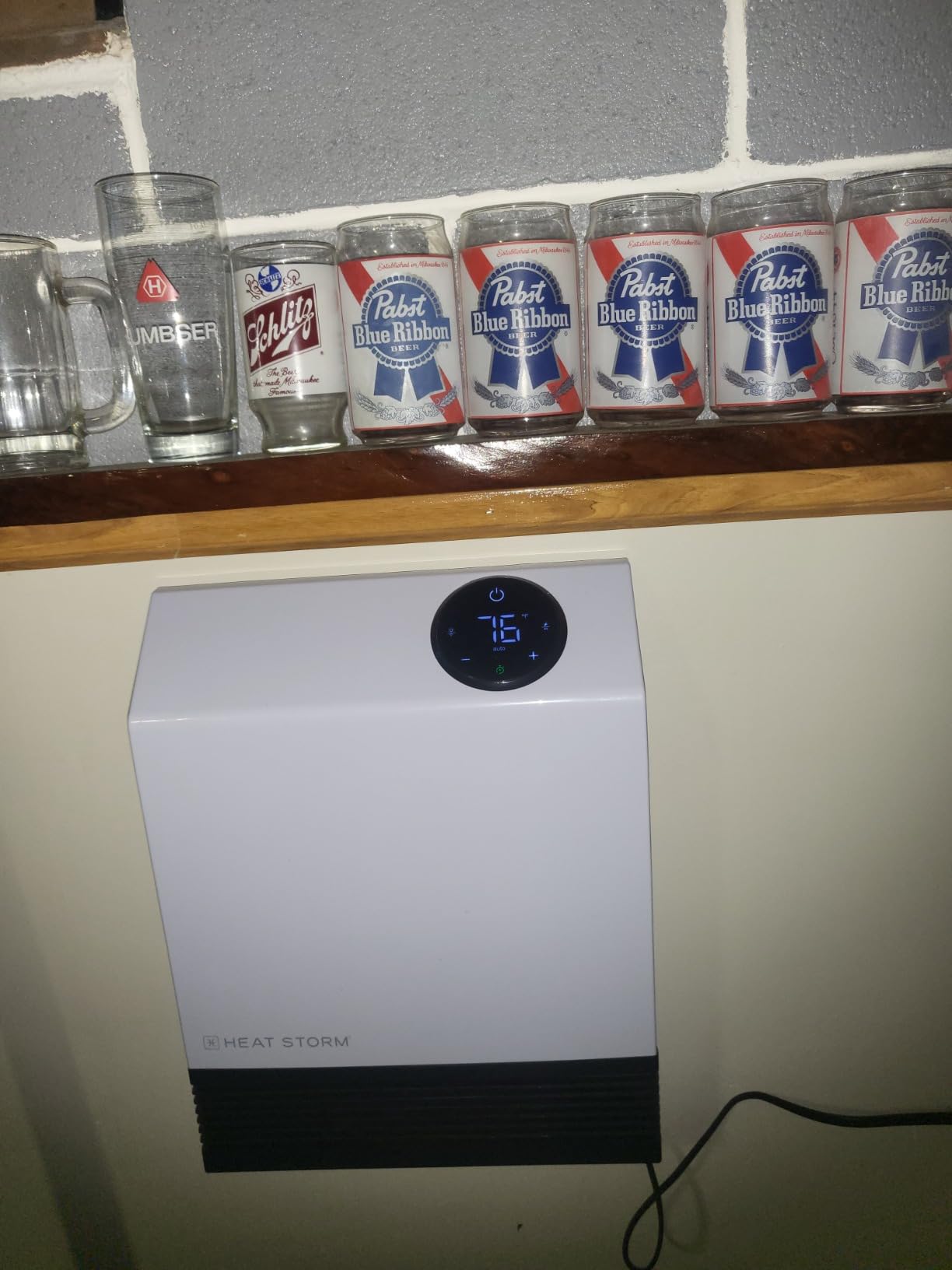
Three modes give you the control a basement needs: high 1000W, low 500W, and an eco setting that auto-switches. Running the 500W low setting overnight to hold a minimum temperature is the cheapest way to keep a cellar from dropping toward freezing, and it is where this appliance earns its cost back.
Owners repeatedly report the safe-touch grill staying comfortable to the touch after long run times, and the washable air filters are a small thing that removes a recurring annoyance. The LED display going dark after five minutes of no activity is thoughtful in a dark room.
Can 1000W hold a basement room?
Not as a room heater, no. Treat 100 square feet as the real figure for comfort, and 500 square feet as supplemental reach near where you sit. Beyond that, the low setting simply cannot keep up with concrete losses.
What it can do is hold a small area above freezing, which is the practical use for a laundry alcove or a storage corner in an unheated basement.
Is the control beep and remote-only power a problem?
The beep cannot be muted, so in a bedroom suite at night it is a real annoyance, and there is no manual power switch on the unit itself. If you plan to run it where silence matters, factor that in.
The display also reads inaccurately on some units and needs calibration. Compare that against the analog knobs on the Comfort Zone tower later in this list.
5. Comfort Zone CZQTV007BK: Best Value Dual-Quartz Tower for Basements
- Fast radiant heat that warms a small room in minutes
- Lightweight 6.1 lb body with a stay-cool handle
- Two heat settings plus a manual thermostat
- Tip-over and overheat protection included
- Slim footprint suits small rooms and offices
- Fan motor is noticeably noisy
- Reflector panels rattle during the first minutes of warm-up
- Manual knobs only with no remote or display
Owners frequently describe this as excellent warmth for what it costs, and we understand why. Two quartz tubes with fan-assisted dispersion put real radiant heat into a small room fast, and 6.1 pounds with a molded stay-cool handle makes it the easiest heater here to carry up basement stairs.
The simplicity is genuine too. Two heat settings and a top-mounted thermostat knob mean nothing to learn, which suits a storage basement or a garage corner where you turn it on, leave for four hours, and come back.
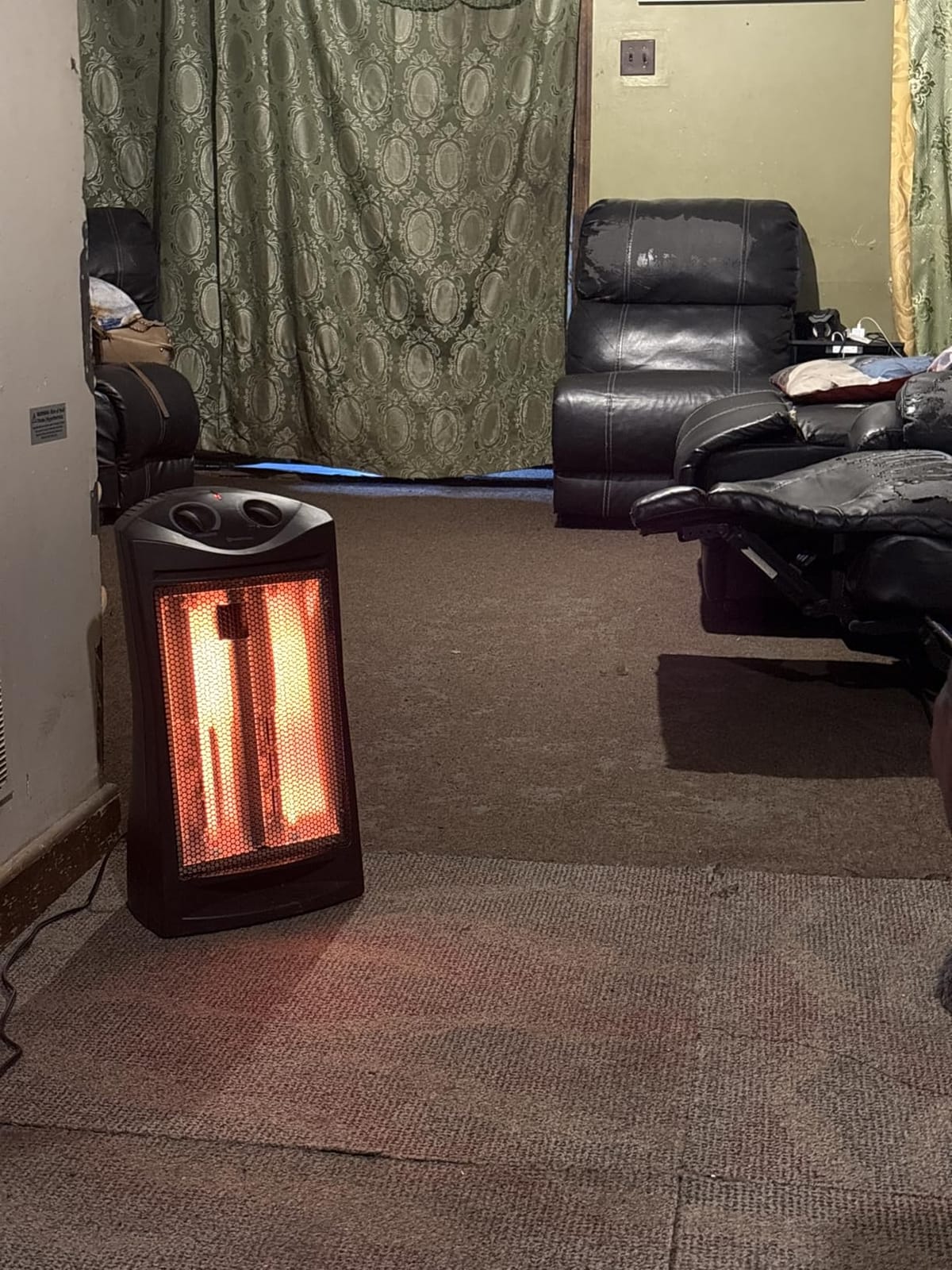
It handled a 200 square foot workshop zone without any complaint, and the metal housing and tip-over switch fit a utility space where a plastic tower would not. Coverage is rated at 200 to 300 square feet, which is honest by the standards of this category.
The acoustic problem is one reason this sits fifth rather than higher. The fan motor runs louder than the DR-968 by a wide margin, and the thin reflector panels rattle during the first few minutes of warm-up while the metal expands.
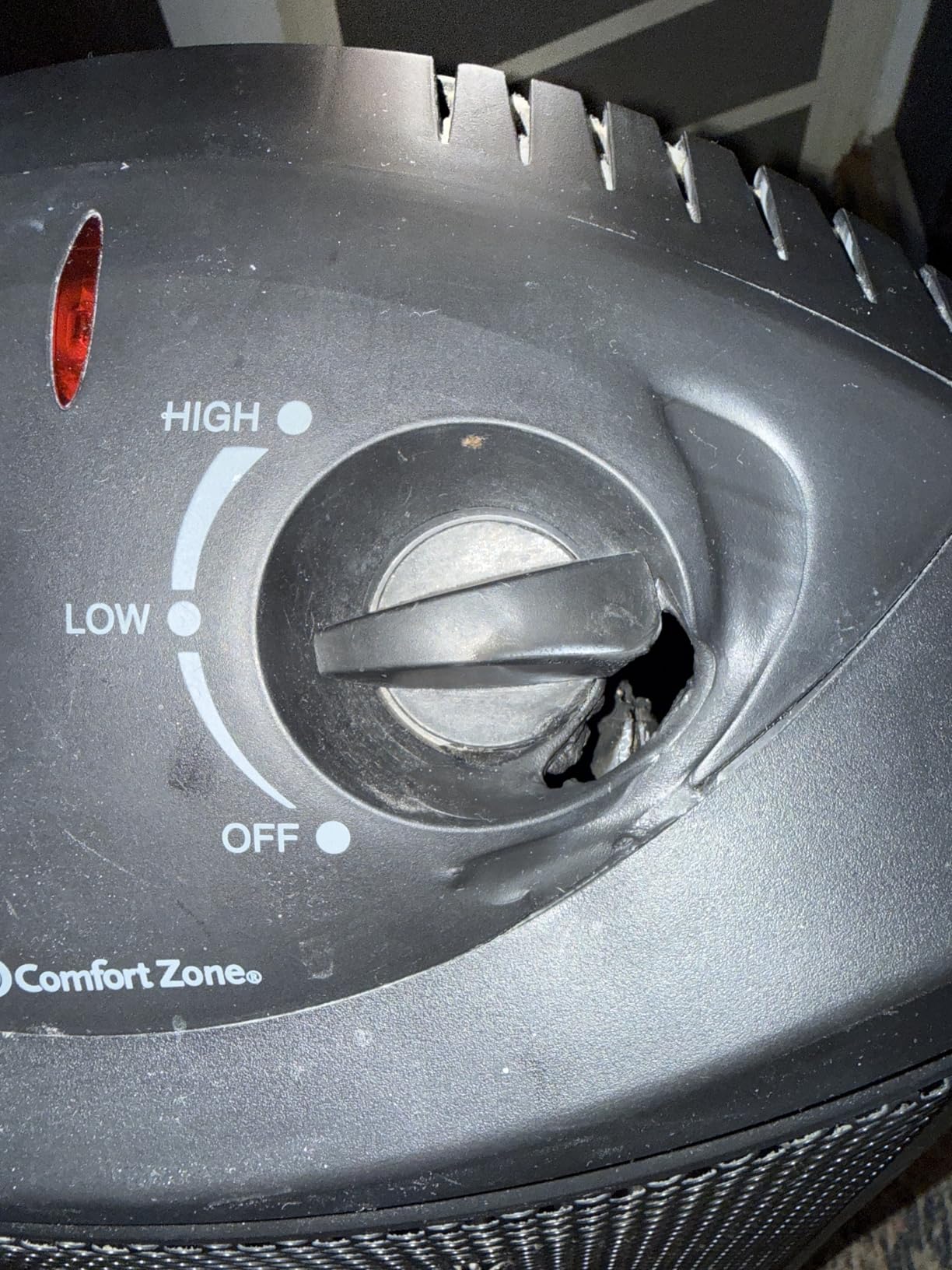
Is it loud enough to ruin a basement media room?
For a workshop, laundry room, or storage area, no. For a media room, bedroom suite, or quiet home gym, yes. Several owners use it successfully as supplemental heat in drafty older homes, but usually in a room nobody sits in while it runs.
Check the units earlier in this list with published noise figures before deciding that fan noise is acceptable.
Is manual-only control a downside?
Only if you want scheduling. There is no remote, no display, and no timer, so overnight use means getting up to switch it off or using a thermostat-controlled plug to hold a minimum temperature, which is a common DIY workaround on heating forums.
For daytime zone warming on a budget, manual knobs have very little downside.
6. Black+Decker BHTI06: Best Budget Infrared Heater for a Basement
- Entry-level model that still delivers radiant output
- Light 5 lb body that is easy to carry between rooms
- Quick heat-up from dual quartz elements
- Tip-over auto shutoff and overheat protection
- Cool-touch housing suits a kids' area
- Fan motor produces noticeable noise especially on high
- Only two heat settings and no remote
- Some units report power cord reliability issues
At 5 pounds, this is one of the lightest heaters we tested, and that matters more than it sounds in a basement. You can move it between a workbench and a storage area without hauling anything, and it climbs stairs easily.
The cool-touch housing is the feature we did not expect on an entry-level tower. For a basement playroom or a room where a toddler will get near it, a cabinet that stays comfortable to the touch is worth real money.
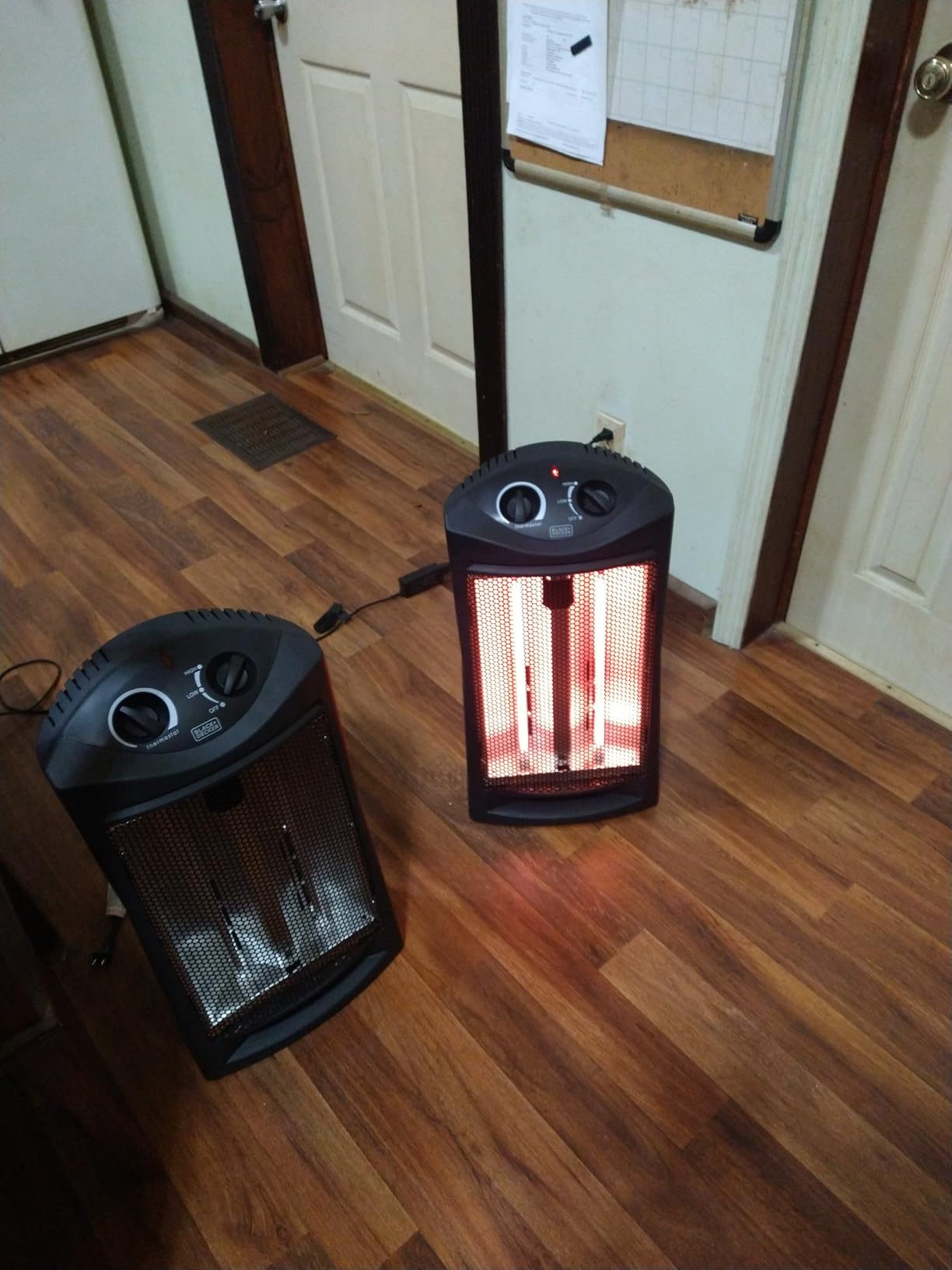
Owners use it for freeze protection as much as comfort, including garages where two heaters have kept pipes from freezing during a deep freeze. For a basement that only needs to stay above freezing in midwinter, that is a perfectly good job.
Coverage is rated at 150 square feet, and the 140 degrees Fahrenheit maximum setting is on the low side for genuinely cold rooms, so this is a small-space heater rather than anything larger. The dual quartz tubes still heat up quickly and reach across a small room.
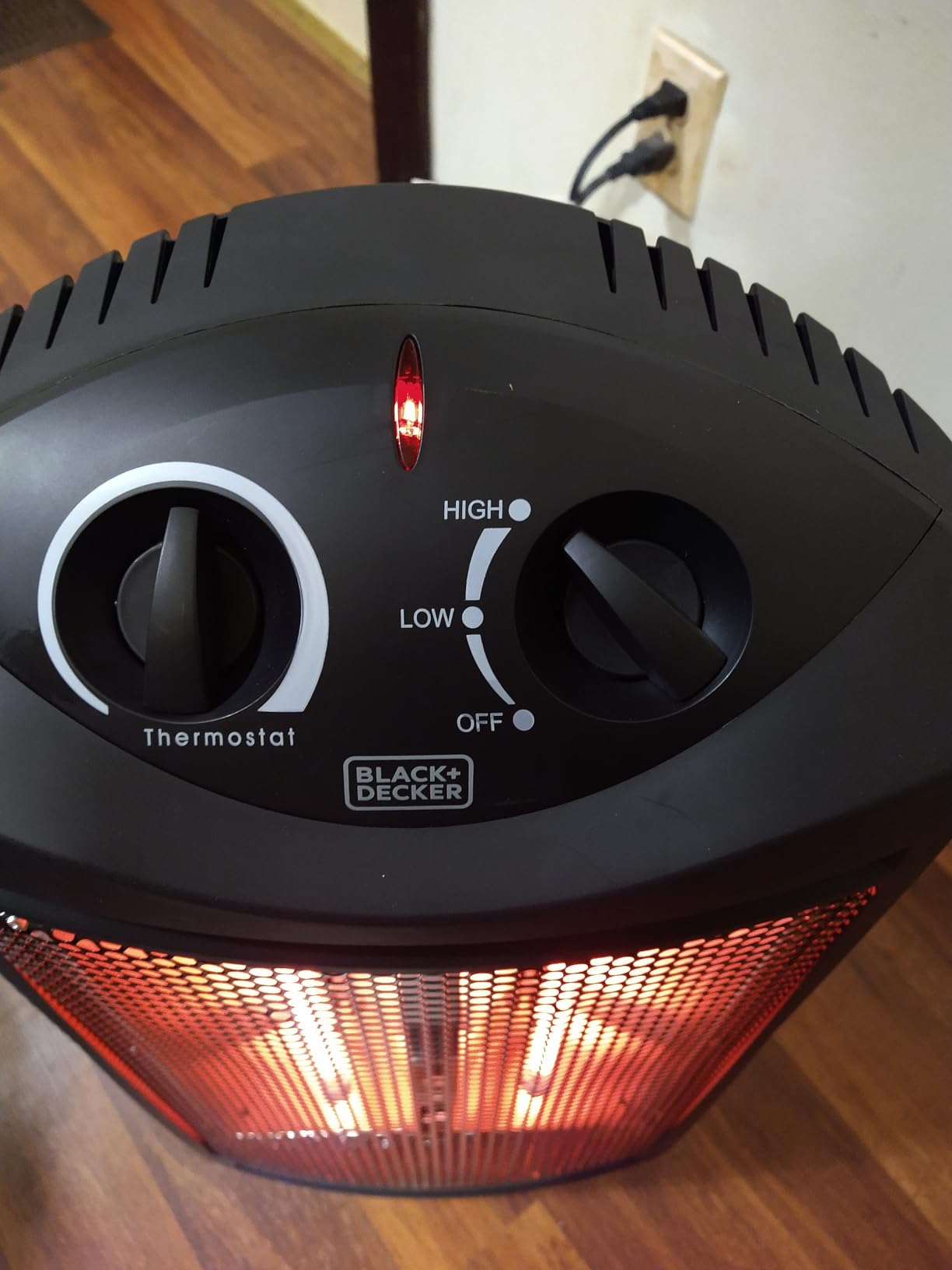
Is it good enough for an unfinished basement?
For freeze protection and a 150 square foot zone, yes. Owners run it in garages and unfinished basements for exactly that. For a whole 800 square foot finished room, no amount of low cost makes one heater enough.
Check the wiring. Some owners reported power cords that stopped powering after being moved, so plug it directly into a wall outlet and never an extension cord.
How does it compare to the Comfort Zone tower?
The Comfort Zone has a larger rated coverage and a manual thermostat knob, while the Black+Decker is lighter, cheaper, and has a cool-touch housing. If you carry the heater around, take the lighter one. If noise and controls are the priority, look up the list.
Both suffer the same weakness: fan noise that is obvious in a quiet room.
7. Dr Infrared DR218-1500W: Best for Unfinished Basements and Workshops
DR. INFRARED HEATER DR218-1500W Greenhouse Garage Workshop Infrared Heater, 1500-watt
- Heavy-duty metal cabinet built for continuous unattended use
- IPX4 splash protection suits damp and dusty rooms
- Wide 32-104F thermostat range
- Quiet enough to run beside a bed or during TV
- Low maintenance with no filter to buy
- Only one heat setting despite some listings implying two
- 150 sq ft rating is optimistic in very cold conditions
- Some models reported internal burnout after extended use
This is the appliance we reach for when the basement is a workshop, a laundry room, or a mechanical space rather than a living area. The IPX4 splash-protected metal cabinet is built for damp and dusty air, and owners run it for long stretches without babysitting it.
That wide thermostat range is genuinely unusual. Most heaters bottom out around 60 degrees, which makes it impossible to hold a cellar at a low setpoint without overshooting. A 32 degree floor changes how you use it, since you can hold a minimum temperature economically and let the unit cycle.
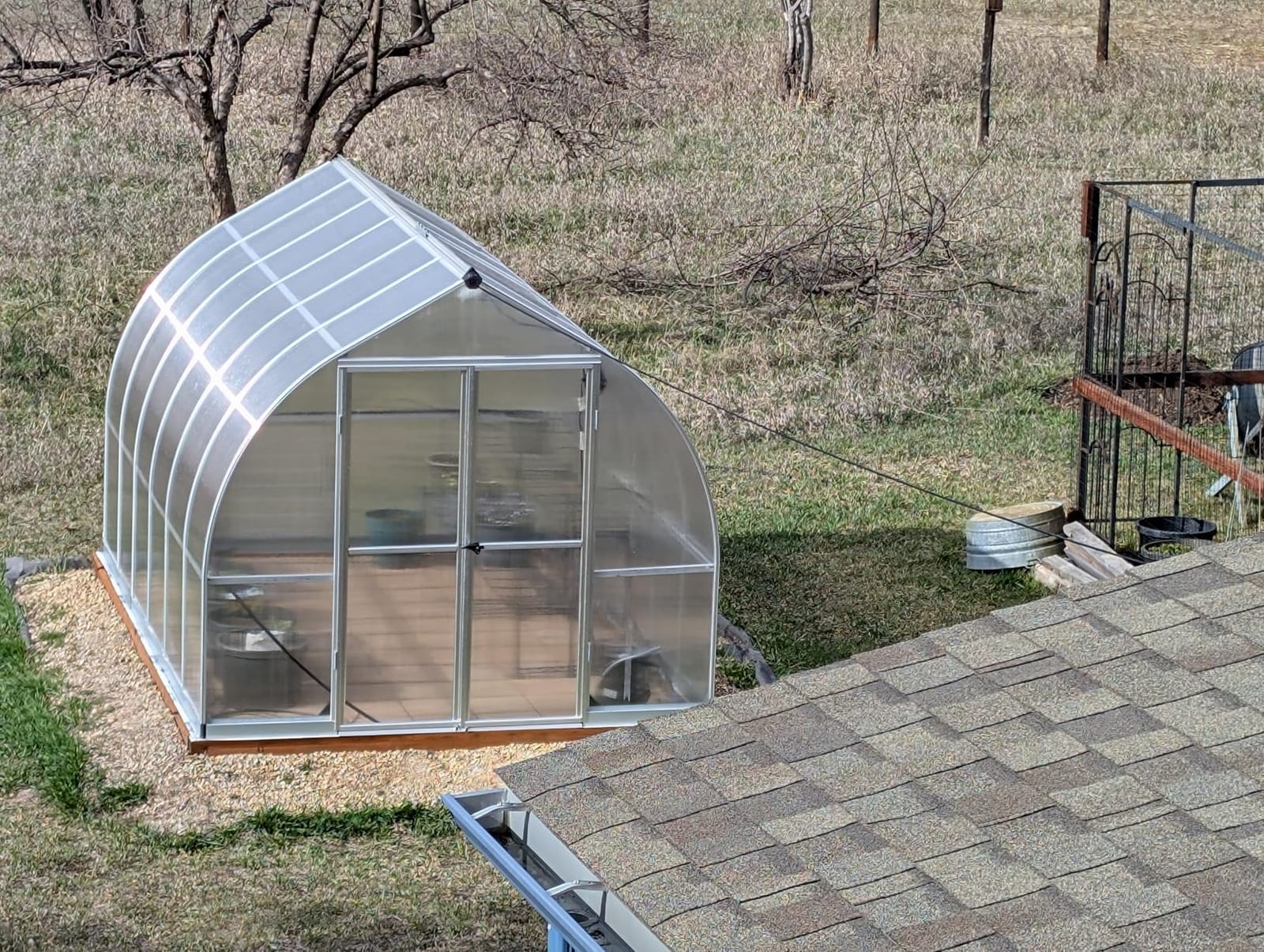
One owner reported taking a one-car garage from 36 degrees to 65 degrees overnight, and other owners describe steady temperature holding at low thermostat settings. For freeze protection and steady-hold work rather than fast comfort heating, it does its job without fuss.
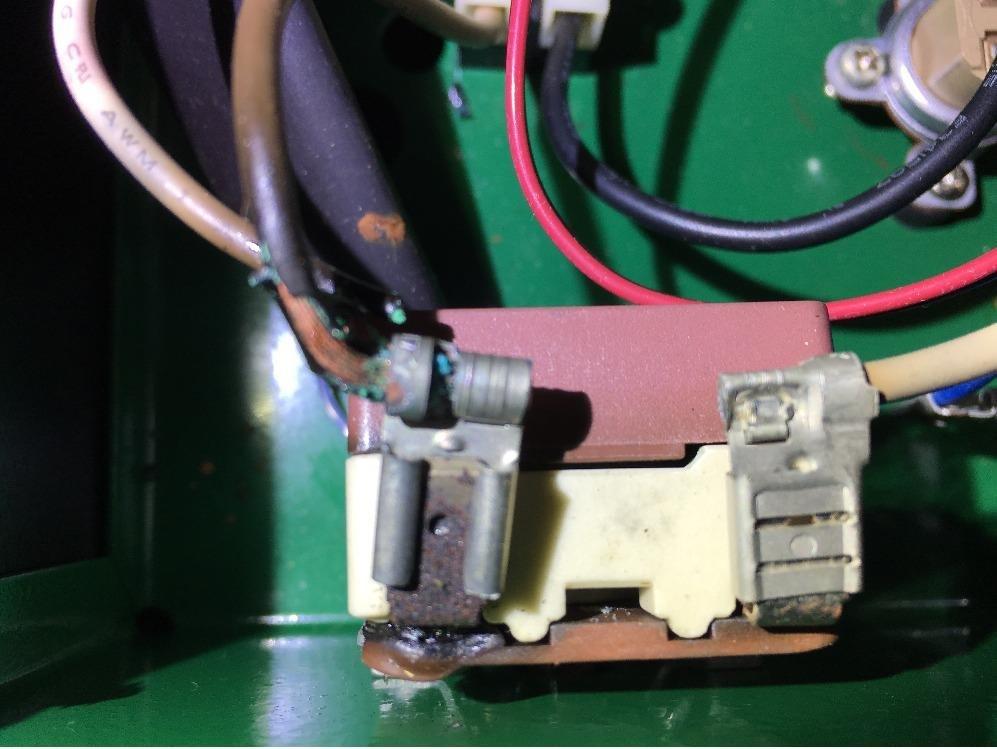
The complaint we heard most is the single heat setting. There is no low mode, and the fan speed stays the same regardless, so cycling is the only way to reduce output. A handful of owners also reported models burning out internally after extended daily use.
Can I use it in a damp basement?
Yes, and it is one of the most appropriate choices on this list for that job. IPX4 splash protection and a metal cabinet handle humidity far better than painted steel towers, and low maintenance means no filter purchases in a dusty room.
Keep it off the slab edge where water can pool, and remember that a heater does not remove moisture. Pair it with a dehumidifier if relative humidity runs high.
Is one heat setting a real limitation?
It is the main reason this is not higher on the list. Without a low mode you cannot reduce wattage except by cycling, which produces more thermostat on-off cycling than an eco mode would.
If you only need freeze protection or steady holding, that trade is fine. If you want comfort heat with control, choose one of the models with two or three settings.
8. EdenPURE CopperPLUS 903G: Best Premium Heater for a Quiet Finished Basement
EdenPURE CopperPLUS Infrared Heaters for Indoor Use Portable 1000 Sq Ft
- Copper PTC element spreads heat evenly across a room
- 24 precision heat settings give unusually fine control
- Whisper-quiet operation that does not disturb sleep
- Over 3.5 sq ft of copper surface transfers heat efficiently
- Lifetime washable filter and 2 year warranty
- Costs more than the other models in this roundup
- Heavy 24 lb cabinet that relies on its casters to move
- Copper element failures reported on earlier generations
The CopperPLUS is the one we would put in a finished basement where appearance and silence both count. Over 3.5 square feet of copper surface transfers heat evenly, so the warmth is spread across the room rather than concentrated in one beam, and owners describe the fan as quiet enough to sleep next to.
Twenty-four heat settings from 40 to 90 degrees is the control story here. In a basement you often want a precise low setpoint rather than a binary on-off, and a two-position appliance cannot give you that.
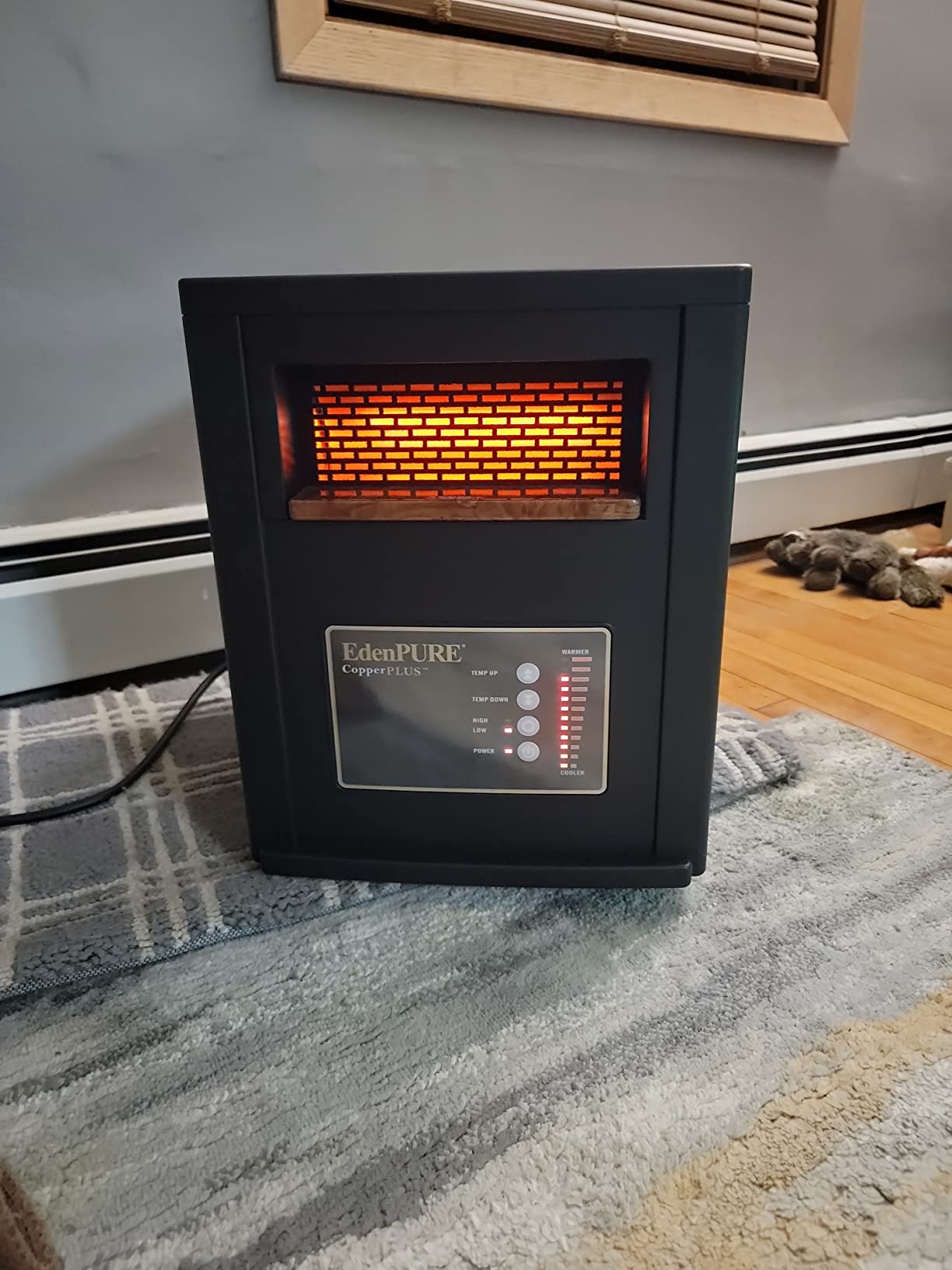
The 1000 square feet claim is the rated figure for a well-insulated space, and we would plan on a quarter of that for comfort in a below-grade room. Still, the even distribution means the far end of a long basement does not feel as dead as it does with a narrow-beam quartz tower.
Safety is well covered: dual overheat sensors, tip-over shutoff, cETL approval, and a cool-touch housing. That combination makes it a reasonable pick for a finished basement used as a play area.

Is it worth the higher price over the DR-968?
It depends on your room and your ears. The DR-968 has more owner reviews and a higher wattage-per-dollar ratio, while the CopperPLUS trades cost for even distribution, more heat settings, and a quieter cabinet.
If a basement bedroom or media room has to stay quiet at night, the quieter fan and finer control are worth paying for. For a utility space, they are not.
How heavy is it to move between rooms?
It is one of the heavier cabinets in this roundup at 24 pounds. The rolling casters make it manageable on a flat basement slab, but this is not an appliance you carry up stairs casually.
Owners on earlier generations of this product line reported copper element failures, so factor element durability into a long-term purchase and check the warranty terms.
9. Heat Storm Mojave HS-1500-IMO: Best for Kids and Pets in a Basement
Heat Storm Mojave Indoor Ultra Lightweight Portable Infrared Space Heater – 1500 Watts – Built in Thermostat & Overheat Sensor – Remote Control
- Stable low-profile body that is very hard to tip over
- Cool-touch exterior and knock-over switch
- Quiet on low and still strong on high
- Backlit buttons visible in a dark basement
- Dual air filters and remote control
- Internal thermometer reads inaccurately on some models
- Glowing element gives off noticeable light
- Audible clicking when the fan cycles
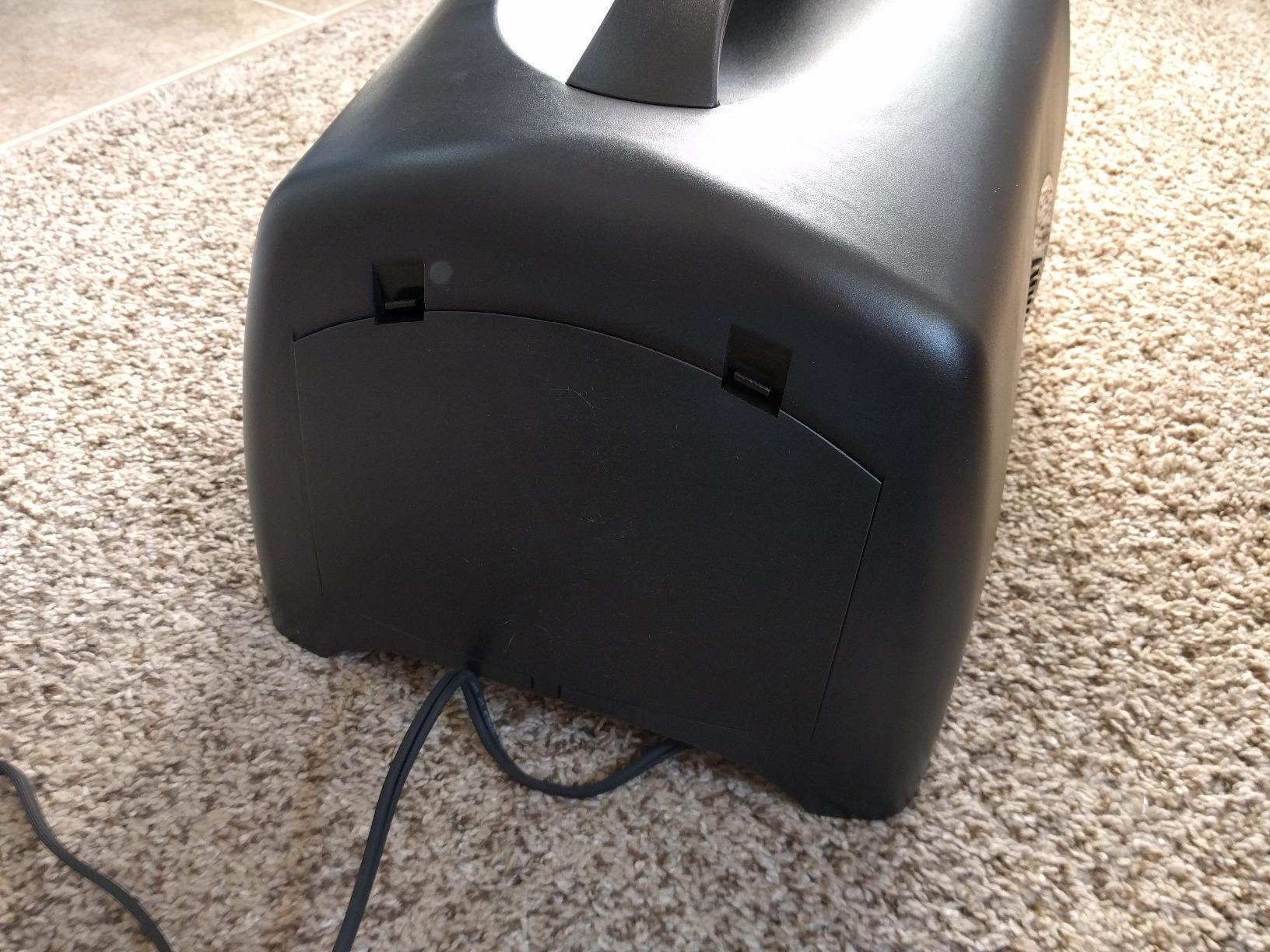
Tip-over injuries and curious hands are the reason this one makes our shortlist for a playroom basement. The Mojave has a wide, low-profile body that is genuinely difficult to knock over, which is a different level of protection from a slim tower with a tip-over switch alone.
The knock-over switch and cool-touch exterior handle the second concern, a child or dog touching the cabinet. Backlit buttons are a small but real detail in a windowless basement that is often dark.
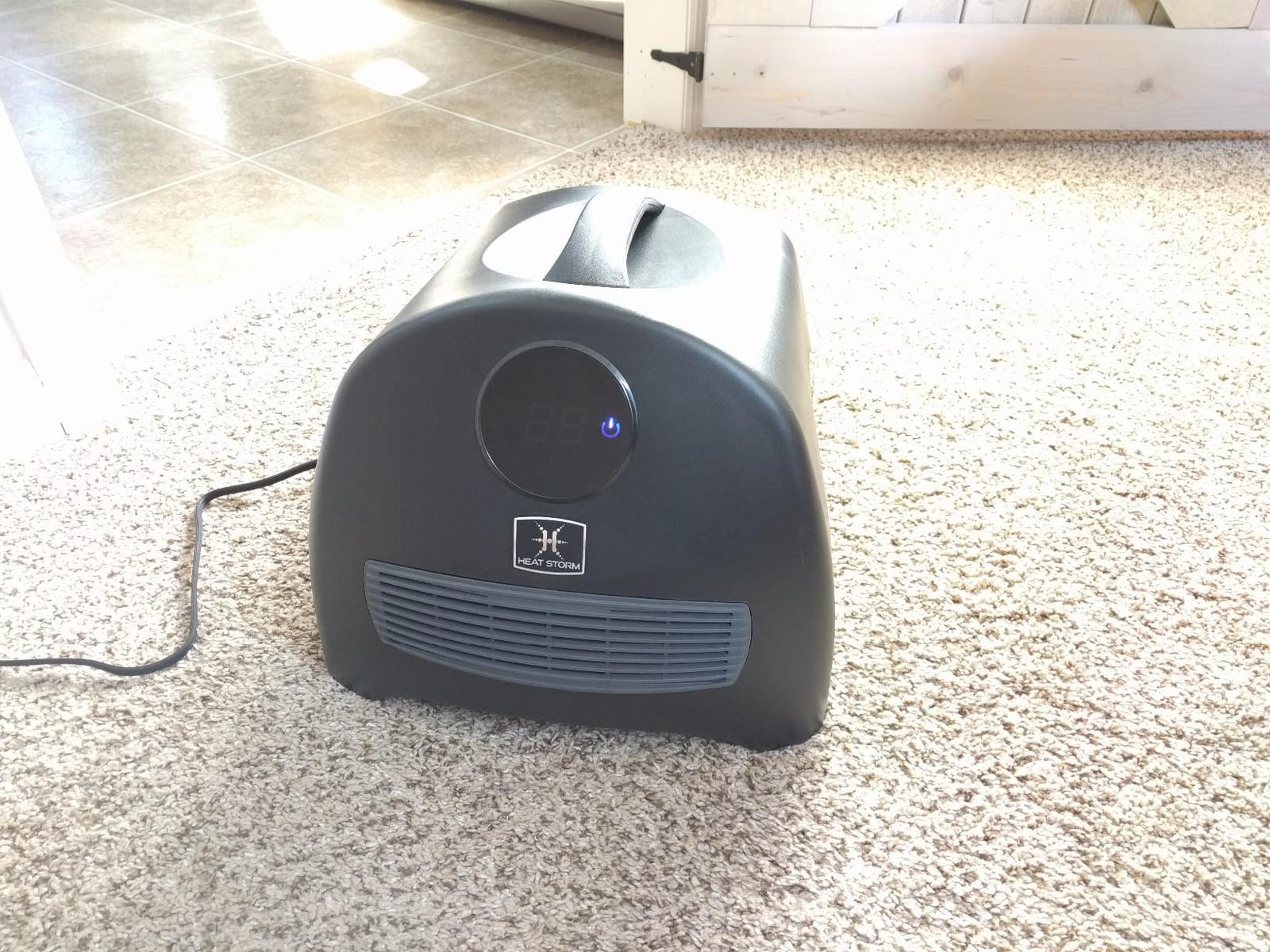
The energy efficient mode drops output from 1500W to 750W, which is the setting you use for overnight holding. Owners like that it does not noticeably dry indoor humidity, which matters if you are already managing a damp basement.
The repeated negative is thermostat accuracy. Some units read the room warmer than it really is, so the fan cycles at the wrong temperature. Owners work around it by setting the dial several degrees below the target and checking with a separate thermometer.
Is the glowing element a problem in a kids’ room?
The light itself is not a hazard, but it is bright enough to work as a night light, and some owners find it distracting in a dark bedroom suite. The housing stays cool to the touch, so contact is not the risk.
If the room doubles as a nursery, the Heat Storm HS-1500-PHX wall mount later in our list has a safe-to-touch grill with no visible glow at all.
Does the thermostat problem make it unusable?
No, but you have to calibrate it. Check the displayed temperature against a real thermometer, then set the unit two to four degrees higher than the number you want and confirm with an independent reading.
Its rated coverage of 300 square feet primary and 1000 square feet secondary is a warm-room figure. In a below-grade space plan on roughly 150 square feet of real comfort zone.
10. Ballu NCA2-4.4 Mica Panel: Best for App Control and Wide Coverage
- All-metal mica panel rated for long service life
- Whisper-quiet bladeless operation suits bedrooms and offices
- App scheduling plus Alexa voice control
- Works on casters or wall mounted
- 10-second heat-up with 180 degree coverage
- Only 250 sq ft as a primary heat source
- Costs more than most 1500W units in this roundup
- Needs a dedicated 120V circuit for full output
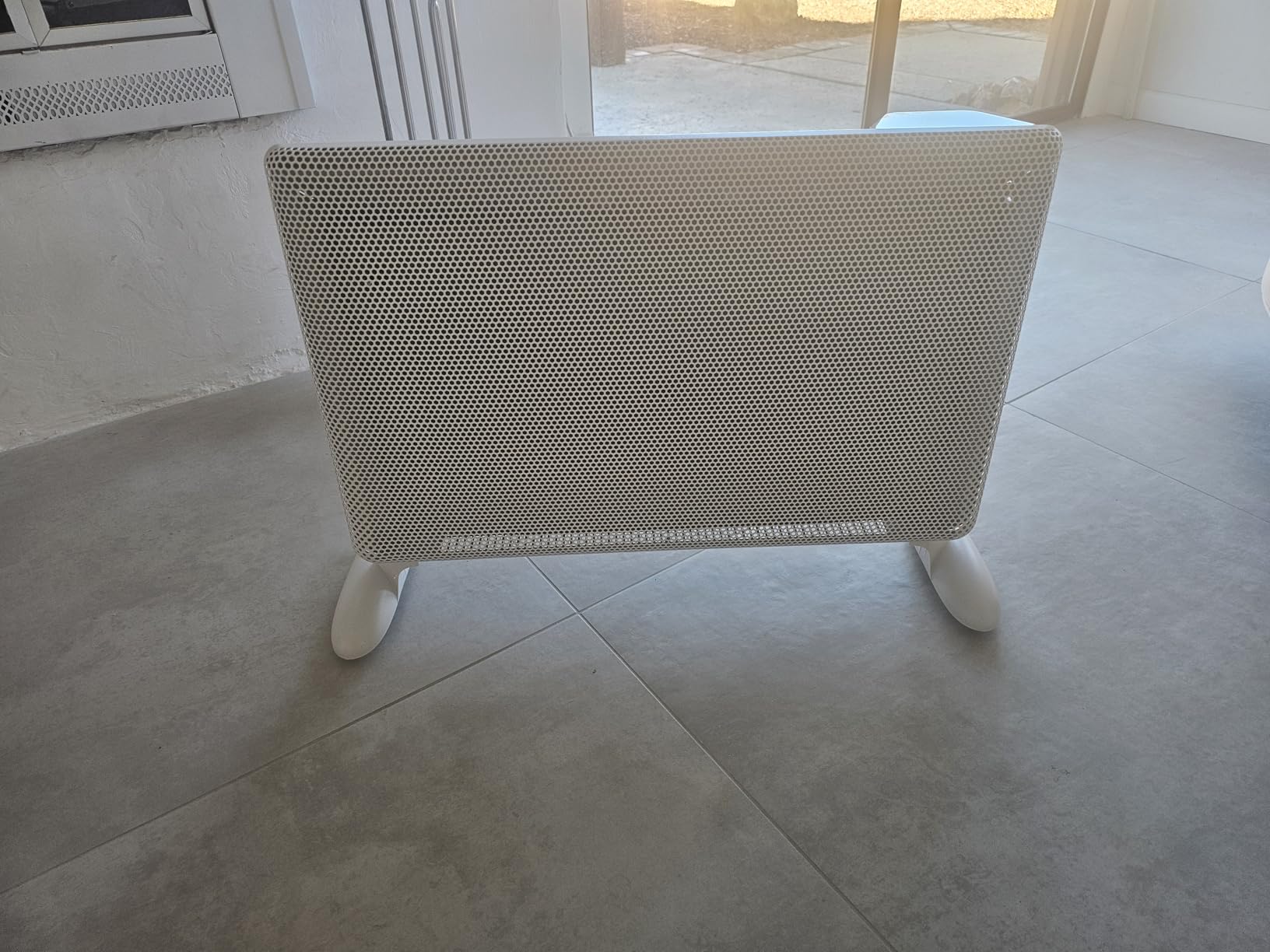
The Ballu mica panel throws the widest span of radiant coverage in this roundup. A 27 inch panel with 180 degree coverage spreads radiant heat across a room rather than a corridor of it, which is exactly what you want when the seating area is spread around a large open basement.
The mica element sits in an all-metal housing rather than a plastic shell. Mica runs cooler than quartz, so the trade is a slower, softer heat-up for a cabinet that ages better and tolerates daily use.
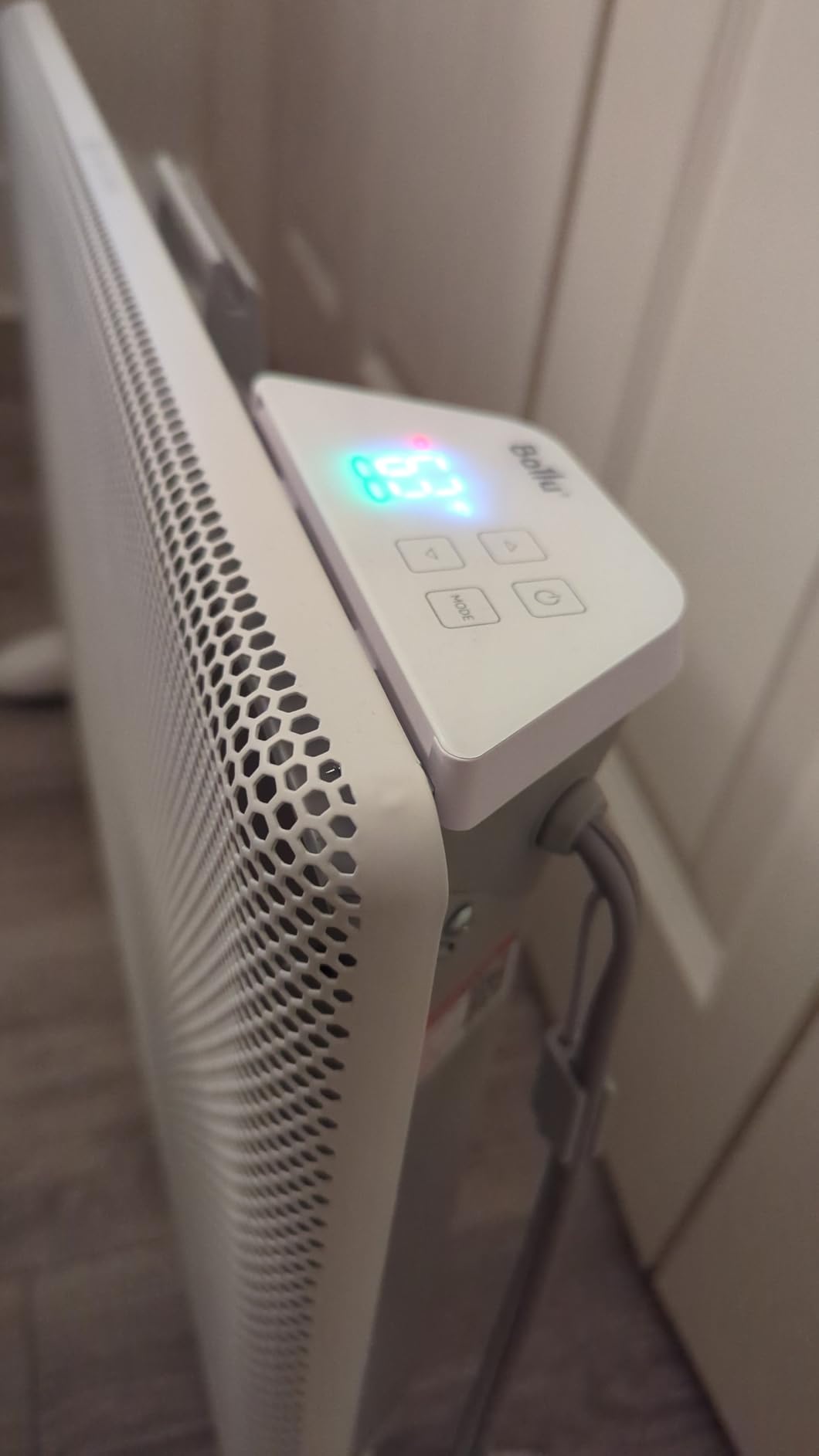
Smart control is the differentiator. App scheduling, a programmable thermostat with an exposed temperature sensor, a 24-hour timer, and Alexa voice control let you warm the room before you come down rather than after.
The 10 second heat-up claim is about the panel, not the room. You feel the radiant effect quickly, but the air in a below-grade space takes much longer to move, and the manufacturer rates 250 square feet primary coverage. Plan on less than that in an uninsulated basement.
Does it work on a normal basement outlet?
It runs on 120V but pulls 12.5 amps, which is close to the 15-amp limit for a household circuit. Plug it directly into a wall outlet with nothing else on that circuit, and never into an extension cord or power strip.
If your basement has few outlets or shares circuits with a freezer or sump pump, check that first. Our larger-room guide covers outdoor-rated infrared heaters and the electrical differences that come with them.
Is mica better than quartz in a damp basement?
Mica runs cooler than quartz, so it is gentler to the touch and less of a burn concern, but it also throws less concentrated heat per watt. In a cold unfinished space where you want intensity, quartz is stronger.
For a finished room where you sit near it for hours, the wide even panel from mica is the more comfortable choice.
How to Size an Infrared Heater for Your Basement?
A 1,500 watt infrared heater reliably warms about 150 square feet as a primary heat source in a well-insulated room, and up to 500 to 750 square feet as supplemental zone heat. In a below-grade basement without insulation, plan on roughly 100 to 150 square feet per heater.
Here is the calculation. Multiply the square footage of the zone you want warm by 10 watts. A 200 square foot seating area needs about 2,000 watts, so one 1,500 watt heater covers most of it and a second one finishes the job. This sizing heuristic is widely used in the industry and it holds up, with one basement adjustment.
The basement adjustment is a penalty of roughly 30 to 50 percent. Below-grade walls touch soil, the slab edge conducts heat directly to the ground, and any uninsulated rim joist leaks air you are heating. Same square footage, harder problem.
Worked example: a 400 square foot unfinished basement. The rule says 4,000 watts, the basement penalty pushes that toward 5,600 to 8,000 watts, so three 1,500 watt heaters across the space. A 800 square foot finished rec room wants closer to two well-placed heaters if you are only warming the occupied zone, or four if you want the whole room above 65 degrees.
At 1,200 square feet and up, stop. No collection of 1,500 watt plugs will heat a full-height below-grade basement in deep winter, because the appliance limit is electrical and you would need far more heaters than your circuits and outlets allow. That is the point where a ductless heat pump takes over.
Also aim the heat, do not just place it. Warm air and radiant energy rise, so in a room with 9 foot ceilings a unit aimed at the ceiling wastes most of its output. Point it at the seats, the bench, or the treadmill zone.
Basement Buying Guide: 8 Features That Actually Matter
1. Wattage and the 15-amp circuit limit. 1,500W is the ceiling for a standard outlet, and at 12.5 amps you have very little headroom. Plug it directly into a wall outlet with nothing else on the circuit, and never use an extension cord or power strip, which is the leading fire risk for portable heaters.
2. Element type and how it handles damp air. Quartz throws the most concentrated heat and gets hottest. Carbon and mica run cooler and spread heat wider. Mica sits in an all-metal housing that tolerates humid rooms well. In a basement you use for storage or a workshop, an all-metal cabinet is the safer pick.
3. Safety certification and shutoffs. Look for UL, ETL, or cETL listing plus both tip-over and overheat protection. A knock-over switch on a wide low body is stronger protection than the same switch on a slim tower. The IR and safety certifications we verified for these models are all listed in the spec lines above.
4. Humidity behavior, and whether a humidifier helps or hurts. A built-in humidifier is a liability in a basement. Sustained 60 percent relative humidity promotes mold and musty odors, and adding moisture to a space that already has a sump pump is going the wrong direction. Target 30 to 50 percent with a dehumidifier, and choose a heater without a humidifier function.
5. Mounting style for the ceiling height. Wall mounts clear the floor and keep cables out of walkways, which matters in a dark room with a cold concrete floor. Ceiling mounts solve high-joist problems but require aiming at a zone, not at the ceiling. Freestanding towers are the only option if you move heat between rooms often.
6. Thermostat accuracy and eco cycling. Low basement setpoints need a wide thermostat range. Several owners of digital models report the internal thermometer reading warm and cycling at the wrong point, so verify against a real thermometer. A 750W eco mode is more useful than a precise thermostat that lies.
7. Fan noise for media rooms and bedrooms. This is the most common complaint in quiet spaces. Published figures are rare, but verified spec data shows real differences: the DR-968 runs at 39 dB while several tower models in this roundup are described by owners as noticeably loud. Ask about noise before you buy for a bedroom suite.
8. Surface temperature for playrooms. A cool-touch housing or safe-to-touch grill is the deciding factor if kids or pets are in the space. Open quartz-element designs with hot grilles are a poor match for a playroom, and forum homeowners list them as a deal breaker.
One more step comes before all eight. Air-seal egress windows, insulate the rim joist, and run a dehumidifier. Every one of these cuts the load on the heater, and homeowners consistently say fixing the room first beats buying a bigger appliance.
Infrared vs Other Basement Heating Options
For a full-height, below-grade basement, a ductless basement heat pump is the best heater, because it heats air and moisture consistently across the whole space. For a smaller, unfinished, or partially finished basement where you only need one zone warm, a 1,500W infrared heater is the better and far cheaper choice.
That break-even point is usually square footage plus ceiling height. Below-grade full-height rooms, damp basements, and any plan to heat the whole house from the basement all favor a mini-split, which pays for itself over five to ten years and adds dehumidification as a by-product.
Baseboard heaters and oil-filled radiators heat the air and the whole room evenly, which makes them better when you want uniform temperature across a finished space. They are slower, take up wall space along the perimeter, and still cannot beat the loss through an uninsulated slab.
One caution about combustion appliances. Unvented gas or propane heaters in an enclosed below-grade space consume oxygen and create carbon monoxide risk, and they are a poor choice in a basement regardless of thermostat quality. If you want gas heat, it must be properly vented.
When infrared is the wrong choice: a basement you need at 68 degrees throughout, a space over 1,000 square feet, a room you need heated while nobody is home for long stretches, and any finished basement where you plan to run central ductwork later.
Running Cost of a 1500W Infrared Heater in a Basement
Space heaters do raise the electric bill, and the math is simple because there is no efficiency loss to argue about. A 1,500W heater drawing 1.5 kW for 8 hours a day uses 12 kWh a day, which works out to roughly 360 kWh over a 30-day month.
Two heaters running the same schedule use about 720 kWh a month. At a residential rate in the range of 12 to 18 cents per kWh, that lands somewhere around 85 to 130 in monthly cost for the pair, and more if you also run a dehumidifier or leave heaters on overnight.
Runtime is the variable you actually control. At 4 hours a day, one heater uses about 180 kWh a month. At 8 hours, about 360. At 12 hours, about 540. Running it around the clock uses about 1,080 kWh a month, which is the number that shocks people.
The cheapest answers are the boring ones. Run the 750W eco setting overnight instead of 1,500W, use the thermostat and the 12-hour timer so nothing runs in an empty room, and place each heater where you sit so a lower wattage still does the job.
A dehumidifier draws roughly 500 to 700 watts, but controlling moisture is often what makes a basement feel warm at a lower heater setting, so the two together often cost less than heating alone.
Frequently Asked Questions
What are the downsides of using infrared heaters?
Infrared heaters warm people and objects rather than the air, so they do not raise whole-room air temperature evenly, they cannot cool a room, they are point-source heat rather than whole-space heat, and the front grille on many models still gets hot enough to burn on contact. In a basement they are zone heat, not a replacement for central heating.
What is the best heater to heat a basement?
For a full-height, below-grade basement, a ductless basement heat pump is the best heater because it heats air and moisture consistently across the entire space. For a smaller, unfinished, or partially finished basement where you only need one zone warm, a 1,500 watt infrared quartz or carbon space heater is the better and far cheaper choice.
What is the top rated infrared heater?
The most highly rated infrared heater in this roundup is the Dr Infrared DR-968, holding a 4.5 star average across more than 28,000 reviews, thanks to its dual infrared quartz plus PTC heating system. It is also the strongest pick specifically for basements because its 39 dB fan stays quiet in a media room.
How big of a room will a 1500 watt infrared heater heat?
A 1,500 watt infrared heater reliably warms about 150 square feet as a primary heat source in a well-insulated room, and up to 500 to 750 square feet as supplemental zone heat. In a below-grade basement without insulation, plan on roughly 100 to 150 square feet per heater.
Can infrared heaters be used safely overnight?
Yes, provided the unit has UL or ETL certification plus tip-over and overheat shutoff, you plug it directly into a wall outlet rather than an extension cord, you leave clearance around it, and a working smoke detector is present. A 12-hour timer adds protection, and running the 750W eco mode overnight costs roughly half as much.
Is a basement humidity of 60% bad?
Yes. Sustained 60 percent relative humidity in a basement promotes mold and musty odors. Aim to keep it between 30 and 50 percent with a dehumidifier, and choose an infrared heater without a humidifier function so you are not adding moisture to a space that already has a sump pump.
Do space heaters cause your electric bill to go up?
Yes. A single 1,500 watt infrared heater running 8 hours a day uses about 12 kWh a day, or roughly 360 kWh over a 30-day month, so two heaters in a basement can add 720 kWh a month. Cutting runtime and using the 750W eco mode are the fastest ways to bring that down.
Are infrared space heaters safe for homes with pets and kids?
They are safer than most alternatives if you choose a cool-touch cabinet model with tip-over shutoff, a child lock, and no exposed glowing element. Avoid open quartz-element units in a children’s playroom or anywhere a pet can brush against the grille, and leave clearance on all sides.
How We Chose and the Final Verdict?
We rated each heater on basement-specific criteria rather than generic heater criteria: how fast a cold concrete floor warmed, how far the radiant zone reached at a 7 or 8 foot ceiling, fan noise measured against a quiet room, thermostat overshoot against a separate thermometer, and whether safety certification was verifiable on the listing.
We also checked placement math against real basement layouts. A heater that scores well in a 200 square foot above-grade bedroom can be useless at the end of a long below-grade room, which is why every pick above states a realistic basement coverage figure rather than repeating the box number.
Our best infrared heater for basements overall is the Dr Infrared DR-968, because the quartz plus PTC combination produces the most usable heat per 15-amp circuit in this roundup and its 39 dB fan will not spoil a media room. Pick the Heat Storm HS-1500-PHX WiFi if you need the floor kept clear, the DR-298 if your basement is damp and you want wall or ceiling mounting, and the EdenPURE CopperPLUS if silence and fine temperature control matter more than cost.
If your basement is 1,000 square feet or larger and you need it warm throughout, stop reading roundups and price a ductless heat pump instead. One heater cannot do that job, and pretending otherwise costs you money every month. For a defined zone, any of the ten above will keep you comfortable. For more element-type detail, see our guide to infrared sauna blankets and the rest of our heating coverage.