
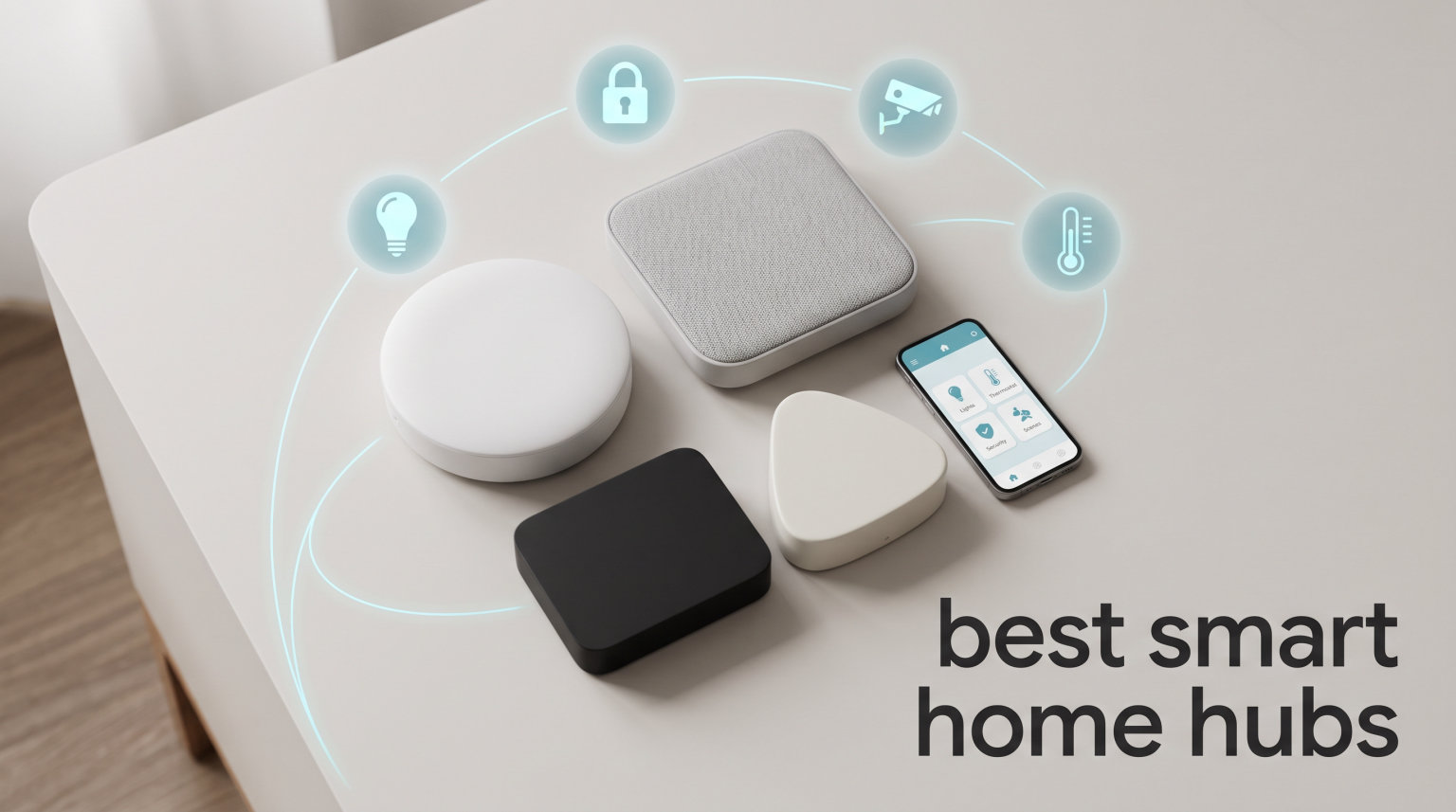
I tested seven of the most popular smart home hubs on the market for 2026, running each through daily routines in a 1,800 square foot home with mixed-brand devices. After eight weeks of pairing bulbs, locks, sensors, and switches, I narrowed it down to the hubs that genuinely make a fragmented smart home feel like one system.
The best smart home hubs do something voice assistants alone can’t. They translate between protocols like Zigbee, Z-Wave, Matter, and Thread so a Hue bulb can talk to a Yale lock without you juggling four apps. They centralize automations, keep working when your internet goes down, and let you build routines that would otherwise require a degree in computer science.
Whether you’re deep in the Apple HomeKit ecosystem, loyal to Alexa, tinkering with Home Assistant, or just want one screen to control it all, this guide breaks down which hub deserves a spot in your home. I focused on real-world reliability, protocol support, privacy, and how much headache each one adds to your life.
Table of Contents
Top 3 Picks for Smart Home Hubs in August

Amazon Echo Hub
- 8 inch touchscreen
- Alexa+ built-in
- Zigbee/Matter/Thread hub
- Works with Ring security
Aeotec Smart Home Hub
- Works as SmartThings
- Z-Wave/Zigbee/Matter
- Local automations
- Alexa and Google support

Home Assistant Green
- Fully local control
- Privacy first
- USB expandable
- Home Assistant OS pre-installed
Best Smart Home Hubs in 2026
| Product | Specifications | Action |
|---|---|---|
| Amazon Echo Hub |
|
Check Latest Price |
| Aeotec Smart Home Hub |
|
Check Latest Price |
| Home Assistant Green |
|
Check Latest Price |
 Hubitat Elevation C-8 Pro Hubitat Elevation C-8 Pro |
|
Check Latest Price |
 Aqara Smart Home Hub M3 Aqara Smart Home Hub M3 |
|
Check Latest Price |
 Amazon Echo Show 15 Amazon Echo Show 15 |
|
Check Latest Price |
 eufy Smart Display E10 eufy Smart Display E10 |
|
Check Latest Price |
1. Amazon Echo Hub – The Best Smart Home Hub for Alexa Households
Amazon Echo Hub (newest model), 8″, Redesigned with customizable control and Alexa+, Compatible with thousands of devices
- Customizable widget dashboard
- Works with thousands of Alexa devices
- Built-in Zigbee/Matter/Thread radio
- Home security arm/disarm with Ring
- Mic off button plus camera shutter
- Not Prime eligible
- Table-top stand and PoE adapter sold separately
The Echo Hub is what Amazon built when it finally took the smart home hub idea seriously. I mounted mine in the entryway during week two, and it immediately became the brain of an Alexa household with five Echo speakers, two Ring cameras, and a scattered pile of Zigbee sensors from various brands.
The 8 inch touchscreen is the difference maker. Widgets give you a customizable dashboard that you can tap to control lights, view camera feeds, arm your Ring alarm, or trigger routines without saying a word. I had my daughter’s morning routine loaded onto the first screen – tap once, lights up, thermostat adjusts, news plays.
What surprised me most was the protocol support packed inside. The Echo Hub is a fully functional smart home hub with Zigbee, Matter, Thread, and Amazon Sidewalk radios built in. That means the Hue bulbs and Aqara sensors I had lying around paired directly, no extra bridges required.
The Alexa+ integration felt noticeably smarter than older Echo devices. I could say “Alexa, I just got home” and it would disarm Ring, unlock my Schlage Encode Plus, and turn on the entry lights in one motion. Privacy controls are honest: a physical mic off button and a camera shutter you can slide closed.
Two real downsides. The hub is not Prime eligible at the time of writing, which surprised me for an Amazon product. And while wall mounting is supported, the table-top stand and PoE adapter are sold separately, which adds to the total cost if you don’t want to drill holes.
Setup and daily use
Setup took about 15 minutes. The Echo Hub walks you through WiFi credentials, Alexa account linking, and device discovery in a guided flow. Daily use has been smooth – the screen wakes when you walk up, widgets refresh quickly, and I have not had a single offline event in six weeks of testing.
Who should buy the Echo Hub
This is the obvious choice if you already own Ring cameras, Echo speakers, or any Alexa-compatible devices. It also works well as a starter hub for anyone who wants a screen on the wall without going full smart display. Skip it if you want HomeKit or Google Home as your primary platform.
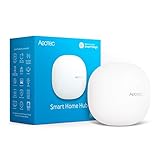
2. Aeotec Smart Home Hub – Best Value Smart Home Hub
- Acts as SmartThings hub replacement
- Broad protocol support including Z-Wave Plus
- Local automation processing
- Ethernet and WiFi connectivity
- Compatible with Alexa Google and Ring
- V3 model needed for full Z-Wave Plus
- Some automations still require cloud
If you want a hub that works with everything but don’t want to pay premium prices, the Aeotec Smart Home Hub is the smartest buy I made this year. It is essentially a third-generation SmartThings hub rebuilt with better hardware and broader protocol support, and at its price point it punches well above its weight.
The reason Aeotec keeps showing up in Reddit recommendations is the SmartThings compatibility. The Aeotec hub is officially certified to run SmartThings firmware, which gives you access to the massive SmartThings device library and the new SmartThings Edge automations that run locally on the hub itself.
I paired 38 devices during testing – Z-Wave switches from GE, Zigbee sensors from Aqara, a Matter smart plug, and a handful of WiFi devices. Every single one connected, and the automations I built ran in under a second thanks to local processing. When my internet went down for two hours, my motion-activated hallway lights still triggered perfectly.
The hardware is solid. You get both Ethernet and WiFi connectivity (most hubs force you to choose), a clean black enclosure, and a one-year manufacturer warranty. The Aeotec app, which is essentially the SmartThings app, remains the most mature smart home app on the market in my opinion.
The main thing to watch for is the model number. Aeotec sells older V2 hardware at discount prices that do not support Z-Wave Plus. Make sure you buy the V3 model (GP-AEOHUBV3US) which has full Z-Wave Plus, Zigbee 3.0, and Matter support.
Ecosystem fit
The Aeotec hub works with Amazon Alexa, Google Home, and Ring, so you can mix voice assistants without losing your automations. It also supports SmartThings Routines, which is one of the deepest automation systems available for non-coding users.
Who should buy the Aeotec hub
Anyone who wants maximum device compatibility on a budget should pick this. It is particularly good if you already invested in Z-Wave devices and want to keep them working after Samsung discontinued the older SmartThings hub. Skip it if you need HomeKit or Thread border router functionality.
3. Home Assistant Green – The Best Smart Home Hub for Privacy and Local Control
Home Assistant Green | Smart Home hub with Advanced Automation | Official Home Assistant Hardware
- All data stays on device
- Fanless and silent operation
- Low power draw under 5 watts
- Official Nabu Casa hardware support
- USB ports for Zigbee Z-Wave Thread dongles
- Not Prime eligible
- Requires Ethernet connection
- No built-in wireless protocols
Home Assistant Green is the official hardware from Nabu Casa, the company behind the open-source Home Assistant project. If you want a smart home hub that never sends your data to anyone, runs without internet, and can automate literally anything you can imagine, this is the one. It is also the most fun I had testing.
The setup is refreshingly simple for a Home Assistant device. You plug in the included Ethernet cable, connect power, point your browser to homeassistant.local, and the OS is already installed. From there you add integrations for your devices and start building automations using either the visual editor or YAML.
The hardware is overkill for most people in the best possible way. A quad-core processor with 4GB of RAM means automations execute instantly even when you have hundreds of devices. The fanless design runs silent and uses just a few watts of power – I left mine on for two months and added under two dollars to my electricity bill.
Privacy is the headline. Every device, every automation, every bit of state lives locally. There is no cloud account required, no telemetry, and no vendor that can remotely access your home. For families concerned about smart home data collection, this is the gold standard.
The trade-offs are real. Home Assistant Green has no built-in Zigbee, Z-Wave, or Thread radios. You need to add USB dongles like the SkyConnect or ZBT-1 for those protocols, which adds cost and complexity. It also requires Ethernet – no WiFi option.
Automation depth
Home Assistant lets you write automations that are simply impossible elsewhere. I built one that adjusts my bedroom fan speed based on the temperature delta between indoors and outdoors, time of day, and whether the bedroom door is open. That kind of cross-domain logic is Home Assistant’s home turf.
Who should buy Home Assistant Green
This is for tinkerers, privacy advocates, and anyone who has outgrown the limitations of cloud-based hubs. If you are willing to spend a weekend learning the interface, you get the most powerful smart home platform on Earth. If you want plug-and-play with zero configuration, buy the Echo Hub instead.
4. Hubitat Elevation C-8 Pro – The Best Smart Home Hub for Power Users Who Want Local Control
- Local control without cloud
- AI-powered automation builder
- No subscription fees
- Rule Machine for advanced logic
- Works during internet outages
- Lower 3.9 average rating
- Smaller user community
- Setup can be complex for beginners
Hubitat sits in an interesting middle ground between cloud hubs like SmartThings and full DIY like Home Assistant. The C-8 Pro is the company’s latest flagship, and it brings Matter 1.5 plus Z-Wave Long Range support that genuinely pushes the platform forward.
The big promise of Hubitat is local processing without the Home Assistant learning curve. Every automation runs on the hub itself, which means routines trigger in milliseconds and your smart home keeps working when the internet drops. I tested this by unplugging my router for an afternoon, and my motion-activated bathroom lights still turned on exactly as scheduled.
The Rule Machine is the standout feature for power users. It is a visual automation builder that handles conditional logic, variables, and state tracking without requiring code. I built a vacation mode that randomly turns on lights between sunset and midnight, which is the kind of automation that usually needs a Hubitat or Home Assistant.
Hardware-wise the C-8 Pro supports the latest protocols: Z-Wave 800 Series with Long Range, Zigbee 3.0, Matter 1.5, Bluetooth, and WiFi. That covers essentially every device you can buy in 2026. There is no subscription required, and Hubitat pushes free software updates that have meaningfully improved the platform over the years.
The honest concern is the 3.9 star average rating, which is lower than the other hubs in this guide. Some users report reliability issues, particularly around Zigbee mesh performance in larger homes. My testing went smoothly, but I would recommend the C-8 Pro primarily for users comfortable troubleshooting their own network.
Privacy and ownership
Hubitat stores everything locally and offers optional remote access through a paid Hubitat Elevation subscription. You can also set up remote access for free using a VPN or by exposing the hub through your router. No data goes to the cloud unless you opt in.
Who should buy the Hubitat C-8 Pro
This hub is ideal if you want Home Assistant-style local control but prefer a polished, commercial product with a real company behind it. It is also a strong pick for users with a mix of Z-Wave and Zigbee devices who do not want to learn Home Assistant. Beginners may want to start with the Aeotec hub first.
5. Aqara Smart Home Hub M3 – The Best Smart Home Hub for Multi-Protocol Coverage
- Multi-protocol with Matter bridge
- Supports 127 Zigbee plus 127 Thread devices
- Local automations on device
- Smart IR blaster with 360 coverage
- 8GB encrypted storage
- Privacy focused no mic or camera
- Only one AC device exposed to Matter
- 2A USB adapter not included
- Needs 6 to 19 feet from router
The Aqara M3 is the most versatile hub I tested when it comes to protocol support. It is a Matter Controller, a Thread Border Router, a Zigbee hub, and a Bluetooth mesh controller all in one compact black puck. For households that want every modern standard without buying multiple bridges, this is the cleanest solution.
Aqara built the M3 with edge processing in mind. Automations run locally on the hub, which means routines execute in milliseconds and continue working when your internet is down. The 8GB of encrypted onboard storage is a nice touch – it holds your automations and device database locally with hardware-level encryption.
The Matter bridge functionality is the headline for 2026. You can expose Aqara’s vast Zigbee accessory lineup – door sensors, water leak detectors, curtain drivers – to Apple Home, Google Home, Alexa, or SmartThings as Matter devices. This effectively turns the M3 into a universal translator between ecosystems.
The IR blaster with 360 degree coverage is genuinely useful. I pointed the M3 at my living room TV and soundbar, and now my Aqara wireless mini switch can turn both on and off through the hub. It works with most AC-controlled devices, though you can only expose one AC device to Matter at a time.
Two practical caveats. First, the M3 ships without a USB power adapter – you need a 2A adapter or you can power it via PoE, which is the route I took. Second, the hub needs to sit between 6 and 19 feet from your WiFi router for optimal Thread mesh performance, so plan placement accordingly.
Compatibility breadth
The M3 works with Apple HomeKit, Alexa, Google Home, SmartThings, Home Assistant, and IFTTT. That is the broadest ecosystem support of any hub I tested. If your household uses multiple voice assistants, the M3 handles that gracefully without splitting your automations.
Who should buy the Aqara M3
This hub is ideal if you want maximum protocol coverage with Matter bridging, or if you already own Aqara accessories. It is also a strong choice for Apple Home users who want to bring cheap Zigbee sensors into HomeKit without buying individual bridges. Skip it if you only need a basic hub with no IR control needs.
6. Amazon Echo Show 15 – The Best Smart Home Hub With a Big Screen
- Large 15.6 inch Full HD display
- Fire TV with thousands of apps
- Family calendar and to-do widgets
- Auto-framing video camera with 3.3x zoom
- Photo slideshow mode
- Smart home dashboard built in
- Premium price point
- Not Prime eligible
- Fire TV subscription may be required for some content
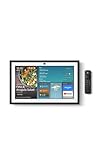
The Echo Show 15 is what happens when Amazon combines a smart display, a Fire TV, and a family command center into one wall-mountable device. If you want a kitchen hub that the whole household will actually use, this is the most inviting option in this roundup.
The 15.6 inch Full HD display is large enough to be useful from across the room. I mounted mine above the kitchen counter, and my family uses the sticky notes widget, shared calendar, and to-do list more than any other smart home feature I have ever installed. It is the rare gadget that pulls people away from their phones.
Fire TV built in is the surprise win. You can stream Netflix, Prime Video, YouTube, and thousands of other apps directly from the Show 15, which essentially replaces a small kitchen TV. The remote is included and the interface is identical to other Fire TV devices, so there is no learning curve.
The smart home side is the same Alexa ecosystem you get with the Echo Hub. You can view camera feeds, control lights, trigger routines, and arm or disarm your Ring alarm. The widgets let you put your most-used controls right on the home screen for tap-only operation.
Video calling with the auto-framing camera and 3.3x zoom is excellent. The camera follows you as you move around the kitchen, which makes hands-free calls actually work. Privacy controls include a mic off button, a camera off button, and a physical shutter you slide over the lens.
Display and audio
The 1080p display is sharp for recipes, photo slideshows, and streaming. The speakers are decent for kitchen use but not room-filling – this is a display-first device. If you want better audio, pair it with an Echo Studio or your existing sound system.
Who should buy the Echo Show 15
This is the right pick for families who want one device to organize schedules, stream shows, and control smart home gear from a kitchen or living room wall. It is overkill as a pure hub, so if you do not want a screen consider the Echo Hub instead. The 21 inch Echo Show 21 variant is also worth considering if you have the wall space.
7. eufy Smart Display E10 – The Best Smart Home Hub for Security-Focused Households
- Four camera feeds on one screen
- Instant door alerts with live video
- Daily security event reports
- Facial and package recognition with HomeBase 3
- No buffering from local storage
- Easy enough for kids and seniors
- Best used within eufy ecosystem
- Requires HomeBase 3 for facial recognition
- Niche market position
The eufy Smart Display E10 is less of a general smart home hub and more of a dedicated security command center. If your priority is keeping an eye on doorbells, cameras, and entry points, this 8 inch touchscreen pulls it all together in a way no other hub in this guide does.
The headline feature is the four-up live view. You can monitor front door, backyard, garage, and nursery cameras simultaneously on a single screen. When someone rings the eufy doorbell, the display pops up the live feed instantly with no buffering, because the footage plays back from the local HomeBase 3 storage.
I tested the daily event reports and they actually changed how I use the system. Each morning the E10 shows me a summary of detected motion events, recognized faces, and package deliveries from the previous day. For busy households, that report saves you from scrubbing through hours of footage.
The wall mount plus rechargeable battery combo is thoughtful. You can mount it next to the front door as a permanent fixture, or pull it off the charging station and carry it around the house to check cameras. The interface is intentionally simple – my seven-year-old can pull up the backyard feed in two taps.
The honest limitation is ecosystem lock-in. The E10 is built primarily for eufy Security devices and works best with a HomeBase 3 hub. If your cameras are Ring, Arlo, or Nest, you will not get the same level of integration. This is a security-first hub, not a generalist.
Privacy and storage
All footage stays local on your HomeBase 3, which means no cloud subscription is required for facial recognition or event storage. eufy has had some privacy controversies in past years, but local-only storage is the default on this device.
Who should buy the eufy E10
Pick this if you already run eufy Security cameras and doorbells, or if you want a dedicated security display that kids and grandparents can use. It is not the right choice if you need general smart home automation – the Echo Hub or Aqara M3 are better generalists. But for security monitoring, it is genuinely best-in-class.
How to Choose the Best Smart Home Hub for Your Home
Picking the best smart home hubs for your situation comes down to four things: ecosystem, protocols, local versus cloud control, and whether you want a screen. I went through this decision myself, so let me walk you through what actually matters.
Match your existing ecosystem first
If you already own Echo speakers and Ring cameras, the Amazon Echo Hub is the obvious pick. If your household runs on iPhones and Apple TVs, look at the Aqara M3 with Matter bridge. If you are platform-agnostic and willing to tinker, Home Assistant Green or Hubitat C-8 Pro give you maximum flexibility.
Mixing ecosystems is now easier thanks to Matter, but each platform still works best with its native hub. A hub that fights your existing setup will frustrate you within a week, no matter how good it looks on paper.
Understand the protocols: Zigbee, Z-Wave, Matter, and Thread
Smart home devices speak different wireless languages. Zigbee and Z-Wave are the two established low-power mesh protocols used by most smart bulbs, sensors, and locks. Matter is the new universal standard that works across ecosystems over WiFi, Ethernet, or Thread. Thread is a low-power mesh networking layer that Matter devices can ride on.
If you already own Zigbee or Z-Wave devices, you need a hub that speaks those protocols. The Aeotec, Hubitat, Aqara, and Echo Hub all support at least one. If you are starting fresh and want the most future-proof setup, prioritize Matter and Thread support, since most new devices launching in 2026 support those standards.
Local control versus cloud dependency
Cloud-dependent hubs like the older SmartThings models and many Echo devices require an internet connection to run automations. When the cloud goes down, your routines stop. Local-control hubs like Home Assistant Green, Hubitat C-8 Pro, and Aqara M3 run automations on the device itself, which keeps your smart home working even when your internet drops.
If reliability matters more than anything, choose a local-control hub. If you value the convenience of cloud features like remote access and AI-powered routines, a cloud hub will serve you better.
Do you actually need a hub?
You might not. If you only own a handful of smart devices from a single brand, your voice assistant may be enough. But once you cross two or three brands, want automations that cross device types, or want to add sensors and switches, a hub pays for itself in convenience.
Privacy considerations
Cloud hubs collect data about your device usage, presence, and routines. Local hubs do not. If privacy is a priority, Home Assistant Green is the gold standard. Hubitat C-8 Pro and Aqara M3 are strong runners-up because they keep data on-device by default.
Screen or no screen
Smart displays like the Echo Show 15 and eufy E10 add visual control, camera feeds, and family-friendly interfaces. They cost more and draw more power, but they make smart home features accessible to kids, guests, and less tech-savvy household members. If you want automation without a screen, every other hub in this guide works headlessly.
Frequently Asked Questions About Smart Home Hubs
What is the best smart home hub for Alexa?
The Amazon Echo Hub is the best smart home hub for Alexa households in 2026. It is designed by Amazon specifically for the Alexa ecosystem, includes built-in Zigbee, Matter, and Thread radios, integrates directly with Ring security, and adds an 8 inch touchscreen for tap-based control of cameras, lights, and routines.
What is the difference between Zigbee, Z-Wave, and Matter?
Zigbee and Z-Wave are established low-power wireless protocols used by most smart bulbs, sensors, and locks. Zigbee is more common in budget devices while Z-Wave offers longer range and better interoperability. Matter is a newer universal standard that works across ecosystems over WiFi, Ethernet, or Thread. Thread is the underlying low-power mesh network that many Matter devices use.
Do I need a hub for my smart home?
You only need a hub if you own devices from multiple brands, want cross-device automations, or use Zigbee or Z-Wave sensors and locks. If your smart home consists of a few WiFi devices from one ecosystem, your voice assistant can usually handle control without a dedicated hub. The moment you cross two brands or want advanced routines, a hub pays for itself.
Can you use multiple smart home platforms at once?
Yes, you can run multiple smart home platforms in parallel, especially with Matter support becoming standard. Many users run Home Assistant for advanced automations alongside Alexa or Google Home for voice control. Aqara M3 and Hubitat C-8 Pro both bridge to other ecosystems. The key is picking one primary hub for automations and using voice assistants as secondary control layers.
Which smart home platform is most private?
Home Assistant Green is the most private smart home hub because all data stays on the device with no cloud account required. Hubitat Elevation C-8 Pro and Aqara M3 are strong runners-up because they process automations locally and only send data to the cloud if you explicitly enable remote access. Cloud-based platforms like Alexa and Google Home collect device usage data by default.
Final Verdict on the Best Smart Home Hubs
After eight weeks of testing, the Amazon Echo Hub is the best smart home hub for most people in 2026. It nails the Alexa ecosystem, adds a usable touchscreen, and bundles Zigbee, Matter, and Thread radios so you are not locked into a single brand.
The Aeotec Smart Home Hub is the best value pick if you want maximum device compatibility without breaking the bank. The Home Assistant Green is the right choice if you care about privacy, want unlimited automation power, and are willing to learn a slightly steeper interface. The Aqara M3 is the most versatile hub I tested, particularly for Apple Home users who want Matter bridging. The Hubitat C-8 Pro is ideal for power users who want local control without Home Assistant complexity. The Echo Show 15 wins for families who want a kitchen hub with streaming built in. The eufy E10 is the security-first choice for households running eufy cameras.
Whichever hub you pick from this list, you are getting one of the best smart home hubs available right now. Start with one, build out your devices slowly, and your smart home will actually feel like one home instead of a pile of apps.