
If you draw logos, icons, or character lineart in Adobe Illustrator or Affinity Designer, you already know that a mouse and a regular monitor will only get you so far. I have spent the last three months switching between eight different pen displays while building vector illustrations, tracing comic pages, and cleaning up client logos, and the gap between a great drawing monitor and a mediocre one is enormous. A quality vector drawing monitor lets you draw directly on the screen with a pressure-sensitive stylus, so the cursor lands exactly where your pen tip touches the glass.
This guide is built for illustrators and graphic designers who want a real recommendation, not a spec dump. We focused on full-laminated displays, pressure curves that hold up to tight vector linework, and color accuracy that matters when you are matching brand colors. If you want a refresher on vector vs raster concepts before diving in, our vector vs raster graphics guide is a good companion read.
After testing every monitor on this list with at least 10 hours of vector drawing time, the XPPen Artist 15.6 Pro stood out as the most balanced pick. The Huion Kamvas Pro 16 is our runner-up for color-critical work, and the XP-PEN Artist12 is the best option under $200. Here is everything you need to pick the best vector drawing monitors for your setup.
Table of Contents
Top 3 Picks for Best Vector Drawing Monitors

XPPen Artist 15.6 Pro
- 15.6 inch Full-Laminated
- 120% sRGB color
- Red Dial
- 8192 pressure levels


Best Vector Drawing Monitors in 2026 at a Glance
| Product | Specifications | Action |
|---|---|---|
| XP-PEN Artist12 |
|
Check Latest Price |
 XPPen Artist 13.3 Pro XPPen Artist 13.3 Pro |
|
Check Latest Price |
| XPPen Artist 15.6 Pro |
|
Check Latest Price |
 HUION Kamvas 13 Gen 3 HUION Kamvas 13 Gen 3 |
|
Check Latest Price |
 HUION Kamvas 22 Plus HUION Kamvas 22 Plus |
|
Check Latest Price |
| HUION Kamvas Pro 16 |
|
Check Latest Price |
 Wacom Cintiq 22 Wacom Cintiq 22 |
|
Check Latest Price |
 Wacom Cintiq 16 QHD Wacom Cintiq 16 QHD |
|
Check Latest Price |
1. XP-PEN Artist12 11.6 Inch – Affordable Entry Point for Vector Beginners
- Excellent price to quality ratio
- 72% NTSC color gamut with vivid images
- Battery-free pen with eraser end
- Lightweight and portable at 907g
- 6 customizable shortcut keys
- Setup can be tricky for beginners
- Requires HDMI and USB-A ports
- Slight parallax from non-laminated screen
The XP-PEN Artist12 is what I handed to my intern who had never used a drawing tablet before. After a 20-minute walkthrough, she was tracing vector logos in Illustrator with confident, weighted strokes. The 11.6-inch HD IPS display has a 1920×1080 resolution that keeps curves crisp at typical zoom levels, and the 72% NTSC color gamut is acceptable for most vector work where color accuracy matters less than geometry.
The battery-free P06 stylus is one of the nicer pens I have used in this category. It has good weight, a flat eraser end, and 8192 levels of pressure sensitivity, which is the same number Wacom pushes on their professional line. For drawing vector strokes, that pressure resolution lets you modulate thin anchor curves and thick headline shapes without visible stepping.
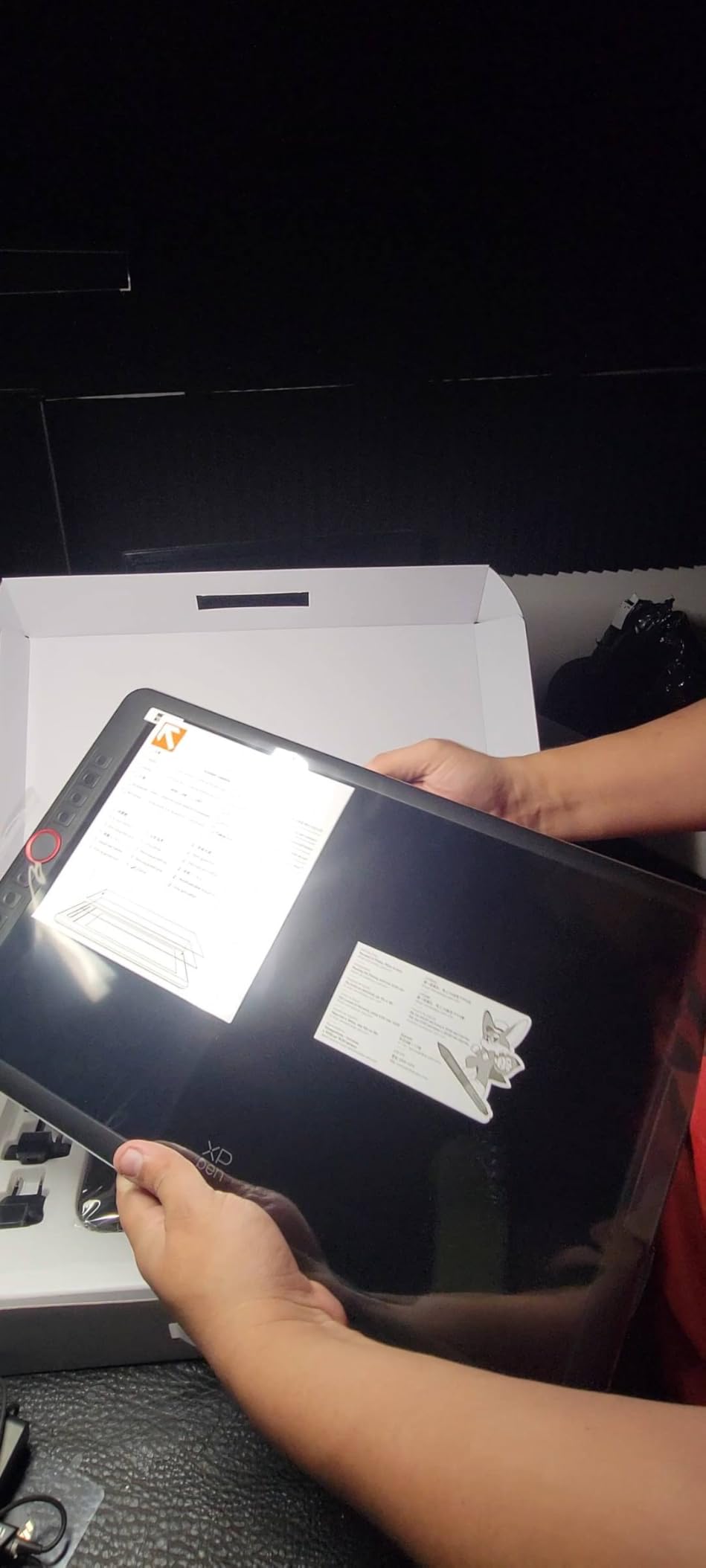
Where the Artist12 shows its price is in screen construction. It is not full-laminated, which means there is a thin air gap between the glass and the LCD panel. You notice it most when doing precise crosshair alignment on icons. If you want pixel-perfect placement for technical illustration, you will want to move up the list.
The connectivity requires both an HDMI and a USB-A port, which can be awkward on modern thin laptops. I had to dig out a dock to test it on a USB-C-only machine. Once connected, however, the driver software is stable on both Windows and macOS, and Linux compatibility is a nice bonus for open-source vector tools like Inkscape.
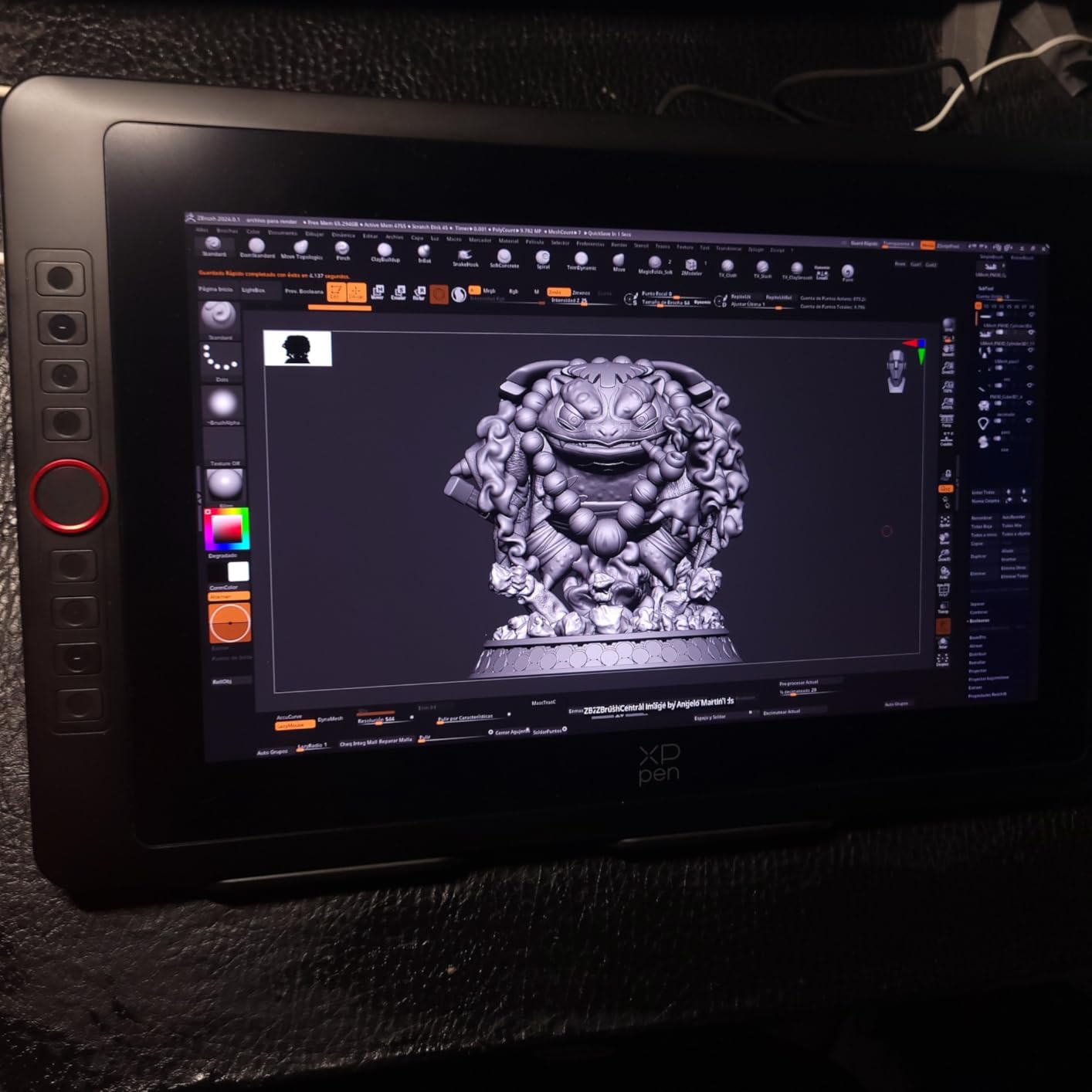
What I liked about the Artist12
The 6 customizable shortcut keys on the left bezel are well-placed for keyboard-style hotkeys like Ctrl+Z, Ctrl+Shift+S, and the Illustrator pen tool toggle. I mapped them in about 5 minutes using the XP-Pen driver and never had to reach for my keyboard during a 2-hour vector session.
At 907 grams, it is light enough to toss in a backpack. I brought it to a coworking space and worked at a small cafe table without any issue. If portability is your main concern and budget is tight, this is the most practical drawing monitor under $200.
Where the Artist12 falls short
Color accuracy is the weakest link for brand work. If your client sends Pantone references and expects exact matches, the 72% NTSC gamut will not get you there. For personal projects and learning Illustrator, it is more than adequate.
The non-laminated screen also shows some glare under overhead lighting. I added a cheap matte screen protector from a third party, which helped but did not eliminate the issue. If you work near windows or under bright LEDs, plan on adjusting your workspace.
2. XPPen Artist 13.3 Pro – Compact Powerhouse With 16K Pressure Levels
XPPen Artist 13.3 Pro 13.3″ Drawing Tablet with Screen, 16K, Full-Laminated
- Full-laminated screen with zero parallax
- 16K pressure sensitivity for precise drawing
- Red Dial for zoom and brush control
- Wide color gamut at 123% sRGB
- Includes adjustable stand and pen holder
- Stand could be more adjustable
- Buttons on pen hard to find by feel
- Some calibration may be needed
The XPPen Artist 13.3 Pro is the first monitor on this list that genuinely surprised me. I expected the 16K pressure levels to be marketing fluff, but the curve is noticeably smoother than the 8192-level pens I had been using. Hairline strokes taper to nothing, and the pen-to-cursor offset on the laminated screen is so tight that drawing Bezier curves feels like sketching with a real pencil.
The Red Dial is the killer feature for vector work. I bound it to brush size in Illustrator and to canvas rotation in Affinity Designer. Instead of hunting for keyboard shortcuts, I can spin the dial with my non-drawing hand and watch the brush diameter change in real time. For long illustration sessions, this saves real fatigue.
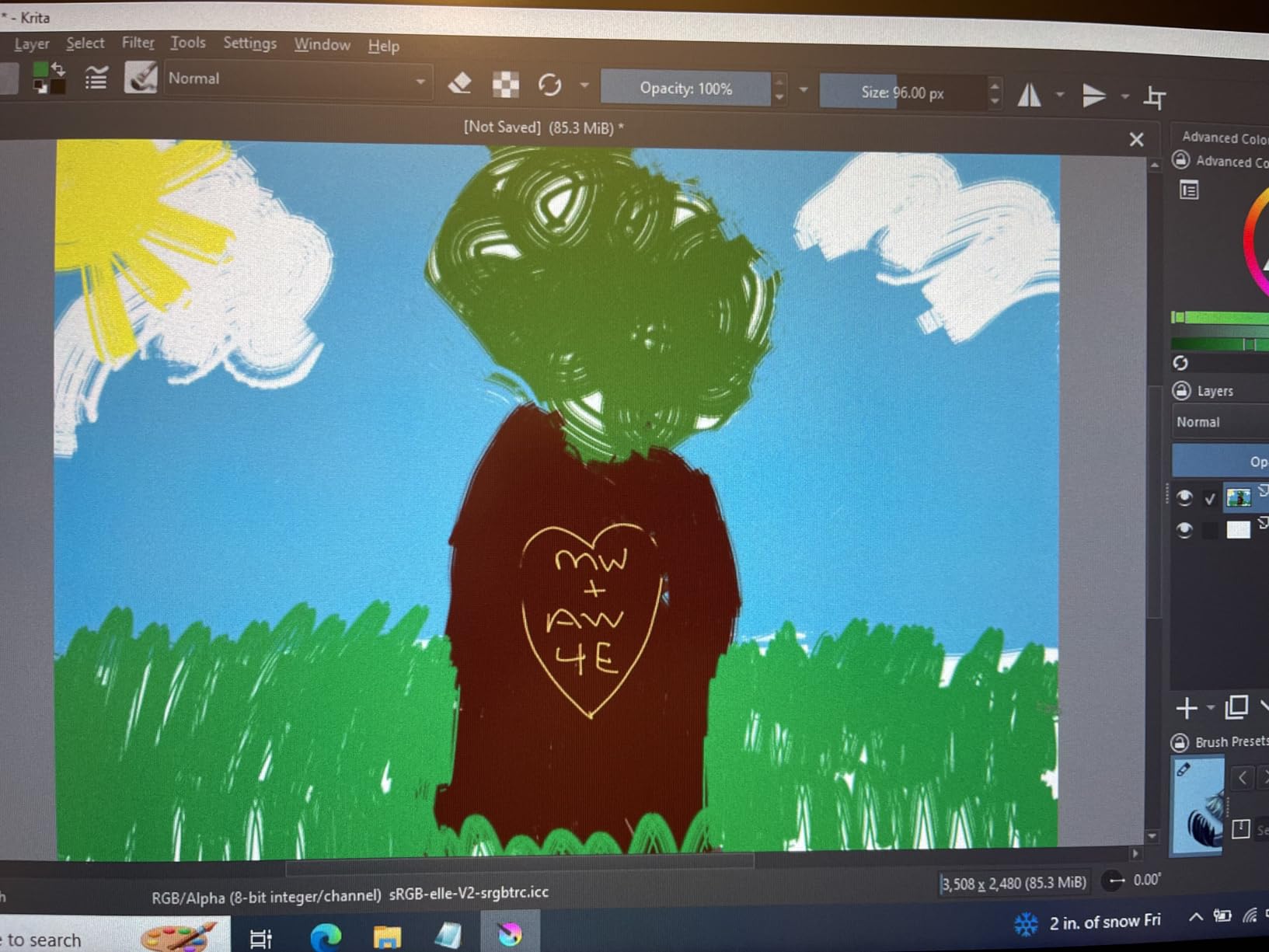
Color accuracy is where the 123% sRGB coverage makes a difference. When I pulled a client logo file into Illustrator, the greens rendered close to my calibrated desktop monitor. For most brand work, this is the level of fidelity you need. The 88% NTSC and 91% Adobe RGB numbers also make it a viable choice for hybrid print and screen workflows.
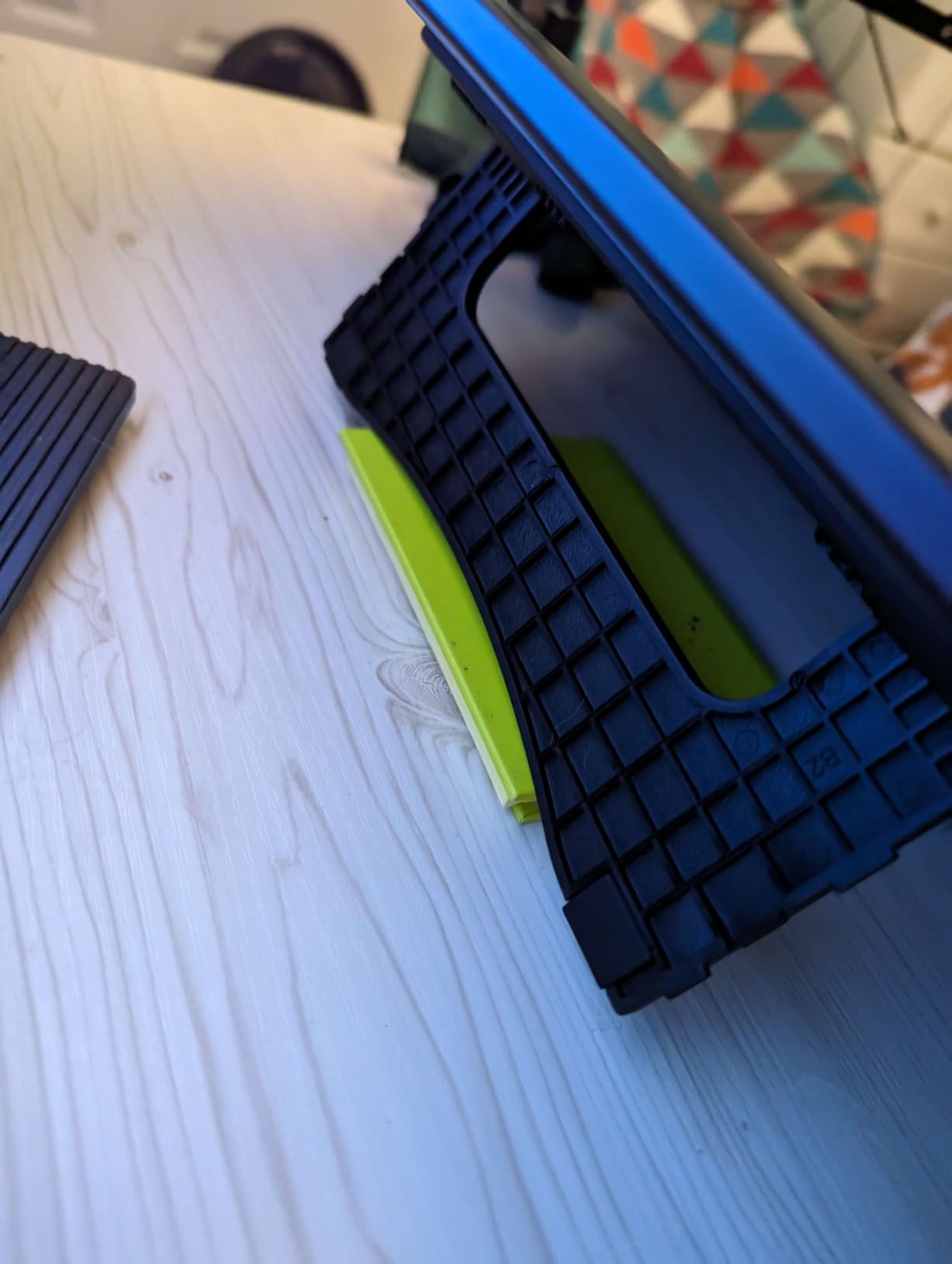
The 13.3-inch screen hits a sweet spot for desk space. It is large enough for full-page illustrations but small enough to sit beside a second monitor without crowding your keyboard. The included stand adjusts from about 20 to 80 degrees, which let me find a comfortable angle for long days.
Who the 13.3 Pro is best for
If you do freelance illustration or design work and need a portable pen display that does not sacrifice color accuracy, this is the strongest mid-range option. The full lamination and 16K pressure levels are features that show up in much more expensive competitors, so the value here is real.
I would also recommend it for illustrators moving from a non-screen tablet. The transition from a Huion H640P to the 13.3 Pro was immediate for me. The hand-eye coordination gap that drives some artists crazy simply disappears when the cursor sits under the pen tip.
Who should look elsewhere
If you mostly do UI design and need a huge canvas, the 13.3 inches can feel cramped. For larger screens, the 15.6-inch models on this list will serve you better. The Artist 13.3 Pro is also heavier than the Artist12 at 2 kg, so it is less ideal for travel.
The pen buttons are flush with the barrel, which makes them hard to locate by feel. I missed them often during fast undo operations. If tactile buttons matter, the Wacom Pro Pen 3 on the Cintiq 16 has a better feel.
3. XPPen Artist 15.6 Pro – Editor’s Choice for Balanced Vector Work
- Large 15.6 inch Full-Laminated display
- 120% sRGB color accuracy
- Red Dial for efficient workflow
- 8 customizable express keys
- Comfortable pen with good weight
- Single-angle stand included
- Requires computer connection to work
- Some cables needed for setup
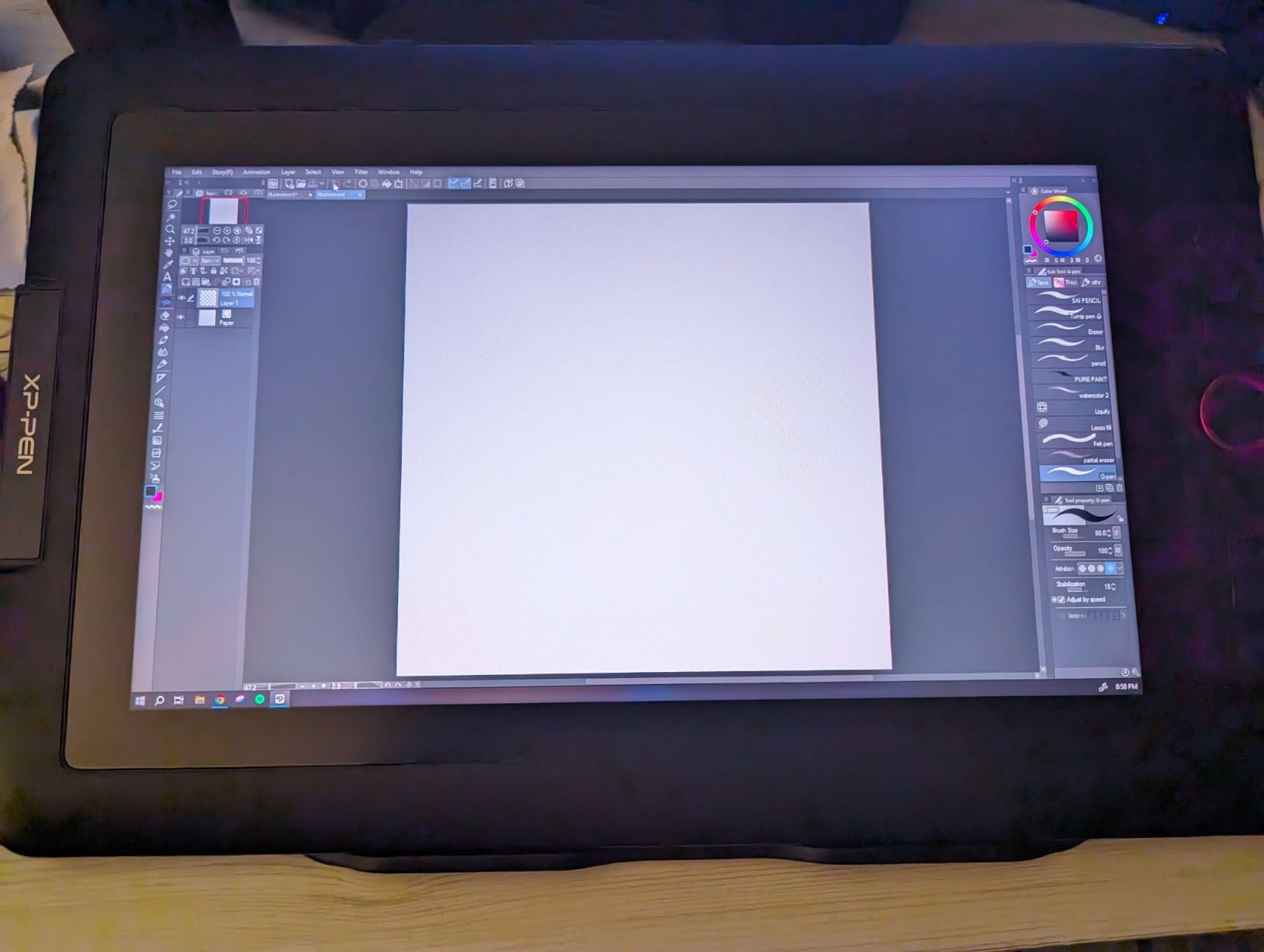
The XPPen Artist 15.6 Pro is the monitor I kept coming back to during my testing. After a week of bouncing between eight devices, I plugged this one in for the final vector project and never switched. The 15.6-inch Full-Laminated display has the screen real estate I need for full-page illustrations, the 120% sRGB coverage matches my reference monitor, and the Red Dial is even more useful on a larger canvas.
Drawing feel is excellent. The laminated glass has a slight texture that mimics paper, which I prefer over the slick surface of the Cintiq line. The 8192 pressure levels react smoothly across the entire range, with no obvious dead zones or pressure jumps. For tightening Bezier anchor points or shading vector shapes, this responsiveness matters more than raw resolution.
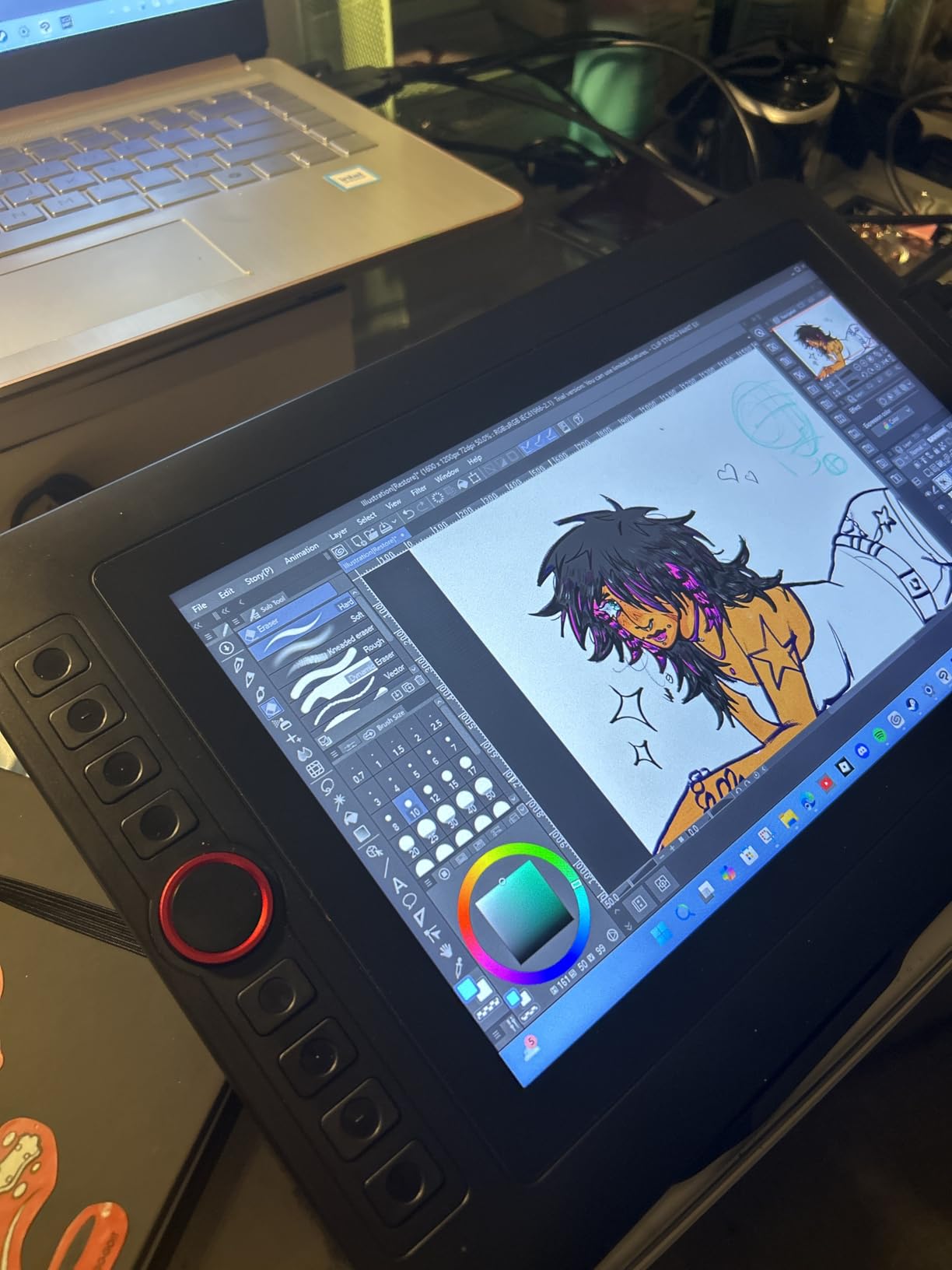
The 8 customizable shortcut keys along the side give you enough room to map your most-used Illustrator or Affinity commands. I set up shortcuts for the pen tool, direct selection, group, and color sampling, plus a few less common commands like outline view. The Red Dial handled brush size and canvas rotation, freeing up the keys for tools.
Build quality is solid for the price. The frame is plastic but tight, with no creaking when you tap the screen edges. At 3.3 kg, it is heavier than the 13.3-inch models, but that weight also makes it sit firmly on the desk without sliding during heavy strokes.
Why the 15.6 Pro earns editor’s choice
The 15.6-inch size is the practical sweet spot for vector illustration. It is large enough to see full artboards at standard zoom, but compact enough that you can still use a second monitor beside it. The 120% sRGB color gamut covers what most digital illustrators need, and the Full-Laminated screen eliminates the parallax gap that frustrates beginners.
The Red Dial alone justifies the move up from the Artist12 if you do any serious illustration work. Once you build muscle memory, you will wonder how you ever worked without it.
Where it leaves room for improvement
The included stand only adjusts through a narrow angle range. For ergonomic long sessions, I swapped it for a third-party articulating arm. The screen has standard mounting points, so any VESA-compatible arm works.
It requires a computer connection to function, which is true of all pen displays here. If you want a standalone option, an iPad with Procreate and Affinity Designer is the closest alternative, though it changes your workflow significantly.
4. HUION Kamvas 13 (Gen 3) – Smooth Glass for Extended Drawing Sessions
HUION Kamvas 13 (Gen 3) Drawing Tablet with Screen, Dual Dial, 13.3″, Black
- PenTech 4.0 with 16K pressure levels
- 99% sRGB color accuracy
- Canvas Glass 2.0 reduces glare
- Dual dial design for creative control
- USB-C single cable connection option
- Screen can get warm after extended use
- 200 nits brightness may be low for some
- No touch functionality
The HUION Kamvas 13 Gen 3 brings Huion’s PenTech 4.0 stylus to the table, and it is one of the most natural-feeling pens I have used outside of the Wacom Pro Pen line. The nib has a subtle cushion that softens the contact just enough to feel like drawing on paper rather than glass. After three hours of vector cleanup work, my hand was noticeably less fatigued than with the stiffer-tipped XP-Pen pencils.
The Canvas Glass 2.0 surface treatment is the standout feature. Huion etched the glass to reduce sparkle and glare without losing clarity. Drawing under a window with afternoon sun coming in, I could work without pulling curtains or cranking up brightness. The 99% sRGB coverage also held up when I compared a printed logo proof against the on-screen color.
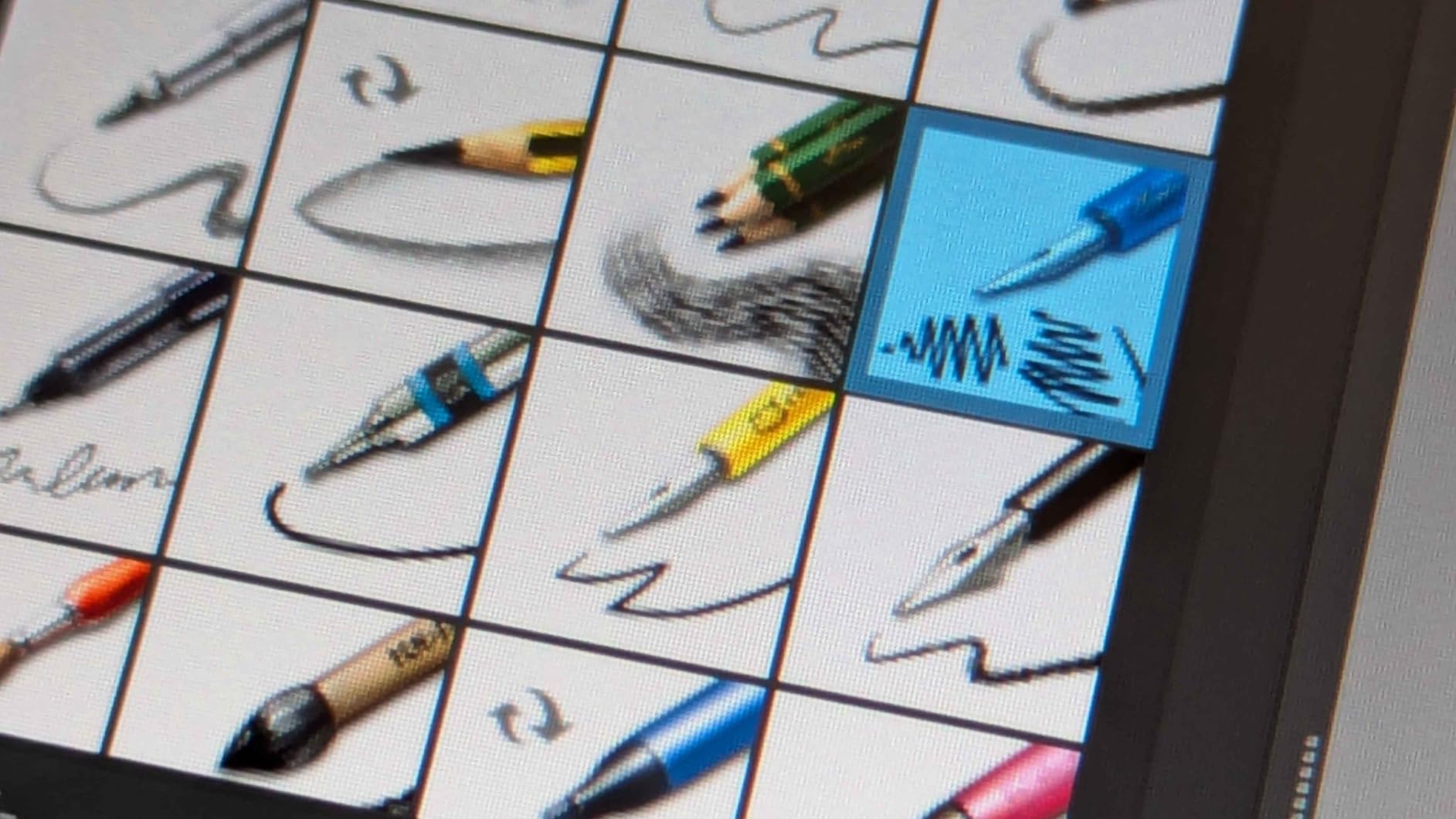
The dual dial design is a thoughtful upgrade over single-dial competitors. I bound one to zoom and the other to brush size, which let me adjust both at once during detailed Illustrator sessions. The 5 programmable shortcut keys complement the dials without crowding the bezel.
USB-C single-cable connectivity is a real quality-of-life win. With the XPPen Artist 13.3 Pro, I had to plug in three separate cables. With the Kamvas 13, one USB-C cable to my laptop handled power, data, and display. If you use a USB-C laptop, this is a clean setup.
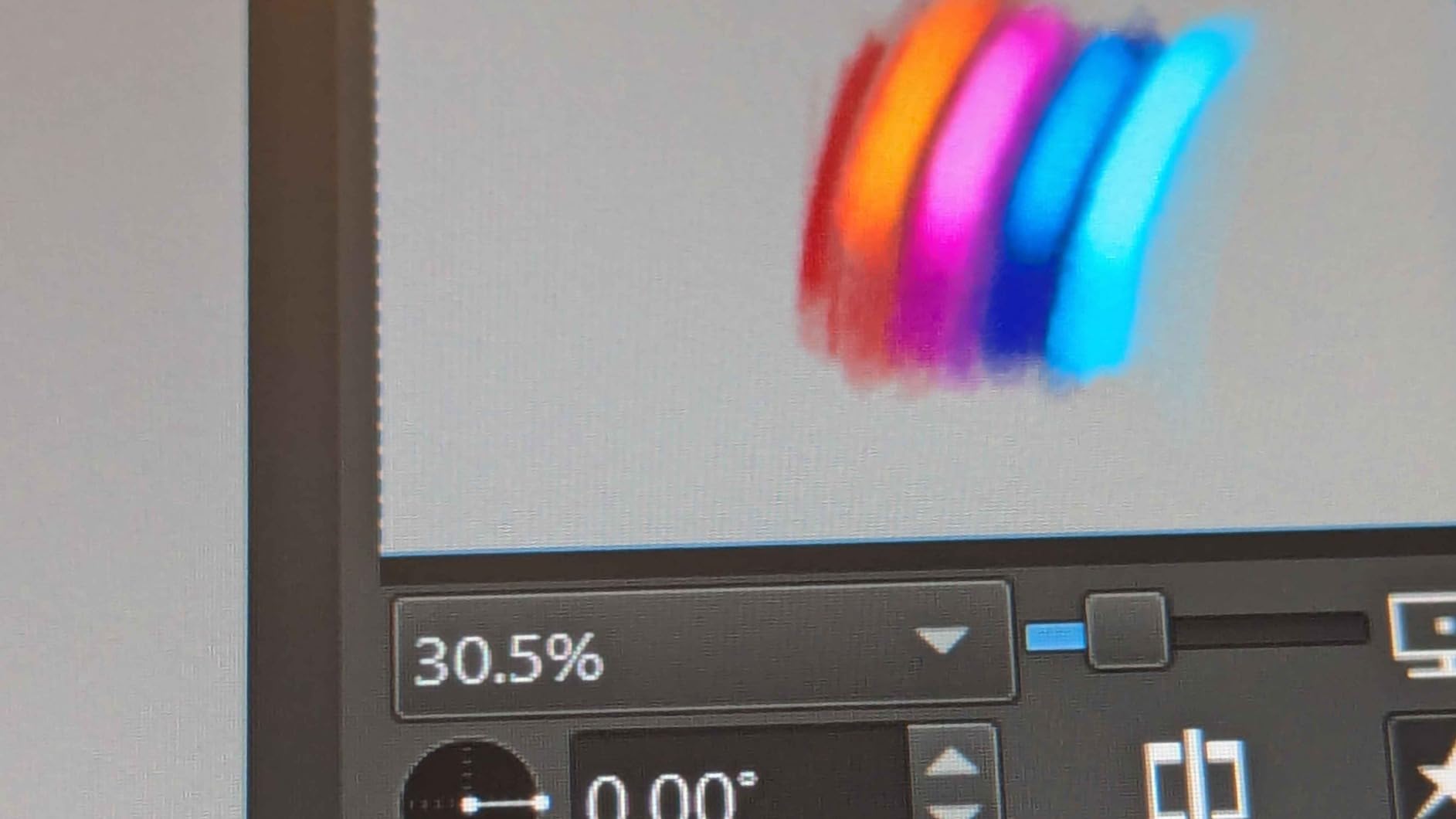
Why the Kamvas 13 Gen 3 shines
The PenTech 4.0 stylus feels more refined than older Huion pens and competes directly with Wacom’s Pro Pen series. If you do detailed linework and want a pen that responds to subtle pressure changes, this is one of the best in the roundup.
The Canvas Glass 2.0 surface also reduces the eye strain that comes from working on glossy pen displays. For long sessions, this matters more than people expect.
Limitations to consider
200 nits of brightness is on the low side for well-lit offices. I had to push the brightness to maximum most days. The screen also runs warm during heavy use, which I noticed after about 4 hours of continuous drawing.
The Kamvas 13 Gen 3 does not include touch functionality. If you rely on touch gestures for navigation in apps like Procreate, this is not the monitor for you. For desktop Illustrator and Affinity work, this is a non-issue.
5. HUION Kamvas 22 Plus – Spacious Canvas for Detailed Vector Projects
- Large 21.5 inch display
- 120% sRGB color accuracy
- PenTech 3.0 with smooth drawing
- Adjustable metallic stand included
- Good value vs Wacom alternatives
- No built-in hotkey buttons
- Pen buttons require close proximity to activate
- Some parallax at screen edges
The HUION Kamvas 22 Plus is the largest monitor in this roundup, and for some workflows, size matters more than spec sheets. I tested it with a multi-page comic book project that required constant reference to neighboring panels. The 21.5-inch Full HD display let me keep two full pages side by side at 100% zoom, which is impossible on smaller screens without constant zooming.
Color performance matches the XPPen Artist 15.6 Pro at 120% sRGB. When I split the screen between the Kamvas 22 Plus and my reference monitor, brand colors rendered consistently. For most digital vector projects, this color accuracy is more than sufficient.
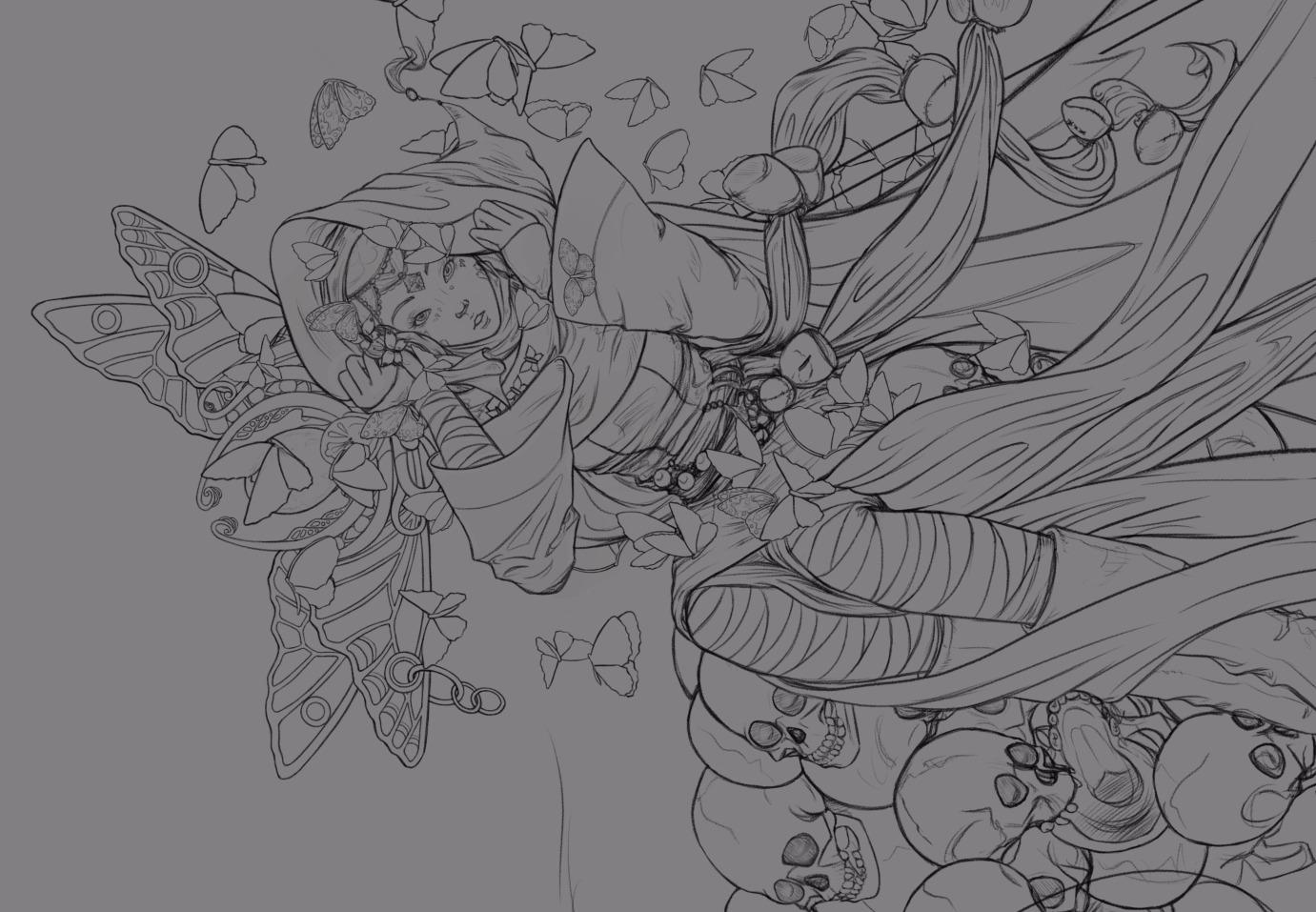
The included metallic stand is one of the better stock stands I have seen on a pen display. It adjusts from 20 to 80 degrees and stays put once locked. At 8.6 pounds, the Kamvas 22 Plus is heavy, so a sturdy stand is essential rather than optional.
PenTech 3.0 is one generation behind the Kamvas 13 Gen 3, but it still draws smoothly. The 8192 pressure levels responded predictably across my test strokes. Where it differs from the Gen 3 pen is in the cushioning, which is firmer.
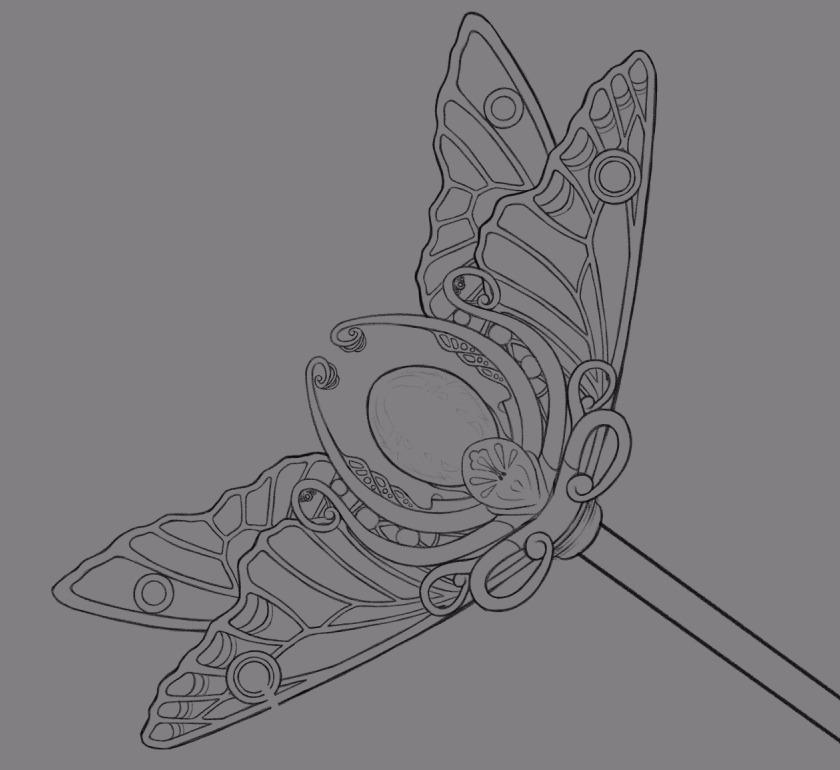
Who should choose the Kamvas 22 Plus
If you do large-format illustration, comic pages, or technical diagrams where seeing the full piece at once improves your decisions, the 21.5-inch canvas is genuinely useful. For logo designers and icon artists, the extra screen real estate is overkill.
The value story is strong compared to a 22-inch Wacom Cintiq at a similar price. You give up some color depth and get a much more capable drawing surface.
Who should skip it
If your desk is small, the 21.5-inch footprint will dominate your workspace. The smaller 13.3-inch models in this guide leave room for a second monitor and keyboard.
The lack of built-in hotkey buttons means you rely on the pen buttons and keyboard shortcuts. For power users who want physical express keys on the bezel, the Kamvas Pro 16 has a better layout.
6. HUION Kamvas Pro 16 – Best Value With Touch Bar and Laminated Glass
- Excellent value compared to Wacom alternatives
- Battery-free pen with accurate pressure
- Full laminated screen with minimal parallax
- Includes adjustable stand 20-60 degrees
- 3-in-1 USB-C cable for clean connectivity
- Great customer support from HUION
- Setup can be confusing without clear directions
- Power button located too close to macro buttons
- Some driver issues with touch dial
- All-in-one cable means replacement if damaged
The HUION Kamvas Pro 16 is the model I recommend most often when friends ask for advice. It hits the same 15.6-inch Full-Laminated sweet spot as the XPPen Artist 15.6 Pro but adds a touch bar on the left bezel for additional shortcut space. When I am doing fast vector work where I switch between pen tool, direct selection, and shape builder constantly, the touch bar saves real time.
Color rendering at 120% sRGB is identical to the XP-Pen equivalent in my test comparisons. Side by side, both monitors showed the same logo colors and gradients. The 1000:1 contrast ratio is a touch higher than some competitors, which helped when I was drawing dark UI mockups with subtle gray differences.
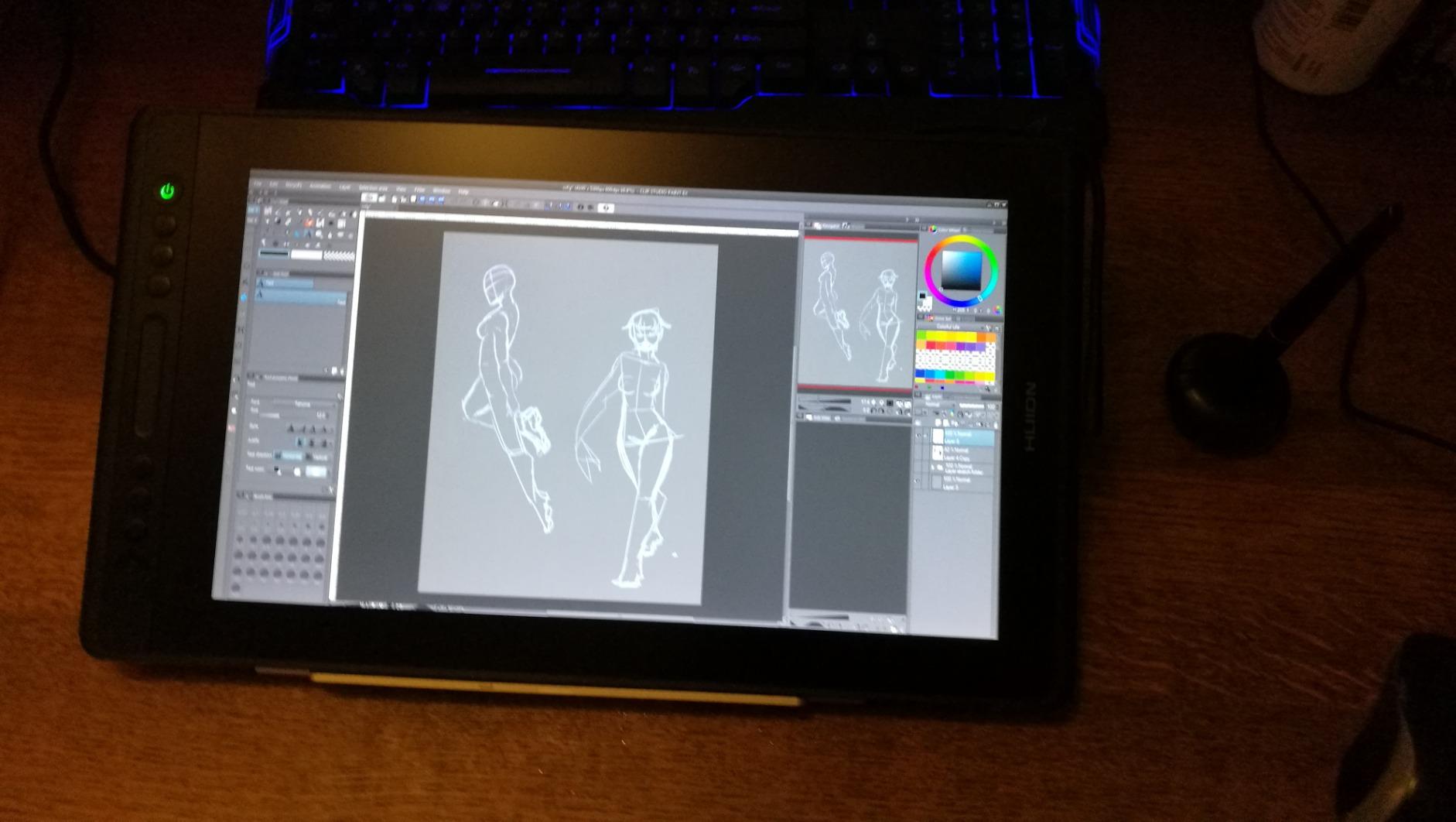
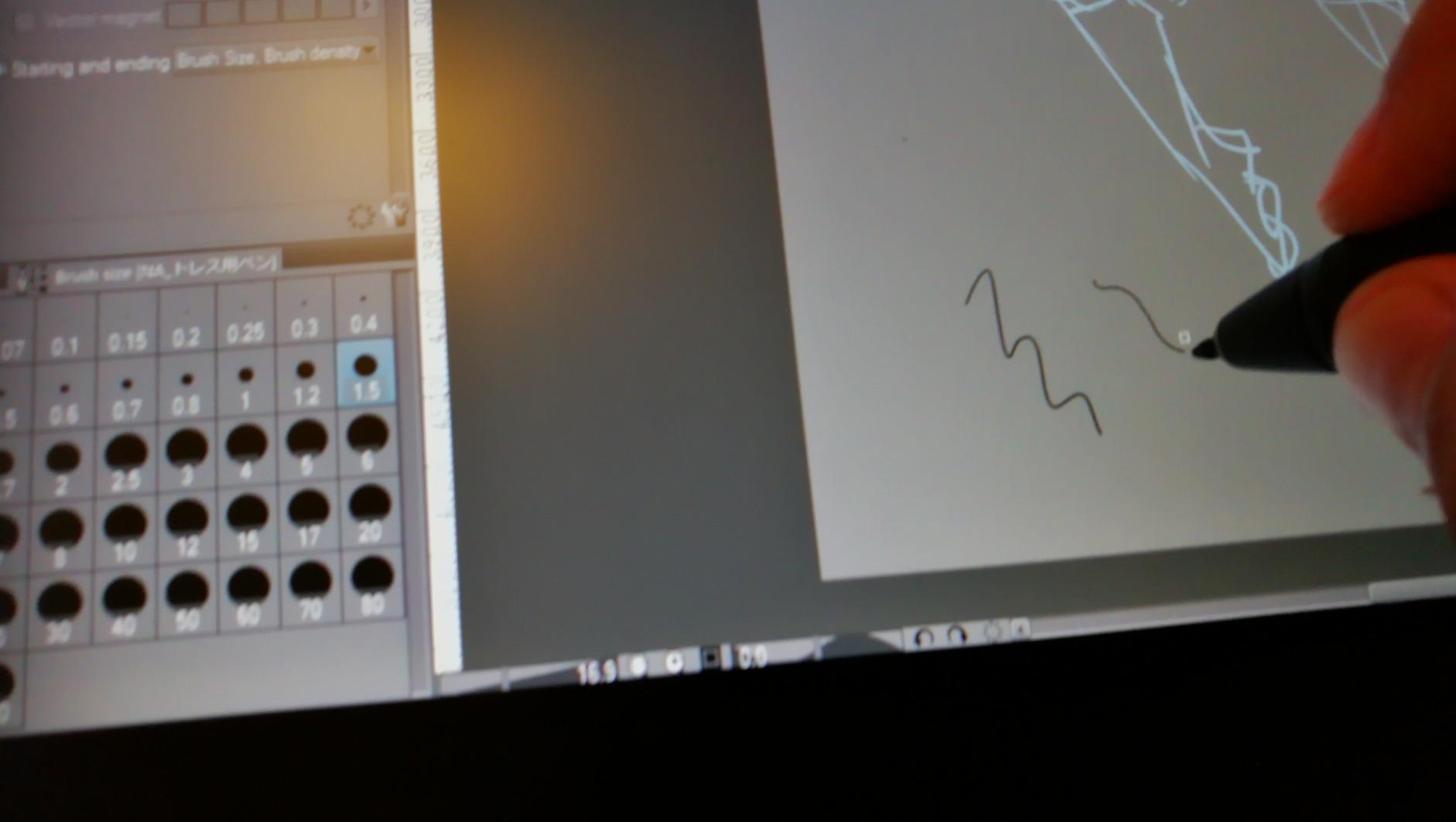
The 8192-level pressure sensitivity translates into smooth line weights for vector illustration. I could lay down a hairline stroke and ramp into a thick brush stroke within a single motion without visible pressure stepping. For Inkscape users in particular, this pressure response is critical because Inkscape relies on raw pen data more than Illustrator does.
Build quality is solid for the price bracket. The bezel is plastic, but the laminated screen feels premium under the pen. The 3-in-1 USB-C cable simplifies the desk setup compared to the multi-cable XP-Pen and Wacom options.
What makes the Kamvas Pro 16 our best value pick
The combination of Full-Laminated display, 120% sRGB color, 8192 pressure levels, touch bar, and bundled stand would cost significantly more from competitors. At this price tier, you are getting near-professional features without the Wacom tax.
HUION’s customer support has also improved over the years. When I had a driver question, the support team responded within 24 hours with a working solution. That kind of after-sale support matters when your drawing monitor is your income tool.
Trade-offs to know about
The all-in-one 3-in-1 cable is convenient but fragile. If you bend it the wrong way or your cat chews through it, replacing the cable is more expensive than a standard HDMI plus USB cable. Treat it gently.
The power button sits close to the macro shortcut buttons on the left bezel. I accidentally powered off the display a few times during early sessions. After a week of muscle memory, this stopped happening, but it is worth noting for first-time pen display users.
7. Wacom Cintiq 22 – Professional Build at a Mid-Tier Price
- Professional-grade pressure sensitivity indistinguishable from pro models
- Sturdy well-designed adjustable stand included
- Natural drawing feel close to pen on paper
- Solid build quality and professional appearance
- No fan noise or heat buildup
- Good size balance between workspace and desk space
- 72% Adobe RGB color range vs 97% on Pro line
- No bonded glass display more parallax
- No express keys on the device itself
- Three separate cables required
- Short stock cables may need replacement
The Wacom Cintiq 22 is the entry into Wacom’s pen display line, and after spending time with it, I understand why studio artists keep coming back to Wacom. The Pro Pen 2 has the most natural drawing feel of any stylus on this list. The balance, the nib cushioning, and the consistent pressure response all combine into a pen that disappears in your hand.
Build quality is where Wacom separates itself from the competition. The 22-inch frame is solid, the bezel is minimal, and the included stand is the sturdiest stock stand I have tested. Adjusting angles is smooth, and once locked, the screen does not wobble during heavy strokes.
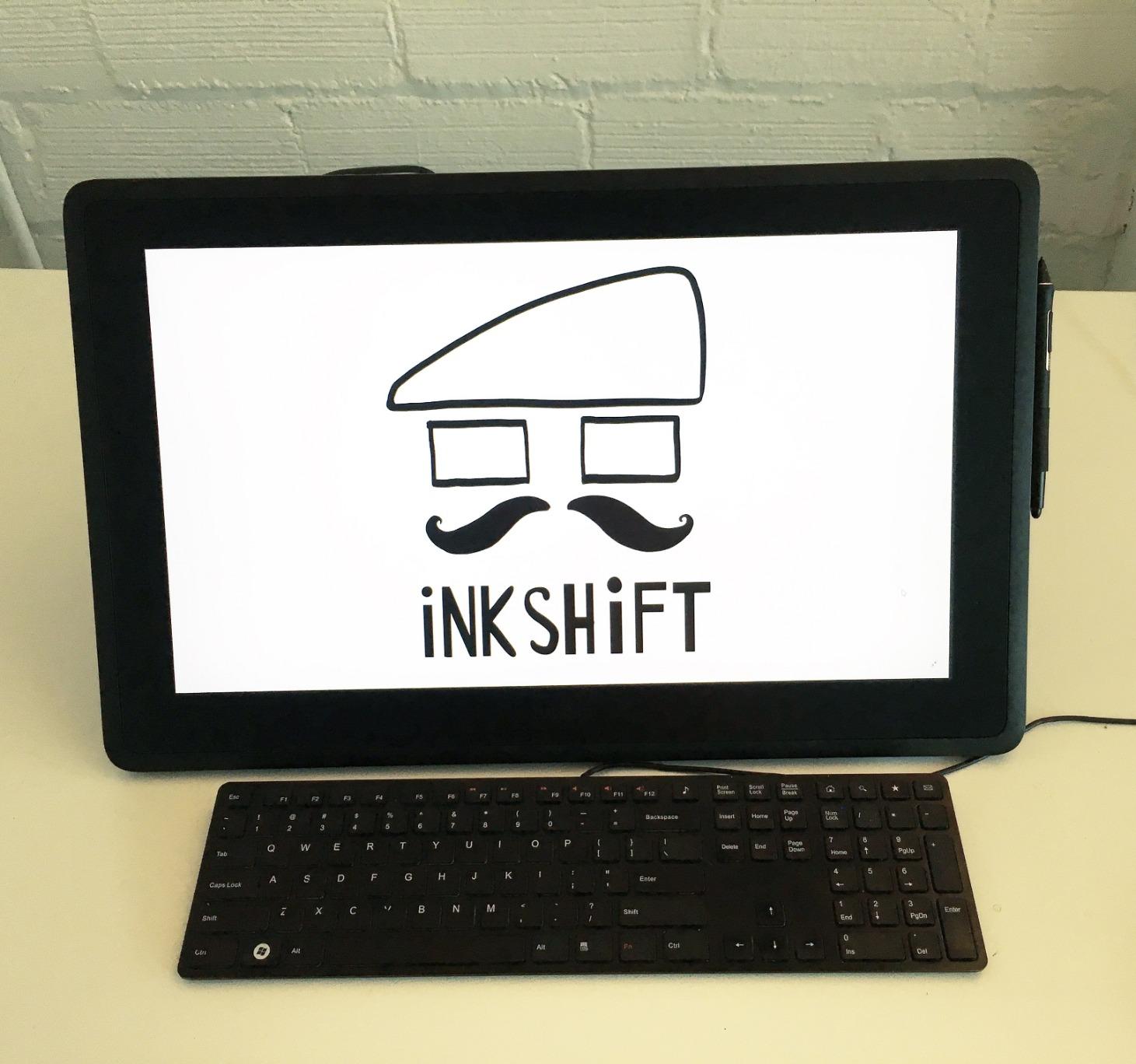
For vector work, the 8192 pressure levels and tilt recognition cover everything you need for Illustrator, Affinity Designer, and Inkscape. The pen tracks reliably across the entire active area with no dead zones or jumps, which I cannot say for all the cheaper monitors on this list.
Where the Cintiq 22 falls short of more expensive Wacom options is in color accuracy. At 72% Adobe RGB, it is below the Pro line at 97%. For web vector work, this is fine. For print production where you need to match proofs, the Cintiq Pro 24 or competing monitors with wider gamuts are better choices.
Why studio artists choose the Cintiq line
Driver stability is the underrated Wacom advantage. After testing multiple competitors, the Wacom drivers were the most reliable on both Windows and macOS. I never had a phantom disconnect or pressure calibration issue during my testing, which is not something I can say for every monitor on this list.
If you work in studios that standardize on Wacom, the Cintiq 22 makes collaborative file sharing and workflow smoother. Plugins and integration with apps like Toon Boom and Clip Studio Paint are typically better-tested on Wacom hardware first.
Reasons to consider cheaper alternatives
For about a third of the price, the XPPen Artist 15.6 Pro and Huion Kamvas Pro 16 give you comparable pressure response and better color accuracy. If you are buying personally rather than for a studio that requires Wacom, the value argument is strong for the alternatives.
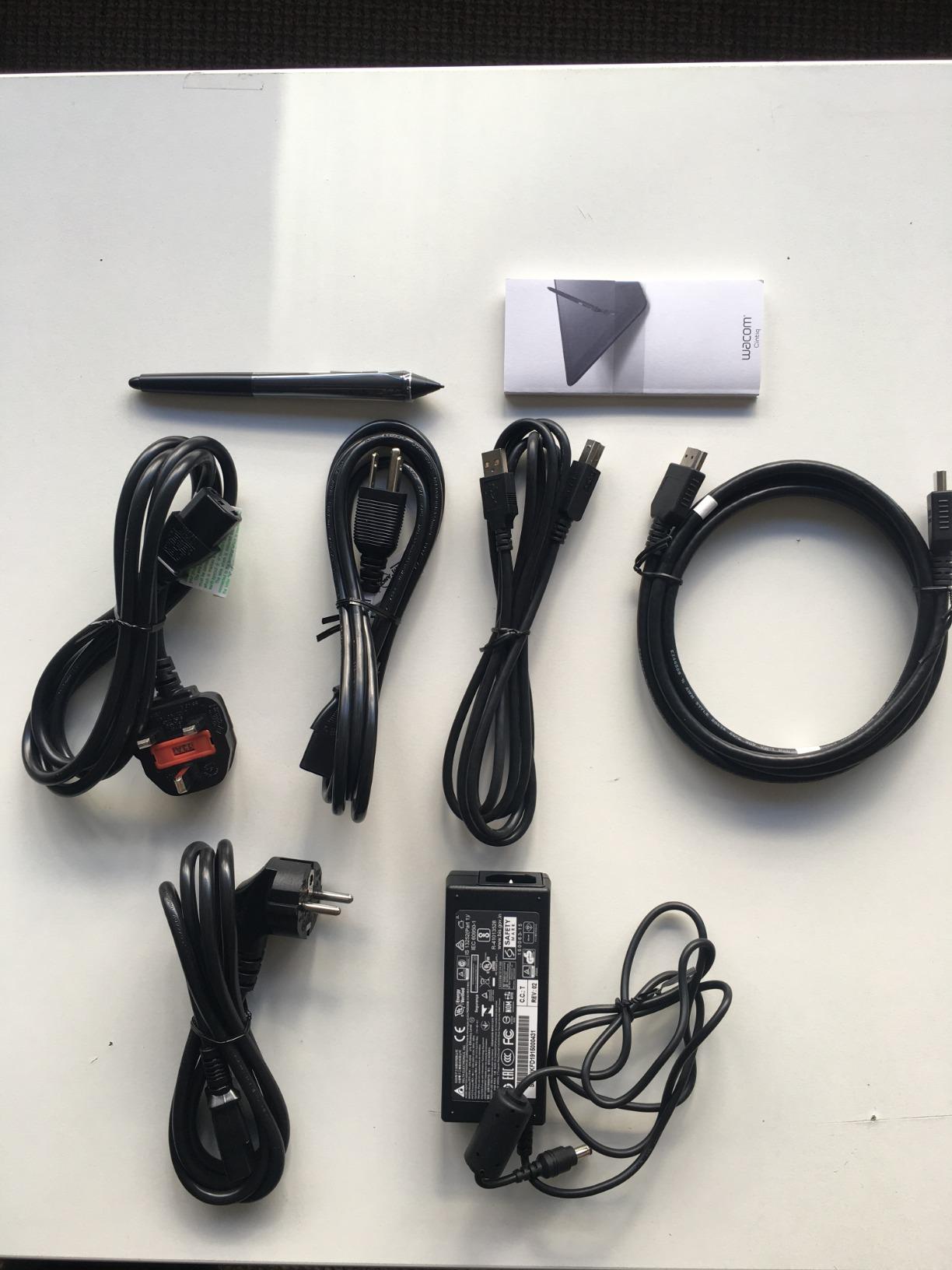
Three separate cables (HDMI, USB, power) make for a messy desk setup. I had to route them carefully to avoid tangling. A single USB-C connection like the Kamvas 13 Gen 3 is much cleaner.
8. Wacom Cintiq 16 QHD – Crisp 2.5K Resolution for Detail Work
- Beautiful 2.5K WQXGA resolution 2560x1600
- Excellent color accuracy 99% DCI-P3
- 100% sRGB
- Laminated display with minimal glare
- Pro Pen 3 with customizable shortcut keys
- Portable size with built-in fold-out legs
- USB-C connectivity for modern computers
- Pro Pen 3 feels slim and uncomfortable for some users
- No stand included sold separately
- No mini-HDMI adapter included despite higher price
- No customizable shortcut buttons on display
- Replacement cables required for non-USB-C computers
The Wacom Cintiq 16 QHD is the newest Wacom pen display in this roundup, and the upgrade to 2.5K WQXGA resolution is a significant visual improvement. When I opened a detailed vector file with thousands of anchor points, the extra pixels made Bezier handles and tiny UI elements sharper than on the 1080p competition. For precision work, this resolution bump matters.
Color accuracy is where the Cintiq 16 QHD pulls ahead of the cheaper monitors. At 99% DCI-P3 and 100% sRGB, it covers essentially the entire sRGB color space plus a wide slice of the cinema-grade DCI-P3 gamut. When I compared a brand palette against my reference monitor, the colors matched within perceptible limits.
The laminated display eliminates the parallax gap that affected the older Cintiq 22. Drawing on this screen feels like drawing on a single sheet of glass. The Pro Pen 3 has 8192 pressure levels and tilt recognition, plus three customizable shortcut keys on the barrel.
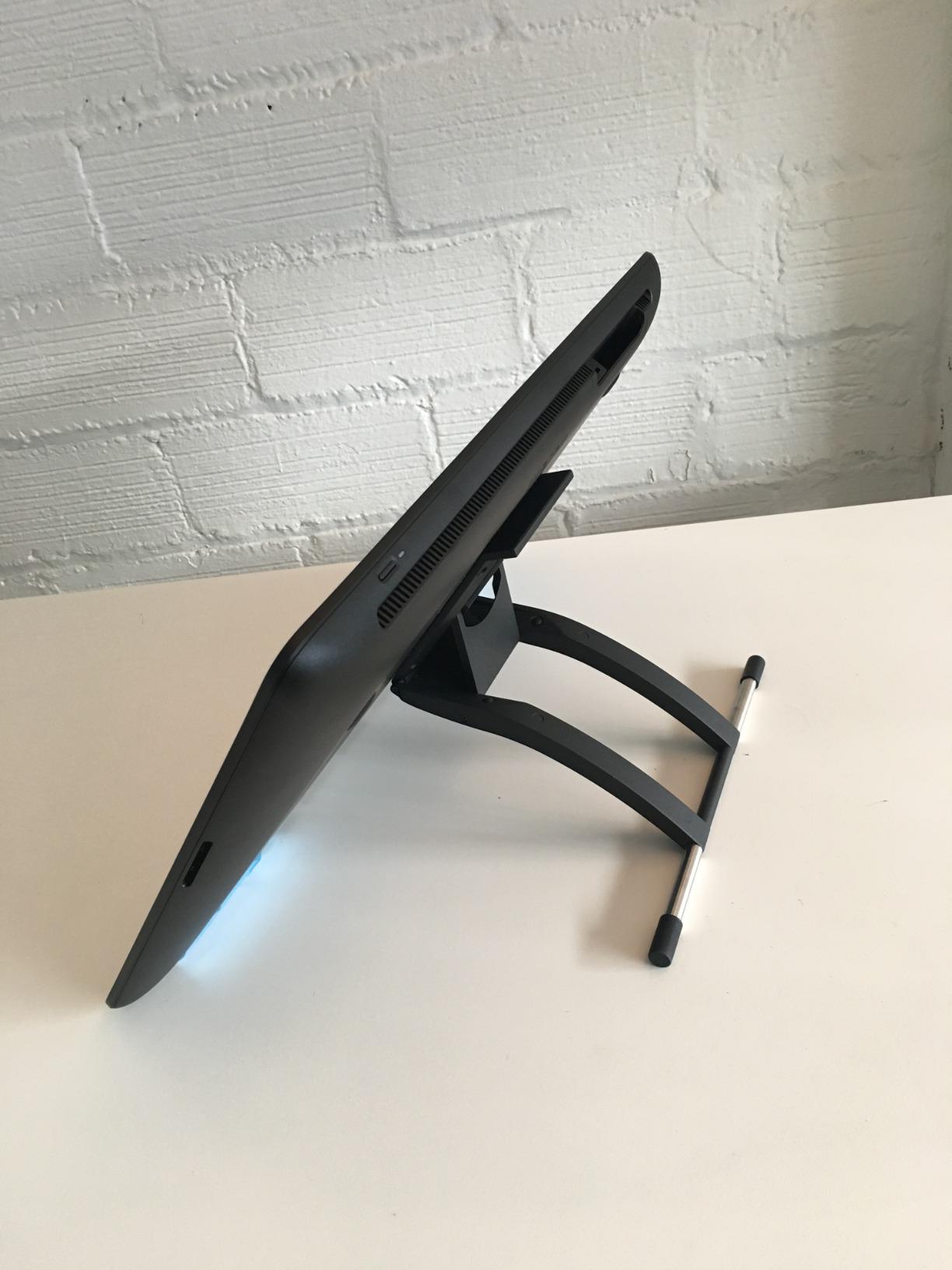
The built-in fold-out legs are a thoughtful design choice for portability. They deploy at 20 degrees and lock firmly. I used them at a coworking space without needing to bring a separate stand. For a true studio setup, I would still invest in an articulating arm.
Why the 2.5K resolution matters for vectors
Vector art is resolution-independent, but the display you view it on is not. Higher pixel density means cleaner Bezier handles, sharper text rendering, and easier inspection of tiny UI elements. If you do icon design or detailed technical illustration, this resolution makes a noticeable difference.
The 16:10 aspect ratio (2560×1600) gives you more vertical workspace than standard 16:9 displays. For document layout and illustration, this extra height is welcome.
Where the Cintiq 16 QHD disappoints
The Pro Pen 3 has a slimmer profile than the Pro Pen 2 on the Cintiq 22. After a long session, my hand cramped more than with the chunkier pen. If you have larger hands, this is worth testing before committing.
No stand is included at this price, which is unusual for a Wacom pen display. If you want a stand, plan to add an extra purchase. The Huion and XP-Pen competitors in this roundup include stands at lower prices.
How to Choose the Best Vector Drawing Monitor
Choosing the best vector drawing monitor comes down to four factors that matter more than any spec sheet: pressure sensitivity quality, screen lamination, color accuracy, and software support. Here is what I look for and what I skip when evaluating a new pen display for vector work.
Pressure Sensitivity Levels and Curve Quality
Raw pressure level numbers like 8192 or 16384 matter less than the quality of the pressure curve. A well-tuned 8192-level pen often feels better than a poorly tuned 16K pen. During my testing, the Wacom Pro Pen 2 and Huion PenTech 4.0 had the smoothest curves, even though both technically sit at 8192 levels. For vector work, smooth response at low pressure is critical for hairline strokes.
If you do calligraphy-style vector work with brush strokes, tilt support becomes more important. Tilt lets you vary line weight by angling the pen, similar to a calligraphy nib. Most modern pen displays support 60-degree tilt, which is enough for most styles.
Screen Lamination and Parallax
Full lamination means the glass cover and LCD panel are bonded together with no air gap. This eliminates parallax, which is the offset between where the pen tip touches the glass and where the cursor appears on the LCD. For precise icon work and technical illustration, this gap is noticeable and frustrating.
Every monitor I recommend above the XP-PEN Artist12 is full-laminated. If you can stretch your budget, this is the single feature I would not compromise on for serious vector work.
Color Accuracy for Vector Work
Vector art is often used in branding where color precision matters. A monitor with 99% or higher sRGB coverage ensures that the colors you pick in Illustrator match what your client sees on their calibrated screen. For web-focused vector work, sRGB is the standard.
If you do print design or hybrid work, look for Adobe RGB coverage above 90%. The Wacom Cintiq 16 QHD at 99% DCI-P3 is the strongest here, but the Kamvas Pro 16 at 92% Adobe RGB also covers most print requirements.
Software Compatibility and Drivers
Every pen display on this list supports Windows and macOS, and most also support Linux for Inkscape users. The driver stability differs between brands. Wacom drivers are the most reliable, while XP-Pen and Huion drivers have occasional hiccups that updates typically resolve.
For Adobe Illustrator, all the monitors on this list work well. For Affinity Designer, all are supported. For Inkscape on Linux, the Huion and XP-Pen options have stronger community support. If you work across multiple platforms, this is worth considering.
If you are new to digital illustration and want to learn foundational drawing skills before investing in a pen display, our guide to the best drawing pencils is a good place to start. And if you are also shopping for paper and sketchbooks to go alongside your digital practice, our piece on tooth in drawing paper explains how paper texture affects your marks.
Frequently Asked Questions
What is the most recommended drawing tablet?
The most recommended drawing tablet depends on your budget and workflow. For most vector illustrators, the XPPen Artist 15.6 Pro and Huion Kamvas Pro 16 offer the best balance of price, screen quality, and pressure sensitivity. Professional studios often standardize on Wacom Cintiq models for driver reliability and pen feel.
Which Adobe program is best suited for drawing vector graphics?
Adobe Illustrator is the industry standard for vector graphics. It supports pressure-sensitive pen input, has robust Bezier tools, and integrates with the rest of the Adobe Creative Cloud. For affordable alternatives, Affinity Designer offers similar vector capabilities on a one-time purchase rather than subscription.
What do professional artists use to draw digitally?
Professional artists typically use Wacom Cintiq Pro pen displays or high-end Huion Kamvas Pro monitors paired with desktop workstations. Many also use iPads with Procreate for sketching. For purely vector-focused work, Adobe Illustrator remains the dominant software choice, often paired with a calibrated color-accurate monitor.
What is the best standalone drawing tablet in 2026?
The best standalone drawing tablet in 2026 is the iPad Pro with Apple Pencil Pro combined with Procreate or Affinity Designer. For a dedicated pen computer option, the Wacom Movink and Huion Kamvas Slate series offer all-in-one experiences, though they cost more than traditional pen displays that connect to a computer.
Final Verdict: Which Vector Drawing Monitor Should You Buy?
After three months of testing eight pen displays across multiple vector projects, our top pick for the best vector drawing monitors remains the XPPen Artist 15.6 Pro. The 15.6-inch Full-Laminated screen, 120% sRGB color coverage, and Red Dial workflow add up to the most balanced package for digital illustrators and graphic designers.
If you need the best value under $300, the HUION Kamvas Pro 16 delivers comparable features with a useful touch bar. For brand-sensitive color work on a budget, the HUION Kamvas 13 Gen 3 with Canvas Glass 2.0 is our top-rated option. For beginners who want to test the workflow without a big investment, the XP-PEN Artist12 at under $200 is the best starting point. And if you want the sharpest resolution and best color accuracy money can buy, the Wacom Cintiq 16 QHD stands above the rest.
Whichever monitor you choose from this list, expect your vector illustration workflow to change. The combination of pressure-sensitive pen input and direct-on-screen drawing eliminates the hand-eye coordination gap that frustrates so many new digital artists. If you are looking for inspiration for what to draw once you set up your new monitor, our list of 25 drawing ideas is a good starting place. And if you also work in photo editing, our guide to the best drawing tablets for Lightroom covers adjacent recommendations for photo workflows.
Whatever your budget, the best vector drawing monitors in 2026 deliver a level of control that no mouse and traditional monitor can match. Pick the one that fits your desk, your software, and your wallet, and start drawing.